Musings on a Famous Portfolio Asset Allocation Study

Some Critics Claim Brinson, Hood, and Beebower Conclusions Wrong

[By Dr. David Edward Marcinko MBA CMP™]

http://www.CertifiedMedicalPlanner.org

[Publisher-in-Chief]

Frequently, we hear the axiom that asset allocation is the most important investment decision, explaining 93.6% of portfolio returns. The presumption has been that once the risk tolerance and time horizon have been established, investing is simply a matter of implementing a fixed mix of stocks, bonds, and cash using mutual funds selected for this purpose. This axiom is based on a famous study by Brinson, Hood, and Beebower (BHB) published in the Financial Analysts Journal in July/August 1986. It is the stuff of most modern business school and graduate students in economics and finance.

Enter the Critics

One critic claims that BHB’s conclusions and the interpretation of their conclusions are wrong, stating that because of several methodological problems, BHB needed to make certain assumptions for their analysis to go forward. They assumed that the average asset-class weights for the 10-year period studied are the same as the actual normal policy weights; that investments in foreign stocks, real estate, private placements, and venture capital can be proxied by a mix of stocks, bonds, and cash; and that the benchmarks for stocks, bonds, and cash against which fund performance was measured are appropriate. The author believes that each of these assumptions can lead to a faulty measurement of success or failure at market timing and stock selection.

The Jahnke Study

William Jahnke claims that BHB erred in their focus on explaining the variation of quarterly portfolio returns rather than portfolio returns over the 10-year period studied. According to the study, asset allocation policy explains only a small fraction of the range of 10-year portfolio returns earned by the pension funds reported in the study. The author concluded that this discrepancy is caused by the effect of compounding returns. He adds that BHB were wrong to use variance of quarterly returns rather than the standard deviation. Use of standard deviation would reduce the often cited 93.6% to about 79%. Moreover, BHB did not consider the cost of investing, such as operating expenses, management fees, brokerage commissions, and other trading costs, which are more significant for individual investors than for the pension plans studied. Jahnke claims that excessive costs can reduce wealth accumulation by 50%.

Note: (“The Asset Allocation Hoax,” William W. Jahnke, Journal of Financial Planning, February 1997, Institute of Certified Financial Planners [303] 759-4900).

Assessment

Finally, the author takes issue with establishing long-term fixed asset class weights. Asset allocation should be a dynamic process. Higher equity return expectations should in turn produce larger equity allocations, other things being equal.

Certified Medical Planner

Conclusion

Are doctors different than the average investor noted in this essay?

Your thoughts and comments on this ME-P are appreciated. Feel free to review our top-left column, and top-right sidebar materials, links, URLs and related websites, too. Then, subscribe to the ME-P. It is fast, free and secure.

Link: http://feeds.feedburner.com/HealthcareFinancialsthePostForcxos

Speaker: If you need a moderator or speaker for an upcoming event, Dr. David E. Marcinko; MBA – Publisher-in-Chief of the Medical Executive-Post – is available for seminar or speaking engagements. Contact: MarcinkoAdvisors@msn.com

OUR OTHER PRINT BOOKS AND RELATED INFORMATION SOURCES:

Product Details

  Risk Management, Liability Insurance, and Asset Protection Strategies for Doctors and Advisors: Best Practices from Leading Consultants and Certified Medical Planners™8Comprehensive Financial Planning Strategies for Doctors and Advisors: Best Practices from Leading Consultants and Certified Medical Planners™

Invite Dr. Marcinko

***

PHYSICIANS: Fiduciary Coaching, Mentoring & Second Opinions

By Ann Miller RN MHA

***

***

Career and Financial Planning

Career, Business and Personal Financial Planning is a great opportunity to get your practice, finances and budgets in order before life gets too busy.

CALL US TODAY TO GET STARTED: https://medicalexecutivepost.com/coach/

CALL FOR A SECOND OPINION: https://medicalexecutivepost.com/schedule-a-consultation/

DR. MARCINKO: https://davidedwardmarcinko.com/coach/

“From Chaos to Calm”

THANK YOU

***

BUSINESS PLAN CONSTRUCTION: For Health Industry Modernity

FOR MEDICAL AND HEALTHCARE ENTREPRENEURS AND INNOVATORS

By Dr. David Edward Marcinko MBA MEd CMP®

I was asked by business schools and medical colleagues – and their bankers, CPAs and advisors – to speak about this topic several times last year before the pandemic.

Now, with the specter of M-4-A etc; it certainly is a vital concern to all young entrepreneurs, doctors & medical professionals whether live, audio recorded or in podcast form. And so, here is a written transcript of a recent presentation for your review.

Now, with the specter of tele-health, tele-medicine, M-4-A etc; it certainly is a vital concern to all young doctors & medical professionals whether live, audio recorded or in podcast form. And so, here is a written transcript of a recent presentation for your review.

***

New Product Business Plan Sample [2021 Updated] | OGScapital

***

READ: https://medicalexecutivepost.com/wp-content/uploads/2017/08/mba-business-plan-capstone-outline.pdf

YOUR THOUGHTS ARE APPRECIATED.

SECOND OPINIONS: https://medicalexecutivepost.com/schedule-a-consultation/

INVITE DR. MARCINKO: https://medicalexecutivepost.com/dr-david-marcinkos-bookings/

Thank You

***

The Emerging Role of CHIEF MARKETING STRATEGY IMPACT OFFICER

Common in Industry – Still Not so Much in Academe’

By Dr. David Edward Marcinko MBA

Invite Dr. Marcinko

http://www.CertifiedMedicalPlanner.org

A Chief Strategy Officer [CSO], or chief strategist, is the senior  executive responsible for assisting the Chief Executive Officer [CEO] with developing, communicating, executing, and sustaining corporate strategic initiatives. Some companies give the title Chief Business Officer [CBO] to its’ senior executives who are holding the top strategy role.

My opinion in academia

A few decades ago, the role of university Chief Strategy Officer [CSO] did not exist or marginally existed as a mid-level project manager in the communications department. It may have consisted of a formal background in teaching and education exhibited by the BA and/or B.Ed degrees or HR certification.

A first generation didactic CSO 1.0; if you will.

Then, as academic competition and granularity increased along with new technology information exchange, the need for deeper subject matter expertise arose. Next – generation business, under/graduate LAs, HUMANITIES, modern culture, psychology / sociology and STEM expertise arose to create and explore new – real or perceived – strategic advantages for university public relations in the form of the M.Ed, MA or MBA degrees in marketing, advertising, sales or competitive analysis.

THINK: Michal Porter PhD, known for his theories on economics, business strategy, and social causes. He is the Bishop William Lawrence University Professor at Harvard Business School, and a social impact consultant. He is credited for creating Porter’s five forces analysis, which is instrumental in business strategy development today.

Also, consider traditional S.W.O.T analysis, as well. SWOT analysis (alternatively SWOT matrix) is an initialism for strengths, weaknesses, opportunities, and threats—and is a structured planning method that evaluates those four elements of a project or business venture. A SWOT analysis can be carried out for a product, place, industry, university or person.

So, let’s call this a second generation expert CSO 2.0

However, as the complex business of running any college or university is ever changing, the ideal profile of CSO is still morphing to face modern business and management challenges like: physical and cyber security; culture and organizational behavior; gender differences, racial disparities and workplace violence issues; enrollment and international expansion; corporatization and competition; online and e-learning initiatives; with accounting, financial and economic pressures, etc.

Consequently, BODs are now seeking and embracing a new kind of CSO with advanced PhD or DBA degrees; and college and university experience. In fact, the role of contemporary CSO is emerging and becoming closer to that of an experienced corporate Chief Executive Officer, than the mere educator, academician or manager of the past.

Definitions: https://www.amazon.com/Dictionary-Health-Economics-Finance-Marcinko/dp/0826102549/ref=sr_1_6?ie=UTF8&s=books&qid=1254413315&sr=1-6

Universities and colleges  today

Insightful academic search committees are now seeking a new type of modern CSO who can build university and college rankings, maintain relationships with stakeholders, and project a positive image as a “celebrity university”.

This means shepherding students and attracting qualified youth, and faculty, for matriculation as areas of particular importance. This new entrepreneurial CSO must focus on business management, economics and finance – operational, marketing, advertising and consultative sales strategies to attract a qualified, protean and diverse student / professional staff that sets it apart from the competition; as well as more meaningfully interacting within [research and development], and without the university [outreach].

Accordingly, this  modern CSO must be a combination and protean surrogate for the university  CEO / CFO / CMO / COO / CAO and leader – NOT just a teacher or manager – who will help run it like a matrix business unit that makes a profit to generate needed capital and ROI.

Multiple lines of business – tuition; certifications; worker-placement; grants and endowments; CEUs and non-degree program fees; as well as for-profit R&D, publications, patents, copyrights and trade-marks; and applied business incubators – must ALL be created and managed as a diversified portfolio. S/he must lead in the implementation, planning and operations of systemic community responsive programs, as well as policy interventions requiring advocacy, political action and public analysis.

I prefer the moniker – CSO 3.0

Assessment

This academic CSO 3.0 must be a change-agent, crisis manager, corporate strategist, Machiavellian devotee and/or seasoned C-suite executive with the required inter – disciplinary skills outlined for this important position.

Above all – the modern CSO 3.0 must be pro-active, flexible and market responsive. This is not the place for tenure tracking.

 ***

MEDICAL PRACTICE AND HOSPITAL OPERATIONS, STRATEGIC DEVELOPMENT, ORGANIZATIONAL BEHAVIOR AND FINANCIAL MANAGEMENT COMPANION TEXTBOOK SET

Product DetailsProduct DetailsProduct Details

[Foreword Dr. Phillips MD JD MBA LLM] *** [Foreword Dr. Nash MD MBA FACP]  [Foreword Dr. Hashem MD PhD] *** [Foreword Dr. Silva MD MBA]

Conclusion

Your thoughts and comments on this ME-P are appreciated. Feel free to review our top-left column, and top-right sidebar materials, links, URLs and related websites, too. Then, subscribe to the ME-P. It is fast, free and secure.

Speaker: If you need a moderator or speaker for an upcoming event, Dr. David E. Marcinko; MBA – Publisher-in-Chief of the Medical Executive-Post – is available for seminar or speaking engagements.

imageproxy5

***

Obtain a Second Financial Planning Opinion -OR- Medical Practice Management Analysis

****

By Dr. David Edward Marcinko MBA CMP®

CMP logo

SPONSOR: http://www.CertifiedMedicalPlanner.org

***

See the source image

***

2nd. Opinion HERE: https://medicalexecutivepost.com/schedule-a-consultation/

CONSULT: https://davidedwardmarcinko.com/coach/

CONTACT: Ann Miller RN MHA CMP®

PHONE: 770-448-0769

EMAIL: MarcinkoAdvisors@msn.com

THANK YOU

Product Details

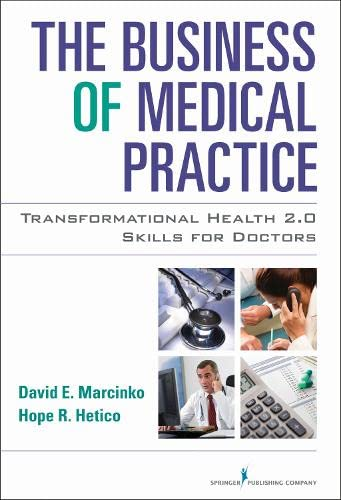
ORDER: https://www.amazon.com/Business-Medical-Practice-Transformational-Doctors/dp/0826105750/ref=sr_1_9?ie=UTF8&qid=1448163039&sr=8-9&keywords=david+marcinko

***

Comprehensive Financial Planning Strategies for Doctors and Advisors: Best Practices from Leading Consultants and Certified Medical Planners™

MORE: https://www.routledge.com/Comprehensive-Financial-Planning-Strategies-for-Doctors-and-Advisors-Best/Marcinko-Hetico/p/book/9781482240283

****

About Securities “Shelf Registration”

A Primer for Physician Investors and Medical Professionals

By: Dr. David Edward Marcinko; MBA, CMP™

SPONSOR: http://www.CertifiedMedicalPlanner.org

[Editor-in-Chief]

[PART 5 OF 8]

Dr. Marcinko with ME-P Fans

NOTE: This is an eight part ME-P series based on a weekend lecture I gave more than a decade ago to an interested group of graduate, business and medical school students. The material is a bit dated and some facts and specifics may have changed since then. But, the overall thought-leadership information of the essay remains interesting and informative. We trust you will enjoy it.

Introduction

A relatively new method of registration under the Act of ’33 is known as shelf registration. Under this rule, an issuer may register any amount of securities that, at the time the registration statement becomes effective, is reasonably expected to be offered and sold within two years of the initial effective date of the registration. Once registered, the securities may be sold continuously or periodically within 2 years without any waiting period for a registration to clear issuers generally like shelf registration because of the flexibility it gives them to take advantage of changing market conditions.

In addition, the legal, accounting, and printing costs involved in issuance are reduced, since a single registration statement suffices for multiple offerings within the 2 year period. In effect, what the issuer does is register securities that will meet its financing needs for the next 2  years. It issues what it needs at the current time, and puts the balance on the shelf” to be taken off the shelf as needed.

SECURITIES MARKETS 

The purchase of common stock in an IPO (initial public offering) is facilitated through of the members an investment bank underwriting syndicate or selling group. This is known as the primary market and the proceeds of sale go directly to the issuing company. Six months later however, if a doctor wants to sell his shares, this would be accomplished in the secondary market. The term secondary market refers to trading in outstanding issues as the proceeds do not go to the issuer, but to the current owner of the securities, such as the physician investor.

Therefore, the secondary market provides liquidity to doctors who acquired securities in the primary market. After a doctor has acquired securities in the primary market, he wants to be able to sell the securities at some point in the future in order to acquire other securities, buy a house, or go on a vacation. Such a sale takes place in the secondary market. The medical investor’s ability to convert the asset (securities) into cash is heavily dependent upon the secondary market. All investors would be hesitant to acquire new securities if they felt they would not subsequently have the ability to sell the securities quickly at a fair price in the secondary market.

Securities Act of 1934

Every trade of stocks and bonds that is not a purchase of a new issue is a trade that takes place in the secondary market. The market place for secondary trading is the stock exchanges and the over-the-counter (OTC) market, and is governed by the Securities Act of 1934, which actually created the Securities and Exchange Commission (SEC) and outlines the powers of the SEC to interpret, supervise, and enforce the securities laws of the United States. The Act of 34 is very broad and governs the sales of securities, including the regulation of securities markets exchanges, OTC markets, broker/dealers, their employees, the conduct of secondary markets, the extension of credit in the purchase and sale of securities, and the conduct of corporate insiders (officers and directors and holders of more than 10% of the outstanding stock). The Act also prohibits fraud and manipulative and deceptive activities in securities transactions

The Stock Exchanges

A stock exchange is a private association of brokers. The main purpose of an exchange is to provide a central meeting place for its member-brokers. This central meeting place is called the floor. It is on the floor that the members trade in securities. It is important to remember that a stock exchange itself does not own any of the securities that are traded on its floor. Nor does it buy or sell any of the securities traded on the exchange. Instead, the securities are owned by member firms, customers, or perhaps, by the exchange member firm itself.

It is also important to remember that a stock exchange does not establish or fix the price at which any security is traded on the exchange. The price is determined in a free and open auction type of trading. It depends on the supply and  demand relationship of that security at a particular time. In other words, if sellers of a stock are offering to sell more shares of that stock than buyers want to buy, the price of that stock will tend to go down. On the other hand, if buyers want to buy more shares of a stock than the sellers are offering to sell, the price of that stock will tend to go higher because of the strong demand.

Any discussion of stock exchanges has to focus on the NYSE, which is by far the largest and most important of the exchanges. There are two exchanges referred to as national stock exchanges, the NYSE and the American Stock Exchange (AMEX). In addition to these two national exchanges, there are several regional stock exchanges including the Philadelphia Exchange, the Chicago Exchange (formerly Midwest), the Pacific Exchange, the Boston Exchange, and the Cincinnati Exchange. Stocks that are traded on an exchange are referred to as listed stocks. The term “listed on an exchange” means that the issue is eligible for trading on the floor of the exchange.

How does a stock become listed? The issuing company, having decided that they wish the prestige and broad visibility of being listed on the NYSE, applies to the exchange for listing. A critical condition for listing is that the issuer agrees to solicit proxies from those common stock shareholders unable to attend shareholder meetings. Once the securities have been accepted for listing (trading) on an exchange, the issuer must continue to meet certain requirements which are not quite as stringent as the original listing requirements, and may be de-listed if the firm ceases to solicit proxies on its existing voting stock, or meet other minimal requirements.

Physically, the exchange brings together buyers and sellers on a trading floor. The NYSE floor is larger than several football fields and is divided into 19 trading posts. Eighteen of the posts are horseshoe or U-shaped stations 100 square feet in area. The nineteenth post (post number 30) is in the northwest corer and really isn’t a post at all; it’s just an area where the inactive stocks trade.

The Specialist

Specialists are experts in trading one or more specific stocks at their particular post on the exchange floor. Their activity is vital to the maintenance of a free and continuous market in the specific issues they represent. They are responsible for conducting the auction at the post. Everyone interested in buying the stock calls out a price and the shares go to the highest bidder. The buyers compete, but there is only one seller. Unlike the usual auction market, the auction on the floor of the exchange is a two way auction with some brokers seeking to buy at the lowest possible price for their doctor clients and other brokers trying to sell at the highest possible price for their doctor clients. When two brokers, one representing a buyer and one a seller, agree on a price, a sale is made. The specialist functions in a dual capacity as a dealer and as a broker. As a dealer or principal, he buys and sells for his own account and risk to maintain a fair and orderly market in the stocks in which he specializes.

For example, if a commission broker approaches the specialist at the post with a buy or sell order, and there are no other brokers in the crowd, that is currently interested in buying or selling the stock, the specialist will buy the stock from that commission broker (if it’s a sell order) for his own account or sell the stock from his inventory (if it’s a buy order). Perhaps, he may even be able to fill the order from his specialist’s book?

Stock_Market

Specialist’s Book

This is done by using the specialist’s book of buy orders (bids), marked on the left hand page, or sell orders (offers) on the right. There is a book for each stock in which the specialist specializes. The pages are ruled and are usually printed with fractional stock points at regular intervals to permit easy insertion of orders. The orders are entered in the book by the specialist according to price and in the sequence in which they are received at the post. He notes the number of shares, putting down 1 for 100 shares, 2 for 200 shares, etc. He also notes the name of the member firm placing the order and if the order is Good Till Cancelled (GTC), or not. When orders are executed, they are executed in the same order recorded in the book at that particular price.

The specialist’s book also keeps track of all orders “away from the market ” (limit orders and stop orders) in his book. The book is organized with all buy orders on the left hand side of the page and all sell orders on the right hand side. In the absence of bids and offers from the “trading crowd” on the floor, the specialist can quote the best available market for the security by announcing the highest bid and the lowest offer (ask). The best bid is always the highest buy limit order on his book and the best offer (ask) is always the lowest sell limit on his book. In addition to quoting the best price, he will also give the “size of the market ” which is determined by the number of shares being bid for and offered at the respective best bid and best ask prices. The quote is price and size. When asked to quote the market for a security, the specialist disregards any stop orders on his book since those orders do not become activated until triggered by another trade. One thing to remember is that since most doctors place stop orders to hedge (protect) against a price movement adverse to their interests, most stop orders are entered with the fervent wish that they never be executed.

On stop and limit orders placed below the market, the specialist is required to reduce the price of those orders on the ex-dividend (ex-split, ex-rights) date. The two critical things to remember are: what types of orders are reduced and by how much? The specialist will reduce all GTC (open) buy limit and sell stop orders on an ex-date. You may remember this with the acronym BLISS where the BL equals buy limit and the SS equals sell stop. The only time either of these orders will not be reduced is if the medical client turned in DNR (do not reduce) instructions.

The price of the order is then reduced by enough to equal or exceed the amount of the dividend.

If we go back to the example approaching the specialist to buy or sell stock and there is no one in the “crowd”, the specialist will first give the commission broker a quote from his book. That quote will be the highest bid price (the highest priced limit order to buy on his books) and the best asked price {the lowest priced sell limit on his books). If the commission broker is willing to buy at the lowest ask or offering price on the specialist’s book, then a trade will take place; if the commission broker is looking to sell and is willing to accept the highest bid price on the specialist’s book then, again, a trade will take place. It is the responsibility of the specialist to maintain an orderly market and to keep the spread between the bid and asked prices as narrow as possible. If the spread between bid and asked is too wide to generate market activity, the specialist will act on his own account.

If the specialist is presented with sell orders at the post and he has no buyers, he must bid at least 1/8 of a point higher than the best bid on his books. If he has buyers and no sellers, then he must offer stock from his inventory at a price at least, 1/8 of a point below the lowest offer on his book.

Why? It’s because the specialist cannot “compete” with public orders and if his bid matched a customer’s bid or his offer matched a customer’s offering or ask price, he would be considered to be ” competing”.  Since the specialist is required to bid higher and ask lower than the best public orders on his book, the spread is narrowed. That is why it is said that the specialist acts in a dual capacity, as a dealer and as a broker. When buying and selling for his own account, he is acting as a dealer. The specialist acts as a broker when he executes limit orders left with him by commission brokers. When these limit orders are executed out of the specialist’s book (the doctor’s limit price is reached), the specialist uses a priority, parity, and precedence system, as to which order is executed first. These rules, like most others, are designed to give preference to the general public, not to members of the exchange, on a first come first served basis.

Walking Through a Trade

To see how the transactions are actually handled on the floor of an exchange, let us assume that an order to buy 100 shares of General Electric has been given by a doctor customer to the registered representative (stock broker), of a member firm in Atlanta. The order is a market order (an order to buy at the lowest possible price at the time the order reaches the floor of the exchange). This order is telephoned by direct wire, or computer, to the New York office of the member firm, which in turn telephones its order to its clerk on the floor of the exchange.

Each member firm has at least one member of the exchange representing them making trades on the floor. Each one of these members is assigned a number for identification. When the floor clerk receives the order to purchase the General Electric, he causes his member’s call number to appear on 3 large boards situated so that one is always in view. These boards are constantly watched brokers so that they will know when wanted at the phone, since there’s too much noise on the floor to use a paging system. Seeing his number on the board, the broker hurries to his telephone station or cell phone and receives the order to buy 100 shares of G.E. “at the market”. Acting as a commission broker, he immediately goes to the post where G.E. is traded and asks “how’s G.E”, of the specialist?

Part 4: Underwriting US Government Securities Issues

Conclusion

Your thoughts and comments on this ME-P are appreciated. Feel free to review our top-left column, and top-right sidebar materials, links, URLs and related websites, too. Then, subscribe to the ME-P. It is fast, free and secure.

Link: http://feeds.feedburner.com/HealthcareFinancialsthePostForcxos

Speaker: If you need a moderator or speaker for an upcoming event, Dr. David E. Marcinko; MBA – Publisher-in-Chief of the Medical Executive-Post – is available for seminar or speaking engagements. Contact: MarcinkoAdvisors@msn.com

OUR OTHER PRINT BOOKS AND RELATED INFORMATION SOURCES:

LEXICONS: http://www.springerpub.com/Search/marcinko

PHYSICIANS: www.MedicalBusinessAdvisors.com

PRACTICES: www.BusinessofMedicalPractice.com

HOSPITALS: http://www.crcpress.com/product/isbn/9781466558731

CLINICS: http://www.crcpress.com/product/isbn/9781439879900

ADVISORS: www.CertifiedMedicalPlanner.org

BLOG: www.MedicalExecutivePost.com

Product DetailsProduct DetailsProduct Details

Product Details  Product Details

Product DetailsProduct Details

Product Details

PODCASTS: Intentional Medical Practice Marketing

By Entrepreneurial MD

***

***

PODCAST: https://www.theentrepreneurmd.com/11

MORE: https://medicalexecutivepost.com/2022/07/06/the-emerging-role-of-university-chief-strategy-officer/

RELATED: https://medicalexecutivepost.com/2022/10/28/crafting-a-medical-practice-marketing-plan/

ADVERTISING: https://medicalexecutivepost.com/2022/08/05/on-marketing-adverting-and-sales/

VIDEO: https://medicalexecutivepost.com/2022/09/29/podcast-investing-in-digital-health-sales-and-marketing/

***

COMMENTS APPRECIATED

Thank You

***

ORDER: https://www.amazon.com/Business-Medical-Practice-Transformational-Doctors/dp/0826105750/ref=sr_1_9?ie=UTF8&qid=1448163039&sr=8-9&keywords=david+marcinko

***

Re-Imagining Global Health Care Business Models?

The State of MEDICAL TOURSIM in the USA

By Dr. David Edward Marcinko MBA CMP®

CMP logo

SPONSORED: www.CertifiedMedicalPlanner.org

American businesses are extending their cost-cutting initiatives to include offshore employee medical benefits, and facilities like the Bumrungrad Hospital in Bangkok, Thailand (cosmetic surgery), the Apollo Hospital in New Delhi, India (cardiac and orthopedic surgery) are premier examples for surgical care. Both are internationally recognized institutions that resemble five-star hotels equipped with the latest medical technology.

What Is Medical Tourism? - YouTube

Foreign countries where I studied medicine and surgery, and practiced briefly, such as Finland, England, Canada and Germany are also catering to the English-speaking crowd, while dentistry is especially popular in Mexico and Costa Rica. Although this is still considered “medical tourism,” Mercer Health and Benefits was retained a decade ago by three Fortune 500 companies interested in contracting with offshore hospitals and The Joint Commission [TJC] has accredited 88 foreign hospitals through a joint international commission.

To be sure, when India can discount costs up to 80%, the effects on domestic hospital reimbursement and physician compensation may be assumed to increase downward compensation pressures.

So far, so good; right? Thumbs Up!

But, then came the Corona Virus Pandemic!

Hand With Thumb Down Free Stock Photo - Public Domain Pictures

Johns Hopkins University Covid 19 Tracker: https://coronavirus.jhu.edu/map.html

India Today: https://www.indiatoday.in/coronavirus

INDIA RATIONING: https://www.msn.com/en-us/health/medical/who-to-be-saved-who-not-to-be-inside-a-hospital-during-indias-covid-19-crisis/ar-BB1golnK?li=BBnb7Kz

ASSESSMENT: Your thoughts are now appreciated.

ORDER Textbook: https://www.amazon.com/Comprehensive-Financial-Planning-Strategies-Advisors/dp/1482240289/ref=sr_1_1?ie=UTF8&qid=1418580820&sr=8-1&keywords=david+marcinko

Product Details

SECOND OPINIONS: https://medicalexecutivepost.com/schedule-a-consultation/

INVITE DR. MARCINKO: https://medicalexecutivepost.com/dr-david-marcinkos-bookings/

THANK YOU

***

RISK MANAGEMENT & LIABILITY PROTECTION FOR PHYSICIANS

And … Their Insurance Agents and Financial Advisors

INVITE DR. MARCINKO: https://medicalexecutivepost.com/dr-david-marcinkos-

DEM avatar

By DR. DAVID EDWARD MARCINKO MBA CMP®

CMP logo

SPONSOR: http://www.CertifiedMedicalPlanner.org

***

https://images.routledge.com/common/jackets/amazon/978149872/9781498725989.jpg

***

BOOK REVIEW

It is not uncommon for practicing physicians to have more than a dozen separate insurance policies to protect their medical practice and personal assets. Yet, most doctors understand very little about their policies.BOOK REVIR

Risk Management, Liability Insurance, and Asset Protection Strategies for Doctors and Advisors: Best Practices from Leading Consultants and Certified Medical Planners™explains to physicians and insurance professionals the background, theory, and practicalities of medical risk management, asset protection methods, and insurance planning.

The book presents information in a manner that is convenient and highly useful for busy medical practitioners. It discusses the medical records revolution and addresses concerns regarding cloud computing, data security, and technological threats.

The book covers modern health law and policy, including fraud and abuse, workplace-violence, Medicare compliance, HIPAA regulations, AR protection strategies with internal controls, P4P and value based care, insurance and reputation management, and how the ARA legislation is impacting physician practices. It also includes case models and examples that provide you with a real-world understanding of how to recognize and reduce personal and medical practice risks.

With time at a premium for all, and so much information packed into one well-organized resource, this book is a must-read for every physician and financial advisor that serves the health care sector. The book will help physicians make better decisions about the risks they face and will help financial advisors improve the value they provide to their clients who are doctors.

MORE = ORDER HERE: https://www.routledge.com/Risk-Management-Liability-Insurance-and-Asset-Protection-Strategies-for/Marcinko-Hetico/p/book/9781498725989

THANK YOU

***

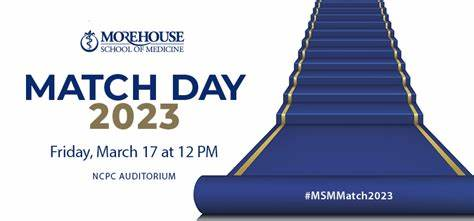
MEDICAL RESIDENCY “MATCH” DAY: 2023

By Dr. David Edward Marcinko MBA

SPONSOR: http://www.CertifiedMedicalPlanner.org

***

***

Each year in the middle of March, tens of thousands of graduating American medical students find out where they are going for their residency — and whether they will be whisked away from their families, friends, and romantic partners.

For many relationships in which one or both people are in medical school, residency “Match Day” — which falls today, on March 17th this year — can be the end of another match. This mass breakup and match happened to many of my own classmates, and to students at medical schools all around the country. But, fortunately not to me years ago.

And, it all ultimately ended well.

***

READ: https://www.nydailynews.com/opinion/ny-oped-the-residency-match-is-a-match-breaker-too-20230312-5e4hg25ki5g63mdgxhkvfppxvm-story.html?utm_campaign=hcb&utm_medium=newsletter&utm_source=morning_brew

***

COMMENTS APPRECIATED

Thank You

***

ORDER: https://www.amazon.com/Business-Medical-Practice-Transformational-Doctors/dp/0826105750/ref=sr_1_9?ie=UTF8&qid=1448163039&sr=8-9&keywords=david+marcinko

***

PHYSICIANS: Coaching, Mentoring & Second Opinions

By Ann Miller RN MHA

***

***

Career and Financial Planning

Career, Business and Personal Financial Planning is a great opportunity to get your practice, finances and budgets in order before life gets too busy.

CALL US TODAY TO GET STARTED: https://medicalexecutivepost.com/coach/

CALL FOR A SECOND OPINION: https://medicalexecutivepost.com/schedule-a-consultation/

“From Chaos to Calm”

THANK YOU

***

INTERNATIONAL WOMEN’S DAY 2023

Maritime Medicine

By Dr. David Edward Marcinko MBA

***

***

***

Did you know that on this day in 1945, Phyllis Mae Dailey became the first Black nurse sworn in to serve the US Navy?

READ: https://blackdoctor.org/phyllis-mae-dailey/

And on this day in 1950, Bernice Walters became the first female doctor for the US Navy.

READ: https://www.history.navy.mil/browse-by-topic/people/trailblazers/bernice-walters.html

READ: US Comfort Ship: https://medicalexecutivepost.com/2010/01/18/us-navy-ship-comfort-heads-to-haiti/

So, you might say it’s a big day for maritime medicine.

***

COMMENTS APPRECIATED

Thank You

***

ORDER: https://www.amazon.com/Dictionary-Health-Insurance-Managed-Care/dp/0826149944/ref=sr_1_4?ie=UTF8&s=books&qid=1275315485&sr=1-4

***

PHYSICIANS: Coaching, Mentoring & Second Opinions

By Ann Miller RN MHA

***

***

Career and Financial Planning

Career, Business and Personal Financial Planning is a great opportunity to get your practice, finances and budgets in order before life gets too busy.

CALL US TODAY TO GET STARTED: https://medicalexecutivepost.com/coach/

CALL FOR A SECOND OPINION: https://medicalexecutivepost.com/schedule-a-consultation/

“From Chaos to Calm”

THANK YOU

***

PHYSICIAN: COACHING, MENTORING & SECOND OPINIONS

By Ann Miller RN MHA

***

***

Career and Financial Planning

Career, Business and Personal Financial Planning is a great opportunity to get your practice, finances and budgets in order before life gets too busy.

CALL US TODAY TO GET STARTED: https://medicalexecutivepost.com/coach/

CALL FOR A SECOND OPINION: https://medicalexecutivepost.com/schedule-a-consultation/

“From Chaos to Calm”

THANK YOU

***

Top 100 Economics Blogs for 2023

“BEST of the BEST”

[By Dr. David E. Marcinko MBA]

If you’re looking for practical, insightful and educational economics blogs, you’ve come to the right place. Here are the 100 best economics blogs online, listed in no particular order.

Today, as you know, there’s no shortage of high-quality economics blogs on the web. But, we decided to separate the wheat from the chaff and give you the absolute cream of the crop. Whether you’re new to economics, or have an interest in a range of economics topics like econometrics and macroeconomics, or simply want to keep up with global economics, these economics blogs give you the rundown, insights and explanations you need to get a good understanding of economics.

***

blpgs

LINK: http://ritholtz.com/2016/05/top-100-economics-blogs/

2023 UPDATE: https://www.intelligenteconomist.com/economics-blogs/

***

Conclusion

Your thoughts and comments on this ME-P are appreciated. Feel free to review our top-left column, and top-right sidebar materials, links, URLs and related websites, too. Then, subscribe to the ME-P. It is fast, free and secure.

Speaker: If you need a moderator or speaker for an upcoming event, Dr. David E. Marcinko; MBA – Publisher-in-Chief of the Medical Executive-Post – is available for seminar or speaking engagements. Contact: MarcinkoAdvisors@msn.com

OUR OTHER PRINT BOOKS AND RELATED INFORMATION SOURCES:

Product DetailsProduct DetailsProduct Details

***

USA HEALTHCARE QUALITY: Confidence Down

Confidence in the caliber of the American health system has never been lower

A GALLUP POLL

***

***

ANNUAL GALLUP HEALTHCARE QUALITY REPORT

More than one in five adults (21%) living in the US now rate the country’s healthcare as “poor” quality—a record high, according to Gallup’s annual health and healthcare poll.

Less than half of all respondents (48%) surveyed in 2022 said they’d rank the quality of healthcare in the US as “excellent/good”—a new low since Gallup began tracking the issue in 2001. (That’s down from 50% in 2021 and a record high of 62% in 2010 and 2012.) About a third (31%), meanwhile, said they’d rate the quality of US healthcare as “only fair,” a slight drop from 35% in 2021.

Gallup partially attributed the drop in perceived quality to politics, noting that “Republicans’ positive ratings have been subdued since President Donald Trump left office.” Other likely factors, the organization offered, could be “changes to healthcare that have taken place amid the Covid-19 pandemic or curtailed access to abortion since the Supreme Court’s Dobbs decision.”

Survey Reports:

  • Respondents reported a rosier take on the care they personally receive. Over 70% rated it as “excellent/good” compared to 6% who rated it as “poor.” But that high “excellent/good” mark is still down from 76% in 2021 and 82% in 2020.
  • Costs remained a point of contention in 2022. Less than a quarter (24%) of respondents said they were “satisfied” with the total cost of healthcare in the US, and this proportion is on par with rates from the past two decades. But only 56% of those surveyed reported being satisfied with the total cost they pay for care—the lowest level since 2016.
  • One in five respondents think the US healthcare system is in a “state of crisis” (20%) or has “major problems” (48%).

EDITOR’S NOTE: As a former CPHQ [Certified Physician in Healthcare Quality], I find this report alarming and confusing – David EdwardMarcinko MBA CMP

CMP Program: http://www.CertifiedMedicalPlanner.org

***

Product Details

***

ORDER: https://www.amazon.com/Financial-Management-Strategies-Healthcare-Organizations/dp/1466558733/ref=sr_1_3?ie=UTF8&qid=1380743521&sr=8-3&keywords=david+marcinko

ORDER: https://www.amazon.com/Hospitals-Healthcare-Organizations-Management-Operational/dp/1439879907/ref=sr_1_4?s=books&ie=UTF8&qid=1334193619&sr=1-4

COMMENTS APPRECIATED

Thank You

***

What is an ADR / SPDR Receipt?

AMERICAN DEPOSITORY RECEIPTS AND S&P RECEIPTS

By Dr. David E. Marcinko MBA CMP®

CMP logo

SPONSOR: http://www.CertifiedMedicalPlanner.org

AMERICAN DEPOSITORY RECEIPT (ADR) = A receipt evidencing shares of a foreign corporation held on deposit or under the control of a U. S. banking institution; it is used to facilitate transactions and expedite transfer of beneficial ownership for a foreign security in the U.S. Everything is done in dollars and the ADR holder doesn’t have voting rights; essentially the same as an American Depository Share (ADS).

CITE: https://www.r2library.com/Resource/Title/0826102549

****

A Standard & Poor’s Depositary Receipt, or SPDR, is a type of exchange traded fund that began trading on the American Stock Exchange (AMEX) in 1993 when State Street Global Advisors’ investment management group first issued shares of the SPDR 500 Trust (SPY).

image-2

CITE: https://www.r2library.com/Resource/Title/0826102549

***

MORE: https://medicalexecutivepost.com/2008/02/15/about-american-depository-receipts/

S&P: https://medicalexecutivepost.com/2011/01/12/on-standard-poors-depository-receipts/

S&P Index: https://medicalexecutivepost.com/2011/01/15/spdrs-vs-index-mutual-funds/

S&P TAX: https://medicalexecutivepost.com/2011/01/30/do-spdrs-yield-tax-advantages/

YOUR COMMENTS ARE APPRECIATED.

Thank You

ORDER: https://www.amazon.com/Comprehensive-Financial-Planning-Strategies-Advisors/dp/1482240289/ref=sr_1_1?ie=UTF8&qid=1418580820&sr=8-1&keywords=david+marcinko

***

Musings on a Famous Portfolio Asset Allocation Study

Some Critics Claim Brinson, Hood, and Beebower Conclusions Wrong

[By Dr. David Edward Marcinko MBA CMP™]

http://www.CertifiedMedicalPlanner.org

[Publisher-in-Chief]

Frequently, we hear the axiom that asset allocation is the most important investment decision, explaining 93.6% of portfolio returns. The presumption has been that once the risk tolerance and time horizon have been established, investing is simply a matter of implementing a fixed mix of stocks, bonds, and cash using mutual funds selected for this purpose. This axiom is based on a famous study by Brinson, Hood, and Beebower (BHB) published in the Financial Analysts Journal in July/August 1986. It is the stuff of most modern business school and graduate students in economics and finance.

Enter the Critics

One critic claims that BHB’s conclusions and the interpretation of their conclusions are wrong, stating that because of several methodological problems, BHB needed to make certain assumptions for their analysis to go forward. They assumed that the average asset-class weights for the 10-year period studied are the same as the actual normal policy weights; that investments in foreign stocks, real estate, private placements, and venture capital can be proxied by a mix of stocks, bonds, and cash; and that the benchmarks for stocks, bonds, and cash against which fund performance was measured are appropriate. The author believes that each of these assumptions can lead to a faulty measurement of success or failure at market timing and stock selection.

The Jahnke Study

William Jahnke claims that BHB erred in their focus on explaining the variation of quarterly portfolio returns rather than portfolio returns over the 10-year period studied. According to the study, asset allocation policy explains only a small fraction of the range of 10-year portfolio returns earned by the pension funds reported in the study. The author concluded that this discrepancy is caused by the effect of compounding returns. He adds that BHB were wrong to use variance of quarterly returns rather than the standard deviation. Use of standard deviation would reduce the often cited 93.6% to about 79%. Moreover, BHB did not consider the cost of investing, such as operating expenses, management fees, brokerage commissions, and other trading costs, which are more significant for individual investors than for the pension plans studied. Jahnke claims that excessive costs can reduce wealth accumulation by 50%.

Note: (“The Asset Allocation Hoax,” William W. Jahnke, Journal of Financial Planning, February 1997, Institute of Certified Financial Planners [303] 759-4900).

Assessment

Finally, the author takes issue with establishing long-term fixed asset class weights. Asset allocation should be a dynamic process. Higher equity return expectations should in turn produce larger equity allocations, other things being equal.

Certified Medical Planner

Conclusion

Are doctors different than the average investor noted in this essay?

Your thoughts and comments on this ME-P are appreciated. Feel free to review our top-left column, and top-right sidebar materials, links, URLs and related websites, too. Then, subscribe to the ME-P. It is fast, free and secure.

Link: http://feeds.feedburner.com/HealthcareFinancialsthePostForcxos

Speaker: If you need a moderator or speaker for an upcoming event, Dr. David E. Marcinko; MBA – Publisher-in-Chief of the Medical Executive-Post – is available for seminar or speaking engagements. Contact: MarcinkoAdvisors@msn.com

OUR OTHER PRINT BOOKS AND RELATED INFORMATION SOURCES:

Product Details

  Risk Management, Liability Insurance, and Asset Protection Strategies for Doctors and Advisors: Best Practices from Leading Consultants and Certified Medical Planners™8Comprehensive Financial Planning Strategies for Doctors and Advisors: Best Practices from Leading Consultants and Certified Medical Planners™

Invite Dr. Marcinko

***

VANGUARD: To Liquidate Alternative Strategies Fund (VASFX)

By Staff Reporters

***

The $98 million Vanguard Alternative Strategies Fund (ticker VASFX) will be liquidated in the second quarter of 2023, according to a press release. The fund, which launched in 2015, “has not gained broad acceptance among investors,” Vanguard said.

The liquidation marks the first time that Malvern, Pennsylvania-based Vanguard has shuttered a mutual fund since winding up the NJ Municipal Money Market Fund and PA Municipal Money Market Fund in 2020, a spokesperson confirmed over email. The move follows a brutal year for asset managers as the Federal Reserve’s historically aggressive tightening campaign pummeled both stocks and bonds, driving investors to yank billions of dollars from mutual funds. 

CITE: https://www.r2library.com/Resource/Title/0826102549

***

Editor’s Note: I visited the Vanguard campus in Malvern PA, while still a medical student in Philadelphia, back in the day. Beautiful and impressive! I learned a great deal on the professional tours and first learned of Gary P. Brinson, L. Randolph Hood. Dr. David Edward Marcinko MBA CMP

MORE: https://medicalexecutivepost.com/2023/02/14/musings-on-a-famous-portfolio-asset-allocation-study-2/

CMP Program: http://www.CertifiedMedicalPlanner.org

COMMENTS APPRECIATED

Thank You

***

ORDER: https://www.routledge.com/Comprehensive-Financial-Planning-Strategies-for-Doctors-and-Advisors-Best/Marcinko-Hetico/p/book/9781482240283

***

FINANCIAL HEALTH INSURANCE CO-PAY CARDS & DRUG COUPONS?

The “Real Deal”

A co-payment is a fixed amount ($20, for example) you pay for a covered health care service after you’ve paid your deductible.

Let’s say your health insurance plan’s allowable cost for a doctor’s office visit is $100. Your copayment for a doctor visit is $20.

  • If you’ve paid your deductible: You pay $20, usually at the time of the visit.
  • If you haven’t met your deductible: You pay $100, the full allowable amount for the visit.
  • Partial deductible payments incur hybrid fees.

Copayments (sometimes called “copays”) can vary for different services within the same plan, like drugs, lab tests, and visits to specialists. Generally plans with lower monthly premiums have higher copayments. Plans with higher monthly premiums usually have lower copayments.

CITE: https://www.r2library.com/Resource/Title/0826102549

***

Invite Dr. Marcinko | The Leading Business Education Network for Doctors,  Financial Advisors and Health Industry Consultants

BY DR. DAVID E. MARCINKO MBA CMP®

CMP logo

SPONSOR: http://www.CertifiedMedicalPlanner.org

Co-Pay Cards May Be Creating More Controversy Instead of Solutions

Instead of reducing the actual price of their excessively priced medications, many companies have opted to provide co-pay cards / coupons as an affordable solution. However, co-pay cards may only lower the cost for some consumers and patients.

Novartis: https://www.copay.novartispharma.com/nvscopay/#

Pfizer: https://www.pfizerpro.com/co-pay-cards-patient-savings-offers

***

See the source image

***

But – The insurer is still left to pay the high price, which will eventually be passed back on to the patient / consumers in the form of higher health insurance deductibles. So – It doesn’t really seem like much of a solution when we all end up paying for these co-pay cards / coupons; does it?

Find out more here. (Source: Rebecca Mayer Knutsen, MM&M, 8/26/16)

***

MEDICAL OFFICE CREDIT CARDS:

We stopped taking credit cards altogether. The only credit cards we take are for call-in payments of balances. We have placed ATM machines in our lobbies and we educate patients in advance of their visits that we only take cash or check. Our cash income has increased, our credit card fees have decreased, and we make $1.50 from each transaction through our ATM. Our patients have taken to the idea so much that they use the ATM for personal cash for other transactions because our fee is the lowest of any ATM. It has been a win-win-win.  

Dr. Farshid Nejad, Beverly Hills, CA [PM Magazine]

***

For anyone contemplating taking credit cards for payments or copayments in your office, please be aware that some of the credit card companies require you to sign a contract. Don’t do that! If you do and you either have a problem with the company or find out that they are overcharging you, they will hold you responsible for the contract and may take you to court. There are enough credit card companies out that that do not require contracts and are highly competitive. 

-Dr. Elliot Udell, DPM, Hicksville, NY [PM Magazine]

***

YOUR COMMENTS ARE APPRECIATED.

Thank You

***

***

What is the Current Rate of Return [CRR] for [Pandemic] Investments?

THE INVESTING “CURRENT RATE OF RETURN

By Dr. David Edward Marcinko MBA CMP®

CMP logo

SPONSORED: http://www.CertifiedMedicalPlanner.org

Stock Market Pandemic History

Technology stocks have largely been in favor since the COVID-19 pandemic began, but re-openings in the U.S. and elsewhere as vaccines take hold have pushed investors toward value stocks, which are geared more toward the economy. But lately, stronger growth expectations are also sparking worries of higher inflation, and a potential tapping of the brakes by central banks.

Therefore, an important concept for physicians and all investors to understand is the Current Rate of Return (CCR).

So, What Exactly is CRR?

According to this principle, the current rate of a taxable return must be evaluated in reference to a similar non-taxable rate of return. This allows you to focus on your portfolio’s real (after-tax return), rather than its’ nominal, or stated return. Since most medical professionals own a combination of both vehicles, it is important to calculate the average rate of return (ARR), as demonstrated in the following matrix. Usually, this will result in the assumption of more risk, for the possibility of great return.

To compare after tax yields, with taxable yields, use the following formulas:

Tax equivalent yield = yield / (1 – MTB), while taxable yield X (1-tax rate) = tax exempt yield.

Example: if the yield on a tax exempt municipal bond was 6%, and you are in a 28% tax bracket; the equivalent taxable yield (ETY), is 8.3%, calculated in the following manner: 06 / 1.00 – .28 =.083, or, 8.3% ETY.

This means that you would need a taxable instrument paying almost 9 % to equal the 6 percent tax exempt bond.   

ASSESSMENT: Your thoughts are appreciated.    

Comprehensive Financial Planning Strategies for Doctors and Advisors: Best Practices from Leading Consultants and Certified Medical Planners™

ORDER Textbook: https://www.amazon.com/Comprehensive-Financial-Planning-Strategies-Advisors/dp/1482240289/ref=sr_1_1?ie=UTF8&qid=1418580820&sr=8-1&keywords=david+marcinko

SECOND OPINIONS: https://medicalexecutivepost.com/schedule-a-consultation/

INVITE DR. MARCINKO: https://medicalexecutivepost.com/dr-david-marcinkos-bookings/

THANK YOU

***

VIDEO TELECONFERENCE: How to Prepare?

By Coach: Dr. David Edward Marcinko MBA

***

***

PHYSICIANS AND ADVISORS

TIPS TO PREPARE FOR A VIDEO INTERVIEW

Practice with someone to become comfortable with the process.

Background/Staging:


• Pay attention to the background, what will be seen around and behind you. Get rid of
clutter – it affects “your presentation.” Make sure there is nothing in the background you
don’t want anyone to see including personal pictures, etc.


• Conduct the test in the same location you plan to conduct the video interview.
• Adjust lighting to highlight your face. Do not let light wash out your facial features.


• Have back-up equipment nearby (extra laptop, phones, cables).
Clothing


• Dress in professional, conservative, non-fussy clothing as though you were going to be
with the committee in person. Wear a jacket.


• Wear a solid/bold color. Stay away from dark colors.


• Stay away from prints (e.g. herringbone) which, depending upon the design, lighting and
camera pixels, can make your outfit “vibrate” on screen.


• Dress knowing that the committee will see you “closer up” than you will see them.
Eye Contact/Body Language/Clear Communications


• Be sure to look at the camera not at the image of the committee on the screen;
otherwise you do not appear to be “looking them in the eye” or will appear nervous.


• It is hard to read committee body language without typical in-person conversation cues,
so watch the time and limit each answer to 3-4 minutes. Be attuned to a timer.


• Be attentive to your body language — leaning back in your chair is a no-no; lean forward
to convey interest in the position and the committee. Don’t rock back and forth.


• Place support things out of camera range (glass of water, a timer, notes, notepad, pen,
list of committee members) so your eyes go to the side and not up/down to these items.


• Don’t be afraid to ask to have questions repeated, either because the question was long
and complex or because of audio problems. Jot notes on complex questions.

COACH: https://medicalexecutivepost.com/2023/01/08/personal-coaching-dr-marcinko-at-your-service/


Sound Amplification and Noise Control:


• Microphones magnify noises and can be distracting to the committee. Avoid ruffling
papers and jangling jewelry. In the same vein, speak up clearly and enunciate your
words.


• Place a “do not disturb/do not enter” sign on the door of your space. Turn off running
programs (like your email) to eliminate beeps when new emails arrive.

• Silence all other technology EXCEPT if there should be technical issues, turn your
phone back on to receive a call from your Greenwood/Asher consultant for
troubleshooting.


• Ask family and colleagues to be quiet during the interview. If a family member or
colleague is your resident IT expert, have that person close-at-hand but out-of-sight
during the call.


• Be prepared to switch to a landline or cell speaker phone for the audio portion since
audio with Skype/Zoom is not always great. If you do use this option, mute your
computer microphone to eliminate conflicting noise.

SECOND OPINIONS: https://medicalexecutivepost.com/2023/01/10/physician-coaching-second-opinions

PODCAST: https://www.youtube.com/watch?v=n7bYGhEVjd8

***

COMMENTS APPRECIATED

Thank You

***

ODD LOT: Stock Trading

By Dr. David Edward Marcinko MBA CMP™

***

SPONSOR: http://www.CertifiedMedicalPlanner.org

***

Most of the thousands of buy and sell orders executed on a typical day on the NYSE are in 100 share or multi-100 share lots. These are called round lots. Some of the inactive stocks traded at post 30, the non-horseshoe shaped post in the northwest corner of the exchange, are traded in 70 share round lots due to their inactivity. So, while a round lot is normally 700 shares, there are cases where it could be 10 shares. Any trade for less than a round lot is known as an odd lot. The execution of odd lot orders is somewhat different than round lots and needs explanation.

CITE: https://www.r2library.com/Resource/Title/082610254

When a stock broker receives an odd lot order from one of his doctor customers, the order is processed in the same manner as any other order. However, when it gets to the floor, the commission broker knows that this is an order that will not be part of the regular auction market. He takes the order to the specialist in that stock and leaves the order with the specialist. One of the clerks assisting the specialist records the order and waits for the next auction to occur in that particular stock. As soon as a round lot trade occurs in that particular stock as a result of an auction at the post, which may occur seconds later, minutes later, or maybe not until the next day, the clerk makes a record of the trade price.

Every odd lot order that has been received since the last round lot trade, whether an order to buy or sell, is then executed at the just noted round lot price, the price at which the next round lot traded after receipt of the customer’s odd lot order, plus or minus the specialist’s “cut “.  Just like everything else he does, the specialist doesn’t work for nothing. Generally, he will add 1/8 of a point to the price per share of every odd lot buy order and reduce the proceeds of each odd lot sale order by 1/8 per share. This is the compensation he earns for the effort of breaking round lots into odd lots. Remember, odd lots are never auctioned but, there can be no odd lot trade unless a round lot trades after receipt of the odd lot order.

SHELF: About Securities “Shelf Registration”

***

ORDER: https://www.routledge.com/Comprehensive-Financial-Planning-Strategies-for-Doctors-and-Advisors-Best/Marcinko-Hetico/p/book/9781482240283

***

COMMENTS APPRECIATED

Thank You

***

VALUE STOCKS: Now Seeking Bargains?

Dr. David Edward Marcinko MBA CMP

SPONSOR: http://www.CertifiedMedicalPlanner.org

***

***

The bargain-hunting value style is looking for shares that are under priced in relation to the company’s future potential. A value investor will invest in a company in the expectation that its shares will increase in value over time. Value investing is based essentially on quantitative criteria; asset values, cash flow, and discounted future earnings. The key properties of value shares are low Price/Earnings, Price/Sales ratios, and normally higher dividend yields. 

CITE: https://www.r2library.com/Resource/Title/082610254

No Christmas Rally this year!

So, on observing a company’s earnings growth, a value manager will decide whether to buy shares based on the company’s consistency or recovery prospects. The key research questions are: 1) Does the current P/E ratio warrant an investment in a slow growth company or, 2) Is the company a higher growth candidate that has dropped in price due to a temporary problem.  If this is the case, will the company’s earnings growth recover, and if so, when? The key to value investing is to find bargain shares (priced low historically or for temporary and/or irrational reasons), avoiding shares that are merely cheap (priced low because the company is failing).

The buying opportunity is identified when a company undergoing some immediate problems is perceived to have good chances of recovery in the medium to long term.  If there is a loss in market confidence in the company, the share price may fall, and the value investor can step in. Once the share price has achieved a suitable value, reflecting the predicted turnaround in company performance, the shareholding is sold, realizing a capital gain. A potential risk in value investing is that the company may not turn around, in which case the share price may stay static or fall.

***

COMMENTS APPRECIATED

Thank You

***

ORDER: https://www.routledge.com/Comprehensive-Financial-Planning-Strategies-for-Doctors-and-Advisors-Best/Marcinko-Hetico/p/book/9781482240283

***

MERRY CHRISTMAS 2023

An iMBA Inc., MERRY CHRISTMAS 2023

Happy Holidays from Marcinko Associates, Inc

1jojfvdomkx9wytexe43d6kh.oipbzgnbjfwxs1m3emoajtlikqhvbu9-3

SPONSOR: http://www.MARCINKOASSOCIATES.com

Happy Holidays from the Institute of Medical Business Advisors, Inc

imba inc

At this special time of year, we give thanks for our clients and our employees, as well as all essential workers in hospitals, health centers and medical practices across the country.

May the holiday spirit be with you and your family throughout the season and everyday We look forward to serving you in 2024.

http://www.MedicalExecutivePost.com

Thank You

***

Musings on a Famous Portfolio Asset Allocation Study

Some Critics Claim Brinson, Hood, and Beebower Conclusions Wrong

[By Dr. David Edward Marcinko MBA CMP™]

http://www.CertifiedMedicalPlanner.org

[Publisher-in-Chief]

Frequently, we hear the axiom that asset allocation is the most important investment decision, explaining 93.6% of portfolio returns. The presumption has been that once the risk tolerance and time horizon have been established, investing is simply a matter of implementing a fixed mix of stocks, bonds, and cash using mutual funds selected for this purpose. This axiom is based on a famous study by Brinson, Hood, and Beebower (BHB) published in the Financial Analysts Journal in July/August 1986. It is the stuff of most modern business school and graduate students in economics and finance.

Enter the Critics

One critic claims that BHB’s conclusions and the interpretation of their conclusions are wrong, stating that because of several methodological problems, BHB needed to make certain assumptions for their analysis to go forward. They assumed that the average asset-class weights for the 10-year period studied are the same as the actual normal policy weights; that investments in foreign stocks, real estate, private placements, and venture capital can be proxied by a mix of stocks, bonds, and cash; and that the benchmarks for stocks, bonds, and cash against which fund performance was measured are appropriate. The author believes that each of these assumptions can lead to a faulty measurement of success or failure at market timing and stock selection.

The Jahnke Study

William Jahnke claims that BHB erred in their focus on explaining the variation of quarterly portfolio returns rather than portfolio returns over the 10-year period studied. According to the study, asset allocation policy explains only a small fraction of the range of 10-year portfolio returns earned by the pension funds reported in the study. The author concluded that this discrepancy is caused by the effect of compounding returns. He adds that BHB were wrong to use variance of quarterly returns rather than the standard deviation. Use of standard deviation would reduce the often cited 93.6% to about 79%. Moreover, BHB did not consider the cost of investing, such as operating expenses, management fees, brokerage commissions, and other trading costs, which are more significant for individual investors than for the pension plans studied. Jahnke claims that excessive costs can reduce wealth accumulation by 50%.

Note: (“The Asset Allocation Hoax,” William W. Jahnke, Journal of Financial Planning, February 1997, Institute of Certified Financial Planners [303] 759-4900).

Assessment

Finally, the author takes issue with establishing long-term fixed asset class weights. Asset allocation should be a dynamic process. Higher equity return expectations should in turn produce larger equity allocations, other things being equal.

Certified Medical Planner

Conclusion

Are doctors different than the average investor noted in this essay?

Your thoughts and comments on this ME-P are appreciated. Feel free to review our top-left column, and top-right sidebar materials, links, URLs and related websites, too. Then, subscribe to the ME-P. It is fast, free and secure.

Link: http://feeds.feedburner.com/HealthcareFinancialsthePostForcxos

Speaker: If you need a moderator or speaker for an upcoming event, Dr. David E. Marcinko; MBA – Publisher-in-Chief of the Medical Executive-Post – is available for seminar or speaking engagements. Contact: MarcinkoAdvisors@msn.com

OUR OTHER PRINT BOOKS AND RELATED INFORMATION SOURCES:

Product Details

  Risk Management, Liability Insurance, and Asset Protection Strategies for Doctors and Advisors: Best Practices from Leading Consultants and Certified Medical Planners™8Comprehensive Financial Planning Strategies for Doctors and Advisors: Best Practices from Leading Consultants and Certified Medical Planners™

Invite Dr. Marcinko

***

How to NAME Your New Medical Practice?

PRAGMATIC BUSINESS – NOT PERSONAL – MANAGEMENT ADVICE

By Dr. David E. Marcinko MBA CMP®

CMP logo

SPONSOR: http://www.CertifiedMedicalPlanner.org

THE MEDICAL PRACTICE NAME

Did you know that most experts recommend against naming a practice with your own name because it limits future growth and you may lose the benefits that a more descriptive name would bring?

Your business name will likely be incorporated using your practice’s name, although larger (multi-specialty group) practices may use a more general name for the entire enterprise; and then having multiple “dba’s” (”Doing Business As”) for the individual practices under the umbrella. It is important to discuss these options with an attorney if you believe this arrangement has advantage; others find it confusing.

Healthcare Marketing: How to Name Your Medical Practice - The Medically

Usually, your medical specialty can be used as a base-name, and then some descriptor to differentiate it from local competing practices. Selecting a name like “The Allegiance Partners” does not indicate that medicine is your service. On the other hand, naming your practice “Podiatry Associates of Your Town” won’t be helpful to patients looking for you in the yellow pages, health insurance provider network list, or internet search engines, and finding your practice listed just before “Your Town Podiatry Partners”. It is therefore good to be cognizant of your competitors’ names when choosing your own. And, you should select a name that will hopefully grow with you into a larger enterprise.

For example, are you a solo doctor, but are pretty sure you’ll take on one or more partners in the future? Then besides not naming your practice after yourself, you may choose to add “Group” or “Partners” to your name initially even if you’re the only doctor. Is there any possibility you’ll open a second office in another town? Naming your medical practice something like the ”Apple Street Internal Medicine Group” may not make sense when your second office is opened on Main Street in a nearby city, in a few years.

Order Forms and Practice Stationary

Orders forms, invoices, purchase and estimate forms, business cards, envelopes, stationary and specialty labels can all be personalized for your medical practice name, script, colors and logo. Often, local or regional printers are the most cost effective and you support another entrepreneur, as well.

Well-know internet companies that print stationary are: www.nebs.com; www.paperdirect.com; and www.vistaprint.com

YOUR COMMENTS ARE APPRECIATED.

Thank You

***

BOOK: https://www.amazon.com/Business-Medical-Practice-Transformational-Doctors/dp/0826105750/ref=sr_1_9?ie=UTF8&qid=1448163039&sr=8-9&keywords=david+marcinko

***

HOSPITALS: https://www.amazon.com/Hospitals-Healthcare-Organizations-Management-Operational/dp/1439879907/ref=sr_1_4?s=books&ie=UTF8&qid=1334193619&sr=1-4

***

MEDICAL RISK MANAGEMENT, Liability Insurance and Asset Protection Strategies

FOR PHYSICIANS AND THEIR FINANCIAL ADVISORS

SPONSOR: http://www.CertifiedMedicalPlanner.org

CMP logo

***

REVIEWS:

“Physicians who don’t understand modern risk management, insurance, business, and asset protection principles are sitting ducks waiting to be taken advantage of by unscrupulous insurance agents and financial advisors; and even their own prospective employers or partners. This comprehensive volume from Dr. David Marcinko and his co-authors will go a long way toward educating physicians on these critical subjects that were never taught in medical school or residency training.”
Dr. James M. Dahle, MD, FACEP, Editor of The White Coat Investor, Salt Lake City, Utah, USA


“With time at a premium, and so much vital information packed into one well organized resource, this comprehensive textbook should be on the desk of everyone serving in the healthcare ecosystem. The time you spend reading this frank and compelling book will be richly rewarded.”
—Dr. J. Wesley Boyd, MD, PhD, MA, Harvard Medical School, Boston, Massachusetts, USA

ASSESSMENT: Your thoughts are appreciated.

ORDER TEXTBOOK: https://www.routledge.com/Risk-Management-Liability-Insurance-and-Asset-Protection-Strategies-for/Marcinko-Hetico/p/book/9781498725989

SECOND OPINIONS: https://medicalexecutivepost.com/schedule-a-consultation/

INVITE DR. MARCINKO: https://medicalexecutivepost.com/dr-david-marcinkos-bookings/

***

LINK: www.amazon.com/Comprehensive-Financial-Planning-Strategies-Advisors/dp/1482240289/ref=sr_1_1?ie=UTF8&qid=1418580820&sr=8-1&keywords=david+marcinko

THANK YOU

***

How to THRIVE in Private Independent Medical Practice, Today?

ORDER TEXTBOOK: https://www.amazon.com/Business-Medical-Practice-Transformational-Doctors/dp/0826105750/ref=sr_1_9?ie=UTF8&qid=1448163039&sr=8-9&keywords=david+marcinko

INVITE DR. MARCINKO: https://medicalexecutivepost.com/dr-david-marcinkos-

THANK YOU

***

What is Medical Claim Denial Management?

Of Healthcare Claims [What it is – How it works]

Dr. David Edward Marcinko MBA

[Editor-in-Chief]

NEU Dr. MarcinkoTypically, denied and rejected healthcare claims quickly surface as a source of multi-millions in revenue leakage and unnecessary expense for doctors, clinics and hospitals, etc.

Why?

Payers have been struggling with increased costs.  They thoroughly inspect claims for errors and have become adept at using their rules to deny and delay claims.

For example, Zimmerman reported the denied percentage of gross charges climbed from 4% in 2000 to 11% in 2011.  In contrast, providers typically lack the tools to aggressively manage current denied claims and prevent future ones.

Financial Recognition

Without denial tracking, an organization may not recognize the heavy financial impact of denied claims.

A HARA [Hospital Accounts Receivable Analysis] report indicates that bad debt and gross days are declining. However, a majority of providers write off denials as contractual allowance, distorting the numbers but not the resulting lower margins and reduced cash.

H*Works reported that the typical 350-bed hospital loses between $4 million and $9 million each year in earned revenue from denials and underpayments (assume $103 million annual gross revenue and 40% contractual allowance). Recouping lost revenue from denials and underpayments will, according to H*Works, increase an organization’s operating margin by 2.6%.

Industry estimates report that at least 50% of denials are recoverable and 90% are preventable with the appropriate workflow processes, management commitment, strong change leadership, and the correct technology. H*Works estimates that for a revenue capture of $3 million from denials and underpayments, the recovery infrastructure costs are only about 3%.

Product DetailsProduct Details

Assessment

With all this in mind, better management of rejections and denials, as well as the information necessary to resolve and prevent them, surfaces as probably the best strategy to improving financials. By streamlining the revenue cycle, managing rejections and denials proves to be less expensive and to provide faster returns than initiating new services.

Conclusion

Your thoughts and comments on this ME-P are appreciated. Feel free to review our top-left column, and top-right sidebar materials, links, URLs and related websites, too. Then, subscribe to the ME-P. It is fast, free and secure.

Speaker: If you need a moderator or speaker for an upcoming event, Dr. David E. Marcinko; MBA – Publisher-in-Chief of the Medical Executive-Post – is available for seminar or speaking engagements. Contact: MarcinkoAdvisors@msn.com

OUR OTHER PRINT BOOKS AND RELATED INFORMATION SOURCES:


Product DetailsProduct DetailsProduct Details

DR. ANTHONY FAUCI: Retires after 50 Years of Service

By Dr. David Edward Marcinko MBA

[Editor-in-Chief]

***

***

I first met my esteemed colleague Tony Fauci MD more than 30 years ago as a young surgical resident in Atlanta. My esteem for him has grown immensely since then. After all, he is an American physician-scientist and immunologist serving as the director of the National Institute of Allergy and Infectious Diseases and the Chief Medical Advisor to the President

And so, upon his retirement, Dr. Anthony Fauci urged Americans to get their reformulated Covid boosters in his final White House press briefing yesterday. Fauci, the nation’s top infectious disease official and the leader of the NIAID since 1984, announced recently that he’d be stepping down to “pursue the next chapter” of his career in December, 2022.

Dr. Fauci’s final plea comes as public health officials warn that a “viral jumbalaya” of respiratory infections threatens to push hospitals to the brink this coming winter.

RSV: https://medicalexecutivepost.com/2022/11/19/public-health-rsv-versus-covid/

***

***

Quote: “My final message—maybe the final message I give you from this podium—is that, please, for your own safety, for that of your family, get your updated Covid-19 shot as soon as you’re eligible, to protect yourself, your family, and your community.”

We should all heed his advice.

Thank you for your service, Tony!

***

ORDER: https://www.amazon.com/Dictionary-Health-Insurance-Managed-Care/dp/0826149944/ref=sr_1_4?ie=UTF8&s=books&qid=1275315485&sr=1-4

***

COMMENTS APPRECIATED

Thank You

***

What is EISOPTROPHOBIA?

NOW YOU SEE ME – NOW I DON’T WANT TO SEE MYSELF

***

***

By Dr. David Edward Marcinko MBA CMP®

CMP logo

SPONSOR: http://www.CertifiedMedicalPlanner.org

DEFINITION: Eisoptrophobia  is the fear of mirrors or, more specifically, of seeing your own reflection in a mirror. Looking into a mirror can cause people with eisoptrophobia shame or distress.

The term is derived from the Greek “eis” and “optikos”. Even though the sufferers know their fear is irrational, they experience excessive anxiety when they look into the mirror.

ASSESSMENT: Your thoughts are appreciated.

***

***

ORDER DICTIONARY: https://www.amazon.com/Dictionary-Health-Insurance-Managed-Care/dp/0826149944/ref=sr_1_4?ie=UTF8&s=books&qid=1275315485&sr=1-4

INVITE DR. MARCINKO: https://medicalexecutivepost.com/dr-david-marcinkos-

THANK YOU

***

My Pragmatic Philosophy of Education

It is NOT the Boyer Model

[By Dr. David E. Marcinko MBA]

The Boyer Model of Education and Scholarship

OK – I may subscribe to the Boyer Model but with several specific personal variations which I will keep propriety and not disclose here. But, I will discuss my teaching pragmatism, below.

Definition

Boyer’s Model of scholarship and education is an academic model advocating expansion of the traditional definition of scholarship and research into four types of scholarship. It was introduced in 1990 by Ernest Boyer.

According to Boyer, traditional research, or the scholarship of discovery, had been the center of academic life and crucial to an institution’s advancement but it needed to be broadened and made more flexible to include not only the new social and environmental challenges beyond the campus but also the reality of contemporary life.

His vision was to change the research mission of universities by introducing the idea that scholarship needed to be redefined.

MORE: https://en.wikipedia.org/wiki/Boyer%27s_model_of_scholarship

ME: Dr. Marcinko Teaching Philosophy

ENTER MY PRAGMATISM

***

DEAN: Dean 3.0 Philosophy

Assessment

So, what do you think?

Conclusion

Your thoughts and comments on this ME-P are appreciated. Feel free to review our top-left column, and top-right sidebar materials, links, URLs and related websites, too. Then, subscribe to the ME-P. It is fast, free and secure.

Speaker: If you need a moderator or speaker for an upcoming event, Dr. David E. Marcinko; MBA – Publisher-in-Chief of the Medical Executive-Post – is available for seminar or speaking engagements.

Book Marcinko: https://medicalexecutivepost.com/dr-david-marcinkos-bookings/

Subscribe: MEDICAL EXECUTIVE POST for curated news, essays, opinions and analysis from the public health, economics, finance, marketing, IT, business and policy management ecosystem.

DOCTORS:

“Insurance & Risk Management Strategies for Doctors” https://tinyurl.com/ydx9kd93

“Fiduciary Financial Planning for Physicians” https://tinyurl.com/y7f5pnox

“Business of Medical Practice 2.0” https://tinyurl.com/yb3x6wr8

***

Risk Management, Liability Insurance, and Asset Protection Strategies for Doctors and Advisors: Best Practices from Leading Consultants and Certified Medical Planners™8Comprehensive Financial Planning Strategies for Doctors and Advisors: Best Practices from Leading Consultants and Certified Medical Planners™

Over Heard in the DOCTOR’S LOUNGE

On “Hard Working” HMO Physicians

CMP logo

SPONSOR: http://www.CertifiedMedicalPlanner.org

***

By Dr. David E. Marcinko MBA CMP®

INVITE DR. MARCINKO: https://medicalexecutivepost.com/dr-david-marcinkos-

One of my favorite patients told me this anecdote as he recalled the story of the old man who spent a day watching his physician son treating HMO patients in the office. 

The doctor had been working at his usual feverish pace all morning, and although he was working hard, bitterly complained to his dad that he was not making as much money as he used to.

Finally, the old man interrupted him and said,

“Son, why don’t you just treat the sick patients?” 

The doctor-son looked annoyed at his father, and responded,

“Dad, can’t you see, I don’t have time to treat just the sick ones.”

***

COMMENTS ARE APPRECIATED.

***

FINANCE: https://www.amazon.com/Comprehensive-Financial-Planning-Strategies-Advisors/dp/1482240289/ref=sr_1_1?ie=UTF8&qid=1418580820&sr=8-1&keywords=david+marcinko

***

BUSINESS: https://www.amazon.com/Business-Medical-Practice-Transformational-Doctors/dp/0826105750/ref=sr_1_9?ie=UTF8&qid=1448163039&sr=8-9&keywords=david+marcinko

***

PODCAST: What is a “Potemkin” Village?

“Fake It – Till You Make It”

Courtesy: www.CertifiedMedicalPlanner.org

By Dr. David E. Marcinko MBA

Originally, a Potemkin Village was any construction whose sole purpose was to provide an external façade making people believe a failing country was prosperous.

DEFINITION: https://en.wikipedia.org/wiki/Potemkin_village

The term comes from a fake portable village built to impress Empress Catherine II by her lover Grigory Potemkin, during her journey to Crimea, in 1787.

PODCAST: https://www.bing.com/videos/search?q=potemkin+village&qpvt=potemkin+village&view=detail&mid=D6C49B8CE683A2E7053ED6C49B8CE683A2E7053E&&FORM=VRDGAR&ru=%2Fvideos%2Fsearch%3Fq%3Dpotemkin%2Bvillage%26qpvt%3DPotemkin%2BVillage%26FORM%3DVDRE

The term “Potemkin” has spawned other linguistic machinations, as well:

P-NUMBERS: Are made up and appear to be valid and legitimate but are not based in reality.

P-POLITICS: Candidates who say have a certain amount of donated money but have actually received less.

LINK: https://www.amazon.com/Dictionary-Health-Economics-Finance-Marcinko/dp/0826102549/ref=sr_1_6?ie=UTF8&s=books&qid=1254413315&sr=1-6

P-HOSPITALS: Impressive, but actually sham facades, in Wuhan, China?

P-NETWORKS: Erroneous quantitative data point like “counts”, “likes” or “winks” for posts on social media forums or e-boards; etc.

LINK: https://thefuturebuzz.com/2012/06/12/social-proofiness-spotting-digital-potemkin-numbers/

Conclusion: Do you know of any other word derivations? Please opine.

THANK YOU

Product DetailsProduct DetailsProduct Details

***

JOIN & PARTNER with the Medical Executive-Post!

By Staff Reporters

***

MEDIA / INTERVIEW REQUESTS

We like to talk: MarcinkoAdvisors@msn.com

BLOGGING / VLOGGING / CROSS AND RE-POSTS

Yes. We’re looking for writers & cross-posts.

Send them to us: MarcinkoAdvisors@msn.com

WHAT WE’RE LOOKING FOR

Op-eds. Cross and Re-Posts, Links and Columns. Great ideas for improving physician focused financial planning, health insurance, economics and the financial ecosystem; etc. Pitches for healthcare-focused startups and business. Write-ups of original research. Reviews of new health care products, DME and AI. Data driven analysis of health care trends. Policy proposals; etc.

SPONSORS: https://medicalexecutivepost.com/sponsors/

ADVERTISE: https://medicalexecutivepost.com/2022/01/31/medical-executive-post-free-advertising-consultation/

ADULT LEARNERS: http://www.CertifiedMedicalPlanner.org

CONTACT US: Ann Miller RN MHA CMP

770.448.0769

THANK YOU

Invite Dr. Marcinko

***

Wither DROP-IN Group Medical Appointments?

THE RE-EMERGING RE-VOLUTION!

By Dr. David Edward Marcinko MBA CMP®

CMP logo

SPONSOR: http://www.CertifiedMedicalPlanner.org

HISTORY

DIGMAs (Drop-In Group Medical Appointments) are medical office appointments with a patient’s physician that take place in a supportive group setting. The model, developed in 1996 by Kaiser Permanente psychologist Dr. Ed Noffsinger, is a combination of an extended medical appointment with the patient’s own physician and effective group learning and support.

The group consists of the physician, a behavioral health professional, and patients from the physician’s panel. DIGMAs are best suited for routine appointments. Unfortunately, the nascent concept was met with mockery and great derision after the PP-ACA era.

PRANKSTERS: https://medicalexecutivepost.com/2016/01/31/group-drop-in-doctor-visits-evolving/

Today, after the pandemic and with the rise of tel-health and tele-medicine, Shared Medical Appointments (SMAs), also known as Group Medical Visits [GMVs], are again a growing topic of discussion among providers and health economists, looking for ways to increase access to care and improve efficiency. The group visit format is also getting more attention in recent years as a strategy to add value for the patient. They typically involve up to a dozen patients or so and offer various efficiencies as well as benefits of shared discussion and experiences.

***

Behavioral Changes

Moreover, physicians and medical providers know that simply telling patients what to do often does not improve their health. The basic premise of DIGMAs, SMAs and GMVs is to build more patient engagement and inspire lasting behavior change by offering patients the opportunity to share their personal experiences not only with their provider but also with other patients dealing with similar issues.

NEWER REALITY: https://www.hqontario.ca/Portals/0/Documents/qi/learningcommunity/Roadmap%20Resources/Advanced%20Access%20and%20Efficiency/Step%205/pc-nha-group-medical-appointments-manual-en.pdf#:~:text=DIGMAs%20%28Drop-In%20Group%20Medical%20Appointments%29%20are%20medical%20appointments,that%20take%20place%20in%20a%20supportive%20group%20setting.

BILLING: https://www.aafp.org/family-physician/practice-and-career/getting-paid/coding/group-visits.html

QUERY: Might this be an approach for tele-health visits as well as rural healthcare, etc.

ASSESSMENT: Your thoughts are comments are appreciated.

Product Details

ORDER TEXTBOOK: https://www.amazon.com/Business-Medical-Practice-Transformational-Doctors/dp/0826105750/ref=sr_1_9?ie=UTF8&qid=1448163039&sr=8-9&keywords=david+marcinko

SECOND OPINIONS: https://medicalexecutivepost.com/schedule-a-consultation/

INVITE DR. MARCINKO: https://medicalexecutivepost.com/dr-david-marcinkos-bookings/

THANK YOU

***

PODCAST: What is the “Diluted” Stock Effect?

WHAT IT IS – HOW IT WORKS

BY DR. DAVID E. MARCINKO MBA CMP®

CMP logo

SPONSOR: http://www.CertifiedMedicalPlanner.org

The lowering of the book or market value of the shares of a company’s stock as a result of more shares outstanding. A company’s initial registration may include more shares than are initially issued when the company goes public for the first time.

Later, an issue of more stock by a company (called a “primary offering,” distinguished from the “initial public offering”) dilutes the existing shares outstanding. 

Also, earnings-per-share calculations are said to be “fully diluted” when all common stock equivalents (convertible securities, rights, and warrants) are included. “Fully diluted” numbers are used in analysis when there is a likelihood of conversion or exercise of rights and warrants.

CITE: https://www.r2library.com/Resource/Title/0826102549

***

How does dilution affect my shares? | Startupxplore Blog

***

PODCAST: https://duckduckgo.com/?q=Dilutive%22+Stock&t=newext&atb=v275-2&iax=videos&ia=videos&iai=https%3A%2F%2Fwww.youtube.com%2Fwatch%3Fv%3DtjQzJ7GY0GY

ASSESSMENT: Your thoughts are appreciated.

Comprehensive Financial Planning Strategies for Doctors and Advisors: Best Practices from Leading Consultants and Certified Medical Planners™

ORDER TEXTBOOK: https://www.routledge.com/Comprehensive-Financial-Planning-Strategies-for-Doctors-and-Advisors-Best/Marcinko-Hetico/p/book/9781482240283

INVITE DR. MARCINKO: https://medicalexecutivepost.com/dr-david-marcinkos-

THANK YOU

***

MEDICARE: “Dis” Advantage Plan Marketing

CMS Cracks Down on Medicare Advantage TV Marketing

Dr. David Edward Marcinko MBA

***

***

CMS is cracking down on deceptive marketing practices and will no longer allow Medicare Advantage or Part D prescription drug plans to advertise on television without agency approval first. The new policy is effective Jan. 1st and was discussed in an Oct. 19th memo from CMS to MA and Part D providers. The agency said it issued the new policy after reviewing thousands of beneficiary complaints regarding confusing, misleading or inaccurate information from plans — plan sponsors are also responsible for all marketing activities from brokers and third-party agencies.

“CMS has conducted so-called ‘secret shopping’ by calling numbers associated with television advertisements, mailings, newspaper advertisements and internet searches to monitor the experience beneficiaries have engaging these entities,” the agency wrote.

“Our secret shopping activities have discovered that some agents were not complying with current regulation and unduly pressuring beneficiaries, as well as failing to provide accurate or enough information to assist a beneficiary in making an informed enrollment decision.”

Source: Jakob Emerson, Becker’s Payer Issues [10/27/22]

***

OIG: https://oig.hhs.gov/oei/reports/OEI-09-18-00260.asp

RELATED: https://medicalexecutivepost.com/2021/05/21/podcast-medicare-advantage-plans-insurance-company-goldmine

MORE: https://medicalexecutivepost.com/2022/04/29/probe-medicare-advantage-part-c-plans-deny-needed-care-to-tens-of-thousands-of-patients/

***

ORDER: https://www.amazon.com/Dictionary-Health-Insurance-Managed-Care/dp/0826149944/ref=sr_1_4?ie=UTF8&s=books&qid=1275315485&sr=1-4

***
COMMENTS APPRECIATED

Thank You

****

DR. NATHANIEL POTTER: Rest in Peace [R.I.P]

By Dr. David Edward Marcinko MBA

***

***

READ HERE: https://medicalexecutivepost.com/2009/08/27/off-road-touring-with-dr-marcinko-part-vi/

****

Breast Cancer Myths vs. Reality

Turning Data into Information

dem

By Dr. David Edward Marcinko MBA

***

As reported on this ME-P and elsewhere, I was recently in Philadelphia for a number of reasons and had the opportunity to stop by Drexel University to get some information on their nursing program. There, I learned that it is one of the nation’s top nursing schools.

In fact, Drexel University is ranked one of “America’s BEST Colleges 2011” by U.S.News & World Report. I also learned the following about breast cancer:

***

Assessment

Understanding the facts about breast cancer is of vital importance, because it may save your life or the life of someone you love.

Conclusion

Your thoughts and comments on this ME-P are appreciated. Feel free to review our top-left column, and top-right sidebar materials, links, URLs and related websites, too. Then, subscribe to the ME-P. It is fast, free and secure.

Speaker: If you need a moderator or speaker for an upcoming event, Dr. David E. Marcinko; MBA – Publisher-in-Chief of the Medical Executive-Post – is available for seminar or speaking engagements. Contact: MarcinkoAdvisors@msn.com

OUR OTHER PRINT BOOKS AND RELATED INFORMATION SOURCES:

Product DetailsProduct DetailsProduct Details

What is an “INSIDER” Company Shareholder?

TERMS AND DEFINITIONS PHYSICIAN INVESTORS SHOULD KNOW

By Dr. David E. Marcinko MBA CMP®

CMP logo

SPONSOR: http://www.CertifiedMedicalPlanner.org

Insider transactions shouldn’t be used primarily to make an investing decision, however an insider transaction can be an important factor in the investing decision.

In legal terms, an “insider” refers to any shareholder who owns at least 10% of a company. This can include executives in the c-suite and large hedge funds. These insiders are required to let the public know of their transactions via a Form 4 filing, which must be filed within two business days of the transaction.

SEC: https://www.sec.gov/about/forms/form4data.pdf

CITE: https://www.r2library.com/Resource/Title/0826102549

INSIDER TRANSACTIONS

When a company insider makes a new purchase, that is an indication that they expect the stock to rise.

Insider sells, on the other hand, can be made for a variety of reasons, and may not necessarily mean that the seller thinks the stock will go down.

MORE: https://smartasset.com/financial-advisor/insider-trading

EXAMPLE:

Mark Zuckerberg, CEO at Facebook (NASDAQ:FB), just made a large buy and sell of company shares on November 3, according to a new SEC filing. A Form 4 filing from the U.S. Securities and Exchange Commission states that Mark Zuckerberg exercised options to purchase 62,300 Facebook shares for $0 on November 3. They then sold their shares on the same day in the open market. They sold at prices ranging from $324.04 to $332.02 to raise a total of $25,463,482 from the stock sale.

Zuckerberg still owns a total of 232,400 shares of Facebook worth, $78,226,142.

***

YOUR COMMENTS ARE APPRECIATED

FINANCE: https://www.amazon.com/Comprehensive-Financial-Planning-Strategies-Advisors/dp/1482240289/ref=sr_1_1?ie=UTF8&qid=1418580820&sr=8-1&keywords=david+marcinko

Thank You

RISK MANAGEMENT: https://www.routledge.com/Risk-Management-Liability-Insurance-and-Asset-Protection-Strategies-for/Marcinko-Hetico/p/book/9781498725989

***

COLONOSCOPIES: Statistical Update

By Dr. David Edward Marcinko MBA

***

DEFINITION: A Colonoscopy and/or sigmoidoscopy are procedures that let your doctor look inside your large intestine. They use instruments called scopes. Scopes have a tiny camera attached to a long, thin tube. The procedures let your doctor see things such as inflamed tissue, abnormal growths, and ulcers.

EDITOR’S NOTE: The ME-P does not normally discuss medical or clinical matters. But, this report is noteworthy to all.

***

***

About 15 million colonoscopies are performed in the US yearly as part of standard preventive care for adults over 45, but a new study has called into question whether all the footage from those tiny cameras is really necessary.

Over a 10-year period, people who had the screenings were 18% less likely to develop colon cancer than people who didn’t, according to the study in the New England Journal of Medicine. However, the risk of death from the cancer for both the screened and un-screened was about the same, hovering around 0.3%.

***

COMMENTS APPRECIATED

Thank You

HEALTH INSURANCE: https://www.amazon.com/Dictionary-Health-Insurance-Managed-Care/dp/0826149944/ref=sr_1_4?ie=UTF8&s=books&qid=1275315485&sr=1-4

***

ENTREPRENEURSHIP Rising Again!

Try (or learn about) Entrepreneurship

BY DR. DAVID EDWARD MARCINKO MBA MEd CMP®

One of the greatest things about the virtual economy is the expanded opportunity for people to branch out on their own and create something using their own expertise. Related to this is the growing societal desire to have more free time and a more balanced, efficient life overall. 

In fact, years ago when I was in business school, I learned that during a recession when jobs were sparse – folks would either go back to school to re-engineer and re-educate OR start their own business.

Today – If the pandemic taught us anything, it’s that we need to be able to pivot when circumstances call for it. In the years ahead, there will be a premium on flexibility, portability, and improvisation; knowing how to earn income outside the traditional employer-employee relationship will continue to be an especially valuable skill. 

entrepreneur

ASSESSMENT: So, if you are a physician, nurse, medical professional or financial advisor in the healthcare space, think about what you’re naturally good at (or at least interested in), and determine if there’s an opportunity to monetize it in some way on your own. Your career might thank you for it!

Your thoughts and comments are appreciated.

http://www.CERTIFIEDMEDICALPLANNER.org

CMP logo

***

INVITATIONS: https://medicalexecutivepost.com/dr-david-marcinkos-bookings/

CONTACT: Ann Miller RN MHA

Phone: 678-779-8597

Second Opinions: https://medicalexecutivepost.com/schedule-a-consultation/

THANK YOU

BUSINESS: https://www.amazon.com/Business-Medical-Practice-Transformational-Doctors/dp/0826105750/ref=sr_1_9?ie=UTF8&qid=1448163039&sr=8-9&keywords=david+marcinko

***

Ask About Our Medical Science Liaison Services

Dear Pharmaceutical Company, Financial Services Firm or Corporate Medical Vendor

We often serve as Medical Science Liaison [MSL] for pharmaceutical companies, at medical seminars and/or financial services organization meetings. Based on our education, experience and skills, we are confident that we would be a great addition to your team.

My Record

For example, I have a proven record in collaborative leadership with functional healthcare executive management experience to develop and implement coordinated strategies designed to deliver top line growth; drive organizational change and enhance competitive positioning within multiple key markets; enhance relationships and influence physicians; analyze financial, economics, operational and quality measures and ensure health practices are operating within goals and standards.

In this role, I can identify external experts (KOLs), and engage, enhance, and build relationships by listening and understanding the views of these experts.

An Independent Conduit Link

More importantly, I can bring value to external experts through excellent communication of scientific dialogue.  I see this position as a non-promotional conduit link between you and this community. It is one where I fuse scientific knowledge with business acumen to accelerate commercialization success. As a fully independent MSL, I can:

  • Serve as MC, key or end-note speaker
  • Integrate quickly within any existing internal MSL structure or culture
  • Train, develop and team build career path management processes
  • Offer modern and flexible health 2.0 solutions.

CV and Related Information

And, a formal CV with evidence of national notoriety and gravitas is available with related information online:

CV: Dr. David E. Marcinko CV 2017

Letterhead: Corporate Medical Science Liaison Opportunities

Informative Websites:

Travel is non-problematic from Atlanta. Teaching, speaking, writing and mentoring are areas of expertise.  Thank you in advance for your time. Please do not hesitate to contact me if you have any questions.

Cordially,

Dave

Dr. David Edward Marcinko; FACFAS, MBA, CMP™

  • Forner, Certified Financial Planner™
  • Former, Certified Physician in Healthcare Quality
  • Former, American Society of Health Economists (ASHE) member
  • Former, American Health Information Management Association (AHIMA) member
  • Former, Healthcare Information and Management Systems Society (HIMSS) member

Product DetailsProduct DetailsProduct Details

Product Details  Product Details

Product Details