Become a Whistle Blower in the Healthcare Industrial Complex

Have You Ever Worked in the Medical Profession?

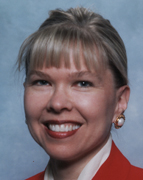
By Ann Miller; RN, MHA

[Executive-Director]

Join Our Mailing List

If you ever worked for a private medical practice, health insurance company, third party administrator or payer, hospital, public health clinic, VA or anywhere else in the healthcare space, we’d like to hear from you.

Tell the Medical Executive-Post about your work conditions, doctors or nurses, management shenanigans, or the politics and your observations of what is happening at your healthcare organization. Gossip, insider information, knowledge, personal opinion, insight or related hearsay – both positive and negative – is sought.

The clinical, financial, legal, insurance, pharma or administrative scenes are all fertile grounds for exposure and transparency. You may remain an anonymous tipster, or we will publish your identity upon request for additional credibility.

Please email MarcinkoAdvisors@msn.com or call us at: 770.448.0769

Please contact us today: MarcinkoAdvisors@msn.com

Conclusion

Your thoughts and comments on this ME-P are appreciated. Feel free to review our top-left column, and top-right sidebar materials, links, URLs and related websites, too. Then, subscribe to the ME-P. It is fast, free and secure.

Link: http://feeds.feedburner.com/HealthcareFinancialsthePostForcxos

Speaker: If you need a moderator or speaker for an upcoming event, Dr. David E. Marcinko; MBA – Publisher-in-Chief of the Medical Executive-Post – is available for seminar or speaking engagements. Contact: MarcinkoAdvisors@msn.com

OUR OTHER PRINT BOOKS AND RELATED INFORMATION SOURCES:

LEXICONS: http://www.springerpub.com/Search/marcinko
PHYSICIANS: www.MedicalBusinessAdvisors.com
PRACTICES: www.BusinessofMedicalPractice.com
HOSPITALS: http://www.crcpress.com/product/isbn/9781466558731
CLINICS: http://www.crcpress.com/product/isbn/9781439879900
ADVISORS: www.CertifiedMedicalPlanner.org
BLOG: www.MedicalExecutivePost.com

Product DetailsProduct DetailsProduct Details

Geithner Talks Tough about Banks’ Loan Modification Efforts

But – More Bark Than Bite

By Paul Kiel, ProPublica – April 30, 2010 11:30 am EDT

For nearly a year now, we at ProPublica have been reporting on the problems [1] homeowners have encountered when seeking a mortgage modification [2] under the administration’s program [3].

Yesterday, Treasury Secretary Tim Geithner for the first time acknowledged the depths of the problems, but didn’t offer any new solutions. He committed to release more detailed data on how banks and other servicers are faring—a promise Treasury first made six months ago.

Geithner Speaks

“We are concerned by the wide variation in performance we see across servicers and by the countless frustrated phone calls we receive from borrowers,” Geithner testified yesterday before Congress. He added that the Treasury was “troubled” by “reports that servicers have foreclosed on potentially eligible homeowners” and frequent complaints from homeowners that servicers lose their documents. He said servicers are “not doing enough to help homeowners” and that it was not “acceptable.”

From the Treasury Department

This isn’t the first time Treasury Department officials have directed some tough talk [4] at servicers, including vague threats [5] of penalties [6]. But it remains to be seen whether, as Geithner says, the Treasury will follow through and punish servicers that break the program’s rules. Under the program, which involves paying incentives to servicers, investors and homeowners to encourage modifications, the Treasury has the power to punish servicers by withholding those payments. But Treasury has never issued any such penalties. Nor has the government outlined how much such penalties might be.

Geithner did promise to publish within a month or two more detailed information about each servicer’s performance, data that could give a much clearer picture of how servicers are treating homeowners. Treasury officials have actually been promising to release this sort of data since last year [7]. In December, Herb Allison, the official in charge of the TARP, said [8] it would be released in January. Like everything else with the government’s loan mod program, it’s taken several months longer than it was supposed to.

More Granular Data

The new, more detailed data will show how long it takes each servicer to answer calls from homeowners, how long they take to process applications, and the number of customer complaints each receives. A Treasury spokeswoman also said the reports will provide some sort of breakdown of how many people have been denied mods for which reasons, but it’s not clear yet if that data will be made available by servicer.

Up until now, the Treasury has only been releasing basic information for each of the largest servicers. And each month, we’ve transformed that data into an easy-to-digest breakdown [9].

Assessment

One major problem, the data show, has been the large volume of homeowners in limbo (376,000 as of March). A trial period under the program is supposed to last three months, but for those homeowners, it’s stretched longer, sometimes as long as ten months [6]. In total, 1.2 million homeowners have started trials since the program launched a year ago, but only 231,000 have made it to a permanent modification.

Link: http://www.propublica.org/ion/bailout/item/geithner-talks-tough-about-banks-loan-mod-efforts-but-more-bark-than-bite

Conclusion

And so, your thoughts and comments on this ME-P are appreciated. Feel free to review our top-left column, and top-right sidebar materials, links, URLs and related websites, too. Then, be sure to subscribe. It is fast, free and secure.

Link: http://feeds.feedburner.com/HealthcareFinancialsthePostForcxos

Get our Widget: Get this widget!

Our Other Print Books and Related Information Sources:

Practice Management: http://www.springerpub.com/prod.aspx?prod_id=23759

Physician Financial Planning: http://www.jbpub.com/catalog/0763745790

Medical Risk Management: http://www.jbpub.com/catalog/9780763733421

Healthcare Organizations: www.HealthcareFinancials.com

Health Administration Terms: www.HealthDictionarySeries.com

Physician Advisors: www.CertifiedMedicalPlanner.com

Subscribe Now: Did you like this Medical Executive-Post, or find it helpful, interesting and informative? Want to get the latest ME-Ps delivered to your email box each morning? Just subscribe using the link below. You can unsubscribe at any time. Security is assured.

Link: http://feeds.feedburner.com/HealthcareFinancialsthePostForcxos

Sponsors Welcomed

And, credible sponsors and like-minded advertisers are always welcomed.

Link: https://healthcarefinancials.wordpress.com/2007/11/11/advertise 

About URAC

Accrediting Healthcare Organizations 

By Staff Reporters

URAC, formerly known as the Utilization Review Accreditation Commission, promotes healthcare quality by accrediting healthcare organizations.

An Independent Nonprofit

URAC, an independent, nonprofit organization is well known as a leader in promoting healthcare quality through its accreditation, education, and measurement programs. URAC offers a wide range of quality benchmarking programs and services that keep pace with the rapid changes in the healthcare system, and provide a symbol of excellence for organizations to validate their commitment to quality and accountability.

Mission

URAC’s mission is to promote continuous improvement in the quality and efficiency of health care management through processes of accreditation and education.

Assessment

Through its broad-based governance structure and an inclusive standards development process, URAC ensures that all stakeholders are represented in establishing meaningful quality measures for the entire healthcare industry.

For more information, visit www.urac.org.

Conclusion

And so, your thoughts and comments on this ME-P, and URAC, are appreciated. Feel free to review our top-left column, and top-right sidebar materials, links, URLs and related websites, too. Then, be sure to subscribe. It is fast, free and secure.

Link: http://feeds.feedburner.com/HealthcareFinancialsthePostForcxos

Speaker: If you need a moderator or speaker for an upcoming event, Dr. David E. Marcinko; MBA – Publisher-in-Chief of the Medical Executive-Post – is available for seminar or speaking engagements. Contact: MarcinkoAdvisors@msn.com

Get our Widget: Get this widget!

Our Other Print Books and Related Information Sources:

Practice Management: http://www.springerpub.com/prod.aspx?prod_id=23759

Physician Financial Planning: http://www.jbpub.com/catalog/0763745790

Medical Risk Management: http://www.jbpub.com/catalog/9780763733421

Healthcare Organizations: www.HealthcareFinancials.com

Health Administration Terms: www.HealthDictionarySeries.com

Physician Advisors: www.CertifiedMedicalPlanner.com

Subscribe Now: Did you like this Medical Executive-Post, or find it helpful, interesting and informative? Want to get the latest ME-Ps delivered to your email box each morning? Just subscribe using the link below. You can unsubscribe at any time. Security is assured.

Link: http://feeds.feedburner.com/HealthcareFinancialsthePostForcxos

Sponsors Welcomed

And, credible sponsors and like-minded advertisers are always welcomed.

Link: https://healthcarefinancials.wordpress.com/2007/11/11/advertise

Retirement Plan Risks for Physician-Employers

Join Our Mailing List

Advantages Well Known – Disadvantages Not So

By Brian J. Knabe, MD

[Certified Medical Planner™ candidate]

A source of risk often overlooked by the physician-employer is the risk involved in offering a retirement plan.

Medical practice owners, like other small business owners, find several advantages to starting a retirement plan. The plan can be used to allow the owners to save money in a tax-advantaged manner, and a generous retirement plan can help to attract and retain quality employees.

Administration Risks 

The recent “Great Recession” and turbulence in the stock market have highlighted the risks involved in administering these plans. There is a long history of fraud and neglect in the field of retirement savings plans, and a series of legislative efforts have been enacted to counter these abuses.

Current standards are based primarily on four federal laws, the Employee Retirement Income Security Act (ERISA), the Uniform Prudent Investors Act (UPIA), the Management of Public Employee Retirement Systems Act (MPERS), and the Pension Protection Act of 2006 (PPA).

ERISA Standards 

According to ERISA standards, you may be considered a fiduciary for a retirement plan if you meet any of the following tests:

  • You exercise discretionary authority or control over plan assets or plan management.
  • You are specifically identified in the written documents of a plan as a named fiduciary.
  • You have discretionary responsibility in the administration of the plan.
  • You manage the plan or its assets or render investment advice for a fee.

Recent court decisions have found fiduciaries to be personally liable, even for acts of which they were unaware or in areas not considered within their scope of responsibility. Acting with good intentions or in good faith is not an acceptable defense. Neither is ignorance of your responsibilities.

www.CertifiedMedicalPlanner.com

Liability Mitigation 

The liability of the administrator (or business owner) can be diminished by taking these steps:

  • Act in a procedurally prudent manner.
  • Diversify investments to minimize the risk of large losses.
  • Provide sufficient information and education to employees to enable them to exercise control over their investments.
  • Offer a broad, diversified investment menu having at least three (preferably five or six) “core” alternatives, each of which must be diversified.

Assessment

The most efficient way to meet these and other requirements is to hire a retirement plan provider which is a certified as a fiduciary, and which accepts “co-fiduciary” status along with the practice owner.  The Centre for Fiduciary Excellence (CEFEX) offers certification as a fiduciary.

For more information, see www.savantcapital.com/cefex.

Savant Capital Management, Inc®

190 Buckley Drive

Rockford, IL 61107

Tel 815-227-0300

Fax 815-226-2195

bknabe@savantcapital.com

Channel Surfing the ME-P

Have you visited our other topic channels? Established to facilitate idea exchange and link our community together, the value of these topics is dependent upon your input. Please take a minute to visit. And, to prevent that annoying spam, we ask that you register. It is fast, free and secure.

Conclusion

Your thoughts and comments on this ME-P are appreciated. Feel free to review our top-left column, and top-right sidebar materials, links, URLs and related websites, too. Then, subscribe to the ME-P. It is fast, free and secure.

Speaker: If you need a moderator or speaker for an upcoming event, Dr. David E. Marcinko; MBA – Publisher-in-Chief of the Medical Executive-Post – is available for seminar or speaking engagements. Contact: MarcinkoAdvisors@msn.com

OUR OTHER PRINT BOOKS AND RELATED INFORMATION SOURCES:

Product Details  Product Details

Behind the Financial Reform Push

Join Our Mailing List

Of Worries on Warring Regulators

By Jeff Gerth, ProPublica – April 14, 2010 12:07 pm EDT

Backers of financial regulatory reform are gearing up for the final stretch in a yearlong effort to construct a new, streamlined architecture. But, recent reports and testimony about the financial crisis suggest a crucial ingredient in any new structure is in short supply: cooperation among the watchdogs.

Office of Thrift Supervision

A proposal to eliminate one regulator seen by many as particularly weak—the Office of Thrift Supervision—could alleviate some friction. A soon-to-be-released federal examination of the Washington Mutual collapse found that OTS resisted efforts by a more skeptical regulator, the Federal Deposit Insurance Corporation, to take a closer look at WaMu, according to an account in The New York Times [1].

Reform legislation pending in the Senate [2] (PDF) would also create new agencies, including a financial stability council to assess risk and a consumer protection watchdog. To work as envisioned, the agencies would need new levels of information sharing and decision making. By contrast, history suggests agencies can be stingy with what they know and eager to point blame at sister regulators.

Fall of the House of Lehman

Lehman Brothers, the investment bank that collapsed in September 2008, presents a case in point.

A lengthy examiner’s report [3] for the judge overseeing Lehman’s bankruptcy found that the Federal Reserve Board and the Securities and Exchange Commission kept crucial data from each other even though they had “overlapping” functions. The heads of the Federal Reserve and the SEC reached a formal sharing agreement in July 2008, but the two regulators “did not share all material information that each collected about Lehman’s liquidity.”

SEC Queries

The SEC, asked by the Federal Reserve Bank of New York to provide data on Lehman’s commercial real estate exposure and liquidity, “affirmatively declined to share” the information because it was still in draft form, the bankruptcy report found. The reserve bank never turned down an information request from the SEC, but bank officials “did not perceive any duty to volunteer” information about a $7 billion shortfall in Lehman’s liquidity they uncovered in August 2008.

The reason? The report says it was “because the SEC did not always share information” with them. One official at the Federal Reserve Bank of New York told the examiner “there was not a warm audience” for information sharing between the New York Fed and the SEC.

Lehman fell under the scrutiny of the Fed after it was allowed to tap Fed lending facilities, normally reserved for banks, in the spring of 2008.

Oh … the Irony

Ironically, examiners at the Office of Thrift Supervision, which regulated Lehman’s bank subsidiary, concluded in July 2008 that Lehman had violated its own risk limits by placing an “outsized bet” on commercial real estate. But, the OTS appears as a bit player in the autopsy of Lehman’s collapse; top Federal Reserve officials “considered the SEC to be Lehman’s regulator,” the bankruptcy report found.

One of those officials, Timothy Geithner, was president of the Federal Reserve Bank of New York from 2003 until early 2009, when he became secretary of the Treasury. Shortly after he joined the cabinet, Geithner was asked by a senator about the Fed’s supervisory responsibility [4] in connection with the collapse of institutions like Lehman and the insurance giant AIG.

“I just want to point out,” Geithner told the Senate Finance Committee, “the Federal Reserve was not given responsibility for overseeing investment banks, insurance companies, hedge funds, non-bank financial systems that were a critical part of making this crisis so intense.”

networking_0

Fed Responsibilities

The Fed is responsible for supervising bank holding companies, such as Citigroup. Those holding companies include investment banks and, as a sister regulator quietly pointed out last week, the Fed shared responsibility with the SEC for overseeing the risky practices of Citigroup’s broker dealer.

John C. Dugan, who oversees nationally chartered banks as comptroller of the currency, told the Financial Crisis Inquiry Commission [5] (PDF) last week that most of the problems that led to a massive bailout for Citigroup took place under the umbrella of the weaker holding company regulated by the Fed—not at Citibank, the banking subsidiary under Dugan’s authority.

Most of the losses, Dugan said at the end of a lengthy report to the commission, were in subprime lending, leveraged loans and the structuring and warehousing of CDOs (collateralized debt obligations) that are supervised, either all or in part, “by the Federal Reserve.”

Geithner has acknowledged [6] that he could have done a better job of supervising Citigroup during his tenure at the New York Fed.

Assessment

If the Senate bill becomes law, Geithner would sit atop the new financial stability council, whose members will include representatives of several different agencies—including the Fed, the SEC and the Office of the Comptroller of the Currency.

Conclusion

Your thoughts and comments on this ME-P are appreciated. Feel free to review our top-left column, and top-right sidebar materials, links, URLs and related websites, too. Then, subscribe to the ME-P. It is fast, free and secure.

Link: http://feeds.feedburner.com/HealthcareFinancialsthePostForcxos

Speaker: If you need a moderator or speaker for an upcoming event, Dr. David E. Marcinko; MBA – Publisher-in-Chief of the Medical Executive-Post – is available for seminar or speaking engagements. Contact: MarcinkoAdvisors@msn.com

OUR OTHER PRINT BOOKS AND RELATED INFORMATION SOURCES:

Product DetailsProduct DetailsProduct Details

Product DetailsProduct Details

Product Details

How One Hedge Fund Helped Keep the Bubble Going

Join Our Mailing List

On the Magnetar Trade

By Jesse Eisinger and Jake Bernstein, ProPublica – April 9, 2010 1:00 pm EDT

In late 2005, the booming U.S. housing market seemed to be slowing. The Federal Reserve had begun raising interest rates. Subprime mortgage company shares were falling. Investors began to balk at buying complex mortgage securities. The housing bubble, which had propelled a historic growth in home prices, seemed poised to deflate. And if it had, the great financial crisis of 2008, which produced the Great Recession of 2008-09, might have come sooner and been less severe.

Precise Timing

At just that moment, a few savvy financial engineers at a suburban Chicago hedge fund [1] helped revive the Wall Street money machine, spawning billions of dollars of securities ultimately backed by home mortgages.

Get ProPublica’s Top Stories and Major Investigations Delivered to Your Inbox

When the crash came, nearly all of these securities became worthless, a loss of an estimated $40 billion paid by investors, the investment banks who helped bring them into the world, and, eventually, American taxpayers.

Yet the hedge fund, named Magnetar for the super-magnetic field created by the last moments of a dying star, earned outsized returns in the year the financial crisis began.

The Magnetar Trade

How Magnetar pulled this off is one of the untold stories of the meltdown. Only a small group of Wall Street insiders was privy to what became known as the Magnetar Trade [2]. Nearly all of those approached by ProPublica declined to talk on the record, fearing their careers would be hurt if they spoke publicly. But interviews with participants, e-mails [3], thousands of pages of documents and details about the securities that until now have not been publicly disclosed shed light on an arcane, secretive corner of Wall Street.

According to bankers and others involved, the Magnetar Trade worked this way: The hedge fund bought the riskiest portion of a kind of securities known as collateralized debt obligations — CDOs. If housing prices kept rising, this would provide a solid return for many years. But that’s not what hedge funds are after. They want outsized gains, the sooner the better, and Magnetar set itself up for a huge win: It placed bets that portions of its own deals would fail.

Chance Enhancement

Along the way, it did something to enhance the chances of that happening, according to several people with direct knowledge of the deals. They say Magnetar pressed to include riskier assets in their CDOs that would make the investments more vulnerable to failure. The hedge fund acknowledges it bet against its own deals but says the majority of its short positions, as they are known on Wall Street, involved similar CDOs that it did not own. Magnetar says it never selected the assets that went into its CDOs.

Magnetar says it was “market neutral,” meaning it would make money whether housing rose or fell. (Read their full statement. [4]) Dozens of Wall Street professionals, including many who had direct dealings with Magnetar, are skeptical of that assertion. They understood the Magnetar Trade as a bet against the subprime mortgage securities market. Why else, they ask, would a hedge fund sponsor tens of billions of dollars of new CDOs at a time of rising uncertainty about housing?

Key details of the Magnetar Trade remain shrouded in secrecy and the fund declined to respond to most of our questions. Magnetar invested in 30 CDOs from the spring of 2006 to the summer of 2007, though it declined to name them. ProPublica has identified 26 [5].

Independent Analysis

An independent analysis [6] commissioned by ProPublica shows that these deals defaulted faster and at a higher rate compared to other similar CDOs. According to the analysis, 96 percent of the Magnetar deals were in default by the end of 2008, compared with 68 percent for comparable CDOs. The study [6] was conducted by PF2 Securities Evaluations, a CDO valuation firm. (Magnetar says defaults don’t necessarily indicate the quality of the underlying CDO assets.)

From what we’ve learned, there was nothing illegal in what Magnetar did; it was playing by the rules in place at the time. And the hedge fund didn’t cause the housing bubble or the financial crisis. But the Magnetar Trade does illustrate the perverse incentives and reckless behavior that characterized the last days of the boom.

Major Players

Magnetar worked with major banks, including Merrill Lynch, Citigroup, and UBS. At least nine banks helped Magnetar hatch deals. Merrill Lynch, Citigroup and UBS all did multiple deals with Magnetar. JPMorgan Chase, often lauded for having avoided the worst of the CDO craze, actually ended up doing one of the riskiest deals with Magnetar, in May 2007, nearly a year after housing prices started to decline. According to marketing material and prospectuses [5], the banks didn’t disclose to CDO investors the role Magnetar played.

Many of the bankers who worked on these deals personally benefited, earning millions in annual bonuses. The banks booked profits at the outset. But those gains were fleeting. As it turned out, the banks that assembled and marketed the Magnetar CDOs had trouble selling them. And when the crash came, they were among the biggest losers.

Assessment

Of course, some bankers involved in the Magnetar Trade now regret what they did. We showed one of the many people fired as a result of the CDO collapse a list of unusually risky mortgage bonds included in a Magnetar deal he had worked on. The deal was a disaster. He shook his head at being reminded of the details and said: “After looking at this, I deserved to lose my job.”

Magnetar wasn’t the only market player to come up with clever ways to bet against housing. Many articles and books, including a bestseller by Michael Lewis [7], have recounted how a few investors saw trouble coming and bet big. Such short bets can be helpful; they can serve as a counterweight to manias and keep bubbles from expanding.

Magnetar’s approach had the opposite effect — by helping create investments it also bet against, the hedge fund was actually fueling the market. Magnetar wasn’t alone in that: A few other hedge funds also created CDOs they bet against. And, as the New York Times has reported, Goldman Sachs did too. But Magnetar industrialized the process, creating more and bigger CDOs.

Conclusion

Several journalists have alluded to the Magnetar Trade in recent years, but until now none has assembled a full narrative. Yves Smith, a prominent financial blogger who has reported on aspects of the Magnetar Trade, writes in her new book, “Econned,” [8] that “Magnetar went into the business of creating subprime CDOs on an unheard of scale. If the world had been spared their cunning, the insanity of 2006-2007 would have been less extreme and the unwinding milder.”

And so, your thoughts and comments on this ME-P are appreciated. Dr. Mike Burry, please opine. All feel free to review our top-left column, and top-right sidebar materials, links, URLs and related websites, too. Then, be sure to subscribe. It is fast, free and secure.

Link: http://feeds.feedburner.com/HealthcareFinancialsthePostForcxos

Speaker: If you need a moderator or speaker for an upcoming event, Dr. David E. Marcinko; MBA – Publisher-in-Chief of the Medical Executive-Post – is available for seminar or speaking engagements. Contact: MarcinkoAdvisors@msn.com

OUR OTHER PRINT BOOKS AND RELATED INFORMATION SOURCES:

DICTIONARIES: http://www.springerpub.com/Search/marcinko
PHYSICIANS: www.MedicalBusinessAdvisors.com
PRACTICES: www.BusinessofMedicalPractice.com
HOSPITALS: http://www.crcpress.com/product/isbn/9781466558731
CLINICS: http://www.crcpress.com/product/isbn/9781439879900
BLOG: www.MedicalExecutivePost.com
FINANCE: Financial Planning for Physicians and Advisors
INSURANCE: Risk Management and Insurance Strategies for Physicians and Advisors


Product Details  Product Details

How You Can Investigate Your State’s Oversight of Its Nurses

Reporting Recipe

By Charles Ornstein and Tracy Weber, ProPublica – March 3, 2010 5:38 pm EDT

cropped-me-p-mast-head-nurses.jpg

Nursing boards – and other agencies that oversee such professionals as pharmacists, dentists and mortgage brokers – do not get nearly enough scrutiny. These boards are charged with protecting consumers from unscrupulous or incompetent professionals, but some provide almost no public information about what they do or how they’re run. They are sometimes led by ill-qualified political appointees and lack sufficient personnel. But should these boring bureaucracies fail, the implications for your health, finances, and home can be dire.

Assessment

We realize that many newsrooms face competing priorities and limited resources, so we’re making our reporting recipe public.

Visit our special site with our complete how-to investigation guide [1], with information on all 50 states.

Conclusion

And so, your thoughts and comments on this ME-P are appreciated.

Get our Widget: Get this widget!

Our Other Print Books and Related Information Sources:

Practice Management: http://www.springerpub.com/prod.aspx?prod_id=23759

Physician Financial Planning: http://www.jbpub.com/catalog/0763745790

Medical Risk Management: http://www.jbpub.com/catalog/9780763733421

Healthcare Organizations: www.HealthcareFinancials.com

Health Administration Terms: www.HealthDictionarySeries.com

Physician Advisors: www.CertifiedMedicalPlanner.com

Subscribe Now: Did you like this Medical Executive-Post, or find it helpful, interesting and informative? Want to get the latest ME-Ps delivered to your email box each morning? Just subscribe using the link below. You can unsubscribe at any time. Security is assured.

Link: http://feeds.feedburner.com/HealthcareFinancialsthePostForcxos

Sponsors Welcomed

And, credible sponsors and like-minded advertisers are always welcomed.

Link: https://healthcarefinancials.wordpress.com/2007/11/11/advertise

Dr. Deborah Peel vs. Ms. Mary Grealy on Patient Privacy

Physician versus Lobbyist

By Darrell K. Pruitt; DDS

On March 23, 2010 Dr. Deborah Peel, a psychiatrist in private practice and the founder of Patient Privacy Rights (www.patientprivacyrights.org) posted an opinion piece titled: “Your Medical Records Aren’t Secure” in the Wall Street Journal.

http://online.wsj.com/article/SB10001424052748703580904575132111888664060.html

Her still popular article soon picked up 217 comments – reflecting respectable interest in the conundrum. Since then, her message of caution has gained momentum on the Internet in the security industry, and has even spilled over into appearances on Fox News, MSNBC and PBS in the last week.

Dr. Peel’s Case

Dr. Peel argues that even though the President claims digital health records will reduce costs and improve quality, they could undermine safe and effective care if patients become afraid to confide in their doctors.

“The solution is to insist upon technologies that protect a patient’s right to consent to share any personal data. A step in this direction is to demand that no federal stimulus dollars be used to develop electronic systems that do not have these technologies.”

It is easy to understand why Dr. Peel’s opinions draw the ire of HIT stakeholders both inside and outside government.

Dr. Peel concludes:

“Privacy has been essential to the ethical practice of medicine since the time of Hippocrates in fifth century B.C. The success of health-care reform and electronic record systems requires the same foundation of informed consent patients have always had with paper records systems. But if we squander billions on a health-care system no one trusts, millions will seek treatment outside the system or not at all. The resulting data, filled with errors and omissions, will be worth less than the paper it isn’t written on.” 

Dr. Peel is currently on a campaign to encourage Americans to sign her “Do not disclose” petition.

http://patientprivacyrights.org/do-not-disclose/

HIT Stakeholders Speak Up

Recently, the Wall Street Journal featured an opposing opinion to Dr. Peel’s in an article titled “Industry Rep Calls Patient Privacy ‘Overblown’ Worry”

http://online.wsj.com/article/SB10001424052748704094104575144110418562490.html?mod=googlenews_wsj#articleTabs%3Darticle

Ms. Grealy’s Case

Mary R. Grealy, President of the Healthcare Leadership Council, a coalition of chief executives from the health-care industry, posted her objections to Dr. Peel’s warnings about the dangers of digital records versus paper:

“Dr. Peel seeks to frighten people into believing electronic health records are more vulnerable than paper ones, which is not the case. She fails to acknowledge the important role of the HIPAA in protecting health information, or the extraordinary steps hospitals, health plans and physicians have taken to assure confidentiality. Building upon HIPAA, federal laws adopted this year strongly encourage encryption of data included in electronic health records and have imposed new criminal and civil penalties for violating an individual’s privacy.” 

“More importantly, though, if Dr. Peel’s prescription for this hyperbolic problem were to be followed, it’s actually our health that will be less secure. Burdening patients with the responsibility of deciding what health information should be divulged and what should be shielded from medical professionals brings an infinite array of possible consequences. Would the average patient know what information a surgeon needs in order to perform a complex procedure? It’s highly doubtful”.

“In a broader sense, draconian restrictions on the essential flow of medical information would have society-wide repercussions. It would affect the ability of public health officials to report and track incidences of disease. It would undermine the Food and Drug Administration’s capability to monitor the quality and safety of medical products, and product recalls would be hampered”.

“Perhaps most importantly, medical research into lifesaving cures and treatments would be severely hindered by restricted access to health information. Stymieing the necessary transfer of data contained in one diagnosis, one prescription or one lab test could mean the difference between life and death. That is a very high price to pay in order to address overblown privacy concerns”.

Mary R. Grealy

[Washington]

_____________________________________

Assessment

Mary Grealy doesn’t have a petition to sign.

Whereas Dr. Peel turns to patients for support, Ms. Grealy, President of the Healthcare Leadership Council, a coalition of chief executives from the health-care industry, turns to Washington.

Conclusion

And so, your thoughts and comments on this ME-P are appreciated. Feel free to review our top-left column, and top-right sidebar materials, links, URLs and related websites, too. Then, be sure to subscribe to the ME-P. It is fast, free and secure.

Link: http://feeds.feedburner.com/HealthcareFinancialsthePostForcxos

Our Other Print Books and Related Information Sources:

Practice Management: http://www.springerpub.com/prod.aspx?prod_id=23759

Physician Financial Planning: http://www.jbpub.com/catalog/0763745790

Medical Risk Management: http://www.jbpub.com/catalog/9780763733421

Healthcare Organizations: www.HealthcareFinancials.com

Health Administration Terms: www.HealthDictionarySeries.com

Physician Advisors: www.CertifiedMedicalPlanner.com

Subscribe Now: Did you like this Medical Executive-Post, or find it helpful, interesting and informative? Want to get the latest ME-Ps delivered to your email box each morning? Just subscribe using the link below. You can unsubscribe at any time. Security is assured.

Link: http://feeds.feedburner.com/HealthcareFinancialsthePostForcxos

Sponsors Welcomed

And, credible sponsors and like-minded advertisers are always welcomed.

Link: https://healthcarefinancials.wordpress.com/2007/11/11/advertise

Product DetailsProduct DetailsProduct Details

Senior Public Health Official [Dr. Howard Frumkin] is Reassigned

Join Our Mailing List

In Wake of Congressional Inquiries

By Joaquin Sapien, ProPublica – January 22, 2010 5:56 pm EDT

Dr. Howard Frumkin, the embattled director of a little-known but important division of the Centers for Disease Control and Prevention, has been reassigned to a position with less authority, a smaller staff and a lower budget.

Agency for Toxic Substances and Disease Registry

Frumkin had led the CDC’s Agency for Toxic Substances and Disease Registry (ATSDR) and the National Center for Environmental Health since 2005. For the past two years he had endured scathing criticism from Congress and the media for ATSDR’s poor handling of public health problems created by the formaldehyde-contaminated trailers that the government provided to Hurricane Katrina victims. The agency, which assesses public health risks posed by environmental hazards, also was criticized for understating the health risks of several other, less-publicized cases.

Internal CDC e-Mail

An internal CDC e-mail sent by Frumkin on Jan. 15 and obtained by ProPublica said he was leaving his position that day and would become a special assistant to the CDC’s director of Climate Change and Public Health. His old job will be temporarily filled by Henry Falk, who led ATSDR from 2003 to 2005. In the e-mail, Frumkin praised his staff and described more than 20 ATSDR accomplishments during his tenure. They include strengthening the agency’s tobacco laboratory and creating the Climate Change and Public Health program.

A Change of Function

A CDC spokesman said Frumkin’s transfer shouldn’t be considered a demotion but rather a change of function and responsibilities that the CDC’s director, Dr. Thomas Frieden, said would benefit both the agency and Dr. Frumkin, who is a recognized expert on climate change. But Frumkin’s authority has been sharply reduced, even though his salary won’t change. Previously, he oversaw two departments with a combined budget of about $264 million and 746 full-time employees. Now he will be an assistant to the director of a new program that has a budget of about $7.5 million, five full-time employees and five contractors, two of whom are part time. Through a CDC spokesman, Frumkin declined a request to be interviewed for this story.

US capitol

A 2008 ProPublica Report

In 2008, ProPublica reported [1] that Frumkin and others failed to take action after learning that ATSDR botched a study [2] on the trailers provided to Katrina victims. The Federal Emergency Management Agency used the study to assure trailer occupants that the formaldehyde levels weren’t high enough to harm them. ATSDR never corrected FEMA, even though Christopher De Rosa, who led ATSDR’s toxicology and environmental medicine division, repeatedly warned Frumkin that the report didn’t take into account the long-term health consequences of exposure to formaldehyde, like cancer risks. Frumkin eventually reassigned De Rosa to the newly created position of assistant director for toxicology and risk analysis. De Rosa went from leading a staff of about 70 employees to having none. He has since left the agency and is starting a nonprofit that will consult with communities close to environmental hazards.

The involvement of Frumkin and ATSDR in the formaldehyde debacle was the focus of an April 2008 Congressional hearing held by a subcommittee of the House Science and Technology Committee. A report [3] by the subcommittee’s Democratic majority, released that October, concluded that the failure of ATSDR’s leadership “kept Hurricane Katrina and Rita families living in trailers with elevated levels of formaldehyde … for at least one year longer than necessary.”

About six months after the report came out, the same panel, the Subcommittee on Investigations and Oversight, held another hearing [4] that touched on other problems at ATSDR.

Flawed Data

Before that hearing, the Democrats on the subcommittee released a report [5] that revealed other cases in which the agency relied on scientifically flawed data, causing other federal agencies to mislead communities about the dangers of their exposure to hazardous substances.

For example, an ATSDR report about water contamination at Camp Lejeune, a Marine Corps base in North Carolina, said the chemically tainted drinking water didn’t pose an increased cancer risk to residents there. The report was used to deny at least one veteran’s medical benefits for ailments that the veteran believed were related to the contamination. A month after the subcommittee hearing, ATSDR rescinded [6] some of its findings, saying it didn’t adequately consider the presence of benzene, a carcinogen that it found in the water. Eight months later, the agency said it would modify another report that was criticized at the hearing, about a bomb testing site in Vieques, Puerto Rico. For decades, the U.S. military used the site to test ammunition that contained depleted uranium and other toxins. In a 2003 report, ATSDR said that heavy metals and explosive compounds found on Vieques weren’t harmful to people living there. But Frumkin decided to take a fresh look at those findings because ATSDR hadn’t thoroughly investigated the site.

Assessment

Subcommittee investigators acknowledged that Frumkin inherited many of the problems in the report from previous ATSDR directors — the original Vieques and Camp Lejeune reports were both done before Frumkin was named director in 2005. But the investigators said he was aware of the agency’s problems and did little to fix them unless he was under political pressure. A CDC spokesman said that Frumkin’s reassignment had nothing to do with the congressional inquiries.

“Americans should know when their government tells them that they have nothing to worry about from environmental exposure that they really have nothing to worry about,” Rep. Brad MillerHouse Science and Technology Committee, D-N.C., the subcommittee’s chairman, said in a statement to ProPublica regarding Frumkin’s reassignment. “The nation needs ATSDR to do honest, scientifically rigorous work. There are many capable professionals at ATSDR who are committed to doing just that.”

Conclusion

Your thoughts and comments on this ME-P are appreciated. Feel free to review our top-left column, and top-right sidebar materials, links, URLs and related websites, too. Then, subscribe to the ME-P. It is fast, free and secure.

Speaker: If you need a moderator or speaker for an upcoming event, Dr. David E. Marcinko; MBA – Publisher-in-Chief of the Medical Executive-Post – is available for seminar or speaking engagements. Contact: MarcinkoAdvisors@msn.com

OUR OTHER PRINT BOOKS AND RELATED INFORMATION SOURCES:

Product DetailsProduct DetailsProduct Details

Insuring the Investment Portfolio

A Multi-Strategic Discussion

By Ann Miller RN, MHA

Since the market crash, portfolio insurance and program trading are not as popular as they were in the mid-1980s.

In this essay, Dr. Somnath Basu explains why.

Link: Insuring the Investment Portfolio

Somnath Basu, Ph.D., is program director of the California Institute of Finance in the School of Business at California Lutheran University where he’s also a professor of finance. He can be reached at (805) 493 3980 or basu@callutheran.edu.

Conclusion

And so, your thoughts and comments on this ME-P are appreciated. Financial advisors please chime in on the debate? Is Basu correct; why or why not? Review our top-left column, and top-right sidebar materials, links, URLs and related websites, too. Then, be sure to subscribe to the ME-P. It is fast, free and secure.

Link: http://feeds.feedburner.com/HealthcareFinancialsthePostForcxos

Contact: MarcinkoAdvisors@msn.com 

Get our Widget: Get this widget!

Our Other Print Books and Related Information Sources:

Practice Management: http://www.springerpub.com/prod.aspx?prod_id=23759

Physician Financial Planning: http://www.jbpub.com/catalog/0763745790

Medical Risk Management: http://www.jbpub.com/catalog/9780763733421

Healthcare Organizations: www.HealthcareFinancials.com

Health Administration Terms: www.HealthDictionarySeries.com

Physician Advisors: www.CertifiedMedicalPlanner.com

Subscribe Now: Did you like this Medical Executive-Post, or find it helpful, interesting and informative? Want to get the latest ME-Ps delivered to your email box each morning? Just subscribe using the link below. You can unsubscribe at any time. Security is assured.

Link: http://feeds.feedburner.com/HealthcareFinancialsthePostForcxos

Sponsors Welcomed

And, credible sponsors and like-minded advertisers are always welcomed.

Link: https://healthcarefinancials.wordpress.com/2007/11/11/advertise

Risk Assessment of Medical Practice Billing Companies

Join Our Mailing List

Office of Inspector General

trites

[By Pati Trites MPA, CHBC with Staff Reporters]

The Office of Inspector General [OIG] believes a medical billing company’s written policies and procedures, its educational program and its audit and investigation plans should take into consideration the particular statutes, rules and program instructions that apply to each function or department of the billing company.

Co-ordination Needed

Consequently, coordination between these functions is needed, with an emphasis on areas of special concern that have been identified by the OIG through its investigative and audit functions.

Furthermore, the OIG recommends that billing companies conduct a comprehensive self-administered risk analysis or contract for an independent risk analysis by experienced health care consulting professionals. This risk analysis should identify and rank the various compliance and business risks the company may experience in its daily operations.

Risk Analysis

Once completed, the risk analysis should serve as the basis for the written policies the billing company should develop. The OIG provides the following specific list of particular risk areas that should be addressed by billing companies. It should be noted that this list is not all-encompassing and the risk analysis completed as a result of the company’s audit may provide a more individualized roadmap. Nonetheless, this list is a compilation of several years of OIG audits, investigations and evaluations and should provide a solid starting point for a company’s initial effort.

Problem List

Among the risk areas the OIG has identified as particularly problematic are:

  • Billing for items or services not actually documented;
  • Unbundling;
  • Upcoding, such as, for example, “DRG creep;
  • Inappropriate balance billing;
  • Inadequate resolution of overpayments;
  • Lack of integrity in computer systems;
  • Computer software programs that encourage billing personnel to enter data in fields indicating services were rendered though not actually performed or documented;
  • Failure to maintain the confidentiality of information/records;
  • Knowing misuse of provider identification numbers, which results in improper billing;
  • Outpatient services rendered in connection with inpatient stays;
  • Duplicate billing in an attempt to gain duplicate payment;
  • Billing for discharge in lieu of transfer;
  • Failure to properly use modifiers;
  • Billing company incentives that violate the anti-kickback statute or other similar Federal or State statute or regulation;
  • Joint ventures;
  • Routine waiver of copayments and billing third-party insurance only; and
  • Discounts and professional courtesy.

Additional Risk Areas

The physician-executive should understand that a billing company’s prior history of noncompliance with applicable statutes, regulations and Federal health care program requirements may indicate additional types of risk areas where the billing company may be vulnerable and may require necessary policy measures to prevent avoidable recurrence.

Additional risk areas should be assessed by billing companies as well as incorporated into the written policies and procedures and training elements developed as part of their compliance programs.

Assessment 

Join Our Mailing List 

Billing companies that do not code bills should implement policies that require notification to the provider who is coding to implement and follow compliance safeguards with respect to documentation of services rendered.

Moreover, the OIG recommends that billing companies who do not code for their provider clients incorporate in their contractual agreements the provider’s acknowledgment and agreement to address the above coding compliance safeguards.

Conclusion

Your thoughts and comments on this ME-P are appreciated. Feel free to review our top-left column, and top-right sidebar materials, links, URLs and related websites, too. Then, subscribe to the ME-P. It is fast, free and secure.

Link: http://feeds.feedburner.com/HealthcareFinancialsthePostForcxos

Speaker: If you need a moderator or speaker for an upcoming event, Dr. David E. Marcinko; MBA – Publisher-in-Chief of the Medical Executive-Post – is available for seminar or speaking engagements. Contact: MarcinkoAdvisors@msn.com

OUR OTHER PRINT BOOKS AND RELATED INFORMATION SOURCES:

DICTIONARIES: http://www.springerpub.com/Search/marcinko
PHYSICIANS: www.MedicalBusinessAdvisors.com
PRACTICES: www.BusinessofMedicalPractice.com
HOSPITALS: http://www.crcpress.com/product/isbn/9781466558731
CLINICS: http://www.crcpress.com/product/isbn/9781439879900
BLOG: www.MedicalExecutivePost.com
FINANCE: Financial Planning for Physicians and Advisors
INSURANCE: Risk Management and Insurance Strategies for Physicians and Advisors

Product DetailsProduct DetailsProduct Details

Safe Patients, Smart Hospitals [Book Review]

Join Our Mailing List

How One Doctor’s Checklist Can Help Us Change Health Care from the Inside Out

[By Staff Reporters]

Improving health care is a priority for all Americans, but it’s a daunting subject.

New Book

In this new book, Dr. Peter Pronovost makes reform relatable, easy to understand, and inspiring. With opinions and anecdotal evidence from patients, health care professionals, and Dr. Pronovost’s own experience, as well as comprehensive research on medical procedures and policies, Safe Patients, Smart Hospitals shows how simple steps can fix our hospitals and improve patient care.

About the Authors

Peter Pronovost PhD, MD is a professor at Johns Hopkins University School of Medicine and serves as medical director for the Johns Hopkins Center for Innovation in Quality Patient Care.

Eric Vohr was formerly the assistant director of media relations at Johns Hopkins University School of Medicine and he teaches technical writing at Johns Hopkins.

Assessment

http://www.amazon.com/Safe-Patients-Smart-Hospitals-Checklist/dp/159463064X/ref=sr_1_3?ie=UTF8&s=books&qid=1266790932&sr=1-3

Conclusion

Your thoughts and comments on this ME-P are appreciated. Feel free to review our top-left column, and top-right sidebar materials, links, URLs and related websites, too. Then, subscribe to the ME-P. It is fast, free and secure.

Speaker: If you need a moderator or speaker for an upcoming event, Dr. David E. Marcinko; MBA – Publisher-in-Chief of the Medical Executive-Post – is available for seminar or speaking engagements. Contact: MarcinkoAdvisors@msn.com

OUR OTHER PRINT BOOKS AND RELATED INFORMATION SOURCES:

Product DetailsProduct DetailsProduct Details

GE and Muzzled Radiologist End Libel Case

MRI Drug Omniscan Implicated in UK

By Staff Reporters

General Electric Healthcare has settled its libel lawsuit against Dr. Henrik Thomsen, the Danish radiologist who raised questions about the safety of one of the company’s drugs used for magnetic resonance imaging [MRI] scans.

Press Release: statement

According to Jeff Gerth of ProPublica, the two-year-old suit in London involved a 2007 presentation Thomsen made in Oxford and statements in an article published in his name by a European scientific journal in February 2008. Both contained descriptions of his experiences at a Copenhagen hospital in 2006, when 20 kidney patients, all of whom had been injected with the GE Healthcare drug, Omniscan, developed a crippling and sometimes deadly disease. The rare condition is called nephrogenic systemic fibrosis, or NSF.

Assessment

Link: http://www.propublica.org/feature/ge-muzzled-radiologist-end-uk-libel-case

Conclusion

And so, your thoughts and comments on this ME-P are appreciated. Feel free to review our top-left column, and top-right sidebar materials, links, URLs and related websites, too. Then, be sure to subscribe to the ME-P. It is fast, free and secure.

Link: http://feeds.feedburner.com/HealthcareFinancialsthePostForcxos

Get our Widget: Get this widget!

Our Other Print Books and Related Information Sources:

Practice Management: http://www.springerpub.com/prod.aspx?prod_id=23759

Physician Financial Planning: http://www.jbpub.com/catalog/0763745790

Medical Risk Management: http://www.jbpub.com/catalog/9780763733421

Healthcare Organizations: www.HealthcareFinancials.com

Health Administration Terms: www.HealthDictionarySeries.com

Physician Advisors: www.CertifiedMedicalPlanner.com

Subscribe Now: Did you like this Medical Executive-Post, or find it helpful, interesting and informative? Want to get the latest ME-Ps delivered to your email box each morning? Just subscribe using the link below. You can unsubscribe at any time. Security is assured.

Link: http://feeds.feedburner.com/HealthcareFinancialsthePostForcxos

Sponsors Welcomed

And, credible sponsors and like-minded advertisers are always welcomed.

Link: https://healthcarefinancials.wordpress.com/2007/11/11/advertise

Dangerous Healthcare Givers

Names Reported Missing from Federal Database

By Staff Reporters

Writing in ProPublica, and the Los Angeles Times, Tracy Weber and Charles Ornstein report that more than two decades ago, Congress set out to stop dangerous or incompetent caregivers from crossing state lines and landing in trouble again.

So, it ordered up a national database allowing hospitals to check for disciplinary actions taken anywhere in the country against licensed health professionals.

But, this database invoked no fear and dread, like the NPDB for physicians.

Ready for Hospital Use

Now On March 1, 2010– 22 years later – the federal government finally plans to let hospitals use it.  

Defective Database?

But, the database is missing serious disciplinary actions against what are probably thousands of health providers.

Link: http://www.propublica.org/feature/federal-health-professional-disciplinary-database-remarkably-incomplete

Division of Practitioner Data Banks (DPDB)

For physicians, the Division of Practitioner Data Banks (DPDB) is responsible for the implementation of the National Practitioner Data Bank (NPDB) and Healthcare Integrity and Protection Data Bank (HIPDB).  The NPDB and HIPDB are alert or flagging systems intended to facilitate a comprehensive review of the professional credentials of health care practitioners, providers, and suppliers.

One Doctor’s Opinion

“For doctors, the NPDB was always the “elephant in the room” regarding professional liability reporting, according to ME-P Publisher-in-Chief Dr. David Edward Marcinko, MBA. And so, I find this whole care-giver affair most disturbing. To think, this is the same government that wants to socialize medicine, or force implement eMRs. They should “clean their own house”,  first.” 

Conclusion

And so, your thoughts and comments on this ME-P are appreciated. Then, be sure to subscribe to the ME-P. It is fast, free and secure.

Link: http://feeds.feedburner.com/HealthcareFinancialsthePostForcxos

Get our Widget: Get this widget!

Our Other Print Books and Related Information Sources:

Practice Management: http://www.springerpub.com/prod.aspx?prod_id=23759

Physician Financial Planning: http://www.jbpub.com/catalog/0763745790

Medical Risk Management: http://www.jbpub.com/catalog/9780763733421

Healthcare Organizations: www.HealthcareFinancials.com

Health Administration Terms: www.HealthDictionarySeries.com

Physician Advisors: www.CertifiedMedicalPlanner.com

Subscribe Now: Did you like this Medical Executive-Post, or find it helpful, interesting and informative? Want to get the latest ME-Ps delivered to your email box each morning? Just subscribe using the link below. You can unsubscribe at any time. Security is assured.

Link: http://feeds.feedburner.com/HealthcareFinancialsthePostForcxos

Understanding Hazard Communication Labeling

An OSHA Requirement

By Staff Reporters

www.HealthcareFinancials.com


The Hazard Communication Standard

The OSHA Hazard Communication Standard requires proper labeling of all chemicals present in the workplace. Labels are usually provided on chemicals that are found in a healthcare practice, but when a substance is transferred from its original container to a different container, a label must be affixed to the secondary container to inform any employee who uses it of the contents and their potential risks.

Assessment

The Standard also requires education for employees regarding any chemical present in the workplace to which they may be exposed under normal conditions of use or in a foreseeable emergency.

Conclusion

And so, your thoughts and comments on this ME-P are appreciated. Feel free to review our top-left column, and top-right sidebar materials, links, URLs and related websites, too. Then, be sure to subscribe to the ME-P. It is fast, free and secure.

Link: http://feeds.feedburner.com/HealthcareFinancialsthePostForcxos

 If you need a moderator or speaker for an upcoming event, Dr. David E. Marcinko; MBA – Publisher-in-Chief of the Executive-Post – is available for seminar or speaking engagements. Contact: MarcinkoAdvisors@msn.com 

Get our Widget: Get this widget!

Our Other Print Books and Related Information Sources:

Practice Management: http://www.springerpub.com/prod.aspx?prod_id=23759

Physician Financial Planning: http://www.jbpub.com/catalog/0763745790

Medical Risk Management: http://www.jbpub.com/catalog/9780763733421

Healthcare Organizations: www.HealthcareFinancials.com

Health Administration Terms: www.HealthDictionarySeries.com

Physician Advisors: www.CertifiedMedicalPlanner.com

Subscribe Now: Did you like this Medical Executive-Post, or find it helpful, interesting and informative? Want to get the latest ME-Ps delivered to your email box each morning? Just subscribe using the link below. You can unsubscribe at any time. Security is assured.

Link: http://feeds.feedburner.com/HealthcareFinancialsthePostForcxos

Sponsors Welcomed

And, credible sponsors and like-minded advertisers are always welcomed.

Link: https://healthcarefinancials.wordpress.com/2007/11/11/advertise

A Quality Story all Doctors and Patients Should Re-Read

[Mis] Adventures in Cardiology

Reposted by Ann Miller RN MHA

[Executive Director]

According to the author of this re-posted e-journal, Johns Hopkins Medicine has a long tradition of prioritizing patients, and striving for the bottom rung that are the anonymous poor.

And, many agree this is true. In fact, our Publisher-in-Chief grew up in Baltimore Maryland and has written about this venerable institution on the ME-P before.

Outliers

If, for example, you catch a bullet on a Baltimore street corner, or your mother presents you at the ER as a feverish welfare child, then it us open season for the medical students, well meaning as they may be. They can practice on you because if  their actions result in an adverse outcome—which is to say that if you are mangled or killed—nobody will question said outcome, precisely because … you are a nobody.

At the other end of the spectrum are wealthy and prominent patients, who get treated by doctors who have already learned what not to do from the mistakes inflicted upon the lower classes.

Of … Quality Medical Care

However, sometimes mistakes happen, and medical errors do occur as we all are human. But, what is reported to have happened to one journalists’ wife – Pam – at Johns Hopkins Hospital in March of 2002 is beyond the pale.

As a middle class citizen, she landed somewhere in the middle of the bell shaped curve. Maybe she got snookered by all the hype from US News into thinking that she was going to be treated by the best doctor at “The Best Hospital in America” … You decide.

Assessment

This is the story of what happened to Pam; as reported by her journalist husband Don.

Link: http://adventuresincardiology.com/

Conclusion

Indignation Index: 96

We trust medical quality guru Bob Wachter MD will opine. And so, your additional thoughts and comments on this ME-Pare also appreciated. Feel free to review our top-left column, and top-right sidebar materials, links, URLs and related websites, too. Then, be sure to subscribe to the ME-P. It is fast, free and secure.

Subscribe Now: Did you like this Medical Executive-Post, or find it helpful, interesting and informative? Want to get the latest ME-Ps delivered to your email box each morning? Just subscribe using the link below. You can unsubscribe at any time. Security is assured.

Link: http://feeds.feedburner.com/HealthcareFinancialsthePostForcxos

Speaker: If you need a moderator or speaker for an upcoming event, Dr. David E. Marcinko; MBA – Publisher-in-Chief of the Medical Executive-Post – is available for seminar or speaking engagements. Contact: MarcinkoAdvisors@msn.com

OUR OTHER PRINT BOOKS AND RELATED INFORMATION SOURCES:


Product DetailsProduct Details

Product Details

Will eMRs Raise the Legal Standard of Care and Increase Malpractice Risk?

Join Our Mailing List

Focus on Malpractice and Professional Liability

By Ann Miller; RN, MHA

By Dr. David E. Marcinko; MBA

[Executive Director]

We first postulated on this topic in our print book “Insurance Planning and Risk Management for Physicians and their Advisors.” Additional posts and comments are contained within this ME-P.

And now, Robert J. Mintz, JD wonders if medical provider liability increases with eHRs, even if the quality of care is vastly improved?

Related External Posts

Conclusion

Your thoughts and comments on this ME-P are appreciated. Feel free to review our top-left column, and top-right sidebar materials, links, URLs and related websites, too. Then, subscribe to the ME-P. It is fast, free and secure.

Link: http://feeds.feedburner.com/HealthcareFinancialsthePostForcxos

Speaker: If you need a moderator or speaker for an upcoming event, Dr. David E. Marcinko; MBA – Publisher-in-Chief of the Medical Executive-Post – is available for seminar or speaking engagements. Contact: MarcinkoAdvisors@msn.com

OUR OTHER PRINT BOOKS AND RELATED INFORMATION SOURCES:

DICTIONARIES: http://www.springerpub.com/Search/marcinko
PHYSICIANS: www.MedicalBusinessAdvisors.com
PRACTICES: www.BusinessofMedicalPractice.com
HOSPITALS: http://www.crcpress.com/product/isbn/9781466558731
CLINICS: http://www.crcpress.com/product/isbn/9781439879900
BLOG: www.MedicalExecutivePost.com
FINANCE: Financial Planning for Physicians and Advisors
INSURANCE: Risk Management and Insurance Strategies for Physicians and Advisors

Risk Management, Liability Insurance, and Asset Protection Strategies for Doctors and Advisors: Best Practices from Leading Consultants and Certified Medical Planners™ Risk Management, Liability Insurance, and Asset Protection Strategies for Doctors and Advisors: Best Practices from Leading Consultants and Certified Medical Planners™

   Product Details 

***

Invite Dr. Marcinko

***

Investors File Resolutions with Health Companies

Seeking Compensation Transparency

By Staff Reporters

Thirty investors just filed shareholder resolutions involving 21 health companies asking them to publicly disclose the total compensation packages of their top executives.

Assessment

The investors are faith-based institutional shareholders who belong to the Interfaith Center on Corporate Responsibility.

Join Our Mailing List

http://www.fa-mag.com/green/news/4805-investors-file-resolutions-with-health-companies.html

Conclusion

And so, your thoughts and comments on this ME-P are appreciated. Feel free to review our top-left column, and top-right sidebar materials, links, URLs and related websites, too. Then, be sure to subscribe to the ME-P. It is fast, free and secure.

Link: http://feeds.feedburner.com/HealthcareFinancialsthePostForcxos

Speaker: If you need a moderator or speaker for an upcoming event, Dr. David E. Marcinko; MBA – Publisher-in-Chief of the Executive-Post – is available for seminar or speaking engagements. Contact: MarcinkoAdvisors@msn.com 

Get our Widget: Get this widget!

Our Other Print Books and Related Information Sources:

Practice Management: http://www.springerpub.com/prod.aspx?prod_id=23759

Physician Financial Planning: http://www.jbpub.com/catalog/0763745790

Medical Risk Management: http://www.jbpub.com/catalog/9780763733421

Healthcare Organizations: www.HealthcareFinancials.com

Health Administration Terms: www.HealthDictionarySeries.com

Physician Advisors: www.CertifiedMedicalPlanner.com

Subscribe Now: Did you like this Medical Executive-Post, or find it helpful, interesting and informative? Want to get the latest ME-Ps delivered to your email box each morning? Just subscribe using the link below. You can unsubscribe at any time. Security is assured.

Link: http://feeds.feedburner.com/HealthcareFinancialsthePostForcxos

Sponsors Welcomed

And, credible sponsors and like-minded advertisers are always welcomed.

Link: https://healthcarefinancials.wordpress.com/2007/11/11/advertise

Strategic Modern Portfolio Theory Considerations in Hospital Capital Formation

Understanding Risk for Doctors and Financial Advisors

By Calvin W. Wiese; MBA, CPA

www.HealthcareFinancials.com

Hospital capital investments financial create risk. Risk is the uncertainty of future events. When hospitals make capital investments, they commit to costs that affect future periods. Those costs are known and relatively fixed. What are unknown are the benefits to be realized by those capital investments. For capital investments, risk is the certainty of future costs coupled with the uncertainty of future benefits. In some cases, while the future benefits are uncertain, there is a high degree of certainty that the benefits will exceed the costs. In these cases, risk can be very low.

Risk Re-Defined

Risk may be better defined as the degree to which the uncertainty of unknown benefits will exceed the known and committed costs. For example, when capital assets are purchased, both the burdens and the benefits of ownership are transferred to the owner. The burdens are primarily the costs associated with acquisition and installation. The benefits are primarily the revenues generated by operating the capital assets. Risk of ownership is created to the degree that the benefits are uncertain.

Managing Risk

Hospital managers and physician executives need to be skilled at putting hospital assets at risk. Without clear knowledge and understanding of the benefits and the burdens, hospitals can quickly find themselves at unacceptably high levels of risk. Risk must be continually assessed and evaluated in order to successfully put hospital assets at risk. Hospitals require many varied capital investments; their capital investments represent a risk portfolio. An effective combination of risky assets can often create risk that is less than the sum of the risk of each asset.

About MPT

Of course, financial managers have know this for years as a basic principle of Modern Portfolio Theory (MPT), first introduced by Harry Markowitz, PhD, with the paper “Portfolio Selection,” which appeared in the 1952 Journal of Finance. Thirty-eight years later, he shared a Nobel Prize with Merton Miller, PhD, and William Sharpe, PhD, for what has become a broad theory for securities asset selection; and hospital assets may be viewed as little different. Prior to Markowitz’s work, investors focused on assessing the rewards and risks of individual securities in constructing a portfolio. Standard advice was to identify those that offered the best opportunities for gain with the least risk and then construct a portfolio from them.

Following this advice, a hospital administrator might conclude that a positron emission tomography (PET) scanning machine offered good risk-reward characteristics, and pursue a strategy to compile a network of them in a given geographic area. Intuitively, this would be foolish. Markowitz formalized this intuition. Detailing the mathematics of diversity, he proposed that investors focus on selecting portfolios based on their overall risk-reward characteristics instead of merely compiling portfolios of securities, or capital assets that each individually has attractive risk-reward characteristics. In a nutshell, just as investors should select portfolios not individual securities, so hospital administrators should select a wide spectrum of radiology services, not merely machines.

Assessment

Savvy hospital managers will mitigate ownership risk by constructing their portfolio of risky assets in a manner that lowers overall risk.

Conclusion

Join Our Mailing List

And so, your thoughts and comments on this ME-P post are appreciated. How do you define financial risk in your healthcare organization? How do you manage and mitigate it? Feel free to review our top-left column, and top-right sidebar materials, links, URLs and related websites, too. Then, be sure to subscribe to the ME-P. It is fast, free and secure.

Link: http://feeds.feedburner.com/HealthcareFinancialsthePostForcxos

Speaker: If you need a moderator or speaker for an upcoming event, Dr. David E. Marcinko; MBA – Publisher-in-Chief of the Executive-Post – is available for seminar or speaking engagements. Contact: MarcinkoAdvisors@msn.com 

Get our Widget: Get this widget!

Our Other Print Books and Related Information Sources:

Practice Management: http://www.springerpub.com/prod.aspx?prod_id=23759

Physician Financial Planning: http://www.jbpub.com/catalog/0763745790

Medical Risk Management: http://www.jbpub.com/catalog/9780763733421

Healthcare Organizations: www.HealthcareFinancials.com

Health Administration Terms: www.HealthDictionarySeries.com

Physician Advisors: www.CertifiedMedicalPlanner.com

Subscribe Now: Did you like this Medical Executive-Post, or find it helpful, interesting and informative? Want to get the latest ME-Ps delivered to your email box each morning? Just subscribe using the link below. You can unsubscribe at any time. Security is assured.

Link: http://feeds.feedburner.com/HealthcareFinancialsthePostForcxos

Sponsors Welcomed

And, credible sponsors and like-minded advertisers are always welcomed.

Link: https://healthcarefinancials.wordpress.com/2007/11/11/advertise

When Investing or Stock Trading Is No Longer Fun

Understanding Obsessive-Compulsive Behavior

By: Dr. David Edward Marcinko; FACFAS, MBA, CMP™

By: Dr. Eugene Schmuckler; MBA, CTS

By: Dr. Kenneth H. Shubin-Stein, CFA

By: Richard B. Wagner; JD, CFP®fp-book1

An obsession is a persistent, recurring preoccupation with an idea or thought. A compulsion is an impulse that is experienced as irresistible. Obsessive-compulsive individuals feel compelled to think thoughts that they say they do not want to think or to carry out actions that they say are against their will. These individuals usually realize that their behavior is irrational, but it is beyond their control. In general, these individuals are preoccupied with orderliness, perfectionism, and mental and interpersonal control, at the expense of flexibility, openness, and efficiency.

Specifically, behaviors such as the following may be seen:

  • Preoccupation with details.
  • Perfectionism that interferes with task completion.
  • Excessive devotion to work and office productivity.
  • Scrupulous and inflexible about morality (not accounted for by cultural or religious identification).
  • Inability to discard worn-out or worthless objects without sentimental value.
  • Reluctance to delegate tasks or to work with others.
  • Adopts a miserly spending style toward both self and others.
  • Demonstrates a rigid, inflexible and stubborn nature.

Most people resort to some minor obsessive-compulsive patterns under severe pressure or when trying to achieve goals that they consider critically important. In fact, many individuals refer to this as superstitious behavior. The study habits required for medical students entail a good deal of compulsive behavior.

Related Addictions

As the above examples suggest, there are a variety of addictions possible. Recent news accounts have pointed out that even high-level governmental officials can experience sex addiction. The advent of the Internet has led to what is referred to as Internet addiction where an individual is transfixed to the computer working for hours on end without a specific project in mind. The simple act of “surfing” offers the person afflicted with the addiction some degree of satisfaction.

The Gambler

Still another form of addictive behavior is that of the compulsive gambler. This is the behavior of an individual who is unable to resist the impulse to gamble. Many reasons have been posited for this type of behavior including the death instinct; a need to lose; a wish to repeat a big win; identification with adults the “gambler” knew as an adolescent; and a desire for action and excitement. There are other explanations offered for this form of compulsive behavior. The act of betting allows the individual to express an immature bravery, courage, manliness, and persistence against unfavorable odds. By actually using money and challenging reality, he puts himself into “action” and intense emotion. By means of gambling, the addicted individual is able to pretend that he is favored by “lady luck,” specially chosen, successful, able to beat the system and escape from feelings of discontent.

Just Plain Greed

Greed is another reason. In fact, a 1987 poll conducted by the Chicago Tribune revealed that people who earned less than $30,000 a year, said that $50,000 would fulfill their dreams, whereas those with yearly incomes of over $100,000 said they would need $250,000 to be satisfied. More recent studies confirm that goals keep getting pushed upward as soon as a lower level is reached. Now, consider Bernie Madoff, and the recent sub-prime mortgage debt fiasco in this light?

Compulsive Doctors

Edward Looney, executive director of the Trenton, New Jersey based Council on Compulsive Gambling (CCG) reports that the number of individuals calling with trading-associated problems is doubling annually. In the mid 1980s, when the council was formed, the number of people calling the council’s hotline (1 – 800 Gambler) with stock-market gambling problems was approximately 1.5 percent of all calls received. In 1998 that number grew to 3 percent and it is projected to rise to 7-8 percent by 2005. Dr. Robert Custer, an expert on compulsive gambling reported, that stock market gamblers represent over 20 percent of the gamblers that he has diagnosed. It is evident that on-line trading presents a tremendous risk to the speculator. The CCG describes some of the consequences:

  • Dr. Fred B. is a 43-year-old Caucasian male physician with a salary above $100,000 and in debt for more than $100,000. He is married with two children. He was a day trader.
  • Michael Q. is a 28-year-old Caucasian male registered nurse. He is married and the father of one (7 month old) child. He earns $65,000 and lost $40,000 savings in day trading and is in debt for $25,000. He has suicidal ideation.

Assessment

Join Our Mailing List

Question: So how much money is enough?

Answer: Just a little bit more.

Conclusion

And so, your thoughts and comments on this Medical Executive-Post are appreciated. Feel free to review our top-left column, and top-right sidebar materials, links, URLs and related websites, too. Then, be sure to subscribe to the ME-P. It is fast, free and secure.

Link: http://feeds.feedburner.com/HealthcareFinancialsthePostForcxos

Speaker: If you need a moderator or speaker for an upcoming event, Dr. David E. Marcinko; MBA – Publisher-in-Chief of the Medical Executive-Post – is available for seminar or speaking engagements. Contact: MarcinkoAdvisors@msn.com

Our Other Print Books and Related Information Sources:

Practice Management: http://www.springerpub.com/prod.aspx?prod_id=23759

Physician Financial Planning: http://www.jbpub.com/catalog/0763745790

Medical Risk Management: http://www.jbpub.com/catalog/9780763733421

Physician Advisors: www.CertifiedMedicalPlanner.org

Subscribe Now: Did you like this Medical Executive-Post, or find it helpful, interesting and informative? Want to get the latest ME-Ps delivered to your email box each morning? Just subscribe using the link below. You can unsubscribe at any time. Security is assured.

Link: http://feeds.feedburner.com/HealthcareFinancialsthePostForcxos

Sponsors Welcomed

And, credible sponsors and like-minded advertisers are always welcomed.

Link: https://healthcarefinancials.wordpress.com/2007/11/11/advertise

Product Details  Product Details

Understanding Deviations in Medical Billing

Join Our Mailing List

Appreciating Normative Comparisons

[By Patricia A. Trites; MPA, CHBC, CPC, CHCC, CHCO ]

tritesDeviation in medical billing can be detected through utilization data that insurance companies produce on all providers that submit a claim for payment of services.

Insurance companies track utilization through a variety of parameters, including CPT codes, ICD-9-CM, or number of referrals. Different programs utilize certain benchmarks to trigger a review.

Example

For example, a physician who sees patients in the office from 8:00 a.m. until 8:00 p.m., seven days a week and has the highest billing amounts in the region can be subjected to a review. This doctor’s activities would be scrutinized. The utilization review department would probably flag this doctor’s provider number and request more information on a sampling of his or her claims, based on the volume.

Utilization Review

Some utilization review activities may occur due to the type of services that a doctor may offer. For example, if a cardiologist should suddenly start billing for a large number of incision and drainages of abscesses, this might trigger a review, since that might not be a typical scope of service for this doctor in this locality. The same could be said for a pathologist, triggering a review due to the high volume of wound care or ulcer debridement.

Audit Trigger Thresholds Vary

Thresholds vary from locale to locale regarding what triggers an audit. There are consultants who have suggested querying the local carrier for provider specific information regarding utilization activity to compare against community performance. Some Carrier Advisory Committee (CAC) representatives have indicated that this may bring undesirable attention from the Medicare program and trigger an audit. Consult professional associations. and, if possible; local CAC representatives to obtain most current information in your area.

Conclusion

Your thoughts and comments on this ME-P are appreciated. Feel free to review our top-left column, and top-right sidebar materials, links, URLs and related websites, too. Then, subscribe to the ME-P. It is fast, free and secure.

Speaker: If you need a moderator or speaker for an upcoming event, Dr. David E. Marcinko; MBA – Publisher-in-Chief of the Medical Executive-Post – is available for seminar or speaking engagements. Contact: MarcinkoAdvisors@msn.com

OUR OTHER PRINT BOOKS AND RELATED INFORMATION SOURCES:

Product DetailsProduct Details

Hand Washing for Healthcare Facilities

Join Our Mailing List

Understanding OSHA Standards

[By Dr. David E. Marcinko; FACFAS, MBA, CPHQ, CMP™]

[By Patricia A. Trites; MPA, CHBC, CHCC, CMP™ (Hon)]

The OSHA Standards for healthcare require that hand washing facilities be readily available to employees.

Definition

Hand washing facilities are defined as a facility providing an adequate supply of:

  • running potable water;
  • antiseptic soap; and
  • single-use disposable towels or hot air drying machines.

Location

The hand washing facilities must be located where the employee will have easy access. This will ensure that the employee will be likely to use the hand washing facility and will minimize the time that the contamination will remain in contact with the employee. In those instances where the provision of hand washing facilities is not feasible, either an appropriate antiseptic hand cleaner (e.g., alcohol-based rinse, antiseptic foam, or antiseptic-impregnated paper wipes) in conjunction with clean cloth or paper towels, or antiseptic towelettes, must be provided.

Soap and Running Water

When using antiseptic hand cleansers or towelettes, the hands must be washed with soap and running water as soon as feasible. Not only must the employer provide the hand washing facilities, he or she must also ensure that employees in fact do wash their hands immediately or as soon as feasible following contact with blood or other potentially infectious material [OPIM].

The employee must also wash his or her hands immediately after removal of gloves or other personal protective equipment [PPE]. It is the employer’s responsibility to ensure that hand washing occurs. OSHA states that hand washing must be strictly enforced by the employer.

***

handwashing-550x2190

***

Assessment

How has OSHA affected your hospital, medical practice or healthcare facility?

Channel Surfing the ME-P

Have you visited our other topic channels? Established to facilitate idea exchange and link our community together, the value of these topics is dependent upon your input. Please take a minute to visit. And, to prevent that annoying spam, we ask that you register. It is fast, free and secure.

Conclusion

Your thoughts and comments on this ME-P are appreciated. Feel free to review our top-left column, and top-right sidebar materials, links, URLs and related websites, too. Then, subscribe to the ME-P. It is fast, free and secure.

Speaker: If you need a moderator or speaker for an upcoming event, Dr. David E. Marcinko; MBA – Publisher-in-Chief of the Medical Executive-Post – is available for seminar or speaking engagements. Contact: MarcinkoAdvisors@msn.com

OUR OTHER PRINT BOOKS AND RELATED INFORMATION SOURCES:

Product DetailsProduct DetailsProduct Details

Understanding Universal Healthcare Precautions

The OSHA Definition for Medicine

By Patricia A. Trites; MPA, CHBC, CHCC, CMP™ (Hon)
Dr. Charles F. Fenton, III; JD, FACFAS
Hope Rachel Hetico; RN, MHA, CMP™

www.HealthcareFinancials.comHO-JFMS-CD-ROM

OSHA defines universal precautions (sometimes referred to as “normal precautions”) as an approach to infection control whereby all human blood and certain human body fluids are treated as if known to be infected by HIV, HBV [hepatitis], or other blood borne pathogens.


Assessment

Universal precautions must be observed to prevent contact with blood; or; Other Potentially Infectious Materials [OPIM]. Under circumstances in which differentiation between body fluid types is difficult or impossible, all body fluids should be considered potentially infectious.

ConclusionGloves

And so, your thoughts and comments on this Medical Executive-Post are appreciated. Tell us what you think. Feel free to review our top-left column, and top-right sidebar materials, links, URLs and related websites, too. Then, be sure to subscribe to the ME-P. It is fast, free and secure.

Link: http://feeds.feedburner.com/HealthcareFinancialsthePostForcxos

Speaker: If you need a moderator or speaker for an upcoming event, Dr. David E. Marcinko; MBA – Publisher-in-Chief of the Executive-Post – is available for seminar or speaking engagements. Contact: MarcinkoAdvisors@msn.com 

Get our Widget: Get this widget!

Our Other Print Books and Related Information Sources:

Practice Management: http://www.springerpub.com/prod.aspx?prod_id=23759

Physician Financial Planning: http://www.jbpub.com/catalog/0763745790

Medical Risk Management: http://www.jbpub.com/catalog/9780763733421

Healthcare Organizations: www.HealthcareFinancials.com

Health Administration Terms: www.HealthDictionarySeries.com

Physician Advisors: www.CertifiedMedicalPlanner.com

Subscribe Now: Did you like this Medical Executive-Post, or find it helpful, interesting and informative? Want to get the latest ME-Ps delivered to your email box each morning? Just subscribe using the link below. You can unsubscribe at any time. Security is assured.

Link: http://feeds.feedburner.com/HealthcareFinancialsthePostForcxos

Sponsors Welcomed

And, credible sponsors and like-minded advertisers are always welcomed.

Link: https://healthcarefinancials.wordpress.com/2007/11/11/advertise

OSHA and Workplace Pathogen Control

Join Our Mailing List

Engineering and Medical Work Practice Controls

By Patricia A. Trites; MPA, CHBC, CHCC, CMP™ (Hon)
Dr. Charles F. Fenton, III; JD, FACFAS
Hope Rachel Hetico; RN, MHA, CMP™

Engineering and medical practice controls are methods used to isolate or remove bloodborne pathogen hazards from the workplace. These practices should be used to eliminate or minimize employee exposure by removing the hazard or isolating the employee from the exposure. However, where occupational exposure remains after institution of these controls, personal protective equipment [PPE] must be employed, as described below.

Engineering Controls

Engineering controls can be described as those an employer purchases and makes available to protect his or her employees. Examples are sharps containers, eye-wash stations, spill-kits, and safer needle systems. It is the employer’s responsibility to implement and maintain a system for ensuring engineering that controls are used. The engineering controls must be examined and maintained or replaced on a regular schedule to ensure their effectiveness. Conducting only an annual review of the engineering controls is inappropriate under the OSHA Standard.

Healthcare Work Practice Controls

Unlike engineering controls, healthcare work practice controls depend upon the behavior of the employee to reduce exposure. Examples are hand washing, utilizing universal precautions, and wearing appropriate PPE. Even with properly implemented work practice controls, exposure can still occur. Some of the engineering and work practice controls that must be addressed (if applicable to the specific healthcare organization) within the employee control plan [ECP] include:

  • hand washing facilities and practices,
  • treatment of sharp instruments,
  • separation of food from contamination,
  • certain procedures in the treatment of contamination,
  • sterilization, and
  • care of equipment.

Assessment

These engineering controls must be examined and maintained or replaced on a regular schedule to ensure their effectiveness. Conducting only an annual review of the engineering controls is inappropriate under the OSHA Standard.

Surgical prep

Conclusion

How has OSHA affected your practice? Or, is it so 1999?

Your thoughts and comments on this ME-P are appreciated. Feel free to review our top-left column, and top-right sidebar materials, links, URLs and related websites, too. Then, subscribe to the ME-P. It is fast, free and secure.

Speaker: If you need a moderator or speaker for an upcoming event, Dr. David E. Marcinko; MBA – Publisher-in-Chief of the Medical Executive-Post – is available for seminar or speaking engagements. Contact: MarcinkoAdvisors@msn.com

OUR OTHER PRINT BOOKS AND RELATED INFORMATION SOURCES:

Product DetailsProduct Details

Concierge Medicine and the “Zombie” Medical Practices

Continued Growth of Boutique Medical Practices Today

[By Dr. David Edward Marcinko; MBA CMP™]dem2

The boutique, or direct reimbursement, or cash based medicine, or concierge medical practice business model requires an annual fee for personalized treatment that includes amenities far beyond those offered in the typical practice, or suggested by physician medical unions. Patients pay annual out-of-pocket fees for top tier service, but also use traditional health insurance to cover allowable expenses, such as inpatient hospital stays, outpatient diagnostics and care, and basic tests and physician exams. Typical annual fees can range from $1,500 to $ 5,000 per patient, to family fees that top $25,000 a year, or more. The concept, initially developed for busy corporate executives, has now made its way to others desiring such service.

A Higher Level of Care

Medical providers get to provide a much higher level of care and get to know their patients as they enjoy the incentive to spend appropriate time with them, and over time, get to know them within their unique social/cultural context as well (hence the house calls become important). Patients enjoy the access, the attentiveness, and are willing to spend cash to have the type of unhurried, contemplative time with physicians that is required to develop a trusted relationship and deliver high quality care. The financial remuneration potential is compelling as well.

Now, let us compare and contrast various parameters of traditional medical practice [third party reimbursement] with the same parameters of  so-called “new-wave” concierge medicine. Then, let the next-generation of doctors decide.

Current Traditional Model

  • patients seen at 15-20 min increments
  • 2,000 – 3,000 patients
  • Paperwork, administrative burdens, frustrations, and lack coordinated care
  • Impersonal experience (long waits, un-intelligible interactions with health care system)
  • Average Salary = $150,000-250,000

Concierge Practice Model Potential

  • direct relationship with patients
  • 300-500 patients
  • $1,500 – $3,000 access/retainer fee
  • Reduced overhead, positive interactions, care coordination and increased quality
  • Personalized experience (reduced headaches and paperwork with transparent pricing)
  • 24/7 access, same day appointments with multiple other amenities
  • Average Salary = $100,000 – $500,000

Enter the Franchisors

Concierge medical practices can be developed organically, or use a franchise business model [personal communication, Suzanne R. Dewey, Forté Partners, LLC, Williamstown, MA]. Examples of franchisors include:

Opponents and Pessimists

There have been plenty of opponents, within medicine and outside, to the idea of concierge practices almost from the first day.  For example,

The state of Washington’s insurance commissioner attacked the concept of practices offering all the primary care patients needed for a prepaid fee or retainer, arguing that such practices amounted to the business of underwriting health insurance. He said that the practices would have to meet all the regulatory requirements for such an insurance business, including establishing capital reserves and maintaining loss reserves for the payment of claims. It didn’t work, and besides, few concierge practices offer free traditional medical care once retainers are paid–most concierge physician’s bill insurance plans for all the services covered under their patients’ coverage.  The Medicare folks chimed in and managed to drive one physician out of business, arguing that he had tried to charge Medicare patients an extra $600 a year for services already covered by Medicare, hence he was guilty of illegal “balance billing.” Rather than fight Medicare over the issue, the doctor gave up and closed his practice. [C. Davis, “Big Problems for Medicare and Concierge Medicine,” Sierra Sacramento Valley Medicine, 55:3, May/June, 2004 (www.ssvms.org)]” 

Attacking ME?

Objections to concierge medicine focus on both its causes and its effects, and some critics have even attack me, personally. For example, just look what “they” said in the online journal: “Health Care Strategic Management.”

Many critics argue that concierge medicine merely reflects physician greed and unconcern over the needs of the community. Indeed, a recent book by David Marcinko, Business of Medical Practice [Advanced Profit Maximization Techniques for Savvy Doctors], includes a chapter on “The Case for Concierge Medicine” (Ch. 24) as one of the ways ‘savvy’ physicians can maximize their profit, as if that is what medicine is all about. While the image of physicians may retain some Marcus Welby elements of their rushing to the hospital or a patient’s home in the middle of the night, most physicians would rather stay home and leave the job to someone else, it is argued”.

Nicht Schadenfreude

Just think! My mother always feared I’d be a no-body. Good publicity – bad publicity – just spell the name correctly. Schadenfreude may be defined as a “largely unanticipated delight in the suffering of another which is cognized as trivial “ and I take no delight in the slow collapse of traditional medical practice models; or the economic, professional or personal pain of colleagues. But, I also often tell my critics – and clients – that although it’s awfully nice to be altruistic; I am always mindful of the competitive business adage: “no margin-no mission.” And, in as much as this attack was written in July 2005, I can only wonder if I was prescient, or just lucky? With all due respect, I believe it was the former, rather than the later. Why so? Well, just consider how fast www.ChoiceMed.com is growing. This stuff is not rocket-science.

www.MedicalBusinessAdvisors.combiz-book1

About Concierge Choice Physicians

Concierge Choice Physicians: http://choice.md  is a national organization offering a hybrid business model. Physicians divide their practice between a traditional practice and a retainer practice. The retainer practice is limited to approximately 150 patients. A typical concierge practitioner may have 300-500 patients, while the norm for a traditionalist is about 2,000-3,000 patients.

Assessment – Whither the “Zombies”

I, also ruefully wonder how many “zombie” medical practices [practitioners] are out there? You know the kind – a medical practice with neither a good/bad balance sheet. One with only subsistence level operating performance; a practice that is not growing organically or thru merger activity. It is just barely existing as the doctor-in-charge slowly, agonizingly, milks it to death; or retires, whichever comes first.

Conclusion

Your thoughts and comments on this ME-P are appreciated. Feel free to review our top-left column, and top-right sidebar materials, links, URLs and related websites, too. Then, subscribe to the ME-P. It is fast, free and secure.

Link: http://feeds.feedburner.com/HealthcareFinancialsthePostForcxos

Speaker: If you need a moderator or speaker for an upcoming event, Dr. David E. Marcinko; MBA – Publisher-in-Chief of the Medical Executive-Post – is available for seminar or speaking engagements. Contact: MarcinkoAdvisors@msn.com

OUR OTHER PRINT BOOKS AND RELATED INFORMATION SOURCES:

DICTIONARIES: http://www.springerpub.com/Search/marcinko
PHYSICIANS: www.MedicalBusinessAdvisors.com
PRACTICES: www.BusinessofMedicalPractice.com
HOSPITALS: http://www.crcpress.com/product/isbn/9781466558731
CLINICS: http://www.crcpress.com/product/isbn/9781439879900
BLOG: www.MedicalExecutivePost.com
FINANCE: Financial Planning for Physicians and Advisors
INSURANCE: Risk Management and Insurance Strategies for Physicians and Advisors

Product DetailsProduct DetailsProduct Details

Product DetailsProduct Details

Invite Dr. Marcinko

***

Medical Negligence and the “Burden of Proof”

Understanding the Malpractice Trial Process

By Dr. Jay S. Grife; Esq, MAinsurance-book

In all civil trials, the plaintiff, as the accuser, has the burden of proving his case.  Much like a criminal defendant, a civil defendant has no burden and is presumed “innocent” of any claim by the plaintiff.  As a result, if the plaintiff presents no evidence, or insufficient evidence to support his claim, the defendant wins without having to present his case.  The burden the plaintiff carries is that he must prove his case by what is called a preponderance of the evidence.  In other words, the plaintiff must prove it is more likely than not that he should win.  The best way to visualize this burden is to imagine a set of scales.  If the scales are even, or tipped in favor of the defendant, then the plaintiff has not carried his burden, and loses.  In order to prevail, the plaintiff must tip the scales in his favor.

Proving Medical Malpractice

To prove a case of medical malpractice, a plaintiff-patient must present evidence that the defendant-doctor was negligent, and the plaintiff does this by proving the treatment provided was below the applicable standard of care.  The “standard of care” is the care and skill that a reasonably prudent practitioner would provide in treating a patient.  It is established by the medical community at large, and is constantly evolving.  Care that violates the standard of care today may not necessarily violate the standard of care several years ago.  This distinction is an important one, since most cases take several years to get to trial.  The standard of care is never based on the outcome of the case; a bad result does not necessarily mean a violation of the standard of care.

The Medical Expert Witnesses

Expert medical testimony is required to establish a violation of the standard of care in virtually all medical malpractice cases.  A plaintiff who fails to present the required expert medical testimony in a medical malpractice case will lose.  The plaintiff must also produce expert medical testimony that the alleged negligence caused the injury.

For example, suppose that a patient’s widow brings a medical malpractice case against a surgeon who admitted the patient for removal of an AO plate embedded in bone.  The plaintiff-widow alleges that the surgeon should have done something to prevent a pulmonary embolism, which occurred three days after the patient was dismissed from the hospital, killing him.  The patient might have an expert who would testify that she would not have removed the AO plate, but left it in place.  Such testimony does not carry the burden of proving care below the standard required of the surgeon.  Indeed, in most cases, the standard of care allows a practitioner to choose from a variety of treatment options within an acceptable range.  Mere testimony by an expert witness that “I would have treated this patient differently” is insufficient to establish a breach of the standard of care.  The bad result also is not itself proof of any negligence.  Nor is there any evidence that the doctor caused the patient’s death (i.e., that the embolism would not have occurred without the alleged negligence of the surgeon). Therefore, doctor wins on all elements.

Assessment

Have you ever been involved in a medical malpractice trial; or other healthcare litigation process? The Medical Executive-Post readers are interested in hearing your story.

Conclusion

And so, your thoughts and comments on this Medical Executive-Post are appreciated. Feel free to review our top-left column, and top-right sidebar materials, links, URLs and related websites, too. Then, be sure to subscribe to the ME-P. It is fast, free and secure.

Link: http://feeds.feedburner.com/HealthcareFinancialsthePostForcxos

Speaker: If you need a moderator or speaker for an upcoming event, Dr. David E. Marcinko; MBA – Publisher-in-Chief of the Executive-Post – is available for seminar or speaking engagements. Contact: MarcinkoAdvisors@msn.com  or Bio: www.stpub.com/pubs/authors/MARCINKO.htm

Get our Widget: Get this widget!

Our Other Print Books and Related Information Sources:

Practice Management: http://www.springerpub.com/prod.aspx?prod_id=23759

Physician Financial Planning: http://www.jbpub.com/catalog/0763745790

Medical Risk Management: http://www.jbpub.com/catalog/9780763733421

Healthcare Organizations: www.HealthcareFinancials.com

Health Administration Terms: www.HealthDictionarySeries.com

Physician Advisors: www.CertifiedMedicalPlanner.com

Subscribe Now: Did you like this Medical Executive-Post, or find it helpful, interesting and informative? Want to get the latest ME-Ps delivered to your email box each morning? Just subscribe using the link below. You can unsubscribe at any time. Security is assured.

Link: http://feeds.feedburner.com/HealthcareFinancialsthePostForcxos

Sponsors Welcomed

And, credible sponsors and like-minded advertisers are always welcomed.

Link: https://healthcarefinancials.wordpress.com/2007/11/11/advertise

Product Details  Product Details

Discount Brokerages versus On-Line Brokerages

Physicians Must Appreciate the Differences

By Daniel B. Moisand; CFP® and the ME-P StaffME-P Blogger

Here are a few questions for all physician-investors to consider in 2009:

1. True or False? 

The key to investment success is to pay as little for a trade as possible.

2. True or False? 

The higher the number of trades in an investment account, the better the investment results.

3. True or False? 

The majority of revenue of a discount or on-line brokerage comes from trades. 

A: The answers should be crystal clear! False, False and True. It is almost entirely that simple.

Cost Control

Much like a medical practice, keeping costs down is an important objective of personal finance but, it is certainly not the key to success.  There are many studies that show that active trading garners inferior results compared to a longer term buy and hold type of strategy. One of the most publicized recently was conducted by a UC-Davis team led by Dr. Terrance Odean. The study examined the actual tracing activity of thousands of self-directed accounts at a major discount brokerage over a six-year period. The results were clear. Regardless of trading level, most of the accounts underperformed the market and showed that the higher the number of trades, the worse the result.

Of Bulls and Bears

While the U.S. markets were on a dramatic upswing a decade ago, the general interest level in them increased as well.  More households owned financial assets than ever before. Demographics drive much of this surge. The older edge of the baby boom generation is finding that as the children leave home, they have more income than ever before and saving for retirement becomes a higher priority. The proliferation of defined contribution [401-k, 403-b] retirement plans has also forced more people to take responsibility for their long-term security. When, the US stock market was on a tear; one would have be wise to remember an old Wall Street saying – “Don’t confuse brains with a bull market.” Unfortunately today, far too many self-directed investors did not heed the warnings. The media is full of stories about investors whose portfolios were decimated by the recent bear market. While this loss of wealth is somewhat tragic, in almost all cases the losses were made possible by poor planning and/or poor execution that a mediocre advisor would have avoided.

The Business of Advice

One also cannot conclude that everyone is acting as his or her own investment advisor. The advice business continues to thrive. Sales of load mutual funds have continued to grow, as has commission revenue at full-service firms. No-load funds have continued to grow as well and gain market share from the load funds. However, it would be inaccurate to tie that growth to do-it-yourselfers. Much of the growth of no-load funds can be attributed to the advice of various types of advisors who are recommending the funds. In addition, several traditionally no-load fund families have begun to offer funds through brokers for a load.

The Discounters

For physicians and all clients, the primary attraction to a discounter is cost. Everyone loves a bargain. Once it is determined that it is a good idea to buy say 100 shares of IBM, the trade needs to get executed. When the trade settles one owns 100 shares of IBM, regardless of what was paid for the trade. There is no harm in saving a few bucks. However, the decision to buy the IBM shares and when to sell those shares will have a far greater impact on the investment results than the cost of the trade as long as the level of trading is kept at a prudent level. The fact is that most good advisors use discount firms for custodial and transaction services. The leading providers to advisors are Schwab, Fidelity, and Waterhouse.fp-book1

Ego Driven

In addition to cost savings, discounters appeal to one’s ego for business. Everyone wants to feel like a smart investor; especially doctors. Often, marketing materials will cite the IBM example and portray the cost difference as an example of how the investor is either stupid or being ripped off. There is also a strong appeal to one’s sense of control. An investor is made to feel like they are the masters of their own destiny.  All of this is a worthy goal. One should feel confident, in control, and smart about financial issues. Hiring a professional should not result in losing any of these feelings, rather solidify them. Getting one’s affairs in order is smart. The advisor works for the client so a client should maintain control by only delegating tasks to the extent one is comfortable. Knowing that the particular circumstances are being addressed effectively should yield enhanced confidence.

Sales Pressure Release

The final reason people turn to discount and on-line brokerages is to avoid sales pressure. Unlike the stereotypical stockbroker, no one calls to push a particular stock. Instead, sales pressure is created within the mind of the investor. By maintaining a steady flow of information about stocks and the markets to the account holders, brokerages keep these issues in the forefront of the investor’s minds. This increases the probability that the investor will act on the information and execute a trade. Add some impressive graphics and interfaces and the brokerage can keep an investor glued to the screen. The Internet has made this flow easier and cheaper for the brokerages, lowering costs and increasing the focus on trade volume to achieve profitability.

Assessment

The pressurized information flow however, does little to protect investors during a bear market. Ironically, this focus on trading is one of the very conflicts investors are trying to avoid by fleeing a traditional full service broker.

Conclusion

And so, your thoughts and comments on this Medical Executive-Post are appreciated. What are your feelings on discount and internet brokers? Tell us what you think. Feel free to review our top-left column, and top-right sidebar materials, links, URLs and related websites, too. Then, be sure to subscribe to the ME-P. It is fast, free and secure.

Link: http://feeds.feedburner.com/HealthcareFinancialsthePostForcxos

Speaker: If you need a moderator or speaker for an upcoming event, Dr. David E. Marcinko; MBA – Publisher-in-Chief of the Executive-Post – is available for seminar or speaking engagements. Contact: MarcinkoAdvisors@msn.com 

Get our Widget: Get this widget!

Our Other Print Books and Related Information Sources:

Practice Management: http://www.springerpub.com/prod.aspx?prod_id=23759

Physician Financial Planning: http://www.jbpub.com/catalog/0763745790

Medical Risk Management: http://www.jbpub.com/catalog/9780763733421

Healthcare Organizations: www.HealthcareFinancials.com

Health Administration Terms: www.HealthDictionarySeries.com

Physician Advisors: www.CertifiedMedicalPlanner.com

Subscribe Now: Did you like this Medical Executive-Post, or find it helpful, interesting and informative? Want to get the latest ME-Ps delivered to your email box each morning? Just subscribe using the link below. You can unsubscribe at any time. Security is assured.

Link: http://feeds.feedburner.com/HealthcareFinancialsthePostForcxos

Sponsors Welcomed

And, credible sponsors and like-minded advertisers are always welcomed.

Link: https://healthcarefinancials.wordpress.com/2007/11/11/advertise

Sample Medical Practice Sales Non-Disclosure Agreement

Join Our Mailing List

Customizable Medical Practice Valuation Example

[By Staff Reporters]insurance-book

The undersigned acknowledges that Hamilton Family Clinic (HFC) has furnished to the undersigned potential Investor (“Investor”) certain proprietary data (“Confidential Information”) relating to the business affairs and operations of Hamilton Family Clinic (HFC) for study and evaluation by Investor for possibly investing in Hamilton Family Clinic (HFC).

It is acknowledged by Investor that the information provided by Hamilton Family Clinic (HFC) is confidential; therefore, Investor agrees not to disclose it and not to disclose that any discussions or contracts with Hamilton Family Clinic (HFC) have occurred or are intended, other than as provided for in the following paragraph.

It is acknowledged by Investor that information to be furnished is in all respects confidential in nature, other than information which is in the public domain through other means and that any disclosure or use of same by Investor, except as provided in this agreement, may cause serious harm or damage to Hamilton Family Clinic (HFC), and its owners and officers.

Therefore, Investor agrees that Investor will not use the information furnished for any purpose other than as stated above, and agrees that Investor will not either directly or indirectly by agent, employee, or representative, disclose this information, either in whole or in part, to any third party; provided, however that (a) information furnished may be disclosed only to those directors, officers and employees of Investor and to Investor’s advisors or their representatives who need such information for the purpose of evaluating any possible transaction (it being understood that those directors, officers, employees, advisors and representatives shall be informed by Investor of the confidential nature of such information and shall be directed by Investor to treat such information confidentially), and (b) any disclosure of information may be made to which Hamilton Family Clinic (HFC) consents in writing. At the close of negotiations, Investor will return to Hamilton Family Clinic (HFC) all records, reports, documents, and memoranda furnished and will not make or retain any copy thereof.

__________________

Signature – and – Date

LINK: Sample

Assessment

No intent to practice law; sample customizable template only. Always consult an attorney or competent consultant familiar with your individual circumstances before use.

Conclusion

Your thoughts and comments on this ME-P are appreciated. Feel free to review our top-left column, and top-right sidebar materials, links, URLs and related websites, too. Then, subscribe to the ME-P. It is fast, free and secure.

Link: http://feeds.feedburner.com/HealthcareFinancialsthePostForcxos

Speaker: If you need a moderator or speaker for an upcoming event, Dr. David E. Marcinko; MBA – Publisher-in-Chief of the Medical Executive-Post – is available for seminar or speaking engagements. Contact: MarcinkoAdvisors@msn.com

OUR OTHER PRINT BOOKS AND RELATED INFORMATION SOURCES:

DICTIONARIES: http://www.springerpub.com/Search/marcinko
PHYSICIANS: www.MedicalBusinessAdvisors.com
PRACTICES: www.BusinessofMedicalPractice.com
HOSPITALS: http://www.crcpress.com/product/isbn/9781466558731
CLINICS: http://www.crcpress.com/product/isbn/9781439879900
BLOG: www.MedicalExecutivePost.com
FINANCE: Financial Planning for Physicians and Advisors
INSURANCE: Risk Management and Insurance Strategies for Physicians and Advisors

Product DetailsProduct DetailsProduct Details

Product Details  Product Details

Capital Sources for Hospitals

Understanding the Liquidity Crunch -with- Publisher’s Interview

By Calvin W. Weise; MBA, CMA, CPA

www.HealthcareFinancials.com

HO-JFMS-CD-ROMHospital are struggling in the current financial crisis, and like most of us, liquidity is scarce. In general, hospitals have three sources of capital: equity from earnings, equity from donations, and long-term debt.


Equity from Earnings

Earnings generate cash, and a portion of that cash is available to fund capital investments. Besides funding capital investments, cash generated from earnings is used to fund working capital. As operations grow, more working capital is required to fund the difference between the operating receivables and operating payables since days of revenue in receivables tend to be a good deal higher than days of expense in payables. Additionally, cash on hand should increase as operations grow so that days of cash remain constant or increase. Once working capital has been adequately funded, any remaining cash generated from earnings is available to invest in capital.

Donations

Most not-for-profit hospitals engage in active fundraising to generate donations. Donations are a good source of capital in certain markets. Often, fundraising initiatives are less useful than they appear due to the costs expended in the fundraising activities. It is important to ensure that all the costs incurred in fundraising activities are properly attributed.

Long-Term Debt

Borrowing long-term debt has been an important source of capital for hospitals and will continue to be. Debt is particularly attractive due to the low cost associated with borrowing on a tax-exempt basis. Long-term debt, borrowed on a tax-exempt basis, is probably the lowest cost form of capital available to hospitals. Tax-exempt borrowing is fairly complex due to the tax regulations affecting it. Because of its complexity, the costs associated with these transactions are quite high, making it less practical for small borrowings.

Assessment

Tax-exempt borrowing transactions require many lawyers and high-priced investment bankers. Credit rating agencies and credit enhancers are also typically involved. Accessing the tax-exempt markets requires a good bit of sophistication and expertise. Despite these requirements, this capital is highly attractive to hospitals and should be used whenever possible.

Interview

Read: Dr. David Edward Marcinko’s recent interview on the current status of hospitals.

Link [unedited version]: https://healthcarefinancials.wordpress.com/2009/04/01/medical-news-of-arkansas-interviews-dr-marcinko/?preview=true&preview_id=9094&preview_nonce=d9039cf076

Link [edited version]: http://www.arkansasmedicalnews.com/news.php?viewStory=738dem2

Conclusion

And so, your thoughts and comments on this Medical Executive-Post are appreciated. What is the financial status of your hospital, today? How has the cash flow crisis affected it; and your practice? Feel free to review our top-left column, and top-right sidebar materials, links, URLs and related websites, too. Then, be sure to subscribe to the ME-P. It is fast, free and secure.


Link: http://feeds.feedburner.com/HealthcareFinancialsthePostForcxos

Speaker: If you need a moderator or speaker for an upcoming event, Dr. David E. Marcinko; MBA – Publisher-in-Chief of the Executive-Post – is available for seminar or speaking engagements. Contact: MarcinkoAdvisors@msn.com  or Bio: www.stpub.com/pubs/authors/MARCINKO.htm

Get our Widget: Get this widget!

Our Other Print Books and Related Information Sources:

Practice Management: http://www.springerpub.com/prod.aspx?prod_id=23759

Physician Financial Planning: http://www.jbpub.com/catalog/0763745790

Medical Risk Management: http://www.jbpub.com/catalog/9780763733421

Healthcare Organizations: www.HealthcareFinancials.com

Health Administration Terms: www.HealthDictionarySeries.com

Physician Advisors: www.CertifiedMedicalPlanner.com

Subscribe Now: Did you like this Medical Executive-Post, or find it helpful, interesting and informative? Want to get the latest ME-Ps delivered to your email box each morning? Just subscribe using the link below. You can unsubscribe at any time. Security is assured.

Link: http://feeds.feedburner.com/HealthcareFinancialsthePostForcxos

Sponsors Welcomed

And, credible sponsors and like-minded advertisers are always welcomed.

Link: https://healthcarefinancials.wordpress.com/2007/11/11/advertise

Credit Card Acceptance in Medical Practice

One-third of Physician Practices Not Accepting CCs

By Staff ReportersGold Coins

The Physician Office Credit-Card Acceptance Survey, by SK&A Information Services, an Irvine, Califironia based provider of healthcare information solutions and research, suggests physician practices are limiting credit card [cc] payments because patients are being adversely affected by high interest rates, maxed out credit limits and a more challenging ability to qualify for unsecured credit.

Assessment

Read this report in HealthcareFinance News, on May 29 2009, by Richard Pizzi,

http://www.healthcarefinancenews.com/news/one-third-physician-practices-do-not-accept-credit-card-payments

Conclusion

And so, your thoughts and comments on this Medical Executive-Post are appreciated. Do our physician ME-P readers accept CCs? Feel free to review our top-left column, and top-right sidebar materials, links, URLs and related websites, too. Then, be sure to subscribe to the ME-P. It is fast, free and secure.

Link: http://feeds.feedburner.com/HealthcareFinancialsthePostForcxos

Speaker: If you need a moderator or speaker for an upcoming event, Dr. David E. Marcinko; MBA – Publisher-in-Chief of the Executive-Post – is available for seminar or speaking engagements. Contact: MarcinkoAdvisors@msn.com  or Bio: www.stpub.com/pubs/authors/MARCINKO.htm

Get our Widget: Get this widget!

Subscribe Now: Did you like this Medical Executive-Post, or find it helpful, interesting and informative? Want to get the latest ME-Ps delivered to your email box each morning? Just subscribe using the link below. You can unsubscribe at any time. Security is assured.

Link: http://feeds.feedburner.com/HealthcareFinancialsthePostForcxos

Sponsors Welcomed

And, credible sponsors and like-minded advertisers are always welcomed.

Link: https://healthcarefinancials.wordpress.com/2007/11/11/advertise

About Fiduciary Benchmarks, Inc

Independent Custom Benchmark Groups

By Staff Reportersfp-book1

Department of Labor [DOL] regulations under ERISA, and specifically pending section 408(b)(2), requires that retirement plan sponsors obtain fee disclosures for their plans and that all fees be “reasonable” for services provided.

Fiduciary Benchmarks, Inc. [FBi] was launched to support plan sponsors, advisors, consultants, record-keepers and other plan service providers in addressing this obligation. Fiduciary Benchmarks helps document a thorough and objective process and well-informed decisions. This is an increasingly important topic for hospitals, healthcare systems, CXOs, CFOs, sponsoring medical entities and many modern physician-executives.

Background

Fiduciary Benchmarks, Inc was founded in October 2007 with the express purpose of providing pension and retirement plan benchmarking services. The genesis of the firm was recognition by FBi principals that the marketplace did not have an efficient and affordable way to help plan sponsors meet their fiduciary obligation to determine if plan fees are reasonable.

Progressing Past Current Approaches

Existing marketplace approaches to assessing fee reasonableness (including the use of simple averages books, issuing RFIs, participating in a mock RFPs or actually taking a plan to market) were falling short in terms of validity and/or the time, effort and disruption involved. These gaps continue today.

FBi Modern Approaches

FBi spent more than a year sharing their methodology and reports with the marketplace. They solicited and considered feedback from record-keepers and TPAs, advisors, consultants, independent auditors and ERISA attorneys. As a result, products are claimed to be well vetted and improved.

Link: http://www.fiduciarybenchmarks.com

Fiduciary Report [The Duty to Use Outside Sources]

“Fiduciaries are not expected to be experts. They may reasonably rely on the assistance of others in performing required investigation of and data gathering process. One of the key issues in determining whether reliance on the expert is reasonable is whether the expert is independent and unbiased.”

-Fred Reish

Assessment

In order to remain independent and conflict free, FBi does not perform any traditional investment consulting, plan monitoring and/or record-keeper search work. FBi offers benchmarking services, where desired, by plan sponsors, directly. Fiduciary Benchmarks, Inc. is a completely independent company.

Conclusion

And so, your thoughts and comments on this Medical Executive-Post are appreciated; especially from FAs, wealth managers, CPAs, CFAs and CMPs™? Experienced customer opinions are appreciated. Feel free to review our top-left column, and top-right sidebar materials, links, URLs and related websites, too. Then, be sure to subscribe to the ME-P. It is fast, free and secure.

Link: http://feeds.feedburner.com/HealthcareFinancialsthePostForcxos

Speaker: If you need a moderator or speaker for an upcoming event, Dr. David E. Marcinko; MBA – Publisher-in-Chief of the Medical Executive-Post – is available for seminar or speaking engagements. Contact: MarcinkoAdvisors@msn.com

OUR OTHER PRINT BOOKS AND RELATED INFORMATION SOURCES:

DICTIONARIES: http://www.springerpub.com/Search/marcinko
PHYSICIANS: www.MedicalBusinessAdvisors.com
PRACTICES: www.BusinessofMedicalPractice.com
HOSPITALS: http://www.crcpress.com/product/isbn/9781466558731
CLINICS: http://www.crcpress.com/product/isbn/9781439879900
ADVISORS: www.CertifiedMedicalPlanner.org
PODIATRISTS: www.PodiatryPrep.com
BLOG: www.MedicalExecutivePost.com
FINANCE: Financial Planning for Physicians and Advisors
INSURANCE: Risk Management and Insurance Strategies for Physicians and Advisors


Product Details  Product Details

Beware the Faux Medical Journals

When is a “Journal” … not a Journal?

By Dr. David Edward Marcinko; MBA, CMP™

Publisher-in-Chiefdem23

Allow me to begin this post by making the unusual disclosure that I was the Editor-in-Chief of a print guide in healthcare finance and economics [aka periodical or journal].

Formally, the title was: Healthcare Organizations [Financial Management Strategies]. At 2 volumes, and more than 1,200 pages, it was quite a job to update it quarterly. And, with more than two dozen contributing authors, it was a labor of love indeed. Alas … no more!

ho-journal9

Varying Levels of Credibility

Now, we doctors know that medical journals are not all alike. There are different levels of “credibility.” Some are peer-reviewed, others not. Some are trade magazines. Frankly, some “real” journals are better, and more respected than others. Some entrenched journals are in decline, while other emerging journals are leading-edge in the health 2.0 space. Still others, like the formerly esteemed Journal of the American Medical Association [JAMA], have been accused of outright censorship.

Link: https://healthcarefinancials.wordpress.com/2009/04/02/is-jama-censoring-physician-dissent/

Adventures

Of course, doctors also know that pharmaceutical companies routinely offer us reprints of articles from medical journals that are favorable to their products. But, news of a Merck-sponsored publication for doctors in Australia has come to light in a personal injury lawsuit over Vioxx. It raised more than a few eyebrows in international medical publishing circles. It may have even crossed the line of journalistic, not to mention medical, ethics.

Read: Merck Paid for Medical ‘Journal’ Without Disclosure; by Natasha Singer, May 13, 2009.

Link: http://www.nytimes.com/2009/05/14/business/14vioxxside.html?_r=1&adxnnl=1&adxnnlx=1242313549-xaAEwW4MCd7pJh9OdgWdUQ

Mis-Adverntures

Tracy Staton wrote more about these mis-adventures in a story, dated May 14, 2009, in FiercePharma.

Analysis and Apology

Analysis in the Pipeline: http://seekingalpha.com/article/136942-merck-and-elsevier-cross-the-line-in-joint-medical-journal?source=yahoo

Libology Mea Culpa: http://www.libology.com/blog/tag/excerpta-medica

Assessment

Perhaps; Merck ought to read our Medical-Executive Post on health journalists?

Link: https://healthcarefinancials.wordpress.com/2009/03/17/battered-health-journalists

Or, our Medical-Executive Post on medical experts, reporters and journalists?

Link: https://healthcarefinancials.wordpress.com/2009/03/09/healthcare-experts-versus-health-journalists

Conclusion

Your thoughts and comments on this ME-P are appreciated. Feel free to review our top-left column, and top-right sidebar materials, links, URLs and related websites, too. Then, subscribe to the ME-P. It is fast, free and secure.

Link: http://feeds.feedburner.com/HealthcareFinancialsthePostForcxos

Speaker: If you need a moderator or speaker for an upcoming event, Dr. David E. Marcinko; MBA – Publisher-in-Chief of the Medical Executive-Post – is available for seminar or speaking engagements. Contact: MarcinkoAdvisors@msn.com

OUR OTHER PRINT BOOKS AND RELATED INFORMATION SOURCES:

Product DetailsProduct DetailsProduct Details

Product Details  Product Details

Product Details

Understanding Periodic or New Employee Practice Compliance Audits

Perform and Improve as Needed

By Patricia Trites MPA, CHBC; with Staff Reporters 

www.HealthcareFinancials.comho-journal12

There are several types of compliance audits that a medical practice, clinic or healthcare organization might need to perform. The starting point, discussed elsewhere on this ME-P, is to obtain a baseline audit. The next step is periodic audits or reviews that are performed after information is obtained from the baseline audit.

Periodic Audits

Periodic audits are performed on an on-going basis. Depending on the volume of billing, these may occur weekly for a large multi-specialty ambulatory clinic to quarterly for a small medical practice. These periodic audits can be random or scheduled. Sometimes in the process of seeing how things run, a surprise review can be informative to staff and practitioners.

New Employee Audits

New employees require regular training and reviews until there is confidence in their capabilities. Background checks are often helpful to find out whether there are any potential conflicts. In hospitals, health plan offices, surgery centers, and other regulated facilities, background checks are a normal part of the credentialing process. This process typically includes Medicare violations, which would show up on the National Practitioner Data Bank report. However, independent medical practices do not have access to this type of information and may have to rely on other organizations to obtain the information. The OIG and the General Services Administration both maintain a database of excluded persons and entities that can be accessed through the Internet. As part of the organization’s initial and periodic audits, queries of these two databases should be performed for all employees and independent contractors (like locum tenens physicians). Failure to do so can put the practice at risk of large civil money penalties ($10,000 for each occurrence) and liability for refunds of all claims the excluded individual had part in providing or billing.

Assessment

Additional audits can be performed whenever new employees are added, or if there are complaints or issues that arise in the course of business; prn.

Conclusion

And so, your thoughts and comments on this Medical Executive-Post are appreciated? What interesting, informative or strange tidbits have you uncovered in your auditing processes?

Subscribe: Link: http://feeds.feedburner.com/HealthcareFinancialsthePostForcxos

Speaker: If you need a moderator or speaker for an upcoming event, Dr. David E. Marcinko; MBA – Publisher-in-Chief of the Executive-Post – is available for seminar or speaking engagements. Contact: MarcinkoAdvisors@msn.com  or Bio: www.stpub.com/pubs/authors/MARCINKO.htm

Get our Widget: Get this widget!

Our Other Print Books and Related Information Sources:

Practice Management: http://www.springerpub.com/prod.aspx?prod_id=23759

Physician Financial Planning: http://www.jbpub.com/catalog/0763745790

Medical Risk Management: http://www.jbpub.com/catalog/9780763733421

Healthcare Organizations: www.HealthcareFinancials.com

Health Administration Terms: www.HealthDictionarySeries.com

Physician Advisors: www.CertifiedMedicalPlanner.com

Subscribe Now: Did you like this Medical Executive-Post, or find it helpful, interesting and informative? Want to get the latest ME-Ps delivered to your email box each morning? Just subscribe using the link below. You can unsubscribe at any time. Security is assured.

Link: http://feeds.feedburner.com/HealthcareFinancialsthePostForcxos

Business Property and Liability Insurance Coverage for MDs

General Commercial Property Insurance for Physicians

By Gary A Cook; MSFS, CLU, ChFC, RHU, CFP® CMP™ (Hon)

insurance-book8

One category of property and casualty coverage is commercial or business coverage.  Commercial Insurance protects against those perils and losses that a medical practitioner routinely faces in their practice of healthcare. These exposures are both wide and varied and include aspects that may never affect most practitioners, such as the explosion of boilers, or aviation mishaps, or ship’s hulls failing. However, many risk exposures should be considered.  This post will outline the covered property, covered perils, and a little known area titled Loss Settlement.

Covered Property

  • Buildings
  • Business personal property of the policyowner (which, remember, may be the practice)
  • Property and equipment used in the business
  • Personal property of others in the care and custody of the policyowner.

Covered Perils

This topic defies clear summarization because it usually defines the exposures unique to the healthcare practice. The risks of loss for a radiology practice are different from those of an obstetrician / gynecology office. Within numerous policy forms, “named perils” are identified in addition to the “all-risks” form that generally cover common perils such as crime or fire. In addition, just like with the individual Homeowners policies, endorsements can be obtained to cover unique and specific risks, such as earthquakes in California and hurricanes in Florida.

Loss Settlement

This special provision of commercial policies provides for the settle of losses on a cash value basis.  Most policies are subject to a deductible amount, although “Full loss replacement value” coverage is usually available. Typically, the deductible is 20 percent of the covered value, with the insurance company only covering the balance. As with personal lines of coverage, the amount of the deductible effects the premium charged.

www.HealthDictionarySeries.com

fp-book3

Commercial General Liability Insurance

Commercial general liability (CGL) provides coverage for a wide variety of risks that a medical/healthcare facility may face.  In brief, these exposures will include (there are others in a general liability policy that may be “endorsed out” for the particular practice):


  • Premises liability – injuries on the property owned or occupied by the policy-owner
  • Business operations liability – losses caused by business activities of employees
  • Contractual liability – litigation arising from oral or written contracts assumed by the organization.

Unfortunately, for the medical practitioner, as with many property and liability contracts, liabilities that occur “from the rendering or failure to render professional services” are standard exclusions from this section of liability coverage.

BOP

Often, insurance companies offer “packaged” programs or, Businessowners Policy (BOP) especially for small to medium medical practices.  These policies include “all–risks” coverages for the property and limited liability. Most BOP programs include such coverages as:

  • Debris removal  
  • Fire department service charges
  • Pollutant cleanup and removal                
  • Water damage.

Most importantly, BOP contracts will cover:

  • Loss of Business Income (it is difficult to run the practice if half of it was destroyed by water damage from the fire in the office upstairs);
  • Extra Expense Coverage (the cost of renting substitute property while the covered property is being repaired); and
  • Payroll Expense (the need to retain specialists or key employees while the property is being rehabilitated).

Although the latter is limited in amounts and period of coverage, it is valuable coverage, especially for professional practices.

biz-book3

Assessment

Finally, the Businessowners Policy will cover losses due to crime (such as, forgery and alteration). As with Commercial Liability coverage, professional liability is excluded from Businessowner policies. 

Conclusion

And so, your thoughts and comments on this Medical Executive-Post are appreciated.

Speaker: If you need a moderator or speaker for an upcoming event, Dr. David E. Marcinko; MBA – Publisher-in-Chief of the Executive-Post – is available for seminar or speaking engagements. Contact: MarcinkoAdvisors@msn.com  or Bio: www.stpub.com/pubs/authors/MARCINKO.htm

Get our Widget: Get this widget!

Our Other Print Books and Related Information Sources:

Practice Management: http://www.springerpub.com/prod.aspx?prod_id=23759

Physician Financial Planning: http://www.jbpub.com/catalog/0763745790

Medical Risk Management: http://www.jbpub.com/catalog/9780763733421

Healthcare Organizations: www.HealthcareFinancials.com

Health Administration Terms: www.HealthDictionarySeries.com

Physician Advisors: www.CertifiedMedicalPlanner.com

Subscribe Now: Did you like this Medical Executive-Post, or find it helpful, interesting and informative? Want to get the latest E-Ps delivered to your email box each morning? Just subscribe using the link below. You can unsubscribe at any time. Security is assured.

Link: http://feeds.feedburner.com/HealthcareFinancialsthePostForcxos

Securing Medical Professional Liability Insurance Coverage

Tips for Doctors Looking for Malpractice Insurance

By Dr. David Edward Marcinko; MBA, CMP™

[Publisher-in-Chief]

dem2The following are buying tips for healthcare professionals who are shopping for medical professional liability insurance coverage:

** Shop well in advance of your renewal or expiration date. Your agent should have all of the necessary information to the insurer at least six to eight weeks before your coverage expires.  See below for more tips and  the type of information your agent will need.

** If you do not know an agent who can place your coverage, the Bureau of Insurance has a list of agencies that are licensed and appointed with at least one of the insurers on the Bureau’s list of “Insurers Writing New Business for Physicians and Surgeons.”

  • Contact one or two agents and be sure to ask each agent which insurer will be contacted for a quote. Ask the agent if an application will also be submitted to a surplus lines broker.  If so, ask for the name of the surplus lines broker and ask which surplus lines insurers will be contacted.  Provide this information to the other agent to avoid multiple applications being submitted to one insurer from different agents.  If the application is being submitted to a surplus lines broker, be sure to ask the agent for information on the coverage provided and specifically request information on exclusions.
  • If the agent recommends coverage through an unlicensed company (such as a surplus lines insurer or a risk retention group), be aware that, in the case of insolvency, the insured will not have coverage through the [State] Property and Casualty Insurance Guaranty Association.  However, if the healthcare professional has had several claims or an open claim, they may only be able to obtain coverage through a company not licensed in their state.
  • Ask the agent for information on the financial rating of the company and if the surplus lines insurer has its own guaranty fund.  Also, if shopping, the medical professional should feel free to check with the Insurance Bureau of their respective state to see if the company and agent are licensed or authorized to do business.
  • The agent should fully understand the healthcare professional’s business.  If incorporated, ask the agent what coverage is needed to protect the corporation as well as any individual doctors.
  • Ask the agent about the availability of “tail coverage” or if the new insurer will provide coverage for “prior acts.”  If coverage is offered with two insurers, ask the agent what each insurer charges for “tail coverage.”  This information may help in deciding which insurer has the most competitive price.
  • Complete the application for coverage in its entirety.  Don’t omit any information and be sure to provide as much detail as possible, especially about prior claims.  Many insurance companies want 10 years of information.  They may also request information about any risk management practices and procedures.
  • Discuss deductible options with your agent.  These may help lower your premium.
  • Find out if the insurance company offers any risk management or loss prevention programs.  Such programs may lower the premium and help reduce exposure to losses.

insurance-book

Assessment

The author has been an expert medical witness in both state and federal court. He is a former licensed insurance agent and certified financial planner, advisor and consultant.

Conclusion

And so, your thoughts and comments on this Medical Executive-Post are appreciated. Have you ever considered a more modern liability coverage method, such as an RRG, etc?

Speaker: If you need a moderator or speaker for an upcoming event, Dr. David E. Marcinko; MBA – Publisher-in-Chief of the Executive-Post – is available for seminar or speaking engagements. Contact: MarcinkoAdvisors@msn.com

Our Other Print Books and Related Information Sources:

Practice Management: http://www.springerpub.com/prod.aspx?prod_id=23759

Physician Financial Planning: http://www.jbpub.com/catalog/0763745790

Medical Risk Management: http://www.jbpub.com/catalog/9780763733421

Healthcare Organizations: www.HealthcareFinancials.com

Health Administration Terms: www.HealthDictionarySeries.com

Physician Advisors: www.CertifiedMedicalPlanner.org

Subscribe Now: Did you like this Medical Executive-Post, or find it helpful, interesting and informative? Want to get the latest E-Ps delivered to your email box each morning? Just subscribe using the link below. You can unsubscribe at any time. Security is assured.

Link: http://feeds.feedburner.com/HealthcareFinancialsthePostForcxos

Product Details  Product Details

Non-Traditional Property and Liability Insurance Coverage for Doctors

Review of Other Insurance Forms for Medical Providers

By Dr. David Edward Marcinko; MBA, CMP™

Publisher-in-Chief

dem23Obviously, not all forms of P and L insurance coverage can be described in detail on this post. However, the healthcare professional or medical practitioner should consider these other forms of commercial property and liability coverage.

Directors and Officers Liability Insurance

The officers and directors of large practices, or healthcare facilities can be held personally accountable, and thus liable, for breaches of their duties by a number of parties.

Commercial Automobile / Vehicle Insurance

As the name suggests, this coverage provides protection for any commercial vehicles owned and operated by the healthcare corporation. If the practice or facility owns automobiles or other vehicles that are used in the “usual and customary” business activities, this coverage is required.  The policy-owner should be aware of the nine classifications of automobiles insured to ensure that coverage is appropriate.

Commercial Umbrella Liability Insurance

This coverage is very similar to the umbrella coverage that falls under the personal coverage area. Again, risks above the limits established by the underlying commercial liability coverage trigger the umbrella policy. The word of caution for this coverage is “Read the Provisions Carefully” as there is little standardization among insurance companies. Make sure the umbrella policy covers what you want it to cover, with the right limits of benefits and “trigger” points, with proper exclusions, and proper endorsements (if being used specifically for a medical practice.)

Employee Benefits Liability Insurance

Virtually each medical practice or healthcare facility has employee non-cash benefits in addition to their payroll. These benefits usually include group insurance and some form of retirement plan (a 401(k), for example). Nevertheless, each of these benefit packages expose the employer to liabilities under state and federal statutes. Employee Benefits Liability Insurance covers an employer, or if so stipulated by some policies, the employees who act on behalf of the employer, against liability claims involving alleged errors or omissions, or improper advice or administration of the employee fringe benefit plans.  For example, an employer may be liable for not enrolling an employee on a timely manner resulting in no medical coverage. Frequent litigation also arises out of violations of the Employee Retirement Income Security Act (ERISA) of 1974.  Since 1974, the provisions and reach of this Act has become massive and errors can occur.insurance-book3

Disclaimer: The author is a former licensed insurance agent and certified financial planner and advisor.

Conclusion

And so, your thoughts and comments on this Medical Executive-Post are appreciated. What have we missed, and who might wish to update this post?

Speaker: If you need a moderator or speaker for an upcoming event, Dr. David E. Marcinko; MBA – Publisher-in-Chief of the Executive-Post – is available for seminar or speaking engagements. Contact: MarcinkoAdvisors@msn.com  or Bio:

Our Other Print Books and Related Information Sources:

Practice Management: http://www.springerpub.com/prod.aspx?prod_id=23759

Physician Financial Planning: http://www.jbpub.com/catalog/0763745790

Medical Risk Management: http://www.jbpub.com/catalog/9780763733421

Physician Advisors: www.CertifiedMedicalPlanner.org

Subscribe Now: Did you like this Medical Executive-Post, or find it helpful, interesting and informative? Want to get the latest E-Ps delivered to your email box each morning? Just subscribe using the link below. You can unsubscribe at any time. Security is assured.

Link: http://feeds.feedburner.com/HealthcareFinancialsthePostForcxos

Product Details  Product Details

Physician Property, Casualty and Liability Protection

Essentials of Risk Management

By Gary A Cook; MSFS, CLU, ChFC, RHU, CFP® CMP™ (Hon)

Medical professionals may not be familiar with the unique differences between the terms – property, casualty and liability.  Property insurance is coverage for the loss of, or damage to, real and personal property caused by fire, theft, explosion, riot, vandalism and a host of other risks.  Casualty and liability are generally interchangeable terms for the coverage of legal liability due to injury to others or damage to their property.

dhimc-book1

Personal Liability Coverage

One of the most common of all personal liability coverages is the Homeowner’s policy. This is not one policy, but several policy declarations (what is insured – the location), forms, endorsements, and “floaters,” which protect the structure of the home against loss, as well as the personal property (contents) to various degrees. Risks for homeowners need not be consistent across the country and the rates generally reflect the differences. For example, homes in the Midwest need protection from tornados, while homes along the East, West and Southern coasts need coverage for hurricanes and flood risks. 

Policy Form

The Home Owners Policy Form contains five categories of coverage for property:

  • The dwelling
  • Other structures
  • Personal property
  • Loss of use
  • Additional coverages, such as debris removal, trees, shrubs, and plants, or now, electronic theft (credit card, checking account theft).

The Contract

The contract contains three areas of Liability Coverage:

  • Personal liability
  • Medical payments to others
  • Miscellaneous liability benefits.

The Endorsements

Endorsements are an important aspect of the Homeowners coverage because they permit the customization of the coverage to the unique requirements of the individual. Two examples:

We noted that the West coast does not have tornados, however, they do have earthquakes and therefore, an endorsement can be added which will transfer the risk for earthquakes – or even volcanic eruptions. If the individual doctor has a home business, the business property can be protected against such perils as loss of business records due to fire or water damage. There is, however, no coverage for liability for providing poor professional services.

The Floaters

Finally, the Homeowners policy may contain “floaters” (named because the articles covered are moveable, thus “float around.”). The use of floaters can be very beneficial for coverage of unique or expensive electronic equipment and most commonly, jewelry. The other common personal coverage is Automobile Insurance. Forty-two states have compulsory insurance laws that require insurance on automobiles before it is registered. Various states have unique laws pertaining to:

  • Financial Responsibility, or proof of responsibility, by carrying insurance, a cash deposit, bond or security for future liability effective after an accident, which is the major criticism of these laws. 
  • Unsatisfied Judgment Funds that compensate individuals who are unable to collect from a judgment resulting from an automobile accident.
  • Uninsured Motorist Coverage is required in most states as mandated by state insurance regulators.  In essence, the insured’s own insurance company acts as the insurance company for the uninsured motorist.
  • No-fault Automobile Insurance stems from the problems associated with today’s tort law.  These policy forms, however, vary dramatically by state and a full discussion is not possible here.  Information and advice from a professional insurance agent is always recommended.

Conclusion

And so, your thoughts and comments on this Medical Executive-Post are appreciated.

Speaker: If you need a moderator or speaker for an upcoming event, Dr. David E. Marcinko; MBA – Publisher-in-Chief of the Executive-Post – is available for seminar or speaking engagements. Contact: MarcinkoAdvisors@msn.com  or Bio: www.stpub.com/pubs/authors/MARCINKO.htm

Our Other Print Books and Related Information Sources:

Practice Management: http://www.springerpub.com/prod.aspx?prod_id=23759

Physician Financial Planning: http://www.jbpub.com/catalog/0763745790

Medical Risk Management: http://www.jbpub.com/catalog/9780763733421

Healthcare Organizations: www.HealthcareFinancials.com

Health Administration Terms: www.HealthDictionarySeries.com

Physician Advisors: www.CertifiedMedicalPlanner.com

Subscribe Now: Did you like this Medical Executive-Post, or find it helpful, interesting and informative? Want to get the latest E-Ps delivered to your email box each morning? Just subscribe using the link below. You can unsubscribe at any time. Security is assured.

Link: http://feeds.feedburner.com/HealthcareFinancialsthePostForcxos

Product Details

Become a Published Print Author with Us

The Business of Medical Practice [3rd Edition]

By Hope Rachel Hetico RN, MHA, CMP™

[Managing Editor]biz-book7

Dear Colleagues,

As you may know, we are commencing work on the third edition of our best selling book: The Business of Medical Practice

TOC 1st: http://www.amazon.com/Business-Medical-Practice-Maximizing-Doctors/dp/0826113117/ref=sr_1_8?ie=UTF8&s=books&qid=1231111232&sr=1-8

TOC 2nd: http://www.springerpub.com/prod.aspx?prod_id=23759

Invitation to Contribute

Accordingly, we would be honored for you to consider contributing a new or revised chapter, in your area of expertise, for a low-effort but high-yield contribution. Our goal is to help physician colleagues and management executives benefit from nationally known experts, as an essential platform for their success in the healthcare 2.0 business industry. Many topics are still available: [health accounting and costing; law, policy and administration; Medicare fraud and abuse; coding and insurance; HIT, grid and cloud computing; finance and economics, competitive models, collaboration and leadership, etc].

Support Always Available

Editorial support is available, and you would enjoy increasing subject-matter notoriety, exposure and public relations in an erudite and credible fashion. As a reader, or preferably a subscriber to the ME-P, your synergy in this space may be ideal. Time line for submission of a 5,000-7,500 word chapter is ample, and in a prose writing style that is “wide, not deep.” 

A Health 2.0 Initiative

And, be sure to address health 2.0 modernity. Update chapters from the second edition are also available. 

Definition: https://healthcarefinancials.wordpress.com/2008/09/12/emerging-healthcare-20-initiatives

Assessment

Please contact me for more details, if interested. A best selling-book is rare; while a third-edition volume even more so. Join us in this project. Regardless, we trust you will remain apostles of our core ME-P vision, “uniting medical mission and financial profit margin”, promoting it whenever possible.

Front Matter Link: frontmatter1advancedbusinessmedicine4 

Contact Info:

MarcinkoAdvisors@msn.com

770.448.0769

Conclusion

Your thoughts and comments on this ME-P are appreciated. Feel free to review our top-left column, and top-right sidebar materials, links, URLs and related websites, too. Then, subscribe to the ME-P. It is fast, free and secure.

Link: http://feeds.feedburner.com/HealthcareFinancialsthePostForcxos

Speaker: If you need a moderator or speaker for an upcoming event, Dr. David E. Marcinko; MBA – Publisher-in-Chief of the Medical Executive-Post – is available for seminar or speaking engagements. Contact: MarcinkoAdvisors@msn.com

OUR OTHER PRINT BOOKS AND RELATED INFORMATION SOURCES:

More about Healthcare Organizations [Financial Management Strategies]

Our Print-Journal Preface

By Hope Rachel Hetico; RN, MHA, CMP™hetico1

As Managing Editor of a two volume – 1,200 pages – premium quarterly print journal, I am often asked about our Preface.

A Two-Volume Guide

As so, our hope is that Healthcare Organizations: [Financial Management Strategies] will shape the hospital management landscape by following three important principles.

What it is – How it works

1. First, we have assembled a world-class editorial advisory board and independent team of contributors and asked them to draw on their experience in economic thought leadership and managerial decision making in the healthcare industrial complex. Like many readers, each struggles mightily with the decreasing revenues, increasing costs, and high consumer expectations in today’s competitive healthcare marketplace. Yet, their practical experience and applied operating vision is a source of objective information, informed opinion, and crucial information for this manual and its quarterly updates.

2. Second, our writing style allows us to condense a great deal of information into each quarterly issue.  We integrate prose, applications and regulatory perspectives with real-world case models, as well as charts, tables, diagrams, sample contracts, and checklists.  The result is a comprehensive oeuvre of financial management and operation strategies, vital to all healthcare facility administrators, comptrollers, physician-executives, and consulting business advisors.

3. Third, as editors, we prefer engaged readers who demand compelling content. According to conventional wisdom, printed manuals like this one should be a relic of the past, from an era before instant messaging and high-speed connectivity. Our experience shows just the opposite.  Applied healthcare economics and management literature has grown exponentially in the past decade and the plethora of Internet information makes updates that sort through the clutter and provide strategic analysis all the more valuable. Oh, it should provide some personality and wit, too! Don’t forget, beneath the spreadsheets, profit and loss statements, and financial models are patients, colleagues and investors who depend on you.ho-journal9

www.HealthcareFinancials.com

Assessment

Rest assured, Healthcare Organizations: [Financial Management Strategies] will become an important peer-reviewed vehicle for the advancement of working knowledge and the dissemination of research information and best practices in our field. In the years ahead, we trust these principles will enhance utility and add value to your subscription. Most importantly, we hope to increase your return on investment [ROI] in some small increment.

Visit and Order Now

Specialty Technical Publishers

8 – 14th Street

Blaine, WA 98230

1-800-251-0381

orders@stpub.com

http://www.stpub.com/pubs/ho.htm

TOC: http://www.stpub.com/pdfs/toc_ho.pdf

Conclusion

And so, your thoughts and comments on this Medical Executive-Post, complimentary e-companion are appreciated. If you would like to contribute material or suggest topics for a future update, please contact me. Subscribers, have we attained our goals and objectives, as a work-in-progress in this preface statement?

Link: http://feeds.feedburner.com/HealthcareFinancialsthePostForcxos

Speaker: If you need a moderator or speaker for an upcoming event, Dr. David E. Marcinko; MBA – Publisher-in-Chief of the Executive-Post – is available for seminar or speaking engagements. Contact: MarcinkoAdvisors@msn.com  or Bio: www.stpub.com/pubs/authors/MARCINKO.htm

Get our Widget: Get this widget!

Our Other Print Books and Related Information Sources:

Practice Management: http://www.springerpub.com/prod.aspx?prod_id=23759

Physician Financial Planning: http://www.jbpub.com/catalog/0763745790

Medical Risk Management: http://www.jbpub.com/catalog/9780763733421

Healthcare Organizations: www.HealthcareFinancials.com

Health Administration Terms: www.HealthDictionarySeries.com

Physician Advisors: www.CertifiedMedicalPlanner.com

Subscribe Now: Did you like this Medical Executive-Post, or find it helpful, interesting and informative? Want to get the latest E-Ps delivered to your email box each morning? Just subscribe using the link below. You can unsubscribe at any time. Security is assured.

Link: http://feeds.feedburner.com/HealthcareFinancialsthePostForcxos

About: Healthcare Organizations [Financial Management Strategies]

Our Print Mission Statement

[By Dr. David Edward Marcinko; MBA, CMP™]

Publisher-in-Chief

dem25As Editor-in-Chief of a two volume – 1,200 pages – premium quarterly print journal, I am often asked about our mission statement; or the journal’s raison d’etra.

A Two-Volume Guide

As so, Healthcare Organizations: [Financial Management Strategies], with its quarterly updates, will promote and integrate academic and applied research, and serve as a multi-disciplined communications forum for the dissemination of financial, managerial, business and related economic information to decision makers in hospitals, outpatient centers, clinics, medical practices and all mature and emerging healthcare organizations. 

Target Market and Ideal Reader

Healthcare Organizations [Financial Management Strategies] and its quarterly updates should be in the hands of all:

* CFOs, CEOs, COOs, CTOs, VPs and CIOs from every type of hospital and healthcare organization including: public, federal, state, Veteran’s Administration and Indian Health Services hospitals; district, rural, long-term care and community hospitals; specialty, children’s and rehabilitation hospitals; diagnostic imaging centers and laboratories; private, religious-sponsored, and psychiatric institutions.

*  Physician Hospital Organizations, Management Services Organizations (MSOs), Independent Practice Associations (IPAs), Group Practices Without Walls (GPWWs), Integrated Delivery Systems (IDSs) and their administrators, comptrollers, cost accountants, budget directors, cash managers, auditors, healthcare attorneys and consultants,  and actuaries, and all endowment fund directors, executives, consultants and strategic financial managers.

*  Ambulatory care centers, hospices, and outpatient clinics; skilled nursing facilities, integrated networks and group practices; academic medical centers, nurses and physician executives; business school and health administration students, and all economic decision-makers and directors of allopathic, dental, podiatric and osteopathic healthcare organizations.

Assessment

After publication, my suggestion is to read, study and act upon the guide in this way:

1. First, browse through the entire text.

2. Next, slowly read those chapters and sections that are of specific interest to your professional efforts.

3. Then, extrapolate portions that can be implemented in specific strategies helpful to your healthcare setting.

4. Finally, use its’ ME-P updates as a reference manual to return to time and time again; and enjoy!

Conclusion

Your thoughts and comments on this ME-P are appreciated. Feel free to review our top-left column, and top-right sidebar materials, links, URLs and related websites, too. Then, subscribe to the ME-P. It is fast, free and secure.

Speaker: If you need a moderator or speaker for an upcoming event, Dr. David E. Marcinko; MBA – Publisher-in-Chief of the Medical Executive-Post – is available for seminar or speaking engagements. Contact: MarcinkoAdvisors@msn.com

OUR OTHER PRINT BOOKS AND RELATED INFORMATION SOURCES:

Product DetailsProduct Details

Impact of Size on Mutual Fund Performance

Vital Information for Doctors to Consider

[By Dr. David Edward Marcinko; FACFAS, MBA, CMP™]

[By Professor Hope Rachel Hetico; RN, MHA, CMP™]dave-and-hope3

The actual size of a mutual or index fund, in terms of amount of assets, and the growth rate of a fund are the two aspects of size to consider. The impact of size on mutual fund performance varies—it can be negative, neutral, or positive. Size affects different types of funds differently; it also affects the manager’s ability to achieve objectives. Monitor size changes and make investment decisions accordingly.

Economies of Scale

A relatively large amount of assets available to a portfolio manager presents various economies. The costs at most funds (e.g., expense ratios) are reduced as a percentage of net asset value as the fund grows. Expense ratios can have a major impact on performance. In addition to being an effect of size, low fees can cause size changes. Funds do at times waive some fees to attract assets.

Asset Base

A larger asset base provides more liquidity to a fund. With more assets, the manager can buy more shares and more stocks. Transaction costs are reduced if higher trading volumes are achieved. A larger asset base also can reduce relative tax costs. Realized but undistributed capital gain can be spread over more shares at the time of year-end distribution. A larger asset base and manager success attracts higher-caliber managers to the management team.

fp-book20

Fund Growth

Growth of fund assets impairs certain funds more than others. Generally, bond funds are less affected by asset growth and size than equity funds. Growth may have a positive impact on bond funds because buying bonds of similar characteristics further diversifies credit, event, and other risks. Equity funds that invest in larger capitalization stocks can be less affected than funds buying less liquid small-cap stocks. (This is so because funds usually limit their investments in a single company, i.e., many funds will not buy more than 5% of a specific company. Five percent of a small company uses up less cash than 5% of a large company. Therefore, a small-cap fund is more likely to exhaust its choice of available companies sooner than a large-cap fund. A large-cap fund could increase its investment to a 5% level, whereas a small-cap fund may already be fully invested in the companies the manager likes to own.)

Growth Rate

The rate of growth can affect performance. Rapid growth may mean that a large portion of the portfolio remains un-invested. A rapidly growing growth-type equity fund with a high percentage of cash earns lower returns in a rising market than a fully invested fund. With rapid growth, the fund may not provide pure exposure to the desired asset class. At a certain point, however, fund asset growth impairs the manager’s ability to achieve objectives. For this reason, funds often close to new investors or to new investment once they have reached a certain size. Growth affects managers in many ways. Many fund managers or teams of managers direct a number of funds and possibly even private accounts. As the fund grows, managers are spread thin and may have difficulty in reacting quickly or efficiently to changing market conditions. Managers may need to hire assistant portfolio managers or delegate work to analysts or other employees. As a result, the manager manages people, administration, or internal quality control systems rather than studying companies or investment strategies. Also, a manager may become complacent in periods of rapid asset growth. Such growth can mean their own compensation is substantially greater, which may in turn change the manager’s motivation. Rapid growth often changes a fund because there are not enough opportunities to invest in the targeted securities. For example, a fund can change from aggressive to conservative, small cap to large cap. Managers may have to slow trading or increase liquidity in the portfolio to prevent this occurrence.

Meaningful Positions Difficult

Rapid growth or a large asset base can prevent managers from taking meaningful positions in market sectors they believe will outperform others. Smaller funds are more flexible and may take advantage of opportunities or liquidate unwanted positions faster than larger funds. A large fund that owns a significant position will negatively affect a security’s market price if it unloads shares all at one time. Rapid growth also impairs research of funds, affecting an investor’s choice of funds. A fund with outstanding performance over the past 5 years and a $150 million asset base may be much different when its base grows to $1 billion; at that point, it may no longer be the “right choice” for an investor.

insurance-book9Asset Declinations

Just as rapid asset growth affects performance, a rapid decline of fund assets also may impact performance. Significant quantities of redemptions over short periods force managers to liquidate security positions, often at the wrong time (i.e., they would rather be buying in a declining market than selling to accommodate redemptions). To prevent this scenario, some funds have redemption charges to discourage investors from such short-term decisions. Such environments can negatively impact bond funds as easily as equity funds. Large redemptions compound the effect of declining fund net asset values.

What a Doctor-Investor Can Do?

What can physician-investors do to avoid negative effects on investment? Avoid overloading a portfolio with hot, rapidly growing funds, if possible. Generally, size should be a neutral factor for most bond funds. Small and/or aggressive equity funds can be affected by growth, however. Emphasize funds that promise to close to new investors after assets reach a certain size. Once a fund becomes large, monitor it closely for problems caused by the growth. If there is a better, smaller fund, it may be wise to change. Also, closed-end funds are always a possibility. These funds have a major advantage in that their asset base is a factor of growth in security values, not new investment (unless the fund makes a secondary stock offering). Closed-end managers work with a finite portfolio, which reduces the problem of sudden asset growth.

Assessment

To the extent that a lack of SEC and FINRA over-sight, and the recent financial, insurance and banking meltdown has affected the above; such investing is left up to the doctor’s discretion and personal situation.  When it comes to the financial services product sales industry; always remember “caveat emptor” or “buyer-beware.”

Disclaimer: Both contributors are former licensed insurance agents and financial advisors.

Conclusion

Your thoughts and comments on this ME-P are appreciated. Feel free to review our top-left column, and top-right sidebar materials, links, URLs and related websites, too. Then, subscribe to the ME-P. It is fast, free and secure.

Link: http://feeds.feedburner.com/HealthcareFinancialsthePostForcxos

Speaker: If you need a moderator or speaker for an upcoming event, Dr. David E. Marcinko; MBA – Publisher-in-Chief of the Medical Executive-Post – is available for seminar or speaking engagements. Contact: MarcinkoAdvisors@msn.com

OUR OTHER PRINT BOOKS AND RELATED INFORMATION SOURCES:

DICTIONARIES: http://www.springerpub.com/Search/marcinko
PHYSICIANS: www.MedicalBusinessAdvisors.com
PRACTICES: www.BusinessofMedicalPractice.com
HOSPITALS: http://www.crcpress.com/product/isbn/9781466558731
CLINICS: http://www.crcpress.com/product/isbn/9781439879900
BLOG: www.MedicalExecutivePost.com
FINANCE: Financial Planning for Physicians and Advisors
INSURANCE: Risk Management and Insurance Strategies for Physicians and Advisors

Product Details  Product Details

Doctors Preventing Medical Identity Theft

Join Our Mailing List

More on the “Red Flag” Rules

[Staff Reporters]

According to MedicalNews, Inc and Lynne Jeter, the Medicare “Red-Flag” rules are set to take affect on May 1, 2009.

Three Categories

And, according to David Williams, CPA, FHFMA, a healthcare partner for HORNE in Jackson, Mississippi, the Red Flag guidelines for hospitals, clinics and medical practices can be broken down into three categories.


1. Red Flags that definitely apply to healthcare:

  • Documents provided for identification appear altered or forged.
  • Photographs or a physical description on file are not consistent with the appearance of the patient.
  • Other inconsistent information identifies the patient.
  • Inconsistent signatures are on file.
  • Patient forms or applications appear forged, altered, or destroyed and re-assembled.

2. Red Flags that may apply to healthcare:

  • Statements sent to the patient – or guarantor – that is returned as un-deliverable despite ongoing transactions on active records.

3. Red Flags that most likely do not apply to healthcare:

  • A fraud alert is included with a consumer report.
  • A consumer reporting agency provides notice of a credit freeze in response to a request for a consumer report, a notice of address discrepancy, and/or unusual credit activity.
  • Financial institutions and creditors use challenge questions that the person opening the covered account cannot answer with readily available information.
  • A request is made for new, additional or replacement cards or the addition of authorized users on the account shortly after a change of address request.
  • A new revolving credit account is used in a manner commonly associated with known patterns of fraud patterns.
  • The use of a covered account is inconsistent with established patterns of activity on the account.
  • There is unexplained usage of a covered account that has been inactive for a reasonably lengthy period of time.

Assessment

Link: http://www.medicalnewsinc.com/news.php?viewStory=222

Conclusion

Your thoughts and comments on this ME-P are appreciated. Feel free to review our top-left column, and top-right sidebar materials, links, URLs and related websites, too. Then, subscribe to the ME-P. It is fast, free and secure.

Link: http://feeds.feedburner.com/HealthcareFinancialsthePostForcxos

Speaker: If you need a moderator or speaker for an upcoming event, Dr. David E. Marcinko; MBA – Publisher-in-Chief of the Medical Executive-Post – is available for seminar or speaking engagements. Contact: MarcinkoAdvisors@msn.com

OUR OTHER PRINT BOOKS AND RELATED INFORMATION SOURCES:

DICTIONARIES: http://www.springerpub.com/Search/marcinko
PHYSICIANS: www.MedicalBusinessAdvisors.com
PRACTICES: www.BusinessofMedicalPractice.com
HOSPITALS: http://www.crcpress.com/product/isbn/9781466558731
CLINICS: http://www.crcpress.com/product/isbn/9781439879900
BLOG: www.MedicalExecutivePost.com
FINANCE: Financial Planning for Physicians and Advisors
INSURANCE: Risk Management and Insurance Strategies for Physicians and Advisors

Product DetailsProduct DetailsProduct Details

Inspect our 2-Volume Hospital Print Guide [for Free]

ADVETISEMENT

Evaluate “Healthcare Organizations” [Financial Management Strategies] AND Order Now!

By Dr. David Edward Marcinko; MBA

By Professor Hope Rachel Hetico; RN, MHA

[Editor and Managing Editor]ho-journal10

As healthcare continues to evolve, leaders and executives have the formidable and immediate challenge of creating both short-term and long-term financial strategies. Given that today’s knowledge-base is different from that of even six-months ago, and the need is for solutions to tomorrow’s economic problems, success seems always just beyond your grasp!

Why Subscribe?

But fortunately, you can be ready; Healthcare Organizations: [Financial Management Strategies] is your blueprint for success. To ensure your organization’s competitive edge and perhaps even its survival, you must quickly gain the financial management tools and techniques necessary to lead in the 21st century. What you learn and implement using this Guide enables you to respond proactively to the rapidly changing healthcare environment. Your subscription to Healthcare Organizations: [Financial Management Strategies] not only helps you lead, it brings together healthcare executives and visionary thought leaders to help you develop essential models and successful financial management strategies, going forward.

www.HealthcareFinancials.com

Subscription Support

Specialty Technical Publishers is pleased to provide customer information and support services for Healthcare Organizations: [Financial Management Strategies] by phone, fax, or e-mail. Customer information services hours are between 7 am and 5 pm Pacific Standard Time; or http://www.stpub.com/pubs/custinfo.htm
Testimonials

“This well-organized financial management guide is easy to use and perfect for the healthcare organization, hospital or clinic manager; CFO, CEO, administrator or comptroller; CNO, CMO or physician-executive  who is tasked with developing, implementing and extending a comprehensive (and integrated) financial, accounting, health economics and enterprise-wide business management program.”

Operating Room Supervisor

Hospital Administrator

Baltimore, Maryland

Assessment 

For today … for tomorrow … for all healthcare organizations … for you! Remember, the Guide is available on a 30-day, risk-free trial. You may contact http://www.STPub.com at (604) 983-3434, fax (604) 983-3445, or e-mail at custinfo@stpub.com to place an order, or ask questions regarding pricing and/or availability. All shipments arrive within 5 to 10 days. Prepayment is required for all international shipments and a courier charge will be added to the subscription price. After hours, we suggest you review the STP website FAQs section for answer to your inquiry: www.stpub.com/pubs/custinfo.htm

Specialty Technical Publishers

8 – 14th Street

Blaine, WA 98230

1-800-251-0381 

orders@stpub.com

http://www.stpub.com/pubs/ho.htm

TOC: http://www.stpub.com/pdfs/toc_ho.pdf

Speaker: If you need a moderator or speaker for an upcoming event, Dr. David E. Marcinko; MBA – Publisher-in-Chief of the Executive-Post – is available for seminar or speaking engagements. Contact: MarcinkoAdvisors@msn.com  or Bio: www.stpub.com/pubs/authors/MARCINKO.htm

Get our Widget: Get this widget!

Subscribe Now: Did you like this Medical Executive-Post, or find it helpful, interesting and informative? Want to get the latest E-Ps delivered to your email box each morning? Just subscribe using the link below. You can unsubscribe at any time. Security is assured.

Link: http://feeds.feedburner.com/HealthcareFinancialsthePostForcxos

Evaluate our 2-Volume Institutional Print Guide

Healthcare Organizations [Financial Management Strategies]

ADVERTISEMENTho-journal2

www.HealthcareFinancials.com

Our 1,200 pages, 2-volume, quarterly institutional print guide Healthcare Organizations [Financial Management Strategies] is available on a 30-day, risk-free trial.

You may contact http://www.STPub.com at (604) 983-3434, fax (604) 983-3445, or e-mail at custinfo@stpub.com to place an order, or ask questions regarding pricing and/or availability.

All shipments arrive within 5 to 10 days. Prepayment is required for all international shipments and a small courier charge will be added to the subscription price.

After hours, we suggest you review the STP website FAQs section for answer to your inquiry: www.stpub.com/pubs/custinfo.htm

Assessment

Rest assured, Healthcare Organizations: [Financial Management Strategies] will become an important peer-reviewed vehicle for the advancement of working knowledge and the dissemination of research information and best practices in our field. In the years ahead, we trust these principles will enhance utility and add value to your subscription. Most importantly, we hope to increase your return on investment [ROI] by some small increment.

Review and Ordering Information:

Specialty Technical Publishers

8 – 14th Street

Blaine, WA 98230

1-800-251-0381

orders@stpub.com

http://www.stpub.com/pubs/ho.htm

TOC: http://www.stpub.com/pdfs/toc_ho.pdfcmp-logo

Note: The guide is sponsored by www.MedicalBusinessAdvisors.com with contributions from www.CertifiedMedicalPlanner.com and is edited by ME-P’s Dr. David E. Marcinko and Professor Hope R. Hetico; RN, MHA. Definitions and terms supplied by www.HealthDictionarySeries.com

Conclusion

And so, your thoughts and comments on this Medical Executive-Post are appreciated? Reviews from current journal-guide subscribers are encouraged and appreciated.

Speaker: If you need a moderator or speaker for an upcoming event, Dr. David E. Marcinko; MBA – Publisher-in-Chief of the Executive-Post – is available for seminar or speaking engagements. Contact: MarcinkoAdvisors@msn.com  or Bio: www.stpub.com/pubs/authors/MARCINKO.htm

Get our Widget: Get this widget!

Subscribe Now: Did you like this Medical Executive-Post, or find it helpful, interesting and informative? Want to get the latest E-Ps delivered to your email box each morning? Just subscribe using the link below. You can unsubscribe at any time. Security is assured.

Link: http://feeds.feedburner.com/HealthcareFinancialsthePostForcxos

Physician’s Acquiring Real-Estate

Join Our Mailing List

Innovative Funding in Difficult Times

[Staff Reporters]mortgaged-house

Real estate can be acquired by physician-investors, even in these difficult times, in many different ways. For example, through direct purchase, participation in a real estate partnership vehicle with other investors [such as general partnerships, limited partnerships, various corporate entities, and, in most states, limited liability companies (LLCs), and investments in real estate securities such as Real Estate Investment Trusts (REITs).

Section 1031

Real estate also can be acquired through tax-deferred exchanges under Section 1031 of the IRS Code, in which a client “trades” one investment property for another, deferring the taxes due on the sale of the exchanged property. This allows the doctor to reinvest “pre-tax” dollars in another real estate investment, potentially benefiting from appreciation on the larger investment. The physician may also exchange one larger property into two or several smaller properties and pay tax consequences on each one as those properties are sold as cash is needed.

Tax and Risk Management

The way a physician takes ownership of real estate will affect the tax treatment of income and profit. For example, having an LLC-owned investment property will provide him/her with the same protection from individual liability as a corporation, while allowing him/her to have much more favorable tax treatment. Real estate can be bought directly by purchasing it in the following manners:

1. Paying cash,

2. Paying a cash down payment and acquiring a loan,

3. Paying cash to the seller who is financing, or

4. Financing the purchase by using either new real estate financing, seller financing, or credit borrowing when a lender is willing to loan solely on the strength of, and the financial statement of, the borrower, or a combination of these.

Trading and Secured Loans

Real estate also can be acquired by trading other valuable assets, sometimes in combination with financing. A client can obtain interests in real estate by making loans on real estate assets that are secured by a deed of trust or a mortgage. Another method is to invest as a participating lender. In such an instance the borrower needs to agree to provide equity kickers or participation in cash flow whereby the lender (doctor) can benefit directly from the real estate performance.fp-book21

Equity Participation Plans

With an equity participation, the physician-investor can profit or gain from the sale of the property, sometimes in a preferential manner (i.e., the money the doctor loaned is returned, with interest, and a predetermined percentage or portion of the gain is given to the owner/borrower before distribution of the sales proceeds). Similarly, the doctor can participate in annual cash flow, giving a fixed or a fluctuating amount depending on the performance of the investment. As a lender, many of the benefits of ownership of real estate are not available to the MD, but the doctor should have a security interest in the property and no direct responsibility for operation of the real estate investment. Also, if possible, the borrower should provide additional guarantees of performance. The borrower could do this by providing additional security, such as the deeds of trust on the borrower’s house, other real-estate, and the acquired property; bank letters of credit; or guarantees of performance from people other than the party to whom the money is originally loaned.archway

Assessment

If a physician-investor is considering acquiring or lending on real estate, s/he should check with his professional advisors, including accountants and attorneys, before proceeding. The doctor’s attorney should review any contracts or agreements before the client signs anything. The physician also will need a due diligence review to ascertain both the relative values of the real estate on which money is being loaned and the borrower’s track record and background.

Conclusion

Your thoughts and comments on this ME-P are appreciated. Feel free to review our top-left column, and top-right sidebar materials, links, URLs and related websites, too. Then, subscribe to the ME-P. It is fast, free and secure.

Link: http://feeds.feedburner.com/HealthcareFinancialsthePostForcxos

Speaker: If you need a moderator or speaker for an upcoming event, Dr. David E. Marcinko; MBA – Publisher-in-Chief of the Medical Executive-Post – is available for seminar or speaking engagements. Contact: MarcinkoAdvisors@msn.com

OUR OTHER PRINT BOOKS AND RELATED INFORMATION SOURCES:

DICTIONARIES: http://www.springerpub.com/Search/marcinko

Product DetailsProduct DetailsProduct Details

The Gay Doctor Dilemma

Join Our Mailing List

Understanding Domestic Partnership Problems

[By Staff Reporters]fp-book16

Legal Strangers

In spite of many changes to state laws and with a few exceptions, for all intents and purposes, unmarried physician couples are still considered strangers to one another. The unmarried partner has no right to make health care decisions, no right to Social Security survivor benefits, and no inheritance rights without proper documentation. An unmarried partner generally has no standing to seek damages for the “wrongful death” of a spouse, nor any standing for any other contractual rights.

Tax Treatment

Unmarried couples do not get the same tax treatment—such as the ability to file a joint tax return—as do married couples. While this may not necessarily mean higher taxes for married couples, it can make deductions difficult to determine for unmarried couples. Nor can an unmarried couple use the spousal Individual Retirement Account deductions for a nonworking spouse. An unmarried couple may not use a family partnership for tax purposes.

Non-Tax Benefits

Unmarried partners do not have the benefits that spouses have when a relationship ends or one partner dies. Domestic partners may not receive alimony or child support, except in special cases. A partner may not receive pension rights, and generally will not receive employer benefits, except in certain companies and municipalities. One partner who is forced to quit practice when the other partner is transferred may not receive unemployment benefits, while a spouse can. Unmarried partners may not qualify to get residency status for a non-citizen partner to avoid deportation.

Estates and Gift Problems

Estate tax law allows married couples an unlimited deduction for estate and gift tax purposes. Unmarried couples do not get this benefit, and may be taxed on what would otherwise be a tax-free transfer. If one partner dies intestate (without a will) the couple’s joint property would not necessarily go to the survivor. A married couple can give away $26,000 per recipient each year without gift tax consequences, but an unmarried individual with a high income is limited to $13,000, per recipient per year, even when living with a partner.

Personal Benefits

Domestic partners may be kept from visiting a partner in a prison or in the hospital or any other place restricted to “immediate family” members. Without specific legal permission, such as a durable power of attorney, the blood relatives of the partner who is ill can keep the domestic partner from seeing his or her mate. Except in a few municipalities and companies, domestic partners may not be eligible for bereavement leave when one partner dies.

Conclusion

Your thoughts and comments on this ME-P are appreciated. Feel free to review our top-left column, and top-right sidebar materials, links, URLs and related websites, too. Then, subscribe to the ME-P. It is fast, free and secure.

Link: http://feeds.feedburner.com/HealthcareFinancialsthePostForcxos

Speaker: If you need a moderator or speaker for an upcoming event, Dr. David E. Marcinko; MBA – Publisher-in-Chief of the Medical Executive-Post – is available for seminar or speaking engagements. Contact: MarcinkoAdvisors@msn.com

OUR OTHER PRINT BOOKS AND RELATED INFORMATION SOURCES:

DICTIONARIES: http://www.springerpub.com/Search/marcinko
PHYSICIANS: www.MedicalBusinessAdvisors.com
PRACTICES: www.BusinessofMedicalPractice.com
HOSPITALS: http://www.crcpress.com/product/isbn/9781466558731
CLINICS: http://www.crcpress.com/product/isbn/9781439879900
ADVISORS: www.CertifiedMedicalPlanner.org
PODIATRISTS: www.PodiatryPrep.com
BLOG: www.MedicalExecutivePost.com
FINANCE: Financial Planning for Physicians and Advisors
INSURANCE: Risk Management and Insurance Strategies for Physicians and Advisors

Product Details  Product Details

Risk Management, Liability Insurance, and Asset Protection Strategies for Doctors and Advisors: Best Practices from Leading Consultants and Certified Medical Planners™8Comprehensive Financial Planning Strategies for Doctors and Advisors: Best Practices from Leading Consultants and Certified Medical Planners™

Say it Ain’t So Kathy Sebelius

More HHS Nominee Tax Problems

[By Staff Reporters]56359795

Although it’s sounding more and more like comedian Bill Murray’s movie “Ground Hog Day”, according to Tracy Staton, Health and Human Services department secretary-nominee Kathleen Sebelius, became the second appointee for the agency to admit underpaying her taxes.

Unintentional Problems

Sebelilus fixed three years’ worth of returns due to “unintentional” problems, and paid almost $8,000 in back taxes and interest. The snafu may not be serious enough to jeopardize her nomination, however. Senate Finance Chair Max Baucus issued a statement saying the errors were “minor” and accidental, and that he supported her confirmation (The committee’s ranking Republican Charles Grassley is reserving judgment until after her confirmation hearing).

A Daschle “Do-Over”

We all know that Senator Tom Daschle’s nomination to head up HHS hit the wall after a tax review found he owed some $140,000 in back taxes and interest. Is this a similar KS do-over; aka “mulligan”?

Industry Indignation Index: 45

Assessment

More importantly, are these so-called healthcare demagogues and gurus aware that “perception is reality”; especially in the healthcare space where integrity and trust matters most? Or, as ME-P Publisher Dr. David Edward Marcinko wondered aloud,

“Do politicians and/or those of us in healthcare really believe we are above it all?

Link: http://blogs.wsj.com/health/2009/04/01/sebelius-runs-into-tax-problems-but-daschles-were-bigger

Conclusion

Your thoughts and comments on this ME-P are appreciated. Feel free to review our top-left column, and top-right sidebar materials, links, URLs and related websites, too. Then, subscribe to the ME-P. It is fast, free and secure.

Link: http://feeds.feedburner.com/HealthcareFinancialsthePostForcxos

Speaker: If you need a moderator or speaker for an upcoming event, Dr. David E. Marcinko; MBA – Publisher-in-Chief of the Medical Executive-Post – is available for seminar or speaking engagements. Contact: MarcinkoAdvisors@msn.com

OUR OTHER PRINT BOOKS AND RELATED INFORMATION SOURCES:

LEXICONS: http://www.springerpub.com/Search/marcinko
PHYSICIANS: www.MedicalBusinessAdvisors.com
PRACTICES: www.BusinessofMedicalPractice.com
HOSPITALS: http://www.crcpress.com/product/isbn/9781466558731
CLINICS: http://www.crcpress.com/product/isbn/9781439879900
ADVISORS: www.CertifiedMedicalPlanner.org
BLOG: www.MedicalExecutivePost.com

Product DetailsProduct Details

Product Details

BCBS-TX Dental Insurance is Rude to Everyone

Why the Long NPI – BCBSTX?

[By Darrell Pruitt; DDS]pruitt5

More than a year ago, Dr. Robert Ahlstrom, an ADA [American Dental Association] and NHII (National Healthcare Information Infrastructure) task force member, told attendees to the ADA’s 3rd International Evidence-Based Dentistry Conference that the NPI number is

“Critical to the future of dentistry.” 

But, to this day, he refuses to reveal why. Even though I have learned that he is a very shy man on the Internet; on that Sunday in May in ADA Headquarters, he confidently added,

“It is only voluntary unless you want to get paid.” 

His case-closed proclamation shut down discussion cold in a Soviet manner. Did I mention that this occurred at an “Evidence-Based Dentistry” conference? Soviet East Germany was also called the German Democratic Republic.

NPI Harmful to Dentists and Patients

There is nothing evidence-based or otherwise about the NPI number – that benefits anyone but healthcare stakeholders. In fact, the number actually harms both dentists and patients. Like Ahlstrom, the irreversible NPI number is simply un-American. However, the NPI means profit for sleazy dental insurance companies like BCBS of Texas – especially when dentists’ reimbursements for work done long ago are delayed by NPI-NPPES screw-ups.  Some physicians’ payments have been delayed for a year or more because of NPPES crosswalk difficulties. Who needs that?

Veteran’s Example Scenario

A new patient called my office this week wanting an appointment to start a crown. We don’t normally block off two and one-half hours for a patient on the first visit, but the Veteran told my office manager that before he was recently discharged, they did a root canal, post build-up and temporary on a tooth that still needs a crown. I like to think other dentists would also risk big holes in their schedules for Veterans. We owe them at least that much.

BCBSTX Dental Insurance

When he showed up with his BCBSTX dental insurance information, my office manager had to tell him that even though his boss was promised by the BCBSTX sales representative that the dental benefits package he bought for his employees was good anywhere, it cannot be used in my office because I do not have an NPI number. I am licensed to practice dentistry in the state of Texas, but that is not enough for BCBSTX. Capricious qualifications are certainly their choice if they prefer to do business that way in Texas, but why does BCBSTX leave it to my office manager to inform their clients about their deception?  If a client who pays premiums to BCBSTX likes a dentist who does not have an NPI number, those premiums are pure profit for BCBSTX. It is easy to understand that the more obstacles BCBSTX can put between their clients and obligations to cover their dental bills, the bigger are the bonuses for executives. What’s more, BCBSTX’s leaders’ lousy work ethic permeates the entire dental insurance industry. Compared to BCBSTX executives, AIG executives who kept bonus money should be honored as national heroes. 

BCBSTX Rude to Everyone 

As the Veteran who almost became my patient works to fit him-self back into society, perhaps the next opportunity he has to break away from work for a few hours, he will be lucky enough to come across a dentist who has an NPI number. If things go well, BCBSTX will not have wasted a Veteran’s time twice – and wrecked a dentist’s schedule – for what? BCBSTX has nothing against Veterans in particular, they are rude to everyone.  Since nobody from the company can be held personally accountable, tyranny is as natural as Ponzi schemes.

Attention Texas Employers: 

I wish deceptive business practices which insurance companies use to cheat their clients were against the law in Texas. Attention Texas employers; as a dentist who has witnessed harm from BCBSTX, I warn you not to waste money on their dental plan. BCBSTX’s sales reps cannot be trusted to tell the truth and will aggravate your employees as well as neighborhood dentists. 

Assessment

If BCBSTX gets away with this dishonesty, what other senseless, but profit-enhancing hoops will they demand next year?  How many more dentists and patients can an Attorney General allow them to cheat before speaking up? Come out and fight for your honor, BCBSTX … or not.  I bring more than your best attorney can handle and I am waiting.

Conclusion

Your thoughts and comments on this ME-P are appreciated. Feel free to review our top-left column, and top-right sidebar materials, links, URLs and related websites, too. Then, subscribe to the ME-P. It is fast, free and secure.

Speaker: If you need a moderator or speaker for an upcoming event, Dr. David E. Marcinko; MBA – Publisher-in-Chief of the Medical Executive-Post – is available for seminar or speaking engagements. Contact: MarcinkoAdvisors@msn.com

OUR OTHER PRINT BOOKS AND RELATED INFORMATION SOURCES:

Product DetailsProduct Details

Asset Allocation Methods for Physician-Investors

What’s Old … is New Again?

By Dr. David Edward Marcinko; MBA, CMP™

Publisher-in-Chiefdem23

Asset allocation policies, incorporating the risk/return fundamental equation, have traditionally been classified under the following approaches: Principal Stability and Income, Income, Income-Oriented, Balanced, Growth, and Aggressive Growth.

Traditional Concepts

In all forms of traditional asset allocation and diversification policy approaches, the physician-investor is presumed to diversify within the chosen asset class in order to reduce the potential for specific or unsystematic risk.

Principal stability and income approach

Objective: Income, liquidity, and stability of principal.

Investment: Shorter-term fixed income securities with a large concentration in money market exposure to enhance liquidity and price stability. Accounts tend to maintain cash equivalent reserve balance of 30–50% of the portfolio.

Income approach

Objective: Maximum income.

Investment: 100% fixed income exposure.

Income portfolios arise from the traditional notion that an investor should spend only income and reinvest capital gains. Sometimes this is a legal requirement, as in a trust that has an income beneficiary distinct from the principal beneficiary.

Income-oriented approach

Objective: Income and some capital growth.

Investment: Accounts tend to maintain 15–35% in equity investments; balance of investment in fixed income.

Income and growth approach

Objective: Capital growth and income using a balanced approach to limit volatility.

Investment:  Accounts tend to maintain 45–65% equity exposure; balance of investment in fixed income.

Income and growth portfolio policies generally refer to both the fixed income and equity portions of the portfolios. Because of the income bias, the overall stock portion of the portfolio will usually have a dividend yield greater than the market yield. This method allows the portfolio manager to invest in some no- or low-dividend yielding issues.

Growth approach

Objective: Capital growth with income as a secondary objective.

Investment: Accounts tend to maintain between 65%–85% equity exposure; balance of investment in fixed income, usually cash reserves.

Aggressive growth approach

Objective: Long-term capital growth.

Investment: Accounts maintain 100% equity exposure. Exposure to variety of equity types normal (small capitalization, international, emerging markets, etc).

fp-book15

Assessment Of course, the above is much more accurate during stable economic times, than it is today; don’t you think? Are newer concepts required today … or is past … prologue.

Link: https://healthcarefinancials.wordpress.com/2008/10/25/new-wave-thoughts-on-investing/

Conclusion

And so, your thoughts and comments on this Medical Executive-Post are appreciated.

Speaker: If you need a moderator or speaker for an upcoming event, Dr. David E. Marcinko; MBA – Publisher-in-Chief of the Executive-Post – is available for seminar or speaking engagements. Contact: MarcinkoAdvisors@msn.com  or Bio: www.stpub.com/pubs/authors/MARCINKO.htm

Get our Widget: Get this widget!

Our Other Print Books and Related Information Sources:

Practice Management: http://www.springerpub.com/prod.aspx?prod_id=23759

Physician Financial Planning: http://www.jbpub.com/catalog/0763745790

Medical Risk Management: http://www.jbpub.com/catalog/9780763733421

Healthcare Organizations: www.HealthcareFinancials.com

Health Administration Terms: www.HealthDictionarySeries.com

Physician Advisors: www.CertifiedMedicalPlanner.com

Subscribe Now: Did you like this Medical Executive-Post, or find it helpful, interesting and informative? Want to get the latest E-Ps delivered to your email box each morning? Just subscribe using the link below. You can unsubscribe at any time. Security is assured.

Link: http://feeds.feedburner.com/HealthcareFinancialsthePostForcxos