The New “Fiduciary” Rule

 Really? Whose side is your financial advisor on?


By Rick Kahler CFP®

If it weren’t already hard enough to understand whose side your financial advisor is on, it got more complicated on June 9, 2017. As of that date, all financial advisors who sell products are required to forego any sales agenda and give advice that would benefit their clients or customers (called “fiduciary advice”).

Does this sound too good to be true? It is!

This rule only pertains to rollovers into an IRA from a qualified plan like a 401(k), and only to the investment recommendations for that IRA account.

Any other account is still fair game for stuffing full of high-commission and high-fee products that mainly benefit salespeople and their companies.

Also, in case you think your IRA is now protected from high-cost products, there’s one more catch. Salespeople are not required to look out for your best interests if they explain to you how and why they intend to give advice that instead primarily benefits themselves and their brokerage company.

While this new law will probably confuse consumers more than it helps, it may be a first step toward something larger.

Here is the sad truth

Most Americans believe they already receive objective, fiduciary advice. The overwhelming odds are that they don’t.

You face odds of ten to one that your advisor is a salesperson who is not required to put your financial interests first. Most Americans purchase their investments from the half a million brokers who earn commissions if they can convince you to buy an expensive alternative to the thriftier, better-performing investment options on the market. That’s more than ten times the number of advisors who adhere to a fiduciary standard. Government research estimates that consumers lost $17 billion a year to conflicted advice in the recommendations related to retirement plans made by brokers and sales agents posing as advisors.

The bottom line is that at best, only one out of every ten financial advisors puts your interests first. The actual number of real fiduciary advisors may actually be even lower than this discouraging figure.

A Study

A mystery shopper study in the Boston area found that only 2.4% of the “advisors” it surveyed (most were almost certainly brokers) made what most would consider to be fiduciary recommendations.

On the other side, 85% advocated switching out of a thrifty portfolio with excellent funds into something a bit more self-serving.

The Brokerage industry

The brokerage industry—that is, the larger Wall Street firms, independent broker-dealer organizations and life insurance organizations—repeatedly fought the fiduciary rule in court, arguing, in some cases, that their brokers and insurance agents shouldn’t be held to this standard. The courts refused to block the rule.

It gets worse

Brokers are held to a sales standard, but it’s a very low one that is appropriately known as “compliance.” They are required to “know their customer” and to make investment recommendations that would be “suitable” to someone in that customer’s circumstances.

In addition, a new study found that 8% of all brokers have a record of serious misconduct, and nearly half of those were kept on at their firms even after getting caught.

Assessment

There is one simple way to determine whether you’re working with somebody you can trust. Ask your advisor directly to provide a written and signed one-page statement that he or she will act in your best interests.

***

If the broker hems and haws, hold onto your wallet or purse. Chances are any recommendations you receive will cost you money, a cost only disclosed somewhere deep in the fine print of whatever agreement you sign. If the advisor signs the statement, chances are you will receive fiduciary advice. 

Conclusion

Your thoughts and comments on this ME-P are appreciated. Feel free to review our top-left column, and top-right sidebar materials, links, URLs and related websites, too. Then, subscribe to the ME-P. It is fast, free and secure.

Speaker: If you need a moderator or speaker for an upcoming event, Dr. David E. Marcinko; MBA – Publisher-in-Chief of the Medical Executive-Post – is available for seminar or speaking engagements. Contact: MarcinkoAdvisors@msn.com

OUR OTHER PRINT BOOKS AND RELATED INFORMATION SOURCES:

Risk Management, Liability Insurance, and Asset Protection Strategies for Doctors and Advisors: Best Practices from Leading Consultants and Certified Medical Planners™8Comprehensive Financial Planning Strategies for Doctors and Advisors: Best Practices from Leading Consultants and Certified Medical Planners™

***

#4: The Six Commandments of Value Investing

***

***

EDITOR’S NOTE: Although it has been some time since speaking live with busy colleague Vitaliy Katsenelson CFA, I review his internet material frequently and appreciate this ME-P series contribution. I encourage all ME-P readers to do the same and consider his value investing insights carefully.

By Vitaliy Katsenelson, CFA

***

4. Margin of safety – leave room in your buy price for being wrong

Margin of safety is a function of two dimensions: a company’s quality and its growth.

I am generalizing here, but exogenous events have a greater impact on a lower-quality business than a higher-quality one. Thus a high-quality company needs a lower margin of safety than a lower-quality one.

A company that is growing earnings and paying dividends has time on its side and thus may not need as much margin of safety as a lower-growing one.

We quantify both a company’s quality and growth, and thus margin of safety is deeply embedded in our investment operating system.

The larger discount to the stock’s fair value (the $1) the less clairvoyance you need to have about the future of the business. For instance, in 2013, when Apple stock was trading at $400 (pre-split) we didn’t have to have a very clear crystal ball about Apple’s future; Apple just had to be able to barely fog the mirror.

In later years, at $900, we need to have a lot more precision in our analysis of Apple’s future. 

CITE: https://www.r2library.com/Resource/Title/082610254

***

COMMENTS APPRECIATED

Thank You

Subscribe to the Medical Executive-Post

***

***

#3: The Six Commandments of Value Investing (Part 1)

***

The Six Commandments of Value Investing (Part 1)

***

EDITOR’S NOTE: Although it has been some time since speaking live with busy colleague Vitaliy Katsenelson CFA, I review his internet material frequently and appreciate this ME-P series contribution. I encourage all ME-P readers to do the same and consider his value investing insights carefully.

By Vitaliy Katsenelson, CFA

***

The Six Commandments of Value Investing
3. The market is there to serve you, not the other way around.

Part 1
: The market is there to price stocks on a daily basis, but it doesn’t value them on a daily basis. In the long run (the yardstick here is years, not days or months) the market will value stocks, but in the short run stock price movements are random. 

Despite this randomness, the media will always find a rational explanation for a move. However, trying to understand randomness and predict stock movements in the short run is like trying to have an intelligent conversation with a two-year-old. It may be fun, but it will consume a lot of your time and energy, and the outcome is far from certain. 

Stock fluctuations should be looked upon as a natural and benign feature of the stock market, but only if you know what the asset is worth. To make Mr. Market serve us and not become its slave, here is what we do.

If we know a stock is worth $1, then if its price falls from 50 cents to 30 cents (a 40% decline), that’s a blessing for several reasons: The company can now buy back a lot more of its stock at lower prices, and we can add to our position. After all, it’s 40% cheaper. 

Here is the key, though: You have to make sure that what you thought was worth $1 is still worth $1.

To quote Mike Tyson, “Everyone has a plan till they get punched in the mouth.” How do you remain rational when Mr. Market has just smashed you in the face by repricing your $1 stock from 50 cents to 30 cents? Maybe Mr. Market is right and that company’s fair value was never really $1 but only 40 cents?

To remain rational, we focus on maximizing our Total IQ. I know we were not supposed to have math, especially this early in the book. But indulge me with this little equation: Total IQ = IQ x EQ (where EQ <=1)Before I explain I want to stress this point: Your IQ, EQ, and thus Total IQ will vary from stock to stock and from industry to industry.

Let’s start with IQ.

IQ – our intellectual capacity to analyze problems – will vary with the problem in front of us. Just as we breezed through some subjects in college and struggled with others, our ability to understand the current and future dynamics of various companies and industries will fluctuate as well. This is why we buy stocks that fall within our sphere of competence. We tend to stick with ones where our IQ is the highest.

As I have mentioned before but will continue to repeat: If investing were an exact science – a formulaic process by which you could (in a vacuum) constantly test and retest your hypotheses and repeat your results – then EQ, our emotional quotient, would be irrelevant.

If we were characters from Star Trek – with complete control over our emotions, like Mr. Spock, or lacking emotions entirely, like Lieutenant Commander Data – then our EQ wouldn’t matter. However, investing is not a science and we are humans. We have plenty of emotions, and thus EQ is a very important part of this equation.

Though we usually think about our capacity to analyze problems as being dependable and stable over time, it isn’t.

First, emotions distort probabilities. So, even if my intellectual capacity to analyze a problem is not impacted, my brain may be solving a distorted problem.

Second, my IQ is not constant, and my ability to process information effectively declines under emotional stress. I either lose the big picture or overlook important details. This dilemma is not unique to me; I’m sure it affects all of us to varying degrees.

A friend of mine who is a terrific investor, and who will remain nameless (though his name is George), once told me that he never invests in grocery store stocks because he can’t be rational when he holds them. If we spent some Freudian time with him, we’d probably discover that he experienced a traumatic childhood event at the grocery store (he may have been caught shoplifting a candy bar when he was eight), or he may have had a bad experience with a grocery stock early in his career. The reason for his problem is irrelevant, though. What is important is that he has realized that his high IQ will be impaired by his low EQ if he owns grocery stocks.

The higher my EQ is with regard to a particular company, the more likely my Total IQ will not degrade when things go wrong (or even when they go right). This is why in the little formula above, EQ cannot be greater than 1. In your most emotionally stable state (when EQ = 1), your Total IQ will equal your IQ.

There is a good reason why doctors don’t treat their own children: Their ability to be rational (properly weighing probabilities) may be severely compromised by their emotions. 

CITE: https://www.r2library.com/Resource/Title/082610254

***

COMMENTS APPRECIATED

Thank You

Subscribe to the Medical Executive-Post

***

****

#2: The Six Commandments of Value Investing

2. Long-term time horizon (both analytical and expectation to hold) 

EDITOR’S NOTE: Although it has been some time since speaking live with busy colleague Vitaliy Katsenelson CFA, I review his internet material frequently and appreciate this ME-P series contribution. I encourage all ME-P readers to do the same and consider his value investing insights carefully.

By Vitaliy Katsenelson, CFA

***

***

The Six Commandments
of Value Investing

***
2. Long-term time horizon (both analytical and expectation to hold) 
A long-term time horizon is extremely important for value investors for several reasons: 
First, it is impossible predict how a stock will be priced in the short run. Short-term stock behavior is random, and thus its forecasting (at least using tools available to investors) cannot be turned into a repeatable process. 

Second, having a longer time horizon than Wall Street is a very important competitive advantage. The Street’s time horizon is very short – measured in months, maybe quarters, but rarely in years. 

Money flows into mutual funds and hedge funds are driven by recent performance, so Wall Street is obsessed with the short term. This creates time arbitrage. Stocks get punished because their immediate future may look unattractive, but if you look at them as businesses, that short-term performance is just a pimple on your long-term timeline. 

So, how do we embed a long-term time horizon into our process?

First, we always look at earnings and cash flows at least three (often five) years out. This forces us to look at the company’s normalized earnings power and ignores the short term. All our models focus on what the company will be worth based on its earnings power in three to five years. Then we discount (bring that future value forward to today at an 18%-40% discount rate, depending on the company’s quality) to see what we want to pay for this company today. 
Looking at the business at least three to five years out has a very important side effect: It adds “growth” to the portfolio from earnings and dividends. Stock returns come from three sources: price-to-earnings (P/E) expansion, earnings growth, and dividends. 

P/E expansion is finite – it’s a one-time shot in the arm. Let’s say a stock’s P/E goes from an undervalued 12 to a fairly valued 15 – a 25% return. If this company doesn’t grow earnings and/or pay dividends, that 25% will be our total return. The risk of owning this type of “one-shot” stock is that without earnings growth or dividends, time is not on your side – you don’t get paid to wait.

If your time horizon is three years, that 25% return gets truncated to an annual return of only 8% a year. But if this company, in addition to trading at a depressed P/E, pays a 3% dividend and grows earnings 7% a year, that is an additional, repeatable 10% return a year. This elongation of the time horizon embeds growth in our portfolio and also forces us to demand a much higher discount for stocks that don’t pay dividends and don’t grow their earnings. 

***

COMMENTS ARE APPRECIATED

Thank You

Subscribe to the Medical Executive-Post

***

****

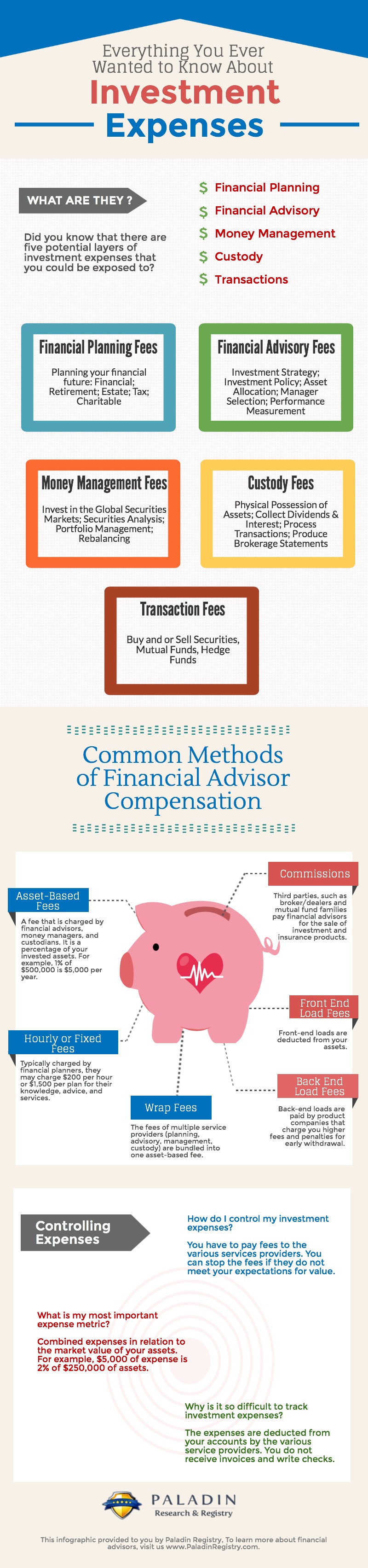
A Review of Investing Expenses

Join Our Mailing List

Peeling Back the Layers of Fees

By PALADIN [Research & Registry]

Advisor Pay

Channel Surfing the ME-P

Have you visited our other topic channels? Established to facilitate idea exchange and link our community together, the value of these topics is dependent upon your input. Please take a minute to visit. And, to prevent that annoying spam, we ask that you register. It is fast, free and secure.

Conclusion

Your thoughts and comments on this ME-P are appreciated. Feel free to review our top-left column, and top-right sidebar materials, links, URLs and related websites, too. Then, subscribe to the ME-P. It is fast, free and secure.

Speaker: If you need a moderator or speaker for an upcoming event, Dr. David E. Marcinko; MBA – Publisher-in-Chief of the Medical Executive-Post – is available for seminar or speaking engagements. Contact: MarcinkoAdvisors@msn.com

OUR OTHER PRINT BOOKS AND RELATED INFORMATION SOURCES:

Comprehensive Financial Planning Strategies for Doctors and Advisors: Best Practices from Leading Consultants and Certified Medical Planners(TM)* 8

#1: The Six Commandments of Value Investing

1. A stock is partial ownership of a business 

***

By Vitaliy N. Katsenelson CFA

EDITOR’S NOTE: Although it has been some time since speaking live with busy colleague Vitaliy Katsenelson CFA, I review his internet material frequently and appreciate this ME-P series contribution. I encourage all ME-P readers to do the same and consider his value investing insights carefully.

***

The Six Commandments of Value Investing
Introduction

I wrote the core of this chapter in preparation for a speech I gave at an investment conference. In my speech, I wanted to show how at my firm, we took the Six Commandments of Value Investing and embedded them in our investment operating system. 

Since I was speaking to fellow value investors, this speech was written not to promote my firm but to educate. I was going to rewrite the speech for this chapter and make a bit less about us and more about you –but each attempt resulted in a dull chapter. So here is a much extended version of my original speech. 

The Six Commandments

These are the Six Commandments of Value Investing. I don’t expect any value investors reading this to be surprised by any one of them. They were brought down from the mountain by Ben Graham in his book Security Analysis.

1)    A stock is fractional ownership of a business (not trading sardines).
2)    Long-term time horizon (both analytical and expectation to hold)
3)    Mr. Market is there to serve us (know who’s the boss).
4)    Margin of safety – leave room in your buy price for being wrong.
5)    Risk is permanent loss of capital (not volatility).
6)    In the long run stocks revert to their fair value.

These commandments are very important and they sound great, but in the chaos of our daily lives it is so easy for them to turn into empty slogans. 

A slogan without execution is a lie. For these “slogans” not to be lies, we need to deeply embed them in our investment operating system – our analytical framework and our daily routines – and act on them.

The focus of this chapter goes far beyond explaining what these commandments are: My goal is to give you a practical perspective and to show you how we embed the Six Commandments in our investment operating system at my firm. 

1. A stock is partial ownership of a business 

The US and most foreign markets we invest in are very liquid. We can sell any stock in our portfolios with ease – a few clicks and a few cents per share commission and it’s gone. This instant liquidity, though it can be tremendously beneficial (we wish selling a house were that easy, fast, and cheap), can also have harmful unintended consequences: It tends to shrink the investor’s analytical time horizon and often transforms investors into pseudo-investors. 

For true traders, stocks are not businesses but trading widgets. Pork bellies, orange futures, stocks are all the same to them. Traders try to find some kind of order or a pattern in the hourly and daily chaos (randomness) of financial markets. As an investor, I cannot relate to traders –not only do we not belong to the same religion, we live in very different universes. 
Over the years I’ve met many traders, and I count a few as my dear friends. None of them confuse what they do with investing. In fact, traders are very explicit that their rules of engagement with stocks are very different from those of investors. 

I have little insight to share with traders in these pages. My message is really to market participants who on the surface look at stocks as if they were investments but who have been morphed by the allure of the market’s instant liquidity into pseudo-investors. They are not quite traders – because they don’t use traders’ tools and are not trying to find order in the daily noise – but they aren’t investors, either, because their time horizon has been shrunk and their analysis deformed by market liquidity. 

The best way to contrast the investor with the pseudo-investor is by explaining what an investor is. A true investor would do the same analysis of a public company that he would do for a private one. He’d analyze the company’s business, guestimate earnings power and cash flows. Assess its moat – the ability to protect cash flows from competition. Try to look “around the corner” to various risks. Then figure out what the business is worth and decide what price he’d want to pay for it (your required discount to what the business is worth). For an investor, the analysis would be the same if his $100,000 was buying 20% of a private business or 0.002% of a public one. This is how your rational uncle would analyze a business – your Warren Buffett or Ben Graham. 
How do we maintain this rational attitude and prevent the stock market from turning us into pseudo-investors? Very simple. We start by asking, “Would we want to own this business if the stock market was closed for 10 years?” (Thank you, Warren Buffett). This simple question changes how we look at stocks. 

Now, the immediate liquidity that is so alluring in a stock, and that turns investors into pseudo-investors, is gone from our analysis. Suddenly, quality – valuation, cash flows, competitive advantage, return on capital, balance sheet, management – has a much different, more complete meaning.

***

COMMENTS APPRECIATED

Thank You

Subscribe to the Medical Executive-Post

***

***

Why You CAN’T Turn Your Roth IRA Into a Billion-Dollar Tax Shelter

By Nadia Sussman, Sherene Strausberg and Justin Elliott

ProPublica is a Pulitzer Prize-winning investigative newsroom. Sign up for The Big Story newsletter to receive stories like this one in your inbox. Series: The Secret IRS Files Inside the Tax Records of the .001%

***

The Roth IRA: What It Is and How It Works | Personal ...

***

Last week, ProPublica published the story of how PayPal co-founder and tech investor Peter Thiel was able to turn a Roth IRA initially worth around $2,000 into a jaw-dropping $5 billion tax-free retirement stash in just 20 years.

The story is even more remarkable because Congress created the Roth IRA in 1997 to encourage middle-class Americans to save for their golden years. Most Americans have struggled to do even that; the average account was worth about $39,000 in 2018. But Thiel and other billionaires have managed to turn their mundane Roths into giant onshore tax shelters.

Thiel was able to launch his Roth into the stratosphere through a complicated strategy involving the purchase of nonpublic stock at bargain prices — the kind of deal most people can’t access. Experts say it risked running afoul of rules designed to prevent IRAs from becoming illegal tax shelters. (Thiel’s spokesman didn’t respond to questions.)

Other ultrawealthy Americans have used different means to build Roths worth tens or hundreds of millions of dollars. Senate Finance Chairman Ron Wyden is now looking at how to end the use of the Roth as “yet another tax dodge that allows mega millionaires and billionaires to avoid paying taxes.”

How are they able to do it while you can’t? Check out our explainer of one way the Roth works for the ultrawealthy and not for you.

***

Your thoughts and comments are appreciated.

Citation: https://www.r2library.com/Resource/Title/0826102549

MORE: https://www.routledge.com/Comprehensive-Financial-Planning-Strategies-for-Doctors-and-Advisors-Best/Marcinko-Hetico/p/book/9781482240283

***

THANK YOU

UPDATE: Dark Russian Stock Markets, Damaged ETFs, US Housing Inflation and the Markets

By Staff Reporters

DARK : With Russia’s stock market closed, U.S. exchange-traded funds are signaling the scale of the rout facing the nation’s equity markets.  The Bank of Russia halted trading in Moscow on Monday, one of several measures unleashed in a bid to shield the nation’s economy from sweeping SWIFT and other sanctions.

SWIFT: https://medicalexecutivepost.com/2022/02/26/what-is-swift-banking/

***

***

ETFs: According to Bloomberg, the VanEck Russia ETF (ticker RSX) and the iShares MSCI Russia Capped ETF (ERUS) plunged 30% and 27%, which was likely a create-to-lend activity where new shares are created for short sellers to borrow and bet against. That turned the two ETFs, which primarily track Russian energy stocks, into useful price-discovery tools for traders seeking to navigate the geopolitical turmoil caused by Russia’s invasion of Ukraine.  “ETFs are suppose to be index trackers, but when that process breaks down, they take on the role of price-discovery vehicles — and it’s impressive how accurate they have been.” 

CITE: https://www.r2library.com/Resource/Title/0826102549

Housing: Amounted to about 4% for the 12 months ending in January. Comparatively, Zillow reported that home values had risen by nearly 20% over that same period of time, while rents had increased by nearly 15%.

Domestic Markets: Stocks were a mixed bag, but the S&P still suffered back-to-back losing months.

10-Year: 1.828%

***

COMMENTS APPRECIATED

Thank You

Subscribe to the Medical Executive-Post

***

***

UPDATE: IRS Interest Rates Rising, Currency Inflation and Upcoming Earning Reports, etc.

By Staff Reporters

****

IRS: The IRS sent out a notice on February 23rd, warning taxpayers about a price hike coming in the next few months. The tax agency said that interest rates will increase for the calendar quarter starting April 1st, 2022. You can accrue interest on two types of payments: over-payment or underpayment. So starting in April, over-payments will have an interest rate of 4 percent, except for corporations which will earn a 3 percent rate and a 1.5 percent rate for the portion of a corporate over-payment that exceeds $10,000. In terms of underpayments, the interest rate will increase to 4 percent overall and 6 percent for large corporate underpayments.

“Under the Internal Revenue Code, the rate of interest is determined on a quarterly basis,” the IRS website explained. The tax agency did not change interest rates in this last quarter, which began Jan. 1, 2022. Before they get changed in April, the rates are currently 3 percent for general over-payments and 2 percent for corporation over-payments, with a 0.5 percent rate for the portion of a corporate over-payment exceeding $10,000. The underpayment interest is 3 percent right now, expect for large corporations which have a 5 percent rate.

***

***

CURRENCY INFLATION: Inflation may occur when the Federal Reserve, or another central bank, adds fiat currency into circulation at a rate that exceeds that of the economy’s growth rate. That creates a situation in which there are more dollars bidding on fewer goods and services. The result is that goods and services cost more. One reason that inflation has been a constant in the US since 1933 is that the FOMC has continually increased the money supply. In response to the 2008 financial crisis, the Fed dropped its lending rate close to zero as a way to inject more liquidity into the economy, which led to increased inflation but not hyperinflation. While those increases have usually moved in step with growth, that hasn’t always been the case.

CITE: https://www.r2library.com/Resource/Title/0826102549

And so, in response to the COVID-19 pandemic and subsequent lock-downs, the Federal Reserve released the equivalent of $3.8 trillion in new liquidity in 2020. That amount was equal to roughly 20% of the dollars previously in circulation. And it is one reason why many investors were watching the CPI closely in 2021.

EARNING REPORTS:

Monday: India GDP data; Earnings from Lordstown Motors, Groupon, HP, SmileDirectClub and Zoom Video

Tuesday: US and China manufacturing data; Earnings from AutoZone, Baidu, Domino’s Pizza, Hostess Brands, J.M. Smucker, Kohl’s, Target, AMC Entertainment and Salesforce

Wednesday: European inflation data; Earnings from Abercrombie & Fitch, Dine Brands, Dollar Tree, Snowflake and Victoria’s Secret

Thursday: ISM Non-Manufacturing Index; Earnings from Best Buy, Weibo, Costco and Gap

Friday: US jobs report

10-Year: Treasuries rallied to 1.902%.

Oil: The rise in oil prices is spilling over at the gas pump: The average gas price in the US has jumped 10 cents, to $3.64/gallon, in the past two weeks.

Partial SWIFT ban: Western governments put aside their hesitations and proposed banning some Russian lenders from SWIFT, the global messaging service that facilitates cross-border transactions. It’s a move that could cause turmoil across global financial markets.

***

COMMENTS APPRECIATED

Thank You

Subscribe to the Medical Executive-Post

***

***

CURRENCY: Devaluation versus Depreciation

KNOW THE FINANCIAL DIFFERENCE

****

BY DR. DAVID E. MARCINKO MBA CPM®

INVITE: https://medicalexecutivepost.com/dr-david-marcinkos-bookings/

Competitive World 27

CMP logo

SPONSOR: http://www.CertifiedMedicalPlanner.org

Devaluation is the deliberate downward adjustment of the value of a country’s money related to another currency, group of currencies or currency standard. It is often confused with depreciation and is the opposite of revaluation which refers to the readjustment of a currency exchange rate.

CITE: https://www.r2library.com/Resource/Title/0826102549

Definition

The government of a country may decide to devalue its currency and like depreciation it is not the result of non-governmental activities.

One reason a country made devalue its currency is to combat a trade imbalance. Devaluation reduces the cost of a country’s export rendering them more competitive in the Global market which is which in turn increases the cost of imports.

If imports are more expensive domestic consumers are less likely to purchase them further strengthening domestic businesses because exports increase and imports decrease there is typically a better balance of payments because the trade deficit shrinks. In short a country that devalue its currency can produce is difficult because there is a greater demand for cheaper exports.

***

***

In accountancy, depreciation refers to two aspects of the same concept: first, the actual decrease of fair value of an asset, such as the decrease in value of factory equipment each year as it is used and wear, and second, the allocation in accounting statements of the original cost of the assets to periods in which the assets are used (depreciation with the matching principle).

Depreciation is thus the decrease in the value of assets and the method used to reallocate, or “write down” the cost of a tangible asset (such as equipment) over its useful life span. Businesses depreciate long-term assets for both accounting and tax purposes. The decrease in value of the asset affects the balance sheet of a business or entity, and the method of depreciating the asset, accounting-wise, affects the net income, and thus the income statement that they report.

CITE: https://www.r2library.com/Resource/Title/0826102549

Generally, the cost is allocated as depreciation expense among the periods in which the asset is expected to be used.

YOUR COMMENTS ARE APPRECIATED.

Thank You

***

ORDER TEXT: https://www.routledge.com/Comprehensive-Financial-Planning-Strategies-for-Doctors-and-Advisors-Best/Marcinko-Hetico/p/book/9781482240283

***

The CERTIFIED MEDICAL PLANNER® Program Curriculum

BY DR. DAVID E. MARCINKO MBA CMP®

CMP

THE NEXT GENERATION OF FIDUCIARY FOCUSED FINANCIAL PLANNING AND MEDICAL MANAGEMENT ADVICE FOR DOCTORS

****

VISIT: http://www.CERTIFIEDMEDICALPLANNER.org

CURRICULUM: Enter the CMPs

BE AWARE ALL ADVISORS … NEXT GEN FINANCIAL ADVICE IS HERE?

CMP logo

Are you a financial planner, insurance agent or investment advisor seeking to assist your physician clients with medical practice enhancement solutions, along with healthcare targeted financial planning services, but don’t know where to turn for help?

OR, maybe you’ve already had a bad experience with a young physician or astute healthcare professional client that was actually more informed than you in these areas?

CITE: https://www.r2library.com/Resource/Title/0826102549

OR, a doctor/nurse client who demanded a true fiduciary advisor [not fee-based advice, with no dual licenses and no arbitration clauses] documented in writing].

Read this decade old Federal Government report to learn what can happen when your advisor is not an informed Certified Medical Planner© designated medical management practitioner.

Then, become a Certified Medical Planner© and thrive by helping others …. first!

GOV: https://oig.hhs.gov/fraud/docs/alertsandbulletins/consultants.pdf

True yesterday … more true today.

****

Risk Management, Liability Insurance, and Asset Protection Strategies for Doctors and Advisors: Best Practices from Leading Consultants and Certified Medical Planners™
Comprehensive Financial Planning Strategies for Doctors and Advisors: Best Practices from Leading Consultants and Certified Medical Planners™
Product Details

***

CONTACT: Ann Miller RN MHA CMP®

Phone: 770-448-0769

EMAIL: MarcinkoAdvisors@msn.com

***

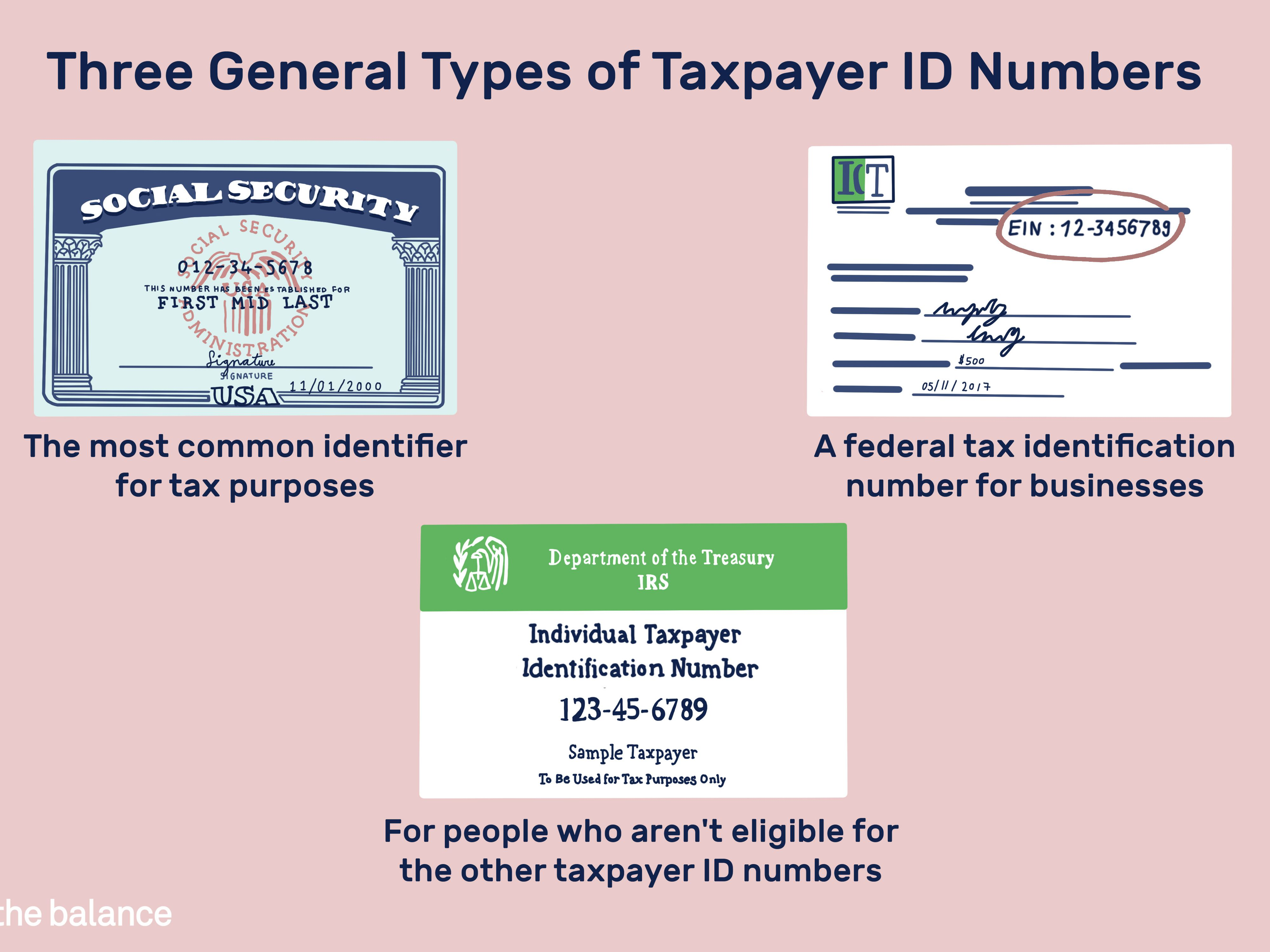
UPDATE: The Stock Markets and IRS Online Taxpayer ID

***

By Staff Reporters

***

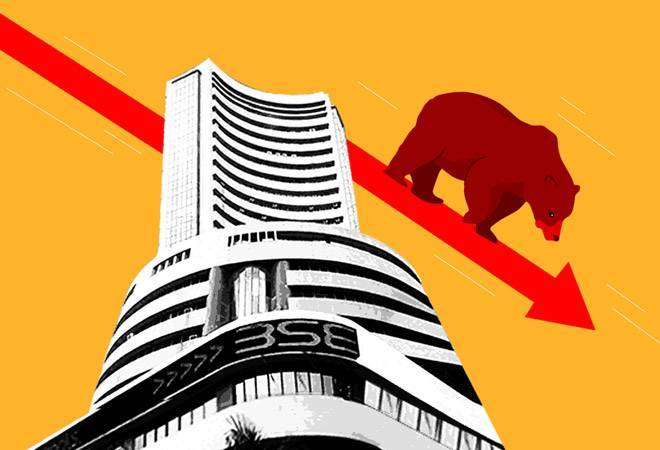
MARKETS: The S&P 500 fell into a correction for the first time in two years, joining the NASDAQ Composite, as Russia sent troops into pro-Russian regions in Ukraine. The S&P 500 index ended down 1% at 4,304.76, below the correction level at 4,316.91, which would represent a 10% drop from its January 3rd record close. A correction is commonly defined by market technicians as a fall of at least 10% (but not greater than 20%) from a recent peak. The last time the S&P 500 entered a correction was February 27th 2020, when the market was being whipsawed by fears about the outbreak of the COVID pandemic.

And, this bearish market isn’t sparing 2021 winners like Home Depot, which fell the most in nearly two years after supply-chain bottlenecks squeezed its margins. HD was the Dow’s biggest gainer last year.

CITE: https://www.r2library.com/Resource/Title/0826102549

***

***

IRS: According to a news release issued by the IRS, taxpayers now have the option to verify their identities during live, virtual interviews with agents. The agency stresses that no bio-metric data will be required for those interviews.

However, taxpayers once again have the option to verify their identity using ID.me’s facial recognition services. Addressing privacy concerns, the IRS says new requirements are in place to ensure that images provided will be deleted upon verification. That would apply to any new IRS accounts created and those where selfies have already been collected.

***

COMMENTS APPRECIATED

Thank You

Subscribe to the Medical Executive-Post

***

***

Cryptocurrency Trades and Income Taxes 2021

Virtual Currency – Real Taxation

By Staff Reporters

What you need to report to the IRS

The IRS treats virtual currencies as property, which means they’re taxed similarly to stocks. If all you did was purchase cryptocurrency with U.S. dollars, and those assets have been sitting untouched in an exchange or your cryptocurrency wallet, you shouldn’t need to worry about reporting to the IRS.

***

Reporting is required when certain events come into play, most commonly:

  • Trading one cryptocurrency for another.
  • Selling cryptocurrency for fiat dollars (government-issued currency).
  • Using cryptocurrency to buy goods or services (e.g., paying for a cup of coffee with cryptocurrency).

A critical distinction to make is that triggering a taxable event doesn’t necessarily mean you’ll owe taxes, said Andrew Gordon, an Illinois-based certified public accountant and tax attorney. Just because you have to report a transaction doesn’t mean you’ll end up owing the IRS for it.

READ HERE: https://www.msn.com/en-us/money/taxes/yes-you-must-pay-taxes-on-cryptocurrency-trades-heres-how/ar-AATamDL?li=BBnb7Kz

***
COMMENTS APPRECIATED.

Thank You

Subscribe to the Medical Executive-Post

FINANCE: https://www.amazon.com/Comprehensive-Financial-Planning-Strategies-Advisors/dp/1482240289/ref=sr_1_1?ie=UTF8&qid=1418580820&sr=8-1&keywords=david+marcinko

***

INSIDER TRADING 4 ME: Stock Markets


***
INSIDER TRADING FOR ME, BUT NOT FOR THEE
See the source image

By Richard Helppie

***

Capital markets require confidence that all market participants have fair access to the same relevant information about a company and its prospects. Laws governing the trading of securities have been in existence since stocks were first traded. It seems as if each piece of legislation, from the Securities and Exchange Act of the 1930’s through to the 2002  Sarbanes-Oxley Law fought the prior corruption as successfully as preparing an army to fight the last war.

Curiously, the issue of insider trading by members of Congress is not a partisan issue. If behavior is any indication, certain Republicans and Democrats are fond of having the ability to profit from access to material, nonpublic information. Others of both parties are introducing legislation to block illegal insider trading.

Congress has passed laws that prohibit people with insider knowledge from trading on non-public information, and from sharing that non-public information with others who may trade stocks based on that information. The former is known as “illegal insider trading” and the latter as “tipping.” There exists legal insider trading, which is bound by rules of disclosure and third-party decision makers, but we will leave that for another day. Illegal insider trading is enforced through Federal Agencies including the Securities and Exchange Commission (SEC), Internal Revenue Service (IRS) and the Department of Justice (DOJ), as well as by regulations on major stock exchanges such as the New York Stock Exchange (NYSE) and National Association of Securities Dealers Automated Quotation Systems (NASDAQ).

While there is universal agreement that executives, board members, employees and others with access to non-public information may not use that information to trade stocks, members of Congress and their staffs face few practical barriers. And in more recent months, members of the Federal Reserve and their staffs have made questionable, if not downright suspicious trades of stocks.

History is littered with cases of both average citizens and celebrities like Martha Stewart being prosecuted for insider trading. Stewart was ultimately prosecuted and jailed for obstruction after denying insider knowledge.

There are members of both the US Senate and US House of Representatives who want to stop illegal insider trading by their peers. For example, in 2012, President Barack Obama signed the Stop Trading on Congressional Knowledge (STOCK) Act to prevent insider trading by members of Congress and Congressional Staff. However, there have been no prosecutions under this statute to date. The reason is that the “Speech and Debate” clause prohibits questioning an elected Senator or Congressional Representative.

Moreover, much of the disclosure of material, non-public information that would establish a foundation for illegal insider trading occurs outside the public eye. Members of Congress cannot act on information obtained from companies themselves. The difficulty arises in proving that a member of Congress or Congressional staff knew of material, non-public information acquired in a confidential congressional meeting. Let me rephrase that. There is no way of knowing what transpired in the confidential committee meeting so there is no provable path to a stock trade benefiting the member of Congress or their staff.

Suppose two publicly traded defense contractors were bidding on a new weapons system. In a confidential committee, a Department of Defense (DOD) recommendation to accept the bid of company A versus Company B was made and endorsed by the committee. At that point, everyone with access to the non-public information about the weapons system bid would know that it would be good for the stock of Company A and bad for the stock of Company B.

Take this a step further. Company A and Company B are notified about the confidential decision and advised to keep this material, non-public information protected. At this point, if any executive, board member or employee with that knowledge traded in the stock of Company A or Company B they would be subject to prosecution, including fines and imprisonment. Also, if any person at the company provided that material, non-public information to another person, including a member of Congress, that action would be subject to investigation and potential prosecution.

Now suppose a Senator, Congressional Representative or staff member, after receiving the news of the weapons system award went to their broker, computer or telephone and bought stock in Company A while selling (or shorting in another way) Company B. Or perhaps communicated to a friend or family member on a trade “suggestion.”  Relaying or exploiting information – material, non-public information —  behavior that would land any other person in an investigation and make them subject to prosecution, cannot be practically pursued because there is no way to use the committee deliberations as evidence.

When Senators Richard Burr (R-NC), Kelly Loeffler (R-GA) and Diane Feinstein (D-CA) were accused of insider trading, instead of being subjected to investigation and potential prosecution through the SEC, IRS, or DOJ, their actions instead were reviewed by the Senate Ethics Committee. The Senate Ethics Committee, made up of other US Senators, found no wrongdoing.  Let me rephrase that –  other US Senators, who might benefit themselves from insider trading – decided to give suspicious behavior a pass. Even if the conduct of the Senators was on the up-and-up, the optics do not inspire confidence.

The US Senate does not have a monopoly on suspicious trading. For example, Congresswoman Lois Frankel (D-FL), was accused of trading stocks of companies in the fossil fuel industry while a sitting on a Congressional subcommittee that oversees funding for the Department of Energy.

Legislation to Block Insider Trading by Congress and the Federal Reserve

US Senators and Congressional Representatives have made proposals to improve public perception of their ranks with more practical solutions and stiffer penalties. Pre-eminent among the reformers is Senator Elizabeth Warren (D-MA), a person with a strong background in financial matters. Senator Warren appears to be the leading voice in calling for members of the Federal Reserve and their staffs to also be subject to laws prohibiting illegal insider trading and tipping. These restrictions are long overdue, as statements by the Fed has caused wild gyrations in the prices of securities. Senator Warren’s ideas are recommended reading on her web site at

https://www.warren.senate.gov

. Enter “Insider Trading” on the search bar of the Senator’s web site for 61 references.

Senators Jeff Merkley (D-OR) and Sherrod Brown (D-OH) have offered the “Ban Conflicted Trading Act.”  Under the legislation, elected persons and their staffs would be required to either sell or freeze their stock holdings, or put them in a blind trust. Introduced in 2018, the legislation has stalled. Last winter, Representative Alexandria Ocasio-Cortez (D-NY) and others have indicated they would introduce the same legislation in the House.

Earlier this month, Senators Jon Ossoff (D-GA) and Mark Kelly (D-AZ) introduced the Ban Congressional Stock Trading Act. If it becomes law, every member of Congress—as well as their spouses and dependent children—would be required to place their stock portfolios into a blind trust. One benefit of an outright ban or blind trusts would mean that clerical matters would no longer be a concern of those elected. Kelly himself, according to news reports, did not make a timely disclosure about a stock option exercise.

Senator Josh Hawley (R-MO) announced he will introduce the Banning Insider Trading in Congress Act. Wryly pointing out that politicians manage to outperform the stock market year after year, Hawley’s bill would prohibit members of Congress and their spouses from buying and trading individual stocks. Those who violate it would have to disgorge their profits.

Congress: Keep it simple and fix this

The singular, clear way to avoid abuses of insider information is to ban the trade of individual stocks and industry-specific Exchange Traded Funds (ETF) by members of Congress, Congressional staffs, members of the Federal Reserve and their staffs. Double blind trusts (where neither the owner or trustee knows identity of the other) would be an acceptable form of investing. Finally, add stronger criminal penalties for tipping insider information.

This is one of the few things that seem to enjoy bipartisan support, and would seemingly be welcomed by nonpartisans and those on the political poles as well.

Of course, like everything political, proposals of these types do not enjoy absolute, clear-cut support. As House Speaker Nancy Pelosi (D-CA) said about her opposition to such restrictions “We are a free market economy,” Pelosi, purported to be one of the 25 wealthiest members of Congress, continued, “They (Congress) should be able to participate in that.” Pelosi’s recent financial disclosure is said to have 48 transactions made by her family valued at a total of some $50 million so she is sympathetic to serving in Congress and participating in trading.

***

COMMENTS APPRECIATED

Thank You

Subscribe to the Medical Executive-Post

***

SEC REPORT: https://www.seclaw.com/insider-trading/

MADOFF: https://www.msn.com/en-us/news/world/convicted-fraudster-bernie-madoffs-sister-husband-found-dead/ar-AAU6px4?li=BBnbfcL

FRAUD: https://www.msn.com/en-us/money/companies/founder-of-collapsed-dollar17-billion-mutual-fund-charged-with-fraud/ar-AAU3PEF?li=BBnb7Kz

***

***

Product Details

CITE: https://www.r2library.com/Resource/Title/082610254

***

INHERITED Retirement Accounts and Uncle Sam

IRS Tax Implications

By Staff Reporters

***

If you inherited a tax-deferred retirement plan, such as a traditional IRA, you’ll have to pay taxes on the money. But you can make the tax hit less onerous.

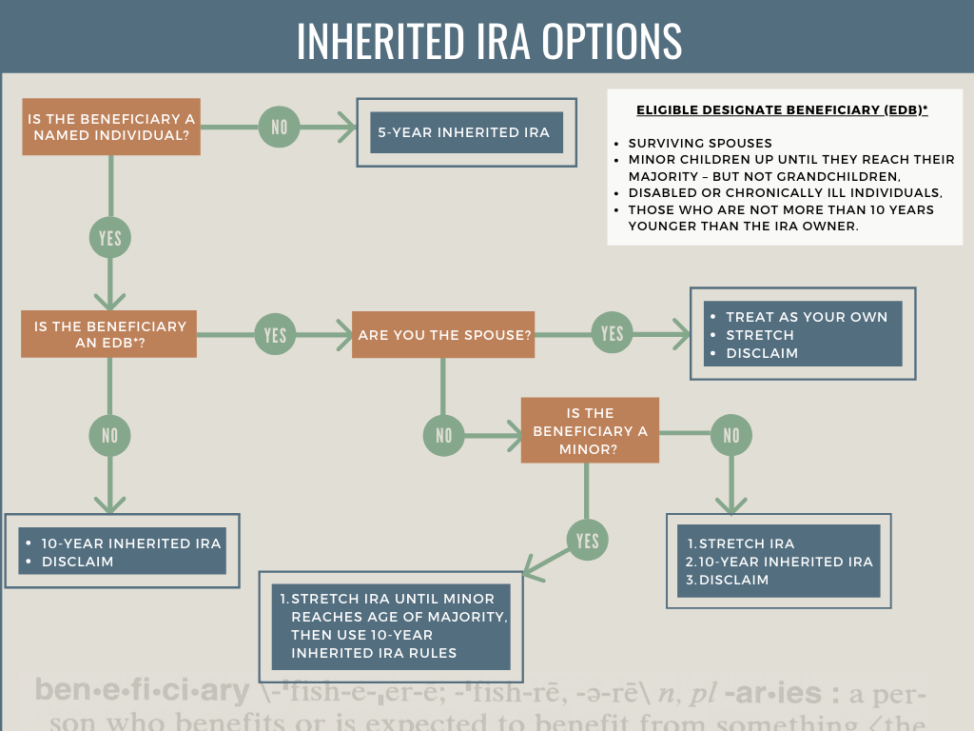
Spouses can roll the money into their own IRAs and postpone distributions—and taxes—until they’re 70½. All other beneficiaries who want to continue to benefit from tax-deferred growth must roll the money into a separate account known as an inherited IRA. Make sure the IRA is rolled directly into your inherited IRA. If you take a check, you won’t be allowed to deposit the money. Rather, the IRS will treat it as a distribution and you’ll owe taxes on the entire amount.

Once you’ve rolled the money into an inherited IRA, you must take required minimum distributions every year—and pay taxes on the money—based on your age and life expectancy. Deadlines are critical: You must take your first RMD by December 31st. of the year following the death of your parent (or whoever left you the account). Otherwise, you’ll be required to deplete the entire account within five years after the year following your parent’s death.

The December 31st. deadline is also important if you are one of several beneficiaries of an inherited IRA. If you fail to split the IRA among the beneficiaries by that date, your RMDs will be based on the life expectancy of the oldest beneficiary, which may force you to take larger distributions than if the RMDs were based on your age and life expectancy.

You can take out more than the RMD, but setting up an inherited IRA gives you more control over your tax liabilities. You can, for example, take the minimum amount required while you’re working, then increase withdrawals when you’re retired and in a lower tax bracket.

CITE: https://www.r2library.com/Resource/Title/0826102549

***

Have you Inherited an IRA? It's time to compare your options

***

Did you inherit a Roth IRA? And so, as long as the original owner funded the Roth at least five years before he or she died, you don’t have to pay taxes on the money. You can’t, however, let it grow tax-free forever. If you don’t need the money, you can transfer it to an inherited Roth IRA and take RMDs under the same rules governing a traditional inherited IRA. But with a Roth, your RMDs won’t be taxed.

***

COMMENTS APPRECIATED

Thank You

Subscribe to the Medical Executive-Post

***

***

PODCAST: Digital Health Market Segmentation

FOR HEALTHCARE ENTREPRENEURS

By Eric Bricker MD

***

***

COMMENTS APPRECIATED

Thank You

Subscribe to the Medical Executive Post

***

***

***

***

ALTERNATIVE MINIMUM TAX: Physicians Beware!

By Staff Reporters

****

Alternative Minimum Tax

DEFINITION: The alternative minimum tax (AMT) is a tax imposed by the United States federal government in addition to the regular income tax for certain individuals, estates, and trusts. As of tax year 2018, the AMT raises about $5.2 billion, or 0.4% of all federal income tax revenue, affecting 0.1% of taxpayers, mostly in the upper income ranges.

CITE: https://www.r2library.com/Resource/Title/0826102549

***

See the source image

Key Takeaways

  • The alternative minimum tax (AMT) ensures that certain taxpayers pay their fair share of income taxes.
  • However, the structure was not indexed to inflation or tax cuts. …
  • For those subject to AMT, there are certain strategies that can be employed to reduce your exposure to this tax.

MORE: https://www.forbes.com/sites/kellyphillipserb/2020/09/11/your-first-look-at-2021-tax-rates-projected-brackets-standard-deductions–more/?sh=119ff37413ba

***

COMMENTS APPRECIATED

Thank You

Subscribe to the Medical Executive-Post

****

***

PODCAST: 15 Metrics for Successful Healthcare Companies

Phil Fisher Was One of the Greatest Entrepreneurial Investors of the 20th Century and a Source of Wisdom for Warren Buffett

By Eric Bricker MD

****

***

Related: https://thehealthcareblog.com/blog/2022/02/03/after-the-crash/?utm_campaign=THCB%20Reader&utm_medium=email&utm_source=Revue%20newsletter

***

COMMENTS APPRECIATED

Thank You

Subscribe to the Medical Executive-Post

***

***

***

Product Details

CITE: https://www.r2library.com/Resource/Title/0826102549

***

Informal Money SLANG TERMS to Avoid

NOT PROFESSIONAL BUSINESS SCHOOL LINGUISTICS – BUT FAR TOO OFTEN USED

***

Invite Dr. Marcinko | The Leading Business Education Network for Doctors,  Financial Advisors and Health Industry Consultants

By Dr. David Edward Marcinko MBA CMP®

SPONSOR: http://www.CertifiedMedicalPlanner.org

CMP logo

***

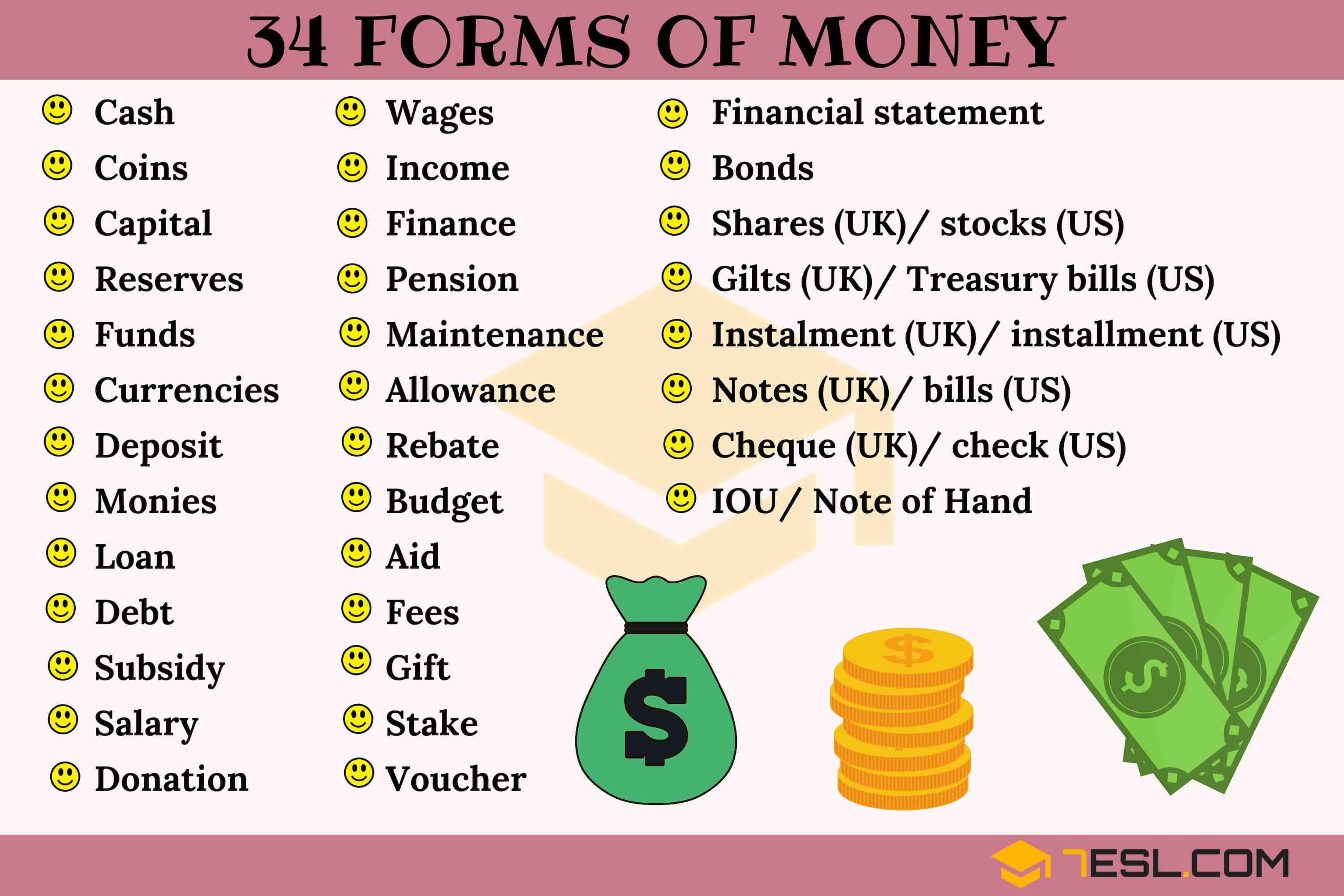
Another Word for “Money” | 100+ Different Forms of Money You Should Know •  7ESL

People really love money since it is needed to buy just about everything. In fact, we actually published a formal print dictionary on health economics and finance terms that is very popular with physician investors and medical colleagues; it is a favorite of economic students as well!

Product Details

CITE: https://www.r2library.com/Resource/Title/0826102549

And, money is by far one of those words that has more slang or terms for it than any others. This proves that cash or money, does not have be boring when speaking about it. Just keep in mind that these slang synonyms are in plural form. They are also words mostly used for US currency.

Perhaps the fact that money is so important may help to explain why there are so many different ways to say it. These 95 slang words for money and their meanings are really worth taking a look at. This list not only contains the countless ways to speak, write or say the word money, but also what are the meanings behind each phrase or term.

LINK: https://blog.online-spellcheck.com/english/95-slang-words-money-meanings/

***
COMMENTS APPRECIATED

Thank You

Subscribe to the Medical Executive-Post

***

***

ASSESSMENT: Lastly, remember to never use any of these slang terms for money if you are doing formal writing or publishing; especially for me!

YOUR FURTHER COMMENTS ARE APPRECIATED.

Thank You Again!

Subscribe to the Medical Executive-Post

***

PORTFOLIO: How to Build One for Today’s Crazy Stock Markets

Insights For Doctors and All Investors

***

Amazon.com: Vitaliy Katsenelson: Books, Biography, Blog, Audiobooks, Kindle

By Vitaliy Katsenelson CFA

***

NOTE: This piece is a little more technical, and contains a bit more stock-market jargon, than most essays you get from me. While how we build portfolios is important to us and our clients, we realize that the puts and takes might bore many readers.

CITE: https://www.r2library.com/Resource/Title/082610254

***

***

COMMENTS APPRECIATED

Thank You

Subscribe to the Medical Executive-Post

***

***

UPDATE: Crypto Advertisements on Super Bowl Sunday 2022

The Crypto Bowl and the Dot Com Bowl?

By Staff Reporters

***

CRYPTO CURRENCY: Tonight, about 117 million people will watch celebrities pitch cryptocurrency on the Super Bowl. In what’s being dubbed the “Crypto Bowl,” a batch of crypto exchanges including FTX, Coinbase, and Crypto.com, will air Super Bowl commercials at a cost of up to $7 million per 30-second spot. The game is even being held at a stadium named after SoFi, a company that offers crypto trading.\

BEWARE: https://www.msn.com/en-us/news/us/meet-the-crocodile-of-wall-street-rapper-accused-of-laundering-billions-of-dollars-in-crypto/ar-AATNmv6?li=BBnb7Kz

This isn’t the first time startups from an emerging industry have used the Super Bowl to introduce themselves to a mass audience. Does anyone remember the 2000 Super Bowl between the Rams and the Titans? That was known as the “Dot-Com Bowl.” Startups that were part of the dot-com wave of the early internet bought nearly 20% of the total ad slots in what is considered the peak of that tech bubble.

CITE: https://www.r2library.com/Resource/Title/082610254

Well, that bubble burst. In fact, according to journalist Neal Freyman, of the 14 dot-com companies that purchased Super Bowl ads that year, four are still active, five were acquired, and five (including Pets.com, OnMoney.com, and Epidemic.com) are either defunct or their status is unclear.

***

COMMENTS APPRECIATED

Thank You

Subscribe to the Medical Executive-Post

***

***

***

“TRICKLE DOWN” ECONOMICS

What it is – How it Works

By Staff Reporters

****

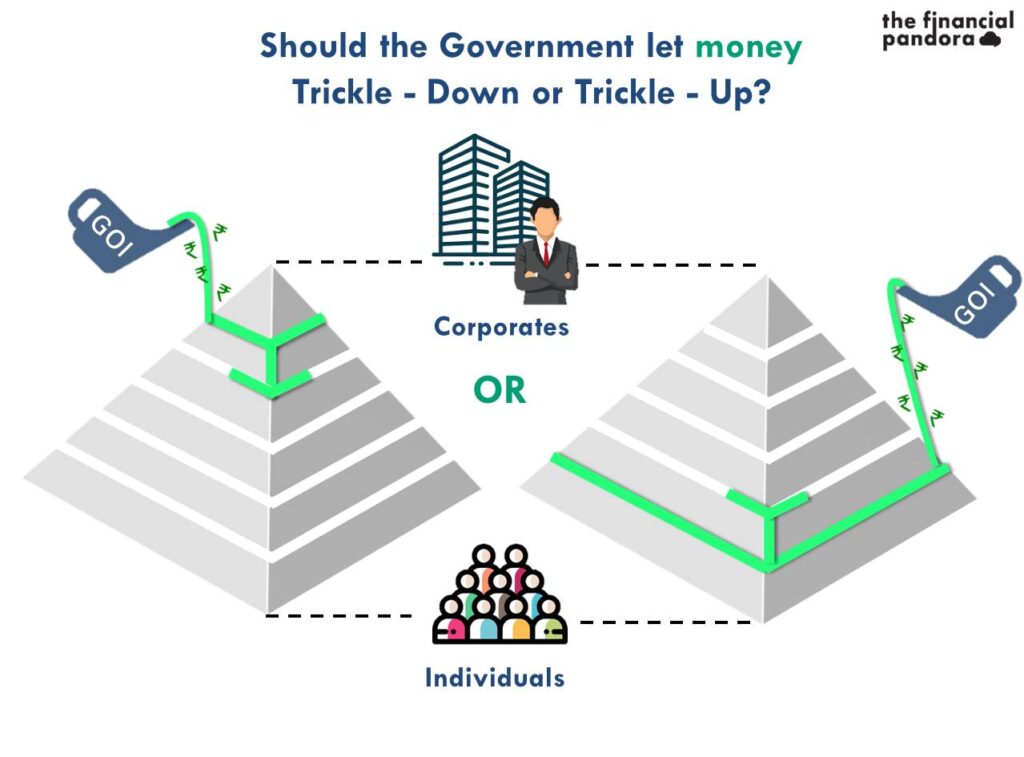
DEFINITION: Trickle-down economics is a colloquial term for supply-side economic policies. In recent history, the term has been used by critics of supply-side economic policies, such as “Reaganomics”. Whereas general supply-side theory favors lowering taxes overall, trickle-down theory more specifically advocates for a lower tax burden on the upper end of the economic spectrum. Empirical evidence shows that the proposition is regressive and has never managed to achieve all of its stated goals as described by the Reagan administration.

CITE: https://www.r2library.com/Resource/Title/082610254

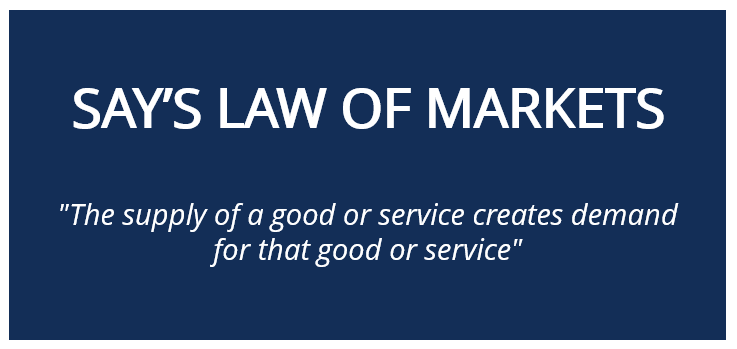
SAY’S LAW: In classical economics, Say’s law, or the law of markets, is the claim that the production of a product creates demand for another product by providing something of value which can be exchanged for that other product. Thus, production is the source of demand

***

Trickle-up And Trickle-down Economics - The Financial Pandora

***

PODCAST: https://www.bing.com/videos/search?q=what+is+trickle+down+economics%3f&&view=detail&mid=EEBE43A22EFCD31576BDEEBE43A22EFCD31576BD&&FORM=VRDGAR&ru=%2Fvideos%2Fsearch%3Fq%3Dwhat%2Bis%2Btrickle%2Bdown%2Beconomics%253f%26FORM%3DHDRSC3

***

CITE: https://www.r2library.com/Resource/Title/0826102549

https://medicalexecutivepost.com/2018/01/23/about-the-laffer-curve/

***

***

J.B. SAY: The “Law of Markets” Podcast

What it Is – How it Works

By Staff Reporters

***

DEFINITION: In classical economics, Say’s law, or the law of markets, is the claim that the production of a product creates demand for another product by providing something of value which can be exchanged for that other product. Thus, production is the source of demand.

CITE: https://www.r2library.com/Resource/Title/0826102549

***

Say's Law of Markets - Overview, How It Works, Criticism

***

PODCAST: https://www.youtube.com/watch?v=eGGy06xbjd8

***

COMMENTS APPRECIATED

Thank You

Subscribe to the Medical Executive-Post

***

***