BOARD CERTIFICATION EXAM STUDY GUIDES Lower Extremity Trauma
[Click on Image to Enlarge]
ME-P Free Advertising Consultation
The “Medical Executive-Post” is about connecting doctors, health care executives and modern consulting advisors. It’s about free-enterprise, business, practice, policy, personal financial planning and wealth building capitalism. We have an attitude that’s independent, outspoken, intelligent and so Next-Gen; often edgy, usually controversial. And, our consultants “got fly”, just like U. Read it! Write it! Post it! “Medical Executive-Post”. Call or email us for your FREE advertising and sales consultation TODAY [678.779.8597] Email: MarcinkoAdvisors@outlook.com
Medical & Surgical e-Consent Forms
ePodiatryConsentForms.com
iMBA Inc., OFFICES
Suite #5901 Wilbanks Drive, Norcross, Georgia, 30092 USA [1.678.779.8597]. Our location is real and we are now virtually enabled to assist new long distance clients and out-of-town colleagues.
ME-P Publishing
SEEKING INDUSTRY INFO PARTNERS?
If you want the opportunity to work with leading health care industry insiders, innovators and watchers, the “ME-P” may be right for you? We are unbiased and operate at the nexus of theoretical and applied R&D. Collaborate with us and you’ll put your brand in front of a smart & tightly focused demographic; one at the forefront of our emerging healthcare free marketplace of informed and professional “movers and shakers.” Our Ad Rate Card is available upon request [678-779-8597].
Posted on January 9, 2022 by Dr. David Edward Marcinko MBA MEd CMP™
***
By Staff Reporters
According to Wikipedia, a cryptocurrency, crypto-currency, or crypto is a collection of binary data which is designed to work as a medium of exchange. Individual coin ownership records are stored in a ledger, which is a computerized database using strong cryptography to secure transaction records, to control the creation of additional coins, and to verify the transfer of coin ownership. Cryptocurrencies are generally fiat currencies, as they are not backed by or convertible into a commodity. Some crypto schemes use validators to maintain the cryptocurrency. In a proof-of-stake model, owners put up their tokens as collateral. In return, they get authority over the token in proportion to the amount they stake. Generally, these token stakers get additional ownership in the token over time via network fees, newly minted tokens or other such reward mechanisms.
Cryptocurrency does not exist in physical form (like paper money) and is typically not issued by a central authority. Cryptocurrencies typically use decentralized control as opposed to a central bank digital currency (CBDC). When a cryptocurrency is minted or created prior to issuance or issued by a single issuer, it is generally considered centralized. When implemented with decentralized control, each cryptocurrency works through distributed ledger technology, typically a blockchain, that serves as a public financial transaction database.
A cryptocurrency is a tradable digital asset or digital form of money, built on blockchain technology that only exists online. Cryptocurrencies use encryption to authenticate and protect transactions, hence their name. There are currently over a thousand different cryptocurrencies in the world, and many see them as the key to a fairer future economy.
Bitcoin, first released as open-source software in 2009, is the first decentralized cryptocurrency. Since the release of bitcoin, many other cryptocurrencies have been created.
***
***
Enter GAS
Gas refers to the unit that measures the amount of computational effort required to execute specific operations on the cryptocurrency Ethereum network. Since each Ethereum transaction requires computational resources to execute, each transaction requires a fee. Gas refers to the fee required to conduct a transaction on Ethereum successfully.
Gas fees are paid in Ethereum’s native currency, ether (ETH). Gas prices are denoted in gwei, which itself is a denomination of ETH – each gwei is equal to 0.000000001 ETH (10-9 ETH).
For example: Instead of saying that your gas costs 0.000000001 ether, you can say your gas costs 1 gwei. The word ‘gwei’ itself means ‘giga-wei’, and it is equal to 1,000,000,000 wei. Wei itself (named after Wei Dai, creator of b-money) is the smallest unit of ETH
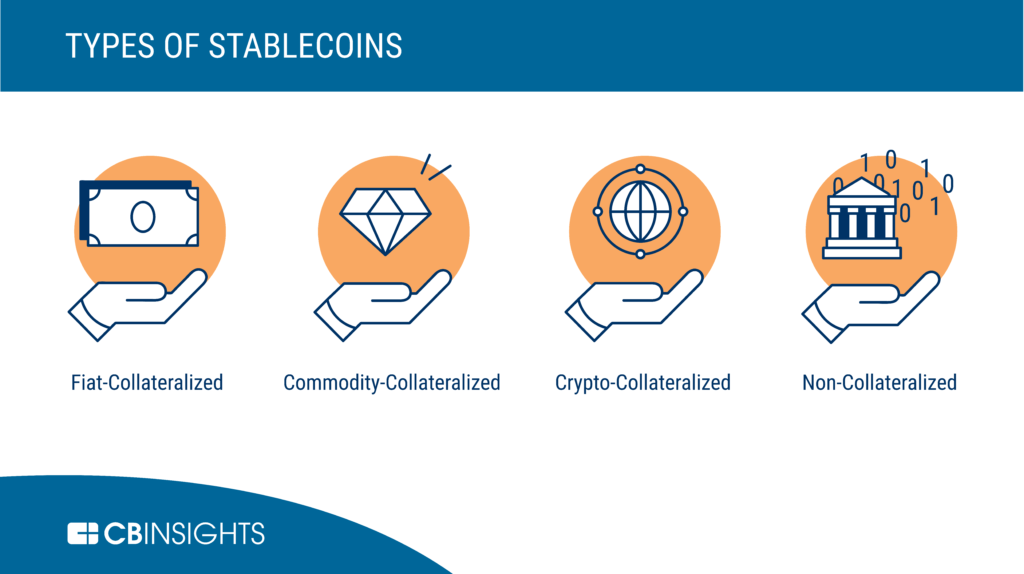
DEFINITION: Stablecoins are blockchain-based digital currencies that have been created with the aim to have a stable value. Stablecoins achieve price-stability through various different methods such as a peg against a fiat currency or a commodity, through collateralization against other cryptocurrencies or through algorithmic coin supply management.
Every stable coin includes a specific set of mechanisms that mostly behave in the same way. In general, stable coins keep collateral of the asset and manage the supply. In this way, they incentivize the market, which allows trade of the coin for no more or less than $1.
A stable coin can be considered the best depending on several factors: It should be stable. PAX is one the most stable stablecoin. It should be liquid and available on most exchanges. It should be backed by FIAT. PAX is 100% collateralized in US bank accounts. It should be regulated. It should be redeemable.
Posted on January 8, 2022 by Dr. David Edward Marcinko MBA MEd CMP™
By Staff Reporters
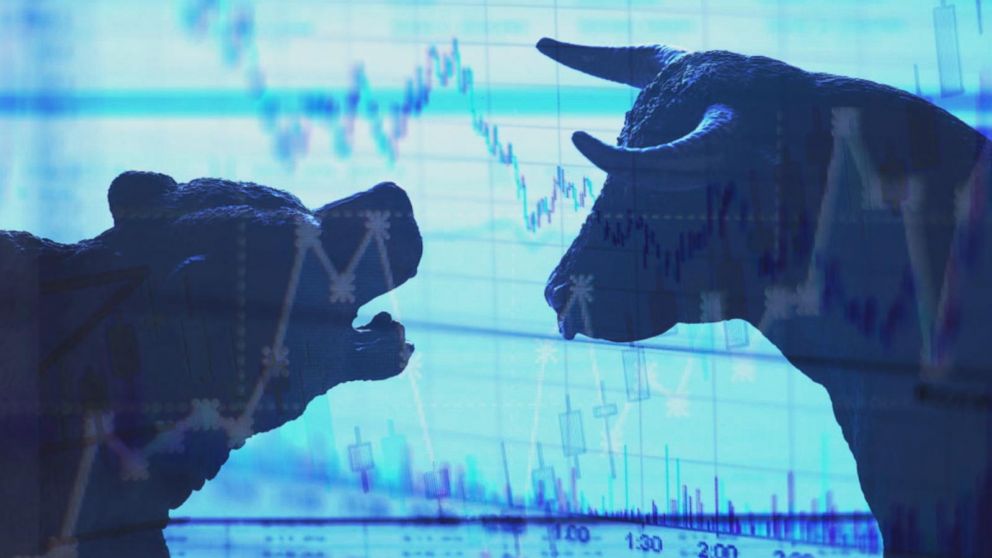
Stock Markets: The S&P is off to its worst start to a year since 2016, and the NASDAQ fell 4.5% this week—its worst drop since February 2021. The Fed’s hawkish pivot + rising bond yields are really pounding technology stocks.
Crypto-Currency: Bitcoin fell to its lowest level since last September, and other cryptos like ethereum and solana are also in the doghouse. It appears as though the Fed’s move to raise borrowing costs and the turmoil in mining powerhouse Kazakhstan are dragging down prices.
Posted on January 6, 2022 by Dr. David Edward Marcinko MBA MEd CMP™
By Staff Reporters
***
Markets: Already through a rough day, stocks dove even lower after the Fed released the minutes from its December meeting. Tech companies continued to get clobbered as rising bond yields make their shares less attractive.
About the Federal Reserve Minutes: Inflation anxiety was real at the central bank’s previous meeting, and officials signaled they could hike interest rates “sooner or at a faster pace” than previously expected to cool down prices.
Posted on January 5, 2022 by Dr. David Edward Marcinko MBA MEd CMP™
By Staff Reporters
****
18% Surveyed Skipped Prescriptions to Save Money
A recent Gallup survey asked “Thinking about the last 12 months, have you or a family member skipped a prescribed pill, dose, or other type of medication in order to save money?”. The amount of prescriptions in the household of those who answered yes varied as follows:
• 8+: 25% • 5-7: 22% • 1-4: 17% • 0: 8% • Total that answered yes: 18%
Posted on January 4, 2022 by Dr. David Edward Marcinko MBA MEd CMP™
By Staff Reporters
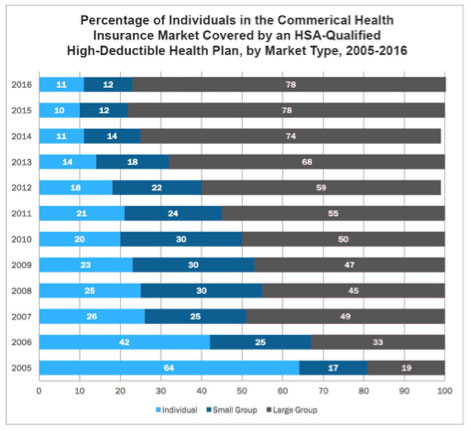
In the United States, a high-deductible health plan is a health insurance plan with lower premiums and higher deductibles than a traditional health plan. It is intended to incentivize consumer-driven healthcare. Being covered by an HDHP is also a requirement for having a health savings account. Some HDHP plans also offer additional “wellness” benefits, provided before a deductible is paid.
High-deductible health plans are a form of catastrophic coverage, intended to cover for catastrophic illnesses. Adoption rates of HDHPs have been growing since their inception in 2004, not only with increasing employer options, but also increasing government options. As of 2016, HDHPs represented 29% of the total covered workers in the United States; however, the impact of such benefit design is not widely understood.
***
% Covered Employees Enrolled in Account-Based CDHP’s
Posted on January 3, 2022 by Dr. David Edward Marcinko MBA MEd CMP™
WHAT IT IS – HOW IT WORKS – WHY?
By Staff Reporters
***
What it is: With its use as a commodity tracing back to Ancient Lydian merchants over 2,500 years ago, gold has the most staying power of any indicator on this list. When investors talk about gold prices today, they’re most likely referring to the price per ounce of gold bullion (those gold bars bad guys keep in briefcases).
How it works: Gold is priced in U.S. dollars around the world. Investors can buy physical gold in the form of bullion or coins or go for more intangible gold securities, such as futures, ETF shares, or investments in gold mining companies.
Why it matters: In a 21st century economy where currencies aren’t pegged to the gold standard and credit cards are the medium of exchange, some investors argue gold is a relic. But others turn to the metal for diversification or as a “safe-haven asset”—something to buy during times of geopolitical or economic uncertainty because it holds onto its value.
Instead of straining your eyes, you can strain your ears and listen to the following articles. I’m providing links to my pieces on the inflation landscape (read, listen) and how we invest in inflation (read, listen).
Posted on January 1, 2022 by Dr. David Edward Marcinko MBA MEd CMP™
INFLATION – Did we say [Health Care] Inflation?
****
***
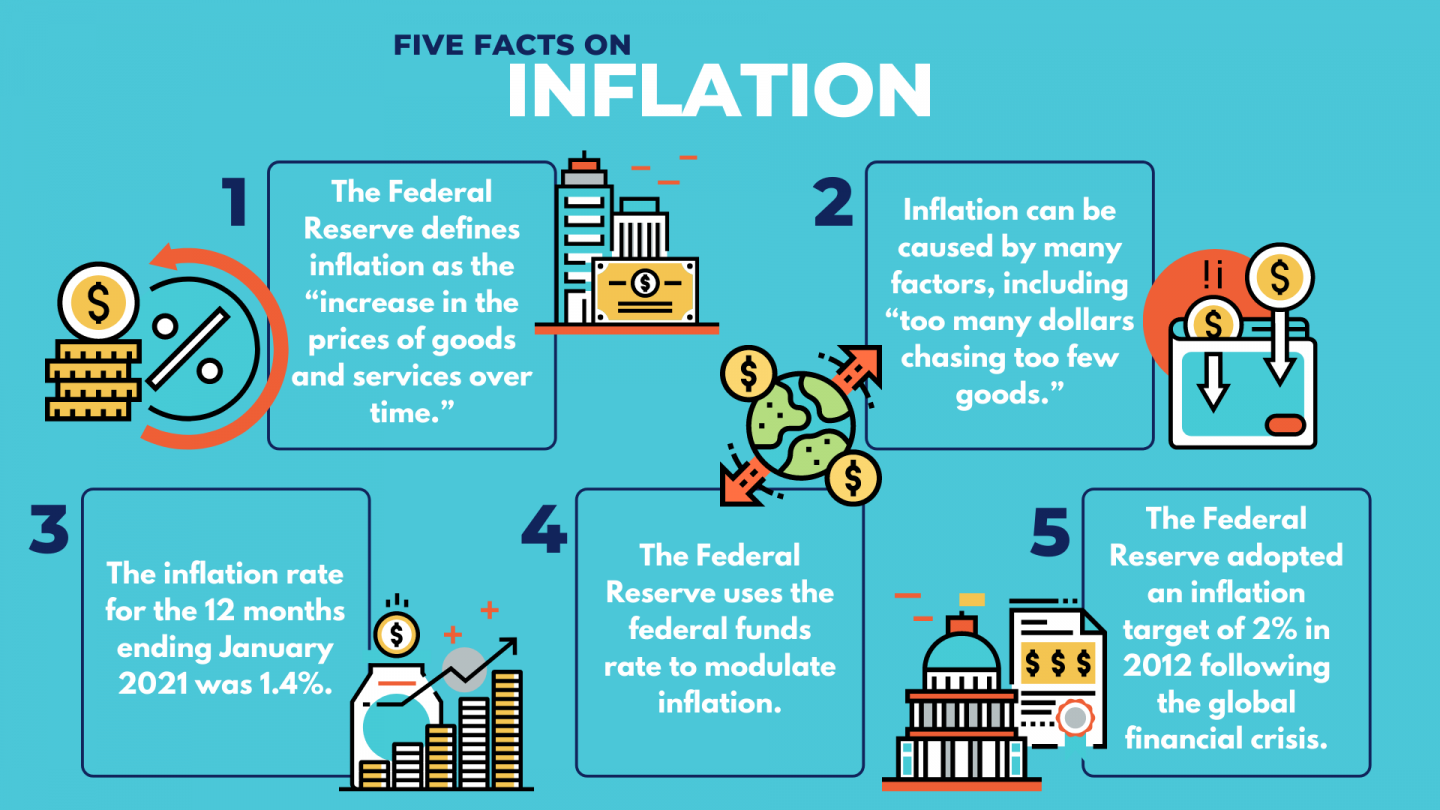
Why? Inflation, which is the rate of price increases over time, affects all of us on a personal level. We pay electric bills, go grocery shopping, decorate our houses, buy cars—and this year all of those things got more expensive. Especially health care.
Thanks to a nefarious mix of soaring demand for goods and snarled supply chains, US consumer prices jumped the most in 39 years in November, and the 6.8% inflation rate marked the sixth straight month inflation grew by 5% or more. Producer prices, which can eventually trickle down to individuals, also increased at their fastest pace on record last month.
Of course, some inflation is good for the economy when wages keep up with rising prices (the Fed aims for a 2% inflation rate over time). But, so far in the pandemic, that hasn’t happened. While many Americans have gotten a raise in 2021, wage gains haven’t been sufficient to offset inflation, resulting in the erosion of purchasing power—especially for folks on a more or less fixed income.
Where do we go from here?
After months of claiming inflation was “transitory,” the Fed has dropped that term and adopted a more hawkish monetary policy to tamp down surging prices. The central bank is winding down its bond-buying stimulus program faster than originally planned, and also plans to hike interest rates three times in 2022.
In its inflation-fighting efforts, the Fed isn’t alone on the front lines. The Bank of England became the first major central bank to raise interest rates during the pandemic in order to combat the biggest annual jump in consumer prices in 10 years. Russia has raised rates seven times this year. Mexico, Chile, Costa Rica, Pakistan, and Hungary are among other countries which are tightening monetary policy to combat higher prices.
Looking ahead…as if economic policymakers needed another inflation curveball, Omicron has taken the mound. Central banks generally don’t expect the new variant to significantly dent economic growth, but they do think it may prolong inflation by exacerbating the supply–demand imbalance that fueled higher prices in the first place.
Posted on December 29, 2021 by Dr. David Edward Marcinko MBA MEd CMP™
Wendell Potter is a Famous Ex-Executive from Cigna Who Left His High Paying PR Job in 2007 to Reveal the True Story Behind Health Insurance Carrier Public Relations.
Posted on December 25, 2021 by Dr. David Edward Marcinko MBA MEd CMP™
By Staff Reporters
***
From improved organization to ease of use and increased security, virtual wallets are transforming the way we pay for things; especially during the holiday and Christmas Seasons.
Posted on December 22, 2021 by Dr. David Edward Marcinko MBA MEd CMP™
The “Numbers” Day
***
DEFINITION: A palindrome is a word, number, phrase, or other sequence of characters which reads the same backward as forward, such as madam or racecar. There are also numeric palindromes, including date/time stamps using short digits 11/11/11 11:11 and long digits 02/02/2020.
CRUNCH: According to mathematician Neal Freyman, today is the sound of mathematicians scrambling to find another topic to tweet about besides dates that form palindromes.
WHY: Today, 12/22/21, is the 22nd and final palindromic date of the year. There won’t be another year with 22 palindromic dates until 2111.
FACT: 1/20/21 was the first Inauguration Day with a palindromic date in American history. The next one will come in 1,000 years, on 1/20/3021.
Posted on December 21, 2021 by Dr. David Edward Marcinko MBA MEd CMP™
By Staff Reporters
***
Markets: With Omicron concerns swirling and President Biden’s big spending plan KO’d by Senator Joe Manchin, the S&P posted its biggest three-day drop since September. Tesla shares have now fallen back to their price before their big Hertz deal was announced in October.
Build Back Better: Goldman Sachs cut its economic growth forecast for next year after Joe Manchin said he wouldn’t vote for Democrats’ $2 trillion social spending bill. But yesterday the senator detailed some changes to the bill he’d support, reviving hopes that negotiations could resume in January.
Posted on December 17, 2021 by Dr. David Edward Marcinko MBA MEd CMP™
WHAT IT IS – HOW IT WORKS – WHY?
By Staff Reporters
***
10-Year Note
What it is: The 10-year Treasury note is a debt instrument the U.S. government issues to fund itself. The Federal Reserve closely watches the “yield” (i.e. the return on investment) as a benchmark for other interest rates.
How it works: The U.S. Treasury issues bonds that are auctioned to investment banks by the Federal Reserve; banks can then sell those bonds to investors. The 10-year matures over—you guessed it—10 years, with interest paid out every six months until the full value is paid out at the end.
Why it matters: The 10-year is considered another safe-haven asset for investors. But as demand goes up, the yield goes down. Investors can even end up paying more than the face value of the Treasury note (but some are willing to accept the tradeoff for the low-risk investment).
Posted on December 17, 2021 by Dr. David Edward Marcinko MBA MEd CMP™
By Staff Reporters
***
The Federal Reserve announced that it will stop buying bonds about three months earlier than initially planned. The Fed now plans to trim its monthly Treasury and mortgage-backed security purchases by $30 billion a month starting next month. The new pace is expected to put an end to bond buying by March.
The Fed also announced that it would leave interest rates unchanged at near-zero percent. The announcement paves the way for three interest rate hikes by the end of 2022, which could weigh on tech and growth stocks.
Markets: Stocks reversed their post-Federal Reserve announcement rally with a stinker of a day—especially tech stocks. Semiconductor companies like AMD and Nvidia got particularly thwacked.
Covid: The CDC recommended adults use Moderna’s and Pfizer’s Covid vaccines over J&J’s due to the risk of developing rare but serious blood clots.
Posted on December 16, 2021 by Dr. David Edward Marcinko MBA MEd CMP™
By Staff Reporters
***
Markets: The major indexes went from red to solidly green after the Fed announced steps to wind down its Covid-era stimulus policies and curb surging inflation. After another strong day, Apple is staring down a $3 trillion market cap.
Politics: Democrats’ hopes are dimming that they’ll be able to pass President Biden’s $2 trillion social spending bill, known as Build Back Better, before the end of the year as they originally planned, NBC News reports. Sen. Joe Manchin (D-WV), a key vote, doesn’t support it in its current form.
Posted on December 15, 2021 by Dr. David Edward Marcinko MBA MEd CMP™
UPDATES
By Staff Reporters
***
Markets: Stocks stumbled yesterday as investors anxiously await an update from the Federal Reserve this afternoon.Uber shares bucked the trend after CEO Dara Khosrowshahi said the company had its “best week ever” for overall gross bookings, which encompasses its ride-sharing and delivery units.
Economy: The Fed will make a big announcement today about its inflation-fighting strategy. Fresh data released yesterday—showing that producer prices rose at their fastest pace on record—will put even more pressure on the central bank to wind down its stimulus measures quickly and chart out a plan to hike interest rates.
Posted on December 13, 2021 by Dr. David Edward Marcinko MBA MEd CMP™
ALL TIME HIGHS?
***
Markets: The S&P begins the week after closing at an all-time high last Friday. The index has closed at a record more times this year (67) than in any other year since 1995. It needs 10 more to tie the mark.
More S&P fun facts: Microsoft, Alphabet, Apple, Nvidia, and Tesla alone account for over a third of the S&P’s gains this year.
Posted on December 10, 2021 by Dr. David Edward Marcinko MBA MEd CMP™
END OF “WHAT A WEEK”
By Staff Reporters
***
Markets: The stock market rally ran out of steam yesterday, and both the S&P and NASDAQ broke their 3-day winning streaks. CVS stock got a boost after the company detailed its plans to play a larger role in the nation’s health care system.
Economy: The Consumer Price Index (CPI)—the most anticipated economic data dump on the calendar these days—will be released this morning. Analysts predict inflation climbed 6.8% annually in November, which would be the highest since the early 1980s.
Wall Street closed lower on Thursday as investors banked some profits after three straight days of gains and turned their focus toward upcoming inflation data and how it might influence the Federal Reserve’s meeting next week.
Posted on December 8, 2021 by Dr. David Edward Marcinko MBA MEd CMP™
TOPICS PREVIOUSLY MENTIONED ON THE ME-P
By Staff Reporters
***
Markets: Omicron who? Fed tapering what? Stocks continued to roar back from their post-Thanksgiving hangover, with tech shares leading the way. The NASDAQ had its best day since March.
Covid: Pfizer’s Covid-19 vaccine is less effective, but still provides some protection, against the Omicron variant, an early study from South Africa showed.
US Government: Congress had a busy evening. Lawmakers reached a deal to raise the country’s debt ceiling, and the House passed a $768 billion defense policy bill that increases pay for service members.
Posted on December 7, 2021 by Dr. David Edward Marcinko MBA MEd CMP™
A Curated Report
By Staff Reporters
***
The marriage penalty has faded in recent years, particularly after the 2017 Republican tax cuts that targeted high incomes. But the singles penalty remains — the tax code is still written to benefit people in 1950s middle-class marriages who own their homes. That’s not great for the millions of households who are shouldering other cost burdens around single life.
Progressive tax codes are intended, at least theoretically, to ensure equitable distribution of the costs of maintaining civilization. They should (again, theoretically) be readjusted when a certain group begins to shoulder a disproportionate amount of that burden — like, for instance, single or divorced people. That’s not what’s happened, not for couples with two earners and not for the growing number of single or solo households. The reality of how people live and who works has changed. The policy has not kept pace.
The same principle holds true for Social Security, which was created first and foremost as a means of protecting the elderly from living out their final years in the literal poorhouse. The idea was simple: You and your employers pay in part of your salary now, and when you retire, you have enough to survive.
Posted on December 4, 2021 by Dr. David Edward Marcinko MBA MEd CMP™
By Staff Reporters
***
WHAT A WEEK!
Markets: Stocks ended a topsy-turvy week with another stinker yesterday, dragged netherward (big word alert) by the tech sector. Meta shares nearly entered a bear market, falling almost 20% from a closing record in September. Still, the S&P was down less than 1% for the week.
Covid: The first bits of solid Omicron data are starting to trickle out. One study from South Africa showed that the new variant may cause a higher rate of reinfection in people who already got Covid. Critical information on the effectiveness of current vaccines against Omicron could come in a few days, a WHO scientist said.
Posted on December 3, 2021 by Dr. David Edward Marcinko MBA MEd CMP™
***
International Day of Persons with Disabilities (December 3) is an international observance promoted by the United Nations since 1992. It has been observed with varying degrees of success around the planet.
The observance of the Day aims to promote an understanding of disability issues and mobilize support for the dignity, rights and well-being of persons with disabilities. It also seeks to increase awareness of gains to be derived from the integration of persons with disabilities in every aspect of political, social, economic and cultural life. It was originally called “International Day of Disabled Persons” until 2007.
Fibonacci, also known as Leonardo Bonacci, Leonardo of Pisa, or Leonardo Bigollo Pisano, was an Italian mathematician from the Republic of Pisa, considered to be “the most talented Western mathematician of the Middle Ages”
Today, 11/23, is the second holiest day of the year for math nerds after Pi Day. Why? Because it’s Fibonacci Day. If you forgot about the Fibonacci series from middle school, it goes 0, 1, 1, 2, 3, 5, 8, 13, 21, and so on, formed by taking the sum of the previous two numbers to create the next number in the sequence.
Fibonacci numbers can be found in many aspects of the natural world, including petal arrangements in flowers, the shape of hurricanes, a honeybee’s family tree, and even DNA molecules.
So yeah, to quote Jack Black in School of Rock, “Math is a really cool thing.”
Posted on November 18, 2021 by Dr. David Edward Marcinko MBA MEd CMP™
Harm from Physicians and Health caRE
By Eric Bricker MD
***
Iatrogenesis is the causation of a disease, a harmful complication, or other ill effect by any medical activity, including diagnosis, intervention, error, or negligence.
Although standard definitions will tell you that it is a ‘monetary policy’ used by central banks to stimulate the national economy, in reality it is more as follows:
– A cleverly disguised word that simply means ‘money printing’.
Once you do retire, and put your physician or medical career behind you, it’s important to realize that, at some point, the IRS expects you to draw down your 401(k) balance. Starting at age 72, you need to take required minimum distributions (RMDs).
Your annual RMD amount depends on the balance of your 401(k) and a formula that determines your life expectancy.
***
***
QUERY: But – What happens if you don’t take your RMD for the year?
ANSWER: Well, you could end up paying a penalty. In fact, it’s a pretty hefty penalty of up to 50% of the amount you were supposed to withdraw. Paying that penalty can be pretty costly for someone living in retirement. As long as you’re vigilant and stay on top of the situation, though, you can avoid the penalty as well as these other costly 401(k) mistakes.
Almost everything you own and use for personal or investment purposes is a capital asset. Examples include a home, personal-use items like household furnishings, and stocks or bonds held as investments. When you sell a capital asset, the difference between the adjusted basis in the asset and the amount you realized from the sale is a capital gain or a capital loss.
Generally, an asset’s basis is its cost to the owner, but if you received the asset as a gift or inheritance, refer to Topic No. 703 for information about your basis.
For information on calculating adjusted basis, refer to Publication 551, Basis of Assets. You have a capital gain if you sell the asset for more than your adjusted basis. You have a capital loss if you sell the asset for less than your adjusted basis. Losses from the sale of personal-use property, such as your home or car, aren’t tax deductible.
A June 2021 PricewaterhouseCoopers (PwC) report found that healthcare costs have been on a steady decline for the past decade, but trailing effects from the COVID-19 pandemic could cause increases above anticipated rates over the next several years.
In 2007, the annual cost growth for healthcare spending was 11.9% and declined steadily until 2017, where it floated between 5.5% and 6.0% until 2020. However, projected healthcare cost growth for 2022 is expected to reach 6.5% due to factors such as deferred or forgone care, increased mental health issues, preparation for future pandemics, and investment in digital tools. (Read more...)
Health care in the US is technologically advanced but expensive, costing about $3.6 trillion in 2018, which was 16.9% of gross domestic product (GDP) (1). This percentage is significantly higher than in any other nation.
According to the Organization for Economic Cooperation and Development (OECD), in 2018 the next highest spending countries were Switzerland (12.2% of GDP) and France, Germany, Sweden, and Japan (each about 11%), while the average of the 35 OECD countries (OECD35) was 8.8% (2).
ASSESSMENT: Of course, the absolute amount and the rate of increase of health care spending in the US are widely regarded as unsustainable. Consequences of increased US spending on health care include the following:
Churning: The practice of a provider seeing a patient more often than is medically necessary, primarily to increase revenue through an increased number of visits. A practice, in violation of SEC rules, where a salesperson affects a series of transactions in a customer’s account which are excessive in size and/or frequency in relation to the size and investment objectives of the account. An insurance agent who is churning an account is normally seeking to maximize the income (in commissions, sales credits or mark-ups) derived from the account.
FRONT-RUNNING: Form of market manipulation where a broker/dealer delays processing of a large customer trade in an underlying security until the firm can execute an options trade in that security in anticipation of the client’ s trade impact on the underlying security.
Pump and dump: A a form of securities fraud that involves artificially inflating the price of an owned stock through false and misleading positive statements, in order to sell the cheaply purchased stock at a higher price. Once the operators of the scheme “dump” their overvalued shares, the price falls and investors lose their money.
DEFINITION: The meaning of meme stocks is sort of self-explanatory: hyped stocks that perform well. But from a fundamental perspective, they shouldn’t do well at all.
For example, Reddit forums and social media hype drive meme stocks. Speculators on Twitter and Reddit united together to trade their favorite companies in hopes of driving them “to the moon.”
It may not be fair to call them speculators. These hype beasts want to buy and hold stocks of companies that might not have a great long-term outlook.
Brokerages like Robinhood helped level the playing field with apps and ‘easier’ access. That’s giving retail traders more opportunity. Robinhood traders can buy with just a few clicks on their smartphones and use partial positions to buy chunks of stocks.
Posted on October 20, 2021 by Dr. David Edward Marcinko MBA MEd CMP™
OVERHEARD IN THE DOCTOR’S LOUNGE
By Jaan E. Sidorov MD
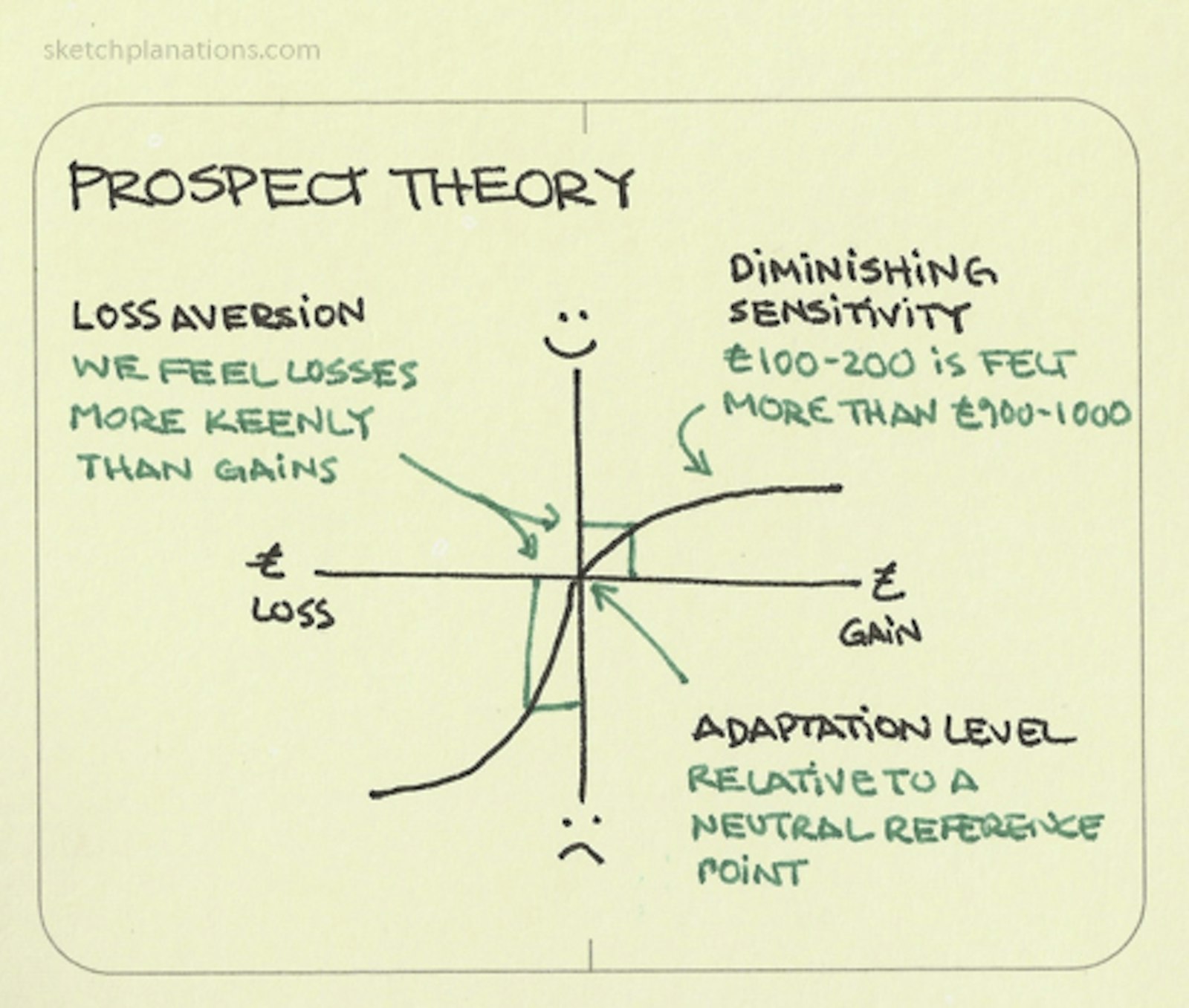
*** DEFINITION: Prospect theory is a theory of behavioral economics and behavioral finance that was developed by Daniel Kahneman and Amos Tversky in 1979. The theory was cited in the decision to award Kahneman the 2002 Nobel Memorial Prize in Economics.
Amanda, an RN client, was just informed by her financial advisor that she needed to re-launch her 403-b retirement plan. Since she was leery about investing, she quietly wondered why she couldn’t DIY. Little does her FA know that she doesn’t intend to follow his advice, anyway! So, what went wrong?
The answer may be that her advisor didn’t deploy a behavioral economics framework to support her decision-making. One such framework is the “prospect theory” model that boils client decision-making into a “three step heuristic.”
Prospect theory makes the unspoken biases that we all have more explicit. By identifying all the background assumptions and preferences that clients [patients] bring to the office, decision-making can be crafted so that everyone [family, doctor and patient] or [FA, client and spouse] is on the same page.
****
*** Briefly, the three steps are:
Simplify choices by focusing on the key differences between investment [treatment] options such as stock, bonds, cash, and index funds.
Understanding that clients [patients] prefer greater certainty when it comes to pursuing financial [health] gains and are willing to accept uncertainty when trying to avoid a loss [illness].
Cognitive processes lead clients and patients to overestimate the value of their choices thanks to survivor bias, cognitive dissonance, appeals to authority and hindsight biases.
ASSESSMENT
Much like in healthcare today, the current mass-customized approaches to the financial services industry fall short of recognizing more personalized advisory approaches like prospect theory and assisted client-centered investment decision-making.
Posted on October 19, 2021 by Dr. David Edward Marcinko MBA MEd CMP™
YOU DECIDE AND OPINE
By Dr. David E. Marcinko MBA
The Plot Thickens
Autumn is here, and leaves aren’t the only thing falling.
After seven months of higher monthly closes, plus one record-setting high early in the month, the benchmark S&P 500® Index wobbled its way to a 5% pullback in September. The causes were many—uncertainty emanating from Washington, inflation, supply chain problems, and softer earnings growth forecasts—and now the horizon is looking foggy as we gaze ahead toward the final months of 2021.
Shipping bottlenecks and a near-record number of job openings are raising costs and putting upward pressure on wages, which may start to hurt profit margins, and the twin specters of inflation and higher interest rates are making investors wonder when the Federal Reserve might step in to raise interest rates.
But, if there’s a potential bright spot, we have to look across the sea to the Eurozone, where the signs point toward an era of increased government spending that could be positive for global economic growth.
The three Nobel Prize winners in economics show that science is happening all around us—if we’re willing to look.
David Card, Joshua Angrist, and Guido Imbens, US-based economists who shared the prize awarded yesterday, helped pioneer the use of “natural experiments” to conduct studies on real-life situations as if they had happened in a tightly controlled lab.
Here’s one example: Card is most famous for his and Alan Krueger’s 1993 study on the effects of minimum wage on employment. They compared fast food jobs in New Jersey, which had just raised its minimum wage from $4.25 to $5.05, to fast food restaurants in neighboring Pennsylvania. The idea was that NJ and PA are generally pretty similar, so any observed differences in the labor market could lead to important conclusions about raising the minimum wage.
What did they find? That NJ’s higher minimum wage did not hurt job growth…and may have even increased employment. This shocked most experts at the time.
Bottom line: Natural experiments are now ubiquitous in economics research, but only because these Nobel Prize recipients showed what was possible. —NF
Posted on October 10, 2021 by Dr. David Edward Marcinko MBA MEd CMP™
By Ann Miller RN MHA
Good Morning
This is World Mental Health Week. Since one of the ways you can practice good mental health is to express gratitude, I’d like to express my gratitude to my friend and ME-P founder and executive chairman Dr. David Edward Marcinko for working to destigmatize mental health issues.
A lot of people look up to David. And they should—he started this ME-P from nothing and was relentless in building the company to the digital media ship it is today.
This week, each October, thousands of supporters come to celebrate this annual awareness program to bring attention to mental illness and its major effects on peoples’ lives worldwide.







 Support our online development, and advance our onground research initiatives in free market economics, as we seek to showcase the brightest Next-Gen minds.
THE ME-P DISCLAIMER: Posts, comments and opinions do not necessarily represent iMBA, Inc., but become our property after submission. Copyright © 2006 to-date. iMBA, Inc allows colleges, universities, medical and financial professionals and related clinics, hospitals and non-profit healthcare organizations to distribute our proprietary essays, photos, videos, audios and other documents; etc. However, please review copyright and usage information for each individual asset before submission to us, and/or placement on your publication or web site. Attestation references, citations and/or back-links are required. All other assets are property of the individual copyright holder.
Support our online development, and advance our onground research initiatives in free market economics, as we seek to showcase the brightest Next-Gen minds.
THE ME-P DISCLAIMER: Posts, comments and opinions do not necessarily represent iMBA, Inc., but become our property after submission. Copyright © 2006 to-date. iMBA, Inc allows colleges, universities, medical and financial professionals and related clinics, hospitals and non-profit healthcare organizations to distribute our proprietary essays, photos, videos, audios and other documents; etc. However, please review copyright and usage information for each individual asset before submission to us, and/or placement on your publication or web site. Attestation references, citations and/or back-links are required. All other assets are property of the individual copyright holder.







:max_bytes(150000):strip_icc()/inflation_FINAL-5c8975c946e0fb0001a0bf75.png)



:focal(1365x816:1366x817)/https://tf-cmsv2-smithsonianmag-media.s3.amazonaws.com/filer/3a/70/3a70f58d-dabc-4d54-ba16-1d1548594720/2560px-fibonaccispiralsvg.jpg)
















 The Leading Business Education Network for Doctors, Financial Advisors and Health Industry Consultants