FIVE CONDITIONS: Total 50% of Healthcare Financial Costs

By Staff Reporters

***

***

5 Conditions Total 50% of Healthcare Costs

 •  Cancer makes up nearly 15% of all healthcare spending with employers in the study paying $533 million for nearly 103,000 cancer claims.
 •  Musculoskeletal conditions (including joint wear, knee injuries, hip pain, etc.) makes up 13% of healthcare spending with employers spending $477 million for 317,000 musculoskeletal claims.
 •  Cardiovascular conditions (including heart rhythm issues, stroke, heart attack, and heart failure) makes up 9% of healthcare spending with employers paying $357 million towards 169,000 claims.
 •  Gastrointestinal conditions (including colitis, irritable bowel system, celiac disease, etc.) makes up 7% of healthcare spending with employers paying $284 million for 136,000 claims.
 •  Neurological conditions (including Parkinson’s disease, migraines, epilepsy, etc.) makes up 6% of total health care spending with employers paying $225 million for 240,000 claims.

Source: HAC and UHC via ACDIS, April 14, 2022

CITE: https://www.r2library.com/Resource/Title/082610254

HOSPITALS: https://www.amazon.com/Financial-Management-Strategies-Healthcare-Organizations/dp/1466558733/ref=sr_1_3?ie=UTF8&qid=1380743521&sr=8-3&keywords=david+marcinko

MANAGED CARE: https://www.amazon.com/Dictionary-Health-Insurance-Managed-Care/dp/0826149944/ref=sr_1_4?ie=UTF8&s=books&qid=1275315485&sr=1-4

***

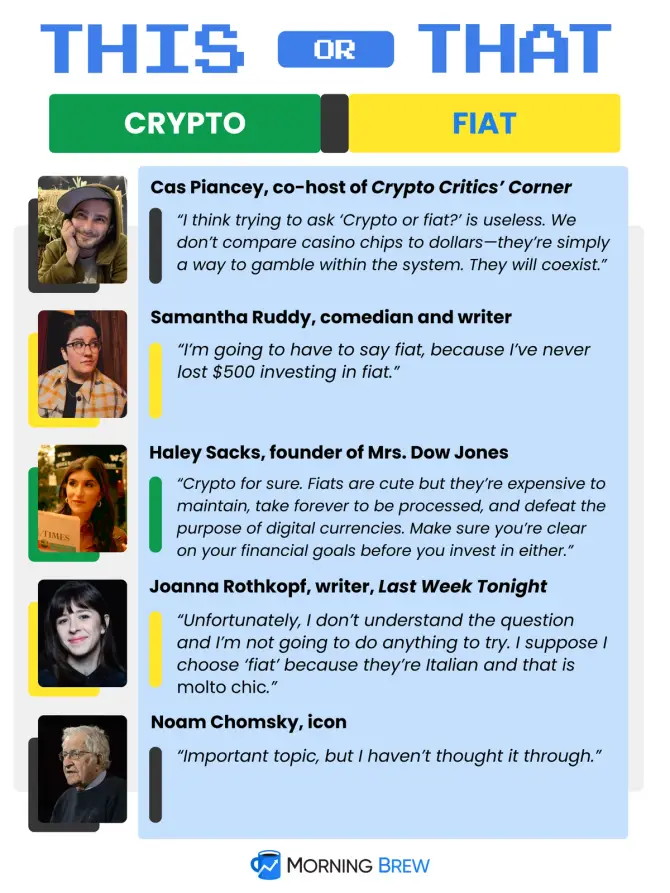
CURRENCY: Crypto -OR- Fiat?

From Morning Brew

***

***

COMMENTS APPRECIATED

Thank You

Information Technology: https://www.amazon.com/Dictionary-Health-Information-Technology-Security/dp/0826149952/ref=sr_1_5?ie=UTF8&s=books&qid=1254413315&sr=1-5

***

SURVEY: Artificial Intelligence [A.I.] in Health Care

By AMA and MCOL

***

****

JAMA: Public Views About Artificial Intelligence in Health Care

A recent JAMA survey asked “Overall, in the next 5 years, do you think AI will make health care in the United States?” The survey results were as follows:

 •  Much better: 10.9%
 •  Somewhat better: 44.5%
 •  Minimal change: 19.3%
 •  Somewhat worse: 4.3%
 •  Much worse: 1.9%
 •  Don’t know: 19%

Source: JAMA Network, May 4, 2022

***

COMMENTS APPRECIATED

Thank You

DICTIONARY: https://www.amazon.com/Dictionary-Health-Information-Technology-Security/dp/0826149952/ref=sr_1_5?ie=UTF8&s=books&qid=1254413315&sr=1-5

***

PODCAST: Employer Healthcare Priorities

By Eric Bricker MD

A Mercer Employer Survey

***

***

COMMENTS APPRECIATED

Thank You

DHIMC: https://www.amazon.com/Dictionary-Health-Insurance-Managed-Care/dp/0826149944/ref=sr_1_4?ie=UTF8&s=books&qid=1275315485&sr=1-4

MORE: https://www.amazon.com/Financial-Management-Strategies-Healthcare-Organizations/dp/1466558733/ref=sr_1_3?ie=UTF8&qid=1380743521&sr=8-3&keywords=david+marcinko

***

5 Initiatives to Improve Health Equality in the U.S.

Percentage with Initiative in Place

***

***

By Charlene Ice

  1. Increasing access to care: 25% of U.S. healthcare leaders
  2. Providing care in the community/community outreach: 24% of U.S. healthcare leaders
  3. Promoting community education: 17% of U.S. healthcare leaders
  4. Generating financial support for under-served communities: 16% of U.S. healthcare leaders
  5. Identifying collaborative partners: 11% of U.S. healthcare leaders

Notes: Responses from U.S. healthcare leaders according to Philips’ “Future Health Index 2022” report, an analysis of feedback from nearly 3,000 healthcare leaders across 15 countries.
Source: Phillips, June 8, 2022
Source URL: https://www.usa.philips.com/a-w/about/news/archive/standard/…

***
COMMENTS APPRECIATED

Thank You

***

FTC Scrutiny Results in Several Scrapped Hospital Deals

***

***

By Health Capital Consultants, LLC

FTC Scrutiny Results in Several Scrapped Hospital Deals

A series of Federal Trade Commission (FTC) challenges to hospital mergers and acquisitions in 2022 indicates heightened regulatory scrutiny of hospital deals. Perhaps emboldened by the July 2021 executive order that focused attention on antitrust enforcement of hospital consolidation, the agency has voted to challenge a number of transactions, which has lead hospitals to call off the deals rather than challenge the government.

This Health Capital Topics article reviews three of the largest transactions called off this year, two of which were announced in June. (Read more…) 

***

COMMENTS APPRECIATED

Thank You

***

***

UPDATE: Dollar-Euro Parity, Crude Oil and the Markets

By Staff Reporters

***

***

The Euro lost 10% versus the dollar this year and at $1.0238 EUR=EBS is close to the psychologically crucial parity point it last saw in mid-2002. It also hit new seven-year lows versus the Swiss franc and dropped against the sterling and the yen, but few observers are willing to call a bottom yet. Nomura’s analysts cut their euro/dollar target to $0.95 and said parity could be breached as soon as August. Citibank says a move to parity is “inevitable.” However, Nomura said that $0.95 was not that important historically, noting that the euro fell from $1.17 after its creation to $0.82 in October 2002. Extrapolating backwards using its legacy currencies, the euro traded as weak as $0.6444 in February 1985.

On the New York Mercantile Exchange, benchmark U.S. crude oil for August delivery fell $8.93 to $99.50 a barrel, its first dip below $100 since May 11th. Brent crude for September delivery fell $10.73 to $102.70 a barrel.

Finally, the Dow dropped 129.44 points, or 0.4%, to finish at 30,967.82; it had been down more than 700 points at its lows earlier in the session. The S&P 500 gained 6.06 points, or 0.2%, closing at 3,831.39. And, the NASDAQ Composite advanced 194.39 points, or 1.8%, to finish at 11,322.24.

***

COMMENTS APPRECIATED

Thank You

***

***

How Much Health Insurers Pay for Almost Everything Is About to Go Public

By Julie Appleby KHN

***

***

READ HERE: https://khn.org/news/article/health-insurers-price-transparency-public-rates-costs/?utm_source=pocket-newtab

***

COMMENTS APPRECIATED

Thank You

***

***

***

***

Q1 2022 – The Entrepreneurial Digital Health Financing Boom Chills

By Phil Taylor

***

***

US digital health company investment financing experienced a dip in Q1 of 2022, dropping to $6 billion from the $6.7 billion invested in Q1 2021. In addition, the average size of each investment deal dropped from $46 million last year to just shy of $33 million. These declines come after a boom in investments in recent years. The Rock Health Digital health securities index also reflected this year’s trend, including special purpose acquisition company (SPAC) listings.

According to Phil Taylor of PharmaPhorum, “SPACs have been a popular route to public listing for digital health as well as many other sectors, but the deals have underperformed, with steep declines in share prices after they closed that has “exerted downwards pressure” on the Rock Health Digital Health Index (RHDHI).”

Read more by clicking here

SPACs: https://medicalexecutivepost.com/2021/11/12/spac-popularity-soaring-in-healthcare/

***

COMMENTS APPRECIATED

Thank You

Subscribe to the Medical Executive-Post

***

***

***

PODCASTS: 36 Blue Cross / Blue Shield Organizations Explained

By Eric Bricker MD

By Laurence Baker MD

***

***

***

COMMENTS APPRECIATED

Thank You

***

***

When Routine Medical Tests Trigger a Cascade of Costly, Unnecessary Care

By N.P.R

***

***

READ: https://www.npr.org/sections/health-shots/2022/06/13/1104141886/cascade-of-care?utm_source=pocket-newtab

***

COMMENTS APPRECIATED

Thank You

***

***

***

PODCAST: Charter Communications Stock [Value Investing]

By Vitaliy Katsenelson CFA

***

Charter Communications (CHTR) is a significantly undervalued stock today. But are competition, 5G, and satellite internet significant threats to its business? How does its management compare to AT&T and Verizon? Read and/or listen to the analysis below.

***

***

COMMENTS APPRECIATED

Thank You

***

***

Anthem is Now Elevance Health

By Jakob Emerson, beckerspayer.com

***

***

The company formerly known as Anthem commemorated its official rebranding to Elevance Health on June 28th by ringing the opening bell at the New York Stock Exchange and beginning to trade under the new ticker symbol “ELV”. The former Anthem website now reflects the name change, which is a combination of the words elevate and advance to represent the company’s commitment to “elevating the importance of whole health and advancing health beyond healthcare for consumers.”

When it first announced the rebrand in March, the payer said Blue Cross Blue Shield health plan names would not change, though it planned to narrow the number of brands under its umbrella. The company owns BCBS plans in 14 states. On June 15, the company launched two new subsidiaries under the Elevance name: Carelon and Wellpoint.

Carelon, a healthcare services brand, will consolidate the company’s existing portfolio of capabilities and services businesses under a single name. The Wellpoint health plan brand will unify the company’s Medicare, Medicaid, and commercial health plans in select markets.

***

COMMENTS APPRECIATED

Thank You

***

***

PODCAST: Healthcare I.T. Interoperability Rankings

By Eric Bricker MD

***

***

PODCAST: https://www.youtube.com/watch?v=yQSY957s_GY

***

COMMENTS APPRECIATED

Thank You

***

***

HEALTH TECH: Technology Giants?

***

Dr. Bertalan Meskó, MD PhD

***


The Medical Futurist

***

  • Google in healthcare: The search giant has repeatedly successfully transferred its in-depth knowledge of algorithms in the field of medicine, particularly since it acquired DeepMind.
  • Apple in healthcare: Apple will keep on working on expanding the health features of its devices, Apple Watch and iPhones included.
  • Microsoft in healthcare: Microsoft’s cloud solutions provide integrated capabilities that make it easier to improve the healthcare experience.
  • Amazon in healthcare: Amazon will make further use of its vast knowledge of online shopping trends and behavior and will keep on providing what people need, from medicine to wearables.
  • IBM in healthcare: IBM has a lot to offer in federated learning, blockchain, and quantum computing
  • Nvidia in healthcare: NVIDIA seems incredibly focused on its approach to healthcare. We can expect NVIDIA to be a leader in the use of artificial intelligence in healthcare
  • Facebook in healthcare: The Metaverse developed by Facebook/Meta has incredible potential to revolutionize healthcare.

***

COMMENTS APPRECIATED

Thank You

***

***

UPDATE: Market Predictions and the Global Economy?

By Staff Reporters

***

***

  • Predictions: The stock market could surge 7% this week as quarter-end re-balancing leads to a buying spree in equities, according to JPMorgan. The bank expects re-balancing trades to favor equities after a year-to-date decline of nearly 20%. “Next week’s re-balance is important since equity markets were down significantly over the past month, quarter and six-month time periods.”
  • Markets: With the S&P having plunged nearly 18% this year, expect W. Buffett to preach the value of value stocks (aka steady, non-flashy public companies). By one measure, they’re on track to beat growth stocks by the widest margin in more than two decades, according to the WSJ.
  • Global economy: Russia defaulted on its foreign-currency sovereign debt for the first time since the Bolshevik Revolution in 1918 after failing to pay bondholders $100 million worth of interest by the end of a 30-day grace period. The default marks the beginning of a complex legal journey for bondholders, but it’s not expected to have any major consequences for the Russian economy, which has already been battered by Western sanctions.

CITE: https://www.r2library.com/Resource/Title/0826102549

***

COMMENTS APPRECIATED

Thank You

***

***

The Next Big [Investment] Thing?

Or, NOT!

By Rick Kahler CFP®

How do you spot the investment opportunity that will become the next Apple, Facebook, or Microsoft? Certainly they are out there. Someone is going to discover them and be set for life, so why shouldn’t it be you?

Here’s why it shouldn’t

As with all Registered Investment Advisors, the amount of money I manage for clients is publicly disclosed information that anyone with an Internet connection can find.

Because of that, I am seen as the gatekeeper of a source of funding for every under funded business opportunity that is sure to become the next Apple. I get to see a lot of proposals. Many have promise at first glance. But the promise usually fades the more I dig into the proposal, ask questions, and do the math.

After hours and hours of investigation, every few years I see that one proposal that looks really good. One that calls to me to invest, that really has the promise of being a winner. When all the stars and the planets align, I know I now have a 90% chance of not making a dime on the venture.

That’s why I have learned to save my time and my money when I am approached with “the next big thing.” I just don’t have time to investigate every project and cull hundreds of opportunities down to the one that has a 10% chance of succeeding. I see it as looking for the proverbial needle in the haystack. Certainly, there’s a needle in there somewhere. But examining every piece of hay in order to find it has a significant monetary cost.

To succeed, I would need a lot of time, even more money, and exponentially more intuition and intellect. Not to mention a fair amount of luck. The probability that I will go bankrupt before I ever find the needle is staggering.

Most of the “next big things” are discovered by driven entrepreneurs who bank everything they have on an idea and find the financing to shoestring it together. It usually isn’t the armchair investor who cashes in.

My experience

Over my 40 years of real estate and investment experience, I have seen people lose millions investing in lumber mills, emu farms, highly leveraged real estate, futures contracts, day trading, restaurants, multi-level-marketing companies, rare earth minerals, Iraqi currency, and the newest ones—marijuana farms and crypto-currencies.

As a result, for my money and the money of my clients, I’ll play the odds for success by saying “no” to every opportunity that comes across my desk. I don’t take the time to investigate them. I don’t read the offering circulars. I don’t attend presentations. The answer is “no” to the great odds of losing my money and “yes” to the staggering odds of keeping money growing conservatively for me and for my clients.

What do I say “yes” to? I say yes to investing in mutual funds that own or loan money to 12,000 successful companies around the globe and thousands of real estate properties. I say yes to well-diversified portfolios. I say yes to proven investment strategies with 25-year track records. I say yes to having enough cash reserves to fund two to five years of retirement income.

Boring

I know, it’s not very sexy, is it? In fact, the way I invest my money and the money of those who have entrusted their investments to me is downright boring.

***

https://www.crcpress.com/Comprehensive-Financial-Planning-Strategies-for-Doctors-and-Advisors-Best/Marcinko-Hetico/p/book/9781482240283

***

Assessment

So here is my hot tip when it comes to finding investment opportunities to secure your future: forget about the “next big thing.” Instead, stay with the “next boring thing.” The odds are overwhelming that this will make you a long-term winner.

Conclusion

Your thoughts and comments on this ME-P are appreciated. Feel free to review our top-left column, and top-right sidebar materials, links, URLs and related websites, too. Then, subscribe to the ME-P. It is fast, free and secure.

Speaker: If you need a moderator or speaker for an upcoming event, Dr. David E. Marcinko; MBA – Publisher-in-Chief of the Medical Executive-Post – is available for seminar or speaking engagements.

Book Marcinko: https://medicalexecutivepost.com/dr-david-marcinkos-bookings/

Subscribe: MEDICAL EXECUTIVE POST for curated news, essays, opinions and analysis from the public health, economics, finance, marketing, IT, business and policy management ecosystem.

***

***

Ransomware Simplified?

***

By Darrell K. Pruitt DDS

***

***

“We’re now truly in the era of ransomware as pure extortion without the encryption –
Why screw around with cryptography and keys when just stealing the info is good enough”

Jessica Lyons Hardcastle

{The Register, June 25, 2022]

READ: https://www.theregister.com/2022/06/25/ransomware_gangs_extortion_feature/

***

***

COMMENTS APPRECIATED

Thank You

***

***

PODCAST: Health Tech Faves & Investment Trends from Entrepreneurs

START-UPS AND INNOVATIONS

Health tech investment raced ahead in 2020. Join innovation insiders for a discussion on new health technologies, health-care’s digital transformation timeline, and what to expect for mid- to long-term health tech investment.

Health Care Technology Today | Canadian Physiotherapy ...

PODCAST: https://www.healthsharetv.com/content/golive-webinar-health-tech-faves-investment-trends-innovation-insiders

Your thoughts are appreciated.

THANK YOU

***

Professor VERSUS Entrepreneur

Teaching / Educating

Bill Hennessey, M.D.

Bill Hennessey, M.D.

As a teacher educating is your job. It’s what you enjoy. There’s a fairly lax time schedule and resources are already built in the equation. Little accountability because the ultimate burden and measure of success is placed on the student to pass a test. If they don’t do well, it’s the student not directly the teacher who pays the price.

Now, I work with first year students who don’t know what a red blood cell looks like (biconcave disc, you thought I forgot, didn’t you) all the way to a chief resident who can probably do some surgeries better than me. It’s my job to take that first year student and turn them into a chief resident.

As an entrepreneur with limited resources, time, and energy, you don’t have the luxury to continuously teach, develop, and convince. You need people who simply get it especially in strategic positions. You don’t have the luxury of time or resources. You also are directly accountable if they don’t understand because you have a burn rate that probably just got worse. So how much “oxygen” do you allocate when trying to build your team?

Different story for Apple, Boeing and others that can create academies and educational tracks to teach and develop internally.

ASSESSMENT: Your thoughts are appreciated.

Product Details

Employee Engagement for Startups and Entrepreneurs

3 Business Start-up Blunders

Jonathan Mase | Jonathan A. Mase's WordPress Blog

Operating as a startup company will present many challenges, but you should take heart in knowing that many of today’s biggest companies were once in your position. If you wish for your startup company to succeed, then employee engagement will be a crucial factor. Keep reading to learn more about the importance of employee engagement for startups. It should allow you to figure out the right path forward to find the success you desire.

It Makes Employees Loyal

When employees are engaged in the work they are doing, they will be more likely to be loyal to your company. Having loyal employees will benefit you in several different ways, but one of the most important ones is that they will work harder. When employees are engaged in the work that they’re doing, then that means that they truly care about it. They’re going to take things seriously, and you will…
View original post 228 more words

e-Prescriptions for Dentists?

By Darrell K. Pruitt DDS

***

***

Some say e-prescriptions are a swell idea for dentists!

“Over 70% of organizations suffered two or more ransomware attacks in the past 12 months – According to the data presented by the Atlas VPN team based on a Veeam 2022 Ransomware Trends Report, 73% of organizations suffered two or more ransomware attacks in the past 12 months. The majority — 44% of ransomware infections entered through phishing emails, links, and websites. In total, 35% of organizations experienced two ransomware attacks, nearly a quarter (24%) endured three, close to a fifth (9%) of companies had four, and 4% went through five. Meanwhile, 1% of organizations suffered six or more ransomware attacks in the past 12 months. The remaining 27% of organizations faced only one ransomware attack.” By Acrofan, June 15, 2022.
https://us.acrofan.com/detail.php?number=679260

“Why Ransomware Extortion is a Threat – In a typical ransomware extortion scheme, files are not only encrypted, but are also copied and exfiltrated from the network. Then, when the time comes to demand payment, hackers also say that if the business doesn’t meet their ransom demands within a given timeframe, they will publish the stolen files, or undertake some other activity to harm the business, such as a DDoS attack. This is known as double, or even triple extortion, with threats to release confidential information to the public, disrupt internet access or inform customers, shareholders or other partners about the incident unless they pay the ransom. It puts more pressure on businesses to make a quick decision, boosts the odds of criminals getting a big payout and increases the number of risks firms are exposed to, so this type of ransomware is something every firm should be concerned about.” By Brenda Robb for Security Boulevard on June 15, 2022.
https://securityboulevard.com/2022/06/why-ransomware-extortion-is-a-threat/

It is also worth noting that if a dentist suffers a ransomware attack, HIPAA demands that all affected patients be notified that their identities might have been breached and might show up on the internet. If the breach involves 500 or more records, a description of the incident must be reported in the local media. This could easily bankrupt a practice even before the ransom is paid. What’s more, from the increasing numbers of data breaches that are occurring, one can surmise that dentists are not obeying the law … not yet.

***

COMMENTS APPRECIATED

Thank You

***

***

Great Depression versus Great Recession [A Voting Opinion Poll]

Join Our Mailing List

Yesterday versus Today?

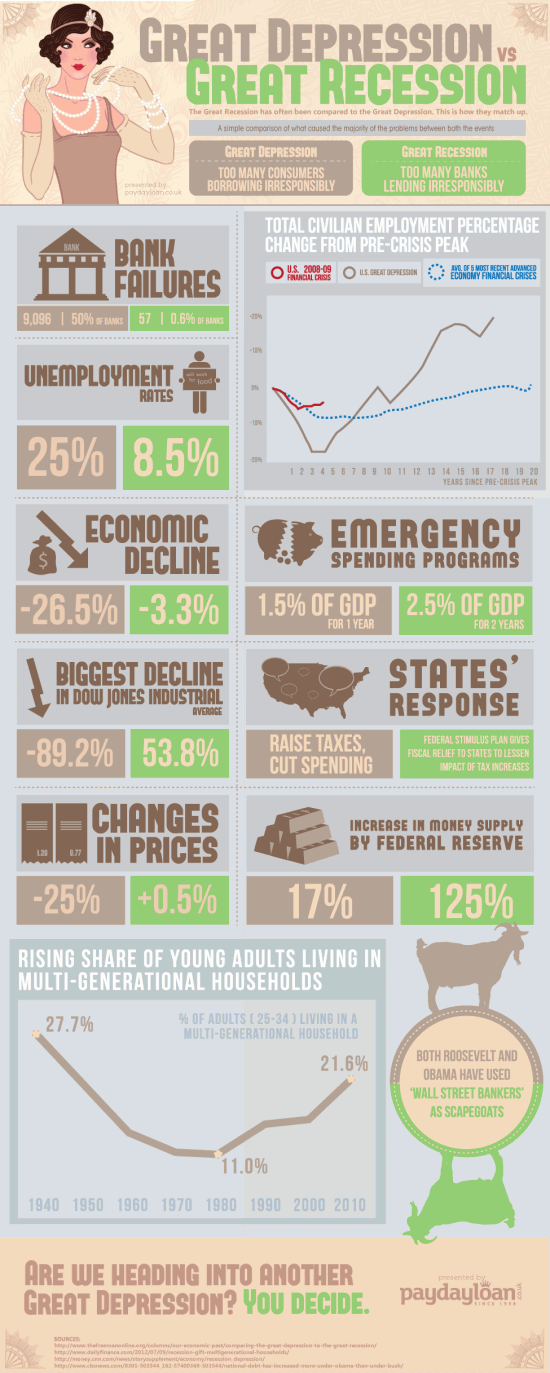
The Great Depression is often compared to the 2001-08  Great Recession. There are some interesting facts when comparing the Great Depression to the Great Recession. It may even be considered scary when laid out directly in front of you.

The cause of the Great Depression was because people were borrowing too much money, unlike the Great Recession where the banks were lending too much money irresponsibly. Don’t forget that what was once a recession turned into the Great Depression because of unemployment rates reaching 25%, bank failures covering half of all banks, and more.

Both Roosevelt and Obama have used “wall street bankers” as a scapegoat.

***

***

View more interesting facts about the Great Depression and Recession by viewing this infographic presented by Payday Loan.

Assessment

Do you think we are going into another Great Depression in 2022?

Conclusion

Your thoughts and comments on this ME-P are appreciated. Feel free to review our top-left column, and top-right sidebar materials, links, URLs and related websites, too. Then, subscribe to the ME-P. It is fast, free and secure.

Link: http://feeds.feedburner.com/HealthcareFinancialsthePostForcxos

Speaker: If you need a moderator or speaker for an upcoming event, Dr. David E. Marcinko; MBA – Publisher-in-Chief of the Medical Executive-Post – is available for seminar or speaking engagements. Contact: MarcinkoAdvisors@msn.com

OUR OTHER PRINT BOOKS AND RELATED INFORMATION SOURCES:

***

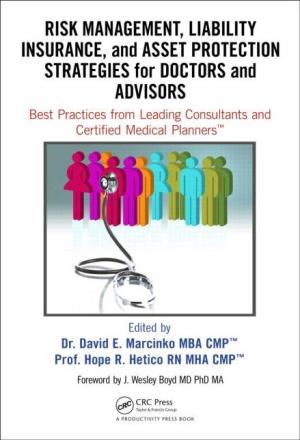
Risk Management, Liability Insurance, and Asset Protection Strategies for Doctors and Advisors: Best Practices from Leading Consultants and Certified Medical Planners™8Comprehensive Financial Planning Strategies for Doctors and Advisors: Best Practices from Leading Consultants and Certified Medical Planners™

***

Product DetailsProduct DetailsProduct Details

PODCAST: The “Medical Trend”?

By Eric Bricker MD

***

***

COMMENTS APPRECIATED

Thank You

***

MORE: https://medicalexecutivepost.com/2022/01/25/global-medical-trends-healthcare-cost-increases/

***

***

PODCAST: Optum – The $101 Billion Division of United Health Group Explained

By Eric Bricker MD

***

PODCAST: https://www.youtube.com/watch?v=dHAr0s33Gns

RELATED: https://www.youtube.com/watch?v=-21-h5lZBEU

***

***

***

COMMENTS APPRECIATED

Thank You

***

The DOT.com Bubble HAS Burst!

What is NEXT?

U.S. equities closed lower as losses in the Technology, Consumer Services and Financials sectors propelled shares lower. At the close, the Dow Jones Industrial Average fell 2.73%, while the S&P 500 index lost 2.91%, and the NASDAQ Composite index fell 3.52%.

***

By Vitaliy N. Katsenelson CFA

***

What a Day – TODAY!

READ: https://tinyurl.com/2r8zaftk

COMMENTS APPRECIATED

Thank You

***

***

Passive Investing, Like Buying Used Cars, Is a Wise Strategy

More on Passive Investing

By Rick Kahler MS CFP®

***

Need a car? Buy used. It’s what I always do. My sweet spot is a low-mileage vehicle two or three years old, which I routinely can find for 25% to 35% less than the original cost. I recommend this strategy to my clients, staff, and friends.

If everyone followed this advice, you’d think the approach would eventually fail dismally. After all, someone has to buy new cars. No worries, though; there are millions of people who will continue to buy new cars. Financial planners have recommended this strategy for decades, and nothing has changed in the supply of great deals on low-mileage cars.

The same applies to investors who invest “passively” in index mutual funds. Passive investors embrace a philosophy that extremely few investors can beat the average return of the stock market. Research by Dalbar, Inc. shows that over a 20-year-period, 97% of fund managers who tried to beat the market actually ended up doing worse than the market average. They suggest that, instead of paying a manager to try and beat the market, you pocket that money yourself and beat them by investing in low cost index mutual funds that simply earn average market returns.

As you might guess, those pushing the high-fee mutual funds that are actively trying to beat the market returns are the big Wall Street firms that need your money to keep their companies thriving. Not surprisingly, these firms regularly attempt to dissuade investors from passive investing.

***

active mamt

***

An article at ETF.com by Larry Swedroe, the director of research for The BAM Alliance, lists a few of these attempts. Representatives for two large brokerage firms call passive investing “worse than Marxism” and those that do it “parasites.” Another, however, gives a more reasoned warning that is worth exploring. Tim O’Neill, global co-head of Goldman Sach’s investment management division, says “if passive investing gets too big, the market won’t function.”

Up to a point, this idea has some validity. Swedroe says, “Active managers play an important societal role. Specifically, their actions determine security prices, which in turn determine how capital is allocated. And it is the competition for information that keeps markets highly efficient, both in terms of information and capital allocation.”

Passive investors get a free ride at the expense of active investors. As Swedroe notes, they receive all the benefits from the role that active managers play without having to pay their costs. Passive investors need active investors to continue to believe they can beat the markets, just as used car buyers need new car buyers to supply them with used cars.

Just how likely is it that all the people who invest with active investors will figure out that paying active managers is not in their best interests and will shift to passive investing? About the same chance everyone will stop buying new cars.

Consider this. A study by Vanguard, one of the largest passive fund managers, found that $10 trillion, or 20% of the global market equity, is invested in index funds. More importantly, this 20% accounted for only 5% of all the trading. It’s the trading that drives market prices and makes markets efficient and liquid. Swedroe says “we are nowhere near” the chance that passive investing will become so dominant that the efficiency of the markets would be threatened.

Just as there is no immediate threat of the used car supply drying up because no one is buying new cars, there is also little chance that the majority of investors will give up the delusional dream of beating the market. That means wise used-car buyers and wise passive investors can keep on following their wise wealth-building strategies.

***

Conclusion

Your thoughts and comments on this ME-P are appreciated. Feel free to review our top-left column, and top-right sidebar materials, links, URLs and related websites, too. Then, subscribe to the ME-P. It is fast, free and secure.

Speaker: If you need a moderator or speaker for an upcoming event, Dr. David E. Marcinko; MBA – Publisher-in-Chief of the Medical Executive-Post – is available for seminar or speaking engagements.

Book Marcinko: https://medicalexecutivepost.com/dr-david-marcinkos-bookings/

Subscribe: MEDICAL EXECUTIVE POST for curated news, essays, opinions and analysis from the public health, economics, finance, marketing, IT, business and policy management ecosystem.

DOCTORS:

“Insurance & Risk Management Strategies for Doctors” https://tinyurl.com/ydx9kd93

“Fiduciary Financial Planning for Physicians” https://tinyurl.com/y7f5pnox

“Business of Medical Practice 2.0” https://tinyurl.com/yb3x6wr8

HOSPITALS:

“Financial Management Strategies for Hospitals” https://tinyurl.com/yagu567d

“Operational Strategies for Clinics and Hospitals” https://tinyurl.com/y9avbrq5

***

Risk Management, Liability Insurance, and Asset Protection Strategies for Doctors and Advisors: Best Practices from Leading Consultants and Certified Medical Planners™8Comprehensive Financial Planning Strategies for Doctors and Advisors: Best Practices from Leading Consultants and Certified Medical Planners™


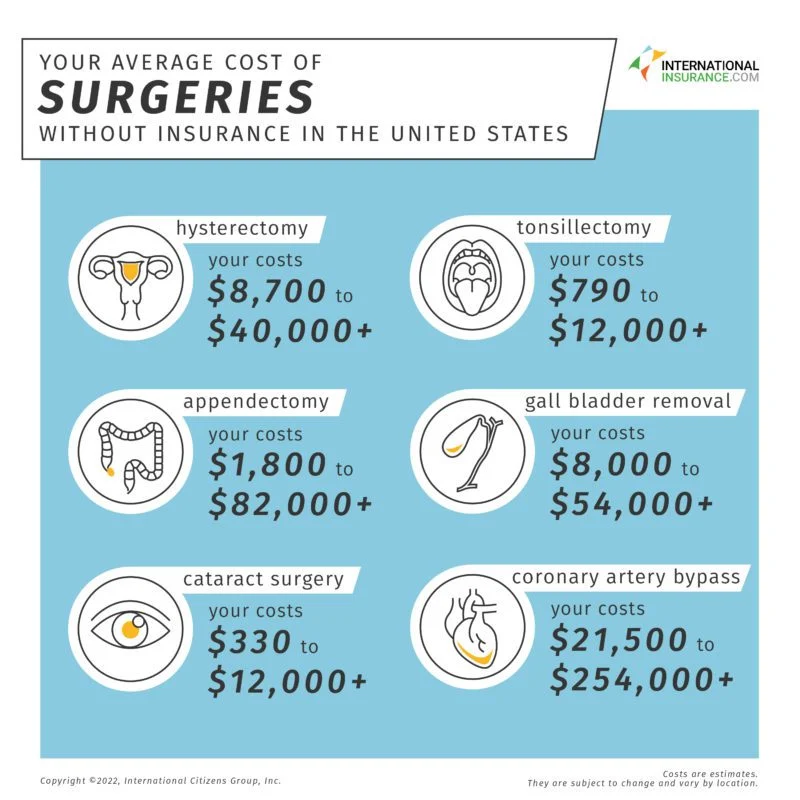
SURVEY: Surgical Cost Spending

By MCOL

***

***

EHIR was started nearly a decade ago out of a need for objective support in identifying and assessing emerging solutions to sift through the noise and stay ahead of the curve amid a rapidly changing competitive landscape. EHIR provides a streamlined and efficient innovation intake and evaluation process along with valuable insights to the world’s leading employers.

CITE: https://www.r2library.com/Resource/Title/082610254

Employer Health Innovation Roundtable, LLC

4 KEY Findings

 •  The survey found that 59% indicated lowering costs was a very high, or high, priority – up from 52% prior to the pandemic.
 •  Over half of the employers surveyed indicated that surgical costs were a significant issue, with surgery accounting for 34% of their total healthcare spend. About 75% noted that by controlling surgery costs, they can largely reduce their total spend.

***

*  Even though 69% of employers have a COE (Center of Excellence), the majority of them have been implemented within the past two years, and not with an eye to specifically reducing surgical costs.
 *  Only 9% of respondents rely on carrier-sponsored COEs, which suggests that they are seeking out third-party vendors for this benefit, as either the sole COE provider or as a partner with the employer’s health plan carrier.
Source: EHIR and Carrum Health via PRNewswire, May 4, 2022

***

COMMENTS APPRECIATED

Thank You

***

***

***

COVID, Inflation and Value Investing

Millennial Investing

***

By Vitaliy Katsenelson, CFA

***

***

COVID, Inflation, and Value Investing: Millennial Investing
I was recently interviewed by Millennial Investors podcast. They sent me questions ahead of time that they wanted to ask me “on the air”. I found some of the questions very interesting and wanted to explore deeper. Thus, I ended up writing answers to them (I think through writing). You can listen to the podcast here

By the way, I often get asked how I find time to write. Do I even do investment research? Considering how much content I’ve been spewing out lately, I can understand these questions. In short – I write two hours a day, early in the morning (usually from 5–7am), every single day. I don’t have time-draining hobbies like golf. I rarely watch sports. I have a great team at IMA, and I delegate a lot. I spend the bulk of my day on research because I love doing it. 

This is not the first time I was asked these questions. If you’d like to adapt some of my daily hacks in your life, read this essay.

How has Covid-19 changed the game of value investing?

Value investing has not changed. Its fundamental principles, which I describe in “The Six Commandments of Value Investing,” (one-click sign up here to receive it in your inbox) have not changed one iota. The principles are alive and well. What has changed is the environment – the economy. 

I learned this from my father and Stoic philosophers: You want to break up complex problems into smaller parts and study each part individually. That way you can engage in more-nuanced thinking. 

Let’s start with what has not changed. Our desire for in-person human interaction has not changed. At the beginning of the pandemic, we (including yours truly) were concerned about that. We were questioning whether we were going to ever be able to shake hands and hug again. However, the pandemic has not changed millions of years of human evolution – we still crave human warmth and personal interaction. We need to keep this in mind as we think about the post-pandemic world. 

What we learned in 2021 is that coronavirus mutations make predicting the end of the pandemic an impossible exercise. From today’s perch it is safe to assume that Covid-19 will become endemic, and we’ll learn how to live with it. I am optimistic on science. 

Let’s take travel, for example. Our leisure travel is not going to change much – we are explorers at heart, and as we discovered during the pandemic, we crave a change in scenery. However, I can see business travel resetting to a lower base post-pandemic, as some business trips get resolved by simple Zoom calls. Business travel is about 12% of total airline tickets, but those revenues come with much higher profit margins for airlines. 

Work from home. I am still struggling with this one. The norms of the 20th-century workplace have been shaken up by the pandemic. Add the availability of new digital tools and I don’t need to be a Nostradamus to see that the office environment will be different. 

By how much? 

The work from home genie is out of the bottle. It will be difficult to squeeze it back in. My theory right now is that customer support, on-the-phone types of jobs may disproportionately get decentralized. The whole idea of a call center is idiotic – you push a lot of people into a large warehouse-like office space, where they sit six feet apart from each other and spend eight hours a day on the phone talking to customers without really interacting with each other. Current technology allows all this work to be done remotely.

On another hand, I can see that if you have a company where creative ideas are sparked by people bumping into each other in hallways, then work from home is less ideal. But again, I don’t think about it in binary terms, but more like it’s a spectrum. Even for my company. Before the pandemic, half of our folks worked outside of the IMA main office in Denver. Most of our future hires will be local, as I believe it is important for our culture. However, we provide a certain number of days a year of remote work as a benefit to our in-office employees. 

From an investment perspective, we are making nuanced bets on global travel normalizing. We don’t own airlines – never liked those businesses, never will. Most of their profitability comes from travel miles – they became mostly flying banks. 

Office buildings I also put into a too-difficult-to-call pile. There was already plenty overcapacity in office real estate before the pandemic, and office buildings were priced for perfection. The pandemic did not make them more valuable. Maybe some of that overcapacity will get resolved through conversion of office buildings into apartments. By the way, this is the beauty of having a portfolio of 20–30 stocks: I don’t need to own anything I am not absolutely head over heels in love with.

What is the importance of developing a process to challenge your own beliefs?

My favorite quote from Seneca is “Time discovers truth.” My goal is to discover the truth before time does. I try to divorce our stock ownership from our feelings. 

Let me give you this example. If you watch chess grandmasters study their past games, they look for mistakes they have made, moves they should have made, so in the future they won’t make the same mistake twice. I have also noticed they say “white” and “black,” not “I” and “the opponent.” This little trick removes them from the game so that they can look for the best move for each side. They say “This is the best move for white”; “This is the best move for black.”

You hear over and over again from people like Warren Buffett and other value investors that we should buy great companies at reasonable prices, and I’d like to dig deeper on that idea and its two key parts, great companies and reasonable prices. Could you tell us what it takes for a company to qualify as a “great” company?

This question touches on Buffett’s transformation away from Ben Graham’s “statistical” approach, i.e., buying crappy companies that look numerically cheap at a significant discount to their fair value, to buying companies that have a significant competitive advantage, a high return on capital, and a growth runway for their earnings. 

The first type of companies often will not be high-quality businesses and will most likely not be growing earnings much. Let’s say the company is earning $1. Its earnings power will not change much in the future – it is a $5 stock trading at 5 times earnings. If its fair value is $10, trading at 10 times earnings, And if this reversion to fair value happens in one year, you’ll make 100%. If it takes 5 years then your return will be 20% a year (I am ignoring compounding here). So time is not on your side. If it takes 10 years to close the fair value gap, your return halves. Therefore you need a bigger discount to compensate for that. Maybe, instead of buying that stock at a 50% discount, you need to buy a company that is not growing at a 70% discount, at $3 instead of $5. This was pre-Charlie Munger, “Ben Graham Buffett.” 

Then Charlie showed him there was value in growth. If you find a company that has a moat around its business, has a high return on capital, and can grow earnings for a long time, its statistical value may not stare you in the face. But time is on your side, and there is a lot of value in this growth. If a company earns $1 today and you are highly confident it will earn $2 in five years, then over five years, if it trades at 10 times earnings, a no-growth company may be a superior investment if the valuation gap closes in less than 5 years, while one with growing earnings is a superior investment past year 5. 

Both stocks fall into the value investing framework of buying businesses at a discount to their fair value, looking for a margin of safety. With the second one, though, you have to look into the future and discount it back. With the first one, because the lack of growth in the future is not much different from the present, you don’t have to look far.

There is a place for both types of stocks in the portfolio – there are quality companies that can still grow and there are companies whose growth days are behind them. In our process we equalize them by always looking four to five years out. 

What qualifies as a “reasonable price”? 

We are looking for a discount to fair value where fair value always lies four to five years out. In our discounted cash flow models, we look a decade out. Our required rate of return and discount to fair value will vary by a company’s quality. There are more things that can go wrong with lower-quality companies than with the better ones. High-quality companies are more future-proof and thus require lower discount rates. We are incredibly process-driven. We have a matrix by which we rate all companies on their quality and guestimate their fair value five years out, and this is how we arrive at the price we want to pay today. 

Why do you believe that buying great companies sometimes isn’t a great investing strategy?

Because that is first-level thinking, which only looks at what stares you in the face – things that are obvious even to untrained eyes and thus to everyone. First-level thinking ignores second-order effects. If everyone knows a company is great, then its stock price gets bid up and the great company stops being a great investment. With second-level thinking you need to ask an additional question, which in this case is, what is the expected return? Being a great company is not enough; it has to be undervalued to be a good stock. 

We are looking for great companies that are temporarily (key word) misunderstood and thus the market has fallen out of love with them. Over the last decade, when interest rates only declined, first-level thinking was rewarded. It almost did not matter how much you paid for a stock. If it was a great company, its valuations got more and more inflated. 

You’re a big advocate of having a balanced investment approach that is able to weather all storms. What investments have you found that you expect will be able to hold their buying power if inflation persists through 2022 and 2023?


There are many different ways to answer this question. In fact, every time I give an answer to this question I arrive at a new answer. You want to own companies that have fixed costs. You want assets that have a very long life. I am thinking about pipeline companies, for instance. They require little upkeep expense, and their contracts allow for CPI increases (no decreases); thus higher inflation will add to their revenue while their costs will mostly remain the same. 

We own tobacco companies, too. I lived in Russia in the early ’90s when inflation was raging. I smoked. I was young and had little money. I remember one day I discovered that cigarette prices had doubled. I had sticker shock for about a day. I gave up going to movies but somehow scraped up the money for cigarettes. 

Whatever answer I give you here will be incomplete. It’s a complex problem, and so each stock requires individual analysis. In all honesty, you have to approach it on a case-by-case basis. 

With higher inflation, you’d expect bond yields to rise, since bond investors will demand a higher return to keep pace with inflation. However, CPI inflation is currently over 6%, and the 10-year Treasury is sitting at 1.5%. Why haven’t we seen Treasury yields rise more, and what does it mean for investors if a spread this wide persists?

I am guessing here. My best guess is that so far investors have bought into the Fed’s rhetoric that inflation is transitory due to the economy’s rough reopening and supply chain problems. I wrote a long article on this topic. To sum up, part of the inflation is transitory but not all of it. 

I am somewhat puzzled by the labor market today. I’ve read a few dozen very logical explanations for the labor shortage, from early retirement of baby boomers to the pandemic triggering a search for the meaning of life and thus people quitting dead jobs and all becoming Uber drivers or starting their own businesses. Labor is the largest expense on the corporate income statement, and if it continues to be scarce then inflation will persist. 

I read that employees are now demanding to work from home because they don’t want to commute. The labor shortages are shifting the balance of power to employees for the first time in decades. This will backfire in the long run, as employers will be looking at how to replace employees with capital, in other words, with automation. If you run a fast-food restaurant and your labor costs are up 20–30% or you simply cannot hire anyone, you’ll be looking for a burger flipping machine. 

If we continue to run enormous fiscal deficits, then the US dollar will crack. The pandemic has accelerated a lot of trends that were in place. We were on our way to losing our reserve currency status. Let me clarify: That is going to be a very slow, very incremental process. It will be slow because currency pricing is not an absolute but a relative endeavor, and the alternatives out there are not great. But two decades ago the US dollar was a no-brainer decision and today it is not. So we’ll see countries slowly diversifying away from it. A weaker US dollar means higher, non transitory inflation. 

You wrote The Little Book of Sideways Markets, in which you point out that history shows that a sideways market typically occurs after a secular bull market. With the role that the Federal Reserve plays in the financial markets, do you still anticipate that valuations will normalize in the coming years?

I say yes, in part because declining interest rates have pushed all assets into stratospheric valuations. Rising bond yields and valuations pushed heavenward are incompatible. Yes, I expect valuations to do what they’ve done every time in history: to mean revert. In big part this will depend on interest rates, but if rates stay low because the economy stutters, then valuations will decline – this is what happened in Japan following their early-1990s bubble. Interest rates went to zero or negative, but valuations declined. 

The stock market today is very much driven by the Federal Reserve’s monetary policy. Is there a point at which they are able to take the gas off the pedal and allow markets to normalize?

I am really puzzled by this. We simply cannot afford higher interest rates. Going into the pandemic our debt-to-GDP was increasing steadily despite the growing economy. In fact, you could argue that most of our growth has come from the accumulation of debt (the wonders of being the world’s reserve currency). Our debt has roughly equaled our GDP, and all of our economic growth in some years equaled the growth in government debt.

During the pandemic we added 40% to our debt in less than two years. We have higher debt-to-GDP than we had during WWII. After the war we reduced our debt. Also, we were a different economy then – we were rebuilding both the US and Europe. As a society we had a high tolerance for pain. 

Just like debt increases stimulate growth, deleveraging reduces growth. Also, I don’t think politicians or the public care about high debt levels. So far debt has only brought prosperity. However, higher interest rates would blow a huge hole in government budgets. If the 10-year Treasury rises a few percentage points, interest rates will increase by the amount we spend on national defense. One thing I am certain about is that our defense spending will not decline, so higher interest rates will lead to money printing and thus inflation. 

I am also puzzled by the impact of higher interest rates on the housing market. Housing will simply become unaffordable if interest rates go up a few percentage points. Loan-to-income requirements will price a huge number of people out of the market, and housing prices will have to decline. This Higher rates will also reduce the number of transactions in the real estate market, because people will be locked into their 2.5% mortgages, and if they sell they’d have to get 4-5-6% mortgages. There are a lot of second-order effects that we are not seeing today that will be obvious in hindsight. Housing prices drive demand in adjacent sectors such as home improvement. And think of the impact of higher rates on any large purchase, for example a car. 

We’re seeing the continuing rise of China has a big player in the global economy, and I know you like to invest internationally. As a value investor, how do you think about China’s rise as a global powerhouse and how it might affect the financial markets?

During the Cold War there were two gravitational centers, and as a country you had to choose one – you were either with the Soviets or with the West. Something similar will likely transpire here, too. I have to be careful using the Cold War analogy, because the Cold War was driven by ideology – it was communism vs. capitalism. Now the tension is driven by economic competition and our unwillingness to pass the mantle of global leader to another country. 

We are drawing red lines in technology. Data is becoming the new oil. China is using data to control people, and we want to make sure they don’t have control over our data. Therefore, the West wants to make sure that our technology is China-free. The US, Europe, and India will likely be pursuing a path where Chinese technology and Chinese intellectual property are largely disallowed. We have already seen this happening with Huawei being banned from the US and Western Europe. Other countries, including Russia, will have to make a choice. Russia will go with China.

Also, we are concerned that most chip production is centered in Taiwan, which at some point may be grabbed by China. The technological ecosystem would then have to undergo a significant transformation. This has already started to happen as we begin to bring chip production back to the US and Europe. 

The pandemic made us realize that globalization had made us reliant on the kindness of strangers, and we found we could not even get facemasks or ventilators. 

Globalization was deflationary; deglobalization will be inflationary.

This increased tension between countries has led to your investing in the defense industry. Could you tell us how you think about this industry? 

Despite the rise of international tensions, the global defense industry has been one of sectors that still had reasonable (sometimes unreasonably good) valuations. We have invested in half a dozen US and European defense companies. The US defense budget is unlikely to decline in the near future. There is a common misperception that Republicans love defense and Democrats hate it. Those may be party taglines, but history shows that defense spending has been driven by macro factors – it did not matter who was the occupant of the White House. 

There are a lot of things to like about defense businesses. They are an extension of the US or European governments. Most of them are friendly monopolies or duopolies. They have strong balance sheets, good returns on capital, and predictable and growing (maybe even accelerating) demand. They are noncyclical. They have inflation escalators built into their contracts. I don’t have to worry about technological disruptions. They are also a good macro hedge.

We added to our European defense stocks recently for several reasons. Europe has underinvested in defense, relying on the US Yet we have shown time and again that we may not be as dependable as we once were. 

***

COMMENTS APPRECIATED

Thank You

Subscribe to the Medical Executive-Post

***

***

PODCAST: In-Patient Psychiatric Care

By Eric Bricker MD

***

***

RELATED: https://medicalexecutivepost.com/2013/02/13/a-review-of-mental-healthcare-provider-types/

***

COMMENTS APPRECIATED

Thank You

***

ORDER: https://www.barnesandnoble.com/w/risk-management-liability-insurance-and-asset-protection-strategies-for-doctors-and-advisors-david-edward-marcinko/1137103900?ean=9781498725989

***

***

BUSINESS MANAGEMENT STUDY: Physician Vertical Integration

***

BY HEALTH CAPITAL CONSULTANTS, LLC.

DEFINITION: Vertical integration is an arrangement in which the supply chain of a company is integrated and owned by that company. Usually each member of the supply chain produces a different product or service, and the products combine to satisfy a common need.

CITE: https://www.r2library.com/Resource/Title/0826102549

***

Study: Vertical Integration Not Financially Beneficial for Physicians


A study released in the December 2021 issue of Health Affairs examined the correlation between hospital/health system ownership of physician practices and physician compensation. While a number of studies have analyzed the “rapidly growing trend” of vertical integration from the hospital/health system perspective, this is the first study to evaluate vertical integration from the physician practice perspective.

This Health Capital Topics article will discuss the study’s findings and potential implications. (Read more…) 

***

***

COMMENTS APPRECIATED

Thank You

Subscribe to the Medical Executive-Post

***

***

The RETURN of Paper Dental Records?

By Darrell Pruitt DDS

***

***

More reasons to stick with paper if you haven’t yet become paperless, Doc 

“Paying Ransomware Paints Bigger Bullseye on Target’s Back – Ransomware attackers often strike targets twice, regardless of whether the ransom was paid. Paying ransomware attackers doesn’t pay off and often paints a bigger target on a victim’s back. Eighty percent of ransomware victims that paid their attackers were hit a second time by the malware scourge.” – Threatpost, June 8, 2022.

A dentist can avoid the second ransomware attack by returning to paper … What? Yeah. I said it.

“New ransomware numbers come from a Cybereason’s April ransomware survey of 1,456 cybersecurity professionals. According to the gated report (registration required), victims that were successfully extorted were not only targeted a second time, but frequently data encrypted by criminals later became unusable during the decryption process because of corruption issues.”

OR – one can retire!

***

***

COMMENTS APPRECIATED

Thank You

***

***

***

UPDATE: ARK Innovation, Dr. Burry, the Yield/Equity Push-Pull and Monkeypox

By Staff Reporters

***

***

Cathie Wood’s ARK Innovation fund composed of high-growth tech stocks is up 17% since hitting rock bottom on May 11th compared to the S&P’s 4.4% gain over the same period.

Americans are burning through their savings and might virtually exhaust them within months. Colleague Michael Burry MD warned the US economy could suffer once consumers empty out their savings accounts. “The Big Short” investor expects rising debt and reduced savings to hit growth and company profits.

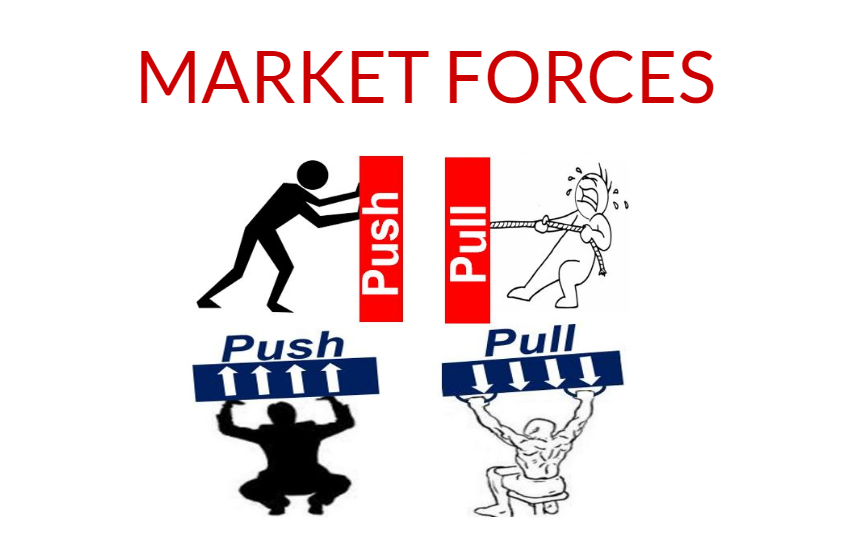
The push and pull between bond yields and equities continue with stock gains kept in check by a drop in Treasuries that pushed a swath of rates above 3%.

The CDC raised its alert level for Monkeypox to level 2 recommending that travelers wear masks, among other health measures.

***

COMMENTS APPRECIATED

Thank You

***

***

Organizational Economics and Physician Practices

N.B.E.R.

By James B. Rebitzer & Mark E. Votruba

Economists seeking to improve the efficiency of health care delivery frequently emphasize two issues: the fragmented structure of physician practices and poorly designed physician incentives. This decade old paper analyzes these issues from the perspective of organizational economics.

We begin with a brief overview of the structure of physician practices and observe that the long anticipated triumph of integrated care delivery has largely gone unrealized. We then analyze the special problems that fragmentation poses for the design of physician incentives. Organizational economics suggests some promising incentive strategies for this setting, but implementing these strategies is complicated by norms of autonomy in the medical profession and by other factors that inhibit effective integration between hospitals and physicians. Compounding these problems are patterns of medical specialization that complicate coordination among physicians.

We conclude by considering the policy implications of our analysis – paying particular attention to proposed Accountable Care Organizations.

***

READ HERE: https://www.nber.org/papers/w17535

ASSESSMENT: What has changed this past decade; if anything? Your thoughts are appreciated.

***

***

CONTACT: Ann Miller RN MHA

INVITATIONS: https://medicalexecutivepost.com/dr-david-marcinkos-bookings/

MarcinkoAdvisors@msn.com

Ph: 770-448-0769

Second Opinions: https://medicalexecutivepost.com/schedule-a-consultation/

THANK YOU

***

ACO Home-Visit Initiatives

ACCOUNTABLE CARE ORGANIZATIONS

By MCOL and Charlene Ice

***

ACOs That Offer 6 Primary Care Services

  • home-based primary care: 37%
  • care coordination: 24%
  • care transitions support: 13%
  • addressing social needs: 13%
  • acute hospital-level services: 11%
  • palliative care services: 2%

Notes: From an article entitled, “Characteristics of Home-Based Care Provided by Accountable Care Organizations,” by Robert E. Mechanic, MBA, Jennifer Perloff, PhD, Amy R. Stuck, PhD, RN, Christopher Crowley, PhD. In a 2019 ACO survey, 40 out of 151 responding ACOs reported formal home-visit initiatives serving high-need, high-cost patients.

Source: The American Journal of Managed Care, May 12, 2022
Source URL: https://www.ajmc.com/view/characteristics-of-home-based-care…

***

COMMENTS APPRECIATED

Thank You

***

***

***

SURVEY: On Nurse Caregivers and Unions

By MCOL

***

***

Nurses Survey: The 4 Takeaways

 •  87% of patients or their caregivers feel some level of stigma associated with their or the person in their care’s current health condition.
 •  44% reported feeling embarrassed to talk about their current health condition.
 •  43% felt their health condition isn’t something that’s regularly talked about and is rarely represented in the media.
 •  99% patients and their caregivers say that stigma can negatively impact or slow perceived healing of a patient with a current health condition.

Source: Convatec Group Plc via PRNewswire, May 18, 2022

UNIONS: https://www.msn.com/en-us/health/medical/unions-tempt-nurses-to-change-their-principles/ar-AAY2cUg?li=BBnb7Kz

***

COMMENTS APPRECIATED

Thank You

***

***

***

PODCAST: Ten Largest Medical Device Companies

By Eric Bricker MD

***

***

COMMENTS APPRECIATED

Thank You

***

***

***

PODCAST: The “Economy” – How it Affects Everyone

By Rich Helppie

THE COMMON BRIDGE

The Second of a Two-Part Episode with Beata Kirr

***

***

PODCAST LINK: https://tinyurl.com/zrxdxzya

***

COMMENTS APPRECIATED

Thank You

***

PODCAST: Health Insurance Carrier Stock Market Performance

By Eric Bricker MD

***

***

CITE: https://www.r2library.com/Resource/Title/082610254

***

COMMENTS APPRECIATED

Thank You

***

***

***

SURVEY: Affordable ACA Family Coverage

By MCOL

***

Families USA: Uninsured Rate by Quarter •  Q4 2020: 10.3%
 •  Q1 2021: 9.5%
 •  Q2 2021: 9.7%
 •  Q3 2021: 8.9%

Source: Families USA, “ACA’s Promise of Affordable Health Coverage for Families Across America Is at Risk as Pandemic-Era Policies Expire,” March 2022

***

COMMENTS APPRECIATED

Thank You

***

***

The TOP 100 Economics Blogs of 2022

INTELLIGENT ECONOMIST

Last Updated: February 3rd, 2022

By Prateek Agarwal

Welcome, and thank you for joining us for the 5th annual Top Economics Blogs list! We are happy, once again, to introduce you to a freshly updated list of economics blogs for 2022. As always, our winners list provides blogs for many different audiences, ranging from the budding economic enthusiast to the seasoned academic. The list also covers a variety of economics topics, whether it be traditional economic theory or the application of economics to current events and issues. In this meticulously curated list, we’ve condensed the most unique elements of each blog into short descriptions, so that you can see which ones catch your eye.

CITE: https://www.r2library.com/Resource/Title/0826102549

For 2022, a few newcomers have emerged, while many mainstays from previous years are present as well. Like previous years, we’ve done our best to capture the blogs which stand out for their quality rather than their popularity. As such, the list is an eclectic group that represents a wide range of tastes and perspectives.

***

What is an economist? Definition and examples - Market Business News

Regardless of your school of thought or political affiliation, you can find valuable new content in this list of engaging, high-quality economics blogs.

LINK: https://www.intelligenteconomist.com/economics-blogs/

Product Details

YOUR COMMENTS ARE APPRECIATED.

***

Thank You

***

TODAY’S INVESTMENT WORLD STRATEGIES

RICH HELPPIE: The COMMON BRIDGE

Featuring Beata Kirr

This is the first of a two part series with Rich’s special guest, Beata Kirr, the co-head of investment strategies and national managing director in the Chicago office of Bernstein. We think you’ll find this conversation very fascinating.

Exploring Today’s Investment World

Editor’s Note: We hope you enjoy the video above. If you’d rather just listen to the podcast, click this link to Apple Podcasts: The Common Bridge.

COMMENTS APPRECIATED

Thank You

***

***

Medicare for All?

OR

Worse Care for All?

THE CBO OPINES

***

***

Senate Budget Committee Chairman Bernie Sanders (I-Vt.) has announced that as early as next week, his committee will hold a hearing “on the need to pass a Medicare for All single-payer program.”  

Sanders gets an “A” for passion, but an “F” in compassion.  

But, the non-partisan Congressional Budget Office has cautioned that Sanders’ Medicare for All bill would create “a shortage of providers, longer wait times, and changes in the quality of care.” 

MORE: https://www.msn.com/en-us/news/politics/medicare-for-all-would-mean-worse-care-for-all/ar-AAWVDo6?li=BBnb7Kz

CITE: https://www.r2library.com/Resource/Title/0826102549

***

COMMENTS APPRECIATED

Thank You

***

***

****

PODCAST: The Financial Cost of Medication Non-Adherence

Cost of Medication Non-Adherence: 33- 69% of Hospitalizations

By Eric Bricker MD

***

***

COMMENTS APPRECIATED

Thank You

***

CITE: https://www.r2library.com/Resource/Title/082610254

***

***

****

COLLEAGUE: Dr. Mike Burry Opines on the Markets

***

By Dr. David Edward Marcinko MBA

***

Big Short’ investor Michael Burry MD warns stocks will crash and rallies won’t last.

  • “The Big Short” investor Michael Burry expects a far steeper decline in the stock market.
  • The Scion Asset Management chief’s view is based on how past crashes have played out.
  • Burry warned brief rallies were likely, and joked about his penchant for premature predictions.

Michael Burry, the hedge fund manager of “The Big Short” fame, rang the alarm on the “greatest speculative bubble of all time in all things” last summer. He warned the retail investors piling into meme stocks and cryptocurrencies that they were careening towards the “mother of all crashes.”

***

Mike also wrote a popular chapter in our financial planning textbook for physician investors. With our appreciation and gratitude.

***

COMMENTS APPRECIATED

Thank You

***

***