HEALTH CARE ENTITY: Venture Capital Funding

http://www.MARCINKOASSOCIATES.com

***

***

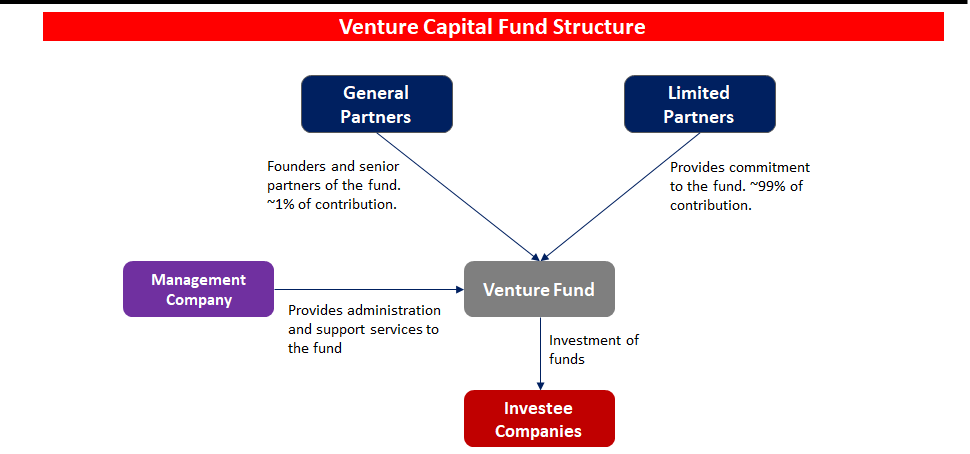
Venture capital funding in the digital health space cooled a bit in 2022 following a red-hot 2021. Overall, digital health companies raised $15.3 billion last year, down from the $29.1 billion raised in 2021—but still above the $14.1 billion raised in 2020, according to Rock Health a seed fund that supports digital health startups.

Nevertheless, analysts predict VC investors and bankers will still put a good amount of money into digital health in 2024 and 2025, especially in alternative care, drug development, health information technology technology, EMRs and software that reduces physician workload.

CITE: https://www.r2library.com/Resource

Of course. an essential first part of attracting VC interest and money is the crafting and presentation of your formal business plan [“elevator pitch”]; as well as the needed technical and managerial experience. This is crucial for success and exactly where we can assist.

***

READ MORE: https://marcinkoassociates.com/welcome-medical-colleagues/

CONTACT: MarcinkoAdvisors@msn.com

***

***

CARDINAL HEALTH: Profits Up

By Staff Reporters

Pharmaceutical distributor Cardinal Health raised its 2024 profit expectations following strong demand for generic and specialty drugs such as GLP-1 medications, the company announced in its Q4 2023 earnings call. The Ohio-based company reported that its pharmaceutical segment profit increased 12% to $504 million in Q4 2023, up from $451 million during the same period last year. “Positive generics program performance” drove the increase, CFO Aaron Alt said during the call. Cardinal, whose fiscal year ends June 30, expects revenue from its pharmaceutical division to grow by 10%–12% in FY 2024, he added.

“Fiscal ’23 was an inflection point for Cardinal Health with improved performance, strong execution, and notable progress against both our short- and long-term plans,” CEO Jason Hollar said.

GLP-1 drugs such as Novo Nordisk-manufactured Ozempic and Wegovy were developed to treat diabetes, but have skyrocketed in popularity as a weight management tool. These medications can stimulate insulin production, which can help lower blood sugar levels and help Type-2 diabetes patients, according to the Mayo Clinic.

***

COMMENTS APPRECIATED

Thank You

***

***

***

RETAIL: Sales

By Staff Reporters

***

***

Stat: 0.7%. That’s how much retail sales grew last month, a sign that inflation isn’t dampening consumer spending or demand. (CNBC)

Quote: “This is pure market economics. We do not magically have thousands of additional AI developers, product managers, and everything else.”Paul J. Groce, partner and head of the Americas at recruitment firm Leathwaite, on how a talent shortage is driving up wages for AI positions. (the Wall Street Journal)

Read: The teetering company threatening China’s economy. (the New York Times)

***

***

COMMENTS APPRECIATED

Thank You

***

PODCAST: Economic Cycles in Healthcare

By Eric Bricker MD

***

***

***

***

***

CITE: https://www.r2library.com/Resource

***
COMMENTS APPRECIATED

Thank You

***

MICRO-CERTIFICATIONS: For Financial Advisors Seeking Physician-Client Niche Success?

Micro-Credentials on the Rise

KNOWLEDGE RICHES IN NICHES

DR. DAVID EDWARD MARCINKO MBA CMP

SPONSOR: http://www.CertifiedMedicalPlanner.org

***

***

Do you ever wish you could acquire specific information for your career activities without having to complete a university Master’s Degree or finish our entire Certified Medical Planner™ professional designation program? Well, Micro-Certifications from the Institute of Medical Business Advisors, Inc., might be the answer. Read on to learn how our three Micro-Certifications offer new opportunities for professional growth in the medical practice, business management, health economics and financial planning, investing and advisory space for physicians, nurses and healthcare professionals.

Micro-Certification Basics

Stock-Brokers, Financial Advisors, Investment Advisors, Accountants, Consultants, Financial Analyists and Financial Planners need to enhance their knowledge skills to better serve the changing and challenging healthcare professional ecosystem. But, it can be difficult to learn and demonstrate mastery of these new skills to employers, clients, physicians or medical prospects. This makes professional advancement difficult. That’s where Micro-Certification and Micro-Credentialing enters the online educational space. It is the process of earning a Micro-Certification, which is like a mini-degree or mini-credential, in a very specific topical area.

Micro-Certification Requirements

Once you’ve completed all of the requirements for our Micro-Certification, you will be awarded proof that you’ve earned it. This might take the form of a paper or digital certificate, which may be a hard document or electronic image, transcript, file, or other official evidence that you’ve completed the necessary work.

Uses of Micro-Certifications

Micro-Certifications may be used to demonstrate to physicians prospective medical clients that you’ve mastered a certain knowledge set. Because of this, Micro-Certifications are useful for those financial service professionals seeking medical clients, employment or career advancement opportunities.

Examples of iMBA, Inc., Micro-Certifications

Here are the three most popular Micro-Certification course from the Institute of Medical Business Advisors, Inc:

  • 1. Health Insurance and Managed Care: To keep up with the ever-changing field of health care physician advice, you must learn new medical practice business models in order to attract and assist physicians and nurse clients. By bringing together the most up-to-date business and medical prctice models [Medicare, Medicaid, PP-ACA, POSs, EPOs, HMOs, PPOs, IPA’s, PPMCs, Accountable Care Organizations, Concierge Medicine, Value Based Care, Physician Pay-for-Performance Initiatives, Hospitalists, Retail and Whole-Sale Medicine, Health Savings Accounts and Medical Unions, etc], this iMBA Inc., Mini-Certification offers a wealth of essential information that will help you understand the ever-changing practices in the next generation of health insurance and managed medical care.
  • 2. Health Economics and Finance: Medical economics, finance, managerial and cost accounting is an integral component of the health care industrial complex. It is broad-based and covers many other industries: insurance, mathematics and statistics, public and population health, provider recruitment and retention, health policy, forecasting, aging and long-term care, and Venture Capital are all commingled arenas. It is essential knowledge that all financial services professionals seeking to serve in the healthcare advisory niche space should possess.
  • 3. Health Information Technology and Security: There is a myth that all physician focused financial advisors understand Health Information Technology [HIT]. In truth, it is often economically misused or financially misunderstood. Moreover, an emerging national HIT architecture often puts the financial advisor or financial planner in a position of maximum uncertainty and minimum productivity regarding issues like: Electronic Medical Records [EMRs] or Electronic Health Records [EHRs], mobile health, tele-health or tele-medicine, Artificial Intelligence [AI], benefits managers and human resource professionals.

Other Topics include: economics, finance, investing, marketing, advertising, sales, start-ups, business plan creation, financial planning and entrepreneurship, etc.

How to Start Learning and Earning Recognition for Your Knowledge

Now that you’re familiar with Micro-Credentialing, you might consider earning a Micro-Certification with us. We offer 3 official Micro-Certificates by completing a one month online course, with a live instructor consisting of twelve asynchronous lessons/online classes [3/wk X 4/weeks = 12 classes]. The earned official completion certificate can be used to demonstrate mastery of a specific skill set and shared with current or future employers, current clients or medical niche financial advisory prospects.

Mini-Certification Tuition, Books and Related Fees

The tuition for each Mini-Certification live online course is $1,250 with the purchase of one required dictionary handbook. Other additional guides, white-papers, videos, files and e-content are all supplied without charge. Alternative courses may be developed in the future subject to demand and may change without notice.

***

Contact: For more information, or to speak with an academic representative, please contact Ann Miller RN MHA CMP™ at: MarcinkoAdvisors@msn.com [24/7] -OR- 770-448-0769[9:00 – 5:00 EST].

***

FINANCIAL RESOLUTIONS: For Mid-Yeat 2023

A MID-YEAR UPDATE

By Staff Reporters

Are you the kind of ME-P reader who makes resolutions on New Year’s Day? If so, here are five steps we encourage all investors to consider taking to boost your financial fitness at any time of the year; according to Charles Schwab & Company. So, why not resolve to take them right now? 

CITE: https://www.r2library.com/Resource/Title/082610254

***

Resolution 1: Create a budget

Committing to a saving and investing program during your working years is generally the best way to boost your net worth and achieve many of life’s most important goals. Of course, first you’ll need to know how much money you’ve got to work with. That’s where a budget and net worth statement can help. Here’s how to think about them.

  • Budget and save. At a minimum, be sure to have a high-level budget with three things: how much you’re taking in after taxes, how much you’re spending, and how much you’re saving. If you’re not sure where your money is going, track your spending using a spreadsheet or an online budgeting tool for 30 days. Determine how much money you need to cover your fixed monthly expenses, such as your rent or mortgage and other living expenses, and how much you’d like to put away for other goals. For retirement, our rule of thumb is to save 10%–15% of pre-tax income, including any match from an employer, starting in your 20s. If you delay, the amount you may need to save goes up. Add 10% for every decade you delay saving for retirement. Once you commit to an amount, consider ways you can save automatically, such as through monthly direct deposits. 
  • Calculate your personal net worth annually. It doesn’t have to be complicated. Make a list of your assets (what you own) and subtract your liabilities (what you owe). Subtract the liabilities from the assets to determine your net worth. Don’t panic if your net worth declines when the market is struggling. What’s important is to see a general upward trend over your earning years. If you’re retired, you’ll want to plan an income and distribution strategy to help make your savings last as long as necessary and support other objectives.
  • Project the cost of essential big-ticket items. If you have a big expense in the near term, like college tuition or roof repair, put the money aside or increase your savings and treat that money as spent. If you know that you’ll need the money within a few years, keep it in relatively liquid, safe investments like short-term certificates of deposit (CDs), a savings account, or money market funds purchased within a brokerage account. If you choose to invest in a CD, make sure the term ends by the time you need the cash. If you have more than a few years, invest wisely, based on your time horizon.
  • Prepare for emergencies. If you aren’t retired, we suggest creating an emergency fund with three to six months’ worth of essential living expenses, set aside in a savings account. The emergency fund can help you cover unexpected but necessary expenses without having to sell more volatile investments.
  • Retired? Invest your living-expense money conservatively. Consider keeping 12 months of living expenses—after accounting for non-portfolio income sources like Social Security or a pension—in short-term CDs, an interest-bearing savings account, or a money market fund. Then consider keeping another two to four years’ worth of spending laddered in short-term bonds or invested in short-term bond funds as part of your portfolio’s fixed income allocation. You can use this money to cover expenses in the near term. Having a chunk of savings invested conservatively should allow you to invest a portion of your remaining savings for growth, at a level of risk appropriate for you, while reducing the chances you’ll be forced to sell more volatile investments (like stocks) in a down market.

Resolution 2: Manage your debt

Debt is neither inherently good nor bad—it’s simply a tool. It all depends on how you use it. For most people, some level of debt is a practical necessity, especially to purchase an expensive long-term asset to pay back over time, such as a home. However, problems arise when debt becomes more of a burden than a tool. Here’s how to stay in control.

  • Keep your total debt load manageable. Don’t confuse what you can borrow with what you should borrow. Keep the monthly costs of owning a home (principal, interest, taxes, and insurance) below 28% of your pre-tax income, and your total monthly debt payments (including credit cards, auto loans, and mortgage payments) below 36% of your pre-tax income.
  • Eliminate high-cost, non-deductible consumer debt. Try to pay off credit-card debt and avoid borrowing to buy depreciating assets, such as cars. The cost of consumer debt adds up quickly if you carry a balance. Consider consolidating your debt in a low-rate home equity loan or line of credit (HELOC), set a realistic budget, and implement a schedule to pay it back.
  • Match repayment terms to your time horizons. If you’re likely to move within five to seven years, you could consider a shorter-maturity loan or an adjustable-rate mortgage (ARM), depending on current mortgage rates and options. Don’t consider this if you think you may live in your home for longer or struggle to manage mortgage payment resets if interest rates or your plans change. We also don’t suggest that you borrow money under the assumption that your home will automatically increase in value. Historically, long-term home appreciation has significantly lagged the total return of a diversified stock portfolio. And, for any type of debt, have a disciplined payback schedule. Create a plan to pay off the mortgage on your primary home before you plan to retire.

Resolution 3: Optimize your portfolio

We all share the goal of getting better investment results. But research shows that it’s extremely difficult to always invest at the “perfect” time. So, create a plan that will help you stay disciplined in all kinds of markets. Follow your plan and adjust it as needed. Here are ideas to help you stay focused on your goals.

  • Focus on your overall investment mix. After committing to a savings plan, how you invest is your next most important decision. Have a targeted asset allocation—that is, strategically proportioned mix of stocks, bonds, and cash in your portfolio—that you’re comfortable with, even in a down market. Make sure it fits your long-term goals, risk tolerance, and time frame. The longer your time horizon, the more time you’ll have to potentially benefit from up or down markets.
  • Diversify across and within asset classes. Diversification can help reduce risk and can be a critical factor in helping you reach your goals. Mutual funds and exchange-traded funds (ETFs) are great ways to own a diversified basket of securities in just about any asset class.
  • Consider taxes.Place relatively tax-efficient investments, like ETFs and municipal bonds, in taxable accounts, and relatively tax-inefficient investments, like mutual funds and real estate investment trusts (REITs), in tax-advantaged accounts. Tax-advantaged accounts include retirement accounts, such as a traditional or Roth individual retirement account (IRA). If you trade frequently, do so in tax-advantaged accounts to help reduce your tax bill.
  • Monitor and rebalance your portfolio as needed. Evaluate your portfolio’s performance at least twice a year using a benchmark that makes sense for you. Remember, the long-term progress that you make toward your goals is more important than short-term portfolio performance. As you approach a savings goal, such as the beginning of a child’s education or retirement, begin to reduce investment risk, if appropriate, so you don’t have to sell more volatile investments, such as stocks, when you need them. 
  • Choose appropriate benchmarks. Lastly, your benchmark to measure investment performance should match your portfolio and your goals. Don’t be tempted to compare your portfolio to what performed best in the market last year or even a portfolio invested 100% in stocks. You should have a portfolio selected to best meet your goals, with an appropriate balance of potential return and risk as well. Progress toward your goals is more important than picking the top-performing stocks each year—which, for any investor, isn’t possible to predict.

Resolution 4: Prepare for the unexpected

Risk is a part of life, particularly in investments and finance. Your financial life can be upended by all kinds of surprises—an illness, job loss, disability, death, natural disasters, or lawsuits. If you don’t have enough assets to self-insure against major risks, make a resolution to get your insurance needs covered. Insurance helps protect against unforeseen events that don’t happen often but are expensive to manage yourself when they do. The following guidelines can help you prepare for life’s unexpected moments.

  • Protect against large medical expenses with health insurance. Select a health insurance policy that matches your needs in areas such as coverage, deductibles, co-payments, and choice of medical providers. If you’re in good health and don’t visit the doctor often, consider a high-deductible policy to insure against the possibility of a serious illness or unexpected health-care event.
  • Purchase life insurance if you have dependents or other obligations. First, take advantage of a group term insurance policy, if offered by your employer. Such programs don’t generally require a medical check and can be a cost-effective way to provide income replacement for dependents. If you have minor children or large liabilities that will continue after your death for which you can’t self-insure, you may need additional life insurance. Unless you have a permanent life insurance need or special circumstances, consider starting with a low-cost term life policy before a whole life policy.

  • Protect your earning power with long-term disability insurance. The odds of becoming disabled are greater than the odds of dying young. According to the Social Security Administration, a 20-year-old American has a 25% chance of becoming disabled before normal retirement age and a 13% chance of dying before retirement age.1 If you can’t get adequate short- and long-term coverage through work, consider an individual policy.
  • Protect your physical assets with property-casualty insurance. Check your homeowner’s or renter’s and auto insurance policies to make sure your coverage and deductibles are still right for you.
  • Obtain additional liability coverage, if needed. A personal liability “umbrella” policy is a cost-effective way to increase your liability coverage by $1 million or more, in case you’re at fault in an accident or someone is injured on your property. Umbrella policies don’t cover business-related liabilities, so make sure your business is also properly insured, especially if you’re in a profession with unique risks and aren’t covered by an employer.
  • Consider the pros and cons of long-term-care insurance. If you consider a long-term-care policy, look for a policy that provides the right type of care and is guaranteed renewable with locked-in premium rates. Long-term care typically is most cost-effective starting at about age 50 and generally becomes more expensive or difficult to find after age 70. You can get independent sources of information from your state insurance commissioner. A sound retirement savings strategy is another way to plan for long-term-care costs.
  • Create a disaster plan for your safety and peace of mind. Review your homeowner’s or renter’s policy to see what’s covered and what’s not. Talk to your agent about flood or earthquake insurance if either is a concern for your area. Generally, neither is included in most homeowner’s policies. Keep an updated video inventory of valuable household items and possessions along with any professional appraisals and estimates of replacement values in a safe place away from your home.

Consider storing inventories and important documents on a portable hard drive. It’s also a good idea to have copies of birth certificates, passports, wills, trust documents, records of home improvements, and insurance policies in a small, secure evacuation box (the fireproof, waterproof kind you can lock is best) that you can grab in a hurry in case you have to evacuate immediately. Make sure your trusted loved ones know about this file as well, in case they need it.

Resolution 5: Protect your estate

An estate plan may seem like something only for the wealthy. But there are simple steps everyone should take. Without proper beneficiary designations, a will, and other basic steps, the fate of your assets or minor children may be decided by attorneys and tax agencies. Taxes and attorneys’ fees can eat away at these assets and delay the distribution of assets just when your heirs need them most. Here’s how to protect your estate—and your loved ones.

  • Review your beneficiaries, especially for retirement accounts, annuities, and life insurance.The beneficiary designation is your first line of defense, to make your wishes for assets known, and ensure that they transfer to who you want quickly. Keep information on beneficiaries up-to-date to ensure the proceeds of life insurance policies and retirement accounts are consistent with your wishes, your will, and other documents.
  • Update or prepare your will. A will isn’t just about transferring assets. It can provide for your dependents’ support and care and help you avoid the costs and delays associated with dying without one. It can also spell out plans to repay debts, such as a credit card or mortgage. Keep in mind that a beneficiary designation or asset titling trumps what’s written in a will, so make sure all documents are consistent and reflect your desires. When writing a will, we recommend working with an experienced lawyer or estate planning attorney.
  • Coordinate asset titling with the rest of your estate plan. The titling of your property and non-retirement accounts can affect the ultimate disposition and taxation of your assets. Talk with an estate attorney or lawyer about debts and the titling of assets, such as a home, that don’t have a beneficiary designation, to make sure they reflect your wishes and are consistent with titling laws that can vary by state.
  • Have in place durable powers of attorney for health care. In these documents, appoint trusted and competent confidants to make decisions on your behalf if you become incapacitated.
  • Consider a revocable living trust. This is especially important if your estate is large and complex, and you want to spell out how your assets should be used in detail, or if you have dependent children and want to spell in detail how assets should be managed to support them, who will manage the assets, and other issues. A living trust may not be needed for smaller estates where beneficiaries, titling, and a will can be sufficient, but talk with a qualified financial planner or attorney to be sure.
  • Take care of important estate documents. Make sure a trusted and competent family member or close friend knows the location of your important estate documents.

Finally, remember you don’t have to do everything at once. There’s a lot you can do to improve your financial health by taking one step at a time and think of these resolutions as a checklist. This ME-P and our books and posts can help. Make some real progress on your journey this year. 

1Johanna Maleh and Tiffany Bosley. “Disability and Death Probability Tables for Insured Workers Who Attain Age 20 in 2022.” Social Security Administration, December 2022.

***

WELL- HOW DID YOU DO?

COMMENTS APPRECIATED

Thank You

***

ORDER: https://www.routledge.com/Comprehensive-Financial-Planning-Strategies-for-Doctors-and-Advisors-Best/Marcinko-Hetico/p/book/9781482240283

***

ORDER: https://www.routledge.com/Risk-Management-Liability-Insurance-and-Asset-Protection-Strategies-for/Marcinko-Hetico/p/book/9781498725989

***

Generative AI Disruption in the Healthcare Industry

By Health Capital Consultants, LLC

***

***

Generative artificial intelligence (AI) is the utilization of algorithms to create content such as text, code, imagery, videos, and even simulations in mere seconds. The goal of AI generally is to mimic the intelligence of humans to perform tasks, with generative AI (a type of AI) aiming to learn from data without the assistance of humans. While today’s generative AI bots are not yet prepared for widespread utilization in patient care settings, AI is garnering significant interest in the healthcare industry as providers begin to test the capabilities of AI in clinics and offices.

This Health Capital Topics article will review the role that generative AI is beginning to play in the U.S. healthcare system, the potential of AI in healthcare, and concerns related to the technology. (Read more…)

***

COMMENTS APPRECIATED

Thank You

***

***

HAPPY: Juvedérm Day!

By Staff Reporters

***

***

Allergan has branded today the first ever “Juvedérm Day,” named after its famous dermal filler.

AbbVie, which owns Allergan, reported that it made $368 million on Juvedérm in Q2 2023, up almost 7% compared to last year. AbbVie’s aesthetics business, which also produces Botox, made almost $1.4 billion in Q2.

Maybe AbbVie’s hoping that pushing Juvedérm sales will help make up for its dropping Humira sales.

***

***

***

MICRO-CERTIFICATIONS: For Financial Advisors Seeking Physician-Client Niche Success?

Micro-Credentials on the Rise

KNOWLEDGE RICHES IN NICHES

DR. DAVID EDWARD MARCINKO MBA CMP

SPONSOR: http://www.CertifiedMedicalPlanner.org

***

***

Do you ever wish you could acquire specific information for your career activities without having to complete a university Master’s Degree or finish our entire Certified Medical Planner™ professional designation program? Well, Micro-Certifications from the Institute of Medical Business Advisors, Inc., might be the answer. Read on to learn how our three Micro-Certifications offer new opportunities for professional growth in the medical practice, business management, health economics and financial planning, investing and advisory space for physicians, nurses and healthcare professionals.

Micro-Certification Basics

Stock-Brokers, Financial Advisors, Investment Advisors, Accountants, Consultants, Financial Analyists and Financial Planners need to enhance their knowledge skills to better serve the changing and challenging healthcare professional ecosystem. But, it can be difficult to learn and demonstrate mastery of these new skills to employers, clients, physicians or medical prospects. This makes professional advancement difficult. That’s where Micro-Certification and Micro-Credentialing enters the online educational space. It is the process of earning a Micro-Certification, which is like a mini-degree or mini-credential, in a very specific topical area.

Micro-Certification Requirements

Once you’ve completed all of the requirements for our Micro-Certification, you will be awarded proof that you’ve earned it. This might take the form of a paper or digital certificate, which may be a hard document or electronic image, transcript, file, or other official evidence that you’ve completed the necessary work.

Uses of Micro-Certifications

Micro-Certifications may be used to demonstrate to physicians prospective medical clients that you’ve mastered a certain knowledge set. Because of this, Micro-Certifications are useful for those financial service professionals seeking medical clients, employment or career advancement opportunities.

Examples of iMBA, Inc., Micro-Certifications

Here are the three most popular Micro-Certification course from the Institute of Medical Business Advisors, Inc:

  • 1. Health Insurance and Managed Care: To keep up with the ever-changing field of health care physician advice, you must learn new medical practice business models in order to attract and assist physicians and nurse clients. By bringing together the most up-to-date business and medical prctice models [Medicare, Medicaid, PP-ACA, POSs, EPOs, HMOs, PPOs, IPA’s, PPMCs, Accountable Care Organizations, Concierge Medicine, Value Based Care, Physician Pay-for-Performance Initiatives, Hospitalists, Retail and Whole-Sale Medicine, Health Savings Accounts and Medical Unions, etc], this iMBA Inc., Mini-Certification offers a wealth of essential information that will help you understand the ever-changing practices in the next generation of health insurance and managed medical care.
  • 2. Health Economics and Finance: Medical economics, finance, managerial and cost accounting is an integral component of the health care industrial complex. It is broad-based and covers many other industries: insurance, mathematics and statistics, public and population health, provider recruitment and retention, health policy, forecasting, aging and long-term care, and Venture Capital are all commingled arenas. It is essential knowledge that all financial services professionals seeking to serve in the healthcare advisory niche space should possess.
  • 3. Health Information Technology and Security: There is a myth that all physician focused financial advisors understand Health Information Technology [HIT]. In truth, it is often economically misused or financially misunderstood. Moreover, an emerging national HIT architecture often puts the financial advisor or financial planner in a position of maximum uncertainty and minimum productivity regarding issues like: Electronic Medical Records [EMRs] or Electronic Health Records [EHRs], mobile health, tele-health or tele-medicine, Artificial Intelligence [AI], benefits managers and human resource professionals.

Other Topics include: economics, finance, investing, marketing, advertising, sales, start-ups, business plan creation, financial planning and entrepreneurship, etc.

How to Start Learning and Earning Recognition for Your Knowledge

Now that you’re familiar with Micro-Credentialing, you might consider earning a Micro-Certification with us. We offer 3 official Micro-Certificates by completing a one month online course, with a live instructor consisting of twelve asynchronous lessons/online classes [3/wk X 4/weeks = 12 classes]. The earned official completion certificate can be used to demonstrate mastery of a specific skill set and shared with current or future employers, current clients or medical niche financial advisory prospects.

Mini-Certification Tuition, Books and Related Fees

The tuition for each Mini-Certification live online course is $1,250 with the purchase of one required dictionary handbook. Other additional guides, white-papers, videos, files and e-content are all supplied without charge. Alternative courses may be developed in the future subject to demand and may change without notice.

***

Contact: For more information, or to speak with an academic representative, please contact Ann Miller RN MHA CMP™ at: MarcinkoAdvisors@msn.com [24/7] -OR- 770-448-0769[9:00 – 5:00 EST].

***

SIX TYPES: OF Financial Professionals

By Aleksandar Stojanović, MSc

Here’s a brief insight before the explanations:

  • 𝗖𝗙𝗢𝘀 are heavily invested in strategic planning, leadership, and risk management, often overlooking the entire financial spectrum.
  • 𝗖𝗼𝗻𝘁𝗿𝗼𝗹𝗹𝗲𝗿𝘀 play a key role in accounting, financial reporting, and regulatory compliance, ensuring financial integrity.
  • 𝗙𝗣&𝗔 𝗠𝗮𝗻𝗮𝗴𝗲𝗿𝘀 focus on financial modeling, analytical skills, and business acumen to drive business growth.
  • 𝗜𝗻𝘁𝗲𝗿𝗻𝗮𝗹 𝗔𝘂𝗱𝗶𝘁𝗼𝗿𝘀 specialize in risk management, regulatory compliance, and analytical tasks to ensure internal control.
  • 𝗙𝗶𝗻𝗮𝗻𝗰𝗲 𝗔𝗻𝗮𝗹𝘆𝘀𝘁𝘀 are adept at financial modeling, analytics, and reporting to support data-driven decisions.
  • 𝗔𝗰𝗰𝗼𝘂𝗻𝘁𝗮𝗻𝘁𝘀 emphasize accounting skills, financial reporting, and regulatory compliance for precise record-keeping.

***

***

Now, generally, CFOs and FP&A Managers might spend more time connecting to business stakeholders for strategic decisions, while Controllers and Internal Auditors focus more on regulatory and compliance tasks.

Finance Analysts and Accountants are more involved in financial modeling and reporting.

These titles and responsibilities can be interchanged in some job descriptions, and the weight of these skills also depends on the industry and project.

But this breakdown is still quite helpful when planning career paths or understanding the roles within a finance department.

CITE: https://www.r2library.com/Resource

***
COMMENTS APPRECIATED

Thank You

***

***

PODCAST: Kraft Heinz SUES Aetna Health Insurance Company

By Eric Bricker MD

***

***

Comments Appreciated

Thank You

***

***

***

ABS CDOs: Rest in Peace

Asymmetric Information and the Death of ABS CDOs

By Daniel O. Beltran, Larry Cordell and Charles P. Thomas

***

***

ABSTRACT

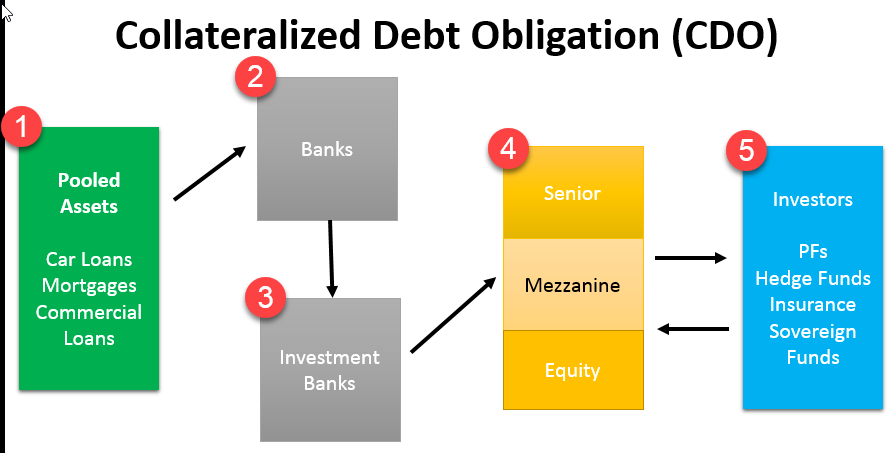
An asset-backed security (ABS) is a type of investment that is backed by a pool of debt, such as auto loans or home equity loans. A collateralized debt obligation (CDO) is a version of an ABS that may include mortgages as well as other types of assets. In either case, the owner of such a product makes money, directly or indirectly, from the repayment of principal and interest by the pool of consumers whose loans have been packaged to create that security.

***

A key feature of the 2007 financial crisis is that for some classes of securities trade has practically ceased. And where trade has occurred, it appears that market prices are well below their intrinsic values. This seems especially true for those securities where the payoff streams are particularly complex, for example, structured finance ABS CDOs.

One explanation for this is that information about these securities’ intrinsic values since the crisis has been asymmetric, with current holders having better information than potential buyers. We first characterize the information asymmetries that were present in the structured finance ABS CDO market. Because many of the CDO dealers had partially or fully integrated the pipeline from mortgage originations through CDO issuance, they had informational advantages over potential buyers that could well have disrupted trading in CDOs as the crisis took hold in August of 2007.

Using a “workhorse” model for pricing securities under asymmetric information and a novel dataset for the intrinsic values of ABS CDOs, we show how the resulting adverse selection problem could explain why the bulk of these securities either trade at significant discounts to their intrinsic values or do not trade at all.

READ: https://www.federalreserve.gov/pubs/ifdp/2013/1075/ifdp1075.htm

***

***

COMMENTS APPRECIATED

Thank You

***

PODCAST: Health Insurance Company Profits

“Inter-Company Eliminations” – Healthcare Managerial Accounting

BY ERIC BRICKER MD

***

***
COMMENTS APPRECIATED

Thank You

***

***

***

SDOH: What Exactly are They, Anyway?

By Staff Reporters

http://www.MARCINKOASSOCIATES.com

***

***

Social Determinants of Health

 According to Arjun Gosain, some SDOH concepts include:

  • Employment insecurity: Measures whether the patient is employed and their current employment or unemployment experience. This includes whether they were harassed on the job or experiencing unequal pay. Employment insecurity can lead to financial stress, mental health problems, and reduced healthcare access. 
  • Psychological circumstances: Measures current events that are affecting the patient’s health. This encompasses a wide range from unwanted pregnancies to exposure to war or violence. Stress, anxiety, and other negative emotions can have a direct effect on a patient’s physical health and contribute to disease development.
  • Housing insecurity: Notes whether a patient has a consistent place to live or is forced to move regularly. Homelessness or housing insecurity can lead to exposure to the elements, mental health challenges, and increased vulnerability to infection.
  • Social adversity: Examines a patient’s social experience including any discrimination or persecution the individual may be facing. Increased social adversity can cause an individual to socially isolate and develop feelings of depression. 
  • Transportation: Observes the patient’s access to transportation including available public transport. Missed appointments can be the direct result of transportation inaccessibility which leads to a decrease in the quality of care. 
  • Food insecurity: Indicates whether a patient has adequate food access and safe drinking water access. Receiving adequate nutrition is essential for maintaining optimal physical health. For example, if a child is food insecure, it can lead to serious developmental issues and chronic disease.
  • Education and literacy: Observes a patient’s ability to read and comprehend hospital paperwork. Note that individuals with higher literacy and education rates typically make more informed health decisions.
  • Occupational risk: Examines how a patient’s current employment affects their overall health. Determines if their job site places them at risk of toxin exposure, physical harm, undue stress, or other hazardous conditions that can contribute to injuries or illnesses.
  • Economic insecurity: Measures a patient’s poverty level to determine if copays, rent, and hospital bills are manageable. A patient living with inadequate finances will face a greater barrier to quality care. CITE: https://www.r2library.com/Resource/Title/082610254
  • Lack of support: Notes whether a patient has reliable support when experiencing difficult circumstances such as the death of a loved one. If a patient has a present support network, they will be able to receive practical, emotional, and physical assistance in times of need. 
  • Upbringing: Takes a patient’s childhood, family, and upbringing into account to assess if a patient is carrying trauma from previous years. Adverse childhood experiences can increase the risk of chronic diseases and mental health issues later in life. 
  • Language: Examines any language or communication concerns, so that a patient can both communicate their issues and understand oral and written treatment. Miscommunications can lead to misdiagnoses and inadequate treatment. 
  • Physician Stress: https://medicalexecutivepost.com/2022/05/20/sdoh-challenges-physician-stress/

What have we missed?

***

***

COMMENTS APPRECIATED

Thank You

***

BEHAVIORAL FINANCE: Cash is Still “King”

TREATING YOURSELF WITH CASH

By Staff Reporters

http://www.MarcinkoAssociates.com

***

***

Folks are more likely to reach for dollar bills than credit cards when making a guilty pleasure purchase, according to new Stanford research.

MORE: https://medicalexecutivepost.com/2022/06/22/behavioral-finance-for-doctors/

In more than 118,000 real transactions at the university bookstore, buyers tended to slap their plastic on the counter for school supplies but pay with cash for “harder-to-justify” items like a stuffed plush mascot. And when asked how they’d pay for a hypothetical Reiki session, participants leaned toward credit card when the treatment was described as doctor-recommended but toward cash when they were told it was just an impulse purchase.

RELATED: https://medicalexecutivepost.com/2023/02/28/dr-richard-h-thaler-and-behavioral-economics/

***

COMMENTS APPRECIATED

Thank You

***

***

IRA: Inherited Rules Change

By Staff Reporters

***

***

The Internal Revenue Service is allowing people who inherited an individual retirement account after 2019 to skip a required minimum distribution [RMD] this year, but most still must empty the account within 10 years. The IRS issued the new guidance last week.

There has been confusion surrounding the rules for inherited IRAs ever since the Secure Act of 2019 eliminated the so-called “stretch IRA” for most non-spouse beneficiaries. The old rules had allowed beneficiaries of inherited IRAs to stretch their required minimum distributions over their own lifetimes, permitting decades of tax-free or tax-deferred growth in some cases.

Under the Secure Act of 2019, most non-spouse beneficiaries must now empty their inherited IRA by the end of the 10th year following the original owner’s death. When the law was first passed, experts interpreted it to mean that all the money could be withdrawn in year 10 if so desired, said Ed Slott, CPA and founder of IRAHelp.com 

Yet in early 2022, the IRS proposed stricter rules that would apply to someone who inherited an IRA from a person who had already begun taking RMDs; in that case, the recipient must continue taking distributions on an annual schedule. In other words, if the RMD tap had already been turned on, Slott said, it couldn’t be turned off following the original owner’s death, and beneficiaries had to keep withdrawing every year and paying income tax on the amount withdrawn.

***

***

COMMENTS APPRECIATED

Thank You

***

MSNBC Contributor Says Mask-Up After Uptick in COVID-19 Hospitalizations

By Staff Reporters

FOX News: A doctor appearing on MSNBC Tuesday said that Americans should start wearing masks for COVID again. Former Obama official and current MSNBC medical contributor Dr. Kavita Patel was brought on Jose Diaz-Balart Reports to discuss an uptick in COVID hospitalizations.

“If you’ve noticed more of your friends, neighbors, loved ones are testing positive for COVID, you’re not alone. According to the CDC, COVID-19 hospitalizations are up 12 percent from last week and, while we’re nowhere near previous levels, it’s still raising concerns,” Diaz-Balart said.

The number of COVID-19 hospitalizations is rising this summer in the U.S., according to the Centers for Disease Control and Prevention (CDC). More than 7,100 patients with COVID were hospitalized in the week of July 15, up from 6,444 the prior week, the sharpest percentage increase since December 2022.

COMMENTS APPRECIATED

Thank You

***

***

NIH: Jeanne Marrazzo MD Succeeds Dr. Anthony Fauci as Infectious Disease Chief

By Staff Reporters

***

***

Jeanne M. Marrazzo MD, a University of Alabama at Birmingham infectious-disease expert, will succeed Anthony S. Fauci this fall as director of the National Institute of Allergy and Infectious Diseases, federal officials announced yesterday.

The $6.3 billion research institute is among the largest of the 27 institutes and centers that constitute the National Institutes of Health, America’s flagship biomedical agency. NIAID is also particularly prominent given its involvement in the response to the coronavirus pandemic and other diseases; it has also received attention because of Dr. Tony Fauci’s own high profile and Republicans’ ongoing efforts to investigate the institute’s workings.

Marrazzo, an infectious-disease physician and epidemiologist who has been a principal investigator on NIH grants since 1997, has focused her research on the human microbiome and the prevention of HIV and infections in the female reproductive tract. She emerged as a frequent commentator during the pandemic, appearing on national television and urging Americans to get vaccinated and take other steps to protect themselves from the virus.

An openly gay physician, Marrazzo has studied barriers to care for LGBTQ patients and advocated to address them.

***

COMMENTS APPRECIATED

Thank You

***

***

***

INTERVIEW: A Healthcare Financing Solution for Entrepreneurs?

Former: CEO and Founder
Superior Consultant Company, Inc.
[SUPC-NASD]

EDITOR’S NOTE: I first met Rich in B-school, when I was a student, back in the day. He was the Founder and CEO of Superior Consultant Holdings Corp. Rich graciously wrote the Foreword to one of my first textbooks on financial planning for physicians and healthcare professionals. Today, Rich is a successful entrepreneur in the technology, health and finance space.

-Dr. David E. Marcinko MBA MEd CMP®

***

Staff & Contributors - CHAMPIONS OF WAYNE

By Richard Helppie

Today for your consideration – How to fix the healthcare financing methods in the United States?

I use the term “methods” because calling what we do now a “system” is inaccurate. I also focus on healthcare financing, because in terms of healthcare delivery, there is no better place in the world than the USA in terms of supply and innovation for medical diagnosis and treatment. Similarly, I use the term healthcare financing to differentiate from healthcare insurance – because insurance without supply is an empty promise.

This is a straightforward, 4-part plan. It is uniquely American and will at last extend coverage to every US citizen while not hampering the innovation and robust supply that we have today. As this is about a Common Bridge and not about ideology or dogma, there will no doubt be aspects of this proposal that every individual will have difficulty with. However, on balance, I believe it is the most fair and equitable way to resolve the impasse on healthcare funding . . . .

CITE: https://www.r2library.com/Resource/Title/0826102549

Let me start in an area sure to raise the ire of a few. And that is, we have to start with eliminating the methods that are in place today. The first is the outdated notion that healthcare insurance is tied to one’s work, and the second is that there are overlapping and competing tax-supported bureaucracies to administer that area of healthcare finance.

Step 1 is to break the link between employment and health insurance. Fastest way to do that is simply tax the cost of benefits for the compensation that it is. This is how company cars, big life insurance policies and other fringe benefits were trimmed. Eliminating the tax-favored treatment of employer-provided healthcare is the single most important change that should be made.

Yes, you will hear arguments that this is an efficient market with satisfied customers. However, upon examination, it is highly risky, unfair, and frankly out of step with today’s job market.

Employer provided health insurance is an artifact from the 1940’s as an answer to wage freezes – an employer could not give a wage increase, but could offer benefits that weren’t taxed. It makes no sense today for a variety of reasons. Here are a few:

1. Its patently unfair. Two people living in the same apartment building, each making the same income and each have employer provided health insurance. Chris in unit 21 has a generous health plan that would be worth $25,000 each year. Pays zero tax on that compensation. Pat, in unit 42 has a skimpy plan with a narrow network, big deductibles and hefty co-pays. The play is worth $9,000 each year. Pat pays zero tax.

3. The insurance pools kick out the aged. Once one becomes too old to work, they are out of the employer plan and on to the retirement plan or over to the taxpayers (Medicare).

4. The structure is a bad fit. Health insurance and healthy living are longitudinal needs over a long period of time. In a time when people change careers and jobs frequently, or are in the gig economy, they are not any one place long enough for the insurance to work like insurance.

5. Creates perverse incentives. The incentives are weighted to have employers not have their work force meet the standards of employees so they don’t have to pay for the health insurance. Witness latest news in California with Uber and Lyft.

6. Incentives to deny claims abound. There is little incentive to serve the subscriber/patient since the likelihood the employer will shop the plan or the employee will change jobs means that stringing out a claim approval is a profitable exercise.

7. Employers have difficulty as purchasers. An employer large enough to supply health insurance has a diverse set of health insurance needs in their work force. They pay a lot of money and their work force is still not 100% happy.

Net of it, health insurance tied to work has outlived its usefulness. Time to end the tax-favored treatment of employer-based insurance. If an employer wants to provide health insurance, they can do it, but the value of that insurance is reflected in the taxable W-2 wages – now Pat and Chris will be treated equally.

Step 2 is to consolidate the multiple tax-supported bureaus that supply healthcare. Relieve the citizens from having to prove they are old enough, disabled enough, impoverished enough, young enough. Combine Medicare, Medicaid, CHIP, Tricare and even possibly the VA into a single bureaucracy. Every American Citizen gets this broad coverage at some level. Everyone pays something into the system – start at $20 a year, and then perhaps an income-adjusted escalator that would charge the most wealthy up to $75,000. Collect the money with a line on Form 1040.

I have not done the exact math. However, removing the process to prove eligibility and having one versus many bureaucracies has to generate savings. Are you a US Citizen? Yes, then here is your base insurance. Like every other nationalized system, one can expect longer waits, fewer referrals to a specialist, and less innovation. These centralized systems all squeeze supply of healthcare services to keep their spend down. The reports extolling their efficiencies come from the people whose livelihoods depend on the centralized system. However, at least everyone gets something. And, for life threatening health conditions, by and large the centralized systems do a decent job. With everyone covered, the fear of medical bankruptcy evaporates. The fear of being out of work and losing healthcare when one needs it most is gone.

So if you are a free market absolutist, then the reduction of vast bureaucracies should be attractive – no need for eligibility requirements (old enough, etc.) and a single administration which is both more efficient, more equitable (everyone gets the same thing). And there remains a private market (more on this in step 3) For those who detest private insurance companies a portion of that market just went away. There is less incentive to purchase a private plan. And for everyone’s sense of fairness, the national plan is funded on ability to pay. Bearing in mind that everyone has to pay something. Less bureaucracies. Everyone in it together. Funded on ability to pay.

Step 3 is to allow and even encourage a robust market for health insurance above and beyond the national plan – If people want to purchase more health insurance, then they have the ability to do so. Which increases supply, relieves burden on the tax-supported system, aligns the US with other countries, provides an alternative to medical tourism (and the associated health spend in our country) and offers a bit of competition to the otherwise monopolistic government plan.

Its not a new concept, in many respects it is like the widely popular Medigap plans that supplement what Medicare does not cover.

No one is forced to make that purchase. Other counties’ experience shows that those who choose to purchase private coverage over and above a national plan often cite faster access, more choice, innovation, or services outside the universal system, e.g., a woman who chooses to have mammography at an early age or with more frequency than the national plan might allow.  If the insurance provider can offer a good value to the price, then they will sell insurance. If they can deliver that value for more than their costs, then they create a profit. Owners of the company, who risk their capital in creating the business may earn a return.

For those of you who favor a free market, the choices are available. There will be necessary regulation to prevent discrimination on genetics, pre-existing conditions, and the like. Buy the type of plan that makes you feel secure – just as one purchases automobile and life insurance.For those who are supremely confident in the absolute performance of a centralized system to support 300+ million Americans in the way each would want, they should like this plan as well – because if the national plan is meeting all needs and no one wants perhaps faster services, then few will purchase the private insurance and the issuers will not have a business. Free choice. More health insurance for those who want it. Competition keeps both national and private plans seeking to better themselves.

Step 4 would be to Permit Access to Medicare Part D to every US Citizen, Immediately

One of the bright spots in the US Healthcare Financing Method is Medicare Part D, which provides prescription drug coverage to seniors. It is running at 95% subscriber satisfaction and about 40% below cost projections.

Subscribers choose from a wide variety of plans offered by private insurance companies. There are differences in formularies, co-pays, deductibles and premiums.

So there you have it, a four part plan that would maintain or increase the supply of healthcare services, universal insurance coverage, market competition, and lower costs. Its not perfect but I believe a vast improvement over what exists today. To recap:

1. Break the link between employment and healthcare insurance coverage, by taxing the benefits as the compensation they are.

2. Establish a single, universal plan that covers all US citizens paid for via personal income taxes on an ability-to-pay basis.  Eliminate all the other tax-funded plans in favor of this new one.

3. For those who want it, private, supplemental insurance to the national system, ala major industrialized nations.

4. Open Medicare Part D (prescription drugs) to every US citizen. Today.

YOUR THOUGHTS ARE APPRECIATED.

Thank You

***

HOSPITALS: https://www.amazon.com/Financial-Management-Strategies-Healthcare-Organizations/dp/1466558733/ref=sr_1_3?ie=UTF8&qid=1380743521&sr=8-3&keywords=david+marcinko

***

HEALTHCARE: https://www.amazon.com/Hospitals-Healthcare-Organizations-Management-Operational/dp/1439879907/ref=sr_1_4?s=books&ie=UTF8&qid=1334193619&sr=1-4

***

PODCAST: The FOUR PERCENT Spending Rule with Challenge?

Still Valid or Not?

PLUS the “RULES of 72, 78 and 115″ Explained”

By Staff Reporters

SPONSOR: http://www.CertifiedMedicalPlanner.org

CMP logo

***

What Is The 4% Rule? How Much Money Do I Need To Retire? - YouTube

***

The 4% Rule is a practical rule of thumb that may be used by retirees to decide how much they should withdraw from their retirement funds each year; according to Investopedia.

READ: https://www.investopedia.com/terms/f/four-percent-rule.asp#:~:text=The%20Four%20Percent%20Rule%20is%20a%20rule%20of,account%20balance%20that%20keeps%20income%20flowing%20through%20retirement.

The purpose of adopting the rule is to keep a steady income stream while maintaining an adequate overall account balance for future years. The withdrawals will consist primarily of interest and dividends on savings.

CITE: https://www.r2library.com/Resource/Title/082610254

READ: https://www.financial-planning.com/news/kitces-smart-fix-for-the-4-rule#:~:text=The%20purpose%20of%20the%204%25%20rule%20is%20to,when%20it%20provides%20superior%20outcomes%20in%20all%20situations.

CHALLENGE: But, experts like Mike Kitces are divided on whether the 4% withdrawal rate is the best option. Many, including the creator of the rule, say that 5% is a better rule for all but the worst-case scenario.

***

RULES of 72, 78 and 115: https://medicalexecutivepost.com/2020/11/22/the-rules-of-72-78-and-115/

***

***

PODCAST: https://www.bing.com/videos/search?q=4+percent+rule&&view=detail&mid=5B0C2D1CABA12C7CF6075B0C2D1CABA12C7CF607&&FORM=VRDGAR&ru=%2Fvideos%2Fsearch%3Fq%3D4%2Bpercent%2Brule%26FORM%3DHDRSC3

***
COMMENTS APPRECIATED.

Thank You

Subscribe to the Medical Executive-Post.com

***

***

DOW THEORY: Explained

What is the Dow Theory?

By Staff Reporters

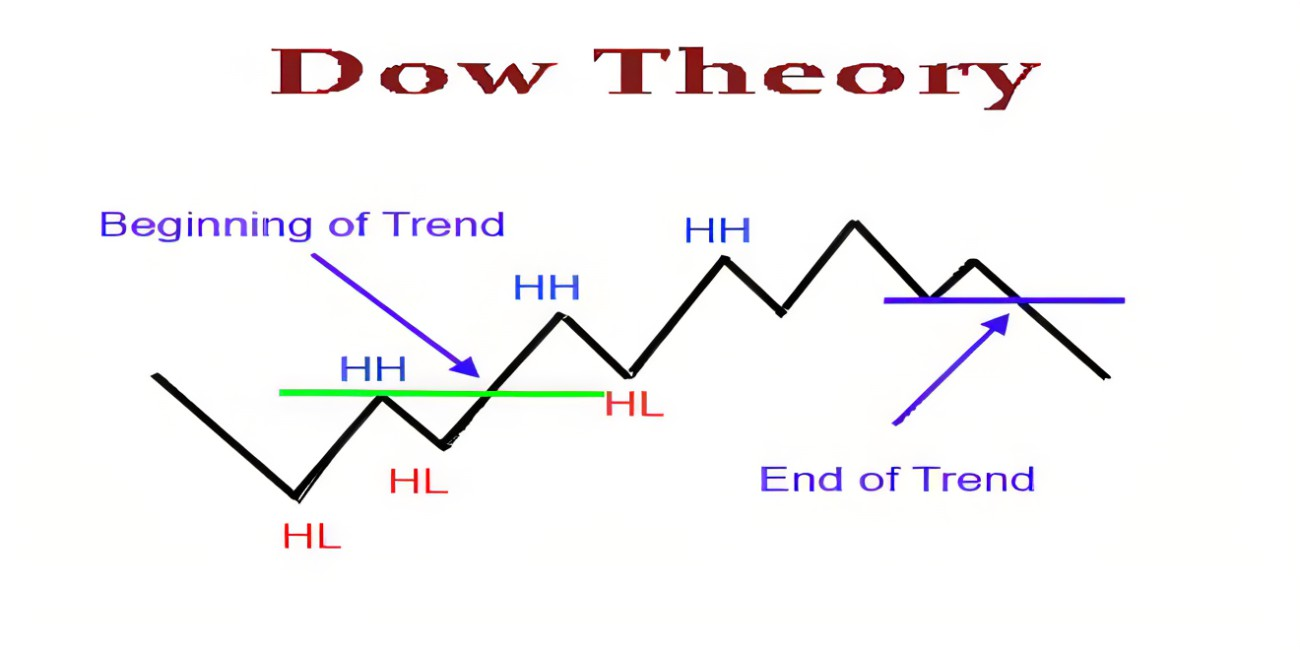
Pioneered by Charles H. Dow, one of the founders of The Wall Street Journal and Dow Jones & Co., and the publisher of MarketWatch, the theory states that if two stock-market averages, most commonly the Dow industrials and transport gauges, reach notable new highs within the same short period, then the broader market is likely headed higher.

It also was one of the first theories that sought to codify a methodology for prognosticating where the market might be headed in the intermediate future. For more than a century, it’s been a staple in the repertoire of technical strategists, who aim to glean insights through analysis of stock-market charts and indicators.

CITE: https://www.r2library.com/Resource

Dow Theory has lost some of its luster in modern times, especially as the Dow has taken a backseat in recent years to the S&P 500 and high flying tech-heavy indexes like the NASDAQ Composite and NASDAQ-100 critics also have lambasted it as overly simplistic.

MORE: https://medicalexecutivepost.com/2022/06/23/the-technicians/

But proponents of the technical Dow Theory can still point to a wealth of historical data showing it generally works as a buy signal, especially if its broadened to include other indexes like the now-dominant S&P 500.

MORE: https://www.investopedia.com/terms/d/dowtheory.asp

***

***

COMMENTS APPRECIATED

Thank You

***

GASOLINE: Prices Slowly Rising Again!

By Staff Reporters

***

***

The average price for a gallon of gasoline in the US just rose to an eight-month high of $3.71, as per AAA. While that’s far below last summer’s peak of $5.02 per gallon, gas prices have been creeping up due to refineries going offline unexpectedly and higher demand for oil at a time when supply isn’t there to meet it.

Bloomberg Opinion’s oil guru, Javier Blas, notes that global oil consumption has likely reached a record high.

LIFESTYLE: https://medicalexecutivepost.com/2022/09/28/my-jaguar-mechanic-vs-doctor-story/

COMMENTS APPRECIATED

Thank You

***

***

U.S. ECONOMY: “Soft Landing” Humming Along

By Staff Reporters

***

***

US gross domestic product (GDP) increased at a more-than-expected 2.4% annualized rate last quarter thanks to healthy consumer spending and businesses shelling out on investments. The latest figures show that not only is the US economy not spiraling into a recession due to interest rate hikes, it’s actually getting stronger as the year goes on.

In fact, underlying inflation rose at its slowest pace in two years. This could be a sign of the “soft landing” that FOMC Chair Jerome Powell seeks.

***

The European Central Bank also took it a cue from the FOMC and raised interest rates to a 23-year high. Investors think it could be the ECB’s last rate hike this cycle.

***

But, according to CNN, Japan’s central bank kept interest rates unchanged today despite rising inflation but hinted that it could gradually abandon years of cheap money, sending the yen soaring and stocks tumbling. The Bank of Japan (BOJ) said it kept unchanged its short-term interest rate at minus 0.1% and maintained its target for the yield on 10-year government bond at around 0%.

But the central bank also said it would adopt a more flexible approach to controlling the yield on government bonds — which affects borrowing costs across the world’s third biggest economy,diluting a key pillar of its longstanding ultra-loose monetary policy.

***

After a historic 13-day winning streak, the Dow—along with the other two major indexes—closed lower as its dizzying rise finally succumbed to gravity. There were some strong individual performances, however. Meta kept its impressive 2023 rolling after giving an optimistic earnings report.

***

COMMENTS APPRECIATED

Thank You

***

***

INFLATION: The Interest Rate Balancing Act

By Staff Reporters

***

***

Whether we’ll see another interest rate increase soon depends on what happens between now and the Fed’s next meeting in September. Jerome Powell will be watching to see if consumer prices come down more than they already have, thanks to previous rate hikes.

There are some promising signs that the worst is behind us:

  • Tomorrow, when the government releases the latest personal consumption expenditures price index—the Fed’s preferred measure for tracking inflation—it’s expected to show the lowest inflation increase since the end of 2021. And last month, the consumer price index showed inflation fell to 3%, which is above the Fed’s 2% target but an improvement from last June’s 9.1%.
  • Meanwhile, Coca-Cola—whose prices were 10% higher last quarter compared to Q2 2022—said it’s done marking up drinks for the year, and the CFO of Unilever said the packaged goods giant’s price inflation has peaked (though prices may still get higher).

But the FOMC wants more: Chairman Powell said that for inflation to be truly conquered, the job market, which currently boasts a low unemployment rate of 3.6%, will need to slow.

***

***

COMMENTS APPRECIATED

Thank You

***

***

CIGNA: Busted PxDx [Procedure-to-Diagnose]

By Dr. David Edward Marcinko MBA CMP

***

***

(AP) — A federal lawsuit alleges that health insurance giant CIGNA used a computer algorithm to automatically reject hundreds of thousands of patient claims without examining them individually as required by California law.

RELATED: https://medicalexecutivepost.com/2022/09/18/ama-joins-class-action-suit-against-cigna/

***

The class-action lawsuit, just filed in federal court in Sacramento, says CIGNA Corp. and CIGNA Health and Life Insurance Co. rejected more than 300,000 payment claims in just two months last year.

RELATED: https://medicalexecutivepost.com/2022/07/21/my-conversation-with-an-anonymous-cigna-representative/

The company used an algorithm called PXDX, shorthand for ”procedure-to-diagnosis,” to identify whether claims met certain requirements, spending an average of just 1.2 seconds on each review, according to the lawsuit.

CITE: https://www.r2library.com/Resource

Huge batches of claims were then sent on to doctors who signed off on the denials, the lawsuit said.

***

PODCAST: https://medicalexecutivepost.com/2023/07/01/podcast-the-cigna-group-ceo/

***

COMMENTS APPRECIATED

Thank You

***

DAILY UPDATE: Google CFO and the Markets

By Staff Reporters

***

***

Google Chief Financial Officer Ruth Porat will become president and chief investment officer of parent company Alphabet, ending an eight-year run during which she helped pitch the company to Wall Street.

***

Here is where the major benchmarks ended yesterday:

  • The S&P 500 Index was up about 13 points (0.28%) at 4,567.46; the Dow Jones Industrial Average was up about 27 points (0.08%) at 35,438.07; the NASDAQ Composite was up 86 points (0.61%) at 14,144.56.
  • The 10-year Treasury note yield (TNX) was little changed at 3.883%.
  • CBOE’s Volatility Index (VIX) was up 0.09 at 14.00.

***

ORDER: https://www.routledge.com/Comprehensive-Financial-Planning-Strategies-for-Doctors-and-Advisors-Best/Marcinko-Hetico/p/book/9781482240283

***

COMMENTS APPRECIATED

Thank You

***

IRS: “No More Door Knocks”

By Staff Reporters

***

***

 The IRS will not come to the front / back door 

The tax agency will no longer make unannounced visits to taxpayers’ homes or businesses to collect payments due (in most cases). The IRS said it was halting the controversial practice, which has been around since at least the 1950s, to protect its agents’ safety.

Instead, the agency will send letters requesting that the taxpayer schedule an appointment. In specific cases, such as to deliver a summons or subpoena or seize assets, an unannounced visit may still occur, but there are only a few hundred of those each year compared to tens of thousands of the more routine visits, according to Reuters.

***

COMMENTS APPRECIATED

Thank You

***

***

Recession, Interest Rates and Earnings?

By Staff Reporters

***

***

Recession: Last October, economists surveyed by Bloomberg were predicting a 100% chance of a Recession. But currently, the Dow is riding a 10-day winning streak, and the S&P 500 is just over 5% away from its all-time high. This week, Wall Street will be glued to the Fed’s interest rate announcement and a heavy slate of earnings.

Final Fed rate hike? The Federal Reserve will likely announce another interest rate increase this week, but this could be the final hike in its 16-month quest to bring down inflation. If the Fed hikes 25 basis points as expected, interest rates would be at their highest level since 2001.

Earnings galore: Corporate America’s A-list will report Q2 earnings this week, including Meta, Alphabet, Microsoft, McDonald’s, Coca-Cola, and Exxon Mobil. In all, about one-third of companies in the S&P 500 will give financial updates over the next five days, so we should get a good look into the health of a bunch of different industries.

***

COMMENTS APPRECIATED

Thank You

***

***

PODCAST: Why Doctors Select Alternative Insurance Payment Networks

DIRECT CONTRACTING

By Eric Bricker MD

***

***

***

COMMENTS APPRECIATED

Thank You

***

***

PHYSICIAN LAYOFFS: Job Eliminations Across 66 Hospitals

By Staff Reporters

***

***

A report published by Becker’s Hospital Review highlights a large number of job elimination efforts that have been announced or already implemented across 66 hospitals, including the following:

  • As an organizational redesign measure, Oklahoma University (OU) Health has eliminated around 100 positions.
  • 200 healthcare jobs were cut by Oklahoma City-based Integris Health to curb expenses.
  • ProMedica in Toledo, Ohio, announced plans to lay off 262 employees in March.
  • 337 employees of New York City-based Memorial Sloan Kettering Cancer Center are likely to be laid off shortly.
  • 112 employees of Pikeville Medical Center in Kentucky were laid-off at the end of 2022.
  • Desert Springs Hospital Medical Center in Las Vegas has already notified its workers that 970 jobs will be lost as it transitions to an emergency department.
  • California-based Kaweah Health in Visalia is likely to eliminate 94 positions.

These healthcare worker layoffs only reveal a part of the crisis because the complete closure of numerous hospitals is also on the horizon.

While the closure rate is faster for rural hospitals, urban hospitals are not safe either. In November 2022, Atlanta Medical Center (AMC) in Atlanta Georgia, announced its closure, leaving hundreds of workers jobless. This closure also had a severe adverse impact on the availability of trauma care in Atlanta. In 2019, the city council in Washington D.C. voted in favor of closing United Medical Center prior to COVID, leaving a healthcare gap during the pandemic.

CITE: https://www.r2library.com/Resource

NOTE: The current trend of hospital closures and healthcare job cuts not only affects the healthcare workers and their families but also poses serious questions about the quality of healthcare in the country. Last year, McKinsey & Company predicted that by the end of 2025, the US healthcare system may face a shortage of up to 450,000 registered nurses [RNs].

COMMENTS APPRECIATED

Thank You

***

***

***

DAILY UPDATE: Deutsche Bank, YouTube Health Initiative and the Markets

By Staff Reporters

***

***

Regulators fined Deutsche Bank $186 million for not fixing anti-money laundering, due diligence, and sanctions controls. This is the third time since 2015 that the Federal Reserve has fined the troubled bank for internal control failures. (CNN Business)

***

Under the YouTube Health Initiative, the company partnered with several healthcare organizations, including traditional health systems like Cleveland Clinic in Ohio and Mass General Brigham in Boston, as well as online health education platforms like Osmosis and Psych Hub. Other partners include the medical journal the New England Journal of Medicine, the World Health Organization, and the American Public Health Association.

These health organizations created videos on a range of health topics, which YouTube curates in what it calls “carousels” and labels to indicate that the information comes from reputable sources. If someone searches for information on diabetes, for example, they’ll get a carousel of videos from the health partners on diabetes.

***

***

Here is where the major benchmarks ended yesterday and for the week:

  • The S&P 500 Index was up 1.47 points at 4,536.34, up 0.7% for the week and the benchmark’s eighth weekly gain in the past 10; the Dow Jones industrial average was up 2.51 points at 35,227.69, up 2.1% for the week; the NASDAQ Composite was down 30.50 points (0.2%) at 14,032.81, down 0.6% for the week.
  • The 10-year Treasury note yield (TNX) was down about 2 basis points at 3.837%.
  • CBOE’s Volatility Index (VIX) was down 0.39 at 13.60.

Utility and health care shares were among the strongest performers Friday, which may reflect investors rotating into more “defensive” sectors, which haven’t participated as much in this year’s rally and may be seen as a “relative value” or “catch-up” play.

Energy stocks were also strong as crude oil futures jumped over 2% and posted a fourth straight weekly gain. Regional banks and communication services were among the weakest sectors, while the small-cap-focused Russell 2000 (RUT) fell slightly.

***

ORDER: https://www.routledge.com/Comprehensive-Financial-Planning-Strategies-for-Doctors-and-Advisors-Best/Marcinko-Hetico/p/book/9781482240283

***

COMMENTS APPRECIATED

Thank You

***

INSTANT BANK PAYMENTS? The “FedNow” 24/7 Service

By Staff Reporters

***

***

According to Morning Brew, the US banking system is about to speed up, potentially eliminating those frustrating waiting days it can take for money to hit your account. The Fed is launching its FedNow instant payment service later this month. The new system will enable banks to send each other cash instantly, 24/7, as an alternative to the existing system that runs only during regular business hours and often takes days to move money.

FedNow could put America’s banking system on track to catch up to countries like India and Nigeria, where high-speed payments are as common. The US does already have an instant payments system, but it’s private rather than government-backed, and it hasn’t been widely adopted. It’s mostly only used by big banks, and only 1.4% of US transactions happen in real time, according to payment systems company ACI Worldwide.

FedNow enabled services will soon likely appear at the 41 banks that have been certified to participate so far.

  • People moving money between banks or paying bills could complete their transactions in seconds without the need to plan payments days in advance.
  • Businesses will be able to access customer payments immediately and to send workers payments more frequently with instant direct deposit rather than the usual payroll cycle.

BUT … Faster payments could mean faster bank runs, too!

Some experts worry that allowing people to drain their bank accounts instantaneously could make SVB-style bank runs more likely. Smaller banks struggling with liquidity would have even less time to react to customer panic and get collateral for emergency government loans to cover fleeing cash.

But there are safeguards built in. FedNow has a transaction limit of $500,000, and banks can set their own ceilings to ensure that customers don’t pull their deposits.

***
COMMENTS APPRECIATED

Thank You

***

***

CYBER ATTACK: Closes First Hospital

By Staff Reporters

***

***

The healthcare industry cut 97% more jobs in the first half of 2023 compared to the same period in 2022, according to a July 6 report from executive outplacement firm Challenger, Gray, & Christmas.

The report mentioned an unnamed hospital that closed last month due to a cyberattack, which likely contributed to the healthcare job cuts. In June, St. Margaret’s Health in Spring Valley, Illinois, closed, and was the first hospital to publicly attribute a cyberattack to its closure, NBC News reported.

Market and economic conditions were cited as the reasons for the majority of job cuts across all US industries; the report didn’t detail the reasons for healthcare job cuts specifically, except for the NBC News Report.

***

MORE: https://www.routledge.com/Risk-Management-Liability-Insurance-and-Asset-Protection-Strategies-for/Marcinko-Hetico/p/book/9781498725989

***

***

COMMENTS APPRECIATED

Thank You

***

KING IS CASH: In a Tough Interest Rate Ecosystem

By Staff Reporters

***

***

Cash is king, especially in this tough interest rate environment. That’s proving true in the mergers and acquisitions market this year, according to PwC’s US Deals 2023 midyear outlook, which says companies and private equity with cash in hand are making deals happen. There are “opportunities for corporates with strong balance sheets. Private equity sponsors with large amounts of dry powder also have been getting deals done,” according to PwC.

CITE: https://www.r2library.com/Resource

Deal makers need cash because lending has become tougher and more expensive to obtain. Additionally, “the IPO market has remained quiet for over a year.”

Even the private equity market, which often leans heavily on debt financing, is reaching for other ways to get deals done: “Some PE sponsors have turned to more creative financing solutions, including higher equity contribution, seller’s notes, paid in-kind financing and the private credit markets.”

The challenging market is also impacting deal size. PwC found that deal makers are eschewing big deals in favor of smaller opportunities. However, although the deals appear to be smaller, the volume of M&A activity is “relatively strong compared toCOVID pre-pandemic levels.

***

COMMENTS APPRECIATED

Join the ME-P

***

***

Is the ARK Sinking?

By Staff Reporters

***

  • Markets: Stocks are rolling following a week that showed our inflation emergency seems to be ending, and big banks are still raking in big profits. The Fed’s so-called “soft landing” scenario—getting inflation down without tipping the economy into a recession—is a distinct possibility, as long as corporate finances don’t end up being shockingly bad this earnings season.
  • Global economy: While the US economy is chugging along, the same can’t be said for China. Growth in the world’s No. 2 economy hardly budged between the first and second quarters, while youth unemployment hit a record last month. Expect President Xi Jinping to make moves to juice China’s stagnating GDP.

***

***

Curiously, Cathie Wood’s flagship exchange-traded fund has rallied more than 50% this year. Investors are using that as an opportunity to get out. 

They have pulled a net $717 million from the ARK Innovation ETF over the past 12 months, according to FactSet. That exodus marks a notable shift for a fund that had consistently drawn investor cash since its 2014 inception. Once the largest actively managed ETF with nearly $30 billion in assets under management, the fund has shrunk to roughly $9 billion, mostly due to investment losses. 

Known by its ticker symbol ARKK, Wood’s fund became an investor darling shortly after the onset of the Covid-19 pandemic with hugely successful bets on unprofitable and “disruptive” technology companies. It took in huge amounts of investor money, culminating with a $6.5 billion inflow in the first quarter of 2021, when its share price peaked.

Then, the Federal Reserve’s fastest interest-rate hiking campaign in decades crushed the valuations of unprofitable growth companies, which often attract investors when interest rates are low and returns on safer investments such as CDs are minimal. Shares of ARKK plunged 67% in 2022, but its investors largely held on or bought the dip.

Now, analysts say they expect some of those investors are getting out for good?  

MORE: https://medicalexecutivepost.com/2023/07/12/from-active-to-passive-investing/

***

COMMENTS APPRECIATED

Thank You

***

***

DAILY UPDATE: Big Bank Earnings and the Markets

By Staff Reporters

***

***

The biggest U.S. banks presented a picture of a resilient economy on Friday, with consumers and businesses continuing to spend and borrow even after a lightning-fast rise in interest rates.

JPMorgan Chase’s profit soared 67% in the second quarter from a year earlier and Wells Fargo’s jumped 57%, lifted by the income they earned lending out money at higher rates. Citigroup’s net interest income was a bright spot, though profit fell 36%. All three banks beat analysts’ expectations for profit and revenue.

***

Here is where the major benchmarks ended:

  • The S&P 500 Index was down 4.62 points (0.1%) at 4,505.42, up 2.4% for the week; the Dow Jones Industrial Average (DJIA) was up 113.89 points (0.3%) at 34,509.03, up 2.3% for the week; the NASDAQ Composite was down 24.87 points (0.2%) at 14,113.70, up 3.3% for the week.
  • The 10-year Treasury note yield (TNX) was up about 7 basis points at 3.828%.
  • CBOE’s Volatility Index (VIX) was down 0.29 at 13.32.

Energy shares were among the weakest performers Friday after crude oil futures retreated nearly 2% from 2½-month highs posted Thursday. Regional banks were also lower despite stronger-than-expected quarterly results from their larger peers.

Health care and Consumer Staples were among the strongest performers. The U.S. dollar gained slightly but remained near a 17-month low against the euro.

***

ORDER: https://www.routledge.com/Risk-Management-Liability-Insurance-and-Asset-Protection-Strategies-for/Marcinko-Hetico/p/book/9781498725989

ORDER: https://www.routledge.com/Comprehensive-Financial-Planning-Strategies-for-Doctors-and-Advisors-Best/Marcinko-Hetico/p/book/9781482240283

***

COMMENTS APPRECIATED

Thank You

***