BOARD CERTIFICATION EXAM STUDY GUIDES Lower Extremity Trauma
[Click on Image to Enlarge]
ME-P Free Advertising Consultation
The “Medical Executive-Post” is about connecting doctors, health care executives and modern consulting advisors. It’s about free-enterprise, business, practice, policy, personal financial planning and wealth building capitalism. We have an attitude that’s independent, outspoken, intelligent and so Next-Gen; often edgy, usually controversial. And, our consultants “got fly”, just like U. Read it! Write it! Post it! “Medical Executive-Post”. Call or email us for your FREE advertising and sales consultation TODAY [678.779.8597] Email: MarcinkoAdvisors@outlook.com
Medical & Surgical e-Consent Forms
ePodiatryConsentForms.com
iMBA Inc., OFFICES
Suite #5901 Wilbanks Drive, Norcross, Georgia, 30092 USA [1.678.779.8597]. Our location is real and we are now virtually enabled to assist new long distance clients and out-of-town colleagues.
ME-P Publishing
SEEKING INDUSTRY INFO PARTNERS?
If you want the opportunity to work with leading health care industry insiders, innovators and watchers, the “ME-P” may be right for you? We are unbiased and operate at the nexus of theoretical and applied R&D. Collaborate with us and you’ll put your brand in front of a smart & tightly focused demographic; one at the forefront of our emerging healthcare free marketplace of informed and professional “movers and shakers.” Our Ad Rate Card is available upon request [678-779-8597].
Posted on July 28, 2023 by Dr. David Edward Marcinko MBA MEd CMP™
By Staff Reporters
***
***
US gross domestic product (GDP) increased at a more-than-expected 2.4% annualized rate last quarter thanks to healthy consumer spending and businesses shelling out on investments. The latest figures show that not only is the US economy not spiraling into a recession due to interest rate hikes, it’s actually getting stronger as the year goes on.
In fact, underlying inflation rose at its slowest pace in two years. This could be a sign of the “soft landing” that FOMC Chair Jerome Powell seeks.
***
The European Central Bank also took it a cue from the FOMC and raised interest rates to a 23-year high. Investors think it could be the ECB’s last rate hike this cycle.
***
But, according to CNN, Japan’s central bank kept interest rates unchanged today despite rising inflation but hinted that it could gradually abandon years of cheap money, sending the yen soaring and stocks tumbling. The Bank of Japan (BOJ) said it kept unchanged its short-term interest rate at minus 0.1% and maintained its target for the yield on 10-year government bond at around 0%.
But the central bank also said it would adopt a more flexible approach to controlling the yield on government bonds — which affects borrowing costs across the world’s third biggest economy,diluting a key pillar of its longstanding ultra-loose monetary policy.
***
After a historic 13-day winning streak, the Dow—along with the other two major indexes—closed lower as its dizzying rise finally succumbed to gravity. There were some strong individual performances, however. Meta kept its impressive 2023 rolling after giving an optimistic earnings report.
Posted on July 28, 2023 by Dr. David Edward Marcinko MBA MEd CMP™
By Staff Reporters
***
***
The Dow slipped on Thursday, snapping a 13-day winning streak. The blue-chip index fell 237 points after being on track to close higher for a 14th consecutive session. That would have marked the Dow’s longest run of consecutive gains since May 1897. If the Dow had closed higher Thursday and Friday, it would have notched 15 days of gains, its longest daily winning streak ever.
But the index’s run was at historic levels before it was cut short Thursday: On Wednesday it notched its 13th straight day of gains, its best winning streak since 1987 and its highest level since February 2022. The Dow, up roughly 6% for the year, has rallied in recent weeks as cooler-than-expected inflation data has investors more optimistic that a soft landing, or no recession, could be in the cards for the economy.
***
Here is where the major benchmarks ended for the day:
The S&P 500 Index was down 29 points (0.64%) at 4,537.41; the Dow Jones Industrial Average was down 237 points (0.67%) at 35,282.72; the NASDAQ Composite (COMP) was down 77 points (0.55%) at 14,050.11.
The 10-year Treasury note yield (TNX) rose about 14 points 4.002%.
CBOE’s Volatility Index (VIX) dropped 5 points to at 13.32.
Posted on July 27, 2023 by Dr. David Edward Marcinko MBA MEd CMP™
By Staff Reporters
***
***
Whether we’ll see another interest rate increase soon depends on what happens between now and the Fed’s next meeting in September. Jerome Powell will be watching to see if consumer prices come down more than they already have, thanks to previous rate hikes.
There are some promising signs that the worst is behind us:
Tomorrow, when the government releases the latest personal consumption expenditures price index—the Fed’s preferred measure for tracking inflation—it’s expected to show the lowest inflation increase since the end of 2021. And last month, the consumer price index showed inflation fell to 3%, which is above the Fed’s 2% target but an improvement from last June’s 9.1%.
Meanwhile, Coca-Cola—whose prices were 10% higher last quarter compared to Q2 2022—said it’s done marking up drinks for the year, and the CFO of Unilever said the packaged goods giant’s price inflation has peaked (though prices may still get higher).
But the FOMC wants more: Chairman Powell said that for inflation to be truly conquered, the job market, which currently boasts a low unemployment rate of 3.6%, will need to slow.
Posted on July 27, 2023 by Dr. David Edward Marcinko MBA MEd CMP™
By Staff Reporters
***
***
The Federal Reserve raised its benchmark interest rate another 0.25% on Wednesday, reviving its inflation fight despite a significant cooldown of price increases in recent months. The rate hike brought the Fed’s benchmark interest rate to a 22-year high of between 5.25% and 5.5%. Inflation has fallen significantly from a peak last summer, but remains at a level one percentage point higher than the Federal Reserve’s target of 2%.
***
The Dow on Wednesday rose for a 13th straight day, matching its longest winning streak since 1987. If it closes higher today, it would be a streak not seen since 1897 — about a year after the benchmark was created — when the Dow advanced for 14 sessions in a row. During this latest run, the Dow has outperformed, gaining 5%. That momentum hasn’t been seen in the broader S&P 500 and NASDAQ Composite indexes, however. Both are up just 3% since the Dow’s streak began. The S&P 500 has fallen twice in that time, while the NASDAQ has posted three losing sessions
***
Here is where the major benchmarks ended for the day:
The S&P 500 Index was down 0.02% at 4,566.75; the Dow Jones Industrial Average (DJIA) was up about 82 points (0.23%) at 35,520.12; the NASDAQ Composite was down 17 points (0.12%) at 14,127.28.
The 10-year Treasury note yield (TNX) edged down to 3.867%.
CBOE’s Volatility Index (VIX) dropped 5 points to at 13.32.
Posted on July 27, 2023 by Dr. David Edward Marcinko MBA MEd CMP™
By Staff Reporters
***
***
President Joe Biden’s administration just announced new rules meant to push insurance companies to increase their coverage of mental health treatments.
The new regulations, which still need to go through a public comment period, would require insurers to study whether their customers have equal access to medical and mental health benefits and to take remedial action, if necessary.
The Mental Health Parity and Addiction Equity Act requires that insurers provide the same level of coverage for both mental and physical health care — though the administration and advocates argue insurers’ policies restrict patient access.
Markets: The Dow is on a run for the ages, extending its winning streak to 12 days. But, Spotify revealing widening losses due to its failed podcasting investments and projected lower revenues. And its stock plunge came despite adding a record number of new subscribers.
Economy: All eyes are on the FOMC today: With another rate hike pretty much a lock, investors will seek Jerome Powell’s comments to see whether the Fed is considering any more increases.
****
Alphabet, which declared a “code red” for Google Search late last year as rivals like ChatGPT and Microsoft’s AI-equipped Bing came on the scene, is chugging right along. Google’s search advertising sales grew to a better-than-expected $42.6 billion. And, most people haven’t made ChatGPT their default search engine.
Microsoft beat expectations on its top- and bottom lines and told investors that it had spent, and would continue spending, gobs of money to build out AI infrastructure.
****
Snap. The social media platform just rolled out an AI chatbot, My AI, and boasted that 150+ million users have sent over 10 billion messages to it. But, still fighting against the likes of TikTok for ad spending in a sluggish market, Snap’s sales dropped for the second straight quarter, causing shares to plummet 19% after-hours.
Conference calls: Meta reports earnings today, and Amazon and Apple report next week.
Posted on July 26, 2023 by Dr. David Edward Marcinko MBA MEd CMP™
By Staff Reporters
***
***
Google Chief Financial Officer Ruth Porat will become president and chief investment officer of parent company Alphabet, ending an eight-year run during which she helped pitch the company to Wall Street.
***
Here is where the major benchmarks ended yesterday:
The S&P 500 Index was up about 13 points (0.28%) at 4,567.46; the Dow Jones Industrial Average was up about 27 points (0.08%) at 35,438.07; the NASDAQ Composite was up 86 points (0.61%) at 14,144.56.
The 10-year Treasury note yield (TNX) was little changed at 3.883%.
CBOE’s Volatility Index (VIX) was up 0.09 at 14.00.
Posted on July 25, 2023 by Dr. David Edward Marcinko MBA MEd CMP™
By Staff Reporters
***
***
The IRS will not come to the front / back door
The tax agency will no longer make unannounced visits to taxpayers’ homes or businesses to collect payments due (in most cases). The IRS said it was halting the controversial practice, which has been around since at least the 1950s, to protect its agents’ safety.
Instead, the agency will send letters requesting that the taxpayer schedule an appointment. In specific cases, such as to deliver a summons or subpoena or seize assets, an unannounced visit may still occur, but there are only a few hundred of those each year compared to tens of thousands of the more routine visits, according to Reuters.
Posted on July 25, 2023 by Dr. David Edward Marcinko MBA MEd CMP™
By StaffReporters
***
***
Recession: Last October, economists surveyed by Bloomberg were predicting a 100% chance of a Recession. But currently, the Dow is riding a 10-day winning streak, and the S&P 500 is just over 5% away from its all-time high. This week, Wall Street will be glued to the Fed’s interest rate announcement and a heavy slate of earnings.
Final Fed rate hike? The Federal Reserve will likely announce another interest rate increase this week, but this could be the final hike in its 16-month quest to bring down inflation. If the Fed hikes 25 basis points as expected, interest rates would be at their highest level since 2001.
Earnings galore: Corporate America’s A-list will report Q2 earnings this week, including Meta, Alphabet, Microsoft, McDonald’s, Coca-Cola, and Exxon Mobil. In all, about one-third of companies in the S&P 500 will give financial updates over the next five days, so we should get a good look into the health of a bunch of different industries.
Posted on July 25, 2023 by Dr. David Edward Marcinko MBA MEd CMP™
By Staff Reporters
***
***
The good news continued for the Dow, which notched its 11th straight day of gains yesterday—its best streak since February 2017. But there is much coming that could impact the markets this week, from Big Tech earnings (Microsoft and Alphabet report today) to a likely rate hike from the Fed tomorrow.
Stocks spotlight: Mattel, IMAX, and AMC (boosted from a recent ruling blocking a planned stock conversion) were all up.
***
Here is where the major benchmarks ended yesterday:
The S&P 500 Index was up 18 points (0.4%) at 4,554.64; the Dow Jones Industrial Average was up 184 points (0.5%) at 35,411.24; the NASDAQ Composite was up 26 points (0.2%) at 14,058.87.
The 10-year Treasury note yield (TNX) was up about 3 basis points at 3.870%.
CBOE’s Volatility Index (VIX) was up 0.29 at 13.89.
Energy was the strongest sector as crude oil futures added to their recent rally with another 2.3% rise to end near $79 per barrel. Financials were also higher, while utilities and health care lagged.
Posted on July 24, 2023 by Dr. David Edward Marcinko MBA MEd CMP™
By Staff Reporters
***
***
The NASDAQ 100 is Getting Re-Balanced
Before the market opening today, NASDAQ shuffled the weighting of its NASDAQ 100 Index so that the biggest tech companies have less sway.
The issue is that the market caps of tech giants like Microsoft, Apple, and Nvidia have gotten so big recently that when we refer to “the NASDAQ,” we’re actually just talking about a few companies that hold outsized influence (even after the changes, Apple and Microsoft will account for 22% of the index’s weighting).
The re-balancing isn’t expected to have a meaningful impact on stock prices.
Posted on July 22, 2023 by Dr. David Edward Marcinko MBA MEd CMP™
By Staff Reporters
***
***
Regulators fined Deutsche Bank $186 million for not fixing anti-money laundering, due diligence, and sanctions controls. This is the third time since 2015 that the Federal Reserve has fined the troubled bank for internal control failures. (CNN Business)
***
Under the YouTube Health Initiative, the company partnered with several healthcare organizations, including traditional health systems like Cleveland Clinic in Ohio and Mass General Brigham in Boston, as well as online health education platforms like Osmosis and Psych Hub. Other partners include the medical journal the New England Journal of Medicine, the World Health Organization, and the American Public Health Association.
These health organizations created videos on a range of health topics, which YouTube curates in what it calls “carousels” and labels to indicate that the information comes from reputable sources. If someone searches for information on diabetes, for example, they’ll get a carousel of videos from the health partners on diabetes.
***
***
Here is where the major benchmarks ended yesterday and for the week:
The S&P 500 Index was up 1.47 points at 4,536.34, up 0.7% for the week and the benchmark’s eighth weekly gain in the past 10; the Dow Jones industrial average was up 2.51 points at 35,227.69, up 2.1% for the week; the NASDAQ Composite was down 30.50 points (0.2%) at 14,032.81, down 0.6% for the week.
The 10-year Treasury note yield (TNX) was down about 2 basis points at 3.837%.
CBOE’s Volatility Index (VIX) was down 0.39 at 13.60.
Utility and health care shares were among the strongest performers Friday, which may reflect investors rotating into more “defensive” sectors, which haven’t participated as much in this year’s rally and may be seen as a “relative value” or “catch-up” play.
Energy stocks were also strong as crude oil futures jumped over 2% and posted a fourth straight weekly gain. Regional banks and communication services were among the weakest sectors, while the small-cap-focused Russell 2000 (RUT) fell slightly.
Posted on July 21, 2023 by Dr. David Edward Marcinko MBA MEd CMP™
By Staff Reporters
***
***
According to Morning Brew, the US banking system is about to speed up, potentially eliminating those frustrating waiting days it can take for money to hit your account. The Fed is launching its FedNow instant payment service later this month. The new system will enable banks to send each other cash instantly, 24/7, as an alternative to the existing system that runs only during regular business hours and often takes days to move money.
FedNow could put America’s banking system on track to catch up to countries like India and Nigeria, where high-speed payments are as common. The US does already have an instant payments system, but it’s private rather than government-backed, and it hasn’t been widely adopted. It’s mostly only used by big banks, and only 1.4% of US transactions happen in real time, according to payment systems company ACI Worldwide.
FedNow enabled services will soon likely appear at the 41 banks that have been certified to participate so far.
People moving money between banks or paying bills could complete their transactions in seconds without the need to plan payments days in advance.
Businesses will be able to access customer payments immediately and to send workers payments more frequently with instant direct deposit rather than the usual payroll cycle.
BUT … Faster payments could mean faster bank runs, too!
Some experts worry that allowing people to drain their bank accounts instantaneously could make SVB-style bank runs more likely. Smaller banks struggling with liquidity would have even less time to react to customer panic and get collateral for emergency government loans to cover fleeing cash.
But there are safeguards built in. FedNow has a transaction limit of $500,000, and banks can set their own ceilings to ensure that customers don’t pull their deposits.
Posted on July 21, 2023 by Dr. David Edward Marcinko MBA MEd CMP™
By Staff Reporters
***
The S&P 500 and NASDAQ fell on Thursday, weighed down by drops in Tesla and Netflix following their quarterly results, but the Dow advanced for a ninth straight day thanks to gains in Johnson & Johnson following a strong annual forecast.
Here is where the major market benchmarks ended:
The S&P 500 Index was down 30.85 points (0.7%) at 4,534.87; the Dow Jones industrial average was up 163.97 points (0.5%) at 35,225.18; the NASDAQ Composite was down 294.71 points (2.1%) at 14,063.31.
The 10-year Treasury note yield (TNX) was up about 11 basis points at 3.846%.
CBOE’s Volatility Index (VIX) was up 0.22 at 13.98.
Consumer Discretionary stocks, which are considered to have greater exposure to recession than other companies, were among the weakest performers Thursday. Technology stocks also struggled, with the NASDAQ posting its lowest close since July 12th and the Philadelphia Semiconductor Index (SOX) tumbling over 3%.
Health care and utilities, generally considered more recession-proof, were the strongest performers.
Posted on July 20, 2023 by Dr. David Edward Marcinko MBA MEd CMP™
By Staff Reporters
Elon Musk underlined the astounding scale of Microsoft and Nvidia’s combined market-value surge on Tuesday with a two-word tweet: “Crazy times.” While Musk didn’t spell out whether he views Microsoft or Nvidia as overvalued, his strong reaction could be a red flag for stock market investors.
***
Here is where the major benchmarks ended yesterday:
The S&P 500 Index was up 10.74 points (0.2%) at 4,565.72; the Dow Jones industrial average was up 109.28 points (0.3%) at 35,061.21; the NASDAQ Composite was up 4.38 points at 14,358.02.
The 10-year Treasury note yield (TNX) was down about 4 basis points at 3.744%.
CBOE’s Volatility Index (VIX) was up 0.44 at 13.74.
Posted on July 19, 2023 by Dr. David Edward Marcinko MBA MEd CMP™
By Staff Reporters
***
***
Cash is king, especially in this tough interest rate environment. That’s proving true in the mergers and acquisitions market this year, according to PwC’sUS Deals 2023 midyear outlook, which says companies and private equity with cash in hand are making deals happen. There are “opportunities for corporates with strong balance sheets. Private equity sponsors with large amounts of dry powder also have been getting deals done,” according to PwC.
Deal makers need cash because lending has become tougher and more expensive to obtain. Additionally, “the IPO market has remained quiet for over a year.”
Even the private equity market, which often leans heavily on debt financing, is reaching for other ways to get deals done: “Some PE sponsors have turned to more creative financing solutions, including higher equity contribution, seller’s notes, paid in-kind financing and the private credit markets.”
The challenging market is also impacting deal size. PwC found that deal makers are eschewing big deals in favor of smaller opportunities. However, although the deals appear to be smaller, the volume of M&A activity is “relatively strong compared to” COVID pre-pandemic levels.
Posted on July 19, 2023 by Dr. David Edward Marcinko MBA MEd CMP™
FINALLY?
By Staff Reporters
***
***
Microsoft’s takeover of Activision Blizzard cleared for landing
A federal judge rejected the FTC’s attempt to stop Microsoft from buying the video game publisher Activision Blizzard, paving the way for the $69 billion deal to close as soon as this month.
The FTC argued that the takeover would result in less competition in the video game industry and limit access to Activision’s blockbuster games, but the judge disagreed, saying, “To the contrary, the record evidence points to more consumer access to Call of Duty and other Activision content.”
While the deal still needs UK regulators’ approval, they also signaled yesterday they would let it proceed.
Posted on July 17, 2023 by Dr. David Edward Marcinko MBA MEd CMP™
By Staff Reporters
***
Markets: Stocks are rolling following a week that showed our inflation emergency seems to be ending, and big banks are still raking in big profits. The Fed’s so-called “soft landing” scenario—getting inflation down without tipping the economy into a recession—is a distinct possibility, as long as corporate finances don’t end up being shockingly bad this earnings season.
Global economy: While the US economy is chugging along, the same can’t be said for China. Growth in the world’s No. 2 economy hardly budged between the first and second quarters, while youth unemployment hit a record last month. Expect President Xi Jinping to make moves to juice China’s stagnating GDP.
***
***
Curiously, Cathie Wood’s flagship exchange-traded fund has rallied more than 50% this year. Investors are using that as an opportunity to get out.
They have pulled a net $717 million from the ARK Innovation ETF over the past 12 months, according to FactSet. That exodus marks a notable shift for a fund that had consistently drawn investor cash since its 2014 inception. Once the largest actively managed ETF with nearly $30 billion in assets under management, the fund has shrunk to roughly $9 billion, mostly due to investment losses.
Known by its ticker symbol ARKK, Wood’s fund became an investor darling shortly after the onset of the Covid-19 pandemic with hugely successful bets on unprofitable and “disruptive” technology companies. It took in huge amounts of investor money, culminating with a $6.5 billion inflow in the first quarter of 2021, when its share price peaked.
Then, the Federal Reserve’s fastest interest-rate hiking campaign in decades crushed the valuations of unprofitable growth companies, which often attract investors when interest rates are low and returns on safer investments such as CDs are minimal. Shares of ARKK plunged 67% in 2022, but its investors largely held on or bought the dip.
Now, analysts say they expect some of those investors are getting out for good?
Posted on July 16, 2023 by Dr. David Edward Marcinko MBA MEd CMP™
Supplemental Security Income
By Staff Reporters
***
***
Stocks popped 2% this week, as investors expect the Fed to soon pause or dial back interest rates after the release of the June inflation report. Central bankers have raised rates from zero to over 5% since March of last year, a move that led the S&P 500 to shed 20% in 2022.
And yet, No SSI for you!
DEFINITION: Supplemental Security Income (SSI) is a means-tested program that provides cash payments to disabled children, disabled adults, and individuals aged 65 or older who are citizens or nationals of the USA. SSI was created by the Social Security Amendments of 1972 and is incorporated in Title 16 of the Social Security Act The program is administered by the Social Security Administration (SSA) and began operations in 1974.
Individuals or their helpers may start the application for SSI benefits by completing a short form on SSA’s website. SSA staff will schedule an appointment for the individual or helper within 1–2 weeks and complete the process.
SSI was created to replace federal-state adult assistance programs that served the same purpose, but were administered by the state agencies and received criticism for lacking consistent eligibility criteria. The restructuring of these programs was intended to standardize the eligibility requirements and level of benefits. Although administered by SSA, SSI is funded from the U.S. Treasury general funds, not the SS Trust Fund. As of July 2022, the program provides benefits to approximately five million Americans.
The Social Security Administration gives, and the Social Security Administration takes away — at least when it comes to beneficiaries who qualify for Supplemental Security Income (SSI) payments.
July is one of the months when the agency doesn’t issue an SSI check. Because of a quirk in the payment schedule, SSI beneficiaries get two payments in March, June, September and December, while no payments are deposited in January, April, July and October.
Posted on July 15, 2023 by Dr. David Edward Marcinko MBA MEd CMP™
By Staff Reporters
***
***
The biggest U.S. banks presented a picture of a resilient economy on Friday, with consumers and businesses continuing to spend and borrow even after a lightning-fast rise in interest rates.
JPMorgan Chase’s profit soared 67% in the second quarter from a year earlier and Wells Fargo’s jumped 57%, lifted by the income they earned lending out money at higher rates. Citigroup’s net interest income was a bright spot, though profit fell 36%. All three banks beat analysts’ expectations for profit and revenue.
***
Here is where the major benchmarks ended:
The S&P 500 Index was down 4.62 points (0.1%) at 4,505.42, up 2.4% for the week; the Dow Jones Industrial Average (DJIA) was up 113.89 points (0.3%) at 34,509.03, up 2.3% for the week; the NASDAQ Composite was down 24.87 points (0.2%) at 14,113.70, up 3.3% for the week.
The 10-year Treasury note yield (TNX) was up about 7 basis points at 3.828%.
CBOE’s Volatility Index (VIX) was down 0.29 at 13.32.
Energy shares were among the weakest performers Friday after crude oil futures retreated nearly 2% from 2½-month highs posted Thursday. Regional banks were also lower despite stronger-than-expected quarterly results from their larger peers.
Health care and Consumer Staples were among the strongest performers. The U.S. dollar gained slightly but remained near a 17-month low against the euro.
Posted on July 14, 2023 by Dr. David Edward Marcinko MBA MEd CMP™
Producer Price Index
By Staff Reporters
***
***
Here is where the major benchmarks ended on Thursday
The S&P 500 Index was up 37.88 points (0.9%) at 4,510.04; the Dow Jones Industrial Average (DJIA) was up 47.71 points (0.1%) at 34,395.14; the NASDAQ Composite was up 219.61 points (1.6%) at 14,138.57.
The 10-year Treasury note yield (TNX) was down about 10 basis points at 3.763%.
CBOE’s Volatility Index (VIX) was up 0.04 at 13.58.
Technology shares were among the strongest performers Thursday, with the NASDAQ-100 Index (NDX) and Philadelphia Semiconductor Index (SOX) both climbing roughly 2% to 18-month highs. Communication Services and regional banks were also strong.
Oilfield services stocks gained on an extended rally in crude oil futures, which pushed above $77 a barrel near a three-month high. The U.S. dollar sank to its weakest point against the euro since February 2022 on expectations U.S. interest rates may have peaked.
Posted on July 12, 2023 by Dr. David Edward Marcinko MBA MEd CMP™
By Staff Reporters
***
***
BofA must refund $100 million to customers, pay $90 million in penalties to the Consumer Financial Protection Bureau and $60 million to the Office of the Comptroller of the Currency. “Bank of America wrongfully withheld credit card rewards, double-dipped on fees, and opened accounts without consent,” said CFPB Director Rohit Chopra, in a statement.
“These practices are illegal and undermine customer trust.”
Combined, it is one of the highest financial penalties in years against Bank of America, which has largely spent the last 15 years trying to clean up its reputation and market itself to the public as a bank focused on financial health and not on overdraft fee income and financial trickery.
***
The latest reading ion core inflation indicates a notable cool-down in June but still exceeds the Federal Reserve’s inflation target of 2%.
Data just released exceeded the expectations of economists surveyed by Bloomberg, who expected inflation to have fallen to 3.1% in June. Inflation rose a modest 0.2% on a monthly basis, accelerating from a 0.1% increase in May. Despite the encouraging report, core inflation — which strips out volatile food and energy prices — rose 4.8%.
Food prices, meanwhile, continued to accelerate faster than overall inflation, rising 5.7% in June compared to a year ago. and, the price of flour rose about 12% in June compared to a year ago, roughly quadruple of the overall inflation rate; while the price of bakery products rose 9.5% over that period and the price of cookies rose nearly 9%.
Posted on July 12, 2023 by Dr. David Edward Marcinko MBA MEd CMP™
By Staff Reporters
***
***
American consumers are on track to run out of cash later this year, Bill Gross has warned.
Consumer spending is a key driver of economic growth. If it drops, a recession might be the result.
“Bond King” Gross said the government’s aggressive spending during the pandemic is still buoying the economy.
American consumers are propping up the economy by spending their pandemic savings, but they’re likely to run out of cash later this year, Gross warned.
“It’s fiscal policy not just monetary policy — stupid,” the billionaire investor tweeted. His point was that government spending and tax rates, along with interest rates and money supply, affect economic growth and inflation.
***
Used Auto Prices Down
Used car prices in America saw the largest monthly slump since the height of the pandemic in June.
That’s good news on inflation, which could fall below 3% in June, the analyst said.
***
Here is where the major benchmarks ended: yesterday
The S&P 500® Index (SPX) was up 29.73 points (0.7%) at 4,439.26; the Dow Jones Industrial Average (DJIA) was up 317.02 points (0.9%) at 34,261.42; the NASDAQ Composite (COMP) was up 75.22 points (0.6%) at 13,760.70.
The 10-year Treasury note yield (TNX) was down about 3 basis points at 3.978%.
CBOE’s Volatility Index (VIX) was down 0.23 at 14.84.
Energy companies led sector gainers Tuesday as crude oil futures extended a rally, with the benchmark WTI contract rising more than 2.5% and touching a 2½-month high on signs of lower Russian production.
The Philadelphia Oil Service Index (OSX) jumped more than 3% to a four-month high. Retail and transportation shares were also among the strongest sectors, while the health care and semiconductor sectors slipped.
Posted on July 11, 2023 by Dr. David Edward Marcinko MBA MEd CMP™
By Staff Reporters
***
***
Markets: Investors shook off last week’s post-holiday blues with all three major indexes snapping three-day losing streaks yesterday, embracing a new outlook as they wait for more economic data and a new earnings season to start this week.
CAVA rose as analysts got their first chance to comment on the lunch spot since its IPO and were largely bullish on the bowl-maker—it’s already nearly doubled since its market debut last month.
Posted on July 11, 2023 by Dr. David Edward Marcinko MBA MEd CMP™
By Staff Reporters
***
***
July marks Minority/BIPOC Mental Health Awareness Month
A time when healthcare leaders and policymakers acknowledge the disparities that exist in behavioral health access and outcomes, as well as examine ways to address them. Tell us how your company, hospital, or practice is working to eliminate barriers and ensure equitable access to mental health services.
***
***
U.S. inflation cooled in May to an annual 4%, its lowest annual rate in more than two years, but core inflation rose by 0.4% month-on-month and 5.3% year-on-year.
And the markets are eagerly awaiting key inflation prints from the U.S. later this week, with the core annual consumer price index (CPI) — which excludes volatile food and energy prices — remaining persistently high to date, despite the headline figure gradually edging closer to the Federal Reserve‘s 2% target.
***
Here is where the major benchmarks ended:
The S&P 500® Index (SPX) was up 10.58 points (0.2%) at 4,409.53; the Dow Jones Industrial Average (DJIA) was up 209.52 points (0.6%) at 33,944.40; the NASDAQ Composite (COMP) was up 24.77 points (0.2%) at 13,685.48.
The 10-year Treasury note yield (TNX) was down about 4 basis points at 4.008%.
CBOE’s Volatility Index (VIX) rose 0.21 to 15.04.
Chip stocks were among the strongest sectors Monday, with the Philadelphia Semiconductor Index (SOX), jumping about 2%.
Retail and industrial stocks were also strong, while the small-cap focused Russell 2000 index (RUT) gained 1.5%. Utilities and Communication Services ranked among the weakest performers. Volatility perked up, with the VIX touching a five-week high.
Posted on July 10, 2023 by Dr. David Edward Marcinko MBA MEd CMP™
By Staff Reporters
***
***
Miss seeing terms like “adjusted profits” and “forward guidance” in the ME-P?
They’re coming back as earnings season got underway on Friday with big banks reporting. Tech companies, in particular, will have to impress to justify their expensive share prices.
Posted on July 10, 2023 by Dr. David Edward Marcinko MBA MEd CMP™
By Staff Reporters
***
***
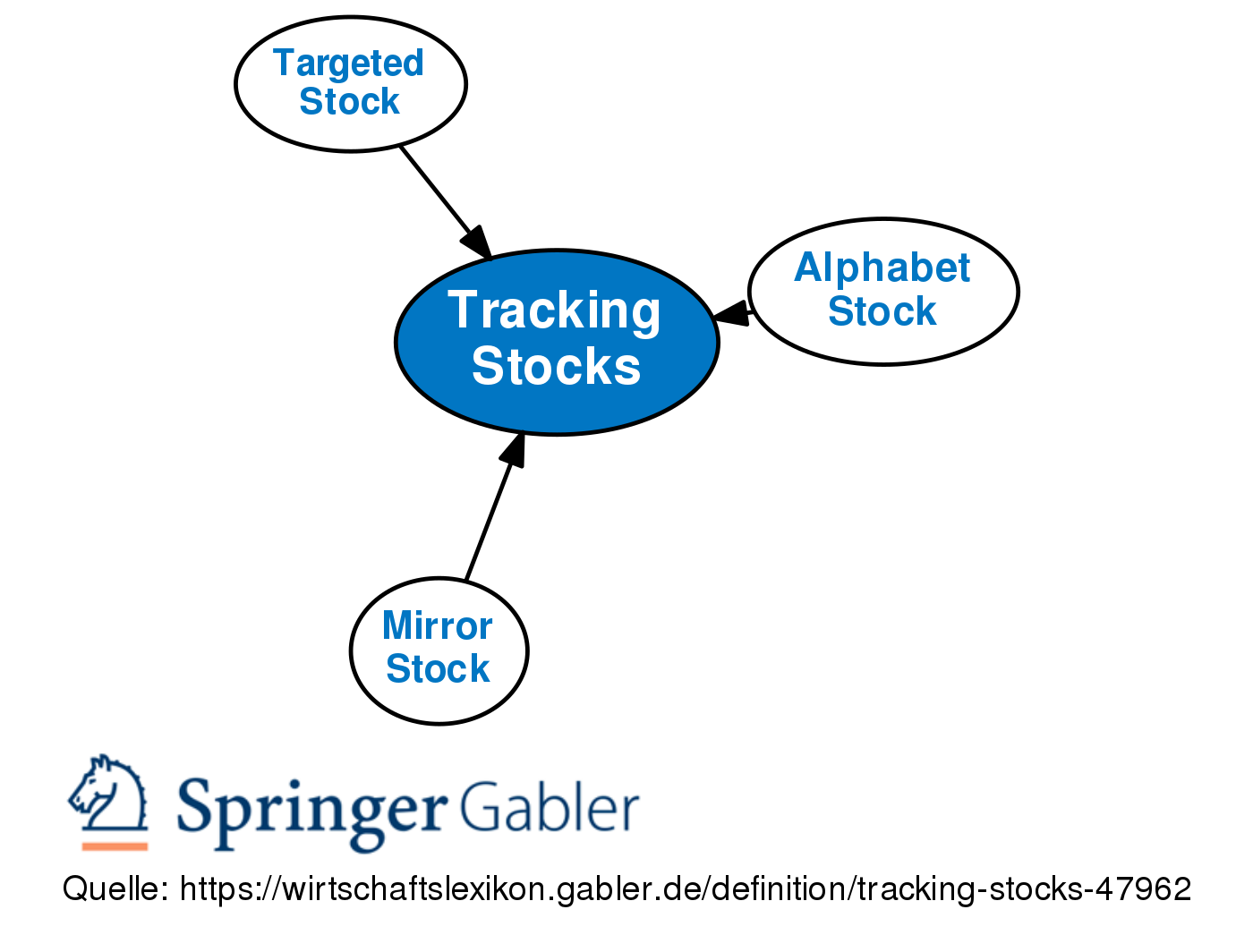
Atracking stock, also known as letter stock and/or targeted stock is a specialized equity offering issued by a company that is based on the operations of a defined business within the larger organization (such as, for instance, a wholly owned subsidiary of a diversified firm). Therefore, the tracking stock will be traded at a price related to the operations of the specific division of the company being “tracked”.
Tracking stock is typically limited, or has no voting rights. Often, tracking stock is issued to separate a high-growth (but initially, unprofitable) division from its parent company, while the parent company and its shareholders remain in control of the subsidiary’s operations.
The Atlanta Braves professional baseball team is set to be spun-off into an independent company along with their related properties (Battery) in two weeks. Along with this change, an as-of-yet unknown amount of equity in the company is set to be publicly traded on the stock market. The easiest explanation of this transition is to get a more accurate (Liberty Media’s Ownership) valuation of the franchise as a precursor to a sale. The Braves already have a pretty unique business structure, being owned by a publicly traded media conglomerate as a semi-autonomous entity within the conglomerate and a tracking stock, but this formalizes the franchises independence much more.
In the view of some, there is significantly more downside as a fan than upside to a sale, as the absolute upside involves more spending on the team payroll, but the team already is near the top of the league in payrolls and the team performance on the field is clearly top tier in the league. The downside is that the new ownership meddles more in the operations of the club in a negative way and/or slashes budgets, etc.
Posted on July 8, 2023 by Dr. David Edward Marcinko MBA MEd CMP™
By Staff Reporters
***
***
Despite high prices, new car sales have been remarkably strong so far this year and are up 12% compared to the first half of 2022, according to Cox Automotive.
***
Here is where the major benchmarks ended:
The S&P 500® Index (SPX) was down 12.64 points (0.3%) at 4398.95, down 1.2% for the week and just the second weekly decline in the past eight weeks; the Dow Jones Industrial Average (DJIA) was down 187.38 points (0.6%) at 33,734.88, down 2% for the week; the NASDAQ Composite (COMP) was down 18.33 points (0.1%) at 13,660.72, down 0.9% for the week.
The 10-year Treasury note yield (TNX) was up about 2 basis points at 4.06%.
CBOE’s Volatility Index (VIX) was down 0.61 at 14.83.
Energy shares were among the strongest performers, with the Philadelphia Oil Service Index (OSX) surging more than 6% to a four-month high. Benchmark WTI crude futures jumped more than 2% to close at a six-week high on hopes that OPEC+ production cuts will tighten supplies.
Regional banks and transportation stocks were also strong.
And, Samsung fell yesterday after revealing that its profits dropped 96% last quarter, giving the company its smallest quarterly profit since 2009 as it continues to sit on more memory chips than the market wants.
Posted on July 7, 2023 by Dr. David Edward Marcinko MBA MEd CMP™
By Staff Reporters
***
***
When markets closed Friday, Apple’s market capitalization was over $3 trillion, making it the most valuable company — ever. It’s a massive milestone for the tech giant, which warned investors in May that its current quarter revenue was expected to decline. But Friday’s stock price increasing by just over 2 percent to close at $193.97 per share suggests that investors are still confident in the company, a bright spot in an industry that has otherwise been rocked by layoffs over the past year.
Curiously, Goldman Sachs is considering exiting its partnership with Apple, the Wall Street Journal reported on Friday, citing sources familiar with the matter.
The iPhone-maker and Goldman Sachs started rolling out a virtual credit card in 2019. The bank is in talks with American Express to take over its Apple credit card and other ventures with the tech giant, the report added.
***
Here is where the major benchmarks ended:
The S&P 500 Index was up 53.94 points (1.2%) at 4,450.38, a gain of 16% for the first half of 2023. The Dow Jones Industrial Average (DJIA) was up 283.18 points (0.8%) at 34,407.60, up 3.8% in the first half. The NASDAQ Composite was up 196.59 points (1.5%) at 13,787.92 for a first-half gain of 32%.
The 10-year Treasury note yield (TNX) was down about 2 basis points at 3.837%.
CBOE’s Volatility Index (VIX) was down 0.15 at 13.39.
Oilfield services companies and others in energy led sector gainers Friday, after crude oil futures rose 1% (though oil prices are down 12% so far this year).
Technology and Consumer Discretionary stocks were also strong performers, while regional banks were among the laggards. The U.S. Dollar Index (DXY) eased slightly. It is down about 0.5% for the first half.
Posted on July 7, 2023 by Dr. David Edward Marcinko MBA MEd CMP™
By Staff Reporters
***
***
(AP) — U.S. officials granted full approval to a closely watched Alzheimer’s drug on Thursday, clearing the way for Medicare and other insurance plans to begin covering the treatment for people with the brain-robbing disease. The Food and Drug Administration endorsed the IV drug, Leqembi, for patients with mild dementia and other symptoms caused by early Alzheimer’s disease. It’s the first medicine that’s been convincingly shown to modestly slow Alzheimer’s cognitive decline.
***
Markets: Yesterday was yet another “good news is bad news” day on Wall Street. After the ADP employment report showed private sector companies added more than 2x the jobs that were forecast last month, stocks fell and Treasury yields surged—an indication that investors expect the Fed to resume hiking interest rates to cool down the job market. So, all eyes are on the non-farm payrolls report since a stronger-than-expected report could result in even more Fed rate hikes than currently expected. Here is where the major benchmarks ended yesterday:
The S&P 500® Index was down 35.23 points (0.8%) at 4,411.59; the Dow Jones Industrial Average (DJIA) was down 366.38 points (1.1%) at 33,922.26; the NASDAQ Composite (COMP) was down 112.61 points (0.8%) at 13,679.04.
The 10-year Treasury note yield (TNX) was up about 9 basis points at 4.035%.
The CBOE Volatility Index (VIX) was up 1.25 at 15.43.
Energy was among the weakest sectors despite crude oil futures touching a two-week high.
Regional banks and Consumer Discretionary stocks were also lower. Volatility expectations based on the VIX jumped to their highest level since late May.
Posted on July 6, 2023 by Dr. David Edward Marcinko MBA MEd CMP™
By Staff Reporters
***
***
[AP]:Meta is poised to unveil a new app that appears to mimic Twitter — a direct challenge to the social media platform owned by Elon Musk. A listing for the app, called Threads, just appeared on Apple’s App Store, indicating it would debut as early as today. It is billed as a “text-based conversation app” that is linked to Instagram, with the listing teasing a Twitter-like micro-blogging experience.
“Threads is where communities come together to discuss everything from the topics you care about today to what’ll be trending tomorrow,” it said.
***
Here is where the major benchmarks ended:
The S&P 500 Index was down 8.77 points (0.2%) at 4,446.82; the Dow Jones Industrial Average was down 129.83 points (0.4%) at 34,288.64; the NASDAQ Composite was down 25.12 points (0.2%) at 13,791.65.
The 10-year Treasury yield (TNX) was up about 7 basis points at 3.932%.
The CBOE Volatility Index (VIX) was up 0.49 at 14.19.
Chemical makers and other materials sector companies were among the weakest performers Wednesday. Semiconductor shares were also lower, as were many energy-company shares despite a 3% surge in crude oil futures. U
Utility stocks were among the strongest performers.
Posted on July 5, 2023 by Dr. David Edward Marcinko MBA MEd CMP™
By Staff Reporters
***
***
Here is where the major benchmarks ended on Monday:
The S&P 500 Index was up 5.21 points (0.1%) at 4,455.59; the Dow Jones Industrial Average (DJIA) was up 10.87 points at 34,418.47; the NASDAQ Composite was up 28.85 points (0.2%) at 13,816.78.
The 10-year Treasury note yield (TNX) was up about 4 basis points at 3.862%.
The CBOE Volatility Index® (VIX) was little changed at 13.58.
Financial companies had a good day Monday, with the KBW Regional Banking Index (KRX) rising more than 2%.
The consumer discretionary sector was also strong, while energy companies got a bump as crude oil futures reached their highest level in more than a week.
Health Care stocks lagged.
***
Wall Street is hoping for a strong start to the second half of 2023 taking cues from the recent tech rally that has boosted the overall investor sentiment. Turning toward the U.S.-China trade war, on Monday, the mainland posed restrictions on the export of gallium and germanium to the U.S. citing national security concerns. These metals are used in semiconductor manufacturing and the curb is being used as a means of retaliation to the U.S. chip ban on China.
Remarkably, Tesla (NASDAQ:TSLA) stock has been on an uphill climb lately, thanks to the growing adoption of its North American Charging Standard (NACS) charging connectors by major automakers including General Motors (NYSE:GM), Ford (NYSE:F), and Rivian (NASDAQ:RIVN). Moreover, the EV maker posted better-than-expected auto delivery and production numbers for the month and quarter ending June 30, pushing shares up 6.9% on July 3.
***
Future Salaries Will Decrease?
Median incomes are projected to drop over the next few decades, falling by 0.43 percentage points per year between now and 2020, 0.52 points per year between 2020 and 2030, and 0.2 points per year between 2030 and 2040.
Although the figures on their own are not staggering, the percentage drops over time will add up significantly. By 2050, an employee who earned $50,000 in 2013 will only make $44,000. The number is even more noticeable after accounting for inflation.
Posted on July 4, 2023 by Dr. David Edward Marcinko MBA MEd CMP™
By Staff Reporters
***
***
July Fourth is Today
If you haven’t bought supplies for your cookout yet, you’ll find that sirloin steak and processed cheese for your burger are more expensive than last July Fourth, but chicken and eggs are cheaper, according to Wells Fargo’s Chief Agricultural Economist Michael Swanson.
Plus, filling up your gas tank will cost you about $1.30 less per gallon than a year ago, per AAA.
Jobs Report Incoming
The June jobs report highlights a relatively slow week for economic data. Once again, like in every month before it since January 2021, the report is expected to show that companies are still on the hiring grind, adding an estimated 225,000 new jobs last month.
Posted on July 3, 2023 by Dr. David Edward Marcinko MBA MEd CMP™
By Staff Reporters
***
***
Investors are coming out of the mid-year investing season enthused and thanks to an Artificial Intelligence fueled stock market rally that turned into an everything rally.
The NASDAQ posted its best H1 since 1983, and the S&P 500 had its best first-half performance since 2019.
But, don’t expect Wall Street fireworks for the next few days. The US stock market will close early today and shut down tomorrow for Independence Day.
Posted on July 3, 2023 by Dr. David Edward Marcinko MBA MEd CMP™
By Staff Reporters
***
***
United States stock markets will be closing early on Monday, July 3rd, in observance of the Independence Day holiday.
In recognition of the federal holiday, the Nasdaq and New York Stock Exchange will close at 1 p.m. ET on Monday and remain closed Tuesday.
The U.S. bond market will close at 2 p.m. Eastern on Monday and will also remain closed Tuesday.
***
Nevertheless, Tesla beat expectations in the second quarter of 2023, announcing yesterday that it produced nearly 480,000 vehicles and delivered over 466,000.
The majority of production and deliveries were the Model 3 sedan and Model Y crossover, with 460,211 produced and 446,915 delivered. The electric car maker produced 19,489 of the higher-priced Model X and Model S and delivered 19,225.
***
And over the next few nights a super-moon is coming for the 2023 4th of July holiday weekend.July’s full moon, also called the buck moon, will be biggest on the nights of Sunday July 2nd and Monday July 3rd.
According to the Old Farmer’s Almanac, the moon will hit its peak illumination at 7:39 a.m. on Monday July 3 rd. It will be below the horizon at that precise moment, the Almanac said, so plan to look towards the southeast after sunset to watch it rise up into the evening sky.
Posted on June 30, 2023 by Dr. David Edward Marcinko MBA MEd CMP™
By Staff Reporters
***
***
Big banks powered the Dow higher h of positive economic headlines dropped. Financial institutions aced their Fed “stress test” that measures how they’d hold up during a downturn, Q1 GDP was revised much higher than previously calculated, and the number of Americans filing new unemployment claims fell the most in 20 months.
***
Solid economic numbers lifted the S&P 500 and Russell 2000 to nearly two-week highs. So, here is where the major benchmarks ended:
The S&P 500 Index was up 19.58 points (0.5%) at 4,396.44; the Dow Jones Industrial Average (DJIA) was up 269.76 points (0.8%) at 34,122.42; the NASDAQ Composite (COMP) was little changed at 13,591.33.
The 10-year Treasury note yield (TNX) was up nearly 13 basis points at 3.838%.
CBOE’s Volatility Index (VIX) was up 0.11 at 13.54.
Financial companies were among the strongest sectors Thursday, with the KBW Regional Banking Index (KRX) rising nearly 2% to its highest level in over a week.
Oilfield services stocks also gained behind strength in crude oil futures, which briefly climbed above $70 a barrel to their highest price in a week. Communications services and technology shares were among the weakest sectors.
The U.S. Dollar Index (DXY) strengthened to its highest level in over two weeks amid expectations for higher interest rates.
Posted on June 29, 2023 by Dr. David Edward Marcinko MBA MEd CMP™
By Staff Reporters
***
***
The new magic number for retirement is up slightly from last year, when U.S. adults said they believed they needed $1.25 million to retire comfortably, according to new findings from Northwestern Mutual. High-net-worth individuals – those with more than $1 million in investible assets – believe they’ll need $3 million to retire comfortably.
There’s quite a gap, however, between what people have now and what they think they’ll need. The average amount that U.S. adults have saved for retirement is only $89,300, up 3% from $86,869 in 2022, Northwestern Mutual found.
***
Interestingly, more than four in 10 Americans (42%) said they could imagine a time when Social Security no longer exists, according to the research. And yet, people are relying on Social Security to provide 28% of their overall retirement funding. That’s more than personal savings (22%) and equal to retirement savings (28%).
Gen Z and millennials have tempered expectations – they anticipate Social Security will provide 15% and 19% of their overall retirement funding, respectively. That’s a significant drop from what boomers+ say – 38%.
Posted on June 29, 2023 by Dr. David Edward Marcinko MBA MEd CMP™
By Staff Reporters
***
***
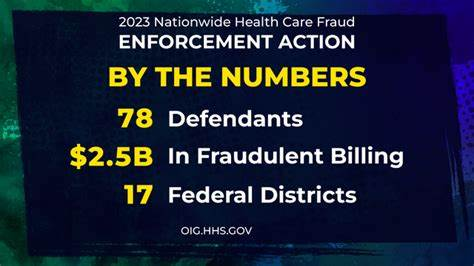
WASHINGTON (Reuters) -The U.S. Justice Department on Wednesday announced federal and local criminal charges targeting 78 defendants across 16 states as part of a law enforcement action involving $2.5 billion in alleged healthcare fraud schemes targeting elderly and disabled people, HIV patients and even pregnant women.
The cases range from allegations of falsely billing the federal Medicare insurance program for elderly and disabled Americans and paying illegal kickbacks, to the illicit diversion of expensive prescription medications and the improper dispensing of highly addictive opioid pain killers.
Among those facing charges include 24 doctors, nurses and other licensed medical professionals, as well as healthcare executives including the current and former CEOs of a durable medical equipment online platform accused of falsely billing $1.9 billion in fraudulent claims.
Of the $2.5 billion in alleged fraudulent claims to Medicare, state Medicaid programs that serve the poor and supplemental Medicare insurance programs offered by private insurers, about $1.1 billion was actually paid out to the fraudsters, officials said.
“The Justice Department will find and bring to justice criminals who seek to defraud Americans and steal from taxpayer-funded programs,” Attorney General Merrick Garland said in a statement.
On Friday, the Labor Department will update its Personal Consumption and Expenditures (PCE) index, which is the Fed’s preferred inflation measure. The June employment report follows on July 7th.
So, here is where the major benchmarks ended, yesterday:
The S&P 500 Index was down 1.55 points at 4,376.86; the Dow Jones Industrial Average was down 74.08 (0.2%) at 33,852.66; the NASDAQ Composite was up 36.08 points (0.3%) at 13,591.75.
The 10-year Treasury note yield (TNX) was down about 6 basis points at 3.71%.
CBOEs Volatility Index (VIX) was down 0.31 point at 13.43.
Regional banks and utilities were among the weakest sectors Wednesday, with the Philadelphia Utility Index (UTY) ending at its lowest level in nearly four weeks. Energy companies ranked among the top gainers as crude oil futures rose more than 2%.
Insurer Travelers Companies fell 2.5% to become the day’s worst-performing Dow stock.
Salesforce shares rose after Goldman Sachs said the company was poised to boost its profits.
Intel shares fell after Oracle said its software would be compatible with Ampere Computing chips in a blow to Intel’s position with data center customers.
Posted on June 28, 2023 by Dr. David Edward Marcinko MBA MEd CMP™
By Staff Reporters
***
***
Over $200 billion from the U.S. government’s COVID-19 relief programs were likely stolen, a federal watchdog said on Tuesday, adding that the U.S. Small Business Administration (SBA) had weakened its controls in a rush to disburse the funds.
At least 17% of all funds related to the government’s coronavirus Economic Injury Disaster Loan (EIDL) and Paycheck Protection Program (PPP) schemes were disbursed to potentially fraudulent actors, according to a report released Tuesday by the SBA’s office of inspector general. Over the course of the pandemic, the SBA disbursed about $1.2 trillion of EIDL and PPP funds.
The SBA disputed the more than $200 billion figure put forward by the watchdog and said the inspector general’s approach had significantly overestimated fraud.
***
Here is where the major benchmarks ended, yesterday
The S&P 500 Index was up 49.59 points (1.2%) at 4,378.41; the Dow Jones Industrial Average (DJIA) was up 212.03 points (0.6%) at 33,926.74; the NASDAQ Composite was up 219.89 points (1.7%) at 13,555.67.
The 10-year Treasury note yield (TNX) was up about 5 basis points at 3.766%.
Cboe’s Volatility Index (VIX) was up 0.50 at 13.75.
Technology stocks led sector gainers, with the Philadelphia Semiconductor Index (SOX) rising nearly 4%. Consumer Discretionary and Retail shares were also higher. Energy shares lagged as crude oil futures dropped more than 2%.
Posted on June 25, 2023 by Dr. David Edward Marcinko MBA MEd CMP™
By Staff Reporters
***
***
The S&P 500 Index ($SPX) (SPY) was down -0.61%, the Dow Jones Industrials Index ($DOWI) (DIA) was down -0.45%, and the NASDAQ 100 Index ($IUXX) (QQQ) was down -1.11%.
U.S. stocks were undercut by weak U.S. manufacturing PMI and the weak Eurozone PMI reports, which indicated that the U.S. and Eurozone economies are struggling even as the Fed and the ECB plan further rate hikes.
***
Alternative Investments?
Oddity, which runs the makeup brand Il Makiage, has filed paperwork for an IPO.
SpaceX is offering to sell select buyers shares at a price that values the private company at ~$150 billion, Bloomberg reports.
Bitcoin hit its highest price in a year, signaling that a thaw has come in the crypto winter.
Healthy investments: Despite a VC slowdown in 2022, healthcare firms raised $61.1 billion in investments. Want to know how VCs decide which healthcare startups to fund? Read more here.
***
Stock spotlight: GSK shares surged on both the London and New York exchanges after the company settled what would have been the first case against it to go to trial in the US claiming its heartburn drug Zantac causes cancer. It would have been a high-profile test case since thousands of similar cases have been filed.
Posted on June 24, 2023 by Dr. David Edward Marcinko MBA MEd CMP™
By Staff Reporters
***
***
U.S. stocks slipped on Friday, yesterday, with Wall Street’s benchmark gauge notching its worst week since early March. Equities have stalled in the last few days as the rally has taken a breather.
The tech-heavy NASDAQ Composite (COMP.IND) retreated 1.01% to end at 13,492.52 points, while the S&P 500 (SP500) closed 0.76% lower at 4,348.37 points. The blue-chip Dow (DJI) fell 0.64% to settle at 33,728.69 points.
On a weekly basis, the S&P was down 1.39%, the NASDAQ was down 1.44% while the Dow was down 1.67%.
***
The following companies had stock price moves driven by quarterly earnings or analyst ratings:
3M (MMM) agreed to pay up to $12.5 billion to settle hundreds of lawsuits brought by cities that claimed their drinking water had been contaminated by the company’s chemicals. 3M shares still ended with a gain of 0.3%.
C3.ai (AI) shares dropped sharply after Deutsche Bank reiterated its “sell” rating, saying the company hadn’t differentiated itself from other artificial intelligence firms at its investor day. C3 shares fell nearly 11%.
CarMax (KMX) reported quarterly revenue at $7.7 billion, down 17% from a year earlier but still surpassing Wall Street expectations. Shares of the used car retailer rose 10%.
Chipotle (CMG) had its share price target boosted by KeyBanc, which cited sustained traffic momentum and pricing power as inflation for avocado and chicken prices remains tame. Shares of the restaurant chain still ended down about 0.3%.
Delta Air Lines (DAL) had its share price target raised to $55 from $48 by Barclay’s, which cited optimistic expectations for near-term earnings. The airline’s shares still fell about 0.2%.
Ford (F) plans a new round of layoffs for U.S. salaried workers, the Wall Street Journal reported late Thursday. It’s unclear how many jobs will be affected. Ford has said it’s working to get costs in line as it transitions to electric vehicles. Its shares fell about 1.2%.
Starbucks (SBUX) shares fell following reports a union representing workers said some stores would strike beginning Friday. The coffee chain’s shares fell 2.5%.
Under Armour (UAA) shares were downgraded to “equal weight” from “overweight” by Wells Fargo, which cited overexposure to North America, excess inventory, and a fairly new CEO. The athletic apparel company’s shares fell nearly 3%.
Virgin Galactic (SPCE) shares fell sharply following reports the space tourism company had raised $300 million through a common stock offer. Its shares dropped more than 18%.
Wayfair (W) shares were upgraded to “market perform” from “underperform” by MoffettNathanson, which said the online retailer was benefiting from the bankruptcy of Bed Bath & Beyond. Wayfair shares rose about 0.4%.
Among other companies, Carnival Corp. (CCL) is expected to report quarterly results Monday. The cruise operator is expected to report a loss of 35 cents per share for the previous quarter, narrower than the $1.64 per share loss for the same period a year earlier, according to NASDAQ. Walgreens Boots Alliance (WBA), Micron Technology (MU), and General Mills (GIS) are also scheduled to report results next week.
Posted on June 24, 2023 by Dr. David Edward Marcinko MBA MEd CMP™
By Staff Reporters
***
***
Health care sharing is not insurance, but the plans count as insurance under the Affordable Care Act (ACA). That means more affordable healthcare benefits while avoiding the tax penalty for going uninsured. Other pros of health care sharing over insurance include: Lower cost. Monthly costs of health sharing are usually much lower than insurance premiums, although the rules are different for what’s covered. Also, the annual “unshared amount” is much, much lower than deductibles on lower-premium or catastrophic insurance plans. Your choice of provider. There are no network requirements, and you provide your health sharing card as coverage. If a doctor won’t accept your plan and you have to pay out-of-pocket, health sharing plans reimburse your expense.s
Now, the caveats: Health care sharing plans aren’t required to cover pre-existing conditions, such as cancer, diabetes, or lifestyle-related conditions like smoking. Those who have them may be declined membership or won’t have the conditions fully covered for a year or more. Health care sharing also doesn’t typically cover the essential health benefits like wellness exams or mental health counseling.
Yet, at least 1.7 million Americans are involved in a health sharing agreements despite a lack of protections (KFF Health News).
Posted on June 22, 2023 by Dr. David Edward Marcinko MBA MEd CMP™
By Staff Reporters
***
***
Wall Street’s major averages yesterday, on Wednesday, ended lower for a third straight session, weighed down by losses in growth stocks. And, sentiment was dampened by Federal Reserve Chair Jerome Powell’s largely hawkish reiteration that more rate hikes were likely.
Powell in his published opening remarks to his two-day testimony to Congress said that nearly all policymakers expect that interest rates would have to be raised further by the end of the year. The Fed chief then, in responses to questions from lawmakers, said that it may “make sense” for the central bank to raise rates at a “more moderate pace” going forward.
***
So, here is where the major benchmarks ended:
The S&P 500 Index was down 23.02 points (0.5%) at 4,365.69; the Dow Jones Industrial Average (DJIA) was down 102.35 (0.3%) at 33,951.52; the NASDAQ Composite was down 165.10 (1.2%) at 13,502.20.
The 10-year Treasury note yield (TNX) was little changed at 3.727%.
Cboe’s Volatility Index (VIX) was was down 0.68 at 13.19.
Technology shares were among the weakest performers Wednesday, with the Philadelphia Semiconductor Index (SOX) dropping nearly 2% to near a two-week low. Regional banks were also lower.
Energy stocks led sector gainers as crude oil futures jumped nearly 2% to a two-week high on hopes for stronger demand from China. Volatility based on the VIX sank to its lowest level since January 2020.
Posted on June 21, 2023 by Dr. David Edward Marcinko MBA MEd CMP™
By Staff Reporters
***
***
EDX Markets, a cryptocurrency platform backed by Charles Schwab (SCHW), Fidelity and Ken Griffin’s Citadel Securities, launched trading for bitcoin (BTC), ether (ETH), litecoin (LTC), and bitcoin cash (BCH).
Bitcoin hit its highest price since early May after a crypto exchange backed by finance heavyweights Charles Schwab, Fidelity Digital Assets, and Citadel Securities said it was open for trading.
***
***
***
Key Issues:
Schwab and Fidelity-backed crypto-platform EDX Markets began trading for bitcoin, ether, litecoin, and bitcoin cash.
EDX is a ‘non-custodial’ exchange, meaning it does not hold customer crypto and instead uses a third-party custodian.
EDX plans to launch a clearinghouse later this year to help customers settle trades.
EDX also announced new investors that include Miami International Holdings, DV Crypto, GTS, GSR Markets LTD, and HRT Technology.
Posted on June 21, 2023 by Dr. David Edward Marcinko MBA MEd CMP™
By Staff Reporters
***
***
DEFINITION: A solstice occurs when one of the Earth’s poles (today, it’s the north) tilts toward the sun at the maximum angle. The two solstices, in December and June, mark the beginning of winter and summer and give us the longest days and nights of the year.
***
Summer officially arrives: The summer solstice is on Wednesday today, marking the astronomical beginning of summer in the Northern Hemisphere. It’s also the longest “day” of the year above the equator. Soak in those 9 pm sunsets, because they won’t last forever … or at least until next year 2024.
***
Here is where the major benchmarks ended:
The S&P 500 Index was down 16.25 points (0.4%) at 4,409.59; the Dow Jones industrial Average was down 108.94 (0.3%) at 34,299.12; the NASDAQ Composite was down 93.25 (0.7%) at 13,689.57.
The 10-year Treasury note yield (TNX) was up about 4 basis points at 3.769%.
CBOEs Volatility Index (VIX) was down 0.97 at 13.53.
Retailers and regional banks were among the weakest performers Friday, and the Russell 2000 ended with a loss of about 1%.
Energy companies were among the strongest sectors thanks to crude oil futures extending a recent rally above $70 a barrel.
Posted on June 20, 2023 by Dr. David Edward Marcinko MBA MEd CMP™
By Staff Reporters
***
Markets were closed for Juneteenth yesterday, but the NASDAQ is coming into the short trading week hot: The tech-heavy index had its eighth consecutive week of gains last week, the best it’s done since March 2019.
But, Investors are divided over whether the rally driven by mega-stocks like Nvidia, Apple, and Tesla is a bubble poised to pop or the start to an AI revolution that not even Jerome Powell can dissuade.
Posted on June 20, 2023 by Dr. David Edward Marcinko MBA MEd CMP™
By Staff Reporters
***
***
The average balance in employer-sponsored savings plans last year was $112,572, well below the $141,542 recorded in 2021. That’s according to the latest annual report, “How America Saves,” from investment firm Vanguard, which serves as record keeper for defined contribution plans that, combined, have nearly 5 million participants with a median age of 43. Such plans include 401(k)s and 403(b)s, as well as a much smaller universe of plans that employers simply put money into for employees and then employees direct how that money is invested.
“Vanguard participants’ average account balances decreased by 20% since year-end 2021, driven primarily by the decrease in equity and bond markets over the year,” according to the report.
And, the numbers look worse if you consider the median balance, which was just $27,376 last year, down from $35,345 in 2021. The median in some ways is a truer read on the state of employees’ retirement savings since it is the middle point — meaning half of accounts have higher balances, and half have lower ones.
***
According to the Social Security Administration, Social Security benefits make up about a third of the income of the elderly. In general, single people depend more heavily on Social Security checks than do married people. In 2023, the average monthly retirement income from Social Security is $1,827.
Keep in mind, though, that your Social Security benefits could be smaller. If you don’t have 35 years of work under your belt when you start claiming benefits, if your earnings were consistently low or if you claim benefits starting at age 62 rather than waiting until your full retirement age (or age 70, if you want maximum benefits), then you can expect a small monthly check. There’s also a gender gap in Social Security income. Women, because they tend to earn less and work for fewer years, draw smaller Social Security checks than men do.
Posted on June 17, 2023 by Dr. David Edward Marcinko MBA MEd CMP™
By Staff Reporters
***
***
Here is where the major benchmarks ended; yesterday
The S&P 500 Index was down 16.25 points (0.4%) at 4,409.59; the Dow Jones industrial average was down 108.94 (0.3%) at 34,299.12; the NASDAQ Composite was down 93.25 (0.7%) at 13,689.57.
The 10-year Treasury note yield (TNX) was up about 4 basis points at 3.769%.
CBOE’s Volatility Index (VIX) was down 0.97 at 13.53.
Retailers and regional banks were among the weakest performers Friday, and the Russell 2000 ended with a loss of about 1%.
Energy companies were among the strongest sectors thanks to crude oil futures extending a recent rally above $70 a barrel.







 Support our online development, and advance our onground research initiatives in free market economics, as we seek to showcase the brightest Next-Gen minds.
THE ME-P DISCLAIMER: Posts, comments and opinions do not necessarily represent iMBA, Inc., but become our property after submission. Copyright © 2006 to-date. iMBA, Inc allows colleges, universities, medical and financial professionals and related clinics, hospitals and non-profit healthcare organizations to distribute our proprietary essays, photos, videos, audios and other documents; etc. However, please review copyright and usage information for each individual asset before submission to us, and/or placement on your publication or web site. Attestation references, citations and/or back-links are required. All other assets are property of the individual copyright holder.
Support our online development, and advance our onground research initiatives in free market economics, as we seek to showcase the brightest Next-Gen minds.
THE ME-P DISCLAIMER: Posts, comments and opinions do not necessarily represent iMBA, Inc., but become our property after submission. Copyright © 2006 to-date. iMBA, Inc allows colleges, universities, medical and financial professionals and related clinics, hospitals and non-profit healthcare organizations to distribute our proprietary essays, photos, videos, audios and other documents; etc. However, please review copyright and usage information for each individual asset before submission to us, and/or placement on your publication or web site. Attestation references, citations and/or back-links are required. All other assets are property of the individual copyright holder.










































 The Leading Business Education Network for Doctors, Financial Advisors and Health Industry Consultants