PHYSICIANS: Coaching, Mentoring & Second Opinions

By Ann Miller RN MHA

***

***

Career and Financial Planning

Career, Business and Personal Financial Planning is a great opportunity to get your practice, finances and budgets in order before life gets too busy.

CALL US TODAY TO GET STARTED: https://medicalexecutivepost.com/coach/

CALL FOR A SECOND OPINION: https://medicalexecutivepost.com/schedule-a-consultation/

“From Chaos to Calm”

THANK YOU

***

NAPA Update for Inova Loudoun Hospital

***

By Anonymous Letter Leaker

***

DAVE – This is what happens when private equity takes over anesthesiologists and other medical services. Private equity has squeezed so much out of physician lives and their practices, that practice has become intolerable. They are all so burnt out that the physician anesthesiologist must now strike out against their own private equity group owners (NAPA). The trickle-down effect becomes with the hospital now caught in the middle, contracted with a private equity group which  provides anesthesia, but they have no anesthesiologist employees.

Where does patient care survive?

***

February 2023
Colleagues,

As you may be aware, Inova contracts with North American Partners in Anesthesia (NAPA) to provide anesthesia services at Inova Loudoun Hospital. This week, we received notice that our anesthesiologists at Inova Loudoun Hospital have submitted 90-day notice letters of resignation to NAPA. In the spirit of full transparency, we are sharing this news with our physicians.

Here’s what you need to know:

Although we are monitoring this situation, Inova is not a participant in discussions. They are held solely between the anesthesiologists and NAPA. We are actively working to ensure minimal disruptions to current workflows at our care sites.      Our anesthesiologists are among the best in the country, and we fully expect that our team members will continue to provide world-class healthcare to the communities we are privileged to serve.

Per our care mandate, people are at the center of everything we do, and we take any situation that affects the work environment of our team members very seriously. We will continue to communicate with NAPA and keep you apprised of pertinent developments.

If you have questions about this situation, please contact Loren Rufino, Senior Vice President, Perioperative Services.

Thank you,

John J. Moynihan, MD, FACS               
President, Surgery Service Line          

Loren A. Rufino        
SVP, Perioperative Services   
Administrator Surgery Service Line

Paula R. Graling, DNP, RN, CNOR, NEA-C,
FAAN
VP, Nursing, Surgery Service Line

***
ME-P COMMENTS APPRECIATED
 Thank You

ORDER: https://www.amazon.com/Business-Medical-Practice-Transformational-Doctors/dp/0826105750/ref=sr_1_9?ie=UTF8&qid=1448163039&sr=8-9&keywords=david+marcinko

***

Become a Board CERTIFIED MEDICAL PLANNER™ and Thrive

Join Our Mailing List

Think Different – Be Different  – Thrive

[By Ann Miller RN MHA]

Dear Physician Focused Financial Advisors;

Did you know that desperate doctors of all ages are turning to knowledgeable financial advisors and medical management consultants for help? Symbiotically too, generalist advisors are finding that the mutual need for knowledge and extreme niche synergy is obvious.

***

planning

***

But, there was no established curriculum or educational program; no corpus of knowledge or codifying terms-of-art; no academic gravitas or fiduciary accountability; and certainly no identifying professional designation that demonstrated integrated subject matter expertise for the increasingly unique healthcare focused financial advisory niche … Until Now! 

***

CMP logo

http://www.CertifiedMedicalPlanner.org

Enter the CMPs

“The informed voice of a new generation of fiduciary advisors for healthcare”

Think Different

 [Think Different – Be Different – Thrive]

InfoGraphic

http://e.infogr.am/enter_the_certified_medical_planner?src=embed

CMP logo

http://www.CertifiedMedicalPlanner.org

***

So, if you are looking to supplement your knowledge, income and designations; and find other qualified professionals you may want to consider the CMP® program.

Enter the Certified Medical Planner™ charter professional designation. And, CMPs™ are FIDUCIARIES, 24/7.

Channel Surfing the ME-P

Have you visited our other topic channels? Established to facilitate idea exchange and link our community together, the value of these topics is dependent upon your input. Please take a minute to visit. And, to prevent that annoying spam, we ask that you register. It is fast, free and secure.

Conclusion

Your thoughts and comments on this ME-P are appreciated. Feel free to review our top-left column, and top-right sidebar materials, links, URLs and related websites, too. Then, subscribe to the ME-P. It is fast, free and secure.

***

Become a CMP

***

Speaker: If you need a moderator or speaker for an upcoming event, Dr. David E. Marcinko; MBA – Publisher-in-Chief of the Medical Executive-Post – is available for seminar or speaking engagements. Contact: MarcinkoAdvisors@msn.com

OUR OTHER PRINT BOOKS AND RELATED INFORMATION SOURCES:

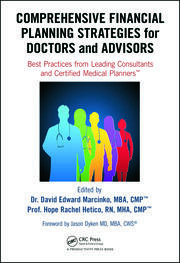
 Comprehensive Financial Planning Strategies for Doctors and Advisors: Best Practices from Leading Consultants and Certified Medical Planners(TM)* 8

DAILY UPDATE: Credit Suisse Down While US Equities Mixed

By Staff Reporters

***

***

  • CREDIT SUISSE:
  • Equities revenue plummeted 95% in the fourth quarter
  • CS earlier informally looked at options for unit -sources
  • CS declined comment on ‘rumors and speculation’, and
  • In the latest piece of troubling news, the beleaguered Swiss bank delayed the publication of its 2022 annual report following a “late call” from the US Securities and Exchange Commission on Wednesday evening. The SEC got in touch over revisions the bank had previously made to its cash flow statements for 2019 and 2020,

***

U.S. equities finished mixed following yesterday’s rout, as investors digested a second day of testimony from Fed Chair Jerome Powell. The Chairman remained hawkish in his commentary, where he suggested rates may need to accelerate more than initially expected and may need to stay higher for longer than originally anticipated. Adding to the uncertainty, the afternoon release of the Fed’s Beige Book showed little change from the last installment.

Treasury yields were mixed with the yield curve inversion worsening, and the U.S. dollar was flat after yesterday’s rally. Crude oil prices were lower, and gold was little changed in choppy action. News on the equity front was light, as CrowdStrike topped quarterly earnings estimates and offered upbeat guidance, while UPS reiterated its full-year outlook.

The economic calendar was tilted toward labor data, as job openings dipped but remained elevated, and ADP’s private sector employment report bested forecasts ahead of Friday’s key non-farm payroll release.

Elsewhere, mortgage applications snapped a three-week losing streak, and the trade deficit came in slightly smaller than projected. Asia finished mixed and Europe also diverged, as the global markets processed the testimony from Fed Chairman Powell.

CITE: https://www.r2library.com/Resource/Title/082610254

***

ORDER: https://www.routledge.com/Comprehensive-Financial-Planning-Strategies-for-Doctors-and-Advisors-Best/Marcinko-Hetico/p/book/9781482240283

***

COMMENTS APPRECIATED

Thank You

***

INTERNATIONAL WOMEN’S DAY 2023

Maritime Medicine

By Dr. David Edward Marcinko MBA

***

***

***

Did you know that on this day in 1945, Phyllis Mae Dailey became the first Black nurse sworn in to serve the US Navy?

READ: https://blackdoctor.org/phyllis-mae-dailey/

And on this day in 1950, Bernice Walters became the first female doctor for the US Navy.

READ: https://www.history.navy.mil/browse-by-topic/people/trailblazers/bernice-walters.html

READ: US Comfort Ship: https://medicalexecutivepost.com/2010/01/18/us-navy-ship-comfort-heads-to-haiti/

So, you might say it’s a big day for maritime medicine.

***

COMMENTS APPRECIATED

Thank You

***

ORDER: https://www.amazon.com/Dictionary-Health-Insurance-Managed-Care/dp/0826149944/ref=sr_1_4?ie=UTF8&s=books&qid=1275315485&sr=1-4

***

Become a Board CERTIFIED MEDICAL PLANNER™ and Thrive

Join Our Mailing List

Think Different – Be Different  – Thrive

[By Ann Miller RN MHA]

Dear Physician Focused Financial Advisors;

Did you know that desperate doctors of all ages are turning to knowledgeable financial advisors and medical management consultants for help? Symbiotically too, generalist advisors are finding that the mutual need for knowledge and extreme niche synergy is obvious.

***

planning

***

But, there was no established curriculum or educational program; no corpus of knowledge or codifying terms-of-art; no academic gravitas or fiduciary accountability; and certainly no identifying professional designation that demonstrated integrated subject matter expertise for the increasingly unique healthcare focused financial advisory niche … Until Now! 

***

CMP logo

http://www.CertifiedMedicalPlanner.org

Enter the CMPs

“The informed voice of a new generation of fiduciary advisors for healthcare”

Think Different

 [Think Different – Be Different – Thrive]

InfoGraphic

http://e.infogr.am/enter_the_certified_medical_planner?src=embed

CMP logo

http://www.CertifiedMedicalPlanner.org

***

So, if you are looking to supplement your knowledge, income and designations; and find other qualified professionals you may want to consider the CMP® program.

Enter the Certified Medical Planner™ charter professional designation. And, CMPs™ are FIDUCIARIES, 24/7.

Channel Surfing the ME-P

Have you visited our other topic channels? Established to facilitate idea exchange and link our community together, the value of these topics is dependent upon your input. Please take a minute to visit. And, to prevent that annoying spam, we ask that you register. It is fast, free and secure.

Conclusion

Your thoughts and comments on this ME-P are appreciated. Feel free to review our top-left column, and top-right sidebar materials, links, URLs and related websites, too. Then, subscribe to the ME-P. It is fast, free and secure.

***

Become a CMP

***

Speaker: If you need a moderator or speaker for an upcoming event, Dr. David E. Marcinko; MBA – Publisher-in-Chief of the Medical Executive-Post – is available for seminar or speaking engagements. Contact: MarcinkoAdvisors@msn.com

OUR OTHER PRINT BOOKS AND RELATED INFORMATION SOURCES:

 Comprehensive Financial Planning Strategies for Doctors and Advisors: Best Practices from Leading Consultants and Certified Medical Planners(TM)* 8

PODCAST: Hospital Money Challenges in 2023

By Eric Bricker MD

***

***

CITE: https://www.r2library.com/Resource/Title/0826102549

CITE: https://www.amazon.com/Dictionary-Health-Insurance-Managed-Care/dp/0826149944/ref=sr_1_4?ie=UTF8&s=books&qid=1275315485&sr=1-4

***

COMMENTS APPRECIATED

Thank You

***

CUSTOMIZABLE e-PODIATRY CONSENT FORMS

electronically CUSTOMIZABLE FOR EVERY SURGEON

***

http://www.ePodiatryConsentForms.com

CUSTOMIZABLE CMS & AGENCY FOR HEALTHCARE RESEARCH AND QUALITY STYLED PROTOCOLS, CHECKLISTS AND TEMPLATES

.… Specifically for Podiatrists ….   

e-Podiatry Consent Forms™ is an innovative new suite of software programs from the Institute of Medical Business Advisors [iMBA, Inc]. Our products solve your informed consent problems and enhance the education, discussion and documentation of the informed consent process for all podiatrists performing foot, ankle and leg reconstructive surgical procedures.

THE PROBLEM

All podiatrists are being pressured by the Centers for Medicare and Medicaid Services [CMS], the Joint Commission on Accreditation of Healthcare Organizations [JCAHO], liability carriers and private insurance payers to make their consent process more patient-friendly, informed and easily understood. And, the pressure to standardize and comply is great.

Most recently, based on the need to make healthcare even safer, the Agency for Healthcare Research and Quality (AHRQ) undertook a major study to identify patient safety issues and develop recommendations for “best practices”.

The AHRQ Evidence Report

The AHRQ report identified the challenge of addressing shortcomings such as missed, incomplete or not fully comprehended informed consent, as a significant patient safety issue and opportunity for improvement.

The authors of the AHRQ report hypothesized that better informed patients:

“are less likely to experience errors by acting as another layer of protection.”

And, the AHRQ study ranked a “more interactive informed consent process” among the top 11 practices supporting more widespread implementation; especially for surgical consent forms.

THE SOLUTION

Why Us: https://epodiatryconsentforms.com/why-us/

One answer to the modern risk-management problem of “informed consent interactivity” may be e-Podiatry Consent Forms™  We license two core interactive surgical products, and a reference library, with related concepts and products in development:

  • Forefoot, Mid-Foot and Simple Rear-Foot Version
  • Complex Rear-Foot, Ankle and Lower Leg Version
  • Comprehensive content library for extreme customization.

Each e-Podiatry Consent Forms™ CD-ROM [secure email delivery is now available] is increasingly trusted as the simple solution to standardized communications across the entire office-enterprise; from managing-risk, informing-patients and complying with modern regulatory requirements through enhanced patient-centric informed consent encounters.

Thus, by improving the consistency, details, documentation and effectiveness of the informed consent process, e-Podiatry Consent Forms™ equips all podiatric surgeons with the tools needed to augment quality standards, reduce litigation potential and improve patient outcomes and safety.

http://www.ePodiatryConsentForms.com

***

ORDER NOW: http://www.ePodiatryConsentForms.com

Phone: 770-448-0769

***

What is Translational Medicine?

An Emerging and Protean Science

[By Staff Reporters]

Translational medicine (often referred to as translational science, of which it is a form) is defined by the European Society for Translational Medicine (EUSTM) as an interdisciplinary branch of the biomedical field supported by three main pillars: bench side, bed side and community. The goal of TM is to combine disciplines, resources, expertise, and techniques within these pillars to promote enhancements in prevention, diagnosis, and therapies.

DEFINITIONS: http://www.HealthDictionarySeries.org

Accordingly, translational medicine is a highly interdisciplinary field, the primary goal of which is to coalesce assets of various natures within the individual pillars in order to improve the global healthcare system significantly.

***

http://www.translationalmedicine.com/

Conclusion

Your thoughts and comments on this ME-P are appreciated. Feel free to review our top-left column, and top-right sidebar materials, links, URLs and related websites, too. Then, subscribe to the ME-P. It is fast, free and secure.

Speaker: If you need a moderator or speaker for an upcoming event, Dr. David E. Marcinko; MBA – Publisher-in-Chief of the Medical Executive-Post – is available for seminar or speaking engagements. : https://medicalexecutivepost.com/dr-david-marcinkos-bookings/

Subscribe: MEDICAL EXECUTIVE POST for curated news, essays, opinions and analysis from the public health, economics, finance, marketing, IT, business and policy management ecosystem.

***

ORDER: https://www.amazon.com/Business-Medical-Practice-Transformational-Doctors/dp/0826105750/ref=sr_1_9?ie=UTF8&qid=1448163039&sr=8-9&keywords=david+marcinko

Product Details

NEUROLINK: Brain Chips Rejected by the FDA?

By Staff Reporters

***

The FDA has reportedly rejected an application from Neuralink.

Recall, Neuralink is Elon Musk’s medical device company to test its brain implants in humans.

LINK: https://neuralink.com/

Neuralink Corporation is an American neurotechnology company that develops implantable brain–computer interfaces (BCIs) based in Fremont, California. Founded by Elon Musk and a founding team of seven scientists and engineers, Neuralink was launched in 2016 and was first publicly reported in March 2017.

Since its founding, the company has hired several high-profile neuroscientists from various universities. By July 2019, it had received $158 million in funding (of which $100 million was from Musk) and was employing a staff of 90 employees. At that time, Neuralink announced that it was working on a “sewing machine-like” device capable of implanting very thin (4 to 6 μm in width) threads into the brain, and demonstrated a system that read information from a lab rat via 1,500 electrodes. They had anticipated starting experiments with humans in 2020, but have since moved that projection to 2023.

Several neuroscientists and publications, including the MIT Technology Review, have been critical of claims made by Musk about Neuralink, calling some of the technological promises “highly speculative”. In March 2023, Reuters reported that the Food and Drug Administration rejected a 2022 application for human trials.

The agency had several concerns, including the risk of tiny wires in the chip shifting to other areas of the brain.

***

COMMENTS APPRECIATED

Thank You

ORDER: https://www.amazon.com/Dictionary-Health-Information-Technology-Security/dp/0826149952/ref=sr_1_5?ie=UTF8&s=books&qid=1254413315&sr=1-5

***

DAILY UPDATE: Wall Street’s Hell Week & National Dentist’s Day

By Staff Reporters

***

***

National Dentist’s Day falls on March 6th every year. It was established as a way to show appreciation and thanks for dentists. It’s also a way to bring awareness to dentistry so that people will know more about how to care for their teeth. It also encourages people who may have avoided going to the dentist to come in for a checkup.

MORE: https://nationaldentistsday.com/

***

“WALL STREET Hell Week: Features several potential landmines for the stock market. One of them is the jobs report on Friday. Employment numbers have been on the rise, and continued strength in the labor market could lead to more interest rate hikes. Another key event this week: FOMC Chair Jerome Powell’s testimony on Capitol Hill. He’s expected to field questions on the trajectory of inflation and the looming debt-ceiling crisis.

***

COMMENTS APPRECIATED

Thank You

***

ORDER: https://www.amazon.com/Dictionary-Health-Insurance-Managed-Care/dp/0826149944/ref=sr_1_4?ie=UTF8&s=books&qid=1275315485&sr=1-4

***

PODCAST: Health Insurance “Medical Policy” Explained

MEDICAL NECESSITY

By Eric Bricker MD

***

***

***

ORDER: https://www.amazon.com/Dictionary-Health-Insurance-Managed-Care/dp/0826149944/ref=sr_1_4?ie=UTF8&s=books&qid=1275315485&sr=1-4

CITE: https://www.r2library.com/Resource/Title/082610254

***

COMMENTS APPRECIATED

Thank You

***

Understanding Active Asset Allocation

The Two Types of Active Allocation

[By Jeffrey S. Coons; PhD, CFA]

[By Christopher J. Cummings; CFA, CFP™]

ACASometimes, physician investors feel that the markets either overreact or under react to a given piece of news – related to a specific security – and are generally willing to commit their time and resources to find mispriced securities.  

For example, a young physician with a long time horizon may feel that the financial markets are too focused on the near-term following a decline in a pharmaceutical company’s stock from a disappointing FDA report.  Or, the recent banking industry debacle is a good sector wide example of abrupt depression. 

And so, if active asset allocation makes sense based upon the limitations of passive asset allocation in managing risk over even long periods of time, how do physician investors – and their advisors – make active asset allocation decisions?   

The Approaches 

There are two distinct active asset allocation approaches used to build an investment portfolio.   They are the top-down method and the bottom-up method, and they differ based on how important economic and industry variables are to the decision-making process relative to individual security variables.  

Top-Down Approach

Advocates of the top-down approach generally begin their investment process by formulating an outlook for the domestic economy, and in certain circumstances the outlook is constructed for the global economy.  This may be a direct result of a quantitative model using various market and economic data as input to reach a conclusion regarding the best asset mix on a tactical basis, or it may be a more subjective process resulting from a qualitative assessment of the market and economic outlook.

In developing an economic overview for qualitative top-down asset allocation decisions, the medical professional and/or his advisors typically consider factors such as monetary policy, fiscal policy, trade relations, and inflation. Clearly, macroeconomic factors such as those listed above are likely to have a significant impact on the performance of a wide range of investment alternatives.

After a thorough analysis of the overall economy has been completed, top-down investors will either buy broad baskets of stocks representing an asset class or perform an analysis of industries that they believe will benefit from the economic overview that has been developed. 

Factors that may influence the attractiveness of particular industries include regulatory environment, supply and demand of resources, taxes, and import/export quotas. 

The top-down approach generally views the best company in a weak industry as being unlikely to provide satisfactory returns.  

The final step in the top-down process involves analyzing individual companies in industries that are expected to benefit from the forecasted economic environment.  

Stock_Market

Bottom-Up Approach

In contrast, investors employing a bottom-up approach will focus their attention on identifying securities that are priced below the investor’s estimate of their value.

Physicians and investors using the bottom-up approach to asset allocation and portfolio construction will only purchase securities deemed attractive according to their basic pricing and security selection criteria, thus adjusting the overall mix of investments by the limit of securities considered attractive at current valuations.

A truly bottom-up approach will consider economic and industry factors as clearly secondary in identifying investment opportunities. Investors using this approach will focus solely on company analysis.   However, they must recognize that investment decisions cannot be made in a vacuum.  Macroeconomic factors, as well as industry characteristics and traits are likely to be key elements in identifying attractive investment opportunities even on a security-by-security basis.

The key to bottom-up asset allocation and portfolio management is to realize that the decision variables driving the basic mix of assets in the portfolio are more related to the availability of attractive individual investments than to a general top-down market or economic overview.

Are you an active or passive investor?

If an active investor; what type are you?

Conclusion

Your thoughts and comments on this ME-P are appreciated. Feel free to review our top-left column, and top-right sidebar materials, links, URLs and related websites, too. Then, subscribe to the ME-P. It is fast, free and secure.

Link: http://feeds.feedburner.com/HealthcareFinancialsthePostForcxos

Speaker: If you need a moderator or speaker for an upcoming event, Dr. David E. Marcinko; MBA – Publisher-in-Chief of the Medical Executive-Post – is available for seminar or speaking engagements. Contact: MarcinkoAdvisors@msn.com

Product DetailsProduct DetailsProduct Details

  Risk Management, Liability Insurance, and Asset Protection Strategies for Doctors and Advisors: Best Practices from Leading Consultants and Certified Medical Planners™8Comprehensive Financial Planning Strategies for Doctors and Advisors: Best Practices from Leading Consultants and Certified Medical Planners™

[Dr. Cappiello PhD MBA] *** [Foreword Dr. Krieger MD MBA]

Front Matter with Foreword by Jason Dyken MD MBA

Book of Month

PHYSICIANS: Coaching, Mentoring & Second Opinions

By Ann Miller RN MHA

***

***

Career and Financial Planning

Career, Business and Personal Financial Planning is a great opportunity to get your practice, finances and budgets in order before life gets too busy.

CALL US TODAY TO GET STARTED: https://medicalexecutivepost.com/coach/

CALL FOR A SECOND OPINION: https://medicalexecutivepost.com/schedule-a-consultation/

“From Chaos to Calm”

THANK YOU

***

A Few Simple Rules For Money Managers

vitaly

[By Vitaliy Katsenelson CFA]

One of the biggest hazards of being a professional money manager is that you are expected to behave in a certain way: You have to come to the office every day, work long hours, slog through countless e-mails, be on top of your portfolio (that is, check performance of your securities minute by minute), watch business TV and consume news continuously, and dress well and conservatively, wearing a rope around the only part of your body that lets air get to your brain. Our colleagues judge us on how early we arrive at work and how late we stay. We do these things because society expects us to, not because they make us better investors or do any good for our clients.

Somehow we let the mindless, Henry Ford–assembly-line, 8:00 a.m. to 5:00 p.m., widgets-per-hour mentality dictate how we conduct our business thinking. Though car production benefits from rigid rules, uniforms, automation and strict working hours, in investing — the business of thinking — the assembly-line culture is counterproductive. Our clients and employers would be better off if we designed our workdays to let us perform our best.

Investing

Investing is not an idea-­per-hour profession; it more likely results in a few ideas per year. A traditional, structured working environment creates pressure to produce an output — an idea, even a forced idea. Warren Buffett once said at a Berkshire Hathaway annual meeting: “We don’t get paid for activity; we get paid for being right. As to how long we’ll wait, we’ll wait indefinitely.”

***

stock-exchange

***

How you get ideas is up to you. I am not a professional writer, but as a professional money manager, I learn and think best through writing. I put on my headphones, turn on opera and stare at my computer screen for hours, pecking away at the keyboard — that is how I think. You may do better by walking in the park or sitting with your legs up on the desk, staring at the ceiling.

I do my best thinking in the morning. At 3:00 in the afternoon, my brain shuts off; that is when I read my e-mails. We are all different. My best friend is a brunch person; he needs to consume six cups of coffee in the morning just to get his brain going. To be most productive, he shouldn’t go to work before 11:00 a.m.

And then there’s the business news. Serious business news that lacked sensationalism, and thus ratings, has been replaced by a new genre: business entertainment (of course, investors did not get the memo). These shows do a terrific job of filling our need to have explanations for everything, even random events that require no explanation (like daily stock movements). Most information on the business entertainment channels — Bloomberg Television, CNBC, Fox Business — has as much value for investors as daily weather forecasts have for travelers who don’t intend to go anywhere for a year. Yet many managers have CNBC, Fox or Bloomberg on while they work.

Filters

You may think you’re able to filter the noise. You cannot; it overwhelms you. So don’t fight the noise — block it. Leave the television off while the markets are open, and at the end of the day, check the business channel websites to see if there were interviews or news events that are worth watching.

Don’t check your stock quotes continuously; doing so shrinks your time horizon. As a long-term investor, you analyze a company and value the business over the next decade, but daily stock volatility will negate all that and turn you into a trader. There is nothing wrong with trading, but investors are rarely good traders.

***

idea

***

Numerous studies have found that humans are terrible at multitasking. We have a hard time ignoring irrelevant information and are too sensitive to new information. Focus is the antithesis of multitasking. I find that I’m most productive on an airplane. I put on my headphones and focus on reading or writing. There are no distractions — no e-mails, no Twitter, no Facebook, no instant messages, no phone calls. I get more done in the course of a four-hour flight than in two days at the office. But you don’t need to rack up frequent-flier miles to focus; just go into “off mode” a few hours a day: Kill your Internet, turn off your phone, and do what you need to do.

I bet if most of us really focused, we could cut down our workweek from five days to two. Performance would improve, our personal lives would get better, and those eventual heart attacks would be pushed back a decade or two.

Assessment

Take the rope off your neck and wear comfortable clothes to work (I often opt for jeans and a “Life is good” T-shirt). Pause and ask yourself a question: If I was not bound by the obsolete routines of the dinosaur age of assembly-line manufacturing, how would I structure my work to be the best investor I could be? Print this article, take it to your boss and tell him or her, “This is what I need to do to be the most productive 

ABOUT

Vitaliy N. Katsenelson, CFA, is Chief Investment Officer at Investment Management Associates in Denver, Colo. He is the author of Active Value Investing (Wiley 2007) and The Little Book of Sideways Markets (Wiley, 2010).  His books have been translated into eight languages.  Forbes called him – the new Benjamin Graham.

Conclusion

Your thoughts and comments on this ME-P are appreciated. Feel free to review our top-left column, and top-right sidebar materials, links, URLs and related websites, too. Then, subscribe to the ME-P. It is fast, free and secure.

Speaker: If you need a moderator or speaker for an upcoming event, Dr. David E. Marcinko; MBA – Publisher-in-Chief of the Medical Executive-Post – is available for seminar or speaking engagements. Contact: MarcinkoAdvisors@msn.com

OUR OTHER PRINT BOOKS AND RELATED INFORMATION SOURCES:

[PHYSICIAN FOCUSED FINANCIAL PLANNING AND RISK MANAGEMENT COMPANION TEXTBOOK SET]

  Risk Management, Liability Insurance, and Asset Protection Strategies for Doctors and Advisors: Best Practices from Leading Consultants and Certified Medical Planners™ Comprehensive Financial Planning Strategies for Doctors and Advisors: Best Practices from Leading Consultants and Certified Medical Planners™

***

Medical Practice Valuation Blunders

Join Our Mailing List 

Top Ten Appraisal Blunders to Avoid

By Dr. David Edward Marcinko; MBA, CMP™

Top Ten Appraisal Blunders to Avoid

The science of the modern medical practice valuation can be traced to the Estate of Edgar A. Berg v. Commissioner (T. C. Memo 1991-279). In this case, the Court criticized CPAs as not being qualified to perform business valuations, failing to provide analysis of an appropriate discount rates, and making only general references to justify their   “Opinion of Value.”

In rejecting accountants, the Court accepted IRS economists because of background, education and training, as well as discount rate calculations and reproducible evidence applied to the assets being examined. This marked the beginning of the Tax Court leaning toward the side with the most comprehensive appraisal. Previously, it had a tendency to “split the difference.” Now, some feel the Berg case launched the valuation profession; especially for contemporaneous health economists.

But, it was not until after 1995 that the IRS issued guidelines for the valuation of physician practices. As a result, the Uniform Standards of Professional Appraisal Practice [USPAP] requires that a blended constellation of three recognized valuation approaches (income, market, and cost approaches) be considered when estimating fair market value.

Operative Valuation Definitions

When pursuing any discussion of medical practice worth, two key elements must be understood: (1) the valuation process, and (2) fair market value.  According to the Dictionary of Health Economics and Finance

  1. Practice valuation is the “the formal process of determining the worth of a healthcare or other medical business entity, at a specific point in time, and the act or process of determining fair market value.”
  2. Fair market value [FMV] is “a legal term generally meaning the price at which a willing buyer will buy, and a willing seller will sell an asset in an open free market with full disclosure.”  IRS Revenue Ruling 59-60 clearly states that FMV “is essentially a future prophesy and must be based on facts available at the required date of appraisal”

Unfortunately, the value of a medical practice cannot be directly observed by activity in thinly traded private markets. Perhaps this is why we continually observe the following valuation blunders? They are committed by both sellers and buyers who are pursuing opposite objectives; sale price maximization versus price minimization?

Top 10 Blunders:

Not Understanding What a Medical Practice Valuation Is and Is Not

  • Valuations are not source document fraud audits.
  • Valuations are material representations providing a range of transferable worth.
  • Valuations are reproducible estimates based on economic assumptions.
  • Valuations are not “back-of-the envelope multiples” using specious benchmarks.
  • Valuations are defensible and “signed-off” attesting to USPAP/IRS formats.
  • Financial accounting value [book-value] is not fair market value.
  • Professional valuators represent only one party at arm’s length; not both sides.
  • Engagement solicitor and/or valuation payer is the client.
  • Unbiased valuators do not provide financing or equity-participation schemes. Although not standardized, the Institute of Medical Business Advisors, Inc uses the following three levels that approximate engagement types for the industry.

2. A Limited Valuation lacks additional suggested USPAP procedures.  It is considered an “agreed-upon-procedure”, used in circumstances where the client is the only user [i.e., updating a buy-sell agreement, or practice buy-in for a valued associate] and not for external purposes. No onsite visit is needed. A formal Opinion of Value is not rendered.

3. Not Observing Industry Standards, Rules and Regulations

Specifically, in USPAP transactions involving physician practices, the IRS implied:

  • Ad-Hoc Valuation is low level engagement that provides a gross and non-specific approximation of value based on limited meters by involved parties. Neither a written report, nor an Opinion of Value is rendered. It is often used periodically as an internal organic growth / decline gauge.
  • A Comprehensive Valuation is an extensive service designed to provide an unambiguous Opinion of Value range. It is supported by all procedures that valuators deem relevant with mandatory onsite review. This “gold-standard” is suitable for contentious situations like divorce, partnership dissolution, estate planning and gifting, etc. The written Opinion of Value is applicable for litigation support activities like depositions and trial. It is also useful for external reporting to bankers, investors, the public and IRS, etc.

4. Not Understanding Engagement Types and Levels

  • Discounted cash flow (DCF) analysis is the most relevant income approach and must be done on an “after-tax” basis.
  • Practice collections must be projected based on reasonable assumptions for the practice and market; etc.
  • Physician compensation must be based on market rates consistent with age, experience and productivity.
  • Majority premiums and minority discounts are to be considered.Goodwill represents the difference between practice purchase price and the value of the net assets.  Personal goodwill results from the charisma, skills and reputation of a specific doctor. Its attributes accrue solely to the individual, are not transferable and can’t be sold. It has little or no economic value as it “goes to the grave” with the doctor.  Transferable medical practice goodwill has value, may be transferred, and is defined as the unidentified residual attributes that contribute to the propensity of patients and managed care contracts (and their revenue streams) to return in the future (Schilbach v. Commissioner, T.C. Memo 1991-556).  And so, one must also appreciate the: (i) impact of a changing environment; (ii) practice transfer in a local market which can augment or blunt goodwill value; and the (iii) determination of whether patients or HMOs return because of true goodwill, or are mandated by contractual obligations; among many other multi-variable determinants.
  • Even the Goodwill Registry however, a classic source used to determine the average percentage of revenue contributed to practice goodwill, may be dated for some specialties leading to abnormally high values.

5. Not Understanding the Value of Practice Goodwill: Unlimited life span.

6. Not Understanding the Value of Personal Goodwill: Limited life span.

Now, to further confuse the issue, how each kind of goodwill is allocated in situations like divorce depends on state law. For example, some courts include both kinds of goodwill to be apportioned – some exclude both – and others pursue a case-by-case approach.

7. Not Understanding “Excess Earnings Capitalization”

Another way to determine goodwill value is through “excess earnings capitalization.” This economic method looks at the difference between salary, and what you’d have to pay a comparable doctor replacement.

As an example, when you subtract the numbers, and divide the result by 20%, an important percentage referred to as the Capitalization Rate emerges. The final number gives a dollar value for practice goodwill. Courts seem to prefer this method in divorces because it tends to reflect a practice’s current value.

8. Not Understanding the Present Compensation versus Future Value Paradox

Regardless of practice business model, physician compensation is inversely related to practice value. In other words, the more a doctor takes home in above-average salary, the less the practice is generally worth, and vice versa; ceteris paribus

9. Substituting Benchmarks and Formulas for Practice Specificity

In the stable economic past, industry benchmarks might have been used as quick and inexpensive substitutes for professionally prepared valuations.  Muck like preparing one’s own income tax return today – while legal – it is a fraught with peril if challenged. The Courts seem to frown on this simplistic and dated methodology.

Moreover, generic benchmark formulas assume a financial statement reporting standard that just does not exist in public accounting.

Therefore, most every competitive issue that impacts value should be addressed with each practice engagement. This includes, but is not limited to contemporary dislocations by third parties, Medicare and commercial payers; retail clinics and changes in supply/demand and specialty trends; rise of ambulatory surgery centers and specialty hospitals; outsourced care and medical tourism, alterations in resource based-relative value units, APCs, DRGs and newer MS-DRGs; the Medicare Modernization Act, HIPAA, OSHA, EEOC, Sarbanes-Oxley and US Patriot Acts, PP-CA, and ACOs; among other regulations.

Current employee trends to high-deductible health care plans [HD-HCPs] and private concierge medicine must also be considered, as well as demographic and employer shifts to defined contribution plans – from defined benefits plans – to name just a few more complicating issues.

10. Not Aggregating or “Normalizing” Financial Information

Employees may be interviewed and financial information must be gathered before a medical practice can be properly valued. The following data, for the most recent three year period, serves as a starting point:

  • Practice (corporate) tax returns.
  • Equipment / automobile leasing and/or tax depreciation schedules.
  • Accounts Receivable aging-schedule.
  • Practice consolidated financial statements (P&L, Cash Flow, Balance Sheet and Retained Earnings).
  • Prior Buy-Sell and/or non-compete agreements, and;
  • Sample medical record chart review is increasingly being demanded.
  • It is especially important to eliminate one-time, non-recurring practice expenses. These are adjusted for excessive or below normal expenses on the profit and loss statement. Such “normalization” can produce a big surprise for benchmark proponents and formula-driven advocates when a selling doctor runs personal expenditures through the practice that a buyer [or Court] wouldn’t consider legitimate.  Of course, such shenanigans are less noted using professional USPAP/IRS guidelines. Conversely, you may have to defend legitimate business expenses that an appraiser may seek to normalize. For example, doctors may pay for a vehicle through their practice, but if used to travel between multiple offices and hospitals, the expense may be legitimate.  Of course, normalization is a sophisticated and time-intensive process. But, it is where the expert earns his/her professional fee, and defends the resulting valuation range when challenged.The most important credential to look for is fiduciary experience, specificity and independence. Some doctors mistakenly turn to those who may have never appraised a practice before. And, just because an appraiser has initials behind his name, doesn’t mean he understands the peculiarities of medical specialties, especially podiatry. We believe that only an independent health economist, who will be your advocate under Securities Exchange Commission [SEC] fiduciary [not lower “suitability”] guidelines, should be selected. Of course, it is almost impossible to answer concerns regarding fees without specific information. The cost of a valuation can range from $0 (benchmarks-rule of thumb) to $50,000 for an onsite team of experts for behemoth practices and ambulatory surgery centers. Keep in mind that in most cases you want to ensure the value determination will stand up to IRS scrutiny, so the $0 rule-of-thumb is not an optionExternal appraisals, or poorly aggregated financial information, onsite reviews and litigation support services incur additional costs; yet most doctors find the money well spent. Expect to pay a retainer and sign a formal professional engagement letter.

Assessment

Don’t be surprised if a sales-broker does not consider the above issues as the modern health era emerges. Most agent-appraisers are predominantly concerned with earning commissions by working both transaction parties, and may not represent your best interests. And, they are usually not obliged to disclose conflicts-of-interest and don’t provide legal testimony.

As a result, a good medical practice is no longer necessarily a good business; and retiring doctors can no longer automatically expect to extract premium sales prices. Moreover, uninformed young physicians should not be goaded to over-pay. Regardless of your dismay – or delight – in the changing healthcare milieu, always be foreword thinking and remember the admonition, Trust-but Verify, for any business transaction. 

But, it is a fait accompli that medical practice worth is presently deteriorating. As the population ages and third-party reimbursements plummet, doctors are commoditized and traditional retail medicine is replaced by more efficient wholesale business models like workplace health clinics. The recent sub-prime mortgage de-fault fiasco, potential tax-reform law expiration and the political specter of a nationalized healthcare system, only adds fuel to the macro-economic fires of uncertainly.

Finally, once practice price is mutually agreed upon, sales contract terms and agreements present a plethora of financing challenges for both involved parties to consider [bank loan payment rates and length, personal promissory guarantees, down-payment offsets, earn-out arrangements, Uniform Commercial Codes-1 asset guarantees, etc] in their due-diligence efforts.

However, most reputable firms use a blended fee-schedule of fixed and hourly rates (plus expenses). So, doctors should expect to spend approximately $5,000-15,000 for an average sized – limited appraisal – that is completely suitable for most internal activities.

Moreover, look-out if the valuation not done at an-arm’s-length and independent manner; or worse still, if it is performed for both parties simultaneously.

 Selecting the Wrong Valuator and Not Understanding Professional Fees

  • Realize too, that the appraiser may also add expenses that have not been incurred; like an office manager’s salary if your spouse is in that role for free. This produces a lower appraised value and is common in small medical practices. Honoraria are another example that does not figure into value calculations.
  • For example, we recall one doctor who painted his personal residence and wrote it-off as a valid business expense. Deleting other major expenses such as country club memberships, make a practice look more profitable—good news if you’re selling it, bad news if you’re getting a divorce.

Conclusion

Your thoughts and comments on this ME-P are appreciated. Feel free to review our top-left column, and top-right sidebar materials, links, URLs and related websites, too. Then, subscribe to the ME-P. It is fast, free and secure.

Speaker: If you need a moderator or speaker for an upcoming event, Dr. David E. Marcinko; MBA – Publisher-in-Chief of the Medical Executive-Post – is available for seminar or speaking engagements. Contact: MarcinkoAdvisors@msn.com

 ***

Risk Management, Liability Insurance, and Asset Protection Strategies for Doctors and Advisors: Best Practices from Leading Consultants and Certified Medical Planners™8Comprehensive Financial Planning Strategies for Doctors and Advisors: Best Practices from Leading Consultants and Certified Medical Planners™

[Dr. Cappiello PhD MBA] *** [Foreword Dr. Krieger MD MBA]

Front Matter with Foreword by Jason Dyken MD MBA

***

Invite Dr. Marcinko

***


SECRET: Ways A.I. Companies Might Use Your Personal Data

By Bertalan Mesko MD PhD

The Medical Futurist

***

***

Pictures, text prompts, documents and health metrics are just a few examples of data we’re giving away to different AI applications and thus, to different companies/organizations.

What happens to this data? Who owns the various outputs generated by us and/or algorithms? We dig into this topic and were not feeling at ease by the end of the trip.

READ MORE

COMMENTS APPRECIATED

Thank You

***

ORDER: https://www.amazon.com/Dictionary-Health-Information-Technology-Security/dp/0826149952/ref=sr_1_5?ie=UTF8&s=books&qid=1254413315&sr=1-5

***

HOSPITALIST DAY: March 2nd, 2023

A NATIONAL DAY OF RESPECT

SOCIETY OF HOSPITAL MEDICINE

By Staff Reporters

***

***

SHM: National Day Thursday, March 2, 2023, is National Hospitalist Day Occurring the first Thursday in March annually, “National Hospitalist Day celebrates the fastest-growing specialty in modern medicine and hospitalists’ enduring contributions to the evolving healthcare landscape.”

HERE: https://www.hospitalmedicine.org/about/national-hospitalist-day/

CITE: https://www.r2library.com/Resource/Title/082610254

***

COMMENTS APPRECIATED

Thank You

***

ORDER: https://www.amazon.com/Dictionary-Health-Insurance-Managed-Care/dp/0826149944/ref=sr_1_4?ie=UTF8&s=books&qid=1275315485&sr=1-4

***

PHYSICIAN: COACHING, MENTORING & SECOND OPINIONS

By Ann Miller RN MHA

***

***

Career and Financial Planning

Career, Business and Personal Financial Planning is a great opportunity to get your practice, finances and budgets in order before life gets too busy.

CALL US TODAY TO GET STARTED: https://medicalexecutivepost.com/coach/

CALL FOR A SECOND OPINION: https://medicalexecutivepost.com/schedule-a-consultation/

“From Chaos to Calm”

THANK YOU

***

PODCAST: Digital Tele-Health Trends 2023

Virtual-first, health equity and more

By Bill Siwicki

***

***

A greater focus on care coordination and further embrace of tele-medicine by payers will also be hallmarks this year, says one virtual care expert.

READ: https://www.healthcareitnews.com/news/telehealth-trends-2023-virtual-first-health-equity-and-more

CITE: https://www.r2library.com/Resource/Title/082610254

***

***

ORDER: https://www.amazon.com/Dictionary-Health-Information-Technology-Security/dp/0826149952/ref=sr_1_5?ie=UTF8&s=books&qid=1254413315&sr=1-5

COMMENTS APPRECIATED

Thank You

***

NATIONAL: Endometriosis Awareness Day 2023

MARCH FIRST

By Staff Reporters

***

***

Endometriosis Awareness Day is observed on March 1st, during Endometriosis Awareness Month.

Endometriosis is an inflammatory condition that occurs in women when tissue starts growing outside the uterus. This tissue is the same as that which lines the womb internally. While there are many studies now on this condition, there is still no cure, and awareness is a huge problem. The month, and day, are dedicated to raising awareness and promoting research to find a cure for Endometriosis.

They are also aimed at addressing the stigma that comes with Endometriosis in the form of infertility.

READ:https://endometriosisassn.org/

***

COMMENTS APPRECIATED

Thank You

***

ORDER: https://www.amazon.com/Dictionary-Health-Insurance-Managed-Care/dp/0826149944/ref=sr_1_4?ie=UTF8&s=books&qid=1275315485&sr=1-4

***

CITE: https://www.r2library.com/Resource/Title/082610254

***

Top 100 Economics Blogs for 2023

“BEST of the BEST”

[By Dr. David E. Marcinko MBA]

If you’re looking for practical, insightful and educational economics blogs, you’ve come to the right place. Here are the 100 best economics blogs online, listed in no particular order.

Today, as you know, there’s no shortage of high-quality economics blogs on the web. But, we decided to separate the wheat from the chaff and give you the absolute cream of the crop. Whether you’re new to economics, or have an interest in a range of economics topics like econometrics and macroeconomics, or simply want to keep up with global economics, these economics blogs give you the rundown, insights and explanations you need to get a good understanding of economics.

***

blpgs

LINK: http://ritholtz.com/2016/05/top-100-economics-blogs/

2023 UPDATE: https://www.intelligenteconomist.com/economics-blogs/

***

Conclusion

Your thoughts and comments on this ME-P are appreciated. Feel free to review our top-left column, and top-right sidebar materials, links, URLs and related websites, too. Then, subscribe to the ME-P. It is fast, free and secure.

Speaker: If you need a moderator or speaker for an upcoming event, Dr. David E. Marcinko; MBA – Publisher-in-Chief of the Medical Executive-Post – is available for seminar or speaking engagements. Contact: MarcinkoAdvisors@msn.com

OUR OTHER PRINT BOOKS AND RELATED INFORMATION SOURCES:

Product DetailsProduct DetailsProduct Details

***

Today is RARE DISEASE DAY

By Staff Reporters

***

***

Rare Disease Day is the globally-coordinated movement on rare diseases, working towards equity in social opportunity, healthcare, and access to diagnosis and therapies for people living with a rare disease.

Since its creation in 2008, Rare Disease Day has played a critical part in building an international rare disease community that is multi-disease, global, and diverse– but united in purpose.

CITE: https://www.amazon.com/Dictionary-Health-Information-Technology-Security/dp/0826149952/ref=sr_1_5?ie=UTF8&s=books&qid=1254413315&sr=1-5

Rare Disease Day is observed every year on 28 February (or 29 in leap years)—the rarest day of the year. It was set up and is coordinated by EURORDIS and 65+ national alliance patient organizational partners. Rare Disease Day provides an energy and focal point that enables rare diseases advocacy work to progress on the local, national and international levels.

LINK: https://www.rarediseaseday.org/#

***

COMMENTS APPRECIATED

Thank You

***

ORDER: https://www.amazon.com/Dictionary-Health-Insurance-Managed-Care/dp/0826149944/ref=sr_1_4?ie=UTF8&s=books&qid=1275315485&sr=1-4

***

Medical Managed Care IBNR Accounting Claims

DR. DAVID E. MARCINKO MBA

http://www.CertifiedMedicalPlanner.org

eTax Savings Strategies

Claim Anatomy - ipitome

[By Ana Vassallo] AND [Dr. David E. Marcinko MBA]

Managed Care Organizations (MCOs) that accept capitated risk contracts face a potentially significant tax burden for Incurred but Not Reported (IBNR) claims. It is not uncommon that IBNR claims at the end of a reporting period equal one to two months premiums for MCOs under a fee-for-service model. The Internal Revenue Service (IRS) has taken a very strong position relative to the deductibility of these claims by saying that an MCO cannot deduct such losses if they are based on estimates.

Incurred But Not Reported [IBNR] Claims

IBNR is a term that refers to the costs associated with a medical service that has been provided, but for which the carrier has not yet received a claim. The carrier to account for estimated liability based on studies of prior lags in claim submission records IBNR reserves. In capitated contracts, MCOs are responsible for IBNR claims of their enrollees (Kennedy, 1). 

For example, if an enrollee is treated in an emergency room, a plan may not know it is liable for this care for at least 30-60 days. Well-run plans devote considerable attention to accurately estimating such claims because a plan can look healthy based on claims submitted and be financially unhealthy if IBNR claims experience is increasing substantially but is unknown.

Why a Problem for HMO’s/MCOs 

Section 809(d)(1) of the Code provides that, for purposes of determining the gain and loss from operations, a insurance company shall be allowed a deduction for all claims and benefits accrued, and all losses incurred (whether or not ascertained), during the taxable year on insurance and annuity contracts.  Section 1.809-5(a) (1) of the Income Tax Regulations provides that the term “losses incurred (whether or not ascertained)” includes a reasonable estimate of the amount of the losses (based upon the facts in each case and the company’s experiences with similar cases) incurred but not reported by the end of the taxable year as well as losses reported but where the amount thereof cannot be ascertained by the end of the year. By taking into account for its prior years only the reported losses but not the unreported losses, the taxpayer has established a consistent pattern of treating a material item as a deduction. The effect of the taxpayer’s claim for the first time of a deduction for an estimate of losses incurred but unreported under section 809(d)(1) of the Code, was to change the timing for taking the deduction for the incurred but unreported losses.

Due to the taxpayer consistently deducting losses incurred in the taxable year in which reported, a change in the time for deducting losses incurred under section 809(d)(1) is a change in the method of accounting for such losses to which the provisions of section 446(e) apply (IRS, 14-30). 

In order to qualify for an insurance company under the current IRS regulations, the MCO must have the following criteria (Kongstvedt, 235-256):

· At least 50% of the MCO must come from insurance related activities.

· The MCO must have an insurance company license.

If an MCO did not have these two criteria, the IRS will not deem the manage care company as an eligible insurance company.  Therefore, the MCO would not be able to file for IBNRs with the IRS.

How MCOs/HMOs Intensify IBRN Claims

There is a high degree of uncertainty inherent in the estimates of ultimate losses underlying the liability for unpaid claims.  The only reason the IRS would not allow an MCO to deduct IBNR because the financial statements is based on an estimate (IRS, 134-155).

Except through the insurance company exclusion IRS does not allow any taxpayer to deduct losses based on estimates. There has been some precedence set that the IRS will accept an amount for incurred but not reported claims if the amount is supported by valid receipts of claims that the company has in-house prior to the filing of the tax return.

There has been some controversy as to how long of a period of reporting time the IRS will allow you to include in those estimates. There are ranges from 3-6 months to file a claim (IRS, 137). The process by which these reserves are established requires reliance upon estimates based on known facts and on interpretations of circumstances, including the business’ experience with similar cases and historical trends involving claim payment patterns, claim payments, pending levels of unpaid claims and product mix, as well as other factors including court decisions, economic conditions and public attitudes.

There has been no clear indication from the IRS that it will accept an accrual for these losses and entities. Therefore, companies deducting such losses may eventually find themselves in a position where the IRS may challenge the relating deductibility of those losses.

Product DetailsProduct DetailsProduct Details

Evaluating IBNRs from a New Present Value Perspective

The best measure of whether or not a stream of future cash flows actually adds value to the organization is the net present value (NPV).  The best decision rule for NPV to accept or reject a decision problem is if the NPV is greater than zero, the project adds value to the organization.  Although – if the NPV is exactly zero it neither adds nor subtracts value from the organization (McLean 193).  In either case, the project is acceptable.  In addition, if the NPV is less than zero, the project subtracts value from the organization and should not be undertaken (McLean, 193).

The provision for unpaid claims represents an estimate of the total cost of outstanding claims to the year-end date. Included in the estimate are reported claims, claims incurred but not reported and an estimate of adjustment expenses to be incurred on these claims. The losses are necessarily subject to uncertainty and are selected from a range of possible outcomes (Veal, 11). During the life of the claim, adjustments to the losses are made as additional information becomes available. The change in outstanding losses plus paid losses is reported as claims incurred in the current period.

All but the smallest organizations have predictable and unpredictable losses. It is important mentally to separate the two since predictable losses are not risks but normal business expenses. Risk is the degree to which losses vary from the expected. If losses average $85,000 per year but could be as much as $20 million, the risk is $20 million minus $85,000. The $85,000 figure represents reasonably predictable losses (Veal, 12).

IBNR Challenges and Solutions

While I was unable to find an actual amount of the cost of the penalties that can be incurred, the IRS is able to impose penalty fees under Section 4958 of the IRS code (IRS, 255). While penalties differ depending on individual bases, MCOs will be penalizing for any misconduct either by IRS Codes or Court Jurisdiction.

It is prudent that MCOs ensure their organization that they will not incur a financial “meltdown”. They further need to ensure IBNR is funded for period of at least 2-3 months. In some states, the state laws make the MCO financially responsible to pay the providers for a second time if the intermediary fails to pay or becomes insolvent (Cagle, 1).

Paid losses, paid expenses and net premiums are usually deductible; reserves for incurred-but-unpaid losses generally are not, unless the taxpaying entity is an insurance company. Consequently, if a corporation has a high effective tax rate and concedes that it cannot deduct self-insured loss reserves, some of its more cost-effective options may be a paid-loss retro (if state rules are not too restrictive), a compensating balance plan, or the formation of a pool or industry captive. Even these plans may be subject to IRS challenge. To qualify as a tax-deductible expense, a premium or other payment must satisfy two criteria (Cagle, 2):


  • There must be transfer of risk: an insurance risk. This differs from investment risk, but there is no authoritative definition of “risk transfer” other than various court decisions (primarily Helvering v. Le Gierse, 312 US 531 — U.S. Supreme Court 1941).
  • There must be both risk shifting and risk distribution. “Risk shifting” means that one party shifts the risk of loss to another, generally not in the same corporate family. “Risk distribution” means that the party assuming the risk distributes the potential liability, in part, among others.

The deductibility of an insurance expense may also be questioned if it is contingent upon a future happening, such as a loss payment, right to a dividend or other credit, or possible forgiveness of future loans or notes (Cagle, 3). This may seem a broad statement, but the Cost Accounting Standards Board states in its Standards for Accounting for Insurance Expense that any expense which is recoverable if there are no losses shall be accounted as a deposit, not an expense. This is essentially the IRS position (IRS, 145).

Assessment

While there are a few solutions to this matter, the IRS is making sure that MCOs will be penalized if MCOs improperly handle IBNRs.  It is also important for organizations to understand the MCO’s policies regarding IBNR reserves and their contractual obligations. And, while the IRS has set limitations for MCOs to file their IBNR claims, MCOs have the major responsibility of allocating these IBNR claims appropriately.  There are severe penalties for not properly filing the IBNR claims appropriately.  However, there is several tax saving strategies to help MCOs properly file their IBNR claims with the IRS.  It imperative that MCO executives and accounting manager consult an expert to properly plan an ethical strategy that will help them build a stable business that is trustworthy and reliable.

Bibliography

1. Cagle, Jason, Esq., Interview, June 8, 2004, interview performed by Ana Vassallo.

2. McLean, Robert A., Net Profit Value, Pages 193-194, 2nd Edition, Thomson/Delmar Learning, Financial Management in Heath Care Organization, 2003.

3. Patient-Physician Network, Managed Care Glossary, Printed 6/11/04 http:/www.drppg.com/managed_care.asp.

4. Internal Revenue Services, IRS.Gov, Printed 6/12/04, http://www.irs.gov/

5. Internal Revenue Services, Revenue Ruling, Printed 6/11/04, http://www.taxlinks.com/rulings/1079/revrul179-21.thm

6. Kongstvedt, Peter R., Managed Care – What It Is and How it Works, Pages 235-256, Jones and Bartlett Publishers, 2003.

7. Veale, Tom, The Return of Captives in the Hard Market, Tristar Risk Management Aug. 22, 2002, San Diego RIMS.

Conclusion

Your thoughts and comments on this ME-P are appreciated. Feel free to review our top-left column, and top-right sidebar materials, links, URLs and related websites, too. Then, subscribe to the ME-P. It is fast, free and secure.

Speaker: If you need a moderator or speaker for an upcoming event, Dr. David E. Marcinko; MBA – Publisher-in-Chief of the Medical Executive-Post – is available for seminar or speaking engagements. Contact: MarcinkoAdvisors@msn.com

OUR OTHER PRINT BOOKS AND RELATED INFORMATION SOURCES:

Product DetailsProduct Details

Twitter’s New Job Cuts and other Retailer Earnings

By Staff Reporters

***

***

Twitter cuts more jobs: Just this past weekend, CEO Elon Musk laid off at least 200 workers from the company, which was about 10% of the ~2,000 employees still left at Twitter. When Musk bought the company last fall, there were roughly 7,500 people working there. Product Manager Esther Crawford was one of those let go—she had been heading up the Twitter Blue verification subscription service

***

Other retailers in the spotlight: This week’s slate of earnings is all about retail. Target, Dollar Tree, Macy’s, Kroger, and others will give us an update on American consumer health in this period of ripping inflation.

COMMENTS APPRECIATED

Thank You

***

ORDER: https://www.routledge.com/Comprehensive-Financial-Planning-Strategies-for-Doctors-and-Advisors-Best/Marcinko-Hetico/p/book/9781482240283

***

Get your FREE Medical Office Start-Up Business Plan

Get your FREE White Paper

SPONSOR:

http://www.CertifiedMedicalPlanner.org

CRAFTING A BUSINESS PLAN AND STARTING A MEDICAL PRACTICE

[Understanding Business Models, the Entrepreneurial Spirit and Obtaining Capital]

Dr. DEM

By Dr. David Edward Marcinko MBA CMP™

Medical Office Business Plan

We have been involved in the highly competitive private, and/or “for-profit”, education sector for two decades. Yet, are also familiar with the larger public university and sustainable ecosystem.

Solo Medical Practice NOT Dead!

For example, we’ve participated in start-up business competitions, and refereed PhD / MBA Capstone presentations at Georgia State University, Emory University and the Georgia Institute of Technology; including at Triangle Technology Park, NC; and the Whitman School of Business in Syracuse, NY.

Funding was achieved for emerging initiatives deemed most efficient and profitable; like solo and small group medical practices and clinics.

Executive Service Line [ESL] education

Also known as Executive Service Line [ESL] education, this business model refers to academic programs for business leaders and adults that are generally non-credit and non-degree-granting, but may lead to professional certifications.

Estimates by Business Week magazine suggest that executive education in the United States is a $900 million annual business with approximately 80 percent provided by university schools. Beside the educational benefits, monetary dividends are reaped as open enrollment eases matriculation access. Similar programs at the Wharton School, Darden, Harvard and the Goizueta Business School at Emory University charge premium rates for the implied institutional moniker.

Assessment

And, an imperative is that electronic technology be used to expand the universe of targeted adult-learners. This is for aspiring professionals and executives, or those already in the workforce. The tuition gathering universe is thus expanded beyond the School. We have developed and launched several such successful programs that were merged or sold to private investors, colleges and hedge funds

***

stk166326rke

***

More:

FREE WHITE PAPER [Is Medical Practice a New Asset Class?] from iMBA, Inc.

FREE Sample BP Here:

Feel free to request your free medical office start-up BP, right here.
MarcinkoAdvisors@msn.com
Thank you.
ANN
ANN MILLER RN MHA
[Executive-Director]
http://www.MedicalExecutivePost.com

Product Details

← Back

Thank you for your response. ✨

DAILY UPDATE: The WHO Calls for Radiology Readiness and Bonds Sell-Off

By Staff Reporters

***

***

A new World Health Organization (WHO) report calling for an increased global preparedness for radiological and nuclear emergencies doesn’t spell out any particular current conflict, but it doesn’t need to. The world has become fully aware of the increased dangers of radiological and nuclear threats.

  • The World Health Organization’s updated list of critical medicines puts a focus on radiological and nuclear emergencies.
  • The WHO says governments need to have treatments available for citizens exposed to radiation.
  • New formulas developed in the last decade have, in part, prompted the updated guidelines from WHO.

In the just-issued report, the WHO updated its list of medicines that governments should stockpile for these types of emergencies, including medicines that “either prevent or reduce exposure to radiation or treat injuries once exposure has occurred.”

***

Finally, a major sell-off in bonds sent Treasury yields higher, making stocks less attractive to investors. Last week, the major US stock indexes posted their biggest weekly losses of the year.

ORDER: https://www.routledge.com/Comprehensive-Financial-Planning-Strategies-for-Doctors-and-Advisors-Best/Marcinko-Hetico/p/book/9781482240283

***

ORDER: https://www.amazon.com/Dictionary-Health-Information-Technology-Security/dp/0826149952/ref=sr_1_5?ie=UTF8&s=books&qid=1254413315&sr=1-5

COMMENTS APPRECIATED

Thank You

***

META Launches LLaMA

Large Language Model Meta AI

By Staff Reporters

***

***

Meta joins the AI race with LLlaMa

Well, not *a* llama, but LLaMA, which stands for Large Language Model Meta AI, Meta announced yesterday. Large language models are the tech that fuels applications like OpenAI’s ChatGPT or Google’s Bard.

But LLaMA may be more democratized than its peers in two ways: 1) Any researcher can see its inner workings, which isn’t the case for Google, OpenAI, or Bing and 2) It’s petite compared to its peers, which means it costs less to operate.

***

***

COMMENTS APPRECIATED

Thank You

***

ORDER: https://www.amazon.com/Dictionary-Health-Information-Technology-Security/dp/0826149952/ref=sr_1_5?ie=UTF8&s=books&qid=1254413315&sr=1-5

***

DAILY UPDATE: Larry Summers Speaks About Domestic Economic Activity as the Markets Collapse

By Staff Reporters

***

***

According to Bloomberg, former Treasury Secretary Lawrence Summers said worrying signals of a potential sharp drop-off in activity combined with strength in other indicators point toward an uncertain economic outlook.

Here is Why:

Inventories “look to be building up relative to sales.”Companies are “reporting concerns about their order books.”The business sector appears to have a high payroll head-count relative to “the level of output they’re producing.”“Consumer savings are being depleted, with a low savings rate.” And, “there is stuff when you look down the road a bit that has to be substantially concerning about the Wile E. Coyote kind of moment,” reiterating his reference to the cartoon character that falls off a cliff. 

Federal Reserve policymakers will need to “stay nimble and flexible” given the uncertainty, Summers said. The central bank should “resist the pressure to be giving strong signals about what it’s going to do next.”

Finally, the former Treasury chief also reiterated the lack of past examples in which the US managed to avoid a recession when the unemployment rate dropped below 4% and inflation went above 4%. “That’s a powerful historical truth and I think it’s one that’s relevant to our current situation.”

The latest unemployment-rate reading was 3.4%, while the consumer price index climbed 6.4% in January on a year-on-year basis.

***

Stocks Fell Following Hot Inflation Report and U.S. equities ended the day and week lower as the markets reacted to a Fed-favored gauge of inflation that came in hotter-than-expected. PCE and Core PCE Price Indexes rose more than anticipated, while personal income increased less than expected, and spending jumped. The moves came as equities have shown some volatility amid festering uncertainty regarding the ultimate economic impact of aggressive global central bank tightening as a result of persistent inflation. In other economic news, new home sales rose, and consumer sentiment was surprisingly revised the upside.

Treasury yields were higher, and the U.S. dollar gained ground, while crude oil prices increased, and gold traded to the downside. Q4 earnings season rounded a corner this week with some second-tier results hitting the tape, as Autodesk disappointed with its guidance and Intuit bested expectations, while Warner Bros. Discovery fell well short of forecasts.

In other equity news, shares of Boeing declined after the company paused delivery of its 787 Dreamliner planes. Asian stocks finished mixed, and markets in Europe fell, with economic data in the respective regions keeping the anxiety over future global monetary policy elevated.

CITE: https://www.r2library.com/Resource/Title/082610254

***

ORDER: https://www.routledge.com/Comprehensive-Financial-Planning-Strategies-for-Doctors-and-Advisors-Best/Marcinko-Hetico/p/book/9781482240283

***

COMMENTS APPRECIATED

Thank You

***

F.A. HAYEK versus J.M. KEYNES

 Keynes VERSUS Hayek 

By staff reporters

***

***

ORDER: https://www.routledge.com/Comprehensive-Financial-Planning-Strategies-for-Doctors-and-Advisors-Best/Marcinko-Hetico/p/book/9781482240283

THANK YOU

***

DRUGS: Use and Abuse Epidemiology Information

By Staff Reporters

***

***

“The staggering increase in methamphetamine-related deaths in the United States is largely now driven by the co-involvement of street opioids.”—Rachel Hoopsick, an assistant professor of epidemiology at the University of Illinois at Urbana-Champaign and lead researcher on a 20-year study (US News and World Report)

***

How 3 companies came to dominate the PBM market

MORE: https://medicalexecutivepost.com/2022/09/21/podcast-pbm-money-flow-explained/

***

More docs than ever use health IT for opioid prescribing

RELATED: https://medicalexecutivepost.com/2022/05/09/prescription-drug-rx-abuse/

LINK: https://www.amazon.com/Dictionary-Health-Information-Technology-Security/dp/0826149952/ref=sr_1_5?ie=UTF8&s=books&qid=1254413315&sr=1-5

***

Drug Econometrics

LINK: https://medicalexecutivepost.com/2016/11/06/are-soaring-health-care-costs-hurting-the-u-s-economy/

COMMENTS APPRECIATED

CITE: https://www.r2library.com/Resource/Title/082610254

Thank You

***

SIDEKICK: 20 Innovative Entrepreneurs

By Staff Reporters

***

***

CITE: https://www.r2library.com/Resource/Title/082610254

***

Here are 20 of the most innovative entrepreneurs who should be on your radar. [Sidekick]

***

***

FINANCE: https://www.routledge.com/Comprehensive-Financial-Planning-Strategies-for-Doctors-and-Advisors-Best/Marcinko-Hetico/p/book/9781482240283

COMMENTS APPRECIATED

Thank You

***

Necessary Pillars to Expand the Free Medical Markets

  By Jay Kempton

[Free Market Medical Association]

Download the presentation Here

Conclusion

Your thoughts and comments on this ME-P are appreciated. Feel free to review our top-left column, and top-right sidebar materials, links, URLs and related websites, too. Then, subscribe to the ME-P. It is fast, free and secure.

Speaker: If you need a moderator or speaker for an upcoming event, Dr. David E. Marcinko; MBA – Publisher-in-Chief of the Medical Executive-Post – is available for seminar or speaking engagements. Contact: MarcinkoAdvisors@msn.com

OUR OTHER PRINT BOOKS AND RELATED INFORMATION SOURCES:

Product DetailsProduct Details

***

Essay on Capitalism Weeding

What it Is – How it Works?

By Rick Kahler MS CFP® ChFC CCIM www.KahlerFinancial.com

Rick Kahler CFPWhat is capitalism? How does it work? For some time now I’ve been meaning to write a column on that topic, but it has seemed to be a daunting task more fit for an economist than a financial planner.

Then I remembered this story from my childhood. But, it is an allegory for doctors, too!

The Story

One summer, we were visiting my grandparents. I was about ten and my brother was seven. Our grandfather hired us to weed his garden, paying us a dime apiece.

That seems like a paltry sum, but it wasn’t such a bad wage for a couple of kids at the time. After all, a bottle of soda only cost a nickel.

We started off to work. The day was hot. The garden seemed huge. I kept thinking about getting a bottle of soda and sitting in the shade. Pulling all those weeds seemed like a huge price to pay for that reward.

Then I had a brilliant idea. “Dave,” I said, “How would you like to earn an extra nickel?”

My brother was interested. I offered him the opportunity to weed my half of the garden for half of my dime. It seemed like a good idea to him, and we made a deal.

David weeded the entire garden. I bought a bottle of Coke with my nickel, sat in the shade, and watched him work. When the weeding was finished, he was tired and hot but had fifteen cents to show for his labors. I was broke, but I had enjoyed relaxing with my soda instead of having to work in the hot sun.

It seemed like a win-win situation to me. My grandfather didn’t see it the same way. In his view, I had taken advantage of my innocent younger brother by coercing or manipulating him into doing my work for me. I’m not sure Granddad ever forgave me for what I did that day.

A Willing Seller and a Willing Buyer

I suppose there may have been a tiny grain of truth in his perspective. After all, I was three years older than my brother. However, I don’t remember any bullying or manipulation being involved. I simply offered him a deal, and he took it. The transaction involved One thing of value—his work—was exchanged for another thing of value—my nickel. He benefitted from receiving more money, and I benefitted from not having to perform manual labor.

Thinking about it all these years later, it occurred to me that what I did was exactly the same thing my grandfather did. Each of us paid someone else to do a task we didn’t want to do. And each of us got the job done at the lowest cost to ourselves.

For Granddad to accuse me of using my position as the oldest to take advantage of my brother wasn’t quite fair. After all, one could say he used his position as a grandfather to get cheap labor out of a couple of little kids. I suppose one of his aims was to teach us about the value of hard work and the satisfaction of being paid for our efforts. The lesson I learned wasn’t exactly the one he had intended to teach.

Capitalism

Micro-Capitalism

The whole process, though, was a small example of capitalism at work. It was a lesson I took to heart.

Assessment

My brother must have done the same. He’s still a hard worker, and he’s certainly been a very successful capitalist. And when his son was a teenager and I hired him to do my yard work, I had to pay him a lot more than a nickel.

Conclusion

How does this story relate to ACOs, pre-paid healthcare, managed care, the PP-ACA, MC/MD or the direct pay model of medicine? If, at all?

Your thoughts and comments on this ME-P are appreciated. Feel free to review our top-left column, and top-right sidebar materials, links, URLs and related websites, too. Then, subscribe to the ME-P. It is fast, free and secure.

Link: http://feeds.feedburner.com/HealthcareFinancialsthePostForcxos

Speaker: If you need a moderator or speaker for an upcoming event, Dr. David E. Marcinko; MBA – Publisher-in-Chief of the Medical Executive-Post – is available for seminar or speaking engagements. Contact: MarcinkoAdvisors@msn.com

Podcasts: WHAT IS FREE-MARKET “RENT-SEEKING” BEHAVIOR IN HEALTHCARE?

What About “Rent-Seeking” in Banking and Financial Services?

By Dr. David E. Marcinko, MBA

Courtesy: www.CertifiedMedicalPlanner.org

Rent-Seeking is a public choice, and economics, theory that involves methods to increase one’s share of existing wealth without creating new wealth [no added value].

Rent-Seeking results in reduced economic efficiency through misallocation of resources, reduced wealth-creation, lost government revenue, heightened income inequality, and potential national decline.

LINK: https://www.amazon.com/Dictionary-Health-Economics-Finance-Marcinko/dp/0826102549/ref=sr_1_6?ie=UTF8&s=books&qid=1254413315&sr=1-6

***

***

Assessment: But, what about rent-seeking behavior in the healthcare industrial complex, banking and financial services industry, today”

ESSAY: https://pnhp.org/news/the-economist-rent-seeking-in-americas-health-care-system/

MORE: https://www.the-american-interest.com/2014/06/05/health-care-rent-seeking-in-90-seconds/

MORE: https://www.marketwatch.com/story/nobel-economist-takes-aim-at-rent-seeking-banking-and-healthcare-industries-2017-03-06

***

Conclusion

Your thoughts and comments on this ME-P are appreciated. Feel free to review our top-left column, and top-right sidebar materials, links, URLs and related websites, too. Then, subscribe to the ME-P. It is fast, free and secure.

Link: http://feeds.feedburner.com/HealthcareFinancialsthePostForcxos

Speaker: If you need a moderator or speaker for an upcoming event, Dr. David E. Marcinko; MBA – Publisher-in-Chief of the Medical Executive-Post – is available for seminar or speaking engagements. Contact: MarcinkoAdvisors@msn.com

THANK YOU

8Product DetailsProduct Details

***

BANKS: Bankers and the Economy

ECONOMIC PROPHETS?

By Staff Reporters

***

Trying to read the economy is difficult But, some of the biggest financial institutions in the US—including JPMorgan, Bank of America, and Citigroup—will release their earnings reports for the final quarter of 2022 this morning. And they’ll share precious insight into the risk of a recession as an uncertain 2023 kicks into gear.

CITE: https://www.r2library.com/Resource/Title/082610254

Why are banks considered economic prophets?

According to Morning Brew and others, it is because their tentacles touch so many aspects of the economy (from consumer spending via credit cards to business health via commercial loans), that they can see into areas single-sectors where others can not.

Banks are hurting. Goldman Sachs just launched its biggest cost-cutting efforts since the 2008 financial crisis, laying off 3,200 employees (or 6.5% of its entire workforce) this week. And it’s not the only one reducing headcount: Morgan Stanley and Citi are among the other global banks that have trimmed their workforce recently as business slowed due to the Fed’s rate hikes. Overall, big banks’ profits are expected to have dropped 15% in Q4 from the year before.

But it’s not all bad. Rising rates can benefit banks—as lenders, they make more money when they can charge higher interest to borrowers. Of course, banks also need to pay out interest to their depositors, too, but the gap between their lending profits and their depositor payouts (known as the “net interest margin”) is expected to widen—at least for now.

Consumer watch: Pay attention to how much banks have set aside to cover defaults on mortgage, auto, and credit card loans. That’ll give us a peek into how American consumers are dealing with inflation.

***

ORDER: https://www.routledge.com/Comprehensive-Financial-Planning-Strategies-for-Doctors-and-Advisors-Best/Marcinko-Hetico/p/book/9781482240283

***
COMMENTS APPRECIATED

Thank You

***

AMAZON: Buys One Medical Parent “1 Life Healthcare”

By Staff Reporters

***

***

According to Bloomberg — Amazon.com Inc. says it has completed its purchase of One Medical parent 1Life Healthcare Inc., sealing the $3.49 billion acquisition after the US Federal Trade Commission declined to challenge it.

The deal gives the e-commerce giant a network of primary-care doctors, Amazon’s biggest move to date into the health care industry. One Medical operates more than 200 medical offices in 26 markets in the US. Customers pay a subscription fee for access to its physicians and digital health services. 

Bloomberg just reported that the FTC, which has been probing Amazon’s market power for years, had decided not to challenge the deal. Instead the agency is issuing a letter warning Amazon and One Medical that the FTC investigation remains open. That paved the way for Amazon to finalize the acquisition. 

CITE: https://www.r2library.com/Resource/Title/0826102549

***

COMMENTS APPRECIATED

Thank You

***

ORDER: https://www.amazon.com/Dictionary-Health-Information-Technology-Security/dp/0826149952/ref=sr_1_5?ie=UTF8&s=books&qid=1254413315&sr=1-5

***

PODCAST: Hedge Fund Manager Michael Burry MD

In The Subprime of His Life – My Story

By Dr. David Edward Marcinko MBA, CMP™

[Editor-in-Chief]

I am a long time fan of financial industry journalist Michael Lewis [Liars’ Poker, Moneyball and others] who just released a new book. The Big Short is a chronicle of four players in the subprime mortgage market who had the foresight [and testosterone] to short the diciest mortgage deals: Steve Eisner of FrontPoint, Greg Lippmann at Deutsche Bank, the three partners at Cornwall Capital, and most indelibly, Wall Street outsider Michael Burry MD of Scion Capital.

They all walked away from the disaster with pockets full of money and reputations as geniuses.

About Mike

Now, I do not know the first three folks, but I do know a little something about my colleague Michael Burry MD; he is indeed a very smart guy. Mike is a nice guy too, who also has a natural writing style that I envy [just request and read his quarterly reports for a stylized sample]. He gave me encouragement and insight early in my career transformation – from doctor to “other”.

And, he confirmed my disdain for the traditional financial services [retail sales] industry, Wall Street and their registered representatives and ‘training’ system, and sad broker-dealer ethos [suitability versus fiduciary accountability] despite being a hedge fund manager himself.

I mentioned him in my book: “Insurance and Risk Management Strategies” [For Physicians and their Advisors].

http://www.amazon.com/Insurance-Management-Strategies-Physicians-Advisors/dp/0763733423/ref=sr_1_2?ie=UTF8&s=books&qid=1269254153&sr=1-2

He ultimately helped me eschew financial services organizations, “certifications”, “designations” and ”colleges”, and their related SEO rules, SEC regulations and policy wonks; and above all to go with my gut … and go it alone!

And so, I rejected my certified financial planner [marketing] designation status as useless for me, and launched the www.CertifiedMedicalPlanner.org on-line educational program for physician focused financial advisors and management consultants interested in the healthcare space … who wish to be fiduciaries.

And I thank Mike for the collegial good will. By the way, Mike is not a CPA, nor does he posses an MBA or related advanced degree or designation. He is not a middle-man FA. He is a physician. Unlike far too many other industry “financial advisors” he is not a lemming.

IOW: We are not salesman. We are out-of-the-box thinkers, innovators and contrarians by nature. www.MedicalBusinessAdvisors.com

From a Book Review

According to book reviewer Michael Osinski, writing in the March 22-29 issue of Businessweek.com, Lewis is at his best working with characters and Burry is rendered most vividly.

A loner from a young age, in part because he has a glass eye that made it difficult to look people in the face, Burry excelled at topics that required intense and isolated concentration. Originally, investing was just a hobby while he pursued a career in medicine. As a resident neurosurgeon at Stanford Hospital in the late 1990s, Burry often stayed up half the night typing his ideas onto a message board. Unbeknownst to him, professional money managers began to read and profit from his freely dispensed insight, and a hedge fund eventually offered him $1 million for a quarter of his investment firm, which consisted of a few thousand dollars from his parents and siblings. Another fund later sent him $10 million”.

“Burry’s obsession with finding undervalued companies eventually led him to realize that his own home in San Jose, Calif., was grossly overpriced, along with houses all over the country. He wrote to a friend: “A large portion of the current [housing] demand at current prices would disappear if only people became convinced that prices weren’t rising. The collateral damage is likely to be orders of magnitude worse than anyone now considers.” This was in 2003.

“Through exhaustive research, Burry understood that subprime mortgages would be the fuse and that the bonds based on these mortgages would start to blow up within as little as two years, when the original “teaser” rates expired. But Burry did something that separated him from all the other housing bears—he found an efficient way to short the market by persuading Goldman Sachs (GS) to sell him a CDS against subprime deals he saw as doomed. A unique feature of these swaps was that he did not have to own the asset to insure it, and over time, the trade in these contracts overwhelmed the actual market in the underlying bonds”.

“By June 2005, Goldman was writing Burry CDS contracts in $100 million lots, “insane” amounts, according to Burry. In November, Lippmann contacted Burry and tried to buy back billions of dollars of swaps that his bank had sold. Lippmann had noticed a growing wave of subprime defaults showing up in monthly remittance reports and wanted to protect Deutsche Bank from potentially massive losses. All it would take to cause major pain, Lippmann and his analysts deduced, was a halt in price appreciation for homes. An actual fall in prices would bring a catastrophe. By that time, Burry was sure he held winning tickets; he politely declined Lippmann’s offer”

And the rest, as they say, is history.

Link: http://www.businessweek.com/magazine/content/10_12/b4171094664065.htm

My Story … Being a Bit like Mike

I first contacted Mike, by phone and email, more than a decade ago. His hedge fund, Scion Capital, had no employees at the time and he outsourced most of the front and back office activities to concentrate on position selection and management. Early investors were relatives and a few physicians and professors from his medical residency days. Asset gathering was a slosh, indeed. And, in a phone conversation, I remember him confirming my impressions that doctors were not particularly astute investors. For him, they generally had sparse funds to invest as SEC “accredited investors” and were better suited for emerging tax advantaged mutual funds. ETFs were not significantly on the radar screen, back then, and index funds were considered unglamorous. No, his target hedge-fund audience was Silicon Valley.

And, much like his value-hero Warren Buffett [also a Ben Graham and David Dodd devotee], his start while from the doctor space, did not derive its success because of them.

Moreover, like me, he lionized the terms “value investing”, “margin of safety” and “intrinsic value”.

Co-incidentally, as a champion of the visually impaired, I was referred to him by author, attorney and blogger Jay Adkisson www.jayadkisson.com Jay is an avid private pilot having earned his private pilot’s license after losing an eye to cancer.

Join Our Mailing List

Mike again re-entered my cognitive space while doing research for the first edition of our successful print book: “Financial Planning Handbook for Physicians and Advisors” and while searching for physicians who left medicine for alternate careers!

In fact, he wrote the chapter on hedge funds in our print journal and thru the third book edition before becoming too successful for such mundane stuff. We are now in our fourth edition, with a fifth in progress once the Obama administration stuff [healthcare and financial services industry “reform” and new tax laws] has been resolved

http://www.amazon.com/Financial-Planning-Handbook-Physicians-Advisors/dp/0763745790/ref=sr_1_1?ie=UTF8&s=books&qid=1269211056&sr=1-1

Assessment

News: Dr. Burry appeared on 60 Minutes Sunday March 14th, 2010. His activities with Scion Capital are portrayed in Michael Lewis’s newest book, The Big Short.  An excerpt is available in the April 2010 issue of Vanity Fair magazine, and at VanityFair.com 

Video of Dr. Burry: http://www.cbsnews.com/video/watch/?id=6298040n&tag=contentBody;housing

Video of Dr. Burry: http://www.cbsnews.com/video/watch/?id=6298038n&tag=contentBody;housing

PS: Michael Osinski retired from Wall Street and now runs Widow’s Hole Oyster Co. in Greenport, NY http://www.widowsholeoysters.com

And, our www.MedicalBusinessAdvisors.com related books can be reviewed here: http://www.amazon.com/s/ref=nb_sb_noss?url=search-alias%3Dstripbooks&field-keywords=david+marcinko

Assessment

Visit Scion Capital LLC and tell us what you think http://www.scioncapital.com.

And to Mike himself, I say “Mazel Tov” and congratulations? I am sure you will be a good and faithful steward. The greatest legacy one can have is in how they treated the “little people.” You are a champ. Call me – let’s do lunch. And, I am still writing: www.BusinessofMedicalPractice.com for the conjoined space we both LOVE.

Conclusion

Your thoughts and comments on this ME-P are appreciated. Feel free to review our top-left column, and top-right sidebar materials, links, URLs and related websites, too. Then, subscribe to the ME-P. It is fast, free and secure.

Link: http://feeds.feedburner.com/HealthcareFinancialsthePostForcxos

Speaker: If you need a moderator or speaker for an upcoming event, Dr. David E. Marcinko; MBA – Publisher-in-Chief of the Medical Executive-Post – is available for seminar or speaking engagements. Contact: MarcinkoAdvisors@msn.com

OUR OTHER PRINT BOOKS AND RELATED INFORMATION SOURCES:

Product DetailsProduct DetailsProduct Details

Product Details  Product Details

   Product Details 

[PHYSICIAN FOCUSED FINANCIAL PLANNING AND RISK MANAGEMENT COMPANION TEXTBOOK SET]

  Risk Management, Liability Insurance, and Asset Protection Strategies for Doctors and Advisors: Best Practices from Leading Consultants and Certified Medical Planners™  Comprehensive Financial Planning Strategies for Doctors and Advisors: Best Practices from Leading Consultants and Certified Medical Planners™

[Dr. Cappiello PhD MBA] *** [Foreword Dr. Krieger MD MBA]

***