BOARD CERTIFICATION EXAM STUDY GUIDES Lower Extremity Trauma
[Click on Image to Enlarge]
ME-P Free Advertising Consultation
The “Medical Executive-Post” is about connecting doctors, health care executives and modern consulting advisors. It’s about free-enterprise, business, practice, policy, personal financial planning and wealth building capitalism. We have an attitude that’s independent, outspoken, intelligent and so Next-Gen; often edgy, usually controversial. And, our consultants “got fly”, just like U. Read it! Write it! Post it! “Medical Executive-Post”. Call or email us for your FREE advertising and sales consultation TODAY [678.779.8597] Email: MarcinkoAdvisors@outlook.com
Medical & Surgical e-Consent Forms
ePodiatryConsentForms.com
iMBA Inc., OFFICES
Suite #5901 Wilbanks Drive, Norcross, Georgia, 30092 USA [1.678.779.8597]. Our location is real and we are now virtually enabled to assist new long distance clients and out-of-town colleagues.
ME-P Publishing
SEEKING INDUSTRY INFO PARTNERS?
If you want the opportunity to work with leading health care industry insiders, innovators and watchers, the “ME-P” may be right for you? We are unbiased and operate at the nexus of theoretical and applied R&D. Collaborate with us and you’ll put your brand in front of a smart & tightly focused demographic; one at the forefront of our emerging healthcare free marketplace of informed and professional “movers and shakers.” Our Ad Rate Card is available upon request [678-779-8597].
The theory emerged during a period when stock trading was dominated by institutions and wealthy individuals. Small investors, who could not afford 100‑share blocks, often purchased odd lots. Analysts observed that these traders tended to enter the market after prices had already risen significantly and to sell only after declines had already occurred. The odd‑lot theory formalized this observation into a broader claim: odd‑lot investors consistently act on emotion rather than analysis, making them a useful signal of crowd psychology.
Two assumptions sit at the heart of the theory:
Odd‑lot traders are generally uninformed. They are presumed to lack access to research, professional advice, or disciplined strategies.
Their behavior is reactive rather than predictive. They buy after feeling confident and sell after feeling fearful, which often means they are late to major turning points.
From these assumptions, analysts concluded that odd‑lot buying was a bearish sign and odd‑lot selling was bullish.
How the theory was used
Market services once tracked odd‑lot purchases and sales, publishing weekly statistics. Analysts interpreted these numbers in several ways:
Odd‑lot buying as a sell signal. If small investors were aggressively buying, it suggested optimism had peaked.
Odd‑lot selling as a buy signal. Heavy selling implied capitulation, a point at which fear had driven out the last hesitant holders.
Odd‑lot short selling as a bullish sign. Because odd‑lot traders were thought to be poor market timers, their attempts to short the market were interpreted as a sign that prices were likely to rise.
These interpretations were not mechanical rules but sentiment cues. The theory functioned similarly to modern contrarian indicators such as surveys of investor confidence or measures of retail trading activity.
Why the theory gained traction
The odd‑lot theory resonated for several reasons. First, it aligned with the broader belief that markets are driven by cycles of fear and greed. Small investors, lacking experience, were seen as especially vulnerable to these emotional swings. Second, the theory offered a simple, intuitive tool for identifying market extremes. In an era before sophisticated data analytics, any observable pattern in investor behavior was valuable. Finally, the theory fit the narrative that professional investors were more rational and disciplined, reinforcing the idea that the “smart money” moved opposite the crowd.
Limitations and criticisms
Despite its historical appeal, the odd‑lot theory has significant weaknesses.
Its assumptions about small investors are overly broad. Not all odd‑lot traders were uninformed; many simply lacked the capital to buy round lots.
Market structure has changed dramatically. Fractional shares, online brokerages, and algorithmic trading have blurred the distinction between small and large investors.
Retail investors today are more diverse. Some are inexperienced, but others are highly sophisticated, using advanced tools and strategies.
Empirical support is inconsistent. Studies over time have shown mixed results, with odd‑lot activity not reliably predicting market turning points.
SPEAKING: Dr. Marcinko will be speaking and lecturing, signing and opining, teaching and preaching, storming and performing at many locations throughout the USA this year! His tour of witty and serious pontifications may be scheduled on a planned or ad-hoc basis; for public or private meetings and gatherings; formally, informally, or over lunch or dinner. All medical societies, financial advisory firms or Broker-Dealers are encouraged to submit an RFP for speaking engagements: CONTACT: Ann Miller RN MHA at MarcinkoAdvisors@outlook.com -OR-http://www.MarcinkoAssociates.com
Speed, Strategy and the Structure of Modern Stock Markets
High‑frequency trading (HFT) has become one of the most influential and controversial forces in modern financial markets. Built on the premise that speed itself can be a competitive advantage, HFT uses advanced algorithms, powerful computing infrastructure, and ultra‑fast data connections to execute trades in fractions of a second. While the practice has reshaped market structure and liquidity, it has also raised questions about fairness, stability, and the role of technology in finance. Understanding HFT requires examining not only how it works, but also why it emerged, what benefits it provides, and what risks it introduces.
At its core, high‑frequency trading is a subset of algorithmic trading distinguished by its extreme speed and high turnover. Firms engaged in HFT rely on sophisticated models that scan markets for tiny, fleeting price discrepancies. These opportunities might exist for only microseconds, far too short for human traders to exploit. To capture them, HFT firms invest heavily in technology: colocated servers placed physically close to exchange data centers, microwave transmission networks that shave milliseconds off communication times, and custom hardware designed to process market data at extraordinary speeds. In this environment, competitive advantage is measured not in minutes or even seconds, but in microseconds and nanoseconds.
The rise of HFT is closely tied to the evolution of market structure. As exchanges shifted from floor‑based trading to electronic platforms, barriers to rapid execution fell dramatically. Decimalization of stock prices increased the granularity of quotes, creating more opportunities for small price movements. Regulation that encouraged competition among trading venues also fragmented markets, allowing HFT firms to profit from price differences across exchanges. In many ways, HFT is a natural outcome of a system that rewards speed, efficiency, and the ability to process vast amounts of information instantly.
Proponents of high‑frequency trading argue that it provides several important benefits. One of the most frequently cited is improved liquidity. Because HFT firms often act as market makers—posting bids and offers and profiting from the spread—they can narrow the gap between buy and sell prices. This reduces transaction costs for all market participants. Additionally, the constant activity of HFT firms can make markets more efficient by quickly incorporating new information into prices. When an HFT algorithm detects a price discrepancy between two related assets, its rapid trades help bring those prices back into alignment. In theory, this contributes to more accurate valuations and smoother market functioning.
However, the benefits of HFT are accompanied by significant concerns. One of the most persistent criticisms is that HFT creates an uneven playing field. Firms with the resources to invest in cutting‑edge technology gain access to opportunities unavailable to slower participants. While markets have always rewarded those with better information or faster execution, the scale of advantage in HFT—measured in millionths of a second—raises questions about fairness and accessibility. Critics argue that markets should not be won simply by those who can afford the fastest cables or the most advanced servers.
***
***
Another concern is the potential for HFT to contribute to market instability. Because algorithms react to market conditions automatically and at high speed, they can amplify volatility during periods of stress. The most famous example is the 2010 “Flash Crash,” during which U.S. equity markets plunged and recovered within minutes. Although HFT was not the sole cause, its rapid withdrawal of liquidity played a role in the severity of the event. Similar, smaller disruptions have occurred since, highlighting the fragility that can arise when automated systems interact in unpredictable ways.
Moreover, some HFT strategies raise ethical and regulatory questions. Practices such as latency arbitrage—profiting from tiny delays in how information reaches different market participants—may technically comply with rules but still feel exploitative. Other strategies, like quote stuffing or spoofing, involve flooding markets with orders to confuse competitors or manipulate prices. While regulators have taken steps to curb abusive behavior, the complexity and opacity of HFT make oversight challenging.
Despite these concerns, high‑frequency trading is unlikely to disappear. It has become deeply embedded in the infrastructure of modern markets, and many of its functions—such as providing liquidity—are now essential. The challenge for regulators and market designers is to preserve the benefits of HFT while mitigating its risks. This may involve refining rules around market access, improving transparency, or designing trading systems that reduce the advantage of raw speed. Some exchanges have experimented with “speed bumps,” intentional delays that level the playing field by preventing any participant from acting too quickly. Others have explored batch auctions that execute trades at discrete intervals rather than continuously.
SPEAKING: Dr. Marcinko will be speaking and lecturing, signing and opining, teaching and preaching, storming and performing at many locations throughout the USA this year! His tour of witty and serious pontifications may be scheduled on a planned or ad-hoc basis; for public or private meetings and gatherings; formally, informally, or over lunch or dinner. All medical societies, financial advisory firms or Broker-Dealers are encouraged to submit an RFP for speaking engagements: CONTACT: Ann Miller RN MHA at MarcinkoAdvisors@outlook.com -OR-http://www.MarcinkoAssociates.com
Example of historical stock price data (top half) with the typical presentation of a MACD(12,26,9) indicator (bottom half). The blue line is the MACD series proper, the difference between the 12-day and 26-day EMAs of the price. The red line is the average or signal series, a 9-day EMA of the MACD series. The bar graph shows the divergence series, the difference of those two lines.
***
MACD, short for moving average convergence/divergence, is a trading indicator used in technical analysis of securities prices, created by Gerald Appel in the late 1970s. It is designed to reveal changes in the strength, direction, momentum, and duration of a trend in a stock’s price.
The MACD indicator (or “oscillator”) is a collection of three time series calculated from historical price data, most often the closing price. These three series are: the MACD series proper, the “signal” or “average” series, and the “divergence” series which is the difference between the two. The MACD series is the difference between a “fast” (short period) exponential moving average (EMA), and a “slow” (longer period) EMA of the price series. The average series is an EMA of the MACD series itself.
The MACD indicator thus depends on three time parameters, namely the time constants of the three EMAs. The notation “MACD(a,b,c)” usually denotes the indicator where the MACD series is the difference of EMAs with characteristic times a and b, and the average series is an EMA of the MACD series with characteristic time c. These parameters are usually measured in days. The most commonly used values are 12, 26, and 9 days, that is, MACD (12,26,9). As true with most of the technical indicators, MACD also finds its period settings from the old days when technical analysis used to be mainly based on the daily charts. The reason was the lack of the modern trading platforms which show the changing prices every moment. As the working week used to be 6-days, the period settings of (12, 26, 9) represent 2 weeks, 1 month and one and a half week. Now when the trading weeks have only 5 days, possibilities of changing the period settings cannot be overruled. However, it is always better to stick to the period settings which are used by the majority of traders as the buying and selling decisions based on the standard settings further push the prices in that direction.
Although the MACD and average series are discrete values in nature, but they are customarily displayed as continuous lines in a plot whose horizontal axis is time, whereas the divergence is shown as a bar chart (often called a histogram).
***
MACD indicator showing vertical lines (histogram)
A fast EMA responds more quickly than a slow EMA to recent changes in a stock’s price. By comparing EMAs of different periods, the MACD series can indicate changes in the trend of a stock. It is claimed that the divergence series can reveal subtle shifts in the stock’s trend.
Since the MACD is based on moving averages, it is a lagging indicator. As a future metric of price trends, the MACD is less useful for stocks that are not trending (trading in a range) or are trading with unpredictable price action. Hence the trends will already be completed or almost done by the time MACD shows the trend.
The Firm Foundation Theory of investing is one of the most influential approaches to stock valuation. It rests on the belief that every financial asset possesses an intrinsic value that can be objectively determined through careful analysis of its fundamentals. This theory contrasts sharply with more speculative approaches, such as the “Castle-in-the-Air” theory, which emphasizes crowd psychology and market sentiment.
At its core, the Firm Foundation Theory was popularized by economist John Burr Williams in his 1938 book The Theory of Investment Value. Williams argued that the intrinsic value of a stock is equal to the present value of all future dividends the company is expected to pay. In other words, the worth of a stock is not determined by short-term price movements or investor enthusiasm, but by the long-term cash flows it generates. This principle has become a cornerstone of fundamental analysis, influencing investors such as Warren Buffett, who is often cited as a practitioner of this approach.
The theory assumes that while market prices may fluctuate due to speculation, fear, or irrational exuberance, they will eventually regress toward intrinsic value. This creates opportunities for disciplined investors: when a stock trades below its intrinsic value, it represents a buying opportunity; when it trades above, it may be time to sell. Thus, the Firm Foundation Theory provides a rational framework for identifying mispriced securities and making long-term investment decisions.
***
***
One of the strengths of this theory is its emphasis on objective analysis. By focusing on dividends, earnings, and growth potential, it encourages investors to ground their decisions in measurable financial data rather than emotional impulses. This approach aligns with the broader philosophy of value investing, which seeks to purchase securities at a discount to their true worth. It also offers a counterbalance to speculative bubbles, reminding investors that prices untethered from fundamentals are unsustainable in the long run.
However, the Firm Foundation Theory is not without challenges. Forecasting future dividends and earnings is inherently uncertain. Companies may change their payout policies, face unexpected competition, or encounter macroeconomic shocks that alter their growth trajectory. Additionally, the theory assumes that markets will eventually correct mispricings, but in reality, irrational exuberance or pessimism can persist for extended periods. Critics argue that this makes the theory more idealistic than practical in certain contexts.
Despite these limitations, the Firm Foundation Theory remains a vital tool in the investor’s toolkit. It underpins many valuation models used today, including discounted cash flow (DCF) analysis, which extends Williams’s dividend-based approach to include broader measures of cash generation. By insisting that stocks have a calculable intrinsic value, the theory provides a disciplined lens through which investors can evaluate opportunities and avoid being swayed by market noise.
In conclusion, the Firm Foundation Theory offers a rational, fundamentals-driven perspective on investing. While it requires careful forecasting and is vulnerable to uncertainty, its emphasis on intrinsic value continues to guide prudent investors. By reminding us that stocks are ultimately worth the cash they return to shareholders, the theory stands as a bulwark against speculation and a foundation for long-term wealth building.
SPEAKING: Dr. Marcinko will be speaking and lecturing, signing and opining, teaching and preaching, storming and performing at many locations throughout the USA this year! His tour of witty and serious pontifications may be scheduled on a planned or ad-hoc basis; for public or private meetings and gatherings; formally, informally, or over lunch or dinner. All medical societies, financial advisory firms or Broker-Dealers are encouraged to submit an RFP for speaking engagements: CONTACT: Ann Miller RN MHA at MarcinkoAdvisors@outlook.com -OR-http://www.MarcinkoAssociates.com
Posted on December 30, 2025 by Dr. David Edward Marcinko MBA MEd CMP™
By Dr. David Edward Marcinko MBA MEd
***
***
In the field of investment analysis, one of the most important challenges is balancing risk and reward. Investors want to maximize returns, but they also want to minimize the chances of losing money. Traditional measures such as the Sharpe Ratio have long been used to evaluate risk‑adjusted performance, but they treat all volatility the same. This means that both upward and downward swings in returns are penalized equally, even though investors generally welcome upside volatility. To address this limitation, the Sortino Ratio was developed as a more refined tool that focuses specifically on downside risk.
Definition and Formula
The Sortino Ratio measures the excess return of an investment relative to the risk‑free rate, divided by the standard deviation of negative returns. In formula form:
σd\sigma_d = standard deviation of downside returns
This formula highlights the unique feature of the Sortino Ratio: it only considers harmful volatility, ignoring fluctuations that exceed expectations.
Why It Matters
The key advantage of the Sortino Ratio is its ability to separate “good” volatility from “bad” volatility. Upside volatility, which represents returns above the target or minimum acceptable rate, is not penalized. Downside volatility, which represents returns below expectations, is penalized heavily. This distinction makes the Sortino Ratio especially useful for investors who prioritize capital preservation. For example, retirees or individuals saving for short‑term goals may prefer investments with higher Sortino Ratios because they indicate stronger protection against losses.
Practical Applications
The Sortino Ratio has several practical uses:
Portfolio Evaluation: Investors can compare funds or strategies using the Sortino Ratio. A higher ratio suggests better risk‑adjusted performance.
Risk Management: By focusing on downside deviation, managers can identify investments that minimize losses during downturns.
Goal‑Oriented Investing: For individuals with specific financial targets, the Sortino Ratio helps ensure that chosen investments align with their tolerance for risk.
For instance, a mutual fund with a Sortino Ratio of 2 is generally considered strong, meaning it generates twice the return per unit of downside risk.
Comparison with the Sharpe Ratio
While both the Sharpe and Sortino Ratios measure risk‑adjusted returns, they differ in how they treat volatility. The Sharpe Ratio penalizes all fluctuations, whether positive or negative. The Sortino Ratio, however, only penalizes harmful volatility. This makes the Sortino Ratio more investor‑friendly, especially for those who care more about avoiding losses than capturing every possible gain. In practice, the Sharpe Ratio is better for broad comparisons across asset classes, while the Sortino Ratio is better for evaluating downside protection in portfolios.
Limitations
Despite its strengths, the Sortino Ratio is not without limitations:
Data Sensitivity: It requires accurate downside deviation data, which can be difficult to calculate.
Threshold Choice: Results vary depending on the minimum acceptable return chosen.
Context Dependence: It should be used alongside other metrics, such as the Sharpe or Treynor Ratios, for a complete picture of risk and return.
Conclusion
The Sortino Ratio is a powerful tool for investors who want to measure performance while minimizing exposure to harmful volatility. By focusing exclusively on downside risk, it provides a more realistic assessment of whether returns justify the risks taken. While not perfect, it complements other risk‑adjusted metrics and is especially valuable for investors with low tolerance for losses. In today’s uncertain markets, understanding and applying the Sortino Ratio can help investors make smarter, more resilient decisions.
SPEAKING: Dr. Marcinko will be speaking and lecturing, signing and opining, teaching and preaching, storming and performing at many locations throughout the USA this year! His tour of witty and serious pontifications may be scheduled on a planned or ad-hoc basis; for public or private meetings and gatherings; formally, informally, or over lunch or dinner. All medical societies, financial advisory firms or Broker-Dealers are encouraged to submit an RFP for speaking engagements: CONTACT: Ann Miller RN MHA at MarcinkoAdvisors@outlook.com -OR-http://www.MarcinkoAssociates.com
Posted on November 29, 2025 by Dr. David Edward Marcinko MBA MEd CMP™
BASIC DEFINITIONS
By Dr. David Edward Marcinko MBA MEd
***
***
A financial warrant is similar to an option, but it is typically issued directly by a company rather than traded on an exchange. Warrants allow holders to purchase shares of the issuing company at a fixed price, known as the exercise price, within a specified time frame. Unlike options, which are standardized and traded on secondary markets, warrants are often attached to bonds or preferred stock as a “sweetener” to make those securities more attractive to investors.
🔑 Key Features of Warrants
Right, not obligation: Investors can choose whether to exercise the warrant depending on market conditions.
Longer maturity: Warrants often have longer lifespans than options, sometimes lasting several years.
Issued by companies: They are a direct financing tool, unlike exchange-traded options.
Dilution effect: When exercised, new shares are created, which can dilute existing shareholders’ equity.
📊 Types of Warrants
Equity warrants: Allow purchase of common stock at a set price.
Bond warrants: Sometimes attached to debt instruments, giving bondholders the right to buy equity.
Detachable vs. non-detachable: Detachable warrants can be traded separately from the bond or preferred share they were issued with, while non-detachable ones remain tied.
Exotic warrants: Some markets offer specialized versions, such as knock-out warrants or mini-futures, which add complexity and leverage.
💼 Uses in Corporate Finance
Companies issue warrants for several reasons:
Capital raising: Warrants encourage investors to buy bonds or preferred shares, providing immediate funding.
Employee incentives: Similar to stock options, warrants can reward employees with potential future equity.
Strategic deals: Warrants may be used in mergers or acquisitions to align interests between parties.
⚖️ Benefits and Risks
Benefits:
Provide leverage, allowing investors to control more shares with less capital.
Offer long-term exposure to a company’s growth potential.
Can enhance returns if the underlying stock price rises above the exercise price.
Risks:
Warrants may expire worthless if the stock price never exceeds the exercise price.
Dilution reduces the value of existing shares when warrants are exercised.
Higher volatility compared to traditional equity investments.
📌 Conclusion
Financial warrants occupy a unique space between corporate finance and speculative investing. They serve as capital-raising tools for companies and leveraged opportunities for investors, but they also carry risks of dilution and expiration without value. Understanding their mechanics, types, and strategic uses is essential for anyone navigating modern financial markets.
In essence, warrants are a bridge between debt and equity, offering flexibility to issuers and optionality to investors. Their role in corporate finance highlights the innovative ways companies structure securities to balance risk, reward, and capital needs.
SPEAKING: Dr. Marcinko will be speaking and lecturing, signing and opining, teaching and preaching, storming and performing at many locations throughout the USA this year! His tour of witty and serious pontifications may be scheduled on a planned or ad-hoc basis; for public or private meetings and gatherings; formally, informally, or over lunch or dinner. All medical societies, financial advisory firms or Broker-Dealers are encouraged to submit an RFP for speaking engagements: CONTACT: Ann Miller RN MHA at MarcinkoAdvisors@outlook.com -OR-http://www.MarcinkoAssociates.com
Posted on November 21, 2025 by Dr. David Edward Marcinko MBA MEd CMP™
By Dr. David Edward Marcinko MBA MEd
BASIC DEFINITIONS
***
***
Money supply measures—M0, M1, M2, and M3—are essential tools used by economists and policymakers to assess liquidity, guide monetary policy, and understand economic health. Each measure reflects a different level of liquidity and plays a unique role in financial analysis.
The money supply refers to the total amount of monetary assets available in an economy at a specific time. It includes various forms of money, ranging from physical currency to more liquid financial instruments. To better understand and manage economic activity, central banks and economists categorize money into different measures based on liquidity: M0, M1, M2, and M3.
M0, also known as the monetary base or base money, includes all physical currency in circulation—coins and paper money—plus reserves held by commercial banks at the central bank. It represents the most liquid form of money and is directly controlled by the central bank through tools like open market operations and reserve requirements.
M1 builds on M0 by adding demand deposits (checking accounts) and other liquid deposits that can be quickly converted into cash. It includes:
Physical currency held by the public
Traveler’s checks
Demand deposits at commercial banks
M1 is a key indicator of immediate spending power in the economy. A rapid increase in M1 can signal rising consumer activity, while a decline may indicate tightening liquidity.
M2 expands further by including near-money assets—those that are not as liquid as M1 but can be converted into cash relatively easily. M2 includes:
All components of M1
Savings deposits
Money market securities
Certificates of deposit (under $100,000)
M2 is widely used by economists and the Federal Reserve to gauge intermediate-term economic trends. It reflects both spending and saving behavior, making it a critical tool for forecasting inflation and guiding interest rate decisions.
M3, though no longer published by the Federal Reserve since 2006, includes M2 plus large time deposits, institutional money market funds, and other larger liquid assets. M3 provides a broader view of the money supply, especially useful for analyzing long-term investment trends and credit expansion. Some countries, like the UK and India, still track M3 for macroeconomic planning.
These measures are not just academic—they have real-world implications. For instance, during the COVID-19 pandemic, the U.S. saw a historic surge in M2 due to stimulus payments and quantitative easing. This expansion raised concerns about future inflation, which materialized in subsequent years. Monitoring money supply helps central banks adjust monetary policy to maintain price stability and support economic growth.
In conclusion, money supply measures offer a layered view of liquidity in the economy, from the most liquid (M0) to broader aggregates (M3).
Understanding these categories helps policymakers, investors, and businesses anticipate economic shifts, manage inflation, and make informed financial decisions.
SPEAKING: Dr. Marcinko will be speaking and lecturing, signing and opining, teaching and preaching, storming and performing at many locations throughout the USA this year! His tour of witty and serious pontifications may be scheduled on a planned or ad-hoc basis; for public or private meetings and gatherings; formally, informally, or over lunch or dinner. All medical societies, financial advisory firms or Broker-Dealers are encouraged to submit an RFP for speaking engagements: CONTACT: Ann Miller RN MHA at MarcinkoAdvisors@outlook.com -OR-http://www.MarcinkoAssociates.com
Posted on November 20, 2025 by Dr. David Edward Marcinko MBA MEd CMP™
By Dr. David Edward Marcinko MBA MEd
***
***
Risk arbitrage, often referred to as merger arbitrage, is a specialized investment strategy that seeks to exploit pricing inefficiencies arising during corporate mergers, acquisitions, or other restructuring events. Unlike traditional arbitrage, which involves risk-free profit opportunities from price discrepancies across markets, risk arbitrage carries inherent uncertainty because it depends on the successful completion of corporate transactions. Despite its name, it is not risk-free; rather, it is a calculated approach to profiting from the probability of deal closure.
At its core, risk arbitrage involves buying the stock of a company being acquired and, in some cases, shorting the stock of the acquiring company. For example, if Company A announces it will acquire Company B at $50 per share, but Company B’s stock trades at $47, arbitrageurs may purchase shares of Company B, betting that the deal will close and the stock will rise to the agreed acquisition price. The $3 difference represents the potential arbitrage profit. However, this spread exists precisely because of uncertainty: regulatory approval, financing challenges, shareholder resistance, or unforeseen market conditions could derail the transaction, leaving arbitrageurs exposed to losses.
The practice of risk arbitrage has a long history in Wall Street. It gained prominence in the mid-20th century, particularly during the wave of conglomerate mergers in the 1960s and leveraged buyouts in the 1980s. Hedge funds and specialized arbitrage desks at investment banks became key players, using sophisticated models to assess the likelihood of deal completion. Today, risk arbitrage remains a central strategy for event-driven funds, which focus on corporate actions as catalysts for investment opportunities.
One of the defining features of risk arbitrage is its reliance on probability analysis. Investors must evaluate not only the financial terms of the deal but also the legal, regulatory, and political environment. For instance, antitrust regulators may block a merger if it reduces competition, or foreign investment committees may intervene in cross-border acquisitions. Arbitrageurs often assign probabilities to deal completion and calculate expected returns accordingly. A deal with high regulatory risk may offer a wider spread, but the probability of failure tempers the attractiveness of the trade.
Risk arbitrage also plays an important role in market efficiency. By narrowing the spread between target company stock prices and acquisition offers, arbitrageurs help align market prices with expected outcomes. Their activity provides liquidity to shareholders of target firms and signals market confidence—or skepticism—about deal success. In this sense, arbitrageurs act as informal referees of corporate transactions, reflecting collective judgment about feasibility.
Nevertheless, risk arbitrage is not without controversy. Critics argue that it can encourage speculative behavior and amplify volatility around merger announcements. Moreover, when deals collapse, arbitrageurs can suffer significant losses, as seen in high-profile failed mergers. The strategy requires not only financial acumen but also resilience in managing downside risk.
In conclusion, risk arbitrage is a sophisticated investment strategy that blends financial analysis with legal and regulatory insight. While it offers opportunities for profit, it demands careful risk management and a deep understanding of corporate dynamics. Far from being risk-free, it is a calculated gamble on the successful execution of complex transactions. For investors willing to navigate uncertainty, risk arbitrage remains a compelling, though challenging, avenue in modern financial markets.
SPEAKING: Dr. Marcinko will be speaking and lecturing, signing and opining, teaching and preaching, storming and performing at many locations throughout the USA this year! His tour of witty and serious pontifications may be scheduled on a planned or ad-hoc basis; for public or private meetings and gatherings; formally, informally, or over lunch or dinner. All medical societies, financial advisory firms or Broker-Dealers are encouraged to submit an RFP for speaking engagements: CONTACT: Ann Miller RN MHA at MarcinkoAdvisors@outlook.com -OR-http://www.MarcinkoAssociates.com
Posted on November 19, 2025 by Dr. David Edward Marcinko MBA MEd CMP™
By Dr. David Edward Marcinko MBA MEd
***
***
A Special Purpose Acquisition Company (SPAC) is a corporate entity created solely to raise capital through an initial public offering (IPO) with the intention of merging with or acquiring an existing private company. Unlike traditional firms, SPACs have no commercial operations at the time of their IPO. They exist as shell companies, holding investor funds in trust until a suitable target is identified. This unique structure has earned them the nickname “blank check companies.”
How SPACs Work
The lifecycle of a SPAC typically unfolds in three stages:
Formation and IPO: Sponsors—often experienced investors or industry executives—form the SPAC and take it public, raising funds from investors.
Target Search: The SPAC has a limited time frame, usually 18–24 months, to identify and negotiate with a private company to merge with.
De-SPAC Transaction: Once a merger is completed, the private company effectively becomes public, bypassing the traditional IPO process.
This process allows private firms to access public markets more quickly and with fewer regulatory hurdles compared to conventional IPOs.
Advantages of SPACs
SPACs gained traction because they offered several benefits:
Speed and Certainty: Traditional IPOs can be lengthy and uncertain, while SPACs provide a faster route to public markets.
Flexibility in Valuation: Unlike IPOs, SPACs can negotiate valuations directly with target companies.
Access to Expertise: Sponsors often bring industry knowledge and networks that can help the acquired company grow.
Investor Opportunity: Investors can participate early, with the option to redeem shares if they dislike the proposed merger.
Risks and Criticisms
Despite their appeal, SPACs are not without controversy:
Sponsor Incentives: Sponsors typically receive a significant stake (often 20%) at a low cost, which can misalign their interests with ordinary investors.
Uncertain Targets: Investors commit funds without knowing which company will be acquired, creating risk.
Performance Concerns: Studies show that many SPACs underperform after completing mergers, with share prices often declining.
Regulatory Scrutiny: Authorities have warned investors to carefully evaluate SPACs, especially regarding projections of future performance, which are less restricted than in IPOs.
Historical Context and Trends
SPACs first appeared in the 1990s but remained niche until the early 2020s, when they experienced a boom. In 2020 and 2021, hundreds of SPAC IPOs raised billions of dollars, fueled by market liquidity and investor enthusiasm. High-profile deals, such as DraftKings and Virgin Galactic, brought attention to the model. However, by the mid-2020s, enthusiasm cooled due to poor post-merger performance and tighter regulations.
Conclusion
SPACs represent a fascinating innovation in financial markets, offering an alternative to traditional IPOs. Their advantages in speed, flexibility, and access to capital made them attractive during periods of market optimism. Yet, their risks—misaligned incentives, uncertain outcomes, and regulatory challenges—have tempered investor enthusiasm. While SPACs are unlikely to disappear entirely, their future will depend on whether they can evolve into a more transparent and sustainable mechanism for taking companies public.
SPEAKING: Dr. Marcinko will be speaking and lecturing, signing and opining, teaching and preaching, storming and performing at many locations throughout the USA this year! His tour of witty and serious pontifications may be scheduled on a planned or ad-hoc basis; for public or private meetings and gatherings; formally, informally, or over lunch or dinner. All medical societies, financial advisory firms or Broker-Dealers are encouraged to submit an RFP for speaking engagements: CONTACT: Ann Miller RN MHA at MarcinkoAdvisors@outlook.com -OR-http://www.MarcinkoAssociates.com
Posted on November 18, 2025 by Dr. David Edward Marcinko MBA MEd CMP™
By Dr. David Edward Marcinko MBA MEd
***
***
+ Plus / – Minus Two Weeks
Stock market crashes have long been associated with the fall season, particularly October, which has earned a reputation as a month of financial turmoil. While crashes can occur at any time, the clustering of several historic downturns in autumn has led many investors to believe that markets are more vulnerable during this period.
Historical Patterns of Fall Crashes
Some of the most devastating collapses in financial history have taken place in the fall. The Wall Street Crash of 1929 began in late October and marked the start of the Great Depression. In October 1987, markets experienced “Black Monday,” when the Dow Jones Industrial Average plunged more than 20% in a single day. More recently, the global financial crisis of 2008 saw some of its steepest declines in September and October. These events have cemented autumn’s reputation as a season of heightened risk.
Why the Fall Is Riskier
Several factors contribute to the perception that fall is a dangerous time for markets:
Investor psychology: The memory of past crashes in October can heighten anxiety, making traders more prone to panic selling.
Fiscal cycles: Many institutional investors close their books at the end of September, leading to portfolio adjustments and sell-offs in October.
Economic data releases: Key reports on employment, corporate earnings, and government budgets often arrive in the fall, influencing sentiment.
Global events: Political and economic developments frequently coincide with autumn months, adding uncertainty.
Statistical Evidence and Skepticism
Despite the historical examples, statistical studies suggest that crashes are not inherently more likely in October than in other months. Market downturns are rare events, and their clustering in autumn may be more coincidence than causation. Crashes have also occurred outside the fall, such as the bursting of the dot-com bubble in spring 2000 and the COVID-19 crash in March 2020. This suggests that the so-called “October Effect” may be more psychological than empirical.
Lessons for Investors
Whether or not fall crashes are statistically more likely, the historical record offers important lessons:
Diversify investments to reduce vulnerability to sudden downturns.
Avoid panic selling, since many crashes are followed by rapid recoveries.
Prepare for volatility, as autumn often brings heightened uncertainty.
Conclusion
Stock market crashes are not guaranteed to happen in the fall, but history has made October synonymous with financial turmoil. The clustering of major downturns during this season has created a psychological bias that influences investor behavior. Whether coincidence or pattern, the lesson is clear: autumn is a time when vigilance, discipline, and preparation are especially important for market participants.
SPEAKING: Dr. Marcinko will be speaking and lecturing, signing and opining, teaching and preaching, storming and performing at many locations throughout the USA this year! His tour of witty and serious pontifications may be scheduled on a planned or ad-hoc basis; for public or private meetings and gatherings; formally, informally, or over lunch or dinner. All medical societies, financial advisory firms or Broker-Dealers are encouraged to submit an RFP for speaking engagements: CONTACT: Ann Miller RN MHA at MarcinkoAdvisors@outlook.com -OR-http://www.MarcinkoAssociates.com
Posted on November 17, 2025 by Dr. David Edward Marcinko MBA MEd CMP™
By Dr. David Edward Marcinko MBA MEd
***
***
Investing in Butterfly Spreads
Options trading provides investors with a wide range of strategies to suit different market conditions. One of the more refined approaches is the butterfly spread, a strategy designed to profit from stability in the price of an underlying asset. It combines multiple option contracts at different strike prices to create a position with limited risk and limited reward. The name comes from the shape of its profit-and-loss diagram, which resembles the wings of a butterfly.
Structure of the Strategy
A typical butterfly spread involves four options contracts with three strike prices. In a long call butterfly spread, the investor buys one call at a lower strike, sells two calls at a middle strike, and buys one call at a higher strike. This creates a payoff that peaks if the underlying asset closes at the middle strike price. Losses are capped at the initial premium paid, while profits are capped at the difference between the strikes minus the premium.
Variations of Butterfly Spreads
Butterfly spreads can be built with calls, puts, or a mix of both:
Long Call Butterfly: Profits if the asset stays near the middle strike.
Long Put Butterfly: Similar structure but using puts.
Iron Butterfly: Combines calls and puts, selling an at-the-money straddle and buying protective wings.
Reverse Iron Butterfly: Designed to benefit from sharp price movements and volatility.
Each variation adapts to different market expectations, but all share the principle of balancing risk and reward.
Benefits of Butterfly Spreads
Defined Risk: The maximum loss is known upfront.
Cost Efficiency: Requires less capital than outright buying options.
Neutral Outlook: Works best when the investor expects little price movement.
Flexibility: Can be tailored to different market conditions with calls, puts, or combinations.
Drawbacks and Risks
Limited Profit Potential: Gains are capped, which may not appeal to aggressive traders.
Dependence on Timing: The strategy works only if the asset closes near the middle strike at expiration.
Complexity: Requires careful planning of strike prices and expiration dates.
Example in Practice
Suppose a stock trades at $100, and the investor expects it to remain near that level. They could set up a butterfly spread with strikes at $95, $100, and $105. If the stock closes at $100, the strategy delivers maximum profit. If the stock moves significantly away from $100, the investor’s loss is limited to the premium paid. This makes the butterfly spread particularly useful in calm, low-volatility markets.
Conclusion
The butterfly spread is a disciplined options strategy that thrives in stable markets. It offers a balance between risk control and profit potential, making it attractive to traders who prefer structured outcomes. While the rewards are capped, the defined risk and cost efficiency make butterfly spreads a valuable tool for investors who anticipate minimal price movement and want to manage their exposure carefully.
SPEAKING: Dr. Marcinko will be speaking and lecturing, signing and opining, teaching and preaching, storming and performing at many locations throughout the USA this year! His tour of witty and serious pontifications may be scheduled on a planned or ad-hoc basis; for public or private meetings and gatherings; formally, informally, or over lunch or dinner. All medical societies, financial advisory firms or Broker-Dealers are encouraged to submit an RFP for speaking engagements: CONTACT: Ann Miller RN MHA at MarcinkoAdvisors@outlook.com -OR-http://www.MarcinkoAssociates.com
Posted on November 16, 2025 by Dr. David Edward Marcinko MBA MEd CMP™
By Dr. David Edward Marcinko MBA MEd
***
***
American Depository Receipts Defined
In the modern era of globalization, financial instruments that connect investors across borders have become indispensable. Among these, American Depository Receipts (ADRs) stand out as a powerful mechanism that allows U.S. investors to participate in foreign equity markets without the complexities of international trading. ADRs not only simplify access to global companies but also enhance the ability of foreign corporations to raise capital in the United States. This essay explores the origins, structure, regulatory frameworks, benefits, risks, and real-world examples of ADRs, highlighting their role in the integration of global finance.
Historical Development
The concept of ADRs emerged in 1927 when J.P. Morgan introduced the first ADR for the British retailer Selfridges. At the time, American investors faced significant hurdles in purchasing foreign shares, including currency conversion, unfamiliar trading practices, and regulatory differences. ADRs solved these problems by creating a U.S.-based certificate that represented ownership in foreign shares, denominated in dollars, and traded on American exchanges.
Over the decades, ADRs expanded rapidly, especially during the post-World War II era when globalization accelerated. By the late 20th century, ADRs had become a mainstream tool for accessing international equities, with companies from Europe, Asia, and Latin America increasingly using them to tap into U.S. capital markets.
Structure and Mechanics
An ADR is issued by a U.S. depositary bank, which holds the underlying shares of a foreign company in custody. Each ADR corresponds to a specific number of shares—sometimes one, sometimes multiple, or even a fraction. Investors buy and sell ADRs in U.S. dollars, and dividends are paid in dollars as well, eliminating the need for currency conversion.
Key structural features include:
Depositary Banks: Institutions such as J.P. Morgan, Citibank, and Bank of New York Mellon act as custodians and issuers of ADRs.
ADR Ratios: The number of foreign shares represented by one ADR can vary, allowing flexibility in pricing.
Trading Platforms: ADRs can be listed on major exchanges like the NYSE or NASDAQ, or traded over-the-counter.
Regulatory Framework
ADRs are subject to U.S. securities regulations, which vary depending on the level of ADR issued:
Level I ADRs: Traded over-the-counter, requiring minimal disclosure. They are primarily used for visibility rather than fundraising.
Level II ADRs: Listed on U.S. exchanges, requiring compliance with SEC reporting standards, including reconciliation of financial statements to U.S. GAAP or IFRS.
Level III ADRs: Allow foreign companies to raise capital directly in U.S. markets through public offerings. These require the highest level of regulatory compliance, including registration with the SEC and adherence to corporate governance standards.
This tiered system ensures that investors receive appropriate levels of transparency while giving foreign companies flexibility in their approach to U.S. markets.
Benefits for Investors
ADRs offer numerous advantages to American investors:
Convenience: Investors can buy shares in foreign companies without dealing with foreign exchanges or currencies.
Diversification: ADRs provide access to global firms across industries, enhancing portfolio diversification.
Transparency: ADRs listed on U.S. exchanges must comply with SEC regulations, ensuring reliable financial reporting.
Liquidity: ADRs trade on familiar platforms, making them easily accessible to retail and institutional investors alike.
Benefits for Companies
Foreign corporations also benefit significantly from ADRs:
Access to Capital: ADRs open the door to the world’s largest pool of investors.
Global Visibility: Listing in the U.S. enhances reputation and credibility.
Improved Liquidity: Shares become more widely traded, increasing market efficiency.
Investor Base Diversification: Companies can attract both domestic and international investors, reducing reliance on local markets.
Risks and Challenges
Despite their advantages, ADRs carry certain risks:
Currency Risk: ADR values are tied to foreign shares denominated in local currencies, making them vulnerable to exchange rate fluctuations.
Political and Economic Risk: Instability in the issuing company’s home country can affect performance.
Taxation: Dividends may be subject to foreign withholding taxes before conversion to U.S. dollars.
Regulatory Differences: Even with SEC oversight, differences in accounting standards and corporate governance can pose challenges.
Case Studies
1. Alibaba Group (China) Alibaba’s ADRs, listed on the NYSE in 2014, marked one of the largest IPOs in history, raising $25 billion. This demonstrated the power of ADRs to connect Chinese companies with American investors, despite regulatory complexities between the two countries.
2. Toyota Motor Corporation (Japan) Toyota’s ADRs have long provided U.S. investors with access to one of the world’s largest automakers. By listing ADRs, Toyota expanded its investor base and strengthened its global presence.
3. Royal Dutch Shell (Netherlands/UK) Shell’s ADRs illustrate how multinational corporations use ADRs to maintain visibility in U.S. markets while managing complex cross-border structures.
The Role of ADRs in Global Finance
ADRs embody the globalization of capital markets. They facilitate cross-border investment, enhance market efficiency, and foster economic integration. For investors, ADRs represent a gateway to international diversification. For companies, they provide access to the deepest capital markets in the world.
Conclusion
American Depositary Receipts are more than just financial instruments; they are symbols of global interconnectedness. By bridging the gap between U.S. investors and foreign companies, ADRs have reshaped the landscape of international finance. They balance convenience with exposure to global risks, offering both opportunities and challenges. As globalization continues to evolve, ADRs will remain a vital tool for investors and corporations alike, reinforcing their role as a cornerstone of modern capital markets.
SPEAKING: Dr. Marcinko will be speaking and lecturing, signing and opining, teaching and preaching, storming and performing at many locations throughout the USA this year! His tour of witty and serious pontifications may be scheduled on a planned or ad-hoc basis; for public or private meetings and gatherings; formally, informally, or over lunch or dinner. All medical societies, financial advisory firms or Broker-Dealers are encouraged to submit an RFP for speaking engagements: CONTACT: Ann Miller RN MHA at MarcinkoAdvisors@outlook.com -OR-http://www.MarcinkoAssociates.com
The 3-5-7 Rule is a trading strategy that helps investors manage risk and maximize gains by setting clear limits on losses and targets for profits. It’s a simple yet powerful framework for disciplined decision-making.
In the volatile world of trading, success often hinges not just on identifying opportunities but on managing risk with precision. The 3-5-7 Rule is a widely respected risk management strategy designed to help traders protect their capital while pursuing consistent returns. This rule provides a structured approach to trading by setting specific thresholds for risk exposure and profit expectations.
At its core, the 3-5-7 Rule breaks down into three key components:
3% Risk Per Trade: Traders should never risk more than 3% of their total account value on a single trade. This limit ensures that even if a trade goes against them, the loss is manageable and doesn’t jeopardize their overall portfolio.
5% Total Exposure Across All Positions: The rule advises that total exposure across all open positions should not exceed 5% of the account value. This prevents over-leveraging and reduces the impact of correlated losses during market downturns.
7% Profit Target: For every trade, the goal is to achieve a profit that is at least 7% greater than the potential loss. This risk-to-reward ratio helps ensure that even with a lower win rate, traders can remain profitable over time.
The beauty of the 3-5-7 Rule lies in its simplicity and adaptability. It can be applied across various asset classes—stocks, forex, crypto—and suits both beginners and seasoned traders. By enforcing discipline, it helps traders avoid emotional decisions, such as chasing losses or holding onto losing positions too long. Moreover, this rule encourages thoughtful position sizing. Traders must calculate their entry and exit points carefully, factoring in stop-loss levels and account size. This analytical approach fosters better trade planning and reduces impulsive behavior.
Another advantage is its scalability. As a trader’s account grows, the percentages remain constant, but the dollar amounts adjust accordingly. This keeps the strategy relevant and effective regardless of portfolio size. In practice, the 3-5-7 Rule acts as a safety net. It doesn’t guarantee profits, but it significantly reduces the likelihood of catastrophic losses. It also promotes consistency, which is crucial for long-term success in trading.
In conclusion, the 3-5-7 Rule is more than just a guideline—it’s a mindset. It teaches traders to respect risk, plan strategically, and aim for favorable outcomes.
By adhering to this rule, traders can navigate the unpredictable markets with greater confidence and control.
SPEAKING: Dr. Marcinko will be speaking and lecturing, signing and opining, teaching and preaching, storming and performing at many locations throughout the USA this year! His tour of witty and serious pontifications may be scheduled on a planned or ad-hoc basis; for public or private meetings and gatherings; formally, informally, or over lunch or dinner. All medical societies, financial advisory firms or Broker-Dealers are encouraged to submit an RFP for speaking engagements: CONTACT: Ann Miller RN MHA at MarcinkoAdvisors@outlook.com
High-frequency trading (HFT) is a form of algorithmic trading that uses powerful computers and complex programs to execute thousands of trades in fractions of a second. It has transformed modern financial markets by increasing speed, liquidity, and efficiency—but also raised concerns about fairness and stability.
High-frequency trading emerged in the early 2000s as technological advances allowed financial firms to process market data and execute trades faster than ever before. HFT firms use sophisticated algorithms to analyze multiple markets and identify short-term opportunities. These trades are often held for mere seconds or milliseconds, and profits are made by exploiting tiny price discrepancies across assets or exchanges.
One of the defining features of HFT is its reliance on speed. Firms invest heavily in infrastructure—such as co-location services near exchange servers and fiber-optic cables—to gain microsecond advantages over competitors. This race for speed has led to a technological arms race, where milliseconds can mean millions in profit.
HFT contributes significantly to market liquidity, meaning it helps ensure that buyers and sellers can transact quickly at stable prices. By constantly placing and updating orders, HFT firms narrow bid-ask spreads and reduce transaction costs for other market participants. This has made markets more efficient and accessible, especially for retail investors.
However, HFT is not without controversy. Critics argue that it creates an uneven playing field, where firms with access to advanced technology and capital can dominate markets. Concerns about market manipulation—such as quote stuffing (flooding the market with orders to slow competitors) or spoofing (placing fake orders to move prices)—have led to increased regulatory scrutiny.
The 2010 Flash Crash is often cited as a cautionary example of HFT’s potential risks. During this event, the Dow Jones Industrial Average plunged nearly 1,000 points in minutes before rebounding. Investigations revealed that automated trading systems, including HFT algorithms, contributed to the sudden loss of liquidity and extreme volatility.
Regulators have responded by implementing safeguards such as circuit breakers, which pause trading during extreme price movements, and requiring firms to register and disclose their trading strategies. The Securities and Exchange Commission (SEC) and Commodity Futures Trading Commission (CFTC) continue to monitor HFT’s impact on market integrity.
Despite its challenges, HFT remains a dominant force in global finance. It accounts for a significant portion of trading volume in equities, futures, and foreign exchange markets. Many institutional investors rely on HFT strategies to manage large portfolios and hedge risks.
In conclusion, high-frequency trading represents both the promise and peril of technological innovation in finance. While it enhances market efficiency and liquidity, it also introduces new risks and ethical dilemmas.
As markets evolve, balancing innovation with fairness and stability will be essential to ensuring that HFT serves the broader interests of investors and the economy.
SPEAKING: Dr. Marcinko will be speaking and lecturing, signing and opining, teaching and preaching, storming and performing at many locations throughout the USA this year! His tour of witty and serious pontifications may be scheduled on a planned or ad-hoc basis; for public or private meetings and gatherings; formally, informally, or over lunch or dinner. All medical societies, financial advisory firms or Broker-Dealers are encouraged to submit an RFP for speaking engagements: CONTACT: Ann Miller RN MHA at MarcinkoAdvisors@outlook.com
Short Interest Theory suggests that high levels of short interest in a stock may actually signal a potential price increase, contrary to traditional bearish interpretations.
Short Interest Theory is a contrarian investment concept that challenges conventional wisdom in financial markets. Traditionally, a high short interest—meaning a large percentage of a company’s shares are being sold short—is seen as a bearish signal, indicating that many investors expect the stock’s price to decline. However, Short Interest Theory flips this assumption, proposing that a high short interest can actually be a bullish indicator, suggesting a potential upward price movement due to a phenomenon known as a “short squeeze.”
To understand this theory, it’s important to grasp the mechanics of short selling. When investors short a stock, they borrow shares and sell them on the open market, hoping to repurchase them later at a lower price and pocket the difference. However, if the stock price rises instead of falling, short sellers face mounting losses. To limit these losses, they may be forced to buy back the stock at higher prices, which increases demand and drives the price up even further. This chain reaction is what’s known as a short squeeze.
Short Interest Theory posits that when short interest reaches unusually high levels, the stock becomes a prime candidate for a short squeeze. Investors who follow this theory look for stocks with high short interest ratios—often measured as the number of shares sold short divided by the stock’s average daily trading volume. A high ratio suggests that it would take many days for all short sellers to cover their positions, increasing the likelihood of a rapid price surge if positive news or buying pressure emerges.
This theory gained widespread attention during the GameStop (GME) saga in early 2021. Retail investors noticed that GME had an extremely high short interest—more than 100% of its float—and began buying shares en masse. This triggered a historic short squeeze, sending the stock price soaring and forcing institutional short sellers to cover their positions at massive losses. The event served as a real-world validation of Short Interest Theory and highlighted the power of collective investor behavior in modern markets.
Despite its appeal, Short Interest Theory is not without risks. Betting on a short squeeze can be speculative and volatile. Not all heavily shorted stocks experience upward momentum; some may continue to decline if the negative sentiment is justified by poor fundamentals or weak earnings. Moreover, timing a short squeeze is notoriously difficult, and investors can suffer significant losses if the anticipated rebound fails to materialize.
In conclusion, Short Interest Theory offers a compelling contrarian perspective on market sentiment. By interpreting high short interest as a potential bullish signal, it encourages investors to look beyond surface-level indicators and consider the dynamics of market psychology and trading behavior. While it can lead to lucrative opportunities, especially in the context of short squeezes, it also demands careful analysis and risk management. As with any investment strategy, understanding the underlying fundamentals and market context is essential for making informed decisions.
SPEAKING: Dr. Marcinko will be speaking and lecturing, signing and opining, teaching and preaching, storming and performing at many locations throughout the USA this year! His tour of witty and serious pontifications may be scheduled on a planned or ad-hoc basis; for public or private meetings and gatherings; formally, informally, or over lunch or dinner. All medical societies, financial advisory firms or Broker-Dealers are encouraged to submit an RFP for speaking engagements: CONTACT: Ann Miller RN MHA at MarcinkoAdvisors@outlook.com -OR-http://www.MarcinkoAssociates.com
Understanding Stock Market Options: A Strategic Investment Tool
Stock market options are financial instruments that offer investors a versatile way to participate in the equity markets. Unlike traditional stock trading, options provide the right—but not the obligation—to buy or sell an underlying asset at a predetermined price within a specified time frame. This flexibility makes options a powerful tool for hedging, speculation, and income generation.
There are two primary types of options: calls and puts. A call option gives the holder the right to buy a stock at a specific price, known as the strike price, before the option expires. Investors typically purchase call options when they anticipate a rise in the stock’s price. Conversely, a put option grants the right to sell a stock at the strike price, and is used when an investor expects the stock to decline. Each option contract typically represents 100 shares of the underlying stock.
Options are traded on regulated exchanges such as the Chicago Board Options Exchange (CBOE), and their prices are influenced by several factors. These include the underlying stock’s price, the strike price, time until expiration, volatility, and prevailing interest rates. The premium, or cost of the option, reflects these variables and represents the maximum loss for the buyer.
***
***
One of the most compelling uses of options is hedging. Investors can use options to protect their portfolios against adverse price movements. For example, owning put options on a stock can offset potential losses if the stock’s value drops. This strategy is akin to purchasing insurance and is especially valuable during periods of market uncertainty.
Options also enable speculative strategies with limited capital. Traders can leverage options to bet on price movements without owning the underlying asset. While this can lead to significant gains, it also carries substantial risk, particularly if the market moves against the position. Therefore, understanding the mechanics and risks of options is crucial before engaging in such trades.
Another popular strategy involves writing options, or selling them to collect premiums. Covered call writing, for instance, involves holding a stock and selling call options against it. This generates income but caps potential upside if the stock surges beyond the strike price. Similarly, cash-secured puts allow investors to earn premiums while potentially acquiring stocks at a discount.
Despite their advantages, options are not suitable for all investors. Their complexity and potential for rapid loss require a solid grasp of financial concepts and disciplined risk management. Regulatory bodies and brokerages often require investors to pass suitability assessments before granting access to options trading.
In conclusion, stock market options are dynamic instruments that offer a range of strategic possibilities. Whether used for hedging, speculation, or income, they provide flexibility that traditional stock trading cannot match. However, their effective use demands education, experience, and a clear understanding of market behavior. For informed investors, options can be a valuable addition to a diversified financial toolkit.
SPEAKING: Dr. Marcinko will be speaking and lecturing, signing and opining, teaching and preaching, storming and performing at many locations throughout the USA this year! His tour of witty and serious pontifications may be scheduled on a planned or ad-hoc basis; for public or private meetings and gatherings; formally, informally, or over lunch or dinner. All medical societies, financial advisory firms or Broker-Dealers are encouraged to submit an RFP for speaking engagements: CONTACT: Ann Miller RN MHA at MarcinkoAdvisors@outlook.com -OR-http://www.MarcinkoAssociates.com
The S&P 500, short for the Standard & Poor’s 500 Index, is one of the most widely followed stock market indices in the world. It tracks the performance of 500 of the largest publicly traded companies in the United States, offering a broad snapshot of the overall health and direction of the U.S. economy. Created in 1957 by the financial services company Standard & Poor’s, the index has become a benchmark for investors, analysts, and economists alike.
Composition and Criteria The S&P 500 includes companies from a wide range of industries, such as technology, healthcare, finance, energy, and consumer goods. To be included in the index, a company must meet specific criteria: it must be based in the U.S., have a market capitalization of at least $14.5 billion (as of 2025), be highly liquid, and have a public float of at least 50% of its shares. Additionally, the company must have positive earnings in the most recent quarter and over the sum of its most recent four quarters.
Some of the most recognizable names in the S&P 500 include Apple, Microsoft, Amazon, Johnson & Johnson, JPMorgan Chase, and ExxonMobil. These companies are selected by a committee that reviews eligibility and ensures the index remains representative of the broader market.
How It Works The S&P 500 is a market-capitalization-weighted index, meaning that companies with larger market values have a greater influence on the index’s performance. For example, a significant movement in Apple’s stock price will affect the index more than a similar movement in a smaller company’s stock. This weighting system helps reflect the real impact of large corporations on the economy.
The index is updated in real time during trading hours and is used by investors to gauge market trends. It also serves as the basis for many investment products, such as mutual funds and exchange-traded funds (ETFs), which aim to replicate its performance.
Why It Matters The S&P 500 is considered a leading indicator of U.S. equity markets and the economy as a whole. When the index rises, it often signals investor confidence and economic growth. Conversely, a decline may indicate uncertainty or economic slowdown. Because it includes companies from diverse sectors, the S&P 500 provides a more balanced view than narrower indices like the Dow Jones Industrial Average, which only tracks 30 companies.
Investment and Strategy Many investors use the S&P 500 as a benchmark to measure the performance of their portfolios. Passive investment strategies, such as index funds, aim to match the returns of the S&P 500 rather than beat it. This approach has gained popularity due to its low fees and consistent long-term performance.
In summary, the S&P 500 is more than just a number—it’s a powerful tool that reflects the pulse of the American economy. By tracking the performance of 500 major companies, it offers insights into market trends, investor sentiment, and economic health. Whether you’re a seasoned investor or just starting out, understanding the S&P 500 is essential to navigating the world of finance.
Posted on October 12, 2025 by Dr. David Edward Marcinko MBA MEd CMP™
By A.I. and Staff Reporters
***
***
The VIX, or CBOE Volatility Index, is often called the “fear gauge” of the stock market. It measures the market’s expectations for volatility over the next 30 days, based on options prices for the S&P 500.
“THE INVESTOR’S CHIEF problem—even his worst enemy—is likely to be himself.” So wrote Benjamin Graham, the father of modern investment analysis.
With these words, written in 1949, Graham acknowledged the reality that investors are human. Though he had written an 800 page book on techniques to analyze stocks and bonds, Graham understood that investing is as much about human psychology as it is about numerical analysis.
In the decades since Graham’s passing, an entire field has emerged at the intersection of psychology and finance. Known as behavioral finance, its pioneers include Daniel Kahneman, Amos Tversky and Richard Thaler. Together, they and their peers have identified countless human foibles that interfere with our ability to make good financial decisions. These include hindsight bias, recency bias and overconfidence, among others. On my bookshelf, I have at least as many volumes on behavioral finance as I do on pure financial analysis, so I certainly put stock in these ideas.
At the same time, I think we’re being too hard on ourselves when we lay all of these biases at our feet. We shouldn’t conclude that we’re deficient because we’re so susceptible to biases. Rather, the problem is that finance isn’t a scientific field like math or physics. At best, it’s like chaos theory. Yes, there is some underlying logic, but it’s usually so hard to observe and understand that it might as well be random. The world of personal finance is bedeviled by paradoxes, so no individual—no matter how rational—can always make optimal decisions.
As we plan for our financial future, I think it’s helpful to be cognizant of these paradoxes. While there’s nothing we can do to control or change them, there is great value in being aware of them, so we can approach them with the right tools and the right mindset.
Here are just seven of the paradoxes that can bedevil financial decision-making:
There’s the paradox that all of the greatest fortunes—Carnegie, Rockefeller, Buffett, Gates—have been made by owning just one stock. And yet the best advice for individual investors is to do the opposite: to own broadly diversified index funds.
There’s the paradox that the stock market may appear overvalued and yet it could become even more overvalued before it eventually declines. And when it does decline, it may be to a level that is even higher than where it is today.
There’s the paradox that we make plans based on our understanding of the rules—and yet Congress can change the rules on us at any time, as it did just last year.
There’s the paradox that we base our plans on historical averages—average stock market returns, average interest rates, average inflation rates and so on—and yet we only lead one life, so none of us will experience the average.
There’s the paradox that we continue to be attracted to the prestige of high-cost colleges, even though a rational analysis that looks at return on investment tells us that lower-cost state schools are usually the better bet.
There’s the paradox that early retirement seems so appealing—and has even turned into a movement—and yet the reality of early retirement suggests that we might be better off staying at our desks.
There’s the paradox that retirees’ worst fear is outliving their money and yet few choose the financial product that is purpose-built to solve that problem: the single-premium immediate annuity.
How should you respond to these paradoxes? As you plan for your financial future, embrace the concept of “loosely held views.”
In other words, make financial plans, but continuously update your views, question your assumptions and rethink your priorities.
As human beings, our brains are booby-trapped with psychological barriers that stand between making smart financial decisions and making dumb ones. The good news is that once you realize your own mental weaknesses, it’s not impossible to overcome them.
In fact, Mandi Woodruff, a financial reporter whose work has appeared in Yahoo! Finance, Daily Finance, The Wall Street Journal, The Fiscal Times and the Financial Times among others; related the following mind-traps in a September 2013 essay for the finance vertical Business Insider; as these impediments are now entering the lay-public zeitgeist:
Anchoring happens when we place too much emphasis on the first piece of information we receive regarding a given subject. For instance, when shopping for a wedding ring a salesman might tell us to spend three months’ salary. After hearing this, we may feel like we are doing something wrong if we stray from this advice, even though the guideline provided may cause us to spend more than we can afford.
Myopia makes it hard for us to imagine what our lives might be like in the future. For example, because we are young, healthy, and in our prime earning years now, it may be hard for us to picture what life will be like when our health depletes and we know longer have the earnings necessary to support our standard of living. This short-sightedness makes it hard to save adequately when we are young, when saving does the most good.
Gambler’s fallacy occurs when we subconsciously believe we can use past events to predict the future. It is common for the hottest sector during one calendar year to attract the most investors the following year. Of course, just because an investment did well last year doesn’t mean it will continue to do well this year. In fact, it is more likely to lag the market.
Avoidance is simply procrastination. Even though you may only have the opportunity to adjust your health care plan through your employer once per year, researching alternative health plans is too much work and too boring for us to get around to it. Consequently, we stick with a plan that may not be best for us.
Loss aversion affected many investors during the stock market crash of 2008. During the crash, many people decided they couldn’t afford to lose more and sold their investments. Of course, this caused the investors to sell at market troughs and miss the quick, dramatic recovery.
Overconfident investing happens when we believe we can out-smart other investors via market timing or through quick, frequent trading. Data convincingly shows that people who trade most often under perform the market by a significant margin over time.
Mental accounting takes place when we assign different values to money depending on where we get it from. For instance, even though we may have an aggressive saving goal for the year, it is likely easier for us to save money that we worked for than money that was given to us as a gift.
Herd mentality makes it very hard for humans to not take action when everyone around us does. For example, we may hear stories of people making significant profits buying, fixing up, and flipping homes and have the desire to get in on the action, even though we have no experience in real estate.
SPEAKING: Dr. Marcinko will be speaking and lecturing, signing and opining, teaching and preaching, storming and performing at many locations throughout the USA this year! His tour of witty and serious pontifications may be scheduled on a planned or ad-hoc basis; for public or private meetings and gatherings; formally, informally, or over lunch or dinner. All medical societies, financial advisory firms or Broker-Dealers are encouraged to submit a RFP for speaking engagements: MarcinkoAdvisors@outlook.com
The bargain-hunting value style is looking for shares that are under priced in relation to the company’s future potential. A physician value investor will invest in a company in the expectation that its shares will increase in value over time. Value investing is based essentially on quantitative criteria; asset values, cash flow, and discounted future earnings. The key properties of value shares are low Price/Earnings, Price/Sales ratios, and normally higher dividend yields.
On observing a company’s earnings growth, a value manager will decide whether to buy shares based on the company’s consistency or recovery prospects.
The key research questions are: 1) Does the current P/E ratio warrant an investment in a slow growth company or, 2) Is the company a higher growth candidate that has dropped in price due to a temporary problem. If this is the case, will the company’s earnings growth recover, and if so, when? The key to value investing is to find bargain shares (priced low historically or for temporary and/or irrational reasons), avoiding shares that are merely cheap (priced low because the company is failing).
The buying opportunity is identified when a company undergoing some immediate problems is perceived to have good chances of recovery in the medium to long term. If there is a loss in market confidence in the company, the share price may fall, and the value investor can step in. Once the share price has achieved a suitable value, reflecting the predicted turnaround in company performance, the shareholding is sold, realizing a capital gain.
And, a potential risk in value investing is that the company may not turn around, in which case the share price may stay static or fall.
SPEAKING: Dr. Marcinko will be speaking and lecturing, signing and opining, teaching and preaching, storming and performing at many locations throughout the USA this year! His tour of witty and serious pontifications may be scheduled on a planned or ad-hoc basis; for public or private meetings and gatherings; formally, informally, or over lunch or dinner. All medical societies, financial advisory firms or Broker-Dealers are encouraged to submit a RFP for speaking engagements: MarcinkoAdvisors@outlook.com
Investment bankers are not really bankers at all. The fact that the word banker appears in the name is partially responsible for the false impressions that exist in the medical community regarding the functions they perform.
For example, they are not permitted to accept deposit, provide checking accounts, or perform other activities normally construed to be commercial banking activities. An investment bank is simply a firm that specializes in helping other corporations obtain money they need under the most advantageous terms possible. When it comes to the actual process of having securities issued, the corporation approaches an investment banking firm, either directly, or through a competitive selection process and asks it to act as adviser and distributor.
Investment bankers, or under writers, as they are sometimes called, are middlemen in the capital markets for corporate securities. The corporation requiring the funds discusses the amount, type of security to be issued, price and other features of the security, as well as the cost to issuing the securities. All of these factors are negotiated in a process known as negotiated underwriting. If mutually acceptable terms are reached, the investment banking firm will be the middle man through which the securities are sold to the general public. Since such firms have many customers, they are able to sell new securities, without the costly search that individual corporations may require to sell its own security.
Thus, although the firm in need of additional capital must pay for the service, it is usually able to raise the additional capital at less expense through the use of an investment banker, than by selling the securities itself. The agreement between the investment banker and the corporation may be one of two types. The investment bank may agree to purchase, or underwrite, the entire issue of securities and to re-offer them to the general public. This is known as a firm commitment.
When an investment banker agrees to underwrite such a sale; it agrees to supply the corporation with a specified amount of money. The firm buys the securities with the intention to resell them. If it fails to sell the securities, the investment banker must still pay the agreed upon sum.
Thus, the risk of selling rests with the underwriter and not with the company issuing the securities.
The alternative agreement is a best efforts agreement in which the investment banker makes his best effort to sell the securities acting on behalf of the issuer, but does not guarantee a specified amount of money will be raised. When a corporation raises new capital through a public offering of stock, one might inquire where the stock comes from. The only source the corporation has is authorized, but previously un-issued stock. Anytime authorized, but previously un-issued stock (new stock) is issued to the public, it is known as a primary offering.
If it’s the very first time the corporation is making the offering, it’s also known as the Initial Public Offering (IPO). Anytime there is a primary offering of stock, the issuing corporation is raising additional equity capital.
A secondary offering, or distribution, on the other hand, is defined as an offering of a large block of outstanding stock. Most frequently, a secondary offering is the sale of a large block of stock owned by one or more stockholders. It is stock that has previously been issued and is now being re-sold by investors. Another case would be when a corporation re-sells its treasury stock.
SPEAKING: Dr. Marcinko will be speaking and lecturing, signing and opining, teaching and preaching, storming and performing at many locations throughout the USA this year! His tour of witty and serious pontifications may be scheduled on a planned or ad-hoc basis; for public or private meetings and gatherings; formally, informally, or over lunch or dinner. All medical societies, financial advisory firms or Broker-Dealers are encouraged to submit an RFP for speaking engagements: CONTACT: Ann Miller RN MHA at MarcinkoAdvisors@outlook.com -OR-http://www.MarcinkoAssociates.com
Here is a list of the most common and helpful investment terms you’ll come across and should know.
Ask. The price that someone looking to sell stock wants to receive.
Bid. The price that someone is willing to pay for stock.
Buy. To acquire shares and thereby take a position in a company.
Sell. To get rid of shares whether because you’ve reached your goal or to prevent losses.
Bull market. Market conditions in which investors expect prices to rise.
Bear market. Market conditions in which investors expect prices to fall.
Dividend. A portion of a company’s earnings paid to shareholders.
Blue chip stocks. Shares of large and well-recognized companies that have a long history of solid financial performance.
Earning per share. A company’s net profit divided by the number of outstanding common shares.
Mutual fund. A collection of investments — stocks, bonds, commodities, and more — bundled together and held in common by a group of investors.
Asset. Something you own that could generate a return in the form of more assets.
Asset allocation. Your investment strategy, essentially — the mix of assets you choose to put your money into, whether that be cash, bonds, stocks, commodities, real estate or something else.
Broker. A person or firm — or robot — that arranges transactions between buyers and sellers in exchange for a commission (that is, a fee).
Capital gain (or capital loss). The money you make (or lose) on the sale of an asset.
Diversification. Investing in a variety of sectors, such as health care, energy and IT as well as across different geographic locations.
Dow Jones Industrial Average. A price-weighted list of 30 blue-chip stocks. It’s often used to help get a sense of the overall health of the stock market, even though it only reflects a small portion of the players.
Index fund. A type of mutual fund or exchange-traded fund that allows you to invest in a portfolio that mimics a market index, which is basically a list that tracks the performance of a group of investments either for a specific sector or the overall market.
Hedge fund. A type of investment partnership. Partners pool money from investors and try out a few different investing strategies. Generally, hedge funds will make riskier investments than your typical investor. They’ll also often use leverage (that is, borrowed money) or place bets against the market to get bigger returns. They make their money by charging their investors management fees based on a percentage of their profits.
Expense ratio. The percentage-based fee that mutual fund managers charge you to manage your investments.
Market price. How much it would cost right now to buy or sell an asset or service.
Securities and Exchange Commission (SEC). An independent government body that was created to protect investors and the national banking system. The SEC enforces laws that maintain orderly, fair and efficient markets.
Short selling. A tactic available to investors who predict a stock’s price is about to drop. An investor borrows a quantity of shares through a broker and then sells them, intending to repurchase them later, at a lower price, and return them to the lender.
Stock exchange. A place buyers and sellers come together to buy, sell and trade stock during set business hours. The New York Stock Exchange (NYSE) is the most important stock exchange in the world, but there are a total of 16 exchanges around the world.
Stock market. Refers in general to the collection of markets and exchanges where the buying, selling and trading of investment vehicles takes place.
Price per share. A simple way of calculating a company’s market value at a given moment. To find the price per share, you take a company’s most recent share price and multiply it by its total number of outstanding shares.
Prospectus. A legal document that contains in-depth information about anything you might be planning to invest in: stocks, bonds or mutual funds.
Although many academics argue that value stocks outperform growth stocks, the returns for individuals investing through mutual funds demonstrate a near match.
Introduction
A 2005 study Do Investors Capture the Value Premium? written by Todd Houge at The University of Iowa and Tim Loughran at The University of Notre Dame found that large company mutual funds in both the value and growth styles returned just over 11 percent for the period of 1975 to 2002. This paper contradicted many studies that demonstrated owning value stocks offers better long-term performance than growth stocks.
The studies, led by Eugene Fama PhD and Kenneth French PhD, established the current consensus that the value style of investing does indeed offer a return premium. There are several theories as to why this has been the case, among the most persuasive being a series of behavioral arguments put forth by leading researchers. The studies suggest that the out performance of value stocks may result from investors’ tendency toward common behavioral traits, including the belief that the future will be similar to the past, overreaction to unexpected events, “herding” behavior which leads at times to overemphasis of a particular style or sector, overconfidence, and aversion to regret. All of these behaviors can cause price anomalies which create buying opportunities for value investors.
Another key ingredient argued for value out performance is lower business appraisals. Value stocks are plainly confined to a P/E range, whereas growth stocks have an upper limit that is infinite. When growth stocks reach a high plateau in regard to P/E ratios, the ensuing returns are generally much lower than the category average over time.
Moreover, growth stocks tend to lose more in bear markets. In the last two major bear markets, growth stocks fared far worse than value. From January 1973 until late 1974, large growth stocks lost 45 percent of their value, while large value stocks lost 26 percent. Similarly, from April 2000 to September 2002, large growth stocks lost 46 percent versus only 27 percent for large value stocks. These losses, academics insist, dramatically reduce the long-term investment returns of growth stocks.
***
***
However, the study by Houge and Loughran reasoned that although a premium may exist, investors have not been able to capture the excess return through mutual funds. The study also maintained that any potential value premium is generated outside the securities held by most mutual funds. Simply put, being growth or value had no material impact on a mutual fund’s performance.
Listed below in the table are the annualized returns and standard deviations for return data from January 1975 through December 2002.
Index Return SD
S&P 500 11.53% 14.88%
Large Growth Funds 11.30% 16.65%
Large Value Funds 11.41% 15.39%
Source: Hough/Loughran Study
The Hough/Loughran study also found that the returns by style also varied over time. From 1965-1983, a period widely known to favor the value style, large value funds averaged a 9.92 percent annual return, compared to 8.73 percent for large growth funds. This performance differential reverses over 1984-2001, as large growth funds generated a 14.1 percent average return compared to 12.9 percent for large value funds. Thus, one style can outperform in any time period.
However, although the long-term returns are nearly identical, large differences between value and growth returns happen over time. This is especially the case over the last ten years as growth and value have had extraordinary return differences – sometimes over 30 percentage points of under performance.
This table indicates the return differential between the value and growth styles since 1992.
YEARLY RETURNS OF GROWTH/VALUE STOCKS
Year
Growth
Value
1992
5.1%
10.5%
1993
1.7%
18.6%
1994
3.1%
-0.6%
1995
38.1%
37.1%
1996
24.0%
22.0%
1997
36.5%
30.6%
1998
42.2%
14.7%
1999
28.2%
3.2%
2000
-22.1%
6.1%
2001
-26.7%
7.1%
2002
-25.2%
-20.5%
2003
28.2%
27.7%
2004
6.3%
16.5%
2005
3.6%
6.1%
2006
10.8%
20.6%
2007
8.8%
1.5%
2008
-38.43%
-36.84%
2009
37.2%
19.69%
2010
16.71%
15.5%
2011
2.64%
0.39%
2012
15.25%
17.50%
Source: Ibbottson.
Between the third quarter of 1994 and the second quarter of 2000, the S&P Growth Index produced annualized total returns of 30 percent, versus only about 18 percent for the S&P Value Index. Since 2000, value has turned the tables and dramatically outperformed growth. Growth has only outperformed value in two of the past eight years. Since the two styles are successful at different times, combining them in one portfolio can create a buffer against dramatic swings, reducing volatility and the subsequent drag on returns.
Assessment
In our analysis, the surest way to maximize the benefits of style investing is to combine growth and value in a single portfolio, and maintain the proportions evenly in a 50/50 split through regular rebalancing. Research from Standard & Poor’s showed that since 1980, a 50/50 portfolio of value and growth stocks beats the market 75 percent of the time.
Conclusion
Due to the fact that both styles have near equal performance and either style can outperform for a significant time period, a medical professional might consider a blending of styles. Rather than attempt to second-guess the market by switching in and out of styles as they roll with the cycle, it might be prudent to maintain an equal balance your investment between the two.
SPEAKING: Dr. Marcinko will be speaking and lecturing, signing and opining, teaching and preaching, storming and performing at many locations throughout the USA this year! His tour of witty and serious pontifications may be scheduled on a planned or ad-hoc basis; for public or private meetings and gatherings; formally, informally, or over lunch or dinner. All medical societies, financial advisory firms or Broker-Dealers are encouraged to submit a RFP for speaking engagements: MarcinkoAdvisors@outlook.com
FIVE INVESTING MISTAKES OF DOCTORS; PLUS 1 VITAL TIP
As a former US Securities and Exchange Commission [SEC] Registered Investment Advisor [RIA] and business school professor of economics and finance, I’ve seen many mistakes that doctors must be aware of, and most importantly, avoid. So, here are the top 5 investing mistakes along with suggested guideline solutions.
Mistake 1: Failing to Diversify Investment but Beware Di-Worsification
A single investment may become a large portion of your portfolio as a result of solid returns lulling you into a false sense of security. The Magnificent Seven stocks are a current example:
Apple, up +5,064%% since 1/18/2008
Amazon, up +30,328% since 9/6/2002
Alphabet, up +1,200% since 7/20/2012
Tesla, up +21,713% since 11/16/2012
Meta, up +684% since 2/20/2015
Microsoft, up +22% since 12/21/2023
Nvidia, up +80,797% since 4/15/2005
Guideline: The Magnificent Seven [7] has grown from 9% of the S&P 500 at the end of 2013 to 31% at the end of 2024! That means even if you don’t own them, you’re still very exposed if you have an Index Fund [IF] or Exchange Traded Fund [ETF] that tracks the market. Accordingly, diversification is the only free lunch in investing which can reduce portfolio risk. But, remember the Wall Street insider aphorism that states: “Di-Versification Means Always Having to Say Your Sorry.”
The term “Di-Worsification” was coined by legendary investor Peter Lynch in his book, One Up On Wall Street to refer to over-diversifying an investment portfolio in such a way that it reduces your overall risk-return characteristics. In other words, the potential return rises with an increase in risk and invested money can render higher profits only if willing to accept a higher possibility of losses [1].
A podiatrist can easily fall into the trap of chasing securities or mutual funds showing the highest return. It is almost an article of faith that they should only purchase mutual funds sporting the best recent performance. But in fact, it may actually pay to shun mutual funds with strong recent performance. Unfortunately, many struggle to appreciate the benefits of their investment strategy because in jaunty markets, people tend to run after strong performance and purchase last year’s winners.
Similarly, in a market downturn, investors tend to move to lower-risk investment options, which can lead to missed opportunities during subsequent market recoveries. The extent of underperformance by individual investors has often been the most awful during bear markets. Academic studies have consistently shown that the returns achieved by the typical stock or bond fund investors have lagged substantially.
Guideline: Understand chasing performance does not work.Continually monitor your investments and don’t feel the need to invest in the hottest fund or asset category. In fact, it is much better to increase investments in poor performing categories (i.e. buy low). Also keep in remind rebalancing of assets each year is key. If stocks perform poorly and bonds do exceptionally well, then rebalance at the end of the year. In following this strategy, this will force a doctor into buying low and selling high each year.
Often doctors make their investment decisions under the belief that stocks will consistently give them solid double-digit returns. But the stock markets go through extended long-term cycles.
In examining stock market history, there have been 6 secular bull markets (market goes up for an extended period) and 5 secular bear markets (market goes down) since 1900. There have been five distinct secular bull markets in the past 100+ years. Each bull market lasted for an extended period and rewarded investors.
For example, if an investor had started investing in stocks either at the top of the markets in 1966 or 2000, future stock market returns would have been exceptionally below average for the proceeding decade. On the other hand, those investors fortunate enough to start building wealth in 1982 would have enjoyed a near two-decade period of well above average stock market returns. They key element to remember is that future historical returns in stocks are not guaranteed. If stock market returns are poor, one must consider that he or she will have to accept lower projected returns and ultimately save more money to make up for the shortfall. For example,
The May 6th, 2010, flash crash, also known as the crash of 2:45, was a United States trillion-dollar stock market plunge which started at 2:32 pm EST and lasted for approximately 36 minutes.
And, investors who have embraced the “buy the dip” strategy in 2025 have been handsomely rewarded, with the S&P 500 delivering its strongest post-pull back returns in over three decades.
According to research from Bespoke Investment Group, the S&P 500 has gained an average of 0.36% in the trading session following a down day so far in 2025. The only year with a comparable performance was 2020, which saw a 0.32% average post-dip gain [2].
The most recent example came on May 27, 2025 when the S&P 500 surged more than 2% after falling 0.7% in the final session before the holiday weekend. The rally was sparked by President Trump’s decision to scale back huge previously threatened tariffs on EU —a recurring catalyst behind many of 2025’s rebound.
Guideline: Beware of projecting forward historical returns. Doctors should realize that the stock markets are inherently volatile and that, while it is easy to rely on past historical averages, there are long periods of time where returns and risk deviate meaningfully from historical averages.
Some doctors believe they are “smarter than the market” and can time when to jump in and buy stocks or sell everything and go to cash. Wouldn’t it be nice to have the clairvoyance to be out of stocks on the market’s worst days and in on the best days?
Using the S&P 500 Index, our agile imaginary doctor-investor managed to steer clear of the worst market day each year from January 1st, 1992 to March 31st, 2012. The outcome: s/he compiled a 12.42% annualized return (including reinvestment of dividends and capital gains) during the 20+ years, sufficient to compound a $10,000 investment into $107,100.
But what about another unfortunate doctor-investor that had the mistiming to be out of the market on the best day of each year. This ill-fated investor’s portfolio returned only 4.31% annualized from January 1992 – March 2012, increasing the $10,000 portfolio value to just $23,500 during the 20 years. The design of timing markets may sound easy, but for most all investors it is a losing strategy.
More contemporaneously on December 18th 2024, the DJIA plummeted 2.5%, while the S&P 500 declined 3% and the NASDAQ tumbled 3.5%
Guideline: If it looks too good to be true, it probably is. While jumping into the market at its low and selling right at the high is appealing in theory, we should recognize the difficulties and potential opportunity and trading costs associated with trying to time the stock market in practice. In general, colleagues are be best served by matching their investment with their time horizon and looking past the peaks / valleys along the way.
Mistake 5: Failing to Recognize the Impact of Fees and Expenses
A free dinner seminar or a polished stock-broker sales pitch may hide the total underlying costs of an investment. So, fees absolutely matter.
The first costing step is determining what the fees actually are. In a mutual fund, these costs are found in the company’s obligatory “Fund Facts”. This manuscript clearly outlines all the fees paid–including up front fees (commissions and loads), deferred sales charges and any switching fees. Fund management expense ratios are also part of the overall cost. Trading costs within the fund can also impact performance.
Here is a list of the traditional mutual fund fees:
Front End Load: The commission charged to purchase a fund through a stock broker or financial advisor. The commission reduces the amount you have available to invest. Thus, if you start with $100,000 to invest, and the advisor charges up to an 8 percent front end load, you end up actually investing $92,000.
Deferred Sales Charge (DSC) or Back End Load: Imposed if you sell your position in the mutual fund within a pre-specified period of time (normally one – five years). It is initiated at a higher start percentage (i.e. as high as 10 percent) and declines over a specific period of time.
Operating Fees: Costs of the mutual fund including the management fee rewarded to the manager for investment services. It also includes legal, custodial, auditing and marketing fees.
Annual Administration Fee: Many mutual fund companies also charge a fee just for administering the account – usually under $100-150 per year.
Guideline: Know and understand all fees.
For example: A 1 percent disparity in fees may not seem like much but it makes a considerable impact over a long time period.
Consider a $100,000 portfolio that earns 8 percent before fees, grows to $320,714 after 20 years if the investor pays a 2 percent operating fee. In comparison, if s/he opted for a fund that charged a more reasonable 1 percent fee, after 20 years, the portfolio grows to be $386,968 – a divergence of over $66,000!
This is the value of passive or index investing. In the case of an index fund, fees are generally under 0.5 percent, thus offering even more savings over a long period of time.
One Vital Tip: Investing Time is on Your Side
Despite thousands of TV shows, podcasts, textbooks, opinions and university studies on investing, it really only has three simple components. Amount invested, rate of return and time. By far, the most important item is time! For example:
Nvidia: if you invested $1,000 in 2009, you’d have $338,103 today.
Apple: if you invested $1,000 in 2008, you’d have $48,005 today.
Netflix: if you invested $1,000 in 2004, you’d have $495,679 today.
Unfortunately, this list of investing mistakes is still being made by many doctors. Fortunately, by recognizing and acting to mitigate them, your results may be more financially fruitful and mentally quieting.
REFERENCES:
1. Lynch, Peter: One Up on Wall Street [How to Use What You Already Know to Make Money in the Market]: Simon and Shuster (2nd edition) New York, 2000.
1. Marcinko, DE; Comprehensive Financial Planning Strategies for Doctors and Advisors [Best Practices from Leading Consultants and Certified Medical Planners™] Productivity Press, New York, 2017.
2. Marcinko, DE: Dictionary of Health Economics and Finance. Springer Publishing Company, New York, 2006.
3. Marcinko, DE; Risk Management, Liability Insurance, and Asset Protection Strategies for Doctors and Advisors [Best Practices from Leading Consultants and Certified Medical Planners™] CRC Press, New York, 2015.
BIO: As a former university Professor and Endowed Department Chair in Austrian Economics, Finance and Entrepreneurship, the author was a NYSE Registered Investment Advisor and Certified Financial Planner for a decade. Later, he was a private equity and wealth manager
SPEAKING: Dr. Marcinko will be speaking and lecturing, signing and opining, teaching and preaching, storming and performing at many locations throughout the USA this year! His tour of witty and serious pontifications may be scheduled on a planned or ad-hoc basis; for public or private meetings and gatherings; formally, informally, or over lunch or dinner. All medical societies, financial advisory firms or Broker-Dealers are encouraged to submit an RFP for speaking engagements: CONTACT: Ann Miller RN MHA at MarcinkoAdvisors@outlook.com -OR-http://www.MarcinkoAssociates.com
Posted on June 7, 2025 by Dr. David Edward Marcinko MBA MEd CMP™
MEDICAL EXECUTIVE-POST–TODAY’SNEWSLETTERBRIEFING
***
Essays, Opinions and Curated News in Health Economics, Investing, Business, Management and Financial Planning for Physician Entrepreneurs and their Savvy Advisors and Consultants
“Serving Almost One Million Doctors, Financial Advisors and Medical Management Consultants Daily“
A Partner of the Institute of Medical Business Advisors , Inc.
Circle Internet Group, the stablecoin issuer,followed up its epic IPO day on Thursday with another banger, soaring 29.80%.
Coreweave closed out a roller coaster week with a 3.78% gain. The recently public AI cloud computing company is up 158% in the past month, and its tie-up with Applied Digital boosted that stock by another 8.54% today.
Rocket Lab (+9.34%) was one of several SpaceX competitors to receive a small boost following Elon Musk’s blowup with President Trump, which could threaten SpaceX’s contracts with the government.
Omada continued the strong run of recent IPOs. The virtual chronic care company jumped 21.05% in its debut on the Nasdaq today.
What’s down
Lululemon plunged 19.80% after cutting its full-year guidance due to the “dynamic macroenvironment” (CEO-speak for tariff uncertainty and people opting for baggier clothes than yoga pants). The company said it will increase prices on some items to offset the tariffs.
Docusign tanked 18.97% after warning that its billings for the year would come in lower than estimates as it transitions to an AI-driven model.
Broadcom failed to live up to exceedingly lofty expectations for its Q3 revenue forecast, causing shares of the giant semiconductor supplier to dip 5%.
Stat: $16 billion. That’s how much an HHS watchdog found in health program overspending, fraudulent billing, and possible cost savings in a six-month span. (Axios)
Visualize: How private equity tangled banks in a web of debt, from the Financial Times.
Posted on May 11, 2025 by Dr. David Edward Marcinko MBA MEd CMP™
By Vitaliy Katsenelson CFA
***
***
I am back from what has become over the past two decades an annual pilgrimage to Omaha.
What’s fascinating about this trip is that it has everything and nothing to do with Warren Buffett. The main event that draws everyone to Omaha – the Berkshire Hathaway (BRK) annual meeting – is actually the least important part. I could have watched the shareholder meeting livestreamed on YouTube from the comfort of my living room couch.
The emergence of the Berkshire phenomenon reminds me of China’s manufacturing evolution. China initially attracted capital because of its cheap labor. But over time, China took this capital and plowed it into infrastructure. Factories were built next to each other, each specializing in certain areas. A specialized ecosystem emerged.
Today, Chinese labor is no longer cheap. It’s been replaced by automation, and now China is a powerhouse for manufacturing anything and everything.
The transformation that the BRK weekend has undergone followed a similar progression. Initially, the only way to absorb Buffett and Munger’s wisdom was to come to Omaha, as the event was not streamed. But then something interesting happened. The BRK weekend attracted people who shared the same value system, and friendships were formed. A variety of smaller events began to be scheduled throughout the same weekend across Omaha, and an equally specialized ecosystem emerged.
The shareholder meeting began to be streamed about ten years ago, but that has had no impact on attendance. This is one reason why I think Buffett is at peace with the idea of no longer presiding at the meeting – people will still come to Omaha the weekend before Mother’s Day. The BRK weekend now features dozens of excellent events.
I spoke at several, including an investing panel at Creighton University, alongside the wonderful Bob Robotti, a die-hard value investor who runs Robotti & Co. I’ve known Bob for years – at 72, he exhibits the same enthusiasm for stocks as someone decades younger – and this panel was an excellent example of what the BRK Omaha ecosystem has produced.
Bob and I have very different approaches to value investing. He loves cyclical businesses, while I generally shun them. Bob mentioned that he’d buy a very cheap business run by a mediocre manager, while I would not touch it with a ten-foot pole.
There is absolutely nothing wrong with either approach; indeed, there is an important lesson in it. Your investment philosophy and process have to fit your personality and your EQ. In my case, I get nervous (and thus irrational) when I own companies run by imbeciles who don’t have either skin or soul in the game. But the great thing about the BRK weekend is that I learn from Bob every time I spend time with him. He’s a thoughtful and genuinely kind human being.
From the outside, the BRK weekend may seem like a place where people simply want to learn how to get and stay rich. But this gathering transcends value investing and capitalism and genuinely celebrates human values. People (like me) bring their kids to this event. And just like at the main event, at the Q&A breakfast I hosted for my readers, many questions centered on life rather than investing.
My first Omaha reader meetup fit around a small restaurant table. This year, to my surprise, 450 people packed into a venue with standing-room only. I answered questions on every imaginable topic for just over two hours, and by the end I was exhausted.
This gave me even greater admiration for Buffett, who is four decades my senior, yet still fielded questions for four solid hours. I was delighted to hear Warren give a similar answer to one I had given the day before when asked what advice he’d give to graduating students: “Don’t worry too much about starting salaries and be very careful who you work for because you will take on the habits of the people around you.”
(Incidentally, we are going to host our next Q&A Breakfast on May 1, 2026. You can sign up for it here. It’s free, but I suggest you sign up early, as it fills up fast.)
I also participated (as I have for over a decade) in an investing panel at YPO (Young President Organization) in the beautiful Holland Performance Art Center with Tom Gaynor, CEO of Markel (often described as a baby Berkshire Hathaway) and Lawrence Cunningham. Lawrence authored perhaps the most important book about Buffett, The Essays of Warren Buffett, masterfully editing Warren’s annual letters into a cohesive volume. This year’s panel was one of those occasions where I found myself listening intently to my fellow panelists instead of speaking more.
Lawrence has met Greg Abel – Buffett’s designated successor – and feels optimistic about him. He’s probably right – this was one of Buffett’s most crucial decisions, which he did not make lightly. Yet I can’t imagine sitting for four hours listening to Greg Abel. I am sure he is a brilliant CEO, but he’s neither Buffett nor Munger – few individuals possess so much worldly wisdom and communicate it with such clarity and humor.
This brings me to the point of this note: the dramatic (yet not unexpected) announcement that Buffett is stepping down as CEO of BRK at the end of the year.
Before I comment on this, let me tell you a story. Imagine you have been watching a soap opera for 17 years. You arrive dutifully every year to watch every episode in person. And then you miss the last five minutes of the explosive finale before it goes off the air. This is what happened to me when Buffett announced his retirement as CEO.
A few minutes before noon, while Buffett was answering a question I’d heard before and appeared to be winding down, I suggested we slip out early for lunch to avoid the crowds. When we came back, I discovered that the meeting had gone on until 1 pm, and just before it ended, Buffett announced that he would step down at the end of the year. Seventeen years of watching Warren speak and I missed the most dramatic moment of all, followed by a five-minute standing ovation.
I think Buffett has engineered his exit brilliantly. He will still remain chairman, and even before the announcement he was not managing BRK’s day-to-day operations. As a collection of hundreds of companies that often have absolutely nothing in common with each other, BRK is already highly decentralized. Buffett’s main contribution has been capital allocation.
Giving up the CEO title while he’s still alive means Buffett has brought in his replacement in an orderly way and created a smooth transition. But I have a feeling that on January 1, 2026, when Greg Abel officially becomes CEO, nothing will really change, and Warren will continue doing what he’s been doing for as long as he can. If Buffett is able – he’ll be 95 – he’ll still drive to the office and stop by McDonald’s for a breakfast sandwich (there’s a lot of wisdom in finding pleasure in little things). His son Howard Buffett will become chairman after Warren, with his only job being to preserve the culture. I’ve been asked what I think of BRK stock. We bought the stock during the pandemic. It has done better than I expected, in part because of the strong performance of Apple, which was BRK’s largest holding. But BRK today is an unexciting investment at its current price. In all honesty, it is a conglomerate with some good and some merely okay businesses.
As a consumer, I get a (small) glimpse into how BRK businesses are being run by visiting Dairy Queen. BRK owns DQ, and I love their soft-serve ice cream (though I only eat it when I travel). My favorite part of research!
DQ has (or maybe had) a strong brand and operates on a capital-light model as a franchisor. But most stores I have visited looked like they have been neglected and need fresh paint. To be sure, I understand the limitations of this “analysis,” and DQ overall amounts to a rounding error on BRK’s financials. But little things often reveal much about big things.
BRK’s big businesses, from what I can glean through their financials, are not particularly well managed – GEICO and BNSF (railroad) have definitely been undermanaged lately. BNSF is not nearly as efficient as its competitors that embraced precision railroading, and until recently GEICO was losing market share to Progressive.
BRK’s reinsurance business, a significant source of BRK’s profitability, is run by the extraordinary Ajit Jain. Ajit is in his 70s and unfortunately it seems he is not in great health. Is his replacement going to shoot the lights out, like he did? We don’t know. But Ajit is probably more important to BRK today than Buffett.
BRK is not going to melt into oblivion after Buffett is gone, but its best days are behind it. As Buffett has acknowledged, just its size alone makes it very difficult for BRK to grow. Truth be told, even if Buffett were thirty years younger and continued to run BRK, I am not sure the results would be much different than what I think the future holds with Abel at the helm.
Buffett and Charlie Munger had a tremendous impact on me as an investor and human being. I am incredibly thankful to both. I hope Warren is there next year, but, in either case, I will be.
The Zweig Breadth Thrust may sound like an extremely difficult yoga position, but it’s actually a bullish technical indicator with an extraordinary record of 100% accuracy that was just triggered.
Created by investment advisor and author Martin Zweig, the indicator takes the 10-day moving average of the number of advancing stocks across the market and divides it by the number of advancing stocks plus the number of declining stocks. When the resulting percentage rises from below 40% to above 61.5% in 10 trading days, it’s a sign that stocks are rapidly going from oversold to overbought.
The math is a bit complicated, but Carson Research’s Chief Market Strategist Ryan Detrick certainly thinks highly of it.
According to the chart that he just posted on X, the Zweig Breadth Thrust has a perfect record of predicting market gains 6 and 12 months after it appears.
With the indicator triggering on Friday, here’s hoping that we can continue to trust the Zweig Thrust.
The VIX soared to 60.13 last Monday before plummeting all the way to 33.76 on Wednesday, the day after the president paused tariffs. But while the VIX has since settled down a bit, investor fear is still high. The VIX closed above 30 for 10 straight trading sessions and the last time that happened was during the bear market back in October 2022, according to MarketWatch—not exactly a comforting comparison.
Then again, just because fear skyrocketed last week doesn’t mean the markets will tank in turn. “Since 1997, there have been 11 times the VIX spiked above 45—and 10 out of 11 times, the S&P 500 was higher four months later by an average of +6.4%,” noted Austin Hankowitz in the latest edition of the Rich Habits newsletter.
Finally, the VIX closed above 30 Thursady as tariff talk and monetary policy pivots keep investors on their toes. But while worries might keep investors on the sidelines, some on Wall Street are taking this opportunity to be greedy while others are fearful.
When you buy a share of stock, you are taking ownership in a company. Collectively, the company is owned by all the shareholders, and each share represents a claim on assets and earnings. If the company distributes profits to its shareholders, you should receive a proportionate share of the earnings.
Stocks are often categorized by the size of the company, or their market capitalization. The market capitalization is determined by multiplying the number of outstanding shares by the current share price. The most common market cap classes are small-cap (valued from $100 million to $1 billion), mid-cap ($1 billion to $10 billion), and large cap ($10 billion to $100 billion).
Stocks are also categorized by their sector, or the type of business the company conducts. Common sectors include utilities, consumer staples, energy, communications, financial, health care, transportation, and technology.
***
***
Stocks are often viewed as being in one of two categories — growth or value.
Growth stocks are ones that are associated with high quality, successful companies that are expected to continue growing at a better-than-average rate as compared to the rest of the market.
Value stocks are ones that have generally solid fundamentals, but are currently out of favor with the market. This may be due to the company being relatively new and unproven in the market, or because the company has recently experienced a decline due to the company’s sector being affected negatively. An example of this would be if the federal government was to levy a new tax on all cell phones, thus negatively affecting all cell phone company stocks.
History has shown that, over time, stocks have provided a better return than bonds, real estate, and other savings vehicles. As a result, stocks may be the ideal investment for investors with long-term goals.
Posted on April 18, 2025 by Dr. David Edward Marcinko MBA MEd CMP™
By Staff Reporters
***
U.S. stock and bond markets will be closed on Good Friday. Many global markets will also be closed Friday. Exceptions include Japan and mainland China, which will be open as usual. U.S. markets will reopen Monday. Many international markets will remain shut to mark Easter Monday, including Australia, Hong Kong, and exchanges in France, Germany and the U.K.
***
YESTERDAY 4/17/25
***
🟢 What’s up
TSMC eked out a 0.10% gain after the semiconductor maker reported a 60% increase in profits last quarter and downplayed the effects of tariffs.
Charles Schwab isn’t just the guy who made $2 billion from market chaos last week. It’s also the brokerage that reported record quarterly revenue, but shares only rose 0.65%.
Hertz climbed another 43.87%, tacking on another day of big wins after Bill Ackman’s Pershing Square Capital took a stake in the rental car company.
Trump Media & Technology Group popped 11.65% after the company asked the SEC to investigate a hedge fund with a $105 million short bet against it.
Chinese tea chain Chagee soared 15.86% in its first day of trading on the Nasdaq.
DR Horton missed analyst expectations last quarter and lowered its fiscal year guidance, but investors quickly forgave the country’s largest homebuilder and pushed shares up 3.16%.
What’s down
Alphabet took a 1.38% hit after a federal judge ruled that Google is a monopoly. This marks Alphabet’s second antitrust loss since last August.
Alcoa fell 6.98% after the aluminum mining behemoth announced it ate about $20 million in tariff-related costs last quarter, noting that this figure could rise to $90 million in the current quarter.
Posted on March 13, 2025 by Dr. David Edward Marcinko MBA MEd CMP™
By Staff Reporters and IRS
***
***
Straddles: A straddle is any set of offsetting positions on personal property. For example, a straddle may consist of a purchased option to buy and a purchased option to sell on the same number of shares of the security, with the same exercise price and period.
Personal property.
This is any actively traded property. It includes stock options and contracts to buy stock but generally does not include stock.
Straddle rules for stock.
Although stock is generally excluded from the definition of personal property when applying the straddle rules, it is included in the following two situations.
The stock is of a type that is actively traded, and at least one of the offsetting positions is a position on that stock or substantially similar or related property.
The stock is in a corporation formed or availed of to take positions in personal property that offset positions taken by any shareholder.
Note
For positions established before October 22, 2004, condition 1 above does not apply. Instead, personal property includes stock if condition 2 above applies or the stock was part of a straddle in which at least one of the offsetting positions was:
An option to buy or sell the stock or substantially identical stock or securities,
A securities futures contract on the stock or substantially identical stock or securities, or
A position on substantially similar or related property (other than stock).
Position
A position is an interest in personal property. A position can be a forward or futures contract or an option.
An interest in a loan denominated in a foreign currency is treated as a position in that currency. For the straddle rules, foreign currency for which there is an active inter bank market is considered to be actively traded personal property.
Offsetting position
This is a position that substantially reduces any risk of loss you may have from holding another position. However, if a position is part of a straddle that is not an identified straddle, do not treat it as offsetting to a position that is part of an identified straddle.
Presumed offsetting positions
Two or more positions will be presumed to be offsetting if:
The positions are established in the same personal property (or in a contract for this property), and the value of one or more positions varies inversely with the value of one or more of the other positions;
The positions are in the same personal property, even if this property is in a substantially changed form, and the positions’ values vary inversely as described in the first condition;
The positions are in debt instruments with a similar maturity, and the positions’ values vary inversely as described in the first condition;
The positions are sold or marketed as offsetting positions, whether or not the positions are called a straddle, spread, butterfly, or any similar name; or
The aggregate margin requirement for the positions is lower than the sum of the margin requirements for each position if held separately.
Related persons
To determine if two or more positions are offsetting, you will be treated as holding any position your spouse holds during the same period. If you take into account part or all of the gain or loss for a position held by a flow-through entity, such as a partnership or trust, you are also considered to hold that position.
I was having lunch with a close friend of mine. He mentioned that he had accumulated a significant sum of money and did not know what to do with it. It was sitting in bonds, and inflation was eating its purchasing power at a very rapid rate.
He is a dentist and had originally thought about expanding his business, but a shortage of labor and surging wages turned expanding into a risky and low-return investment. He complained that the stock market was extremely expensive. I agreed.*
He said that the only thing left was residential real estate. I pushed back. “What do you think will happen to the affordability of houses if – and most likely when – interest rates go up? Inflation is now 6%. I don’t know where it will be in a year or two, but what if it becomes a staple of the economy? Interest rates will not be where they are today. Even at 5% interest rates [I know, a number unimaginable today] houses become unaffordable to a significant portion of the population. Yes, borrowers’ incomes will be higher in nominal terms, but the impact of the doubling of interest rates on the cost of mortgages will be devastating to affordability.”
He rejoined, “But look at what happened to housing over the last twenty years. Housing prices have consistently increased, even despite the financial crisis.”
I agreed, but I qualified his statement: “Over the past twenty, actually thirty, years interest rates declined. I honestly don’t know where interest rates will be in the future. But probabilistically, knowing what we know now, the chances that they are going to be higher, much higher, are more likely than their staying low. Especially if you think that inflation will persist.”
We quickly shifted our conversation toward more meaningful topics, like kids.
It seems that every year I think we have finally reached the peak of crazy, only to be proven wrong the next year. The stock market and thus index funds, just like real estate, have only gone one way – up. Index funds became the blunt instrument of choice in an always-rising market. So far, this choice has paid off nicely.
The market is the most expensive it has ever been, and thus future returns of the market and index funds will be unexciting. (I am being gentle here.)
You don’t have to be a stock market junkie to notice the pervasive feeling of euphoria. But euphoria is a temporary, not a permanent emotion; and at least when it comes to the stock market, it is usually supplanted by despair. Market appreciation that was driven by expanding valuations was not a gift but a loan – the type of loan that must always be paid back with a high rate of interest.
I don’t know what straw will break the feeble back of this market or what will cause the music to stop (there, you got two analogies for the price of none). We are in an environment where there are very few good options. If you do nothing, your savings will be eaten away by inflation. If you do something, you find that most assets, including the stock market as a whole, are incredibly overvalued.
We are doing the only sensible thing that you can do today. We spend very little time thinking about straws or what will cause the music to stop or how overvalued the market is. We are focusing all our energy on patiently building a portfolio of high-quality, cash-generative, significantly undervalued businesses that have pricing power.
This has admittedly been less rewarding than taking risky bets on unimaginably expensive assets. It may lack the excitement of sinking money into the darlings you see in the news every day, but we hope that our stocks will look like rare gems when the euphoria condenses into despair. As we keep repeating in every letter, the market is insanely overvalued. Our portfolio is anything but – we don’t own “the market”.
*A question may arise:Why did I not tell my dentist friend to pick individual stocks? He runs a busy dental practice and wouldn’t have the time or the training to pick stocks.
Why didn’t I offer him our services? IMA manages all my and my family’s liquid assets, but I have a rule that I never (ever!) break – I don’t manage my friends’ money. I’ll help them as much as possible with free advice but will never have a professional relationship with them. I intentionally create a separation between my personal and professional lives. After a difficult day in the market, I want to be able to go for beers with friends and leave the market at the office.
Also, this simplifies my relationships with my friends. There is no ambiguity in our friendship.
You can also listen to a professional narration of this article on iTunes & online.
ENCORE: March 22, 2004
A basic property of religion is that the believer takes a leap of faith: to believe without expecting proof. Often you find this property of religion in other, unexpected places – for example, in the stock market. It takes a while for a company to develop a “religious” following: only a few high-quality, well-respected companies with long track records ever become worshipped by millions of investors. My partner, Michael Conn, calls these “religion stocks.” The stock has to make a lot of shareholders happy for a long period of time to form this psychological link.
The stories (which are often true) of relatives or friends buying few hundred shares of the company and becoming millionaires have to fester a while for a stock to become a religion. Little by little, the past success of the company turns into an absolute – and eternal – truth. Investors’ belief becomes set: the past success paints a clear picture of the future.
Gradually, investors turn from cautious shareholders into loud cheerleaders. Management is praised as visionary. The stock becomes a one-decision stock: buy. This euphoria is not created overnight. It takes a long time to build it, and a lot of healthy pessimists have to become converted into believers before a stock becomes a “religion.”
Once a stock is lifted up to “religion” status, beware: Logic is out the window. Analysts start using T-bills to discount the company’s cash flows in order to justify extraordinary valuations. Why, they ask, would you use any other discount rate if there is no risk? When a T-bill doesn’t do the trick, suddenly new and “more appropriate” valuation metrics are discovered.
Other investors don’t even try to justify the valuation – the stock did well for me in the past, why would it stop working in the future? Faith has taken over the stock. Fundamentals became a casualty of “stock religion.” These stocks are widely held. The common perception is that they are not risky.
The general public loves these companies because they can relate to the companies’ brands. A dying husband would tell his wife, “Never sell _______ (fill in the blank with the company name).” Whenever a problem surfaces at a “religion stock,” it is brushed away with the comment that “it’s not like the company is going to go out of business.” True, a “religion stock” company is a solid leader in almost every market segment where it competes and the company’s products carry a strong brand name. However, one should always remember to distinguish between good companies and good stocks.
Coca-Cola is a classic example of a “religion stock.” There are very few companies that have delivered such consistent performance for so long and have such a strong international brand name as Coca-Cola. It is hard not to admire the company.
But admiration of Coca-Cola achieved an unbelievable level in the late nineties. In the ten years leading up to 1999, Coca-Cola grew earnings at 14.5% a year, very impressive for a 103-year-old company. It had very little debt, great cash flow and a top-tier management. This admiration came at a steep price: Coca-Cola commanded a P/E of 47.5. That P/E was 2.7 times the market P/E. Even after T-bills could no longer justify Coke’s valuation, analysts started to price “hidden” assets – Coke’s worldwide brand. No money manager ever got fired for owning Coca-Cola.
The company may not have had a lot of business risk. But in 1999, the high valuation was pricing in expectations that were impossible for any mature company to meet. “The future ain’t what it used to be” – Yogi Berra never lets us down. Success over a prolonged period of time brings a problem to any company – the law of large numbers.
Enormous domestic and international market share, combined with maturity of the soft drink market, has made it very difficult for Coca-Cola to grow earnings and sales at rates comparable to the pre-1999 years. In the past five years, earnings and sales have grown 2.5% and 1.5% respectively. After Roberto C. Goizueta’s death, Coke struggled to find a good replacement – which it acutely needed.
Old age and arthritis eventually catch up with “religion stocks.” No company can grow at a fast pace forever. Growth in earnings and sales eventually decelerates. That leads to a gradual deflation of the “religion” premium. For Coke, the descent from its “religious” status resulted in a drop of nearly 20% in the share price – versus an increase of 65% in the broad market over the same time. And at current prices, the stock still is not cheap by any means. It trades at 25 times December 2004 earnings, despite expectations for sales growth in the mid single digits and EPS growth in the low double digits.
It takes a while for the religion premium to be totally deflated because faith is a very strong emotion. A lot of frustration with sub-par performance has to come to the surface.
Disappointment chips away at faith one day at a time. “Religion” stocks are not safe stocks. The leap of faith and perception of safety come at a large cost: the hidden risk of reduction in the “religion premium.” The risk is hidden because it never showed itself in the past. “Religion” stocks by definition have had an incredibly consistent track record. Risk was rarely observed.
However, this hidden risk is unique because it is not a question of if it will show up but a question of when. It is very hard to predict how far the premium will inflate before it deflates – but it will deflate eventually. When it does, the damage to the portfolio can be huge.
Religion stocks generally have a disproportionate weight in portfolios because they are never sold – exposing the trying-to-be-cautious investor to even greater risks. Coca-Cola is not alone in this exclusive club. General Electric, Gillette, Berkshire Hathaway are all proud members of the “religion stock” club as well. Past members would include: Polaroid – bankrupt; Eastman Kodak – in a major restructuring; AT&T – struggling to keep its head above water. That stock is down from over $80 in 1999 to $18 today.
Emotions have no place in investing. Faith, love, hate, and disgust should be left for other aspects of our life. More often than not, emotions guide us to do the opposite of what we need to do to be successful. Investors need to be agnostic towards “religion stocks.” The comfort and false sense of certainty that those stocks bring to the portfolio come at a huge cost: prolonged under performance.
My thoughts today (20+ years later)
This is one of the first investment articles I ever wrote. I had just started writing for TheStreet.com. It’s interesting to read this article more than 20 years later. I am surprised my writing was not as bad as I had feared (though in many cases it was worse than I feared when I read my other early articles).
So much has happened since then – I am a different person today than I was back then. I have two more kids; I have written three more books and a thousand articles. The last two decades were my formative years as an investor and adult.
The goal of the article was not to make predictions but to warn readers that the long-term success of certain companies creates a cult-like following and deforms thinking. In fact, my original article – the one I submitted to TheStreet.com – did not mention any companies other than Coke. The editors wanted me to include more names so that the article would show up on more pages of Yahoo! Finance.
With the exception of Berkshire Hathaway, all of these companies have produced mediocre or horrible returns. In the best case, their fundamental returns in their old age were only a fraction of what they were when these companies were younger and the world was their oyster.
To my surprise, Coke’s stock is still trading at a high valuation. Its business has performed like the old-timer it is, with revenue and earnings growing by only 3–4% a year. The days of double-digit revenue and earnings growth were left in the 80s and 90s, though the high valuation remained.
In general, a roadshow is a series of meetings or presentations in which key members of a private company, usually executives, pitch the initial public offering, or IPO, to prospective investors. Effectively, the company is taking its branding message on the road to meet with investors in different cities, hence the name.
The IPO roadshow presentation is an important part of the IPO process in which a company sells new shares to the public for the first time. Whether a company’s IPO succeeds or not can hinge on interest generated among investors before the stock makes its debut on an exchange.
There are also some cases where company executives will embark on a road show to meet with investors to talk about their company, even if they’re not planning an IPO.
Pros and Cons of a Roadshow
According to Rebecca Lake, if the company goes public and no one buys its shares, then the IPO ends up being a flop, which can affect the company’s success in the near and long term. If the company experiences an IPO pop, in which its price goes much higher than its initial offering price, it could be a sign that underwriters mispriced the stock.
A roadshow is also important for helping determine how to price the company’s stock when the IPO launches. If the roadshow ends up being a smashing success, for example, that can cause the underwriters to adjust their expectations for the stock’s IPO price.
On the other hand, if the roadshow doesn’t seem to be generating much buzz around the company at all, that could cause the price to be adjusted downward.
In a worst-case scenario, the company may decide to pull the plug on the IPO altogether or to go a different route, such as a private IPO placement.
Investing in Growth Stocks – Catching the Momentum [BIG-MO]
The growth style of investing focuses on companies with strong earnings and accelerating capital growth. A growth investor will make investment decisions based on forecasts of continuing growth in earnings. Growth investing emphasizes qualitative criteria, including value judgments about the company, its markets, its management, and its ability to extract future earnings growth from the particular industry.
Quantitative indicators of interest to the growth investor include high Price/Earnings ratios, Price/Sales ratios, and low dividend yields. A high P/E ratio suggests that the market is prepared to pay more per share in anticipation of future earnings. A low dividend yield suggests that the company is reinvesting rather than distributing profits. These indicators are considered in relation to the company’s immediate competitors. The companies with the highest P/E ratios relative to their industry will often be dominant within their market segment and have strong growth prospects. Growth investors will generally focus on premium and leading-edge companies.
***
***
Some industry sectors by their nature have stronger growth characteristics, particularly more innovative and speculative industries.
For example, during the bull market run on the U.S. stock markets during the late 1990s, the technology sector was a major area of growth investment. On observing strong earnings growth, a growth investor will decide whether to buy shares based on whether the company’s growth is going to continue at its present rate, to increase, or to decrease. If it is expected to increase, the growth investor will consider it a candidate for purchase. The key research question is: at what point will the company’s growth flatten out, or fall? If a company’s growth rate slows or reverses, it is no longer attractive to a growth investor. Growth investors are normally prepared to pay a premium for what they believe to be high quality shares. The potential downside in growth investing is that if a company goes into sudden decline and the share price falls, you can lose capital value rapidly.
Growth stocks, like the current “Magnificent-Seven“, carry high expectations of above-average future growth in earnings and above-average valuations. Investors expect these stocks to perform well in the future and are willing to pay high P/E multiples for this expected growth. The danger is that the price may become too high. Generally, once a company sports a P/E ratio above 50, the risk significantly escalates. Many technology growth stocks traded at a P/E ratio of above 100 during 1999. This is unsustainable. No company in the history of the stock market has been able to maintain such a high P/E level for a sustained period of time.
SPEAKING: Dr. Marcinko will be speaking and lecturing, signing and opining, teaching and preaching, storming and performing at many locations throughout the USA this year! His tour of witty and serious pontifications may be scheduled on a planned or ad-hoc basis; for public or private meetings and gatherings; formally, informally, or over lunch or dinner. All medical societies, financial advisory firms or Broker-Dealers are encouraged to submit a RFP for speaking engagements: MarcinkoAdvisors@outlook.com
While in Omaha for the Berkshire Hathaway annual meeting one year, I participated in an investment panel hosted by a local chapter of the Young Presidents’ Organization. I had the privilege of sharing the stage with such industry giants as Tom Russo, a partner of Gardner Russo & Gardner (famous for knowing more about consumer stocks than the management that runs them), and Tom Gayner, president and CIO of Markel Corp., a specialty insurance company that on many levels resembles the Berkshire of 30 years ago.
We were asked how much time a value investor should spend on macro forecasting. Usually macro forecasting is frowned upon in the value investing community, and Berkshire CEO Warren Buffett has everything to do with that. He is famous for saying (and I am paraphrasing), “My decision making would not change even if I knew what the Federal Reserve will do with interest rates next month.” There is sound logic behind this: Forecasting the economy is incredibly difficult in the short run. The economy is not unlike a black box with hundreds of gauges on it that in the near term give you conflicting readings about what’s inside it.
For this reason macro forecasting was disapproved of by value investors, and for 20 years this attitude paid off. The economic climate was favorable, the stock market was in overdrive, price-earnings ratios were expanding. Macro did not matter — until the housing bubble and financial crisis. Value investors who had had their heads in the sand got annihilated.
Things in life often swing, pendulum-like, from one extreme to another. Right after a crisis every investor is a macro expert. It’s kind of hilarious: Investors who just a few years earlier didn’t even know the names of most economic indicators are now spitting them out in conversations as though they had absorbed them with their mother’s milk. So what should investors do — become macro experts or economic ignoramuses?
Believe it or not, there is a logical and, more important, a practical answer to this question. As an investor you want to spend very little time on forecasting the weather (that is, what the Fed will do with interest rates next month or the rate of growth of the economy). Weather forecasting, first of all, is not always accurate, but it will certainly consume a lot of time and energy, and the forecasts have a very finite shelf life. Yesterday’s weather is irrelevant today. As long as you own companies that can survive rain without catching pneumonia — even a few weeks of rain — weather forecasting is a waste of time. This is what Buffett was implying by saying he didn’t want to be a macro forecaster.
However, instead of being a weatherman (or weatherwoman), as an investor you want to pay serious attention to “climate change” — significant shifts in the global economy that can impact your portfolio. This is exactly what Buffett did over the past few decades — he was warning about the weak dollar because of trade-deficit imbalances (he even put on a trade that bet against the dollar). He also warned about derivatives — “weapons of mass destruction” — and tried to cleanse them from the portfolio of General Re (an insurance company Berkshire acquired) as fast as he could.
According to Rob Lenihan, of TheStreet, the January Barometer is a theory that says the investment performance of the S&P 500 in January is representative of the predicted performance of the entire year. The theory says that if stocks are higher in January, they should be higher for the year, and if they are lower in the first month, they’ll be lower for the year.
The S&P 500 finished down on January 31st, but the broad market ended up 2.6% for the month, so maybe we should heed the words of Wall Street legend Yale Hirsch, who first came up with the concept in 1972 in his Stock Trader’s Almanac, a widely read investment guide. Hirsch, by the way, also gave the world the Santa Claus Rally, which describes a rise in stock prices during the last five trading days in December and the first two trading days in the following January.
Analyst Stephen Guilfoyle said early this month in a post for TheStreet Pro that Santa Claus posted a loss this year, which was Santa’s second consecutive year in the red.
“No sweat,” the veteran trader said in his January 9th TheStreet Pro column. “That’s just a seasonal trade, and 2024 was a very nice year for U.S. equities in a broad sense.”
Over the last few years, our portfolio has skewed more international, and this is the topic I want to address today. The US is a wonderful country and has many significant competitive advantages over the rest of the world. Despite all of its flaws, it has the most stable political system. It has great geography: It’s bordered by friendly neighbors to the north and south, and by mostly friendly oceans to the east and west. It has an abundance of natural resources. It is one of the largest democracies and has the right amount of capitalism (though we’ve been slipping in this department). We have the best capital markets, and the US is the best place in the world to start a new business, take risks and innovate. These factors led to the coronation of the US dollar as the world’s reserve currency.Ideally, in a perfect world, we’d want to have a portfolio of only US companies. Not because we are patriots, but because our life at IMA would be so much easier. Let me explain all the extra headaches we incur when we own foreign stocks. European markets open 7–8 hours earlier than ours; Japan is 16 hours ahead.
Thus, we have to place orders early in the morning, sometimes in the middle of the night. Our trading system, which links directly to US exchanges, allows us to buy or sell any US stock electronically, directly through our software. It is not linked to foreign exchanges, thus foreign trading comes with significantly more friction and consumes more time. Foreign stocks have multiple tickers, which constantly confuse our clients – this means we receive more inbound inquiries on them. US trading comes with zero commissions, allowing us to accumulate a position slowly, in tiny increments, with little effort. Brokers charge commissions on foreign stocks, so we have to be sensitive to how we are accumulating or disposing of a stock. I am sure I am missing half a dozen other headaches.
Yes, foreign stocks are a big headache for the IMA team. We are not a masochistic bunch, so let me explain why we go through this brain and time damage.Over the last decade the US has attracted the bulk of the capital flows, and the US stock market is trading at one of the highest valuations in US history. Historically, returns that followed such sky-high valuations have been mediocre at best. I wrote two books on this subject. How much you pay for a business, even if it is a great one, is important, as it is one of the key inputs determining your future returns. When we look for stocks, our searches are global. We look at the US and at foreign markets that have the rule of law. But our goal is to buy the stock that offers the highest risk-adjusted returns. For us to buy a foreign stock, it has to compensate us for the extra time and trouble involved – in other words it has to be a super-attractive investment.
Let me give you a few examples.
When we looked at defense companies, we examined all of them, in the US and internationally. We bought a few in the US but found that European defense companies were a more compelling proposition. First of all, Europe has been sipping Chianti, Bordeaux, Riesling, and Earl Grey for the last thirty years while collecting peace dividends and significantly underinvesting in defense. The US, to a large degree, became NATO.We have more enemies today than at any time in my lifetime, and they are stronger (China has a bigger manufacturing base than the US) and aligning with each other. There is an unthinkable war in Europe, where one country attacked another to steal its territory. China is contemplating invading Taiwan – a tiny island that produces the bulk of the world’s semiconductors. The Middle East is on fire. Rebels most of us didn’t even know existed are making the Red Sea unnavigable.
And from the European perspective, the US is becoming a fickle friend. Europe is racing to create a $500 billion defense fund, per the FT:Trump’s threat to withdraw US security guarantees from underspending Nato allies has spurred European capitals to explore more radical defense funding options, including joint borrowing that has traditionally been ruled out by fiscal hawks in Germany, the Netherlands and Denmark.
European defense spending is going up and will continue to go up, no matter who is in power and regardless of deficits. Thus, when we looked at defense companies, American counterparts were more expensive and had relatively shorter (though increasing) growth runways. We bought European defense stocks, and so far, it looks like we made the right bet.
On the surface, one of the main risks of buying foreign stocks is that we are making a bet against the US dollar. As you’ll see, this is a bit more nuanced than simply where stocks are listed.I don’t know where the dollar will be over the next five or ten years. Nobody does. Currencies are priced relative to one another. Thus, to forecast the US dollar versus the euro, I’d need two crystal balls – one for the US and another for the EU. I don’t have even one.There are a lot of policies the new administration wants to implement that may cause the dollar to appreciate. For instance, less regulation – if Musk succeeds – would be a huge positive for US economic growth. We need a lot more pragmatism in Washington, DC, something we’ve lost over the years.
But then, the US government embracing Bitcoin is probably one of the most idiotic policy ideas I’ve ever seen come from a politician (though there are contenders). It’s especially baffling when you consider that the only reason we’re not dealing with 20% mortgage rates and 30% car loans – despite our $36 trillion (and growing) debt – is that the US dollar remains the world’s reserve currency. The US dollar doesn’t have good contenders, and this is why the US government watering the seeds of one makes little sense to me. (I wrote about the problems with Bitcoin here).
Also, often foreign stocks are only foreign in name. This is where things get nuanced fast. Philip Morris International (PM) is listed on the NYSE but today gets most of its sales from outside the US. British American Tobacco (BTI), listed in London and also trading as an ADR (American depositary receipt) in the US – despite having “British” in its name – gets half of its sales from the US and half from the rest of the world. We own Swedish and Canadian oil companies. When it comes to oil companies, the location of their assets matter far more than where the companies themselves are listed. Most of the oil assets that these companies hold are in Canada. We chose these companies not only because they’re significantly undervalued and have strong balance sheets, but also because they’re led by exceptional management teams who excel at running the business and at capital allocation – an uncommon trait in the commodity space.
Also, oil is a global commodity, and while many factors affect its price, it’s also indirectly a bet on a weakening US dollar, since oil is priced in US dollars. We have to take this into account when constructing our portfolio.Then we have a UK company that makes components for the aerospace industry.
However, aerospace is a global industry, and over the longer term, the company’s stock performance will be tied entirely to what the aerospace industry as a whole is doing. Its performance will be indifferent to where it’s listed. We bought it at a fraction of the valuation of its American counterparts.We pay close attention to our concentration in a particular country, as well as to our exposure to specific currencies and industries. But as you can see, it’s a lot more nuanced and intricate than simply looking at where a company is traded. Our default choice it to buy American companies; but at the end of the day, our goal is to grow your wealth while keeping the volatility of your blood pressure low, so that you don’t have to worry about the markets. Today the average US stock is trading at a nosebleed valuation. High-quality, undervalued, well-managed foreign-listed stocks are where we’re finding opportunities to hopefully achieve this goal, even if it means more headaches for the IMA team. One more thought: In the late 1990s, value investors experienced both paradise and hell. As tech and dotcom stocks soared higher, there were many cheap stocks to choose from that were neglected by the inflating bubble. That was the paradise part – an abundance of undervalued companies to pick from while the crowd stampeded into the bubble. The hell, of course, was the pain of being left behind while the crowd uncorked champagne.Today, if you only invest in the US, you’re experiencing two hells. Your stocks are underperforming, and even inexpensive stocks are expensive.
Yes, welcome to double hell. European stocks, however, offer paradise today. True, Europe is not the place it used to be a few decades ago – which is precisely why nuance and stock picking are so important. Value stocks always look less exciting than the ones everyone is talking about.
I’d love to hear your thoughts, so please leave your comment and feedback here. Also, if you missed my previous article “Embracing Stock Market Stoicism”, you can read it and leave a comment here.
Extended equity strategies attempt to provide better returns than possible with long-only investments.
An example of an extended equity strategy is a 130/30 portfolio, which gets its designation from taking a 130% long position and a 30% short position. In practice, this would mean $100mm invested in stocks that are viewed as attractive. Next, the manager would borrow and sell short $30mm of unattractive stocks. Then the manager uses the proceeds from the short sale to buy an additional $30mm of attractive stocks. This results in a portfolio that has 130% long and 30% short exposure to stocks, or “extended” exposure to equities relative to a long-only, 100% stock portfolio.
Nevertheless, it’s important to point out that here is the risk of theoretical unlimited amount of loss with short selling, (i.e. the price of the short-sold stocks increases; the long position can only go down to $0).
Posted on December 31, 2024 by Dr. David Edward Marcinko MBA MEd CMP™
By Staff Reporters
***
***
Is the Stock Market Open or Closed on New Year’s Eve?
Bond markets will close early at 2 p.m. Eastern on Tuesday, while the New York Stock Exchange and the NASDAQ Stock Market will hold regular hours from 9:30 a.m. to 4 p.m. Eastern. Over-the-counter markets, where securities trade over a broker-dealer network rather than a major exchange, will keep normal hours.
Is the Stock Market Open or Closed on New Year’s Day?
Both the U.S. bond and stock markets will be closed in observance of New Year’s Day. Over-the-counter markets will be shut, too.
What About International Markets?
Foreign exchanges, such as the London Stock Exchange, the Euronext Paris, the Stock Exchange of Hong Kong, the Shanghai Stock Exchange, and the Tokyo Stock Exchange, will be closed on Wednesday, January 1st.
Will Banks and Post Offices Be Open?
Federal Reserve banks and United States Post Service locations will be closed in observance of New Year’s Day.
Posted on December 30, 2024 by Dr. David Edward Marcinko MBA MEd CMP™
By Staff Reporters
***
***
Risk-On
RO = Asset prices commonly follow the risk sentiment of the market. Investors look for changing sentiment through corporate earnings, macro-economic data, and global central bank action. An increase in the stock market or where stocks outperform bonds is said to be a risk-on environment.
Risk-on environments can be carried by expanding corporate earnings, optimistic economic outlook, accommodative central bank policies, and speculation. As the market displays strong influential fundamentals, investors perceive less risk about the market and its outlook.
Risk-Off
ROff = When stocks are selling off, and investors run for shelter to bonds or gold, the environment is said to be risk-off. Risk-off environments can be caused by widespread corporate earnings downgrades, contracting or slowing economic data, and uncertain central bank policy.
Just like the stock market rises in a risk-on environment, a drop in the stock market equals a risk-off environment. Investors jump from risky assets and pile into high grade bonds, U.S. Treasury bonds, gold, cash, and other safe havens
Risk-On Risk-Off?
Risk-on-risk-off investing relies on and is driven by changes in investor risk tolerance. Risk-on-risk-off (RORO) can also sway changes in investment activity in response to economic patterns. When risk is low, investors tend to engage in higher-risk investments. Investors tend to gravitate toward lower-risk investments when risk is perceived to be high.
Posted on December 27, 2024 by Dr. David Edward Marcinko MBA MEd CMP™
By Staff Reporters
***
***
What Is a Bull Trap?
A bull trap, according to James Chen, is a false signal, referring to a declining trend in a stock, index, or other security that reverses after a convincing rally and breaks a prior support level. The move “traps” traders or investors that acted on the buy signal and generates losses on resulting long positions. A bull trap may also refer to a whipsaw pattern. Read: “Bull Trap.”
What is a Bear Trap
The opposite of a bull trap is a bear trap, which occurs when sellers fail to press a decline below a breakdown level.
Posted on December 24, 2024 by Dr. David Edward Marcinko MBA MEd CMP™
MEDICAL EXECUTIVE-POST–TODAY’SNEWSLETTERBRIEFING
***
Essays, Opinions and Curated News in Health Economics, Investing, Business, Management and Financial Planning for Physician Entrepreneurs and their Savvy Advisors and Consultants
“Serving Almost One Million Doctors, Financial Advisors and Medical Management Consultants Daily“
A Partner of the Institute of Medical Business Advisors , Inc.
The stock market will be open on Christmas Eve 2024 but will close early at 1 p.m. ET in anticipation of Christmas Day. This early closure allows market participants to wind down ahead of the holiday.
The Federal Deposit Insurance Corporation has suspended pay bonuses for roughly two dozen executives under investigation for misconduct, a year after a Wall Street Journal investigation revealed a toxic and sexualized workplace culture at the bank regulator.
Stocks climbed on Monday as tech rallied and investors considered the path of interest rates next year after the Fed hinted they would stay higher for longer.
The S&P 500 (^GSPC) gained 0.7%, while the tech-heavy NASDAQ (^IXIC) rose almost 1%. The Dow Jones Industrial Average (^DJI) erased earlier losses to edge almost 0.2% higher.
Semiconductor stocks gained, as shares of chipmakers Nvidia (NVDA) and Broadcom (AVGO) rose more than 3% and 5%, respectively. And, robust gains from social media platform Meta (META) and EV giant Tesla (TSLA) also helped lead the broader market higher.
Primary Market: The primary market is also part of the stock market but differs from the secondary market because it only sells newly issued stocks.
Primary Market for Exchange Traded Funds: The primary market is where ETF shares are created and redeemed amongst ETF issuers and authorized participants. This is where the underlying basket of securities that make up an ETF is created. Shares of ETFs are made in large batches called Creation Units—usually 25,000 to 600,000 ETF shares are created at a time through this process.
Market Capitalization: Market capitalization is the market value of all the equity of a company’s common and preferred shares. It is usually estimated by multiplying the stock price by the number of shares for each share class and summing the results.
Market Depth: The degree to which a market can execute large market orders without impacting the price of a security. For example, a “deep” market for a stock will have a sufficient number of both bid and ask orders to keep a big order from significantly moving the security’s price.
Market Maker: A market maker exists to “create a market” for specific company securities by being willing to buy and sell those securities at a specified displayed price and quantity to broker-dealer firms that are members of the exchange. These firms help keep financial markets liquid by making it easier for investors to buy and sell securities–they ensure that there is always someone to buy and sell to at the time of trade.
Market Neutral: Equity market neutral strategies seek to eliminate the risks of the equity market by holding up to 100% of net assets in long equity positions and up to 100% of net assets in short equity positions. These strategies attempt to exploit differences in stock prices by being long and short in stocks within the same sector, industry, market capitalization, etc. If successful, these strategies should generate returns independent of the equity market. Equity market neutral portfolios have two key sources of return:
the Treasury Bill return (the interest on proceeds from short sales held in cash as collateral)
the difference (the “spread”) between the return on the long positions and the return on the short positions. Stock picking, rather than broad market moves, should drive most of a market-neutral strategy’s total return (save for any return from the 100% cash position).
It’s important to point out that here is the risk of theoretical unlimited amount of loss with short selling, (i.e. the price of the short-sold stocks increases; the long position can only go down to $0).
Market Order: An order placed with a bank or brokerage firm to immediately buy or sell a security at the best available current price. May also be referred to as an “unrestricted order.”
Posted on December 4, 2024 by Dr. David Edward Marcinko MBA MEd CMP™
MEDICAL EXECUTIVE-POST–TODAY’SNEWSLETTERBRIEFING
***
Essays, Opinions and Curated News in Health Economics, Investing, Business, Management and Financial Planning for Physician Entrepreneurs and their Savvy Advisors and Consultants
“Serving Almost One Million Doctors, Financial Advisors and Medical Management Consultants Daily“
A Partner of the Institute of Medical Business Advisors , Inc.
AT&T climbed 4.58% thanks to a few big announcements during its investor day, including returning over $40 billion to shareholders via dividends and stock buybacks over the next three years.
Palantir popped 6.88% after the US government gave the cybersecurity darling the green light to let its cloud offerings handle classified data. It also helped that Barrons expects the company will be added to the Nasdaq 100 in 2025.
Speaking of Palantir, BigBear.ai soared 28.64% after the server company was touted as the next Palantir by the Economic Times.
Data center company Credo Technology Group skyrocketed 47.89% thanks to an impressive earnings report and a glowing fiscal forecast.
Tesla sank 1.59% after a Delaware judge once again blocked Elon Musk’s $56 billion pay package. The case will go back to court yet again, and may eventually reach the Supreme Court.
The children aren’t alright: Children’s Place crashed 24.15% after the children’s clothing retailer announced its turnaround isn’t going so well.
South Korean stocks took a beating after the country’s president declared martial law. The country’s largest online retailer, Coupang, sank 3.74%, steel manufacturer Posco Holdings dropped 4.32%, and Samsung tumbled 3.71%.
The S&P 500® index (SPX) rose 2.73 points (0.05%) to 6,049.88; the Dow Jones Industrial Average®($DJI) fell 76.47 points (–0.17%) to 44,705.53; and the NASDAQ Composite®($COMP) added 76.96 points (0.40%) to 19,480.91.
The 10-year Treasury note yield added three basis points to 4.22% after falling below 4.17% at one point.
The CBOE Volatility Index®(VIX)held steady at 13.39.
Posted on November 29, 2024 by Dr. David Edward Marcinko MBA MEd CMP™
By Viataliy Katsenelson CFA
***
***
I’m embarking on something I’ve never done before—I’ve enlisted AI to inform, educate, and maybe even entertain you. I took several essays I wrote and asked my bestie AI to transform them into a radio show-style conversation between two hosts. (The AI tool I used is Notebook LM, a product created by Google.) I didn’t write the scripts myself.
Here were my instructions to the AI: “Here’s my essay. I’m taking a break from writing. Educate, inform and entertain my readers.” That’s it. If what you hear doesn’t surprise you—or even shock you to your socks—I don’t know what will. The future is here.
These essays are just as relevant today as when I first wrote them this summer. You can read the original of the first essay here. Be sure to leave your comments about the conversation you’re about to hear, and feel free to share it with friends, enemies, or even random strangers.
In this episode, my AI friends will discuss stock market math, sideways markets, the role of P/E in market cycles, impact of interest rates on P/E, economic analysis, Magnificent Seven stocks, NVIDIA, and a lot more.
Posted on November 27, 2024 by Dr. David Edward Marcinko MBA MEd CMP™
By Staff Reporters
***
***
The S&P 500 and NASDAQ stayed in the green all day, with the S&P 500 hitting yet another new all-time high, while the Dow clawed its way out of negative territory to reach a new high as well.
The minutes from the last Federal Reserve meeting revealed that central bankers feel rate cuts are still warranted, though they’ll need to be gradual. Treasuryyields rose on the news.
Bitcoin continues to fall further away from the promised land of $100,000 as traders begin logging off ahead of the holiday—though bulls believe this is just a pullback to gather momentum ahead of the final push.







 Support our online development, and advance our onground research initiatives in free market economics, as we seek to showcase the brightest Next-Gen minds.
THE ME-P DISCLAIMER: Posts, comments and opinions do not necessarily represent iMBA, Inc., but become our property after submission. Copyright © 2006 to-date. iMBA, Inc allows colleges, universities, medical and financial professionals and related clinics, hospitals and non-profit healthcare organizations to distribute our proprietary essays, photos, videos, audios and other documents; etc. However, please review copyright and usage information for each individual asset before submission to us, and/or placement on your publication or web site. Attestation references, citations and/or back-links are required. All other assets are property of the individual copyright holder.
Support our online development, and advance our onground research initiatives in free market economics, as we seek to showcase the brightest Next-Gen minds.
THE ME-P DISCLAIMER: Posts, comments and opinions do not necessarily represent iMBA, Inc., but become our property after submission. Copyright © 2006 to-date. iMBA, Inc allows colleges, universities, medical and financial professionals and related clinics, hospitals and non-profit healthcare organizations to distribute our proprietary essays, photos, videos, audios and other documents; etc. However, please review copyright and usage information for each individual asset before submission to us, and/or placement on your publication or web site. Attestation references, citations and/or back-links are required. All other assets are property of the individual copyright holder.






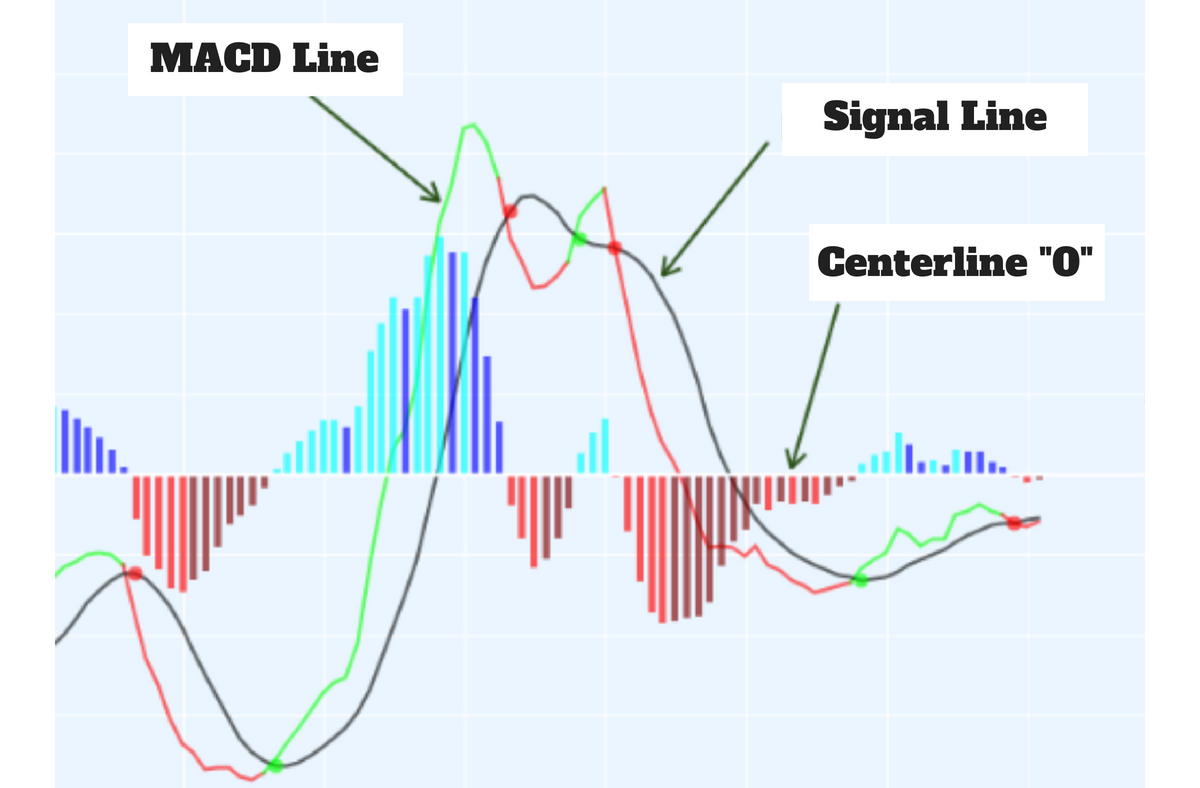




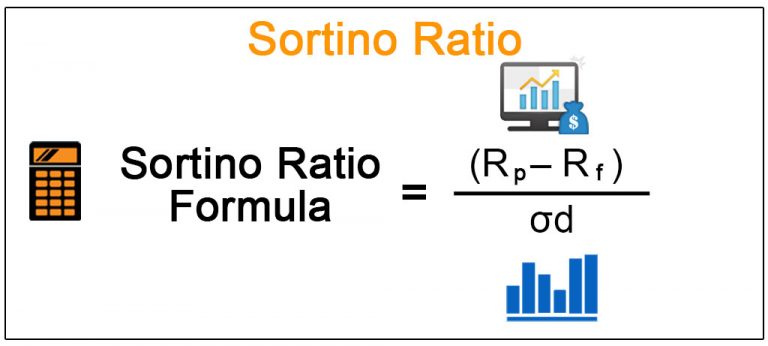












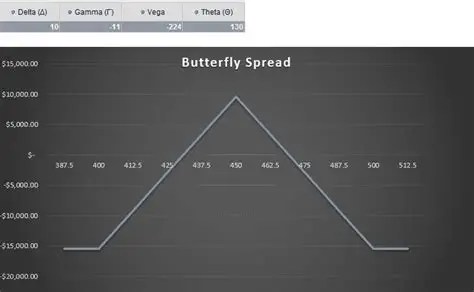

















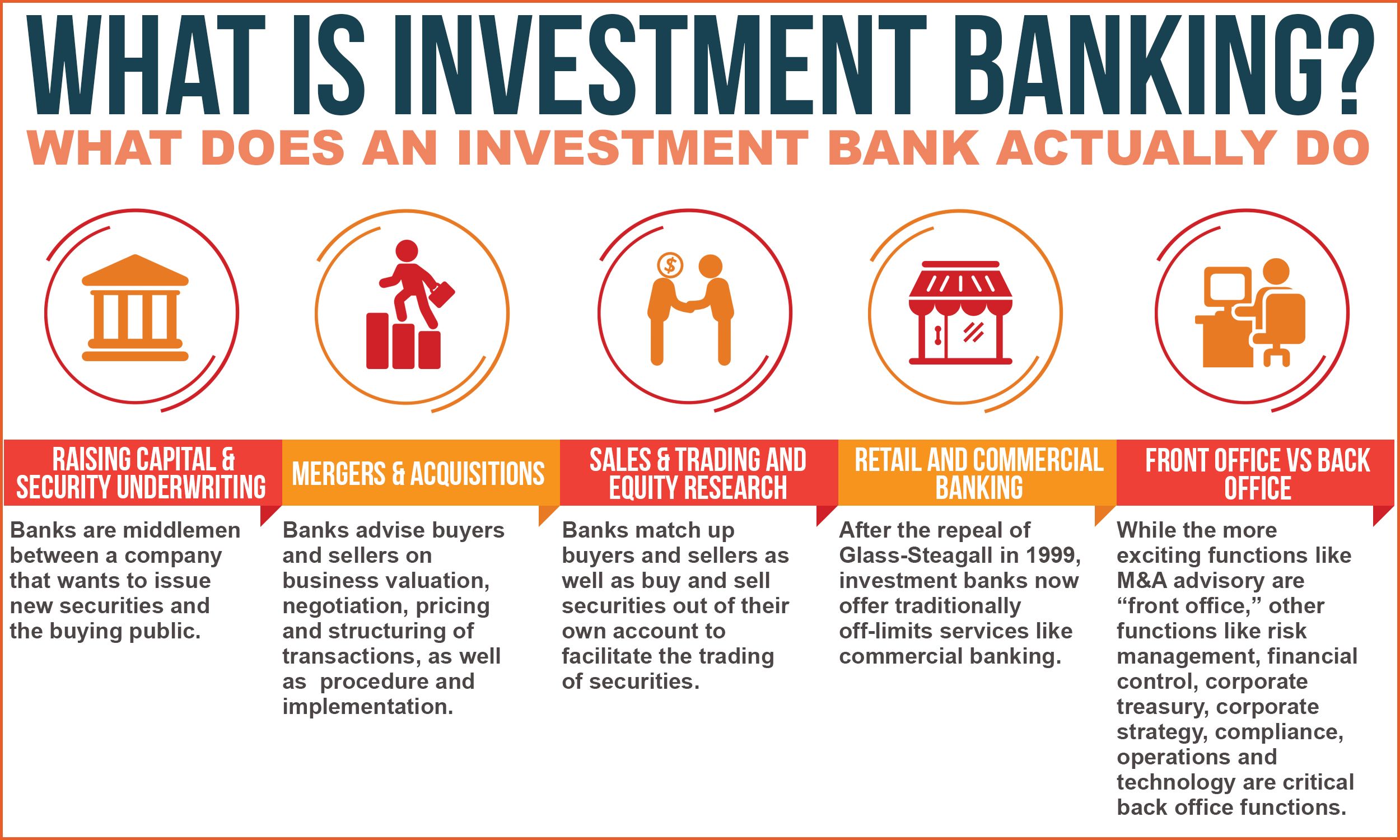









 What’s down

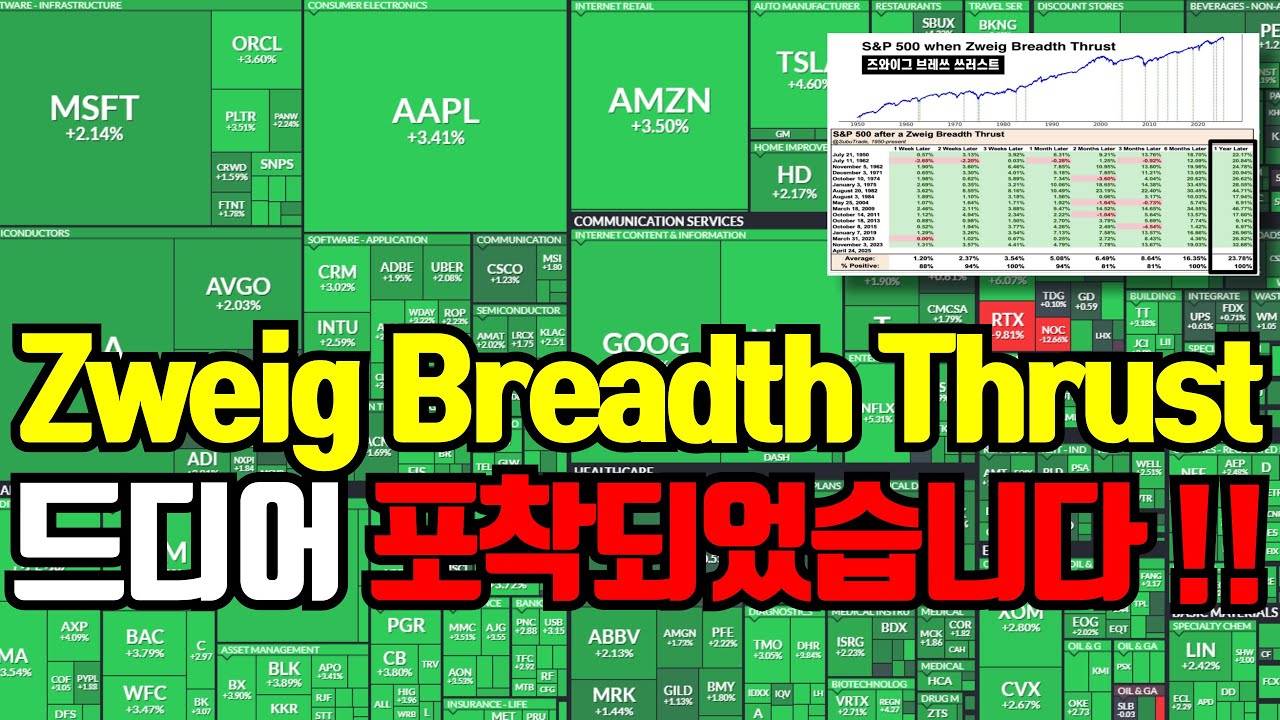

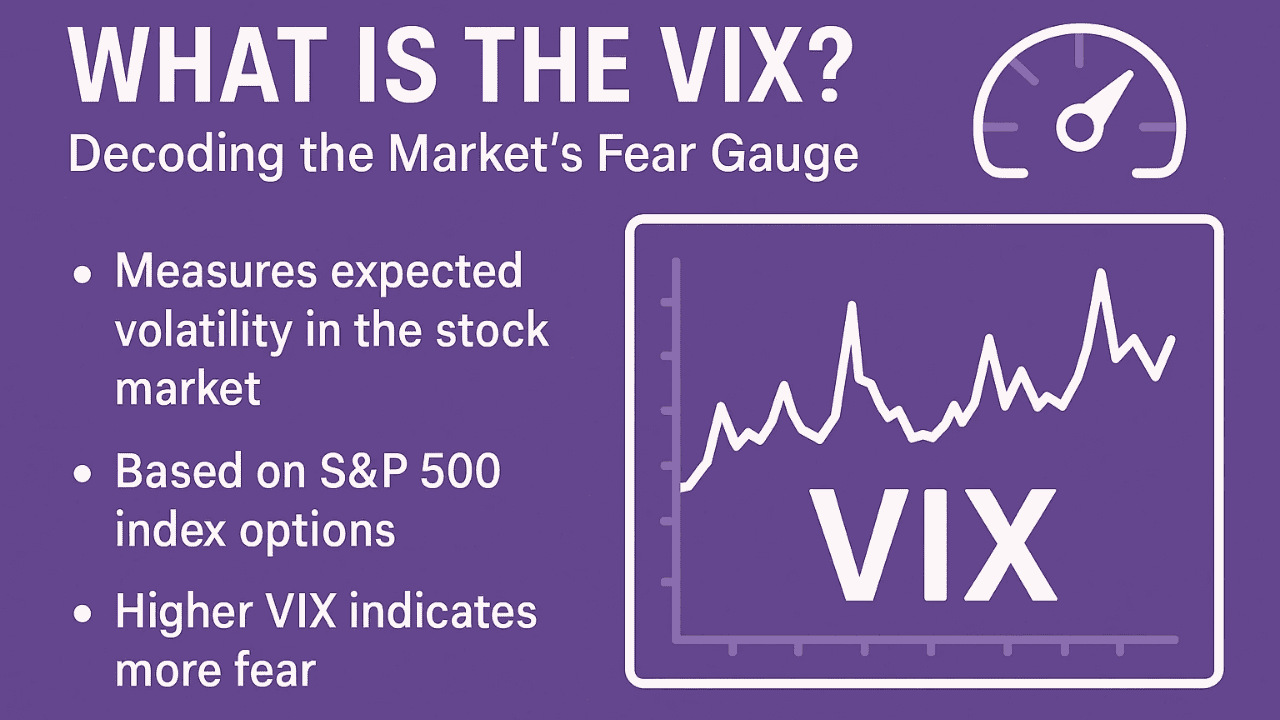

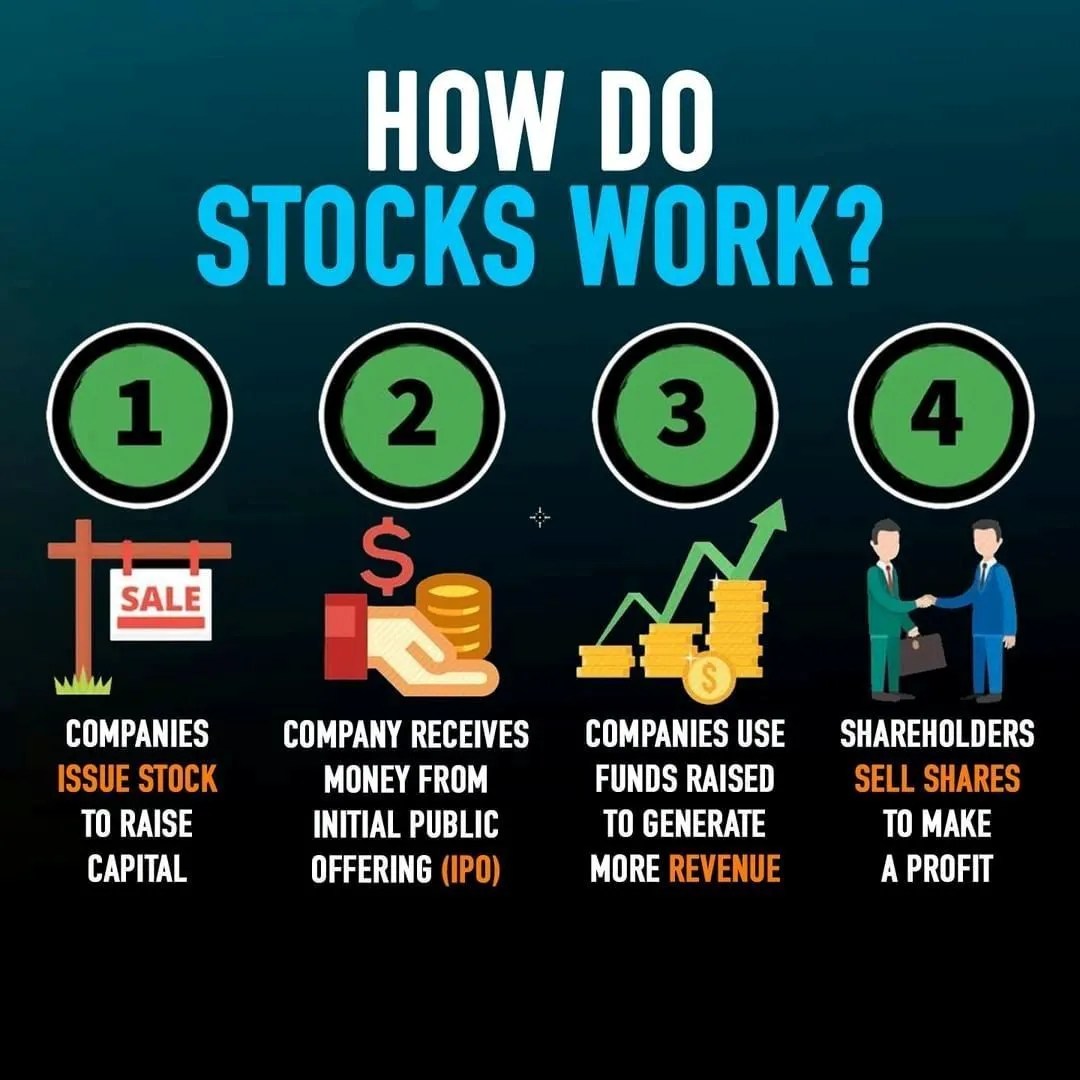


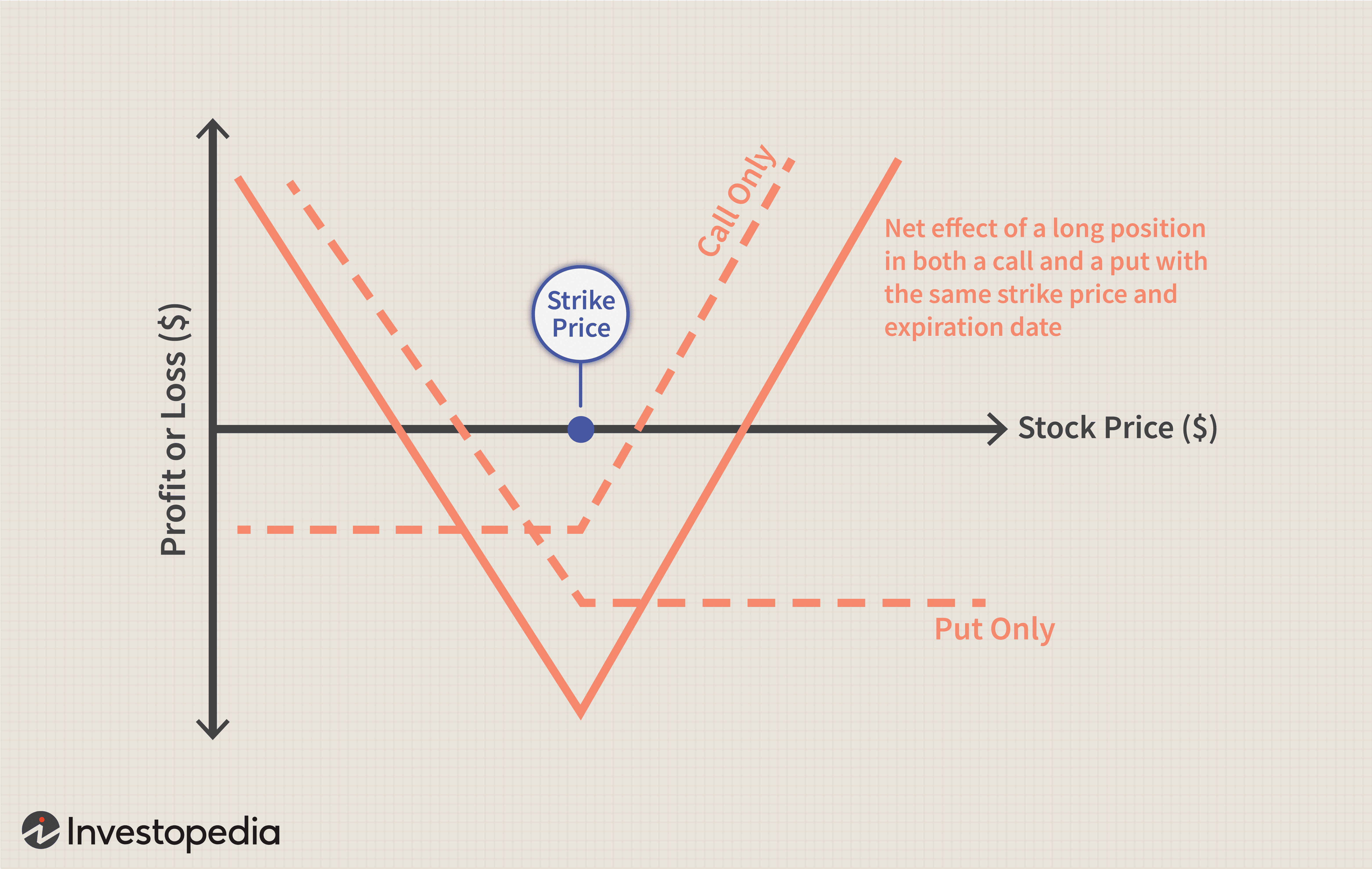










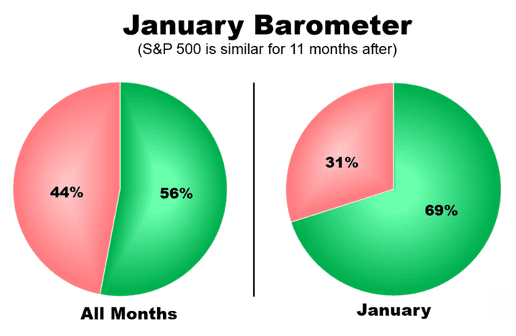



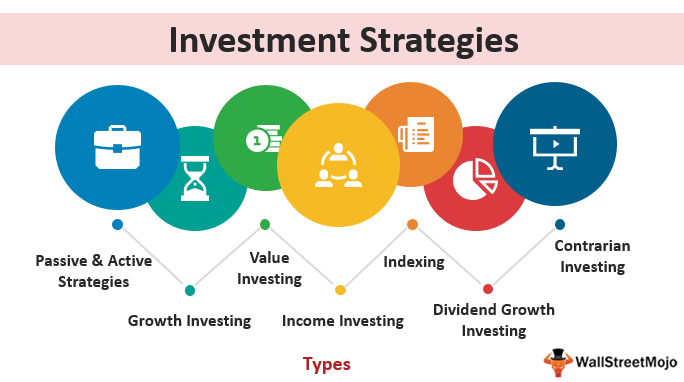



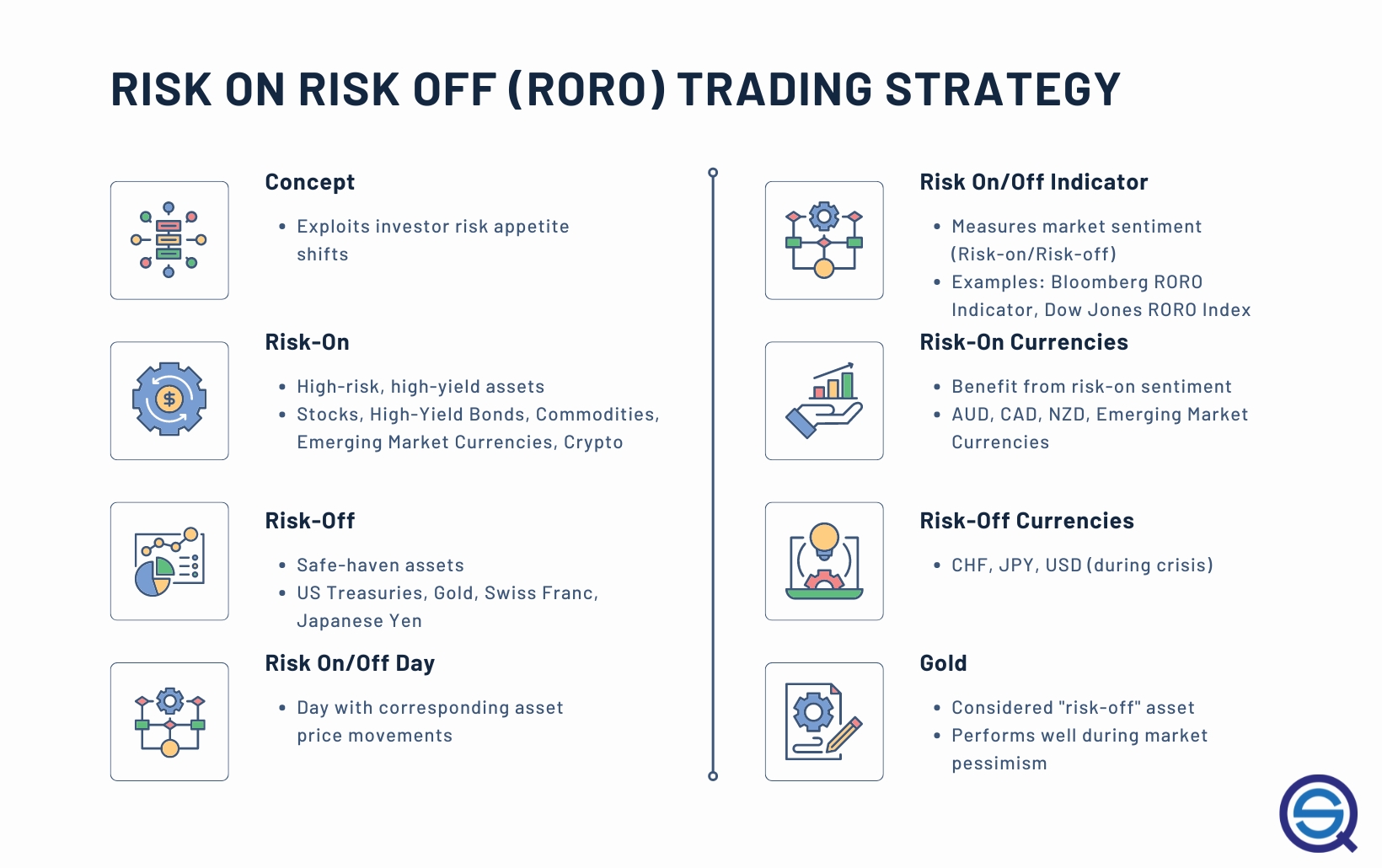

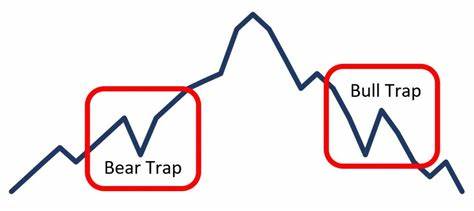


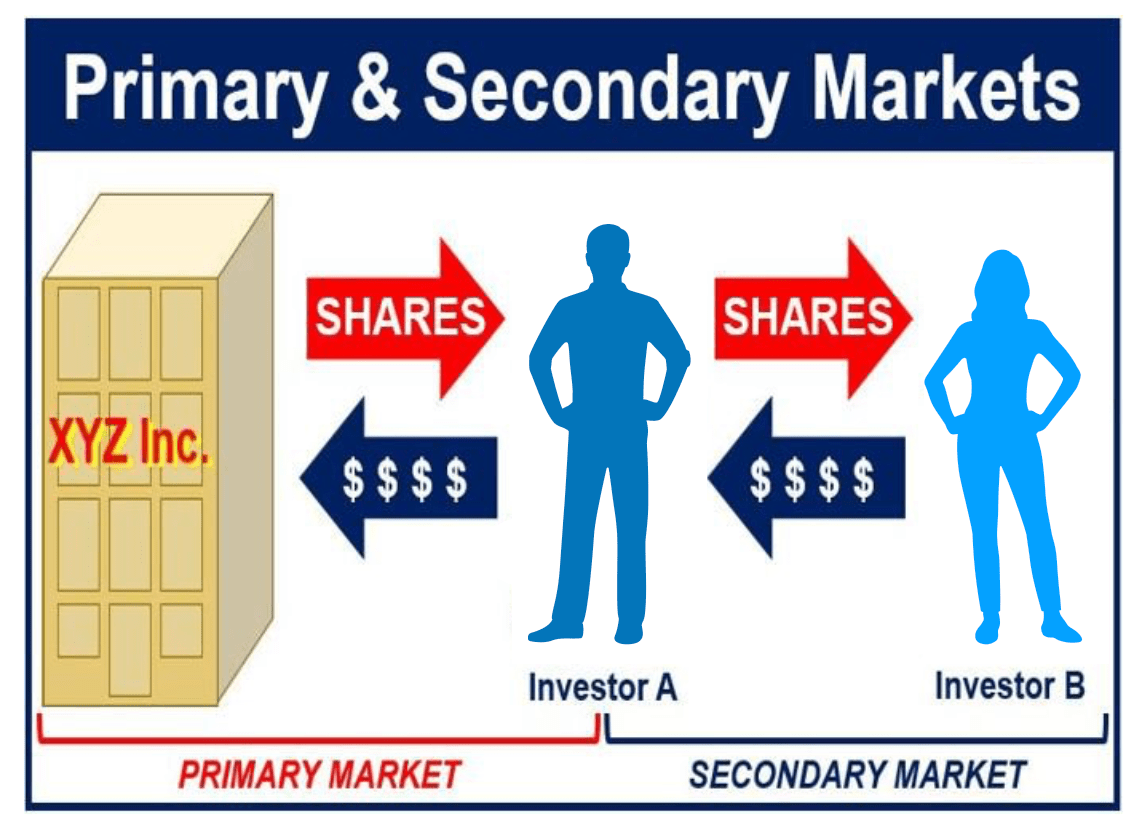






 The Leading Business Education Network for Doctors, Financial Advisors and Health Industry Consultants