PARADOX : Government Health Information is Trusted?

By Staff Reporters

***

***

A paradox is a statement that appears at first to be contradictory, but upon reflection then makes sense. This literary device is commonly used to engage a reader to discover an underlying logic in a seemingly self-contradictory statement or phrase. As a result, paradox allows readers to understand concepts in a different and even non-traditional

***

***

GOVERNMENT HEALTH INFORMATION IS TRUSTED?

Classic Definition: Despite the PP-ACA, there is ambivalence about the role of the US Government as a source of quality healthcare information. 

Modern Circumstance: Of brands presented to respondents in a Consumer Reports (50 percent), and AARP (37 percent) survey, they outpolled the “US Government Healthcare Quality Reporting Website” (36 percent) and Medicare Website (32 percent).

Paradox Example: The focus groups expressed “mixed reactions and raised doubts about government involvement in quality ratings information. At least one participant in each group expressed skepticism about trusting ‘the government’ to compile information.”

Younger consumers especially questioned the relevance of Medicare measures to the non-elderly population. Yet participants gravitated to “.gov” websites over “.org” websites as a more authoritative source.

CITE: Williams, Jason: Health Affairs, December 28, 2016

COMMENTS APPRECIATED

EDUCATION: Books

Like, Refer and Subscribe

***

***

DAILY UPDATE: Medicaid Cuts as Stock Markets Rise

MEDICAL EXECUTIVE-POST TODAY’S NEWSLETTER BRIEFING

***

Essays, Opinions and Curated News in Health Economics, Investing, Business, Management and Financial Planning for Physician Entrepreneurs and their Savvy Advisors and Consultants

Serving Almost One Million Doctors, Financial Advisors and Medical Management Consultants Daily

A Partner of the Institute of Medical Business Advisors , Inc.

http://www.MedicalBusinessAdvisors.com

SPONSORED BY: Marcinko & Associates, Inc.

***

http://www.MarcinkoAssociates.com

Daily Update Provided By Staff Reporters Since 2007.
How May We Serve You?
© Copyright Institute of Medical Business Advisors, Inc. All rights reserved. 2025

REFER A COLLEAGUE: MarcinkoAdvisors@outlook.com

SPONSORSHIPS AVAILABLE: https://medicalexecutivepost.com/sponsors/

ADVERTISE ON THE ME-P: https://tinyurl.com/ytb5955z

Your Referral Count -0-

***

CITE: https://www.r2library.com/Resource

US measles cases have reached a 33-year high. A little more than halfway into 2025, the US has reported 1,288 measles cases, marking the highest yearly total since 1992, according to data from the Centers for Disease Control and Prevention.

CITE: https://tinyurl.com/2h47urt5

What’s up

  • VC powerhouse and diehard Tolkien fan Peter Thiel revealed he’s taken a 9% stake in bitcoin miner BitMine Immersion Technologies. Shares popped 12.11%, while fellow miners that have also recently invested in ether soared in tandem: SharpLink Gaming added 29.03%, and Bit Digital gained 19.45%.
  • In fact, most crypto stocks had a good day thanks to renewed optimism that Crypto Week isn’t over in Congress. MicroStrategy climbed 3.07% and MARA Holdings jumped 3.62%.
  • Johnson & Johnson rose 6.19% after the consumer goods giant reported impressive earnings last quarter and raised its forward guidance.
  • BrightHouse Financial popped 6.23% on reports that the insurer may be bought by private equity firm Aquarian Holdings.
  • Tesla gained 3.50% after the EV maker revealed the new six-seat Model Y it will begin selling in China this fall.

What’s down

  • ASML dropped 8.33% after the chipmaker warned that growth might be completely flat next year.
  • Ford fell 2.85% on the news that the automaker is recalling nearly 700,000 crossover SUVs due to fuel leaks.
  • GrabAGun Digital Holdings, the online gun seller backed by Donald Trump, Jr., made its market debut today. Investor reception was scathing, and the stock slid 24.19%.

CITE: https://tinyurl.com/tj8smmes

Though Medicaid cuts in the Trump administration’s budget bill shocked hospitals, providers may start singing its praises after learning they’re due for a pay bump next year. On Monday, the Centers for Medicare and Medicaid Services (CMS) shared its proposed 2026 physician fee schedule, which determines Medicare payments based on the amount of resources in provider services like office visits, hospice, diagnostic testing, ambulance care, and more.

COMMENTS APPRECIATED

PLEASE SUBSCRIBE: MarcinkoAdvisors@outlook.com

Thank You

***

***

***

***

EDUCATIONAL TEXTBOOKS: https://tinyurl.com/4zdxuuwf

***

UNHAPPY HOSPITALS: One Big Beautiful Bill Act!

SPONSOR: http://www.CertifiedMedicalPlanner.org

***

***

One Big Beautiful Bill Act (OBBBA; OBBB; BBB), or the Big Beautiful Bill, is a budget reconciliation bill in the 119th US Congress.

Hospitals are not happy with the health care provisions of the bill, which would reduce the support they receive from states to care for Medicaid enrollees and leave them with more uncompensated care costs for treating uninsured patients.

“The real-life consequences of these nearly $1 trillion in Medicaid cuts – the largest ever proposed by Congress – will result in irreparable harm to our health care system, reducing access to care for all Americans and severely undermining the ability of hospitals and health systems to care for our most vulnerable patients,” said Rick Pollack, CEO of the American Hospital Association.

The association said it is “deeply disappointed” with the bill, even though it contains a $50 billion fund to help rural hospitals contend with the Medicaid cuts, which hospitals say is not nearly enough to make up for the shortfall.

COMMENTS APPRECIATED

Like and Subscribe

***

***

DAILY UPDATE: Medicaid, HIV Vaccine, CDC and the Rising Stock Markets

MEDICAL EXECUTIVE-POST TODAY’S NEWSLETTER BRIEFING

***

Essays, Opinions and Curated News in Health Economics, Investing, Business, Management and Financial Planning for Physician Entrepreneurs and their Savvy Advisors and Consultants

Serving Almost One Million Doctors, Financial Advisors and Medical Management Consultants Daily

A Partner of the Institute of Medical Business Advisors , Inc.

http://www.MedicalBusinessAdvisors.com

SPONSORED BY: Marcinko & Associates, Inc.

***

http://www.MarcinkoAssociates.com

Daily Update Provided By Staff Reporters Since 2007.
How May We Serve You?
© Copyright Institute of Medical Business Advisors, Inc. All rights reserved. 2025

REFER A COLLEAGUE: MarcinkoAdvisors@outlook.com

SPONSORSHIPS AVAILABLE: https://medicalexecutivepost.com/sponsors/

ADVERTISE ON THE ME-P: https://tinyurl.com/ytb5955z

Your Referral Count -0-

CITE: https://www.r2library.com/Resource

Stat: 2%. That’s the portion of Medicaid expansion enrollees who were either not working or in school due to “lack of interest” in finding a job. (Robert Wood Johnson Foundation)

Quote: “It’s just devastating. So much human toil has gone into this. Just when it looked like we could beat this virus, we’re going to give up.”—Dennis Burton, a Scripps Research Institute immunologist, on how a new HIV vaccine was about to start clinical trials before federal funding cuts (NPR)

Read: A look at HHS Secretary RFK Jr.’s new appointees to the CDC vaccine advisory panel. (Stat)

CITE: https://tinyurl.com/2h47urt5

🟢 What’s up

  • The wait is finally over: US Steel climbed 5.10% after President Trump signed an executive order approving its takeover by Nippon Steel.
  • Roku jumped 10.43% after announcing a partnership with Amazon that gives advertisers the ability to reach roughly 80% of American households with connected TVs.
  • Advanced Micro Devices rose 8.81% on an upgrade from Piper Sandler analysts, who think the semi stock’s AI business will boom.
  • EchoStar exploded 49.11% after Trump pushed the FCC to resolve its ongoing spectrum dispute with the satellite company.
  • Victoria’s Secret rose 2.36% on reports that the struggling retailer has attracted the attention of an activist investor.
  • Sage Therapeutics soared 35.37% on the news that it will be acquired by Supernus Pharmaceuticals in a $795 million deal.
  • MGM Resorts climbed 8.10% after the casino company revealed that its Bet MGM online gambling platform is expected to pull in more revenue than previously thought.
  • Kering, the parent company of Gucci, Yves Saint Laurent, and other luxury brands, popped 12.37% on the news that it has convinced Renault’s CEO to run the company.

What’s down

  • Sarepta Therapeutics plunged 42.12% after the pharma company reported a second death of a patient taking its Duchenne muscular dystrophy treatment Elevidys.
  • Reports that Iran wants to end hostilities pushed oil prices lower this afternoon, hurting shares of energy stocks like APA Corp (down 2.43%), Devon Energy (down 1.45%) and ConocoPhillips (down 2.02%).

CITE: https://tinyurl.com/tj8smmes

Visualize: How private equity tangled banks in a web of debt, from the Financial Times.

COMMENTS APPRECIATED

PLEASE SUBSCRIBE: MarcinkoAdvisors@outlook.com

Thank You

***

***

***

***

EDUCATIONAL TEXTBOOKS: https://tinyurl.com/4zdxuuwf

***

DAILY UPDATE: Medicaid Payments as Stock Markets Collapse

MEDICAL EXECUTIVE-POST TODAY’S NEWSLETTER BRIEFING

***

Essays, Opinions and Curated News in Health Economics, Investing, Business, Management and Financial Planning for Physician Entrepreneurs and their Savvy Advisors and Consultants

Serving Almost One Million Doctors, Financial Advisors and Medical Management Consultants Daily

A Partner of the Institute of Medical Business Advisors , Inc.

http://www.MedicalBusinessAdvisors.com

SPONSORED BY: Marcinko & Associates, Inc.

***

http://www.MarcinkoAssociates.com

Daily Update Provided By Staff Reporters Since 2007.
How May We Serve You?
© Copyright Institute of Medical Business Advisors, Inc. All rights reserved. 2025

REFER A COLLEAGUE: MarcinkoAdvisors@outlook.com

SPONSORSHIPS AVAILABLE: https://medicalexecutivepost.com/sponsors/

ADVERTISE ON THE ME-P: https://tinyurl.com/ytb5955z

Your Referral Count -0-

CITE: https://www.r2library.com/Resource

Read: Are “improper” Medicaid payments really that big of an issue? (KFF)

CITE: https://tinyurl.com/2h47urt5

🟢 What’s up

  • Gold stocks gained as investors pushed the price of the safe-haven commodity higher. Newmont climbed 3.54%, Barrick Mining added 2.81%, and SSR Mining rose 2.25%.
  • Tesla gained 1.94% on reports that the Trump Administration will lower the bar for regulations on self-driving cars.
  • Circle surged 25.54% a day after Shopify announced it will accept USDC stablecoin payments on its e-commerce platform.
  • RH popped 6.90% after the home furnishings retailer reported far better earnings than Wall Street predicted, even though revenue fell last quarter.
  • JBS rose 4.69% the day the world’s largest meatpacker made its NYSE debut.

What’s down

  • DraftKings fell 3.90% thanks to the gambling app’s decision to add a $0.50 surcharge to every bet made on its platform in Illinois to offset a new state tax.
  • Adobe tumbled 5.32% despite the software company’s solid earnings report and higher fiscal forecast.
  • Archer Aviation plunged 14.89% after announcing it will sell $850 million worth of new shares to raise money.
  • Boeing lost another 1.62% as the fallout from a 787 Dreamliner crash in India continues.
  • US Steel sank 3.03% on reports that Nippon Steel is balking at taking over the company if it can’t retain operational control of the domestic steelmaker.

CITE: https://tinyurl.com/tj8smmes

Visualize: How private equity tangled banks in a web of debt, from the Financial Times.

COMMENTS APPRECIATED

PLEASE SUBSCRIBE: MarcinkoAdvisors@outlook.com

Thank You

***

***

***

***

EDUCATIONAL TEXTBOOKS: https://tinyurl.com/4zdxuuwf

***

CMS Proposes Increasing Inpatient & Long Term Care Payments

By Health Capital Consultants, LLC

***

***

On April 11th, 2025, the Centers for Medicare & Medicaid Services (CMS) released its proposed rules for the payment and policy updates for the Medicare inpatient prospective payment system (IPPS) and long-term care hospital prospective payment system (LTCH PPS) for fiscal year (FY) 2026.

This Health Capital Topics article will discuss the proposed rule and the implications for stakeholders. (Read more…)

***

OAK Street: https://medicalexecutivepost.com/2025/05/16/oak-street-health-agrees-to-pay-60m-to-resolve-alleged-false-claims-act-liability-for-paying-kickbacks-to-insurance-agents-in-medicare-advantage-patient-recruitment-scheme/

COMMENTS APPRECIATED

Like and Refer

***

***

OAK STREET HEALTH: Agrees to Pay $60M to Resolve Alleged False Claims Act Liability for Paying Kickbacks to Insurance Agents in Medicare Advantage Patient Recruitment Scheme

By Staff Reporters

***

***

Oak Street Health, headquartered in Chicago and a wholly-owned subsidiary of CVS Health since 2023, has agreed to pay $60 million to resolve allegations that it violated the False Claims Act by paying kickbacks to third-party insurance agents in exchange for recruiting seniors to Oak Street Health’s primary care clinics.

Part C: https://medicalexecutivepost.com/2024/05/03/eschew-medicare-advantage-part-c-plans-now/

The Anti-Kickback Statute prohibits anyone from offering or paying, directly or indirectly, any remuneration — which includes money or any other thing of value — to induce referrals of patients or to provide recommendations of items or services covered by Medicare, Medicaid and other federally funded programs. Under the Medicare Advantage (MA) Program, also known as Part C, Medicare beneficiaries have the option to obtain their health care through privately-operated insurance plans known as MA plans. Some MA Plans contract with health care providers, including Oak Street Health, to provide their plan members with primary care services.

Medicare Advantage Rates: https://medicalexecutivepost.com/2025/04/28/medicare-advantage-plan-rates-substantially-increased-for-2026/

The United States alleged that, in 2020, Oak Street Health developed a program to increase patient membership called the Client Awareness Program. Under the Program, third-party insurance agents contacted seniors eligible for or enrolled in Medicare Advantage and delivered marketing messages designed to generate interest in Oak Street Health. Agents then referred interested seniors to an Oak Street Health employee via a three-way phone call, otherwise known as a “warm transfer,” and/or an electronic submission.

In exchange, Oak Street Health paid agents typically $200 per beneficiary referred or recommended. These payments incentivized agents to base their referrals and recommendations on the financial motivations of Oak Street Health rather than the best interests of seniors. The settlement resolves allegations that, from September 2020 through December 2022, Oak Street Health knowingly submitted, and caused the submission of, false claims to Medicare arising from kickbacks to agents that violated the Anti-Kickback Statute.

US Department of Justice: https://www.justice.gov/archives/opa/pr/oak-street-health-agrees-pay-60m-resolve-alleged-false-claims-act-liability-paying-kickbacks

COMMENTS APPRECIATED

Like and Refer

***

***

ENTITLEMENT PROGRAMS: Criteria and Integration

DEFINITIONS

By Staff Reporters

***

***

Entitlement programs: From an economic overview or government budgeting perspective, entitlement programs are types of government programs that provide individuals with personal financial benefits (or sometimes special government-provided goods or services) to which an indefinite (but usually large) number of potential beneficiaries have a legal right when they meet specified eligibility requirements. The beneficiaries are normally individuals, but can also be organizations. The most important examples at the federal level in the U.S. include Social Security, Medicare, and Medicaid.

Environmental, Social, Governance (ESG) Criteria: The risk and/or opportunity to a company’s market valuation resulting from environmental, social and governance (ESG) factors. Depending on the sector, environmental and social factors include, but are not limited to, 1) climate change, 2) water stress, 3) product safety and quality (supply chain and manufacturing), 4) cybersecurity and data privacy, and 5) human capital management. Regardless of the sector, governance factors include: 1) business (mis)conduct, 2) board composition, independence and entrenchment, 3) accounting practices, 4) ownership structure, and 5) executive pay-for-sustainability performance alignment.

Environmental, Social, Governance (ESG) Integration: The structural incorporation of financially-relevant information on Environmental, Social and Governance (ESG) factors into the investment decision-making process.

COMMENTS APPRECIATED

Please Subscribe and Like!

***

***

VALUATION OF HOSPITALS: Reimbursement Environment

By Health Capital Consultants, LLC

The U.S. government is the largest payor of medical costs, through Medicare and Medicaid, and has a strong influence on reimbursement to hospitals. In 2022, Medicare and Medicaid accounted for an estimated $944.3 billion and $805.7 billion in healthcare spending, respectively. The prevalence of these public payors in the healthcare marketplace often results in their acting as a price setter, and being used as a benchmark for private reimbursement rates.

This third installment of the series discusses the reimbursement environment in which hospitals operate. (Read more…) 

COMMENTS APPRECIATED

Thank You

***

***

DAILY UPDATE: Nvidia, Intel, Oil, Bitcoin, Treasury Yields, CMS and Physician Pay

MEDICAL EXECUTIVE-POST TODAY’S NEWSLETTER BRIEFING

***

Essays, Opinions and Curated News in Health Economics, Investing, Business, Management and Financial Planning for Physician Entrepreneurs and their Savvy Advisors and Consultants

Serving Almost One Million Doctors, Financial Advisors and Medical Management Consultants Daily

A Partner of the Institute of Medical Business Advisors , Inc.

http://www.MedicalBusinessAdvisors.com

SPONSORED BY: Marcinko & Associates, Inc.

***

http://www.MarcinkoAssociates.com

Daily Update Provided By Staff Reporters Since 2007.
How May We Serve You?
© Copyright Institute of Medical Business Advisors, Inc. All rights reserved. 2024

REFER A COLLEAGUE: MarcinkoAdvisors@msn.com

SPONSORSHIPS AVAILABLE: https://medicalexecutivepost.com/sponsors/

ADVERTISE ON THE ME-P: https://tinyurl.com/ytb5955z

Your Referral Count -0-

CITE: https://www.r2library.com/Resource

Nvidia is replacing Intel on the Dow Jones Industrial Average, a shakeup to the blue-chip index that replaces a flagging semiconductor company with the primary vendor of GPUs for AI.

CITE: https://tinyurl.com/2h47urt5

  • Despite selling off last week, stocks spent Friday comfortably in the green thanks to strong earnings from big tech.
  • Treasury yields rose back above 4.3% as bonds sold off and investors poured money into risk assets.
  • Oil rose a bit on reports that Iran may retaliate against Israel sometime soon.
  • Bitcoin was unable to hold the line and continued to fall today as crypto volatility continues to escalate ahead of the election.

CITE: https://tinyurl.com/tj8smmes

Bipartisan Legislation Aims to Stop Medicare Cuts & Boost Physician Pay in 2025

Physicians and other healthcare practitioners may get a pay boost in 2025 through a bipartisan bill recently introduced in Congress. The proposed bill seeks to block planned Medicare pay cuts next year and would provide the first inflationary update to physician pay in years. The Medicare Patient Access and Practice Stabilization Act would counteract the 2.8% cut to the conversion factor proposed by the Centers for Medicare and Medicaid Services (CMS) in the draft CY-2025 Physician Fee Schedule. A stop-gap pay fix is usually enacted by Congress at the end of the year. 

Source: Emma Beavins, Fierce Healthcare [10/30/24].

COMMENTS APPRECIATED

PLEASE SUBSCRIBE: MarcinkoAdvisors@msn.com

Thank You

***

***

EDUCATIONAL TEXTBOOKS: https://tinyurl.com/4zdxuuwf

***

DAILY UPDATE: MyChart, Meta, Zelle and Acadia as the DJIA Rises

MEDICAL EXECUTIVE-POST TODAY’S NEWSLETTER BRIEFING

***

Essays, Opinions and Curated News in Health Economics, Investing, Business, Management and Financial Planning for Physician Entrepreneurs and their Savvy Advisors and Consultants

Serving Almost One Million Doctors, Financial Advisors and Medical Management Consultants Daily

A Partner of the Institute of Medical Business Advisors , Inc.

http://www.MedicalBusinessAdvisors.com

SPONSORED BY: Marcinko & Associates, Inc.

***

http://www.MarcinkoAssociates.com

Daily Update Provided By Staff Reporters Since 2007.
How May We Serve You?
© Copyright Institute of Medical Business Advisors, Inc. All rights reserved. 2024

REFER A COLLEAGUE: MarcinkoAdvisors@msn.com

SPONSORSHIPS AVAILABLE: https://medicalexecutivepost.com/sponsors/

ADVERTISE ON THE ME-P: https://tinyurl.com/ytb5955z

Your Referral Count -0-

Stat: 150. That’s how many health systems use AI to help draft replies on MyChart, sometimes without disclosing this to patients. (the New York Times)

Contained in a roughly 200-page quarterly filing from JPMorgan Chase last month were eight words that underscore how contentious the bank’s relationship with the government has become. The lender disclosed that the Consumer Financial Protection Bureau could punish JPMorgan for its role in Zelle, the giant peer-to-peer digital payments network. The bank is accused of failing to kick criminal accounts off its platform and failing to compensate some scam victims.

CITE: https://www.r2library.com/Resource

Stocks Up

Bristol-Myers Squibb rose 1.56% after the FDA approved its new drug for schizophrenia, the first new treatment of its kind in decades. Some analysts expect the drug, Cobenfy, to bring in $6 billion in peak annual revenue.

  • Trump Media gained 5.58% despite a co-founder of its Truth Social platform cashing out nearly all of his shares—worth about $100 million at current prices.
  • Chinese EV maker Nio added another 12.80% to bring its weekly gains to nearly 25%. It’s benefiting from the overall euphoria around Chinese stocks and anticipation over its quarterly delivery numbers due next week.
  • Speaking of the Chinese government’s stimulus measures, investors are wagering that the Macau locations of Las Vegas Sands Corp. (up 5.59%) and Wynn Resorts (up 7.24%) will see more visitors.
  • IonQ, a quantum computing company based in College Park, MD (go Terps), shot up 20.47% after inking a contract with the US Air Force Research Lab.

Stocks down

  • Nvidia dropped 2.17%. Bloomberg reported that the Chinese government is ramping up the pressure on local tech companies to move away from using Nvidia AI chips and lean more on domestic suppliers.
  • WeightWatchers, whose shares are down more than 90% this year, booted its CEO Sima Sistani, who pivoted the company to weight-loss drugs. Investors aren’t betting a change at the top will lead to a turnaround, sending shares 2.11% lower on the day.
  • Globe Life sank 4.74% after the US Equal Employment Opportunity Commission found that the life insurance company tolerated a “pervasive pattern of harassing conduct” at one of its top sales agencies, per Business Insider.

CITE: https://tinyurl.com/2h47urt5

Here’s where the major benchmarks ended:

  • The S&P 500® index (SPX) lost 7.20 points (–0.13%) to 5,738.17 to end the week up 0.62%; the Dow Jones Industrial Average® ($DJI) added 137.89 points (0.33%) to 42,313.00 to end the week up 0.59%; the NASDAQ Composite® ($COMP) fell 70.70 points (–0.39%) to 18,119.59 to end the week up 0.95%.
  • The 10-year Treasury note yield (TNX) fell four basis points to 3.75%, up two basis points for the week.
  • The CBOE Volatility Index® (VIX) jumped to 16.64.

CITE: https://tinyurl.com/tj8smmes

Meta is facing a fine of $102 million for storing some users’ passwords in “plaintext”. The social media giant has admitted to poor password management.

Acadia and the Department of Justice just reached a ~$20M agreement to settle accusations that the company billed Medicare, Medicaid, and TRICARE for medically unnecessary inpatient mental health services. Acadia found itself under pressure after a New York Times investigation published earlier in September allegedly found that the company kept patients in facilities against their will to maximize insurance payments.

COMMENTS APPRECIATED

PLEASE SUBSCRIBE: MarcinkoAdvisors@msn.com

Thank You

***

***

***

***

EDUCATIONAL TEXTBOOKS: https://tinyurl.com/4zdxuuwf

***

Effects of Affordable Care Act on Uninsured Hospitalization

By Nima Khodakarami PhD and Benjamin Ukert PhD

Evidence from Texas

***

***

Medical care services before the health service is performed—became standard practice beginning with Medicare and Medicaid legislation in the 1960s.

Although research has uncovered disparities in prior coverage for cancer patients based on race, little has been known to date on the role of prior authorization in increasing or decreasing these disparities.

CITE: https://www.r2library.com/Resource

To learn more about the issue, Benjamin Ukert, Ph.D., an assistant professor of health policy and management in the Texas A&M University School of Public Health, and a colleague at Penn State conducted a retrospective study of data provided by a major national commercial insurance provider on 18,041 patients diagnosed with cancer between Jan. 1st, 2017, and April 1st, 2020.

The study is published in the journal Health Services Research.

READ: https://onlinelibrary.wiley.com/doi/epdf/10.1111/1475-6773.14334

COMMENTS APPRECIATED

Thank You

***

***

DAILY UPDATE: Covid, Medicaid, DNC, Tesla, UAW, Boeing and the Roller-Coaster Stock Markets

MEDICAL EXECUTIVE-POST TODAY’S NEWSLETTER BRIEFING

***

Essays, Opinions and Curated News in Health Economics, Investing, Business, Management and Financial Planning for Physician Entrepreneurs and their Savvy Advisors and Consultants

Serving Almost One Million Doctors, Financial Advisors and Medical Management Consultants Daily

A Partner of the Institute of Medical Business Advisors , Inc.

http://www.MedicalBusinessAdvisors.com

SPONSORED BY: Marcinko & Associates, Inc.

***

http://www.MarcinkoAssociates.com

Daily Update Provided By Staff Reporters Since 2007.
How May We Serve You?
© Copyright Institute of Medical Business Advisors, Inc. All rights reserved. 2024

REFER A COLLEAGUE: MarcinkoAdvisors@msn.com

SPONSORSHIPS AVAILABLE: https://medicalexecutivepost.com/sponsors/

ADVERTISE ON THE ME-P: https://tinyurl.com/ytb5955z

Your Referral Count -0-

Stat: 2.4%. That’s the percentage of US emergency department visits that involved patients positive with Covid during the week ending August 16th, down from the prior week (but still high). (Becker’s Clinical Leadership)

Quote: “The pandemic was destructive and concerning and clearly demonstrated that Medicaid is so crucially important for our national safety net.”—Jennifer Babcock, SVP for Medicaid policy at the Association for Community Affiliated Plans, on state efforts to expand Medicaid (KFF Health News)

Read: Here are the healthcare-related topics to keep tabs on during the Democratic National Convention. (Stat)

CITE: https://www.r2library.com/Resource

What’s up

  • Target popped 11.25% thanks to an impressive earnings report that included a 36% increase in earnings.
  • Toll Brothers rose 5.59% after beating earnings estimates and raising its projections for home deliveries this year.
  • TJX Companies gained 6.06% and hit a new record high thanks to a strong beat-and-raise earnings report.
  • Ford climbed 1.54% after overhauling its EV plans, including canceling production of a new EV SUV and delaying a new EV plant.
  • Keysight Technologies soared 13.91% after beating earnings expectations and projecting an even stronger second half of the year ahead.
  • BigBear.ai skyrocketed 27.07% thanks to a new contract with the Federal Aviation Administration to provide IT and tech solutions.

What’s down

CITE: https://tinyurl.com/2h47urt5

Here’s where the major benchmarks ended:

  • The S&P 500® index (SPX) rose 23.73 points (0.42%) to 5,620.85; the Dow Jones Industrial Average® ($DJI) advanced 55.22 points (0.14%) to 40,890.49; the NASDAQ Composite®($COMP) added 102.04 points (0.57%) to 17,918.99.
  • The 10-year Treasury note yield (TNX) fell three basis points to just under 3.78%, near recent lows.
  • The CBOE Volatility Index® (VIX) increased to 16.27.

CITE: https://tinyurl.com/tj8smmes

Tesla cars manufactured in China were slapped with a new tariff by the European Union as part of the group’s crackdown on Chinese green-energy exports.

And, The UAW threatened to strike against Stellantis for allegedly reneging on its promise to reopen an Illinois factory, which the carmaker denies.

Finally, Boeing was forced to pause progress on its oft-delayed 777X aircraft after discovering a structural problem during test flights.

Visualize: How private equity tangled banks in a web of debt, from the Financial Times.

COMMENTS APPRECIATED

PLEASE SUBSCRIBE: MarcinkoAdvisors@msn.com

Thank You

***

***

***

***

EDUCATIONAL TEXTBOOKS: https://tinyurl.com/4zdxuuwf

***

DAILY UPDATE: MSFT Teams, Deloitte, HealthcCare Cyber Attacks as Markets Lift

MEDICAL EXECUTIVE-POST TODAY’S NEWSLETTER BRIEFING

***

Essays, Opinions and Curated News in Health Economics, Investing, Business, Management and Financial Planning for Physician Entrepreneurs and their Savvy Advisors and Consultants

Serving Almost One Million Doctors, Financial Advisors and Medical Management Consultants Daily

A Partner of the Institute of Medical Business Advisors , Inc.

http://www.MedicalBusinessAdvisors.com

SPONSORED BY: Marcinko & Associates, Inc.

***

http://www.MarcinkoAssociates.com

Daily Update Provided By Staff Reporters Since 2007.
How May We Serve You?
© Copyright Institute of Medical Business Advisors, Inc. All rights reserved. 2024

REFER A COLLEAGUE: MarcinkoAdvisors@msn.com

SPONSORSHIPS AVAILABLE: https://medicalexecutivepost.com/sponsors/

ADVERTISE ON THE ME-P: https://tinyurl.com/ytb5955z

***

The EU says Microsoft violated its antitrust laws by bundling Teams with Office, potentially setting the stage for a major fine.

And, Deloitte has billions of dollars’ worth of Medicaid contracts, but the consultancy’s eligibility systems are full of errors. (KFF Health News)

CITE: https://www.r2library.com/Resource

Here’s where the major benchmarks ended:

  • The S&P 500® index (SPX) rose 8.6 points (0.16%) to 5,477.9; the Dow Jones Industrial Average® ($DJI) added 15.64 points (0.04%) to 39,127.8; the NASDAQ Composite® ($COMP) climbed 87.5 points (0.49%) to 17,805.16.
  • The 10-year Treasury note yield rose 8 points to 4.32%.
  • The CBOE Volatility Index® (VIX) eased to 12.5

What’s up

What’s down

CITE: https://tinyurl.com/2h47urt5

The disastrous ransomware attacks on Change Healthcare and Ascension this year ran up staggering costs and put a spotlight on the healthcare sector’s vulnerability. But healthcare orgs are hardly new to eye-popping bills after a major hack. Analyzing attacks on organizations in 16 countries, IBM/Ponemon Institute has shown healthcare to be the industry with the highest cost per data breach for over a decade, coming in at an average hit of $10.93 million in 2023.

CITE: https://tinyurl.com/tj8smmes

COMMENTS APPRECIATED

PLEASE SUBSCRIBE: MarcinkoAdvisors@msn.com

Thank You

***

***

***

***

EDUCATIONAL TEXTBOOKS: https://tinyurl.com/4zdxuuwf

***

DAILY UPDATE: Medicaid & CHIPS Unwind, Steward Health System Bankrupts as the Markets are Mixed

MEDICAL EXECUTIVE-POST TODAY’S NEWSLETTER BRIEFING

***

Essays, Opinions and Curated News in Health Economics, Investing, Business, Management and Financial Planning for Physician Entrepreneurs and their Savvy Advisors and Consultants

Serving Almost One Million Doctors, Financial Advisors and Medical Management Consultants Daily

A Partner of the Institute of Medical Business Advisors , Inc.

http://www.MedicalBusinessAdvisors.com

SPONSORED BY: Marcinko & Associates, Inc.

***

http://www.MarcinkoAssociates.com

Daily Update Provided By Staff Reporters Since 2007.
How May We Serve You?
© Copyright Institute of Medical Business Advisors, Inc. All rights reserved. 2024

REFER A COLLEAGUE: MarcinkoAdvisors@msn.com

SPONSORSHIPS AVAILABLE: https://medicalexecutivepost.com/sponsors/

ADVERTISE ON THE ME-P: https://tinyurl.com/ytb5955z

***

It’s the first anniversary of the Medicaid unwinding for many states, a process that kicked off when federal rules that had kept people on Medicaid and the Children’s Health Insurance Program (CHIP) through the pandemic expired. And while states could redetermine eligibility again, things have “unwound” more than some experts predicted. Children were kicked off the rolls at higher rates than adults, according to a new study the Urban Institute released May 2. Twelve states—Montana, Iowa, South Dakota, Alabama, Idaho, Georgia, Texas, Arkansas, Oklahoma, Florida, Mississippi, Colorado—exceeded 100% of their total projections for disenrolling children.

CITE: https://www.r2library.com/Resource

Here’s where the major benchmarks ended:

  • The S&P 500® index (SPX) was little changed at 5,187.67; the Dow Jones Industrial Average gained 172.13 points (0.4%) to 39,056.39; the NASDAQ Composite® ($COMP) declined 29.80 points (0.2%) to 16,302.76.
  • The 10-year Treasury note yield (TNX) rose more than 3 basis points to 4.496%.
  • The CBOE Volatility Index® (VIX) fell 0.23 to 13.00.

Retail and real estate shares were among the weakest areas Wednesday, while banks and utilities were firm. Utility shares extended a nearly month-long rally, which may in part reflect greater expectations for Fed rate cuts. Lower interest rates can make utility shares with high dividend yields relative to Treasuries more appealing. The Dow Jones Utility Average ($DJU) rose 0.5% to end at its highest level since late July and is up 12% from a mid-April low.

And, Shopify’s value plunged by nearly $20 billion after the online payments company released a gloomy forecast for this quarter. It’s the latest pandemic darling to stumble: According to the Financial Times, the firms that skyrocketed during lockdowns have lost a collective $1.5 trillion in value since the end of 2020.

CITE: https://tinyurl.com/2h47urt5

Steward Health Care System, the largest U.S. physician-owned hospital operator, is expected to file for chapter 11 bankruptcy as soon as Sunday, according to a WSJ report, which cited people familiar with the matter. Steward Health Care is the largest tenant of Medical Properties Trust (NYSE: MPW). Steward Health Care hired restructuring advisers to improve its liquidity and restore its balance sheet in January 2024.  

CITE: https://tinyurl.com/tj8smmes

COMMENTS APPRECIATED

PLEASE SUBSCRIBE: MarcinkoAdvisors@msns.com

Thank You

***

***

***

***

EDUCATIONAL TEXTBOOKS: https://tinyurl.com/4zdxuuwf

***

DAILY UPDATE: Tesla Lay Offs, Mammograms, Physician Pay, UnitedHealth and Tele-Health as Stock Markets Close Mixed

MEDICAL EXECUTIVE-POST TODAY’S NEWSLETTER BRIEFING

***

Essays, Opinions and Curated News in Health Economics, Investing, Business, Management and Financial Planning for Physician Entrepreneurs and their Savvy Advisors and Consultants

Serving Almost One Million Doctors, Financial Advisors and Medical Management Consultants Daily

A Partner of the Institute of Medical Business Advisors , Inc.

http://www.MedicalBusinessAdvisors.com

SPONSORED BY: Marcinko & Associates, Inc.

***

http://www.MarcinkoAssociates.com

Daily Update Provided By Staff Reporters Since 2007.
How May We Serve You?
© Copyright Institute of Medical Business Advisors, Inc. All rights reserved. 20224

REFER A COLLEAGUE: MarcinkoAdvisors@msn.com

SPONSORSHIPS AVAILABLE: https://medicalexecutivepost.com/sponsors/

ADVERTISE ON THE ME-P: https://tinyurl.com/ytb5955z

***

Stat: 10%. That’s the percentage of Tesla employees that will be impacted by its global workforce reduction. Elon Musk sent an email to employees on Monday informing them of the layoffs, which he said were made to “reduce costs and increase productivity,” according to the WSJ. The move comes as the electric vehicle maker deals with a wider slowdown in EV sales. (the Wall Street Journal)

CITE: https://www.r2library.com/Resource

UnitedHealth Group, reeling from the Change cyberattack, recorded a loss of $1.4 billion in the first quarter. Still, its EPS exceeded expectations and the stock is trading up.


The Florida Medicaid market is a big prize for insurers. Just three plans earned statewide contracts, starting in October.


And … physicians made steady pay gains last year, but increases were undercut by inflation rates. See how other specialties fared, according to a report from Medscape.

The social determinants of health can impact a woman’s chance of being up to date with her mammogram, according to a recent Centers for Disease Control and Prevention report. Women are less likely to get a mammogram if they feel socially isolated, have lost a job or don’t have reliable transportation.


And…A major House subcommittee is considering whether to issue another short-term extension on telehealth flexibilities as they continue to evaluate cost and quality issues or to enact permanent changes to virtual care reimbursement.  The American Telemedicine Association is pushing Congress to make permanent the Medicare telehealth flexibilities implemented during the COVID-19 pandemic.

CITE: https://tinyurl.com/tj8smmes

Here’s where the major benchmarks ended:

  • The S&P 500® index (SPX) declined 10.41 points (0.2%) to 5,051.41, its lowest close in almost two months; the Dow Jones Industrial Average® ($DJI) advanced 63.86 points (0.2%) to 37,798.97; the NASDAQ Composite® ($COMP) eased 19.77 points (0.1%) to 15,865.25.
  • The 10-year Treasury note yield gained almost 4 basis points to 4.667%.
  • The CBOE Volatility Index® (VIX) fell 0.83 to 18.40.

Scaled-back expectations for Fed rate cuts continued to burden interest-rate-sensitive sectors, such as banks and utilities. The KBW Regional Bank Index (KRX) lost 1.4% and ended near a five-month low. The small-cap Russell 2000® Index (RUT) dropped 0.4% and ended at a two-month low.

In other markets, the U.S. dollar index (DXY) strengthened for the fifth consecutive trading day and hit its highest level since late October, reflecting expectations rates will stay elevated. 

CITE: https://tinyurl.com/2h47urt5

COMMENTS APPRECIATED

PLEASE SUBSCRIBE: MarcinkoAdvisors@msns.com

Thank You

***

***

***

***

EDUCATIONAL TEXTBOOKS: https://tinyurl.com/4zdxuuwf

***

DAILY UPDATE: Medicaid and Government Employee Health Insurance Changes as Stocks Tank

MEDICAL EXECUTIVE-POST TODAY’S NEWSLETTER BRIEFING

***

Essays, Opinions and Curated News in Health Economics, Investing, Business, Management and Financial Planning for Physician Entrepreneurs and their Savvy Advisors and Consultants

Serving Almost One Million Doctors, Financial Advisors and Medical Management Consultants Daily

A Partner of the Institute of Medical Business Advisors , Inc.

http://www.MedicalBusinessAdvisors.com

SPONSORED BY: Marcinko & Associates, Inc.

***

http://www.MarcinkoAssociates.com

Daily Update Provided By Staff Reporters Since 2007.
How May We Serve You?
© Copyright Institute of Medical Business Advisors, Inc. All rights reserved. 20224

REFER A COLLEAGUE: MarcinkoAdvisors@msn.com

SPONSORSHIPS AVAILABLE: https://medicalexecutivepost.com/sponsors/

ADVERTISE ON THE ME-P: https://tinyurl.com/ytb5955z

***

Texas Governor Greg Abbott has issued a sharp warning about proposed changes to Medicaid, claiming they could “strip millions of Americans” from access to healthcare. In February 2023, the Centers for Medicare & Medicaid Services (CMS) issued a new proposed rule that would change long-standing practices for how states fund the non-federal share of Medicaid payments. In particular, the CMS is pushing for greater oversight of how states use of healthcare provider taxes to help fund their programs.

CITE: https://tinyurl.com/2h47urt5

Democratic lawmakers Sen. Richard Blumenthal and Rep. Andy Kim have partnered up with Republican Rep. Jen Kiggans to introduce legislation aiming to give army reservists and members of the National Guard that also work for the federal government options on the type of health care plans they can receive. The bill, which could impact thousands of federal employees that are also in the U.S. Army, plans to give this group of Americans the ability to decide whether they want military or civilian health care. The lawmakers said in a shared statement that their proposal will fix current regulations that limit service members who also work for the government to enroll in the cheaper Tricare Reserve Select (TRS) health plan when they also qualify for federal health plans.

CITE: https://tinyurl.com/tj8smmes

Stocks tanked last Friday after the big banks reported underwhelming earnings and the sheen from the Magnificent Seven’s AI-driven surge earlier this week wore off. Meanwhile, oil prices continue to rise near six-month highs as concern grows over geopolitical tensions in the Middle East. The tech sector was highlighted in this market, particularly due to the exceptional performance of a group of mega-cap tech giants last year nicknamed the “Magnificent Seven.” This elite group includes Apple (AAPL), Amazon (AMZN), Alphabet (GOOGL), Meta Platforms (META), Microsoft (MSFT), Nvidia (NVDA) and Tesla (TSLA).

CITE: https://www.r2library.com/Resource

***

COMMENTS APPRECIATED

PLEASE SUBSCRIBE: MarcinkoAdvisors@msns.com

Thank You

***

***

***

***

EDUCATIONAL TEXTBOOKS: https://tinyurl.com/4zdxuuwf

***

The Medicare Cost-Control Efficiency Paradox

Essay on the Eight-Hundred Pound Gorilla in the Medical Treatment Room

By Dr. David E. Marcinko MBA MEd CMP

[Editor-in-Chief]

According to economist Austin Frakt PhD, and others, there is a school of thought that says Congress is incapable of controlling costs in the Medicare and Medicaid System [CMS].

And, then there is the reality known by all practicing medical professionals regardless of specialty orientation or degree designation. That is to say, CMS really can control healthcare costs and with great ferocity and efficiency, and to non-public sectors as well …. PARADOXICAL?

On Getting What You Wish For

Blogger Ezra Klein opines that one of the dirty little secrets of the health-care system is that Medicare has done a much better job controlling costs than private health insurers.

http://voices.washingtonpost.com/ezra-klein/2010/11/what_happens_when_medicare_con.html

A Forehead-Palm Moment

Of course, we doctors know that the real problem is that Medicare seemingly [think Seinfeld’s character George Costanza] controls costs all too well; but not really. It is just that CMS pays doctors too little and thus it appears costs are controlled. What really is happening is that physician fees are being reduced carte’ blanche.

Nevertheless, and regardless of semantics, CMS will never control costs much more efficiently than private insurance companies or doctors will simply abandon Medicare for related payment models like direct reimbursement or concierge medicine. This is happening right now. Physicians, osteopaths and podiatrists etc, are opting out of Medicare in increasingly large numbers. In a world where there’s only Medicare and Medicare to control costs, doctors can either take the pay cut or stop seeing patients, and stop being doctors. “Taking what they are given – because they’re working for a livin.”

So sorry that this seems like a forehead-palm moment for Ezra, but not for healthcare practitioners or the ME-P!

Too Much Demand Elsewhere

And, as we see from other countries, many young bright folks want to be doctors, even if being a doctor doesn’t make one particularly wealthy [high demand and high eventual supply produces lower provider costs in the long term?]. Think medical tourism.

Not so much the case anymore in this country [lower demand and lower eventual supply produces higher reimbursement costs to the doctor survivors in the very long term?].

Our Domestic World

But, we are not elsewhere. In fact, in our present domestic healthcare ecosystem, when Medicare decides to control costs, many doctors can simply stop accepting Medicare patients, and the politicians will lose their jobs. One political party then declares that Medicare is rationing and will hurt senior citizens. The other party capitulates and pays MDs more [SGR]. Then, the federal budget looks bad as it does now. The circle is complete when one party asserts that Medicare actually can’t contain costs but the private insurance companies will.  It all fails, in an unending circular Boolean-like loop of illogic.

Listen Up!

So, listen up AARP, politicians, CMS and seniors as I admonish you to be careful what you wish for [medical cost controls]. It might just come true. As Ezra rightly says; rinse, repeat – rinse, repeat – ad nausea. You simply can’t have it both ways.  You either choose to spend less and offend certain cohorts, or spend more and offend different factions.  Either way, you’re going to piss someone off. A good healthcare reimbursement system would try to make that decision rationally [a-politically]. But, at least it would make an economics driven decision; wouldn’t it?

Assessment

Is CMS really the eight hundred pound cost-controlled gorilla in the increasingly large Medicare treatment room? Why or why not? Now, relative to the ACA of 2010, please read: The Case for Public Plan Choice in National Health Reform [Key to Cost Control and Quality Coverage], by Jacob S. Hacker, PhD. Link: Jacob Hacker Public Plan Choice

Conclusion

And so, your thoughts and comments on this ME-P are appreciated. Do we have a Medicare cost control efficiency paradox? Or, are the economists just reveling in the publication banal? Feel free to review our top-left column, and top-right sidebar materials, links, URLs and related websites, too. Then, subscribe to the ME-P. It is fast, free and secure.

Speaker: If you need a moderator or speaker for an upcoming event, Dr. David E. Marcinko; MBA – Publisher-in-Chief of the Medical Executive-Post – is available for seminar or speaking engagements. Contact: MarcinkoAdvisors@msn.com

Subscribe Now: Did you like this Medical Executive-Post, or find it helpful, interesting and informative? Want to get the latest ME-Ps delivered to your email box each morning? Just subscribe using the link below. You can unsubscribe at any time. Security is assured.

Sponsors Welcomed: And, credible sponsors and like-minded advertisers are always welcomed.

Link: https://healthcarefinancials.wordpress.com/2007/11/11/advertise

Product DetailsProduct DetailsProduct Details

     Product Details 

FEDERAL HEALTH PROGRAMS: Defined

By Staff Reporters

***

***

Theranos founder and ex-CEO Elizabeth Holmes was just banned from US federal health care programs for nine decades, according to the US the health department. Holmes was sentenced in November 2022 to 11 years in prison following a trial that determined she knew her blood-testing startup, which was founded in 2003 and which claimed to be able to test for a range of diseases and risks with one finger prick, produced inaccurate and faulty results. Before government probes, Theranos raised hundreds of millions of dollars, named prominent former U.S. officials to its board, and explored a partnership with the U.S. military to use its tests on the battlefield.

So, just what is a Federal Health Care Program?

Federal Health Care Program means any plan or program that provides health benefits, whether directly, through insurance, or otherwise, which is funded directly, in whole or in part, by the United States Government, including, but not limited to, Medicare, Medicaid/MediCal, managed Medicare/Medicaid/MediCal, TriCare/VA/CHAMPUS, SCHIP, Federal Employees Health Benefit Plan, Indian Health Services, Health Services for Peace Corp Volunteers, Railroad Retirement Benefits Black Lung Program, Services Provided to Federal Prisoners, and Pre- Existing Condition Insurance Plans (PCIPs).

COMMENTS APPRECIATED

Thank You

***

***

HEALTHCARE: Spending Grew in 2022

By Health Capital Consultants, LLC

***

***

On December 13, 2023, the Centers for Medicare & Medicaid Services (CMS) released its annual report on healthcare spending in the U.S., highlighting the growth in private insurance and Medicaid spending in 2022, which was offset by the declines in supplemental federal funding as a result of the COVID-19 pandemic.

CITE: https://www.r2library.com/Resource/Title/082610254

This Health Capital Topics article reviews the notable healthcare spending findings in CMS’s report. (Read more…) 

COMMENTS APPRECIATED

Thank You

***

***

IRS Inheritance Rule Change and the “Delta Dental” Data Breach

By Staff Reporters

SPONSOR: http://www.MarcinkoAssociates.com

***

The IRS is demanding billions from small business who took this credit ...

***

The IRS Quietly Changed the Rules on Children’s Inheritance

The IRS just issued Revenue Ruling 2023-2, which had a substantial impact on estate planning, particularly where an irrevocable trust is involved.

In the last decade or so, more families have begun utilizing irrevocable trusts to protect their assets from spend-down in order to qualify for government benefits, such as Medicaid and VA Aid and Attendance. Prior to the issuance of this ruling, it was unclear whether assets passing to beneficiaries through an irrevocable trust would receive a step-up in basis, thereby eliminating any capital gains taxes that would otherwise be owed.

Historically, assets that are disposed of during an individual’s lifetime are subject to capital gains taxes on the increase in value of that asset over time. The amount of capital gains owed is determined largely by the difference between the value at the time of purchase and the value at the time of transfer.

***

Delta Dental of California data breach exposed info of 7 million people

“Delta Dental of California and its affiliates are warning almost seven million patients that they suffered a data breach after personal data was exposed in a MOVEit Transfer software breach.Delta Dental of California provides 24 months of free credit monitoring and identity theft protection services to impacted patients to mitigate the risk of their exposed data.”

LINK: https://tinyurl.com/bp4u2chv

COMMENTS APPRECIATED

Refer a Colleague: MarcinkoAdvisors@msn.com

Your referral Count: 0

Thank You

***

***

DAILY UPDATE: Health Care, FOMC and the Tepid Markets

By Staff Reporters

***

SPONSOR: http://www.MarcinkoAssociates.com

***

In healthcare, legislators could vote next week on a major health reform package that includes a ban on spread pricing in Medicaid and a push toward site-neutral payments.


In more news from the Hill, a bipartisan bill was introduced that seeks to cancel a 3.4% Medicare pay cut to docs, which has drawn plenty of ire from the industry.

***

The final FOMC meeting of the year will take place this week, and like most work meetings in mid-December, not a whole lot is going to happen. Chair Jerome Powell is widely expected to leave interest rates unchanged as inflation continues its descent to a 2% target. But 2024 planning is in full swing, and investors are desperate to learn when the Federal Reserve thinks it will need to cut rates next year.

***

Here is where the major stock index benchmarks ended:

  • The S&P 500 index was up 18.07 points (0.4%) at 4,622.44; the Dow Jones Industrial Average® (DJI) was up 157.06 points (0.4%) at 36,404.93; the NASDAQ Composite was up 28.51 points (0.2%) at 14,432.49.
  • The 10-year Treasury note yield (TNX) was little-changed at 4.239%.
  • The CBOE® Volatility Index (VIX) was up 0.28 at 12.63.

In addition to retailers, semiconductor company shares also posted outsized gains Monday, boosted in part by a jump of nearly 10% in Broadcom (AVGO). The Philadelphia Semiconductor Index (SOX) gained more than 3% and ended near a two-year high. Transportation companies were also strong.

In other markets, Natural Gas futures (/NG) plunged more than 6% to a six-month low, reflecting warmer-than-normal U.S. temperatures and excess supplies.

Finally, the so-called Magnificent Seven stocks of Apple, Microsoft, Alphabet, Amazon.com, Nvidia, Tesla and Meta Platforms each fell at least 0.8%. Meta led the declines, dropping 2.2%. But only one out of 11 S&P 500 sectors fell. Even the information technology sub-index ticked higher, reflecting gains outside of the largest companies in the sector.

COMMENTS APPRECIATED

Refer a Colleague: MarcinkoAdvisors@msn.com

Your referral Count: 0

Thank You

***

***

The UK Questions Microsoft & OpenAI as Aetna Medicaid Aids Hungry Homeless

By Staff Reporters

***

SPONSOR: http://www.MarcinkoAssociates.com

***

United Kingdom Regulators Looking into Microsoft’s Partnership with OpenAI

A British watchdog is asking for feedback on whether Microsoft’s $13 billion, 49% stake in the ChatGPT-maker’s for-profit division constitutes a merger, the WSJ just eported. So, if the agency decides to launch a formal investigation into whether the partnership creates an unfair advantage in the artificial intelligence industry, it could eventually force the companies to change how they operate.

And, following OpenAI’s dramatic firing and rehiring of CEO Sam Altman last month, Microsoft was given a “nonvoting observer” seat on the OpenAI board.

CITE: https://www.r2library.com/Resource

***

Aetna Better Health of Georgia has invested $510,000 in 17 local organizations that offer services for individuals experiencing food insecurity and homelessness across the state of Georgia.

“A holistic approach to health care starts with ensuring each individual has stable and consistent access to healthy, nutritious foods, as well as a safe place to live,” said Sonya Nelson, division president at Aetna Medicaid. “By partnering with local organizations committed to improving the quality of life for all Georgians, we can help ensure people’s most basic needs are fulfilled and they’re able to prioritize care for themselves and their families.”

***

COMMENTS APPRECIATED

Refer a Colleague: MarcinkoAdvisors@msn.com

Your referral Count: 0

Thank You

***

***

HEALTH FRAUD: Abuse Control Program Annual Report

By Staff Reporters

***

***

Healthcare Fraud and Abuse Control Program Annual Report Released

In Fiscal Year (FY) 2022, the Department of Justice (DOJ) opened more than 809 new criminal healthcare fraud investigations. Federal prosecutors filed criminal charges in over 419 cases involving at least 680 defendants. More than 477 defendants were convicted of healthcare fraud related crimes during the year. Also, in FY 2022, DOJ opened more than 774 new civil healthcare fraud investigations and had over 1,288 civil healthcare fraud matters pending at the end of the fiscal year. 

Federal Bureau of Investigation (FBI) investigative efforts resulted in over 499 operational disruptions of criminal fraud organizations and the dismantlement of the criminal hierarchy of more than 132 healthcare fraud criminal enterprises. In FY 2022, investigations conducted by HHS’s Office of Inspector General (HHS-OIG) resulted in 661 criminal actions against individuals or entities that engaged in crimes related to Medicare and Medicaid, and 726 civil actions, which include false claims, unjust-enrichment lawsuits filed in Federal district court, and civil monetary penalty (CMP) settlements. HHS-OIG excluded 2,332 individuals and entities from participation in Medicare, Medicaid, and other Federal healthcare programs.

Source: U.S. Department of Health and Human Services and U.S. Department of Justice

COMMENTS APPRECIATED

Thank You

***

***

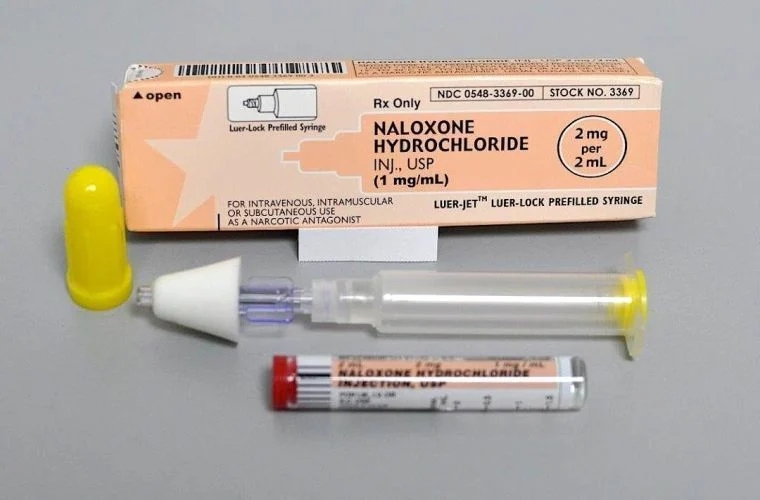
NARCAN: OTC Naloxone Hydrochloride

NARCAN

By Staff Reporters

***

***

According to Morning Brew, for the first time, people across the US will be able to purchase an overdose-reversal drug that’s as easy to administer as Flonase, without a prescription. Next week, nationwide chains like Walgreens, CVS, Walmart, and Rite Aid will begin selling two-dose boxes of Narcan, a naloxone nasal spray that saves people from opioid overdose, in stores and online.

Making naloxone widely accessible has long been a goal for public health experts because Fentanyl-laced drugs can kill people before paramedics arrive, but some now worry that over-the-counter Narcan’s $45 retail price could be too high for those who need it most.

That’s where insurance comes in:

  • Medicaid and Medicare already cover prescription naloxone, and so far, Missouri, California, Massachusetts, Washington, Rhode Island, and Oregon Medicaid programs said they’ll cover OTC Narcan, too.
  • While private health plans often restrict OTC drug coverage, Blue Cross Blue Shield of Massachusetts said it’ll fully cover nonprescription Narcan.

But this won’t help the one-fifth of people with opioid use disorder who are uninsured. Some government and harm reduction programs give out Narcan for free—and those groups can now order two-dose boxes in bulk at a discounted $41 per box, according to manufacturer Emergent BioSolutions.

PODCAST BALTIMORE NOD: https://medicalexecutivepost.com/2022/08/31/what-is-the-baltimore-nod/

***

***

MORE: https://www.routledge.com/Risk-Management-Liability-Insurance-and-Asset-Protection-Strategies-for/Marcinko-Hetico/p/book/9781498725989

***

COMMENTS APPRECIATED

Thank You

***

DENTAL DATA BREACH: Paper is Safer – It Always has Been!

By Darrell K. Pruitt DDS

***

***

PAPER IS SAFER – IT ALWAYS HAS BEEN!

“9M dental patient records published following LockBit ransomware attack”

By Duncan Riley for Silicone Angle, May 30th, 2023
READ: https://siliconangle.com/2023/05/30/9m-dental-patient-records-published-following-lockbit-ransomware-attack/

***

We knew digital dental records were never safe, even though our trusting patients had no idea. I started warning dentists about sudden public rejection of electronic dental records over a decade ago. In fact, that is why the Texas Dental Association suspended my membership.

It’s the start of the predictable end of digital records in most dental offices. The TDA and the ADA were repeatedly warned, but chose to say nothing about the comparative security of paper to dues-paying members. In fact, the American Dental Association marketed its own digital dental record system until a few years ago when over 500 dental practices using their system were hacked. Then the ADA quietly sold it.

“The records of nearly 9 million people have been published online following a LockBit ransomware attack on Managed Care of North America. The company, also known as MCNA Dental, is a leading provider of dental plans in the U.S., serving private employers, individuals and families through a range of Medicare, long-term and commercial plans. MCNA is also the largest dental insurer for government-sponsored Medicaid and Children’s Health Insurance Program, programs.”

The question is, what will this news do to huge, multi-location dental franchises such as Aspen Dental, Monarch, Medicare and other discount dentistry centers. Dentists have proven they can run successful, large practices using pegboards, ledger cards and bulky, loud metal filing cabinets without risking their patients’ privacy.

By the way, my practice is accepting new patients. Oh yea: TDA, you still owe me $200 in prorated dues for the remainder of the year you kicked me out. Idiots!

***

COMMENTS APPRECIATED

Thank You

***

***

MEDICARE / MEDICAID: Physician Acceptance Down

By Staff Reporters

***

***

Physicians Who Accept Medicare, Medicaid at All-time Low of 65%

Reduced Medicare and Medicaid payments are having more physicians considering reducing those patient bases, according to Medscape’s “Physician Compensation Report” for 2023. Sixty-five percent of physicians surveyed said they would continue treating current Medicare or Medicaid patients and take on new ones, according to the report. Medscape said it is the lowest percentage it has seen in its annual compensation reports. Five years ago, 71 percent of physicians said they would continue treating current Medicare or Medicaid patients and take on new ones. 

CITE: https://www.r2library.com/Resource

For the report, Medscape collected responses from 10,011 physicians across more than 29 specialties. The data was collected between Oct. 7, 2022, and Jan. 17, 2023. Eight percent of physicians surveyed said they would not take on new Medicare patients, and 5 percent said they would not take new Medicaid patients. Four percent said they will stop treating some or all of their current Medicare patients and will not take on new ones, and 3 percent said the same about Medicaid patients. Twenty-two percent said they have not yet decided how they will move forward regarding Medicare and Medicaid patients, according to the report. 

Source: Andrew Cass, Becker’s Payer Issues [4/18/23]

***

COMMENTS APPRECIATED

Thank You

***

CENTENE CORPORATION: Medicaid Over-Billing?

By Staff Reporters

***

***

Centene Corporation showers politicians with millions as it courts contracts and settles over-billing allegations by Samantha Young, Andy Miller, and Rebecca Grapevine (Kaiser Health News)

***

Somehow KHN made Medicaid over-billing sound sexy.

This deep dive into Centene, “the nation’s largest private managed-care provider for Medicaid,” shows how the company has maintained good relationships with politicians as it looked to keep its market share and settle over-billing allegations.

CITE: https://www.r2library.com/Resource/Title/082610254

***

PODCAST: https://medicalexecutivepost.com/2021/11/12/podcast-centene-giant-medicaid-hmo/

***

ORDER: https://www.amazon.com/Dictionary-Health-Insurance-Managed-Care/dp/0826149944/ref=sr_1_4?ie=UTF8&s=books&qid=1275315485&sr=1-4

***
COMMENTS APPRECIATED

Thank You

****

Understanding the Mental Healthcare Regulatory Environment

Join Our Mailing List

Appreciating the Rules

[By Carol Miller; RN, MBA]

Carol S. MillerLocal counties and municipalities are the primary providers of state mental healthcare for patients who lack private insurance coverage for such care.

Both children and adults may be eligible to receive assistance.

These counties provide a wide range of psychiatric and counseling services to the residents in their community as well as other types of assistance such as:

  • treatment services related to substance abuse;
  • housing;
  • employment services;
  • information and education service;
  • referrals;
  • consultative services to schools, courts and other agencies;
  • after-care services; and other related activities.

mental

Rules and Regulations

Accordingly, regulations from federal, state, and county governments have an impact on the day-to-day operations, procedures and processes of a county mental health center. Traditionally, there are three main types of regulations.

Federal Regulations — The United States healthcare system is guided by programs such as those established under the Centers for Medicare and Medicaid (in the case of county mental health programs, Medicaid is especially important), Americans with Disabilities Act (ADA), Occupational Safety and Health Administration (OSHA), Health Insurance Portability and Accountability Act (HIPAA), and others.

State Regulations — These include general legislative guidelines, state management of benefits and reimbursement of the Medicaid program, and state allocations of budgets, which impact the centers’ operations.

County Regulations — Each county defines its own County Mental Health Program and decides which services will be provided or excluded.

Assessment

County facilities generally include outpatient clinics, county mental health programs, short-term psychiatric facilities, day-care centers, de-toxification centers, residential rehabilitation centers for substance abuse, long-term care psychiatric facilities, and Veterans Affairs (VA) psychiatric centers. The county centers may be co-located with other county services such as social services, occupational rehabilitation services, information technology services, human resources, maintenance services, and others or may be independently located.

Conclusion

Your thoughts and comments on this ME-P are appreciated. Feel free to review our top-left column, and top-right sidebar materials, links, URLs and related websites, too. Then, subscribe to the ME-P. It is fast, free and secure.

Speaker: If you need a moderator or speaker for an upcoming event, Dr. David E. Marcinko; MBA – Publisher-in-Chief of the Medical Executive-Post – is available for seminar or speaking engagements. Contact: MarcinkoAdvisors@msn.com

OUR OTHER PRINT BOOKS AND RELATED INFORMATION SOURCES:

Product DetailsProduct Details

Valuation of Home Health Agencies [The Reimbursement Environment]

***

By Health Capital Consultants, LLC

***

***

Valuation of Home Health Agencies: Reimbursement Environment

The U.S. government is the largest payor of medical costs, through Medicare and Medicaid, and has a strong influence on reimbursement for home healthcare services. In 2020, Medicare and Medicaid accounted for an estimated $829.5 billion and $671.2 billion in healthcare spending, respectively. The outsized prevalence of these public payors in the healthcare marketplace often results in their acting as a price setter, and being used as a benchmark for private reimbursement rates. This effect may be even stronger in the home health industry.

The third installment of this home health valuation series will discuss the reimbursement environment in which these organizations operate. (Read more…) 

***

CITE: https://www.r2library.com/Resource/Title/0826102549

COMMENTS APPRECIATED

Thank You

***

***

***

PODCASTS: All You Need to Know About Government Healthcare

By Eric Bricker MD

***

1) Traditional Medicare: Health Insurance for Seniors 65 and older. Medicare Part A is coverage for hospital services. Medicare Part B is coverage for doctor, physical therapist and other provider services and for outpatient services such as labs and imaging.

2) Medicare Advantage: Health Insurance for Seniors 65 and older administered through a private health insurance company. It is sometimes referred to as Medicare Part C. It can be chosen instead of Traditional Medicare and often includes Dental Insurance, Vision Insurance, Hearing Aid Insurance and Prescription Drug Coverage.

3) Medicare Part D Prescription Coverage: Additional insurance for people on Traditional Medicare to cover their prescription medications as well. Medicare Part D is administered by private insurance companies.

4) Medicare Supplement Plans: Insurance that can be purchased in addition to Traditional Medicare to cover the expenses that Traditional Medicare does not cover, such as hospitalization deductibles and Medicare Part B co-insurance.

5) Medicaid: The health insurance program administered by each state for it’s economically disadvantaged residents. It is funded in part by the Federal Government and in part by each state. It is administered by private health insurance companies.

6) Affordable Care Act (ACA) Exchange Plans: Health insurance for people under 65 who make too much money to qualify for Medicaid, but do not received health insurance through their employer. ACA Exchange Plans are subsidized by the Federal Government and administered by private insurance companies.

***

***

COMMENTS APPRECIATED.

Thank You

Subscribe to the Medical Executive-Post

***

***

***

****

PODCAST: Centene the Giant Medicaid HMO

MEDICAID AND A.C.A. the GIANT

By Eric Bricker MD

****

***

YOUR COMMENTS ARE APPRECIATED.

HOSPITALS: https://www.amazon.com/Financial-Management-Strategies-Healthcare-Organizations/dp/1466558733/ref=sr_1_3?ie=UTF8&qid=1380743521&sr=8-3&keywords=david+marcinko

***

HEALTHCARE: https://www.amazon.com/Hospitals-Healthcare-Organizations-Management-Operational/dp/1439879907/ref=sr_1_4?s=books&ie=UTF8&qid=1334193619&sr=1-4

Thank You

***

PODCAST: Medicare and Nursing Home / Long Term Care

By CMS

CITE: https://www.r2library.com/Resource/Title/0826102549

****

***

YOUR COMMENTS ARE APPRECIATED.

Thank You

***

PODCAST: The Future of Healthcare Looks to Medicare’s Past?

See the Future of Healthcare By Looking to Medicare’s Past

***

Texas CEO Magazine 2016 Economic Forecast: Dallas - Texas ...

BY DR. ERIC BRICKER MD

***

Desire for a Healthcare ‘Safety Net’ Goes Back Almost 100 years to President F.D.R. and His “New Deal

FDR Was Able to Pass Social Security, but He Also Wanted a Healthcare Safety Net Too.

Presidents Truman and Kennedy Also Wanted a Federally-Funded Healthcare Safety Net.

LBJ Carried the Torch of the Healthcare Safety Net. He Was Able to Have Medicare Legislation Passed in 1965 by Combining 3 Separate Proposals and Acts:

1) Hospital Insurance

2) Doctor Insurance That Was Voluntary

3) the State-Administered Kerr-Mills Act 

Hospital Insurance Became Medicare Part A. Doctor Insurance Became Medicare Part B. The Kerr-Mills Act Became Medicaid.

Presidents Carter and Clinton Also Wanted to Expand the Healthcare Safety Net. President Obama Expanded the Healthcare Safety Net with Passage of Obamacare. President Biden is Seeking to Expand the Healthcare Safety Net Too.

The Arc of Government-Funded Healthcare Stretches Back Almost 100 Years and Will Inevitably Result in the Full Government Payment for Healthcare in America.

It’s Not a Question of If, But When.

Implication: United Health Group is Making Many Acquisitions to Become a Vertically Integrated Healthcare Company to Position Itself as a Major Government Contractor for the Eventual Federal Takeover.

PODCAST: https://www.youtube.com/watch?v=OAh7Rl7w1wM

Your thoughts are appreciated.

THANK YOU

***

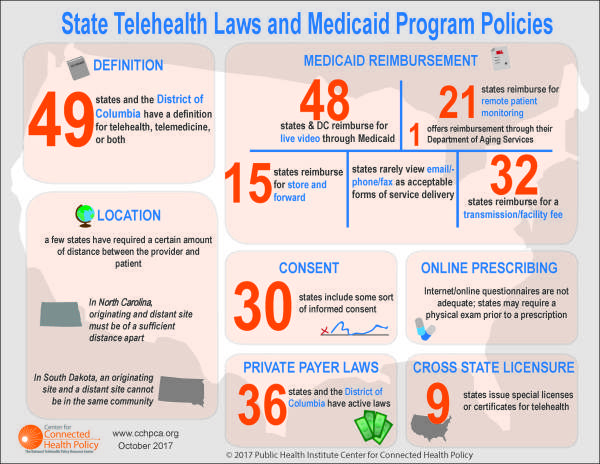
On State Tele-Health Programs

Medicaid Program Policies

***

***

Conclusion

Your thoughts and comments on this ME-P are appreciated. Feel free to review our top-left column, and top-right sidebar materials, links, URLs and related websites, too. Then, subscribe to the ME-P. It is fast, free and secure.

Speaker: If you need a moderator or speaker for an upcoming event, Dr. David E. Marcinko; MBA – Publisher-in-Chief of the Medical Executive-Post – is available for seminar or speaking engagements.

Book Marcinko: https://medicalexecutivepost.com/dr-david-marcinkos-bookings/

Subscribe: MEDICAL EXECUTIVE POST for curated news, essays, opinions and analysis from the public health, economics, finance, marketing, IT, business and policy management ecosystem.

DOCTORS:

“Insurance & Risk Management Strategies for Doctors” https://tinyurl.com/ydx9kd93

“Fiduciary Financial Planning for Physicians” https://tinyurl.com/y7f5pnox

“Business of Medical Practice 2.0” https://tinyurl.com/yb3x6wr8

HOSPITALS:

“Financial Management Strategies for Hospitals” https://tinyurl.com/yagu567d

“Operational Strategies for Clinics and Hospitals” https://tinyurl.com/y9avbrq5

***

Product DetailsProduct Details

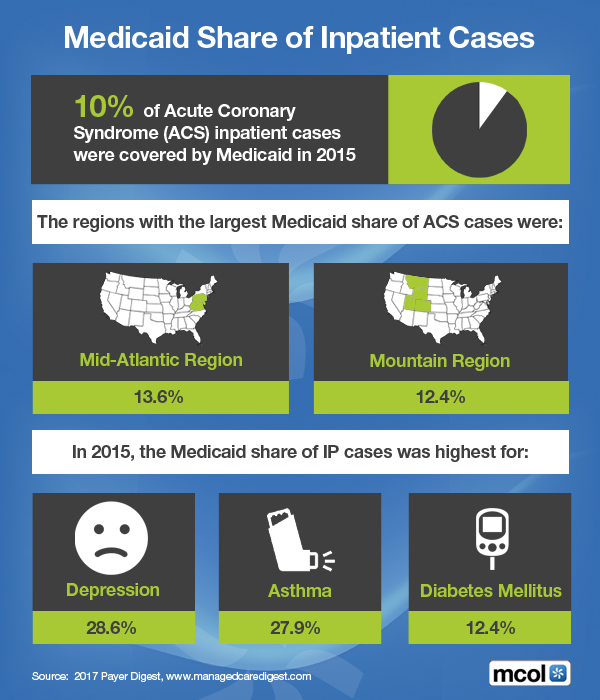
The Medicaid Share of In-Patient Cases

In 2015

By http://www.MCOL.com

***

***

Conclusion

Your thoughts and comments on this ME-P are appreciated. Feel free to review our top-left column, and top-right sidebar materials, links, urls and related websites, too. Then, subscribe to the ME-P. It is fast, free and secure.

Speaker: If you need a moderator or speaker for an upcoming event, Dr. David E. Marcinko; MBA – Publisher-in-Chief of the Medical Executive-Post – is available for seminar or speaking engagements.

Contact: MarcinkoAdvisors@msn.com

Subscribe: MEDICAL EXECUTIVE POST for curated news, essays, opinions and analysis from the public health, economics, finance, marketing, I.T, business and policy management ecosystem.

***

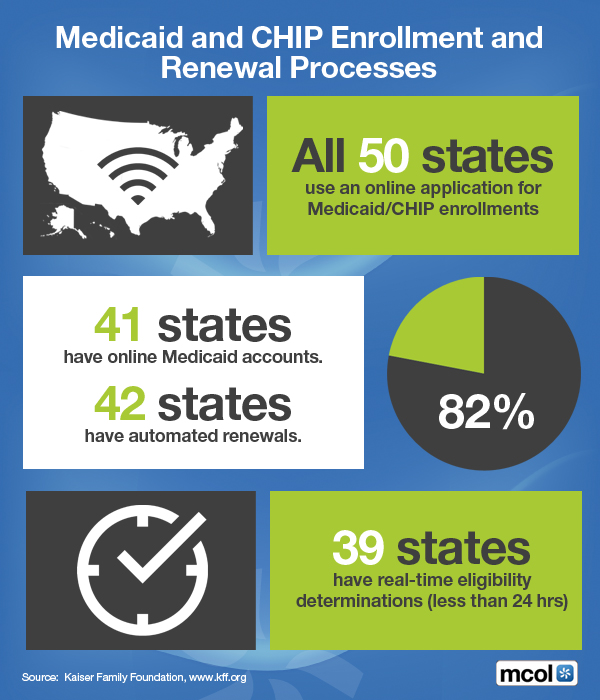
On Medicaid and CHIP Enrollment

Join Our Mailing List

And … Renewal Processes

By http://www.MCOL.com

***

graphoid011817***

Conclusion

Your thoughts and comments on this ME-P are appreciated. Feel free to review our top-left column, and top-right sidebar materials, links, URLs and related websites, too. Then, subscribe to the ME-P. It is fast, free and secure.

Speaker: If you need a moderator or speaker for an upcoming event, Dr. David E. Marcinko; MBA – Publisher-in-Chief of the Medical Executive-Post – is available for seminar or speaking engagements. Contact: MarcinkoAdvisors@msn.com

OUR OTHER PRINT BOOKS AND RELATED INFORMATION SOURCES:

Product DetailsProduct DetailsProduct Details

***

PP-ACA Change or Repeal for 2017?

Join Our Mailing List

Potential Component Changes

By http://www.MCOL.com

***

infographic

***

MORE: Podcast: Third Quarter Health Plan Financial Reports

Conclusion

Your thoughts and comments on this ME-P are appreciated. Feel free to review our top-left column, and top-right sidebar materials, links, URLs and related websites, too. Then, subscribe to the ME-P. It is fast, free and secure.

Speaker: If you need a moderator or speaker for an upcoming event, Dr. David E. Marcinko; MBA – Publisher-in-Chief of the Medical Executive-Post – is available for seminar or speaking engagements. Contact: MarcinkoAdvisors@msn.com

OUR OTHER PRINT BOOKS AND RELATED INFORMATION SOURCES:

Risk Management, Liability Insurance, and Asset Protection Strategies for Doctors and Advisors: Best Practices from Leading Consultants and Certified Medical Planners™8Comprehensive Financial Planning Strategies for Doctors and Advisors: Best Practices from Leading Consultants and Certified Medical Planners™

***

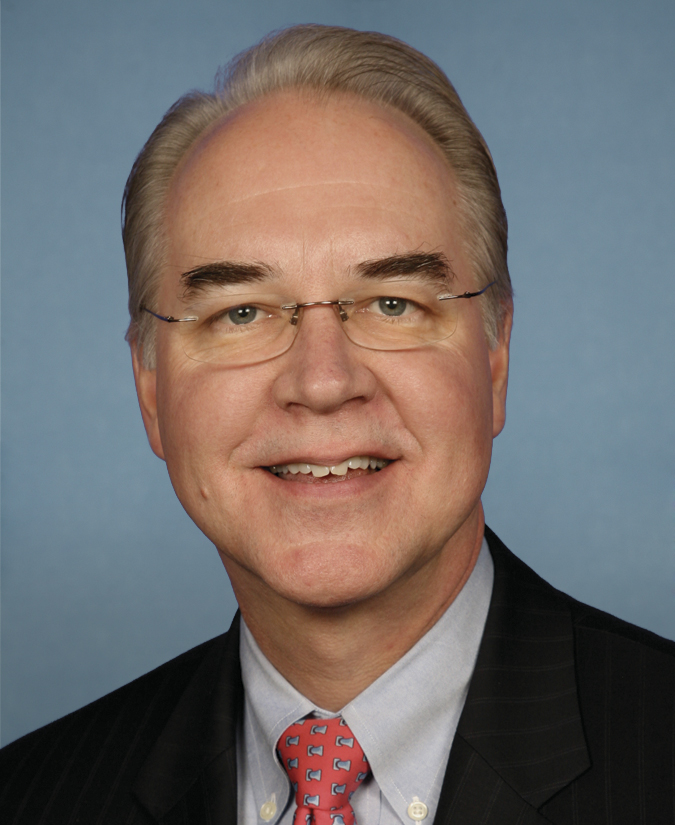
Tom Price for HHS Secretary & Seema Verma for CMMS

Join Our Mailing List

***

Obamacare critic for HHS 

***

112_price_ga06

***

Trump nominates Rep. Tom Price for HHS secretary

***

th

Trump picks Seema Verma to head Centers for Medicare and Medicaid Services

***

Product DetailsProduct Details

***

Odds you will live out your last years in a SNF?

Join Our Mailing List

More On Medicaid Elder Care

Rick Kahler MS CFP

By Rick Kahler MSFS CFP®

If you’ve ever visited someone in a nursing home, chances are you walked out afterward vowing, “I’m never going to end up in a place like this.” That vow is one most of us would make. Keeping it, however, is another matter.

Let’s consider some facts

What are the odds you will live the last years of your life in a skilled care facility (nursing or assisted living home)?

About 14 percent of all people over age 64 have two to three chronic conditions that negate their ability to live independently. According to the U.S. Bureau of the Census, 5 percent of people over age 65 live in nursing or assisted living homes and 25 percent of them will spend some time in one. The chance of a stay in a nursing home increases 1.4 percent a year from age 65 on. Almost 50 percent of those over age 95 live in nursing homes.

While staying in the comforting surroundings of our homes is what most of us would prefer, just saying so isn’t going to make it happen. Unless you have a written plan and the finances to carry out that plan, the chances are high you will not be able to afford living in your home once you need daily assistance of some type.

The problem is that spending your last years in a nursing home is expensive, too. At rates of around $7,000 to $12,000 a month, it is very easy to spend $250,000 or more during the last years of one’s life. While this is doable if you have the money, it becomes a financial disaster if you have a spouse and spend through your estate in your last years. In this case, the first one to die wins at the expense of the survivor.

More U.S. Census Bureau Data

According to the U.S. Census Bureau, 70 percent of Americans age 65 and over have a household net worth of just $344,870. If one spouse enters a skilled care facility there is a real threat that the other will run out of money to fund living expenses, relying only on Social Security.

Once someone’s assets are spent down, Medicaid will begin paying for nursing home costs. This may mean changes such as moving to a facility that accepts Medicaid and out of a private room into a shared room. It also may mean waiting for a bed to become available.

***2016-CRS_Fall_Hourglass_6-14_hero

***

The Short Version

The “short version” of the law is that Medicaid begins paying once assets are spent down to $2000. However, there are provisions meant to protect the non-institutionalized spouse from destitution. Some of the couple’s assets are exempt from being spent down for nursing home care.

Example:

In South Dakota, for example, the spouse may keep half of the combined assets up to $119,220. Other exempt assets generally include personal possessions, one vehicle, equity up to $552,000 in the couple’s personal residence, prepaid funeral plans, and assets that are considered “inaccessible”. There are also limits on monthly income from pensions. The numbers above are for South Dakota; all of these limits vary by state so be sure to research your own state’s laws.

Assessment

Obviously, planning for long term care is vitally important, and it needs to be done well before the event that sends someone to a skilled care facility. Unfortunately, those events are often sudden and impossible to predict. The sad reality is that very few people plan ahead—even those who do financial planning in other areas. Many elders have a deep resistance to doing end-of-life planning.

That is sad, because the less planning you do, the more limited your options become. 

Conclusion

Your thoughts and comments on this ME-P are appreciated. Feel free to review our top-left column, and top-right sidebar materials, links, URLs and related websites, too. Then, subscribe to the ME-P. It is fast, free and secure.

Speaker: If you need a moderator or speaker for an upcoming event, Dr. David E. Marcinko; MBA – Publisher-in-Chief of the Medical Executive-Post – is available for seminar or speaking engagements. Contact: MarcinkoAdvisors@msn.com

OUR OTHER PRINT BOOKS AND RELATED INFORMATION SOURCES:

Risk Management, Liability Insurance, and Asset Protection Strategies for Doctors and Advisors: Best Practices from Leading Consultants and Certified Medical Planners™8Comprehensive Financial Planning Strategies for Doctors and Advisors: Best Practices from Leading Consultants and Certified Medical Planners™

***

Sherlock Health Administration Expense Benchmarks Invitation

Join Our Mailing List

Sherlock Benchmarks – Participation and Licensing

By Douglas B. Sherlock CFA

sherlock@sherlockco.com

thoughtSherlockHello All ME-P Readers and Subscribers:

This email invites your participation and/or licensing of the Sherlock Benchmarks.

A central effect of the Affordable Care Act is to sharply increase the incentive for health plans to minimize their administrative expenses. The Sherlock Benchmarks can be a catalyst to respond to these incentives since they identify and prioritize cost variances.

Use of the Sherlock Benchmarks reflects this:

• At least 40 health plans serving at least 40 million people with health insurance are so far committed as participants in this year’s Sherlock Benchmarking study.

• Of the 36 U.S. – based Blue Cross Blue Shield primary licensees, one-half are participating in this year’s Sherlock Benchmarking Study, either as an enterprise or through a subsidiary.

• Of the 13 members of the Alliance of Community Health Plans that are not focused on public programs or are staff-model plans, 11 are participating in this year’s Sherlock Benchmarking Study for Independent / Provider – Sponsored Health Plans.

• Most of the largest members of the Health Plan Alliance that are not focused on public programs are participating in this year’s Sherlock Benchmarking Study for Independent / Provider – Sponsored Health Plans.

• Health plans serving at least one-half of all insured Americans are licensed users of Sherlock Benchmarks since January 1, 2015.

Licensing and participation is available to all health plans

We have recently launched the Independent / Provider – Sponsored and Blue Cross Blue Shield surveys. There is still time, but the financial metrics survey form must be returned to us by the end of April.

So please contact me immediately if you wish to join these robust panels.

Our universes of Medicaid and Medicare plans will launch in a few months to avoid conflict with your Medicare bid process. If a plurality of your members are in either Medicare or Medicaid, please contact us about participation. Note that all costs are segmented by product as well as by function to assure an apples-to-apples comparison between the plans.

Licensing is available without participation. Licensing costs more but it entails less effort.  The 2016 Sherlock Benchmarks for Blue Cross Blue Shield Plans and Independent / Provider – Sponsored plans will be available beginning in July. The 2016 Sherlock Benchmarks for Medicare plans and Medicaid plans will be available beginning in September. 

Assessment

We look forward to working with you.

Conclusion

Your thoughts and comments on this ME-P are appreciated. Feel free to review our top-left column, and top-right sidebar materials, links, URLs and related websites, too. Then, subscribe to the ME-P. It is fast, free and secure.

Speaker: If you need a moderator or speaker for an upcoming event, Dr. David E. Marcinko; MBA – Publisher-in-Chief of the Medical Executive-Post – is available for seminar or speaking engagements. Contact: MarcinkoAdvisors@msn.com

OUR OTHER PRINT BOOKS AND RELATED INFORMATION SOURCES:

[HEALTH INSURANCE, MANAGED CARE, ECONOMICS, FINANCE AND HEALTH INFORMATION TECHNOLOGY COMPANION DICTIONARY SET]

      Product DetailsProduct DetailsProduct Details

 ***

On Medicaid Payment Amounts

Join Our Mailing List

In the USA 1999-2010

http://www.MCOL.com

Medicaid

Conclusion

Your thoughts and comments on this ME-P are appreciated. Feel free to review our top-left column, and top-right sidebar materials, links, URLs and related websites, too. Then, subscribe to the ME-P. It is fast, free and secure.

Speaker: If you need a moderator or speaker for an upcoming event, Dr. David E. Marcinko; MBA – Publisher-in-Chief of the Medical Executive-Post – is available for seminar or speaking engagements. Contact: MarcinkoAdvisors@msn.com

OUR OTHER PRINT BOOKS AND RELATED INFORMATION SOURCES:

Product DetailsProduct Details

Regional Distribution of Un-Insured Adults in the Coverage Gap

Join Our Mailing List

Due to State Decisions NOT to Expand Medicaid

http://www.MCOL.com

ImageProxy

Conclusion

Your thoughts and comments on this ME-P are appreciated. Feel free to review our top-left column, and top-right sidebar materials, links, URLs and related websites, too. Then, subscribe to the ME-P. It is fast, free and secure.

Link: http://feeds.feedburner.com/HealthcareFinancialsthePostForcxos

Speaker: If you need a moderator or speaker for an upcoming event, Dr. David E. Marcinko; MBA – Publisher-in-Chief of the Medical Executive-Post – is available for seminar or speaking engagements. Contact: MarcinkoAdvisors@msn.com

OUR OTHER PRINT BOOKS AND RELATED INFORMATION SOURCES:

Product DetailsProduct Details

Product Details


Enrollment, Coverage and the PP-ACA

Join Our Mailing List
For Medicaid

By www.MCOL.com

ImageProxy

Assessment

1. Aetna CEO: Only 11% Of ObamaCare Signups Have Been Uninsured 
2. The Individual Mandate for Health Insurance in the U.S.
3. Survey of Americans’ Preparations for Health Care in Retirement
4. Medi-Cal at a Crossroads: What Enrollees Say About the Program 
5. The Affordable Care Act: The Exchanges Go Live

Conclusion

Your thoughts and comments on this ME-P are appreciated. Feel free to review our top-left column, and top-right sidebar materials, links, URLs and related websites, too. Then, subscribe to the ME-P. It is fast, free and secure.

Link: http://feeds.feedburner.com/HealthcareFinancialsthePostForcxos

Speaker: If you need a moderator or speaker for an upcoming event, Dr. David E. Marcinko; MBA – Publisher-in-Chief of the Medical Executive-Post – is available for seminar or speaking engagements. Contact: MarcinkoAdvisors@msn.com

OUR OTHER PRINT BOOKS AND RELATED INFORMATION SOURCES:

DICTIONARIES: http://www.springerpub.com/Search/marcinko
PHYSICIANS: www.MedicalBusinessAdvisors.com
PRACTICES: www.BusinessofMedicalPractice.com
HOSPITALS: http://www.crcpress.com/product/isbn/9781466558731
CLINICS: http://www.crcpress.com/product/isbn/9781439879900
BLOG: www.MedicalExecutivePost.com
FINANCE: Financial Planning for Physicians and Advisors
INSURANCE: Risk Management and Insurance Strategies for Physicians and Advisors

Product DetailsProduct Details

Product Details

Doubting the Accountable Care Organization B-Model

New Healthcare Business Model or Edsel Model?

Join Our Mailing List 

By David Edward Marcinko MBA http://www.CertifiedMedicalPlanner.org

[Publisher-in-Chief]

Dr. Marcinko with ME-P FansDefined by Professor Michael Porter at Harvard Business School, value is defined as a function of outcomes and costs. Therefore to achieve high value we must deliver the best possible outcomes in the most efficient way, outcomes which matter from the perspective of the individual receiving healthcare and not provider process measures or targets.

Sir Muir Gray expanded on the idea of technical value (outcomes/costs) to specifically describe ‘personal value’ and ‘allocative value’, encouraging us to focus also on shared decision making, individual preferences for care and ensuring that resources are allocated for maximum value.

Healthcare Value and ACOs

According to our Medical Executive-Post Health Dictionary Series of administrative terms http://www.HealthDictionarySeries.org  and health economist and colleague Robert James Cimasi MHA, ASA, AVA CMP™ of www.HealthCapital.com; an ACO is a healthcare organization in which a set of providers, usually large physician groups and hospitals, are held accountable for the cost and quality of care delivered to a specific local population.

ACOs aim to affect provider’s patient expenditures and outcomes by integrating clinical and administrative departments to coordinate care and share financial risk.

ACO Launch

Since their four-page introduction in the PP-ACA of 2010, ACOs have been implemented in both the Federal and commercial healthcare markets, with 32 Pioneer ACOs selected (on December 19, 2011), 116 Federal applications accepted (on April 10, 2012 and July 9, 2012), and at least 160 or more Commercial ACOs in existence today.

Federal Contracts

Federal ACO contracts are established between an ACO and CMS, and are regulated under the CMS Medicare Shared Savings Program (MSSP) Final Rule, published November 2, 2011.  ACOs participating in the MSSP are accountable for the health outcomes, represented by 33 quality metrics, and Medicare beneficiary expenditures of a prospectively assigned population of Medicare beneficiaries.

If a Federal ACO achieves Medicare beneficiary expenditures below a CMS established benchmark (and meets quality targets), they are eligible to receive a portion of the achieved Medicare beneficiary expenditure savings, in the form of a shared savings payment.

Commercial Contracts

Commercial ACO contracts are not limited by any specific legislation, only by the contract between the ACO and a commercial payor.

In addition to shared savings models, Commercial ACOs may incentivize lower costs and improved patient outcomes through reimbursement models that share risk between the payor and the providers, i.e., pay for performance compensation arrangements and/or partial to full capitation.

Although commercial ACOs experience a greater degree of flexibility in their structure and reimbursement, the principals for success for both Federal ACOs and Commercial ACOs are similar.

###

Eidsel

Dr. David E. Marcinko with 1960 Ford Edsel

[© iMBA, Inc. All rights reserved, USA.]

[The Edsel was an automobile marque that was planned, developed, and manufactured by the Ford Motor Company during the 1958, 1959, and 1960 model years. With the Edsel, Ford had expected to make significant inroads into the market share of both General Motors and Chrysler and close the gap between itself and GM in the domestic American automotive market. But, contrary to Ford’s internal plans and projections, the Edsel never gained popularity with contemporary American car buyers and sold poorly. The Ford Motor Company lost millions of dollars on the Edsel’s development, manufacturing and marketing].

More:


Update

Junking the Merit-Based Incentive Payment System (MIPS) would undoubtedly let the proverbial air out of the MACRA balloon, dealing a significant blow to the value-based reimbursement shift; right?

Assessment

Although nearly any healthcare enterprise can integrate and become an ACO, larger enterprises, may be best suited for ACO status.

Larger organizations are more able to accommodate the significant capital requirements of ACO development, implementation, and operation (e.g., healthcare information technology), and sustain the sufficient number of beneficiaries to have a significant impact on quality and cost metrics.

Conclusion

But, will this new B-Model work? Isn’t leading doctors in a shared collaborative effort a bit like herding cats? And, what about patients, HIEs, outcomes management, data analytics and … Population Health via our colleague David B. Nash MD MBA of Thomas Jefferson University, often considered the “father” of Pop Health?

OR, what about the developing IRS scandal and full PP-ACA launch in 2014? Will it affect federal funding, full roll-out, or even repeal of the entire Act?

Your thoughts and comments on this ME-P are appreciated. Feel free to review our top-left column, and top-right sidebar materials, links, URLs and related websites, too. Then, subscribe to the ME-P. It is fast, free and secure.

Link: http://feeds.feedburner.com/HealthcareFinancialsthePostForcxos

Speaker: If you need a moderator or speaker for an upcoming event, Dr. David E. Marcinko; MBA – Publisher-in-Chief of the Medical Executive-Post – is available for seminar or speaking engagements. Contact: MarcinkoAdvisors@msn.com

OUR OTHER PRINT BOOKS AND RELATED INFORMATION SOURCES:

DICTIONARIES: http://www.springerpub.com/Search/marcinko
PHYSICIANS: www.MedicalBusinessAdvisors.com
PRACTICES: www.BusinessofMedicalPractice.com
HOSPITALS: http://www.crcpress.com/product/isbn/9781466558731
CLINICS: http://www.crcpress.com/product/isbn/9781439879900
BLOG: www.MedicalExecutivePost.com
FINANCE: Financial Planning for Physicians and Advisors
INSURANCE: Risk Management and Insurance Strategies for Physicians and Advisors

Product DetailsProduct Details

How the Affordable Care Act Affects Taxpayers Now? [Audio-Link]

Join Our Mailing List

Sound Medicine –  How does the Affordable Care Act affect taxpayers now?

By Ann Miller RN MHA

Sound Medicine is a radio show produced by the Indiana University School of Medicine and WFYI Public Radio.

In the last few years Aaron Carroll MS MD associate professor of pediatrics at the Indiana University School of Medicine, has been their go-to guy on health policy.

Audio Link

So, for those of you who would find your day brightened by the sound of his voice, enjoy the following from www.theIncidentalEconomist.com

Assessment

Dr. Carroll discusses how the Affordable Care Act will affect taxpayers in the coming months. The Affordable Care Act officially takes effect in January 2014, but several provisions are being implemented this year. These provisions specifically affect Medicare and Medicaid recipients, caregivers and all taxpayers.

Conclusion

Your thoughts and comments on this ME-P are appreciated. Feel free to review our top-left column, and top-right sidebar materials, links, URLs and related websites, too. Then, subscribe to the ME-P. It is fast, free and secure.

Link: http://feeds.feedburner.com/HealthcareFinancialsthePostForcxos

Speaker: If you need a moderator or speaker for an upcoming event, Dr. David E. Marcinko; MBA – Publisher-in-Chief of the Medical Executive-Post – is available for seminar or speaking engagements. Contact: MarcinkoAdvisors@msn.com

Our Other Print Books and Related Information Sources:

Health Dictionary Series: http://www.springerpub.com/Search/marcinko

Practice Management: http://www.springerpub.com/product/9780826105752

Physician Financial Planning: http://www.jbpub.com/catalog/0763745790

Medical Risk Management: http://www.jbpub.com/catalog/9780763733421

Hospitals: http://www.crcpress.com/product/isbn/9781439879900

Physician Advisors: www.CertifiedMedicalPlanner.org

Product DetailsProduct Details

Understanding Modern Healthcare Market Competition

Join Our Mailing List

Updating Competitive Strategy Theory in Healthcare

By Robert James Cimasi; MHA ASA FRICs MCBA AVA CM&AA
By Todd A. Zigrang; MBA MHA ASA FACHE
By Anne P. Sharamitaro; Esq.

www.HealthCapital.com

Michael Porter[i] is considered by many to be one of the world’s leading authorities on competitive strategy and international competitiveness.  In 1980, he published Competitive Strategy: Techniques for Analyzing Industries and Competitors,[ii] in which he argues that all businesses must respond to five competitive forces.

(1) The Threat of New Market Entrants

This force may be defined as the risk of a similar company entering the marketplace and winning business.  There are many barriers to entry of new market entrants in healthcare including: the high cost of equipment, licensure, requirement for physicians and other highly trained technicians, development of physician referral networks and provider contracts, and other significant regulatory requirements.

Certificate of Need (CON) laws, which require governmental approval for new healthcare facilities, equipment, and services have been in place since they were federally mandated in 1974.  State CON laws create a regulatory barrier to entry.  New medical provider entrants commonly face substantial political opposition by established interests, which is manifested in the CON review process.

(2) The Bargaining Power of Suppliers

A supplier can be defined as any business relationship upon which a business relies to deliver a product, service, or outcome.  Healthcare equipment is a highly technical product produced by a limited number of manufacturers. This reduces the range of choices for providers and can increase costs.

(3) Threats from Substitute Products or Services

Substitute products or services are those that are sufficiently equivalent in function or utility to offer consumers an alternate choice of product or service.  An illustration of this in healthcare would be diagnostic imaging as a substitute for surgery, which is often a more costly and risky option for patients. The threat of less invasive or less expensive diagnostic tests other than diagnostic imaging is relatively small for the near term future.

(4) The Bargaining Power of Buyers

This force is the degree of negotiating leverage of an industry’s buyers or customers.  The buyers of healthcare services are ultimately the patients. However, the competitive force of buyers is manifested through healthcare insurers including the U.S. and state governments through the Medicare, Medicaid, TRICARE, and other programs; managed care payors (e.g., Blue Cross/Blue Shield affiliates); workers’ compensation insurers; and, others.  In addition to the government, many of these healthcare insurers are large, national companies, often publicly traded, commanding significant bargaining power over healthcare provider reimbursement.

(5) Rivalry Amongst Existing Firms

This is ongoing competition between existing firms without consideration of the other competitive forces which define industries. Healthcare providers face pressure from other existing providers to obtain favorable provider contracts; maintain the latest technology; increase efficiencies; and, lower prices.

References:

[i]  A professor of Business Administration at the Harvard Business School, Michael Porter serves as an advisor to heads of state, governors, mayors, and CEOs throughout the world.  The recipient of the Wells Prize in Economics, the Adam Smith Award, three McKinsey Awards, and honorary doctorates from the Stockholm School of Economics and six other universities, Porter is the author of fourteen books, among them Competitive Advantage, The Competitive Advantage of Nations, and Cases in Competitive Strategy.

[ii]  Porter, M.E. Competitive Strategy: Techniques for Analyzing Industries and Competitors. The Free Press, 1980.

Conclusion

Your thoughts and comments on this ME-P are appreciated. Feel free to review our top-left column, and top-right sidebar materials, links, URLs and related websites, too. Then, subscribe to the ME-P. It is fast, free and secure.

Link: http://feeds.feedburner.com/HealthcareFinancialsthePostForcxos

Speaker: If you need a moderator or speaker for an upcoming event, Dr. David E. Marcinko; MBA – Publisher-in-Chief of the Medical Executive-Post – is available for seminar or speaking engagements. Contact: MarcinkoAdvisors@msn.com

OUR OTHER PRINT BOOKS AND RELATED INFORMATION SOURCES:

DICTIONARIES: http://www.springerpub.com/Search/marcinko
PHYSICIANS: www.MedicalBusinessAdvisors.com
PRACTICES: www.BusinessofMedicalPractice.com
HOSPITALS: http://www.crcpress.com/product/isbn/9781466558731
CLINICS: http://www.crcpress.com/product/isbn/9781439879900
ADVISORS: www.CertifiedMedicalPlanner.org
PODIATRISTS: www.PodiatryPrep.com
BLOG: www.MedicalExecutivePost.com
FINANCE: Financial Planning for Physicians and Advisors
INSURANCE: Risk Management and Insurance Strategies for Physicians and Advisors


Our Newest Textbook Release

Buy from Amazon

Learn How to Profit and Thrive in the PP-ACA Era

BOOK FOREWORD / TESTIMONIAL

Where the Presidential Candidates Stand on Medicare and Medicaid

Join Our Mailing List

The Big Picture View

By Suevon Lee ProPublica, Sept. 14, 2012, 2:26 p.m.

Medicare and Medicaid, which provide medical coverage for seniors, the poor and the disabled, together [1]make up nearly a quarter [1] of all federal spending. With total Medicare spending projected to cost [2] $7.7 trillion over the next 10 years, there is consensus that changes are in order. But what those changes should entail has, of course, been one of the hot-button issues [3] of the campaign.

With the candidates slinging charges [4], we thought we’d lay out the facts. Here’s a rundown of where the two candidates stand on Medicare and Medicaid:

THE CANDIDATES ON MEDICARE

Big Picture

Earlier this year, the Medicare Board of Trustees estimated [5] that the Medicare hospital trust fund would remain fully funded only until 2024. Medicare would not go bankrupt or disappear, but it wouldn’t have enough money to cover all hospital costs.

Under traditional government-run Medicare, seniors 65 and over and people with disabilities are given health insurance for a fixed set of benefits, in what’s known as fee-for-service [6] coverage. Medicare also offers a subset of private health plans known as Medicare Advantage, in which roughly one-quarter [7] of Medicare beneficiaries are currently enrolled. Obama retains this structure.

The Obama administration has also made moves that it says would keep Medicare afloat. It says the Affordable Care Act would extend solvency [8] by eight years, mainly by imposing tighter spending controls on Medicare payments to private insurers and hospitals.

In contrast, Rep. Paul Ryan, Mitt Romney’s running mate, has proposed a more fundamental overhaul of Medicare, which he says [9] is on an “unsustainable path.” On his campaign website [10], Romney says that Ryan’s proposals “almost precisely mirrors” his ideas on Medicare. But he’s been fuzzy on other aspects of the plan.

A Romney-Ryan administration would replace a defined benefits system with a defined contribution system [11] in which seniors are given federal vouchers to purchase health insurance in a newly created private marketplace known as Medicare Exchange. In this marketplace, private health plans, along with traditional Medicare, would compete for enrollees’ business. These changes wouldn’t start until 2023, meaning current beneficiaries aren’t affected – just those under 55.

Under the Romney-Ryan, the vouchers would be valued [12] at the second-cheapest private plan or traditional Medicare, whichever costs less. Seniors who opt for a more expensive plan would pay the difference. If they choose a cheaper plan, they keep the savings.

Who’s Covered

In the current system, people 65 and over are eligible for Medicare, which Obama has said he would keep [13] for now.

Romney has proposed [14]raising the eligibility age for Medicare beneficiaries from 65 to 67 in 2022, then increasing it by a month each year after that. In the long run, he would index [15] eligibility levels to “longevity.” Ryan’s budget plan proposes [16] raising Medicare eligibility age by two months a year starting in 2023, until it reaches 67 by 2034.

Many others looking to keep Medicare solvent have also proposed [17]raising the age of eligibility.

The Congressional Budget Office estimates [18]that raising the minimum age from 65 to 67 would reduce annual federal spending by 5 percent.But it would also result in higher premiums and out-of-pocket costs for seniors who would lose access to Medicare.

Obama’s health care law also adds [19] some benefits for seniors, such as annual wellness visits without co-pays, preventive services like free cancer screenings and prescription drug savings.

Proposed Savings

The Affordable Care Act is projected to reduce Medicare spending by $716 billion over the next 10 years. These reductions, as detailed [20] by Washington Post’s Wonkblog, will come mostly from reducing payments to hospitals, nursing homes and private health care providers.

While Ryan criticized [21] such spending cuts in his speech at the Republican National Convention, his own budget proposed [22] keeping these reductions.

“The ACA grows the trust fund by giving more general revenue to the Treasury, which then gives the trust fund bonds. But it then uses the money from those bonds to expand coverage for low- and middle-income people,” explains [23] Dylan Matthews on Washington Post’s Wonkblog.

Romney hasn’t really come up with a solid answer: he previously said he would restore [24] the $716 billion savings that the health care law imposes. Per this New York Times story [24], the American Institutes for Research calculates this would increase premiums and co-payments for Medicare beneficiaries by $342 a year on average over the next 10 years.

For more on where the candidates stand on the $716 billion, the private health policy Commonwealth Fund offers this helpful explanation [25].

Caps on Spending

Both Obama and Ryan have set an identical target rate [26] that would cap Medicare spending at one-half a percentage point above the nation’s gross domestic product.

But they have different ideas on mechanisms to achieve it.

The Affordable Care Act establishes a 15-member Independent Payment Advisory Board [27] that, starting in 2015, would make binding recommendations to reduce spending rates. As Jonathan Cohn points out [28] in the New Republic, the commission is prohibited from making any changes that would affect beneficiaries.

Ryan has proposed hard caps on spending and derided [29]this panel of appointed members as “unelected, unaccountable bureaucrats.” When laying out his plan in a 2011 memo [30], Ryan wrote that to control spending, “Congress would be required to intervene and could implement policies that change provider reimbursements, program overhead, and means-tested premiums.”

Romney hasn’t stated [31] clear proposals for imposing a cap on spending.

THE CANDIDATES ON MEDICAID

Big Picture

Though, it’s far less discussed [32] on the campaign trail, Medicaid actually covers more people than Medicare. The joint federal-state insurance program for the poor, the disabled, and elderly individuals in long-term nursing home care currently covers about 60 million Americans. The Affordable Care Act hasexpanded [33] Medicaid coverage further. Beginning 2014, Medicaid will include [34]people under 65 with income below 133 percent of the federal poverty level (roughly $15,000 for an individual, $30,000 for a family of four). This was estimated [35] to cover an additional 17 million Americans as eligible beneficiaries.

In June, however, the U.S. Supreme Court ruled [36] that states could opt out of the Medicaid expansion. A ProPublica analysis estimated [37] that the 26 states that challenged the health care law, and thus may possibly opt out, would account for up to 8.5 million of those new beneficiaries.

Romney and Ryan would overhaul this current system by turning Medicaid into a system of block grants [38]: the federal government would issue lump sum payments to the states, who would determine eligibility criteria and benefits for enrollees. These grants would begin in 2013.

Effects on spending

The Congressional Budget Office estimates [39] that Medicaid expansion under the new health care law would cost an additional $642 billion over the next 10 years.

Under the Ryan plan, federal Medicaid grants would be adjusted only for inflation, but not health care costs, which grow at a much higher rate. The CBO estimates [40] Ryan’s plan would save the federal government $800 billion over the next 10 years. Another study conducted by Bloomberg News shows that the block-grants could decrease Medicaid funding by as much as $1.26 trillion [41] over the next nine years.

Actual Impact

The New York Times points out [42] that more than half of Medicaid spending goes toward the elderly and disabled. An Urban Institute analysis estimates [43] the Ryan plan would result in 14 million to 27 million fewer people receiving Medicaid coverage by 2021.

Assessment

Though rarely mentioned by any of the candidates, Medicaid costs are soaring to cover the elderly who require long-term nursing care. As the Times’ details [44] how, states saddled by high Medicaid costs have begun turning to private managed care plans to blunt the cost.

Conclusion

Your thoughts and comments on this ME-P are appreciated. Feel free to review our top-left column, and top-right sidebar materials, links, URLs and related websites, too. Then, subscribe to the ME-P. It is fast, free and secure.

Speaker: If you need a moderator or speaker for an upcoming event, Dr. David E. Marcinko; MBA – Publisher-in-Chief of the Medical Executive-Post – is available for seminar or speaking engagements. Contact: MarcinkoAdvisors@msn.com

OUR OTHER PRINT BOOKS AND RELATED INFORMATION SOURCES:

Product DetailsProduct DetailsProduct Details

Product Details  Product Details

Product Details

Opinion Poll on the Most Disruptive Health Issue Today?

Join Our Mailing List

A Voting Opinion Poll

Today’s opinion poll for all modern hospital executives, financial advisors, health economists, patients and physician leaders is right on-point.

It was sent in by an astute ME-P subscriber and we are most pleased to oblige.

VOTE HERE

And so, what is the most singular disruptive development that you should be thinking about if you want your medical practice, clinic, hospital, state, local government or healthcare organization to thrive in the coming years?

Conclusion

Your thoughts and comments on this ME-P are appreciated. Feel free to review our top-left column, and top-right sidebar materials, links, URLs and related websites, too. Then, subscribe to the ME-P. It is fast, free and secure.

Link: http://feeds.feedburner.com/HealthcareFinancialsthePostForcxos

Speaker: If you need a moderator or speaker for an upcoming event, Dr. David E. Marcinko; MBA – Publisher-in-Chief of the Medical Executive-Post – is available for seminar or speaking engagements. Contact: MarcinkoAdvisors@msn.com

Our Other Print Books and Related Information Sources:

Health Dictionary Series: http://www.springerpub.com/Search/marcinko

Practice Management: http://www.springerpub.com/product/9780826105752

Physician Financial Planning: http://www.jbpub.com/catalog/0763745790

Medical Risk Management: http://www.jbpub.com/catalog/9780763733421

Hospitals: http://www.crcpress.com/product/isbn/9781439879900

Physician Advisors: www.CertifiedMedicalPlanner.org

Product DetailsProduct DetailsProduct Details

Product Details  Product Details

Product Details