SILVER: Role in a Diversified Investment Portfolio

By Dr. David Edward Marcinko MBA MEd

***

***

Silver occupies a distinctive position within the realm of investment assets, functioning simultaneously as a precious metal and an industrial commodity. This dual nature imbues silver with characteristics that make it a valuable component of a diversified portfolio, offering both defensive qualities and growth potential. While its volatility necessitates careful consideration, silver’s unique attributes warrant attention from investors seeking balance between risk mitigation and opportunity.

Silver as a Hybrid Asset

Unlike gold, which is primarily regarded as a store of value, silver derives a substantial portion of its demand from industrial applications. It is indispensable in sectors such as electronics, renewable energy, and medical technology, with photovoltaic cells in solar panels representing a particularly significant driver of consumption. This industrial utility ensures that silver’s price is influenced not only by macroeconomic uncertainty but also by technological innovation and global manufacturing trends. Consequently, silver provides investors with exposure to both traditional safe-haven dynamics and cyclical industrial growth.

Accessibility and Cost Efficiency

Silver’s affordability relative to gold enhances its appeal to a broad spectrum of investors. Physical silver, in the form of coins and bars, allows individuals with modest capital to participate in the precious metals market. Moreover, financial instruments such as exchange-traded funds (ETFs) and mining equities provide liquid and scalable avenues for investment. This accessibility ensures that silver can serve as an entry point into alternative assets, particularly for those seeking to hedge against inflation without committing substantial resources.

Inflation Hedge and Currency Protection

Historically, silver has demonstrated resilience during periods of inflation and currency depreciation. As fiat currencies lose purchasing power, tangible assets such as silver tend to appreciate, preserving wealth for investors. Although gold is often considered the primary hedge, silver’s similar properties, combined with its lower cost, render it a practical complement. In times of geopolitical instability or monetary expansion, silver can function as a safeguard against systemic risks.

Volatility and Associated Risks

Despite its advantages, silver is characterized by pronounced price volatility. Its smaller market size relative to gold renders it more susceptible to speculative trading and abrupt shifts in investor sentiment. Furthermore, fluctuations in industrial demand can amplify short-term price movements. While this volatility can generate significant returns, it also exposes investors to heightened risk. Accordingly, silver is best employed as a long-term holding within a diversified portfolio rather than as a vehicle for short-term speculation.

Portfolio Diversification and Investment Vehicles

Incorporating silver into a portfolio enhances diversification by introducing an asset class with low correlation to equities and fixed income securities. This non-correlation reduces overall portfolio risk and provides stability during market downturns. Investors may access silver through several channels: physical bullion for tangible ownership, ETFs for liquidity, mining stocks for leveraged exposure, and futures contracts for advanced strategies. Each vehicle entails distinct risk-reward profiles, enabling investors to tailor their approach according to objectives and tolerance.

Conclusion

Silver’s dual identity as both a precious metal and an industrial commodity distinguishes it from other investment assets. Its affordability, inflation-hedging capacity, and diversification benefits make it a compelling addition to portfolios. While volatility requires prudent management, silver’s potential to balance defensive and growth-oriented strategies underscores its enduring relevance in contemporary investment practice.

COMMENTS APPRECIATED

EDUCATION: Books

SPEAKING: Dr. Marcinko will be speaking and lecturing, signing and opining, teaching and preaching, storming and performing at many locations throughout the USA this year! His tour of witty and serious pontifications may be scheduled on a planned or ad-hoc basis; for public or private meetings and gatherings; formally, informally, or over lunch or dinner. All medical societies, financial advisory firms or Broker-Dealers are encouraged to submit an RFP for speaking engagements: CONTACT: Ann Miller RN MHA at MarcinkoAdvisors@outlook.com -OR- http://www.MarcinkoAssociates.com

Like, Refer and Subscribe

***

***

DI-WORSIFICATION: Stock Portfolio Pitfalls

By Dr. David Edward Marcinko MBA MEd

***

***

SPONSOR: http://www.MarcinkoAssociates.com

Diworsification is a term coined by Peter Lynch to describe when investors over‑diversify their portfolios, adding too many holdings and ultimately reducing returns instead of improving them.

Diversification has long been heralded as one of the cornerstones of sound investing. By spreading capital across different asset classes, industries, and geographies, investors can reduce risk and protect themselves against the volatility of individual securities. Yet, as with many strategies, there exists a point where the benefits diminish and the practice becomes counterproductive. This phenomenon, known as diworsification, was popularized by legendary investor Peter Lynch to describe the tendency of investors and corporations to dilute their strengths by expanding too broadly.

At its core, diworsification occurs when the pursuit of safety leads to excessive complexity. For individual investors, this often manifests in portfolios bloated with dozens or even hundreds of stocks, mutual funds, or exchange‑traded funds. While the intention is to minimize risk, the result is frequently a portfolio that mirrors the market index but with higher costs and less focus. Instead of achieving superior returns, the investor ends up with average performance weighed down by management fees, trading expenses, and the difficulty of monitoring so many positions. In essence, the investor has sacrificed the potential for meaningful gains in exchange for a false sense of security.

Corporations are not immune to this trap. In the corporate world, diworsification describes the tendency of firms to expand into unrelated businesses, diluting their competitive advantage. A company that excels in consumer electronics, for example, may attempt to branch into unrelated industries such as food services or real estate. Without the expertise, synergies, or strategic fit, these ventures often fail to deliver value, distracting management and eroding shareholder wealth. History is replete with examples of conglomerates that grew too large, too fast, only to later divest their non‑core businesses in recognition of the inefficiencies created.

The dangers of diworsification are not merely theoretical. They highlight the importance of discipline in both investing and corporate strategy. For investors, the lesson is clear: diversification should be purposeful, not indiscriminate. A well‑constructed portfolio might include a mix of equities, bonds, and alternative assets, but each holding should serve a specific role—whether it is growth, income, or risk mitigation. Beyond a certain point, adding more securities does not reduce risk meaningfully; instead, it complicates decision‑making and reduces the chance of outperforming the market.

Similarly, for corporations, strategic focus is paramount. Expansion should be guided by core competencies and long‑term vision rather than the allure of short‑term growth. Firms that resist the temptation to chase every opportunity are better positioned to strengthen their brand, innovate within their domain, and deliver sustainable value to shareholders.

In conclusion, diworsification serves as a cautionary tale against the excesses of diversification. While spreading risk is essential, overdoing it can undermine performance and clarity. Both investors and corporations must strike a balance between breadth and focus, ensuring that every addition to a portfolio or business strategy enhances rather than dilutes overall strength. In other words, “diversification means you will always have to say you’re sorry.”

True wisdom lies not in owning everything, but in owning the right things.

COMMENTS APPRECIATED

EDUCATION: Books

SPEAKING: Dr. Marcinko will be speaking and lecturing, signing and opining, teaching and preaching, storming and performing at many locations throughout the USA this year! His tour of witty and serious pontifications may be scheduled on a planned or ad-hoc basis; for public or private meetings and gatherings; formally, informally, or over lunch or dinner. All medical societies, financial advisory firms or Broker-Dealers are encouraged to submit an RFP for speaking engagements: CONTACT: Ann Miller RN MHA at MarcinkoAdvisors@outlook.com -OR- http://www.MarcinkoAssociates.com

Like, Refer and Subscribe

***

***

PSYCHOLOGICAL BIAS: The Ikea Effect in Finance?

By Dr. David Edward Marcinko; MBA MEd CMP

SPONSOR: http://www.CertifiedMedicalPlanner.org

***

***

IKEA EFFECT BIAS

Ikea Effect Bias describes the tendency of people to place a higher value on products they have partially created or assembled themselves. This phenomenon is named after the Swedish furniture retailer Ikea, known for selling furniture in flat-pack kits that customers must assemble at home.

he IKEA effect was identified and named by Michael Norton of Harvard Business School, Daniel Mochon of Yale University and colleague Dan Ariely PhD of Duke University, who published the results of three studies in 2011. They described the IKEA effect as “labor alone can be sufficient to induce greater liking for the fruits of one’s labor: even constructing a standardized bureau, an arduous, solitary task, can lead people to overvalue their (often poorly constructed) creations.”

Example: A prospect is more likely to pursue his/her own financial plan than that one from an informed financial planner, CPA or professional advisor.

2011 study found that subjects were willing to pay 63% more for furniture they had assembled themselves than for equivalent pre-assembled items.

IN FINANCE AND INVESTING

The IKEA effect can contribute to reducing panic selling. Investors typically reduce their stock market exposure after a financial crash which often results in “buy high, sell low” strategy that is detrimental to long-run wealth accumulation.

Ashtiani et al.’s study proposes a nudge utilizing the IKEA effect to counteract this phenomenon: “actively involving investors in the selection process of the risky investments, while restricting their selections in a way that preserves a large degree of diversification.”

DIVERSIFICATION: https://medicalexecutivepost.com/2025/06/17/correlation-diversification-in-finance-and-investments/

COMMENTS APPRECIATED

EDUCATION: Books

SPEAKING: Dr. Marcinko will be speaking and lecturing, signing and opining, teaching and preaching, storming and performing at many locations throughout the USA this year! His tour of witty and serious pontifications may be scheduled on a planned or ad-hoc basis; for public or private meetings and gatherings; formally, informally, or over lunch or dinner. All medical societies, financial advisory firms or Broker-Dealers are encouraged to submit an RFP for speaking engagements: CONTACT: Ann Miller RN MHA at MarcinkoAdvisors@outlook.com -OR- http://www.MarcinkoAssociates.com

***

Like, Refer and Subscribe

***

***

MUTUAL FUNDS, SECTOR FUNDS, ETFs & INDEX FUNDS

By Dr. David Edward Marcinko MBA MEd CMP

***

***

MUTUAL FUNDS, SECTOR FUNDS, ETFs AND INDEX FUNDS

SPONSOR: http://www.MarcinkoAssociates.com

here are many ways for a doctor, osteopath, podiatrist or dentist to financially invest. Traditionally, this meant picking individual stocks and bonds. Today, there are many other ways to purchase securities en mass. For example:

MUTUAL FUND: A regulated investment company that manages a portfolio of securities for its shareholders.

Open End Mutual Funds: An investment company that invests money in accordance with specific objectives on behalf of investors. Fund assets expand or contract based on investment performance, new investments and redemptions. Trade at Net Asset Value or the price the fund shares scheduled with the US Securities and Exchange Commission (SEC) trade. NAV can change on a daily basis. Therefore, per-share NAV can, as well.

Closed End Mutual Funds: Older than open end mutual funds and more complex. A CEMF is an investment company that registers shares SEC regulations and is traded in securities markets at prices determined by investments. Shares of closed-end funds can be purchased and sold anytime during stock market hours. CEMF managers don’t need to maintain a cash reserve to redeem or / repurchase shares from investors. This can reduce performance drag that may otherwise be attributable to holding cash. CEMFs may be able to offer higher returns due to the heavier use of leverage [debt]. They are subject to volatility, less liquid than open-end funds, available only through brokers and may sells at a heavily discount or premium to [NAV] determined by subtracting its liabilities from its assets. The fund’s per-share NAV is then obtained by dividing NAV by the number of shares outstanding.  .

Sector Mutual Funds: Sector funds are a type of mutual fund or Exchange-Traded Fund (ETF) that invests in a specific sector or industry such as technology, healthcare, energy, finance, consumer goods, or real estate. Sector funds focus on a particular industry, allowing investors to gain targeted exposure to specific market areas. The goal is to outperform the overall market by investing in companies within a specific sector that is expected to perform well. However, they are also more susceptible to market fluctuations and specific sector risks, making them a more specialized and potentially higher-risk investment option.

STOCKS, BONDS AND MUTUAL FUNDS: https://medicalexecutivepost.com/2025/06/11/stocks-bonds-and-commodities/

***

***

EXCHANGE TRADED FUNDS:  ETFs are a type of fund that owns various kinds of securities, often of one type. For example, a stock ETF holds stocks, while a bond ETF holds bonds. One share of the ETF gives buyers ownership of all the stocks or bonds in the fund. If an ETF held 100 stocks, then those who owned the fund would own a stake – albeit a very tiny one – in each of those 100 stocks.

ETFs are typically passively managed, meaning that the fund usually holds a fixed number of securities based on a specific preset index of investments. These are tax efficient. In contrast, many mutual funds are actively managed, with professional investors trying to select the investments that will rise and fall.

The Standard & Poor’s 500 Index is perhaps the world’s best-known index, and it forms the basis of many ETFs. Other popular indexes include the Dow Jones Industrial Average and the National Association of Securities Dealers Automated Quotations [NASDAQ] Composite Index.

ETFs based on these funds are called Index Funds and just buy and hold whatever is in the index and make no active trading decisions. ETFs trade on a stock exchange during the day, unlike mutual funds that trade only after the market closes. With an ETF you can place a trade whenever the market is open and know exactly the price you’re paying for the fund.

ETFs: https://medicalexecutivepost.com/2025/01/06/etfs-alternatively-weighted-investments/

INDEX FUNDS: Index funds mirror the performance of benchmarks like the DJIA. These passive investments are an unimaginative way to invest. Passive index funds tracking market benchmarks accounted for just 21% of the U.S. equity fund market in 2012. By 2024, passive index funds had grown to about half of all U.S. fund assets. This rise of passive funds has come as they often outperform their actively managed peers. According to the widely followed S&P Indices Versus Active (SPIVA) scorecards, about 9 out of 10 actively managed funds didn’t match the returns of the S&P 500 benchmark in the past 15 years.

ASSESSMENT

Investing in individual stocks is psychologically and academically different than investing in the above funds, according to psychiatrist and colleague Ken Shubin-Stein MD, MPH, MS, CFA who is a professor of finance at the Columbia University Graduate School of Business  When you buy shares of a company, you are putting all your eggs in one basket. If the company does well, your investment will go up in value. If the company does poorly, your investment will go down. Fund diversification helps reduce this risk.

CONCLUSION

Investing in the above fund types will help mitigate single company security risk.

References: 

1. Fenton, Charles, F: Non-Disclosure Agreements and Physician Restrictive Covenants. In, Marcinko, DE and Hetico, HR: Risk Management, Liability Insurance, and Asset Protection Strategies for Doctors and Advisors [Best Practices from Leading Consultants and Certified Medical Planners™]. Productivity Press, New York, 2015.

Readings:

1. Marcinko, DE and Hetico, HR; Comprehensive Financial Planning Strategies for Doctors and Advisors [Best Practices from Leading Consultants and Certified Medical Planners™] Productivity Press, New York, 2017 

2. Marcinko, DE: Dictionary of Health Economics and Finance. Springer Publishing Company, NY 2006

3.  https://www.ft.com

4. Shubin-Stein, Kenneth: Unifying the Psychological and Financial Planning Divide [Holistic Life Planning, Behavioral Economics, Trading Addiction and the Art of Money]. Marcinko, DE and Hetico, HR; Comprehensive Financial Planning Strategies for Doctors and Advisors [Best Practices from Leading Consultants and Certified Medical Planners™] Productivity Press, New York, 2017

COMMENTS APPRECIATED

Like, Subscribe and Refer

EDUCATION: Books

SPEAKING: Dr. Marcinko will be speaking and lecturing, signing and opining, teaching and preaching, storming and performing at many locations throughout the USA this year! His tour of witty and serious pontifications may be scheduled on a planned or ad-hoc basis; for public or private meetings and gatherings; formally, informally, or over lunch or dinner. All medical societies, financial advisory firms or Broker-Dealers are encouraged to submit a RFP for speaking engagements: MarcinkoAdvisors@outlook.com 

***

***

FEAR BASED GOLD FEVER: Protect Yourself

By Rick Kahler CFP

***

***

On January 21, 1980, in what I thought was a brilliant financial move, I bought gold. At what was then an all-time high of $873 an ounce.

Fast forward 45 years, and here we are again. Gold is on a tear, priced just over $3,000 an ounce at the time of this writing. It needs to rise another 16% to reach its inflation-adjusted record and many analysts think it might just get there.

What’s driving this gold rally? The same thing that drove it in 1980—fear.

Back then, the U.S. was grappling with rising inflation, double-digit price increases, and interest rates in the high teens. Investors feared that the dollar and stock market would collapse, that their hard-earned savings would erode into oblivion, and that gold was a safe haven. Sound familiar?

Today, inflation is less dramatic and the stock market would have to go a long way down to even register as a bear market, but it’s still a major concern. Central banks are buying gold at record levels. Gold-backed ETFs, which had been seeing years of outflows, are finally pulling investors back in.

For most, gold isn’t just an investment, it’s an emotional hedge against uncertainty. Back in 1980, I wasn’t thinking about long-term strategy. I was reacting to fear. Inflation had hit 14%, and like many others, I was convinced the dollar would soon be worthless. Gold, I thought, was my best shot at preserving wealth.

The problem? Inflation eventually cooled; it had dropped to an average of 3.5% by the mid-1980s. Gold prices tumbled along with it. Investors who, like me, bought at the peak, 45 years later still haven’t broken even on an inflation-adjusted basis. (My $873 purchase price, adjusted for inflation, equates to $3,580 today.) If I had stuck with a well-diversified portfolio, I likely would have fared much better over time.

Over the years, I’ve come to realize that our financial decisions aren’t just about numbers. They’re deeply influenced by our Internal Financial System™, a framework that helps explain why we handle money the way we do. I now see that my decision to buy gold was a battle between different financial “parts” of myself.

One part panicked, convinced that money was about to become worthless. Another saw gold prices soaring and didn’t want to miss out. Yet another part convinced me that buying at the peak was still a smart move. Had I paused and examined these internal voices, I might have made a different decision.

My gold purchase shows why emotionally driven investment decisions rarely lead to great financial outcomes. Instead of asking, “Is gold a smart long-term investment?” I was asking, “How do I make sure I don’t lose everything?” Those are two very different questions.

If you’re thinking about buying gold, I urge you to consider these questions:

“Am I investing from a place of fear or strategy?” If you’re rushing in because you’re scared of inflation, pause and reassess.

“How does gold fit into my broader financial plan?” Gold can be a great hedge—if held in appropriate amounts in a diversified portfolio. It is best viewed as catastrophic financial insurance, rather than an investment.

“Am I reacting to headlines or making a well-thought-out decision?” The financial media loves a good gold rally. But remember, markets move in cycles. Today’s rally may be history repeating itself.

Back in 1980, fear persuaded me that gold was a sure thing. I forgot an essential caveat—there are no sure things in investing. If bad market timing were an Olympic sport, I’d have taken home the gold (pun intended) for least profitable performance.

COMMENTS APPRECIATED

Refer and Like

***

***

PHYSICIANS: On Real Estate Investing

OVER HEARD IN THE FINANCIAL ADVISOR’S LOUNGE

***

***

By Perry D’Alessio, CPA
[D’Alessio Tocci & Pell LLP]

What I see in my accounting practice is that significant accumulation in younger physician portfolio growth is not happening as it once did. This is partially because confidence in the equity markets is still not what it was; but that doctors are also looking for better solutions to support their reduced incomes.

For example, I see older doctors with about 25 percent of their wealth in the market, and even in retirement years, do not rely much on that accumulation to live on. Of this 25 percent, about 80 percent is in their retirement plan, as tax breaks for funding are just too good to ignore.

What I do see is that about 50 percent of senior physician wealth is in rental real estate, both in a private residence that has a rental component, and mixed-use properties. It is this that provides a good portion of income in retirement.

***

***

QUESTION: So, could I add dialog about real estate as a long term solution for retirement?

Yes, as I believe a real estate concentration in the amount of 5 percent is optimal for a diversified portfolio, but in a very passive way through mutual or index funds that are invested in real estate holdings and not directly owning properties.

Today, as an option, we have the ability to take pension plan assets and transfer marketable securities for rental property to be held inside the plan collecting rents instead of dividends.

Real estate holdings never vary very much, tend to go up modestly, and have preferential tax treatment due to depreciation of the property against income.

COMMENTS APPRECIATED

Read, Subscribe and Refer

EDUCATION: Books

***

***

ROTH: Conversion Considerations for Physicians

Why would a doctor consider a Roth IRA conversion?

By Staff Reporters

***

***

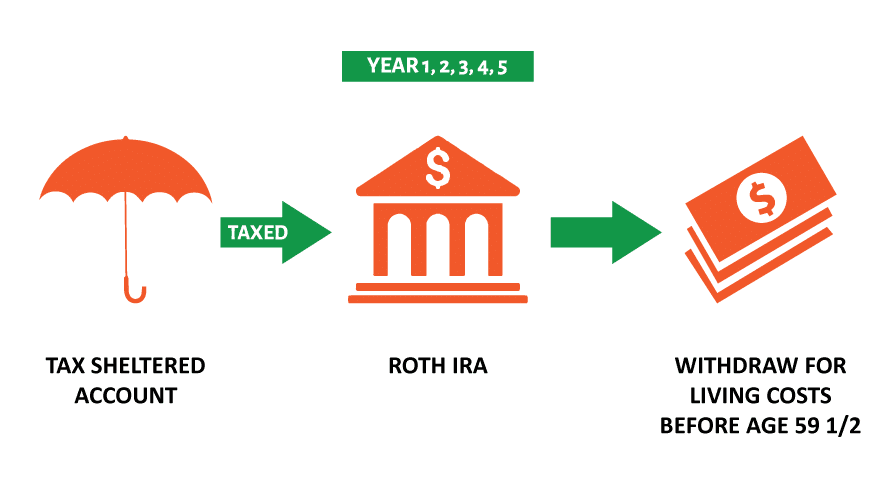
A Roth conversion involves transferring funds from a traditional retirement account—such as a 401(k), 403(b), or individual retirement account (IRA) funded with pre-tax dollars—into a Roth IRA.

The biggest benefit lies in the tax treatment of the converted funds. Once the funds are in the Roth IRA, future growth of those assets is tax-free. Withdrawals in retirement are also tax-free, assuming they meet certain criteria. As with any strategy, there are important considerations to keep in mind.

When you convert funds to a Roth IRA, the amount converted is taxable income in that tax year. For example, if you convert $100,000 from a traditional IRA to a Roth IRA, that $100,000 will be added to your taxable income in the conversion year.

Converting large amounts can result in a significant tax bill and may push you into a higher tax bracket. Even so, using retirement funds to pay taxes may make sense for those looking to convert large IRAs to reduce their future required minimum distributions (RMDs).

The timing of your Roth conversion matters too. Generally, it’s a good idea to convert when your income is lower—for example, after you’ve retired and before you begin drawing Social Security. You may also choose to convert over the course of several years to spread out the tax impacts. But if you can get comfortable with these considerations, a Roth conversion can provide you with benefits beyond tax-free growth and withdrawals.

Some of these benefits are:

  • Tax diversification. Having both traditional and Roth accounts allows you to manage your tax liability in retirement. For example, if your income in a given year is higher than expected, you can withdraw from the Roth IRA without increasing your taxable income.
  • No RMDs. Traditional IRAs and 401(k)s require you to begin taking RMDs at age 73. Roth IRAs have no RMD requirement during your lifetime. With a Roth account, you have more control over your retirement withdrawals and can leave the funds to grow for your heirs.
  • Benefits for heirs. Roth IRAs can be passed on to beneficiaries, who can inherit the account income tax-free. This means your heirs can enjoy the tax-free growth and withdrawals if the Roth IRA has been held for five years or more—a significant advantage, especially if your beneficiaries are in a higher tax bracket.

COMMENTS APPRECIATED

Read, Like and Refer

***

***

Registered Investment Advisor VERSUS Hedge Fund Manager

SPONSOR: http://www.CertifiedMedicalPlanner.org

By Staff Reporters

***

***

A hedge fund is a limited partnership of private investors whose money is pooled and managed by professional fund managers. These managers use a wide range of strategies, including leverage (borrowed money) and the trading of nontraditional assets, to earn above-average investment returns. A hedge fund investment is often considered a risky, alternative investment choice and usually requires a high minimum investment or net worth. Hedge funds typically target wealthy investors.

***

The Hedge Fund manager I am considering is a Registered Investment Adviser [RIA]

QUESTION: What is a Registered Investment Advisor?

If the fund manager is an entity, then any individual you deal with will be a registered investment adviser representative. If the fund manager is an individual, then that individual is a registered investment adviser. In either case, the designation implies several steps have been taken.

In order to become a registered investment adviser, an individual must register for and pass the Series 65 Uniform Investment Adviser Law Exam, a three-hour, 130-question computer-based exam administered by the North American Securities Administrators Association. Topics covered include economics and analysis, investment vehicles, investment recommendations and strategies, and ethics and legal guidelines. A passing score is 70 percent or higher.

Once an individual has passed the Series 65, he or she must then apply via Form ADV to become a registered investment adviser. This application is made to either a state authority or to the SEC, depending on the adviser’s assets under management. If assets under management exceed $30 million, then the adviser must register with the SEC.

Form ADV consists of two parts. Part I provides general information to the regulatory authority. Part II is designed to be distributed to potential clients, and includes disclosure of a decent amount of information about the adviser. If the manager is a registered investment adviser, then you should expect to receive as part of the offering documentation either a current copy of Part II of the adviser’s Form ADV or a brochure that contains all the current information in Part II of Form ADV.

In addition to filing Form ADV and paying a small fee, the registered investment adviser becomes subject to extra administrative/regulatory burden as well as capital adequacy requirements that state the Adviser must maintain certain net worth levels.

By and large, because of the extra administrative burden as well as restrictions on certain activities, hedge fund managers attempt to avoid registering as investment advisers. Whether such managers can or cannot avoid such registration is largely dependent upon the state in which the manager operates. In California, for instance, hedge fund managers must register as investment advisers. In New York, such registration is not necessary. Not surprisingly, hedge fund managers located in California are rare, while they are quite plentiful in New York. 

COMMENTS APPRECIATED

Read, Like, Subscribe and Refer

***

***

HEDGE FUND: Wrap Fees?

Staff Reporters

SPONSOR: http://www.CertifiedMedicalPlanner.org

***

***

A hedge fund is a limited partnership of private investors whose money is pooled and managed by professional fund managers. These managers use a wide range of strategies, including leverage (borrowed money) and the trading of nontraditional assets, to earn above-average investment returns. A hedge fund investment is often considered a risky, alternative investment choice and usually requires a high minimum investment or net worth. Hedge funds typically target wealthy investors.

***

My stock broker is telling me about a “wrap-fee” program involving a hedge fund manager.

QUESTION: What is a Wrap Fee?

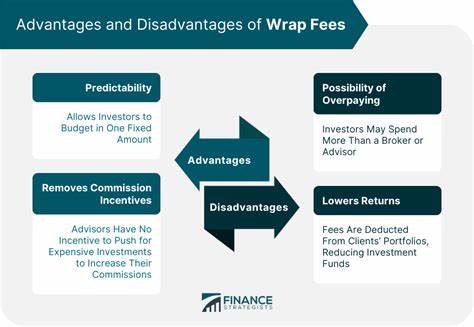
A wrap fee program is a service that provides investment advice and portfolio management to clients for one all-inclusive fee. The fee pays for the services provided to the client, including but not limited to securities transactions, portfolio management, research, brokerage, and administrative services. Wrap fee programs also provide an understanding of a client’s financial goals and objectives; research and selection of assets; implementation of investment decisions; account statements, and access to real-time financial data.

The Investment Advisers Act of 1940 regulates investment advisors when they offer these wrap fee programs and requires them to provide comprehensive disclosure documents before investing. This act helps ensure clients have access to all important information that affects their investment decisions.

QUESTION: Why do I need my stock broker? Can I just go directly to the hedge fund manager?

Yes, you can, but you may find a different fee arrangement when you reach the hedge fund manager, and you may be participating in an unethical transaction. When hedge fund managers set up separate accounts for wrap-fee clients, they agree to take a set fee in exchange for managing this money. They also enter into agreements with one or more brokers to help market this aspect of their money management business. A portion of the wrap fee you pay goes to the broker, and a portion goes to the manager. Incentive compensation is not generally used.

When approached directly, hedge fund managers will typically offer only the hedge fund, complete with incentive compensation and pooled investment features. However, if the hedge fund manager is willing to set up a separate account, it is possible that the investor will find the set fee much less than what he or she would have paid in a wrap fee account through a broker.

Finally, the very large caveat to all this is that the ethics of a hedge fund manager who steals clients from brokers with whom he has a marketing relationship ought to be called into question. And when it comes to hedge funds, the ethics of the manager are of paramount importance.

COMMENTS APPRECIATED

Read, Refer, Like and Subscribe

***

***

TRADITIONAL INVESTMENT PORTFOLIO DIVERSIFICATION MODEL: Routed by Larry Fink CEO of BlackRock?

BREAKING NEWS – MARKET VOLATILITY

By Staff Reporters

***

***

US stocks nosedived on Thursday, with the Dow tumbling more than 1,200 points as President Trump’s surprisingly steep “Liberation Day” tariffs sent shock waves through markets worldwide. The tech-heavy NASDAQ Composite (IXIC) led the sell-off, plummeting over 4%. The S&P 500 (GSPC) dove 3.7%, while the Dow Jones Industrial Average (^DJI) tumbled roughly 3%. [ongoing story].

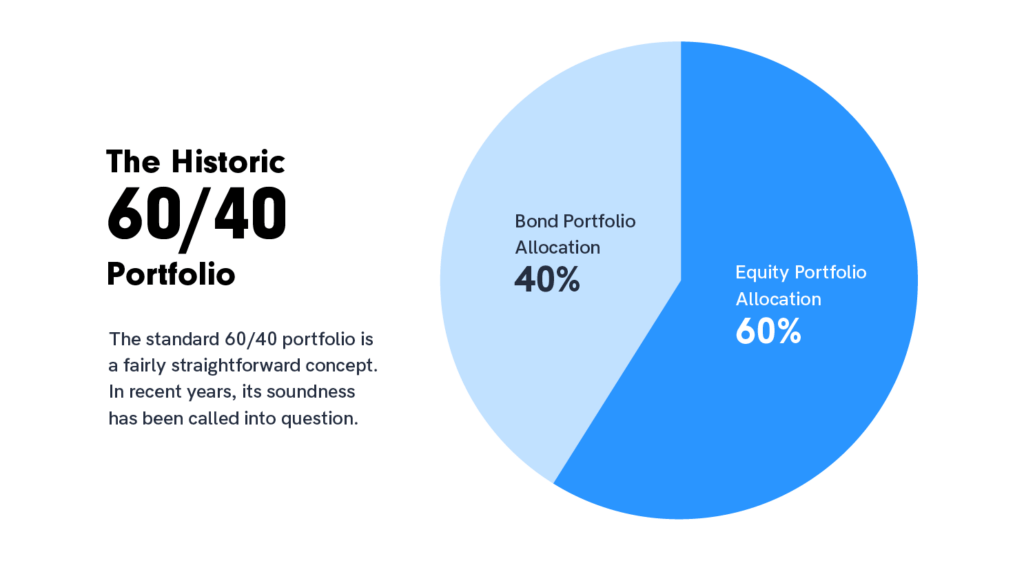
So, does the traditional 60 stock / 40 bond strategy still work or do we need another portfolio model?

***

The 60/40 strategy evolved out of American economist Harry Markowitz’s groundbreaking 1950s work on modern portfolio theory, which holds that investors should diversify their holdings with a mix of high-risk, high-return assets and low-risk, low-return assets based on their individual circumstances.

While a portfolio with a mix of 40% bonds and 60% equities may bring lower returns than all-stock holdings, the diversification generally brings lower variance in the returns—meaning more reliability—as long as there isn’t a strong correlation between stock and bond returns (ideally the correlation is negative, with bond returns rising while stock returns fall).

CORRELATION: https://medicalexecutivepost.com/2024/10/27/correlation-diversification-in-finance-and-investments/

For 60/40 to work, bonds must be less volatile than stocks and economic growth and inflation have to move up and down in tandem. Typically, the same economic growth that powers rallies in equities also pushes up inflation—and bond returns down. Conversely, in a recession stocks drop and inflation is low, pushing up bond prices.

***

  • But, the traditional 60/40 portfolio may “no longer fully represent true diversification,” BlackRock CEO Larry Fink writes in a new letter to investors.
  • Instead, the “future standard portfolio” may move toward 50/30/20 with stocks, bonds and private assets like real estate, infrastructure and private credit, Fink writes.
  • Here’s what experts say individual investors may want to consider before dabbling in private investments.

It may be time to rethink the traditional 60/40 investment portfolio, according to BlackRock CEO Larry Fink. In a new letter to investors, Fink writes the traditional allocation comprised of 60% stocks and 40% bonds that dates back to the 1950s “may no longer fully represent true diversification.

DI-WORSIFICATION: https://medicalexecutivepost.com/2024/04/09/what-is-financial-portfolio-di-worsification-2/

EDUCATION: Books

SPEAKING: Dr. Marcinko will be speaking and lecturing, signing and opining, teaching and preaching, storming and performing at many locations throughout the USA this year! His tour of witty and serious pontifications may be scheduled on a planned or ad-hoc basis; for public or private meetings and gatherings; formally, informally, or over lunch or dinner. All medical societies, financial advisory firms or Broker-Dealers are encouraged to submit a RFP for speaking engagements: MarcinkoAdvisors@outlook.com 

COMMENTS APPRECIATED

Read, Like, Subscribe and Refer

***

***

MERGER ARBITRAGE: Risk Arbitrage Defined

By Dr. David Edward Marcinko; MBA MEd CMP

***

Sponsor: http://www.CertifiedMedicalPlanner.org

***

Merger Arbitrage (a.k.a. Risk Arbitrage)

Merger risk arbitrage, while a subset of a larger strategy called event-driven arbitrage, represents a sufficient portion of the market-neutral universe to warrant separate discussion.

Merger arbitrage earned a bad reputation in the 1980s when Ivan Boesky and others like him came to regard insider trading as a valid investment strategy. That notwithstanding, merger arbitrage is a respected strategy and when executed properly, can be highly profitable. It bets on the outcomes of mergers, takeovers and other corporate events involving two stocks which may become one.

Example:

A classic example is acquisition of SDL Inc. (SDLI) by JDS Uniphase Corp (JDSU). On July 10, 2010 JDSU announced its intent to acquire SDLI by offering to exchange 3.8 shares of its own shares for one share of SDLI. At that time, the JDSU shares traded at $101 and SDLI at $320.5. It was apparent that there was almost 20 percent profit to be realized if the deal went through (3.8 JDSU shares at $101 are worth $383 while SDLI was worth just $320.5).

This apparent mispricing reflected the market’s expectation about the deal’s outcome. Since the deal was subject to the approval of the U.S. Justice Department and shareholders, there was some doubt about its successful completion.

Risk arbitrageurs who did their homework and properly estimated the probability of success bought shares of SDLI and simultaneously sold short shares of JDSU on a 3.8 to 1 ratio, thus locking in the future profit. Convergence took place about eight months later, in February 2011, when the deal was finally approved and the two stocks began trading at exact parity, eliminating the mis-pricing and allowing arbitrageurs to realize a profit.

***

***

Hedge Fund Research defines the strategy as follows:

Merger Arbitrage,also known as risk arbitrage, involves investing in securities of companies that are the subject of some form of extraordinary corporate transaction, including acquisition or merger proposals, exchange offers, cash tender offers and leveraged buy-outs. These transactions will generally involve the exchange of securities for cash, other securities or a combination of cash and other securities. Typically, a manager purchases the stock of a company being acquired or merging with another company, and sells short the stock of the acquiring company. A manager engaged in merger arbitrage transactions will derive profit (or loss) by realizing the price differential between the price of the securities purchased and the value ultimately realized when the deal is consummated. The success of this strategy usually is dependent upon the proposed merger, tender offer or exchange offer being consummated.

When a tender or exchange offer or a proposal for a merger is publicly announced, the offer price or the value of the securities of the acquiring company to be received is typically greater than the current market price of the securities of the target company. Normally, the stock of an acquisition target appreciates while the acquiring company’s stock decreases in value. If a manager determines that it is probable that the transaction will be consummated, it may purchase shares of the target company and in most instances, sell short the stock of the acquiring company. Managers may employ the use of equity options as a low-risk alternative to the outright purchase or sale of common stock. Many managers will hedge against market risk by purchasing S&P put options or put option spreads.

Cite: https://www.hfr.com See § 23.03[E].


COMMENTS APPRECIATED

Read, Learn, Subscribe and Like

***

***

FINANCIAL ADVISORS: Real Monetary Worth?

BY DR. DAVID EDWARD MARCINKO; MBA MEd CMP®

***

SPONSOR: http://www.MarcinkoAssociates.com

***

SO – HOW MUCH IS A “FINANCIAL ADVISOR” REALLY WORTH?

This blog holds a rather uncomplimentary opinion of financial advisors, and the financial services and brokerage industry as a whole; deserved, or not? The entire site hints at this attitude as well, in favor of a going it alone or ME, Inc investing when possible. Nevertheless, it is reasonable to wonder how much boost in net-returns might an educated and informed, fee transparent and honest, fiduciary focused “financial advisor” add to a clients’ investment portfolio; all things being equal [ceteris paribus].

And, can it be quantified?

Well, according to Vanguard Brokerage Services®, perhaps as much as 3%? In a decade long paper from the Valley Forge, PA based mutual fund and ETF giant, Vanguard said financial advisors can generate returns through a framework focused on five wealth management principles:

Being an effective behavioral coach: Helping clients maintain a long-term perspective and a disciplined approach is arguably one of the most important elements of financial advice. (Potential value added: up to 1.50%).

Applying an asset location strategy: The allocation of assets between taxable and tax-advantaged accounts is one tool an advisor can employ that can add value each year. (Potential value added: from 0% to 0.75%).

Employing cost-effective investments: This component of every advisor’s tool kit is based on simple math: Gross return less costs equals net return. (Potential value added: up to 0.45%).

Maintaining the proper allocation through rebalancing: Over time, as investments produce various returns, a portfolio will likely drift from its target allocation. An advisor can add value by ensuring the portfolio’s risk/return characteristics stay consistent with a client’s preferences. (Potential value added: up to 0.35%).

Implementing a spending strategy: As the retiree population grows, an advisor can help clients make important decisions about how to spend from their portfolios. (Potential value added: up to 0.70%).

Source: Financial Advisor Magazine, page 20, April 2014.

Assessment

However, Vanguard notes that while it’s possible all of these principles could add up to 3% in net returns for clients, it’s more likely to be an intermittent number than an annual one because some of the best opportunities to add value happen during extreme market lows and highs when angst or giddiness [fear and greed] can cause investors to bail on their well-thought-out investment plans.

And, is the study applicable to doctors and allied healthcare providers? Doe Vanguard have a vested interest in the topic. What about fee based versus fee-only financial advice?

Conclusion

Finally, recognize the plethora of other financial planning life-cycle topics addressed in this ME-P were not included in the Vanguard investment portfolio-only study a decade ago. 

And what about today with contemporaneous internet advising, chat-rooms, linkedin, robo-advisors, reddit and the like?

COMMENTS APPRECIATED

Read, Subscribe and Like

EDUCATION: Books

***

***

HFR INVESTMENTS: Two Credit Indices

By Staff Reporters

SPONSOR: http://www.MarcinkoAssociates.com

***

***

HFRI Fund of Funds Composite Index invests with multiple managers through funds or managed accounts. The strategy designs a diversified portfolio of managers with the objective of significantly lowering the risk (volatility) of investing with an individual manager. The Fund of Funds manager may allocate funds to numerous managers within a single strategy, or with numerous managers in multiple strategies. The investor has the advantage of diversification among managers and styles with significantly less capital than investing with separate managers. The HFRI Fund of Funds Index is not included in the HFRI Fund Weighted Composite Index.

HFRI Fund Weighted Composite Index is a global, equal-weighted index of over 2,000 single-manager funds that report to HFR Database. Constituent funds report monthly net of all fees performance in U.S. Dollar and have a minimum of $50 Million under management or a twelve (12) month track record of active performance. The HFRI Fund Weighted Composite Index does not include Funds of Hedge Funds.

COMMENTS APPRECIATED

Please subscribe and refer!

***

***

SECTOR ALLOCATION: Mutual Funds

By Staff Reporters

Sponsor: http://www.MarcinkoAssociates.com

***

***

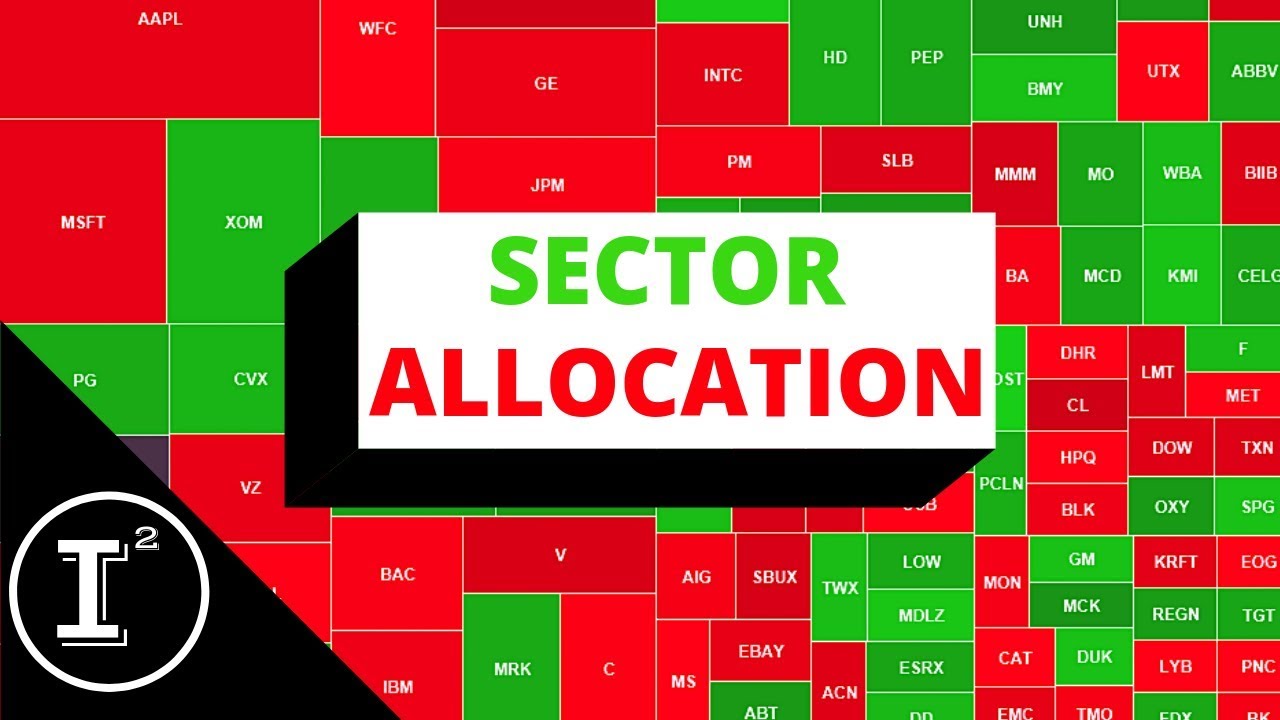
Sector allocation in an equity or fixed-income context refers to a portfolio managers’ decision to invest in a particular broad market sector or industry.

A sector allocation or breakdown can help an investor observe the investment allocations of a mutual or other fund. Fund companies regularly provide sector reporting in their marketing materials. Sector investing can influence investments in the fund. A fund may target a specific sector such as technology, or seek to diversify among many sectors.

Some funds may have restraints on sector investments. This may occur with environmental, social, and governance (ESG) focused funds. These funds seek to exclude industries or companies that their investors consider undesirable for various reasons such as tobacco producers or oil exploration companies.

The ultimate sector allocation decision is likely to combine macroeconomic views with judgments about inter-sector and intra-sector relative values, among other reasons.

COMMENTS APPRECIATED

Subscribe and Refer Today

***

***

INVESTMENT: Management Strategies

By Staff Reporters

***

***

Active investment management strategies are the opposite of passive investment strategies. Active portfolio managers regularly take investment positions that clearly differ from those of the portfolio’s performance benchmark, with the objective of outperforming the benchmark over time.

Passive: https://medicalexecutivepost.com/2024/06/09/active-or-passive-investing-pursuits/

In addition to the upside potential of outperforming the benchmark, there’s also the downside possibility of under performing the benchmark. In an efficient market, there should be roughly the same magnitude of out performers and under performers for any given benchmark. But, markets are not always efficient.

Active non-transparent investment management strategies are Exchange Traded Funds that are actively managed by a portfolio manager or team of managers without daily disclosure of portfolio holdings. Active transparent strategies are daily disclosures of portfolio holdings as an attribute of traditional index-based Exchange Traded Funds (ETFs). Active transparent exchange traded funds are actively managed by a portfolio manager or team of managers. As with index-based ETFs, their portfolio holdings are disclosed daily.

Di-Worsification: https://medicalexecutivepost.com/2024/04/09/what-is-financial-portfolio-di-worsification-2/

NOTE: Absolute return as an investment vehicle seeks to make positive returns by employing investment management techniques that differ from traditional mutual funds. Absolute return investment techniques include using short selling, futures, options, derivatives, arbitrage, leverage and unconventional assets.

CITE: https://www.r2library.com/Resource/Title/0826102549

COMMENTS APPRECIATED

Subscribe Today!

***

***

STOCK POSITION SIZING: How to Construct Investment Portfolios That Protect You

By Vitaliy Katsenelson CFA
For a while in the value investing community the number of positions you held was akin to bragging on your manhood– the fewer positions you owned the more macho an investor you were. 

I remember meeting two investors at a value conference. At the time they had both had “walk on water” streaks of returns. One had a seven-stock portfolio, the other held three stocks. Sadly, the financial crisis humbled both – the three-stock guy suffered irreparable losses and went out of business (losing most of his clients’ money). The other, after living through a few incredibly difficult years and an investor exodus, is running a more diversified portfolio today.

Under-diversification is dangerous, because a few mistakes or a visit from Bad Luck may prove to be fatal to the portfolio.

On the other extreme, you have a mutual fund industry where it is common to see portfolios with hundreds of stocks (I am generalizing). There are many reasons for that. Mutual funds have an army of analysts who need to be kept busy; their voices need to be heard; and thus their stock picks need to find their way into the portfolio (there are a lot of internal politics in this portfolio). 

These portfolios are run against benchmarks; thus their construction starts to resemble Noah’s Ark, bringing on board a few animals (stocks) from each industry. Also, the size of the fund may limit its ability to buy large positions in small companies.

There are several problems with this approach. First, and this is the important one, it breeds indifference: If a 0.5% position doubles or gets halved, it will have little impact on the portfolio. The second problem is that it is difficult to maintain research on all these positions. Yes, a mutual fund will have an army of analysts following each industry, but the portfolio manager is the one making the final buy and sell decisions. Third, the 75th idea is probably not as good as the 30th, especially in an overvalued market where good ideas are scarce.

Then you have index funds. On the surface they are over-diversified, but they don’t suffer from the over-diversification headaches of managed funds. In fact, index funds are both over-diversified and under-diversified. Let’s take the S&P 500 – the most popular of the bunch. It owns the 500 largest companies in the US. You’d think it was a diversified portfolio, right? Well, kind of. The top eight companies account for more than 25% of the index. Also, the construction of the index favors stocks that are usually more expensive or that have recently appreciated (it is market-cap-weighted); thus you are “diversified” across a lot of overvalued stocks.

If you own hundreds of securities that are exposed to the same idiosyncratic risk, then are you really diversified?

Our portfolio construction process is built from a first-principles perspective. If a Martian visited Earth and decided to try his hand at value investing, knowing nothing about common (usually academic) conventions, how would he construct a portfolio?

We want to have a portfolio where we own not too many stocks, so that every decision we make matters – we have both skin and soul in the game in each decision. But we don’t want to own so few that a small number of stocks slipping on a banana will send us into financial ruin.

In our portfolio construction, we are trying to maximize both our IQ and our EQ (emotional quotient). Too few stocks will decapitate our EQ – we won’t be able to sleep well at night, as the relatively large impact of a low-probability risk could have a devastating impact on the portfolio. I wrote about the importance of good sleep before (link here). It’s something we take seriously at IMA.

Holding too many stocks will result in both a low EQ and low IQ. It is very difficult to follow and understand the drivers of the business of hundreds of stocks, therefore a low IQ about individual positions will eventually lead to lower portfolio EQ. When things turn bad, a constant in investing, you won’t intimately know your portfolio – you’ll be surrounded by a lot of (tiny-position) strangers.

Portfolio construction is a very intimate process. It is unique to one’s EQ and IQ. Our typical portfolios have 20–30 stocks. Our “focused” portfolios have 12–15 stocks (they are designed for clients where we represent only a small part of their total wealth). There is nothing magical about these numbers – they are just the Goldilocks levels for us, for our team and our clients. They allow room for bad luck, but at the same time every decision we make matters.

Now let’s discuss position sizing. We determine position sizing through a well-defined quantitative process. The goals of this process are to achieve the following: Shift the portfolio towards higher-quality companies with higher returns. Take emotion out of the portfolio construction process. And finally, insure healthy diversification.

Our research process is very qualitative: We read annual reports, talk to competitors and ex-employees, build financial models, and debate stocks among ourselves and our research network. In our valuation analysis we try to kill the business – come up with worst-case fair value (where a company slips on multiple bananas) and reasonable fair value. 

We also assign a quality rating to each company in the portfolio. Quality is absolute for us – we don’t allow low-quality companies in, no matter how attractive the valuation is (though that doesn’t mean we don’t occasionally misjudge a company’s quality).

The same company, at different stock prices, will merit a higher or lower position size. In other words, if company A is worth (fair value) $100, at $60 it will be a 3% position and at $40 it will be a 5% position. Company B, of a lower quality than A but also worth $100, will be a 2% position at $60 and a 4% position at $40 (I just made up these numbers for illustration purposes). 

In other words, if there are two companies that have similar expected returns, but one is of higher quality than the other, our system will automatically allocate a larger percentage of the portfolio to the higher-quality company. If you repeat this exercise on a large number of stocks, you cannot but help to shift your portfolio to higher-quality, higher-return stocks. It’s a system of meritocracy where we marry quality and return.

Let’s talk about diversification. We don’t go out of our way to diversify the portfolio. At least, not in a traditional sense. We are not going to allocate 7% to mining stocks because that is the allocation in the index or they are negatively correlated to soft drink companies. (We don’t own either and are not sure if the above statement is even true, but you get the point.) 

We try to assemble a portfolio of high-quality companies that are attractively priced, whose businesses march to different drummers and are not impacted by the same risks. Just as bank robbers rob banks because that is where the money is, value investors gravitate towards sectors where the value is. To keep our excitement (our emotions) in check, and to make sure we are not overexposed to a single industry, we set hard limits of industry exposure. These limits range from 10%–20%. We also set limits of country exposure, ranging from 7%–30% (ex-US).

In portfolio construction, our goal is not to limit the volatility of the portfolio but to reduce true risk – the permanent loss of capital. We are constantly thinking about the types of risks we are taking. Do we have too much exposure to a weaker or stronger dollar? To higher or lower interest rates? Do we have too much exposure to federal government spending? I know, risk is a four-letter word that has lost its meaning. But not to us. Low interest rates may have time-shifted risk into the future, but they haven’t cured it.

READ: Position Sizing: How to Construct Portfolios That Protect You

COMMENTS APPRECIATED

Subscribe Today!

***

***

ECONOMIC: Paradoxes all Financial Advisors Should Know

BY DR. DAVID EDWARD MARCINKO MBA MEd CMP™

SPONSOR: http://www.MarcinkoAssociates.com

SPONSOR: http://www.CertifiedMedicalPlanner.org

***

***

A paradox is a logic and self-contradictory statement or a statement that runs contrary to one’s expectation. It is a statement that, despite apparently valid reasoning from true or apparently true premises, leads to a seemingly self-contradictory or a logically unacceptable conclusion. A paradox usually involves contradictory-yet-interrelated elements that exist simultaneously and persist over time. They result in “persistent contradiction between interdependent elements” leading to a lasting “unity of opposites”.

***

And so, as we plan for our financial future thru a New Year Resolution for 2025, it’s helpful to be cognizant of these paradoxes. While there’s nothing we can do to control or change them, there is great value in being aware of them, so we can approach them with the right tools and the right mindset.

According to Adam Grossman, here are seven [7] of the paradoxes that can bedevil financial decision-making, clients and financial advisors, alike:

  1. There’s the paradox that all of the greatest fortunes—Carnegie, Rockefeller, Buffett, Gates—have been made by owning just one stock. And yet the best advice for individual investors is to do the opposite: to own broadly diversified index funds. More: https://tinyurl.com/285vftx4
  2. There’s the paradox that the stock market may appear over valued and yet it could become even more overvalued before it eventually declines. And when it does decline, it may be to a level that is even higher than where it is today.
  3. There’s the paradox that we make plans based on our understanding of the rules—and yet Congress can change the rules on us at any time, as the recent 2024 election results attest.
  4. There’s the paradox that we base our plans on historical averages—average stock market returns, average interest rates, average inflation rates and so on—and yet we only lead one life, so none of us will experience the average.
  5. There’s the paradox that we continue to be attracted to the prestige of high-cost colleges, even though rational analysis that looks at return on investment tells us that lower-cost state schools are usually the better bet.
  6. There’s the paradox that early retirement seems so appealing—and has even turned into a movement—and yet the reality of early retirement suggests that we might be better off staying at our desks.
  7. There’s the paradox that retirees’ worst fear is outliving their money and yet few choose the financial product that is purpose-built to solve that problem: the single-premium immediate annuity.

CITE: https://www.r2library.com/Resource/Title/0826102549

How should you respond to these paradoxes? As you plan for your financial future, embrace the concept of “loosely held views.”

In other words, make financial plans, but continuously update your views, question your assumptions and rethink your priorities.

COMMENTS APPRECIATED

Subscribe Today!

***

***

INVESTING RISKS: Retained Earnings, Weighted Assets and Sequence of Return

By

SPONSOR: http://www.MarcinkoAssociates.com

***

***

Retained Earnings Risk: Profits generated by a company that are not distributed to stockholders as dividends. Instead, they are either reinvested in the business or kept as a reserve for specific objectives, such as paying off debt or purchasing equipment. Retained earnings risks are also called “undistributed profits,” “undistributed earnings,” or “earned surplus.”

Risk-Weighted (or risk-adjusted) Assets: Within the context of measuring the financial stability of banks and other financial institutions, the risk-weighted assets figure is an aggregate of a financial institution’s assets (usually loans to its customers) after the loans have been individually adjusted for their risk. This involves multiplying each loan by a factor that reflects its risk. Low-risk loans are multiplied by a low number, high-risk by high. The aggregate number can then be used to calculate the financial institution’s capital ratio. Lower risk-weighted assets typically result in higher capital ratios, and higher risk-weighted assets usually translate to lower capital ratios.

Sequence-of-Returns Risk: The risk of market conditions impacting the overall returns of an investment portfolio during the period when a retiree is first starting to withdrawal money from investments as income. For example, if a retiree has to withdrawal income from his or her portfolio when market prices are depressed, the portfolio may lose out on the potential returns that income could have made once market prices recovered.

COMMENTS APPRECIATED

Subscribe Today!

***

***

HFRI: Fund of Funds Composite Index

By Dr. David Edward Marcinko MBA MEd

SPONSOR: http://www.MarcinkoAssociates.com

***

***

HFRI: Fund of Funds invests with multiple managers through funds or managed accounts. The strategy designs a diversified portfolio of managers with the objective of significantly lowering the risk (volatility) of investing with an individual manager.

CITE: https://www.r2library.com/Resource/Title/0826102549

The Fund of Funds manager may allocate funds to numerous managers within a single strategy, or with numerous managers in multiple strategies. The investor has the advantage of diversification among managers and styles with significantly less capital than investing with separate managers.

HFRI: https://hfr-wp-s3.s3.amazonaws.com/wp-content/uploads/2024/03/05142042/HFRI_formulaic_methodology.pdf

The HFRI Fund of Funds Index is not included in the HFRI Fund Weighted Composite Index.

COMMENTS APPRECIATED

Please subscribe!

Thank You

****

****

DAILY UPDATE: Health Plan Costs Up and Stock Markets Upbeat

MEDICAL EXECUTIVE-POST TODAY’S NEWSLETTER BRIEFING

***

Essays, Opinions and Curated News in Health Economics, Investing, Business, Management and Financial Planning for Physician Entrepreneurs and their Savvy Advisors and Consultants

Serving Almost One Million Doctors, Financial Advisors and Medical Management Consultants Daily

A Partner of the Institute of Medical Business Advisors , Inc.

http://www.MedicalBusinessAdvisors.com

SPONSORED BY: Marcinko & Associates, Inc.

***

http://www.MarcinkoAssociates.com

Daily Update Provided By Staff Reporters Since 2007.
How May We Serve You?
© Copyright Institute of Medical Business Advisors, Inc. All rights reserved. 2024

REFER A COLLEAGUE: MarcinkoAdvisors@msn.com

SPONSORSHIPS AVAILABLE: https://medicalexecutivepost.com/sponsors/

ADVERTISE ON THE ME-P: https://tinyurl.com/ytb5955z

Your Referral Count -0-

Despite inflation cooling down, employer health plan costs are heating up, according to a September analysis from consulting firm consulting firm Mercer.

CITE: https://www.r2library.com/Resource

STOCKS UP

STOCKS DOWN

Stellantis, the European company behind Chrysler, Dodge, and Jeep sank 12.49% after it warned that sales in the second half of its fiscal year will come in lower than expected. The bad news pulled down shares of competitors Aston Martin (which fell 24.51%), Ford (a 2% drop), and GM (3.53% lower today).

  • Carnival beat top and bottom line estimates last quarter, and posted record revenue for the third quarter. But shares stumbled 0.32% on management’s forecast that earnings in the fourth quarter will disappoint. Rival cruise companies all dropped in sympathy: Royal Caribbean fell 0.10%, while Norwegian Cruise Line Holdings tumbled 2.10%.
  • Crypto stocks took a beating today after bitcoin’s latest rally fizzled out. Coinbase fell 6.83%, while MicroStrategy lost 4.32%.

CITE: https://tinyurl.com/2h47urt5

Here’s where the major stock market benchmarks ended:

  • The SPX gained 24.26 points (0.42%) to 5,762.48; the Dow Jones Industrial Average® ($DJI) rose 17.15 points (0.04%) to 42,330.15; the NASDAQ Composite® ($COMP) added 69.58 points (0.38%) to 18,189.17.
  • The 10-year Treasury note yield (TNX) climbed five basis points to 3.8%, near the high of its recent range.
  • The CBOE Volatility Index® (VIX) eased to 16.66 after climbing above 17 earlier today but remains up from a week ago.

CITE: https://tinyurl.com/tj8smmes

COMMENTS APPRECIATED

PLEASE SUBSCRIBE: MarcinkoAdvisors@msn.com

Thank You

***

***

***

***

EDUCATIONAL TEXTBOOKS: https://tinyurl.com/4zdxuuwf

***

What is Financial Portfolio “DI-WORSIFICATION”

Versus Di-Versification

BUSINESS MANAGEMENT: The term “diworsification” was coined by legendary investor Peter Lynch in his book, One up on Wall Street, to describe the over-expansion of a company into new growth projects and businesses they do not fully understand and which do not align with the company’s core competencies.

See the source image

PORTFOLIO MANAGEMENT: The term diworsification has since grown to also refer to over-diversifying an investment portfolio in such a way that it reduces the overall risk-return characteristics.

ORDER CITATION: https://www.r2library.com/Resource/Title/0826102549

INVESTOPEDIA: https://www.investopedia.com/terms/d/diworsification.asp

READ: https://medicalexecutivepost.com/2014/11/12/the-negative-short-term-implications-of-diversification/

YOUR COMMENTS ARE APPRECIATED.

Thank You

***

FINANCIAL ASSET CLASSES: Like a Box of Valentine Chocolates?

On Valentine’s Day Diversification

                                         By Rick Kahler MS CFP® ChFC CCIM 

                                                   www.KahlerFinancial.com

Rick Kahler CFPThe stock markets crashed yesterday after the new CPI report and update.

Nevertheless, with displays of Valentine candy in every store, February is the perfect time to talk about chocolate. A creative financial planner might even steal Forrest Gump’s analogy and say, “Diversification is like a box of chocolates.”

Except that it isn’t.

True, a box of chocolates might have a lot of variety. Cream centers. Caramels. Nougats. Nuts. Dark chocolate. Milk chocolate. Truffles. Yet it’s all still chocolate.

Retirement Savings

Buying that box would be like investing your retirement savings in a variety of US stocks. Even if you had a dozen different companies, they would all be the same basic category of investment, or asset class.

For example, suppose you gave your true love a slightly more diversified Valentine gift made up of chocolates, Girl Scout cookies, baklava, and apple pie. That would compare to investing in different types of stocks like US, international, or emerging markets. But, everything would still be dessert.

Wiser Physician-Investors

You would be a wiser doctor-investor if you took your true love out for dinner and had a meat course, a salad, vegetables, bread, dessert, and wine. Now you’d start to see real diversification.

In addition to US, international, and emerging market stocks (all dessert), you might have some other asset classes like US and international bonds (meat), real estate (bread), cash (salad), commodities (veggies), and absolute return strategies (wine).

***

box

***

Long Term Growth Generator

This kind of asset class diversification is the best investment strategy for long-term growth. My preference is eight or nine different classes. For many clients, I recommend a mix of US and international stocks and bonds, real estate investment trusts, a commodities index fund, market neutral funds like merger arbitrage and managed futures, junk bonds, and Treasury Inflation Protected Securities (TIPS).

Market Fluctuations

Fluctuations in the market will tend to affect the various securities within a given asset class in the same way. Most US stocks, for example, would generally move up or down at the same times. So, owning shares of several different stocks wouldn’t protect you against changes in the market. When a portfolio is well-diversified, the volatility is reduced even during times when the markets are moving strongly up or down.

When I talk about investing in a variety of asset classes, I don’t mean owning stocks, real estate, gold, or other assets directly. For individual investors, mutual funds are a much better choice. Occasionally, someone will ask me, “But why should I have everything in mutual funds? That isn’t diversified, is it?”

Mutual Funds

Mutual funds are not an asset class. A mutual fund isn’t like a type of food; it’s like the plate you put the food on. A single plate might hold one food item or servings from several different food groups. More specifically, mutual funds are pools of money invested by managers. One fund might invest in real estate investment trusts (REITS). Another might have international stocks chosen for their high returns. Still others invest in a diversified mix of asset classes. The mutual fund is just the container that holds the investments.

heart[Courtesy GE Healthcare]

Annuities

Annuities and IRAs aren’t asset classes, either, but are also examples of different types of containers that hold investments. If you use your IRA to purchase an annuity, all you’re doing is stacking one plate on top of another. It doesn’t give you another asset class, it just costs you more for the second plate.

Assessment

Having a box of chocolates for dinner might seem more appealing in the short term than eating a balanced meal. Investing in the “get-rich-now” flavor of the month might seem tempting, too. Yet in the long run, asset class diversification is the best way to make sure you have a healthy investment diet.

***

February 14th, 2024

***

Conclusion

Your thoughts and comments on this ME-P are appreciated. Feel free to review our top-left column, and top-right sidebar materials, links, URLs and related websites, too. Then, subscribe to the ME-P. It is fast, free and secure.

Speaker: If you need a moderator or speaker for an upcoming event, Dr. David E. Marcinko; MBA – Publisher-in-Chief of the Medical Executive-Post – is available for seminar or speaking engagements. Contact: MarcinkoAdvisors@msn.com

OUR OTHER PRINT BOOKS AND RELATED INFORMATION SOURCES:

***

  Comprehensive Financial Planning Strategies for Doctors and Advisors: Best Practices from Leading Consultants and Certified Medical Planners(TM)* 8

What is Financial Portfolio “DI-WORSIFICATION”

Versus Di-Versification

BUSINESS MANAGEMENT: The term “diworsification” was coined by legendary investor Peter Lynch in his book, One up on Wall Street, to describe the over-expansion of a company into new growth projects and businesses they do not fully understand and which do not align with the company’s core competencies.

See the source image

PORTFOLIO MANAGEMENT: The term diworsification has since grown to also refer to over-diversifying an investment portfolio in such a way that it reduces the overall risk-return characteristics.

ORDER CITATION: https://www.r2library.com/Resource/Title/0826102549

INVESTOPEDIA: https://www.investopedia.com/terms/d/diworsification.asp

RELATED: https://medicalexecutivepost.com/2021/05/29/modern-portfolio-theory-and-asset-correlation-not-allocation/

MORE: https://medicalexecutivepost.com/2014/11/12/the-negative-short-term-implications-of-diversification/

YOUR COMMENTS ARE APPRECIATED.

Thank You

***

How [DOCTORS] Construct Investment Portfolios That Protect Them

***

ASK AN ADVISOR

***

Vitaliy N. Katsenelson, CFA - YouTube

By Vitaliy N. Katsenelson, CFA

***

Question: How do you construct investment portfolios and determine position sizes (weights) of individual stocks?

I wanted to discuss this topic for a long time, so here is a very in-depth answer.
CITE: https://www.r2library.com/Resource/Title/082610254

Answer
For a while in the value investing community the number of positions you held was akin to bragging on your manhood– the fewer positions you owned the more macho an investor you were. I remember meeting two investors at a value conference. At the time they had both had “walk on water” streaks of returns. One had a seven-stock portfolio, the other held three stocks. Sadly, the financial crisis humbled both – the three-stock guy suffered irreparable losses and went out of business (losing most of his clients’ money). The other, after living through a few incredibly difficult years and an investor exodus, is running a more diversified portfolio today.

Under-diversification: Is dangerous, because a few mistakes or a visit from Bad Luck may prove to be fatal to the portfolio.

On the other extreme, you have a mutual fund industry where it is common to see portfolios with hundreds of stocks (I am generalizing). There are many reasons for that. Mutual funds have an army of analysts who need to be kept busy; their voices need to be heard; and thus their stock picks need to find their way into the portfolio (there are a lot of internal politics in this portfolio). These portfolios are run against benchmarks; thus their construction starts to resemble Noah’s Ark, bringing on board a few animals (stocks) from each industry. Also, the size of the fund may limit its ability to buy large positions in small companies.

There are several problems with this approach. First, and this is the important one, it breeds indifference: If a 0.5% position doubles or gets halved, it will have little impact on the portfolio. The second problem is that it is difficult to maintain research on all these positions. Yes, a mutual fund will have an army of analysts following each industry, but the portfolio manager is the one making the final buy and sell decisions. Third, the 75th idea is probably not as good as the 30th, especially in an overvalued market where good ideas are scarce.

Then you have index funds. On the surface they are over-diversified, but they don’t suffer from the over-diversification headaches of managed funds. In fact, index funds are both over-diversified and under-diversified. Let’s take the S&P 500 – the most popular of the bunch. It owns the 500 largest companies in the US. You’d think it was a diversified portfolio, right? Well, kind of. The top eight companies account for more than 25% of the index. Also, the construction of the index favors stocks that are usually more expensive or that have recently appreciated (it is market-cap-weighted); thus you are “diversified” across a lot of overvalued stocks.

If you own hundreds of securities that are exposed to the same idiosyncratic risk, then are you really diversified?

Our portfolio construction process is built from a first-principles perspective. If a Martian visited Earth and decided to try his hand at value investing, knowing nothing about common (usually academic) conventions, how would he construct a portfolio?

We want to have a portfolio where we own not too many stocks, so that every decision we make matters – we have both skin and soul in the game in each decision. But we don’t want to own so few that a small number of stocks slipping on a banana will send us into financial ruin.

In our portfolio construction, we are trying to maximize both our IQ and our EQ (emotional quotient). Too few stocks will decapitate our EQ – we won’t be able to sleep well at night, as the relatively large impact of a low-probability risk could have a devastating impact on the portfolio. I wrote about the importance of good sleep before (link here). It’s something we take seriously at IMA.

Holding too many stocks will result in both a low EQ and low IQ. It is very difficult to follow and understand the drivers of the business of hundreds of stocks, therefore a low IQ about individual positions will eventually lead to lower portfolio EQ. When things turn bad, a constant in investing, you won’t intimately know your portfolio – you’ll be surrounded by a lot of (tiny-position) strangers.

Portfolio construction is a very intimate process. It is unique to one’s EQ and IQ. Our typical portfolios have 20–30 stocks. Our “focused” portfolios have 12–15 stocks (they are designed for clients where we represent only a small part of their total wealth). There is nothing magical about these numbers – they are just the Goldilocks levels for us, for our team and our clients. They allow room for bad luck, but at the same time every decision we make matters.

Now let’s discuss position sizing. We determine position sizing through a well-defined quantitative process. The goals of this process are to achieve the following: Shift the portfolio towards higher-quality companies with higher returns. Take emotion out of the portfolio construction process. And finally, insure healthy diversification.

Our research process is very qualitative: We read annual reports, talk to competitors and ex-employees, build financial models, and debate stocks among ourselves and our research network. In our valuation analysis we try to kill the business – come up with worst-case fair value (where a company slips on multiple bananas) and reasonable fair value. We also assign a quality rating to each company in the portfolio. Quality is absolute for us – we don’t allow low-quality companies in, no matter how attractive the valuation is (though that doesn’t mean we don’t occasionally misjudge a company’s quality).

The same company, at different stock prices, will merit a higher or lower position size. In other words, if company A is worth (fair value) $100, at $60 it will be a 3% position and at $40 it will be a 5% position. Company B, of a lower quality than A but also worth $100, will be a 2% position at $60 and a 4% position at $40 (I just made up these numbers for illustration purposes). In other words, if there are two companies that have similar expected returns, but one is of higher quality than the other, our system will automatically allocate a larger percentage of the portfolio to the higher-quality company. If you repeat this exercise on a large number of stocks, you cannot but help to shift your portfolio to higher-quality, higher-return stocks. It’s a system of meritocracy where we marry quality and return.

Let’s talk about diversification. We don’t go out of our way to diversify the portfolio. At least, not in a traditional sense. We are not going to allocate 7% to mining stocks because that is the allocation in the index or they are negatively correlated to soft drink companies. (We don’t own either and are not sure if the above statement is even true, but you get the point.) We try to assemble a portfolio of high-quality companies that are attractively priced, whose businesses march to different drummers and are not impacted by the same risks.  Just as bank robbers rob banks because that is where the money is, value investors gravitate towards sectors where the value is. To keep our excitement (our emotions) in check, and to make sure we are not overexposed to a single industry, we set hard limits of industry exposure. These limits range from 10%–20%. We also set limits of country exposure, ranging from 7%–30% (ex-US).

CONCLUSION

In portfolio construction, our goal is not to limit the volatility of the portfolio but to reduce true risk – the permanent loss of capital. We are constantly thinking about the types of risks we are taking. Do we have too much exposure to a weaker or stronger dollar? To higher or lower interest rates? Do we have too much exposure to federal government spending? I know, risk is a four-letter word that has lost its meaning. But not to us. Low interest rates may have time-shifted risk into the future, but they haven’t cured it.

***

COMMENTS APPRECIATED

Thank You

Subscribe to the Medical Executive-Post

***

***

Should a diversified investment portfolio produce the same return as US stocks?

 On unrealistic expectations

By Rick Kahler CFP®

I have a complaint. The pot pie at one of my favorite restaurants doesn’t taste like a pot roast. I keep complaining, but nothing changes. I am thinking I may need to find a new restaurant because their cooking skills are just not living up to my expectations.

Or maybe I need to adjust my expectations. How can I expect a pot pie—a savory pastry with a mixture of potatoes, vegetables, and beef chunks—to taste like a beef pot roast? Even though beef is an ingredient in a pot pie, no reasonable diner would expect the two meals to taste the same.

Investing

But, that same reasonable diner might be perfectly comfortable expecting that their diversified investment portfolio should produce the same return as US stocks. This is just as unrealistic as it is to expect pot pie and pot roast to produce the same taste.

A diversified portfolio has a variety of investments in it, just as a pot pie has a variety of ingredients in it. A pot pie provides a complete meal with a nice balance of grain, veggies, and protein with a tasty blend of spices. A pot roast provides just one component of a balanced meal, a heavy dose of protein.

Likewise, a diversified portfolio is a meal in itself. A particular recipe that I like has the equivalent of a flour crust made of high quality bonds, high yield bonds, and Treasury Inflation Protected Securities. Stuffed inside is a delicious blend of real estate investment trusts, international stocks, US stocks, emerging market stocks, commodities, all flavored with managed futures, a long/short fund, and a put/write investment strategy.

The flavor of the diversified portfolio is completely different from an investment of just US stocks. Yet investors regularly try to compare the two.

EXAMPLE:

A few months ago, a reader wanted to know why her small account with a well-known brokerage house was doing three times better than her IRA managed by a fee-only advisor. She was thinking she should put all her IRA money with the brokerage firm.

Following up revealed the ingredients in her IRA: 30% was in a global mix of 1,100 high quality bonds, 300 high yield bonds, and 20 TIPS. The remaining 70% was in a global mix of 12,000 US, international and emerging market companies of all sizes, 300 real estate investment trusts, 21 commodities, a long/short fund with hundreds of positions, and a smattering of other investment strategies.

The small brokerage account had just one ingredient: 31 large US stocks.

Over the previous 15 months, the globally diversified portfolio had returned 9% and the 31 US stocks had returned 21%. Of course, the US stocks in her diversified portfolio had also returned 21%, but just like the chunks of beef in a pot pie, they only made up part of the mix, in this case 17%. So, comparing the diversified pot pie of her IRA return to the single-ingredient pot roast of her brokerage account was not valid.

Over the past nine years nothing has done better among major asset classes than US stocks. Any diversified portfolio will have underperformed them. That phenomenon will inevitably end. The time will come, sooner or later, when US stocks will be one of the worst performers of the decade.

***

***

Assessment

Just as a diversified portfolio will often garner smaller returns when US stocks rise, it will also have substantially higher returns when US stocks crash. At that time, those with diversified portfolios will be thankful that they stayed the course. And millions of other investors will be wishing they had ordered pot pie instead of pot roast.

Conclusion

Your thoughts and comments on this ME-P are appreciated. Feel free to review our top-left column, and top-right sidebar materials, links, URLs and related websites, too. Then, subscribe to the ME-P. It is fast, free and secure. 

Speaker: If you need a moderator or speaker for an upcoming event, Dr. David E. Marcinko; MBA – Publisher-in-Chief of the Medical Executive-Post – is available for seminar or speaking engagements. https://medicalexecutivepost.com/dr-david-marcinkos-bookings/ 

Contact: MarcinkoAdvisors@msn.com

***

https://www.crcpress.com/Comprehensive-Financial-Planning-Strategies-for-Doctors-and-Advisors-Best/Marcinko-Hetico/p/book/9781482240283

***

The Role of Asset Classes

Join Our Mailing List

By Charles Schwab

Various Asset Classes and Diversification

***

infographic_web-1-updated_3

***

More:

Conclusion

Your thoughts and comments on this ME-P are appreciated. Feel free to review our top-left column, and top-right sidebar materials, links, URLs and related websites, too. Then, subscribe to the ME-P. It is fast, free and secure.

Speaker: If you need a moderator or speaker for an upcoming event, Dr. David E. Marcinko; MBA – Publisher-in-Chief of the Medical Executive-Post – is available for seminar or speaking engagements. Contact: MarcinkoAdvisors@msn.com

OUR OTHER PRINT BOOKS AND RELATED INFORMATION SOURCES:

Risk Management, Liability Insurance, and Asset Protection Strategies for Doctors and Advisors: Best Practices from Leading Consultants and Certified Medical Planners™8Comprehensive Financial Planning Strategies for Doctors and Advisors: Best Practices from Leading Consultants and Certified Medical Planners™

***

Is There an “Efficient Frontier” for Medicare Payment Reform?

An Essay on Financial Health Risk Self-Selection

By Dr. David Edward Marcinko MBA CMP™

http://www.CertifiedMedicalPlanner.org

[Publisher-in-Chief]

Health economist Austin Frakt PhD, of the Incidental Economist, alerted us to this recent publication “Achieving Cost Control, Care Coordination, and Quality Improvement through Incremental Payment System Reform”, by and from: (Averill, et al., JACM, 2010). The paper describes various Medicare payment reform methods.

The Abstract

The healthcare reform goal of increasing eligibility and coverage cannot be realized without simultaneously achieving control over healthcare costs. The reform of existing payment systems can provide the financial incentive for providers to deliver care in a more coordinated and efficient manner with minimal changes to existing payer and provider infrastructure. Pay for performance, best practice pricing, price discounting, alignment of incentives, the medical home, payment by episodes, and provider performance reports are a set of payment reforms that can result in lower costs, better coordination of care, improved quality of care, and increased consumer involvement. These reforms can produce immediate Medicare annual savings of $10 billion and create the framework for future savings by establishing financial incentives for long-term provider behavior changes that can lead to lower costs.

Patient Risk Sharing

Of course, the third dimension of risk [beyond traditional doctor/hospital provider and Medicare insurer] would be the risk borne by the patient insured (degree of cost-sharing or “consumer responsibility”). This relationship is represented diagrammatically right here:

Brief Review of MPT

Modern portfolio theory (MPT) attempts to maximize investment portfolio expected returns for a given level of risk by carefully choosing the proportions of various asset classes. As a mathematical formulation, the concept of diversification aims to select a collection of assets that collectively lowers risk [measured by standard deviation] more than any individual asset class. This pleasing point is known as the “efficient frontier.” And, it can be seen intuitively because different types of assets often change in value in opposite ways.

Is There an Insurance Efficient Frontier?

Health insurance [medical payment reform] econometric considerations may now be extended in this analogy to suggest that medical providers and CMS payers are the surrogates for two dimensions in the MPT. The third might be the risks borne by the patient insured (degree of cost-sharing or “consumer responsibility”), as above.

Assessment

Then, patients could self-select where they wish to fall on the health insurance “efficient frontier”, balancing all three dimensions as in MPT, along with lifestyle and moral hazard considerations, etc.

Conclusion

And so, your thoughts and comments on this ME-P are appreciated. Is there an “efficient frontier” for Medicare payment reform?

Feel free to review our top-left column, and top-right sidebar materials, links, URLs and related websites, too. Then, subscribe to the ME-P. It is fast, free and secure.

Link: http://feeds.feedburner.com/HealthcareFinancialsthePostForcxos

Speaker: If you need a moderator or speaker for an upcoming event, Dr. David E. Marcinko; MBA – Publisher-in-Chief of the Medical Executive-Post – is available for seminar or speaking engagements. Contact: MarcinkoAdvisors@msn.com

OUR OTHER PRINT BOOKS AND RELATED INFORMATION SOURCES:

Product DetailsProduct DetailsProduct Details

Product Details  Product Details

   Product Details 

Asset Allocation Methods for Physician-Investors

What’s Old … is New Again?

By Dr. David Edward Marcinko; MBA, CMP™

Publisher-in-Chiefdem23

Asset allocation policies, incorporating the risk/return fundamental equation, have traditionally been classified under the following approaches: Principal Stability and Income, Income, Income-Oriented, Balanced, Growth, and Aggressive Growth.

Traditional Concepts

In all forms of traditional asset allocation and diversification policy approaches, the physician-investor is presumed to diversify within the chosen asset class in order to reduce the potential for specific or unsystematic risk.

Principal stability and income approach

Objective: Income, liquidity, and stability of principal.

Investment: Shorter-term fixed income securities with a large concentration in money market exposure to enhance liquidity and price stability. Accounts tend to maintain cash equivalent reserve balance of 30–50% of the portfolio.

Income approach

Objective: Maximum income.

Investment: 100% fixed income exposure.

Income portfolios arise from the traditional notion that an investor should spend only income and reinvest capital gains. Sometimes this is a legal requirement, as in a trust that has an income beneficiary distinct from the principal beneficiary.

Income-oriented approach

Objective: Income and some capital growth.

Investment: Accounts tend to maintain 15–35% in equity investments; balance of investment in fixed income.

Income and growth approach

Objective: Capital growth and income using a balanced approach to limit volatility.

Investment:  Accounts tend to maintain 45–65% equity exposure; balance of investment in fixed income.

Income and growth portfolio policies generally refer to both the fixed income and equity portions of the portfolios. Because of the income bias, the overall stock portion of the portfolio will usually have a dividend yield greater than the market yield. This method allows the portfolio manager to invest in some no- or low-dividend yielding issues.

Growth approach

Objective: Capital growth with income as a secondary objective.

Investment: Accounts tend to maintain between 65%–85% equity exposure; balance of investment in fixed income, usually cash reserves.

Aggressive growth approach

Objective: Long-term capital growth.

Investment: Accounts maintain 100% equity exposure. Exposure to variety of equity types normal (small capitalization, international, emerging markets, etc).

fp-book15

Assessment Of course, the above is much more accurate during stable economic times, than it is today; don’t you think? Are newer concepts required today … or is past … prologue.

Link: https://healthcarefinancials.wordpress.com/2008/10/25/new-wave-thoughts-on-investing/

Conclusion

And so, your thoughts and comments on this Medical Executive-Post are appreciated.

Speaker: If you need a moderator or speaker for an upcoming event, Dr. David E. Marcinko; MBA – Publisher-in-Chief of the Executive-Post – is available for seminar or speaking engagements. Contact: MarcinkoAdvisors@msn.com  or Bio: www.stpub.com/pubs/authors/MARCINKO.htm

Get our Widget: Get this widget!

Our Other Print Books and Related Information Sources:

Practice Management: http://www.springerpub.com/prod.aspx?prod_id=23759

Physician Financial Planning: http://www.jbpub.com/catalog/0763745790

Medical Risk Management: http://www.jbpub.com/catalog/9780763733421

Healthcare Organizations: www.HealthcareFinancials.com

Health Administration Terms: www.HealthDictionarySeries.com

Physician Advisors: www.CertifiedMedicalPlanner.com

Subscribe Now: Did you like this Medical Executive-Post, or find it helpful, interesting and informative? Want to get the latest E-Ps delivered to your email box each morning? Just subscribe using the link below. You can unsubscribe at any time. Security is assured.

Link: http://feeds.feedburner.com/HealthcareFinancialsthePostForcxos