RECESSION: A Heightened Risk in 2026?

By Dr. David Edward Marcinko MBA MEd

***

***

SPONSOR: http://www.MarcinkoAssociates.com

The U.S. faces a heightened risk of recession in 2026, with economic indicators, expert forecasts, and global instability contributing to widespread concern. While some analysts remain cautiously optimistic, the probability of a downturn is significant.

The potential for a U.S. recession in 2026 is a topic of growing concern among economists, policymakers, and investors. According to UBS, the probability of a recession has surged to 93% based on hard data analysis, including employment trends, industrial production, and credit market signals. This alarming figure reflects a convergence of economic stressors that could culminate in a downturn by the end of 2026.

One of the most prominent warning signs is the inverted yield curve, a historically reliable predictor of recessions. When short-term interest rates exceed long-term rates, it suggests that investors expect weaker growth ahead. This inversion, coupled with elevated federal debt and persistent inflationary pressures, has led many analysts to forecast a slowdown in consumer spending and business investment.

Despite these concerns, some sectors—particularly artificial intelligence (AI)—are providing temporary buoyancy. The AI infrastructure boom has fueled GDP growth and market optimism, with global AI investment projected to reach $500 billion by 2026.

However, experts warn that this surge may be masking underlying economic fragility. If AI-driven investment slows, the economy could quickly lose momentum, revealing vulnerabilities in other sectors such as manufacturing and retail.

Global factors also play a critical role. Trade tensions, geopolitical instability, and fluctuating oil prices have created an unpredictable environment. The lingering effects of tariff pass-throughs and policy uncertainty are expected to intensify in 2026, further straining the U.S. economy. Additionally, speculative forecasts—like those from mystic Baba Vanga—have captured public imagination by predicting a “cash crush” that could disrupt both virtual and physical currency systems, although such claims lack empirical support. Not all forecasts are dire. Oxford Economics suggests that while growth will moderate, the U.S. may avoid a full-blown recession thanks to continued investment incentives and robust AI-related spending. Their above-consensus GDP forecast hinges on the assumption that business confidence remains stable and that fiscal policy supports non-AI sectors effectively.

Nevertheless, the risks are real and multifaceted. The Polymarket prediction platform currently estimates a 43% chance of a U.S. recession by the end of 2026, based on criteria such as two consecutive quarters of negative GDP growth or an official declaration by the National Bureau of Economic Research.

In conclusion, while the U.S. economy may continue to navigate “choppy waters,” the potential for a recession in 2026 is substantial. Policymakers must remain vigilant, balancing stimulus with fiscal discipline, and addressing structural weaknesses before temporary growth drivers fade.

The coming year will be pivotal in determining whether the U.S. can steer clear of recession or succumb to the mounting pressures.

COMMENTS APPRECIATED

EDUCATION: Books

SPEAKING: Dr. Marcinko will be speaking and lecturing, signing and opining, teaching and preaching, storming and performing at many locations throughout the USA this year! His tour of witty and serious pontifications may be scheduled on a planned or ad-hoc basis; for public or private meetings and gatherings; formally, informally, or over lunch or dinner. All medical societies, financial advisory firms or Broker-Dealers are encouraged to submit an RFP for speaking engagements: CONTACT: Ann Miller RN MHA at MarcinkoAdvisors@outlook.com -OR- http://www.MarcinkoAssociates.com

Like, Refer and Subscribe

***

***

EDI: In Financial Planning

Subscribe to continue reading

Subscribe to get access to the rest of this post and other subscriber-only content.

NEW MEDICAL PRACTICE: Business Plan Construction

By Dr. David Edward Marcinko MBA MEd

***

***

How to Write a New Medical Practice Business Plan

Starting a new medical practice is both an exciting and daunting endeavor. Beyond the clinical expertise required to deliver quality care, success hinges on the ability to structure the practice as a sustainable business. A well-crafted business plan serves as the blueprint for this journey, guiding decisions, attracting investors, and ensuring long-term viability. Writing such a plan requires clarity, foresight, and attention to detail.

Defining the Vision and Mission

The first step in writing a medical practice business plan is articulating the vision and mission. The vision describes the long-term aspirations of the practice, such as becoming a trusted community healthcare provider or specializing in cutting-edge treatments. The mission, on the other hand, defines the practice’s purpose and values, focusing on patient care, accessibility, and innovation. These statements set the tone for the entire plan and help align staff, investors, and patients with the practice’s goals.

***

***

Market Analysis

A medical practice does not exist in isolation; it operates within a competitive and regulated environment. Conducting a thorough market analysis is essential. This includes identifying the demographics of the target patient population, understanding local healthcare needs, and evaluating competitors. For example, a practice opening in a suburban area may find demand for family medicine, while one in an urban center may identify opportunities in urgent care or specialty services. Market analysis also involves assessing trends such as telemedicine adoption, insurance coverage shifts, and patient expectations for convenience and transparency.

Services and Differentiation

Once the market landscape is clear, the plan should outline the services the practice will provide. These may range from general primary care to specialized offerings such as dermatology, pediatrics, or orthopedics. It is important to highlight how the practice will differentiate itself. Differentiation could come from extended hours, patient-centered technology, holistic care approaches, or specialized expertise. Clearly defining services ensures that the practice meets real needs while standing out from competitors.

Operational Structure

The operational structure section details how the practice will function day-to-day. This includes staffing requirements, workflow design, and technology integration. Staffing plans should specify the number of physicians, nurses, administrative staff, and support personnel needed. Workflow design addresses patient intake, appointment scheduling, billing, and follow-up care. Technology integration, such as electronic health records and telehealth platforms, is increasingly vital for efficiency and compliance. A strong operational plan ensures smooth functioning and enhances patient satisfaction.

Legal and Regulatory Considerations

Healthcare is one of the most regulated industries, and compliance is non-negotiable. The business plan must address licensing requirements, credentialing, HIPAA compliance, and insurance contracts. It should also outline risk management strategies, including malpractice coverage and protocols for patient safety. Addressing these considerations upfront demonstrates responsibility and reduces the likelihood of costly legal challenges later.

Marketing and Patient Acquisition

No matter how skilled the physicians, a practice cannot thrive without patients. The marketing strategy section of the plan should detail how the practice will attract and retain patients. This may involve digital marketing campaigns, community outreach, partnerships with local organizations, or referral networks. Branding is equally important, as it shapes the practice’s identity and reputation. A clear marketing plan ensures that the practice builds visibility and trust in the community.

***

***

Financial Planning

Financial planning is the backbone of any business plan. This section should include startup costs, revenue projections, and expense management. Startup costs may encompass leasing or purchasing office space, medical equipment, technology systems, and initial staffing. Revenue projections should be realistic, based on patient volume estimates and reimbursement rates. Expense management requires careful budgeting for salaries, supplies, utilities, and insurance. Including cash flow analysis and break-even projections helps demonstrate financial sustainability.

Growth and Expansion Strategy

A new medical practice should not only plan for survival but also for growth. The business plan should outline strategies for expansion, whether through adding new services, opening additional locations, or adopting innovative technologies. Growth strategies should be flexible, allowing the practice to adapt to changing patient needs and industry trends. This forward-looking approach reassures stakeholders that the practice is built for longevity.

Implementation Timeline

Finally, the plan should include a timeline for implementation. This timeline breaks down the steps required to launch the practice, from securing financing and signing leases to hiring staff and opening doors to patients. Setting milestones ensures accountability and helps track progress. A realistic timeline also allows for adjustments when unexpected challenges arise.

Conclusion

Writing a business plan for a new medical practice is a comprehensive process that blends vision with practicality. It requires defining goals, analyzing the market, detailing operations, ensuring compliance, planning finances, and strategizing growth. More than a document, the plan becomes a living guide that evolves with the practice. By investing time and effort into crafting a thoughtful business plan, healthcare professionals can transform their expertise into a thriving enterprise that serves patients and sustains itself in a competitive environment.

COMMENTS APPRECIATED

EDUCATION: Books

SPEAKING: Dr. Marcinko will be speaking and lecturing, signing and opining, teaching and preaching, storming and performing at many locations throughout the USA this year! His tour of witty and serious pontifications may be scheduled on a planned or ad-hoc basis; for public or private meetings and gatherings; formally, informally, or over lunch or dinner. All medical societies, financial advisory firms or Broker-Dealers are encouraged to submit a RFP for speaking engagements: MarcinkoAdvisors@outlook.com

Like, Refer and Subscribe

***

***

BUSINESS OF MEDIAL PRACTICE: Text Book Review

CYBER MONDAY – BUY NOW!

By Ann Miller RN MHA CPHQ

***

***

The Business of Medical Practice by David E. Marcinko

David E. Marcinko’s The Business of Medical Practice is a comprehensive exploration of the intersection between healthcare delivery and the economic realities that shape it. Unlike many texts that focus narrowly on clinical practice or purely financial management, Marcinko’s work attempts to bridge the gap between medicine as a profession and medicine as a business. The book is ambitious in scope, covering topics ranging from practice management and healthcare economics to ethics, marketing, and the evolving role of technology in medical enterprises. It is both a practical guide and a conceptual framework for understanding how modern medical practices must adapt to survive in a competitive and rapidly changing environment.

One of the book’s central strengths lies in its recognition that physicians are not only healers but also entrepreneurs. Marcinko emphasizes that running a medical practice requires the same strategic thinking, financial literacy, and operational efficiency demanded of any business leader. He argues that physicians often underestimate the importance of business acumen, assuming that clinical expertise alone will guarantee success. By challenging this assumption, the book provides a wake-up call to healthcare professionals who may be unprepared for the realities of reimbursement models, regulatory compliance, and patient expectations in the twenty-first century.

The text is organized in a way that allows readers to navigate both broad themes and specific issues. Marcinko discusses macroeconomic forces such as healthcare policy, insurance structures, and demographic shifts, while also delving into micro-level concerns like billing systems, staffing, and marketing strategies. This dual perspective is particularly valuable because it situates the medical practice within a larger ecosystem. Physicians are reminded that their success is not determined solely by their own decisions but also by external pressures such as government regulation, technological disruption, and the consolidation of healthcare systems.

Another notable aspect of the book is its attention to ethics and professionalism. Marcinko does not reduce medicine to a mere profit-driven enterprise; instead, he acknowledges the tension between financial sustainability and patient-centered care. He explores how physicians can balance the need for profitability with their ethical obligations, suggesting that sound business practices can actually enhance patient outcomes by ensuring the longevity and stability of the practice. This nuanced approach prevents the book from being dismissed as purely mercenary and instead frames it as a guide to responsible stewardship of medical resources.

The book also highlights the growing importance of technology in healthcare. Marcinko discusses electronic health records, telemedicine, and digital marketing as tools that can transform the way practices operate. His analysis anticipates many of the challenges and opportunities that have since become central to healthcare management. By encouraging physicians to embrace innovation rather than resist it, Marcinko positions the medical practice as a dynamic entity capable of evolving alongside broader societal changes.

Despite its many strengths, the book is not without limitations. Its breadth, while impressive, can sometimes feel overwhelming. Readers looking for a step-by-step manual may find the text too expansive, as it covers a wide array of topics without always providing detailed implementation strategies. Additionally, the book’s emphasis on the business side of medicine may be unsettling to those who view healthcare as a vocation rather than a commercial enterprise. Marcinko’s pragmatic tone, however, makes clear that ignoring the financial realities of practice management is not an option in today’s environment.

Ultimately, The Business of Medical Practice is a valuable resource for physicians, administrators, and students of healthcare management. It challenges traditional assumptions about the role of the physician and provides a framework for thinking about medicine as both a profession and a business. Marcinko’s work underscores the reality that clinical excellence must be paired with financial and operational competence if medical practices are to thrive. By blending practical advice with conceptual insights, the book equips readers with the tools to navigate the complex landscape of modern healthcare.

In conclusion, Marcinko’s text is more than a book; it is a call to action. It urges healthcare professionals to recognize that their success depends not only on their ability to diagnose and treat but also on their capacity to manage, innovate, and lead. For those willing to embrace this dual identity, The Business of Medical Practice offers both guidance and inspiration. It is a timely reminder that medicine, while rooted in compassion and science, must also be sustained by sound business principles.

COMMENTS APPRECIATED

Like, Refer and Subscribe

***

***

TEXT BOOK REVIEW: Hospitals and Healthcare Organizations

CYBER MONDAY

By Ann Miller RN MHA CPHQ

***

***

David Edward Marcinko’s Hospitals and Healthcare Organizations is a comprehensive exploration of the complex systems that underpin modern healthcare delivery. The book serves as both a practical guide and a conceptual framework for understanding how hospitals and related institutions function within the broader healthcare ecosystem. Marcinko’s work is notable for its ability to bridge the gap between theory and practice, offering readers insights into management, policy, finance, and patient care, all while emphasizing the interconnectedness of these domains.

One of the central themes of the book is the evolution of hospitals from charitable institutions into sophisticated organizations that must balance clinical excellence with financial sustainability. Marcinko highlights how hospitals have transformed over time, adapting to advances in medical technology, shifting patient expectations, and the pressures of regulatory oversight. This historical perspective is crucial because it underscores the dynamic nature of healthcare organizations, reminding readers that hospitals are not static entities but living systems that must continually evolve to meet societal needs.

The book also delves deeply into the organizational structures that define hospitals. Marcinko examines the roles of boards of directors, executive leadership, medical staff, and support personnel, illustrating how each group contributes to the overall mission of the institution. He emphasizes the importance of governance and accountability, noting that effective leadership is essential for aligning clinical priorities with financial realities. By presenting hospitals as multifaceted organizations, Marcinko encourages readers to appreciate the delicate balance required to maintain operational efficiency while delivering high‑quality patient care.

Another significant focus of the text is healthcare finance. Marcinko provides detailed discussions of reimbursement models, cost control strategies, and the economic challenges facing hospitals in an era of rising expenses and constrained resources. He explains how hospitals must navigate complex payment systems, including private insurance, government programs, and patient billing, while simultaneously investing in infrastructure and innovation. This financial lens is critical because it reveals the tension between the altruistic mission of healthcare and the pragmatic necessity of fiscal responsibility. Marcinko’s analysis makes clear that without sound financial management, even the most clinically advanced hospital cannot sustain itself.

The book also addresses the role of hospitals within the larger healthcare delivery system. Marcinko situates hospitals alongside outpatient clinics, long‑term care facilities, and community health organizations, demonstrating how these entities form an integrated network of care. He argues that hospitals must collaborate with other providers to ensure continuity of care, reduce duplication of services, and improve patient outcomes. This systems‑based approach reflects the growing emphasis on coordinated care and population health management, both of which are essential for addressing the challenges of chronic disease and aging populations.

Marcinko does not shy away from discussing the ethical and social dimensions of hospital management. He explores issues such as access to care, disparities in health outcomes, and the responsibilities of hospitals to their communities. By weaving these considerations into his analysis, Marcinko reminds readers that hospitals are not merely businesses but social institutions with obligations that extend beyond their walls. This perspective reinforces the idea that healthcare organizations must balance profitability with compassion, efficiency with equity.

The book’s practical orientation is evident in its attention to strategic planning and operational improvement. Marcinko offers frameworks for decision‑making, performance measurement, and quality assurance, all of which are vital for hospital administrators and healthcare leaders. He stresses the importance of adaptability, urging organizations to remain responsive to external pressures such as policy changes, technological innovations, and shifting patient demographics. In doing so, he positions hospitals as dynamic entities that must constantly recalibrate their strategies to remain relevant and effective.

Ultimately, Hospitals and Healthcare Organizations is a valuable resource for anyone seeking to understand the complexities of healthcare management. Marcinko’s work combines historical context, organizational theory, financial analysis, and ethical reflection into a cohesive narrative that captures the multifaceted nature of hospitals. The book underscores the reality that hospitals are at once places of healing, centers of innovation, and businesses that must operate within competitive and regulated environments. By presenting hospitals in this holistic manner, Marcinko equips readers with the knowledge and perspective needed to navigate the challenges of modern healthcare.

In conclusion, Marcinko’s book is more than a manual for hospital administrators; it is a thoughtful examination of the role hospitals play in society. It highlights the delicate balance between clinical care and organizational sustainability, reminding readers that hospitals must serve both patients and communities while remaining financially viable. Through its blend of theory and practice, the book provides a roadmap for understanding and improving healthcare organizations in an ever‑changing landscape.

COMMENTS APPRECIATED

Like, Refer and Subscribe

***

***

EDI: In Medicine and Healthcare

Subscribe to continue reading

Subscribe to get access to the rest of this post and other subscriber-only content.

SINGULARITY: In Medicine Today?

By Dr. David Edward Marcinko MBA MEd

***

***

The singularity promises to revolutionize medicine by accelerating diagnostics, treatment, and longevity—but it also demands ethical vigilance and systemic transformation.

The concept of the technological singularity refers to a hypothetical future moment when artificial intelligence (AI) surpasses human intelligence, triggering exponential advances in technology. In medicine, this could mark a turning point where AI-driven systems outperform human clinicians in diagnosis, treatment planning, and even biomedical research. While the singularity remains speculative, its implications for healthcare are profound and multifaceted.

One of the most promising impacts is in diagnostics and precision medicine. AI systems trained on vast datasets of medical images, genetic profiles, and patient histories could detect diseases earlier and more accurately than human doctors. For example, algorithms already outperform radiologists in identifying certain cancers from imaging scans. As we approach the singularity, these systems may evolve into autonomous diagnostic agents capable of real-time analysis and personalized recommendations, tailored to each patient’s unique biology.

Another transformative area is drug discovery and development. Traditional pharmaceutical research is slow and costly, often taking over a decade to bring a new drug to market. AI could dramatically shorten this timeline by simulating molecular interactions, predicting therapeutic targets, and optimizing clinical trial designs. With superintelligent systems, the pace of innovation could accelerate to the point where treatments for currently incurable diseases—like Alzheimer’s or certain cancers—become feasible within months.

The singularity also opens doors to radical longevity and human enhancement. Advances in nanotechnology, genomics, and regenerative medicine may converge to extend human lifespan significantly. AI could help decode the aging process, identify biomarkers of cellular decline, and engineer interventions that slow or reverse it. Some theorists even envision a future where aging is treated as a curable condition, and mortality becomes a choice rather than a biological inevitability.

However, these breakthroughs come with serious ethical and societal challenges. Data privacy, algorithmic bias, and access inequality are critical concerns. If singularity-level AI is controlled by a few corporations or governments, it could exacerbate global health disparities. Moreover, the replacement of human clinicians with machines raises questions about empathy, trust, and accountability in care. Who is responsible when an AI makes a life-altering mistake?

To navigate this future responsibly, medicine must embrace interdisciplinary collaboration. Ethicists, technologists, clinicians, and policymakers must work together to ensure that AI systems are transparent, equitable, and aligned with human values. Regulatory frameworks must evolve to keep pace with innovation, and medical education must prepare practitioners to work alongside intelligent machines.

In conclusion, the singularity represents both a promise and a peril for medicine. It offers unprecedented opportunities to enhance human health, but also demands careful stewardship to avoid unintended consequences.

As we edge closer to this horizon, the challenge will be not just technological, but deeply human: to harness intelligence beyond our own in service of healing, compassion, and justice.

COMMENTS APPRECIATED

EDUCATION: Books

SPEAKING: Dr. Marcinko will be speaking and lecturing, signing and opining, teaching and preaching, storming and performing at many locations throughout the USA this year! His tour of witty and serious pontifications may be scheduled on a planned or ad-hoc basis; for public or private meetings and gatherings; formally, informally, or over lunch or dinner. All medical societies, financial advisory firms or Broker-Dealers are encouraged to submit an RFP for speaking engagements: CONTACT: Ann Miller RN MHA at MarcinkoAdvisors@outlook.com 

Like, Refer and Subscribe

***

***

SINGULARITY: In Finance and Investing

By Dr. David Edward Marcinko MBA MEd

SPONSOR: http://www.MarcinkoAssociates.com

***

***

The singularity promises to revolutionize medicine by accelerating diagnostics, treatment, and longevity—but it also demands ethical vigilance and systemic transformation.

The concept of the technological singularity refers to a hypothetical future moment when artificial intelligence (AI) surpasses human intelligence, triggering exponential advances in technology. In medicine, this could mark a turning point where AI-driven systems outperform human clinicians in diagnosis, treatment planning, and even biomedical research. While the singularity remains speculative, its implications for healthcare are profound and multifaceted.

One of the most promising impacts is in diagnostics and precision medicine. AI systems trained on vast datasets of medical images, genetic profiles, and patient histories could detect diseases earlier and more accurately than human doctors. For example, algorithms already outperform radiologists in identifying certain cancers from imaging scans. As we approach the singularity, these systems may evolve into autonomous diagnostic agents capable of real-time analysis and personalized recommendations, tailored to each patient’s unique biology.

Another transformative area is drug discovery and development. Traditional pharmaceutical research is slow and costly, often taking over a decade to bring a new drug to market. AI could dramatically shorten this timeline by simulating molecular interactions, predicting therapeutic targets, and optimizing clinical trial designs. With superintelligent systems, the pace of innovation could accelerate to the point where treatments for currently incurable diseases—like Alzheimer’s or certain cancers—become feasible within months.

The singularity also opens doors to radical longevity and human enhancement. Advances in nanotechnology, genomics, and regenerative medicine may converge to extend human lifespan significantly. AI could help decode the aging process, identify biomarkers of cellular decline, and engineer interventions that slow or reverse it. Some theorists even envision a future where aging is treated as a curable condition, and mortality becomes a choice rather than a biological inevitability.

However, these breakthroughs come with serious ethical and societal challenges. Data privacy, algorithmic bias, and access inequality are critical concerns. If singularity-level AI is controlled by a few corporations or governments, it could exacerbate global health disparities. Moreover, the replacement of human clinicians with machines raises questions about empathy, trust, and accountability in care. Who is responsible when an AI makes a life-altering mistake?

To navigate this future responsibly, medicine must embrace interdisciplinary collaboration. Ethicists, technologists, clinicians, and policymakers must work together to ensure that AI systems are transparent, equitable, and aligned with human values. Regulatory frameworks must evolve to keep pace with innovation, and medical education must prepare practitioners to work alongside intelligent machines.

In conclusion, the singularity represents both a promise and a peril for medicine. It offers unprecedented opportunities to enhance human health, but also demands careful stewardship to avoid unintended consequences.

As we edge closer to this horizon, the challenge will be not just technological, but deeply human: to harness intelligence beyond our own in service of healing, compassion, and justice.

COMMENTS APPRECIATED

EDUCATION: Books

SPEAKING: Dr. Marcinko will be speaking and lecturing, signing and opining, teaching and preaching, storming and performing at many locations throughout the USA this year! His tour of witty and serious pontifications may be scheduled on a planned or ad-hoc basis; for public or private meetings and gatherings; formally, informally, or over lunch or dinner. All medical societies, financial advisory firms or Broker-Dealers are encouraged to submit a RFP for speaking engagements: MarcinkoAdvisors@outlook.com

Like, Refer and Subscribe

***

***

Understanding Goodhart’s Law and Its Impact on Healthcare Artificial Intelligence

By Staff Reporters and Copilot A.I.

***

***

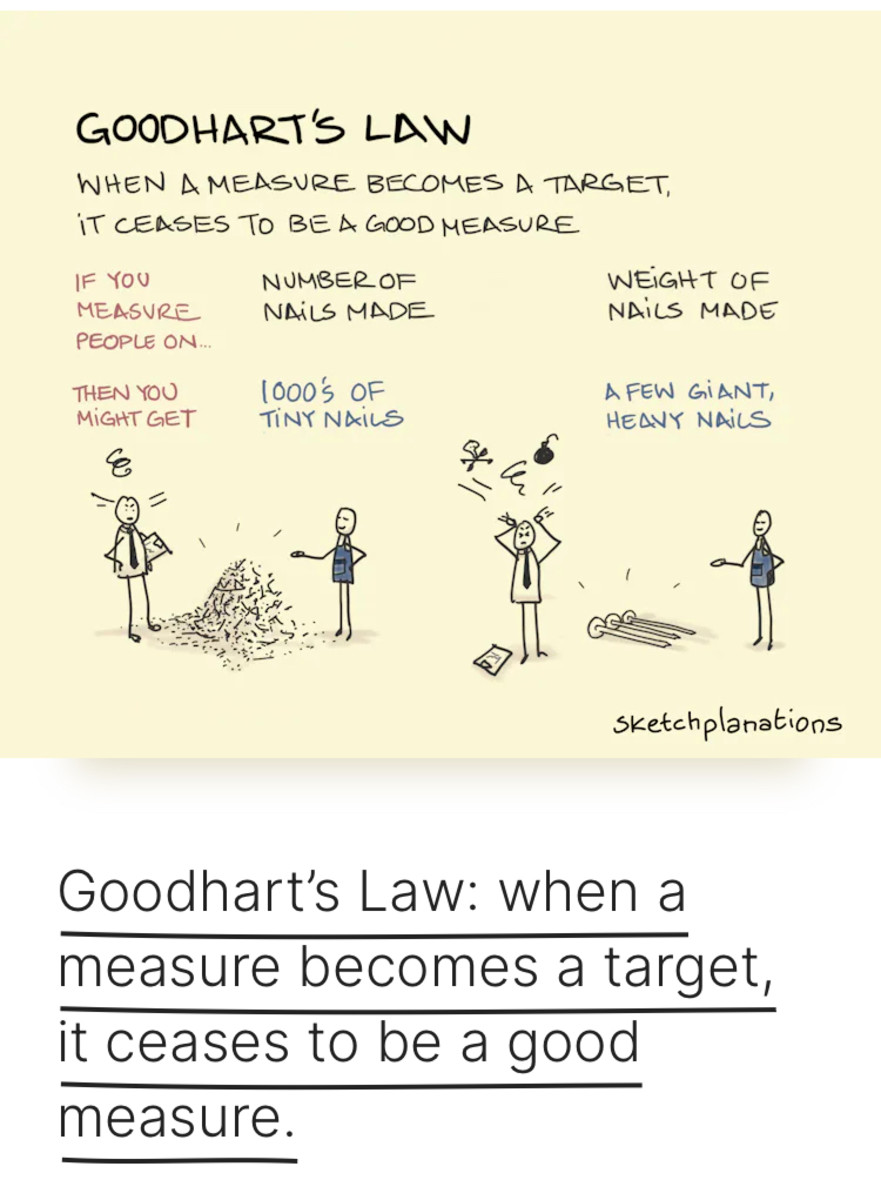
Goodhart’s law is an adage often stated as, “When a measure becomes a target, it ceases to be a good measure”. It is named after British economist Charles Goodhart, who is credited with expressing the core idea of the adage in a 1975 article on monetary policy in the United Kingdom:

Any observed statistical regularity will tend to collapse once pressure is placed upon it for control purposes.

It was used to criticize the British Margaret Thatcher Government for trying to conduct monetary policy on the basis of targets for broad and narrow money, but the law reflects a much more general phenomenon.

And so, aother famous Goodhart’s Law example is the cobra effect, where well-intentioned government policies inadvertently worsened the problem they were designed to solve.

For example, the British colonial government in India, concerned about the increasing number of venomous cobras in Delhi, began offering a bounty for each dead cobra that was delivered. Initially, this strategy was successful as locals brought in large numbers of slaughtered snakes. Over time, however, enterprising individuals started breeding cobras to kill them for supplemental income. When the government abandoned the bounty, the cobra breeders released their cobras into the wild, leading to a surge in Delhi’s snake population.

The cobra effect, where efforts to control a problem lead to unintended and often worse outcomes, serves as a cautionary tale for health care AI. If developers or health care institutions focus too narrowly on specific performance AI metrics, they risk undermining the system’s overall effectiveness, leading to suboptimal patient outcomes. Physicians must be vigilant in ensuring that health care AI systems are not only optimized for performance metrics but are also truly beneficial in practical, clinical applications.

Modified: Dr. Neil Anand via Kevin MD

COMMENTS APPRECIATED

Like and Subscribe!

***

***

MEDICAL PRACTICE: Part-Time Physician Employment Difficulties

By Staff Reporters

SPONSOR: http://www.MarcinkoAssociates.com

***

***

Why It Is Difficult to Practice Medicine Part-Time Today?

In the past, part-time medical practice offered physicians a flexible way to balance professional responsibilities with personal or family commitments. Today, however, the healthcare environment has evolved in ways that make part-time medicine increasingly challenging. From administrative burdens to economic pressures and patient expectations, the obstacles are both systemic and personal.

One of the most significant barriers is the rise in administrative complexity. Physicians are now required to navigate electronic health records (EHRs), comply with insurance documentation, and meet regulatory standards such as HIPAA and MACRA. These tasks consume hours of non-clinical time, which is difficult to compress into a part-time schedule. Even seeing fewer patients doesn’t exempt part-time doctors from the same documentation and compliance requirements as their full-time counterparts.

***

***

Another challenge is financial viability. Many physicians are paid based on productivity metrics, such as Relative Value Units (RVUs), which reward volume over quality. Part-time practitioners often struggle to meet these benchmarks, resulting in lower compensation and reduced benefits. Additionally, malpractice insurance premiums and licensing fees remain fixed regardless of hours worked, further eroding the financial appeal of part-time practice.

Continuity of care is also a concern. Patients increasingly expect immediate access to their providers, especially in primary care and specialties like psychiatry or pediatrics. Part-time physicians may not be available for urgent issues, leading to fragmented care and dissatisfaction. This can strain relationships with patients and colleagues who must cover gaps in availability.

From a professional standpoint, part-time physicians may face limited career advancement. Leadership roles, academic appointments, and research opportunities often favor full-time commitment. There’s also a perception—sometimes unfair—that part-time doctors are less dedicated or less competent, which can affect peer respect and influence within medical institutions.

Technology, while beneficial, adds another layer of complexity. Telemedicine, remote monitoring, and digital communication tools have expanded access but also increased the expectation for constant availability. Part-time physicians may find it difficult to manage asynchronous messages, follow-ups, and virtual visits without extending their work hours beyond what they intended.

***

***

Lastly, burnout and work-life balance—ironically one of the reasons doctors seek part-time roles—can still be elusive. The pressure to maintain clinical excellence, stay updated with medical advancements, and meet patient needs doesn’t diminish with reduced hours. In fact, squeezing these responsibilities into fewer days can intensify stress rather than alleviate it.

In conclusion, while part-time medical practice may seem like a solution to modern work-life challenges, the reality is far more complex. The structure of today’s healthcare system, combined with economic, technological, and cultural pressures, makes it difficult for physicians to thrive in part-time roles. Addressing these challenges will require systemic reform, flexible compensation models, and a cultural shift in how we value and support diverse medical careers.

COMMENTS APPRECIATED

EDUCATION: Books

SPEAKING: ME-P Editor Dr. David Edward Marcinko MBA MEd will be speaking and lecturing, signing and opining, teaching and preaching, storming and performing at many locations throughout the USA this year! His tour of witty and serious pontifications may be scheduled on a planned or ad-hoc basis; for public or private meetings and gatherings; formally, informally, or over lunch or dinner. All medical societies, financial advisory firms or Broker-Dealers are encouraged to submit an RFP for speaking engagements: CONTACT: Ann Miller RN MHA at MarcinkoAdvisors@outlook.com -OR- http://www.MarcinkoAssociates.com

Like, Refer and Subscribe

***

***

FINANCE: Artificial Intelligence

By Co-Pilot

***

***

Artificial Intelligence in Finance: Revolutionizing the Industry

Artificial Intelligence (AI) is rapidly transforming the financial services industry, reshaping how institutions operate, manage risk, and serve customers. By leveraging machine learning, natural language processing, and predictive analytics, AI is enabling smarter decision-making, greater efficiency, and enhanced customer experiences across banking, investing, insurance, and regulatory compliance.

One of the most impactful applications of AI in finance is in fraud detection and prevention. Traditional systems rely on rule-based algorithms that often fail to catch sophisticated schemes. AI, however, can analyze vast amounts of transaction data in real time, identifying patterns and anomalies that signal fraudulent behavior. Machine learning models continuously improve as they process more data, making them increasingly effective at detecting threats and reducing false positives.

AI also plays a pivotal role in algorithmic trading, where decisions are made at lightning speed based on complex data inputs. These systems can process news articles, social media sentiment, and market data to execute trades with precision. Hedge funds and investment banks use AI to optimize portfolios, forecast market trends, and identify arbitrage opportunities that human analysts might miss.

In personal finance and banking, AI enhances customer service through chatbots and virtual assistants. These tools handle routine inquiries, assist with transactions, and offer financial advice based on user behavior. AI-driven platforms like robo-advisors provide personalized investment strategies, adjusting portfolios automatically based on market conditions and individual goals. This democratizes access to financial planning, making it more affordable and scalable.

Credit scoring and lending have also been revolutionized by AI. Traditional credit models often rely on limited data and can be biased against certain demographics. AI can incorporate alternative data sources—such as utility payments, social media activity, and online behavior—to assess creditworthiness more accurately and inclusively. This opens up lending opportunities for underserved populations and reduces default risk for lenders.

In insurance, AI streamlines underwriting and claims processing. By analyzing historical data and customer profiles, AI can assess risk more precisely and tailor policies to individual needs. During claims, AI can automate document review, detect fraud, and expedite payouts, improving both operational efficiency and customer satisfaction.

Regulatory compliance, or RegTech, is another area where AI shines. Financial institutions face increasing scrutiny and complex regulations. AI tools can monitor transactions, flag suspicious activity, and ensure adherence to legal standards. Natural language processing helps parse regulatory documents and automate reporting, reducing the burden on compliance teams.

Despite its benefits, AI in finance raises ethical and operational challenges. Data privacy, algorithmic bias, and transparency are critical concerns. Financial institutions must ensure that AI systems are explainable, fair, and secure. Regulatory bodies are beginning to address these issues, but ongoing collaboration between technologists, policymakers, and industry leaders is essential.

In conclusion, artificial intelligence is not just enhancing finance—it’s redefining it. From fraud prevention to personalized banking, AI is driving innovation and efficiency. As the technology matures, its integration must be guided by ethical principles and robust governance to ensure that the financial system remains fair, resilient, and inclusive.

COMMENTS APPRECIATED

EDUCATION: Books

Like, Read and Refer

***

***

INVESTING TRANSFORMATION: Artificial Intelligence

By Co-Pilot and A. I.

SPONSOR: http://www.CertifiedMedicalPlanner.org

***

***

Artificial Intelligence and Investing: A Transformative Partnership

Artificial Intelligence (AI) is revolutionizing the world of investing, reshaping how decisions are made, risks are assessed, and portfolios are managed. As financial markets grow increasingly complex and data-driven, AI offers powerful tools to navigate this landscape with greater precision, speed, and insight.

At its core, AI refers to systems that can perform tasks typically requiring human intelligence—such as learning, reasoning, and problem-solving. In investing, this translates into algorithms that can analyze vast amounts of financial data, detect patterns, and make predictions with remarkable accuracy. Machine learning, a subset of AI, enables these systems to improve over time by learning from new data, making them especially valuable in dynamic markets.

One of the most significant applications of AI in investing is algorithmic trading. These systems can execute trades at lightning speed, responding to market fluctuations in milliseconds. By analyzing historical data and real-time market conditions, AI-driven trading platforms can identify optimal entry and exit points, often outperforming human traders. High-frequency trading firms have long relied on such technologies to gain competitive advantages.

AI also enhances portfolio management through robo-advisors—digital platforms that use algorithms to provide personalized investment advice. These tools assess an investor’s goals, risk tolerance, and time horizon, then construct and manage a diversified portfolio accordingly. Robo-advisors democratize access to financial planning, offering low-cost, automated solutions to individuals who might not afford traditional advisory services.

Risk assessment is another area where AI shines. By processing alternative data sources—such as social media sentiment, news articles, and satellite imagery—AI can uncover hidden risks and opportunities. For instance, a sudden spike in negative sentiment around a company on Twitter might signal reputational issues, prompting investors to reevaluate their positions. AI models can also forecast macroeconomic trends, helping investors anticipate shifts in interest rates, inflation, or geopolitical events.

Moreover, AI is transforming fundamental analysis. Natural language processing (NLP) allows machines to read and interpret earnings reports, SEC filings, and analyst commentary. This enables investors to extract insights from unstructured data that would be time-consuming to analyze manually. AI can even detect subtle linguistic cues that may indicate a company’s future performance or management’s confidence.

Despite its advantages, AI in investing is not without challenges. Models can be opaque, making it difficult to understand how decisions are made—a phenomenon known as the “black box” problem. There’s also the risk of overfitting, where algorithms perform well on historical data but fail in real-world scenarios. Ethical concerns, such as bias in data and the potential for market manipulation, must also be addressed.

In conclusion, AI is reshaping the investing landscape, offering tools that enhance efficiency, accuracy, and accessibility. While it’s not a panacea, its integration into financial markets marks a profound shift in how capital is allocated and wealth is managed. As technology continues to evolve, investors who embrace AI will be better positioned to thrive in an increasingly data-driven world.

COMMENTS APPRECIATED

EDUCATION: Books

Refer, Like and Subscribe

***

***

Understanding Machine Learning Distillation

DEFINITION

By Staff Reporters

***

***

What is distillation? In machine learning, distillation is a technique for transferring knowledge from a large, complex model (often called the teacher model) to a smaller, simpler model (the student model). This process helps the smaller model achieve similar performance to the larger one while being more efficient in terms of computation and memory usage.

Distillation steps: The main steps in knowledge distillation are: [1.] Train the student model by using these predictions, along with the original dataset, to mimic the teacher model’s behavior. And, [2.] use the teacher model to generate predictions for the dataset.

Cite: ChatGPT via MSFT

COMMENTS APPRECIATED

Subscribe and Refer

***

***

ARTIFICIAL INTELLIGENCE: Stock Market Features – Not Bugs

A.I. by Artificial Intelligence

***

***

Artificial intelligence (AI) refers to computer systems capable of performing complex tasks that historically only humans could do, such as reasoning, making decisions, or solving problems. Today, the term “AI” describes a wide range of technologies that power many of the services and goods we use every day – from apps that recommend TV shows to chatbots that provide customer support in real time. And yet, there is a hierarchy among related concepts such as machine learning and deep learning.

So, to summarize the hierarchy:

  • AI is the goal: machines that can think and act intelligently.
  • Machine learning is a method within AI that lets machines learn from data.
  • Deep learning is a specialized form of machine learning that uses multi-layered neural networks to analyze data in a way that mimics the human brain.

It’s a feature, not a bug

And, there’s no shortage of companies leveraging AI today to remain profitable, to the delight of Salesforce investors: among others:

  • Wells Fargo’s CEO has touted trimming its workforce for 20 straight quarters. Its stock is up 228% over the past five years.
  • Bank of America CEO Brian Moynihan wasn’t hiding it during a recent earnings call when he said the company has let go of 88,000 employees over the past 15 years. BofA stock is up 95% since 2020.
  • Amazon, with its share value up 28% over the past year, recently told staff that AI implementation would lead to layoffs.
  • Microsoft has cut 15,000 jobs in the past two months as the company pivots to AI—and its stock is also up since the beginning of July.

COMMENTS APPRECIATED

EDUCATION: Books

Like, Refer and Subscribe

***

***

RFID: Defined for Hospital Inventory Tracking

A Supply Chain Management Strategy

By Staff Reporters

***

***

RADIO FREQUENCY IDENTIFICATION

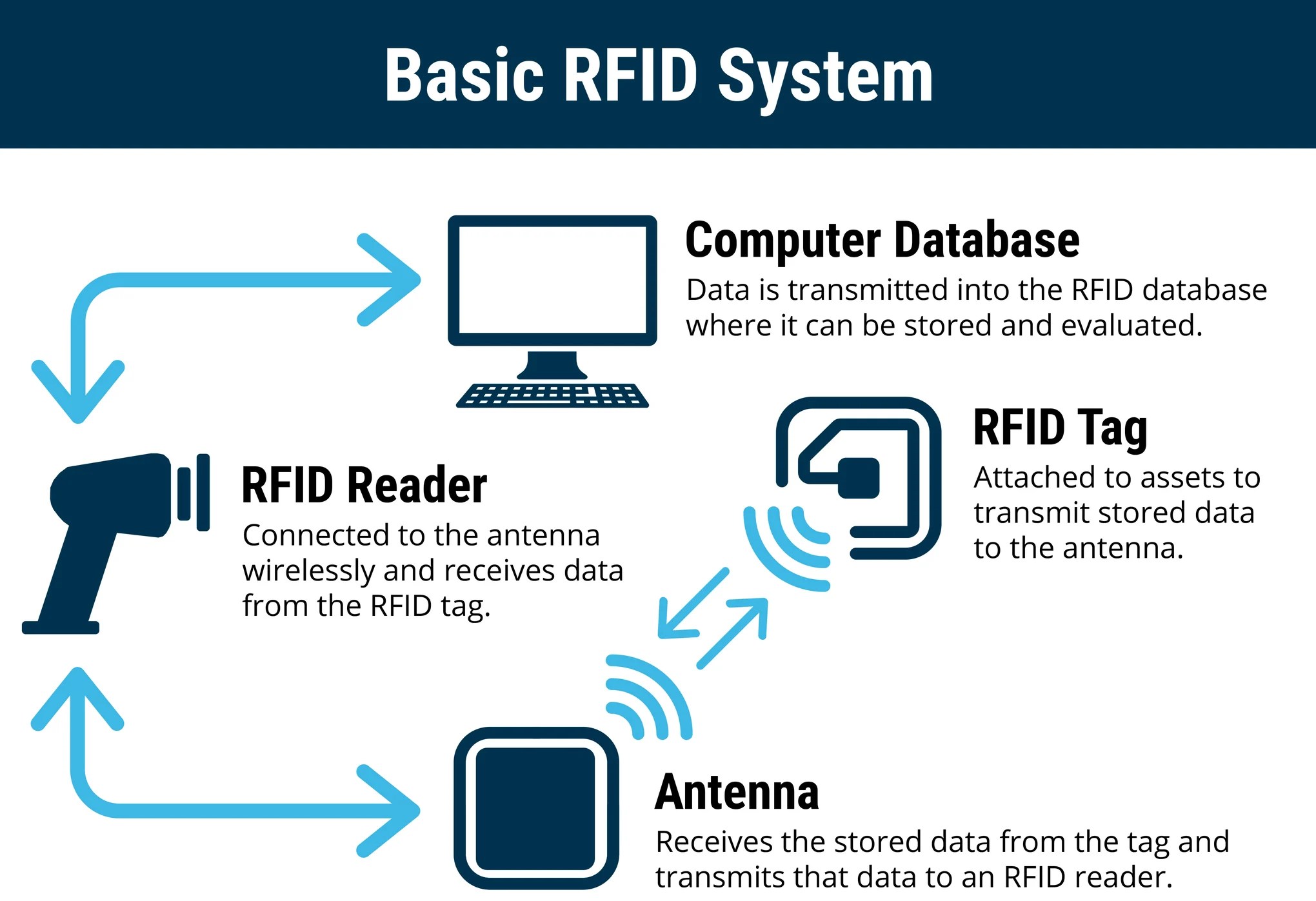
RFID refers to a device attached to an object that transmits data to an RFID receiver. A device can be a large piece of hospital hardware the size of a small book like those attached to ocean containers, or a very small device inserted into a label on a package. RFID has advantages over bar codes such as the ability to hold more data, and to change the stored data as processing occurs. Moreover, it does not require line-of-sight to transfer data, and is very effective in harsh environments where bar-code labels will not work. RFID is not without its own problems, however, as RF signals can be compromised by materials such as metals and liquids.

SCM: https://medicalexecutivepost.com/2011/06/09/supply-chain-management-in-healthcare/

Although RFID technology is receiving much current attention, it still tends to be cost-prohibitive for some hospital inventory tracking applications. As chip prices go down, there will be continued growth in the application of RFID, but, as in the case of 2D bar codes, many hospital warehouse applications simply do not require this added functionality. The low-cost 1D bar code may continue to be the technology of choice for many hospital inventory tracking applications in the short term.

Smart labels are labels with integrated RFID chips. The idea is to produce labels (probably with bar codes) as well as programming the RFID chips embedded in the label. This would provide all current functionality (human- and machine-readable text and bar codes) as well as adding RFID functionality.

Slap-and-ship describes an approach to complying with vendor requirements for physical identification of shipped goods. More recently, slap-and-ship has been used to describe complying With RFID requirements (such as those from large health care systems); however, it is also applicable to any compliance labeling requirement (such as compliance bar-code labels). Slap-and-ship implies meeting the customer’s requirement by applying the bar-code labels or RFID tags, but not utilizing the technology internally.

SCM PODCAST: https://medicalexecutivepost.com/2022/03/16/podcast-medical-supply-chain-management/

Finally, anti-skimming bills were first approved by California and Washington State relative to RFID privacy and are focused on making it illegal for criminals or businesses (or criminal businesses) to read and use personal information from RFID-enabled items such as driver’s licenses and credit cards without the owner’s consent.

COMMENTS APPRECIATED

Like and Subscribe

***

***

PHARMACEUTICALS: Trump Tariff Plans

By A.I. and Staff Reporters

SPONSOR: http://www.CertifiedMedicalPlanner.org

***

***

Trump says pharma tariffs could be as high as 250%

The president revealed that he plans to formally announce tariffs on the pharmaceutical industry “within the next week or so” in an attempt to force drug manufacturing to the US, he told CNBC several days ago.

PBMs: https://medicalexecutivepost.com/2019/01/18/on-pbms-pharmacy-benefits-management/

It would start with a “small” tariff, Trump said, before rising to 150% in a year to a year and a half, and eventually to 250%.

Pharma companies have argued that tariffs could drive up costs and threaten their ability to fund research for new medicines.

COMMENTS APPRECIATED

Like and Subscribe

***

***

OPTUM: UnitedHealth Group A.I. Chatbot

By Staff Reporters and AI

***

***

Better make sure it’s Secure?

UnitedHealth Group’s Optum healthcare company got caught with its digital pants down in December, when TechCrunch reported that its internal AI chatbot, which employees asked for advice in determining claims, was publicly accessible.

AI: https://medicalexecutivepost.com/2025/02/09/my-thoughts-on-artificial-intelligence-ai/

Optum quickly restricted the tool and said it was a demo that was “never scaled nor used in any real way.”

COMMENTS APPRECIATED

Like, Refer and Subscribe

EDUCATION: Books

***

***

CODES: Bar Versus CR Security

DEFINED

By CoPilot AI

***

***

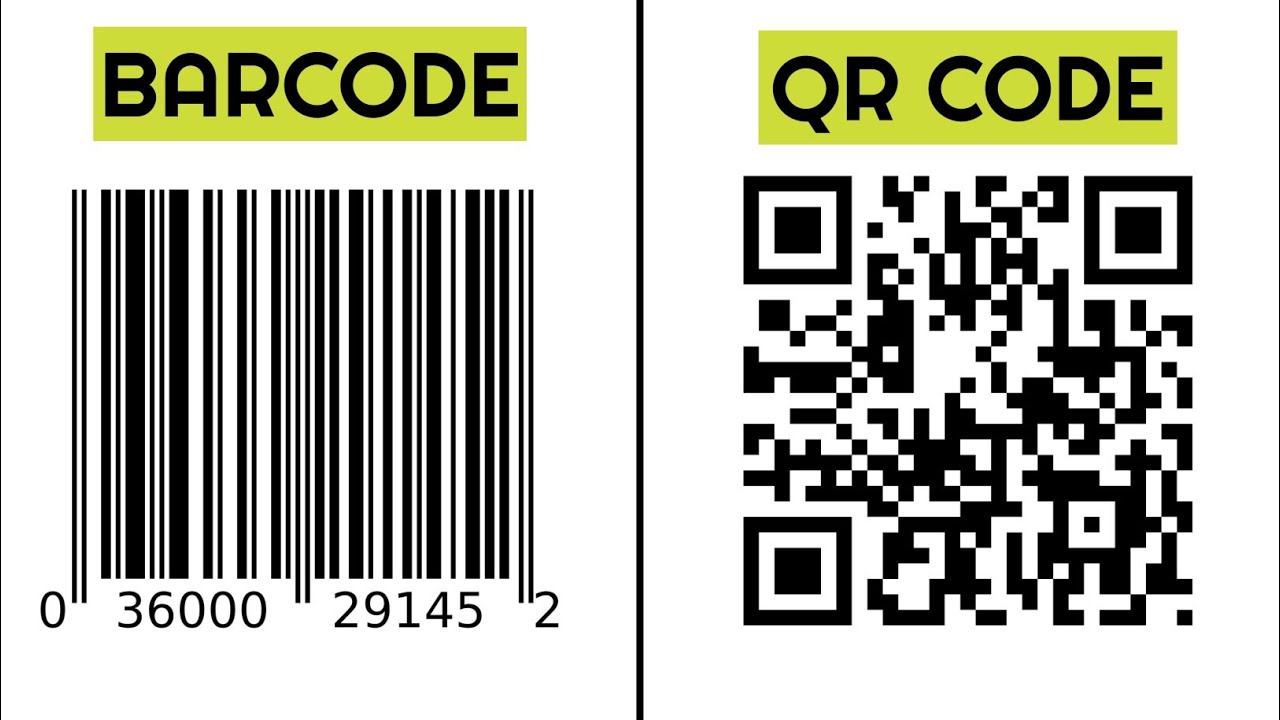
Barcodes and QR codes are basically two forms of machine-readable codes that contain data and are useful in various sectors such as retail, logistics, and marketing. While both appear to fulfill the function of storing information, they have differences based on structure and storage size as well as the function they perform. This makes it easier for businesses to distinguish what is relevant in barcodes and what is relevant in QR codes so that they can be in a position to adopt the right technology that will suit their needs well.

DENTAL CYBER HACKS: https://medicalexecutivepost.com/2024/09/10/dental-office-cyber-hacks/

What is a Barcode?

Barcode provides us with a way to store numbers in a computer-understandable format. This is used to store information in a 1D or 2D format that can be scanned for data retrieval. It is used by stores’ back-off sweaters for keeping track of the patients just in case of rental car services to track where the car is in cases of airline luggage. 

Advantages of Barcodes

  • Simplicity: Barcodes are easy to implement and can be put into use within a short span of time and with comparatively less investment.
  • Low Cost: The equipment and technology required in the generation as well as the scanning of the bar codes are relatively cheap.
  • Quick Scanning: As has already been discussed, barcodes are easy to scan and this makes them suitable for_numeric environments such as the retail sector.

Disadvantages of Barcodes

  • Limited Data Capacity: Barcodes also have a limited data processing capability with limited numerical values, of between 8-20 characters per barcode.
  • One-Dimensional: Barcode is more vast than OWLT and cannot contain complex information since it is one-dimensional.
  • Prone to Damage: That is why they can be barely scratched or damaged in such a manner that they will not scan properly.
Barcode - GeeksforGeeks

What is QR code?

QR codes are a way of storing data in the form of computer understandable format, that can be scanned by using QR code scanner to retrieve the data. These are widely used nowadays for cashless and UPI payment services. They can be used in case of identifications and are also used for sharing photos, videos and other files. 

MEDICAL CYBER-SECURITY: https://medicalexecutivepost.com/2022/01/16/understanding-medical-practice-cyber-security-risks-2/

Advantages of QR Codes

  • High Data Capacity: QR codes contain the ability to enclose thousands of characters that include numbers, letters and even the binary data.
  • Small Physical Footprint: In fact, most QR codes are small in size even though they have a high storage capacity thereby making it possible to print them despite the limited amount of space.
  • Error Correction: QR codes are also created with erasure correction, so the code can still be scanned even if SOME of the dots are scratched out.
  • Versatile Applications: According to the functional aspect QR codes can be used in marketing, payments, wither links, multimedia information storage etc.

Disadvantages of QR Codes

  • Requires Specific Software: Unlike barcodes that can be scanned by an ordinary laser scan gun, QR code must be scanned with a QR code scanner or simply an advanced telephone or tablet with a QR code scanner application.
  • Overuse in Marketing: The use of QR codes has been popularized mainly in the marketing sector, hence consumers are used to seeing it and may opt to look the other way.

    QR Code that scans to http://www.geeksforgeeks.org 

COMMENTS APPRECIATED

Like and Refer

***

***

DEEPSEEK: Breaks the Artificial Intelligence Paradigm

By Vitaliy Katsenelson CFA

***

***

I’ve received emails from readers asking my thoughts on DeepSeek. I need to start with two warnings. First, the usual one: I’m a generalist value investor, not a technology specialist (last week I was analyzing a bank and an oil company), so my knowledge of AI models is superficial. Second, and more unusually, we don’t have all the facts yet.

But this story could represent a major step change in both AI and geopolitics.

Here’s what we know:

DeepSeek—a year-old startup in China that spun out of a hedge fund—has built a fully functioning large language model (LLM) that performs on par with the latest AI models. This part of the story has been verified by the industry: DeepSeek has been tested and compared to other top LLMs. I’ve personally been playing with DeepSeek over the last few days, and the results it spit out were very similar to those produced by ChatGPT and Perplexity—only faster.

This alone is impressive, especially considering that just six months ago, Eric Schmidt (former Google CEO, and certainly no generalist) suggested China was two to three years behind the U.S. in AI.

But here’s the truly shocking—and unverified—part: DeepSeek claims they trained their model for only $5.6 million, while U.S. counterparts have reportedly spent hundreds of millions or even billions of dollars. That’s 20 to 200 times less.

The implications, if true, are stunning. Despite the U.S. government’s export controls on AI chips to China, DeepSeek allegedly trained its LLM on older-generation chips, using a small fraction of the computing power and electricity that its Western competitors have. While everyone assumed that AI’s future lay in faster, better chips—where the only real choice is Nvidia or Nvidia—this previously unknown company has achieved near parity with its American counterparts swimming in cash and datacenters full of the latest Nvidia chips. DeepSeek (allegedly) had huge compute constraints and thus had to use different logic, becoming more efficient with subpar hardware to achieve a similar result.

In other words, this scrappy startup, in its quest to create a better AI “brain,” used brains where everyone else was focusing on brawn—it literally taught AI how to reason.

COMMENTS APPRECIATED

Like and Refer

***

***

DAILY UPDATE: Microsoft Tempers A.I. as Hershey Buys LesserEvil and Stock Markets Crater!

MEDICAL EXECUTIVE-POST TODAY’S NEWSLETTER BRIEFING

***

Essays, Opinions and Curated News in Health Economics, Investing, Business, Management and Financial Planning for Physician Entrepreneurs and their Savvy Advisors and Consultants

Serving Almost One Million Doctors, Financial Advisors and Medical Management Consultants Daily

A Partner of the Institute of Medical Business Advisors , Inc.

http://www.MedicalBusinessAdvisors.com

SPONSORED BY: Marcinko & Associates, Inc.

***

http://www.MarcinkoAssociates.com

Daily Update Provided By Staff Reporters Since 2007.
How May We Serve You?
© Copyright Institute of Medical Business Advisors, Inc. All rights reserved. 2025

REFER A COLLEAGUE: MarcinkoAdvisors@outlook.com

SPONSORSHIPS AVAILABLE: https://medicalexecutivepost.com/sponsors/

ADVERTISE ON THE ME-P: https://tinyurl.com/ytb5955z

Your Referral Count -0-

CITE: https://www.r2library.com/Resource

Microsoft is reportedly pulling back on data center projects around the world as it reexamines its AI plans. Hershey reportedly bought the popcorn brand LesserEvil for $750 million.

CITE: https://tinyurl.com/2h47urt5

US stocks cratered on Friday with the Dow Jones Industrial Average (^DJI) plunging more than 2,200 points after China stoked trade-war fears and Fed Chair Jerome Powell warned of higher inflation and slower growth stemming from tariffs.

The Dow pulled back 5.5% to enter into correction territory. Meanwhile, the S&P 500 (^GSPC) sank nearly 6%, as the broad-based benchmark capped its worst week since 2020. The tech-heavy NASDAQ Composite (^IXIC) dropped 5.8% to close in bear market territory.

CITE: https://tinyurl.com/tj8smmes

Visualize: How private equity tangled banks in a web of debt, from the Financial Times.

COMMENTS APPRECIATED

PLEASE SUBSCRIBE: MarcinkoAdvisors@outlook.com

Thank You

***

***

***

***

EDUCATIONAL TEXTBOOKS: https://tinyurl.com/4zdxuuwf

***

THEORY: Linguistics and Cognitive Sciences

By Staff Reporters

Sponsor: http://www.MarcinkoAssociates.com

***

***

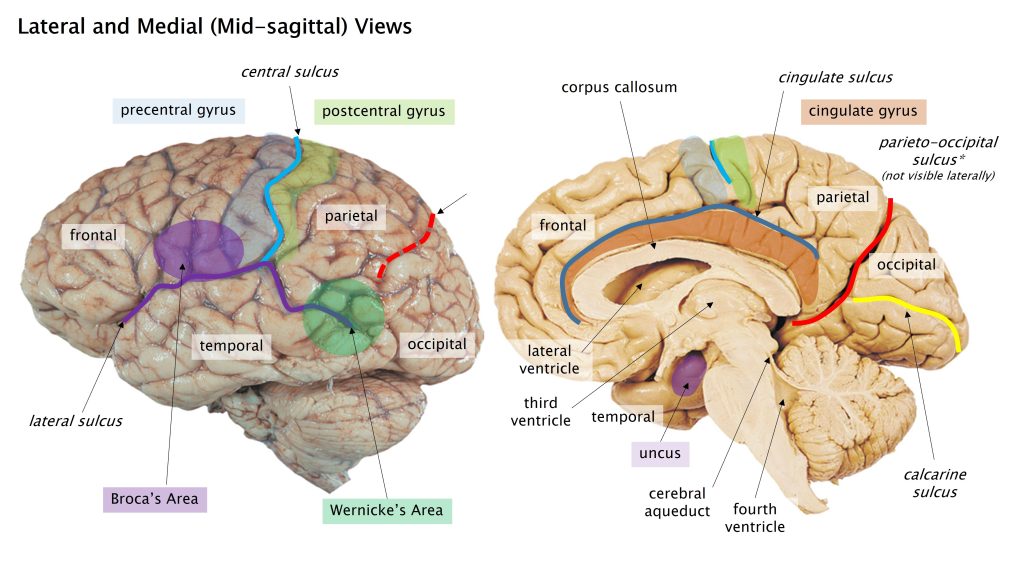
Avram Noam Chomsky is an American professor known for his traditional work in linguistics and political activism. Sometimes called “the father of modern linguistics”, Chomsky is also one of the founders of the field of cognitive science. He is a laureate professor of linguistics at the University of Arizona and an professor emeritus at MIT.

And so, modern linguists today approach their work with scientific rigor and perspective [STEM], although they use methods that were once thought to be solely an academic discipline of the humanities.

Contrary to this humanitarian belief, according to Professor Mackenzie Hope Marcinko PhD of the University of Delaware, linguistics is now multidisciplinary. It overlaps each of the human sciences including psychology, neurology, anthropology, and sociology. Linguists conduct formal studies of sound structure, grammar and meaning, but also investigate the history of language families, and research language acquisition.

COMMENTS APPRECIATED

Subscribe and Refer

***

***

MAGNIFICENT SEVEN: Companies Defined

By Copilot

***

***

The “Magnificent Seven” refers to a group of seven technology giants that have significantly influenced the stock market. These companies are:

  1. Alphabet (GOOGL)
  2. Amazon (AMZN)
  3. Apple (AAPL)
  4. Meta Platforms (META)
  5. Microsoft (MSFT)
  6. Nvidia (NVDA)
  7. Tesla (TSLA)

Why Are They Significant?

These companies are at the forefront of technological innovation, driving advancements in artificial intelligence, cloud computing, e-commerce, social media, and electric vehicles. Their market dominance and financial performance have a substantial impact on major stock indices like the S&P 5002.

Performance

  • Alphabet: Despite a 31% climb over the past year, Alphabet remains the cheapest of the group, trading at 20 times forward earnings estimates.
  • Amazon: Amazon’s cloud unit is delivering an annual revenue run rate of $115 billion thanks to its AI offerings.
  • Apple: Apple has seen a 989% total return for investors over the past decade.
  • Meta Platforms: Meta is the best-performing stock year-to-date among the Magnificent Seven, up over 25%.
  • Microsoft: Microsoft has generated a 989% total return for investors over the past decade.
  • Nvidia: Nvidia remains the best performer over the past year, up 55%.
  • Tesla: Tesla is the worst-performing stock in the group for 2025, down 25.66% year-to-date.

These companies have reshaped industries and become powerhouses in the global economy, wielding significant influence over market trends and investor sentiment.

COMMENTS APPRECIATED

Refer, Like and Subscribe

EDUCATION: Books

***

***

My Thoughts on Artificial Intelligence [AI]

By Vitaliy Katsenelson CFA

***

***

Article available in Spanish here.

A century ago, one fifth of the country was involved in agriculture. Due to the transformation of farming technology, only 1% of the country is now involved in farming, while our supermarkets are flooded with cheap food. I could be wrong, but I don’t see the 19% of the country who used to farm wandering around unemployed. They have retrained to do other things.

Innovation disrupts, but it also creates new jobs and improves the standard of living of society. A century ago, you could not have imagined most of the jobs we have today. I’m not just talking about social media celebrities; think about software engineers, data scientists, cybersecurity experts, etc. In fact, most white-collar jobs you see today did not exist 100 years ago. Yes, if you specialized in driving horse-powered carriages, you had to acquire new skills.

AI will displace many jobs, but it will also empower people with new productivity tools. Microsoft Excel replaced jobs that required people to add up rows of numbers with calculators, but it created many more. In the 1960s, corporations had departments filled with typists. A photocopier and then the personal computer put these hardworking folks out of a job, but they retrained to do other things.

If we have a victim mentality, AI will run us over; if we embrace it and adapt it to our lives, it may become our best friend to do the jobs we are doing, while our soon-to-be-unemployed coworkers complain about AI.

AI may have a similar impact on our lives as electricity did. Unless it becomes sentient and just like the Terminator, it turns against us (smarter people than me cannot agree on this, especially on a reasonable time frame, so I withhold my opinion on it), it will likely improve our lives significantly. One industry that immediately comes to mind is healthcare – we need major disruption in that sector.

AI may disrupt and completely reshuffle the power dynamics in some industries. Travel, for example, comes to mind; we may start looking for trips and booking tickets with the help of our AI assistant without going to the travel websites. Some companies will adapt and become winners, while others won’t and will become market-share donors.

As I am typing this, I realize (again, something I do daily now) how important management is. In our analysis, we should pay close attention to how companies are embracing AI. Are they giving it lip service or are they really adopting it and changing the business to take advantage of it?

ChatGPT is a statistical representation of things found on the web, which will increasingly include ITS OWN output (directly and secondhand). You post something picked up from it and it will use it to reinforce its own knowledge. Progressively a self-licking lollipop.

If you want to see ChatGPT creating art, for the fun of it, spend some time on myfavoriteclassical.com, where I post music articles. Every single picture there is created by AI. I love impressionist artists, and thus I love these little AI creations. However, if you zoom in closer, you’ll find violinists playing with toothpicks, pianists with three hands and cellists with multiple arms and legs.

This self-licking lollipop is impressive, but it still has a lot to learn. (By the way, if you have not signed up to receive my classical music-only articles, you have an opportunity to do it here).

Finally, the more we rely on AI and the more content it creates, the less creative it and we become.

COMMENTS APPRECIATED

Refer and Subscribe

***

***

DEEPSEEK Breaks the A.I. Paradigm

By Vitaliy Katsenelson CFA

***

DeepSeek Breaks the AI Paradigm

***

I’ve received emails from readers asking my thoughts on DeepSeek. I need to start with two warnings. First, the usual one: I’m a generalist value investor, not a technology specialist (last week I was analyzing a bank and an oil company), so my knowledge of AI models is superficial. Second, and more unusually, we don’t have all the facts yet.

But this story could represent a major step change in both AI and geopolitics. Here’s what we know:
DeepSeek—a year-old startup in China that spun out of a hedge fund—has built a fully functioning large language model (LLM) that performs on par with the latest AI models. This part of the story has been verified by the industry: DeepSeek has been tested and compared to other top LLMs. I’ve personally been playing with DeepSeek over the last few days, and the results it spit out were very similar to those produced by ChatGPT and Perplexity—only faster.

This alone is impressive, especially considering that just six months ago, Eric Schmidt (former Google CEO, and certainly no generalist) suggested China was two to three years behind the U.S. in AI.
But here’s the truly shocking—and unverified—part: DeepSeek claims they trained their model for only $5.6 million, while U.S. counterparts have reportedly spent hundreds of millions or even billions of dollars. That’s 20 to 200 times less.

The implications, if true, are stunning. Despite the U.S. government’s export controls on AI chips to China, DeepSeek allegedly trained its LLM on older-generation chips, using a small fraction of the computing power and electricity that its Western competitors have. While everyone assumed that AI’s future lay in faster, better chips—where the only real choice is Nvidia or Nvidia—this previously unknown company has achieved near parity with its American counterparts swimming in cash and datacenters full of the latest Nvidia chips. DeepSeek (allegedly) had huge compute constraints and thus had to use different logic, becoming more efficient with subpar hardware to achieve a similar result. In other words, this scrappy startup, in its quest to create a better AI “brain,” used brains where everyone else was focusing on brawn—it literally taught AI how to reason.

Enter the Hot Dog Contest

Americans love (junk) food and sports, so let me explain with a food-sport analogy. Nathan’s Famous International Hot Dog Eating Contest claims 1916 as its origin (though this might be partly legend). By the 1970s, when official records began, winning competitors averaged around 15 hot dogs. That gradually increased to about 25—until Takeru Kobayashi arrived from Japan in 2001 and shattered the paradigm by consuming 50 hot dogs, something widely deemed impossible. His secret wasn’t a prodigious appetite but rather his unique methodology; He separated hot dogs from buns and dunked the buns in water, completely reimagining the approach.

Then a few years later came Joey Chestnut, who built on Kobayashi’s innovation to push the record well beyond 70 hot dogs and up to 83. Once Kobayashi broke the paradigm, the perceived limits vanished, forcing everyone to rethink their methods. Joey Chestnut capitalized on it.

DeepSeek may be the Kobayashi of AI, propelling the whole industry into a “Joey Chestnut” era of innovation. If the claims about using older chips and spending drastically less are accurate, we might see AI companies pivot away from single-mindedly chasing bigger compute capacity and toward improved model design.

I never thought I’d be quoting Stoics to explain future GPU chip demand, but Epictetus said, “Happiness comes not from wanting more, but from wanting what you have.” Two millennia ago, he was certainly not talking about GPUs, but he may as well have been. ChatGPT, Perplexity, and Google’s Gemini will have to rethink their hunger for more compute and see if they can achieve more with wanting (using) what they have.

If they don’t, they’ll be eaten by hundreds of new startups, corporations, and likely governments entering the space. When you start spelling billions with an “M,” you dramatically lower the barriers to entry.

Until DeepSeek, AI was supposed to be in reach for only a few extremely well-funded companies, (the “Magnificent Ones”) armed with the latest Nvidia chips. DeepSeek may have broken that paradigm too.

The Nvidia Conundrum

The impact on Nvidia is unclear. On one hand, DeepSeek’s success could decrease demand for its chips and bring its margins back to earth, as companies realize that a brighter AI future might lie not in simply connecting more Nvidia processors but in making models run more efficiently. DeepSeek may have reduced the urgency to build more data centers and thus cut demand for Nvidia chips.

On the other hand (I’m being a two-armed economist here), lower barriers to entry will lead to more entrants and higher overall demand for GPUs. Also, DeepSeek claims that because its model is more efficient, the cost of inference (running the model) is a fraction of the cost of running ChatGPT and requires a lot less memory—potentially accelerating AI adoption and thus driving more demand for GPUs. So this could be good news for Nvidia, depending on how it shakes out.

My thinking on Nvidia hasn’t materially changed—it’s only a matter of time before Meta, Google, Tesla, Microsoft, and a slew of startups commoditize GPUs and drive down prices.

Likewise, more competition means LLMs themselves are likely to become commoditized—that’s what competition does—and ChatGPT’s valuation could be an obvious casualty.

Geopolitical Shockwaves

The geopolitical consequences are enormous. Export controls may have inadvertently spurred fresh innovation, and they might not be as effective going forward. The U.S. might not have the control of AI that many believed it did, and countries that don’t like us very much will have their own AI.

We’ve long comforted ourselves, after offshoring manufacturing to China, by saying that we’re the cradle of innovation—but AI could tip the scales in a direction that doesn’t favor us.
Let me give you an example. In a recent

interview with the Wall Street Journal, OpenAI’s product chief revealed that various versions of ChatGPT were entered into programming competitions anonymously. Out of roughly 28 million programmers worldwide, these early models ranked in the top 2–3%. ChatGPT-o1 (the latest public release) placed among the top 1,000, and ChatGPT-o3 (due out in a few months) is in the top 175. That’s the top 0.000625%! If it were a composer, ChatGPT-o3 would be Mozart.

I’ve heard that a great developer is 10x more valuable than a good one—maybe even 100x more valuable than an average one. I’m aiming to be roughly right here. A 19-year-old in Bangalore or Iowa who discovered programming a few months ago can now code like Mozart using the latest ChatGPT. Imagine every young kid, after a few YouTube videos, coding at this level. The knowledge and experience gap is being flattened fast.

I am quite aware that I am drastically generalizing (I cannot stress this enough), and but the point stands: The journey from learning to code to becoming the “Mozart of programming” has shrunk from decades to months, and the pool of Mozarts has grown exponentially. If I owned software companies, I’d become a bit more nervous—the moat for many of them has been filled with AI.

Adapting, changing your mind, and holding ideas as theses to be validated or invalidated—not as part of your identity—are incredibly important in investing (and in life in general). They become even more crucial in an age of AI, as we find ourselves stepping into a sci-fi reality faster than we ever imagined. DeepSeek may be that catalyst, forcing investors and technologists alike to question long-held assumptions and reevaluate the competitive landscape in real time.
I’d love to hear your thoughts, so please leave your comment and feedback here. Also, if you missed my previous article “Escaping Stock Market Double Hell”, you can read it and leave a comment here.

COMMENTS APPRECIATED

Subscribe and Refer

***

***

OUTCOME: Bias

By Staff Reporters

***

***

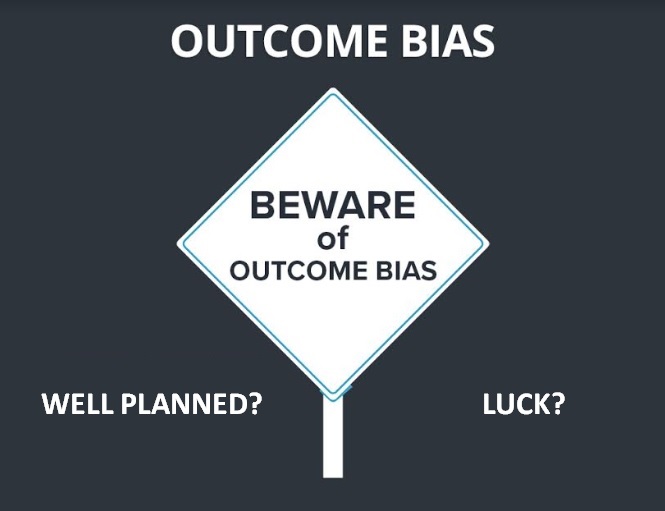
Outcome bias is judging a decision based on its result rather than the quality of the decision at the time it was made.

It’s like saying a bad poker play was smart because you won the hand. Or, a bad stock picker or financial advisor was good because the price went up!

According to psychologist and colleague Dan Ariely PhD, this bias ignores the process and focuses solely on the outcome. It’s why we celebrate lucky breaks and criticize thoughtful risks that didn’t pan out.

So, the next time you’re evaluating a decision, focus on the reasoning behind it, not just the end result.

COMMENTS APPRECIATED

Subscribe Today!

***

***

DAILY UPDATE: PBMs and Healthcare A.I. as All Major Market Indexes Drop

MEDICAL EXECUTIVE-POST TODAY’S NEWSLETTER BRIEFING

***

Essays, Opinions and Curated News in Health Economics, Investing, Business, Management and Financial Planning for Physician Entrepreneurs and their Savvy Advisors and Consultants

Serving Almost One Million Doctors, Financial Advisors and Medical Management Consultants Daily

A Partner of the Institute of Medical Business Advisors , Inc.

http://www.MedicalBusinessAdvisors.com

SPONSORED BY: Marcinko & Associates, Inc.

***

http://www.MarcinkoAssociates.com

Daily Update Provided By Staff Reporters Since 2007.
How May We Serve You?
© Copyright Institute of Medical Business Advisors, Inc. All rights reserved. 2024

REFER A COLLEAGUE: MarcinkoAdvisors@msn.com

SPONSORSHIPS AVAILABLE: https://medicalexecutivepost.com/sponsors/

ADVERTISE ON THE ME-P: https://tinyurl.com/ytb5955z

Your Referral Count -0-

Stat: 97%. That’s how many healthcare leaders think A.I. will become important in healthcare over the next five years.

***

Pharmacy benefit managers (PBMs) are once again under pressure from federal leaders. A group of Democratic and Republican congresspeople proposed legislation that would attempt to prevent pharmacies from also owning PBMs. The three largest PBMs—CVS Health’s Caremark, Cigna’s Express Scripts, and UnitedHealth Group’s Optum Rx—currently operate pharmacies and administer more than 80% of the prescriptions in the US, and officials have linked this practice to drug price increases.

CITE: https://tinyurl.com/2h47urt5

US stocks fell across the board on Tuesday, with the Dow logging its biggest losing streak in 46 years. The Dow Jones Industrial Average (^DJI) finished the session down roughly 0.6%, registering its ninth straight day of losses. The last 9-day losing streak for the Dow was Feb. 1978. Prior to that, the index suffered an 11-day losing streak in 1974 and another in 1971.

The other major indexes dropped in tandem on Tuesday, with the benchmark S&P 500 (^GSPC) falling around 0.4% and the NASDAQ Composite (^IXIC) losing about 0.3% after the tech-heavy index closed at a record high on Monday.

CITE: https://tinyurl.com/tj8smmes

Visualize: How private equity tangled banks in a web of debt, from the Financial Times.

COMMENTS APPRECIATED

PLEASE SUBSCRIBE: MarcinkoAdvisors@msn.com

Thank You

***

***

***

***

EDUCATIONAL TEXTBOOKS: https://tinyurl.com/4zdxuuwf

***

DAILY UPDATE: Home Buyers and Jeff Bezos as Stock Markets Soar!

MEDICAL EXECUTIVE-POST TODAY’S NEWSLETTER BRIEFING

***

Essays, Opinions and Curated News in Health Economics, Investing, Business, Management and Financial Planning for Physician Entrepreneurs and their Savvy Advisors and Consultants

Serving Almost One Million Doctors, Financial Advisors and Medical Management Consultants Daily

A Partner of the Institute of Medical Business Advisors , Inc.

http://www.MedicalBusinessAdvisors.com

SPONSORED BY: Marcinko & Associates, Inc.

***

http://www.MarcinkoAssociates.com

Daily Update Provided By Staff Reporters Since 2007.
How May We Serve You?
© Copyright Institute of Medical Business Advisors, Inc. All rights reserved. 2024

REFER A COLLEAGUE: MarcinkoAdvisors@msn.com

SPONSORSHIPS AVAILABLE: https://medicalexecutivepost.com/sponsors/

ADVERTISE ON THE ME-P: https://tinyurl.com/ytb5955z

Your Referral Count -0-

First-time homebuyers in 2024 had a median income of $97,000, and their median age was 38. ​​OpenAI and Jeff Bezos invested in Physical Intelligence, a robot startup with the aim of “bringing general-purpose AI into the physical world.”

CITE: https://www.r2library.com/Resource

Stocks Up

  • Cybersecurity darling Palantir soared 23.38% to a record high thanks to strong earnings, high AI demand, and big spending from the Department of Defense.
  • Astera Labs skyrocketed 37.70% after the semiconductor parts maker (and one of Nvidia’s key suppliers) announced strong earnings.
  • Crypto stocks had a great day thanks to a widespread cryptocurrency rally. Coinbase rose 4.13%, MicroStrategy gained 2.16%, and Riot Platforms jumped 8.13%.

Stocks Down

Trump Media & Technology Group arrested its recent downturn and popped 12% at one point today, but gave all those gains up and ended the day down 1.16%.

  • You’d think the end of a multi-week labor dispute costing billions of dollars would be a relief for shareholders, but Boeing still sank 2.62% on news that it’s reached an agreement with striking machinists.
  • It’s a me, lower revenue forecasts! Nintendo fell 1.68% after announcing that sales of its Switch console are starting to sag.
  • Wynn Resorts sagged 9.34% thanks to misses on both top and bottom line expectations last quarter.
  • Some of the smaller semiconductor stocks on the market took a beating today. NXP Semiconductor dropped 5.17% after announcing weaker-than-expected Q4 guidance, Lattice Semiconductor tumbled 1.37% after missing on sales forecasts and announcing job cuts, and while Cirrus Logic beat expectations this quarter, it still fell 7.09% on lower forecasts.

CITE: https://tinyurl.com/2h47urt5

Here’s where the major benchmarks ended:

  • The S&P 500® index (SPX) rose 70.07 points (1.23%) to 5,782.76; the Dow Jones Industrial Average® ($DJI) added 427.28 points (1.02%) to 42,221.88; and the NASDAQ Composite® ($COMP) increased 259.19 points (1.43%) to 18,439.17.
  • The 10-year Treasury note yield (TNX) dropped two basis points to 4.29%.
  • The CBOE Volatility Index® (VIX) slipped to 20.72.

CITE: https://tinyurl.com/tj8smmes

Visualize: How private equity tangled banks in a web of debt, from the Financial Times.

COMMENTS APPRECIATED

PLEASE SUBSCRIBE: MarcinkoAdvisors@msn.com

Thank You

***

***

***

***

EDUCATIONAL TEXTBOOKS: https://tinyurl.com/4zdxuuwf

***

METAVERSE MEDICINE: A Paradigm Shift?

By Dr. David Edward Marcinko MBA MEd

SPONSOR: http://www.MarcinkoAssociates.com

***

***

In what some are calling the next iteration of the internet, the metaverse is an unfamiliar digital world where you could be an avatar navigating computer-generated places and interacting with others in real time. In this space, the constraints of our physical, bricks and mortar world and travel habits fade. And new opportunities and challenges emerge.

CITE: https://www.r2library.com/Resource/Title/0826102549

For example:

  • Google in healthcare: The search giant has repeatedly successfully transferred its in-depth knowledge of algorithms in the field of medicine, particularly since it acquired DeepMind.
  • Apple in healthcare: Apple will keep on working on expanding the health features of its devices, Apple Watch and iPhones included.
  • Microsoft in healthcare: Microsoft’s cloud solutions provide integrated capabilities that make it easier to improve the healthcare experience.
  • Amazon in healthcare: Amazon will make further use of its vast knowledge of online shopping trends and behavior and will keep on providing what people need, from medicine to wearables.
  • IBM in healthcare: IBM has a lot to offer in federated learning, blockchain, and quantum computing.
  • Nvidia in healthcare: NVIDIA seems incredibly focused on its approach to healthcare. We can expect NVIDIA to be a leader in the use of artificial intelligence in healthcare.
  • Facebook in healthcare: The Metaverse developed by Facebook/Meta has incredible potential to revolutionize healthcare.

All this technology has huge potential because it uses both virtual reality (VR) and augmented reality (AR) technology to work in virtual spaces: All signs point to the metaverse being widely used as a disruptive change in healthcare, from better surgical precision to therapeutic uses to social-distance accommodations and more.

But along with these improvements come new problems that will change what we know about modern healthcare. The metaverse is a paradigm shift in healthcare that everyone involved needs to be aware of. This is because it changes how medical infrastructure is built, how startup costs are covered, and how data security and privacy are handled.

CITE: https://www.r2library.com/Resource/Title/0826102549

COMMENTS APPRECIATED

Subscribe Today!

***

***

DAILY UPDATE: CVS Health and AI Healthcare Chatbots as Stocks Reach New Highs

MEDICAL EXECUTIVE-POST TODAY’S NEWSLETTER BRIEFING

***

Essays, Opinions and Curated News in Health Economics, Investing, Business, Management and Financial Planning for Physician Entrepreneurs and their Savvy Advisors and Consultants

Serving Almost One Million Doctors, Financial Advisors and Medical Management Consultants Daily

A Partner of the Institute of Medical Business Advisors , Inc.

http://www.MedicalBusinessAdvisors.com

SPONSORED BY: Marcinko & Associates, Inc.

***

http://www.MarcinkoAssociates.com

Daily Update Provided By Staff Reporters Since 2007.
How May We Serve You?
© Copyright Institute of Medical Business Advisors, Inc. All rights reserved. 2024

REFER A COLLEAGUE: MarcinkoAdvisors@msn.com

SPONSORSHIPS AVAILABLE: https://medicalexecutivepost.com/sponsors/

ADVERTISE ON THE ME-P: https://tinyurl.com/ytb5955z

Your Referral Count -0-

***

CVS Health may be breaking up…with itself. The board of directors at CVS Health—the parent company of CVS Pharmacy, pharmacy benefit manager CVS Caremark, and insurance unit Aetna—are working with a group of bankers to review the company’s strategy, which according to Reuters, may lead to a split between its pharmacy division and Aetna.

CITE: https://www.r2library.com/Resource

Stocks Up

  • Apple climbed 1.23% on a Bloomberg report that iPhone 16 demand has been shockingly strong in China.
  • Verizon Communications will purchase $1 billion worth of US Cellular’s wireless spectrum licenses. Verizon rose just 0.34%—but it’s a huge deal for US Cellular, which popped 7.22%, and Telephone and Data Systems, which owns 82% of US Cellular, and soared 15.40%.
  • Intuitive Surgical rose to a new all-time high, climbing 10.01% on strong earnings powered by sales of its da Vinci device.
  • Lamb Weston, the company behind the french fries you overindulge in every time you go out to dinner, is being pushed by activist investor Jana Partners toward exploring a sale. Shareholders rejoiced, and the stock rose 10.17%.

Stocks Down

CVS Health sank 5.23% on the news that CEO Karen Lynch will be replaced by David Joyner after three years at the helm of the struggling pharmacy/retailer. Joyner ran the company’s pharmacy service business for the last two years.

  • WD-40 seems like the staple of all consumer staples, but the company missed on both revenue and earnings estimates last quarter. Shares fell 4.79% on the news.
  • American Express dropped 3.15% after the credit card company reported a rare miss today, beating bottom-line estimates but missing revenue forecasts last quarter.
  • MGP Ingredients makes all the booze you drink under different brand names, but people aren’t drinking enough. The beverage maker issued preliminary earnings that included a 24% drop in sales. Shares tanked 24.16%.

CITE: https://tinyurl.com/2h47urt5

Here’s where the major stock market benchmarks ended:

  • The S&P 500® index (SPX)rose 23.20 points (0.40%) to 5,864.67, a new record high close, to end the week up 0.85%; the Dow Jones Industrial Average® ($DJI) added 36.86 points (0.09%) to 43,275.91, also another record high finish, to end the week up 0.96%; and the $COMP gained 115.94 points (0.63%) to 18,489.55 to end the week up 0.80%.
  • The 10-year Treasury note yield (TNX) fell two basis points to 4.07%.
  • The CBOE Volatility Index® (VIX) fell to 18.17, the lowest since September 30.

CITE: https://tinyurl.com/tj8smmes

A new survey results may prompt health systems to second-guess some of their future plans. A recent University of Michigan survey found 74% of adults ages 50+ have “very little or no trust” in health info generated by AI. Maybe it’s not time to roll out chatbots on patient portals just yet.

COMMENTS APPRECIATED

PLEASE SUBSCRIBE: MarcinkoAdvisors@msn.com

Thank You

***

***

***

***

EDUCATIONAL TEXTBOOKS: https://tinyurl.com/4zdxuuwf

***

Do Doctors Use ChatGPT in Clinical Decisions?

By Staff Reporters

***

***

Are doctors using publicly available tools like ChatGPT? The answer, Fierce Healthcare finds, is yes. In the first in-depth look of its kind into physician use of public genAI tools, Fierce Healthcare spoke with nearly two dozen doctors, students, AI experts and regulators, and helped conduct a survey of more than 100 physicians. The reporting confirms that some doctors are turning to tools intended for non-clinical uses to make clinical decisions. 

More: https://jamanetwork.com/journals/jamainternalmedicine/fullarticle/2804309

A collaborative survey between Fierce Healthcare and physician social network Sermo found that 76% of respondents reported using general-purpose LLMs in clinical decision-making. With no standardized guidelines, lagging physician training and regulators racing to try to keep up with rapidly changing technology, guardrails to protect patients appear to be years behind current rates of utilization.

Source: Fierce Healthcare [10/8/24]

COMMENTS APPRECIATED

Thank You

***

***

NOBEL PRIZE CHEMISTRY: David Baker, Demis Hassabis and John Jumper in 2024

BREAKING NEWS

By Staff Reporters

***

***

he 2024 Nobel Prize in chemistry has been awarded to a trio of scientists who used artificial intelligence to “crack the code” of almost all known proteins, the “chemical tools of life.”

The Nobel Committee lauded David Baker, a US biochemist, for completing “the almost impossible feat of building entirely new kinds of proteins,” along with Demis Hassabis and John Jumper, who work at Google DeepMind, for developing an AI model to predict proteins’ complex structures – a problem that had been unsolved for 50 years.

“The potential of their discoveries is enormous,” the committee said as the award was just announced in Sweden. The prize, seen as the pinnacle of scientific achievement, carries a cash award of 11 million Swedish kronor ($1 million).

READ: https://www.nobelprize.org

COMMENTS APPRECIATED

Thank You

***

***

NOBEL PRIZE PHYSICS: John Hopfield and Geoffrey Hinton in 2024

BREAKING NEWS

By Staff Reporters

***

***

The Nobel Prize in Physics has been awarded to two researchers who helped build the foundations of the artificial intelligence that surrounds us today.

John Hopfield and Geoffrey Hinton both worked on machine learning techniques that would go on to power products such as ChatGPT.

Hopfield’s research is carried out at Princeton University and Hinton works at the University of Toronto.

MORE: https://www.nobelprize.org/

COMMENTS APPRECIATED

Thank You

***

***

The Artificial Intelligence [AI] Revolution

By Vitaliy Katsenelson CFA

***

***

READ MORE HERE: The AI Revolution

COMMENTS APPRECIATED

Thank You

***

***

DAILY UPDATE: JPMorgan Chase, Bank of America, OpenAI and MSFT as Markets Continue Stock Rally

MEDICAL EXECUTIVE-POST TODAY’S NEWSLETTER BRIEFING

***

Essays, Opinions and Curated News in Health Economics, Investing, Business, Management and Financial Planning for Physician Entrepreneurs and their Savvy Advisors and Consultants

Serving Almost One Million Doctors, Financial Advisors and Medical Management Consultants Daily

A Partner of the Institute of Medical Business Advisors , Inc.

http://www.MedicalBusinessAdvisors.com

SPONSORED BY: Marcinko & Associates, Inc.

***

http://www.MarcinkoAssociates.com

Daily Update Provided By Staff Reporters Since 2007.
How May We Serve You?
© Copyright Institute of Medical Business Advisors, Inc. All rights reserved. 2024

REFER A COLLEAGUE: MarcinkoAdvisors@msn.com

SPONSORSHIPS AVAILABLE: https://medicalexecutivepost.com/sponsors/

ADVERTISE ON THE ME-P: https://tinyurl.com/ytb5955z

Your Referral Count -0-

OpenAI says its new model can reason like a person. The ChatGPT-maker released a preview of a new artificial intelligence model that’s officially called o1 named by its internal code name, Strawberry—a reference to AI’s inability to determine the correct number of r’s in the word.

Microsoft plans to lay off 650 people in its Xbox unit.

CITE: https://www.r2library.com/Resource

What’s up

  • Campbell Soup Company climbed 2.63% on the news that, after 155 years, it will change its name to The Campbell’s Company. No soup for you!
  • Wells Fargo somehow gained 2.37% after a US banking regulator declared its safeguards against money laundering weren’t strong enough.
  • Lululemon Athletica popped 2.54% after CEO Calvin McDonald bought more shares of the company, signaling confidence in the struggling retailer.
  • Uber drove 6.45% higher thanks to a deal with Alphabet’s Waymo to offer driverless taxi rides in Austin and Atlanta starting next year.
  • RH rose 25.46% a day after announcing shockingly strong earnings for the home-furnishing retailer.
  • Trump Media & Technology Group soared 11.79% on the former president’s announcement that he’s “not selling” his shares of the company.

What’s down

  • Adobe dropped 8.47% after beating top and bottom line forecasts last quarter but projecting weaker than expected earnings next quarter.
  • Garmin tumbled 5.12% after Barclays analysts downgraded the stock and cut their price target, citing the device-maker’s weak sales and low profit margin.
  • US-listed shares of Chinese retailers like Alibaba and PDD dropped 0.93% and 2.40%, respectively, on the news that President Biden announced the US will crack down on cheap goods from China. Etsy, which competes with these retailers, popped 7.56% on the news.
  • ViaSat sank 14.58% thanks to a deal between United Airlines and SpaceX to use Starlink satellites to provide free in-flight WiFi instead of ViaSat’s products.

CITE: https://tinyurl.com/2h47urt5

Here’s where the major benchmarks ended:

  • The SPX advanced 30 points (0.5%) to 5,626.02 and was up 4% for the week; the Dow Jones Industrial Average® ($DJI) gained 297 points (0.7%) to 41,393.78 and added 2.6% for the week; the NASDAQ Composite® ($COMP) rose 114 points (0.7%) to 17,683.98 and was 6% higher for the week.
  • The 10-year Treasury note yield (TNX) edged 2 basis points lower to 3.66%.
  • The CBOE Volatility Index® (VIX) fell 0.6 points to 16.48.

CITE: https://tinyurl.com/tj8smmes

JPMorgan Chase and Bank of America are pledging to put in more safeguards to prevent what their industry is infamous for: overworking junior employees, the Wall Street Journal reported this week.

Visualize: How private equity tangled banks in a web of debt, from the Financial Times.

COMMENTS APPRECIATED

PLEASE SUBSCRIBE: MarcinkoAdvisors@msn.com

Thank You

***

***

***

***

EDUCATIONAL TEXTBOOKS: https://tinyurl.com/4zdxuuwf

***

PODCAST: Machine Learning for Population Health

By Eric Bricker MD

***

***

COMMENTS APPRECIATED

Thank You

***

***

ChatGPT: Considers Changing Corporate Structure

By Staff Reporters

SPONSOR: http://www.MarcinkoAssociates.com

***

***

The Financial Times reports that the ChatGPT-maker is discussing changing its corporate structure, which currently has it governed by a nonprofit entity, to make it more attractive to investors as the company works to complete a funding round that values it at $100 billion.

CITE: https://www.r2library.com/Resource

Apple, Nvidia, and Microsoft (which is already a big OpenAI backer) are said to be considering participating in the investment round.

COMMENTS APPRECIATED

Thank You

***

***

GAP BETWEEN A.I. AND BEDSIDE: Participatory Workshop on the Barriers to the Integration, Translation, and Adoption of Digital Health Care and AI Startup Technology Into Clinical Practice

***

***

The study examines the challenges of integrating new technologies in clinical practice, identified four primary barriers: insufficient knowledge of health system technology procurement protocols, which can vary across facilities; strict regulations and clinical trial requirements; obstacles in the health system technology procurement process; and competitive disadvantages for smaller startups.

***

COMMENTS APPRECIATED

Thank You

***

DAILY UPDATE: Nurses & AI, Private Equity & CPAs, Public Companies and the Hot July Stock Markets

MEDICAL EXECUTIVE-POST TODAY’S NEWSLETTER BRIEFING

***

Essays, Opinions and Curated News in Health Economics, Investing, Business, Management and Financial Planning for Physician Entrepreneurs and their Savvy Advisors and Consultants

Serving Almost One Million Doctors, Financial Advisors and Medical Management Consultants Daily

A Partner of the Institute of Medical Business Advisors , Inc.

http://www.MedicalBusinessAdvisors.com

SPONSORED BY: Marcinko & Associates, Inc.

***

http://www.MarcinkoAssociates.com

Daily Update Provided By Staff Reporters Since 2007.
How May We Serve You?
© Copyright Institute of Medical Business Advisors, Inc. All rights reserved. 2024

REFER A COLLEAGUE: MarcinkoAdvisors@msn.com

SPONSORSHIPS AVAILABLE: https://medicalexecutivepost.com/sponsors/

ADVERTISE ON THE ME-P: https://tinyurl.com/ytb5955z

***

Private equity gets a big accounting firm yet. The March story about private equity firm New Market Capital buying a $2.8 billion stake in accounting firm Grant Thorton was a big story. Private equity is gobbling up accounting firms, signaling a potential sea change in how accounting firms will operate in the future, with “more than half” of the top 20 accounting firms in talks with private equity.

CITE: https://www.r2library.com/Resource

Here’s where the major benchmarks ended:

  • The S&P 500® index (SPX) rose 14.61 points (0.27%) to 5,475.09; the Dow Jones Industrial Average® ($DJI) climbed 50.66 points (0.13%) to 39,169.52; the NASDAQ Composite® ($COMP) added 146.70 points (0.83%) to 17,879.30.
  • The 10-year Treasury note yield (TNX) rose 12 basis points to 4.47%, the highest level since May 30 and back above its 50-day moving average, a technically important move.
  • The CBOE Volatility Index® (VIX) slipped to 12.19.

Crude oil is up sharply over the last month amid rising Middle East tensions.

What’s up

What’s down

  • Chewy stock popped then dropped 6.63% after Roaring Kitty revealed a 6.6% stake in the pet products company.
  • GameStop shares fell 5.35% after CEO Ryan Cohen posted on Twitter/X for the first time in months to advertise a job opening.
  • Uber fell 2.17% and Lyft fell 0.92% on the news that Massachusetts now requires both companies to pay rideshare drivers $32.50 an hour, plus benefits.
  • Cruise stocks sank on the news that Hurricane Beryl is stronger than expected and will disrupt service throughout the Caribbean. Norwegian Cruise Line fell 5.86%, Carnival fell 5.40%, and Royal Caribbean fell 1.86%.

CITE: https://tinyurl.com/2h47urt5

The largest nursing union in the US, National Nurses United (NNU), is sounding the alarm about the use of artificial intelligence (AI) in healthcare. In April, the union’s affiliate California Nurses Association (CNA) protested an AI conference helmed by managed care consortium Kaiser Permanente. Like workers in other sectors who are worried about AI encroachment, the nurses fear that the tech is contributing to the devaluation of their skills amid what they say is already a “chronicunderstaffing crisis, nurses reported in an NNU survey of 2,300 registered nurses and members in early 2024.

CITE: https://tinyurl.com/tj8smmes

COMMENTS APPRECIATED

PLEASE SUBSCRIBE: MarcinkoAdvisors@msn.com

Thank You

***

***

***

***

EDUCATIONAL TEXTBOOKS: https://tinyurl.com/4zdxuuwf

***

BEWARE FINANCIAL ADVISORS: ChatGPT and A.I. is Coming for Your Job?

Finance Jobs (Financial Analysts, Personal Financial Advisors and Consultants, etc.)

By Staff Reporters

***

SPONSOR: http://www.CertifiedMedicalPlanner.org

“The informed voice of a new generation of fiduciary advisors for healthcare”

***

Like market research analysts, financial analysts, personal financial advisors, and other jobs in personal finance that require manipulating significant amounts of numerical data can be affected by Artificial Intelligence, Mark Muro, a researcher at The Brookings Institute, said recently.

CITE: https://www.r2library.com/Resource

“AI can identify trends in the market, highlight what investments in a portfolio are doing better and worse, communicate all that, and then use various other forms of data by, say, a financial company to forecast a better investment mix.” 

These analysts make a lot of money, he said, but parts of their jobs are auto-matable.

READ HERE: https://tinyurl.com/4zk5ert7

COMMENTS APPRECIATED

Thank You

***

***

PREDICTIONS: Health Information Technology [HIT]?

Seven [plus one] predictions for healthcare technology trends?

In the wake of a pandemic, shifting care delivery models, and a surge of clinical content, Wolters Kluwer healthcare experts have identified seven healthcare technology trends going forward.

 1. Building trust in an age of digital information overload
 2. Telemedicine becomes a fixture of the healthcare landscape
 3. Resilience is key to retaining the nursing workforce
 4. Unstructured health data helps researchers build health equity
 5. AI reduces healthcare-associated infections (HAIs)
 6. Quality improvement accelerates evidence to implementation
 7. Virtual simulation and technology transforms nursing education

8. Artificial Intelligence [AI].

Source: Wolters Kluwer

CITE: https://www.amazon.com/Dictionary-Health-Information-Technology-Security/dp/0826149952/ref=sr_1_5?ie=UTF8&s=books&qid=1254413315&sr=1-5

YOUR COMMENTS APPRECIATED

THANK YOU

***

NVIDIA: Booming Artificial Intelligence & Stock!

SPLITS STOCK 10:1 ANNOUNCED

By Staff Reporters

***

***

Nvidia sales rose 262% as AI keeps booming

The company whose chips are powering the Artificial Intelligence revolution saw an even bigger jump in sales last quarter than analysts had expected: to $26 billion.

CITE: https://www.r2library.com/Resource/Title/082610254

That’s a good sign for the future of AI and probably for the entire stock market, on which Nvidia has an outsized influence. CEO Jensen Huang declared “the next industrial revolution has begun,” as Nvidia predicted $28 billion in sales this quarter. The company also announced plans to split its stock 10-for-1 next

Stock Splits: https://medicalexecutivepost.com/2023/08/14/stock-splits-a-vital-equity-investing-concept-for-physician-investors/

AI: https://www.sas.com/en_us/insights/analytics/what-is-artificial-intelligence.html

COMMENTS APPRECIATED

Thank You

***

***

MICROSOFT: The Artificial Intelligence Revolution

By Staff Reporters

***

***

Microsoft is looking at a broader AI future than just OpenAI

Microsoft has been at the forefront of the AI revolution through its $13 billion stake in the ChatGPT-maker, but recently it showed it’s also making other Artificial Intelligence bets, announcing it will pursue several partnerships and is investing $2.1 billion in French startup Mistral AI. Mistral’s tech will be available to Microsoft Azure users.

And then Microsoft President Brad Smith told Axios that OpenAI CEO Sam Altman is “brilliant”, but …… Read Axios Story.

Perhaps even to counter Mark Zuckerbergs META Platform.

CITE: https://www.r2library.com/Resource

COMMENTS APPRECIATED

Thank You

***

***

JAMIE DIMON: Speaks on the Economy and Artificial Intelligence

By Staff Reporters

***

***

Jamie Dimon is bearish on a soft landing but bullish on AI

In his annual letter to shareholders, JPMorgan Chase CEO Jamie Dimon just said that the odds interest rates return to the Fed’s target of 2% without triggering a recession are “a lot lower” than the 70%–80% chance that several markets seem to have priced in.

Dimon said JPMorgan is preparing for interest rates to possibly spike to 8% in the coming years, citing geopolitical risks, the green transition, and higher energy costs (but he’s notorious for having cautious outlooks). Artificial intelligence also topped Dimon’s list of pressing issues, and he’s “completely convinced” that AI’s impact will be “extraordinary”—maybe even as revolutionary as the printing press or the steam engine.

CITE: https://www.r2library.com/Resource

COMMENTS APPRECIATED

Thank You

***

***

AUGMENTED INTELLIGENCE: In Medicine Today

THE AMA A.U.I. REPORT

***

By Staff Reporters

Doctors are excited—yet cautious—about the role augmented intelligence (AUI) could play in the future of healthcare. That’s the takeaway from an American Medical Association (AMA) survey released last month.

About two-thirds (65%) of 1,000+ physicians that the AMA surveyed in August 2023 agreed that there was at least some advantage to using AUI-powered tools, particularly when it comes to diagnostic ability (72%), work efficiency (69%), and clinical outcomes (61%). More than half (56%) of doctors said AUI tools could best help address administrative burdens.

COMMENTS APPRECIATED

Thank You

***

***

COMPUTING: Intel, Amazon and Microsoft

By Staff Reporters

***

***

Intel revealed that its semiconductor-making unit lost $7 billion last year. The news sent the company’s stock down.

And, Amazon is laying off hundreds of employees from its cloud computing division, including the team overseeing its cashierless tech (and not just the Just Walk Out feature it’s pulling from stores), as well as people sales and marketing roles.

Finally, Microsoft and Quantinuum said they’ve had a major quantum computing breakthrough.

COMMENTS APPRECIATED

Subscribe Today

***

***

DAILY UPDATE: Salesforce Health Care AI and the National Association of Realtors Rebuke

By Staff Reporters

***

Salesforce just announced new AI solutions for health-care workers that could help automate some of the manual administrative tasks that are driving physician burnout. READ MORE

***

***

***

On Friday, National Association of Realtors (NAR) agreed to pay $418 million over the next four years to settle several lawsuits alleging it artificially inflated realtor commissions. Included in the deal is a policy change that will likely obliterate agents’ 5%–6% commissions.

CITE: https://www.r2library.com/Resource

***

***

COMMENTS APPRECIATED

Thank You

***

***

MEME-COINS: Dogwifhat?

***

***

Rallies from Artificial Intelligence related companies weren’t enough to keep the major indexes from falling yesterday. Meanwhile, bitcoin continued its journey toward the sky, getting close to an all-time record.

And it wasn’t the only cryptocurrency having a banner day: memecoins like dogecoin, pepe, and dogwifhat all soared.

COMMENTS APPRECIATED

Thank You

***

***

DAILY UPDATE: Nvidia, and Pharmacy Cyber Security Attack as Stock Markets Roar Back!

By Staff Reporters

***

Stock Market - Homecare24

***

Big tech companies are continuing to pour cash into artificial intelligence at a breakneck pace. And based Bion the earnings update Wednesday from Nvidia, much of it is going to that chip maker. “This last year, we’ve seen generative AI really becoming a whole new application space, a whole new way of doing computing,” Jensen Huang, Nvidia’s co-founder and chief executive, said Wednesday. “A whole new industry is being formed, and that’s driving our growth.”

CITE: https://www.r2library.com/Resource

Pharmacies across the country are reporting delays to prescription orders due to a cyberattack against one of the nation’s largest health-care technology companies. Change Healthcare, a company handling orders and patient payments throughout the U.S., first noticed the “cyber security issue” affecting its networks Wednesday morning on the East Coast. 

Here’s where the major benchmarks ended:

  • The S&P 500 index rose 105.23 points (2.1%) to 5,087.03; the Dow Jones Industrial Average gained 456.87 points (1.2%) to 39,069.11; the NASDAQ Composite rallied 460.75 points (3%) to 16,041.62.
  • The 10-year Treasury note yield (TNX) was little changed at 4.323%.
  • The CBOE Volatility Index® (VIX) fell 0.84 to 14.50.

Nvidia sparked a 5% rally in the Philadelphia Semiconductor Index (SOX) and a 3% gain in the NASDQ-100® (NDX), both of which ended at all-time highs. Consumer discretionary shares were also among the strongest sectors Thursday. The small-cap Russell 2000® Index (RUT) rose 1% and halted a three-day slide.

According to Joe Mazzola, director of trading and education at Schwab, Nvidia had a “profound effect” at both the sector and index level, partly reflecting its market value, which is nearing $2 trillion. Nvidia is now the third largest company behind Microsoft (MSFT) and Apple (AAPL).

***

***

COMMENTS APPRECIATED

Thank You

***

***