What is a Financial CDO and CMO?

Collateralized Debt Obligations

versus

COLLATERALIZED MORTGAGE OBLIGATIONS

https://medicalexecutivepost.com/wp-content/uploads/2018/06/david-edward-marcinko.png

BY DR. DAVID E. MARCINKO MBA CMP®

CMP logo

SPONSOR: http://www.CertifiedMedicalPlanner.org

A collateralized debt obligation (CDO) is a type of structured asset-backed security (ABS). Originally developed as instruments for the corporate debt markets, after 2002 CDOs became vehicles for refinancing mortgage-backed securities (MBS).

Like other private label securities backed by assets, a CDO can be thought of as a promise to pay investors in a prescribed sequence, based on the cash flow the CDO collects from the pool of bonds or other assets it owns. Distinctively, CDO credit risk is typically assessed based on a probability of default (PD) derived from ratings on those bonds or assets.

CITE: https://www.r2library.com/Resource/Title/0826102549

***
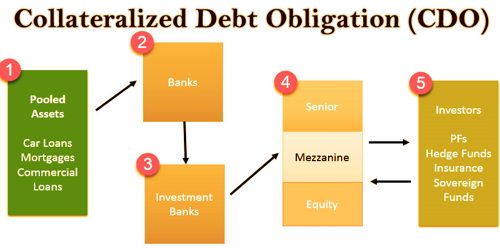
Collateralized Debt Obligation (CDO) - Assignment Point

***

Collateralized Mortgage Obligation

A CMO is a debt security backed by mortgages. These mortgage pools are usually separated into different maturity classes called tranches (from the French word for “slice”). The securities were issued by private issuers, as well as the Federal Home Loan Mortgage Corporation (Freddie Mac). As the mortgages were usually government-guaranteed, CMOs usually carried AAA ratings until their current financial meltdown. The early versions of CMOs were known as “plain vanilla,” but recent developments gave us PACs (planned amortization certificates) and TACs (targeted amortization certificates); among too many others. They were all variations on how principal repayments in advance of maturity date were treated.

CITE: https://www.r2library.com/Resource/Title/0826102549

***

CMO vs CDO | What is the difference between them? - Fintelligents

RELATED: https://medicalexecutivepost.com/2011/07/06/merrill-lynch-investigated-for-cdo-deal-involving-magnetar/

YOUR THOUGHTS ARE APPRECIATED.

Thank You

Comprehensive Financial Planning Strategies for Doctors and Advisors: Best Practices from Leading Consultants and Certified Medical Planners™

ORDER: https://www.amazon.com/Comprehensive-Financial-Planning-Strategies-Advisors/dp/1482240289/ref=sr_1_1?ie=UTF8&qid=1418580820&sr=8-1&keywords=david+marcinko

***

VICE MEDIA: Over and Out

By Staff Reporters

***

***

Vice Media filed for bankruptcy

The company, which was valued at $5.7 billion in 2017, filed for Chapter 11 bankruptcy protection yesterday and plans to sell itself to a group of creditors for $225 million. It’s the latest in a string of digital media companies to stumble recently after advertising revenue became harder to come by.

Vice’s filing also made it one of seven large companies to head to bankruptcy court in a 48-hour period—the largest number of filings during a two-day period since 2008, according to Bloomberg.

***

COMMENTS APPRECIATED

Thank You

***

***

CORPORATE EARNINGS: Review

By Staff Reporters

***

***

Earnings roundup

The following companies are in the earnings pipeline this week:

  • Home Depot is due to release its results for its last fiscal quarter before the market opens Tuesday. Analysts expect the home-improvement chain to report earnings of $3.81 per share, down from $4.09 during the same quarter a year earlier, according to Zacks Investment Research. Home improvement businesses benefited from increased spending on renovations during the pandemic but have struggled as inflation picked up. Home Depot’s shares were down about 0.9% Monday.
  • Target will follow Wednesday, with analysts predicting the big box retailer will report earnings of $1.75 per share, down from $2.19 the year before. Again, investors will be looking to see how Target has dealt with inflation and recession-wary shoppers. Its shares were up more than 1.3%.
  • Walmart wraps up big-retailer week Thursday. Analysts expect the retailer to report earnings of $1.31 per share, a slight improvement from $1.3 a year earlier. Its shares were down about 0.8%.
  • Cisco Systems (CSCO) will report results for the fiscal quarter ended in April on Wednesday. Analysts expect the software company to report earnings of $0.87 per share, up from $0.78 a year before.
  • Two major Chinese tech companies will also report results this week, with Baidu (BIDU) going first before market open Tuesday and Alibaba (BABA) following Thursday.

***

COMMENTS APPRECIATED

Thank You

***

***

CALM: US Equity NASDAQ Traders

By Staff Reporters

***

***

  • Markets: Despite the risk of the US defaulting on its debts next month, equity traders have kept calm and carried on, sending the NASDAQ to a weekly gain last week. But over in the bond market, investors are sweating. The cost of credit-default swaps, which act as insurance against a default, is higher in the US than in emerging markets like Mexico and Brazil.
  • Stock spotlight: This stat about the stock market’s concentration is wild…Apple’s market cap is now greater than the value of every company in the Russell 2000 small-cap index combined.

COMMENTS APPRECIATED

Thank You

***

***

DAILY UPDATE: Workplace Productivity Down

By Staff Reporters

***

***

The US is experiencing the biggest decline in worker productivity since 1948, according to research from EY-Parthenon, and many executives have been quick to single out remote work as the main culprit.

This is what they cite to prove their point.:

  • A study published in Nature Human Behaviour found that working remotely made Microsoft’s remote workers miss important learning opportunities by not rubbing elbows with coworkers who aren’t part of their immediate team.
  • More recent research showed that interacting through a screen can make workers less likely to generate ideas. That’s a problem for tech companies needing to out-innovate the competition.

For many industry leaders, accessing a wider talent pool outside of traditional tech hubs isn’t enough to make up for those drawbacks. And as widespread labor shortages subside and layoffs sweep through Silicon Valley, companies are no longer in a perk war to recruit and retain the brightest minds.

Finally, the Big Tech office pushed mirrors broader thru white-collar labor market dynamics; according to Morning Brew. In December, 13% of LinkedIn postings were for remote jobs, compared to 20% nine months prior.

***

ORDER: https://www.routledge.com/Risk-Management-Liability-Insurance-and-Asset-Protection-Strategies-for/Marcinko-Hetico/p/book/9781498725989

ORDER: https://www.routledge.com/Comprehensive-Financial-Planning-Strategies-for-Doctors-and-Advisors-Best/Marcinko-Hetico/p/book/9781482240283

***

COMMENTS APPRECIATED

Thank You

***

The CPI Report and Inflation

By Staff Reporters

***

***

Stocks were a mixed bag yesterday after the consumer price index showed prices rose 4.9% last month, marking the 10th month in a row of cooling inflation and the first time inflation has dipped below 5% in two years. That’s still higher than the Fed’s 2% target, but it leaves space for Jerome Powell to chill out a bit. Tech stocks got a boost from that news, especially Google’s parent, Alphabet, which also benefited from rolling out its new AI.

CITE: https://www.r2library.com/Resource

What drove the markets?

Economists polled by the Wall Street Journal had forecast the CPI increasing 0.4% and advancing 5.0% over the past year. The core inflation rate rose 0.4% in April for the second straight month, in line with economists forecasts. For the year, the core inflation rate, excluding food and energy prices, increased 5.5% down from a 5.6% rise in March.

“The below 5% headline CPI number is a sigh of relief to a market on edge,” said Alexandra Wilson-Elizondo, co-head of portfolio management for multi asset solutions at Goldman Sachs Asset Management.

Traders hoped that the lower-than-expected inflation data may leave room for the U.S. central bank to refrain from raising interest rates further at its June meeting.

“The data today will be interpreted as not hot enough to force the Fed’s hand in June … We do not think this one data point will determine the outcome of the June FOMC meeting because we still have a string of economic data to process between now and then,” wrote Wilson-Elizondo.

“The details of the print suggest that we are still a meaningful distance from the Fed’s 2% target, giving little reason for the Fed to cut this year.”

Investors priced in the Federal Reserve beginning to trim borrowing costs in coming months, a hope that is seen underpinning stocks of late and helping the S&P 500 index move towards the top of the 3,800 to 4,200 range its has held all year.

***

COMMENTS APPRECIATED

Thank You

***

***

Stocks, Musk, Goldman Sachs and Intel

By Staff Reporters

***

***

  • Stocks mostly held steady yesterday as everyone waits for April’s inflation data to drop tomorrow. Regional banks saw some movement as PacWest cut its dividend, then teetered up and down throughout the day. But Six Flags theme park operator shot straight up after reporting record revenue for the last quarter thanks to higher ticket prices.
  • Elon Musk warned that Twitter follower counts may drop as the platform removes inactive accounts.
  • Goldman Sachs has agreed to pay $215 million to settle a long-running class-action lawsuit accusing the investment bank of underpaying women. Elon Musk warned that Twitter follower counts may drop as the platform removes inactive accounts.
  • Intel continues to rattle the tech industry by confirming that it plans to cut its workforce to reduce costs. The company declined to share how many workers would be affected but said the layoffs would take place across the company.

COMMENTS APPRECIATED

Thank You

***

***

Musings on a Famous Portfolio Asset Allocation Study

Some Critics Claim Brinson, Hood, and Beebower Conclusions Wrong

[By Dr. David Edward Marcinko MBA CMP™]

http://www.CertifiedMedicalPlanner.org

[Publisher-in-Chief]

Frequently, we hear the axiom that asset allocation is the most important investment decision, explaining 93.6% of portfolio returns. The presumption has been that once the risk tolerance and time horizon have been established, investing is simply a matter of implementing a fixed mix of stocks, bonds, and cash using mutual funds selected for this purpose. This axiom is based on a famous study by Brinson, Hood, and Beebower (BHB) published in the Financial Analysts Journal in July/August 1986. It is the stuff of most modern business school and graduate students in economics and finance.

Enter the Critics

One critic claims that BHB’s conclusions and the interpretation of their conclusions are wrong, stating that because of several methodological problems, BHB needed to make certain assumptions for their analysis to go forward. They assumed that the average asset-class weights for the 10-year period studied are the same as the actual normal policy weights; that investments in foreign stocks, real estate, private placements, and venture capital can be proxied by a mix of stocks, bonds, and cash; and that the benchmarks for stocks, bonds, and cash against which fund performance was measured are appropriate. The author believes that each of these assumptions can lead to a faulty measurement of success or failure at market timing and stock selection.

The Jahnke Study

William Jahnke claims that BHB erred in their focus on explaining the variation of quarterly portfolio returns rather than portfolio returns over the 10-year period studied. According to the study, asset allocation policy explains only a small fraction of the range of 10-year portfolio returns earned by the pension funds reported in the study. The author concluded that this discrepancy is caused by the effect of compounding returns. He adds that BHB were wrong to use variance of quarterly returns rather than the standard deviation. Use of standard deviation would reduce the often cited 93.6% to about 79%. Moreover, BHB did not consider the cost of investing, such as operating expenses, management fees, brokerage commissions, and other trading costs, which are more significant for individual investors than for the pension plans studied. Jahnke claims that excessive costs can reduce wealth accumulation by 50%.

Note: (“The Asset Allocation Hoax,” William W. Jahnke, Journal of Financial Planning, February 1997, Institute of Certified Financial Planners [303] 759-4900).

Assessment

Finally, the author takes issue with establishing long-term fixed asset class weights. Asset allocation should be a dynamic process. Higher equity return expectations should in turn produce larger equity allocations, other things being equal.

Certified Medical Planner

Conclusion

Are doctors different than the average investor noted in this essay?

Your thoughts and comments on this ME-P are appreciated. Feel free to review our top-left column, and top-right sidebar materials, links, URLs and related websites, too. Then, subscribe to the ME-P. It is fast, free and secure.

Link: http://feeds.feedburner.com/HealthcareFinancialsthePostForcxos

Speaker: If you need a moderator or speaker for an upcoming event, Dr. David E. Marcinko; MBA – Publisher-in-Chief of the Medical Executive-Post – is available for seminar or speaking engagements. Contact: MarcinkoAdvisors@msn.com

OUR OTHER PRINT BOOKS AND RELATED INFORMATION SOURCES:

Product Details

  Risk Management, Liability Insurance, and Asset Protection Strategies for Doctors and Advisors: Best Practices from Leading Consultants and Certified Medical Planners™8Comprehensive Financial Planning Strategies for Doctors and Advisors: Best Practices from Leading Consultants and Certified Medical Planners™

Invite Dr. Marcinko

***

Whatever Happened to the Invisible Hand of Capitalism?

The Invisible Hand of Capitalism?

vitaly

By Vitaliy Katsenelson CFA

Just as the well-meaning economist of the Soviet Union didn’t know the correct price of sugar, nor do the good-intentioned economists of our global central banks know where interest rates should be.

***

246_1

***

Assessment

Even more important, they can’t predict the consequences of their actions.

Here’s why?

http://contrarianedge.com/2016/03/16/whatever-happened-to-the-invisible-hand-of-capitalism/

Conclusion

Your thoughts and comments on this ME-P are appreciated. Feel free to review our top-left column, and top-right sidebar materials, links, URLs and related websites, too. Then, subscribe to the ME-P. It is fast, free and secure.

Speaker: If you need a moderator or speaker for an upcoming event, Dr. David E. Marcinko; MBA – Publisher-in-Chief of the Medical Executive-Post – is available for seminar or speaking engagements. Contact: MarcinkoAdvisors@msn.com

OUR OTHER PRINT BOOKS AND RELATED INFORMATION SOURCES:

Comprehensive Financial Planning Strategies for Doctors and Advisors: Best Practices from Leading Consultants and Certified Medical Planners™

***

WOODSTOCK for Capitalists

ANNUAL MEETING TODAY

By Staff Reporters

***

***

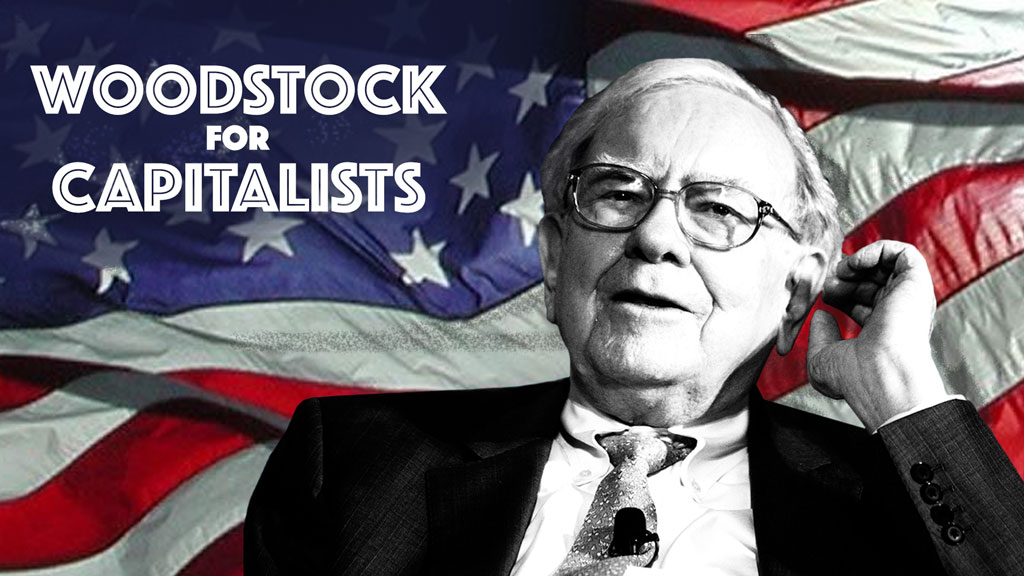
“Woodstock for Capitalists” is happening today

Warren Buffett will preside over Berkshire Hathaway’s 59th annual shareholders meeting today—an event expected to draw a large crowd to Omaha, Nebraska. Everyone will be watching to see what Buffett has to say about the economy, the state of the banking sector, his big bet on Apple, and his struggling “favorite child,”

Geico. Shareholders will also vote on six proposals on climate change, political advocacy, and the firm’s leadership, all of which Buffett opposes.

Agenda: https://www.good-investing.net/event/berkshire-hathaway-annual-shareholders-meeting-2023/#:~:text=The%20Berkshire%20Hathaway%20Annual%20Shareholders%20Meeting%202023%20takes,Shareholder%20Meeting%202023%2C%20including%20the%20Exhibition%20Hall%2C%20open.

***

COMMENTS APPRECIATED

Thank You

***

***

e-BOOKS: For Doctors, Financial Advisors, CPAs, Insurance Agents, Medical Consultants and Health Law Attorneys

By Ann Miller RN MHA CMP

INTRODUCING OUR NEXT GENERATION e-BOOK LIBRARY FROM iMBA, Inc.

An e-book is an electronic or digital book that can be read on a computer or a handheld device.

Our new e-books consists of text, images, and are fixed to a specific spot on the page.

And, our e-books are a data files similar in content and structure to a word-processing document that comes in a PDF format. To use our e-books, you need to purchase and download it to a device that has a .pdf file reader app, such as ADOBE® or similar on a smartphone, tablet or computer. A PDF, also known as a portable document format, is the format most people are familiar with and used in our e-books. PDFs are known for their ease of use and ability to hold custom layouts. They are the most commonly used e-Book formats, especially by professionals and adult-learners.

You can then access the e-book and read it, or highlight pages and even take side notes.

e-Books Save Money

With no manufacturing, printing, binding or shipping costs, e-Books are cheaper than traditional hard or paper back books.The price of each specialized and highly niche focused e-Book [50-100 pages] is only $25, whereas similar paperback printed books of this type generally cost $145, or more!

Payable thru PayPal [3% courtesy surcharge applies].

MORE HERE: https://medicalexecutivepost.com/me-pr-a-new-feature/

COMMENTS APPRECIATED

Thank You

***

Social Determinants of Health from Inside the Hospital System

SDOH

By Staff Reporters

***

***

READ: Social determinants of health aren’t just for patients. Health systems looking to promote health equity within their communities can start internally, by looking at their own workforce; according to HealthcareBrew.

***

***

COMMENTS APPRECIATED

Thank You

***

FORM ADV is a Must Read for Selecting a Financial “Advisor”

Form ADV – The Essential Document

Dr. David Edward Marcinko MBA - WEGO Health Awards Nominee

By Dr. David Edward Marcinko MBA CMP©

SPONSOR: http://www.CertifiedMedicalPlanner.org

CMP logo

Under law, financial advisors and planners must provide you with a form ADV Part II or a brochure that covers the same information.  Even if a brochure is provided, ask for the ADV.  While it is acceptable, even desirable, for the brochure to be easier to read than the ADV, the ADV is what is filed with the appropriate state or SEC.  If the brochure reads more like a slick sales brochure or the information in the brochure glosses over the items on the ADV to a high degree, one should consider eliminating the advisor from consideration.

FIDUCIARY: https://medicalexecutivepost.com/2023/03/11/recast-an-interview-with-fiduciary-bennett-aikin-aif-2/

Registering with a state or SEC gives an advisor a fiduciary duty to the client.  This is a high standard under the law. 

There are several types of advisors who are exempt from registering and filing an ADV. 

First, there are registered representatives (brokers).  Brokers have a fiduciary responsibility to their firms regardless of whether they are statutory employees or independent contractors. Not the client.

Second are attorneys and accountants whose advice is “incidental” to their legal or accounting practices. But, why would one hire someone whose advice is “incidental” to his primary profession?  A top-notch advisor is a full-time professional and should be registered.  One should insist that their advisor be registered.

CFP: https://medicalexecutivepost.com/2016/11/18/why-we-cannot-assume-cfp-equals-fiduciary/

The ADV will describe the advisor’s background and employment history, including any prior disciplinary issues.  It will describe the ownership of the firm and outline how the firm and advisor are compensated.  Any referral arrangements will be described.  If an advisor has an interest in any of the investments to be recommended, it must be listed as well as the fee schedule.  There is also a description of the types of investments recommended and the types of research information that is used.

ASSESSMENT: A review of the ADV should result in an alignment of what the advisor said during the interview and what is filed with the regulators.  If there is a clear discrepancy, choose another advisor.  If it is unclear, discuss the issue with the advisor.

Your thoughts and comments are appreciated.

Form ADV | Moneygrow.com | Registered Investment Advisor ...

SEC Headquarters
100 F Street, NE
Washington, DC 20549
(202) 942-8088

TEXTBOOK ORDER: ORDER Textbook: https://www.amazon.com/Comprehensive-Financial-Planning-Strategies-Advisors/dp/1482240289/ref=sr_1_1?ie=UTF8&qid=1418580820&sr=8-1&keywords=david+marcinko

Comprehensive Financial Planning Strategies for Doctors and Advisors: Best Practices from Leading Consultants and Certified Medical Planners™

SECOND OPINIONS: https://medicalexecutivepost.com/schedule-a-consultation/

INVITE DR. MARCINKO: https://medicalexecutivepost.com/dr-david-marcinkos-bookings/

THANK YOU

***

BUSINESS PLAN CONSTRUCTION: For Health Industry Modernity

FOR MEDICAL AND HEALTHCARE ENTREPRENEURS AND INNOVATORS

By Dr. David Edward Marcinko MBA MEd CMP®

I was asked by business schools and medical colleagues – and their bankers, CPAs and advisors – to speak about this topic several times last year before the pandemic.

Now, with the specter of M-4-A etc; it certainly is a vital concern to all young entrepreneurs, doctors & medical professionals whether live, audio recorded or in podcast form. And so, here is a written transcript of a recent presentation for your review.

Now, with the specter of tele-health, tele-medicine, M-4-A etc; it certainly is a vital concern to all young doctors & medical professionals whether live, audio recorded or in podcast form. And so, here is a written transcript of a recent presentation for your review.

***

New Product Business Plan Sample [2021 Updated] | OGScapital

***

READ: https://medicalexecutivepost.com/wp-content/uploads/2017/08/mba-business-plan-capstone-outline.pdf

YOUR THOUGHTS ARE APPRECIATED.

SECOND OPINIONS: https://medicalexecutivepost.com/schedule-a-consultation/

INVITE DR. MARCINKO: https://medicalexecutivepost.com/dr-david-marcinkos-bookings/

Thank You

***

USA nears DEFAULT while Europe INFLATES!

By Staff Reporters

***

***

Treasury Secretary Janet Yellen warned yesterday that the US could run out of money to pay all its bills as early as June 1st if Congress does not raise or suspend the debt limit before then. The US’ first-ever default would be disastrous for financial markets, economists say.

***

Meanwhile, Europe’s painful inflation has inched higher, extending the squeeze on households and keeping pressure on the European Central Bank to unleash what could be another large interest rate increase. Consumer prices in the 20 countries using the euro currency jumped 7% in April from a year earlier, just up from the annual rate of 6.9% in March, the European Union statistics agency Eurostat said today. Food price inflation eased a little, falling to an annual rate of 13.6% from March’s 15.5%, while energy prices rose a more modest 2.5%. Core inflation, which excludes volatile food and fuel, slowed slightly but was still high at 5.6%, underlining the expectation that the ECB will press ahead with its campaign to beat inflation into submission with rate hikes.

***

COMMENTS APPRECIATED

Thank You

***

***

BANKS: New Federal Reserve Rules?

Detailing Oversight Lapses

By Staff Reporters

***

***

The Fed says it’s time for new bank rules

Just in time for a new looming bank failure, the Federal Reserve issued a 102-page report dissecting the corpse of Silicon Valley Bank. Meanwhile, FRB [First Republic Bank] FRB was just sold to JPMorgan Chase.

LINK: https://medicalexecutivepost.com/2023/05/01/daily-update-frb-bidding-sold-to-jpmorgan-chase/

The Fed pointed the finger at both its own inadequate supervision and the bank’s management.

CITE: https://www.r2library.com/Resource

And in an accompanying letter, Michael Barr, the Fed’s vice chair for supervision, called for stricter rules to be applied to more financial institutions and for more tools to be given to regulators to bring firms with poor capital planning and risk management into line.

MORE: https://www.wsj.com/articles/jpmorgan-pnc-bid-to-buy-first-republic-as-part-of-fdic-takeover-aeb936a0?mod=RSSMSN

***

https://www.routledge.com/Risk-Management-Liability-Insurance-and-Asset-Protection-Strategies-for/Marcinko-Hetico/p/book/9781498725989

***

COMMENTS APPRECIATED

Thank You

***

PODCAST: Confessions of a Hospital CFO

CHIEF FINANCIAL OFFICER

By Eric Bricker MD

***

***

CITE: https://www.r2library.com/Resource/Title/0826102549

COMMENTS APPRECIATED

Thank You

***

***

***

***

Meta, Chipotle, Microsoft, Eggs and Rent

ECONOMIC OUTPUT

By Staff Reporters

***

***

A government report on U.S. economic output in the first quarter will shed light on how consumers and businesses are faring under high inflation, rising interest rates and the onset of banking problems. Consumer spending, the primary driver of growth, and hiring were surprisingly strong at the start of the year, but more recently slowed as the Federal Reserve continued raising interest rates to cool the economy and curb rapid price increases. TO WIT:

***

Meta’s “Year of Efficiency” is off to a strong start: After three straight quarters of falling revenue last year, the company saw an uptick in ad sales for a 3% revenue jump from Q1 2022. Profits were down, but the company still beat expectations, and Facebook gained users again after losses last year. But not all of Mark Zuckerberg’s dreams are coming true—the company’s Metaverse unit lost almost $4 billion last quarter.

Chipotle—which hit near all-time highs after saying customers kept coming back for burrito bowls despite price increases.

The UK’s competition regulator blocked Microsoft’s bid to acquire the Call of Duty-maker saying it would hurt competition in the cloud gaming sector. The move came as a shock because the regulator had previously said Microsoft had assuaged its concerns about the console gaming market. The decision, which Microsoft plans to appeal, puts a strain on the deal while the companies wait for competition decisions from the EU and the US, where the FTC has already sued to scuttle it.

Finally, while egg prices have fallen dramatically, one sector of the economy remains stubbornly expensive: rents.

  • In the latest consumer price index report, the shelter category (aka rents) was the largest contributor by far to overall inflation. And despite moderating in recent months, rent growth remains 17% higher than 2021 levels.

COMMENTS APPRECIATED

Thank You

***

***

VENTURE CAPITAL FUNDING: Slowing Down in Health Care!

By Staff Reporters

***

***

Venture capital funding in the digital health space cooled significantly in 2022 following a red-hot 2021; according to Healthcare Brew. Overall, digital health companies raised $15.3 billion last year, down substantially from the $29.1 billion raised in 2021—but still above the $14.1 billion raised in 2020, according to research from Rock Health, a seed fund that supports digital health startups.

Analysts predict investors will still put a good amount of money into digital health in 2023, particularly in alternative care, drug development technology, and software that reduces physician workload. But investors will likely pull dollars away from a few specific sectors this year.

“There is definitely more diligence, a little bit more skepticism in the investments that are made. So you tend to see investments go slower because diligence is taking longer or investors are being a little bit more conservative,” Adriana Krasniansky, head of research at Rock Health, told Healthcare Brew.

Direct-to-consumer products. The first sector in which Krasniansky expects to see funding slow this year is direct-to-consumer (DTC) products. One reason is that with recession fears, “Consumer spend is not as readily available,” Krasniansky said.

But Apple’s new data privacy rules are also partially to blame. As of April 2021, apps sold through Apple’s App Store must ask users for permission to track activity, and users can opt out. That tracking data is crucial for advertisers to create personalized ads.

“Apple’s privacy measures have impacted customer acquisition costs, making the DTC channel more challenging for a lot of startups—and not just digital health startups,” said Krasniansky.

READ: https://www.healthcare-brew.com/stories/2023/02/21/digital-health-hesitancy?cid=30649741.22835&mid=349b552221c994e2540a304649746d7c&utm_campaign=hcb&utm_medium=newsletter&utm_source=morning_brew

***

COMMENTS APPRECIATED

Thank You

***

***

ORDER: https://www.amazon.com/Dictionary-Health-Information-Technology-Security/dp/0826149952/ref=sr_1_5?ie=UTF8&s=books&qid=1254413315&sr=1-5

***

PODCAST: Physicians Need to Be Trained as Entrepreneurs and Encouraged to Innovate!

***

By Kevin Pho MD

***

***

“Teaching medical students entrepreneurial and business skills is invaluable as the need for leadership in medicine grows in every single sector. Many physicians already engage in managerial and entrepreneurial-like practices without labeling these skills. By formalizing these skills into medical education, physicians will be able to take their ambitions and ideas about how to best run existing health care institutions and translate them into innovations for the future of the field.”

Sofia Yunez is a medical student.

She shares her story and discusses her KevinMD article, “To be effective leaders, physicians need to be trained as entrepreneurs and encouraged to innovate.”

***

PODCAST: https://kevinmd.libsyn.com/physicians-need-to-be-trained-as-entrepreneurs-and-encouraged-to-innovate

***

COMMENTS APPRECIATED

Thank You

***

BUSINESS MEDICINE: https://www.amazon.com/Business-Medical-Practice-Transformational-Doctors/dp/0826105750/ref=sr_1_9?s=books&ie=UTF8&qid=1287563112&sr=1-9

***

SVB: Grew from the Business Start-Up Ecosystem

By Staff Reporters

***

***

DEFINITION: Startups are young companies or ventures that are founded to develop a unique or innovative product, service, or platform, and bring it to market. They are typically in the early stages of their development and face high uncertainty and failure rates. They are usually self-funded by the founders or seek external funding from investors or loans. They aim to grow large beyond the solo founder and disrupt existing industries or create new one.

CITE: https://www.r2library.com/Resource/Title/0826102549

SVB rooted in the startup ecosystem

SVB was relatively small—it had 40,000 customers compared to JPMorgan Chase’s 66 million—but it claimed to bank nearly half of all US tech and life sciences startups last year, including household names like Etsy, Roblox, and Roku. The cultural cachet of having a relationship with SVB as a venture-backed startup was like sporting a New Yorker tote at Whole Foods.

But the reason its loss will leave such a gaping hole in the startup community isn’t that it was cool to name-drop at a networking event. Because the bank was created in 1983 specifically to cater to venture-backed startups, it helped them in ways that most banks can’t—or won’t.

SVB chill loans: According to the MorningBrew, SVB would offer loans to startups more readily than large banks, basing the loans on a company’s ability to raise venture capital funds, not to turn a profit. SVB was also known for being flexible—even if startups breached their loan terms. “They were the easiest money for an unprofitable, early stage to mid-stage tech company,” Irving Investors founder Jeremy Abelson told The Information. And, even small startups received hand-holding services, such as guidance on how to set up their financial infrastructure. Its bankers personally called startups when they secured their first rounds of funding, according to The Information.

Startups now have to deal with big banks

Several founders who previously banked with SVB told Bloomberg that they’re moving their money to Chase and Bank of America, banks considered “too big to fail.”

Startups’ experience at big banks won’t be like their time at SVB. Not only is Jamie Dimon unlikely to call a startup to congratulate them on their Series A, but big banks are also expected to be more tight-fisted with their loans. The Office of the Comptroller of the Currency, a regulator that oversees large US banks, disapproves of loans to companies that are further out than one year from profitability, according to Crunchbase.

The loss of SVB is therefore expected to have a chilling effect on loans to venture-backed startups, aka “venture debt,” which SVB handed out more of than any other bank.

***

COMMENTS APPRECIATED

Thank You

***

ORDER: https://www.routledge.com/Risk-Management-Liability-Insurance-and-Asset-Protection-Strategies-for/Marcinko-Hetico/p/book/9781498725989

****

Financial-Tech [Entrepreneurial Start-Ups] Falling

By Staff Reporters

***

***

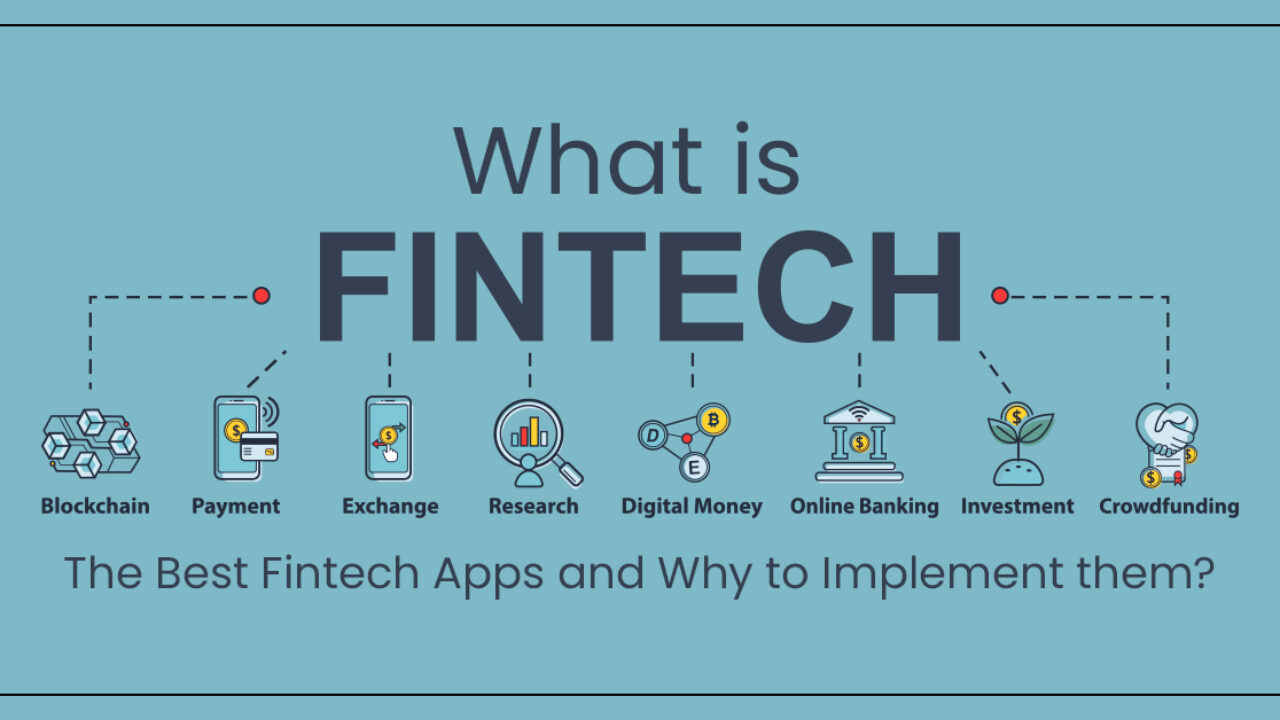
DEFINITION: Financial technology (abbreviated fintech or FinTech) is the technology and innovation that aims to compete with traditional financial methods in the delivery of financial services. Artificial intelligence, Blockchain, Cloud computing, and big Data are regarded as the “ABCD” (four key areas) of FinTech. The Fintech industry is an emerging industry that uses technology to improve activities in finance. The use of smartphones for mobile banking, investing, borrowing services, and cryptocurrency are examples of technologies aiming to make financial services more accessible to the general public.

***

Financial technology companies consist of both startups and established financial institutions and technology companies trying to replace or enhance the usage of financial services provided by existing financial companies.

CITE: https://www.r2library.com/Resource/Title/082610254

A subset of fintech companies that focus on the insurance industry are collectively known as insurtech or insuretech

READ: https://tinyurl.com/yrx2kxy4

***

INVESTING: https://www.amazon.com/Comprehensive-Financial-Planning-Strategies-Advisors/dp/1482240289/ref=sr_1_1?ie=UTF8&qid=1418580820&sr=8-1&keywords=david+marcinko

***

COMMENTS APPRECIATED

Thank You

***

DAILY UPDATE: Business News Briefs Plus TESLA and the Markets

By Staff Reporters

***

***

1. Regional banks’ plight was Morgan Stanley’s perk. The bank saw nearly $20 billion in new client assets in the wake of the banking crisis that rocked smaller banks like First Republic. Why the bank became a “destination of choice” amid the crisis.

2. Taylor Swift was the only one asking the right question on FTX. The mega star didn’t sign a $100 million sponsorship deal with the crypto exchange because, unlike seemingly everyone in Silicon Valley, she did some form of due diligence.

3. The new-age pension plan. Fidelity and State Street are rolling out annuity options within their 401(k) products, The Wall Street Journal reports. But it comes with a hefty price tag, and not everyone is sold on it.

4. It’s starting to get scary in the housing market. Foreclosure filings were up 22% in Q1 compared to last year, and repossessions are headed in the wrong direction as well.

Finally, Fintel reports that on April 21, 2023, Goldman Sachs maintained coverage of Tesla (NASDAQ:TSLA) with a Buy recommendation. As of April 6th, 2023, the average one-year price target for Tesla is $203.14. The forecasts range from a low of $24.58 to a high of $315.00. The average price target represents an increase of 24.63% from its latest reported closing price of $162.99. The projected annual revenue for Tesla is $118,517MM, an increase of 37.75%. The projected annual non-GAAP EPS is $5.70.

CITE: https://www.r2library.com/Resource

***

  • The S&P 500® Index was up 3.52 points (0.1%) at 4137.04; the Dow Jones industrial average was up 66.44 (0.2%) at 33,875.40; the NASDAQ Composite was down 35.25 (0.3%) at 12,037.20.
  • The 10-year Treasury yield was down about 7 basis points at 3.50%.
  • CBOEs Volatility Index was up 0.12 at 16.89.

Real estate and financials were among Monday’s weakest-performing sectors, while energy companies led gainers thanks to a jump of about 1% in crude oil futures. The U.S. dollar index fell to about 101.37, its weakest level since mid-April, while Treasury yields eased slightly.

***

CITE: https://www.amazon.com/Dictionary-Health-Information-Technology-Security/dp/0826149952/ref=sr_1_5?ie=UTF8&s=books&qid=1254413315&sr=1-5

***

ORDER: https://www.routledge.com/Comprehensive-Financial-Planning-Strategies-for-Doctors-and-Advisors-Best/Marcinko-Hetico/p/book/9781482240283

***

COMMENTS APPRECIATED

Thank You

***

PODCAST: US Hospital Bond Debt Explained

Do Patients Come First or Creditors?

By Eric Bricker MD

***

***

Citation: https://www.r2library.com/Resource/Title/0826102549

YOUR THOUGHTS ARE APPRECIATED.

Thank You

***

WOMEN: Gaining Economic Earnings Influence

Physician Salary Pay Gap Comparisons

By Staff Reporters

***

***

Physician Salary Pay Gap Follow-Up: https://medicalexecutivepost.com/2023/04/14/physician-salary-pay-gap/

***

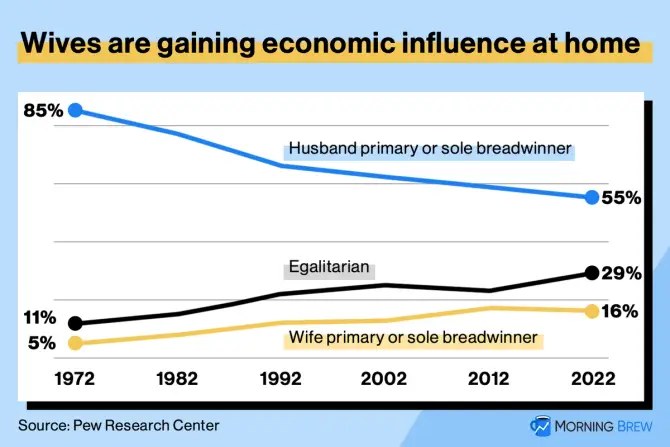
Women earn as much as or more than their husbands in just under half of US opposite-sex marriages, a significant advancement for economic equality from past decades, according to a new Pew Research study.

  • Sixteen percent of wives in opposite-sex marriages are the sole or primary breadwinners in their home (“primary” meaning they make more than 60% of the household’s income). This share is triple the 5% of women breadwinners from 50 years ago.
  • In 29% of marriages, both spouses bring home about the same income.

But, according to MorningBrew, in marriages where both partners have the same income, women spend about four-and-a-half more hours per week on chores and care giving than men.

And when women become the house’s primary income earner, little really changes about how much time either partner spends on chores, Pew found. But in this scenario, men report almost five more hours of leisure time per week than men in egalitarian households

CITE: https://www.r2library.com/Resource/Title/0826102549

***

COMMENTS APPRECIATED

Thank You

***

***

PODCAST: Investing in Digital Health Sales and Marketing

By Eric Bricker MD

***

***

COMMENTS APPRECIATED

Thank You

***

DHITS: https://www.amazon.com/Dictionary-Health-Information-Technology-Security/dp/0826149952/ref=sr_1_5?ie=UTF8&s=books&qid=1254413315&sr=1-5

***