Understanding Variations in the Cost of Living

Join Our Mailing List

Understanding the C-O-L

Conclusion

Your thoughts and comments on this ME-P are appreciated. Feel free to review our top-left column, and top-right sidebar materials, links, URLs and related websites, too. Then, subscribe to the ME-P. It is fast, free and secure.

Link: http://feeds.feedburner.com/HealthcareFinancialsthePostForcxos

Speaker: If you need a moderator or speaker for an upcoming event, Dr. David E. Marcinko; MBA – Publisher-in-Chief of the Medical Executive-Post – is available for seminar or speaking engagements. Contact: MarcinkoAdvisors@msn.com

Our Other Print Books and Related Information Sources:

Health Dictionary Series: http://www.springerpub.com/Search/marcinko

Practice Management: http://www.springerpub.com/product/9780826105752

Physician Financial Planning: http://www.jbpub.com/catalog/0763745790

Medical Risk Management: http://www.jbpub.com/catalog/9780763733421

Hospitals: http://www.crcpress.com/product/isbn/9781439879900

Physician Advisors: www.CertifiedMedicalPlanner.org

Product Details  Product Details

On the Decline of US Economic Freedom

Join Our Mailing List

A Remarkable Plunge in Economic Freedom

By Rick Kahler MS CFP® ChFC CCIM www.KahlerFinancial.com

The United States has experienced a “remarkable plunge in economic freedom” over the past ten years. This is the conclusion of the 2012 Economic Freedom of the World Annual Report, by Gwartney, Lawson, and Hall.

The GLH Report

The report measures the degree to which a country supports the cornerstones of economic freedom, defined as personal choice, voluntary exchange, freedom to compete, and the security of privately owned property. It surveys forty-two variables used to construct an index that measures 144 countries in five areas of economic freedom: the size of government, property rights, sound money, freedom to trade, and regulation.

Historical Review

For 20 years, from 1980 to 2000, the U.S. usually ranked as the third freest economy in the world behind Hong Kong and Singapore. By 2005 the U.S. fell to eighth, and by 2010 it was ranked 18th. In addition to Hong Kong and Singapore, the US is now less economically free than New Zealand, Switzerland, Australia, Canada, Bahrain, Mauritius, Finland, Chile, UAE, Ireland, United Kingdom, Estonia, Taiwan, Denmark, and Qatar. Right on our heels within .08 of a point are Kuwait, Cyprus, Japan, Oman, Jordan, and Peru.

Size of Government 

The size of government measures the degree to which a country relies on personal choice and free markets rather than government control of markets and politics. Countries with low levels of government spending, a smaller government sector, and lower tax rates did best in this measure. The U.S. ranks 78th in this category and has seen the size of its government and control over markets significantly expand in the past 10 years.

The security of property rights and a legal system that protects them is the foundation of economic freedom and free markets. If businesses and individuals don’t have confidence that contracts will be enforced and their investments protected, it sabotages their incentive to produce. And production is at the heart of any strong economy. The U.S. ranks 28th among nations in property rights and a strong legal system. This decline is one of the more surprising to me.

Reasons for Low US Ratings

The report suggests several reasons for the low rating. One is the U.S. expansion of eminent domain powers that now allows cities to condemn private property for resale to private developers, something that was once unthinkable. Another example is the violation of the property rights of bondholders in the government bailout of GM. Finally, the ramifications of the wars on drugs and terrorism, with laws allowing the government to invade and seize property, have contributed to the sharp decline of property rights.

Sound money is the oil that keeps an economy running. While sovereign governments cannot involuntarily go bankrupt because they can create money, they are constrained by inflation. To earn a high rating in this category a country must have a low and stable rate of inflation. This is where the US scored highest, ranking seventh.

Most Free Countries

The countries with the most freedom to trade internationally have low tariffs, easy clearance and efficient administration of customs, and few controls on the movement of capital. The US ranks 57th in free trade!

Finally, a free economy avoids regulations that restrict entry into markets and restrict exchange. It allows markets to determine prices and avoids regulations that increase costs and restrict people’s ability to get into business. Here, the U.S. ranks 31st.

Report Executive Summary

Link: http://www.cato.org/pubs/efw/efw2012/efw-2012-executive-summary.pdf

Assessment

Clearly, there can be no doubt that the U.S. is in economic decline. The economic freedoms we once took for granted are slowly slipping away. Only time will tell if we will rally and turn back toward the economic principles that once made American the envy of the world, or whether we will continue our slow fall to mediocrity.

Conclusion

Your thoughts and comments on this ME-P are appreciated. Feel free to review our top-left column, and top-right sidebar materials, links, URLs and related websites, too. Then, subscribe to the ME-P. It is fast, free and secure.

Speaker: If you need a moderator or speaker for an upcoming event, Dr. David E. Marcinko; MBA – Publisher-in-Chief of the Medical Executive-Post – is available for seminar or speaking engagements. Contact: MarcinkoAdvisors@msn.com

OUR OTHER PRINT BOOKS AND RELATED INFORMATION SOURCES:

Product Details

CEOs Support Higher Taxes and Debt Solution

Join Our Mailing List

Campaign to Fix the Debt

By Children’s Home Society of Florida Foundation

The nonpartisan Committee for a Responsible Federal Budget in cooperation with former Sen. Alan Simpson and former White House Chief of Staff Erskine Bowles has created a “Campaign to Fix the Debt.”

Bowles and Simpson were co-chairs of the National Commission on Fiscal Responsibility and Reform. They proposed a bipartisan budget solution at the request of President Barack Obama.

The CEOs Gather

On October 25, over 100 CEOs gathered at the New York Stock Exchange to support a comprehensive budget solution similar to that proposed by the Bowles-Simpson Commission. One of the commission members was Honeywell Chairman and CEO David Cote. He stated, “The U.S. has an opportunity to not only fix our debt issue and have an economic recovery, but we can also be a model for the world and how to deal with debt. What it really comes down to is if we still have the political will to be a great country.”

Cote continued to emphasize that it is important to develop a comprehensive solution. This solution will include “higher revenue, reduced entitlement spending, reduced discretionary spending, and investment in infrastructure and math and science.”

Congressional Leaders

Congressional leaders from both parties responded to this public proclamation by leaders of many of America’s largest corporations. The Senate Democratic leadership indicated that it believes part of the solution involves tax increases on individuals with higher incomes. House Republican leaders continue to oppose these tax increases.

Sen. Bernie Sanders (I-VT) observed that it is important for corporate leaders to pay their “fair share” of taxes. He commented, “Our Wall Street friends might also want to show some courage of their own by suggesting that the wealthiest people in this country, like them, start paying their fair share of taxes.” Sanders noted that many large corporations use various tax provisions to reduce their taxes. In his view, this tax reduction has been a factor in the major deficit problems.

Assessment

Maya MacGuineas, Chair of the Committee for a Responsible Federal Budget, supported this bipartisan effort by the 100 CEOs. She stated, “The collective voice of these business leaders has helped shine a light on the fact that the debt is already affecting Americans where they work and live. We have listened to the CEO Council and heard the consequences of inaction – businesses aren’t investing in an uncertain economy and are slowing job growth to protect their employees. With the CEOs’ backing and the support of the over 280,000 person Grassroots Network, we believe we can successfully push for a comprehensive debt reduction deal.”

Editor’s Note: It is unusual for a bipartisan group of business leaders to be so public in support of both a budget solution and higher taxes. This willingness to place both spending and tax increases on the table is significant.

Conclusion

Your thoughts and comments on this ME-P are appreciated. Feel free to review our top-left column, and top-right sidebar materials, links, URLs and related websites, too. Then, subscribe to the ME-P. It is fast, free and secure.

Link: http://feeds.feedburner.com/HealthcareFinancialsthePostForcxos

Speaker: If you need a moderator or speaker for an upcoming event, Dr. David E. Marcinko; MBA – Publisher-in-Chief of the Medical Executive-Post – is available for seminar or speaking engagements. Contact: MarcinkoAdvisors@msn.com

Our Other Print Books and Related Information Sources:

Health Dictionary Series: http://www.springerpub.com/Search/marcinko

Practice Management: http://www.springerpub.com/product/9780826105752

Physician Financial Planning: http://www.jbpub.com/catalog/0763745790

Medical Risk Management: http://www.jbpub.com/catalog/9780763733421

Hospitals: http://www.crcpress.com/product/isbn/9781439879900

Physician Advisors: www.CertifiedMedicalPlanner.org

Product Details  Product Details

October is Financial Planning Month

Join Our Mailing List

We Don’t Plan to Fail – But We Often Fail to Plan

Assessment

Doctors – Do not let this happen to you:

Link: http://www.msn.com/en-us/news/national/business-icons-who-went-broke/ss-BBa4MR9

Conclusion

Your thoughts and comments on this ME-P are appreciated. Feel free to review our top-left column, and top-right sidebar materials, links, URLs and related websites, too. Then, subscribe to the ME-P. It is fast, free and secure.

Speaker: If you need a moderator or speaker for an upcoming event, Dr. David E. Marcinko; MBA – Publisher-in-Chief of the Medical Executive-Post – is available for seminar or speaking engagements. Contact: MarcinkoAdvisors@msn.com

OUR OTHER PRINT BOOKS AND RELATED INFORMATION SOURCES:

Product Details  Product Details

Comprehensive Financial Planning Strategies for Doctors and Advisors: Best Practices from Leading Consultants and Certified Medical Planners(TM)


Top Ten Wealth Management Posts for Doctors

Join Our Mailing List

By Michael Zhuang

Conclusion

Your thoughts and comments on this ME-P are appreciated. Feel free to review our top-left column, and top-right sidebar materials, links, URLs and related websites, too. Then, subscribe to the ME-P. It is fast, free and secure.

Speaker: If you need a moderator or speaker for an upcoming event, Dr. David E. Marcinko; MBA – Publisher-in-Chief of the Medical Executive-Post – is available for seminar or speaking engagements. Contact: MarcinkoAdvisors@msn.com

OUR OTHER PRINT BOOKS AND RELATED INFORMATION SOURCES:

Product Details  Product Details

About the Certified Medical Planner™ Program

Certified Medical Planner

ADVERTISEMENT

The Virtual Certified Medical Planner™ Program, from iMBA Inc.

Our flagship 500 hour Certified Medical Planner™ professional designation program is designed for fiduciary focused FAs, CFPs®, CPAs, RIAs and other financial services professionals and/or doctors, nurses, health entity CXOs, managers and administrators [medical management consultants] and those in career transition looking to enhance their theoretical knowledge and practical experience in the integrated and expanding fields of medical practice management and personal financial planning.

In all our courses, we cover the full spectrum for any given topic.  Best of all, we utilize real-life case studies from the marketplace, either as a financial advisor or medical management consultant, so students can actively participate in a mock “working financial advisory group” or “medical managerial team”.

And, our unique CMP™ teaching methodology uses “live” dedicated instructors to help [adult-learners] students understand how to fully integrate quantitative and qualitative analysis when advising clients.

We offer 24/7/365 classes designed for working professionals with a heavy workload or travel schedule. In addition, our courses can be taken without ever having to leave your desk, home, office, practice, or even your hotel room.

Our training program is internet based so most of our students take the course virtually. Nevertheless, while our service delivery model is virtual – the educational benefits and notoriety you receive are REAL!

More info:

Ann Miller RN MHA

[Executive-Director]

www.CertifiedMedicalPlanner.org

###

Product DetailsProduct DetailsProduct Details

Product Details  Product Details

Product DetailsProduct Details

Product Details

A Simple Formula For Financial Sobriety

Join Our Mailing List

On Changing Financial Behaviors

By Rick Kahler MS CFP® ChFC CCIM www.KahlerFinancial.com

From time to time I offer financial courses through Community Education of the Black Hills. Classes on the fundamentals of making good investments and how to do your own financial planning usually fill quickly.

But, a class on “financial sobriety”—how to change your psychological behaviors around money and begin making wiser money decisions—had only one person sign up. Based on my 30 years of financial advising, this wasn’t a big surprise.

The Research

Research tells us 70% of US citizens have no savings and live month to month or are insolvent. Only 9% have saved over $100,000 and just 3% over $500,000. The stats for medical professionals are not so transparent.

Why is this? The simple answer is Americans have a significant resistance to saving, including some doctors, according to ME-P Editor-in-Chief, Dr. David Edward Marcinko FACFAS MBA CMP® www.CertifiedMedicalPlanner.org

Mathematically, the solution to this is very simple. Out of every dollar earned, do this: First, pay taxes. Second, save and invest 20% or more. Third, live on the rest. This formula has a high probability of successfully creating financial independence.

So, why are fewer than one in 10 Americans able to follow this simple formula? The answer to that isn’t so simple.

Psychological Responses

The first response to these options is often, “I can’t.” Non-savers tell themselves there is nowhere to cut. When put in context of maintaining their current lifestyle, this is true—and therein lies the problem. When you’re living month to month, becoming a saver inherently means either reducing your lifestyle or increasing your income.

Unfortunately, too many people vaguely intend to start saving when their income goes up. This is backwards. Focusing instead on reducing your lifestyle is what creates the habit of saving.

  • For some people, downsizing a lifestyle can mean switching kids from private to public schools or selling expensive cars and homes.
  • For others, downsizing can mean getting rid of cable TV, buying generic brands, and shopping at garage sales instead of Walmart. Most budgets have room for at least a few small cuts. We just can’t see the options, because our brains tell us that reducing our lifestyle will be a fate worse than death.

It may seem that a lifestyle reduction would be a lot easier for high income earner. Yet I’ve seen those earning $750,000 have as much trouble saving $10,000 a year as those earning $50,000. The self-talk and reasons why it’s impossible to cut spending are exactly the same.

Not about Money

It’s not about the money. It’s never about the money. It’s not that most non-savers don’t know the solution to saving more; it’s that they don’t like the solution. We cannot change what we refuse to confront.

It takes a lot of courage to admit you have to change and then take action to actually put a plan into motion. It can feel overwhelming, embarrassing, and fearful. It’s hard saying goodbye to the old lifestyle and the trappings we come to enjoy.

Adaptable Humans

Fortunately, the difficult times are temporary. Humans are very adaptable. Before long you will settle into the new “normal.” You will discover you can be just as happy with your new lifestyle as you were in the old. The anxiety of losing that lifestyle will be replaced with the satisfaction of watching your savings and investments grow, knowing you will someday be able to support yourself without working.

Assessment

Eventually, you will experience much less anxiety than you did when you were living in denial. Knowing you have enough savings to see you through a job loss or other financial calamity is a real anxiety buster.

You may even choose not to increase your lifestyle as your income increases. You’ll be too busy enjoying the financial serenity, satisfaction, and joy that comes with living on less than you earn and building financial independence.

Conclusion

Your thoughts and comments on this ME-P are appreciated. Feel free to review our top-left column, and top-right sidebar materials, links, URLs and related websites, too. Then, subscribe to the ME-P. It is fast, free and secure.

Speaker: If you need a moderator or speaker for an upcoming event, Dr. David E. Marcinko; MBA – Publisher-in-Chief of the Medical Executive-Post – is available for seminar or speaking engagements. Contact: MarcinkoAdvisors@msn.com

OUR OTHER PRINT BOOKS AND RELATED INFORMATION SOURCES:

Product Details  Product Details

As With Medical Decisions – Human Emotions Play a Role in Investment Advice

Join Our Mailing List

Appreciating Transferrable Applications in Behavioral Finance

By Sidney A. Blum CFP® CPA/PFS ChFC

By Dr. David E. Marcinko MBA

Whether making medical decisions or financial decisions, both are influenced by emotions. The role of emotions, when making financial decisions, has transferable application in the world of medical decisions.

What Role Should Emotion Play in Financial Advice?

Financial advisors know that one of the most important components of providing financial advice is discussing client goals. Inherently your goals are tied to how you see yourself and in what ways you see your money and net worth as a reflection of yourself. This aspect of your financial life is usually tied to emotions based on perceived positive or negative experiences in your life.

Financial advisors find that they expend considerable time and energy addressing emotions and negative reactions to events in clients’ lives. The goal is to move the focus toward positive steps for reaching client goals. As with other aspects in your life, emotional reactions can distract you from well reasoned actions that benefit in the long run. This is the reason it is beneficial to engage a financial professional to guide you through your financial life circumstances with advice driven by goals rather than emotional negative reactions.

Emotional Intelligence

The use of Emotional Intelligence is a learned skill set. Financial Advisors who are skilled in understanding the four basic emotions that guide them and their clients will find they are more successful in their chosen work!

The Four Basic Emotions

The four emotions are: Glad, Sad, Mad and Scared. These four basic emotions are neither good nor bad – they just “are”!

It is one or more of these emotions that help determine just how “risk adverse” a client will be. It is absolutely necessary for a financial advisor to be aware of the client’s emotional state, whether the client is aware or not. People react emotionally to market downturns. They are probably scared first, but also mad and sad as the market changes. They may get caught up in the market’s emotional swings and lose sight of their own goals and strategy. They think it will always stay that way. Or in an upturn, they believe the market will always stay up. They get caught up in the euphoria of “glad” and again lose sight of their goals and strategy. Many people get caught up in the high market frenzy and end up buying shares that are overpriced; even doctors.

Examples:

Pulling out of the market to protect temporary downside losses in value also means not participating in the upside, which eventually occurs. From the major downturn in the spring of 2009 to the fall of 2009, the market recovered better than 35%. Those who pulled out of the market and stayed out missed out on that portion of their own portfolio’s recovery. Due to reacting emotionally, people buy in up market and sell in a down market – the opposite of what garners them a good return.

Another difficulty is that people lose sight of the fact that a fund investment is in actual companies – some of which survive and some don’t. The nature of the investment market is that there are no guarantees on return of investment. A certain amount of volatility is normal. It is the price you pay for the opportunity of garnering a higher return than with “safe” investments.

And, how safe are “safe” investments? If your “safe” investments are earning 1% while inflation is running at 3% as is the case in 2012, you are losing purchasing power. If the bucket is leaking slowly, it can still end up empty!

So when you feel “glad” about a safe investment, what may be a good feeling may turn out to be a bad investment.

How Advisors Help Clients

How does an advisor help to keep their clients’ focus on the positive steps that can be taken to meet goals instead of reacting solely to current market conditions? How does advisor keep from getting involved in the client’s negative and unproductive emotional reactions?

Financial advisors have seen these situations before, but clients may not be aware that financial markets tend to return to the norm and provide a positive return in the long run. By helping provide a perspective on how the market normally behaves; the focus can be shifted from how the market currently stands, a temporary fluid condition, to the longer range behavior of markets. This provides a sense of stable emotions that allows the client and the advisor to make better financial decisions.

Non-Monetary Goals?

A financial advisor can also help you realize that financial planning is more than investments and that some goals are not solely monetary. It is less stressful and far more productive for people to keep their eyes on their goals, not on the dollar value of their portfolio. In the end, your net worth is not the same as your self‐worth.

Assessment

Because emotions play a significant role in all decisions we make, a major part of an advisor’s job is to help the client keep their focus on the positive steps that can be taken to meet those goals instead of reacting based solely on emotions!

About the Author

Sid graduated from the University of Illinois with a degree in accounting and has been practicing as a CPA since 1975 and financial advisor since 1987. Sid received the CERTIFIED FINANCIAL PLANNER certification in 1987 and in 1988, received the AICPA Certificate of Education Achievement in Personal Financial Planning. In 1989, Sid received the designation of Chartered Financial Consultant (ChFC) and in 1991 the AICPA specialty designation of Personal Financial Specialist (CPA/PFS).

Channel Surfing the ME-P

Have you visited our other topic channels? Established to facilitate idea exchange and link our community together, the value of these topics is dependent upon your input. Please take a minute to visit. And, to prevent that annoying spam, we ask that you register. It is fast, free and secure.

Conclusion

Your thoughts and comments on this ME-P are appreciated. Feel free to review our top-left column, and top-right sidebar materials, links, URLs and related websites, too. Then, subscribe to the ME-P. It is fast, free and secure.

Speaker: If you need a moderator or speaker for an upcoming event, Dr. David E. Marcinko; MBA – Publisher-in-Chief of the Medical Executive-Post – is available for seminar or speaking engagements. Contact: MarcinkoAdvisors@msn.com

OUR OTHER PRINT BOOKS AND RELATED INFORMATION SOURCES:

Product DetailsProduct DetailsProduct Details

  Risk Management, Liability Insurance, and Asset Protection Strategies for Doctors and Advisors: Best Practices from Leading Consultants and Certified Medical Planners™8Comprehensive Financial Planning Strategies for Doctors and Advisors: Best Practices from Leading Consultants and Certified Medical Planners™

Product Details

About the RetireMark Planning System

Join Our Mailing List

From HealthView Services (HVS)

By Staff Reporters

According to their website, HealthView Services (HVS) is one of the only firms in the country that builds solutions for the financial services industry to address out-of-pocket health care costs that individuals will face during retirement.

Founding

HVS was founded in 2008 by a team of experienced executives who identified a serious deficiency in financial planning in relation to retirement planning. In order to fill this void, HVS founders employed a group of expert physicians, experienced actuaries, and healthcare industry programmers to develop the HVS RetireMark Planning System.

Financial Planning and Health-Risk Assessment Tools

At its core, RetireMark is a combination of financial planning and health-risk assessment tools that provide financial institutions, independent advisors, and healthcare related firms with web-based reports. These customized reports project personalized out-of-pocket healthcare costs, life expectancy, and the Income Floor—a sophisticated and revolutionary approach to income distribution for retirement protection.

Customization

HVS’s product offerings can be customized to meet each institution`s exclusive needs and be seamlessly integrated into existing marketing and branding platforms. In addition to the software, HVS provides clients with training programs, seminars, and customized presentations in order to expand sales and grow revenues.

Assessmernt

In collaboration with industry leaders such as the Retirement Income Industry Association (RIIA), HVS has developed innovative solutions to address the growing needs of investors in transition. HVS is also a regular contributor to the HealthWatch segment of Retirement Weekly, a www.MarketWatch.com publication. By partnering with such prominent organizations, the firm hopes to become a pioneer in this emerging field.

Conclusion

So, give em’ a click and tell us what you think www.hvsfinancial.com

Your thoughts and comments on this ME-P are appreciated. Feel free to review our top-left column, and top-right sidebar materials, links, URLs and related websites, too. Then, subscribe to the ME-P. It is fast, free and secure.

Link: http://feeds.feedburner.com/HealthcareFinancialsthePostForcxos

Speaker: If you need a moderator or speaker for an upcoming event, Dr. David E. Marcinko; MBA – Publisher-in-Chief of the Medical Executive-Post – is available for seminar or speaking engagements. Contact: MarcinkoAdvisors@msn.com

Our Other Print Books and Related Information Sources:

Health Dictionary Series: http://www.springerpub.com/Search/marcinko

Practice Management: http://www.springerpub.com/product/9780826105752

Physician Financial Planning: http://www.jbpub.com/catalog/0763745790

Medical Risk Management: http://www.jbpub.com/catalog/9780763733421

Hospitals: http://www.crcpress.com/product/isbn/9781439879900

Physician Advisors: www.CertifiedMedicalPlanner.org

Product DetailsProduct DetailsProduct Details

Product Details  Product Details

Product Details

Understanding The Federal Reserve Act

Join Our Mailing List

[By Staff Reporters]

Uncovering The FED

In the early 20th century, a financial crisis led panicked citizens to withdraw all their money at once, damaging banks. By 1913, Congress responded with the Federal Reserve Act, creating 12 regional banks acting as a federal bank to deal in local and global affairs with both private banks and the federal government.

Balancing v. Manipulation

Some say the Fed was meant to create a balanced economy, while others argue its purpose was to inorganically manipulate free enterprise, rescuing banks that we’d be better off without.

Assessment

Is the Fed still doing its job today? What secrets are being kept from us and how are the Fed’s actions impacting our economy?

Channel Surfing the ME-P

Have you visited our other topic channels? Established to facilitate idea exchange and link our community together, the value of these topics is dependent upon your input. Please take a minute to visit. And, to prevent that annoying spam, we ask that you register. It is fast, free and secure.

Conclusion

Your thoughts and comments on this ME-P are appreciated. Feel free to review our top-left column, and top-right sidebar materials, links, URLs and related websites, too. Then, subscribe to the ME-P. It is fast, free and secure.

Speaker: If you need a moderator or speaker for an upcoming event, Dr. David E. Marcinko; MBA – Publisher-in-Chief of the Medical Executive-Post – is available for seminar or speaking engagements. Contact: MarcinkoAdvisors@msn.com

OUR OTHER PRINT BOOKS AND RELATED INFORMATION SOURCES:

Product Details  Product Details

Vital iMBA Inc Links for Savvy Doctors and their Financial Advisors

Join Our Mailing List

An Educational Resource Supporting Doctors and their Consulting Advisors 

Healthcare OrganizationsMedical Business AdvisorsCertified Medical PlannerHDS

We are an emerging online and onground community that connects medical professionals with financial advisors and management consultants. We participate in a variety of insightful educational seminars, teaching conferences and national workshops. We produce journals, textbooks and handbooks, white-papers, CDs and award-winning dictionaries. And, our didactic heritage includes innovative R&D, litigation support, opinions for engaged private clients and media sourcing in the sectors we passionately serve.

Through the balanced collaboration of this rich-media sharing and ranking forum, we have become a leading network at the intersection of healthcare administration, practice management, medical economics, business strategy and financial planning for doctors and their consulting advisors. Even if not seeking our products or services, we hope this knowledge silo is useful to you.

In the Health 2.0 era of political reform, our goal is to: “bridge the gap between practice mission and financial solidarity for all medical professionals.”

Join the ME-P Nation today … and tell us what you think!

###

We are sponsored by the Institute of Medical Business Advisors, Inc

www.MedicalBusinessAdvisors.com

INSTITUTE OF MEDICAL BUSINESS ADVISORS, INC.
Suite #5901 Wilbanks Drive
Norcross, Georgia, 30092-1141 USA
Phone: 770.448.0769

ADMINISTRATORS: http://www.springerpub.com/Search/marcinko
PHYSICIANS:www.MedicalBusinessAdvisors.com
PRACTICE: www.BusinessofMedicalPractice.com
PODIATRISTS: www.PodiatryPrep.com
HOSPITALS:http://www.crcpress.com/product/isbn/9781439879900
ADVISORS:www.CertifiedMedicalPlanner.org
BLOG: www.MedicalExecutivePost.com

Assessment

Link: Letterhead.iMBA_Inc.

Link: Letterhead CMP

Conclusion

Your thoughts and comments on this ME-P are appreciated. Feel free to review our top-left column, and top-right sidebar materials, links, URLs and related websites, too. Then, subscribe to the ME-P. It is fast, free and secure.

Link: http://feeds.feedburner.com/HealthcareFinancialsthePostForcxos

Speaker: If you need a moderator or speaker for an upcoming event, Dr. David E. Marcinko; MBA – Publisher-in-Chief of the Medical Executive-Post – is available for seminar or speaking engagements. Contact: MarcinkoAdvisors@msn.com

Our Other Print Books and Related Information Sources:

Health Dictionary Series: http://www.springerpub.com/Search/marcinko

Practice Management: http://www.springerpub.com/product/9780826105752

Physician Financial Planning: http://www.jbpub.com/catalog/0763745790

Medical Risk Management: http://www.jbpub.com/catalog/9780763733421

Hospitals: http://www.crcpress.com/product/isbn/9781439879900

Physician Advisors: www.CertifiedMedicalPlanner.org

Product DetailsProduct DetailsProduct Details

Product Details  Product Details

Product Details

Product Details 

An Rx for Physician’s Financial Health

Join Our Mailing List

Fundamental Principles for all Medical Professionals

Donald M. Roy CFP® CFS www.newealthadvisors.com

SPONSOR: www.PhysicianNexus.com

The demands on medical practitioners today can seem overwhelming. It’s no secret that health-care delivery is changing, and those changes are reflected in the financial issues that health-care professionals face every day. You must continually educate yourself about new research in your chosen specialty, stay current on the latest technology that is transforming health care, and pay attention to business considerations, including ever-changing state and federal insurance regulations.

Like many, you may have transitioned from medical school and residency to being on your own with little formal preparation for the substantial financial issues you now face. Even the day-to-day concerns that affect most people–paying college tuition bills or student loans, planning for retirement, buying a home, insuring yourself and your business–may be complicated by the challenges and rewards of a medical practice. It’s no wonder that many medical practitioners look forward to the day when they can relax and enjoy the fruits of their labors.

Unfortunately, substantial demands on your time can make it difficult for you to accurately evaluate your financial plan, or monitor changes that can affect it. That’s especially true given ongoing health care reform efforts that will affect the future of the industry as a whole. Just as patients need periodic checkups, you may need to work with a financial professional to make sure your finances receive the proper care.

Maximizing your personal assets

Much like medicine, the field of finance has been the subject of much scientific research and data, and should be approached with the same level of discipline and thoughtfulness. Making the most of your earning years requires a plan for addressing the following issues.

Retirement

Your years of advanced training and perhaps the additional costs of launching and building a practice may have put you behind your peers outside the health-care field by a decade or more in starting to save and invest for retirement. You may have found yourself struggling with debt from years of college, internship, and residency; later, there’s the ongoing juggling act between making mortgage payments, caring for your parents, paying for weddings and tuition for your children, and maybe trying to squeeze in a vacation here and there. Because starting to save early is such a powerful ally when it comes to building a nest egg, you may face a real challenge in assuring your own retirement. A solid financial plan can help.

Investments

Getting a late start on saving for retirement can create other problems.

For example, you might be tempted to try to make up for lost time by making investment choices that carry an inappropriate level or type of risk for you. Speculating with money you will need in the next year or two could leave you short when you need that money. And once your earnings improve, you may be tempted to overspend on luxuries you were denied during the lean years. One of the benefits of a long-range financial plan is that it can help you protect your assets–and your future–from inappropriate choices.

Tuition

Many medical professionals not only must pay off student loans, but also have a strong desire to help their children with college costs, precisely because they began their own careers saddled with large debts.

Tax considerations

Once the lean years are behind you, your success means you probably need to pay more attention to tax-aware investing strategies that help you keep more of what you earn.

Using preventive care

The nature of your profession requires that you pay special attention to making sure you are protected both personally and professionally from the financial consequences of legal action, a medical emergency of your own, and business difficulties. Having a well-defined protection plan can give you confidence that you can practice your chosen profession without putting your family or future in jeopardy.

Liability insurance

Medical professionals are caught financially between rising premiums for malpractice insurance and fixed reimbursements from managed-care programs and you may find yourself evaluating a variety of approaches to providing that protection. Some physicians also carry insurance that protects them against unintentional billing errors or omissions.

Remember that in addition to potential malpractice claims, you also face the same potential liabilities as other business owners. You might consider an umbrella policy as well as coverage that protects against business-related exposures such as fire, theft, employee dishonesty, or business interruption.

Disability insurance

Your income depends on your ability to function, especially if you’re a solo practitioner, and you may have fixed overhead costs that would need to be covered if your ability to work were impaired. One choice you’ll face is how early in your career to purchase disability insurance. Age plays a role in determining premiums, and you may qualify for lower premiums if you are relatively young. When evaluating disability income policies, medical professionals should pay special attention to how the policy defines disability. Look for a liberal definition such as “own occupation,” which can help ensure that you’re covered in case you can’t practice in your chosen specialty.

To protect your business if you become disabled, consider business overhead expense insurance that will cover routine expenses such as payroll, utilities, and equipment rental. An insurance professional can help evaluate your needs.

Practice management and business planning

Is a group practice more advantageous than operating solo, taking in a junior colleague, or working for a managed-care network? If you have an independent practice, should you own or rent your office space? What are the pros and cons of taking over an existing practice compared to starting one from scratch? If you’re part of a group practice, is the practice structured financially to accommodate the needs of all partners? Does running a “concierge” or retainer practice appeal to you? If you’re considering expansion, how should you finance it?

Questions like these are rarely simple and should be done in the context of an overall financial plan that takes into account both your personal and professional goals.

Many physicians have created processes and products for their own practices, and have then licensed their creations to a corporation. If you are among them, you may need help with legal and financial concerns related to patents, royalties, and the like. And if you have your own practice, you may find that cash flow management, maximizing return on working capital, hiring and managing employees, and financing equipment purchases and maintenance become increasingly complex issues as your practice develops.

Practice valuation

You may have to make tradeoffs between maximizing current income from your practice and maximizing its value as an asset for eventual sale. Also, timing the sale of a practice and minimizing taxes on its proceeds can be complex. If you’re planning a business succession, or considering changing practices or even careers, you might benefit from help with evaluating the financial consequences of those decisions.

Estate planning

Estate planning, which can both minimize taxes and further your personal and philanthropic goals, probably will become important to you at some point. Options you might consider include:

  • Life insurance
  • Buy-sell agreements for your practice
  • Charitable trusts

You’ve spent a long time acquiring and maintaining expertise in your field, and your patients rely on your specialized knowledge. Doesn’t it make sense to treat your finances with the same level of care?

Channel Surfing the ME-P

Have you visited our other topic channels? Established to facilitate idea exchange and link our community together, the value of these topics is dependent upon your input. Please take a minute to visit. And, to prevent that annoying spam, we ask that you register. It is fast, free and secure.

Conclusion

Your thoughts and comments on this ME-P are appreciated. Feel free to review our top-left column, and top-right sidebar materials, links, URLs and related websites, too. Then, subscribe to the ME-P. It is fast, free and secure.

Speaker: If you need a moderator or speaker for an upcoming event, Dr. David E. Marcinko; MBA – Publisher-in-Chief of the Medical Executive-Post – is available for seminar or speaking engagements. Contact: MarcinkoAdvisors@msn.com

OUR OTHER PRINT BOOKS AND RELATED INFORMATION SOURCES:

Dictionary of Health Insurance and Managed Care

Product DetailsProduct DetailsProduct Details

Product Details  Product Details

Product Details

Promoting the ME-P Holistic Physician Lifestyle

Join Our Mailing List

Enter the Certified Medical Planners™

By Ann Miller RN MHA

[Executive-Director]

Life planning and behavioral finance, as proposed by physicians and financial advisors, and as integrated by the Institute of Medical Business Advisors (iMBA), emanates from a holistic union of personal financial planning and medical practice management solely for the healthcare space.

Source: https://www.mapsforthat.com/map.php?m=587

The CMP™ Difference

Unlike pure life planning, pure financial planning, or pure management theory, it is both a quantitative and qualitative “hard and soft” science. It has an ambitious economic, psychological and managerial niche value proposition never before proposed and codified, while still representing an evolving philosophy. Its’ zealous practitioners are called Certified Medical Planners (CMPs).

Assessment

Health 2.0 focused physician baby boomers & modern Gen-X financial advisors can help transition you successfully through medical practice and life changing financial events by exchanging knowledge, experiences and inspiration with industry professionals and peers in the casual and friendly atmosphere of the ME-P. Join us today.

More: https://medicalexecutivepost.com/2009/10/20/understanding-behavioral-finance/

Conclusion

Your thoughts and comments on this ME-P are appreciated. Feel free to review our top-left column, and top-right sidebar materials, links, URLs and related websites, too. Then, subscribe to the ME-P. It is fast, free and secure.

Speaker: If you need a moderator or speaker for an upcoming event, Dr. David E. Marcinko; MBA – Publisher-in-Chief of the Medical Executive-Post – is available for seminar or speaking engagements. Contact: MarcinkoAdvisors@msn.com

OUR OTHER PRINT BOOKS AND RELATED INFORMATION SOURCES:


Product DetailsProduct DetailsProduct Details

Product Details  Product Details

Product Details

Physicians as “Dr. Money Waster”

Join Our Mailing List

Paging … Doctor Money Waster?

By Rick Kahler MS CFP® ChFC CCIM

www.KahlerFinancial.com

Be frugal. Live on less than you make. Save for the future. It’s my message, and I’m sticking to it.

Just in case you’re getting tired of that message, though, let’s take a look at thrift from a slightly different perspective.

And so, for any medical professional who wants to throw cash around, here are some effective ways to waste your money:

How to Waste Money on Travel:

  • Buy package vacation deals.
  • Buy a vacation home.
  • Get an RV and only use it one or two weeks a year.
  • Buy a timeshare unit.
  • Pay for hotel Internet packages.
  • Eat at hotel restaurants.
  • Use room service.
  • Over-pack and pay checked airline baggage fees.
  • Don’t bother to use a travel credit card that gives you frequent flyer credits.
  • Stay at full-service hotels with amenities you don’t use.

How to Waste Money on Big-Ticket Items:

  • Buy a new car every three years.
  • Buy hybrid cars.
  • Pay for extended warranties.
  • Fail to compare prices and check product reviews.
  • Pay full price for furniture.

How to Waste Money on Insurance:

  • Get a cancer or accidental death policy.
  • Buy credit life insurance.
  • Buy variable universal life insurance.
  • Have life insurance if you don’t need it.
  • Keep your deductibles low.
  • Purchase the cruise line’s trip insurance.
  • Purchase car rental insurance.

How to Waste Money on Investing:

  • Don’t take advantage of a retirement plan with employer matching that doubles your money.
  • Invest outside of a retirement plan instead of fully funding the plan first.
  • Buy variable and fixed annuities that charge you big commissions and high fees.
  • Buy load mutual funds and trade them often.
  • Cash in your 401(k) or 403(b) plan when you leave your job instead of rolling it to an IRA.
  • Cash in your IRA when money gets tight.

How to Waste Money on Health and Fitness:

  • Buy home fitness equipment and use it to hang clothes on.
  • Pay for a fitness center membership but rarely or never use it.
  • Be a sucker for the latest “cure-all de jour” supplement or multi-level marketing product.
  • Pay more for specialized brand-name vitamins even though store brands are just as good.
  • Buy junk food instead of stuff that’s good for you.
  • Skip those regular visits to the doctor and the dentist.

How to Waste Money with Your Everyday Habits:

  • Drive across town to save two or three cents on gas.
  • Buy grocery name brands instead of cheaper store brands.
  • Pay full retail price for clothes, furnishings, or other items instead of waiting for sales.
  • Buy bottled water.
  • Disregard ATM fees.
  • Pay hefty overdraft fees because you don’t bother to keep track of your bank balance.
  • Forget to change your furnace filter.
  • Don’t bother to maintain your car or house.
  • Be disorganized about taking care of bills on time, so you pay late fees.
  • Pay for premium cable TV packages with channels you rarely watch.
  • If you can’t afford something now, pull out the plastic. When you don’t pay a credit card bill in full at the end of the month, high interest rates can quickly double or triple the price of anything you buy.
  • Gamble. Online gambling, slot machines, gaming  tables, and lottery tickets are all good ways to get rid of extra cash.
  • Speed. This is a three-for-one deal. You’ll use extra gas, pay $100 or more for a speeding ticket, and end up with higher car  insurance premiums.

Blog Forums

Don’t subscribe or read the Medical Executive-Post.

Assessment

Even practicing a few of these overspending habits will give you more financial stress and less financial security. Just observing half of them will give you an interesting life full of financial chaos.

Follow more than half and you, too, can qualify as a first-class Dr. Money Waster.

Conclusion

Your thoughts and comments on this ME-P are appreciated. Feel free to review our top-left column, and top-right sidebar materials, links, URLs and related websites, too. Then, subscribe to the ME-P. It is fast, free and secure.

Link: http://feeds.feedburner.com/HealthcareFinancialsthePostForcxos

Speaker: If you need a moderator or speaker for an upcoming event, Dr. David E. Marcinko; MBA – Publisher-in-Chief of the Medical Executive-Post – is available for seminar or speaking engagements. Contact: MarcinkoAdvisors@msn.com

Our Other Print Books and Related Information Sources:

Health Dictionary Series: http://www.springerpub.com/Search/marcinko

Practice Management: http://www.springerpub.com/product/9780826105752

Physician Financial Planning: http://www.jbpub.com/catalog/0763745790

Medical Risk Management: http://www.jbpub.com/catalog/9780763733421

Hospitals: http://www.crcpress.com/product/isbn/9781439879900

Physician Advisors: www.CertifiedMedicalPlanner.org

Product DetailsProduct DetailsProduct Details

Product Details  Product Details

Product Details

How to Calculate your Financial APGAR Score

Join Our Mailing List

Using a Well-Known Medical Model for Personal Financial Planning

By Andrew D. Schwartz CPA

The term “APGAR Score” should already be familiar to people who’ve experienced the birth of a child and to people in the medical community. Immediately after birth, every baby is evaluated by a doctor to determine its medical condition. The evaluation consists of the following five signs: appearance, pulse, grimace, activity, and respiration. The the eponymous Dr. Virginia APGAR score, developed in 1952, ranges from 0 to 10 and serves as an initial indication of the baby’s overall health.

The Financial Affairs Paradigm Shift

Anyone looking to gain control of their financial affairs must first get a sense of where they stand. And so, we’ve developed a variation of the APGAR test to help people make an initial self-evaluation of their financial condition. The five financial attributes of our APGAR test are as follows:

  1. Accumulated Wealth
  2. Payment of Credit Card and Consumer Debt
  3. Got Life and Disability Insurance
  4. Automobile Habits
  5. Residential Equity
Accumulated Wealth

In this first step, you compare your net investments, your age, and your income. You first need to calculate the total fair market value of all of your investments assets, excluding your principal residence and your cars. Make sure to include non-retirement savings, retirement savings, and any other investments that you may own. You should then calculate the total of all of your debts, excluding any loans on your principal residence and your cars. Don’t forget to include your student loans and your credit card debts.

You should then subtract your total debts (excluding loans on your principal residence and your cars) from your total assets (excluding your principal residence and your cars) and:

  • Give yourself 2 points if your net assets divided by your annual household income exceeds
    {[(your age – 30) * .2] +1}. Married couples should use the average of their two ages.
  • Give yourself 1 point if your net assets are greater than $0 but not enough to qualify you for 2 points.
  • Give yourself 0 points if your net assets are less than $0.
Payment of Credit Card and Consumer Debt

In this step, you’ll take a look at your credit card habits. Always maintaining a balance on your credit cards can really cause your financial position to erode significantly.

  • Give yourself 2 points if you generally pay off your credit cards each month.
  • Give yourself 1 point if you owe money on your credit cards, but will have them all paid off within 6 months.
  • Give yourself 0 points if there is no way that you’ll be out of credit card debt within 6 months.
Got Life and Disability Insurance

Life insurance and disability insurance are two key ingredients to a successful financial plan. Generally, a person will obtain life insurance and disability insurance either as part of their benefits package provided by their employer or on their own through an insurance salesperson or financial advisor.

  • Give yourself 2 points if you have purchased life insurance or disability insurance on your own.
  • Give yourself 1 point if you have life and/or disability insurance through the benefits package offered by your employer.
  • Give yourself 0 points if you have no life or disability insurance at all.
Automobile Habits

Besides one’s home, automobiles are generally a person’s largest purchase. The car you drive is also perceived as a status symbol and can be an area where even the most frugal person would consider being extravagant. How long do you generally hold onto your cars for?

  • Give yourself 2 points if you hold onto your cars for more than 5 years, are provided with a company car from your employer, or don’t own a car and spend less than $300 per month on rentals and cabs.
  • Give yourself 1 point if you generally hold onto your cars for less than 5 years, but more than 3 1/2 years or, if you don’t own a car, you spend more than $300 per month but less than $500 per month on car rentals and taxis.
  • Give yourself 0 points if you generally hold onto your cars for less than 3 1/2 years or, if you don’t own a car, spend more than $500 per month on car rentals and taxis.
Residential Equity

Owning a home is an essential component to most financial plans. Home ownership provides a hedge against inflation and a tax-free means of accumulating wealth. For this step, you’ll need to know the fair market value of your home and the current balance of any mortgages and equity loans on that property.

If you own a home, you must calculate the value of your home’s equity by subtracting the current balance of your mortgages and equity loans from the current fair market value of the home.

  • Give yourself 2 points if the equity in your home divided by the home’s fair market value exceeds {[(your age – 30) * 2.5%] +25%}.
  • Give yourself 1 point if the home’s value exceeds the current balance of the mortgage and equity loans but you don’t have enough equity to qualify for 2 points.
  • Give yourself 0 points if you do not own a home, or if the amount that is owed on your home exceeds its fair market value.

Your APGAR Score Card

A: _____________

P: _____________

G: _____________

A: _____________

R: _____________

TOTAL: ______________

 Assessment and Score Interpretation
  • If your score is 8 or higher, you appear to be on the right track with your finances. Take a look at any attribute that didn’t score a 2, and see if you should make any changes.
  • If your score is between 5 and 7, you have a pretty big job ahead of you. You should try to determine which of the financial attributes need work and put together a plan to make improvements in those areas.
  • If your score is 4 or less, you have lots of work to do. Take a deep breath, and make a commitment to get your finances on track. Keep in mind that the challenge you face may be daunting, but it is not insurmountable.

About the Author

Andrew D. Schwartz, CPA is founder and managing partner of Schwartz & Schwartz, PC, in Woburn, MA. Since 1993, Andrew has provided tax, practice management, payroll, and basic financial planning services to healthcare professionals and their practices. Andrew is also the founder of The MDTAXES Network, a national association of CPAs that specialize in the healthcare profession. Andrew is a frequent speaker at national and area conferences (including the Yankee Dental Congress and the 2012 National Audiology Conference), medical and dental schools, and community events.  Andrew is the author of many tax and basic financial planning articles on a variety of issues that impact healthcare professionals. He is frequently interviewed as a tax advisor on current topics in national media, such as ABCNews.com, Washington Post and Wall Street Journal, and local media, such as Greater Boston Radio 92.9 and Boston.com.  Andrew graduated from the Wharton School at the University of Pennsylvania. He is a member of the Massachusetts Society of CPAs (MSCPA) and the American Institute of CPAs (AICPA). Andrew was selected as a 2011 and a 2010 winner of Boston Magazine’s “Five-Star Wealth Manager – Best in Client Satisfaction” award.

Conclusion

Your thoughts and comments on this ME-P are appreciated. Feel free to review our top-left column, and top-right sidebar materials, links, URLs and related websites, too. Then, subscribe to the ME-P. It is fast, free and secure.

Link: http://feeds.feedburner.com/HealthcareFinancialsthePostForcxos

Speaker: If you need a moderator or speaker for an upcoming event, Dr. David E. Marcinko; MBA – Publisher-in-Chief of the Medical Executive-Post – is available for seminar or speaking engagements. Contact: MarcinkoAdvisors@msn.com

***

Risk Management, Liability Insurance, and Asset Protection Strategies for Doctors and Advisors: Best Practices from Leading Consultants and Certified Medical Planners™8Comprehensive Financial Planning Strategies for Doctors and Advisors: Best Practices from Leading Consultants and Certified Medical Planners™

***

About the Institute of Medical Business Advisors, Inc

Join Our Mailing List

iMBA, Inc

[www.MedicalBusinessAdvisors.com]

Championing the Financial Success of

Doctors and their Consulting Advisors

[Career Development Products and Services]

Comprehensive Financial Planning Strategies for Doctors and Advisors: Best Practices from Leading Consultants and Certified Medical Planners(TM)

Your Personal DR. Invitation: Letterhead.iMBA_Inc.

The True Cost of Automobile Ownership for Physicians

Join Our Mailing List

The First Ten Thousand Miles is the Most Expensive

dr-david-marcinko

By Dr. David Edward Marcinko MBA FACFAS CMP™

[Editor-in-Chief]

With the July Fourth Holiday behind us, America’s summer long vacation road-trips begin.

But, anyone looking to buy a new car should be well aware that the cost of a car doesn’t end at the purchase price.

Other Factors

For example, you must consider additional concerns such as: depreciation, fuel costs, insurance, maintenance and repair, invoicing and sales tax.

***

***

To help potential buyers with their purchases, we’ve put together the above infographic that outlines the real cost of ownership of various types of cars.

Source: www.insurancequotes.org

And, always let some other fool take the depreciation hit; buy previously owned [a.k.a. used] cars.

Assessment

Anyone who is a regular reader of the ME-P knows about my vintage 2000 Jaguar XJ-V8-LWB European touring sedan built in Coventy, England. She is a beauty who has never known rain, winter or snow. Mostly highway miles, always garaged. She not only clicks – she ROARs!

Conclusion

Your thoughts and comments on this ME-P are appreciated. Feel free to review our top-left column, and top-right sidebar materials, links, URLs and related websites, too. Then, subscribe to the ME-P. It is fast, free and secure.

Link: http://feeds.feedburner.com/HealthcareFinancialsthePostForcxos

Speaker: If you need a moderator or speaker for an upcoming event, Dr. David E. Marcinko; MBA – Publisher-in-Chief of the Medical Executive-Post – is available for seminar or speaking engagements. Contact: MarcinkoAdvisors@msn.com

OUR OTHER PRINT BOOKS AND RELATED INFORMATION SOURCES:

Product DetailsProduct DetailsProduct Details

Product Details  Product Details

Product Details

On Rising Used Car Prices

Join Our Mailing List

Good News if You’re a Seller

By Dr. David Edward Marcinko MBA CMP™

[Editor-in-Chief]Dr David E Marcinko MBA

Smart doctors, nurses and medical professionals never buy a new car; they let someone else take the economic depreciation hit. I did and loved restoring my vintage Jaguar 2000-V8-LWB European touring sedan. What a class act – it doesn’t click – it ROARS!

Yet, used car prices are starting to fall after rising steadily for much of the year. Easing gas prices in much of the nation, and more trade-ins coming back to dealers because new car sales have picked up, are behind the decrease.

How Much?

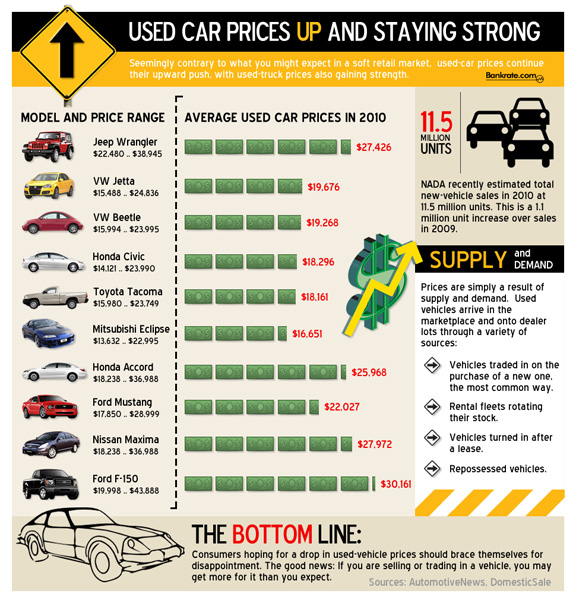
Used car prices are expected to decline 2 percent in June from May, according to the National Automobile Dealers Association Used Car Guide. Used truck prices are expected to dip 1 percent.

Read more: http://www.bankrate.com/finance/auto/used-car-prices-up-and-staying-strong.pdf

Assessment

Some cars, especially fuel-efficient autos, will see much larger drops, the National Automobile Dealers Association said, as falling gas prices reduce demand for the vehicles.

Conclusion

Your thoughts and comments on this ME-P are appreciated. Feel free to review our top-left column, and top-right sidebar materials, links, URLs and related websites, too. Then, subscribe to the ME-P. It is fast, free and secure.

Speaker: If you need a moderator or speaker for an upcoming event, Dr. David E. Marcinko; MBA – Publisher-in-Chief of the Medical Executive-Post – is available for seminar or speaking engagements. Contact: MarcinkoAdvisors@msn.com

OUR OTHER PRINT BOOKS AND RELATED INFORMATION SOURCES:

DICTIONARIES: http://www.springerpub.com/Search/marcinko
PHYSICIANS: www.MedicalBusinessAdvisors.com
PRACTICES: www.BusinessofMedicalPractice.com
HOSPITALS: http://www.crcpress.com/product/isbn/9781466558731
CLINICS: http://www.crcpress.com/product/isbn/9781439879900
BLOG: www.MedicalExecutivePost.com
FINANCE: Financial Planning for Physicians and Advisors
INSURANCE: Risk Management and Insurance Strategies for Physicians and Advisors

Product Details  Product Details

Life Planning 101 for Young Adults and New Doctors

Join Our Mailing List

My Annual Graduation and Wedding Advice

By Rick Kahler MS CFP® ChFC CCIM

www.KahlerFinancial.com

June is traditionally filled with college and medical school graduations and weddings; rituals that mark two of our most important life transitions. Whether you are a new physician walking across the stage or a new spouse walking down the aisle, you’re focusing on your future. It’s a perfect opportunity to think about what you need to do financially to provide for that future.

My Best Financial Advice

Here, adapted from a column I originally wrote a few years ago, is what I might call “Life Planning 101 for Beginning Adults.” It’s a summary of my best financial advice for graduates, newlyweds, and anyone else just starting out in their adult lives and careers; including doctors. Here’s how anyone can manage money wisely to create a life with more security, flexibility, and opportunity.

  1. On every gross dollar you earn, pay your taxes first. Estimate your total tax liability and be sure your employer withholds enough to cover it. If you are self-employed, set up a savings account, deposit a percentage of every check, and use that money to pay your quarterly estimated taxes. Never “raid” these funds.
  2. Save for the future by putting away 20% or more of every gross dollar you earn until you have six months to one year of living expenses in an emergency account [physicians may actually need more]. Then begin investing in your employer’s 401(k) or a retirement plan. If you are self-employed, set up a retirement plan that will allow you to invest as much as you possibly can. My co-authored book Conscious Finance (www.consciousfinance.com) includes a chapter on how to begin investing.
  3. Set up a short-term savings account for future lump sum expenses like car and home repairs, vacations, holiday giving, college tuition,and medical emergencies Figure out how much you’ll need to save from each paycheck to fund all of them annually; then, if possible, have your employer automatically send that amount to a savings account.
  4. After you’ve taken out for your taxes, long-term savings, and short-term savings, you get to blow the rest any way you want. For most people, this means living on 30 to 60 cents out of every gross dollar you earn.
  5. To maintain a comfortable lifestyle, spend frugally. Shop sales, clip coupons, read labels, compare and bargain. People who build wealth usually don’t wear designer clothes, drive luxury cars, live in extravagant houses, or shop at Neiman Marcus [doctors beware]. They typically wear jeans bought on sale, drive Fords, live in middle class neighborhoods, and shop at Walmart.
  6. Pay cash for everything but your home. For convenience, you can use a debit card. Never use a credit card unless you pay it off every month. If you ever find yourself unable to pay off your card, cut it up. Pay off the balance as quickly as you can, and then don’t use a credit card for at least one year.
  7. When you get a raise, a new job, or a promotion, don’t change your lifestyle. Save at least half of the increased income.
  8. Your career is your number one financial asset. As much as possible, find a job you love. Invest in educating yourself and keeping abreast of changes in your career field.

Assessment

Use money as a tool, not a goal. Money itself will never give you meaning or make you happy, but it is a valuable tool to support your quest for meaning and happiness.  This self-disciplined approach isn’t going to help you get rich in a hurry. What it will do is establish a lifetime pattern of sound money management. It can help you create a satisfying, responsible relationship with money now as well as a secure, prosperous future.

Conclusion

Your thoughts and comments on this ME-P are appreciated. Feel free to review our top-left column, and top-right sidebar materials, links, URLs and related websites, too. Then, subscribe to the ME-P. It is fast, free and secure.

Link: http://feeds.feedburner.com/HealthcareFinancialsthePostForcxos

Speaker: If you need a moderator or speaker for an upcoming event, Dr. David E. Marcinko; MBA – Publisher-in-Chief of the Medical Executive-Post – is available for seminar or speaking engagements. Contact: MarcinkoAdvisors@msn.com

Our Other Print Books and Related Information Sources:

Health Dictionary Series: http://www.springerpub.com/Search/marcinko

Practice Management: http://www.springerpub.com/product/9780826105752

Physician Financial Planning: http://www.jbpub.com/catalog/0763745790

Medical Risk Management: http://www.jbpub.com/catalog/9780763733421

Hospitals: http://www.crcpress.com/product/isbn/9781439879900

Physician Advisors: www.CertifiedMedicalPlanner.org

Product Details  Product Details

The Physician’s Home Mortgage Tax Benefit

Join Our Mailing List

What is the Real Benefit?

Your home is likely your biggest investment. So, knowing exactly what, and how much, you’re paying is just common sense.

Total Costs

But, when medical professionals map out the life of their home mortgage and the total cost — even factoring the best mortgage rate – they often fail to consider the copious tax benefits they will receive.

Going Granular

We take a look at three home-buyer scenarios to determine just how much they will receive in tax benefits over the life of their loan, and the total amount they will have paid when their loan is finally over.

Assessment

Also included is the cutoff point for each filing status for when the standard tax deduction becomes more than the itemized deduction.

Conclusion

Your thoughts and comments on this ME-P are appreciated. Feel free to review our top-left column, and top-right sidebar materials, links, URLs and related websites, too. Then, subscribe to the ME-P. It is fast, free and secure.

Link: http://feeds.feedburner.com/HealthcareFinancialsthePostForcxos

Speaker: If you need a moderator or speaker for an upcoming event, Dr. David E. Marcinko; MBA – Publisher-in-Chief of the Medical Executive-Post – is available for seminar or speaking engagements. Contact: MarcinkoAdvisors@msn.com

Our Other Print Books and Related Information Sources:

Health Dictionary Series: http://www.springerpub.com/Search/marcinko

Practice Management: http://www.springerpub.com/product/9780826105752

Physician Financial Planning: http://www.jbpub.com/catalog/0763745790

Medical Risk Management: http://www.jbpub.com/catalog/9780763733421

Hospitals: http://www.crcpress.com/product/isbn/9781439879900

Physician Advisors: www.CertifiedMedicalPlanner.org

Product Details  Product Details

Top Financial Challenges for Physicians‏


Insufficient Income Rated as #1 Financial Challenge

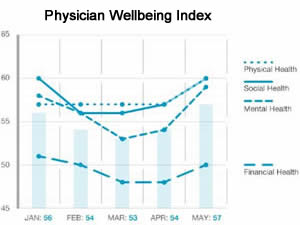
The financial health of physicians continues to lag significantly behind other measures in the Physician Wellbeing Index:

  • Overall Wellbeing: 57%
  • Financial Wellbeing: 50%


Pre-Order Now:

http://www.crcpress.com/product/isbn/9781439879900

US Senate Seeks [Medical] Student Loan Solution

Join Our Mailing List

Will Medical and Health Sciences Students Benefit?

By Children’s Home Society of Florida Foundation

The Senate was still unable to craft a compromise last week on efforts to maintain the current student loan interest rate. If there is no action before July 1st, the student loan interest rate on most loans will increase from 3.4% to 6.8%. Both major parties have proposed a one year freeze on the interest rate at 3.4%. However, the leaders from the two parties have different opinions on how to offset or pay for the $6 billion cost of that interest rate freeze.

Democrats

The Democratic proposal by Senate Majority Leader Harry Reid (D-NV) carries the title Stop the Student Loan Interest Rate Hike Act of 2012 (S. 2343). It failed on a vote of 51-43 last week, nine votes below the required 60-vote threshold for passage.

Republicans

The Republican alternative is the Interest Rate Reduction Act (S. 2366). It also failed on a vote of 34-62.

Both Sides

Senate Democrats proposed requiring Subchapter S corporations with three or fewer members and income levels of $200,000 per year ($250,000 for joint filers) to make payroll tax contributions on all income. The Republican solution is to repeal the Prevention and Public Health Fund.

Response

In response to the vote, White House Press Secretary Jay Carney stated, “For the second time this month, they voted to ask millions of students to pay an average of $1,000 each rather than close a loophole that allows the very wealthy to avoid paying their fair share.”

Assessment

Senate Republican Leader Mitch McConnell (R-KY) stated, “In order to cover the cost of a temporary rate freeze that both parties want, they proposed to divert $6 billion from Medicare and to raise taxes on small businesses – hurting the very companies we are counting on to hire today’s college graduates.”

Editor’s Note: There is very broad support for a one year extension and it is an election year. While the parties have been unable to agree on offsets during the past year, eventually they may choose to pass the bill without offsets. It is quite possible that will happen with the student loan interest freeze.

Conclusion

Your thoughts and comments on this ME-P are appreciated. Feel free to review our top-left column, and top-right sidebar materials, links, URLs and related websites, too. Then, subscribe to the ME-P. It is fast, free and secure.

Link: http://feeds.feedburner.com/HealthcareFinancialsthePostForcxos

Speaker: If you need a moderator or speaker for an upcoming event, Dr. David E. Marcinko; MBA – Publisher-in-Chief of the Medical Executive-Post – is available for seminar or speaking engagements. Contact: MarcinkoAdvisors@msn.com

OUR OTHER PRINT BOOKS AND RELATED INFORMATION SOURCES:

LEXICONS: http://www.springerpub.com/Search/marcinko
PHYSICIANS: www.MedicalBusinessAdvisors.com
PRACTICES: www.BusinessofMedicalPractice.com
HOSPITALS: http://www.crcpress.com/product/isbn/9781466558731
CLINICS: http://www.crcpress.com/product/isbn/9781439879900
ADVISORS: www.CertifiedMedicalPlanner.org
BLOG: www.MedicalExecutivePost.com

Product Details

Some Ways to Lower the Cost of Higher Education

Join Our Mailing List

Exploring Solutions to the College Tuition Bubble

By Rick Kahler MS CFP® ChFC CCIM www.KahlerFinancial.com

My daughter is a high-school sophomore, so any essay on the cost of college is uncomfortably personal for me.

Nevertheless, let’s take a look at some possible solutions to the problem of high college costs.

Some Possible Solutions to the High Cost of College

1. Don’t just hope for scholarships, pursue them.

The most important college-saving strategy a student can have may be focusing on getting top grades in high school in order to qualify for scholarships. Even straight-A students, however, shouldn’t sit passively and wait for scholarship offers to roll in.

Instead, actively go after them. Research online and through your high school to find out what is available. Many organizations, individuals, and institutions offer small, specialized scholarships. Most of these are only a few hundred dollars, but they are well worth trying for. Surprisingly often, there are few applicants for these awards because people don’t take the time to research them and apply. One warning: don’t pay a service to find scholarships. Even if a so-called agency isn’t a scam, the service is unnecessary since the information is readily available.

2. Explore career options early.

Volunteering, summer jobs, internships, and shadowing programs are all valuable ways to find out more about careers a student might be interested in. I know my first job, cleaning cages at a veterinarian’s office, was enough to prove to me that animal medicine wasn’t my career niche. If schools don’t offer career shadowing opportunities, many professionals would be glad to let a student follow them around for a day or two. It’s important to make sure students are interested in the career a given degree prepares them for, not just the subject area of the degree itself.

3. Summer jobs.

If your children have summer jobs, require them to save half their earnings for college. Be wary of letting kids overdo it with part-time jobs during the school year. If their grades and scholarship opportunities suffer as a result, the job may cost more than it’s worth in the long term.

4. Shop for value.

Find out whether neighboring states offer reciprocal in-state tuition rates. Compare tuition costs, fees, housing and travel costs, class sizes, and career placement numbers. Don’t just assume a big-name school offers more opportunities. Depending on the career field, a degree from a state institution may be a far better value than one from an Ivy League school.

5. Two or Four years.

Remember that “higher education” doesn’t have to mean “four-year college”.  Don’t overlook other options such as vocational schools or apprenticeship programs. Careers such as massage therapy, welding, and medical technology can pay very well without requiring a four-year degree. Compare values here, as well. Some for-profit technical schools can be more expensive than state universities. Also investigate jobs in high-demand fields that may offer on-the-job training or tuition reimbursement.

6. Postpone college.

Consider encouraging your kids to work for a year or two and postpone college until they know what their career goals are. The risk with this approach, of course, is that they may end up not going to college at all.

7. Plan.

Have a five-year plan, or even six or seven. There’s no rule that says a student has to graduate in four years. One option is to “pay as you go” as much as possible by taking fewer classes and working part-time or even full-time. Even if it takes longer, graduating with much less debt can still mean starting out ahead.

Assessment

Although some of the ideas above may be anathema to some highly educated and well-heeled doctors, lawyers and accountants, we all realize that education certainly is an important way to invest in higher earnings and career success. Planning ahead and doing plenty of homework before classes start is a good way to make sure that investment is a wise one.

Conclusion

Your thoughts and comments on this ME-P are appreciated. Feel free to review our top-left column, and top-right sidebar materials, links, URLs and related websites, too. Then, subscribe to the ME-P. It is fast, free and secure.

Link: http://feeds.feedburner.com/HealthcareFinancialsthePostForcxos

Speaker: If you need a moderator or speaker for an upcoming event, Dr. David E. Marcinko; MBA – Publisher-in-Chief of the Medical Executive-Post – is available for seminar or speaking engagements. Contact: MarcinkoAdvisors@msn.com

Our Other Print Books and Related Information Sources:

Health Dictionary Series: http://www.springerpub.com/Search/marcinko

Practice Management: http://www.springerpub.com/product/9780826105752

Physician Financial Planning: http://www.jbpub.com/catalog/0763745790

Medical Risk Management: http://www.jbpub.com/catalog/9780763733421

Hospitals: http://www.crcpress.com/product/isbn/9781439879900

Physician Advisors: www.CertifiedMedicalPlanner.org

Product Details  Product Details

Understanding the Money Supply as a Percentage of GDP

Join Our Mailing List

By Country for our Domestic and International ME-P Readers

By Staff Reporters

There’s a lot of money in the world, but not all of it can be easily defined as “money.” Just where the money is and who has it is a complicated issue. The wad of money in your pocket is one form of money, but the money supply is hardly limited to that. So, where is the money and what exactly is it?

Finding Out

To find out what Broad Money, Money Zero Maturity, the Monetary Base, and Money and Close Substitutes mean, take a look at the graphic for an explanation. You’ll see that there is a lot more to money than you may have realized. The cash you use from day to day is M0, but there are also MB, M1, M2, M3 and more.

What Is Quasi Money?

If you want to measure how much money a country has, there is much more to consider than just how much printed money is within that country. If you think about how much money you have, it’s likely a lot more than just the cash you have on hand. You have bank accounts, checks and other forms of money that factor into how much money you have. The same is true for countries.

By Country

How much money a country can get pretty complicated, but there is a way to figure out each country’s quasi money. No, this doesn’t mean fake money or “sort of” money, like the name may imply. Quasi money may also sound like our paychecks these days, but what it refers to is actually a pretty neat assessment of the money that a country really has.

The money supply of every single country can be measured accurately by looking at a number of different things. To find out exactly what goes into the money that a country has, take a look at the graphic.

How Does Your Country Stack Up?

How does your country compare to other countries in terms of money? The amount of quasi money in each country when measured as a percentage of a country’s Gross Domestic Product (GDP) is pretty telling. Check out the graphic to see how your country rates and whether it makes the top 10, the bottom 10 or falls somewhere in the middle. If you know someone from a country on the top or bottom lists, forward the graphic to them and let them know about it. Depending on where their country falls, it may be time to gloat or to pretend not to be jealous.

Where are the top and bottom countries located?

Are they countries that are typically thought of as being rich and poor, or do they come straight out of left field for a sneak attack? There are certainly some countries in there that will surprise you as well as some that won’t. Take a look for yourself and see where the wealth of the world lies.

Conclusion

Your thoughts and comments on this ME-P are appreciated. Feel free to review our top-left column, and top-right sidebar materials, links, URLs and related websites, too. Then, subscribe to the ME-P. It is fast, free and secure.

Link: http://feeds.feedburner.com/HealthcareFinancialsthePostForcxos

Speaker: If you need a moderator or speaker for an upcoming event, Dr. David E. Marcinko; MBA – Publisher-in-Chief of the Medical Executive-Post – is available for seminar or speaking engagements. Contact: MarcinkoAdvisors@msn.com

Our Other Print Books and Related Information Sources:

Health Dictionary Series: http://www.springerpub.com/Search/marcinko

Practice Management: http://www.springerpub.com/product/9780826105752

Physician Financial Planning: http://www.jbpub.com/catalog/0763745790

Medical Risk Management: http://www.jbpub.com/catalog/9780763733421

Hospitals: http://www.crcpress.com/product/isbn/9781439879900

Physician Advisors: www.CertifiedMedicalPlanner.org

Product Details  Product Details

The High Cost of College Loans

Join Our Mailing List

Slowing Down the Speeding Train of Educational Debt

By Rick Kahler MS CFP® ChFC CCIM

www.KahlerFinancial.com

Trying to improve on the free market system almost always ends badly. Take medical school or college tuition as an example. It’s an important segment of our economy, since for most a college education is a door to higher wages and a better lifestyle.

Tuition Due in Cash

In the days before college loans were as ubiquitous as mountain pine beetles in the Black Hills of SD, college costs were like any other service. They were due in cash. Students and their parents had to save money or pay tuition out of their earnings. Many students worked their way through college. Those whose parents didn’t save, who couldn’t or didn’t want to work, or who didn’t have high enough grades to get scholarships didn’t go to college.

Supply and Demand Basics

Since colleges competed for students, of course, schools had to keep a close watch on their tuition rates. Raising tuition too much resulted in fewer students. Fewer students meant falling revenues. The two forces of supply (college capacity) and demand (the ability to pay the tuition) kept college costs in check.

Political Fiat

Understandably, getting a loan to pay for college tuition was difficult. What sane bank or investor would make a loan to an unemployed teenager with no collateral to speak of? If you could find someone willing to make such a risky loan, the interest rate was more like the high rates charged by credit card companies.

Well-intended politicians decided it wasn’t fair that those who didn’t have the means to pay the tuition were denied college educations. They decided the solution would be to require the taxpayers to loan unemployed teenagers the money they needed to pay their tuition, sometimes at interest rates lower than what the most creditworthy could obtain.

Easy Money

With tuition money easy to obtain through loans, demand for a college education increased. With the increased demand came higher tuition costs. This easy money is the primary reason that college tuition costs have far outpaced inflation and gone up twice as fast as medical costs since 1985.

Unfortunately, one consequence of loaning money to someone the private sector deems a poor risk is that many of those borrowers will be unable to repay the debt. That’s why the private sector took a pass on making the loans in the first place. It should come as no surprise that 60% of all student loans are currently in default. According to The Kiplinger Letter, December 2, 2011, that default rate will only get worse, as the unemployment rate of those aged 20 to 24 is around 14%. Today, taxpayers are on the hook for over 70% of the $1 trillion in outstanding student loans.

Rising Appetites

And the appetite for loans continues to rise. This year we will add another $100 billion in college debt to the books. Today, the average student graduates with over $27,000 of debt owed to institutions or the government and another $7,000 owed to parents. It isn’t uncommon for a medical student to amass over $200,000 of student loan debt.

College Loan Debt

The more college loan debt that graduates take into the workplace, the less they have to spend for vehicles, rent, and consumer goods. The 60% who are in default on their debt will also mar their credit ratings, so their purchasing power will suffer for years to come.

Assessment

If taxpayers ever decide to quit footing the bill, many colleges’ tuition rates will fall. They may crash as hard as housing prices did in Florida, Arizona, and California. It will be a buyer’s market. But, that day could be years away. In the meantime, savvy students will do whatever they can to minimize their college tuition and graduate debt-free. 

Conclusion

Your thoughts and comments on this ME-P are appreciated. Feel free to review our top-left column, and top-right sidebar materials, links, URLs and related websites, too. Then, subscribe to the ME-P. It is fast, free and secure.

Link: http://feeds.feedburner.com/HealthcareFinancialsthePostForcxos

Speaker: If you need a moderator or speaker for an upcoming event, Dr. David E. Marcinko; MBA – Publisher-in-Chief of the Medical Executive-Post – is available for seminar or speaking engagements. Contact: MarcinkoAdvisors@msn.com

Our Other Print Books and Related Information Sources:

Health Dictionary Series: http://www.springerpub.com/Search/marcinko

Practice Management: http://www.springerpub.com/product/9780826105752

Physician Financial Planning: http://www.jbpub.com/catalog/0763745790

Medical Risk Management: http://www.jbpub.com/catalog/9780763733421

Hospitals: http://www.crcpress.com/product/isbn/9781439879900

Physician Advisors: www.CertifiedMedicalPlanner.org

Product Details  Product Details

How Much Money Do Americans [Doctors] Really Save?

Join Our Mailing List

Not Nealry Enough – Much More Needed

This infographic from BillShrink.com displays the average savings accounts of typical Americans.

The Averages

It begins by showng the median household income, minus taxes, plus tax returns, which equals about $40,500 per year. The average American spends 94% of their disposable income, leading only $2,400 to be saved each year by this “average American,” but only 41% actually put that money into savings. That said, 43% of Americans spend more than they earn, leaving them in debt. When compared to the rest of the world, Americans save far less, with China saving 30% of their income on average.

Reasons for Not Saving

After displaying this staggering data, the infographic goes into a list of reasons by Americans can’t save money. These reasons include the following:

  • Lifestyle maintenace
  • Instant gratification
  • Credit cards don’t feel like real money
  • Avoiding the truth about their bank account
  • Egotism
  • Keeping up with the Jones’, other doctors’, etc.

Assessment

For anyone who has a problem saving, this infographic could be eye opening. If we as Americans could come to terms with the 5 reasons it’s hard to save, we could likely overcome these and start saving more. But, what about medical professionals?

Conclusion

Your thoughts and comments on this ME-P are appreciated. Feel free to review our top-left column, and top-right sidebar materials, links, URLs and related websites, too. Then, subscribe to the ME-P. It is fast, free and secure.

Link: http://feeds.feedburner.com/HealthcareFinancialsthePostForcxos

Speaker: If you need a moderator or speaker for an upcoming event, Dr. David E. Marcinko; MBA – Publisher-in-Chief of the Medical Executive-Post – is available for seminar or speaking engagements. Contact: MarcinkoAdvisors@msn.com

Our Other Print Books and Related Information Sources:

Health Dictionary Series: http://www.springerpub.com/Search/marcinko

Practice Management: http://www.springerpub.com/product/9780826105752

Physician Financial Planning: http://www.jbpub.com/catalog/0763745790

Medical Risk Management: http://www.jbpub.com/catalog/9780763733421

Hospitals: http://www.crcpress.com/product/isbn/9781439879900

Physician Advisors: www.CertifiedMedicalPlanner.org

Product Details  Product Details

On the Emotional and Financial Returns of Paying Off the Mortgage

Join Our Mailing List

The ROI of Sudden Money

By Rick Kahler MS CFP® ChFC CCIM www.KahlerFinancial.com

Suppose you’ve come into some extra cash, doctor. You decide to use it prudently in one of three ways: keeping it in cash, putting it into your retirement plan, or paying off your home mortgage. Which is the better option?

A Personal Decision

I usually find the answer, for most medical professioanls, isn’t just about the money. Paul Thorstenson, an accountant with Ketel Thorstenson, agrees. He calls paying off a home loan “as much a personal decision as an investment one.”

Factors for Doctors to Consider

The first factor to consider is investment return. Thorstenson suggests you think of paying off debt as a risk-free investment. “Because the interest is fully deductible if you itemize, your paydown of the debt is exactly equivalent to making a risk-free investment (like a CD) that pays you a taxable yield equivalent to your interest rate.”

If your interest rate is 4.5%, that’s the return you will earn on the money you invest in paying off your mortgage. If this is difficult to visualize, think of it this way. When you pay off your debt, you are actually buying your loan from your bank much like banks sell loans to one another. You continue to make payments, only now the payments go to you instead of the bank. The money you invested in “buying” (paying off) the mortgage is now earning 4.5% for you instead of your bank.

Paying down (investing) your own debt – for most medical professionals – is usually much better than keeping your funds in a money market, savings account, or certificate of deposit where they earn .5% to 2%.

Invest or Pay Off Debt?

A trickier decision is whether to invest the funds rather than pay debt. While investing always carries some risk, a diversified portfolio with 60% stocks and alternative investments (real estate, commodities, managed futures) and 40% bonds will typically return 6% to 8% over ten or more years.

If you can use your extra cash to maximize a contribution to a retirement account like an IRA or 401(k) or 403(b), you will earn 6% to 8% tax deferred (or tax free with a Roth IRA) which is better than paying off a debt yielding 4.5%. The younger you are, the more sense it makes to contribute the funds to a retirement account.

Non-Retirement Accounts

If the investments are not in a retirement account, then you must compare the after-tax return to get an equivalent comparison. For example, if you are in a 25% tax bracket and will earn 6% on your investment, your after-tax return is 4.5%, exactly equal to what you would earn in our example of paying down the debt. In this case, I would usually take the “guaranteed” investment of paying down the debt.

Mortgage Reduction Tax Benefits

In deciding whether to pay off a home mortgage, there are some additional tax and emotional considerations. Thorstenson notes that there are currently no limitations on the deductibility of loan interest, even by high income taxpayers. The “phaseouts” which expired two years ago will come back again in 2013 when (and if) the Bush tax cuts expire. “With the phaseout you will lose 3% of every dollar of deduction for every dollar of income that exceeds about $150,000.” For most taxpayers, this won’t be a major factor.

Emotional Benefits

Probably more important than the investment and tax considerations are the emotional benefits of paying off home mortgage debt. Thorstenson says, “It gives one a sense of freedom in that you are not handcuffed to a mortgage. I’ve never once seen a client  -or doctor- who had a paid off house leverage it back up and buy a mutual fund.”

Assessment

Like finishing medical school, paying off a home is a great emotional accomplishment. And, that sense of accomplishment may be the most important investment return you can have.

Conclusion

Your thoughts and comments on this ME-P are appreciated. Feel free to review our top-left column, and top-right sidebar materials, links, URLs and related websites, too. Then, subscribe to the ME-P. It is fast, free and secure.

Link: http://feeds.feedburner.com/HealthcareFinancialsthePostForcxos

Speaker: If you need a moderator or speaker for an upcoming event, Dr. David E. Marcinko; MBA – Publisher-in-Chief of the Medical Executive-Post – is available for seminar or speaking engagements. Contact: MarcinkoAdvisors@msn.com

Our Other Print Books and Related Information Sources:

Health Dictionary Series: http://www.springerpub.com/Search/marcinko

Practice Management: http://www.springerpub.com/product/9780826105752

Physician Financial Planning: http://www.jbpub.com/catalog/0763745790

Medical Risk Management: http://www.jbpub.com/catalog/9780763733421

Hospitals: http://www.crcpress.com/product/isbn/9781439879900

Physician Advisors: www.CertifiedMedicalPlanner.org

Product Details  Product Details

Why Physicians Should Double-Check Their 2012 Taxes

 Join Our Mailing List

A New AICPA Service

The American Institute of CPAs (AICPA) is offering a new service on the Total Tax Insights Website.

Surveys by the AICPA show that most Americans do not realize how much they are paying in federal, state and local taxes. AICPA President Barry C. Melancon noted, “Our recent national poll showed that taxpayers do not know the percentage of their income that goes to pay taxes or how many types of tax they pay annually. AICPA’s goal is to make federal, state and local taxes more transparent and the total tax insights calculator does that.”

In AICPA surveys, two-thirds of Americans did not understand the amount of tax that they were paying. Many did not realize that they were paying 10 to 20 different taxes over the course of a year.

The Total Tax Insights Website

AICPA’s website, www.totaltaxinsights.org is designed as a public service to help everyone understand taxes. AICPA believes that understanding taxes will be very helpful to Americans in their monthly financial planning.

The Total Tax Insights calculator enables taxpayers to enter their basic information. This includes their city, marital status, adjusted gross income and number of dependents. The optional entries include medical deductions, property taxes, charitable deductions and similar items.

After entering in your information, the calculator will show your federal income tax, state income tax and 10 to 15 other potential taxes. In addition to the list of potential taxes, there also is a pie-chart that shows the total amount and the percentage of each tax.

Assessment

Your identification is protected on the site. There is no name or identification required. The AICPA offers the educational website and calculator as a public service. So doctors, check it out and tell us what you think?

Conclusion

Your thoughts and comments on this ME-P are appreciated. Feel free to review our top-left column, and top-right sidebar materials, links, URLs and related websites, too. Then, subscribe to the ME-P. It is fast, free and secure.

Link: http://feeds.feedburner.com/HealthcareFinancialsthePostForcxos

Speaker: If you need a moderator or speaker for an upcoming event, Dr. David E. Marcinko; MBA – Publisher-in-Chief of the Medical Executive-Post – is available for seminar or speaking engagements. Contact: MarcinkoAdvisors@msn.com

Our Other Print Books and Related Information Sources:

Health Dictionary Series: http://www.springerpub.com/Search/marcinko

Practice Management: http://www.springerpub.com/product/9780826105752

Physician Financial Planning: http://www.jbpub.com/catalog/0763745790

Medical Risk Management: http://www.jbpub.com/catalog/9780763733421

Hospitals: http://www.crcpress.com/product/isbn/9781439879900

Physician Advisors: www.CertifiedMedicalPlanner.org

Product Details  Product Details

Tips from a Doctor for Optimizing Automobile Fuel Efficiency to Save Money

Join Our Mailing List

Here’s How I Can Afford Gasoline for My Vintage Jaguar XJ-8-LWB

Dr. Dr. David Edward Marcinko MBA CMP

[Editor-in-Chief]

Dammit Spock! I’m a doctor – not an auto mechanic!

But, as the cost of fuel increases, more and more physician drivers are thinking about ways to maximize their gas mileage. As well as reducing the cost of fuel in the doctor’s pocket, optimizing fuel efficiency helps reduce the environmental impact of driving and conserves a resource that is only getting scarcer. This is especially true when you drive a luxury European touring sedan that has been said to be one of the finest in the world – like me!

There are a number of different ways drivers can increase their gas mileage. Advice and tips on fuel efficiency fall into a number of key categories.

My Tips and Pearls 

1. The car that you drive can make a big difference when it comes to fuel efficiency. Clearly, the larger and more powerful the vehicle is, the lower its gas mileage is likely to be. Car manufacturers are increasingly looking to new technology to help improve fuel efficiency, and if your car is quite old then it might be time to consider switching to a new model. Fuel efficiency statistics are now commonly published and compared on driving websites, and you should consider this before buying a new, or used, car.

2. Ensuring that your car is well-maintained is also a significant factor in the fuel efficiency that you will experience. Something as small and innocuous as spark plugs, for example, can reduce your gas mileage by as much as 12%. Over the course a year, the cost of the gas you waste is likely to be far more than the cost of replacing the part. If you are in doubt, talk to a trusted mechanic about maintenance, and alway have your car serviced at the recommended intervals.

3. Tire pressure can also have a significant impact on fuel efficiency. Low tire pressure can affect the vehicle’s performance, reducing gas mileage markedly. At the same time, it is also worth remembering that having the pressure too high can also have a negative effect. Ensure that you check your tire pressure on a regular basis. Talk to your mechanic if you are unsure about the optimum pressure value for your tires.

4. The way you drive your car also impacts your overall gas mileage. The official U.S. government website for fuel economy recommends that you always observe the speed limit, noting that for each 5 mph that you drive over a 60-mph speed limit, you are likely to paying an additional $0.29 per gallon of gas. Aggressive driving can reduce your gas mileage by as much as 33% on the highway. Carrying unnecessary weight in your car also uses more fuel, and you should always turn off your engine when the car is idle.

5. By changing the way in which you use your car, you can also save money. By combining multiple short trips into single, multi-purpose outings, you can prevent wasted mileage. Commuters can consider car sharing schemes, whereby drivers take it in turns to provide transport for fellow workers, reducing the number of cars on the road. You may even choose to switch to public transport on certain days of the week, to reduce the burden on your car.

6. You can even improve gas mileage by being careful about where and when you purchase fuel. Gas is at its densest during the coolest times of day. That means that by purchasing fuel early in the morning, or after dark, the volume of gas that the pump dispenses per unit will be moderately higher than at other, warmer times of day. Be savvy about prices in your local area too, keeping an eye out for the cheapest gas stations, but don’t go out of your way to purchase fuel. The money that you save at the pump is likely to be wasted on the additional mileage spent driving to the station.

7. As the cost of gas fluctuates on such a frequent basis, learning to optimize your fuel efficiency is a great way to ensure that you get the most out of the money you spend on fuel. Ensure that your vehicle is as efficient as possible, moderate your driving behavior, and moderate the amount of driving that you do to see the biggest improvements in your gas mileage.

Assessment

This ME-P is a follow-up, by reader request, of a prior popular essay of mine. How Smart Doctors Can Save Big at the Pump I appreciate your interest.

More photos: https://medicalexecutivepost.com/wp-content/uploads/2012/04/dems-jaguar.pdf

Conclusion

Your thoughts and comments on this ME-P are appreciated. Feel free to review our top-left column, and top-right sidebar materials, links, URLs and related websites, too. Then, subscribe to the ME-P. It is fast, free and secure.

Speaker: If you need a moderator or speaker for an upcoming event, Dr. David E. Marcinko; MBA – Publisher-in-Chief of the Medical Executive-Post – is available for seminar or speaking engagements. Contact: MarcinkoAdvisors@msn.com

OUR OTHER PRINT BOOKS AND RELATED INFORMATION SOURCES:

Product Details  Product Details

Financial Infidelity – Are Doctors Different?

Join Our Mailing List

On Marriage and Money

Married people are happier by many measures, yet many marriages are unhappy or fail because couples bring to the partnership significant debt, including [medical and graduate] student loans and credit card balances, as well as self-deceptions and outright lies about money.

Assessment

Creditdonkey’s new research infographic urges couples to take a clear-eyed look at their prospects for happiness if they are not honest with themselves and their partners about money.

But, is this perspective also true for doctors and medical professionals?

Conclusion

Your thoughts and comments on this ME-P are appreciated. Feel free to review our top-left column, and top-right sidebar materials, links, URLs and related websites, too. Then, subscribe to the ME-P. It is fast, free and secure.

Link: http://feeds.feedburner.com/HealthcareFinancialsthePostForcxos

Speaker: If you need a moderator or speaker for an upcoming event, Dr. David E. Marcinko; MBA – Publisher-in-Chief of the Medical Executive-Post – is available for seminar or speaking engagements. Contact: MarcinkoAdvisors@msn.com

Our Other Print Books and Related Information Sources:

Health Dictionary Series: http://www.springerpub.com/Search/marcinko

Practice Management: http://www.springerpub.com/product/9780826105752

Physician Financial Planning: http://www.jbpub.com/catalog/0763745790

Medical Risk Management: http://www.jbpub.com/catalog/9780763733421

Hospitals: http://www.crcpress.com/product/isbn/9781439879900

Physician Advisors: www.CertifiedMedicalPlanner.org

Product Details  Product Details

Helping Physicians Find a Trustworthy Trustee

Join Our Mailing List

Estate Planning Basics

By Rick Kahler MS CFP® ChFC CCIM

www.KahlerFinancial.com

Trusts are effective financial planning tools based on a structure that is simpler than it may seem. The creator of the trust [doctor-layman, etc] contributes something of value into the trust and creates instructions as to how it will be managed and eventually disbursed. The trustee [third party] is responsible for keeping the property safe and managing and distributing it according to the instructions. The beneficiary [spouse-children, etc ] is the person or entity that eventually will get the property in the trust.

Trusts may be useful in estate planning, asset protection, and providing for elderly parents or other family members who may be unable to manage their own affairs.

Establishing a trust isn’t especially difficult, but it’s not a do-it-yourself project. It’s important to work with an attorney to be sure the trust complies with legal requirements and will actually carry out its intended purpose.

Trustee Selection

What may be the hardest part of setting up a trust is choosing the trustee. Here are a few suggestions that may help. Some of them come from information provided by the Financial Planning Association [FPA]:

1. Be sure you as the creator of the trust understand the trustee’s role. Ideally, trustees will have some expertise in legal matters, taxes, and investments. The specific knowledge needed will vary, depending on the scope and purpose of the trust. It’s important to discuss that purpose in detail with any potential trustees to be sure they have the necessary skills and are comfortable taking on the responsibilities.

2. Consider the pros and cons of choosing a personal or a professional trustee. Generally your choice will come from one of three categories: A personal trustee who is a close friend or family member, a personal trustee who is a professional advisor, or a corporate trustee such as a bank’s trust department.

A family member or close friend may already have inside knowledge of your circumstances, as well as having personal relationships with the beneficiaries of the trust and a personal commitment to carrying out your wishes. The possible downside is that the trustee may have conflicts of interest or find it difficult to enforce some trust provisions.

Professional advisors such as attorneys or accountants will have specialized knowledge that may be important. Even advisors who have worked closely with you will have a level of professional detachment that may make it easier to carry out your wishes, especially any that involve saying “no.”

With a corporate trustee, the relationship is with the firm rather than an individual, which provides continuity and protects the trust even if the original trustee is unable to continue serving. The downside is the lack of detailed personal knowledge and involvement.

3. Evaluate costs. Professional or corporate trustees will, of course, charge for their services. Friends or family members may not charge fees but really should be compensated appropriately. State laws govern the maximum fees trustees can charge and the specific services provided.

4. A commitment to take on the responsibilities of the trust and to carry out your wishes with integrity may be the most important quality for a trustee. Someone without financial and legal knowledge can always get help from professional advisors.

Assessment

Finally, remember doctor, the word “trustee” isn’t used by accident or coincidence. The trustee’s role is to act in your stead when you are unable to, managing the assets of the trust with the same care you would use and making the decisions you would make in the best interests of the beneficiary of the trust. The most essential factor in choosing a trustee is finding someone you can rely on to act on your behalf.

Who is, in short, trustworthy?

Conclusion

Your thoughts and comments on this ME-P are appreciated. Feel free to review our top-left column, and top-right sidebar materials, links, URLs and related websites, too. Then, subscribe to the ME-P. It is fast, free and secure.

Link: http://feeds.feedburner.com/HealthcareFinancialsthePostForcxos

Speaker: If you need a moderator or speaker for an upcoming event, Dr. David E. Marcinko; MBA – Publisher-in-Chief of the Medical Executive-Post – is available for seminar or speaking engagements. Contact: MarcinkoAdvisors@msn.com

Our Other Print Books and Related Information Sources:

Health Dictionary Series: http://www.springerpub.com/Search/marcinko

Practice Management: http://www.springerpub.com/product/9780826105752

Physician Financial Planning: http://www.jbpub.com/catalog/0763745790

Medical Risk Management: http://www.jbpub.com/catalog/9780763733421

Hospitals: http://www.crcpress.com/product/isbn/9781439879900

Physician Advisors: www.CertifiedMedicalPlanner.org

Product Details  Product Details

Doctors and the “Buffett Rule”

Join Our Mailing List

Once Earned – Twice Taxed

By Rick Kahler MS CFP® ChFC CCIM www.kahlerfinancial.com

The recent discussion of the “Buffett Rule” proposal to increase taxes on the wealthy [medical professionals and dividend seeking investors?] has focused attention on U. S. tax rates. It’s giving Americans a chance to better understand our tax policy and the economics of the free market system.

Mitt Romney, the probable Republican Presidential candidate, has come under attack from both Democrats and other Republican primary candidates for his high income and net worth and his low overall tax rate. The arguments are that Romney made his money by the wrong type of capitalism and that he pays too little in federal taxes.

A Tale of Two Tax Returns

The tax returns Romney has made public show most of his money comes from investment returns on his holdings rather than from wages or a salary. His overall tax rate in 2010 was 13.9% and his estimated rate for 2011 is 15.4%. This caused a predictable outcry that his tax rate is lower than the income tax bracket of many middle class Americans.

President Obama’s 2011 tax return shows a tax rate of just over 20%. Former Republican candidate Newt Gingrich paid 31% of his 2010 income in federal taxes.

Unfair Appearance

To the uninformed, these varying tax rates initially look unfair. What many people don’t understand is the big difference between “ordinary income” (from wages, a salary, short-term capital gains, and interest) and “passive income” (from stock dividends and long-term capital gains). The federal government taxes ordinary income at up to 35% and passive income at 15%.

Why the different rates?

First, let’s look at dividend income and long-term capital gains taxes on investments held over 12 months. Dividends come from corporations that must first pay income taxes on any profits. Long-term capital gains come from shares of a company purchased and held for more than 12 months.

Since the effective corporate rate is 39.2% (the top federal rate and the average state tax rate), the corporation has already paid taxes on all income, including what is paid out to investors as dividends. Prior to the Bush tax cuts in 2001, dividends were then additionally taxed at almost 40%. This meant every dollar of dividend income was taxed twice, once at the corporate level and again at the individual level. The result was that 60 cents out of every dollar of profit made by a company was paid to the federal government. The Bush tax cuts continued the practice of double taxation, but lowered the amount paid at the individual level to 15%.

The same double taxation applied to long-term capital gains, except that the tax rate was a flat 28% before the Bush tax cuts reduced it to 15%.

This double tax makes it seem that the wealthy pay less tax than they really do. An individual may pay 15% on passive income of, say, five million dollars. Yet corporations have already paid taxes of around 39.2% on that same income, for a total tax rate of 54.2%. Of the five million in profit, over two and a half million goes to Uncle Sam. That would seem to be more than a “fair share.”

Assessment

According to Congressional Budget Office figures from 2011, the top 1% of taxpayers pay an average of 29.5%, those in the percentiles from 81% to 99% pay 22.8%, those from 21% through 80% pay 15.1%, and the bottom 20% pay 4.7%. Those numbers, of course, don’t include the 49.5% of Americans who pay no federal income tax at all.

Even factoring in the different tax rates on ordinary and passive income, it’s clear that the more money Americans earn, the more tax they pay. What could be more fair than that?

Conclusion

Your thoughts and comments on this ME-P are appreciated. Feel free to review our top-left column, and top-right sidebar materials, links, URLs and related websites, too. Then, subscribe to the ME-P. It is fast, free and secure.

Link: http://feeds.feedburner.com/HealthcareFinancialsthePostForcxos

Speaker: If you need a moderator or speaker for an upcoming event, Dr. David E. Marcinko; MBA – Publisher-in-Chief of the Medical Executive-Post – is available for seminar or speaking engagements. Contact: MarcinkoAdvisors@msn.com

Our Other Print Books and Related Information Sources:

Health Dictionary Series: http://www.springerpub.com/Search/marcinko

Practice Management: http://www.springerpub.com/product/9780826105752

Physician Financial Planning: http://www.jbpub.com/catalog/0763745790

Medical Risk Management: http://www.jbpub.com/catalog/9780763733421

Hospitals: http://www.crcpress.com/product/isbn/9781439879900

Physician Advisors: www.CertifiedMedicalPlanner.org

Product Details  Product Details

102 Personal Finance Tips Your Medical School Professor Never Taught You

Join Our Mailing List

Ask the Advisor

If you’re anything like most doctors, you graduated from college and perhaps even took a finance class or accounting class here or there, but you didn’t learn anything about managing your personal finances.

In fact, there probably wasn’t even an opportunity to take any such class in high school, college or medical school, either.

But, if medical school is partly about training for a job, shouldn’t we learn what to do with the money we earn from medical practice? Especially in a country where 45% of college students are in credit card debt and 40% of all Americans say they live beyond their means, many think it’s time to wise up to some of the challenges of money management.

Assessment

So, here are a few (say, 102) simple tips that can help get your money life (back) on the right track.

Link: http://www.yourcreditadvisor.com/blog/2006/10/102_personal_fi.html

Channel Surfing the ME-P

Have you visited our other topic channels? Established to facilitate idea exchange and link our community together, the value of these topics is dependent upon your input. Please take a minute to visit. And, to prevent that annoying spam, we ask that you register. It is fast, free and secure.

Conclusion

Your thoughts and comments on this ME-P are appreciated. Feel free to review our top-left column, and top-right sidebar materials, links, URLs and related websites, too. Then, subscribe to the ME-P. It is fast, free and secure.

Speaker: If you need a moderator or speaker for an upcoming event, Dr. David E. Marcinko; MBA – Publisher-in-Chief of the Medical Executive-Post – is available for seminar or speaking engagements. Contact: MarcinkoAdvisors@msn.com

OUR OTHER PRINT BOOKS AND RELATED INFORMATION SOURCES:

Comprehensive Financial Planning Strategies for Doctors and Advisors: Best Practices from Leading Consultants and Certified Medical Planners(TM)* 8

A Survey to Shape the Definition of Physician-Focused Financial Planning

Join Our Mailing List

Send us Your Thoughts

By Dr. David Edward Marcinko MBA CMP®

[Chairman, Founder and CEO]

www.CertifiedMedicalPlanner.org

The Institute of Medical Business Advisors, Inc is re-defining the role of “physician focused financial planning” and how the concept fits within the financial services industry.

Crowd-Sourcing Insights and Opinions

But, we can’t do it without your help. As a medical provider or seasoned financial professional, our readers can provide valuable input to determine exactly what constitutes a physician focused financial advisor in today’s complex healthcare industrial complex landscape.

For example, is it business as usual for FAs today; does it fall under the auspices of the Certified Medical Planner™ professional rubric, or is it something else?

Be a pioneer and help shape the industry’s definition of medically focused financial advice by sending us your thoughts on competency tasks and areas of subject matter expertise.

Results

The results will enhance iMBA’s Certified Medical Planner designation, which is designed to help financial advisors address the needs of physicians, medical professionals and all allied healthcare personnel; and help define the role of physician focused financial planning in the coming decade.

Learn More

To learn more about this growth specialty and designation, click here: www.CertifiedMedicalPlanner.org

Assessment

Please be assured that if you take the survey, your responses are confidential; we won’t share your contact information with third parties. Thank you for your participation!

Conclusion

Your thoughts and comments on this ME-P are appreciated. Feel free to review our top-left column, and top-right sidebar materials, links, URLs and related websites, too. Then, subscribe to the ME-P. It is fast, free and secure.

Link: http://feeds.feedburner.com/HealthcareFinancialsthePostForcxos

Speaker: If you need a moderator or speaker for an upcoming event, Dr. David E. Marcinko; MBA – Publisher-in-Chief of the Medical Executive-Post – is available for seminar or speaking engagements. Contact: MarcinkoAdvisors@msn.com

Our Other Print Books and Related Information Sources:

Health Dictionary Series: http://www.springerpub.com/Search/marcinko

Practice Management: http://www.springerpub.com/product/9780826105752

Physician Financial Planning: http://www.jbpub.com/catalog/0763745790

Medical Risk Management: http://www.jbpub.com/catalog/9780763733421

Hospitals: http://www.crcpress.com/product/isbn/9781439879900

Physician Advisors: www.CertifiedMedicalPlanner.org

Product DetailsProduct DetailsProduct Details

Product Details  Product Details

Product Details

Today’s Video for National Healthcare Decisions Day [NHDD]

Join Our Mailing List

Goals and Objectives

By Staff Reporters

www.CertifiedMedicalPlanner.org

Today is the 5th Annual NHDD, April 16th, 2012. The purpose of this day is to inspire, educate & empower the public, estate attorneys, financial advisors & medical providers about the importance of advanced medical care planning. It is a rally for our loved ones and ourselves.

Video Link: http://www.nhdd.org

Conclusion

Your thoughts and comments on this ME-P are appreciated. Feel free to review our top-left column, and top-right sidebar materials, links, URLs and related websites, too. Then, subscribe to the ME-P. It is fast, free and secure.

Link: http://feeds.feedburner.com/HealthcareFinancialsthePostForcxos

Speaker: If you need a moderator or speaker for an upcoming event, Dr. David E. Marcinko; MBA – Publisher-in-Chief of the Medical Executive-Post – is available for seminar or speaking engagements. Contact: MarcinkoAdvisors@msn.com

Our Other Print Books and Related Information Sources:

Health Dictionary Series: http://www.springerpub.com/Search/marcinko

Practice Management: http://www.springerpub.com/product/9780826105752

Physician Financial Planning: http://www.jbpub.com/catalog/0763745790

Medical Risk Management: http://www.jbpub.com/catalog/9780763733421

Hospitals: http://www.crcpress.com/product/isbn/9781439879900

Physician Advisors: www.CertifiedMedicalPlanner.org

Financial Planning Handbook for Physicians and Advisors

Financial Planning Handbook for Physicians and Advisors

Buy from Amazon

Dire Emails About New Medicare Surtax Have It Wrong

Join Our Mailing List

Enter the Obama Care Fear Mongers

By Rick Kahler MS, CFP®, ChFC, CCIM

www.KahlerFinancial.com

Ronald Reagan was noted for saying, “Trust but verify.” And, that was before Al Gore invented the Internet. When it comes to believing forwarded emails with dire warnings, it’s a good idea to go even further and “Verify before trusting.”

My e-mail

Here are a few lines from an email I’ve received numerous times over the past two years: “Did you know that if you sell your house after 2012 you will pay a 3.8% sales tax on it? That’s $3,800 on a $100,000 home . . . It’s in the health care bill and goes into effect in 2013. . . . Under the new health care bill all real estate transactions will be subject to a 3.8% Sales Tax. If you sell a $400,000 home, there will be a $15,200 tax.”

Before trusting this, I verified it with Paul Thorstenson, an accountant with Ketel Thorstenson in Rapid City, South Dakota. He said, “The information in this email is nearly entirely false.”

As with a lot of what you read on the Internet and hear from politicians, if you sift through the rubbish in this statement you will find a few grains of truth.

The True, and Not So True, Grains

First the truth

There is a 3.8% Medicare surtax contained in the health care act passed by Congress and signed into law by President Obama in 2009. It does take effect in 2013.

Now the falsehoods

This is not a sales tax. Sales taxes apply to the gross sale price of an item. Thorstenson explained this is a surtax that only applies to a gain (not the sales price) on sale of an investment asset. This not only includes real estate, but other investments like stocks, bonds, mutual funds, commodities, precious metals, and collectables. The surtax will also apply to other passive and investment income, such as interest, dividends, and net rental income.

The act only applies the surtax to investment gains when the total adjusted gross income on a return exceeds $250,000 for couples and $200,000 for single taxpayers. If your adjusted gross income is less than those amounts, the surtax will not apply.

If you sell a primary residence, the surtax will not apply to the first $500,000 of gain for couples or the first $250,000 of gain for individuals (IRS Code Section 121). “The surtax will only apply if the gain is above $500,000,” explained Thorstenson, who added, “And who even has a gain in a home these days, let alone over $500,000?”

Section 121

What is important to note is there is no Section 121 exclusion on the gains of vacation homes, second homes, or rental property. So if your adjusted gross income tips over $200,000 for individuals and $250,000 for couples in the year you sell an investment like a mutual fund, rental property, second home, or small business, you will be hit with a 3.8% tax on the portion that exceeds the $200/$250 threshold.

Assessment

Now consider what happens if President Obama gets his way and raises the capital gains tax to 28% on taxpayers earning over the $200/$250 limits. You could easily see the capital gains rate more than double from 15% to 31.8%. On every $100,000 of gain, that means a tax increase from $15,000 to $31,800.

Thorstenson told me, “This law is an atrocity in my opinion. It is an attack on successful investors, and the tax revenues aren’t even earmarked for Medicare. The proceeds just go into the general fund.”

The truth about this surtax is bad enough without believing exaggerations about it. The next time this particular email shows up in your inbox, just delete it. Trust me; I verified.

Conclusion             

And so, your thoughts and comments on this ME-P are appreciated. Please review our top-left column, and top-right sidebar materials, links, URLs and related websites, too. Then, subscribe to the ME-P. It is fast, free and secure.

Link: http://feeds.feedburner.com/HealthcareFinancialsthePostForcxos

Speaker: If you need a moderator or speaker for an upcoming event, Dr. David E. Marcinko; MBA – Publisher-in-Chief of the Medical Executive-Post – is available for seminar or speaking engagements. Contact: MarcinkoAdvisors@msn.com

Our Other Print Books and Related Information Sources:

Health Dictionary Series: http://www.springerpub.com/Search/marcinko

Practice Management: http://www.springerpub.com/product/9780826105752

Physician Financial Planning: http://www.jbpub.com/catalog/0763745790

Medical Risk Management: http://www.jbpub.com/catalog/9780763733421

Healthcare Organizations: www.HealthcareFinancials.com

Physician Advisors: www.CertifiedMedicalPlanner.org

Subscribe Now: Did you like this Medical Executive-Post, or find it helpful, interesting and informative? Want to get the latest ME-Ps delivered to your email box each morning? Just subscribe using the link below. You can unsubscribe at any time. Security is assured.

Link: http://feeds.feedburner.com/HealthcareFinancialsthePostForcxos

Sponsors Welcomed: And, credible sponsors and like-minded advertisers are always welcomed.

Link: https://healthcarefinancials.wordpress.com/2007/11/11/advertise

Product DetailsProduct DetailsProduct Details

Product Details  Product Details

Product Details

Welfare Benefit Trust Plans for Physicians?

 Join Our Mailing List

A SPECIAL REPORT FOR THE ME-P

“Hall of Fame” for Egregious Investment Advice

By David K. Luke MIM, Certified Medical Planner™ – candidate

[Physician Financial Advisor – Fee Only]

www.NetWorthAdvice.com

www.CertifiedMedicalPlanner.org

Physicians unfortunately often become unwitting targets of some very egregious investment advice. Usually it involves an investment product with an imbedded fat commission just waiting to be deposited in a “financial advisor’s” bank account.

In the “Hall of Fame” of egregious investment advice is the Welfare Benefit Trust. About 10 years ago, while I was working for a top five national brokerage firm (this was before my fee-only days when I was still on the “dark side”) our internal Insurance Products Department at the brokerage firm’s head office presented an amazing investment product. This “Welfare Benefit Trust” we were told should be shown to our profitable small business owners as a cure for their every ill caused by paying too much taxes. A Welfare Benefit Trust essentially works like this:

  • The business provides a fringe benefit for their employees, such as health insurance and life insurance.
  • The benefit is established in the name of a trust and funded with a cash value life insurance policy
  • Here is the gravy: the entire amount deposited into the trust (insurance policy) is tax deductible to the company, and
  • The owners of the company can withdraw the cash value from the policy in later years tax-free.

Yes, the holy grail of tax avoidance has been achieved: tax deductible up front and tax-free when you withdraw. By the way, if you are not familiar with such investments there is a reason. They are not legal by the tax code. Physician practices, as well as other small and mid-sized businesses, became buyers into these welfare benefit trusts as they were sold as a way for the practice to “protect” a large profit in a certain year from being taxed. We were told it was not uncommon for a single transaction into a welfare benefit trust to be $200,000 to $300,000 dollars or more in a single premium payment, yielding typically a six-figure commission check.

A few years later the gig was up as it became obvious these could not be tax legal. My understanding is that most medical practices that bought these “unrolled” them when the major brokerage firms realized that avarice got the best of them and stopped selling them. In 2007, the IRS and the Treasury Department issued a formal warning cautioning “about certain Trust Arrangements Sold as Welfare Benefit Funds”. The IRS called these “abusive schemes” and made such a transaction what the IRS lovingly calls a “listed transaction”. Essentially, a listed transaction is a transaction that the IRS has determined to be a tax avoidance transaction. The IRS even keeps these Listed Transactions on their website, listed in chronological order from 1 to 34. Welfare Benefit Trusts is #33.

Good Welfare Benefit Trusts

First of all, it is important to mention that “there are many legitimate welfare benefit funds that provide benefits” according to the IRS. Internal Revenue Code Sections 419 and 419A spell out the rules allowing employers to make tax-deductible contributions to Welfare Benefit Plans. There is nothing wrong with these plans and no mystery to them. After all, a medical practice or any business for that matter is allowed to deduct the costs of doing business as an expense. This includes employee salary and benefits.

VEBAs (Voluntary Employee Benefits Association) have been around since 1928 and are used by employers to provide health, life, disability, education and other benefits for their employees and are the original Welfare Benefit Trusts. When properly established and executed, a VEBA can be a legitimate employee benefit structure. In 2007 the United Auto Workers, in order to relieve the Big 3 Automakers from carrying the liability for their health plans on their accounting books, formed the world’s largest VEBA with over $45 billion in assets.

Bad Welfare Benefit Trusts

However, the IRS does have a problem with Welfare Benefit Plans that are promoted to small business owners as a scheme to avoid taxes and provide medical and life insurance benefits to key employees that in substance primarily serve the owner(s) of the business. These 419 Welfare Benefit Plan schemes claim that the employer’s contributions are deductible under IRC section 419 as ordinary and necessary business expenses, allowing the business owner to provide a life insurance policy for his favorite employee, himself, and accumulate cash value in a life insurance policy.

Lest there be any confusion or debate, IRC 264(a)(1) states:

(a) General rule

No deduction shall be allowed for –

(1) Premiums on any life insurance policy, or endowment or

annuity contract, if the taxpayer is directly or indirectly a

beneficiary under the policy or contract.

While VEBAs have been used properly, as in the UAW example above, unfortunately they are often a front for an abusive tax shelter. In the 1970’s VEBAs were being used by the wealthy as a popular tool for tax reduction and asset protection. In 1984 Congress passed the Deficit Reduction Act, which limited the use of VEBAs. In the 1990’s however VEBAs were structured to give business owners tax benefits not allowed and got back on the IRS radar. Two state medical societies along with a neonatology group practice became test cases by the IRS that helped close those VEBAs with abusive tax structures and purporting to be employee welfare benefit plans: Southern California Medical Professionals Association VEBA, New Jersey Medical Profession Association VEBA and Neonatology Associates, PA. Although the VEBAs claimed to have favorable determination letters, the actual execution of the plan did not comply with the law, mainly by allowing the employees to hold term policies in the plan that could be converted into universal life policies at the same insurer and use the conversion credit account to spring cash value in the policy. This then allowed policyholders to borrow against the UL policy as a supposedly nontaxable source of retirement income, with the repayment of the loan paid out of the policy’s death benefits. (“Making Welfare Plans Work”, Advisor Today, September 2000 P 110). This of course is not allowed under the tax code.

Those that think that they may be in the clear with their abusive tax shelter because:

  1. A large passage of time has occurred since they have owned it
  2. They have a favorable determination letter
  3. Other honorable businesses/ Medical Societies also have the same tax shelter
  4. My insurance agent said it was legal

may want to read the 98-page ruling by the United States Tax Court filed on July 31, 2000 in the case of the above-mentioned Neonatology and related cases. The long arm of the IRS reached back 9 years to 1991, 1992, 1993 disallowing hundreds of thousands of dollars and assessing deficiencies and huge “accuracy-related” tax penalties. Even the doctors that had died since then were not given a break either; their estates and surviving widows were assessed the deficiencies and penalties.

In 2002 the IRS talked Congress into passing new laws basically killing the use of multiple employer 419 plans. Some TPAs (third party administrators) that had set up the multiple employer plans discovered that they could use single employer 419 welfare benefit trusts and VEBAs because Congress forgot to include them when they passed the negative laws shutting done the multiple employer plans. This forced the IRS to issue notices 2007-83 and 2007-84, Rev. Ruling 2007-65 and make welfare benefit trusts listed tax transactions now on the listed tax transactions list. (“Negative IRS Notices On 419 and VEBA Plans” Roccy M. Defrancesco Nov 1, 2007)

Ugly Welfare Benefit Trusts

I call these “Ugly” because these Welfare Benefit Trusts were sold to small business owners after the 2007 IRS listed transaction warning, and after the multiple IRS notices and revenue rulings. The major brokerage firms by 2004 had stopped selling Welfare Benefit Trusts to protect their own financial interests, realizing these were compliance and lawsuit time bombs. The 2007 IRS listed transaction notice along with multiple other notices however did not seem to stop some smaller broker dealer firms and life insurance agents from promoting these.

I have become aware of the fact that Welfare Benefit Trusts that are in violation of the basics of the tax code (unlimited full deduction of premium,  100% tax free distribution to owner of cash value) are still being sold even today and even affecting existing clients. These Welfare Benefit Trusts go by many different names and the insurance agents selling them are using a number of different insurance companies to fund the plan. These plans involve the sale of an insurance policy usually with a six-digit premium that often pays the insurance agent a six-digit commission, so perhaps I should not be surprised that individuals (physicians?) are still being victimized

Conversation with IRS Attorney on Welfare Benefit Trusts

On January 20, 2012 I discussed with Betty Clary, an IRS attorney that helped draft the listed transaction #33 on the IRS website, on what exactly the IRS considers an abusive Welfare Benefit Plan. She stated that, once you take out the fact that the trust cannot be offering a collective bargaining element which is covered by another IRS code, there were three elements they look for:

  1. There has to be a Trust that claims to be providing welfare benefits
  2. There is either a cash value policy involved that offers accumulation or a policy in which money is set aside for a future policy in which accumulation occurs, such as a term policy that can then offer a higher accumulated value.
  3. The plan cannot deduct in any year more than the benefit provided. For example if the plan just provides a death benefit, the most that can be deducted in a year is only the term cost of that benefit, not the entire premium. If the plan offers medical benefits, then only the cost (what was paid out to the employee) for that benefit can be deducted in that year.

I found it interesting that the IRS is pursuing this broader definition as an abusive plan. Betty explained that in the case of a discovered abusive Welfare Benefit Plan, the IRS would disallow the deductions, assert income back to the owner as a distribution of profits, and assess penalties. The courts are clear that you cannot get out of penalties by claiming you are relying on the person that sold you the Welfare Benefit Plan.

What if you currently have a Welfare Benefit Trust for your Practice?

Realizing that someone you trusted has financially devastated you, carelessly misguided you and sold you a bogus tax program in order to pay cash for his new 7 series BMW can be a difficult and rude awakening. After accepting the fact that your Welfare Benefit Plan you have for your practice meets the basic criteria as mentioned in this article as an abusive transaction, I would recommend that you consult an attorney that specializes in pursuing promoters of abusive Welfare Benefit Plans and discuss your options. I have had discussions with Lance Wallach, an accountant and expert witness used in a number of Welfare Benefit Trust cases, which has confirmed to me that you must be proactive. You may be advised to file an IRS form 8886, which is a disclosure form related to prohibited tax shelter transactions. The penalties for failure to file a form 8886 can be stiff. Of course, filing this form will open the Pandora’s Box on your Welfare Benefit Trust to the IRS. Lance has told me that many of these 8886 filings are done incorrectly. An incorrectly filed IRS form is an unfiled IRS form, so please consult a CPA who is experienced in this area. Your attorney that has expertise with Welfare Benefit Trusts will be able to guide you with this. Regarding recourse, according to Lance, most all cases are settled out of court, as the insurance company, the agent, and the agency prefer to avoid the publicity.

Conclusion

Your thoughts and comments on this ME-P are appreciated. Feel free to review our top-left column, and top-right sidebar materials, links, URLs and related websites, too. Then, subscribe to the ME-P. It is fast, free and secure.

Speaker: If you need a moderator or speaker for an upcoming event, Dr. David E. Marcinko; MBA – Publisher-in-Chief of the Medical Executive-Post – is available for seminar or speaking engagements. Contact: MarcinkoAdvisors@msn.com

OUR OTHER PRINT BOOKS AND RELATED INFORMATION SOURCES:

Product DetailsProduct DetailsProduct Details

Product Details  Product Details

Product Details

What Type of Automobile Should Future Physician Millionaires Drive?

Join Our Mailing List

Re-Thinking Previously Owned [Used] Vehicles

By Rick Kahler CFP® MS ChFC CCIM

www.KahlerFinancial.com

Have you ever seen a Super Bowl ad touting how much money you could save if you bought something second-hand? Of course not! There’s not a lot of encouragement in our culture to buy used stuff. Even the one exception, a used home, is described as “existing.”

Badge of Honor

Buying used just isn’t cool—that is, unless you’re a wealth builder. Many of them look upon buying used as more of a badge of honor than an embarrassment. Certainly, there are many items that are best purchased new. Toothbrushes, toilet paper, and underwear come to mind. Yet there’s one thing that’s almost always better to buy used—a vehicle.

The Myths

Let’s look at a few common myths around buying a new [previously owned] car.

  • “Buying a used car is just buying someone else’s problem.” That can certainly be true if you don’t do your homework. When shopping for a used car, be sure you research the model’s repair record. The best place for this is Consumer Reports. An inexpensive online subscription will give you loads of detailed information about every year, make, and model. Narrowing your search to the top used car values will significantly increase your odds of buying a great used car. Before writing a check for even a top-rated used car, take it to a trusted mechanic for an evaluation. The money you spend will be well worth the future headaches you save.
  • “Never own a car that is out of warranty.” This is a good idea only if your heart is set on owning one of the many cars ranked as the least reliable. The warranty will come in handy because the car will spend a significant amount of time in the shop. Also, the value of a new car drops rapidly in the first few years. If instead you buy a used vehicle with a high reliability rating the warranty become less important, especially when you consider you’ll be getting a third to half off the sticker price. If you buy a low-mileage, late model car, your savings will be enough to more than pay for the few times you may need to take it into the shop.
  • “When a car hits 80,000 miles it’s time to get a new one because it will start costing an arm and a leg to maintain.” Once again, a top-rated used car will often run reliably for well over 120,000 miles if it’s maintained. Yes, the maintenance will increase, but the rapid depreciation of a new car will cost much more than maintaining an older car. Wealth builders routinely buy late model cars with low mileage and own them for 10 years or more.
  • “I can get a lower interest rate and longer term loan on a new car.” Here’s my rule of thumb: If you need a loan to buy a new car you are probably buying too much car. Those who manage money well create a savings account for replacing their vehicles. That way they can pay cash for a car and drive the best deal. If you must get a loan, borrow as little as possible and pay off the loan quickly. A higher interest rate on a shorter term loan on a used car is still a much better deal than what you would lose in depreciation on a new vehicle.

Assessment

Americans, especially doctors, have a love affair with their cars. Still, for most of us a new car is a luxury, a big splurge best purchased after we’ve attained financial independence. The best way to travel the road to that financial independence is in a used car.

Conclusion

Your thoughts and comments on this ME-P are appreciated. Feel free to review our top-left column, and top-right sidebar materials, links, URLs and related websites, too. Then, subscribe to the ME-P. It is fast, free and secure.

Link: http://feeds.feedburner.com/HealthcareFinancialsthePostForcxos

Speaker: If you need a moderator or speaker for an upcoming event, Dr. David E. Marcinko; MBA – Publisher-in-Chief of the Medical Executive-Post – is available for seminar or speaking engagements. Contact: MarcinkoAdvisors@msn.com

OUR OTHER PRINT BOOKS AND RELATED INFORMATION SOURCES:

DICTIONARIES: http://www.springerpub.com/Search/marcinko
PHYSICIANS: www.MedicalBusinessAdvisors.com
PRACTICES: www.BusinessofMedicalPractice.com
HOSPITALS: http://www.crcpress.com/product/isbn/9781466558731
CLINICS: http://www.crcpress.com/product/isbn/9781439879900
BLOG: www.MedicalExecutivePost.com
FINANCE: Financial Planning for Physicians and Advisors
INSURANCE: Risk Management and Insurance Strategies for Physicians and Advisors

 Product Details  Product Details


How the ME-P Helps Doctors Become and Remain Professionally and Personally Fiscally Fit

 Sponsored: www.CertifiedMedicalPlanner.com

Financial Planning Handbook

Conclusion

And so, your thoughts and comments on this ME-P are appreciated. Please review our top-left column, and top-right sidebar materials, links, URLs and related websites, too. Then, subscribe to the ME-P. It is fast, free and secure.

Link: http://feeds.feedburner.com/HealthcareFinancialsthePostForcxos

Speaker: If you need a moderator or speaker for an upcoming event, Dr. David E. Marcinko; MBA – Publisher-in-Chief of the Medical Executive-Post – is available for seminar or speaking engagements. Contact: MarcinkoAdvisors@msn.com

Our Other Print Books and Related Information Sources:

Health Dictionary Series: http://www.springerpub.com/Search/marcinko

Practice Management: http://www.springerpub.com/product/9780826105752

Physician Financial Planning: http://www.jbpub.com/catalog/0763745790

Medical Risk Management: http://www.jbpub.com/catalog/9780763733421

Healthcare Organizations: www.HealthcareFinancials.com

Physician Advisors: www.CertifiedMedicalPlanner.com

Subscribe Now: Did you like this Medical Executive-Post, or find it helpful, interesting and informative? Want to get the latest ME-Ps delivered to your email box each morning? Just subscribe using the link below. You can unsubscribe at any time. Security is assured.

Link: http://feeds.feedburner.com/HealthcareFinancialsthePostForcxos

Sponsors Welcomed: And, credible sponsors and like-minded advertisers are always welcomed.

Link: https://healthcarefinancials.wordpress.com/2007/11/11/advertise

###

TESTIMONIAL

In his book Financial Planning Handbook for Physicians and Advisors, Dr. David E. Marcinko, MBA CMP® CFP® provides us with a simple and yet very complete view on the basics of financial planning that every physician should know in order to maximize our chances for success in the financial aspect of our medical careers and personal lives.

The book is well structured, organized and easy to read. Divided in ten chapters, it covers important aspects of personal financial planning such as insurance, home mortgages, retirement plans, auto buying, taxes and more. In an era where doctors must have a solid understanding of the basics of financial management, this book is a must-have on every physician’s private book collection.

Although not a substitute for a formal business education, this book will help physicians navigate effectively through the hurdles of day-to-day financial decisions with the help of an accountant, financial and legal advisors.  This book would make an excellent reference for teaching medical students and residents the basics of monetary management.

I highly recommend this book and commend Dr. Marcinko and the Institute of Medical Business Advisors, Inc. on a job well done.

Manuel J. Colón, MD

Product Details

Where Does An MDs Salary Go?

Are Doctors Typical or A-typical?

Join Our Mailing List

Here is what typical Americans earn in salary, spend in a month, and how they pay their bills. Now, compare this to physicians and other medical professionals.

This analysis suggests that many people [even some doctors] are most likely spending more than they earn each month. It also shows steady movement away from cash and checks toward plastic and electronic payment instruments, which can result in unfamiliar or unchecked fees and interest charges that can increase overspending and indebtedness.

Source: creditdonkey.com

Assessment

Managing your spending and payments will help track monthly expenditures.

Conclusion

Your thoughts and comments on this ME-P are appreciated. Feel free to review our top-left column, and top-right sidebar materials, links, URLs and related websites, too. Then, subscribe to the ME-P. It is fast, free and secure.

Link: http://feeds.feedburner.com/HealthcareFinancialsthePostForcxos

Speaker: If you need a moderator or speaker for an upcoming event, Dr. David E. Marcinko; MBA – Publisher-in-Chief of the Medical Executive-Post – is available for seminar or speaking engagements. Contact: MarcinkoAdvisors@msn.com

Our Other Print Books and Related Information Sources:

Health Dictionary Series: http://www.springerpub.com/Search/marcinko

Practice Management: http://www.springerpub.com/product/9780826105752

Physician Financial Planning: http://www.jbpub.com/catalog/0763745790

Medical Risk Management: http://www.jbpub.com/catalog/9780763733421

Healthcare Organizations: www.HealthcareFinancials.com

Physician Advisors: www.CertifiedMedicalPlanner.com

Subscribe Now: Did you like this Medical Executive-Post, or find it helpful, interesting and informative? Want to get the latest ME-Ps delivered to your email box each morning? Just subscribe using the link below. You can unsubscribe at any time. Security is assured.

Link: http://feeds.feedburner.com/HealthcareFinancialsthePostForcxos

Sponsors Welcomed: And, credible sponsors and like-minded advertisers are always welcomed.

Link: https://healthcarefinancials.wordpress.com/2007/11/11/advertise

Product Details  Product Details

Product Details

Rethinking the Reverse Mortgage Paradigm

Join Our Mailing List

Option of Last Resort  -OR- Something Else?

By Rick Kahler CFP® MS ChFC CCIM

www.KahlerFinancial.com

Like most financial planners, I generally recommend not thinking of your home as a part of an investment portfolio or a source of retirement income. One possible exception to this rule, for medical professionals to consider, is a reverse mortgage.

Lenders

Lenders which are FHA-approved can offer Home Equity Conversion Mortgages, or HECM’s. These are insured by the U.S. government and allow homeowners age 62 and older to borrow against the equity in their homes. When the homeowner dies or moves out, the property is sold to repay the loan. Any equity left over belongs to the owners or their heirs. Any outstanding loan balance must be forgiven by the lender.

Reverse mortgages may be useful for elderly people in good health who have limited income or assets but who are living in paid-for homes.

Until now, I have viewed them as options of last resort. But, a new report by financial planner Michael Kitces CFP® has given me some cause to re-evaluate that position.

Link: http://www.kitces.com/index.php

Disadvantages

  1. One major disadvantage of reverse mortgages is that the income uses up the equity in the house. Seniors who take out reverse mortgages too early risk spending most of their home equity to cover living expenses. As long as they can stay in the house, that’s no problem. If they have to move, however, they will have to pay rent or long-term care costs. Without income from the sale of their house, they may be left with little except Social Security to pay their bills.
  2. A second disadvantage has been high upfront fees. A new option described by Kitces, however, significantly lowers those costs. The HECM Saver option eliminates the upfront mortgage insurance premium of 2%. This would drop the costs of a reverse mortgage on a $500,000 home from $17,000 to $7,000. The tradeoff is a lower lump-sum or monthly payment.

Typical Uses

  1. The most typical use of a reverse mortgage is to tap into home equity to pay the bills when all other means of support become exhausted. Instead of selling or refinancing, the homeowners can choose to stay in the home and receive monthly payments for life. They don’t have to sell the property until they can no longer continue to live in it.
  2. Another way to use a reverse mortgage is to refinance an existing mortgage. This can not only eliminate the monthly payment, but if there is enough equity in the home it can also provide a monthly income or a lump sum payment.

Example

Kitces uses the example of a 70-year old couple paying $1000 a month for a $175,000 traditional mortgage on a $450,000 property. A $175,000 reverse mortgage would eliminate the $1,000 payment. Assuming the net principal limit for the borrower was $250,000 on the property, they could use the reverse mortgage to extract an additional $75,000 of equity. They could receive this in a lump sum payment, create a $75,000 line of credit, or receive lifetime monthly payments based on the $75,000.

Let’s assume this couple’s monthly expenses, including the mortgage payment, are $5,000. They receive $1,500 a month from Social Security and withdraw $3,500 a month from their $600,000 investments. The total $42,000 annual withdrawal is an unsustainably high 7% of their portfolio.

The reverse mortgage would eliminate the $1,000 mortgage payment and reduce the investment withdrawal to $2,500 a month. This totals $30,000 annually, a more sustainable withdrawal rate of 5%. Investing the $75,000 of excess proceeds would produce additional monthly income and reduce the withdrawal rate even further. Using a reverse mortgage in this way makes sense if the lost home equity is offset by an increase in investment assets.

Assessment

We’ll look at some other reverse mortgage options another time, so stay tuned to this ME-P, and subscribe today!

Conclusion

Your thoughts and comments on this ME-P are appreciated. Feel free to review our top-left column, and top-right sidebar materials, links, URLs and related websites, too. Then, subscribe to the ME-P. It is fast, free and secure.

Speaker: If you need a moderator or speaker for an upcoming event, Dr. David E. Marcinko; MBA – Publisher-in-Chief of the Medical Executive-Post – is available for seminar or speaking engagements. Contact: MarcinkoAdvisors@msn.com

OUR OTHER PRINT BOOKS AND RELATED INFORMATION SOURCES:

Product Details  Product Details

Consumer Confidence and Savings Rates

Join Our Mailing List

Are Doctors Just Like the Rest of Us?

By Rick Kahler CFP® MS ChFC CCIM

www.kahlerfinancial.com

After a short period of saving more of their disposable income at the depths of the recent recession, Americans are returning to recent historical patterns of spending more and saving less.

Usually this trend indicates “happy days are here again” as the decline in savings means consumers’ confidence is rising. That is not the case today. Consumer confidence is just half of what it was at the peak of the “good old days” of 2007. That year our national savings rate was 2.1%, just above its post-WWII low in 2005 of 1.5%.

A Jobless Recovery?

As millions of jobs disappeared and consumers hunkered down during the 2008-09 recession, our savings rate almost tripled. In 2008 it was 6.2%. This thriftiness didn’t last long; by the fall of 2011 our savings rate was back to a paltry 3.6%.

American Not Always Big Spenders

We were not always such spenders. During the four years of WWII we saved over 20% of disposable income annually. Between 1974 and 1992 the savings rate often bounced between 7% and 11%. Since 1992, the beginning of the unprecedented 18-year bull market in stocks, our personal savings rate reflected the good times in the economy and averaged just 4%.

Savings Rate Decline

One possible reason for the decline in the savings rate in the past three years may be that we’re paying off all the consumer debt that got us into trouble in the first place. In 2000 our individual debt load (including student loans and mortgages) was $19,750 per person. In the fall of 2011 it was $36,420, 8.6% less than the 2008 high but 85% higher than the 2000 amount.

Running out of Money?

While Americans are not substantially reducing their debt, their equity in home ownership plunged from $12.9 trillion in 2006 to $6.2 trillion in 2011. No wonder consumer confidence is so low.

It appears our return to low savings rates isn’t the result of renewed optimism, paying down personal debt, or a surging economy, but rather that Americans are running out of money in the face of staggering personal debt and declining net worth. This leaves them incredibly vulnerable to another downturn in the economy.

Ironically, Americans’ personal finances are a reflection of our government’s fiscal woes. Washington also finds itself compromised to respond to a national emergency because of a debt that exceeds our national income.

Personal Three-Pronged Approach

There isn’t much you and I can do about our government’s over-indebtedness and overspending except to vote for politicians that promise to end the insanity and hold them accountable. But, we can take better care of our own affairs with a three-pronged approach.

1. Get out of debt. We may not be able to earn more or work harder, but I’ll guarantee you that we can spend less.

2. Start saving for emergencies. You need one savings account for periodic expenses like medical deductibles and car repairs. A second is for bona fide emergencies like losing your job or the death of a spouse. It should represent six to 12 times your monthly expenses.

3. Start investing for financial independence. Ideally, you need to put aside 15% to 35% of your income for the time you no longer can or want to work.

Assessment

The hardest part of this approach is becoming willing to downsize your lifestyle. Too many of us say we are willing to cut spending and economize until it actually comes time to do it. In the two decades before the recession, Americans got out of the habit of making hard decisions in our own best interests. However, as our historical patterns show, we’ve treated ourselves with “tough love” in the past. When we have to, we can do it again.

Conclusion    

And so, your thoughts and comments on this ME-P are appreciated. When it comes to consumer confidence and savings rates, are doctors and medical professionals just like the rest of us?

Please review our top-left column, and top-right sidebar materials, links, URLs and related websites, too. Then, subscribe to the ME-P. It is fast, free and secure.

Link: http://feeds.feedburner.com/HealthcareFinancialsthePostForcxos

Speaker: If you need a moderator or speaker for an upcoming event, Dr. David E. Marcinko; MBA – Publisher-in-Chief of the Medical Executive-Post – is available for seminar or speaking engagements. Contact: MarcinkoAdvisors@msn.com

Our Other Print Books and Related Information Sources:

Health Dictionary Series: http://www.springerpub.com/Search/marcinko

Practice Management: http://www.springerpub.com/product/9780826105752

Physician Financial Planning: http://www.jbpub.com/catalog/0763745790

Medical Risk Management: http://www.jbpub.com/catalog/9780763733421

Healthcare Organizations: www.HealthcareFinancials.com

Physician Advisors: www.CertifiedMedicalPlanner.com

Subscribe Now: Did you like this Medical Executive-Post, or find it helpful, interesting and informative? Want to get the latest ME-Ps delivered to your email box each morning? Just subscribe using the link below. You can unsubscribe at any time. Security is assured.

Link: http://feeds.feedburner.com/HealthcareFinancialsthePostForcxos

Sponsors Welcomed: And, credible sponsors and like-minded advertisers are always welcomed.

Link: https://healthcarefinancials.wordpress.com/2007/11/11/advertise


Product Details  Product Details

The “Collective Trust” – A New Financial Product?

Join Our Mailing List 

Much Like a Mutal Fund – But Less Transparent

By Staff Reporters

Recently, we received this query from a physician-investor. So, we went right to the innovator of this financial product for the answer.

A collective trust is similar to a mutual fund that only sells to institutional investors like 401-k and 403-b plans. Because a collective trust doesn’t take on retail investors, it’s exempt from some regulatory requirements, so beware!

But, not having to deal with retail investors also makes the costs lower.

Link: http://thefinancebuff.com/collective-trust-vs-mutual-fund-whats-the-difference.html

Assessment

The BlackRock EAFE Equity Index Collective Trust invests in stocks in developed countries, tracking the MSCI EAFE index.

Conclusion

And so, your thoughts and comments on this ME-P are appreciated. Please review our top-left column, and top-right sidebar materials, links, URLs and related websites, too. Then, subscribe to the ME-P. It is fast, free and secure.

Link: http://feeds.feedburner.com/HealthcareFinancialsthePostForcxos

Speaker: If you need a moderator or speaker for an upcoming event, Dr. David E. Marcinko; MBA – Publisher-in-Chief of the Medical Executive-Post – is available for seminar or speaking engagements. Contact: MarcinkoAdvisors@msn.com

Our Other Print Books and Related Information Sources:

Health Dictionary Series: http://www.springerpub.com/Search/marcinko

Practice Management: http://www.springerpub.com/product/9780826105752

Physician Financial Planning: http://www.jbpub.com/catalog/0763745790

Medical Risk Management: http://www.jbpub.com/catalog/9780763733421

Healthcare Organizations: www.HealthcareFinancials.com

Physician Advisors: www.CertifiedMedicalPlanner.com

Subscribe Now: Did you like this Medical Executive-Post, or find it helpful, interesting and informative? Want to get the latest ME-Ps delivered to your email box each morning? Just subscribe using the link below. You can unsubscribe at any time. Security is assured.

Link: http://feeds.feedburner.com/HealthcareFinancialsthePostForcxos

Sponsors Welcomed: And, credible sponsors and like-minded advertisers are always welcomed.

Link: https://healthcarefinancials.wordpress.com/2007/11/11/advertise

Product Details

Video on Why The Federal Government Is Suing The Banks

Join Our Mailing List 

The Case against Banks – Trying to Understand the Financial Crisis?

Did you know that Federal regulators recently filed a lawsuit against banks for their role in the financial crisis. This motion graphic done, with What’s Trending, breaks down the story so you can understand the facts behind the case.

Video Link: http://columnfivemedia.com/work-items/whats-trending-motion-graphic-why-the-federal-government-is-suing-the-banks/

Source: www.ColumnFiveMedia.com

Conclusion

Your thoughts and comments on this ME-P are appreciated. Feel free to review our top-left column, and top-right sidebar materials, links, URLs and related websites, too. Then, subscribe to the ME-P. It is fast, free and secure.

Link: http://feeds.feedburner.com/HealthcareFinancialsthePostForcxos

Speaker: If you need a moderator or speaker for an upcoming event, Dr. David E. Marcinko; MBA – Publisher-in-Chief of the Medical Executive-Post – is available for seminar or speaking engagements. Contact: MarcinkoAdvisors@msn.com

OUR OTHER PRINT BOOKS AND RELATED INFORMATION SOURCES:

Product Details  Product Details

Personal Budgeting Guidelines for Doctors

Join Our Mailing List 

Some Cost of Living and Expense Benchmarks for Us All

By Dr. David Edward Marcinko MBA

[Editor-in-Chief]

There are many types of budgets. Fixed and variable budgets; semi-variable, cost plus/minus, managerial and even zero-based budgets! And, we’ve written about some of them on this ME-P.

Nevertheless, I’ve never been a big fan of personal budgeting. For clients, they seem to be a neurotic crutch, and for me a pointless exercise as I make sure I live on less than I make. Yet, this philosophy is most unusual in the financial advisory world.

But, like minds to the contrary do exist. Just ask my colleague, and financial planner, Rick Kahler CFP® MS ChFC CCIM.

Link: https://healthcarefinancials.wordpress.com/2011/12/27/can-doctors-achieve-financial-independence-without-budgeting/

Still, this visual will give you a rough idea of the average cost-of-living as a percentage of income for laymen.  We all love benchmarks; don’t we?

Assessment

But, does the above infographic relate to medical and financial services professionals; why or why not, and if so, how?

Conclusion

Your thoughts and comments on this ME-P are appreciated. Feel free to review our top-left column, and top-right sidebar materials, links, URLs and related websites, too. Then, subscribe to the ME-P. It is fast, free and secure.

Speaker: If you need a moderator or speaker for an upcoming event, Dr. David E. Marcinko; MBA – Publisher-in-Chief of the Medical Executive-Post – is available for seminar or speaking engagements. Contact: MarcinkoAdvisors@msn.com

OUR OTHER PRINT BOOKS AND RELATED INFORMATION SOURCES:


Product Details  Product Details

Men vs. Women on Financial Planning

Also True for Medical Professionals?

Join Our Mailing List 

Statistics show that men and women handle money differently. While there are exceptions to every rule, men generally are better prepared for retirement, are more willing to put money into savings, pay off credit card balances in full and are more educated about investing. Men are also more prepared for unemployment, which is fortunate because there are more unemployed men than women in the U.S. and the growth of the unemployment rate for men is currently outpacing the unemployment rate for women.

Assessment

But, is the above true of male and female doctors and medical professionals?

Conclusion

Your thoughts and comments on this ME-P are appreciated. Feel free to review our top-left column, and top-right sidebar materials, links, URLs and related websites, too. Then, subscribe to the ME-P. It is fast, free and secure.

Speaker: If you need a moderator or speaker for an upcoming event, Dr. David E. Marcinko; MBA – Publisher-in-Chief of the Medical Executive-Post – is available for seminar or speaking engagements. Contact: MarcinkoAdvisors@msn.com

OUR OTHER PRINT BOOKS AND RELATED INFORMATION SOURCES:

Product Details  Product Details

Comprehensive Financial Planning Strategies for Doctors and Advisors: Best Practices from Leading Consultants and Certified Medical Planners(TM)

Home Renting for Chump MDs?

Has the Home Buying versus Renting Finance Equation Changed?

Join Our Mailing List

In ‘normal’ times, astute doctors and financial advisors  know it usually makes sense to rent a home – rather than purchase one – when the period of time you will stay in the home is short or undetermined.

Why? The reason for this is the high cost of purchasing and selling a home.

When a physician – or anyone else – purchases a home, he or she must pay an amount varying from the total price in cash to at least 0-3% down; and hopefully up to the traditional 20% or beyond to remove PMI – especially after the recent mortgage industry meltdown with today’s tight credit markets because of the sub-prime mortgage fiasco –  despite the low IRs.

Recall, that about 13% of first mortgages that originated in 2005 and 2006 had down payments of less than 10%, according to the Mortgage Bankers Association. An additional 1% of the mortgages surpassed the value of the property.

And, if the home is purchased for cash, a majority of the expense of purchasing and selling comes in the selling via commissions and excise taxes.

Assessment

So, is the financial calculus changing in favor of home ownership, again? Why or why not?

Conclusion

And so, your thoughts and comments on this ME-P are appreciated. IOW: Is renting for chumps, again? Please review our top-left column, and top-right sidebar materials, links, URLs and related websites, too. Then, subscribe to the ME-P. It is fast, free and secure.

Link: http://feeds.feedburner.com/HealthcareFinancialsthePostForcxos

Speaker: If you need a moderator or speaker for an upcoming event, Dr. David E. Marcinko; MBA – Publisher-in-Chief of the Medical Executive-Post – is available for seminar or speaking engagements. Contact: MarcinkoAdvisors@msn.com

Our Other Print Books and Related Information Sources:

Health Dictionary Series: http://www.springerpub.com/Search/marcinko

Practice Management: http://www.springerpub.com/product/9780826105752

Physician Financial Planning: http://www.jbpub.com/catalog/0763745790

Medical Risk Management: http://www.jbpub.com/catalog/9780763733421

Healthcare Organizations: www.HealthcareFinancials.com

Physician Advisors: www.CertifiedMedicalPlanner.com

Subscribe Now: Did you like this Medical Executive-Post, or find it helpful, interesting and informative? Want to get the latest ME-Ps delivered to your email box each morning? Just subscribe using the link below. You can unsubscribe at any time. Security is assured.

Link: http://feeds.feedburner.com/HealthcareFinancialsthePostForcxos

Sponsors Welcomed: And, credible sponsors and like-minded advertisers are always welcomed.

Link: https://healthcarefinancials.wordpress.com/2007/11/11/advertise

Product Details  Product Details