Marriage – The Second Time Around

Join Our Mailing List

Or … Third Time Around!

th

By Dan Timotic CFA
[Managing Principal]

Roughly four in 10 new marriages in 2013 included at least one partner who had been married before, and altogether about 42 million Americans have been married more than once [1].

A second marriage can create numerous estate planning challenges, especially when you wish to provide for both your current spouse and your children from a previous marriage. If you remarry later in life, your spouse and your adult children may not develop a close relationship, which could complicate matters when you die.

With a traditional family, estate assets are often inherited by the surviving spouse and eventually passed down to the couple’s children. Blended families, however, may require a more detailed strategy.

Start by having an honest conversation with your spouse (or fiancée) about your separate and shared finances and goals for the future.

Think Ahead

A prenuptial agreement is a written contract between prospective spouses that states how assets will be owned and distributed during the marriage, in the event of divorce, and at death. Each spouse’s financial rights and responsibilities are predetermined and clearly spelled out, and the contract can be altered or broken only with the consent of both parties.

Prenuptial agreements are not for everyone, but they could help reduce conflict between a surviving spouse, your adult children, and other family members.

***

heart

[Broken Heart]

***

Useful Trusts

Placing assets in a properly structured living trust makes it more difficult for someone to contest your will and also avoids probate. The assets would be available to your heirs more quickly, and your private information would be kept out of the public domain.

A qualified terminable interest property (QTIP) trust is a marital trust typically used in conjunction with a bypass trust. When you die, your spouse receives a lifelong income from the assets in the trust. After your surviving spouse dies, the remaining trust assets are distributed to your children, or other designated heirs, according to your specific instructions.

A QTIP trust might be a viable option if you’re certain that a permanent financial relationship between your spouse and adult children will not be a constant source of tension and frustration. If you are uncomfortable making your children wait until your spouse’s death to receive an inheritance, it might make more sense to eliminate the financial connection between your surviving spouse and your children.

***

[Divorce Decree]

***

Pick Your Approach

One common arrangement is simply to designate a specific percentage of estate assets to be distributed outright for the spouse, each child, and any other heirs. This way, everyone shares in the appreciation or depreciation of the assets.

Another method involves allocating assets to various heirs based on specific financial needs or benefits. For example, a surviving spouse might inherit the home and retirement accounts, while the children might receive other financial assets such as shares of a business, family heirlooms, or the proceeds of a life insurance policy.

The beneficiary designations on all your retirement accounts, brokerage accounts, and insurance policies should also be updated and consistent with your overall estate plan. If your children are adults, you may want to keep them informed about your decisions so that everyone knows what to expect.

Assessment

Remember – Trusts incur up-front costs, often have ongoing administrative fees, and involve complex tax rules and regulations. You should consider the counsel of an experienced estate planning professional and your legal and tax advisors before implementing a trust strategy.

Citation: Pew Research Center, 2014

Conclusion

Your thoughts and comments on this ME-P are appreciated. Feel free to review our top-left column, and top-right sidebar materials, links, URLs and related websites, too. Then, subscribe to the ME-P. It is fast, free and secure.

Speaker: If you need a moderator or speaker for an upcoming event, Dr. David E. Marcinko; MBA – Publisher-in-Chief of the Medical Executive-Post – is available for seminar or speaking engagements. Contact: MarcinkoAdvisors@msn.com

OUR OTHER PRINT BOOKS AND RELATED INFORMATION SOURCES:

 Risk Management, Liability Insurance, and Asset Protection Strategies for Doctors and Advisors: Best Practices from Leading Consultants and Certified Medical Planners™8Comprehensive Financial Planning Strategies for Doctors and Advisors: Best Practices from Leading Consultants and Certified Medical Planners™

 ***

Retiree Health Insurance Trends

Join Our Mailing List

By http://www.MCOL.com

***

ImageProxy

***

Conclusion

Your thoughts and comments on this ME-P are appreciated. Feel free to review our top-left column, and top-right sidebar materials, links, URLs and related websites, too. Then, subscribe to the ME-P. It is fast, free and secure.

Speaker: If you need a moderator or speaker for an upcoming event, Dr. David E. Marcinko; MBA – Publisher-in-Chief of the Medical Executive-Post – is available for seminar or speaking engagements. Contact: MarcinkoAdvisors@msn.com

OUR OTHER PRINT BOOKS AND RELATED INFORMATION SOURCES:

Risk Management, Liability Insurance, and Asset Protection Strategies for Doctors and Advisors: Best Practices from Leading Consultants and Certified Medical Planners™8Comprehensive Financial Planning Strategies for Doctors and Advisors: Best Practices from Leading Consultants and Certified Medical Planners™

***

My Interview Request from The American College of Financial Services

Join Our Mailing List 

By Gary Arnesto

RE: Interview Request from The American College of Financial Services

Dr. Marcinko,

I work for the content marketing company Media Shower, and I’m writing on behalf of The American College of Financial Services, a school that offers education in the financial planning field, specifically to help students achieve professional designations such as: Certified Financial Planner (CFP), Chartered Financial Consultant (ChFC), Chartered Life Underwriter (CLU), RICP (Retirement Income Certified Professional), and Financial Services Certified Professional (FSCP).

We’re starting a new Expert Interview series with important people in the financial professional industry, and we’d love to do an email interview with you to run on The American College blog!

We’ll send you a few interview questions, and we’ll turn your responses into a great article for our audience with a link back to The American College. All we ask for in return is a link posted on your site that promotes the interview to your audience.

You can see our website here: http://www.theamericancollege.edu/

If you’d like to discuss the program with someone at the company directly, feel free to contact Xand Griffin at: xgriffin@stratusinteractive.com.

Please let me know if you’d be interested in doing the email interview with us, and we’ll get moving on it right away!

Thank you,

Gary Arnesto

Assessment and RSVP

Many thanks for the invitation Gary, and yes I accept. My opinions may not always be correct; but I am never equivocal.

***

DEM tie

David Edward Marcinko MBBS DPM MBA CMP®

http://www.CertifiedMedicalPlanner.org

cmp-logo16

***

Conclusion

Your thoughts and comments on this ME-P are appreciated. Feel free to review our top-left column, and top-right sidebar materials, links, URLs and related websites, too. Then, subscribe to the ME-P. It is fast, free and secure.

Speaker: If you need a moderator or speaker for an upcoming event, Dr. David E. Marcinko; MBA – Publisher-in-Chief of the Medical Executive-Post – is available for seminar or speaking engagements. Contact: MarcinkoAdvisors@msn.com

OUR OTHER PRINT BOOKS AND RELATED INFORMATION SOURCES:

Risk Management, Liability Insurance, and Asset Protection Strategies for Doctors and Advisors: Best Practices from Leading Consultants and Certified Medical Planners™8Comprehensive Financial Planning Strategies for Doctors and Advisors: Best Practices from Leading Consultants and Certified Medical Planners™

***

R.I.P. Jack Lawrence Treynor

Join Our Mailing List

[By Staff Reporters]

Jack Treynor Pioneered Modern Investment Theory; Dead at 86

***

jt

***

Jack Lawrence Treynor (February 21, 1930 – May 11, 2016) was the President of Treynor Capital Management, Palos Verdes Estates, CA. He was a Senior Editor and Advisory Board member of the Journal of Investment Management, and was a Senior Fellow of the Institute for Quantitative Research in Finance. He served for many years as the editor of the CFA Institute‘s Financial Analysts Journal.

More: http://www.bloomberg.com/news/articles/2016-05-12/jack-treynor-who-pioneered-modern-investment-theory-dies-at-86

Conclusion

Your thoughts and comments on this ME-P are appreciated. Feel free to review our top-left column, and top-right sidebar materials, links, URLs and related websites, too. Then, subscribe to the ME-P. It is fast, free and secure.

Speaker: If you need a moderator or speaker for an upcoming event, Dr. David E. Marcinko; MBA – Publisher-in-Chief of the Medical Executive-Post – is available for seminar or speaking engagements. Contact: MarcinkoAdvisors@msn.com

OUR OTHER PRINT BOOKS AND RELATED INFORMATION SOURCES:

 Risk Management, Liability Insurance, and Asset Protection Strategies for Doctors and Advisors: Best Practices from Leading Consultants and Certified Medical Planners™8Comprehensive Financial Planning Strategies for Doctors and Advisors: Best Practices from Leading Consultants and Certified Medical Planners™

***

The World Experiments with Negative Interest Rates

Join Our Mailing List

Below Zero

ImageProxy

By Dan Timotic CFA

As of late April 2016, six central banks in Europe and Asia have adopted negative interest rates in an effort to stimulate their national economies. The experiment began in Denmark in 2012, but the big step came in June 2014 when the European Central Bank (ECB) dropped its benchmark rate below zero. Sweden and Switzerland soon followed, and Japan and Hungary went negative in early 2016. Taken together, these economies represent about one-fourth of global economic output.1–2

Although the Federal Reserve remains committed to raising the federal funds target rate, the Fed is watching the efforts of foreign central banks with an eye toward expanding its tools in the event of an economic downturn. On a more immediate level, the overseas experiment is affecting the dollar and helping to suppress interest rates in the United States.3–4

Reverse Economics

Central banks lower interest rates for two fundamental reasons: (1) to encourage business investing and consumer spending by making it cheaper to borrow and less lucrative to hold onto cash; and (2) to lower the value of the national currency in order to make exports more appealing and create an expectation of future inflation, which may further stimulate current spending.

The push into negative territory reflects the same goals, but it reverses traditional economic concepts by turning borrowers into creditors and creditors into borrowers. Although specifics vary, the central banks are pulling rates downward by assessing a negative interest rate on certain short-term deposits from commercial banks. These banks actually lose money on their deposits, which in theory should stimulate the banks to lend money to other banks, businesses, and consumers.

The greatest fear regarding negative rates is a mass exodus from the banking system. The experiments in Europe and Japan are still new and the rates relatively moderate, but so far banks and their customers seem to be weathering the transition, albeit with lower margins and additional fees.5 Deposits in eurozone banks grew by $327 billion from June 2014 (when negative rates were implemented) through October 2015.6 Some banks assess negative rates on large commercial customers, but they have been hesitant to do so with retail customers. One small Swiss bank instituted a charge of 0.125% on savings accounts and gained more customers than it lost.7

These early responses suggest that businesses and consumers may be willing to pay a premium to deposit cash assets safely in a bank. Keeping large amounts of cash outside of a bank can be expensive, requiring guards, safes, and other security measures. Average consumers might keep cash under a mattress, but it is difficult to pay bills — or buy merchandise over the Internet — with cash. This cost-benefit balance may change if rates continue to decline.

Bonds and Mortgage Rates

By April 2016, more than $8 trillion of government bonds in Europe and Japan were trading at negative interest rates.8 As with banking, this suggests that some investors are willing to accept a loss in return for the security of government bonds. However, negative or very low yields may put pressure on pension plans and insurance companies, which depend on low-risk, fixed-rate investments.9

Low rates have driven housing prices up in Denmark and Sweden, creating fears of a “bubble.” Some Danish homeowners have even seen the monthly interest on their adjustable-rate mortgages turn into monthly credits due to negative rates.10

***

WA_16051_Experiment_Interest_Rate

***

Currency Competition

After the ECB instituted negative rates, the euro dropped sharply against the U.S. dollar and was still down about 17% in April 2016.11 A strong dollar stimulates European exports at the expense of U.S. exports and makes it more difficult to raise U.S. interest rates, which would only make the dollar more appealing for foreign investors.

Denmark, Sweden, Switzerland, and Hungary all dropped rates in large part to keep their currencies competitive with the euro.12 Denmark’s experience, the longest-running experiment, suggests that negative rates may be effective when the primary goal is to control currency but less effective as a stimulus to growth.13 On the other hand, Japan’s initial efforts have seen the yen rise unexpectedly against the dollar, unsettling markets.14

How Low Can They Go?

Early eurozone results are tepid but encouraging. Annual GDP growth improved to 1.5% in 2015 versus 0.9% in 2014, and lending by eurozone banks (which had been decreasing) increased slightly by 0.6% in 2015.15 It’s unclear how much worse the European situation might be without negative rates.

Assessment

After a tentative beginning, central banks have become more aggressive. In March 2016, the ECB dropped its deposit rate to –0.40%, and the Swiss National Bank rate was –0.75%.16 It remains to be seen how banks and consumers will respond to even lower rates, and whether reverse economics will strengthen the global economy or create new challenges.

All investments are subject to market fluctuation, risk, and loss of principal. Investments, when sold, may be worth more or less than their original cost. Investing internationally carries additional risks, such as differences in financial reporting and currency exchange risk as well as economic and political risk unique to a specific country. This may result in greater investment price volatility.

References

1, 5, 9, 16) International Monetary Fund, 2016 2, 12) Reuters, April 10, 2016 3) The New York Times, March 5, 2016 4, 11) European Central Bank, 2016 6) The New York Times, December 3, 2015 7–8, 10, 14) The Wall Street Journal, April 14, 2016 13) Bloomberg, February 15, 2016 15) The Wall Street Journal, February 28, 2016

Conclusion

Your thoughts and comments on this ME-P are appreciated. Feel free to review our top-left column, and top-right sidebar materials, links, URLs and related websites, too. Then, subscribe to the ME-P. It is fast, free and secure.

Speaker: If you need a moderator or speaker for an upcoming event, Dr. David E. Marcinko; MBA – Publisher-in-Chief of the Medical Executive-Post – is available for seminar or speaking engagements. Contact: MarcinkoAdvisors@msn.com

OUR OTHER PRINT BOOKS AND RELATED INFORMATION SOURCES:

[PHYSICIAN FOCUSED FINANCIAL PLANNING AND RISK MANAGEMENT COMPANION TEXTBOOK SET]

          Risk Management, Liability Insurance, and Asset Protection Strategies for Doctors and Advisors: Best Practices from Leading Consultants and Certified Medical Planners™         Comprehensive Financial Planning Strategies for Doctors and Advisors: Best Practices from Leading Consultants and Certified Medical Planners™

***

Proposed IRA Changes in the Obama Federal Budget

Join Our Mailing List

Reviewing Potential IRA Changes 

Rick Kahler MS CFP

By Rick Kahler CFP® http://www.KahlerFinancial.com

The President has fired the first warning shot indicating that politicians are eying the tax advantages of the Roth IRA. For years I’ve strongly encouraged maximum funding of Roth IRAs & 401(k)s.

Physician-Clients have sometimes expressed concern that politicians would someday retroactively change the rules and strip the plans of their tax advantages. I’ve seen that concern as a possibility (for example, in 2008 Argentina confiscated the assets in IRAs and 401(k)s and replaced them with less than desirable Argentinian Government Bonds), but not much of a probability. 

With the introduction of the President’s 2016 budget, the probability of losing some Roth IRA tax benefits has increased.  

Each February the President submits a budget to Congress which is about far more than spending requests. It also contains scores of proposed changes to existing tax laws. One such proposal in the current budget would eliminate two tax advantages of the Roth IRA.  

The first change would require required minimum distributions (RMDs) for Roth IRAs as well as traditional IRAs.  

Currently, one of the benefits of a Roth IRA is not having to take RMDs. At age 70 1/2, owners of traditional IRAs are required withdraw a certain percentage annually, often around 4%. They must pay the tax due and, if they don’t need the funds for living expenses, must invest the remainder in a taxable account. The RMD denies them the option of leaving the money in the tax-deferred environment of the IRA and further compounding.  

Under the President’s proposal, owners of Roth IRAs will need to start withdrawing funds annually at age 70 1/2. While there won’t be any taxes due because contributions to Roths are post-tax, it will remove the funds from the tax-free environment, decreasing future returns by up to 40%. That’s a big deal. 

The second proposed change would eliminate tax-deferred inheritance of IRAs (sometimes called “stretch IRAs) for anyone except spouses. All other inherited IRAs would need to be dissolved and the funds distributed and taxed within five years after death. This will really impact Baby Boomers counting on their parents’ IRAs to assist them with their own retirement needs. 

Other budget proposals would also end Roth conversions to any after-tax IRAs, limiting them to IRAs where the contributions were before taxes. This would prohibit taxpayers with earnings above the traditional and Roth IRA threshold from making non-deductible contributions to a traditional IRA and then doing a Roth conversion. 

The final proposal would limit new IRA contributions for total retirement savings totaling over $3.4 million. This includes the aggregate total of IRAs, 401(k)s, and any other pension plan balances. Once the total reaches $3.4 million at the end of the tax year, no new contributions are possible. 

***

163_1

***

Capping IRA Growth?

To many Americans, especially the youth, this looks like a cap they will never see in their lifetime. Yet consider what $3.4 million will be worth in purchasing power 40 years from now, when today’s 30-year-olds will have to start RMDs. If inflation maintains its historical average of 3%, in 40 years $3.4 million will have the purchasing power of just over $1 million today. If someone wants to be assured they will never run out of money in retirement, $1 million only provides $30,000 a year of retirement income.

Capping IRA growth is another big deal.

Assessment 

These are a few of the tax changes proposed by the President’s budget. The chances for any to become law in 2016 are remote, given that Congress is currently controlled by Republicans. However, the proposals do signal the current thinking of lawmakers. In considering their retirement planning, taxpayers would be advised to pay attention to such signals.

Conclusion

Your thoughts and comments on this ME-P are appreciated. Feel free to review our top-left column, and top-right sidebar materials, links, URLs and related websites, too. Then, subscribe to the ME-P. It is fast, free and secure.

Speaker: If you need a moderator or speaker for an upcoming event, Dr. David E. Marcinko; MBA – Publisher-in-Chief of the Medical Executive-Post – is available for seminar or speaking engagements. Contact: MarcinkoAdvisors@msn.com

OUR OTHER PRINT BOOKS AND RELATED INFORMATION SOURCES:

Comprehensive Financial Planning Strategies for Doctors and Advisors: Best Practices from Leading Consultants and Certified Medical Planners™

***

The White Coat Investor

Join Our Mailing List

By Staff Reporters

OVERHEARD IN THE DOCTOR’S LOUNGE

[The White Coat Investor]*

Dahle

James M. Dahle MD FACEP

Although I think a physician is perfectly capable of doing his own financial planning and investment management, the majority of doctors want, and would benefit from hiring a competent, fiduciary, fee-only advisor who can give them good advice at a fair price. The more familiar an advisor is with the unique financial planning issues associated with physicians, such as properly managing hundreds of thousands of dollars in students loans and acquiring specialty-specific disability insurance, the better.

Unfortunately, it is surprisingly difficult for a doctor to hire such an advisor as the vast majority of those who bill themselves as financial advisors are little more than commissioned mutual fund or insurance salesmen. Many of these so-called advisors state that they “specialize in physicians,” but in reality, merely specialize in marketing to physicians.

To make matters worse, a doctor may assume that these advisors are trained professionals comparable to accountants, attorneys, or physicians, when in reality the advisor may only have a few days of formal training, and most of that in sales.

Assessment

Obtaining high-quality, physician-specific, financial advice offered at a fair price sometimes seems like trying to find the Holy Grail.

*NOTE: The white coat ceremony is a medical school ritual that marks the transition from the study of preclinical to clinical health sciences. WCCs typically involve a formal “robing” or “cloaking” of students in white coats, the garb doctors have traditionally worn for over a century.

About the Author

The White Coat Investor: [A Doctor’s Guide to Personal Finance and Investing] Editor: www.whitecoatinvestor.com

Conclusion

Your thoughts and comments on this ME-P are appreciated. Feel free to review our top-left column, and top-right sidebar materials, links, URLs and related websites, too. Then, subscribe to the ME-P. It is fast, free and secure.

Speaker: If you need a moderator or speaker for an upcoming event, Dr. David E. Marcinko; MBA – Publisher-in-Chief of the Medical Executive-Post – is available for seminar or speaking engagements. Contact: MarcinkoAdvisors@msn.com

OUR OTHER PRINT BOOKS AND RELATED INFORMATION SOURCES:

***

[PHYSICIAN FOCUSED FINANCIAL PLANNING AND RISK MANAGEMENT COMPANION TEXTBOOK SET]

  Risk Management, Liability Insurance, and Asset Protection Strategies for Doctors and Advisors: Best Practices from Leading Consultants and Certified Medical Planners™  Comprehensive Financial Planning Strategies for Doctors and Advisors: Best Practices from Leading Consultants and Certified Medical Planners™

[Dr. Cappiello PhD MBA] *** [Foreword Dr. Krieger MD MBA]

Front Matter with Foreword by Jason Dyken MD MBA

***

WONDERING WHAT THE NEXT DECADE MAY BRING?

Join Our Mailing List

Art

By Arthur Chalekian GEPC

[Financial Consultant]

America is renowned for innovation

***

America is renowned for innovation – originating ideas that change the ways in which people live and work. From the cotton gin to the assembly line, the transcontinental railroad to the automobile, the telephone to the Internet, ideas and inventions have spurred America’s economic growth during the past two centuries.
 ***
Here are a few inventions that are on the horizon:
  • The Superman memory crystal: Imagine, a tiny piece of glass etched by a laser that has the capacity to save an enormous amount of data for more than 13 billion years, according to LiveScience.com. One tiny disc currently holds the Magna Carta, Universal Declaration of Human Rights, and King James Bible.
  • A transparent antipeep piezoelectric nanogenerator (TAPN): It may have a tongue twister of a name right now, but the TAPN could become as familiar as your phone charger in the future. All you’ll have to do is place a transparent film on the touchscreen of a smartphone or another device, and then every tap on the screen will generate electricity. Which begs the question: Could texting teenagers power the world?
  • A braille printer: A 12-year-old used Legos to build an inexpensive printer for people who are blind or suffering from macular degeneration or other conditions that affect eyesight. It used a thumbtack to punch braille dots into paper. Newer prototypes don’t rely on thumbtacks, and are expected to translate words from a computer screen into braille very quickly.
  • A fry pan that teaches cooking: Cooking will not become a lost art if a couple of hungry and cooking-challenged college students are successful. They’ve developed a smart frying pan. The pan transmits temperature data to the cook using a smartphone app that also lets the cook know when it’s time for the next step in a recipe.
 Assessment
 ***
The human brain is an engine for innovation, and innovation is a driver of economic growth. Let’s hope the outlook is good for brainstorms in the United States and across the globe.
***
Conclusion

Your thoughts and comments on this ME-P are appreciated. Feel free to review our top-left column, and top-right sidebar materials, links, URLs and related websites, too. Then, subscribe to the ME-P. It is fast, free and secure.

Speaker: If you need a moderator or speaker for an upcoming event, Dr. David E. Marcinko; MBA – Publisher-in-Chief of the Medical Executive-Post – is available for seminar or speaking engagements. Contact: MarcinkoAdvisors@msn.com

OUR OTHER PRINT BOOKS AND RELATED INFORMATION SOURCES:

Risk Management, Liability Insurance, and Asset Protection Strategies for Doctors and Advisors: Best Practices from Leading Consultants and Certified Medical Planners™8Comprehensive Financial Planning Strategies for Doctors and Advisors: Best Practices from Leading Consultants and Certified Medical Planners™

***

The FIXATION on Financial Planning “Teams”

Join Our Mailing List 

“I Still HATE Teams”

DEMM high-def White

[By Dr. David Edward Marcinko CMP® MBA MBBS]

http://www.CertifiedMedicalPlanner.org

cmp-logo16

The Real Notion of Teams

I HATE teams. There I said it. Now; I repeat. I hate team sports, teams in medicine and especially teams in financial planning. I am NOT a team player; most doctors are independent minded and not team players.

On the other hand, my wife says that I am most assuredly a team player. But, that I just select my teams very carefully. She is much smarter than I; so perhaps she is correct!

Why I Rue the Hospital “Team-Based Medicine” Approach to In-Patient Care

Financial Planning

In financial planning, there seems to be a fixation … that a team is a financial planner [certified; or not] and an attorney; nice-but a couple and not really a team in the true sense of group development as first proposed by Bruce Tuckman PhD, in 1965.

In his model, Tucker maintained that four phases are all necessary and inevitable in order for the team to grow, to face challenges, to tackle problems, to find solutions, to plan work, and to deliver results [Forming – Storming – Norming – Performing].

Later, he added Adjourning to successfully complete the task and break up the team. Timothy Biggs PhD further added the Re-Norming stage to reflect a period where the team re-assembles, as needed. This put the emphasis back on the ME Inc or physician team leader – as too many ‘diplomats’ in a leadership role may prevent the team from reaching full potential.

Source: http://infed.org/mobi/bruce-w-tuckman-forming-storming-norming-and-performing-in-groups/

A Metaphor

This is why “team” must be more than a metaphor. It deserves more than lip service. Delivering client-centered, coordinated financial planning services and products demands true collaboration–a fully integrated team engaged in practices that involve each member at the top, highest and best use of their licensure and education; optimizing their contributions and maximizing their impact on the well being of the client [Boyer Model of Education].

In this context, board Certified Medical Planners™ may play a lead role going forward; along with other like-minded and educated professionals.

Unfortunately, the ranks of CMPs™ while growing; are still painfully small. But, in addition to true expertise, they link physician clients with appropriate providers and resources throughout the holistic professional life/practice planning continuum. They focus on the doctor-client’s totality — emotional, financial, risk and business management and psyche. As fiduciaries at all times; They advocate for the doctor client to connect him/her to the necessary resources, professional advisors and consultants who need to have their voices heard. Such successful, high-functioning financial planning teams give each member a voice.

The medical professional must be an active participant; not a passive bystander. This is not the norm in financial planning today where doctors are urged to hire a team quarterback. But, the NFL-QB is not a generalist at all; his arm is special and unlike all other teams players. He/she is unique, skilled and exceptional. A franchise player!

Past not Prologue

Fortunately, past is not prologue in the era of transparency, information at your fingertips, tablet PCs, Skype® and smart phones. To succeed in the hyper competitive new era of health reform requires education, involvement and active participation.

In short, a new model of physician focused advisor. No longer is there a free lunch of passivity for medical professionals; either as doctors or advisory clients themselves.

For financial planning in the new era of healthcare reform, and robo-advisors, successful doctors will assume the mantle of self-quarterback themselves.

***

a9985330904385_56389b1f75cd9

[Go Team Go]

***

ME Inc., or Going it Alone – but with a Team

The physician, nurse, or other medical professional should easily recognize that there are a vast array of opportunities, obstacles, and pitfalls when it comes to managing one’s finances.

Still, with some modicum of effort, the basic aspects of insurance, investments, taxes, accounting, portfolio management, retirement and estate planning, debt reduction, asset protection and practice management can be largely self-taught. After all, it is NOT rocker science.

After all, anyone can purchase the exact same financial planning software that legions of FAs use, and there are many iterations on the market, as well.  This concept is not unlike patients, using Dr. Google. No license required.

And TAMPs, relegate FAs to the role of “asset gather”; or should I say salesman/woman.

Why Physician-Investors Must Understand TAMPs

Informed Patient [Client]

So, an informed patient or client is ideal; is it not?

Yet, it is realized that nuances and subtleties can make a well-intentioned plan fall short.  The devil truly is in the details.  Moreover, none of these areas can be addressed in isolation. It is common for a solution in one area to cause a new set of problems in another.

Hourly Model 

Accordingly, most health care practitioners would be well served to hire [independent, hourly compensated and prn] financial help.

Unlike some medical problems, financial issues may not cause any “pain” or other obvious symptoms.  Medical professionals tend to have far more complex financial situations than most lay people. Despite the complexities of the new world of health reform, far too many either do nothing; or give up all control totally, to an external advisor. This either/or mistake can be costly in many ways, and should be avoided.

In reality, and at various time in their careers, the medical professional needs a team comprised of at least a financial analyst [CFA], lawyer, management consultant, risk manager [PhD actuary or insurance counselor] and accountant. At various points in time, each member of the team, or significant others, will properly assume a role of more or less importance, but the doctor must usually remain the “quarterback” or leader; in the absence of a truly informed other, or Certified Medical Planner™.

This is necessary because only the doctor [client] has the personal self-mandate with skin in the game, to take a big picture view. And, rightly or wrongly, investments dominate the information available regarding personal finance and the attention of most physicians.  One is much more likely to need or want to discuss the financial markets with their financial advisor than private letter rulings by the IRS, or with their estate planning attorney or tax accountant.

So, while hiring for expertise is a good idea, there is sinister way advisors goad doctors into using all their retail services; all of the time. That artifice is – the value of time. Don’t fall for this out sourcing gambit!

How Doctors Pay for Wealth Management Services

***

crowds

[Not Going it Alone]

***

Assessment

True integrated physician focused and financial planning is at its core a service business, not a product or sales endeavor. And, increasingly money is more likely to be at the top of the list for providers as the healthcare environment is contracting.

So, eschewing the quarterback model of advice, and choosing to self-educate thru these new book and elsewhere, may be one of the best efforts a smart physician can make.

Enter the CMPs

Conclusion

Your thoughts and comments on this ME-P are appreciated. Feel free to review our top-left column, and top-right sidebar materials, links, URLs and related websites, too. Then, subscribe to the ME-P. It is fast, free and secure.

Speaker: If you need a moderator or speaker for an upcoming event, Dr. David E. Marcinko; MBA – Publisher-in-Chief of the Medical Executive-Post – is available for seminar or speaking engagements. Contact: MarcinkoAdvisors@msn.com

OUR OTHER PRINT BOOKS AND RELATED INFORMATION SOURCES:

[PHYSICIAN FOCUSED FINANCIAL PLANNING AND RISK MANAGEMENT COMPANION TEXTBOOK SET]

  Risk Management, Liability Insurance, and Asset Protection Strategies for Doctors and Advisors: Best Practices from Leading Consultants and Certified Medical Planners™ Comprehensive Financial Planning Strategies for Doctors and Advisors: Best Practices from Leading Consultants and Certified Medical Planners™

[Dr. Cappiello PhD MBA] *** [Foreword Dr. Krieger MD MBA]

***

HUMANITARIAN WISDOM IN PATIENT CARE AS A MORAL IMPERATIVE AND …

Join Our Mailing List

…. A MEDICAL RISK MANAGEMENT TOOL in 2018!

***

DEM white shirt

[Dr. David Edward Marcinko CMP™ MBA MBBS]

http://www.CertifiedMedicalPlanner.org

EDITOR-IN-CHIEF

***

In SECTION ONE, of our newest textbook, on medical practitioner personal risk management issues, let us all recall the Canadian physician Sir William Osler MD, one of the founders of Johns Hopkins Hospital in my hometown of Baltimore Maryland, and where I played stickball in the parking lot as a kid. He left a sizeable body of wisdom that has guided many physicians in the practice of medicine. So, allow me to share with you some of that accumulated wisdom and the quotes that have served me well over the years.

From Dr. Osler, I learned the art of putting myself in the patient’s shoes. “The motto of each of you as you undertake the examination and treatment of a case should be ‘put yourself in his place.’ Realize, so far as you can, the mental state of the patient, enter into his feelings.” Osler further stresses that we should “scan gently (the patient’s) faults” and offer the “kindly word, the cheerful greeting, the sympathetic look.”1

“In some of us, the ceaseless panorama of suffering tends to dull that fine edge of sympathy with which we started,” writes Osler in his famous essay “Aequanimitas.”2 “Against this benumbing influence, we physicians and nurses, the immediate agents of the Trust, have but one enduring corrective — the practice towards patients of the Golden Rule of Humanity as announced by Confucius: ‘What you do not like when done to yourself, do not do to others.’”

Medicine can be both art and science as many physicians have discovered. As Osler tells us, “Errors in judgment must occur in the practice of an art which consists largely of balancing probabilities.”2 Osler notes that “Medicine is a science of uncertainty and an art of probability” and also weighs in with the idea that “The practice of medicine is an art, based on science.”3,4

Osler emphasized that excellence in medicine is not an inheritance and is more fully realized with the seasoning of experience. “The art of the practice of medicine is to be learned only by experience,” says Osler. “Learn to see, learn to hear, learn to feel, learn to smell, and know that by practice alone can you become expert.”5

Finally, some timeless wisdom on patient care came from Osler in an address to St. Mary’s Hospital Medical School in London in 1907: “Gain the confidence of a patient and inspire him with hope, and the battle is half won.”6

Osler has also imparted plenty of advice on the business of medicine. In “Aequanimitas,” Osler says there are only two types of doctors: “those who practice with their brains, and those who practice with their tongues.”7

***

Risk Management, Liability Insurance, and Asset Protection Strategies for Doctors and Advisors: Best Practices from Leading Consultants and Certified Medical Planners™

***

In a valedictory address to medical school graduates at McGill University, Osler suggested treating money as a side consideration in a medical career.8 “You have of course entered the profession of medicine with a view of obtaining a livelihood; but in dealing with your patients let this always be a secondary consideration.”

“You are in this profession as a calling, not as a business: as a calling which exacts from you at every turn self-sacrifice, devotion, love and tenderness to your fellow man,” explains Osler in the address to St. Mary’s Hospital Medical School.6 “Once you get down to a purely business level, your influence is gone and the true light of your life is dimmed. You must work in the missionary spirit, with a breadth of charity that raises you far above the petty jealousies of life.”

It is not easy for doctors to combine a passion for patient care, a knowledge of science and the maintenance of business, according to Osler in the British Medical Journal.9 “In the three great professions, the lawyer has to consider only his head and pocket, the parson the head and heart, while with us the head, heart, and pocket are all engaged.”

While some aspects of practice may fall short or be devoid of appropriate financial remuneration, the giving of one’s time, expertise and experience in improving patient outcomes and the quality of their lives may be the greatest gift. “The ‘good debts’ of practice, as I prefer to call them … amount to a generous sum by the end of each year,” says Osler.9

***

http://www.BusinessofMedicalPractice.com

***

MEDICAL Ethics for Challenging Times

[Finding Your Moorings in an Era of Dramatic Change]

Marcinko Ethics

By Render S. Davis MHA

By David Edward Marcinko

***

And so, as you read and reflect on the chapter of SECTION ONE, always remember the words and wisdom of Dr. William Osler, and keep patient welfare as your first priority.

Dr. David Edward Marcinko; CMP™ MBA MBBS [Hon]

[Chief Executive Officer]

iMBA Inc., Norcross, GA

References

  1. Penfield W. Neurology in Canada and the Osler centennial. Can Med Assoc J. 1949; 61(1): 69-73
  2. Osler W. Aequanimitas. Chapter 9, P. Blakiston’s Son and Co., Philadelphia, 1925, p. 159
  3. Bean WB. William Osler: Aphorisms, CC Thomas, Springfield, IL, p. 129.
  4. Osler W. Aequanimitas. Chapter 3, P. Blakiston’s Son and Co., Philadelphia, 1925, p. 34
  5. Thayer WS. Osler the teacher. In: Osler and Other Papers. Johns Hopkins Press, Baltimore, 1931, p. 1.
  6. Osler W. The reserves of life. St. Mary’s Hosp Gaz. 1907;13 (1):95-8.
  7. Osler W. Aequanimitas. Chapter 7, P. Blakiston’s Son and Co., Philadelphia, 1925, p. 124
  8. Osler W. Valedictory address to the graduates in medicine and surgery, McGill University. Can Med Surg J. 1874; 3:433-42.
  9. Osler W. Remarks on organization in the profession. Brit Med J. 1911; 1(2614):237-9.
  10. Jacobs. AM: PMNews, April, 2015.

***

[PHYSICIAN FOCUSED FINANCIAL PLANNING AND RISK MANAGEMENT COMPANION TEXTBOOK SET]

  Risk Management, Liability Insurance, and Asset Protection Strategies for Doctors and Advisors: Best Practices from Leading Consultants and Certified Medical Planners™ Comprehensive Financial Planning Strategies for Doctors and Advisors: Best Practices from Leading Consultants and Certified Medical Planners™

[Dr. Cappiello PhD MBA] *** [Foreword Dr. Krieger MD MBA]

***

The “Perfect” Holiday Gift for your Favorite Doctor – YES REALLY!

http://www.CertifiedMedicalPlanner.org

Now, is the perfect time of year to consider one, or all, of these texts as the perfect holiday gift for your favorite doctor, or allied health care professional.

Also, may be used as a client-prospecting tool for Financial Advisors, Wealth and Practice Managers, and CPAs, etc.

Smile, learn and prosper with iMBA in 2016.

***holiday_gift***

Last Generation Holiday Gift for MDs

***

RECENT BOOKS FROM iMBA, Inc.

Comprehensive Financial Planning Strategies for Doctors and Advisors: Best Practices from Leading Consultants and Certified Medical Planners(TM)      

Product DetailsProduct Details

Product DetailsProduct DetailsProduct Details

    Product Details

  Next Generation Holiday Gifts for MDs

***

Deception in the Financial Service Industry

Join Our Mailing List

ME-P Special Report

Continue reading

ME-P Health Economics, Financial Planning & Investing, Medical Practice, Risk Management and Insurance Textbooksfor Doctors and Advisors

ME-P At Your Service!

***

[PHYSICIAN FOCUSED FINANCIAL PLANNING AND RISK MANAGEMENT COMPANION TEXTBOOK SET]

  Risk Management, Liability Insurance, and Asset Protection Strategies for Doctors and Advisors: Best Practices from Leading Consultants and Certified Medical Planners™Comprehensive Financial Planning Strategies for Doctors and Advisors: Best Practices from Leading Consultants and Certified Medical Planners™

[HOSPITAL OPERATIONS, ORGANIZATIONAL BEHAVIOR AND FINANCIAL MANAGEMENT COMPANION TEXTBOOK SET]

Product DetailsProduct Details

[Foreword Dr. Phillips MD JD MBA LLM] *** [Foreword Dr. Nash MD MBA FACP]

[HEALTH INSURANCE, MANAGED CARE, ECONOMICS, FINANCE AND HEALTH INFORMATION TECHNOLOGY COMPANION DICTIONARY SET]

      Product DetailsProduct DetailsProduct Details

[Mike Stahl PhD MBA] *** [Foreword Dr.Mata MD CIS] *** [Dr. Getzen PhD]

***

Product Details

http://www.BusinessofMedicalPractice.com

***

Dr. David Edward Marcinko, editor-in-chief, is a next-generation apostle of Nobel Laureate Kenneth Joseph Arrow, PhD, as a health-care economist, insurance advisor, financial advisor, risk manager, and board-certified surgeon from Temple University in Philadelphia. In the past, he edited eight practice-management books, three medical textbooks and manuals in four languages, five financial planning yearbooks, dozens of interactive CD-ROMs, and three comprehensive health-care administration dictionaries. Internationally recognized for his clinical work, he is a distinguished visiting professor of surgery and a recipient of an honorary Bachelor of Medicine–Bachelor of Surgery (MBBS) degree from Marien Hospital in Aachen, Germany. He provides litigation support and expert witness testimony in state and federal court, with medical publications archived in the Library of Congress and the Library of Medicine at the National Institutes of Health.

***

Don’t Forget About Year-End Investment Planning

Join Our Mailing List

danielBy Daniel J. Antokal MBA
[Financial Advisor]

As the year draws to a close, there might be a slew of tasks on your to-do list. One task to consider is setting up a meeting with your financial professional to review your investments. If you take the time to get organized now, it may help you accomplish your long-term goals more efficiently.

Here are some steps that might help:

Evaluate your investment portfolio

During the meeting with your financial professional, review how your overall investment portfolio fared over the past year and determine whether adjustments are needed to keep it on track.

Here are some questions to consider:

  • How did your investments perform during the year? Did they outperform, match, or underperform your expectations?
  • What caused your portfolio to perform the way it did? Was it due to one or multiple factors?
  • Were there any consistencies or anomalies compared to past performance?
  • Does money need to be redirected in order to pursue your short-term and long-term goals?
  • Is your portfolio adequately diversified, and does your existing asset allocation still make sense?

Addressing these issues might help you determine whether your investment strategy needs to change in the coming year.

Aim for balance

During the portfolio review process, look at your current asset allocation among stocks, bonds, and cash alternatives. You might determine that one asset class has outperformed the others and now represents a larger proportion of your portfolio than desired. In this situation, you might want to rebalance your portfolio.

The process of rebalancing typically involves buying and selling securities to restore your portfolio to your targeted asset allocation based on your risk tolerance, investment objectives, and time frame. For example, you might sell some securities in an overweighted asset class and use the proceeds to purchase assets in an underweighted asset class; of course, this could result in a tax liability.

***

statistics

***

Tax losses

If you own taxable investments that have lost money, consider selling shares of losing securities before the end of the year to recognize a tax loss on your tax return. Tax losses, in turn, could be used to offset any tax gains. When attempting to realize a tax loss, remember the wash sale rule, which applies when you sell a security at a loss and repurchase the same security within 30 days of the sale. When this happens, the loss is disallowed for tax purposes.

If you don’t want to sell any of your current investments but want to change your asset allocation over time, you might adjust future investment contributions so that more money is directed to the asset class you want to grow. Once your portfolio’s asset allocation reaches your desired balance, you can revert back to your previous strategy, if desired. Keep in mind that asset allocation and diversification do not guarantee a profit or protect against loss; they are methods used to help manage investment risk.

Your financial professional can help you understand how your investments may be affected by capital gains and other taxes. You can learn more about current tax laws and rates by visiting www.irs.gov.

Set goals for the coming year

After your year-end investment review, you might resolve to increase contributions to an IRA, an employer-sponsored retirement plan, or a college fund next year. With a fresh perspective on where you stand, you may be able to make better choices next year, which could potentially benefit your investment portfolio over the long term.

Conclusion

Your thoughts and comments on this ME-P are appreciated. Feel free to review our top-left column, and top-right sidebar materials, links, URLs and related websites, too. Then, subscribe to the ME-P. It is fast, free and secure.

Speaker: If you need a moderator or speaker for an upcoming event, Dr. David E. Marcinko; MBA – Publisher-in-Chief of the Medical Executive-Post – is available for seminar or speaking engagements. Contact: MarcinkoAdvisors@msn.com

OUR OTHER PRINT BOOKS AND RELATED INFORMATION SOURCES:

***

[PHYSICIAN FOCUSED FINANCIAL PLANNING AND RISK MANAGEMENT COMPANION TEXTBOOK SET]

  Risk Management, Liability Insurance, and Asset Protection Strategies for Doctors and Advisors: Best Practices from Leading Consultants and Certified Medical Planners™ Comprehensive Financial Planning Strategies for Doctors and Advisors: Best Practices from Leading Consultants and Certified Medical Planners™

***

Social Security Update

Join Our Mailing List

Congress to curtail two useful benefits

Rick Kahler MS CFPBy Rick Kahler MS CFP http://www.KahlerFinancial.com

Congress is about to curtail two little-known, but very useful, benefits of Social Security. These are the ability to file-and-suspend and to file a restricted application. At the time of this writing, Congress had not formally passed the bill but it was expected to pass within days.

Background

Remember when Paul Ryan proposed we extend the full retirement age for Social Security from age 67 to 69 over a 40-year time period? The media went ballistic. Senior citizen groups sponsored TV ads of Paul Ryan dumping grandma over the cliff. His proposal never saw the light of day.

Fast forward to the current Bipartisan Budget Act of 2015, a bill that will cost Social Security recipients far more in benefits in the near future than Ryan’s proposal. Yet there has been nowhere near the outcry from the media, either political party, or the President.

Why?

The benefits that the budget bill strips from the Social Security program are little known by the average American and a bit complex, even though they can add up to tens of thousands of dollars of immediate cash benefits for nearly all Social Security recipients.

What Congress passed, and the President says he will sign, ends a benefit called file-and-suspend. This applies to married couples. It allows the higher-earning spouse to file for Social Security at full retirement age (currently 66), but to suspend taking the benefit so it can increase by 8% a year until age 70. This enables the lower-earning spouse to begin receiving spousal benefits.

The legislation will disallow that benefit and restrict the lower-earning spouse from receiving the spousal benefit until the higher-earning spouse actually starts receiving payments. This means if you wait until 70 to take the highest monthly Social Security benefit possible, your spouse will also have to wait until you turn 70 to receive spousal benefits.

e1c4e4b6-7e92-415c-9af3-74c8f31dc42b

Example:

As an example, assume Dr. Tyler’s full retirement age benefit is $3,000 per month. Her spouse Dana, the same age, has a full retirement benefit of $500. Under the current program, Dana could receive three times more, or $1,500 a month, at age 66, even though Tyler suspends her right to begin receiving her monthly benefit. By waiting until age 70, she would see her benefit grow to closer to $4,000 a month. Under this legislation, Dana would have to wait until age 70 to take the $1,500 spousal benefit. This costs the couple $1,500 a month for four years, or $72,000.

The second benefit stripped under this act affects everyone covered under the Social Security program, whether married or not. It is known as filing a restricted application. Currently, when you hit full retirement age and decide to suspend taking your benefit, you have the option to change your mind at any time before age 70 and retroactively receive your benefits.

Example:

This benefit is incredibly valuable in certain cases. Suppose, for example, Dr. Edgar has decided to wait until age 70 to begin receiving benefits but, at age 69, he becomes terminally ill. He could file to retroactively claim all three years of lost benefits. If Edgar’s full benefit amount were $3000 a month, the total retroactive benefit would be $108,000. This option is wiped out under the legislation.

Those currently receiving these benefits will become grandfathered under the legislation and continue to receive them. However, anyone currently qualifying for file-and-suspend benefits but not receiving them has until six months after Congress passes the Budget Act to complete the filing process.

More:

Assessment

While not all Social Security recipients will be affected by these changes, for those who are the impact will be significant.

 Conclusion

Your thoughts and comments on this ME-P are appreciated. Feel free to review our top-left column, and top-right sidebar materials, links, URLs and related websites, too. Then, subscribe to the ME-P. It is fast, free and secure.

Speaker: If you need a moderator or speaker for an upcoming event, Dr. David E. Marcinko; MBA – Publisher-in-Chief of the Medical Executive-Post – is available for seminar or speaking engagements. Contact: MarcinkoAdvisors@msn.com

OUR OTHER PRINT BOOKS AND RELATED INFORMATION SOURCES:

    [PHYSICIAN FOCUSED FINANCIAL PLANNING AND RISK MANAGEMENT COMPANION TEXTBOOK SET]

  Risk Management, Liability Insurance, and Asset Protection Strategies for Doctors and Advisors: Best Practices from Leading Consultants and Certified Medical Planners™Comprehensive Financial Planning Strategies for Doctors and Advisors: Best Practices from Leading Consultants and Certified Medical Planners™

***

Seeking Comments on iMBA Inc’s New Financial Planning and Medical Risk Management Textbooks for Doctors

For DOCTORS Only!

Tell us What You Think?

***

http://www.BusinessofMedicalPractice.com

Join Our Mailing List

***

[PHYSICIAN FOCUSED FINANCIAL PLANNING AND RISK MANAGEMENT COMPANION TEXTBOOK SET]

 Risk Management, Liability Insurance, and Asset Protection Strategies for Doctors and Advisors: Best Practices from Leading Consultants and Certified Medical Planners™Comprehensive Financial Planning Strategies for Doctors and Advisors: Best Practices from Leading Consultants and Certified Medical Planners™

http://www.CertifiedMedicalPlanner.org

[Education and Certification Program for Financial Advisors]

***

About “Comments” on the Medical Executive-Post

Join Our Mailing List

One of Just Many Ways to Interact with Us

By Ann Miller RN MHA

[Executive-Director]

If you are not reading our subscriber “comments”, you are not getting all you can from each Medical Executive-Post. And, if you are not reading the links in each post, you are not getting all you can from the ME-P.

Industry Specificity

Then, purchase our textbooks, white-papers, handbooks, dictionaries and CDs for deeper integrated and peer-reviewed industry specificity.

Consulting Too!

And, we are now scheduling private consultations, events and corporate engagements, too. Online and on-ground seminars and private appointments are also available! But for now, read and learn from the comments  tab. It’s fast, free and secure!

Conclusion

So, there are several ways to interact with the ME-P, and more are scheduled in the future.

Speaker: If you need a moderator or speaker for an upcoming event, Dr. David E. Marcinko; MBA – Publisher-in-Chief of the Medical Executive-Post – is available for seminar or speaking engagements. Contact: MarcinkoAdvisors@msn.com

OUR OTHER PRINT BOOKS AND RELATED INFORMATION SOURCES:

***

Product DetailsProduct DetailsProduct Details

Product Details

Product DetailsProduct Details

Risk Management, Liability Insurance, and Asset Protection Strategies for Doctors and Advisors: Best Practices from Leading Consultants and Certified Medical Planners™8Comprehensive Financial Planning Strategies for Doctors and Advisors: Best Practices from Leading Consultants and Certified Medical Planners™

***


NEW REPORT HIGHLIGHTS DELAYED DIAGNOSIS AND CAREGIVER BURDEN IN LEWY BODY DEMENTIAS

Join Our Mailing List

By the Lewy Body Dementia Association http://www.lbda.org/

Nearly 80% of people with Lewy body dementias (LBD) received a diagnosis for a different cognitive, movement or psychiatric disorder before ultimately learning they had LBD, according to the Lewy Body Dementia Association’s Caregiver Burden in Lewy Body Dementias, released recently.

This new report reveals people with LBD and their caregivers face barriers to obtaining an early LBD diagnosis. Caregivers rate specialists and general practitioners as inadequate in discussing disease progression. Additionally, caregivers experience moderate to severe emotional burden, and most experience a sense of isolation because so few people know about LBD.

***

ST19

***

NEW REPORT HIGHLIGHTS DELAYED DIAGNOSIS AND CAREGIVER BURDEN IN LEWY BODY DEMENTIAS

More:

Conclusion

Your thoughts and comments on this ME-P are appreciated. Feel free to review our top-left column, and top-right sidebar materials, links, URLs and related websites, too. Then, subscribe to the ME-P. It is fast, free and secure.

Speaker: If you need a moderator or speaker for an upcoming event, Dr. David E. Marcinko; MBA – Publisher-in-Chief of the Medical Executive-Post – is available for seminar or speaking engagements. Contact: MarcinkoAdvisors@msn.com

OUR OTHER PRINT BOOKS AND RELATED INFORMATION SOURCES:

[HEALTH INSURANCE, MANAGED CARE, ECONOMICS, FINANCE AND HEALTH INFORMATION TECHNOLOGY COMPANION DICTIONARY SET]

      Product DetailsProduct DetailsProduct Details

***

Understanding the Psychology of [Medical] Data Analytics

Join Our Mailing List

Right with People

Gary Jackson

By Gary Jackson

[Psychology of the Analytics Dilemma]

What if analytical models would have predicted that same sex marriages were going to be legal in the United States by 2015 way back in 1995?

  • Would the concept have been accepted earlier?
  • Debated earlier?
  • Viewpoints changed?

Assessment

Probably not!

The Psychology of Analytics – Right with People

***

Analytics

***

More:

Even More:

Much More:

About Gary Jackson

Gary Jackson is technologist, a host of a podcast called bigdatastupid.com and a Writer for icrunchdata News Hong Kong, China.

Conclusion

Your thoughts and comments on this ME-P are appreciated. Feel free to review our top-left column, and top-right sidebar materials, links, URLs and related websites, too. Then, subscribe to the ME-P. It is fast, free and secure.

Speaker: If you need a moderator or speaker for an upcoming event, Dr. David E. Marcinko; MBA – Publisher-in-Chief of the Medical Executive-Post – is available for seminar or speaking engagements. Contact: MarcinkoAdvisors@msn.com

OUR OTHER PRINT BOOKS AND RELATED INFORMATION SOURCES:

Risk Management, Liability Insurance, and Asset Protection Strategies for Doctors and Advisors: Best Practices from Leading Consultants and Certified Medical Planners™8Comprehensive Financial Planning Strategies for Doctors and Advisors: Best Practices from Leading Consultants and Certified Medical Planners™

“The Certified Medical Planner™ professional designation and education program was created by the Institute of Medical Business Advisors Inc., and Dr. David Edward Marcinko and his team (who wrote this book). It is intended for financial advisors who aim specifically to serve physicians and the medical community.

Content focuses not only on the insurance and professional liability issues relevant to physicians, but also provides an understanding of the risky business of medical practice so advisors can help work more successfully with their doctor-clients.”

Michael E. Kitces, MSFS, MTAX, CFP®, CLU, ChFC, RHU, REBC, CASL

[www.Kitecs.com, Reston, Virginia, USA]

http://www.CertifiedMedicalPlanner.org

***

Connect to the ME-P Searchable Virtual Library

Join Our Mailing List

Our Searchable, and Ranking, Knowledge Portal

By Ann Miller RN MHA

[Executive Director]

We’ve collected all of our best research, solution information, and social buzz to create the Medical Executive-Post Portal and new virtual, and real, library.

From the new ME-P Portal, you can search, sort, and filter through our information archives to quickly find what you’re looking for—or feel free to browse and explore a variety of topics when you have a few minutes to spare.

From subject-specific original, or curated, blog posts and researched-based white papers, to solution overviews, e-Briefs, infographics, dictionaries, CD-ROMs, handbooks, major textbooks and more; you’ll find the answers to your healthcare economics, administration, financial planning and medical practice management and business questions here.

And explore a library of answers to your complex healthcare business decisions

blog

Learn more – to earn more

Even better, our web-based platform serves up the content you want most in your preferred format. Choose a user-friendly text-file, web-based flip book, e-file, or download, save, and print a PDF – or order a soft back or hard cover book – it’s your choice.

Conclusion

Your thoughts and comments on this ME-P are appreciated. Feel free to review our top-left column, and top-right sidebar materials, links, URLs and related websites, too. Then, subscribe to the ME-P. It is fast, free and secure.

Speaker: If you need a moderator or speaker for an upcoming event, Dr. David E. Marcinko; MBA – Publisher-in-Chief of the Medical Executive-Post – is available for seminar or speaking engagements. Contact: MarcinkoAdvisors@msn.com

OUR OTHER PRINT BOOKS AND RELATED INFORMATION SOURCES:

Product DetailsProduct DetailsProduct Details

Product Details  Product Details

Product Details

Product DetailsProduct Details

Risk Management, Liability Insurance, and Asset Protection Strategies for Doctors and Advisors: Best Practices from Leading Consultants and Certified Medical Planners™Comprehensive Financial Planning Strategies for Doctors and Advisors: Best Practices from Leading Consultants and Certified Medical Planners™

Do you Want to be a Millionaire?

Join Our Mailing List

Millionaire versus Billionaire

By Rick Kahler MS CFP®  http://www.KahlerFinancial.com

Rick Kahler MS CFP

Doctor – Would you like to build up a million-dollar nest egg by the time you retire?

For middle-class earners, that goal is challenging but possible if you start at age 25 and save $1750 a month. Many married couples could do this by maxing out their 401(k) contributions. Or; you could take the route that many people follow and build a small business – or medical practice – into a million-dollar asset.

FREE WHITE PAPER [Is Medical Practice a New Asset Class?] from iMBA, Inc

Billion … with a “B”

What if you want to accumulate a billion-dollar nest egg instead? Starting at the same age of 25, you would need to save $21 million a year. Good luck with getting any employer match on that.

There’s a vast difference between a million and a billion. It’s completely misleading when activists, politicians, and the media refer glibly to “millionaires and billionaires” as if the two are almost interchangeable. Someone with a net worth of one million dollars isn’t even close to being in the same category as someone worth one billion.

Here are a few more examples to clarify the difference:

  • One million seconds from now is about 11 and a half days away. One billion seconds from now is about 31 and a half years in the future.
  • A million hours ago was 114 years in the past, early in the 20th century; our ancestors were using electricity and telephones. A billion hours ago was over 114,155 years in the past; our ancestors had evolved into Homo sapiens but were still using primitive stone tools.
  • Put one million ants on one side of a scale and a female Asian elephant on the other side. The million ants, at around six pounds, would hardly register against the elephant’s three tons. Put a billion ants on the scale, however, and they would balance or even outweigh the elephant.
  • One million pennies stacked on top of each other would make a tower nearly a mile high. One billion pennies stacked on top of each other would make a tower almost 870 miles high.
  • If you earned $45,000 a year and stashed it all under your mattress, you’d have one million dollars at the end of 22 years. To accumulate one billion dollars at that same rate, you’d need the help of your many-times-great grandchildren, because it would take 22,000 years.

Security versus Wealth

In today’s world, being a millionaire represents financial security, not vast wealth. At a withdrawal rate of 3%—the amount most experts consider sustainable—an investment portfolio of one million dollars will provide an income of $30,000 a year. Combined with Social Security, that would be enough to live comfortably but not lavishly in retirement.

Three percent of one billion dollars, on the other hand, will furnish an income of $30 million a year; definitely private jet and gated estate territory.

If millions and billions aren’t challenging enough, here’s a quick look at trillions. One trillion is a million millions, or a thousand billions. It would take one thousand elephants to balance the weight of one trillion ants. Astronomers estimate the number of stars in our Milky Way galaxy between 100 billion and 400 billion; not even close to a trillion. No wonder it’s so hard for most of us to wrap our minds around information like, “The current US national debt is more than 16.7 trillion dollars.”

***

how-much-is-a-trillion

***

Assessment

Becoming a millionaire? It’s not only achievable, but wise if you want financial security in old age. Becoming a billionaire? You’d better plan to invent something amazing, write several dozen international best-sellers, or build an incredibly successful business. Becoming a trillionaire? Don’t waste your time thinking about it. For good reason, the word isn’t even in the dictionary.

Speaker: If you need a moderator or speaker for an upcoming event, Dr. David E. Marcinko; MBA – Publisher-in-Chief of the Medical Executive-Post – is available for seminar or speaking engagements. Contact: MarcinkoAdvisors@msn.com

OUR OTHER PRINT BOOKS AND RELATED INFORMATION SOURCES:

 Risk Management, Liability Insurance, and Asset Protection Strategies for Doctors and Advisors: Best Practices from Leading Consultants and Certified Medical Planners™8Comprehensive Financial Planning Strategies for Doctors and Advisors: Best Practices from Leading Consultants and Certified Medical Planners™

Personal financial success in the PP-ACA era will be more difficult to achieve than ever before. It requires the next generation of doctors to rethink frugality, delay gratification, and redefine the very definition of success and work–life balance. And, they will surely need the subject matter medical specificity and new-wave professional guidance offered in this book.

This book is a ‘must-read’ for all health care professionals, and their financial advisors, who wish to take an active role in creating a new subset of informed and pioneering professionals known as Certified Medical Planners™.

Dr. Mark D. Dollard FACFAS [Private Practice, Tyson Corner, Virginia

http://www.CertifiedMedicalPlanner.org

Invite Dr. Marcinko

Doctors Going Granular on Investment Risk

Join Our Mailing List 

It is Not What You Think!

[By Lon Jefferies MBA CMP® CFP®]

Lon JefferiesA new logic has been surfacing amongst the top minds in the financial planning industry.

Many of my favorite financial authors – Warren Buffett, Josh Brown, Nick Murray, Howard Marks, and others – have proposed the need to redefine the word “risk.”

Risk” vs “Volatility”

Most investors and financial advisors tend to utilize the words “risk” and “volatility” interchangeably. We measure how risky a portfolio is by examining its potential downside performance.

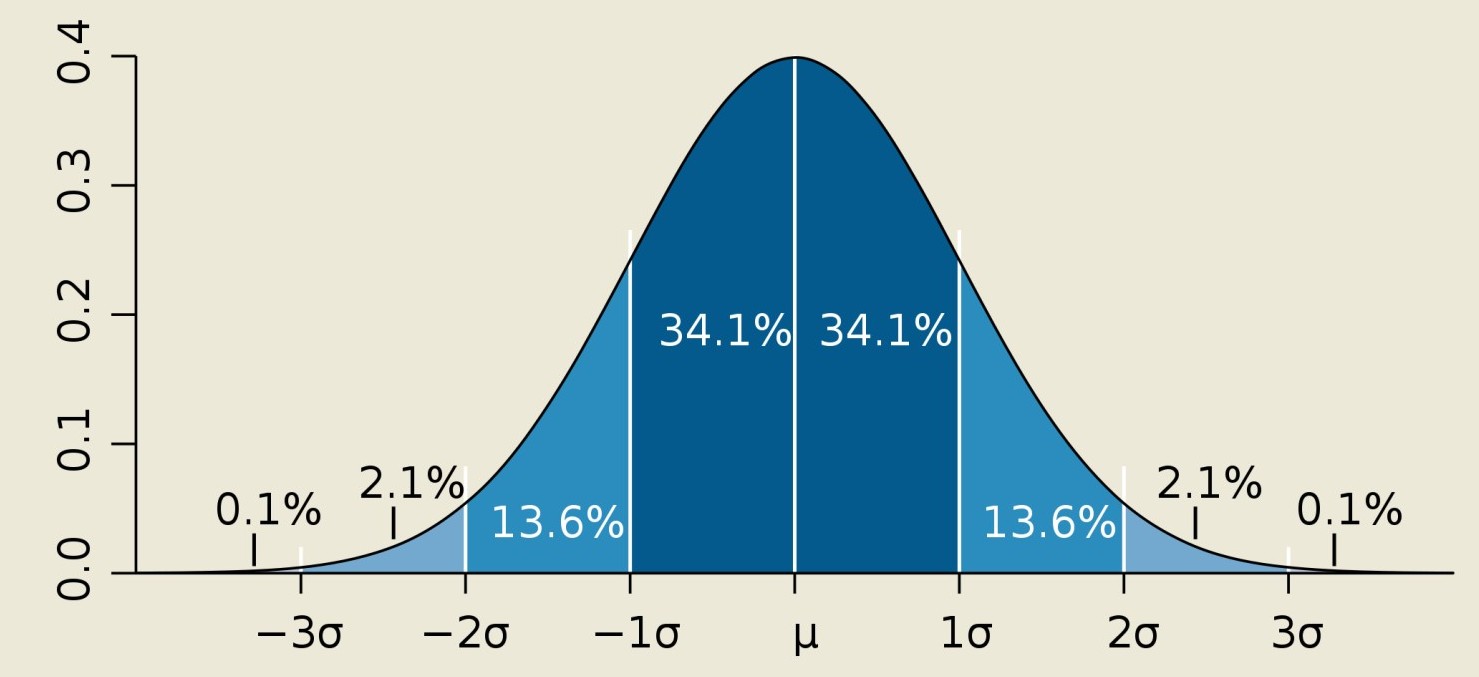
For example, we review how much a similar portfolio lost during 2008 or when the tech bubble popped in 2000-2002. When doing this, we are really talking about volatility rather than risk. Volatility – usually measured by standard deviation – reflects how much a portfolio is likely to increase or decrease in value when the market as a whole fluctuates. Risk, however, is quite different.

Two Threats

Josh Brown characterizes risk as the possibility of two threats:

  1. The possibility of not having enough money to fund a specific goal, which includes the possibility of outliving your money
  2. The possibility of a permanent loss of capital.

Example:

In a dramatic example of how volatility is different from risk, consider a retiree with a $10 million portfolio who only spends $50,000 a year. Next, assume the investor experiences a two-year period in which during the first year his portfolio loses 50% of its value and in year two the portfolio earns a 100% return. Thus, after year one the portfolio would only be worth $5 million and after year two it would again be worth $10 million.

Clearly, this is a very volatile portfolio that is subject to a wide range of potential performance outcomes. However, is this portfolio truly risky to the investor? According to Mr. Brown’s first factor, the portfolio is not risky because the investor will have enough money to fund his $50k per year retirement regardless of whether his portfolio is valued at $10 million or $5 million. Additionally, the portfolio is also not risky according to the second factor in that the investor didn’t experience a permanent loss.

Investors tend to view stocks as risky assets because their returns have a large standard deviation (variation from a mean). Similarly, we tend to view money market equivalents such as CDs and savings accounts as very safe investments because their returns have less dispersion, and consequently, are more predictable.

However, rather than considering stocks to be risky and cash equivalents to be safe, it would be more accurate to consider stocks an investment with high volatility and cash to be a holding with low volatility.

***

hacker

***

What is the difference?

Suppose it is determined that you need an average rate of return of 6% over time to achieve your retirement goals. Historically, over a sufficiently significant period of time, stocks have returned an average of about 10% per year while cash equivalents have returned about 3% per year. Consequently, if these averages continue in the future, you actually have a very low chance of reaching your retirement goal of not outliving your money if you place money in the “safe” investment of a cash equivalent, while you would actually have a high probability of reaching your retirement goal if you place money in a more volatile basket of stocks.

By this metric, cash is actually the more risky investment because investing in it would increase the probability of outliving your funds. Meanwhile a basket of stocks, if given enough time to achieve its historically average rate of return, is actually the safer investment as it gives you a higher probability of not outliving your nest egg.  Thus, while a portfolio of stocks will almost certainly experience more short-term volatility, over an extended period of time it very well may be a safer investment for ensuring your retirement goals are met.

Further, Mr. Brown proposes that the muddying of definition between risk and volatility is something a portion of the financial service industry has done on purpose. Brown suggests that the easiest way to sell someone a product is to first convince them they have a need. If hedge fund managers, insurance agents, and annuity salesmen can make consumers believe that volatility is equal to risk, and that since their products minimize volatility they must also minimize risk, they can achieve more sales.

However, even if an annuity can eliminate downside volatility, if it limits potential return to an amount that is insufficient to achieve the investor’s long-term goals, the investment is still more risky than an investment with more short-term volatility but a higher probability of long-term success.

***

Bell Curve

***

Assessment

Next time the market goes through a correction, remember that the drop in your portfolio’s value is a reflection of the potential volatility your portfolio is capable of experiencing. Yet, recall that as long as you don’t sell your assets and suffer a permanent loss of your investment capital, you can allow the market time to recover and achieve its historical rate of return.

Doing so will ultimately make your investment strategy less risky than utilizing investment options that experience less volatility because it maximizes the probability you will eventually achieve your long-term financial goals.

More:

Conclusion

Your thoughts and comments on this ME-P are appreciated. Feel free to review our top-left column, and top-right sidebar materials, links, URLs and related websites, too. Then, subscribe to the ME-P. It is fast, free and secure.

Speaker: If you need a moderator or speaker for an upcoming event, Dr. David E. Marcinko; MBA – Publisher-in-Chief of the Medical Executive-Post – is available for seminar or speaking engagements. Contact: MarcinkoAdvisors@msn.com

OUR OTHER PRINT BOOKS AND RELATED INFORMATION SOURCES:

Risk Management, Liability Insurance, and Asset Protection Strategies for Doctors and Advisors: Best Practices from Leading Consultants and Certified Medical Planners™8Comprehensive Financial Planning Strategies for Doctors and Advisors: Best Practices from Leading Consultants and Certified Medical Planners™

This book was crafted in response to the frustration felt by doctors who dealt with top financial, brokerage, and accounting firms. These non-fiduciary behemoths often prescribed costly wholesale solutions that were applicable to all, but customized for few, despite ever-changing needs. It is a must-read to learn why brokerage sales pitches or Internet resources will never replace the knowledge and deep advice of a physician-focused financial advisor, medical consultant, or collegial Certified Medical Planner™ financial professional.

Parin Khotari MBA [Whitman School of Management, Syracuse University, New York]

http://www.CertifiedMedicalPlanner.org

Enter the CMPs

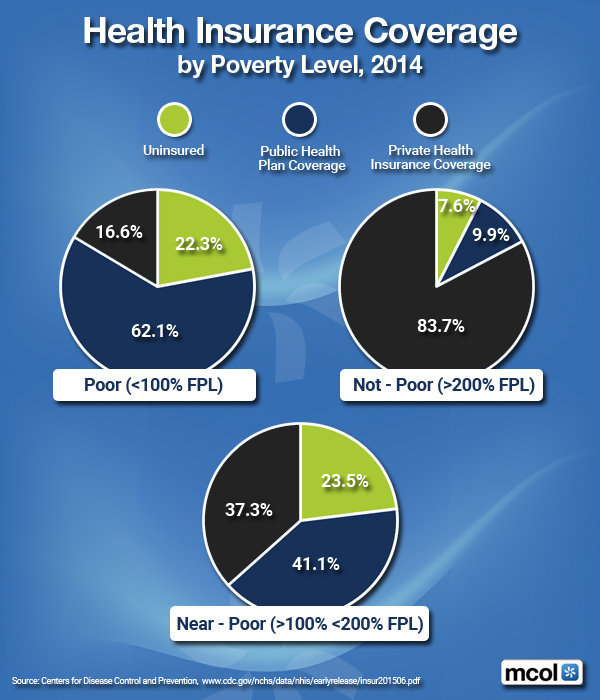
Update on Health Insurance Coverage in the USA

Join Our Mailing List

By Poverty Level in 2014

By http://www.MCOL.com

Conclusion

Your thoughts and comments on this ME-P are appreciated. Feel free to review our top-left column, and top-right sidebar materials, links, URLs and related websites, too. Then, subscribe to the ME-P. It is fast, free and secure.

Speaker: If you need a moderator or speaker for an upcoming event, Dr. David E. Marcinko; MBA – Publisher-in-Chief of the Medical Executive-Post – is available for seminar or speaking engagements. Contact: MarcinkoAdvisors@msn.com

OUR OTHER PRINT BOOKS AND RELATED INFORMATION SOURCES:

Comprehensive Financial Planning Strategies for Doctors and Advisors: Best Practices from Leading Consultants and Certified Medical Planners™

There is no other comprehensive book like it to help doctors, nurses, and other medical providers accumulate and preserve the wealth that their years of education and hard work have earned them.

Jason Dyken MD MBA [Dyken Wealth Strategies, Gulf Shores, Alabama]

Risk Management, Liability Insurance, and Asset Protection Strategies for Doctors and Advisors: Best Practices from Leading Consultants and Certified Medical Planners™

I have read these texts and used consulting services from the Institute of Medical Business of Advisors, Inc., on several occasions. 

MARSHA LEE; DO [Radiologists, Norcross, GA]

Can Physicians Achieve their Financial Independence [Day] Without Budgeting?

Join Our Mailing List

A New Twist on an old Holiday Tradition

[By Rick Kahler CFP® MS ChFC CCIM]

Doctor – Here’s a new twist on an old Resolution: If you want to give yourself the security of financial independence, try budgeting the way many wealth accumulators do.

The secret? They don’t budget!

Your first reaction might be, “Of course these people don’t budget! They have so much money, they don’t need to.”

That may be true for some of those who have money today, but I’m referring to people who want to remain wealthy or those who are “wealth accumulators.” These are people who don’t start out with money, but who build up significant wealth over time.

Live on Less

Many successful wealth accumulators, and too few medical professionals, don’t follow a detailed budget in the traditional sense. Instead, they develop the habit of living on less than they make. They do this by setting clear priorities. Here is how it works:

The List

1. Out of every dollar earned, take taxes out first. If you receive a paycheck from an employer, this is done for you. On any earnings where taxes aren’t withheld, estimate the amount of tax you’ll owe and stick it into savings.

2. Take out 15% to 30% to invest for your future. When you’re just starting out, you may have to begin with a much lower percentage, but begin and be consistent. Research tells us if you have 30 years until retirement and you plan to live for 30 years after retirement, you need to save 17% of your salary to maintain the same standard of living upon retirement. When you get a raise, contribute two-thirds of it to your investments and use one-third for increasing your lifestyle. If you want to become financially independent, this step is essential.

3. Save another 10% to 20% for emergencies and short-term needs like vacations, Christmas, and replacing vehicles. Again, you may have to start with a lower percentage, but begin with whatever you can, and be consistent.

4. Take out 5% to 10% for giving.

5. Live on the rest. Pay the bills as they come in, and use what’s left over for discretionary lifestyle spending.

Sounds simple, right? Of course, “simple” isn’t necessarily the same as “easy.” By now, if you’ve done the math, you can see that following this plan means living on as little as one-half to even one-third of your gross earnings.

***

Image processed by CodeCarvings Piczard ### FREE Community Edition ### on 2013-05-29 19:30:54Z | http://piczard.com | http://codecarvings.com

Image permission to the ME-P and iMBA Inc., and processed by CodeCarvings Piczard at piczard.com

***

Assessment

If you’re living from paycheck to paycheck, just barely managing to pay the bills, the idea of living on half of what you make goes beyond absurd. It probably seems impossible. It may, in the short term, be impossible.

Yet there are ways to live on less than you earn, even if to begin with it’s only a little less. Share a cheap apartment with a roommate. Drive an old car that you don’t have to make payments on. Eat at home. Buy used furniture and second-hand clothes. Get a temporary second job solely for the purpose of building up some savings.

What is most important is developing the pattern of living on less than you make. Fostering a frugal mindset is absolutely essential if you want to achieve financial independence. When you commit to saving first—even if you can only save a small amount—you have made one of the wisest financial decisions you can ever make.

This non-budgeting spending style takes away much of the pressure of trying to follow a rigid budget. There’s no need to keep track of envelopes or categories. You’ve made the hard decisions first, and you get to spend everything in the checkbook.

Budgeting without a budget can turn you into a wealth accumulator. It works because you take your future off the top.

The Author

Rick Kahler, Certified Financial Planner®, MS, ChFC, CCIM, is the founder and president of Kahler Financial Group in Rapid City, South Dakota. In 2009 his firm was named by Wealth Manager as the largest financial planning firm in a seven-state area. A pioneer in the evolution of integrating financial psychology with traditional financial planning profession, Rick is a co-founder of the five-day intensive Healing Money Issues Workshop offered by Onsite Workshops of Nashville, Tennessee. He is one of only a handful of planners nationwide who partner with professional coaches and financial therapists to deliver financial coaching and therapy to his clients. Learn more at KahlerFinancial.com

Conclusion      

Your thoughts and comments on this ME-P are appreciated. Feel free to review our top-left column, and top-right sidebar materials, links, URLs and related websites, too. Then, subscribe to the ME-P. It is fast, free and secure.

ME-P and Independence Day 2010

Speaker: If you need a moderator or speaker for an upcoming event, Dr. David E. Marcinko; MBA – Publisher-in-Chief of the Medical Executive-Post – is available for seminar or speaking engagements. Contact: MarcinkoAdvisors@msn.com

OUR OTHER PRINT BOOKS AND RELATED INFORMATION SOURCES:

Product DetailsProduct DetailsProduct Details

Product Details  Product Details

   From the Publisher

“One needs to have the right words, and to use seemingly everyday terms in a way that economists and healthcare financial experts speak. Simply put, my suggestion is to refer to the Dictionary of Healthcare Economics and Finance frequently, and ‘reap'”.

Thomas E. Getzen, PhD Executive Director, International Health Economics Association (iHEA) Professor of Risk, Insurance and Healthcare Management The Fox School of Business-Temple University Philadelphia, Pennsylvania

Product Details

Comprehensive Financial Planning Strategies for Doctors and Advisors: Best Practices from Leading Consultants and Certified Medical Planners(TM)

Investing and Economics is an Imprecise Science

Join Our Mailing List 

BUT … It’s still all about CONSUMERISM!

[By Dr. David Edward Marcinko MBA MBBS [Hon] CMP]

http://www.CertifiedMedicalPlanner.org

DEM 2013There is a major variable, dominant in any marketplace that pushes an economy in a forward direction. It is called consumerism.

This became apparent while I was waiting in a doctor colleague’s office one recent afternoon.

Scenario:

The front office receptionist, who appeared to be about 21 years old, was breaking for lunch and her replacement, and appeared not much older, came over to assist.

Realizing the propensity for a long wait, one was taken by the size of waiting room and the number of patients coming in and out of the office. [Americans consume healthcare and a lot of it].

There was another notable peculiarity. The sample prescription bags being carried out the door were no match for the bags under everyone’s eyes, including the doctor’s. The office staff was probably working overtime, if not two jobs, and the doctor was working harder and faster in a managed care / ACA system.

***

stock-exchange-

[Consumerism driving the Stock Market]

***

Why?

So they all could afford to buy and voraciously consume for their children and themselves. Americans indeed work longer hours than any other industrialized nation.

Assessment

Additionally, as women female medical professionals entered the workforce in unprecedented numbers, the stock markets reached an all time high in 2015, even as money was spent at a feverish pace as the Federal Reserve pumped out money in inflammatory fashion.

Channel Surfing

Have you visited our other topic channels? Established to facilitate idea exchange and link our community together, the value of these topics is dependent upon your input. Please take a minute to visit. And, to prevent that annoying spam, we ask that you register.

Link: http://feeds.feedburner.com/HealthcareFinancialsthePostForcxos

Conclusion

Your thoughts and comments on this ME-P are appreciated. Feel free to review our top-left column, and top-right sidebar materials, links, URLs and related websites, too. Then, subscribe to the ME-P. It is fast, free and secure.

share

Speaker: If you need a moderator or speaker for an upcoming event, Dr. David E. Marcinko; MBA – Publisher-in-Chief of the Medical Executive-Post – is available for seminar or speaking engagements. Contact: MarcinkoAdvisors@msn.com

OUR OTHER PRINT BOOKS AND RELATED INFORMATION SOURCES:

Product Details

Risk Management, Liability Insurance, and Asset Protection Strategies for Doctors and Advisors: Best Practices from Leading Consultants and Certified Medical Planners™8Comprehensive Financial Planning Strategies for Doctors and Advisors: Best Practices from Leading Consultants and Certified Medical Planners™

About the Institute of Medical Business Advisors, Inc

Join Our Mailing List

Who we are – What we do!

[By Ann Miller RN MHA]

www.MedicalBusinessAdvisors.com

The Institute of Medical Business Advisors, Inc provides a team of experienced, senior level consultants led by iMBA Chief Executive Officer Dr. David Edward Marcinko MBA CMPMBBS [Hon] and President Hope Rachel Hetico RN MHA CMP™ to provide going contact with our clients throughout all phases of each project, with most of the communications between iMBA and the key client participants flowing through this Senior Team.

iMBA Inc., and its skilled staff of certified professionals have many years of significant experience, enjoy a national reputation in the healthcare consulting field, and are supported by an unsurpassed research and support staff of CPAs, MBAs, MPHs, PhDs, CMPs™, CFPs® and JDs to maintain a thorough and extensive knowledge of the healthcare environment.

The iMBA team approach emphasizes providing superior service in a timely, cost-effective manner to our clients by working together to focus on identifying and presenting solutions for our clients’ unique, individual needs.

***

Risk Management and Insurance Foreword for Doctors by Lloyd Krieger MD MBA article-2270211-173CD250000005DC-373_634x447

Financial Planning for Physicians Foreword by Jason Dyken MD MBA

***

Our Team 

The iMBA Inc project team’s exclusive focus on the healthcare industry provides a unique advantage for our clients.  Over the years, our industry specialization has allowed iMBA to maintain instantaneous access to a comprehensive collection of healthcare industry-focused data comprised of both historically-significant resources as well as the most recent information available.

iMBA Inc’s specific, in-depth knowledge and understanding of the “value drivers” in various healthcare markets, in addition to the transaction marketplace for healthcare entities, will provide you with a level of confidence unsurpassed in the public health, health economics, management, administration, and financial planning and consulting fields.

iMBA Inc’s information resources and network of healthcare industry textbook resources enhanced by our professional consultants and research staff, ensure that the iMBA project team will maintain the highest level of knowledge regarding the current and future trends of the specific specialty market related to the project, as well as the healthcare industry overall, which serves as the “foundation” for each of our client engagements.

Comprehensive Financial Planning Strategies for Doctors and Advisors: Best Practices from Leading Consultants and Certified Medical Planners(TM) 

Product Details

Product DetailsProduct Details

Product DetailsProduct DetailsProduct Details


Medical Executive-Post

And, through the balanced collaboration of this rich-media sharing and ranking ME-P forum, we have become a leading network at the intersection of health administration, practice management, medical economics, business strategy and financial planning for doctors and their consulting advisors. Even if not seeking our products or services, we hope this knowledge silo is useful to you.

In the Health 2.0 era of political reform, our goal is to: “bridge the gap between practice mission and financial solidarity for all medical professionals.”

Join the ME-P Nation today … and tell us what you think! 

We are at your service.

← Back

Thank you for your response. ✨

Great Book Gifts for Medical School and Health Care Graduates

Join Our Mailing List

[By Staff reporters]

An Educational Resource Supporting Doctors, Universities and Consulting Advisors  

We are an emerging online and onground community that connects medical professionals with financial advisors and management consultants. We participate in a variety of insightful educational seminars, teaching conferences and national workshops. We produce journals, textbooks and handbooks, white-papers, CDs and award-winning dictionaries. And, our didactic heritage includes innovative R&D, litigation support, opinions for engaged private clients and media sourcing in the sectors we passionately serve.

Through the balanced collaboration of this rich-media sharing and ranking forum, we have become a leading network at the intersection of healthcare administration, practice management, medical economics, business strategy and financial planning for doctors and their consulting advisors. Even if not seeking our products or services, we hope this knowledge silo is useful to you.

In the Health 2.0 era of political reform, our goal is to: “bridge the gap between practice mission and financial solidarity for all medical professionals.”

Join the ME-P Nation today … and tell us what you think! 

  ***gifts

***

  OUR BOOKS, TEXTS AND DICTIONARIES ARE VITAL SURVIVAL TOOLS FOR ALL PHYSICIANS … AND THEIR CONSULTING ADVISORS

***

Product Details

Product DetailsProduct Details

       Product DetailsProduct DetailsProduct Details

Risk Management, Liability Insurance, and Asset Protection Strategies for Doctors and Advisors: Best Practices from Leading Consultants and Certified Medical Planners™8Comprehensive Financial Planning Strategies for Doctors and Advisors: Best Practices from Leading Consultants and Certified Medical Planners™

***

Channel Surfing

Have you visited our other topic channels? Established to facilitate idea exchange and link our community together, the value of these topics is dependent upon your input. Please take a minute to visit. And, to prevent that annoying spam, we ask that you register.

Link: http://feeds.feedburner.com/HealthcareFinancialsthePostForcxos

More:

Conclusion

Your thoughts and comments on this ME-P are appreciated. Feel free to review our top-left column, and top-right sidebar materials, links, URLs and related websites, too. Then, subscribe to the ME-P. It is fast, free and secure.

Speaker: If you need a moderator or speaker for an upcoming event, Dr. David E. Marcinko; MBA – Publisher-in-Chief of the Medical Executive-Post – is available for seminar or speaking engagements. Contact: MarcinkoAdvisors@msn.com

OUR OTHER PRINT BOOKS AND RELATED INFORMATION SOURCES:

Join Our Mailing List

Do Commisson-Based Fiduciary Financial Advisors EVEN Exist?

Join Our Mailing List

Sometimes the Case?

By Rick Kahler MS CFP http://www.KahlerFinancial.com

Rick Kahler MS CFPCan a financial advisor represent your best interests and still earn a commission? Surprisingly, this can sometimes be the case.

But … It’s up to you to find out.

Fiduciary

Being required to put the consumer’s interest first, which means representing a client rather than selling products and services to a customer is called having a fiduciary duty. While fee-only planners are inherently fiduciaries, they don’t exclusively own the fiduciary domain. The definition of a fiduciary duty does not inherently ban receiving commissions. Numerous statutes and applications of common law can require someone receiving a commission from selling a financial product to act in a fiduciary capacity.

One such circumstance was discussed in a blog post at http://www.kitces.com by Duane Thompson, president of Potomac Strategies, LLC, a legislative and public relations consulting firm.

Registered Investment Advisor

Those registered with the SEC as Registered Investment Advisors (RIA) under the Investment Advisers Act of 1940 are required to uphold a fiduciary standard of care. Advisors must register as RIAs if they, “for compensation, engage in the business of advising others” about investing in securities and as a central part of the business.

The 1940 Act has almost nothing to say about linking compensation to fiduciary responsibility. While large firms selling financial products can argue whether they must register as RIAs, it is clear that anyone registered as an RIA is held to a fiduciary standard, regardless of their compensation structure.

That said, the chances are an advisor who is compensated 100% by commissions is not an RIA and not held to a fiduciary standard. Of the 11,475 adviser firms registered with the SEC, only four are commission only, according to Thompson. Of the remainder, those that receive  a commission also charge some type of fee.

The Odds

The overwhelming odds are that, if you don’t pay a fee to a company giving investment advice or selling a financial product, they are not legally required to look after your best interests.

Even though an RIA who is totally or in part compensated by commissions has a legal obligation to put your interests first, they may still have a conflict of interest, which the SEC requires them to disclose. The size of that conflict of interest depends on the percentage of an adviser’s revenue derived from selling financial products.

Example:

For example, a RIA receiving 90% of their revenue from the sale of financial products has a large conflict of interest. The sustainability of the company and advisers’ careers depends upon sales. Arguably it’s going to be very difficult for an adviser to remain unbiased, especially if what may be in the client’s best interest is a no-load, low cost index mutual fund or variable annuity; which pay no commission.

Conversely, an advisor receiving 99% of their revenue from fees and 1% from commissions on the sale of low-cost term life insurance has almost no conflict. The sale of the insurance is most likely a convenience for clients and has an insignificant financial impact to the adviser.

face-off

[Fiduciary Advisor versus Sales Man/Woman] 

In order to find out the likelihood of advisers upholding a fiduciary standard, first ask whether they are a RIA with the SEC. If not, they owe you no fiduciary responsibility. You are a customer.

Assessment

If an adviser is an RIA, however, don’t assume there is no conflict of interest that may taint the fiduciary relationship. Ask how much of the firm’s gross revenue comes from commissions on the sale of financial products and how much comes from fees paid directly by clients. The higher the percentage of revenue that comes from fees, the lower the conflict of interest and the greater the chance you will receive unbiased, client-centered advice.

Conclusion

Your thoughts and comments on this ME-P are appreciated. Feel free to review our top-left column, and top-right sidebar materials, links, URLs and related websites, too. Then, subscribe to the ME-P. It is fast, free and secure.

Speaker: If you need a moderator or speaker for an upcoming event, Dr. David E. Marcinko; MBA – Publisher-in-Chief of the Medical Executive-Post – is available for seminar or speaking engagements. Contact: MarcinkoAdvisors@msn.com

OUR OTHER PRINT BOOKS AND RELATED INFORMATION SOURCES:

Comprehensive Financial Planning Strategies for Doctors and Advisors: Best Practices from Leading Consultants and Certified Medical Planners(TM)

Living and Dying on Financial Planning Averages

Join Our Mailing List

Too simplest … Too manageable?

By Lon Jeffries MBA CFP CMP®

Lon JeffriesNever forget the story of the six-foot tall man who drowned crossing the stream that was only five feet deep, on average.

We want to abide by averages because they make our lives simple and manageable. A couple on a date night assumes a movie will be an average of two hours long so they know when to schedule dinner with friends.

The entrepreneur wants to think in terms of making an average profit of $100,000 per year so he has a guideline regarding the standard of living he can enjoy.

The 65-year old retiree wants to assume he will live to the average age of 84.3 so he knows at what pace he can enjoy his nest egg.

Planning Gone Awry

However, when we rely too heavily on averages, our planning can go awry. If the movie runs longer than two hours, the couple will be late for their dinner date. If the entrepreneur has a slow year and earns less than $100,000, he may end up taking out short term debt to pay his bills. If the retiree lives past age 84.3, he may outlive his money.

Financial Planning Averages

The use of averages is essential in financial planning. A range of assumptions is required in the development of a financial plan – how long will you live, how much will you spend each year, what rate of return will your investments achieve, how much will you pay in taxes, what will the rate of inflation be, etc. Without these assumptions, retirement projections can’t be constructed. Further, the best method for making these assumptions is to use averages – an average life expectancy, an historical average rate of return, an historical average inflation rate, etc.

So, how do we prevent the use of averages from destroying us? The answer is by allowing enough time and repetitions for the law of averages to come into effect. Just because a basketball player shoots free throw shots at a 90% success rate doesn’t mean he will necessarily make the next free throw he takes. It does, however, mean that if he shoots 100 free throws he is likely to make 90 of them.

Beware Assumptions

A financial plan may assume you achieve an average annual rate of return of 7% per year. Of course, this doesn’t mean it is impossible that your portfolio will actually lose 10% over the next 12 months. It is critical to remember that the financial plan assumes you achieve a 7% return over the entirety of your retirement, which may be 30 years. Consequently, if a loss of 10% occurs in the first year of retirement, your portfolio still has another 29 years to achieve returns that average out to 7% per year. Thus, a 10% loss is far from catastrophic to your retirement projections.

In fact, the primary way a 10% loss could become catastrophic to your portfolio is if it motivates you to make changes to your investments that would prevent the law of averages from applying. If an investor sold their portfolio after suffering the 10% loss, it would essentially guarantee that the anticipated average rate of return won’t be achieved, and consequently, the financial plan would be likely to fail.

***

Bell Curve

***

For this reason, while it is true that over an extended period of time the stock market has averaged an annual return of 10%, we should always remember that there is a significant chance of the market taking a loss during any given year (or three-year) period, and it is possible that the market could endure a decade without any significant gains (similar to the 2000’s).

Still, if the financial plan requires an average investment return over an extended period of time such as a 30-year retirement, even these setbacks are far from certain to dislodge your secure retirement as long as time is granted for the average to work itself out.

Enter Howard Marks

As famed writer and investor Howard Marks said,

“We can’t live by the averages. We can’t say ‘well, I’m happy to survive, on average.’ We gotta survive on the bad days. If you’re a decision maker, you have to survive long enough for the correctness of your decision to become evident. You can’t count on it happening right away.”

Assessment

The use of averages has a purpose in financial planning, and in other aspects of life. We simply need to be confident that the figures we use for our averages are achievable over time, and allow time the opportunity to prove us right.

Pareto’s Law or Principle

The Pareto principle (also known as the 80–20 rule, the law of the vital few, and the principle of factor sparsity) states that, for many events, roughly 80% of the effects come from 20% of the causes Management consultant Joseph M. Juran suggested the principle and named it after Italian economist Vilfredo Pareto, who, while at the University of Lausanne in 1896, published his first paper “Cours d’économie politique.” Essentially, Pareto showed that approximately 80% of the land in Italy was owned by 20% of the population; Pareto developed the principle by observing that 20% of the pea pods in his garden contained 80% of the peas.

It is a common rule of thumb in business; e.g., “80% of your sales come from 20% of your clients.” Mathematically, the 80–20 rule is roughly followed by a power law distribution (also known as a Pareto distribution) for a particular set of parameters, and many natural phenomena have been shown empirically to exhibit such a distribution.[2]

The Pareto principle is only tangentially related to Pareto efficiency. Pareto developed both concepts in the context of the distribution of income and wealth among the population.

More: 

Conclusion

Your thoughts and comments on this ME-P are appreciated. Feel free to review our top-left column, and top-right sidebar materials, links, URLs and related websites, too. Then, subscribe to the ME-P. It is fast, free and secure.

Speaker: If you need a moderator or speaker for an upcoming event, Dr. David E. Marcinko; MBA – Publisher-in-Chief of the Medical Executive-Post – is available for seminar or speaking engagements. Contact: MarcinkoAdvisors@msn.com

OUR OTHER PRINT BOOKS AND RELATED INFORMATION SOURCES:

Comprehensive Financial Planning Strategies for Doctors and Advisors: Best Practices from Leading Consultants and Certified Medical Planners(TM)

The Financial Crisis

Join Our Mailing List

And – Cultural Capture

j kwak

I was asked to write something about an idea that I had slipped into 13 Bankersalmost in passing, about the cultural prestige of the financial industry and the political and regulatory benefits the industry derived from that prestige. My chapter turned into a discussion of the various mechanisms by which status and social networks can influence regulators, creating the equivalent of regulatory capture even without traditional materialist incentives (cash under the table, promises of future jobs, etc.).

Two weeks ago, an investigation by ProPublica and This American Life illustrated the culture of deference, risk aversion, and general sucking-upitude among New York Fed bank examiners that effectively resulted in the capture of regulators by the banks they were supposed to be regulating. As David Beim wrote in a confidential report about the New York Fed, the core problem was “what the culture expected of people and what the culture induced people to do.”

I wrote about the story for the Atlantic and referred to my book chapter, but at the time the chapter was not available for free on the Internet (at least not legally). The good people at the Tobin Project have since put it up on the book’s website, from which you can download it (legally!). Note that they are only allowed to put up one chapter at a time and they rotate them, so this is a limited-time offer.

Link: Cultural Capture and the Financial Crisis

free_278647

More: http://jameskwak.net/

Conclusion

Your thoughts and comments on this ME-P are appreciated. Feel free to review our top-left column, and top-right sidebar materials, links, URLs and related websites, too. Then, subscribe to the ME-P. It is fast, free and secure.

Speaker: If you need a moderator or speaker for an upcoming event, Dr. David E. Marcinko; MBA – Publisher-in-Chief of the Medical Executive-Post – is available for seminar or speaking engagements. Contact: MarcinkoAdvisors@msn.com

OUR OTHER PRINT BOOKS AND RELATED INFORMATION SOURCES:

Comprehensive Financial Planning Strategies for Doctors and Advisors: Best Practices from Leading Consultants and Certified Medical Planners(TM)

18 Financial Planning Tips For Physicians from a DR-CPA

Join Our Mailing List

For Personal and Medical Practice Management Modernity

Dr. Gary Bode; CPA, MSA, CMP

By Dr. Gary L. Bode CPA MSA CMP [Hon] PA

http://garybodecpa.com/

http://www.CertifiedMedicalPlanner.org

1. Consider establishing an employee stock ownership plan (ESOP).

If you own a clinic or medical practice or business and need to diversify your investment portfolio, consider establishing an ESOP. ESOP’s are the most common form of employee ownership in the U.S. and are used by companies for several purposes, among them motivating and rewarding employees and being able to borrow money to acquire new assets in pretax dollars. In addition, a properly funded ESOP provides you with a mechanism for selling your shares with no current tax liability. Consult a specialist in this area to learn about additional benefits.

2. Make sure there is a succession plan in place.

Have you provided for a succession plan for both management and ownership of your medical practice, clinic or business in the event of your death or incapacity? Many business owners or physician-executives wait too long to recognize the benefits of making a succession plan. These benefits include ensuring an orderly transition at the lowest possible tax cost. Waiting too long can be expensive from a financial perspective (covering gift and income taxes, life insurance premiums, appraiser fees, and legal and accounting fees) and a non-financial perspective (intra-family and intra-company squabbles).

3. Consider the limited liability company (LLC) and limited liability partnership (LLP) forms of ownership.

These entity forms should be considered for both tax and non-tax reasons.

4. Avoid nondeductible compensation.

Compensation can only be deducted if it is reasonable. Recent court-decisions have allowed physician executives or business owners to deduct compensation when (1) the corporation’s success was due to the shareholder-employee, (2) the bonus policy was consistent, and (3) the corporation did not provide unusual corporate prerequisites and fringe benefits.

5. Purchase corporate owned life insurance (COLI).

COLI can be a tax-effective tool for funding deferred executive compensation, funding clinic or company redemption of stock as part of a succession plan, and providing many employees with life insurance in a highly leveraged program. Consult your insurance and tax advisers when considering this technique.

6. Consider establishing a SIMPLE retirement plan.

If you have no more than 100 employees and no other qualified plan, you may set up a Savings Incentive Match Plan for Employees (SIMPLE) into which an employee may contribute up to $12,500 per year if you’re under 50 years old and $15,500 a year if you’re over 50 in 2015. As an employer, you are required to make matching contributions. Talk with a benefits specialist to fully understand the rules and advantages and disadvantages of these accounts.

 ***free_54915

***

7. Establish a Keogh retirement plan before December 31st.

If you are self-employed and want to deduct contributions to a new Keogh retirement plan for this tax year, you must establish the plan by December 31st. You don’t actually have to put the money into your Keogh(s) until the due date of your tax return. Consult with a specialist in this area to ensure that you establish the Keogh or Keoghs that maximize your flexibility and your annual contributions.

8. Section 179 expensing.

Businesses and medical practices may be able to expense up to $25,000 in 2015 for equipment purchases of qualifying property placed in service during the filing year, instead of depreciating the expenditures over a longer time period. The limit is reduced by the amount by which the cost of Section 179 property placed in service during the tax year 2015 exceeds $200,000.

9. Don’t forget deductions for health insurance premiums.

If you are self-employed (or are a partner or a 2-percent S corporation shareholder-employee) you may deduct 100 percent of your medical insurance premiums for yourself and your family as an adjustment to gross income. The adjustment does not reduce net earnings subject to self-employment taxes, and it cannot exceed the earned income from the business under which the plan was established. You may not deduct premiums paid during a calendar month in which you or your spouse is eligible for employer-paid health benefits.

10. Review whether compensation may be subject to self-employment taxes.

If you are a sole proprietor, an active partner in a partnership, or a manager in a limited liability company, the net earned income you receive from the entity may be subject to self-employment taxes.

11. Don’t overlook minimum distributions at age 70½ and rack up a 50 percent penalty.

Minimum distributions from qualified retirement plans and IRAs must begin by April 1 of the year after the year in which you reach age 70½. The amount of the minimum distribution is calculated based on your life expectancy or the joint and last survivor life expectancy of you and your designated beneficiary. If the amount distributed is less than the minimum required amount, an excise tax equal to 50 percent of the amount of the shortfall is imposed.

12. Don’t double up your first minimum distributions and pay unnecessary income and excise taxes.

Minimum distributions are generally required at age seventy and one-half, but you are allowed to delay the first distribution until April 1 of the year following the year you reach age seventy and one-half. In subsequent years, the required distribution must be made by the end of the calendar year. This creates the potential to double up in distributions in the year after you reach age 70½. This double-up may push you into higher tax rates than normal. In many cases, this pitfall can be avoided by simply taking the first distribution in the year in which you reach age 70½.

***

buckets cash

***

13. Don’t forget filing requirements for household employees.

Employers of household employees must withhold and pay social security taxes annually if they paid a domestic employee more than $1,900 a year in 2015 (same as 2014). Federal employment taxes for household employees are reported on your individual income tax return (Form 1040, Schedule H). To avoid underpayment of estimated tax penalties, employers will be required to pay these taxes for domestic employees by increasing their own wage withholding or quarterly estimated tax payments. Although the federal filing is now required annually, many states still have quarterly filing requirements.

14. Consider funding a nondeductible regular or Roth IRA.

Although nondeductible IRAs are not as advantageous as deductible IRAs, you still receive the benefits of tax-deferred income. Note, the income thresholds to qualify for making deductible IRA contributions, even if you or your spouse is an active participant in a employer plan, are increasing.

The $100,000 income test for converting a traditional IRA to a ROTH IRA was permanently eliminated in 2010, allowing anyone to complete the conversion.

You can withdraw all or part of the assets from a traditional IRA and reinvest them (within 60 days) in a Roth IRA. The amount that you withdraw and timely contribute (convert) to the Roth IRA is called a conversion contribution. If properly (and timely) rolled over, the 10 percent additional tax on early distributions will not apply. However, a part or all of the distribution from your traditional IRA may be included in gross income and subjected to ordinary income tax.

Caution: You must roll over into the Roth IRA the same property you received from the traditional IRA. You can roll over part of the withdrawal into a Roth IRA and keep the rest of it. However, the amount you keep will generally be taxable (except for the part that is a return of nondeductible contributions) and may be subject to the 10 percent additional tax on early distributions.

15. Calculate your tax liability as if filing jointly and separately.

In certain situations, filing separately may save money for a married couple. If you or your spouse is in a lower tax bracket or if one of you has large itemized deductions, filing separately may lower your total taxes. Filing separately may also lower the phase out of itemized deductions and personal exemptions, which are based on adjusted gross income. When choosing your filing status, you should also factor in the state tax implications.

16. Avoid the hobby loss rules.

If you choose self-employment over a second job to earn additional income, avoid the hobby loss rules if you incur a loss. The IRS looks at a number of tests, not just the elements of personal pleasure or recreation involved in the activity.

17. Review your will and plan ahead for post-mortem tax strategies.

A number of tax planning strategies can be implemented soon after death. Some of these, such as disclaimers, must be implemented within a certain period of time after death. A number of special elections are also available on a decedent’s final individual income tax return. Also, review your will as the estate tax laws are influx and your will may have been written with differing limits in effect. In 2015, estates of $5,430,000 (up from $5,340,000 in 2014) are exempt from the estate tax with a 40 percent maximum tax rate (made permanent starting in tax year 2013).

18. Check to see if you qualify for the Child Tax Credit.

A $1,000 tax credit is available for each dependent child (including stepchildren and eligible foster children) under the age of 17 at the end of the taxable year. The child credit generally is available only to the extent of a taxpayer’s regular income tax liability. However, for a taxpayer with three or more children, this limitation is increased by the excess of Social Security taxes paid over the sum of other nonrefundable credits and any earned income tax credit allowed to the taxpayer. For 2015 (as in previous years), the income threshold is $3,000.

For more information concerning these financial planning ideas, please call or email us.

More: Enter the CMPs

ABOUT  DR. GARY L. BODE MSA CPA CMP [Hon]

Dr. Gary L. Bode was Chief Executive Officer of Comprehensive Practice Accounting, Inc., a firm specializing in providing tax solutions to medical professionals. Originally, he was a board certified podiatrist and managing partner of a multi-office medical practice for a decade before earning his Master of Science degree in Accounting from the University of North Carolina. He then served as Chief Financial Officer [CFO] for a private mental healthcare facility. Today, Dr. Bode is a nationally known Certified Public Accountant, financial author, educator, and speaker. Areas of expertise include producing customized managerial accounting reports, practice appraisals and valuations, restructurings, and innovative financial accounting as well as proactive tax positioning and tax return preparation for healthcare facilities. He has been quoted in Newsweek.

Channel Surfing the ME-P

Have you visited our other topic channels? Established to facilitate idea exchange and link our community together, the value of these topics is dependent upon your input. Please take a minute to visit. And, to prevent that annoying spam, we ask that you register. It is fast, free and secure.

Conclusion

Your thoughts and comments on this ME-P are appreciated. Feel free to review our top-left column, and top-right sidebar materials, links, URLs and related websites, too. Then, subscribe to the ME-P. It is fast, free and secure.

Speaker: If you need a moderator or speaker for an upcoming event, Dr. David E. Marcinko; MBA – Publisher-in-Chief of the Medical Executive-Post – is available for seminar or speaking engagements. Contact: MarcinkoAdvisors@msn.com

OUR OTHER PRINT BOOKS AND RELATED INFORMATION SOURCES:

Comprehensive Financial Planning Strategies for Doctors and Advisors: Best Practices from Leading Consultants and Certified Medical Planners(TM)* 8

Product DetailsProduct DetailsProduct Details

On Physicians and Automobile Leases

Join Our Mailing List

Advantages, Disadvantages and Types

[By Dr. David Edward Marcinko MBA CMP™]

Dr. Marcinko 1972 VetteThe Rites of Spring!

As a former licensed state insurance agent, and financial advisor, I know that leasing a car may have advantages to a physician – and others – such as convenient maintenance, low down and monthly payments, no resale responsibility, and tax savings since you pay sales tax on the lease portion rather than the purchase price of the car.

It might also be worthwhile if the after tax borrowing cost of a home equity loan is less than the lease financing rate.

***

Spring 2011 - NIH

[First Days of Spring 2017]

May Day Weekend 2011 [Dr. David E. Marcinko MBA]

***

Types of Leases

There are two major types of leases: open and closed ended. In the former type, if the car is worth more than the set price upon expiration of the lease, you are responsible for the underage or coverage. In the more advantages later type, the responsibility of the value of the car is shifted to the leasing company. Other tips on care leasing include:

  • Inform the lessor how you want the auto equipped; do not accept unwanted options.
  • Obtain all delivery, and other, charges in advance, including down payment, security.
  • Deposit, registration fees, interest rates, residual value, rebates and all taxes (sales, personal property, use and gross receipt).
  • Know the capitalized cost (selling price) of the car
  • Know annual mileage limits, usually 15-18,000 miles, and all excess use charges.
  • Avoid maintenance and service contracts, and arrange for your own insurance.
  • Understand that terms, such as money factor, or interest factor, may be used instead of the term interest rate. In this case, simply multiple the rate by 24 for an estimate of the true interest rate involved.
  • Read the contract and understand all penalties, especially for premature or late termination, purchase or return terms, and consequences of theft.
  • Check the lease terms through an independent company, such as First National Lease Systems.

Rough Rules of Thumb

A rough rule of thumb to determine whether to buy or lease involves multiplying all the payments required by the number of months you will have to pay, and add the down payment to yield the total amount of the purchase. Then, multiply the lease payment by the number of months, and add required up-front costs, as well as residual value (end of lease buyout cost), to determine the total amount to lease. Compare the two figures to determine the most economical deal.

Typically, a cash deal is less expensive in the long run, providing a higher after tax rate of return is not available, as an alternate investment, for the funds.

***

Jaguar Touring sedan XJ-V8-LWB***

Dis-Advantages

But, there are dis-advantages to auto leasing, too!

Perhaps the worse reason to lease a car is to drive one that you could not otherwise afford to drive. This is because most low monthly payments are only composed of two portions: interest on the note and the prorated cost of auto depreciation. No money is applied to ownership of the vehicle.

Assessment

Finally, beware Spring-Fever and do not likely buy “gap” insurance to cover the difference between what your auto insurer would pay if your car was totaled, and what you would owe the leasing firm. It’s usually too expensive and the risk is minimal.

More:

Channel Surfing the ME-P

Have you visited our other topic channels? Established to facilitate idea exchange and link our community together, the value of these topics is dependent upon your input. Please take a minute to visit. And, to prevent that annoying spam, we ask that you register. It is fast, free and secure.

Conclusion

Your thoughts and comments on this ME-P are appreciated. Feel free to review our top-left column, and top-right sidebar materials, links, URLs and related websites, too. Then, subscribe to the ME-P. It is fast, free and secure.

Speaker: If you need a moderator or speaker for an upcoming event, Dr. David E. Marcinko; MBA – Publisher-in-Chief of the Medical Executive-Post – is available for seminar or speaking engagements. Contact: MarcinkoAdvisors@msn.com

OUR OTHER PRINT BOOKS AND RELATED INFORMATION SOURCES:

Comprehensive Financial Planning Strategies for Doctors and Advisors: Best Practices from Leading Consultants and Certified Medical Planners(TM)

***

UNDERSTANDING SPOUSAL DEBT

Join Our Mailing List

For Doctors and Other Couples

[By Staff Reporters]

The general rule is that spouses are not responsible for each other’s debts, but there are exceptions.

Many states will hold both spouses responsible for a debt incurred by one spouse if the debt constituted a family expense (e.g., child care or groceries).

In addition, community property states will hold one spouse responsible for the other’s debts because both spouses have equal rights to each other’s income.

***

couple

***

Assessment

Also, you are both responsible for any debt that you have in both names (e.g., mortgage, home equity loan, credit card).

More:

Channel Surfing the ME-P

Have you visited our other topic channels? Established to facilitate idea exchange and link our community together, the value of these topics is dependent upon your input. Please take a minute to visit. And, to prevent that annoying spam, we ask that you register. It is fast, free and secure.

Conclusion

Your thoughts and comments on this ME-P are appreciated. Feel free to review our top-left column, and top-right sidebar materials, links, URLs and related websites, too. Then, subscribe to the ME-P. It is fast, free and secure.

Speaker: If you need a moderator or speaker for an upcoming event, Dr. David E. Marcinko; MBA – Publisher-in-Chief of the Medical Executive-Post – is available for seminar or speaking engagements. Contact: MarcinkoAdvisors@msn.com

OUR OTHER PRINT BOOKS AND RELATED INFORMATION SOURCES:

Comprehensive Financial Planning Strategies for Doctors and Advisors: Best Practices from Leading Consultants and Certified Medical Planners(TM)* 8

On Happiness and Discretionary Spending

Join Our Mailing List 

Can Money But Happiness? [The age old question]

By Rick Kahler MS CFP® http://www.KahlerFinancial.com

Rick Kahler MS CFPGiving away money makes people happy; especially during this holiday season.

Spending money on others makes people happier than spending money on themselves. Spending money on experiences makes people happier than spending money on things.

Does that mean it’s okay to max out your credit card to take all 37 members of your extended family on a cruise for Christmas? Not exactly.

The Research

Yes, research shows that some kinds of spending are linked to happiness. Andrew Blackman cites some of that research in an excellent article, “Can Money Buy Happiness?“, published online November 10 in The Wall Street Journal.

Before you pull out the plastic and start shopping, though, there’s one important point to keep in mind: Any spending to create happiness must come from your discretionary money. This is money we have available to spend for our lifestyle, after we’ve paid all our fixed expenses like rent, loan payments, utilities, retirement contributions, building emergency reserves, insurance premiums, etc.

Discretionary spending can include luxuries or extras like eating out, vacations, gifts, entertainment, and gadgets of all types. But it also can include items that may be necessities or fixed expenses like housing, vehicles, clothing, and food. For example, owning a car is a necessity for most South Dakotans.

However, a 10-year-old Toyota Avalon with 90,000 miles on the odometer, well maintained, can transport you just as effectively as a new model. The older model costs around $10,000; the new one costs around $35,000. The $25,000 difference is discretionary spending.

So, if you want more discretionary money for happiness spending, like giving or experiences, you might choose to spend more frugally on necessities. The other option, borrowing for happiness spending, generally doesn’t work. Research finds that borrowing and debt creates unhappiness that pretty much cancels out the happiness created by the spending.

***

UnHappiness

***

The Psychologist

Elizabeth Dunn, associate professor of psychology at the University of British Columbia and co-author of the book Happy Money, puts it this way in The Wall Street Journal article: “Savings are good for happiness; debt is bad for happiness. But, debt is more potently bad than savings are good.”

In a series of studies, Professor Dunn found that the spending producing the highest amount of happiness was spending on others. She found it wasn’t the dollar amount given but the perceived impact of the gift that mattered. Seeing your money make an impact in someone’s life will produce happiness, even though the gift is very small.

Life Experiences

The impact experiences have on our lives may be the reason we gain more happiness from experiences than from material things. Even though we tend to see tangible things as offering more value, the memories and learning we gain from experiences actually provide more happiness.

Creating experiences can involve the purchase of some stuff. Buying baseball equipment with the intention of playing with your children is one example. Buying a camper or a boat for shared family experiences is another. Of course, buying stuff to be used in creating experiences only creates happiness if you use it. We don’t gain much happiness from sports equipment gathering dust in the basement or a camper abandoned in the back yard.

Pro-Bono Medical Care?

More:

Assessment

After reading this research on the value of spending on giving and experiences, I came up with what might be the ultimate happiness spending scenario: Giving the gift of an experience that includes both the recipient and the giver. While I haven’t found any research validating that hypothesis, I am guessing this may be the perfect happiness two-for-one.

Maybe, if you can afford it out of discretionary money, taking the family on that cruise isn’t such a bad idea after all.

Channel Surfing the ME-P

Have you visited our other topic channels? Established to facilitate idea exchange and link our community together, the value of these topics is dependent upon your input. Please take a minute to visit. And, to prevent that annoying spam, we ask that you register. It is fast, free and secure.

Conclusion

Your thoughts and comments on this ME-P are appreciated. Feel free to review our top-left column, and top-right sidebar materials, links, URLs and related websites, too. Then, subscribe to the ME-P. It is fast, free and secure.

Speaker: If you need a moderator or speaker for an upcoming event, Dr. David E. Marcinko; MBA – Publisher-in-Chief of the Medical Executive-Post – is available for seminar or speaking engagements. Contact: MarcinkoAdvisors@msn.com

OUR OTHER PRINT BOOKS AND RELATED INFORMATION SOURCES:

Financial Planning MDs 2015

Comprehensive Financial Planning Strategies for Doctors and Advisors: Best Practices from Leading Consultants and Certified Medical Planners™

About the INSTITUTE OF MEDICAL BUSINESS ADVISORS, Inc.

Join Our Mailing List

About

INSTITUTE OF MEDICAL BUSINESS ADVISORS, Inc.

  ***

The Institute of Medical Business Advisors, Inc provides a team of experienced, senior level consultants led by iMBA Chief Executive Officer Dr. David Edward Marcinko MBA CMPMBBS [Hon] and President Hope Rachel Hetico RN MHA CMP™ to provide going contact with our clients throughout all phases of each project, with most of the communications between iMBA and the key client participants flowing through this Senior Team.

Product Details

iMBA Inc., and its skilled staff of certified professionals have many years of significant experience, enjoy a national reputation in the healthcare consulting field, and are supported by an unsurpassed research and support staff of CPAs, MBAs, MPHs, PhDs, CMPs™, CFPs® and JDs to maintain a thorough and extensive knowledge of the healthcare environment.

Product Details

The iMBA team approach emphasizes providing superior service in a timely, cost-effective manner to our clients by working together to focus on identifying and presenting solutions for our clients’ unique, individual needs.

Product Details

The iMBA Inc project team’s exclusive focus on the healthcare industry provides a unique advantage for our clients.  Over the years, our industry specialization has allowed iMBA to maintain instantaneous access to a comprehensive collection of healthcare industry-focused data comprised of both historically-significant resources as well as the most recent information available.  iMBA Inc’s specific, in-depth knowledge and understanding of the “value drivers” in various healthcare markets, in addition to the transaction marketplace for healthcare entities, will provide you with a level of confidence unsurpassed in the public health, health economics, management, administration, and financial planning and consulting fields.

 Product DetailsProduct DetailsProduct Details

iMBA Inc’s information resources and network of healthcare industry textbook resources enhanced by our professional consultants and research staff, ensure that the iMBA project team will maintain the highest level of knowledge regarding the current and future trends of the specific specialty market related to the project, as well as the healthcare industry overall, which serves as the “foundation” for each of our client engagements.

Product Details  Product Details

Ann Miller RN MHA

www.MedicalBusinessAdvisors.com

Financial Advisor Education Letterhead CMP

Solicitation Letterhead.iMBA, Inc

Sample iMBA Engagements

iMBA Seminar Topics

***

Financial Planning MDs 2015

Comprehensive Financial Planning Strategies for Doctors and Advisors: Best Practices from Leading Consultants and Certified Medical Planners™

***

Physician Couples and Money Management

Join Our Mailing List 

On Cash Management Techniques

By Rick Kahler MS CFP® www.KahlerFinancial.com

Rick Kahler MS CFPMoney is just one of many challenges to becoming part of a couple; especially for physicians. Probably the most common question couples ask me concerns the best way to handle their cash management.

Specifically, they wonder if they should combine all their cash flow into one joint checking account, keep everything separate, or have some combination of both.

Stock Answers

My stock answer is “yes.” It seems that, the older I become, the fewer right answers there are and the more often I say, “It depends.” This is one of those situations where there is no one best method.

Future Physicians

Let’s consider the advantages and disadvantages of each approach.

  1. Combining everything in one joint account

The plus side of this scenario is that there is total financial transparency as to where the money comes from and goes to. Each party has full access to and opportunity to be fully aware of the money flow. It’s easy to track. There are no secrets.

Which brings us to the downside: there are no secrets, no autonomy. Each party can see the other’s spending and spend the other’s money. This works well in some relationships where the shared belief is, “My money is your money and your money is my money.” It doesn’t work well absent that philosophy. I find this scenario is often problematic when one or both of the parties want autonomy over how they spend their money without the watchful (often critical) eye of the other. Often this arrangement doesn’t work well in second marriages or where both parties have careers.

  1. Keeping everything completely separate

The positive of this scenario is that each party has complete autonomy and control over his or her money. This often works well for two-career couples or second marriages where both partners came into the union with significant pensions or assets. It may also be a good fit for unmarried couples. If one partner is a spendthrift, it can protect the other partner from unauthorized purchases.

The negatives are that it can be more difficult to manage joint expenses like housing costs and that neither party has any specifics into the spending of the other. If a partner has any type of addiction, separate accounts can serve to enable the addiction by hiding the extent of the problem from the other partner.

  1. Combination of joint and separate accounts

The advantage to this scenario is that it provides more autonomy than putting everything into a joint account, yet it offers an easier way to manage joint expenses. It can often result in a clear agreement on what is mine, yours, and ours. Some couples have a system where each one’s earnings are their own, and they each contribute put fixed amounts into joint account. Another method is to deposit all the income into the joint account and give each partner a periodic allowance.

The disadvantages to this are the need to manage three accounts and to decide who writes the checks from the joint account.

Spouses

Case Example:

Personally, my wife and I use the third option. As the major breadwinner, I deposit most of my income into the joint account, from which she pays all the family bills. A smaller amount of my income goes into my separate account that I use to pay for private schooling, funding 529 plans, and personal care like massages and haircuts.

Assessment

Problems often arise when partners assume the money should be managed (or is being managed) in a certain way. No matter which approach couples use, the most important factor is to discuss it and agree, as equal partners, to a system that works for them.

Channel Surfing the ME-P

Have you visited our other topic channels? Established to facilitate idea exchange and link our community together, the value of these topics is dependent upon your input. Please take a minute to visit. And, to prevent that annoying spam, we ask that you register. It is fast, free and secure.

More:

  1. Physician Cash Maximization Rules
  2. On Emergency Funds for Physicians
  3. Essential Insights on Successful Physician Budgeting

Conclusion

Your thoughts and comments on this ME-P are appreciated. Feel free to review our top-left column, and top-right sidebar materials, links, URLs and related websites, too. Then, subscribe to the ME-P. It is fast, free and secure.

Speaker: If you need a moderator or speaker for an upcoming event, Dr. David E. Marcinko; MBA – Publisher-in-Chief of the Medical Executive-Post – is available for seminar or speaking engagements. Contact: MarcinkoAdvisors@msn.com

OUR OTHER PRINT BOOKS AND RELATED INFORMATION SOURCES:

Comprehensive Financial Planning Strategies for Doctors and Advisors: Best Practices from Leading Consultants and Certified Medical Planners™

The Financial Planner’s Responsibility?

Join Our Mailing List 

Are Consumers Losing Ethical Ground?

By Rick Kahler MS CFP http://www.KahlerFinancial.com

Rick Kahler MS CFPSuppose one of my clients has his heart set on using half of his retirement account to buy each of his grandchildren a new car.

Or, a physician-client in a panic over falling markets wants to sell all her stocks and buy gold. What is my responsibility as their financial planner? How far should planners go to try to keep clients from making serious financial mistakes?

Just as with the patient engagement, it’s important for planners to respect clients’ competence and ability to make their own life decisions. Client-centered planners also need to remember that the goal is to help clients get what they want, not what the planner might want or think the client should want.

On the other hand, should a planner stand idly by and watch someone walk off what the planner perceives as the edge of a financial cliff?

Potential Answers?

Part of the answer to this dilemma stems from a planner’s legal obligation. Most advisors who sell financial products have no fiduciary duty and are not legally required to put their customers’ interests first. Fiduciary advisors, which include those who are fee-only, do have a legal obligation to act in their clients’ best interests.

Fiduciary Responsibility

Doctors, clergymen and attorneys are fiduciaries. But, what is the legal responsibility of a fiduciary financial planner who believes clients are about to do themselves financial harm?

Example:

Let’s say I have a client who is about to do something that may be viewed by a court of law as “extreme” or “imprudent.” (An example would be putting all his money into one asset class like gold, cash, penny stocks, etc.) At the minimum, I would need to protect myself by carefully fulfilling my legal responsibilities. This would include making certain I emphasized to the client that, given the research and data available, his actions could hurt him financially. I also would want to be sure the client fully understood and took responsibility for his actions.

***

comedy

***

In terms of the broader aspect of what financial planners owe to their clients, meeting this legal obligation is not enough. In my view, fiduciary planners’ obligation to put clients’ interests first includes an ethical responsibility to do no harm. Sometimes this ethical and legal responsibility requires planners to give clients information they may not want to hear.

As we focus on the clients’ goals and help them carry out their wishes, part of our role is to make sure they have all the information they need. This gives us a responsibility to educate ourselves so the advice we offer is as sound as we can make it. We also need to do whatever we can to help clients hear and understand that advice.

Clients who are hovering on the edge of a financial cliff are typically about to act out of strong emotions such as fear. They often can’t take in financial advice until they are able to move through that fear. It only makes things worse if financial advisors shame clients, bully them, or abandon them to their fears. The challenge for planners is to help clients reach a more rational place so they can gather additional information and make decisions that will serve them well.

Industry Update is Not Good – Give Up the ‘Fiduciary’ Fight

According to industry pundit Bob Veres, so-called Financial Advisors need to face a hard truth – Independent Registered Investment Advisors [RIAs] have lost this round.

But, we already told you so on this ME-P.

Fortunately, there are other better ways to set yourself in the medical ecosystem.

The Certified Medical Planner™ Designation

A Certified Medical Planner is a fiduciary at all times.

More:

Assessment

With the right kind of support, clients are almost always able to get past the fear that is pushing them to make imprudent decisions. Providing such support by working with clients’ emotions and beliefs about money, perhaps with the help of a financial therapist or financial coach, is well within a financial planner’s ethical responsibility. Our role is not merely to do no harm. It is also to use all the tools we have to help clients act in their own best interests.

Product Details  Product Details

Conclusion

Your thoughts and comments on this ME-P are appreciated. Feel free to review our top-left column, and top-right sidebar materials, links, URLs and related websites, too. Then, subscribe to the ME-P. It is fast, free and secure.

Speaker: If you need a moderator or speaker for an upcoming event, Dr. David E. Marcinko; MBA – Publisher-in-Chief of the Medical Executive-Post – is available for seminar or speaking engagements. Contact: MarcinkoAdvisors@msn.com

OUR OTHER PRINT BOOKS AND RELATED INFORMATION SOURCES:

Financial Planning MDs 2015

Comprehensive Financial Planning Strategies for Doctors and Advisors: Best Practices from Leading Consultants and Certified Medical Planners™

The Impact of Gratitude on Financial Behavior

Overspending? Try a Little Thanksgiving Gratitude 

By Rick Kahler MS CFP® http://www.KahlerFinancial.com

Rick Kahler MS CFPDo you want to more easily change your over-spending behavior? According to research, maybe all you need is a bit of gratitude.

Gratitude

Before you brush this idea aside as just another “feel good” theory, you may want to consider a 2013 study that suggests practicing gratitude is a powerful way to increase your happiness and decrease temptations. Northeastern University’s David DeSteno led the research project, which was published in June 2014 in the journal Psychological Science.

Logic versus Emotions

Many of us believe we ought to make decisions, especially financial ones, logically rather than emotionally. We assume emotions get in the way of decision-making, so we try to set them aside. We may think the best way to resist temptation, such as wanting to buy something we can’t afford, is to use self-control to clamp down our emotions.

The Research?

Yet research has shown that emotions play a significant role in all our decision-making. Some of that research is discussed in an article by Ray Williams published September 25, 2011, in Psychology Today.

Trying to ignore our emotions and make cold and calculating decisions is fear-based behavior. The gratitude research, however, suggests that emotions can be used instead to help us resist temptation. Perhaps being less fearful and more grateful can actually produce better decisions.

The Study

DeSteno’s study gave 75 participants a classic test of their financial self-control. They were told they could have either $54 right now or $80 in 30 days. Before they made their decision, the researchers put the participants into one of three emotional states: grateful, happy, or neutral.

The Results

Those who were either happy or neutral showed a strong preference for taking the $54 now. The fact that by waiting 30 days and getting $80 they would receive a one-month return of 48%, which is equal to an annualized return of 576%, wasn’t even a consideration. Behavioral economists tell us this is normal. Our brains are generally wired to “kill and eat.” Having something now, even though it’s less, is better than having more later, even if it will be much more. That is some strong wiring!

***

mind-investing-behavioral-finance

***

The Surprise

However, the surprise was that the people in the state of gratitude were much more likely to wait 30 days to receive the $80. Results also showed that the more gratitude the participants reported feeling, the more willing they were to wait for the larger gain.

The Grateful Difference

One conclusion of the study is that just cultivating the emotion of happiness isn’t enough to make wise financial decisions. It is specifically the emotion of gratefulness that makes a difference. According to one of the study’s authors, Professor Ye Li, this research “. . . opens up tremendous possibilities for reducing a wide range of societal ills from impulse buying and insufficient saving to obesity and smoking.”

We don’t know why gratitude has this effect. Psychologist Dr. Jeremy Dean, in a June 18 post at PsyBlog about the research, says, “. . . it may be because it makes us feel more social, co-operative and altruistic. In other words: gratitude may make us feel less selfish, which gives us more patience.”

Personally, I wonder whether another possibility may be that feeling gratitude reminds us of how much we already have, which tends to reduce our desire to get something more.

Assessment

If you’d like to do some experimenting of your own, consider practicing some gratitude exercises. Dr. Dean describes some at PsyBlog. These may be as simple as making daily lists of things you have to be grateful for. It’s possible that fostering gratitude could do more than just promote happiness. It might even change the way you spend and invest.

Conclusion

Your thoughts and comments on this ME-P are appreciated. Feel free to review our top-left column, and top-right sidebar materials, links, URLs and related websites, too. Then, subscribe to the ME-P. It is fast, free and secure.

Speaker: If you need a moderator or speaker for an upcoming event, Dr. David E. Marcinko; MBA – Publisher-in-Chief of the Medical Executive-Post – is available for seminar or speaking engagements. Contact: MarcinkoAdvisors@msn.com

OUR OTHER PRINT BOOKS AND RELATED INFORMATION SOURCES:

Product Details  Product Details

A Financial Planning Curated News Round-Up for MDs

Join Our Mailing List

Interesting news and topics from around the blog-o-sphere

[By Staff Reporters]

  • How 6 Types of Retirement Income Are Taxed
    A common mistake retirees make when calculating their living expenses is forgetting how big a bite state and federal taxes can take out of savings. And how you tap your accounts can make a big difference.
  • Long-term Care by the Numbers
    Seven out of ten people will need long-term care sometime after 65. One expert examines the numbers behind long-term care.
  • Three Retirement Goals People Never Achieve
    New and soon-to-be retirees often set lofty retirement goals based on newfound time and opportunities. However, some of their most common goals and dreams are never even attempted, let alone achieved.
  • How Rising Rates Could Impact 3 Key Sectors
    How might different fixed income sectors respond to rising rates? And how might investors position their portfolios? This article offers a view of three widely held fixed income sectors.

healthfinance

Assessment

Conclusion

Your thoughts and comments on this ME-P are appreciated. Feel free to review our top-left column, and top-right sidebar materials, links, URLs and related websites, too. Then, subscribe to the ME-P. It is fast, free and secure.

Speaker: If you need a moderator or speaker for an upcoming event, Dr. David E. Marcinko; MBA – Publisher-in-Chief of the Medical Executive-Post – is available for seminar or speaking engagements. Contact: MarcinkoAdvisors@msn.com

OUR OTHER PRINT BOOKS AND RELATED INFORMATION SOURCES:

Financial Planning MDs 2015

 Comprehensive Financial Planning Strategies for Doctors and Advisors: Best Practices from Leading Consultants and Certified Medical Planners™


The “ObamaCare Opportunity” for Financial Advisors

Join Our Mailing List

Why Physicians Need Financial Advisors Now!

[By Vicki Rackner MD]

http://www.CertifiedMedicalPlanner.org

VR MDI recently attended a surgical meeting. Most conversations with my physician colleagues turned to the same singular topic: physicians’ new financial reality.

And the message is, “It hurts!”

Physicians’ Financial Plans

Financially savvy physicians execute thoughtful retirement plans. Yet, today about half of surveyed physicians are behind where they would like to be in retirement preparedness. Further, today only about half of physicians work with professional financial planners.

As a physician myself, I understand why smart physicians fail to take smart financial action. We physicians dedicate ourselves to the alleviation of pain and suffering of others. Retirement is a distant personal concern that does not cause immediate financial pain today. We put it off.

Lesson from My Dentist

Years ago my dentist recommended that I undergo a procedure to replace a filling. He explained that the filling material put in my mouth about 40 years ago tends to pull from the tooth over time and allow new cavities to form.

As much as I like my dentist, I actively avoid spending time in his dental chair. I put off the recommended filling replacement year after year. That is, of course, until I experienced vague throbbing from that tooth. I rearranged my schedule so I could tend to this small problem before it became a much bigger problem. Who wants a root canal!

For physicians retirement planning is like that proactive filling replacement. We understand that without action there will be problems down the road. However, the threat of a problem in the distant future does not propel many like myself to action today.

***

Product Details  Product Details

***

The ObamaCare [PP-ACA] Opportunity for Financial Advisors

ObamaCare is the source of acute financial pain for physicians. It’s the financial toothache. Practicing physicians are looking at:

  • Higher taxes. Doctors represent 9 of the 10 highest earners in the US.
  • Rising costs of goods and services as businesses address their own higher tax bills.
  • The costs of building the infrastructure that will lead to greater healthcare efficiencies, like converting to electronic medical records, hiring new staff to address new administrative demands and aligning with new compliance requirements.
  • Lower professional fees. The 24% Medicare fee reduction that was averted this year will become reality soon. As Medicare goes, so, too, go the rest of the insurance fee schedules.
  • Decreasing patient referrals as primary care doctors sell their practices.
  • Physicians know they need to act now to avoid the financial root canal. Each physician is in the process of creating a personal ObamaCare plan.

Physicians’ Wants and Needs

As a financial advisor, you know that physicians NEED a retirement plan. Kids need to eat their broccoli, too. It’s good for them.

Physicians WANT a plan to help them achieve the personal, professional and financial goals that drew them to a career in medicine. Engaging physicians by address their ObamaCare plan is about as hard as getting kids to eat ice cream.

What This Means for You

Today physicians actively seek experts to help them create their ObamaCare plans.

Financial advisor are winning new physician clients. As Seattle Seahawks quarterback Russell Wilson asks, “Why not you?”

If you want to work with more physician clients, this is your moment! Seize it. You have a chance to join the high-performing financial advisors mining the treasures in the medical market.

Assessment

Should wish to learn more here’s a video that addresses 4 questions:

  • Why do physicians need you now?
  • What do you need to know about physicians now?
  • How do you engage physicians now?
  • How do you conduct yourself so physicians want to conduct business with you now?

About the Author

Vicki Rackner MD is an author, speaker and consultant who offers a bridge between the world of medicine and the world of business. She helps businesses acquire physician clients.

VIDEO: https://www.youtube.com/watch?v=CeCyidc4JP8&feature=player_embedded

Enter the Certified Medical Planners

Conclusion

Your thoughts and comments on this ME-P are appreciated. Feel free to review our top-left column, and top-right sidebar materials, links, URLs and related websites, too. Then, subscribe to the ME-P. It is fast, free and secure.

Speaker: If you need a moderator or speaker for an upcoming event, Dr. David E. Marcinko; MBA – Publisher-in-Chief of the Medical Executive-Post – is available for seminar or speaking engagements. Contact: MarcinkoAdvisors@msn.com

OUR OTHER PRINT BOOKS AND RELATED INFORMATION SOURCES:

Financial Planning MDs 2015

Comprehensive Financial Planning Strategies for Doctors and Advisors: Best Practices from Leading Consultants and Certified Medical Planners™

I’m a 47 year old MD – Can you help me?

Join Our Mailing Listcmp-logo

cmp-program1

A Real-Life Case Model

By Ann Miller RN MHA

http://www.CertifiedMedicalPlanner.org

As a generic financial advisor, how would you answer this client prospect’s inquiry?

QUESTION: I’m a 47 year old MD – Can you help me?

TRADITIONAL ANSWER: I am a stock-broker [aka financial advisor] or insurance agent, and I sell financial products and insurance policies on a commission basis.

What do you want to buy?

CURRENT ANSWER: I am a financial planner, and I charge a percentage amount on the assets I “manage” for you. But, I have a minimum portfolio amount.

So how much money do you have to invest?

DEEP NICHE ANSWER: Yes! I am a fully CERTIFIED MEDICAL PLANNER™ practitioner.  I understand holistic financial planning for medical professionals and current health industry tumult. And, as an informed fiduciary – with transparent fees – I can help with your medical practice, business and/or personal financial planning matters.

When can we meet to discuss your needs?

***

Financial Planning MDs 2015

Comprehensive Financial Planning Strategies for Doctors and Advisors: Best Practices from Leading Consultants and Certified Medical Planners™

***

ENTER THE CMPs

Enter the CMPs

Conclusion

Your thoughts and comments on this ME-P are appreciated. Feel free to review our top-left column, and top-right sidebar materials, links, URLs and related websites, too. Then, subscribe to the ME-P. It is fast, free and secure.

Speaker: If you need a moderator or speaker for an upcoming event, Dr. David E. Marcinko; MBA – Publisher-in-Chief of the Medical Executive-Post – is available for seminar or speaking engagements. Contact: MarcinkoAdvisors@msn.com

OUR OTHER PRINT BOOKS AND RELATED INFORMATION SOURCES:

 Product Details  Product Details

Finding a Fiduciary Financial Advisor

Join Our Mailing List

A Critical Life Skill? 

[By Rick Kahler MS CFP® http://www.KahlerFinancial.com]

Rick Kahler CFPIn today’s complex world of technology, regulations, and finance, a critical life skill is finding advisors and service providers we can trust.

Few of us know how to repair a laptop, grasp the details of income tax regulations, or understand the nuances of selecting the best mutual fund.

We must rely on others to help us out.

Trust Owed

In the legal sense, there are very few people who “owe” us their trust. Certainly, those selling us goods owe us accuracy and honesty. When I buy a 48-ounce bottle of 100% pomegranate juice from Safeway, I expect it to contain exactly 48 ounces and be 100% pomegranate juice, not a blend of pomegranate, grape, and apple. However, I cannot trust Safeway to know whether the health claims behind pomegranate juice are accurate or whether I can find it cheaper elsewhere.

Sales People

In a similar fashion, salespeople for appliances, cars, or cable service have one basic goal, to sell products to their customers. They owe us honesty about the costs, features, and condition of their wares. But it is up to us to research products and decide whether they are good values for us.

Professionals

Professionals in some fields give unbiased advice about certain products or services as they relate specifically to you. In a legal sense, such professionals do owe you trust. They have a “fiduciary” duty to be your advocate. The law requires a professional held to a fiduciary duty to work solely in the consumer’s interest. Examples of such professionals are physicians, attorneys, accountants, trustees, trust officers, and most real estate consultants.

When a professional has a fiduciary duty to you, you are called a client. When a professional is selling you a product or service, you are a customer.

Conflicts of Interest

One of the primary issues affecting how easily fiduciaries can advocate for you is their level of freedom from a conflict of interest. At times a potential conflict of interest can be so significant that a fiduciary will decline the engagement. Attorneys, for example, will turn you down if you want to sue someone they have represented in the past. The past association may cloud their ability to effectively advocate for you.

Compensation

One of the greatest potential conflicts of interest is how you compensate the fiduciary. Typically, paying a flat or hourly fee is the easiest way to insure there is no compensational conflict. Compensating a fiduciary with commissions almost always carries some type of potential conflict. The greater the compensation from a commission, the greater the potential conflict.

pennies

Example:

For example, Real Estate Agent A acts as a buyer’s broker with a fiduciary duty to a buyer, who pays her an hourly fee plus 1% of any amount that the final purchase price is reduced from the list price. Agent B, also a fiduciary buyer’s broker, is only compensated by a commission if there is a sale. Which agent has the larger potential conflict of interest? Without a question, Agent B. He may face a situation where his client’s interest would be best served by a sale with a lower commission or even no sale at all. Advocating for his client would mean a direct financial loss for Agent B.

To minimize such potential conflicts, in most states real estate agents are required to clearly disclose fees and get clients’ written acknowledgement. Unfortunately, the total fees charged by investment advisors, and whether you are their customer or a client, is seldom clear, often even when the advisor assures you that you will be a client. Many advisors don’t know the difference.

More:

Sponsor:

Assessment

What can you do to protect yourself? Next time I will give you a five-minute solution.

Conclusion

Your thoughts and comments on this ME-P are appreciated. Feel free to review our top-left column, and top-right sidebar materials, links, URLs and related websites, too. Then, subscribe to the ME-P. It is fast, free and secure.

Speaker: If you need a moderator or speaker for an upcoming event, Dr. David E. Marcinko; MBA – Publisher-in-Chief of the Medical Executive-Post – is available for seminar or speaking engagements. Contact: MarcinkoAdvisors@msn.com

OUR OTHER PRINT BOOKS AND RELATED INFORMATION SOURCES:

Product Details

Product Details

Is the Financial Services Industry All F***ed Up?

Join Our Mailing List 

More on the Fiduciary Problem

By Rick Kahler MS CFP® http://www.KahlerFinancial.com

Rick Kahler CFPIf you consult an attorney or a doctor, you don’t have to ask whether their advice is intended to serve your best interests.

It’s understood they have a responsibility to put your welfare first.

The Financial Services Sector

There is no such understanding when it comes to financial services. Some financial advisors have a fiduciary duty requiring them to act in your best interest. Others do not. Even more confusing, the same professional can be held to a fiduciary standard at some times but not others. It’s hard for consumers to know the difference.

My Talk

Last week I promised a “five-minute” solution to clear up this confusion. Here it is: Before engaging any financial advisors, ask them to sign a written statement that they are fiduciaries, that you are a client, and that either the advisor receives no income from commissions or any commission income is trivial (with “trivial” clearly defined).

If advisors sign such statements, you can be assured they have a fiduciary duty to you as a client. If not, you then understand you are a customer and “caveat emptor” (buyer beware) applies.

The Conundrum

Now – a little background on the confusion. It exists largely because of the influence that large financial institutions (who earn revenue through the sale of financial products) have on legislators.

The IAA of 1940

For example, the Investment Advisors Act of 1940 requires that anyone giving investment advice must be acting in a fiduciary capacity. The intent was to separate the financial salespeople, who had significant conflicts of interest, from the investment advisors, who had few to none.

If you know very little about financial products, would you rather be educated as the customer of a commissioned salesperson or the client of a fee-for-service advisor? Hands down, you’d want the fee-for-service advisor.

***F*ed up***

Financial Product Sales

Of course, the financial institutions selling products understood this. They were able to influence the drafting of the 1940 Investment Advisors Act, to exclude “any broker or dealer whose performance of such [advisory] services is solely incidental to the conduct of his business as a broker or dealer.” So if salespeople just happen to give some financial advice that is “incidental” to the sale of a product, they and their companies are not held to the fiduciary standard. Congress allows financial companies to advertise as if they are fiduciaries while their sales forces are not held to a fiduciary standard.

Certified Financial Planner® Designation Conflict

The same conflict arises in some professional designations, like the Certified Financial Planner® designation conferred by the CFP® Board. The designation initially certified the completion of training in financial planning. In 2008 the Board added a fiduciary requirement to the designation.

The Caveat

However, CFP®’s are only held to a fiduciary requirement when they are doing what the CFP® Board defines as financial planning. If a CFP® professional is giving advice to a client, the fiduciary standard applies. Yet the same professional can sell the same client an annuity with high fees and high commissions, even if the product may not be in the client’s best interest, as long as no “financial planning” is part of the transaction. The result is significant confusion for consumers.

My Suggestion

The bottom line is this: when you look for financial advice or financial products, don’t assume the advisor is looking out for you. It’s your responsibility to find out whether any financial professional owes you a fiduciary duty.

Assessment

So, I suggest you ask directly, “Am I a customer or a client?” The answer is almost always “a client,” as most financial services salespeople honestly don’t know the difference. After you explain that difference, ask them to verify their fiduciary duty in writing. That five-minute solution may have a lasting impact on your financial well-being.

Link: http://www.CertifiedMedicalPlanner.org

More:

Conclusion

Your thoughts and comments on this ME-P are appreciated. Feel free to review our top-left column, and top-right sidebar materials, links, URLs and related websites, too. Then, subscribe to the ME-P. It is fast, free and secure.

Speaker: If you need a moderator or speaker for an upcoming event, Dr. David E. Marcinko; MBA – Publisher-in-Chief of the Medical Executive-Post – is available for seminar or speaking engagements. Contact: MarcinkoAdvisors@msn.com

OUR OTHER PRINT BOOKS AND RELATED INFORMATION SOURCES:

Financial Planning MDs 2015

TEXT BOOK

Comprehensive Financial Planning Strategies for Doctors and Advisors: Best Practices from Leading Consultants

Physician Creditor Protection for IRAs, Annuities and Insurance for 2014-15

Join Our Mailing List

A SPECIAL ME-P REPORT

###

Asset Protection Planning for Qualified and Non-Qualified Retirement Plans, IRAs, 403(b)s, Education IRAs (Coverdell ESAs), 529 Plans, UTMA Accounts, Health/Medical Savings Accounts (MSA/HSAs), Qualified and Non-Qualified Annuities, Long-Term Care Insurance, Disability Insurance and Group, Individual and Business Life Insurance [Ohio Focus]

By Edwin P. Morrow III; JD LLM MBA CFP® RFC®

[©2007-12-14. All rights reserved. USA]

EDITOR’S NOTE:

Hi Ann,

A couple years ago you posted an earlier version of the attached Asset Protection Outline. I updated it to include quite a bit more discussion of different protection levels for various kinds of accounts, and included more discussion of states other than Ohio, including a 50 state chart with IRA/403b protections.

So please delete the old one and replace with this one which contains more topics, including some substantial discussion of issues regarding current class action litigation jeopardizing asset protection for Schwab and Merrill Lynch IRAs.

Regards
Ed

###

The Importance of Asset Protection as Part of Financial and Estate Planning for Doctor’s and Medical Professionals

Asset Protection has become a ubiquitous buzz-word in the legal and financial community. It often means different things to different people. It may encompass anything from buying umbrella liability insurance to funding offshore trusts.

What is most likely to wipe out a client’s entire net worth? An investment scam, investment losses, a lawsuit, divorce or long-term health care expenses? “Asset Protection” may be construed to address all of these scenarios, but this outline will cover risk from non-spousal creditors as opposed to risk from bad investments, divorce, medical bills or excessive spending. Prudent business practice and limited liability entity use (LP, LLP, LLC, Corporation, etc) is the first line of defense against such risks. Similarly, good liability insurance and umbrella insurance coverage is paramount.

However, there is a palpable fear among many of frivolous lawsuits and rogue juries [especially among physicians and medical professionals]. Damages may exceed coverage limits. Moreover, insurance policies often have large gaps in coverage (e.g. intentional torts, “gross” negligence, asbestos or mold claims, sexual harassment).

As many doctors in Ohio know all too well, malpractice insurance companies can fail, too. Just as we advise clients regarding legal ways to legitimately avoid income and estate taxes or qualify for benefits, so we advise how to protect family assets from creditors. Ask your clients, “What level of asset protection do you want for yourself?

For the inheritance you leave to your family?” Do any clients answer “none” or “low”? Trusts that are mere beneficiary designation form or POD/TOD substitutes are going out of style in favor of “beneficiary-controlled trusts”, “inheritance trusts” and the like.

Table of Contents

While effort is made to ensure the material is accurate, this material is not intended as legal advice and no one may rely on it as such. Sections II(d), II(i), V, VI and XI were updated Feb 2012, but much of the material and citations have not been verified since 2010. Permission to reprint and share with fellow bar members is granted, but please contact author for updates if more than a year old.

T.O.C. [Page Number]

I. Importance of Asset Protection 2

II. State and Federal Protections Outside ERISA or Bankruptcy 4

a. Non-ERISA Qualified Plans: SEP, SIMPLE IRAs 5

b. Traditional and Roth IRAs, “Deemed IRAs” 7

c. Life Insurance 9

d. Long-Term Care, Accident/Disability Insurance 13

e. Non-Qualified Annuities 13

f. Education IRAs (now Coverdell ESAs) 16

g. 529 Plans 17

h. Miscellaneous State and Federal Benefits 18

i. HSAs, MSAs, FSAs, HRAs 18

III. Federal ERISA Protection Outside Bankruptcy 20

IV. Federal Bankruptcy Scheme of Creditor Protection 26

V. Non-Qualified Deferred Comp – Defying Easy Categorization 30

VI. Breaking the Plan – How Owners Can Lose Protection 32

(incl Prohibited Transactions and Schwab/Merrill Lynch IRA problems) 35

VII. Post-Mortem – Protections for a Decedent’s Estate 51

VIII. Post-Mortem – State Law Protections for Beneficiaries 52

IX. Post-Mortem – Bankruptcy Protections for Beneficiaries 54

X. Dangers and Advantages of Inheriting Through Trusts 56

XI. Piercing UTMA/UGMA and Other Third Party Created Trusts 59

XII. Exceptions for Spouses, Ex-Spouses and Dependents 61

XIII. Exceptions when the Federal Government (IRS) is Creditor 62

XIV. Fraudulent Transfer (UFTA) and Other Exceptions 68

XV. Disclaimer Issues – Why Ohio is Unique 69

XVI. Medicaid/Government Benefit Issues 71

XVII. Liability for Advisors 72

XVIII. Conflicts of Law – Multistate Issues 73

XIX. Conclusions 75

Appendices

A. Ohio exemptions – R.C. §2329.66 (excerpt), §3911.10, §3923.19 78

B. Bankruptcy exemptions – 11 U.S.C. § 522 excerpts 80

C. Florida IRA exemption – Fla Stat. § 222.21 (note-may be outdated) 85

D. Sal LaMendola’s Inherited IRA Win/Loss Case Chart 86

E. Multistate Statutory Debtor Exemption Chart 88

###

Assessment

This outline will discuss the sometimes substantial difference in legal treatment and protection for various investment vehicles and retirement accounts, with some further discussion of important issues to consider when trusts receive such assets.

Beware of general observations like: “retirement plans, insurance, IRAs and annuities are protected assets” – that may often be true, but Murphy’s law will make your client the exception to the general rules. The better part of this outline is pointing out those exceptions.

2012 WHITE PAPER LINK:

Creditor Protection for IRAs Annuities Insurance Nov 19 2010 WC CLE Feb 2012 update

***

2014 WHITE PAPER LINK UPDATE:

Optimal Basis Increase Trust Aug 2014

***

ABOUT THE AUTHOR:

Mr. Edwin P. Morrow III, a friend of the Medical Executive-Post, is a Wealth Specialist and Manager, Wealth Strategies Communications Ohio State Bar Association Certified Specialist, Estate Planning, Probate and Trust Law Key Private Bank Wealth Advisory Services. 10 W. Second St., 27th Floor Dayton, OH 45402. He is an ME-P “thought leader”.

Constructive criticism or other comments welcome.

Conclusion

Your thoughts and comments on this ME-P are appreciated. Feel free to review our top-left column, and top-right sidebar materials, links, URLs and related websites, too. Then, subscribe to the ME-P. It is fast, free and secure.

Speaker: If you need a moderator or speaker for an upcoming event, Dr. David E. Marcinko; MBA – Publisher-in-Chief of the Medical Executive-Post – is available for seminar or speaking engagements. Contact: MarcinkoAdvisors@msn.com

OUR OTHER PRINT BOOKS AND RELATED INFORMATION SOURCES:

Product Details  Product Details

Where is Wealth in the US?

Join Our Mailing List

Most Americans own less than they did in 2005

[By US Census]

How hard has this ‘wealth drain’ hit the middle class?

There are two ways to measure how people are doing financially: How much they earn, and how much they own.

The second category gets less attention, but it can be just as important. And, it’s very likely that you own a lot less than you did before the Great Recession.

In fact, odds are roughly 50/50 that you own less than you did in the year 2000, according to the latest Census data. That’s stunning.

*** where is the wealth?

***

And, it’s another reason you might feel restless.

Assessment

Conclusion

Your thoughts and comments on this ME-P are appreciated. Feel free to review our top-left column, and top-right sidebar materials, links, URLs and related websites, too. Then, subscribe to the ME-P. It is fast, free and secure.

Speaker: If you need a moderator or speaker for an upcoming event, Dr. David E. Marcinko; MBA – Publisher-in-Chief of the Medical Executive-Post – is available for seminar or speaking engagements. Contact: MarcinkoAdvisors@msn.com

OUR OTHER PRINT BOOKS AND RELATED INFORMATION SOURCES:

Product Details

Product Details

Why Medical Professionals Need a Financial Plan?

Join Our Mailing List

We don’t plan to fail – We fail to plan

[By Dr. David Edward Marcinko MBA CMP™]

http://www.CertifiedMedicalPlanner.org

Dr. DEM

Our newest textbook COMPREHENSIVE FINANCIAL PLANNING STRATEGIES FOR DOCTORS AND ADVISORS [Best Practices from Leading Consultants and Certified Medical Planners™] will shape the physician-focused financial planning landscape for the next-generation of Health 2.0 medical professionals and their financial advisors.

Why Now?

We created this innovative textbook because the healthcare industry is rapidly changing and the financial planning ecosystem has not kept pace. Traditional insurance-commission and sales-driven generic advice is yielding to a new breed of deeply informed fiduciary advisor, and educated consultant, or Certified Medical Planner (CMP™). Internet and social media of the last decade demonstrates that medical providers are becoming accustomed to the need for knowledgeable advice. And so, financial planning is set to be transformed by “market disruptors” that will soon make an impact on the $2.8 trillion healthcare marketplace for those financial advisers serving this sector.

We are at the leading edge of this positive disruption — also known as niche based Financial Planning 2.0 — that over time will see today’s command-controlled financial services industry becomes a wide open academic marketplace. And, a growing cadre of specialty entrants is poised to shake up the industry drawing billions of dollars in revenue from traditional broker-dealer organizations while building lucrative new markets.

For example, an iMBA Inc survey points to the growing need for financial advisors to serve current and future medical professionals thanks to their eagerness to seek premium financial planning solutions from non-traditional sources and providers; like the online Certified Medical Planner™ charter designation program. The industry is ripe for a shakeup and physician focused financial planning will soon have its own new brands. We aim to be among the first-movers and top tier names in the industry.

Doctors and Computers

How We Are Different?

COMPREHENSIVE FINANCIAL PLANNING STRATEGIES FOR DOCTORS AND ADVISORS [Best Practices from Leading Consultants and Certified Medical Planners™] will change this niche industry sector by following eight important principles.

1. First, we have assembled a world-class editorial advisory board and independent team of contributors and reviewers and asked them to draw on their experiences in contemporaneous healthcare focused financial planning. Like many of their physician and nurse clients, each struggles mightily with the decreasing revenues, increasing costs, automation, SEC scrutiny and higher physician-client expectations in today’s competitive financial advisory and technological landscape. Yet, their practical experience and physician focused education, knowledge and vision is a source of objective information, informed opinion and crucial information to all consultants working with doctors and medical professionals in the financial services field.

2. Second, our writing style allows us to condense a great deal of information into one volume. We integrate bullet points and tables; pithy language, prose and specialty perspectives with real world examples and case models. The result is an oeuvre of integrated financial planning principles vital to all modern physicians and allied healthcare professionals.

3. Third, to the best of our knowledge, this is the first peer-reviewed book of its type, as we seek to follow traditional medical research and journal publishing guidelines for best practices. We present differing viewpoints, divergent and opposing stake-holder perspectives, and informed personal and professional opinions. Each chapter has been reviewed by one to three outside independent reviewers and critical thinkers. We include references and citations, and although we cannot rule out all biases, we do strive to make them transparent to the extent possible.

4. Fourth, our perspective is decidedly from the physician-client side of the equation. More specifically, as consultants to medical professionals, we champion the physician-investor over the financial advisor. And, to the extent that both sides ethically succeed; we hope all concerned “do well – by doing good”. This is unique in the fee and commission driven financial services industry. Much like the emerging patient-centered care initiative in medicine, we call it client-centered advice.

5. Fifth, it is important to note that deep specificity and niche knowledge is needed when advising physicians and healthcare providers. And so, we present information directly from that space, and not by indirect example from other industries, as is the unfortunate norm. Medical case models, healthcare industry examples, and anecdotal insights from the Over Heard in the Doctor’s Lounge, and Over Heard in the Advisor’s Lounge features, are also included. Finally, personalized financial planning for all medical professionals is our core, and only focus.

6. Sixth, this textbook represents an academic template for about 25 percent [125/500 credit hours] of the Certified Medical Planner™ chartered professional online certification program curriculum. It is useful for those studying, auditing, or considering matriculation for this prestigious designation mark.

7. Seventh, we include a glossary-of-terms specific to the text, a list of comprehensive advice sources, and three illustrative physician-specific financial plan examples additionally available by separate order.

8. Finally, as editor, we prefer engaged readers who demand compelling content.  According to conventional wisdom, printed texts like this one should be a relic of the past; from an era before instant messaging and high-speed connectivity.  Our experience shows just the opposite. Applied physician focused personal financial planning literature, from informed fiduciary sources, is woefully sparse; just as a plethora of generalized internet information makes that material less valuable to doctor clients.

***

plan

***

A Seminal Work

And so, rest assured that COMPREHENSIVE FINANCIAL PLANNING STRATEGIES FOR DOCTORS AND ADVISORS [Best Practices from Leading Consultants and Certified Medical Planners™] will become a seminal book for the advancement of personal financial planning and related personal micro-economic principles in this niche ecosystem.

In the years ahead, we trust these principles will enhance utility and add value to your book. Most importantly, we hope to increase your return on investment by some small increment.

If you have any comments or would like to contribute material or suggest topics for future editions please contact me.

More:

Conclusion

Your thoughts and comments on this ME-P are appreciated. Feel free to review our top-left column, and top-right sidebar materials, links, URLs and related websites, too. Then, subscribe to the ME-P. It is fast, free and secure.

Speaker: If you need a moderator or speaker for an upcoming event, Dr. David E. Marcinko; MBA – Publisher-in-Chief of the Medical Executive-Post – is available for seminar or speaking engagements. Contact: MarcinkoAdvisors@msn.com

OUR OTHER PRINT BOOKS AND RELATED INFORMATION SOURCES:

Financial Planning MDs 2015

Comprehensive Financial Planning Strategies for Doctors and Advisors: Best Practices from Leading Consultants

COMPREHENSIVE FINANCIAL PLANNING STRATEGIES for DOCTORS and ADVISORS

Join Our Mailing List

UPCOMING: Our Newest Major Textbook Release

[By Ann Miller RN MHA]

Release: February 19th, 2015 by Productivity Press, Inc

744 Pages | 43 Illustrations

Editor(s): Dr. David Edward Marcinko MBA CMP™ and Professor Hope Rachel Hetico RN MHA CMP™

***

 COMPREHENSIVE FINANCIAL PLANNING STRATEGIES for DOCTORS and ADVISORS 

[Best Practices from Leading Consultants and

Certified Medical Planners™]

Comprehensive Financial Planning Strategies for Doctors and Advisors: Best Practices from Leading Consultants and Certified Medical Planners™

 Features: 

  • Engaging content with case models, templates and examples for all medical professionals and their consulting advisors.
  • Combines holistic financial planning with new topics like hedge funds, investment banking, Wall Street practices and shenanigans; securities markets and margin accounts; alternative asset classes and investment policy creation – all integrated with emerging health industry concerns like the PP-ACA, ACOs, new tax laws and reimbursement models; practice sales, contracting and valuations; social media, hospital employee fringe benefits and PHO stock options.
  • Presents disruptive theories on industry suitability rules, fiduciary accountability and stewardship principles, and how to select the most knowledgeable and cost-efficient advisor for every life-cycle need.

Summary

Drawing on the expertise of multi-degreed doctors, and multi-certified financial advisors, COMPREHENSIVE  FINANCIAL PLANNING STRATEGIES FOR DOCTORS AND ADVISORS[Best Practices from Leading Consultants and Certified Medical Planners™]will shape the industry landscape for the next-generation as the current ecosystem strives to keep pace. Traditional generic products and sales-driven advice will yield to a new breed of deeply informed financial advisor, or Certified Medical Planner™.

The profession is set to be transformed by “cognitive-disruptors” that will significantly impact the $2.8 trillion healthcare marketplace for those financial consultants serving this challenging sector. There will be winners and losers. The text which contains 24 chapters, and champions healthcare providers while informing financial advisors, is divided into four sections compete with glossary of terms, CMP™ curriculum content, and related information sources:

  1. For ALL medical providers and financial industry practitioners
  2. For NEW medical providers and financial industry practitioners
  3. For MID-CAREER medical providers and financial industry practitioners
  4. For MATURE medical providers and financial industry practitioners.

Using an engaging style, the book is filled with authoritative guidance and health care–centered discussions, to provide tools and techniques to create a personalized financial plan using professional advice. Comprehensive coverage includes topics likes behavioral finance, medical risk management, Modern Portfolio Theory (MPF), the Capital Asset Pricing Model (CAP-M) and Arbitrage Pricing Theory (APT); as well as insider insights on commercial real estate; High Frequency Trading platforms and robo-advisors; the Patriot and Sarbanes–Oxley Acts; hospital endowment fund management, ethical wills, divorce and other special situations.

The result is a codified “must-have” book, for all health industry participants, and those seeking advice from the growing cadre of financial consultants and Certified Medical Planners™ who seek to “do well – by doing good”, dispensing granular physician-centric financial advice: Omnia pro medicus-clientis.

Financial Planning 2015

 RAISING THE BAR

CERTIFIED MEDICAL PLANNER

“The informed voice of a new generation of fiduciary advisors for healthcare”

[Omnia pro medicus-clientis]  

More:

BOOK: Comprehensive Financial Planning Strategies for Doctors and Advisors: Best Practices from Leading Consultants and Certified Medical Planners™

Conclusion

Your thoughts and comments on this ME-P are appreciated. Feel free to review our top-left column, and top-right sidebar materials, links, URLs and related websites, too. Then, subscribe to the ME-P. It is fast, free and secure.

Link: http://feeds.feedburner.com/HealthcareFinancialsthePostForcxos

Speaker: If you need a moderator or speaker for an upcoming event, Dr. David E. Marcinko; MBA – Publisher-in-Chief of the Medical Executive-Post – is available for seminar or speaking engagements. Contact: MarcinkoAdvisors@msn.com

OUR OTHER PRINT BOOKS AND RELATED INFORMATION SOURCES:

Product DetailsProduct DetailsProduct Details

Product DetailsProduct Details

Risk Management, Liability Insurance, and Asset Protection Strategies for Doctors and Advisors: Best Practices from Leading Consultants and Certified Medical Planners™8Comprehensive Financial Planning Strategies for Doctors and Advisors: Best Practices from Leading Consultants and Certified Medical Planners™

Financial Advisors Protecting Clients from Mental Decline

Join Our Mailing List 

Beyond Retirement unto the Final Years

By Rick Kahler MS CFP http://www.KahlerFinancial.com

Rick Kahler CFPAfter three decades as a financial planner, I’m seeing more and more clients reach, not just retirement, but their final years.

An issue that becomes especially important at this stage of life is how to protect your financial resources from an unexpected threat—yourself.

Example:

One of my saddest professional experiences came several years ago when one of my long-time clients, a female physician in her late 80’s with no family and few close friends, abruptly fired me. Because Dr. Mary had no one else, I had helped her in many ways beyond the usual client/planner relationship and even reluctantly agreed to serve as her trustee and power of attorney in case she became incapacitated.

At what proved to be our final quarterly review meeting, Mary initially seemed confused. I was able to reassure her about the stability of her finances, and she seemed clearer by the time we finished. Three weeks later, I received a handwritten letter from her: “You have my finances in a mess. I can’t get to my money. You are fired.”

I was stunned. Yet ethically I was required to comply with her wishes by moving her holdings to another broker.

Health Issues

Several subsequent conversations demonstrated that Mary was suffering from periodic memory loss and delusion. Had she been disabled by a sudden accident or a stroke, I could have stepped in. Yet, because her decision to fire me was made at a time when she was arguably still competent, my hands were tied.

Since this experience, I have confirmed the wisdom of avoiding a potential conflict of interest by never serving as a trustee or power of attorney for a client. With the help of suggestions from several other planners, I’ve also learned some strategies to help you protect your assets from yourself.

***

Mature Woman

***

The Designation Tool

One tool is to sign a statement authorizing your financial planner to contact someone you designate, perhaps a family member or physician, if the planner becomes concerned about possible irrational behavior. While this would not prevent you from firing an advisor, it would provide a method of discussing the issue and also involve another person in the decision.

Trusts

Another possibility is to put your assets into either an irrevocable living trust or a Domestic Asset Protection Trust (in a state like South Dakota that allows them) with someone other than yourself or your planner as trustee. As the beneficiary, you would have the power to fire the trustee, but concern about an irrational firing could be mitigated to some degree by having a corporate trustee.

In addition, with a DAPT, the beneficiary would not have the power to amend the trust without the agreement of the trustee. This would give some protection against self-destructive choices by a beneficiary who was gradually losing competency. One disadvantage of this approach is cost, so it isn’t an option for everyone.

***

Twilight

***

Contingency Planning

Perhaps the most important strategy is to create a contingency plan in the event of mental decline. It could include arrangements for your financial planner to consult with family members or other professionals such as physicians, social workers, and counselors. For those without close family members, the plan might authorize the financial advisor to call for an evaluation, by professionals you choose in advance, if your behavior appeared irrational. This team approach might alleviate fears about being judged incompetent by the person managing your assets.

Assessment

The possibility of mental decline is something no one wants to consider. Yet it is as essential a financial planning concern as making a will. As you build financial resources for old age, it’s also important to create safety nets to protect those resources from yourself.

Conclusion

Your thoughts and comments on this ME-P are appreciated. Feel free to review our top-left column, and top-right sidebar materials, links, URLs and related websites, too. Then, subscribe to the ME-P. It is fast, free and secure.

Speaker: If you need a moderator or speaker for an upcoming event, Dr. David E. Marcinko; MBA – Publisher-in-Chief of the Medical Executive-Post – is available for seminar or speaking engagements. Contact: MarcinkoAdvisors@msn.com

OUR OTHER PRINT BOOKS AND RELATED INFORMATION SOURCES:

Product Details  Product Details

Product Details

Congratulations to Ken Chi Yeung MBA CMP™

Join Our Mailing List

Meet Our Newest Certified Medical Planner™

ky

Ken Chi Yeung MBA CMP

Ken is a hospital administrator and financial consultant for the Tseung Kwan O Hospital, in Hong Kong. He speaks English, Cantonese, Mandarin and Chinese.

diploma

Assessment

Certified Medical Planner

Link: http://www.CertifiedMedicalPlanner.org

NEW BOOK: Comprehensive Financial Planning Strategies for Doctors and Advisors: Best Practices from Leading Consultants and Certified Medical Planners™

Conclusion

Your thoughts and comments on this ME-P are appreciated. Feel free to review our top-left column, and top-right sidebar materials, links, URLs and related websites, too. Then, subscribe to the ME-P. It is fast, free and secure.

Speaker: If you need a moderator or speaker for an upcoming event, Dr. David E. Marcinko; MBA – Publisher-in-Chief of the Medical Executive-Post – is available for seminar or speaking engagements. Contact: MarcinkoAdvisors@msn.com

OUR OTHER PRINT BOOKS AND RELATED INFORMATION SOURCES:

Product DetailsProduct Details

Financial Planning MDs 2015

OUR NEWEST BOOK:

Comprehensive Financial Planning Strategies for Doctors and Advisors: Best Practices from Leading Consultants and Certified Medical Planners™

Understanding Dual U.S. Physician Citizenship?

Join Our Mailing List

Reasons Why?

[By Dr. David Edward Marcinko MBA CMP™]

Dr David E Marcinko MBAThere may be a number of reasons why a foreign medical professional, especially a physician, may choose to remain a non-resident alien.

But, few realize that the U.S. income tax applies worldwide, and when a doctor becomes a U.S. dual citizen, the IRS is with them forever.

Annual Limitation

Also, there is the $136,000 annual limitation on gifts to a non-citizen spouse. At his death, a doctor can’t leave his possessions to a non-citizen spouse since the U.S. government is concerned that the foreign survivor will take her inheritance to her home country.

Estate Tax Due

Accordingly, the estate is tax immediately after the first death. Separate savings accounts may mitigate this so that the dual citizen spouse can acquire assets personally, and have something to pass on to children.

Assessment

Otherwise, any assets that can’t be proven at least a one half contribution, even if jointly owned, will be taxed as if they solely belong to the American citizen spouse.

British Phone

Conclusion

This is a brief review of IRS implications for modernity.

Your thoughts and comments on this ME-P are appreciated. Feel free to review our top-left column, and top-right sidebar materials, links, URLs and related websites, too. Then, subscribe to the ME-P. It is fast, free and secure.

Speaker: If you need a moderator or speaker for an upcoming event, Dr. David E. Marcinko; MBA – Publisher-in-Chief of the Medical Executive-Post – is available for seminar or speaking engagements. Contact: MarcinkoAdvisors@msn.com

OUR OTHER PRINT BOOKS AND RELATED INFORMATION SOURCES:

Product Details

Product Details