PODCAST: What is Epimenides Paradox?

THE PARADOX OF self-reference

DEFINITION: The Epimenides paradox reveals a problem with self-reference in logic. It is named after the Cretan philosopher Epimenides of Knossos who is credited with the original statement.

A paradox of self-reference arises when one considers whether it is possible for Epimenides to have spoken the truth.

ASSESSMENT: Your thoughts are appreciated.

SECOND OPINIONS: https://medicalexecutivepost.com/schedule-a-consultation/

INVITE DR. MARCINKO: https://medicalexecutivepost.com/dr-david-marcinkos-bookings/

THANK YOU

***

DAILY UPDATE: Inflation Upticks as Big Pharma Blocks Medicare Price Negotiations and Stocks Soar with Nvidia and Oracle!

By Staff Reporters

***

Big pharma sues over California drug price law

***

Pharmaceutical companies have filed a slew of suits around the country to get federal judges to invalidate a government program aimed at lowering drug costs for seniors by allowing Medicare to negotiate prices, as is the norm in many other countries, according to the Washington Post. The companies argue it’s unconstitutional and would inhibit their ability to develop new treatments.

CITE: https://www.r2library.com/Resource

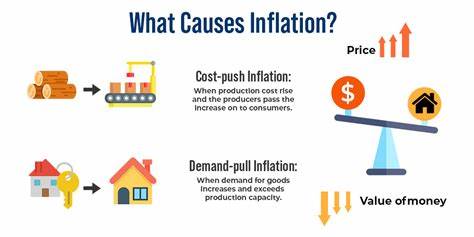
The Federal Reserve is looking for steady, reliable signs that inflation is simmering down before it cuts interest rates this year. So far, 2024 has not delivered. Data released by the Bureau of Labor Statistics on Tuesday showed prices rose 3.2 percent over last year, slightly outpacing forecasts of 3.1 percent. Prices also rose 0.4 percent in February over the previous month — in line with expectations, but still hotter than economists would like to discern.

Stocks swung up on Tuesday as investors shrugged off a middling inflation report and looked ahead to next week’s Fed meeting. Meanwhile, Oracle went sky-high, posting its best day since 2021 after demand for AI prompted a huge increase in sales for its cloud computing business.

Here’s where the major benchmarks ended:

  • The S&P 500® index (SPX) gained 57.33 points (1.1%) to 5,175.27; the Dow Jones Industrial Average® ($DJI) added 235.83 points (0.6%) to 39,005.49; the NASDAQ Composite® (COMP) climbed 246.36 points (1.5%) to 16,265.64.
  • The 10-year Treasury note yield (TNX) rose about 5 basis points to 4.155%.
  • The CBOE Volatility Index® (VIX) fell 1.38 to 13.84.

Chip makers’ bounce-back helped boost the Philadelphia Semiconductor Index (SOX) more than 2%, as it recovered part of a 5% drop the previous two trading days. Industry leader Nvidia (NVDA) jumped over 7%. Consumer discretionary and communications services shares were also among the strongest areas. Regional banks and real estate were among the weakest sectors as the CPI data spurred an upturn in Treasury yields.

COMMENTS APPRECIATED

Thank You

***

***

PODCAST: Secret to Health Insurance Company Profits

INTER COMPANY ELIMINATIONS

By Eric Bricker MD

***

***

COMMENTS APPRECIATED

Thank You

***

***

ACOs: Participation Up in 2024

By Health Capital Consultants, LLC

***

***

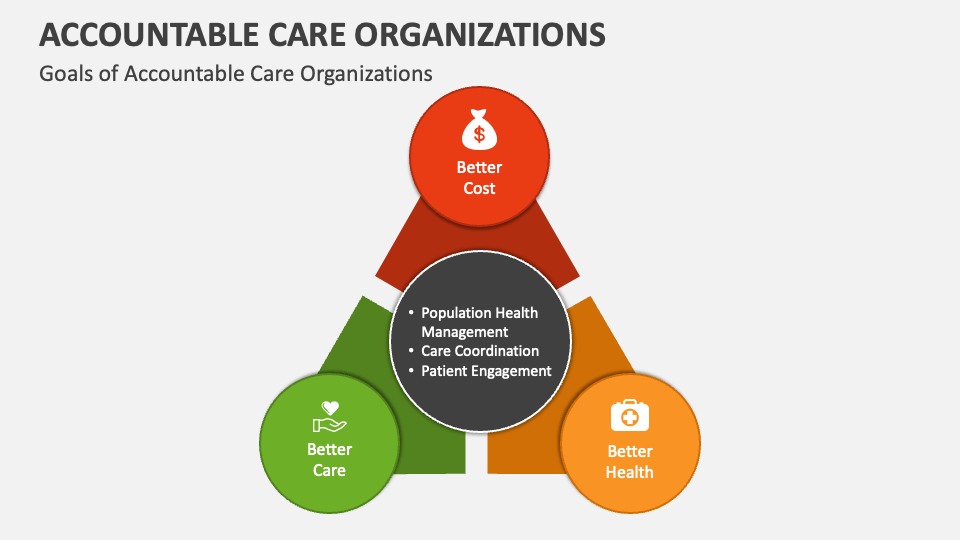
On January 29, 2024, the Centers for Medicare and Medicaid Services (CMS) announced that Performance Year 2024 participation increased in their various accountable care organization (ACO) initiatives. Specifically, 50 new ACOs joined the Medicare Shared Savings Program (MSSP), and 71 ACOs renewed their contracts, bringing the total participation in the MSSP to 480 ACOs.

Additionally, 245 organizations chose to continue participation in two other CMS models – the ACO Realizing Equity, Access, and Community Health (REACH) Model and the Kidney Care Choice (KCC) Model.

CITE: https://www.r2library.com/Resource

This Health Capital Topics article reviews the CMS report and implications for CMS’s ACO initiatives. (Read more…) 

COMMENTS APPRECIATED

Thank You

***

***

DAILY UPDATE: Inflation Data Pending

By Staff Reporters

***

***

Key inflation data incoming: February’s consumer price index report on Tuesday will provide fresh data to help the Fed decide when to lower interest rates. Last week, Chair Jerome Powell said he needed “just a bit more evidence” that inflation was coming back down to normal levels before reducing rates, though “we’re not far from it,” he acknowledged.

CITE: https://www.r2library.com/Resource

COMMENTS APPRECIATED

Thank You

***

***

M&A: Healthcare Indications Review

Indications for 2024

By Health Capital Consultants, LLC

***

***

After healthcare mergers and acquisitions (M&A) activity began to regain momentum in 2022, following the slowing of deals in the wake of the COVID-19 pandemic, transactional activity continued to accelerate in 2023. While the healthcare sector continued to be impacted by factors such as valuation gaps, higher-for-longer interest rates, general macroeconomic risks, and increased state and federal regulatory concerns in 2023, the outlook for 2024 remains cautiously optimistic.

CITE: https://www.r2library.com/Resource

This Health Capital Topics article reviews the U.S. healthcare industry’s 2023 M&A activity and discusses what these trends may mean for 2024. (Read more…)

COMMENTS APPRECIATED

Thank You

***

***

HEALTHCARE: Cyber Security and Amazon’s Iora Healthcare Quality Down?

By Staff Reporters

***

***

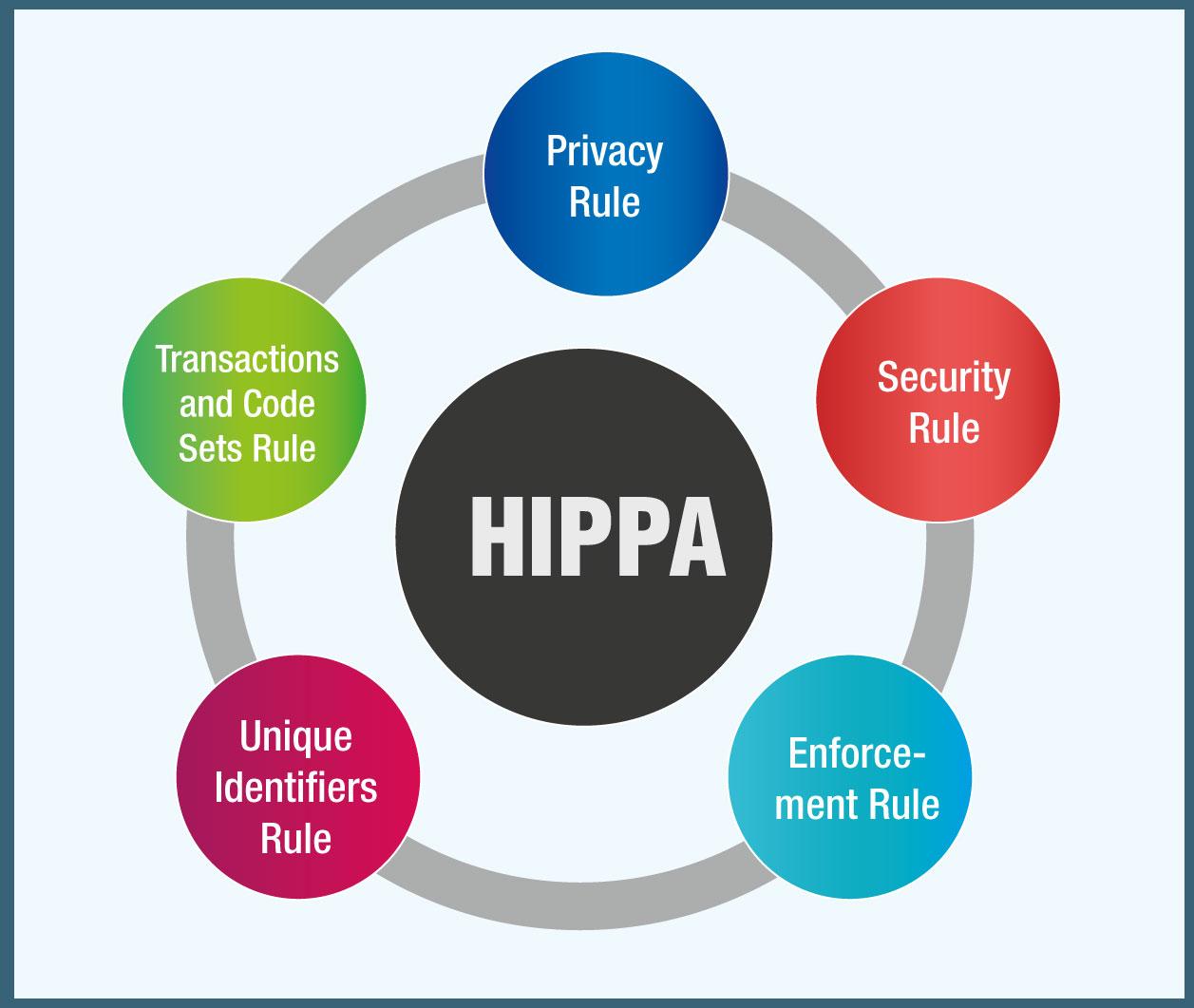
Stat: According to HIPPA, and the cyberattack on Change Healthcare, there were 725 “large” reported healthcare security breaches in the US last year. Experts say health organizations suffer from a lack of basic security measures, and are being targeted by “increasingly sophisticated cyberattacks.” (The HIPAA Journal)

CITE: https://www.r2library.com/Resource

Quote: “Having a [doctor] who can coordinate your healthcare and is willing to do so on a personal basis was very important to me. And I really feel like that is completely gone, and I feel like it happened overnight.”—Deborah Wood, an older adult patient at primary care provider Iora Health, where some patients say care quality has worsened after Amazon acquired its parent company One Medical in 2022 (the Washington Post)

COMMENTS APPRECIATED

Thank you

***

***

DAILY UPDATE: UnitedHealth Group Still Down as Stock Markets Dips with Chip Makers

By Staff Reporters

Tomorrow is the start of daylight saving time. Enjoy the extra hour of evening light.

***

***

UnitedHealth Group is laying out a timeline to restore its systems as a cyberattack on its Change Healthcare subsidiary continues to disrupt the health care industry for nearly a third week. The company said Thursday it’s still working “aggressively” to restore its services after the attack Feb. 21st caused it to shut down its insurance claims and payment platforms, leaving health care providers and pharmacies across the nation unable to process prescriptions or pay employees, but as of now, its electronic prescribing is back to being “fully functional.”

***

Stocks tumbled yesterday, giving the Dow its worst week since October as Nvidia’s seemingly unstoppable rally…stopped. Meanwhile, bitcoin notched another record, hitting $70,000 for the first time before the volatile cryptocurrency retreated.

Government: The Senate passed vital funding bills just barely ahead of a shutdown deadline, ensuring the government can stay open—at least for now. But they still need to pass more before March 22nd.

Here’s where the major benchmarks ended:

  • The S&P 500 index (SPX) fell 33.67 points (0.7%) to 5,123.69, down 0.3% for the week; the Dow Jones Industrial Average® ($DJI) lost 68.66 points (0.2%) to 38,722.69, down 0.9% for the week; the NASDAQ Composite (COMP) dropped 188.26 points (1.2%) to 16,085.11, down 1.2% for the week.
  • The 10-year Treasury note yield (TNX) fell more than 1 basis point to 4.079%.
  • The CBOE Volatility Index® (VIX) rose 0.30 to 14.74.

The Philadelphia Semiconductor Index (SOX) sank 3.5% Friday but still gained 0.6% for the week, its third straight weekly advance. Bank and utility shares were among the market’s few areas of strength, and small-cap stocks held up relatively well. The Russell 2000® Index (RUT) fell 0.1% after earlier climbing to a two-year high but still added 0.3% for the week, its fourth weekly gain in the past five.

CITE: https://www.r2library.com/Resource

COMMENTS APPRECIATED

Thank You

***

***

PODCAST: Doctor Love or Hate Relationships

PATIENT SATISFACTION BEDSIDE MANNER SURVEY?

By Eric Bricker MD

***

***

COMMENTS APPRECIATED

Thank You

***

***

DAILY UPDATE: International Women’s Day as Rivian and Stocks Zoom Higher!

By Staff Reporters

***

***

Stocks surged yesterday, once again pushing the S&P 500 and NASDAQ to record highs, after Fed Chair Jerome Powell said he expects interest rates to come down this year. It was also a big day for Rivian which zoomed 13% after it revealed three new vehicles.

Here’s where the major benchmarks ended:

  • The S&P 500 index rallied 52.60 points (1.0%) to 5,157.36; the Dow Jones Industrial Average gained 130.30 points (0.3%) to 38,791.35; the NASDAQ Composite climbed 241.83 points (1.5%) to 16,273.38.
  • The 10-year Treasury note yield (TNX) lost almost 2 basis points to 4.085%.
  • The CBOE Volatility Index® (VIX) fell 0.06 to 14.44.

Chip-maker strength boosted the Philadelphia Semiconductor Index (SOX) 3.4% to its fourth record close in the past five trading days. The index has gained 9.3% so far this month and 24% for the year. Oilfield services and communication services companies were also among the market’s strongest sectors. Small-cap shares joined the rally, boosting the Russell 2000® Index (RUT) 0.8% to a two-year high.

In other markets, the U.S. dollar index (DXY) slipped 0.5%, its fifth consecutive daily decline, and touched a five-week low. The dollar has been under pressure from expectations for lower U.S. interest rates.

CITE: https://www.r2library.com/Resource

COMMENTS APPRECIATED

Thank You

***

***

DAILY UPDATE: American Express Breached as Stock Markets Come Back

By Staff Reporters

***

***

American Express Co. has told an undisclosed number of cardholders that their account information may have been breached in a recent hacking of a merchant processor. Current and previously issued American Express Card account numbers, expiration dates and customer names may have been compromised, AmEx stated in a notice filed last week with Massachusetts regulators. 

CITE: https://www.r2library.com/Resource

Here’s where the major benchmarks ended:

  • The S&P 500® index (SPX) rose 26.11 points (0.5%) to 5,104.76; the Dow Jones Industrial Average® (DJI) gained 75.86 points (0.2%) to 38,661.05; the NASDAQ Composite® (COMP) added 91.95 points (0.6%) to 16,031.54.
  • The 10-year Treasury note yield (TNX) dropped about 3 basis points to 4.108%, near a four-week low.
  • The CBOE Volatility Index® (VIX) rose 0.04 to 14.50

Semiconductor shares were among the market’s strongest performers Wednesday, and utilities and consumer staples were also firm. Banks shares took pressure despite further declines in Treasury yields. In other markets, the U.S. dollar index (DXY) fell near a five-week low and Gold (/GC) futures extended a rally to a record above $2,160 per ounce, reflecting expectations for lower U.S. interest rates. 

COMMENTS APPRECIATED

Thank You

***

***

DAILY UPDATE: UnitedHealth Group and Fidelity Investments Suffer Ransomware Attacks as Stock Markets Crash

By Staff Reporters

***

***

According to Fidelity, in documents filed with the Maine attorney general’s office, miscreants “likely acquired” information about 28,268 people’s life insurance policies after infiltrating Infosys.

***

***

Criminals have probably stolen nearly 30,000 Fidelity Investments Life Insurance customers’ personal and financial information — including bank account and routing numbers, credit card numbers and security or access codes — after breaking into Infosys’ IT systems.

***

***

Healthcare providers across the United States are struggling to get paid following the week-long ransomware outage at a key tech unit of UnitedHealth Group, with some smaller medical providers saying they are already running low on cash.

And, the nation’s health-care system continues to reel from a cyberattack that has crippled payments for tens of thousands of organizations as Daniel Gilbert writes in The Post.

CITE: https://www.r2library.com/Resource

Here’s where the major benchmarks ended:

  • The S&P 500® index (SPX) dropped 52.30 points (1.0%) to 5,078.65; the Dow Jones Industrial Average decreased 404.64 points (1.0%) to 38,585.19; the NASDAQ Composite fell 267.92 points (1.7%) to 15,939.59.
  • The 10-year Treasury note yield (TNX) fell about 8 basis points to 4.137%.
  • The CBOE Volatility Index® (VIX) rose 0.97 to 14.46.

With chip makers under pressure, the Philadelphia Semiconductor Index (SOX) fell 2.1%, reversing part of a recent surge to a record high. Consumer discretionary and real estate shares also ranked among the weakest performers Tuesday. Banks were one of the few industries to buck the broader weakness, perhaps supported by further declines in Treasury yields. The 10-year Treasury note yield (TNX) almost fell to a four-week low near 4.11%. The KBW Regional Banking Index (KRX) jumped 4.3%. 

In other markets, bitcoin plunged almost 10% after climbing earlier Tuesday to a record above $69,000. The cryptocurrency had rallied as much as 36% over the last week of February. 

COMMENTS APPRECIATED

Thank You

***

***

DAILY UPDATE: Target of IRS Audits Up While Stock Markets are Down

By Staff Reporters

***

***

Stat: 125,000+. That’s how many high-income people the IRS is targeting for not filing their taxes. The IRS started sending letters last week to folks with over $400,000 in income who haven’t filed between 2017 and 2022 (Journal of Accountancy)

CITE: https://www.r2library.com/Resource

Here’s where the major benchmarks ended:

  • The S&P 500 index fell 6.13 points (0.1%) to 5,130.95; the Dow Jones Industrial Average lost 97.55 points (0.3%) to 38,989.83; the NASDAQ Composite declined 67.43 points (0.4%) to 16,207.51.
  • The 10-year Treasury note yield (TNX) rose about 4 basis points to 4.219%.
  • The CBOE Volatility Index® (VIX) increased 0.38 to 13.49.

Ongoing strength in chip makers propelled a 1.1% advance in the Philadelphia Semiconductor Index (SOX), which posted a record high for the third-straight trading day. Banks were also among the strongest performers. Small-cap shares eased, with the Russell 2000® Index (RUT) ending with a marginal loss after rising earlier to a two-year high. 

COMMENTS APPRECIATED

Thank You

***

***

FINANCIAL PLANNING: Physician and Fiduciary Focused

(“Informed Voice of a New Generation of Fiduciary Advisors for Healthcare”)

By Dr. David Edward Marcinko MBA CMP

http://www.MarcinkoAssociates.com

As fellow doctors, we understand better than most the more complex financial challenges physicians can face when it comes to their financial planning. Of course, most physicians ultimately make a good income, but it is the saving, asset and risk management tolerance and investing part that many of our colleagues’ struggle with. Far too often physicians receive terrible guidance, have no time to properly manage their own investments and set goals for that day when they no longer wish to practice medicine.

For the average doctor or healthcare professional, the feelings of pride and achievement at finally graduating are typically paired with the heavy burden of hundreds of thousands of dollars in student loan debt.

You dedicated countless hours to learning, studying, and training in your field. You missed birthdays and holidays, time with your families, and sacrificed vacations to provide compassionate and excellent care for your patients. Amidst all of that, there was no time to give your finances even a second thought.

Between undergraduate, medical school, and then internship and residency, most young physicians do not begin saving for retirement until late into their 20s, if not their 30s. You’ve missed an entire decade or more of allowing your money and investments to compound and work for you. When it comes to addressing your financial health and security, there’s no time to waste.

And you may be misled by unscrupulous “advisors”.

For example:

Question: Do you know the difference between a “Fee-Only” and a “Fee-Based financial advisor? Not knowing may cost you tens of thousands of dollars, or more, in excessive advisory fees.

MORE: https://marcinkoassociates.com/financial-planning/

Of course, all of this compound’s physician stress and burnout related issues, as well.

MORE: https://marcinkoassociates.com/process-what-we-do/

COMMENTS APPRECIATED

Thank You

***

***

BANKRUPTCIES: Health Care Companies

Spiked in 2023

By Staff Reporters

***

***

Healthcare company bankruptcies spiked in 2023 amid high interest rates, rising labor and supply costs, and an uptick in denials from payers, according to a January report from healthcare restructuring firm Gibbins Advisors.

For example, Seventy-nine healthcare companies filed for bankruptcy in 2023—the highest number since 2019, which saw 51 bankruptcies, according to the report. The volume of bankruptcies last year was nearly 2x as high as 2022 and over 3x the level seen in 2021.

“We saw a dramatic increase in healthcare bankruptcy filings in 2023, continuing the trend which began in mid-2022,” Clare Moylan, co-founder and principal at Gibbins Advisors, said in a statement. “Key observations from 2023 are the return of large bankruptcy cases with over $100 million in liabilities, and a spike in hospital filings, both of which appear to primarily be a result of Covid-19 pandemic-related protections ending.”

CITE: https://www.r2library.com/Resource

COMMENTS APPRECIATED

Thank You

***

***

OUR VIRTUAL BUSINESS MODEL: Financial and Management Consulting for Physicians

***

***

SPONSOR: http://www.MARCINKOASSOCIATES.com

***

***

OUR VIRTUAL CONSULTING BUSINESS MODEL 

Our virtual consulting model at DE MARCINKO & ASSOCIATES offer services to their clients primarily or entirely online, by phone or video-conference.

This means that no matter where you are or choose to live, you’re always just an email, telephone call or Zoom® conference away from a face-to-face meeting.

THE CONSULTATION IS VIRTUAL – THE INFORMATIONAL ADVICE IS REAL !

READ HERE: https://marcinkoassociates.com/virtual-networking/

COMMENTS APPRECIATED

Thank You

***

***

DAILY UPDATE: CDC, IRS, the Roaring Stock Markets and Elon Musk

By Staff Reporters

***

***

Stocks were ripping last week, with the NASDAQ notching an all-time high and the S&P 500 closing above 5,100 for the first time. Tech stocks led the way, especially Nvidia, which closed with a market cap over $2 trillion. But trouble may be brewing at regional banks: New York Community Bancorp plummeted after swapping out its CEO and revealing it had found weaknesses in its risk controls.

CITE: https://www.r2library.com/Resource

The IRS is going after people who earned between $400,000 and $1 million but failed to file tax returns as far back as 2017.

***

Elon Musk sued OpenAI and its co-founders, CEO Sam Altman and President Greg Brockman, Friday, alleging that they breached the organization’s founding agreement by letting it become too profit-motivated.

***

The CDC says you no longer need to isolate for five days if you have COVID-19 as long as you’re fever-free and your symptoms are improving.

COMMENTS APPRECIATED

Thank You

***

***

PEP: What is a Pooled Employer “Defined Contribution” Plan?

RETIREMENT PLANNING

By Staff Reporters

***

***

A PEP is a defined contribution plan, such as a 401(k), in which multiple employers can participate. When employers join a PEP, they delegate their named fiduciary role to a third-party pooled plan provider (PPP). PEP fiduciary oversight falls on the PPP rather than the employer. And although each PPP may set its own eligibility requirements, businesses joining a PEP benefit plan needn’t operate in the same industry or geographical area.

PEP plans provide viable 401(k) alternatives for small business owners who may otherwise struggle to compete for talent against large organizations with comprehensive benefits packages.

CITE: https://www.r2library.com/Resource/Title/082610254

Other advantages include: Less in-house administration: The PPP assumes responsibility for much of the plan administration, handling all plan documentation, governmental filings and ongoing compliance. Employee payroll deductions are left to the employer, but these can be efficiently managed with the help of a payroll service provider that integrates payroll and benefits.

Tax credits can help offset PEP start-up costs. For the first three years of participation, employers may be eligible for a tax credit of $5,000 annually, with an additional $500 available to those who set up automatic enrollment. Under Secure Act 2.0, an additional credit of up to $1,000 per employee for eligible employer contributions may apply to employers with up to 50 employees for the preceding taxable year. This credit phases out from 51 to 100 employees.

Businesses participating in single-employer retirement plans (SEP) must independently communicate and coordinate with their record-keeper, custodian, investment advisor, trustee and auditor. With PEP, all these tasks and services are bundled into one, saving employers time and money.

Despite its advantages, a PEP does have some drawbacks, particularly when compared to an SEP. Unlike a PEP, an SEP gives employers more of the following:

  • Flexibility: Employers can customize the design of their plan to meet their retirement goals and the needs of their employees.
  • Control: Employers are not dependent on the actions or decisions of others and can access information and resolve problems directly without the need of a third party.
  • Choice: Employers have the unilateral freedom to choose a different service provider, move their plan or negotiate better pricing if they are unsatisfied with the cost or quality of service.

COMMENTS APPRECIATED

Thank You

***

***

DAILY UPDATE: Rare Disease Day Visibility, Rite Aid Down as Markets Rise Up

By Staff Reporters

***

***

Welcome back to the Gregorian calendar. Along with being a leap day, yesterday was Rare Disease Day—bringing visibility to the 7,000 conditions that each affect fewer than 200,000 people in the US. Combined, around 10% of US residents have one, per the National Institute of Health.

***

  • Rite Aid is planning to close 77 stores in 2024 as part of its Chapter 11 bankruptcy.
  • That makes 431 stores that the drugstore chain has decided to close since October.
  • Rite Aid has been shrinking its store count for years, losing ground to rivals Walgreens and CVS.

CITE: https://www.r2library.com/Resource

Here’s where the major benchmarks ended:

  • The S&P 500 index added 40.81 points (0.8%) to 5,137.08, up 0.95% for the week and its seventh weekly gain in the past eight; the Dow Jones Industrial Average® (DJI) gained 90.99 points (0.2%) to 39,087.38, down 0.1% for the week; the NASDAQ Composite rose 183.02 points (1.1%) to 16,274.94, up 1.7% for the week.
  • The 10-year Treasury note yield fell about 7 basis points to 4.182%.
  • The CBOE Volatility Index® (VIX) dropped 0.29 to 13.11.

Chipmaker strength drove a 4.3% advance in the Philadelphia Semiconductor Index (SOX), which ended at a record high. The NASDAQ-100®(NDX), which includes the NASDAQ’s largest non-financial companies, also ended at a record high. Small-cap shares finished the week strong. The Russell 2000® Index (RUT) rose 1.1% to settle at a 23-month high and notched a 3% gain for the week. 

Banks were among the weakest performers as concerns over regional lenders flared up, underscored by another nosedive in shares of troubled New York Community Bancorp (NYCB).

COMMENTS APPRECIATED

Thank You

***

***

DAILY UPDATE: Inflation and “Bumble” Down as Stock Markets Rise and UHC Hackers ID’d

By Staff Reporters

***

***

The Bumble dating app said this week that it plans to lay off 30% of its staff (about 350 employees) after a Q4 earnings report highlighted that profits are ghosting the company and Gen Z considers dating apps a turnoff. Bumble CEO Lidiane Jones, who took over in November when founder Whitney Wolfe Herd stepped down, said the cuts would save the company around $55 million. The company plans to invest in relaunching the app next quarter with new safety and AI features to entice all those looking for love.

CITE: https://www.r2library.com/Resource

Here’s where the major benchmarks ended:

  • The S&P 500 index rose 26.51 points (0.5%) to 5,096.27, up 5.2% for the month; the Dow Jones Industrial Average® (DJI) added 47.37 points (0.1%) to 38,996.39, up 2.2% for the month; the NASDAQ Composite gained 144.18 points (0.9%) to 16,091.92, up 6.1% for the month.
  • The 10-year Treasury note yield (TNX) fell about 3 basis points to 4.244%.
  • The CBOE Volatility Index® (VIX) dropped 0.44 to 13.40.

Chipmaker shares were among the strongest performers Thursday, helping lift the Philadelphia Semiconductor Index (SOX) 2.7% to a record high close. Banks and food and beverage industries were also firm. Small-cap stocks also extended a recent upswing. The Russell 2000® Index (RUT) erased much of an initial surge to a 22-month high but still finished with a 0.7% advance, gaining 5.5% for the month.

***

***

Hackers that allegedly caused the UnitedHealth Group cyberattack reportedly posted on the dark web that they stole personal data and the records of “millions” of patients.

In a now-deleted post, the Blackcat ransomware group – also known as ALPHV or Noberus – said it stole several terabytes of data from UnitedHealth, which includes medical insurance and health data, Reuters reported, citing screenshots of the post.

COMMENTS APPRECIATED

Thank You

***

***

DAILY UPDATE: Down Down Third Day

By Staff Reporters

HAPPY LEAP YEAR DAY

***

***

Stocks fell yesterday, while bitcoin almost touched an all-time high after surging 20% in five days as its halving approaches. UnitedHealth dipped on reports that antitrust regulators are investigating the massive insurer.

***

***

Here’s where the major benchmarks ended:

  • The S&P 500® index (SPX) fell 8.42 points (0.2%) to 5,069.76; the Dow Jones Industrial Average lost 23.39 points (0.1%) to 38,949.02; the NASDAQ Composite® (COMP) declined 87.56 points (0.6%) to 15,947.74.
  • The 10-year Treasury note yield (TNX) fell about 5 basis points to 4.264%.
  • The CBOE Volatility Index® (VIX) rose 0.39 to 13.82.

Regional banks and semiconductors were among the weakest performers Wednesday, and communications services and health care shares were also soft. Real estate shares bucked the weakness in many sectors to post firm gains. Food and beverage and consumer discretionary sectors also firmed. In other markets, WTI crude oil (/CL) futures rose to a three-month high at $79.62 per barrel before ending lower after the Energy Information Administration reported a rise in U.S. inventories.

CITE: https://www.r2library.com/Resource

COMMENTS APPRECIATED

Thank You

***

***

VINTAGE: Pay-4-Performance Healthcare

Pay for Performance Initiatives

[By Staff Writers]

Of course, consumer directed healthcare trends and fee transparency increasingly mandate physician economic accountability, such as in the P4P initiatives, but CMS may also begin profiling physicians and targeting those it deems inefficient sometime next year, as well.

In May 2007, Herbert Kuhn, acting deputy administrator of CMS, told a House subcommittee that the agency will have the data and computer capacity available to do tracking as soon as mid-2008.

To monitor efficiency, CMS would compare levels of tests physicians order for certain types of patients to tests ordered by other doctors who achieve similar outcomes. The agency would then contact the physicians whose testing patterns seem to be out of line. No doubt, the effects on private pay-for-performance [P4P] initiatives is obvious.  Kuhn told the subcommittee that his largest concern was figuring out how to use the data to help physicians grow more efficient.

Assessment

To date, the agency hasn’t established plans to link efficiency measures with reimbursement changes. If it wants to do so, Congress would probably have to enact new legislation, according to several policymakers.

Conclusion

Your thoughts and comments on this ME-P are appreciated. Feel free to review our top-left column, and top-right sidebar materials, links, URLs and related websites, too. Then, subscribe to the ME-P. It is fast, free and secure.

Speaker: If you need a moderator or speaker for an upcoming event, Dr. David E. Marcinko; MBA – Publisher-in-Chief of the Medical Executive-Post – is available for seminar or speaking engagements. Contact: MarcinkoAdvisors@msn.com

OUR OTHER PRINT BOOKS AND RELATED INFORMATION SOURCES:

HOSPITALS: http://www.crcpress.com/product/isbn/9781466558731
CLINICS: http://www.crcpress.com/product/isbn/9781439879900
BLOG: www.MedicalExecutivePost.com
FINANCE: Financial Planning for Physicians and Advisors
INSURANCE: Risk Management and Insurance Strategies for Physicians and Advisors

Product Details

DAILY UPDATE: Corporate M&A Activity Increasing as Stock Markets End Mixed

By Staff Reporters

***

***

Merger and Acquisition (M&A) activity was down in 2023, but McKinsey says we should keep our chins up based on the strong final months of the year and economic optimism among professionals. For example, Global M&A activity last year totaled $3.1 trillion, dropping 16% from 2022, McKinsey found in a new report by senior partners Jake Henry and Mieke Van Oostende. But, the value of M&A activity in the fourth quarter increased 41% over Q3 and 37% year over year.

CITE: https://www.r2library.com/Resource

Stocks were mixed yesterday, with the S&P 500 and NASDAQ inching up and the Dow Jones dropping ahead of the release of key inflation data later this week. Viking Therapeutics, whose stock more than doubled after it reported positive results for its weight-loss drug trial in a bid to break into a sector dominated by Eli Lilly and Novo Nordisk.

Here’s where the major stock market benchmarks ended:

  • The S&P 500® index (SPX) rose 8.65 points (0.2%) to 5,078.18; the Dow Jones Industrial Average® (DJI) fell 96.82 points (0.3%) to 38,972.41; the NASDAQ Composite® (COMP) gained 59.05 points (0.4%) to 16,035.30.
  • The 10-year Treasury note yield (TNX) rose about 1 basis point to 4.309%.
  • The CBOE Volatility Index® (VIX) dropped 0.31 to 13.43.

Retailer strength helped lift the S&P Retail Select Industry Index (SPSIRE) 2.4% to its highest level in 22 months. Utility shares were also strong as the sector rebounded from the previous day’s slump. The small-cap Russell 2000® (RUT) jumped 1.3% to extend a nearly week-long rally and posted its second-highest close of the year.

In other markets, WTI crude oil (/CL) futures surged 1.4% and settled just under $79 per barrel, the market’s highest close since early November. Strength in oil reflects concern over conflict in the Middle East and expectations OPEC may extend production cuts beyond the first few months of 2024.

COMMENTS APPRECIATED

Thank You

***

***

PODCAST: CVS Health PBM Change Pricing

By Eric Bricker MD

***

***

COMMENTS APPRECIATED

Thank You

***

***

MOON: Investing for the Risk Tolerant Physician?

PRIVATIZING OUTER SPACE

***

***

Did you know that NASA remains laser-focused on getting humans back on the moon with its Artemis program. But with a budget one-tenth the size it was at the height of the Apollo program, the space agency is turning to the private sector to make it to the Moon, again.

IM’s Odysseus mission is part of the NASA Commercial Lunar Payload Services (CLPS), an initiative that partners the agency with private companies, allowing NASA to send data-collecting instruments to the moon aboard private spacecraft while spending significantly less money than if it had to send its own.

  • NASA paid $118 million to Intuitive Machines for Odysseus to take six high-tech research machines to the moon.
  • According to Thomas Zurbuchen, who led the creation of the CLPS program, this type of mission could cost half a billion to a billion dollars if led by NASA.

In December, India landed a spacecraft on the moon’s south pole for $75 million—less than the reported budget of Madame Web. But the trend of cheaper missions also means a higher likelihood of failure. Last month, the Peregrine lander from Astrobotic Technology—another company working with NASA via the CLPS initiative—failed to reach the moon after a fuel leak.

The company’s stock struggled after going public a year ago, but excitement around Odysseus made that a thing of the past: It has soared 300% since last month.

UPDATE: Shares of Intuitive Machines slumped 38% in post-market trading on Friday after the company said its moon lander Odysseus had “tipped over” sideways when the spacecraft descended on the lunar surface a day earlier.

Odysseus is “aliv

CITE: https://www.r2library.com/Resource

COMMENTS APPRECIATED

Thank You

***

***

DAILY UPDATE: Nikkei Index All Time Stock Market High!

By Staff Reporters

***

***

DEFINITION: The Nikkei, also known as The Nihon Keizai Shimbun (日本経済新聞, lit. “Japan Economics Newspaper”), is the flagship publication of Nikkei Inc (based in Tokyo) and the world’s largest financial newspaper, with a daily circulation exceeding 1.73 million copies. The Nikkei 225 a stock market index for the Tokyo Stock Exchange has been calculated by the newspaper since 1950.

CITE: https://www.r2library.com/Resource

Japan’s Nikkei Stock Index Hits all-time High.

Stocks surged 2.1% yesterday, surpassing the record set in 1989 at the height of the country’s postwar economic boom.

Nvidia’s epic Q4 earnings helped lift stocks around the world, but Japan’s surge was already bubbling, thanks to foreign investors, strong corporate profits, and the downturn in China. Still, Japan’s economy remains in a recession as—unlike in the US and much of the world—officials are keeping interest rates low to spur inflation and stop the yen from weakening.

COMMENTS APPRECIATED

Thank You

***

***

DAILY UPDATE: Stock Markets Extend Record Climb Ending Strong Week

By Staff Reporters

***

An astonishing week in the stock market wrapped up with the S&P 500 hitting a record high. While Nvidia’s blowout earnings were the stars. For example, kudos to Carvana, which recorded its first-ever annual profit on its comeback tour from the COVID-19 pandemic.

***

***

Here’s where the major benchmarks ended:

  • The S&P 500 index rose 1.77 points (0.03%) to 5,088.80, up 1.7% for the week; the Dow Jones Industrial Average gained 62.42 points (0.2%) to 39,131.53, up 1.3% for the week; the NASDAQ Composite tumbled 44.80 points (0.3%) to 15,996.82.
  • The 10-year Treasury note yield (TNX) shed more than 7 basis points to 4.252%.
  • The CBOE Volatility Index® (VIX) fell 0.79 to 13.75.

Retailers were among the market’s upside leaders Friday, with the S&P Retail Select Industry Index (SPSIRE) gaining 1.8% and ending at a 22-month high. The retail sector got a boost this week from Walmart’s (WMT) stronger-than-expected results reported Tuesday. The biggest U.S. retailer gained 3.1% this week and closed Friday near a record high above $175. Utility shares were also strong Friday.

CITE: https://www.r2library.com/Resource

COMMENTS APPRECIATED

Thank You

***

***

VINTAGE ESSAY: On the Growing Global Stock Trend

By Rick Kahler MS CFP® http://www.KahlerFinancial.com

Rick Kahler MS CFP

About twelve years ago the South Dakota Investment Council combined two of their asset classes, domestic and international stocks, into one, global stocks. While this move didn’t make the nightly news, it did signify a growing trend.

Many investment managers no longer view the US stock market as a separate asset class from the rest of the world’s stock markets.

Today they view it as one component of a global asset class of stocks.

Diversify

For the same reason you don’t want to own just one company’s stock in your portfolio, it makes no sense for an individual investing for retirement to own just US stocks. It’s as important to diversify among countries as among companies.

The question then becomes how much of a global stock portfolio should be in US stocks and how much in international stocks. For many years the standard thinking of portfolio managers was still to over-allocate to the US. It was, and to some degree still is, common to see 80% of a portfolio’s equity allocation in US stocks.

That over-allocation has never made a lot of sense to me, considering that the US accounts for far less than 80% of the global market capitalization. In the 1980’s, US companies accounted for about 65% of the global capitalization. Accordingly, I weighted my stock portfolios with 65% US and 35% international. By 1999, the US had slipped to 50%. I adjusted my portfolios accordingly.

The latest statistics from Dimensional Fund Advisors show the US still accounts for around 50% of the global capitalization. Investors who want to maintain a true global diversification of their stock portfolios will need to seriously consider reducing their US allocation.

***

Global Network

***

Which, Where and How to Invest

Which international stocks, then, should you add? Developed regions and countries like those of Europe, Australia Pacific, and Japan account for about 40% of the total global capitalization. Emerging market countries, many in Southwest Asia and Latin America, make up the remaining 10%. Weighting your portfolio accordingly gives you a well-diversified stock portfolio that has a high probability of withstanding the inevitable rise and fall of equity markets.

How do you invest globally? There are mutual funds that invest in specific countries, in regions, internationally, or globally. I don’t really like the country funds, as I don’t know which countries I should be underweighting or overweighting. Besides, creating a global index using country funds can be a lot of work and expense.

Using index regional funds is an easier way to invest in international stocks. To allocate according to the global capitalization percentages above, you would include three index mutual funds in your stock portfolio: one broad market US fund, an international fund of developed (non-emerging markets), and an emerging markets fund.

If you want even more simplicity, invest in one good global fund. The difference between an “international” fund and a “global” or “world” fund is that a global fund will include US stocks where an international fund won’t. Vanguard Total World Stock ETF comes to mind as one of the better “one size fits all” global funds that will invest in a mixture of countries, including the US. This one fund holds 7,164 stocks in 47 countries. You really need nothing more in the equity portion of your portfolio.

Assessment 

While it isn’t necessary to allocate your stocks strictly according to global capitalization percentages, research suggest you will probably do better in the long run to do so. Whether you decide to own country, regional, international, or global funds, what’s most important is that you diversify your stock portfolio globally. In today’s world, it’s an important component of diversified investing.

Conclusion

Your thoughts and comments on this ME-P are appreciated. Feel free to review our top-left column, and top-right sidebar materials, links, URLs and related websites, too. Then, subscribe to the ME-P. It is fast, free and secure.

Speaker: If you need a moderator or speaker for an upcoming event, Dr. David E. Marcinko; MBA – Publisher-in-Chief of the Medical Executive-Post – is available for seminar or speaking engagements. Contact: MarcinkoAdvisors@msn.com

OUR OTHER PRINT BOOKS AND RELATED INFORMATION SOURCES:

Risk Management, Liability Insurance, and Asset Protection Strategies for Doctors and Advisors: Best Practices from Leading Consultants and Certified Medical Planners™8Comprehensive Financial Planning Strategies for Doctors and Advisors: Best Practices from Leading Consultants and Certified Medical Planners™

Written by doctors and healthcare professionals, this textbook should be mandatory reading for all medical school students—highly recommended for both young and veteran physicians—and an eliminating factor for any financial advisor who has not read it. The book uses jargon like ‘innovative,’ ‘transformational,’ and ‘disruptive’—all rightly so! It is the type of definitive financial lifestyle planning book we often seek, but seldom find.

LeRoy Howard MA CMPTM [Candidate and Financial Advisor, Fayetteville, North Carolina]

http://www.CertifiedMedicalPlanner.org

HEALTH INSURANCE: Marketing and Behavioral Economics

DR. DAVID EDWARD MARCINKO MBA MEd CMP

By Staff Reporters

***

***

DEFINITION: Behavioral economics is grounded in empirical observations of human behavior, which have demonstrated that people do not always make what neoclassical economists consider the “rational” or “optimal” decision, even if they have the information and the tools available to do so.

For example, why do people often avoid or delay investing in 401ks or exercising, even if they know that doing those things would benefit them? And why do gamblers often risk more after both winning and losing, even though the odds remain the same, regardless of “streaks”?

CITE: https://www.r2library.com/Resource

By asking questions like these and identifying answers through experiments, the field of behavioral economics considers people as human beings who are subject to emotion and impulsivity, and who are influenced by their environments and circumstances.

***

***

The state and federal governments and health insurance companies are harnessing lessons from a still-emerging academic field of behavioral economics to nudge clients and customers into spending more money.

“Behavioral economics was developed by incorporating ideas from psychology into standard economic theories,” said Cait Lamberton, a professor of marketing at the University of Pennsylvania’s Wharton School. “If you see a deal that is available for only a short amount of time [like Medicare open enrollment periods], and thus pay more than you usually would, standard economics would say you’ve made an irrational decision. Behavioral economics says that no, what your brain is doing is responding to scarcity.”

These seemingly irrational choices are called “biases,” many of which can affect how we shop. For example, “loss aversion” makes us hypersensitive to losing money and more likely to buy something like whole life insurance for children.

The “decoy effect” makes us more likely to choose between two sub-optimal options when a third, even worse option is presented. For example, Medicare Part D providers may offer a decoy like an high costs, which may make the cheaper Medicare Part C with more [so-called] benefits look more appealing.

Most companies are well aware of these tendencies and how they drive our decisions. So to save money customers, patients and clients need to understand how the purchasing and shopping experience has been engineered to exploit our biases.

COMMENTS APPRECIATED

Thank You

***

***

DAILY UPDATE: Nvidia, and Pharmacy Cyber Security Attack as Stock Markets Roar Back!

By Staff Reporters

***

Stock Market - Homecare24

***

Big tech companies are continuing to pour cash into artificial intelligence at a breakneck pace. And based Bion the earnings update Wednesday from Nvidia, much of it is going to that chip maker. “This last year, we’ve seen generative AI really becoming a whole new application space, a whole new way of doing computing,” Jensen Huang, Nvidia’s co-founder and chief executive, said Wednesday. “A whole new industry is being formed, and that’s driving our growth.”

CITE: https://www.r2library.com/Resource

Pharmacies across the country are reporting delays to prescription orders due to a cyberattack against one of the nation’s largest health-care technology companies. Change Healthcare, a company handling orders and patient payments throughout the U.S., first noticed the “cyber security issue” affecting its networks Wednesday morning on the East Coast. 

Here’s where the major benchmarks ended:

  • The S&P 500 index rose 105.23 points (2.1%) to 5,087.03; the Dow Jones Industrial Average gained 456.87 points (1.2%) to 39,069.11; the NASDAQ Composite rallied 460.75 points (3%) to 16,041.62.
  • The 10-year Treasury note yield (TNX) was little changed at 4.323%.
  • The CBOE Volatility Index® (VIX) fell 0.84 to 14.50.

Nvidia sparked a 5% rally in the Philadelphia Semiconductor Index (SOX) and a 3% gain in the NASDQ-100® (NDX), both of which ended at all-time highs. Consumer discretionary shares were also among the strongest sectors Thursday. The small-cap Russell 2000® Index (RUT) rose 1% and halted a three-day slide.

According to Joe Mazzola, director of trading and education at Schwab, Nvidia had a “profound effect” at both the sector and index level, partly reflecting its market value, which is nearing $2 trillion. Nvidia is now the third largest company behind Microsoft (MSFT) and Apple (AAPL).

***

***

COMMENTS APPRECIATED

Thank You

***

***

DAILY UPDATE: Markets Mixed as Technology Stocks Remains Under Pressure

By Staff Reporters

***

***

Here’s where the major benchmarks ended:

  • The S&P 500® index (SPX) rose 6.29 points (0.1%) to 4,981.80; the Dow Jones Industrial Average® (DJI) added 48.44 points (0.1%) to 38,612.24; the NASDAQ Composite dropped 49.91 points (0.3%) to 15,580.87.
  • The 10-year Treasury note yield (TNX) rose more than 4 basis points to 4.319%.
  • The CBOE Volatility Index® (VIX) fell 0.05 to 15.37.

Chipmakers continue to be among the softest performers this week, which sent the Philadelphia Semiconductor Index (SOX) lower for the fourth-straight day. Small caps also remained under pressure as the Russell 2000® Index (RUT) declined 0.5%, its third-straight daily decline. Energy shares were among upside leaders with an assist from a jump of more than 1.3% in WTI crude oil (/CL)futures.

CITE: https://www.r2library.com/Resource

COMMENTS APPRECIATED

Thank You

***

***

15: PODCAST: CPAs are Out … Are CMPs™ In?

CERTIFIED MEDICAL PLANNER

By Staff Reporters

SPONSOR: http://www.CertifiedMedicalPlanner.org

***

The giant accounting firm Grant Thornton LLP is laying off 200 people, its second round of layoffs in the past six months and an indication that the major players in the professional consulting, accounting and advisory business are preparing for an economic slowdown that could squeeze profits across corporate America.

***

Statistics: 7.4%. That’s the percentage drop in students who graduated with a degree in accounting in the 2021–2022 school year than the year before. Low starting salaries, heavy workloads, and uncertainty around AI are driving the exodus of students from choosing accounting degrees. (the Wall Street Journal).

MORE: https://www.wsj.com/lifestyle/careers/accounting-salary-cpa-shortage-dec2caa2?utm_campaign=mb&utm_medium=newsletter&utm_source=morning_brew

PODCAST: https://www.ted.com/talks/dan_bricklin_meet_the_inventor_of_the_electronic_spreadsheet

CMP RELATED: https://medicalexecutivepost.com/2023/10/29/become-a-board-certified-medical-planner-healthcare-niche-advisor-and-thrive/

***
COMMENTS APPRECIATED
Thank You

***

***

DAILY UPDATE: Nvidia Stock Down as Markets Extend Losses

By Staff Reporters

***

***

Stocks fell to start the week as investors awaited Nvidia’s big earnings report today. Recent earnings for tech companies in the so-called Magnificent Seven have been a mixed bag, but as a group, they have never been stronger. Meanwhile, Intuitive Machines’s stock zoomed as its pilot less spacecraft remained on track to touch down on the lunar surface Thursday.

Here’s where the major benchmarks ended:

  • The S&P 500® index (SPX) fell 30.06 points (0.6%) to 4,975.51; the Dow Jones Industrial Average lost 64.19 points (0.2%) to 38,563.80; the NASDAQ Composite declined 144.87 points (0.9%) to 15,630.78.
  • The 10-year Treasury note yield (TNX) fell about 2 basis points to 4.275%.
  • The CBOE Volatility Index® (VIX) rose 0.71 to 15.42.

Nvidia shares fell 4.4%, weakness that helped drag down shares of other chip makers and contributed to a drop of 1.6% in the Philadelphia Semiconductor Index (SOX), which ended near a two-week low. Energy shares also took pressure as WTI crude oil futures (/CL) sank 1.6%. Small caps were also soft, as the Russell 2000® Index (RUT) dropped 1.4%.

CITE: https://www.r2library.com/Resource

COMMENTS APPRECIATED

Thank You

***

***

PODCAST: Ideal Employee Health Plan

By Eric Bricker MD

***

COMMENTS APPRECIATED

Thank You

***

***

RESOURCES: Financial and Economic Essays for Doctors and Healthcare Professionals

https://marcinkoassociates.com

***

***

Informational essays of most current interest to healthcare professionals. Check back periodically for practical updates. Our catalogue library of major books, texts, case models and dictionaries is suggested for additional financial, economic, business and medical practice management information and education.

READ HERE: https://marcinkoassociates.com/articles-essays/

UPDATE: Prior ME-P Topics:

1-The number of balance billing disputes reaching arbitration is far higher than federal projections suggested.


2-Experts worry ACOs could face lasting financial difficulties due to an alleged $2 billion Medicare urinary catheter fraud scheme. 

COMMENTS APPRECIATED

Thank You

INVITE DR. MARCINKO: https://medicalexecutivepost.com/2024/02/05/invite-dr-marcinko-to-speak-at-your-next-seminar-webcast-or-event-in-2024/

***

DAILY UPDATE: Consumer Spending Down While CVS Earnings Up

By Staff Reporters

***

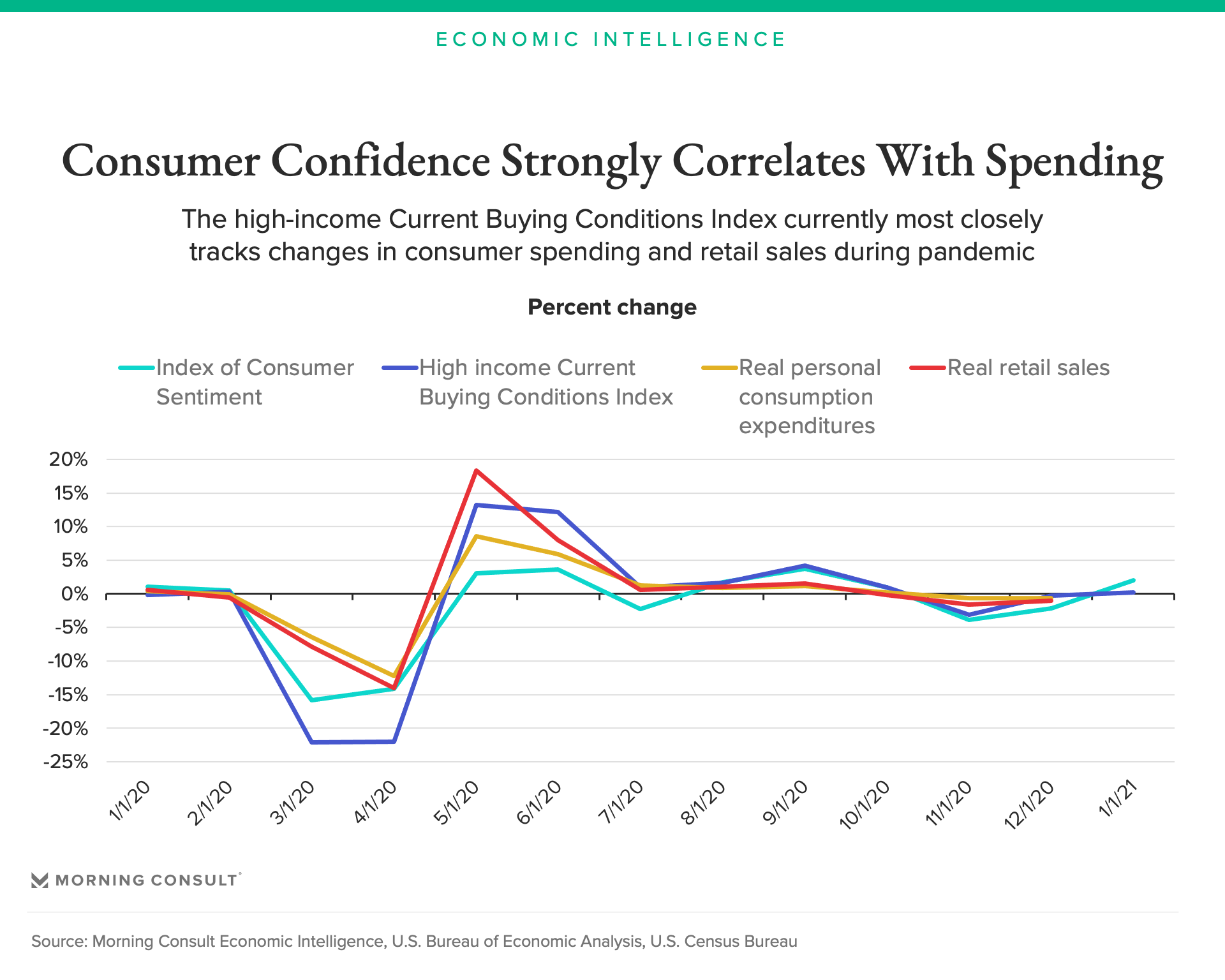
To See What’s Next For Consumer Spending, Take a Closer Look at High ...
  • Stat: 0.8%. That’s how much consumer spending fell in January 204—a much bigger dip than expected (CNBC).

CITE: https://www.r2library.com/Resource

CVS reported strong results for its healthcare segment in 2023, showing a 10.2% increase in revenue compared to the prior year. Still, executives lowered the segment’s 2024 guidance in anticipation of rising medical costs, according to earnings released this month.

Finally, the US stock market reopens today after the long weekend, and everyone’s still talking about the Magnificent Seven. That’s because, according to a new report from Deutsche Bank, profits at these seven tech giants are greater than the profits of all publicly traded companies in nearly every G20 country. And in terms of market value, they’d be the second-largest national stock exchange in the world. Goldman Sachs sees this party lasting all night: It raised its 2024 target for the S&P 500 for the second time.

COMMENTS APPRECIATED

Thank You

***

***

Order Our “Best-Selling” Healthcare Administration Dictionaries

Get ’em … While They are Hot!

By Ann Miller RN MHA

[ME-P Executive Director]

Just click on the book icon to order; get any one or all three! You’ll be glad you did.

 Product Details

Product Details

Product Details

Speaker: If you need a moderator or speaker for an upcoming event, Dr. David E. Marcinko; MBA – Publisher-in-Chief of the Medical Executive-Post – is available for seminar or speaking engagements. Contact: MarcinkoAdvisors@msn.com

DAILY UPDATE: BoA Personal Data Breach

By Staff Reporters

HAPPY PRESIDENT’S DAY 2024

The Stock and Bond Markets are Closed!

***

***

READ BANK TYPES: https://marcinkoassociates.com/bank-types/

***

***

Bank of America just acknowledged that the personal information of 57,028 of its customers has been compromised. This breach, attributed to a failure at Infosys McCamish Systems (IMS), a provider of insurance business process solutions engaged by the bank, poses a substantial risk of identity theft to the affected individuals.

The data breach notification, filed in Maine, reveals that sensitive information related to Bank of America’s deferred compensation plans was inadvertently accessed. IMS, in a notification letter to customers, disclosed that the compromised data encompasses a range of critical personal details. The accessed information includes customers’ names, addresses, business email addresses, dates of birth, Social Security numbers, and other account specifics. Such data is typically all required for an identity thief to execute fraudulent activities under another person’s name.

IMS’s admission that it might never be able to precisely identify what information was accessed underscores the severity and potential long-term consequences of the breach. This uncertainty adds an additional layer of anxiety for customers, highlighting the challenges in mitigating the aftermath of such security failures.

CITE: https://www.r2library.com/Resource

Finally, Walmart and Home Depot will be the star of the show this week they report their earnings for the holiday quarter. Nvidia will also try to keep its historic hot streak going when it reports on Wednesday—expectations are through the roof.

COMMENTS APPRECIATED

Thank You

***

***

DAILY UPDATE: Nike Stock Down but US Debt Burden Up Per Household

By Staff Reporters

***

***

Nike is planning to restructure and lay off 2% of its staff, more than 1,500 people, as consumers pull back on spending.

***

If the total U.S. debt were divided by every household in the country, each household would get about $252,000, according to a September tweet from The Kobeissi Letter.

And, Jerome Powell, the Chair of the Federal Reserve, shared his concerns regarding the fiscal direction of the United States during a “60 Minutes” interview with Scott Pelley. 

Powell said, “The U.S. is on an unsustainable fiscal path,” emphasizing that the growth of the national debt is outstripping the growth of the economy. 

CITE: https://www.r2library.com/Resource

COMMENTS APPRECIATED

Thank You

***

***

DAILY UPDATE: New CDC Covid-19 Guidelines as the Stock Markets Go Lower

By Staff Reporters

***

***

The CDC may update Covid-19 isolation guidelines from five days to 24 hours if an individual is fever-free without medication—standardizing the protocol for the disease with the same rule for the flu and RSV. (the New York Times)

Here’s where the major benchmarks ended:

Stocks slumped into the long weekend yesterday, snapping a five-week weekly winning streak when they fell in the wake of wholesale price data that shows inflation is probably not as tamed as the Fed would like it to be. But Coinbase gave the latest indication that the crypto winter has thawed. The crypto exchange’s stock rose after it reported its first quarterly profit in two years.

  • The S&P 500 index fell 24.16 points (0.5%) to 5,005.57, down 0.4% for the week; the Dow Jones Industrial Average® (DJI) lost 145.13 points (0.4%) to 38,627.99, down 0.1% for the week; the NASDAQ Composite® (COMP) declined 130.52 points (0.8%) to 15,775.65, down 1.3% for the week.
  • The 10-year Treasury note yield (TNX) rose over 4 basis points to 4.285%.
  • The CBOE Volatility Index® (VIX) rose 0.23 to 14.24.

Communications services and transportation shares were among the market’s weakest performers Friday, while energy companies firmed behind strength in crude oil futures. The small-cap Russell 2000® Index (RUT) fell 1.4% Friday but still ended the week with a gain of 1.1%, its second straight weekly advance.

CITE: https://www.r2library.com/Resource

COMMENTS APPRECIATED

Thank You

***

***

DAILY UPDATE: Trump’s SPAC as the S&P 500 Records a New High

By Staff Reporters

***

***

The U.S. Securities and Exchange Commission allowed Donald Trump’s media and technology company to merge with a blank-check acquisition [SPAC] vehicle in a deal that currently values the parent of his social media app Truth Social at as much as $10 billion.

SPAC: https://medicalexecutivepost.com/2022/06/13/spac-v-direct-listing-v-ipo/

***

Here’s where the major benchmarks ended:

  • The S&P 500 index rose 29.11 points (0.6%) to 5,029.73; the Dow Jones Industrial Average® (DJI) gained 348.85 points (0.9%) to 38,773.12; the NASDAQ Composite® (COMP) added 47.03 points (0.3%) to 15,906.17.
  • The 10-year Treasury note yield (TNX) fell more than 2 basis points to 4.242%.
  • The CBOE Volatility Index® (VIX) lost 0.37 to 14.01.

Bank shares were among the market’s strongest performers with an assist from Wells Fargo (WFC), whose shares jumped more than 7% following reports a bank industry regulator had ended a penalty it imposed after a fake accounts scandal.

Energy companies also posted outsized gains behind a rebound in crude oil prices. Also, small-cap shares extended a sharp upswing as the Russell 2000® Index (RUT) gained 2.5% and ended at its highest level since late December.

CITE: https://www.r2library.com/Resource

COMMENTS APPRECIATED

Thank You

***

***

Malpractice Trial Jury Selection

Understanding the Trial Process

[By Dr. Jay S. Grife; Esq, MA]insurance-book

The selection process for a jury begins with what is called the jury pool.  A number of citizens are selected as potential jurors, usually several times the number of jurors needed for a trial.  From this pool of potential jurors, the jury panel is selected.

Jury Size and Constituency

The size of the jury panel varies by state and locale.  Most juries consist of about six to twelve individuals on a panel.  In addition, one or more alternate jurors may also be selected.  Alternate jurors sit with the jury and hear evidence just as all the other jurors.  In some states, they also sit in on jury deliberations, though they are not allowed to participate.  If for some reason a member of the panel is unable to continue with the trial or other deliberations, the alternate juror fills in.  The number of alternate jurors varies, and determining the number is usually left to the discretion of the judge.  Generally; longer trials require more alternate jurors.

Pre-Trial Questionnaires

Before any potential juror appears at the courthouse for a trial, usually a questionnaire form is mailed for the individual to complete and return to the court.  Such forms request information such as name, age, occupation, educational background, participation as a party or witness in previous litigation, previous jury service, etc.  Attorneys for the parties are able to obtain and review these questionnaires in advance of the trial date.

More Questions

On the day of trial, when the potential jurors arrive at the courthouse, the judge typically asks some generic questions about their ability to serve.  The judge may ask whether any potential juror has a problem staying for the duration of the trial, or whether the potential jurors know any of the parties or their attorneys.  The purpose of these questions is for the judge to determine which, if any, of the potential jurors will be excused immediately from service.

Assessment

Many juries tend to be comprised of citizens with little or no college education.  One of the possible reasons for this result is that many professionals, especially medical professionals, request to be excused from jury service, citing their professional commitments as justification.  Ironically, professionals are usually the first to complain when juries who lack any representatives with advanced education hear their own cases.  Once the judge is finished with the preliminary screening of the jury pool; attorney questioning of the jurors and voir dire begins.

Conclusion

Your thoughts and comments on this ME-P are appreciated. Feel free to review our top-left column, and top-right sidebar materials, links, URLs and related websites, too. Then, subscribe to the ME-P. It is fast, free and secure.

Speaker: If you need a moderator or speaker for an upcoming event, Dr. David E. Marcinko; MBA – Publisher-in-Chief of the Medical Executive-Post – is available for seminar or speaking engagements. Contact: MarcinkoAdvisors@msn.com

OUR OTHER PRINT BOOKS AND RELATED INFORMATION SOURCES:

Product Details  Product Details

DAILY UPDATE: Uber and the Stock Markets Rebound

By Staff Reporters

***

***

Stocks rose yesterday after they plunged following Tuesday’s unexpectedly hot inflation report. And, investors hit the gas pedal on Uber when the company revealed it would buy back $7 billion worth of shares in its first-ever repurchase plan.

Here’s where the major benchmarks ended:

  • The S&P 500 index rose 47.45 points (1.0%) to 5,000.62; the Dow Jones Industrial Average® (DJI) gained 151.52 points (0.4%) to 38,424.27; the NASDAQ Composite® (COMP) added 203.55 points (1.3%) to 15,859.15.
  • The 10-year Treasury note yield (TNX) fell almost 5 basis points to 4.269%.
  • The CBOE Volatility Index® (VIX) fell 1.47 to 14.38.

Small-cap shares were among the upside leaders Wednesday as the Russell 2000® Index (RUT) surged 2.4% to erase over half of its 4% nosedive on Tuesday. Banks and semiconductors were also among the strongest sectors. Energy companies were under pressure after WTI crude oil (/CL) futures dropped 1.6% in the wake of a larger-than-expected increase in U.S. inventories.

CITE: https://www.r2library.com/Resource

COMMENTS APPRECIATED

Thank You

***

***

DAILY UPDATE: Stocks Markets Collapse!

By Staff Reporters

***

***

Off-the-charts inflation may be a distant 2022 phenomenon, but we’re not entirely over it. Price growth is still not back to levels that would satisfy Jerome Powell, and shoppers continue to deal with the fallout. Prices grew faster than economists expected last month, according to the consumer price index data the government released yesterday.

They climbed 0.3% in January (slightly more than in December) and 3.1% from a year prior. Excluding food and energy prices, January’s inflation was 0.4%, a bit over December’s reading, and 3.9% more than the prior January. And we point out that things aren’t so bad, since inflation isn’t too far from the Fed’s 2% annual target. But shoppers might argue that just because prices are growing more slowly doesn’t mean things are costing them less.

Here’s where the major benchmarks ended:

  • The S&P 500® index (SPX) fell 68.67 points (1.4%) to 4,953.17, its lowest close since February 5; the Dow Jones Industrial Average lost 524.63 points (1.4%) to 38,272.75; the NASDAQ Composite® (COMP) dropped 286.94 points (1.8%) to 15,655.60.
  • The 10-year Treasury note yield gained nearly 15 basis points to 4.316%.
  • The CBOE Volatility Index® (VIX) rose 1.89 to 15.82.

Bank shares were among the worst performers Tuesday amid concerns the CPI numbers suggested the Fed will maintain a higher-for-longer interest rate tack that could crimp lenders’ margins. The KBW Regional Banking Index (KRX) plunged 4.5%. Small-cap stocks, another group sensitive to interest rates, also fell sharply, with the Russell 2000® Index (RUT) sinking 4%.

In other markets, the U.S. Dollar Index (DXY) rallied about 0.7% to its strongest level in nearly three months, reflecting expectations interest rates will remain elevated.

CITE: https://www.r2library.com/Resource

COMMENTS APPRECIATED

Thank You

***

***

FINANCIAL ASSET CLASSES: Like a Box of Valentine Chocolates?

On Valentine’s Day Diversification

                                         By Rick Kahler MS CFP® ChFC CCIM 

                                                   www.KahlerFinancial.com

Rick Kahler CFPThe stock markets crashed yesterday after the new CPI report and update.

Nevertheless, with displays of Valentine candy in every store, February is the perfect time to talk about chocolate. A creative financial planner might even steal Forrest Gump’s analogy and say, “Diversification is like a box of chocolates.”

Except that it isn’t.

True, a box of chocolates might have a lot of variety. Cream centers. Caramels. Nougats. Nuts. Dark chocolate. Milk chocolate. Truffles. Yet it’s all still chocolate.

Retirement Savings

Buying that box would be like investing your retirement savings in a variety of US stocks. Even if you had a dozen different companies, they would all be the same basic category of investment, or asset class.

For example, suppose you gave your true love a slightly more diversified Valentine gift made up of chocolates, Girl Scout cookies, baklava, and apple pie. That would compare to investing in different types of stocks like US, international, or emerging markets. But, everything would still be dessert.

Wiser Physician-Investors

You would be a wiser doctor-investor if you took your true love out for dinner and had a meat course, a salad, vegetables, bread, dessert, and wine. Now you’d start to see real diversification.

In addition to US, international, and emerging market stocks (all dessert), you might have some other asset classes like US and international bonds (meat), real estate (bread), cash (salad), commodities (veggies), and absolute return strategies (wine).

***

box

***

Long Term Growth Generator

This kind of asset class diversification is the best investment strategy for long-term growth. My preference is eight or nine different classes. For many clients, I recommend a mix of US and international stocks and bonds, real estate investment trusts, a commodities index fund, market neutral funds like merger arbitrage and managed futures, junk bonds, and Treasury Inflation Protected Securities (TIPS).

Market Fluctuations

Fluctuations in the market will tend to affect the various securities within a given asset class in the same way. Most US stocks, for example, would generally move up or down at the same times. So, owning shares of several different stocks wouldn’t protect you against changes in the market. When a portfolio is well-diversified, the volatility is reduced even during times when the markets are moving strongly up or down.

When I talk about investing in a variety of asset classes, I don’t mean owning stocks, real estate, gold, or other assets directly. For individual investors, mutual funds are a much better choice. Occasionally, someone will ask me, “But why should I have everything in mutual funds? That isn’t diversified, is it?”

Mutual Funds

Mutual funds are not an asset class. A mutual fund isn’t like a type of food; it’s like the plate you put the food on. A single plate might hold one food item or servings from several different food groups. More specifically, mutual funds are pools of money invested by managers. One fund might invest in real estate investment trusts (REITS). Another might have international stocks chosen for their high returns. Still others invest in a diversified mix of asset classes. The mutual fund is just the container that holds the investments.

heart[Courtesy GE Healthcare]

Annuities

Annuities and IRAs aren’t asset classes, either, but are also examples of different types of containers that hold investments. If you use your IRA to purchase an annuity, all you’re doing is stacking one plate on top of another. It doesn’t give you another asset class, it just costs you more for the second plate.

Assessment

Having a box of chocolates for dinner might seem more appealing in the short term than eating a balanced meal. Investing in the “get-rich-now” flavor of the month might seem tempting, too. Yet in the long run, asset class diversification is the best way to make sure you have a healthy investment diet.

***

February 14th, 2024

***

Conclusion

Your thoughts and comments on this ME-P are appreciated. Feel free to review our top-left column, and top-right sidebar materials, links, URLs and related websites, too. Then, subscribe to the ME-P. It is fast, free and secure.

Speaker: If you need a moderator or speaker for an upcoming event, Dr. David E. Marcinko; MBA – Publisher-in-Chief of the Medical Executive-Post – is available for seminar or speaking engagements. Contact: MarcinkoAdvisors@msn.com

OUR OTHER PRINT BOOKS AND RELATED INFORMATION SOURCES:

***

  Comprehensive Financial Planning Strategies for Doctors and Advisors: Best Practices from Leading Consultants and Certified Medical Planners(TM)* 8

DAILY UPDATE: MACRA Update, Crypto Restitution as the Markets Fade

HAPPY MARDI GRAS

By Staff Reporters

***

***

In welcome news for physicians, a bipartisan group of senators will get to work on Medicare payment reform. The lawmakers plan to propose changes to the physician fee schedule and updates to the 2015 MACRA law.

***

Stat: $3+ billion. That’s how much restitution New York State Attorney General Letitia James is now seeking from Digital Currency Group, Genesis Global Capital, and Gemini, the crypto exchange run by the Winklevoss twins, for allegedly defrauding more than 230,000 investors, after initially suing in October (CNBC).

CITE: https://www.r2library.com/Resource

Here’s where the major benchmarks ended:

  • The S&P 500 index fell 4.77 points (0.1%) to 5,021.84; the Dow Jones Industrial Average gained 125.69 points (0.3%) to 38,797.38; the NASDAQ Composite lost 48.12 points (0.3%) to 15,942.55.
  • The 10-year Treasury note yield (TNX) dropped more than 1 basis point to 4.173%.
  • The CBOE Volatility Index® (VIX) rose 1.00 to 13.93.

Despite the mixed performance of large-cap stock indexes, several other market sectors got off to a strong start this week. Banking and retail were among the strongest performers, and the small-cap Russell 2000® Index (RUT) surged 1.8% to end at its highest level since late December.

Tech shares erased early gains, with the Philadelphia Semiconductor Index (SOX) fading to a 0.2% loss after earlier rising to a record intra-day high.

Peterson noted shares of many semiconductor companies are well into technically overbought territory, which often can lead to sharp pullbacks, though the timing of such a move is difficult to pinpoint. He cited unusually elevated Relative Strength Index (RSI) readings, at 90-plus, for two AI darlings: Arm Holdings (ARM) and Super Micro Computer (SMCI).

COMMENTS APPRECIATED

Thank You

***

***

DAILY UPDATE: ARK and Palantir Growth

By Staff Reporters

***

Wall Street eyes earnings, inflation report: It’s another big earnings week with Shopify, Coca-Cola, Airbnb, Coinbase, and Crocs among the companies scheduled to report. Investors will also be locked into tomorrow’s consumer price index report, which is expected to show more good news about inflation and raise hopes of a Fed rate cut.

***

***

Cathie Wood and her team have purchased over $160 million worth of Tesla stock since the start of the year. Wood’s flagship fund, the ARK Innovation ETF (NYSEMKT: ARKK), now owns about $640 million of Tesla stock, making the company the fund’s second-largest holding behind Coinbase.

***

Palantir reported 20% revenue growth to $608.4 million, ahead of the consensus at $602.4 million. Once again, the company delivered strong profitability with its fifth straight quarter of profitability according to generally accepted accounting principles (GAAP), coming in at $93 million, or a 15% profit margin.

The company experienced particularly strong growth in its U.S. commercial segment, where revenue was up 70% to $131 million, making up nearly a quarter of total sales. U.S. commercial total contract value jumped 107% to $343 million, and for 2024, it forecast 40% growth in U.S. commercial revenue to at least $640 million, showing that companies are starting to adopt an Automated Investment Plan.

On the bottom line, adjusted earnings per share doubled to $0.08, beating analyst estimates, as the company nearly held operating expenses flat once again, and guidance was solid as well.

CITE: https://www.r2library.com/Resource

COMMENTS APPRECIATED

Thank You

***

***