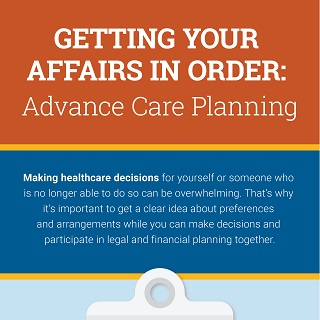
PODCAST: Will Your Health Care Directives Protect You?

By Rick Kahler CFP

PODCAST: https://kahlerfinancial.com/financial-awakenings/estate-planning/will-your-health-care-directives-protect-you

***

***

MORE: https://www.nia.nih.gov/health/advance-care-planning-health-care-directives

CITE: https://www.r2library.com/Resource/Title/0826102549

***

***

Risk Management: https://www.routledge.com/Risk-Management-Liability-Insurance-and-Asset-Protection-Strategies-for/Marcinko-Hetico/p/book/9781498725989

***

***

COMMENTS APPRECIATED

Thank You

Subscribe to the Medical Executive-Post

***

ACCOUNTABLE CARE: Competitive Market for Talent is Biggest Challenge in Recruiting

By Staff Reporters

DEFINITION: An accountable care organization (ACO) is a group of doctors, hospitals, and other health care providers that work together on your care. Their goal is to give you — and other people on Medicare — better, more coordinated treatment. The largest effort in payment innovation in Medicare is a portfolio of accountable care organization (ACO) programs that include the Medicare Shared Savings Program (MSSP), the Next Generation model, and Comprehensive End Stage Renal Disease model. But drawbacks include limited choice as some patients will have trouble finding doctors outside of a specific group. The shortage of options could lead to higher patient costs. And, referral restrictions as ACOs provide doctors incentives to refer to specialists within the group.

CITE: https://www.r2library.com/Resource/Title/082610254

***

***

In a recent survey from AKASA healthcare finance leaders ranked the biggest challenges in recruiting and retention within the revenue cycle as healthcare organizations navigate significant staffing gaps across the board.

Great Resignation: https://medicalexecutivepost.com/2022/03/08/healthcare-industry-hit-with-the-great-resignation-retirement/

 •  #1: Competitive market for talent (71%)
 •  #2: Vaccine mandates (42%)
 •  #3: Employee burnout (41%)
 •  #4: Rapid employee turnover (40%)
 •  #5: Limitations to offer remote work (23%)

Source: AKASA via PR Newswire, February 23, 2022

***

COMMENTS APPRECIATED

Thank You

Subscribe to the Medical Executive-Post

***

BUSINESS of MEDICINE: https://www.amazon.com/Business-Medical-Practice-Transformational-Doctors/dp/0826105750/ref=sr_1_9?ie=UTF8&qid=1448163039&sr=8-9&keywords=david+marcinko

***

PODCAST: Dysfunctional Employee Healthcare Benefits

By Eric Bricker MD

Article in the Journal of the American Medical Association

***

***

COMMENTS APPRECIATED

Thank You

Subscribe to the Medical Executive-Post

***

***

***

PODCAST: “Charge Capture” Medical Coding and Healthcare Costs

The Basis for Hospital Reimbursement and Sepsis Reimbursement

By Eric Bricker MD

***

***

COMMENTS APPRECIATED

Thank You

Subscribe to the Medical Executive-Post

***

***

***

DONATE: Your Body to Science?

***

Advancing the Science of Medicine with a Priceless, No Cost Option

Everything we know about the human body comes from studying whole body donors. At MedCure, they connect you or your loved ones to the physicians, surgeons, and researchers who are continuing this vital work. Their discoveries and innovations help people live longer, make treatments less invasive, and create new ways to prevent illness or disease.

https://www.amazon.com/Dictionary-Health-Insurance-Managed-Care/dp/0826149944/ref=sr_1_4?ie=UTF8&s=books&qid=1275315485&sr=1-4

They are constantly overwhelmed by the incredible generosity and selflessness of donors.  MedCure honors their gifts by covering, upon acceptance, all expenses related to the donation process. These costs include transportation from the place of passing, cremation, and a certified copy of the death certificate, as well as the return of cremated remains to the family or a scattering of the ashes at sea. By request, they can provide a family letter that shares more detailed information on how you or your loved one contributed to medical science.

***

How to Donate Your Body to Science | Discover Magazine

***

READ: https://www.msn.com/en-us/health/wellness/what-exactly-happens-when-you-donate-your-body-to-science/ar-AAPaNJm?li=BBnb7Kz

CRYONICS: https://www.cryonics.org/

LONGEVITY: https://medicalexecutivepost.com/2021/09/26/podcasts-jeff-bezos-and-altos-longevity-labs/

RELATED: https://www.msn.com/en-us/news/crime/crematorium-owner-faces-10-years-for-improper-body-storage-charges-license-revoked/ar-AAPaCLV?li=BBnb7Kz

Body Facts: https://lifehacker.com/14-weird-facts-about-the-human-body-you-probably-never-1847829288/slides/2

YOUR COMMENTS ARE APPRECIATED.

***

https://www.amazon.com/Hospitals-Healthcare-Organizations-Management-Operational/dp/1439879907/ref=sr_1_4?s=books&ie=UTF8&qid=1334193619&sr=1-4

Thank You

***

Ethics in Modern Healthcare

Join Our Mailing List

The Access to Medical Care Dilemma

By David E. Marcinko MBA

By Render S. Davis; MHA, CHE

[Certified Healthcare Executive]

Crawford Long Hospital at Emory University

Atlanta, Georgia, USA
biz-book

In his book, “Back to Reform”, author Charles Dougherty writes that “cost containment is the goal for the healthy.  Access is the goal for the sick.” 

A Meaningless Distinction

So, for an increasing number of Americans, the concerns experienced in-vitro, in-vivo, or described on this Medical Executive-Post blog, are almost meaningless because they are, for the most part, outside the structure of the current health care system. Why?

  • Employers are downsizing staff or cutting out health insurance benefits in an effort to be financially successful in a global economy.
  • Demands for greater government accountability in the expenditure of tax dollars have brought about increasingly more stringent eligibility requirements for safety-net programs like Medicaid. 
  • As insurance becomes more expensive or government programs undergo budget cuts, people are being excised from the system.
  • New competitive demands have fostered unprecedented consolidations, mergers, and closures of healthcare facilities.

This shake-out may have served to greatly reduce the overcapacity that plagued the system, but it has been done with greater emphasis on cutting costs than on fostering efficiency and effectiveness in creating a true system of care delivery. 

The Healthcare Commodity Issue

Those who view health care as little different from any other commodity available through the free market see the present access concerns as simply a byproduct of the inevitable restructuring of the system. While they argue that we must adhere to market solutions to solve our health care access problems, others demand a different approach calling for governmental national health insurance or some form of subsidized care providing at least a basic level of treatment for all citizens. 

Moreover, while Americans continue to proudly tout that we do not explicitly ration care as do some other countries (notably Great Britain and Canada); we tacitly accept a health care system that implicitly excludes citizens who are unable to overcome financial barriers to access.

Care Access Issues

Access to care represents the most visible issue at the very foundation of the ethical principle of justice. 

In their text, “Principles of Biomedical Ethics”, authors Thomas Beauchamp, Ph.D. and James F. Childress, Ph.D. point out that “justice” is subject to interpretation and may even be evoked to support the positions of parties in direct opposition.

A Philosophical Mixed Bag

For example, those who support the predominant principle of distributive justice – the fair allocation of resources based on laws or cultural rules – still must decide on what basis these resources will be used. 

On the other hand, this mix-ed bad of philosophical thoughts include among others:

  • Utilitarians, who argue for resource distribution based on achieving the “greatest good for the greatest number.”
  • Libertarians, who believe that recipients of resources should be those who have made the greatest contributions to the production of those resources – a free market approach to distribution.
  • Egalitarians, that support the distribution of resources based on the greatest need, irrespective of contribution or other considerations. 

Consequently, developing a system of access based on “justice” will be fraught with enormous difficulty.

The Current System

In the current health care environment, access to medical care is approaching crisis levels as increasing malpractice insurance premiums are driving physicians from high-risk specialties such as obstetrics, emergency medicine, and surgery in record numbers. 

The impact is most dramatic in rural and under-served areas of the country where sole-practitioners and small group practices are discontinuing services, leaving local citizens with no choice but to forego care or travel greater distances to regional medical centers to find necessary treatment. 

At the same time, significant budget cuts at both the federal and state levels have seriously eroded funding for Medicaid, leaving this especially-vulnerable segment of the population with even fewer options than before.

Issues Moving to the Forefront

Two areas of the medical care access dilemma are moving to the forefront.

1. The first is in emergency medicine.

An initial study by the Federal Centers for Disease Control and Prevention, cited statistics showing that in the decade ending in 2001, emergency room visits increased 20 percent, while the number of emergency departments shrank 15 percent. Increasingly, hospitals have closed emergency departments due to increasing costs, staffing shortages, and declining payments for services. This crisis comes at a time when post 9/11 fears of terrorism and global disease outbreaks like Severe Acute Respiratory Syndrome (SARS) have placed an even greater burden on the delivery of emergency services.  It continues and is exacerbated, even today.

For example, Arthur Kellerman, MD, former director of emergency services at Atlanta’s Grady Memorial Hospital, the city’s only level one trauma center, writes that “the situation is alarming and has been for some time… It’s unconscionable that we are not coming to terms with the Achilles’ heel of our health care system.”

2. The second area that will grow in significance is in the area of genetic testing.

As technological capabilities improve, medicine’s ability to examine an individual’s genetic makeup will open up remarkable opportunities to predict a person’s susceptibility to certain diseases or handicapping conditions. From a scientific standpoint, we are on the threshold of an extraordinary new era in medicine, where identifications of and treatments for potential illnesses may begin before the person is even born.

“Medicine’s Iceberg”

However, there is a more troubling access side to the potential of genetic testing as noted by Johns Hopkins University president, Dr. William R. Brody. He described genetic testing as “medicine’s iceberg,” where serious dangers for access to care are lurking beneath the surface. 

According to Brody, heated debate has already begun regarding the value of genetic information to insurance companies who could use the information to determine premium levels, even the overall insurability, for individuals and/or families with a member identified through testing as predisposed to a catastrophic and/or potentially expensive medical condition.

In this scenario, infants manifesting a genetic predisposition to certain illnesses or potential behavior disorders may find themselves faced with lifelong un-insurability based on the results of prenatal genetic testing.

Assessment

Furthermore, Brody persuasively argues that the potential of this technology, regardless of the incredible scientific potential it offers, could lead to dramatically diminished access to health insurance for tens of thousands of individuals and families and bring about an “end to private health insurance as we know it.”  He suggests that some form of community-rated, universal health insurance may be the only reasonable alternative to assure that Americans at all levels, from indigent and working poor, to the most affluent, may receive needed, basic medical care. 

CONCLUSION

Your thoughts and comments on this ME-P are appreciated. Feel free to review our top-left column, and top-right sidebar materials, links, URLs and related websites, too. Then, subscribe to the ME-P. It is fast, free and secure.

Link: http://feeds.feedburner.com/HealthcareFinancialsthePostForcxos

Speaker: If you need a moderator or speaker for an upcoming event, Dr. David E. Marcinko; MBA – Publisher-in-Chief of the Medical Executive-Post – is available for seminar or speaking engagements. Contact: MarcinkoAdvisors@msn.com

OUR OTHER PRINT BOOKS AND RELATED INFORMATION SOURCES:

DICTIONARIES: http://www.springerpub.com/Search/marcinko
PHYSICIANS: www.MedicalBusinessAdvisors.com
PRACTICES: www.BusinessofMedicalPractice.com
HOSPITALS: http://www.crcpress.com/product/isbn/9781466558731
CLINICS: http://www.crcpress.com/product/isbn/9781439879900
BLOG: www.MedicalExecutivePost.com
FINANCE: Financial Planning for Physicians and Advisors
INSURANCE: Risk Management and Insurance Strategies for Physicians and Advisors

Product DetailsProduct Details

Product Details

Invite Dr. Marcinko

PODCAST: On the Corporate Practice of Medicine Laws

IS PRIVATE EQUITY BUYING DOCTORS ILLEGAL?

By Eric Bricker MD

***

***
YOUR COMMENTS APPRECIATED

Thank You

***

***

PODCAST: Hospital “Out-Patient” Department Pricing Explained

***

Hospitals Are Paid More for SAME SERVICE in Outpatient Department Than Doctors Are Paid in Office.

For Example, the SAME Echocardiogram Costs $600 in a Hospital Outpatient Department and $250 in a Doctor’s Office.

By Dr. Eric Bricker MD

***

***

COMMENTS APPRECIATED

Thank You

Subscribe to the Medical Executive-Post

***

***

***

PODCAST: Economic “Rent-Seeking” in Health Care

By Eric Bricker MD

***

***

CITE: https://www.r2library.com/Resource/Title/082610254

COMMENTS APPRECIATED

Thank You

Subscribe to the Medical Executive-Post

***

***

****

An Update on Maslow’s Hierarchy of e-Needs for Modernity

Join Our Mailing List

Understanding the New-Wave Social Media that Fuels Them

[By Staff Writers]

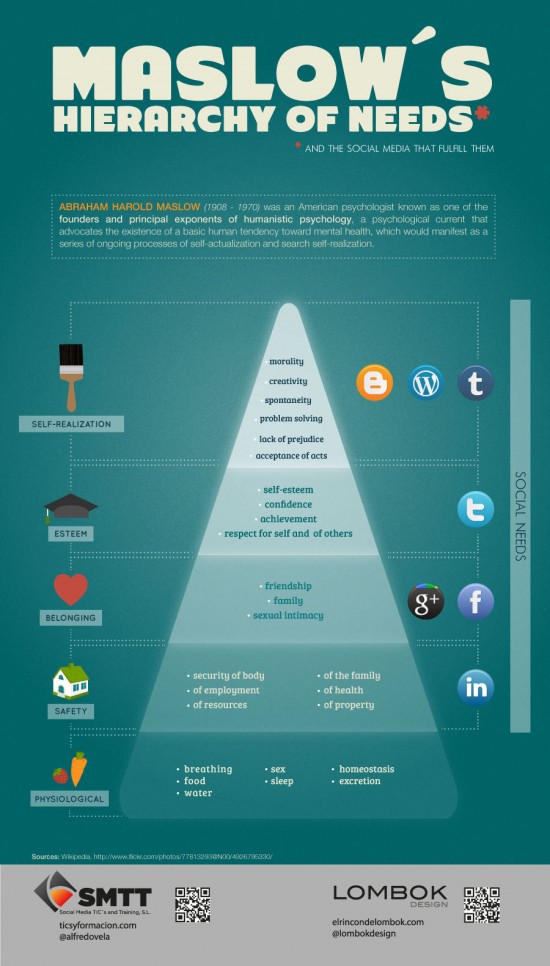
All medical professionals, and some FAs and behavioral economists, realize that Maslow’s hierarchy of needs is often portrayed in the shape of a pyramid, with the largest and most fundamental levels of needs at the bottom, and the need for self-actualization at the top.

So, this infographic takes Maslow’s theory and looks at the electronic social media tools that fulfill these needs.

Source: ticsyformacion.com

Assessment

Yet, another new-paradigm assessment of social media for doctors, financial advisors … and us all.


Product DetailsProduct DetailsProduct Details

Product Details  Product Details

Product Details

Conclusion

Your thoughts and comments on this ME-P are appreciated. Feel free to review our top-left column, and top-right sidebar materials, links, URLs and related websites, too. Then, subscribe to the ME-P. It is fast, free and secure.

Speaker: If you need a moderator or speaker for an upcoming event, Dr. David E. Marcinko; MBA – Publisher-in-Chief of the Medical Executive-Post – is available for seminar or speaking engagements. Contact: MarcinkoAdvisors@msn.com

OUR OTHER PRINT BOOKS AND RELATED INFORMATION SOURCES:

Risk Management, Liability Insurance, and Asset Protection Strategies for Doctors and Advisors: Best Practices from Leading Consultants and Certified Medical Planners™

***

PODCAST: Health Insurance and Benefit Consultant Traits

THREE SUCCESSFUL TRAITS FOR BROKERS

By Eric Bricker MD

***

***

COMMENTS APPRECIATED

Thank You

Subscribe to the Medical Executive-Post

***

CITE: https://www.r2library.com/Resource/Title/082610254

***

***

HEALTHCARE: 2021 M&A in Review

Indications for 2022

BY HEALTH CAPITAL CONSULTANTS, LLC

***

2021 M&A in Review: Indications for 2022

After an understandable slowdown in 2020, due to the onset of the COVID-19 pandemic, merger & acquisition (M&A) activity in the healthcare industry accelerated in 2021, and the industry is expected to continue the high number of deals and high deal volume in 2022.

***

***

This Health Capital Topics article will review the U.S. healthcare industry’s M&A activity in 2021, and discuss what these trends may mean for 2022. (Read more…)

***

CITE: https://www.r2library.com/Resource/Title/0826102549

COMMENTS APPRECIATED

Thank You

Subscribe to the Medical Executive-Post

***

***

***

How Health Technology Entrepreneurs and Innovators are Streamlining Death!

Join Our Mailing List

Start-Ups for the End of Life

By MIT Technology Review
One Main Street
Cambridge, MA 02142

Technology has changed the way we grieve, but it’s also starting to make a difference to the way we deal with death’s logistics, too.

The New York Times reports that startups—often run by millennials, it drily notes—are increasingly creating digital tools that help people plan for their demise.

***

death

***

Human Skull

***

Assessment

Though for those determined not to admit defeat, cryogenics is still an option:

KrioRus, the only company outside of the U.S. prepared to put your head on ice after you die, will do so for a modest $12,000. It still doesn’t know what to do further down the line, though.

More:

Conclusion

Your thoughts and comments on this ME-P are appreciated. Feel free to review our top-left column, and top-right sidebar materials, links, URLs and related websites, too. Then, subscribe to the ME-P. It is fast, free and secure.

Speaker: If you need a moderator or speaker for an upcoming event, Dr. David E. Marcinko; MBA – Publisher-in-Chief of the Medical Executive-Post – is available for seminar or speaking engagements. Contact: MarcinkoAdvisors@msn.com

OUR OTHER PRINT BOOKS AND RELATED INFORMATION SOURCES:

8Product DetailsProduct Details

***

***

55% of Consumers Find it Stressful Paying a Healthcare Bill

***

***

By Staff Reporters

***

An annual study of over 1,500 U.S. consumers, shows:

 •  55% of consumers find it stressful paying a healthcare bill.
 •  53% of consumers find it stressful understanding their plan’s coverage and benefits.
 •  53% of consumers find it stressful comprehending what they owe.
 •  59% of consumers find it stressful reconciling a bill issue with their payer.

Source: Cedar via GlobeNewswire, December 7, 2021

CITE: https://www.r2library.com/Resource/Title/0826102549

***

COMMENTS APPRECIATED.

Thank You

Subscribe to the Medical Executive-Post

***

***

***

COVID INFECTIONS: The Un-Vaccinated

By Staff Reporters

***

***

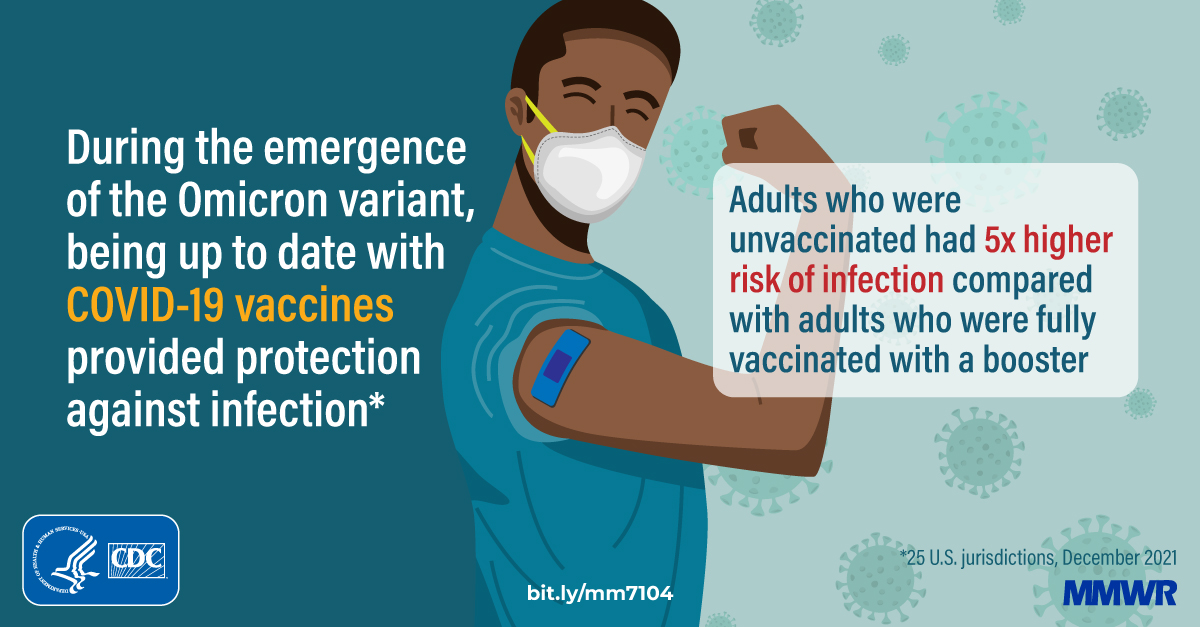
33.6% of COVID Infections Were in Unvaccinated Persons

According to a recent CDC study. Among 422,966 reported SARS-CoV-2 infections in LAC residents aged ≥18 years during November 7, 2021–January 8, 2022:

 •  33.6% were in unvaccinated persons
 •  13.3% were in fully vaccinated persons with a booster
 •  53.2% were in fully vaccinated persons without a booster
 •  Unvaccinated persons were most likely to be hospitalized, representing 2.8% of COVID infections
 •  Unvaccinated persons were most likely to be admitted to an ICU, or 0.5% of COVID infections
 •  Unvaccinated persons were most likely to be require intubation for mechanical ventilation, or 0.2% of COVID infections.

Source: CDC, Morbidity and Mortality Weekly Report, February 1, 2022

Lost Vaccine Card: https://portal.ct.gov/vaccine-portal/Vaccine-Knowledge-Base/Articles/Lost-Vaccine-Card?language=en_US

CITE: https://www.r2library.com/Resource/Title/0826102549

***

***

COMMENTS APPRECIATED

Thank You

Subscribe to the Medical Executive-Post

***

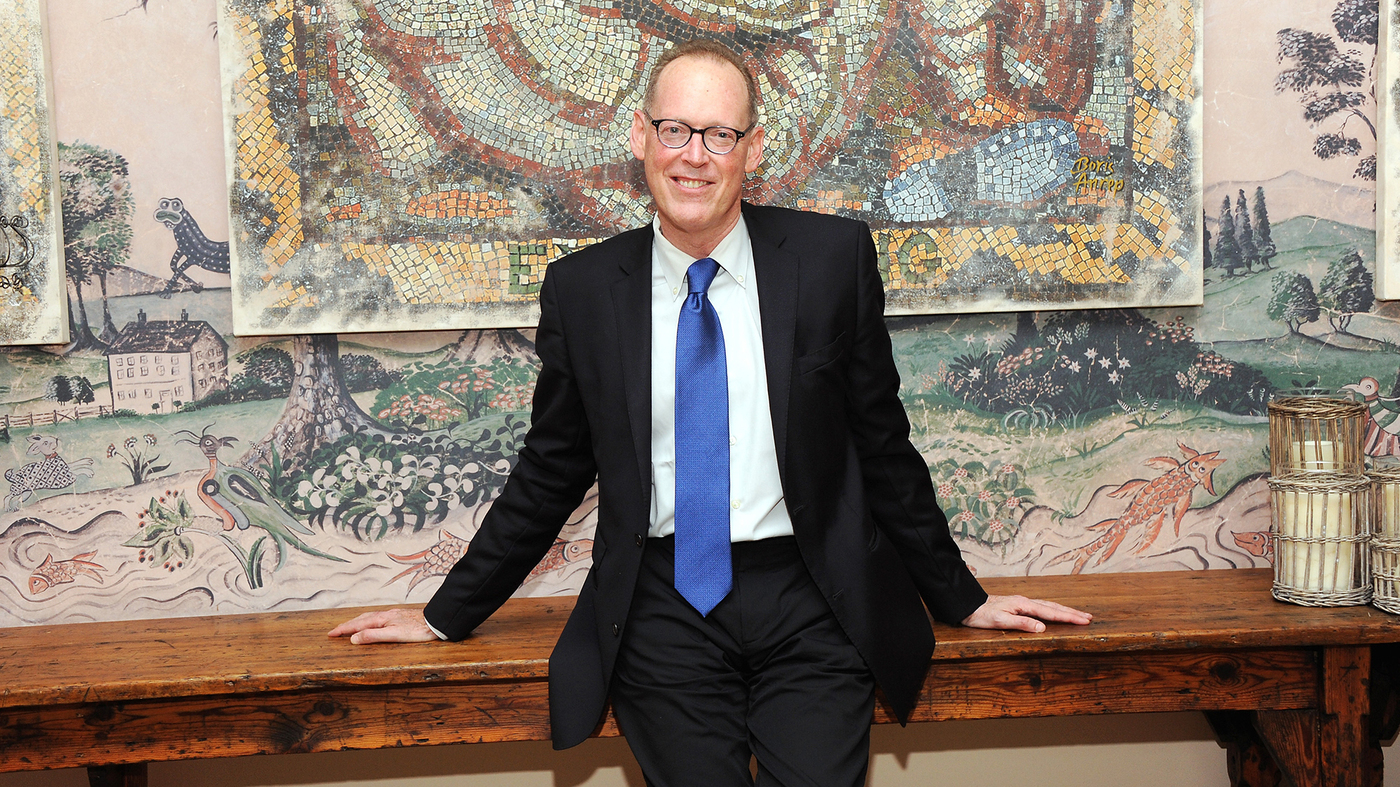
R.I.P. Paul Edward Farmer MD PhD

***

By Dr. David Edward Marcinko MBA

[Editor-in-Chief]

***

Paul Edward Farmer MD PhD

***

Paul Edward Farmer (October 26, 1959 – February 21, 2022) was an American medical anthropologist and physician. Farmer held an MD and PhD from Harvard University, where he was the Kolokotrones University Professor and the chair of the Department of Global Health and Social Medicine at Harvard Medical School. He was the co-founder and chief strategist of Partners In Health (PIH), an international non-profit organization that since 1987 has provided direct health care services and undertaken research and advocacy activities on behalf of those who are sick and living in poverty. He was professor of medicine and chief of the Division of Global Health Equity at Brigham and Women’s Hospital.

Paul and his colleagues in the U.S. and abroad have pioneered novel community-based treatment strategies that demonstrate the delivery of high-quality health care in resource-poor settings in the U.S. and abroad. Their work is documented in the Bulletin of the World Health Organization, The Lancet, The New England Journal of Medicine, Clinical Infectious Diseases, British Medical Journal, and Social Science and Medicine.

Dr. Farmer had written extensively on health and human rights, the role of social inequalities in the distribution and outcome of infectious diseases, and global health.

He was known as “the man who would cure the world,” as described in the book Mountains Beyond Mountains by Tracy Kidder. The story of Partners In Health is also told in the 2017 documentary Bending the Arc. He was a proponent of liberation theology.
***

MORE: https://www.msn.com/en-us/news/world/paul-farmer-global-health-care-pioneer-dies-at-62/ar-AAU8wJj?li=BBnb7Kz

HARVARD: https://ghsm.hms.harvard.edu/faculty-staff/paul-farmer

***

Rest in Peace

***

INSIDER TRADING 4 ME: Stock Markets


***
INSIDER TRADING FOR ME, BUT NOT FOR THEE
See the source image

By Richard Helppie

***

Capital markets require confidence that all market participants have fair access to the same relevant information about a company and its prospects. Laws governing the trading of securities have been in existence since stocks were first traded. It seems as if each piece of legislation, from the Securities and Exchange Act of the 1930’s through to the 2002  Sarbanes-Oxley Law fought the prior corruption as successfully as preparing an army to fight the last war.

Curiously, the issue of insider trading by members of Congress is not a partisan issue. If behavior is any indication, certain Republicans and Democrats are fond of having the ability to profit from access to material, nonpublic information. Others of both parties are introducing legislation to block illegal insider trading.

Congress has passed laws that prohibit people with insider knowledge from trading on non-public information, and from sharing that non-public information with others who may trade stocks based on that information. The former is known as “illegal insider trading” and the latter as “tipping.” There exists legal insider trading, which is bound by rules of disclosure and third-party decision makers, but we will leave that for another day. Illegal insider trading is enforced through Federal Agencies including the Securities and Exchange Commission (SEC), Internal Revenue Service (IRS) and the Department of Justice (DOJ), as well as by regulations on major stock exchanges such as the New York Stock Exchange (NYSE) and National Association of Securities Dealers Automated Quotation Systems (NASDAQ).

While there is universal agreement that executives, board members, employees and others with access to non-public information may not use that information to trade stocks, members of Congress and their staffs face few practical barriers. And in more recent months, members of the Federal Reserve and their staffs have made questionable, if not downright suspicious trades of stocks.

History is littered with cases of both average citizens and celebrities like Martha Stewart being prosecuted for insider trading. Stewart was ultimately prosecuted and jailed for obstruction after denying insider knowledge.

There are members of both the US Senate and US House of Representatives who want to stop illegal insider trading by their peers. For example, in 2012, President Barack Obama signed the Stop Trading on Congressional Knowledge (STOCK) Act to prevent insider trading by members of Congress and Congressional Staff. However, there have been no prosecutions under this statute to date. The reason is that the “Speech and Debate” clause prohibits questioning an elected Senator or Congressional Representative.

Moreover, much of the disclosure of material, non-public information that would establish a foundation for illegal insider trading occurs outside the public eye. Members of Congress cannot act on information obtained from companies themselves. The difficulty arises in proving that a member of Congress or Congressional staff knew of material, non-public information acquired in a confidential congressional meeting. Let me rephrase that. There is no way of knowing what transpired in the confidential committee meeting so there is no provable path to a stock trade benefiting the member of Congress or their staff.

Suppose two publicly traded defense contractors were bidding on a new weapons system. In a confidential committee, a Department of Defense (DOD) recommendation to accept the bid of company A versus Company B was made and endorsed by the committee. At that point, everyone with access to the non-public information about the weapons system bid would know that it would be good for the stock of Company A and bad for the stock of Company B.

Take this a step further. Company A and Company B are notified about the confidential decision and advised to keep this material, non-public information protected. At this point, if any executive, board member or employee with that knowledge traded in the stock of Company A or Company B they would be subject to prosecution, including fines and imprisonment. Also, if any person at the company provided that material, non-public information to another person, including a member of Congress, that action would be subject to investigation and potential prosecution.

Now suppose a Senator, Congressional Representative or staff member, after receiving the news of the weapons system award went to their broker, computer or telephone and bought stock in Company A while selling (or shorting in another way) Company B. Or perhaps communicated to a friend or family member on a trade “suggestion.”  Relaying or exploiting information – material, non-public information —  behavior that would land any other person in an investigation and make them subject to prosecution, cannot be practically pursued because there is no way to use the committee deliberations as evidence.

When Senators Richard Burr (R-NC), Kelly Loeffler (R-GA) and Diane Feinstein (D-CA) were accused of insider trading, instead of being subjected to investigation and potential prosecution through the SEC, IRS, or DOJ, their actions instead were reviewed by the Senate Ethics Committee. The Senate Ethics Committee, made up of other US Senators, found no wrongdoing.  Let me rephrase that –  other US Senators, who might benefit themselves from insider trading – decided to give suspicious behavior a pass. Even if the conduct of the Senators was on the up-and-up, the optics do not inspire confidence.

The US Senate does not have a monopoly on suspicious trading. For example, Congresswoman Lois Frankel (D-FL), was accused of trading stocks of companies in the fossil fuel industry while a sitting on a Congressional subcommittee that oversees funding for the Department of Energy.

Legislation to Block Insider Trading by Congress and the Federal Reserve

US Senators and Congressional Representatives have made proposals to improve public perception of their ranks with more practical solutions and stiffer penalties. Pre-eminent among the reformers is Senator Elizabeth Warren (D-MA), a person with a strong background in financial matters. Senator Warren appears to be the leading voice in calling for members of the Federal Reserve and their staffs to also be subject to laws prohibiting illegal insider trading and tipping. These restrictions are long overdue, as statements by the Fed has caused wild gyrations in the prices of securities. Senator Warren’s ideas are recommended reading on her web site at

https://www.warren.senate.gov

. Enter “Insider Trading” on the search bar of the Senator’s web site for 61 references.

Senators Jeff Merkley (D-OR) and Sherrod Brown (D-OH) have offered the “Ban Conflicted Trading Act.”  Under the legislation, elected persons and their staffs would be required to either sell or freeze their stock holdings, or put them in a blind trust. Introduced in 2018, the legislation has stalled. Last winter, Representative Alexandria Ocasio-Cortez (D-NY) and others have indicated they would introduce the same legislation in the House.

Earlier this month, Senators Jon Ossoff (D-GA) and Mark Kelly (D-AZ) introduced the Ban Congressional Stock Trading Act. If it becomes law, every member of Congress—as well as their spouses and dependent children—would be required to place their stock portfolios into a blind trust. One benefit of an outright ban or blind trusts would mean that clerical matters would no longer be a concern of those elected. Kelly himself, according to news reports, did not make a timely disclosure about a stock option exercise.

Senator Josh Hawley (R-MO) announced he will introduce the Banning Insider Trading in Congress Act. Wryly pointing out that politicians manage to outperform the stock market year after year, Hawley’s bill would prohibit members of Congress and their spouses from buying and trading individual stocks. Those who violate it would have to disgorge their profits.

Congress: Keep it simple and fix this

The singular, clear way to avoid abuses of insider information is to ban the trade of individual stocks and industry-specific Exchange Traded Funds (ETF) by members of Congress, Congressional staffs, members of the Federal Reserve and their staffs. Double blind trusts (where neither the owner or trustee knows identity of the other) would be an acceptable form of investing. Finally, add stronger criminal penalties for tipping insider information.

This is one of the few things that seem to enjoy bipartisan support, and would seemingly be welcomed by nonpartisans and those on the political poles as well.

Of course, like everything political, proposals of these types do not enjoy absolute, clear-cut support. As House Speaker Nancy Pelosi (D-CA) said about her opposition to such restrictions “We are a free market economy,” Pelosi, purported to be one of the 25 wealthiest members of Congress, continued, “They (Congress) should be able to participate in that.” Pelosi’s recent financial disclosure is said to have 48 transactions made by her family valued at a total of some $50 million so she is sympathetic to serving in Congress and participating in trading.

***

COMMENTS APPRECIATED

Thank You

Subscribe to the Medical Executive-Post

***

SEC REPORT: https://www.seclaw.com/insider-trading/

MADOFF: https://www.msn.com/en-us/news/world/convicted-fraudster-bernie-madoffs-sister-husband-found-dead/ar-AAU6px4?li=BBnbfcL

FRAUD: https://www.msn.com/en-us/money/companies/founder-of-collapsed-dollar17-billion-mutual-fund-charged-with-fraud/ar-AAU3PEF?li=BBnb7Kz

***

***

Product Details

CITE: https://www.r2library.com/Resource/Title/082610254

***

PODCAST: 15 Metrics for Successful Healthcare Companies

Phil Fisher Was One of the Greatest Entrepreneurial Investors of the 20th Century and a Source of Wisdom for Warren Buffett

By Eric Bricker MD

****

***

Related: https://thehealthcareblog.com/blog/2022/02/03/after-the-crash/?utm_campaign=THCB%20Reader&utm_medium=email&utm_source=Revue%20newsletter

***

COMMENTS APPRECIATED

Thank You

Subscribe to the Medical Executive-Post

***

***

***

Product Details

CITE: https://www.r2library.com/Resource/Title/0826102549

***

What Really is an Economic PUBLIC GOOD?

By Staff Reporters

***

According to Tejvan Pettinger, a public good has two characteristics:

  1. Non-rivalry: This means that when a good is consumed, it doesn’t reduce the amount available for others.
    – E.g. benefiting from a street light doesn’t reduce the light available for others but eating an apple would.
  2. Non-excludability: This occurs when it is not possible to provide a good without it being possible for others to enjoy. For example, if you erect a dam to stop flooding – you protect everyone in the area (whether they contributed to flooding defenses or not.
See the source image

A public good is often (though not always) under-provided in a free market because its characteristics of non-rivalry and non-excludability mean there is an incentive not to pay. In a free market, firms may not provide the good as they have difficulty charging people for their use.

CITE: https://www.r2library.com/Resource/Title/082610254

***

QUERY: Is Health and Medical Care a Public Good?

COMMENTS APPRECIATED

Thank You

Subscribe to the Medical Executive-Post

***

***

***

PODCAST: Health Insurance Costs Have Risen 55% in the Last Decade

***

By Eric Bricker MD

***

Health Insurance Cost Has Risen 55% in the last 10 Years. The Annual Health Insurance Cost for Family Coverage is Now $21,000 Per Year

***

Dysfunctional Employee Benefits Article in Journal of the American Medical Association

***

***

COMMENTS APPRECIATED

Thank You

Subscribe to the Medical Executive-Post

***

***

***

CITE: https://www.r2library.com/Resource/Title/082610254

***

Top 4 Health Systems That Over-Use Health Care?

By Staff Reporters

***

Feature Engineering for Healthcare Fraud Detection | by Dr. Dataman |  Dataman in AI | Medium
***

A recent Johns Hopkins analysis of 676 U.S. health systems found that these 4 health systems contributed to healthcare overuse the most:

 •  St. Dominic Health Services in Jackson, Mississippi
 •  USMD Health System in Irving, Texas
 •  Community Medical Centers in Clovis, California
 •  Care New England Health System in Providence, Rhode Island

Source: Johns Hopkins via FierceHealthcare, January 19, 2022

CITE: https://www.r2library.com/Resource/Title/082610254

***

COMMENTS APPRECIATED

Thank You

Subscribe to the Medical Executive-Post

***

***

***

***

What is a DAO [not DOA] in Health Care?

Decentralized Autonomous Organizations in Health Care?

By Staff Reporters

****

DEFINITION: A decentralized autonomous organization (DAO), sometimes called a decentralized autonomous corporation (DAC), is an organization represented by rules encoded as a computer program that is transparent, controlled by the organization members and not influenced by a central government. A DAO’s financial transaction record and program rules are maintained on a blockchain.

CITE: https://www.r2library.com/Resource/Title/082610254

****

Overview of Decentralized Autonomous Organization (DAO) | by IOSG | IOSG  Ventures | Medium

BLOCKCHAIN HEALTH: https://medicalexecutivepost.com/2018/11/02/on-blockchain-in-healthcare/

The precise legal status of this type of business organization is unclear. But, in healthcare, today?

DAOs in HEALTH CARE: https://thehealthcareblog.com/blog/2022/01/19/daos-may-rescue-healthcare/?utm_campaign=THCB%20Reader&utm_medium=email&utm_source=Revue%20newsletter

***
COMMENTS APPRECIATED

Thank You

Subscribe to the Medical Executive-Post

***

***

***

PODCAST: Healthcare Challenges Post Pandemic?

***

By Richard Helppie

***

We’re posting this episode of The Common Bridge, with Henry Ford Health System President and CEO, Wright Lassiter, III complete with written transcript, along with the podcast and video links because there were technical difficulties with Mr. Lassiter’s audio. This way, you can read along, or refer back to us.

***

PODCAST: https://www.youtube.com/watch?v=bKC5k7qrfDk

COMMENTS APPRECIATED

Thank You

***

***

***

PODCAST: Data Science and Statistics in Healthcare

HYPOTHESIS TESTING

BY ERIC BRICKER MD

***

***

YOUR COMMENTS ARE APPRECIATED.

***

RELATED PODCAST: https://www.youtube.com/watch?v=MSnJ-q1pTQk

***

CORRELATION / CAUSATION: https://medicalexecutivepost.com/2021/02/05/correlation-is-not-causation/

Thank You

***

PODCAST: Hospitals to Sell De-Identified Patient Data

TRUVETA

http://www.Truveta.com

By Eric Bricker MD

***

Data Platform: Their health provider members care for tens of millions of people and operate thousands of care facilities, providing more than 15% of all care in the United States. Clinical data from this care is de-identified daily and brought together in the Truveta platform to advance patient care and accelerate development of new therapies.

***

***

COMMENTS APPRECIATED

Thank You

Subscribe to the Medical Executive-Post

***

DICTIONARY: https://www.amazon.com/Dictionary-Health-Information-Technology-Security/dp/0826149952/ref=sr_1_5?ie=UTF8&s=books&qid=1254413315&sr=1-5

***

HOSPITALS: https://www.amazon.com/Financial-Management-Strategies-Healthcare-Organizations/dp/1466558733/ref=sr_1_3?ie=UTF8&qid=1380743521&sr=8-3&keywords=david+marcinko

***

Happy National BLUE MONDAY 2022

By Staff Reporters

***

Blue Monday is considered to be the most depressing day of the year, but some people may be confused whether this label is real or just pseudoscience.

There are claims around this time of year that this specific day commonly coincides with the arrival of some of the year’s toughest psychological challenges.

Issues can include a combination of particularly bleak winter weather, the post-Christmas comedown and being wracked with guilt over yet more failed New Year’s resolutions.

And, additionally, people have over the past two years witnessed the trauma of dealing with the concerns about COVID-19’s effects on physical and mental health.

As with every year, Blue Monday rolls around every year on the first month’s third Monday, meaning in 2022 it is said to arrive today, on January 17th.

QUESTION: However, is this specific time of the year something people should really note?

COMMENTS APPRECIATED.

***

Thank You

Image result for bluemonday

MORE: https://nationaltoday.com/blue-monday/

Please Subscribe to the Medical Executive-Post

***

Exploding Head Syndrome: https://www.sleepassociation.org/sleep-disorders/more-sleep-disorders/exploding-head-syndrome/

****

ORDER: https://www.routledge.com/Risk-Management-Liability-Insurance-and-Asset-Protection-Strategies-for/Marcinko-Hetico/p/book/9781498725989

***

ABOUT RHETORICAL DEVICES AND PERSUASIVE APPEALS: Ethos, Pathos and Logos; etc

KAIROS; TOO!

DR. DAVID EDWARD MARCINKO FACFAS MBA CFP MBBS [Hon] [Executive Summary] -  PDF Free Download

By Dr. David E. Marcinko MBA CMP®

CMP logo

SPONSOR: http://www.CertifiedMedicalPlanner.org

****

The modes of persuasion, modes of appeal or rhetorical appeals (Greek: pisteis) are strategies of rhetoric that classify a speaker’s or writer’s appeal to their audience. These include ethos, pathos, and logos.

CITE: https://www.r2library.com/Resource/Title/0826102549

***

See the source image

***

Rhetorical appeal with persuasion elements are often key attributes for doctors, medical professionals, lawyers, CPAs, and all sorts of financial advisors and medical management consultants, etc.

Learning: https://medicalexecutivepost.com/2020/08/18/top-15-evolutions-of-learning/

So, here is a brief review for your consideration.

Examples: https://pathosethoslogos.com/

KAIROS: https://louisville.edu/writingcenter/for-students-1/handouts-and-resources/handouts-1/logos-ethos-pathos-kairos

YOUR COMMENTS ARE APPRECIATED.

Thank You

***

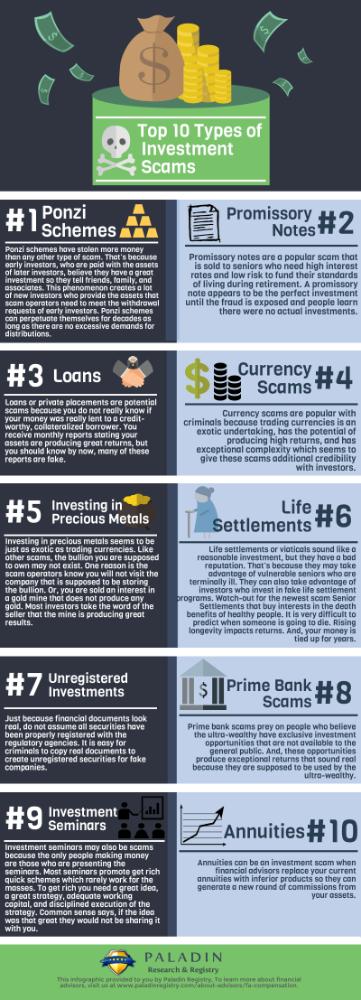
BEWARE: Top Ten Investment Scams Re-Cycled for 2022

Join Our Mailing List

Beware Physicians and all Investors
[By Paladin Research]

***
AAEAAQAAAAAAAAKsAAAAJDYwYzI0N2RhLWVjNjgtNGU0Yy04MWNhLWQ0ZmZkMDU3YzliMw

***

More:

Conclusion

Your thoughts and comments on this ME-P are appreciated. Feel free to review our top-left column, and top-right sidebar materials, links, URLs and related websites, too. Then, subscribe to the ME-P. It is fast, free and secure.

Speaker: If you need a moderator or speaker for an upcoming event, Dr. David E. Marcinko; MBA – Publisher-in-Chief of the Medical Executive-Post – is available for seminar or speaking engagements. Contact: MarcinkoAdvisors@msn.com

OUR OTHER PRINT BOOKS AND RELATED INFORMATION SOURCES:

Comprehensive Financial Planning Strategies for Doctors and Advisors: Best Practices from Leading Consultants and Certified Medical Planners(TM)

SPIKE: Hospitals Suing Patients for Unpaid Medical Bills

By Staff Reporters

***

Spike in Hospitals Suing Patients for Unpaid Medical Bills

 •  Lawsuits over unpaid bills for hospitals rose by 37% in Wisconsin from 2001 to 18.
 •  Wage garnishments from the lawsuits rose 27% in that time period.
 •  5% of hospitals account for 25% of lawsuits. Nonprofit hospitals and critical access hospitals are more likely to sue patients, according to the study.
 •  There were 1.86 lawsuits per 1,000 Black residents in 2018, compared to 1.32 per 1,000 white residents.

Source: YaleNews, December 6, 2021

HEALTH ECONOMICS CITE: https://www.r2library.com/Resource/Title/0826102549

***

***

COMMENTS APPRECIATED.

Thank You

Subscribe to the MEDICAL EXECUTIVE-POST

***

***

PODCAST: Prescription Patient Assistance Programs

BY ERIC BRICKER MD

With 43 Million Americans Having Lost Their Job at Some Point During the Pandemic and About 1/2 Those Jobs Providing Health Insurance… the 1st Group–People Who Do Not Have Health Insurance–Needs to Be Aware of How These Programs Work.

In this Video You Will Learn the Patient Assistance Program Process for:

1) 2 of the Most Common Types of Insulin

2) The Highest-Revenue Medication in America: Humira

**Note: At the Time of the Video’s Recording, the Unemployment Rate in the US was 15%. As of November 2021, the Unemployment Rate is 4.2%.

***

***

COMMENTS APPRECIATED

Subscribe to the Medical Executive-Post

***

***

CITE: https://www.r2library.com/Resource/Title/082610254

***

Understanding Hobson’s Choice in Medicine

Join Our Mailing List

Hobson’s choice  in Public Health

DEM white shirt

By Dr. David Edward Marcinko MBA

[From Wikipedia, the free encyclopedia]

A Hobson’s choice is a free choice in which only one thing is offered. Because a person may refuse to accept what is offered, the two options are taking it or taking nothing. In other words, one may “take it or leave it.”

The phrase is said to have originated with Thomas Hobson (1544–1631), a livery stable owner in Cambridge, England, who offered customers the choice of either taking the horse in his stall nearest the door or taking none at all.

***

An oil portrait of Thomas Hobson, in the National Portrait Gallery, London. He looks straight to the artist and is dressed in typical Tudor dress, with a heavy coat, a ruff, and tie tails

[Thomas Hobson, the National Portrait Gallery, London]

***

In Medicine

One of the first examples that springs readily to mind in trying to look for examples of Hobson’s Choice in Medicine is the issue of defensive medicine. While the physician actually has the option of not “shotgunning” a patient (that is, shooting randomly large number of tests in order to cover legal liability and prevent medicolegal backlashes), the risk of missing a diagnosis and the fall outs thereof are so large, that it basically degenerates into a Hobson’s Choice.

The idiosyncrasies of medicine and the way the body reacts to them always leaves us open to the risk of working within the constraints of Hobson’s Choice.

***

pills+capsules+other

***

For example, antibiotics have saved more lives than we can count, yet, an idiosyncratic, unpredictable reaction may just be waiting for us around the corner.

In Public Health

In the Indian Public Health scenario, all that the patients are offered in a primarily paternalistic system is the choice Hobson had offered all those years ago. Much like Henry Ford, who told customers lining up to buy his revolutionary Ford Model T that they could have their cars in “any color so long as it is black”, the Indian system, hobbled by the lack of an empowered public, and a patient choice scheme, functions on the basis of Hobson’s choice.

***

untitled

***

Assessment

Even in the clinical sciences, with shared decision making and user driven healthcare still in their infancy in the nation, a paternalistic physician offers naught but “this or none” choice to their patients. While one can say that the lack of general awareness of the public tends to spawn this issue, we cannot shake off our personal stake in this matter just by hiding behind the façade of moral determinism!

Conclusion

Your thoughts and comments on this ME-P are appreciated. Feel free to review our top-left column, and top-right sidebar materials, links, URLs and related websites, too. Then, subscribe to the ME-P. It is fast, free and secure.

Speaker: If you need a moderator or speaker for an upcoming event, Dr. David E. Marcinko; MBA – Publisher-in-Chief of the Medical Executive-Post – is available for seminar or speaking engagements. Contact: MarcinkoAdvisors@msn.com

OUR OTHER PRINT BOOKS AND RELATED INFORMATION SOURCES:

Risk Management, Liability Insurance, and Asset Protection Strategies for Doctors and Advisors: Best Practices from Leading Consultants and Certified Medical Planners™

***

Invite Dr. Marcinko

***

PODCAST: Hospital Charity Care Explained

BY ERIC BRICKER MD

***

YOUR COMMENTS ARE APPRECIATED.

CITE: https://www.r2library.com/Resource/Title/082610254

Subscribe to the Medical Executive-Post

***

***

***

***

31% of Americans Don’t Know How They’d Pay for Severe Illness

By Staff Reporters

***

31% of Americans Don’t Know How They’d Pay for Severe Illness

A recent survey by HealthcareInsider that polled 1,062 adults aged 18 and up asked, “If you were to experience a severe illness how would you pay for treatment?”

 •  Don’t know: 31%
 •  Credit card: 26%
 •  Non-retirement savings: 17%
 •  Borrow money from family: 16%
 •  Retirement savings: 11%
 •  Health Savings Account: 9%
 •  Borrow from a finance institution: 8%
 •  Crowdfund online: 6%

Source: HealthCareInsider, December 2nd, 2021COMMENTS APPRECIATED.

Thank You

Subscribe to the Medical Executive-Post

***

***

***

PODCAST: Patient Trust in Health Care?

PERSUASION = Ethos, Pathos and Logos

BY ERIC BRICKER MD

***

***

***

***

COMMENTS APPRECIATED.

Thank You

***

INTERNATIONAL DAY for Persons with DISABILITIES 2021

***

International Day of Persons with Disabilities (December 3) is an international observance promoted by the United Nations since 1992. It has been observed with varying degrees of success around the planet.

The observance of the Day aims to promote an understanding of disability issues and mobilize support for the dignity, rights and well-being of persons with disabilities. It also seeks to increase awareness of gains to be derived from the integration of persons with disabilities in every aspect of political, social, economic and cultural life. It was originally called “International Day of Disabled Persons” until 2007.

MORE: https://en.wikipedia.org/wiki/United_Nations’_International_Day_of_Persons_with_Disabilities

Each year the day focuses on a different issue.

***

See the source image

***

Product Details

DICTIONARY: https://www.amazon.com/Dictionary-Health-Insurance-Managed-Care/dp/0826149944/ref=sr_1_4?ie=UTF8&s=books&qid=1275315485&sr=1-4

***

Product Details

DICTIONARY: https://www.amazon.com/Dictionary-Health-Information-Technology-Security/dp/0826149952/ref=sr_1_5?ie=UTF8&s=books&qid=1254413315&sr=1-5


THANK YOU

***

WORLD AIDS DAY 2021

December 1, 2021

***

World AIDS Day, designated on 1 December every year since 1988, is an international day dedicated to raising awareness of the AIDS pandemic caused by the spread of HIV infection and mourning those who have died of the disease.

Related: https://medicalexecutivepost.com/2015/09/18/aids-in-america/

More: https://medicalexecutivepost.com/2011/07/07/finding-the-cure-for-aids/

***

COMMENTS ARE APPRECIATED

Thank You

***

PODCAST: Low-Value Healthcare Remains Even Without Fee-for-Service Incentives

BY ERIC BRICKER MD

YOUR COMMENTS ARE APPRECIATED.

MORE: https://medicalexecutivepost.com/2021/05/27/activity-based-medical-cost-accounting-and-management/

***

PODCAST: Five [5] Warning Signs for Virtual Primary Care

FROM HEALTH INSURANCE CARRIERS

BY ERIC BRICKER MD

***

***

YOUR COMMENTS ARE APPRECIATED.

***

***

Thank You

****

PODCAST: The EMTALA Law

Hospitals Must Treat All Patients

BY ERIC BRICKER MD

***

The Emergency Medical Treatment and Active Labor Act is an act of the United States Congress, passed in 1986 as part of the Consolidated Omnibus Budget Reconciliation Act

CITE: https://www.r2library.com/Resource/Title/0826102549

***

***

MORE: https://medicalexecutivepost.com/2009/04/26/understanding-the-emergency-medical-treatment-and-active-labor-act/

***

YOUR COMMENTS ARE APPRECIATED.

****

https://www.amazon.com/Financial-Management-Strategies-Healthcare-Organizations/dp/1466558733/ref=sr_1_3?ie=UTF8&qid=1380743521&sr=8-3&keywords=david+marcinko

***

Thank You

***

https://www.amazon.com/Hospitals-Healthcare-Organizations-Management-Operational/dp/1439879907/ref=sr_1_4?s=books&ie=UTF8&qid=1334193619&sr=1-4

***

RISK FACTORS COMMON TO PHYSICIANS

SOME COMMON RISK FACTORS FOR MEDICAL COLLEAGUES TO APPRECIATE

BY DR. DAVID E. MARCINKO MBA CMP®

CMP logo

SPONSOR: http://www.CertifiedMedicalPlanner.org

AN INCOMPLETE LIST = T.N.T.C.

  • Do you and or any family members drive a vehicle?
  • Do you have employees?
  • Do you have a professional malpractice exposure?
  • Do you have legal responsibility to protect medical, EMRs or personal and patient financial data?
  • Are you married and do you have assets not protected by a prenuptial agreement?
  • Do you have a current tax obligation?
  • Do you own a business?
  • Are you a board member, officer, or director of a corporation, foundation, religious or educational organization?
  • Do you engage in activities like hunting, flying, boating, etc?
  • Do you have business or domestic partners whose actions create joint and several liabilities for you?
  • Do you have personal guarantees on real estate or for business loans; or family members?
  • Do you have tail liability for professional services performed in the past?
  • Have you made specific legal or financial representations that others have relied upon in a business context?
  • What kind and what dollar amount of insurance and legal planning have you implemented against these exposures?

***

FOREWORD BY J. WESLEY BOYD MD PhD MA

[Professor of Psychiatry Harvard and Yale University]

***

ASSESSMENT: Your thoughts and comments are appreciated.

ORDER TEXTBOOK: https://www.routledge.com/Risk-Management-Liability-Insurance-and-Asset-Protection-Strategies-for/Marcinko-Hetico/p/book/9781498725989

INVITE DR. MARCINKO: https://medicalexecutivepost.com/dr-david-marcinkos-

THANK YOU

***

PODCAST: IATRO-GENESIS Explained

Harm from Physicians and Health caRE

By Eric Bricker MD

***

Iatrogenesis is the causation of a disease, a harmful complication, or other ill effect by any medical activity, including diagnosis, intervention, error, or negligence.

CITE: https://www.r2library.com/Resource/Title/0826102549

***

***

YOUR COMMENTS ARE APPRECIATED

Thank You

****

***

***

Bundle Charitable Giving Through Donor Advised Funds

Bundle Charitable Giving Through Donor Advised Funds

By Rick Kahler CFP®

With changes to standard and itemized deductions under the new tax law, many CPA’s and tax attorneys are recommending a strategy of bunching or bundling deductible spending into alternate years. I wrote about this approach a few weeks ago.

One way to bundle charitable deductions efficiently and effortlessly is through a Donor Advised Fund (DAF).

Here’s how it works

Suppose you budget $15,000 a year for charitable donations. Around half of this goes to local charities you support regularly. The rest you give in different ways, depending on the needs you become aware of throughout the year.

You could double your denotations to charities you support regularly and give directly to them every other year, but you would lessen your ability to give spontaneously. Giving through a DAF allows you to keep that spontaneity. A DAF allows you to make a large, tax-deductible gift in one year, but decide in the future (a day, ten years, or 100 years later) when and how to distribute that gift. The money stays with the DAF, which invests it, until you instruct the DAF to disburse the funds to the charity of your choice.

New tax laws

With the advent of the new tax law, DAFs have become all the rage in charitable giving. According to an article in Advisor Perspectives by Ken Nopar, the senior philanthropic advisor for the American Endowment Foundation, there are now 300,000 DAF accounts. This is twice the number eight years ago and nearly four times the number of private foundations. But all DAFs are not equal, so establishing one should be done only after some thorough investigation.

Some of the areas the article suggests that you explore with your financial planner or tax preparer are:

1. What is the appropriate amount to donate to a DAF account? Donate too much or too little, and you may not realize the maximum benefit from your gift. Be sure to check with your tax preparer.

2. With some DAF sponsors, it’s possible for your financial advisor to continue to manage your assets in well-diversified, low-cost investments. Otherwise, you may be forced to choose from a very limited number of funds with higher expenses—funds your advisor would be unlikely to recommend. Management by your advisor, in many cases, can produce greater returns, actually allowing you to donate more.

3. Investigate these things before choosing a DAF: The fees they charge, whether they appear to have enough staff and experience to administer the DAF properly, how promptly they send out grants, whether they can accept complex assets like appreciated real estate, and whether you could transfer the fund to another DAF sponsor if you should want to do so.

4. Also ask about limitations and requirements. Some DAFs may limit how much you can give each year to individual charities. Others require a certain percentage (sometimes 50% or more) to be donated to the DAF sponsor itself. A DAF’s rules may require the entire balance to be distributed to the DAF sponsor upon a donor’s death.

As Advisor Perspectives notes, many CPAs and attorneys are providing wise advice in recommending that clients establish DAF accounts. It would be a good idea to take that advice one step further and consult your financial advisor first. Otherwise you might end up with a DAF sponsor that may not be the best fit for your needs or those of the charities you support.

Assessment

As good as bundling donations to a DAF can be, don’t make a decision to use one based on the tax advantages alone. Just as with any investment, it’s important to do your research carefully before you write a check.

Conclusion

Your thoughts and comments on this ME-P are appreciated. Feel free to review our top-left column, and top-right sidebar materials, links, URLs and related websites, too. Then, subscribe to the ME-P. It is fast, free and secure.

Speaker: If you need a moderator or speaker for an upcoming event, Dr. David E. Marcinko; MBA – Publisher-in-Chief of the Medical Executive-Post – is available for seminar or speaking engagements.

Book Marcinko: https://medicalexecutivepost.com/dr-david-marcinkos-bookings/

Subscribe: MEDICAL EXECUTIVE POST for curated news, essays, opinions and analysis from the public health, economics, finance, marketing, IT, business and policy management ecosystem.

DOCTORS:

“Insurance & Risk Management Strategies for Doctors” https://tinyurl.com/ydx9kd93

“Fiduciary Financial Planning for Physicians” https://tinyurl.com/y7f5pnox

“Business of Medical Practice 2.0” https://tinyurl.com/yb3x6wr8

HOSPITALS:

“Financial Management Strategies for Hospitals” https://tinyurl.com/yagu567d

“Operational Strategies for Clinics and Hospitals” https://tinyurl.com/y9avbrq5

Risk Management, Liability Insurance, and Asset Protection Strategies for Doctors and Advisors: Best Practices from Leading Consultants and Certified Medical Planners™8Comprehensive Financial Planning Strategies for Doctors and Advisors: Best Practices from Leading Consultants and Certified Medical Planners™

***