Physician Career Development Essay

Professional Medical Career Development

  • By Eugene Schmuckler; PhD, MBA
  • By Dr. David E. Marcinko MBA

Dr. Marcinko with ME-P Fans

Dr. Marcinko with Future Medical Students

Invite Dr. Marcinko

Jimmy’s mother called out to him at seven in the morning, “Jimmy, get up. It’s time for school.” There was no answer. She called again, this time more loudly, “Jimmy, get up! It’s time for school!” Once more there was no more answer.

Exasperated, she went to his room and shook him saying, “Jimmy, it’s time to get ready for school.” He answered, “Mother, I’m not going to school. There are fifteen hundred kids at that school and every one of them hates me. I’m not going to school.” “Get to school!” she replied sharply. “But, Mother, all the teachers hate me, too. I saw three of them talking the other day and one of them was pointing his finger at me. I know they all hate me so I’m not going to school,” Jimmy answered. “Get to school!” his mother demanded again. “But mother, I don’t understand it. Why would you want to put me through all of that torture and suffering?” he protested. “Jimmy, for two good reasons,” she fired back.

“First, you’re forty-two years old.”

“Secondly, you’re the principal.”

Introduction 

Many of us have had conversations with medical colleagues at which time sentiments of those expressed by Jimmy have been voiced. The career choice that was made many years ago is now, for some reason, no longer as exciting, interesting and enjoyable, as it was when we first began in the field. The career that was undertaken with great anticipation is now something to dread. 

The reason for this is occurrence is not that difficult to understand.  Two of the most important decisions individuals are asked to make are ones for which the least amount of training is offered: choice of spouse and choice of career. How many college students receive a degree in the field they identified when they first enrolled at the college or university?

In fact, how many entering freshmen list their choice of major as undecided? It is only during the sophomore year when a major must be declared is the choice actually made. So, career choices made at the age of 19 might be due to having taken a course that was interesting or easy, appeared to have many entry level jobs, did not require additional educational or professional training requirements, or was a form of the “family business.”

Now as an adult, the individual is functioning in a career field that was selected for him or her by an eighteen-year-old. How do we judge career success? A career represents more than just the job or sequence of jobs we hold in a lifetime. The typical standard for a successful career is by judging how high the individual goes in the organization, how much money is earned, or one’s standing attained in the profession.

Career success actually needs to be judged on several dimensions. Career adaptability refers to the willingness and capacity to change occupations and/or the work setting to maintain a standard of career progress. 

Many of you did not anticipate the changes in your chosen medical profession, or specialty, when you began your training. A second factor is career attitudes. These are your own attitudes about the work itself, our place of work, your level of achievement, and the relationship between work and other parts of your life.  Career identity is that part of your life related to occupational and organizational activities. This is the unique way in which we believe that we fit into the world.

Our career is only one part of our being. We play many roles in life each of which combine to make up or totality. At any point in time one role may be more important than another. The importance of the roles will generally change over time. Thus at some point you may choose to identify more with your career, and at other times, with your family. 

A final factor is career performance, a function of both the level of objective career success and the level of psychological success.  How much you earn and your reputation factor into, and reflect, objective career success. To be recognized as a “leader” in a field and asked to submit chapters for inclusion in books such as this may be a more important indicator of career success than money.   Psychological success is the second measure of career performance. It is achieved when your self-esteem, the value you place on yourself, increases.

As you can see, there is a direct relationship between psychological success and objective success. It may increase as you advance in pay and status at work or decrease with job disappointment and failure. Self-esteem may also increase as one begins to sense personal worth in other ways such as family involvement or developing confidence and competence in a particular field, such as consistently shooting par on the golf course. At that point, objective career success may be secondary in your life. This is why many persons choose to become active in their church or in politics. Even though one may have slowed down on the job, or in their professional career they can be extremely content with their life. 

Consider the following situation. You are traveling on business. Although you are on a direct flight, you have a one-hour layover before the second leg of the flight and your final destination. Leaving the plane, after having placed the “occupied” card on your seat you walk down the concourse. On the way, you encounter a friend that you knew in high school. The two of you sit to have a cup of coffee and then you realize that your departure time is rapidly approaching. In fact, you will be cutting it quite close. Running down the concourse you return to the gate only to find that the door has been closed, the jetway is being retracted and the plane is being backed away from the gate. You stare out the window watching the plane go to the end of the runway and then begin its takeoff. Something goes horrible wrong and the plane crashes on takeoff, bursting into flames. It is apparent that there will be no survivors. To the world you are on that plane (remember the occupied card). Traveling on business your generous insurance policy will be activated. In anticipation of being in a location where they may not have ATM machines you have a good deal of cash, sufficient for at least a month.

The question for you to consider is: What do you do?

For many of you this will be a good indicator of your career as well as personal success.  

Surgery

Medical Career Paths

In retrospect how many persons are truly aware of their own interests, values, strengths and weaknesses during their teen years?

As with much of human behavior, career choices actually go through a series of stages. Psychologists have for years identified stages of human development.  Kohlberg discussed stages of moral development. In the 1970’s, Daniel Levinson published The Season’s of a Man’s Life, a project he undertook when he began to look inward and tried to understand his behaviors, values and attitudes to work. Discussions with his university colleagues indicated that what he was experiencing was not unique to him.  

For many years the prevailing thought was that the correct way to function in the labor market was to gain employment with a company progressing through the years until such time as you were eligible to receive the “gold watch”, the symbol of retirement. If you entered a professional discipline such as medicine or law, you did that for the rest of your life. 

Today there are still individuals who follow these traditional patterns but there are other career paths that may be taken.  The most traditional career route follows a linear path, one that most of you have rejected. This entails gaining employment in a large, bureaucratic organization with a tall pyramidal structure. It involves a series of upward (hopefully) moves in the organization until the career limit is reached. As the individual progresses upward in the organization he or she may work in different functional departments such as marketing, finance, and production. Organizations having these paths seek employees who tend to be highly oriented toward success defined in organizational terms and exhibit “leadership” skills.

In general, these people demonstrate a strong commitment to the workplace. A person with this type of orientation (Organizationalist) exhibits the following tendencies:

1.  A strong identification with the organization; seeking organization rewards and advancement that are important measures of success and organizational status.

2.  High morale and job satisfaction.

3.  A low tolerance for ambiguity about work goals and assignments.

4. Identification with superiors, showing deference toward them, conforming and complying out of a desire to advance; maintains the chain of command and compliance, and views respect for authority as the way to succeed.

5. Emphasis on organizational goals of efficiency and effectiveness, avoiding controversy and showing concern for threats to organizational success. 

As readers of this essay, you have followed the expert career path, building a career on the basis of personal competence, or the development of a profession (professionals). As you are so painfully aware, you invest heavily, personally and financially in acquiring a particular skill and then you spend the major portion of your life following that skill.

Unlike the pyramidal structure of the linear path, career paths are found in organizations that tend to be relatively flat, have departments in which there is a functional emphasis, emphasize quality and reliability, and have reward systems containing a strong recognition component.  Medical professionals are persons who are job-centered – not organization centered – viewing the demands of the organization as a nuisance that they seek to avoid.

However, that avoidance is impossible since the professional must have an organization in which to work. This is even more prevalent in today’s era of managed health care. At work, professional experience more role conflict and are more alienated. 

Medical professionals exhibit these four tendencies: 

1.  An experience of occupational socialization that instills high standards of performance in the chosen field; highly ideological about work values.

2. Sees organizational authority as nonrational when there is pressure to act in ways that are not professionally acceptable.

3. Tends to feel that their skills are not fully utilized in organizations; self-esteem may be threatened when they do not have the opportunity to do those things for which they have been trained.

4. Seeks recognition from other professionals outside the organization, and refuses to play the organizational status game except as it reflects their worth relative to others in the organization.

Professionals are very concerned with personal achievement and doing well in their chosen field. Organizational rewards serve to reflect the professional’s importance relative to others in the system. This recognition may be extremely fulfilling, especially when he or she is accorded higher status and pay than others. In the absence of organizational rewards the professional may use material objects (large homes, expensive cars) as a way of reflecting status and accomplishment. 

Medical professionals are of the opinion that successful performance, not compliance with authority, is more reinforcing. With this mindset it is not surprising why may medical practitioners balk at working in the managed health care environment.

Many professionally oriented people come from the middle class and have become successful through a higher level of education or by other efforts to acquire competence.  Those on the spiral career path make periodic moves from one occupation to another. Individuals who follow this career path tend to have high personal growth motives and are relatively creative.

Usually, these changes come after you have developed competence in the occupation you are working in and you think it is time to change what you do. The ideal spiral career path is to move from one occupation to an area related to it. This enables you to use some of the basic knowledge that you developed in your past work and to transfer it to your new occupation. The difference between this path and the linear path discussed above is that in this case the mobility pattern is lateral, not upward. 

People who take the transitory career path cannot seem to, and perhaps do not want to settle down. The pattern is one of consistent inconsistency in their work. These are individuals who may find a great deal of satisfaction working as consultants. The work style is marked by an ability to do many things reasonably well. They value independence and variety, and they work best in relatively loose and unstructured organizations that tolerate the type of freedom they demand in their work.

We have so far discussed the four types of career paths and two career orientations.

A final form of career orientation is that of the indifferents, those who simply work for a paycheck. These are individuals who do their work well, but they are not highly committed to their job or the organization.

Some characteristics of indifferents are:

1.  More oriented toward leisure, not the work ethic (is it Friday yet?); separates work from more meaningful aspects of life, and seeks higher-order need satisfaction outside the work organization.

2. Tends to be alienated from work and not committed to the organization.

3. Rejects status symbols in organizations.

4. Withdraws psychologically from work and organizations when possible. 

Indifferents are not necessarily born that way; some are actually a product of their work experiences. People who once had an organizational orientation and were highly loyal may no longer follow orders without question.

For example, you may have had an officer manager who very early in his or her career was extremely committed to you and your organization. He or she may seek rewards and want to advance. However, in later career life, after having been passed over several times for promotion, the person seeks rewards elsewhere. Thus it is possible that through office practices, your organization may turn highly committed organizationalists (or professionals) into indifferents. 

surgery

Medical Career Evaluation

Studs Turkel, in his outstanding book Working, makes the comment that work is the mechanism by which many of us get our daily bread and our daily purpose. If this is to be the case then the workplace needs to offer us something more than a paycheck.

A few years back, the Wilson Learning Corporation surveyed 1,500 people asking “If you had enough money to live comfortably for the rest of your life, would you continue to work?

Seventy percent said that they would continue to work, but 60 percent of those said they would change jobs and seek “more satisfying” work.

Each of us has in fact been put in charge of our own careers. Our personal career management is a lifelong process. Our task is to be able to discover our place in the world where we will be able to enjoy a high level of wellness.

This requires us to now assess our career, not from the eyes of the sixteen year old that initially chose the career. The career you are now pursuing needs to be compatible with your own unique skills, knowledge, personality and interests. It is important to keep in mind that no one is married to his or her job. When it comes to the workplace most of us are in dating relationships. 

As part of your examining your current medical career, answer the following questions:

  • Why do you work?
  • What does work mean to you?
  • What do you want from work? 

Research shows that most people work for three major reasons.

The first of these is money. Not only is this necessary for our most basic needs it also serves as a means of determining our self-image.

A second reason is to be with other people. Being at work enables us to belong, to be part of something beyond ourselves. We become part of a team. Some offices consider co-workers to be part of an extended family. The work setting affords us the opportunity for receiving feedback, recognition and support.

The third most often given reason is that work validates us as people if we consider what we do as having meaning. “I chose the medical profession so as to make a difference.”

Individuals with career success have a sense of purpose, a feeling that their work has meaning and contributes to a worthwhile cause. This is not a trick question. How well does what you do in your office every day meet your needs for money, affiliation and meaning?  Without a sense of purpose on the job the chances are that your performance while adequate will not place you in the excellent category.

Therefore, it is necessary for each and every one of us to be able to succinctly answer the question, “What is the purpose of your job?” That is a tough question to answer.

As a medical professional you may have seen what you considered to be the purpose of your job radically changed due to changes in the way services are now delivered. While we cannot bring back the past we can work around the present. Think about this for a moment, “If you want something to happen make a space for it.” What this means that whether you remain in your current profession or move elsewhere there is a need for you to establish long-range, medium-range, short-range, mini, and micro goals.  

Long-range goals are those concerned with the overall style of life that you wish to live. Regardless of your current age these goals are necessary. Long-range goals don’t need to be too detailed, because like the federal budget surplus, changes will come along. Just as the government is making projections into the future you too need to be making projections including but not limited to retirement. 

Medium-range goals are goals covering the next five years or so. These are the goals that include the next step in your career. These are goals over which we have control and we are able to monitor them and see whether we are on track to accomplishing them and modify our efforts accordingly.

Short-range goals generally cover a period of time about one month to one year from now. These are goals that can be set quite realistically and we are able to see fairly quickly whether or not we are on track to reaching them. We don’t want to set these goals at impossible levels but we do want to stretch ourselves. After all, that is the reason you are probably reading this chapter.  

Mini-goals are those goals covering from about one day to one month. Obviously we have much greater control over these goals than you do over those of a longer-term. By thinking in small blocks of time there is much more control over each individual unit. 

Micro-goals are goals covering the next 15 minutes to an hour. These are the only goals over which you have direct control. Because of this direct control, micro-goals, even though modest in impact, are extraordinarily important, for it is only through these micro-goals that you can attain your larger goals.

If you don’t take steps toward your long-range goals in the next 15 minutes, when will you? The following 15 minutes? The 15 minutes after that? Sooner or later, you have to pick 15 minutes and get going.

At some point procrastination has to be put aside.  In thinking of your goals it now becomes necessary to evaluate your personal assets. Conducting this personal inventory requires you to identify your assets as well as your shortcomings.

First, look at a time in your life when you were performing at your best. What were your thoughts and feelings? How did you behave? What were you doing? Now look at the reverse when you were doing poorly. What were your thoughts and feelings at that time? How did you behave? What were you doing? If you are like others when you were at your best you described yourself as being confident, enthusiastic, organized, relaxed, focused, in control, friendly and decisive.

The flip side, when at your worst you were fearful, apathetic, messy, anxious, lacking direction, out of control, argumentative and frustrated. 

As you can see the emotions when we are at our best are all positive. This leads to the conclusion that it is to our advantage to be at our best as much as possible.

Being at our best derives from working in those areas where we contribute our talents to something we believe in.  As we continue our own personal inventory we need to look at our special abilities. That is, what are you good at and find easy to do.

doctors

Think of the following questions.

It’s not necessary to write down you answers just think about them:

1. How would you like to be remembered?

2. What have you always dreamed of contributing to the world?

3. Looking back on your life, what are some of your major contributions?

4. When people think of you, what might they say are your most outstanding characteristics?

5. What do you really want from your life and your work?

6. In what way may you still feel limited by the past? If so, by what?

7. What will it take to let go of what has happened, no matter how good or bad? Are you willing to let go?

8. How might the rut of conformity or comfort be limiting you? Why?

9. How different do you really want life to be? Why.

10. Have you ever stated what it is you truly desire? If no, why not?

11. How good could stand life to be?  

Thinking about remaining in your present career or moving into another one is not easy. You are at the edge of a cliff and need to decide if you are going to turn back or to trust in yourself to successfully make it down to the bottom. People who are afraid of the dark lose their fear with just the slightest of a light in the room.

As you have been going through this chapter you have been shining a light, however dim it may appear to you. You can see all of the items around you. The obstacles are there but with your advance knowledge you can anticipate ways to avoid them.  Having looked at and possibly re-evaluated your plans you can now do a thorough analysis of your assets.

The assets requiring the most scrutiny are the following:

1.Your talents and skills

2. Your intelligence

3. Your motivation

4. Your friends

5. Your education

6. Your family.

Your talents and skills are more than likely what has gotten you to the point you are at in your present career.

For purposes of definition talents are innate, skills are acquired. Some have talent in interpersonal relations and some in artistic pursuits. Skills may be selected to complement the already present talents. It is skills that are necessary for expanding your options. As you seek out new skill areas ask yourself these questions. Do the skills provide occupational relevance? Might you be able to get others to pay you to teach them the skill? Will the skill be useful throughout life? Will the skill help you conquer new environments and gain new experiences?

And, of course, is it something you like to do? Intelligence is considered to be the ability of the individual to cope with the world.

Originally, intelligence focused primarily in the area of cognitive skills. Recently attention has been directed to what is called emotional intelligence, a concept that directs attention to social skills. Whether you were able to breeze through your courses in college or you truly had to work hard, earning your degrees demonstrates a better than average amount of cognitive intellectual ability. In order to maximize your brainpower, challenge yourself regularly.

Motivation looks at how hard you are willing to work, your level of persistence, and the degree to which you want to do well. Different things motivate each of us and our personal motivators can vary from day to day. How many times have you had people say that they could not do your job? What are the activities that are attractive to you? More than likely an important motivator for you is to do something worthwhile.

It has also been found that we tend to perform at about the same level as those people who are close to us. What this means is that those people with whom you work are going to have s substantial impact on your motivation. 

Friends, of course, are invaluable assets. We use our friends as models for our own behavior. Those persons we consider friends share many of our attitudes, actions and opinions. With time we will change to be like our friends and they will change to become like us. Associating with those like us tends to temper our behavior. We try not to associate with the “wrong crowd” lest we become like them.  Education needs to be ongoing.

Recently, it was reported “all careers and businesses will be transformed by new technologies in often unpredictable ways. The era of the entrepreneur will make ‘boutique’ businesses more competitive with the behemoths, as mid-sized institutions get squeezed out. And, medical breakthroughs and the ongoing health movement will enhance-and extend-people’s lives.”

The implication of these changes is that new technologies often require a higher level of education and training to use them effectively and new biotechnology jobs will open up. The authors state that all the technological knowledge we work with today will represent only 1 percent of the knowledge that will be available in 2050.

The half-life of an engineer’s knowledge today is only five years; in ten years, 90 percent of what an engineer knows will be available on the computer.

In electronics, fully half of what a student learns as a freshman is obsolete by his or her senior year. The implication here is that all of us must get used to the idea of lifelong learning. Family influences who and what we are and do. They can be a support group or they can be a deterrent to your goals. It is incumbent on every individual reading this chapter to consult with immediate family members at all stages of your career planning process.    

Doctors Labor Day

Conclusion

This essay has presented an overview of initial career selection, career pathing and career change in order to help you determine what you truly want to be when you grow up.

As I write, I can not help but reflect on an anecdote shared with me by a colleague.

An individual came to see him expressing concern that at 40 years of age he still hadn’t reached a satisfactory point in his life. My colleague then asked him where he wanted to be. The response was “I don’t know” to which my colleague responded, “Congratulations, you’ve arrived.

Too many times I encounter in my practice, physicians who express the same statements. Unhappy with what they are doing they have no idea as to what it is they would like to be doing. 

Victor Frankl, a psychiatrist who was a holocaust survivor, created an entire school of psychotherapy based upon his experiences in the German concentration camps. In his book, Man’s Search for Meaning, he makes reference to the fact that it became possible for him to determine when a fellow prisoner was going to die simply by that person’s behavior – giving up.

Frankl writes, “Evermore people today have the means to live, but no meaning to live for.      

Thus, it may be appropriate to conclude with this anonymous poem. 

Take time to work-

It is the price of success.Take time to think-

It is the source of power.Take time to play-

It is the secret of perpetual youth.Take time to read- 

It is the fountain of wisdom.Take time to be friendly-

It is the road to happiness.Take time to love and be loved-

It is nourishment for the soul.Take time to share-  

It is too short a life to be selfish.Take time to laugh- 

It is the music of the heart.Take time to dream- 

It is hitching your wagon to a star.

Now, how do you view your medical, executive, professional or healthcare administrative career amid all the turmoil in the industry today? 


McNally, D. Even Eagles Need A Push, New York, NY: Delacorte Press, 1991.

Brousseau, K.R., Driver, M.J., Eneroth, K. and Larson, R.: Career Pandemonium: Realigning organizations and individuals. Academy of Management Executive 10 (4), 52-66. 1996

Presthus, R. The Organizational Society. New York, NY: St. Martin’s Press.Campbell, D. If You Don’t Know Where You are Going You’ll Probably End Up Somewhere Else, Niles, IL: Argus Communications, 1974. 

Campbell, D. op. cit.The Futurist, March–April 2001.

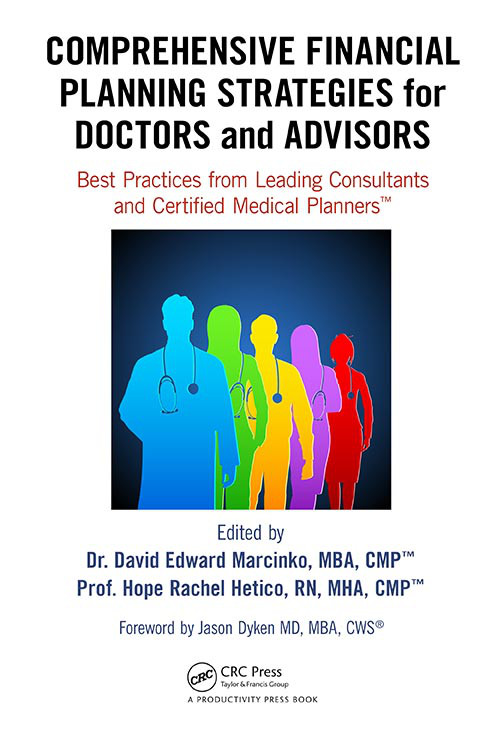
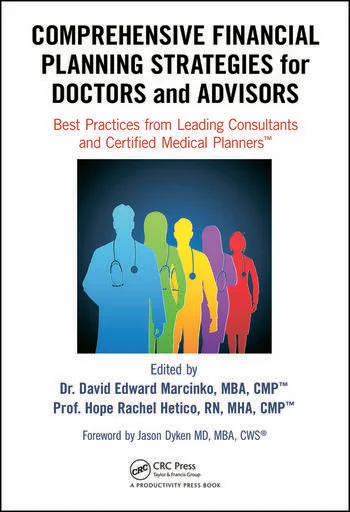
Risk Management, Liability Insurance, and Asset Protection Strategies for Doctors and Advisors: Best Practices from Leading Consultants and Certified Medical Planners™8Comprehensive Financial Planning Strategies for Doctors and Advisors: Best Practices from Leading Consultants and Certified Medical Planners™

[Dr. Cappiello PhD MBA] *** [Foreword Dr. Krieger MD MBA]

Front Matter with Foreword by Jason Dyken MD MBA

Invite Dr. Marcinko

***

THANKSGIVING: Donor Advised Funds

DONATION: In “Name” Only?

Staff Reporters

***

Proponents of DAFs say that their structure encourages giving: The tax deduction encourages wealthy patrons to dedicate money for charity even before they’ve decided which cause to support. “Donors may have good reasons to postpone grants,” a Stanford Law School article says..

In one hypothetical, a tech founder who “sells a startup for millions of dollars” may want to donate her takings but is too busy to immediately decide how to direct the funds; a DAF is a good choice for this person, the law article notes.

However, while DAFs could in theory grow the charitable pie, in practice, they too often allow the donor the illusion of charity while letting them keep control of their funds, critics say. 

While a gift to a DAF is treated the same as an outright gift to the Red Cross or United Way, in practice, it “effectively allows the donor to retain ongoing control over the charitable disposition and investment of the donated assets,” tax scholars Roger Colinvaux and Ray Madoff wrote in 2019. What’s more, “donors are under no obligation, and have no incentive, ever to release their advisory privileges to make the funds available for charitable use.”

And ultra wealthy donors get a substantially larger tax break than a middle-class worker. As much as 74 cents of every dollar given to charity comes back to the donor in the form of tax breaks, according to calculations by Colinvaux and Madoff, with the highest-earning donors getting the biggest benefits A person in the top tax bracket would save 37% of their federal income tax for every dollar they contribute with a charitable donation; a similar amount of state income tax; and, depending on what they donate and when, they can also avoid capital gains tax and estate tax. (By contrast, a typical worker who makes about $60,000 and doesn’t own stocks would save 22% from their cash contribution, in addition to any state tax savings.) 

What’s more, because there’s no way to track donations from particular DAF accounts, they act as a form of “dark money,” allowing donors to give vast sums, essentially anonymously, to a range of potentially unsavory organizations, including nonprofits that advocate for specific political causes or organizations classified as hate groups, IPS says. 

“This allows DAFs to be used to hide transfers — similar to the way the ultra-wealthy use multiple shell companies to hide the movement of money among offshore accounts,” IPS writes. 

All of these strategies are completely legal, the IPS notes, as are other potentially questionable tactics used by family foundations—such as paying family members to serve as foundation trustees or act as executives of foundations, sometimes at salaries in the hundreds of thousands of dollars a year. However, the IPS argues, they erode public trust in charities and the tax system overall.

“The fact that billionaires opt out of paying taxes, have these closely held family foundations and get to play God about where the money goes, that’s private power — unaccountable private power,” Collins said. 

“At this point philanthropy is at risk of becoming taxpayer-subsidized private power.”

COMMENTS APPRECIATED

Refer a Colleague: MarcinkoAdvisors@msn.com

Your Referral Count: 0

***

***

DAILY UPDATE: Semaglutide Drugs, CMS, Emory & UnitedHealthcare as Stock Markets Rise High

MEDICAL EXECUTIVE-POST TODAY’S NEWSLETTER BRIEFING

***

Essays, Opinions and Curated News in Health Economics, Investing, Business, Management and Financial Planning for Physician Entrepreneurs and their Savvy Advisors and Consultants

Serving Almost One Million Doctors, Financial Advisors and Medical Management Consultants Daily

A Partner of the Institute of Medical Business Advisors , Inc.

http://www.MedicalBusinessAdvisors.com

SPONSORED BY: Marcinko & Associates, Inc.

***

http://www.MarcinkoAssociates.com

Daily Update Provided By Staff Reporters Since 2007.
How May We Serve You?
© Copyright Institute of Medical Business Advisors, Inc. All rights reserved. 2024

REFER A COLLEAGUE: MarcinkoAdvisors@msn.com

SPONSORSHIPS AVAILABLE: https://medicalexecutivepost.com/sponsors/

ADVERTISE ON THE ME-P: https://tinyurl.com/ytb5955z

Your Referral Count -0-

In breaking news, the Biden administration is attempting to cover anti-obesity drugs for weight loss under Medicare and Medicaid. A recent study finds 137 million people are eligible for semaglutide drugs nationwide.


Another insurer can claim victory against CMS after UnitedHealthcare prevailed in its star ratings lawsuit on Friday. The feds will now have to recalculate the scores.


And ... Emory Healthcare is looking to expand value-based care for more than 350,000 patients through a population health partnership with tech company Guidehealth.

CITE: https://www.r2library.com/Resource

STOCKS UP

Uncrustables taste almost as good as today’s gains: J.M. Smucker rose 5.70% thanks to a beat-and-raise quarter for the company.

  • Walmart gained 2.02% on a report that Target is losing its high-end customers to the low-price retailer. Target sank 3.03%.
  • Semiconductor stock Semtech rose another 18.10% after announcing stronger-than-expected earnings last night.

STOCKS DOWN

  • Amgen’s new drug did help patients lose up to 20% of their weight in a given year, but that wasn’t enough to impress shareholders, who kicked shares down 4.76%.
  • Kohl’s plummeted 17.01% after the retailer met revenue expectations but missed on earnings last quarter. It definitely doesn’t help that the CEO announced his retirement last night.
  • Abercrombie & Fitch’s turnaround is well underway, and the company beat earnings forecasts last quarter and projected strong holiday sales. But it still fell short of shareholder expectations, and the stock sank 5.10% today.
  • Best Buy rounded out retailer earnings today, dropping 4.89% after missing revenue expectations last quarter and cutting its full-year guidance.
  • Zoom Communications changed its name, but that wasn’t enough to save the company from a 6.31% decline today thanks to its tepid fiscal outlook.

CITE: https://tinyurl.com/2h47urt5

Here’s where the major benchmarks ended:

  •  The S&P 500® index (SPX)rose 34.26 points (0.57%) to 6,021.63; the Dow Jones Industrial Average® ($DJI) added 123.74 points (0.28%) to 44,860.31; and the NASDAQ Composite® ($COMP) gained 119.46 points (0.63%) to 19,174.30.
  • The 10-year Treasury note yield climbed four basis points to 4.3% after Trump’s tariff comments, but shorter-term yields fell after the Fed minutes, keeping the yield curve slightly out of inversion.
  • The CBOE Volatility Index® (VIX)dropped to 14.19, near a two-week low.

CITE: https://tinyurl.com/tj8smmes

Visualize: How private equity tangled banks in a web of debt, from the Financial Times.

COMMENTS APPRECIATED

PLEASE SUBSCRIBE: MarcinkoAdvisors@msn.com

Thank You

***

***

***

***

EDUCATIONAL TEXTBOOKS: https://tinyurl.com/4zdxuuwf

***

DAILY UPDATE: Health Insurance Affordability as Stock Markets Broadly Rise

MEDICAL EXECUTIVE-POST TODAY’S NEWSLETTER BRIEFING

***

Essays, Opinions and Curated News in Health Economics, Investing, Business, Management and Financial Planning for Physician Entrepreneurs and their Savvy Advisors and Consultants

Serving Almost One Million Doctors, Financial Advisors and Medical Management Consultants Daily

A Partner of the Institute of Medical Business Advisors , Inc.

http://www.MedicalBusinessAdvisors.com

SPONSORED BY: Marcinko & Associates, Inc.

***

http://www.MarcinkoAssociates.com

Daily Update Provided By Staff Reporters Since 2007.
How May We Serve You?
© Copyright Institute of Medical Business Advisors, Inc. All rights reserved. 2024

REFER A COLLEAGUE: MarcinkoAdvisors@msn.com

SPONSORSHIPS AVAILABLE: https://medicalexecutivepost.com/sponsors/

ADVERTISE ON THE ME-P: https://tinyurl.com/ytb5955z

Your Referral Count -0-

The Commonwealth Fund’s 2024 biennial health insurance survey, released November 21, found that though 79% of US adults had continuous health insurance for 12 months, 23% were under insured, meaning they have health insurance and still can’t afford care. About 56% of those surveyed had adequate insurance coverage all year.

CITE: https://www.r2library.com/Resource

STOCKS UP

  • Rocket Lab rocketed (sorry) 3.44% to a new record high after launching not one, but two different rockets in two different hemispheres in a single day.
  • Bath & Body Works soared 16.51% on a strong beat-and-raise quarter.
  • Robinhood jumped 3.27% after Morgan Stanley analysts doubled their price target for the investing app.
  • Super Micro Computer surged yet another 15.87%, more than doubling in the last seven days, and shareholders cheered its comeback.
  • Hims & Hers Health climbed 23.77% on the news that the new head of the FDA may be an ally.
  • Flying taxi company Vertical Aerospace popped 45.51% after announcing an additional $50 million in funding from one of its biggest shareholders.

STOCKS DOWN

  • Defense contractor stocks got a double whammy today: Hopes of a ceasefire between Israel and Hezbollah, combined with Elon Musk’s declaration on X that buying manned military aircraft is wasteful. Lockheed Martin fell 3.76%, Northrop Grumman dropped 2.39%, and Raytheon Technologies parent company RTX Corp. fell 1.74%.
  • Speaking of Musk, Tesla sank 3.96% after California announced it may exclude the automaker from incentives that encourage drivers to buy EVs in the state.
  • Pipeline operator Oneok lost 4.72% on the news that it will acquire the remaining portion of EnLink Midstream that it doesn’t already own.
  • After rallying last week thanks to its inclusion in the S&P 500, Texas Pacific Land sank 6.71% today as investors took profits.

CITE: https://tinyurl.com/2h47urt5

Here’s where the major benchmarks ended:

  •  The SPX rose 18.03 points (0.30%) to 5,987.37; the $DJI added 440.06 points (0.99%) to 44,736.57; and the NASDAQ Composite® ($COMP) gained 51.18 points (0.27%) to 19,054.84.
  • The 10-year Treasury note yield fell 15 basis points to 4.27%.
  • The CBOE Volatility Index® (VIX)dropped to 14.74, the lowest since November 14.

CITE: https://tinyurl.com/tj8smmes

Visualize: How private equity tangled banks in a web of debt, from the Financial Times.

COMMENTS APPRECIATED

PLEASE SUBSCRIBE: MarcinkoAdvisors@msn.com

Thank You

***

***

***

***

EDUCATIONAL TEXTBOOKS: https://tinyurl.com/4zdxuuwf

***

Valuation of Hospitals [Technological Environment]

By Health Capital Consultants, LLC

***

***

Technological advancements have accelerated the shift of healthcare services from inpatient to outpatient settings, creating both opportunities and challenges for hospitals. For instance, minimally invasive procedures often serve as alternatives to traditional, more invasive surgeries. Additionally, the integration of telehealth and artificial intelligence (AI) has the potential to enhance access to and quality of care while reducing expenditures and administrative burdens.

This final installment of a five-part series on the valuation of hospitals examines the technological advancements transforming the industry. (Read more…) 

COMMENTS APPRECIATED

Subscribe Today!

***

***

SOCIAL COMPARISON THEORY: Downward and Upward

By Staff Reporters

***

***

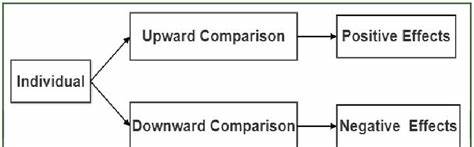
According to some studies, as much as 10 percent of our thoughts involve comparisons of some kind. Social comparison theory is the idea that individuals determine their own social and personal worth based on how they stack up against others. The theory was developed in 1954 by psychologist Leon Festinger. Later research has shown that people who regularly compare themselves to others may find motivation to improve, but may also experience feelings of deep dissatisfaction, guilt or remorse, and engage in destructive behaviors like lying or disordered eating.

***

Downward Comparison is the act of comparing oneself to others who are worse off to feel better about one’s situation. It’s like looking at someone else’s messy desk to feel better about your clutter.

On the other hand, Upward Comparison is the act of comparing oneself to others who are better off to feel bad about one’s situation. It’s like looking at someone else’s neat desk and feel worse about your own clutter.

Finally, according to Dan Ariely PhD, these coping mechanisms boosts self-esteem or depress us with a sense of relief or dread. While helpful in moderation, relying too much on upward or downward comparisons can help hinder personal growth and/or depress growth or empathy; etc.

So, them sparingly and remember: upward comparisons can inspire you to improve and strive for better; while downward comparisons have the opposite effects.

MORE: https://www.verywellmind.com/what-is-the-social-comparison-process-2795872

COMMENTS APPRECIATED

Subscribe Today!

***

***

CONTRAST EFFECT: Cognitive Bias

FOR FINANCIAL ADVISORS

By Dr. David Edward Marcinko MBA MEd CMP

SPONSOR: http://www.CertifiedMedicalPlanner.org

***

***

Sensation, emotion and cognition work by Contrast Effect [cognitive bias]. 

Now, such perception is not only on an absolute scale, it also functions relative to prior stimuli.  This is why room temperature water feels hot when experienced after being exposed to the cold.  It is also why the cessation of negative emotions “feels” so good. 

Cognitive bias functioning also works on this principle.  So one’s ability to analyze information and draw conclusions is very much related to the context with in which the analysis takes place, and to what information was originally available.  This is why it is so important to manage one’s own expectations as well as those of a financial advisor’s or stock broker’s clients. 

For example, a client is much more likely to be satisfied with a 10% portfolio return if they were expecting 7% than if they were hoping for 15%.

COMMENTS APPRECIATED

Subscribe, Like and Refer Today!

***

***

PHYSICIAN FINANCIAL FEAR: Money Anxiety & Chrometophobia

By Dr. David Edward Marcinko MBA MEd

SPONSOR: http://www.MarcinkoAssociates.com

***

***

If you’ve found yourself worrying about the stock market or money lately, you definitely have company. Money anxiety, also called financial anxiety, has become more common than ever after the presidential election of November 2024.

In fact, the American Psychological Association’s 2022 Stress in America Survey, 87 percent of people who responded listed inflation as a source of significant stress. The rise in prices for everything from fuel to food has people from all backgrounds worried, today. The researchers say, in fact, that no other issue has caused this much stress since the survey began in 2007.

When money and financial concerns cause ongoing stress in your life, you could eventually begin to experience some feelings of anxiety as a result. This anxiety can, in turn, have a negative impact on your quality of life.

***

Chrometophobia, commonly known as fear of money, is a psychological condition characterized by overwhelming anxiety and avoidance of currency; according to colleague Dan Ariely PhD.

CITE: https://www.r2library.com/Resource/Title/0826102549

***

Physician Financial Fear is probably the most common emotion among physicians. The fear of being wrong – as well as the fear of being correct! It can be debilitating, as in the corollary expression on fear: the paralysis of analysis.

According to Paul Karasik, there are four common investor and physician fears, which can be addressed by financial advisors and psychologists in the following manner:

  • Fear of making the wrong decision: ameliorated by being a teacher and educator.
  • Fear of change: ameliorated by providing an agenda, outline and/or plan.
  • Fear of giving up control: ameliorated by asking for permission and agreement.
  • Fear of losing self-esteem: ameliorated by serving the client first and communicating that sentiment in a positive manner.

COMMENTS APPRECIATED

Please Subscribe and Thank You!

***

***

Some Retirement Statistics and Questions for Physicians

Transitioning to the End of Your Medical Career

SPONSOR: https://marcinkoassociates.com/

 BY DR. DAVID EDWARD MARCINKO MBA MEd CMP®

CMP logo

SPONSOR: http://www.CertifiedMedicalPlanner.org

With the PP-ACA, increased compliance regulations and higher tax rates impending from the Biden administration – not to mention the corona pandemic, venture capital based healthcare corporations and telehealth – physicians are more concerned about their retirement and retirement planning than ever before; and with good reason. After payroll taxes, dividend taxes, limited itemized deductions, the new 3.8% surtax on net investment income and an extra 0.9% Medicare tax, for every dollar earned by a high earning physician, almost 50 cents can go to taxes!

Introduction

Retirement planning is not about cherry picking the best stocks, ETFs or mutual funds or how to beat the short term fluctuations in the market. It’s a disciplined long term strategy based on scientific evidence and a prudent process. You increase the probability of success by following this process and monitoring on a regular basis to make sure you are on track.

General Surveys

According to a survey from the Employee Benefit Research Institute [EBRI] and Greenwald & Associates; nearly half of workers without a retirement plan were not at all confident in their financial security, compared to 11 percent for those who participated in a plan, according to the 2014 Retirement Confidence Survey (RCS).

In addition, 35 percent of workers have not saved any money for retirement, while only 57 percent are actively saving for retirement. Thirty-six percent of workers said the total value of their savings and investments—not including the value of their home and defined benefit plan—was less than $1,000, up from 29 percent in the 2013 survey. But, when adjusted for those without a formal retirement plan, 73 percent have saved less than $1,000.

Debt is also a concern, with 20 percent of workers saying they have a major problem with debt. Thirty-eight percent indicate they have a minor problem with debt. And, only 44 percent of workers said they or their spouse have tried to calculate how much money they’ll need to save for retirement. But, those who have done the calculation tend to save more.

The biggest shift in the 24 years has been the number of workers who plan to work later in life. In 1991, 84 percent of workers indicated they plan to retire by age 65, versus only 9 percent who planned to work until at least age 70. In 2014, 50 percent plan on retiring by age 65; with 22 percent planning to work until they reach 70.

Physician Statistics

Now, compare and contrast the above to these statistics according to a 2018 survey of physicians on financial preparedness by American Medical Association [AMA] Insurance. The statistics are still alarming:

  • The top personal financial concern for all physicians is having enough money to retire.
  • Only 6% of physicians consider themselves ahead of schedule in retirement preparedness.
  • Nearly half feel they were behind
  • 41% of physicians average less than $500,000 in retirement savings.
  • Nearly 70% of physicians don’t have a long term care plan.
  • Only half of US physicians have a completed estate plan including an updated will and Medical directives.

Retired MD Doctor Retirement Gift Idea Retiring - Doctor ...

Thoughts to Ponder

And so, to help make your golden years comfortable and worry free, here are ten important retirement questions for all physicians to consider:

  1. How much money do you need to retire?
  2. What is your retirement cash flow?
  3. What is your retirement vision?
  4. How to stay on retirement track?
  5. How to maximize retirement plan contributions such as 401(k) or 403(b)?
  6. How to maximize retirement income from retirement plans?
  7. What are some other retirement plan savings options?
  8. What is your retirement plan and investing style?
  9. What is the role of social security in retirement planning?
  10. How to integrate retirement with estate planning?

The opinion of a competent Certified Medical Planner® can assist.

ASSESSMENT: Your thoughts, comments and input are appreciated.

Comprehensive Financial Planning Strategies for Doctors and Advisors: Best Practices from Leading Consultants and Certified Medical Planners™

ORDER Textbook: https://www.amazon.com/Comprehensive-Financial-Planning-Strategies-Advisors/dp/1482240289/ref=sr_1_1?ie=UTF8&qid=1418580820&sr=8-1&keywords=david+marcinko

SECOND OPINIONS: https://medicalexecutivepost.com/schedule-a-consultation/

INVITE DR. MARCINKO: https://medicalexecutivepost.com/dr-david-marcinkos-bookings/

THANK YOU

***

MEDICAL ECONOMICS: Healthcare Inflation

By Staff Reporters

***

***

Inflation has hit record levels this year as demand for goods and services far outpaced supply, and many companies are still trying to bounce back from the shutdowns of early 2020. Health systems, which have razor-thin operating margins even in the best of times, aren’t an exception.

“In the past, we’ve always said that healthcare was kind of recession-proof because demand for healthcare keeps going, regardless of what’s happening in the economy,” said Tina Wheeler, leader of consulting firm Deloitte’s US healthcare practice.

But in the last year, inflation hovered around 8% for much of the year, while medical-care prices increased by only 4.8%, according to Wheeler. Since medical costs are negotiated between hospitals and payers years in advance, hospitals can’t just raise their prices now to keep up with the pace of inflation, said Gerard Brogan Jr., senior vice president and chief revenue officer at Northwell Health.

READ: https://medicalexecutivepost.com/2022/11/10/the-cpi-and-stock-markets/

Here’s how badly hospitals could be hurting:

  • Inflation could cause an additional $370 billion more in healthcare spending than the expected baseline increase by 2027, according to McKinsey.
  • The national health expenditure could grow at a rate of 7.1% over the next five years, compared to the expected economic growth rate of 4.7%, according to McKinsey.
  • By the end of 2021, total hospital expenses per adjusted discharge were up 20.1% compared to 2019, according to the trade group American Hospital Association.

Rising interest rates also hurt hospitals since their main access to capital is through issuing tax-exempt bonds, Wheeler said. The rising cost of capital limits hospitals’ ability to fund projects, like opening a new oncology center to treat patients, for example. Keep reading here

***

ORDER: https://www.amazon.com/Financial-Management-Strategies-Healthcare-Organizations/dp/1466558733/ref=sr_1_3?ie=UTF8&qid=1380743521&sr=8-3&keywords=david+marcinko

COMMENTS APPRECIATED

Thank You

***

About iMBA Inc Expertise in Healthcare Valuation

iMBA Inc., and the ME-P Team

By Ann Miller RN MHA CMP

SPONSOR: http://www.MarcinkoAssociates.com

The www.MedicalBusinessAdvisors.com is focused solely on appraising medical practices, surgery centers [ASCs], medicine, podiatry, optometry and allied healthcare businesses.

Working with our affiliated partners, like the ME-P and others, we are also available for behemoth multi-specialty medical practices, major clinics, hospitals, related healthcare organizations and networks, and PHOs, etc.

We are backed by the expertise of dedicated appraisers and valuation analysts who are trained by the foremost organizations in our industry www.CertifiedMedicalPlanner.org

Practice owners, attorneys and accountants retain us for projects including, but not limited to the following:.

There are a Myriad of Reasons for Obtaining a Medical Practice Valuation and Appraisal Engagement

  • Outright selling-buying
  • Partnership and Associate buy-in / buy-out
  • Mergers and Acquisitions
  • Organic growth tracking
  • Hospital integrations
  • Private and public reporting
  • Financing and Venture Capital
  • Estate and tax planning

Our Capability

We have the ability to provide extensive analysis of value components in healthcare practices and provide appraisals based on business, economic, and market conditions. This involves detailed examination of financials and clinical data in the context of numerous factors including medical specialty, physician supply and demand, payer mix, regulatory environment, regional dynamics, and risk premium.

Assessment

Our methods and approaches adhere to accepted standards of healthcare practice appraisal and utilize direct market data to reach justifiable conclusions.  These are documented in a comprehensive report which is tailored to meet the need of the specific engagement.

BLUNDERS TO AVOID: Medical Practice Valuation Blunders[1]

SAMPLE ENGAGEMENTS: See partial engagement list below.

Conclusion

Your thoughts and comments on this ME-P are appreciated. Feel free to review our top-left column, and top-right sidebar materials, links, URLs and related websites, too. Then, subscribe to the ME-P. It is fast, free and secure.

Speaker: If you need a moderator or speaker for an upcoming event, Dr. David E. Marcinko; MBA – Publisher-in-Chief of the Medical Executive-Post – is available for seminar or speaking engagements. Contact: MarcinkoAdvisors@msn.com

OUR OTHER PRINT BOOKS AND RELATED INFORMATION SOURCES:

Thank you for your consideration

  Product DetailsProduct Details

   Product Details

***

AMA: Bye-Bye Medicare Billing Codes?

By Staff Reporters

***

***

Robert F Kennedy Jr, who was selected by Donald Trump to run the U.S. health and human services department, is working on plans to rid the American Medical Association from its role in drawing up Medicare’s billing codes, which sets doctors’ fees for more than 10,000 procedures, Oliver Barnes of The Financial Times reports.

The plan would result in an upheaval of a system that has been in place for decades. Publicly traded companies in the healthcare space include CVS Health (CVS), Centene (CNC), Cigna (CI), Elevance Health (ELV), Humana (HUM), Molina Healthcare (MOH) and UnitedHealth (UNH).

COMMENTS APPRECIATED

Subscribe, Reply and Refer!

***

***

PSYCHOLOGY: Retrospective Framing

By Staff Reporters

***

***

Ever notice how memories change over time? That’s retrospective framing.

According to Dan Ariely PhD, our brains are like movie editors, constantly tweaking the past to fit our current narrative. Recall that terrible vacation where everything went wrong? Fast forward and now it’s a hilarious adventure. This mental editing helps us make sense of our lives and learn from our experiences.

So, just remember, the past is a story we keep rewriting, and sometimes those edits can be more fiction than fact

COMMENTS APPRECIATED

Subscribe Today!

***

***

CHARGE MASTER: Medical Bills Paradox

By Dr. David Edward Marcinko MBA MEd CMP™

SPONSOR: http://www.CertifiedMedicalPlanner.org

***

***

CHARGE MASTER MEDICAL BILLS

Classic Definition: A comprehensive review of a physician, clinic, facility, medical provider or hospital’s charges to ensure Medicare billing compliance through complete and accurate HCPCS/CPT and UB-92 revenue code assignments for all items including supplies and pharmaceuticals. The charge master captures the costs of each procedure, service, supply, prescription drug, and diagnostic test provided at the hospital, as well as any fees associated with services, such as equipment fees and room charges

Modern Circumstance: A charge master quizlet (charge description master [CDM]) document that contains a computer-generated list of procedures, services, and supplies with charges for each. Charge master rates are essentially the health care market equivalent of Manufacturer’s Suggested Retail Price (MSRP) in the car buying market. Poor charge master maintenance can lead to overpayments or underpayments. It can also lead to claim rejections from insurance companies, poor patient experience, or compliance violations.

Paradox Examples:

  • Superbills: An encounter form that is the financial record source document used by healthcare providers and other personnel to record treated diagnoses and services rendered to the patient during the current encounter. It is also called a superbill.
  • Payment rates: Almost no one actually pays the publicized charge master rates. The vast majority of health care consumers are represented by a payer of some kind, such as a commercial health insurance company, Medicaid, or Medicare. Commercial insurers negotiate the actual prices they pay during the process of contracting with providers. Medicare and Medicaid establish their own payment levels independent of hospitals’ charge master lists – Medicare through the federal government and Medicaid through state governments.
  • Cash pay: The sad irony of the charge master is that the uninsured are the most likely to be billed charge master rates because they are not represented by a third-party payer.
  • Problematic features: Other items also impede the ability of payers to have a comprehensive and accurate understanding of hospitals’ financial positions. For example, nonprofit hospitals are required to report charity care, bad debt expenses, community benefit initiatives, and uncompensated care. When these expenses are reported at the charge master level, expenses can be paradoxically overstated, potentially making a hospital’s financial position look worse than it actually is.

COMMENTS APPRECIATED

Subscribe Today!

***

***

***

NOVEMBER: National Alzheimer’s Awareness Month

By Dr. David Edward Marcinko MBA MEd

***

***

The number of people living with Alzheimer’s disease is growing. The ripple effect is straining families, communities, and the healthcare system, yet talking about the disease on a personal level can be difficult.

November is Alzheimer’s Awareness Month because it can happen in any family, and because it’s worth talking about the challenges of living with or caring for someone with this disease.

You may notice splashes of teal and purple sprouting up this November, as both colors are associated with Alzheimer’s awareness. Teal is the color of the Alzheimer’s Foundation of America, chosen for its calming effect. Purple is the signature color of the Alzheimer’s Foundation, which stands for strength in the fight against Alzheimer’s disease.

***

COMMENTS APPRECIATED

Please Subscribe Today!

***

***

CURSE of the “Stereotype”

By Dr. David Edward Marcinko MBA MEd

***

***

The Stereotype Curse is the negative impact of stereotypes on an individual’s performance or behavior. It’s like a self-fulfilling prophecy where being aware of a stereotype makes you more likely to conform to it.

For example, if you’re told you’re bad at math because of your gender, that stress can affect your performance. Breaking free from stereotypes requires awareness and effort.

So, next time you feel boxed in by a stereotype, remind yourself: you’re more than a cliché.

COMMENTS APPRECIATED

Subscribe Today!

***

***

PATTERNICITY: Apophenia vs. Pareidolia

By Staff Reporters

***

***

Patternicity is our brain’s tendency to find patterns in random data. It’s why we see faces in clouds or think the stock market follows our horoscope. According to colleague Dan Ariely PhD, this quirk helped our ancestors survive by recognizing predator shapes in the bushes, but in modern times, it can lead us astray. Our brains love making connections, sometimes too much, seeing patterns where none exist.

So, when you’re convinced that your lucky socks influence your team’s performance, remind yourself: it’s just your brain’s patternicity at work.

Apophenia vs. Pareidolia

Now, “Apophenia is the general term for the human tendency to see patterns in meaningless data that may involve visual, auditory, or other senses,” according to Dr. Harold Hong, a psychiatrist from Raleigh, North Carolina. He points out that pareidolia is a specific form of apophenia that refers to seeing visual patterns in random or ambiguous visual stimuli, such as seeing a face in the clouds.

Apophenia and pareidolia are common occurrences, says Hong, and challenges often only present when someone becomes fixated on specific patterns or details that others perceive as random. “While both phenomena are natural human tendencies, they can become concerning if someone starts to fixate on specific patterns excessively,” he says, noting that apophenia may be prevalent in certain mental health conditions, such as obsessive-compulsive disorder (OCD).

COMMENTS
Subscribe Today!

***

***

RESPONSE: Flight -OR- Fight?

By Staff Reporters

***

***

The Fight or Flight Response is our built-in alarm system, ready to spring into action at the first sign of danger. Whether it’s a charging lion or an impending deadline, our bodies react the same way – heart racing, adrenaline pumping, ready to fight or flee. This ancient survival mechanism is great for escaping predators but less helpful when dealing with modern stressors.

So, the next time you feel your heart racing over a tough email or stock market loss, remember: it’s just your caveman brain doing its thing.

COMMENTS APPRECIATED

Subscribe Today!

***

***

FATAL: Narcissism

BY DR. DAVID EDWARD MARCINKO MBA MEd

***

***

Imagine if Narcissus had a social media account. Fatal narcissism is what happens when self-love goes off the rails. It’s not just about admiring your reflection; it’s an all-consuming need for admiration and validation. Think endless selfies and humblebrags.

***

***

While a bit of narcissism is normal, fatal narcissism is like a black hole – it sucks in all attention and gives nothing back.

So, if my Instagram looks like a shrine to my own greatness, you might be witnessing fatal narcissism in action.

COMMENTS APPRECIATED

Subscribe Today!

***

***

NOVEMBER: Lung Cancer Awareness Month

***

***

November is Lung Cancer Awareness Month, which according to the CDC, is the third most common cancer in the US. There are about one in five lung cancer deaths each year across the country, and November is dedicated to increasing screening, reducing smoking, and finding new treatments.

MORE: https://www.lung.org/

COMMENTS APPRECIATED

Subscribe Today!

***

***

PARADOX: Generosity V. Miserliness

By Staff Reporters

***

***

According to BC Smith and Hilary Davidson, generosity is paradoxical. Those who give, receive back in turn. By spending ourselves for others’ well-being, we enhance our own standing. In letting go of some of what we own, we better secure our own lives. By giving ourselves away, we ourselves move toward flourishing. This is not only a philosophical or religious teaching; it is a sociological fact.

The the generosity paradox can also be stated in the negative.

By grasping on to what we currently have, we lose out on better goods that we might have gained. In holding onto what we possess, we diminish its long-term value to us. And, by always protecting ourselves against future uncertainties and misfortunes, we are affected in ways that make us more anxious about uncertainties and vulnerable to future misfortunes.

In short, by failing to care for others, we do not properly take care of ourselves. It is no coincidence that the word “miser” is etymologically related to the word “miserable.”

COMMENTS APPRECIATED

Subscribe Today!

***

***

PODCAST: Farzad Mostashari MD and “Aledade”Primary Care

By Shahid N Shah

***

***

Our guest on this episode is Dr. Farzad Mostashari. Farzad is the co-founder and CEO of Aledade, a primary care enablement company that partners with independent PCPs to transition to value-based care and, as a result, maintain their independence.

Founded in 2014, Aledade works with 11,000 physicians across 40 states and DC, accounting for 1.7M patients under management in Medicare, Medicare Advantage, Commercial and Medicaid contracts. Farzad previously served as the National Coordinator for Health IT in the Department of Health and Human Services, he completed medical school at the Yale School of Medicine and a Master’s in Population Health from Harvard’s T.H. Chan School of Public Health. Earlier this year, Aledade raised a $123M Series E round of funding led by OMERS Growth Equity.

***

In this episode, colleague Shahid N. Shah will discuss with Farzad about (1) his journey to starting Aledade and the role policy expertise and evidence have played in the company’s success (2) why he and the company are betting on independent physicians as the drivers of change in value-based care and (3) how Aledade became the rare profitable health tech company.

-Dr. David Edward Marcinko MBA MEd

PODCAST: https://soundcloud.com/wharton-pulse-podcast/mostashari-aledade

***

ORDER: https://www.amazon.com/Dictionary-Health-Information-Technology-Security/dp/0826149952/ref=sr_1_5?ie=UTF8&s=books&qid=1254413315&sr=1-5

***

ORDER: https://www.amazon.com/Business-Medical-Practice-Transformational-Doctors/dp/0826105750/ref=sr_1_9?ie=UTF8&qid=1448163039&sr=8-9&keywords=david+marcinko

COMMENTS APPRECIATED

Thank You

***

PHYSICIAN: Pay Cuts in 2025

By Staff Reporters

***

***

Doctors, Facing Another Pay Cut, Call for Permanent Medicare Payment Reform

The Centers for Medicare and Medicaid Services (CMS) is moving forward with a 2.9% cut to physician payments in 2025 despite protest from major industry groups. CMS has finalized the calendar year 2025 Medicare Physician Fee Schedule rule that sets payment rates for next year and also outlines new policies focused on primary care, preserved telehealth flexibilities, and a strengthened Medicare Shared Savings Program (MSSP). 

But, provider groups were quick to condemn CMS’ decision to go ahead with the pay cut, which was proposed in the draft rule released in July. In a statement, Bruce Scott, MD, president of the American Medical Association (AMA), pointed out that that while physicians are receiving a 2.8% payment cut next year, medical practice costs for physicians will increase by 3.5% in 2025. After adjusted for inflation, Medicare reimbursement to physicians has decreased 29% since 2001, the AMA says.

Source: Heather Landi, Fierce Healthcare [11/2/24]

COMMENTS APPRECIATED

Thank You

***

***

Take the Physician-Focused FINANCIAL PLAN “Challenge”

Do You Have “What it Takes”?

Book Marcinko

DEM 2

By Professor David E. Marcinko MBBS DPM MBA MEd CMP®

Institute of Medical Business Advisors, Inc.

mba

www.CertifiedMedicalPlanner.org

cmp-logo16

My History

More than 20 years ago I crafted a comprehensive holistic financial plan for a young doctor colleague who was born in 1959. In fact, he was not even a medical student at the time; so “canned off-the-shelf plans”, computer generated software or generic spread sheets were not a viable creation option. It was all a granular, detailed, specific and cognitive work-product. Today, he is a board-certified internist.

So, in 2023, it is right and just to take a look back and see how well, or poorly, we’ve fared.

Now, I appreciate more than most how financial planning is a “process”; and not an isolated event. Yet, all sorts of “advisors” and “consultants” create and charge hefty fees for same, and on-going monitoring, every day.

The ME-P Challenge

Nevertheless, I challenge all you mid-career or senior financial planners /advisors to this competition; regardless of degree, certification or designation.

“Show me your financial plan” – AND – “I’ll show you my financial plan”

Here Comes the Judge

Then, our community of ME-P readers, subscribers, visitors and “judges” will decide the winner.

The contest is open to any financial advisor, planner, consultant, wealth manager, CFP®, CFA, insurance agent, CPA or CLU, ChFC, or stock-broker, etc., who is not afraid of transparency in his or her work product and purported expertise.

Of Financial Certifications and Designations

*** [Creating and Evaluating a physician focused financial plan]

***

Assessment

So, just send in a copy of any “blinded” physician-focused financial plan that is about 21 years old. We will post for all to see and review …. warts and all … including my own; three part mega-plan!

The winner will receive bragging rights, academic swagger, and expert promotion to our entire ME-P ecosystem and network of medical, business, law and graduate school communities; as well as physicians, nurses, healthcare executives and allied health care professionals.

An informed sought-after and lucrative sector – indeed!

IOW: Free publicity and positive “new-wave” PR – PRICELESS!

Of course, as an educator and professor of health economics and finance, we are pleased to present you with the deep medical business knowledge and detailed financial,managerial and accounting techniques used, with some real-life “tips and pearls” developed over the last two decades of R&D, right here:

MORE: Comprehensive Financial Planning Strategies for Doctors[Best Practices from Leading Consultants and Certified Medical Planners™]

MORE: Risk Management Liability Insurance, and Asset Protection Strategies for Doctors and Advisors [Best Practices from Leading Consultants and Certified Medical Planners™]

Conclusion

Your thoughts and comments on this ME-P are appreciated. Feel free to review our top-left column, and top-right sidebar materials, links, URLs and related websites, too. Then, subscribe to the ME-P. It is fast, free and secure.

Speaker: If you need a moderator or speaker for an upcoming event, Dr. David E. Marcinko; MBA – Publisher-in-Chief of the Medical Executive-Post – is available for seminar or speaking engagements. Contact: MarcinkoAdvisors@msn.com

OUR OTHER PRINT BOOKS AND RELATED INFORMATION SOURCES:

***

Risk Management, Liability Insurance, and Asset Protection Strategies for Doctors and Advisors: Best Practices from Leading Consultants and Certified Medical Planners™           8Comprehensive Financial Planning Strategies for Doctors and Advisors: Best Practices from Leading Consultants and Certified Medical Planners™

***

PART 1: My Sample Financial Plan I [Data gathering, goals and objectives]

PART 2: My Sample Financial Plan II [Data Analytics, Creation and Crafting]

PART 3: Request here: MarcinkoAdvisors@msn.com [Stress Testing and Completion]

***

← Back

Thank you for your response. ✨

ECONOMIC: Paradoxes all Financial Advisors Should Know

BY DR. DAVID EDWARD MARCINKO MBA MEd CMP™

SPONSOR: http://www.MarcinkoAssociates.com

SPONSOR: http://www.CertifiedMedicalPlanner.org

***

***

A paradox is a logic and self-contradictory statement or a statement that runs contrary to one’s expectation. It is a statement that, despite apparently valid reasoning from true or apparently true premises, leads to a seemingly self-contradictory or a logically unacceptable conclusion. A paradox usually involves contradictory-yet-interrelated elements that exist simultaneously and persist over time. They result in “persistent contradiction between interdependent elements” leading to a lasting “unity of opposites”.

***

And so, as we plan for our financial future thru a New Year Resolution for 2025, it’s helpful to be cognizant of these paradoxes. While there’s nothing we can do to control or change them, there is great value in being aware of them, so we can approach them with the right tools and the right mindset.

According to Adam Grossman, here are seven [7] of the paradoxes that can bedevil financial decision-making, clients and financial advisors, alike:

  1. There’s the paradox that all of the greatest fortunes—Carnegie, Rockefeller, Buffett, Gates—have been made by owning just one stock. And yet the best advice for individual investors is to do the opposite: to own broadly diversified index funds. More: https://tinyurl.com/285vftx4
  2. There’s the paradox that the stock market may appear over valued and yet it could become even more overvalued before it eventually declines. And when it does decline, it may be to a level that is even higher than where it is today.
  3. There’s the paradox that we make plans based on our understanding of the rules—and yet Congress can change the rules on us at any time, as the recent 2024 election results attest.
  4. There’s the paradox that we base our plans on historical averages—average stock market returns, average interest rates, average inflation rates and so on—and yet we only lead one life, so none of us will experience the average.
  5. There’s the paradox that we continue to be attracted to the prestige of high-cost colleges, even though rational analysis that looks at return on investment tells us that lower-cost state schools are usually the better bet.
  6. There’s the paradox that early retirement seems so appealing—and has even turned into a movement—and yet the reality of early retirement suggests that we might be better off staying at our desks.
  7. There’s the paradox that retirees’ worst fear is outliving their money and yet few choose the financial product that is purpose-built to solve that problem: the single-premium immediate annuity.

CITE: https://www.r2library.com/Resource/Title/0826102549

How should you respond to these paradoxes? As you plan for your financial future, embrace the concept of “loosely held views.”

In other words, make financial plans, but continuously update your views, question your assumptions and rethink your priorities.

COMMENTS APPRECIATED

Subscribe Today!

***

***

PRIMARY MEDICAL CARE: The Paradox

BY DR. DAVID EDWARD MARCINKO MBA MEd CMP

Sponsor: http://www.CertifiedMedicalPlanner.org

***

***

Classic Definition: Despite rising costs, health care often is of poor quality. Evidence from a classic medical improvement outcomes study assessed care of patients with several chronic diseases. This study found that patients’ functional health status outcomes are similar to care rendered by specialists and generalists but that generalists use far fewer resources. Similar outcome at lower cost represents higher value.

Modern Circumstance: Current solutions to improving care quality may do more harm than good if they focus more on diseases than on people. Efforts to improve the parts (evidence-based care of specific diseases) may not necessarily improve the whole (the health of people and populations).

Expanding access to specialty care, for example, has been proposed as both a source of and a solution for deficiencies in quality of care. Primary care is touted as an essential building block of a high-value health care system even as it is undermined by systems attempting to improve the quality, effectiveness, and value of their health care..

Paradox Example: The above contradictions plague improvement efforts in health care systems around the world, particularly the United States The paradox is that compared with specialty care or with systems dominated by specialty medical care, primary care is associated with the following: (1) poorer quality care for individual diseases, yet (2) similar functional health status at lower cost for people with chronic disease, and (3) better quality, better health, greater health  equity and lower costs for whole peoples and populations.

And so, this contradiction plagues improvement efforts in health care systems around the world, particularly the United States.

Cite: Kurt Stange MD PhD and Robert Ferrer MD MPH

COMMENTS APPRECIATED

Thank You

***

***

California Passes Bill Regulating Private Equity Deals

By Health Capital Consultants, LLC

***

***

On September 28th, 2024, California Governor Gavin Newsom vetoed Assembly Bill (AB) 3129, which sought to regulate private equity (PE) transactions involving healthcare organizations by requiring certain transactions to be reviewed by, and to receive approval from, the California Attorney General (AG).

In his veto message, Governor Newsom stated that the state’s Office of Health Care Affordability (OHCA), established in 2022, has the power to review and evaluate healthcare transactions (including the ones at issue in AB 3129). While OHCA does not have the power to block proposed transactions, as the AG would have had under AB 3129, it can refer transactions to the AG for further examination. Put simply, the governor’s veto seems to stem from concern that taking power away from the newly-created OHCA could muddy the waters in healthcare transaction regulation.

While there is a possibility that the California legislature could override Governor Newsom’s veto, it appears unlikely as of the publication of this Alert. However, the overall popularity of this bill in the legislature (as evidenced by the fairly wide margins with which it passed) indicates that PE groups looking to transact in the healthcare space – both in California and across the U.S. – should be on high alert, as regulators are increasingly turning their focus on the role of PE in healthcare.

CITE: https://www.r2library.com/Resource/Title/0826102549

For more information on AB 3129, as well as the status of state and federal regulation of PE, see the September 2024 Health Capital Topics article entitled, California Passes Bill Regulating Private Equity Deals.”

COMMENTS APPRECIATED

Thank You

***

***

MEMORY: Fallibility

By Staff Reporters

***

***

Memory is Fallible. Think you have a great memory? Think again.

According to psychologist and colleague Dan Ariely PhD, memory is more like a game of telephone than a recording device. Each time you recall an event, your brain makes tiny edits, adding some flair or skipping the boring parts. It’s why you can’t remember where you left your keys but can vividly recall an embarrassing moment from high school.

So, the next time someone says, “I remember it like it was yesterday,” know that yesterday might be a heavily edited rerun.

COMMENTS APPRECIATED

Subscribe Today!

***

***

RECIPROCITY: Science “Sales” in Action

FREE SAMPLES

The Art of Giving – And Receiving – Value!

By Staff Reporters

***

***

Imagine you’re at a party, and someone hands you a drink. Your first instinct? Find something to give back. This is [sales] reciprocity in action – our built-in psychological urge to repay kindness.

According to colleague Dan Ariely PhD, it’s like a cosmic balance sheet in our brains, ensuring we don’t owe anyone a favor. This is why companies give out free samples. They’re not just being nice; they know you’ll feel a pang of guilt if you walk away without buying something.

THINK: Free financial planning dinner seminar and prospecting event. That’s you – the Sales Prospect!

So, next time someone does you a favor, remember: it’s not just seller kindness, it’s science!

COMMENTS APPRECIATED

Subscribe Today!

***

***

PHYSICIAN PERSONAL COACHING: Financial Planning and Retirement Consulting

SPONSORED BY: http://www.MarcinkoAssociates.com

***

***

Most doctors report feeling overworked and are considering a change in career, according to a new poll.

Doximity, a virtual network for physicians, found that 81% doctors surveyed last fall said they felt overworked—a slight decline from 86% who reported burnout in 2022 but still up from 73% in 2021. Meanwhile, about three in five doctors said they were considering early retirement (30%), looking for another employer (15%), or leaving the profession altogether (14%), the poll found.

The findings, released last year, come amid reports of rising rates of physician burnout and dissatisfaction since after the Covid-19 pandemic.

LEARN MORE: https://tinyurl.com/y3j2t3ab

COMMENTS APPRECIATED

Thank You

***

***

COCKTAIL: Party Effect

By Staff Reporters

***

***

The cocktail party effect is the ability of the human hearing and auditory system to focus one’s listening attention on a particular speaker in a noisy environment, such as a crowded party. This allows people to focus on a specific conversation while filtering out other nearby conversations and background noise.

Consider that you’re at a crowded party, noise everywhere, but you hear your name mentioned across the room. How? Welcome to the Cocktail Party Effect.

Your brain is like a highly trained butler, filtering out the background chatter to catch something personally relevant. It’s not just your name, either; it could be juicy gossip or a mention of free pizza or an exciting new stock tip you’ve been considering; or even an IPO.

So, according to psychologist colleague Dan Ariely PhD, this selective attention keeps us sane in a noisy world, helping us focus on the things that matter – like whether that person just said “free drinks” or “freeloading, or “free-stock trading.”

COMMENTS APPRECIATED

Please Subscribe!

Thank You

***

***

HINDSIGHT BIAS: The “Curse of Knowledge”

By Staff Reporters

SPONSOR: http://www.MarcinkoAssociates.com

***

***

The Curse of Knowledge and Hindsight Bias

Similar in ways to the availability heuristic (Tversky & Kahneman, 1974) and to some extent, the false consensus effect, once you (truly) understand a new piece of information, that piece of information is now available to you and often becomes seemingly obvious. It might be easy to forget that there was ever a time you didn’t know this information and so, you assume that others, like yourself, also know this information: the curse of knowledge.

Cite: https://medicalexecutivepost.com/2022/11/18/what-is-the-dunning-kruger-effect/

However, according to colleague Dan Ariely PhD, it is often an unfair assumption that others share the same knowledge. The hindsight bias is similar to the curse of knowledge in that once we have information about an event, it then seems obvious that it was going to happen all along.

I should have seen it [divorce, stock market crash/soar my smoking & lung cancer, unemployment, etc] coming!

COMMENTS APPRECIATED

Please Subscribe!

***

***

GDP: Private Domestic Health Care Investments

By Dr. David Edward Marcinko MBA MEd CMP™

SPONSOR: http://www.MarcinkoAssociates.com

***

***

SPONSOR: http://www.CertifiedMedicalPlanner.org

GROSS PRIVATE DOMESTIC HEALTH CARE INVESTMENTS

Classic:  Investment purchases and private expenditures of healthcare firms, the value of related construction, and the change in inventory during the year.

Modern: Gross Revenue Per Day is the average amount charged by a hospital for one day of inpatient care (gross inpatient revenue divided by patient-census days).

CITE: https://www.r2library.com/Resource/Title/0826102549

Examples:

  • Gross Revenue Per Discharge: The average amount charged by a hospital to treat an inpatient from admission to discharge (gross inpatient revenue divided by discharges).
  • Gross Revenue Per Visit: The average amount charged by a hospital for an outpatient visit (gross outpatient revenue divided by outpatient visits).

COMMENTS APPRECIATED

Subscribe Today!

***

***

RIP: Philip George Zimbardo PhD

March 23, 1933 – October 14, 2024

By Staff Reporters

***

***

Philip George Zimbardo was an American psychologist and a professor at Stanford University. He became known for his 1971 Stanford prison experiment, which was later criticized severely for both ethical and scientific reasons.

He authored various introductory psychology textbooks for college students, and other notable works, including The Lucifer Effect, The Time Paradox, and The Time Cure.

He was also the initiator and president of the Heroic Imagination Project.

Official website: philipzimbardo.com

COMMENTS APPRECIATED

Thank You

***

***

PHYSICIANS: Career Change Conundrum

By Dr. David Edward Marcinko MBA MEd CMP™

SPONSOR: https://marcinkoassociates.com/process-what-we-do/

***

***

Half of Physicians Plan to Change Career Paths

The Physicians Foundation conducted a survey on physician practice patterns and perspectives a few years ago. Here are some key findings from the report:

• 31% of physicians identify as independent practice owners or partners.
• Almost half (47%) of physicians plan to change career paths.
• 78% of physicians sometimes, often or always experience feelings of burnout.
• Nearly a quarter of physician time is spent on non-clinical paperwork.

This result is not good for Medicine.

Cite: The Physicians Foundation, September 2018

COMMENTS APPRECIATED

Subscribe Today!

***

***

Recent Court Actions Provide Insight into Future of Fraud & Abuse Laws

By Health Capital Consultants, LLC

Two recent court actions may serve as harbingers for the future of healthcare fraud and abuse laws. In September 2024, a federal judge in the Southern District of West Virginia ordered parties in a qui tam False Claims Act and Stark Law case to brief the court on the implications of Loper Bright Enterprises v. Raimondo on the interpretation of the Stark Law to the case at hand.

That same month, a federal judge in the Middle District of Florida dismissed a qui tam lawsuit on a novel theory that the False Claims Act’s whistleblower provisions are unconstitutional.

This Health Capital Topics article discusses these cases and the potential impact on federal fraud and abuse laws. (Read more…)

COMMENTS APPRECIATED

Thank You

***

***

PARADOX: Value Based Care

BY DR. DAVID EDWARD MARCINKO MBA MED CMP

Sponsor: http://www.CertifiedMedicalPlanner.org

***

A young clinician representative advising to consider the cost versus value of medicine. Health care concept for economic cost-effectiveness analysis, driving down medical costs, improved access.

***

Value Based Care Classic Definition: Value-based care is a type of payment model that pays doctors and hospitals for treating patients in the right place, at the right time and with just the right amount of care. You can look at it as a financial incentive to motivate healthcare providers to meet specific performance measures related to the quality and efficiency of the process. The same way, it penalizes weaker experiences, such as medical errors. The concept is often counter-intuitive.

CITE: https://www.r2library.com/Resource/Title/0826102549

Modern Circumstance: As healthcare costs continue to rise, value-based care has been growing in popularity compared to the traditional fee-for-service method.

Think: HMOs, PPOs, capitation payments and Medicare Advantage [Part C].

Paradox Examples:

  • Payment: A physician paid through fee-for-service compensation might like to see a packed medical office waiting room. More patients and services equate to higher pay. But, the same doctor paid through a VBC contract might wish to see an emptier waiting room as s/he will get the exact same daily pay for seeing fewer patients and working much less.
  • Prospectivity: Traditional Fee-for-Service medicine treats sick patients. VBC medicine seeks to keep patients healthy and out of the doctor’s office. 

Nursing Capitation: https://medicalexecutivepost.com/2024/07/07/on-nursing-capitation-reimbursement/

COMMENTS APPRECIATED

Thank You

***

***

Transforming Hospital Finances with Six Sigma

The Mount Carmel Health System

By Mark Matthews MD

A “Scrubbed” True Illustration

One of the earliest healthcare adopters of Six Sigma was the Mount Carmel Health System in Columbus, Ohio.

The organization was barely breaking even in the summer of 2021 when competition from surrounding providers made things worse. Employee layoffs added fuel to an already all-time low employee morale.

The CEO

The Chief Executive Officer was determined to stem the bleeding, break the cycle of poor financial performance and return the hospital system to profitability.  He sought the potential benefits of Six Sigma and began a full deployment of its methodology. The plan was a bold move, as the organization ensured that no one would be terminated as a result of a Six Sigma project having eliminated his or her previous duties. These employees would be offered an alternative position in a different department. Moreover, top personnel were asked to leave their current positions to be trained and work full time as Six Sigma expert practitioners who would oversee project deployment while their positions were back filled.

Assessment

The Six Sigma deployment was the right decision. More than 50 projects were initiated with significant success. An example of an early Mount Carmel success story is the dramatic improvement in their Medicare Part C product reimbursements, previously written off as uncollectible accounts. These accounts were often denied by HCFA due to coding of those patients as “working aged.”

Since the treatment process status often changed in these patients, HCFA often rejected claims or lessened reimbursement amounts, effectively making coding a difficult and elusive problem. The employment of the Six Sigma process fixed the problem, resulting in a real gain of $857,000 to the organization. The spillover of this methodology to other coding parameters also has dramatically boosted revenue collection.

A Glimpse of Lean Medical Management Tools and Techniques

Conclusion

Your thoughts and comments on this ME-P are appreciated. Feel free to review our top-left column, and top-right sidebar materials, links, URLs and related websites, too. Then, subscribe to the ME-P. It is fast, free and secure.

Speaker: If you need a moderator or speaker for an upcoming event, Dr. David E. Marcinko; MBA – Publisher-in-Chief of the Medical Executive-Post – is available for seminar or speaking engagements. Contact: MarcinkoAdvisors@msn.com

Our Other Print Books and Related Information Sources:

Physician Financial Planning: http://www.jbpub.com/catalog/0763745790

Medical Risk Management: http://www.jbpub.com/catalog/9780763733421

Hospitals: http://www.crcpress.com/product/isbn/9781439879900

Physician Advisors: www.CertifiedMedicalPlanner.org

***

Buy from Amazon

BOOK FOREWORD / TESTIMONIAL

***

***

Understanding the Number Needed to Treat (NNT) in Medicine

A “New” Clinical Numeric

DR. DAVID EDWARD MARCINKO MBA MEd

This physician-led medical website  http://www.thennt.com/ seeks to explain to patients and physicians how well a particular treatment or medicine is likely to work based on a statistical model called the “Number Needed to Treat.”

Calculation

This is not really a new calculation, as it has been know for many years. In fact, I review and teach it in several of my undergraduate, graduate and business school courses [healthcare administration, statistics, epidemiology, infection control, community, public and population health, etc], and have been doing so for a few years now. My students are always amazed by it.

Brief Definition

The NNT is “a measurement of the impact of a medicine or therapy by estimating the number of patients that need to be treated in order to have an impact on one person.”

Detailed Definition

According to wikipedia; the number needed to treat (NNT) is an epidemiological measure used in assessing the effectiveness of a health-care intervention, typically a treatment with medication. The NNT is the number of patients who need to be treated in order to prevent one additional bad outcome (i.e. the number of patients that need to be treated for one to benefit compared with a control in a clinical trial). It is defined as the inverse of the absolute risk reduction.

The NNT was first described in 1988. The ideal NNT is 1, where everyone improves with treatment and no-one improves with control. The higher the NNT, the less effective is the treatment. Variants are sometimes used for more specialized purposes.

One example is number needed to vaccinate. NNT values are time-specific. For example, if a study ran for 5 years and it was found that the NNT was 100 during this 5 year period, in one year the NNT would have to be multiplied by 5 to correctly assume the right NNT for only the one year period (in the example the one year NNT would be 500).

Source: http://en.wikipedia.org/wiki/Number_needed_to_treat

Assessment

For more information:

http://www.physiciansnews.com/2010/10/06/new-website-by-docs-shows-data-on-treatment-outcomes/

Conclusion

And so, your thoughts and comments on this ME-P are appreciated. Give em’ a click and tell us what you think http://www.thennt.com? Do you use the concept of NNT in your clinical medical practice; why or why not? Feel free to review our top-left column, and top-right sidebar materials, links, URLs and related websites, too. Then, subscribe to the ME-P. It is fast, free and secure.

Channel Surfing

Have you visited our other topic channels? Established to facilitate idea exchange and link our community together, the value of these topics is dependent upon your input. Please take a minute to visit. And, to prevent that annoying spam, we ask that you register.

Speaker: If you need a moderator or speaker for an upcoming event, Dr. David E. Marcinko; MBA – Publisher-in-Chief of the Medical Executive-Post – is available for seminar or speaking engagements. Contact: MarcinkoAdvisors@msn.com

OUR OTHER PRINT BOOKS AND RELATED INFORMATION SOURCES:

Sponsors Welcomed: And, credible sponsors and like-minded advertisers are always welcomed.

***

Product DetailsProduct DetailsProduct Details

***

What If You Could Start From Scratch – Doctor?

How would you restart your career in medicine?

[By Dr. David Edward Marcinko MBA MEd CMP™]

We’ve known this physician-client-friend for 10 years, and while he didn’t tell us what he wanted to discuss, we knew it was important.

After exchanging pleasantries, he shocked me: He said he’s totally unfulfilled in his current job and wants to do something new.

We were floored because he is an outstanding doctor – at the top of his game. From the outside looking in, he appears to be “living the dream”.

After that bombshell, we asked him the question we couldn’t get out of our mind: “Are you afraid?”

“Yes,” he said; “Afraid and relieved.”

His relief stemmed from the fact that he is going to shed the tremendous demands of being a doctor at the highest levels. He was afraid because he didn’t know what was next.

We thought afterward, “What a courageous and totally refreshing move.”

ME-P Doctors, Advisors and Consultants

A Fantasy Reboot

That dialogue triggered a larger internal conversation within; and with others.

  • What would you do if you could start from scratch?
  • How would you proceed if you could just wipe the slate clean and restart your career in medicine?

For those quietly pondering a similar path, three great opportunities seem crystal clear.

First, we would create our own practice playbook. Discard the ready-made choices served up by your old practice. For the independent physician today, there’s almost infinite variety. The pleasure in creating your own approach is that there are so many options. Your patients will appreciate the greater choice and flexibility, too.

Second, we would whole-heartedly embrace technology; but not necessarily EHRs at this time. Rather, build your own HIT framework to complement your medical practice. Innovate across your entire operations – everything from medical records, to online appointment access, secure FAX machines, to patient portals and laboratory results reporting to your own mobile phone app. Freeing yourself from your current archaic technology will be life altering by itself.

5 new rules for how doctors interact with health care IT

Third, cull the difficult people from your life. These are the naysayers who weigh you down – superiors, colleagues or patients. Negativity is corrosive, and it always lingers. It also distracts you from giving others your best. While you’re at it, cull the skills you mastered to survive in your career so you can focus on those that really matter.

Non-Traditional Doctors

Case Model

So, we wanted to share one of the all-time greatest reboots we know because it shows what is possible if you believe in yourself.

A decade ago, one of our osteopathic physician clients delivered some bad news. She was quitting her job as a medical associate, to transition into her own direct pay concierge practice.

At the time, this was unheard of: No one walked away from a potential medical practice partnership to become a solo physician. But, Sue had a different vision. She wasn’t fulfilled and she knew it. With the support of her husband, she decided there was a better way. So she started from scratch.

How did it work out?

Unbelievably well – but NOT overnight!

With our meager assistance, Sue’s been cash flow positive for the last 7 years, and now earns more money than before, with less stress; and she is the captain of her ship. A few colleagues who have worked with her have even gone on to achieve comparable success. She’s become a role model to others too, and she remains one our heroes.

The Decision

Starting from scratch may or may not translate into more money, but it often means this: More happiness in your life. Sue’s decision, just like our friend who bared his soul to us over coffee, were both made for the right reasons.

We wish our friend well on his journey, confident knowing that a happy ending is just over the horizon for him, too.

Product DetailsProduct Details

Assessment

Send us your own success/failure story, so we might learn from you. Would you even stay in medicine or transition/begin another career; anew?

Conclusion

Your thoughts and comments on this ME-P are appreciated. Feel free to review our top-left column, and top-right sidebar materials, links, URLs and related websites, too. Then, subscribe to the ME-P. It is fast, free and secure.

Speaker: If you need a moderator or speaker for an upcoming event, Dr. David E. Marcinko; MBA – Publisher-in-Chief of the Medical Executive-Post – is available for seminar or speaking engagements. Contact: MarcinkoAdvisors@msn.com

OUR OTHER PRINT BOOKS AND RELATED INFORMATION SOURCES:

Financial Planning MDs 2015

Comprehensive Financial Planning Strategies for Doctors and Advisors: Best Practices from Leading Consultants and Certified Medical Planners™

On the Revival of Individual House Call Doctors

Re-Thinking a Popular Practice from the Past

By Dr. David Edward Marcinko; MBA, MEd, CMP™

[Publisher-in-Chief]

More personal than a corporate home care medical business model, most people view house calls as a popular practice from the past.

Although less than 5% of the nation’s doctors regularly make house calls today, the medical house call industry is swiftly picking up momentum once again. It is a move that is greatly benefiting physicians and patients alike.

Why House Calls?

It’s because we live in a society that has become technology focused. While this emergence has benefited many in terms of medical advancements, there are a growing number of patients who are uncomfortable with next-generation medical practices. These people, particularly the rapidly aging elders of the nation, want to be cared for in a friendly, nurturing, and convenient way. As people age and fall ill, it becomes increasingly difficult to leave the home for office visits. Not to mention, there are many handicapped patients as well who have to arrange for wheelchair vans or ambulances just to visit the doctor. The COVID pandemic and tele-health are illustrative.

Meeting a Niche Market Need

Thanks to the desire of physicians seeking to open their own medical house call practices, these patient needs are slowly being met. Some of these physicians are strictly open for house call visits only and have no physical office. They commonly take appointment requests via phone calls and emails with the overall goal to combine the service of an old-time, small town doctor with the latest technology designed to meet people’s emotional, and financial, needs. Patients are also able to save a considerable amount of time by not having to leave the house to go to the doctor’s office, and not having to fill prescriptions. After all, many medical house call physicians travel along with certain medications that can be dispensed on location. Narcotics, however, will likely still need to be filled with a paper or e-prescription.

While highly convenient for patients who wish to receive medical house call services, the reviving industry is fitting for physicians. In recent years, Medicare has increased its level or reimbursements for physicians who travel to patients. Just in the past few years alone, Medicare has been billed approximately $1.75 million annually for house calls. 

Enter the DNPs and NPs

Even nurse practitioners [NPs] and Doctors of Nursing Practice [DNPs] who make a small number of house calls are typically unaware that they can maximize profit potential with medical house calls. Some NPs have even offset operating expenses by offering house calls to make their office based practice more appealing to their patients.

Link: Front Matter BoMP – 3

Technology Enabled

Also, significant advances in technology have enabled popular medical equipment to be smaller and portable. Physicians are able to perform standard procedures, such as skin biopsies and blood draws while outside the office. They are also able to easily access patient medical records through usage of a laptop, as well as resources such as the Physicians’ Desk Reference [PDS] through usage of a hand-held personal digital assistant or smart cell phone.

Assessment

For example, this firm educates patients and supports physicians who are ready to make a transition from office-based positions to medical house call practices. There are no royalty or membership fees, and this is not a franchise. It helps transition to a reportedly more pleasing, profitable way to practice medicine today.

LINK: https://www.resurgia.com

Conclusion

Your thoughts and comments on this ME-P are appreciated. Feel free to review our top-left column, and top-right sidebar materials, links, URLs and related websites, too. Then, subscribe to the ME-P. It is fast, free and secure.

Speaker: If you need a moderator or speaker for an upcoming event, Dr. David E. Marcinko; MBA – Publisher-in-Chief of the Medical Executive-Post – is available for seminar or speaking engagements. Contact: MarcinkoAdvisors@msn.com

OUR OTHER PRINT BOOKS AND RELATED INFORMATION SOURCES:

Product DetailsProduct DetailsProduct Details

Product Details  Product Details

   Product Details 


PODCAST: Role of the “Entrepreneur” in Society

ACCORDING TO AUSTRIAN ECONOMISTS

BY PER BYLUND

Colleague Peter R. Quinones and Per Bylund return to the show to talk about the role of the entrepreneur not only in society, but according to the Austrian School of Economics. Medical perspectives are implied.

PODCAST: https://freemanbeyondthewall.libsyn.com/episode-312

YOUR THOUGHTS AND COMMENTS ARE APPRECIATED.

Thank You

***

***

Society of Physician Entrepreneurs – About Us

By Dr. David Edward Marcinko MBA MEd CMP

SPONSOR: http://www.MarcinkoAssociates.com

The Society of Physician Entrepreneurs (SoPE) was established as a community of interest in 2008 by several members of the American Academy of Otolaryngology – Head and Neck Surgery (AAO-HNS), including Dr. Arlen Meyers, the founding past President & CEO. SoPE became a separate and independent legal entity; incorporating in Washington, D.C. in January 2011. It is a 501 (c) 6 member organization with the stated purpose of providing support; idea stage through funding, for physician entrepreneurs with ideas on how to improve healthcare.

SoPE’s vision is to accelerate physician originated biomedical innovation.

The mission of SoPE is to foster scholarship in biomedical entrepreneurship and provide education, training and support; idea stage through funding, to primarily community-based physician entrepreneurs in the interest of better healthcare.

SoPE membership is open to all physicians and also accepts individuals as associate members; representatives of medical device, legal, venture capital, and other firms with an interest in serving and/or supporting physician entrepreneurs.

Website: www.sopenet.org

MORE: https://sopenet.org/wp/wp-content/uploads/2019/09/aug-2014.pdf

COMMENTS APPRECIATED

Thank You.

***

***

Do Doctors Use ChatGPT in Clinical Decisions?

By Staff Reporters

***

***

Are doctors using publicly available tools like ChatGPT? The answer, Fierce Healthcare finds, is yes. In the first in-depth look of its kind into physician use of public genAI tools, Fierce Healthcare spoke with nearly two dozen doctors, students, AI experts and regulators, and helped conduct a survey of more than 100 physicians. The reporting confirms that some doctors are turning to tools intended for non-clinical uses to make clinical decisions. 

More: https://jamanetwork.com/journals/jamainternalmedicine/fullarticle/2804309

A collaborative survey between Fierce Healthcare and physician social network Sermo found that 76% of respondents reported using general-purpose LLMs in clinical decision-making. With no standardized guidelines, lagging physician training and regulators racing to try to keep up with rapidly changing technology, guardrails to protect patients appear to be years behind current rates of utilization.

Source: Fierce Healthcare [10/8/24]

COMMENTS APPRECIATED

Thank You

***

***

OCTOBER: “Financial Planning” Month for Doctors

DR. DAVID EDWARD MARCINKO MBA MEd CMP™

http://www.MarcinkoAssociates.com

History for Us All

http://www.CertifiedMedicalPlanner.org

***

***

History of Financial Planning Month

Financial planning as a concept has been around for a long time, but not as we know it today. When Loren Dunton set up the Society for Financial Counseling Ethics in 1969, or when the first graduating class of the College of Financial Planning graduated in 1973, financial planning was very different. It was centered around selling limited partnerships, which came to end with the Tax Reform Act of 1986.

However, financial planning re-emerged — all thanks to Richard Averitt III. The certified financial planner gave new meaning to financial planning, this time with a focus on who the client is and what their needs are. This approach was purely methodological in nature.

Soon after, financial planning picked up again. According to the Certified Financial Planner (C.F.P.) Board of Standards in Denver, today, there are more than 94,000 C.F.P.s worldwide, including over 48,000 in the U.S. Additionally, there are also organizations that have been set up for C.F.P.s, such as the Financial Planning Association (FPA), which has approximately 22,000 members.

And, don’t forget the emerging Certified Medical Planner professional fiduciary designation for physicians, dentists, nurses and allied healthcare clients.

Financial planning, as we know it now, includes investing, tax planning, retirement planning, and basically other ways to get your finances in order and create mindful budgets to ensure a safe and secure future. Getting a step ahead of your spending and finances is beneficial in the long run and Financial Planning Month in October is the perfect time to do that.

MORE: https://medicalexecutivepost.com/2022/10/27/october-national-financial-planning-month/

***

COMMENTS APPRECIATED

Thank You

***

ORDER: https://www.routledge.com/Comprehensive-Financial-Planning-Strategies-for-Doctors-and-Advisors-Best/Marcinko-Hetico/p/book/9781482240283

****

CRISPR: Play-by-Play of an Experiment

Scientists in Jennifer Doudna’s lab pull back the veil on their gene-editing process

***

Clustered Regularly InterSpaced Palindromic Repeat

By Hayden Field

***

***

CRISPR is a family of DNA sequences found in the genomes of prokaryotic organisms such as bacteria and archaea. These sequences are derived from DNA fragments of bacteriophages that had previously infected the prokaryote. They are used to detect and destroy DNA from similar bacteriophages during subsequent infections

CITE: https://www.amazon.com/Dictionary-Health-Information-Technology-Security/dp/0826149952/ref=sr_1_5?ie=UTF8&s=books&qid=1254413315&sr=1-5

And, we’ve posted about CRISPR before: https://medicalexecutivepost.com/2021/07/08/on-crispr-gene-editing/

So now, what is the use of CRISPR for antiobiotics?

READ: https://www.emergingtechbrew.com/stories/2022/07/26/from-infant-poop-to-trance-music-here-s-a-play-by-play-of-a-crispr-experiment?mid=349b552221c994e2540a304649746d7c

***

COMMENTS APPRECIATED

Thank You

***

FINANCIAL PLANNING: https://www.routledge.com/Comprehensive-Financial-Planning-Strategies-for-Doctors-and-Advisors-Best/Marcinko-Hetico/p/book/9781482240283

***

FRAUD SCHEMES of [Fewer] Medical Providers

[TOP TEN IN HEALTH CARE]

Sponsor: http://www.CertifiedMedicalPlanner.org

CMP logo

https://medicalexecutivepost.com/wp-content/uploads/2018/06/david-edward-marcinko.png

By Dr. David E. Marcinko MBA CMP®

  1. Billing for services not rendered.
  2. Billing for a non-covered service as a covered service.
  3. Misrepresenting dates of service.
  4. Misrepresenting locations of service.
  5. Misrepresenting provider of service.
  6. Waiving of deductibles and/or co-payments.
  7. Incorrect reporting of diagnoses or procedures (includes unbundling).
  8. Overutilization of services.
  9. Corruption (kickbacks and bribery).
  10. False or unnecessary issuance of prescription drugs.

[Source]: Charles Piper; CFE CRT January/February 2013 ACFE

Related: https://medicalexecutivepost.com/2020/10/01/healthcare-fraud-and-abuse-costs-and-cases-rose-in-2019/

More: https://medicalexecutivepost.com/2017/05/03/combating-healthcare-fraud/

Update: https://medicalexecutivepost.com/2021/04/24/fraudsters-phishing-for-physician-signatures/

ASSESSMENT: Your thoughts are appreciated.

Risk Management, Liability Insurance, and Asset Protection Strategies for Doctors and Advisors : Best Practices from Leading Consultants and Certified Medical Planners™ book cover

TEXTBOOK ORDER: https://www.routledge.com/Risk-Management-Liability-Insurance-and-Asset-Protection-Strategies-for/Marcinko-Hetico/p/book/9781498725989

Invite Dr. Marcinko

THANK YOU

***

Medical Practice Valuation Blunders

 Top Ten Appraisal Blunders to Avoid

By Dr. David Edward Marcinko; MBA, MEd, CMP™

MARCINKO & ASSOCIATES: https://marcinkoassociates.com/

Top Ten Appraisal Blunders to Avoid

The science of the modern medical practice valuation can be traced to the Estate of Edgar A. Berg v. Commissioner (T. C. Memo 1991-279). In this case, the Court criticized CPAs as not being qualified to perform business valuations, failing to provide analysis of an appropriate discount rates, and making only general references to justify their   “Opinion of Value.”

In rejecting accountants, the Court accepted IRS economists because of background, education and training, as well as discount rate calculations and reproducible evidence applied to the assets being examined. This marked the beginning of the Tax Court leaning toward the side with the most comprehensive appraisal. Previously, it had a tendency to “split the difference.” Now, some feel the Berg case launched the valuation profession; especially for contemporaneous health economists.

But, it was not until after 1995 that the IRS issued guidelines for the valuation of physician practices. As a result, the Uniform Standards of Professional Appraisal Practice [USPAP] requires that a blended constellation of three recognized valuation approaches (income, market, and cost approaches) be considered when estimating fair market value.

Operative Valuation Definitions

When pursuing any discussion of medical practice worth, two key elements must be understood: (1) the valuation process, and (2) fair market value.  According to the Dictionary of Health Economics and Finance

  1. Practice valuation is the “the formal process of determining the worth of a healthcare or other medical business entity, at a specific point in time, and the act or process of determining fair market value.”
  2. Fair market value [FMV] is “a legal term generally meaning the price at which a willing buyer will buy, and a willing seller will sell an asset in an open free market with full disclosure.”  IRS Revenue Ruling 59-60 clearly states that FMV “is essentially a future prophesy and must be based on facts available at the required date of appraisal”

Unfortunately, the value of a medical practice cannot be directly observed by activity in thinly traded private markets. Perhaps this is why we continually observe the following valuation blunders? They are committed by both sellers and buyers who are pursuing opposite objectives; sale price maximization versus price minimization?

Top 10 Blunders:

Not Understanding What a Medical Practice Valuation Is and Is Not

  • Valuations are not source document fraud audits.
  • Valuations are material representations providing a range of transferable worth.
  • Valuations are reproducible estimates based on economic assumptions.
  • Valuations are not “back-of-the envelope multiples” using specious benchmarks.
  • Valuations are defensible and “signed-off” attesting to USPAP/IRS formats.
  • Financial accounting value [book-value] is not fair market value.
  • Professional valuators represent only one party at arm’s length; not both sides.
  • Engagement solicitor and/or valuation payer is the client.
  • Unbiased valuators do not provide financing or equity-participation schemes. Although not standardized, the Institute of Medical Business Advisors, Inc uses the following three levels that approximate engagement types for the industry.

2. A Limited Valuation lacks additional suggested USPAP procedures.  It is considered an “agreed-upon-procedure”, used in circumstances where the client is the only user [i.e., updating a buy-sell agreement, or practice buy-in for a valued associate] and not for external purposes. No onsite visit is needed. A formal Opinion of Value is not rendered.

3. Not Observing Industry Standards, Rules and Regulations

Specifically, in USPAP transactions involving physician practices, the IRS implied:

  • Ad-Hoc Valuation is low level engagement that provides a gross and non-specific approximation of value based on limited meters by involved parties. Neither a written report, nor an Opinion of Value is rendered. It is often used periodically as an internal organic growth / decline gauge.
  • A Comprehensive Valuation is an extensive service designed to provide an unambiguous Opinion of Value range. It is supported by all procedures that valuators deem relevant with mandatory onsite review. This “gold-standard” is suitable for contentious situations like divorce, partnership dissolution, estate planning and gifting, etc. The written Opinion of Value is applicable for litigation support activities like depositions and trial. It is also useful for external reporting to bankers, investors, the public and IRS, etc.

4. Not Understanding Engagement Types and Levels

  • Discounted cash flow (DCF) analysis is the most relevant income approach and must be done on an “after-tax” basis.
  • Practice collections must be projected based on reasonable assumptions for the practice and market; etc.
  • Physician compensation must be based on market rates consistent with age, experience and productivity.
  • Majority premiums and minority discounts are to be considered.Goodwill represents the difference between practice purchase price and the value of the net assets.  Personal goodwill results from the charisma, skills and reputation of a specific doctor. Its attributes accrue solely to the individual, are not transferable and can’t be sold. It has little or no economic value as it “goes to the grave” with the doctor.  Transferable medical practice goodwill has value, may be transferred, and is defined as the unidentified residual attributes that contribute to the propensity of patients and managed care contracts (and their revenue streams) to return in the future (Schilbach v. Commissioner, T.C. Memo 1991-556).  And so, one must also appreciate the: (i) impact of a changing environment; (ii) practice transfer in a local market which can augment or blunt goodwill value; and the (iii) determination of whether patients or HMOs return because of true goodwill, or are mandated by contractual obligations; among many other multi-variable determinants.
  • Even the Goodwill Registry however, a classic source used to determine the average percentage of revenue contributed to practice goodwill, may be dated for some specialties leading to abnormally high values.

5. Not Understanding the Value of Practice Goodwill: Unlimited life span.

6. Not Understanding the Value of Personal Goodwill: Limited life span.

Now, to further confuse the issue, how each kind of goodwill is allocated in situations like divorce depends on state law. For example, some courts include both kinds of goodwill to be apportioned – some exclude both – and others pursue a case-by-case approach.

7. Not Understanding “Excess Earnings Capitalization”

Another way to determine goodwill value is through “excess earnings capitalization.” This economic method looks at the difference between salary, and what you’d have to pay a comparable doctor replacement.

As an example, when you subtract the numbers, and divide the result by 20%, an important percentage referred to as the Capitalization Rate emerges. The final number gives a dollar value for practice goodwill. Courts seem to prefer this method in divorces because it tends to reflect a practice’s current value.

8. Not Understanding the Present Compensation versus Future Value Paradox

Regardless of practice business model, physician compensation is inversely related to practice value. In other words, the more a doctor takes home in above-average salary, the less the practice is generally worth, and vice versa; ceteris paribus

9. Substituting Benchmarks and Formulas for Practice Specificity

In the stable economic past, industry benchmarks might have been used as quick and inexpensive substitutes for professionally prepared valuations.  Muck like preparing one’s own income tax return today – while legal – it is a fraught with peril if challenged. The Courts seem to frown on this simplistic and dated methodology.

Moreover, generic benchmark formulas assume a financial statement reporting standard that just does not exist in public accounting.

Therefore, most every competitive issue that impacts value should be addressed with each practice engagement. This includes, but is not limited to contemporary dislocations by third parties, Medicare and commercial payers; retail clinics and changes in supply/demand and specialty trends; rise of ambulatory surgery centers and specialty hospitals; outsourced care and medical tourism, alterations in resource based-relative value units, APCs, DRGs and newer MS-DRGs; the Medicare Modernization Act, HIPAA, OSHA, EEOC, Sarbanes-Oxley and US Patriot Acts, PP-CA, and ACOs; among other regulations.

Current employee trends to high-deductible health care plans [HD-HCPs] and private concierge medicine must also be considered, as well as demographic and employer shifts to defined contribution plans – from defined benefits plans – to name just a few more complicating issues.

10. Not Aggregating or “Normalizing” Financial Information

Employees may be interviewed and financial information must be gathered before a medical practice can be properly valued. The following data, for the most recent three year period, serves as a starting point:

  • Practice (corporate) tax returns.
  • Equipment / automobile leasing and/or tax depreciation schedules.
  • Accounts Receivable aging-schedule.
  • Practice consolidated financial statements (P&L, Cash Flow, Balance Sheet and Retained Earnings).
  • Prior Buy-Sell and/or non-compete agreements, and;
  • Sample medical record chart review is increasingly being demanded.
  • It is especially important to eliminate one-time, non-recurring practice expenses. These are adjusted for excessive or below normal expenses on the profit and loss statement. Such “normalization” can produce a big surprise for benchmark proponents and formula-driven advocates when a selling doctor runs personal expenditures through the practice that a buyer [or Court] wouldn’t consider legitimate.  Of course, such shenanigans are less noted using professional USPAP/IRS guidelines. Conversely, you may have to defend legitimate business expenses that an appraiser may seek to normalize. For example, doctors may pay for a vehicle through their practice, but if used to travel between multiple offices and hospitals, the expense may be legitimate.  Of course, normalization is a sophisticated and time-intensive process. But, it is where the expert earns his/her professional fee, and defends the resulting valuation range when challenged.The most important credential to look for is fiduciary experience, specificity and independence. Some doctors mistakenly turn to those who may have never appraised a practice before. And, just because an appraiser has initials behind his name, doesn’t mean he understands the peculiarities of medical specialties, especially podiatry. We believe that only an independent health economist, who will be your advocate under Securities Exchange Commission [SEC] fiduciary [not lower “suitability”] guidelines, should be selected. Of course, it is almost impossible to answer concerns regarding fees without specific information. The cost of a valuation can range from $0 (benchmarks-rule of thumb) to $50,000 for an onsite team of experts for behemoth practices and ambulatory surgery centers. Keep in mind that in most cases you want to ensure the value determination will stand up to IRS scrutiny, so the $0 rule-of-thumb is not an optionExternal appraisals, or poorly aggregated financial information, onsite reviews and litigation support services incur additional costs; yet most doctors find the money well spent. Expect to pay a retainer and sign a formal professional engagement letter.

Assessment

Don’t be surprised if a sales-broker does not consider the above issues as the modern health era emerges. Most agent-appraisers are predominantly concerned with earning commissions by working both transaction parties, and may not represent your best interests. And, they are usually not obliged to disclose conflicts-of-interest and don’t provide legal testimony.

As a result, a good medical practice is no longer necessarily a good business; and retiring doctors can no longer automatically expect to extract premium sales prices. Moreover, uninformed young physicians should not be goaded to over-pay. Regardless of your dismay – or delight – in the changing healthcare milieu, always be foreword thinking and remember the admonition, Trust-but Verify, for any business transaction. 

But, it is a fait accompli that medical practice worth is presently deteriorating. As the population ages and third-party reimbursements plummet, doctors are commoditized and traditional retail medicine is replaced by more efficient wholesale business models like workplace health clinics. The recent sub-prime mortgage de-fault fiasco, potential tax-reform law expiration and the political specter of a nationalized healthcare system, only adds fuel to the macro-economic fires of uncertainly.

Finally, once practice price is mutually agreed upon, sales contract terms and agreements present a plethora of financing challenges for both involved parties to consider [bank loan payment rates and length, personal promissory guarantees, down-payment offsets, earn-out arrangements, Uniform Commercial Codes-1 asset guarantees, etc] in their due-diligence efforts.

However, most reputable firms use a blended fee-schedule of fixed and hourly rates (plus expenses). So, doctors should expect to spend approximately $5,000-15,000 for an average sized – limited appraisal – that is completely suitable for most internal activities.

Moreover, look-out if the valuation not done at an-arm’s-length and independent manner; or worse still, if it is performed for both parties simultaneously.

 Selecting the Wrong Valuator and Not Understanding Professional Fees

  • Realize too, that the appraiser may also add expenses that have not been incurred; like an office manager’s salary if your spouse is in that role for free. This produces a lower appraised value and is common in small medical practices. Honoraria are another example that does not figure into value calculations.
  • For example, we recall one doctor who painted his personal residence and wrote it-off as a valid business expense. Deleting other major expenses such as country club memberships, make a practice look more profitable—good news if you’re selling it, bad news if you’re getting a divorce.

Conclusion

Your thoughts and comments on this ME-P are appreciated. Feel free to review our top-left column, and top-right sidebar materials, links, URLs and related websites, too. Then, subscribe to the ME-P. It is fast, free and secure.

Speaker: If you need a moderator or speaker for an upcoming event, Dr. David E. Marcinko; MBA – Publisher-in-Chief of the Medical Executive-Post – is available for seminar or speaking engagements. Contact: MarcinkoAdvisors@msn.com

 ***

Risk Management, Liability Insurance, and Asset Protection Strategies for Doctors and Advisors: Best Practices from Leading Consultants and Certified Medical Planners™8Comprehensive Financial Planning Strategies for Doctors and Advisors: Best Practices from Leading Consultants and Certified Medical Planners™

[Dr. Cappiello PhD MBA] *** [Foreword Dr. Krieger MD MBA]

Front Matter with Foreword by Jason Dyken MD MBA

Invite Dr. Marcinko

***

***


MARCINKO & ASSOCIATES: Financial Planning and Business Management Education for Physicians

By Dr. David Edward Marcinko MBA MEd CMP

CONSULTING ADVICE – NOT SALES

“AT YOUR SERVICE”

E-mail: MarcinkoAdvisors@msn.com

SPONSOR: http://www.MarcinkoAssociates.com

Marcinko & Associates is financial guide. We help answer your questions in an empowering way. We educate and guide medical colleagues to understand their financial picture and to make better financial decisions. We strive to simplify everything, clear up confusion, and address specific needs and goals.

Simply put, we’re a financial services company on a mission to empower financial freedom for all healthcare professionals; only. We work with doctors, nurses, medical providers, individuals and all sizes of organizations to offer investment, wealth management and retirement solutions so everyone can have a clear and simple understanding of where their finances and career is today and where it is headed tomorrow.

Whatever your financial situation, we do not shame, criticize, or sell. We enrich, educate and empower. We work only with medical colleagues at every stage of their financial journey [students, interns, residents, practitioners, mid-career and mature physicians], through big life personal changes to annual employment reviews, in order to help them understand, invest, and protect their money and lifestyle.

CITE: https://www.r2library.com/Resource

For example, the following are current issues of review need for each Fall and Winter:

  • Financial planning reviews: 401-k, insurance, budget plans, investing, debt and savings, etc
  • Assess, develop, and align financial retirement and estate planning goals
  • Risk Management: Malpractice, home, life, medical, auto and personal indemnity
  • Life Insurance Need Reviews: whole, universal and term  
  • Business, operations, HR, employment negotiations and medical practice management
  • Annuity Need Reviews: Indexed and Fixed [Pros and Cons].

***

***

At Marcinko & Associates we discuss specific needs and answer specific questions. We educate and make personalized recommendations that you are free to use, incorporate or disregard. Referrals to trusted specialists and strategic alliance partners then occur if – and as – needed [pro re nata].

SPONSOR: http://www.CertifiedMedicalPlanner.org

***