BOARD CERTIFICATION EXAM STUDY GUIDES Lower Extremity Trauma
[Click on Image to Enlarge]
ME-P Free Advertising Consultation
The “Medical Executive-Post” is about connecting doctors, health care executives and modern consulting advisors. It’s about free-enterprise, business, practice, policy, personal financial planning and wealth building capitalism. We have an attitude that’s independent, outspoken, intelligent and so Next-Gen; often edgy, usually controversial. And, our consultants “got fly”, just like U. Read it! Write it! Post it! “Medical Executive-Post”. Call or email us for your FREE advertising and sales consultation TODAY [678.779.8597] Email: MarcinkoAdvisors@outlook.com
Medical & Surgical e-Consent Forms
ePodiatryConsentForms.com
iMBA Inc., OFFICES
Suite #5901 Wilbanks Drive, Norcross, Georgia, 30092 USA [1.678.779.8597]. Our location is real and we are now virtually enabled to assist new long distance clients and out-of-town colleagues.
ME-P Publishing
SEEKING INDUSTRY INFO PARTNERS?
If you want the opportunity to work with leading health care industry insiders, innovators and watchers, the “ME-P” may be right for you? We are unbiased and operate at the nexus of theoretical and applied R&D. Collaborate with us and you’ll put your brand in front of a smart & tightly focused demographic; one at the forefront of our emerging healthcare free marketplace of informed and professional “movers and shakers.” Our Ad Rate Card is available upon request [678-779-8597].
Posted on October 14, 2024 by Dr. David Edward Marcinko MBA MEd CMP™
By Staff Reporters
***
U.S. stock markets, including the New York Stock Exchange and the NASDAQ remain open and follow a regular schedule today.
The bond markets will be closed, however.
***
***
Stocks ended last week on a high note, closing out their fifth straight week of gains. The Dow was pushed to yet another new all-time high by strong earnings from JPMorgan, while the S&P 500 was in the green and rose to its own record close, and the NASDAQ clawed its way out of the red by early Friday afternoon.
Bond yields took a breather, falling below 4.1% thanks to a better-than-expected PPI report that helped offset inflation fears that had re-arisen after a worse-than-expected CPI report.
Gold rose as well on PPI news, since the data pointed to a better chance of more rate cuts ahead.
Oil fell a bit but gained over the last two weeks on geopolitical tensions and destruction in the Gulf of Mexico following the two major hurricanes.
A class action lawsuit has been filed in Minnesota against UnitedHealth Group (NYSE:UNH) over allegations that the health insurer and its subsidiary, NaviHealth, used a faulty algorithm to deny rehabilitation care for Medicare Advantage beneficiaries. California-based Clarkson Law Firm filed the lawsuit in the U.S. District Court of Minnesota on Tuesday following an investigative report published by the health-focused news site Stat.
It alleges that UnitedHealth and its subsidiary, NaviHealth, used the computer algorithm named nH Predict to “systematically deny claims” of patients recovering from debilitating illnesses in nursing homes. According to the lawsuit, despite its 90% error rate, the company used the algorithm to deny claims, knowing that only 0.2% would appeal its decision. According to Stat, Humana (HUM), the nation’s second-largest player in the Medicare Advantage market behind UnitedHealth (UNH), also uses nH Predict. UnitedHealth (UNH) denied it used the NaviHealth predict tool to arrive at coverage decisions.
***
***
Ironically, UnitedHealth’s (NYSE:UNH) Optum Rx unit announced plans to move eight insulin products to “preferred” status on formularies to further expand the number of patients benefiting from $35 or less monthly out-of-pocket costs for the lifesaving therapy.
Optum Rx, UNH’s pharmacy benefit manager (PBM), said that effective January 1, 2024, all short- and rapid-acting insulins will move to Tier 1 in commercial formularies, a list of drugs the company maintains to indicate coverage for insured patients.
Posted on October 8, 2024 by Dr. David Edward Marcinko MBA MEd CMP™
By Staff Reporters
***
October continues to be a tough month for stocks, with all three major indexes spending yesterday afternoon in the red. The Dow in particular had a horrible day and dropped over 500 points, while major tech stocks were pushed lower by a series of analyst downgrades.
Oil continued its hot streak yesterday, rising above $77 on the back of geopolitical conflict in the Middle East. That helped ensure that, while everything else fell, energy was the only positive sector in the S&P 500.
Gold has often found itself rising in tandem with crude, though it broke that habit, with the shiny safe haven dropping a hair as investors digest the idea that the Fed’s next interest rate cut may be smaller than they thought.
Bitcoin broke above $64,000 for a moment yesterday only to be yanked back down, as crypto traders ride out the recent volatility.
Posted on September 24, 2024 by Dr. David Edward Marcinko MBA MEd CMP™
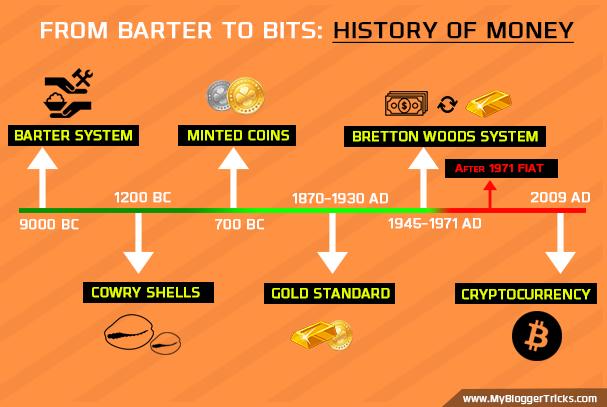
BITCOIN MINER HALVING
By Staff Reporters
***
***
DEFINITION: After the network mines 210,000 blocks—roughly every four years—the block chain reward given to Bitcoin miners for processing transactions is cut in half. This event is called halving because it cuts the rate at which new bitcoins are released into circulation in half. This rewards system will continue until about 2140, when the proposed limit of 21 million coins is reached. At that point, miners will be rewarded with fees for processing transactions, which network users will pay. These fees ensure miners are still incentivized to participate and keep the network going.
And, so, the total value of the world’s most popular cryptocurrency surpassed $1 trillion yesterday for the first time since 2021. The overall crypto market, meanwhile, broke $2 trillion in market cap, fueled by investor confidence. If crypto were a publicly traded company, it would be the fourth-largest in the world behind Microsoft, Apple, and Saudi Aramco.
***
***
HALVING – The quadrennial event, expected to take place today or tomorrow, was built into bitcoin’s original code to cut the amount of new coins going into circulation in half every four years. The purpose is to thwart inflation and increase the currency’s value. Bitcoin’s mysterious creator, Satoshi Nakamoto, designed the crypto so that only 21 million bitcoins would ever exist. It will take about a century to hit that number, but as it approaches the cutoff, the crypto hose slowly constricts. No one’s sure what happens next
Historically, halvings have coincided with big jumps in price—the coin’s first halving in 2012 saw the price jump from $12.35 to $127 within five months, according to Time. But critics argue that the narrative around halving is much stronger than the actual event. Even bitcoin experts aren’t sure what will happen with the volatile asset. It already hit a record high of over $73,750 in March, thanks to the spot bitcoin ETF approval. And, lest we forget, the whole FTX thing happened since the last halving.
The law was named in 1860 by Henry Dunning Macleod, after Sir Thomas Gresham (1519–1579), who was an English financier during the Tudor dynasty. However, there are predecessors.
The law had been stated earlier by Nicolaus Copernicus. It was also stated in the 14th century, by Nicole Oresme in his treatise On the Origin, Nature, Law, and Alterations of Money, and by jurist and historian Al-Maqrizi (1364–1442) in the Mamluk Empire; and noted by Aristophanes in his play The Frogs, which dates from around the end of the 5th century BC.
***
***
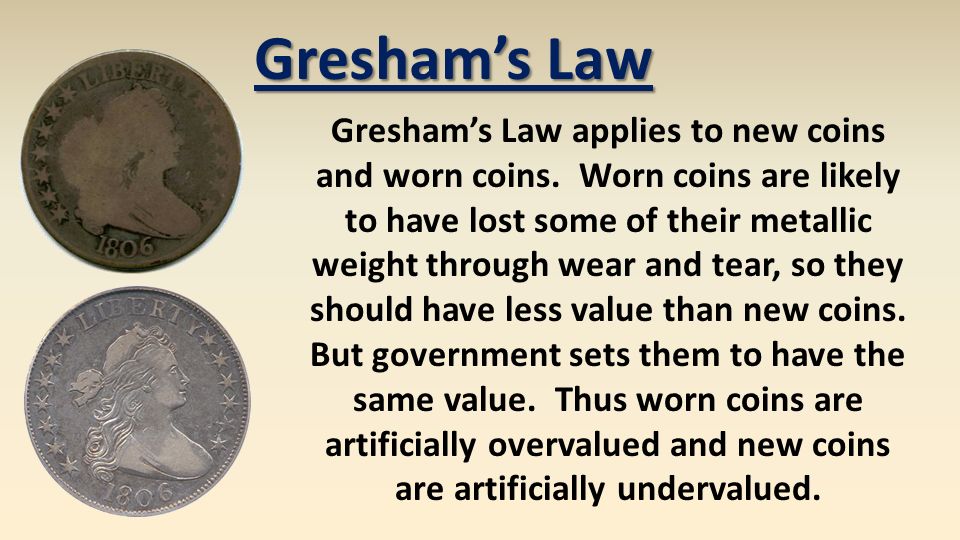
IOW: It is the tendency for money of lower intrinsic value to circulate more freely than money of higher intrinsic and equal nominal value (often expressed as “Bad money drives out good”).
***
Gresham’s Law applies to new coins and worn coins. Worn coins are likely to have lost some of their metallic weight through wear and tear, so they should have less value than new coins. But government sets them to have the same value. Thus worn coins are artificially overvalued and new coins are artificially undervalued.
***
So, is Gresham’s Law still relevant today?
THINK: The modern Bitcoin, and related crypto-currency, controversy? We asked colleague Timothy J. McIntosh CFP® MPH CFA for some insights.
Feel free to review our top-left column, and top-right sidebar materials, links, URLs and related websites, too. Then, subscribe to the ME-P. It is fast, free and secure.
Speaker: If you need a moderator or speaker for an upcoming event, Dr. David E. Marcinko; MBA – Publisher-in-Chief of the Medical Executive-Post – is available for seminar or speaking engagements.
Subscribe: MEDICAL EXECUTIVE POST for curated news, essays, opinions and analysis from the public health, economics, finance, marketing, IT, business and policy management ecosystem.
Posted on September 4, 2024 by Dr. David Edward Marcinko MBA MEd CMP™
The BOTOX Predictor Index?
By Staff Reporters
***
***
It’s looking more than likely that we’ll see a recession in the next year, and Americans are preparing themselves by taking steps like delaying major purchases, allocating more of their income to savings, and staying in jobs they don’t love. Another thing they’re not doing? Getting Botox. And that’s bad news for AbbVie; according to Neal Freyman of Morning Brew.
AbbVie, one of the biggest drug manufacturers in the US, brought Botox into its medical aesthetics portfolio—which also includes the popular dermal filler Juvederm—in 2020, when it bought rival drug maker Allergan for $63 billion. AbbVie CEO Richard Gonzalez said during the company’s Oct. 28th earnings call that the company expects the aesthetics business to take a hard hit in 2024 as recession fears cause consumers to be more cautious with their spending.
“Based on all the data we’ve been observing, especially in the US, with both the consumer-confidence index and real personal consumption expenditures trending down and continued high inflation, these factors are putting pressure on consumer’s discretionary spending,” Gonzalez said.
AbbVie lowered its 2022-23 full-year forecast for its aesthetics business by $600 million, down to $5.3 billion. After the earnings call, AbbVie’s stock fell 4.3%. Through the third quarter of 2022, Botox has brought in $1.97 billion for the aesthetics business. The third quarter saw $637 million in cosmetic Botox sales, down from an expected $640 million. Gonzalez said he doesn’t think the hit on sales will last long, though.
***
***
“As consumer confidence improves, we would once again expect the market growth to accelerate. Our aesthetics portfolio experienced a rapid and sustained recovery following the 2008, 2009 recession,” Gonzalez said.
But Botox also faces a new competitor, called Daxxify, which just got FDA approval in September. Made by Revance Therapeutics, the drug may last longer: In clinical trials, Daxxify injections lasted six to nine months, while Botox injections typically last three months.
The Financial Times reports that the ChatGPT-maker is discussing changing its corporate structure, which currently has it governed by a nonprofit entity, to make it more attractive to investors as the company works to complete a funding round that values it at $100 billion.
Posted on August 30, 2024 by Dr. David Edward Marcinko MBA MEd CMP™
By Staff Reporters
Remember NFTs? This is an excellent history of OpenSea, the largest NFT marketplace, and all the chaos within its walls.
***
***
You have to report your crypto and NFT transactions to the IRS
While not technically new, for 2024. the IRS is making a more concerted effort to track cryptocurrency sales and trades. Whenever you sell or trade your crypto or purchase an item with crypto, you trigger a taxable event. Currently, crypto is taxed like property, making it subject to short- or long-term capital gains taxes. This also means you can report any crypto losses to help offset any gains. Since 2022 saw a drastic drop and rise in the value of cryptocurrencies like bitcoin and ethereum, if you sold or traded your crypto at a loss, you may be able to reduce your tax bill by reporting your capital loss. The same goes for NFTs.
And though the IRS will flag any unreported crypto gains, if you don’t report a loss that can lower your tax burden, the IRS won’t adjust your return on your behalf. “If you leave it off, it stays off. “Tax deductible losses from your virtual currency activity do have real consequences on your tax return, and can save you real dollars.
So we always tell people, if you’ve got something that you don’t fully understand, you certainly should seek out guidance from a trained experienced tax professional.”
Beside market, limit and stop orders, there are some other miscellaneous orders for the physician or guided investor, to know:
A stop limit order is a stop order that, once triggered or activated, becomes a limit order. Realize that it is possible for a stop limit to be triggered and not executed, as the limit price specified by the doctor may not be available.
In addition, there are all or none and fill or kill orders, and even though both require the entire order to be filled, there are distinct differences. An all or none (AON) is an order in which the broker is directed to fill the entire order or none of it.
A fill or kill (FOK) is an order either to buy or to sell a security in which the broker is directed to attempt to fill the entire’ amount of the order immediately and in full, or that it be canceled.
The difference between an all or none and a fill or kill order is that with an all or none order, immediate execution is not required, while immediate execution is a critical component of the fill or kill. Because of the immediacy requirement,
FOK orders are never found on the specialist’s book. Another difference is that AON orders are only permitted for bonds, not stocks, while FOK orders may be used for either.
Also, there exists an immediate or cancel order (IOC), which is an order to buy or sell a security in which the broker is directed to attempt to fill immediately as much of the order as possible and cancel any part remaining. This type of order differs from a fill-or-kill order which requires the entire order to be filled. An IOC order will permit a partial fill. Because of the immediacy requirement, IOC and FOK orders are never found on the specialist’s book.
Long and Short Positions
A long buy position means that shares are for sale from a market makers inventory or owned by the medical investor outright. Market makers take long positions when customers and other firms wish to sell, and they take short positions when customers and other firms want to buy in quantities larger than the market maker’s inventory. By always being ready, willing, and able to handle orders in this way, market makers assure the investing public of a ready market in the securities in which they are interested. When a security can be bought and sold at firm prices very quickly and easily the security is said to have a high degree of liquidity, also known as marketability.
A short position investor seeks to make a profit by participating in the decline in the market price of a security.
Now; let’s see how these terms, long and short, apply to transactions by medical investors [rather than market makers] in the securities markets.
When a doctor buys any security – he is said to be taking a long position in that security. This means the investor is an owner of the security. Why does a doctor take a long position in a security? Well, receiving dividend income to make a profit from an increase in the market price is one reason. Once the security has risen sufficiently in price to satisfy the investor’s profit needs, the investor will liquidate his long position, or sell his stock. This would officially be known as a long sale of stock, though few people in the securities business use the label “long sale”. This is the manner in which the above investor had made a profit is the traditional method used; buy low, sell high.
Let’s look at an actual investment in General Motors to investigate this principle further. A medical investor has taken a long position in 100 shares of General Motors stock at a price of $70 per share. This means that the manner in which he can do that is by placing a market order which will be executed at the best “available market price at the time, or by the placing of a buy limit order with a limit price of $70 per share. The investor firmly believes, on the basis of reports that he has read about the automobile industry and General Motors specifically, that at $70 a share, General Motors is a real bargain. He believes that based on its current level of performance, it should be selling for a price of between $80 and $85 per share. But, the doctor investor has a dilemma. He feels certain that the price is going to rise but he cannot watch his computer, or call his broker, every hour of every day. The reason he can’t watch is because patients have to be seen in the office. The only people who watch a computer screen all day are those in the offices of brokerage firms (stock broker registered representatives), and doctor day traders, among others.
In the above example, with a sell limit order, if the doctor investor was willing to settle for a profit of $12 per share, what order would he place at this time? If you said, “sell at $82 good ’til canceled”, you are correct. Why GTC rather than a day order? Because our doctor investor knows that General Motors is probably not going to rise from $70 to $82 in one day. If he had placed an order to sell at $82 without the GTC qualification, his order would have been canceled at the end of this trading day. He would have had to re-enter the order each morning until he got an execution at 82. Marking the order GTC (or open) relieves him of any need to replace the order every morning. Several weeks later, when General Motors has reached $82 per share in the market, his order to sell at 82 is executed. The medical investor has bought at 70 and sold at 82 and realized a $12 per share profit for his efforts.
Let’s suppose that the medical investor, who has just established a $12 per share profit, has evaluated the performance of General Motors common stock by looking at the market performance over a period of many years. Let’s further assume that the investor has found by evaluating the market price statistics of General Motors that the pattern of movement of General Motors is cyclical. By cyclical, we mean that it moves up and down according to a regular pattern of behavior.
Let’s say the investor has observed that in the past, General Motors had repeated a pattern of moving from prices in the $60 per share range as a low, to a high of approximately $90 per share. Further, our investor has observed that this pattern of performance takes approximately 10 to l2 months to do a full cycle; that is, it moves from about 60 to about 90 and back to about 60 within a period of roughly l2 months. If this pattern repeats itself continually, the investor would be well advised to buy the stock at prices in the low to mid 60’s hold onto it until it moves well into the 80’s, and then sell his long position at a profit. However, what this means is that our investor is going to be invested in General Motors only 6 months of each year. That is, he will invest when the price is low and, usually within half a year, it will reach its high before turning around and going back to its low again. How can the doctor-investor make a profit not only on the rise in price of General Motors in the first 6 months of the cycle, but on the fall in price of General Motors in the second half of the cycle? One technique that is available is the use of the short sale.
The Short Sale
If a doctor investor feels that GM is at its peak of $ 90 per share, he may borrow 100 shares from his brokerage firm and sell the 100 shares of borrowed GM at $ 90. This is selling stock that is not owned and is known as a short sale. The transaction ends when the doctor returns the borrowed securities at a lower price and pockets the difference as a profit. In this case, the doctor investor has sold high, and bought low.
Odd Lots
Most of the thousands of buy and sell orders executed on a typical day on the NYSE are in 100 share or multi-100 share lots. These are called round lots. Some of the inactive stocks traded at post 30, the non-horseshoe shaped post in the northwest corner of the exchange, are traded in 70 share round lots due to their inactivity. So, while a round lot is normally 700 shares, there are cases where it could be 10 shares. Any trade for less than a round lot is known as an odd lot. The execution of odd lot orders is somewhat different than round lots and needs explanation.
When a stock broker receives an odd lot order from one of his doctor customers, the order is processed in the same manner as any other order. However, when it gets to the floor, the commission broker knows that this is an order that will not be part of the regular auction market. He takes the order to the specialist in that stock and leaves the order with the specialist. One of the clerks assisting the specialist records the order and waits for the next auction to occur in that particular stock. As soon as a round lot trade occurs in that particular stock as a result of an auction at the post, which may occur seconds later, minutes later, or maybe not until the next day, the clerk makes a record of the trade price.
Every odd lot order that has been received since the last round lot trade, whether an order to buy or sell, is then executed at the just noted round lot price, the price at which the next round lot traded after receipt of the customer’s odd lot order, plus or minus the specialist’s “cut “. Just like everything else he does, the specialist doesn’t work for nothing. Generally, he will add 1/8 of a point to the price per share of every odd lot buy order and reduce the proceeds of each odd lot sale order by 1/8 per share. This is the compensation he earns for the effort of breaking round lots into odd lots. Remember, odd lots are never auctioned but, there can be no odd lot trade unless a round lot trades after receipt of the odd lot order.
Posted on August 18, 2024 by Dr. David Edward Marcinko MBA MEd CMP™
By Staff Reporters
***
***
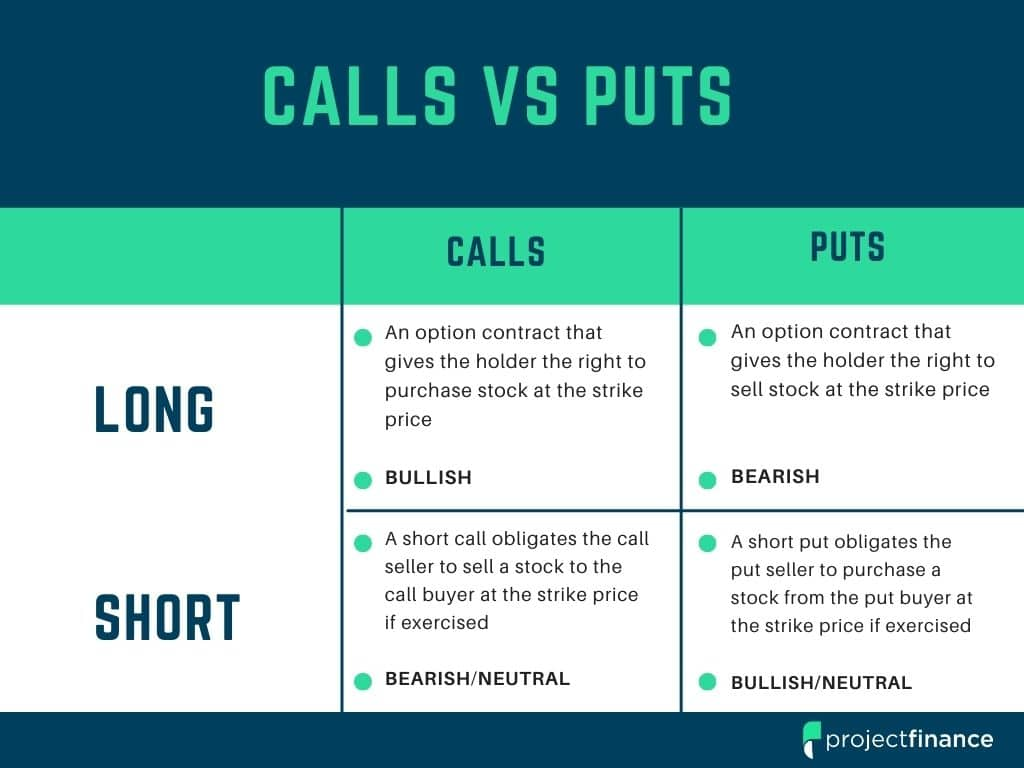
Options are contracts that give investors the right to buy or sell stocks, indexes or other financial securities at an agreed upon price and date. Puts are the option to sell while calls are the option to buy.
Specifically – A Call Option gives the buyer the right, but not the obligation to buy the underlying security at the exercise price, at or within a specified time. A Put Option gives the buyer the right, but not the obligation to sell the underlying security at the exercise price, at or within a specified time.
Ratio – When the ratio of puts to calls is rising, it is usually a sign investors are growing more nervous. A ratio above 1 is considered bearish. The Fear & Greed Index uses a bearish options ratio as a signal for Fear.
Posted on August 14, 2024 by Dr. David Edward Marcinko MBA MEd CMP™
By Staff Reporters
***
***
Commodities trading means you’re buying and selling raw materials rather than finished products (like a house) or financial assets (like stocks and bonds). Commodities are assets like corn, coffee, lumber and ore. One common form of commodities trading is investing in precious metals, namely gold and silver. As an investment asset, gold and silver have very different properties and uses in a portfolio.
The biggest thing that differentiates precious metal investing from other commodity investing is utility. For most other commodities, investors judge value based on supply and consumer demand. If you want to invest in coffee beans, for example, you can judge prices by how much coffee people are currently drinking, how tastes are changing, etc.
Precious metals are different in that they have relatively low commercial utility. Compared with other metals, here are relatively few consumer or industrial uses for assets like gold and silver.
However, silver does have much more industrial and commercial use than gold. Approximately half of all silver bought and sold on the market is used commercially, with applications ranging from dentistry to electronics. (This is still quite small compared to other metals, which are almost entirely used for production.)
By contrast, gold has very few commercial applications aside from jewelry. This gives investors a basis on which to judge and predict price movements for silver, since you can make decisions based on factors such as industry need and how the global economy is moving.
Statistics: 7.4%. That’s the percentage drop in students who graduated with a degree in accounting in the 2021–2022 school year than the year before. Low starting salaries, heavy workloads, and uncertainty around AI are driving the exodus of students from choosing accounting degrees. (the Wall Street Journal).
Posted on July 9, 2024 by Dr. David Edward Marcinko MBA MEd CMP™
By NIHCM
***
***
Private equity acquisition of physician practices continues to grow nationwide. New research focused on specialists in dermatology, gastroenterology, and ophthalmology shows the impact of the trend.
Novel evidence by NIHCM grantee Jane Zhu, MD, and her team, reveals shifts in workforce composition and hiring patterns after private equity firms obtain physician practices. The researchers’ findings are particularly important for policymakers and practices considering selling to private equity firms. Highlights include:
A significant yearly increase in the number of advanced practice providers at private equity-acquired practices, specifically nurse practitioners and physician assistants.
In acquired practices, entering clinicians replaced exiting clinicians at a higher rate than at non-private equity-acquired practices.
This work adds to the research team’s previous findings, including the geographic variations in private equity ownership across six medical specialties, and the impact of private equity on health care costs and utilization.
Posted on June 30, 2024 by Dr. David Edward Marcinko MBA MEd CMP™
Randy Frederick
Nonfungible tokens have become the latest investment craze. Here’s what you need to know.
Until recently, nonfungible tokens (NFTs) were written off by many as a virtual fad and a waste of money. After all, why would someone pay $2.9 million to own the very first tweet when anyone with internet access can view it for free?
But when auction house Christie’s sold the NFT of Everydays: The First 5000 Days, a collage by the artist Beeple, for $69.3 million in March 2021, it suddenly put this emerging asset class on par with collecting a Picasso (whose heirs have jumped on the digital bandwagon by selling NFTs of the artist’s ceramics).
So, what’s all the fuss about?
The basics
Like cryptocurrencies, NFTs are stored on a blockchain, which is a digital, publicly available transaction ledger. However, while a single bitcoin can be exchanged for any other bitcoin—just as a $1 bill can be exchanged for any other $1 bill—each NFT is unique (i.e., nonfungible). In that sense, NFTs are more like the Hope Diamond or Picasso’s Guernica—a one-of-a-kind work for which there is no substitute.
Indeed, an NFT’s inherent scarcity, whether because it’s a unique piece of art or a limited-issue collectible, makes it potentially lucrative—but also substantially less liquid than, say, your average stock or bond. As a result, you may need to drop the price or hold on to your NFT if the demand isn’t there when you want or need to sell it. Other risks include:
Security: Like bitcoin, NFTs require a private key that functions as a password. If your key is lost or stolen, you may never again be able to access your NFT. Other security risks involve replicas that purport to be the original—as with any collectibles marketplace—and fraudulent sites designed to steal private keys and their attendant assets.
Taxation: Although the IRS has yet to issue specific guidance, NFTs are generally treated as collectibles. As such, if you sell an NFT you’ve held on to for less than a year, any short-term gains will be taxed as ordinary income. Any gains on an NFT held for a year or longer will be taxed at a top collectibles rate of 28%—plus a 3.8% net investment income tax if your modified adjusted gross income exceeds $200,000 ($250,000 for married couples).
Where to start
If, after careful consideration, you’re still interested in dipping your toe in NFT waters, you’ll first need to do three things:
Pick a marketplace: To buy or sell NFTs, you’ll need to choose a reputable marketplace. Both Nifty Gateway and OpenSea are popular, although specialty marketplaces also exist, including ArtOfficial if you’re a fine-art collector and NBA Top Shot for basketball enthusiasts.
Get a wallet: Shopping through most NFT marketplaces requires a Web3 wallet, such as MetaMask, that can store both cryptocurrencies and NFTs. Some marketplaces, like Nifty Gateway, will store your NFT, but you’ll have to pay a fee to transfer it to another wallet should you wish to do so later.
Buy cryptocurrency: Some marketplaces accept payment in so-called fiat currencies, such as the U.S. dollar. However, many marketplaces are built on the Ethereum blockchain and prefer to transact in its native cryptocurrency, ether.
Tread with caution
Although the popularity of NFTs has exploded in the past year, with first-quarter sales topping $11 billion by mid-March 2022—up from $53 million for the fourth quarter of 2020—only time will tell if NFTs will realize their long-term potential or fall tragically short of it.
Either way, it will be fascinating to see how this new form of digital authentication changes how we invest. (Ernst & Young, for example, is working on NFT-inspired technology that can help collectors track the provenance of fine wines.)
Quantum leap
NFTs experienced exponential growth in 2021.
DappRadar.com
Sales figures include only on-chain transactions conducted on the 49 NFT marketplaces that DappRadar tracks, excluding LooksRare.
*Q1 2022 data as of 03/25/2022.
ASSESSMENT
For the time being, however, there’s a lot to be said for taking a go-slow approach to this new asset class and all the risks it entails.
In general, those interested in crypto assets like NFTs are wise to limit their exposure to no more than 1% of investable assets.
Posted on June 24, 2024 by Dr. David Edward Marcinko MBA MEd CMP™
Fake savings bond scheme leads to $50M in losses and issues for legitimate savers
By Staff Reporters
***
***
Authorities claimed that $1 million in counterfeit savings bonds showed up at South Texas banks as part of one crackdown on a scheme to steal money by cashing phony savings bonds, including inflation-indexed or I Bonds, according to the U.S. Attorney’s Office for the Southern District of Texas.
We have produced Investment Policy Statements of a hundred pages or more for our esteemed physician clients and colleagues. Or, others were just a few pages or a conversation.
But, before deciding on any investment direction and philosophy in brief, however, we typically first focus on how much medical clients need to live on. For the income part of a client’s portfolio, that entails locking in rates of at least 4-5%, whether through municipal and corporate bonds, certificates of deposits, Treasury ladders, utilities or conservative dividend producing equities or ETFs, etc.
Once income requirements are fulfilled, whatever money is left over gets diversified into a portfolio of growth and value stocks—with some alternative investments. We limit making tactical shifts like putting money into cash when markets fell last year, or more recently, buying CDs and Treasuries as rates went up. But, we do re-direct cash income, rather than sell assets in real time, as our philosophy trends to a “Buy and Hold” strategy.
Currently, we’re sitting on the sidelines with cash, some of which we are getting ready to deploy into the market as we position for any pullbacks later this 2024 year.
So, what is your investing philosophy for today, and or, tomorrow?
Posted on June 8, 2024 by Dr. David Edward Marcinko MBA MEd CMP™
TXSE versus NYSE?
By Staff Reporters
***
***
A group leading the charge for an “anti-woke” TXSE exchange sees an opportunity to capitalize on 1) the Southeast’s skyrocketing economy and 2) growing disillusionment with perceived burdensome regulation at the New York-based exchanges.
The TXSE pledged to be more “CEO-friendly,” drawing a clear distinction from the NASDAQ, which requires companies on the exchange to meet a diversity requirement or explain why they can’t.
The Texas Stock Exchange will focus on enabling U.S. and global companies to access U.S. equity capital markets and will provide a venue to trade and list public companies and the growing universe of exchange-traded products. TXSE will be a fully electronic, national securities exchange that will seek registration with the U.S. Securities and Exchange Commission.
Many physicians and other investors — even those that meet net worth guidelines — are surprised to learn that there exists a $500 – 999 billion, or more, alternative investment industry that is not generally marketed to the public. Such alternative investments have also been known as hedge funds or private investment funds.
Unlike mutual funds, these alternative investments can be structured in a wide variety of ways. Because of the very same regulations discussed above, these funds cannot be advertised, but they are far from illegal or illicit.
In fact, physicians were among the most significant early investors in one of the last century’s most successful hedge funds. Mr. Warren Buffett, Chairman of Berkshire Hathaway, Inc. and a legendary investor got his start in 1957 running the Buffett Partnership, an alternative investment fund not open to the general public. Mr. Buffett’s first public appearance as a money manager was before a group of physicians in Omaha, Nebraska. Eleven decided to put some money with him. A few of these original investors followed him into Berkshire Hathaway, now among the most highly valued companies in the world.
The alternative investment, or hedge, funds of today are similar to the original Buffett Partnership in many ways. So, we will discuss several unique terms which potential investors should be aware.
Hedge funds may feature a hurdle rate as part of the calculation of the fund manager’s performance incentive compensation. Also known as a “benchmark,” the hurdle rate is the amount, expressed in percentage points, an investor’s capital account must appreciate before the account becomes subject to a performance incentive fee. Potential medical investors should view the hurdle rate as a form of protection in context with other features of the fee arrangement.
The hurdle rate, which benchmarks a single year’s performance, may be considered mutually exclusive of any other year, or the hurdle rate may compound each year. The former case is more common. In the latter case, a portfolio manager failing to attain a hurdle rate in the first year will find the effective hurdle rate considerably higher during the second year.
Once a fund manager attains the hurdle rate for an investor, the medical investor’s capital account may be charged a performance incentive fee only on the performance above and beyond the hurdle rate. Alternatively, the account may be charged a performance fee for the entire level of performance, including the performance required to attain the hurdle rate. Other variations on the use of the hurdle rate exist, and are limited only by the contract signed between the fund manager and the investor. The hurdle rate is not generally a negotiating point, however.
Example:
A fund charges a performance fee with a 6 percent hurdle rate, calculated in mutually exclusive manner. Dr. Lanouettea, a radiologist investor places $100,000 with the fund. The first year’s performance is 5 percent. The investor therefore owes no performance fee during the first year because the portfolio manager did not attain the hurdle rate. During year two, the portfolio manager guides the fund to a 7 percent return. Because the hurdle rate is mutually exclusive of any other year, the portfolio manager has attained the 6 percent hurdle rate and is entitled to a performance fee.
Highwater Mark
Some funds feature a highwater mark provision, also known as a ”loss-carryforward” provision. As with the hurdle rate, potential investors should consider the highwater mark a form of protection. A high water mark is an amount equal to the greatest value of an investor’s capital account, adjusted for contributions and withdrawals. The high water mark ensures that the hedge fund manager charges a performance incentive fee only on the amount of appreciation over and above the highwater mark set at the time the performance fee was last charged. The current trend is for newer funds to feature this highwater mark, while older, larger funds may not feature it.
Example:
A fund charges a 20 percent performance fee with a highwater mark but no hurdle rate. Dr. Butalak, a dentist investor contributes $100,000 to the fund. During the first year, the hedge fund manager grows that capital account to $110,000 and charges a 20 percent performance fee, or $2,000. The ending capital account balance and highwater mark is therefore $108,000. During year two, the account falls back to $100,000, but the highwater mark remains $108,000. During year three, in order for the manager to charge a performance fee, the manager must grow the capital account to a level above $108,000.
Clawback Provision
Rarely, a fund may provide investors with a clawback provision. This term, borrowed from the venture capital fund world, such provisions result in a refund to the investor of all or part of a previously charged performance fee if a certain level of performance is not attained in subsequent years. Such refunds in the face of poor or inadequate performance may not be legal in some states or under certain authorities.
Conclusion
Your thoughts and comments on this ME-P are appreciated. Feel free to review our top-left column, and top-right sidebar materials, links, URLs and related websites, too. Then, subscribe to the ME-P. It is fast, free and secure.
Speaker: If you need a moderator or speaker for an upcoming event, Dr. David E. Marcinko; MBA – Publisher-in-Chief of the Medical Executive-Post – is available for seminar or speaking engagements. Contact: MarcinkoAdvisors@msn.com
OUR OTHER PRINT BOOKS AND RELATED INFORMATION SOURCES:
Posted on May 21, 2024 by Dr. David Edward Marcinko MBA MEd CMP™
MEDICAL EXECUTIVE-POST–TODAY’SNEWSLETTERBRIEFING
***
Essays, Opinions and Curated News in Health Economics, Investing, Business, Management and Financial Planning for Physician Entrepreneurs and their Savvy Advisors and Consultants
“Serving Almost One Million Doctors, Financial Advisors and Medical Management Consultants Daily“
A Partner of the Institute of Medical Business Advisors , Inc.
The yield on the 10-year Treasury rose as investors wait for word from the FOMC on Wednesday, while oil initially rose on the news of the death of the president of Iran, though it fell back down to end the day lower after succession of the presidency was settled. But investors were clearly still feeling jittery as gold hit new highs on the back of geopolitical concerns. Copper also rose to a new all-time high.
Here’s where the major benchmarks ended:
The S&P 500 index gained 4.86 points (0.1%) to 5,308.13; the Dow Jones Industrial Average® ($DJI) lost 196.82 points (0.5%) to 39,806.77; the NASDAQ Composite rallied 108.91 points (0.7%) to 16,794.87.
The 10-year Treasury note yield (TNX) increased more than 2 basis points to 4.443%.
The CBOE Volatility Index® (VIX) rose 0.15 to 12.14.
Nvidia’s gain helped push the PHLX Semiconductor Index (SOX) more than 2% to a two-and-a-half-month high and just under a record close posted in early March. The small-cap Russell 2000® Index (RUT) added 0.3% and ended slightly below a six-week high posted last Wednesday.
JPMorgan shares fell 4.5% as investors realized that they won’t have Jamie Dimon around forever—he told shareholders at a meeting today that his 5-year timetable for leaving the company no longer applies.
After AbbVie’s Humira, the best-selling drug in the world, lost patent exclusivity in 2023, company executives placed their bets on two other AbbVie drugs, Skyrizi and Rinvoq, to make up for an anticipated steep decline in revenue.
Posted on May 13, 2024 by Dr. David Edward Marcinko MBA MEd CMP™
By Staff Reporters
***
***
Women’s health startups are still closing multi million-dollar funding deals despite a challengingventure capital (VC) landscape in which VC dollars are on track to fall by 73% this year compared to last.
For example, in the last year, virtual maternity care program Pomelo Careraised $33 million in seed and Series A rounds led by Andreessen Horowitz; Caraway Health, a digital mental, physical, and reproductive health services platform, raised almost $17 million in a Series A round led by Maveron and GV (formerly Google Ventures); and Intrinsic, which acquires brands that make women’s health products, announced a $15 million equity fund raise (which is when a company raises money by selling its shares).
Posted on May 6, 2024 by Dr. David Edward Marcinko MBA MEd CMP™
MEDICAL EXECUTIVE-POST–TODAY’SNEWSLETTERBRIEFING
***
Essays, Opinions and Curated News in Health Economics, Investing, Business, Management and Financial Planning for Physician Entrepreneurs and their Savvy Advisors and Consultants
“Serving Almost One Million Doctors, Financial Advisors and Medical Management Consultants Daily“
A Partner of the Institute of Medical Business Advisors , Inc.
A cooling labor market raises hopes for a rate cut in the summer. The latest Labor Department data shows the US added 175,000 jobs in April, but much less than the 300,000 added in March and also less than economists expected. Meanwhile, the unemployment rate ticked up to 3.9% from 3.8% in March, and wages rose less than anticipated. All that bad news for us was music to the ears of investors who are holding out hope that the Federal Reserve might still cut interest rates this summer despite most recent economic data showing that inflation is sticking around.
Rate cuts appear to be back on the 2024 menu following Friday’s softer-than-expected jobs report, fueling gains for all three major stock indexes last week. With the report calming worries that inflation is ticking back up, investors now project a 50% likelihood that the Federal Reserve will reduce rates in September.
Coinbase is benefiting from the hype around new bitcoin ETFs. The crypto exchange reported a $1.2 billion quarterly profit last week, and net revenue rose by 115%.
Posted on April 28, 2024 by Dr. David Edward Marcinko MBA MEd CMP™
MEDICAL EXECUTIVE-POST–TODAY’SNEWSLETTERBRIEFING
***
Essays, Opinions and Curated News in Health Economics, Investing, Business, Management and Financial Planning for Physician Entrepreneurs and their Savvy Advisors and Consultants
“Serving Almost One Million Doctors, Financial Advisors and Medical Management Consultants Daily“
A Partner of the Institute of Medical Business Advisors , Inc.
Republic First Bank. The FDIC said regulators seized the troubled Philadelphia-based bank and agreed to sell it to Fulton Bank. While news of a regional bank failure might take you back to March 2023 when Silicon Valley Bank bit the dust, Republic First was much smaller than SVB (and much smaller than the similarly named First Republic, which ultimately got absorbed by JPMorgan Chase as regional banks struggled). And, because there’s already a buyer, there are no lingering questions about the safety of deposits.
So, while the first bank failure of the year is a sign that regional banks are still in a bad way, it’s unlikely to spur a larger crisis.
Posted on April 24, 2024 by Dr. David Edward Marcinko MBA MEd CMP™
By Staff Reporters
***
***
Tesla’s pivotal earnings call yesterday had the vibes of an undergrad at office hours begging for extra credit after failing every assignment all semester. The automaker whiffed on revenue targets, even after tempering expectations.
And, forthe first time since 2020, the EV-maker’s quarterly revenue dropped, falling to $21.3 billion, compared with $23.3 billion from the same period a year ago (analysts were expecting about $22b). Tesla’s profits sunk to a six-year low. The company said earlier this month that it only delivered 386,810 cars in the first quarter, down 8.5% from the same time in 2023.
On the bright side according to Morning Brew, despite the earnings miss, Tesla’s stock went up in after-hours trading, likely because the company vowed to accelerate the launch of more affordable models. It announced it was working on integrating ride-hailing technology into its app in a bid to take on Uber, and that the growth of its energy storage business is set to outpace that of its auto business this year.
That signal came amid broader concern that Tesla would move away from its traditional car making roots in favor of a business model focused on autonomous driving, robotics and AI-related technologies. It triggered an after-hours jump in Tesla stock that was cemented by a shareholder-friendly conference call from Chief Executive Elon Musk.
“I think we’ll have higher sales this year than last year,” Musk told investors, even as the group reiterated its forecast for “notably lower” vehicle deliveries for the current year.
Posted on April 19, 2024 by Dr. David Edward Marcinko MBA MEd CMP™
By Staff Reporters
***
***
StubHub is an American ticket exchange and resale company. It provides services for buyers and sellers of tickets for sports, concerts, theater, and other live entertainment events. By 2015, it was the world’s largest ticket marketplace. While the company does not currently disclose its financials, in 2015 it had over 16 million unique visitors and nearly 10 million live events per month. StubHub was founded in 2000 by Eric Baker and Jeff Fluhr. The company was acquired by eBay for $310 million in 2007, and again acquired in 2020 by Viagogo.
StubHub reportedly plans to go public this summer?
According to The Information, the ticketing giant was last valued at $16.5 billion in 2021, but could still call off the public listing if it fails to land that figure.
The news comes amid a post-pandemic resurgence for live events, boosted by massive tours from Beyoncé and Taylor Swift. Though StubHub revenue jumped 40% in 2023 from the year before, it’s saddled with more than $2 billion in debt, which could test investors’ willingness to buy.
Rival ticketing service SeatGeek is also said to be mulling an IPO later this year.
Posted on April 10, 2024 by Dr. David Edward Marcinko MBA MEd CMP™
By Staff Reporters
***
Boeing had yet another rough day, at one point dropping 2.5% to its lowest mark in five months after reports that the FAA is investigating a whistleblower’s claims about safety issues with the 787 Dreamliner.
***
***
And, US stocks on Tuesday ended with small moves, weighed down by the financial sector ahead of key earnings reports later this week. Market participants also exhibited caution a day before the latest consumer inflation data. Wall Street’s three major averages opened in the green but then spent most of the day languishing in negative territory.
Finally, the tech-heavy NASDAQ Composite (COMP:IND) eventually closed 0.32% higher at 16,306.64 points, while the benchmark S&P 500 (SP500) added 0.15% to settle at 5,209.94 points. The blue-chip Dow (DJI) fell marginally by 0.02% to conclude at 38,883.67 points.
The S&P 500® index (SPX) gained 7.52 points (0.1%) to 5,209.91; the Dow Jones Industrial Average® ($DJI) lost 9.13 points (0.02%) to 38,883.67; the NASDAQ Composite® ($COMP) rose 52.68 points (0.3%) to 16,306.64.
The 10-year Treasury note yield (TNX) fell more than 6 basis points to 4.358%.
The CBOE Volatility Index® (VIX) fell 0.21 to 14.98.
Financial and industrial shares led Tuesday’s decliners. Oil services stocks were also soft as WTI Crude Oil (/CL) futures dropped for a third consecutive trading session. The Philadelphia Oil Service Index (OSX) lost 0.7% and ended at its lowest point since April 1.
In other markets, Gold (GC) futures neared $2,400 per ounce and hit a record high for the eighth consecutive trading session. Gold’s rally has been driven by factors including reports of purchases by China’s central bank as well as expectations for lower interest rates and escalating conflict in the Middle East. Bitcoin (BTC) tumbled about 3.5% and fell to less than $70,000, giving up much of Monday’s gain.
Private equity and venture capital investments typically involve ownership of shares in a company and represent title to a portion of the company’s future earnings. However, private equity is an equity interest in a company or venture whose stock is not yet traded on a stock exchange.
Venture capital is typically a special case of private equity in which the investment is in a company or venture that has little financial history or is embarking on a high risk/high potential reward business strategy.
Like real estate, private equity and venture capital investments generally share a general lack of liquidity and a lack of comparability across different individual investments. The lack of liquidity comes from the fact that private equity and venture capital investments are typically not tradable on a stock exchange until the company has an IPO.
The lack of comparability is due to the fact that most private equity and venture capital investments are the result of direct negotiation between the investor/venture capitalist and the existing owners of the company /venture.
With widely divergent terms and provisions across different investments, it is difficult to make general claims regarding the characteristics of private equity and venture capital investments.
Posted on April 2, 2024 by Dr. David Edward Marcinko MBA MEd CMP™
By Staff Reporters
***
***
Quote: “This is a very unusual situation. The stock is pretty much divorced from fundamentals.”—Jay Ritter, finance professor and IPO expert at the University of Florida, on the surging value of the newly public Trump Media. Truth Social,its only active product, has been shedding both users and cash. (CNN)
Shares of Truth Social owner Trump Media & Technology Group plunged Monday after the company disclosed that it lost more than $58 million and generated very little revenue in 2023. Former President Donald Trump is the company’s majority shareholder, and his net worth tumbled by more than $1 billion Monday as a result.
Stocks started Q2 off soft yesterday, as investors continued to fret about inflation. Stock spotlight: Trump Media, the newly public company that owns Truth Social, plunged yesterday after revealing that it lost $58 million last year, generated just $4.1 million in revenue, and had 10 times fewer users than Threads.
The S&P 500 index fell 10.58 points (0.2%) to 5,243.77; the Dow Jones Industrial Average® ($DJI) shed 240.52 points (0.6%) to 39,566.85; the NASDAQ Composite® ($COMP) added 17.37 points (0.1%) to 16,396.83.
The 10-year Treasury note yield jumped 13 basis points to 4.323%.
The CBOE Volatility Index® (VIX) rose 0.64 to 13.65.
Banks were among the market’s weakest performers Monday, likely reflecting concern that elevated interest rates could pinch margins. The KBW Regional Bank Index (KRX) sank 2% after ending at a two-month high last week. The small-cap Russell 2000® Index (RUT) was also soft, dropping 1% after closing at a two-year high last week.
Communication services and semiconductor shares turned in strong performances, as did energy, lifted by WTI Crude Oil (/CL) futures’ extending a rally to its highest level since late October. WTI Crude Oil is up almost 18% so far this year amid concern over supply disruptions stemming from the Russia-Ukraine war and Middle East conflict.
In other markets, the U.S. dollar index ($DXY) strengthened for the fourth straight day and reached its highest point since mid-November behind expectations the Fed will keep interest rates high.
Posted on March 31, 2024 by Dr. David Edward Marcinko MBA MEd CMP™
By Staff Reporters
HAPPY EASTER
***
***
Tesla had a rough quarter
The company’s stock was the worst performing in the S&P 500 in Q1, dropping 29%, amid fierce competition from Chinese electric carmakers, slowdowns from Red Sea shipping routes, arson at its German factory, Nordic labor battles, and controversies surrounding CEO Elon Musk.
Now, investors are warily watching to see what delivery numbers Tesla reports. But one group did make lots of money off the company as it lost over $230 billion in value last quarter: short sellers.
Donald Trump’s namesake social media company burst out of the gate on its first day of trading Tuesday, opening at $70.90 and soaring as high as $79.38 as Trump fans and opportunistic traders bought up shares. But the price faded late in the session and has bounced along at lower levels ever since, ending Thursday down $4.26 at $61.96 on the NASDAQ. The stock exchange was closed Friday in observance of Good Friday.
Posted on March 26, 2024 by Dr. David Edward Marcinko MBA MEd CMP™
By Staff Reporters
***
***
About 1,300 nurses at Staten Island University Hospital (SIUH) will strike on April 2nd if contract negotiations fail, the New York State Nurses Association (NYSNA) announced Thursday. The union, which represents about 42,000 nurses across the state, is looking for higher wages and improved nurse-to-patient ratios for their members—sticking points for Northwell Health, according to NYSNA.
The S&P 500 index sank 15.99 points (0.3%) to 5,218.19; the Dow Jones Industrial Average dropped 162.26 points (0.4%) to 39,313.64; the NASDAQ Composite lost 44.35 points (0.3%) to 16,384.47.
The 10-year Treasury note yield (TNX) rose three basis points to 4.25% after a four-day retreat.
The CBOE Volatility Index® (VIX) edged up 0.14 to 13.20.
The energy sector followed crude oil prices and was the strongest sector Monday. Utilities and materials also saw strength. Weakest sectors included industrials, information technology, and real estate.
Posted on March 24, 2024 by Dr. David Edward Marcinko MBA MEd CMP™
By Vitaliy Katsenelson CFA
***
***
Over the last few months, electric car sales seem to have gone from hot to cold. Hertz is dumping 20% of its 100,000 Tesla fleet, and Ford is cutting production of its F-150 Lightning. Tesla has gone from raising prices to cutting them. In fact, Tesla is reducing prices so much that the CEO of Stellantis (a merger between Fiat and Peugeot) has expressed concern that if other automakers join Tesla CEO Elon Musk in implementing similar cuts, it will result in a bloodbath for the industry.
And so, are electric cars a fad, like beanie babies, pet rocks, or fidget spinners? The short answer is no. The full answer comes with a lot of nuance. READ HERE:
Posted on March 19, 2024 by Dr. David Edward Marcinko MBA MEd CMP™
By Staff Reporters
***
***
Stocks started the week off strong yesterday as tech companies rose. Chipotle, Progressive, and more hit all-time highs. Tesla got a boost after announcing higher prices for its Model Y in the US and parts of Europe.
Here’s where major benchmarks ended yesterday:
The S&P 500 index rose 32 points (0.6%) to 5,149.42; the Dow Jones Industrial Average ($DJI) gained 75.66 points (0.2%) to 38,790.43; the NASDAQ Composite jumped 130.27 points (0.8%) to 16,103.45.
The 10-year Treasury note yield rose nearly four basis points to 4.34%.
The CBOE Volatility Index® (VIX) dipped 0.08 to 14.33.
All but two S&P 500 sectors finished in the green, with communications, information technology, consumer discretionary, and consumer staples leading the advance. Health care and real estate finished modestly lower.
Crude oil prices rose to multi-month highs on the heels of stronger-than-expected industrial production data from China and concerns over potential supply disruptions.
According to Reuters, a Ukrainian strike sparked a fire at the Slavyansk refinery in Krasnodar on Saturday and ongoing attacks have now idled around 7% of Russia’s refining capacity so far this year. Brent Crude Oil (/BZ) futures, the global benchmark, gained 2% Monday.
Posted on March 18, 2024 by Dr. David Edward Marcinko MBA MEd CMP™
By Staff Reporters
***
Salesforce just announced new AI solutions for health-care workers that could help automate some of the manual administrative tasks that are driving physician burnout. READ MORE
***
***
***
On Friday, National Association of Realtors (NAR) agreed to pay $418 million over the next four years to settle several lawsuits alleging it artificially inflated realtor commissions. Included in the deal is a policy change that will likely obliterate agents’ 5%–6% commissions.
Posted on March 15, 2024 by Dr. David Edward Marcinko MBA MEd CMP™
By Health Capital Consultants, LLC
***
***
On December 26, 2023, a study published in the Journal of the American Medical Association (JAMA) found concerning changes in patient outcomes and hospital adverse events associated with private equity (PE) acquisition and ownership of hospitals. Over the past ten years, PE firms have set their sights on hospitals as a lucrative investment opportunity, spending nearly $1 trillion to finance healthcare acquisitions, and purchasing more than 200 hospitals from non-PE owners.
Posted on March 5, 2024 by Dr. David Edward Marcinko MBA MEd CMP™
***
***
Rallies from Artificial Intelligence related companies weren’t enough to keep the major indexes from falling yesterday. Meanwhile, bitcoin continued its journey toward the sky, getting close to an all-time record.
And it wasn’t the only cryptocurrency having a banner day: memecoins like dogecoin, pepe, and dogwifhat all soared.
Posted on February 28, 2024 by Dr. David Edward Marcinko MBA MEd CMP™
By Staff Reporters
***
***
Merger and Acquisition (M&A) activity was down in 2023, but McKinsey says we should keep our chins up based on the strong final months of the year and economic optimism among professionals. For example, Global M&A activity last year totaled $3.1 trillion, dropping 16% from 2022, McKinsey found in a new report by senior partners Jake Henry and Mieke Van Oostende. But, the value of M&A activity in the fourth quarter increased 41% over Q3 and 37% year over year.
Stocks were mixed yesterday, with the S&P 500 and NASDAQ inching up and the Dow Jones dropping ahead of the release of key inflation data later this week. Viking Therapeutics, whose stock more than doubled after it reported positive results for its weight-loss drug trial in a bid to break into a sector dominated by Eli Lilly and Novo Nordisk.
Here’s where the major stock market benchmarks ended:
The S&P 500® index (SPX) rose 8.65 points (0.2%) to 5,078.18; the Dow Jones Industrial Average® (DJI) fell 96.82 points (0.3%) to 38,972.41; the NASDAQ Composite® (COMP) gained 59.05 points (0.4%) to 16,035.30.
The 10-year Treasury note yield (TNX) rose about 1 basis point to 4.309%.
The CBOE Volatility Index® (VIX) dropped 0.31 to 13.43.
Retailer strength helped lift the S&P Retail Select Industry Index (SPSIRE) 2.4% to its highest level in 22 months. Utility shares were also strong as the sector rebounded from the previous day’s slump. The small-cap Russell 2000® (RUT) jumped 1.3% to extend a nearly week-long rally and posted its second-highest close of the year.
In other markets, WTI crude oil (/CL) futures surged 1.4% and settled just under $79 per barrel, the market’s highest close since early November. Strength in oil reflects concern over conflict in the Middle East and expectations OPEC may extend production cuts beyond the first few months of 2024.
Posted on February 26, 2024 by Dr. David Edward Marcinko MBA MEd CMP™
PRIVATIZING OUTER SPACE
***
***
Did you know that NASA remains laser-focused on getting humans back on the moon with its Artemis program. But with a budget one-tenth the size it was at the height of the Apollo program, the space agency is turning to the private sector to make it to the Moon, again.
IM’s Odysseus mission is part of the NASA Commercial Lunar Payload Services (CLPS), an initiative that partners the agency with private companies, allowing NASA to send data-collecting instruments to the moon aboard private spacecraft while spending significantly less money than if it had to send its own.
NASA paid $118 million to Intuitive Machines for Odysseus to take six high-tech research machines to the moon.
According to Thomas Zurbuchen, who led the creation of the CLPS program, this type of mission could cost half a billion to a billion dollars if led by NASA.
In December, India landed a spacecraft on the moon’s south pole for $75 million—less than the reported budget of Madame Web. But the trend of cheaper missions also means a higher likelihood of failure. Last month, the Peregrine lander from Astrobotic Technology—another company working with NASA via the CLPS initiative—failed to reach the moon after a fuel leak.
The company’s stock struggled after going public a year ago, but excitement around Odysseus made that a thing of the past: It has soared 300% since last month.
UPDATE: Shares of Intuitive Machines slumped 38% in post-market trading on Friday after the company said its moon lander Odysseus had “tipped over” sideways when the spacecraft descended on the lunar surface a day earlier.
Posted on February 26, 2024 by Dr. David Edward Marcinko MBA MEd CMP™
By Staff Reporters
***
***
On Tuesday, February 20th, the S&P Dow Jones Indices, which oversees additions and subtractions to the highly followed Dow Jones Industrial Average, announced that, as of the start of trading on Monday, February, 26th pharmacy chain Walgreens Boots Alliance (NASDAQ: WBA) would be getting the literal boot.
Meanwhile, e-commerce kingpinAmazon (NASDAQ: AMZN) will be taking its place.
And, Redditfiled to go public last week in an IPO that will resemble the platform itself—unusual, chaotic, and reliant on its opinionated users. Planned for next month, Reddit’s public listing will be the first social media IPO since Pinterest in 2019 and the first major tech IPO of the year.
Posted on February 25, 2024 by Dr. David Edward Marcinko MBA MEd CMP™
By Staff Reporters
***
***
DEFINITION: The Nikkei, also known as The Nihon Keizai Shimbun (日本経済新聞, lit. “Japan Economics Newspaper”), is the flagship publication of Nikkei Inc (based in Tokyo) and the world’s largest financial newspaper, with a daily circulation exceeding 1.73 million copies. The Nikkei 225 a stock market index for the Tokyo Stock Exchange has been calculated by the newspaper since 1950.
Stocks surged 2.1% yesterday, surpassing the record set in 1989 at the height of the country’s postwar economic boom.
Nvidia’s epic Q4 earnings helped lift stocks around the world, but Japan’s surge was already bubbling, thanks to foreign investors, strong corporate profits, and the downturn in China. Still, Japan’s economy remains in a recession as—unlike in the US and much of the world—officials are keeping interest rates low to spur inflation and stop the yen from weakening.
Posted on February 24, 2024 by Dr. David Edward Marcinko MBA MEd CMP™
By Staff Reporters
***
An astonishing week in the stock market wrapped up with the S&P 500 hitting a record high. While Nvidia’s blowout earnings were the stars. For example, kudos to Carvana, which recorded its first-ever annual profit on its comeback tour from the COVID-19 pandemic.
***
***
Here’s where the major benchmarks ended:
The S&P 500 index rose 1.77 points (0.03%) to 5,088.80, up 1.7% for the week; the Dow Jones Industrial Average gained 62.42 points (0.2%) to 39,131.53, up 1.3% for the week; the NASDAQ Composite tumbled 44.80 points (0.3%) to 15,996.82.
The 10-year Treasury note yield (TNX) shed more than 7 basis points to 4.252%.
The CBOE Volatility Index® (VIX) fell 0.79 to 13.75.
Retailers were among the market’s upside leaders Friday, with the S&P Retail Select Industry Index (SPSIRE) gaining 1.8% and ending at a 22-month high. The retail sector got a boost this week from Walmart’s (WMT) stronger-than-expected results reported Tuesday. The biggest U.S. retailer gained 3.1% this week and closed Friday near a record high above $175. Utility shares were also strong Friday.
The giant accounting firm Grant Thornton LLP is laying off 200 people, its second round of layoffs in the past six months and an indication that the major players in the professional consulting, accounting and advisory business are preparing for an economic slowdown that could squeeze profits across corporate America.
***
Statistics: 7.4%. That’s the percentage drop in students who graduated with a degree in accounting in the 2021–2022 school year than the year before. Low starting salaries, heavy workloads, and uncertainty around AI are driving the exodus of students from choosing accounting degrees. (the Wall Street Journal).
Posted on February 21, 2024 by Dr. David Edward Marcinko MBA MEd CMP™
By Staff Reporters
***
***
2023 was a bad year for SPACs. 2024 may be even tougher, if the SEC has anything to say about it. Last week, the agency approved rules intended to increase investor protections around SPACs and bring their treatment more in line with that of traditional IPOs.
Special purpose acquisition companies, or SPACs, are companies that go public through IPOs with the intent of merging with or acquiring private companies, known as target companies. The target companies can then be publicly listed without having to go through an IPO. SPACs, which allow companies to go public more quickly than ordinary IPOs, became popular in 2020 and 2021. But the “SPAC boom” ended in 2022 as the market worsened, and the SEC first proposed the tighter regulations it just released. In 2023, only 31 SPACs went public, compared with 613 in 2021.
SEC Chair Gary Gensler, a longtime critic of SPACs, hailed the new regulations as a means of safeguarding investors.
“Just because a company uses an alternative method to go public does not mean that its investors are any less deserving of time-tested investor protections,” he said in a statement.
Posted on February 16, 2024 by Dr. David Edward Marcinko MBA MEd CMP™
By Staff Reporters
***
***
The U.S. Securities and Exchange Commission allowed Donald Trump’s media and technology company to merge with a blank-check acquisition [SPAC] vehicle in a deal that currently values the parent of his social media app Truth Social at as much as $10 billion.
The S&P 500 index rose 29.11 points (0.6%) to 5,029.73; the Dow Jones Industrial Average® (DJI) gained 348.85 points (0.9%) to 38,773.12; the NASDAQ Composite® (COMP) added 47.03 points (0.3%) to 15,906.17.
The 10-year Treasury note yield (TNX) fell more than 2 basis points to 4.242%.
The CBOE Volatility Index® (VIX) lost 0.37 to 14.01.
Bank shares were among the market’s strongest performers with an assist from Wells Fargo (WFC), whose shares jumped more than 7% following reports a bank industry regulator had ended a penalty it imposed after a fake accounts scandal.
Energy companies also posted outsized gains behind a rebound in crude oil prices. Also, small-cap shares extended a sharp upswing as the Russell 2000® Index (RUT) gained 2.5% and ended at its highest level since late December.
Posted on February 14, 2024 by Dr. David Edward Marcinko MBA MEd CMP™
By Staff Reporters
***
***
Crypto may not be back to having celebs hawk it during the Super Bowl after a series of scams and bankruptcies rocked the industry, but yesterday, the price of bitcoin rose higher than $50,000 for the first time since December 2021.
Last month’s decision by US regulators to allow spot bitcoin ETFs, which pushes the digital currency toward the mainstream by making it easier for people to access, didn’t initially significantly drive up prices, but interest in the ETFs helped spur the recent rise.
Posted on January 21, 2024 by Dr. David Edward Marcinko MBA MEd CMP™
By Staff Reporters
***
***
A report released last month by the National Association of Realtors (NAR) confirms what many Americans suspect: home affordability is down. Due to rising interest rates and low inventory, NAR found that the average income of a home buyer between July 2022 and June 2023 was $107,000, up from $88,000 the year prior—one of the highest levels since NAR started tracking in 1981.
But the housing market continues to churn. The organization found…
More and more home buyers are single women. The share of single women buying homes is almost double that of men. They’re also slightly older—a single woman buying her first home is 38 on average, while a single man is 33 years old.
Buyers are older. The average first-time home buyer is 35, up from 29 in the 1980s, but it’s older people who are buying up the three-bedrooms after selling their starter homes: NAR found that the median age of a repeat home buyer last year was 58. In 1981, it was 36 years old.
Posted on January 17, 2024 by Dr. David Edward Marcinko MBA MEd CMP™
By Staff Reporters
***
***
Many analysts are talking about a rebound in healthcare stocks in 2024. If that’s the case, investors should load up on shares of UnitedHealth Group (NYSE:UNH) and buy the dip after the company’s Q4 results. The largest healthcare insurer in the U.S. reported Q4 financial results that beat Wall Street forecasts on the top and bottom lines. But, UNH stock dropped 3% due to higher-than-expected utilization rate for medical services.
***
Uber is shutting down alcohol delivery app Drizly, the company confirmed, three years after acquiring the platform for $1.1 billion. Drizly will officially shut down at the end of March, Uber told The Associated Press. That means orders are open until then, Drizly said in details posted on X, the platform formerly known as Twitter.
***
And, after a rocky couple of years for the Chinese economy, the country’s stock market appears to be in free fall now, with authorities asking institutional investors not to sell stocks in an attempt to stabilize share prices as foreigners are pulling out. On Monday, Chinese equities dipped after the country’s central bank decided to keep its medium-term policy rate unchanged at 2.5 percent, failing to cut interest as was widely expected by investors. The country’s CSI 300 was at its lowest level since 2019, a record only previously beaten in October 2023.
Here’s where the major benchmarks ended:
The S&P 500® index (SPX) fell 17.85 points (0.4%) to 4,765.98; the Dow Jones Industrial Average lost 231.86 points (0.6%) to 37,361.12; the NASDAQ Composite® (COMP) declined 28.41 points (0.2%) to 14,944.35.
The 10-year Treasury note yield rose about 11 basis points to 4.06%.
The CBOE® Volatility Index (VIX) rose 0.59 to 13.84.
Banks and energy shares were among the weakest performers Tuesday, the latter sector pressured by a 1.1% drop in crude oil futures. Climbing yields appeared to drag down financial shares, with the KBW Regional Banking Index (KRX) sinking 1.7% to its lowest level in over a month. Semiconductors were among the few sectors to post gains.
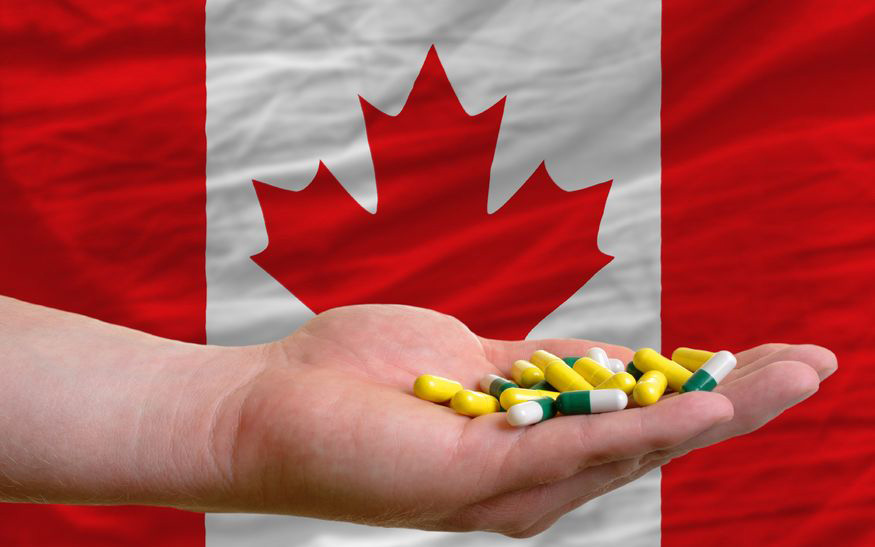
States that have long pushed the FDA to allow drug importation from Canada touted the move as a major step forward in their efforts to lower prescription drug spending and rein in healthcare costs. But while the idea of importing drugs from Canada is new for states, some businesses have been using existing drug import pathways to help consumers save money on certain high-cost medications.
***
More than 20 million US residents—a record number, according to the Biden administration—have signed up for health insurance through the Affordable Care Act’s marketplaces. (the New York Times)
***
Here’s where the major benchmarks ended:
Stocks were a mixed bag yesterday as investors pored over the first big earnings reports and new data showing that wholesale prices surprisingly went down in December. Airlines took a hit after Delta beat earning expectations but lowered its profit forecast.
The S&P 500 index rose 3.59 points (0.1%) to 4,783.83, up 1.8% for the week; the Dow Jones Industrial Average® (DJI) fell 118.04 points (0.3%) to 37,592.98, up 0.3% for the week; the NASDAQ Composite rose 2.57 points to 14,972.76, up 3.1% for the week.
The 10-year Treasury note yield (TNX) fell about 3 basis points to 3.943%.
The CBOE® Volatility Index (VIX) rose 0.26 to 12.70.
Retailers and consumer discretionary shares were among the market’s weakest performers Friday, and regional banks were also under pressure. The KBW Regional Banking Index (KRX) fell 2% for the week and ended at a one-month low. Energy shares led gainers behind strength in crude oil futures. The small-cap-focused Russell 2000® Index (RUT) ended little-changed for the week but is still down 3.8% so far this year.







 Support our online development, and advance our onground research initiatives in free market economics, as we seek to showcase the brightest Next-Gen minds.
THE ME-P DISCLAIMER: Posts, comments and opinions do not necessarily represent iMBA, Inc., but become our property after submission. Copyright © 2006 to-date. iMBA, Inc allows colleges, universities, medical and financial professionals and related clinics, hospitals and non-profit healthcare organizations to distribute our proprietary essays, photos, videos, audios and other documents; etc. However, please review copyright and usage information for each individual asset before submission to us, and/or placement on your publication or web site. Attestation references, citations and/or back-links are required. All other assets are property of the individual copyright holder.
Support our online development, and advance our onground research initiatives in free market economics, as we seek to showcase the brightest Next-Gen minds.
THE ME-P DISCLAIMER: Posts, comments and opinions do not necessarily represent iMBA, Inc., but become our property after submission. Copyright © 2006 to-date. iMBA, Inc allows colleges, universities, medical and financial professionals and related clinics, hospitals and non-profit healthcare organizations to distribute our proprietary essays, photos, videos, audios and other documents; etc. However, please review copyright and usage information for each individual asset before submission to us, and/or placement on your publication or web site. Attestation references, citations and/or back-links are required. All other assets are property of the individual copyright holder.


















































 The Leading Business Education Network for Doctors, Financial Advisors and Health Industry Consultants