DAILY UPDATE: About the Markets

By Staff Reporters

***

***

Major U.S. stock indexes ended mixed, after the announcement of a surprise OPEC+ production cut sent crude oil prices to two-month highs and fueled inflation concerns that could keep the Federal Reserve in policy-tightening mode. This weekend, several OPEC+ members, including Saudi Arabia, announced production cuts totaling nearly 1.2 million barrels a day that are slated to start in May. In response, WTI crude futures soared above $80 a barrel. Word of the planned cuts also boosted expectations that the Fed could raise its benchmark interest rate again in May as the central bank extends efforts to tamp down inflation. The OPEC+ cuts “suggest more headline inflation pressure in the near-term,” says Jeffrey Kleintop, chief global investment strategist at Charles Schwab & Co. The potential for further waves of inflation will “keep central banks from declaring victory over excessive price gains,” he adds. “That’s another headwind for tech stocks and other ‘long duration’ equities that get more of their cash flow in the future than in the near term.”

CITE: https://www.r2library.com

The following is a round-up of today’s market activity:

  • The S&P 500® Index was up 15.2 (0.4%) at 4124.51, the highest close since Feb. 15; the Dow Jones industrial average was up 327 (1.0%) at 33601.15; the NASDAQ Composite was down 32.45 (0.3%) at 12189.45.
  • The 10-year Treasury yield was down about 7 basis points at 3.417%.
  • CBOE’s Volatility Index was down 0.14 at 18.56.

Oil producers and other energy companies led gainers Monday. Health care stocks also outperformed. Consumer discretionary and real estate were among the laggards.

Among individual stocks, Tesla (TSLA) shares tumbled over 6% following reports the electric car-maker delivered just 423,000 vehicles in the first quarter. Analysts had expected 430,000, according to research firm FactSet.

Looking ahead, medical companies, especially vaccine makers, may be worth watching this week with the World Vaccine Congress taking place in Washington, D.C. Some well-known vaccine makers include Moderna (MRNA), Johnson & Johnson (JNJ), and GlaxoSmithKline (GSK). Late last month, Walgreens Boots Alliance (WBA) reported a steep year-over-year decline in demand for COVID-19 vaccinations.

The U.S. dollar index fell slightly, while gold futures climbed above $2,000 per ounce to post their highest close in over two years.

CITE: https://www.amazon.com/Dictionary-Health-Information-Technology-Security/dp/0826149952/ref=sr_1_5?ie=UTF8&s=books&qid=1254413315&sr=1-5

***

ORDER: https://www.routledge.com/Comprehensive-Financial-Planning-Strategies-for-Doctors-and-Advisors-Best/Marcinko-Hetico/p/book/9781482240283

***

COMMENTS APPRECIATED

Thank You

***

DAILY UPDATE: Charles Schwab and the Major Market Indices

By Staff Reporters

***

***

Analysts at Morgan Stanley downgraded Charles Schwab Corp (NYSE: SCHW) on Tuesday, citing concerns over cash sorting and regulatory changes. But, Schwab CEO Walt Bettinger recently said that the company’s banking unit had enough liquidity to cover if 100% of its bank deposits ran off without having to sell a single security — Morgan Stanley says otherwise. Schwab’s recent performance has not been up to Morgan Stanley’s expectations, with customers moving cash out of sweep accounts into money market funds at a rate twice that which the bank had been modeling.

CITE: https://www.r2library.com/Resource/Title/082610254

***

Here’s how the major indexes performed Thursday.

  • The S&P 500® Index rose 23 points (0.57%) to 4050.84; the Dow Jones industrial average was up 141 points (0.43%) at 32859.03; the NASDAQ Composite was up 87 points (0.73%) at 12013.47.
  • The 10-year Treasury yield slipped 2 basis points to 3.555%.
  • CBOE’s Volatility Index was little changed at 19.14.

***

ORDER: https://www.routledge.com/Comprehensive-Financial-Planning-Strategies-for-Doctors-and-Advisors-Best/Marcinko-Hetico/p/book/9781482240283

***

COMMENTS APPRECIATED

Thank You

***

DAILY UPDATE: Jack Dorsey, Deutsche Bank and the Markets

By Staff Reporters

***

***

Short seller Hindenburg Research has hit another billionaire’s fortune with a report. Jack Dorsey, the co-founder of payments company Block and Twitter, saw his net worth tumble by $526 million, or 11%, to $4.4 billion after the US-based research firm led by Nathan Anderson accused Block of misleading investors in a March 23 report, according to Bloomberg. Dorsey isn’t on the list of the world’s 500 richest persons on the Bloomberg Billionaires Index currently. He was previously featured at number 456 with a net worth of $5.41 billion on March 22nd, per Insider’s scan of the Index on Wednesday.

***

Investors sparked a furious selloff in Deutsche Bank AG and thrust one of Europe’s most important lenders into the center of concerns about the health of the global financial system. Shares of Germany’s largest lender tumbled as much as 15%, their third consecutive day of losses, though they later regained some ground and were recently down 10%. The cost to insure against its default using credit-default swaps soared to their highest levels since 2020.

***

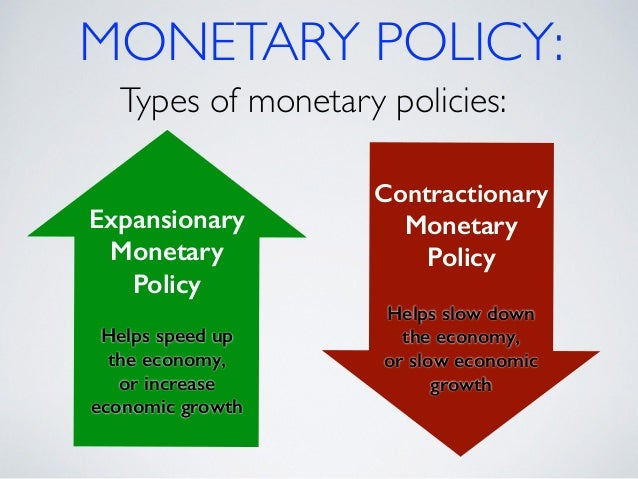
Chairman Jerome Powell was ambiguous this week about future Federal Reserve moves, suggesting “some additional policy firming may be needed.”

Treasury yields dropped near seven-month lows, a seeming indication of escalating recession worries after the Fed raised its benchmark lending rate nine times to a range of 4.75% to 5% over the past year. The release next week of updated data on consumer confidence, inflation, and economic growth will likely be in focus.

Monetary Policy: https://medicalexecutivepost.com/2023/03/17/the-modern-us-monetary-system/

The swings in stock prices this week “were consistent with the unclear outlook for monetary policy, the banking system, and the broader economy,” says Kevin Gordon, senior investment strategist at Charles Schwab. “More time needs to pass before we know the true impact of the expected tightening in credit conditions.”

  • The S&P 500® Index was up 22.27 (0.6%) at 3970.99; the Dow Jones industrial average was up 132.28 (0.4%) at 32,237.53; the NASDAQ Composite was up 36.56 (0.3%) at 11,823.96.
  • The 10-year Treasury yield was little changed at about 3.374%.
  • CBOE’s Volatility Index was down 0.87 at 21.74.

The real estate sector led the gainers Friday, followed by consumer staples and health care. Financials and consumer discretionary stocks edged lower, and technology stocks were little changed, though the tech-focused NASDAQ Composite still notched its second straight weekly gain. Gold and crude oil futures both declined, while the U.S. dollar strengthened.

***

ORDER: https://www.routledge.com/Comprehensive-Financial-Planning-Strategies-for-Doctors-and-Advisors-Best/Marcinko-Hetico/p/book/9781482240283

***

COMMENTS APPRECIATED

Thank You

***

DAILY UPDATE: Stocks Rise with Economic Data

By Staff Reporters

***

***

Q4’s strong GDP numbers are raising hopes that the Fed could actually pull off the tricky “soft landing”—where it knocks down inflation through interest rate hikes without sending economic growth into reverse. The resilient labor market is cooperating: Despite all the headlines about layoffs, jobless claims fell last week to their lowest point since April 2022.

CITE: https://www.r2library.com/Resource/Title/0826102549

***

U.S. stocks ended the day in the green as the markets digested a host of economic and earnings data. The economic calendar came in heavy today, as Q4 GDP growth was higher than expected, jobless claims unexpectedly fell, new home sales rose, and durable goods orders jumped, but dipped when stripping out the volatile component of transportation activity. Several Dow members were in focus, as IBM exceeded expectations, though its cash flow performance garnered some scrutiny on the Street, and Dow Inc. missed quarterly estimates. Fellow Dow component Chevron announced an increased dividend and a new $75.0 billion share repurchase plan, while in other news, Tesla topped quarterly estimates and offered an upbeat outlook.

Treasury yields traded mostly higher, and the U.S. dollar advanced, while crude oil prices increased, and gold moved to the downside.

Asian stocks finished mixed in lighter volume as several markets remained closed for holidays, while markets in Europe were higher for the most part, adding to the region’s strong start to the year.

***

ORDER: https://www.routledge.com/Comprehensive-Financial-Planning-Strategies-for-Doctors-and-Advisors-Best/Marcinko-Hetico/p/book/9781482240283

***

COMMENTS APPRECIATED

Thank You

***

DJIA Surges!

By Staff Reporters

***

***

The DJIA Briefly surged over 600 points this morning.

WHY DOW?

Inflation data showed the Consumer Price Index rose 0.1% on the month of November, cooler than the expected 0.3% rise. The index rose 7.1% year over year, lower than the 7.3% Econoday estimate.

CITE: https://www.r2library.com/Resource/Title/082610254

In addition, the next meeting Fed meeting kicks off Tuesday with an interest rate decision on Wednesday. While the Fed has already heavily telegraphed a 50-basis-point hike, investors will be looking for further guidance on the Fed’s plans.

Finally, according to the CME’s FedWatch tool, traders place a 79% chance of a 50-basis-point rate hike.

***

COMMENTS APPRECIATED

Thank You

***

ORDER: https://www.routledge.com/Comprehensive-Financial-Planning-Strategies-for-Doctors-and-Advisors-Best/Marcinko-Hetico/p/book/9781482240283

***

Got Cash Money in the Bank?

Join Our Mailing List

Is it Really a Long-Term Investment?

By Rick Kahler CFP® http://www.KahlerFinancial.com

Rick Kahler CFPGot money in the bank? Of course, that’s a good thing.

But, more than a fourth of Americans think the best long-term investment strategy is money in the bank. However, that may be a bad thing!

So, what about medical professionals; and what is a doctor to do?

The Bankrate Survey

Here is the rather discouraging result of a July survey by Bankrate. One of its questions was, “For money you wouldn’t need for more than 10 years, which one of the following do you think would be the best way to invest the money?”

Cash was the top choice at 26%, followed by real estate at 23%. Sixteen percent of the respondents chose precious metals such as gold. Only 14% would put their long-term investment into the stock market, and just 8% thought bonds were the best choice.

Head-on-Desk Syndrome

Doh! That thumping sound you hear is me banging my head on my desk.

I assume those who opted for cash did so because keeping money in the bank seemed to be the safest choice. For long-term investing, however, that safety is an illusion. The best and safest place to put your nest egg for the future is not in the bank, but in a well-diversified portfolio with a variety of asset classes.

Here’s why:

Savings accounts and CDs are safe places to store relatively small amounts of cash that you expect to need within the next few months or years. The funds are protected by insurance. You know exactly where your money is, and you can get your hands on it anytime you want.

Short Term Stability

This short-term safety does not make the bank a good place for money you will need for retirement or other needs ten years or so into the future. It may seem like safe investing because the amount in your account never goes down. You’re always earning interest. Yet, over time, that interest isn’t enough to keep pace with inflation. The purchasing power of your money decreases, which means you’re actually losing money. It just doesn’t feel like a loss because you don’t see the loss in value.

Stock Markets Fluctuate

In contrast, the stock market fluctuates. The media reports constantly that “the DOW is up” or “NASDAQ is down,” as if those day-to-day numbers matter. This fosters a perception that investing in the stock market is risky. Combine that with the scarcity of education about finances and economics, and it’s no wonder that so many people are afraid of the stock market and view investing almost as a form of gambling.

Wise long-term investing in the stock market is anything but gambling. Instead of trying to buy and sell a few stocks as their prices go up and down, wise investors neutralize the impact of market fluctuations by owning a vast assortment of assets.

A Dual Strategy

This is accomplished with a two-part strategy.

1. The first is to invest in mutual funds rather than individual stocks. With just one mutual fund that invests in an index of stocks, you might own thousands of different companies. Your hard-earned fortune isn’t dependent on the fortunes of just a few companies.

2. The second component is asset class diversification. An asset class is a type of investment, such as U. S. and International stocks, U. S. and International bonds, real estate investment trusts, commodities, market neutral funds, Treasury Inflation-Protected Securities, and junk bonds. Ideally, a diversified portfolio should include nine or more asset classes.

###

MD Retirement planning

###

Assessment

By holding small amounts of a great many different companies and asset classes, you spread your risk so broadly that the inevitable fluctuations are small ripples rather than steep gains or losses. As some types of investments decline in value, other types will be gaining value. Over the long term, the entire portfolio grows.

And, in the long term and for most medical professionals, investing this way is usually safer than money in the bank.

Conclusion

Your thoughts and comments on this ME-P are appreciated. Feel free to review our top-left column, and top-right sidebar materials, links, URLs and related websites, too. Then, subscribe to the ME-P. It is fast, free and secure.

Link: http://feeds.feedburner.com/HealthcareFinancialsthePostForcxos

Speaker: If you need a moderator or speaker for an upcoming event, Dr. David E. Marcinko; MBA – Publisher-in-Chief of the Medical Executive-Post – is available for seminar or speaking engagements. Contact: MarcinkoAdvisors@msn.com

OUR OTHER PRINT BOOKS AND RELATED INFORMATION SOURCES:

DICTIONARIES: http://www.springerpub.com/Search/marcinko
PHYSICIANS: www.MedicalBusinessAdvisors.com
PRACTICES: www.BusinessofMedicalPractice.com
HOSPITALS: http://www.crcpress.com/product/isbn/9781466558731
CLINICS: http://www.crcpress.com/product/isbn/9781439879900
ADVISORS: www.CertifiedMedicalPlanner.org
PODIATRISTS: www.PodiatryPrep.com
BLOG: www.MedicalExecutivePost.com
FINANCE: Financial Planning for Physicians and Advisors
INSURANCE: Risk Management and Insurance Strategies for Physicians and Advisors

Product Details  Product Details