BOARD CERTIFICATION EXAM STUDY GUIDES Lower Extremity Trauma
[Click on Image to Enlarge]
ME-P Free Advertising Consultation
The “Medical Executive-Post” is about connecting doctors, health care executives and modern consulting advisors. It’s about free-enterprise, business, practice, policy, personal financial planning and wealth building capitalism. We have an attitude that’s independent, outspoken, intelligent and so Next-Gen; often edgy, usually controversial. And, our consultants “got fly”, just like U. Read it! Write it! Post it! “Medical Executive-Post”. Call or email us for your FREE advertising and sales consultation TODAY [678.779.8597] Email: MarcinkoAdvisors@outlook.com
Medical & Surgical e-Consent Forms
ePodiatryConsentForms.com
iMBA Inc., OFFICES
Suite #5901 Wilbanks Drive, Norcross, Georgia, 30092 USA [1.678.779.8597]. Our location is real and we are now virtually enabled to assist new long distance clients and out-of-town colleagues.
ME-P Publishing
SEEKING INDUSTRY INFO PARTNERS?
If you want the opportunity to work with leading health care industry insiders, innovators and watchers, the “ME-P” may be right for you? We are unbiased and operate at the nexus of theoretical and applied R&D. Collaborate with us and you’ll put your brand in front of a smart & tightly focused demographic; one at the forefront of our emerging healthcare free marketplace of informed and professional “movers and shakers.” Our Ad Rate Card is available upon request [678-779-8597].
Posted on February 4, 2026 by Dr. David Edward Marcinko MBA MEd CMP™
By Staff Reporters
***
***
Long-Term Liabilities
A secured debt is pledged by a specific property. This is a collateralized loan.
Generally, the purchased item is pledged with the proceeds of the loan. This would include long-term liabilities (more than 12 months) such as a mortgage, home equity loan, or a car loan. Although the creditor has the ability to take possession of your property in order to recover a bad debt, it is done very rarely. A creditor is more interested in recovering money. Sometimes, when borrowing money, there may be a requirement to pledge assets that are owned prior to the loan.
For example, a personal loan from a finance company requires that you pledge all personal property such as your car, furniture, and equipment. The same property may become subject to a judicial lien if you are sued and a judgment is made against you. In this case, you would not be able to sell or pledge these assets until the judgment is satisfied. A common example of a lien would be from unpaid federal, state or local taxes. Doctors can be found personally liable for unpaid payroll taxes of employees in their professional corporations.
***
Distinguishing from Short-Term Liabilities
The primary distinction between long-term and short-term liabilities lies in their repayment timing. Long-term liabilities are obligations due beyond one year, while short-term, or current, liabilities are financial obligations settled within one year of the balance sheet date or the company’s operating cycle, whichever is longer. This timing difference impacts how these obligations are viewed in financial analysis.
Examples of short-term liabilities include accounts payable, which are amounts owed to suppliers for goods or services purchased on credit, typically due within 30 to 60 days. Other common short-term obligations are short-term notes payable, accrued expenses like salaries or utilities, and the portion of long-term debt that becomes due within the next 12 months. These obligations are usually paid using current assets.
This distinction is important for financial analysis, as it helps assess a company’s financial health. Short-term liabilities are relevant for evaluating a company’s liquidity, its ability to meet immediate financial obligations. Conversely, long-term liabilities provide insights into a company’s solvency, indicating its ability to meet financial obligations over an extended period and its overall financial stability.
***
Finally, be aware that some assets and liabilities defy short or long-term definition. When this happens, simply be consistent in your comparison of financial statements, over time.
Turning 50 with little to no savings can be daunting, especially for a doctor who has spent decades in a demanding profession. Yet, all is not lost. With strategic planning, discipline, and a willingness to adapt, a broke 50-year-old physician can still build a solid retirement foundation by age 65.
First, it’s essential to confront the financial reality. This means calculating current income, expenses, debts, and any assets, however small. A clear picture allows for realistic goal-setting. The target should be to save aggressively—ideally 30–50% of income—over the next 15 years. While this may seem steep, doctors often have above-average earning potential, even in their later years, which can be leveraged.
Next, lifestyle adjustments are crucial. Downsizing housing, eliminating unnecessary expenses, and avoiding new debt can free up significant cash flow. If possible, relocating to a lower-cost area or refinancing existing loans can also help. Every dollar saved should be redirected into retirement accounts such as a 401(k), IRA, or a solo 401(k) if self-employed. Catch-up contributions for those over 50 allow for higher annual deposits, which can accelerate growth.
Investing wisely is non-negotiable. A diversified portfolio with a mix of stocks, bonds, and alternative assets can provide both growth and stability. Working with a fiduciary financial advisor ensures that investments align with retirement goals and risk tolerance. Time is limited, so the focus should be on maximizing returns without taking reckless risks.
Increasing income is another powerful lever. Many doctors can boost earnings through side gigs like telemedicine, consulting, teaching, or locum tenens work. These flexible options can add tens of thousands annually without requiring a full career shift. Additionally, monetizing expertise—writing, speaking, or creating online courses—can generate passive income streams.
Debt reduction must be prioritized. High-interest loans, especially credit card debt, can erode savings potential. Paying off these balances aggressively while avoiding new liabilities is key. For student loans, exploring forgiveness programs or refinancing options may offer relief.
Finally, mindset matters. Retirement at 65 doesn’t have to mean complete cessation of work. It can mean transitioning to part-time roles, passion projects, or advisory positions that provide income and fulfillment. The goal is financial independence, not necessarily total inactivity.
In conclusion, while starting late is challenging, a broke 50-year-old doctor can still retire comfortably at 65. It requires a blend of financial discipline, income optimization, smart investing, and lifestyle changes. With focus and determination, the next 15 years can be transformative—turning a precarious situation into a secure and dignified retirement.
SPEAKING: Dr. Marcinko will be speaking and lecturing, signing and opining, teaching and preaching, storming and performing at many locations throughout the USA this year! His tour of witty and serious pontifications may be scheduled on a planned or ad-hoc basis; for public or private meetings and gatherings; formally, informally, or over lunch or dinner. All medical societies, financial advisory firms or Broker-Dealers are encouraged to submit an RFP for speaking engagements: CONTACT: Ann Miller RN MHA at MarcinkoAdvisors@outlook.com
What Medical School Didn’t Teach Doctors About Money
Medical school is designed to mold students into competent, compassionate physicians. It teaches anatomy, pathology, pharmacology, and clinical skills with precision and rigor. Yet, despite the depth of medical knowledge imparted, one critical area is often overlooked: financial literacy. For many doctors, the transition from student to professional comes with a steep learning curve—not in medicine, but in money. From managing debt to understanding taxes, investing, and retirement planning, medical school leaves a financial education gap that can have long-term consequences.
The Debt Dilemma
One of the most glaring omissions in medical education is how to manage student loan debt. The average medical student graduates with over $200,000 in debt, yet few are taught how to navigate repayment options, interest accrual, or loan forgiveness programs. Many doctors enter residency with little understanding of income-driven repayment plans or Public Service Loan Forgiveness (PSLF), missing opportunities to reduce their financial burden. Without guidance, some make costly mistakes—such as refinancing federal loans prematurely or choosing repayment plans that don’t align with their career trajectory.
Income ≠ Wealth
Medical students often assume that a high salary will automatically lead to financial security. While physicians do earn more than most professionals, income alone doesn’t guarantee wealth. Medical school rarely addresses the importance of budgeting, saving, and investing. As a result, many doctors fall into the “HENRY” trap—High Earner, Not Rich Yet. They spend lavishly, assuming their income will always cover expenses, only to find themselves living paycheck to paycheck. Without a solid financial foundation, even high earners can struggle to build net worth.
***
***
Taxes and Business Skills
Doctors are also unprepared for the complexities of taxes. Whether employed by a hospital or running a private practice, physicians face unique tax challenges. Medical school doesn’t teach how to track deductible expenses, optimize retirement contributions, or navigate self-employment taxes. For those who open their own clinics, the lack of business education is even more pronounced. Understanding profit margins, payroll, insurance billing, and compliance regulations is essential—but rarely covered in medical training.
Investing and Retirement Planning
Another blind spot is investing. Medical students are rarely taught the basics of compound interest, asset allocation, or retirement accounts. Many don’t know the difference between a Roth IRA and a traditional 401(k), or how to evaluate mutual funds and index funds. This lack of knowledge delays retirement planning and can lead to missed opportunities for long-term growth. Some doctors rely on financial advisors without understanding the fees or conflicts of interest involved, putting their wealth at risk.
Insurance and Risk Management
Medical school also fails to educate students on insurance—life, disability, malpractice, and health. Doctors need robust coverage to protect their income and assets, but many don’t know how to evaluate policies or understand terms like “own occupation” or “elimination period.” Inadequate coverage can leave physicians vulnerable to financial disaster in the event of illness, injury, or litigation.
Emotional and Behavioral Finance
Beyond technical knowledge, medical school overlooks the emotional side of money. Physicians often face pressure to maintain a certain lifestyle, especially after years of sacrifice. The desire to “catch up” can lead to impulsive spending, luxury purchases, and financial stress. Without tools to manage money mindset and behavioral habits, doctors may struggle with guilt, anxiety, or burnout related to finances.
The Case for Financial Education
Fortunately, awareness of this gap is growing. Organizations like Medics’ Money and podcasts such as “Docs Outside the Box” are working to fill the void by offering financial education tailored to physicians.
These resources cover everything from budgeting and debt management to investing and entrepreneurship. Some medical schools are beginning to incorporate financial literacy into their curricula, but progress is slow and inconsistent.
Conclusion
Medical school equips doctors to save lives, but it doesn’t prepare them to secure their own financial future. The lack of financial education leaves many physicians vulnerable to debt, poor investment decisions, and lifestyle inflation. To thrive both professionally and personally, doctors must seek out financial knowledge beyond the classroom. Whether through self-study, mentorship, or professional guidance, understanding money is as essential as understanding medicine. After all, financial health is a cornerstone of overall well-being—and every doctor deserves to master both.
SPEAKING: Dr. Marcinko will be speaking and lecturing, signing and opining, teaching and preaching, storming and performing at many locations throughout the USA this year! His tour of witty and serious pontifications may be scheduled on a planned or ad-hoc basis; for public or private meetings and gatherings; formally, informally, or over lunch or dinner. All medical societies, financial advisory firms or Broker-Dealers are encouraged to submit an RFP for speaking engagements: CONTACT: Ann Miller RN MHA at MarcinkoAdvisors@outlook.com -OR-http://www.MarcinkoAssociates.com
Sometimes debt is a necessary tool in building wealth
Using debt to build wealth might seem counterintuitive. After all, when you calculate your wealth, you look at what you own (assets) and subtract what you owe (debts and liabilities) to determine what your net worth (wealth) is.
It’s easy to oversimplify that debt is bad and is harmful to your wealth. Because some debt is really harmful, like credit cards, automobile, debt gets lumped into the category of “bad.”
But some types of debt can be useful and sometimes necessary to create wealth; home, education, business, etc. For folks that don’t readily have access to large sums of cash or capital, debt may be the tool that allows them to expand.
A SPECIAL MEDICAL-EXECUTIVE-POST GUEST PRESENTATION
***
What Is a Special Purpose Vehicle (SPV)?
A special purpose vehicle is a subsidiary created by a parent company to isolate financial risk. It’s also called a special purpose entity (SPE). Its legal status as a separate company makes its obligations secure even if the parent company goes bankrupt. A special purpose vehicle is sometimes referred to as a bankruptcy-remote entity for this reason.
These vehicles can become a financially devastating way to hide company debt if accounting loopholes are exploited, as seen in the 2001 Enron scandal.
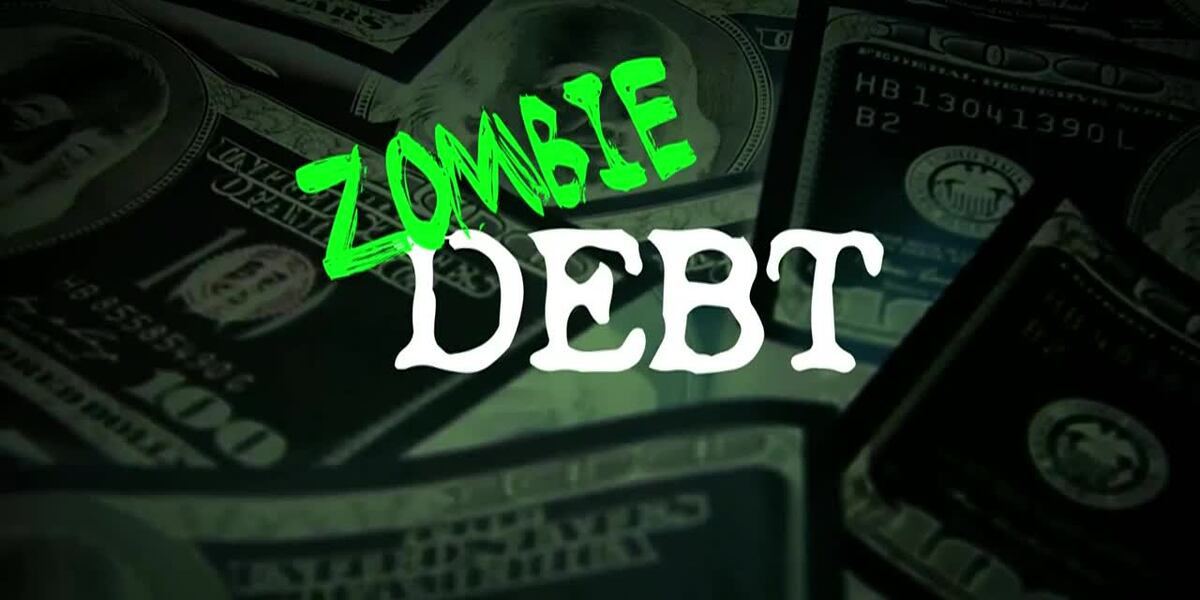
According to Wikipedia, Phantom debt or zombie debt is a debt that is old, defaulted, or not owed and is somehow still being pursued for collection to be paid by the presumed debtor. It generally refers to debt that is more than 3 years old, is long forgotten about or belonged to someone else – like someone with the same name or a deceased parent. The amount owed can grow to hundreds or thousands of dollars more than what was originally owed.
An example of this is from George Miller. George missed an 11 cent Verizon bill and seven years later it had grown to $4,000.00.
Sometimes it was never owed, was owed by a deceased parent, or that was previously owed by the presumed debtor, but was previously paid in full, settled, discharged via bankruptcy or a dismissed court case, is beyond the statute of limitations, or is otherwise not legally collectible, but that a collection agency or other similar service is aggressively attempting to collect, often fraudulently.
While the concept of phantom debt is quite old, it has gotten a lot of attention since the 1990s.
Very often, collectors of phantom debt use intimidating, abusive, or otherwise illegal tactics in an attempt to collect phantom debt that include frequent phone calls, calls to the victim’s place of employment, or threats of scary consequences against the victim that sometimes include arrest and/or criminal prosecution. In the USA, such tactics violate the Fair Debt Collection Practices Act [FDCPA]
The source of phantom debt may be from collectors who buy the debt from other collectors for pennies on the dollar, some of which take action that is not legal in order to collect that debt. Unlawful techniques used include suing or threatening to sue, re-aging the debt on the victim’s credit report to circumvent limits on reporting, or falsely promising to remove a negative credit report entry in exchange for a partial payment.
SPEAKING: Dr. Marcinko will be speaking and lecturing, signing and opining, teaching and preaching, storming and performing at many locations throughout the USA this year! His tour of witty and serious pontifications may be scheduled on a planned or ad-hoc basis; for public or private meetings and gatherings; formally, informally, or over lunch or dinner. All medical societies, financial advisory firms or Broker-Dealers are encouraged to submit an RFP for speaking engagements: CONTACT: Ann Miller RN MHA at MarcinkoAdvisors@outlook.com -OR-http://www.MarcinkoAssociates.com
Stocks: Investors were pleased to hear about the trade deal with Japan yesterday and reports of an agreement with the EU coming soon kept the stock rally alive through market close. The S&P 500 notched its 12th new closing record this year, and the NASDAQ ended the day above 21,000 for the first time.
Bonds: Treasury yields rose a bit after an auction of 20-year notes was met with strong demand, indicating investor appetite for longer-term US debt.
Commodities: Oil inched higher while gold edged lower as investors hedge their bets in anticipation of more trade deals before the August 1st deadline.
Posted on June 10, 2025 by Dr. David Edward Marcinko MBA MEd CMP™
By AI
***
***
Stocks: Equities inched higher on a handful of optimistic headlines. First, the US and China trade teams met in London today with hopes the two superpowers could resolve disputes over export curbs. Also, a new survey from the New York Fed found that consumer expectations for inflation eased across all time horizons in May. STOCKS: https://medicalexecutivepost.com/2025/04/18/stocks-basic-definitions/
Posted on May 19, 2025 by Dr. David Edward Marcinko MBA MEd CMP™
BREAKING NEWS [12:09 am, EST]
***
***
Stock Futures are contracts to buy or sell a specific underlying asset at a future date. The underlying asset can be a commodity, a security, or other financial instrument. Futures trading requires the buyer to purchase or the seller to sell the underlying asset at the set price, whatever the market price, at the expiration date.
Stock futures pointed lower on Monday morning as investors weighed fresh warnings on U.S. debt and the potential for President Donald Trump’s trade war to heat up again.
Dow Futures: 42,406.00
Fair Value: 42,752.14
Change: – 330.000.77%
Implied Open: – 346.14
Late Friday night, Moody’s downgraded the U.S. credit rating one notch. This came as Congress tries to extend Trump’s tax cuts and add new ones, which are expected to deepen federal deficits.
Financial Advisor, Planner and Insurance Agent Information
By Staff Reporters
***
***
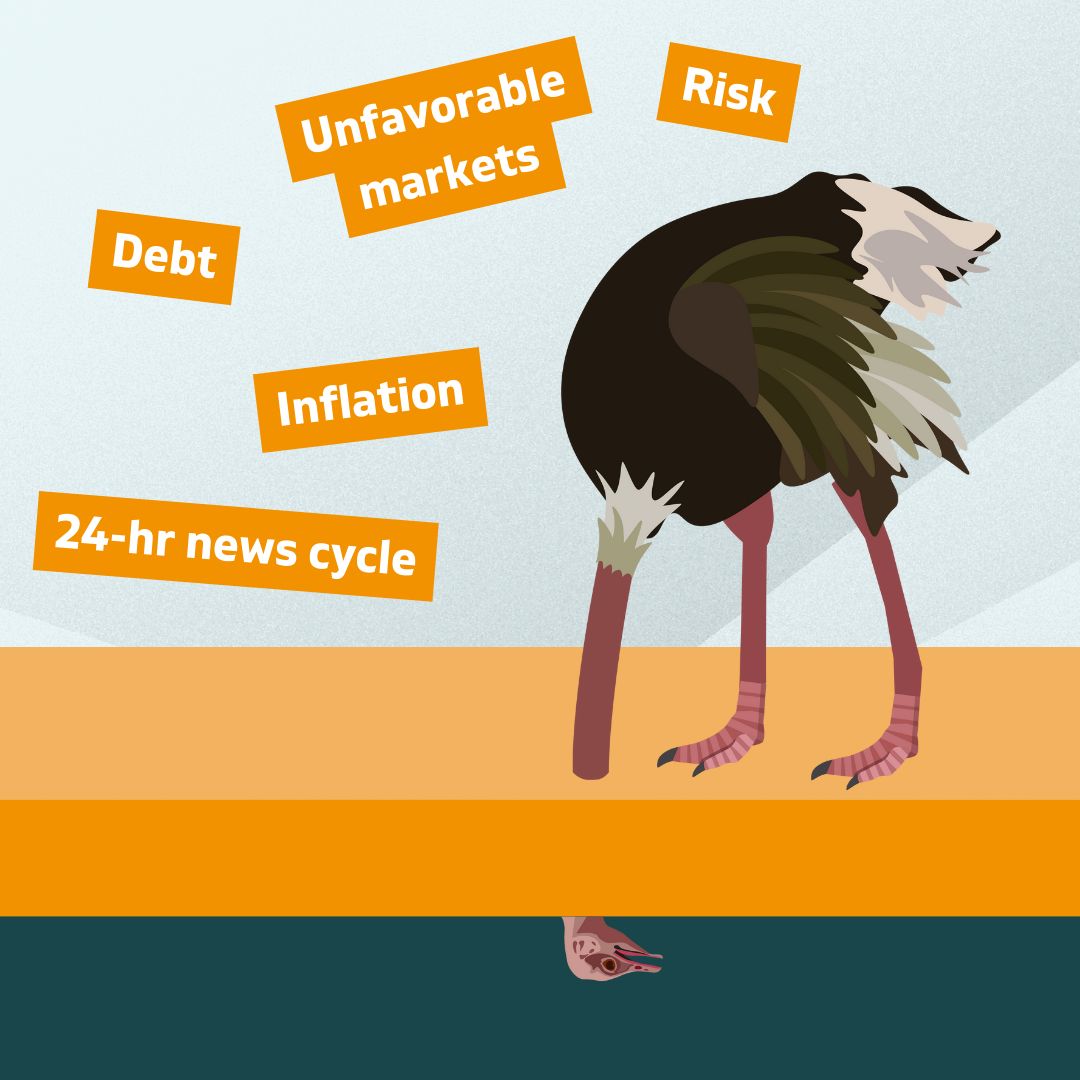
Ostrich Bias is a behavioral phenomenon describing the tendency of individuals to avoid or ignore information that they perceive as negative or threatening. This term is derived from the popular but inaccurate belief that ostriches bury their heads in the sand when faced with danger, even though they do not exhibit such behavior.
Evidence: There is neuro-scientific evidence of the ostrich effect. Sharot et al. (2012) investigated the differences in positive and negative information when updating existing beliefs. Consistent with the ostrich effect, participants presented with negative information were more likely to avoid updating their beliefs; wills, estate plans, investment portfolios, and insurance policies, etc..
Moreover, they found that the part of the brain responsible for this cognitive bias was the left IFG – inferior frontal gyrus – by disrupting this part of the brain with TMS – transcranial magnetic stimulation – participants were more likely to accept the negative information provided.
EXAMPLE: The Ostrich Bias can cause someone to avoid looking at their bills, because they’re worried about seeing how far behind they are on home mortgage payments, credit cards, education or auto loans, etc.
COMMENTS APPRECIATED
The Medical Executive-Post is a news and information aggregator and social media professional network for medical and financial service professionals.
Feel free to submit education content to the site as well as links, text posts, images, opinions and videos which are then voted up or down by other members. Comments and dialog are especially welcomed.
Daily posts are organized by subject. ME-P administrators moderate the activity. Moderation may also conducted by community-specific moderators who are unpaid volunteers.
I am in an unenviable position. The policy coming out of the White House has a significant impact on economics, more than ever before in my career. If I say anything positive about that policy, I’ll be put in the MAGA camp. If I criticize it, I’ll be accused of suffering from Trump derangement syndrome. I am hired by you to make the best investment decisions possible. Rather than see me as engaged in political commentary, I’d ask that you view my remarks as purely analytical.
Let me give you this analogy. I live in Denver. Let’s imagine I am a huge Broncos fan, and the Broncos are playing the Chicago Bears. If I am betting a significant amount of money on this game, I should put my affinity for the Broncos and hatred of the Chicago Bears aside and analyze data and facts. The Broncos are either going to win or lose; my wanting them to win has zero impact on the outcome. The same applies to my analysis here. My motto in life is Seneca’s saying, “Time discovers truth.” I just try to discover it before time does.
When it comes to politics, I also have a significant advantage. I was not born in this country. From a young age, I was brainwashed about communism, not about team Republican versus team Democrat. The failure of the Soviet Union de-brainwashed me fast concerning the virtues of communism and converted me into a believer in free markets.
As a result, I never bought into either party’s ideology, and thus in the last four presidential elections I voted for a Republican, an independent, a Democrat, and wrote in my youngest daughter, Mia Sarah (not in that order). In my articles I have criticized the policies of both Biden (student loan forgiveness, unions) and Trump (Bitcoin reserve).
I remind myself that in times like these you have to be a nuanced thinker. Some of Trump’s policies are terrific, others … not so much (I am being diplomatic here).
Scott Fitzgerald once said “The test of a first-rate intelligence is the ability to hold two opposed ideas in mind at the same time, and still retain the ability to function.” In 2025 we are taking this “first-rate intelligence” test daily.
What will happen to the US dollar? The US dollar will likely continue to get weaker, which is inflationary for the US. Let me start with some easily identifiable reasons:
We have too much debt. We ran 6-7% budget deficits while our economy was growing and unemployment was at record lows. Now we have $36 trillion in debt. Our interest expenses exceed our defense spending, and these costs will continue to climb. If/when we go into recession, we may see something we have not seen in a long time – higher interest rates. Our budget deficits will balloon to between 9–12%, and the debt market, realizing that inflation (i.e., money printing) is inevitable, will say, “Pay up!”
New competition from Bitcoin. President Trump’s approval of Bitcoin as a potential reserve currency is one of the most self-serving and anti-American things I’ve seen any president do. The US dollar is the world’s reserve currency. We still have little competition for that title. China could be a contender, but it is not a democracy and has capital controls. This policy has no upside for America, only downside.
A stronger Europe. Ironically, we may inadvertently create a stronger Europe by threatening to abandon NATO. I don’t want to insult European clients (or my European friends), but the following analogy describes the US-Europe relationship on some level: Europe gradually evolved into a trust fund kid (when it came to security) and the US turned into its sugar daddy. The trust fund kid was incredibly dependent on the sugar daddy. It criticized its parent for being a barbarian and money-driven, but it relied heavily on that parent to protect it from bullies.
President Trump cut off Europe’s allowance by threatening that the US might not protect Europe from Russia. This has forced Europe to spend more money on defense. Outside of Germany (which has little debt), few European economies can afford that. This may force Europe (or at least some European countries) to become more pragmatic – to cut social programs and bureaucracy. If this leads to a stronger Europe both economically and militarily, the euro will be competing with the US dollar. This is a big if.
Our new foreign policy.
When people describe President Trump’s foreign policy as “transactional,” they’re highlighting a fundamental shift in how America engages with the world – one with profound implications for our global standing, national interests, and the US dollar. The shift affects both types of capital – financial and reputational.
Reputational capital isn’t at risk in ‘one-shot’ transactions like house selling. Imagine you’re selling your primary residence and moving elsewhere. Do you disclose every flaw, or let the buyer figure things out? Your incentive is to maximize short-term profits. You’ll likely never meet this buyer again, and therefore there are incentives not to care what they’ll think of you afterward. You’ll be transactional, seeking the highest price possible for your biggest asset. This exemplifies a ‘one-shot’ system where future interactions aren’t expected.
Contrast this with a relationship- and trust-based system. Now imagine you are a homebuilder in a small town. Your suppliers only extend credit if you have a reputation for paying on time. Your employees do quality work only if you treat them fairly. Your buyers tell friends about their experience with you. The incentives naturally create a relational approach. In this trust-based system, incentives skew toward maximizing long-term profits, where reputational capital becomes the glue creating continuity.
Reputational capital radiates predictability – you know how someone will behave based on their history – but operating with low or negative reputational capital is difficult and expensive. People won’t enter long-term contracts with you or will demand external guarantees. Many potential partners will simply refuse to deal with you.
Building reputational capital works like adding pennies to a jar – each good deed incrementally adds to your standing. Yet reputational capital can collapse instantly by removing the jar’s bottom. A single breach of trust doesn’t just remove one penny; it can wipe out your entire balance and plunge you into reputational bankruptcy. The math is brutally asymmetric: good deeds might add a point or two, while bad deeds subtract by factors of 50 or 100.
This doesn’t mean transactions shouldn’t be profitable. If you’re accumulating reputational capital while consistently losing money, you’re probably in the wrong business. Each deal should be evaluated considering both long-term financial and reputational capital.
Individual transactions can sacrifice some profit but cannot afford to lose reputational capital. A “one-shot” transactional approach used in a trust-system environment may provide greater short-term profitability, but if this success comes at the expense of reputational capital, the long-term consequences for America’s global position could be devastating.
This brings us to our current foreign policy.
Relationships between nations are a trust-based system. I’d argue it’s a super-relational system because it’s multigenerational, lasting beyond the life of any one human. Reputational capital is paramount here.
Part of the US’s strength has been the soft power – the reputational capital – it exerted. We had a lot of friends, which helped us to be more effective in dealing with our foes. We keep telling ourselves that America is an “exceptional” nation. This exceptionalism didn’t just come from our financial and military might – it accumulated based on our reputational capital.
Though we don’t always succeed, we are a people who try to do the right thing. Our exceptionalism has been earned through our actions. We are the country that helped rebuild Europe and gave it six decades to repay lend-lease. We toppled communism.
I don’t know the nuances of the Ukraine mineral deal, but initially it had the optics of extortion. Though I think the renegotiated and signed version appears to be fair to both sides, forcing repayment while Ukraine is dodging Russian missiles made the US look transactional.
Actions by President Trump over the last month have undermined our reputation. We are quickly becoming a “one-shot” transactional player in a trust-based environment. Imposing tariffs on Canada on a whim to try to get it to become the 51st state erodes American reputational capital. So does not ruling out America invading Greenland. This puts us on the same moral plane as Russia invading Ukraine.
The conversation about tariffs has many nuances. For instance, I don’t know anyone who opposes reciprocal tariffs – they seem fair and don’t consume any reputational capital. But tariffs that are used as weapons in a trade war in order to annex another country erode reputational capital. Threatening to leave NATO and not protect countries that don’t spend enough on their defense diminishes reputational capital. Maybe the only way to get European countries to spend on defense was to threaten not to defend them – you can agree or disagree with the rationale behind each of Trump’s decisions, but what can’t be argued is that they undermined our reputational capital.
As we lose soft power, our influence will diminish, and thus so will perceptions of our power. The world will start looking at us not from the perspective of the continuity of generations but of presidential cycles. The word of the American president will have an expiration date of the next presidential or mid-term election.
There are two negotiation styles – Warren Buffett’s and Donald Trump’s. Both have their advantages and disadvantages. Buffett will give you one offer and one offer only. Once the deal is agreed to, even just verbally, that is the deal. Critics would say that there is downside to that predictability, as foes know how you are going to respond. Donald Trump’s style is to be unpredictable, which has its own advantages when you deal with foes – it keeps opponents guessing. But it destroys trust with your allies.
In a world of fiat currencies, all currency is a financial and reputational promise. President Trump, with the help of DOGE (and maybe even tariffs) may increase our financial strength. I hope he does, but it will likely come at a very high cost to our reputational capital, and therefore US global influence and the US dollar will continue its decline.
How are we positioned for this?
About half of our portfolio is foreign companies whose sales are not in dollars. They will benefit from a weaker dollar. We also have exposure to oil, which is priced in the US dollar and usually appreciates when the dollar weakens.
A weaker dollar means our imports will become more expensive, which is inflationary. We own many companies with pricing power and also companies that have claims on someone else’s revenues. Take Uber for example: they get about 20% of each ride. If the cost of the ride goes up, so does their dollar take.
Why does President Trump keep pushing crypto?
In July 2019, Trump said the following: “I am not a fan of Bitcoin and other cryptocurrencies, which are not money, and whose value is highly volatile and based on thin air.” Five years later he promised to establish the US Crypto Reserve, and in 2025 he did.
What changed? There is no logical reason for an American president to endorse crypto. None. Here is the honest answer: Crypto bros made mega-contributions to his campaign.
To top it off, three days before he took office he issued $TRUMP – a shitcoin. Believe it or not, “shitcoin” is a technical term in the crypto community (any coin other than Bitcoin is called a shitcoin by Bitcoin “maximalists”, folks who believe Bitcoin is the one and only digital currency). The future sitting president literally issued – I don’t want to call it a currency, so I guess shitcoin is the right name – that will at some point decline to zero in value. In other words, he’ll fleece his loyal followers who purchase $TRUMP of billions of dollars.
I previously referenced both reputational capital and soft power. These types of acts by a sitting president subtract from both.
Posted on March 8, 2025 by Dr. David Edward Marcinko MBA MEd CMP™
MEDICAL EXECUTIVE-POST–TODAY’SNEWSLETTERBRIEFING
***
Essays, Opinions and Curated News in Health Economics, Investing, Business, Management and Financial Planning for Physician Entrepreneurs and their Savvy Advisors and Consultants
“Serving Almost One Million Doctors, Financial Advisors and Medical Management Consultants Daily“
A Partner of the Institute of Medical Business Advisors , Inc.
Walgreens Boots Alliance says it has agreed to be acquired by private equity firm Sycamore Partners as the struggling retailer looks to turn itself around after years of losing money. Walgreens said Thursday that Sycamore will pay $11.45 per share, giving the deal an equity value just under $10 billion. Shareholders could eventually receive up to an
Collateralized Mortgage Obligations (CMOs) are a form of securitized debt derived from mortgage-backed securities. It’s a form of derivative security. Like most MBS pass-through securities, CMOs are typically backed by pools of residential mortgages and their payments. But not all investors want to receive the monthly payments of principal and interest that “plain vanilla” MBS pass-throughs offer–some prefer just the principal, some prefer just the interest, or some want payments with other particular/special characteristics.
For them, the cash flows from MBS can be pooled and structured into many classes of CMOs with different maturities and payment schedules, creating securities with very specific characteristics and behaviors. These characteristics and behaviors can vary widely. Some CMOs can offer less risk than “plain-vanilla” MBS, or can help offset other forms of risk in a diversified portfolio, but others can be much more volatile.
CMOs typically have two or more bond classes, called tranches. Each tranche has its own expected maturity and cash flow pattern. The unique cash flow patterns of each CMO tranche allow investors to tailor their mortgage exposure to meet a range of investment objectives, since different classes can have different risk/return characteristics.
Echoing Elon Musk and my colleague medical Michael Burry MD has warned about American consumers’ debt woes.
Echoing the likes of Tesla’s Elon Musk and “The Big Short” investor Michael Burry, a veteran economist has warned that American households have racked up historic amounts of debt — and the economy will pay the price.
“Consumers are just waking up to the fact that they’re financing their spending by running up their credit cards, and that the interest on those credit cards is over the top, out of control, and off the hook right now,” Carl Weinbergtold CNBC. Record credit-card debt threatens to spark a consumer-spending slowdown soon, Carl Weinberg said.
“That’s going to lead to a retrenchment in consumer spending as we get into the new year” the chief economist at High Frequency Economics said. Weinberg expects the US economy to cool but not slide into recession, and he sees inflation fading.
PS: Mike Burry contributed to our 800 page textbook on investing for physicians.
Posted on June 12, 2024 by Dr. David Edward Marcinko MBA MEd CMP™
WHAT AND WHY?
Low Debt / Equity Ratios
What? – Debt to Equity displays the financial leverage a company takes on to grow and support their operations. – It gives investors a glimpse if a company is raising capital through debt products more than they are using equity provided by investors.
Why? – If a company is highly leverage (i.e., having copious amounts of debt) then they are more susceptible to risk to their operations if any economic downturn occurs of if interests’ rates increase. Yet, they can grow at a faster pace and use the capital provided by investors on other growth projects.
If a company is uses equity, then they are less susceptible to risk to their operations if any economic downturn occurs of if interests’ rates increase. However, they cannot grow their business as fast as a company that uses more debt.
Now What? Compare the stocks within this list to equally sized stocks within a similar industry sector.
For example, Compare Small Cap tech stocks with one another. Determine if they are trying to grow their business or if they are trying to save the business by lending capital to turnaround their company and avoid bankruptcy.
While financial planning rules of thumbs are useful to people as general guidelines, they may be too oversimplified in many situations, leading to underestimating or overestimating an individual’s needs. This may be especially true for physicians and many medical professionals. Rules of thumb do not account for specific circumstances or factors occurring at a particular time, or that could change over time, which should be considered for making sound financial decisions.
For example, in a tight job market, an emergency fund amounting to six months of household expenses does not consider the possibility of extended unemployment. I’ve always suggested 2-3 years for doctors. Venture capitalist lay-offs of physicians during the pandemic confirm this often criticized benchmark opinion of mine.
As another example, buying life insurance based on a multiple of income does not account for the specific needs of the surviving family, which include a mortgage, the need for college funding and an extended survivor income for a non-working spouse. Again a huge home mortgage, or several children or dependents, may be the financial bane of physician colleaguesand life insurance.
A home purchase should cost less than an amount equal to two and a half years of your annual income. I think physicians in practice for 3-5 years might go up to 3.5X annual income; ceteras paribus.
Save at least 10-15% of your take-home income for retirement. Seek to save 20% or more.
Have at least five times your gross salary in life insurance death benefit. Consider 10X this amount in term insurance if young, and/or with several children or other special circumstances.
Pay off your highest-interest credit cards first. Agreed.
The stock market has a long-term average return of 10%. Agreed, but appreciated risk adjusted rates of return..
You should have an emergency fund equal to six months’ worth of household expenses. Doctors should seek 2-3 years.
Your age represents the percentage of bonds you should have in your portfolio. Risk tolerance and assets may be more vital.
Your age subtracted from 100 represents the percentage of stocks you should have in your portfolio. Risk tolerance and assets may still be more vital.
A balanced portfolio is 60% stocks, 40% bonds. With historic low interest rates, cash may be a more flexible alternative than bonds; also avoid most bond mutual funds as they usually never mature.
There are also rules of thumb for determining how much net worth you will need to retire comfortably at a normal retirement age. Here is the calculation that Investopedia uses to determine your net worth:
If you are employed and earning income: ((your age) x (annual household income)) / 10.
If you are not earning income or you are a student: ((your age – 27) x (annual household income)) / 10.
Though individual borrowers are expected to pay off debts, the same isn’t true for governments, Paul Krugman argued in a column for the New York Times last week. That’s because unlike people, governments don’t die, and they gain more revenue with each passing generation. “Governments, then, must service their debts – pay interest and repay principal when bonds come due – but they don’t necessarily have to pay them off; they can issue new bonds to pay principal on old bonds and even borrow to pay interest as long as overall debt doesn’t rise too much faster than revenue,” he added.
Posted on May 22, 2023 by Dr. David Edward Marcinko MBA MEd CMP™
By Staff Reporters
***
***
Staff-level discussions over the debt ceiling and budget between the White House and congressional Republicans will resume later today evening after President Joe Biden and House Speaker Kevin McCarthy spoke by phone Sunday afternoon, according to a White House official.
***
Traders who WFH do less crime. Employees of financial institutions who work the trading desk from home are less likely to commit securities fraud than in-person colleagues, according to a forthcoming article in European Financial Management.
One theory is that being out of the office shields do-gooders from their crime-inclined colleagues’ peer pressure, which is likely more potent face-to-face than over Slack. Remote work reduced the likelihood of misconduct reports among traders by nearly 15%, but it’s worth noting that the workers allowed to WFH are the ones who already showed a lower risk of committing securities violations.
Posted on May 7, 2023 by Dr. David Edward Marcinko MBA MEd CMP™
By Staff Reporters
***
***
Treasury Secretary Janet Yellen warned this week that the government could run out of cash to cover its expenses as early as June 1st. Congress can avert the looming economic catastrophe by authorizing more government borrowing so the US can keep paying its bills and avoid an unprecedented default on its financial obligations.
But with the deadline just weeks away, lawmakers are locked in a game of chicken.
Republicans in Congress say they won’t increase the debt limit without budget cuts. Last month, the GOP-controlled House passed a bill that would lift the borrowing cap and slash government spending by around $3.2 trillion over 10 years.
But that bill is DOA in the Democrat-led Senate. Democrats insist the debt limit should be raised with no strings attached.
If the US does run out of money…look out. The Treasury would have a range of extremely bad to absolutely terrible belt-tightening options, including delaying payments to federal contractors and Social Security recipients, all to avoid falling behind on interest payments for Treasury bonds.
Posted on May 2, 2023 by Dr. David Edward Marcinko MBA MEd CMP™
By Staff Reporters
***
***
Treasury Secretary Janet Yellen warned yesterday that the US could run out of money to pay all its bills as early as June 1st if Congress does not raise or suspend the debt limit before then. The US’ first-ever default would be disastrous for financial markets, economists say.
***
Meanwhile, Europe’s painful inflation has inched higher, extending the squeeze on households and keeping pressure on the European Central Bank to unleash what could be another large interest rate increase. Consumer prices in the 20 countries using the euro currency jumped 7% in April from a year earlier, just up from the annual rate of 6.9% in March, the European Union statistics agency Eurostat said today. Food price inflation eased a little, falling to an annual rate of 13.6% from March’s 15.5%, while energy prices rose a more modest 2.5%. Core inflation, which excludes volatile food and fuel, slowed slightly but was still high at 5.6%, underlining the expectation that the ECB will press ahead with its campaign to beat inflation into submission with rate hikes.
Posted on March 15, 2023 by Dr. David Edward Marcinko MBA MEd CMP™
IN BRIEF
By Staff Reporters
***
***
The Ides of March (today) is infamous for being the date Julius Caesar was killed. But before that happened, it was mostly known as the deadline by which the ancient Romans had to settle their debts.
Speaking of debts?
Markets: Banking debt crisis averted? While many questions remain over the collapse of Silicon Valley Bank, stocks boomed yesterday in a sign Wall Street has moved past the “panic” stage of this drama. Regional banks like First Republic, whose shares got trounced on Monday, rebounded as the threat of an SVB-like bank run dissipated.
***
Finally, while the US labor market remains strong, layoffs have spiked in 2023. Companies announced 180,713 job cuts in January and February—the most to start any year since 2009, according to Challenger, Gray & Christmas. About one-third of the layoffs took place at tech companies, like Meta which just announced another 10,000 more..
Posted on December 2, 2022 by Dr. David Edward Marcinko MBA MEd CMP™
By Staff Reporters
***
***
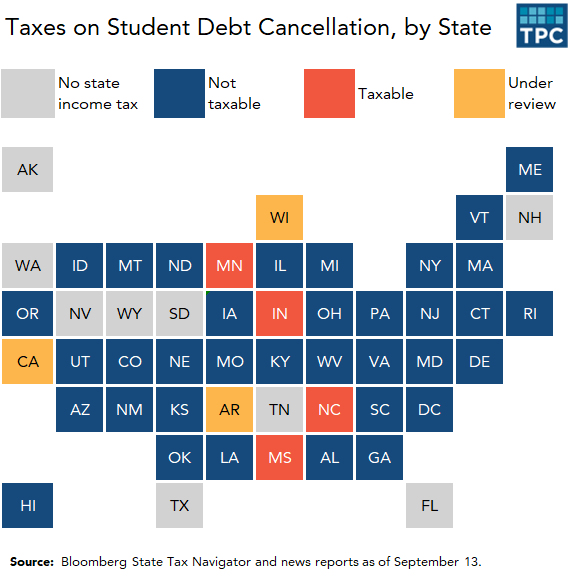
If your student loans were forgiven, you may still owe state taxes
Though widespread federal student loan relief remains on hold, you may have received student loan forgiveness through the Public Service Loan Forgiveness program or another similar endeavor. if you had any balances forgiven in 2022, you won’t owe federal taxes on the canceled amount. That’s because of a provision tucked into the 2021 American Rescue Plan, preventing forgiven post-secondary education loans from federal taxation through 2025.
However, there are a handful of states where forgiven loan balances may be taxed. Indiana, Minnesota, Mississippi and North Carolina have confirmed they will tax any student loan debt relief on your 2022 taxes. A few other states may as well, though the details are still being hammered out.
And, if you live in one of the states taxing forgiven student loans, you may be on the hook for county taxes on your debt relief, as well.
Posted on March 8, 2009 by Dr. David Edward Marcinko MBA MEd CMP™
Deciding What Works?
[By Staff Reporters]
Another way of asking the above titled question might be, “Is it smart for a doctor’s household to build savings while they are getting out of debt?”
Financial Priorities
In the first instance, the doctor already has debt and would be increasing the terms of any loans by deferring some of the payments to savings, which is equivalent to borrowing the same amount.
In the second instance, the doctor would be taking on debt to save more money. The answer is that it makes sense to borrow money for investment purposes only if the financial gains derived from the investment are larger than the financial benefits of paying off the debt. But, who can know for sure?
Assuming that a medical professional has more debt than needed, and doesn’t make contributions to a retirement account, the concern becomes: [1] should he/she make minimum payments to the debt and contribute to a retirement account; or [2] should he/she make the maximum payments toward the debt or loans, etc?
Downside Risks
It is important to understand the downside risks of a lower payment strategy. Just as stocks return more than bonds due to their higher risk, the lower payment strategy returns more because of its’ higher risk. Taking on debt to finance an investment is riskier than paying off debt for a number of reasons.
First, the US economy may continue its’ current depressionary spiral, and investments and savings could disappear as financial institutions fail. This would leave the doctor with debt that he or she could not service.
Second, the rate-of-return required to decide whether or not to borrow for investment purposes may not be achieved, leaving the doctor in worse financial shape than if he or she had just paid off the debt.
Assessment
Ultimately, the doctor must decide if the added risks are worth the possible gain. But, the services of a fiduciary financial advisor may also be required. However, some doctors may not be ready to receive the sort of “tough-love” required in this case.
Channel Surfing the ME-P
Have you visited our other topic channels? Established to facilitate idea exchange and link our community together, the value of these topics is dependent upon your input. Please take a minute to visit. And, to prevent that annoying spam, we ask that you register. It is fast, free and secure.
Conclusion
Your thoughts and comments on this ME-P are appreciated. Feel free to review our top-left column, and top-right sidebar materials, links, URLs and related websites, too. Then, subscribe to the ME-P. It is fast, free and secure.
Speaker: If you need a moderator or speaker for an upcoming event, Dr. David E. Marcinko; MBA – Publisher-in-Chief of the Medical Executive-Post – is available for seminar or speaking engagements. Contact: MarcinkoAdvisors@msn.com
OUR OTHER PRINT BOOKS AND RELATED INFORMATION SOURCES:
Posted on March 5, 2009 by Dr. David Edward Marcinko MBA MEd CMP™
Exiting the Quagmire
By Staff Reporters
There is no magical method or SIMPLE button that a physician or lay household can use to get out of debt. The two most critical factors in this process are budgeting and discipline, as discussed elsewhere on this ME-P blog forum. And, a payment plan that pays off debt by a selected target date will help. Debt consolidation can also be of assistance in this regard.
Defining “Deep-Debt”
According to Eugene Schmuckler PhD, MBA, of the Institute of Medical Business Advisors Inc:
“deep debt” is any financial burden that produces negative daily thoughts, interferes with professional work and/or keeps the doctor awake at night.”
Once a payment plan has been computed, the doctor should develop a budget that will free up enough money to make the payments. If this isn’t possible because the monthly payments are too high, the payoff period should be lengthened until the amount available for debt payment is equal to (or greater than) the readjusted monthly payment. After this, the doctor should set up a more disciplined approach to spending, budgeting and investing, going forward.
Unfortunately, more than a few doctors get themselves so deeply into debt that they can’t make the minimum payments required by lenders. This is a very serious situation and usually involves negotiation for payment adjustments. Unless the doctor or his fiduciary financial advisor has experience in this area; it is a good idea to seek help from to an organization like the Consumer Credit Counseling Service.
The CCCS
The CCCS is an organization that works with those who are struggling to manage their financial debt through counseling in the areas of budgeting, understanding credit reports, and debt management. CCCS also provides educational courses for the public, with fee services ranging from $0 to a few hundred dollars. The counseling sessions focus on developing a budget that allows the client to pay all of his/her monthly expenses. The debt management program teaches about debt and also negotiates with lenders for adjusted monthly payments. CCCS tries to get the payment reduced by spreading the payments over a longer period of time and has been successful at getting lenders to reduce or even waive interest on the loans, in some cases.
Bill Consolidation
Another service of the debt-management program is bill consolidation. The debtor sends one payment a month to CCCS, who in turn pays the client’s bills. The education service provides seminars at which various speakers address different financial issues. A medical professional can find the location of the nearest CCCS office (or similar organizations) by calling the National Foundation for Consumer Credit referral line at 800-388-2227.
Assessment
In the climate of today, the above post is no longer one that some physicians might not heed. In fact, the days of the financial super-specialist with arcane products or sophisticated strategies that depend on a perfect storm of economic indicators, is long over. It is time to call in the financial primary care doctor and get back to basics; live on less than you make, and invest prudently, watching all costs.
Your thoughts and comments on this Medical Executive-Post are appreciated. Have you ever used the serves of CCCS, or similar? Feel free to opine anonymously.
Speaker:If you need a moderator or speaker for an upcoming event, Dr. David E. Marcinko; MBA – Publisher-in-Chief of the Executive-Post – is available for seminar or speaking engagements. Contact: MarcinkoAdvisors@msn.comor Bio: www.stpub.com/pubs/authors/MARCINKO.htm
Subscribe Now:Did you like this Medical Executive-Post, or find it helpful, interesting and informative? Want to get the latest E-Ps delivered to your email box each morning? Just subscribe using the link below. You can unsubscribe at any time. Security is assured.