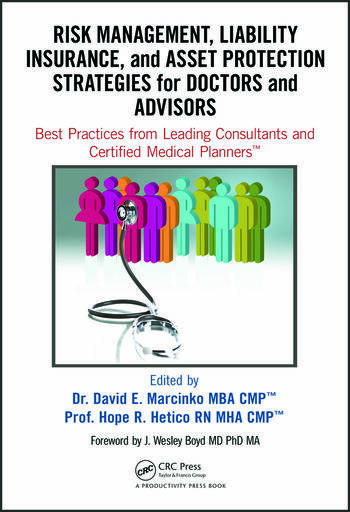
MEDICAL RISK MANAGEMENT, Liability Insurance and Asset Protection Strategies

FOR PHYSICIANS AND THEIR FINANCIAL ADVISORS

SPONSOR: http://www.CertifiedMedicalPlanner.org

CMP logo

***

REVIEWS:

“Physicians who don’t understand modern risk management, insurance, business, and asset protection principles are sitting ducks waiting to be taken advantage of by unscrupulous insurance agents and financial advisors; and even their own prospective employers or partners. This comprehensive volume from Dr. David Marcinko and his co-authors will go a long way toward educating physicians on these critical subjects that were never taught in medical school or residency training.”
Dr. James M. Dahle, MD, FACEP, Editor of The White Coat Investor, Salt Lake City, Utah, USA


“With time at a premium, and so much vital information packed into one well organized resource, this comprehensive textbook should be on the desk of everyone serving in the healthcare ecosystem. The time you spend reading this frank and compelling book will be richly rewarded.”
—Dr. J. Wesley Boyd, MD, PhD, MA, Harvard Medical School, Boston, Massachusetts, USA

ASSESSMENT: Your thoughts are appreciated.

ORDER TEXTBOOK: https://www.routledge.com/Risk-Management-Liability-Insurance-and-Asset-Protection-Strategies-for/Marcinko-Hetico/p/book/9781498725989

SECOND OPINIONS: https://medicalexecutivepost.com/schedule-a-consultation/

INVITE DR. MARCINKO: https://medicalexecutivepost.com/dr-david-marcinkos-bookings/

***

LINK: www.amazon.com/Comprehensive-Financial-Planning-Strategies-Advisors/dp/1482240289/ref=sr_1_1?ie=UTF8&qid=1418580820&sr=8-1&keywords=david+marcinko

THANK YOU

***

How to THRIVE in Private Independent Medical Practice, Today?

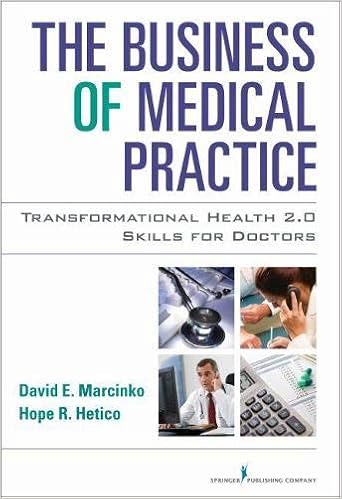
ORDER TEXTBOOK: https://www.amazon.com/Business-Medical-Practice-Transformational-Doctors/dp/0826105750/ref=sr_1_9?ie=UTF8&qid=1448163039&sr=8-9&keywords=david+marcinko

INVITE DR. MARCINKO: https://medicalexecutivepost.com/dr-david-marcinkos-

THANK YOU

***

What is EISOPTROPHOBIA?

NOW YOU SEE ME – NOW I DON’T WANT TO SEE MYSELF

***

***

By Dr. David Edward Marcinko MBA CMP®

CMP logo

SPONSOR: http://www.CertifiedMedicalPlanner.org

DEFINITION: Eisoptrophobia  is the fear of mirrors or, more specifically, of seeing your own reflection in a mirror. Looking into a mirror can cause people with eisoptrophobia shame or distress.

The term is derived from the Greek “eis” and “optikos”. Even though the sufferers know their fear is irrational, they experience excessive anxiety when they look into the mirror.

ASSESSMENT: Your thoughts are appreciated.

***

***

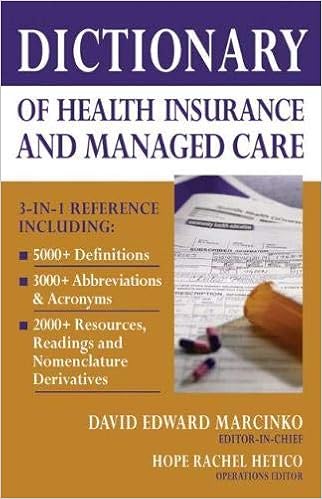
ORDER DICTIONARY: https://www.amazon.com/Dictionary-Health-Insurance-Managed-Care/dp/0826149944/ref=sr_1_4?ie=UTF8&s=books&qid=1275315485&sr=1-4

INVITE DR. MARCINKO: https://medicalexecutivepost.com/dr-david-marcinkos-

THANK YOU

***

Wither DROP-IN Group Medical Appointments?

THE RE-EMERGING RE-VOLUTION!

By Dr. David Edward Marcinko MBA CMP®

CMP logo

SPONSOR: http://www.CertifiedMedicalPlanner.org

HISTORY

DIGMAs (Drop-In Group Medical Appointments) are medical office appointments with a patient’s physician that take place in a supportive group setting. The model, developed in 1996 by Kaiser Permanente psychologist Dr. Ed Noffsinger, is a combination of an extended medical appointment with the patient’s own physician and effective group learning and support.

The group consists of the physician, a behavioral health professional, and patients from the physician’s panel. DIGMAs are best suited for routine appointments. Unfortunately, the nascent concept was met with mockery and great derision after the PP-ACA era.

PRANKSTERS: https://medicalexecutivepost.com/2016/01/31/group-drop-in-doctor-visits-evolving/

Today, after the pandemic and with the rise of tel-health and tele-medicine, Shared Medical Appointments (SMAs), also known as Group Medical Visits [GMVs], are again a growing topic of discussion among providers and health economists, looking for ways to increase access to care and improve efficiency. The group visit format is also getting more attention in recent years as a strategy to add value for the patient. They typically involve up to a dozen patients or so and offer various efficiencies as well as benefits of shared discussion and experiences.

***

Behavioral Changes

Moreover, physicians and medical providers know that simply telling patients what to do often does not improve their health. The basic premise of DIGMAs, SMAs and GMVs is to build more patient engagement and inspire lasting behavior change by offering patients the opportunity to share their personal experiences not only with their provider but also with other patients dealing with similar issues.

NEWER REALITY: https://www.hqontario.ca/Portals/0/Documents/qi/learningcommunity/Roadmap%20Resources/Advanced%20Access%20and%20Efficiency/Step%205/pc-nha-group-medical-appointments-manual-en.pdf#:~:text=DIGMAs%20%28Drop-In%20Group%20Medical%20Appointments%29%20are%20medical%20appointments,that%20take%20place%20in%20a%20supportive%20group%20setting.

BILLING: https://www.aafp.org/family-physician/practice-and-career/getting-paid/coding/group-visits.html

QUERY: Might this be an approach for tele-health visits as well as rural healthcare, etc.

ASSESSMENT: Your thoughts are comments are appreciated.

Product Details

ORDER TEXTBOOK: https://www.amazon.com/Business-Medical-Practice-Transformational-Doctors/dp/0826105750/ref=sr_1_9?ie=UTF8&qid=1448163039&sr=8-9&keywords=david+marcinko

SECOND OPINIONS: https://medicalexecutivepost.com/schedule-a-consultation/

INVITE DR. MARCINKO: https://medicalexecutivepost.com/dr-david-marcinkos-bookings/

THANK YOU

***

PODCAST: What is the “Diluted” Stock Effect?

WHAT IT IS – HOW IT WORKS

BY DR. DAVID E. MARCINKO MBA CMP®

CMP logo

SPONSOR: http://www.CertifiedMedicalPlanner.org

The lowering of the book or market value of the shares of a company’s stock as a result of more shares outstanding. A company’s initial registration may include more shares than are initially issued when the company goes public for the first time.

Later, an issue of more stock by a company (called a “primary offering,” distinguished from the “initial public offering”) dilutes the existing shares outstanding. 

Also, earnings-per-share calculations are said to be “fully diluted” when all common stock equivalents (convertible securities, rights, and warrants) are included. “Fully diluted” numbers are used in analysis when there is a likelihood of conversion or exercise of rights and warrants.

CITE: https://www.r2library.com/Resource/Title/0826102549

***

How does dilution affect my shares? | Startupxplore Blog

***

PODCAST: https://duckduckgo.com/?q=Dilutive%22+Stock&t=newext&atb=v275-2&iax=videos&ia=videos&iai=https%3A%2F%2Fwww.youtube.com%2Fwatch%3Fv%3DtjQzJ7GY0GY

ASSESSMENT: Your thoughts are appreciated.

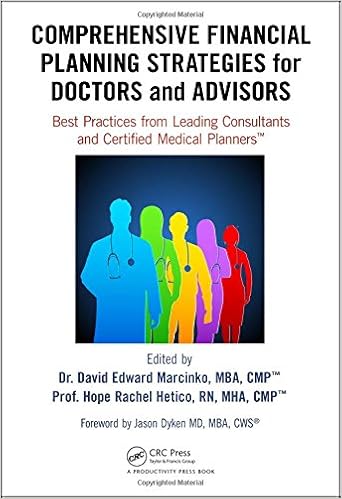
Comprehensive Financial Planning Strategies for Doctors and Advisors: Best Practices from Leading Consultants and Certified Medical Planners™

ORDER TEXTBOOK: https://www.routledge.com/Comprehensive-Financial-Planning-Strategies-for-Doctors-and-Advisors-Best/Marcinko-Hetico/p/book/9781482240283

INVITE DR. MARCINKO: https://medicalexecutivepost.com/dr-david-marcinkos-

THANK YOU

***

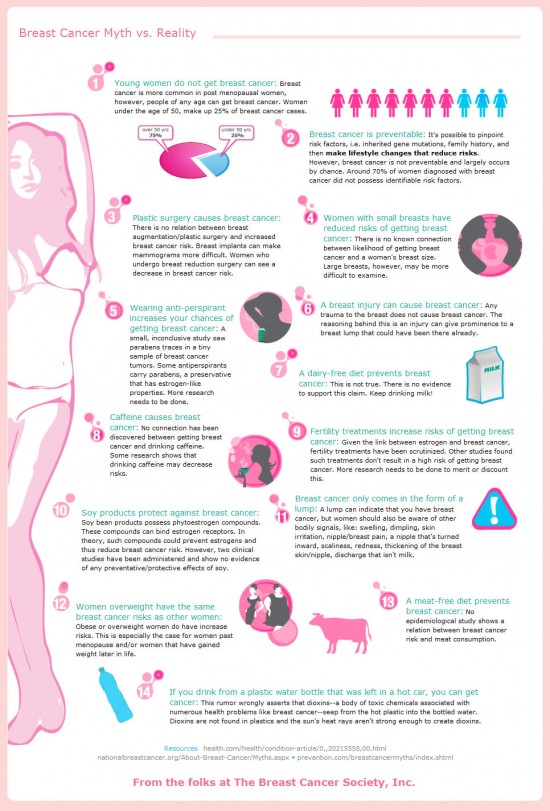
Breast Cancer Myths vs. Reality

Turning Data into Information

dem

By Dr. David Edward Marcinko MBA

***

As reported on this ME-P and elsewhere, I was recently in Philadelphia for a number of reasons and had the opportunity to stop by Drexel University to get some information on their nursing program. There, I learned that it is one of the nation’s top nursing schools.

In fact, Drexel University is ranked one of “America’s BEST Colleges 2011” by U.S.News & World Report. I also learned the following about breast cancer:

***

Assessment

Understanding the facts about breast cancer is of vital importance, because it may save your life or the life of someone you love.

Conclusion

Your thoughts and comments on this ME-P are appreciated. Feel free to review our top-left column, and top-right sidebar materials, links, URLs and related websites, too. Then, subscribe to the ME-P. It is fast, free and secure.

Speaker: If you need a moderator or speaker for an upcoming event, Dr. David E. Marcinko; MBA – Publisher-in-Chief of the Medical Executive-Post – is available for seminar or speaking engagements. Contact: MarcinkoAdvisors@msn.com

OUR OTHER PRINT BOOKS AND RELATED INFORMATION SOURCES:

Product DetailsProduct DetailsProduct Details

Understanding the Scientific Publication “H” Index, and others

Join Our Mailing List 

How to evaluate the academic performance of individual scientists

[By Dr. David Edward Marcinko MBA]

Dr. MarcinkoThe “h-index” was introduced in 2005 as a metric for estimating “the importance, significance and broad impact of a scientist’s cumulative contributions.” It takes into account both the number of an individual’s publications and their impact on peers, as indicated by citation counts.

Origination

Its creator, Jorge Hirsch (UC-San Diego) asserts that a “successful scientist” will have an h-index of 20 after 20 years; an “outstanding scientist” will have an index of 40 after 20 years; and a “truly unique individual” will have an index of 60 after 20 years or 90 after 30 years. You can read more about it in Nature and PhysicsWeb.

Web of Science

Curious to know your own h-index? You can easily determine it using Web of Science. Select “Science Citation Index Expanded.” Click “General Search” category and search for your name as author (e.g., SMITH J*). Use “Refine Your Results” by Institution to differentiate yourself from other scientists with the same initial(s). (This is an important step, otherwise your publications will be intermingled with unrelated papers and your h-index will be inaccurate.) Click on “Citation Report” in the box on the right side. Your h-index will be calculated automatically.

An alternative method is to sort your citations by “Times Cited”, using sort box on the right side. Scan down the list until the number of the paper exceeds the number of citations to that paper. For example, your h-index is 20 if your 21st paper has been cited 20 or fewer times, but your 20th paper has been cited 20 or more times.

Critique

Although effective and simple, the h-index suffers from some drawbacks that limit its use in accurately and fairly comparing the scientific output of different researchers. These drawbacks include information loss and low resolution: the former refers to the fact that in addition to h2 citations for papers in the h-core, excess citations are completely ignored, whereas the latter means that it is common for a group of researchers to have an identical h-index.

***

Financial Planning MDs 2015

Comprehensive Financial Planning Strategies for Doctors and Advisors: Best Practices from Leading Consultants

***

Fixing the Bias

To solve these problems, Chun-Ting Zhang proposed the “e-index“, where e2 represents the ignored excess citations, in addition to the h2 citations for h-core papers. Citation information can be completely depicted by using the h-index together with the e-index, which are independent of each other. Some other h-type indices, such as a and R, are h-dependent, have information redundancy with h, and therefore, when used together with h, mask the real differences in excess citations of different researchers.

Link: http://www.plosone.org/article/info%3Adoi%2F10.1371%2Fjournal.pone.0005429

Assessment

Google Scholar is another useful source of citation data.  A.-W. Harzing’s Publish or Perish software is a free application for Windows, Mac OS, and GNU/Linux that uses Google Scholar to compute citation counts, h-indexes, journal impact factors, and many other citation metrics.

Conclusion

Your thoughts and comments on this ME-P are appreciated. Feel free to review our top-left column, and top-right sidebar materials, links, URLs and related websites, too. Then, subscribe to the ME-P. It is fast, free and secure.

Speaker: If you need a moderator or speaker for an upcoming event, Dr. David E. Marcinko; MBA – Publisher-in-Chief of the Medical Executive-Post – is available for seminar or speaking engagements. Contact: MarcinkoAdvisors@msn.com

OUR OTHER PRINT BOOKS AND RELATED INFORMATION SOURCES:

Product DetailsProduct Details

Product Details

Product Details

 Product Details

Product Details

Obtain an ME-P Second Opinion Right Here!

 2nd Opinions

Join Our Mailing List

iMBA, Inc., Consultations and Discussion Board

stk312038rkn

ImageProxy

Finally … it’s right here!

Link: http://www.medicalbusinessadvisors.com/forum-discussion.asp

Telephonic or electronic advice for medical professionals that is:

  • Objective, affordable, medically focused and personalized
  • Rendered by a prescreened financial consultant or medical management advisor
  • Offered on a pay-as-you-go basis, by phone or secure e-mail transmission.

2nd Opinions

***

***

Typical Topics 

  • Financial Planning
  • Retirement Planning
  • Overhead Assessments
  • Income Distribution Models
  • Academic Funding Analyses
  • Insurance Planning
  • Risk Management
  • Practice Assessments
  • New Venture Business Plans
  • Hospital Based Contract Assessments
  • Practice Income Turnarounds
  • Estate Planning
  • Portfolio Analysis
  • Compensation Plans
  • Cost Accounting Implementation
  • Contract Subsidy Analyses
  • Practice Buy Sell Valuations
  • Investment Policy Statement Analysis
  • Interim Management
  • Contract Compliance Models
  • New Physician Projections
  • Productivity Measurements
  • Revenue Cycle Gap Analyses
  • Payer Rate Evaluations
  • Revenue Cycle Improvements
  • Compensation Benchmarking
  • Strategic Planning Models
  • HIT System Evaluations
  • Staffing Analyses
  • P4P – ACOs – Concierge Medicine
  • Annual Budget Development
  • Ancillary Service Modeling
  • New Practice Development
  • Medical Service Line Extensions
  • Markets, Sales and Advertising
  • Health PR and Medical Practice Crisis Management
  • Investment Management-product evaluation/selection/competitive analysis
    -investment research
    -asset allocation and risk management* Research (products, pensions, planning, risk)
    * Financial Planning (IPS process, solutions, segmentation)
    * New Product Development (pension, longevity insurance, risk management)
    * Management Consulting (effectiveness/efficiency assessment of the investment management process)* Advocacy (regulatory, pensions, new products)
    * Financial Education/Coaching (corporate, groups)

***

[PHYSICIAN FOCUSED FINANCIAL PLANNING AND RISK MANAGEMENT COMPANION TEXTBOOK SET]

  Risk Management, Liability Insurance, and Asset Protection Strategies for Doctors and Advisors: Best Practices from Leading Consultants and Certified Medical Planners™Comprehensive Financial Planning Strategies for Doctors and Advisors: Best Practices from Leading Consultants and Certified Medical Planners™

***

[HOSPITAL OPERATIONS, ORGANIZATIONAL BEHAVIOR AND FINANCIAL MANAGEMENT COMPANION TEXTBOOK SET]

Product DetailsProduct Details

[Foreword Dr. Phillips MD JD MBA LLM] *** [Foreword Dr. Nash MD MBA FACP]

***

[PRIVATE MEDICAL PRACTICE BUSINESS MANAGEMENT TEXTBOOK – 3rd.  Edition]

Product Details

[Foreword Dr. Hashem MD PhD] *** [Foreword Dr. Silva MD MBA]

***

ENTREPRENEURSHIP Rising Again!

Try (or learn about) Entrepreneurship

BY DR. DAVID EDWARD MARCINKO MBA MEd CMP®

One of the greatest things about the virtual economy is the expanded opportunity for people to branch out on their own and create something using their own expertise. Related to this is the growing societal desire to have more free time and a more balanced, efficient life overall. 

In fact, years ago when I was in business school, I learned that during a recession when jobs were sparse – folks would either go back to school to re-engineer and re-educate OR start their own business.

Today – If the pandemic taught us anything, it’s that we need to be able to pivot when circumstances call for it. In the years ahead, there will be a premium on flexibility, portability, and improvisation; knowing how to earn income outside the traditional employer-employee relationship will continue to be an especially valuable skill. 

entrepreneur

ASSESSMENT: So, if you are a physician, nurse, medical professional or financial advisor in the healthcare space, think about what you’re naturally good at (or at least interested in), and determine if there’s an opportunity to monetize it in some way on your own. Your career might thank you for it!

Your thoughts and comments are appreciated.

http://www.CERTIFIEDMEDICALPLANNER.org

CMP logo

***

INVITATIONS: https://medicalexecutivepost.com/dr-david-marcinkos-bookings/

CONTACT: Ann Miller RN MHA

Phone: 678-779-8597

Second Opinions: https://medicalexecutivepost.com/schedule-a-consultation/

THANK YOU

BUSINESS: https://www.amazon.com/Business-Medical-Practice-Transformational-Doctors/dp/0826105750/ref=sr_1_9?ie=UTF8&qid=1448163039&sr=8-9&keywords=david+marcinko

***

What is the SELLING AWAY of Securities?

Information All Physician Investors Should Know

By Dr. David Edward Marcinko MBA CMP®

CMP logo

SPONSOR: http://www.CertifiedMedicalPlanner.org

According to Wikipedia, selling away in the U.S. securities brokerage industry is the inappropriate practice of an investment professional who sells, or solicits the sale of, securities not held or offered by the brokerage firm with which he is associated.

CITE: https://www.r2library.com/Resource/Title/0826102549

An example of the term expressed in a sentence is, “The broker was selling investments away from the firm.” Brokers marketing securities must have obtained the appropriate securities licenses for various types of investments. Brokers in the U.S. may be “associated” with one or more Brokerage firms and must obtain licenses by passing standardized Financial Industry Regulatory Authority exams such as the Series 6 or Series 7 exam.

***

In the past I’ve held these as well as a Series 63 and 65 license [SEC].

CFI: https://corporatefinanceinstitute.com/resources/knowledge/trading-investing/selling-away/

YOUR COMMENTS ARE APPRECIATED.

Thank You

FINANCE: https://www.amazon.com/Comprehensive-Financial-Planning-Strategies-Advisors/dp/1482240289/ref=sr_1_1?ie=UTF8&qid=1418580820&sr=8-1&keywords=david+marcinko

***

AT YOUR SERVICE: Invite Dr. Marcinko to Your Next Event, Video Conference or Blog-Cast in 2022

***

ABOUT | DAVID EDWARD MARCINKO

BY ANN MILLER RN CPHQ

https://medicalexecutivepost.com/2021/08/22/dr-marcinko-at-your-service/

THANK YOU

***

Comprehensive Financial Planning Strategies for Doctors and Advisors: Best Practices from Leading Consultants and Certified Medical Planners™

MORE: https://www.routledge.com/Comprehensive-Financial-Planning-Strategies-for-Doctors-and-Advisors-Best/Marcinko-Hetico/p/book/9781482240283

On Cultural Sensitivity in Education and Medicine

Join Our Mailing List

A Modern Integral Component of Healthcare Training

[By Render S. Davis MHA CHE]

[By Dr. David Edward Marcinko MBA]

***

While America has often been called a “nation of immigrants,” it has never been more true than today. Consequently, the challenge for physicians and other health care providers, in both large cities and small communities, is meeting the health care needs of increasingly diverse and multi-cultural populations who speak different languages and have social norms, traditions, and values that may substantially differ from their own. Problems arise when clinicians expect, even demand, that patients and their families discard their cultural foundations and adhere to the health care provider’s view of the care and decision-making process.

Instead, the health care team should be more aware of and sensitive to the values and beliefs of patients who come from other cultures; working within to assure that the patient’s individual rights are supported and wishes honored to the fullest extent possible.

In her award-winning book, The Spirit Catches You and You Fall Down, Ann Fadiman chronicled this tragic clash of two cultures in medical care for a child of the traditional Hmong people of Laos, transplanted to California after the Vietnam War.

In the book, Fadiman recounts a conversation with Professor Arthur Kleinman of Harvard University, a highly regarded expert in multicultural relations and conflict, who noted that “If you cannot see that your own culture has its own set of interests, emotions, and biases, how can you expect to deal successfully with someone else’s culture?”

***

anatomy-254129_640

***

Former U.S. Surgeon General David Satcher, M.D., Ph.D., now Director of the Satcher Health Leadership Institute at Morehouse College of Medicine in Atlanta, Georgia, helped develop a special curriculum designed to foster greater cultural competence among physicians and health care providers.

Called the “CRASH Course,” the program emphasizes:

  1. Cultural Awareness. Acknowledging the diversity and legitimacy of the many cultures that make up the fabric of American Society;
  2. Respect. Valuing other cultural norms, even if they differ or conflict with your own;
  3. Assess and affirm. Understanding the points of both congruence and difference among cultural approaches to decision-making; learning how to achieve the best outcomes within the cultural framework of the patient and family unit;
  4. Sensitivity and self awareness. Being secure in your own values; while willing to be flexible in working through cultural differences with others;
  5. Humility. Recognizing that every culture has legitimacy and that no one is an expert in what is best for others; being willing to subordinate your values for those of another to achieve the goals of treatment.

There is little doubt that multi-cultural sensitivity will continue to grow as an increasingly integral component of medical education and risk management in health care practice.

Dr. Marcinko Teaching Philosophy

***

anatomy-254120_640

**

Channel Surfing the ME-P

Have you visited our other topic channels? Established to facilitate idea exchange and link our community together, the value of these topics is dependent upon your input. Please take a minute to visit. And, to prevent that annoying spam, we ask that you register. It is fast, free and secure.

More:

Conclusion

Your thoughts and comments on this ME-P are appreciated. Feel free to review our top-left column, and top-right sidebar materials, links, URLs and related websites, too. Then, subscribe to the ME-P. It is fast, free and secure.

About the Author

Render Davis was a Certified Healthcare Executive, now retired from Crawford Long Hospital at Emory University, in Atlanta, GA He served as Assistant Administrator for General Services, Policy Development, and Regulatory Affairs from 1977-95.  He is a founding board member of the Health Care Ethics Consortium of Georgia and served on the consortium’s Executive Committee, Advisory Board, Futility Task Force, Strategic Planning Committee, and chaired the Annual Conference Planning Committee, for many years.  

Speaker: If you need a moderator or speaker for an upcoming event, Dr. David E. Marcinko; MBA – Publisher-in-Chief of the Medical Executive-Post – is available for seminar or speaking engagements. Contact: MarcinkoAdvisors@msn.com

OUR OTHER PRINT BOOKS AND RELATED INFORMATION SOURCES:

Product DetailsProduct Details

Invite Dr. Marcinko

Product DetailsProduct Details

***

HOSPITALS: Management, Operations and Strategies

Tools, Templates and Case Studies

***

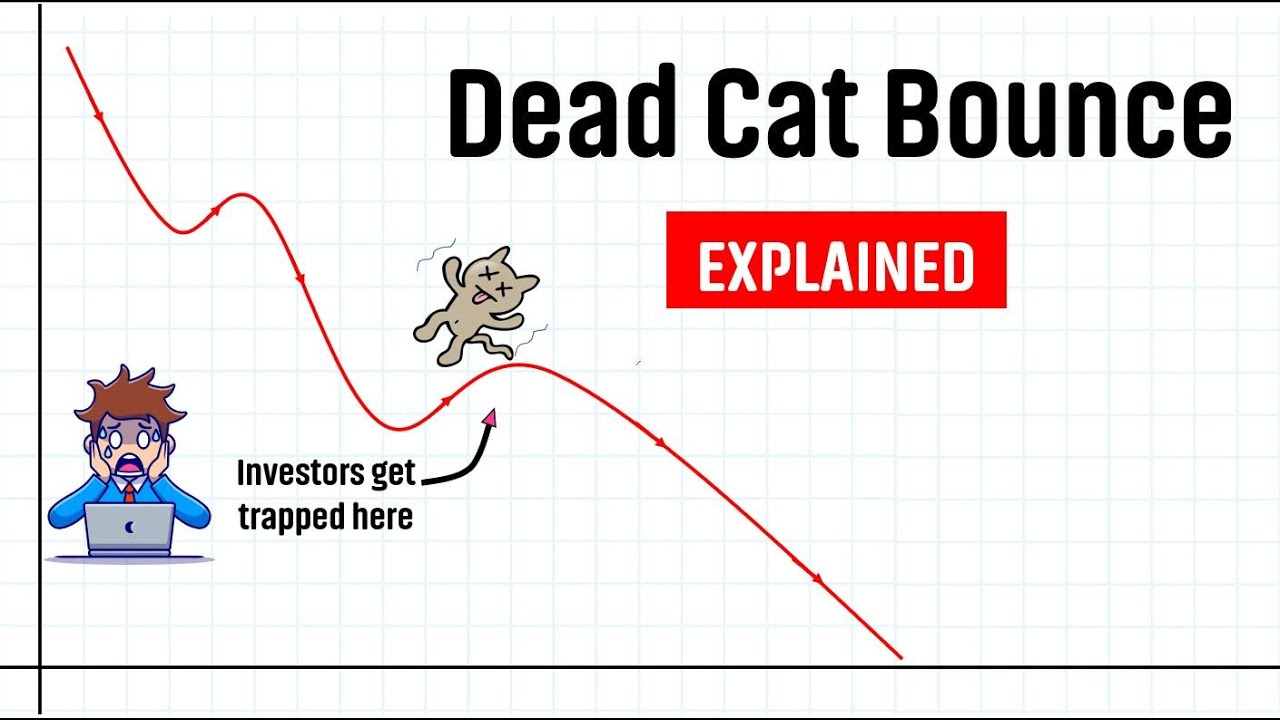
What is a “DEAD CAT” BOUNCE?

HOW IT WORKS

SPONSOR: http://www.CertifiedMedicalPlanner.org

CMP logo

By Dr. David E. Marcinko MBA CMP®

***

In finance, a dead cat bounce is a small, brief recovery in the price of a declining stock.

****

***

Derived from the idea that “even a dead cat will bounce if it falls from a great height”, the phrase, which originated on Wall Street, is also popularly applied to any case where a subject experiences a brief resurgence during or following a severe decline.

  • The dead cat bounce is a sudden and temporary increase in stock price caused by investors erroneously believing that the stock price’s reached its lowest.
  • The dead cat bounce can only be fully accurately determined with concrete data in hindsight.
  • Both falsely identifying a stock price trough (i.e., falling victim to a dead cat bounce) and falsely identifying a true price trough as a dead cat bounce will result in negative financial consequences.

CITE: https://www.r2library.com/Resource/Title/0826102549

YOUR COMMENTS ARE APPRECIATED.

FINANCE: https://www.amazon.com/Comprehensive-Financial-Planning-Strategies-Advisors/dp/1482240289/ref=sr_1_1?ie=UTF8&qid=1418580820&sr=8-1&keywords=david+marcinko

Thank You

***

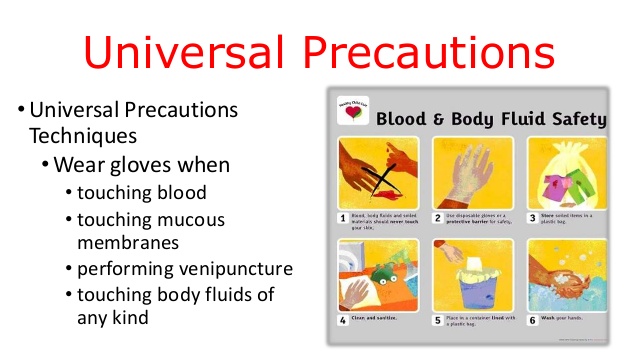
PODCAST: “UNIVERSAL PRECAUTIONS” EXISTED LONG BEFORE THE CORONA VIRUS

WHAT’S OLD – IS NEW AGAIN?

Courtesy: www.CertifiedMedicalPlanner.org

cropped-dem

Dr. David E. Marcinko MBA

Universal Precautions refer to the medical practice of avoiding contact with patients’ bodily fluids, by means of the wearing of nonporous articles such as medical gloves, goggles, and face shields.

LINK: https://www.amazon.com/Dictionary-Health-Insurance-Managed-Care/dp/0826149944/ref=sr_1_4?ie=UTF8&s=books&qid=1275315485&sr=1-4

The infection control techniques were essentially good hygiene habits, such as hand washing and the use of gloves and other barriers, the correct handling of hypodermic needles, scalpels, and aseptic techniques.

Following the AIDS outbreak in the 1980s the US CDC formally introduced them in 1985–88. Every patient was treated as if infected and therefore precautions were taken to minimize risk.

***

***

PODCAST: https://www.bing.com/videos/search?q=universal+precautions&&view=detail&mid=CF8A605C252259D0DA6FCF8A605C252259D0DA6F&&FORM=VRDGAR&ru=%2Fvideos%2Fsearch%3Fq%3Duniversal%2Bprecautions%26FORM%3DHDRSC3

ASSESSMENT: Your thoughts and comments are appreciated.

***

   Product DetailsProduct DetailsProduct Details

***

DICTIONARY: Health Economics and Finance

10,000 TERMS, DEFINITIONS, ABBREVIATIONS AND RESOURCES

***

ORDER: https://www.r2library.com/Resource/Title/0826102549

SECOND OPINIONS: https://medicalexecutivepost.com/schedule-a-consultation/

INVITE DR. MARCINKO: https://medicalexecutivepost.com/dr-david-marcinkos-bookings/

THANK YOU

***

DICTIONARY: Health Insurance and Managed Care

Designated a Doody’s CORE TITLE

To keep up with the ever-changing field of health care, we must learn new and re-learn old terminology in order to correctly apply it to practice. By bringing together the most up-to-date abbreviations, acronyms, definitions, and terms in the health care industry, the Dictionary offers a wealth of essential information that will help you understand the ever-changing policies and practices in health insurance and managed care today. For Further Information.

Review

The Dictionary of Health Insurance and Managed Care lifts the fog of confusion surrounding the most contentious topic in the health care industrial complex today. My suggestion therefore is to ‘read it, refer to it, recommend it, and reap’.”
Michael J. Stahl,PhD, Physician Executive MBA Program, William B. Stokely Distinguished Professor of Business, The University of Tennessee, College of Business Administration

DHIMC: https://www.amazon.com/Dictionary-Health-Insurance-Managed-Care/dp/0826149944/ref=sr_1_4?ie=UTF8&s=books&qid=1275315485&sr=1-4

INVITE DR. MARCINKO: https://medicalexecutivepost.com/dr-david-marcinkos-bookings/

Thank You

***

YOUR THOUGHTS are appreciated.

Activity Based Medical Cost Accounting and Management

NON-TRADITIONAL ACCOUNTING METHODS KNOWN IN THE BUSINESS COMMUNITY BUT NOT USED IN HOSPITALS OR HEALTH CARE ORGANIZATIONS

By Dr. David Edward Marcinko; MBA CMP® CPHQ

CMP logo

SPONSOR: http://www.CertifiedMedicalPlanner.org

Sooner or later – as a practicing physician – you will want to ascertain and then demonstrate the cost effectiveness of your medical care. By using the process of Activity Based Cost (ABC) Management, you will be able to do so.  

ALAS: But, if you’re using a traditional accounting system – like most all hospitals today that use the fictional “average wholesale cost” method – you won’t know a thing about your medical practice or clinic activity costs. Hence, again like most all hospitals, fees become simply vacuous.

Managerial Accounting Assignment Help in Australia

Here’s how: https://medicalexecutivepost.com/2007/12/15/activity-based-cost-medical-management/

HOW TO READ A SCIENTIFIC PAPER: https://medicalexecutivepost.com/2021/04/09/how-to-read-and-understand-a-scientific-paper/

DETAILED WHITE PAPERIN-PROGRESS [thru editing but before peer-reviewed publication]: https://medicalexecutivepost.com/wp-content/uploads/2007/12/abcm.pdf

ASSESSMENT: Your thoughts are appreciated.

ORDER TEXTBOOK: https://www.amazon.com/Business-Medical-Practice-Transformational-Doctors/dp/0826105750/ref=sr_1_9?s=books&ie=UTF8&qid=1287563112&sr=1-9

Product Details
Product Details

ORDER TEXTBOOK: https://www.amazon.com/Financial-Management-Strategies-Healthcare-Organizations/dp/1466558733/ref=sr_1_3?ie=UTF8&qid=1380743521&sr=8-3&keywords=david+marcinko

THANK YOU

***

ENCORE: The Danger of Groupthink with Endowment Fund Portfolio Managers

Join Our Mailing List

A Historical Look-Back to the Future?

wayne-firebaugh

By Wayne Firebaugh CPA CFP® CMP™

www.CertifiedMedicalPlanner.org

It is not unusual for endowment fund managers to compare their endowment allocations to those of peer institutions and that as a result, endowment allocations are often similar to the “average” as reported by one or more survey/consulting firms.

One endowment fund manager expanded this thought by presciently noting that expecting materially different performance with substantially the same allocation is unreasonable [personal communication]. It is anecdotally interesting to wonder whether the seminal study “proving” the importance of asset allocation could have even had a substantially different conclusion. It seems likely that the pensions surveyed in the study had very similar allocations given the human tendency to measure one’s self against peers and to use peers for guidance.

Peer Comparison

Although peer comparisons can be useful in evaluating your institution’s own processes, groupthink can be highly contagious and dangerous.

For example, in the first quarter of 2000, net flows into equity mutual funds were $140.4 billion as compared to net inflows of $187.7 billion for all of 1999. February’s equity fund inflows were a staggering $55.6 billion, the record for single month investments. For all of 1999, total net mutual fund investments were $169.8 billion[1] meaning that investors “rebalanced” out of asset classes such as bonds just in time for the market’s March 24, 2000 peak (as measured by the S&P 500).

Of course, investors are not immune to poor decision making in upward trending markets. In 2001, investors withdrew a then-record amount of $30 billion[2] in September, presumably in response to the September 11th terrorist attacks. These investors managed to skillfully “rebalance” their ways out of markets that declined approximately 11.5% during the first several trading sessions after the market reopened, only to reach September 10th levels again after only 19 trading days. In 2002, investors revealed their relentless pursuit of self-destruction when they withdrew a net $27.7 billion from equity funds[3] just before the S&P 500’s 29.9% 2003 growth.

The Travails

Although it is easy to dismiss the travails of mutual fund investors as representing only the performance of amateurs, it is important to remember that institutions are not automatically immune by virtue of being managed by investment professionals.

For example, in the 1960s and early 1970s, common wisdom stipulated that portfolios include the Nifty Fifty stocks that were viewed to be complete companies.  These stocks were considered “one-decision” stocks for which the only decision was how much to buy. Even institutions got caught up in purchasing such current corporate stalwarts as Joe Schlitz Brewing, Simplicity Patterns, and Louisiana Home & Exploration.

Collective market groupthink pushed these stocks to such prices that Price Earnings ratios routinely exceeded 50. Subsequent disappointing performance of this strategy only revealed that common wisdom is often neither common nor wisdom.

Senate house conference committee meets wall street reform

[Wall Street Reform?]

More Current Examples

More recently, the New York Times reported on June 21, 2007, that Bear Stearns had managed to forestall the demise of the Bear Stearns High Grade Structured Credit Strategies and the related Enhanced Leveraged Fund.

The two funds held mortgage-backed debt securities of almost $2 billion many of which were in the sub-prime market.  To compound the problem, the funds borrowed much of the money used to purchase these securities.

The firms who had provided the loans to make these purchases represent some of the smartest names on Wall Street, including  JP Morgan, Goldman Sachs, Bank of America, Merrill Lynch, and Deutsche Bank.[4]

Assessment

Despite its efforts Bear Stearns had to inform investors less than a week later on June 27th that these two funds had collapsed.

Conclusion

Is this same Groupthink mentality happening on Wall Street, today? Your thoughts and comments on this ME-P are appreciated. Feel free to review our top-left column, and top-right sidebar materials, links, URLs and related websites, too. Then, subscribe to the ME-P. It is fast, free and secure.

Link: http://feeds.feedburner.com/HealthcareFinancialsthePostForcxos

Speaker: If you need a moderator or speaker for an upcoming event, Dr. David E. Marcinko; MBA – Publisher-in-Chief of the Medical Executive-Post – is available for seminar or speaking engagements. Contact: MarcinkoAdvisors@msn.com

OUR OTHER PRINT BOOKS AND RELATED INFORMATION SOURCES:

DICTIONARIES: http://www.springerpub.com/Search/marcinko
PHYSICIANS: www.MedicalBusinessAdvisors.com
PRACTICES: www.BusinessofMedicalPractice.com
HOSPITALS: http://www.crcpress.com/product/isbn/9781466558731
CLINICS: http://www.crcpress.com/product/isbn/9781439879900
BLOG: www.MedicalExecutivePost.com
FINANCE: Financial Planning for Physicians and Advisors
INSURANCE: Risk Management and Insurance Strategies for Physicians and Advisors


[1]   2001 Fact Book, Investment Company Institute.

[2]   Id.

[3]   2003 Fact Book, Investment Company Institute.

[4]    Bajaj, Vikas and Creswell, Julie. “Bear Stearns Staves off Collapse of 2 Hedge Funds.”
New York Times, June 21, 2007.

Product DetailsProduct Details

Product Details

Transformational Business Skills for Doctor Entrepreneurs

THE BUSINESS OF MEDICAL PRACTICE [Health 2.0]

Textbook Review

***

SECOND OPINIONS: https://medicalexecutivepost.com/schedule-a-consultation/

INVITE DR. MARCINKO: https://medicalexecutivepost.com/dr-david-marcinkos-bookings/

SPONSOR: http://www.CertifiedMedicalPlanner.org

***

The BUSINESS of Medical Practice

“NO MARGIN – NO MISSION”

Within Reason

***

BY DR. DAVID E. MARCINKO MBA CMP®

SPONSOR: http://www.CertifiedMedicalPlanner.org

CMP logo

INVITE DR. MARCINKO: https://medicalexecutivepost.com/dr-david-marcinkos-

Your thoughts are appreciated.

THANK YOU

***

PODCASTS: The GREAT ECONOMIC MODERATION / RESIGNATION in Medicine?

A HISTORICAL REVIEW WITH UPDATE

Dr. David Edward Marcinko | The Leading Business Education Network for  Doctors, Financial Advisors and Health Industry Consultants

By Dr. David E. Marcinko MBA CMP®

CMP logo

SPONSOR: http://www.CertifiedMedicalPlanner.org

What was the Great Economic Moderation?

The Great Moderation is the name given to the period of decreased macroeconomic volatility experienced in the United States starting in the 1980s.

CITE: https://www.r2library.com/Resource/Title/0826102549

During this period, the standard deviation of quarterly real gross domestic product (GDP) declined by half and the standard deviation of inflation declined by two-thirds, according to figures reported by former U.S. Federal Reserve Chair Ben Bernanke. The Great Moderation can be summed up as a multi-decade period of low inflation and positive economic growth.

But, what about health economics, writ large? And, the actual practice of medicine by physicians in the trenches. Consider this historical review.

GOLDEN AGE OF MEDICINE

The ‘golden age of medicine’ – the first half of the 20th century, reaching its zenith with Jonas Salk’s 1955 polio vaccine – was a time of profound advances in surgical techniques, immunization, drug discovery, and the control of infectious disease; however, when the burden of disease shifted to lifestyle-driven, chronic, non-communicable diseases, the golden era slipped away. Although modifiable lifestyle practices now account for some 80% of premature mortality, medicine remains loathe to embrace lifestyle interventions as medicine Here, we argue that a 21st century golden age of medicine can be realized; the path to this era requires a transformation of medical school recruitment and training in ways that prioritize a broad view of lifestyle medicine. Moving beyond the basic principles of modifiable lifestyle practices as therapeutic interventions, each person/community should be viewed as a biological manifestation of accumulated experiences (and choices) made within the dynamic social, political, economic and cultural ecosystems that comprise their total life history. This requires an understanding that powerful forces operate within these ecosystems; marketing and neoliberal forces push an exclusive ‘personal responsibility’ view of health – blaming the individual, and deflecting from the large-scale influences that maintain health inequalities and threaten planetary health. The latter term denotes the interconnections between the sustainable vitality of person and place at all scales. We emphasize that barriers to planetary health and the clinical application of lifestyle medicine – including authoritarianism and social dominance orientation – are maintaining an unhealthy status quo.

NOTE: https://pubmed.ncbi.nlm.nih.gov/31828026/

GOLDEN AGE OF MEDICAL PRACTICE

To listen to all those desperate to reform health care, you get the impression that physicians are pretty horrible people. We are all sexist, greedy, money grubbing tyrants who will perform unnecessary tests and procedures just to make money. We don’t care about quality or cost. We are killing off 250,000 patients every year with our ignored “errors.”

We purposely keep our patients in pain, or we addict them to narcotics just to shut them up. We are constantly told by lawyers that lawsuits are necessary to protect patients from doctors. We provide unsafe drugs just because the drug reps give us free pens and coffee cups. The government must step in to clean up the mess.

PODCAST: https://www.kevinmd.com/blog/2017/08/9-reasons-golden-age-medicine-golden.html

GOLDEN AGE OF PATIENT TRUST

****

***

THE GREAT PHYSICIAN RETIREMENT AND RESIGNATION: https://medicalexecutivepost.com/2021/11/09/healthcare-industry-hit-with-the-great-resignation-retirement/

YOUR COMMENTS ARE APPRECIATED.

Thank You

***

Risk Management, Liability Insurance, and Asset Protection Strategies for Doctors and Advisors: Best Practices from Leading Consultants and Certified Medical Planners™

RETIREMENT PLANNING: https://www.routledge.com/Risk-Management-Liability-Insurance-and-Asset-Protection-Strategies-for/Marcinko-Hetico/p/book/9781498725989

***

Comprehensive Financial Planning Strategies for Doctors and Advisors: Best Practices from Leading Consultants and Certified Medical Planners™

***

The STEP-UP In Investment Value?

Understanding the TAX loophole of a ‘step up’ in BASIS value

By Dr. David E. Marcinko MBA CMP®

CMP logo

SPONSOR: http://www.CertifiedMedicalPlanner.org

The term “step-up” refers to the difference in value and tax liability that an asset has when it is acquired and when it is transferred to an inheritor.

****

CITE: https://www.r2library.com/Resource/Title/0826102549

EXAMPLE #2: The proverbial millionaire Doctor Joe, for example, could buy a home for $350,000 and sell it for $1 million, after which he’d pay taxes on the $650,000 gain. But if Dr. Joe passes the home onto his daughter Ella, and she has it appraised at $1 million, its value has taken a “step up” in value to $1 million. If Ella sells the home for $1 million or less, she wouldn’t owe anything in taxes.

ASSESSMENT: For billionaires like Jeff Bezos, Bill Gates and Elon Musk who earn far more through their investments than their salaries, this loophole is a perfect way to shield their wealth. Intergenerational wealth has contributed to surging inequality in America, which grew wider during the pandemic. Since 2019, the wealth of the top 400 richest people in the US increased by $1.4 trillion, per research from Gabriel Zucman and Emmanuel Saez, a pair of left-leaning economists at the University of California, Berkeley.

“Often, for these people, wealth accumulates tax-free their entire lives,” Frank Clemente, executive director at the left-leaning advocacy group Americans for Tax Fairness, opined. President Joe Biden proposed ending this loophole and making billionaires “pay their fair share,” so why does it look like his party won’t touch it?

YOUR COMMENTS ARE APPRECIATED.

Thank You

***

INVITE DR. MARCINKO: https://medicalexecutivepost.com/dr-david-marcinkos-

***

Form ADV Part II [The Essential Document]

Join Our Mailing List

Lifting the “Veil of Secrecy” on Selecting Financial Advisors

[By Dr. David Edward Marcinko MBA CMP™]

DEM white  shirtBy law, financial advisors must provide you with a form ADV Part II or a brochure that covers the same information. Even if a brochure is provided, ask for the ADV. Today, it may even be online.

While it is acceptable, even desirable, for the brochure to be easier to read than the ADV, the ADV is what is filed with the appropriate state or SEC. If the brochure reads more like a slick sales brochure or the information in the brochure glosses over the items on the ADV to a high degree, one should consider eliminating the advisor from consideration.

Types of Advisors

Registering with a state or SEC gives an advisor a fiduciary duty to the client. This is a high standard under the law. There are several types of advisors who are exempt from registering and filing an ADV.

First, there are registered representatives (brokers).  Brokers have a fiduciary responsibility to their firms regardless of whether they are statutory employees or independent contractors.

Second are attorneys and accountants whose advice is “incidental” to their legal or accounting practices. But, why would one hire someone whose advice is “incidental” to his primary profession?

A top-notch advisor is a full-time professional and should be registered.  One should insist that their advisor be registered.

****

Lifting veil of secrecy

[The Author in Chicago Seeking Fiduciary Transparency]

***

The ADV will describe the advisor’s background and employment history, including any prior disciplinary issues. It will describe the ownership of the firm and outline how the firm and advisor are compensated. Any referral arrangements will be described. If an advisor has an interest in any of the investments to be recommended, it must be listed as well as the fee schedule. There is also a description of the types of investments recommended and the types of research information that is used.

Assessment

A review of the ADV should result in an alignment of what the advisor said during the interview and what is filed with the regulators. If there is a clear discrepancy, choose another advisor. If it is unclear, discuss the issue with the advisor.

  • SEC Headquarters
  • 100 F Street, NE Washington, DC 20549
  • (202) 942-8088

Channel Surfing the ME-P

Have you visited our other topic channels? Established to facilitate idea exchange and link our community together, the value of these topics is dependent upon your input. Please take a minute to visit. And, to prevent that annoying spam, we ask that you register. It is fast, free and secure.

Conclusion

Your thoughts and comments on this ME-P are appreciated. Feel free to review our top-left column, and top-right sidebar materials, links, URLs and related websites, too. Then, subscribe to the ME-P. It is fast, free and secure.

Speaker: If you need a moderator or speaker for an upcoming event, Dr. David E. Marcinko; MBA – Publisher-in-Chief of the Medical Executive-Post – is available for seminar or speaking engagements. Contact: MarcinkoAdvisors@msn.com

OUR OTHER PRINT BOOKS AND RELATED INFORMATION SOURCES:

Comprehensive Financial Planning Strategies for Doctors and Advisors: Best Practices from Leading Consultants and Certified Medical Planners(TM)

INVESTING: “Direct Indexing” Definition

WHAT IT IS – HOW IT WORKS?

Citation: https://www.r2library.com/Resource/Title/0826102549

Direct Indexing at Vanguard - FiPhysician

READ: https://smartasset.com/investing/direct-indexing#:~:text=Advantages%20of%20Direct%20Indexing%201%20Tax%20Efficiency.%20Direct,Social%20Criteria%20Customization.%20…%204%20Lower%20Costs.%20

YOUR COMMENTS ARE APPRECIATED.

SECOND OPINIONS: https://medicalexecutivepost.com/schedule-a-consultation/

INVITE DR. MARCINKO: https://medicalexecutivepost.com/dr-david-marcinkos-bookings/

****

****

THANK YOU

***

“Dictionary of Health Economics and Finance”

CMP logo

SPONSOR: http://www.CertifiedMedicalPlanner.org

Product Details

ORDER HERE: https://www.r2library.com/Resource/Title/0826102549

THANK YOU

***

DONATE: Your Body to Science?

***

Advancing the Science of Medicine with a Priceless, No Cost Option

Everything we know about the human body comes from studying whole body donors. At MedCure, they connect you or your loved ones to the physicians, surgeons, and researchers who are continuing this vital work. Their discoveries and innovations help people live longer, make treatments less invasive, and create new ways to prevent illness or disease.

https://www.amazon.com/Dictionary-Health-Insurance-Managed-Care/dp/0826149944/ref=sr_1_4?ie=UTF8&s=books&qid=1275315485&sr=1-4

They are constantly overwhelmed by the incredible generosity and selflessness of donors.  MedCure honors their gifts by covering, upon acceptance, all expenses related to the donation process. These costs include transportation from the place of passing, cremation, and a certified copy of the death certificate, as well as the return of cremated remains to the family or a scattering of the ashes at sea. By request, they can provide a family letter that shares more detailed information on how you or your loved one contributed to medical science.

***

How to Donate Your Body to Science | Discover Magazine

***

READ: https://www.msn.com/en-us/health/wellness/what-exactly-happens-when-you-donate-your-body-to-science/ar-AAPaNJm?li=BBnb7Kz

CRYONICS: https://www.cryonics.org/

LONGEVITY: https://medicalexecutivepost.com/2021/09/26/podcasts-jeff-bezos-and-altos-longevity-labs/

RELATED: https://www.msn.com/en-us/news/crime/crematorium-owner-faces-10-years-for-improper-body-storage-charges-license-revoked/ar-AAPaCLV?li=BBnb7Kz

Body Facts: https://lifehacker.com/14-weird-facts-about-the-human-body-you-probably-never-1847829288/slides/2

YOUR COMMENTS ARE APPRECIATED.

***

https://www.amazon.com/Hospitals-Healthcare-Organizations-Management-Operational/dp/1439879907/ref=sr_1_4?s=books&ie=UTF8&qid=1334193619&sr=1-4

Thank You

***

BALANCE BILLING: The Emerging “No Surprise” Act

Balance Medical Billing

By Dr. David E. Marcinko MBA CMP®

CMP logo

The No Surprises Act is looking to make the practice of out of network balance billing a thing of the past.

CITE: https://www.r2library.com/Resource/Title/0826102549

***

No Surprises Act: New Law to Protect Against Surprise ...

***

Beginning in 2022, there will be few situations in which a patient can receive a bill for out-of-network care they believed would be covered by their insurance company. This new rule should especially benefit patients in emergency situations who don’t have the time or luxury to dig up the details on every provider they encounter.

CONGRESS: https://www.congress.gov/bill/116th-congress/house-bill/3630/

The No Surprises Act also requires insurance companies to provide patients with at least 90 days of coverage if an in-network provider moves out of network. That way, patients aren’t forced to switch providers immediately if such a move happens while they’re in the middle of a treatment plan.

DOCTORS: https://www.elixirehr.com/what-the-no-surprises-act-means-for-healthcare-providers/

Now, the No Surprises Act does have its limitations. Patients can still get a bill for out-of-network care if they visit an urgent care clinic for non-emergency purposes. Also, if consumers are informed that the care they’re about to receive is out of network and they give written consent to move forward, then they may get billed for that care even once the new rule takes effect.

CMS: https://www.cms.gov/nosurprises

YOUR COMMENTS ARE APPRECIATED.

***

***

Thank You

***

***

Informal Money SLANG TERMS to Avoid

NOT PROFESSIONAL BUSINESS SCHOOL LINGUISTICS – BUT FAR TOO OFTEN USED

***

Invite Dr. Marcinko | The Leading Business Education Network for Doctors,  Financial Advisors and Health Industry Consultants

By Dr. David Edward Marcinko MBA CMP®

SPONSOR: http://www.CertifiedMedicalPlanner.org

CMP logo

***

Another Word for “Money” | 100+ Different Forms of Money You Should Know •  7ESL

People really love money since it is needed to buy just about everything. In fact, we actually published a formal print dictionary on health economics and finance terms that is very popular with physician investors and medical colleagues; it is a favorite of economic students as well!

Product Details

CITE: https://www.r2library.com/Resource/Title/0826102549

And, money is by far one of those words that has more slang or terms for it than any others. This proves that cash or money, does not have be boring when speaking about it. Just keep in mind that these slang synonyms are in plural form. They are also words mostly used for US currency.

Perhaps the fact that money is so important may help to explain why there are so many different ways to say it. These 95 slang words for money and their meanings are really worth taking a look at. This list not only contains the countless ways to speak, write or say the word money, but also what are the meanings behind each phrase or term.

LINK: https://blog.online-spellcheck.com/english/95-slang-words-money-meanings/

***
COMMENTS APPRECIATED

Thank You

Subscribe to the Medical Executive-Post

***

***

ASSESSMENT: Lastly, remember to never use any of these slang terms for money if you are doing formal writing or publishing; especially for me!

YOUR FURTHER COMMENTS ARE APPRECIATED.

Thank You Again!

Subscribe to the Medical Executive-Post

***

The BUSINESS [Economic] CYCLE: What is it Really?

Of Bull and Bear Markets, too!

See the source image

By Dr. David Edward Marcinko MBA CMP®

CMP logo

SPONSOR: http://www.CertifiedMedicalPlanner.org

The business cycle is also known as the economic cycle and reflects the expansion or contraction in economic activity. Understanding the business cycle and the indicators used to determine its phases may influence investment or economic business decisions and financial or medical planning expectations. Although often depicted as the regular rising and falling of an episodic curve, the business cycle is very irregular in terms of amplitude and duration.

Moreover, many elements move together during the cycle and individual elements seldom carry enough momentum to cause the cycle to move. However, elements may have a domino effect on one another, and this is ultimately drives the cycle.  We can also have a large positive cycle, coincident with a smaller but still negative cycle, as seen in the current healthcare climate of today.

CITE: https://www.r2library.com/Resource/Title/082610254

  1. First Phase: Trough to Recovery (production driven)

Scenario: A depressed GNP leads to declining industrial production and capacity utilization. Decreased workloads result in improved labor productivity and reduced labor (unit) costs until actual producer (wholesale) prices decline.

  1. Second Phase: Recovery to Expansion (consumer driven)

Scenario: CPI declines (due to reduced wholesale prices) and consumer real income rises, improving consumer sentiment and actual demand for consumer goods.

  1. Third Phase: Expansion to Peak (production driven)

Scenario: GNP rises leading to increased industrial production and capacity utilization. But, labor productivity declines and unit labor costs and producer (wholesale) prices rise.

  1. Fourth Phase: Peak to Contraction (consumer driven)

Scenario: CPI rises making consumer real income and sentiment erode until consumer demand, and ultimately purchases, shrink dramatically.  Recessions may occur and economists have an alphabet used to describe them.

For example, with a V, the drop and recovery is quick. For U, the economy moves up more sluggishly from the bottom. A W is what you would expect: repeated recoveries and declines. An L shaper recession describes a prolonged dry economic spell or even depression.


NOTE: Historically, contractions have had a shorter duration than expansions.

Bull and Bear Markets for Medical Professionals

A bull market is generally one of rising stock prices, while a bear market is the opposite. There are usually two bulls for every one bear market over the long term.

More specifically, a bear market is defined as a drop of twenty percent or more in a market index from its high, and can vary in duration and severity.  While a bull market has no such threshold requirement to exist, other than they exist between these two periods of sharp decline.

Whither the Bear?

As a doctor, your action plan in a bear market depends on many variables, with perhaps your age being the most important:

In your 30s:

  • Pay off debts, school or practice loans.
  • Invest in safe money market mutual funds, cash or CDs.
  • Start retirement plan or 401-K account.

In your 40s:

  • Increase your pension plan or 401-K contributions.
  • Stay weighted more toward equity investments.
  • Review your goals, risk tolerance and portfolio.

In your 50s:

  • Position assets for ready cash instruments.
  • Diversify into stock, bonds and cash.

Retirement:

  • Maintain 3 years of ready cash living expenses.
  • Reduce, but still maintain your exposure to equities.

ASSESSMENT: So, where are we right now in the economic business cycle? Your thoughts are appreciated.

ORDER TEXTBOOK: https://www.amazon.com/Comprehensive-Financial-Planning-Strategies-Advisors/dp/1482240289/ref=sr_1_1?ie=UTF8&qid=1418580820&sr=8-1&keywords=david+marcinko

SECOND OPINIONS: https://medicalexecutivepost.com/schedule-a-consultation/

INVITE DR. MARCINKO: https://medicalexecutivepost.com/dr-david-marcinkos-bookings/

THANK YOU

***

What is a REIT, Really?

REITs – The Margarine of Real Estate Investing

See the source image

By Dr. Dennis Bethel MD

By Dr. David E. Marcinko MBA CMP®

CMP logo

SPONSOR: http://www.CertifiedMedicalPlanner.org

Just like real estate, butter has been around for thousands of years.  Sometime in the 1800’s someone decided that there was a need for something that looked like butter, tasted similar to butter, but wasn’t butter.  Along came margarine.  Real estate investment trusts (REITs) are the margarine of the real estate investing world.

NAREIT, the National Association of Real Estate Investment Trusts, answers the question

What is a REIT?” in the following way:

“A REIT, or Real Estate Investment Trust, is a type of real estate company modeled after mutual funds.  REITs were created by Congress in 1960 to give all Americans – not just the affluent – the opportunity to invest in income producing real estate in a manner similar to how many Americans invest in stocks and bonds through mutual funds.  Income-producing real estate refers to land and the improvements on it – such as apartments, offices or hotels.  REITs may invest in the properties themselves, generating income through the collection of rent or they may invest in mortgages or mortgage securities tied to the properties, helping to finance the properties and generating interest income.”

While REITs typically own real estate, investors in REITs do not.  REITs are paper assets that represent interest in a company that owns and operates income producing properties.  In essence they are real estate flavored stock.  As such, REITs are generally highly correlated with the stock market.

***

https://www.sgobserver.com/wp-content/uploads/2018/08/Screen-Shot-2018-08-26-at-8.41.54-pm.png

***

TERMINOLOGY

When discussing REITs, you encounter the following terminology – public, private, traded, and non-traded.  Public REITs can be designated as non-traded or traded depending on whether or not they are traded on a stock exchange.

Since traded REITs are traded on the stock exchange, they enjoy a high degree of liquidity just like any other stock.  Unfortunately, traded REITs tend to follow the economic cycles and can closely correlate with the stock market.  This can lead to a higher degree of volatility than what is usually seen with physical real estate.  Additionally, they do not afford the investor the tax-advantages that come with investments in physical real estate.

MORE: https://medicalexecutivepost.com/2017/11/15/on-non-traded-real-estate-investment-trusts-reits/

Private REITs and non-traded public REITs are not traded on an exchange.  These are usually offered to accredited investors through broker-dealer networks.  These REITs are illiquid and generally have high fees.  They have been plagued with transparency issues as well as conflicts of interest.  Valuation of this stock is difficult and can be misleading to the investor.  Due diligence is very important as the quality of non-traded REITs can vary widely.

MORE: https://medicalexecutivepost.com/2014/06/13/why-i-hate-non-publicly-traded-reits/

ASSESSMENT: Your thoughts and comments are appreciated.

Risk Management, Liability Insurance, and Asset Protection Strategies for Doctors and Advisors : Best Practices from Leading Consultants and Certified Medical Planners™ book cover

ORDER TEXTBOOK: https://www.routledge.com/Risk-Management-Liability-Insurance-and-Asset-Protection-Strategies-for/Marcinko-Hetico/p/book/9781498725989

Comprehensive Financial Planning Strategies for Doctors and Advisors: Best Practices from Leading Consultants and Certified Medical Planners™

ORDER TEXTBOOK: https://www.routledge.com/Comprehensive-Financial-Planning-Strategies-for-Doctors-and-Advisors-Best/Marcinko-Hetico/p/book/9781482240283

INVITE DR. MARCINKO: https://medicalexecutivepost.com/dr-david-marcinkos-

THANK YOU

***

Understanding Hobson’s Choice in Medicine

Join Our Mailing List

Hobson’s choice  in Public Health

DEM white shirt

By Dr. David Edward Marcinko MBA

[From Wikipedia, the free encyclopedia]

A Hobson’s choice is a free choice in which only one thing is offered. Because a person may refuse to accept what is offered, the two options are taking it or taking nothing. In other words, one may “take it or leave it.”

The phrase is said to have originated with Thomas Hobson (1544–1631), a livery stable owner in Cambridge, England, who offered customers the choice of either taking the horse in his stall nearest the door or taking none at all.

***

An oil portrait of Thomas Hobson, in the National Portrait Gallery, London. He looks straight to the artist and is dressed in typical Tudor dress, with a heavy coat, a ruff, and tie tails

[Thomas Hobson, the National Portrait Gallery, London]

***

In Medicine

One of the first examples that springs readily to mind in trying to look for examples of Hobson’s Choice in Medicine is the issue of defensive medicine. While the physician actually has the option of not “shotgunning” a patient (that is, shooting randomly large number of tests in order to cover legal liability and prevent medicolegal backlashes), the risk of missing a diagnosis and the fall outs thereof are so large, that it basically degenerates into a Hobson’s Choice.

The idiosyncrasies of medicine and the way the body reacts to them always leaves us open to the risk of working within the constraints of Hobson’s Choice.

***

pills+capsules+other

***

For example, antibiotics have saved more lives than we can count, yet, an idiosyncratic, unpredictable reaction may just be waiting for us around the corner.

In Public Health

In the Indian Public Health scenario, all that the patients are offered in a primarily paternalistic system is the choice Hobson had offered all those years ago. Much like Henry Ford, who told customers lining up to buy his revolutionary Ford Model T that they could have their cars in “any color so long as it is black”, the Indian system, hobbled by the lack of an empowered public, and a patient choice scheme, functions on the basis of Hobson’s choice.

***

untitled

***

Assessment

Even in the clinical sciences, with shared decision making and user driven healthcare still in their infancy in the nation, a paternalistic physician offers naught but “this or none” choice to their patients. While one can say that the lack of general awareness of the public tends to spawn this issue, we cannot shake off our personal stake in this matter just by hiding behind the façade of moral determinism!

Conclusion

Your thoughts and comments on this ME-P are appreciated. Feel free to review our top-left column, and top-right sidebar materials, links, URLs and related websites, too. Then, subscribe to the ME-P. It is fast, free and secure.

Speaker: If you need a moderator or speaker for an upcoming event, Dr. David E. Marcinko; MBA – Publisher-in-Chief of the Medical Executive-Post – is available for seminar or speaking engagements. Contact: MarcinkoAdvisors@msn.com

OUR OTHER PRINT BOOKS AND RELATED INFORMATION SOURCES:

Risk Management, Liability Insurance, and Asset Protection Strategies for Doctors and Advisors: Best Practices from Leading Consultants and Certified Medical Planners™

***

Invite Dr. Marcinko

***

Personal Financial Planning for Physicians and Medical Colleagues

ME Inc = Going it Alone but with a Team

BY DR. DAVID EDWARD MARCINKO MBA CMP®

CMP logo

SPONSOR: http://www.CertifiedMedicalPlanner.org

The physician, nurse, or other medical professional should easily recognize that there are a vast array of opportunities, obstacles, and pitfalls when it comes to managing one’s finances.  Still, with some modicum of effort, the basic aspects of insurance, investments, taxes, accounting, portfolio management, retirement and estate planning, debt reduction, asset protection and practice management can be largely self-taught. Yet, it is realized that nuances and subtleties can make a well-intentioned financial plan fall short.  The devil truly is in the details.  Moreover, none of these areas can be addressed in isolation. It is common for a solution in one area to cause a new set of problems in another. 

Accordingly, most health care practitioners would be well served to hire [independent, hourly compensated and prn] financial help. Unlike some medical problems, financial issues may not cause any “pain” or other obvious symptoms.  Medical professionals tend to have far more complex financial situations than most lay people. Despite the complexities of the new world of health reform, far too many either do nothing; or give up all control totally, to an external advisor. This either/or mistake can be costly in many ways, and should be avoided. 

In reality, and at various time in their careers, the medical professional needs a team comprised of at least a financial analyst, lawyer, management consultant, risk manager [actuary, mathematician or insurance counselor] and accountant. At various points in time, each member of the team, or significant others, will properly assume a role of more or less importance, but the doctor must usually remain the “quarterback” or leader; in the absence of a truly informed other, or Certified Medical Planner™.

This is necessary because only the doctor has the personal self-mandate with skin in the game, to take a big picture view.  And, rightly or wrongly, investments dominate the information available regarding personal finance and the attention of most physicians.  One is much more likely to need or want to discuss the financial markets with their financial advisor than private letter rulings by the IRS, or with their estate planning attorney or tax accountant. While hiring for expertise is a good idea, there is sinister way advisors goad doctors into using all their retail services; all of the time. That artifice is – the value of time. 

True integrated physician focused and financial planning is at its core a service business, not a product or sales endeavor. And, increasingly money is more likely to be at the top of the list for providers as the healthcare environment is contracting.

So, eschewing the quarterback model of advice, and choosing to self-educate thru this book and elsewhere, may be one of the best efforts a smart physician can make.

ASSESSMENT: Your thoughts are appreciated.

Comprehensive Financial Planning Strategies for Doctors and Advisors: Best Practices from Leading Consultants and Certified Medical Planners™

ORDER TEXTBOOK: https://www.routledge.com/Comprehensive-Financial-Planning-Strategies-for-Doctors-and-Advisors-Best/Marcinko-Hetico/p/book/9781482240283

RELATED TEXTS: https://medicalexecutivepost.com/2021/04/29/why-are-certified-medical-planner-textbooks-so-darn-popular/

INVITE DR. MARCINKO: https://medicalexecutivepost.com/dr-david-marcinkos-

THANK YOU!

*****

Physician Medical Practice “Misrepresentation” Risks

BUSINESS FRAUD RISKS

True Case Report

CMP logo

By Dr. David Edward Marcinko MBA CMP©

SPONSOR: http://www.CertifiedMedicalPlanner.org

A Medical Practice Misrepresentation Case Model

Let’s say a physician decided to sell his practice and move to another state. The value of the sale was based, in part, on the yearly gross of the practice. The physician accepted installment payment terms from the buyer and moved to the new state. The buyer began to practice medicine at his new office. Although he was busy, his gross never approached the gross of the prior physician.

Eventually the buyer defaulted on the loan. The selling physician sued for the deficit. The defaulting physician and his forensic consultants then performed an in-depth evaluation of the seller’s practice. The buyer and his team noticed some discrepancies in the billing patterns and practices of the seller. Considering these discrepancies to constitute Medicare and insurance billing fraud, the seller counter-sued the buyer on the grounds of misrepresentation, alleging the gross receipts of the practice purchase price, was grossly inflated.

Citation: https://www.r2library.com/Resource/Title/0826102549

ASSESSMENT: Therefore, the buyer determined that the seller had fraudulently misrepresented the potential of the practice. He also notified state and federal authorities and filed complaints of insurance fraud against the seller.

The seller thought that he would move to the good life in the new state, but his old practice kept him in constant legal trouble.

YOUR THOUGHTS ARE APPRECIATED

Risk Management, Liability Insurance, and Asset Protection Strategies for Doctors and Advisors : Best Practices from Leading Consultants and Certified Medical Planners™ book cover

Order Textbook: https://www.routledge.com/Risk-Management-Liability-Insurance-and-Asset-Protection-Strategies-for/Marcinko-Hetico/p/book/9781498725989

SECOND OPINIONS: https://medicalexecutivepost.com/schedule-a-consultation/

INVITE DR. MARCINKO: https://medicalexecutivepost.com/dr-david-marcinkos-bookings/

THANK YOU

***

RISK FACTORS COMMON TO PHYSICIANS

SOME COMMON RISK FACTORS FOR MEDICAL COLLEAGUES TO APPRECIATE

BY DR. DAVID E. MARCINKO MBA CMP®

CMP logo

SPONSOR: http://www.CertifiedMedicalPlanner.org

AN INCOMPLETE LIST = T.N.T.C.

  • Do you and or any family members drive a vehicle?
  • Do you have employees?
  • Do you have a professional malpractice exposure?
  • Do you have legal responsibility to protect medical, EMRs or personal and patient financial data?
  • Are you married and do you have assets not protected by a prenuptial agreement?
  • Do you have a current tax obligation?
  • Do you own a business?
  • Are you a board member, officer, or director of a corporation, foundation, religious or educational organization?
  • Do you engage in activities like hunting, flying, boating, etc?
  • Do you have business or domestic partners whose actions create joint and several liabilities for you?
  • Do you have personal guarantees on real estate or for business loans; or family members?
  • Do you have tail liability for professional services performed in the past?
  • Have you made specific legal or financial representations that others have relied upon in a business context?
  • What kind and what dollar amount of insurance and legal planning have you implemented against these exposures?

***

FOREWORD BY J. WESLEY BOYD MD PhD MA

[Professor of Psychiatry Harvard and Yale University]

***

ASSESSMENT: Your thoughts and comments are appreciated.

ORDER TEXTBOOK: https://www.routledge.com/Risk-Management-Liability-Insurance-and-Asset-Protection-Strategies-for/Marcinko-Hetico/p/book/9781498725989

INVITE DR. MARCINKO: https://medicalexecutivepost.com/dr-david-marcinkos-

THANK YOU

***

What is QUANTITATIVE EASING?

Q.E.

By Dr. David E. Marcinko MBA CMP®

CMP logo

SPONSOR: http://www.CertifiedMedicalPlanner.org

QE (Quantitative Easing = compound noun)

Although standard definitions will tell you that it is a ‘monetary policy’ used by central banks to stimulate the national economy, in reality it is more as follows:

– A cleverly disguised word that simply means ‘money printing’.

CITE: https://www.r2library.com/Resource/Title/0826102549

Central banks use QE as a disguise for increasing the money supply, as to monetize its increasing debt.

For a more technical analysis of the actual mechanics of QE, I invite you to read the article entitled QE for Dummies.

Examples:

1. The Central Bank embarked on another round of QE in hopes that it can kick-start the economy.

2. Ben Bernanke is set to begin the Fed’s taper of QE as soon as next month.

***
YOUR COMMENTS ARE APPRECIATED.

***

THANK YOU

***

CAUTION: Avoid 401-K Retirement Plan RMD Forgetfulness?

***

DON’T FORGET to make mandatory withdrawals in retirement!

By Dr. David E. Marcinko MBA CMP®

CMP logo

SPONSOR: http://www.CertifiedMedicalPlanner.org

Once you do retire, and put your physician or medical career behind you, it’s important to realize that, at some point, the IRS expects you to draw down your 401(k) balance. Starting at age 72, you need to take required minimum distributions (RMDs).

Your annual RMD amount depends on the balance of your 401(k) and a formula that determines your life expectancy.

***

RMD Age Jumps to 72 in 2020 After SECURE Act - 401K Specialist

***

QUERY: But – What happens if you don’t take your RMD for the year?

ANSWER: Well, you could end up paying a penalty. In fact, it’s a pretty hefty penalty of up to 50% of the amount you were supposed to withdraw. Paying that penalty can be pretty costly for someone living in retirement. As long as you’re vigilant and stay on top of the situation, though, you can avoid the penalty as well as these other costly 401(k) mistakes.

***
YOUR COMMENTS ARE
APPRECIATED.

Thank You

Risk Management, Liability Insurance, and Asset Protection Strategies for Doctors and Advisors : Best Practices from Leading Consultants and Certified Medical Planners™ book cover

***

ORDER: https://www.routledge.com/Risk-Management-Liability-Insurance-and-Asset-Protection-Strategies-for/Marcinko-Hetico/p/book/9781498725989

***

On the TAXATION of Capital Gains and Losses

UPDATE FOR PHYSICIANS AND ALL INVESTORS

By Dr. David E. Marcinko MBA CMP®

CMP logo

SPONSOR: http://www.CertifiedMedicalPlanner.org

Almost everything you own and use for personal or investment purposes is a capital asset. Examples include a home, personal-use items like household furnishings, and stocks or bonds held as investments. When you sell a capital asset, the difference between the adjusted basis in the asset and the amount you realized from the sale is a capital gain or a capital loss.

CITE: https://www.r2library.com/Resource/Title/0826102549

Generally, an asset’s basis is its cost to the owner, but if you received the asset as a gift or inheritance, refer to Topic No. 703 for information about your basis.

For information on calculating adjusted basis, refer to Publication 551, Basis of Assets. You have a capital gain if you sell the asset for more than your adjusted basis. You have a capital loss if you sell the asset for less than your adjusted basis. Losses from the sale of personal-use property, such as your home or car, aren’t tax deductible.

IRS: https://www.irs.gov/taxtopics/tc409

MORE: https://medicalexecutivepost.com/2021/04/23/bidens-capital-gains-tax-proposal/

RELATED: https://medicalexecutivepost.com/2021/05/01/capital-gains-tax-non-sense/

YOUR COMMENTS ARE APPRECIATED.

Thank You

***

MEDICAL RISK MANAGEMENT: Liability Insurance, and Asset Protection Strategies for Doctors and Advisors [Best Practices from Leading Consultants and Certified Medical Planners™]

http://www.CertifiedMedicalPlanner.org

Reviews

“Physicians who don’t understand modern risk management, insurance, business, and asset protection principles are sitting ducks waiting to be taken advantage of by unscrupulous insurance agents and financial advisors; and even their own prospective employers or partners. This comprehensive volume from Dr. David Marcinko and his co-authors will go a long way toward educating physicians on these critical subjects that were never taught in medical school or residency training.”
—Dr. James M. Dahle, MD, FACEP, Editor of The White Coat Investor, Salt Lake City, Utah, USA

“With time at a premium, and so much vital information packed into one well organized resource, this comprehensive textbook should be on the desk of everyone serving in the healthcare ecosystem. The time you spend reading this frank and compelling book will be richly rewarded.”
—Dr. J. Wesley Boyd, MD, PhD, MA, Harvard Medical School, Boston, Massachusetts, USA

“Physicians have more complex liability challenges to overcome in their lifetime, and less time to do it, than other professionals. Combined with a focus on practicing their discipline, many sadly fail to plan for their own future. They need trustworthy advice on how to effectively protect themselves, their family, and their practice from the many overt and covert risks that could potentially disrupt years of hard work.

Fortunately, this advice is contained within Risk Management, Liability Insurance, and Asset Protection Strategies for Doctors and Advisors: Best Practices from Leading Consultants and Certified Medical Planners™. Written by Dr. David Edward Marcinko, Nurse Hope Rachel Hetico, and their team of risk managers, accountants, insurance agents, attorneys, and physicians, it is uniquely positioned as an integration of applied, academic, and peer-reviewed strategies and research, with case studies from top consultants and Certified Medical Planners™. It contains the latest principles of risk management and asset protection strategies for the specific challenges of modern physicians. My belief is that any doctor who reads and applies even just a portion of this collective wisdom will be fiscally rewarded. The Institute of Medical Business Advisors has produced another outstanding reference for physicians that provide peace of mind inthis unique marketplace! In my opinion, it is a mandatory read for all medical professionals.”
—David K. Luke, MS-PFP, MIM, CMP™, Net Worth Advisory Group, Inc., Sandy, Utah, USA

“This book is a well-constructed, comprehensive, and experiential view of risk management throughout the entire medical practice life-cycle. It is organized in an accessible, high-yield style that is familiar to doctors. Each chapter has case models, examples, insider tips, and useful pearls. I was pleased to see multi-degreed physicians sharing their professional experiences in a textbook on something other than clinical medicine. I can’t decide if this book is right on – over the top – or just plain prescient. Now, after a re-read, I conclude it is all of the above; and much more.”
—Dr. Peter P. Sidoriak, Pottsville, Pennsylvania, USA

“When a practicing physician thinks about the risk exposure resulting from providing patient care, medical malpractice risk immediately comes to mind. But, malpractice and liability risk are barely the tip of the iceberg, and likely not even the biggest risk in the daily practice of medicine. There are risks from having medical records to keep private, risks related to proper billing and collections, risks from patients tripping on your office steps, risks from medical board actions, risk arising from divorce, and the list goes on and on. These liabilities put a doctor’s hard earned assets and career in a very vulnerable position. This new book from Dr. David Marcinko and Prof. Hope Hetico shows doctors the multiple types of risk they face and provides examples of steps to take to minimize them. It is written clearly and to the point, and is a valuable reference for any well-managed practice. Every doctor who wants to take preventive action against the risks coming at them… from all sides needs to read this book.”
—Richard Berning, MD, FACC, New Haven, Connecticut, USA

“This is an excellent companion book to Dr. Marcinko’s Comprehensive Financial Planning Strategies For Doctors and Advisors: Best Practices from Leading Consultants and Certified Medical Planners™. It is all inclusive, yet easy to read, with current citations, references, and much frightening information. I highly recommend this text. It is a fine educational and risk management tool for all doctors and medical professionals.”—Dr. David B. Lumsden, MD, MS, MA, Orthopedic Surgeon, Baltimore, Maryland, USA

“This comprehensive text book provides an in-depth presentation of the cyber security and real risk management, asset protection, and insurance issues facing all medical professions today. It is far beyond the mere medical malpractice concerns I faced when originally entering practice decades ago.”
—Dr. Barbara s. Schlefman, DPM, MS, Family Foot Care, PA, Tucker, Georgia, USA

“Am I over-insured and thus wasting money? Am I under-insured and thus at risk for a liability or other disaster? I never really had the means of answering these questions; until now.”
—Dr. Lloyd M. Krieger, MD, MBA, Rodeo Drive Plastic Surgery, Beverly Hills, California, USA

“I read and use this book and several others from Dr. David Edward Marcinko and his team of advisors.”
—Dr. John Kelley, DO, Orthopedic Surgeon, Tucker, Georgia, USA

“An important step in the risk management, insurance planning, and asset protection process is the assessment of needs. One can create a strong foundation for success only after all needs have been analyzed so that a plan can be constructed and then implemented. This book does an excellent job of recognizing those needs and addressing strategies to reduce them.
—Shikha Mittra, MBA, CFP®, CRPS®, CMFC®, AIF®, President – Retire Smart Consulting LLC, Princeton, New Jersey, USA

“The Certified Medical Planner™ professional designation and education program was created by the Institute of Medical Business Advisors Inc., and Dr. David Edward Marcinko and his team (who wrote this book). It is intended for financial advisors who aim specifically to serve physicians and the medical community. Content focuses not only on the insurance and professional liability issues relevant to physicians, but also provides an understanding of the risky business of medical practice so advisors can help work more successfully with their doctor-clients.” —Michael E. Kitces, MSFS, MTAX, CFP®, CLU, ChFC, RHU, REBC, CASL Reston, Virginia, USA

“I have read this text and used consulting services from the Institute of Medical Business of Advisors, Inc. on several occasions.”
—Dr. Marsha Lee, DO, Radiologists, Norcross, Georgia, USA

“The medical education system is grueling and designed to produce excellence in medical knowledge and patient care. What it doesn’t prepare us for are the slings and arrows that come our way once we actually start practicing medicine. Successfully avoiding these land mines can make all the difference in the world when it comes to having a fulfilling practice. Given the importance of risk management and mitigation, you would think these subjects would be front and center in both medical school and residency – ‘they aren’t.’ Thankfully, the brain trust over at iMBA Inc. has compiled this comprehensive guide designed to help you navigate these mine fields so that you can focus on what really matters – patient care.”
Dennis Bethel, MD, Emergency Medicine Physician

Risk Management, Liability Insurance, and Asset Protection Strategies for Doctors and Advisors : Best Practices from Leading Consultants and Certified Medical Planners™ book cover

ORDER: https://www.routledge.com/Risk-Management-Liability-Insurance-and-Asset-Protection-Strategies-for/Marcinko-Hetico/p/book/9781498725989

***

RELATED TEXTS: https://medicalexecutivepost.com/2021/04/29/why-are-certified-medical-planner-textbooks-so-darn-popular/

INVITE DR. MARCINKO: https://medicalexecutivepost.com/dr-david-marcinkos-

THANK YOU!

***

WORLD MENTAL HEALTH WEEK 2022

By Ann Miller RN MHA

Good Morning

This is World Mental Health Week. Since one of the ways you can practice good mental health is to express gratitude, I’d like to express my gratitude to my friend and ME-P founder and executive chairman Dr. David Edward Marcinko for working to destigmatize mental health issues.

A lot of people look up to David. And they should—he started this ME-P from nothing and was relentless in building the company to the digital media ship it is today.

***

RELATED: https://medicalexecutivepost.com/2021/07/28/mental-health-entrepreneurial-start-up/

DICTIONARY: https://www.amazon.com/Dictionary-Health-Insurance-Managed-Care/dp/0826149944/ref=sr_1_4?ie=UTF8&s=books&qid=1275315485&sr=1-4

***

World Mental Health Week (3-8 October) is an international day for global mental health education, awareness and advocacy against social stigma. It was first celebrated in 1992 at the initiative of the World Federation for Mental Health, a global mental health organization with members and contacts in more than 150 countries.

This week, each October, thousands of supporters come to celebrate this annual awareness program to bring attention to mental illness and its major effects on peoples’ lives worldwide.

YOUR COMMENTS ARE APPRECIATED.

Thank You

***

The “IMPLIED” STOCK MARKET OPEN?

What is it – How it works?

By Dr. David E. Marcinko MBA CMP®

CMP logo

SPONSOR: http://www.CertifiedMedicalPlanner.org

If you’ve ever listened to an early morning financial news broadcast, you’ve heard a reference to “futures” and how they affect the stock market before it opens. Physicians Investors follow the futures because it provides an indication of where stocks are headed at the opening bell. One of the most widely followed futures is the Dow Futures, whose underlying value is based on the Dow Jones Industrial Average, an index of 30 major U.S. companies.

***

See the source image

***

DEFINITION: After the markets close at 4 pm New York time, implied open prices of the Dow Jones Industrial Average, S&P 500 Index, and NASDAQ, which fluctuate from minute to minute, can be calculated.

Considering the DJIA as an example, the basis of calculating implied open is the price of a “DJX index option futures contract “.

CITE: https://www.r2library.com/Resource/Title/0826102549

***

YOUR COMMENTS ARE APPRECIATED.

Thank You

***

What Exactly is a Financial DAO?

A decentralized autonomous organization

DR. DAVID EDWARD MARCINKO FACFAS MBA CFP MBBS [Hon] [Executive Summary] -  PDF Free Download

BY. DR. DAVID EDWARD MARCINKO MBA CMP®

CMP logo

SPONSOR: http://www.CertifiedMedicalPlanner.org

****

What is DAO - Decentralized Autonomous Organizations

A decentralized autonomous organization (DAO), sometimes called a decentralized autonomous corporation (DAC), is an organization represented by rules encoded as a computer program that is transparent, controlled by the organization members and not influenced by a central government. A DAO’s financial transaction record and program rules are maintained on a blockchain. The precise legal status of this type of business organization is unclear.

A well-known example, intended for venture capital funding, was The DAO, which launched with $150 million in crowdfunding in June 2016, and was nearly immediately hacked and drained of US$50 million in cryptocurrency. The hack was reversed in the following weeks, and the money restored, via a hard fork of the Ethereum blockchain: the Ethereum miners and clients switched to the new fork.

CITE: https://www.r2library.com/Resource/Title/0826102549

MORE: https://www.msn.com/en-us/money/topstocks/what-is-a-dao/ar-AAOIpjw?li=BBnb7Kz

***

YOUR THOUGHTS AND COMMENTS ARE APPRECIATED.

***

Thank You

***

What Exactly is a PONZI SCHEME; etc?

AND OTHER INVESTING SCAMS!

By Dr. David E. Marcinko MBA CMP®

CMP logo

SPONSOR: http://www.CertifiedMedicalPlanner.org

A Ponzi scheme (/ˈpɒnzi/, Italian: [ˈpontsi]) is a form of fraud that lures investors and pays profits to earlier investors with funds from more recent investors. Recall Bernie Madoff.

More: https://medicalexecutivepost.com/2010/06/04/the-madoff-circle/

The scheme leads victims to believe that profits are coming from legitimate business activity (e.g., product sales or successful investments), and they remain unaware that other investors are the source of funds. A Ponzi scheme can maintain the illusion of a sustainable business as long as new investors contribute new funds, and as long as most of the investors do not demand full repayment and still believe in the non-existent assets they are purported to own.

Link: https://en.wikipedia.org/wiki/Ponzi_scheme

A pyramid scheme is a business model that recruits members via a promise of payments or services for enrolling others into the scheme, rather than supplying investments or sale of products. As recruiting multiplies, recruiting becomes quickly impossible, and most members are unable to profit; as such, pyramid schemes are unsustainable and often illegal.

CITE: https://www.r2library.com/Resource/Title/0826102549

***

How to Spot and Protect Yourself From Investment Fraud

Pyramid schemes have existed for at least a century in different guises. Some multi-level marketing plans have been classified as pyramid schemes.

And, there are MANY other schemes in the financial services sector.

MORE: https://www.msn.com/en-us/money/other/are-you-about-to-be-the-victim-of-a-ponzi-scheme/ar-BB1cqabu?li=BBnb7Kz

Front Running: https://medicalexecutivepost.com/2018/02/06/what-is-front-running/

Churning: https://medicalexecutivepost.com/2021/07/23/churning-front-running-and-pumping-dumping/

YOUR COMMENTS ARE APPRECIATED.

***

Thank You

MEDICAL RISK MANAGEMENT: https://www.routledge.com/Risk-Management-Liability-Insurance-and-Asset-Protection-Strategies-for/Marcinko-Hetico/p/book/9781498725989

***

What is the US DEBT CEILING?

IN BRIEF

***

Invite Dr. Marcinko | The Leading Business Education Network for Doctors,  Financial Advisors and Health Industry Consultants

By Dr. David E. Marcinko MBA CMP®

CMP logo

SPONSOR: http://www.CertifiedMedicalPlanner.org

What is the domestic national debt ceiling? 

A cap on how much the US government can borrow to finance its operations. 

  • It was introduced during World War I so that Congress wouldn’t have to approve every bond issuance by the Treasury Department as it had done previously—freeing up more time for name-calling. 
  • The debt ceiling has been suspended dozens of times over the years, including 3x during the Trump administration. 

CITE: https://www.r2library.com/Resource/Title/0826102549

****

Debt Ceiling: Definition, Current Status

***

Without suspending the debt ceiling, the US wouldn’t be able to borrow money to pay its bills—and things would get ugly if that happened. The federal government would have to slash spending for programs like Medicaid, local governments would find it harder to borrow, and financial markets could go haywire.

In short, a failure to act would “produce widespread economic catastrophe,” Treasury Secretary Janet Yellen wrote in the Wall Street Journal. 

Important note: The debt ceiling doesn’t account for new spending, like the $3.5 trillion proposal the Democrats have on the table. Instead, it’s about spending Congress has already authorized, such as paying out Social Security. Over the years, the debt ceiling has become a “political weapon,” according to the AP, as each party tries to blame the other for their spending habits and for heaping more debt on the US. 

IRS: https://home.treasury.gov/policy-issues/financial-markets-financial-institutions-and-fiscal-service/debt-limit

YOUR COMMENTS ARE APPRECIATED.

***

CITE: https://www.r2library.com/Resource/Title/0826102549

Product Details

INVITE DR. MARCINKO: https://medicalexecutivepost.com/dr-david-marcinkos-

Thank You

***

Why the Stock Markets CRASHED TODAY [9/20/21]?

Feel Free to Add to the Our Growing List of Reasons!

BUT REMEMBER THAT CORRELATION IS NOT CAUSATION

CMP logo

BY DR. DAVID E. MARCINKO MBA CMP®

SPONSOR: http://www.CertifiedMedicalPlanner.org

***

Chart: The Worst Stock Market Crashes of the 21st Century | Statista

THE LIST GOES ON

***

China’s Evergrande Project Giant Contagion Jitters

Global and International Market Meltdowns

Crypto-Currency and Gas Price Tumbles

Depressed Automobile Rentals and Used Car Prices

Lowering US Treasury Bond Yields

US Debt Ceiling Risks and Looming Federal Shutdown

Travel Bans with Mask & Vaccine Debates During the Corono-Virus Pandemic

The $3.5 Trillion Dollar Senate Bill

Politics and Potential Federal Tax Law Changes

The National Park, Pacific North-West and California Wild Fires

The Weather, Flooding, Tornadoes, Hurricanes and Tropical Storms

Southern Border Immigration Crisis

A Dearth of Micro-Chips

Quadruple Witching Friday

***

CORRECTION? https://www.msn.com/en-us/money/markets/the-odds-of-a-20-correction-in-stocks-are-rising-as-the-market-transitions-to-the-next-stage-of-its-cycle-morgan-stanley-warns/ar-AAODytg

***

YOUR COMMENTS ARE APPRECIATED.

Feel free to add to our list.

Is this the start of a cyclical bear market?

MORE: https://medicalexecutivepost.com/2018/12/22/stocks-and-sectors-in-bear-territory/

RELATED: https://medicalexecutivepost.com/2016/03/18/doctors-and-bull-and-bear-markets/

MORE: https://medicalexecutivepost.com/2007/11/25/of-bull-and-bear-markets/

EVERGRANDE: https://www.msn.com/en-us/money/markets/evergrande-s-debt-crisis-has-jolted-the-stock-market-here-s-why-everyone-s-suddenly-worrying-about-china-s-2nd-largest-property-developer/ar-AAODW0q

Thank You

***

INVITE DR. MARCINKO: https://medicalexecutivepost.com/dr-david-marcinkos-

***

What is the IRS RULE of 55?

ON Retirement PLANS AND Planning

By Dr. David E. Marcinko MBA CMP®

CMP logo

SPONSOR: http://www.CertifiedMedicalPlanner.org

***

Taking a distribution from a tax qualified retirement plan, such as a 401(k), prior to age 59 1/2 is generally subject to a 10 percent early withdrawal tax penalty.

However, the IRS rule of 55 may allow you to receive a distribution after attaining age 55 (and before age 59 1/2 ) without triggering the early penalty if your plan provides for such distributions.

What is the rule of 55? https://www.experian.com/blogs/ask-experian/what-is-the-rule-of-55/

The distribution would still be subject to an income tax withholding rate of 20 percent, however. (If it turns out that 20 percent is more than you owe based on your total taxable income, you will get a refund after filing your yearly tax return.)

CITE: https://www.r2library.com/Resource/Title/0826102549

It’s important to note that the rule of 55 does not apply to traditional or Roth IRAs.

***

what is the IRS rule of 55?

***

YOUR COMMENTS ARE APPRECIATED.

Thank You

***

***

***

ORDER RETIREMENT BOOK: https://www.routledge.com/Risk-Management-Liability-Insurance-and-Asset-Protection-Strategies-for/Marcinko-Hetico/p/book/9781498725989

***

The TRI-PHASIC Road from Medical Practice to Retirement Planning for Doctors

BY DR. DAVID E. MARCINKO MBA CMP®

CMP logo

SPONSOR: http://www.CertifiedMedicalPlanner.org

Determining Your Retirement Vision

There’s an aspect to retirement that many physicians do not plan for … the transition from work and practice to retirement.  Your work has been an important part of your life.  That’s why the emotional adjustments of retirement may be some of the most difficult ones.

For example, what would you like to do in retirement? Your retirement vision will be unique to you. You are retiring to something not from something that you envisioned. When you have more time, you would like to do more traveling, play golf or visit more often, family and friends. Would you relocate closer to your kids?  Learn a new art or take a new class? Fund your grandchildren’s education? Do you have philanthropic goals? Perhaps you would like to help your church, school or favorite charity? If your net worth is above certain limits, it would be wise to take a serious look at these goals. With proper planning, there might be some tax benefits too. Then you have to figure how much each goal is going to cost you.

If have a list of retirement goals, you need to prioritize which goal is most important. You can rate them on a scale of 1 to 10; 10 being the most important. Then, you can differentiate between wants and needs. Needs are things that are absolutely necessary for you to retire; while wants are things that still allow retirement but would just be nice to have.

CITE: https://www.r2library.com/Resource/Title/0826102549

Recent studies indicate there are three phases in retirement, each with a different spending pattern [Richard Greenberg CFP®, Gardena CA, personal communication]. The three phases are:

  1. The Early Retirement Years. There is a pent-up demand to take advantage of all the free time retirement affords. You can travel to exotic places, buy an RV and explore forty-nine states, go on month-long sailing vacations. It’s possible during these years that after-tax expenses increase during these initial years, especially if the mortgage hasn’t been paid off yet. Usually the early years last about ten years until most retirees are in their 70’s.
  • Middle Years. People decide to slow down on the exploration.  This is when people start simplifying their life.  They may sell their house and downsize to a condo or townhouse.  They may relocate to an area they discovered during their travels, or to an area close to family and friends, to an area with a warm climate or to an area with low or no state taxes.  People also do their most important estate planning during these years.  They are concerned about leaving a legacy, taking care of their children and grandchildren and fulfilling charitable intent. This a time when people spend more time in the local area.  They may start taking extension or college classes.  They spend more time volunteering at various non-profits and helping out older and less healthy retirees. People often spend less during these years. This period starts when a retiree is in his or her mid to late 70’s and can last up to 20 years, usually to mid to late-80’s.
  • Late Years. This is when you may need assistance in our daily activities.  You may receive care at home, in a nursing home or an assisted care facility.  Most of the care options are very expensive.  It’s possible that these years might be more expensive than your pre-retirement expenses.  This is especially true if both spouses need some sort of assisted care. This period usually starts when the retiree is their 80’s; however they can sometimes start in the mid to late 70’s.

INVITE DR. MARCINKO: https://medicalexecutivepost.com/dr-david-marcinkos-

Planning Issues – Early Career

If early retirement is a major objective, start thinking about activities that will fill up your time during retirement.  Maintaining your health is more critical, since your health habits at this time will often dictate how healthy you will be in retirement.

Planning Issues – Mid Career

If early retirement is a major objective, start thinking about activities that will fill up your time during retirement.  Maintaining your health is more critical, since your health habits at this time will often dictate how healthy you will be in retirement

Planning Issues – Late Career 

Three to five years before you retire, start making the transition from work to retirement. 

  • Try out different hobbies;
  • Find activities that will give you a purpose in retirement;
  • Establish friendships outside of the office or hospital;
  • Discuss retirement plans with your spouse.
  • If you plan to relocate to a new place, it is important to rent a place in that area and stay for few months and see if you like it. Making a drastic change like relocating and then finding you don’t like the new town or state might be very costly mistake. The key is to gradually make the transition.

YOUR COMMENTS ARE APPRECIATED.

Thank You

PURCHASE: https://www.amazon.com/dp/B00QFFYEGU?ref_=k4w_oembed_nQHSU5lkwqdvYB&tag=kpembed-20&linkCode=kpd

***

What is the “SAVER’S CREDIT”?

By Dr. David E. Marcinko MBA CMP®

CMP logo

Sponsor: http://www.CertifiedMedicalPlanner.org

The saver’s credit is a tax credit that’s intended to promote retirement savings among low- and moderate-income workers. It can reduce an eligible taxpayer’s federal income taxes when they save in a qualified retirement plan. It may be especially useful to medical students, nurses, interns, residents and fellows.

****

IRS Releases Plan Limits for 2020 - Montgomery Retirement Plan Advisors

***

In 2021, the maximum credit is worth $1,000 for individuals and $2,000 for married couples filing jointly, although it phases out for higher earners. To qualify for the credit, individuals must have an adjusted gross income of $32,500 or less. The income threshold for married couples is $65,000.

Because the credit is non-refundable, eligible taxpayers are able to use it to effectively reduce their tax bill to zero – but it cannot provide them with a tax refund.

IRS: https://www.irs.gov/retirement-plans/plan-participant-employee/retirement-savings-contributions-savers-credit

CITE: https://www.r2library.com/Resource/Title/0826102549

YOUR THOUGHTS AND COMMENTS ARE APPRECIATED.

***

ORDER: https://www.amazon.com/Comprehensive-Financial-Planning-Strategies-Advisors/dp/1482240289/ref=sr_1_1?ie=UTF8&qid=1418580820&sr=8-1&keywords=david+marcinko

Thank You

***