On Financial Advisors Becomming Certified Medical Planners™

Introducing

CERTIFIED

MEDICAL PLANNER 

  Now accepting matriculation applications from Financial Advisors, MBAs, CPAs and all RIAs!

  Live Online Matriculation Leading to a

Chartered Professional-Designation

Certified Medical Planner 

Attract, retain and better serve physicians and other medical professional clients.

Become a Certified Medical Planner™ –OR- just succeed like one!

 www.CertifiedMedicalPlanner.com

###

My “One” Criterion for Hiring Physician Consultants and Doctor Advisors

More about the Frightening “F” Word

Dr. David Edward Marcinko MBA CMP™

[Publisher-in-Chief]

As you begin to search for a medical practice business advisor or healthcare consultant, be sure to contact the advisor and request a short initial meeting that should be free of charge.

Just as you would select your own physician, you should base your consulting decision on credentials, experience and especially education. Fee schedules are probably of least importance. And, by understanding the “F” word, you stand the best chance of finding an advisor that’s right for your budget, practice and personality.

The Traditional View

The traditional view of medical management consulting, or the financial advisory or financial planning business, is not of a fiduciary. Historically, in the view of many, attorneys, doctors, CPAs and the clergy are proto-typical fiduciaries, as are the small but emerging class of contemporary Certified Medical Planners [CMP™]. They have a clear duty to put the best interests of their clients, patients, congregation, etc., above their own and to disclose conflicts of interest, etc. Too many others who retain this title function as poseurs.

Link: www.CertifiedMedicalPlanner.com

The stock market collapse, SEC debacle, home mortgage and real estate fiascos of the past few years, all highlight the lack of general accounting, financial, business and advisory oversight of Wall Street, the NASD/FINRA and related private and government monitoring agencies. This includes financial and investment advisors, wealth managers and healthcare consultants.

Fiduciary Definition

According to Bennett Aikin, Accredited Investment Fiduciary [AIF®], a fiduciary consultant is someone who offers advice, or manages the assets of another person and stands in a special relationship of trust, confidence, and/or legal responsibility [personal communication].

Link: https://medicalexecutivepost.com/2009/03/01/an-interview-with-bennett-aikin-aif%c2%ae/

Financial designations that indicate fiduciary duty do not exist absent the proto-types mentioned above. Rather, it is function that determines who is a fiduciary; not designations, certifications or licenses to hold a particular trade-mark, service-mark or registration-mark.

So, a fiduciary advisory, according to these definitions can be held accountable for a breach in fiduciary duty, regardless of any expertise they do, or do not have. This underscores the critical nature of understanding the fiduciary standard and delegating certain duties to qualified “professionals” who can fulfill the parts of the process that a non-qualified fiduciary cannot.

Fiduciary? – Get it in Writing!

But, this does not mean it is impossible to find a healthcare consultant who accepts fiduciary responsibility and acknowledges the same. The best way to rectify confusion is to get fiduciary status acknowledged in writing and review all of the necessary steps in the fiduciary process to ensure fulfillment. An acknowledgement of fiduciary status letter can even be a simple checklist to ensure the entire fiduciary process is being covered.

Link: www.CertifiedMedicalPlanner.com

About http://www.fi360.com

Public resources for understanding the fiduciary process and for choosing appropriate consultants include the Department of Labor, the AICPA’s Personal Financial Planning division, and iMBA Inc. Private resources are available from the law firm of Reish Luftman Reicher & Cohen. The firm specializes in employee-benefits law and is considered leading ERISA experts. More resources from www.fi360.com include:

  • Fiduciary Standard of Excellence
  • Safe Steward Document
  • Stewardship Handbook
  • Legal Memorandum Handbook

Conclusion

And so, your thoughts and comments on this ME-P are appreciated. Feel free to review our top-left column, and top-right sidebar materials, links, URLs and related websites, too. Then, subscribe to the ME-P. It is fast, free and secure.

Link: http://feeds.feedburner.com/HealthcareFinancialsthePostForcxos

Speaker: If you need a moderator or speaker for an upcoming event, Dr. David E. Marcinko; MBA – Publisher-in-Chief of the Medical Executive-Post – is available for seminar or speaking engagements. Contact: MarcinkoAdvisors@msn.com

Our Other Print Books and Related Information Sources:

Health Dictionary Series: http://www.springerpub.com/Search/marcinko

Practice Management: http://www.springerpub.com/product/9780826105752

Physician Financial Planning: http://www.jbpub.com/catalog/0763745790

Medical Risk Management: http://www.jbpub.com/catalog/9780763733421

Healthcare Organizations: www.HealthcareFinancials.com

Physician Advisors: www.CertifiedMedicalPlanner.com

Subscribe Now: Did you like this Medical Executive-Post, or find it helpful, interesting and informative? Want to get the latest ME-Ps delivered to your email box each morning? Just subscribe using the link below. You can unsubscribe at any time. Security is assured.

Link: http://feeds.feedburner.com/HealthcareFinancialsthePostForcxos

Sponsors Welcomed: And, credible sponsors and like-minded advertisers are always welcomed.

Link: https://healthcarefinancials.wordpress.com/2007/11/11/advertise


Product DetailsProduct DetailsProduct Details       

Product Details  Product Details

   Product Details

How to Select a Property and Casualty Insurance Agent

Eschewing Conventional Wisdom

[By Dr. David Edward Marcinko MBA CMP™]

http://www.CertifiedMedicalPlanner.org

In my travels, and various consulting engagements, I am often asked how to select a good PC agent. As a former insurance agent myself, I know what is required for my medical colleagues. And, there is no doubt that a good property and casualty (P&C) agent is needed to protect the physicians’ home and medical practice business entity, etc.

No Dedicated Agents

The P&C agent should not be dedicated to a single company, but have an array of carriers with which the home or practice can be placed.  I opine thusly even though most insurance companies will offer a discount if you place multiple coverage with them.

Select “Best of Breed”

However, this may not be as beneficial as insuring each need with a specialist. So, do not hesitate to place different types of coverage with different insurers. Selecting the “best of breed” may be more work; but it also may be more beneficial when a claim is made.

Assessment

Remember, by agency law, and definition, P&C agents are not fiduciaries.

Conclusion

Your thoughts and comments on this ME-P are appreciated. Feel free to review our top-left column, and top-right sidebar materials, links, URLs and related websites, too. Then, subscribe to the ME-P. It is fast, free and secure.

Speaker: If you need a moderator or speaker for an upcoming event, Dr. David E. Marcinko; MBA – Publisher-in-Chief of the Medical Executive-Post – is available for seminar or speaking engagements. Contact: MarcinkoAdvisors@msn.com

OUR OTHER PRINT BOOKS AND RELATED INFORMATION SOURCES:

Product Details  Product Details

Are Health 2.0 and Financial Services 2.0 Organizationally Related?

Similar Business Models Emerging!

By David K. Luke, MIM

Investment Advisor

http://networthadvice.com

Defining Health 2.0

Health 2.0 is healthcare with the full involvement of the patient and the doctor. New web technologies, enabled by information, software, and social networking help increase participation and openness between the players. This will permit health care professionals to work in a more suitable “patient-centric” demand driven environment. Health 2.0 is evolving fast as the technology evolves.

Defining Financial Services 2.0

The same technology deployment changes and increased public involvement are prevalent with Financial Services 2.0, including a quickly morphing investor driven landscape creating a more “investor-centric” atmosphere.

Tribulations and Detractors on Both Sides

The move to 2.0 in healthcare and financial services is proving to be beneficial to all parties, but not without tribulations and some detractors.

In Healthcare

Within healthcare, from the patient’s perspective, the ability for patients to have ready access to their medical records, review doctor’s notes, and engage in the process is refreshing and liberating. Older doctors may be unwilling to adapt their practices, however. Many practices are not equipped as strategic business units, which is required now to deal with the patient and is becoming the new norm. Practices will need to evolve and healthcare providers will need to adapt.

For example, nearly 7 out of 10 physicians in a recent study by The MEDSTAT Group and JD Power and Associates considered themselves “anti-managed care” indicating unhappiness with the financial reimbursement system. Some physicians are packing their bags and moving out of practice, into more lucrative business ventures and other pursuits. One criticism of the new Health 2.0 is that it is one more paradigm, one more monkey on the backs of already exhausted physicians.

Another criticism is that some patients are not equipped with the knowledge or experience to interpret correctly all the newly available information, making it difficult for physicians to implement a proper course of action with the patient.

Nonetheless, early adopting physicians to Health 2.0 are having success and utilize e-mail office visits, video-conference appointments, and matching online patient visits with convenient neighborhood locations. The wise physician realizes that Health 2.0 is here to stay, and must be confronted and dealt with.

In Financial Services

Adoption of the new technologies within Financial Services 2.0 has been rapid. The number of Financial Advisors (FA) in the United States has started to shrink as the end investor is increasing access to information and making more decisions without intermediaries. Advisors that are surviving, indeed thriving in this environment are adapting and implementing new technologies. Interactive websites with video, account and investment option access, and reductions in transactions costs while increasing services all seem to benefit the new consumer in Financial Services 2.0. Advisors that are slow to adapt criticize the ease with which investors can now make investment decisions often at their own peril.

Assessment

Some players on both sides of the issue believe that the transaction cost savings touted by new “do it yourself” investing and medical information websites may not be worth the potential [many fold] losses that await the inexperienced investor or patient.

As with physicians and the new realities of Health 2.0, the wise FA is adapting their practice to Financial Services 2.0 not just to cope but also to thrive.

Editor’s Note: David K. Luke is currently enrolled in the online http://www.CertifiedMedicalPlanner.org chartered professional designation program.

Conclusion

Your thoughts and comments on this ME-P are appreciated. Feel free to review our top-left column, and top-right sidebar materials, links, URLs and related websites, too. Then, subscribe to the ME-P. It is fast, free and secure.

Link: http://feeds.feedburner.com/HealthcareFinancialsthePostForcxos

Speaker: If you need a moderator or speaker for an upcoming event, Dr. David E. Marcinko; MBA – Publisher-in-Chief of the Medical Executive-Post – is available for seminar or speaking engagements. Contact: MarcinkoAdvisors@msn.com

OUR OTHER PRINT BOOKS AND RELATED INFORMATION SOURCES:


Product DetailsProduct DetailsProduct Details

Product Details  Product Details

   Product Details

Is the Mutual Fund Company “Invesco” Dissing Podiatrists?

Attacking One of Us = Attacking all of Us

By Ann Miller RN MHA

[Executive-Director]

Join Our Mailing List 

Dear ME-P Readers, Subscribers and Visitors,

As you know, here at the Medical Executive-Post, we champion all hard working, honest and ethical medical professionals, regardless of specialty or degree designation. From the ME-P corporate executive suite, to the mailroom, we appreciate their laborious ministrations under increasingly difficult cultural, political and financial conditions on behalf of the US citizenry.

And so, it was with much dismay when this new advertisement from the behemoth mutual fund company Invesco, headquartered right here in Atlanta GA, was brought to our attention. Rest assured. We are not amused and request your input!

You Input Requested

Do you agree with the Ad? Is it an attack on one medical specialty – or on all of us? Would your opinion differ if the ad mentioned a proctologist – or a dentist? How about a brain surgeon or a nurse? Is the dated impression of doctors being on the golf-course still accurate?

More importantly, does the ad affect your impression of Invesco as a contemporaneous company aware of the modern Health 2.0 culture, or a backward thinking dinosaur resting on its [glorious or in-glorious] past?

Is it Time to Close the Door on Invesco?

Are they Aware?

Do you think that the huge and costly marketing department at Invesco is is even aware that our iMBA Inc sponsored, and ME-P promoted textbooks and handbooks, dictionaries, white papers and CD-ROMs on investing, financial planning, insurance, and risk and wealth management for physicians, was largely written by medical professionals of all stripes? Many holding dual degrees and designations like MBA, CFP®, CMP™, JD, MHA, CFA, etc.

Link: http://www.CertifiedMedicalPlanner.org

Or, that they have been used in [non-clinical] continuing education programs for medical professionals, for more than a decade?

Of course, this includes allopaths, osteopaths, podiatrists, nurses, physical therapists and other related members of the healthcare ecosystem? After all, it often takes a team to treat a poly-systemically ill patient.

Link: www.BusinessofMedicalPractice.com

Assessment

Feel free to contact Invesco directly and tell em’ what you think about their new ad campaign [positive or negative]:

Inveso Client Services:

  • Calls within the United States 800.959.4246
  • Calls outside of the United States 713.626.1919 (Call Collect)

Hours of Service – Monday-Friday, 7:00am-6:00pm CST; subject to change due to NYSE holidays or early market closings.

Contact Link: https://www.invesco.com/portal/site/us/menuitem.33e9ce03dea2c250a83af864f14bfba0/

Industry Indignation Index: 65/100 [probably smelly]

Conclusion

Over the next few weeks we will aggregate your thoughts and may report back to you, and Invesco, about the results. Till then, be sure to also tell us what you think. right here? Feel free to review our top-left column, and top-right sidebar materials, links, URLs and related websites, too. Then, subscribe to the ME-P. It is fast, free and secure.

Link: http://feeds.feedburner.com/HealthcareFinancialsthePostForcxos

Speaker: If you need a moderator or speaker for an upcoming event, Dr. David E. Marcinko; MBA – Publisher-in-Chief of the Medical Executive-Post – is available for seminar or speaking engagements. Contact: MarcinkoAdvisors@msn.com

OUR OTHER PRINT BOOKS AND RELATED INFORMATION SOURCES:


Product DetailsProduct DetailsProduct Details

Product Details  Product Details

   Product Details 

What is the Point of Financial Planning [Pod Cast]?

A Video and Audio Survey

By Staff Reporters

Join Our Mailing List

Question

What’s the point of financial planning?

One Answer

Read WSJ’s post from Richard Reyes and comment below to share what you think the point is.

Assessment

PodCast link: http://www.vimeo.com/22892025?ab

Conclusion

And so, your thoughts and comments on this ME-P are appreciated.

Is financial planning different for doctors, as we contend here at the ME-P? Do we need a separate educational track and designation for healthcare, like: www.CertifiedMedicalPlanner.com ?

Feel free to review our top-left column, and top-right sidebar materials, links, URLs and related websites, too. Then, subscribe to the ME-P. It is fast, free and secure.

Link: http://feeds.feedburner.com/HealthcareFinancialsthePostForcxos

Speaker: If you need a moderator or speaker for an upcoming event, Dr. David E. Marcinko; MBA – Publisher-in-Chief of the Medical Executive-Post – is available for seminar or speaking engagements. Contact: MarcinkoAdvisors@msn.com

Our Other Print Books and Related Information Sources:

Health Dictionary Series: http://www.springerpub.com/Search/marcinko

Practice Management: http://www.springerpub.com/product/9780826105752

Physician Financial Planning: http://www.jbpub.com/catalog/0763745790

Medical Risk Management: http://www.jbpub.com/catalog/9780763733421

Healthcare Organizations: www.HealthcareFinancials.com

Physician Advisors: www.CertifiedMedicalPlanner.com

Subscribe Now: Did you like this Medical Executive-Post, or find it helpful, interesting and informative? Want to get the latest ME-Ps delivered to your email box each morning? Just subscribe using the link below. You can unsubscribe at any time. Security is assured.

Link: http://feeds.feedburner.com/HealthcareFinancialsthePostForcxos

Sponsors Welcomed: And, credible sponsors and like-minded advertisers are always welcomed.

Link: https://healthcarefinancials.wordpress.com/2007/11/11/advertise

Product DetailsProduct DetailsProduct Details       

Product Details  Product Details

   Product Details 

Understanding Over the Counter (OTC) Markets

A Decentralized, Dealer-2-Dealer Market

By Dr. David Edward Marcinko MBA

[Publisher-in-Chief]       

www.CertifiedMedicalPlanner.com

Securities are bought and sold every day by physicians and other investors who never meet each other. The market impersonally enables transfer (or sale) of securities from individuals who are selling to those who are buying. These trades may occur on an organized exchange such as the New York Stock Exchange, or, a decentralized, dealer to dealer market, which is called the over-the-counter (OTC).  Any transaction that does not take place on the floor of an exchange, takes place over-the-counter.

A Negotiated Market

The over-the-counter market is a national negotiated market, without a central market place, without a trading floor, composed of a network of thousands of brokers and dealers who make securities transactions for themselves and their customers. Professional buyers and sellers seek each other out electronically and by telephone and negotiate prices on the most favorable basis that can be achieved. Often, these negotiations are accomplished in a matter of seconds, there is no auction procedure comparable to that on the floor of an exchange.

The over-the-counter market is far the largest market in terms of numbers of securities issues traded. There are over 40,000 issues on which regular quotations are published OTC, while there are less than 5,000 stocks listed on all securities exchanges. There are frequently days when the reported volume of over-the-counter trades exceeds that of the NYSE. What really is the over-the-counter market? Is it where securities of inferior quality trade? Here is a list to remember of the types of securities traded exclusively over-the-counter:

  • All Government bonds .
  • All municipal bonds.
  • All mutual funds.
  • All new issues (primary distributions).
  • All variable annuities.
  • All tax shelter programs.
  • All equipment trust certificates.

Of course, the OTC market is also where all of the “unseasoned” issues are traded and most of them are quite speculative, but there certainly are many high quality issues available over-the- counter. Now, let’s take a look at how this over-the-counter market works.

The Market Maker

Whereas, the “main player” on the exchange is the specialist, his OTC counter part, in terms of importance, is the market maker. In the over-the-counter market, many securities firms act as dealers by creating and maintaining markets in selected securities. Dealers act as principals in a securities transaction and buy and sell securities for their own account and risk. Since they do not act as agents or brokers but instead as principals or dealers in securities transactions, they do not receive any commission for their services but instead buy at one price and sell at a higher price making a profit from “mark-up” on the security price. A dealer is said to have a position in a stock when he purchases and holds a security in his inventory. He, of course takes a risk that the market price of the security he holds may decline in value. This is how dealers make money; they buy wholesale and sell it retail, and the physician investor pays retail.

The OTC market bears little resemblance to the one of the mid-sixties. The major difference has been the electronic technological advances as embodied by the NASDAQ system. NASDAQ stands for National Association of Securities Dealers Automated Quotation system. Back in 1966, if you wanted to find out who was the market maker in the particular security you would go to a brightly colored stack of papers called the pink sheets, containing a listing, alphabetically, of over-the-counter stocks and underneath each issue is listed the name of one or more market makers, securities firms willing to trade that stock. After each firm name is the firm’s telephone number and a ‘bid and ask price”, that is, an approximate price representing what the dealer is asking for the stock and is bidding for the stock. 

Back 35-40 years ago, the only way of locating a market maker was by using the pink sheets, while O-T-C traded corporate bonds are quoted on yellow sheets. Under certain conditions, it could take a good deal of effort to try to get the best deal. Today, with the computer that sits on doctor’s desks, or a mobile device or smart-phone, you can push a few buttons and instantaneously see the best bid and the best offer that exists right now on over 5,000 of the most active over-the- counter stocks. Not only that, you can pull up the names of every market maker in that particular stock and the actual (firm) quotes on those securities right now.

Join Our Mailing List

Electronic Sources of Securities Information

Level 1 service, available on the stock broker’s desk top, provides price information only on the highest bid and the lowest offer (the inside market). No market makers are identified, and since this is an inside quote, it may not be used by the registered representative (stock broker) for giving firm quotes. 

Level 2 service provides a doctor subscriber with price information and quotation sizes of all participating registered market makers. When a trader, or medical investor, looks at his computer screen on Level 2, he sees who’s making a market, their firm bid – or – ask; and the size of the market. One can get firm calls from level 2 information.

Level 3 service takes it one step further; and allows registered market makers to enter bid and ask prices (quotes) and quotation sizes into the NASDAQ system and to report their trades. This is the level of service maintained by market makers.

Conclusion

And so, your thoughts and comments on this ME-P are appreciated. Feel free to review our top-left column, and top-right sidebar materials, links, URLs and related websites, too. Then, subscribe to the ME-P. It is fast, free and secure.

Speaker: If you need a moderator or speaker for an upcoming event, Dr. David E. Marcinko; MBA – Publisher-in-Chief of the Medical Executive-Post – is available for seminar or speaking engagements. Contact: MarcinkoAdvisors@msn.com and http://www.springerpub.com/Search/marcinko

Our Other Print Books and Related Information Sources:

Health Dictionary Series: http://www.springerpub.com/Search/marcinko

Practice Management: http://www.springerpub.com/product/9780826105752

Physician Financial Planning: http://www.jbpub.com/catalog/0763745790

Medical Risk Management: http://www.jbpub.com/catalog/9780763733421

Healthcare Organizations: www.HealthcareFinancials.com

Physician Advisors: www.CertifiedMedicalPlanner.com

Subscribe Now: Did you like this Medical Executive-Post, or find it helpful, interesting and informative? Want to get the latest ME-Ps delivered to your email box each morning? Just subscribe using the link below. You can unsubscribe at any time. Security is assured.

Link: http://feeds.feedburner.com/HealthcareFinancialsthePostForcxos

Sponsors Welcomed: And, credible sponsors and like-minded advertisers are always welcomed.

Link: https://healthcarefinancials.wordpress.com/2007/11/11/advertise

Product Details  Product Details

Mike Kitces asks: What Can Financial Planners Learn from Suze Orman and Dave Ramsey?

Join Our Mailing List

Follow Paretto’s Law – or Learn Something Unique and Compete?

By Dr. David Edward Marcinko; FACFAS, MBA, CMP™

[Publisher-in-Chief]

Michael Kitces is an industry pundit, and well known certified financial planner [CFP], who writes for a financial advisory and financial planner audience at thewebsite Nerd’s Eye View:

http://www.kitces.com

He is a bright guy, who holds the following professional degrees and designations:

  • MSFS – Master of Science in Financial Services
  • MTAX – Master’s in Taxation
  • CFP – Certified Financial Planner
  • CLU – Chartered Life Underwriter
  • ChFC – Chartered Financial Consultant
  • RHU – Registered Health Underwriter
  • REBC – Registered Employee Benefits Consultant
  • CASL – Chartered Advisor of Senior Living
  • CWPP – Chartered Wealth Preservation Planner

Yet, in a recent essay, he laments that all the CFPs® in the country added together don’t have as much reach, or impact, as three mass marketing gurus: Suze Orman, David Bach, and Dave Ramsey. And, he is correct.

Markets Vary

These gurus, and the CFPs®, serve different markets for sure. The gurus’ products are free or inexpensive. Their messages are simple and actionable. Once you go beyond the simple messages, however, you will find the gurus no longer satisfying. So, it’s no coincidence that the three gurus focus on controlling spending and getting out of debt. Why?

Eighty percent of us do need to get out of debt and control our spending, period!

Link: Do Financial Planners Have Something To Learn From Suze Orman and Dave Ramsey?

Pareto’s Law

Here is where the mass market is located, said economist V. Pareto PhD more than a century ago. The Pareto principle (also known as the 80-20 rule, the law of the vital few, or the principle of scarsity) states that, for many events, roughly 80% of the effects come from 20% of the causes. It is a common thumb-rule in business; e.g., “80% of your sales come from 20% of your clients”.

Look, most clients can’t control their income but they can be taught to control spending and debt habits [needs versus wants]. Most patients need a family doctor; not a brain surgeon.  And, most of us do not have Einstein’s intelligence, Gate’s wealth, or Hercules’s strength.

But, our lives can vastly be improved by 80%, with just 20% more effort and cost. This is what the gurus know – most of us are average – not so the CFPs® who believe we all need a comprehensive financial plan and have the ability to pay for it and the time to execute and monitor it.

Assessment

And so, CFPs® can’t charge an 80% premium – to 80% of the population – when clients don’t need or want a comprehensive financial plan. Or, when clients can be better off by 80%, and such success can be had for 20% of the cost and effort offered by the CFPs®.

Basic supply-demand economics 101! Ford autos are fine – we all don’t need or want a Mercedes.

More confusing is the fact that even the CFPs® themselves are suspect since prior to 2008 a college degree was not required for the certification mark. And, having same allows the practitioner no additional diagnostic or interventional tools.

IOW: Whatever a CFP® can do – a non-CFP® can do.  And, it is increasingly considered by the well-informed …. to be a marketing mark …. to hold a marketing mark. This is akin to being famous; for being famous.  That’s why I resigned my CFP® mark years ago.

Full Disclosure: I am the Founder of the: http://www.CertifiedMedicalPlanner.org online program. CMP™ certificants – like doctors – hold fiduciary accountability at all times and with unique healthcare industry specificity.

Conclusion

Your thoughts and comments on this ME-P are appreciated. Feel free to review our top-left column, and top-right sidebar materials, links, URLs and related websites, too. Then, subscribe to the ME-P. It is fast, free and secure.

Speaker: If you need a moderator or speaker for an upcoming event, Dr. David E. Marcinko; MBA – Publisher-in-Chief of the Medical Executive-Post – is available for seminar or speaking engagements. Contact: MarcinkoAdvisors@msn.com

OUR OTHER PRINT BOOKS AND RELATED INFORMATION SOURCES:


Product DetailsProduct Details

  Product Details

   Product Details 

The Uniform Prudent Investor Act versus Fiduciary Accountability

Join Our Mailing List

A Primer and Review for Financial Advisors

By Dr. David Edward Marcinko MBA, CMP™

www.CertifiedMedicalPlanner.org

More than a decade ago Charles L. Stanley, CFP™ gave an overview of the legislation and highlights areas of change for financial advisors and planners and to the financial services industry. To date, the Uniform Prudent Investor Act (UPIA) has been enacted in most states. Essentially, the act changed the legal criteria for “prudent investing” for trusts. All assets owned by a trust are considered “investments” for purposes of the Uniform Prudent Investor Act. Consequently, if a trust owns a life insurance policy or an annuity, it is considered an “investment” for purposes of the UPIA. Trustees and their advisors are subject to the act.

Background Review

The UPIA (California Probate Code Article 2.5) was adopted by the Uniform Conference of Commissioners on Uniform State Laws in 1994. When determining whether or not certain investing is “prudent,” the standard is applied to the whole portfolio rather than to individual investments.

The UPIA radically changes the analysis of risk. The UPIA considers that risk is unavoidable. For example, fixed income instruments carry the risk of loss of purchasing power, even though the principal may not be reduced in terms of real numbers. Risk is often desirable so long as it is sufficiently compensated. The UPIA seeks to compel the trustees to analyze the trade-offs between risks and returns, taking into consideration the needs and objectives of the trust.

Restrictions Reduced

The restrictions on what type of investments can be held in trust have been eliminated. The trustee can invest in anything that plays an appropriate role in achieving the risk/return objectives of the trust and that meets the other requirements of prudent investment. The trustee’s duty to diversify trust assets is codified in the UPIA. It is now recognized that proper effective diversification may enhance returns and/or reduce risk at the same time.

The UPIA rejected the traditional trust rule that generally prohibited “delegation of duty” by trustees, especially the duty of investment of trust assets. Delegation is now permitted, subject to safeguards. Agents are now made liable if they do not follow the new law.

What Must a Trustee Do to Comply with the Act?

According to Stanley, to comply with the UPIA, trustees must review trust assets and make and implement decisions to either keep or discard assets in order to bring the trust portfolio into compliance with the purposes, terms, distribution requirements, and other circumstances of the trust:

  • The trustee must diversify the assets of the trust unless it is prudent not to do so (16048). For example, it would not be acceptable for the trust to hold all municipal bonds.
  • The trustee must either comply with the Act in full or have the trust amended to restrict the requirements to diversify trust assets.
  • The trustee must delegate if he or she believes that he or she doesn’t the expertise to perform certain functions, this is particularly anticipated in the area of investment management. The trustee is expected to document all of the above to be available for review either by beneficiaries and/or courts should they become involved. This includes a written Investment Policy Statement. The act doesn’t specifically require this, but how would one prove they had been acting as a prudent trustee without documentation?
  • The trustee must periodically review the circumstances, assets and any professional delegates whom he or she has retained to assist him or her. The portfolio must be periodically rebalanced to maintain the established risk/reward characteristics identified in the Investment Policy Statement. This is not specifically stated, but is implied in ¤16047(b) and is a part of proper portfolio management under Modern Portfolio Theory. The act requires the costs of management to be “reasonable.”
  • The trustee must deal impartially with beneficiaries when there are two or more beneficiaries and must invest impartially, taking into account the differing interests of the beneficiaries.

Note: In most states, trust language can draft the trustee out of any and all requirements of the Uniform Prudent Investor Act. Many attorneys are doing this. So check trust language carefully.

Assessment

This essay is not a “final answer” in regard to compliance with the Uniform Prudent Investor Act. Financial advisors should consult with a competent attorney if you have any questions about a specific application with a specific physician investor or other client.

http://www.amazon.com/Financial-Planning-Handbook-Physicians-Advisors/dp/0763745790/ref=sr_1_1?ie=UTF8&s=books&qid=1276795609&sr=1-1

Conclusion

And so, your thoughts and comments on this ME-P are appreciated. How has the fiduciary standard altered the above Act; or the current Dodd-Frank Act [Wall Street Reform and Consumer Protection Act]? Feel free to review our top-left column, and top-right sidebar materials, links, URLs and related websites, too. Then, subscribe to the ME-P. It is fast, free and secure.

Speaker: If you need a moderator or speaker for an upcoming event, Dr. David E. Marcinko; MBA – Publisher-in-Chief of the Medical Executive-Post – is available for seminar or speaking engagements. Contact: MarcinkoAdvisors@msn.com

OUR OTHER PRINT BOOKS AND RELATED INFORMATION SOURCES:

Product Details  Product Details

Why Classic Retirement Planning Often Fails Doctor Colleagues?

Monitor the Money – Not the Returns

Dr. David Edward Marcinko MBA CMP™

http://www.CertifiedMedicalPlanner.org

[Publisher-in-Chief]

While taking my certified financial planner courses to earn the CFP® designation, almost two decades ago at Oglethorpe University in Atlanta, I learned that in classic retirement planning engagements the financial planner or advisor determines the client’s retirement income needs, the assets already earmarked for the retirement portfolio, the desired retirement date, how distributions will need to be made, the assumed inflation rate, and life expectancy, etc.

Then, if a shortage develops, the advisor changes the asset allocation, increases the savings rate, proposes postponing retirement, or suggests reducing retirement income expectations, etc.

However, later in business school I learned that even when the inflation rate and investment returns prove to be accurate; this approach often fails doctors and all investors.

Geometry not Arithmetic

Why? Most planners focus on the wrong thing when monitoring portfolios. Possibly, there is confusion between compounding investment returns and compounding wealth. Planners tend to compound the arithmetical average return in projecting ending wealth over multi-period horizons. But, the accumulation of wealth is determined by the geometric compounding of actual returns.

Law of Large [Small]  Numbers

Still later on in B-school, I learned of the LoLN [normal distributions, parametric equations and cohorts], as well as Poisson distributions [non-normal or asymmetric distributions, and non-parametric equations and cohorts] or Law of Small Numbers.

Planners and Advisors often believe in the former Law of Large Numbers, and eschew [or are unaware of] the later — that is, that over time, average annual returns will approach ever more closely the expected return. The longer the investment horizon, the further the portfolio can wander from its expected dollar value despite the fact that it is approaching its expected return. The future value of each portfolio is determined by the unique and unpredictable pattern of compounded returns and inflation it suffers.

IOW: The longer the period over which this pattern can exercise its effects, the greater the potential divergence from its required return. In fact, while the expected range for the annualized rate of return narrows over time, the expected range for the terminal value of the portfolio diverges over time.

Assessment

Today, forward thinking advisors use “portfolio sufficiency monitoring” to adjust nominal performance results for inflation by establishing benchmarks for performance objectives, setting triggers for reevaluation of the portfolio when it wanders too far from established benchmarks, and monitoring and adjusting portfolio risk to maximize the probability of meeting retirement portfolio objectives.

It answers the question: “Will I have sufficient assets to meet my retirement income needs?” while investment performance monitoring answers the question, “Is my retirement portfolio performing well relative to other portfolios?” My doctor clients retire; not others!

Note: Monitoring Retirement Portfolio Sufficiency,” by Patrick J.Collins, Kristor J. Lawson, and Jon C. Chambers, Journal of Financial Planning, February 1997, pp. 66–74, Institute of Certified Financial Planners.

Conclusion

And so, your thoughts and comments on this ME-P are appreciated. How do you monitor your portfolio? And, how do FAs perform same for their physician and other clients. Feel free to review our top-left column, and top-right sidebar materials, links, URLs and related websites, too. Then, subscribe to the ME-P. It is fast, free and secure.

Speaker: If you need a moderator or speaker for an upcoming event, Dr. David E. Marcinko; MBA – Publisher-in-Chief of the Medical Executive-Post – is available for seminar or speaking engagements. Contact: MarcinkoAdvisors@msn.com

Practice Management: http://www.springerpub.com/product/9780826105752

Subscribe Now: Did you like this Medical Executive-Post, or find it helpful, interesting and informative? Want to get the latest ME-Ps delivered to your email box each morning? Just subscribe using the link below. You can unsubscribe at any time. Security is assured.

Link: http://feeds.feedburner.com/HealthcareFinancialsthePostForcxos

Product DetailsProduct DetailsProduct Details

Product Details  Product Details

   Product Details

Risk Management, Liability Insurance, and Asset Protection Strategies for Doctors and Advisors: Best Practices from Leading Consultants and Certified Medical Planners™8Comprehensive Financial Planning Strategies for Doctors and Advisors: Best Practices from Leading Consultants and Certified Medical Planners™

***

Invite Dr. Marcinko

***

On the Rise and Fall of Limited Partnerships

Taking A Historical Look at this Investment Vehicle

By Dr. David Edward Marcinko MBA CMP™

www.CertifiedMedicalPlanner.com

[Publisher-in-Chief]

Back in the 1980s – a time I am loathe admitting that I remember well – limited partnerships (LPs) were all the rage and often touted as the investment vehicle of the future; especially to tax-averse physicians and high income medical professionals and investors.

Oil and gas and real estate LPs dominated the market. But, there were also cattle feeding, master recording disks, equipment and aircraft leasing, and cable TV investments. The LP heyday was 1983 through 1989, and most early LPs were private or non-publicly traded.

Popularity Rising

Why were they so popular? LPs provided the benefits of direct ownership (income potential and tax benefits) without management responsibility and personal liability. Losses were limited to one’s original investment. Brokerage firms pushed them hard, paying their sales representatives [financial advisors?] the highest commissions and often characterizing these risky investments as “safe” and a “means of capital preservation.”

Early ’80s

In the early 80s, investors could use depreciation, interest, and investment tax credits to offset not only LP income but ordinary income from salary and other investments. This was a huge incentive for high income earning doctors. In 1981, the Tax Act allowed accelerated depreciation for real estate, and non-recourse debt was treated as depreciable cost (partners bore no risk of economic loss). Soon, the IRS began to attack LPs. Both real estate and oil and gas values declined. LPs soon became illiquid investments, producing little or no return.

’86 Tax Act

Then came the Tax Reform Act of 1986 (TRA), which brought with it “at risk” limitations to real estate tax shelters and the new passive loss provisions. LP sales then spiraled downward. The ’86 Tax Law provided that limited partners could not increase their basis in the LP for their share of partnership debt unless they were personally liable for repayment or if the lender had an interest other than as a creditor (unless “qualified non-recourse debt” was used).

1990s

In the ’90s, investors either hung on to – or sold – their LP investments in the secondary market. Investors were subject to substantial discounts upon sale and they had to recapture tax benefits previously received (including those from non-recourse financing).

Assessment

Simply abandoning these investments did not avoid unfavorable tax consequences, such as the decrease in a partner’s share of partnership liabilities being treated as a cash distribution. Capital gains were recognized to the extent that a partner’s share of partnership liabilities exceeds the adjusted basis of the partner’s interest.

Note: “What Happened to Limited Partnerships?” Lee Knight and Ray Knight Journal of Accountancy, July 1997, pp. 37–42, American Institute of Certified Public Accountants.

Conclusion

And so, your thoughts and comments on this ME-P are appreciated. Were you burned by LPs back in the day, or have a LP story to tell us? Please opine. Feel free to review our top-left column, and top-right sidebar materials, links, URLs and related websites, too. Then, subscribe to the ME-P. It is fast, free and secure.

Speaker: If you need a moderator or speaker for an upcoming event, Dr. David E. Marcinko; MBA – Publisher-in-Chief of the Medical Executive-Post – is available for seminar or speaking engagements. Contact: MarcinkoAdvisors@msn.com and http://www.springerpub.com/Search/marcinko

Our Other Print Books and Related Information Sources:

Health Dictionary Series: http://www.springerpub.com/Search/marcinko

Practice Management: http://www.springerpub.com/product/9780826105752

Physician Financial Planning: http://www.jbpub.com/catalog/0763745790

Medical Risk Management: http://www.jbpub.com/catalog/9780763733421

Healthcare Organizations: www.HealthcareFinancials.com

Physician Advisors: www.CertifiedMedicalPlanner.com

Subscribe Now: Did you like this Medical Executive-Post, or find it helpful, interesting and informative? Want to get the latest ME-Ps delivered to your email box each morning? Just subscribe using the link below. You can unsubscribe at any time. Security is assured.

Link: http://feeds.feedburner.com/HealthcareFinancialsthePostForcxos

Sponsors Welcomed: And, credible sponsors and like-minded advertisers are always welcomed.

Link: https://healthcarefinancials.wordpress.com/2007/11/11/advertise

Product DetailsProduct DetailsProduct Details       

Product Details  Product Details

How Doctors Divvy Up the Estate Money [New Spouse v. Kids]

Join Our Mailing List

The Kids of a New Spouse

Dr. David Edward Marcinko MBA CMP™

[Publisher-in-Chief]

Multiple marriages entail interesting estate planning moves. Why? In these days of multiple marriages, doctor clients and others often can get caught between wanting to provide for their children from a previous marriage and their spouse’s statutory inheritance rights. Depending on the state of residence, the surviving spouse may have a statutory right to a specific share of his or her spouse’s estate. But, states define what constitutes the “augmented estate” in different ways. Some fairly sophisticated estate planning may be appropriate.

States Right’s

Inasmuch as spousal rights of election were codified many decades ago when divorce was not a common occurrence, many states’ statutes do not fairly recognize the economics and family dynamics of married individuals who have children from a prior marriage. In some states, a spousal right of election is limited to those assets that pass through probate. In other states, the right of election is enforceable against not only probate assets but certain assets, such as jointly held property that would otherwise pass via title to the co-owner, gifts the decedent made within a certain time period prior to death, and life insurance benefits. This expanded pool of assets against which the right of election may be assessed is typically referred to as the “augmented estate.” Most states provide that the right of election is charged ratably against the beneficiaries under the decedent’s will and the beneficiaries of any testamentary substitutes.

The UPC

In many states, the same percentage would apply regardless of the length of the marriage. In 1990, the model Uniform Probate Code (UPC) was amended to provide a scaled right of election based on the length of the marriage. It ranges from a minimum of 12% up to a maximum of 50% for marriages of 15 years or more. Only a handful of states have adopted it. Even though the UPC includes pension and profit sharing plan benefits in the augmented estate, the sliding scale is subordinate to federal pension legislation which can result in an inequity in the case of a short-term marriage.

Assessment

While both pre- and post-nuptial agreements can help, life insurance is favored, particularly in the majority of states where it is excluded from the augmented estate. And, in states where life insurance is part of the augmented estate, it could be used to provide the surviving spouse with his or her share, particularly when a closely held business is passed on to children of a prior marriage. Financial planners, doctors and advisors need to be familiar with this area to effectively serve clients.

Note: “Providing for Children from a Prior Marriage: An Estate Planning Entry Point,” George B. Kozol, Journal of the American Society of CLU & ChFC, January 1997, pp. 52–57, American College.

Conclusion

Your thoughts and comments on this ME-P are appreciated. Feel free to review our top-left column, and top-right sidebar materials, links, URLs and related websites, too. Then, subscribe to the ME-P. It is fast, free and secure.

Speaker: If you need a moderator or speaker for an upcoming event, Dr. David E. Marcinko; MBA – Publisher-in-Chief of the Medical Executive-Post – is available for seminar or speaking engagements. Contact: MarcinkoAdvisors@msn.com

OUR OTHER PRINT BOOKS AND RELATED INFORMATION SOURCES:

Product DetailsProduct DetailsProduct Details

Product Details  Product Details

   Product Details 

On FAs Working with Terminal Clients

Unique Challenges Financial Planners Face when Advising Dying Clients

By Dr. David Edward Marcinko MBBS DPM MBA MEd CMP™

http://www.CertifiedMedicalPlanner.org

[Publisher-in-Chief]

We doctors are comfortable – or at least familiar – in dealing with death; financial advisors and planners are not!

Although many financial planners attend conferences to keep current on sophisticated planning techniques, most are not emotionally equipped to service terminally-ill clients. Others claim that there’s intensity and an intimacy that comes with working with dying clients that can be deeply rewarding. Such clients are usually grateful for having their affairs put in order before death. The few FAs in the industry that are both physicians and advisors concur.

Myriad of Issues

The many issues that need to be addressed in these situations include:

1. How the client wants to spend their final months, what it will cost, and what impact it may have on the estate;

2. Whether to spend money [health insurance navigation] on expensive and also experimental medical treatments;

3. If there is an existing life insurance policy; the pros and cons of accelerated benefits or viatical settlements;

4. Spending down or gifting assets to reduce estate taxes;

5. How long to keep working;

6. Taking important actions while still competent to do so;

7. Deciding whether to transfer assets to the dying client (one year survival) in order to get a step-up in basis at death;

8. Helping clients decide what type of funeral or final arrangements are preferred;

9. Working with the surviving spouse to restructure final financial affairs.

Rules-of-Thumb

Financial rules of thumb are often reversed in these situations. Instead of maximizing gains, the goal is to minimize losses. Macro-planning gives way to micro-planning and crisis management. Surviving spouses may be torn between wanting to pay for treatments to save his or her spouse and to protect the funds available in the event of the spouse’s death.

Assessment

Emotional turmoil does not necessarily end with the client’s death. As the financial advisor, you may take long, tearful phone calls from a surviving spouse whose grief and anxiety has been transformed into fears about their finances. Sometimes their fear can result in irrational anger, which they may take out on you. This type of work is not for the weak-spirited.

Note: “Final Plans,” Anita J. Slomski, Dow Jones Investment Advisor, March 1997, pp. 76–82, Dow Jones Financial Publishing Corp.

Conclusion

And so, your thoughts and comments on this ME-P are appreciated. As a FA, do you work with the terminally ill? Feel free to review our top-left column, and top-right sidebar materials, links, URLs and related websites, too. Then, subscribe to the ME-P. It is fast, free and secure.

Speaker: If you need a moderator or speaker for an upcoming event, Dr. David E. Marcinko; MBA – Publisher-in-Chief of the Medical Executive-Post – is available for seminar or speaking engagements. Contact: MarcinkoAdvisors@msn.com and http://www.springerpub.com/Search/marcinko

Subscribe Now: Did you like this Medical Executive-Post, or find it helpful, interesting and informative? Want to get the latest ME-Ps delivered to your email box each morning? Just subscribe using the link below. You can unsubscribe at any time. Security is assured.

Link: http://feeds.feedburner.com/HealthcareFinancialsthePostForcxos

Sponsors Welcomed: And, credible sponsors and like-minded advertisers are always welcomed.

Risk Management, Liability Insurance, and Asset Protection Strategies for Doctors and Advisors: Best Practices from Leading Consultants and Certified Medical Planners™8Comprehensive Financial Planning Strategies for Doctors and Advisors: Best Practices from Leading Consultants and Certified Medical Planners™

***

The Living Legacy of Dr. Harry Markowitz

Creating Diversified Portfolios of Uncorrelated Assets

By Dr. David Edward Marcinko MBA CMP™

[Publisher-in-Chief]

More than a half century ago, a paper appeared in The Journal of Finance written by a 24-year-old doctoral candidate in economics at the University of Chicago—Harry Markowitz. It was called “Portfolio Selection” and suggested that investors take into account risk in pursuit of the highest return—a concept that we take for granted today [Modern Portfolio Theory].

Markowitz drew a trade-off curve between risk and reward and called it the “efficient frontier.” A rational physician executive or other investor who knew his or her risk tolerance could choose an appropriate portfolio from a point on this curve. Markowitz led investors to diversified portfolios of uncorrelated investments.

Dissertation Follow-up

Markowitz followed up his dissertation in 1959 with a book entitled Portfolio Selection [Efficient Diversification of Investment]. His many contributions to finance earned him the Nobel Prize in Economic Science in 1990 along with William Sharpe and Merton Miller. He reasoned that diversification is about avoiding the covariance.

If risks are uncorrelated, you can reduce the risk of a portfolio to practically zero by sufficient diversification. This doesn’t work if risks are correlated. If one invests in a very large number of securities that are correlated, risk does not approach zero but rather the average covariance, which is a very substantial amount of risk.

Where It All Started

It was at the RAND Corporation that Markowitz met William [Bill] Sharpe who was working on his PhD at UCLA. Markowitz takes issue with Sharpe’s Capital Asset Pricing Model (CAPM), which claims that the expected return of a security depends only on its beta—ignoring fundamental analysis.

CAPM also implies that the market portfolio is efficient, even though investors in the market may not act rationally. It says that the market portfolio is a mean-variance efficient portfolio. Markowitz disputes this conclusion. He points to Fama and French and others who have found that expected returns are more closely related to book-to-price or size—not to beta.

hm

Assessment

The still living Markowitz fends off criticism of mean-variance analysis only being valid when probability distributions are normal by stating that he realizes that probability distributions are not normal in the real world.

But, if they are similar to a normal distribution, mean variance does a good job at approximating expected utility. He admits that when they are too dispersed, mean variance doesn’t work well.

Note: Travels along the Efficient Frontier,” an interview with Harry Markowitz by Jonathan Burton, Dow Jones Asset Management, May/June 1997, pp. 21–28, Dow Jones Financial Publishing Corp.

Conclusion

And so, your thoughts and comments on this ME-P are appreciated. Do you use MPT when investing, or CAP-M? Feel free to review our top-left column, and top-right sidebar materials, links, URLs and related websites, too. Then, subscribe to the ME-P. It is fast, free and secure.

OUR OTHER PRINT BOOKS AND RELATED INFORMATION SOURCES:

Product DetailsProduct DetailsProduct Details

Product Details  Product Details

Comprehensive Financial Planning Strategies for Doctors and Advisors: Best Practices from Leading Consultants and Certified Medical Planners™

***

Let’s Consider Two New Emerging Medical Delivery Models

Join Our Mailing List

Entrepreneurial, New-Wave and Outside-the-Box Competitive Models

Dr. David Edward Marcinko MBA CMP™

www.CertifiedMedicalPlanner.com

[Publisher-in-Chief]

I travel quite a bit in my professional and personal life. And, have been told possess an above-average curiosity in all things medical management. I look – see and report. So, what have I noted recently?

There are a number of new-wave health care delivery models now being explored to improve the manner in which medical care can be delivered. Let’s take a quick look at two emerging options at both the individual and institutional levels.

1. The Micro Medical Practice [MMP]

A micro medical practice [MMP] is a low overhead, high-tech, labor reduced and often mobile office model that allows more physician control and patient face-time [i.e., Dr. Ramona Seidel, Annapolis, Maryland]. This concept can be extended to those patients who want or need to pay cash for their health care; high deductible health insurance, health insurance with high co pays and residuals, etc.

Or, the concept may include that seen with the practice of physician-assistant Cheryl DeMonner PA-C at the Micro Medical Practice of Santa Cruz County. William Morris MD is her supervising physician.

Source: www.micromedsc.com

2. Satisfaction Guaranteed Medical Care

At the Detroit Medical Center, patient focused medical care is taken to a competitive extreme with this promise:

“If our patients are not absolutely satisfied with any aspect of their inpatient service or overnight stay in a DMC hospital, we will credit their patient pay balance up to $100.”

Guarantee applies to all inpatient (or overnight) stays and all surgery services provided at a DMC hospital. Adjustment/Refund is dependent upon the nature of dissatisfaction as follows:

  • Tier 1 ($25) Problems with physical facilities
  • Tier 2 ($50) Inadequate communication
  • Tier 3 ($75) Excessive wait issues
  • Tier 4 ($100) Poor service from employees

And, they have the twenty-nine minute emergency room guarantee.

Source: http://doctorandpatient.blogspot.com/2007/01/29-minute-er-guarantee.html

Assessment

If you were to take a good guess as to what sort of new healthcare delivery business model will spring up next, you would be well served by looking at smaller private and more entrepreneurial entities [personal and primary care], rather than behemoth organizations [secondary or tertiary care].

Conclusion

Your thoughts and comments on this ME-P are appreciated. Feel free to review our top-left column, and top-right sidebar materials, links, URLs and related websites, too. Then, subscribe to the ME-P. It is fast, free and secure.

Speaker: If you need a moderator or speaker for an upcoming event, Dr. David E. Marcinko; MBA – Publisher-in-Chief of the Medical Executive-Post – is available for seminar or speaking engagements. Contact: MarcinkoAdvisors@msn.com

OUR OTHER PRINT BOOKS AND RELATED INFORMATION SOURCES:


Product Details

***

Defining Health Level Seven [HL-7]

Join Our Mailing List

What it is – How it works?

By Dr. David Edward Marcinko MBA CMP™

http://www.CertifiedMedicalPlanner.org

[Publisher-in-Chief]

HL7 is an international community of health care subject matter experts and information technology physicians and scientists collaborating to create standards for the exchange, management, and integration of protected electronic health care information. The Ann Arbor, Mich.-based Health Level Seven (HL7) standards developing organization has evolved Version 3 of its standard, which includes the Reference Information Model (RIM) and Data Type Specification (both ANSI standards).

HL7-3

The HL7 Version 3 is the only standard that specifically deals with creation of semantically interoperable health care information, essential to building the national infrastructure; HL7 promotes the use of standards within and among health care organizations to increase the effectiveness and efficiency of health care delivery for the benefit of all patients, payers, and third parties; uses an Open System Interconnection (OSI) and high level seven health care electronic communication protocol that is unique in the medical information management technology space and modeled after the International Standards Organization (ISO) and American National Standards Institute (ANSI); each has a particular health care domain such as pharmacy, medical devices, imaging, or insurance (claims processing) transactions. Health Level Seven’s domain is clinical and administrative data.

The Goals

Goals include:

  • develop coherent, extendible standards that permit structured, encoded health care information of the type required to support patient care, to be exchanged between computer applications while preserving meaning;
  • develop a formal methodology to support the creation of HL7 standards from the HL7 Reference Information Model (RIM);
  • educate the health care industry, policymakers, and the general public concerning the benefits of health care information standardization generally and HL7 standards specifically;
  • promote the use of HL7 standards world-wide through the creation of HL7 International Affiliate organizations, which participate in developing HL7 standards and which localize HL7 standards as required;
  • stimulate, encourage, and facilitate domain experts from health care industry stakeholder organizations to participate in HL7 to develop health care information standards in their area of expertise;
  • collaborate with other standards development organizations and national and international sanctioning bodies (e.g., ANSI and ISO) in both the health care and information infrastructure domains to promote the use of supportive and compatible standards; and
    • collaborate with health care information technology users to ensure that HL7 standards meet real-world requirements and that appropriate standards development efforts are initiated by HL7 to meet emergent requirements.

Assessment

http://www.springerpub.com/Search/marcinko

HL7 focuses on addressing immediate needs but the group dedicates its efforts to ensuring concurrence with other U.S. and International standards development activities. Argentina, Australia, Canada, China, Czech Republic, Finland, Germany, India, Japan, Korea, Lithuania, The Netherlands, New Zealand, Southern Africa, Switzerland, Taiwan, Turkey, and the United Kingdom are part of HL7 initiatives.

Conclusion

Your thoughts and comments on this ME-P are appreciated. Feel free to review our top-left column, and top-right sidebar materials, links, URLs and related websites, too. Then, subscribe to the ME-P. It is fast, free and secure.

Speaker: If you need a moderator or speaker for an upcoming event, Dr. David E. Marcinko; MBA – Publisher-in-Chief of the Medical Executive-Post – is available for seminar or speaking engagements. Contact: MarcinkoAdvisors@msn.com

OUR OTHER PRINT BOOKS AND RELATED INFORMATION SOURCES:

Product DetailsProduct DetailsProduct Details

Product DetailsProduct Details

Going ‘Bare’ Might be an Expensive Mistake

An Opinion on E & O Insurance for FAs

Dr. David Edward Marcinko MBA CMP™

www.CertifiedMedicalPlanner.org

[Publisher-in-Chief]

This post is not about medical malpractice liability insurance. As a doctor, financial advisor and insurance agent I have written and opined on this subject before; informally on this blog and more formally through our handbooks:

http://www.amazon.com/Insurance-Management-Strategies-Physicians-Advisors/dp/0763733423/ref=sr_1_3?ie=UTF8&s=books&qid=1275315795&sr=1-3

and, of course, pragmatically with clients: www.MedicalBusinessAdvisors.com

No, this post is about Errors and Omissions insurance for financial advisors.

About E & O Insurance for FAs

Like many physicians, most financial planners and advisors are confident that the way they practice minimizes the chance of being sued by a disgruntled [patient] client. And, perhaps that has been their experience so far. But just one arbitration case for a substantial claim can cost $10,000 or more, and a conventional lawsuit that goes to court with a jury trial will run about $50,000, even if it’s a totally bogus claim. With the cost of errors and omissions coverage for financial advisors now down to between $650 and $2,000 per year, it doesn’t make much sense to “go bare;” especially after the highly emotional 2008-09 debacle.

Historical Past

In years past, most financial planners opted to go without insurance because premiums on E&O policies ran about $7,500 -10,000 per year. Most of them should think again and take the same advice they give their clients—insure for catastrophic loss. We all know that when the stock market bubble finally bursts, there will be a lot of unhappy clients looking to recoup losses. What better time than now while things are good to put E&O coverage in place.

E & O Coverage

E&O policies cover errors, misstatements, negligence, breach of duty, and other wrongful acts, but fraudulent acts are usually not covered. Many major broker/dealers carry group coverage for the affiliated planners. Deductibles are typically $5,000 per planner and $20,000 for the firm. Policies are not standard—coverage can vary widely. Some cover insurance, some cover only securities, investment advisory and financial planning, and some cover other investment advice (e.g., real estate, franchises, etc.). Make sure the policy you buy covers what you actually do.

Claims-Made Policies

Be aware that these policies, like malpractice coverage, are on a “claims-made basis” rather than an “occurrence basis.” Therefore, prior acts are not usually covered unless the planner had continuous coverage with an insurer since the act was committed. As a result, it is essential to never permit a gap in coverage inasmuch as this could break the chain necessary for coverage of prior acts. So, this is where “tail coverage” comes into play; and it might be expensive!

Assessment

Experts point out that the biggest reason planners get sued is failure to diversify the client’s portfolio adequately. A fair [majority?] number of “financial advisors” are “one-product” sales people who always sell the product they know. This can be an expensive modus operandi. You only buy professional liability insurance because you cannot afford the consequences.

Note: “Minding Your Es & Os,” by Eric L.Reiner, Dow Jones Investment Advisor, February 1997, pp. 56–61, Dow Jones Financial Corp. [908] 389-8700)

Conclusion

And so, your thoughts and comments on this ME-P are appreciated. Feel free to review our top-left column, and top-right sidebar materials, links, URLs and related websites, too. Then, subscribe to the ME-P. It is fast, free and secure.

Speaker: If you need a moderator or speaker for an upcoming event, Dr. David E. Marcinko; MBA – Publisher-in-Chief of the Medical Executive-Post – is available for seminar or speaking engagements. Contact: MarcinkoAdvisors@msn.com and http://www.springerpub.com/Search/marcinko

Our Other Print Books and Related Information Sources:

Health Dictionary Series: http://www.springerpub.com/Search/marcinko

Practice Management: http://www.springerpub.com/product/9780826105752

Physician Financial Planning: http://www.jbpub.com/catalog/0763745790

Medical Risk Management: http://www.jbpub.com/catalog/9780763733421

Physician Advisors: www.CertifiedMedicalPlanner.org

Subscribe Now: Did you like this Medical Executive-Post, or find it helpful, interesting and informative? Want to get the latest ME-Ps delivered to your email box each morning? Just subscribe using the link below. You can unsubscribe at any time. Security is assured.

Link: http://feeds.feedburner.com/HealthcareFinancialsthePostForcxos

Product DetailsProduct DetailsProduct Details

Product Details  Product Details

   Product Details 

More on Disability Insurance for Physicians

Join Our Mailing List

Some Advice from a Doctor, Insurance Agent and Financial Advisor

Dr. David Edward Marcinko MBA CMP™

www.CertifiedMedicalPlanner.org

[Publisher-in-Chief]

Policies Are Harder to Get, More Expensive, and Offer Less Protection Than Before

Due principally to large claims from anesthesiologists, surgeons, emergency room physicians, and trial attorneys, disability insurance underwriting is becoming stricter. Among the effects on policyholders: revised definitions of disability; restriction of benefits to two years on so-called “soft tissue” disabilities and mental and nervous disorders; and downgrading of professionals to the general white-collar category. The result is higher premiums.

Buy a Good Individual Policy

Based upon the fact that disability is the only insurance product on the market that is non-cancelable (premiums and policy features are locked in until age 65), my advice is to buy a good quality individual policy as early as possible and hang on to it. Group benefits should be added later. Also, many group plans only include straight salary in compensation. Incentive compensation, which makes up a large portion of an executive’s compensation, is not considered. Under the Revenue Reconciliation Act of 1993, employee disability benefits can only cover up to $150,000 in compensation. Finally, don’t forget that if the employer pays the premiums, benefits are taxable. This can substantially reduce an executive’s disability income.

Pay More for Non-Cancelable Coverage

I also may recommend paying a 15–20% higher premium to obtain non-cancelable coverage, if available, as compared to guaranteed renewable coverage. In both cases, coverage cannot be canceled. However, in the latter case, premiums can be increased on a class basis. Also, investigate the partial-disability benefits as well as the residual benefits after returning to work.

Note: “Your Disability Is Your Opportunity,” by Jaberta C. Evans, Dow Jones Investment Advisor, December 1996, pp. 76–80, Dow Jones Financial Publishing Corp., [908] 389-8700.)

Conclusion

Your thoughts and comments on this ME-P are appreciated. Feel free to review our top-left column, and top-right sidebar materials, links, URLs and related websites, too. Then, subscribe to the ME-P. It is fast, free and secure.

Link: http://feeds.feedburner.com/HealthcareFinancialsthePostForcxos

Speaker: If you need a moderator or speaker for an upcoming event, Dr. David E. Marcinko; MBA – Publisher-in-Chief of the Medical Executive-Post – is available for seminar or speaking engagements. Contact: MarcinkoAdvisors@msn.com

OUR OTHER PRINT BOOKS AND RELATED INFORMATION SOURCES:

DICTIONARIES: http://www.springerpub.com/Search/marcinko
PHYSICIANS: www.MedicalBusinessAdvisors.com
PRACTICES: www.BusinessofMedicalPractice.com
HOSPITALS: http://www.crcpress.com/product/isbn/9781466558731
CLINICS: http://www.crcpress.com/product/isbn/9781439879900
BLOG: www.MedicalExecutivePost.com
FINANCE: Financial Planning for Physicians and Advisors
INSURANCE: Risk Management and Insurance Strategies for Physicians and Advisors

Product DetailsProduct DetailsProduct Details

Product Details  Product Details

   Product Details 

On Stock Market [Mis]Timing Strategies

Do They Come Up Short?

Dr. David Edward Marcinko MBA CMP™

www.CertifiedMedicalPlanner.com

[Publisher-in-Chief]

Stock market investment rules are notorious for showing profit when tested on the same sample period from which they were developed, and then failing when applied to a new period. According to Professor Roger C. Vergin, it’s dangerous to use the same data to both discover and test the rules.

Of Marty Zweig

Using the “Zweig Strategies” developed by Martin Zweig and published back in 1986 in Winning on Wall Street (WOWS), Professor Vergin shoots some rather sizable holes in Zweig’s indicators by testing them against the 10-year period since WOWS was published. Zweig’s models are applied to various periods from 19 to 33 years, ending in 1985, and they claim to outperform a buy-and-hold strategy with annual rates of return as much as eight times as large, according to some measures. When the author ran these strategies for the 10-year period ending Dec. 5, 1995, not only did they not outperform a buy-and-hold strategy, but they trailed the market averages by a significant amount—9% vs. 14.4% for buy-and-hold.

The “Z” Indicators

Zweig’s indicators include a prime rate indicator, a Federal Reserve indicator, an installment debt indicator, a 4% indicator (market momentum), a monetary model, and a “super” model, which Zweig referred to as “the only investment model you will ever need.” 

Vergin corrects for inconsistencies in the evaluation criteria from one strategy to the next in WOWS and runs the numbers for the original test period first. Zweig’s strategies still outperform buy-and-hold. But, when run against an independent time period, as the author has done, the wheels fall off. Vergin runs the Zweig Strategies against the S&P 500, the Value Line Index, and an index developed by Zweig called ZUPI (all NYSE stocks).

Assessment

Over the 10-year period, none of the six Zweig Strategies outperformed a simple buy-and-hold strategy when compared against any of the three indexes mentioned above. They produced an average return of 9% compared to 14.4% for buy-and-hold.

In fact, Dr. Burton Malkiel’s [personal communication] conclusion in his book A Random Walk Down Wall Street, was that: “market timing is likely, not only to not add value, but to be counterproductive” seems to have borne out again.”

Note: “Market-Timing Strategies: Can You Get Rich?” by Roger C. Vergin. The Journal of Investing, Winter 1996, pp. 79–85, Institutional Investor, Inc. [212] 224-3185)

Conclusion

And so, your thoughts and comments on this ME-P are appreciated. By trying enough patterns against past events, one can always find simple rules that “would have” worked well in the past. But, do they hold up against differing periods of time; like say 2008-09? … At least not yet! What do you think?

Feel free to review our top-left column, and top-right sidebar materials, links, URLs and related websites, too. Then, subscribe to the ME-P. It is fast, free and secure.

Speaker: If you need a moderator or speaker for an upcoming event, Dr. David E. Marcinko; MBA – Publisher-in-Chief of the Medical Executive-Post – is available for seminar or speaking engagements. Contact: MarcinkoAdvisors@msn.com and http://www.springerpub.com/Search/marcinko

Get our Widget: Get this widget!

Our Other Print Books and Related Information Sources:

Health Dictionary Series: http://www.springerpub.com/Search/marcinko 

Practice Management: http://www.springerpub.com/product/9780826105752

Physician Financial Planning: http://www.jbpub.com/catalog/0763745790

Medical Risk Management: http://www.jbpub.com/catalog/9780763733421

Healthcare Organizations: www.HealthcareFinancials.com

Physician Advisors: www.CertifiedMedicalPlanner.com

Subscribe Now: Did you like this Medical Executive-Post, or find it helpful, interesting and informative? Want to get the latest ME-Ps delivered to your email box each morning? Just subscribe using the link below. You can unsubscribe at any time. Security is assured.

Link: http://feeds.feedburner.com/HealthcareFinancialsthePostForcxos

Sponsors Welcomed: And, credible sponsors and like-minded advertisers are always welcomed.

Link: https://healthcarefinancials.wordpress.com/2007/11/11/advertise

Product DetailsProduct DetailsProduct Details       

Product Details  Product Details

Are You Scared of Investment Losses?

Well Doctors – You Should Be!

By Somnath Basu PhD, MBA
President: AgeBander
Thousand Oaks, CA

There is a very simple way for medical professionals, and us all, to approach investment decision making. To start with, begin by asking yourself some basic and preliminary questions such as what is the investment for (to buy a house, to fund a kid’s education, or is it to fund retirement and the like) and how long these investments will last (for example, up to 40 – 50 years sometimes when one starts planning for retirement early).

Basic Questions

Once these basic questions are answered then ask this $64 million dollar question of your-self. Over your planning time horizon, how much of this money are you willing to lose? For example if you are trying to accumulate $100,000 for a house, how much could you afford to lose and still not lose your bearings? What if it is a five-year plan and in the 4th year you lose 50% of your accumulated funds with only one more year to go. How would you feel? This is the critical question in any investment decision. Typically you will not hear a financial planner [FP] or financial advisor [FA] talk in such terms; but perhaps they should!

www.CertifiedMedicalPlanner.com

Conservative Investing

When financial planners and financial advisors talk about conservative investing, they couch the same idea in terms of risk and return. In the language of these experts such measures are often quantitative and difficult to understand for the average investor. While return on investments seems like a fairly straightforward concept (8% or 11% for example), risk is mentioned usually in terms of standard deviation, a statistical terminology difficult both to explain and to understand. Hence, most physicians and investors are pretty much in the dark when it comes down to making the decision itself since it is their sole responsibility. Thus, the investor is left with no other choice but to decide on whether the suggested investment return sounds attractive or not. On this track, the higher the return, the more attractive the investment seems.

Furthermore, FAs may suggest that a return such as 8-10% is a conservative rate whereas 12-15% is aggressive. Hence if an 8-10% based investment is being suggested, the investor is likely to go with what she/he thinks is the most conservative decision, being the conservative investors they believe they are. (As an aside, there is a whole theory about physician investors being conservative and risk averse)

Unwinding the Mystery

To unwind this basic mystery, simply ask the FA the likelihood of various amounts of losses in any single year including the last year of the investment. Could half your funds be wiped out in any year including the last year? What is the likelihood of such an event? What is the likelihood that it could be 25% in any given year? Suppose your planner shows how your $100,000 will grow to $150,000 in five years if you were to earnings the average rate of 8% per year for five years. Under such a scenario, what is the likelihood that you could lose half your accumulated funds in the last year and come out with a negative investment return even though you still earned that 8% average rate over the five years? As we know now such possibilities not only exist but are not uncommon either. As an extreme case in point consider the 2008-09 financial debacle [flash-crash]! If your investment was maturing in 2009, the outcome would have been a lot worse.

The Driver of Concern

This concern of loss is what should drive us in our investment decisions. Most planners are unable to explain this concept of loss aversion to their clients because they themselves are not adequately educated to understand the concept themselves. However, as mentioned before, the solution is simple. Now reconsider the example above of earning an average annual rate of 8% over 5 years. While it sounds conservative on the surface, it is actually quite aggressive. Earning 8% a year for five consecutive years (or averaging out over the five years to an 8% rate) is a very tall order. To do so, especially under most circumstances, one would actually be exposed to a large amount of loss in any given year.

Without getting into the details of how the standard deviation measurement of risk converts into the loss propensity and using very rough estimates, another way to view the 8% investment opportunity is to understand that in any year, you may not even earn a dollar (0%) and this could happen in each and every year. The likelihood of such an outcome is astonishingly high – about 25%. Thus, the investment decision is about whether you are willing to bet where the odds of loss is one to four (25%) every year for each of the five years. Of course the reverse is also true that in each of the years you have a 75% chance to  earn a positive return on your investment and the earning rate itself could be anywhere from zero to the highest rate imaginable. Further, there is a 12% chance that you could be actually losing 8% a year for each of the five years! In prolonged economic downturns, which are not so uncommon, such are the outcomes. Now ask yourself this question: If you were told about these odds of losses, would you still consider the 8% investment opportunity to be conservative? Hopefully not, especially when you feel unsettled about the existing economic state of affairs. Further, would you consider a 10% return to be attractive and conservative if you were rejecting a 15% investment and choosing the 10% one?

Assessment

As mentioned earlier, this idea of loss aversion is probably the most powerful tool in the investor’s bag. Once you understand the implications of loss from any investment decision, then the loss aversion approach to making this decision is a dimensional shift, something that can be easily understood and applied by all investors. Furthermore, if most physicians and investors behaved similarly, collectively we would make the investment market a much safer place. Unfortunately for now, there are no known ways of educating all investors about this critical aspect since the tools that currently exist are all based on statistical concepts of risk and return which make little sense to most lay investors.

Conclusion

And so, your thoughts and comments on this ME-P are appreciated. Feel free to review our top-left column, and top-right sidebar materials, links, URLs and related websites, too. Then, subscribe to the ME-P. It is fast, free and secure.

Speaker: If you need a moderator or speaker for an upcoming event, Dr. David E. Marcinko; MBA – Publisher-in-Chief of the Medical Executive-Post – is available for seminar or speaking engagements. Contact: MarcinkoAdvisors@msn.com and http://www.springerpub.com/Search/marcinko

Get our Widget: Get this widget!

Our Other Print Books and Related Information Sources:

Health Dictionary Series: http://www.springerpub.com/Search/marcinko

Practice Management: http://www.springerpub.com/product/9780826105752

Physician Financial Planning: http://www.jbpub.com/catalog/0763745790

Medical Risk Management: http://www.jbpub.com/catalog/9780763733421

Healthcare Organizations: www.HealthcareFinancials.com

Physician Advisors: www.CertifiedMedicalPlanner.com

Subscribe Now: Did you like this Medical Executive-Post, or find it helpful, interesting and informative? Want to get the latest ME-Ps delivered to your email box each morning? Just subscribe using the link below. You can unsubscribe at any time. Security is assured.

Link: http://feeds.feedburner.com/HealthcareFinancialsthePostForcxos

Sponsors Welcomed: And, credible sponsors and like-minded advertisers are always welcomed.

Link: https://healthcarefinancials.wordpress.com/2007/11/11/advertise

Product DetailsProduct DetailsProduct Details       

Product Details  Product Details

   Product Details 

Are Financial Services “Professional” Certifications Important? [A Poll]

Join Our Mailing List

Often of Murky Respect – Usually Confusing to Clients

By Dr. David Edward Marcinko MBA, CMP™

http://www.CertifiedMedicalPlanner.org

[Editor-in-Chief]

There are more than 100 “certifications” which represent the often nebulous field of “financial advisory, or planning credentials” that presently exist in the market place today.

Some of these “professional” designations are awarded to individuals in the financial planning or financial “advisory” space after [some] diligent study, and [often not so] arduous testing; others not so.

And so, are such “credentials” more important to you, or your clients; pleas opine.

More:

Disclaimer: I am a reformed Certified Financial Planner®, Series 7 [stock-broker], 63 and 65 license holder, and RIA representative who also held all applicable insurance and security licenses.

Product DetailsProduct DetailsProduct Details

Product Details  Product Details

Comprehensive Financial Planning Strategies for Doctors and Advisors: Best Practices from Leading Consultants and Certified Medical Planners(TM)

Join Our ME-P Partner Research Panel for 2011

Invitation to Respond

By Prof. Hope Rachel Hetico; RN MHA CPHQ CMP™

[Managing Editor]

Dear ME-P Readers and Subscribers,

On behalf of the Medical Executive-Post, I would like to invite you to become a member of the ME-P Partner Research Panel (MPRP) for 2011. This panel presents a chance for a limited number of M-E-P participants to have their voices heard through ongoing research studies with the www.MedicalBusinessAdvisors.com [iMBA, Inc].

The insights and suggestions of this vital partner community help shape products and programs which are critical to our mutual success.

The MPRP Panel

The MPRP panel is composed of ME-P readers and subscribers who have agreed to participate in a research program which asks their opinions via surveys typically once or twice a month. Most of your feedback would be submitted online, although there may be opportunities to participate in more in-depth types of research throughout the year. In all cases, it is up to you whether you choose to participate in the research request. All responses remain confidential and are reported only in aggregate.

Building Out the Process

As we continue to build out this process we are seeing greater internal iMBA Inc management participation and interest. External ME-P product development groups and business teams are asking for MPRP insights, as well. Complete studies have been developed around some topics, while at other times MPRP members have been asked to help with focus group activities and in-depth interviews. The help provided by the MPRP is not only appreciated by iMBA Inc, but has become vital to our work here at the ME-P.

Registration Required

I hope you will become a part of this new, vital component of the MPRP network. The registration process requires only a click on the “Join Us” tab, or confirmation-reply email to: MarcinkoAdvisors@msn.com Your membership will be a powerful way to present your thoughts and opinions to the management and staff of the ME-P. Please call us [770-448-0769] with queries, and/or “click” or email register now.

Join Our Mailing List 

Assessment

You’ve probably already noticed that we have asked two of our valued research partners and sponsors www.CertifiedMedicalPlanner.com to assist us in managing and maintaining the many details of the panel. The CMP™ program has been involved with partner research on an ongoing basis for more than five years. Over time, you will become familiar with both www.MedicalBusinessAdvisors.com and www.CertifiedMedicalPlanner.com as two of the primary contacts for the ME-P Partner Research Panel.

Conclusion

Thanks for your participation in the ME-P Partner Network. I look forward to hearing more from you in the future. And so, your thoughts and comments on this ME-P are appreciated. Feel free to review our top-left column, and top-right sidebar materials, links, URLs and related websites, too. Then, subscribe to the ME-P. It is fast, free and secure.

Speaker: If you need a moderator or speaker for an upcoming event, Dr. David E. Marcinko; MBA – Publisher-in-Chief of the Medical Executive-Post – is available for seminar or speaking engagements. Contact: MarcinkoAdvisors@msn.com and http://www.springerpub.com/Search/marcinko

Get our Widget: Get this widget!

Our Other Print Books and Related Information Sources:

Health Dictionary Series: http://www.springerpub.com/Search/marcinko

Practice Management: http://www.springerpub.com/product/9780826105752

Physician Financial Planning: http://www.jbpub.com/catalog/0763745790

Medical Risk Management: http://www.jbpub.com/catalog/9780763733421

Healthcare Organizations: www.HealthcareFinancials.com

Physician Advisors: www.CertifiedMedicalPlanner.com

Subscribe Now: Did you like this Medical Executive-Post, or find it helpful, interesting and informative? Want to get the latest ME-Ps delivered to your email box each morning? Just subscribe using the link below. You can unsubscribe at any time. Security is assured.

Link: http://feeds.feedburner.com/HealthcareFinancialsthePostForcxos

Sponsors Welcomed: And, credible sponsors and like-minded advertisers are always welcomed.

Link: https://healthcarefinancials.wordpress.com/2007/11/11/advertise

Product DetailsProduct DetailsProduct Details       

Product Details  Product Details

   Product Details 

How I KISS My IRA [A Prudent Checklist]

Simplified Retirement Thoughts for Physicians in 2011

By Dr. David Edward Marcinko MBA CMP™

www.CertifiedMedicalPlanner.com

[Publisher-in-Chief]

As a reformed certified financial planner and stockbroker, and current CMP™ professional charter holder for more than a decade, I am always amazed at how complex and convoluted some medical colleages and other folks make IRAs and their retirement planning.

So, please allow me to offer this brief checklist of advice on how to KISS your IRA in 2011!

What to have in an IRA?

Assets that are expected to generate the greatest relative pretax returns, such as:

  • fixed-income investments expected to yield high returns
  • stocks with high dividend yields
  • stocks expected to be held short term
  • mutual funds that emphasize stocks paying high dividends
  • mutual funds that expect to hold stocks short term.

What not to have:

  • collectibles (e.g., art objects, antiques, and stamps)
  • tax-free, tax-deferred, or tax-sheltered vehicles (e.g., municipal bonds, Series EE U.S. savings bonds, or variable annuities)
  • investments in individual foreign securities or mutual funds that hold primarily foreign securities.

Activities to avoid:

  • borrowing from the account
  • creating unrelated business taxable income, which may result from ownership of an interest in a partnership or S corporation or from purchasing securities on margin or borrowing to acquire real estate.

Assessment

So, what’s in your IRA, doctor? Do you have a Keep It Simple and Sane [KISS] checklist? 

Conclusion

And so, your thoughts and comments on this ME-P are appreciated. Do you KISS your IRA like me? Feel free to review our top-left column, and top-right sidebar materials, links, URLs and related websites, too. Then, subscribe to the ME-P. It is fast, free and secure.

Speaker: If you need a moderator or speaker for an upcoming event, Dr. David E. Marcinko; MBA – Publisher-in-Chief of the Medical Executive-Post – is available for seminar or speaking engagements. Contact: MarcinkoAdvisors@msn.com and http://www.springerpub.com/Search/marcinko

Get our Widget: Get this widget!

Our Other Print Books and Related Information Sources:

Health Dictionary Series: http://www.springerpub.com/Search/marcinko

Practice Management: http://www.springerpub.com/product/9780826105752

Physician Financial Planning: http://www.jbpub.com/catalog/0763745790

Medical Risk Management: http://www.jbpub.com/catalog/9780763733421

Healthcare Organizations: www.HealthcareFinancials.com

Physician Advisors: www.CertifiedMedicalPlanner.com

Subscribe Now: Did you like this Medical Executive-Post, or find it helpful, interesting and informative? Want to get the latest ME-Ps delivered to your email box each morning? Just subscribe using the link below. You can unsubscribe at any time. Security is assured.

Link: http://feeds.feedburner.com/HealthcareFinancialsthePostForcxos

Sponsors Welcomed: And, credible sponsors and like-minded advertisers are always welcomed.

Link: https://healthcarefinancials.wordpress.com/2007/11/11/advertise

Product DetailsProduct DetailsProduct Details       

Product Details  Product Details

   Product Details 

Why You’re Better off with Variable Annuities than Mutual Funds?

Investing Under the Umbrella

By Dr. David Edward Marcinko MBA, CMP™

[Editor-in-Chief]

http://www.CertifiedMedicalPlanner.org

While participation in savings programs such as 401(k), 403(b), IRAs, and SEPs were at record numbers before the “flash-crash” of 2008-09, each of these plans is subject to a contribution cap.

Consequently, investors are always looking for tax-efficient methods to save more for retirement; especially medical professionals as the economy improves as it has been doing of late. Many have turned, or continue to use, mutual funds. In fact approximately 47% of mutual fund assets are composed of nonqualified funds. And, investors tend to buy mutual funds on the basis of before-tax performance rankings.

Enter the VAs

But these folks might far better off with variable annuities [VAs] according to C. Michael Carty and Robert E. Skinner in the article “Variable Annuities vs. Mutual Funds” (Financial Planning, November 1996, pp. 75–84, Securities Data Publishing, Inc). In fact, they present a strong case for investing in variable annuities (said to operate under an umbrella that protects them from current taxation and inflation) as compared to mutual funds, which may continue today.

The Dickson-Shoven Study

Carty and Skinner refer to a 1993 study by Dickson and Shoven conducted at Stanford University in which mutual funds were ranked on an after-tax basis. The change in relative rankings was dramatic. Dickson and Shoven concluded that:

  • Investors should always use after-tax rankings to evaluate and select mutual funds.
  • Given two investments with similar pretax returns, an investor should select the one involving fewer taxes.
  • A variety of approaches to sheltering or deferring taxes should be considered.

And, in one of the first comparison of returns between variable annuities and mutual funds, Rodney Rhoda of Fidelity Investments demonstrated that the difference in expense charges between variable annuities and mutual funds are less than one would expect because of lower variable annuity trading costs and a more stable asset base, which is usually more fully invested.

Assessment

I am not a fan of VAs as several essays in this ME-P suggest. Fees, expenses, loads and commissions are just too darned high.  And, most are sold, not bought.

However, the authors demonstrated that under either lump-sum or gradual withdrawal assumptions, variable annuities consistently beat mutual funds, particularly for medium to high tax-bracket investors who achieve only median investment performance. Low tax-bracket investors who achieve average or lower investment performance benefit least from variable annuities. Also, variable annuities have been shown to be more likely to withstand the ravages of inflation.

And so, the conundrum continues.

Conclusion

Your thoughts and comments on this ME-P are appreciated. Feel free to review our top-left column, and top-right sidebar materials, links, URLs and related websites, too. Then, subscribe to the ME-P. It is fast, free and secure.

Link: http://feeds.feedburner.com/HealthcareFinancialsthePostForcxos

Speaker: If you need a moderator or speaker for an upcoming event, Dr. David E. Marcinko; MBA – Publisher-in-Chief of the Medical Executive-Post – is available for seminar or speaking engagements. Contact: MarcinkoAdvisors@msn.com

OUR OTHER PRINT BOOKS AND RELATED INFORMATION SOURCES:

PRACTICES: www.BusinessofMedicalPractice.com
HOSPITALS: http://www.crcpress.com/product/isbn/9781466558731
CLINICS: http://www.crcpress.com/product/isbn/9781439879900
ADVISORS: www.CertifiedMedicalPlanner.org
BLOG: www.MedicalExecutivePost.com
FINANCE: Financial Planning for Physicians and Advisors
INSURANCE: Risk Management and Insurance Strategies for Physicians and Advisors

Product Details  Product Details

How Equity-Based Securities Affect a Physician’s Total Financial Plan

Equity Securities Provide a Portfolio Growth Engine

By Dr. David Edward Marcinko MBA, CMP™

www.HealthcareFinancials.com

[Editor-in-Chief]

Equity securities provide growth. Theoretically, the amount of growth potential in an equity security is infinite. A stock’s price appreciation possibilities have no limit. However, a stock’s price can also go to zero and an investor can lose the entire amount invested. Therefore, while stocks contribute long-term growth to a portfolio, they also add risk.

Stock Diversification is Key

Diversification is the best defense against risk, so only a portion of every portfolio should be in stocks. Other investments—fixed income securities; cash equivalents that can be used to take advantage of opportunities or for emergencies; real estate; and even commodities (precious metals, for instance, or securities of companies whose businesses are commodity-based)—should all be considered by the responsible physician-investor or financial advisor as components of a well-rounded, balanced portfolio.

And So is Portfolio Diversification

The stock portfolio itself should also be diversified. Diversify among all types of equity securities such as some large capitalization stocks, some small capitalization stocks, some utilities, some cyclical stocks, some value stocks, some growth stocks, and some defensive stocks. Because it is difficult to adequately diversify an equity portfolio with a small amount of money, consider mutual funds or ETFs for some doctors or financial advisory clients. At least this is the philosophy of our Certified Medical Planner™ [CMP] online educational program.  

www.CertifiedMedicalPlanner.com

Assessment

Always remember that, because the equity component of the portfolio can be expected to provide more than its proportionate share of the risk of a portfolio, it must be constantly monitored. Also remember that every physician-investor as a different level of risk tolerance, and some may be able to handle ownership of only the most solid and stable equity investments.

Conclusion

And so, your thoughts and comments on this ME-P are appreciated. But, what is “di-worsification?” Feel free to review our top-left column, and top-right sidebar materials, links, URLs and related websites, too. Then, subscribe to the ME-P. It is fast, free and secure.

Speaker: If you need a moderator or speaker for an upcoming event, Dr. David E. Marcinko; MBA – Publisher-in-Chief of the Medical Executive-Post – is available for seminar or speaking engagements. Contact: MarcinkoAdvisors@msn.com and http://www.springerpub.com/Search/marcinko

Get our Widget: Get this widget!

Our Other Print Books and Related Information Sources:

Health Dictionary Series: http://www.springerpub.com/Search/marcinko

Practice Management: http://www.springerpub.com/product/9780826105752

Physician Financial Planning: http://www.jbpub.com/catalog/0763745790

Medical Risk Management: http://www.jbpub.com/catalog/9780763733421

Healthcare Organizations: www.HealthcareFinancials.com

Physician Advisors: www.CertifiedMedicalPlanner.com

Subscribe Now: Did you like this Medical Executive-Post, or find it helpful, interesting and informative? Want to get the latest ME-Ps delivered to your email box each morning? Just subscribe using the link below. You can unsubscribe at any time. Security is assured.

Link: http://feeds.feedburner.com/HealthcareFinancialsthePostForcxos

Sponsors Welcomed: And, credible sponsors and like-minded advertisers are always welcomed.

Link: https://healthcarefinancials.wordpress.com/2007/11/11/advertise

Product Details  Product Details

About the Mortgage Electronic Registry System

Loan Help or Hindrance?

By Dr. David Edward Marcinko MBA, CMP™

[Editor-in-Chief]

According to their website, Mortgage Electronic Registry System [MERS] is an innovative process that simplifies the way mortgage ownership and servicing rights are originated, sold and tracked. Created by the real estate finance industry, MERS eliminates the need to prepare and record assignments when trading residential and commercial mortgage loans www.MERSInc.org Sounds good, right?

State Laws

Unfortunately, property law is handled on a state-by-state basis and digital MERS may not be a legal replacement for paper. In fact, MERS use may devalue the physical paper trail and lead to lost or misplaced loan documents [aka: admissible evidence].

Assessment

As a financial advisor for more than 15 years, and a former certified financial planner for more than a decade, who resigned due to the industry’s lack of fiduciary accountability, I appreciated this issue deeply

www.MedicalBusinessAdvisors.com

Full Disclosure:

I am also the Founder and CEO of www.CertifiedMedicalPlanner.com; an online certification, licensure and educational program for financial advisors and medical management consultants working in the healthcare space; who are always fiduciary advisors.

Conclusion

And so, your thoughts and comments on this ME-P are appreciated. Feel free to review our top-left column, and top-right sidebar materials, links, URLs and related websites, too. Then, subscribe to the ME-P. It is fast, free and secure.

Speaker: If you need a moderator or speaker for an upcoming event, Dr. David E. Marcinko; MBA – Publisher-in-Chief of the Medical Executive-Post – is available for seminar or speaking engagements. Contact: MarcinkoAdvisors@msn.com and http://www.springerpub.com/Search/marcinko

Get our Widget: Get this widget!

Our Other Print Books and Related Information Sources:

Health Dictionary Series: http://www.springerpub.com/Search/marcinko

Practice Management: http://www.springerpub.com/product/9780826105752

Physician Financial Planning: http://www.jbpub.com/catalog/0763745790

Medical Risk Management: http://www.jbpub.com/catalog/9780763733421

Healthcare Organizations: www.HealthcareFinancials.com

Physician Advisors: www.CertifiedMedicalPlanner.com

Subscribe Now: Did you like this Medical Executive-Post, or find it helpful, interesting and informative? Want to get the latest ME-Ps delivered to your email box each morning? Just subscribe using the link below. You can unsubscribe at any time. Security is assured.

Link: http://feeds.feedburner.com/HealthcareFinancialsthePostForcxos

Sponsors Welcomed: And, credible sponsors and like-minded advertisers are always welcomed.

Link: https://healthcarefinancials.wordpress.com/2007/11/11/advertise

Product DetailsProduct DetailsProduct Details       

Product Details  Product Details

   Product Details 

What is the Role of a Physician-Focused Financial Advisor?

Changing Times – Demand Changing Roles

By Dr. David Edward Marcinko MBA, CMP™

Editor-in-Chief

www.HealthcareFinancials.com

As a financial advisor for more than 15 years, it has been my experience that many doctors who require assistance in developing a comprehensive personal financial plan also need help with implementing any investment planning recommendations. While perhaps not so true before the “flash-crash” of 2008-09, the issue seems especially true today as retirement portfolios have been decimated, and the specter of healthcare reform is no longer just a threat but a political reality. The mindset of hubris has been replaced by a tone of fear in many medical colleagues.

The Financial Advisors

Physician investors who develop an investment plan may use a competent financial advisor [FA] or other specialist in the investment area. A financial advisor can help clients understand their current financial situations and develop strategies for achieving their goals. Other FAs are specialists that help clients design and implement plans for investing. Still others use a more comprehensive approach to the entire financial planning process with extreme degrees of healthcare specificity

www.CertifiedMedicalPlanner.com

These Certified Medical Planners™ are fiduciaries at all times and put client needs first as registered investment advisors [RIAs], not commissioned sales agents or mere stock-brokers despite often confusing monikers.

Implementation

Implementation may be accomplished using professionally managed portfolios and mutual funds. The following shows how a plan may be implemented with an advisor assisting the physician-investor. The process may include:

• Developing investment policy and strategies

• Selecting and implementing managed portfolios and mutual funds

• Evaluating performance on a periodic basis

• Periodically reviewing and adjusting the investment plan as required

Note: The advisor may provide all of the investment services, or the physician investor may use other advisors in the process.

Example: 

A financial planner has developed a number of financial planning recommendations for a client. One recommendation is to develop a written investment plan, review current investments, and implement changes. The planner has recommended an investment advisor experienced in selecting and monitoring managed portfolios and mutual funds. The financial planner will meet with the client and advisor initially and once each year to monitor the plan.

Example: 

A financial planner has developed a financial plan for a client. The financial planner specializes in developing investment policy but not in implementing investments. The financial planner will use asset allocation software and develop a written long-term plan for the client. The doctor-client will work with a major brokerage firm to implement the plan using managed portfolios and mutual funds. The financial planner will monitor the brokerage firm and help the client evaluate performance.

Example:

A financial planner has developed a financial plan for a physician-client and will assist the client in developing asset allocation strategies. The planner has extensive knowledge in implementing the asset allocation strategies using managed portfolios and mutual funds. The planner will select and monitor the choices. The planner will provide the client with a quarterly performance report and meet with the client every six months to review the plan and strategies.

Assessment

Understanding the above is more critical than ever as physician-income continues to shrink going forward in the era of healthcare reform.

Conclusion

And so, your thoughts and comments on this ME-P are appreciated. Feel free to review our top-left column, and top-right sidebar materials, links, URLs and related websites, too. Do you seek professional assistance with your investing needs, or do you go-it-alone; why or why not? Then, subscribe to the ME-P. It is fast, free and secure.

Speaker: If you need a moderator or speaker for an upcoming event, Dr. David E. Marcinko; MBA – Publisher-in-Chief of the Medical Executive-Post – is available for seminar or speaking engagements. Contact: MarcinkoAdvisors@msn.com and http://www.springerpub.com/Search/marcinko

Get our Widget: Get this widget!

Our Other Print Books and Related Information Sources:

Health Dictionary Series: http://www.springerpub.com/Search/marcinko

Practice Management: http://www.springerpub.com/product/9780826105752

Physician Financial Planning: http://www.jbpub.com/catalog/0763745790

Medical Risk Management: http://www.jbpub.com/catalog/9780763733421

Healthcare Organizations: www.HealthcareFinancials.com

Physician Advisors: www.CertifiedMedicalPlanner.com

Subscribe Now: Did you like this Medical Executive-Post, or find it helpful, interesting and informative? Want to get the latest ME-Ps delivered to your email box each morning? Just subscribe using the link below. You can unsubscribe at any time. Security is assured.

Link: http://feeds.feedburner.com/HealthcareFinancialsthePostForcxos

Sponsors Welcomed: And, credible sponsors and like-minded advertisers are always welcomed.

Link: https://healthcarefinancials.wordpress.com/2007/11/11/advertise


Product DetailsProduct DetailsProduct Details       

Product Details  Product Details

   Product Details 

A Brief History of the ME-P

Enhancing Health 2.0 Connectivity for Physicians and their Financial Advisors

By Staff Reporters

Join Our Mailing List 

The Medical Executive-Post [ME-P] was launched in 2006, and was a resounding success. We first went online in October 2006 with an overwhelmingly positive response. Readers and subscribers alike reported finding it a credible source of information with more than half saying the information was far new to them. Our parent company remains: www.MedicalBusinessAdvisors.com

Our Research

In additional, our internal research revealed:

  • 85% of those surveyed considered practice-related, non-clinical information very important to them.
  • 82% heavily favored solutions and essays to specific needs versus general editorial content.
  • 77% found practice management information integrated with financial planning content very unique.
  • 68% felt a journal or newspaper presentation as increasingly irrelevant.

Physician and Financial Advisory Books Launched Since Inception

Product DetailsProduct DetailsProduct Details       

Product Details  Product Details

   Product Details 

Healthcare Organizations Financial Journal: www.HealthcareFinancials.com

Medical Practice Management CD-ROMs

Personal Financial and Medical Management Consulting Services

Link: https://medicalexecutivepost.com/schedule-a-consultation/

Certification Education for Financial Advisors and Management Consultants

Link: www.CertifiedMedicalPlanner.com

More about Us

Link: https://medicalexecutivepost.com/2007/10/08/hello-world/

Advertise with Us

Link: https://medicalexecutivepost.com/2007/11/11/advertise/

Sponsor Us                                             

Link: https://healthcarefinancials.wordpress.com/2007/11/11/advertise

Speaker: If you need a moderator or speaker for an upcoming event, Dr. David E. Marcinko; MBA – Publisher-in-Chief of the Medical Executive-Post – is available for seminar or speaking engagements. Contact: MarcinkoAdvisors@msn.com and http://www.springerpub.com/Search/marcinko

Get our Widget: Get this widget!

Our Other Print Books and Related Information Sources:

Health Dictionary Series: http://www.springerpub.com/Search/marcinko

Practice Management: http://www.springerpub.com/product/9780826105752

Physician Financial Planning: http://www.jbpub.com/catalog/0763745790

Medical Risk Management: http://www.jbpub.com/catalog/9780763733421

Healthcare Organizations: www.HealthcareFinancials.com

Physician Advisors: www.CertifiedMedicalPlanner.com

Subscribe Now: Did you like this Medical Executive-Post, or find it helpful, interesting and informative? Want to get the latest ME-Ps delivered to your email box each morning? Just subscribe using the link below. You can unsubscribe at any time. Security is assured.

Link: http://feeds.feedburner.com/HealthcareFinancialsthePostForcxos

Our New Face – Same ME-P

We Got Visual “Fly”

By Ann Miller RN, MHA

[Executive Director]

Join Our Mailing List

As you may have noticed, we have a brand new look; very visual and very photographic. ME-P got fly.

But, underneath it all, we’re the same ME-P you’ve come to count on for daily essays, updates, investigative reportage, comments, gossips, breaking news, expert advice and op-ed pieces, the classifieds, and much more!

All features and functionality are the same; and our goals, objective, mission statement and topic channels remain the same. Most importantly, your subscriber account information remains secure and unchanged.

IOW: Your experience should be exactly the same as it has always been, just a lot better looking.

[picapp align=”none” wrap=”false” link=”term=financial+advisors&iid=106036″ src=”0102/6fbf34d8-8ea8-42e5-a352-647f54125824.jpg?adImageId=13102507&imageId=106036″ width=”337″ height=”506″ /]

Why the Change?

After 3 years we felt it was time to freshen things up a bit and create a visual experience that reflects the forward-thinking and innovative partner, we are. In the healthcare and financial services space, you can count on us on to inform, gather data and make important insights, that ultimately help you make better decisions to grow your practice, assist patients and clients, and professionally thrive in an ethical business fashion.

Your Opinion Matters

And so, we’d love to know what you think of the changes we’ve made. There is a feedback / comment link on the bottom of every page, and you can always reach us through our reader / subscriber email center.

MarcinkoAdvisors@msn.com

Conclusion

As always, thank you for reading the ME-P, and purchasing our products and/or related consulting services. We appreciate the opportunity to serve you. Feel free to review our top-left column, and top-right sidebar materials, links, URLs and related websites, too. Then, be sure to subscribe. It is fast, free and secure.

Speaker: If you need a moderator or speaker for an upcoming event, Dr. David E. Marcinko; MBA – Publisher-in-Chief of the Medical Executive-Post – is available for seminar or speaking engagements. Contact: MarcinkoAdvisors@msn.com

Get our Widget: Get this widget!

Our Other Print Books and Related Information Sources:

Practice Management: http://www.springerpub.com/prod.aspx?prod_id=23759

Physician Financial Planning: http://www.jbpub.com/catalog/0763745790

Medical Risk Management: http://www.jbpub.com/catalog/9780763733421

Healthcare Organizations: www.HealthcareFinancials.com

Health Administration Terms: www.HealthDictionarySeries.com

Physician Advisors: www.CertifiedMedicalPlanner.com

Subscribe Now: Did you like this Medical Executive-Post, or find it helpful, interesting and informative? Want to get the latest ME-Ps delivered to your email box each morning? Just subscribe using the link below. You can unsubscribe at any time. Security is assured.

Link: http://feeds.feedburner.com/HealthcareFinancialsthePostForcxos

Sponsors Welcomed

And, credible sponsors and like-minded advertisers are always welcomed.

Link: https://healthcarefinancials.wordpress.com/2007/11/11/advertise

On American Health Care and Financial Services Competitiveness

A MEMORIAL DAY OPINION – EDITORIAL

[Innovation – Not Nationalization – Can Again Lead]

By Dr. David Edward Marcinko; FACFAS, MBA, CPHQ, CMP™

[Publisher-in-Chief]

By Hope Rachel Hetico; RN, MHA, CPHQ, CMP™

[Managing Editor]

Ann Miller; RN, MHA

[Executive-Director]

American Flag

On this 2010 Memorial Day weekend, please allow us to directly reflect for a moment on the decline of the healthcare, banking and financial services industry in America. And; then somewhat indirectly comment on the hopeful emergence of the web 2.0 phenomena of which we all are a part. The competitive applicability to these sectors should be appreciated by the insightful ME-P reader.

Collapse of Command and Control Monopolies and Oligarchies   

Old monopolies everywhere are crumbling because of tougher new competitors and the transparency wrought by electronic connectedness. For example, our old newspaper has to compete with the internet, your electric utility company battles low-cost local start-ups, telephone companies must begin installing fiber optic lines to fend off cable companies; and RIAs and fiduciary focused financial advisors [FAs] will supplant BDs and stock brokers in the financial services sector.

www.CertifiedMedicalPlanner.com

cmp-logo

The airline industry collapsed a few years ago, the banking industry has just collapsed, and the auto industry is recovering as we pen this post. [We have a particular affinity for the auto sector however, as the son of a UAW member and step-daughter of Michiganders]. Regardless, the rush to more intense competition cannot be stopped. As a doctor, FA or other business competitor; you either keep pace or get crushed by quasi-oligarchic organizations like the American Medical Association [AMA], American Podiatric Medical Association [FPMA], American Dental Association [ADA], American Osteopathic Medical Association AOMA], Financial Planning Association [FPA], Certified Financial Planner Board of Standards [CFP BoS], College for Financial Planning [CFP] or the National Association of Personal Financial Advisors [NAPFA], etc. What have they, and Wall Street, done for you … lately? Scandal, taint, doubt, lost-credibility, a business-as-usual ennui, lethargy and ruin! Enter www.Sermo.com

Link: https://healthcarefinancials.wordpress.com/2009/04/19/calling-for-cfp%c2%ae-fiduciary-status-real-education-and-higher-duty/#comment-4136

Health Insurance Companies

In the last-generation of health insurance companies and related fraternal medical organizations, patients exercised great control over physician selection, had quicker access to specialists and encountered fewer restrictions on care. The reverse was true with financial services. But, because of advancing technology, aging demographics, intense R&D, global manufacturing, and escalating domestic HR costs – competitive market forces against traditional and structured staff model managed care companies – many industry analysts [like us] predicted growth would decline [Yes, greed was also involved as healthcare was presumed a recession-proof sector; and didn’t we all own behemoth big-pharma and HMO stocks in our 401-K, and 403-B plans]? But now, many former stock-brokers and FAs are going rogue; er – independent!

“Although inefficiencies in any business often open up in the short term, and can be greatly exploited by creative and visionary entrepreneurs – as in most business structures – market forces will prevail in the long run”.

Leo F. Mullin, MBA

[Former CEO – Delta Airlines]Shadows

Next-Gen with “Fly”

Fortunately, a new generation of enlightened physician and FA entrepreneurs is coming “out-of-the-shadows” as new-wave web 2.0 corporations and RIAs are becoming more flexible, competitive and market responsive. Simultaneously, monolithic and collectivist political ideas keep trying to regulate the medical and financial services workplace with rules, regulations and contracts to control entire populations. Yet, in the new healthcare economy, this new generation of doctors and FAs with “fly,” is headed toward more competition; not less – with more collaboration with patients and clients – regaining self autonomy.

Physician and FA Advocates

Meanwhile, as medical professionals, FAs and patient advocates, we must all choose between staying flexible to ride out tough times – or – adopting a hard, brittle line that will crack under the pressure of competition. We know where we stand at the ME-P, do you?

Flexibility and Virtual Reality

In recent years, many large corporations and top-down business models were not market responsive and change was not inherent in their DNA. These traditional organizations represented a rigid or “used-to-be” mentality, not a flexible or “wanna-be” mindset; according to business columnist Alan Webber. Some financial advisory corporations, and today’s emerging health 2.0 initiatives, may possess the market nimbleness that cannot be recreated in a controlled or collectivist [nationalistic] environment. And so, going forward, it is not difficult to imagine the following new rules for the new financial and virtual medical ecosystem.

[A] Rule No. 1

Forget about “SEC suitability and FINRA rules”, large office suites, surgery centers, fancy equipment, larger hospitals and the bricks and mortar that comprised traditional medical practices or financial product delivery systems. One doctor or niche focused FA with a great idea, good bedside manners or competitive advantage, can outfox a slew of public servants, the AMA, SEC, ADA or FINRA “faux copy-cat examiners”, while still serving the public – and patients – and making money. It’s now a unit-of-one economy where “Me Inc.”, is the standard. Physicians and FAs must maneuver for advantages that boost their standing and credibility among patients, peers, payers, customers and clients. Examples include patient satisfaction surveys; outcomes research analysis, evidence-based-medicine, physician economics credentialing and true integrated fiduciary-focused financial planning.

However, we should also realize the power of networking, vertical integration and the establishment of virtual RIAs or medical practices, which come together to treat a patient, or help a client, and then disband when a successful outcome is achieved. Job security is earned with more successful outcomes; not necessarily a degree, automatic AUMs, certifications or onsite presence. In fact, some competition experts, like Shirley Svorny PhD, a professor of economics and chair of the Department of Economics at California State University, wonder if a medical degree is a barrier – rather than enabler – of affordable healthcare.

Link: https://healthcarefinancials.wordpress.com/2009/01/08/medical-licensing-obstacle-to-affordable-quality-care

Others even presume the establishment of virtual medical schools and hospitals, where students and doctors learn and practice their art on cyber-entities that look and feel like real patients, but are generated electronically through the wonders of virtual reality units. The same can be said for the financial services industry, although much farther down-line given its current slow rate of real education and quasi-professional acceptance.

[B] Rule No. 2

Challenge conventional wisdom, think outside the traditional box, recapture your dreams and ambitions, disregard conventional gurus and work harder than you have ever worked before. Remember the old saying, “if everyone is thinking alike, then nobody is thinking”. Do collective-nistas and nationalized healthcare advocates react rationally; or irrationally? [THINK: Wall Street, medical unions]

[C] Rule No 3

Differentiate yourself among your healthcare and financial advisory peers. Do or learn something new and unknown by your competitors. Market your accomplishments and let the world know. Be a non-conformist. Conformity is an operational standard and a straitjacket on creativity. Doctors and FAs should create and innovate, not blindly follow organization or political “union” leaders [shop stewards, BDs, etc] into oblivion.

[D] Rule No 4

Realize that the present situation is not necessarily the future. Attempt to see the future and discern your place in it. Master the art of the quick change with fast but informed decision making. Do what you love, disregard what you don’t, and let the fates have their way with you. Then, decide for yourself if you are of this ilk – and adhere to any of the above rules? Or, just become an employed [government, BD] doctor or FA shill. Just remember that the political party, or monopoly that can give you a job, can also take it away [THINK: LB, ML, Wachovia, national healthcare, etc].

CP 1

Memorial Day Considerations

Finally, on this Memorial Day weekend, consider that life and career is a journey, and that in this country we have the choice to ponder or pursue any, and all of the above options, and more. We have the ability to think, cogitate and ruminate, as we have done here today. So – please – thank those who have helped turn this idealistic philosophy, into pragmatic daily reality.

For us personally, we thank Bonze Star Medal Winner Captain Cecelia T. Perez, RN. Now – ponder and consider – who do you thank? If no one has impacted you up-close on this Memorial Day weekend and national holiday, please visit our military channel to reflect, comment and opine.

Link: https://healthcarefinancials.wordpress.com/category/military-medicine

Conclusion

And so, your thoughts and comments on this Medical Executive-Post are appreciated. Feel free to review our top-left column, and top-right sidebar materials, links, URLs and related websites, too. Then, be sure to subscribe to the ME-P. It is fast, free and secure.

Link: http://feeds.feedburner.com/HealthcareFinancialsthePostForcxos

Speaker: If you need a moderator or speaker for an upcoming event, Dr. David E. Marcinko; MBA – Publisher-in-Chief of the Executive-Post – is available for seminar or speaking engagements. Contact: MarcinkoAdvisors@msn.com  or Bio: www.stpub.com/pubs/authors/MARCINKO.htm

Get our Widget: Get this widget!

Our Other Print Books and Related Information Sources:

Practice Management: http://www.springerpub.com/prod.aspx?prod_id=23759

Physician Financial Planning: http://www.jbpub.com/catalog/0763745790

Medical Risk Management: http://www.jbpub.com/catalog/9780763733421

Healthcare Organizations: www.HealthcareFinancials.com

Health Administration Terms: www.HealthDictionarySeries.com

Physician Advisors: www.CertifiedMedicalPlanner.com

Subscribe Now: Did you like this Medical Executive-Post, or find it helpful, interesting and informative? Want to get the latest ME-Ps delivered to your email box each morning? Just subscribe using the link below. You can unsubscribe at any time. Security is assured.

Link: http://feeds.feedburner.com/HealthcareFinancialsthePostForcxos

Understanding the Medical Career Choice!

Regrets and Recriminations – or Joy and Bliss?

By Eugene Schmuckler PhD, MBA

http://www.CertifiedMedicalPlanner.org

By Dr. David E. Marcinko MBA

www.MedicalBusinessAdvisors.com

Join Our Mailing List 

Jimmy’s mother called out to him at seven in the morning, “Jimmy, get up. It’s time for school.” There was no answer. She called again, this time more loudly, “Jimmy, get up! It’s time for school!” Once more there was no more answer. Exasperated, she went to his room and shook him saying, “Jimmy, it’s time to get ready for school.”

He answered, “Mother, I’m not going to school. There are fifteen hundred kids at that school and every one of them hates me. I’m not going to school.”

“Get to school!” she replied sharply.

“But, Mother, all the teachers hate me, too. I saw three of them talking the other day and one of them was pointing his finger at me. I know they all hate me so I’m not going to school,” Jimmy answered.

“Get to school!” his mother demanded again.

“But mother, I don’t understand it. Why would you want to put me through all of that torture and suffering?” he protested.

“Jimmy, for two good reasons,” she fired back. “First, you’re forty-two years old. Secondly, you’re the principal.”

Similar Physician Sentiments

Many of us have had conversations with medical colleagues at which time sentiments of those expressed by Jimmy have been voiced. The career choice that was made many years ago is now, for some reason, no longer as exciting, interesting and enjoyable, as it was when we first began in the field. The career that was undertaken with great anticipation is now something to dread.

The reason for this is occurrence is not that difficult to understand. Two of the most important decisions individuals are asked to make are ones for which the least amount of training is offered: choice of spouse and choice of career. How many college students receive a degree in the field they identified when they first enrolled at the college or university? In fact, how many entering freshmen list their choice of major as undecided? It is only during the sophomore year when a major must be declared is the choice actually made. So, career choices made at the age of 19 might be due to having taken a course that was interesting or easy, appeared to have many entry level jobs, did not require additional educational or professional training requirements, or was a form of the “family business.” Now as an adult, the individual is functioning in a career field that was selected for him or her by an eighteen-year-old.

Judging Career Success

How do we judge career success? A career represents more than just the job or sequence of jobs we hold in a lifetime. The typical standard for a successful career is by judging how high the individual goes in the organization, how much money is earned, or one’s standing attained in the medical profession.

Yet, career success actually needs to be judged on several dimensions. Career adaptability refers to the willingness and capacity to change occupations and/or the work setting to maintain a standard of career progress.  Many of you did not anticipate the managed care, Health 2.0, or political changes in your chosen medical profession, or specialty, when you began your training.

A second factor is career attitudes. These are your own attitudes about the work itself, our place of work, your level of achievement, and the relationship between work and other parts of your life.

Medical Career Identity

Career identity is that part of your life related to occupational and organizational activities. This is the unique way in which we believe that we fit into the world. Our career is only one part of our being. We play many roles in life each of which combine to make up or totality. At any point in time one role may be more important than another [life saving physicians versus retail sales clerk]. The importance of the roles will generally change over time. Thus at some point you may choose to identify more with your career, and at other times, with your family.

inheritance

Career Performance

A final factor is career performance, a function of both the level of objective career success and the level of psychological success.  How much you earn and your reputation factor into, and reflect, objective career success. To be recognized as a “leader” in a medical field and asked to submit chapters for inclusion in text-books, medical journals or new-wave blogs such as this may be a more important indicator of career success than money.

Psychological success is the second measure of career performance. It is achieved when your self-esteem, the value you place on yourself, increases. As you can see, there is a direct relationship between psychological success and objective success. It may increase as you advance in pay and status at work or decrease with job disappointment and failure. Self-esteem may also increase as one begins to sense personal worth in other ways such as family involvement or developing confidence and competence in a particular field, such as consistently shooting par on the golf course. At that point, objective career success may be secondary in your life. This is why many people choose to become active in their church or in politics. Even though one may have slowed down on the job, or in their professional career they can be extremely content with their life.

Case Model Scenario

Consider the following situation.

You are traveling on business. Although you are on a direct flight, you have a one-hour layover before the second leg of the flight and your final destination. Leaving the plane, after having placed the “occupied” card on your seat you walk down the concourse. On the way, you encounter a friend that you knew in high school. The two of you sit to have a cup of coffee and then you realize that your departure time is rapidly approaching. In fact, you will be cutting it quite close. Running down the concourse you return to the gate only to find that the door has been closed, the jetway is being retracted and the plane is being backed away from the gate. You stare out the window watching the plane go to the end of the runway and then begin its takeoff. Something goes horrible wrong and the plane crashes on takeoff, bursting into flames. It is apparent that there will be no survivors.

Join Our Mailing List

Assessment

To the world you are on that plane (remember the occupied card). Traveling on business your generous insurance policy will be activated. In anticipation of being in a location where they may not have ATM machines you have a good deal of cash, sufficient for at least a month.

Conclusion

Your thoughts and comments on this ME-P are appreciated. Feel free to review our top-left column, and top-right sidebar materials, links, URLs and related websites, too. Then, subscribe to the ME-P. It is fast, free and secure.

Link: http://feeds.feedburner.com/HealthcareFinancialsthePostForcxos

Speaker: If you need a moderator or speaker for an upcoming event, Dr. David E. Marcinko; MBA – Publisher-in-Chief of the Medical Executive-Post – is available for seminar or speaking engagements. Contact: MarcinkoAdvisors@msn.com

OUR OTHER PRINT BOOKS AND RELATED INFORMATION SOURCES:

DICTIONARIES: http://www.springerpub.com/Search/marcinko
PHYSICIANS: www.MedicalBusinessAdvisors.com
PRACTICES: www.BusinessofMedicalPractice.com
HOSPITALS: http://www.crcpress.com/product/isbn/9781466558731
CLINICS: http://www.crcpress.com/product/isbn/9781439879900
BLOG: www.MedicalExecutivePost.com
FINANCE: Financial Planning for Physicians and Advisors
INSURANCE: Risk Management and Insurance Strategies for Physicians and Advisors


McNally, D. Even Eagles Need A Push, New York, NY: Delacorte Press, 1991.

Product DetailsProduct DetailsProduct Details

Product Details  Product Details

   Product Details

Invite Dr. Marcinko

***

Retirement Plan Risks for Physician-Employers

Join Our Mailing List

Advantages Well Known – Disadvantages Not So

By Brian J. Knabe, MD

[Certified Medical Planner™ candidate]

A source of risk often overlooked by the physician-employer is the risk involved in offering a retirement plan.

Medical practice owners, like other small business owners, find several advantages to starting a retirement plan. The plan can be used to allow the owners to save money in a tax-advantaged manner, and a generous retirement plan can help to attract and retain quality employees.

Administration Risks 

The recent “Great Recession” and turbulence in the stock market have highlighted the risks involved in administering these plans. There is a long history of fraud and neglect in the field of retirement savings plans, and a series of legislative efforts have been enacted to counter these abuses.

Current standards are based primarily on four federal laws, the Employee Retirement Income Security Act (ERISA), the Uniform Prudent Investors Act (UPIA), the Management of Public Employee Retirement Systems Act (MPERS), and the Pension Protection Act of 2006 (PPA).

ERISA Standards 

According to ERISA standards, you may be considered a fiduciary for a retirement plan if you meet any of the following tests:

  • You exercise discretionary authority or control over plan assets or plan management.
  • You are specifically identified in the written documents of a plan as a named fiduciary.
  • You have discretionary responsibility in the administration of the plan.
  • You manage the plan or its assets or render investment advice for a fee.

Recent court decisions have found fiduciaries to be personally liable, even for acts of which they were unaware or in areas not considered within their scope of responsibility. Acting with good intentions or in good faith is not an acceptable defense. Neither is ignorance of your responsibilities.

www.CertifiedMedicalPlanner.com

Liability Mitigation 

The liability of the administrator (or business owner) can be diminished by taking these steps:

  • Act in a procedurally prudent manner.
  • Diversify investments to minimize the risk of large losses.
  • Provide sufficient information and education to employees to enable them to exercise control over their investments.
  • Offer a broad, diversified investment menu having at least three (preferably five or six) “core” alternatives, each of which must be diversified.

Assessment

The most efficient way to meet these and other requirements is to hire a retirement plan provider which is a certified as a fiduciary, and which accepts “co-fiduciary” status along with the practice owner.  The Centre for Fiduciary Excellence (CEFEX) offers certification as a fiduciary.

For more information, see www.savantcapital.com/cefex.

Savant Capital Management, Inc®

190 Buckley Drive

Rockford, IL 61107

Tel 815-227-0300

Fax 815-226-2195

bknabe@savantcapital.com

Channel Surfing the ME-P

Have you visited our other topic channels? Established to facilitate idea exchange and link our community together, the value of these topics is dependent upon your input. Please take a minute to visit. And, to prevent that annoying spam, we ask that you register. It is fast, free and secure.

Conclusion

Your thoughts and comments on this ME-P are appreciated. Feel free to review our top-left column, and top-right sidebar materials, links, URLs and related websites, too. Then, subscribe to the ME-P. It is fast, free and secure.

Speaker: If you need a moderator or speaker for an upcoming event, Dr. David E. Marcinko; MBA – Publisher-in-Chief of the Medical Executive-Post – is available for seminar or speaking engagements. Contact: MarcinkoAdvisors@msn.com

OUR OTHER PRINT BOOKS AND RELATED INFORMATION SOURCES:

Product Details  Product Details

Financial Advisory Reform Going Down in Flames

A [False] Hobson’s Choice*

By Staff Reporters

In political Washington DC, according to Ian Salisbury, almost anything will fly if you can make an argument it will benefit the middle class. It worked in the fight against requiring advisors to act in clients’ best interests … Say what?

Is this the case of a classic Hobson’s choice?

[picapp align=”none” wrap=”false” link=”term=bank+reform&iid=8227139″ src=”c/3/0/3/Sen_Dodd_Discusses_655e.jpg?adImageId=12270785&imageId=8227139″ width=”380″ height=”570″ /]

The Strategy

Yep, its true! At least, this strategy worked for the National Association of Insurance and Financial Advisors [NAIFA], which fought a recent proposal that would have made all financial advisors act in clients’ best interests … you know – the “F” word.

Assessment

It seems that there are few protections for the public from unscrupulous FAs, stockbrokers, and insurance agents. And, few wish to become fiduciaries.

http://www.fa-mag.com/online-extras/5406-a-phony-argument.html

*A Hobson’s choice is a free, usually economic, choice in which only one option is offered.

Conclusion

And so, your thoughts and comments on this ME-P are appreciated. Please visit: www.CertifiedMedicalPlanner.com

As former certified financial planner, insurance agent, stockbroker, surgeon and this ME-P publisher Dr. David Edward Marcinko MBA, CMP™ has always opined to physician colleagues: it is “buyer-beware” out there!

Feel free to review our top-left column, and top-right sidebar materials, links, URLs and related websites, too. Then, be sure to subscribe to the ME-P. It is fast, free and secure.

Speaker: If you need a moderator or speaker for an upcoming event, Dr. David E. Marcinko; MBA – Publisher-in-Chief of the Medical Executive-Post – is available for seminar or speaking engagements. Contact: MarcinkoAdvisors@msn.com

Get our Widget: Get this widget!

Our Other Print Books and Related Information Sources:

Practice Management: http://www.springerpub.com/prod.aspx?prod_id=23759

Physician Financial Planning: http://www.jbpub.com/catalog/0763745790

Medical Risk Management: http://www.jbpub.com/catalog/9780763733421

Healthcare Organizations: www.HealthcareFinancials.com

Health Administration Terms: www.HealthDictionarySeries.com

Physician Advisors: www.CertifiedMedicalPlanner.com

Subscribe Now: Did you like this Medical Executive-Post, or find it helpful, interesting and informative? Want to get the latest ME-Ps delivered to your email box each morning? Just subscribe using the link below. You can unsubscribe at any time. Security is assured.

Link: http://feeds.feedburner.com/HealthcareFinancialsthePostForcxos

Sponsors Welcomed

And, credible sponsors and like-minded advertisers are always welcomed.

Link: https://healthcarefinancials.wordpress.com/2007/11/11/advertise

About the Covestor Mutual Fund Portfolio Sharing Service

Certified Medical Planner

What it is – How it works

By Dr. David Edward Marcinko; MBA, CMP™

[Publisher-in-Chief]

Covestor, with offices in New York and London, is a web platform started by entrepreneurs Perry Blancher, Richard Tachta and Simon Veingard http://www.covestor.com. Their belief was that salaried mutual fund managers have no monopoly on investment talent and shouldn’t have a lock on the rewards that come with investment success. As financial services, and online netizens, they also believed in democratizing the investment management industry and helping proven self-investors compete with the large institutions. This is known as the power of “crowd-sourcing.” All core philosophies seem to be shared by this ME-P.

What it is

According to their website, Covestor is both a portfolio sharing service for proven self-investors and for those wishing to track them; where data is private, secure and anonymous. With Covestor, one can coat-tail successful investors and follow their real trade activity. Or, have their moves auto-traded for you by Covestor Investment Management. Members can also keep track of their investments andBuild a free track record comparable to professional mutual funds. Members earn fees for their hard work, and Manage a model that their clients can mirror thru shared management fees.

Profit Sharing Investors

Covestor investors sharing portfolios include professionals, full time amateurs and industry specialists. They are a serious bunch with an average reported portfolio size of over $200,000 (excluding cash). Positions are typically held in over 5,000 different equities; are based in 50 countries and span the full range of ages, backgrounds and styles.

Issues

As a doctor-investor, health economist and former certified financial planner, there are at least three issues needed to be raised about this firm.

The first is SEC/NASD/FINRA rules and applicable SRO and state regulations for brokers, RIAs, FAs and related others? The status of suitability versus fiduciary accountability for ERISA regulated plans is also questioned. The third [and least important] is the potential negative impact on traditional financial services “professionals.”

In other words, is this another example of how technology will flatten the “intermediary curve” and reduce the profit of middle sales-men and sales-women? Oh! What about medical specificity for our target audience?

www.CertifiedMedicalPlanner.org

Assessment

I am sure there are other issues as well. Your thoughts and comments on this ME-Pare appreciated; especially from financial services “professionals”, lawyers and FAs, etc, Give em’ a click and tell us what you think http://www.covestor.com?

Conclusion

Your thoughts and comments on this ME-P are appreciated. Feel free to review our top-left column, and top-right sidebar materials, links, URLs and related websites, too. Then, subscribe to the ME-P. It is fast, free and secure.

Link: http://feeds.feedburner.com/HealthcareFinancialsthePostForcxos

Speaker: If you need a moderator or speaker for an upcoming event, Dr. David E. Marcinko; MBA – Publisher-in-Chief of the Medical Executive-Post – is available for seminar or speaking engagements. Contact: MarcinkoAdvisors@msn.com

OUR OTHER PRINT BOOKS AND RELATED INFORMATION SOURCES:

DICTIONARIES: http://www.springerpub.com/Search/marcinko
PHYSICIANS: www.MedicalBusinessAdvisors.com
PRACTICES: www.BusinessofMedicalPractice.com
HOSPITALS: http://www.crcpress.com/product/isbn/9781466558731
CLINICS: http://www.crcpress.com/product/isbn/9781439879900
BLOG: www.MedicalExecutivePost.com
FINANCE: Financial Planning for Physicians and Advisors
INSURANCE: Risk Management and Insurance Strategies for Physicians and Advisors

Product Details  Product Details

On Employer Based Health Insurance Premium Costs

Join Our Mailing List

One Client’s Comparative Expense Analysis Experience

By Dr. David Edward Marcinko; MBA

[Publisher-in-Chief]

Hospital Costs

A colleague posted an interesting essay recently on his blog The Incidental Economist. Austin Frakt PhD is a health economist with an educational background in physics and engineering. After receiving a PhD in statistical and applied mathematics, he spent four years at a research and consulting firm conducting policy evaluations for various federal health agencies. Here is the post.

Link: http://theincidentaleconomist.com/index.php?s=Kaiser%2FHRET+

The Survey

In his essay, Austin reported these figures from a cited survey:

“The 2009 Kaiser/HRET employer health benefits survey found that employees pay 17% of the $4,824 annual premium for single coverage and 27% of the $13,375 annual premium for family coverage (all average figures)”.

Case Report Model

So, if the survey is correct, it got me thinking about how much a long-time client paid as a doctor-employer, when she last practiced in a certain medical group back in 2000. And, especially about how much she would be paying today if still in business with the same group. This brief case-report with comparative expense analysis [CEA} is the up-shot.

My Client’s Story

Her health insurance premium costs including doctor-partners, was about $13,500 annually, per employee. This was a sunk cost, but an above the AGI line deductible business expense to the practice and entirely employer paid as a fringe benefit [all valid corporate expenses are deductible as there is no AGI line on a business tax return]. She and her three partners were both very magnanimous to their employees, and naïve. They became virtually insolvent a few years later and were bought out by a larger medical group for a pittance. Today, they are grunt employee doctors in a 25 plus physician group practice.

My Numbers

Now, if I crunched the numbers correctly as an citizen economist, on my HP12-C calculator, using health insurance inflation rates of 3%, 5% and 7% respectively for a decade [low], she would be now be paying somewhere between $18,143 and $21,990 and $26,556 in 2010 [dangerously assuming linear economics]. Each of her 15-18 employees at the time was a female, head of household, with 1-4 dependents of their own; no singles. Her own family unit included a professional husband and young daughter in private elementary school. They were the most health conscious of the bunch.

Her Situation

So, she left the group in 2000, and we transitioned her to solo private practice with a HD-HCP indemnity-styled [better] plan that pays 100% after her $5,000, and later $10,000, deductible. She has 100% prescription drug coverage, no OB coverage and no networks, second opinions or pre-certification requirements. Today, she has more than $50-K in the savings portion [cash account earning 3.5%, tax deferred].

Her Reaction

As she just turned age 55, there as was significant jump in her family coverage premiums from about $1,350/quarter to $1,650/quarter! Of course, her carrier offered a ten percent discount to $1,485 quarter, when she pitched a fit, and completed a health and wellness survey which “they” verified.

My Intervention

So, I used my “insider” knowledge as a doctor, financial advisor and insurance agent and went back to the open market place for coverage. Her new direct halth insurance coverage [she used a non-fiduciary insurance agent intermediary previously] is better, and her premium is only $1,248/quarter or about $5,000 annually to age 58. Bye, bye insurance agent. Link:  www.CertifiedMedicalPlanner.com

Now, if we use the non-inflated [a conservative unlikely scenario] 27% employee premium contribution for the present value projections of $18,143 and $21,990 and $26,556 today – each employee would be responsible for about $4,898, $5,937 and $7,170 respectively [please again recall both our conservative nature and the repeat danger of linear economic assumptions].

Where Did the Money Go?

So, under the 3-5% health insurance inflation scenario, my client would have been contributing about $5,417 for her heath insurance. This is very close to what she is annually paying now! So, where did the much larger employer’s contribution portion of the money go? Probably to overhead costs, marketing, advertising, sales and commissions, HR, high-risk pool premiums, ie … down the drain?

What did my client do with the monetary difference? Well, she paid all family doctor and drug bills that were under the high-deductible threshold; some went to her annual family health club membership dues, covered extras and various “wants and nice-to-haves”, and the remainder of course, went into her savings account portion. In other words … not down the drain.

There is an additional $1.000 “catch up” savings provision for those over age 55. She paid it – to herself.

The Road Ahead – More Expensive

I informed my colleague-client that there likely will be another big premium jump when she turns 58, 60 and age 62 respectively. We will report back to ME-P readers on market competition and related health insurance pricing at that time, ceteris paribus.

Assessment

Does the competitive open marketplace find a way to reduce HI costs– sooner or later? High Deductible HealthCare Plans were launched as a temporary pilot project in 1997 and initially sold poorly. In the past few years however, there has been a boom in HD-HCPs and the pilot project was made permanent. What other HI innovations may be in the future?

Of course, President Obama was against them in his original healthcare reform plan. But, now in his weakened political position, they seem acceptable to him. So, go figure. Utility depends on political winds, not economic efficacy, I suppose. 

Conclusion

Your thoughts and comments on this ME-P are appreciated. Feel free to review our top-left column, and top-right sidebar materials, links, URLs and related websites, too. Then, subscribe to the ME-P. It is fast, free and secure.

Speaker: If you need a moderator or speaker for an upcoming event, Dr. David E. Marcinko; MBA – Publisher-in-Chief of the Medical Executive-Post – is available for seminar or speaking engagements. Contact: MarcinkoAdvisors@msn.com

OUR OTHER PRINT BOOKS AND RELATED INFORMATION SOURCES:

Product DetailsProduct Details

New Regulations Needed For Financial Planners?

So Says New Coalition

By Dr. David Edward Marcinko; MBA, CMP™

[Publisher-in-Chief]

The Financial Planning Coalition [FPC] is pushing for a law that would require anyone calling themselves a financial planner to meet certain ethical and educational standards and to register with the Securities and Exchange Commission [SEC].

About the FPC

According to its’ website, the Financial Planning Coalition is a collaboration of Certified Financial Planner Board of Standards (CFP Board), the Financial Planning Association® (FPA), and the National Association of Personal Financial Advisors (NAPFA) to advise legislators and regulators on how to best protect consumers by ensuring financial planning services are delivered with fiduciary accountability and transparency. Americans have grown leery of those who work in financial services.

Currently, financial planning (the process of advising individuals and families across a range of personal finance topics in addition to investment advice) is unregulated as a profession, resulting in major gaps in current laws. So, is it really a “profession” many ask – void of any significant barrier to entry?

The Financial Planning Coalition intends to work with Congress to produce legislation that puts the interests of clients first and enables consumers to identify a trusted financial adviser.

To learn more about the Financial Planning Coalition’s purpose and mission, click here to read, or download the Statement of Understanding [PDF].

SEC Wrong Oversight Agency?

According to this report in Financial Advisor magazine, an advertiser-driven trade journal:

the standards would be set by a public oversight board that would be funded by small registration fees paid by the financial planners, said Robert Glovsky, chair of the Certified Financial Planner Board of Standards during a conference call today. The CFP Board, as well as the Financial Planning Association and the National Association of Personal Financial Advisors makes up the coalition.

Exemptions

However, brokers and insurance agents would not be forced to register as financial planners, but those who held themselves out as financial planners would have to meet the required minimum competency and ethics standards or stop using the financial planner title.

Assessment

And so, as we have noted, written, preached and warned for more than a decade – anyone can call themselves a financial planner, or financial advisor; so beware medical colleagues.

More: http://www.fa-mag.com/fa-news/5314-new-regs-needed-for-financial-planners-coalition-says.html

NOTE: The fiduciary definitional standard conundrum was not even addressed in the article or by the committee, as far as I know. Moreover, note that SEC oversight was in place before, during and now after the Bernie Madoff scandal – so enough said about competency! www.HealthDictionarySeries.com

Conclusion

Your thoughts and comments on this ME-P are appreciated. What do you think FAs, and CFPs®? Should all become an RIA or ERISA styled fiduciary? Or, will this be another CFP® lite fiasco?

Feel free to review our top-left column, and top-right sidebar materials, links, URLs and related websites, too. Then, be sure to subscribe to the ME-P. It is fast, free and secure.

Disclaimer: I am a former certified financial planner and CEO of the online www.CertifiedMedicalPlanner.com program for fiduciary advisors working in the healthcare space.

Link: http://feeds.feedburner.com/HealthcareFinancialsthePostForcxos

Speaker: If you need a moderator or speaker for an upcoming event, Dr. David E. Marcinko; MBA – Publisher-in-Chief of the Medical Executive-Post – is available for seminar or speaking engagements. Contact: MarcinkoAdvisors@msn.com

Get our Widget: Get this widget!

Our Other Print Books and Related Information Sources:

Practice Management: http://www.springerpub.com/prod.aspx?prod_id=23759

Physician Financial Planning: http://www.jbpub.com/catalog/0763745790

Medical Risk Management: http://www.jbpub.com/catalog/9780763733421

Healthcare Organizations: www.HealthcareFinancials.com

Health Administration Terms: www.HealthDictionarySeries.com

Physician Advisors: www.CertifiedMedicalPlanner.com

Subscribe Now: Did you like this Medical Executive-Post, or find it helpful, interesting and informative? Want to get the latest ME-Ps delivered to your email box each morning? Just subscribe using the link below. You can unsubscribe at any time. Security is assured.

Link: http://feeds.feedburner.com/HealthcareFinancialsthePostForcxos

Sponsors Welcomed

And, credible sponsors and like-minded advertisers are always welcomed.

Link: https://healthcarefinancials.wordpress.com/2007/11/11/advertise


Product DetailsProduct DetailsProduct Details

Product Details  Product Details

Product Details

When Investing or Stock Trading Is No Longer Fun

Understanding Obsessive-Compulsive Behavior

By: Dr. David Edward Marcinko; FACFAS, MBA, CMP™

By: Dr. Eugene Schmuckler; MBA, CTS

By: Dr. Kenneth H. Shubin-Stein, CFA

By: Richard B. Wagner; JD, CFP®fp-book1

An obsession is a persistent, recurring preoccupation with an idea or thought. A compulsion is an impulse that is experienced as irresistible. Obsessive-compulsive individuals feel compelled to think thoughts that they say they do not want to think or to carry out actions that they say are against their will. These individuals usually realize that their behavior is irrational, but it is beyond their control. In general, these individuals are preoccupied with orderliness, perfectionism, and mental and interpersonal control, at the expense of flexibility, openness, and efficiency.

Specifically, behaviors such as the following may be seen:

  • Preoccupation with details.
  • Perfectionism that interferes with task completion.
  • Excessive devotion to work and office productivity.
  • Scrupulous and inflexible about morality (not accounted for by cultural or religious identification).
  • Inability to discard worn-out or worthless objects without sentimental value.
  • Reluctance to delegate tasks or to work with others.
  • Adopts a miserly spending style toward both self and others.
  • Demonstrates a rigid, inflexible and stubborn nature.

Most people resort to some minor obsessive-compulsive patterns under severe pressure or when trying to achieve goals that they consider critically important. In fact, many individuals refer to this as superstitious behavior. The study habits required for medical students entail a good deal of compulsive behavior.

Related Addictions

As the above examples suggest, there are a variety of addictions possible. Recent news accounts have pointed out that even high-level governmental officials can experience sex addiction. The advent of the Internet has led to what is referred to as Internet addiction where an individual is transfixed to the computer working for hours on end without a specific project in mind. The simple act of “surfing” offers the person afflicted with the addiction some degree of satisfaction.

The Gambler

Still another form of addictive behavior is that of the compulsive gambler. This is the behavior of an individual who is unable to resist the impulse to gamble. Many reasons have been posited for this type of behavior including the death instinct; a need to lose; a wish to repeat a big win; identification with adults the “gambler” knew as an adolescent; and a desire for action and excitement. There are other explanations offered for this form of compulsive behavior. The act of betting allows the individual to express an immature bravery, courage, manliness, and persistence against unfavorable odds. By actually using money and challenging reality, he puts himself into “action” and intense emotion. By means of gambling, the addicted individual is able to pretend that he is favored by “lady luck,” specially chosen, successful, able to beat the system and escape from feelings of discontent.

Just Plain Greed

Greed is another reason. In fact, a 1987 poll conducted by the Chicago Tribune revealed that people who earned less than $30,000 a year, said that $50,000 would fulfill their dreams, whereas those with yearly incomes of over $100,000 said they would need $250,000 to be satisfied. More recent studies confirm that goals keep getting pushed upward as soon as a lower level is reached. Now, consider Bernie Madoff, and the recent sub-prime mortgage debt fiasco in this light?

Compulsive Doctors

Edward Looney, executive director of the Trenton, New Jersey based Council on Compulsive Gambling (CCG) reports that the number of individuals calling with trading-associated problems is doubling annually. In the mid 1980s, when the council was formed, the number of people calling the council’s hotline (1 – 800 Gambler) with stock-market gambling problems was approximately 1.5 percent of all calls received. In 1998 that number grew to 3 percent and it is projected to rise to 7-8 percent by 2005. Dr. Robert Custer, an expert on compulsive gambling reported, that stock market gamblers represent over 20 percent of the gamblers that he has diagnosed. It is evident that on-line trading presents a tremendous risk to the speculator. The CCG describes some of the consequences:

  • Dr. Fred B. is a 43-year-old Caucasian male physician with a salary above $100,000 and in debt for more than $100,000. He is married with two children. He was a day trader.
  • Michael Q. is a 28-year-old Caucasian male registered nurse. He is married and the father of one (7 month old) child. He earns $65,000 and lost $40,000 savings in day trading and is in debt for $25,000. He has suicidal ideation.

Assessment

Join Our Mailing List

Question: So how much money is enough?

Answer: Just a little bit more.

Conclusion

And so, your thoughts and comments on this Medical Executive-Post are appreciated. Feel free to review our top-left column, and top-right sidebar materials, links, URLs and related websites, too. Then, be sure to subscribe to the ME-P. It is fast, free and secure.

Link: http://feeds.feedburner.com/HealthcareFinancialsthePostForcxos

Speaker: If you need a moderator or speaker for an upcoming event, Dr. David E. Marcinko; MBA – Publisher-in-Chief of the Medical Executive-Post – is available for seminar or speaking engagements. Contact: MarcinkoAdvisors@msn.com

Our Other Print Books and Related Information Sources:

Practice Management: http://www.springerpub.com/prod.aspx?prod_id=23759

Physician Financial Planning: http://www.jbpub.com/catalog/0763745790

Medical Risk Management: http://www.jbpub.com/catalog/9780763733421

Physician Advisors: www.CertifiedMedicalPlanner.org

Subscribe Now: Did you like this Medical Executive-Post, or find it helpful, interesting and informative? Want to get the latest ME-Ps delivered to your email box each morning? Just subscribe using the link below. You can unsubscribe at any time. Security is assured.

Link: http://feeds.feedburner.com/HealthcareFinancialsthePostForcxos

Sponsors Welcomed

And, credible sponsors and like-minded advertisers are always welcomed.

Link: https://healthcarefinancials.wordpress.com/2007/11/11/advertise

Product Details  Product Details

First Annual iMBA, Inc Educational Cruise

Meet, Greet, Lunch and Learn from the Experts

By Ann Miller; RN, MHA

[Executive-Director]

CruiseSome time ago, a CPA, CFP® and fellow Certified Medical Planner™ suggested that we hold annual meetings, or education seminars, for all our colleagues. As a nascent organization at the time, this was considered a “pipe dream.” But, it may now become a reality depending on your response. All interested stakeholders are invited. 


The Cruise

Currently, we are soliciting interest in a – Princess – Caribbean cruise [Southern] for 2010. This would afford us the opportunity to meet  you on both a formal or informal basis. Educational and other activities would then be scheduled,  as-needed or requested. Departure from Ft. Lauderdale, Florida. All info subject to change without notice, at this time.

www.CertifiedMedicalPlanner.comcmp-logo

For example, activities could be arranged for CMP™ program credits in health economics and medical management; or simply on an ad-hoc [audit] informational basis. We will also attempt to individualize and accommodate personal situations and professional needs. 

Seeking Interest and Input

And so, your thoughts, ideas and comments on this Medical Executive-Post cruise idea and opportunity are appreciated. Please email me your ideas; or contact us for more information with details. Serious inquiries only:

MarcinkoAdvisors@msn.com

And, feel free to review our top-left column, and top-right sidebar materials, links, URLs and related websites, too. Then, be sure to subscribe to the ME-P. It is fast, free and secure.

Link: http://feeds.feedburner.com/HealthcareFinancialsthePostForcxos

Seeking Sponsors

Ship Solstice

We are also seeking sponsors for this cruise, and other iMBA corporate engagements.

https://healthcarefinancials.wordpress.com/2007/12/11/support-the-executive-post

Speaker: If you need a moderator or speaker for an upcoming event, Dr. David E. Marcinko; MBA – Publisher-in-Chief of the Executive-Post – is available for seminar or speaking engagements. Contact: MarcinkoAdvisors@msn.com  or Bio: www.stpub.com/pubs/authors/MARCINKO.htm

Get our Widget: Get this widget!

Our Other Print Books and Related Information Sources:

Practice Management: http://www.springerpub.com/prod.aspx?prod_id=23759

Physician Financial Planning: http://www.jbpub.com/catalog/0763745790

Medical Risk Management: http://www.jbpub.com/catalog/9780763733421

Healthcare Organizations: www.HealthcareFinancials.com

Health Administration Terms: www.HealthDictionarySeries.com

Physician Advisors: www.CertifiedMedicalPlanner.com

Subscribe Now: Did you like this Medical Executive-Post, or find it helpful, interesting and informative? Want to get the latest ME-Ps delivered to your email box each morning? Just subscribe using the link below. You can unsubscribe at any time. Security is assured.

Link: http://feeds.feedburner.com/HealthcareFinancialsthePostForcxos

Our Recent Experience with CFP® Mark Utility

Join Our Mailing List

Certification Falling from Grace – Deserved or Not?

By Dr. David Edward Marcinko; MBA, CMP™

[Publisher-in-Chief] dem21 

The Premise

In the summer [2008], we sent a random email blast to the first 200 Certified Financial Planners® on our list-serve. These were folks who had previously contacted us, and/or purchased our textbooks, handbooks, tools and/or dictionaries that assist accountants, financial advisors, attorneys, medical management consultants and all those working to assist physicians and medical professionals on business and economics matters.

The “Straw-Poll” Query

Our email blast asked the simple question:

“Did you ever voluntarily resign your license to use the CFP® mark?”

First Round Results

We received four positive responses [2%]. We then followed up to learn that 2 of the 4 were CPAs, one was a CFA and another was an MBA. Now, what do these results signify – probably nothing – or maybe an emerging trend?

Repeat

So, last summer [2009], after the continuing Wall Street collapse, and the Somnath Basu PhD article on “CFP Trust” in Financial Advisor magazine and this blog, we sent out a follow-up email to the exact same 200 Certified Financial Planners® as before; but carved-out and replaced the 4 CFPs who had resigned the mark, with 4 others.

Link: I Jealously “Shake my Fist” at Somnath Basu PhD

This time we asked the question:

“Have you recently considered allowing your CFP mark to lapse; or resigning it?”

Second Round Results

This time we received exactly eight positive replies [4%] or double the number from the first round. One CFP® said:

“I am rethinking my entire business and marketing philosophy. This includes separation from any taint left over from recent industry scandals – and yes – even including my CFP® mark”

 CMP logo

http://www.CertifiedMedicalPlanner.org

Assessment

This little experiment was not statistically significant by any means. And, again it probably is indicative of nothing. Yet, these types of questions must be boldly asked today; even if they were not even timidly asked yesterday.

Nevertheless, cited plausible reasons for the increased negative CFP® mark response may be:


  • CFP BoS lacks modernity and membership alliance. 
  • SEC mismanagement.
  • NASD/FINRA impotence.
  • Wall Street greed.
  • Lack of true fiduciary accountability.
  • Client anger and public distrust.
  • Advisor frustration at lost income.
  • College for Financial Planning and American College credibility.  
  • ME-P operations in the medical niche advisory space.
  • CFP® mark and related industry certification taint.
  • Alternative degrees and available designations.
  • Rise of RIAs and the fiduciary CMPmark for healthcare specificity.
  • Resigning [doing] and considering [thinking] are not equivalent;
  • etc, etc. 

It is interesting to note that no CFP® resigned their mark who did not hold either another graduate degree [MBA, MSFS, MA, MS, PhD], or more rigorous industry [CFA and CPA] certification.

Assessment 

So, is CFP mark allegiance just a union-like mentality of “united we stand – divided we fall”, by those with little to no gravitation pull of their own – or something else; ie., industry group think? You decide; and do tell us what you think.

Note: I am the founder of the CMP online education and certification program for financial advisors and consultants interested in the health economics, finance and medical practice management space, and a former [resigned] certified financial planner www.CertifiedMedicalPlanner.org 

Update 2013:

Conclusion

Your thoughts and comments on this ME-P are appreciated. Feel free to review our top-left column, and top-right sidebar materials, links, URLs and related websites, too. Then, subscribe to the ME-P. It is fast, free and secure.

Link: http://feeds.feedburner.com/HealthcareFinancialsthePostForcxos

Speaker: If you need a moderator or speaker for an upcoming event, Dr. David E. Marcinko; MBA – Publisher-in-Chief of the Medical Executive-Post – is available for seminar or speaking engagements. Contact: MarcinkoAdvisors@msn.com

OUR OTHER PRINT BOOKS AND RELATED INFORMATION SOURCES:

Product Details  Product Details

Product DetailsProduct Details

Why Most Financial Advisors Won’t be Fiduciaries

Industry Groups Differ On Fiduciary Standard

By Staff ReportersBenjamin Bills

The House Financial Services Committee recently heard two takes on the fiduciary standard – investment advisors who want it applied to broker dealers – and broker-dealers who want to apply a universal standard of care to all advisors, including investment advisors.

Assessment

And so, we encourage all ME-P subscribers to read industry trade magazines [aka ”trade rags”] to learn how some financial advisors fleece physicians and other investors by not being fiduciaries; with sincere apologies to all honest and hard working fiduciary advisors.Become a CMP IOW: Follow the money.

Link: http://www.financialadvisormagazine.com/fa-news/4532-industry-groups-differ-on-fiduciary-standard-.html

www.CertifiedMedicalPlanner.com

Channel Surfing

Have you visited our other topic channels? Established to facilitate idea exchange and link our community together, the value of these topics is dependent upon your input. Please take a minute to visit. And, to prevent that annoying spam, we ask that you register. 

Link: http://feeds.feedburner.com/HealthcareFinancialsthePostForcxos

Get our Widget: Get this widget!

Our Other Print Books and Related Information Sources:

Practice Management: http://www.springerpub.com/prod.aspx?prod_id=23759

Physician Financial Planning: http://www.jbpub.com/catalog/0763745790

Medical Risk Management: http://www.jbpub.com/catalog/9780763733421

Healthcare Organizations: www.HealthcareFinancials.com

Health Administration Terms: www.HealthDictionarySeries.com

Physician Advisors: www.CertifiedMedicalPlanner.com

Subscribe Now: Did you like this Medical Executive-Post, or find it helpful, interesting and informative? Want to get the latest ME-Ps delivered to your email box each morning? Just subscribe using the link below. You can unsubscribe at any time. Security is assured.

Link: http://feeds.feedburner.com/HealthcareFinancialsthePostForcxos

Sponsors Welcomed

And, credible sponsors and like-minded advertisers are always welcomed.

Link: https://healthcarefinancials.wordpress.com/2007/11/11/advertise

Product Details  Product Details


Off-Road Touring with Dr. Marcinko [Final Part 2009]

Hello Everyone and Thank You!

By Ann Miller; RN, MHAOff Road Touring '09

To all of you who made it to one of our venues for an Off Road Tour segment with our Publisher Dr. David E. Marcinko, or to those who just read his posts, we wanted to thank you for your support and for supporting each other!

Our mission – is to bridge the gap between financial planning and medical practice management, and to serve as a networking resource for medical, managerial and financial advisory colleagues who possess the ethics and intellect to serve in a fiduciary capacity.

The Next Step

Ready for the next step? Just visit www.HealthcareFinancials.com and subscribe to the Journal of Financial Management Strategies, to create a roadmap to success for your healthcare organization.

Thanks with a Shout-Out

Finally; we give a hearty shout-out to www.MedicalBusinessAdvisors.com who made the book “signing and opining” tour possible. We are so proud of our partnership with an institute whose team learning approach creates such rich success for students, both in the virtual and real-world classroom and in their personal and professional lives www.CertifiedMedicalPlanner.com

Online Certified Medical Planner Program

Interested in becoming a Certified Medical Planner ™ or to learn about how your broker-dealer, advisory firm or company can build an educational partnership with us? Call me at 770.448.0769 (9am – 5pm EST).

Channel Surfing

Have you visited our other topic channels? Established to facilitate idea exchange and link our community together, the value of these topics is dependent upon your input. Please take a minute to visit. And, to prevent that annoying spam, we ask that you register. 

Link: http://feeds.feedburner.com/HealthcareFinancialsthePostForcxos

Assessment

Thanks so much for your interest in our Summer 2009 tour, and the ME-P. We hope it, and all our books, texts, dictionaries, products and educational formats serve you well!

Speaker: If you need a moderator or speaker for an upcoming event, Dr. David E. Marcinko; MBA – Publisher-in-Chief of the Executive-Post – is available for seminar or speaking engagements. Contact: MarcinkoAdvisors@msn.com 

Get our Widget: Get this widget!

Our Other Print Books and Related Information Sources:

Practice Management: http://www.springerpub.com/prod.aspx?prod_id=23759

Physician Financial Planning: http://www.jbpub.com/catalog/0763745790

Medical Risk Management: http://www.jbpub.com/catalog/9780763733421

Healthcare Organizations: www.HealthcareFinancials.com

Health Administration Terms: www.HealthDictionarySeries.com

Physician Advisors: www.CertifiedMedicalPlanner.com

Subscribe Now: Did you like this Medical Executive-Post, or find it helpful, interesting and informative? Want to get the latest ME-Ps delivered to your email box each morning? Just subscribe using the link below. You can unsubscribe at any time. Security is assured.

Link: http://feeds.feedburner.com/HealthcareFinancialsthePostForcxos

Sponsors Welcomed

And, credible sponsors and like-minded advertisers are always welcomed.

Link: https://healthcarefinancials.wordpress.com/2007/11/11/advertise

Understanding Expenses and Investment Portfolio Performance

A Direct Relationship

By Clifton N. McIntire, Jr.; CIMA, CFP®

By Lisa Ellen McIntire; CIMA, CFP®fp-book

Expenses can play an important role in portfolio performance. You don’t hear much about expense ratios in an up market, like early 2007. If your account was up +28 percent, whether the expense was 3 percent or 1 percent doesn’t seem to make much difference. But, let the market decline, like it did later on in October 2007 and we change our perspective. A 10 percent portfolio decline plus charges of 3 percent equals a 13 percent decline. Now we need a 15 percent increase net of fees just to get even.

The Four Cost Horsemen

Basically you have four cost areas:

  1. Custody—someone must hold the stocks and bonds, collect dividends and interest, prepare tax information for the government, issue monthly statements, and send checks.
  2. Commissions—orders must be executed, transfer securities into and out of your account, trades settled.
  3. Investment Decisions—the money manager must be paid.
  4. Monitoring Performance and Advice—usually an investment management analyst is engaged to provide this service; as well as write the investment policy statement and prepare the asset allocation study.

Portfolio Size

Naturally, size makes a difference. For a doctor’s stock account with a $200,000 total value, all of the above can be accomplished for annual fees between 2.00 and 3.00 percent. An account with $1,500,000 in total assets part bonds and part stocks would pay annual fees between 1.25 and 1.75 percent depending on the ratio of stocks and bonds. These are annual fees and are all-inclusive. Commissions, portfolio management fees, and statements check charges are all included. One quarter of the annual fee is charged every three months. Family related accounts are generally grouped for a quantity fee discount.

Assessment

Some financial consultants prefer to use mutual funds with smaller accounts. A charge of 1 percent per year for their service with a stated minimal fee is common practice. This does not include fees deducted from the account by the mutual fund (anywhere from .50 to 2.50 percent) or commissions paid by the fund managers for trade executions. 

Morningstar Report: Morningstar Expense Ratio Results

Conclusion

And so, your thoughts and comments on this Medical Executive-Post are appreciated. How much do you pay for this service? Feel free to review our top-left column, and top-right sidebar materials, links, URLs and related websites, too. Then, be sure to subscribe to the ME-P. It is fast, free and secure.

Link: http://feeds.feedburner.com/HealthcareFinancialsthePostForcxos

Speaker: If you need a moderator or speaker for an upcoming event, Dr. David E. Marcinko; MBA – Publisher-in-Chief of the Executive-Post – is available for seminar or speaking engagements. Contact: MarcinkoAdvisors@msn.com 

Get our Widget: Get this widget!

Our Other Print Books and Related Information Sources:

Practice Management: http://www.springerpub.com/prod.aspx?prod_id=23759

Physician Financial Planning: http://www.jbpub.com/catalog/0763745790

Medical Risk Management: http://www.jbpub.com/catalog/9780763733421

Healthcare Organizations: www.HealthcareFinancials.com

Health Administration Terms: www.HealthDictionarySeries.com

Physician Advisors: www.CertifiedMedicalPlanner.com

Introducing Somnath Basu; PhD MBA

Our Newest ME-P Thought-Leader in Finance and Economics

By Ann Miller; RN, MHA

[Executive Director]Dr. Basu

Dr. Somnath Basu is a Professor of Finance at California Lutheran University and the Director of its California Institute of Finance. Dr. Basu is also a Professor of the Helsinki School of Economics Executive MBA Program. He earned his BA in Economics, University of Delhi, MBA (Finance), Marquette University and a PhD (Finance), University of Arizona.

Publications and Experience

Dr. Basu is extensively published in the field of investments and financial planning and is an award winning teacher. He has significant consulting experience with US Fortune 100 companies, advising institutional money managers and in developing proprietary personal investment software. Dr. Basu is actively involved with financial planning organizations including the National Endowment for Financial Education (NEFE), the CFP Board of Standards, International CFP Board and the Financial Planning Association. He coauthored the book (with Block and Hirt), “Investment Planning for Financial Professionals” McGraw Hill, May 2006 which is widely used by financial planning programs nationwide. 

AssessmentCLU

To regular our ME-P readers, Dr. Basu’s opinions are well known and not without controversy. But, whether you agree with him or not, his commitment to the industry and his economics and financial planning students is solid. And, always adhering to the Socratic dialog tradition of candor intelligence and goodwill.

Link: https://healthcarefinancials.wordpress.com/2009/04/09/i-jealously-shake-my-fist-at-somnath-basu/

Link: https://healthcarefinancials.wordpress.com/2009/04/16/dr-somnath-basu-replies-to-the-cfp%c2%ae-mis-trust-controversy/ 

Conclusion

And so, your thoughts and comments on this Medical Executive-Post are appreciated. Pleas give Somnath a warm ME-P welcome and electronic “shout-out”. Then, be sure to subscribe to the ME-P. It is fast, free and secure.

Link: http://feeds.feedburner.com/HealthcareFinancialsthePostForcxos

Get our Widget: Get this widget!

Our Other Print Books and Related Information Sources:

Practice Management: http://www.springerpub.com/prod.aspx?prod_id=23759

Physician Financial Planning: http://www.jbpub.com/catalog/0763745790

Medical Risk Management: http://www.jbpub.com/catalog/9780763733421

Healthcare Organizations: www.HealthcareFinancials.com

Health Administration Terms: www.HealthDictionarySeries.com

Physician Advisors: www.CertifiedMedicalPlanner.com

ME-P Thought-Leader [MD] in the News

Brian J. Knabe MD of Savant Capital Management

By Max Alexander

Dow Jones Newswires; 212-416-2245 Brian J. Knabe MD

Lots of doctors get burnt out dealing with the business end of medicine. But Brian Knabe, a family practice physician in Rockford, Ill., had such a passion for crunching numbers that he became a financial planner.

Knabe, 42 years old, still sees patient’s two half-days a week. He also teaches residents for another half-day at the University of Illinois – College of Medicine.

Most of the week, he’s a certified financial planner with Savant Capital Management.

“I hear all the jokes,” says Knabe, “the most popular being some version of, ‘Hey I guess my portfolio’s doing so badly, they had to bring in the doctor.'”

When the laughter dies down – it doesn’t take long – people often ask what motivated him to transition from medicine into finance.

His short answer is what you’d expect from a wealth adviser: “I wanted to diversify my career.”

The long answer includes a lifelong passion for math that runs in the family. Knabe’s father and brother are both engineers, and the doctor himself majored in bioengineering at Marquette University. “In college, I loved calculus, statistics and differential equations,” he says.

Growing up in Rockford, his best friend was Brent Brodeski, a partner at Savant, and Knabe had been a client of the firm since 1995. “For years, I joked with Brian, ‘If you ever get bored with medicine, you can join us,'” says Brodeski. “Three years ago he called and said, ‘I’ll take you up on that.’ I was floored.”

Knabe wasn’t bored with medicine. “I love taking care of patients, and the intellectual stimulation of the field,” he says. “So I told the partners at Savant that I would only do this if they allowed me to continue practicing medicine part-time.” Meanwhile, he went back to Marquette and got his CFP credentials.

About half of Knabe’s financial clients are doctors, who appreciate his insider’s knowledge of their work and financial issues. Both fields involve privacy and trust, he notes, and both involve planning for the future. They also involve an element of uncertainty.

Sometimes his advice is specifically health-related.

“One client I was working with was a couple where the husband had a terminal illness,” recalls Knabe. “I worked closely with the family in planning living will issues and durable power of attorney for health care. I’ve helped other clients wade through health insurance and disability issues.”

Yes, financial clients do sometimes ask him for medical advice, but he stops them before they can unbutton their shirt.

“If they have a problem and need a diagnosis, I’ll tell them where to go to get a second opinion,” he says.

Link: http://online.wsj.com/article_email/BT-CO-20090914-711325-kIyVDAtMEM5TzEtNDIxMDQwWj.html 

Managing Editor’s Note:Become a CMP

Dr. Knabe is also enrolled in the www.CertifiedMedicalPlanner.com program in health economics and medical practice management for financial advisors and healthcare consultants.

Conclusion

And so, your thoughts and comments on this Medical Executive-Post are appreciated. Feel free to review our top-left column, and top-right sidebar materials, links, URLs and related websites, too. Then, be sure to subscribe to the ME-P. It is fast, free and secure.

Link: http://feeds.feedburner.com/HealthcareFinancialsthePostForcxos

Speaker: If you need a moderator or speaker for an upcoming event, Dr. David E. Marcinko; MBA – Publisher-in-Chief of the Executive-Post – is available for seminar or speaking engagements. Contact: MarcinkoAdvisors@msn.com 

Get our Widget: Get this widget!

Our Other Print Books and Related Information Sources:

Practice Management: http://www.springerpub.com/prod.aspx?prod_id=23759

Physician Financial Planning: http://www.jbpub.com/catalog/0763745790

Medical Risk Management: http://www.jbpub.com/catalog/9780763733421

Healthcare Organizations: www.HealthcareFinancials.com

Health Administration Terms: www.HealthDictionarySeries.com

Physician Advisors: www.CertifiedMedicalPlanner.com

Do Financial Advisors Add Value to Retail Portfolios?

Some Consultants Emphatically Say … No!

By Staff Reportersfp-book1

Nope! So says Andre’ Cappon, Guy Manual, Stephan Mignot and Seth Varnhagen of the CBM Group, Inc; a consulting firm in Manhattan, New York. In fact, while writing in Registered Rep – a trade magazine for FAs in September 2009 – they estimate that long-term real (adjusted for inflation), actual (after taxes, fees and market timing) returns for the average retail investor, to be around 0 percent. That’s right; not the 8-12 percent usually attributed to long term investing trends.

Or; do you simply have the wrong type of Financial Advisor [FA]?

Visit: www.CertifiedMedicalPlanner.com Do you need a fiduciary advisor? Who really knows for sure?

About the CBM Group

Founded in 1992, the CBM Group is a general management consulting firm specialized in the financial services industry. Their goal is to help leading financial institutions, and their financial advisors, create and sustain the competitive advantages necessary to thrive in the global marketplace.

Link: www.theCBMGroup.com

Assessment

Despite the math, and numerics like Ibbotson charts showing impressive long-term gains, on average retail investors — like doctors, medical professionals and ME-P readers — have made very little actual return on their savings; according to CMB.

Link: http://registeredrep.com/advisorland/marketing_selling/0901-small-investment-return/index.html

Conclusion

And so, your thoughts and comments on this Medical Executive-Post are appreciated. Does your FA add value to his/her fees of 1-3%; or are they a drag on your portfolio’s performance. Ever consider “doing it yourself”  like some medical institutions www.HealthcareFinancials.com 

Feel free to review our top-left column, and top-right sidebar materials, links, URLs and related websites, too. Then, be sure to subscribe to the ME-P. It is fast, free and secure.

Link: http://feeds.feedburner.com/HealthcareFinancialsthePostForcxos

Speaker: If you need a moderator or speaker for an upcoming event, Dr. David E. Marcinko; MBA – Publisher-in-Chief of the Executive-Post – is available for seminar or speaking engagements. Contact: MarcinkoAdvisors@msn.com 

Get our Widget: Get this widget!

Our Other Print Books and Related Information Sources:

Practice Management: http://www.springerpub.com/prod.aspx?prod_id=23759

Physician Financial Planning: http://www.jbpub.com/catalog/0763745790

Medical Risk Management: http://www.jbpub.com/catalog/9780763733421

Healthcare Organizations: www.HealthcareFinancials.com

Health Administration Terms: www.HealthDictionarySeries.com

Physician Advisors: www.CertifiedMedicalPlanner.com

Product Details  Product Details

Guest ME-P Bloggers Welcome

Join Us!

By Ann Miller; RN, MHA

[Executive Director]Lighthouse

Perhaps you have a great idea for a short article to promote the integration of personal financial planning and medical practice management, including expert posts, humorous stories or interesting news; but don’t want to maintain a blog? We have more than 50 topic channels to consider.
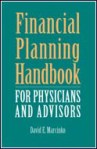
 

Contact me at MarcinkoAdvisors@msn.com and be a guest blogger! 

Conclusion

Be sure to subscribe to the ME-P. It is fast, free and secure.

Link: http://feeds.feedburner.com/HealthcareFinancialsthePostForcxos

Speaker: If you need a moderator or speaker for an upcoming event, Dr. David E. Marcinko; MBA – Publisher-in-Chief of the Executive-Post – is available for seminar or speaking engagements. Contact: MarcinkoAdvisors@msn.com 

Get our Widget: Get this widget!

Our Other Print Books and Related Information Sources:

Practice Management: http://www.springerpub.com/prod.aspx?prod_id=23759

Physician Financial Planning: http://www.jbpub.com/catalog/0763745790

Medical Risk Management: http://www.jbpub.com/catalog/9780763733421

Healthcare Organizations: www.HealthcareFinancials.com

Health Administration Terms: www.HealthDictionarySeries.com

Physician Advisors: www.CertifiedMedicalPlanner.com

Subscribe Now: Did you like this Medical Executive-Post, or find it helpful, interesting and informative? Want to get the latest ME-Ps delivered to your email box each morning? Just subscribe using the link below. You can unsubscribe at any time. Security is assured.

Link: http://feeds.feedburner.com/HealthcareFinancialsthePostForcxos

Sponsors Welcomed

And, credible sponsors and like-minded advertisers are always welcomed.

Link: https://healthcarefinancials.wordpress.com/2007/11/11/advertise

Off-Road Touring with Dr. Marcinko [Part I]

“Using-Up” Health Insurance

By Dr. David Edward Marcinko; MBA, CMP™

[Publisher-in-Chief]

Dateline: June 18-19th, 2009dem24          

I flew into Marquette Michigan last night on a puddle jumper from Chicago, Illinois. Marquette will be the home base on my current book promotion and public/private  speaking tour. This second leg of our trip, from Atlanta, was delayed for mechanical reasons. So, rather than follow directions from American Airlines regarding new arrangements, and rushing to wait in a long line of humanity for a new boarding pass on a much later flight, I simply called the travel assistance number on my cell phone. We were re-routed by computer from American, to a Delta Airlines flight, that caused no additional time lag as we later learned the other passengers boarded their American flight three hours late. Many of the elderly and slower moving folks even missed connecting flights which necessitated overnight hotel stays, in some cases.

THINK: outside the box independently, and don’t follow directions mindlessly.  

About Marquette, Michigan

The City of Marquette is located in the central region of Michigan’s Upper Peninsula. With a population of 20,714, it is the UP’s largest community. In addition to being a population center, it serves as the regional center for education, health care, recreation, and retail. This regional draw is particularly evident due to Northern Michigan University and Marquette General Hospital, both of which are located in the City of Marquette. Of course, I visited both.

Quality Healthcare for the Upper PeninsulaUPHC

So, the next morning I called some friends who suggested we head over to the Marquette Upper Peninsula  Healthcare Network System, on Washington Street, for an unplanned and unofficial stop on our current “signing and opining” tour. It seemed very busy for a Friday morning; so we gathered some colleagues and ambled over to Viering’s Restaurant where we discussed the local economy, current state of the healthcare industry and the Obama Administration’s ideas for healthcare reform. When I expressed my surprise at the number of patients in the clinic waiting room areas, I was informed that an unexpected corporate layoff resulted in patients “wanting to use their health insurance, before being RIFed [Reduced-in-Force].” Now, as a doctor, and insurance agent, I find this attitude both very strange; yet not uncommon.

“Using-Up” Health Insurance

I can honestly say that after more than three-decades in the business, I have never heard a single soon-to-be unemployed client say,” I need to use up my life insurance”, or “auto insurance”, or “homeowner’s insurance”, etc. So, what gives with health insurance?

Health Insurance IS Different

Insurance of all types is sold to economically protect against catastrophic events like pre-mature death, auto accidents, or home destruction. But life insurance doesn’t pay for non-lethal issues; auto insurance doesn’t pay for new tires, tune-ups or oil changes; and home owner’s insurance doesn’t pay for regular upkeep and maintenance, etc. So, why do some patients believe that health insurance necessarily needs to be used-up? Were they not healthy before the lay-off announcement; or did they suddenly become ill, thereafter? What do you think? Is this just a local phenomenon, or would it be [is it] pandemic in any community given the same or similar circumstances?

AssessmentUPHC-DEM

For me, this scenario clearly demonstrates two things. First, that Health Insurance is thought of as a personal right and/or corporate fringe-benefit; rather than true financial indemnification. Second, it demonstrates the ability of patients to think ahead; unlike the airline customers on my initial trip here. So, if patients can be forward thinking about their health insurance needs, why don’t they think ahead about their personal health care needs? Why don’t more of us exercise regularly, watch our blood pressure and weight, and/or avoid drugs, alcohol and promiscuous sex, etc.  If we can monitor and pay for routine auto and home maintenance ourselves; why not our routine health needs?  Isn’t good health our most important personal asset? Aren’t we worth it? Do we really want to abrogate our very lives to others? Do we want to concede our responsibilities to a third party, ie, a national [single-payer] governmental controlled healthcare? Those patients wanting to “use their health insurance”, before unemployment, certainly seem to think so.

About Off Road with Dr. Marcinko

These sporadic off-road segments will continue through-out my 2009 summer promotional tour. On the one hand, formal attendance at several engagements was initially a bit sparse because of the death of several recent celebrities and entertainer types. On the other hand, local book stores and sponsors noted a spike in our CD and book sales, as well as interest in our online www.CertifiedMedicalPlanner.com program and premier quarterly guide: Healthcare Organizations [Journal of Financial Management Strategies] www.HealthcareFinancials.com

Conclusion

And so, your thoughts and comments on this Medical Executive-Post are appreciated. Tell us what you think. Feel free to review our top-left column, and top-right sidebar materials, links, URLs and related websites, too. Then, be sure to subscribe to the ME-P. It is fast, free and secure.

Link: http://feeds.feedburner.com/HealthcareFinancialsthePostForcxos

Speaker: If you need a moderator or speaker for an upcoming event, Dr. David E. Marcinko; MBA – Publisher-in-Chief of the Executive-Post – is available for seminar or speaking engagements. Contact: MarcinkoAdvisors@msn.com 

Get our Widget: Get this widget!

Our Other Print Books and Related Information Sources:

Practice Management: http://www.springerpub.com/prod.aspx?prod_id=23759

Physician Financial Planning: http://www.jbpub.com/catalog/0763745790

Medical Risk Management: http://www.jbpub.com/catalog/9780763733421

Healthcare Organizations: www.HealthcareFinancials.com

Health Administration Terms: www.HealthDictionarySeries.com

Physician Advisors: www.CertifiedMedicalPlanner.com

Subscribe Now: Did you like this Medical Executive-Post, or find it helpful, interesting and informative? Want to get the latest ME-Ps delivered to your email box each morning? Just subscribe using the link below. You can unsubscribe at any time. Security is assured.

Link: http://feeds.feedburner.com/HealthcareFinancialsthePostForcxos

Sponsors Welcomed

And, credible sponsors and like-minded advertisers are always welcomed.

Link: https://healthcarefinancials.wordpress.com/2007/11/11/advertise