Understanding Polymaths, Savants, and Geniuses

By Staff Reporters

***

***

What’s a polymath?

The definition of “polymath” is the subject of debate. The term has its roots in Ancient Greek and was first used in the early 17th Century to mean a person with “many learnings”, but there is no easy way to decide how advanced those learnings must be and in how many disciplines. Most researchers argue that to be a true polymath you need some kind of formal acclaim in at least two apparently unrelated domains. And, one of the most detailed examinations of the subject comes from Waqas Ahmed in his book The Polymath, published earlier this year.

Now, despite his many achievements, Ahmed does not identify as a polymath. “It is too esteemed an accolade for me to refer to myself as one,” he said. When examining the lives of historical polymaths, he only considered those who had made significant contributions to at least three fields, such as Leonardo da Vinci (the artist, inventor and anatomist), Johann Wolfgang von Goethe (the great writer who also studied botany, physics and mineralogy) and Florence Nightingale (who, besides founding modern nursing, was also an accomplished statistician and theologian).

What is a savant?

Savant syndrome is an exceedingly rare condition in which individuals with a developmental disorder or an intellectual disability possess extraordinary talents, knowledge, or abilities in a specific area. Savant syndrome may be congenital at birth or acquired later in life and is commonly associated with autism spectrum disorder (ASD). It may also coexist alongside other conditions, such as brain injuries . Individuals with savant syndrome were historically referred to with the term “idiot savant,” but negative connotations of the term “idiot” resulted in its abandonment and is now solely termed “savant.”

Famous individuals with savant syndrome include Kim Peek, who was able to calculate dates for any event hundreds of years into the past or future and inspired the movie the Rain Man. Stephen Wiltshire was mute and communicated through drawings of detailed city landscapes. Approximately 10% of individuals with autistic disorder have savant abilities. Less than 1% of the non-autistic population have savant syndrome. Therefore, not all savants have ASD, and not all persons with autismare savants.

What is a genius?

There is no scientifically precise definition of genius. When used to refer to the characteristic, genius is associated with talent but several authors systematically distinguish these terms. Walter Isaacson, biographer of many well-known geniuses, explains that although high intelligence may be a prerequisite, the most common trait that actually defines a genius may be the extraordinary ability to apply creativity and imaginative thinking to almost any situation.

The plural form of genius can be either geniuses or genii, pronounced [ jee-nee-ahy ], depending on the intended meaning of the word. Geniuses is much more commonly used. The plural forms of several other singular words that end in -us are also formed in this way, such as virus/viruses, callus/calluses, and status/statuses. Irregular plurals that are formed like genii, such as radius/radii or cactus/cacti, derive directly from their original pluralization in Latin. However, the standard English plural -es is often also acceptable for these terms, as in radiuses and cactuses.

Who is Mensa material?

Mensa members range in age from 2 to 106. They include engineers, homemakers, teachers, actors, athletes, students, and CEOs, and they share only one trait — high intelligence. To qualify for Mensa, they scored in the top 2 percent of the general population on an accepted standardized intelligence test.

 Note: These descriptions are presented with some thanks to Chat GPT.

COMMENTS APPRECIATED

Refer and Subscribe

***

***

PHARMACEUTICALS: Trump Tariff Plans

By A.I. and Staff Reporters

SPONSOR: http://www.CertifiedMedicalPlanner.org

***

***

Trump says pharma tariffs could be as high as 250%

The president revealed that he plans to formally announce tariffs on the pharmaceutical industry “within the next week or so” in an attempt to force drug manufacturing to the US, he told CNBC several days ago.

PBMs: https://medicalexecutivepost.com/2019/01/18/on-pbms-pharmacy-benefits-management/

It would start with a “small” tariff, Trump said, before rising to 150% in a year to a year and a half, and eventually to 250%.

Pharma companies have argued that tariffs could drive up costs and threaten their ability to fund research for new medicines.

COMMENTS APPRECIATED

Like and Subscribe

***

***

MENTAL HEALTH: Artificial Intelligence Regulated

By A.I and Staff Reporters

***

***

Illinois just became the first US state to regulate AI mental health services this week when Gov. JB Pritzker signed a law banning AI therapy.

The law forbids chatbots from acting as therapists and limits how human mental health professionals can use AI to aid their work. Companies face up to $10,000 in fines if they violate the law, according to Morning Brew.

The move comes as ChatGPT users—particularly younger ones—increasingly turn to the app for what amounts to free therapy. OpenAI recently made updates to its model to encourage users to use ChatGPT in a healthier way.

COMMENTS APPRECIATED

Like and Subscribe

***

***

ASSETS: Under Advisement V. Management

By Staff Reporters

SPONSOR: http://www.MarcinkoAssociates.com

***

***

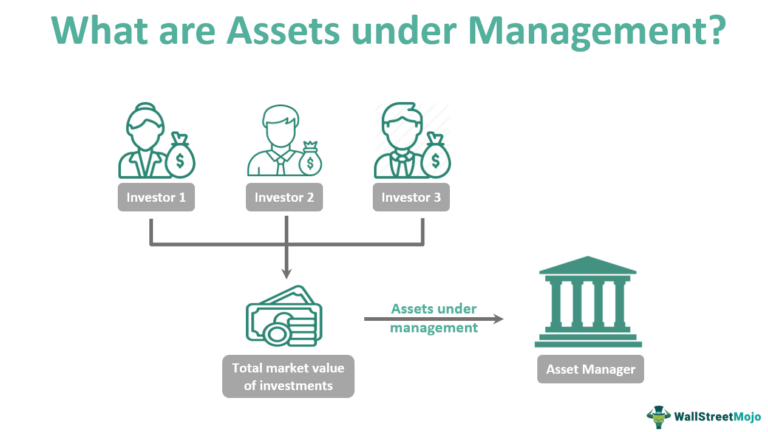
What are Assets Under Management?

Assets under management (AUM) is a significant parameter in the financial world. It answers financial questions like – how many investments does a company manage? What is the net value of the investments that the company manages? Finally, how many investors have trusted their assets with the company? The higher the answer to these three questions, the more glory to the company.

A wealthy investor who is not concerned by higher fees but wants maximum returns of their asset will probably choose an asset manager based on its AUM. Thus, the AUM indicates the financial performance of the firm. Also, based on the funds under management, the firm collects fees from other clients.

So, what are the investments which qualify as AUM? Any liquid asset of the investor they have entrusted the asset manager with monitoring and control. For example, bank deposits, cash balances, equity shares, bonds, mutual funds, and other investments.

What are the services an asset manager provides to their clients? The most important function is decision-making. With the constant fluctuations and rapid movements in the market, an asset manager has to make decisions about holding or selling an investment. The firm communicates with the investors and advises them about the necessary action.

Once the decision is taken, the firm acts on the decision, i.e., the investor does not have to enter the field. In addition, the asset management company will buy, sell, and make any other transactions on behalf of the investor. Finally, the firm also renders services like accounting, tax reporting, proxy voting (equity shares), client reporting, and other financial services.

What are Assets Under Advisement?

Assets under advisement refer to assets on which your firm provides advice or consultation but for which your firm does either does not have discretionary authority or does not arrange or effectuate the transaction. Such services would include financial planning or other consulting services where the assets are used for the informational purpose of gaining a full perspective of the client’s financial situation, but you are not actually placing the trade.

Assets under advisement could also be those which you monitor for a client on a non-discretionary basis, where you may make recommendations but where the client is the party responsible for arranging or effecting the purchase or sale.  A common example of this scenario is when an adviser reviews a participant’s 401(k) allocations. If the adviser does not have the authority or ability to effect changes in the portfolio, these assets are likely considered assets under advisement rather than regulatory assets under management.

Assets under advisement are permitted to be disclosed on Form ADV Part 2A as a separate asset figure from the assets under management.  There is no requirement to disclose the assets under advisement figure, but some advisers opt to include the figure to give prospective clients a more complete picture of the firm’s responsibilities.  If you choose to report your assets under advisement, be sure to make a clear distinction between this figure and your regulatory assets under management.

NOTE: Essay with thanks to Chat GPT.

COMMENTS APPRECIATED

Subscribe and Refer

***

***

DEEPSEEK: Breaks the Artificial Intelligence Paradigm

By Vitaliy Katsenelson CFA

***

***

I’ve received emails from readers asking my thoughts on DeepSeek. I need to start with two warnings. First, the usual one: I’m a generalist value investor, not a technology specialist (last week I was analyzing a bank and an oil company), so my knowledge of AI models is superficial. Second, and more unusually, we don’t have all the facts yet.

But this story could represent a major step change in both AI and geopolitics.

Here’s what we know:

DeepSeek—a year-old startup in China that spun out of a hedge fund—has built a fully functioning large language model (LLM) that performs on par with the latest AI models. This part of the story has been verified by the industry: DeepSeek has been tested and compared to other top LLMs. I’ve personally been playing with DeepSeek over the last few days, and the results it spit out were very similar to those produced by ChatGPT and Perplexity—only faster.

This alone is impressive, especially considering that just six months ago, Eric Schmidt (former Google CEO, and certainly no generalist) suggested China was two to three years behind the U.S. in AI.

But here’s the truly shocking—and unverified—part: DeepSeek claims they trained their model for only $5.6 million, while U.S. counterparts have reportedly spent hundreds of millions or even billions of dollars. That’s 20 to 200 times less.

The implications, if true, are stunning. Despite the U.S. government’s export controls on AI chips to China, DeepSeek allegedly trained its LLM on older-generation chips, using a small fraction of the computing power and electricity that its Western competitors have. While everyone assumed that AI’s future lay in faster, better chips—where the only real choice is Nvidia or Nvidia—this previously unknown company has achieved near parity with its American counterparts swimming in cash and datacenters full of the latest Nvidia chips. DeepSeek (allegedly) had huge compute constraints and thus had to use different logic, becoming more efficient with subpar hardware to achieve a similar result.

In other words, this scrappy startup, in its quest to create a better AI “brain,” used brains where everyone else was focusing on brawn—it literally taught AI how to reason.

COMMENTS APPRECIATED

Like and Refer

***

***

AI “Demolition Man” ID

By Staff Reporters

***

***

If getting answers from ChatGPT makes you feel dystopian, you may not want to hear about OpenAI CEO Sam Altman’s other co-founded venture, now rolling out stateside. It scans your eyeballs in exchange for cryptocurrency.

What in the Demolition Man? The device, which creates a unique user ID for your scan, is meant to address a problem that Altman had a hand in creating: how to verify identities and confirm humanity in a world full of artificial intelligence.

The project, called World (formerly Worldcoin), went live in other countries in 2023. Its US expansion, announced this week, featured retail outlets in five cities where you can get your eyes scanned:

  • Tools for Humanity, the company behind the orbs, says 12+ million people around the world have participated so far.
  • It claims to keep your data private, but authorities in more than a dozen places have suspended World’s operations or investigated its data practices, per the WSJ.

COMMENTS APPRECIATED

Like and Refer

***

***

TESLA: My Current Thoughts

By Vitaliy Katsenelson CFA

***

***

Tesla market value of $780 billion mostly reflects Elon’s future dreams, not car sales. The reality? Only $100-180 billion tied to the actual vehicle business.

***

Current thoughts on Tesla (TSLA)

Tesla has a market capitalization as of this writing of $780 billion. It made around $14 billion of profit in 2023 and $7 billion in 2024. A good chunk of profit comes not from selling cars but from regulatory credits. It sold fewer cars in 2024 than in 2023. Unless we see a significant shift change in battery capacity, speed of charging, and improved quality and availability of charging infrastructure, we have reached peak EV penetration (I wrote about this earlier).

However, today Tesla is not trading based on car sales but on future dreams of self-driving robo-taxis, robots, semis, and whatever else Elon dreams up. The car company may be worth $100–180 billion; the rest is what investors are willing to pay for Elon’s dreams.

Quick thoughts on each dream:

Self-driving: I would not trust my life or my kids’ lives to a car company that only uses cameras. They are passive sensors that have limited range and are easily impacted by bad weather. I’ve used Tesla self-driving software – it is great most of the time, except when it’s not – and then it might kill you or others.

Robo-taxis: They may work in geo-fenced areas, but they pose a huge reputational risk to Tesla. One death and this business is done. That’s what happened to Uber’s self-driving business, and why Google’s Waymo has taken a much more conservative route. It uses radar/lidar and launched the service in geo-fenced areas first.

Semis: They were announced in 2017 and were going to hit the road the next year. They are still not out there. I suspect Elon is waiting for a breakthrough in battery technology.

Robots: Exciting, huge market, but this will be a crowded field.

New competition: There are lots of Chinese EVs invading Europe and the rest of the world. BYD looks like a real competitor.

China looked like a great opportunity for Tesla, but may turn into a liability if the trade war intensifies.

Finally, though at times he seems superhuman, Musk is constrained by the number of hours in the day. As of today he is running Tesla, SpaceX, Twitter (x.com), xAI (the maker of Grok – a ChatGPT competitor), The Boring Company, Neuralink, and oh, yes, DOGE. The EV market is getting more, not less, competitive.

Tesla needs an un-distracted Elon Musk.

COMMENTS APPRECIATED

Refer and Like

***

***

DAILY UPDATE: OpenAI, FDA, Roche & Rite Aid as Stocks Soar

MEDICAL EXECUTIVE-POST TODAY’S NEWSLETTER BRIEFING

***

Essays, Opinions and Curated News in Health Economics, Investing, Business, Management and Financial Planning for Physician Entrepreneurs and their Savvy Advisors and Consultants

Serving Almost One Million Doctors, Financial Advisors and Medical Management Consultants Daily

A Partner of the Institute of Medical Business Advisors , Inc.

http://www.MedicalBusinessAdvisors.com

SPONSORED BY: Marcinko & Associates, Inc.

***

http://www.MarcinkoAssociates.com

Daily Update Provided By Staff Reporters Since 2007.
How May We Serve You?
© Copyright Institute of Medical Business Advisors, Inc. All rights reserved. 2025

REFER A COLLEAGUE: MarcinkoAdvisors@outlook.com

SPONSORSHIPS AVAILABLE: https://medicalexecutivepost.com/sponsors/

ADVERTISE ON THE ME-P: https://tinyurl.com/ytb5955z

Your Referral Count -0-

CITE: https://www.r2library.com/Resource

  • OpenAI would be open to buying Chrome if Google is forced by a federal court to sell the web browser, the company’s ChatGPT head said yesterday.
  • The FDA suspended milk quality tests in some dairy products due to reduced capacity stemming from federal workforce cuts, Reuters reported.
  • Roche, the Swiss pharmaceutical giant, is investing $50 billion in US manufacturing to circumvent President Trump’s tariffs, the company said yesterday.
  • Rite Aid is preparing to sell itself in pieces ahead of a possible second bankruptcy, Bloomberg reported.

CITE: https://tinyurl.com/2h47urt5

What’s up

  • Intel surged 5.54% on reports that the chipmaker plans to cut 20% of its workforce.
  • Oklo gained 8.60% after OpenAI CEO Sam Altman announced he’s stepping down as chairman of the board of the nuclear power startup.
  • Duolingo popped 10.01% after Morgan Stanley initiated coverage of the language learning company, calling it a “best-in-class consumer internet asset.”
  • Cava climbed 6.29% due to an upgrade from analysts at Bernstein, who think the bowl slop stock will not only survive but thrive in an economic downturn.
  • Amphenol rose 8.21% thanks to impressive earnings for the high-speed cable company, coupled with a solid fiscal outlook.
  • Vertiv Holdings jumped 8.60% after the data center company posted an impressive quarterly profit and raised its fiscal forecast.
  • SAP rose 7.47% following the software stock’s strong profit performance last quarter.
  • Novavax soared 19.52% on the news that the FDA has asked for more clinical data about its Covid vaccine.

What’s down

  • Enphase Energy plunged 15.65% thanks to a big miss on both the top and bottom lines for the solar tech stock.
  • Going down: Elevator manufacturer Otis Worldwide fell 6.64% on an earnings miss thanks to fewer orders from Chinese customers.
  • Online learning platform Chubb fell 2.17% after announcing a 38% decline in net income last quarter.
  • Baker Hughes may have beaten profit forecasts last quarter, but the oilfield operator’s revenue miss sent shares tumbling 6.44%.
  • Bristol Myers Squibb lost 2.59% after the pharma giant announced its schizophrenia drug Cobenfy performed poorly in Phase 3 trials.

CITE: https://tinyurl.com/tj8smmes

  • Stocks surged first thing this morning after President Trump said the media blew things out of proportion and that he has “no intention” of firing Jerome Powell. He also said he would be “very nice” to China in tariff negotiations.
  • Treasury Secretary Scott Bessent also did some damage control, touting the opportunity for a “big deal” between the US and China.
  • The combination sent a relief rally sweeping through markets, and while the euphoria faded by mid-afternoon, all three indexes ended the day in the green.
  • Gold fell and bitcoin rose as investors took on more risk (see below), while oil dropped on reports that OPEC+ may hike its crude output after its meeting next month.

COMMENTS APPRECIATED

PLEASE SUBSCRIBE: MarcinkoAdvisors@outlook.com

Thank You

***

***

***

***

EDUCATIONAL TEXTBOOKS: https://tinyurl.com/4zdxuuwf

***

My Thoughts on Artificial Intelligence [AI]

By Vitaliy Katsenelson CFA

***

***

Article available in Spanish here.

A century ago, one fifth of the country was involved in agriculture. Due to the transformation of farming technology, only 1% of the country is now involved in farming, while our supermarkets are flooded with cheap food. I could be wrong, but I don’t see the 19% of the country who used to farm wandering around unemployed. They have retrained to do other things.

Innovation disrupts, but it also creates new jobs and improves the standard of living of society. A century ago, you could not have imagined most of the jobs we have today. I’m not just talking about social media celebrities; think about software engineers, data scientists, cybersecurity experts, etc. In fact, most white-collar jobs you see today did not exist 100 years ago. Yes, if you specialized in driving horse-powered carriages, you had to acquire new skills.

AI will displace many jobs, but it will also empower people with new productivity tools. Microsoft Excel replaced jobs that required people to add up rows of numbers with calculators, but it created many more. In the 1960s, corporations had departments filled with typists. A photocopier and then the personal computer put these hardworking folks out of a job, but they retrained to do other things.

If we have a victim mentality, AI will run us over; if we embrace it and adapt it to our lives, it may become our best friend to do the jobs we are doing, while our soon-to-be-unemployed coworkers complain about AI.

AI may have a similar impact on our lives as electricity did. Unless it becomes sentient and just like the Terminator, it turns against us (smarter people than me cannot agree on this, especially on a reasonable time frame, so I withhold my opinion on it), it will likely improve our lives significantly. One industry that immediately comes to mind is healthcare – we need major disruption in that sector.

AI may disrupt and completely reshuffle the power dynamics in some industries. Travel, for example, comes to mind; we may start looking for trips and booking tickets with the help of our AI assistant without going to the travel websites. Some companies will adapt and become winners, while others won’t and will become market-share donors.

As I am typing this, I realize (again, something I do daily now) how important management is. In our analysis, we should pay close attention to how companies are embracing AI. Are they giving it lip service or are they really adopting it and changing the business to take advantage of it?

ChatGPT is a statistical representation of things found on the web, which will increasingly include ITS OWN output (directly and secondhand). You post something picked up from it and it will use it to reinforce its own knowledge. Progressively a self-licking lollipop.

If you want to see ChatGPT creating art, for the fun of it, spend some time on myfavoriteclassical.com, where I post music articles. Every single picture there is created by AI. I love impressionist artists, and thus I love these little AI creations. However, if you zoom in closer, you’ll find violinists playing with toothpicks, pianists with three hands and cellists with multiple arms and legs.

This self-licking lollipop is impressive, but it still has a lot to learn. (By the way, if you have not signed up to receive my classical music-only articles, you have an opportunity to do it here).

Finally, the more we rely on AI and the more content it creates, the less creative it and we become.

COMMENTS APPRECIATED

Refer and Subscribe

***

***

DEEPSEEK Breaks the A.I. Paradigm

By Vitaliy Katsenelson CFA

***

DeepSeek Breaks the AI Paradigm

***

I’ve received emails from readers asking my thoughts on DeepSeek. I need to start with two warnings. First, the usual one: I’m a generalist value investor, not a technology specialist (last week I was analyzing a bank and an oil company), so my knowledge of AI models is superficial. Second, and more unusually, we don’t have all the facts yet.

But this story could represent a major step change in both AI and geopolitics. Here’s what we know:
DeepSeek—a year-old startup in China that spun out of a hedge fund—has built a fully functioning large language model (LLM) that performs on par with the latest AI models. This part of the story has been verified by the industry: DeepSeek has been tested and compared to other top LLMs. I’ve personally been playing with DeepSeek over the last few days, and the results it spit out were very similar to those produced by ChatGPT and Perplexity—only faster.

This alone is impressive, especially considering that just six months ago, Eric Schmidt (former Google CEO, and certainly no generalist) suggested China was two to three years behind the U.S. in AI.
But here’s the truly shocking—and unverified—part: DeepSeek claims they trained their model for only $5.6 million, while U.S. counterparts have reportedly spent hundreds of millions or even billions of dollars. That’s 20 to 200 times less.

The implications, if true, are stunning. Despite the U.S. government’s export controls on AI chips to China, DeepSeek allegedly trained its LLM on older-generation chips, using a small fraction of the computing power and electricity that its Western competitors have. While everyone assumed that AI’s future lay in faster, better chips—where the only real choice is Nvidia or Nvidia—this previously unknown company has achieved near parity with its American counterparts swimming in cash and datacenters full of the latest Nvidia chips. DeepSeek (allegedly) had huge compute constraints and thus had to use different logic, becoming more efficient with subpar hardware to achieve a similar result. In other words, this scrappy startup, in its quest to create a better AI “brain,” used brains where everyone else was focusing on brawn—it literally taught AI how to reason.

Enter the Hot Dog Contest

Americans love (junk) food and sports, so let me explain with a food-sport analogy. Nathan’s Famous International Hot Dog Eating Contest claims 1916 as its origin (though this might be partly legend). By the 1970s, when official records began, winning competitors averaged around 15 hot dogs. That gradually increased to about 25—until Takeru Kobayashi arrived from Japan in 2001 and shattered the paradigm by consuming 50 hot dogs, something widely deemed impossible. His secret wasn’t a prodigious appetite but rather his unique methodology; He separated hot dogs from buns and dunked the buns in water, completely reimagining the approach.

Then a few years later came Joey Chestnut, who built on Kobayashi’s innovation to push the record well beyond 70 hot dogs and up to 83. Once Kobayashi broke the paradigm, the perceived limits vanished, forcing everyone to rethink their methods. Joey Chestnut capitalized on it.

DeepSeek may be the Kobayashi of AI, propelling the whole industry into a “Joey Chestnut” era of innovation. If the claims about using older chips and spending drastically less are accurate, we might see AI companies pivot away from single-mindedly chasing bigger compute capacity and toward improved model design.

I never thought I’d be quoting Stoics to explain future GPU chip demand, but Epictetus said, “Happiness comes not from wanting more, but from wanting what you have.” Two millennia ago, he was certainly not talking about GPUs, but he may as well have been. ChatGPT, Perplexity, and Google’s Gemini will have to rethink their hunger for more compute and see if they can achieve more with wanting (using) what they have.

If they don’t, they’ll be eaten by hundreds of new startups, corporations, and likely governments entering the space. When you start spelling billions with an “M,” you dramatically lower the barriers to entry.

Until DeepSeek, AI was supposed to be in reach for only a few extremely well-funded companies, (the “Magnificent Ones”) armed with the latest Nvidia chips. DeepSeek may have broken that paradigm too.

The Nvidia Conundrum

The impact on Nvidia is unclear. On one hand, DeepSeek’s success could decrease demand for its chips and bring its margins back to earth, as companies realize that a brighter AI future might lie not in simply connecting more Nvidia processors but in making models run more efficiently. DeepSeek may have reduced the urgency to build more data centers and thus cut demand for Nvidia chips.

On the other hand (I’m being a two-armed economist here), lower barriers to entry will lead to more entrants and higher overall demand for GPUs. Also, DeepSeek claims that because its model is more efficient, the cost of inference (running the model) is a fraction of the cost of running ChatGPT and requires a lot less memory—potentially accelerating AI adoption and thus driving more demand for GPUs. So this could be good news for Nvidia, depending on how it shakes out.

My thinking on Nvidia hasn’t materially changed—it’s only a matter of time before Meta, Google, Tesla, Microsoft, and a slew of startups commoditize GPUs and drive down prices.

Likewise, more competition means LLMs themselves are likely to become commoditized—that’s what competition does—and ChatGPT’s valuation could be an obvious casualty.

Geopolitical Shockwaves

The geopolitical consequences are enormous. Export controls may have inadvertently spurred fresh innovation, and they might not be as effective going forward. The U.S. might not have the control of AI that many believed it did, and countries that don’t like us very much will have their own AI.

We’ve long comforted ourselves, after offshoring manufacturing to China, by saying that we’re the cradle of innovation—but AI could tip the scales in a direction that doesn’t favor us.
Let me give you an example. In a recent

interview with the Wall Street Journal, OpenAI’s product chief revealed that various versions of ChatGPT were entered into programming competitions anonymously. Out of roughly 28 million programmers worldwide, these early models ranked in the top 2–3%. ChatGPT-o1 (the latest public release) placed among the top 1,000, and ChatGPT-o3 (due out in a few months) is in the top 175. That’s the top 0.000625%! If it were a composer, ChatGPT-o3 would be Mozart.

I’ve heard that a great developer is 10x more valuable than a good one—maybe even 100x more valuable than an average one. I’m aiming to be roughly right here. A 19-year-old in Bangalore or Iowa who discovered programming a few months ago can now code like Mozart using the latest ChatGPT. Imagine every young kid, after a few YouTube videos, coding at this level. The knowledge and experience gap is being flattened fast.

I am quite aware that I am drastically generalizing (I cannot stress this enough), and but the point stands: The journey from learning to code to becoming the “Mozart of programming” has shrunk from decades to months, and the pool of Mozarts has grown exponentially. If I owned software companies, I’d become a bit more nervous—the moat for many of them has been filled with AI.

Adapting, changing your mind, and holding ideas as theses to be validated or invalidated—not as part of your identity—are incredibly important in investing (and in life in general). They become even more crucial in an age of AI, as we find ourselves stepping into a sci-fi reality faster than we ever imagined. DeepSeek may be that catalyst, forcing investors and technologists alike to question long-held assumptions and reevaluate the competitive landscape in real time.
I’d love to hear your thoughts, so please leave your comment and feedback here. Also, if you missed my previous article “Escaping Stock Market Double Hell”, you can read it and leave a comment here.

COMMENTS APPRECIATED

Subscribe and Refer

***

***

Do Doctors Use ChatGPT in Clinical Decisions?

By Staff Reporters

***

***

Are doctors using publicly available tools like ChatGPT? The answer, Fierce Healthcare finds, is yes. In the first in-depth look of its kind into physician use of public genAI tools, Fierce Healthcare spoke with nearly two dozen doctors, students, AI experts and regulators, and helped conduct a survey of more than 100 physicians. The reporting confirms that some doctors are turning to tools intended for non-clinical uses to make clinical decisions. 

More: https://jamanetwork.com/journals/jamainternalmedicine/fullarticle/2804309

A collaborative survey between Fierce Healthcare and physician social network Sermo found that 76% of respondents reported using general-purpose LLMs in clinical decision-making. With no standardized guidelines, lagging physician training and regulators racing to try to keep up with rapidly changing technology, guardrails to protect patients appear to be years behind current rates of utilization.

Source: Fierce Healthcare [10/8/24]

COMMENTS APPRECIATED

Thank You

***

***

NOBEL PRIZE PHYSICS: John Hopfield and Geoffrey Hinton in 2024

BREAKING NEWS

By Staff Reporters

***

***

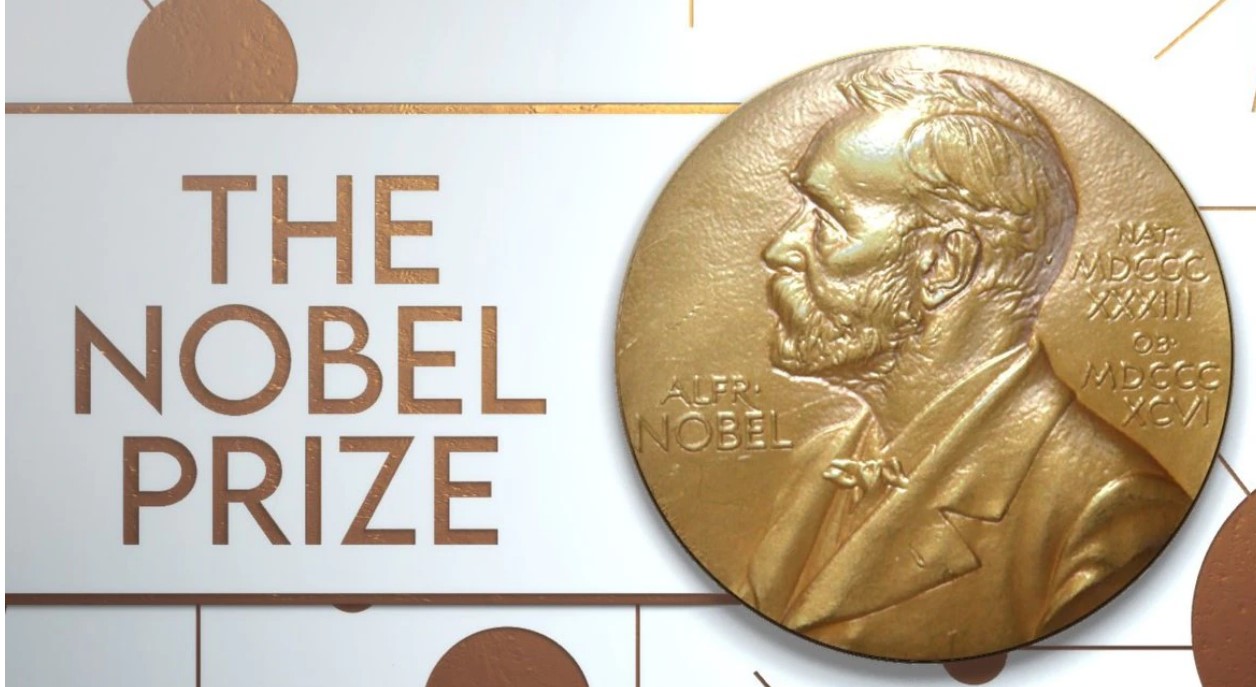
The Nobel Prize in Physics has been awarded to two researchers who helped build the foundations of the artificial intelligence that surrounds us today.

John Hopfield and Geoffrey Hinton both worked on machine learning techniques that would go on to power products such as ChatGPT.

Hopfield’s research is carried out at Princeton University and Hinton works at the University of Toronto.

MORE: https://www.nobelprize.org/

COMMENTS APPRECIATED

Thank You

***

***

DAILY UPDATE: JPMorgan Chase, Bank of America, OpenAI and MSFT as Markets Continue Stock Rally

MEDICAL EXECUTIVE-POST TODAY’S NEWSLETTER BRIEFING

***

Essays, Opinions and Curated News in Health Economics, Investing, Business, Management and Financial Planning for Physician Entrepreneurs and their Savvy Advisors and Consultants

Serving Almost One Million Doctors, Financial Advisors and Medical Management Consultants Daily

A Partner of the Institute of Medical Business Advisors , Inc.

http://www.MedicalBusinessAdvisors.com

SPONSORED BY: Marcinko & Associates, Inc.

***

http://www.MarcinkoAssociates.com

Daily Update Provided By Staff Reporters Since 2007.
How May We Serve You?
© Copyright Institute of Medical Business Advisors, Inc. All rights reserved. 2024

REFER A COLLEAGUE: MarcinkoAdvisors@msn.com

SPONSORSHIPS AVAILABLE: https://medicalexecutivepost.com/sponsors/

ADVERTISE ON THE ME-P: https://tinyurl.com/ytb5955z

Your Referral Count -0-

OpenAI says its new model can reason like a person. The ChatGPT-maker released a preview of a new artificial intelligence model that’s officially called o1 named by its internal code name, Strawberry—a reference to AI’s inability to determine the correct number of r’s in the word.

Microsoft plans to lay off 650 people in its Xbox unit.

CITE: https://www.r2library.com/Resource

What’s up

  • Campbell Soup Company climbed 2.63% on the news that, after 155 years, it will change its name to The Campbell’s Company. No soup for you!
  • Wells Fargo somehow gained 2.37% after a US banking regulator declared its safeguards against money laundering weren’t strong enough.
  • Lululemon Athletica popped 2.54% after CEO Calvin McDonald bought more shares of the company, signaling confidence in the struggling retailer.
  • Uber drove 6.45% higher thanks to a deal with Alphabet’s Waymo to offer driverless taxi rides in Austin and Atlanta starting next year.
  • RH rose 25.46% a day after announcing shockingly strong earnings for the home-furnishing retailer.
  • Trump Media & Technology Group soared 11.79% on the former president’s announcement that he’s “not selling” his shares of the company.

What’s down

  • Adobe dropped 8.47% after beating top and bottom line forecasts last quarter but projecting weaker than expected earnings next quarter.
  • Garmin tumbled 5.12% after Barclays analysts downgraded the stock and cut their price target, citing the device-maker’s weak sales and low profit margin.
  • US-listed shares of Chinese retailers like Alibaba and PDD dropped 0.93% and 2.40%, respectively, on the news that President Biden announced the US will crack down on cheap goods from China. Etsy, which competes with these retailers, popped 7.56% on the news.
  • ViaSat sank 14.58% thanks to a deal between United Airlines and SpaceX to use Starlink satellites to provide free in-flight WiFi instead of ViaSat’s products.

CITE: https://tinyurl.com/2h47urt5

Here’s where the major benchmarks ended:

  • The SPX advanced 30 points (0.5%) to 5,626.02 and was up 4% for the week; the Dow Jones Industrial Average® ($DJI) gained 297 points (0.7%) to 41,393.78 and added 2.6% for the week; the NASDAQ Composite® ($COMP) rose 114 points (0.7%) to 17,683.98 and was 6% higher for the week.
  • The 10-year Treasury note yield (TNX) edged 2 basis points lower to 3.66%.
  • The CBOE Volatility Index® (VIX) fell 0.6 points to 16.48.

CITE: https://tinyurl.com/tj8smmes

JPMorgan Chase and Bank of America are pledging to put in more safeguards to prevent what their industry is infamous for: overworking junior employees, the Wall Street Journal reported this week.

Visualize: How private equity tangled banks in a web of debt, from the Financial Times.

COMMENTS APPRECIATED

PLEASE SUBSCRIBE: MarcinkoAdvisors@msn.com

Thank You

***

***

***

***

EDUCATIONAL TEXTBOOKS: https://tinyurl.com/4zdxuuwf

***

ChatGPT: Considers Changing Corporate Structure

By Staff Reporters

SPONSOR: http://www.MarcinkoAssociates.com

***

***

The Financial Times reports that the ChatGPT-maker is discussing changing its corporate structure, which currently has it governed by a nonprofit entity, to make it more attractive to investors as the company works to complete a funding round that values it at $100 billion.

CITE: https://www.r2library.com/Resource

Apple, Nvidia, and Microsoft (which is already a big OpenAI backer) are said to be considering participating in the investment round.

COMMENTS APPRECIATED

Thank You

***

***

Three BOTS of Artificial Intelligence

A.I. and Computers

By Staff Reporters

***

***

***

***

  • Google revealed its answer to ChatGPT: an “experimental conversational AI service” called Bard that’s currently in testing mode.
  • Microsoft (which invested in ChatGPT) announced its own surprise event scheduled for later today in order to “share some progress on a few exciting projects.”
  • Chinese tech giant Baidu confirmed it’s on track to introduce its AI chatbot, known as “Ernie Bot” in English, in March.

***
COMMENTS APPRECIATED

Thank You

***

ORDER: https://www.amazon.com/Dictionary-Health-Information-Technology-Security/dp/0826149952/ref=sr_1_5?ie=UTF8&s=books&qid=1254413315&sr=1-5

***

LAUGH -or- CRY?

***

IAN BEAN MD

***

BEWARE FINANCIAL ADVISORS: ChatGPT and A.I. is Coming for Your Job?

Finance Jobs (Financial Analysts, Personal Financial Advisors and Consultants, etc.)

By Staff Reporters

***

SPONSOR: http://www.CertifiedMedicalPlanner.org

“The informed voice of a new generation of fiduciary advisors for healthcare”

***

Like market research analysts, financial analysts, personal financial advisors, and other jobs in personal finance that require manipulating significant amounts of numerical data can be affected by Artificial Intelligence, Mark Muro, a researcher at The Brookings Institute, said recently.

CITE: https://www.r2library.com/Resource

“AI can identify trends in the market, highlight what investments in a portfolio are doing better and worse, communicate all that, and then use various other forms of data by, say, a financial company to forecast a better investment mix.” 

These analysts make a lot of money, he said, but parts of their jobs are auto-matable.

READ HERE: https://tinyurl.com/4zk5ert7

COMMENTS APPRECIATED

Thank You

***

***

DAILY UPDATE: Genome Testing, the Stock Markets and Microsoft, Apple & Meta

MEDICAL EXECUTIVE-POST TODAY’S NEWSLETTER BRIEFING

***

Essays, Opinions and Curated News in Health Economics, Investing, Business, Management and Financial Planning for Physician Entrepreneurs and their Savvy Advisors and Consultants

Serving Almost One Million Doctors, Financial Advisors and Medical Management Consultants Daily

A Partner of the Institute of Medical Business Advisors , Inc.

http://www.MedicalBusinessAdvisors.com

SPONSORED BY: Marcinko & Associates, Inc.

***

http://www.MarcinkoAssociates.com

Daily Update Provided By Staff Reporters Since 2007.
How May We Serve You?
© Copyright Institute of Medical Business Advisors, Inc. All rights reserved. 2024

REFER A COLLEAGUE: MarcinkoAdvisors@msn.com

SPONSORSHIPS AVAILABLE: https://medicalexecutivepost.com/sponsors/

ADVERTISE ON THE ME-P: https://tinyurl.com/ytb5955z

***

Apple and Meta are considering an AI partnership. The two tech giants are discussing integrating Meta’s generative AI model into Apple’s new AI platform, Apple Intelligence, the WSJ reports. Instead of building an in-house AI model, Apple opted for the partnership route and previously announced a deal with OpenAI to bring ChatGPT to iPhones. Apple has also reportedly held talks with AI startups Anthropic and Perplexity to fuse their AI models with Apple Intelligence and get that sweet, sweet distribution Apple provides.

CITE: https://www.r2library.com/Resource

Genome testing can spot rare disease risks at birth. Newborn babies typically get blood tested for dozens of diseases, but some parents living in North Carolina and New York have recently been able to get their bundles of joy screened for hundreds of potentially life-threatening medical conditions that regular tests can’t catch thanks to a growing field called genomic medicine. Early results from two ongoing studies are very promising, the Washington Post reported, but scaling the new type of testing could be tricky: A full genome read (which covers all of your DNA) costs around $1,000 per patient. Still, research into the cost-benefit of genome sequencing has found that it can ultimately save families money on hospital care.

CITE: https://tinyurl.com/2h47urt5

Markets: Sweating the upcoming election? Investors aren’t. The S&P 500 is on track for its best first-half performance in an election year going back to 1976, per Dow Jones Market Data. And as trading begins Monday morning, Microsoft is back on the Iron Throne as the US’ most valuable company following Nvidia’s stumbles at the end of last week.

CITE: https://tinyurl.com/tj8smmes

COMMENTS APPRECIATED

PLEASE SUBSCRIBE: MarcinkoAdvisors@msn.com

Thank You

***

***

***

***

EDUCATIONAL TEXTBOOKS: https://tinyurl.com/4zdxuuwf

***

DAILY UPDATE: Moderna Down with Mixed Markets

MEDICAL EXECUTIVE-POST TODAY’S NEWSLETTER BRIEFING

***

Essays, Opinions and Curated News in Health Economics, Investing, Business, Management and Financial Planning for Physician Entrepreneurs and their Savvy Advisors and Consultants

Serving Almost One Million Doctors, Financial Advisors and Medical Management Consultants Daily

A Partner of the Institute of Medical Business Advisors , Inc.

http://www.MedicalBusinessAdvisors.com

SPONSORED BY: Marcinko & Associates, Inc.

***

http://www.MarcinkoAssociates.com

Daily Update Provided By Staff Reporters Since 2007.
How May We Serve You?
© Copyright Institute of Medical Business Advisors, Inc. All rights reserved. 20224

REFER A COLLEAGUE: MarcinkoAdvisors@msn.com

SPONSORSHIPS AVAILABLE: https://medicalexecutivepost.com/sponsors/

ADVERTISE ON THE ME-P: https://tinyurl.com/ytb5955z

***

Here’s where the major benchmarks ended:

  • The S&P 500® index (SPX) fell 1.26 points (0.02%) to 5,221.42; the Dow Jones Industrial Average lost 81.33 points (0.2%) to 39,431.51; the NASDAQ Composite® ($COMP) gained 47.37 points (0.3%) to 16,388.24.
  • The 10-year Treasury note yield (TNX) dropped almost 2 basis points to 4.487%.
  • The CBOE Volatility Index® (VIX) surged 1.05 to 13.60.

Biotechnology and food and beverage shares were among the market’s strongest sectors Monday, while communication services stocks were among the biggest laggards. Energy shares took pressure despite a jump of 1.2% in WTI Crude Oil (/CL) futures, which ended above $79 per barrel after slumping last week to two-month lows.

CITE: https://www.r2library.com/Resource

Moderna is “bleeding money” as its forthcoming RSV vaccine doesn’t appear to deliver better results than other RSV shots already on the market. (Bloomberg)

***

It’s ChatGPT-4o’s time to shine. The “o” stands for omni, and it’s the latest iteration of OpenAI’s signature chatbot. According to the company, it’s much faster with enhanced “capabilities across text, vision, and audio.”

CITE: https://tinyurl.com/2h47urt5

23% is the average portion of the bill hospitals collected from patients before treatment in Q1 of this year, up 3% YoY. (the Wall Street Journal)

CITE: https://tinyurl.com/tj8smmes

COMMENTS APPRECIATED

PLEASE SUBSCRIBE: MarcinkoAdvisors@msns.com

Thank You

***

***

***

***

EDUCATIONAL TEXTBOOKS: https://tinyurl.com/4zdxuuwf

***

MICROSOFT: The Artificial Intelligence Revolution

By Staff Reporters

***

***

Microsoft is looking at a broader AI future than just OpenAI

Microsoft has been at the forefront of the AI revolution through its $13 billion stake in the ChatGPT-maker, but recently it showed it’s also making other Artificial Intelligence bets, announcing it will pursue several partnerships and is investing $2.1 billion in French startup Mistral AI. Mistral’s tech will be available to Microsoft Azure users.

And then Microsoft President Brad Smith told Axios that OpenAI CEO Sam Altman is “brilliant”, but …… Read Axios Story.

Perhaps even to counter Mark Zuckerbergs META Platform.

CITE: https://www.r2library.com/Resource

COMMENTS APPRECIATED

Thank You

***

***

DAILY UPDATE: Healthcare Artificial Intelligence Safety as the DJIA Sets Record

By Staff Reporters

***

SPONSOR: http://www.MarcinkoAssociates.com

***

Twenty-eight healthcare companies, including CVS Health , are signing U.S. President Joe Biden’s voluntary commitments aimed at ensuring the safe development of artificial intelligence (AI), a White House official said yesterday. The commitments by healthcare providers and payers follow those of 15 leading AI companies, including Google, OpenAI and OpenAI partner Microsoft to develop AI healthcare models responsibly.

***

***

Health insurance company Humana is being accused of allegedly wrongfully denying care to elderly patients, who are enrolled in Medicare Advantage Plans, using an augmented intelligence model “to override” physicians’ orders on “necessary care patients require,” according to a new lawsuit.

The lawsuit, filed by two Humana Medicare Advantage Plan customers on December th 12 in Kentucky, claims that Humana uses an AI model called nH Predict, and it allegedly has a high error rate. And allegedly, despite knowing that it’s inaccurate, the company still uses it.

Related: CVS, Kroger and Rite Aid face unsettling medical privacy concerns

***

***

Here is where the major benchmarks ended:

The S&P 500 index was up 12.46 points (0.3%) at 4,719.55; the Dow Jones Industrial Average was up 158.11 points (0.4%) at 37,248.35; the NASDAQ Composite® (COMP) was up 27.59 points (0.2%) at 14,761.56.

  • The 10-year Treasury note yield (TNX) was down about 11 basis points at 3.923%, falling under 4% for the first time since early August.
  • The CBOE® Volatility Index (VIX) was up 0.25 at 12.44.

Financial shares remained among the market’s strongest post-FOMC gainers, reflecting ideas that lower interest rates will boost profit margins for banks. Goldman Sachs (GS) rallied nearly 6%, the second-best gain among Dow companies, and hit a 23-month high. The KBW Bank Index (BKX), which includes major companies like Bank of America (BAC) and Citigroup (C) as well as several regional lenders, surged 5% to a nine-month high.

Also, the small-cap Russell 2000® Index (RUT) continued to outgain large-cap counterparts, rising 2.7% to a 4 ½-month high.

COMMENTS APPRECIATED

Refer a Colleague: MarcinkoAdvisors@msn.com

Your referral Count: 0

Thank You

***

***

GEMINI: Google’s Large Language Model Released

LLM

By Staff Reporters

***

Gemini: Google's Latest AI Challenging GPT-4 - YouTube
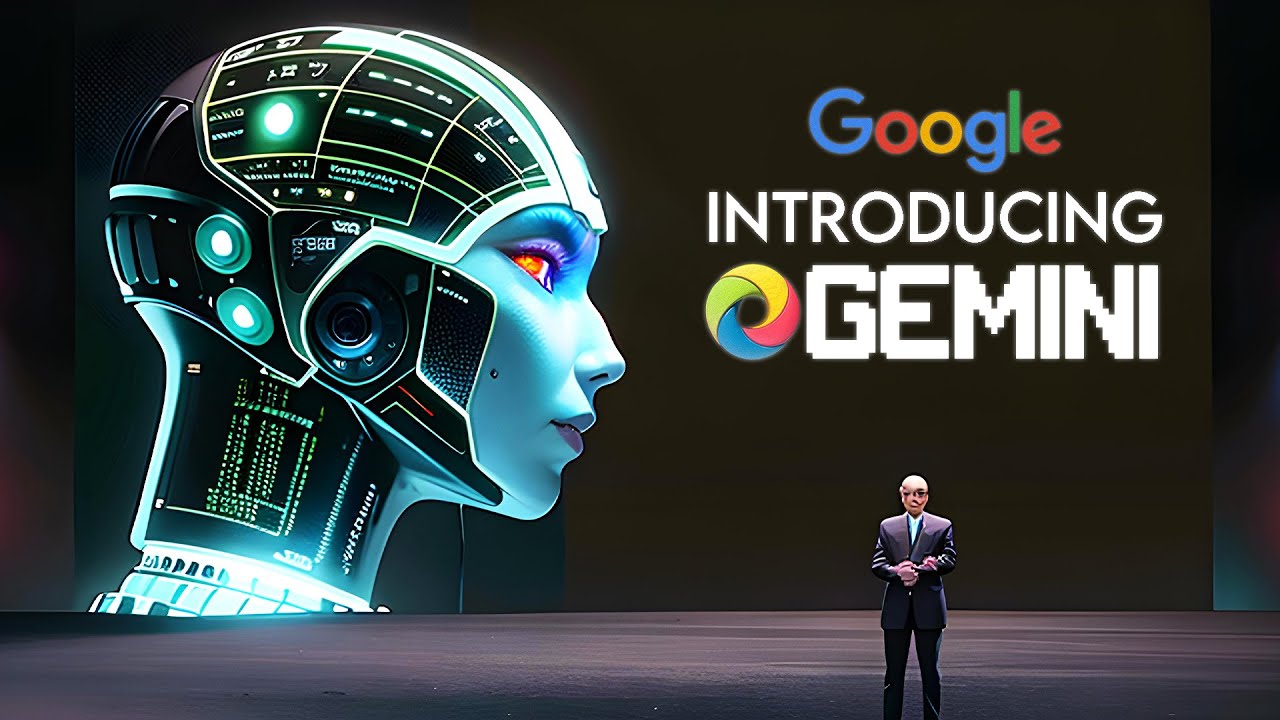
  • About a year after OpenAI’s launch of ChatGPT brought the simmering artificial intelligence race to a boil, Google’s highly anticipated AI model, Gemini, has finally joined the competition. Released yesterday, Gemini is a large language model (LLM) that Google CEO Sundar Pichai and executives at the company’s DeepMind AI division say will revolutionize generative technology for business and daily life.

The tech is a family of three models that Google is slowly looping into its suite of services:

  • Gemini Nano is mainly for mobile devices. As of yesterday, Google Pixel 8 Pro owners could enlist Gemini Nano to summarize audio recordings or draft automatic message replies.
  • Gemini Pro is a midsize offering designed for more complex tasks. Pro now powers Google’s chatbot, Bard, but the AI tech isn’t available to Google Cloud customers until Dec. 13.
  • Gemini Ultra, the powerhouse version geared toward data centers and large companies, will launch next year and underpin “Bard Advanced,” a new chatbot that will be able to simultaneously process text, images, audio, and video, according to Google’s prerecorded demonstrations.

If Gemini can do what Google promises, it could chip away at OpenAI’s lead in the LLM space.

COMMENTS APPRECIATED

Thank You

***

***

NVIDIA UPDATE: Smashes Revenue Expectations!

By Staff Reporters

***

***

The good times keep rolling for the chip maker. Q3 revenue increased 206% year over year to $18.1 million, topping Wall Street’s estimates of about $16.2 billion. The company’s stock has more than tripled amid the AI boom this year, accounting for a big part of the S&P 500’s tech-fueled rise.

And yet, shares ticked down from record highs in after-hours trading on Tuesday after Nvidia tempered expectations for Q4 due to new restrictions on chip exports to China.

COMMENTS APPRECIATED

Thank You

***

***

DAILY UPDATE: OpenAI’s Sam Altman Out – Maybe Not?

By Staff Reporters

***

SPONSOR: http://www.MarcinkoAssociates.com

***

***

In a shocking move, the OpenAI’s board of directors pushed out CEO Sam Altman, one of the world’s most prominent tech executives. The company said that Altman “was not consistently candid in his communications with the board,” and thus the board lost its confidence in Altman’s ability to lead.

OpenAI, and Altman, became household names this year after the company’s ChatGPT chatbot sparked a frenzy around the field of generative artificial intelligence. OpenAI, which has received $13 billion in investment from Microsoft, is reportedly valued at $86 billion. CTO Mira Murati will keep the CEO seat warm for now.

CITE: https://www.r2library.com/Resource

Back In? https://arstechnica.com/information-technology/2023/11/breaking-sam-altman-reportedly-in-talks-for-potential-return-as-openai-ceo/

COMMENTS APPRECIATED

Thank You

***

***

DAILY UPDATE: ChatGPT Anniversary

By Staff Reporters

SPONSOR: http://www.MARCINKOASSOCIATES.com

***

ChatGPT was launched nearly a year ago, in November 2022. Powered by a large language model trained on 570 gigabytes of internet data (300 billion words), the chatbot can generate text that eerily mimics human speech—but with far more information at its disposal than an actual person. Amazon is not the only company using AI to create theoretically better ads.

  • Meta announced its version of an ad generator last month, promising advertisers “a new era of creativity that maximizes the productivity, personalization, and performance” of campaigns.
  • Google says its product will allow the future of advertising to evolve.
  • TikTok has Creative Assistant, which “draws information from a wealth of TikTok-focused creative knowledge, providing you with the most relevant responses for when you’re creating ads.”

***

But, ChatGPT is not the same for mental health. Experts are warning that while chatbots can offer basic mental health support, they’re not equipped to provide clinical support and can raise thorny issues.

  • Ethics: Therapists are trained and licensed and must maintain a certain standard of care; a chatbot isn’t and doesn’t.
  • Privacy: When you ask a chatbot a question, you could be putting sensitive information on the internet.
  • Safety: A chatbot can give false information (more on that below) or provide harmful instructions.

***

ChatGPT in Education:

  • The bar exam: GPT-4 was in the 90th percentile with a score of 298 out of 400. GPT-3.5 came in the 10th percentile.
  • The SAT: GPT-4 scored 1400 out of 1600, ranking in the 89th percentile of test-takers. GPT-3.5 scored 1260.
  • AP exams: GPT-4 received a 5 on Art History, Biology, Environmental Science, Macroeconomics, Microeconomics, Psychology, Statistics, US Government, and US History, according to OpenAI. GPT-3.5 received a 5 only on Art History and Psychology.
  • Sommelier exams: GPT-4 has also passed the Introductory Sommelier, Certified Sommelier, and Advanced Sommelier exams with scores of 92%, 86%, and 77%, respectively. GPT-3.5 had a less discerning palate, earning marks of 80%, 58%, and 46%.

***

***

COMMENTS APPRECIATED

Thank You

***

PODCAST: Generative A.I. In Healthcare Today!

By Eric Bricker MD

***

***

COMMENTS APPRECIATED

Thank You

***

***

MARKETS & ECONOMY …. Oh My?

By Staff Reporters

MICRO-CERTIFICATION SPONSOR: https://tinyurl.com/5n7jxxzb

****

****

  • Markets: The Dow is on a run for the ages, extending its winning streak to 12 days. But, Spotify revealing widening losses due to its failed podcasting investments and projected lower revenues. And its stock plunge came despite adding a record number of new subscribers.
  • Economy: All eyes are on the FOMC today: With another rate hike pretty much a lock, investors will seek Jerome Powell’s comments to see whether the Fed is considering any more increases.

****

  • Alphabet, which declared a “code red” for Google Search late last year as rivals like ChatGPT and Microsoft’s AI-equipped Bing came on the scene, is chugging right along. Google’s search advertising sales grew to a better-than-expected $42.6 billion. And, most people haven’t made ChatGPT their default search engine.
  • Microsoft beat expectations on its top- and bottom lines and told investors that it had spent, and would continue spending, gobs of money to build out AI infrastructure.

****

Snap. The social media platform just rolled out an AI chatbot, My AI, and boasted that 150+ million users have sent over 10 billion messages to it. But, still fighting against the likes of TikTok for ad spending in a sluggish market, Snap’s sales dropped for the second straight quarter, causing shares to plummet 19% after-hours.

Conference calls: Meta reports earnings today, and Amazon and Apple report next week.

****

COMMENTS APPRECIATED

Thank You

****

****

ChatGPT’s Decline, the FTC and Microsoft

By Staff Reporters

***

***

ChatGPT (Chat Generative Pre-Trained Transformer) is an artificial intelligence chatbot developed by OpenAI and launched on November 30, 2022. It is notable for enabling users to refine and steer a conversation towards a desired length, format, style, level of detail, and language used. Successive prompts and replies are taken into account at each stage of the conversation as a context.

However, the accuracy of OpenAI’s generative language model appears to have declined much this Spring.

LINK: https://openai.com/blog/chatgpt

A not-yet-peer-reviewed study by Stanford and Berkeley researchers of ChatGPT-4 and ChatGPT-3.5 found a huge difference in the chatbot’s answers between March and June of this year—often for the worse, something people were already reporting anecdotally online.

  • GPT-4 went from 97.6% accuracy in identifying prime numbers a few months ago to only…2.4% in June.
  • The newer version of the language model got better at fending off problematic prompts, like coming up with illegal money-making schemes. But rather than explaining why queries are troublesome, it’s now more likely to simply say something like, “Sorry, but I can’t assist with that.”
  • When asked to create computer code, GPT-4 generated functional work 52% of the time in March and only 10% of the time in June. The lines of code it provided weren’t wrong, but they started to be accompanied by non-usable text, which could create headaches for companies trying to integrate ChatGPT into programming workflows.

***

Additionally, the FTC is looking into ChatGPT. The commission seeks to understand whether OpenAI has broken any consumer protection laws. OpenAI received a 20-page demand letter highlighting the commission’s concerns over its data security practices. Microsoft’s Activision Blizzard is likely to be affected if OpenAI is found in the wrong.

***

***
COMMENTS APPRECIATED

Thank You

***

STUDY: ChatGPT Out Performs Doctors?

Answering Patient Messages

***

The study on ChatGPT “outperforming” doctors in answering patient questions quickly became the talk of the town. However, as is often the case, it was presented as a prime example of media sensationalism. 

As we encounter more of these partially misinterpreted hypes – and rest assured, there will be many – we’ll need to navigate a sea of questions. Firstly, we must determine what AI can genuinely do better than healthcare professionals. Secondly, we need to consider how to identify unique areas where healthcare workers can assist patients, while AI automates repetitive and data-driven tasks.

READ: https://medcitynews.com/2023/04/chatgpt-ai-healthcare-patient-messaging/?utm_source=The+Medical+Futurist+Newsletter&utm_campaign=98c09c20fb-EMAIL_CAMPAIGN_2022_02_01_COPY_01&utm_medium=email&utm_term=0_efd6a3cd08-98c09c20fb-399696053&mc_cid=98c09c20fb&mc_eid=40fee31c25

I hope you will find our newsletter useful!

Best regards,
Bertalan Meskó, MD, PhD
The Medical Futurist

COMMENTS APPRECIATED

Thank You

***

***

Financial-Tech [Entrepreneurial Start-Ups] Falling

By Staff Reporters

***

***

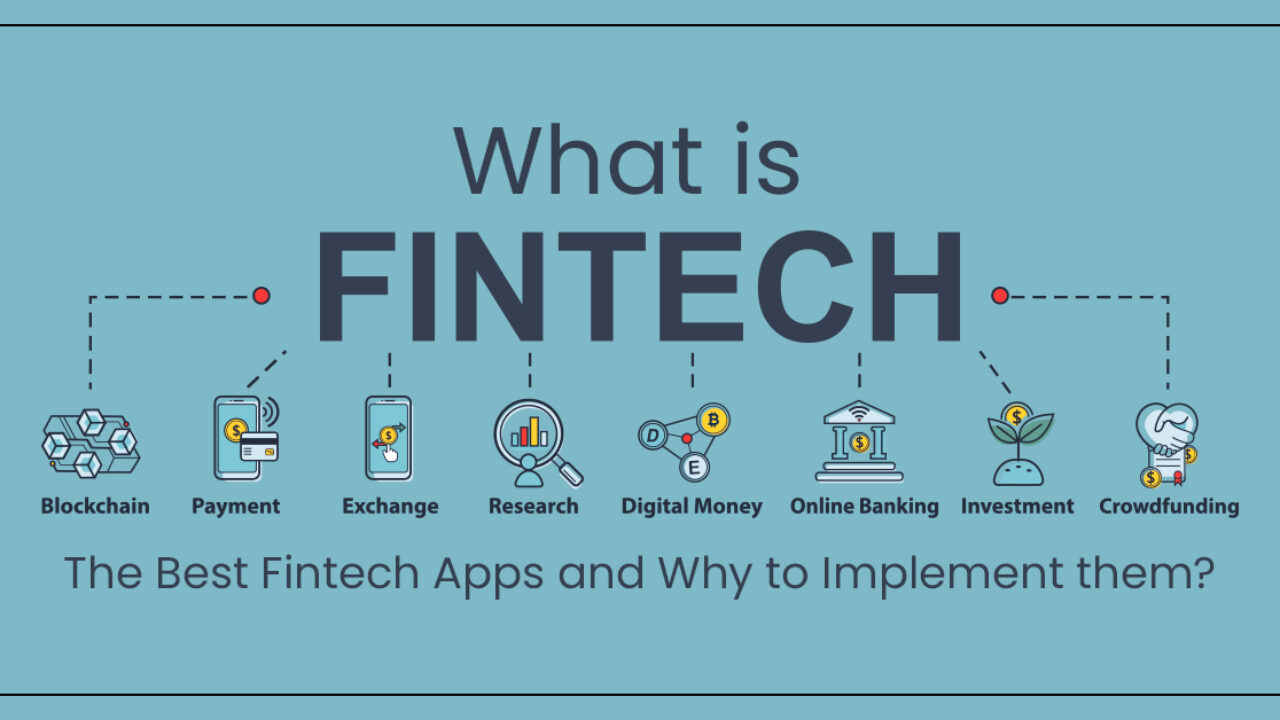
DEFINITION: Financial technology (abbreviated fintech or FinTech) is the technology and innovation that aims to compete with traditional financial methods in the delivery of financial services. Artificial intelligence, Blockchain, Cloud computing, and big Data are regarded as the “ABCD” (four key areas) of FinTech. The Fintech industry is an emerging industry that uses technology to improve activities in finance. The use of smartphones for mobile banking, investing, borrowing services, and cryptocurrency are examples of technologies aiming to make financial services more accessible to the general public.

***

Financial technology companies consist of both startups and established financial institutions and technology companies trying to replace or enhance the usage of financial services provided by existing financial companies.

CITE: https://www.r2library.com/Resource/Title/082610254

A subset of fintech companies that focus on the insurance industry are collectively known as insurtech or insuretech

READ: https://tinyurl.com/yrx2kxy4

***

INVESTING: https://www.amazon.com/Comprehensive-Financial-Planning-Strategies-Advisors/dp/1482240289/ref=sr_1_1?ie=UTF8&qid=1418580820&sr=8-1&keywords=david+marcinko

***

COMMENTS APPRECIATED

Thank You

***

META Launches LLaMA

Large Language Model Meta AI

By Staff Reporters

***

***

Meta joins the AI race with LLlaMa

Well, not *a* llama, but LLaMA, which stands for Large Language Model Meta AI, Meta announced yesterday. Large language models are the tech that fuels applications like OpenAI’s ChatGPT or Google’s Bard.

But LLaMA may be more democratized than its peers in two ways: 1) Any researcher can see its inner workings, which isn’t the case for Google, OpenAI, or Bing and 2) It’s petite compared to its peers, which means it costs less to operate.

***

***

COMMENTS APPRECIATED

Thank You

***

ORDER: https://www.amazon.com/Dictionary-Health-Information-Technology-Security/dp/0826149952/ref=sr_1_5?ie=UTF8&s=books&qid=1254413315&sr=1-5

***

Artificial Intelligence Passes U.S. Medical Licensing Exam

ChatGPT

By Staff Reporters

***

***

Two papers show that large language models, including ChatGPT, can pass the USMLE. The papers highlighted different approaches to using large language models to take the USMLE, which is comprised of three exams: Step 1, Step 2 CK, and Step 3. ChatGPT is an artificial intelligence (AI) search tool that mimics long-form writing based on prompts from human users. It was developed by OpenAI, and became popular after several social media posts showed potential uses for the tool in clinical practice, often with mixed results.

According to Victor Tseng, MD, of Ansible Health in Mountain View, California, and colleagues, the results showed “new and surprising evidence” that this AI tool was up to the challenge. Tseng and team noted that ChatGPT was able to perform at >50% accuracy across all of the exams, and even achieved 60% in most of their analyses. While the USMLE passing threshold does vary between years, the authors said that passing is approximately 60% most years.

Source: Michael DePeau-Wilson, Medpage Today [1/19/23]

RELATED: https://medicalexecutivepost.com/2013/06/21/will-future-doctors-need-a-medical-license/

***

***

ORDER: https://www.amazon.com/Dictionary-Health-Information-Technology-Security/dp/0826149952/ref=sr_1_5?ie=UTF8&s=books&qid=1254413315&sr=1-5

COMMENTS APPRECIATED

Thank You

***

ABOUT: “Turn-it-In”

By Staff Reporters

SPONSOR: http://www.CertifiedMedicalPlanner.org

***

Turnitin (stylized as turnitin) is an Internet-based plagiarism detection service run by the American company Turnitin, LLC, a subsidiary of Advance Publications.

LINK: http://www.TurnItIn.com

Founded in 1998, it sells its licenses to universities and high schools who then use the software as a service (SaaS) website to check submitted documents against its database and the content of other websites with the aim of identifying plagiarism. Results can identify similarities with existing sources and can also be used in formative assessment to help students learn to avoid plagiarism and improve their writing.

Students may be required to submit work to Turnitin as a requirement of taking a certain course or class. The software has been a source of controversy, with some students refusing to submit, arguing that requiring submission implies a presumption of guilt. Some critics have alleged that use of this proprietary software violates educational privacy as well as international intellectual-property laws, and exploits students’ works for commercial purposes by permanently storing them in Turnitin’s privately held database.

ChatGPT: https://medicalexecutivepost.com/2023/01/17/chatgpt-a-microsoft-start-up-venture/

Turnitin, LLC also runs the informational website plagiarism.org and offers a similar plagiarism-detection service for newspaper editors and book and magazine publishers called iThenticate. Other tools included with the Turnitin suite are GradeMark (online grading and corrective feedback) and PeerMark (student peer-review service).

NOTE: According to Wikipedia, in March 2019, Advance Publications acquired private Turnitin, LLC for US$1.75 billion.

***

COMMENTS APPRECIATED

Thank You

***

ORDER: https://www.amazon.com/Dictionary-Health-Information-Technology-Security/dp/0826149952/ref=sr_1_5?ie=UTF8&s=books&qid=1254413315&sr=1-5

***

ChatGPT: A Microsoft Start-Up Venture!

By Staff Reporters

***

***

Microsoft is reportedly preparing for its largest startup investment in history: a $10 billion stake in OpenAI that could value the research lab at $29 billion. OpenAI is the creator of potentially groundbreaking AI tools like ChatGPT, the multitalented chatbot that can code in Python and help high schoolers cheat on English essays.

MSFT has already invested $1 billion in OpenAI, but thinks an even tighter relationship would help it better compete with Big Tech rivals like Google (which reportedly declared a “code red” over ChatGPT’s threat to its search dominance).

But Microsoft’s AI ambitions go beyond just integrating ChatGPT know-how into its own search engine, Bing. The company wants to use OpenAI’s tools in its Office suite—and it’s already experimenting with algorithms to help users craft emails in Outlook.
OpenAI was founded in 2015 as a mission-based AI research organization by a roster from Silicon Valley’s A-list, including Elon Musk. Its stated goal is to develop safe AI for the benefit of humanity. But OpenAI has plenty of critics who have called it out for ethical concerns, a lack of transparency, and abandoning its mission for profits.

According to MorningBrew, a slew of buzzy AI product releases in 2022 has startup investors forgetting they ever heard the word “metaverse.” Languishing in the prolonged crypto winter and facing an uncertain economic environment, many venture capitalists see the field as the next big thing to shovel money into their coffers.

MORE :https://www.kevinmd.com/2023/01/revolutionizing-medicine-how-chatgpt-is-changing-the-way-we-think-about-health-care.html

RELATED: https://medicalexecutivepost.com/2023/01/18/about-turn-it-in/

UPDATE: Bill Gates just hinted that he may be working on Open AI’s large language chatbot ChatGPT in collaboration with Microsoft if the reported $10 billion investment in the start-up goes through. Gates also admitted that he’s still involved with the company’s research and product plans, and said he’s watching the developments in ChatGPT “very closely.”

***

***

ORDER: https://www.amazon.com/Dictionary-Health-Information-Technology-Security/dp/0826149952/ref=sr_1_5?ie=UTF8&s=books&qid=1254413315&sr=1-5

COMMENTS APPRECIATED

Thank You

***