MARCINKO & Associates, Inc.

WHAT WE DO AND HOW WE ASSIST MEDICAL COLLEAGUES

Hard Business Advice AND Personal Lifestyle Coaching

http://www.MARCINKOASSOCIATES.com

By Ann Miller RN MHA CMP™

At Marcinko & Associates our clients traditionally include physicians [MD, MBBS and DO], dentists [DDS and DMD], podiatrists [DPM], Registered Nurses [RNs], Certified Registered Nurse Anesthetists [CRNA], Physician Assistants [PA] and Nurse Practitioners [NP]. A growing cohort of clients include medical technologists, physical, speech and occupational therapists, etc.

The above are naturally segregated into three career tranches: 1. New practitioners, 2] Mid-Career practitioners and 3] Mature practitioners. We serve them all and are fully prepared for any special needs situation that may arise in any tranche [death, divorce, adverse risk event and/or bankruptcy, etc].

Marcinko & Associates understands the complexity of financial and non-financial deal terms because we are also doctors. Our “hard” knowledge of your business comes from being actual healthcare facility owners, operators and medical practitioners [with additional professional licenses and expertise] enabling us to effectively analyze your business, take corrective measures and present your healthcare entity in the best possible and accurate light.

***

But, if you’re looking at this website, chances are you are fed up, burned out, seeking practice management techniques or a better work-life balance. Or, you are looking for a new non-clinical career, thinking of finance, investing, retirement, or all of the above. Perhaps you are just looking to regain the joy and meaning in your medical or professional career? This is known as “soft” psychology, coaching, personal consulting or fraternal advice.

***

Regardless, of your “soft” personal or “hard” corporate needs, our transparent Fees for Service [FFS] model is moderated for all colleagues based on the acuity and urgency of their engagements. Reduced rates and/or limited charity work may also be possible.

***

http://www.DavidEdwardMarcinko.com

CONTACT US TODAYTHRIVE TOMORROW!

Suite #5901 Wilbanks Drive

Norcross, Georgia USA 30092-1141

email: MarcinkoAdvisors@msn.com

***

***

DAILY UPDATE: Venture Capital Backed Start-Ups

By Staff Reporters

http://www.MARCINKOAssociates.com

***

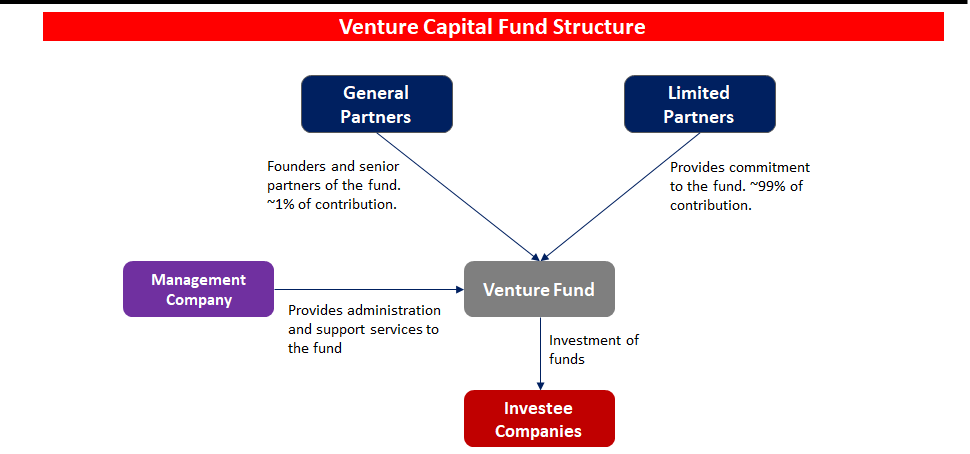
There are more than 50,000 US VC-backed startups, and many will be looking for capital soon. 

Many startups raised money in early 2022, and the average time between fundraising is 1.5 years.

Some startups will be looking for funding in Q4 or be forced to look for a sale or shut down. 

CITE: https://www.r2library.com/Resource

***

ORDER: https://www.routledge.com/Comprehensive-Financial-Planning-Strategies-for-Doctors-and-Advisors-Best/Marcinko-Hetico/p/book/9781482240283

***

COMMENTS APPRECIATED

Thank You

***

SPONSOR: iMBA Inc.

INSTItute of Medical Business Advisors, Inc.

center

About the Institute of Medical Business Advisors, Inc

The Institute of Medical Business Advisors, Inc provides a team of experienced, senior level consultants led by iMBA Chief Executive Officer Dr. David Edward Marcinko MBA CMP™ MBBS [Hon] and President Hope Rachel Hetico RN MHA CMP™ to provide going contact with our clients throughout all phases of each project, with most of the communications between iMBA and the key client participants flowing through this Senior Team.  iMBA Inc., and its skilled staff of certified professionals have many years of significant experience, enjoy a national reputation in the healthcare consulting field, and are supported by an unsurpassed research and support staff of CPAs, MBAs, MPHs, PhDs, CMPs™, CFPs® and JDs to maintain a thorough and extensive knowledge of the healthcare environment. The iMBA team approach emphasizes providing superior service in a timely, cost-effective manner to our clients by working together to focus on identifying and presenting solutions for our clients’ unique, individual needs.

The iMBA Inc project team’s exclusive focus on the healthcare industry provides a unique advantage for our clients.  Over the years, our industry specialization has allowed iMBA to maintain instantaneous access to a comprehensive collection of healthcare industry-focused data comprised of both historically-significant resources as well as the most recent information available.  iMBA Inc’s specific, in-depth knowledge and understanding of the “value drivers” in various healthcare markets, in addition to the transaction marketplace for healthcare entities, will provide you with a level of confidence unsurpassed in the public health, health economics, management, administration, and financial planning and consulting fields.  iMBA Inc’s information resources and network of healthcare industry textbook resources enhanced by our professional consultants and research staff, ensure that the iMBA project team will maintain the highest level of knowledge regarding the current and future trends of the specific specialty market related to the project, as well as the healthcare industry overall, which serves as the “foundation” for each of our client engagements.

DIY Textbooks: https://medicalexecutivepost.com/2021/04/29/why-are-certified-medical-planner-textbooks-so-darn-popular/

INVITE DR. MARCINKO: https://medicalexecutivepost.com/dr-david-marcinkos-

CONTACT: Ann Miller RN MH

[Executive Director]

MarcinkoAdvisors@msn.com

770-448-0769

***

Health Care Entity: Venture Capital Funding

http://www.MARCINKOASSOCIATES.com

***

***

Venture capital funding in the digital health space cooled a bit in 2022 following a red-hot 2021. Overall, digital health companies raised $15.3 billion last year, down from the $29.1 billion raised in 2021—but still above the $14.1 billion raised in 2020, according to Rock Health a seed fund that supports digital health startups.

MORE: https://marcinkoassociates.com/fmv-appraisals/

Nevertheless, analysts predict VC investors and bankers will still put a good amount of money into digital health in 2024 and 2025, especially in alternative care, drug development, health information technology technology, EMRs and software that reduces physician workload.

CITE: https://www.r2library.com/Resource

Of course. an essential first part of attracting VC interest and money is the crafting and presentation of your formal business plan [“elevator pitch”]; as well as the needed technical and managerial experience. This is crucial for success and exactly where we can assist.

***

READ MORE: https://marcinkoassociates.com/welcome-medical-colleagues/

CONTACT: MarcinkoAdvisors@msn.com

***

***

NAHUC: Happy “Health Unit Coordinators” Day

By Dr. David Edward Marcinko MBA

***

***

Today is Health Unit Coordinators Day, It is a day to celebrate the vital behind-the-scenes work these healthcare professionals do. Health unit coordinators act as a liaison between all the departments in a healthcare facility, helping to check in patients, maintain patient records, order supplies, and more.

Myrna LaFleur, who became the NAHUC founding president, invited several interested persons to meet with her in Phoenix, Arizona, on August 23, 1980, to discuss the formation of an association for health unit coordinators. This was the first meeting and resulted in selecting the name of the association. Each year thereafter, August 23 has been declared Health Unit Coordinator Day by many mayors and governors nationwide, who issue proclamations declaring August 23rd “Health Unit Coordinator Day”. Beginning in 2017, NAHUC expanded the recognition period to a full week: August 23-29th.

MORE: https://nahuc.org/

And so, to all you coordinators who keep our healthcare facilities afloat, we salute you.

***

COMMENTS APPRECIATED

Thank You

***

***

***

PODCASTS: Intentional Medical Practice Marketing

By Entrepreneurial MD

***

***

PODCAST: https://www.theentrepreneurmd.com/11

MORE: https://medicalexecutivepost.com/2022/07/06/the-emerging-role-of-university-chief-strategy-officer/

RELATED: https://medicalexecutivepost.com/2022/10/28/crafting-a-medical-practice-marketing-plan/

ADVERTISING: https://medicalexecutivepost.com/2022/08/05/on-marketing-adverting-and-sales/

VIDEO: https://medicalexecutivepost.com/2022/09/29/podcast-investing-in-digital-health-sales-and-marketing/

***

COMMENTS APPRECIATED

Thank You

***

ORDER: https://www.amazon.com/Business-Medical-Practice-Transformational-Doctors/dp/0826105750/ref=sr_1_9?ie=UTF8&qid=1448163039&sr=8-9&keywords=david+marcinko

***

National Report Up-Coding Fraud Day

AUGUST 21st

By Dr. David Edward Marcinko MBA CMP

***

It’s National Report Upcoding Fraud Day, an initiative started in 2017 to support whistleblowers of Medicare fraud, which costs the US billions of dollars each year. If you need any encouragement to report suspected healthcare fraud (like upcoding or inflated Medicare reimbursement claims), here’s your chance.

CITE: https://www.r2library.com/Resource

What Is Upcoding?

Upcoding is defined as having a doctor or billing person assign an inaccurate billing code to a medical procedure or treatment. It’s done to increase the reimbursement to that physician.

Beyond that, CPT codes are 5-digit codes that tell billing and insurance companies what was done to you while in that physician’s care. It may sound straightforward, but with around 7,800 codes in use, it isn’t hard to get things mixed up or to miss the fact that they overcharged you for a service.

Sometimes the mistake is made in error. In other situations, the office or hospital may mix it up intentionally. Most often, intentional miscoding happens when the facility is billing Medicaid or Medicare. Again, this may not seem like a big deal for you since the government covers it, but it may still affect your ability to get the healthcare that you need.

MORE: https://medicalexecutivepost.com/2022/11/05/medical-billing-down-and-up-coding/

And so, National Report Upcoding Fraud Day is on August 21st. An initiative by Joel Hesch, a former attorney with the Department of Justice. Hesch and a passionate advocate for whistleblowers, created the day for anyone looking to report healthcare fraud. He wanted to make it easier, so everyone could get the process right. The day generates awareness and detailed steps on how the general public can report unethical healthcare providers. Fraudsters siphon off $65 billion each year in Medicare fraud through inflated reimbursement claims. Upcoding is one of the most rampant types of healthcare fraud that must end.Hesch draws on his 15 years as an attorney in the D.O.J. to support and encourage whistleblowers to come forward. The most successful claims have two things in common – facts and the use of proper reporting channels. National Report Upcoding Fraud Day aims to empower anyone with a legitimate case for claims.

RELATED: https://medicalexecutivepost.com/2013/06/05/understanding-the-spoils-of-healthcare-fraud-and-abuse/

MORE: https://medicalexecutivepost.com/2023/06/29/daily-update-healthcare-fraud-schemes-up-as-the-dow-dips-down/

COMMENTS APPRECIATED

Thank You

***

***

The Next-Generation of “Anti-Millionaire” Doctors

“$1 Million Mistake: Becoming a Doctor”

See the source image

BY DR. DAVID E. MARCINKO MBA CMP®

CMP logo

SPONSOR: http://www.CertifiedMedicalPlanner.org

CBS Moneywatch published an article entitled “$1 Million Mistake: Becoming a Doctor” Aside from the possibility that devoting one’s life to helping others might be considered a mistake, medical student Dan Coleman was struck by the “$1 million” figure.

Before medical school, he worked in the pharmaceutical industry and even turned down a hefty promotion to his education as soon as possible, rather than defer for a year or two. But, his financial calculations made it fairly obvious that, including benefits, bonuses, and potential promotions, his medical decision was not a $1 million mistake, but was more like a $1.3 million dollar disaster. Still; he opined:

Yet, even today, as we stare down the barrel of the Affordable Care Act, being a doctor is a very desirable job. We may not be famous, but we will be well-respected. We may not be rich, but we will certainly live comfortably. We may work a lot, but we will never be out of work. To future doctors, the young and impecunious, the anti-millionaires, tuition is a mere afterthought. All that matters is the MD.

Source: http://in-training.org/medical-students-the-anti-millionaires-4361

Millionaire Interview 81 - ESI Money

OVER HEARD IN THE MEDICAL STUDENT’S LOUNGE

“We are medical students.
We are young, proud, and righteous.
We have made the hard choice (medicine), but we have cleared the high hurdle (getting into school).


We know healthcare is a difficult, imperfect art, but we are devoted.
We arm ourselves with the weapons of knowledge and compassion, prepared to defend against the onslaught of trauma, disease, and time.
We are here to the bitter end, for our patients and ourselves.
And above all, we know the cost of our choice.

And if we’re lucky, it will stay under 6% interest through graduation”.

Daniel Coleman

[Georgetown University School of Medicine]

First-year Student

Your thoughts are appreciated,

THANK YOU

***

Comprehensive Financial Planning Strategies for Doctors and Advisors: Best Practices from Leading Consultants and Certified Medical Planners™

ORDER Textbook: https://www.amazon.com/Comprehensive-Financial-Planning-Strategies-Advisors/dp/1482240289/ref=sr_1_1?ie=UTF8&qid=1418580820&sr=8-1&keywords=david+marcinko

ODER TEXTBOOK: https://www.routledge.com/Risk-Management-Liability-Insurance-and-Asset-Protection-Strategies-for/Marcinko-Hetico/p/book/9781498725989

INVITE DR. MARCINKO: https://medicalexecutivepost.com/dr-david-marcinkos-

***

HEALTH CARE ENTITY: Venture Capital Funding

http://www.MARCINKOASSOCIATES.com

***

***

Venture capital funding in the digital health space cooled a bit in 2022 following a red-hot 2021. Overall, digital health companies raised $15.3 billion last year, down from the $29.1 billion raised in 2021—but still above the $14.1 billion raised in 2020, according to Rock Health a seed fund that supports digital health startups.

Nevertheless, analysts predict VC investors and bankers will still put a good amount of money into digital health in 2024 and 2025, especially in alternative care, drug development, health information technology technology, EMRs and software that reduces physician workload.

CITE: https://www.r2library.com/Resource

Of course. an essential first part of attracting VC interest and money is the crafting and presentation of your formal business plan [“elevator pitch”]; as well as the needed technical and managerial experience. This is crucial for success and exactly where we can assist.

***

READ MORE: https://marcinkoassociates.com/welcome-medical-colleagues/

CONTACT: MarcinkoAdvisors@msn.com

***

***

Invite Dr. Marcinko to Speak at your Next Seminar, Webcast or Event in Late 2023?

Invite Dr. Marcinko

The Choice is Up to You

***

Colleagues know that I enjoy personal coaching and public speaking and give as many talks each year as possible, at a variety of medical society and financial services conferences around the country and world.

These include lectures and visiting professorships at major academic centers, keynote lectures for hospitals, economic seminars and health systems, keynote lectures at city and statewide financial coalitions, and annual keynote lectures for a variety of internal yearly meetings.

 Topics Link: imba-inc-firm-services

My Fond Farewell to Tuskegee University

And so, we appreciate your consideration.

Invite Dr. Marcinko

THANK YOU!

***

MICRO: Credentials and Certifications

PROFESSIONAL GROWTH

MARCINKO ASSOCIATES, Inc.

http://www.MARCINKOASSOCIATES.com

***

DEFINITION: One way to accelerate and support learning is with continuous up-skilling. A key component is micro-certification and credentialing, which is best thought of as learning that happens in smaller “chunks” — such as boot-camp training, an online course from a university or other provider, or even an apprenticeship.

When competency in a specific knowledge area or skill is demonstrated, a micro-certification is issued, which can be listed on a resume or displayed as a “badge” or a mastery credit on an online profile.

Over time, individuals can amass portfolios of competencies that characterize their capabilities in a way that is much more relevant to their professional lives than relying solely on academic credentials.

***

So – Do you ever wish you could acquire specific information or subject matter expertise for your career activities without having to complete a college or university Master’s Degree in Business or finish our entire online Certified Medical Planner™ professional certification and designation program?

CMP: http://www.CertifiedMedicalPlanner.org

Topics include: economics, finance, investing, marketing, advertising, sales, start-ups, business plan creation, financial planning and entrepreneurship, etc.

Well, Micro-Certifications and Credentials from the Institute of Medical Business Advisors, Inc., might be an alternative knowledge pursuit.

***

READ MORE: https://marcinkoassociates.com/micro-credentials/

***

***

CAREER: Physician Coaching and Development

MARCINKO ASSOCIATES, Inc.

SPONSOR: http://www.MarcinkoAssociates.com

***

***

Did you Know?

Experts estimate that it can cost more than $1 million to recruit and train a replacement for a doctor who leaves the profession because of burnout. But, as no broad calculation of burnout costs exists, Dr. Tait Shanafelt [Mayo Clinic researcher and Stanford Medicine’s first Chief Physician Wellness Officer] said Stanford, Harvard Business School, Mayo Clinic and the American Medical Association (AMA) are further cost estimating the issue. Nevertheless, Shanafelt and other researchers have shown that burnout erodes job performance, increases medical errors, and leads doctors to leave a profession they once loved.

CITE: https://www.r2library.com/Resource

Fortunately, we can help. From formal coaching to second career opinions, mentoring and advising, we can help with our remediation executive career programs. Regardless of what is happening in your life, it is wonderful to have a non-partial, confidential and informed career coach and sounding board on your side.

CITE: JAMA Internal Medicine [Effect of a Professional Coaching Intervention on the Well-Being and Distress of Physicians].

NCBI: https://www.ncbi.nlm.nih.gov/pmc/articles/PMC6686971/

THANK YOU

CONTACT US: https://marcinkoassociates.com/process-what-we-do/

***

SEC: Money Market Fund Reforms

RICHARD CAYNE

By Staff Reporters

***

***

  • SEC money market fund reforms: On July 12, 2023 the SEC released new rules intended to decrease the risk of runs on money market funds (MMFs). MMFs must charge liquidity fees if their daily net redemptions exceed 5% of their net assets, or if their boards deem it necessary, and must maintain a liquidity buffer of at least 25% of their total daily assets and at least 50% of their weekly assets. MMFs are also no longer allowed to use “gates” to temporarily suspend redemption!
  • CITE: https://www.r2library.com/Resource

    Goes into effect:
    60 days after the rule is published in the Federal Register.

***

COMMENTS APPRECIATED

Thank You

***

***

BEHAVIORAL FINANCE: Cash is Still “King”

TREATING YOURSELF WITH CASH

By Staff Reporters

http://www.MarcinkoAssociates.com

***

***

Folks are more likely to reach for dollar bills than credit cards when making a guilty pleasure purchase, according to new Stanford research.

MORE: https://medicalexecutivepost.com/2022/06/22/behavioral-finance-for-doctors/

In more than 118,000 real transactions at the university bookstore, buyers tended to slap their plastic on the counter for school supplies but pay with cash for “harder-to-justify” items like a stuffed plush mascot. And when asked how they’d pay for a hypothetical Reiki session, participants leaned toward credit card when the treatment was described as doctor-recommended but toward cash when they were told it was just an impulse purchase.

RELATED: https://medicalexecutivepost.com/2023/02/28/dr-richard-h-thaler-and-behavioral-economics/

***

COMMENTS APPRECIATED

Thank You

***

***

CAREER: Physician Coaching and Development

MARCINKO ASSOCIATES, Inc.

SPONSOR: http://www.MarcinkoAssociates.com

***

***

Did you Know?

Experts estimate that it can cost more than $1 million to recruit and train a replacement for a doctor who leaves the profession because of burnout. But, as no broad calculation of burnout costs exists, Dr. Tait Shanafelt [Mayo Clinic researcher and Stanford Medicine’s first Chief Physician Wellness Officer] said Stanford, Harvard Business School, Mayo Clinic and the American Medical Association (AMA) are further cost estimating the issue. Nevertheless, Shanafelt and other researchers have shown that burnout erodes job performance, increases medical errors, and leads doctors to leave a profession they once loved.

CITE: https://www.r2library.com/Resource

Fortunately, we can help. From formal coaching to second career opinions, mentoring and advising, we can help with our remediation executive career programs. Regardless of what is happening in your life, it is wonderful to have a non-partial, confidential and informed career coach and sounding board on your side.

CITE: JAMA Internal Medicine [Effect of a Professional Coaching Intervention on the Well-Being and Distress of Physicians].

NCBI: https://www.ncbi.nlm.nih.gov/pmc/articles/PMC6686971/

THANK YOU

CONTACT US: https://marcinkoassociates.com/process-what-we-do/

***

Seeking University Faculty Appointment in 2024

Endowed Scholar-on-Sabbatical

dem

By David Edward Marcinko MBBS DPM MBA MEd CMP™ 

Any New Year typically brings to mind the passage of Father Time. And, it’s hard to believe I will be finishing up my current endowed R&D sabbatical after the Summer semester.

It means searching for a new faculty appointment to continue my passion for: [1] classroom teaching and junior faculty mentorship [2], university PR, outreach, promotion and grant-funding; and of course [3] more research, development, books and publications.

This competitive scholarship ethos is AKA the triad of success: “being a guide on the side – not a sage on the stage” AND “no margin – no mission” AND “publish or perish.

Employment and Subject Matter Expertise

Now, as a consummate team player, I’ve served as adjunct, to visiting, to full distinguished professor – and as department chair, to endowed chairman, online MOOC Dean and professor-of-the-practice.  Areas of specialization include: public and population health policy, management and administration; health economics, finance and insurance; and medical capitalism, innovation and free-enterprise at the graduate or doctoral levels.

And, as a former surgeon and clinician who also trained in Europe, and devotee of Nobel Laureate Ken Arrow PhD, I’m a global inter-disciplinarian within the health care industrial complex that may soon comprise 20% of domestic GDP.

Location – Location – Location

I’m pretty much private or public [mid-size] school agnostic, but prefer the Southeast, Northeast and Midwest in a livable city; with a 9-10 month faculty appointment.

But, I wouldn’t rule out a 12-month business school, or public health sciences type Dean position, as long as it is not totally administrative. A founding department chair, or inaugural deanship, would be near perfect; 24/7/365.

Crowd-Sourcing a Job?

So, I am crowd-sourcing this new job search as an emerging trend. Moreover, crowd-funding health insurance, and crowd-sourcing medical and diagnostic care is an emerging HIT trend. In fact, it’s the R&D equivalent of my current Health Dictionary Series™ WIKI project. It’s an experiment!

Regardless of the job search, check it out and tell me what you think!

Assessment

Finally, please know that I am not looking for a mere job or to climb the ladder of academia. Rather, I am seeking a university home to continue my passionate career by paying it forward as servant-leader for the next generation of business and/or public health care executives.

More Info:

If you think I might be a good fit for your university, or would just like to brainstorm ideas; give me a holler: email: MarcinkoAdvisors@msn.com; or arrange a virtual Skype interview to “chat”. Grab yourself a cup of coffee, because I am verbose.

Serious inquirers might also want to check me out, in far-too-much-detail, here!

http://www.DavidEdwardMarcinko.com

professor-dem

Thank you for the opportunity

What is the Free Market Medical Association?

[By Staff Reporters]

The Free Market Medical Association Promotes Transparency in Healthcare

The free market movement in healthcare is gaining steam. This is because of providers, patients, and self-funded employers, who believe that changing the way we purchase healthcare services is necessary, and seeking out value driven healthcare providers is important.

Matching a willing buyer with a willing seller of valuable healthcare services is the goal of everyone involved in this movement. We help identify patients willing to pay cash, doctors willing to list their prices, businesses attempting to provide affordable quality insurance, and providers/services/and patient advocates that are helping make everything work.

LINK: https://fmma.org/contact/

***

change

***

Assessment

To further promote this movement, the FMMA is dedicated to bringing together BUYERS and SELLERS.

And, our Publisher-in-Chief, Dr. David E. Marcinko MBA will be joining FMMA soon. Will you join, too?

Conclusion

Your thoughts and comments on this ME-P are appreciated. Feel free to review our top-left column, and top-right sidebar materials, links, URLs and related websites, too. Then, subscribe to the ME-P. It is fast, free and secure.

Speaker: If you need a moderator or speaker for an upcoming event, Dr. David E. Marcinko; MBA – Publisher-in-Chief of the Medical Executive-Post – is available for seminar or speaking engagements. Contact: MarcinkoAdvisors@msn.com

OUR OTHER PRINT BOOKS AND RELATED INFORMATION SOURCES:

Product DetailsProduct Details

***

CIGNA: Busted PxDx [Procedure-to-Diagnose]

By Dr. David Edward Marcinko MBA CMP

***

***

(AP) — A federal lawsuit alleges that health insurance giant CIGNA used a computer algorithm to automatically reject hundreds of thousands of patient claims without examining them individually as required by California law.

RELATED: https://medicalexecutivepost.com/2022/09/18/ama-joins-class-action-suit-against-cigna/

***

The class-action lawsuit, just filed in federal court in Sacramento, says CIGNA Corp. and CIGNA Health and Life Insurance Co. rejected more than 300,000 payment claims in just two months last year.

RELATED: https://medicalexecutivepost.com/2022/07/21/my-conversation-with-an-anonymous-cigna-representative/

The company used an algorithm called PXDX, shorthand for ”procedure-to-diagnosis,” to identify whether claims met certain requirements, spending an average of just 1.2 seconds on each review, according to the lawsuit.

CITE: https://www.r2library.com/Resource

Huge batches of claims were then sent on to doctors who signed off on the denials, the lawsuit said.

***

PODCAST: https://medicalexecutivepost.com/2023/07/01/podcast-the-cigna-group-ceo/

***

COMMENTS APPRECIATED

Thank You

***

Understanding Chebyshev’s Theorem?

What it Is How it works

By Dr. David Edward Marcinko MBA CMP™

http://www.CertifiedMedicalPlanner.org

The rule is often called Chebyshev’s theorem, about the range of standard deviations around the mean, in statistics www.HealthDictionarySeries.org

The inequality has great utility because it can be applied to any probability distribution in which the mean and variance are defined. But first, let us review the Empirical Rule.

Empirical Rule

In probability theory, the central limit theorem (CLT) states that, given certain conditions, the arithmetic mean of a sufficiently large number of iterates of independent random variables, each with a well-defined expected value and well-defined variance, will be approximately normally distributed, regardless of the underlying

***

Central Limit Theorem

***

g

What is a Galton Board?

***

Chebyshev’s Theorem

The Russian mathematician P.L. Chebyshev (1821-1894) proved a theorem which is valid for any distribution of data:

For any number k greater than 1, at least 1-1/k2 of the data will fall within k standard deviations of the mean. This theorem produces a few useful rules:

  • no information can be obtained on the fraction of values falling within 1 standard deviation of the mean
  • at least 75% will fall within 2 standard deviations
  • at least 88.8 % will fall within 3 standard deviations

The following figure is a graphical presentation of these rules.

https://en.wikipedia.org/wiki/Chebyshev%27s_inequality

Chebyshev’s Theorem: The proportion of any distribution that lies within k standard deviations of the mean is at least 1 – (1/k2), where k is any positive number larger than 1. This theorem applies to all distributions of data.

Assessment

OK; so basically Chebyshev’s theorem states that 75% of your data will lie within 2 standard deviations of the mean and that 89% of your data will lie within 3 standard deviations of the mean.

And, I believe that this theorem is much more precise than the Empirical Rule, which assumes normality and can be off.

Conclusion

Your thoughts and comments on this ME-P are appreciated. Feel free to review our top-left column, and top-right sidebar materials, links, URLs and related websites, too. Then, subscribe to the ME-P. It is fast, free and secure.

Speaker: If you need a moderator or speaker for an upcoming event, Dr. David E. Marcinko; MBA – Publisher-in-Chief of the Medical Executive-Post – is available for seminar or speaking engagements.

Book Marcinko: https://medicalexecutivepost.com/dr-david-marcinkos-bookings/

Subscribe: MEDICAL EXECUTIVE POST for curated news, essays, opinions and analysis from the public health, economics, finance, marketing, IT, business and policy management ecosystem

MORE FOR DOCTORS:

“Insurance & Risk Management Strategies for Doctors” https://tinyurl.com/ydx9kd93

“Fiduciary Financial Planning for Physicians” https://tinyurl.com/y7f5pnox

“Business of Medical Practice 2.0” https://tinyurl.com/yb3x6wr8

Risk Management, Liability Insurance, and Asset Protection Strategies for Doctors and Advisors: Best Practices from Leading Consultants and Certified Medical Planners™8Comprehensive Financial Planning Strategies for Doctors and Advisors: Best Practices from Leading Consultants and Certified Medical Planners™

THANK YOU

FIDUCIARY OPINIONS: Secure Investment Advisory -OR- Medical Practice Management Advice

***

MARCINKO & ASSOCIATES, Inc.

Dr. David Edward Marcinko MBA CMP®

Certified Medical Planner®

SPONSOR: http://www.CertifiedMedicalPlanner.org

CMP logo

***

FINANCIAL PLANNING

CAREER DEVELOPMENT

MEDICAL PRACTICE BUY IN / OUT

INVESTMENT ANALYSIS

PORTFOLIO MANAGEMENT

MERGERS AND ACQUISITIONS

PRACTICE APPRAISALS AND VALUATIONS

RETIREMENT PLANNING

FEE-ONLY

***

CONTACT: Ann Miller RN MHA

EMAIL: MarcinkoAdvisors@msn.com

***

The MD versus DO Degree

Battle of the Allopathic Vs. Osteopathic Physicians

By Dr. David Edward Marcinko MBA

***

***

What’s the difference between an MD and a DO?

An MD is a Doctor of Medicine, while a DO is a Doctor of Osteopathic Medicine. The bottom line? They do the same job, have similar schooling, can prescribe medication and can practice all over the U.S.

“In general, DOs practice a more holistic, whole-person type of care,” explains Dr. Vyas. “MDs take a more allopathic, or illness-based, approach.”

Allopathic and osteopathic medicine differ in several ways:

  • Allopathic medicine uses medication, surgery and other interventions to treat illnesses.
  • Osteopathic medicine emphasizes the relationship between the mind, body and spirit. It focuses on treating the person as a whole and improving wellness through education and prevention. DOs also receive extra training in osteopathic manipulative medicine (OMM), a hands-on method for diagnosing and treating patients.

But these philosophical differences don’t necessarily define the way DOs and MDs practice medicine. For example, DOs use all types of modern medical treatments, and MDs provide whole-person and preventive care.

***

***

What’s in a Medical Degree?

Allopathic and Osteopathic medical schools have similar curriculum structures. Students spend 12–24 months of their program in the classroom and then continue training in clinical settings, according to the American Medical Association (AMA).

***


RELATED: https://www.amazon.com/Hospitals-Healthcare-Organizations-Management-Operational/dp/1439879907/ref=sr_1_4?s=books&ie=UTF8&qid=1334193619&sr=1-4

COMMENTS APPRECIATED

Thank You

***

Invite Dr. Marcinko to Speak at your Next Seminar, Webcast or Event in 2023?

Invite Dr. Marcinko

The Choice is Up to You

***

Colleagues know that I enjoy personal coaching and public speaking and give as many talks each year as possible, at a variety of medical society and financial services conferences around the country and world.

These include lectures and visiting professorships at major academic centers, keynote lectures for hospitals, economic seminars and health systems, keynote lectures at city and statewide financial coalitions, and annual keynote lectures for a variety of internal yearly meetings.

 Topics Link: imba-inc-firm-services

My Fond Farewell to Tuskegee University

And so, we appreciate your consideration.

Invite Dr. Marcinko

THANK YOU!

***

PHYSICIANS: Executive Fiduciary Coaching, Mentoring & Second Investment Advisory Opinions; etc

ACT NOW!

By Ann Miller RN MHA

***

***

Career and Financial Planning

Career, Business and Personal Financial Planning is a great opportunity to get your practice, finances and budgets in order before life gets too busy.

CALL US TODAY TO GET STARTED: https://medicalexecutivepost.com/coach/

SECOND OPINIONS: https://medicalexecutivepost.com/schedule-a-consultation/

DR. MARCINKO: https://davidedwardmarcinko.com/coach/

“From Chaos to Calm”

THANK YOU

***

MORE Personal BUDGET Rules for Doctors

Personal Physician Budgeting Rules

BY DR. DAVID E. MARCINKO MBA CMP®

CMP logo

SPONSOR: http://www.CertifiedMedicalPlanner.org

NOTE: The US debt-ceiling bill just passed, June 1, 2023. So, here are some budgeting rules for doctors and medical professionals.

***

Budgeting is probably one of the greatest tools in building wealth. However, it is also one of the greatest weaknesses among physicians who tend to live a certain lifestyle. This includes living in an exclusive neighborhood, driving an expensive car, wearing imported suits and a fine watch, all of which do not lend themselves to expense budgeting. Only one in ten medical professionals has a personal budget. Fear, or a lack of knowledge, is a major cause of procrastination.

The following guidelines will assist in this microeconomic endeavor:

  1. Set reasonable goals and estimate annual income. Do not keep large amounts of cash at     home, or in the office. Deposit it in a money market account for safety and interest.
  1. Do not pay bills early, do not have more taxes withheld from your salary than you owe, and develop spending estimates and budget fixed expenses first. Fixed expenses are usually contractual, and may include housing, utilities, food, telephone, social security, medical, debt repayment, homeowner’ or renter’s insurance, auto, life and disability insurance, and maintenance, etc.
  1. Make variable expenses a priority. Variable expenses are not usually contractual, and may include clothing, education, recreational, travel, vacation, gas, entertainment, gifts, furnishings, savings, investments, etc.
  1. Trim variable expenses by 10-15 percent, and fixed expenses, when possible. Ultimately, all fixed expenses get paid and become variable in the long run.
  1. Use carve-out or set-asides for big ticket items and differentiate “wants from needs.”
  1. Know the difference between saving and investing. Savers tend to be risk adverse and     investors understand risk and takes steps to mitigate it.
  1. Determine shortfalls or excesses with the budget period.
  1. Track actual expenses.
  1. Calculate both income and expenses as a percentage of the total, and determine if there    is a better way to allocate resources. Then, review the budget on a monthly basis to determine if there is a variance. Determine if the variance was avoidable, unavoidable, or a result of inaccurate assumptions, and take needed corrective action.

***

Verify Your Budget and Follow a Financial Plan

The process of establishing a budget relies heavily on guesswork, and the use of software or “apps”, that seamlessly track expenditures and help your budget and your financial plan become more of reality. Most doctors underestimate their true expenses, so lumping and best guesses on expense usually prove very inaccurate. Personal financial software and mobile phone applications make the verification of budgets easier. Once your personal accounts are setup, free apps like MINT.com will let give you a detailed report on where your money is going and the adjustments you must make. Few professions make larger contributions to the Internal Revenue Service than physicians and the medical profession. It is very important to categorize different budget categories not only to be proactive about your expenses, but also to accurately reflect the effect your different expenditures have on your real savings capability. All expense dollars are not equal.

For example, a mortgage payment, which is mostly interest expense in the early years, is likewise mostly tax deductible. Spending money on your family vacation is typically not tax deductible. Itemized deductions, which are deductions that a US taxpayer can claim on their tax return in order to reduce their Adjustable Gross Income (AGI), may include such costs as property taxes, vehicle registration fees, income taxes, mortgage expense, investment interest, charitable contributions, medical expenses (to the extent the expenses exceed 10% of the taxpayers AGI) and more.

Employing a qualified certified medical planneR® that utilizes a cash-flow based financial planning software program may help the physician identify their actual after-tax projected cash flow and more accurately plan their future.

ASSESSMENT: Your thoughts are appreciated.

Comprehensive Financial Planning Strategies for Doctors and Advisors: Best Practices from Leading Consultants and Certified Medical Planners™

ORDER TEXTBOOK: https://www.routledge.com/Comprehensive-Financial-Planning-Strategies-for-Doctors-and-Advisors-Best/Marcinko-Hetico/p/book/9781482240283

INVITE DR. MARCINKO: https://medicalexecutivepost.com/dr-david-marcinkos-

THANK YOU

***

FIDUCIARY: Obtain an Unbiased 2nd Financial Advisory -or- Economic Practice Management Opinion

***

Dr. David Edward Marcinko MBA CMP®

Certified Medical Planner®

SPONSOR: http://www.CertifiedMedicalPlanner.org

CMP logo

***

FINANCIAL PLANNING

CAREER DEVELOPMENT

MEDICAL PRACTICE BUY IN / OUT

INVESTMENT ANALYSIS

PORTFOLIO MANAGEMENT

MERGERS AND ACQUISITIONS

PRACTICE APPRAISALS AND VALUATIONS

RETIREMENT PLANNING

FEE-ONLY

***

CONTACT: Ann Miller RN MHA

EMAIL: MarcinkoAdvisors@msn.com

***

PHYSICIANS: Mentoring & Second Opinions

By Ann Miller RN MHA

***

***

Career and Financial Planning

Career, Business and Personal Financial Planning is a great opportunity to get your practice, finances and budgets in order before life gets too busy.

CALL US TODAY TO GET STARTED: https://medicalexecutivepost.com/coach/

CALL FOR A SECOND OPINION: https://medicalexecutivepost.com/schedule-a-consultation/

DR. MARCINKO: https://davidedwardmarcinko.com/coach/

“From Chaos to Calm”

THANK YOU

***

WALL $TREET: Memorial Day 2023

WALL STREET

By Dr. David Edward Marcinko MBA

***

Memorial Day 2023: U.S. exchanges are closed today, May 29th, for Memorial Day

***

***

***

COMMENTS APPRECIATED

Thank You

***

***

What is a Social Impact Bond?

New Financial Product – or Societal Economic Hammer

By Dr. David Edward Marcinko MBA CMP™

At a time when government finances are stretched there is growing interest in finding new ways to fund public services [healthcare, for example] which improve social outcomes [public health]. And, one new funding model currently being tested, for the past decade in the United Kingdom, is Social Impact Bonds (SIBs).

Definition

A SIB is a form of payment by results (PBR) in which funding is obtained from private investors to pay for interventions to improve social outcomes. If these interventions succeed in improving outcomes, they should result in savings to the Government and provide wider benefits to society. Of course, as part of a SIB, the Government agrees to pay a proportion of these savings back to the investors. If outcomes do not improve, investors do not receive a return on their investment.

Link: http://en.wikipedia.org/wiki/Social_impact_bond

Wall Street’s Securitization

Wall Street can securitize almost any asset for a commission, or to hold it for profit or loss. Remember David Bowie bonds?

“Securitization” is the process through which an issuer creates a financial instrument by combining other financial assets and then marketing different tiers of the repackaged instruments to investors. The process can encompass any type of financial asset and promotes liquidity in the marketplace.

Link: http://thehealthcareblog.com/blog/2012/03/05/could-social-impact-bonds-help-restore-public-budgets/

SIBs

SIBs may be an example of securitization. By combining small debt into one large pool, the issuer can divide the large pool into smaller pieces based on each individual bond’s inherent risk of default, and then sell those smaller pieces to investors. The process creates liquidity by enabling smaller investors to purchase shares in a larger asset pool. Individual retail buyers, like physician-investors and others, are able to purchase portions the bond. Without the securitization, retail investors might not be able to afford to buy into a large pool of bonds.

Read more: http://www.investopedia.com/terms/s/securitization.asp#ixzz1oGtOPTvZ

Assessment

This is the first time we’ve discussed SIBs on this ME-P. But, they should get much more attention from our CPA, investment advisor [IA] and financial advisory [FA] readers now that President Obama has announced his support for this British idea like getting private investors to pay for public services such as housing for the homeless, health care for vulnerable populations; or even education. It could work for anything that can save the Government money in the long run, but costs money up front, as long as we can measure it.

Link: http://www.fastcompany.com/1728321/the-most-exciting-00003-of-obama-s-budget-social-impact-bonds

Conclusion

Your thoughts and comments on this ME-P are appreciated. Feel free to review our top-left column, and top-right sidebar materials, links, URLs and related websites, too. Then, subscribe to the ME-P. It is fast, free and secure.

Link: http://feeds.feedburner.com/HealthcareFinancialsthePostForcxos

Speaker: If you need a moderator or speaker for an upcoming event, Dr. David E. Marcinko; MBA – Publisher-in-Chief of the Medical Executive-Post – is available for seminar or speaking engagements. Contact: MarcinkoAdvisors@msn.com

***

***

Modern Portfolio Theory and Asset Allocation [Not Correlation]

THE CORRELATION HOT TOPIC

ACADEMIC C.V. | DAVID EDWARD MARCINKO

By Dr. David Edward Marcinko MBA CMP©

SPONSOR: http://www.CertifiedMedicalPlanner.org

CMP logo

Modern Portfolio Theory approaches investing by examining the complete market and the full economy. MPT places a great emphasis on the correlation between investments. 

DEFINITION:

Correlation is a measure of how frequently one event tends to happen when another event happens. High positive correlation means two events usually happen together – high SAT scores and getting through college for instance. High negative correlation means two events tend not to happen together – high SATs and a poor grade record.

No correlation means the two events are independent of one another. In statistical terms two events that are perfectly correlated have a “correlation coefficient” of 1; two events that are perfectly negatively correlated have a correlation coefficient of -1; and two events that have zero correlation have a coefficient of 0.

Correlation has been used over the past twenty years by institutions and financial advisors to assemble portfolios of moderate risk.  In calculating correlation, a statistician would examine the possibility of two events happening together, namely:

  • If the probability of A happening is 1/X;
  • And the probability of B happening is 1/Y; then
  • The probability of A and B happening together is (1/X) times (1/Y), or 1/(X times Y).

There are several laws of correlation including;

  1. Combining assets with a perfect positive correlation offers no reduction in portfolio risk.  These two assets will simply move in tandem with each other.
  2. Combining assets with zero correlation (statistically independent) reduces the risk of the portfolio.  If more assets with uncorrelated returns are added to the portfolio, significant risk reduction can be achieved.
  3. Combing assets with a perfect negative correlation could eliminate risk entirely.   This is the principle with “hedging strategies”.  These strategies are discussed later in the book.

Citation: https://www.r2library.com/Resource/Title/0826102549

BUT – CORRELATION IS NOT CAUSATION

https://medicalexecutivepost.com/2021/02/05/correlation-is-not-causation/

In the real world, negative correlations are very rare 

Most assets maintain a positive correlation with each other.  The goal of a prudent investor is to assemble a portfolio that contains uncorrelated assets.  When a portfolio contains assets that possess low correlations, the upward movement of one asset class will help offset the downward movement of another.  This is especially important when economic and market conditions change.

As a result, including assets in your portfolio that are not highly correlated will reduce the overall volatility (as measured by standard deviation) and may also increase long-term investment returns. This is the primary argument for including dissimilar asset classes in your portfolio. Keep in mind that this type of diversification does not guarantee you will avoid a loss.  It simply minimizes the chance of loss. 

In the table provided by Ibbotson, the average correlation between the five major asset classes is displayed. The lowest correlation is between the U.S. Treasury Bonds and the EAFE (international stocks).  The highest correlation is between the S&P 500 and the EAFE; 0.77 or 77 percent. This signifies a prominent level of correlation that has grown even larger during this decade.   Low correlations within the table appear most with U.S. Treasury Bills.

Historical Correlation of Asset Classes

Benchmark                             1          2          3         4         5         6            

1 U.S. Treasury Bill                  1.00    

2 U.S. Bonds                          0.73     1.00    

3 S&P 500                               0.03     0.34     1.00    

4 Commodities                         0.15     0.04     0.08      1.00      

5 International Stocks              -0.13    -0.31    0.77      0.14    1.00       

6 Real Estate                           0.11      0.43    0.81     -0.02    0.66     1.00

Table Source: Ibbotson 1980-2012

Comprehensive Financial Planning Strategies for Doctors and Advisors: Best Practices from Leading Consultants and Certified Medical Planners™

ORDER Textbook: https://www.amazon.com/Comprehensive-Financial-Planning-Strategies-Advisors/dp/1482240289/ref=sr_1_1?ie=UTF8&qid=1418580820&sr=8-1&keywords=david+marcinko

SECOND OPINIONS: https://medicalexecutivepost.com/schedule-a-consultation/

INVITE DR. MARCINKO: https://medicalexecutivepost.com/dr-david-marcinkos-bookings/

THANK YOU

***

What is a Financial CDO and CMO?

Collateralized Debt Obligations

versus

COLLATERALIZED MORTGAGE OBLIGATIONS

https://medicalexecutivepost.com/wp-content/uploads/2018/06/david-edward-marcinko.png

BY DR. DAVID E. MARCINKO MBA CMP®

CMP logo

SPONSOR: http://www.CertifiedMedicalPlanner.org

A collateralized debt obligation (CDO) is a type of structured asset-backed security (ABS). Originally developed as instruments for the corporate debt markets, after 2002 CDOs became vehicles for refinancing mortgage-backed securities (MBS).

Like other private label securities backed by assets, a CDO can be thought of as a promise to pay investors in a prescribed sequence, based on the cash flow the CDO collects from the pool of bonds or other assets it owns. Distinctively, CDO credit risk is typically assessed based on a probability of default (PD) derived from ratings on those bonds or assets.

CITE: https://www.r2library.com/Resource/Title/0826102549

***

Collateralized Debt Obligation (CDO) - Assignment Point

***

Collateralized Mortgage Obligation

A CMO is a debt security backed by mortgages. These mortgage pools are usually separated into different maturity classes called tranches (from the French word for “slice”). The securities were issued by private issuers, as well as the Federal Home Loan Mortgage Corporation (Freddie Mac). As the mortgages were usually government-guaranteed, CMOs usually carried AAA ratings until their current financial meltdown. The early versions of CMOs were known as “plain vanilla,” but recent developments gave us PACs (planned amortization certificates) and TACs (targeted amortization certificates); among too many others. They were all variations on how principal repayments in advance of maturity date were treated.

CITE: https://www.r2library.com/Resource/Title/0826102549

***

CMO vs CDO | What is the difference between them? - Fintelligents

RELATED: https://medicalexecutivepost.com/2011/07/06/merrill-lynch-investigated-for-cdo-deal-involving-magnetar/

YOUR THOUGHTS ARE APPRECIATED.

Thank You

Comprehensive Financial Planning Strategies for Doctors and Advisors: Best Practices from Leading Consultants and Certified Medical Planners™

ORDER: https://www.amazon.com/Comprehensive-Financial-Planning-Strategies-Advisors/dp/1482240289/ref=sr_1_1?ie=UTF8&qid=1418580820&sr=8-1&keywords=david+marcinko

***

Mental Health Entrepreneurial Start-Up Companies

Top Ten [10] Venture Capital Backed

By Dr. David Edward Marcinko MBA

By Carol Miller RN MBA

By http://www.MCOL.com

***

Mental Health White Paper:

FILE: https://medicalexecutivepost.com/wp-content/uploads/2019/05/mental-health-dr.-marcinko.pdf

COMMENTS APPRECIATED

Thank You

***

Risk Management, Liability Insurance, and Asset Protection Strategies for Doctors and Advisors: Best Practices from Leading Consultants and Certified Medical Planners™

LINK: https://www.routledge.com/Risk-Management-Liability-Insurance-and-Asset-Protection-Strategies-for/Marcinko-Hetico/p/book/9781498725989

***

Musings on a Famous Portfolio Asset Allocation Study

Some Critics Claim Brinson, Hood, and Beebower Conclusions Wrong

[By Dr. David Edward Marcinko MBA CMP™]

http://www.CertifiedMedicalPlanner.org

[Publisher-in-Chief]

Frequently, we hear the axiom that asset allocation is the most important investment decision, explaining 93.6% of portfolio returns. The presumption has been that once the risk tolerance and time horizon have been established, investing is simply a matter of implementing a fixed mix of stocks, bonds, and cash using mutual funds selected for this purpose. This axiom is based on a famous study by Brinson, Hood, and Beebower (BHB) published in the Financial Analysts Journal in July/August 1986. It is the stuff of most modern business school and graduate students in economics and finance.

Enter the Critics

One critic claims that BHB’s conclusions and the interpretation of their conclusions are wrong, stating that because of several methodological problems, BHB needed to make certain assumptions for their analysis to go forward. They assumed that the average asset-class weights for the 10-year period studied are the same as the actual normal policy weights; that investments in foreign stocks, real estate, private placements, and venture capital can be proxied by a mix of stocks, bonds, and cash; and that the benchmarks for stocks, bonds, and cash against which fund performance was measured are appropriate. The author believes that each of these assumptions can lead to a faulty measurement of success or failure at market timing and stock selection.

The Jahnke Study

William Jahnke claims that BHB erred in their focus on explaining the variation of quarterly portfolio returns rather than portfolio returns over the 10-year period studied. According to the study, asset allocation policy explains only a small fraction of the range of 10-year portfolio returns earned by the pension funds reported in the study. The author concluded that this discrepancy is caused by the effect of compounding returns. He adds that BHB were wrong to use variance of quarterly returns rather than the standard deviation. Use of standard deviation would reduce the often cited 93.6% to about 79%. Moreover, BHB did not consider the cost of investing, such as operating expenses, management fees, brokerage commissions, and other trading costs, which are more significant for individual investors than for the pension plans studied. Jahnke claims that excessive costs can reduce wealth accumulation by 50%.

Note: (“The Asset Allocation Hoax,” William W. Jahnke, Journal of Financial Planning, February 1997, Institute of Certified Financial Planners [303] 759-4900).

Assessment

Finally, the author takes issue with establishing long-term fixed asset class weights. Asset allocation should be a dynamic process. Higher equity return expectations should in turn produce larger equity allocations, other things being equal.

Certified Medical Planner

Conclusion

Are doctors different than the average investor noted in this essay?

Your thoughts and comments on this ME-P are appreciated. Feel free to review our top-left column, and top-right sidebar materials, links, URLs and related websites, too. Then, subscribe to the ME-P. It is fast, free and secure.

Link: http://feeds.feedburner.com/HealthcareFinancialsthePostForcxos

Speaker: If you need a moderator or speaker for an upcoming event, Dr. David E. Marcinko; MBA – Publisher-in-Chief of the Medical Executive-Post – is available for seminar or speaking engagements. Contact: MarcinkoAdvisors@msn.com

OUR OTHER PRINT BOOKS AND RELATED INFORMATION SOURCES:

Product Details

  Risk Management, Liability Insurance, and Asset Protection Strategies for Doctors and Advisors: Best Practices from Leading Consultants and Certified Medical Planners™8Comprehensive Financial Planning Strategies for Doctors and Advisors: Best Practices from Leading Consultants and Certified Medical Planners™

Invite Dr. Marcinko

***

PHYSICIANS: Fiduciary Coaching, Mentoring & Second Opinions

By Ann Miller RN MHA

***

***

Career and Financial Planning

Career, Business and Personal Financial Planning is a great opportunity to get your practice, finances and budgets in order before life gets too busy.

CALL US TODAY TO GET STARTED: https://medicalexecutivepost.com/coach/

CALL FOR A SECOND OPINION: https://medicalexecutivepost.com/schedule-a-consultation/

DR. MARCINKO: https://davidedwardmarcinko.com/coach/

“From Chaos to Calm”

THANK YOU

***

BUSINESS PLAN CONSTRUCTION: For Health Industry Modernity

FOR MEDICAL AND HEALTHCARE ENTREPRENEURS AND INNOVATORS

By Dr. David Edward Marcinko MBA MEd CMP®

I was asked by business schools and medical colleagues – and their bankers, CPAs and advisors – to speak about this topic several times last year before the pandemic.

Now, with the specter of M-4-A etc; it certainly is a vital concern to all young entrepreneurs, doctors & medical professionals whether live, audio recorded or in podcast form. And so, here is a written transcript of a recent presentation for your review.

Now, with the specter of tele-health, tele-medicine, M-4-A etc; it certainly is a vital concern to all young doctors & medical professionals whether live, audio recorded or in podcast form. And so, here is a written transcript of a recent presentation for your review.

***

New Product Business Plan Sample [2021 Updated] | OGScapital

***

READ: https://medicalexecutivepost.com/wp-content/uploads/2017/08/mba-business-plan-capstone-outline.pdf

YOUR THOUGHTS ARE APPRECIATED.

SECOND OPINIONS: https://medicalexecutivepost.com/schedule-a-consultation/

INVITE DR. MARCINKO: https://medicalexecutivepost.com/dr-david-marcinkos-bookings/

Thank You

***

The Emerging Role of CHIEF MARKETING STRATEGY IMPACT OFFICER

Common in Industry – Still Not so Much in Academe’

By Dr. David Edward Marcinko MBA

Invite Dr. Marcinko

http://www.CertifiedMedicalPlanner.org

A Chief Strategy Officer [CSO], or chief strategist, is the senior  executive responsible for assisting the Chief Executive Officer [CEO] with developing, communicating, executing, and sustaining corporate strategic initiatives. Some companies give the title Chief Business Officer [CBO] to its’ senior executives who are holding the top strategy role.

My opinion in academia

A few decades ago, the role of university Chief Strategy Officer [CSO] did not exist or marginally existed as a mid-level project manager in the communications department. It may have consisted of a formal background in teaching and education exhibited by the BA and/or B.Ed degrees or HR certification.

A first generation didactic CSO 1.0; if you will.

Then, as academic competition and granularity increased along with new technology information exchange, the need for deeper subject matter expertise arose. Next – generation business, under/graduate LAs, HUMANITIES, modern culture, psychology / sociology and STEM expertise arose to create and explore new – real or perceived – strategic advantages for university public relations in the form of the M.Ed, MA or MBA degrees in marketing, advertising, sales or competitive analysis.

THINK: Michal Porter PhD, known for his theories on economics, business strategy, and social causes. He is the Bishop William Lawrence University Professor at Harvard Business School, and a social impact consultant. He is credited for creating Porter’s five forces analysis, which is instrumental in business strategy development today.

Also, consider traditional S.W.O.T analysis, as well. SWOT analysis (alternatively SWOT matrix) is an initialism for strengths, weaknesses, opportunities, and threats—and is a structured planning method that evaluates those four elements of a project or business venture. A SWOT analysis can be carried out for a product, place, industry, university or person.

So, let’s call this a second generation expert CSO 2.0

However, as the complex business of running any college or university is ever changing, the ideal profile of CSO is still morphing to face modern business and management challenges like: physical and cyber security; culture and organizational behavior; gender differences, racial disparities and workplace violence issues; enrollment and international expansion; corporatization and competition; online and e-learning initiatives; with accounting, financial and economic pressures, etc.

Consequently, BODs are now seeking and embracing a new kind of CSO with advanced PhD or DBA degrees; and college and university experience. In fact, the role of contemporary CSO is emerging and becoming closer to that of an experienced corporate Chief Executive Officer, than the mere educator, academician or manager of the past.

Definitions: https://www.amazon.com/Dictionary-Health-Economics-Finance-Marcinko/dp/0826102549/ref=sr_1_6?ie=UTF8&s=books&qid=1254413315&sr=1-6

Universities and colleges  today

Insightful academic search committees are now seeking a new type of modern CSO who can build university and college rankings, maintain relationships with stakeholders, and project a positive image as a “celebrity university”.

This means shepherding students and attracting qualified youth, and faculty, for matriculation as areas of particular importance. This new entrepreneurial CSO must focus on business management, economics and finance – operational, marketing, advertising and consultative sales strategies to attract a qualified, protean and diverse student / professional staff that sets it apart from the competition; as well as more meaningfully interacting within [research and development], and without the university [outreach].

Accordingly, this  modern CSO must be a combination and protean surrogate for the university  CEO / CFO / CMO / COO / CAO and leader – NOT just a teacher or manager – who will help run it like a matrix business unit that makes a profit to generate needed capital and ROI.

Multiple lines of business – tuition; certifications; worker-placement; grants and endowments; CEUs and non-degree program fees; as well as for-profit R&D, publications, patents, copyrights and trade-marks; and applied business incubators – must ALL be created and managed as a diversified portfolio. S/he must lead in the implementation, planning and operations of systemic community responsive programs, as well as policy interventions requiring advocacy, political action and public analysis.

I prefer the moniker – CSO 3.0

Assessment

This academic CSO 3.0 must be a change-agent, crisis manager, corporate strategist, Machiavellian devotee and/or seasoned C-suite executive with the required inter – disciplinary skills outlined for this important position.

Above all – the modern CSO 3.0 must be pro-active, flexible and market responsive. This is not the place for tenure tracking.

 ***

MEDICAL PRACTICE AND HOSPITAL OPERATIONS, STRATEGIC DEVELOPMENT, ORGANIZATIONAL BEHAVIOR AND FINANCIAL MANAGEMENT COMPANION TEXTBOOK SET

Product DetailsProduct DetailsProduct Details

[Foreword Dr. Phillips MD JD MBA LLM] *** [Foreword Dr. Nash MD MBA FACP]  [Foreword Dr. Hashem MD PhD] *** [Foreword Dr. Silva MD MBA]

Conclusion

Your thoughts and comments on this ME-P are appreciated. Feel free to review our top-left column, and top-right sidebar materials, links, URLs and related websites, too. Then, subscribe to the ME-P. It is fast, free and secure.

Speaker: If you need a moderator or speaker for an upcoming event, Dr. David E. Marcinko; MBA – Publisher-in-Chief of the Medical Executive-Post – is available for seminar or speaking engagements.

imageproxy5

***

Obtain a Second Financial Planning Opinion -OR- Medical Practice Management Analysis

****

By Dr. David Edward Marcinko MBA CMP®

CMP logo

SPONSOR: http://www.CertifiedMedicalPlanner.org

***

See the source image

***

2nd. Opinion HERE: https://medicalexecutivepost.com/schedule-a-consultation/

CONSULT: https://davidedwardmarcinko.com/coach/

CONTACT: Ann Miller RN MHA CMP®

PHONE: 770-448-0769

EMAIL: MarcinkoAdvisors@msn.com

THANK YOU

Product Details

ORDER: https://www.amazon.com/Business-Medical-Practice-Transformational-Doctors/dp/0826105750/ref=sr_1_9?ie=UTF8&qid=1448163039&sr=8-9&keywords=david+marcinko

***

Comprehensive Financial Planning Strategies for Doctors and Advisors: Best Practices from Leading Consultants and Certified Medical Planners™

MORE: https://www.routledge.com/Comprehensive-Financial-Planning-Strategies-for-Doctors-and-Advisors-Best/Marcinko-Hetico/p/book/9781482240283

****

About Securities “Shelf Registration”

A Primer for Physician Investors and Medical Professionals

By: Dr. David Edward Marcinko; MBA, CMP™

SPONSOR: http://www.CertifiedMedicalPlanner.org

[Editor-in-Chief]

[PART 5 OF 8]

Dr. Marcinko with ME-P Fans

NOTE: This is an eight part ME-P series based on a weekend lecture I gave more than a decade ago to an interested group of graduate, business and medical school students. The material is a bit dated and some facts and specifics may have changed since then. But, the overall thought-leadership information of the essay remains interesting and informative. We trust you will enjoy it.

Introduction

A relatively new method of registration under the Act of ’33 is known as shelf registration. Under this rule, an issuer may register any amount of securities that, at the time the registration statement becomes effective, is reasonably expected to be offered and sold within two years of the initial effective date of the registration. Once registered, the securities may be sold continuously or periodically within 2 years without any waiting period for a registration to clear issuers generally like shelf registration because of the flexibility it gives them to take advantage of changing market conditions.

In addition, the legal, accounting, and printing costs involved in issuance are reduced, since a single registration statement suffices for multiple offerings within the 2 year period. In effect, what the issuer does is register securities that will meet its financing needs for the next 2  years. It issues what it needs at the current time, and puts the balance on the shelf” to be taken off the shelf as needed.

SECURITIES MARKETS 

The purchase of common stock in an IPO (initial public offering) is facilitated through of the members an investment bank underwriting syndicate or selling group. This is known as the primary market and the proceeds of sale go directly to the issuing company. Six months later however, if a doctor wants to sell his shares, this would be accomplished in the secondary market. The term secondary market refers to trading in outstanding issues as the proceeds do not go to the issuer, but to the current owner of the securities, such as the physician investor.

Therefore, the secondary market provides liquidity to doctors who acquired securities in the primary market. After a doctor has acquired securities in the primary market, he wants to be able to sell the securities at some point in the future in order to acquire other securities, buy a house, or go on a vacation. Such a sale takes place in the secondary market. The medical investor’s ability to convert the asset (securities) into cash is heavily dependent upon the secondary market. All investors would be hesitant to acquire new securities if they felt they would not subsequently have the ability to sell the securities quickly at a fair price in the secondary market.

Securities Act of 1934

Every trade of stocks and bonds that is not a purchase of a new issue is a trade that takes place in the secondary market. The market place for secondary trading is the stock exchanges and the over-the-counter (OTC) market, and is governed by the Securities Act of 1934, which actually created the Securities and Exchange Commission (SEC) and outlines the powers of the SEC to interpret, supervise, and enforce the securities laws of the United States. The Act of 34 is very broad and governs the sales of securities, including the regulation of securities markets exchanges, OTC markets, broker/dealers, their employees, the conduct of secondary markets, the extension of credit in the purchase and sale of securities, and the conduct of corporate insiders (officers and directors and holders of more than 10% of the outstanding stock). The Act also prohibits fraud and manipulative and deceptive activities in securities transactions

The Stock Exchanges

A stock exchange is a private association of brokers. The main purpose of an exchange is to provide a central meeting place for its member-brokers. This central meeting place is called the floor. It is on the floor that the members trade in securities. It is important to remember that a stock exchange itself does not own any of the securities that are traded on its floor. Nor does it buy or sell any of the securities traded on the exchange. Instead, the securities are owned by member firms, customers, or perhaps, by the exchange member firm itself.

It is also important to remember that a stock exchange does not establish or fix the price at which any security is traded on the exchange. The price is determined in a free and open auction type of trading. It depends on the supply and  demand relationship of that security at a particular time. In other words, if sellers of a stock are offering to sell more shares of that stock than buyers want to buy, the price of that stock will tend to go down. On the other hand, if buyers want to buy more shares of a stock than the sellers are offering to sell, the price of that stock will tend to go higher because of the strong demand.

Any discussion of stock exchanges has to focus on the NYSE, which is by far the largest and most important of the exchanges. There are two exchanges referred to as national stock exchanges, the NYSE and the American Stock Exchange (AMEX). In addition to these two national exchanges, there are several regional stock exchanges including the Philadelphia Exchange, the Chicago Exchange (formerly Midwest), the Pacific Exchange, the Boston Exchange, and the Cincinnati Exchange. Stocks that are traded on an exchange are referred to as listed stocks. The term “listed on an exchange” means that the issue is eligible for trading on the floor of the exchange.

How does a stock become listed? The issuing company, having decided that they wish the prestige and broad visibility of being listed on the NYSE, applies to the exchange for listing. A critical condition for listing is that the issuer agrees to solicit proxies from those common stock shareholders unable to attend shareholder meetings. Once the securities have been accepted for listing (trading) on an exchange, the issuer must continue to meet certain requirements which are not quite as stringent as the original listing requirements, and may be de-listed if the firm ceases to solicit proxies on its existing voting stock, or meet other minimal requirements.

Physically, the exchange brings together buyers and sellers on a trading floor. The NYSE floor is larger than several football fields and is divided into 19 trading posts. Eighteen of the posts are horseshoe or U-shaped stations 100 square feet in area. The nineteenth post (post number 30) is in the northwest corer and really isn’t a post at all; it’s just an area where the inactive stocks trade.

The Specialist

Specialists are experts in trading one or more specific stocks at their particular post on the exchange floor. Their activity is vital to the maintenance of a free and continuous market in the specific issues they represent. They are responsible for conducting the auction at the post. Everyone interested in buying the stock calls out a price and the shares go to the highest bidder. The buyers compete, but there is only one seller. Unlike the usual auction market, the auction on the floor of the exchange is a two way auction with some brokers seeking to buy at the lowest possible price for their doctor clients and other brokers trying to sell at the highest possible price for their doctor clients. When two brokers, one representing a buyer and one a seller, agree on a price, a sale is made. The specialist functions in a dual capacity as a dealer and as a broker. As a dealer or principal, he buys and sells for his own account and risk to maintain a fair and orderly market in the stocks in which he specializes.


For example, if a commission broker approaches the specialist at the post with a buy or sell order, and there are no other brokers in the crowd, that is currently interested in buying or selling the stock, the specialist will buy the stock from that commission broker (if it’s a sell order) for his own account or sell the stock from his inventory (if it’s a buy order). Perhaps, he may even be able to fill the order from his specialist’s book?

Stock_Market

Specialist’s Book

This is done by using the specialist’s book of buy orders (bids), marked on the left hand page, or sell orders (offers) on the right. There is a book for each stock in which the specialist specializes. The pages are ruled and are usually printed with fractional stock points at regular intervals to permit easy insertion of orders. The orders are entered in the book by the specialist according to price and in the sequence in which they are received at the post. He notes the number of shares, putting down 1 for 100 shares, 2 for 200 shares, etc. He also notes the name of the member firm placing the order and if the order is Good Till Cancelled (GTC), or not. When orders are executed, they are executed in the same order recorded in the book at that particular price.

The specialist’s book also keeps track of all orders “away from the market ” (limit orders and stop orders) in his book. The book is organized with all buy orders on the left hand side of the page and all sell orders on the right hand side. In the absence of bids and offers from the “trading crowd” on the floor, the specialist can quote the best available market for the security by announcing the highest bid and the lowest offer (ask). The best bid is always the highest buy limit order on his book and the best offer (ask) is always the lowest sell limit on his book. In addition to quoting the best price, he will also give the “size of the market ” which is determined by the number of shares being bid for and offered at the respective best bid and best ask prices. The quote is price and size. When asked to quote the market for a security, the specialist disregards any stop orders on his book since those orders do not become activated until triggered by another trade. One thing to remember is that since most doctors place stop orders to hedge (protect) against a price movement adverse to their interests, most stop orders are entered with the fervent wish that they never be executed.

On stop and limit orders placed below the market, the specialist is required to reduce the price of those orders on the ex-dividend (ex-split, ex-rights) date. The two critical things to remember are: what types of orders are reduced and by how much? The specialist will reduce all GTC (open) buy limit and sell stop orders on an ex-date. You may remember this with the acronym BLISS where the BL equals buy limit and the SS equals sell stop. The only time either of these orders will not be reduced is if the medical client turned in DNR (do not reduce) instructions.

The price of the order is then reduced by enough to equal or exceed the amount of the dividend.

If we go back to the example approaching the specialist to buy or sell stock and there is no one in the “crowd”, the specialist will first give the commission broker a quote from his book. That quote will be the highest bid price (the highest priced limit order to buy on his books) and the best asked price {the lowest priced sell limit on his books). If the commission broker is willing to buy at the lowest ask or offering price on the specialist’s book, then a trade will take place; if the commission broker is looking to sell and is willing to accept the highest bid price on the specialist’s book then, again, a trade will take place. It is the responsibility of the specialist to maintain an orderly market and to keep the spread between the bid and asked prices as narrow as possible. If the spread between bid and asked is too wide to generate market activity, the specialist will act on his own account.

If the specialist is presented with sell orders at the post and he has no buyers, he must bid at least 1/8 of a point higher than the best bid on his books. If he has buyers and no sellers, then he must offer stock from his inventory at a price at least, 1/8 of a point below the lowest offer on his book.

Why? It’s because the specialist cannot “compete” with public orders and if his bid matched a customer’s bid or his offer matched a customer’s offering or ask price, he would be considered to be ” competing”.  Since the specialist is required to bid higher and ask lower than the best public orders on his book, the spread is narrowed. That is why it is said that the specialist acts in a dual capacity, as a dealer and as a broker. When buying and selling for his own account, he is acting as a dealer. The specialist acts as a broker when he executes limit orders left with him by commission brokers. When these limit orders are executed out of the specialist’s book (the doctor’s limit price is reached), the specialist uses a priority, parity, and precedence system, as to which order is executed first. These rules, like most others, are designed to give preference to the general public, not to members of the exchange, on a first come first served basis.

Walking Through a Trade

To see how the transactions are actually handled on the floor of an exchange, let us assume that an order to buy 100 shares of General Electric has been given by a doctor customer to the registered representative (stock broker), of a member firm in Atlanta. The order is a market order (an order to buy at the lowest possible price at the time the order reaches the floor of the exchange). This order is telephoned by direct wire, or computer, to the New York office of the member firm, which in turn telephones its order to its clerk on the floor of the exchange.

Each member firm has at least one member of the exchange representing them making trades on the floor. Each one of these members is assigned a number for identification. When the floor clerk receives the order to purchase the General Electric, he causes his member’s call number to appear on 3 large boards situated so that one is always in view. These boards are constantly watched brokers so that they will know when wanted at the phone, since there’s too much noise on the floor to use a paging system. Seeing his number on the board, the broker hurries to his telephone station or cell phone and receives the order to buy 100 shares of G.E. “at the market”. Acting as a commission broker, he immediately goes to the post where G.E. is traded and asks “how’s G.E”, of the specialist?

Part 4: Underwriting US Government Securities Issues

Conclusion

Your thoughts and comments on this ME-P are appreciated. Feel free to review our top-left column, and top-right sidebar materials, links, URLs and related websites, too. Then, subscribe to the ME-P. It is fast, free and secure.

Link: http://feeds.feedburner.com/HealthcareFinancialsthePostForcxos

Speaker: If you need a moderator or speaker for an upcoming event, Dr. David E. Marcinko; MBA – Publisher-in-Chief of the Medical Executive-Post – is available for seminar or speaking engagements. Contact: MarcinkoAdvisors@msn.com

OUR OTHER PRINT BOOKS AND RELATED INFORMATION SOURCES:

LEXICONS: http://www.springerpub.com/Search/marcinko

PHYSICIANS: www.MedicalBusinessAdvisors.com

PRACTICES: www.BusinessofMedicalPractice.com

HOSPITALS: http://www.crcpress.com/product/isbn/9781466558731

CLINICS: http://www.crcpress.com/product/isbn/9781439879900

ADVISORS: www.CertifiedMedicalPlanner.org

BLOG: www.MedicalExecutivePost.com

Product DetailsProduct DetailsProduct Details

Product Details  Product Details

Product DetailsProduct Details

Product Details

PODCASTS: Intentional Medical Practice Marketing

By Entrepreneurial MD

***

***

PODCAST: https://www.theentrepreneurmd.com/11

MORE: https://medicalexecutivepost.com/2022/07/06/the-emerging-role-of-university-chief-strategy-officer/

RELATED: https://medicalexecutivepost.com/2022/10/28/crafting-a-medical-practice-marketing-plan/

ADVERTISING: https://medicalexecutivepost.com/2022/08/05/on-marketing-adverting-and-sales/

VIDEO: https://medicalexecutivepost.com/2022/09/29/podcast-investing-in-digital-health-sales-and-marketing/

***

COMMENTS APPRECIATED

Thank You

***

ORDER: https://www.amazon.com/Business-Medical-Practice-Transformational-Doctors/dp/0826105750/ref=sr_1_9?ie=UTF8&qid=1448163039&sr=8-9&keywords=david+marcinko

***

Re-Imagining Global Health Care Business Models?

The State of MEDICAL TOURSIM in the USA

By Dr. David Edward Marcinko MBA CMP®

CMP logo

SPONSORED: www.CertifiedMedicalPlanner.org

American businesses are extending their cost-cutting initiatives to include offshore employee medical benefits, and facilities like the Bumrungrad Hospital in Bangkok, Thailand (cosmetic surgery), the Apollo Hospital in New Delhi, India (cardiac and orthopedic surgery) are premier examples for surgical care. Both are internationally recognized institutions that resemble five-star hotels equipped with the latest medical technology.

What Is Medical Tourism? - YouTube

Foreign countries where I studied medicine and surgery, and practiced briefly, such as Finland, England, Canada and Germany are also catering to the English-speaking crowd, while dentistry is especially popular in Mexico and Costa Rica. Although this is still considered “medical tourism,” Mercer Health and Benefits was retained a decade ago by three Fortune 500 companies interested in contracting with offshore hospitals and The Joint Commission [TJC] has accredited 88 foreign hospitals through a joint international commission.

To be sure, when India can discount costs up to 80%, the effects on domestic hospital reimbursement and physician compensation may be assumed to increase downward compensation pressures.

So far, so good; right? Thumbs Up!

But, then came the Corona Virus Pandemic!

Hand With Thumb Down Free Stock Photo - Public Domain Pictures

Johns Hopkins University Covid 19 Tracker: https://coronavirus.jhu.edu/map.html

India Today: https://www.indiatoday.in/coronavirus

INDIA RATIONING: https://www.msn.com/en-us/health/medical/who-to-be-saved-who-not-to-be-inside-a-hospital-during-indias-covid-19-crisis/ar-BB1golnK?li=BBnb7Kz

ASSESSMENT: Your thoughts are now appreciated.

ORDER Textbook: https://www.amazon.com/Comprehensive-Financial-Planning-Strategies-Advisors/dp/1482240289/ref=sr_1_1?ie=UTF8&qid=1418580820&sr=8-1&keywords=david+marcinko

Product Details

SECOND OPINIONS: https://medicalexecutivepost.com/schedule-a-consultation/

INVITE DR. MARCINKO: https://medicalexecutivepost.com/dr-david-marcinkos-bookings/

THANK YOU

***

RISK MANAGEMENT & LIABILITY PROTECTION FOR PHYSICIANS

And … Their Insurance Agents and Financial Advisors

INVITE DR. MARCINKO: https://medicalexecutivepost.com/dr-david-marcinkos-

DEM avatar

By DR. DAVID EDWARD MARCINKO MBA CMP®

CMP logo

SPONSOR: http://www.CertifiedMedicalPlanner.org

***

https://images.routledge.com/common/jackets/amazon/978149872/9781498725989.jpg

***

BOOK REVIEW

It is not uncommon for practicing physicians to have more than a dozen separate insurance policies to protect their medical practice and personal assets. Yet, most doctors understand very little about their policies.BOOK REVIR

Risk Management, Liability Insurance, and Asset Protection Strategies for Doctors and Advisors: Best Practices from Leading Consultants and Certified Medical Planners™explains to physicians and insurance professionals the background, theory, and practicalities of medical risk management, asset protection methods, and insurance planning.

The book presents information in a manner that is convenient and highly useful for busy medical practitioners. It discusses the medical records revolution and addresses concerns regarding cloud computing, data security, and technological threats.

The book covers modern health law and policy, including fraud and abuse, workplace-violence, Medicare compliance, HIPAA regulations, AR protection strategies with internal controls, P4P and value based care, insurance and reputation management, and how the ARA legislation is impacting physician practices. It also includes case models and examples that provide you with a real-world understanding of how to recognize and reduce personal and medical practice risks.

With time at a premium for all, and so much information packed into one well-organized resource, this book is a must-read for every physician and financial advisor that serves the health care sector. The book will help physicians make better decisions about the risks they face and will help financial advisors improve the value they provide to their clients who are doctors.

MORE = ORDER HERE: https://www.routledge.com/Risk-Management-Liability-Insurance-and-Asset-Protection-Strategies-for/Marcinko-Hetico/p/book/9781498725989

THANK YOU

***

MEDICAL RESIDENCY “MATCH” DAY: 2023

By Dr. David Edward Marcinko MBA

SPONSOR: http://www.CertifiedMedicalPlanner.org

***

***

Each year in the middle of March, tens of thousands of graduating American medical students find out where they are going for their residency — and whether they will be whisked away from their families, friends, and romantic partners.

For many relationships in which one or both people are in medical school, residency “Match Day” — which falls today, on March 17th this year — can be the end of another match. This mass breakup and match happened to many of my own classmates, and to students at medical schools all around the country. But, fortunately not to me years ago.

And, it all ultimately ended well.

***

READ: https://www.nydailynews.com/opinion/ny-oped-the-residency-match-is-a-match-breaker-too-20230312-5e4hg25ki5g63mdgxhkvfppxvm-story.html?utm_campaign=hcb&utm_medium=newsletter&utm_source=morning_brew

***

COMMENTS APPRECIATED

Thank You

***

ORDER: https://www.amazon.com/Business-Medical-Practice-Transformational-Doctors/dp/0826105750/ref=sr_1_9?ie=UTF8&qid=1448163039&sr=8-9&keywords=david+marcinko

***

PHYSICIANS: Coaching, Mentoring & Second Opinions

By Ann Miller RN MHA

***

***

Career and Financial Planning

Career, Business and Personal Financial Planning is a great opportunity to get your practice, finances and budgets in order before life gets too busy.

CALL US TODAY TO GET STARTED: https://medicalexecutivepost.com/coach/

CALL FOR A SECOND OPINION: https://medicalexecutivepost.com/schedule-a-consultation/

“From Chaos to Calm”

THANK YOU

***

INTERNATIONAL WOMEN’S DAY 2023

Maritime Medicine

By Dr. David Edward Marcinko MBA

***

***

***

Did you know that on this day in 1945, Phyllis Mae Dailey became the first Black nurse sworn in to serve the US Navy?

READ: https://blackdoctor.org/phyllis-mae-dailey/

And on this day in 1950, Bernice Walters became the first female doctor for the US Navy.

READ: https://www.history.navy.mil/browse-by-topic/people/trailblazers/bernice-walters.html

READ: US Comfort Ship: https://medicalexecutivepost.com/2010/01/18/us-navy-ship-comfort-heads-to-haiti/

So, you might say it’s a big day for maritime medicine.

***

COMMENTS APPRECIATED

Thank You

***

ORDER: https://www.amazon.com/Dictionary-Health-Insurance-Managed-Care/dp/0826149944/ref=sr_1_4?ie=UTF8&s=books&qid=1275315485&sr=1-4

***

PHYSICIANS: Coaching, Mentoring & Second Opinions

By Ann Miller RN MHA

***

***

Career and Financial Planning

Career, Business and Personal Financial Planning is a great opportunity to get your practice, finances and budgets in order before life gets too busy.

CALL US TODAY TO GET STARTED: https://medicalexecutivepost.com/coach/

CALL FOR A SECOND OPINION: https://medicalexecutivepost.com/schedule-a-consultation/

“From Chaos to Calm”

THANK YOU

***

PHYSICIAN: COACHING, MENTORING & SECOND OPINIONS

By Ann Miller RN MHA

***

***

Career and Financial Planning

Career, Business and Personal Financial Planning is a great opportunity to get your practice, finances and budgets in order before life gets too busy.

CALL US TODAY TO GET STARTED: https://medicalexecutivepost.com/coach/

CALL FOR A SECOND OPINION: https://medicalexecutivepost.com/schedule-a-consultation/

“From Chaos to Calm”

THANK YOU

***

Top 100 Economics Blogs for 2023

“BEST of the BEST”

[By Dr. David E. Marcinko MBA]

If you’re looking for practical, insightful and educational economics blogs, you’ve come to the right place. Here are the 100 best economics blogs online, listed in no particular order.

Today, as you know, there’s no shortage of high-quality economics blogs on the web. But, we decided to separate the wheat from the chaff and give you the absolute cream of the crop. Whether you’re new to economics, or have an interest in a range of economics topics like econometrics and macroeconomics, or simply want to keep up with global economics, these economics blogs give you the rundown, insights and explanations you need to get a good understanding of economics.

***

blpgs

LINK: http://ritholtz.com/2016/05/top-100-economics-blogs/

2023 UPDATE: https://www.intelligenteconomist.com/economics-blogs/

***

Conclusion

Your thoughts and comments on this ME-P are appreciated. Feel free to review our top-left column, and top-right sidebar materials, links, URLs and related websites, too. Then, subscribe to the ME-P. It is fast, free and secure.

Speaker: If you need a moderator or speaker for an upcoming event, Dr. David E. Marcinko; MBA – Publisher-in-Chief of the Medical Executive-Post – is available for seminar or speaking engagements. Contact: MarcinkoAdvisors@msn.com

OUR OTHER PRINT BOOKS AND RELATED INFORMATION SOURCES:

Product DetailsProduct DetailsProduct Details

***