HUMAN FRAGILITY: Standardized for Financial Advisors and Medical Professionals

By Dr. David Edward Marcinko MBA

***

***

DEFINITION: A general review of research on frailty defined it more specifically as “a state characterized by reduced physiological reserve and loss of resistance to stressors caused by accumulated age-related deficits.”

CITE: https://www.r2library.com/Resource/Title/082610254

Between 10 and 15% of older adults are considered frail. But how do doctors measure frailty? One tool is called the Frailty Index for Elders (FIFE) and consists of 10 items that are scored zero to 10, with zero indicating no frailty, one to three indicating that there is a risk of frailty, and four or above indicating that the individual is considered frail in that item.

Another frailty index, used by Dalhousie University in Canada, requires 30 variables to be measured and is regarded more as a comprehensive measure of one’s overall health.

It’s important to understand that maintaining good health and fitness is not just about avoiding illness and injury, reaching overhead for that jar of peanut butter on the top shelf, and walking the dog farther than just around the block. It’s also about recovering more quickly when you get sick or injured, which everyone does eventually.

***

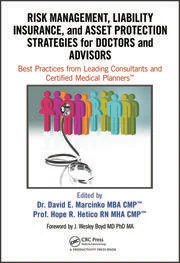
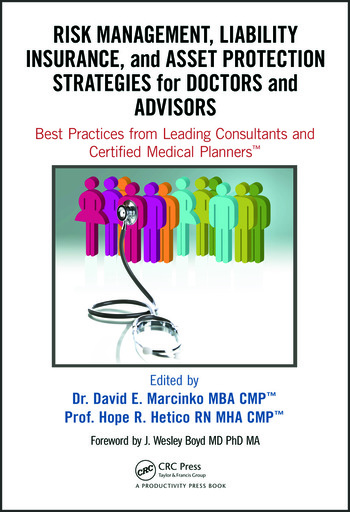
ORDER: https://www.routledge.com/Risk-Management-Liability-Insurance-and-Asset-Protection-Strategies-for/Marcinko-Hetico/p/book/9781498725989

***

COMMENTS APPRECIATED

Thank You

***

PHYSICIANS: Leaving Medical Practice

By Staff Reporters

***

***

QUESTION: Why are doctors leaving their practices?

For many it’s about demographics. Just like the rest of us, doctors are aging too. Already the average physician age is about 53 years old. The Association of American Medical Colleges reports that about half of doctors are over the age of 55. Over the next decade, an estimated 40% of physicians will be over 65 years old. This means more than two of every five active physicians will reach age 65 within the next 10 years.

Moreover, compared with their boomer colleagues who were more likely to work past retirement, a robust 60% of younger Generation X doctors are reporting that they plan to retire by age 60.

***

***

Doctors cite poor quality of life and stress as reasons for their early departure. The pandemic certainly crushed many providers and has led to burnout. Generation X physicians in their 40s and early 50s were more likely than boomers to report that their current work life was not making the grade. In short, 43% of middle-aged doctors, compared with 31% of doctors over age 55, were reporting lower levels of professional fulfillment. Moreover, 47% of mostly Gen X doctors indicated dissatisfaction with their level of personal fulfillment compared with 36% of practicing boomer physicians.

COMMENTS APPRECIATED

Thank You

***

***

CERTIFIED MEDICAL PLANNER™: Helping Physicians Financially Thrive to Avoid the “Doctor Effect”

By Dr. David Edward Marcinko, MBA CMP

CEO: D.E. Marcinko & Associates, Inc.

***

SPONSOR: http://www.CERTIFIEDMEDICALPLANNER.org

BEWARE MEDICAL PRACTITIONERS

Several years ago a group of highly trusted and deeply experienced financial services professionals and estate planners noted that far too many of their mature physician clients, using traditional stock brokers, management consultants and financial advisors, seemed to be less successful than those who went it alone. These Do-it-Yourselfers [DIYs] had setbacks and made mistakes, for sure. But, the ME Inc doctors seemed to learn from their mistakes and did not incur the high management and service fees demanded from general or retail one-size-fits-all “advisors.”

In fact, an informal inverse relationship was noted, and dubbed the “Doctor Effect.” In others words, the more consultants an individual doctor retained; the less well they did in all disciplines of the financial planning and medical practice management, continuum.

Of course, the reason for this discrepancy eluded many of them as Wall Street brokerages and wire-houses flooded the media with messages, infomercials, print, radio, TV, texts, tweets, and internet ads to the contrary. Rather than self-learn the basics, the prevailing sentiment seemed to purse the holy grail of finding the “perfect financial advisor.” This realization was a confirmation of the industry culture which seemed to be: Bread for the advisor – Crumbs for the client!

And so, at D.E. Marcinko & Associates, our informed cadre’ of technology focused and highly educated doctors, nurses, financial advisors, attorneys, accountants, psychologists and educational visionaries decided there must be a better way for healthcare colleagues to receive financial planning advice, products and related management services within a culture of fiduciary responsibility.

We trust you agree with this ME Inc, and Certified Medical Planner™ consulting philosophy, as illustrated  on our website.

WEBSITE: http://www.MARCINKOASSOCIATES.com

***

RISK MANAGEMENT FOR PHYSICIANS

https://www.routledge.com/Risk-Management-Liability-Insurance-and-Asset-Protection-Strategies-for/Marcinko-Hetico/p/book/9781498725989

***

High-Earning Americans to Lose 401(k) Tax Deduction in 2023

By Staff Reporters

***

***

Changes to a popular 401(K) tax deduction are set to hit millions of high-earning Americans from next year. Workers over the aged of 50 are entitled to make catch-up contributions to their 401(K)s worth up to $7,500 this year. The annual cap on all contributions is $30,000. 

CITE: https://www.r2library.com/Resource

But from 2024, those earning over $145,000 will no longer be able to put these catch-up payments into a traditional 401(K).  Instead, the money will be only funneled into a Roth IRA account, according to new rules passed through Congress in December. 

***

***
COMMENTS APPRECIATED

Thank You

***

IRA: Inherited Rules Change

By Staff Reporters

***

***

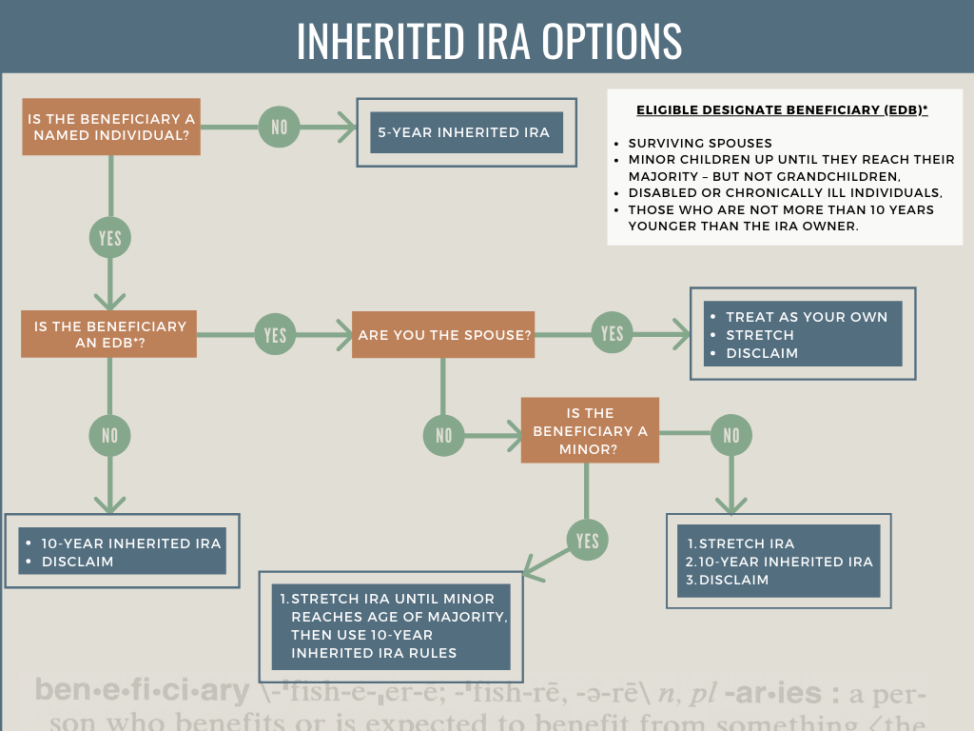
The Internal Revenue Service is allowing people who inherited an individual retirement account after 2019 to skip a required minimum distribution [RMD] this year, but most still must empty the account within 10 years. The IRS issued the new guidance last week.

There has been confusion surrounding the rules for inherited IRAs ever since the Secure Act of 2019 eliminated the so-called “stretch IRA” for most non-spouse beneficiaries. The old rules had allowed beneficiaries of inherited IRAs to stretch their required minimum distributions over their own lifetimes, permitting decades of tax-free or tax-deferred growth in some cases.

Under the Secure Act of 2019, most non-spouse beneficiaries must now empty their inherited IRA by the end of the 10th year following the original owner’s death. When the law was first passed, experts interpreted it to mean that all the money could be withdrawn in year 10 if so desired, said Ed Slott, CPA and founder of IRAHelp.com 

Yet in early 2022, the IRS proposed stricter rules that would apply to someone who inherited an IRA from a person who had already begun taking RMDs; in that case, the recipient must continue taking distributions on an annual schedule. In other words, if the RMD tap had already been turned on, Slott said, it couldn’t be turned off following the original owner’s death, and beneficiaries had to keep withdrawing every year and paying income tax on the amount withdrawn.

***

***

COMMENTS APPRECIATED

Thank You

***

e-BOOKS: For Doctors, Financial Advisors, CPAs, Insurance Agents, Medical Consultants and Health Law Attorneys

By Ann Miller RN MHA CMP

INTRODUCING OUR NEXT GENERATION e-BOOK LIBRARY FROM iMBA, Inc.

An e-book is an electronic or digital book that can be read on a computer or a handheld device.

Our new e-books consists of text, images, and are fixed to a specific spot on the page.

And, our e-books are a data files similar in content and structure to a word-processing document that comes in a PDF format. To use our e-books, you need to purchase and download it to a device that has a .pdf file reader app, such as ADOBE® or similar on a smartphone, tablet or computer. A PDF, also known as a portable document format, is the format most people are familiar with and used in our e-books. PDFs are known for their ease of use and ability to hold custom layouts. They are the most commonly used e-Book formats, especially by professionals and adult-learners.

You can then access the e-book and read it, or highlight pages and even take side notes.

e-Books Save Money

With no manufacturing, printing, binding or shipping costs, e-Books are cheaper than traditional hard or paper back books.The price of each specialized and highly niche focused e-Book [50-100 pages] is only $25, whereas similar paperback printed books of this type generally cost $145, or more!

Payable thru PayPal [3% courtesy surcharge applies].

MORE HERE: https://medicalexecutivepost.com/me-pr-a-new-feature/

COMMENTS APPRECIATED

Thank You

***

RETIREMENT PLANNING: The Financial Numbers and Social Security?

By Staff Reporters

***

***

The new magic number for retirement is up slightly from last year, when U.S. adults said they believed they needed $1.25 million to retire comfortably, according to new findings from Northwestern Mutual. High-net-worth individuals – those with more than $1 million in investible assets – believe they’ll need $3 million to retire comfortably.

There’s quite a gap, however, between what people have now and what they think they’ll need. The average amount that U.S. adults have saved for retirement is only $89,300, up 3% from $86,869 in 2022, Northwestern Mutual found.

***

Interestingly, more than four in 10 Americans (42%) said they could imagine a time when Social Security no longer exists, according to the research. And yet, people are relying on Social Security to provide 28% of their overall retirement funding. That’s more than personal savings (22%) and equal to retirement savings (28%).

Gen Z and millennials have tempered expectations – they anticipate Social Security will provide 15% and 19% of their overall retirement funding, respectively. That’s a significant drop from what boomers+ say – 38%.

COMMENTS APPRECIATED

Thank You

***

***

Of Financial Certifications and Designations

The “Too Numerous to Count” Syndrome

[By Dr. David Edward Marcinko; MBA, CMP™]

Dr. MarcinkoThe following list of certifications enumerates only a partial exposure of the often nebulous field of “financial planning credentials” that presently exist in the market place. 

Good … and Not So

Some of these professional designations are awarded to individuals in the financial planning or financial “advisory” space after [some] diligent study and [often not so] arduous testing; others not so.

Disclaimer: I am a reformed Certified Financial Planner®, Series 7 [stock-broker], 63 and 65 license holder, and RIA representative who also held all applicable insurance and security licenses.

The individuals hold not only proper education [some only reguire a HS diploma or GED] as evidenced by the credential; the holders are often people of ethics [hopefully] and competence [usually]. But, not all credentials are the same. Some credentialing bodies have higher educational requirements that also require years of experience and a thorough background search. Others are awarded after only a few hours of study and, most all, remain non-fiduciary in nature.

Too Many To Count – Syndrome

In medicine, the abbreviation TNTC is well known. Sometime, I think this term is better applicable to the plethora of “credentials” in the financial services industry.

dhimc-book1

The Designation Line-up

A brief description for some of these financial designations [not degrees] follows:

  • AAMS – Accredited Asset Management Specialist
  • AEP – Accredited Estate Planner
  • AFC – Accredited Financial Counselor
  • AIF – Accredited Investment Fiduciary
  • AIFA – Accredited Investment Fiduciary Auditor
  • APP – Asset Protection Planner
  • BCA – Board Certified in Annuities
  • BCAA – Board Certified in Asset Allocation
  • BCE – Board Certified in Estate Planning
  • BCM – Board Certified in Mutual Funds
  • BCS – Board Certified in Securities
  • C3DWP – 3 Dimensional Wealth Practitioners
  • CAA – Certified Annuity Advisor
  • CAC – Certified Annuity Consultant
  • CAIA – Chartered Alternative Investment Analyst
  • CAM – Chartered Asset Manager
  • CAS – Chartered Annuity Specialist
  • CCPS – Certified College Planning Specialist
  • CDFA – Certified Divorce Financial Analyst
  • CEA – Certified Estate Advisor
  • CEBS – Certified Employee Benefit Specialist
  • CEP – Certified Estate Planner
  • CEPP – Chartered Estate Planning Practitioner
  • CFA – Chartered Financial Analyst
  • CFE – Certified Financial Educator
  • CFG – Certified Financial Gerontologist
  • CFP – Certified Financial Planner
  • CFPN – Christian Financial Professionals Network 
  • CFS – Certified Fund Specialist
  • CIC – Chartered Investment Counselor
  • CIMA – Certified Investment Analyst
  • CIMC – Certified Investment Management Consultant
  • CLTC – Certified in Long Term Care
  • CMFC – Chartered Mutual Fund Counselor
  • CMP – Certified Medical Planner™
  • CPC – Certified Pension Consultant
  • CPHQ – Certified Professional in Healthcare Quality
  • CPHQ – Certified Physician in Healthcare Quality
  • CPM – Chartered Portfolio Manager
  • CRA – Certified Retirement Administrator
  • CRC – Certified Retirement Counselor
  • CRFA – Certified Retirement Financial Advisor
  • CRP – Certified Risk Professional
  • CRPC – Chartered Retirement Planning Counselor
  • CRPS – Chartered Retirement Plan Specialist
  • CSA – Certified Senior Advisor
  • CSC – Certified Senior Consultant
  • CSFP – Certified Senior Financial Planner
  • CSS – Certified Senior Specialist
  • CTEP – Chartered Trust and Estate Planner
  • CTFA – Certified Trust and Financial Advisor
  • CWC – Certified Wealth Counselor
  • CWM – Chartered Wealth Manager
  • CWPP – Certified Wealth Preservation Planner
  • ECS –  Elder Care Specialist
  • FAD – financial Analyst Designate
  • FIC – Fraternal Insurance Counselor
  • FLMI – Fellow Life Management Institute
  • FRM – Financial Risk Manager
  • FSS – Financial Services Specialist
  • LIFA – Licensed Insurance Financial Analyst
  • MFP – Master Financial Professional
  • MSFS – Masters of Science Financial Service Degree
  • PFS – Personal Financial Specialist
  • PPC – Professional Plan Consultant
  • QFP – Qualified Financial Planner
  • REBC – Registered Employee Benefits Consultant
  • RFA – Registered Financial Associate
  • RFC – Registered Financial Consultant
  • RFG – Registered Financial Gerontologist
  • RFP – Registered Financial Planner
  • RFS – Registered Financial Specialist
  • RHU – Registered Health Underwriter
  • RPA – Registered Plans Associate
  • WMS – Wealth Management Specialist

This list is intentionally incomplete and it is not intended to be an endorsement of any credential by the Institute of Medical Business Advisors, Inc www.MedicalBusinessAdvisors.com

Alphabet Soup

Obviously, these “professional” designations spread across multiple industries. For example there is an alphabet of designations in the brokerage and securities field, another alphabet in the insurance industry and within the insurance industry, designations exist for those who meet face to face with prospective customers, another for those who provide client service and yet another in underwriting the various insurance products. Certainly when the designations are complied in a list such as that above, they present a dizzying array of apparent qualifications.

Assessment

While in general, education for the financial service [and medical] professional is good for everybody, there are certain things that you should do as proper due diligence to protect your family and your financial assets. What are they?

Disclaimer: I am also founder of the Certified Medical Planner™ online educational program in health economics for financial advisors and medical management consultants. www.CertifiedMedicalPlanner.org

Conclusion

Your thoughts and comments on this ME-P are appreciated. Feel free to review our top-left column, and top-right sidebar materials, links, URLs and related websites, too. Then, subscribe to the ME-P. It is fast, free and secure.

Link: http://feeds.feedburner.com/HealthcareFinancialsthePostForcxos

Speaker: If you need a moderator or speaker for an upcoming event, Dr. David E. Marcinko; MBA – Publisher-in-Chief of the Medical Executive-Post – is available for seminar or speaking engagements. Contact: MarcinkoAdvisors@msn.com

OUR OTHER PRINT BOOKS AND RELATED INFORMATION SOURCES:

LEXICONS: http://www.springerpub.com/Search/marcinko
PHYSICIANS: www.MedicalBusinessAdvisors.com
PRACTICES: www.BusinessofMedicalPractice.com
HOSPITALS: http://www.crcpress.com/product/isbn/9781466558731
CLINICS: http://www.crcpress.com/product/isbn/9781439879900
ADVISORS: www.CertifiedMedicalPlanner.org
BLOG: www.MedicalExecutivePost.com

Product DetailsProduct DetailsProduct Details

Product Details  Product Details

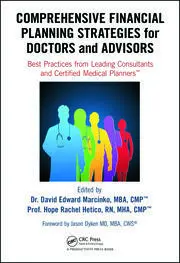
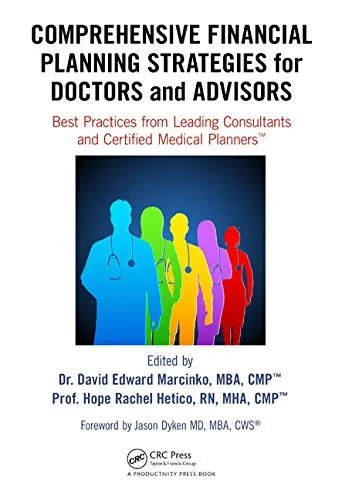
Comprehensive Financial Planning Strategies for Doctors and Advisors: Best Practices from Leading Consultants and Certified Medical Planners(TM)

***

Modern Portfolio Theory and Asset Allocation [Not Correlation]

THE CORRELATION HOT TOPIC

ACADEMIC C.V. | DAVID EDWARD MARCINKO

By Dr. David Edward Marcinko MBA CMP©

SPONSOR: http://www.CertifiedMedicalPlanner.org

CMP logo

Modern Portfolio Theory approaches investing by examining the complete market and the full economy. MPT places a great emphasis on the correlation between investments. 

DEFINITION:

Correlation is a measure of how frequently one event tends to happen when another event happens. High positive correlation means two events usually happen together – high SAT scores and getting through college for instance. High negative correlation means two events tend not to happen together – high SATs and a poor grade record.

No correlation means the two events are independent of one another. In statistical terms two events that are perfectly correlated have a “correlation coefficient” of 1; two events that are perfectly negatively correlated have a correlation coefficient of -1; and two events that have zero correlation have a coefficient of 0.

Correlation has been used over the past twenty years by institutions and financial advisors to assemble portfolios of moderate risk.  In calculating correlation, a statistician would examine the possibility of two events happening together, namely:

  • If the probability of A happening is 1/X;
  • And the probability of B happening is 1/Y; then
  • The probability of A and B happening together is (1/X) times (1/Y), or 1/(X times Y).

There are several laws of correlation including;

  1. Combining assets with a perfect positive correlation offers no reduction in portfolio risk.  These two assets will simply move in tandem with each other.
  2. Combining assets with zero correlation (statistically independent) reduces the risk of the portfolio.  If more assets with uncorrelated returns are added to the portfolio, significant risk reduction can be achieved.
  3. Combing assets with a perfect negative correlation could eliminate risk entirely.   This is the principle with “hedging strategies”.  These strategies are discussed later in the book.

Citation: https://www.r2library.com/Resource/Title/0826102549

BUT – CORRELATION IS NOT CAUSATION

https://medicalexecutivepost.com/2021/02/05/correlation-is-not-causation/

In the real world, negative correlations are very rare 

Most assets maintain a positive correlation with each other.  The goal of a prudent investor is to assemble a portfolio that contains uncorrelated assets.  When a portfolio contains assets that possess low correlations, the upward movement of one asset class will help offset the downward movement of another.  This is especially important when economic and market conditions change.

As a result, including assets in your portfolio that are not highly correlated will reduce the overall volatility (as measured by standard deviation) and may also increase long-term investment returns. This is the primary argument for including dissimilar asset classes in your portfolio. Keep in mind that this type of diversification does not guarantee you will avoid a loss.  It simply minimizes the chance of loss. 

In the table provided by Ibbotson, the average correlation between the five major asset classes is displayed. The lowest correlation is between the U.S. Treasury Bonds and the EAFE (international stocks).  The highest correlation is between the S&P 500 and the EAFE; 0.77 or 77 percent. This signifies a prominent level of correlation that has grown even larger during this decade.   Low correlations within the table appear most with U.S. Treasury Bills.

Historical Correlation of Asset Classes

Benchmark                             1          2          3         4         5         6            

1 U.S. Treasury Bill                  1.00    

2 U.S. Bonds                          0.73     1.00    

3 S&P 500                               0.03     0.34     1.00    

4 Commodities                         0.15     0.04     0.08      1.00      

5 International Stocks              -0.13    -0.31    0.77      0.14    1.00       

6 Real Estate                           0.11      0.43    0.81     -0.02    0.66     1.00

Table Source: Ibbotson 1980-2012

Comprehensive Financial Planning Strategies for Doctors and Advisors: Best Practices from Leading Consultants and Certified Medical Planners™

ORDER Textbook: https://www.amazon.com/Comprehensive-Financial-Planning-Strategies-Advisors/dp/1482240289/ref=sr_1_1?ie=UTF8&qid=1418580820&sr=8-1&keywords=david+marcinko

SECOND OPINIONS: https://medicalexecutivepost.com/schedule-a-consultation/

INVITE DR. MARCINKO: https://medicalexecutivepost.com/dr-david-marcinkos-bookings/

THANK YOU

***

e-BOOKS: For Doctors, Financial Advisors, CPAs, Insurance Agents, Medical Consultants and Health Law Attorneys

By Ann Miller RN MHA CMP

INTRODUCING OUR NEXT GENERATION e-BOOK LIBRARY FROM iMBA, Inc.

An e-book is an electronic or digital book that can be read on a computer or a handheld device.

Our new e-books consists of text, images, and are fixed to a specific spot on the page.

And, our e-books are a data files similar in content and structure to a word-processing document that comes in a PDF format. To use our e-books, you need to purchase and download it to a device that has a .pdf file reader app, such as ADOBE® or similar on a smartphone, tablet or computer. A PDF, also known as a portable document format, is the format most people are familiar with and used in our e-books. PDFs are known for their ease of use and ability to hold custom layouts. They are the most commonly used e-Book formats, especially by professionals and adult-learners.

You can then access the e-book and read it, or highlight pages and even take side notes.

e-Books Save Money

With no manufacturing, printing, binding or shipping costs, e-Books are cheaper than traditional hard or paper back books.The price of each specialized and highly niche focused e-Book [50-100 pages] is only $25, whereas similar paperback printed books of this type generally cost $145, or more!

Payable thru PayPal [3% courtesy surcharge applies].

MORE HERE: https://medicalexecutivepost.com/me-pr-a-new-feature/

COMMENTS APPRECIATED

Thank You

***

BEYOND: Advance Care Planning for Financial Advisors & Lawyers from Doctors on April 16-17th.

APRIL 17th. IS NATIONAL HEALTHCARE DECISION DAY 2023

By Dr. David Edward Marcinko MBA CMP

SPONSOR: http://www.CertifiedMedicalPlanner.org

Staff Reporters via National Institute of Health

***

National Healthcare Decisions Day (NHDD) exists to inspire, educate and empower the public and providers about the importance of advance care planning. NHDD is an initiative to encourage patients to express their wishes regarding healthcare and for providers and facilities to respect those wishes, whatever they may be.

NHDD was founded in 2008 by Nathan Kottkamp, a Virginia-based health care lawyer, to provide clear, concise, and consistent information on healthcare decision-making to both the public and providers/facilities through the widespread availability and dissemination of simple, free, and uniform tools (not just forms) to guide the process.

NHDD is a series of independent events held across the country, supported by a national media and public education campaign. In all respects, NHDD is inclusive and brings a variety of players in the larger healthcare, legal, and religious community together to work on a common project, to the benefit of patients, families, and providers. A key goal of NHDD is to demystify healthcare decision-making and make the topic of advance care planning inescapable. Among other things, NHDD helps people understand that advance healthcare decision-making includes much more than living wills; it is a process that should focus first on conversation and choosing an agent.

As of June 2016, The Conversation Project has been responsible for the management, finances, and structure of NHDD.  NHDD’s founder, Nathan Kottkamp, continues to be involved in NHDD and provides leadership by ensuring the maintenance of NHDD’s high quality resources and support for the community.

Read more about NHDD’s founding: https://theconversationproject.org/nhdd/origins/

***

***

DEFINITION: What is advance care planning for financial advisors and lawyers?

Advance care planning involves discussing and preparing for future decisions about your medical care if you become seriously ill or unable to communicate your wishes with your estate planning attorney or financial advisor. Having meaningful conversations with your loved ones is the most important part of advance care planning. Many people also choose to put their preferences in writing by completing legal documents called advance directives.

What are advance directives?

Advance directives are legal documents that provide instructions for medical care and only go into effect if you cannot communicate your own wishes.

The two most common advance directives for health care are the living will and the durable power of attorney for health care.

  • Living will: A living will is a legal document that tells doctors how you want to be treated if you cannot make your own decisions about emergency treatment. In a living will, you can say which common medical treatments or care you would want, which ones you would want to avoid, and under which conditions each of your choices applies. Learn more about preparing a living will.
  • Durable power of attorney for health care: A durable power of attorney for health care is a legal document that names your health care proxy, a person who can make health care decisions for you if you are unable to communicate these yourself. Your proxy, also known as a representative, surrogate, or agent, should be familiar with your values and wishes. A proxy can be chosen in addition to or instead of a living will. Having a health care proxy helps you plan for situations that cannot be foreseen, such as a serious car accident or stroke. Learn more about choosing a health care proxy.

Think of your advance directives as living documents that you review at least once each year and update if a major life event occurs such as retirement, moving out of state, or a significant change in your health.

CITE: https://www.r2library.com/Resource

Who needs an advance care plan?

Advance care planning is not just for people who are very old or ill. At any age, a medical crisis could leave you unable to communicate your own health care decisions. Planning now for your future health care can help ensure you get the medical care you want and that someone you trust will be there to make decisions for you.

  • Advance care planning for people with dementia. Many people do not realize that Alzheimer’s disease and related dementias are terminal conditions and ultimately result in death. People in the later stages of dementia often lose their ability to do the simplest tasks. If you have dementia, advance care planning can give you a sense of control over an uncertain future and enable you to participate directly in decision-making about your future care. If you are a loved one of someone with dementia, encourage these discussions as early as possible. In the later stages of dementia, you may wish to discuss decisions with other family members, your loved one’s health care provider, or a trusted friend to feel more supported when deciding the types of care and treatments the person would want.

What happens if you do not have an advance directive?

If you do not have an advance directive and you are unable to make decisions on your own, the state laws where you live will determine who may make medical decisions on your behalf. This is typically your spouse, your parents if they are available, or your children if they are adults. If you are unmarried and have not named your partner as your proxy, it’s possible they could be excluded from decision-making. If you have no family members, some states allow a close friend who is familiar with your values to help. Or they may assign a physician to represent your best interests. To find out the laws in your state, contact your state legal aid office or state bar association.

Will an advance directive guarantee your wishes are followed?

An advance directive is legally recognized but not legally binding. This means that your health care provider and proxy will do their best to respect your advance directives, but there may be circumstances in which they cannot follow your wishes exactly. For example, you may be in a complex medical situation where it is unclear what you would want. This is another key reason why having conversations about your preferences is so important. Talking with your loved ones ahead of time may help them better navigate unanticipated issues.

There is the possibility that a health care provider refuses to follow your advance directives. This might happen if the decision goes against:

  • The health care provider’s conscience
  • The health care institution’s policy
  • Accepted health care standards

In these situations, the health care provider must inform your health care proxy immediately and consider transferring your care to another provider.

Other advance care planning forms and orders from doctors

You might want to prepare documents to express your wishes about a single medical issue or something else not already covered in your advance directives, such as an emergency. For these types of situations, you can talk with a doctor about establishing the following orders:

  • Do not resuscitate (DNR) order: A DNR becomes part of your medical chart to inform medical staff in a hospital or nursing facility that you do not want CPR or other life-support measures to be attempted if your heartbeat and breathing stop. Sometimes this document is referred to as a do not attempt resuscitation (DNR) order or an allow natural death (AND) order. Even though a living will might state that CPR is not wanted, it is helpful to have a DNR order as part of your medical file if you go to a hospital. Posting a DNR next to your hospital bed might avoid confusion in an emergency. Without a DNR order, medical staff will attempt every effort to restore your breathing and the normal rhythm of your heart.
  • Do not intubate (DNI) order: A similar document, a DNI informs medical staff in a hospital or nursing facility that you do not want to be on a ventilator.
  • Do not hospitalize (DNH) order: A DNH indicates to long-term care providers, such as nursing home staff, that you prefer not to be sent to a hospital for treatment at the end of life.
  • Out-of-hospital DNR order: An out-of-hospital DNR alerts emergency medical personnel to your wishes regarding measures to restore your heartbeat or breathing if you are not in a hospital.
  • Physician orders for life-sustaining treatment (POLST) and medical orders for life-sustaining treatment (MOLST) forms:These forms provide guidance about your medical care that health care professionals can act on immediately in an emergency. They serve as a medical order in addition to your advance directive. Typically, you create a POLST or MOLST when you are near the end of life or critically ill and understand the specific decisions that might need to be made on your behalf. These forms may also be called portable medical orders or physician orders for scope of treatment (POST). Check with your state department of health to find out if these forms are available where you live.
  • MORE: https://www.kevinmd.com/2023/04/april-16th-is-national-healthcare-decisions-day-plan-for-your-end-of-life-care-now.html

Medicare Enrollment at CMS?

At enrollment, Medicare in the future could offer three advance directives with goals of care: Directive A: CONSENT to treat — inpatient medical treatment Directive B: CONSENT to comfort — home bound holistic care Directive C: CHOOSE against medical advice — outpatient palliative resources.

CITE: https://www.kevinmd.com/2023/04/the-heartbreaking-story-of-jimmy-carter-a-call-for-medicare-reform-in-end-of-life-care.html

You may also want to document your wishes about organ and tissue donation and brain donation. As well, learning about care options such as palliative care and hospice care can help you plan ahead.

***

COMMENTS APPRECIATED

Thank You

***

PHYSICIANS: “Aging Out”

By Staff Reporters

***

***

According to HealthcareBrew, thousands of doctors are expected to reach retirement age in the next three years, and their replacements won’t be physicians. Instead, physician assistants (PAs) and nurse practitioners (NPs) will increasingly provide primary care services, according to a report from consulting firm Mercer.

By 2026, 21% of family medicine, pediatric, and obstetrics and gynecology physicians—or about 32,000 doctors—will be 65 or older, and Mercer anticipates about 23,000 physicians will leave the profession permanently. At the same time, demand for primary care physicians is expected to grow 4%, the report found.

PAs and NPs—also called advanced practice providers (APPs) or physician extenders—are highly trained medical professionals. To become a PA, you have to have both a bachelor’s and a master’s, some clinical work experience, pass the Physician Assistant National Certifying Exam, and then apply to get licensed in your state (you know, easy peasy). It takes seven to nine years to go through that process, compared to 11+ years to become an MD.

CITE: https://www.r2library.com/Resource/Title/0826102549

To become an NP, you must have both a bachelor’s and a master’s in nursing, become a registered nurse, and pass a national NP board certification exam. It takes between six to eight years to become an NP.

Compared to physicians, PAs and NPs are “considerably younger professions with less than half the retirement risk,” the Mercer report stated. Roughly 40,000 PAs and NPs join the workforce annually.

“We’re certainly going to see increasing demand for APPs,” David Mitchell, a partner in Mercer’s career consulting business and a specialist in the healthcare industry, told Healthcare Brew.

While most state licensing boards require a physician to oversee APPs, both PAs and NPs have the authority to do many services primary care physicians do, like seeing and diagnosing patients, ordering lab tests, and writing prescriptions, said Mitchell.

READ HERE: https://www.healthcare-brew.com/stories/2023/03/16/non-mds-will-provide-primary-care?cid=30859907.17846&mid=349b552221c994e2540a304649746d7c&utm_campaign=hcb&utm_medium=newsletter&utm_source=morning_brew

MORE: https://www.aamc.org/data-reports/data/2022-physician-specialty-data-report-executive-summary

***
COMMENTS APPRECIATED

Thank You

***

ORDER: https://www.routledge.com/Risk-Management-Liability-Insurance-and-Asset-Protection-Strategies-for/Marcinko-Hetico/p/book/9781498725989

***

FAs & CPAs Wanted -BUT- Certified Medical Planners® Needed?

***

***

Career Development, Products and Services for Medical Specificity

“The informed voice of a new generation of fiduciary advisors for healthcare”

SPONSOR: http://www.CertifiedMedicalPlanner.org 

CMP

FINANCIAL ADVISER WANTED: New York’s Belfer family, which gained riches from oil, is racking up quite an investing losing streak. They lost billions in Enron’s collapse and were clients of Bernie Madoff, and now it’s come to light that they were shareholders in FTX.

***

CPAs WANTED: Just as tax season kicks off, US firms are facing a national shortage of accountants, forcing them to look overseas for workers to look over your W-2. More than 300k accountants and auditors have quit in the last two years, per the WSJ.

***

CMPs NEEDED: The Certified Medical Planner® program was created in response to the frustration felt by doctors in small and mid-sized practices that dealt with top financial, brokerage and accounting firms. These non-fiduciary behemoths often prescribed costly wholesale solutions that were applicable to all, but customized to few, despite ever changing needs.

Enter the CMPs

Learn why brokerage sales-pitches and/or internet resources will never replace the knowledge and deep advice of a collegial Certified Medical Planner® professional.

Letterhead CMP

***

COMMENTS APPRECIATED

Thank You

***

ORDER: https://www.routledge.com/Comprehensive-Financial-Planning-Strategies-for-Doctors-and-Advisors-Best/Marcinko-Hetico/p/book/9781482240283

***

IRS TAX FILING: Joint or Separate for Married Couples?

INTUIT

By Staff Reporters

***

Married couples have the option to file jointly or separately on their federal income tax returns. The IRS strongly encourages most couples to file joint tax returns by extending several tax breaks to those who file together.

In the vast majority of cases, it’s best for married couples to file jointly, but there may be a few instances when it’s better to submit separate returns.

READ HERE: https://turbotax.intuit.com/tax-tips/marriage/should-you-and-your-spouse-file-taxes-jointly-or-separately/L7gyjnqyM?dclid=CKzxz8Pzy_wCFeMBwQods3cDLQ

***

ORDER: https://www.routledge.com/Comprehensive-Financial-Planning-Strategies-for-Doctors-and-Advisors-Best/Marcinko-Hetico/p/book/9781482240283

***

ORDER: https://www.routledge.com/Risk-Management-Liability-Insurance-and-Asset-Protection-Strategies-for/Marcinko-Hetico/p/book/9781498725989

COMMENTS APPRECIATED

Thank You

***

The U.S. Debt Ceiling

By Staff Reporters

***

***

As the US just crashed into the $31.4 trillion debt ceiling as the Treasury Department began taking what it called “extraordinary measures” to prevent the government from defaulting on its debts and sparking an economic crisis.

These measures are a series of deep-cut accounting moves that allow the Treasury to continue making its payments. They include:

  • Suspending reinvestments into government funds for retired federal employees, such as the Civil Service Retirement and Disability Fund.
  • Selling existing investments in those funds to free up more outstanding debt.

And while these measures definitely aren’t ordinary…they probably aren’t so “extra,” either. The Treasury has resorted to them more than 12 times since 1985, including during the last debt-ceiling standoff in 2021.

Still, these steps amount to chugging water after eating a ghost pepper—the pain will return. Treasury Secretary Janet Yellen said her extraordinary measures will last through early June, giving lawmakers about five months to work out a deal to raise the debt ceiling.

NOTE: The US has never defaulted on its debt, but even the threat of it could be disastrous. The country’s first credit downgrade in history came during a debt-ceiling showdown in 2011.

***

ORDER: https://www.routledge.com/Risk-Management-Liability-Insurance-and-Asset-Protection-Strategies-for/Marcinko-Hetico/p/book/9781498725989

***

ORDER: https://www.routledge.com/Comprehensive-Financial-Planning-Strategies-for-Doctors-and-Advisors-Best/Marcinko-Hetico/p/book/9781482240283

***

COMMENTS APPRECIATED

Thank You

***

IRS: Lifetime Estate and Gift Tax Exemptions

By Staff Reporters

SPONSOR: http://www.CertifiedMedicalPlanner.org

***

***

Remember, in 2023, do not trigger the US estate and gift tax. Last year’s inflation, the highest in decades, means married couples can now hand their heirs almost $26 million tax-free, $1.7 million more than in 2022 and $2.4 million more than in 2021.

The hike in the lifetime estate-and-gift tax exemption — adjusted for price growth annually by the Internal Revenue Service — is the largest since 2018, when the amount was doubled by Republican-passed legislation signed by former President Donald Trump the prior year. As a result, the individual exemption, which is easily shared between spouses, has rocketed to $12.9 million from $5 million in 2011.

But, richer Americans may be running out of time to pass on this much wealth. The exemption is slated to be cut in half in three years, when provisions of Trump’s tax law are set to expire. While even $26 million is a drop in the bucket for the ultra-rich, the exemption’s size shows why generational wealth transfers — estimated by research firm Cerulli to total almost $73 trillion in the US through 2045 — go largely untouched by the government.

Plus, financial advisors may use loopholes and leverage to multiply the amount of tax-free money available to heirs. 

***

ORDER: https://www.routledge.com/Comprehensive-Financial-Planning-Strategies-for-Doctors-and-Advisors-Best/Marcinko-Hetico/p/book/9781482240283

***
COMMENTS APPRECIATED

Thank You

***

IRS: Best States for Minimizing Taxes in Retirement

By SMART ASSET

***

***

If shrinking your tax liability is high on your list of priorities, a few states stand out. The winners in the list below either have no state income tax, no tax on retirement income, or a substantial discount on the taxes levied on retirement income. But that’s just the start.

CITE: https://www.r2library.com/Resource/Title/082610254

While several additional states have no state income tax, the states that made our list also have favorable sales, property, inheritance, and estate taxes.

  • Alaska
  • Florida
  • Georgia
  • Mississippi
  • Nevada
  • South Dakota
  • Wyoming

If those seven locations aren’t ideal, consider the next tier of tax-friendly states. Tax benefits aren’t quite as high as those above, but they do stand out in one specific category: no taxes on social security income.

That’s not to say they don’t make up for it in other areas, however. Washington State, for example, has no state income tax, but does have a 6.5% state sales tax. Still, it’s always beneficial to avoid income tax when possible.

  • Alabama
  • Arkansas
  • Colorado
  • Delaware
  • Idaho
  • Illinois
  • Kentucky
  • Louisiana
  • Michigan
  • New Hampshire
  • Oklahoma
  • Pennsylvania
  • South Carolina
  • Tennessee
  • Texas
  • Virginia
  • Washington
  • West Virginia

***

ORDER: https://www.routledge.com/Comprehensive-Financial-Planning-Strategies-for-Doctors-and-Advisors-Best/Marcinko-Hetico/p/book/9781482240283

***

COMMENTS APPRECIATED

Thank You

***

MEDICAL RISK MANAGEMENT, Liability Insurance and Asset Protection Strategies

FOR PHYSICIANS AND THEIR FINANCIAL ADVISORS

SPONSOR: http://www.CertifiedMedicalPlanner.org

CMP logo

***

REVIEWS:

“Physicians who don’t understand modern risk management, insurance, business, and asset protection principles are sitting ducks waiting to be taken advantage of by unscrupulous insurance agents and financial advisors; and even their own prospective employers or partners. This comprehensive volume from Dr. David Marcinko and his co-authors will go a long way toward educating physicians on these critical subjects that were never taught in medical school or residency training.”
Dr. James M. Dahle, MD, FACEP, Editor of The White Coat Investor, Salt Lake City, Utah, USA


“With time at a premium, and so much vital information packed into one well organized resource, this comprehensive textbook should be on the desk of everyone serving in the healthcare ecosystem. The time you spend reading this frank and compelling book will be richly rewarded.”
—Dr. J. Wesley Boyd, MD, PhD, MA, Harvard Medical School, Boston, Massachusetts, USA

ASSESSMENT: Your thoughts are appreciated.

ORDER TEXTBOOK: https://www.routledge.com/Risk-Management-Liability-Insurance-and-Asset-Protection-Strategies-for/Marcinko-Hetico/p/book/9781498725989

SECOND OPINIONS: https://medicalexecutivepost.com/schedule-a-consultation/

INVITE DR. MARCINKO: https://medicalexecutivepost.com/dr-david-marcinkos-bookings/

***

LINK: www.amazon.com/Comprehensive-Financial-Planning-Strategies-Advisors/dp/1482240289/ref=sr_1_1?ie=UTF8&qid=1418580820&sr=8-1&keywords=david+marcinko

THANK YOU

***

RMDs: Are You of IRS Taxation Age?

Stop 2020 – Restart 2021

By Staff Reporters

***

CITE: https://www.r2library.com/Resource/Title/082610254

***

Are You of RMD Age?
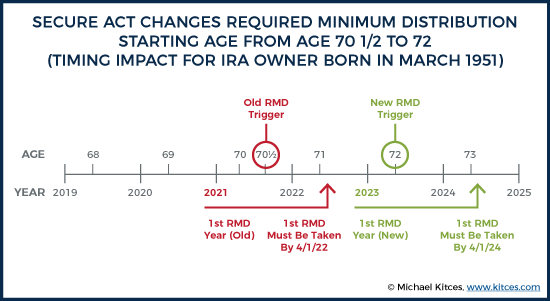
A Required Minimum Distribution (RMD) is an amount of money the IRS requires you to withdraw from most retirement accounts, beginning at age 72.
Due to the Coronavirus Aid, Relief, and Economic Security (CARES) Act, RMDs were not required in 2020, but RMDs are required in 2021 and each year after. RMDs can be an important part of your retirement income strategy.

IRS: https://www.irs.gov/retirement-plans/retirement-plans-faqs-regarding-required-minimum-distributions

***

COMMENTS APPRECIATED

Thank You

***

ORDER: https://www.routledge.com/Comprehensive-Financial-Planning-Strategies-for-Doctors-and-Advisors-Best/Marcinko-Hetico/p/book/9781482240283

***

IRS: Increases Contribution Limits for Retirement Savings Plans

By Staff Reporters

***

***

The IRS just said that the maximum contribution that an individual can make in 2023 to a 401(k), 403(b) and most 457 plans will be $22,500. That’s up from $20,500 this year.

People aged 50 and over, which have the option to make additional “catch-up” contributions to 401(k) and similar plans, will be able to contribute up to $7,500 next year, up from $6,500 this year. That’s means a 401(k) saver who is 50 or older can contribute a maximum of $30,000 to their retirement plan in 2023.

The IRS also raised the 2023 annual contribution limits on individual retirement arrangements, or IRAs, to $6,500, up from $6,000 this year. The IRA “catch-up” contribution limit remains at $1,000, as it’s not subject to an annual cost of living adjustment, the IRS said.

***

FINANCE: https://www.routledge.com/Comprehensive-Financial-Planning-Strategies-for-Doctors-and-Advisors-Best/Marcinko-Hetico/p/book/9781482240283

***

COMMENTS APPRECIATED

Thank You

***

Obtain an ME-P Second Opinion Right Here!

 2nd Opinions

Join Our Mailing List

iMBA, Inc., Consultations and Discussion Board

stk312038rkn

ImageProxy

Finally … it’s right here!

Link: http://www.medicalbusinessadvisors.com/forum-discussion.asp

Telephonic or electronic advice for medical professionals that is:

  • Objective, affordable, medically focused and personalized
  • Rendered by a prescreened financial consultant or medical management advisor
  • Offered on a pay-as-you-go basis, by phone or secure e-mail transmission.

2nd Opinions

***

***

Typical Topics 

  • Financial Planning
  • Retirement Planning
  • Overhead Assessments
  • Income Distribution Models
  • Academic Funding Analyses
  • Insurance Planning
  • Risk Management
  • Practice Assessments
  • New Venture Business Plans
  • Hospital Based Contract Assessments
  • Practice Income Turnarounds
  • Estate Planning
  • Portfolio Analysis
  • Compensation Plans
  • Cost Accounting Implementation
  • Contract Subsidy Analyses
  • Practice Buy Sell Valuations
  • Investment Policy Statement Analysis
  • Interim Management
  • Contract Compliance Models
  • New Physician Projections
  • Productivity Measurements
  • Revenue Cycle Gap Analyses
  • Payer Rate Evaluations
  • Revenue Cycle Improvements
  • Compensation Benchmarking
  • Strategic Planning Models
  • HIT System Evaluations
  • Staffing Analyses
  • P4P – ACOs – Concierge Medicine
  • Annual Budget Development
  • Ancillary Service Modeling
  • New Practice Development
  • Medical Service Line Extensions
  • Markets, Sales and Advertising
  • Health PR and Medical Practice Crisis Management
  • Investment Management-product evaluation/selection/competitive analysis
    -investment research
    -asset allocation and risk management* Research (products, pensions, planning, risk)
    * Financial Planning (IPS process, solutions, segmentation)
    * New Product Development (pension, longevity insurance, risk management)
    * Management Consulting (effectiveness/efficiency assessment of the investment management process)* Advocacy (regulatory, pensions, new products)
    * Financial Education/Coaching (corporate, groups)

***

[PHYSICIAN FOCUSED FINANCIAL PLANNING AND RISK MANAGEMENT COMPANION TEXTBOOK SET]

  Risk Management, Liability Insurance, and Asset Protection Strategies for Doctors and Advisors: Best Practices from Leading Consultants and Certified Medical Planners™Comprehensive Financial Planning Strategies for Doctors and Advisors: Best Practices from Leading Consultants and Certified Medical Planners™

***

[HOSPITAL OPERATIONS, ORGANIZATIONAL BEHAVIOR AND FINANCIAL MANAGEMENT COMPANION TEXTBOOK SET]

Product DetailsProduct Details

[Foreword Dr. Phillips MD JD MBA LLM] *** [Foreword Dr. Nash MD MBA FACP]

***

[PRIVATE MEDICAL PRACTICE BUSINESS MANAGEMENT TEXTBOOK – 3rd.  Edition]

Product Details

[Foreword Dr. Hashem MD PhD] *** [Foreword Dr. Silva MD MBA]

***

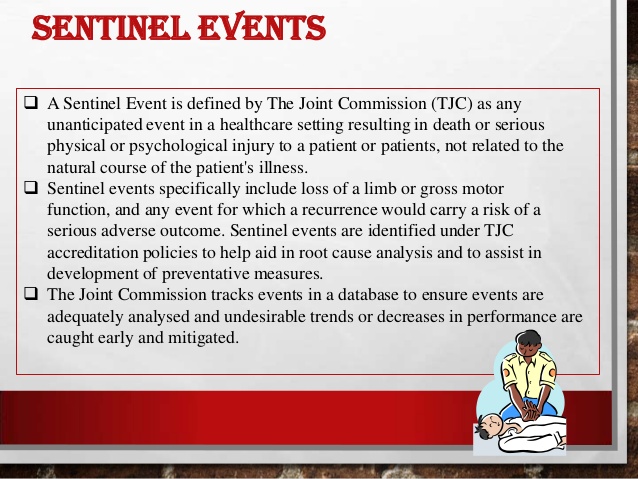
WHAT IS “MEDICAL SENTINEL” CASE SURVEILLANCE IN PUBLIC HEALTH?

***
WHAT IS “MEDICAL SENTINEL” CASE SURVEILLANCE IN PUBLIC HEALTH?
***
By Dr. David E. Marcinko MBA
***
SENTINEL SURVEILLANCE is a medical case observation system in which a designated group of reporting sources, hospitals and agencies agrees to report all cases of one or more notify-able conditions; such as the Corona Virus.
***
***
I first became interested in this concept during the HIV/AIDS epidemic of the early 1980s. In fact, it prompted me to later become a Certified Physician in Healthcare Quality [CPHQ].
***
Now recently, Deborah Leah Birx MD coordinator for the White House Corona Virus Task Force mentioned the term on the daily presidential briefings.
***
***
Your comments are appreciated.
***

Dr. Dave Marcinko at YOUR Service in 2022

Join Our Mailing List

Book Marcinko for your Next Financial Planning Seminar, Meeting or Medical Business Event 

By Ann Miller RN MHA

Professor and physician executive David Edward Marcinko MBBS DPM MBA MEd BSc CMP® is originally from Loyola University MD, Temple University in Philadelphia and the Milton S. Hershey Medical Center in PA; Oglethorpe University, and Atlanta Hospital & Medical Center in GA; and the Aachen City University Hospital, Koln-Germany. He is one of the most innovative global thought leaders in health care business and entrepreneurship today.

Dr. Marcinko is a multi-degreed educator, board certified physician, surgical fellow, hospital medical staff President, Chief Education Officer and philanthropist with more than 400 published papers; 5,150 op-ed pieces and over 125+ international presentations to his credit; including the top 10 biggest pharmaceutical companies and financial services firms in the nation. He is also a best-selling Amazon author with 30 published text books in four languages [National Institute of Health, Library of Congress and Library of Medicine].

Dr. Marcinko is past Editor-in-Chief of the prestigious “Journal of Health Care Finance”, and a former Certified Financial Planner®, who was named “Health Economist of the Year” in 2001. He is a Federal and State court approved expert witness featured in hundreds of peer reviewed medical, business, management and trade publications [AMA, ADA, APMA, AAOS, Physicians Practice, Investment Advisor, Physician’s Money Digest and MD News].

As a licensed insurance agent, RIA and SEC registered endowment fund manager, Dr. Marcinko is Founding Dean of the fiduciary focused CERTIFIED MEDICAL PLANNER® chartered designation education program; as well as Chief Editor of the HEALTH DICTIONARY SERIES® Wiki Project. His professional memberships include: ASHE, AHIMA, ACHE, ACME, ACPE, MGMA, FMMA and HIMSS.

Dr. Marcinko is a MSFT Beta tester, Google Scholar, “H” Index favorite and one of LinkedIn’s “Top Cited Voices”.

Book Marcinko

David Edward Marcinko (2)

Join Our Mailing List

“Best” Physician Focused Financial Planning and Medical Practice Management Books for 2022

[Doctor-Advisor]

CAREER DEVELOPMENT

Buy from Amazon

Learn How to Profit and Thrive in the PP-ACA Era

BOOK FOREWORD / TESTIMONIAL

Best Sellers

Product Details

Product DetailsProduct Details

Product DetailsProduct DetailsProduct Details

###

Comprehensive Financial Planning Strategies for Doctors and Advisors: Best Practices from Leading Consultants and Certified Medical Planners(TM)

Comprehensive Financial Planning Strategies for Doctors and Advisors: Best Practices from Leading Consultants

***

site

***

PODCAST: Google Starts a Health Insurance Stop-Loss Company

By Eric Bricker MD

***

***

COMMENTS APPRECIATED

Thank You

***

INSURANCE: https://www.amazon.com/Dictionary-Health-Insurance-Managed-Care/dp/0826149944/ref=sr_1_4?ie=UTF8&s=books&qid=1275315485&sr=1-4

***

PODCAST: How Fees Impact Your Retirement Savings

How 1% Fees Can Eat Up 30% of Your Nest Egg

By Sally Brandon

***

LINK: https://www.rebalance360.com/expert-advice/fees-impact-retirement-savings/

***

In this brief video, Rebalance IRA‘s Vice President of Client Services, Sally Brandon, details the direct impact that hidden and unfair fees can have on your retirement nest egg.

The firm works to make sure you retire with as much of your hard-earned savings as possible.

How 1% Fees Can Eat Up 30% of Your Nest Egg

Conclusion

Your thoughts and comments on this ME-P are appreciated. Feel free to review our top-left column, and top-right sidebar materials, links, URLs and related websites, too. Then, subscribe to the ME-P. It is fast, free and secure.

Speaker: If you need a moderator or speaker for an upcoming event, Dr. David E. Marcinko; MBA – Publisher-in-Chief of the Medical Executive-Post – is available for seminar or speaking engagements. Contact: MarcinkoAdvisors@msn.com

OUR OTHER PRINT BOOKS AND RELATED INFORMATION SOURCES:

Comprehensive Financial Planning Strategies for Doctors and Advisors: Best Practices from Leading Consultants and Certified Medical Planners™

***

Capital Market Expectations, Asset Allocation and Safe Portfolio Withdrawal Rates

By Staff Reporters

From: Munich Personal RePEc Archive [MPRA]

Join Our Mailing List

Economist Wade Donald Pfau wrote an article called, “Capital Market Expectations, Asset Allocation, and Safe Withdrawal more than a decade ago. Today, is is still a vital read.

Abstract

Most retirement withdrawal rate studies are either based on historical data or use a particular assumption about portfolio returns unique to the study in question.

But, financial advisors and planners may have their own capital market expectations for future returns from stocks, bonds, and other assets they deem suitable for their clients’ portfolios. These uniquely personal expectations may or may not bear resemblance to those used for making retirement withdrawal rate guidelines. The objective here is to provide a general framework for thinking about how to estimate sustainable withdrawal rates and appropriate asset allocations for clients based on one’s capital market expectations, as well as other inputs about the client including the planning horizon, tolerance for exhausting wealth, and personal concerns about holding riskier assets.

The study also tests the sensitivity of various assumptions for the recommended withdrawal rates and asset allocations, and finds that these assumptions are very important. Another common feature of existing studies is to focus on an optimal asset allocation, which is expected either to minimize the probability of failure for a given withdrawal rate, or to maximize the withdrawal rate for a given probability of failure. Retirement withdrawal rate studies are known in this regard for lending support to stock allocations in excess of 50 percent.

Assessment

This study shows that usually there are a wide range of asset allocations which can be expected to perform nearly as well as the optimal allocation, and that lower stock allocations are indeed justifiable in many cases.

Link: MPRA_paper_32973

About MPRA: http://mpra.ub.uni-muenchen.de/information.html

NOTE: Wade Donald Pfau is an Associate Professor of Economics at the National Graduate Institute for Policy Studies (GRIPS) in Tokyo, Japan. His PhD in economics was from Princeton University.

Your thoughts and comments on this ME-P are appreciated. Feel free to review our top-left column, and top-right sidebar materials, links, URLs and related websites, too. Then, subscribe to the ME-P. It is fast, free and secure.

Link: http://feeds.feedburner.com/HealthcareFinancialsthePostForcxos

Speaker: If you need a moderator or speaker for an upcoming event, Dr. David E. Marcinko; MBA – Publisher-in-Chief of the Medical Executive-Post – is available for seminar or speaking engagements. Contact: MarcinkoAdvisors@msn.com

OUR OTHER PRINT BOOKS AND RELATED INFORMATION SOURCES:

FINANCE: Financial Planning for Physicians and Advisors
INSURANCE: Risk Management and Insurance Strategies for Physicians and Advisors

Product Details  Product Details

Social Security as an Asset Class?

Join Our Mailing List 

A High Guaranteed Return!

By Rick Kahler CFP® http://www.KahlerFinancial.com

Rick Kahler CFPOnce you hit age 62, what’s an investment class that can give you a high guaranteed return with almost no risk; Bonds, Equities, or Commodities?

Nope; it’s social security.

There’s just one catch. You can’t actually get your hands on the money until you’re 70.

The Catch

One of the most common issues for those approaching retirement age is determining the right time to file for Social Security. If you file at age 62, you will receive benefits longer. Yet your monthly benefit for the rest of your life will only be about 75% of the monthly amount you will receive if you file at your full retirement age of 66 to 67. If you wait even longer, the benefit amount is higher still.

Those who are unable to work and don’t have sufficient retirement savings may not have a choice about filing for Social Security early. Those who don’t have a compelling need for early Social Security income may still consider early filing as an option, with the idea of investing the money for their later retirement.

Recent Thoughts

According to a recent article by Karen DeMasters in Financial Advisor magazine, this is not a good choice. She cites research done by William Meyer and William Reichenstein of Social Security Solutions Inc (www.ssanalyzer.com) in Leawood, Kansas.

One big drawback to investing your Social Security benefits is the penalty you pay if you are still working. If, between age 62 and your full retirement age, you earn more than $15,120 a year, your benefits are reduced. So you’d start with a smaller benefit amount, have it cut even further, and not be left with a whole lot to invest.

Even more important, however, is a number that Meyer and Reichenstein emphasize: 8%. This is the amount that your Social Security benefit increases every year between age 62 and 70 that you delay filing. In essence, if you leave your Social Security benefits in the government’s hands instead of investing them yourself, you are guaranteed an 8% annual return on that part of your retirement portfolio. This doesn’t include cost-of-living increases.

Taking early benefits and investing them is only a good idea if you are sure you can get more than an 8% return. Any investment likely to produce a return higher than 8% would come with risks that are unacceptably high for a retirement-age portfolio.

Mature Woman

Social Security Risks

There are only two real risks associated with letting your Social Security benefits accumulate until later than age 62.

One is the possibility that Social Security won’t be there when you do retire. Given that the delay is only a few years and that Social Security is now the retirement plan of most Americans, this is extremely unlikely.

The second risk is that you won’t live long enough to collect an amount equal to what you would get if you started benefits early. Unless you are facing a terminal illness, however, chances are that waiting until at least full retirement age is still the wisest option.

Assessment

If your health is good and you don’t need retirement cash immediately, you are far better off to delay filing. Even if you are facing circumstances that might make early retirement a necessity, it’s a good idea to look at all your options and try to find creative ways to put off filing as long as possible.

Once you reach age 62, Social Security is always an option. It gives you a doorway out of the working world any time you really need to take it. But for every year you can delay walking through that door, you gain 8%. That’s an investment return well worth waiting for.

Conclusion

Your thoughts and comments on this ME-P are appreciated. Feel free to review our top-left column, and top-right sidebar materials, links, URLs and related websites, too. Then, subscribe to the ME-P. It is fast, free and secure.

Link: http://feeds.feedburner.com/HealthcareFinancialsthePostForcxos

Speaker: If you need a moderator or speaker for an upcoming event, Dr. David E. Marcinko; MBA – Publisher-in-Chief of the Medical Executive-Post – is available for seminar or speaking engagements. Contact: MarcinkoAdvisors@msn.com

OUR OTHER PRINT BOOKS AND RELATED INFORMATION SOURCES:

DICTIONARIES: http://www.springerpub.com/Search/marcinko
PHYSICIANS: www.MedicalBusinessAdvisors.com
PRACTICES: www.BusinessofMedicalPractice.com
HOSPITALS: http://www.crcpress.com/product/isbn/9781466558731
CLINICS: http://www.crcpress.com/product/isbn/9781439879900
BLOG: www.MedicalExecutivePost.com
FINANCE: Financial Planning for Physicians and Advisors
INSURANCE: Risk Management and Insurance Strategies for Physicians and Advisors

Product Details  Product Details

Social Security Politics and Mathematics

By Staff Reporters

***

***

Although the future of Social Security remains in doubt, some congressional lawmakers are ensuring that most Social Security recipients get their money and then some. Sen. Bernie Sanders (I-Vt.) introduced the Social Security Expansion Act (SSEA) in June. The bill would allot $200 more per month for each Social Security recipient — a 12% boost in money, according to CBS News.

The bill was introduced after the Social Security Administration said that Americans would no longer receive benefits in 13 years, if congressional lawmakers do not address the funding shortage.

So who will receive these Social Security increases?

The people who are currently eligible for Social Security or anyone who turns 62 in 2023, which is the earliest age to collect Social Security, will be eligible to receive the extra $200 a month with their benefits.

***

Now, at present for Social Security, 12.4% is taken out of each paycheck for people earning up to $147,000, with half paid by the employer and half paid by the worker. So, if you make $147,000 or less, you are paying 6.2% into Social Security. If you make, say, $1.47 million, you only pay 0.6% of your income to Social Security.

If the pending new SS bill is approved, the same rate would be taxed on individuals making $250,000 or more. Those making $147,000 or less would continue to pay the same rate as well, with a do-nut hole between the $147,000 and $250,000 — although that $147,000 typically goes up each year, as it is based on average income.

The increased funding — along with a change in the cost-of-living-adjustments (COLA) to the Consumer Price Index for the Elderly (CPI-E) — would help to increase benefits by an estimated $200 per month, or $2,400 per year, which bears out, according to an analysis by the Social Security Administration (SSA).

RELATED: https://www.routledge.com/Comprehensive-Financial-Planning-Strategies-for-Doctors-and-Advisors-Best/Marcinko-Hetico/p/book/9781482240283

***

COMMENTS APPRECIATED

Thank You

****

UPDATE: The Markets, SS COLAS, EY, and Monkey-Pox?

***

***

Markets: Stocks sagged for the second straight day, with technology chip stocks taking some of the biggest blows. A new consumer report showed that Americans are not confident in the economy, but are confident that inflation will be remain for the next year.

A Social Security official earlier this month said he expects a COLA bump of about 8%, based on the current inflationary trends. But if inflation continues at its current pace — the cost of goods and services in May accelerated to 8.6% — seniors could receive a COLA hike of 10.8% in early 2023, according to a new analysis from the non-partisan Committee for a Responsible Federal Budget. If inflation grinds to a halt over the final months of 2022, seniors would receive a COLA increase of 7.3%, the group predicted. 

Ernst and Young (EY), one of the world’s largest auditing firms, has agreed to pay a $100 million SEC fine after admitting hundreds of its accountants have cheated on their ethics exams between 2017 and 2021.

US health officials ramped up their fight against the Monkeypox outbreak, expanding the group eligible to get vaccines and deploying more doses and testing capabilities.

***

COMMENTS APPRECIATED

Thank You

***

***

ENCORE: How to Interview an Investment Portfolio Manager?

Selection Criteria Critical for Physicians

By Dr. David Edward Marcinko; MBA, CMP™

[Publisher-in-Chief and former certified financial plannerdem2]

Recently in the Atlanta area, two high-profile financial advisors and portfolio investment managers have been charged with client embezzlement, malfeasance, and more!

The first was Kirk Wright, a Harvard-educated fund manager who was convicted last week in a fraud scheme that bilked investors out of tens of millions of dollars.  He later hanged himself, according to the Fulton County Georgia medical examiner’s office.  A federal jury convicted Wright last week on all 47 counts of mail fraud, securities fraud and money laundering stemming from a scam run through his firm, International Management Associates. High-profile clients included sports-stars, celebrities and several well-known local physicians.

The second, Frederick J. Barton, received a Securities and Exchange Commission (SEC) civil action letter on June 3rd, 2008. Barton, formerly a registered representative of a national, registered broker-dealer and two entities he controlled: TwinSpan Capital Management, LLC (TwinSpan), an investment adviser formerly registered with the Commission, and Barton Asset Management, LLC (Barton Asset Management). The Commission alleges that, between 1999 and 2007, Barton, acting individually or through TwinSpan or Barton Asset Management, engaged in three separate securities frauds-including one involving a patient suffering from Alzheimer’s disease-and through his misconduct obtained over $3 million in ill-gotten gains. The Commission further alleges that he then spent his ill-gotten gains, among other things, to send his children to an exclusive private school, fund his own investment portfolio, and service his credit card debts. 

Manager Selection

So, how can the medical professional reduce the potential for similar behavior from his/her portfolio manager?

The first way is to skip the middle-man and “do-it-yourself.” But, doctors are sometimes hard-pressed to following this directive because of time constraints, knowledge paucity, fear/greed and/or disinterest; among other reasons.

The second way, of course, is to outsource the task by hiring a financial advisor. But, how do you find a financial advisor (easy), and more importantly, how do you discern a good fit (personally and professionally)? Still, there is no guarantee of honesty or capability.

But, your odds can be improved with insider knowledge of the financial services industry; a common-theme of the ME-P. And so, the following checklist may be a good place to start the selection, or triage process.  

SAMPLE: Engagement Letter

Mr. Joseph H. Sample

Vice President

Medical Capital Management of Nevada, LLC

RE: Letter to Request Pre-Interview Information from Portfolio Manager

Dear [Mr. Name]:

Thank you for agreeing to meet with us on [date, time] in our office. We are in the process of interviewing several portfolio investment managers.

So that we may obtain consistent information in our evaluation, we would appreciate the coverage of specific areas during your presentation. We are particularly interested in information regarding your approach to investment management in the following areas:

Investment philosophy and approach

• Describe your management style and any changes you have made over the past decade.

• Describe your investment decision-making process.

• Do you make the decisions or do you rely on others, and if so, who?

• Describe your sources of research.

• What contact, if any, do you have with the management of companies in which you invest?

• Briefly describe the sell disciplines employed by you and your firm.

• Describe whether/how you use top-down or bottom-up approaches to investment selection.

• Are you value or growth orientated; hedged or not; domestic or international?

Track record

• Please supply performance data by 5, 10 and 15-year intervals.

• Please supply performance records compared to benchmarks you feel appropriate.

• If balanced management, please provide performance data by asset class.

• Provide MPT or APT statistics such as beta, alpha, standard deviations, etc.

• What are your cash holdings; fully invested or selectively invested at various times?

• Turnover history and number of securities, industries and sectors; are guidelines in place?

• Typical portfolio percentage of largest ten positions.

Firm/advisor background

Please provide us with information regarding your background, including general information about the organization. In particular, please cover:

• The stability of ownership, managers, analysts or others directly involved in management.

• Who makes the investment decisions and how the firm dictates policy to managers?

• A description of expenses, including management fees, commissions, and other expenses.

• A detailed description of the growth of money under management over the past ten years.

• Please discuss the flexibility in design and management of a client’s portfolio by managers.

• If your firm is multidisciplined, what are your areas of expertise?

• Who is the custodian of securities? Does the firm have insurance?

Manager background

Please provide the resume(s) of the manager(s) as well as information about the manager’s style and consistency. Additional items of interest include:

• The manager’s record with other firms, if employed less than ten years.

• How the manager does research, including use of analysts and outside research?

• Regarding the decision process, what steps does the manager actually take?

• Manager’s ownership status in the firm?

• History of asset growth under the specific manager.

• Examples of past successes and failures on investment decisions.

Statistics

Please provide the following statistical information:

• Price/earnings ratios compared to market

• Price/book ratios compared to market

• Average earnings growth data

• Average market cap of companies in portfolio

• Average dividend yield information

• Average maturity and/or duration of fixed-income portfolios (and how this is managed)

• Average credit rating of fixed-income portfolios

• Where short-term funds are invested

Communication

• How often do you provide portfolio and performance reports?

• How do you compare performance to the market? What benchmarks do you use?

• Who will meet with us (and how often)?

• Who is the primary and secondary contact?

• Does the firm provide investment newsletters or promotional literature, with sample?

• Is the portfolio manager(s) available to meet or discuss issues with the client or advisor?

Compliance

• Are you a fiduciary? Will you sign-off as same?

• Are you a stoke-broker or registered representative?

• What securities licenses do you hold?

• Are you independent?

• Who is your broker-dealer?

• Who is your custodian and clearinghouse?

• Are you a RIA or RIA representative?

• May we please see you ADV Parts I, II, III

• May we review a sample investment policy statement?

• May we see your CRD report?

• Must we sign an arbitration clause?

• What educational degrees have earned?

• What financial/securities designation do you hold?

• What peer-reviewed or non-peered reviewed material have you published, and where? 

• What medical specificity do you possess?

• Do you hold the AIF® and/or AIFA® designations, and adhere to its code-of-ethics?

• Are you a [CMP] Certified Medical Planner™?

• Are you a [CFP] Certified Financial Planner™ with health economics knowledge?

• How do/can you demonstrate you specific knowledge on the heath care space?

Thank you.

Dr. Michael B. Sample; MD/DO

Managing Partner – Medical Associates of Nevada, PC  

Assessment

Some financial advisors, insurance agents, portfolio and wealth managers speak of “prospecting”, “hunting” or “screening” clients. In fact, potential doctor-clients are often, not-so-charmingly called, “prospects”.

Don’t you think it’s about time that the “tables-are-turned” by informed medical professionals, as the “hunted-becomes-the-hunter”, by the informed physician? Triage well, and always remember; caveat emptor and vendor emptor!

What other criteria should be included in this engagement letter, or personal interview itself? What has been your experience with portfolio manager selection? How do you select same, and what has been your success rate? Why don’t you do-it-yourself? Please comment and opine.

Conclusion

Your thoughts and comments on this ME-P are appreciated. Feel free to review our top-left column, and top-right sidebar materials, links, URLs and related websites, too. Then, subscribe to the ME-P. It is fast, free and secure.

Speaker: If you need a moderator or speaker for an upcoming event, Dr. David E. Marcinko; MBA – Publisher-in-Chief of the Medical Executive-Post – is available for seminar or speaking engagements. Contact: MarcinkoAdvisors@msn.com

OUR OTHER PRINT BOOKS AND RELATED INFORMATION SOURCES:

Product DetailsProduct DetailsProduct Details

Product Details  Product Details

Determining Your [PHYSICIAN] Retirement Vision?

Join Our Mailing List

Determining Your Retirement Vision

Dr David E Marcinko MBABy Dr. David Edward Marcinko MBA CMP®

http://www.CertifiedMedicalPlanner.org

There’s an aspect to retirement that many physicians do not plan for … the transition from work and practice to retirement. Your work has been an important part of your life.  That’s why the emotional adjustments of retirement may be some of the most difficult ones.

Examples:

For example, what would you like to do in retirement? Your retirement vision will be unique to you. You are retiring to something not from something that you envisioned. When you have more time, you would like to do more travelling, play golf or visit more often, family and friends. Would you relocate closer to your kids? Learn a new art or take a new class? Fund your grandchildren’s education? Do you have philanthropic goals? Perhaps you would like to help your church, school or favorite charity? If your net worth is above certain limits, it would be wise to take a serious look at these goals. With proper planning, there might be some tax benefits too. Then you have to figure how much each goal is going to cost you.

Lists

If have a list of retirement goals, you need to prioritize which goal is most important. You can rate them on a scale of 1 to 10; 10 being the most important. Then, you can differentiate between wants and needs. Needs are things that are absolutely necessary for you to retire; while wants are things that still allow retirement but would just be nice to have.

Recent studies indicate there are three phases in retirement, each with a different spending pattern [Richard Greenberg CFP®, Gardena CA, personal communication].

The three phases are:

  1. The Early Retirement Years. There is a pent-up demand to take advantage of all the free time retirement affords. You can travel to exotic places, buy an RV and explore forty-nine states, go on month-long sailing vacations. It’s possible during these years that after-tax expenses increase during these initial years, especially if the mortgage hasn’t been paid off yet. Usually the early years last about ten years until most retirees are in their 70’s.
  2. Middle Years. People decide to slow down on the exploration. This is when people start simplifying their life. They may sell their house and downsize to a condo or townhouse. They may relocate to an area they discovered during their travels, or to an area close to family and friends, to an area with a warm climate or to an area with low or no state taxes. People also do their most important estate planning during these years. They are concerned about leaving a legacy, taking care of their children and grandchildren and fulfilling charitable intent. This a time when people spend more time in the local area. They may start taking extension or college classes. They spend more time volunteering at various non-profits and helping out older and less healthy retirees. People often spend less during these years. This period starts when a retiree is in his or her mid to late 70’s and can last up to 20 years, usually to mid to late-80’s.
  3. Late Years. This is when you may need assistance in our daily activities. You may receive care at home, in a nursing home or an assisted care facility. Most of the care options are very expensive. It’s possible that these years might be more expensive than your pre-retirement expenses. This is especially true if both spouses need some sort of assisted care. This period usually starts when the retiree is their 80’s; however they can sometimes start in the middle to the late 70’s.

[A] Planning issues – early career

Most retirement lifestyle issues do not have to be addressed at this point. Keeping a healthy, balanced lifestyle will help to ensure a more productive retirement.  This is the time to focus on the financial aspects of retirement planning.

[B] Planning issues – mid career

If early retirement is a major objective, start thinking about activities that will fill up your time during retirement. Maintaining your health is more critical, since your health habits at this time will often dictate how healthy you will be in retirement. 

[C] Planning issues – late career

Three to five years before you retire, start making the transition from work to retirement.

  1. Try out different hobbies;
  2. Find activities that will give you a purpose in retirement;
  3. Establish friendships outside of the office or hospital;
  4. Discuss retirement plans with your spouse.
  5. If you plan to relocate to a new place, it is important to rent a place in that area and stay for few months and see if you like it. Making a drastic change like relocating and then finding you don’t like the new town or state might be very costly mistake. The key is to gradually make the transition. 

Conclusion

Your thoughts and comments on this ME-P are appreciated. Feel free to review our top-left column, and top-right sidebar materials, links, URLs and related websites, too. Then, subscribe to the ME-P. It is fast, free and secure.

https://medicalexecutivepost.com/2022/05/16/personal-coaching-dr-marcinko-at-your-service/

Speaker: If you need a moderator or speaker for an upcoming event, Dr. David E. Marcinko; MBA – Publisher-in-Chief of the Medical Executive-Post – is available for seminar or speaking engagements. Contact: MarcinkoAdvisors@msn.com

OUR OTHER PRINT BOOKS AND RELATED INFORMATION SOURCES:

Risk Management, Liability Insurance, and Asset Protection Strategies for Doctors and Advisors: Best Practices from Leading Consultants and Certified Medical Planners™8Comprehensive Financial Planning Strategies for Doctors and Advisors: Best Practices from Leading Consultants and Certified Medical Planners™

***

SECURE Act 2.0 and Retirement Planning?

By Staff Reporters

***

***

On March 29, the House of Representatives voted 414-5 in favor of the Securing a Strong Retirement Act of 2022. If passed by the Senate, and then signed into law by President Joe Biden, the act could represent a massive economic policy shift regarding retirement savings and investment.

The retirement savings legislation, also known as SECURE Act 2.0, expands on the original SECURE Act and includes provisions to boost the required minimum distribution (RMD) age from 72 to 75 over time, broaden automatic enrollment in retirement plans, and enhance 403(b) plans.

READ: https://waysandmeans.house.gov/?s=secure+act

***

COMMENTS APPRECIATED

Thank You

***

FIN PLAN: https://www.amazon.com/Comprehensive-Financial-Planning-Strategies-Advisors/dp/1482240289/ref=sr_1_1?ie=UTF8&qid=1418580820&sr=8-1&keywords=david+marcinko

***

How the “6 percent rule” can help with a pension plan payout decision

A general guide

[By staff reporters]

As a general guide, according to financial advisor Wes Moss, if your monthly pension check equals 6 percent or more of the lump-sum offer, then you may want to go for the perpetual monthly payment. If the number is below 6 percent, then you could do as well (or better) by taking the lump sum and investing it, and then paying yourself each year (like a personal pension that you control).

Here’s how the math works:

Take your monthly pension offer and multiply it by 12, then divide that number by the lump-sum offer.

Example 1: $1,000 a month for life beginning at age 65 or $160,000 lump sum today?

$1,000 x 12 = $12,000 divided by $160,000 equals 7.5 percent.

Here, you would have to make approximately 7.5 percent per year on the $160,000 to earn the same $12,000 a year. Earning 7.5 percent a year consistently and over many years is a tall order. Taking the monthly amount in this case (7.5 percent is greater than 6 percent) may likely be a better deal over the long haul.

Example 2: $708 a month for life or a $170,000 lump sum today?

$708 x 12 = $8,496 divided by $170,000 equals 5 percent.

In this scenario, the monthly pension amount is offering you a return for life of about 5 percent. Remember, for the first 20 years even earning zero percent, you could do the same before you run out of money. If you made even a modest return (say, 2 percent per year), you would be far ahead of what the monthly pension would pay you. In this case, 5 percent is less than the benchmark of 6 percent, so you might be better off taking the lump sum of $170,000.

When You Should Take the Lump Sum Over the Pension

Assessment

Your thoughts are appreciated.

MORE FOR DOCTORS:

“Insurance & Risk Management Strategies for Doctors” https://tinyurl.com/ydx9kd93

“Fiduciary Financial Planning for Physicians” https://tinyurl.com/y7f5pnox

“Business of Medical Practice 2.0” https://tinyurl.com/yb3x6wr8

THANK YOU

Risk Management, Liability Insurance, and Asset Protection Strategies for Doctors and Advisors: Best Practices from Leading Consultants and Certified Medical Planners™8Comprehensive Financial Planning Strategies for Doctors and Advisors: Best Practices from Leading Consultants and Certified Medical Planners™

Term Life Insurance Can Protect [Physician] Retirement Plan Contributions

Term Life Insurance Can Protect Retirement Plan Contributions

By Rick Kahler CFP®

Some of the typical reasons for life insurance are to replace a breadwinner’s salary, pay off large debts, and pay estate taxes. Another reason to carry life insurance—if it’s the right kind—can be to fund a retirement plan.

Illustration

To illustrate, let’s imagine a couple, both 55, with two grown children, two good jobs, and no debts. They began funding their retirement only recently. Leigh’s entire salary of $124,000 a year goes into company retirement plan options: $64,000 into the 401(k) and profit sharing plan and $60,000 into the Cash Balance plan. The couple lives on Mischa’s salary of $60,000 a year.

Their financial planner has calculated that in 10 years they will have a good chance of having $1,500,000 saved in retirement plans. This amount will allow both of them to retire, continue to live on $60,000 a year for the rest of their lives, and have enough to fund long-term care for one of them or leave a nice inheritance to their kids.

The death, disability, or loss of a job of either of them is not a threat to their current lifestyle. However, it is a threat to their retirement plan. And the loss of Leigh’s job is the biggest threat. While finding a new job that would allow retirement plan contributions to resume is possible, it is not guaranteed.

Nothing can be done to insure against the loss of a job, but there are ways insurance could help protect this couple. They could purchase disability insurance to replace 60% of the income of either partner. This would allow them to still make a reduced contribution to their retirement plan.
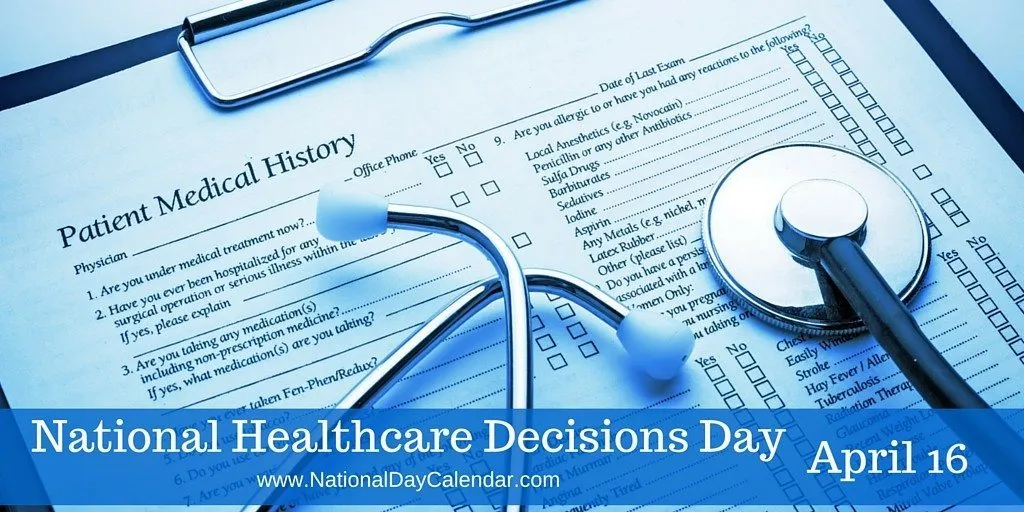
Premature Death

But what happens if either of them should die prematurely, especially Leigh? It’s doubtful Mischa could cut expenses enough to put anything significant toward retirement, instead having to work as long as possible and then rely heavily on Social Security.

This a where a 10-year term life insurance policy on Leigh would make a significant difference. If they purchased a $1,000,000 term policy on Leigh now, the premium (for a nonsmoker in good health) would be around $1200 annually. Should Leigh die this year, if Mischa invested the insurance payment it would have a high probability of growing to $1,500,000 in ten years. This would allow Mischa to retire comfortably.

However, the older Leigh and Mischa get, the less they need the insurance. If Leigh died in the fifth year of the policy, the five years of savings plus the insurance proceeds would accrue more than $2,000,000 over the following five years.

One cost-saving strategy would be to buy two $500,000 10-year term policies and drop one after five years. This would still provide for a total of around $1,500,000 in retirement funds for Mischa by age 65 if Leigh should die before that time.

***
 ***

If you proposed this plan to a life insurance agent, they might suggest putting Leigh’s salary into a cash value policy instead of buying term.

Let’s look at that

Contributing $124,000 into the retirement plan saves $24,000 a year in income taxes, so only $100,000 a year would be available to buy insurance. This amount would cover a policy with a $1.9 million death benefit and a cash value guaranteed to grow to $1,036,328 in 10 years. Given the extra tax payments, plus premium costs of $1 million over 10 years, that’s not a good investment for our couple. The commission of $72,500 makes it a great investment for the salesperson, though.

Assessment

Besides, in this circumstance, life insurance is not meant as an investment. It is an affordable way to replace the income that covers Leigh’s retirement contribution. 

Conclusion

Your thoughts and comments on this ME-P are appreciated. Feel free to review our top-left column, and top-right sidebar materials, links, URLs and related websites, too. Then, subscribe to the ME-P. It is fast, free and secure.

Speaker: If you need a moderator or speaker for an upcoming event, Dr. David E. Marcinko; MBA – Publisher-in-Chief of the Medical Executive-Post – is available for seminar or speaking engagements.

Book Marcinko: https://medicalexecutivepost.com/dr-david-marcinkos-bookings/

Subscribe: MEDICAL EXECUTIVE POST for curated news, essays, opinions and analysis from the public health, economics, finance, marketing, IT, business and policy management ecosystem.

MORE FOR DOCTORS:

“Insurance & Risk Management Strategies for Doctors” https://tinyurl.com/ydx9kd93

“Fiduciary Financial Planning for Physicians” https://tinyurl.com/y7f5pnox

“Business of Medical Practice 2.0” https://tinyurl.com/yb3x6wr8

THANK YOU

Risk Management, Liability Insurance, and Asset Protection Strategies for Doctors and Advisors: Best Practices from Leading Consultants and Certified Medical Planners™8Comprehensive Financial Planning Strategies for Doctors and Advisors: Best Practices from Leading Consultants and Certified Medical Planners™

***


PODCAST: How Modernized Self-Directed IRAs Help Democratize [Physician] Retirement

***

In this podcast, host Dara Albright and guest, Eric Satz, Founder and CEO of Alto IRA, discuss how modern Self-Directed IRAs (SDIRAs) are democratizing retirement planning by providing all Americans with the ability to add non-correlated alternative asset classes to tax-advantaged accounts.

The single greatest – and free – investment tool is also disclosed.

***

What are the Advantages of Rolling the Money of My Retirement Plan into an  IRA? - Protection Point Advisors, Inc.

Discussion highlights include:

  • How SDIRAs offer wealth building opportunities for “not-yet accredited investors”;
  • How SDIRAs have evolved to accommodate micro-sized alternative investments; 
  • Why alternative assets belong in retirement vehicles;
  • Three reasons most retirement savers are underweighted in non-correlated assets;
  • Trading cryptocurrencies without tax consequences; 
  • Why RIAs are looking to ALTO for clients’ crypto allocation;
  • How to open a cryptoIRA account.

PODCAST: https://dwealthmuse.podbean.com/e/episode-12-how-modernized-selfdirected-iras-help-democratize-retirement-1623424270/

Your comments are appreciated.

THANK YOU

RELATED TEXTS: https://medicalexecutivepost.com/2021/04/29/why-are-certified-medical-planner-textbooks-so-darn-popular/

INVITE DR. MARCINKO: https://medicalexecutivepost.com/dr-david-marcinkos-

******

PODCASTS: The GREAT ECONOMIC MODERATION / RESIGNATION in Medicine?

A HISTORICAL REVIEW WITH UPDATE

Dr. David Edward Marcinko | The Leading Business Education Network for  Doctors, Financial Advisors and Health Industry Consultants

By Dr. David E. Marcinko MBA CMP®

CMP logo

SPONSOR: http://www.CertifiedMedicalPlanner.org

What was the Great Economic Moderation?

The Great Moderation is the name given to the period of decreased macroeconomic volatility experienced in the United States starting in the 1980s.

CITE: https://www.r2library.com/Resource/Title/0826102549

During this period, the standard deviation of quarterly real gross domestic product (GDP) declined by half and the standard deviation of inflation declined by two-thirds, according to figures reported by former U.S. Federal Reserve Chair Ben Bernanke. The Great Moderation can be summed up as a multi-decade period of low inflation and positive economic growth.

But, what about health economics, writ large? And, the actual practice of medicine by physicians in the trenches. Consider this historical review.

GOLDEN AGE OF MEDICINE

The ‘golden age of medicine’ – the first half of the 20th century, reaching its zenith with Jonas Salk’s 1955 polio vaccine – was a time of profound advances in surgical techniques, immunization, drug discovery, and the control of infectious disease; however, when the burden of disease shifted to lifestyle-driven, chronic, non-communicable diseases, the golden era slipped away. Although modifiable lifestyle practices now account for some 80% of premature mortality, medicine remains loathe to embrace lifestyle interventions as medicine Here, we argue that a 21st century golden age of medicine can be realized; the path to this era requires a transformation of medical school recruitment and training in ways that prioritize a broad view of lifestyle medicine. Moving beyond the basic principles of modifiable lifestyle practices as therapeutic interventions, each person/community should be viewed as a biological manifestation of accumulated experiences (and choices) made within the dynamic social, political, economic and cultural ecosystems that comprise their total life history. This requires an understanding that powerful forces operate within these ecosystems; marketing and neoliberal forces push an exclusive ‘personal responsibility’ view of health – blaming the individual, and deflecting from the large-scale influences that maintain health inequalities and threaten planetary health. The latter term denotes the interconnections between the sustainable vitality of person and place at all scales. We emphasize that barriers to planetary health and the clinical application of lifestyle medicine – including authoritarianism and social dominance orientation – are maintaining an unhealthy status quo.

NOTE: https://pubmed.ncbi.nlm.nih.gov/31828026/

GOLDEN AGE OF MEDICAL PRACTICE

To listen to all those desperate to reform health care, you get the impression that physicians are pretty horrible people. We are all sexist, greedy, money grubbing tyrants who will perform unnecessary tests and procedures just to make money. We don’t care about quality or cost. We are killing off 250,000 patients every year with our ignored “errors.”

We purposely keep our patients in pain, or we addict them to narcotics just to shut them up. We are constantly told by lawyers that lawsuits are necessary to protect patients from doctors. We provide unsafe drugs just because the drug reps give us free pens and coffee cups. The government must step in to clean up the mess.

PODCAST: https://www.kevinmd.com/blog/2017/08/9-reasons-golden-age-medicine-golden.html

GOLDEN AGE OF PATIENT TRUST

****

***

THE GREAT PHYSICIAN RETIREMENT AND RESIGNATION: https://medicalexecutivepost.com/2021/11/09/healthcare-industry-hit-with-the-great-resignation-retirement/

YOUR COMMENTS ARE APPRECIATED.

Thank You

***

Risk Management, Liability Insurance, and Asset Protection Strategies for Doctors and Advisors: Best Practices from Leading Consultants and Certified Medical Planners™

RETIREMENT PLANNING: https://www.routledge.com/Risk-Management-Liability-Insurance-and-Asset-Protection-Strategies-for/Marcinko-Hetico/p/book/9781498725989

***

Comprehensive Financial Planning Strategies for Doctors and Advisors: Best Practices from Leading Consultants and Certified Medical Planners™

***

Stress Testing your Investment Portfolio

Join Our Mailing List

What is Your Risk Number?

DG

[By David Gratke]

Are your current investments aligned with YOUR investment goals and expectations in 2022?

As we all know, the global financial markets have responded tremendously to the past seven years of Global Central Bank monetary polices. i.e. asset prices, stocks, bonds and real estate have all gone up in price as a result. But now, we have the pandemic and Ukraine war to consider.

So, when have you last ‘stress-tested’ your portfolio to see how durable it may through various market cycles? And, how do you determine if your current investment holdings are right for you? Maybe they are too conservative, or just the opposite, still too aggressive?  Maybe they are right where they need to be, but how do you know, how do you measure that?

  • Capture you Risk Tolerance
  • See if your portfolio fits you.
  • OK, How do I Start?

By simply answering a few questions, and spending 10 minutes of your time, based upon the size of your investment portfolio, you will quickly determine your own tolerance for risk.

Comparing your Risk Number to your Portfolio

Now that you have calculated your Risk Number, how does that number compare to your actual portfolio holdings? Is the portfolio you have today, the one you started with some time ago regarding risk and return? Is it still in alignment with your original expectations?

Does your portfolio have?

  • Too much risk?
  • Is it too conservative?
  • Or, is it just right
  • What if the market drops significantly? Instead, what if the market goes up significantly? See how your current portfolio will fair in any one of these market conditions:
  • Let’s put your portfolio onto the treadmill; just like the doctor’s office.
  • How do you know, how do you measure?

Let’s Stress Test your Portfolio

  1. Bull Market (Prices generally rise)
  2. Bear Market (Prices generally fall)
  3. Financial Crisis
  4. Rising Interest Rates

***

ScreenShot2015-06-01at11_34_02AM_113439

***

  • Are the results in alignment with your expectations?
  • Any ‘hot spots’ you need to know about?
  • Are there any individual holdings that will cause you loss of sleep over?
  • Maybe investments don’t generate enough income?
  • Maybe investments fluctuate too much in price?
  • Now you can have a look and see if there are any ‘hot spots’ where you may need to re-balance a portion of your holdings based upon these findings.

***

2

Yes! That feels like me

***

Congratulations. Once you have determined your Risk Number, and perhaps re-aligned your current portfolio to your Risk Number, then yes, you DO have the portfolio that is right for you, one that ‘feels like you’.

ABOUT

David Gratke is chief executive officer of Gratke Wealth LLC in Beaverton, Ore. A Registered Investment Advisory Firm.

***

Conclusion

Your thoughts and comments on this ME-P are appreciated. How does the current market tumult affect this ME-P or your own investing strategy? Feel free to review our top-left column, and top-right sidebar materials, links, URLs and related websites, too. Then, subscribe to the ME-P. It is fast, free and secure.

***

Risk Management, Liability Insurance, and Asset Protection Strategies for Doctors and Advisors: Best Practices from Leading Consultants and Certified Medical Planners™8Comprehensive Financial Planning Strategies for Doctors and Advisors: Best Practices from Leading Consultants and Certified Medical Planners™

“Physicians who don’t understand modern risk management, insurance, business and asset protection principles are sitting ducks waiting to be taken advantage of by unscrupulous insurance agents and financial advisors; and even their own prospective employers or partners. This comprehensive volume from Dr. David Marcinko, and his co-authors, will go a long way toward educating physicians on these critical subjects that were never taught in medical school or residency training.”

Dr. James M. Dahle MD FACEP [Editor of The White Coat Investor, Salt Lake City, Utah]

***

USA “With time at a premium, and so much vital information packed into one well organized resource, this comprehensive textbook should be on the desk of everyone serving in the healthcare ecosystem. The time you spend reading this frank and compelling book will be richly rewarded.”

Dr. J. Wesley Boyd MD PhD MA [Harvard Medical School, Boston, Massachusetts, USA]

PODCAST: 50% of Medical Treatments Have Unknown Effectiveness

By Eric Bricker MD

***

***

COMMENTS APPRECIATED

Thank You

Subscribe to the Medical Executive-Post

***

ORDER: https://www.routledge.com/Risk-Management-Liability-Insurance-and-Asset-Protection-Strategies-for/Marcinko-Hetico/p/book/9781498725989

***

***

Healthcare Industry Hit with the Great Resignation & Retirement

Healthcare Industry Hit with the Great Resignation & Retirement

BY HEALTH CAPITAL CONSULTANTS, LLC

The COVID-19 pandemic has served as a catalyst for two current healthcare workforce trends: the Great Retirement and the Great Resignation.

CITE: https://www.r2library.com/Resource/Title/0826102549

While the Great Resignation among physicians and other clinicians has been well reported, a potential onslaught of retirements by senior executives may further impact hospitals and health systems at an already precarious time.

Should you quit, or wait to be fired?

This Health Capital Topics article will discuss some of the key challenges and issues surrounding healthcare’s Great Retirement and Great Resignation. (Read more…) 

YOUR COMMENTS ARE APPRECIATED.

Risk Management, Liability Insurance, and Asset Protection Strategies for Doctors and Advisors : Best Practices from Leading Consultants and Certified Medical Planners™ book cover

ORDER: https://www.routledge.com/Risk-Management-Liability-Insurance-and-Asset-Protection-Strategies-for/Marcinko-Hetico/p/book/9781498725989

***

Thank You

***

INHERITED Retirement Accounts and Uncle Sam

IRS Tax Implications

By Staff Reporters

***

If you inherited a tax-deferred retirement plan, such as a traditional IRA, you’ll have to pay taxes on the money. But you can make the tax hit less onerous.

Spouses can roll the money into their own IRAs and postpone distributions—and taxes—until they’re 70½. All other beneficiaries who want to continue to benefit from tax-deferred growth must roll the money into a separate account known as an inherited IRA. Make sure the IRA is rolled directly into your inherited IRA. If you take a check, you won’t be allowed to deposit the money. Rather, the IRS will treat it as a distribution and you’ll owe taxes on the entire amount.

Once you’ve rolled the money into an inherited IRA, you must take required minimum distributions every year—and pay taxes on the money—based on your age and life expectancy. Deadlines are critical: You must take your first RMD by December 31st. of the year following the death of your parent (or whoever left you the account). Otherwise, you’ll be required to deplete the entire account within five years after the year following your parent’s death.

The December 31st. deadline is also important if you are one of several beneficiaries of an inherited IRA. If you fail to split the IRA among the beneficiaries by that date, your RMDs will be based on the life expectancy of the oldest beneficiary, which may force you to take larger distributions than if the RMDs were based on your age and life expectancy.

You can take out more than the RMD, but setting up an inherited IRA gives you more control over your tax liabilities. You can, for example, take the minimum amount required while you’re working, then increase withdrawals when you’re retired and in a lower tax bracket.

CITE: https://www.r2library.com/Resource/Title/0826102549

***

Have you Inherited an IRA? It's time to compare your options

***

Did you inherit a Roth IRA? And so, as long as the original owner funded the Roth at least five years before he or she died, you don’t have to pay taxes on the money. You can’t, however, let it grow tax-free forever. If you don’t need the money, you can transfer it to an inherited Roth IRA and take RMDs under the same rules governing a traditional inherited IRA. But with a Roth, your RMDs won’t be taxed.

***

COMMENTS APPRECIATED

Thank You

Subscribe to the Medical Executive-Post

***

***

Comprehensive Financial Planning and Risk Management Strategies for Doctors and their Advisors

***

Best Practices from Leading Consultants and Certified Medical Planners

SPONSOR: http://www.CertifiedMedicalPlanner.org

CMP logo

***

***

Risk Management, Liability Insurance, and Asset Protection Strategies for Doctors and Advisors: Best Practices from Leading Consultants and Certified Medical Planners™

ORDER: https://www.routledge.com/Risk-Management-Liability-Insurance-and-Asset-Protection-Strategies-for/Marcinko-Hetico/p/book/9781498725989

***

SOME TAX BENEFITS: Senior Healthcare Professionals

By Staff Reporters

****

See the source image

***

Tax planning can be quite a tedious process, but there are benefits for all seniors to make it less taxing. And senor medical professionals should take particular note:

  • Free Advice: IRS-certified volunteers will help older taxpayers with tax return preparation and electronic filing between January 1st and April 15th each year.
  • No Withdrawal Penalties: Anyone aged 59 years or over can withdraw money from an IRA, without incurring the common 10% tax.
  • Catch-Up Contributions: Healthcare Workers aged 50 or older can defer income tax on an extra $6,500 or a total of $26,000 if contributed to a 401(k) plan, resulting in a tax savings of $6,240 for an older worker in the 24% tax bracket.
  • Additional IRA Contribution: Workers age 50 and older can contribute an additional $1,000 to an IRA, or a total of $7,000 in 2020.
  • CITE: https://www.r2library.com/Resource/Title/082610254

***

COMMENTS APPRECIATED

Thank You

Subscribe to the Medical Executive-Post

***

***

IRS Tax Reduction Issues for Self-Employed Physician Executives

***

By Dr. David Edward Marcinko MBA CMP®

SPONSOR: http://www.CertifiedMedicalPlanner.org


INTRODUCTION

Whether you do contract work or have your own small business, tax deductions for the self-employed physician consultant and/or medical executive or nurse consultant, etc., can add up to substantial tax savings.

Welcome Tax Season: https://www.msn.com/en-us/money/taxes/tax-season-2022-irs-now-accepting-tax-returns-what-to-know-before-filing-taxes-about-your-refund/ar-AAT53rR?li=BBnb7Kz


With self-employment comes freedom, responsibility, and a lot of expense. While most self-employed people celebrate the first two, they cringe at the latter, especially at tax time. They might not be aware of some of the tax write-offs to which they are entitled.

When it comes time to file your returns, don’t hesitate to claim the benefits you get for being the boss. As a self-employed success story, you’ve earned them.

FORM 1099 NEC: Form 1099 NEC is one of several IRS tax forms used in the United States to prepare and file an information return to report various types of income other than wages, salaries, and tips. The term information return is used in contrast to the term tax return although the latter term is sometimes used colloquially to describe both kinds of returns.

READ: https://turbotax.intuit.com/tax-tips/self-employment-taxes/how-to-file-taxes-with-irs-form-1099-misc/L3UAsiVBq?tblci=GiC9aWPDzN9yXLpSuE8LDo3YRMDPuoFwO9ycCY6qixKJ8CC8ykEo94-H7prplp7cAQ

CITE: https://www.r2library.com/Resource/Title/082610254

“Many times an overlooked deduction is educational expenses. If one is taking courses or buying research material to be more effective in their work, this can be deductible.”

Individual Retirement Plans (IRAs)

One of the best tax write-offs for the self-employed physician consultant is a retirement plan. A person with no employees can set up an individual 401 (k). “You can contribute $19,500 in 2021 as a 401(k) deferral, plus 25 percent of net income.”

If you have employees, consider a SIMPLE (Savings Incentive Match Plan for Employees) IRA—an IRA-based plan that gives small employers a simplified method to make contributions to their employees’ retirement. As of 2021, an employee may defer up to $13,500 and employees over 50 may contribute an additional $3,000.

“A third retirement plan is Simplified Employee Pension IRA (SEP IRA).” The employer may contribute the lesser of 25 percent of income or $58,000 in 2021. If the employer has eligible employees, an equal percentage of their income must be contributed.

Recall that retirement plans are “absolutely the No. 1 tax deduction. The government is helping fund retirement.”

Business use of home or dwelling

Now, most self-employed taxpayers’ businesses start as home-based businesses. These people need to know portions of business costs are deductible and so “It is very important that you keep track of expenses relating to your housing costs.”

If your gross income from your business exceeds your total expenses, then you can deduct all of your expenses related to the business use of your home. If your gross income is less than your total expenses, your deduction will be limited to the difference between your gross income and the sum of all business expenses you would pay if the business was not in your home. Those expenses could include telephone lines, the Internet, and other costs to do business.

You must also have a home office that is truly used for work and the Internal Revenue Service may require you to document this.

***

Deducting automobile expenses

If you travel for business, even short distances within your own city, you may deduct the dollar value of business miles traveled on your tax return. The taxpayer may file the actual expense s/he incurred, or use the standard mileage rate prescribed by the IRS, which is 56 cents as of 2021. The IRS allowable mileage rates should be checked every year as they can change.

“If you decide to use actual car expenses, be sure to include payments, depreciation, registration, insurance, garage rent, licenses, repairs and maintenance, and parking and toll fees.” AND, “If you decide to use the standard mileage rate, it would be in your best interest to keep a log—daily, weekly or monthly—of miles driven to distinguish personal use from business use.”

Depreciation of property and equipment

Some self-employed people may purchase property and equipment for a business. If they expect that property to last longer than one year, it should be depreciated on the tax return.

Claims regarding property, according to the IRS, must meet the following criteria: You must own the property and it must be used or held to generate income. The property should have an estimated useful life, meaning you should be able to guess how long you can generate income with it. It may not have a useful life of one year or less, and may not be purchased and disposed of in the same year.

Certain repairs on property used for business may also be deducted.

Educational expenses

Any educational expense is potentially tax-deductible.

“Many times an overlooked deduction is educational expenses. “If one is taking courses or buying research material to be more effective in their work, this can be deductible.”

Think about any books, web courses, local college courses, or other classes or materials that you have purchased to improve your job or business. It’s easy to forget a work-related webinar or business e-book that was purchased online, so remember to save e-receipts.

Also recall that subscriptions to trade or professional publications and donations to business organizations, both of which are frequently necessary for the continuation and growth of your business.

Other areas to explore

Other deductions that can be easily missed are advertising and promotional expenses, banking fees, and air, bus, or train fare. Restaurant meals and other entertainment costs may be written off as long as they are necessary business expenses.

And, consider health insurance premiums, which in most cases represent a credit rather than a tax deduction. “A credit goes directly against one’s taxes, rather than a reduction of income.”

Regardless of which expenses you discover that you may write off, the most important thing is to keep accurate records throughout the year. Save receipts, including e-mail receipts, and file or log them so you have easy access to them at tax time. Not only does keeping receipts, mileage logs, and other expense records make filing taxes easier, but it also facilitates a system that allows you to track changes from year to year.

***

Long-term tax-saving strategies

Don’t just look at last-minute write-offs when considering self-employment tax deductions. Think about laying down some long-term strategies for money savings from year to year—particularly if you are a high earner.

“Accountants typically tell you what you have to pay but they don’t always tell you strategies to reduce your payments.”

To reduce your gross taxable income, consider setting up a defined-benefit pension plan. This plan is based on your age and income: The older you are and the higher your earnings, the more you are allowed to contribute. An alternative plan is an age-weighted profit-sharing plan, which is similar and can benefit those who have several employees.

Another strategy for high-earning business owners who own their own building through a limited liability company or similar business structure is to pay themselves rent. This rent is used to pay down the mortgage, but it is also considered a business expense for tax purposes.

Self-employed professionals required to have liability insurance should consider setting up their own insurance company. A captive insurance company is one that insures the risks of the business—or businesses, in the case of a cooperative. Its premiums can be tax-deductible.

But, if money accumulates and claims are minimal, the money taken out is taxable under capital gains. This is not a retirement strategy, but that it can save you money by allowing you to “pay yourself” instead of an insurance company and still deduct the premiums.

Assessment

With any of these more complicated, long-term strategies, consult with a business attorney, CPA/EA or financial planner to ensure you have the best plan possible for your business.

***

CAPITAL GAINS UPDATE: https://wordpress.com/post/medicalexecutivepost.com/251470

***

COMMENTS APPRECIATED

Thank You

Subscribe to the Medical Executive-Post

***

Risk Management, Liability Insurance, and Asset Protection Strategies for Doctors and Advisors: Best Practices from Leading Consultants and Certified Medical Planners™

ORDER: https://www.amazon.com/Business-Medical-Practice-Transformational-Doctors/dp/0826105750/ref=sr_1_9?ie=UTF8&qid=1448163039&sr=8-9&keywords=david+marcinko

***