SIMPLE: The “50-30-20” Budget Rule of Thumb

Try the 50/30/20 rule OF WANTS, NEEDS AND SAVINGS

By Dr. David Edward Marcinko MBA CMP®

CMP logo

SPONSOR: http://www.CertifiedMedicalPlanner.org

There are varying opinions on how much of your total income should go toward savings and retirement goals each month. Moreover, the answer is likely to vary, depending on your full financial profile.

But if you’re looking for some basic KISS guidelines, consider applying the 50-30-20 rule, a budgeting method that allocates 50% of your income to essentials, like rent and bills, 30% to discretionary spending and 20% to savings.

Citation: https://www.r2library.com/Resource/Title/0826102549

Image shows a pie chart broken up into 50%, 30%, and 20%. Title reads: "The 50/30/20 Budgeting Rule." Under 50% says "Needs: groceries, housing, utilities, health insurance, car payment." Under 30% reads: "Wants: shopping dining out, hobbies." Under 20% says "Savings"

Your thoughts are appreciated.

THE RULE: https://www.thebalance.com/the-50-30-20-rule-of-thumb-453922

THANK YOU

ZERO BASED BUDGET: https://medicalexecutivepost.com/2021/05/24/the-zero-based-budget-for-physicians/https://medicalexecutivepost.com/2015/07/02/can-doctors-achieve-financial-independence-without-budgeting/

EPI BUDGET FACTS: https://www.epi.org/resources/budget/budget-factsheets/

NO BUDGETS: https://medicalexecutivepost.com/2015/07/02/can-doctors-achieve-financial-independence-without-budgeting/

HOUSEHOLD BUDGET: https://medicalexecutivepost.com/2013/10/07/on-setting-your-household-budget-ugh/

***

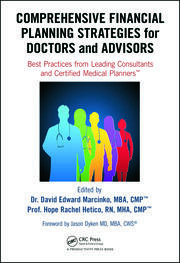
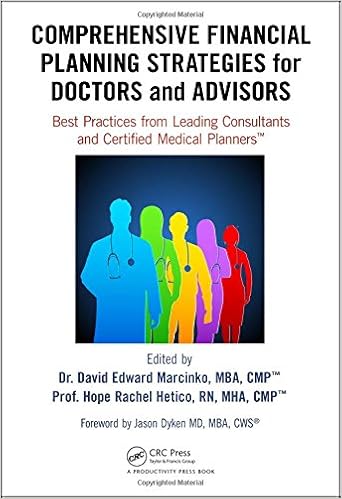
Comprehensive Financial Planning Strategies for Doctors and Advisors: Best Practices from Leading Consultants and Certified Medical Planners™

ORDER: https://www.routledge.com/Comprehensive-Financial-Planning-Strategies-for-Doctors-and-Advisors-Best/Marcinko-Hetico/p/book/9781482240283

***

ME-P Speaking Invitations

Dr. David E. Marcinko is at your Service

thumbnail_IMG_1663.edit1

Dr. David Edward Marcinko MBA CMP® enjoys personal coaching and public speaking and gives as many talks each year as possible, at a variety of medical society and financial services conferences around the country and world.

These have included lectures and visiting professorships at major academic centers, keynote lectures for hospitals, economic seminars and health systems, keynote lectures at city and statewide financial coalitions, and annual keynote lectures for a variety of internal yearly meetings.

His talks tend to be engaging, iconoclastic, and humorous. His most popular presentations include a diverse variety of topics and typically include those in all iMBA, Inc’s textbooks, handbooks, white-papers and most topics covered on this blog.

CONTACT: Ann Miller RN MHA

MarcinkoAdvisors@msn.com

Ph: 770-448-0769

Abbreviated Topic List: https://medicalexecutivepost.com/wp-content/uploads/2009/02/imba-inc-firm-services.pdf

Second Opinions: https://medicalexecutivepost.com/schedule-a-consultation/

DIY Textbooks: https://medicalexecutivepost.com/2021/04/29/why-are-certified-medical-planner-textbooks-so-darn-popular/

THANK YOU

***

HOSPITAL EMPLOYER PROVIDED TRANSPORTATION BENEFITS

By Dr. David Edward Marcinko MBA CMP©

SPONSOR: http://www.CertifiedMedicalPlanner.org

CMP logo

COST COMPARISONS

Example 1: Dr. Kurt purchases an automobile for $15,000.

His hospital business use is 80% and he drives 20,000 total miles per year.  Operating costs for the year, including gasoline, oil, insurance, maintenance, repairs, and license fees, are $4,000. If Kurt owns the car for five years, ownership will cost $35,000 ($4,000 x 5 = $20,000, $20,000 + $15,000 = $35,000), or $7,000 per year. For, each personal use mile costs $1.75 (100% -80% = 20%, 20% x 20,000 miles = 4,000 miles, $7,000/4,000 miles = $1.75). Kurt’s employer reimburses him 34.5 cents per mile for the business-related miles. As a result, the business use of the car is only partially reimbursed (16,000 business miles x 34.5 cents = $5,520).  

However, the business usage costs Kurt $5,600(80% of $7,000). Kurt subsidizes the employer 9.25 cents per mile ($7,000 – $5,520 = $1,480, $1,480 /16,000 = 9.25 cents). Kurt’s total cost of ownership is $1.84 per mile, or $36,850 ($1.88 x 20,000 personal miles over the five-year life).

1

Example 2: Dr. Ben uses a hospital employer-provided vehicle 4,000 miles per year in 2003.

He reimburses the employer 34.5 cents per mile. His cost for five years is $6,900 (5y x 4,000 = 20,000 miles, 20,000 miles x 34.5 = $6,900).

Beginning on January 1st 2013, the standard mileage rates for the use of a car (also vans, pickups or panel trucks) were:

  • 56.5 cents per mile for business miles driven
  • 24 cents per mile driven for medical or moving purposes
  • 14 cents per mile driven in service of charitable organizations

Note the dramatic contrast, from the employee’s perspective, between the above two examples, of the company reimbursing the employee for business use of his personal car, versus the employee reimbursing the company for personal use of the vehicle.

The business, medical, and moving expense rates decrease one-half cent from the 2013 rates.  The charitable rate is based on statute.

Source: http://www.irs.gov

2

ASSESSMENT: Your updated thoughts in modernity are appreciated.

ORDER Textbook: https://www.amazon.com/Comprehensive-Financial-Planning-Strategies-Advisors/dp/1482240289/ref=sr_1_1?ie=UTF8&qid=1418580820&sr=8-1&keywords=david+marcinko

INVITE DR. MARCINKO: https://medicalexecutivepost.com/dr-david-marcinkos-bookings/

THANK YOU

***

New “MEDICAL SPECIALTIES” 2.0

BY DR. DAVID E. MARCINKO MBA CMP®

Image result for dasvid marcinko
CMP logo

SPONSOR: http://www.CertifiedMedicalPlanner.org

GLOSSARY OF PRACTITIONER TERMS?

Each generation of doctors and medical professionals is extraordinarily complex, bringing various skills, expertise and expectations to the modern medical work environment. Determining the best method to unite such diverse thinking is one of the many challenges faced by physician executives and healthcare leaders today.

And, as linguistic evolution occurs, the nomenclature of hospitalist was followed by that of intensivist, proceduralist and nocturnalist, etc [www.MedInnovationBlog.com and Personal communication Richard L. Reece MD].

Is it any wonder that many medical leaders and executive in the Baby Boomer generation find themselves at a loss? The days of functional leadership are gone and suddenly, no one cares about the expertise of the Baby Boomers or how they climbed the corporate ladder, in medicine or elsewhere. Leadership in the new era is no longer about command-control or dictating with intense focus on the bottom line; it is about collaboration, empowerment and communication. And, it is not about titles and nomenclature; it is about lifestyle choice.

What else drives these new-wave specialists?

The answer, of course, is the next-generation of physicians and their emerging new medical business and practice models, which include:

  • “Ambulists” are doctors that travel locally, have no, or only a sparse physical office presence of their own. They sporadically provide services that are additive to traditional practice models [i.e., endocrinologist in a large family medical office with many diabetics]. 
  • “In-Situ” physicians regularly provide services that are complimentary to existing traditional practice models [i.e., dentists or podiatrists in a medical practice].
  • “Laborists” are obstetricians that do not wish to be on-call. First begun in Cape Cod and other Massachusetts hospitals, such obstetricians work regular shifts for the sole purpose of delivering babies.
  • “Locum Tenens” doctors travel around the country as itinerants [i.e., cruise ships] as temporary substitutes for another the same specialty.
  • “Officists” remain in their own physical practice, and rarely see patients in the hospital, nursing home, patient home, out-patient facility, etc.
  • Finally, “dayhawk physicians” mimic the “nighthawk physician” model where radiologists in remote locations read films in the middle of the night as cash-strapped hospitals often find it cheaper to outsource with better services and more timely interpretations in many cases.

Your thoughts are appreciated.

THANK YOU

***

PODCAST: Soap-Box Opera of Healthcare Reform?

By Carolyn McClanahan MD CFP

Your thoughts are appreciated.

THANK YOU

***

SPONSOR: http://www.CertifiedMedicalPlanner.org

Comprehensive Financial Planning Strategies for Doctors and Advisors: Best Practices from Leading Consultants and Certified Medical Planners™

ORDER: https://www.routledge.com/Comprehensive-Financial-Planning-Strategies-for-Doctors-and-Advisors-Best/Marcinko-Hetico/p/book/9781482240283

***

HUMANITARIAN WISDOM IN PATIENT CARE AS AN ETHICAL AND MORAL IMPERATIVE!

AND … RISK MANAGEMENT TOOL?

7f4a80b3-c6c3-49b5-9cdd-9f8e116683cd-original

BY DR. DAVID EDWARD MARCINKIO MBA CMP®

CMP logo

SPONSOR: http://www.CertifiedMedicalPlanner.org

To start, let us all recall the Canadian physician Sir William Osler MD, one of the founders of Johns Hopkins Hospital in my hometown of Baltimore Maryland, and where I played stickball in the parking lot as a kid. He left a sizeable body of wisdom that has guided many physicians in the practice of medicine. So, allow me to share with you some of that accumulated wisdom and the quotes that have served me well over the years.

From Dr. Osler, I learned the art of putting myself in the patient’s shoes. “The motto of each of you as you undertake the examination and treatment of a case should be ‘put yourself in his place.’ Realize, so far as you can, the mental state of the patient, enter into his feelings.” Osler further stresses that we should “scan gently (the patient’s) faults” and offer the “kindly word, the cheerful greeting, the sympathetic look.”1

“In some of us, the ceaseless panorama of suffering tends to dull that fine edge of sympathy with which we started,” writes Osler in his famous essay “Aequanimitas.”2 “Against this benumbing influence, we physicians and nurses, the immediate agents of the Trust, have but one enduring corrective — the practice towards patients of the Golden Rule of Humanity as announced by Confucius: ‘What you do not like when done to yourself, do not do to others.’”

Medicine can be both art and science as many physicians have discovered. As Osler tells us, “Errors in judgment must occur in the practice of an art which consists largely of balancing probabilities.”2 Osler notes that “Medicine is a science of uncertainty and an art of probability” and also weighs in with the idea that “The practice of medicine is an art, based on science.”3,4

Osler emphasized that excellence in medicine is not an inheritance and is more fully realized with the seasoning of experience. “The art of the practice of medicine is to be learned only by experience,” says Osler. “Learn to see, learn to hear, learn to feel, learn to smell, and know that by practice alone can you become expert.”5

Finally, some timeless wisdom on patient care came from Osler in an address to St. Mary’s Hospital Medical School in London in 1907: “Gain the confidence of a patient and inspire him with hope, and the battle is half won.”6

***

0

***

Osler has also imparted plenty of advice on the business of medicine. In “Aequanimitas,” Osler says there are only two types of doctors: “those who practice with their brains, and those who practice with their tongues.”7

In a valedictory address to medical school graduates at McGill University, Osler suggested treating money as a side consideration in a medical career.8 “You have of course entered the profession of medicine with a view of obtaining a livelihood; but in dealing with your patients let this always be a secondary consideration.”

“You are in this profession as a calling, not as a business: as a calling which exacts from you at every turn self-sacrifice, devotion, love and tenderness to your fellow man,” explains Osler in the address to St. Mary’s Hospital Medical School.6 “Once you get down to a purely business level, your influence is gone and the true light of your life is dimmed. You must work in the missionary spirit, with a breadth of charity that raises you far above the petty jealousies of life.”

It is not easy for doctors to combine a passion for patient care, a knowledge of science and the maintenance of business, according to Osler in the British Medical Journal.9 “In the three great professions, the lawyer has to consider only his head and pocket, the parson the head and heart, while with us the head, heart, and pocket are all engaged.”

While some aspects of practice may fall short or be devoid of appropriate financial remuneration, the giving of one’s time, expertise and experience in improving patient outcomes and the quality of their lives may be the greatest gift. “The ‘good debts’ of practice, as I prefer to call them … amount to a generous sum by the end of each year,” says Osler.9

And so, as you practice medicine and reflect on your career, always remember the words and wisdom of Dr. William Osler, and keep patient welfare as your first priority.

References

1. Penfield W. Neurology in Canada and the Osler centennial. Can Med Assoc J. 1949; 61(1): 69-73

2. Osler W. Aequanimitas. Chapter 9, P. Blakiston’s Son and Co., Philadelphia, 1925, p. 159

3. Bean WB. William Osler: Aphorisms, CC Thomas, Springfield, IL, p. 129.

4. Osler W. Aequanimitas. Chapter 3, P. Blakiston’s Son and Co., Philadelphia, 1925, p. 34

5. Thayer WS. Osler the teacher. In: Osler and Other Papers. Johns Hopkins Press, Baltimore, 1931, p. 1.

6. Osler W. The reserves of life. St. Mary’s Hosp Gaz. 1907;13 (1):95-8.

7. Osler W. Aequanimitas. Chapter 7, P. Blakiston’s Son and Co., Philadelphia, 1925, p. 124

8. Osler W. Valedictory address to the graduates in medicine and surgery, McGill University. Can Med Surg J. 1874; 3:433-42.

9. Osler W. Remarks on organization in the profession. Brit Med J. 1911; 1(2614):237-9.

10. Jacobs. AM: PMNews, April, 2015.

ASSESSMENT: Your thoughts are appreciated.

Risk Management, Liability Insurance, and Asset Protection Strategies for Doctors and Advisors : Best Practices from Leading Consultants and Certified Medical Planners™ book cover

ODER TEXTBOOK: https://www.routledge.com/Risk-Management-Liability-Insurance-and-Asset-Protection-Strategies-for/Marcinko-Hetico/p/book/9781498725989

INVITE DR. MARCINKO: https://medicalexecutivepost.com/dr-david-marcinkos-

THANK YOU

***

RURAL HOSPITALS: Defined?

By Calvin Wiese MBA CPA CMP ®

Dr. David Edward Marcinko MBA CMP®

CMP logo

SPONSOR: http://www.CertifiedMedicalPlanner.org

A Distance Definition

A rural hospital is defined as a hospital serving a geographic area ten or more miles from the nexus of a population center of 30,000 or more

More specifically, a rural hospital means an entity characterized by one of the following:

·Type A Rural Hospital — small and remote, has fewer than 50 beds, and is more than 30 miles from the nearest hospital.

·Type B Rural Hospital — small and rural, has fewer than 50 beds, and is 30 miles or less from the nearest hospital.

·Type C Rural Hospital — considered rural and has 50 or more beds.

Citation: https://www.r2library.com/Resource/Title/0826102549

As rural hospitals close, millions of Americas live ...

Your thoughts are appreciated.

INVITE DR. MARCINKO: https://medicalexecutivepost.com/dr-david-marcinkos-bookings/

THANK YOU

***

PHYSICIAN BRANDING: Post Corona Virus Pandemic

SELF-BRANDING IN THE MODERN ERA

By Dr. David Edward Marcinko MBA CMP©

SPONSOR: http://www.CertifiedMedicalPlanner.org

CMP logo

In 1987 the magazine Fast Company published an article authored by Tom Peters entitled “The Brand Called You.” Although some individuals may shy away from the concept of self-branding in actuality, many of the online social network sites such as Facebook become media by which we in fact brand ourselves.

In his article, Peter’s stated. “Regardless of position, regardless of the business we happen to be in, all of us need to understand the importance of branding. We are CEOs of their own companies: Me Inc. to be in business today, our most important job is to be head marketer for the brand called you.”

As a medical practitioner how do you differentiate yourself from others in your specialty and why should a new patient choose your practice above those of the others in the field?

Branding is about finding your big idea and building your identity and game plan around it. The bottom line: if you can’t explain who you are, and the value you bring to your practice in a short sentence or two, you have work to do.

According to Catherine Kaputa, a personal coach she suggests that there are the objective things: your credentials, the schools you went to, your years of experience, and your skill set, which represent what she refers to as hard power. Then there’s soft power: your image and reputation, your visibility in the community, your network of contacts, supporters and mentors. In today’s competitive marketplace, soft power plays a vital role in attracting people to you and your practice.

Standing Out

Peters suggests that everyone has a chance to stand out. Everyone has a chance to learn, improve, and build up their skills. Everyone has a chance to be a brand worthy of remark. Corporations spend millions of dollars creating and maintaining their distinct brand.

The Olympic Rings are representative of a brand which the International Olympic Committee guards zealously. Professional services firms such as McKinsey, foster self-branding among their employees. Major corporations have as employees those individuals who are smart, motivated and talented. Self-branding allows the employees to differentiate themselves from their peers. For one to engage in self-branding is first necessary to ask the question,

What is it that my practice does that makes it different?”

You can begin by identifying the qualities or characteristics that make you distinctive from your competitors-or your colleagues.

What have you done lately-this week-to make yourself stand out? What would your colleagues say is your greatest and clearest strength?

What would they say is your most noteworthy personal trait? As a practitioner does your customer get dependable, reliable service that meets his or her strategic needs?

In addition, ask yourself: “what do I do that adds remarkable, measurable, distinguished distinctive value.”

Branding For A Medical Practice & It's Importance ...

Business Cards

While we are on the topic of mass media look at your business card and check to see if it has a distinctive logo on it. Keep in mind that packaging counts.

Getting and using power, intelligently, responsibly, and powerfully are essential skills for growing your brand. One of the things that attract us to certain brands is the power they project. Power, is largely a matter of perception. If you want people to see you as a powerful brand, act like a credible leader.

Another technique advocated by Peters is developing loyalty among your patients. In addition, you yourself need to be loyal to your colleagues, your staff, patients and to yourself.

Another way in which you can begin to promote yourself is, with a personal visibility campaign; getting yourself on a panel discussion with signing up to make a presentation at a workshop. If you are a medical writer, try writing about the corona pandemic, or contributing a column on a regular basis to your local newspaper. Community newspapers and professional newsletters are always seeking articles to fill the space. Not only does it give you the opportunity to express yourself it also is an excellent means to expose your practice and your capabilities to a mass audience.

ASSESSMENT: Your thoughts are comments are appreciated.

Product Details

ORDER TEXTBOOK: https://www.amazon.com/Business-Medical-Practice-Transformational-Doctors/dp/0826105750/ref=sr_1_9?ie=UTF8&qid=1448163039&sr=8-9&keywords=david+marcinko

SECOND OPINIONS: https://medicalexecutivepost.com/schedule-a-consultation/

INVITE DR. MARCINKO: https://medicalexecutivepost.com/dr-david-marcinkos-bookings/

THANK YOU

The CORPORATE PRACTICE of Medicine?

By Dr. David Edward Marcinko MBA CMP®

CMP logo

SPONSOR: http://www.CertifiedMedicalPlanner.org

CORPORATE PRACTICE OF MEDICINE (CPM) LAWS

OK – I admit that I am not an attorney. But, approximately half of states in the U.S. have made it unlawful for practicing physicians to be employees of corporations. This ban on the corporate practice of medicine (CPM) is intended to keep medical professionals independent and free from financial pressures and influence.

Most states have made exceptions allowing physicians to become employees of not-for-profit organizations and sometimes hospitals. States such as California, Iowa, and Texas, have declined to allow hospitals to employ physicians, although even those states have special exceptions. Iowa hospitals may employ pathologists and radiologists, and Texas public hospitals and California teaching hospitals may employ physicians. Ohio has no ban on the corporate practice of medicine.

ASSESSMENT: Anyone can own a physician practice in Ohio.

QUERY: So, who does the aggrieved patient sue?

YOUR THOUGHTS ARE APPRECIATED

ORDER TEXTBOOK: https://www.routledge.com/Risk-Management-Liability-Insurance-and-Asset-Protection-Strategies-for/Marcinko-Hetico/p/book/9781498725989

Risk Management, Liability Insurance, and Asset Protection Strategies for Doctors and Advisors: Best Practices from Leading Consultants and Certified Medical Planners™

INVITE DR. MARCINKO: https://medicalexecutivepost.com/dr-david-marcinkos-bookings/

THANK YOU

***

The Business of Medical Practice [3rd. edition]

SPONSOR: http://www.CertifiedMedicalPlanner.org

CMP logo

ORDER TEXTBOOK: https://www.amazon.com/Business-Medical-Practice-Transformational-Doctors/dp/0826105750/ref=sr_1_9?ie=UTF8&qid=1448163039&sr=8-9&keywords=david+marcinko

SECOND OPINIONS: https://medicalexecutivepost.com/schedule-a-consultation/

INVITE DR. MARCINKO: https://medicalexecutivepost.com/dr-david-marcinkos-bookings/

THANK YOU

***

Health Dictionary Series of Administrative Terms

CMP logo

SPONSOR: http://www.CertifiedMedicalPlanner.org

To keep up with the ever-changing healthcare industrial complex, we must learn new definitions and re-learn old terminology in order to correctly apply it to practice. By aggregating the most up-to-date abbreviations, acronyms, definitions and terms, the Health Dictionary Series offers a wealth of information to help understand the ever-changing terms-of-art in healthcare today.

Each 10,000 item handbook is essential for doctors, nurses, benefits managers, financial advisors/planners, and insurance agents, CPAs, and administrators; as well as graduate and under graduate students and professors. Our goal to for each dictionary to be designated as a Doody’s Core Title.

Dictionary of Health Insurance and Managed Care

With more than 10,000 definitions, 4,000 abbreviations and acronyms, and a 3,000 item oeuvre of resources, readings, and nomenclature derivatives, this dictionary covers the Medicare, managed care and Medicaid, private insurance, Veteran’s Administration and PP-ACA language of the entire health and long-term care insurance sector.

Product Details
Product Details
Product Details

Dictionary of Health Economics and Finance

Health economics and finance is an integral component of the health care industrial complex. Its language is a diverse and broad-based concept covering many other industries: accounting, mathematics, the actuarial sciences, stochastics and statistics, salary reimbursements, physician payments, compensation and forecasting are all commingled arenas.

Product Details
Product Details
Product Details

Dictionary of Health Information Technology Security

There is a myth that all healthcare stakeholders understand the meaning of information technology jargon. In truth, the vernacular of contemporary systems is unique, and often misused or misunderstood. Moreover, emerging Heath Information Technology (HIT) thru the HITECG initiatives; in the guise of terms, definitions, acronyms, abbreviations and standards; often puts the non-expert in a position of maximum uncertainty and minimum productivity.

Product Details
Product Details
Product Details

FOREWORDS

[Mike Stahl PhD MBA] *** [Foreword Dr.Mata MD CIS] *** [Dr. Getzen PhD] 

INVITE DR. MARCINKO: https://medicalexecutivepost.com/dr-david-marcinkos-bookings/

THANK YOU

***

Hospitals and Healthcare Organizations

SPONSOR: http://www.CertifiedMedicalPlanner.org

CMP logo

ORDER TEXTBOOK: https://www.amazon.com/Hospitals-Healthcare-Organizations-Management-Operational/dp/1439879907/ref=sr_1_4?s=books&ie=UTF8&qid=1334193619&sr=1-4

SECOND OPINIONS: https://medicalexecutivepost.com/schedule-a-consultation/

INVITE DR. MARCINKO: https://medicalexecutivepost.com/dr-david-marcinkos-bookings/

THANK YOU

***

THE ANATOMIC BASIS OF HUMAN PHYSIOLOGY AND BEHAVIOR?

BRAIN ANATOMY

By Dr. David Edward Marcinko MBA CMP©

SPONSOR: http://www.CertifiedMedicalPlanner.org

CMP logo

I am not a neurologist, psychologist, or psychiatrist. But, it is well known that emotional and behavioral change involves the human nervous system. And, there are two parts of the nervous system that are especially significant for holistic financial advisor; the first is the limbic system and the second is the autonomic nervous system. 

According to Dr. C. George Boerre of Shippensburg University of Pennsylvania, this is known as the emotional nervous system.

1. The Limbic System

The limbic system is a set of structures that lies on both sides of the thalamus, just under the cerebrum.  It includes the hypothalamus, the hippocampus, the amygdala, and nearby areas.  It is primarily responsible for emotions, memories and recollection. 

Hypothalamus

The small hypothalamus is located just below the thalamus on both sides of the third ventricle (areas within the cerebrum filled with cerebrospinal fluid that connect to spinal fluid). It sits inside both tracts of the optic nerve, and just above the pituitary gland.

The hypothalamus is mainly concerned with homeostasis or the process of returning to some “set point.”  It works like a thermostat:  When the room gets too cold, the thermostat conveys that information to the furnace and turns it on.  As the room warms up and the temperature rises, it sends turns off the furnace.  The hypothalamus is responsible for regulating hunger, thirst, response to pain, levels of pleasure, sexual satisfaction, anger and aggressive behavior, and more.  It also regulates the functioning of the autonomic nervous system, which means it regulates functions like pulse, blood pressure, breathing, and arousal in response to emotional circumstances. In a recent discovery, the protein leptin is released by fat cells with over-eating.  The hypothalamus senses leptin levels in the bloodstream and responds by decreasing appetite.  So, it seems that some people might have a gene mutation which produces leptin, and can’t tell the hypothalamus that it is satiated.   The hypothalamus sends instructions to the rest of the body in two ways.  The first is to the autonomic nervous system.  This allows the hypothalamus to have ultimate control of things like blood pressure, heart rate, breathing, digestion, sweating, and all the sympathetic and parasympathetic functions.

The second way the hypothalamus controls things is via the pituitary gland.  It is neurally and chemically connected to the pituitary, which in turn pumps hormones called releasing factors into the bloodstream.  The pituitary is the so-called “master gland” as these hormones are vitally important in regulating growth and metabolism.

Hippocampus

The hippocampus consists of two “horns” that curve back from the amygdala.  It is important in converting things “in your mind” at the moment (short-term memory) into things that are remembered for the long run (long-term memory).  If the hippocampus is damaged, a patient cannot build new memories and lives in a strange world where everything they experience just fades away; even while older memories from the time before the damage are untouched!  Most patients who suffer from this kind of brain damage are eventually institutionalized.

Amygdala

The amygdalas are two almond-shaped masses of neurons on either side of the thalamus at the lower end of the hippocampus.  When it is stimulated electrically, animals respond with aggression.  And, if the amygdala is removed, animals get very tame and no longer respond to anger that would have caused rage before.  The animals also become indifferent to stimuli that would have otherwise have caused fear and sexual responses.

Related Anatomic Areas

Besides the hypothalamus, hippocampus, and amygdala, there are other areas in the structures near to the limbic system that are intimately connected to it:

  • The cingulate gyrus is the part of the cerebrum that lies closest to the limbic system, just above the corpus collosum.  It provides a pathway from the thalamus to the hippocampus, is responsible for focusing attention on emotionally significant events, and for associating memories to smells and to pain.
  • The ventral tegmental area of the brain stem (just below the thalamus) consists of dopamine pathways responsible for pleasure.  People with damage here tend to have difficulty getting pleasure in life, and often turn to alcohol, drugs, sweets, and gambling.
  • The basal ganglia (including the caudate nucleus, the putamen, the globus pallidus, and the substantia nigra) lie over to the sides of the limbic system, and are connected with the cortex above them.  They are responsible for repetitive behaviors, reward experiences, and focusing attention. 
  • The prefrontal cortex, which is the part of the frontal lobe which lies in front of the motor area, is also closely linked to the limbic system.  Besides apparently being involved in thinking about the future, making plans, and taking action, it also appears to be involved in the same dopamine pathways as the ventral tegmental area, and plays a part in pleasure and addiction.

https://wallpapercave.com/wp/wp3011600.jpg

2. The Autonomic Nervous System

The second part of the nervous system to have a particularly powerful part to play in our emotional life is the autonomic nervous system. 

The autonomic nervous system is composed of two parts, which function primarily in opposition to each other.  The first is the sympathetic nervous system, which starts in the spinal cord and travels to a variety of areas of the body.  Its function appears to be preparing the body for the kinds of vigorous activities associated with “fight or flight,” that is, with running from danger or with preparing for violence.  Activation of the sympathetic nervous system has the following effects:

  • dilates the pupils and opens the eyelids,
  • stimulates the sweat glands and dilates the blood vessels in large muscles,
  • constricts the blood vessels in the rest of the body,
  • increases the heart rate and opens up the bronchial tubes of the lungs, and
  • inhibits the secretions in the digestive system.

One of its most important effects is causing the adrenal glands (which sit on top of the kidneys) to release epinephrine (adrenalin) into the blood stream.  Epinephrine is a powerful hormone that causes various parts of the body to respond in much the same way as the sympathetic nervous system.  Being in the blood stream, it takes a bit longer to stop its effects, and may take some time to calm down again

The sympathetic nervous system also takes in information, mostly concerning pain from internal organs.  Because the nerves that carry information about organ pain often travel along the same paths that carry information about pain from more surface areas of the body, the information sometimes get confused.  This is called referred pain, and the best known example is the pain in the left shoulder and arm when having a heart attack.

The other part of the autonomic nervous system is called the parasympathetic nervoussystem.  It has its roots in the brainstem and in the spinal cord of the lower back.  Its function is to bring the body back from the emergency status that the sympathetic nervous system puts it into.

Some of the details of parasympathetic arousal include some of the following:.

  • pupil constriction and activation of the salivary glands,
  • stimulating the secretions of the stomach and activity of the intestines,
  • stimulating secretions in the lungs and constricting the bronchial tubes, and;
  • decreases heart rate.

The parasympathetic nervous system also has some sensory abilities:  It receives information about blood pressure, levels of carbon dioxide in the blood, etc.

There is actually another part of the autonomic nervous system that is not mentioned too often: the enteric nervous system.  It is a complex of nerves that regulate the activity of the stomach. 

For example, if you get sick to your stomach with a new financial advisory client – or feel nervous butterflies with your first patient encounter as a doctor- you can blame the enteric nervous system.

ASSESSMENT: Your thoughts are appreciated.

Comprehensive Financial Planning Strategies for Doctors and Advisors: Best Practices from Leading Consultants and Certified Medical Planners™

ORDER Textbook: https://www.amazon.com/Comprehensive-Financial-Planning-Strategies-Advisors/dp/1482240289/ref=sr_1_1?ie=UTF8&qid=1418580820&sr=8-1&keywords=david+marcinko

Risk Management, Liability Insurance, and Asset Protection Strategies for Doctors and Advisors : Best Practices from Leading Consultants and Certified Medical Planners™ book cover

Order Textbook: https://www.routledge.com/Risk-Management-Liability-Insurance-and-Asset-Protection-Strategies-for/Marcinko-Hetico/p/book/9781498725989

SECOND OPINIONS: https://medicalexecutivepost.com/schedule-a-consultation/

INVITE DR. MARCINKO: https://medicalexecutivepost.com/dr-david-marcinkos-bookings/

THANK YOU

***

PODCAST: How Financial Advisors Can Achieve Success in the Medical Marketplace 2016-2021 and Beyond!

Vicki Rackner MD --- Selling to Doctors - Experts

By Vicki Rackner MD

PODCAST LINK: https://www.bing.com/videos/search?q=vicki+rackner&docid=608036072061497500&mid=08727E5CFAC1C7A88A5A08727E5CFAC1C7A88A5A&view=detail&FORM=VIRE

***

BEST PRACTICES: https://www.targetingdoctors.com/blog/adopt-physicians-best-practices

MD PANDEMIC CLIENTS: https://www.targetingdoctors.com/

E-MAIL MARKETING: https://medicalexecutivepost.com/2014/11/30/12-email-marketing-tips-for-mds-and-fas/

SELLING DOCTORS: https://medicalexecutivepost.com/2015/05/06/doctors-rethink-selling/

EDITOR’S NOTE: I first met Vicki Rackner MD FACS a few years ago. day. She is the founder of Thriving Doctors.  Vicki calls on her personal experience as a practicing surgeon, clinical faculty member at the University of Washington School of Medicine and serial entrepreneur, to help financial advisors thrive. We appreciate her contributions to the ME-P.

-Dr. David Edward Marcinko MBA CMP©

[Certified Medical Planner©]

***

ASSESSMENT: Your thoughts are welcomed.

Enter the CMPs

cmp

THANK YOU

***

The CERTIFIED MEDICAL PLANNER® Online Designation Program is Now Automated

[By Staff Reporters]

The concept of a self-taught and student motivated, but automated outcomes driven classroom may seem like a nightmare scenario for those who are not comfortable with computers.

Now everyone can breathe a sigh of relief, because the Institute of Medical Business Advisors just launched an “automated” final examination review protocol that requires no programming skill whatsoever.

Enter the CMPs

cmp

In fact, everything is designed to be very simple and easy to use. Once a student’s examination “blue-book” is received, computerized “robotic reviewers” correct student assignments and quarterly test answers. This automated examination model lets the robots correct tests and exams, while the students concentrate on guided self-learning.

SplitShire-

http://www.CertifiedMedicalPlanner.org

Assessment

According to Eugene Schmuckler PhD MBA MEd, Dean of the CERTIFIED MEDICAL PLANNER® professional designation and certification program,

“This option allows the modern adult-learner save both time and money as s/he progresses toward the ultimate goal of board certification as a CMP® mark holder.”

The trend is growing and iMBA, Inc., is leading the way.

imba inc

THANK YOU

TEXTBOOK LINK: https://www.amazon.com/Comprehensive-Financial-Planning-Strategies-Advisors/dp/1482240289/ref=sr_1_1?ie=UTF8&qid=1418580820&sr=8-1&keywords=david+marcinko

***

Non-Traditional Physician Compensation Models

Creative Compensation Models

"Advisors Only" | The Leading Business Education Network ...

BY DR. DAVID EDWARD MARCINKO MBA CMP®

A Review of Some Newer Compensation Models

http://www.CERTIFIEDMEDICALPLANNER.org

CMP logo

Today, whether independent or employed, physicians can pursue several creative compensation models, other than fee-for service reimbursement based on Current Procedural Terminology [CPT®] codes, not popular a few decade ago:

  • Pay-for-Performance Initiatives [P4P]: According to Mark Fendrick, MD and Michael E. Chernew, PhD, instead of the one size fits all approach of traditional health insurance, a “clinically-sensitive” cost-sharing system that supports co-payments related to evidence-based value for targeted patients is emerging. In 2014, for example, there were a number of changes to Medicare’s pay-for-performance programs [personal communication]. These value-based payment modifiers will show up in physicians’ paychecks in few years, and will be expanded to practices with 10 or more eligible professionals. The program, mandated by the Affordable Care Act, assesses a provider’s quality of care and costs, and increases Medicare payments for good performers and decreases them for bad ones. And, doctor performance will be reflected in adjustments to 2016 payments. As much as 2% of Medicare payments will be at risk in 2021 based on physician performance in 2019. It was only 1% for 2015, which was based on doctors’ 2013 performance.
  • Physician Quality Reporting Initiative Model.  The Centers for Medicare and Medicaid Services [CMS] paid out more than $40 million in monetary incentives to medical providers who reported data on quality of care delivered between July 2020 and December 2020; as part of its PQRI. Under the PQRI, healthcare providers who participated received bonuses of 1.5 percent of their total CMS payments during the reporting period.
  • Direct Reimbursement Payment Model:  A Health Reimbursement Arrangement (HRA) is a tool which is used to provide direct reimbursement by an employer for qualified medical expenses.  The HRA is an employer-established benefit plan, and contributions to the plan may only be made by the employer.  The HRA can be used in conjunction with any insurance plan, including a high-deductible plan. Qualified reimbursements made under the HRA are tax-deductible for the employer, and the payments are not counted as income for the employee.  Any balance in an HRA can generally be carried over to the next year.  This plan allows for flexibility and tailored to meet the particular needs of both employers and employees in a tax-advantaged manner.  From the physician’s perspective, increasing use of HRAs poses new challenges.  Payment for services in the medical office may be required of the patient/employee before reimbursement from the employer occurs.  These extra steps can easily result in delayed payment or non-payment to medical providers who are not prepared to work with this model of reimbursement.  The provisions for this model are outlined in IRS publication 969, http://www.irs.gov/pub/irs-pdf/p969.pdf.
  • Concierge Practice Model:  The concept of concierge medicine (CM), also known as retainer medicine, first emerged in Seattle, Washington in the 1990’s. With CM, the physician charges an annual retainer fee to patients.  The fee usually ranges from $1,000 to $20,000 per year, and the number of patients in a practice is usually limited to a few hundred.  In return, patients receive increased levels of access and personalized care. This often includes same day appointments, extended visit times, house calls, and 24/7 access to the physician by pager and cell phone. An annual executive physical is often included, as well as an increased emphasis on preventive care.  Many physicians choosing this type of practice model do so for lifestyle and control reasons, although the average income for a successful CM primary care physician is higher than that of a typical primary care physician. .
  • Global Healthcare Model: American businesses are extending their cost-cutting initiatives to include offshore employee medical benefits, and facilities like the Bumrungrad Hospital in Bangkok, Thailand (cosmetic surgery), the Apollo Hospital in New Delhi, India (cardiac and orthopedic surgery) are premier examples for surgical care. Both are internationally recognized institutions that resemble five-star hotels equipped with the latest medical technology. Countries such as Finland, England and Canada are also catering to the English-speaking crowd, while dentistry is especially popular in Mexico and Costa Rica. Although this is still considered “medical tourism,” Mercer Health and Benefits was recently retained by three Fortune 500 companies interested in contracting with offshore hospitals and The Joint Commission [TJC] has accredited 88 foreign hospitals through a joint international commission. To be sure, when India can discount costs up to 80%, the effects on domestic hospital reimbursement and physician compensation may be assumed to increase downward compensation pressures.
  • Locum Tenens Practitioner Model: Locum Tenens (LT) as an alternative to full-time employment is enjoying a comeback for most specialties. Some younger physicians enjoy the travel, while mature physicians like to practice at their leisure. Employment factors to consider include: firm reputation, malpractice insurance, credentialing, travel and relocation expenses (which are negotiable). However, a LT firm typically will not cover taxes [NALTO.org and http://www.studentdoc.com/locum-tenens.html%5D

ASSESSMENT: Your thoughts are appreciated.

INVITE DR. MARCINKO: https://medicalexecutivepost.com/dr-david-marcinkos-bookings/

THANK YOU

***

FINANCIAL ADVISORS: Prospecting Physician Clients?

CMP logo

SPONSOR: www.CertifiedMedicalPlanner.org

LINK: https://medicalexecutivepost.com/2014/12/21/why-youre-probably-using-the-wrong-medical-dictionary/

On “Meaningful” Tchotchkes and Health Dictionaries for Doctors

The doctor is out: 5 tips when leaving an inside sales ...

ASSESSMENT: Your thoughts are appreciated.

INVITE DR. MARCINKO: https://medicalexecutivepost.com/dr-david-marcinkos-bookings/

THANK YOU

***

OVER HEARD IN THE FINANCIAL ADVISOR’S LOUNGE

center

“TAKE THE FIDUCIARY PLEDGE”

FINANCIAL ADVISORS LOUNGE AT iMBA, Inc.

CMP logo

SPONSORED: http://www.CertifiedMedicalPlanner.org

DEFINITION: A fiduciary is a person who holds a legal or ethical relationship of trust with one or more other parties (person or group of persons).

Typically, a fiduciary prudently takes care of money or other assets for another person. One party, for example, a corporate trust company or the trust department of a bank, acts in a fiduciary capacity to another party, who, for example, has entrusted funds to the fiduciary for safekeeping or investment. Likewise, financial advisers, financial planners, and asset managers, including managers of pension plans, endowments, and other tax-exempt assets, are considered fiduciaries under applicable statutes and laws.

In a fiduciary relationship, one person, in a position of vulnerability, justifiably vests confidence, good faith, reliance, and trust in another whose aid, advice, or protection is sought in some matter. In such a relation good conscience requires the fiduciary to act at all times for the sole benefit and interest of the one who trusts.

CITATION: https://www.r2library.com/Resource/Title/0826102549

See the source image

[Fiduciary Pledge]*

I, the undersigned, ___________________________ (“financial advisor”), pledge to always put the best interests of _______________________________ (“client”) first, no matter what.

As such, I will disclose in writing the following material facts and any conflicts of interest (actual and/or perceived) that may arise in our business relationship:

  • All commission, fees, loads, and expenses, in advance, client will pay as a result of my advice and recommendations;
  • All commission and commissions I receive as a result of my advice and recommendations;
  • The maximum fee discount allowed by my firm and the largest fee discount I give to other customers;
  • The fee discount client is receiving;
  • Any recruitment bonuses and other recruitment compensation I have or will receive from my firm;
  • Fees I paid to others for the referral of client to me;
  • Fees I have or will receive for referring client to any third-parties; and
  • Any other financial conflicts of interest that could reasonably compromise the impartiality of my advice and recommendations.

Jeff Kuest MBA CFA CFP®

[CounterPoint Capital Advisors]

*© 2011-2015. All rights reserved. Courtesy permission with personal communication from Jeff Kuest, MBA, CFA, CFP®

ASSESSMENT: Your thoughts are appreciated.

INVITE DR. MARCINKO: https://medicalexecutivepost.com/dr-david-marcinkos-bookings/

THANK YOU

***

The CERTIFIED MEDICAL PLANNER® Charter Designation Program

Join Our Mailing List 

CERTIFIED MEDICAL PLANNER® CHARTER DESIGNATION PROGAM

[A Continuing Education Portal for Financial Advisors]

By Ann Miller RN MHA

An Information Technology Educational Futurist

Today, colleges and universities are finally beginning to identify students who are adept at learning online and reward the top achievers and professors. Employers, graduate and medical schools are beginning to troll MOOCs [massive open online courses] seeking viable job, and academic, candidates.

In fact, when I last checked, the nation’s public health administration and related B-student were enrolled in more than 118 online programs. MOOCs offer greater access for a larger number of students, at significantly lower costs than on-site programs.

By the same token, technology like Blackboard®, Cernage, and eXplorance, Kalture and related must be used to full potential. Smart phones, PCs and tablets, videos, interactive games, AI simulators and related apps with Skype®-like virtual classrooms and cloud storage are obvious embellishments to online initiatives. 

An Executive Education Pioneer 

Moreover, it is increasingly imperative that technology be used to expand the universe of targeted adult-learners. This is for aspiring professionals and business executives, or those already in the workforce.

Estimates by Business Week suggest that adult executive education in the US is a $900 million annual business with approximately 80 percent provided by university schools. Beside the educational benefits, monetary dividends are reaped as open enrollment eases matriculation access. Similar programs at the Wharton School, Darden, Harvard and the Goizueta Business School at Emory University charge premium rates for the implied institutional moniker.

ENTER the CERTIFIED MEDICAL PLANNER® charter designation

According to industry pundit: Mike Kitces MSFS CFP CLU ChFC EA

The CERTIFIED MEDICAL PLANNER™ charter designation program was created by Dr. David Marcinko (who edited the Financial Planning Handbook for Physicians and Advisors” [1st and 2nd editions”] AND “The Business of Medical Practice [1st, 2nd and 3rd editions]. It is intended for those financial advisors, medical management consultants or healthcare CXOs who aim specifically serve physicians and the allied healthcare and medical community.

http://www.BusinessofMedicalPractice.com

Out content focuses not only on the risk management, insurance, investment and financial planning issues relevant to all independent or employed physicians, but also provides an understanding of the business, economic and financial aspects of medical practice management so that CMP™ charter holders can help their physician clients achieve the next level of businesses in the modern era.

“The informed voice of a new generation of fiduciary advisors for healthcare”

 Like medical professionals, all licensed Certified Medical Planner™ charter-holders are required to act in accordance with governing regulations. They are required to sign a Code-of-Ethics attestation confirming the intent to run their advisory and/or management consulting business according to a strict set of fiduciary standards. 

PROGRESS: After several years of proof-of-concept preparation, we secured the website URL: http://www.CertifiedMedicalPlanner.org complete with copyrighted logo and launched. We now have about 60 graduates under a quarter-semester business model with 3 mandated proprietary textbooks, case models, test questions and checklists, and 3 recommended proprietary dictionary handbooks which we produced and copyrighted.

Our strategic competitive advantage [SCA] is four-fold: fiduciary status, asynchronous education with “live” instructors, deep curriculum granularity and requisite undergraduate degree.

PRODUCT LINE EXTENSION: Our course materials are kept updated thru our website platform: http://www.MedicalExecutivePost.com with half million readers / subscribers

Full Disclosure: We are currently under non-disclosure agreements [NDA] with a VC firm located in Durham, NC that acquires, invests and operates a portfolio of educational and healthcare media, market intelligence, online certification programs and associated businesses.

NOTE: We would consider a revenue sharing relationship with a major University SBE in order to quickly achieve scale, automate the program and establish a scholarship fund.

Conclusion

Your thoughts and comments on this ME-P are appreciated. Feel free to review our top-left column, and top-right sidebar materials, links, URLs and related websites, too. Then, subscribe to the ME-P. It is fast, free and secure.

Speaker: If you need a moderator or speaker for an upcoming event, Dr. David E. Marcinko; MBA – Publisher-in-Chief of the Medical Executive-Post – is available for seminar or speaking engagements. Contact: MarcinkoAdvisors@msn.com

OUR OTHER PRINT BOOKS AND RELATED INFORMATION SOURCES:

Risk Management, Liability Insurance, and Asset Protection Strategies for Doctors and Advisors: Best Practices from Leading Consultants and Certified Medical Planners™8Comprehensive Financial Planning Strategies for Doctors and Advisors: Best Practices from Leading Consultants and Certified Medical Planners™

Product DetailsProduct DetailsProduct Details

***

How to become a board CERTIFIED MEDICAL PLANNER®

HOW TO BECOME A BOARD

CERTIFIED MEDICAL PLANNER®

[Two Program Matriculation Options Available]

http://www.CertifiedMedicalPlanner.org

CURRICULUM: Enter CPMs

[PHYSICIAN FOCUSED FINANCIAL PLANNING AND RISK MANAGEMENT COMPANION TEXTBOOK SET]

  Risk Management, Liability Insurance, and Asset Protection Strategies for Doctors and Advisors: Best Practices from Leading Consultants and Certified Medical Planners™     Comprehensive Financial Planning Strategies for Doctors and Advisors: Best Practices from Leading Consultants and Certified Medical Planners™

***

What is a Stock Market SPECIALIST?

WHAT IS A STOCK MARKET “SPECIALIST”?
Courtesy: https://lnkd.in/eBf-4vY

CMP® CURRICULUM: https://lnkd.in/dbAF_iY

DEFINITION: A member of a securities exchange with the essential function of maintaining a fair and orderly market, insofar as reasonably practicable, in the stocks in which he is registered as a specialist. To do this, s/he must buy and sell for his own account and risk, to a reasonable degree, when there is a temporary disparity between supply and demand. In order to equalize trends, he must buy or sell counter to the direction of the market.
DHEF: https://lnkd.in/dqdbWM9
FOREWORD: https://lnkd.in/ecwZWxu

At all times the specialist must put his customer’s interest before his own. All specialists are registered with the exchange, but are not employees of that exchange. Your thoughts are appreciated.

BUSINESS, FINANCE, INVESTING AND INSURANCE TEXTS FOR DOCTORS:
1 – https://lnkd.in/ebWtzGg
2 – https://lnkd.in/ezkQMfR
3 – https://lnkd.in/ewJPTJs
THANK YOU
***

Navigating Relationships and Communication in 2020 (Web 2.0, 3.0 and beyond)

Navigating Relationships and Communication in 2020 (Web 3.0 and beyond)

By Joseph Prokop

CERTIFIED FINANCIAL PLANNER©

CERTIFIED MEDICAL PLANNER© (candidate)

http://www.CertifiedMedicalPlanner.org


We are able to connect and communicate in more ways than ever before, and yet we seem more disconnected, divided, and confused than ever before. Yet, if we get caught in the trap of watching the same news channels and getting our data from the same source, then it is ineventible that our views and perspectives start to be swayed in that particular direction. Almost everyone is on a social media platform of some sort if they aren’t on all of them. Once you share or like posts, the algorithms go to work to show you things they know you will like and engage in even if that puts you inside an echo chamber of ideas and thoughts that prevent us from having any meaningful dialogue around complex issues.

When it comes to investing and financial planning in 2020 there is an abundance of information and resources. There are discount brokerage firms that allow you to trade stocks for free. Firms are offering world class educational materials, webinars, seminars, etc. It seems everyone who can fog a window has articles on the internet about investment strategies and ideas – from pot stocks, to crypto-currency, to Roth conversions, etc. It can be daunting trying to figure out where to go and who you can trust.

The truth is there is no one best way to use these tools, resources, and the vast amount of technology at all of our fingertips. But there is just one rule – As the novelist E.M. Forster said, “Only connect.” I’ve been asked a million times if I have a ‘stock tip’ or ‘hot idea’ by friends, family, and clients. 

My recommendation as it relates to investing and financial health is always to develop a financial plan and stay the course. Just as there is no perfect solution for connecting and communicating, there is no perfect investment for everyone.

Now, regarding communication – you can take your pick: You can communicate via blogs, tweets, chat rooms, Facebook, and other social networks.

Or, when investing you can take your pick as well: you can do it yourself and utilize stocks, bonds, funds, ETFs, options, etc. Or, you can have someone do it for you to help keep the emotions out of investing and help keep your plans on track.

CONCLUSION: And so, whether we are talking about connecting and communicating online – or whether we are talking about financial planning or investing my main point is to get started. There are tons of benefits between social connection and good health. There is a ton of correlation between financial piece of mind and good health. So, take an inventory of the tools at your disposal, and let’s discuss some plans and goals for you, and let’s get to work.

***

***

NASDAQ 100

BIGGEST STOCKS [COMPANIES]

Courtesy: www.CertifiedMedicalPlanner.org

Enter the CMPs

CERTIFIED MEDICAL PLANNER®

“Medical Management and Health Economics Education for Financial Advisors”

CMP® CURRICULUM: https://lnkd.in/eDTRHex
CMP® WEB SITE: https://lnkd.in/guWSApq

Your thoughts and comments are appreciated.

***

0 (1)

***

BUSINESS, FINANCE, INVESTING AND INSURANCE TEXTS FOR DOCTORS:

1 – https://lnkd.in/ebWtzGg

2 – https://lnkd.in/ezkQMfR

3 – https://lnkd.in/ewJPTJs

THANK YOU

***

ADDICTIVE INVESTING AND RELATED COMPULSIONS OF PHYSICIANS 2.0

RE-EMERGING PANDEMIC INDUCED MENTAL DISORDERS?

Courtesy: www.CertifiedMedicalPlanner.org

More than a decade ago, our firm commenced studying and crafting an exclusive report on medical professionals and their investing compulsions. It was headed by one of the nation’s leading psychologists, gambling addiction and trauma specialists; and personal friend.

Colleague Eugene Schmuckler; PhD, MBA, M.Ed CTS® is from Georgia State University.

***

addictive-investing

***

“Medical Management and Health Economics Education for Financial Advisors”

CMP® CURRICULUM: https://lnkd.in/eDTRHex
CMP® WEB SITE: https://lnkd.in/guWSApq

Assessment: Your thoughts and comments on the Working-White-Paper are appreciated.

BUSINESS, FINANCE, INVESTING AND INSURANCE TEXTS FOR DOCTORS:

1 – https://lnkd.in/ebWtzGg

2 – https://lnkd.in/ezkQMfR

3 – https://lnkd.in/ewJPTJs

THANK YOU

***

FREE BUSINESS CONSULTATIONS & FINANCIAL ADVISORY OPINIONS

iMBA Inc, NOW OFFERING FREE BUSINESS CONSULTATIONS & FINANCIAL ADVISORY OPINIONS FOR MEDICAL COLLEAGUES & ENTREPRENEURS

Courtesy: https://lnkd.in/eVGcji5

By Ann Miller RN MHA CMP®

[Executive Director]

After an overwhelming initial response, the Institute of Medical Business Advisors [iMBA, Inc] is again offering free 60 minute phone or video consultations and second opinions to doctors, nurses and medical colleagues on a limited scheduling and time basis, during the current Corona Virus outbreak 24/7.

REGULAR SERVICE: https://lnkd.in/dw7FHyP Professional fees are waved during this time of crisis. According to Professor and CEO Dr. David Edward Marcinko MBA CMP, “this is our small way to help give back to colleagues who are vital to the US public health system and wellness of the country.” Topics include a plethora of personal financial planning and / or medical practice management and entrepreneurial business issues.

TOPIC LIST: https://lnkd.in/e7WrDj9

TO SCHEDULE: MarcinkoAdvisors@msn.com B

***

***

BUSINESS, FINANCE, INVESTING & INSURANCE TEXTS FOR DOCTORS

1 – https://lnkd.in/ebWtzGg

2 – https://lnkd.in/ezkQMfR

3 – https://lnkd.in/ewJPTJs

PHYSICIAN-EXECUTIVES AND MEDICAL CXOs:

1 – https://lnkd.in/eEf-xEH

2 – https://lnkd.in/e2ZmewQ

THANK YOU

***

Another CERTIFIED MEDICAL PLANNER® “In The News”

YAHOO Finance!

Courtesy: http://www.MedicalExecutivePost.com

“The extensive experience of our professional team allows us to implement a rigorous process to identify ‘Best in Class’ opportunities in our focus areas,” said Amaury Cifuentes CFP®, CMP® one of the firm’s founders. “We assist in providing capital, innovative solutions and strategic expertise to our portfolio throughout the investment cycle.”

LINK: www.CertifiedMedicalPlanner.org

The partners in the firm include:

Amaury Cifuentes, CFP®, CMP® has 30 years of experience in banking and finance; financial planning and investments with an emphasis on business lending, real estate and private investments. He is a Certified Medical Planner®, giving him an enhanced knowledge of the medical industry’s specific needs.

LINK: https://finance.yahoo.com/news/bluekey-wealth-advisors-announces-formation-150000988.html

Assessment: Your congratulations are appreciated.

TEXTS FOR PHYSICIAN EXECUTIVES AND HOSPITAL CXOs:

1 – https://lnkd.in/eEf-xEH

2 – https://lnkd.in/e2ZmewQ

***

TEXTS FOR PHYSICIANS AND ADVISORS

Risk Management, Liability Insurance, and Asset Protection Strategies for Doctors and Advisors: Best Practices from Leading Consultants and Certified Medical Planners™8Comprehensive Financial Planning Strategies for Doctors and Advisors: Best Practices from Leading Consultants and Certified Medical Planners™

THANK YOU

****

Another CERTIFIED MEDICAL PLANNER® “In The News”

ANOTHER CERTIFIED MEDICAL PLANNER® “IN THE NEWS”

Courtesy: https://lnkd.in/eVGcji5

“Informed Voice and Next-Gen of Physician Fiduciary Advisors”

AMAURY CIFUENTES CFP® CMP®

“The extensive experience of our professional team allows us to implement a rigorous process to identify ‘Best in Class’ opportunities in our focus areas. We assist in providing capital, innovative solutions and strategic expertise to our portfolio throughout the investment cycle.”

LINK: https://lnkd.in/eBf-4vY

AMAURY has 30 years of experience in banking and finance; financial planning and investments with an emphasis on business lending, real estate and private investments. He is a licensed CERTIFIED MEDICAL PLANNER® giving him an enhanced knowledge of the medical industry’s specific needs.

PRESS RELEASE: https://lnkd.in/ecMbEsQ

CURRICULUM: https://lnkd.in/eMMbbVp

AUTOMATION: https://lnkd.in/eVp9Cji

BUSINESS, FINANCE, INVESTING & INSURANCE TEXTS FOR DOCTORS:

1 – https://lnkd.in/ebWtzGg

2 – https://lnkd.in/ezkQMfR

3 – https://lnkd.in/ewJPTJs

Risk Management, Liability Insurance, and Asset Protection Strategies for Doctors and Advisors: Best Practices from Leading Consultants and Certified Medical Planners™8Comprehensive Financial Planning Strategies for Doctors and Advisors: Best Practices from Leading Consultants and Certified Medical Planners™

THANK YOU

WHAT CAN A Certified Financial Planner® REALLY DO FOR YOU?

That a NON-CFP® Certificant … CAN-NOT?

[By Dr. David Edward Marcinko MBA CMP®]

http://www.CertifiedMedicalPlanner.org

OK – I was a Certified Financial Planner® before my academic team launched the Certified Medical Planner™ online and on-ground chartered education and board certification designation program a few years ago. I am now reformed and in remission.

MORE: Enter CPMs

Enter the Certified Medical PlannerChartered Designation

Today, we are gratified that Certified Medical Planner™ mark notoriety is growing organically in the healthcare, as well as financial services, industry.

In fact, even uber-blogger Mike Kitces MSFS, MTAX, CFP, CLU, ChFC, RHU, REBC, CASL has taken note of us in his musings on the Nerd’s Eye View website.

And, the reality is that there are a growing number of CFP educational programs at the post-CFP niche market level. But, none for healthcare industrial complex: for doctors … by doctors!

CMP

QUERY

Nevertheless, I was a bit flummoxed when a physician college recently asked me this simple question:

Q: What can a CFP® mark holder do for me that a non-CFP® certificant can not?

Assessment

Now, much like a good interrogating attorney, I think I already know the answer to this question. Nevertheless, it is important to determine and understand what our ME-P readers believe; and why they believe it!

MORE: Enter CPMs

So, please opine and tell us what you think.

Conclusion

Your thoughts and comments on this ME-P are appreciated. Feel free to review our top-left column, and top-right sidebar materials, links, URLs and related websites, too. Then, subscribe to the ME-P. It is fast, free and secure.

Speaker: If you need a moderator or speaker for an upcoming event, Dr. David E. Marcinko; MBA – Publisher-in-Chief of the Medical Executive-Post – is available for seminar or speaking engagements.

Book Marcinko: https://medicalexecutivepost.com/dr-david-marcinkos-bookings/

Subscribe: MEDICAL EXECUTIVE POST for curated news, essays, opinions and analysis from the public health, economics, finance, marketing, IT, business and policy management ecosystem.

DOCTORS:

“Insurance & Risk Management Strategies for Doctors” https://tinyurl.com/ydx9kd93

“Fiduciary Financial Planning for Physicians” https://tinyurl.com/y7f5pnox

“Business of Medical Practice 2.0” https://tinyurl.com/yb3x6wr8

Risk Management, Liability Insurance, and Asset Protection Strategies for Doctors and Advisors: Best Practices from Leading Consultants and Certified Medical Planners™8     Comprehensive Financial Planning Strategies for Doctors and Advisors: Best Practices from Leading Consultants and Certified Medical Planners™

Product DetailsProduct Details

HOSPITALS:

“Financial Management Strategies for Hospitals” https://tinyurl.com/yagu567d

“Operational Strategies for Clinics and Hospitals” https://tinyurl.com/y9avbrq5

Product DetailsProduct Details

ADULT LEARNERS AND STUDENTS:

Product DetailsProduct DetailsProduct Details

***

Meet David K. Luke MIM CMP™ [An ME-P Thought-Leader]

Join Our Mailing List

A Physician Focused Financial Advisior and Certified Medical Planner™

Financial Management Experience

https://www.medicuswealthplanning.com/team/david-k-luke

David K. Luke focuses on helping physicians, medical professionals, and successful retirees with financial planning, investment and risk management.

In the past 24 years of industry experience, David has held licenses including general securities registered representative, registered investment advisor, Branch management supervision, and Life, Accident, and Health Producers.

David, a fee-only advisor, is able to help his clients to achieve peace of mind and greater assurance with their financial goals by giving advice and providing investment management that is in their best interest, untainted by commissions or sales objectives. Likewise, in a true fiduciary capacity, he is able to help investors determine the reliability and suitability of products and services that they have been sold by other advisors.

David began his career managing money in 1986 in the General Motors of Canada Banking and Investments department where he was engaged in cash management, foreign currency hedging, and the debt issuance of a $100 million Eurobond and a $300 million Note Issuance facility. In 1988 as Supervisor of Borrowings for GMAC Canada David was responsible for the daily average issuance of $125 million in short-term Commercial Paper. David worked as a stock broker and portfolio manager for 2 major national brokerage firms (A.G. Edwards and Wachovia Securities) from 1989 to 2008.

Additionally, at Wachovia Securities David was among an elite group of financial advisors approved as a PIM (Private Investment Management) Portfolio Manager. Prior to joining Net Worth Advisory Group in 2010, David managed his own independent firm, Luke Wealth Strategies, working as a registered representative and investment advisor.

Education and Designations

  • President 2009/2010, Financial Planning Association (FPA) – Utah Chapter Affiliate
  • National Association of Personal Financial Advisors (NAPFA)
  • Member, Medical Group Management Association Master of International Management (Finance concentration)
  • American Graduate School of International Management Bachelor of Arts, Brigham Young University
  • Certified Medical Planner™ Professiobnal Designation from iMBA, Inc www.CertifiedMedicalPlanner.org

http://www.CertifiedMedicalPlanner.org

Assessment

David is our newest ME-P “thought-leader”. We look foward to his insider comments and posts. So, please welcome him and give his site a click: http://networthadvice.com/our-team/david-k-luke/

Product DetailsProduct DetailsProduct Details

Product Details  Product Details

Product Details

About Dr. David Edward Marcinko MBA CMP™

At Your Service

***

DEM blue

Chief Executive / Education Officer * Speaker * Author * Researcher and Professor of Health Economics, Finance & Policy Management 

***

http://www.DavidEdwardMarcinko.com

Product DetailsProduct Details

Risk Management, Liability Insurance, and Asset Protection Strategies for Doctors and Advisors: Best Practices from Leading Consultants and Certified Medical Planners™8Comprehensive Financial Planning Strategies for Doctors and Advisors: Best Practices from Leading Consultants and Certified Medical Planners™

Product DetailsProduct DetailsProduct Details

Product DetailsProduct Details

***

Dr. Marcinko Interviewed on the Physician Credit Crunch

Financial Experts Share Tips on Obtaining Loans to Start or Expand a Medical Practice

By Michael Gibbons

Editor: ADVANCE Newsmagazines

Maybe you’re a young dermatologist or plastic surgeon who dreams of starting your own practice. Or maybe you’re an established professional but want to expand your palette of anti-aging services. Either way, you’ve probably made an unpleasant discovery: Banks are leery about lending today. Global recessions with seemingly no end in sight tend to give loan officers sticky fingers.HO-JFMS-CD-ROM

Dermatologists and Plastic Surgeons

We have it on good authority that dermatologists and plastic surgeons as a group are less affected by this problem than physicians in some other branches of medicine. Still, there’s no better time than now to absorb some sound advice on how to approach banks for loans—whether you’re a fresh-faced newcomer to the fresh-face business or a wrinkled veteran at eliminating wrinkles.

Start Small

There’s no soft-soaping it: Starting a healthy aging practice is much harder than expanding an existing practice, even in the flushest of times.

“For young dermatologists starting out, I recommend you start small,” advises Jerome Potozkin, MD, who offers facial rejuvenation, liposuction, body contouring and dermatological care through his practice in Walnut Creek, CA. “You can always expand. Keep your overhead low. Know what your credit score is and do everything you can to improve it. Pay your bills on time.”

Lasers aren’t cheap. Besides the initial acquisition costs, a service contract can cost $7,000 to $12,000 a year, according to Dr. Potozkin. “Don’t feel you have to buy every new laser under the sun,” he says. “In fact, renting rather than purchasing is an option many companies offer. When your volume is low you can rent and schedule laser days—although the pitfall there is you don’t have lasers available whenever patients come in.”

Also, young dermatologists “will probably have an easier time getting a loan if they go to a relatively underserved area, as opposed to an area that has a large number of dermatologists per capita,” says Dr. Potozkin, who began practicing 10 years ago. “There are two schools of thought on this: Go where you want to live to start a practice or go to where there’s a need and be instantly successful. I chose the former. It took me longer to get started but I’m very happy where I am.”

Patience, Prudence and Passiondem2

Be patient, prudent, passionate—and start with a spare office and as little debt as possible, advises Dr. David E. Marcinko MBA, a financial advisor and Certified Medical Planner™. Marcinko, a health economist,  is CEO of the Institute of Medical Business Advisors Inc., a national physician and medical practice consulting firm based in Norcross, GA www.MedicalBusinessAdvisors.com

“Patients are looking for passion from you, not lavish trappings,” Dr. Marcinko says. “When a banker or a loan officer sees $175,000 or more of debt they are loath to give a loan—and it’s hard to blame them. Purchase a home after you become a private practitioner. You need to be as close to debt-free as you can be.

Exit Strategy

“Another thing bankers want to know is, ‘If we give you a loan and you start a practice and it fails, how will we be paid back?’ They want an exit strategy.”

The good news is dermatology “remains a very lucrative specialty, and in most parts of the country they are in a shortage position, particularly with the aging population,” says Sandra McGraw, JD, MBA, principal and CEO of the Health Care Group, a financial and legal consulting firm based in Plymouth Meeting, PA., that advises the American Academy of Dermatology, among other groups.

“I would start with a realistic business plan for why you think this practice can succeed, in the specific location,” McGraw says. “How many patients do you expect to see? How will they know you are there and available? Remember that banks lend to all kinds of people, so keep your numbers realistic. Overestimating expenses is as bad as underestimating them. Then determine how you want the money—usually a fixed loan for a period of time and then a line of credit as you get your practice going and sometimes need the cash flow.”biz-book
Expanding a Practice

Established dermatologists should have an easier time getting loans to expand their practices. They have, one hopes, a track record of success and assets to put up as collateral.

Mid-career physicians “have cash flow, physician assets and equity to some degree in a house and personal assets,” Dr. Marcinko observes. “Banks can attach loans to personal assets and savings accounts. Ninety-nine percent of times you must sign a personal asset guarantee. Mid-lifers have assets young ones don’t, so mid-lifers aren’t quite the risk. They have businesses that have value and cash flow. Banks like cash flow.”

However, even veterans must do some homework before approaching a bank. “You still want to establish why you want the money and how the expansion will increase your income,” McGraw says.

Another tip: If the bank has loans out with reputable vendors, you might ask the loan officer to recommend them to you as potential contractors. “Sometimes keeping it local and supporting others with loans at the bank can be helpful,” she says.

Assessment

Dr. Marcinko adds, “Bankers today want you to come in with a well-reasoned, well-thought-out and well-written business plan. Give bankers a 30-second elevator speech on why you are different. It’s really important to ask yourself, ‘What can I offer the community as a doctor in my specialty that nobody else can?’ If you bill yourself as the first dermatologist to do laser surgery, that’s a perceived advantage. You purchased the equipment and learned to use it. But anyone can do that. If you can come up with something that nobody else has or can do, that’s how you’re successful in anything.”

Link: Dr. Marcinko Interview

Link: https://medicalexecutivepost.com/wp-content/uploads/2009/08/dr-marcinko-interview.pdf

Conclusion

And so, your thoughts and comments on this Medical Executive-Post are appreciated. Tell us what you think. Feel free to review our top-left column, and top-right sidebar materials, links, URLs and related websites, too. Then, be sure to subscribe to the ME-P. It is fast, free and secure.

Link: http://feeds.feedburner.com/HealthcareFinancialsthePostForcxos

Speaker: If you need a moderator or speaker for an upcoming event, Dr. David E. Marcinko; MBA – Publisher-in-Chief of the Executive-Post – is available for seminar or speaking engagements. Contact: MarcinkoAdvisors@msn.com

Sponsors Welcomed

And, credible sponsors and like-minded advertisers are always welcomed.

Link: https://healthcarefinancials.wordpress.com/2007/11/11/advertise

Celebrating National Doctors’ Day 2018

History of National Doctors’ Day

By Dr. David E. Marcinko MBA CMP™

http://www.CertifiedMedicalPlanner.org

National Doctors’ Day is held every year on March 30th – April 1st –  in the United States. It is a day to celebrate the contribution of physicians who serve our country by caring for its’ citizens.

The first Doctor’s Day observance was March 30, 1933 in Winder, Georgia.  Eudora Brown Almond, wife of Dr. Charles B. Almond, decided to set aside a day to honor physicians. This first observance included the mailing greeting cards and placing flowers on graves of deceased doctors.

  • On March 30, 1958, a Resolution Commemorating Doctors’ Day was adopted by the United States House of Representatives.
  • In 1990, legislation was introduced in the House and Senate to establish a national Doctor’s Day.

Following overwhelming approval by the United States Senate and the House of Representatives, on October 30, 1990, President George Bush signed S.J. RES. #366 (which became Public Law 101-473) designating March 30th as “National Doctor’s Day.”

Book Marcinko

Ambulance DEM

ME-P Publisher Emeritus Out in the Field – Marquette, MI

***

On “Forced” Required Minimum Distributions

Mandatory RMDs

By Rick Kahler CFP®

Planning is important for all things financial, including retirement, which is inevitable no matter how far into the future it may seem. The financial decisions you make in your 20s through your 60s will greatly impact the quality of your lifestyle during retirement. Social Security and family won’t be enough to get you through 30 years of retirement. If you haven’t worked for a branch of government, you will rely heavily on income you’ve stashed in 401(k)s and IRAs.

Traditional IRAs

One of the big advantages of a traditional IRA or 401(k) is being able to save pre-tax dollars and let them grow tax deferred until you need them. Hopefully, when you take the distributions in retirement, you will be in a lower tax bracket than when you made the contribution. The downside is that traditional IRA funds become 100% taxable when you withdraw them.

Deferrals

Deferring distributions from your IRA only works until age 70½, when you’ll be forced to take money out whether you want to or not. This is called a Required Minimum Distribution, or RMD. If, at age 70½, you don’t need to withdraw funds to live on but are faced with an annual RMD, there are several things you can do to minimize your tax hit.

The easiest is don’t stop earning an income if you have a substantial 401(k). Employees are not required to take RMDs when they are still working, even part-time. This only applies to your employer’s 401(k). You will need to take RMDs from personal IRAs or 401(k)s and IRAs from previous employer plans.

***

***

However, if you plan ahead you may be able to bypass this. If you have IRAs that are rollovers from previous 401(k)s, your employer may allow you to roll them into your current plan. By consolidating previous qualified employer plans into your current plan, you can defer taking an RMD until you quit working.

If you give to charities, you can give any portion or all of your RMD to a charity and not pay any taxes on the distribution. This can really save you a lot of money if you are currently giving to charities out of taxable accounts. When you turn 70½, simply redirect your charitable giving from taxable accounts to your IRA. You can give up to $100,000 annually without paying taxes on those distributions.

Another strategy we use commonly with clients is converting traditional IRA funds to Roth IRAs. Money in a Roth is not subject to RMDs. Of course, the downside is that you must pay taxes on the funds converted from your traditional IRA to a Roth.

For a conversion to make financial sense, two important factors must apply. You generally want to do a Roth conversion when your current tax bracket is lower than you anticipate it will be in the future. The most obvious scenario here is when you delay Social Security until age 70 and you are currently in a 10% or 15% tax bracket. It’s highly possible that Social Security and RMDs all kicking in at the same time may put you into the 25% tax bracket. Moving as much money at the 15% bracket prior to age 70 can make a lot of sense. It’s also important that the money to pay the taxes needs to come from a taxable account.

Assessment

As with all financial strategies that are crammed into a 600-word article, there are variations and nuances I am not able to go into. If you think one of these strategies may apply to you, don’t try it on your own. First get advice from a competent tax advisor or financial professional.

Conclusion

Your thoughts and comments on this ME-P are appreciated. Feel free to review our top-left column, and top-right sidebar materials, links, urls and related websites, too. Then, subscribe to the ME-P. It is fast, free and secure.

Speaker: If you need a moderator or speaker for an upcoming event, Dr. David E. Marcinko; MBA – Publisher-in-Chief of the Medical Executive-Post – is available for seminar or speaking engagements.

Contact: MarcinkoAdvisors@msn.com

Subscribe: MEDICAL EXECUTIVE POST for curated news, essays, opinions and analysis from the public health, economics, finance, marketing, I.T, business and policy management ecosystem.

http://www.CertifiedMedicalPlanner.org

***

HEDGE FUNDS – A History Rooted in Medicine?

HEDGE FUNDS – Really Rooted in Medicine?

By Dr. David E. Marcinko MBA CMP™

http://www.CertifiedMedicalPlanner.org

The investment profession has come a long way since the door-to-door stock salesmen of the 1920s sold a willing public on worthless stock certificates. The stock market crash of 1929 and ensuing Great Depression of the 1930s forever changed the way investment operations are run. A bewildering array of laws and regulations sprung up, all geared to protecting the individual investor from fraud. These laws also set out specific guidelines on what types of investment can be marketed to the general public – and allowed for the creation of a set of investment products specifically not marketed to the general public.

These early-mid 20th century lawmakers specifically exempted from the definition of “general public,” for all practical purposes, those investors that meet certain minimum net worth guidelines. The lawmakers decided that wealth brings the sophistication required to evaluate, either independently or together with wise counsel, investment options that fall outside the mainstream.

Not surprisingly, an investment industry catering to such wealthy individuals, such as doctors and healthcare professionals, and qualifying institutions has sprung up.

***

READ MORE HERE

https://www.linkedin.com/pulse/hedge-funds-history-rooted-medicine-mbbs-dpm-mba-m-ed-cmp-

***

Conclusion

Your thoughts and comments on this ME-P are appreciated. Feel free to review our top-left column, and top-right sidebar materials, links, URLs and related websites, too. Then, subscribe to the ME-P. It is fast, free and secure.

Speaker: If you need a moderator or speaker for an upcoming event, Dr. David E. Marcinko; MBA – Publisher-in-Chief of the Medical Executive-Post – is available for seminar or speaking engagements. Contact: MarcinkoAdvisors@msn.com

OUR OTHER PRINT BOOKS AND RELATED INFORMATION SOURCES:

Risk Management, Liability Insurance, and Asset Protection Strategies for Doctors and Advisors: Best Practices from Leading Consultants and Certified Medical Planners™8Comprehensive Financial Planning Strategies for Doctors and Advisors: Best Practices from Leading Consultants and Certified Medical Planners™

***

Royal College of General Practitioners Recommend: “Risk Management, Liability Insurance and Asset Protection Strategies for Doctors and Advisors”

Join Our Mailing List

rcgp-logo

RECOMMENDATION

***

Risk Management Liability Insurance and Asset Protection Strategies for Doctors and Advisors

It is not uncommon for practicing physicians to have more than a dozen separate insurance policies to protect their medical practice and personal assets. Yet, most doctors understand very little about their policies.

The book RISK MANAGEMENT, LIABILITY INSURANCE AND ASSET PROTECTION STRATEGIES for DOCTORS and ADVISORS [Best Practices from Leading Consultants and Certified Medical Planners™] explains to physicians and insurance professionals the background, theory, and practicalities of medical risk management, asset protection methods, and insurance planning.

The text presents information in a manner that is convenient and highly useful for busy medical practitioners. It discusses the medical records revolution and addresses concerns regarding cloud computing, data security, and technological threats.

The book covers modern health law and policy, including fraud and abuse, workplace-violence, Medicare compliance, HIPAA regulations, AR protection strategies with internal controls, P4P and value based care, insurance and reputation management, and how the ARA legislation is impacting physician practices.

It also includes case models and examples that provide you with a real-world understanding of how to recognize and reduce personal and medical practice risks.

With time at a premium for all, and so much information packed into one well-organized resource, this book is a must-read for every physician and financial advisor that serves the health care sector. The book will help physicians make better decisions about the risks they face and will help financial advisors improve the value they provide to their clients who are doctors.

http://www.CertifiedMedicalPlanner.org

DR. DAVID EDWARD MARCINKO MBS CMP®

ISBN Number: 9781498725989

Number of pages: 748

Publisher: CRC Press

Published: 2018

Dr. Boyd MD PhD MA for Dr. Marcinko

 Risk Management, Liability Insurance, and Asset Protection Strategies for Doctors and Advisors: Best Practices from Leading Consultants and Certified Medical Planners™8Comprehensive Financial Planning Strategies for Doctors and Advisors: Best Practices from Leading Consultants and Certified Medical Planners™

Risk Management Liability Insurance and Asset Protection Strategies for Doctors and Advisors

reward

AWARDS

Invite Dr. Marcinko

***

Courts Examine Use of Statistical Sampling in False Claims Act Cases

Courts Examine Use of Statistical Sampling in False Claims Act Cases 

By Robert James Cimasi MHA CMP™
***
The False Claims Act (FCA) continues to grow in strength as the federal government and relators increase their use of the law to recover billions of dollars from companies that violate the Act’s provisions. Developments in the application and interpretation of the FCA, particularly in regard to the issue of statistical sampling in proving damages, may significantly influence the regulatory risk to healthcare enterprises, in light of the significant volume of recoveries received by the government under this law for healthcare fraud and abuse violations.
***
In recent months, interpretation of the FCA influenced the outcome of two prominent healthcare fraud and abuse cases: (1) U.S. ex rel. Michaels v. Agape Senior Community (Agape), originating in the U.S. District Court for the District of South Carolina and heard by the U.S. Court of Appeals for the 4th Circuit; and, (2) U.S. ex rel. Ruckh v. Genoa Healthcare Consulting, Inc. (Genoa), in the U.S. District Court for the Middle District of Florida. The cases, both of which explored the utilization of statistical sampling in proving damages under the FCA, leave unclear the standards associated with the admissibility of expert testimony in this context.
***
Assessment
***
This Health Capital Topics article summarizes the Agape and Genoa cases, and discusses the role that statistical sampling may play in future FCA actions. (Read more…)

***

Conclusion

Your thoughts and comments on this ME-P are appreciated. Feel free to review our top-left column, and top-right sidebar materials, links, URLs and related websites, too. Then, subscribe to the ME-P. It is fast, free and secure.

Speaker: If you need a moderator or speaker for an upcoming event, Dr. David E. Marcinko; MBA – Publisher-in-Chief of the Medical Executive-Post – is available for seminar or speaking engagements. Contact: MarcinkoAdvisors@msn.com

OUR OTHER PRINT BOOKS AND RELATED INFORMATION SOURCES:

Product DetailsProduct Details

***

Top High Yield Dividend Stocks in the Financial Industry

Join Our Mailing List

The Financial Sector Yields

 tim

By TIMOTHY J. McINTOSH; MBA, MPH, CFP®, CMP™ [Hon]

The financial sector is a somewhat broad sector, although many of the industries within the sectors tend to move together.

In the last twelve months, the Financial Select Sector SPDR ETF (NYSE: XLF) increased 32%. This compared to an increase of 25% of the S&P 500 index. On a year to date basis, the sector is flat.

***

stock-exchange

Continue reading Top High Yield Dividend Stocks in the Financial Industry

***

Conclusion

Your thoughts and comments on this ME-P are appreciated. Feel free to review our top-left column, and top-right sidebar materials, links, URLs and related websites, too. Then, subscribe to the ME-P. It is fast, free and secure.

Speaker: If you need a moderator or speaker for an upcoming event, Dr. David E. Marcinko; MBA – Publisher-in-Chief of the Medical Executive-Post – is available for seminar or speaking engagements. Contact: MarcinkoAdvisors@msn.com

OUR OTHER PRINT BOOKS AND RELATED INFORMATION SOURCES:

Comprehensive Financial Planning Strategies for Doctors and Advisors: Best Practices from Leading Consultants and Certified Medical Planners™

***

Vital Financial Texts for Doctors

SPONSORED

http://www.CertifiedMedicalPlanner.org

Join Our Mailing List

PHYSICIAN FOCUSED FINANCIAL PLANNING AND RISK MANAGEMENT COMPANION TEXTBOOK SET

***

 Risk Management, Liability Insurance, and Asset Protection Strategies for Doctors and Advisors: Best Practices from Leading Consultants and Certified Medical Planners™           Comprehensive Financial Planning Strategies for Doctors and Advisors: Best Practices from Leading Consultants and Certified Medical Planners™

[Dr. Cappiello PhD MBA] *** [Foreword Dr. Krieger MD MBA]

Front Matter with Foreword by Jason Dyken MD MBA

Enter the CMPs

***

What is the Secondary Stock Market?

Join Our Mailing List 

The Primary versus Secondary Stock Markets

Dr. DEM

By Dr. David E. Marcinko MBA

http://www.CertifiedMedicalPlanner.org

The purchase of common stock in an IPO (initial public offering) is facilitated through the use of members an investment bank underwriting syndicate or selling group. This is known as the primary market and the proceeds of sale go directly to the issuing company.

Six months later however, if a doctor wants to sell his shares, this would be accomplished in the secondary market. The term secondary market refers to trading in outstanding issues as the proceeds do not go to the issuer, but to the current owner of the securities, such as the physician investor.

Therefore, the secondary market provides liquidity to doctors who acquired securities in the primary market. After a doctor has acquired securities in the primary market, he wants to be able to sell the securities at some point in the future in order to acquire other securities, buy a house, or go on a vacation. Such a sale takes place in the secondary market. The medical investor’s ability to convert the asset (securities) into cash is heavily dependent upon the secondary market.

***

stock-exchange

***

Assessment

All investors would be hesitant to acquire new securities if they felt they would not subsequently have the ability to sell the securities quickly at a fair price in the secondary market.

Conclusion

Your thoughts and comments on this ME-P are appreciated. Feel free to review our top-left column, and top-right sidebar materials, links, URLs and related websites, too. Then, subscribe to the ME-P. It is fast, free and secure.

Speaker: If you need a moderator or speaker for an upcoming event, Dr. David E. Marcinko; MBA – Publisher-in-Chief of the Medical Executive-Post – is available for seminar or speaking engagements. Contact: MarcinkoAdvisors@msn.com

OUR OTHER PRINT BOOKS AND RELATED INFORMATION SOURCES:

Risk Management, Liability Insurance, and Asset Protection Strategies for Doctors and Advisors: Best Practices from Leading Consultants and Certified Medical Planners™8Comprehensive Financial Planning Strategies for Doctors and Advisors: Best Practices from Leading Consultants and Certified Medical Planners™

***

What’s a “Tombstone”Ad?

Join Our Mailing List

Tombstone Advertising and the Securities Prospectus

DEM tie

By Dr. David E. Marcinko MBA CMP™

Despite certain SEC restriction, some idea of potential demand for a new securities issue can be gauged and have a bearing on pricing decisions.

For example, as CEO of a medical instrument company, or interested investor, would you rather see a great deal of interest in a potential new issue or not very much interest?

http://www.CertifiedMedicalPlanner.org

cmp

There is however, one kind of advertisement that the underwriter can publish during the cooling off period. It’s known as a tombstone ad. The ad makes it clear that it is only an announcement and does not constitute an offer to sell or solicit the issue, and that such an offering can only be made by prospectus.  SEC Rule 134 of the 1933 Act itself, refers to a tombstone ad as “communication not deemed a prospectus” because it makes reference to the prospectus in the ad. Tombstones have received their name because of the sparse nature of details found in them. However, the most popular use of the tombstone ad is to announce the effectiveness of a new issue, after it has been successfully issued. This promotes the success of both the underwriter, as well as the company.

http://www.HealthDictionarySeries.org

HDS

Since distributing securities involves potential liability to the investment bank, it will do everything possible to protect itself. So, near the end of the cooling off period, a meeting is held between the underwriter and the corporation. It is known as a due diligence meeting. At this meeting they both discuss amendments that are going to be necessary to make the registration statement complete and accurate. The corporate officers and the underwriters sign the final registration statement. They have civil liability for damages that result from omissions of material facts or misstatements of fact. They also have criminal liability if the distribution is done by use of fraudulent, manipulative, or deceptive means. Due diligence takes on a whole new meaning when incarceration from a half-hearted underwriting effort; can occur. The investment bank strives to ensure that there have been no material changes to the issuer or the terms of the issue since the registration statement was filed.

Again, as a physician, how would you feel if you were an investment banker raising capital for a new pharmaceutical company that had developed a drug product that was highly marketable. But, on the day after the issue was effective, there was a major news story indicating that the company was being sued for patent infringement? What effect do you think that would have on the market price of this new issue? It would probably plunge. How could this situation have been prevented? The due diligence meeting is more than a cocktail party or a gathering in a smoke filled room. Otherwise, the company would require specially trained people, to do a patent search lessening the likelihood of this scenario. At the due diligence meeting, work is done on the preparation of the final prospectus, but the investment bank does not set the public offering price or the effective date at this meeting. The SEC will eventually set the effective date for the registration and it is on that date that the final offering price will be determined.

Once the SEC sets the effective date, sales may be executed and money can be accepted by the investment bank. It is at this time that the final prospectus, similar to the red herring but without the red ink and with the missing numbers, is issued. A prospectus is an abbreviated form of the registration statement, distributed to purchasers, on and after the effective date of the registration. It is not the same as the registration statement. A typical registration statement consists of papers that stand more than a foot high; rarely does a prospectus go beyond 40 or 50 pages. All purchasers will receive a final prospectus and then it becomes permissible for the underwriter to provide sales literature.

Two Requirements

In addition to the requirement that a prospectus must be delivered to a purchaser of new issues no later than with confirmation of the trade, there are two other requirements which physicians, medical professionals and healthcare executive investors should know.

90-day: When an issuer has an initial public offering (IPO), there is generally a lack of publicly available material relating to the operations of that issuer.  Because of this, the SEC requires that all members of the underwriting group make available a prospectus on an IPO for a period of 90 days after the effective date. 

40-day: Once an issuer has gone public, there are a number of routine filings that must be made with the SEC so there is publicly available information regarding the financial condition of that issuer. Since additional information is now available, the SEC requires that, on all issues other than IPOs, any member of the underwriting group must make available a prospectus for a period of 40 days after the effective date.

Assessment

In the event that the investment bankers misgauged the marketplace, and the issue moves quite slowly, it is possible that information contained in the prospectus would be rendered obsolete by the SEC. Specifically, the SEC requires that any prospectus used more than 9 months after the effective date, may not have any financial information more than 16 months old. It can however, be amended or stickered, with updated information, as needed. 

Conclusion

Your thoughts and comments on this ME-P are appreciated. Feel free to review our top-left column, and top-right sidebar materials, links, URLs and related websites, too. Then, subscribe to the ME-P. It is fast, free and secure.

Speaker: If you need a moderator or speaker for an upcoming event, Dr. David E. Marcinko; MBA – Publisher-in-Chief of the Medical Executive-Post – is available for seminar or speaking engagements. Contact: MarcinkoAdvisors@msn.com

OUR OTHER PRINT BOOKS AND RELATED INFORMATION SOURCES:

Risk Management, Liability Insurance, and Asset Protection Strategies for Doctors and Advisors: Best Practices from Leading Consultants and Certified Medical Planners™8Comprehensive Financial Planning Strategies for Doctors and Advisors: Best Practices from Leading Consultants and Certified Medical Planners™

***

Risk Management for Doctors and their Advisors

Join Our Mailing List

By Staff reporters

Our New Book Release

http://www.CertifiedMedicalPlanner.org

***

92f91681-0f52-4bec-86db-3f9ab724560a

***

Risk Management, Liability Insurance, and Asset Protection Strategies for Doctors and Advisors: Best Practices from Leading Consultants and Certified Medical Planners™

 Harvard Medical School

Boston Children’s Hospital – Psychiatrist

Yale University

***

Conclusion

Your thoughts and comments on this ME-P are appreciated. Feel free to review our top-left column, and top-right sidebar materials, links, URLs and related websites, too. Then, subscribe to the ME-P. It is fast, free and secure.

Speaker: If you need a moderator or speaker for an upcoming event, Dr. David E. Marcinko; MBA – Publisher-in-Chief of the Medical Executive-Post – is available for seminar or speaking engagements. Contact: MarcinkoAdvisors@msn.com

OUR OTHER PRINT BOOKS AND RELATED INFORMATION SOURCES:

***

On the DOL’s New Fiduciary Rule

Join Our Mailing List

By Rick Kahler MSFS CFP®

Rick Kahler MS CFPThe Department of Labor’s groundbreaking new Fiduciary Rule may change the legal responsibilities of advisors who sell financial products for consumers’ retirement accounts.

Financial services industry pundits aren’t sure whether the new rule is a giant step in the right direction or a successful dodging of a bullet by Wall Street.

Original Intent

The original intent was to require those selling financial products for retirement plans to act as fiduciaries—advisors required to put clients’ interests ahead of their own.

One proposed provision was a “restricted asset list” which would have banned the sale of high-commission products like private REITs and annuities to IRAs and other retirement plans. Wall Street brokers were “expecting a punch in the face that would force a dramatic overhaul of how they dealt with their customers,” notes Joshua Brown, CEO of Ritholtz Wealth Management, in an April 6 article at Fortune.com.

As adopted, the final rule allows financial salespeople to still sell all the controversial illiquid high-commissioned products they currently sell, as long as the brokerage firm can document the product is in the client’s best interest. Brown says this amounts to a “love tap.”

The Pundits

Bob Veres, editor of Inside Information, sees the new Fiduciary Rule as still a big win for consumers and fiduciary advisors. In an April 8 column, he writes, “professional financial planners and advisors have achieved a victory, and the Wall Street and independent broker-dealer service models have been dealt a blow.”

Veres argues that the new fiduciary duty to act in the client’s best interest will by itself preclude financial salespeople from justifying the sale of high-commissioned products in IRAs. He also points out that salespeople will no longer be allowed to receive “fat commissions” for recommending annuities and non-traded REITS, and therefore are unlikely to recommend these products.

Financial planner and writer Michael Kitces [a friend of this ME-P and advocate of iMBA’s online Certified Medical Planner® fiduciary focused professional charter education certification program] suggests the DOL’s concession allowing the current questionable financial products to still be purchased by IRAs may be “a brilliantly executed strategy of conceding to the financial services industry the exact parts that didn’t actually matter in the long run . . . yet keeping the key components that mattered the most,” the fiduciary duty to the client.

MORE: http://www.CertifiedMedicalPlanner.org

Brown believes salespeople will continue recommending higher-cost products “so long as a justification can be made for their being recommended (quality, performance, etc.).”

He adds, “Advisors will still be able to sell the proprietary products of their own firm so long as they can enunciate the reason why these products are in their customers’ “best interests” – a hurdle whose height will probably be adjusted on a case-by-case basis as no one really knows what it means yet.”

Kitces contends the new law will ultimately give the consumer the power through the courts to define what is and isn’t in their best interests. He points out:

***

PetreGloveimage-300x200

***

“In other words, while the DOL fiduciary rule didn’t outright regulate what Wall Street can and cannot do, it did change the legal standard by which those actions will be judged and ensure that eventually the courts will have the opportunity to rule on these fiduciary conflicts.”

While the new rule only applies to retirement assets, Veres and Brown see it as a step toward requiring a fiduciary standard for all investment advice. I tend to agree.

Assessment

Since so many small investors hold retirement accounts, applying a fiduciary standard to those investments may help more consumers understand the difference between fiduciary advisors and product salespeople. As the industry moves toward full compliance with the rule by the April 2017 deadline, we may see an increase in consumer demand for financial advisors who put clients’ interests first.

Conclusion

Your thoughts and comments on this ME-P are appreciated. Feel free to review our top-left column, and top-right sidebar materials, links, URLs and related websites, too. Then, subscribe to the ME-P. It is fast, free and secure.

Speaker: If you need a moderator or speaker for an upcoming event, Dr. David E. Marcinko; MBA – Publisher-in-Chief of the Medical Executive-Post – is available for seminar or speaking engagements. Contact: MarcinkoAdvisors@msn.com

OUR OTHER PRINT BOOKS AND RELATED INFORMATION SOURCES:

Risk Management, Liability Insurance, and Asset Protection Strategies for Doctors and Advisors: Best Practices from Leading Consultants and Certified Medical Planners™  Risk Management, Liability Insurance, and Asset Protection Strategies for Doctors and Advisors: Best Practices from Leading Consultants and Certified Medical Planners™

***

The EXIT of Fee-For Service Medicine

Join Our Mailing List

By staff reporters http://www.CertifiedMedicalPlanner.org

EXIT FEE-FOR SERVICE MEDICINE

[Some Pundits say … Bye-Bye]

Continuing the health insurance industry’s march further away from fee-for-service medicine, UnitedHealth Group UNH +0.81% (UNH) will increase value-based payments to doctors and hospitals by 20 percent in 2015 to “north of $43 billion.”

UnitedHealth, considered a barometer for the health insurance industry given its size, is rapidly departing from the traditional fee-for-service approach that can lead to overtreatment and unnecessary medical tests and procedures.

51q8uN+DPEL__AA160_

http://www.BusinessofMedicalPractice.com

Value-based pay is tied to health outcomes, performance and quality of care provided. UnitedHealth’s pronouncements are in keeping with its previously stated commitment to increase payments that are tied to value-based arrangements to $65 billion by the end of 2018. Value-based payments come in a variety of forms.

***

blood+pressure+monitor

***

They include: pay-for-performance programs, patient-centered medical homes and accountable care organizations [ACOs], a rapidly emerging care delivery system that rewards doctors and hospitals for working together to improve quality and rein in costs.

Source: Bruce Japsen, Forbes

Conclusion

Your thoughts and comments on this ME-P are appreciated. Feel free to review our top-left column, and top-right sidebar materials, links, URLs and related websites, too. Then, subscribe to the ME-P. It is fast, free and secure.

Speaker: If you need a moderator or speaker for an upcoming event, Dr. David E. Marcinko; MBA – Publisher-in-Chief of the Medical Executive-Post – is available for seminar or speaking engagements. Contact: MarcinkoAdvisors@msn.com

OUR OTHER PRINT BOOKS AND RELATED INFORMATION SOURCES:

Risk Management, Liability Insurance and Asset Protection Strategies for Doctors and Advisors

[Best Practices from Leading Consultants and Certified Medical Planners™]

   Risk Management, Liability Insurance, and Asset Protection Strategies for Doctors and Advisors: Best Practices from Leading Consultants and Certified Medical Planners™

 Harvard Medical School

Boston Children’s Hospital – Psychiatrist

Yale University

***

DIRECT PAY MEDICAL PROVIDER RISKS

Join Our Mailing List 

[By staff reporters] http://www.CertifiedMedicalPlanner.org

The Three Basic Duties

A cash-based medical practice or direct care provider has these basic duties:

  1. * to comply with statutory duties such as the drug laws
  2. * to obtain proper consent for medical care
  3. * to render care that is not substantially inferior to that offered by like providers

A breach of any of these duties that causes harm to a patient can result in a malpractice suit. While the first two duties are important, it is the duty to render good quality medical care that is the basis for most malpractice lawsuits. The breach of this duty is most likely to result in a serious patient injury. The prevention of such negligent injuries is the responsibility of the individual provider, but it also basic to the institution’s quality control program.

From the individual provider’s point of view, quality control involves continuing education, attention to detail, and retrospective review of the course of the provider’s patients. The process is only loosely structured and is usually poorly documented. This lack of formal structure is less important for the individual provider because the provider’s actions are judged only within the context of the injured patient in question (although previous actions may be used to negate claims of accidental injury).

Assessment

And so, the legal questions is whether the care rendered the injured patient was negligent. It is not relevant to the case if the provider carried out an effective personal quality control program.

Conclusion

Your thoughts and comments on this ME-P are appreciated. Feel free to review our top-left column, and top-right sidebar materials, links, URLs and related websites, too. Then, subscribe to the ME-P. It is fast, free and secure.

Speaker: If you need a moderator or speaker for an upcoming event, Dr. David E. Marcinko; MBA – Publisher-in-Chief of the Medical Executive-Post – is available for seminar or speaking engagements. Contact: MarcinkoAdvisors@msn.com

OUR OTHER PRINT BOOKS AND RELATED INFORMATION SOURCES:

   Risk Management, Liability Insurance, and Asset Protection Strategies for Doctors and Advisors: Best Practices from Leading Consultants and Certified Medical Planners™

 Harvard Medical School

Boston Children’s Hospital – Psychiatrist

Yale University

***

The FIXATION on Financial Planning “Teams”

Join Our Mailing List 

“I Still HATE Teams”

DEMM high-def White

[By Dr. David Edward Marcinko CMP® MBA MBBS]

http://www.CertifiedMedicalPlanner.org

cmp-logo16

The Real Notion of Teams

I HATE teams. There I said it. Now; I repeat. I hate team sports, teams in medicine and especially teams in financial planning. I am NOT a team player; most doctors are independent minded and not team players.

On the other hand, my wife says that I am most assuredly a team player. But, that I just select my teams very carefully. She is much smarter than I; so perhaps she is correct!

Why I Rue the Hospital “Team-Based Medicine” Approach to In-Patient Care

Financial Planning

In financial planning, there seems to be a fixation … that a team is a financial planner [certified; or not] and an attorney; nice-but a couple and not really a team in the true sense of group development as first proposed by Bruce Tuckman PhD, in 1965.

In his model, Tucker maintained that four phases are all necessary and inevitable in order for the team to grow, to face challenges, to tackle problems, to find solutions, to plan work, and to deliver results [Forming – Storming – Norming – Performing].

Later, he added Adjourning to successfully complete the task and break up the team. Timothy Biggs PhD further added the Re-Norming stage to reflect a period where the team re-assembles, as needed. This put the emphasis back on the ME Inc or physician team leader – as too many ‘diplomats’ in a leadership role may prevent the team from reaching full potential.

Source: http://infed.org/mobi/bruce-w-tuckman-forming-storming-norming-and-performing-in-groups/

A Metaphor

This is why “team” must be more than a metaphor. It deserves more than lip service. Delivering client-centered, coordinated financial planning services and products demands true collaboration–a fully integrated team engaged in practices that involve each member at the top, highest and best use of their licensure and education; optimizing their contributions and maximizing their impact on the well being of the client [Boyer Model of Education].

In this context, board Certified Medical Planners™ may play a lead role going forward; along with other like-minded and educated professionals.

Unfortunately, the ranks of CMPs™ while growing; are still painfully small. But, in addition to true expertise, they link physician clients with appropriate providers and resources throughout the holistic professional life/practice planning continuum. They focus on the doctor-client’s totality — emotional, financial, risk and business management and psyche. As fiduciaries at all times; They advocate for the doctor client to connect him/her to the necessary resources, professional advisors and consultants who need to have their voices heard. Such successful, high-functioning financial planning teams give each member a voice.

The medical professional must be an active participant; not a passive bystander. This is not the norm in financial planning today where doctors are urged to hire a team quarterback. But, the NFL-QB is not a generalist at all; his arm is special and unlike all other teams players. He/she is unique, skilled and exceptional. A franchise player!

Past not Prologue

Fortunately, past is not prologue in the era of transparency, information at your fingertips, tablet PCs, Skype® and smart phones. To succeed in the hyper competitive new era of health reform requires education, involvement and active participation.

In short, a new model of physician focused advisor. No longer is there a free lunch of passivity for medical professionals; either as doctors or advisory clients themselves.

For financial planning in the new era of healthcare reform, and robo-advisors, successful doctors will assume the mantle of self-quarterback themselves.

***

a9985330904385_56389b1f75cd9

[Go Team Go]

***

ME Inc., or Going it Alone – but with a Team

The physician, nurse, or other medical professional should easily recognize that there are a vast array of opportunities, obstacles, and pitfalls when it comes to managing one’s finances.

Still, with some modicum of effort, the basic aspects of insurance, investments, taxes, accounting, portfolio management, retirement and estate planning, debt reduction, asset protection and practice management can be largely self-taught. After all, it is NOT rocker science.

After all, anyone can purchase the exact same financial planning software that legions of FAs use, and there are many iterations on the market, as well.  This concept is not unlike patients, using Dr. Google. No license required.

And TAMPs, relegate FAs to the role of “asset gather”; or should I say salesman/woman.

Why Physician-Investors Must Understand TAMPs

Informed Patient [Client]

So, an informed patient or client is ideal; is it not?

Yet, it is realized that nuances and subtleties can make a well-intentioned plan fall short.  The devil truly is in the details.  Moreover, none of these areas can be addressed in isolation. It is common for a solution in one area to cause a new set of problems in another.

Hourly Model 

Accordingly, most health care practitioners would be well served to hire [independent, hourly compensated and prn] financial help.

Unlike some medical problems, financial issues may not cause any “pain” or other obvious symptoms.  Medical professionals tend to have far more complex financial situations than most lay people. Despite the complexities of the new world of health reform, far too many either do nothing; or give up all control totally, to an external advisor. This either/or mistake can be costly in many ways, and should be avoided.

In reality, and at various time in their careers, the medical professional needs a team comprised of at least a financial analyst [CFA], lawyer, management consultant, risk manager [PhD actuary or insurance counselor] and accountant. At various points in time, each member of the team, or significant others, will properly assume a role of more or less importance, but the doctor must usually remain the “quarterback” or leader; in the absence of a truly informed other, or Certified Medical Planner™.

This is necessary because only the doctor [client] has the personal self-mandate with skin in the game, to take a big picture view. And, rightly or wrongly, investments dominate the information available regarding personal finance and the attention of most physicians.  One is much more likely to need or want to discuss the financial markets with their financial advisor than private letter rulings by the IRS, or with their estate planning attorney or tax accountant.

So, while hiring for expertise is a good idea, there is sinister way advisors goad doctors into using all their retail services; all of the time. That artifice is – the value of time. Don’t fall for this out sourcing gambit!

How Doctors Pay for Wealth Management Services

***

crowds

[Not Going it Alone]

***

Assessment

True integrated physician focused and financial planning is at its core a service business, not a product or sales endeavor. And, increasingly money is more likely to be at the top of the list for providers as the healthcare environment is contracting.

So, eschewing the quarterback model of advice, and choosing to self-educate thru these new book and elsewhere, may be one of the best efforts a smart physician can make.

Enter the CMPs

Conclusion

Your thoughts and comments on this ME-P are appreciated. Feel free to review our top-left column, and top-right sidebar materials, links, URLs and related websites, too. Then, subscribe to the ME-P. It is fast, free and secure.

Speaker: If you need a moderator or speaker for an upcoming event, Dr. David E. Marcinko; MBA – Publisher-in-Chief of the Medical Executive-Post – is available for seminar or speaking engagements. Contact: MarcinkoAdvisors@msn.com

OUR OTHER PRINT BOOKS AND RELATED INFORMATION SOURCES:

[PHYSICIAN FOCUSED FINANCIAL PLANNING AND RISK MANAGEMENT COMPANION TEXTBOOK SET]

  Risk Management, Liability Insurance, and Asset Protection Strategies for Doctors and Advisors: Best Practices from Leading Consultants and Certified Medical Planners™ Comprehensive Financial Planning Strategies for Doctors and Advisors: Best Practices from Leading Consultants and Certified Medical Planners™

[Dr. Cappiello PhD MBA] *** [Foreword Dr. Krieger MD MBA]

***

HUMANITARIAN WISDOM IN PATIENT CARE AS A MORAL IMPERATIVE AND …

Join Our Mailing List

…. A MEDICAL RISK MANAGEMENT TOOL in 2018!

***

DEM white shirt

[Dr. David Edward Marcinko CMP™ MBA MBBS]

http://www.CertifiedMedicalPlanner.org

EDITOR-IN-CHIEF

***

In SECTION ONE, of our newest textbook, on medical practitioner personal risk management issues, let us all recall the Canadian physician Sir William Osler MD, one of the founders of Johns Hopkins Hospital in my hometown of Baltimore Maryland, and where I played stickball in the parking lot as a kid. He left a sizeable body of wisdom that has guided many physicians in the practice of medicine. So, allow me to share with you some of that accumulated wisdom and the quotes that have served me well over the years.

From Dr. Osler, I learned the art of putting myself in the patient’s shoes. “The motto of each of you as you undertake the examination and treatment of a case should be ‘put yourself in his place.’ Realize, so far as you can, the mental state of the patient, enter into his feelings.” Osler further stresses that we should “scan gently (the patient’s) faults” and offer the “kindly word, the cheerful greeting, the sympathetic look.”1

“In some of us, the ceaseless panorama of suffering tends to dull that fine edge of sympathy with which we started,” writes Osler in his famous essay “Aequanimitas.”2 “Against this benumbing influence, we physicians and nurses, the immediate agents of the Trust, have but one enduring corrective — the practice towards patients of the Golden Rule of Humanity as announced by Confucius: ‘What you do not like when done to yourself, do not do to others.’”

Medicine can be both art and science as many physicians have discovered. As Osler tells us, “Errors in judgment must occur in the practice of an art which consists largely of balancing probabilities.”2 Osler notes that “Medicine is a science of uncertainty and an art of probability” and also weighs in with the idea that “The practice of medicine is an art, based on science.”3,4

Osler emphasized that excellence in medicine is not an inheritance and is more fully realized with the seasoning of experience. “The art of the practice of medicine is to be learned only by experience,” says Osler. “Learn to see, learn to hear, learn to feel, learn to smell, and know that by practice alone can you become expert.”5

Finally, some timeless wisdom on patient care came from Osler in an address to St. Mary’s Hospital Medical School in London in 1907: “Gain the confidence of a patient and inspire him with hope, and the battle is half won.”6

Osler has also imparted plenty of advice on the business of medicine. In “Aequanimitas,” Osler says there are only two types of doctors: “those who practice with their brains, and those who practice with their tongues.”7

***

Risk Management, Liability Insurance, and Asset Protection Strategies for Doctors and Advisors: Best Practices from Leading Consultants and Certified Medical Planners™

***

In a valedictory address to medical school graduates at McGill University, Osler suggested treating money as a side consideration in a medical career.8 “You have of course entered the profession of medicine with a view of obtaining a livelihood; but in dealing with your patients let this always be a secondary consideration.”

“You are in this profession as a calling, not as a business: as a calling which exacts from you at every turn self-sacrifice, devotion, love and tenderness to your fellow man,” explains Osler in the address to St. Mary’s Hospital Medical School.6 “Once you get down to a purely business level, your influence is gone and the true light of your life is dimmed. You must work in the missionary spirit, with a breadth of charity that raises you far above the petty jealousies of life.”

It is not easy for doctors to combine a passion for patient care, a knowledge of science and the maintenance of business, according to Osler in the British Medical Journal.9 “In the three great professions, the lawyer has to consider only his head and pocket, the parson the head and heart, while with us the head, heart, and pocket are all engaged.”

While some aspects of practice may fall short or be devoid of appropriate financial remuneration, the giving of one’s time, expertise and experience in improving patient outcomes and the quality of their lives may be the greatest gift. “The ‘good debts’ of practice, as I prefer to call them … amount to a generous sum by the end of each year,” says Osler.9

***

http://www.BusinessofMedicalPractice.com

***

MEDICAL Ethics for Challenging Times

[Finding Your Moorings in an Era of Dramatic Change]

Marcinko Ethics

By Render S. Davis MHA

By David Edward Marcinko

***

And so, as you read and reflect on the chapter of SECTION ONE, always remember the words and wisdom of Dr. William Osler, and keep patient welfare as your first priority.

Dr. David Edward Marcinko; CMP™ MBA MBBS [Hon]

[Chief Executive Officer]

iMBA Inc., Norcross, GA

References

  1. Penfield W. Neurology in Canada and the Osler centennial. Can Med Assoc J. 1949; 61(1): 69-73
  2. Osler W. Aequanimitas. Chapter 9, P. Blakiston’s Son and Co., Philadelphia, 1925, p. 159
  3. Bean WB. William Osler: Aphorisms, CC Thomas, Springfield, IL, p. 129.
  4. Osler W. Aequanimitas. Chapter 3, P. Blakiston’s Son and Co., Philadelphia, 1925, p. 34
  5. Thayer WS. Osler the teacher. In: Osler and Other Papers. Johns Hopkins Press, Baltimore, 1931, p. 1.
  6. Osler W. The reserves of life. St. Mary’s Hosp Gaz. 1907;13 (1):95-8.
  7. Osler W. Aequanimitas. Chapter 7, P. Blakiston’s Son and Co., Philadelphia, 1925, p. 124
  8. Osler W. Valedictory address to the graduates in medicine and surgery, McGill University. Can Med Surg J. 1874; 3:433-42.
  9. Osler W. Remarks on organization in the profession. Brit Med J. 1911; 1(2614):237-9.
  10. Jacobs. AM: PMNews, April, 2015.

***

[PHYSICIAN FOCUSED FINANCIAL PLANNING AND RISK MANAGEMENT COMPANION TEXTBOOK SET]

  Risk Management, Liability Insurance, and Asset Protection Strategies for Doctors and Advisors: Best Practices from Leading Consultants and Certified Medical Planners™ Comprehensive Financial Planning Strategies for Doctors and Advisors: Best Practices from Leading Consultants and Certified Medical Planners™

[Dr. Cappiello PhD MBA] *** [Foreword Dr. Krieger MD MBA]

***

Newer Thoughts on Long Term Care Insurance

Join Our Mailing List

Most LTCI policies are SOLD… not Bought!

DEM white shirt

By Dr. David Edward Marcinko MBA CMP

To be sure, physicians and Financial Advisors are aware that there is a sometime need to recommend a LTCI policy to clients. Of course, in such cases, it is a good idea to work with a low load provider (or the physician or client’s agent).

The Need?

Yet, most LTCI policies are sold by insurance agents for big commissions; not bought, and that most statistics used to sell LTCI policies are fear-based and half-truths. I know, as I was a licensed insurance agent for more than a decade.

Even the Department of Health and Human Services [DHHS] gets into the fear mongering on their website quoting that “about 70 percent of people over age 65 require some type of long-term care services during their lifetime”

Source: http://www.longtermcare.gov/LTC/Main_Site/Planning/Index.aspx

Department of Health and Human Services

This may be a deceptive statistic as it omits the length of long-term care needed in these 70% of cases. And, it is not 3+ years in all these cases [our estimate is closer to 2.5]. With the stamp of approval by the Supreme Court of the United States SCOTUS on the PP-ACA, we may be looking at social LTCI in the US like other social medicine countries and give up on private LTCI insurance altogether.

Other Countries

Germany introduced mandatory long-term care insurance in 1995. Japan and France also have a LTCI tax funded insurance plan. And, the poor utilization and growing risks associated with long-term care insurance, are leading a growing number of insurance agents, financial advisors and Certified Medical Planners™ to recommend alternatives to their clients.

***

elderly

***

Assessment

To be a thought-leader ahead of the curve, the newest aging trend is away from LTCI and toward sheltering at home – living at home and dying at home. Perhaps, this is the way it should be.

Dying should not be a for-profit industry.

http://www.CertifiedMedicalPlanner.org

More:

Conclusion

Your thoughts and comments on this ME-P are appreciated. Feel free to review our top-left column, and top-right sidebar materials, links, URLs and related websites, too. Then, subscribe to the ME-P. It is fast, free and secure.

Speaker: If you need a moderator or speaker for an upcoming event, Dr. David E. Marcinko; MBA – Publisher-in-Chief of the Medical Executive-Post – is available for seminar or speaking engagements. Contact: MarcinkoAdvisors@msn.com

OUR OTHER PRINT BOOKS AND RELATED INFORMATION SOURCES:

***

[PHYSICIAN FOCUSED FINANCIAL PLANNING AND RISK MANAGEMENT COMPANION TEXTBOOK SET]

  Risk Management, Liability Insurance, and Asset Protection Strategies for Doctors and Advisors: Best Practices from Leading Consultants and Certified Medical Planners™    Comprehensive Financial Planning Strategies for Doctors and Advisors: Best Practices from Leading Consultants and Certified Medical Planners™

[Dr. Cappiello PhD MBA] *** [Foreword Dr. Krieger MD MBA]

***

Financial Advice Re-Invented for Medical Professionals?

cmp-logo

By Dr. David Edward Marcinko MBA CMP™

Dr David E Marcinko MBA

http://www.CertifiedMedicalPlanner.org

***

Introduction 

Much has been written, said and opined on this ME-P and elsewhere on financial advisory fees, commissions and other means of rumination.

So, what method is really best for the physician or other client? Full service, discounted fee for service, AUMs, commissions, wrap fees, ETFs, load or no-load mutual funds, annuities, stocks or individual bonds, etc? Oh! Did I forget the current [higher] fiduciary standard versus [lower] suitability conundrum? And now, the latest fad is the … Robo-Advisor service.

Of course, the very need for any sort of “professional” financial advisor is often questioned by the DIYer.

The Need

According to some research however, a financial advisor can help improve an investor’s net portfolio returns over time by building a portfolio with low-cost investments, minimizing taxes, and serving as an investing coach during volatile times in the market.

Source: Francis M. Kinniry Jr., Colleen M. Jaconetti, Michael A. DiJoseph, and Yan Zilbering, 2014. Putting a value on your value: Quantifying Vanguard Advisor’s Alpha. Valley Forge, Pa.: The Vanguard Group. For a copy of the research paper, visit vanguard.com/advisorvalue

***

cmp-program1

***

The Vanguard Personal Advisor Services

With a new offering from Vanguard Personal Advisor Services, you’ll purportedly work with a financial advisor who’s a Certified Financial Planner® professional. Your dedicated advisor will:

1. Get to know you, your goals, and your unique financial situation.
2. Partner with you to create a custom-tailored financial plan.
3. Put your plan into action and manage your portfolio, allowing you to be as involved as you want to be.
4. Monitor your plan’s progress and keep you informed.
5. Rebalance your portfolio as necessary and partner with you to revise your plan when important changes in your life occur.

Assessment

And, just as you’d expect from Vanguard, the cost for this service is low, about one-third the industry average.

But alsa, no such relationship exists for medical professionals from a Certified Medical Planner™

Source: PriceMetrix, 2013. The industry average fee is 0.99% annually of assets under management compared with Vanguard’s annual cost of only 0.30% of assets under management. For a copy of the complete report, go to pricemetrix.com. Advisor fees may differ depending on the type and nature of the services offered.

More:

Become a CMP

Full Disclosure: I am not affiliated with Vanguard Advisory Services in any way.

Conclusion

Your thoughts and comments on this ME-P are appreciated. Feel free to review our top-left column, and top-right sidebar materials, links, URLs and related websites, too. Then, subscribe to the ME-P. It is fast, free and secure.

Speaker: If you need a moderator or speaker for an upcoming event, Dr. David E. Marcinko; MBA – Publisher-in-Chief of the Medical Executive-Post – is available for seminar or speaking engagements. Contact: MarcinkoAdvisors@msn.com

OUR OTHER PRINT BOOKS AND RELATED INFORMATION SOURCES:

Comprehensive Financial Planning Strategies for Doctors and Advisors: Best Practices from Leading Consultants and Certified Medical Planners(TM)

Front Matter with Foreword by Jason Dyken MD MBA

logos

“BY DOCTORS – FOR DOCTORS – PEER REVIEWED – FIDUCIARY FOCUSED”

***

Investing and Economics is an Imprecise Science

Join Our Mailing List 

BUT … It’s still all about CONSUMERISM!

[By Dr. David Edward Marcinko MBA MBBS [Hon] CMP]

http://www.CertifiedMedicalPlanner.org

DEM 2013There is a major variable, dominant in any marketplace that pushes an economy in a forward direction. It is called consumerism.

This became apparent while I was waiting in a doctor colleague’s office one recent afternoon.

Scenario:

The front office receptionist, who appeared to be about 21 years old, was breaking for lunch and her replacement, and appeared not much older, came over to assist.

Realizing the propensity for a long wait, one was taken by the size of waiting room and the number of patients coming in and out of the office. [Americans consume healthcare and a lot of it].

There was another notable peculiarity. The sample prescription bags being carried out the door were no match for the bags under everyone’s eyes, including the doctor’s. The office staff was probably working overtime, if not two jobs, and the doctor was working harder and faster in a managed care / ACA system.

***

stock-exchange-

[Consumerism driving the Stock Market]

***

Why?

So they all could afford to buy and voraciously consume for their children and themselves. Americans indeed work longer hours than any other industrialized nation.

Assessment

Additionally, as women female medical professionals entered the workforce in unprecedented numbers, the stock markets reached an all time high in 2015, even as money was spent at a feverish pace as the Federal Reserve pumped out money in inflammatory fashion.

Channel Surfing

Have you visited our other topic channels? Established to facilitate idea exchange and link our community together, the value of these topics is dependent upon your input. Please take a minute to visit. And, to prevent that annoying spam, we ask that you register.

Link: http://feeds.feedburner.com/HealthcareFinancialsthePostForcxos

Conclusion

Your thoughts and comments on this ME-P are appreciated. Feel free to review our top-left column, and top-right sidebar materials, links, URLs and related websites, too. Then, subscribe to the ME-P. It is fast, free and secure.

share

Speaker: If you need a moderator or speaker for an upcoming event, Dr. David E. Marcinko; MBA – Publisher-in-Chief of the Medical Executive-Post – is available for seminar or speaking engagements. Contact: MarcinkoAdvisors@msn.com

OUR OTHER PRINT BOOKS AND RELATED INFORMATION SOURCES:

Product Details

Risk Management, Liability Insurance, and Asset Protection Strategies for Doctors and Advisors: Best Practices from Leading Consultants and Certified Medical Planners™8Comprehensive Financial Planning Strategies for Doctors and Advisors: Best Practices from Leading Consultants and Certified Medical Planners™

The 2015 – 18 Physician Pay Check-Up

Join Our Mailing List

Annual Medscape Findings

[By Staff Reporters]

***

Medscape2015Report

***

iMBA Inc., Historical Review

[By Hope R. Hetico RN MHA CMP™]

[By Dr. David Edward Marcinko MBA CMP™]

dave-and-hope9

http://www.CertifiedMedicalPlanner.org

SOAR

***

Other MEDICAL Professional SALARIES 

Dentists are Different

A 2003 Survey of Dental Practices reported net income from dentistry-related sources. Dentists differ from physicians in that 90% are in private practice.

In 2002, the average practitioner’s net income was $174,350. The average dental specialist’s net was $291,250. These figures represent a 0.7% and a 5.8% increase over 2001, respectively. Net income rose steadily since 1986, when general dentists made an average of $69,920 and specialists an average of $97,920.

But, by 2010, according to PayScale.com, the average general dentist earned $98,276 – $157,437; a decreasing trend allocated as follows.

Salary $92,689 – $147,682
Bonus $1,996 – $19,727
Profit Sharing $1,038 – $27,514
Commissions $480.74 – $32,500

Source: http://www.ada.org/prof/resources/pubs/dbguide/newdent/income.asp#private

Source: http://www.payscale.com/research/US/Job=Dentist/Salary

dental

So Are Chiropractors

According to Salary.com, the median salary for strictly office-based chiropractors was $78,994 in 2005; while Collegegrad.com reported the median annual earnings of a salaried chiropractor as $65,330 in 2002; with the middle 50% earning between $44,140 and $102,400.

The U.S. Bureau of Labor Statistics estimated chiropractors earned an average salary of $84,020 in 2004. A Chiropractic Economics survey in 2005 suggested mean salary at $104,363.

Another survey, for 2007, in Chiropractic Economics is available here: http://www.chiroeco.com/article/2007/Issue8/images/CES&ESurvey2007.pdf

And, a range of $44,511 – $82,826 was reported in 2010 by PayScale.com, allocated as follows:

Salary $42,106 – $78,129
Bonus $1,008 – $10,205
Profit Sharing $973 – $8,139
Commission $750 – $10,113
Total PayXTotal Pay combines base annual salary or hourly wage, bonuses, profit sharing, tips, commissions, overtime pay and other forms of cash earnings, as applicable for this job. It does not include equity (stock) compensation, cash value of retirement benefits, or the value of other non-cash benefits (e.g. healthcare). $44,511 – $82,826

Source: http://www.payscale.com/research/US/Job=Chiropractor/Salary

Future Doc!

Podiatrist’s Potential Rising

The salary range for a podiatrist, or Doctor of Podiatric Medicine, in 2006 was reported as $128,000 to $292,000 according to http://www.allied-physicians.com/salary_surveys/physician-salaries.htm.

This robust growth was likely due to expanded education, training, and general allopathic and osteopathic acceptance by the medical community, as well as by insurance companies, employers, patients and various governmental agencies and third party payers.

Increased surgical sub-specialization, in-patient hospital and ambulatory out-patient surgical center activity were also positive compensation factors.

***

Ankle-Leg Trauma

***

Conclusion

Your thoughts and comments on this ME-P are appreciated. Feel free to review our top-left column, and top-right sidebar materials, links, URLs and related websites, too. Then, subscribe to the ME-P. It is fast, free and secure.

Speaker: If you need a moderator or speaker for an upcoming event, Dr. David E. Marcinko; MBA – Publisher-in-Chief of the Medical Executive-Post – is available for seminar or speaking engagements. Contact: MarcinkoAdvisors@msn.com

OUR OTHER PRINT BOOKS AND RELATED INFORMATION SOURCES:

Comprehensive Financial Planning Strategies for Doctors and Advisors: Best Practices from Leading Consultants and Certified Medical Planners(TM)

Product DetailsProduct Details

Product Details