DAILY UPDATE: 2022 IRA/HSA Contribution Deadline Monday with 2023 Tax Filing Day Tuesday

A LAST MINUTE REMINDER

By Staff Reporters

***

***

Tax Day arrives Tuesday, April 18, 2023 as America’s small businesses are worried their own government will treat them like suspected criminals, even as they hire workers, raise wages and strengthen their communities. And, do not forget that Monday the 17th is the last day deadline for 2022 IRA and HSA contributions.

***

G-7 holds its annual summit in Japan. Ministers from the Group of Seven countries have arrived at a Japanese hot spring resort town for a rejuvenating soak and to discuss the world’s most pressing geopolitical challenges, such as China’s aggression toward Taiwan, the war in Ukraine, and climate change. Japan has ramped up security after an apparent smoke bomb was thrown at the prime minister on Saturday.

More companies report earnings. Investors will be poring over reports from Tesla, Netflix, Bank of America, Goldman Sachs, American Express, and dozens of other firms this week for clues on how corporate America is faring in these confusing economic times.

CITE: https://www.r2library.com/Resource

***

***

CITE: https://www.amazon.com/Dictionary-Health-Information-Technology-Security/dp/0826149952/ref=sr_1_5?ie=UTF8&s=books&qid=1254413315&sr=1-5

***

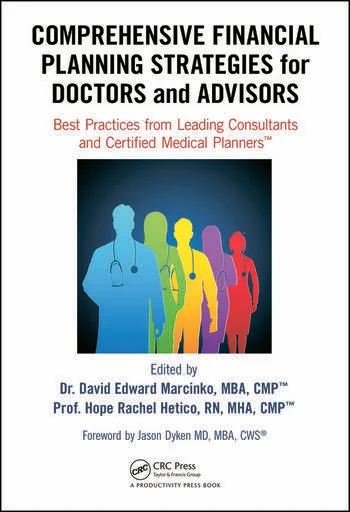
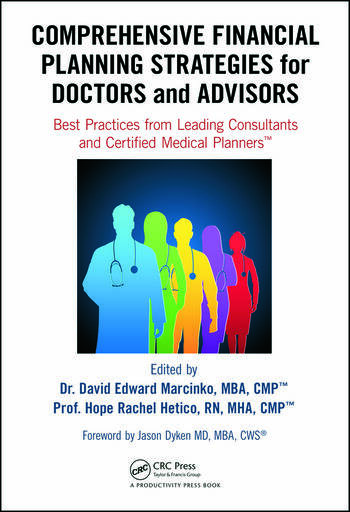
ORDER: https://www.routledge.com/Comprehensive-Financial-Planning-Strategies-for-Doctors-and-Advisors-Best/Marcinko-Hetico/p/book/9781482240283

***

COMMENTS APPRECIATED

Thank You

***

The Boston Marathon is Today!

By Staff Reporters

RUN

***

***

This morning, April 17th, about 30,000 people will run at varying speeds, 26.2 miles from Hopkinton, MA, to Boylston Street in one of the most famous races in the world: the Boston Marathon.

This year’s race will symbolize endurance in more ways than one. It will mark 10 years since two bombs exploded near the finish line, killing three people, wounding almost 300, and shaking the city on its most celebratory day. Held on Patriot’s Day, which commemorates the first battles of the Revolutionary War, Boston is the oldest continuously running marathon in the world, dating back to 1897. And simply qualifying for it is an achievement: Strict entry rules require that men age 18–34 record an official marathon time of three hours or less; for women of the same age, the qualifying time is 3:30.

***

CITE: https://www.r2library.com/Resource

***

***

CITE: https://www.amazon.com/Dictionary-Health-Information-Technology-Security/dp/0826149952/ref=sr_1_5?ie=UTF8&s=books&qid=1254413315&sr=1-5

***

ORDER: https://www.routledge.com/Comprehensive-Financial-Planning-Strategies-for-Doctors-and-Advisors-Best/Marcinko-Hetico/p/book/9781482240283

***

COMMENTS APPRECIATED

Thank You

***

BEYOND: Advance Care Planning for Financial Advisors & Lawyers from Doctors on April 16-17th.

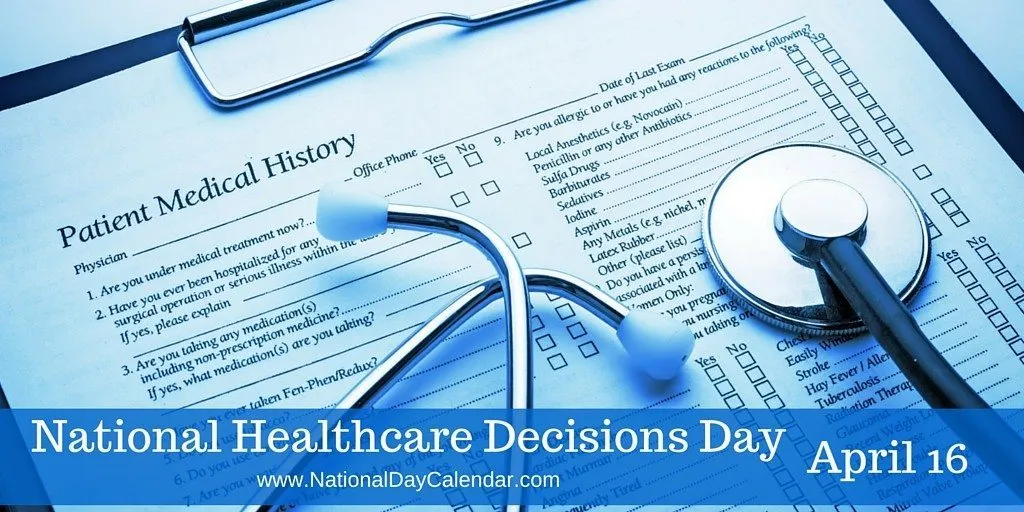
APRIL 17th. IS NATIONAL HEALTHCARE DECISION DAY 2023

By Dr. David Edward Marcinko MBA CMP

SPONSOR: http://www.CertifiedMedicalPlanner.org

Staff Reporters via National Institute of Health

***

National Healthcare Decisions Day (NHDD) exists to inspire, educate and empower the public and providers about the importance of advance care planning. NHDD is an initiative to encourage patients to express their wishes regarding healthcare and for providers and facilities to respect those wishes, whatever they may be.

NHDD was founded in 2008 by Nathan Kottkamp, a Virginia-based health care lawyer, to provide clear, concise, and consistent information on healthcare decision-making to both the public and providers/facilities through the widespread availability and dissemination of simple, free, and uniform tools (not just forms) to guide the process.

NHDD is a series of independent events held across the country, supported by a national media and public education campaign. In all respects, NHDD is inclusive and brings a variety of players in the larger healthcare, legal, and religious community together to work on a common project, to the benefit of patients, families, and providers. A key goal of NHDD is to demystify healthcare decision-making and make the topic of advance care planning inescapable. Among other things, NHDD helps people understand that advance healthcare decision-making includes much more than living wills; it is a process that should focus first on conversation and choosing an agent.

As of June 2016, The Conversation Project has been responsible for the management, finances, and structure of NHDD.  NHDD’s founder, Nathan Kottkamp, continues to be involved in NHDD and provides leadership by ensuring the maintenance of NHDD’s high quality resources and support for the community.

Read more about NHDD’s founding: https://theconversationproject.org/nhdd/origins/

***

***

DEFINITION: What is advance care planning for financial advisors and lawyers?

Advance care planning involves discussing and preparing for future decisions about your medical care if you become seriously ill or unable to communicate your wishes with your estate planning attorney or financial advisor. Having meaningful conversations with your loved ones is the most important part of advance care planning. Many people also choose to put their preferences in writing by completing legal documents called advance directives.

What are advance directives?

Advance directives are legal documents that provide instructions for medical care and only go into effect if you cannot communicate your own wishes.

The two most common advance directives for health care are the living will and the durable power of attorney for health care.

  • Living will: A living will is a legal document that tells doctors how you want to be treated if you cannot make your own decisions about emergency treatment. In a living will, you can say which common medical treatments or care you would want, which ones you would want to avoid, and under which conditions each of your choices applies. Learn more about preparing a living will.
  • Durable power of attorney for health care: A durable power of attorney for health care is a legal document that names your health care proxy, a person who can make health care decisions for you if you are unable to communicate these yourself. Your proxy, also known as a representative, surrogate, or agent, should be familiar with your values and wishes. A proxy can be chosen in addition to or instead of a living will. Having a health care proxy helps you plan for situations that cannot be foreseen, such as a serious car accident or stroke. Learn more about choosing a health care proxy.

Think of your advance directives as living documents that you review at least once each year and update if a major life event occurs such as retirement, moving out of state, or a significant change in your health.

CITE: https://www.r2library.com/Resource

Who needs an advance care plan?

Advance care planning is not just for people who are very old or ill. At any age, a medical crisis could leave you unable to communicate your own health care decisions. Planning now for your future health care can help ensure you get the medical care you want and that someone you trust will be there to make decisions for you.

  • Advance care planning for people with dementia. Many people do not realize that Alzheimer’s disease and related dementias are terminal conditions and ultimately result in death. People in the later stages of dementia often lose their ability to do the simplest tasks. If you have dementia, advance care planning can give you a sense of control over an uncertain future and enable you to participate directly in decision-making about your future care. If you are a loved one of someone with dementia, encourage these discussions as early as possible. In the later stages of dementia, you may wish to discuss decisions with other family members, your loved one’s health care provider, or a trusted friend to feel more supported when deciding the types of care and treatments the person would want.

What happens if you do not have an advance directive?

If you do not have an advance directive and you are unable to make decisions on your own, the state laws where you live will determine who may make medical decisions on your behalf. This is typically your spouse, your parents if they are available, or your children if they are adults. If you are unmarried and have not named your partner as your proxy, it’s possible they could be excluded from decision-making. If you have no family members, some states allow a close friend who is familiar with your values to help. Or they may assign a physician to represent your best interests. To find out the laws in your state, contact your state legal aid office or state bar association.

Will an advance directive guarantee your wishes are followed?

An advance directive is legally recognized but not legally binding. This means that your health care provider and proxy will do their best to respect your advance directives, but there may be circumstances in which they cannot follow your wishes exactly. For example, you may be in a complex medical situation where it is unclear what you would want. This is another key reason why having conversations about your preferences is so important. Talking with your loved ones ahead of time may help them better navigate unanticipated issues.

There is the possibility that a health care provider refuses to follow your advance directives. This might happen if the decision goes against:

  • The health care provider’s conscience
  • The health care institution’s policy
  • Accepted health care standards

In these situations, the health care provider must inform your health care proxy immediately and consider transferring your care to another provider.

Other advance care planning forms and orders from doctors

You might want to prepare documents to express your wishes about a single medical issue or something else not already covered in your advance directives, such as an emergency. For these types of situations, you can talk with a doctor about establishing the following orders:

  • Do not resuscitate (DNR) order: A DNR becomes part of your medical chart to inform medical staff in a hospital or nursing facility that you do not want CPR or other life-support measures to be attempted if your heartbeat and breathing stop. Sometimes this document is referred to as a do not attempt resuscitation (DNR) order or an allow natural death (AND) order. Even though a living will might state that CPR is not wanted, it is helpful to have a DNR order as part of your medical file if you go to a hospital. Posting a DNR next to your hospital bed might avoid confusion in an emergency. Without a DNR order, medical staff will attempt every effort to restore your breathing and the normal rhythm of your heart.
  • Do not intubate (DNI) order: A similar document, a DNI informs medical staff in a hospital or nursing facility that you do not want to be on a ventilator.
  • Do not hospitalize (DNH) order: A DNH indicates to long-term care providers, such as nursing home staff, that you prefer not to be sent to a hospital for treatment at the end of life.
  • Out-of-hospital DNR order: An out-of-hospital DNR alerts emergency medical personnel to your wishes regarding measures to restore your heartbeat or breathing if you are not in a hospital.
  • Physician orders for life-sustaining treatment (POLST) and medical orders for life-sustaining treatment (MOLST) forms:These forms provide guidance about your medical care that health care professionals can act on immediately in an emergency. They serve as a medical order in addition to your advance directive. Typically, you create a POLST or MOLST when you are near the end of life or critically ill and understand the specific decisions that might need to be made on your behalf. These forms may also be called portable medical orders or physician orders for scope of treatment (POST). Check with your state department of health to find out if these forms are available where you live.
  • MORE: https://www.kevinmd.com/2023/04/april-16th-is-national-healthcare-decisions-day-plan-for-your-end-of-life-care-now.html

Medicare Enrollment at CMS?

At enrollment, Medicare in the future could offer three advance directives with goals of care: Directive A: CONSENT to treat — inpatient medical treatment Directive B: CONSENT to comfort — home bound holistic care Directive C: CHOOSE against medical advice — outpatient palliative resources.

CITE: https://www.kevinmd.com/2023/04/the-heartbreaking-story-of-jimmy-carter-a-call-for-medicare-reform-in-end-of-life-care.html

You may also want to document your wishes about organ and tissue donation and brain donation. As well, learning about care options such as palliative care and hospice care can help you plan ahead.

***

COMMENTS APPRECIATED

Thank You

***

SPONSOR & ADVERTISE on the MEDICAL EXECUTIVE-POST


INFLUENCERS

Reach Industry Pros, Executives and Decision-Makers with Ease!

Thank you for your interest in advertising on, or sponsoring the ME-P, the web’s only site integrating medical practice management with personal financial planning for all industry professionals.

imba inc

Why should your company sponsor or advertise on the ME-P?

• Reader loyalty. Not only does the ME-P receive a mind-boggling number of page views and visits each month, its readers are loyal.
• Reader stature. ME-P readers are experienced industry pros, executives and decision-makers.
• Selective advertising. The ME-P is a free read that’s off the radar of the big-ad companies. Your ad here stands out as personal and different.
• Supporting the ME-P makes a big difference and costs only a fraction of other online publications with far fewer readers.
• Cost. CPM is reasonable and low compared to other sites.

E-mail us for a full packet, but give a look to these results from the ME-P’s annual reader survey:

* 89% of readers said the ME-P influences their perception of products and companies
* 34% said that ME-P sponsorship alone give them a higher interest or appreciation for those companies
* 754% said the ME-P has some, a good bit, or a lot of industry influence

Contact me and I’ll e-mail you a rate card. Your support makes a difference!

THANK YOU

ANN MILLER RN MHA CMP CPHQ

EMAIL: MarcinkoAdvisors@msn.com

The Emerging Role of CHIEF MARKETING STRATEGY IMPACT OFFICER

Common in Industry – Still Not so Much in Academe’

By Dr. David Edward Marcinko MBA

Invite Dr. Marcinko

http://www.CertifiedMedicalPlanner.org

A Chief Strategy Officer [CSO], or chief strategist, is the senior  executive responsible for assisting the Chief Executive Officer [CEO] with developing, communicating, executing, and sustaining corporate strategic initiatives. Some companies give the title Chief Business Officer [CBO] to its’ senior executives who are holding the top strategy role.

My opinion in academia

A few decades ago, the role of university Chief Strategy Officer [CSO] did not exist or marginally existed as a mid-level project manager in the communications department. It may have consisted of a formal background in teaching and education exhibited by the BA and/or B.Ed degrees or HR certification.

A first generation didactic CSO 1.0; if you will.

Then, as academic competition and granularity increased along with new technology information exchange, the need for deeper subject matter expertise arose. Next – generation business, under/graduate LAs, HUMANITIES, modern culture, psychology / sociology and STEM expertise arose to create and explore new – real or perceived – strategic advantages for university public relations in the form of the M.Ed, MA or MBA degrees in marketing, advertising, sales or competitive analysis.

THINK: Michal Porter PhD, known for his theories on economics, business strategy, and social causes. He is the Bishop William Lawrence University Professor at Harvard Business School, and a social impact consultant. He is credited for creating Porter’s five forces analysis, which is instrumental in business strategy development today.

Also, consider traditional S.W.O.T analysis, as well. SWOT analysis (alternatively SWOT matrix) is an initialism for strengths, weaknesses, opportunities, and threats—and is a structured planning method that evaluates those four elements of a project or business venture. A SWOT analysis can be carried out for a product, place, industry, university or person.

So, let’s call this a second generation expert CSO 2.0

However, as the complex business of running any college or university is ever changing, the ideal profile of CSO is still morphing to face modern business and management challenges like: physical and cyber security; culture and organizational behavior; gender differences, racial disparities and workplace violence issues; enrollment and international expansion; corporatization and competition; online and e-learning initiatives; with accounting, financial and economic pressures, etc.

Consequently, BODs are now seeking and embracing a new kind of CSO with advanced PhD or DBA degrees; and college and university experience. In fact, the role of contemporary CSO is emerging and becoming closer to that of an experienced corporate Chief Executive Officer, than the mere educator, academician or manager of the past.

Definitions: https://www.amazon.com/Dictionary-Health-Economics-Finance-Marcinko/dp/0826102549/ref=sr_1_6?ie=UTF8&s=books&qid=1254413315&sr=1-6

Universities and colleges  today

Insightful academic search committees are now seeking a new type of modern CSO who can build university and college rankings, maintain relationships with stakeholders, and project a positive image as a “celebrity university”.

This means shepherding students and attracting qualified youth, and faculty, for matriculation as areas of particular importance. This new entrepreneurial CSO must focus on business management, economics and finance – operational, marketing, advertising and consultative sales strategies to attract a qualified, protean and diverse student / professional staff that sets it apart from the competition; as well as more meaningfully interacting within [research and development], and without the university [outreach].

Accordingly, this  modern CSO must be a combination and protean surrogate for the university  CEO / CFO / CMO / COO / CAO and leader – NOT just a teacher or manager – who will help run it like a matrix business unit that makes a profit to generate needed capital and ROI.

Multiple lines of business – tuition; certifications; worker-placement; grants and endowments; CEUs and non-degree program fees; as well as for-profit R&D, publications, patents, copyrights and trade-marks; and applied business incubators – must ALL be created and managed as a diversified portfolio. S/he must lead in the implementation, planning and operations of systemic community responsive programs, as well as policy interventions requiring advocacy, political action and public analysis.

I prefer the moniker – CSO 3.0

Assessment

This academic CSO 3.0 must be a change-agent, crisis manager, corporate strategist, Machiavellian devotee and/or seasoned C-suite executive with the required inter – disciplinary skills outlined for this important position.

Above all – the modern CSO 3.0 must be pro-active, flexible and market responsive. This is not the place for tenure tracking.

 ***

MEDICAL PRACTICE AND HOSPITAL OPERATIONS, STRATEGIC DEVELOPMENT, ORGANIZATIONAL BEHAVIOR AND FINANCIAL MANAGEMENT COMPANION TEXTBOOK SET

Product DetailsProduct DetailsProduct Details

[Foreword Dr. Phillips MD JD MBA LLM] *** [Foreword Dr. Nash MD MBA FACP]  [Foreword Dr. Hashem MD PhD] *** [Foreword Dr. Silva MD MBA]

Conclusion

Your thoughts and comments on this ME-P are appreciated. Feel free to review our top-left column, and top-right sidebar materials, links, URLs and related websites, too. Then, subscribe to the ME-P. It is fast, free and secure.

Speaker: If you need a moderator or speaker for an upcoming event, Dr. David E. Marcinko; MBA – Publisher-in-Chief of the Medical Executive-Post – is available for seminar or speaking engagements.

imageproxy5

***

TECH STOCKS UP: Bank Earnings Reports are Next?

By Staff Reporters

***

***

COMMENTS APPRECIATED

Thank You

***

ORDER: https://www.routledge.com/Comprehensive-Financial-Planning-Strategies-for-Doctors-and-Advisors-Best/Marcinko-Hetico/p/book/9781482240283

***

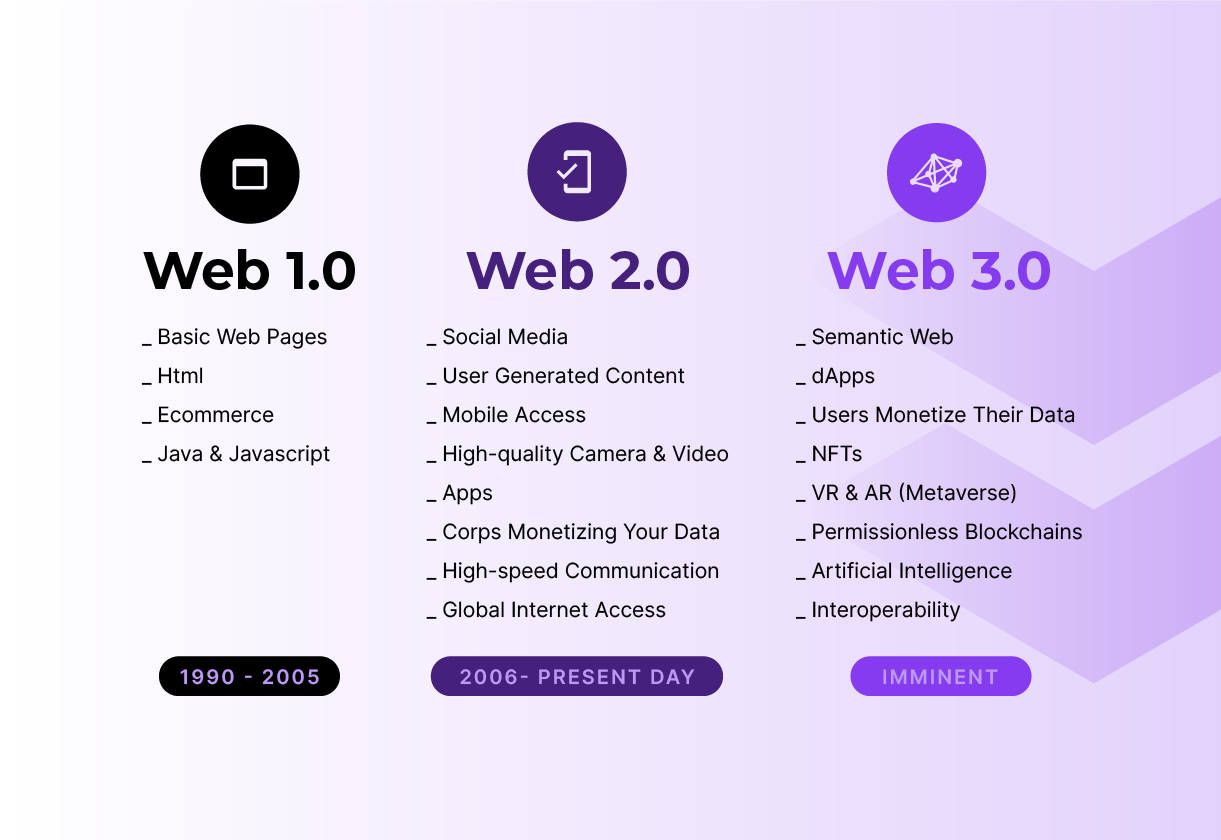
PODCAST: What is the Web 3.0?

By Staff Reporters

***

According to Wikipedia, the Web3 (also known as Web 3.0 and sometimes stylized as web3) is an idea for a new iteration of the World Wide Web based on blockchain technology, which incorporates concepts such as decentralization and token-based economics. Some technologists and journalists have contrasted it with Web 2.0, wherein they say data and content are centralized in a small group of companies sometimes referred to as “Big Tech“. The term “Web3” was coined in 2014 by Ethereum co-founder Gavin Wood, and the idea gained interest in 2021 from cryptocurrency enthusiasts, large technology companies, and venture capital firms.

***

***

Now, some experts argue that web3 will provide increased data security, scalability, and privacy for users and combat the influence of large technology companies.

Others have raised concerns about a decentralized web, citing the potential for low moderation and the proliferation of harmful content, the centralization of wealth to a small group of investors and individuals, or a loss of privacy due to more expansive data collection. Others, such as Elon Musk and Jack Dorsey, have argued that web3 only currently serves as a buzzword.

***

PODCAST: https://www.youtube.com/watch?v=nHhAEkG1y2U

***

COMMENTS APPRECIATED

Thank You

Subscribe to the Medical Executive-Post

***

HIT: https://www.amazon.com/Dictionary-Health-Information-Technology-Security/dp/0826149952/ref=sr_1_5?ie=UTF8&s=books&qid=1254413315&sr=1-5

***

BUSINESS MEDICINE: https://www.amazon.com/Business-Medical-Practice-Transformational-Doctors/dp/0826105750/ref=sr_1_9?ie=UTF8&qid=1448163039&sr=8-9&keywords=david+marcinko

***

Healthcare Leadership V.S. Management

Understanding the Difference

[By Dr. David Edward Marcinko MBA]

DEM blueMany times, individuals will use the terms management and leadership synonymously. In actuality the terms have significantly different meanings.

For example, Warren Bennis describes the difference between managers and leaders as “Managers do things right, Leaders the right thing.”

Managers are those individuals who have as their primary function managing a team of people and their activities. In effect, managers are those who have been given their authority by the nature of their role and ensure that the work gets done by focusing on day to day tasks and their activities.

On other hand, a leader’s approach is generally innate in its approach. Good leadership skills are difficult to learn because they are far more behavioral in nature than those skills needed for management. Leaders are also very focused on change recognizing that continual improvement can be achieved in their people and their activities can be a great step towards continued success.

Training Camps

Perhaps some of the best training grounds for the development of leaders are the military. The Marine Corps slogan is “A Few Good Men” and the military academies at Annapolis (Navy), New London, Connecticut (Coast Guard), Colorado Springs (Air Force), and West Point (Army) all have as their main mission, the development of leaders.

This is done by a number of different techniques. At graduation, the new officers, regardless of the branch of service, have been taught, and more importantly, have internalized the following: communicate the missions, sensitivity matters, real respect is earned, trust and challenge your soldiers. It is due to these lessons that many graduates of the military academies go on to positions of leadership in the private sector as well as in government.  Communicating the mission refers to conveying to those who work with us what are practice is hoping to accomplish and the role of each employee in achieving that goal. Given an understanding and awareness of the mission, when confronted with a barrier, employees are able to face hard problems when there is no well-defined approach by which to deal with them.

***

IRA advice and leadership

***

Sensitivity Does Matter

This is my area to improve; as I can be glib on occasion.

A leader treats each employee with respect and dignity, regardless of race, gender, cultural background or particular role they actually perform in the practice. Consider how many legal suits are filed against any type of organization, whether it is a medical practice or a large manufacturing facility due to perceived disparate treatment towards the employee based on race, religion, gender sexual preference or other non-work related issues.

Real respect is earned – Having initials after one’s name and the wearing of a lab coat does not automatically entitle an individual to respect. Formal authority has been found to be one of the least effective forms of influence. Only by earning the respect of your staff as well as your patients can you be sure that your intent will be carried out when you are not present. Setting the example in performance and conduct, rather than ‘do as I say, not as I do,” level of activity enables one to exert influence far greater than titles.

Trust and challenge your employees – How many times have practices sought to hire the best and brightest only to second guess the employee. Eric Schmidt, the CEO of Google, describes his management philosophy as having “… an employee base in which everybody is doing exactly what they want every day.” Obviously there are certain policies and procedures, but at the same time, the leader enables decision making to the lowest possible level. This also enables employees to question why certain policies and procedures are still being followed when more effective and efficient methods are available.  (How the Army Prepared Me to Work at Google, Doug Raymond, Harvard Business)

The phrase “Physician, heal thyself” (Luke 4:23, King James Version) means that we have to attend to our own faults, in preference to pointing out the faults of others. The phrase alludes to the readiness of physicians to heal sickness in others while sometimes not being able or will to heal themselves.

By the same token, it now is necessary for us to learn how to manage ourselves. It suggests that physicians, while often being able to help the sick, cannot always do so, and when sick themselves are no better placed than anyone else (Gary Martin, phrases.org.uk/meanings/281850.html, 2010).

***

Feet

***

Self-Development

“We will have to learn how to develop ourselves. We will have to place ourselves outside the boundaries where we can make the greatest contribution. And we will have to stay mentally alert and engaged during a 50-year working life, which means knowing how and when to change the work we do” (Managing Oneself, Harvard Business Review – Jan. 2005 – pp 100-109, by Peter Drucker).

Although one’s IQ and certain personality characteristics are more or less innate and appear to remain stable over time there are individual capabilities that enable leadership and can be developed. Enhancement of these capabilities can lead to the individual being able to carry out the leadership tasks of setting direction, gaining commitment, and creating alignment. These capabilities include self-management capabilities, social capabilities and work facilitation capabilities.

***

***

Assessment

Without question, while it is possible to cram for at test and graduate at the top of one’s class, that does not assure   leadership ability. We all know at least one person who scores at the highest levels on cognitive measures but would be incapable of pouring liquid out of a boot if the instructions were written on the heel.

So, here is my philosophy:

  • Leadership: By example and thru transparency with collaboration [Do the right thing]
  • Management: By walking-around thru tangible / intangible metrics [Doing things right].

Channel Surfing the ME-P

Have you visited our other topic channels? Established to facilitate idea exchange and link our community together, the value of these topics is dependent upon your input. Please take a minute to visit. And, to prevent that annoying spam, we ask that you register. It is fast, free and secure.

 ***

Conclusion

Your thoughts and comments on this ME-P are appreciated. Feel free to review our top-left column, and top-right sidebar materials, links, URLs and related websites, too. Then, subscribe to the ME-P. It is fast, free and secure.

Speaker: If you need a moderator or speaker for an upcoming event, Dr. David E. Marcinko; MBA – Publisher-in-Chief of the Medical Executive-Post – is available for seminar or speaking engagements. Contact: MarcinkoAdvisors@msn.com

OUR OTHER PRINT BOOKS AND RELATED INFORMATION SOURCES:

Product DetailsProduct Details

PHYSICIAN SALARY: Pay Gap

By Staff Reporters

***

***

A 2020 analysis of Doximity’s physician compensation data found that men physicians make an estimated $2 million more than women over the course of their careers.

LINK: https://www.statnews.com/2021/12/06/male-female-physician-salaries-gap-2-million-lifetime-earnings/#:~:text=A%20persistent%2025%25%20pay%20gap%20between%20female%20and,for%20specialty%2C%20hours%2C%20location%2C%20and%20years%20of%20experience.

Other findings:

  • Men physicians outearned women physicians by at least 10% across all specialties, except pediatric cardiology (9.2%) and nuclear medicine (3%).
  • Specialties with the largest gender pay gaps were: oral and maxillofacial surgery ($568,789 vs. $395,687), pediatric pulmonology ($282,272 vs. $227,958), allergy and immunology ($329,634 vs. $268,938), urology ($515,850 vs. $424,733), and ophthalmology ($468,515 vs. $387,295).
  • Specialities with the smallest gender pay gaps were: nuclear medicine ($394,231 vs. $382,431), pediatric cardiology ($334,384 vs. $303,622), pediatric gastroenterology ($293,771 vs. $264,135) hematology ($358,736 vs. $320,938), and medicine/pediatrics ($283,034 vs. $253,019).
  • CITE: https://www.r2library.com/Resource/Title/0826102549

***

RELATED: https://medicalexecutivepost.com/2022/01/21/personal-budgeting-for-physician-executives/

CAREERS: https://medicalexecutivepost.com/2022/10/01/careers-and-net-worth/

***
COMMENTS APPRECIATED

Thank You

***

***

What is Leadership and Can it Be Defined?

Of Characteristics and Commonalities

[By Dr. David Edward Marcinko MBA CMP™]

[By Eugene Schmuckler PhD MBA EMd CTS]

manageIt does not matter if you are in the healthcare or financial services sector; or both.

Many psychologists and behavioral experts believe there are commonalities and characteristics applicable to all industries and sectors; including education which is a big part of what we do here at the Medical Executive Post.

Key Leadership Competencies – Definitions

And so, here is a list of key leadership competencies and definitions for your review.

  • Living by personal conviction – Means you know and are in touch with your values and beliefs, are not afraid to take a lonely or unpopular stance if necessary, are comfortable in tough situations, can be relied on in intense circumstances, are clear about where you stand, and will face difficult challenges with poise and self-assurance.
  • Possessing emotional intelligence – Means you recognize personal strengths and weaknesses; see the linkages between feelings and behaviors; manage impulsive feelings and distressing emotions; are attentive to emotional cues; show sensitivity and respect for others; challenge bias and intolerance; collaborate and share; are an open communicator; and can handle conflict, difficult people, and tense situations effectively.  Emotional intelligence may often be labeled EQ, or emotional intelligence quotient.
  • Being visionary – Means that you see the future clearly, anticipate large-scale and local changes that will affect the organization and its environment, are able to project the organization into the future and envision multiple potential scenarios/outcomes, have a broad way of looking at trends, and are able to design competitive strategies and plans based on future possibilities.
  • Communicating vision – Means that you distill complex strategies into a compelling call to march, inspire and help others see a core reason for the organization to make change, talk beyond the day-to-day tactical matters that face the organization, show confidence and optimism about the future state of the organization, and engage others to join in.
  • Earning loyalty and trust – Means you are a direct and truthful person; are willing to admit mistakes; are sincerely interested in the concerns and dreams of others; show empathy and a generally helpful orientation toward others; follow promises with actions; maintain confidences and disclose information ethically and appropriately; and conduct work in open, transparent ways.

Product Details

  • Listening like you mean it – Means you maintain a calm, easy-to-approach demeanor, are patient, open minded, and willing to hear people out; understand others and pick up the meaning of their messages; are warm, gracious and inviting; build strong rapport; see through the words that others express to the real meaning (i.e., cut to the heart of the issue); and maintain formal and informal channels of communication.
  • Giving feedback – Means you set clear expectations, bring important issues to the table in a way that helps others “hear” them, show an openness to facing difficult topics and sources of conflict, deal with problems and difficult people directly and frankly, provide timely criticism when needed, and provide feedback messages that are clear and unambiguous.
  • Mentoring others – Means you invest the time to understand the career aspirations of your direct reports, work with direct reports to create engaging mentoring plans, support staff in developing their skills, support career development in a non-possessive way (will support staff moving up and out as necessary for their advancement), find stretch assignments and other delegation opportunities that support skill development, and role model professional development by advancing your own skills.
  • Developing teams – Means you select executives who will be strong team players, actively support the concept of teaming, develop open discourse and encourage healthy debate on important issues, create compelling reasons and incentives for team members to work together, effectively set limits on the political activity that takes place outside the team framework, celebrate successes together as a unit, and commiserate as a group over disappointments.

Product Details

  • Energizing staff – Means you set a personal example of good work ethic and motivation; talk and act enthusiastically and optimistically about the future; enjoy rising to new challenges; take on your work with energy, passion and drive to finish successfully; help others recognize the importance of their work; are enjoyable to work for; and have a goal oriented, ambitious and determined working style.
  • Generating informal power – Means you understand the roles of power and influence in organizations; develop compelling arguments or points of view based on knowledge of others’ priorities; develop and sustain useful networks up, down and sideways in the organization; develop a reputation as a go-to person; and effectively affect the thoughts and opinions of others, both directly and indirectly, through others.
  • Building consensus – Means you frame issues in ways that facilitate clarity from multiple perspectives, keep issues separated from personalities, skillfully use group decision techniques (e.g., Nominal Group Technique), ensure that quieter group members are drawn into discussions, find shared values and common adversaries, and facilitate discussions rather than guide them.

Product Details

  • Making decisions effectively – Means you make decisions based on an optimal mix of ethics, values, goals, facts, alternatives and judgments; use decision tools (such as force-field analysis, cost-benefit analysis, decision trees, paired comparisons analysis) effectively and at appropriate times; and show a good sense of timing related to decision making.
  • Driving results – Means you mobilize people toward greater commitment to a vision, challenge people to set higher standards and goals, keep people focused on achieving goals, give direct and complete feedback that keeps teams and individuals on track, quickly take corrective action as necessary to keep everyone moving forward, show a bias toward action, and proactively work through performance barriers.
  • Stimulating creativity – Means you see broadly outside of the typical, are constantly open to new ideas, are effective with creative group processes (e.g., brainstorming, Nominal Group Technique, scenario building), see future trends and craft responses to them, are knowledgeable in business and societal trends, are aware of how strategies play out in the field, are well read, and make connections between industries and unrelated trends.
  • Cultivating adaptability – Means you quickly see the essence of issues and problems, effectively bring clarity to situations of ambiguity, approach work using a variety of leadership styles and techniques, track changing priorities and readily interpret their implications, balance consistency of focus against the ability to adjust course as needed, balance multiple tasks and priorities such that each gets appropriate attention, and work effectively with a broad range of people.

kkkkk

More:

Assessment

Is if often said that leaders rise to the occasion. What do you think?

Conclusion

Your thoughts and comments on this ME-P are appreciated. Feel free to review our top-left column, and top-right sidebar materials, links, URLs and related websites, too. Then, subscribe to the ME-P. It is fast, free and secure.

Link: http://feeds.feedburner.com/HealthcareFinancialsthePostForcxos

Speaker: If you need a moderator or speaker for an upcoming event, Dr. David E. Marcinko; MBA – Publisher-in-Chief of the Medical Executive-Post – is available for seminar or speaking engagements. Contact: MarcinkoAdvisors@msn.com

OUR OTHER PRINT BOOKS AND RELATED INFORMATION SOURCES:

Product DetailsProduct Details

Product Details

HEALTH INSURANCE: Impact of Insurance on Lower ExtremityAmputations

By Staff Reporters

***

***

A significant study recently published in the Annals of Vascular Surgery has uncovered a troubling correlation between loss of health insurance coverage and increased risk of amputation. Led by Dr. Tze Woei Tan, a vascular surgeon and associate professor, the research team from the University of Arizona and Keck School of Medicine of USC, which includes co-senior author Dr. David G. Armstrong, a podiatric surgeon and professor of surgery, brings attention to this important issue. Titled “The Impact of Health Insurance Loss on Amputation Rates in the United States,” the study highlights the consequences of losing insurance coverage. 

CITE: https://www.r2library.com/Resource/Title/0826102549

Researchers examined a large cohort of patients at risk of peripheral artery disease (PAD) and diabetic foot complications, noting that those without insurance were more likely to experience amputation. The study found that individuals who lost their insurance coverage were 2.5 times more likely to undergo a major amputation compared to those with continuous coverage. This striking difference emphasizes the importance of consistent access to healthcare and the potential consequences of gaps in insurance.

***

COMMENTS APPRECIATED

Thank You

***

ORDER: https://www.amazon.com/Infections-Foot-David-Edward-Marcinko/dp/0801670187/ref=sr_1_8?crid=33JOZEBQ5OXIQ&keywords=david+marcinko&qid=1681335246&sprefix=david+marcinko%2Caps%2C90&sr=8-8

***

***

OPINIONS: Stock Markets VERSUS Economic Vision?

What is Your Opinion?

By Staff Reporters

***

***

  • Markets: Stocks ran on a treadmill yesterday as investors waited for the high-stakes inflation report to drop this morning. Major cryptocurrencies have emerged as the biggest winners of 2023 so far, and Bitcoin topped $30,000 for the first time in 10 months.
  • Dueling economic visions: Depending on who you ask, the economy is doing just fine…or it’s about to slow down dramatically. Treasury Secretary Janet Yellen said yesterday that “the US economy is obviously performing exceptionally well.” But that’s not obvious at all to the IMF, which predicted weak global growth this year and gave its gloomiest five-year economic forecast since 1990.
  • CITE: https://www.r2library.com/Resource/Title/0826102549

***

COMMENTS APPRECIATED

Thank You

***

ORDER: https://www.routledge.com/Comprehensive-Financial-Planning-Strategies-for-Doctors-and-Advisors-Best/Marcinko-Hetico/p/book/9781482240283

***

Corporate Moves in Healthcare Continue to Disrupt the Industry

By Health Capital Consultants LLC

***

***

Instead of waiting on regulatory reform, corporate America has sought to disrupt the healthcare industry over the last few years, by streamlining the delivery of healthcare (and associated costs) and taking advantage of technological advancements.

CITE: https://www.r2library.com/Resource/Title/0826102549

This entrepreneurial approach to problem-solving may provide meaningful competition to traditional healthcare organizations, which may result in higher quality, more affordable healthcare. Some of the biggest companies in the U.S. – CVS Health, Walgreens, Amazon, Walmart, and Best Buy – are expanding their healthcare empires through acquisitions and other strategic moves. (Read more…) 

***

COMMENTS APPRECIATED

Thank You

***

***

***

ORDER: https://www.amazon.com/Business-Medical-Practice-Transformational-Doctors/dp/0826105750/ref=sr_1_9?ie=UTF8&qid=1448163039&sr=8-9&keywords=david+marcinko

***

***

Coordinated Actions Indicate Growing Scrutiny of Tele-Medicine

By Health Capital Consultants, LLC

***

***

GROWING SCRUTINY OF TELE-MEDICINE

On July 20, 2022, the Office of Inspector General (OIG) of the U.S. Department of Health & Human Services (HHS) released a Special Fraud Alert on telemedicine. On the same day, the U.S. Department of Justice (DOJ) announced a “nationwide coordinated law enforcement action” against 36 defendants, and the Centers for Medicare & Medicaid Services (CMS) Center for Program Integrity announced administrative actions against 52 providers, related to alleged telemedicine arrangements. These coordinated actions indicate a growing scrutiny of telemedicine arrangements by federal government regulators. (Read more...) 

***

***

RELATED: https://www.amazon.com/Business-Medical-Practice-Transformational-Doctors/dp/0826105750/ref=sr_1_9?ie=UTF8&qid=1448163039&sr=8-9&keywords=david+marcinko

***

COMMENTS APPRECIATED

Thank You

***

PODCAST: Healthcare Brokers in Cars

By Eric Bricker MD

Price and Quality Transparency Data

***

***

***

ORDER: https://www.amazon.com/Business-Medical-Practice-Transformational-Doctors/dp/0826105750/ref=sr_1_9?ie=UTF8&qid=1448163039&sr=8-9&keywords=david+marcinko

COMMENTS APPRECIATED

Thank You

***

FINANCIAL INVESTING RISKS DOCTORS SHOULD KNOW

Types & Definitions

****

Financial Investing risk is any of various types of risk associated with financing, including financial transactions that include company loans in risk of default. Often it is understood to include only downside risk, meaning the potential for financial loss and uncertainty about its extent.

****

See the source image

BY DR. DAVID E. MARCINKO MBA CMP®

CMP logo

SPONSOR: http://www.CertifiedMedicalPlanner.org

Understanding Financial Risk

Although broad investing risks can be quickly summarized as “the failure to achieve spending and inflation-adjusted growth goals,” individual assets may face any number of other subsidiary risks:

  • Call risk – The risk, faced by a holder of a callable bond that a bond issuer will take advantage of the callable bond feature and redeem the issue prior to maturity. This means the bondholder will receive payment on the value of the bond and, in most cases, will be reinvesting in a less favorable environment (one with a lower interest rate)
  • Capital risk – The risk an investor faces that he or she may lose all or part of the principal amount invested.
  • Commodity risk – The threat that a change in the price of a production input will adversely impact a producer who uses that input.
  • Company risk – The risk that certain factors affecting a specific company may cause its stock to change in price in a different way from stocks as a whole.
  • Concentration risk – Probability of loss arising from heavily lopsided exposure to a particular group of counterparties
  • Counterparty risk – The risk that the other party to an agreement will default.
  • Credit risk – The risk of loss of principal or loss of a financial reward stemming from a borrower’s failure to repay a loan or otherwise meet a contractual obligation.
  • Currency risk – A form of risk that arises from the change in price of one currency against another.
  • Deflation risk – A general decline in prices, often caused by a reduction in the supply of money or credit.
  • Economic risk – the likelihood that an investment will be affected by macroeconomic conditions such as government regulation, exchange rates, or political stability.
  • Hedging risk – Making an investment to reduce the risk of adverse price movements in an asset.
  • Inflation risk – The uncertainty over the future real value (after inflation) of your investment.
  • Interest rate risk – Risk to the earnings or market value of a portfolio due to uncertain future interest rates.
  • Legal risk – risk from uncertainty due to legal actions or uncertainty in the applicability or interpretation of contracts, laws or regulations.
  • Liquidity risk – The risks stemming from the lack of marketability of an investment that cannot be bought or sold quickly enough to prevent or minimize a loss.

CITE: https://www.r2library.com/Resource/Title/0826102549

****
YOUR COMMENTS ARE APPRECIATED.

Thank You

FINANCE: https://www.amazon.com/Comprehensive-Financial-Planning-Strategies-Advisors/dp/1482240289/ref=sr_1_1?ie=UTF8&qid=1418580820&sr=8-1&keywords=david+marcinko

***

Risk Management, Liability Insurance, and Asset Protection Strategies for Doctors and Advisors: Best Practices from Leading Consultants and Certified Medical Planners™

Risk Management Textbook: https://www.routledge.com/Risk-Management-Liability-Insurance-and-Asset-Protection-Strategies-for/Marcinko-Hetico/p/book/9781498725989

***

CMS: “Open Payments” Pre-Publication Review & Dispute

NOW AVAILABLE

By Staff Reporters via CMS

***

***

Open Payments is a national disclosure program that promotes a transparent and accountable healthcare system. Open Payments houses a publicly accessible database of payments that reporting entities, including drug and medical device companies, make to certain healthcare providers, which are referred to as covered recipients.

Pre-publication review and dispute for the Program Year 2022 Open Payments data opened on April 1st and is available through May 15th, 2023. Disputes must be initiated by May 15th, 2023 in order to be reflected in the June 2023 data publication. 

CITE: https://www.r2library.com

For more information on review and dispute timing and publication, refer to the Review and Dispute Timing and Data Publication Quick Reference Guide.

ORDER: https://www.amazon.com/Dictionary-Health-Insurance-Managed-Care/dp/0826149944/ref=sr_1_4?ie=UTF8&s=books&qid=1275315485&sr=1-4

***
COMMENTS APPRECIATED

Thank You

****

DAILY UPDATE: Easter Sunday Market Wrap-Up

By Staff Reporters

***

***

According to the Financial Times, just 20 stocks account for almost 90 per cent of the US benchmark index’s $2.36tn gains so far this year, as instability in the banking sector has driven down interest rate expectations and boosted the attraction of Big Tech.

CITE: https://www.r2library.com/Resource

Among the big gainers, shares in chip-maker Nvidia have climbed by 83 per cent so far this year, while Facebook owner Meta is up 76 per cent and Salesforce has climbed 42 per cent, underlining the heavy concentration in the world’s most influential stock market. The market value of those and the other 17 best performing stocks in the S&P 500 have surged by $2.05tn in 2023. Apple’s valuation alone has shot up by almost $600bn, or 30 per cent, in the past three months.

And, according to Yahoo Finance, the market capitalization of the other stocks in the index — which is up almost 7 per cent so far in 2023 — has risen just $320bn over the same period.

Finally, according to private equity firm Apollo Global Management and ignoring gains for mega-cap growth stocks, the S&P 500 rose just 1.4 per cent in the first three months of 2023, said UBS.

***

CITE: https://www.amazon.com/Dictionary-Health-Information-Technology-Security/dp/0826149952/ref=sr_1_5?ie=UTF8&s=books&qid=1254413315&sr=1-5

***

ORDER: https://www.routledge.com/Comprehensive-Financial-Planning-Strategies-for-Doctors-and-Advisors-Best/Marcinko-Hetico/p/book/9781482240283

***

COMMENTS APPRECIATED

Thank You

***

PODCASTS: The Evolution Of Stock Markets

By Professor Edward Peter Stringham PhD

***

***

READ/LISTEN HERE: https://www.valuewalk.com/edward-stringham-the-evolution-of-stock-markets/#:~:text=In%20Private%20Governance%2C%20prominent%20economist%20Edward%20Stringham%20presents,that%20fill%20a%20void%20that%20government%20enforcement%20cannot.

***

COMMENTS APPRECIATED

Thank You

***

ORDER: https://www.routledge.com/Comprehensive-Financial-Planning-Strategies-for-Doctors-and-Advisors-Best/Marcinko-Hetico/p/book/9781482240283

***

WORLD HEALTH ORGANIZATION: World Health Day

Happy 75th Birthday

By Staff Reporters

***

***

It’s World Health Day and the 75th birthday of the World Health Organization (WHO). Thanks to the WHO, we have almost eradicated diseases like polio and smallpox, and the organization led the largest-ever response to a global health crisis against the Covid-19 pandemic.

So, why not Celebrate this World Health Day by taking care of yourself? It doesn’t have to be tough or uninteresting to eat a well-balanced, nutrient-dense diet, reduce alcohol intake or go for a walk or other exercise. And, stick around for next year!

READ: https://www.who.int/westernpacific/news-room/events/detail/2023/04/07/western-pacific-events/world-health-day-2023

***

***

COMMENTS APPRECIATED

Thank You

***

Obtain a Second Financial Planning Opinion -OR- Medical Practice Management Analysis

****

By Dr. David Edward Marcinko MBA CMP®

CMP logo

SPONSOR: http://www.CertifiedMedicalPlanner.org

***

See the source image

***

2nd. Opinion HERE: https://medicalexecutivepost.com/schedule-a-consultation/

CONSULT: https://davidedwardmarcinko.com/coach/

CONTACT: Ann Miller RN MHA CMP®

PHONE: 770-448-0769

EMAIL: MarcinkoAdvisors@msn.com

THANK YOU

Product Details

ORDER: https://www.amazon.com/Business-Medical-Practice-Transformational-Doctors/dp/0826105750/ref=sr_1_9?ie=UTF8&qid=1448163039&sr=8-9&keywords=david+marcinko

***

Comprehensive Financial Planning Strategies for Doctors and Advisors: Best Practices from Leading Consultants and Certified Medical Planners™

MORE: https://www.routledge.com/Comprehensive-Financial-Planning-Strategies-for-Doctors-and-Advisors-Best/Marcinko-Hetico/p/book/9781482240283

****

The Stock Market, The Economy, Possible Outcomes, How to Invest

By Vitaliy Katsenelson, CFA

***

This is part one of the post winter seasonal letter I wrote to IMA clients, sharing my thoughts about the economy and the market. I tried something I’ve never done before. Instead of conveying my message through storytelling, I tried to compress my thoughts into short sentences. I summarized some 50,000 words into about 1,000 (a compression ratio of 50 to 1!). 

READ HERE: https://contrarianedge.com/the-stock-market-the-economy-possible-outcomes-how-to-invest/?utm_source=IMA++-+Main+Articles&utm_campaign=7b4f1d01d6-UBER_MONEY_MANAGER_KIDNAPPED_COPY_01&utm_medium=email&utm_term=0_f1c90406d1-7b4f1d01d6-55139025

***
COMMENTS APPRECIATED

Thank You

***

ORDER: https://www.routledge.com/Comprehensive-Financial-Planning-Strategies-for-Doctors-and-Advisors-Best/Marcinko-Hetico/p/book/9781482240283

***

FDIC: Lifting the Insurance Deposit Cap?

By Staff Reporters

***

Understanding FDIC insurance limits

The FDIC wants to make sure it can cover everyone with a bank account, so to make that happen, it caps how much money it insures. The FDIC says its standard is to cover up to “$250,000 per depositor, per insured bank, for each account ownership category.

CITE: https://www.r2library.com/Resource/Title/082610254

Here’s an example: Let’s say you have $100,000 in your checking account and $150,000 in your savings, all at the same bank. The FDIC classifies those under the same category: single accounts. So you would have hit your FDIC deposit limit. Every additional cent deposited into either account would be uninsured. But if you have money in other banks or other deposit categories, you may have additional coverage.

Could the insured deposit cap get a lift?

At least four US lawmakers—two from each side of the aisle—said they would support raising the cap on FDIC-insured deposits in order to reassure frazzled bank customers that their deposits are safe. The current cap is $250,000 (up from $100k pre-financial crisis), but Democratic Sen. Elizabeth Warren said bumping it up “is a good move.” Opponents of raising the cap say it would only increase risk-taking and bad behavior by banks. Some even argue we should lower it.

COMMENTS APPRECIATED

Thank You

***

ORDER: https://www.routledge.com/Risk-Management-Liability-Insurance-and-Asset-Protection-Strategies-for/Marcinko-Hetico/p/book/9781498725989

***

PODCAST: The CXO “Rapid Resolutions Team” in Health Insurance

CLAIMS DENIED

By Eric Bricker MD

***

***

ORDER: https://www.amazon.com/Dictionary-Health-Insurance-Managed-Care/dp/0826149944/ref=sr_1_4?ie=UTF8&s=books&qid=1275315485&sr=1-4

COMMENTS APPRECIATED

Thank You

***

Libertarian’s (Unexpected) View on the Bailout of the Banking System

By Vitaliy Katsenelson CFA

CLICK PHOTO FOR FULL REPORT

***

CITE: https://www.r2library.com/Resource/Title/082610254

COMMENTS APPRECIATED

Thank You

***

DAILY UPDATE: About the Markets

By Staff Reporters

***

***

Major U.S. stock indexes ended mixed, after the announcement of a surprise OPEC+ production cut sent crude oil prices to two-month highs and fueled inflation concerns that could keep the Federal Reserve in policy-tightening mode. This weekend, several OPEC+ members, including Saudi Arabia, announced production cuts totaling nearly 1.2 million barrels a day that are slated to start in May. In response, WTI crude futures soared above $80 a barrel. Word of the planned cuts also boosted expectations that the Fed could raise its benchmark interest rate again in May as the central bank extends efforts to tamp down inflation. The OPEC+ cuts “suggest more headline inflation pressure in the near-term,” says Jeffrey Kleintop, chief global investment strategist at Charles Schwab & Co. The potential for further waves of inflation will “keep central banks from declaring victory over excessive price gains,” he adds. “That’s another headwind for tech stocks and other ‘long duration’ equities that get more of their cash flow in the future than in the near term.”

CITE: https://www.r2library.com

The following is a round-up of today’s market activity:

  • The S&P 500® Index was up 15.2 (0.4%) at 4124.51, the highest close since Feb. 15; the Dow Jones industrial average was up 327 (1.0%) at 33601.15; the NASDAQ Composite was down 32.45 (0.3%) at 12189.45.
  • The 10-year Treasury yield was down about 7 basis points at 3.417%.
  • CBOE’s Volatility Index was down 0.14 at 18.56.

Oil producers and other energy companies led gainers Monday. Health care stocks also outperformed. Consumer discretionary and real estate were among the laggards.

Among individual stocks, Tesla (TSLA) shares tumbled over 6% following reports the electric car-maker delivered just 423,000 vehicles in the first quarter. Analysts had expected 430,000, according to research firm FactSet.

Looking ahead, medical companies, especially vaccine makers, may be worth watching this week with the World Vaccine Congress taking place in Washington, D.C. Some well-known vaccine makers include Moderna (MRNA), Johnson & Johnson (JNJ), and GlaxoSmithKline (GSK). Late last month, Walgreens Boots Alliance (WBA) reported a steep year-over-year decline in demand for COVID-19 vaccinations.

The U.S. dollar index fell slightly, while gold futures climbed above $2,000 per ounce to post their highest close in over two years.

CITE: https://www.amazon.com/Dictionary-Health-Information-Technology-Security/dp/0826149952/ref=sr_1_5?ie=UTF8&s=books&qid=1254413315&sr=1-5

***

ORDER: https://www.routledge.com/Comprehensive-Financial-Planning-Strategies-for-Doctors-and-Advisors-Best/Marcinko-Hetico/p/book/9781482240283

***

COMMENTS APPRECIATED

Thank You

***

Is the Return of Physician-Owned Hospitals Imminent?

By Health Capital Consultants, LLC

***

Is the Return of Physician-Owned Hospitals Imminent?

Recent congressional actions and a white paper authored by officials from the Department of Justice (DOJ), Federal Trade Commission (FTC), and the American Medical Association (AMA) are pushing for the removal of barriers for physician-owned hospitals (POHs), potentially paving a path by which these controversial facilities can be established and expanded going forward.  (Read more…)

***

CITE: https://www.r2library.com/Resource/Title/082610254

COMMENTS APPRECIATED

Thank You

***

ORDER: https://www.amazon.com/Financial-Management-Strategies-Healthcare-Organizations/dp/1466558733/ref=sr_1_3?ie=UTF8&qid=1380743521&sr=8-3&keywords=david+marcinko

***

ORDER: https://www.amazon.com/Hospitals-Healthcare-Organizations-Management-Operational/dp/1439879907/ref=sr_1_4?s=books&ie=UTF8&qid=1334193619&sr=1-4

***

ORDER: https://www.amazon.com/Business-Medical-Practice-Transformational-Doctors/dp/0826105750/ref=sr_1_9?ie=UTF8&qid=1448163039&sr=8-9&keywords=david+marcinko

***

PODCAST: Submit a Financial Advisor Prospecting Video to Us [Experts Invited]

Welcome Financial Advisors

An Invitation to Prospect & Promote Your Self

Healthcare Prospecting with FAs in Mind

  • Would you like to present your self or firm, your strategic competitive advantage, and your value proposition to the medical community?
  • Would you like to share some unique financial planning, financial advisory or health economics pearls with your colleagues?
  • Would you like to see a new financial product or service in action before you start using it in your practice, or recommending it to physician clients?
  • Would you like to introduce yourself and prospect to the HNW medical community, for free?

If so …

Join your ME-P peers and colleagues. Get free access to on-demand videos and other presentations from leading financial advisors [FAs] and brought to you by www.MedicalExecutivePost.com.

The ME-P is your source for the best online-exclusive content in the financial advisory marketing, and financial planning e-prospecting space, for all healthcare professionals [physicians, podiatrists, osteopaths, dentists, chiropractors, nurses, medical CXOs, etc].

How to Submit a Video

To submit a personal or product presentation video [pod-cast], sponsor a video [pod-cast], or inquire about specific advertising on the ME-P, please contact Ann Miller RN MHA at: 770.448.0769 or MarcinkoAdvisors@msn.com

Video Formats

Acceptable 5-12 minute video formats include: Flash (in either SWF or FLA), MPEG, MP4, QuickTime or AVI. Submission of a podcast/video does not guarantee publishing on the ME-P website. FA submitted videos are subject to review by the Executive Editor. Company submitted videos are subject to review by the Publisher and Executive Editor.

SAMPLE PODCAST

In this encore podcast, Somnath Basu PhD MBA examines how the recent economic turmoil has changed financial planning clients’ attitudes and expectations.

White Paper: AgeBander

Dr. Basu is a popular ME-P contributor, commentator and “thought-leader”.

Basu Video Link: http://www.youtube.com/watch?v=jzAkB8h5v3Q

Copyright

Copyright © 2011 by the Institute of Medical Business Advisors, Inc www.MedicalBusinessAdvisors.com All rights reserved, USA. Opinions expressed by authors are their own and not necessarily those of iMBA Inc, the editorial staff, or any member of the editorial advisory board.

Privacy

ME-P and iMBA Inc pledges always to respect the privacy and anonymity of its users and participants. The information (the names, email addresses or any other contact information, personal or financial data) provided to us by our visitors in their registrations and communications with us is securely stored and not shared with any third party. We are committed to working with the Internet community in cultivating and maintaining trust between all its members.

PROSPECTING MADE EASY™

PHYSICIANS: www.MedicalBusinessAdvisors.com
ADVISORS: http://www.CertifiedMedicalPlanner.org

COMMENTS APPRECIATED

Thank You

***

HOW: The ME-P Helps Your Financial Advisory Business or Medical Practice Grow?

All about the Medical Executive-Post Business Model

imba inc

***

One of the questions we receive most often from readers of the Medical Executive-Post is how can we “afford” to give away so much content for free. Or stated another way, “how do we get paid for all of this?”

The simple answer is that we know many (or even most) of you will simply take the ideas that we share and implement them yourself. Do-It-YourSelfers can always simply purchase our texts, books and peer reviewed handbooks redacted in more than a thousand, medical, law, business and graduate schools, as well as the Library of Congress, Institute of Health and Library of Congress.

LINK: https://medicalexecutivepost.com/2021/10/22/why-are-certified-medical-planner-textbooks-so-darn-popular/

On the other hand, some of you will realize you need some additional help.

For example:

Maybe as a financial advisor you’re “stuck” in your financial planning business and recognize that some outside assistance is necessary to help you get to the next level of niche specificity thru our Certified Medical Planner™ chartered certification program designation. Helping physicians of all specialty types in a fiduciary focused manner is the proverbial Win-Win for all concerned.

LINK: http://www.CertifiedMedicalPlanner.org

CMP

CMP logo

OR, perhaps you are seeking a glossary of terms and definitions in heath economics, finance, accounting, insurance, managed care, health information technology and security; found in our Health Dictionary Series Wiki Project? Free and print versions are available.

LINK: http://www.HealthDictionarySeries.org

LINK: https://medicalexecutivepost.com/2011/09/17/order-our-three-newest-best-selling-dictionaries/

HDS

OR, as a doctor maybe your medical practice is growing so much you just hit a wall where you don’t have time to do it all for your patients. After all, with only “so much” time available every day and week, it’s vital to delegate or outsource anything that isn’t really core to your practice and management skill set.

LINK: http://www.MedicalBusinessAdvisors.com

OR, maybe you are even starting, buying or selling your medical practice and need our financial and valuation services. Part (1) – Part (2) – Part (3) Financial, estate, investing and retirement planning services are also available.

OR, you may just need a second informed opinion about a topic not listed; there are a myriad of issues to consider in the competitive ecosystem today.

LINK: https://medicalexecutivepost.com/schedule-a-consultation/

Regardless, we may have solutions to help!


So, in the meantime, I hope that the ME-P content continues to be helpful food for thought, and perhaps we’ll have an opportunity to cross paths soon at a future conferences or podcasts. Feel free to invite us to speak at your own seminar/podcast online V-log, as well.

INVITATION LINK: https://medicalexecutivepost.com/dr-david-marcinkos-bookings/

With warm regards.

Fraternally.
Ann Miller RN MHA CMP™

[Managing Director]

email: MarcinkoAdvisors@msn.com

Phone: 770-448-0769

***

***

About Securities “Shelf Registration”

A Primer for Physician Investors and Medical Professionals

By: Dr. David Edward Marcinko; MBA, CMP™

SPONSOR: http://www.CertifiedMedicalPlanner.org

[Editor-in-Chief]

[PART 5 OF 8]

Dr. Marcinko with ME-P Fans

NOTE: This is an eight part ME-P series based on a weekend lecture I gave more than a decade ago to an interested group of graduate, business and medical school students. The material is a bit dated and some facts and specifics may have changed since then. But, the overall thought-leadership information of the essay remains interesting and informative. We trust you will enjoy it.

Introduction

A relatively new method of registration under the Act of ’33 is known as shelf registration. Under this rule, an issuer may register any amount of securities that, at the time the registration statement becomes effective, is reasonably expected to be offered and sold within two years of the initial effective date of the registration. Once registered, the securities may be sold continuously or periodically within 2 years without any waiting period for a registration to clear issuers generally like shelf registration because of the flexibility it gives them to take advantage of changing market conditions.

In addition, the legal, accounting, and printing costs involved in issuance are reduced, since a single registration statement suffices for multiple offerings within the 2 year period. In effect, what the issuer does is register securities that will meet its financing needs for the next 2  years. It issues what it needs at the current time, and puts the balance on the shelf” to be taken off the shelf as needed.

SECURITIES MARKETS 

The purchase of common stock in an IPO (initial public offering) is facilitated through of the members an investment bank underwriting syndicate or selling group. This is known as the primary market and the proceeds of sale go directly to the issuing company. Six months later however, if a doctor wants to sell his shares, this would be accomplished in the secondary market. The term secondary market refers to trading in outstanding issues as the proceeds do not go to the issuer, but to the current owner of the securities, such as the physician investor.

Therefore, the secondary market provides liquidity to doctors who acquired securities in the primary market. After a doctor has acquired securities in the primary market, he wants to be able to sell the securities at some point in the future in order to acquire other securities, buy a house, or go on a vacation. Such a sale takes place in the secondary market. The medical investor’s ability to convert the asset (securities) into cash is heavily dependent upon the secondary market. All investors would be hesitant to acquire new securities if they felt they would not subsequently have the ability to sell the securities quickly at a fair price in the secondary market.

Securities Act of 1934

Every trade of stocks and bonds that is not a purchase of a new issue is a trade that takes place in the secondary market. The market place for secondary trading is the stock exchanges and the over-the-counter (OTC) market, and is governed by the Securities Act of 1934, which actually created the Securities and Exchange Commission (SEC) and outlines the powers of the SEC to interpret, supervise, and enforce the securities laws of the United States. The Act of 34 is very broad and governs the sales of securities, including the regulation of securities markets exchanges, OTC markets, broker/dealers, their employees, the conduct of secondary markets, the extension of credit in the purchase and sale of securities, and the conduct of corporate insiders (officers and directors and holders of more than 10% of the outstanding stock). The Act also prohibits fraud and manipulative and deceptive activities in securities transactions

The Stock Exchanges

A stock exchange is a private association of brokers. The main purpose of an exchange is to provide a central meeting place for its member-brokers. This central meeting place is called the floor. It is on the floor that the members trade in securities. It is important to remember that a stock exchange itself does not own any of the securities that are traded on its floor. Nor does it buy or sell any of the securities traded on the exchange. Instead, the securities are owned by member firms, customers, or perhaps, by the exchange member firm itself.

It is also important to remember that a stock exchange does not establish or fix the price at which any security is traded on the exchange. The price is determined in a free and open auction type of trading. It depends on the supply and  demand relationship of that security at a particular time. In other words, if sellers of a stock are offering to sell more shares of that stock than buyers want to buy, the price of that stock will tend to go down. On the other hand, if buyers want to buy more shares of a stock than the sellers are offering to sell, the price of that stock will tend to go higher because of the strong demand.

Any discussion of stock exchanges has to focus on the NYSE, which is by far the largest and most important of the exchanges. There are two exchanges referred to as national stock exchanges, the NYSE and the American Stock Exchange (AMEX). In addition to these two national exchanges, there are several regional stock exchanges including the Philadelphia Exchange, the Chicago Exchange (formerly Midwest), the Pacific Exchange, the Boston Exchange, and the Cincinnati Exchange. Stocks that are traded on an exchange are referred to as listed stocks. The term “listed on an exchange” means that the issue is eligible for trading on the floor of the exchange.

How does a stock become listed? The issuing company, having decided that they wish the prestige and broad visibility of being listed on the NYSE, applies to the exchange for listing. A critical condition for listing is that the issuer agrees to solicit proxies from those common stock shareholders unable to attend shareholder meetings. Once the securities have been accepted for listing (trading) on an exchange, the issuer must continue to meet certain requirements which are not quite as stringent as the original listing requirements, and may be de-listed if the firm ceases to solicit proxies on its existing voting stock, or meet other minimal requirements.

Physically, the exchange brings together buyers and sellers on a trading floor. The NYSE floor is larger than several football fields and is divided into 19 trading posts. Eighteen of the posts are horseshoe or U-shaped stations 100 square feet in area. The nineteenth post (post number 30) is in the northwest corer and really isn’t a post at all; it’s just an area where the inactive stocks trade.

The Specialist

Specialists are experts in trading one or more specific stocks at their particular post on the exchange floor. Their activity is vital to the maintenance of a free and continuous market in the specific issues they represent. They are responsible for conducting the auction at the post. Everyone interested in buying the stock calls out a price and the shares go to the highest bidder. The buyers compete, but there is only one seller. Unlike the usual auction market, the auction on the floor of the exchange is a two way auction with some brokers seeking to buy at the lowest possible price for their doctor clients and other brokers trying to sell at the highest possible price for their doctor clients. When two brokers, one representing a buyer and one a seller, agree on a price, a sale is made. The specialist functions in a dual capacity as a dealer and as a broker. As a dealer or principal, he buys and sells for his own account and risk to maintain a fair and orderly market in the stocks in which he specializes.

For example, if a commission broker approaches the specialist at the post with a buy or sell order, and there are no other brokers in the crowd, that is currently interested in buying or selling the stock, the specialist will buy the stock from that commission broker (if it’s a sell order) for his own account or sell the stock from his inventory (if it’s a buy order). Perhaps, he may even be able to fill the order from his specialist’s book?

Stock_Market

Specialist’s Book

This is done by using the specialist’s book of buy orders (bids), marked on the left hand page, or sell orders (offers) on the right. There is a book for each stock in which the specialist specializes. The pages are ruled and are usually printed with fractional stock points at regular intervals to permit easy insertion of orders. The orders are entered in the book by the specialist according to price and in the sequence in which they are received at the post. He notes the number of shares, putting down 1 for 100 shares, 2 for 200 shares, etc. He also notes the name of the member firm placing the order and if the order is Good Till Cancelled (GTC), or not. When orders are executed, they are executed in the same order recorded in the book at that particular price.

The specialist’s book also keeps track of all orders “away from the market ” (limit orders and stop orders) in his book. The book is organized with all buy orders on the left hand side of the page and all sell orders on the right hand side. In the absence of bids and offers from the “trading crowd” on the floor, the specialist can quote the best available market for the security by announcing the highest bid and the lowest offer (ask). The best bid is always the highest buy limit order on his book and the best offer (ask) is always the lowest sell limit on his book. In addition to quoting the best price, he will also give the “size of the market ” which is determined by the number of shares being bid for and offered at the respective best bid and best ask prices. The quote is price and size. When asked to quote the market for a security, the specialist disregards any stop orders on his book since those orders do not become activated until triggered by another trade. One thing to remember is that since most doctors place stop orders to hedge (protect) against a price movement adverse to their interests, most stop orders are entered with the fervent wish that they never be executed.

On stop and limit orders placed below the market, the specialist is required to reduce the price of those orders on the ex-dividend (ex-split, ex-rights) date. The two critical things to remember are: what types of orders are reduced and by how much? The specialist will reduce all GTC (open) buy limit and sell stop orders on an ex-date. You may remember this with the acronym BLISS where the BL equals buy limit and the SS equals sell stop. The only time either of these orders will not be reduced is if the medical client turned in DNR (do not reduce) instructions.

The price of the order is then reduced by enough to equal or exceed the amount of the dividend.

If we go back to the example approaching the specialist to buy or sell stock and there is no one in the “crowd”, the specialist will first give the commission broker a quote from his book. That quote will be the highest bid price (the highest priced limit order to buy on his books) and the best asked price {the lowest priced sell limit on his books). If the commission broker is willing to buy at the lowest ask or offering price on the specialist’s book, then a trade will take place; if the commission broker is looking to sell and is willing to accept the highest bid price on the specialist’s book then, again, a trade will take place. It is the responsibility of the specialist to maintain an orderly market and to keep the spread between the bid and asked prices as narrow as possible. If the spread between bid and asked is too wide to generate market activity, the specialist will act on his own account.

If the specialist is presented with sell orders at the post and he has no buyers, he must bid at least 1/8 of a point higher than the best bid on his books. If he has buyers and no sellers, then he must offer stock from his inventory at a price at least, 1/8 of a point below the lowest offer on his book.

Why? It’s because the specialist cannot “compete” with public orders and if his bid matched a customer’s bid or his offer matched a customer’s offering or ask price, he would be considered to be ” competing”.  Since the specialist is required to bid higher and ask lower than the best public orders on his book, the spread is narrowed. That is why it is said that the specialist acts in a dual capacity, as a dealer and as a broker. When buying and selling for his own account, he is acting as a dealer. The specialist acts as a broker when he executes limit orders left with him by commission brokers. When these limit orders are executed out of the specialist’s book (the doctor’s limit price is reached), the specialist uses a priority, parity, and precedence system, as to which order is executed first. These rules, like most others, are designed to give preference to the general public, not to members of the exchange, on a first come first served basis.

Walking Through a Trade

To see how the transactions are actually handled on the floor of an exchange, let us assume that an order to buy 100 shares of General Electric has been given by a doctor customer to the registered representative (stock broker), of a member firm in Atlanta. The order is a market order (an order to buy at the lowest possible price at the time the order reaches the floor of the exchange). This order is telephoned by direct wire, or computer, to the New York office of the member firm, which in turn telephones its order to its clerk on the floor of the exchange.

Each member firm has at least one member of the exchange representing them making trades on the floor. Each one of these members is assigned a number for identification. When the floor clerk receives the order to purchase the General Electric, he causes his member’s call number to appear on 3 large boards situated so that one is always in view. These boards are constantly watched brokers so that they will know when wanted at the phone, since there’s too much noise on the floor to use a paging system. Seeing his number on the board, the broker hurries to his telephone station or cell phone and receives the order to buy 100 shares of G.E. “at the market”. Acting as a commission broker, he immediately goes to the post where G.E. is traded and asks “how’s G.E”, of the specialist?

Part 4: Underwriting US Government Securities Issues

Conclusion

Your thoughts and comments on this ME-P are appreciated. Feel free to review our top-left column, and top-right sidebar materials, links, URLs and related websites, too. Then, subscribe to the ME-P. It is fast, free and secure.

Link: http://feeds.feedburner.com/HealthcareFinancialsthePostForcxos

Speaker: If you need a moderator or speaker for an upcoming event, Dr. David E. Marcinko; MBA – Publisher-in-Chief of the Medical Executive-Post – is available for seminar or speaking engagements. Contact: MarcinkoAdvisors@msn.com

OUR OTHER PRINT BOOKS AND RELATED INFORMATION SOURCES:

LEXICONS: http://www.springerpub.com/Search/marcinko

PHYSICIANS: www.MedicalBusinessAdvisors.com

PRACTICES: www.BusinessofMedicalPractice.com

HOSPITALS: http://www.crcpress.com/product/isbn/9781466558731

CLINICS: http://www.crcpress.com/product/isbn/9781439879900

ADVISORS: www.CertifiedMedicalPlanner.org

BLOG: www.MedicalExecutivePost.com

Product DetailsProduct DetailsProduct Details

Product Details  Product Details

Product DetailsProduct Details

Product Details

WORKPLACE SAFETY: 10 Rules and Guidelines

WORKPLACE MEDICAL VIOLENCE

By Staff Reporters

***

***

Workplace safety is no joke. Slips and trips can lead to a hospital visit—though at least it’s a quick commute for healthcare workers in states with high rates of workplace injuries. In fact, Maine, Oregon, and Vermont had the highest rates of nonfatal workplace accidents and injuries, according to an analysis shared with Healthcare Brew via email of 2021 US Bureau of Labor Statistics data compiled by High Rise Financial, a pre-settlement legal funding company.

What do these states also have in common? According to HealthcareBrew, nursing, ranked within the top 10 most popular professions in each state.

Maine had the highest rate of workplace accidents: 4.7 out of every 100 full-time workers in the state were involved in a nonfatal workplace accident in 2021, High Rise Financial found. That is 67.9% higher than the country’s yearly average. In 2021, 30,270 of the 592,000 registered employees in Maine were home healthcare workers or registered nurses. MaineHealth was the state’s largest private employer in 2021 with approximately 20,500 employees, per the Maine Center for Workforce Research and Information. But the state’s high accident rate isn’t a failure—it suggests that Maine workers are reporting accidents and injuries before they become more serious and require workers’ compensation, Maine Public Radio reported. The most recent data from 2011 shows that workers’ compensation losses cost hospitals nationwide $2 billion, the Occupational Safety and Health Administration found.

CITE: https://www.r2library.com/Resource/Title/082610254

If tedious workplace safety rules sound like a pain, try having an accident. “Slips, trips, and falls,” especially without a wet floor warning sign, are the top causes of workplace accidents that are eligible for pre-settlement funding, according to the High Rise Financial analysis. Even a small slip could lead to a back injury, a broken bone, or a concussion—no banana peel needed.

It’s not all doom and gloom: The CDC has generously curated a list of songs with workplace safety and health themes to liven up your nine-to-five. Just be sure to wear nonslip shoes if you feel like dancing.

***

Workplace Violence: https://medicalexecutivepost.com/2022/12/08/medical-workplace-violence-prevention-guidelines/

Related: https://medicalexecutivepost.com/2022/09/23/assessment-of-workplace-violence-in-healthcare/

***

COMMENTS APPRECIATED

Thank You

ORDER: https://www.routledge.com/Risk-Management-Liability-Insurance-and-Asset-Protection-Strategies-for/Marcinko-Hetico/p/book/9781498725989

***

ORDER: https://www.amazon.com/Dictionary-Health-Insurance-Managed-Care/dp/0826149944/ref=sr_1_4?ie=UTF8&s=books&qid=1275315485&sr=1-4

***

Valuation of Medicare Advantage Plans and the Competitive Environment

By Health Capital Consultants, LLC

***

***

Medicare Advantage (MA) plans, also known as Part C plans, serve as a supplement or an alternative to Original (also called Traditional) fee-for-service (FFS) Medicare Part A and Part B coverage, but they are still part of the Medicare program.

CITE: https://www.r2library.com/Resource/Title/082610254

Most of these plans also include Part D (drug) coverage. MA was created by Congress to offer seniors an alternative to Original Medicare – with an emphasis on treating and managing the health of the whole patient. MA plans are offered to Medicare beneficiaries by Medicare-approved private companies, known as MA Organizations (MAOs), that must follow rules set by Medicare. (Read more…) 

***

COMMENTS APPRECIATED

Thank You

ORDER: https://www.amazon.com/Dictionary-Health-Insurance-Managed-Care/dp/0826149944/ref=sr_1_4?ie=UTF8&s=books&qid=1275315485&sr=1-4

***

DAILY UPDATE: Charles Schwab and the Major Market Indices

By Staff Reporters

***

***

Analysts at Morgan Stanley downgraded Charles Schwab Corp (NYSE: SCHW) on Tuesday, citing concerns over cash sorting and regulatory changes. But, Schwab CEO Walt Bettinger recently said that the company’s banking unit had enough liquidity to cover if 100% of its bank deposits ran off without having to sell a single security — Morgan Stanley says otherwise. Schwab’s recent performance has not been up to Morgan Stanley’s expectations, with customers moving cash out of sweep accounts into money market funds at a rate twice that which the bank had been modeling.

CITE: https://www.r2library.com/Resource/Title/082610254

***

Here’s how the major indexes performed Thursday.

  • The S&P 500® Index rose 23 points (0.57%) to 4050.84; the Dow Jones industrial average was up 141 points (0.43%) at 32859.03; the NASDAQ Composite was up 87 points (0.73%) at 12013.47.
  • The 10-year Treasury yield slipped 2 basis points to 3.555%.
  • CBOE’s Volatility Index was little changed at 19.14.

***

ORDER: https://www.routledge.com/Comprehensive-Financial-Planning-Strategies-for-Doctors-and-Advisors-Best/Marcinko-Hetico/p/book/9781482240283

***

COMMENTS APPRECIATED

Thank You

***

Understanding Financial Broker and Advisor Licenses

Image result for sec

Series #65 VS Series #7

By Dr. David Edward Marcinko MBA

When I am approached by a prospective client, the question they always ask without fail is “Are you properly licensed?” This is actually the wrong question to ask. The right question should be, “Which license do you have?”

The Types of Licenses

Generally, there are two types of licenses for people who call themselves a “financial advisor.” People who passed the series #65 test and people who passed the series #7 test. The nature of these two licenses is as far apart as heaven and earth.

The Securities License

Series #7 is a securities license. People who have passed this test can legally be a stock-broker. They are actually prohibited by law to give financial advice, except incidental to the financial products they are selling.

A financial advisor with a series #7 license can receive third party payments like kickbacks, commissions etc in conjunction with the products they sell you. They are not required to put your interest first as they are not your fiduciary. Legally they abide by a much lenient “suitability standard.” That is, if they think the product is suitable for you, irrespective of the cost, they are legally off the hook.

All of Morgan Stanley, Merrill Lynch and other Wall Street firms’ financial advisors are required to pass the series 7# license.

The Advisor License

Series #65 is an advisor license. People who have passed this test are legally called registered investment advisors or RIA representative. An RIA representative’s compensation is in the form of fees paid directly by the client. He or She is prohibited to receive any third party payment unless disclosed to and approved by the client first.

###

Wall Street

###

Assessment

When searching for a financial advisor, it’s crucial to find out what licensure he or she has. Do not use a stock-broker as your financial advisor – unless you’re in the habit of letting you friendly neighborhood used car salesman hand pick your vehicle purchases.

More:

Conclusion

Your thoughts and comments on this ME-P are appreciated. Feel free to review our top-left column, and top-right sidebar materials, links, URLs and related websites, too. Then, subscribe to the ME-P. It is fast, free and secure.

Speaker: If you need a moderator or speaker for an upcoming event, Dr. David E. Marcinko; MBA – Publisher-in-Chief of the Medical Executive-Post – is available for seminar or speaking engagements. Contact: MarcinkoAdvisors@msn.com
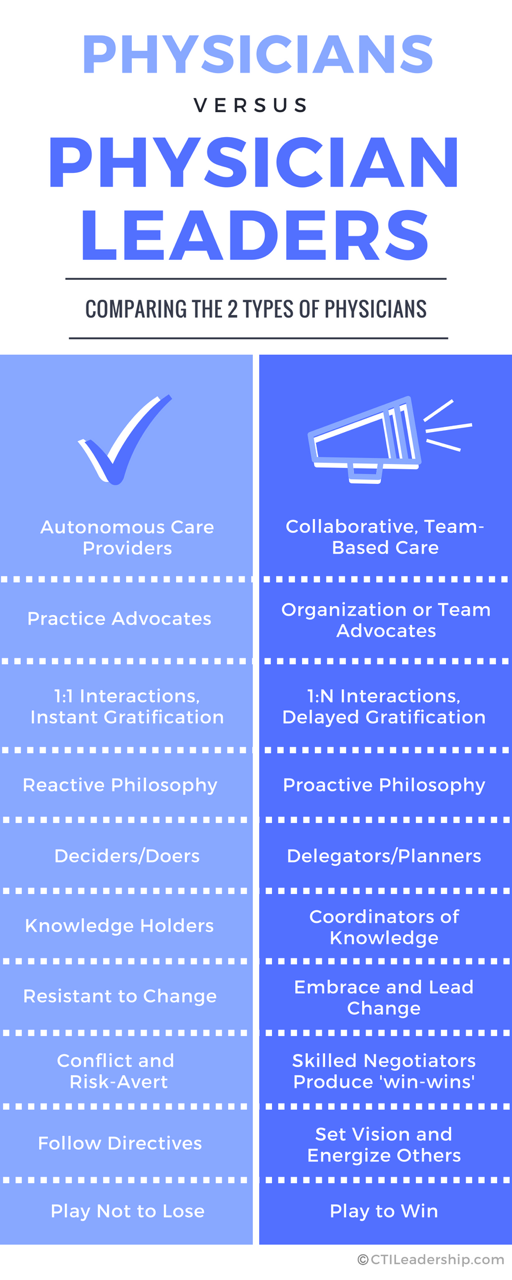
OUR OTHER PRINT BOOKS AND RELATED INFORMATION SOURCES:

Comprehensive Financial Planning Strategies for Doctors and Advisors: Best Practices from Leading Consultants and Certified Medical Planners(TM)