BEWARE: Junk Health Insurance and Medical Billing Fees

By Staff Reporters

***

***

President Joe Biden is cracking down on what the White House calls “junk” health insurance plans – namely, less-robust and short-term coverage that the Trump administration expanded as a cheaper alternative to Obamacare AHA plans.

Biden announced a draft regulation which, once finalized, would limit temporary plans to four months instead of the current three-year maximum. It would also require more disclosure on coverage limits.

“This rule would help make these plans fairer and help ensure that consumers know what they’re getting when they sign up for insurance,” said White House domestic policy advisor Neera Tanden. “When they don’t know what they’re getting and get these gigantic bills, they can feel like it’s a scam.”

CITE: https://medicalexecutivepost.com/2022/03/04/podcast-the-no-surprises-medical-billing-act/

The president also announced new guidance on medical billing stemming from 2020’s No Surprises Act. The guidance would limit the ability of insurers that contract with hospitals to claim provided care was not in network and have customers pay more money. Health plans also would need to disclose facility fees that are increasingly charged to patients and can surface as an unexpected cost in a medical bill.

CITE: https://www.r2library.com/Resource

COMMENTS APPRECIATED

Thank You

***

***

PODCAST: What is Public Health?

By American Journal of Public Health

***

Public health is now part of the political conversation but everyone doesn’t understand it in the same way. Hence the idea of interviewing Governor John Kasich, former governor of Ohio, who has been promoting a greater attention to public health, about what is public health for him.

CITE: https://www.r2library.com/Resource/Title/082610254

***

***

COMMENTS APPRECIATED

Thank You

***

***

INSURANCE: https://www.amazon.com/Dictionary-Health-Insurance-Managed-Care/dp/0826149944/ref=sr_1_4?ie=UTF8&s=books&qid=1275315485&sr=1-4

***

TECH: https://www.amazon.com/Dictionary-Health-Information-Technology-Security/dp/0826149952/ref=sr_1_5?ie=UTF8&s=books&qid=1254413315&sr=1-5

***

PODCASTS: The Physician-Patient Population Health Mis-Match

By Eric Bricker MD

***

***

PODCAST: https://medicalexecutivepost.com/2022/10/23/podcast-help-your-medical-practice-embrace-population-health/

Population Health: https://medicalexecutivepost.com/2022/07/12/enter-population-health-management/

CITE: https://www.r2library.com/Resource/Title/082610254

***

ORDER: https://www.routledge.com/Risk-Management-Liability-Insurance-and-Asset-Protection-Strategies-for/Marcinko-Hetico/p/book/9781498725989

***

COMMENTS APPRECIATED

Thank You

***

PODCAST: Hospital Healthcare Finance Explained

By Eric Bricker MD

***

***

COMMENTS APPRECIATED

Thank You

Subscribe to the Medical Executive-Post

CITE: https://www.r2library.com/Resource/Title/082610254

***

***

***

***

****

17 Math Equations that Changed the World

How many do you know?

via Ian Stewart

***

[Click image to enlarge]

***

Editor’s Note:

I have a bit of math background in algebra, geometry and trigonometry as well as integral and differential calculus, and parametric and non-parametric statistics.  So, this ME-P was a no-brainer. Enjoy with thanks to Ian.

So, how many equations do you know? Please tell us?

Dr. David E. Marcinko MBA MEd CMP

Conclusion

Your thoughts and comments on this ME-P are appreciated. Feel free to review our top-left column, and top-right sidebar materials, links, URLs and related websites, too. Then, subscribe to the ME-P. It is fast, free and secure.

Speaker: If you need a moderator or speaker for an upcoming event, Dr. David E. Marcinko; MBA – Publisher-in-Chief of the Medical Executive-Post – is available for seminar or speaking engagements. Contact: MarcinkoAdvisors@msn.com

OUR OTHER PRINT BOOKS AND RELATED INFORMATION SOURCES:

Risk Management, Liability Insurance, and Asset Protection Strategies for Doctors and Advisors: Best Practices from Leading Consultants and Certified Medical Planners™8Comprehensive Financial Planning Strategies for Doctors and Advisors: Best Practices from Leading Consultants and Certified Medical Planners™

***

DAILY UPDATE: Amazon Pharmacy, Healthcare Spending Boom, Companies and the Bi-Hybrid Markets

MEDICAL EXECUTIVE-POST TODAY’S NEWSLETTER BRIEFING

***

Essays, Opinions and Curated News in Health Economics, Investing, Business, Management and Financial Planning for Physician Entrepreneurs and their Savvy Advisors and Consultants

Serving Almost One Million Doctors, Financial Advisors and Medical Management Consultants Daily

A Partner of the Institute of Medical Business Advisors , Inc.

http://www.MedicalBusinessAdvisors.com

SPONSORED BY: Marcinko & Associates, Inc.

***

http://www.MarcinkoAssociates.com

Daily Update Provided By Staff Reporters Since 2007.
How May We Serve You?
© Copyright Institute of Medical Business Advisors, Inc. All rights reserved. 2024

REFER A COLLEAGUE: MarcinkoAdvisors@msn.com

SPONSORSHIPS AVAILABLE: https://medicalexecutivepost.com/sponsors/

ADVERTISE ON THE ME-P: https://tinyurl.com/ytb5955z

***

Amazon Pharmacy announced on June 18 that, effective immediately, its RxPass medication delivery service will be available to more than 50 million Medicare beneficiaries, a move the company says could save up to $2 billion annually for the federal health insurance program.

CITE: https://www.r2library.com/Resource

Here’s where the major benchmarks ended:

  • The S&P 500 index fell 8.55 points (0.2%) to 5,464.62, up 0.6% for the week; the Dow Jones Industrial Average® ($DJI) gained 15.57 points (0.04%) to 39,150.33, up 1.5% for the week; the NASDAQ Composite® ($COMP) shed 32.23 points (0.2%) to 17,689.36, little changed for the week.
  • The 10-year Treasury note yield (TNX) was little changed at 4.255%.
  • The CBOE Volatility Index® (VIX) dipped 0.06 to 13.22.

What’s up

  • Sarepta Therapeutics soared 30.14% thanks to FDA approval of Elevidys, its new Duchenne muscular dystrophy treatment.
  • Zealand Pharma rose 18.62% after Phase 1b trial results revealed its new weight-loss drug could compete with Ozempic.
  • Asana jumped 14.95% on the news that its board has approved a share repurchase program of up to $150 million of its own stock.
  • CarMax shares rose 0.37% after the company reported first-quarter earnings. The number isn’t big, but the performance is impressive considering the used car company posted a 33% decline in profits.
  • Hertz Global popped 15.95% after the company announced it was raising the size of its bond offering to $1 billion as it looks to update its fleet of rental cars.

What’s down

  • Nvidia fell another 3.22% today as the sell off continued, with investors taking profits after a record run higher.
  • Smith & Wesson Brands dropped 12.87% after the gun maker beat earnings forecasts but announced that next quarter’s sales will be lower than expected.
  • LendingTree slid 2.48% after a Bloomberg report revealed that hackers are auctioning off stolen customer data.
  • Palantir fell 6.78% after the company earned an analyst downgrade for its “gluttonous valuation,” a phrase you never want to hear as an investor.
  • Bitcoin mining stocks took a hit today, selling off after popping higher yesterday after bitcoin prices rallied. Marathon Digital Holdings dropped 7.02%, Riot Platforms fell 8.35%, and CleanSpark sank 9.81%.

CITE: https://tinyurl.com/2h47urt5

With a record number of people insured and seeking healthcare services post-pandemic, US health spend growth is outpacing GDP growth, and is expected to keep doing so through 2032, according to a June 12 report from actuaries at the Centers for Medicare and Medicaid Services (CMS). By 2032, CMS actuaries project healthcare spending will total $7.7 trillion and make up 19.7% of total US GDP, compared to $4.8 trillion and 17.6% of GDP in 2023.

CITE: https://tinyurl.com/tj8smmes

COMMENTS APPRECIATED

PLEASE SUBSCRIBE: MarcinkoAdvisors@msn.com

Thank You

***

***

***

***

EDUCATIONAL TEXTBOOKS: https://tinyurl.com/4zdxuuwf

***

MEDICAL ETHICS: Managing Risk is a Component of Real Health Caring

Demanding High Moral Standards of Self … and Economic HEALTHCARE Organizations

Dr. David Edward Marcinko MBA MEd CMP®

SPONSOR: http://www.CertifiedMedicalPlanner.org

CMP logo

It has been argued that physicians have abdicated the “moral high ground” in health care by their interest in seeking protection for their high incomes, their highly publicized self-referral arrangements, and their historical opposition toward reform efforts that jeopardized their clinical autonomy. 

Experts Speak

In his book Medicine at the Crossroads, colleague and Emory University professor Melvin Konnor, MD noted that “throughout its history, organized medicine has represented, first and foremost, the pecuniary interests of doctors.” He lays significant blame for the present problems in health care at the doorstep of both insurers and doctors, stating that “the system’s ills are pervasive and all its participants are responsible.” 

In order to reclaim their once esteemed moral position, physicians must actively reaffirm their commitment to the highest standards of the medical profession and call on other participants in the health care delivery system also to elevate their values and standards to the highest level.

Evolution

In the evolutionary shifts in models for care, physicians have been asked to embrace business values of efficiency and cost effectiveness, sometimes at the expense of their professional judgment and personal values.  While some of these changes have been inevitable as our society sought to rein in out-of-control costs, it is not unreasonable for physicians to call on payers, regulators and other parties to the health care delivery system to raise their ethical bar. 

Harvard University physician-ethicist Linda Emmanuel noted that “health professionals are now accountable to business values (such as efficiency and cost effectiveness), so business persons should be accountable to professional values including kindness and compassion.” 

Within the framework of ethical principles, John La Puma, M.D., wrote in Managed Care Ethics, that “business’s ethical obligations are integrity and honesty.  Medicine’s are those plus altruism, beneficence, non-maleficence, respect, and fairness.”

Incumbent in these activities is the expectation that the forces that control our health care delivery system, the payers, the regulators, and the providers will reach out to the larger community, working to eliminate the inequities that have left so many Americans with limited access to even basic health care. 

Charles Dougherty clarified this obligation in Back to Reform, when he noted that “behind the daunting social reality stands a simple moral value that motivates the entire enterprise”. 

ASSESSMENT

Health care is indeed grounded in caring. And, managing risk is a component of caring. It arises from a sympathetic response to the suffering of others.

YOUR THOUGHTS ARE APPRECIATED

ORDER TEXTBOOK: https://www.routledge.com/Risk-Management-Liability-Insurance-and-Asset-Protection-Strategies-for/Marcinko-Hetico/p/book/9781498725989

Risk Management, Liability Insurance, and Asset Protection Strategies for Doctors and Advisors: Best Practices from Leading Consultants and Certified Medical Planners™

INVITE DR. MARCINKO: https://medicalexecutivepost.com/dr-david-marcinkos-bookings/

THANK YOU

***

DAILY UPDATE: Bilt, Mortgage Rates, Private Equity in Behavioral Health and the Stock Markets

MEDICAL EXECUTIVE-POST TODAY’S NEWSLETTER BRIEFING

***

Essays, Opinions and Curated News in Health Economics, Investing, Business, Management and Financial Planning for Physician Entrepreneurs and their Savvy Advisors and Consultants

Serving Almost One Million Doctors, Financial Advisors and Medical Management Consultants Daily

A Partner of the Institute of Medical Business Advisors , Inc.

http://www.MedicalBusinessAdvisors.com

SPONSORED BY: Marcinko & Associates, Inc.

***

http://www.MarcinkoAssociates.com

Daily Update Provided By Staff Reporters Since 2007.
How May We Serve You?
© Copyright Institute of Medical Business Advisors, Inc. All rights reserved. 2024

REFER A COLLEAGUE: MarcinkoAdvisors@msn.com

SPONSORSHIPS AVAILABLE: https://medicalexecutivepost.com/sponsors/

ADVERTISE ON THE ME-P: https://tinyurl.com/ytb5955z

***

Wells Fargo is losing $10 million per month on its partnership with Bilt, whose credit card offers users reward points for paying rent, and is looking to renegotiate, the WSJ reports. Apple has stopped offering its buy now, pay later program, Apple Pay Later, after partnering with outside companies, including Affirm.

CITE: https://www.r2library.com/Resource

Private equity (PE) is all over healthcare, with investment firms owning more than 400 hospitals around the US. But as the country faces a mental health crisis—US Surgeon General Vivek Murthy called it the “the defining public health crisis of our time”—PE has its sights set on one of the fastest-growing areas of the industry: behavioral health care. PE has accounted for over 60% of all behavioral health deal flow since 2018, and firms like Thurston Group and Five Points Capital now own about a quarter of facilities offering behavioral health care in some states, according to a recent cross-sectional study published in JAMA Psychiatry.

CITE: https://tinyurl.com/2h47urt5

U.S. markets were closed Wednesday for the Juneteenth holiday. Here’s where the major benchmarks ended:

  • The S&P 500 index fell 13.86 points (0.3%) to 5,473.17; the Dow Jones Industrial Average® ($DJI) gained 299.90 points (0.8%) to 39,134.76; the NASDAQ Composite® ($COMP) dropped 140.64 points (0.8%) to 17,721.59.
  • The 10-year Treasury note yield (TNX) climbed about 4 basis points to 4.257%.
  • The CBOE Volatility Index® (VIX) rose 0.80 to 13.28.

What’s up

  • Gilead jumped 8.46% after clinical data revealed that its new twice-a-year shot prevents 100% of HIV cases.
  • Penn Entertainment rose 9.93% on the news that Boyd Gaming has approached its competitor with an acquisition offer.
  • Accenture rose 7.30% after the IT consulting company missed earnings estimates but more than made up for it with bullish bookings data thanks to AI.
  • Darden Restaurants rose 1.53% after a mixed earnings report. Its acquisition of Ruth’s Chris Steak House propped up earnings, while Olive Garden’s same-store sales came in flat, probably because I eat several hundred free breadsticks there every month.

What’s down

  • Trump Media & Technology Group fell 14.56% after the SEC ruled that early shareholders can resell their stock in the company, diluting new shareholders—though providing upward of $247 million in funding for the beleaguered company.
  • Nikola plummeted 31.46% after the company announced a 1-for-30 stock split in a bid to stay listed on the Nasdaq.
  • Kroger fell 3.27% despite beating analyst revenue estimates in its fiscal first quarter as investors digest the chances of the company sealing a deal to buy Albertsons.
  • Tempest Therapeutics dropped 29.47% upon the release of the latest trial data for its liver cancer treatment.
  • Jabil fell 11.45% today after the electronics supplier beat earnings estimates but warned of softer growth in the year ahead.

Mortgage rates fell below 7% last week to their lowest level since March, but this didn’t spur much extra demand.

CITE: https://tinyurl.com/tj8smmes

COMMENTS APPRECIATED

PLEASE SUBSCRIBE: MarcinkoAdvisors@msn.com

Thank You

***

***

***

***

EDUCATIONAL TEXTBOOKS: https://tinyurl.com/4zdxuuwf

***

What is Your Academic Teaching Philosophy?

 Here is My Teaching Philosophy

[By Dr. David Edward Marcinko MBA, MEd]

Although any learner-centered teaching philosophy, or Boyer Model of scholarship, is constantly in flux, the mission of a public or private educator is: [1] to promote positive learning; [2] to motivate students, staff and graduates; [3] to provide a strong foundation for lifelong learning; and in modernity [4] to enhance career and life-work opportunities; to [5] improve bottom-line financial metrics, and [6] to collaborate on a national and global basis.

However, because we are specifically operating in the rapidly changing healthcare, business management, investing, finance, economics and education milieu, even deeper experiential insight is needed.

Developing NEW Teaching AND Education Skills FOR Business and Healthcare 2.0

Medicine and healthcare business today is different than a generation ago, and all educators and healthcare professionals need new skills to be successful.

Traditionally, the physician – like the classroom professor – was viewed as the “captain of the ship”. Today, their role may be more akin to a ship’s navigator, utilizing clinical, teaching skills and knowledge to chart the patient’s, or student’s, course through a confusing morass of requirements, choices, rules and regulations to achieve the best attainable clinical or didactic outcomes.

This new teaching paradigm includes many classic business school principles, now modified to fit the PP-ACA, the era of health reform, and modern technical connectivity. Thus, a Professor, Chair or Dean must be a subtle guide on the side; not bombastic sage on the stage.

These, newer teaching philosophies must include:

  • Negotiation – working to optimize appropriate curricula, services and materials;
  • Team play – working in concert with others to coordinate education delivery within a clinically appropriate and cost-effective framework;
  • Working within the limits of competence – avoiding the pitfalls of the generalist teacher versus the subject matter expert that may restrict access to professors, texts and facilities by clearly acknowledging when a higher degree of didactic service is needed on behalf of the student;
  • Respecting different cultures and values – inherent in the support of the academic Principle of Autonomy is the acceptance of values that may differ from one’s own. As the US becomes more culturally heterogeneous, educators and medical providers are called upon to work within, and respect, the socio-cultural and/or spiritual framework of patients, students and their families; 
  • Seeking clarity on what constitutes marginal education – within a system of finite resources; providers and professors are called upon to openly communicate with students and patients regarding access to marginal education and/or treatments.
  • Supporting evidence-based practice – educators, like healthcare providers, should utilize outcomes data to reduce variation in treatments and curriculum to achieve higher academic efficiencies and improved care delivery;
  • Fostering transparency and openness in communications – teachers and healthcare professionals should be willing, and prepared, to discuss all aspects of care and academic andragogy; especially when disclosing problems or issues that arise;
  • Exercising decision-making flexibility – treatment algorithms, templates and teaching pathways are useful tools when used within their scope; but providers and professors must have the authority to adjust the plan if circumstances warrant;
  • Becoming skilled in the art of listening and interpretingIn her ground-breaking book, Narrative Ethics: Honoring the Stories of Illness, Rita Charon, MD PhD, a professor at Columbia University, writes of the extraordinary value of using the patient’s personal story in the treatment plan. She notes that, “medicine practiced with narrative competence will more ably recognize patients and diseases; convey knowledge and regard, join humbly with colleagues, and accompany patients and their families through ordeals of illness.” In many ways, attention to narrative returns medicine full circle to the compassionate and caring foundations of the patient-physician relationship. The educational analog to this book is, The Ethics of Teaching [A Casebook], co-edited by my teacher and colleague Deborah Ware Balogh PhD of the University of Indianapolis.

***

Assessment

Finally, these thoughts represent only a handful of examples to illustrate the myriad of new skills that tomorrow’s healthcare professionals, and modern educators, must master in order to meet their timeless professional obligations of compassionate patient care and contemporary teaching effectiveness.

Dr. Marcinko Teaching Philosophy

CHAIR: Chair 3.0 Philosophy Dr. Marcinko

Conclusion

Your thoughts and comments on this ME-P are appreciated. Feel free to review our top-left column, and top-right sidebar materials, links, URLs and related websites, too. Then, subscribe to the ME-P. It is fast, free and secure.

Speaker: If you need a moderator or speaker for an upcoming event, Dr. David E. Marcinko; MBA – Publisher-in-Chief of the Medical Executive-Post – is available for seminar or speaking engagements.

Book Marcinko: https://medicalexecutivepost.com/dr-david-marcinkos-bookings/

Subscribe: MEDICAL EXECUTIVE POST for curated news, essays, opinions and analysis from the public health, economics, finance, marketing, IT, business and policy management ecosystem.

***

Product DetailsProduct Details

***

Social Media and Surgery

By Robert E.H. Khoo MD FRCS(C) FACS

http://www.colondoc.com.

***

Social Media and Surgery

Ankle-Leg Trauma

[Copyright © Dr. David Edward Marcinko. All rights reserved, USA]

***

More:

Conclusion

Your thoughts and comments on this ME-P are appreciated. Feel free to review our top-left column, and top-right sidebar materials, links, URLs and related websites, too. Then, subscribe to the ME-P. It is fast, free and secure.

Speaker: If you need a moderator or speaker for an upcoming event, Dr. David E. Marcinko; MBA – Publisher-in-Chief of the Medical Executive-Post – is available for seminar or speaking engagements. Contact: MarcinkoAdvisors@msn.com

OUR OTHER PRINT BOOKS AND RELATED INFORMATION SOURCES:

***

[MEDICAL PRACTICE BUSINESS MANAGEMENT TEXTBOOK – 3rd.  Edition]

Product Details

[Foreword Dr. Hashem MD PhD] *** [Foreword Dr. Silva MD MBA]

***

MURTHY: Warnings on Social Media Apps

By Staff Reporters

***

***

The top health official in the US is urging Congress to pass legislation that would stamp social media apps with a surgeon general’s warning “stating that social media is associated with significant mental health harms for adolescents,” he wrote in an op-ed for the New York Times recently.

Surgeon General Dr. Vivek Murthy’s push for a warning label follows years of alarm-sounding with his strongest appeal to lawmakers yet.

  • In his statement, Murthy referenced a 2019 study that found risks of depression doubled among teens who scroll for more than three hours per day, and a 2023 Gallup poll showing that US teens log a daily average of 4.8 hours on social media.

COMMENTS APPRECIATED

Thank You

***

***

Whither the CERTIFIED MEDICAL PLANNER™ Marks?

Wither the CERTIFIED MEDICAL PLANNER™ Professional Certification?

CMP logo

DEAR INVESTMENT ADVISORS, CPAs, FINANCIAL PLANNERS, FINANCIAL ADVISORS & INSURANCE AGENTS

We believe that:

If you do not have a market niche; you are not deeply informed
If you are not deeply informed; you can’t different yourself
If you can’t differentiate yourself; you can’t differentiate price
If you can’t differentiate price; you have no market power
If you have no market power; you have no unique knowledge
If you have no unique knowledge; you have fewer profits

If you have fewer profits; you are not likely a CMP™

CMP

PROGRAM CURRICULUM: Enter the CMPs

POPULAR BOOKS: https://medicalexecutivepost.com/2021/04/29/why-are-certified-medical-planner-textbooks-so-darn-popular/

Dean Gene Schmuckler PhD MBA MEd CTS
http://www.CertifiedMedicalPlanner.org

THANK YOU

***

MEDICAL ETHICS: Physician and Financial Organizations

Demanding High Professional Moral Standards of Self and Financing Organizations

By Dr. David Edward Marcinko MBA MEd

By Render Davis MBA

***

***

It has been argued that physicians have abdicated the “moral high ground” in health care by their interest in seeking protection for their high incomes, their highly publicized self-referral arrangements, and their historical opposition toward reform efforts that jeopardized their clinical autonomy.

In his book Medicine at the Crossroads, Emory University professor Melvin Konnor, M.D., noted that “throughout its history, organized medicine has represented, first and foremost, the pecuniary interests of doctors.” He goes on to lay significant blame for the present problems in health care at the doorstep of both insurers and doctors, stating that “the system’s ills are pervasive and all its participants are responsible.” In order to reclaim their once esteemed moral position, physicians must actively reaffirm their commitment to the highest standards of the medical profession and call on other participants in the health care delivery system also to elevate their values and standards to the highest level.

In the evolutionary shifts in models for care, physicians have been asked to embrace business values of efficiency and cost effectiveness, sometimes at the expense of their professional judgment and personal values. While some of these changes have been inevitable as our society sought to rein in out-of-control costs, it is not unreasonable for physicians to call on payers, regulators and other parties to the health care delivery system to raise their ethical bar.

Harvard University physician-ethicist Linda Emmanuel noted that “health professionals are now accountable to business values (such as efficiency and cost effectiveness), so business persons should be accountable to professional values including kindness and compassion.

”Within the framework of ethical principles, John La Puma, M.D., wrote in Managed Care Ethics, that “business’s ethical obligations are integrity and honesty. Medicine’s are those plus altruism, beneficence, nonmaleficence, respect, and fairness.”

Incumbent in these activities is the expectation that the forces that control our health care delivery system, the payers, the regulators, and the providers will reach out to the larger community, working to eliminate the inequities that have left so many Americans with limited access to even basic health care. Charles Dougherty clarified this obligation in Back to Reform, when he noted that “behind the daunting social reality stands a simple moral value that motivates the entire enterprise. Health care is grounded in caring. It arises from a sympathetic response to the suffering of others.”

MORE: https://medicalexecutivepost.com/2017/02/23/healthcare-policy-on-health-and-ethics/

AMA:  Ethics this discussion

COMMENTS APPRECIATED
Thank You

***

***

PODCAST: A Full Course on Bio-Statistics

By Quinnipiac University

Biostatistics are the development and application of statistical methods to a wide range of topics in biology. It encompasses the design of biological experiments, the collection and analysis of data from those experiments and the interpretation of the results.

The following topics of #biostatistics are discussed in this course

⭐️ Table of Contents ⭐️ 0:00

Module 1 – Introduction to Statistics 29:13 Module 2 – Describing Data: Shape 45:44 Module 3 – Describing Data: Central Tendency 1:03:34 Module 4 – Describing Data: Variability 1:34:51 Module 5 – Describing Data: Z-scores 1:43:25 Module 6 – Probability (part I) 2:09:21 Module 6 – Probability (part II) 2:26:22 Module 7 – Distribution of Sample Means 2:41:24 Module 9 – Estimation & Confidence Intervals & Effect Size 2:56:59 Module 10 – Misleading with Statistics 3:17:43 Module 11 – Biostatistics in Medical Decision-making 4:13:36 Module 11b – Biostatistics in Medical Decision-Making: Clinical Application 4:56:51 Module 12 – Biostatistics in Epidemiology 5:05:16 Module 13 – Asking Questions: Research Study Design 5:10:15 Module 14 – Bias & Confounders 5:39:20 Module 16 – Correlation & Regression 6:06:19 Module 17 – Non-parametric Tests ⭐️

CITE: https://www.r2library.com/Resource/Title/0826102549

PODCAST: 0:00

YOUR COMMENTS ARE APPRECIATED.

Thank You

Risk Management, Liability Insurance, and Asset Protection Strategies for Doctors and Advisors : Best Practices from Leading Consultants and Certified Medical Planners™ book cover

RISK MANAGEMENT: https://www.routledge.com/Risk-Management-Liability-Insurance-and-Asset-Protection-Strategies-for/Marcinko-Hetico/p/book/9781498725989

***

DAILY UPDATE: Nvidia, Golden Goose and the Summer Solstice

MEDICAL EXECUTIVE-POST TODAY’S NEWSLETTER BRIEFING

***

Essays, Opinions and Curated News in Health Economics, Investing, Business, Management and Financial Planning for Physician Entrepreneurs and their Savvy Advisors and Consultants

Serving Almost One Million Doctors, Financial Advisors and Medical Management Consultants Daily

A Partner of the Institute of Medical Business Advisors , Inc.

http://www.MedicalBusinessAdvisors.com

SPONSORED BY: Marcinko & Associates, Inc.

***

http://www.MarcinkoAssociates.com

Daily Update Provided By Staff Reporters Since 2007.
How May We Serve You?
© Copyright Institute of Medical Business Advisors, Inc. All rights reserved. 2024

REFER A COLLEAGUE: MarcinkoAdvisors@msn.com

SPONSORSHIPS AVAILABLE: https://medicalexecutivepost.com/sponsors/

ADVERTISE ON THE ME-P: https://tinyurl.com/ytb5955z

***

HAPPY SUMMER SOLSTICE

Today is the first day of summer in the Northern Hemisphere, aka summer solstice. It’s also the longest day of the year.

CITE: https://www.r2library.com/Resource

The markets were closed yesterday for Juneteenth, but they’ll be back today to see if they can keep their hot streak going.

But, the company known for selling shoes that look like they’ve been dragged through mud postponed its IPO, putting a pause on what has been a big year for European companies going public. Golden Goose announced Tuesday it wouldn’t go public in Milan on Friday as planned due to fraught market conditions in Europe stemming from parliamentary elections across the Continent.

CITE: https://tinyurl.com/2h47urt5

Nvidia is now the most valuable company in the world. The chipmaker passed Microsoft to become the world’s most valuable public company, topping $3.3 trillion in market cap. Earlier this month, it reached the $3 trillion mark for the first time, flying past Apple for second place. The AI boom has propelled Nvidia—which owns about 80% of the industry’s data center chip market—to new heights, enriching investors and CEO Jensen Huang along the way. Huang has added nearly $100 billion to his net worth in less than two years, making him the 13th richest person in the world as of June.

CITE: https://tinyurl.com/tj8smmes

COMMENTS APPRECIATED

PLEASE SUBSCRIBE: MarcinkoAdvisors@msn.com

Thank You

***

***

***

***

EDUCATIONAL TEXTBOOKS: https://tinyurl.com/4zdxuuwf

***

VENTURE CAPITAL FUNDING: Digital Health Space

Investment Banking

SPONSOR: http://www.MarcinkoAssociates.com

***

***

Venture capital funding in the digital health space cooled a bit in 2022 following a red-hot 2021. Overall, digital health companies raised $15.3 billion last year, down from the $29.1 billion raised in 2021—but still above the $14.1 billion raised in 2020, according to Rock Health a seed fund that supports digital health startups.

MORE: https://marcinkoassociates.com/welcome-medical-colleagues/

Nevertheless, analysts predict VC investors and IBs will still put a good amount of money into digital health in 2024 and 2025, especially in alternative care, drug development, health information technology, artificial intelligence, EMRs and software that reduces physician workload.

CITE: https://www.r2library.com/Resource

Of course. an essential first part of attracting VC interest and IB money is the crafting and presentation of your formal business plan [“pitch”] ; as well as the needed technical and managerial experience. This is crucial for success and exactly where we can assist.

READ MORE: investment-banking

***

***

COMMENTS APPRECIATED

Thank You

***

About Digital Estate Assets

[By Staff Reporters]

Digital Messages for Loved Ones From Beyond the Grave

***

No one wants to die. Even people who want to go to heaven don’t want to die to get there.
And yet death is the destination we all share. No one has ever escaped it. And that is as it should be, because death is very likely the single best invention of life.
It is life’s change agent. It clears out the old to make way for the new. Right now the new is you, but someday not too long from now, you will gradually become the old and be cleared away.
Sorry to be so dramatic, but it is quite true.
[Steve Jobs]
***

skeleton-jpeg

[What it is –  How it works?]

Life Continues when you pass away

> Ensure your presence – be there when it counts
> Leave messages for your loved ones – for FREE !
> Store for FREE digital assets in designated safes

Learn more: Death in the Digital Age

***

[PHYSICIAN FOCUSED FINANCIAL PLANNING, INSURANCE AND RISK MANAGEMENT COMPANION TEXTBOOK SET]

  Risk Management, Liability Insurance, and Asset Protection Strategies for Doctors and Advisors: Best Practices from Leading Consultants and Certified Medical Planners™ Comprehensive Financial Planning Strategies for Doctors and Advisors: Best Practices from Leading Consultants and Certified Medical Planners™

***

DAILY UPDATE: Wells Fargo, Public Companies as Stock Markets Extend Rally

MEDICAL EXECUTIVE-POST TODAY’S NEWSLETTER BRIEFING

***

Essays, Opinions and Curated News in Health Economics, Investing, Business, Management and Financial Planning for Physician Entrepreneurs and their Savvy Advisors and Consultants

Serving Almost One Million Doctors, Financial Advisors and Medical Management Consultants Daily

A Partner of the Institute of Medical Business Advisors , Inc.

http://www.MedicalBusinessAdvisors.com

SPONSORED BY: Marcinko & Associates, Inc.

***

http://www.MarcinkoAssociates.com

Daily Update Provided By Staff Reporters Since 2007.
How May We Serve You?
© Copyright Institute of Medical Business Advisors, Inc. All rights reserved. 2024

REFER A COLLEAGUE: MarcinkoAdvisors@msn.com

SPONSORSHIPS AVAILABLE: https://medicalexecutivepost.com/sponsors/

ADVERTISE ON THE ME-P: https://tinyurl.com/ytb5955z

***

Wells Fargo is losing $10 million per month on its partnership with Bilt, whose credit card offers users reward points for paying rent, and is looking to renegotiate, the WSJ reports. Apple has stopped offering its buy now, pay later program, Apple Pay Later, after partnering with outside companies, including Affirm.

CITE: https://www.r2library.com/Resource

Here’s where the major benchmarks ended:

  • The S&P 500 index gained 13.80 points (0.3%) to 5,487.03; the Dow Jones Industrial Average® ($DJI) added 56.76 points (0.2%) to 38,834.86; the NASDAQ Composite® ($COMP) rose 5.21 points (0.03%) to 17,862.23, a record close for the seventh day in a row.
  • The 10-year Treasury note yield (TNX) dipped more than 6 basis points to 4.215%.
  • The CBOE Volatility Index® (VIX) fell 0.45 to 12.30.

What’s up

What’s down

CITE: https://tinyurl.com/2h47urt5

And … precision medicine company Tempus AI is going public, raising $410.7 million through its initial public offering.

CITE: https://tinyurl.com/tj8smmes

COMMENTS APPRECIATED

PLEASE SUBSCRIBE: MarcinkoAdvisors@msn.com

Thank You

***

***

***

***

EDUCATIONAL TEXTBOOKS: https://tinyurl.com/4zdxuuwf

***

PODCAST: Artificial Intelligence in Healthcare

By Eric Bricker MD

***

COMMENTS APPRECIATED

Thank You

***

***

Invite Dr. Marcinko to Speak at your Next Seminar, Webcast or Event in 2024?

Invite Dr. Marcinko

The Choice is Up to You

***

Colleagues know that I enjoy personal coaching and public speaking and give as many talks each year as possible, at a variety of medical society and financial services conferences around the country and world.

These include lectures and visiting professorships at major academic centers, keynote lectures for hospitals, economic seminars and health systems, keynote lectures at city and statewide financial coalitions, and annual keynote lectures for a variety of internal yearly meetings.

 Topics Link: imba-inc-firm-services

And so, we appreciate your consideration.

Invite Dr. Marcinko

THANK YOU!

***

DAILY UPDATE: Microsoft & Google Cyber Security Discounts as Stock Markets Rally

MEDICAL EXECUTIVE-POST TODAY’S NEWSLETTER BRIEFING

***

Essays, Opinions and Curated News in Health Economics, Investing, Business, Management and Financial Planning for Physician Entrepreneurs and their Savvy Advisors and Consultants

Serving Almost One Million Doctors, Financial Advisors and Medical Management Consultants Daily

A Partner of the Institute of Medical Business Advisors , Inc.

http://www.MedicalBusinessAdvisors.com

SPONSORED BY: Marcinko & Associates, Inc.

***

http://www.MarcinkoAssociates.com

Daily Update Provided By Staff Reporters Since 2007.
How May We Serve You?
© Copyright Institute of Medical Business Advisors, Inc. All rights reserved. 2024

REFER A COLLEAGUE: MarcinkoAdvisors@msn.com

SPONSORSHIPS AVAILABLE: https://medicalexecutivepost.com/sponsors/

ADVERTISE ON THE ME-P: https://tinyurl.com/ytb5955z

***

  • Microsoft. According to a same-day announcement on its site, the company will give “nonprofit pricing and discounts for its security products optimized for smaller organizations, providing up to a 75% discount,” along with free cybersecurity training, assessments, and—for at least one year, the company says—Windows 10 security updates.
  • Google. The White House said that Google will “provide endpoint security advice to rural hospitals and nonprofit organizations at no cost,” as well as a pilot program designed to help rural facilities “develop a packaging of security capabilities that fit these hospitals’ unique needs.”

CITE: https://www.r2library.com/Resource

What’s up

What’s down

CITE: https://tinyurl.com/2h47urt5

Here’s where the major benchmarks ended:

  • The S&P 500 index gained 41.63 points (0.8%) to 5,473.23; the Dow Jones Industrial Average® ($DJI) added 188.94 points (0.5%) to 38,778.10; the NASDAQ Composite advanced 168.14 points (1.0%) to 17,857.02.
  • The 10-year Treasury note yield (TNX) rose more than 6 basis points to 4.279%.
  • The CBOE Volatility Index® (VIX) increased 0.10 to 12.76.

CITE: https://tinyurl.com/tj8smmes

COMMENTS APPRECIATED

PLEASE SUBSCRIBE: MarcinkoAdvisors@msn.com

Thank You

***

***

***

***

EDUCATIONAL TEXTBOOKS: https://tinyurl.com/4zdxuuwf

***

POPULATION HEALTH: Management?

By Dr. David Edward Marcinko MBA CMP

SPONSOR: http://www.MarcinkoAssociates.com

What is population health management?

The Care Continuum Alliance, an alliance of stakeholders across the continuum of care, is working precisely toward the goal of improving the health of populations. They espouse a detailed set of principles and a model of “population health management.” It can be summed up, in the broadest sense, as the care provider community, in partnership with patients and their families, conducting proactive and collective monitoring of the patient’s healthcare quality, adherence, access, and outcomes with the goal of improving the health of an entire patient population.

As such, population health management stresses wellness and prevention through lifestyle and disease management and complex case management to remove the gap between zero care and costly chronic or emergency care. It emphasizes the full spectrum of needs from prevention and wellness to keeping healthy people and at-risk people healthy, to better manage the care of those with chronic conditions, and to still be ready to provide emergent or acute care services. In most cases, it also includes the involved providers taking on accountability for the financial risk and quality of care provided.

We have been working with administrative and physician leaders across the country to grapple with what it will mean to actually foster valuable population health management in the different communities they serve. It is clear that this is a whole new paradigm and that the years of experience and training that have brought them to where they are today may not have sufficiently prepared them for what is to come. It requires a well-coordinated and complete continuum of care, with new metrics and advanced analytics. As one might expect,while clusters of resistance to the idea remain, most have flung themselves into learning mode and are beginning to “act their way into new thinking.”

However, we also see a big risk in powering ahead without revisiting the role of a key stakeholder group—patients and their families, whose experience and perspective are often left behind, but whose actions will have a profound effect on the future success of population health management efforts.

CITE: https://www.r2library.com/Resource

***

***

***

Its earnings season once again and CVS Health beat Wall Street estimates with $2.3 billion in profit during Q3. Humana raised its Medicare Advantage enrollment projections again.

And, population management telehealth giant Amwell inked a major federal contract but has seen its losses balloon in 2023.

SUBSCRIBE AND COMMENT TODAY

Thank You

***

***

***

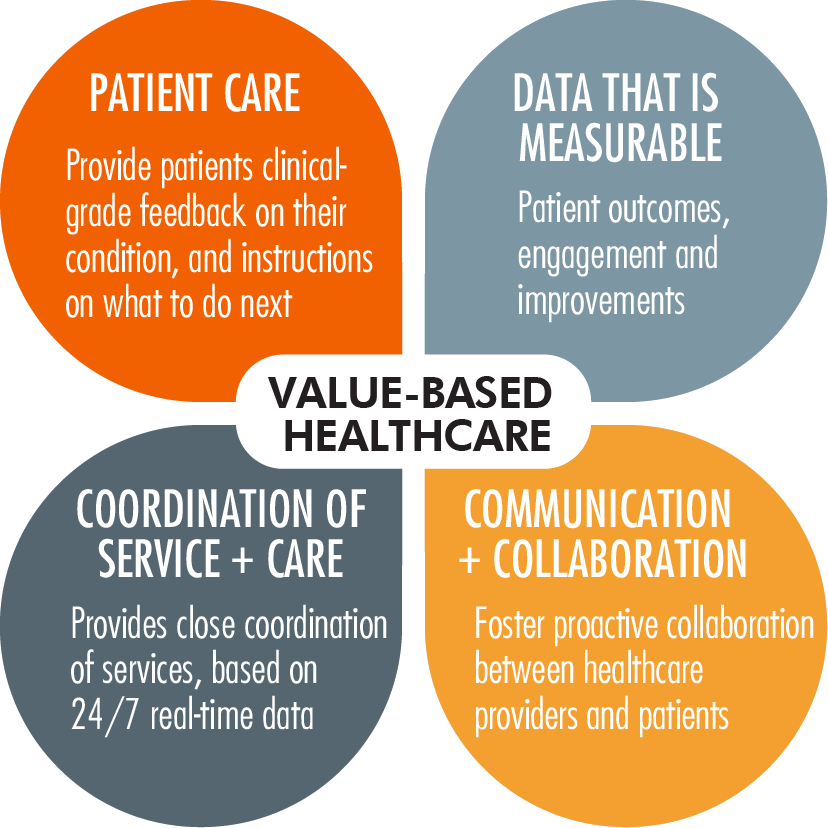
VALUE BASED CARE: CVS and Walgreens

The retail pharmacy giants have made a string of multi-billion dollar deals!

By Staff Reporters

***

***

CVS and Walgreens have been spending money like there is no tomorrow! In fact, the two retail pharmacy giants have made a string of multi-billion dollar acquisitions of primary care providers in the past couple years, including the $5.2 billion VillageMD acquisition in 2021 (Walgreens) and the $10.6 billion plan to buy Oak Street Health (CVS).

VillageMD also bought primary care clinic operator Summit Health-CityMD in January 2023, which Walgreens invested $3.5 billion in, and CVS spent roughly $8 billion to acquire Signify Health, a value-based payment platform, in September 2022.

So what do all these deals have in common? Value-based care.

CITE: https://www.r2library.com/Resource/Title/082610254

READ Healthcare Brew: https://www.healthcare-brew.com/stories/2023/03/03/cvs-walgreens-value-based-care?cid=30723705.29836&mid=349b552221c994e2540a304649746d7c&utm_campaign=hcb&utm_medium=newsletter&utm_source=morning_brew

***

***

ORDER: https://www.amazon.com/Financial-Management-Strategies-Healthcare-Organizations/dp/1466558733/ref=sr_1_3?ie=UTF8&qid=1380743521&sr=8-3&keywords=david+marcinko

COMMENTS APPRECIATED

Thank You

***

What Physician Investors STILL NEED TO KNOW about “Monte Carlo” Simulation?

Probability Forecasting and Investing

By Dr. David Edward Marcinko MBA MEd CMP™

[Editor-in-Chief] www.CertifiedMedicalPlanner.org

dr-david-marcinko1Recently, I had a physician-client ask me about Monte Carlo simulation. You know the routine: what it is and how it works, etc.

From Monaco

Named after Monte Carlo, Monaco, which is famous for its games of chance, MCS is a technique that randomly changes a variable over numerous iterations in order to simulate an outcome and develop a probability forecast of successfully achieving an outcome.

In endowment management, MCS is used to demonstrate the probability of “success” as defined by achieving the endowment’s asset growth and payout goals.  In other words, MCS can provide the endowment manager with a comfort level that a given payout policy and asset allocation success will not deplete the real value of the endowment.

Quantitative Tools Problematic

The problem with many quantitative tools is the divorce of judgment from their use. Although useful, MCS has limitations that should not supplant the endowment manager’s, FA or physician-investor’s, experience.

MCS generates an efficient frontier by relying upon several inputs: expected return, expected volatility, and correlation coefficients. These variables are commonly input using historical measures as proxies for estimated future performance. This poses a variety of problems.

  • First, the MCS will generally assume that returns are normally distributed and that this distribution is stationary.  As such, asset classes with high historical returns are assumed to have high future returns.
  • Second, MCS is not generally time sensitive. In other words, the MCS optimizer may ignore current environmental conditions that would cause a secular shift in a given asset class returns.
  • Third, MCS may use a mean variance optimizer [MVO] that may be subject to selection bias for certain asset classes. For example, private equity firms that fail will no longer report results and will be eliminated from the index used to provide the optimizer’s historical data.

Healthcare Investment Risks

A Tabular Data Example

This table compares the returns, standard deviations for large and small cap stocks for the 20-year periods ended in 1979 and 2010.

Twenty Year Risk & Return Small Cap vs. Large Cap (Ibbotson Data)

[IA Micro-Cap Value 14.66 17.44 24.69 0.44]

1979

2010

Risk

Return

Correlation

Risk

Return

Correlation

Small   Cap Stocks 30.8% 17.4% 78.0% 18.1% 26.85% 59.0%
Large   Cap Stocks 16.5% 8.1% 13.1% 15.06%

[Reproduced from “Asset Allocation Math, Methods and Mistakes.” Wealthcare Capital Management White Paper, David B. Loeper, CIMA, CIMC (June 2, 2001)]

The Problems

Professor David Nawrocki identified a number of problems with typical MCS in that their mean variance optimizers assume “normal distributions and correlation coefficients of zero, neither of which are typical in the world of financial markets.”

Dr. Nawrocki subsequently described a number of other issues with MCS including nonstationary distributions and nonlinear correlations.

Finally, Dr. Nawrocki quoted financial advisor, Harold Evensky MS CFP™ who eloquently notes that “[t]he problem is the confusion of risk with uncertainty.” Risk assumes knowledge of the distribution of future outcomes (i.e., the input to the Monte Carlo simulation). Uncertainty or ambiguity describes a world (our world) in which the shape and location of the distribution is open to question.

Assessment

Contrary to academic orthodoxy, the distribution of U.S. stock market returns is “far from normal.”[1] Other critics have noted that many MCS simulators do not run enough iterations to provide a meaningful probability analysis.

Conclusion

Your thoughts and comments on this ME-P are appreciated. Feel free to review our top-left column, and top-right sidebar materials, links, URLs and related websites, too. Then, subscribe to the ME-P. It is fast, free and secure.

Speaker: If you need a moderator or speaker for an upcoming event, Dr. David E. Marcinko; MBA – Publisher-in-Chief of the Medical Executive-Post – is available for seminar or speaking engagements. Contact: MarcinkoAdvisors@msn.com

OUR OTHER PRINT BOOKS AND RELATED INFORMATION SOURCES:


[1]   Nawrocki, D., Ph.D. “The Problems with Monte Carlo Simulation.” FPA Journal (November 2001).

Product Details  Product Details

Risk Management, Liability Insurance, and Asset Protection Strategies for Doctors and Advisors: Best Practices from Leading Consultants and Certified Medical Planners™8Comprehensive Financial Planning Strategies for Doctors and Advisors: Best Practices from Leading Consultants and Certified Medical Planners™

DAILY UPDATE: Done Global TeleHealth

MEDICAL EXECUTIVE-POST TODAY’S NEWSLETTER BRIEFING

***

Essays, Opinions and Curated News in Health Economics, Investing, Business, Management and Financial Planning for Physician Entrepreneurs and their Savvy Advisors and Consultants

Serving Almost One Million Doctors, Financial Advisors and Medical Management Consultants Daily

A Partner of the Institute of Medical Business Advisors , Inc.

http://www.MedicalBusinessAdvisors.com

SPONSORED BY: Marcinko & Associates, Inc.

***

http://www.MarcinkoAssociates.com

Daily Update Provided By Staff Reporters Since 2007.
How May We Serve You?
© Copyright Institute of Medical Business Advisors, Inc. All rights reserved. 2024

REFER A COLLEAGUE: MarcinkoAdvisors@msn.com

SPONSORSHIPS AVAILABLE: https://medicalexecutivepost.com/sponsors/

ADVERTISE ON THE ME-P: https://tinyurl.com/ytb5955z

***

CITE: https://www.r2library.com/Resource

The NASDAQ nabbed its fifth-straight record close last week, and the S&P 500 snapped its four-day streak. Both were up for the week as investors digested data that showed inflation cooling. Adobe became the latest company to soar thanks to AI, spiking after delivering better-than-expected earnings and forecasts.

CITE: https://tinyurl.com/2h47urt5

Those who rely on ADHD medication got some bad news last week when the CDC issued a health advisory alerting patients that there may be possible “increased risks for injury and overdose,” after two executives at Done Global, a telehealth company, were arrested for fraud linked to allegedly selling Adderall over the internet. The CDC warned that as many as 30,000 to 50,000 adult patients could be affected. https://tinyurl.com/3rf5py6c

CITE: https://tinyurl.com/tj8smmes

COMMENTS APPRECIATED

PLEASE SUBSCRIBE: MarcinkoAdvisors@msn.com

Thank You

***

***

***

***

EDUCATIONAL TEXTBOOKS: https://tinyurl.com/4zdxuuwf

***

Guidelines for Using an Equity Analyst’s Report

Trusting and Testing Fundamental Research

By Dr. David Edward Marcinko; MBA, MEd, CMP™

[Publisher-in-Chief]

It is not unreasonable to doubt the research of some security analysts; as evidenced by Wall Street’s recent upward implosion.

And so, trust but verify with your on research is always a good idea for the physician or lay investor in 2024.

25 Questions to Ask and Answer

Now, as a former financial planner, and professional investment advisor, please allow me to suggest the following before purchasing any equity:

  • How recent is the stock price on the report? If it is not recent, what is the current price? What is the current price relative to the 52-week high and low?
  • What is the P/E on trailing earnings per share? What is the stock’s projected price, based on estimated earnings for the periods shown?
  • What is the cash flow per share and the price-to-cash-flow ratio?
  • What is the book value? Price to book?
  • What is the trading volume relative to the number of shares outstanding?
  • How many shares are outstanding? What is the market capitalization based on current stock price and current shares outstanding? Is it a small, medium, or large-cap company?
  • Is the number of shares on a fully diluted basis shown? Is the fully diluted P/E shown? If there is a significant difference, read the report to find out where the extra shares will come from (convertible stock, a new or re-issue) and what the likelihood is that a conversion or a new issue or re-issue will occur.
  • What is the company’s earnings growth history? Is it a growth company or a cyclical company?
  • Does the company pay a dividend? If so, what is the dividend history and the payout ratio?
  • What is the debt-to-equity ratio? What kind of debt is it (publicly owned bonds, loans, etc.), and when does it have to be paid? What is the annual interest expense?
  • What are the cash ratios? Can the company cover its current liabilities easily? What is the ratio of annual earnings to interest expense?
  • What business is the company in? Are there comparisons to other companies in the same business? Are they similar in size? What is the outlook for the industry?
  • What is the company’s share of the market for its product? Does it have a particular niche? Does it have patents or protected rights on a special product? When do they expire?
  • How do the company’s financial ratios compare to those of other companies in its industry? How do the company’s ratios compare to those of the market as a whole or to narrower industry indexes?
  • Who are the company’s competitors? What advantages does the company have over its competitors?
  • How old is the company? How long has it been public? How long has the current management been running it? Who is the current management, and have there been significant management changes in the recent past?
  • How much of the company’s stock is owned by management? How much is owned by large institutional investors?
  • What kind of labor force does the company rely on? Where is it located?
  • Who are the company’s major customers? Is one customer very important?
  • Who are the company’s major suppliers? Is the company very dependent on one supplier?
  • How is the product distributed? Are there important relationships with distributors? How many different distributors are there?
  • What are the profit margins of the company? Where do they come from (incremental sales over break-even, or are they directly related to sales, no matter what level)?
  • What is the inventory turnover? Is there a lot of old, highly valued (on-the-books) inventory?
  • What is the history of sales revenue growth? What is the history of product mix in sales revenue?
  • Did the company issuing the research report also serve as investment banker?

Assessment

What did we miss – please advise?

Conclusion

And so, your thoughts and comments on this ME-P are appreciated. Feel free to review our top-left column, and top-right sidebar materials, links, URLs and related websites, too. Then, be sure to subscribe to the ME-P. It is fast, free and secure.

Subscribe Now: Did you like this Medical Executive-Post, or find it helpful, interesting and informative? Want to get the latest ME-Ps delivered to your email box each morning?

Sponsors Welcomed

And, credible sponsors and like-minded advertisers are always welcomed.

Link: https://healthcarefinancials.wordpress.com/2007/11/11/advertise

***

What is the VIP [Patient] Syndrome

VERY IMPORTANT PERSONS

By Dr. David Edward Marcinko MBA MEd CMP

***

VERY IMPORTANT PATIENTS

***

DEFINITION: “VIP syndrome” is a term coined in 1964 by the psychiatrist Walter Weintraub to describe an intriguing paradox: Throughout history, the rich and famous, with all their resources and fancy doctors, have often received worse medical treatment, and suffered from worse health outcomes, than the average person. When physicians afford “special privileges” to their powerful patients, from “Mad King” George III to Michael Jackson, they seem to get sicker and even die. While Weintraub, a psychoanalyst, attributed the problem in part to doctors unconsciously resenting their influential patients, it seems doctors simply get starstruck around famous people and high-ranking figures. Despite their medical expertise, these physicians find themselves opting out of basic tests for “privacy” or prescribing dangerous medications for “comfort.”

CITE: https://www.r2library.com/Resource/Title/0826102549

RELATED: https://journal.chestnet.org/article/S0012-3692(16)37268-3/fulltext

DKE: https://medicalexecutivepost.com/2018/09/14/what-is-the-dunning-kruger-effect/?preview_id=188020&preview_nonce=b5c7f4a5de&preview=true

INVITATION: https://medicalexecutivepost.com/dr-david-marcinkos-bookings/

***

***

COMMENTS APPRECIATED

Thank You

Subscribe to the Medical Executive-Post

***

***

BUSINESS MEDICINE: https://www.amazon.com/Business-Medical-Practice-Transformational-Doctors/dp/0826105750/ref=sr_1_9?ie=UTF8&qid=1448163039&sr=8-9&keywords=david+marcinko

***

***

HIT: https://www.amazon.com/Dictionary-Health-Information-Technology-Security/dp/0826149952/ref=sr_1_5?ie=UTF8&s=books&qid=1254413315&sr=1-5

****

The Diderot Effect?

What is it?

[By staff reporters]

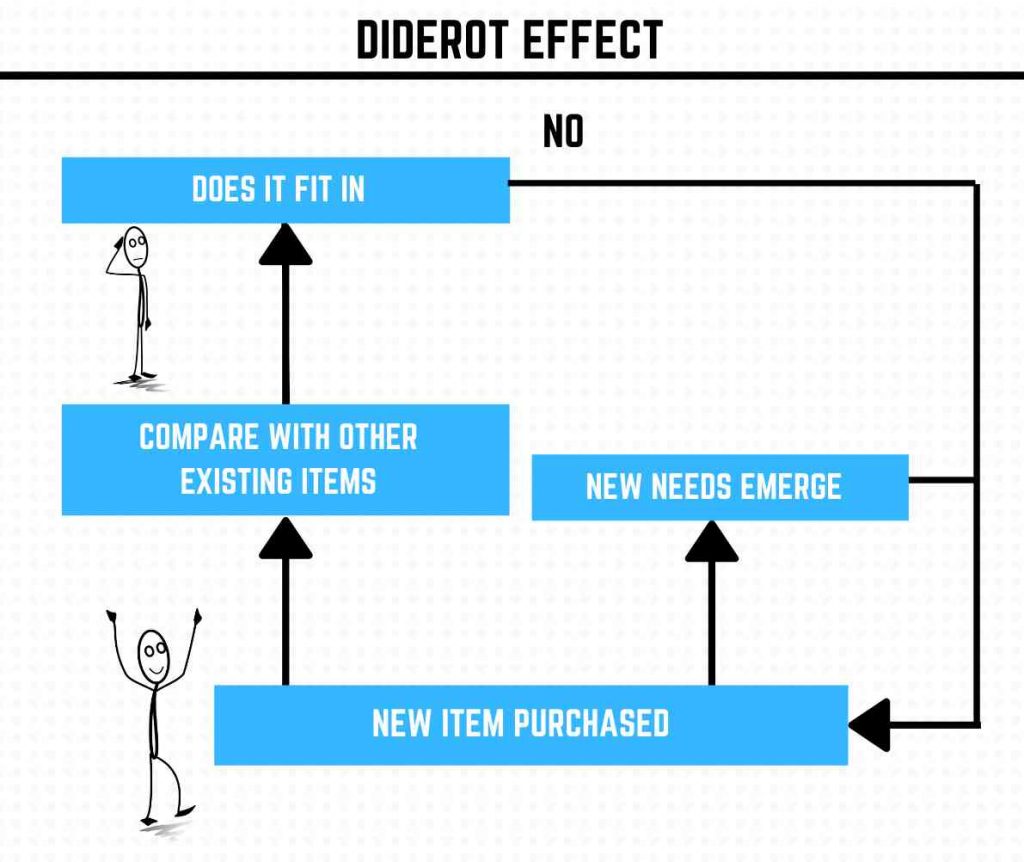
The Diderot Effect is a social phenomenon related to consumer goods. It is based on two ideas.

The first idea is that goods purchased by consumers will align with their sense of identity, and, as a result, will complement one another.

The second idea states that the introduction of a new possession that deviates from the consumer’s current complementary goods can result in a process of spiraling consumption.

The term was coined by anthropologist and scholar of consumption patterns Grant McCracken in 1988, and is named after the French philosopher Denis Diderot, who first described the effect in an essay.

MORE: https://medicalexecutivepost.com/2021/01/25/the-prosperity-paradox/

Assessment

Your thoughts are appreciated.

Thank You

***

Fun Facts for Father’s Day

Sunday June 16th 2024

Did you know that in the United States there are twice as many hardware stores and three times as many sporting good stores than men’s clothing stores? Or, that we spend most of our Father’s Day cash on taking Dad out to eat?

Assessment

Heck, did you know that Father’s Day not only has an official flower, but that there’s actually a debate about which flower it should be? Neither did we!

***


Conclusion

And so, your thoughts and comments on this ME-P are appreciated. Feel free to review our top-left column, and top-right sidebar materials, links, URLs and related websites, too. Then, subscribe to the ME-P. It is fast, free and secure.

Speaker: If you need a moderator or speaker for an upcoming event, Dr. David E. Marcinko; MBA – Publisher-in-Chief of the Medical Executive-Post – is available for seminar or speaking engagements. Contact: MarcinkoAdvisors@msn.com

Subscribe Now: Did you like this Medical Executive-Post, or find it helpful, interesting and informative? Want to get the latest ME-Ps delivered to your email box each morning? Just subscribe using the link below. You can unsubscribe at any time. Security is assured.

Sponsors Welcomed: And, credible sponsors and like-minded advertisers are always welcomed.

Link: https://healthcarefinancials.wordpress.com/2007/11/11/advertise

Product DetailsProduct DetailsProduct Details

Product Details  Product Details

   Product Details 

DAILY UPDATE: Father’s Day, Medical Debt and USAA

MEDICAL EXECUTIVE-POST TODAY’S NEWSLETTER BRIEFING

***

Essays, Opinions and Curated News in Health Economics, Investing, Business, Management and Financial Planning for Physician Entrepreneurs and their Savvy Advisors and Consultants

Serving Almost One Million Doctors, Financial Advisors and Medical Management Consultants Daily

A Partner of the Institute of Medical Business Advisors , Inc.

http://www.MedicalBusinessAdvisors.com

SPONSORED BY: Marcinko & Associates, Inc.

***

http://www.MarcinkoAssociates.com

Daily Update Provided By Staff Reporters Since 2007.
How May We Serve You?
© Copyright Institute of Medical Business Advisors, Inc. All rights reserved. 2024

REFER A COLLEAGUE: MarcinkoAdvisors@msn.com

SPONSORSHIPS AVAILABLE: https://medicalexecutivepost.com/sponsors/

ADVERTISE ON THE ME-P: https://tinyurl.com/ytb5955z

***

HAPPY FATHER’S DAY

News 4 in San Antonio Texas organized a video call with several USAA members who lost funds due to fraud — and have been left with little to no recourse. Some of them also belong to the Facebook group, USAA Fraud and Victims, which has 2,900 members. A few USAA members even reported being asked by the institution to cover the negative balances on their accounts after their money was stolen.

CITE: https://www.r2library.com/Resource

The race to a $3 trillion market cap seemed like it would always be between Apple and Microsoft. But over the last twelve months, Nvidia has come roaring to the front of the pack, neck and neck with the big tech incumbents. In the last two weeks alone it has replaced Apple in the #2 spot, only to be supplanted earlier this week when Apple’s AI plans propelled it back ahead. Now, it’s anybody’s race to the next big benchmark: a $4 trillion market cap.

CITE: https://tinyurl.com/2h47urt5

In a move that could be good for patients but bad for hospitals, the Consumer Financial Protection Bureau (CFPB) on Tuesday proposed regulation that would wipe medical debt from many consumers’ credit reports. The rule is meant to help the 15 million people in the US who creditors say still have a combined $49 billion of medical debt that negatively affects their credit scores, Rohit Chopra, director of the CFPB, said during a June 11 press briefing. About 100 million people in the US have some amount of medical debt, which totals roughly $220 billion, according to data from the Peterson-KFF Health System Tracker. The proposed regulation comes after three credit-reporting conglomeratesEquifax, Experian, and TransUnion—removed paid-off medical debt and medical debts under $500 from credit reports in 2022 and 2023, respectively.

CITE: https://tinyurl.com/tj8smmes

COMMENTS APPRECIATED

PLEASE SUBSCRIBE: MarcinkoAdvisors@msn.com

Thank You

***

***

***

***

EDUCATIONAL TEXTBOOKS: https://tinyurl.com/4zdxuuwf

***

Some Father’s Day Facts

Happy Father’s Day from the ME-P

***

***

Conclusion

Your thoughts and comments on this ME-P are appreciated. Feel free to review our top-left column, and top-right sidebar materials, links, URLs and related websites, too. Then, subscribe to the ME-P. It is fast, free and secure.

Speaker: If you need a moderator or speaker for an upcoming event, Dr. David E. Marcinko; MBA – Publisher-in-Chief of the Medical Executive-Post – is available for seminar or speaking engagements. Contact: MarcinkoAdvisors@msn.com

OUR OTHER PRINT BOOKS AND RELATED INFORMATION SOURCES:

Product DetailsProduct DetailsProduct Details

Product Details  Product Details

Product Details

Risk Management, Liability Insurance, and Asset Protection Strategies for Doctors and Advisors: Best Practices from Leading Consultants and Certified Medical Planners™8Comprehensive Financial Planning Strategies for Doctors and Advisors: Best Practices from Leading Consultants and Certified Medical Planners™

***

Ride Sharing for Elderly Patients

Emerging Transportation Models

By Rick Kahler CFP

For elderly people facing the reality of diminishing capabilities, a service that can help maintain their independence is ridesharing.

Ride – Sharing

Ridesharing is hardly news for most Americans, particularly those in urban areas. After all, it has been around for a decade. In more rural areas of the US, however, ridesharing is just becoming an option. In my home town of Rapid City, South Dakota, for example, Lyft started operations only recently, and Uber  began last September.

Many of us in rural parts of the US, myself included, use ridesharing primarily when we travel. It has changed the way I travel in large cities, and I appreciate it for its convenience, flexibility, and economical cost.

For many others outside of big cities, however, especially senior citizens, ridesharing has the potential to be a game changer for those willing to take advantage of it.

There are a lot of emotional benefits and pitfalls to ridesharing for seniors. The greatest benefit is that, instead of relying on the gratuity and schedules of friends, family, and limited public transportation, they can literally reclaim most of the freedom they once had when they could drive. This alone can be uplifting and empowering. It allows seniors who may be isolated socially to reenter their communities and gives them a renewed sense of independence and autonomy.

However, I find many seniors emotionally resistant and reluctant to embrace the benefits of ridesharing. Many fear the unknown and unfamiliarity of ridesharing. Using the app inherently means owning a smart phone, which many seniors resist. Even those who have smartphones may feel overwhelmed about downloading and learning the app. This is where reaching out to younger family and friends to show you the ropes can be critical.

Another factor that often contributes to reluctance to use the freedom and convenience of ridesharing is a money script of frugality. The assumption may be “I can’t afford it.” While this can be absolutely true for some, many who could easily afford ridesharing also buy into that belief.

Economically, using ridesharing can cost the same as or less than owning a car. This is especially the case if you don’t have a demanding schedule and your need for transportation is moderate for activities like grocery shopping, medical appointments, and occasional social events.

Example:

Let’s assume you average one 10-mile round trip per day, or seven per week.  If you owned a car the gas would cost $50 a month. Insurance could run about $100. Oil, changing tires, servicing, and periodic repairs could average another $50 a month. That’s a total of $200 a month in out-of-pocket costs. The biggest cost is the depreciation on your car. Let’s assume your car is worth $20,000. You could expect it to depreciate 1% per month or around $200. That puts the total cost of owning the car at $400 per month.

Ridesharing costs about $7.00 each way when you are traveling up to 5 miles. That puts the daily average cost at $14.00 per trip, or $420 a month, about the same cost as owning a car—and a cost that could be covered for months through selling your vehicle.

***

***

Assessment

Ridesharing can open up a whole new world of convenience, autonomy, and choices. Its benefits can even be a matter of life and death when seniors reach that difficult time when they can still legally drive but in reality they should not. With physical impairments like deteriorating vision and slower reaction time, driving means putting themselves and others at risk. Having the option of ridesharing can make that tough decision to give up driving just a little easier.

Your thoughts are appreciated.

***

Risk Management, Liability Insurance, and Asset Protection Strategies for Doctors and Advisors: Best Practices from Leading Consultants and Certified Medical Planners™8Comprehensive Financial Planning Strategies for Doctors and Advisors: Best Practices from Leading Consultants and Certified Medical Planners™

***

DAILY UPDATE: Sat Healthcare Private Equity, Elder Abuse Awareness Day

MEDICAL EXECUTIVE-POST TODAY’S NEWSLETTER BRIEFING

***

Essays, Opinions and Curated News in Health Economics, Investing, Business, Management and Financial Planning for Physician Entrepreneurs and their Savvy Advisors and Consultants

Serving Almost One Million Doctors, Financial Advisors and Medical Management Consultants Daily

A Partner of the Institute of Medical Business Advisors , Inc.

http://www.MedicalBusinessAdvisors.com

SPONSORED BY: Marcinko & Associates, Inc.

***

http://www.MarcinkoAssociates.com

Daily Update Provided By Staff Reporters Since 2007.
How May We Serve You?
© Copyright Institute of Medical Business Advisors, Inc. All rights reserved. 2024

REFER A COLLEAGUE: MarcinkoAdvisors@msn.com

SPONSORSHIPS AVAILABLE: https://medicalexecutivepost.com/sponsors/

ADVERTISE ON THE ME-P: https://tinyurl.com/ytb5955z

***

Quote: “​​When private equity gets hold of healthcare systems, it is literally a matter of life and death, so if you drive a hospital like Steward into bankruptcy, putting patients and communities at risk, you should face real consequences.”—Sen. Elizabeth Warren on a proposed federal bill to impose jail time on executives who “loot” health systems, leading to patient harm (Fierce Healthcare)

CITE: https://www.r2library.com/Resource

Here’s where the major benchmarks ended:

  • The S&P 500 index fell 2.14 points (0.04%) to 5,431.60, up 1.6% for the week; the Dow Jones Industrial Average® ($DJI) lost 57.94 points (0.2%) to 38,589.16, down 0.5% for the week; the NASDAQ Composite gained 21.32 points (0.1%) to 17,688.88, up 3.2% for the week.
  • The 10-year Treasury note yield (TNX) fell more than 2 basis points to 4.215%, after earlier dropping under 4.19%, its lowest since late March.
  • The CBOE Volatility Index® (VIX) rose 0.72 to 12.66.

What’s up

  • Adobe soared 14.51% today after crushing analyst expectations when it announced earnings late yesterday.
  • Shopify rose 4.59% after it received yet another analyst upgrade. JPMorgan analysts gave the stock an overweight rating on June 11, while today Evercore analysts upgraded the company to outperform.
  • Hasbro popped 6% after the toy maker earned an upgrade to “buy” from Bank of America predicated on the company’s digital gaming strategy.

What’s down

  • Cruise stocks took a major blow today after a Bank of America report revealed that there was softer-than-expected pricing across the industry in May. Carnival fell 7.09%, Norwegian Cruise Line dropped 7.43%, and Royal Caribbean fell 4.35%.
  • RH plummeted 17% after the furniture maker reported a larger-than-expected loss in the previous quarter.
  • Stellantis fell 4.08% after the company’s CEO announced it will cut costs to compete with Chinese EV makers.
  • Penn Entertainment sank 8.66% on the news that competitor Boyd Gaming has voted in an M&A expert to its board of directors, which, combined with activist investors pushing Penn to put itself up for sale, could indicate an acquisition ahead.

CITE: https://tinyurl.com/2h47urt5

June 15th marks an important day on our calendar – Elder Abuse Awareness Day. It is a day for communities worldwide to unite in bringing attention to the challenges and difficulties faced by elders and our collective responsibility to protect and support them.

CITE: https://tinyurl.com/tj8smmes

COMMENTS APPRECIATED

PLEASE SUBSCRIBE: MarcinkoAdvisors@msn.com

Thank You

***

***

***

***

EDUCATIONAL TEXTBOOKS: https://tinyurl.com/4zdxuuwf

***

On Elder Safety and Frugality

Spending Money for Comfort and Safety

By Rick Kahler MS CFP®

Rick Kahler CFPWant to increase your independence in retirement? Save money? Live safely in your own home? Then buy a new car. No, this isn’t a scam or a seedy sales pitch. In certain cases, a new car can be a wise use of your retirement dollars.

Introduction

As regular readers of the ME-P know, I’m a big fan of frugality. Spending less than you earn is a crucial strategy for building wealth. Continuing this frugal lifestyle in retirement can also be a good way to be sure of having enough money to last for the rest of your life.

Some retirees, though, take it too far. Under-spending can be a threat to retirement as much as overspending, especially when it affects your comfort and safety.

As more of my retired clients move into their later years, I am becoming increasingly aware of one kind of retirement spending that can actually be considered more of an investment than an expense. This, for elderly people or adult children caring for elderly parents, is spending money to make their homes and activities safer.

Safer Spending

One immediate benefit of this kind of spending is being able to live more comfortably and with less anxiety. A second benefit is financial. Helping elderly parents stay in their homes and live independently for as long as possible can save money in the long term by reducing medical costs and long-term care expenses. It’s especially important to invest in this type of spending if you live too far away from your parents to provide regular help yourself.

Some of the ways to invest relatively small amounts to provide more comfort, safety, and independence for elderly parents are obvious. Or, carpet slick tile or hardwood floors to reduce the risk of falls. Upgrade older appliances to newer ones with safety features like automatic shutoffs or warning signals. Add basic safety aids like stair railings and shower bars. Repair hazards like worn carpets, uneven steps, or broken sidewalks. Provide emergency alert buttons. Install phones in several rooms.

Other Considerations

Some less obvious ways to foster safety and extend independent living might require a bit more spending. Such expenditures can be a good use of retirement income if they extend parents’ ability to live independently. Here are a few possibilities to consider:

1. Buying that new car. Safety features like GPS navigation systems and backup cameras can allow elderly people to hold onto their drivers’ licenses longer without putting themselves or others at risk.

2. Paying for gym memberships or exercise classes. Increasing strength, balance, and flexibility can help prevent falls and possibly even help stave off dementia.

3. Taking care of ears and eyes. Hearing aids and corrective lenses may not be cheap, but good hearing and eyesight can help people drive more safely, avoid falls, and take care of themselves and their homes.

4. Remodeling. Moving the laundry room to the main floor or replacing bathtubs with walk-in showers can make homes safer and more comfortable.

5. Hiring help. Many of us equate in-home help for the elderly with home health care. Certainly, hiring aides to help with cooking, bathing, and other needs as people become frail is an important option. But well before that time, it makes sense to get help with a host of other services that become harder or even dangerous to do as we grow older. Hire a house cleaner. Find someone to do yard work, home maintenance, and heavy cleaning jobs (especially if they involve ladders) like window washing.

***

Elder

***

Assessment

Spending that creates safety belongs in any retirement budget. It’s a good way to use your financial independence to help maintain your physical and mental independence.

Conclusion

Your thoughts and comments on this ME-P are appreciated. Feel free to review our top-left column, and top-right sidebar materials, links, URLs and related websites, too. Then, subscribe to the ME-P. It is fast, free and secure.

Speaker: If you need a moderator or speaker for an upcoming event, Dr. David E. Marcinko; MBA – Publisher-in-Chief of the Medical Executive-Post – is available for seminar or speaking engagements. Contact: MarcinkoAdvisors@msn.com

***

Risk Management, Liability Insurance, and Asset Protection Strategies for Doctors and Advisors: Best Practices from Leading Consultants and Certified Medical Planners™8Comprehensive Financial Planning Strategies for Doctors and Advisors: Best Practices from Leading Consultants and Certified Medical Planners™

The Elderly Population is Exploding

Yet, Nursing Homes are Still Closing!

Here is a visually compelling graphic that covers the rash of nursing home closures that have been occurring since 2008 across the United States.

Even in the face of a ballooning Boomer and elderly population and the ACA, nursing homes are closing, and minority areas are feeling the brunt of it.

What gives?

Source: assistedlivingtoday.com 

Conclusion

Your thoughts and comments on this ME-P are appreciated. Feel free to review our top-left column, and top-right sidebar materials, links, URLs and related websites, too. Then, subscribe to the ME-P. It is fast, free and secure.

Speaker: If you need a moderator or speaker for an upcoming event, Dr. David E. Marcinko; MBA – Publisher-in-Chief of the Medical Executive-Post – is available for seminar or speaking engagements. Contact: MarcinkoAdvisors@msn.com

OUR OTHER PRINT BOOKS AND RELATED INFORMATION SOURCES:

Product Details  Product Details

DAILY UPDATE: Flag Day, KKR, Wells Fargo and the S&P 500

MEDICAL EXECUTIVE-POST TODAY’S NEWSLETTER BRIEFING

***

Essays, Opinions and Curated News in Health Economics, Investing, Business, Management and Financial Planning for Physician Entrepreneurs and their Savvy Advisors and Consultants

Serving Almost One Million Doctors, Financial Advisors and Medical Management Consultants Daily

A Partner of the Institute of Medical Business Advisors , Inc.

http://www.MedicalBusinessAdvisors.com

SPONSORED BY: Marcinko & Associates, Inc.

***

http://www.MarcinkoAssociates.com

Daily Update Provided By Staff Reporters Since 2007.
How May We Serve You?
© Copyright Institute of Medical Business Advisors, Inc. All rights reserved. 2024

REFER A COLLEAGUE: MarcinkoAdvisors@msn.com

SPONSORSHIPS AVAILABLE: https://medicalexecutivepost.com/sponsors/

ADVERTISE ON THE ME-P: https://tinyurl.com/ytb5955z

HAPPY FLAG DAY

***

Wells Fargo found that some of its employees were pretending to work — and sent them packing. More than a dozen employees in the bank’s wealth and investment management divisions were discharged last month “after review of allegations involving simulation of keyboard activity creating impression of active work,” Bloomberg reported citing disclosures filed with the Financial Industry Regulatory Authority (FINRA).

CITE: https://www.r2library.com/Resource

Here’s where the major benchmarks ended:

  • The S&P 500 index gained 12.71 points (0.2%) to 5,433.74; the Dow Jones Industrial Average lost 65.11 points (0.2%) to 38,647.10; the NASDAQ Composite rose 59.12 points (0.3%) to 17,66756.
  • The 10-year Treasury note yield (TNX) fell about 5 basis points to 4.246%.
  • The CBOE Volatility Index® (VIX) declined 0.10 to 11.94.

What’s up

What’s down

CITE: https://tinyurl.com/2h47urt5

On Monday, private equity giant KKR jumped 12% after S&P Dow Jones Indices announced the company would be joining the index yesterday, along with CrowdStrike and GoDaddy, which saw their stocks jump 9% and 2%, respectively. The additions will be incorporated June 24.

CITE: https://tinyurl.com/tj8smmes

COMMENTS APPRECIATED

PLEASE SUBSCRIBE: MarcinkoAdvisors@msn.com

Thank You

***

***

***

***

EDUCATIONAL TEXTBOOKS: https://tinyurl.com/4zdxuuwf

***

MEDICAL BILLS: Clear Health [Patient] Advocacy

By Staff Reporters

***

***

Did you know that an estimated 30-80% of medical bills in the U.S. are incorrect?

CITE: https://www.r2library.com/Resource/Title/0826102549

That’s a huge range in percentages, but even if we split it right down the middle, that means at least 50% of medical bills are wrong—50% of the medical bills that are coming into your house and mine—and most healthcare consumers don’t even realize it.

READ: https://clearhealthcareadvocacy.com/

***

COMMENTS APPRECIATED

Thank You

***

***

MEDICAL DEBT: Banks and Private Equity Cash In When Patients Can’t Pay Bills

By Noam N. Levey and Aneri Pattani

***

Robin Milcowitz, a Florida woman who found herself enrolled in an AccessOne loan at a Tampa hospital in 2018 after having a hysterectomy for ovarian cancer, said she was appalled by the financing arrangements.“Hospitals have found yet another way to monetize our illnesses and our need for medical help,” said Milcowitz, a graphic designer.

She was charged 11.5% interest — almost three times what she paid for a separate bank loan. “It’s immoral,” she said.

READ: https://khn.org/news/article/how-banks-and-private-equity-cash-in-when-patients-cant-pay-their-medical-bills/

MORE: https://khn.org/news/article/medical-debt-hospitals-dallas-fort-worth/

***

COMMENTS APPRECIATED

Thank You

***

ORDER: https://www.amazon.com/Financial-Management-Strategies-Healthcare-Organizations/dp/1466558733/ref=sr_1_3?ie=UTF8&qid=1380743521&sr=8-3&keywords=david+marcinko

***

ORDER: https://www.amazon.com/Hospitals-Healthcare-Organizations-Management-Operational/dp/1439879907/ref=sr_1_4?s=books&ie=UTF8&qid=1334193619&sr=1-4

***

FLAG DAY: June 14, 2024 Historical Review

DID YOU KNOW?

DR. KENT MERCADO JD

***

Flag Day in the United States is a commemoration of the American flag, observed on June 14th each year, which marks the anniversary of the flag’s official adoption. The Continental Congress designated the “Stars and Stripes” as the official American flag on June 14, 1777, during the Revolutionary War. Prior to this, various flags with different symbols and slogans represented different colonies or interests.


The adoption of the American flag became necessary with the Declaration of Independence. The Flag Resolution of 1777, enacted on June 14th, specified that the flag would consist of thirteen alternating red and white stripes, representing the original thirteen colonies, with a union of thirteen white stars on a blue field. The official announcement of the new flag was made on September 3rd, 1777.

Here are some other flag facts:

  • The current design is the 27th iteration of the flag and the longest-used design, since the US hasn’t added a new state since 1959 (plus the 51st star would mess up the symmetry).
  • Last year, four senators introduced the All-American Flag Act to require the federal government to exclusively buy American flags made in the USA. As of 2017, the US imported 10 million American flags from abroad, 99.5% of which were made in China.

While there is no conclusive proof, it is widely believed that Betsy Ross, a seamstress from Philadelphia, played a role in creating the first American flag.

***

UNITED STATES OF AMERICA

***


DOCTOR: What is Your Investment Philosophy for [Second-Half] 2024?

HERE IS MINE IN BRIEF

DR. DAVID EDWARD MARCINKO MBA MEd CMP

***

SPONSOR: https://marcinkoassociates.com/

***

We have produced Investment Policy Statements of a hundred pages or more for our esteemed physician clients and colleagues. Or, others were just a few pages or a conversation.

ISP: https://medicalexecutivepost.com/2023/03/02/selecting-money-managers/

But, before deciding on any investment direction and philosophy in brief, however, we typically first focus on how much medical clients need to live on. For the income part of a client’s portfolio, that entails locking in rates of at least 4-5%, whether through municipal and corporate bonds, certificates of deposits, Treasury ladders, utilities or conservative dividend producing equities or ETFs, etc.

CITE: https://www.r2library.com/Resource

Once income requirements are fulfilled, whatever money is left over gets diversified into a portfolio of growth and value stocks—with some alternative investments. We limit making tactical shifts like putting money into cash when markets fell last year, or more recently, buying CDs and Treasuries as rates went up.  But, we do re-direct cash income, rather than sell assets in real time, as our philosophy trends to a “Buy and Hold” strategy.

Currently, we’re sitting on the sidelines with cash, some of which we are getting ready to deploy into the market as we position for any pullbacks later this 2024 year.

So, what is your investing philosophy for today, and or, tomorrow?

COMMENTS APPRECIATED

Thank You

***

***

DAILY UPDATE: Moody, CME Fedwatch and Ever Rising Stock Markets

MEDICAL EXECUTIVE-POST TODAY’S NEWSLETTER BRIEFING

***

Essays, Opinions and Curated News in Health Economics, Investing, Business, Management and Financial Planning for Physician Entrepreneurs and their Savvy Advisors and Consultants

Serving Almost One Million Doctors, Financial Advisors and Medical Management Consultants Daily

A Partner of the Institute of Medical Business Advisors , Inc.

http://www.MedicalBusinessAdvisors.com

SPONSORED BY: Marcinko & Associates, Inc.

***

http://www.MarcinkoAssociates.com

Daily Update Provided By Staff Reporters Since 2007.
How May We Serve You?
© Copyright Institute of Medical Business Advisors, Inc. All rights reserved. 2024

REFER A COLLEAGUE: MarcinkoAdvisors@msn.com

SPONSORSHIPS AVAILABLE: https://medicalexecutivepost.com/sponsors/

ADVERTISE ON THE ME-P: https://tinyurl.com/ytb5955z

***

On Monday, private equity giant KKR jumped 12% after S&P Dow Jones Indices announced the company would be joining the index on Friday, along with CrowdStrike and GoDaddy, which saw their stocks jump 9% and 2%, respectively. The additions will be incorporated June 24.

CITE: https://www.r2library.com/Resource

Stat: 99.4%. That’s the likelihood that interest rates will stay the same after the Fed’s meeting, according to the CME Fedwatch Tool. So it looks to be more “hurry up and wait” for interest rates to start coming down. 🫤 (Business Insider)

Quote: “It’s hard to think of a time when the US economy has diverged so fundamentally from its peers.”—Mark Zandi, chief economist at Moody’s Analytics, on the strength of the US economy compared to the weakness of other major economies. The US economy is continuing to grow while economies like Germany, Japan, and Canada are falling into recession. (The Atlantic)

CITE: https://tinyurl.com/2h47urt5

Here’s where the major benchmarks ended:

  • The S&P 500 index rose 45.71 points (0.9%) to 5,421.03; the Dow Jones Industrial Average  lost 35.21 points (0.1%) to 38,712.21; the NASDAQ Composite gained 264.89 points (1.5%) to 17,608.44.
  • The 10-year Treasury note yield (TNX) fell more than 7 basis points to 4.326%.
  • The CBOE Volatility Index® (VIX) declined 0.81 to  12.04.

What’s up

What’s down

CITE: https://tinyurl.com/tj8smmes

COMMENTS APPRECIATED

PLEASE SUBSCRIBE: MarcinkoAdvisors@msn.com

Thank You

***

***

***

***

EDUCATIONAL TEXTBOOKS: https://tinyurl.com/4zdxuuwf

***

PODCAST: Corporate Practice of Medicine Laws

Private Equity Owning Doctor Practices

LEGALITY?

By Eric Bricker MD

***

PODCAST: https://www.youtube.com/watch?v=2epmk4_-kUI

These Laws Were Put Into Place So That Doctors Would Not Put Shareholders Before Patients and So That Corporations Would Not Interfere with Doctor Judgement.

Corporate Practice of Medicine Laws are at the State Level, NOT the Federal Level.

Each State Has Its Own Exceptions Such as 1) Doctors Can Work for Companies That Are Owned by Other Doctors and 2) Doctors Can Work for Hospitals.

Accordingly, Private Equity Firms Have Been on a Physician Practice Buying Binge.

Private Equity Firms Bought 355 Physician Practices from 2013 – 2016.

Two of the Largest Purchases Were KKR’s Purchase of Envision’s 25,000 Doctors for Almost $10 Billion and Blackstone’s Purchase of Team Health’s 20,000 Doctors for $6 Billion.

If Corporate Practice of Medicine Laws Say that Doctors Cannot Work for a Corporation, How are Private Equity Purchases of Physician Practices Legal?

CITE: https://www.r2library.com/Resource/Title/0826102549

PODCAST: https://www.youtube.com/watch?v=DgWEybUSiuo

***

***

ORDER: https://www.amazon.com/Business-Medical-Practice-Transformational-Doctors/dp/0826105750/ref=sr_1_9?ie=UTF8&qid=1448163039&sr=8-9&keywords=david+marcinko

***

COMMENTS APPRECIATED

Thank You

***

PODCAST: Blue Cross Health Insurance Companies Must Now Compete

Second BlueBid Explained

By Eric Bricker MD

***

***

COMMENTS APPRECIATED

Thank You

***

***

WHAT IS THE PURPOSE OF A “Modern” CORPORATION?

An Emerging New Definition?

By Dr. David Edward Marcinko MBA MEd CMP

When I was in business school back-in-the day, I studied the late great economist Milton Friedman Ph.D who opined that the purpose of a corporation was to enhance shareholder value, in an ethical and legal manner; period? Shareholders could then do what they wished with profits; if any. Charitable giving or Selfish intent, etc!

***

***

Now, for those of you who haven’t had time to review the recent seismic tome from The Business Roundtable Announcement this week, let me review why this is as big a moment as the Larry Fink BlackRock letter.

  • The Business Roundtable, a group of chief executive officers of nearly 200 major U.S. corporations, issues a statement with a new definition of the “purpose of a corporation.” Seven [7] refused to sign.
  • The reimagined idea of a corporation drops the age-old notion that they function first and foremost to serve their shareholders and maximize profits.
  • Investing in employees, delivering value to customers, dealing ethically with suppliers and supporting outside communities are now at the forefront of American business goals; ie., community good.

MORE: https://www.forbes.com/sites/afdhelaziz/2019/08/23/the-power-of-purpose-milton-friedman-is-rolling-in-his-grave/#6ed8506f7532

DEFINITION: A shareholder or stockholder is an individual or institution (including a corporation) that legally owns a share of stock in a public or private corporation. Shareholders are the owners of a limited company. They buy shares which represent part ownership of a company.

DEFINITION: A stakeholder as defined in its first usage in a 1963 internal memorandum at the Stanford Research Institute, are “those groups without whose support the organization would cease to exist.” The theory was later developed and championed by R. Edward Freeman in the 1980s.

LINK: https://www.cnbc.com/2019/08/19/the-ceos-of-nearly-two-hundred-companies-say-shareholder-value-is-no-longer-their-main-objective.html

***

***

The Conundrum [real or perceived]

Shareholders are ever stakeholders in a corporation, but stakeholders are not always shareholders. A shareholder possesses part of a public company through shares of stock, while a stakeholder has a concern in the performance of a company for reasons other than stock performance or appreciation; ie., community good.

QUERY: So, exactly who will determine community good? And, who selects the stakeholders? Haven’t socially responsible companies, stocks, mutual funds and ETFs, etc., been in existence for decades? Is Professor Friedman rolling in his grave? OR, is this condundrum just linguistic gymnastics?

***

***

LINK: https://www.amazon.com/Dictionary-Health-Economics-Finance-Marcinko/dp/0826102549/ref=sr_1_6?ie=UTF8&s=books&qid=1254413315&sr=1-6

Your thoughts are appreciated.

***

Risk Management, Liability Insurance, and Asset Protection Strategies for Doctors and Advisors: Best Practices from Leading Consultants and Certified Medical Planners™8Comprehensive Financial Planning Strategies for Doctors and Advisors: Best Practices from Leading Consultants and Certified Medical Planners™

***

Invite Dr. Marcinko

***

DAILY UPDATE: Apple AI, Addus HomeCare, Waystar and the Rising Markets

MEDICAL EXECUTIVE-POST TODAY’S NEWSLETTER BRIEFING

***

Essays, Opinions and Curated News in Health Economics, Investing, Business, Management and Financial Planning for Physician Entrepreneurs and their Savvy Advisors and Consultants

Serving Almost One Million Doctors, Financial Advisors and Medical Management Consultants Daily

A Partner of the Institute of Medical Business Advisors , Inc.

http://www.MedicalBusinessAdvisors.com

SPONSORED BY: Marcinko & Associates, Inc.

***

http://www.MarcinkoAssociates.com

Daily Update Provided By Staff Reporters Since 2007.
How May We Serve You?
© Copyright Institute of Medical Business Advisors, Inc. All rights reserved. 2024

REFER A COLLEAGUE: MarcinkoAdvisors@msn.com

SPONSORSHIPS AVAILABLE: https://medicalexecutivepost.com/sponsors/

ADVERTISE ON THE ME-P: https://tinyurl.com/ytb5955z

***

Here’s where the major benchmarks ended:

  • The S&P 500 index rose 14.53 points (0.3%) to 5,375.32; the Dow Jones Industrial Average® ($DJI) declined 120.62 points (0.3%) to 38,747.42; the NASDAQ Composite gained 151.02 points (0.9%) to 17,343.55.
  • The 10-year Treasury note yield (TNX) fell about 7 basis points to 4.398%.
  • The CBOE Volatility Index® (VIX) rose 0.13 to 12.87.

CITE: https://www.r2library.com/Resource

What’s up

  • Apple shares rose 7.26%, hitting a new all-time high on hopes that the company’s AI innovations can make up for lost ground. Today’s surge reaffirmed its position as the second-largest publicly traded company in the US, retaking the #2 spot from Nvidia.
  • Affirm popped 11.04% as Apple’s newest partner, with its buy-now-pay-later loans to be embedded in Apple Pay.
  • FMC Corp rose 4% on the news that its president and CEO has stepped down. It can’t feel good when your company’s stock rises after you announce you’re leaving.
  • Calavo Growers was up 8.24% after the avocado producer announced strong second quarter results thanks to high avocado prices. Those darn millennials eating their avocado toast strike again!

What’s down

CITE: https://tinyurl.com/2h47urt5

The “A” in AI stands for Apple, the techies attending Apple’s annual Worldwide Developers Conference (WWDC) were told yesterday. CEO Tim Cook and Co. unveiled Apple Intelligence, a host of AI-powered features that will debut on iPhones, iPads, and Macs this fall.

CITE: https://tinyurl.com/tj8smmes

Addus HomeCare is making a major move to expand its business with plans to buy Gentiva’s personal care business for $350 million.


Healthcare payment software maker Waystar debuted on the public market Friday, raising $967.5 million, and marking the biggest health tech IPO since 2022. The company plans on paying off existing debt.

COMMENTS APPRECIATED

PLEASE SUBSCRIBE: MarcinkoAdvisors@msn.com

Thank You

***

***

***

***

EDUCATIONAL TEXTBOOKS: https://tinyurl.com/4zdxuuwf

***

Some Modern Issues Impacting Hospital Revenue Cycles

By Carol S. Miller RN CPM MHA

Sponsor: http://www.CertifiedMedicalPlanner.org

By Dr. David Edward Marcinko MBA MEd CMP™

Carol S. Miller “Collectively the healthcare industry spends over $350 Billion to submit and process claims while still working with cumbersome workflows, inefficient processes, and a changing landscape marked by increasing out-of-pocket cost for patients as well as increasing operating costs.”

The Norm Continues Downhill

For many years hospitals and healthcare organizations have struggled to maintain and improve their operating margins.  They continue to face a widening gap between their operating costs and the revenues required to cover not only current costs, but also to finance strategic growth initiatives and investments.

Faced with increased operational costs and associated declines in rates of reimbursement, many healthcare hospital executives and leaders are concerned that they will not achieve margin targets.  To stabilize the internal financial issue, some hospital have focused on lowering expenses in order to save costs – an area they control and an area that will show an immediate impact; however, that is not the best solution.

Beware Cost Reductions

Hospital executives are concerned with the effect that these reductions may have on patient quality and service.  Finding ways to maximize workflow to lower operating costs is vital.  Every dollar not collected negatively impacts short- and long term capital projects, lowers patient satisfaction scores and possibly affects quality of patient care.

Status Today

Hospitals, healthcare organizations and all medical providers are under great pressure to collect revenue in order to remain solvent. And so, here are some of the issues impacting the modern hospital revenue cycle as Obama-Care, or the PP-ACA of 2010, as launched last decade?

Issues Impacting the Revenue Cycle

Several of the major leading issues facing the revenue cycle are:

  • Impact of Consumer-driven Health – This process has emerged as a new approach to the traditional managed care system, shifting payment flows and introducing new “non-traditional” parties into the claims processing workflow.  As market adoption enters the mainstream, consumer-driven health stands to alter the healthcare landscape more dramatically than anything we have seen since the advent of managed care.  This process places more financial responsibility on the consumer to encourage value-drive healthcare spending decisions.
  • Competing high-priority projects –Hospitals are feeling pressured to maximize collections primarily because they know changes are coming down the pike due to healthcare reform and they know they will need to juggle these major initiatives along with the day-to-day revenue cycle operations.
  • Lack of skilled resources in several areas – Hospital have struggled to find the right personnel with sufficient knowledge of project management, clinical documentation improvement, coding and other revenue cycle functions, resulting in inefficient operations.
  • Narrowing margins – Declines in reimbursement are forcing hospitals to look at their organization to determine if they can increase efficiencies and automate to save money.  Hospitals are faced with the potential of increased cost to upgrade and adapt clinical software while not meeting budget projections.  There are a number of factors contributing to the financial pressure including inefficient administrative processes such as redundant data collection, manual processes, and repetitive rework of claims submissions.  Also included are organizations using outdated processes and legacy technologies.
  • Significant market changes – Regardless of what happens with the Patient Protection and Affordable Care Act, hospitals will have to deal with fluctuating amounts of insured and uninsured patients and variable payments.
  • Limited access to capital – With the trend towards more complex and expensive systems, industry may not have the internal resources and funding to build and manage these systems that keep pace with the trends.
  • Need to optimize revenue – There are five core areas hospitals have to examine carefully and they are:
    • ICD-10 – This is an entirely new coding and health information technology issue but is also a revenue issues
    • System integration – Hospitals need to look at integrating software and hardware systems that can combine patient account billing, collections and electronic health records.
    • Clinical documentation – Meaningful use will require detailed documentation in order for payment to be made and this is another revenue issue.
    • Billing and claims management – Reducing denials and reject claims, training staff, improving point-of-service collections and decreasing delays in patient billing can improve the revenue cycle productivity,
    • Contract analysis – Hospitals need to focus more on negotiating rates with insurers in order to increase revenue.

Hospital

Conclusion

Your thoughts and comments on this ME-P are appreciated. Feel free to review our top-left column, and top-right sidebar materials, links, URLs and related websites, too. Then, subscribe to the ME-P. It is fast, free and secure.

Speaker: If you need a moderator or speaker for an upcoming event, Dr. David E. Marcinko; MBA – Publisher-in-Chief of the Medical Executive-Post – is available for seminar or speaking engagements. Contact: MarcinkoAdvisors@msn.com

OUR OTHER PRINT BOOKS AND RELATED INFORMATION SOURCES:

Product Details

Product DetailsProduct Details

***

About LOW Debt to Equity Ratios

WHAT AND WHY?

Low Debt / Equity Ratios

What? – Debt to Equity displays the financial leverage a company takes on to grow and support their operations. – It gives investors a glimpse if a company is raising capital through debt products more than they are using equity provided by investors.

Why? – If a company is highly leverage (i.e., having copious amounts of debt) then they are more susceptible to risk to their operations if any economic downturn occurs of if interests’ rates increase. Yet, they can grow at a faster pace and use the capital provided by investors on other growth projects.

If a company is uses equity, then they are less susceptible to risk to their operations if any economic downturn occurs of if interests’ rates increase. However, they cannot grow their business as fast as a company that uses more debt.

CITE: https://www.r2library.com/Resource/Title/0826102549

Now What? Compare the stocks within this list to equally sized stocks within a similar industry sector.

For example, Compare Small Cap tech stocks with one another. Determine if they are trying to grow their business or if they are trying to save the business by lending capital to turnaround their company and avoid bankruptcy.

RELATED: https://medicalexecutivepost.com/2021/10/10/what-is-medical-practice-financial-ratio-analysis/

YOUR COMMENTS ARE APPRECIATED.

***

***

Thank You

***

The Philosophy of ME-P Editor Marcinko

Thinking of Socrates

By Dr. David Edward Marcinko MBA MEd CMP

Dr David E Marcinko MBAI am one of those who are very willing to be refuted if we say anything which is not true [on the ME-P], and very willing to refute anyone else who says what is not true, and quite as ready to be refuted as to refute-for I hold that this is the greater gain of the two, just as the gain is greater of being cured of a very great evil than of curing another.

For I imagine that there is no evil which a man can endure so great as an erroneous opinion about the matters of which we are speaking and if you claim to be one of my sort, let us have the discussion out, but if you would rather have done, no matter-let us make an end of it.

-Socrates (h/t Plato)

Conclusion
Your thoughts and comments on this ME-P are appreciated. Feel free to review our top-left column, and top-right sidebar materials, links, URLs and related websites, too. Then, subscribe to the ME-P. It is fast, free and secure.

Speaker: If you need a moderator or speaker for an upcoming event, Dr. David E. Marcinko; MBA – Publisher-in-Chief of the Medical Executive-Post – is available for seminar or speaking engagements. Contact: MarcinkoAdvisors@msn.com

OUR OTHER PRINT BOOKS AND RELATED INFORMATION SOURCES:

Hospitals: http://www.crcpress.com/product/isbn/9781439879900

Physician Advisors: www.CertifiedMedicalPlanner.org

Product DetailsProduct Details

3 FINANCIAL SLANG “T” Terms

DEFINITIONS Physician-Investors Need to Know

By. Dr. David E. Marcinko MBA MEd CMP®

CMP logo


SPONSOR: http://www.CertifiedMedicalPlanner.org

***

Trading AheadUnethical and illegal trading by specialists or market makers.
A specialist may buy a stock for themselves from Dr. John Q. Public even though a better price is available from another seller. The specialist can view bid and ask prices and then manually mis-match them, or see ahead to a less favorable price. It happens in this editor’s experience, by observing how long it takes for a stop order to execute after the stop price was reached.
This practice is a form of shimming.
***
Trading ImbalanceA situation where a large block of stock is put up for sale, but not enough buyers are available for purchase, and a market maker is unable to buy the imbalance. Lightly traded and tightly held stocks are considered temporarily illiquid during such imbalances.
On occasion, a trading halt is put into place until enough buyers are available to purchase the deficit. On rare occasion, a handful of buyers can buy the stock at a huge discount if the stock was not halted during the imbalance.
On the New York Stock Exchange, large stocks usually have a “delayed open” for such imbalances, as a trading specialist will fill the order by lining up buyers for the block, and then open trading for the stock for the day.
***
Triple Witching HourThe final hour of trading on a Friday when stock index futures, stock index options, and stock options all expire. This happens on the third Friday in March, June, September, and December. See Quadruple Witching Hour.
***

CITE: https://www.r2library.com/Resource/Title/0826102549

***

YOUR COMMENTS ARE APPRECIATED.

Thank You

***