Understanding NASDAQ: The Digital Revolution in Stock Trading

By A.I. and Staff Reporters

SPONSOR: http://www.MarcinkoAssociates.com

***

***

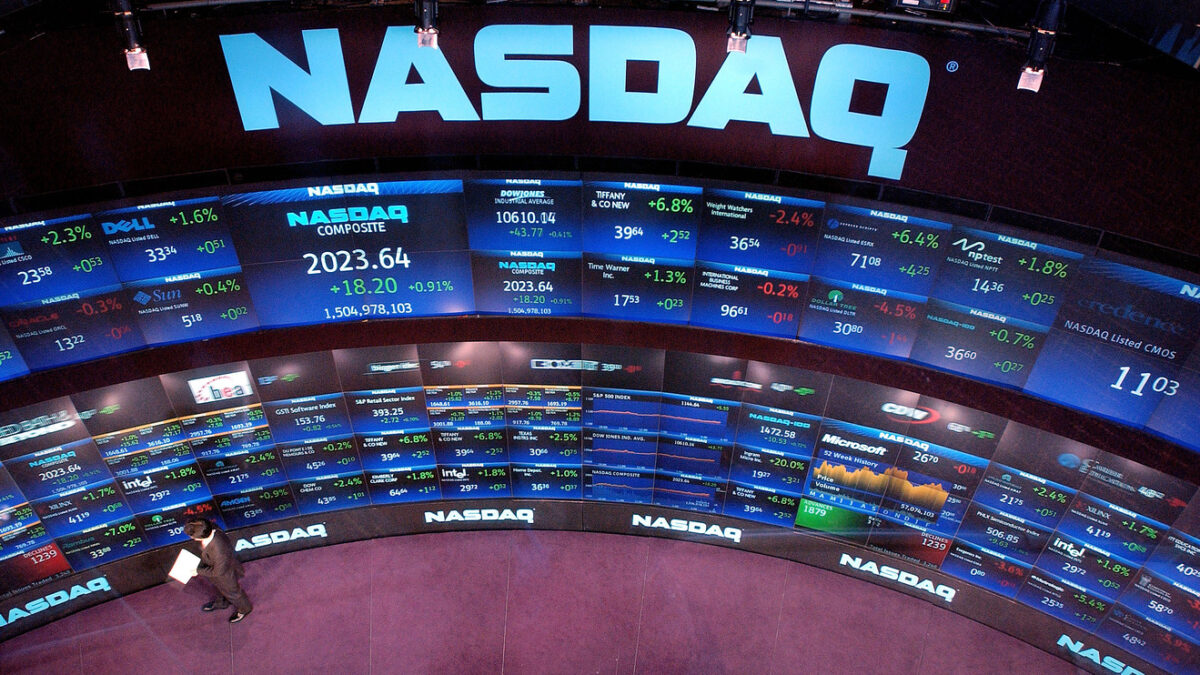
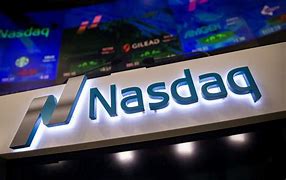
The NASDAQ, short for the National Association of Securities Dealers Automated Quotations, is one of the largest and most influential stock exchanges in the world. Founded in 1971, it was the first electronic stock market, revolutionizing how securities were traded by replacing traditional floor-based systems with computerized trading platforms. This innovation made transactions faster, more transparent, and accessible to a broader range of investors.

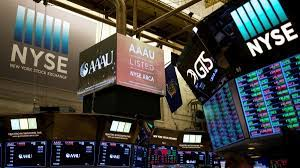
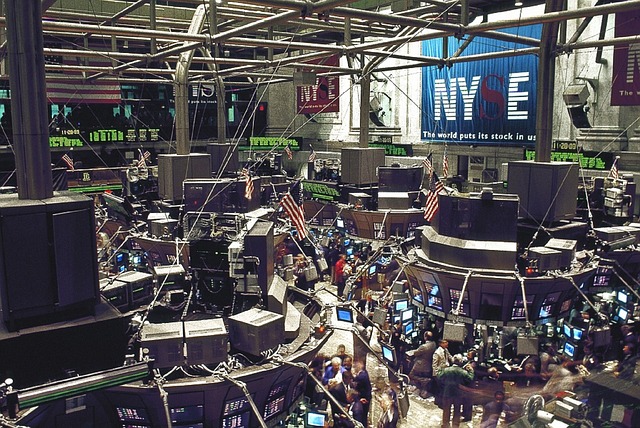
Unlike the New York Stock Exchange (NYSE), which historically operated through physical trading floors, the NASDAQ is entirely virtual. It connects buyers and sellers through a sophisticated network of computers, allowing for rapid execution of trades. This digital-first approach has made it particularly attractive to technology companies and growth-oriented firms, earning it a reputation as the go-to exchange for innovative and high-tech businesses.

Companies Listed on the NASDAQ The NASDAQ is home to some of the most prominent and influential companies in the world. Giants like Apple, Microsoft, Amazon, Google (Alphabet), Meta (formerly Facebook), and Tesla all trade on the NASDAQ. These companies are part of the NASDAQ-100, an index that tracks the performance of the 100 largest non-financial companies listed on the exchange. The NASDAQ Composite Index, which includes over 3,000 stocks, provides a broader snapshot of the market’s overall health and direction.

How It Works The NASDAQ operates as a dealer’s market, meaning transactions are facilitated by market makers—firms that stand ready to buy or sell securities at publicly quoted prices. These market makers help maintain liquidity and ensure that trades can be executed efficiently. Prices are determined by supply and demand, and the electronic nature of the exchange allows for real-time updates and high-speed trading.

Significance in the Global Economy The NASDAQ plays a vital role in the global financial system. It provides companies with access to capital by allowing them to issue shares to the public, and it offers investors a platform to buy and sell those shares. The performance of the NASDAQ is often seen as a barometer for the health of the technology sector and, more broadly, the innovation economy. When the NASDAQ rises, it typically signals investor confidence in growth and future earnings; when it falls, it may reflect concerns about economic stability or company performance.

Global Reach and Influence Though based in the United States, the NASDAQ’s influence extends worldwide. Many international companies choose to list on the NASDAQ to gain exposure to U.S. investors and benefit from the prestige associated with being part of a leading global exchange. Its technological infrastructure and regulatory standards make it a model for other exchanges around the world.

NASDAQ 100: https://medicalexecutivepost.com/2023/07/24/nasdaq-100-re-balanced-index/

In summary, the NASDAQ is more than just a stock exchange—it’s a symbol of innovation, speed, and global connectivity. Its pioneering approach to electronic trading has reshaped the financial landscape, and its roster of companies continues to drive technological progress and economic growth across the globe.

COMMENTS APPRECIATED

EDUCATION: Books

Like, Refer and Subscribe

***

***

Understanding Stockbrokers: Roles and Responsibilities

DEFINITION

By Staff Reporters

SPONSOR: http://www.MarcinkoAssociates.com

***

***

Buying or selling stocks requires access to one of the major exchanges, such as the New York Stock Exchange (NYSE) or the National Association of Securities Dealers Automated Quotations (NASDAQ). To trade on these exchanges, you must be a member of the exchange or belong to a member firm. Member firms and many individuals who work for them are licensed as brokers or broker-dealers by the Financial Industry Regulatory Authority (FINRA). 

INSURANCE AGENT: https://medicalexecutivepost.com/2025/04/27/insurance-agents-v-brokers/

And so, a stockbroker executes orders in the market on behalf of clients. A stockbroker may also be known as a registered representative or investment advisor. Most stockbrokers work for a brokerage firm and handle transactions for several individual and institutional customers. Stockbrokers are often paid on commission, although compensation methods vary by employer.

Remember: SBs work for their firm and not the client. Stock brokers are not fiduciaries.

FINANCIAL ADVISOR: https://medicalexecutivepost.com/2025/04/01/financial-advisors-vital-critical-thinking-skills-to-master/

COMMENTS APPRECIATED

The Medical Executive-Post is a  news and information aggregator and social media professional network for medical and financial service professionals.

Feel free to submit education content to the site as well as links, text posts, images, opinions and videos which are then voted up or down by other members. Comments and dialog are especially welcomed.

Daily posts are organized by subject. ME-P administrators moderate the activity. Moderation may also conducted by community-specific moderators who are unpaid volunteers.

Like and Refer

Invite Dr. Marcinko

***

***

MEMORIAL DAY: Stock Markets Closed

SPONSOR: http://www.MarcinkoAssociates.com

***

***

United States stock markets will be closed on Monday, May 26th in observance of Memorial Day 2025.

The Nasdaq and New York Stock Exchange will be closed Monday and reopen Tuesday, May 27th, 2025.

***

OPEN / CLOSED: Today and Tomorrow?

By Staff Reporters

***

***

Is the Stock Market Open or Closed on New Year’s Eve?

Bond markets will close early at 2 p.m. Eastern on Tuesday, while the New York Stock Exchange and the NASDAQ Stock Market will hold regular hours from 9:30 a.m. to 4 p.m. Eastern. Over-the-counter markets, where securities trade over a broker-dealer network rather than a major exchange, will keep normal hours.

Is the Stock Market Open or Closed on New Year’s Day?

Both the U.S. bond and stock markets will be closed in observance of New Year’s Day. Over-the-counter markets will be shut, too.

What About International Markets?

Foreign exchanges, such as the London Stock Exchange, the Euronext Paris, the Stock Exchange of Hong Kong, the Shanghai Stock Exchange, and the Tokyo Stock Exchange, will be closed on Wednesday, January 1st.

Will Banks and Post Offices Be Open?

Federal Reserve banks and United States Post Service locations will be closed in observance of New Year’s Day.

COMMENTS APPRECIATED

Refer and Subscribe

***

WALL STREET HONORING: Jimmy Carter!

By Staff Reporters

***

***

The stock market may close next month to honor Former President Jimmy Carter, who died yesterday at his home in Plains, Georgia, at the age of 100.

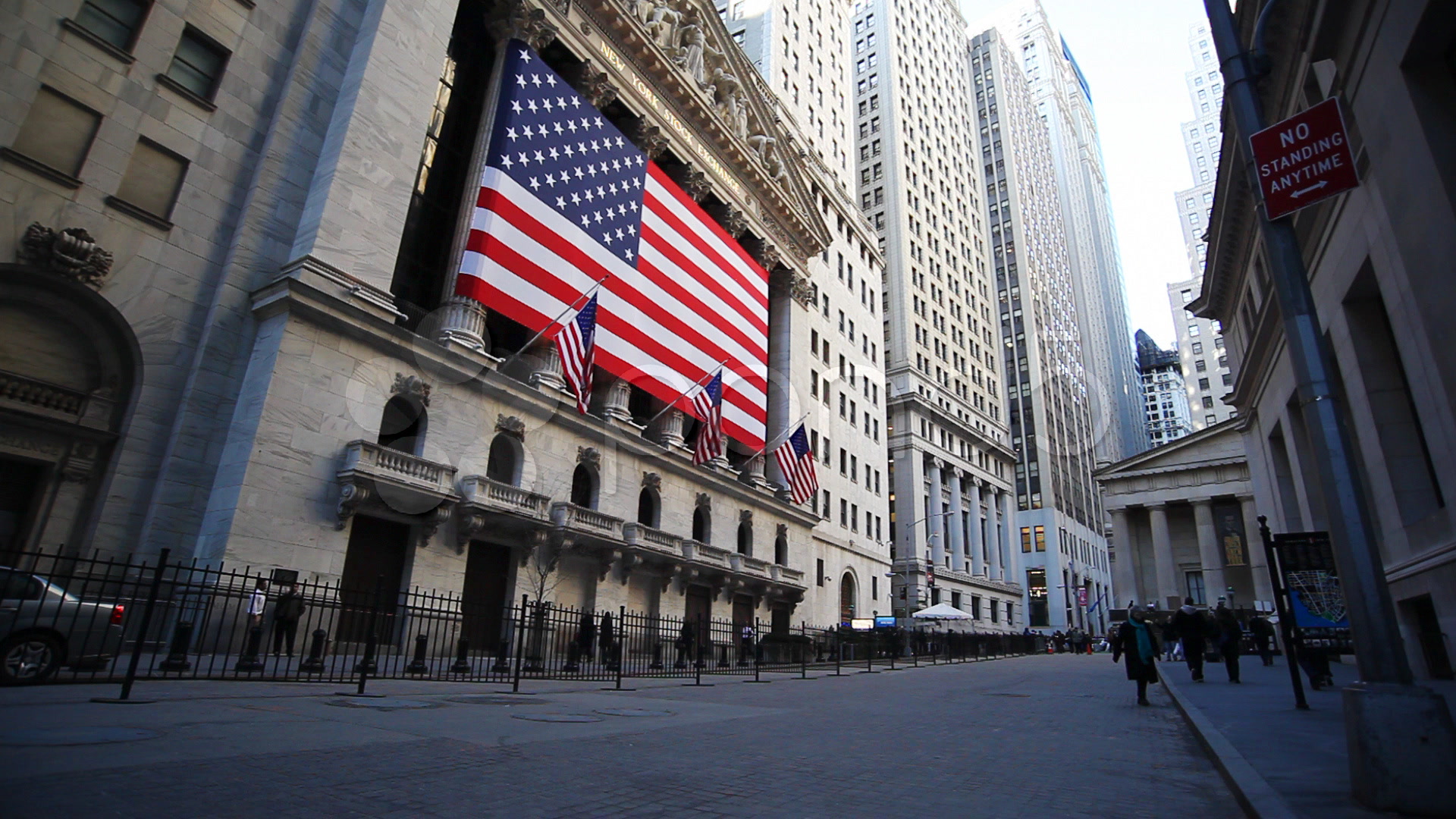
Carter, the 39th and longest-living U.S. president, was honored with a moment of silence earlier today at the New York Stock Exchange (ICE) and the NASDAQ (NDAQ).

When he is laid to rest in January, Wall Street will likely take a break.

COMMENTS APPRECIATED

Subscribe and Refer

***

***

IPO: Ackman Fund Postponed

By Staff Reporters

***

***

Bill Ackman’s fund postpones IPO

The billionaire hedge fund boss and frequent main character on X has delayed the stock market debut of the closed-end fund Pershing Square USA, which was scheduled for early next week, a notice on the New York Stock Exchange’s website said.

The decision to wait came days after Ackman said in a letter to investors that the firm was downsizing its expectations for the share sale from a target of about $25 billion (which would have made it the largest-ever IPO of its kind) to something between $2.5 billion and $4 billion.

Ackman has a similar fund already trading shares in Europe and has hinted he might take his larger firm, Pershing Square, public as soon as next year.

COMMENTS APPRECIATED

Thank You

***

***

TEXAS: Stock Exchange?

TXSE versus NYSE?

By Staff Reporters

***

***

A group leading the charge for an “anti-woke” TXSE exchange sees an opportunity to capitalize on 1) the Southeast’s skyrocketing economy and 2) growing disillusionment with perceived burdensome regulation at the New York-based exchanges.

The TXSE pledged to be more “CEO-friendly,” drawing a clear distinction from the NASDAQ, which requires companies on the exchange to meet a diversity requirement or explain why they can’t.

The Texas Stock Exchange will focus on enabling U.S. and global companies to access U.S. equity capital markets and will provide a venue to trade and list public companies and the growing universe of exchange-traded products. TXSE will be a fully electronic, national securities exchange that will seek registration with the U.S. Securities and Exchange Commission.

MORE: http://www.TXSEGroup.com

COMMENTS APPRECIATED

Thank You

***

***

Walking Doctors Through a Stock Exchange Trade

Understanding the Traditional Process

By Dr. David Edward Marcinko MBA MEd CMP

SPONSOR: http://www.CertifiedMedicalPlanner.org

To see how the transactions are actually handled on the floor of an exchange, let us assume that an order to buy 100 shares of General Electric has been given by a doctor customer to the registered representative (stock broker), of a member firm in Atlanta. The order is a market order (an order to buy at the lowest possible price at the time the order reaches the floor of the exchange). This order is telephoned by direct wire, or computer, to the New York office of the member firm, which in turn telephones its order to its clerk on the floor of the exchange.

Each member firm has at least one member of the exchange representing them making trades on the floor. Each one of these members is assigned a number for identification. When the floor clerk receives the order to purchase the General Electric, he causes his member’s call number to appear on 3 large boards situated so that one is always in view. These boards are constantly watched brokers so that they will know when wanted at the phone, since there’s too much noise on the floor to use a paging system. Seeing his number on the board, the broker hurries to his telephone station or cell phone and receives the order to buy 100 shares of G.E. “at the market”. Acting as a commission broker, he immediately goes to the post where G.E. is traded and asks “how’s G.E”, of the specialist?

Order and Position Types

At this point, it is important to understand the different types of orders and positions that can be used to buy and sell securities from the specialist.

Market Order:

A market order is an order to be executed at the best possible price at the time the order reaches the floor. Market orders are the most common of all orders. The greatest advantage of the market order is speed. The doctor specifies no price in this type of order, he merely orders his broker to sell or buy at the best possible price, regardless of what it may be. The best possible price on a buy is the lowest possible price. The best possible price on a sell is the highest possible price. In other words, if a medical professional customer is buying, he logically wants to pay as little as possible, but he is not going to quibble over price. He wants the stock now, whatever it takes to get it. If he’s a seller, the doctor client wants to receive as much as possible, but will not quibble, he wants out, and will take what he can get, right now. No other type of order can be executed so rapidly. Some market orders are executed in less than one minute from the time the broker phones in the order. Because the investor has specified no price, a market order will always be executed. The doctor is literally saying, “I will pay whatever it takes, or accept whatever is offered”.

Limit Order:

The chief characteristic of a limit order is that the doctor decides in advance on a price at which he decides to trade. He believes that his price is one that will be reached in the market in reasonable time. He is willing to wait to do business until he has obtained his price even at the risk his order may not be executed either in the near future or at all. In the execution of a limit order, the broker is to execute it at the limit price or better. Better, means that a limit order to buy is executed at the customer’s price limit or lower, in a limit order to sell, at price limit or higher. If the broker can obtain a more favorable price for his doctor customer than the one specified, he is required to do so.

Order Length:

Now, even though the doctor has given his price limit, we need to know the length of effectiveness of the order. Is the order good for today only? If so, it is a day order, it automatically expires at the end of the day.  Alternatively, the doctor may enter an open or, “good until canceled” order. This type of order is used when the doctor believes that the fluctuations in the market price of the stock in which he’s interested will be large enough in the future that they will cause the market price to either fall to, or rise to, his desired price, i.e. his limit price. He is reasonably sure of his judgment and is in no hurry to have/his order executed. He knows what he wants to pay or receive and is willing to wait for an indefinite period.

Years ago, such orders were carried for long periods of time without being reconfirmed. This was very unsatisfactory for all parties concerned.  A doctor would frequently forget his order existed and, if the price ever reached his limit and the order was executed, the resulting trade might not be one he wished to make. To avoid the problem, open (GTC) orders must be reconfirmed by the doctor customer each six months. Does that mean six months after the order is entered? … No! The exchange has appointed the last business day of April and the last business day of October as the two dates per year when all open orders must be reconfirmed.

Example: Dr. Smith wants to buy 100 shares of XYZ. The price has been fluctuating between 50 and 55. He places a limit order to buy at 51, although the current market price is 54. Limit orders to buy (buy limit orders) are always placed below the current market. To do otherwise makes no sense. It is possible that, within a reasonable time, the price will drop to 51 and his broker can purchase the stock for him at that price. If the broker can purchase the stock at less that 51, that would certainly be fine with the doctor customer since he wants to pay no more than 51. A sell limit order works in reverse and is always placed above the current market price.

Example: Dr. Smith wants to sell 100 shares of XYZ stock. The order is 54. A sell limit order is place at 56. Sell limit orders are always placed above the market price. As soon as the pride rises to 56, if it ever does, the broker will execute it at 56 or higher. In no case will it be executed at less than 56.

The advantage of the limit order is that the doctor has a chance to buy at less or to sell at more than the current market price prevailing when he placed the order. He assumes that the market price will become more favorable in the future than it is at the time the order is placed. The word” chance ” is important. There is also the “chance” that the order will not be executed at all. The doctor just mentioned, who wanted to buy at 51, may never get his order filled since the price may not fall that low.  If he wanted to sell at 56, the order may also not ever be executed since it might not rise that high during the time period the order is in effect.

Stop Orders:

A very important type of order is the stop order, frequently called a stop-loss order. There are two distinct types of stop orders. One is the stop order to sell, called a sell stop, and the other is a stop order to buy, called a buy stop. Either type might be thought of as a suspended market order; it goes into effect only if the stock reaches or passes through a certain price.

The fact that the market price reaches or goes through the specified stop price does not mean the broker will obtain execution at the exact stop price. It merely means that the order becomes a market order and will be executed at the best possible price thereafter. The price specified on a stop order bears a relationship to the current market price exactly opposite to that on a limit order. Whereas a sell limit is placed at a price above the current market, a sell stop is placed at a price below the current market. Similarly, while a buy limit is placed at a price below the current market, a buy stop is placed at a price above the current market. Why would a doctor investor use a stop order?

There are two established uses for stop orders. One of them might be called protective; the other might be called preventive.

Protective: This order protects a doctors’ existing profit on a stock currently owned.

For example, a doctor purchases a stock at 60. It rises to 70. He has made a paper profit of $10 per share. He realizes that the market may reverse itself. He therefore gives his broker a stop order to sell at 67. If the reversal does occur and the price drops to 67 or less, the order immediately becomes a market order. The stock is disposed of at the best possible price. This may be exactly 67, or it may be slightly above or below that figure. Why? …Because what happened at 67 was that his order became a market order; the price he actually received was dependent upon the next activity in the market. Let us suppose that the sale was made at 66 1/2. The doctor customer made a gross profit of 6 1/2 points per share on his original purchase. Without the stop order, the stock may have dropped considerably below that before the customer could have placed a market order and his profit might have been less or, in fact, he might have even sold at a loss.

Preventive:

A doctor purchases 100 shares of a stock at 30. He obviously anticipates that the price of the stock will rise in the near future (why else would he buy?). However, he realizes that his judgment may be faulty. He therefore, at the time of purchase, places a sell stop order at a price somewhat below his purchase price, for example, at 28. As yet, he has made neither profit nor loss; he’s merely acting to prevent a loss that might follow if he made the wrong bet and the stock does fall in price. If the stock does drop, the doctor knows that once it gets as low as 28, a market order will be turned in for him and, therefore, he will lose only 2 points or thereabout. It might have been much more had he not used the sell stop.

Miscellaneous Orders and Positions

Beside market, limit and stop orders, there are some other miscellaneous orders to know.

A stop limit order is a stop order that, once triggered or activated, becomes a limit order. Realize that it is possible for a stop limit to be triggered and not executed, as the limit price specified by the doctor may not be available.

In addition, there are all or none and fill or kill orders, and even though both require the entire order to be filled, there are distinct differences. An all or none (AON) is an order in which the broker is directed to fill the entire order or none of it. A fill or kill (FOK) is an order either to buy or to sell a security in which the broker is directed to attempt to fill the entire”‘ amount of the order immediately and in full, or that it be canceled.

The difference between an all or none and a fill or kill order is that with an all or none order, immediate execution is not required, while immediate execution is a critical component of the fill or kill. Be cause of the immediacy requirement, FOK orders are never found on the specialist’s book. Another difference is that AON orders are only permitted for bonds, not stocks, while FOK orders may be used for either.

Also, there exists an immediate or cancel order (IOC), which is an order to buy or sell a security in which the broker is directed to attempt to fill immediately as much of the order as possible and cancel any part remaining. This type of order differs from a fill or kill order which requires the entire order to be filled. An IOC order will permit a partial fill. Because of the immediacy requirement, IOC and FOK orders are never found on the specialist’s book.

Long and Short Positions

A long buy position means that shares are for sale from a market makers inventory, or owned by the medical investor, outright. Market makers take long positions when customers and other firms wish to sell, and they take short positions when customers and other firms want to buy in quantities larger than the market maker’s inventory. By always being ready, willing, and able to handle orders in this way, market makers assure the investing public of a ready market in the securities in which they are interested. When a security can be bought and sold at firm prices very quickly and easily, the security is said to have a high degree of liquidity, also known as marketability.

A short position investor seeks to make a profit by participating in the decline in the market price of a security.

Now, let’s see how these terms, long and short, apply to transactions by medical investors, rather than market makers, in the securities markets.

When a doctor buys any security, he is said to be taking a long position in that security. This means the investor is an owner of the security. Why does a doctor take a long position in a security? Besides – receiving dividend income, to make a profit from an increase in the market price. Once the security has risen sufficiently in price to satisfy the investor’s profit needs, the investor will liquidate his long position, or sell his stock. This would officially be known as a long sale of stock, though few people in the securities business use the label “long sale”. This is the manner in which the above investor had made a profit is the traditional method used; buy low, sell high.

Let’s look at an actual investment in General Motors to investigate this principle further. A medical investor has taken a long position in 100 shares of General Motors stock at a price of $70 per share. This means that the manner in which he can do that is by placing a market order which will be executed at the best “available market price at the time, or by the / placing of a buy limit order with a limit price of $70 per share. The investor firmly believes, on the basis of reports that he has read about the automobile industry and General Motors specifically, that at $70 a share, General Motors is a real bargain. He believes that based on its current level of performance, it should be selling for a price of between $80 and $85 per share. But, the doctor investor has a dilemma. He feels certain that the price is going to rise but he cannot watch his computer, or call his broker, every hour of every day. The reason he can’t watch is because patients have to be seen in the office. The only people who watch a computer screen all day are those in the offices of brokerage firms (stock broker registered representatives), and doctor day traders, among others.

In the above example, with a sell limit order, if the doctor investor was willing to settle for a profit of $12 per share, what order would he place at this time? If you said, “sell at $82 good ’til canceled”, you are correct. Why GTC rather than a day order? Because our doctor investor knows that General Motors is probably not going to rise from $70 to $82 in one day. If he had placed an order to sell at $82 without the GTC qualification, his order would have been canceled at the end of this trading day. He would have had to re-enter the order each morning until he got an execution at 82. Marking the order GTC (or open) relieves him of any need to replace the order every morning. Several weeks later, when General Motors has reached $82 per share in the market, his order to sell at 82 is executed. The medical investor has bought at 70 and sold at 82 and realized a $12 per share profit for his efforts.

Let’s suppose that the medical investor, who has just established a $12 per share profit, has evaluated the performance of General Motors common stock by looking at the market performance over a period of many years. Let’s further assume that the investor has found by evaluating the market price statistics of General Motors is that the pattern of movement of General Motors is cyclical. By cyclical, we mean that it moves up and down according to a regular pattern of behavior. Let’s say the investor has observed that in the past, General Motors had repeated a pattern of moving from prices in the $60 per share range as a low, to a high of approximately $90 per share. Further, our investor has observed that this pattern of performance takes approximately 10 to l2 months to do a full cycle; that is, it moves from about 60 to about 90 and back to about 60 within a period of roughly l2 months. If this pattern repeats itself continually, the investor would be well advised to buy the stock at prices in the low to mid 60’s hold onto it until it moves well into the 80’s, and then sell his long position at a profit. However, what this means is that our investor is going to be invested in General Motors only 6 months of each year. That is, he will invest when the price is low and, usually within half a year, it will reach its high before turning around and going back to its low again. How can the doctor investor make a profit not only on the rise in price of General Motors in the first 6 months of the cycle, but on the fall in price of General Motors in the second half of the cycle? One technique that is available is the use of the short sale.

The Short Sale

If a doctor investor feels that GM is at its peak of $ 90 per share, he may borrow 100 shares from his brokerage firm and sell the 100 shares of borrowed GM at $ 90. This is selling stock that is not owned and is known as a short sale. The transaction ends when the doctor returns the borrowed securities at a lower price and pockets the difference as a profit. In this case, the doctor investor has sold high, and bought low.

Odd Lots

Most of the thousands of buy and sell orders executed on a typical day on the NYSE are in 100 share or multi-100 share lots. These are called round lots. Some of the inactive stocks traded at post 30, the non-horseshoe shaped post in the northwest corner of the exchange, are traded in 70 share round lots due to their inactivity. So, while a round lot is normally 700 shares, there are cases where it could be 10 shares. Any trade for less than a round lot is known as an odd lot. The execution of odd lot orders is somewhat different than round lots and needs explanation.

When a stock broker receives an odd lot order from one of his doctor customers, the order is processed in the same manner as any other order. However, when it gets to the floor, the commission broker knows that this is an order that will not be part of the regular auction market. He takes the order to the specialist in that stock and leaves the order with the specialist. One of the clerks assisting the specialist records the order and waits for the next auction to occur in that particular stock. As soon as a round lot trade occurs in that particular stock as a result of an auction at the post, which may occur seconds later, minutes later, or maybe not until the next day, the clerk makes a record of the trade price.

Every odd lot order that has been received since the last round lot trade, whether an order to buy or sell, is then executed at the just noted round lot price, the price at which the next round lot traded after receipt of the customer’s odd lot order, plus or minus the specialist’s “cut “.  Just like everything else he does, the specialist doesn’t work for nothing. Generally, he will add 1/8 of a point to the price per share of every odd lot buy order and reduce the proceeds of each odd lot sale order by 1/8 per share. This is the compensation he earns for the effort of breaking round lots into odd lots. Remember, odd lots are never auctioned but, there can be no odd lot trade unless a round lot trades after receipt of the odd lot order.

Conclusion

And so, your thoughts and comments on this ME-P are appreciated. Feel free to review our top-left column, and top-right sidebar materials, links, URLs and related websites, too. Then, subscribe to the ME-P. It is fast, free and secure.

Speaker: If you need a moderator or speaker for an upcoming event, Dr. David E. Marcinko; MBA – Publisher-in-Chief of the Medical Executive-Post – is available for seminar or speaking engagements. Contact: MarcinkoAdvisors@msn.com
Our Other Print Books and Related Information Sources

Subscribe Now: Did you like this Medical Executive-Post, or find it helpful, interesting and informative? Want to get the latest ME-Ps delivered to your email box each day? Just subscribe and you can unsubscribe at any time. Security is assured.

Sponsors WelcomedAnd, credible sponsors and like-minded advertisers are always welcomed.

Link: https://healthcarefinancials.wordpress.com/2007/11/11/advertise

***

DAILY UPDATE: The Peso, Health Company News with Firmer Stock Markets

MEDICAL EXECUTIVE-POST TODAY’S NEWSLETTER BRIEFING

***

Essays, Opinions and Curated News in Health Economics, Investing, Business, Management and Financial Planning for Physician Entrepreneurs and their Savvy Advisors and Consultants

Serving Almost One Million Doctors, Financial Advisors and Medical Management Consultants Daily

A Partner of the Institute of Medical Business Advisors , Inc.

http://www.MedicalBusinessAdvisors.com

SPONSORED BY: Marcinko & Associates, Inc.

***

http://www.MarcinkoAssociates.com

Daily Update Provided By Staff Reporters Since 2007.
How May We Serve You?
© Copyright Institute of Medical Business Advisors, Inc. All rights reserved. 2024

REFER A COLLEAGUE: MarcinkoAdvisors@msn.com

SPONSORSHIPS AVAILABLE: https://medicalexecutivepost.com/sponsors/

ADVERTISE ON THE ME-P: https://tinyurl.com/ytb5955z

***

Sword Health, a virtual provider of musculoskeletal care, banked a financing round of $130 million after nearly tripling its revenue in the past year.


Blue Cross and Blue Shield of Kansas City is leaving the Medicare Advantage market, citing increased regulatory demands and a relatively small MA membership.


And … Cigna laid off 261 employees from its Evernorth Care Group division in Arizona. Keep up to date with all workforce updates with Fierce Healthcare’s ongoing layoff tracker.

CITE: https://www.r2library.com/Resource

On Monday, the largest U.S.-traded, Mexico-focused fund — the iShares MSCI Mexico ETF which has more than $2 billion under management — slid 10.7% to book its largest daily percentage decrease since March 16th, 2020. Meanwhile, the Franklin FTSE Mexico ETF was off 10%, also logging its worst day in over four years, according to Dow Jones Market Data. The two funds, which traded at $57.93 and $28.78, respectively, on Monday afternoon, closed at their lowest levels since early November, according to Dow Jones Market Data. 

CITE: https://tinyurl.com/2h47urt5

June got off to a rough start on Monday when a glitch at the NYSE incorrectly made it appear that some stocks suffered steep plunges—including a 99% dip in Berkshire Hathaway. Trading in the affected stocks was quickly halted and the errors were fixed.

CITE: https://tinyurl.com/tj8smmes

What’s up

What’s down

  • Stanley Black & Decker fell 3.69% after it was downgraded at Barclays. A slowdown in consumer spending plus a slow housing market means not many people are buying fancy drills at the moment.
  • Bath & Body Works fell 12.60% after beating analyst expectations this quarter but announcing that next quarter will bring lower lower earnings.
  • Designer Brands fell 20.27% after it beat revenue expectations but missed on earnings as its turnaround continues.

Here’s where the major benchmarks ended:

  • The S&P 500 index gained 7.94 points (0.2%) to 5,291.34; the Dow Jones Industrial Average® ($DJI) added 140.26 points (0.4%) to 38,711.29; the NASDAQ Composite® ($COMP) rose 28.38 points (0.2%) to 16,857.05.
  • The 10-year Treasury note yield (TNX) fell more than 7 basis points to 4.328%.
  • The CBOE Volatility Index® (VIX) rose 0.05 to 13.16.

COMMENTS APPRECIATED

PLEASE SUBSCRIBE: MarcinkoAdvisors@msn.com

Thank You

***

***

***

***

EDUCATIONAL TEXTBOOKS: https://tinyurl.com/4zdxuuwf

***

APRIL 2024: US Hiring Slows

By Staff Reporters

***

***

Job growth slowed and unemployment ticked higher last month, marking a break from a string of data showing surprising strength in the labor market.

U.S. employers added a seasonally adjusted 175,00 jobs in April, the Labor Department reported on Friday. That was far less than in March, when gains exceeded 300,000, and also below what economists had expected. The unemployment rate ticked up to 3.9% from March’s 3.8%.

According to the WSJ, wages also rose less than anticipated, increasing 3.9% from a year earlier after rising 4.1% in March.

Friday’s report today is sure to stir immediate debate among economists and investors about whether the labor market is merely cooling in a welcome fashion or starting to show more serious strains under the pressure of higher interest rates.

Treasury yields, which largely reflect investors’ expectations for short-term rates set by the Federal Reserve, fell after the report. The yield on the benchmark 10-year U.S. Treasury note was 4.471% in recent trading, according to Tradeweb, down from 4.569% Thursday.

Stock futures climbed, suggesting investors were pleased with the data, which could increase optimism about the outlook for inflation.

COMMENTS APPRECIATED

Thank You

***

***

DAILY UPDATE: 24/7 NYSE Trading with Last Week’s Market Round-Up

MEDICAL EXECUTIVE-POST TODAY’S NEWSLETTER BRIEFING

***

Essays, Opinions and Curated News in Health Economics, Investing, Business, Management and Financial Planning for Physician Entrepreneurs and their Savvy Advisors and Consultants

Serving Almost One Million Doctors, Financial Advisors and Medical Management Consultants Daily

A Partner of the Institute of Medical Business Advisors , Inc.

http://www.MedicalBusinessAdvisors.com

SPONSORED BY: Marcinko & Associates, Inc.

***

http://www.MarcinkoAssociates.com

Daily Update Provided By Staff Reporters Since 2007.
How May We Serve You?
© Copyright Institute of Medical Business Advisors, Inc. All rights reserved. 2024

REFER A COLLEAGUE: MarcinkoAdvisors@msn.com

Your Referral Count -0-

SPONSORSHIPS AVAILABLE: https://medicalexecutivepost.com/sponsors/

ADVERTISE ON THE ME-P: https://tinyurl.com/ytb5955z

***

Last week stocks shrugged off the news that the Fed’s favorite inflation gauge ticked up last month as strong earnings reports from Big Tech pushed them higher giving the NASDAQ and the S&P 500 their best weeks since November. Google parent Alphabet had its best day since July 2015 after showing that some of its Artificial Intelligence investments are paying off for its first-ever dividend distribution.

CITE: https://www.r2library.com/Resource

The New York Stock Exchange (NYSE) recently asked market participants to share how they’d feel about trading 24/7.

According to Morning Brew, The tradition-shattering proposal by the world’s busiest stock exchange, which operates from 9:30am to 4pm ET Monday–Friday, would make stocks no different from other assets that never stop trading, like crypto and government bonds.

The NYSE’s curiosity comes as the startup 24 Exchange, backed by Mets owner Steve Cohen, is seeking SEC permission to launch a round-the-clock stock exchange. 24 Exchange wants to cater to the growing contingent of amateur investors, some of whom prefer to trade after their kids go to bed. If the NYSE decides to become an exchange that never sleeps, it’d likely upend the day-to-day of the pros on Wall Street. So, let’s consider what 24/7 trading would look like, who’d be in the green, and who’s kept up at night by the prospect. For example:

The NYSE currently allows people to trade stocks outside regular hours from 4am until the market opens and after the closing bell until 8pm, but there are fewer participants trading, and those transactions often come with higher fees. Meanwhile, brokerages like Robinhood and Interactive Brokers have found success in letting investors put in orders for many stocks and stock indexes overnight.

  • Robinhood recently said its overnight trading options are a hit, with trading outside of the NYSE’s regular hours accounting for as much as 25% of activity on the platform.
  • Many customers aren’t used to waiting around for the NYSE to “ding a bell two times a day,” Robinhood’s Chief Brokerage Officer Steve Quirk told Bloomberg.

Many of these nocturnal transactions on brokerage apps happen because of the time difference with the Asia Pacific region, where investors are increasingly eager to tap into the US stock market when most Americans are asleep. The trades are enabled by organizations like Blue Ocean, which are seeing skyrocketing demand for cross-border services. Having the NYSE run 24/7 would make it easier for investors in different time zones to participate in the US stock market.

Proponents also say it could make morning trading less volatile by allowing investors to react to big news (like an Elon Musk tweet about Tesla) as soon as it happens rather than waiting for markets to open.

CITE: https://tinyurl.com/2h47urt5

Meanwhile, stocks popped off last week thanks to Big Tech’s impressive earnings, with the S&P 500 and NASDAQ posting their best weeks since November. Nvidia notched its best weekly gain in almost a year (up 15%), adding nearly $290 billion in market capitalization.

COMMENTS APPRECIATED

PLEASE SUBSCRIBE: MarcinkoAdvisors@msns.com

Your Referral Count -0-

Thank You

***

***

***

***

EDUCATIONAL TEXTBOOKS: https://tinyurl.com/4zdxuuwf

***

DAILY UPDATE: Evergrande and the FanDuel-Flutter as Stocks End Mixed Awaiting the FOMC

By Staff Reporters

***

Embattled China Evergrande ordered to liquidate by Hong Kong court

***

China Evergrande, which owes $300 billion, ordered to liquidate. Yesterday, a Hong Kong court ordered the debt-burdened real estate firm to wind up its business—though it’s not clear if mainland Chinese authorities will enforce it. As one of the largest developers to struggle with debt, the company, which defaulted in 2021, has become a symbol of the real estate bust in China, which has so many homes sitting vacant that an ex-official admitted even its population of 1.4 billion could not fill them. Now, investors around the world will be watching the liquidation process to see how foreign investors fare as a test of how China’s system treats international businesses.

FanDuel parent Flutter lists on New York Stock Exchange. Rob Gronkowski visited the NYSE trading floor yesterday to celebrate the kickoff of the company selling shares in New York, which—for now—is a secondary listing to the European company’s primary London Stock Exchange listing. The move steps up its competition with DraftKings. And with US sports betting booming thanks to legal changes, the FanDuel parent wants to go all in and is proposing making the NYSE its primary trading venue, which would be a blow to the London exchange.

CITE: https://www.r2library.com/Resource

Here’s where the major benchmarks ended:

  • The S&P 500® index (SPX) fell 2.96 points (0.1%) to 4,924.97; the Dow Jones Industrial Average gained 133.86 points (0.4%) to 38,467.31; the NASDAQ Composite® (COMP) lost 118.15 points (0.8%) to 15,509.90.
  • The 10-year Treasury note yield (TNX) tumbled about 3 basis points to 4.059%.
  • The CBOE Volatility Index® (VIX) dropped 0.29 to 13.31.

Chipmaker shares were among the market’s weakest performers, with the Philadelphia Semiconductor Index (SOX) sinking 1.6%. The small-cap Russell 2000® Index (RUT) lost 0.8%, giving back part of Monday’s 1.7% gain. Energy and financial companies were among the strongest sectors.

***

COMMENTS APPRECIATED

Thank You

***

***

DAILY UPDATE: Thanksgiving Travel Gas Prices Down – Narrow Traffic Lanes Safer – Walgreens Pharmacies Closed as the Stock Markets Roar

***

Thanksgiving is a trading holiday. Both the New York Stock Exchange and the Nasdaq are closed. Black Friday, one of the biggest shopping days of the year, is a half day for the stock market. Both stock exchanges close at 1:00 p.m. ET, with eligible options trading until 1:15 p.m. Normal trading hours resume on the Monday after Thanksgiving, also known as Cyber Monday, when many online retailers host major sales.

***

***

Thanks to plummeting prices at the pump, US drivers will save a collective $1.2 billion this Thanksgiving travel period, and day, compared to last year, according to GasBuddy. The average price per gallon is down nearly 46 cents from a year ago, and more than 50,000 stations now show gas prices at $2.99/gallon or less.

***

Narrow traffic lanes are safer than wide ones. Researchers at Johns Hopkins analyzed more than 1,000 streets in seven major cities across the US and found that narrower roads mitigated traffic collisions in certain conditions. The study did not find a significant difference between roads 9-feet wide and those 10- or 11-feet wide, but it did conclude that traffic accidents increase 1.5x when a road widens from 9 feet to 12 feet. Traffic fatalities are the leading cause of death for Americans aged 1–54.

***

Walgreens will close most of its pharmacies and stores on Thanksgiving Day for the first time in the company’s history, executives said last Thursday. The move to close more than 8,700 stores for the federal holiday comes as some Walgreens workers staged a three-day walkout this fall to push for improved working conditions and increased staffing numbers, Reuters reported.

***

***

Here is where the major benchmarks ended on Wednesday:

  • The S&P 500 Index was up 18.43 points (0.4%) at 4,556.62, near a four-month high close; the Dow Jones Industrial Average®(DJI) was up 184.74 points (0.5%) at 35,273.03; the NASDAQ Composite was up 65.88 points (0.5%) at 14,265.86.
  • The 10-year Treasury note yield (TNX) was down about 1 basis point at 4.41%, after earlier dropping to a two-month low under 4.37%.
  • CBOE Volatility Index (VIX) was down 0.50 at 12.85.

Communications services and technology were among the strongest performers Wednesday. Food and beverage companies were also firm. Energy shares were among the weakest performers Wednesday behind a drop of over 1% in WTI Crude Oil futures (/CL). ), which fell following reports OPEC delayed a weekend meeting until November 30th, a possible reflection of cartel members struggling to reach consensus over production cuts. WTI crude ended just under $77 a barrel, down 19% from a 2023 high above $95 in late October.

COMMENTS APPRECIATED

Thank You

***

ORDER: https://www.routledge.com/Risk-Management-Liability-Insurance-and-Asset-Protection-Strategies-for/Marcinko-Hetico/p/book/9781498725989

***

SCARY STOCK MARKETS: Halloween 2023

By Staff Reporters

SPONSOR: http://www.CertifiedMedicalPlanner.org

***

***

The official website of the New York Stock Exchange does not list Halloween 2023 (or 2024 or 2025, for that matter) as a stock market holiday. In fact, no holidays are listed for the month of October. So, get ready for a full day of stock trading and investing today. And, we’ll be here, reporting the major events of the day, and year, as usual.

***

Stocks markets shook off any scary notions yesterday, with the S&P 500 climbing out of correction territory and the DJIA notching its best day since June as companies like Nike and Verizon jumped. Investors will be watching tomorrow to see whether the good vibes can continue after the Fed announces its latest decision on interest rates.

But, worry remains as Adam Crisafulli of Vital Knowledge noted there are several technical factors fueling Monday’s pop in stock futures, “including extremely oversold prices.” The S&P 500 fell more than 2% for a second straight week.

“In addition, catalyst anticipation is playing a role too as investors hope the end of the month coupled with benign central bank decisions (BOJ, FOMC, BOE) and desired economic developments (cooler EU CPI, US JOLTs, and US jobs) will help stabilize the tape,” “However, after three consecutive months of losses … confidence has evaporated, and there’s very little genuine interest in buying the tape,” Crisafulli added.

***

Finally, X is now worth less than half of what Elon Musk paid to buy Twitter last year. A memo to employees said the company was valued at $19 billion—55% less than the $44 billion that Musk paid out.

COMMENTS APPRECIATED

Thank You

***

***

NYSE: Game-On for IPOs

By Staff Reporters

SPONSOR: http://www.CERTIFIEDMEDICALPLANNER.org

***

***

DEFINITION: An initial public offering (IPO) or stock launch is a public offering in which shares of a company are sold to institutional investors and usually also to retail (individual) investors An IPO is typically underwritten by one or more investment banks who also arrange for the shares to be listed on one or more stock exchanges. Through this process, colloquially known as floating, or going public, a privately held company is transformed into a public company. Initial public offerings can be used to raise new equity capital for companies, to monetize the investments of private shareholders such as company founders or private equity investors, and to enable easy trading of existing holdings or future capital raising by becoming publicly traded.

CITE: https://www.r2library.com/Resource

After the IPO, shares are traded freely in the open market at what is known as the free float. Stock exchanges stipulate a minimum free float both in absolute terms (the total value as determined by the share price multiplied by the number of shares sold to the public) and as a proportion of the total share capital (i.e., the number of shares sold to the public divided by the total shares outstanding). Although IPO offers many benefits, there are also significant costs involved, chiefly those associated with the process such as banking and legal fees, and the ongoing requirement to disclose important and sometimes sensitive information.

Cite: Wikipedia

***

Now, the NYSE is the world’s largest stock exchange, and for good reason. From thrilling new entries into the public market to a relentless commitment to transformative tech, the NYSE is constantly upping their game.

Related: https://medicalexecutivepost.com/2023/09/19/ipos-more-caution-ahead/

***

***

COMMENTS APPRECIATED

Join Us

***

Arm IPO: NASDAQ Success over NYSE

By Staff Reporters

***

***

Stocks shot up yesterday on the strength of Arm’s IPO. Investors were pleased with the British chip-maker’s debut: Shares surged 25%, leading to the best day for the Dow since early August.

Arm’s debut was also a big win for NASDAQ, which hopes to parlay the successful IPO into grabbing more listings over rival NYSE.

IPOs: https://medicalexecutivepost.com/2023/05/01/initial-public-offerings/

COMMENTS APPRECIATED

Thank You

***

***

DAILY UPDATE: Juneteenth 2023 and the Markets

FREEDOM DAY

By Staff Reporters

***

***

  • The U.S. bond market, and both the NASDAQ and New York Stock Exchange (NYSE) are closed on June 19th in observance of Juneteenth.
  • Juneteenth became a federal and public U.S. holiday in 2021, when it was officially recognized by President Joe Biden.

Juneteenth is a banking holiday observed by the Federal Reserve. That means most major banks like Bank of America (BAC), Chase and Wells Fargo (CBEAX) will be closed. TD Bank, which remained open last Juneteenth, will also be closed today.

***

ORDER: https://www.routledge.com/Risk-Management-Liability-Insurance-and-Asset-Protection-Strategies-for/Marcinko-Hetico/p/book/9781498725989

ORDER: https://www.routledge.com/Comprehensive-Financial-Planning-Strategies-for-Doctors-and-Advisors-Best/Marcinko-Hetico/p/book/9781482240283

***

COMMENTS APPRECIATED

Thank You

***

About Securities “Shelf Registration”

A Primer for Physician Investors and Medical Professionals

By: Dr. David Edward Marcinko; MBA, CMP™

SPONSOR: http://www.CertifiedMedicalPlanner.org

[Editor-in-Chief]

[PART 5 OF 8]

Dr. Marcinko with ME-P Fans

NOTE: This is an eight part ME-P series based on a weekend lecture I gave more than a decade ago to an interested group of graduate, business and medical school students. The material is a bit dated and some facts and specifics may have changed since then. But, the overall thought-leadership information of the essay remains interesting and informative. We trust you will enjoy it.

Introduction

A relatively new method of registration under the Act of ’33 is known as shelf registration. Under this rule, an issuer may register any amount of securities that, at the time the registration statement becomes effective, is reasonably expected to be offered and sold within two years of the initial effective date of the registration. Once registered, the securities may be sold continuously or periodically within 2 years without any waiting period for a registration to clear issuers generally like shelf registration because of the flexibility it gives them to take advantage of changing market conditions.

In addition, the legal, accounting, and printing costs involved in issuance are reduced, since a single registration statement suffices for multiple offerings within the 2 year period. In effect, what the issuer does is register securities that will meet its financing needs for the next 2  years. It issues what it needs at the current time, and puts the balance on the shelf” to be taken off the shelf as needed.

SECURITIES MARKETS 

The purchase of common stock in an IPO (initial public offering) is facilitated through of the members an investment bank underwriting syndicate or selling group. This is known as the primary market and the proceeds of sale go directly to the issuing company. Six months later however, if a doctor wants to sell his shares, this would be accomplished in the secondary market. The term secondary market refers to trading in outstanding issues as the proceeds do not go to the issuer, but to the current owner of the securities, such as the physician investor.

Therefore, the secondary market provides liquidity to doctors who acquired securities in the primary market. After a doctor has acquired securities in the primary market, he wants to be able to sell the securities at some point in the future in order to acquire other securities, buy a house, or go on a vacation. Such a sale takes place in the secondary market. The medical investor’s ability to convert the asset (securities) into cash is heavily dependent upon the secondary market. All investors would be hesitant to acquire new securities if they felt they would not subsequently have the ability to sell the securities quickly at a fair price in the secondary market.

Securities Act of 1934

Every trade of stocks and bonds that is not a purchase of a new issue is a trade that takes place in the secondary market. The market place for secondary trading is the stock exchanges and the over-the-counter (OTC) market, and is governed by the Securities Act of 1934, which actually created the Securities and Exchange Commission (SEC) and outlines the powers of the SEC to interpret, supervise, and enforce the securities laws of the United States. The Act of 34 is very broad and governs the sales of securities, including the regulation of securities markets exchanges, OTC markets, broker/dealers, their employees, the conduct of secondary markets, the extension of credit in the purchase and sale of securities, and the conduct of corporate insiders (officers and directors and holders of more than 10% of the outstanding stock). The Act also prohibits fraud and manipulative and deceptive activities in securities transactions

The Stock Exchanges

A stock exchange is a private association of brokers. The main purpose of an exchange is to provide a central meeting place for its member-brokers. This central meeting place is called the floor. It is on the floor that the members trade in securities. It is important to remember that a stock exchange itself does not own any of the securities that are traded on its floor. Nor does it buy or sell any of the securities traded on the exchange. Instead, the securities are owned by member firms, customers, or perhaps, by the exchange member firm itself.

It is also important to remember that a stock exchange does not establish or fix the price at which any security is traded on the exchange. The price is determined in a free and open auction type of trading. It depends on the supply and  demand relationship of that security at a particular time. In other words, if sellers of a stock are offering to sell more shares of that stock than buyers want to buy, the price of that stock will tend to go down. On the other hand, if buyers want to buy more shares of a stock than the sellers are offering to sell, the price of that stock will tend to go higher because of the strong demand.

Any discussion of stock exchanges has to focus on the NYSE, which is by far the largest and most important of the exchanges. There are two exchanges referred to as national stock exchanges, the NYSE and the American Stock Exchange (AMEX). In addition to these two national exchanges, there are several regional stock exchanges including the Philadelphia Exchange, the Chicago Exchange (formerly Midwest), the Pacific Exchange, the Boston Exchange, and the Cincinnati Exchange. Stocks that are traded on an exchange are referred to as listed stocks. The term “listed on an exchange” means that the issue is eligible for trading on the floor of the exchange.

How does a stock become listed? The issuing company, having decided that they wish the prestige and broad visibility of being listed on the NYSE, applies to the exchange for listing. A critical condition for listing is that the issuer agrees to solicit proxies from those common stock shareholders unable to attend shareholder meetings. Once the securities have been accepted for listing (trading) on an exchange, the issuer must continue to meet certain requirements which are not quite as stringent as the original listing requirements, and may be de-listed if the firm ceases to solicit proxies on its existing voting stock, or meet other minimal requirements.

Physically, the exchange brings together buyers and sellers on a trading floor. The NYSE floor is larger than several football fields and is divided into 19 trading posts. Eighteen of the posts are horseshoe or U-shaped stations 100 square feet in area. The nineteenth post (post number 30) is in the northwest corer and really isn’t a post at all; it’s just an area where the inactive stocks trade.

The Specialist

Specialists are experts in trading one or more specific stocks at their particular post on the exchange floor. Their activity is vital to the maintenance of a free and continuous market in the specific issues they represent. They are responsible for conducting the auction at the post. Everyone interested in buying the stock calls out a price and the shares go to the highest bidder. The buyers compete, but there is only one seller. Unlike the usual auction market, the auction on the floor of the exchange is a two way auction with some brokers seeking to buy at the lowest possible price for their doctor clients and other brokers trying to sell at the highest possible price for their doctor clients. When two brokers, one representing a buyer and one a seller, agree on a price, a sale is made. The specialist functions in a dual capacity as a dealer and as a broker. As a dealer or principal, he buys and sells for his own account and risk to maintain a fair and orderly market in the stocks in which he specializes.

For example, if a commission broker approaches the specialist at the post with a buy or sell order, and there are no other brokers in the crowd, that is currently interested in buying or selling the stock, the specialist will buy the stock from that commission broker (if it’s a sell order) for his own account or sell the stock from his inventory (if it’s a buy order). Perhaps, he may even be able to fill the order from his specialist’s book?

Stock_Market

Specialist’s Book

This is done by using the specialist’s book of buy orders (bids), marked on the left hand page, or sell orders (offers) on the right. There is a book for each stock in which the specialist specializes. The pages are ruled and are usually printed with fractional stock points at regular intervals to permit easy insertion of orders. The orders are entered in the book by the specialist according to price and in the sequence in which they are received at the post. He notes the number of shares, putting down 1 for 100 shares, 2 for 200 shares, etc. He also notes the name of the member firm placing the order and if the order is Good Till Cancelled (GTC), or not. When orders are executed, they are executed in the same order recorded in the book at that particular price.

The specialist’s book also keeps track of all orders “away from the market ” (limit orders and stop orders) in his book. The book is organized with all buy orders on the left hand side of the page and all sell orders on the right hand side. In the absence of bids and offers from the “trading crowd” on the floor, the specialist can quote the best available market for the security by announcing the highest bid and the lowest offer (ask). The best bid is always the highest buy limit order on his book and the best offer (ask) is always the lowest sell limit on his book. In addition to quoting the best price, he will also give the “size of the market ” which is determined by the number of shares being bid for and offered at the respective best bid and best ask prices. The quote is price and size. When asked to quote the market for a security, the specialist disregards any stop orders on his book since those orders do not become activated until triggered by another trade. One thing to remember is that since most doctors place stop orders to hedge (protect) against a price movement adverse to their interests, most stop orders are entered with the fervent wish that they never be executed.

On stop and limit orders placed below the market, the specialist is required to reduce the price of those orders on the ex-dividend (ex-split, ex-rights) date. The two critical things to remember are: what types of orders are reduced and by how much? The specialist will reduce all GTC (open) buy limit and sell stop orders on an ex-date. You may remember this with the acronym BLISS where the BL equals buy limit and the SS equals sell stop. The only time either of these orders will not be reduced is if the medical client turned in DNR (do not reduce) instructions.

The price of the order is then reduced by enough to equal or exceed the amount of the dividend.

If we go back to the example approaching the specialist to buy or sell stock and there is no one in the “crowd”, the specialist will first give the commission broker a quote from his book. That quote will be the highest bid price (the highest priced limit order to buy on his books) and the best asked price {the lowest priced sell limit on his books). If the commission broker is willing to buy at the lowest ask or offering price on the specialist’s book, then a trade will take place; if the commission broker is looking to sell and is willing to accept the highest bid price on the specialist’s book then, again, a trade will take place. It is the responsibility of the specialist to maintain an orderly market and to keep the spread between the bid and asked prices as narrow as possible. If the spread between bid and asked is too wide to generate market activity, the specialist will act on his own account.

If the specialist is presented with sell orders at the post and he has no buyers, he must bid at least 1/8 of a point higher than the best bid on his books. If he has buyers and no sellers, then he must offer stock from his inventory at a price at least, 1/8 of a point below the lowest offer on his book.

Why? It’s because the specialist cannot “compete” with public orders and if his bid matched a customer’s bid or his offer matched a customer’s offering or ask price, he would be considered to be ” competing”.  Since the specialist is required to bid higher and ask lower than the best public orders on his book, the spread is narrowed. That is why it is said that the specialist acts in a dual capacity, as a dealer and as a broker. When buying and selling for his own account, he is acting as a dealer. The specialist acts as a broker when he executes limit orders left with him by commission brokers. When these limit orders are executed out of the specialist’s book (the doctor’s limit price is reached), the specialist uses a priority, parity, and precedence system, as to which order is executed first. These rules, like most others, are designed to give preference to the general public, not to members of the exchange, on a first come first served basis.

Walking Through a Trade

To see how the transactions are actually handled on the floor of an exchange, let us assume that an order to buy 100 shares of General Electric has been given by a doctor customer to the registered representative (stock broker), of a member firm in Atlanta. The order is a market order (an order to buy at the lowest possible price at the time the order reaches the floor of the exchange). This order is telephoned by direct wire, or computer, to the New York office of the member firm, which in turn telephones its order to its clerk on the floor of the exchange.

Each member firm has at least one member of the exchange representing them making trades on the floor. Each one of these members is assigned a number for identification. When the floor clerk receives the order to purchase the General Electric, he causes his member’s call number to appear on 3 large boards situated so that one is always in view. These boards are constantly watched brokers so that they will know when wanted at the phone, since there’s too much noise on the floor to use a paging system. Seeing his number on the board, the broker hurries to his telephone station or cell phone and receives the order to buy 100 shares of G.E. “at the market”. Acting as a commission broker, he immediately goes to the post where G.E. is traded and asks “how’s G.E”, of the specialist?

Part 4: Underwriting US Government Securities Issues

Conclusion

Your thoughts and comments on this ME-P are appreciated. Feel free to review our top-left column, and top-right sidebar materials, links, URLs and related websites, too. Then, subscribe to the ME-P. It is fast, free and secure.

Link: http://feeds.feedburner.com/HealthcareFinancialsthePostForcxos

Speaker: If you need a moderator or speaker for an upcoming event, Dr. David E. Marcinko; MBA – Publisher-in-Chief of the Medical Executive-Post – is available for seminar or speaking engagements. Contact: MarcinkoAdvisors@msn.com

OUR OTHER PRINT BOOKS AND RELATED INFORMATION SOURCES:

LEXICONS: http://www.springerpub.com/Search/marcinko

PHYSICIANS: www.MedicalBusinessAdvisors.com

PRACTICES: www.BusinessofMedicalPractice.com

HOSPITALS: http://www.crcpress.com/product/isbn/9781466558731

CLINICS: http://www.crcpress.com/product/isbn/9781439879900

ADVISORS: www.CertifiedMedicalPlanner.org

BLOG: www.MedicalExecutivePost.com

Product DetailsProduct DetailsProduct Details

Product Details  Product Details

Product DetailsProduct Details

Product Details

UPDATE: The Markets, Ruja Ignatova, and the Grayscale ETF Bitcoin SEC Challenge

***

By Staff Reporters

***

***

Markets: The S&P’s drop of more than 21% was its biggest H1 plunge since 1970. Its second quarter was the worst since Q1 of 2020. And while the S&P is floundering in the bear market, the NASDAQ, which is loaded with tech stocks, has taken an even bigger licking: It’s plunged more than 30% since its peak last November. For example:

Netflix: down 71% YTD (the worst performer in the S&P)

Coinbase: down 81%

Even megacaps like Meta (-52%), Amazon (-38%), and Apple (-25%) haven’t been spared.

Ruja Ignatova promised her cryptocurrency, OneCoin, would become the next Bitcoin. The only problem: It didn’t exist. The FBI today added the Bulgarian-born Ignatova—accused of defrauding investors out of approximately $4.1 billion in a fake cryptocurrency scheme—to its most-wanted list. The 41-year-old has been on outstanding since October 2017, just days after a warrant was issued for her arrest in the U.S. In a press release, the FBI called OneCoin a “massive fraud scheme” and offered up to $100,000 for information leading to Ignatova’s arrest.

The U.S. Securities and Exchange Commission rejected a proposal from Grayscale to list a spot Bitcoin ETF on the NYSE Arca exchange, setting up a potential legal battle with the country’s biggest digital asset manager. The SEC said Grayscale’s request for an ETF listing, which it proposed as a conversion of its popular Grayscale Bitcoin Trust GBTC, didn’t meet the regulator’s standard of being “designed to prevent fraudulent and manipulative acts and practices” and “to protect investors and the public interest.” Grayscale said it would challenge the SEC’s decision in court, arguing that its approval of ETF’s that hold Bitcoin futures should “logically (make it) comfortable with ETFs that hold that same asset.”

***

***

COMMENTS APPRECIATED

Thank You

***

What are OTC “PINK” Sheets?

LOW PRICED “PENNY STOCKS?

By Dr. David E. Marcinko MBA CMP®

SPONSOR: http://www.CertifiedMedicalPlanner.org

CMP logo

Pink sheets are an over-the-counter (OTC) market that connects broker-dealers electronically. There is no trading floor and the quotations are also all done electronically. Since there is no central trading floor or stock exchange like the New York Stock Exchange (NYSE), the pink sheet-listed companies do not have the same criteria to fulfill as the companies listed on national stock exchanges. Many stocks listed on the pink sheets are low-priced penny stocks that trade for under $5 a share.

CITE: https://www.r2library.com/Resource/Title/0826102549

Pink sheets got their name because the original pink sheets listing the stocks were actually printed and distributed on pink pieces of paper. Trading over-the-counter (OTC) refers to the process of how securities listed on the pink sheets are traded through a broker-dealer network.

MORE: https://en.wikipedia.org/wiki/OTC_Markets_Group

Pink Sheets | Explanation | Examples with Advantages and Disadvantages

YOUR COMMENTS ARE APPRECIATED.

Thank You

****

WHAT IS A STOCK MARKET “CIRCUIT BREAKER?”

EXACTLY WHAT IS A STOCK MARKET “CIRCUIT BREAKER?”

cropped-dem

By Dr. David E. Marcinko MBA

Yesterday, within a few minutes of the open, the S&P dropped 7% triggering a Level 1 circuit breaker that paused trading for 15 minutes.

Had the S&P declined 13%, trading would’ve paused another 15 minutes.

Another 20% down and it would have closed.

HISTORY

  • Circuit breakers launched after 1987’s Black Monday when the Dow fell 22.6%.
  • In 2012, the markets closed because of Storm Sandy.
  • Rules were revamped in 2013 after failing to prevent 2010’s “flash crash.”

LINK: https://lnkd.in/eJNz355

And so, according to NYSE President Stacey Cunningham: “I’m seeing markets act normally. They react to uncertainty … they become more volatile.”

GOING FORWARD: Uncle Sam hasn’t yet enacted crisis measures like it did during the financial crisis. Regulators are more alert (take the Fed’s emergency rate cut and $50 billion infusion to its overnight lending). Banks appear to be in relatively good shape. Your thoughts and comments are appreciated.

Assessment: Your thoughts are appreciated.

***

BUSINESS, FINANCE AND INSURANCE TEXTS FOR DOCTORS:

1 – https://lnkd.in/ebWtzGg

2 – https://lnkd.in/ezkQMfR

3 – https://lnkd.in/ewJPTJs

THANK YOU

Risk Management, Liability Insurance, and Asset Protection Strategies for Doctors and Advisors: Best Practices from Leading Consultants and Certified Medical Planners™Comprehensive Financial Planning Strategies for Doctors and Advisors: Best Practices from Leading Consultants and Certified Medical Planners™

***


Happy Birthday Irene Bergman [A 99-year-old financial advisor]

Join Our Mailing List 

Happy Birthday – Ring that NYSE Bell

[By staff reporters]

A 99-year-old financial advisor and holocaust survivor will be the oldest person to ring to the bell at the New York Stock Exchange in honor of her 100th birthday; today August. 2nd, 2015.

As a teen, Irene Bergman wanted to follow her private banker father to the Berlin stock exchange, but the Nazis chased them out of Europe in 1942. Now she is a financial advisor at Stralem & Co., overseeing institutional and individual clients, which she advises from her midtown apartment decorated with paintings from Dutch masters and pre-war European furniture.

***

stock-exchange-

***

Conclusion

Your thoughts and comments on this ME-P are appreciated. Feel free to review our top-left column, and top-right sidebar materials, links, URLs and related websites, too. Then, subscribe to the ME-P. It is fast, free and secure.

Speaker: If you need a moderator or speaker for an upcoming event, Dr. David E. Marcinko; MBA – Publisher-in-Chief of the Medical Executive-Post – is available for seminar or speaking engagements. Contact: MarcinkoAdvisors@msn.com

OUR OTHER PRINT BOOKS AND RELATED INFORMATION SOURCES:

Comprehensive Financial Planning Strategies for Doctors and Advisors: Best Practices from Leading Consultants and Certified Medical Planners(TM)

“In an era where doctors must have a solid understanding of the basics of financial management, this book is a must-have on every physician’s private book collection. Although not a substitute for a formal business education, this book will help physicians navigate effectively through the hurdles of day-to-day financial decisions with the help of an accountant, financial and legal advisors.

This book would make an excellent reference for teaching medical students and residents the basics of monetary management. I highly recommend this book and commend Dr. Marcinko and the Institute of Medical Business Advisors, Inc. on a job well done.”

Manuel J. Colón MD

R.I.P. Muriel “Mickie” Siebert

Join Our Mailing List

On Muriel Siebert

“Mickie” Siebert, founder of the brokerage firm that bears her name, Muriel Siebert & Co. Inc., bought a seat on the New York Stock Exchange in 1967.

She was one of the pioneers in the discount brokerage field, as she transformed Muriel Siebert & Company (now a subsidiary of Siebert Financial) into a discount brokerage in 1975, on the first day that Big Board members were allowed to negotiate commissions; the so-called “May Day” decision.

BORN: Sept. 12, 1932, in Cleveland.

DIED: Aug. 24, 2013, in New York.

EDUCATION: Attended Western Reserve University (now Case Western Reserve University) 1949-1952.

FAMILY: Never married and did not have any children.

Link: http://news.msn.com/obits/muriel-siebert-first-woman-member-of-the-nyse-dies?ocid=ansnews11

##

NYSE

###

Assessment

She was the first woman to become a member of the New York Stock Exchange [NYSE].

Visit: www.SiebertNet.com

Conclusion

Your thoughts and comments on this ME-P are appreciated. Feel free to review our top-left column, and top-right sidebar materials, links, URLs and related websites, too. Then, subscribe to the ME-P. It is fast, free and secure.

Link: http://feeds.feedburner.com/HealthcareFinancialsthePostForcxos

Speaker: If you need a moderator or speaker for an upcoming event, Dr. David E. Marcinko; MBA – Publisher-in-Chief of the Medical Executive-Post – is available for seminar or speaking engagements. Contact: MarcinkoAdvisors@msn.com

OUR OTHER PRINT BOOKS AND RELATED INFORMATION SOURCES:

Health Dictionary Series: http://www.springerpub.com/Search/marcinko

Practice Management: http://www.springerpub.com/product/9780826105752

Physician Financial Planning: http://www.jbpub.com/catalog/0763745790

Medical Risk Management: http://www.jbpub.com/catalog/9780763733421

Hospitals: http://www.crcpress.com/product/isbn/9781439879900

Physician Advisors: www.CertifiedMedicalPlanner.org

Product Details  Product Details

Public Misconceptions of Private Equity

Join Our Mailing List

A Political Season Review

By Rick Kahler CFP® MS ChFC CCIM

www.kahlerfinancial.com

During tax time and this very political season, some of the attacks on Mitt Romney as a Presidential candidate have focused on his tenure with the private equity firm Bain Capital. Critics and rivals have denounced Romney as “profiteering off the backs of fired workers,” and running a “vulture capital” rather than a “venture capital” fund. A PAC supporting Newt Gingrich even produced a documentary about Bain which tries hard to leave viewers with the idea that capitalism isn’t evil, but private equity firms are.

The Negative Impressions

Some of this negativity may come from a lack of understanding as to what “private equity” really means. Here’s my explanation.

First, equity just means “common stock.” Whether equity is public or private depends on whether the company lists its shares on a public exchange, like the New York Stock Exchange or the NASDAQ, or is privately held.  When you purchase a share of common stock, either directly or through a mutual fund, you buy it from a public stock exchange where anyone can buy or sell shares of stock. Private equity shares, however, are bought and sold privately, just like houses or small businesses.

One of the benefits of a public exchange is that it makes owning a slice of a company exceedingly affordable. For example, for about $600 you can own a share of Apple, the largest company in the U.S. If Apple were privately held, you would need $500 billion to buy it. If you were a little short on cash but still wanted a piece of Apple, you and 999 of your closest friends could pool your resources. You’d only need $500 million each.

That is exactly what a private equity company does. It brings together substantial investors, usually institutions, pooling their money to purchase companies not available on public exchanges. This requires raising or borrowing amounts that may be in the billions of dollars. The minimum to invest in a public equity company is often one million to 25 million dollars or more, putting it out of reach of most Americans.

An Asset Class

However, that doesn’t mean John Q. Public doesn’t own a slice of the private equity pie. Public pension funds, like the South Dakota Retirement System, have invested over $200 billion in private equity funds. The SDRS invests over 10% of its $7.8 billion fund in private equity. Many investment officers and committees feel this is such an important asset class that not holding a portion of their portfolio in private equity would violate their fiduciary duty to the fund.

Why Invest Privately?

Why invest in companies that are privately held? They often are purchased for lower prices than their publicly traded cousins, which makes owning them more profitable. In other cases a private equity firm will purchase a company that is failing or purchase a public firm and make it private.

In most every case, the private equity company’s aim is to try and improve the profitability of the company in the hope of reselling it at a profit or taking it public. Sometimes this is successful; sometimes it isn’t.

Goals of Private Equity Firms

What is the goal of a private equity company? Why, to produce a return for its investors, of course. Like any other business, its ultimate goal is not to create jobs. While more jobs may be a byproduct of creating better profitability, that isn’t always the case. Nor should it be.

Assessment

Failing to turn around a struggling company or laying off a division that is sucking a company dry in order to save the company isn’t evil. It is a natural and crucial component of a competitive free market system, a system that has given the U.S. one of the highest standards of living the world has ever known.

Conclusion

Your thoughts and comments on this ME-P are appreciated. Feel free to review our top-left column, and top-right sidebar materials, links, URLs and related websites, too. Then, subscribe to the ME-P. It is fast, free and secure.

Link: http://feeds.feedburner.com/HealthcareFinancialsthePostForcxos

Our Other Print Books and Related Information Sources:

Health Dictionary Series: http://www.springerpub.com/Search/marcinko

Practice Management: http://www.springerpub.com/product/9780826105752

Physician Financial Planning: http://www.jbpub.com/catalog/0763745790

Medical Risk Management: http://www.jbpub.com/catalog/9780763733421

Healthcare Organizations: www.HealthcareFinancials.com

Physician Advisors: www.CertifiedMedicalPlanner.com

Subscribe Now: Did you like this Medical Executive-Post, or find it helpful, interesting and informative? Want to get the latest ME-Ps delivered to your email box each morning? Just subscribe using the link below. You can unsubscribe at any time. Security is assured.

Link: http://feeds.feedburner.com/HealthcareFinancialsthePostForcxos

Sponsors Welcomed: And, credible sponsors and like-minded advertisers are always welcomed.

Link: https://healthcarefinancials.wordpress.com/2007/11/11/advertise

Product Details  Product Details

About the Third and Fourth Stock Trading Markets

On OTC and Private Transactions

dem

By Dr. David Edward Marcinko MBA

http://www.CertifiedMedicalPlanner.org

Join Our Mailing List

In most cases, a market maker of a stock in the NASDAQ system must report his trade in 90 seconds, but there is another circumstance in which the trade must be reported. This is called the third market, and is defined as transactions in exchange listed securities in the OTC market.

For example, even though IBM is listed on the NYSE, an OTC market marking firm can acquire the IBM stock and begin to make a market for it just like an OTC stock. All of these trades are considered the third market, and are reported to the Consolidated Quotation System (CQS) within 90 seconds of the trade.

Fourth Market

The fourth market is defined as private transactions made directly between large investors, institutions such as banks, mutual funds, and insurance companies without the use of a securities firm.

In other words, fourth market trading is usually one institution swapping securities in its portfolio with another large institution. From the stock broker’s viewpoint, there is one problem with the fourth market.

Assessment

Since no broker/dealer is involved, no registered representative is involved and there is no commission to be earned. These trades are reported on a system called Instinet. This is advantageous to larger medial foundations or institutional investors.

Conclusion

And so, your thoughts and comments on this ME-P are appreciated. Feel free to review our top-left column, and top-right sidebar materials, links, URLs and related websites, too. Then, subscribe to the ME-P. It is fast, free and secure.

Speaker: If you need a moderator or speaker for an upcoming event, Dr. David E. Marcinko; MBA – Publisher-in-Chief of the Medical Executive-Post – is available for seminar or speaking engagements. Contact: MarcinkoAdvisors@msn.com

RIA Merger Mania and the Medical PPMC Fiasco

What is Old is New Again -or- Lessons Learned

By Dr. David Edward Marcinko; MBA, CMP™

 dr-david-marcinko9According to the article Great Expectations-Disappointing Realities that recently appeared in Registered Representative, a trade magazine for the financial services industry, by John Churchill, the booming stock market of the last five years saw many Registered Investment Advisory [RIA] firms sell a portion of their future cash flows in return for cash and stock in an acquiring consolidating firm. This is known as a roll-up, or consolidator, business model. I am quite familiar with it, as both a doctor and financial advisor. I believe my dual perspective of both camps is somewhat unique, as well.

The NYSE Collapse

As the stock market collapsed in 2008-09, many RIAs who previously sold stakes to these “roll-up” consolidator firms began scrambling to pay quarterly preferred disbursements.  What gives, many implored? As a reformed Certified Financial Planner™, RIA representative, financial advisor and insurance agent, I can draw many parallels from these present day RIA consolidators to the similar Physician Practice Management Corporation roll-up fiasco of 1999-2000? Indeed, I can, and will [www.HealthcareFinancials.com]

My Experience with Medical Practice Consolidators

As a clinician and surgeon, I was the past president of a privately held regional Physician Practice Management Corporation [PPMC] in the Midwest. I assumed this route about a decade ago, by happenstance and background, when I helped consolidate 95 solo medical practices with about $50 million in revenues. But, our small company’s IPO roll-up attempt was aborted due to adverse market conditions, in 1999. Fortunately, a conservative business model based on debt, not the equity which was all the rage at the time, saved us right before the crash of 2000. So, we harvested fiscally conservative physicians who lost only a few operational start-up bucks; but no significant dollars.

On the other hand, those PPMCs roll-ups based on equity lost much more. In fact, according to the Cain Brothers index of public PPMCs, more than 95% of all equity value was lost by doctor-investors hoping to cash in on Wall Street’s riches they did not rightly deserve; not by practicing medicine but by betting on rising stock prices. So, projecting a repeat disaster from medicine, to the contemporary RIA consolidator business model, was not a great leap for me. And unfortunately, this was one of the few times I was all too correct in my prognostications.

PPMC’s Today

The type of medical consolidator or roll-up, formally called the Physician Practice Management Corporation [PPMC], was left for dead by the year 1999. Even survivors like Pediatrix Medical Group saw its stock drop precipitously. And, more than a few private medical practices had to be bought back by the same physicians that sold out to the PPMCs originally.

RIA Example

I sure hope this does not occur with FAs, as well. But, if an entity is being bought back and accounts receivables are being purchased, FAs should be careful not to pick this item up as income twice. The costs can be immense to the RIA practice, as later clients of mine learned the hard way.

Buy-Backs

For example, let’s say a family practice [or RIA?] purchased itself back from a PPMC, or RIA consolidator. Part of the mandatory purchase price, approximately $200,000 (the approximate net realizable value of the accounts receivable), was paid to the PPMC to buy back accounts receivable [ARs] generated by the physicians buying back their practice. Now, if an office administrator unknowingly begins recording the cash receipts specifically attributable to the purchased accounts receivable as patient fee income; trouble begins to brew. If left uncorrected, this error can incorrectly added $200,000 in income to this practice and cost it (a C Corporation) approximately $70,000 in additional income tax ($200,000 in fees x 35% tax rate). The error in the above example is that the PPMC [or RIA consolidator] must record the portion of the purchase price it received for the accounts receivable as patient [advisory] fee income. The buyer practice has merely traded one asset – cash – for another asset, the accounts receivable [ARs].  When the practice collects these particular receivables, the credit is applied against the purchased accounts receivable (an asset), rather than to patient [RIA] fees.  

RIA Revolution Follows PPMC Evolution

Today, surviving medical PPMCs are evolving from first generation multi-specialty national concerns, to second generation regional single specialty groups [my type], to third generation regional concerns, and finally to fourth generation Internet enabled service companies providing both business to business [B2B] solutions to affiliated medical practices, as well as business like consumer health solutions to plan members [healthcare 2.0]. I trust this sort of positive morphing will occur, over time, with the RIA consolidators. Perhaps yes, or no [www.HealthDictionarySeries.com]

RIA Consolidators

Among the most distressed RIA roll-up entities today may be the publically traded National Financial Partners and its more than 180 acquired firms, with more than 320 members in 41 states and Puerto Rico. NFP specializes in life insurance and wealth transfers, corporate and executive benefits, and financial planning and investment advisory services. Jessica M. Bibliowicz has been NFP’s President and CEO since inception in 1999. She is the daughter of Sandy Weill, and a member of the Board of Overseers for the Weill Medical College and Graduate School of Medical Sciences of Cornell University. NFP’s stock has declined from a high of $56 more than a year ago, to a current trading range of $3-4.           

And the Question Is?

And so, the question that MDs and RIAs should have asked when contemplating this business model was simply this: would I but the stock of an acquiring roll-up company if I were not part of the deal?

Valuable Consideration

Why? When MDs and RIAs sell to a consolidator, part of their “valuable consideration” is stock equity, so confidence and a conscientious work ethic is important. But, these “‘sell-out” entities are not retirement vehicles according to former financial advisor Hope Rachel Hetico; RN, MHA, CMP™ – a nurse executive and managing partner for www.MedicalBusinessAdvisors.com. Hope is also managing editor of this blog forum.

Assessment

More pointedly, according to one seller mentioned in the Churchill article,

“the whole [consolidator] pyramid is built on cash flows based on incremental growth and hugely optimistic projections of that growth”.  

Conclusion

Rest assured, the consolidator business model can be very successful; just think H. Wayne Huizenga’s Blockbuster Video and Waste Management, Inc. And so, your thoughts and comments on this Medical Executive-Post are appreciated? Why didn’t consolidation work in medicine, or with the RIAs? Or, reframed, why did consolidation work in the garbage collections industry and video store space? Can the fiercely independent RIA space learn something from the fiercely independent medical space?

Speaker: If you need a moderator or speaker for an upcoming event, Dr. David E. Marcinko; MBA – Publisher-in-Chief of the Executive-Post – is available for seminar or speaking engagements. Contact: MarcinkoAdvisors@msn.com  or Bio: www.stpub.com/pubs/authors/MARCINKO.htm

Our Other Print Books and Related Information Sources:

Practice Management: http://www.springerpub.com/prod.aspx?prod_id=23759

Physician Financial Planning: http://www.jbpub.com/catalog/0763745790

Medical Risk Management: http://www.jbpub.com/catalog/9780763733421

Healthcare Organizations: www.HealthcareFinancials.com

Health Administration Terms: www.HealthDictionarySeries.com

Physician Advisors: www.CertifiedMedicalPlanner.com

Subscribe Now: Did you like this Medical Executive-Post, or find it helpful, interesting and informative? Want to get the latest E-Ps delivered to your email box each morning? Just subscribe using the link below. You can unsubscribe at any time. Security is assured.

Link: http://feeds.feedburner.com/HealthcareFinancialsthePostForcxos