Why Classic Retirement Planning Often Fails Doctor Colleagues?

Monitor the Money – Not the Returns

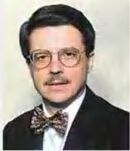
Dr. David Edward Marcinko MBA CMP™

http://www.CertifiedMedicalPlanner.org

[Publisher-in-Chief]

While taking my certified financial planner courses to earn the CFP® designation, almost two decades ago at Oglethorpe University in Atlanta, I learned that in classic retirement planning engagements the financial planner or advisor determines the client’s retirement income needs, the assets already earmarked for the retirement portfolio, the desired retirement date, how distributions will need to be made, the assumed inflation rate, and life expectancy, etc.

Then, if a shortage develops, the advisor changes the asset allocation, increases the savings rate, proposes postponing retirement, or suggests reducing retirement income expectations, etc.

However, later in business school I learned that even when the inflation rate and investment returns prove to be accurate; this approach often fails doctors and all investors.

Geometry not Arithmetic

Why? Most planners focus on the wrong thing when monitoring portfolios. Possibly, there is confusion between compounding investment returns and compounding wealth. Planners tend to compound the arithmetical average return in projecting ending wealth over multi-period horizons. But, the accumulation of wealth is determined by the geometric compounding of actual returns.

Law of Large [Small]  Numbers

Still later on in B-school, I learned of the LoLN [normal distributions, parametric equations and cohorts], as well as Poisson distributions [non-normal or asymmetric distributions, and non-parametric equations and cohorts] or Law of Small Numbers.

Planners and Advisors often believe in the former Law of Large Numbers, and eschew [or are unaware of] the later — that is, that over time, average annual returns will approach ever more closely the expected return. The longer the investment horizon, the further the portfolio can wander from its expected dollar value despite the fact that it is approaching its expected return. The future value of each portfolio is determined by the unique and unpredictable pattern of compounded returns and inflation it suffers.

IOW: The longer the period over which this pattern can exercise its effects, the greater the potential divergence from its required return. In fact, while the expected range for the annualized rate of return narrows over time, the expected range for the terminal value of the portfolio diverges over time.

Assessment

Today, forward thinking advisors use “portfolio sufficiency monitoring” to adjust nominal performance results for inflation by establishing benchmarks for performance objectives, setting triggers for reevaluation of the portfolio when it wanders too far from established benchmarks, and monitoring and adjusting portfolio risk to maximize the probability of meeting retirement portfolio objectives.

It answers the question: “Will I have sufficient assets to meet my retirement income needs?” while investment performance monitoring answers the question, “Is my retirement portfolio performing well relative to other portfolios?” My doctor clients retire; not others!

Note: Monitoring Retirement Portfolio Sufficiency,” by Patrick J.Collins, Kristor J. Lawson, and Jon C. Chambers, Journal of Financial Planning, February 1997, pp. 66–74, Institute of Certified Financial Planners.

Conclusion

And so, your thoughts and comments on this ME-P are appreciated. How do you monitor your portfolio? And, how do FAs perform same for their physician and other clients. Feel free to review our top-left column, and top-right sidebar materials, links, URLs and related websites, too. Then, subscribe to the ME-P. It is fast, free and secure.

Speaker: If you need a moderator or speaker for an upcoming event, Dr. David E. Marcinko; MBA – Publisher-in-Chief of the Medical Executive-Post – is available for seminar or speaking engagements. Contact: MarcinkoAdvisors@msn.com

Practice Management: http://www.springerpub.com/product/9780826105752

Subscribe Now: Did you like this Medical Executive-Post, or find it helpful, interesting and informative? Want to get the latest ME-Ps delivered to your email box each morning? Just subscribe using the link below. You can unsubscribe at any time. Security is assured.

Link: http://feeds.feedburner.com/HealthcareFinancialsthePostForcxos

Product DetailsProduct DetailsProduct Details

Product Details  Product Details

   Product Details

Risk Management, Liability Insurance, and Asset Protection Strategies for Doctors and Advisors: Best Practices from Leading Consultants and Certified Medical Planners™8Comprehensive Financial Planning Strategies for Doctors and Advisors: Best Practices from Leading Consultants and Certified Medical Planners™

***

Invite Dr. Marcinko

***

Are You Scared of Investment Losses?

Well Doctors – You Should Be!

By Somnath Basu PhD, MBA
President: AgeBander
Thousand Oaks, CA

There is a very simple way for medical professionals, and us all, to approach investment decision making. To start with, begin by asking yourself some basic and preliminary questions such as what is the investment for (to buy a house, to fund a kid’s education, or is it to fund retirement and the like) and how long these investments will last (for example, up to 40 – 50 years sometimes when one starts planning for retirement early).

Basic Questions

Once these basic questions are answered then ask this $64 million dollar question of your-self. Over your planning time horizon, how much of this money are you willing to lose? For example if you are trying to accumulate $100,000 for a house, how much could you afford to lose and still not lose your bearings? What if it is a five-year plan and in the 4th year you lose 50% of your accumulated funds with only one more year to go. How would you feel? This is the critical question in any investment decision. Typically you will not hear a financial planner [FP] or financial advisor [FA] talk in such terms; but perhaps they should!

www.CertifiedMedicalPlanner.com

Conservative Investing

When financial planners and financial advisors talk about conservative investing, they couch the same idea in terms of risk and return. In the language of these experts such measures are often quantitative and difficult to understand for the average investor. While return on investments seems like a fairly straightforward concept (8% or 11% for example), risk is mentioned usually in terms of standard deviation, a statistical terminology difficult both to explain and to understand. Hence, most physicians and investors are pretty much in the dark when it comes down to making the decision itself since it is their sole responsibility. Thus, the investor is left with no other choice but to decide on whether the suggested investment return sounds attractive or not. On this track, the higher the return, the more attractive the investment seems.

Furthermore, FAs may suggest that a return such as 8-10% is a conservative rate whereas 12-15% is aggressive. Hence if an 8-10% based investment is being suggested, the investor is likely to go with what she/he thinks is the most conservative decision, being the conservative investors they believe they are. (As an aside, there is a whole theory about physician investors being conservative and risk averse)

Unwinding the Mystery

To unwind this basic mystery, simply ask the FA the likelihood of various amounts of losses in any single year including the last year of the investment. Could half your funds be wiped out in any year including the last year? What is the likelihood of such an event? What is the likelihood that it could be 25% in any given year? Suppose your planner shows how your $100,000 will grow to $150,000 in five years if you were to earnings the average rate of 8% per year for five years. Under such a scenario, what is the likelihood that you could lose half your accumulated funds in the last year and come out with a negative investment return even though you still earned that 8% average rate over the five years? As we know now such possibilities not only exist but are not uncommon either. As an extreme case in point consider the 2008-09 financial debacle [flash-crash]! If your investment was maturing in 2009, the outcome would have been a lot worse.

The Driver of Concern

This concern of loss is what should drive us in our investment decisions. Most planners are unable to explain this concept of loss aversion to their clients because they themselves are not adequately educated to understand the concept themselves. However, as mentioned before, the solution is simple. Now reconsider the example above of earning an average annual rate of 8% over 5 years. While it sounds conservative on the surface, it is actually quite aggressive. Earning 8% a year for five consecutive years (or averaging out over the five years to an 8% rate) is a very tall order. To do so, especially under most circumstances, one would actually be exposed to a large amount of loss in any given year.

Without getting into the details of how the standard deviation measurement of risk converts into the loss propensity and using very rough estimates, another way to view the 8% investment opportunity is to understand that in any year, you may not even earn a dollar (0%) and this could happen in each and every year. The likelihood of such an outcome is astonishingly high – about 25%. Thus, the investment decision is about whether you are willing to bet where the odds of loss is one to four (25%) every year for each of the five years. Of course the reverse is also true that in each of the years you have a 75% chance to  earn a positive return on your investment and the earning rate itself could be anywhere from zero to the highest rate imaginable. Further, there is a 12% chance that you could be actually losing 8% a year for each of the five years! In prolonged economic downturns, which are not so uncommon, such are the outcomes. Now ask yourself this question: If you were told about these odds of losses, would you still consider the 8% investment opportunity to be conservative? Hopefully not, especially when you feel unsettled about the existing economic state of affairs. Further, would you consider a 10% return to be attractive and conservative if you were rejecting a 15% investment and choosing the 10% one?

Assessment

As mentioned earlier, this idea of loss aversion is probably the most powerful tool in the investor’s bag. Once you understand the implications of loss from any investment decision, then the loss aversion approach to making this decision is a dimensional shift, something that can be easily understood and applied by all investors. Furthermore, if most physicians and investors behaved similarly, collectively we would make the investment market a much safer place. Unfortunately for now, there are no known ways of educating all investors about this critical aspect since the tools that currently exist are all based on statistical concepts of risk and return which make little sense to most lay investors.

Conclusion

And so, your thoughts and comments on this ME-P are appreciated. Feel free to review our top-left column, and top-right sidebar materials, links, URLs and related websites, too. Then, subscribe to the ME-P. It is fast, free and secure.

Speaker: If you need a moderator or speaker for an upcoming event, Dr. David E. Marcinko; MBA – Publisher-in-Chief of the Medical Executive-Post – is available for seminar or speaking engagements. Contact: MarcinkoAdvisors@msn.com and http://www.springerpub.com/Search/marcinko

Get our Widget: Get this widget!

Our Other Print Books and Related Information Sources:

Health Dictionary Series: http://www.springerpub.com/Search/marcinko

Practice Management: http://www.springerpub.com/product/9780826105752

Physician Financial Planning: http://www.jbpub.com/catalog/0763745790

Medical Risk Management: http://www.jbpub.com/catalog/9780763733421

Healthcare Organizations: www.HealthcareFinancials.com

Physician Advisors: www.CertifiedMedicalPlanner.com

Subscribe Now: Did you like this Medical Executive-Post, or find it helpful, interesting and informative? Want to get the latest ME-Ps delivered to your email box each morning? Just subscribe using the link below. You can unsubscribe at any time. Security is assured.

Link: http://feeds.feedburner.com/HealthcareFinancialsthePostForcxos

Sponsors Welcomed: And, credible sponsors and like-minded advertisers are always welcomed.

Link: https://healthcarefinancials.wordpress.com/2007/11/11/advertise

Product DetailsProduct DetailsProduct Details       

Product Details  Product Details

   Product Details 

Get a Free Retirement Planning e-Book

Unveiling the Retirement Myth

Review by: Dr. David Edward Marcinko MBA CMP™

[Publisher-and-Chief]

Jim Otar is a certified financial planner in Canada. He wrote the book: Unveiling the Retirement Myth on retirement income planning: how to make your retirement portfolio last as long as you do when you are living off your savings and investments in retirement.

The Print Version

The print version costs $49.99 on Amazon. But, for a limited time only, Jim Otar is offering a PDF version of this 525-page, 45 chapter book for FREE on his website retirementoptimizer.com.

The e-Book

Here’s the download link until January 10th, 2011:

http://www.retirementoptimizer.com/downloads/URMG/URMGreem.pdf

Assessment

This is a very worthwhile e-book offered at an excellent price-point. Its’ subtitle is advanced retirement planning based on market history, and that is exactly what is presented – much historical review although not especially of an advanced nature. But, it is voluminous. Additionally, since the past is no indication of the future – and current events like the potential of a “new economics normal” are not explicitly entertained – the treatise lacks a feeling of modernity!

Fortunately, the author does include many figures, graphs, illustrations and tables for ease of understanding. The mini case-examples also help keep it from trending to the boorish. This is an important point I have painfully learned after almost four decades of writing, editing and publishing [i.e., readability and interest]. Moreover, if the reader was not familiar with time-value of money calculations and concepts before reading, s/he will surely be after.

While mostly generic in nature – containing little tax, insurance, risk management and accounting information  – and not written for a physician or medical professional audience; the book represents a worthwhile review for doctor colleagues and/or those laymen unfamiliar with the ever widening topic. However, those physicians seeking healthcare specificity should look elsewhere for assistance www.CertifiedMedicalPlanner.com

Conclusion

And so, your thoughts and comments on this ME-P are appreciated. Feel free to review our top-left column, and top-right sidebar materials, links, URLs and related websites, too. Then, subscribe to the ME-P. It is fast, free and secure.

Speaker: If you need a moderator or speaker for an upcoming event, Dr. David E. Marcinko; MBA – Publisher-in-Chief of the Medical Executive-Post – is available for seminar or speaking engagements. Contact: MarcinkoAdvisors@msn.com and http://www.springerpub.com/Search/marcinko

Get our Widget: Get this widget!

Our Other Print Books and Related Information Sources:

Health Dictionary Series: http://www.springerpub.com/Search/marcinko

Practice Management: http://www.springerpub.com/product/9780826105752

Physician Financial Planning: http://www.jbpub.com/catalog/0763745790

Medical Risk Management: http://www.jbpub.com/catalog/9780763733421

Healthcare Organizations: www.HealthcareFinancials.com

Physician Advisors: www.CertifiedMedicalPlanner.com

Subscribe Now: Did you like this Medical Executive-Post, or find it helpful, interesting and informative? Want to get the latest ME-Ps delivered to your email box each morning? Just subscribe using the link below. You can unsubscribe at any time. Security is assured.

Link: http://feeds.feedburner.com/HealthcareFinancialsthePostForcxos

Sponsors Welcomed. And, credible sponsors and like-minded advertisers are always welcomed.

Link: https://healthcarefinancials.wordpress.com/2007/11/11/advertise

Product DetailsProduct DetailsProduct Details       

Product Details  Product Details

Is There an “Efficient Frontier” for Medicare Payment Reform?

An Essay on Financial Health Risk Self-Selection

By Dr. David Edward Marcinko MBA CMP™

http://www.CertifiedMedicalPlanner.org

[Publisher-in-Chief]

Health economist Austin Frakt PhD, of the Incidental Economist, alerted us to this recent publication “Achieving Cost Control, Care Coordination, and Quality Improvement through Incremental Payment System Reform”, by and from: (Averill, et al., JACM, 2010). The paper describes various Medicare payment reform methods.

The Abstract

The healthcare reform goal of increasing eligibility and coverage cannot be realized without simultaneously achieving control over healthcare costs. The reform of existing payment systems can provide the financial incentive for providers to deliver care in a more coordinated and efficient manner with minimal changes to existing payer and provider infrastructure. Pay for performance, best practice pricing, price discounting, alignment of incentives, the medical home, payment by episodes, and provider performance reports are a set of payment reforms that can result in lower costs, better coordination of care, improved quality of care, and increased consumer involvement. These reforms can produce immediate Medicare annual savings of $10 billion and create the framework for future savings by establishing financial incentives for long-term provider behavior changes that can lead to lower costs.

Patient Risk Sharing

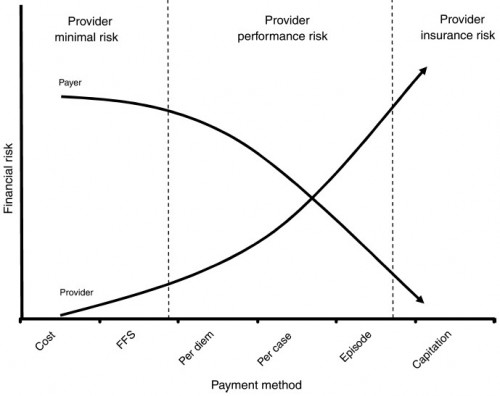
Of course, the third dimension of risk [beyond traditional doctor/hospital provider and Medicare insurer] would be the risk borne by the patient insured (degree of cost-sharing or “consumer responsibility”). This relationship is represented diagrammatically right here:

Brief Review of MPT

Modern portfolio theory (MPT) attempts to maximize investment portfolio expected returns for a given level of risk by carefully choosing the proportions of various asset classes. As a mathematical formulation, the concept of diversification aims to select a collection of assets that collectively lowers risk [measured by standard deviation] more than any individual asset class. This pleasing point is known as the “efficient frontier.” And, it can be seen intuitively because different types of assets often change in value in opposite ways.

Is There an Insurance Efficient Frontier?

Health insurance [medical payment reform] econometric considerations may now be extended in this analogy to suggest that medical providers and CMS payers are the surrogates for two dimensions in the MPT. The third might be the risks borne by the patient insured (degree of cost-sharing or “consumer responsibility”), as above.

Assessment

Then, patients could self-select where they wish to fall on the health insurance “efficient frontier”, balancing all three dimensions as in MPT, along with lifestyle and moral hazard considerations, etc.

Conclusion

And so, your thoughts and comments on this ME-P are appreciated. Is there an “efficient frontier” for Medicare payment reform?

Feel free to review our top-left column, and top-right sidebar materials, links, URLs and related websites, too. Then, subscribe to the ME-P. It is fast, free and secure.

Link: http://feeds.feedburner.com/HealthcareFinancialsthePostForcxos

Speaker: If you need a moderator or speaker for an upcoming event, Dr. David E. Marcinko; MBA – Publisher-in-Chief of the Medical Executive-Post – is available for seminar or speaking engagements. Contact: MarcinkoAdvisors@msn.com

OUR OTHER PRINT BOOKS AND RELATED INFORMATION SOURCES:

Product DetailsProduct DetailsProduct Details

Product Details  Product Details

   Product Details 

How Equity-Based Securities Affect a Physician’s Total Financial Plan

Equity Securities Provide a Portfolio Growth Engine

By Dr. David Edward Marcinko MBA, CMP™

www.HealthcareFinancials.com

[Editor-in-Chief]

Equity securities provide growth. Theoretically, the amount of growth potential in an equity security is infinite. A stock’s price appreciation possibilities have no limit. However, a stock’s price can also go to zero and an investor can lose the entire amount invested. Therefore, while stocks contribute long-term growth to a portfolio, they also add risk.

Stock Diversification is Key

Diversification is the best defense against risk, so only a portion of every portfolio should be in stocks. Other investments—fixed income securities; cash equivalents that can be used to take advantage of opportunities or for emergencies; real estate; and even commodities (precious metals, for instance, or securities of companies whose businesses are commodity-based)—should all be considered by the responsible physician-investor or financial advisor as components of a well-rounded, balanced portfolio.

And So is Portfolio Diversification

The stock portfolio itself should also be diversified. Diversify among all types of equity securities such as some large capitalization stocks, some small capitalization stocks, some utilities, some cyclical stocks, some value stocks, some growth stocks, and some defensive stocks. Because it is difficult to adequately diversify an equity portfolio with a small amount of money, consider mutual funds or ETFs for some doctors or financial advisory clients. At least this is the philosophy of our Certified Medical Planner™ [CMP] online educational program.  

www.CertifiedMedicalPlanner.com

Assessment

Always remember that, because the equity component of the portfolio can be expected to provide more than its proportionate share of the risk of a portfolio, it must be constantly monitored. Also remember that every physician-investor as a different level of risk tolerance, and some may be able to handle ownership of only the most solid and stable equity investments.

Conclusion

And so, your thoughts and comments on this ME-P are appreciated. But, what is “di-worsification?” Feel free to review our top-left column, and top-right sidebar materials, links, URLs and related websites, too. Then, subscribe to the ME-P. It is fast, free and secure.

Speaker: If you need a moderator or speaker for an upcoming event, Dr. David E. Marcinko; MBA – Publisher-in-Chief of the Medical Executive-Post – is available for seminar or speaking engagements. Contact: MarcinkoAdvisors@msn.com and http://www.springerpub.com/Search/marcinko

Get our Widget: Get this widget!

Our Other Print Books and Related Information Sources:

Health Dictionary Series: http://www.springerpub.com/Search/marcinko

Practice Management: http://www.springerpub.com/product/9780826105752

Physician Financial Planning: http://www.jbpub.com/catalog/0763745790

Medical Risk Management: http://www.jbpub.com/catalog/9780763733421

Healthcare Organizations: www.HealthcareFinancials.com

Physician Advisors: www.CertifiedMedicalPlanner.com

Subscribe Now: Did you like this Medical Executive-Post, or find it helpful, interesting and informative? Want to get the latest ME-Ps delivered to your email box each morning? Just subscribe using the link below. You can unsubscribe at any time. Security is assured.

Link: http://feeds.feedburner.com/HealthcareFinancialsthePostForcxos

Sponsors Welcomed: And, credible sponsors and like-minded advertisers are always welcomed.

Link: https://healthcarefinancials.wordpress.com/2007/11/11/advertise

Product Details  Product Details

What is the Role of a Physician-Focused Financial Advisor?

Changing Times – Demand Changing Roles

By Dr. David Edward Marcinko MBA, CMP™

Editor-in-Chief

www.HealthcareFinancials.com

As a financial advisor for more than 15 years, it has been my experience that many doctors who require assistance in developing a comprehensive personal financial plan also need help with implementing any investment planning recommendations. While perhaps not so true before the “flash-crash” of 2008-09, the issue seems especially true today as retirement portfolios have been decimated, and the specter of healthcare reform is no longer just a threat but a political reality. The mindset of hubris has been replaced by a tone of fear in many medical colleagues.

The Financial Advisors

Physician investors who develop an investment plan may use a competent financial advisor [FA] or other specialist in the investment area. A financial advisor can help clients understand their current financial situations and develop strategies for achieving their goals. Other FAs are specialists that help clients design and implement plans for investing. Still others use a more comprehensive approach to the entire financial planning process with extreme degrees of healthcare specificity

www.CertifiedMedicalPlanner.com

These Certified Medical Planners™ are fiduciaries at all times and put client needs first as registered investment advisors [RIAs], not commissioned sales agents or mere stock-brokers despite often confusing monikers.

Implementation

Implementation may be accomplished using professionally managed portfolios and mutual funds. The following shows how a plan may be implemented with an advisor assisting the physician-investor. The process may include:

• Developing investment policy and strategies

• Selecting and implementing managed portfolios and mutual funds

• Evaluating performance on a periodic basis

• Periodically reviewing and adjusting the investment plan as required

Note: The advisor may provide all of the investment services, or the physician investor may use other advisors in the process.

Example: 

A financial planner has developed a number of financial planning recommendations for a client. One recommendation is to develop a written investment plan, review current investments, and implement changes. The planner has recommended an investment advisor experienced in selecting and monitoring managed portfolios and mutual funds. The financial planner will meet with the client and advisor initially and once each year to monitor the plan.

Example: 

A financial planner has developed a financial plan for a client. The financial planner specializes in developing investment policy but not in implementing investments. The financial planner will use asset allocation software and develop a written long-term plan for the client. The doctor-client will work with a major brokerage firm to implement the plan using managed portfolios and mutual funds. The financial planner will monitor the brokerage firm and help the client evaluate performance.

Example:

A financial planner has developed a financial plan for a physician-client and will assist the client in developing asset allocation strategies. The planner has extensive knowledge in implementing the asset allocation strategies using managed portfolios and mutual funds. The planner will select and monitor the choices. The planner will provide the client with a quarterly performance report and meet with the client every six months to review the plan and strategies.

Assessment

Understanding the above is more critical than ever as physician-income continues to shrink going forward in the era of healthcare reform.

Conclusion

And so, your thoughts and comments on this ME-P are appreciated. Feel free to review our top-left column, and top-right sidebar materials, links, URLs and related websites, too. Do you seek professional assistance with your investing needs, or do you go-it-alone; why or why not? Then, subscribe to the ME-P. It is fast, free and secure.

Speaker: If you need a moderator or speaker for an upcoming event, Dr. David E. Marcinko; MBA – Publisher-in-Chief of the Medical Executive-Post – is available for seminar or speaking engagements. Contact: MarcinkoAdvisors@msn.com and http://www.springerpub.com/Search/marcinko

Get our Widget: Get this widget!

Our Other Print Books and Related Information Sources:

Health Dictionary Series: http://www.springerpub.com/Search/marcinko

Practice Management: http://www.springerpub.com/product/9780826105752

Physician Financial Planning: http://www.jbpub.com/catalog/0763745790

Medical Risk Management: http://www.jbpub.com/catalog/9780763733421

Healthcare Organizations: www.HealthcareFinancials.com

Physician Advisors: www.CertifiedMedicalPlanner.com

Subscribe Now: Did you like this Medical Executive-Post, or find it helpful, interesting and informative? Want to get the latest ME-Ps delivered to your email box each morning? Just subscribe using the link below. You can unsubscribe at any time. Security is assured.

Link: http://feeds.feedburner.com/HealthcareFinancialsthePostForcxos

Sponsors Welcomed: And, credible sponsors and like-minded advertisers are always welcomed.

Link: https://healthcarefinancials.wordpress.com/2007/11/11/advertise


Product DetailsProduct DetailsProduct Details       

Product Details  Product Details

   Product Details 

Financial Planning and Risk Management Handbooks from iMBA, Inc

For Doctors and their Financial Advisors

[By Staff Reporters]

For more on these topics, see the handbooks below:

Product Details  Product Details

Conclusion

Your thoughts and comments on this ME-P are appreciated. Feel free to review our top-left column, and top-right sidebar materials, links, URLs and related websites, too. Then, subscribe to the ME-P. It is fast, free and secure.

Speaker: If you need a moderator or speaker for an upcoming event, Dr. David E. Marcinko; MBA – Publisher-in-Chief of the Medical Executive-Post – is available for seminar or speaking engagements. Contact: MarcinkoAdvisors@msn.com

OUR OTHER PRINT BOOKS AND RELATED INFORMATION SOURCES:

Sponsors WelcomedAnd, credible sponsors and like-minded advertisers are always welcomed.

Product DetailsProduct DetailsProduct Details

More on Modern Investment Portfolio Rebalancing

Understanding Risks and Benefits

By Dr. David Edward Marcinko MBA CMP™

Join Our Mailing List 

According to Wayne Firebaugh CPA, CFP®, CMP™ rebalancing a private physician’s portfolio or medical endowment contradicts conventional market “wisdom” that you allow your winners to run. Perhaps in speculation this is true, but for investing such a view can be deadly.

One Healthcare Case Example

Take, for example, the Cleveland Clinic’s experience with its endowment. In 1999, the Cleveland Clinic Foundation reported $1.2 billion in investments. Unfortunately, by the end of 2002, the Foundation’s investments were valued at $650 million, a loss of approximately 50%. Its losses reflected its substantial allocation into technology stocks during the technology boom of the late 1990s. As a result of these investment losses, the Clinic had to postpone a planned $300 million cardiology center and certain debt financing had to be restructured. In addition, both Moody’s and Standard & Poor lowered their ratings on the Clinic.

Definition

Since rebalancing by definition requires an endowment to take money from more successful investment classes and invest it into under-performing classes, it will always cause some measure of anguish. There will always be some reason why rebalancing should not take place. In 1987, the unprecedented single day decline in the market could have been presented as an argument against moving into equities. In 1998, the seemingly endless number of world financial crises could have provided a useful excuse to avoid rebalancing into emerging markets. So too; the flash crash of 2008!

Assessment

Current bond prices could provide similar reasons for not rebalancing into an appropriate fixed income position. However, since the whole reason for asset allocation policy decisions is to mitigate the negative impact that irrational behavior can have on a portfolio or an endowment’s investment performance, they should include a process for periodic rebalancing of its assets.

Conclusion

Your thoughts and comments on this ME-P are appreciated. Feel free to review our top-left column, and top-right sidebar materials, links, URLs and related websites, too. Then, subscribe to the ME-P. It is fast, free and secure.

Link: http://feeds.feedburner.com/HealthcareFinancialsthePostForcxos

Speaker: If you need a moderator or speaker for an upcoming event, Dr. David E. Marcinko; MBA – Publisher-in-Chief of the Medical Executive-Post – is available for seminar or speaking engagements. Contact: MarcinkoAdvisors@msn.com

OUR OTHER PRINT BOOKS AND RELATED INFORMATION SOURCES:

LEXICONS: http://www.springerpub.com/Search/marcinko
PHYSICIANS: www.MedicalBusinessAdvisors.com
PRACTICES: www.BusinessofMedicalPractice.com
HOSPITALS: http://www.crcpress.com/product/isbn/9781466558731
CLINICS: http://www.crcpress.com/product/isbn/9781439879900
ADVISORS: www.CertifiedMedicalPlanner.org
BLOG: www.MedicalExecutivePost.com

Product Details  Product Details

Whither Physician Self-Portfolio Management?

Do it Yourself Considerations

By Clifton N. McIntire, Jr.; CIMA, CFP®

By Lisa Ellen McIntire; CIMA, CFP®fp-book

In order to self create and monitor an investment portfolio for personal, office, or medical foundation use, the physician investor should ask him/herself three questions:

1. How much do I have invested?

2. How much did I make on my investments?

3. How much risk did I take to get that rate of return?

How Am I Doing?

Most doctors and health care professionals know how much money they have invested. If they don’t, they can add a few statements together to obtain a total. Few actually know the rate of return achieved during last year’s debacle, or so far this year in 2009. Everyone can get this number by simply subtracting the ending balance from the beginning balance and dividing the difference. But, few take the time to do it. Why? A typical response to the question is, “We were doing fine” -or- “We did terrible last year.”

But, ask how much risk is in the portfolio and help is needed. Nobel laureate Harry Markowitz, PhD said, “If you take more risk, you deserve more return.” Using standard deviation, he referred to the “variability of returns” –  in other words, how much the portfolio goes up and down, its volatility.

Your Own Portfolio

How, and even whether or not to create and manage your own portfolio, is what this brief post is about.

First, you must determine what to do with your investments. How much risk can be taken and what is the time frame? You must understand the concept of risk vs. reward and write an investment policy statement.

Next, the assets that will be used for investment must be selected. This involves asset allocation and mixing different styles of investment management to achieve the desired results, and is the point where you go it alone, or professional investment managers are selected.

Be sure to review expenses, like wrap accounts, service fees, AUMs, commissions and compare mutual funds with private money management.

Monitor

Once the initial portfolio is in place, the performance must be monitored to assure compliance with the investment policy.  Here’s where you consider 401k or 403(b) plans, pension plans, retirement accounts, as well as how to change doctor trustees or managers when necessary.

Assessment

Finally, consider the role of professional consultants. Now after all of this, if you still want to do it yourself rather than be a doctor, the entire process will be professionally illustrated. An actual physicians’ financial plan with investing portfolio was reviewed previously, along with the steps taken to improve returns and reduce risk.

Link: https://healthcarefinancials.wordpress.com/2009/09/03/evaluating-a-sample-physician-financial-plan-iii/

Join Our Mailing List

Conclusion

And so, your thoughts and comments on this Medical Executive-Post are appreciated. Feel free to review our top-left column, and top-right sidebar materials, links, URLs and related websites, too. Then, be sure to subscribe to the ME-P. It is fast, free and secure.

Link: http://feeds.feedburner.com/HealthcareFinancialsthePostForcxos

Speaker: If you need a moderator or speaker for an upcoming event, Dr. David E. Marcinko; MBA – Publisher-in-Chief of the Executive-Post – is available for seminar or speaking engagements. Contact: MarcinkoAdvisors@msn.com 

Get our Widget: Get this widget!

Our Other Print Books and Related Information Sources:

Practice Management: http://www.springerpub.com/prod.aspx?prod_id=23759

Physician Financial Planning: http://www.jbpub.com/catalog/0763745790

Medical Risk Management: http://www.jbpub.com/catalog/9780763733421

Healthcare Organizations: www.HealthcareFinancials.com

Health Administration Terms: www.HealthDictionarySeries.com

Physician Advisors: www.CertifiedMedicalPlanner.com

Discount Brokerages versus On-Line Brokerages

Physicians Must Appreciate the Differences

By Daniel B. Moisand; CFP® and the ME-P StaffME-P Blogger

Here are a few questions for all physician-investors to consider in 2009:

1. True or False? 

The key to investment success is to pay as little for a trade as possible.

2. True or False? 

The higher the number of trades in an investment account, the better the investment results.

3. True or False? 

The majority of revenue of a discount or on-line brokerage comes from trades. 

A: The answers should be crystal clear! False, False and True. It is almost entirely that simple.

Cost Control

Much like a medical practice, keeping costs down is an important objective of personal finance but, it is certainly not the key to success.  There are many studies that show that active trading garners inferior results compared to a longer term buy and hold type of strategy. One of the most publicized recently was conducted by a UC-Davis team led by Dr. Terrance Odean. The study examined the actual tracing activity of thousands of self-directed accounts at a major discount brokerage over a six-year period. The results were clear. Regardless of trading level, most of the accounts underperformed the market and showed that the higher the number of trades, the worse the result.

Of Bulls and Bears

While the U.S. markets were on a dramatic upswing a decade ago, the general interest level in them increased as well.  More households owned financial assets than ever before. Demographics drive much of this surge. The older edge of the baby boom generation is finding that as the children leave home, they have more income than ever before and saving for retirement becomes a higher priority. The proliferation of defined contribution [401-k, 403-b] retirement plans has also forced more people to take responsibility for their long-term security. When, the US stock market was on a tear; one would have be wise to remember an old Wall Street saying – “Don’t confuse brains with a bull market.” Unfortunately today, far too many self-directed investors did not heed the warnings. The media is full of stories about investors whose portfolios were decimated by the recent bear market. While this loss of wealth is somewhat tragic, in almost all cases the losses were made possible by poor planning and/or poor execution that a mediocre advisor would have avoided.

The Business of Advice

One also cannot conclude that everyone is acting as his or her own investment advisor. The advice business continues to thrive. Sales of load mutual funds have continued to grow, as has commission revenue at full-service firms. No-load funds have continued to grow as well and gain market share from the load funds. However, it would be inaccurate to tie that growth to do-it-yourselfers. Much of the growth of no-load funds can be attributed to the advice of various types of advisors who are recommending the funds. In addition, several traditionally no-load fund families have begun to offer funds through brokers for a load.

The Discounters

For physicians and all clients, the primary attraction to a discounter is cost. Everyone loves a bargain. Once it is determined that it is a good idea to buy say 100 shares of IBM, the trade needs to get executed. When the trade settles one owns 100 shares of IBM, regardless of what was paid for the trade. There is no harm in saving a few bucks. However, the decision to buy the IBM shares and when to sell those shares will have a far greater impact on the investment results than the cost of the trade as long as the level of trading is kept at a prudent level. The fact is that most good advisors use discount firms for custodial and transaction services. The leading providers to advisors are Schwab, Fidelity, and Waterhouse.fp-book1

Ego Driven

In addition to cost savings, discounters appeal to one’s ego for business. Everyone wants to feel like a smart investor; especially doctors. Often, marketing materials will cite the IBM example and portray the cost difference as an example of how the investor is either stupid or being ripped off. There is also a strong appeal to one’s sense of control. An investor is made to feel like they are the masters of their own destiny.  All of this is a worthy goal. One should feel confident, in control, and smart about financial issues. Hiring a professional should not result in losing any of these feelings, rather solidify them. Getting one’s affairs in order is smart. The advisor works for the client so a client should maintain control by only delegating tasks to the extent one is comfortable. Knowing that the particular circumstances are being addressed effectively should yield enhanced confidence.

Sales Pressure Release

The final reason people turn to discount and on-line brokerages is to avoid sales pressure. Unlike the stereotypical stockbroker, no one calls to push a particular stock. Instead, sales pressure is created within the mind of the investor. By maintaining a steady flow of information about stocks and the markets to the account holders, brokerages keep these issues in the forefront of the investor’s minds. This increases the probability that the investor will act on the information and execute a trade. Add some impressive graphics and interfaces and the brokerage can keep an investor glued to the screen. The Internet has made this flow easier and cheaper for the brokerages, lowering costs and increasing the focus on trade volume to achieve profitability.

Assessment

The pressurized information flow however, does little to protect investors during a bear market. Ironically, this focus on trading is one of the very conflicts investors are trying to avoid by fleeing a traditional full service broker.

Conclusion

And so, your thoughts and comments on this Medical Executive-Post are appreciated. What are your feelings on discount and internet brokers? Tell us what you think. Feel free to review our top-left column, and top-right sidebar materials, links, URLs and related websites, too. Then, be sure to subscribe to the ME-P. It is fast, free and secure.

Link: http://feeds.feedburner.com/HealthcareFinancialsthePostForcxos

Speaker: If you need a moderator or speaker for an upcoming event, Dr. David E. Marcinko; MBA – Publisher-in-Chief of the Executive-Post – is available for seminar or speaking engagements. Contact: MarcinkoAdvisors@msn.com 

Get our Widget: Get this widget!

Our Other Print Books and Related Information Sources:

Practice Management: http://www.springerpub.com/prod.aspx?prod_id=23759

Physician Financial Planning: http://www.jbpub.com/catalog/0763745790

Medical Risk Management: http://www.jbpub.com/catalog/9780763733421

Healthcare Organizations: www.HealthcareFinancials.com

Health Administration Terms: www.HealthDictionarySeries.com

Physician Advisors: www.CertifiedMedicalPlanner.com

Subscribe Now: Did you like this Medical Executive-Post, or find it helpful, interesting and informative? Want to get the latest ME-Ps delivered to your email box each morning? Just subscribe using the link below. You can unsubscribe at any time. Security is assured.

Link: http://feeds.feedburner.com/HealthcareFinancialsthePostForcxos

Sponsors Welcomed

And, credible sponsors and like-minded advertisers are always welcomed.

Link: https://healthcarefinancials.wordpress.com/2007/11/11/advertise

Impact of Size on Mutual Fund Performance

Vital Information for Doctors to Consider

[By Dr. David Edward Marcinko; FACFAS, MBA, CMP™]

[By Professor Hope Rachel Hetico; RN, MHA, CMP™]dave-and-hope3

The actual size of a mutual or index fund, in terms of amount of assets, and the growth rate of a fund are the two aspects of size to consider. The impact of size on mutual fund performance varies—it can be negative, neutral, or positive. Size affects different types of funds differently; it also affects the manager’s ability to achieve objectives. Monitor size changes and make investment decisions accordingly.

Economies of Scale

A relatively large amount of assets available to a portfolio manager presents various economies. The costs at most funds (e.g., expense ratios) are reduced as a percentage of net asset value as the fund grows. Expense ratios can have a major impact on performance. In addition to being an effect of size, low fees can cause size changes. Funds do at times waive some fees to attract assets.

Asset Base

A larger asset base provides more liquidity to a fund. With more assets, the manager can buy more shares and more stocks. Transaction costs are reduced if higher trading volumes are achieved. A larger asset base also can reduce relative tax costs. Realized but undistributed capital gain can be spread over more shares at the time of year-end distribution. A larger asset base and manager success attracts higher-caliber managers to the management team.

fp-book20

Fund Growth

Growth of fund assets impairs certain funds more than others. Generally, bond funds are less affected by asset growth and size than equity funds. Growth may have a positive impact on bond funds because buying bonds of similar characteristics further diversifies credit, event, and other risks. Equity funds that invest in larger capitalization stocks can be less affected than funds buying less liquid small-cap stocks. (This is so because funds usually limit their investments in a single company, i.e., many funds will not buy more than 5% of a specific company. Five percent of a small company uses up less cash than 5% of a large company. Therefore, a small-cap fund is more likely to exhaust its choice of available companies sooner than a large-cap fund. A large-cap fund could increase its investment to a 5% level, whereas a small-cap fund may already be fully invested in the companies the manager likes to own.)

Growth Rate

The rate of growth can affect performance. Rapid growth may mean that a large portion of the portfolio remains un-invested. A rapidly growing growth-type equity fund with a high percentage of cash earns lower returns in a rising market than a fully invested fund. With rapid growth, the fund may not provide pure exposure to the desired asset class. At a certain point, however, fund asset growth impairs the manager’s ability to achieve objectives. For this reason, funds often close to new investors or to new investment once they have reached a certain size. Growth affects managers in many ways. Many fund managers or teams of managers direct a number of funds and possibly even private accounts. As the fund grows, managers are spread thin and may have difficulty in reacting quickly or efficiently to changing market conditions. Managers may need to hire assistant portfolio managers or delegate work to analysts or other employees. As a result, the manager manages people, administration, or internal quality control systems rather than studying companies or investment strategies. Also, a manager may become complacent in periods of rapid asset growth. Such growth can mean their own compensation is substantially greater, which may in turn change the manager’s motivation. Rapid growth often changes a fund because there are not enough opportunities to invest in the targeted securities. For example, a fund can change from aggressive to conservative, small cap to large cap. Managers may have to slow trading or increase liquidity in the portfolio to prevent this occurrence.

Meaningful Positions Difficult

Rapid growth or a large asset base can prevent managers from taking meaningful positions in market sectors they believe will outperform others. Smaller funds are more flexible and may take advantage of opportunities or liquidate unwanted positions faster than larger funds. A large fund that owns a significant position will negatively affect a security’s market price if it unloads shares all at one time. Rapid growth also impairs research of funds, affecting an investor’s choice of funds. A fund with outstanding performance over the past 5 years and a $150 million asset base may be much different when its base grows to $1 billion; at that point, it may no longer be the “right choice” for an investor.

insurance-book9Asset Declinations

Just as rapid asset growth affects performance, a rapid decline of fund assets also may impact performance. Significant quantities of redemptions over short periods force managers to liquidate security positions, often at the wrong time (i.e., they would rather be buying in a declining market than selling to accommodate redemptions). To prevent this scenario, some funds have redemption charges to discourage investors from such short-term decisions. Such environments can negatively impact bond funds as easily as equity funds. Large redemptions compound the effect of declining fund net asset values.

What a Doctor-Investor Can Do?

What can physician-investors do to avoid negative effects on investment? Avoid overloading a portfolio with hot, rapidly growing funds, if possible. Generally, size should be a neutral factor for most bond funds. Small and/or aggressive equity funds can be affected by growth, however. Emphasize funds that promise to close to new investors after assets reach a certain size. Once a fund becomes large, monitor it closely for problems caused by the growth. If there is a better, smaller fund, it may be wise to change. Also, closed-end funds are always a possibility. These funds have a major advantage in that their asset base is a factor of growth in security values, not new investment (unless the fund makes a secondary stock offering). Closed-end managers work with a finite portfolio, which reduces the problem of sudden asset growth.

Assessment

To the extent that a lack of SEC and FINRA over-sight, and the recent financial, insurance and banking meltdown has affected the above; such investing is left up to the doctor’s discretion and personal situation.  When it comes to the financial services product sales industry; always remember “caveat emptor” or “buyer-beware.”

Disclaimer: Both contributors are former licensed insurance agents and financial advisors.

Conclusion

Your thoughts and comments on this ME-P are appreciated. Feel free to review our top-left column, and top-right sidebar materials, links, URLs and related websites, too. Then, subscribe to the ME-P. It is fast, free and secure.

Link: http://feeds.feedburner.com/HealthcareFinancialsthePostForcxos

Speaker: If you need a moderator or speaker for an upcoming event, Dr. David E. Marcinko; MBA – Publisher-in-Chief of the Medical Executive-Post – is available for seminar or speaking engagements. Contact: MarcinkoAdvisors@msn.com

OUR OTHER PRINT BOOKS AND RELATED INFORMATION SOURCES:

DICTIONARIES: http://www.springerpub.com/Search/marcinko
PHYSICIANS: www.MedicalBusinessAdvisors.com
PRACTICES: www.BusinessofMedicalPractice.com
HOSPITALS: http://www.crcpress.com/product/isbn/9781466558731
CLINICS: http://www.crcpress.com/product/isbn/9781439879900
BLOG: www.MedicalExecutivePost.com
FINANCE: Financial Planning for Physicians and Advisors
INSURANCE: Risk Management and Insurance Strategies for Physicians and Advisors

Product Details  Product Details

Challenging Standard & Poor’s 500 Index

Join Our Mailing List

Dr. Jeremy Siegel Opines

[By Staff Reporters]56371606

According to Financial Advisor News – an electronic trade magazine on March 17 2009 – Standard & Poor’s underestimate the earnings of its S&P 500 Index. So says, Jeremy Siegel PhD, a finance professor at the University of Pennsylvania’s Wharton School of Business and author of Stocks for the Long Run.

The Dilemma

The problem started when the Wall Street Journal ran an op-ed piece by Siegel that argued Standard & Poor’s uses a “bizarre” methodology for calculating the earnings and P/E ratio for the S&P 500. In it, Siegel explained that the earnings of S&P 500 companies are currently treated equally, but should instead be weighted in proportion to their market capitalization. Market capitalization weighting, he noted, is used to measure the S&P 500 returns. Such a system gives larger weight to the earnings of a company such as Exxon-Mobil, and lower weight to an S&P 500 member such as Jones Apparel.

Siegel’s Example

For example, “a 10% rise in Exxon-Mobil’s price would boost the S&P 500 by 4.64 index points, while the same fall in Jones Apparel would have no impact since the change is far less than the one-hundredth of one point to which the index is routinely rounded,” Siegel wrote.

fp-book10

Outcome

As a result of the above, if capitalization weightings were applied to 2008, the earnings of S&P 500 companies would have been $71.10 per share instead of $39.73 per share.

S&P’s Support

In response, an S&P official said Siegel’s argument “fails the test of both logic and index mathematics.”

Conclusion

Your thoughts and comments on this ME-P are appreciated. Feel free to review our top-left column, and top-right sidebar materials, links, URLs and related websites, too. Then, subscribe to the ME-P. It is fast, free and secure.

Link: http://feeds.feedburner.com/HealthcareFinancialsthePostForcxos

Speaker: If you need a moderator or speaker for an upcoming event, Dr. David E. Marcinko; MBA – Publisher-in-Chief of the Medical Executive-Post – is available for seminar or speaking engagements. Contact: MarcinkoAdvisors@msn.com

OUR OTHER PRINT BOOKS AND RELATED INFORMATION SOURCES:

DICTIONARIES: http://www.springerpub.com/Search/marcinko
PHYSICIANS: www.MedicalBusinessAdvisors.com
PRACTICES: www.BusinessofMedicalPractice.com
HOSPITALS: http://www.crcpress.com/product/isbn/9781466558731
CLINICS: http://www.crcpress.com/product/isbn/9781439879900
BLOG: www.MedicalExecutivePost.com
FINANCE: Financial Planning for Physicians and Advisors
INSURANCE: Risk Management and Insurance Strategies for Physicians and Advisors

Product DetailsProduct DetailsProduct Details

Product Details  Product Details

Physician Household Borrowing and/or Investing

Join Our Mailing List

Deciding What Works?

[By Staff Reporters]fp-book4

Another way of asking the above titled question might be, “Is it smart for a doctor’s household to build savings while they are getting out of debt?”  

Financial Priorities

In the first instance, the doctor already has debt and would be increasing the terms of any loans by deferring some of the payments to savings, which is equivalent to borrowing the same amount.

In the second instance, the doctor would be taking on debt to save more money. The answer is that it makes sense to borrow money for investment purposes only if the financial gains derived from the investment are larger than the financial benefits of paying off the debt. But, who can know for sure?

www.MedicalBusinessAdvisors.com

Minimum Account Payments

Assuming that a medical professional has more debt than needed, and doesn’t make contributions to a retirement account, the concern becomes: [1] should he/she make minimum payments to the debt and contribute to a retirement account; or [2] should he/she make the maximum payments toward the debt or loans, etc?

Downside Risks

It is important to understand the downside risks of a lower payment strategy. Just as stocks return more than bonds due to their higher risk, the lower payment strategy returns more because of its’ higher risk. Taking on debt to finance an investment is riskier than paying off debt for a number of reasons.

First, the US economy may continue its’ current depressionary spiral, and investments and savings could disappear as financial institutions fail. This would leave the doctor with debt that he or she could not service.

Second, the rate-of-return required to decide whether or not to borrow for investment purposes may not be achieved, leaving the doctor in worse financial shape than if he or she had just paid off the debt.

Assessment

Ultimately, the doctor must decide if the added risks are worth the possible gain. But, the services of a fiduciary financial advisor may also be required. However, some doctors may not be ready to receive the sort of “tough-love” required in this case. 

Channel Surfing the ME-P

Have you visited our other topic channels? Established to facilitate idea exchange and link our community together, the value of these topics is dependent upon your input. Please take a minute to visit. And, to prevent that annoying spam, we ask that you register. It is fast, free and secure.

Conclusion

Your thoughts and comments on this ME-P are appreciated. Feel free to review our top-left column, and top-right sidebar materials, links, URLs and related websites, too. Then, subscribe to the ME-P. It is fast, free and secure.

Speaker: If you need a moderator or speaker for an upcoming event, Dr. David E. Marcinko; MBA – Publisher-in-Chief of the Medical Executive-Post – is available for seminar or speaking engagements. Contact: MarcinkoAdvisors@msn.com

OUR OTHER PRINT BOOKS AND RELATED INFORMATION SOURCES:

Comprehensive Financial Planning Strategies for Doctors and Advisors: Best Practices from Leading Consultants and Certified Medical Planners(TM)

A Due-Diligence ‘Condom’ for Physician Investors

Join Our Mailing List

Using Financial Advisors with Increased Safety

[By Dr. David Edward Marcinko; MBA, CMP™]dr-david-marcinko8

Following the Bernie Madoff investment scheme, and related financial industry scandals, here are seven “red-flags” that should have alerted physician-investors to proceed with extreme caution. Always consider them before making an investment with any financial advisor [FA], registered representative [RR] or financial advisory firm, regardless of reputation, size, referral recommendation or so-called industry certifications and designations. In other words, according to Robert James Cimasi; MHA, AVA, and a Certified Medical Planner™ from Health Capital Consultants LLC, of St. Louis, MO;” trust no one and paddle your own canoe.”

Red Flags of Cautious Investing

As a former insurance agent, financial advisor, registered representative, investment advisor and Certified Financial Planner™ for more than a decade, the existence of any one of the following items may be a “red-flag” of caution to any investor:

  • Acting as its’ own custodian, clearance firm or broker-dealer, etc.
  • Lack of a well-known accounting firm review with regular reporting.
  • Unreliable or sporadic written performance reports.
  • Rates-of-return that don’t seem to track industry benchmarks.
  • Seeming avoidance of regulatory oversight, transparency or review.
  • Lack of recognized written fiduciary accountability in favor of lower brokerage “sales suitability” standards.
  • No Investment Policy Statement [IPS]. 

Assessment

Let a word to the wise be sufficient going forward. But, in hindsight, a healthy dose of skepticism might have prevented this situation in the first place. As is the usual case, fear and greed often seem to rule the day. Just as there is no such thing as safe sex – just safer sex – there is no thing as safe intermediary investing. But, exercising some common sense will surely make investing with any financial advisor much safer. It’s like a condom for your money. 

For more information on the topic of fiduciary standards – which we have championed for the last ten years in our books, texts, white-papers, journal and online educational Certified Medical Planner™ program for FAs – watch out for our exclusive Medical Executive-Post interview with Bennett Aikin AIF®, Communications Coordinator of www.fi360.com coming in March. Ben, an Accredited Investment Fiduciary® did a great job with the tough questions submitted by our own Ann Miller; RN, MHA and Hope Hetico; RN, MHA, CMP™. Don’t miss it!

Disclaimer

I am the Managing Partner for http://www.CertifiedMedicalPlanner.org and I agree with this message.

Conclusion

Your thoughts and comments on this ME-P are appreciated. Feel free to review our top-left column, and top-right sidebar materials, links, URLs and related websites, too. Then, subscribe to the ME-P. It is fast, free and secure.

Speaker: If you need a moderator or speaker for an upcoming event, Dr. David E. Marcinko; MBA – Publisher-in-Chief of the Medical Executive-Post – is available for seminar or speaking engagements. Contact: MarcinkoAdvisors@msn.com

OUR OTHER PRINT BOOKS AND RELATED INFORMATION SOURCES:

Product Details

***

The Great Depression of 2008

Join Our Mailing List

Understanding EESA

[By Staff Reporters]

On October 3, 2008, President Bush signed into law the Emergency Economic Stabilization Act (EESA).  It contained significant provisions that will not only impact the financial sector but is a truly “global” law aimed at establishing the stability and reliability of the American banking system and its posture to the world community.

While presenting a speech on the issue in Tampa, Florida, on Saturday, October 11, after a precipitous drop in the stock market the day before, President Bush at 8:00 a.m. (EST) held a press conference with the G-7 Finance Ministers behind him attempting to, once again, quell the fears of the global business community as to a concentrated global effort to “right the ship” of state.

Medical Professionals; et al

Physicians, healthcare administrators, financial advisors, iMBA firm clients, printer-journal subscribers to www.HealthcareFinancials.com and our Executive-Post readers seem to be all asking the same question: are we entering into another “great depression.” To answer this, one needs to review the events leading to this worldwide financial debacle.

Not the Same 

First, this is nothing like the depression of the 1930’s.  The institutions and causes are substantially different.  To prove this your self, just read the seminal work by the economist, John Kenneth Galbraith, “The Great Crash“, and the dissimilarities to the present global situation will be striking.

Second, a little known fact, but two prime catalysts were the principal culprits in this crisis.  One is a financial vehicle called credit default swaps (CDSs) and the other is a generally accepted financial accounting rule known as “mark-to-market”.

Investment Banking Meltdown

At the beginning of 2008, the United States had five major investment banking houses.  By October it had only two remaining.  What brought this major change was the so-called sub-prime debt problem.  But this is the deceptive label given it by naive journalists.  In reality, it was a worldwide market of 54 Trillion (this is not a typo – say again, 54 Trillion) dollar CDS market that collapsed.

Cause and Affect 

How could this happen?  Greed is the short answer but the business expediency of setting up a CDS is largely to blame.  Here’s how it worked.

Example: 

A party would by phone or email enter into a credit default swap contract with a bank.  This could be for an actual debt, e.g. sub-prime obligation or hedging on a non-owned instrument (cross-party) obligation.  Payment of premiums ensured the default.  In the event of default of the obligation, the bank, e.g., Lehman Brothers, would satisfy the contract.  It is a significant fact in these transactions that there was no federal or state regulatory body supervising them. Why?  Because these contracts were not per se securities and, thus, no oversight was necessary.  Of course, the facts belie this assertion — to the tune of 54 Trillion dollars!

Financial Accounting

Then there is the financial accounting rule that required businesses — including financial institutions — to mark their assets, i.e., sub-prime mortgages, to market value.  In a declining market this would require the creation of an unrealized loss on the bank’s books causing investors and others to view the bank as less solvent. 

Assessment

This accounting rule, endorsed by the International Accounting Board in London and enunciated in its International Financial Reporting Standards (IFRS), is also applied overseas.  French President Sarkosy stated that the rule is rescinded in France and the recent EESA of 2008 in the United States requires the SEC to decide whether to suspend it as well.

Conclusion

The DOW fell to 8,519 yesterday, the NASDAQ to 1,615 and the S&P to 896; all medical professionals are anxious. And so, are we entering into another great depression? Please vote.

And, subscribe and contribute your own thoughts, experiences, questions, knowledge and comments on this topic for the benefit of all our Medical Executive-Post readers.

Conclusion

Your thoughts and comments on this ME-P are appreciated. Feel free to review our top-left column, and top-right sidebar materials, links, URLs and related websites, too. Then, subscribe to the ME-P. It is fast, free and secure.

Link: http://feeds.feedburner.com/HealthcareFinancialsthePostForcxos

Speaker: If you need a moderator or speaker for an upcoming event, Dr. David E. Marcinko; MBA – Publisher-in-Chief of the Medical Executive-Post – is available for seminar or speaking engagements. Contact: MarcinkoAdvisors@msn.com

OUR OTHER PRINT BOOKS AND RELATED INFORMATION SOURCES:

LEXICONS: http://www.springerpub.com/Search/marcinko
PHYSICIANS: www.MedicalBusinessAdvisors.com
PRACTICES: www.BusinessofMedicalPractice.com
HOSPITALS: http://www.crcpress.com/product/isbn/9781466558731
CLINICS: http://www.crcpress.com/product/isbn/9781439879900
ADVISORS: www.CertifiedMedicalPlanner.org
BLOG: www.MedicalExecutivePost.com

Product Details  Product Details

Adam Smith on Health Economics

A Fictional Interview

By Darrell Pruitt; DDSpruitt

Adam Smith, former 18th century Scottish economist, is with me in the cyber-world today.  He wrote his theories on economics around the time of the birth of our nation. His book, “An Inquiry into the Nature and Causes of the Wealth of Nations,” predates the word “capitalism” as well as “economist,” by several decades. 

Yet his common sense wisdom, like that of many post-Renaissance thinkers of his day, still stands tall and true against time. 

Welcome Mr. Smith:

Q: I have just a few questions that I was hoping you could help me with. The first question is one that is so basic, yet it causes more acute embarrassment than most doctors can tolerate.  I happen to have lifelong immunity to such silly feelings. 

Mr. Smith, why are professionals paid so much in comparison to other trades?  Please use the English you are comfortable with.

A: “We trust our health to the physician; our fortune and sometimes our life and reputation to the lawyer and attorney. Such confidence could not safely be reposed in people of a very mean or low condition. Their reward must be such, therefore, as may give them that rank in the society which so important a trust requires. The long time and the great expense which must be laid out in their education, when combined with this circumstance, necessarily enhance still further the price of their labour.”  [Smith (1776) Book I, Chapter 10]

http://www.econlib.org/library/Smith/smWN4.html#B.I,%20Ch.10,%20Of%20Wages%20and%20Profit%20in%20the%20Different%20Employments%20of%20Labour%20and%20Stock

Q: I’m glad you said that instead of me (someone in the room chuckles.)  For whatever reason, doctors in modern society have remained silent while stakeholders, who are not accountable to patients, crowded them away from the bargaining table.  To tell the truth, what you might call stakeholders’ unenlightened self-interest seems a lot like tyranny.  What can doctors do about it?  I know that in your day, organizing labour (oops, you got me doing it now) could get one quickly killed.  Since then labour movements have come and gone in American society.  What are your thoughts about unionized healthcare professionals?

A: “People of the same trade seldom meet together, even for merriment and diversion, but the conversation ends in a conspiracy against the public, or in some contrivance to raise prices. It is impossible indeed to prevent such meetings, by any law which either could be executed, or would be consistent with liberty and justice. But though the law cannot hinder people of the same trade from sometimes assembling together, it ought to do nothing to facilitate such assemblies; much less to render them necessary.”[ibid]

Comment: If I understand you correctly, Mr. Smith, you are saying that even though law should not deprive citizens of the freedom to assemble, which, by the way is now a civil right over here in the new world, the government would be wise to not render it necessary for professionals to do so because it would be impossible to prevent conspiracy against the public.  Let’s hope it doesn’t come to that. 

Now, let me show you evidence that our nation’s leaders, in an honorable effort to hold down the cost of healthcare for the common good, actually forgot that part of your lesson sometime over the last couple of centuries. It is thru a contrivance known as pay-for-performance [P4P}.

P4P

Pay for Performance (P4P), not known in your time, is one of the four cornerstone goals for healthcare reform that our President Bush described in his Executive Order.  He officially calls it “Aligning incentives so that payers, providers, and patients benefit when care delivery is focused on achieving the best value of health care at the lowest cost.”  I know you probably have never experienced the magic quality of “buzzwords” before, and the whole sentence is probably leaving with a dry mouth, wondering what “Aligning incentives” is really about.  Don’t feel bad.  This dialect of modern English is difficult for modern doctors to understand as well. 

To put it simply, Bush and his buddies put together an intricate artificial market system where the quality, price and demand will all be controlled by people other than doctors and their customers. 

Wait.  Please, don’t hang up on me.  I can completely understand why you don’t like it, Mr. Smith.  Get this:  I hear Stalin is pissed that Bush stole his idea of vertical collectivism.  I also think it smells a lot like borscht with turnips.  So, let’s move on.

Q: Finally, Mr. Smith, considering there is already unwanted and expensive interference in our nation’s healthcare system that eliminates natural competition between healthcare providers even before our nation turns to universal care, do you think it is unrealistic to imagine that a year from now consumers could demand black market dentistry rather than wait in lines for regulated dentistry?

A: “Particular acts of parliament, however, still attempt sometimes to regulate wages in particular trades and in particular places. Thus the 8th of George III prohibits under heavy penalties all master tailors in London, and five miles round it, from giving, and their workmen from accepting, more than two shillings and sevenpence halfpenny a day, except in the case of a general mourning.

Whenever the legislature attempts to regulate the differences between masters and their workmen, its counselors are always the masters. When the regulation, therefore, is in favor of the workmen, it is always just and equitable; but it is sometimes otherwise when in favor of the masters.”  [ibid]

Assessment

Damned counselors! 

Thank you; Adam Smith! 

Conclusion 

Your thoughts and comments on this artifice are appreciated.

Practice Management: http://www.springerpub.com/prod.aspx?prod_id=23759

Physician Financial Planning: http://www.jbpub.com/catalog/0763745790

Medical Risk Management: http://www.jbpub.com/catalog/9780763733421

Healthcare Organizations: www.HealthcareFinancials.com

Health Administration Terms: www.HealthDictionarySeries.com

Physician Advisors: www.CertifiedMedicalPlanner.com

Speaker: If you need a moderator or speaker for an upcoming event, Dr. David E. Marcinko; MBA – Publisher-in-Chief of the Executive-Post – is available for seminar or speaking engagements. Contact: MarcinkoAdvisors@msn.com  or Bio: www.stpub.com/pubs/authors/MARCINKO.htm

Subscribe Now: Did you like this Executive-Post, or find it helpful, interesting and informative? Want to get the latest E-Ps delivered to your email box each morning? Just subscribe using the link below. You can unsubscribe at any time. Security is assured.

Link: http://feeds.feedburner.com/HealthcareFinancialsthePostForcxos

Copyright 2008 iMBA Inc: All rights reserved, USA, unless otherwise noted. Use is restricted to Medical Executive-Post subscribers only. No redistribution is allowed. To avoid violation of iMBA Inc copyright restrictions and redistribution policy, please register for your own free Medical Executive-Post membership. Detailed information and registration links are available at:

Link: http://feeds.feedburner.com/HealthcareFinancialsthePostForcxos

Referrals: Thank you in advance for your electronic referrals to the Medical Executive-Post

Product DetailsProduct DetailsProduct Details      

The Herd Mentality of Wall Street [Advice or Avarice?]

Join Our Mailing List

Understanding the Channel-of-Distribution Follies

By Dr. David Edward Marcinko; MBA, CMP™

[Publisher-in-Chief]

Former Investment Advisor and Reformed Certified Financial Planner™dem23

As a former surgeon, insurance agent, physician-executive who took an honest run at Wall Street’s PPMC infamy in the late 90s; a board certified financial advisor and stock-broker; and current writer, editor, publisher and speaker-consultant on health economic topics – I am not your typical citizen journalist or blogger. Although, I am the founding editor-in-chief of a successful peer-reviewed 1,200 page, quarterly print journal, our companion on-ground publication

For example, I’m not crusty; honest! I don’t often wear – but do have – a fedora, and only occasionally look like I just slouched out of Ben Hecht’s circa,1928 play, “The Font Page.”  I prefer stubble to a shave, and ooze skepticism. OK; call it cynicism, if you will. I do however, reckon myself a professional and independent journalist; as well as one heck-of-a-health economist, personal financial consultant and certified “doubting Thomas.”

Independent Means Un-Bossed and Un-Bowed

Yet, I don’t belong to the American Medical Association [AMA], the Financial Planning Association [FPA] or the American Management Association [AMA]. Actually, I’m not really a team player at all; although my wife does call me one who is “carefully selective”. She is aware of the few teams I’ve successfully played for in my career.

And, I am not afraid to write about the financial services industry; in print or online [see The Financial Services Industry Explained].

Link: https://healthcarefinancials.wordpress.com/2007/11/28/the-financial-services-industry

The Implosion

And so, it is with much repetitive irony that I watch supposedly independent and credible Wall Street firms stagger from one mistake to another, every few years, goading their retail financial advisors to promote – dare I say it – “push” – one flimsy financial product or strategy [CDOs and sub-prime home mortgages] that doesn’t work anymore for the sake of lucre.

And then, the same firm’s clean-house after imploding like they have recently done, by rounding up folks to blame, and firing them for having a herd-mentality.

Shame on them; their advisors [really non-fiduciary brokers and salesmen], naïve clients; and especially the clients that are medical colleagues. Shit-aki, mushrooms for brains; all!

This time however, it was the well known CEO heads that were lopped off. To use a financial medical-metaphor, these guys were “de-capitated”:

  • Merrill Lynch = Stan O’Neal
  • Citigroup = Charles Prince
  • UBS =   Peter Wuffli and Marcel Ospel
  • Wachovia = Ken Thompson
  • AIG = Maurice “Hank” Greenberg
  • Bear Stearns = James Cayne 

Of course, I wrote, called and tried to contact several of these “star CEOs” several years ago, to no avail. For a while, I was probably even on their secretarial email radar and telephone block lists.   

Mary’s Lamb to Slaughter

Now, one must wonder if/when the CEO slaughter of Kerry Killinger at WaMu will follow-much like Mary’s little lamb? So far, it hasn’t completely; but he has been stripped of his role as Chairman of the Board.

Remember, Executive Post readers, it was Kerry who oversaw the star-crossed folly into the sub-prime credit-lending fiasco that haunts us all. But, rest assured, I won’t try to contact him. He is very busy at the moment.

Reputations Lost?

So, will these Wall Street firms lose their pristine reputations as kings-of-the-universe? Nope, not a chance! Some pundits even say that in 2-3 years, the public will have forgotten the shenanigans of these guys and their investment banks and wire-houses [broker-dealers]. It’s called the science of “reputational-risk-management” and these firms coldly calculate it into their business plans.

Just Say No

I say, don’t let them. I say, never-forget. I say, ask for and demand a fiduciary financial advisor next time. It wont’ indemnify you from all financial mischief, of course, but it’ll be a good start. Use an independent registered financial advisor and dis-intermediate the broker-salesmen.

http://www.CertifiedMedicalPlanner.org

Or, don’t be surprised when, not if, something similar happens again.

Assessment

To see how staggering the recent write-downs and credit-loses some firms have written-off, per wholesale banking employee [non-retail brokerage or private client wealth management staff],

Just visit this website: www.HereIsTheCity.com

The site’s findings are amazing.

Full Disclosure

I was a “financial advisor” for SunAmerica/AIG more than a decade ago. I saw the industry “inside-out” with developing problems; back then.

Channel Surfing the ME-P

Have you visited our other topic channels? Established to facilitate idea exchange and link our community together, the value of these topics is dependent upon your input. Please take a minute to visit. And, to prevent that annoying spam, we ask that you register. It is fast, free and secure.

Conclusion

Your thoughts and comments on this ME-P are appreciated. Feel free to review our top-left column, and top-right sidebar materials, links, URLs and related websites, too. Then, subscribe to the ME-P. It is fast, free and secure.

Speaker: If you need a moderator or speaker for an upcoming event, Dr. David E. Marcinko; MBA – Publisher-in-Chief of the Medical Executive-Post – is available for seminar or speaking engagements. Contact: MarcinkoAdvisors@msn.com

OUR OTHER PRINT BOOKS AND RELATED INFORMATION SOURCES:

Product Details  Product Details

Ask a Financial Advisor

Certified Medical Planner

Second-to-Die Life Insurance

QUESTION: Why has second-to-die life insurance become so popular with medical professionals and others?

Conclusion

Your thoughts and comments on this ME-P are appreciated. Feel free to review our top-left column, and top-right sidebar materials, links, URLs and related websites, too. Then, subscribe to the ME-P. It is fast, free and secure.

Link: http://feeds.feedburner.com/HealthcareFinancialsthePostForcxos

Speaker: If you need a moderator or speaker for an upcoming event, Dr. David E. Marcinko; MBA – Publisher-in-Chief of the Medical Executive-Post – is available for seminar or speaking engagements. Contact: MarcinkoAdvisors@msn.com

OUR OTHER PRINT BOOKS AND RELATED INFORMATION SOURCES:

LEXICONS: http://www.springerpub.com/Search/marcinko
PHYSICIANS: www.MedicalBusinessAdvisors.com
PRACTICES: www.BusinessofMedicalPractice.com
HOSPITALS: http://www.crcpress.com/product/isbn/9781466558731
CLINICS: http://www.crcpress.com/product/isbn/9781439879900
ADVISORS: www.CertifiedMedicalPlanner.org
BLOG: www.MedicalExecutivePost.com

Product DetailsProduct DetailsProduct Details

Product Details  Product Details

Professionally Managed Portfolios and Mutual Funds

Advantages and Disadvantages for Physician Investors

[By Staff Writers]

Join Our Mailing List

The following briefly summarizes the advantages and disadvantages of professionally managed portfolios and mutual funds according to size and taxation factors.

Portfolio Size

A major factor that impacts the selection process is the size of the physician-investor’s portfolio. For example, is there a size at which it makes more sense to use managed portfolios?

Except for large portfolios [>$3 – 5 million dollars, USD], mutual fund portfolios can meet most physician investors’ needs. Investors who need substantial individual attention should also consider managed portfolios (perhaps in conjunction with funds or ETFs to add additional asset classes).

Income Tax Consideration

Professionally managed portfolios often offer the physician greater control over the timing of taxable transactions.

For example, at the end of the tax year, it may be appropriate to defer capital gains that would otherwise incur, or conversely, the doctor may wish to accelerate recognition of capital losses.

Mutual funds do not allow physicians or other individual investors to influence the timing of these types of transactions. On the other hand, private portfolio managers are often sensitive to a client’s specific income tax planning needs.

In addition, mutual funds are required to distribute 95% of capital gains recognized during the year. These gains are taxable to shareholders of record on the date of the capital gains distribution, even if the shareholder did not benefit from the gains.

For example, a doctor-shareholder who invests in a mutual fund near the end of the year may pay taxes on gains that were incurred earlier in the year when the fund manager was required to sell securities to raise cash for the purpose of redeeming shares of other investors.

***

***

Assessment

The problem is accentuated in long-term bull markets, where the recognized gains in one year result from an income tax basis to the fund that was established in past years, when the find manager bought securities at very low prices. Private portfolios have the advantage that clients normally are not penalized for events that occurred before they invested with a portfolio manager.

MORE: Vehicles

Conclusion

Your thoughts and comments on this ME-P are appreciated. Feel free to review our top-left column, and top-right sidebar materials, links, URLs and related websites, too. Then, subscribe to the ME-P. It is fast, free and secure.

Link: http://feeds.feedburner.com/HealthcareFinancialsthePostForcxos

Speaker: If you need a moderator or speaker for an upcoming event, Dr. David E. Marcinko; MBA – Publisher-in-Chief of the Medical Executive-Post – is available for seminar or speaking engagements. Contact: MarcinkoAdvisors@msn.com

OUR OTHER PRINT BOOKS AND RELATED INFORMATION SOURCES:

DICTIONARIES: http://www.springerpub.com/Search/marcinko
PHYSICIANS: www.MedicalBusinessAdvisors.com
PRACTICES: www.BusinessofMedicalPractice.com
HOSPITALS: http://www.crcpress.com/product/isbn/9781466558731
CLINICS: http://www.crcpress.com/product/isbn/9781439879900
BLOG: www.MedicalExecutivePost.com
FINANCE: Financial Planning for Physicians and Advisors
INSURANCE: Risk Management and Insurance Strategies for Physicians and Advisors


 Product Details

Product Details  Product Details