BOARD CERTIFICATION EXAM STUDY GUIDES Lower Extremity Trauma
[Click on Image to Enlarge]
ME-P Free Advertising Consultation
The “Medical Executive-Post” is about connecting doctors, health care executives and modern consulting advisors. It’s about free-enterprise, business, practice, policy, personal financial planning and wealth building capitalism. We have an attitude that’s independent, outspoken, intelligent and so Next-Gen; often edgy, usually controversial. And, our consultants “got fly”, just like U. Read it! Write it! Post it! “Medical Executive-Post”. Call or email us for your FREE advertising and sales consultation TODAY [678.779.8597] Email: MarcinkoAdvisors@outlook.com
Medical & Surgical e-Consent Forms
ePodiatryConsentForms.com
iMBA Inc., OFFICES
Suite #5901 Wilbanks Drive, Norcross, Georgia, 30092 USA [1.678.779.8597]. Our location is real and we are now virtually enabled to assist new long distance clients and out-of-town colleagues.
ME-P Publishing
SEEKING INDUSTRY INFO PARTNERS?
If you want the opportunity to work with leading health care industry insiders, innovators and watchers, the “ME-P” may be right for you? We are unbiased and operate at the nexus of theoretical and applied R&D. Collaborate with us and you’ll put your brand in front of a smart & tightly focused demographic; one at the forefront of our emerging healthcare free marketplace of informed and professional “movers and shakers.” Our Ad Rate Card is available upon request [678-779-8597].
Classic Definition: Scientific research depends on the referencing and citing of other research.
Modern Circumstance: The Google Scholar Paradox is that research which gets cited most often is whatever shows up in the top results of Google Scholar searches; regardless of its contribution to the field.
Paradox Example: The Google Scholar effect is a phenomenon when some medical and healthcare researchers pick and cite works appearing in the top results on Google Scholar regardless of their contribution to the citing publication.
Paradoxically they automatically assume these works’ credibility and believe that editors, reviewers, and readers expect to see these citations.
Posted on November 5, 2025 by Dr. David Edward Marcinko MBA MEd CMP™
By Dr. David Edward Marcinko MBA MEd
***
***
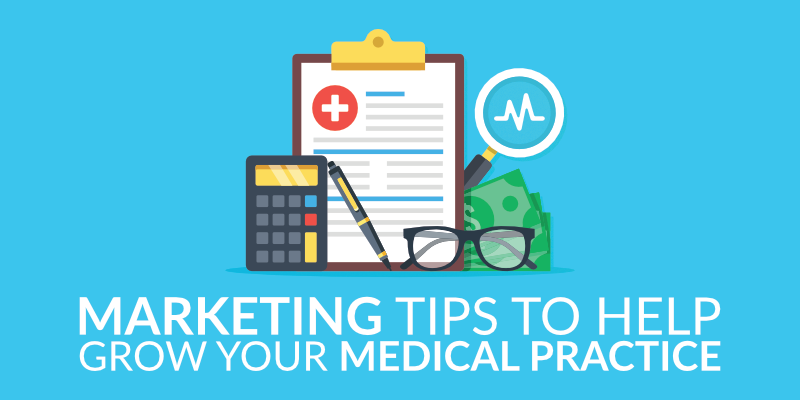
In today’s competitive healthcare landscape, effective marketing is essential for the growth and sustainability of a medical practice. Gone are the days when word-of-mouth alone could sustain a clinic. Patients now seek providers who not only offer excellent care but also communicate their value clearly and consistently. Strategic marketing helps medical practices attract new patients, retain existing ones, and build a strong reputation in the community.
🎯 Understanding the Target Audience
The foundation of any successful marketing strategy is a deep understanding of the target audience. Medical practices must identify the demographics, needs, and preferences of their ideal patients. For example, a pediatric clinic will focus on parents, while a dermatology practice may target young adults concerned with skin health. Tailoring messages to resonate with these groups ensures that marketing efforts are relevant and effective.
🌐 Building a Strong Online Presence
In the digital age, a robust online presence is non-negotiable. A professional, user-friendly website serves as the virtual front door of the practice. It should include essential information such as services offered, provider bios, contact details, and online appointment scheduling. Search engine optimization (SEO) ensures the site ranks well on Google, making it easier for potential patients to find the practice.
Social media platforms like Facebook, Instagram, and LinkedIn offer additional avenues to engage with the community. Regular posts about health tips, staff spotlights, and patient testimonials humanize the practice and foster trust. Paid advertising on these platforms can also target specific demographics, increasing visibility and driving traffic to the website.
🗣️ Leveraging Patient Reviews and Testimonials
Online reviews are a powerful form of social proof. Encouraging satisfied patients to leave positive feedback on platforms like Google, Yelp, and Healthgrades can significantly influence prospective patients. Testimonials can also be featured on the practice’s website and social media channels. Responding to reviews—both positive and negative—demonstrates attentiveness and a commitment to patient satisfaction.
📬 Utilizing Email and Content Marketing
Email marketing remains a cost-effective way to stay connected with patients. Monthly newsletters can include health tips, updates on services, and reminders for annual checkups or vaccinations. Content marketing, such as blog posts and educational videos, positions the practice as a trusted authority in healthcare. This not only boosts SEO but also builds credibility and patient loyalty.
***
***
🤝 Community Engagement and Partnerships
Participating in local events, offering free health screenings, or partnering with schools and businesses can enhance visibility and goodwill. These efforts show that the practice is invested in the well-being of the community, which can translate into increased patient referrals and long-term relationships.
📊 Measuring Success
Finally, tracking the performance of marketing campaigns is crucial. Metrics such as website traffic, appointment bookings, social media engagement, and patient acquisition rates provide insights into what’s working and what needs adjustment. Regular analysis ensures that marketing efforts remain aligned with business goals.
Marketing a medical practice requires a thoughtful blend of digital tools, patient engagement, and community outreach. When done right, it not only drives growth but also reinforces the practice’s mission to provide compassionate, high-quality care.
SPEAKING: Dr. Marcinko will be speaking and lecturing, signing and opining, teaching and preaching, storming and performing at many locations throughout the USA this year! His tour of witty and serious pontifications may be scheduled on a planned or ad-hoc basis; for public or private meetings and gatherings; formally, informally, or over lunch or dinner. All medical societies, financial advisory firms or Broker-Dealers are encouraged to submit an RFP for speaking engagements: CONTACT: Ann Miller RN MHA at MarcinkoAdvisors@outlook.com -OR-http://www.MarcinkoAssociates.com
When owners of a security spread false information to pump up the price of the security and subsequently sell off their shares, making a profit—the “dump.”
Refer to attempts by investors to move the price of a stock opportunistically by selling large numbers of shares short. The investors pocket the difference between the initial price and the new, lower price after this maneuver. This technique is illegal under SEC rules, which stipulate that every short sale must be on an uptick. For more information on this complex tactic, read on in this piece from the Wharton School of Business.
Wash Trading
Involves the simultaneous or near-simultaneous sale and repurchase of the same security for the purpose of generating activity and increasing the price.
When fraudsters manipulate the market through matched orders, they enter trades to buy or sell securities with the knowledge that a matching order on the opposite side has been or will be entered. During his tenure at the Commission, our partner Jordan Thomas was involved in a case where the SEC won summary judgement and obtained settlements with an astonishing 16 defendants who engaged in matched trades, among other illicit tactics.
Painting the Tape
Painting the tape refers to placing successive orders in small amounts at increasing or decreasing prices.
Spoofing & Layering
High frequency traders are known to use the tactics of Spoofing & Layering to manipulate share prices. Spoofing is the placing of a bid or offer with the intent to cancel before execution. Layering is a form of spoofing in which the trader places multiple orders on one side of the book, in order to create a false impression of heavy buying or selling.
SPEAKING: Dr. Marcinko will be speaking and lecturing, signing and opining, teaching and preaching, storming and performing at many locations throughout the USA this year! His tour of witty and serious pontifications may be scheduled on a planned or ad-hoc basis; for public or private meetings and gatherings; formally, informally, or over lunch or dinner. All medical societies, financial advisory firms or Broker-Dealers are encouraged to submit an RFP for speaking engagements: CONTACT: Ann Miller RN MHA at MarcinkoAdvisors@outlook.com -OR-http://www.MarcinkoAssociates.com
Posted on September 6, 2025 by Dr. David Edward Marcinko MBA MEd CMP™
By Staff Reporters and A.I.
***
***
Markets: Stocks started off Friday on a high note after a weak jobs report raised hopes that the Fed will cut interest rates this month. But the rally faded as the afternoon wore on, while 10-year bond yields tumbled to their lowest level since April.
Trade: President Trump said “fairly substantial” tariffs for semi-conductors are coming “very shortly,” but hinted that companies like Apple will be spared. He also clapped back at EU regulators for fines against Google.
Offbeat commodities: Raw sugar prices hit a two-month low as Brazilian producers churn out more of the sweet stuff, cocoa prices are expected to pop after Cargill paused production in Ivory Coast, and corn hit its highest price since July thanks to strong export demand.
Posted on September 4, 2025 by Dr. David Edward Marcinko MBA MEd CMP™
By A.I. and Staff Reporters
***
***
Stocks: Markets slowed along yesterday with the S&P 500 and NASDAQ buoyed after a pivotal antitrust ruling for Alphabet pushed big tech stocks higher across the board.
Bonds: The 30-year Treasury pushed 5% yesterday as traders fret about the Fed’s independence and the odds of interest rate cuts.
Commodities: Oil sank on reports that OPEC+ is contemplating increasing its crude output next month, while gold reached yet another new record high as uncertainty swirling around the future of tariffs continued to rise. JPMorgan analysts now think the precious metal could climb as high as $4,250 by the end of next year.
Posted on May 15, 2025 by Dr. David Edward Marcinko MBA MEd CMP™
MEDICAL EXECUTIVE-POST–TODAY’SNEWSLETTERBRIEFING
***
Essays, Opinions and Curated News in Health Economics, Investing, Business, Management and Financial Planning for Physician Entrepreneurs and their Savvy Advisors and Consultants
“Serving Almost One Million Doctors, Financial Advisors and Medical Management Consultants Daily“
A Partner of the Institute of Medical Business Advisors , Inc.
Nvidia climbed 3.97% on CEO Jensen Huang’s announcement of a partnership with Saudi Arabia-backed Humain to build a 500 megawatt data center.
Advanced Micro Devices popped 4.18% after it, too, revealed it’s helping Humain out. The chipmaker’s board also authorized a $6 billion stock buyback program.
Super Micro Computer continued to rally, soaring another 15.69% on the back of Raymond James analysts’ initiating their coverage with an “outperform” rating.
Boeing climbed 0.59% thanks to a $96 billion deal with Qatar Airlines to buy up to 210 aircraft.
Exelixis soared 19.70% after the oncology company reported a shockingly strong beat-and-raise quarter.
Septerna exploded 28.97% on the news that Novo Nordisk will license its oral obesity pill candidate for $2.2 billion.
What’s down
Airline stockswere down across the board after the FAA met with executives to discuss cutting flights in and out of Newark Airport. Delta Air Lines lost 4.32%, and United Airlines sank 3.51%.
American Eagle Outfitters tumbled 5.93% after the retailer cut its fiscal guidance, announced it’s writing down $75 million in merchandise, and forecast a decline in next quarter’s sales.
Grail plummeted 23.48% after the biotech’s revenue last quarter failed to meet Wall Street’s expectations.
Aurora Innovation fell 7.58% thanks to an announcement from Uber that it’s offering $1 billion in convertible notes that can be exchanged for Aurora shares.
JD.com lost 4.24% after the Chinese online retailer beat earnings expectations yesterday but still saw its price target cut by Morgan Stanley analysts.
Posted on May 9, 2025 by Dr. David Edward Marcinko MBA MEd CMP™
By Staff Reporters
***
***
The DOJ wants Google to break up its advertising empire
Following a federal court’s ruling that Google operates an illegal ad-tech monopoly, the Justice Department requested that the company be forced to sell two major products—its Ad Exchange and a management platform—as an appropriate remedy.
Google, unsurprisingly, asked the judge for a less drastic remedy that would see the company make certain changes to its practices without having to break up its ad business. The judge won’t rule until the remedies trial starts in September.
Until then, Google has another thing to dread:
The government also wants the tech giant to sell Chrome to remedy its other monopoly (in search).
Posted on May 7, 2025 by Dr. David Edward Marcinko MBA MEd CMP™
MEDICAL EXECUTIVE-POST–TODAY’SNEWSLETTERBRIEFING
***
Essays, Opinions and Curated News in Health Economics, Investing, Business, Management and Financial Planning for Physician Entrepreneurs and their Savvy Advisors and Consultants
“Serving Almost One Million Doctors, Financial Advisors and Medical Management Consultants Daily“
A Partner of the Institute of Medical Business Advisors , Inc.
Ford managed to rise 2.45% despite the automaker suspending its 2025 fiscal guidance, citing “industrywide supply chain disruption impacting production.”
WeRide skyrocketed 31.68% on the news that it’s expanding its partnership with Uber to include rolling out robotaxis in 15 new cities. Pony AI soared 47.63% thanks to its bigger role helping Uber grow throughout the Middle East.
Hims & Hers Health gained 18.12% after the telehealth stock beat analyst forecasts last quarter,even though it provided lower-than-expected revenue guidance this quarter.
Celsius Holdings missed on both top and bottom line expectations, but shares of the energy drink maker still managed to bubble 4.81% higher.
Mattel rose 2.78% even though the toy company paused its fiscal guidance and warned it will raise prices in the US.
Upwork, everyone’s favorite side-gig platform, soared 18.02% as Americans brace for economic upheaval by finding second jobs.
Constellation Energy may have missed Wall Street forecasts last quarter, but shareholders pushed the stock 10.29% higher on upbeat fiscal guidance.
SolarEdge Technologies climbed 11.22% on a smaller-than-expected loss last quarter and projections that tariffs won’t be as bad as feared.
Neurocrine Biosciences popped 8.36% thanks to strong revenue growth due to high sales of its movement disorder treatment Ingrezza.
What’s down
Tesla fell 1.75% on the latest data showing its sales plummeted in Europe last month, including a 46% decline in Germany.
Pharma stocks took a beating after the FDA announced that industry critic Dr. Vinay Prasad will be named its top vaccine regulator. Moderna lost 12.25%, Novavax fell 3.19%, Merck sank 4.59%, and Pfizer fell 4.15%.
Clorox got taken to the cleaners, losing 2.41% after missing Wall Street’s profit forecasts.
Vertex Pharmaceuticals fell 10.03% thanks to big misses across the board last quarter due to higher costs.
Lattice Semiconductor lost 9.28% after management warned that tariffs will have indirect consequences on its business.
US gross domestic product (GDP) contracted 0.3% in Q1, the Commerce Department reported yesterday, missing economists’ expectations of a 0.4% increase.
That drop can likely be attributed to a massive spike in imports (roughly a 41% increase from the previous quarter) from companies stocking up on goods and materials before President Trump’s tariffs took effect. The Commerce Department counts imports as a negative in GDP calculations as they represent spending on foreign goods.
Posted on April 24, 2025 by Dr. David Edward Marcinko MBA MEd CMP™
By Staff Reporters
***
***
Alphabet has been declared a monopoly for the second time in under a year. Analysts will have plenty of questions about the repercussions of the most recent ruling, but don’t expect a breakup of Google’s many businesses just yet.
And, the best business unit of them all these days is YouTube, which has seen a stunning surge in popularity lately that the search company will likely try to capitalize on, while it continues to tinker with its Gemini AI model. Consensus: $2.02 EPS, $89.25 billion in revenue.
***
***
Intel seems like a bit of an also-ran in the AI race these days, with shares down over 40% in the last 12 months. But to bulls, that just means the stock is cheap, while the company itself has plenty of opportunities for growth ahead, including partnerships with Nvidia and TSMC.
And, don’t forget that Intel’s status as a dark horse lets it slip below the tariff radar—the domestic chip producer dodged the latest round of restrictions that hit Nvidia and AMD. Shareholders will be hoping to hear more good news ahead. Consensus: $0.09 EPS, $12.31 billion in revenue.
***
The Medical Executive-Post is a news and information aggregator and social media professional network for medical and financial service professionals. Feel free to submit education content to the site as well as links, text posts, images, opinions and videos which are then voted up or down by other members. Comments and dialog are especially welcomed. Daily posts are organized by subject. ME-P administrators moderate the activity. Moderation may also conducted by community-specific moderators who are unpaid volunteers.
Posted on April 24, 2025 by Dr. David Edward Marcinko MBA MEd CMP™
MEDICAL EXECUTIVE-POST–TODAY’SNEWSLETTERBRIEFING
***
Essays, Opinions and Curated News in Health Economics, Investing, Business, Management and Financial Planning for Physician Entrepreneurs and their Savvy Advisors and Consultants
“Serving Almost One Million Doctors, Financial Advisors and Medical Management Consultants Daily“
A Partner of the Institute of Medical Business Advisors , Inc.
OpenAI would be open to buying Chrome if Google is forced by a federal court to sell the web browser, the company’s ChatGPT head said yesterday.
The FDA suspended milk quality tests in some dairy products due to reduced capacity stemming from federal workforce cuts, Reuters reported.
Roche, the Swiss pharmaceutical giant, is investing $50 billion in US manufacturing to circumvent President Trump’s tariffs, the company said yesterday.
Rite Aid is preparing to sell itself in pieces ahead of a possible second bankruptcy, Bloomberg reported.
Oklo gained 8.60% after OpenAI CEO Sam Altman announced he’s stepping down as chairman of the board of the nuclear power startup.
Duolingo popped 10.01% after Morgan Stanley initiated coverage of the language learning company, calling it a “best-in-class consumer internet asset.”
Cava climbed 6.29% due to an upgrade from analysts at Bernstein, who think the bowl slop stock will not only survive but thrive in an economic downturn.
Amphenol rose 8.21% thanks to impressive earnings for the high-speed cable company, coupled with a solid fiscal outlook.
Vertiv Holdings jumped 8.60% after the data center company posted an impressive quarterly profit and raised its fiscal forecast.
Stocks surged first thing this morning after President Trump said the media blew things out of proportion and that he has “no intention” of firing Jerome Powell. He also said he would be “very nice” to China in tariff negotiations.
Treasury Secretary Scott Bessent also did some damage control, touting the opportunity for a “big deal” between the US and China.
The combination sent a relief rally sweeping through markets, and while the euphoria faded by mid-afternoon, all three indexes ended the day in the green.
Gold fell and bitcoin rose as investors took on more risk (see below), while oil dropped on reports that OPEC+ may hike its crude output after its meeting next month.
Posted on April 11, 2025 by Dr. David Edward Marcinko MBA MEd CMP™
By Staff Reporters and Morning Brew
***
***
Microsoft is celebrating its 50th birthday this week looking like a formerly washed up A-lister who’s suddenly rebounded and getting Oscar noms again.
Ever since Bill Gates and Paul Allen huddled in a garage in 1975 to start a company that’d define the experience of sitting in front of a boxy white PC monitor, Microsoft has had an uneven run. But after years of getting roasted for Internet Explorer, it now seems to be back on top—even briefly beating Apple as the world’s most valuable public company last year.
The tech giant can not only boast bonanza earnings, it also feels like a purveyor of the next big thing again, leading in the AI race through its partnership with OpenAI.
Windows washed
In the 1990s, it felt like Microsoft’s computer geeks were the overlords of tech. Windows powered most PCs, Internet Explorer became the go-to browser, and proficiency in Office tools became standard resume skills. But in the following decade, the company slept on internet tech and smartphones, ceding ground to Apple, Alphabet, and Meta.
It responded by going into midlife crisis mode, aka blowing cash on a series of questionable acquisitions to stay hip. That…didn’t help. By the 2010s, only grandparents could be reached @hotmail.com, Windows phones were a rarity, and no one used Bing as a verb.
When Gates stepped away from running the company in 2000, its new CEO Steve Ballmer grew its revenue threefold by the end of his tenure in 2013. He spearheaded Microsoft’s foray into gaming with the Xbox console and started its blockbuster cloud computing product Azure. But Microsoft’s profit growth slowed dramatically thanks to a massive cash bleed from its shopping spree.
It dropped $6.3 billion on the owner of ad tech platforms aQuantive to compete with Google’s ad business in 2007, only to write it off as a dud five years later.
The company burned at least $8 billion trying to make Windows phones a bigger force by buying Nokia’s cellphone division in 2014.
Microsoft paid $8.5 billion for Skype in 2011, which must’ve made it extra painful to announce that it was sunsetting the video calling service this winter.
***
***
Cash-slinging comeback kid
When it blew out forty candles in 2015, the tech giant was looking past its prime. The stock was trading at around $35 a share, well below its $58 peak in 1999. Its net profit for the year was $12 billion. But investors who held on until now were rewarded with shares going for $374 on its birthday this week after the company reported a net profit of $88 billion in the last financial year.
Much of the revenue now comes from its Azure cloud computing business, which has been boosted by the booming AI industry ravenous for server power.
When Microsoft’s current CEO Satya Nadella stepped into the role in 2014, he doubled down on Azure to make Microsoft into a B2B behemoth selling computing power to tech companies.
It is now the world’s second largest cloud provider after Amazon Web Services, with a 21% market share, according to Synergy Research Group.
Microsoft also bought some businesses that didn’t fail, including LinkedIn—the thought leadership hub with a user base that has soared to 1 billion since the 2016 acquisition. It also owns GitHub, the leading code-sharing platform for software developers. And in its biggest purchase yet, it snagged gaming IP giant Activision Blizzard that owns Call of Duty and World of Warcraft for a whopping $68 billion in 2022, hoping to make itself a dominant caterer to the Xbox joystick-wielding crowd.
It’s an AI company now
The not-quite-acquisition that really got Microsoft its groundbreaker’s glitz back was pouring $13 billion into OpenAI.
Having gotten in on the ground floor of the AI boom, Microsoft is harnessing OpenAI’s models to power its CoPilot AI agent, which it embedded into its Office tools and Teams app. This pits it against other tech giants betting that AI agents automating tasks will be the biggest in-cubicle revolution since Excel.
Posted on March 10, 2025 by Dr. David Edward Marcinko MBA MEd CMP™
BREAKING NEWS
By Staff Reporters
***
***
US stocks plunged on Monday as investors processed growing concerns about the health of the US economy after President Trump and his top economic officials acknowledged the possibility of a potential rough patch.
The Dow Jones Industrial Average (^DJI) fell nearly 900 points, or over 2%, while the benchmark S&P 500 (^GSPC) dropped around 2.7% after the index posted its worst week since September.
The tech-heavy NASDAQ Composite (^IXIC) fell 4% in its worst day since 2022, as the “Magnificent Seven” stocks led the sell-off. Tesla’s (TSLA) rout continued, plunging 15% and officially wiping out the gains it had made in the wake of Trump’s election win. Nvidia (NVDA), Apple (AAPL), Google parent Alphabet (GOOG), and Meta (META) all each lost more than 4%.
Posted on March 2, 2025 by Dr. David Edward Marcinko MBA MEd CMP™
By Copilot
***
***
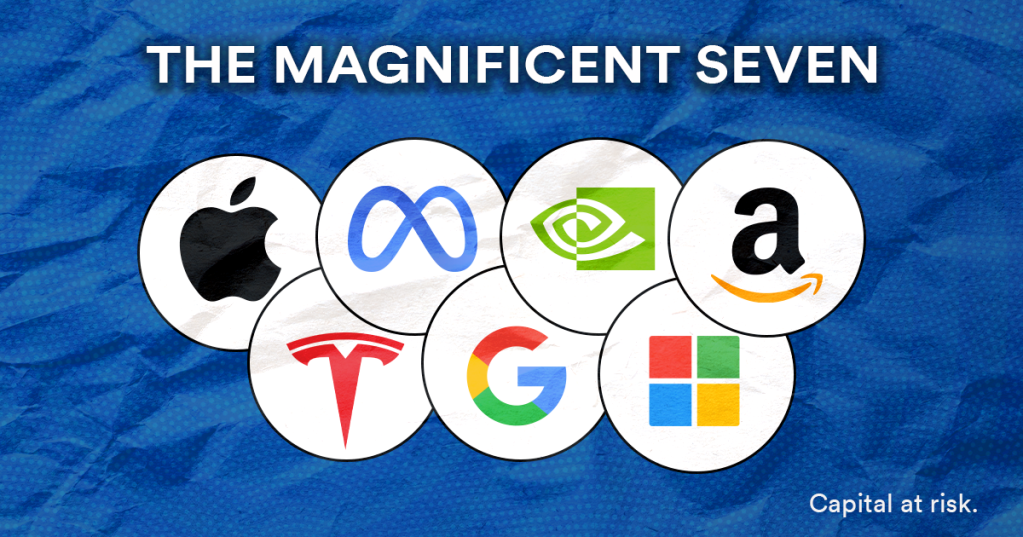
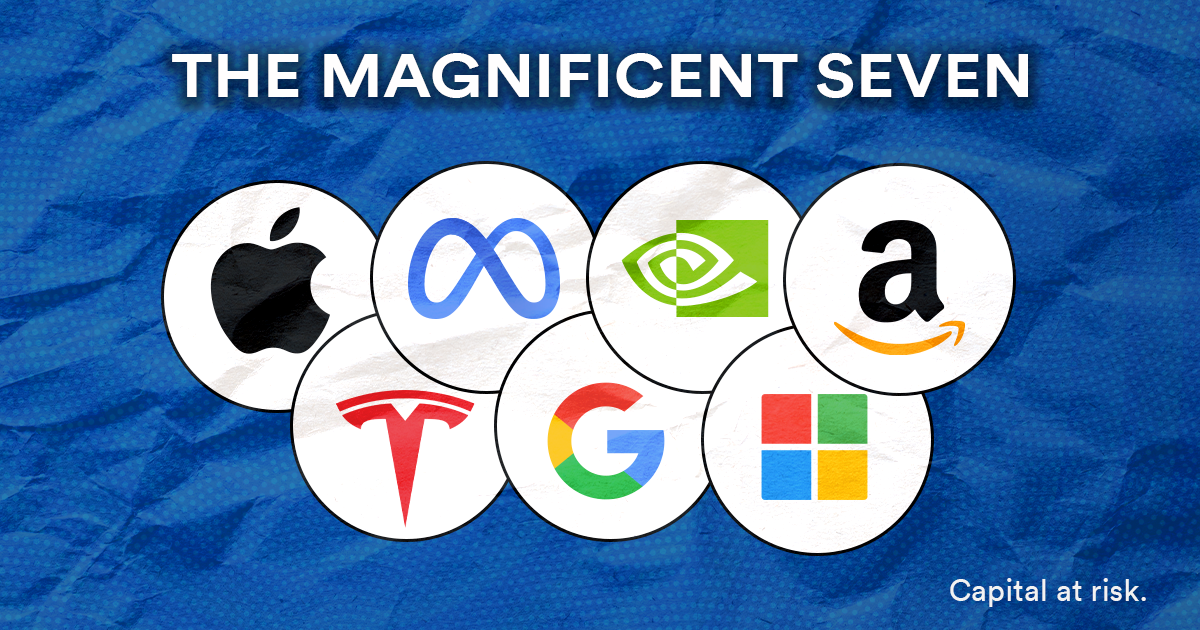
The “Magnificent Seven” refers to a group of seven technology giants that have significantly influenced the stock market. These companies are:
Alphabet (GOOGL)
Amazon (AMZN)
Apple (AAPL)
Meta Platforms (META)
Microsoft (MSFT)
Nvidia (NVDA)
Tesla (TSLA)
Why Are They Significant?
These companies are at the forefront of technological innovation, driving advancements in artificial intelligence, cloud computing, e-commerce, social media, and electric vehicles. Their market dominance and financial performance have a substantial impact on major stock indices like the S&P 5002.
Performance
Alphabet: Despite a 31% climb over the past year, Alphabet remains the cheapest of the group, trading at 20 times forward earnings estimates.
Amazon: Amazon’s cloud unit is delivering an annual revenue run rate of $115 billion thanks to its AI offerings.
Apple: Apple has seen a 989% total return for investors over the past decade.
Meta Platforms: Meta is the best-performing stock year-to-date among the Magnificent Seven, up over 25%.
Microsoft: Microsoft has generated a 989% total return for investors over the past decade.
Nvidia: Nvidia remains the best performer over the past year, up 55%.
Tesla: Tesla is the worst-performing stock in the group for 2025, down 25.66% year-to-date.
These companies have reshaped industries and become powerhouses in the global economy, wielding significant influence over market trends and investor sentiment.
Posted on February 14, 2025 by Dr. David Edward Marcinko MBA MEd CMP™
MEDICAL EXECUTIVE-POST–TODAY’SNEWSLETTERBRIEFING
***
Essays, Opinions and Curated News in Health Economics, Investing, Business, Management and Financial Planning for Physician Entrepreneurs and their Savvy Advisors and Consultants
“Serving Almost One Million Doctors, Financial Advisors and Medical Management Consultants Daily“
A Partner of the Institute of Medical Business Advisors , Inc.
US stocks moved higher on Thursday after President Donald Trump said he plans to introduce reciprocal tariffs as soon as April, while investors digested another report that suggested inflation is once again heating up.
The Dow Jones Industrial Average (^DJI) added more than 0.6%, while the S&P 500 (^GSPC) put on 0.7% after closing lower on Wednesday. The tech-heavy NASDAQ Composite (^IXIC) rose more than 1% as Nvidia (NVDA) and Tesla (TSLA) gained.
I’ve received emails from readers asking my thoughts on DeepSeek. I need to start with two warnings. First, the usual one: I’m a generalist value investor, not a technology specialist (last week I was analyzing a bank and an oil company), so my knowledge of AI models is superficial. Second, and more unusually, we don’t have all the facts yet.
But this story could represent a major step change in both AI and geopolitics. Here’s what we know: DeepSeek—a year-old startup in China that spun out of a hedge fund—has built a fully functioning large language model (LLM) that performs on par with the latest AI models. This part of the story has been verified by the industry: DeepSeek has been tested and compared to other top LLMs. I’ve personally been playing with DeepSeek over the last few days, and the results it spit out were very similar to those produced by ChatGPT and Perplexity—only faster.
This alone is impressive, especially considering that just six months ago, Eric Schmidt (former Google CEO, and certainly no generalist) suggested China was two to three years behind the U.S. in AI. But here’s the truly shocking—and unverified—part: DeepSeek claims they trained their model for only $5.6 million, while U.S. counterparts have reportedly spent hundreds of millions or even billions of dollars. That’s 20 to 200 times less.
The implications, if true, are stunning. Despite the U.S. government’s export controls on AI chips to China, DeepSeek allegedly trained its LLM on older-generation chips, using a small fraction of the computing power and electricity that its Western competitors have. While everyone assumed that AI’s future lay in faster, better chips—where the only real choice is Nvidia or Nvidia—this previously unknown company has achieved near parity with its American counterparts swimming in cash and datacenters full of the latest Nvidia chips. DeepSeek (allegedly) had huge compute constraints and thus had to use different logic, becoming more efficient with subpar hardware to achieve a similar result. In other words, this scrappy startup, in its quest to create a better AI “brain,” used brains where everyone else was focusing on brawn—it literally taught AI how to reason.
Enter the Hot Dog Contest
Americans love (junk) food and sports, so let me explain with a food-sport analogy. Nathan’s Famous International Hot Dog Eating Contest claims 1916 as its origin (though this might be partly legend). By the 1970s, when official records began, winning competitors averaged around 15 hot dogs. That gradually increased to about 25—until Takeru Kobayashi arrived from Japan in 2001 and shattered the paradigm by consuming 50 hot dogs, something widely deemed impossible. His secret wasn’t a prodigious appetite but rather his unique methodology; He separated hot dogs from buns and dunked the buns in water, completely reimagining the approach.
Then a few years later came Joey Chestnut, who built on Kobayashi’s innovation to push the record well beyond 70 hot dogs and up to 83. Once Kobayashi broke the paradigm, the perceived limits vanished, forcing everyone to rethink their methods. Joey Chestnut capitalized on it.
DeepSeek may be the Kobayashi of AI, propelling the whole industry into a “Joey Chestnut” era of innovation. If the claims about using older chips and spending drastically less are accurate, we might see AI companies pivot away from single-mindedly chasing bigger compute capacity and toward improved model design.
I never thought I’d be quoting Stoics to explain future GPU chip demand, but Epictetus said, “Happiness comes not from wanting more, but from wanting what you have.” Two millennia ago, he was certainly not talking about GPUs, but he may as well have been. ChatGPT, Perplexity, and Google’s Gemini will have to rethink their hunger for more compute and see if they can achieve more with wanting (using) what they have.
If they don’t, they’ll be eaten by hundreds of new startups, corporations, and likely governments entering the space. When you start spelling billions with an “M,” you dramatically lower the barriers to entry.
Until DeepSeek, AI was supposed to be in reach for only a few extremely well-funded companies, (the “Magnificent Ones”) armed with the latest Nvidia chips. DeepSeek may have broken that paradigm too.
The Nvidia Conundrum
The impact on Nvidia is unclear. On one hand, DeepSeek’s success could decrease demand for its chips and bring its margins back to earth, as companies realize that a brighter AI future might lie not in simply connecting more Nvidia processors but in making models run more efficiently. DeepSeek may have reduced the urgency to build more data centers and thus cut demand for Nvidia chips.
On the other hand (I’m being a two-armed economist here), lower barriers to entry will lead to more entrants and higher overall demand for GPUs. Also, DeepSeek claims that because its model is more efficient, the cost of inference (running the model) is a fraction of the cost of running ChatGPT and requires a lot less memory—potentially accelerating AI adoption and thus driving more demand for GPUs. So this could be good news for Nvidia, depending on how it shakes out.
My thinking on Nvidia hasn’t materially changed—it’s only a matter of time before Meta, Google, Tesla, Microsoft, and a slew of startups commoditize GPUs and drive down prices.
Likewise, more competition means LLMs themselves are likely to become commoditized—that’s what competition does—and ChatGPT’s valuation could be an obvious casualty.
Geopolitical Shockwaves
The geopolitical consequences are enormous. Export controls may have inadvertently spurred fresh innovation, and they might not be as effective going forward. The U.S. might not have the control of AI that many believed it did, and countries that don’t like us very much will have their own AI.
We’ve long comforted ourselves, after offshoring manufacturing to China, by saying that we’re the cradle of innovation—but AI could tip the scales in a direction that doesn’t favor us. Let me give you an example. In a recent
interview with the Wall Street Journal, OpenAI’s product chief revealed that various versions of ChatGPT were entered into programming competitions anonymously. Out of roughly 28 million programmers worldwide, these early models ranked in the top 2–3%. ChatGPT-o1 (the latest public release) placed among the top 1,000, and ChatGPT-o3 (due out in a few months) is in the top 175. That’s the top 0.000625%! If it were a composer, ChatGPT-o3 would be Mozart.
I’ve heard that a great developer is 10x more valuable than a good one—maybe even 100x more valuable than an average one. I’m aiming to be roughly right here. A 19-year-old in Bangalore or Iowa who discovered programming a few months ago can now code like Mozart using the latest ChatGPT. Imagine every young kid, after a few YouTube videos, coding at this level. The knowledge and experience gap is being flattened fast.
I am quite aware that I am drastically generalizing (I cannot stress this enough), and but the point stands: The journey from learning to code to becoming the “Mozart of programming” has shrunk from decades to months, and the pool of Mozarts has grown exponentially. If I owned software companies, I’d become a bit more nervous—the moat for many of them has been filled with AI.
Adapting, changing your mind, and holding ideas as theses to be validated or invalidated—not as part of your identity—are incredibly important in investing (and in life in general). They become even more crucial in an age of AI, as we find ourselves stepping into a sci-fi reality faster than we ever imagined. DeepSeek may be that catalyst, forcing investors and technologists alike to question long-held assumptions and reevaluate the competitive landscape in real time.
I’d love to hear your thoughts, so please leave your comment and feedback here. Also, if you missed my previous article “Escaping Stock Market Double Hell”, you can read it and leave a comment here.
Posted on January 27, 2025 by Dr. David Edward Marcinko MBA MEd CMP™
MEDICAL EXECUTIVE-POST–TODAY’SNEWSLETTERBRIEFING
***
Essays, Opinions and Curated News in Health Economics, Investing, Business, Management and Financial Planning for Physician Entrepreneurs and their Savvy Advisors and Consultants
“Serving Almost One Million Doctors, Financial Advisors and Medical Management Consultants Daily“
A Partner of the Institute of Medical Business Advisors , Inc.
The S&P 500 (^GSPC) just capped its best first four trading days under a new president since Ronald Reagan’s first week in 1985. And, the week ahead will bring investors a deluge of news that will put that rally to the test.
Earnings from more than 100 members of the S&P 500 — highlighted by results from tech heavyweights Meta (META), Microsoft (MSFT), Apple (AAPL), and Tesla (TSLA) — are set for release, with Wednesday serving as the week’s busiest. Starbucks (SBUX), Exxon (XOM), and Chevron (CVX) are also set to report.
On this coming ednesday afternoon, the Federal Reserve will also announce its latest monetary policy decision, with the central bank expected to keep interest rates unchanged and investors focused on what Fed Chairman Jay Powell has to say about the balance of 2025.
Last week, the S&P 500, NASDAQ Composite (^IXIC), and Dow Jones Industrial Average (^DJI) each rallied during a holiday-shortened four day trading week. Over the last five days, the S&P 500 and Dow have gained more than 2.8%; the tech index is leading gains over that period, rising more than 3.1%.
The FTC’s second interim staff report on consolidated pharmacy benefit managers (PBMs) found that the three largest of these middlemen—CVS Health’s Caremark Rx, Cigna Group’s Express Scripts, and UnitedHealth Group’s OptumRx—”marked up two specialty generic cancer drugs by thousands of percent and then paid their affiliated pharmacies hundreds of millions of dollars of dispensing revenue in excess of estimated acquisition costs for each drug annually.”
People have been concerned about the future of Medicare for years. Now that Donald Trump has begun his second term in office, the question becomes: What will happen next?
According to the JAMA Network and ABC News, here are some predictions for what may come:
There will be greater price transparency: During his first term, Trump worked to make prices more transparent to both individuals and health care organizations. This may very well continue.
More emphasis on Medicare Advantage plans: Under Project 2025, it’s possible that Medicare Advantage plans will become the “default option for Medicare coverage.” This could lead to a privatization of the program.
Medicare’s future remains to be seen. For now, the best thing current and future retirees can do is keep an eye on their coverage options and costs.
Posted on January 4, 2025 by Dr. David Edward Marcinko MBA MEd CMP™
MEDICAL EXECUTIVE-POST–TODAY’SNEWSLETTERBRIEFING
***
Essays, Opinions and Curated News in Health Economics, Investing, Business, Management and Financial Planning for Physician Entrepreneurs and their Savvy Advisors and Consultants
“Serving Almost One Million Doctors, Financial Advisors and Medical Management Consultants Daily“
A Partner of the Institute of Medical Business Advisors , Inc.
Nvidia stock (NVDA) led gains among the “Magnificent Seven” tech stocks to start the new year after a group-wide sell-off in the last days of 2024. Shares of the AI chip-maker rose 4.5% Friday after gaining roughly 3% the prior day.
Quote: “If your credit card gets compromised, your bank will alert you, cancel it and send you get a new one. But your medical records have a long lifespan. They can be misused without detection for long periods of time, because it’s harder to identify malicious activity. That makes them very valuable.”—Geetha Thamilarasu, associate professor at the University of Washington Bothell, on why hackers want healthcare information (the Wall Street Journal)
That upswing followed a 4% dip between Christmas Eve and New Year’s Eve as megacap tech stocks dropped across the board in the absence of a “Santa Claus” rally, where the stock market typically enjoys a surge between December 24th and January 2nd. Tesla (TSLA) stock plunged nearly 13% over that time frame, while Amazon (AMZN) and Microsoft (MSFT) dropped more than 4%. Meanwhile, Meta (META) and Google (GOOG) fell just under 4%, and Apple (AAPL) dropped 3%.
Even with its December decline, Nvidia shares still ended 2024 up more than 150%. Wall Street analysts have remained bullish on the stock, estimating shares will rise to roughly $173 over the next year from their current level of $138, according to Yahoo Finance data.
Posted on November 29, 2024 by Dr. David Edward Marcinko MBA MEd CMP™
By Viataliy Katsenelson CFA
***
***
I’m embarking on something I’ve never done before—I’ve enlisted AI to inform, educate, and maybe even entertain you. I took several essays I wrote and asked my bestie AI to transform them into a radio show-style conversation between two hosts. (The AI tool I used is Notebook LM, a product created by Google.) I didn’t write the scripts myself.
Here were my instructions to the AI: “Here’s my essay. I’m taking a break from writing. Educate, inform and entertain my readers.” That’s it. If what you hear doesn’t surprise you—or even shock you to your socks—I don’t know what will. The future is here.
These essays are just as relevant today as when I first wrote them this summer. You can read the original of the first essay here. Be sure to leave your comments about the conversation you’re about to hear, and feel free to share it with friends, enemies, or even random strangers.
In this episode, my AI friends will discuss stock market math, sideways markets, the role of P/E in market cycles, impact of interest rates on P/E, economic analysis, Magnificent Seven stocks, NVIDIA, and a lot more.
Posted on November 22, 2024 by Dr. David Edward Marcinko MBA MEd CMP™
MEDICAL EXECUTIVE-POST–TODAY’SNEWSLETTERBRIEFING
***
Essays, Opinions and Curated News in Health Economics, Investing, Business, Management and Financial Planning for Physician Entrepreneurs and their Savvy Advisors and Consultants
“Serving Almost One Million Doctors, Financial Advisors and Medical Management Consultants Daily“
A Partner of the Institute of Medical Business Advisors , Inc.
The DOJ asked a judge to force Google to sell its Chrome browser, following his ruling that Google maintained an illegal monopoly in search. Ford said it is cutting 4,000 jobs in Europe, about 14% of its workforce on the continent, citing weak demand for EVs and competition from Chinese cars.
Data analytics firm Snowflake soared 32.71% after posting impressive earnings, including a 28% increase in revenue last quarter.
BJ’s Wholesale Club has had an okay year, but its latest earnings report gave shareholders plenty to cheer. The big news: BJ’s is increasing its membership fee for the first time in seven years. Shares rose 8.24%.
Despite the fact that the world’s largest farming equipment manufacturer sees a big slowdown ahead, Deere beat earnings estimates last quarter, which was enough to help shares climb 8.12%.
STOCKS DOWN
It took a second, but it’s finally registering that Alphabet may be forced by the Department of Justice to divest its popular Chrome browser. Shares fell 4.74% as investors digest this stark reality.
Speaking of search engines, Baidu sank 5.90% after the Chinese tech stock missed analyst estimates on both earnings and revenue last quarter.
Speaking of Chinese companies, PDD Holdings, parent company of online retailer Temu, reported higher earnings and revenue last quarter—but it still fell short of analyst forecasts. Shares dropped 10.64%.
Speaking of struggling retailers, Beyond Inc., the company that owns Bed, Bath & Beyond and Overstock.com, was supposed to invest $40 million into struggling retailer The Container Store. Unfortunately for both, the deal fell through. Shares of Beyond sank 2.87%, while The Container Store dropped 9.79%.
The SPX buoyed 31.60 points (0.53%) to 5,948.71; the Dow Jones Industrial Average® ($DJI) rose 461.88 points (1.06%) to 43,870.35; and the NASDAQ Composite®($COMP) stayed relatively flat, up 6.28 points (0.03%) to 18,972.42.
The 10-year Treasury note yield added two basis points to 4.42%, staying rangebound.
The CBOE Volatility Index® (VIX) slipped to 16.87, still above last week’s levels.
In what some are calling the next iteration of the internet, the metaverse is an unfamiliar digital world where you could be an avatar navigating computer-generated places and interacting with others in real time. In this space, the constraints of our physical, bricks and mortar world and travel habits fade. And new opportunities and challenges emerge.
Google in healthcare: The search giant has repeatedly successfully transferred its in-depth knowledge of algorithms in the field of medicine, particularly since it acquired DeepMind.
Apple in healthcare: Apple will keep on working on expanding the health features of its devices, Apple Watch and iPhones included.
Microsoft in healthcare: Microsoft’s cloud solutions provide integrated capabilities that make it easier to improve the healthcare experience.
Amazon in healthcare: Amazon will make further use of its vast knowledge of online shopping trends and behavior and will keep on providing what people need, from medicine to wearables.
IBM in healthcare: IBM has a lot to offer in federated learning, blockchain, and quantum computing.
Nvidia in healthcare: NVIDIA seems incredibly focused on its approach to healthcare. We can expect NVIDIA to be a leader in the use of artificial intelligence in healthcare.
Facebook in healthcare: The Metaverse developed by Facebook/Meta has incredible potential to revolutionize healthcare.
All this technology has huge potential because it uses both virtual reality (VR) and augmented reality (AR) technology to work in virtual spaces: All signs point to the metaverse being widely used as a disruptive change in healthcare, from better surgical precision to therapeutic uses to social-distance accommodations and more.
But along with these improvements come new problems that will change what we know about modern healthcare. The metaverse is a paradigm shift in healthcare that everyone involved needs to be aware of. This is because it changes how medical infrastructure is built, how startup costs are covered, and how data security and privacy are handled.
Posted on November 5, 2024 by Dr. David Edward Marcinko MBA MEd CMP™
By Staff Reporters
***
***
After its AI-related earnings disappointed Wall Street last quarter, Big Tech doubled down in the latest period:
Amazon spent $22.6 billion on property and equipment like data centers and chips. That’s an 81% spike from the same time last year.
Meta raised its low-end guidance for capex (capital expenditures), which could reach $40 billion by the end of the year. It beat earnings estimates, even with AR glasses subsidiary Reality Labs costing $4.4 billion in operating losses.
Apple is still betting on Apple Intelligence to boost sales. Most revenue came from the new iPhone 16, Apple Watch, and AirPods, but Apple services like TV+ and iCloud also grew massively to account for a quarter of the business.
Google crushed earnings estimates and revealed that more than 25% of all new code it writes is generated by AI (and reviewed by engineers).
Posted on October 10, 2024 by Dr. David Edward Marcinko MBA MEd CMP™
By Staff Reporters
Today is the only day of the year we can use the line: “Hey ME-P readers – you’re a 10/10.”
***
***
Markets: Another day, more all-time highs for the S&P 500 and the Dow Jones Industrial Average.
Whether this two-day rally could extend to three will likely depend on this morning’s consumer price index inflation report for September, which will help shape the path of future Federal Reserve interest rate cuts. While most Big Tech stocks gained, Alphabet sank after the Department of Justice said it was considering asking a judge to break it up as we previously reported on this ME-P.
Posted on October 9, 2024 by Dr. David Edward Marcinko MBA MEd CMP™
BREAKING NEWS
By Staff Reporters
***
***
he 2024 Nobel Prize in chemistry has been awarded to a trio of scientists who used artificial intelligence to “crack the code” of almost all known proteins, the “chemical tools of life.”
The Nobel Committee lauded David Baker, a US biochemist, for completing “the almost impossible feat of building entirely new kinds of proteins,” along with Demis Hassabis and John Jumper, who work at Google DeepMind, for developing an AI model to predict proteins’ complex structures – a problem that had been unsolved for 50 years.
“The potential of their discoveries is enormous,” the committee said as the award was just announced in Sweden. The prize, seen as the pinnacle of scientific achievement, carries a cash award of 11 million Swedish kronor ($1 million).
Posted on September 11, 2024 by Dr. David Edward Marcinko MBA MEd CMP™
MEDICAL EXECUTIVE-POST–TODAY’SNEWSLETTERBRIEFING
REMEMBER SEPTEMBER 11th – PATRIOT DAY
***
Essays, Opinions and Curated News in Health Economics, Investing, Business, Management and Financial Planning for Physician Entrepreneurs and their Savvy Advisors and Consultants
“Serving Almost One Million Doctors, Financial Advisors and Medical Management Consultants Daily“
A Partner of the Institute of Medical Business Advisors , Inc.
Rite Aid completed its financial restructuring by eliminating $2 billion in debt and adding $2.5 billion in exit financing, as the slimmed-down chain is now led by a new CEO
Google reported to court yesterday to defend itself against monopoly allegations for the second time in less than a year in a new case that has the potential to strip the world’s largest online advertiser of a chunk of its ad business.
And, Apple and Google lost on appeal to the European Union’s highest court Tuesday in two separate cases requiring the tech giants to face billions of dollars in fines. The decisions by the Court of Justice of the European Union mark a significant win for the bloc’s antitrust chief Margrethe Vestager.
Mission Produce soared 21.05% after the farming company announced impressive revenue growth last quarter thanks to rising avocado, blueberry, and mango prices. Rival produce producer Calavo Growers announced similarly strong results for much the same reasons, pushing shares 10.75% higher.
Alibaba rose 2.90% after its Hong Kong shares were added to a new program linking Hong Kong stocks with Chinese stock exchanges, which should help attract more investors.
Boot Barn, which is the name of a real company that sells Western apparel, popped 9.94% and hit an all-time high today after a JPMorgan analyst raised his price target 10%.
What’s down
Southwest Airlines descended 1.61% after Executive Chairman Gary Kelly announced he’ll retire next year in the face of activist investing pressure.
Ally Financial plummeted 17.65% after the consumer lending company’s CEO highlighted ongoing credit challenges in today’s economy.
JPMorgan sank 5.21% thanks to comments from its COO that investor expectations for net interest income, a key part of the bank’s business, are too high.
Hewlett Packard Enterprise dropped 8.41% on the news that the tech company will sell $1.35 billion in preferred stock to fund its acquisition of Juniper Networks.
Big Lots, the 1,300+ store discount chain, has filed for bankruptcy with a plan to sell itself to private equity firm Nexus Capital Management for ~$760 million and a commitment to keep offering “extreme bargains.”
The new CEO of Starbucks, Brian Niccol, formerly of Chipotle, is now officially in charge of the coffee chain.
Visualize: How private equity tangled banks in a web of debt, from the Financial Times.
Posted on August 10, 2024 by Dr. David Edward Marcinko MBA MEd CMP™
MEDICAL EXECUTIVE-POST–TODAY’SNEWSLETTERBRIEFING
***
Essays, Opinions and Curated News in Health Economics, Investing, Business, Management and Financial Planning for Physician Entrepreneurs and their Savvy Advisors and Consultants
“Serving Almost One Million Doctors, Financial Advisors and Medical Management Consultants Daily“
A Partner of the Institute of Medical Business Advisors , Inc.
FTX was ordered to pay $12.7 billion to customers. All customers will recoup their deposits that were locked when the crypto exchange went under in 2022, the Commodity Futures Trading Commission just said last Thursday.
Take-Two Interactive Software surged 4.35% after it beat earnings estimates last quarter, but no word yet on how its Gearbox acquisition is helping its bottom line, nor when GTA 6 is going to be released.
Expedia traveled 10.21% higher due to an earnings beat, with the company sidestepping a consumer spending slowdown quite nicely.
What’s down
e.l.f. Beauty tanked 14.46% despite beating earnings estimates and guiding for a better fiscal year than expected, as investors worry about tough competition.
Capri Holdings slid 4.86% as the company founded by Michael Kors faces slowing sales from cash-strapped consumers.
The S&P 500® index (SPX) rose 25 points (0.5%) to 5,344.16, ending the week little changed; the Dow Jones Industrial Average® ($DJI) rose 51 points (0.1%) to 39,497.54 to end the week down about 0.6%; the NASDAQ Composite® ($COMP) ended 85 points higher (0.5%) at 16,745.30, leaving it about 0.2% lower for the week.
The 10-year Treasury note yield (TNX) dropped five basis points to 3.944%.
The Cboe Volatility Index (VIX) declined three points (13%) to 20.7.
Google and Meta teamed up to target teens with ads for Instagram on YouTube, going against Google’s own rules, the Financial Times reported.
Posted on August 7, 2024 by Dr. David Edward Marcinko MBA MEd CMP™
By Staff Reporters
***
***
Stock Marketsseesawed up yesterday, making back some of the ground lost to Monday’s sell-off. Analysts say the market could remain volatile until September, when the Fed is widely expected to cut interest rates—barring an emergency cut before then. One of the day’s big winners was Uber, which revved up after smashing Q2 revenue expectations thanks to unexpectedly strong consumer demand.
***
One day after the S&P 500’s worst session since 2022, stocks partially rebounded, putting fears of a recession on hold. Tuesday started well, with Japan’s Nikkei—which had cratered on Monday—logging its best day since 2008, giving US investors some positive energy From there, US stocks, including Magnificent Seven stalwarts like Microsoft and Nvidia, and both major cryptocurrencies, moved up. “Get used to the volatility,” one Bank of America analyst told Bloomberg. The S&P 500 is still up over 10% this year despite this week’s turbulence.
Finally, DuckDuckGo might soon get its time to shine. A federal judge just ruled that Google has a monopoly over the search engine business, creating the potential for curbs to its power that could change how you look up people you just met online. Google said it will appeal the ruling, but that’s just on one front. It faces another lawsuit questioning whether it abused its monopoly on online advertising technology.
Posted on August 6, 2024 by Dr. David Edward Marcinko MBA MEd CMP™
MEDICAL EXECUTIVE-POST–TODAY’SNEWSLETTERBRIEFING
***
Essays, Opinions and Curated News in Health Economics, Investing, Business, Management and Financial Planning for Physician Entrepreneurs and their Savvy Advisors and Consultants
“Serving Almost One Million Doctors, Financial Advisors and Medical Management Consultants Daily“
A Partner of the Institute of Medical Business Advisors , Inc.
A federal judge ruled that Google engaged in illegal practices to preserve its search engine monopoly, delivering a major antitrust victory to the Justice Department in its effort to rein in Silicon Valley technology giants. Google, which performs about 90 percent of the world’s internet searches, exploited its market dominance to stomp out competitors, U.S. District Judge Amit P. Mehta said in the long-awaited ruling.
Stat: $900 billion. That’s the potential market value loss of the Magnificent Seven tech companies as investors shed tech stocks. The selloff comes as investors are looking for safer bets in the event of a recession. (Reuters)
The S&P 500 index tanked 160.23 points (–3.00%) to 5,186.33; the Dow Jones Industrial Average® ($DJI) plunged 1,033.99 points (–2.60%) to 38,703.27; the NASDAQ Composite plummeted 576.08 points (–3.43%) to 16,200.08.
The 10-year Treasury note yield (TNX) dropped to 3.78%, the lowest close since June 2023.
The CBOE Volatility Index® (VIX) ended at 37.04, a four-year high but well-off intraday peaks above 60.
Today, the VIX reached levels not seen since early 2020 during the pandemic panic. This type of volatility can suggest oversold conditions. A higher VIX, sometimes called the “fear index,” reflects uncertainty and can suggest quicker, more intense market swings.
What’s up
Kellanova popped 16.23% on a report that the company is preparing to be acquired by fellow snackfoods maker Mars.
Apple stumbled 4.82% after Warren Buffett’s Berkshire Hathway revealed it has cut its position in the tech company by nearly 50%.
Nvidia fell 6.36% after a report this weekend revealed that its brand new chips will be delayed by three months or more due to design flaws.
Tesla sank 4.23% due to concerns about the auto maker’s global growth, despite Elon Musk’s recent positivity.
Intel continued to crumble, sliding 6.38% as the after-effects of its terrible second-quarter earnings report continue to be felt.
Bitcoin-related stocks plummeted today as cryptocurrencies were unable to avoid a major selloff. Coinbase plunged 7.32%, while MicroStrategy dropped 9.60%, and even Robinhood tumbled 8.17%.
Visualize: How private equity tangled banks in a web of debt, from the Financial Times.
Posted on July 30, 2024 by Dr. David Edward Marcinko MBA MEd CMP™
A.I. and Computers
By Staff Reporters
***
***
***
***
Google revealed its answer to ChatGPT: an “experimental conversational AI service” called Bard that’s currently in testing mode.
Microsoft (which invested in ChatGPT) announced its own surprise event scheduled for later today in order to “share some progress on a few exciting projects.”
Chinese tech giant Baidu confirmed it’s on track to introduce its AI chatbot, known as “Ernie Bot” in English, in March.
Posted on July 15, 2024 by Dr. David Edward Marcinko MBA MEd CMP™
MEDICAL EXECUTIVE-POST–TODAY’SNEWSLETTERBRIEFING
***
Essays, Opinions and Curated News in Health Economics, Investing, Business, Management and Financial Planning for Physician Entrepreneurs and their Savvy Advisors and Consultants
“Serving Almost One Million Doctors, Financial Advisors and Medical Management Consultants Daily“
A Partner of the Institute of Medical Business Advisors , Inc.
Americans are traveling in record numbers this summer, but Delta Air Lines said Thursday that it saw second-quarter profit drop 29% due to higher costs and discounting of base-level fares across the industry. The airline is also predicting a lower profit than Wall Street expects for the third quarter.
Markets: Stocks swung upward finishing the week strong. The Dow closed above 40,000 for the second time ever. And, investors expect the stock market to get a jolt of volatility this week following the assassination attempt on former President Trump, and trades linked to his victory in November (such as a rising US dollar) could see an uptick. For example, Trump has fashioned himself into a pro-crypto candidate, and bitcoin spiked above $62,000 after the shooting.
Finance: Big banks kicked off the Q2 earnings season, with JPMorgan, Citigroup, and Wells Fargo reporting. Investment banking revenue was up as deals have started coming back, even as continued high interest rates took a toll on their loan and deposit businesses. Wells Fargo, which relies most on the businesses hit by inflation, saw its profit drop year over year. Investors are wary: All three banks’ stock fell.
Alphabet is close to acquiring cybersecurity startup Wiz, according to the Wall Street Journal. The $23 billion purchase price would be the largest in the company’s history.
Posted on June 18, 2024 by Dr. David Edward Marcinko MBA MEd CMP™
MEDICAL EXECUTIVE-POST–TODAY’SNEWSLETTERBRIEFING
***
Essays, Opinions and Curated News in Health Economics, Investing, Business, Management and Financial Planning for Physician Entrepreneurs and their Savvy Advisors and Consultants
“Serving Almost One Million Doctors, Financial Advisors and Medical Management Consultants Daily“
A Partner of the Institute of Medical Business Advisors , Inc.
Microsoft. According to a same-day announcement on its site, the company will give “nonprofit pricing and discounts for its security products optimized for smaller organizations, providing up to a 75% discount,” along with free cybersecurity training, assessments, and—for at least one year, the company says—Windows 10 security updates.
Google. The White House said that Google will “provide endpoint security advice to rural hospitals and nonprofit organizations at no cost,” as well as a pilot program designed to help rural facilities “develop a packaging of security capabilities that fit these hospitals’ unique needs.”
Broadcom rose yet another 5.41% today, continuing its blistering rally higher thanks to one analyst’s declaration that the stock should replace Tesla in the Magnificent 7.
Micron Technology rose 4.58% after getting upgraded by Cantor Fitzgerald for its exposure to the AI trade.
AMC Networks plummeted 35.14% after the company announced it’s issuing $125 million in new debt.
Louisiana Pacific dropped 3.46% after Goldman Sachs analysts downgraded the stock to “sell” and reduced their price target to $81.
GameStop fell 12.13% almost as soon as the company’s annual shareholder meeting began this afternoon, and no amount of “hodling” could halt the decline.
The S&P 500 index gained 41.63 points (0.8%) to 5,473.23; the Dow Jones Industrial Average® ($DJI) added 188.94 points (0.5%) to 38,778.10; the NASDAQ Composite advanced 168.14 points (1.0%) to 17,857.02.
The 10-year Treasury note yield (TNX) rose more than 6 basis points to 4.279%.
The CBOE Volatility Index® (VIX) increased 0.10 to 12.76.
Posted on April 30, 2024 by Dr. David Edward Marcinko MBA MEd CMP™
MEDICAL EXECUTIVE-POST–TODAY’SNEWSLETTERBRIEFING
***
Essays, Opinions and Curated News in Health Economics, Investing, Business, Management and Financial Planning for Physician Entrepreneurs and their Savvy Advisors and Consultants
“Serving Almost One Million Doctors, Financial Advisors and Medical Management Consultants Daily“
A Partner of the Institute of Medical Business Advisors , Inc.
It’ll be a big week for hot takes on the US economy, after the Federal Reserve meeting Tuesday and Wednesday and the April jobs report dropping Friday. Because inflation has been sticking around, the FOMC is expected to hold interest rates steady at this meeting and for the foreseeable future. On the jobs front, economists are projecting another strong month for employment growth.
In 2022, with bipartisan support, Congress passed the CHIPS and Science Act, an ambitious plan to juice domestic manufacturing of a product vital to national security: semiconductors. Two years later, the government has doled out more than half of the CHIPS Act’s $39 billion in incentives. According to the Financial Times …
Chip companies and their suppliers have announced US investments of $327 billion over the next 10 years, per the Semiconductor Industry Association.
Construction of manufacturing facilities for computing and electronics devices has jumped 15x, government data shows.
By 2030, the US will likely produce around 20% of the world’s most advanced chips, according to USCommerce Secretary Gina Raimondo. Right now, it’s making 0%.
The proposed factories are massive and could transform regional economies. Micron, which received $6.1 billion in federal grants last week, plans to invest $100 billion in a manufacturing campus near Syracuse.
The S&P 500® index (SPX) rose 16.21 points (0.3%) to 5,116.17, its highest close in over two weeks; the Dow Jones Industrial Average® ($DJI) gained 146.43 points (0.4%) to 38,386.09, the NASDAQ Composite® ($COMP) advanced 55.18 points (0.4%) to 15,983.08.
The 10-year Treasury note yield (TNX) fell more than 5 basis points to 4.616%.
The CBOE Volatility Index® (VIX) declined 0.36 to 14.67.
Communication services shares were among the market’s weakest performers Monday, reversing last Friday’s upswing as Alphabet (GOOGL) dropped more than 3% and Meta Platforms (META) lost 2.4%. Banks and retailers were also soft. The Philadelphia Semiconductor Index (SOX) climbed for the sixth-straight day and ended near a three-week high even though its biggest member, Nvidia (NVDA), ended little changed.
In other markets, the U.S. Dollar Index ($DXY) faded from early gains but is still up about 1% in April, driven by expectations domestic rates will remain high. “The U.S. dollar’s strength continues to reflect the relative strength of the economy and the wide interest rate differentials between the United States and other major developed markets,” Schwab Center for Financial Research analysts said in a report.
Despite last week’s strength, the S&P 500 index and the NASAQ Composite are still down 2.6% and 2.4%, respectively, for April and on track to break five-month winning streaks.
Humana expects to exit Medicare Advantage (MA) markets in 2025, company executives told investors. The company reported its first quarter earnings April 24th. Humana posted $741 million in net income in the first quarter of 2024, beating investor expectations, but pulled its 2025 earnings guidance.
Posted on April 29, 2024 by Dr. David Edward Marcinko MBA MEd CMP™
MEDICAL EXECUTIVE-POST–TODAY’SNEWSLETTERBRIEFING
***
Essays, Opinions and Curated News in Health Economics, Investing, Business, Management and Financial Planning for Physician Entrepreneurs and their Savvy Advisors and Consultants
“Serving Almost One Million Doctors, Financial Advisors and Medical Management Consultants Daily“
A Partner of the Institute of Medical Business Advisors , Inc.
Last week stocks shrugged off the news that the Fed’s favorite inflation gauge ticked up last month as strong earnings reports from Big Tech pushed them higher giving the NASDAQ and the S&P 500 their best weeks since November. Google parent Alphabet had its best day since July 2015 after showing that some of its Artificial Intelligence investments are paying off for its first-ever dividend distribution.
The New York Stock Exchange (NYSE) recently asked market participants to share how they’d feel about trading 24/7.
According to Morning Brew, The tradition-shattering proposal by the world’s busiest stock exchange, which operates from 9:30am to 4pm ET Monday–Friday, would make stocks no different from other assets that never stop trading, like crypto and government bonds.
The NYSE’s curiosity comes as the startup 24 Exchange, backed by Mets owner Steve Cohen, is seeking SEC permission to launch a round-the-clock stock exchange. 24 Exchange wants to cater to the growing contingent of amateur investors, some of whom prefer to trade after their kids go to bed. If the NYSE decides to become an exchange that never sleeps, it’d likely upend the day-to-day of the pros on Wall Street. So, let’s consider what 24/7 trading would look like, who’d be in the green, and who’s kept up at night by the prospect. For example:
The NYSE currently allows people to trade stocks outside regular hours from 4am until the market opens and after the closing bell until 8pm, but there are fewer participants trading, and those transactions often come with higher fees. Meanwhile, brokerages like Robinhood and Interactive Brokers have found success in letting investors put in orders for many stocks and stock indexes overnight.
Robinhood recently said its overnight trading options are a hit, with trading outside of the NYSE’s regular hours accounting for as much as 25% of activity on the platform.
Many customers aren’t used to waiting around for the NYSE to “ding a bell two times a day,” Robinhood’s Chief Brokerage Officer Steve Quirk told Bloomberg.
Many of these nocturnal transactions on brokerage apps happen because of the time difference with the Asia Pacific region, where investors are increasingly eager to tap into the US stock market when most Americans are asleep. The trades are enabled by organizations like Blue Ocean, which are seeing skyrocketing demand for cross-border services. Having the NYSE run 24/7 would make it easier for investors in different time zones to participate in the US stock market.
Proponents also say it could make morning trading less volatile by allowing investors to react to big news (like an Elon Musk tweet about Tesla) as soon as it happens rather than waiting for markets to open.
Meanwhile, stocks popped off last week thanks to Big Tech’s impressive earnings, with the S&P 500 and NASDAQ posting their best weeks since November. Nvidia notched its best weekly gain in almost a year (up 15%), adding nearly $290 billion in market capitalization.
Posted on April 26, 2024 by Dr. David Edward Marcinko MBA MEd CMP™
MEDICAL EXECUTIVE-POST–TODAY’SNEWSLETTERBRIEFING
***
Essays, Opinions and Curated News in Health Economics, Investing, Business, Management and Financial Planning for Physician Entrepreneurs and their Savvy Advisors and Consultants
“Serving Almost One Million Doctors, Financial Advisors and Medical Management Consultants Daily“
A Partner of the Institute of Medical Business Advisors , Inc.
New GDP numbers out yesterday show a worrying combo of stubborn inflation + waning growth that dampens hopes for a potential interest rate cut. Per the latest data from the Bureau of Economic Analysis, the first quarter of 2024 was a confounding one:
GDP increased at a 1.6% annualized rate, far below projections of 2.4% and notably down from 3.4% at the end of 2023.
While slow growth would typically signal that the Fed could cut rates, another metric complicates matters: Consumer prices (excluding volatile categories), a solid indicator of inflation, shot up to a much higher than anticipated 3.7%.
***
Meta reported record Q1 revenue yesterday, but it was overshadowed by the billions of dollars the company is spending in its efforts to win the Artificial Intelligence race and make the Metaverse happen. Investors were unhappy with the company’s forecast that its spending will rise by $10 billion dollars to support Artificial Intelligence development, sending Meta’s stock price down 15% after hours.
Here’s where the major benchmarks ended:
The S&P 500 index fell 23.21 points (0.5%) to 5,048.42; the Dow Jones Industrial Average lost 375.12 points (1.0%) to 38,085.80; the NASDAQ Composite® ($COMP) shed 100.99 points (0.6%) to 15,611.76.
The 10-year Treasury note yield (TNX) rose about 5 basis points to 4.704%.
The CBOE Volatility Index® (VIX) fell 0.64 to 15.33.
Communication services shares were the weakest S&P 500 sector Thursday behind the plunge in Meta Platforms. Late Wednesday, the Facebook parent provided lighter-than-expected second-quarter revenue guidance, while CEO Mark Zuckerberg discussed spending in currently unprofitable pursuits such as artificial intelligence (AI) and mixed reality. Meta’s first-quarter earnings and revenue both came above analysts ‘ estimates, however.
Meta’s slump helped send the S&P 500 Communication Services index ($SP500#50) down 4%. Banks were also particularly soft amid concern that persistently high interest rates may compress lender margins. Semiconductor and transportation shares were among the few pockets of strength.
But, Alphabet, Microsoft, and Snap reported Q1 earnings yesterday, and were generally good. Alphabet issued its first-ever dividend and authorized $70 billion in stock buybacks, after it beat Wall Street’s revenue expectations. Microsoft also beat revenue forecasts on the strength of its cloud services. And Snap shares soared after it topped estimates and impressed investors with its 422 million global daily active users. It was a much-needed boost for the sector after Meta spooked the market with how much it’s spending on AI.
Posted on April 23, 2024 by Dr. David Edward Marcinko MBA MEd CMP™
By Staff Reporters
***
***
Busy earnings week will focus on the Magnificent Seven
Big Tech is leading the stock-market rout, but in the coming days, it has the opportunity to turn things around. Magnificent Seven members Microsoft, Meta, Alphabet, and Tesla are among the 178 S&P 500 companies scheduled to report their earnings this jam-packed week.
Other blue-chip stocks reporting include GM, Boeing, IBM, and PepsiCo.
Posted on April 14, 2024 by Dr. David Edward Marcinko MBA MEd CMP™
MEDICAL EXECUTIVE-POST–TODAY’SNEWSLETTERBRIEFING
***
Essays, Opinions and Curated News in Health Economics, Investing, Business, Management and Financial Planning for Physician Entrepreneurs and their Savvy Advisors and Consultants
“Serving Almost One Million Doctors, Financial Advisors and Medical Management Consultants Daily“
A Partner of the Institute of Medical Business Advisors , Inc.
Texas Governor Greg Abbott has issued a sharp warning about proposed changes to Medicaid, claiming they could “strip millions of Americans” from access to healthcare. In February 2023, the Centers for Medicare & Medicaid Services (CMS) issued a new proposed rule that would change long-standing practices for how states fund the non-federal share of Medicaid payments. In particular, the CMS is pushing for greater oversight of how states use of healthcare provider taxes to help fund their programs.
Democratic lawmakers Sen. Richard Blumenthal and Rep. Andy Kim have partnered up with RepublicanRep. Jen Kiggans to introduce legislation aiming to give army reservists and members of the National Guard that also work for the federal government options on the type of health care plans they can receive. The bill, which could impact thousands of federal employees that are also in the U.S. Army, plans to give this group of Americans the ability to decide whether they want military or civilian health care. The lawmakers said in a shared statement that their proposal will fix current regulations that limit service members who also work for the government to enroll in the cheaper Tricare Reserve Select (TRS) health plan when they also qualify for federal health plans.
Stocks tanked last Friday after the big banks reported underwhelming earnings and the sheen from the Magnificent Seven’s AI-driven surge earlier this week wore off. Meanwhile, oil prices continue to rise near six-month highs as concern grows over geopolitical tensions in the Middle East. The tech sector was highlighted in this market, particularly due to the exceptional performance of a group of mega-cap tech giants last year nicknamed the “Magnificent Seven.” This elite group includes Apple (AAPL), Amazon (AMZN), Alphabet (GOOGL), Meta Platforms (META), Microsoft (MSFT), Nvidia (NVDA) and Tesla (TSLA).
Posted on March 27, 2024 by Dr. David Edward Marcinko MBA MEd CMP™
By Staff Reporters
***
***
The European Union isinvestigating Meta, Apple, and Alphabet for potential violations of its Digital Markets Act. And its regulators have started looking into Amazon as well.
The Digital Markets Act is the EU’s law to make the markets in the digital sector fairer and more contestable. In order to do so, the Digital Markets Act (“DMA”) establishes a set of clearly defined objective criteria to identify “gatekeepers”.
And, stocks were headed for a great Tuesday before investors sent stock indexes back down and leaving the Dow largely unchanged. Meanwhile, Donald Trump’s social media company, Truth Social, surged 16% in its first day of trading, just as the former president must pay $175 million as part of his civil fraud trial.
Here’s where the major benchmarks ended:
The S&P 500 index lost 14.61 points (0.3%) to 5,203.58; the Dow Jones Industrial Average dropped 31.31 points (0.1%) to 39,282.33; the NASDAQ Composite tumbled 68.76 points (0.4%) to 16,315.70.
The 10-year Treasury note yield (TNX) fell two basis points to 4.23%.
The CBOE Volatility Index edged up 0.05 to 13.24.
In terms of sector performance, utilities, information technology, and energy were the weakest. Health care and financials saw relative strength.
Posted on February 2, 2024 by Dr. David Edward Marcinko MBA MEd CMP™
By Staff Reporters
LEAP YEAR: This February month is a Leap Year. It’s stuffed with 29 days for 2024. If we didn’t have leap years, then our seasons would completely flip every ~750 years!
GROUND HOG DAY: A tradition observed in the United States and Canada on February 2nd of every year. It derives from the Pennsylvania Dutchsuperstition that if a ground hog emerges from its burrow on this day and sees its shadow, it will retreat to its den and winter will go on for six more weeks; if it does not see its shadow, spring will arrive early.
The S&P 500® index (SPX) rose 60.54 points (1.3%) to 4,906.19; the Dow Jones Industrial Average (DJI) gained 369.54 points (1.0%) to 38,519.84; the NASDAQ Composite® (COMP) added 197.63 points (1.3%) to 15,361.64.
The 10-year Treasury note fell over 10 basis points to 3.86%.
The CBOE Volatility Index® (VIX) fell 0.47 to 13.88.
Regional bank shares remained under pressure in the wake of poorly received quarterly results earlier this week from New York Community Bancorp (NYCB), which took over the failed Signature Bank in 2023. The bank’s shares fell another 11% on top of a 38% drop Wednesday while the KBW Regional Banking Index (KRX) sank 2.3% to a two-month low. The bank weakness was offset by strength in several other sectors, including retail and consumer discretionary.
Posted on February 1, 2024 by Dr. David Edward Marcinko MBA MEd CMP™
By Staff Reporters
***
***
Microsoft and Google rode the AI wave to huge quarters. Microsoft posted revenues of ~$62 billion in its fiscal Q2 ending Dec. 31, a year over year increase of 17.6% and ahead of analyst’s expectations. That was its best revenue growth in seven quarters, thanks to the release of new AI-enabled Office products. Meanwhile, Google reported strong results, too: Ad revenue at YouTube skyrocketed to $9.2 billion in Q4 of last year, up from below $8 billion the year before. Alphabet CEO Sundar Pichai said YouTube is “already benefiting from our AI investments and innovation.” Alphabet’s total revenue was up 13% year over year to ~$86 billion.
UPS slashed 12k jobs. The shipping giant said it will require employees to return to the office five days a week this year as it changes how it operates amid a slowdown in demand. Revenue declined in Q4, while annual sales fell 9.3% in 2023. Amazon, its biggest customer, accounted for 11.8% of revenue last year, up from the year before, as revenue from other customers declined due to lower demand and more in-store pickups, executives said. UPS is also dealing with higher labor costs due to the deal it made with the Teamsters union to avoid a strike last summer.
The IMF has the US to thank for raising its global forecast. The International Monetary Fund—the UN’s flagship financial agency—said the global economy will grow 3.1% this year, a slight increase from its projection in October. That’s largely due to the strength of the US economy, which has defied economists’ expectations, growing 3.3% in the fourth quarter of 2023. But the improved outlook was also boosted by economic stimulus in China, which has faced deflation and a real estate crisis, among other issues. Other economies, including India, Brazil, and Russia, also performed better than expected, helping to juice the IMF’s forecast.
The S&P 500® index (SPX) fell 79.32 points (1.6%) to 4,845.65; the Dow Jones Industrial Average® (DJI) lost 317.01 points (0.8%) to 38,150.30; the NASDAQ Composite® (COMP) dropped 345.89 points (2.2%) to 15,164.01, a two-week low.
The 10-year Treasury note yield (TNX) decreased nearly 9 basis points to 3.969%.
The CBOE Volatility Index® (VIX) jumped 1.03 to 14.34.
Regional banks led Wednesday’s declines after New York Community Bancorp (NYCB), which took over the failed Signature Bank last year, reported a fourth-quarter loss of $193 million, sending its shares down nearly 38%. The KBW Regional Banking Index (KRX) sank 6%. Communications services shares were also among the weakest performers. Energy companies were also under pressure as WTI Crude Oil futures (/CL) shed nearly 3%.
Posted on January 29, 2024 by Dr. David Edward Marcinko MBA MEd CMP™
By Staff Reporters
***
***
Tech giants highlight busiest earnings week of the season: Five of the Magnificent Seven—Apple, Microsoft, Amazon, Meta, and Alphabet—will deliver their Q4 results, and we advise you against taking a shot every time AI is mentioned. On Wednesday, Boeing is scheduled to give an update on how the 737 Max 9 debacle will impact its 2024 forecasts. In all, 106 S&P 500 companies will report this week, including Starbucks, Pfizer, GM, and Big Oil.
Fed meeting and jobs report: As if those earnings won’t keep Wall Street on its toes, the Fed will wrap up its first meeting of the year on Wednesday and the January jobs report will drop on Friday. Chair Jerome Powell will almost certainly keep interest rates unchanged for now, but investors are keen to hear whether he predicts a rate cut in March. On the jobs front, US employers are expected to have continued hiring briskly in January, despite the wave of high-profile layoff announcements.
Posted on January 14, 2024 by Dr. David Edward Marcinko MBA MEd CMP™
Chat-Bots
By Staff Reporters
***
***
Microsoft just unseated Apple yesterday as the world’s most valuable publicly traded company…and then gave the throne right back. The AI-fueled stock rally that Microsoft has enjoyed for months finally buoyed the software company’s market capitalization to $2.9 trillion Thursday-Firday morning, briefly edging past Apple’s $2.89 trillion. Apple had been the most valuable company in the world for a year and a half, and on-and-off for more than a decade.
Apple was back on top by midday, but Microsoft’s momentary reign—the fourth time it’s briefly overtaken Apple since 2018—indicates that the tables may be turning between these longtime rivals.
Employees in its streaming divisions, Google cut about a thousand roles across its Assistant and core engineering teams, The Verge reported. The company is also reportedly removing 17 “underutilized” features from its voice-activated Google Assistant software, which launched in 2016 to compete with Apple’s Siri and Amazon’s Alexa. Google announced last year that it would integrate its generative AI chatbot, Bard, into Assistant.
Driving much of the tech slump was a 4% drop by Apple’s stock, a dive precipitated by an analyst downgrade questioning why the $2.9 trillion (market capitalization) company is trading at such an expensive valuation considering its negative earnings and profit growth.
Other members of the “magnificent seven” tech stocks, which gained a collective $5.1 trillion in market cap last year, also flailed Tuesday. Alphabet, Amazon, Meta, Microsoft, Nvidia and Meta each fell 1.6% or more, while Tesla was the sole magnificent seven member in the green, as its shares slipped less than 1% after reporting more fourth-quarter electric vehicle deliveries than fore-casted.
Here is where the major benchmarks ended:
The S&P 500 index was down 27.00 points (0.6%) at 4,742.83; the Dow Jones Industrial Average® (DJI) was up 25.50 points (0.1%) at 37,715.04; the NASDAQ Composite was down 245.41 points (1.6%) at 14,765.94.
The 10-year Treasury note yield (TNX) was up about 7 basis points at 3.931%.
The CBOE® Volatility Index (VIX) was up 0.73 at 13.18.
Semiconductor companies led the way lower Tuesday after Bloomberg reported Netherlands-based ASML Holding NV (ASML) canceled shipments of some of its machines to China at the request of U.S. President Biden’s administration weeks before export bans on the high-end chipmaking equipment came into effect. The Philadelphia Semiconductor Index (SOX) tumbled 3.7%. Health care and energy sectors were among the few areas of strength, the latter gaining despite a 1.6% drop in crude oil futures.
Posted on December 20, 2023 by Dr. David Edward Marcinko MBA MEd CMP™
By Staff Reporters
***
***
Supermarket chain Kroger is moving into primary care for seniors. The company is partnering with Better Health Group to test out a value-based, primary care model at eight of its in-store clinics in Atlanta.
***
As the Artificial Intelligence race heats up, Google unveiled this week new AI models called MedLM purpose-built for healthcare use cases like summarizing patient-doctor interactions. HCA Healthcare is already testing out the technology.
***
And … Cigna is attracting plenty of interest for the rumored sale of its Medicare Advantage business, Bloomberg reported, here: who’s competing to scoop up the MA segment.
Finally, more than two dozen healthcare payers and providers are making voluntary safety, security and transparency commitments to the White House regarding the use of artificial intelligence.
Markets: The Magnificent Seven technology mega-cap stocks—Microsoft, Apple, Alphabet, Nvidia, Tesla, Meta, and Amazon—have surged 75% this year, while the other 493 companies in the S&P 500 have gained 12%. The Magnificent Seven now account for nearly 30% of the entire index’s value, per the WSJ.
Stock spotlight: Speaking of the S&P 500, it’s getting a prominent new member—Uber will join the index today. With a market cap of $127 billion, Uber is the most valuable company that hadn’t yet been included in the S&P 500, and it celebrated by notching a 52-week high last week.
Twenty-eight healthcare companies, including CVS Health , are signing U.S. President Joe Biden’s voluntary commitments aimed at ensuring the safe development of artificial intelligence (AI), a White House official said yesterday. The commitments by healthcare providers and payers follow those of 15 leading AI companies, including Google, OpenAI and OpenAI partner Microsoft to develop AI healthcare models responsibly.
***
***
Health insurance company Humana is being accused of allegedly wrongfully denying care to elderly patients, who are enrolled in Medicare Advantage Plans, using an augmented intelligence model “to override” physicians’ orders on “necessary care patients require,” according to a new lawsuit.
The lawsuit, filed by two Humana Medicare Advantage Plan customers on December th 12 in Kentucky, claims that Humana uses an AI model called nH Predict, and it allegedly has a high error rate. And allegedly, despite knowing that it’s inaccurate, the company still uses it.
The S&P 500 index was up 12.46 points (0.3%) at 4,719.55; the Dow Jones Industrial Average was up 158.11 points (0.4%) at 37,248.35; the NASDAQ Composite® (COMP) was up 27.59 points (0.2%) at 14,761.56.
The 10-year Treasury note yield (TNX) was down about 11 basis points at 3.923%, falling under 4% for the first time since early August.
The CBOE® Volatility Index (VIX) was up 0.25 at 12.44.
Financial shares remained among the market’s strongest post-FOMC gainers, reflecting ideas that lower interest rates will boost profit margins for banks. Goldman Sachs (GS) rallied nearly 6%, the second-best gain among Dow companies, and hit a 23-month high. The KBW Bank Index (BKX), which includes major companies like Bank of America (BAC) and Citigroup (C) as well as several regional lenders, surged 5% to a nine-month high.
Also, the small-cap Russell 2000® Index (RUT) continued to outgain large-cap counterparts, rising 2.7% to a 4 ½-month high.
The final FOMC meeting of the year will take place this week, and like most work meetings in mid-December, not a whole lot is going to happen. Chair Jerome Powell is widely expected to leave interest rates unchanged as inflation continues its descent to a 2% target. But 2024 planning is in full swing, and investors are desperate to learn when the Federal Reserve thinks it will need to cut rates next year.
***
Here is where the major stock index benchmarks ended:
The S&P 500 index was up 18.07 points (0.4%) at 4,622.44; the Dow Jones Industrial Average® (DJI) was up 157.06 points (0.4%) at 36,404.93; the NASDAQ Composite was up 28.51 points (0.2%) at 14,432.49.
The 10-year Treasury note yield (TNX) was little-changed at 4.239%.
The CBOE® Volatility Index (VIX) was up 0.28 at 12.63.
In addition to retailers, semiconductor company shares also posted outsized gains Monday, boosted in part by a jump of nearly 10% in Broadcom (AVGO). The Philadelphia Semiconductor Index (SOX) gained more than 3% and ended near a two-year high. Transportation companies were also strong.
In other markets, Natural Gas futures (/NG) plunged more than 6% to a six-month low, reflecting warmer-than-normal U.S. temperatures and excess supplies.
Finally, the so-called Magnificent Seven stocks of Apple, Microsoft, Alphabet, Amazon.com, Nvidia, Tesla and Meta Platforms each fell at least 0.8%. Meta led the declines, dropping 2.2%. But only one out of 11 S&P 500 sectors fell. Even the information technology sub-index ticked higher, reflecting gains outside of the largest companies in the sector.
Posted on December 7, 2023 by Dr. David Edward Marcinko MBA MEd CMP™
LLM
By Staff Reporters
***
About a year after OpenAI’s launch of ChatGPT brought the simmering artificial intelligence race to a boil, Google’s highly anticipated AI model, Gemini, has finally joined the competition. Released yesterday, Gemini is a large language model (LLM) that Google CEO Sundar Pichai and executives at the company’s DeepMind AI division say will revolutionize generative technology for business and daily life.
The tech is a family of three models that Google is slowly looping into its suite of services:
Gemini Nano is mainly for mobile devices. As of yesterday, Google Pixel 8 Pro owners could enlist Gemini Nano to summarize audio recordings or draft automatic message replies.
Gemini Pro is a midsize offering designed for more complex tasks. Pro now powers Google’s chatbot, Bard, but the AI tech isn’t available to Google Cloud customers until Dec. 13.
Gemini Ultra, the powerhouse version geared toward data centers and large companies, will launch next year and underpin “Bard Advanced,” a new chatbot that will be able to simultaneously process text, images, audio, and video, according to Google’s prerecorded demonstrations.
If Gemini can do what Google promises, it could chip away at OpenAI’s lead in the LLM space.
ChatGPT was launched nearly a year ago, in November 2022. Powered by a large language model trained on 570 gigabytes of internet data (300 billion words), the chatbot can generate text that eerily mimics human speech—but with far more information at its disposal than an actual person. Amazon is not the only company using AI to create theoretically better ads.
Meta announced its version of an ad generator last month, promising advertisers “a new era of creativity that maximizes the productivity, personalization, and performance” of campaigns.
Google says its product will allow the future of advertising to evolve.
TikTok has Creative Assistant, which “draws information from a wealth of TikTok-focused creative knowledge, providing you with the most relevant responses for when you’re creating ads.”
***
But, ChatGPT is not the same for mental health. Experts are warning that while chatbots can offer basic mental health support, they’re not equipped to provide clinical support and can raise thorny issues.
Ethics: Therapists are trained and licensed and must maintain a certain standard of care; a chatbot isn’t and doesn’t.
Privacy: When you ask a chatbot a question, you could be putting sensitive information on the internet.
Safety: A chatbot can give false information (more on that below) or provide harmful instructions.
***
ChatGPT in Education:
The bar exam: GPT-4 was in the 90th percentile with a score of 298 out of 400. GPT-3.5 came in the 10th percentile.
The SAT: GPT-4 scored 1400 out of 1600, ranking in the 89th percentile of test-takers. GPT-3.5 scored 1260.
AP exams: GPT-4 received a 5 on Art History, Biology, Environmental Science, Macroeconomics, Microeconomics, Psychology, Statistics, US Government, and US History, according to OpenAI. GPT-3.5 received a 5 only on Art History and Psychology.
Sommelier exams: GPT-4 has also passed the Introductory Sommelier, Certified Sommelier, and Advanced Sommelier exams with scores of 92%, 86%, and 77%, respectively. GPT-3.5 had a less discerning palate, earning marks of 80%, 58%, and 46%.
Posted on October 25, 2023 by Dr. David Edward Marcinko MBA MEd CMP™
ByStaff Reporters
***
***
Google and Microsoft, the two tech giants, reported big jumps in earnings revenue, another sign that Big Tech’s growth has rebounded following last year’s downturn?
Google parent Alphabet reported 11% revenue growth to about $77 billion for the third quarter, thanks mainly to increased advertising sales.
Meanwhile, Microsoft’s revenue jumped 13% to $56.5 billion as AI created more demand for its products. Still, it wasn’t all rosy: Alphabet shares fell in extended trading after it missed on revenue estimates for its cloud division.
Meta reports its third-quarter earnings today, and Amazon posts tomorrow.
Posted on September 28, 2023 by Dr. David Edward Marcinko MBA MEd CMP™
By Staff Reporters
***
***
Stocks are diving recently, giving the Dow its worst day since March as new data on declining home sales and consumer confidence gave investors the recession-could-be-coming jitters again.
And, Amazon dipped after the FTC filed its long-awaited anti-monopoly suit against the company. The FTC and 17 states delivered a sweeping lawsuit accusing the trillion-dollar e-commerce company of being an illegal monopoly. It’s the fourth lawsuit levied by the FTC against Amazon this year and easily the one with the most profound consequences for US antitrust legislation. The FTC and state attorneys general allege that Amazon abused its power by punishing sellers if they offered lower prices on other platforms, a practice that led to higher prices for consumers. Sellers on the marketplace were also allegedly coerced to use Amazon’s logistics and advertising services or face penalties like reduced visibility.
Meanwhile the FTC is also looking to break up both Google and Facebook but it is unclear if that’s the real goal here. The FTC asked for a permanent injunction to stop alleged misconduct. Bad news for Google which celebrates its’ 25th birthday today.
Posted on September 16, 2023 by Dr. David Edward Marcinko MBA MEd CMP™
By Staff Reporters
One week into the 10-week trial in the U.S.A’s government’s high-stakes antitrust case against Google as the two sides have already staked out their positions.
The DOJ claims that Google spends billions per year to maintain its monopoly over search, paying to be the default on web browsers and mobile devices. Google, meanwhile, asserts that its dominant position comes from being better than all its competitors.
“If Google is prevented from competing, that won’t make Yahoo or DuckDuckGo run faster,” the company’s lawyer reportedly said in court.