DOCTORS: Early Investing Needed for Retirement

NEW FINANCIAL STRATEGIES?

By A.I. and Dr. David Edward Marcinko; MBA MEd CMP

***

SPONSOR: http://www.CertifiedMedicalPlanner.org

***

Starting early is key to saving for retirement

Although 97% of people aren’t yet millionaires, many could eventually meet that target if they start investing sooner rather than later; especially doctors [MD, DO, DPM, DDS or DMD].

BROKE DOCTORS: https://medicalexecutivepost.com/2025/08/02/doctors-going-broke-and-living-paycheck-to-paycheck/

A 20-year-old, for instance, needs to invest just $330 a month into an asset class that delivers a 7% to 8% annual return to reach $1.26 million by the time s/he turns 65 years old. The luxury of time significantly boosts your chances of becoming a millionaire.

This doesn’t mean it’s too late for middle-aged savers to reach that millionaire milestone, but it will take a significantly greater investment. If a 50-year-old doctor hasn’t started saving for retirement, s/he would need to invest $3,958 a month at a steady 7% return to reach $1.26 million by retirement.

MONEY ADDICTION: https://medicalexecutivepost.com/2025/08/07/moiney-addicted-physicians-the-investing-and-trading-personality-of-doctors/

However, according to one Goldman Sachs report, investors could expect the S&P 500 to deliver just 3% annualized nominal returns over the next 10 years.

After an average 13% yearly return for the past decade, a new strategy outside of the stock market may be needed for that level of outsized gain, especially if you’re late to investing.

RETIREMENT VISION: https://medicalexecutivepost.com/2025/08/04/physicians-determine-your-retirement-vision/

COMMENTS APPRECIATED

EDUCATION: Books

SPEAKING: Dr. Marcinko will be speaking and lecturing, signing and opining, teaching and preaching, storming and performing at many locations throughout the USA this year! His tour of witty and serious pontifications may be scheduled on a planned or ad-hoc basis; for public or private meetings and gatherings; formally, informally, or over lunch or dinner. All medical societies, financial advisory firms or Broker-Dealers are encouraged to submit an RFP for speaking engagements: CONTACT: Ann Miller RN MHA at MarcinkoAdvisors@outlook.com -OR- http://www.MarcinkoAssociates.com

AI/HIT: https://www.amazon.com/Dictionary-Health-Information-Technology-Security/dp/0826149952/ref=sr_1_5?ie=UTF8&s=books&qid=1254413315&sr=1-5

Refer and Subscribe

***

***

Stocks, Crypto-Currency and Commodities

By A.I. and Staff Reporters

***

***

  • Stocks: Equities climbed slowly but steadily yesterday as investors braced themselves for today’s all-important jobs report.
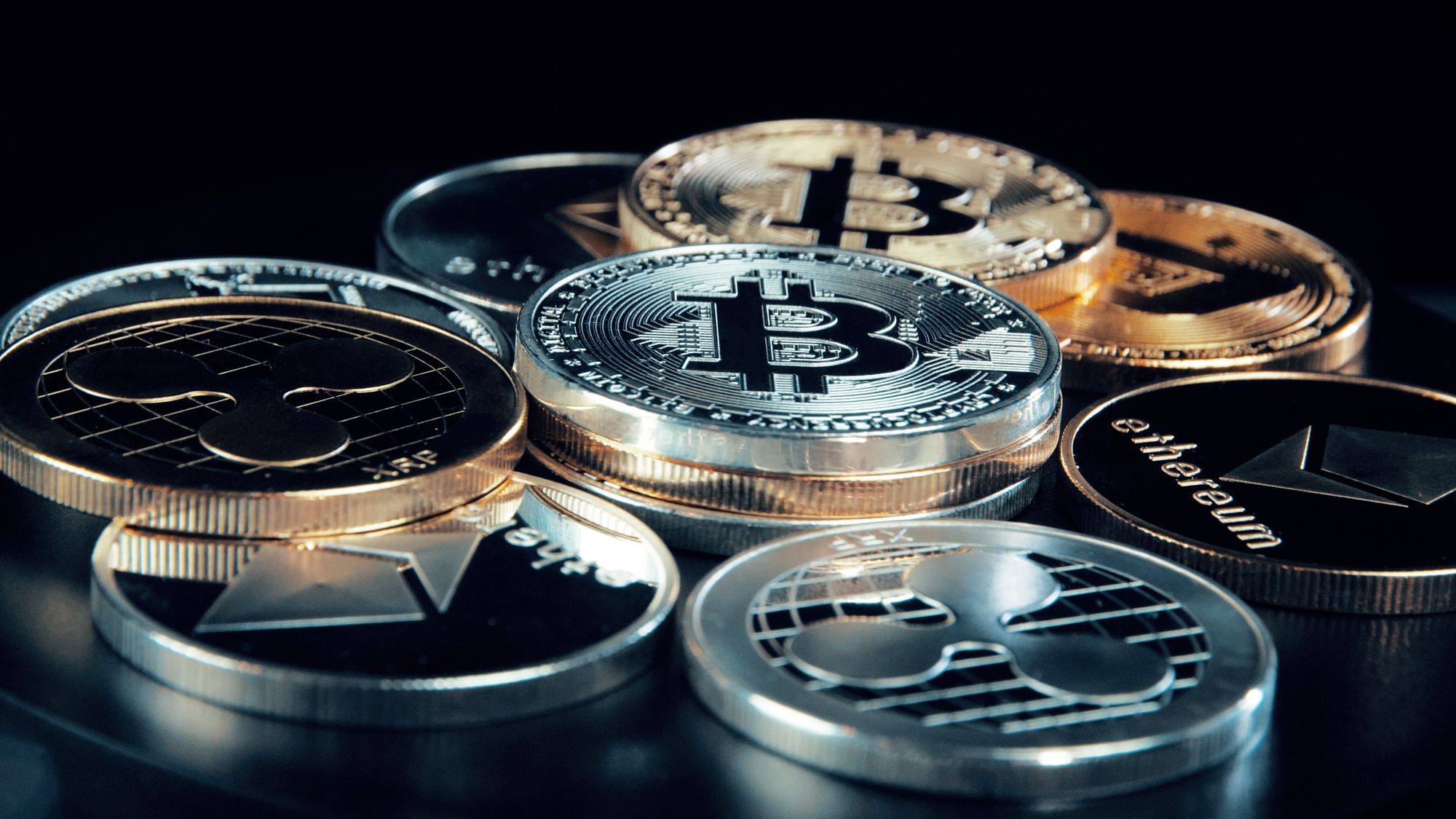
  • Crypto: Bitcoin fell as a selloff in cryptocurrencies associated with the Trump family pulled the entire crypto market lower.
  • Commodities: Gold remains in the spotlight as traders bulk up on bullion to protect their portfolios in case the FOMC loses its independence. If that does happen, Goldman Sachs analysts think gold could climb to $5,000.

COMMENTS APPRECIATED

EDUCATION: Books

Like, Refer and Subscribe

***

***

Goldman Sachs and Bitcoin

SPONSOR: http://www.CertifiedMedicalPlanner.org

By A.I.

***

***

Bitcoin notched another all-time record yesterday, beating the previous record that was set two days ago.

Goldman Sachs plans to ask junior bankers to certify their loyalty every three months in order to prevent poaching by private equity firms, Bloomberg reported.

COMMENTS APPRECIATED

EDUCATIONAL TEXTBOOKS: https://tinyurl.com/4zdxuuwf

Like and Subscribe

***

***

DAILY UPDATE: Women’s Health, and Commodities, as Stock Markets Struggle

MEDICAL EXECUTIVE-POST TODAY’S NEWSLETTER BRIEFING

***

Essays, Opinions and Curated News in Health Economics, Investing, Business, Management and Financial Planning for Physician Entrepreneurs and their Savvy Advisors and Consultants

Serving Almost One Million Doctors, Financial Advisors and Medical Management Consultants Daily

A Partner of the Institute of Medical Business Advisors , Inc.

http://www.MedicalBusinessAdvisors.com

SPONSORED BY: Marcinko & Associates, Inc.

***

http://www.MarcinkoAssociates.com

Daily Update Provided By Staff Reporters Since 2007.
How May We Serve You?
© Copyright Institute of Medical Business Advisors, Inc. All rights reserved. 2025

REFER A COLLEAGUE: MarcinkoAdvisors@outlook.com

SPONSORSHIPS AVAILABLE: https://medicalexecutivepost.com/sponsors/

ADVERTISE ON THE ME-P: https://tinyurl.com/ytb5955z

Your Referral Count -0-

***

CITE: https://www.r2library.com/Resource

Record VC investments for women’s health: Venture-backed women’s health startups experienced unprecedented investment last year, according to a new SVB report. The report examines the factors driving such record-breaking funding—like growing recognition of how various health conditions affect women differently and disproportionately, plus the causes and biological drivers behind this imbalance. Read it here.

CITE: https://tinyurl.com/2h47urt5

  • Stocks: Investors mostly yawned and the major indexes held steady a day after President Trump reignited his trade war by announcing higher tariffs would go into effect on 14 countries starting August 1st. Wall Street banks don’t seem concerned either, as Goldman Sachs and Bank of America became the latest strategists to raise their year-end target for the S&P 500.
  • Commodities: Copper futures popped as much as 17% to a new record, the largest intra-day gain since at least 1988, after Trump said he plans to place a 50% tariff on copper imports.

CITE: https://tinyurl.com/tj8smmes

Visualize: How private equity tangled banks in a web of debt, from the Financial Times.

COMMENTS APPRECIATED

PLEASE SUBSCRIBE: MarcinkoAdvisors@outlook.com

Thank You

***

***

***

***

EDUCATIONAL TEXTBOOKS: https://tinyurl.com/4zdxuuwf

***

Deals, Stocks and the FOMC

By A.I.

SPONSOR: http://www.CertifiedMedicalPlanner.org

***

***

  • Deals: Stocks popped at the open yesterday on the news that Canada has rescinded the digital services tax in order to lure the US back to the negotiating table. Meanwhile, Bloomberg reported that the EU will accept a 10% universal tariff in exchange for some key concessions.
  • Stocks: The S&P 500 and the NASDAQ both hit new record highs today, with the S&P 500 wrapping up its best quarter since Q4 20
  • The Fed: President Trump published a handwritten note asking Jerome Powell to cut interest rates, even as the White House considers new ways to replace the Fed Chair. Meanwhile, Goldman Sachs now sees the chances of the Fed cutting interest rates in September as “somewhat above 50%.”

COMMENTS APPRECIATED

Like and Subscribe

***

***

Stocks, Deals and Commodities

BY A.I.

***

***

Stocks: The S&P 500 briefly traded a few cents above its February all-time closing high yesterday afternoon, but couldn’t sustain the gain and fell just short at the end of the day. The NASDAQ remains inches away from its record high as well.

Deals: The end of the 90-day tariff pause is less than two weeks away, but the White House said that the July 9th deadline “is not critical.”

Meanwhile, the Treasury Department is doing everything it can to make the dreaded “revenge tax” in the big, beautiful bill irrelevant.

Commodities: Gold and oil had muted moves upward but copper climbed to a three-month high after Goldman Sachs analysts warned of shortages ahead

COMMENTS APPRECIATED

Like and Refer

***

***

DAILY UPDATE: Stock Markets Down

MEDICAL EXECUTIVE-POST TODAY’S NEWSLETTER BRIEFING

***

Essays, Opinions and Curated News in Health Economics, Investing, Business, Management and Financial Planning for Physician Entrepreneurs and their Savvy Advisors and Consultants

Serving Almost One Million Doctors, Financial Advisors and Medical Management Consultants Daily

A Partner of the Institute of Medical Business Advisors , Inc.

http://www.MedicalBusinessAdvisors.com

SPONSORED BY: Marcinko & Associates, Inc.

***

http://www.MarcinkoAssociates.com

Daily Update Provided By Staff Reporters Since 2007.
How May We Serve You?
© Copyright Institute of Medical Business Advisors, Inc. All rights reserved. 2025

REFER A COLLEAGUE: MarcinkoAdvisors@outlook.com

SPONSORSHIPS AVAILABLE: https://medicalexecutivepost.com/sponsors/

ADVERTISE ON THE ME-P: https://tinyurl.com/ytb5955z

Your Referral Count -0-

CITE: https://www.r2library.com/Resource

The Dow Jones Industrial Average (^DJI) fell roughly 450 points, or around 1%. The S&P 500 (^GSPC) dropped 0.5%, pulling back after its second record close in a row on Wednesday, while the tech-heavy NASDAQ Composite (^IXIC) also lost about 0.5%.

CITE: https://tinyurl.com/2h47urt5

Worries grew about coming headwinds for corporate America after Walmart beat on quarterly profit but issued cautious 2026 fiscal year guidance. Shares of the retail giant tumbled more than 6%. Walmart’s decline combined with more roughly 4% drops in Goldman Sachs (GS) and JPMorgan (JPM) weighed on the Dow.

CITE: https://tinyurl.com/tj8smmes

Visualize: How private equity tangled banks in a web of debt, from the Financial Times.

COMMENTS APPRECIATED

PLEASE SUBSCRIBE: MarcinkoAdvisors@outlook.com

Thank You

***

***

***

***

EDUCATIONAL TEXTBOOKS: https://tinyurl.com/4zdxuuwf

***

DAILY UPDATE: MBAs, Apple and Goldman Sachs as Stock Markets Mixed

MEDICAL EXECUTIVE-POST TODAY’S NEWSLETTER BRIEFING

***

Essays, Opinions and Curated News in Health Economics, Investing, Business, Management and Financial Planning for Physician Entrepreneurs and their Savvy Advisors and Consultants

Serving Almost One Million Doctors, Financial Advisors and Medical Management Consultants Daily

A Partner of the Institute of Medical Business Advisors , Inc.

http://www.MedicalBusinessAdvisors.com

SPONSORED BY: Marcinko & Associates, Inc.

***

http://www.MarcinkoAssociates.com

Daily Update Provided By Staff Reporters Since 2007.
How May We Serve You?
© Copyright Institute of Medical Business Advisors, Inc. All rights reserved. 2024

REFER A COLLEAGUE: MarcinkoAdvisors@msn.com

SPONSORSHIPS AVAILABLE: https://medicalexecutivepost.com/sponsors/

ADVERTISE ON THE ME-P: https://tinyurl.com/ytb5955z

Your Referral Count -0-

Applications to MBA programs are up 12% in 2024 after declining for two years, according to the Graduate Management Admission Council, which surveys business school admissions offices.

Apple and Goldman Sachs were ordered to pay $89 million by the Consumer Financial Protection Bureau for failing to address thousands of consumer disputes of Apple Card transactions.

Apple is cutting production of Vision Pro due to slow sales. The tech giant is scaling down production of its $3,500 Vision Pro VR headset and might halt assembly of new ones next month,

CITE: https://www.r2library.com/Resource

STOCKS UP

  • UPS delivered a strong earnings report, with revenue beating analyst expectations for the first time in two years. Shares popped 5.28%.
  • ServiceNow rose 5.41% to a new all-time high thanks to a beat-and-raise third-quarter earnings report powered by higher AI demand for the enterprise software company.
  • Whirlpool climbed 11.20% after announcing solid earnings and reiterating guidance for the rest of the fiscal year, reassuring worried shareholders.
  • Molina Healthcare soared 17.67% after beating both top and bottom line estimates in the third quarter, thanks to the health insurer reaping the rewards of higher Medicaid payouts.

STOCKS DOWN

  • IBM dropped 6.17% on disappointing third-quarter results, missing on both top and bottom line forecasts thanks to lower consulting and infrastructure revenue.
  • Peloton pedaled higher yesterday after Greenlight Capital’s David Einhorn declared that the company was undervalued while he was pedaling on a Peloton. The stunt only worked for a quick sprint, though, with shares back down 2.07% today.
  • TKO Group Holdings got hit with a piledriver after the owner of the WWE and UFC announced it is acquiring several entertainment companies, including Professional Bull Riders. Investors bucked shares off 8.69%.
  • Keurig Dr. Pepper fizzled 4.80% thanks to lower sales last quarter, though the company is trying to bolster revenue by acquiring energy drink maker Ghost.
  • Air taxi startup Lilium crashed 61.50% on the news that its main subsidiaries have run out of cash and are filing for insolvency.

CITE: https://tinyurl.com/2h47urt5

Here’s where the major benchmarks ended:

  • The S&P 500® index (SPX) rose 12.44 points (0.21%) to 5,809.86; the $DJI fell 140.59 points (–0.33%) to 42,374.36; and the NASDAQ Composite® ($COMP) added 138.83 points (0.76%) to 18,415.49.
  • The 10-year Treasury note yield fell four basis points to 4.20%.
  • The CBOE Volatility Index® (VIX) was about flat at 19.18.

CITE: https://tinyurl.com/tj8smmes

Visualize: How private equity tangled banks in a web of debt, from the Financial Times.

COMMENTS APPRECIATED

PLEASE SUBSCRIBE: MarcinkoAdvisors@msn.com

Thank You

***

***

***

***

EDUCATIONAL TEXTBOOKS: https://tinyurl.com/4zdxuuwf

***

DAILY UPDATE: Goldman Sachs, Starbucks and Walgreens as Stock Markets Boost Up

MEDICAL EXECUTIVE-POST TODAY’S NEWSLETTER BRIEFING

Essays, Opinions and Curated News in Health Economics, Investing, Business, Management and Financial Planning for Physician Entrepreneurs and their Savvy Advisors and Consultants

Serving Almost One Million Doctors, Financial Advisors and Medical Management Consultants Daily

A Partner of the Institute of Medical Business Advisors , Inc.

http://www.MedicalBusinessAdvisors.com

SPONSORED BY: Marcinko & Associates, Inc.

***

http://www.MarcinkoAssociates.com

Daily Update Provided By Staff Reporters Since 2007.
How May We Serve You?
© Copyright Institute of Medical Business Advisors, Inc. All rights reserved. 2024

REFER A COLLEAGUE: MarcinkoAdvisors@msn.com

SPONSORSHIPS AVAILABLE: https://medicalexecutivepost.com/sponsors/

ADVERTISE ON THE ME-P: https://tinyurl.com/ytb5955z

Your Referral Count -0-

Goldman Sachs’ profit jumped 45% in monster quarter. The investment bank made $3 billion of profit on revenue of nearly $13 billion in Q3, it reported yesterday, surpassing even the rosiest of expectations. Bloomberg reported that it was the best quarter ever for Goldman’s stock trading unit, putting the group on track for a record year.

Walgreens said it will close 1,200 US stores, about one in seven locations, by 2027. The retailer will shutter 500 stores by the end of next year.

CITE: https://www.r2library.com/Resource

UP STOCKS

Trump Media & Technology Group has had a wild week, falling nearly 10% yesterday before trading of the stock was halted, then popping 15.52% today. Election hype, a Trump-sponsored cryptocurrency, and Truth+, a new streaming service, are keeping shareholders on their toes.

  • Abbott Laboratories rose 1.53% thanks to a stronger-than-expected earnings report powered by the company’s impressive medical device sales.
  • Aspen Aerogels makes insulating material for batteries, which sounds boring to everyone but the Department of Energy. The DOE signed a conditional commitment to loan the company up to $670 million, sending shares 13.24% higher.

DOWN STOCKS

  • Novavax plummeted 19.44% after the FDA put a hold on the pharma company’s flu and Covid vaccine combination.
  • ASML Holding NV dropped another 6.42% today as the semiconductor selloff continues.
  • Interactive Brokers enjoyed higher revenue and more trading from its user base last quarter, but earnings per share came in under expectations, and shares sank 4.05%.

CITE: https://tinyurl.com/2h47urt5

Here’s where the major benchmarks ended:

  • The SPX rose27.21points (0.47%) to 5,842.47; the Dow Jones Industrial Average® ($DJI) added 337.28 points (0.79%) to 43,077.70; and the NASDAQ Composite®($COMP) increased 51.49 points (0.28%) to 18.367.08. 
  • The 10-year Treasury note yield (TNX) fell two basis points to just below 4.02%, the lowest close since October 4.
  • The CBOE Volatility Index® (VIX) dropped moderately to 19.58, still elevated considering stock market strength.

CITE: https://tinyurl.com/tj8smmes

Starbucks is reportedly pivoting from discounts and promotions to refocus on selling premium coffee and seasonal drinks

Visualize: How private equity tangled banks in a web of debt, from the Financial Times.

COMMENTS APPRECIATED

PLEASE SUBSCRIBE: MarcinkoAdvisors@msn.com

Thank You

***

***

***

***

EDUCATIONAL TEXTBOOKS: https://tinyurl.com/4zdxuuwf

***

DAILY UPDATE: Apple, Macy’s, Goldman, Banks, Companies and the Roaring DJIA

MEDICAL EXECUTIVE-POST TODAY’S NEWSLETTER BRIEFING

***

Essays, Opinions and Curated News in Health Economics, Investing, Business, Management and Financial Planning for Physician Entrepreneurs and their Savvy Advisors and Consultants

Serving Almost One Million Doctors, Financial Advisors and Medical Management Consultants Daily

A Partner of the Institute of Medical Business Advisors , Inc.

http://www.MedicalBusinessAdvisors.com

SPONSORED BY: Marcinko & Associates, Inc.

***

http://www.MarcinkoAssociates.com

Daily Update Provided By Staff Reporters Since 2007.
How May We Serve You?
© Copyright Institute of Medical Business Advisors, Inc. All rights reserved. 2024

REFER A COLLEAGUE: MarcinkoAdvisors@msn.com

SPONSORSHIPS AVAILABLE: https://medicalexecutivepost.com/sponsors/

ADVERTISE ON THE ME-P: https://tinyurl.com/ytb5955z

***

  • The Dow jumped 700 points at one point today, its biggest single-day surge this year. The S&P 500 spent the entire trading session in positive territory, ending the afternoon at another record close, while the NASDAQ was flat most of the day as tech stocks sat out the rally.
  • Bitcoin continued to surge, rising as high as $65,191 as predictions of a second Trump presidency helped erase the cryptocurrency’s recent losses.
  • Gold hit a new record as hopes of a rate hike continue to rise, while oil sank on the news of slower economic growth in China translating to lower demand for crude.
  • The Russell 2000 enjoyed its 5th straight gain of 1% or more for the first time since 1979 as small caps make their comeback (more on that below).

***

Apple released public beta versions of the newest software for iPhone, Mac, iPad, and Apple Watch. Macy’s ended talks of a buyout with investment firms Arkhouse Management and Brigade Capital Management after months of wrangling. Goldman Sachs was the latest big bank to benefit from rebounding investment banking fees as deals start making a comeback.

CITE: https://www.r2library.com/Resource

Despite such challenges as high interest rates, a sluggish M&A market, and increased regulatory scrutiny, bank executives are feeling optimistic about the road ahead. That’s according to KPMG’s 2024 US Banking Industry Outlook Survey, published last month, which polled 200 senior executives at US banks of varying sizes in March 2024.

CITE: https://tinyurl.com/2h47urt5

Here’s where the major benchmarks ended:

  • The S&P 500® index (SPX) rose 35.98 points (0.64%) to 5,667.20; the Dow Jones Industrial Average® ($DJI) climbed 742.76 points (1.85%) to 40,954.48; the NASDAQ Composite® ($COMP) added 36.77 points (0.2%) to 18,509.34.
  • The 10-year Treasury note yield (TNX) fell slightly to just under 4.17%.
  • The CBOE Volatility Index® (VIX) ticked up to 13.19, still near three-week highs.

What’s up

  • Match Group climbed 7.46% after activist investor Starboard Value revealed it has taken a 6.6% stake in the matchmaking company.
  • Bank of America rose 5.35% on strong earnings, and management’s expectation that the bank’s net interest income will rise this year.
  • UnitedHealth Group popped 6.49% after beating analyst earnings estimates, missing revenue expectations, and most importantly, avoided higher costs after a recent cyberattack.
  • Shopify surged 8.57% thanks to an analyst upgrade from “neutral” to “buy” on the company’s turnaround efforts. Shares of Etsy rose 6.33% in sympathy.
  • GRAIL boomed 24.76% on the news that it is kicking off the clinical trials of its new cancer detection test.
  • Home builders’ hot streak continues: Hopes of a rate cut are fueling a rally for home builder stocks, with D.R. Horton up 6.64%, Lennar rising 6.55%, KB Home gaining 7.17%, and Builders FirstSource popping 8.11%.

What’s down

CITE: https://tinyurl.com/tj8smmes

COMMENTS APPRECIATED

PLEASE SUBSCRIBE: MarcinkoAdvisors@msn.com

Thank You

***

***

***

***

EDUCATIONAL TEXTBOOKS: https://tinyurl.com/4zdxuuwf

***

FOR 4 BIG BANKS: A Big Quarter

By Staff Reporters

***

***

An uptick in corporate dealmaking fueled investment banking growth at the four largest US banksJPMorgan Chase, Bank of America, Wells Fargo, and Citibank—as well as at Goldman Sachs and Morgan Stanley. The result was “one of [investment banking’s] best quarters” since the Fed began hiking rates in 2022, the Wall Street Journal reported. Their earnings releases over the last week either matched or beat the consensus forecasts for revenue and earnings per share, according to the WSJ.

“It’s clear that we’re in the early stages of a reopening of the capital markets,” Goldman Sachs CEO David Solomon said in an earnings call last Monday. Goldman reported that growth in its investment banking and trading pushed its net income up 28% year over year, beating analyst expectations. Solomon said he expects more M&A activity will keep boosting the demand for debt underwriting at Goldman, which saw a 32% Year over Year jump in internet-banking revenue.

Solomon’s sunny outlook was beclouded the next day by Fed Chair Jerome Powell. The Fed had hoped inflation reports would show it could cut rates soon without overheating the economy, but instead inflation has continued to tick up.

COMMENTS APPRECIATED

Subscribe Today

***

***

DAILY UPDATE: Consumer Spending Down While CVS Earnings Up

By Staff Reporters

***

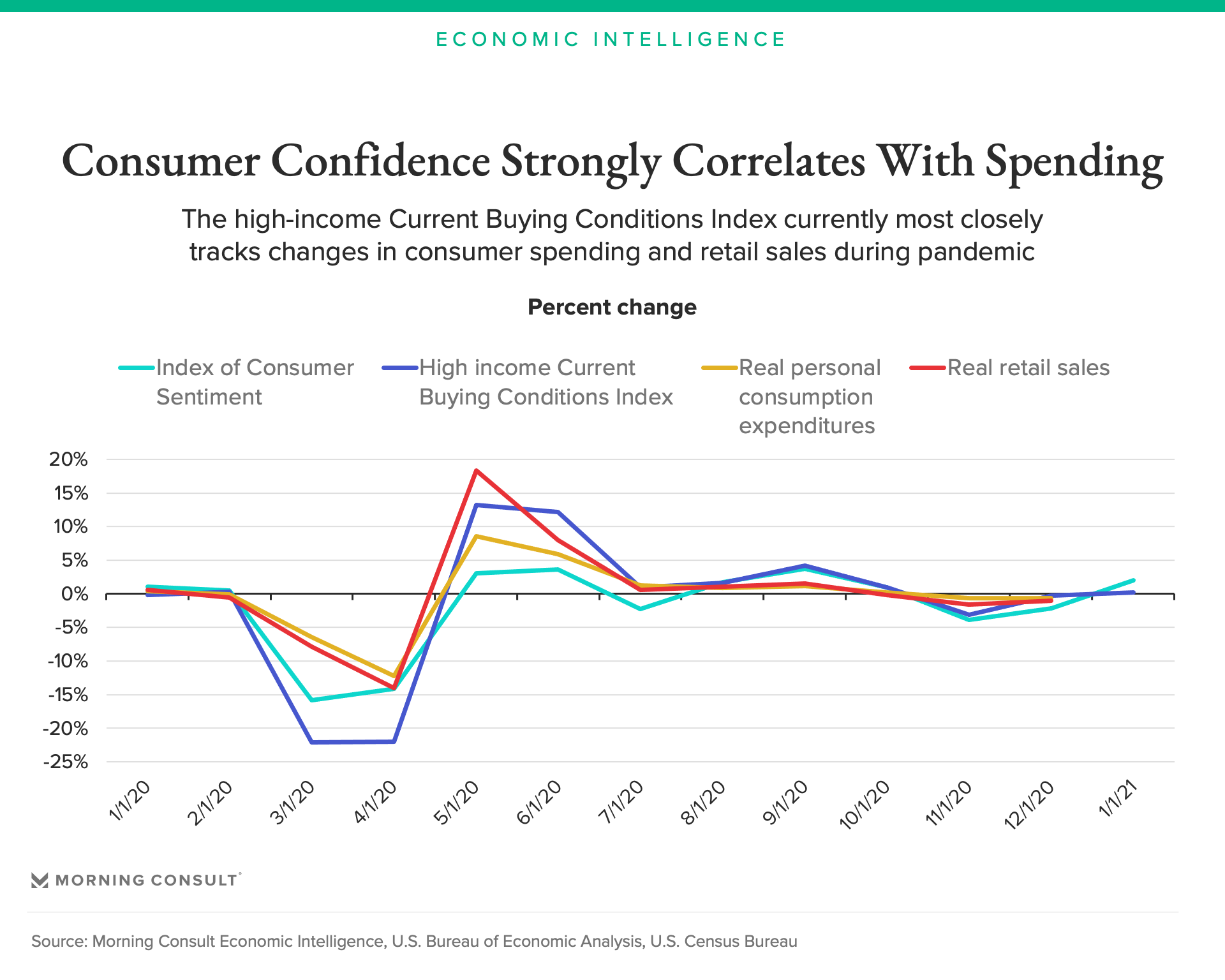
To See What’s Next For Consumer Spending, Take a Closer Look at High ...
  • Stat: 0.8%. That’s how much consumer spending fell in January 204—a much bigger dip than expected (CNBC).

CITE: https://www.r2library.com/Resource

CVS reported strong results for its healthcare segment in 2023, showing a 10.2% increase in revenue compared to the prior year. Still, executives lowered the segment’s 2024 guidance in anticipation of rising medical costs, according to earnings released this month.

Finally, the US stock market reopens today after the long weekend, and everyone’s still talking about the Magnificent Seven. That’s because, according to a new report from Deutsche Bank, profits at these seven tech giants are greater than the profits of all publicly traded companies in nearly every G20 country. And in terms of market value, they’d be the second-largest national stock exchange in the world. Goldman Sachs sees this party lasting all night: It raised its 2024 target for the S&P 500 for the second time.

COMMENTS APPRECIATED

Thank You

***

***

HOLIDAY BONUS: Wall Street is Down

By Staff Reporters

***

***

For the second straight year, Wall Street bankers should prepare for smaller bonuses this holiday season, according to a report from consulting firm Johnson Associates. Cash bonuses for investment bankers in particular could shrivel up to 25% compared to 2022. Now, bonuses often account for a huge share of bankers’ total compensation. In some cases, they can be double their salary. That adds up to tens of billions of dollars in Wall Street’s bonus pot, which hit an all-time high in 2021.

But two years later, the economy looks a lot different.

For example, IPOs have slowed, interest rates are up, and we’re down a few banks. Investment bankers aren’t the only ones feeling the effects:

  • Regional bankers are likely to see bonuses fall 10%–20%.
  • Workers in asset management and sales could get 5%–10% less this year.
  • The only groups expected to receive bonus bumps this year are wealth managers and retail or commercial bankers at major global banks. Goldman Sachs is also reportedly considering bigger (but still unspecified) bonuses to keep top traders.

COMMENTS APPRECIATED

Thank You

***

***

DAILY UPDATE: Goldman Sachs Speaks as the Stock Markets Rise

By Staff Reporters

***

SPONSOR: http://www.MarcinkoAssociates.com

***

The Federal Reserve’s pivot last week to an easier monetary policy made many investors more bullish toward stocks. You can count Goldman Sachs among them. It has raised its year-end 2024 target for the S&P to 5,100 from 4,700. The new forecast represents an 8% increase from 4,740 on Dec. 18. Goldman has a three-month target of 4,800 and a six-month target of 4,900.

Here is where the major benchmarks ended:

Here’s where the major benchmarks ended:

  • The S&P 500 index was up 21.37 points (0.5%) at 4,740.56; the Dow Jones Industrial Average was up 0.86 points at 37,306.02; the NASDAQ Composite was up 90.89 points (0.6%) at 14,904.81.
  • The 10-year Treasury note yield (TNX) was up about 2 basis points at 3.946%.
  • The CBOE® Volatility Index (VIX) was up 0.25 at 12.53.

Energy shares were among Monday’s strongest performers behind a rally in WTI Crude Oil futures (/CL), which jumped 1.7% to end at a two-week high amid concern over supply disruptions following attacks on ships in the Red Sea.

Communication services and consumer staples were also firm. Financials gave back some of last week’s sharp gains, with the KBW Bank Index (BKX) down nearly 1%.

COMMENTS APPRECIATED

Refer a Colleague: MarcinkoAdvisors@msn.com

Your referral Count: 0

Thank You

***

***

Stocks, Musk, Goldman Sachs and Intel

By Staff Reporters

***

***

  • Stocks mostly held steady yesterday as everyone waits for April’s inflation data to drop tomorrow. Regional banks saw some movement as PacWest cut its dividend, then teetered up and down throughout the day. But Six Flags theme park operator shot straight up after reporting record revenue for the last quarter thanks to higher ticket prices.
  • Elon Musk warned that Twitter follower counts may drop as the platform removes inactive accounts.
  • Goldman Sachs has agreed to pay $215 million to settle a long-running class-action lawsuit accusing the investment bank of underpaying women. Elon Musk warned that Twitter follower counts may drop as the platform removes inactive accounts.
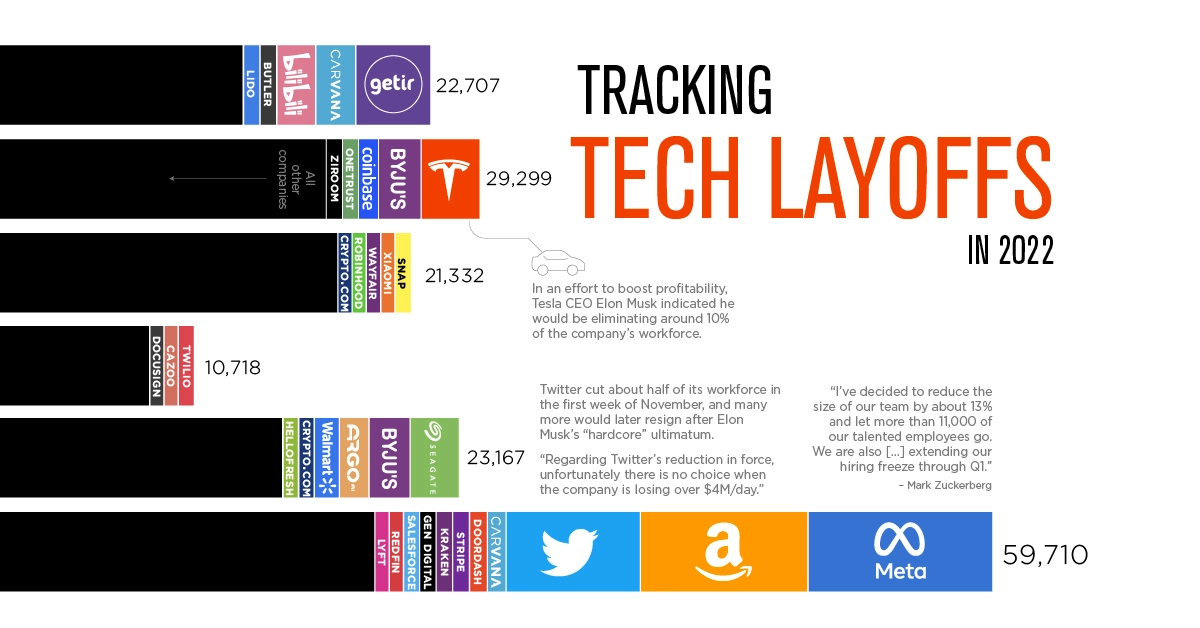
  • Intel continues to rattle the tech industry by confirming that it plans to cut its workforce to reduce costs. The company declined to share how many workers would be affected but said the layoffs would take place across the company.

COMMENTS APPRECIATED

Thank You

***

***

BANKS: Bankers and the Economy

ECONOMIC PROPHETS?

By Staff Reporters

***

Trying to read the economy is difficult But, some of the biggest financial institutions in the US—including JPMorgan, Bank of America, and Citigroup—will release their earnings reports for the final quarter of 2022 this morning. And they’ll share precious insight into the risk of a recession as an uncertain 2023 kicks into gear.

CITE: https://www.r2library.com/Resource/Title/082610254

Why are banks considered economic prophets?

According to Morning Brew and others, it is because their tentacles touch so many aspects of the economy (from consumer spending via credit cards to business health via commercial loans), that they can see into areas single-sectors where others can not.

Banks are hurting. Goldman Sachs just launched its biggest cost-cutting efforts since the 2008 financial crisis, laying off 3,200 employees (or 6.5% of its entire workforce) this week. And it’s not the only one reducing headcount: Morgan Stanley and Citi are among the other global banks that have trimmed their workforce recently as business slowed due to the Fed’s rate hikes. Overall, big banks’ profits are expected to have dropped 15% in Q4 from the year before.

But it’s not all bad. Rising rates can benefit banks—as lenders, they make more money when they can charge higher interest to borrowers. Of course, banks also need to pay out interest to their depositors, too, but the gap between their lending profits and their depositor payouts (known as the “net interest margin”) is expected to widen—at least for now.

Consumer watch: Pay attention to how much banks have set aside to cover defaults on mortgage, auto, and credit card loans. That’ll give us a peek into how American consumers are dealing with inflation.

***

ORDER: https://www.routledge.com/Comprehensive-Financial-Planning-Strategies-for-Doctors-and-Advisors-Best/Marcinko-Hetico/p/book/9781482240283

***
COMMENTS APPRECIATED

Thank You

***

BANKS: Goldman Sachs Overhaul

By Staff Reporters

***

***

Goldman Sachs is planning a major overhaul that would combine its investment banking and trading businesses into one unit and its asset and wealth management branches into another.

***

Bank Types: https://medicalexecutivepost.com/2022/10/14/the-three-various-types-of-banks/

FINANCE: https://www.routledge.com/Comprehensive-Financial-Planning-Strategies-for-Doctors-and-Advisors-Best/Marcinko-Hetico/p/book/9781482240283

***

COMMENTS APPRECIATED

Thank You

***

UPDATE: Recession, Goldman Sachs, and Tesla

By Staff Reporters

***

***

The director of the nonpartisan Congressional Budget Office [CBO] added his voice Thursday to those economists who say it’s unclear if the economy has hit a downturn, despite posting two straight quarterly drops in growth. “The U.S. economy shows signs of slowing, but whether the economy is currently in a recession is difficult to say,” wrote CBO Director Phillip Swagel in a letter to Sen. Lindsey Graham (R-S.C.). “It is possible that, in retrospect, it will become apparent that the economy moved into recession sometime this year. However, that is not clear from data that were available at the beginning of August,” Swagel added.

Goldman Sachs said its credit card unit is under investigation by the Consumer Financial Protection Bureau, a federal agency tasked with protecting Americans from financial abuse. In a securities filing, Goldman said the CFPB is examining a number of the company’s credit card account management practices, including refunds, resolving billing errors, advertisements and reporting to credit bureaus. And, in a statement to CBS MoneyWatch, Goldman said the bank “is cooperating with the CFPB on this matter.”

Finally, shares of electric vehicle maker Tesla rallied in after-hours trading as the company won shareholder approval for a 3:1 stock split, the second such move in two years, as the world’s most valuable automaker looks to make its stock more affordable.

***

COMMENTS APPRECIATED

Thank You

***

FINANCIAL PLANNING: https://www.routledge.com/Comprehensive-Financial-Planning-Strategies-for-Doctors-and-Advisors-Best/Marcinko-Hetico/p/book/9781482240283

****

UPDATE: Stock Markets and Politics

By Staff Reporters

***

  • Markets: With Omicron concerns swirling and President Biden’s big spending plan KO’d by Senator Joe Manchin, the S&P posted its biggest three-day drop since September. Tesla shares have now fallen back to their price before their big Hertz deal was announced in October.
  • Build Back Better: Goldman Sachs cut its economic growth forecast for next year after Joe Manchin said he wouldn’t vote for Democrats’ $2 trillion social spending bill. But yesterday the senator detailed some changes to the bill he’d support, reviving hopes that negotiations could resume in January.
  • CITE: https://www.r2library.com/Resource/Title/082610254

UPDATE: https://www.msn.com/en-us/money/markets/us-futures-rebound-after-stock-market-sell-off-but-omicron-risks-remain/ar-AAS1fv3?li=BBnb7Kz

COMMENTS APPRECIATED.

***

Thank You

***

A ‘Flawed’ SEC Program [A Retrospective “April Fool’s Day” Analysis]

Join Our Mailing List

SEC Failed to Rein in Investment Banks [April Fool’s Day – 2015]

By Ben Protess, ProPublica – October 1, 2008 5:01 pm EDT

Editor’s Note: This investigative report was first published ten years ago. And so, we ask you to consider – on this April Fool’s Day 2019 – how [if] things have changed since then?  

***
Flag MOney

***

The Securities and Exchange Commission [SEC] last week abolished the special regulatory program that it applied to Wall Street’s largest investment banks. Known as the “consolidated supervised entities” program, it relaxed the minimum capital requirements for firms that submitted to the commission’s oversight, and thus, in the view of some experts, helped create the current global financial crisis.

But, the SEC’s decision to ax the program currently affects no one, since three of the five firms that voluntarily joined the program previously collapsed and the other two reorganized.

The Decision – 18 Months Ago

The decision came last Friday, one day after the commission’s inspector general released a report [1] (PDF) detailing the program’s failed oversight of Bear Stearns before the firm collapsed in March. The commission’s chairman, Christopher Cox, a longtime opponent of industry regulation, said in a statement [2] that the report “validates and echoes the concerns” he had about the program, which had been voluntary for the five Wall Street titans since 2004.

The report found that the SEC division that oversees trading and markets was “not fulfilling its obligations. “These reports are another indictment of failed leadership,” said Sen. Charles Grassley (R-Iowa) who requested the inspector general’s investigation.

The SEC program, approved by the commission in 2004 under Cox’s predecessor, William Donaldson, allowed investment banks to increase their amount of leveraged debt. But, there was a tradeoff: Banks that participated allowed their broker-dealer operations and holding companies to be subject to SEC oversight. Previous to 2004, the SEC only had authority to oversee the banks’ broker dealers.

Longstanding SEC rules required the broker dealers to limit their debt-to-net-capital ratio and issue an early warning if they began to approach the limit. The limit was about 15-to-1, according to the inspector general report, meaning that for every $15 of debt, the banks were required to have $1 of equity.

But the 2004 “consolidated supervised entities” program revoked these limits. The new program also eliminated the requirement that firms keep a certain amount of capital as a cushion in case an asset defaults.

Bear Sterns

As a result, the oversight program created the conditions that helped cause the collapse of Bear Stearns. Bear had a gross debt ratio of about 33-to-1 prior to its demise, the inspector general found. The inspector general also found that Bear was fully compliant with the programs’ requirements when it collapsed, which raised “serious questions about whether the capital requirement amounts were adequate,” the report said.

The report quoted Lee Pickard, a former SEC official who helped write the original debt-limit requirements in 1975 and now argues the 2004 program is largely to blame for the current Wall Street crisis.

“The SEC gave up the very protections that caused these firms to go under,” Pickard said in an interview with ProPublica. “The SEC in 2004 thought it gained something in oversight, but in turn it gave up too much public protection. You don’t bargain in a way that causes you to give up serious protections.”

Pickard, now a senior partner at a Washington, D.C.-based law firm, estimated that prior to the 2004 program most firms never exceeded an 8-to-1 debt-to-net capital ratio.

The previous program “had an excellent track record in preserving the securities markets’ financial integrity and protecting customer assets,” Pickard wrote [3] in American Banker this August. The new program required “substantial SEC resources for complex oversight, which apparently are not always available.”

Asked if he believes the 2004 program was a direct cause of the current crisis, Pickard told ProPublica, “I’m afraid I do.”

The New York Times reported Saturday that the SEC created the program after “heavy lobbying” for the plan from the investment banks. The banks favored the SEC as their regulator, the Times reported, because that let them avoid regulation of their fast-growing European operations by the European Union, which has been threatening to impose its own rules since 2002.

SEC Spokesman

A SEC spokesman declined to comment for this article, referring inquires to Chairman Cox’s statement. In the statement, Cox admitted the program “was fundamentally flawed from the beginning.” But Cox, a former Republican congressman from California, offered mild support for the program as recently as July when he testified before the House Committee on Financial Services. The program, among other oversight efforts, Cox said, had “gone far to adapt the existing regulatory structure to today’s exigencies.” He added that legislative improvements were necessary as well, and has since told Congress that the program failed.

More Questions

So why did the commission not end the program sooner? Some say that the program’s flaws only recently became apparent. “As late as 2005, the program seemed to make a lot of sense,” said Charles Morris, a former banker who predicted the current financial crisis in his book written last year, The Trillion Dollar Meltdown [4]. The SEC “didn’t know it didn’t work until we had this stress.”

And leverage does not always spell trouble. In a strong economy, leverage can also be attractive because it can increase the profitability of banks through lending.

In his recent statement, Cox said the inspector general’s findings reflect a deeper problem: “the lack of specific legal authority for the SEC or any other agency to act as the regulator of these large investment bank holding companies.”

Secretary of the Treasury Henry Paulson has called for a refining of the regulatory structure to reflect the global and interconnected nature of today’s financial system. In any case, the program’s failure can be seen in the disappearance of the participating banks: Bear Stearns, Lehman Brothers, Merrill Lynch, Morgan Stanley and Goldman Sachs.

skeleton-jpeg1

***

Assessment

Merrill Lynch’s leverage ratio was possibly as high as 40-to-1 this year and Lehman Brothers faced a ratio of about 30-to-1, according to Bloomberg [5].

The Fed and Treasury Department forced Bear Stearns into a merger with JPMorgan Chase in March. And the last two months, Lehman Brothers went bankrupt and sold their core U.S. business to British bank Barclays PLC, and Merrill Lynch was acquired by Bank of America. Morgan Stanley and Goldman Sachs, the two remaining large independent investment banks, changed their corporate structures to become bank holding companies, which are regulated by the Federal Reserve.

As these banks have folded or reorganized over the last several months, the Federal Reserve has largely assumed the SEC’s oversight responsibilities, though the commission will still have the power to regulate broker dealers.

Original Essay: http://www.propublica.org/article/flawed-sec-program-failed-to-rein-in-investment-banks-101

Conclusion

Your thoughts and comments on this ME-P are appreciated. Feel free to review our top-left column, and top-right sidebar materials, links, URLs and related websites, too. Then, subscribe to the ME-P. It is fast, free and secure.

Link: http://feeds.feedburner.com/HealthcareFinancialsthePostForcxos

Speaker: If you need a moderator or speaker for an upcoming event, Dr. David E. Marcinko; MBA – Publisher-in-Chief of the Medical Executive-Post – is available for seminar or speaking engagements. Contact: MarcinkoAdvisors@msn.com

OUR OTHER PRINT BOOKS AND RELATED INFORMATION SOURCES:

Product DetailsProduct DetailsProduct Details

Comprehensive Financial Planning Strategies for Doctors and Advisors: Best Practices from Leading Consultants and Certified Medical Planners(TM)

FORECASTS – IT’S THAT TIME OF THE YEAR FOR [Physician] INVESTORS

Join Our Mailing List 

No, not the holidays!

Art

By Arthur Chalekian GEPC

[Financial Consultant]

 ***

It’s the time when physician investors begin to consider pundits’ forecasts for the coming year.

Here are a few of those forecasts:     

1. “Flat is the new up,” was the catch phrase for Goldman Sachs’ analysts last August, and their outlook doesn’t appear to have changed for the United States. In Outlook 2016, they predicted U.S. stocks will have limited upside next year and expressed concern that positive economic news may bring additional Fed tightening. Goldman expects global growth to stabilize during 2016 as emerging markets rebound, and Europe and Japan may experience improvement.

2. Jeremy Grantham of GMO, who is known for gloomy outlooks, is not concerned about the Federal Reserve raising rates, according to Financial Times (FT). FT quoted Grantham as saying,

“We might have a wobbly few weeks … but I’m sure the Fed will stroke us like you wouldn’t believe and the markets will settle down, and most probably go to a new high.”

Grantham expects the high to be followed by a low. He has been predicting global markets will experience a major decline in 2016 for a couple years, and he anticipates the downturn could be accompanied by global bankruptcies.

3. PWC’s Trendsetter Barometer offered a business outlook after surveying corporate executives. After the third quarter of 2015, it found:

“U.S. economic fundamentals remain strong, but markets and executives like predictability, and that’s not what we’ve been getting lately … Trendsetter growth forecasts are down, so are plans for [capital expenditure] spending, hiring, and more. It doesn’t help that we’ve entered a contentious 2016 election season …”

4. The Economist had this advice for investors who are reviewing economic forecasts:

“Economic forecasting is an art, not a science. Of course, we have to make some guess. The average citizen would be well advised, however, to treat all forecasts with a bucket (not just a pinch) of salt.”

***

0be5f030277425_561bf03bbcd62

[End 2015 – Begin 2016]

***

Assessment

Doctor – What are your stock market predictions for 2016?

Conclusion

Your thoughts and comments on this ME-P are appreciated. Feel free to review our top-left column, and top-right sidebar materials, links, URLs and related websites, too. Then, subscribe to the ME-P. It is fast, free and secure.

Speaker: If you need a moderator or speaker for an upcoming event, Dr. David E. Marcinko; MBA – Publisher-in-Chief of the Medical Executive-Post – is available for seminar or speaking engagements. Contact: MarcinkoAdvisors@msn.com

OUR OTHER PRINT BOOKS AND RELATED INFORMATION SOURCES:

***

Risk Management, Liability Insurance, and Asset Protection Strategies for Doctors and Advisors: Best Practices from Leading Consultants and Certified Medical Planners™8Comprehensive Financial Planning Strategies for Doctors and Advisors: Best Practices from Leading Consultants and Certified Medical Planners™

***

Where Are the Financial Crisis Prosecutions?

The White Collar Slump?

By Jesse Eisinger
ProPublica: jesse@propublica.org

Join Our Mailing List 

You may have noticed that prosecutors in this country are in something of a white-collar slump lately.

The stock options backdating prosecutions have largely been a bust [1], not because it wasn’t a true scandal. The Securities and Exchange Commission and the Justice Department investigated more than 100 companies. Over a hundred took accounting restatements. Yet only a handful of executives went to prison, with some high-profile cases fizzling out. Prosecutors also stumbled in other high priority corporate fraud prosecutions, like the KPMG [2] tax shelter and the stock-exchange specialists [3] cases.

Bear Sterns

The most spectacular prosecutorial flameout [4] was the case against the Bear Stearns hedge fund managers. The consequences of that disaster are still reverberating. The United States attorney’s office in Brooklyn rushed to haul low-level executives in front of a jury based on a few seemingly incriminating emails. The defense was easily able to convince jurors that these represented only out-of-context glimpses of fear as markets swooned, not a conspiracy to mislead. But, now we have a supposedly new push: the insider trading scandal.

Insider Trading

The United States attorney in Manhattan, Preet Bharara, and the United States Attorney, General Eric H. Holder Jr., are hyping their efforts. “Illegal insider trading is rampant and may even be on the rise,” Mr. Bharara dubiously pronounced in a speech [5] in October. The Feds are raiding [6] hedge funds and publicly celebrating their criminal investigations related to insider trading.

The storyline is that Wall Street now lives in fear. Hedge fund managers’ phones might be tapped, any stray remark is suspect, and old trades are being exhumed so that the entrails can be examined.

In fact, plenty of folks on Wall Street are happy about the investigation. A scant few — the ones with clean consciences — like the idea that the world of special access to favorable tips is being cleaned up.

But others are pleased for a different reason: They realize the investigation is a sideshow.

All the hype carries an air of defensiveness. Everyone is wondering: Where are the investigations related to the financial crisis?

Enron, Lehman, Merrill, Citigroup and Others

John Hueston, a former lead Enron prosecutor, wonders: “Have they committed the resources in the right place? Do these scandals warrant apparent national priority status?”

Nobody from Lehman, Merrill Lynch or Citigroup has been charged criminally with anything. No top executives at Bear Stearns have been indicted. All former American International Group executives are running free. No big mortgage company executive has had to face the law.

How about someone other than the Fabulous Fab [7] at Goldman Sachs? How could the Securities and Exchange Commission merely settle with Countrywide’s Angelo Mozilo [8] — and for a fraction of what he made as CEO?

The world was almost brought low by the American banking system and we are supposed to think that no one did anything wrong?

The most common explanation from lawyers for this bizarre state of affairs is that it’s hard work. It’s complicated to make criminal cases in corporate fraud. Getting a case that shows the wrong-doer acted with intent — and proving it to a jury — is difficult.

But, of course, Enron was complicated too, and prosecutors got the big boys. Ken Lay was found guilty (he died before he served his time). Jeff Skilling is in prison now, though the end result was bittersweet for prosecutors when much of his conviction was overturned by the Supreme Court. WorldCom’s Bernie Ebbers and Tyco’s Dennis Kozlowski are wearing stripes.

Complicated Cases

Sure, it takes time to investigate complicated cases. Many people think that the SEC, at the least, will bring some charges against top executives at Lehman Brothers. The huge, ground-breaking special examiner’s report [9] on Lehman Brothers laid bare problems with Lehman’s accounting. But that report came out back in March — on a bank that blew up more than two years ago. That seems awfully slow.

The most popular reason offered for the dearth of financial crisis prosecutions is the 100-year flood excuse: The banking system was hit by a systemic and unforeseeable disaster, which means that, as unpleasant as it may be to laymen, it’s unlikely that anyone committed any crimes.

Stupidity is No Crime

Or, barring that wildly implausible explanation (since, indeed, many people saw the crash coming and warned about it), the argument is that acting stupidly and recklessly is no crime.

As I ride the subway every morning, I often fantasize about criminalizing stupidity and fecklessness. But alas, it’s not to be.

Nevertheless, it’s hardly reassuring that bankers, out of necessity, have universally adopted the dumb-rather-than-venal justification. That doesn’t mean, however, that the rest of us need to buy it. It’s shocking how pervasive and triumphant this narrative of the financial crisis has been.

Link: http://www.propublica.org/thetrade/item/where-are-the-financial-crisis-prosecutions/

Assessment

Just as it’s clear that not all bankers were guilty of crimes in the lead-up to the crisis, it strains credulity to contend no one was. Corporate crime is usually the act of desperate people who have initially made relatively innocent mistakes and then seek to cover them up. Some banks went down innocently. Surely some housed bad actors who broke laws.

As a society, we have the bankers we deserve. Sadly, it’s looking like we have the regulators and prosecutors we deserve, too.

Conclusion

Your thoughts and comments on this ME-P are appreciated. Feel free to review our top-left column, and top-right sidebar materials, links, URLs and related websites, too. Then, subscribe to the ME-P. It is fast, free and secure.

Speaker: If you need a moderator or speaker for an upcoming event, Dr. David E. Marcinko; MBA – Publisher-in-Chief of the Medical Executive-Post – is available for seminar or speaking engagements. Contact: MarcinkoAdvisors@msn.com

OUR OTHER PRINT BOOKS AND RELATED INFORMATION SOURCES:

Product DetailsProduct DetailsProduct Details

Product Details  Product Details

Beware Medical and Money Management ‘Groupthink’

Join Our Mailing List

Helping Doctors Understand Peer Comparisons

By J. Wayne Firebaugh CPA, CFP® CMP™

By Dr. David E. Marcinko MBA, CMP™

Source: http://www.CertifiedMedicalPlanner.org

More than a few mutual, hedge and endowment fund managers have noted that they commonly compare their endowment and portfolio allocations to those of peer institutions and that as a result, allocations are often similar to the “average” as reported by one or more surveys/consulting firms.

One interviewed endowment fund manager expanded this thought by presciently noting that expecting materially different performance with substantially the same allocation is unreasonable. It is anecdotally interesting to wonder whether any “seminal” study “proving” the importance of asset allocation could have even had a substantially different conclusion. It seems likely that the pensions and funds surveyed in these types of studies have very similar allocations given the human tendency to measure one-self against peers and to use peers for guidance.

This is a truism in medicine as well as the financial services sector.

Understanding Peer Comparisons

Although peer comparisons can be useful in evaluating your portfolio, or your hospital or medical practice’s own processes, groupthink can be highly contagious and dangerous.

For historical example, in the first quarter of 2000, net flows into equity mutual funds were $140.4 billion as compared to net inflows of $187.7 billion for all of 1999. February’s equity fund inflows were a staggering $55.6 billion, the record for single month investments. For all of 1999, total net mutual fund investments were $169.8 billion[1] meaning that investors “rebalanced” out of asset classes such as bonds just in time for the market’s March 24, 2000 peak (as measured by the S&P 500).

Of course, physicians and investors are not immune to poor decision making in upward trending markets. In 2001, investors withdrew a then-record amount of $30 billion[2] in September, presumably in response to the September 11th terrorist attacks. These investors managed to skillfully “rebalance” their ways out of markets that declined approximately 11.5% during the first several trading sessions after the market reopened, only to reach September 10th levels again after only 19 trading days. In 2002, investors revealed their relentless pursuit of self-destruction when they withdrew a net $27.7 billion from equity funds[3] just before the S&P 500’s 29.9% 2003 growth.

Amateurs versus Professionals [is there such a thing?]

Although it is easy to dismiss the travails of mutual fund investors as representing only the performance of amateurs, it is important to remember that institutions are not automatically immune by virtue of being managed by investment professionals.

For example, in the 1960s and early 1970s, common wisdom stipulated that portfolios include the Nifty Fifty stocks that were viewed to be complete companies.  These stocks were considered “one-decision” stocks for which the only decision was how much to buy. Even institutions got caught up in purchasing such current corporate stalwarts as Joe Schlitz Brewing, Simplicity Patterns, and Louisiana Home & Exploration.  Collective market groupthink pushed these stocks to such prices that Price Earnings ratios routinely exceeded 50 [nothing in the internet age]. Subsequent disappointing performance of this strategy only revealed that common wisdom is often neither common nor wisdom.

The Bear Sterns Example

Recall that The New York Times reported on June 21, 2007, that Bear Stearns had managed to forestall the demise of the Bear Stearns High Grade Structured Credit Strategies and the related Enhanced Leveraged Fund.  The two funds held mortgage-backed debt securities of almost $2 billion many of which were in the sub-prime market.  To compound the problem, the funds borrowed much of the money used to purchase these securities.  The firms who had provided the loans to make these purchases represented some of the smartest names on Wall Street, including JP Morgan, Goldman Sachs, Bank of America, Merrill Lynch, and Deutsche Bank.[4]  Despite its efforts Bear Stearns had to inform investors less than a week later on June 27 that these two funds had collapsed. The subsequent fate of these firms, and the history of the past two years, need not be repeated to appreciate that the king surely had no clothes.

Assessment

What broader message lies in this post relative to such medical initiatives as P4P, various clinical quality improvement endeavors and benchmarks, hospital peer-review, PROs, Medicare compliance, etc?  

Conclusion

Your thoughts and comments on this ME-P are appreciated. Feel free to review our top-left column, and top-right sidebar materials, links, URLs and related websites, too. Then, subscribe to the ME-P. It is fast, free and secure.

Speaker: If you need a moderator or speaker for an upcoming event, Dr. David E. Marcinko; MBA – Publisher-in-Chief of the Medical Executive-Post – is available for seminar or speaking engagements. Contact: MarcinkoAdvisors@msn.com

OUR OTHER PRINT BOOKS AND RELATED INFORMATION SOURCES:

References


[1]   2001 Fact Book, Investment Company Institute.

[2]   Id.

[3]   2003 Fact Book, Investment Company Institute.

[4]    Bajaj, Vikas and Creswell, Julie. “Bear Stearns Staves off Collapse of 2 Hedge Funds.” New York Times, June 21, 2007.

Comprehensive Financial Planning Strategies for Doctors and Advisors: Best Practices from Leading Consultants and Certified Medical Planners(TM)

Bank Deals Similar to Goldman Sach’s Gone Awry

Other Major Banks Participated, Too?

By Marian Wang, ProPublica – April 16, 2010 1:36 pm EDT

As you may have heard, or read on this ME-P, Goldman Sachs is being sued for fraud [1] by the Securities and Exchange Commission [2] for allegedly misleading investors about a deal that Goldman helped structure and sell. In the civil suit, the SEC specifically faulted Goldman for failing to disclose that a hedge fund was helping create the investment while betting big the deal would fail.

According to the SEC, Goldman Sachs knew about the hedge fund’s bets, knew it played a significant role in choosing the assets in the portfolio, and yet did not tell investors about it. (Goldman Sachs has called the SEC’s accusations “completely unfounded in law and fact.” And in another more detailed statement [3], it said it “did not structure a portfolio that was designed to lose money.”) 

[picapp align=”none” wrap=”false” link=”term=Goldman+Sachs&iid=8541566″ src=”0/4/f/8/The_Goldman_Sachs_7d6f.jpg?adImageId=12513388&imageId=8541566″ width=”380″ height=”568″ /]

In ProPublica

As we reported at ProPublica last week, many other major investment banks were doing a similar thing [4].

Investment banks including JPMorgan Chase [5], Merrill Lynch [6] (now part of Bank of America), Citigroup, Deutsche Bank and UBS also created CDOs that a hedge fund named Magnetar was both helping create and betting would fail. Those investment banks marketed and sold the CDOs to investors without disclosing Magnetar’s role or the hedge fund’s interests.

Here is a list of the banks that were involved [7] in Magnetar deals, along with links to many of the prospectuses on the deals, which skip over Magnetar’s role. In all, investment banks created at least 30 CDOs with Magnetar, worth roughly $40 billion overall. Goldman’s 25 Abacus CDOs — one of which is the basis of the SEC’s lawsuit — amounted to $10.9 billion [8].

One reporter Jake Bernstein explained the investment banks’ disclosure failures on Chicago Public Radio’s This American Life [9]:

On the Magnetar Hedge Fund

The role of Magnetar, both as equity investor and in their bets against the very CDOs they helped create were not disclosed in any way to investors in the written documents about the deals. Not the marketing materials, not the prospectuses, not in the hundreds of pages that an investor could get to see information about the deal was it disclosed that it was in fact Magnetar who’d helped create the deal, and who’d bet against.

That is, of course, along the lines of what the SEC is suing Goldman Sachs for now. The SEC’s suit also says CDOs like the ones Goldman built “contributed to the recent financial crisis by magnifying losses associated with the downturn in the United States housing market.”

Notably, the SEC did not sue the hedge fund [10] involved in Goldman’s Abacus deals — Paulson & Co. — or its manager, John Paulson. Instead, it’s going after Goldman. And as we pointed out in our reporting, there’s no evidence that what Magentar did was illegal [11].

Assessment

We’ve called the major banks involved in Magnetar CDO deals to see if they were concerned about similar lawsuits. Thus far, Bank of America, Citigroup, Deutsche, Wells Fargo (which bought Wachovia) and UBS have responded and have all declined our requests for comment. Here is Magnetar’s response [12] to our original reporting.

Conclusion

And so, your thoughts and comments on this ME-P are appreciated. Who else can send us some insider-knowledge on this sordid topic? Feel free to review our top-left column, and top-right sidebar materials, links, URLs and related websites, too. Then, be sure to subscribe. It is fast, free and secure.

Link: http://feeds.feedburner.com/HealthcareFinancialsthePostForcxos

Get our Widget: Get this widget!

Our Other Print Books and Related Information Sources:

Practice Management: http://www.springerpub.com/prod.aspx?prod_id=23759

Physician Financial Planning: http://www.jbpub.com/catalog/0763745790

Medical Risk Management: http://www.jbpub.com/catalog/9780763733421

Healthcare Organizations: www.HealthcareFinancials.com

Health Administration Terms: www.HealthDictionarySeries.com

Physician Advisors: www.CertifiedMedicalPlanner.com

Subscribe Now: Did you like this Medical Executive-Post, or find it helpful, interesting and informative? Want to get the latest ME-Ps delivered to your email box each morning? Just subscribe using the link below. You can unsubscribe at any time. Security is assured.

Link: http://feeds.feedburner.com/HealthcareFinancialsthePostForcxos

How One Hedge Fund Helped Keep the Bubble Going

Join Our Mailing List

On the Magnetar Trade

By Jesse Eisinger and Jake Bernstein, ProPublica – April 9, 2010 1:00 pm EDT

In late 2005, the booming U.S. housing market seemed to be slowing. The Federal Reserve had begun raising interest rates. Subprime mortgage company shares were falling. Investors began to balk at buying complex mortgage securities. The housing bubble, which had propelled a historic growth in home prices, seemed poised to deflate. And if it had, the great financial crisis of 2008, which produced the Great Recession of 2008-09, might have come sooner and been less severe.

Precise Timing

At just that moment, a few savvy financial engineers at a suburban Chicago hedge fund [1] helped revive the Wall Street money machine, spawning billions of dollars of securities ultimately backed by home mortgages.

Get ProPublica’s Top Stories and Major Investigations Delivered to Your Inbox

When the crash came, nearly all of these securities became worthless, a loss of an estimated $40 billion paid by investors, the investment banks who helped bring them into the world, and, eventually, American taxpayers.

Yet the hedge fund, named Magnetar for the super-magnetic field created by the last moments of a dying star, earned outsized returns in the year the financial crisis began.

The Magnetar Trade

How Magnetar pulled this off is one of the untold stories of the meltdown. Only a small group of Wall Street insiders was privy to what became known as the Magnetar Trade [2]. Nearly all of those approached by ProPublica declined to talk on the record, fearing their careers would be hurt if they spoke publicly. But interviews with participants, e-mails [3], thousands of pages of documents and details about the securities that until now have not been publicly disclosed shed light on an arcane, secretive corner of Wall Street.

According to bankers and others involved, the Magnetar Trade worked this way: The hedge fund bought the riskiest portion of a kind of securities known as collateralized debt obligations — CDOs. If housing prices kept rising, this would provide a solid return for many years. But that’s not what hedge funds are after. They want outsized gains, the sooner the better, and Magnetar set itself up for a huge win: It placed bets that portions of its own deals would fail.
Chance Enhancement

Along the way, it did something to enhance the chances of that happening, according to several people with direct knowledge of the deals. They say Magnetar pressed to include riskier assets in their CDOs that would make the investments more vulnerable to failure. The hedge fund acknowledges it bet against its own deals but says the majority of its short positions, as they are known on Wall Street, involved similar CDOs that it did not own. Magnetar says it never selected the assets that went into its CDOs.

Magnetar says it was “market neutral,” meaning it would make money whether housing rose or fell. (Read their full statement. [4]) Dozens of Wall Street professionals, including many who had direct dealings with Magnetar, are skeptical of that assertion. They understood the Magnetar Trade as a bet against the subprime mortgage securities market. Why else, they ask, would a hedge fund sponsor tens of billions of dollars of new CDOs at a time of rising uncertainty about housing?

Key details of the Magnetar Trade remain shrouded in secrecy and the fund declined to respond to most of our questions. Magnetar invested in 30 CDOs from the spring of 2006 to the summer of 2007, though it declined to name them. ProPublica has identified 26 [5].

Independent Analysis

An independent analysis [6] commissioned by ProPublica shows that these deals defaulted faster and at a higher rate compared to other similar CDOs. According to the analysis, 96 percent of the Magnetar deals were in default by the end of 2008, compared with 68 percent for comparable CDOs. The study [6] was conducted by PF2 Securities Evaluations, a CDO valuation firm. (Magnetar says defaults don’t necessarily indicate the quality of the underlying CDO assets.)

From what we’ve learned, there was nothing illegal in what Magnetar did; it was playing by the rules in place at the time. And the hedge fund didn’t cause the housing bubble or the financial crisis. But the Magnetar Trade does illustrate the perverse incentives and reckless behavior that characterized the last days of the boom.

Major Players

Magnetar worked with major banks, including Merrill Lynch, Citigroup, and UBS. At least nine banks helped Magnetar hatch deals. Merrill Lynch, Citigroup and UBS all did multiple deals with Magnetar. JPMorgan Chase, often lauded for having avoided the worst of the CDO craze, actually ended up doing one of the riskiest deals with Magnetar, in May 2007, nearly a year after housing prices started to decline. According to marketing material and prospectuses [5], the banks didn’t disclose to CDO investors the role Magnetar played.
Many of the bankers who worked on these deals personally benefited, earning millions in annual bonuses. The banks booked profits at the outset. But those gains were fleeting. As it turned out, the banks that assembled and marketed the Magnetar CDOs had trouble selling them. And when the crash came, they were among the biggest losers.

Assessment

Of course, some bankers involved in the Magnetar Trade now regret what they did. We showed one of the many people fired as a result of the CDO collapse a list of unusually risky mortgage bonds included in a Magnetar deal he had worked on. The deal was a disaster. He shook his head at being reminded of the details and said: “After looking at this, I deserved to lose my job.”

Magnetar wasn’t the only market player to come up with clever ways to bet against housing. Many articles and books, including a bestseller by Michael Lewis [7], have recounted how a few investors saw trouble coming and bet big. Such short bets can be helpful; they can serve as a counterweight to manias and keep bubbles from expanding.

Magnetar’s approach had the opposite effect — by helping create investments it also bet against, the hedge fund was actually fueling the market. Magnetar wasn’t alone in that: A few other hedge funds also created CDOs they bet against. And, as the New York Times has reported, Goldman Sachs did too. But Magnetar industrialized the process, creating more and bigger CDOs.

Conclusion

Several journalists have alluded to the Magnetar Trade in recent years, but until now none has assembled a full narrative. Yves Smith, a prominent financial blogger who has reported on aspects of the Magnetar Trade, writes in her new book, “Econned,” [8] that “Magnetar went into the business of creating subprime CDOs on an unheard of scale. If the world had been spared their cunning, the insanity of 2006-2007 would have been less extreme and the unwinding milder.”

And so, your thoughts and comments on this ME-P are appreciated. Dr. Mike Burry, please opine. All feel free to review our top-left column, and top-right sidebar materials, links, URLs and related websites, too. Then, be sure to subscribe. It is fast, free and secure.

Link: http://feeds.feedburner.com/HealthcareFinancialsthePostForcxos

Speaker: If you need a moderator or speaker for an upcoming event, Dr. David E. Marcinko; MBA – Publisher-in-Chief of the Medical Executive-Post – is available for seminar or speaking engagements. Contact: MarcinkoAdvisors@msn.com

OUR OTHER PRINT BOOKS AND RELATED INFORMATION SOURCES:

DICTIONARIES: http://www.springerpub.com/Search/marcinko
PHYSICIANS: www.MedicalBusinessAdvisors.com
PRACTICES: www.BusinessofMedicalPractice.com
HOSPITALS: http://www.crcpress.com/product/isbn/9781466558731
CLINICS: http://www.crcpress.com/product/isbn/9781439879900
BLOG: www.MedicalExecutivePost.com
FINANCE: Financial Planning for Physicians and Advisors
INSURANCE: Risk Management and Insurance Strategies for Physicians and Advisors


Product Details  Product Details