About Sharkey, Howes & Javer

Advertisement

Enhanced Listing about Our Practiceshj

At Sharkey, Howes & Javer, we specialize in people, their money and their choices. We offer our clients peace of mind and the guidance to help them make wise lifetime decisions along their path to success.

Team Approach

We are a team, working in partnership with our clients and their other professional advisors to ensure a comprehensive approach to long-lasting financial decisions.

Our History

We were established in Denver, Colorado in 1990, when Eileen M. Sharkey, CFP®, formed the firm of Sharkey, Howes & Javer, a partnership with Lawrence E. Howes, MBA, CFP® and Joel B. Javer, CLU, CFP®. Since then, our team of professional planners and support staff has grown to serve over 1000 clients.

Industry Acknowledged Certifications

Larry Howes, MBA, AIF®, CFP® is a founder and principal of Sharkey, Howes & Javer, Inc., a firm that provides financial planning and portfolio management to individuals and businesses. He received his MBA from Regis University and Bachelor of Science degree in Management from Metropolitan State College in Denver and was admitted to the Registry of Financial Planning Practitioners in 1986. He received his CFP® designation in 1987. Larry was awarded an AIF®, Accredited Investment Fiduciary, in 2004 from the University of Pittsburgh. He is also a Certified Medical Planner™ (Hon).

Fiduciary – Yes

RIA – Yes

Published Authors and Educators

Mr. Howes is an adjunct professor of financial planning at Metropolitan State College – Denver.

Larry teaches the Investment course for the Certified Financial Planning certification program for Metro.

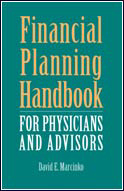
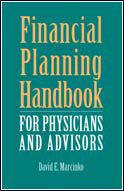
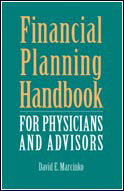
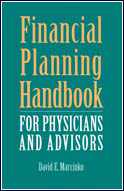
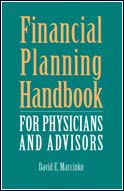
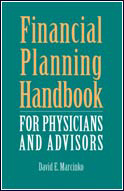
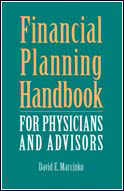
Larry is a featured writer for the Metropolitan Denver Dental Society’s journal entitled Articulator.  Larry is also a featured writer for Colorado Medicine.  In addition, Larry co-authored the Estate Planning and Execution chapter in the book entitled the Financial Planning Handbook for Physicians and Advisors


fp-book14

Clean CRD record – Yes

Clean Criminal record – Yes


More information:

Tammy K. Durnford; MA

Manager of Client Relations

tammy@shwj.com

Sharkey, Howes & Javer, Inc.

720 S. Colorado Blvd.

Suite 600 South Tower

Denver, Colorado 80246

303-639-5100

800-557-9380

Fax 303-759-2335

Website: www.shwj.com

Product Details  Product Details


Independent Medical Practitioner as Solo Primary Care Surrogate

Join Our Mailing List

Doctors Facing a Bleak Future Business and Financial Planning Model

By Dr. David Edward Marcinko; MBA, CMP™

[Publisher-in-Chief]dem2

According to Physicians News, on March 19, 2009, the demand for family physicians is growing. Proposals for health system reform focus on increasing the number of primary care physicians in America. Yet, despite these trends, the number of future physicians who chose family medicine dipped this year, according to the 2009 National Resident Matching Program. What gives?

NRMP

The National Resident Matching Program [NRMP] recently announced that a total of 2,329 graduating medical students matched to family medicine training programs. This is a decrease in total student matches from 2008, when 2,404 family medicine residency positions were filled.

Primary Care Demand Explodes

Meanwhile, demand for primary care physicians continues to skyrocket. For example, in its most recent recruitment survey, Merritt Hawkins, a national physician recruiting company, reported primary care physician search assignments had more than doubled from 341 in 2003 to 848 last year. 

The Decline of Solo Medical Practitioners

Regular readers and subscribers to this Medical Executive- Post are aware of the declining number of solo medical practitioners; we have been sounding the alarm here, in our books, journal, speaking engagements and elsewhere for years now.dhimc-book4

In fact, the statistic that we often cite is that more than 40% of the nation’s physicians are employed doctors; not employers as in the past. This business model shift has occurred over the past decade or so, and has accelerated of late. The decline in solo and independent doctors has occurred elsewhere as well, but much more slowly [i.e., dentistry, podiatry and osteopathy] as these specialties have been somewhat isolated from the traditional allopathic mainstream.

Going forward, this solitary model seems to be a good thing, and a fortunate result of the un-intended consequence of previously keeping these folks out of the healthcare mainstream.

The Decline of Independent Medical Practitioners

Now, in the March 2009 issue of Healthcare Finance News, we learn that the number of hospital owned physician practices has been climbing over the last four years, according to the Medical Group Management Association [MGMA]. Think: PHOs back-in-the-day. ho-journal3

And, while this trend only marginally affects patients and patient care, it is quite disruptive to physicians, their families, personal wealth accumulation, retirement and estate planning endeavors.

For example, according to Professor Hope Rachel Hetico, RN, MHA, CMP™ of our firm www.MedicalBusinessAdvisors.com

“The professional good-will valuation component of a medical practice is being decimated. Today, some practices are being bought and sold for tangible asset value, only.

Assessment

Therefore, allow me to identify this emerging trend which suggests independent medical practice as reflective of solo primary medical care. In other words, as independence goes the way of the “dodo-bird”, so goes primary care practitioners precisely at a time when the later is needed more than the former.

Why? Employed doctors stay that way by making money for their employer and hospital-bosses. Specialists make more money than primary care doctors. So, if you want to stay an employed doctor; which specialty would you pursue?

Answer: The NRMP class this year spoke out loud and clear. Any specialty but primary care!

Channel Surfing the ME-P

Have you visited our other topic channels? Established to facilitate idea exchange and link our community together, the value of these topics is dependent upon your input. Please take a minute to visit. And, to prevent that annoying spam, we ask that you register. It is fast, free and secure.

Conclusion

Your thoughts and comments on this ME-P are appreciated. Feel free to review our top-left column, and top-right sidebar materials, links, URLs and related websites, too. Then, subscribe to the ME-P. It is fast, free and secure.

Speaker: If you need a moderator or speaker for an upcoming event, Dr. David E. Marcinko; MBA – Publisher-in-Chief of the Medical Executive-Post – is available for seminar or speaking engagements. Contact: MarcinkoAdvisors@msn.com

OUR OTHER PRINT BOOKS AND RELATED INFORMATION SOURCES:

Product DetailsProduct Details

Product Details 

Advetising in “Worth” and “Bloomberg” Magazines

Advertisers – Give Me a Break!

By Dr. David Edward Marcinko; MBA, CMP™dr-david-marcinko16

Did you know that financial advisor Judith Zabalaoui, age 71, considered a pioneer of the fee-only business-model of financial services sales, pleaded guilty to using a Ponzi scheme to embezzle more than $3 million from her New Orleans area clients between 1993 and 2007? Yep, it’s true, but this is not really noteworthy to many pundits considering the current financial meltdown on Wall Street. But, do you know … the rest of the story?

Resource Management Inc.

Most of Zabalaoui’s clients came from Resource Management Inc. in Metairie, La., which she founded in 1974, according to the Times Picayune. Apparently, she became a Certified Financial Planner® in 1979, but the certification expired in 1999.

Link: http://www.nola.com/business/t-p/index.ssf?/base/money-1/1233728420253000.xml&coll=1

Assessment

So, here’s the rub. According to reports, Resource Management Inc. was the only firm in the country where each of the principals were allegedly “selected” by Worth [1996 to present], Money [1987] and/or both magazines as one of the top financial consultants in the country. The company also made Bloomberg Wealth Manager’s list of top wealth managers in 2004.

Industry Indignation Index: 55

Now, with all due respect and humility, I have been asked several times by Worth and Bloomberg to “promote yourself” in their “advertiser-driven” publications as a top financial consultant; but never Money magazine. I have always refused their selection charges for same of $12-18,000.

Full disclosure: I am the Founder of www.CertifiedMedicalPlanner.com and a reformed insurance agent, registered investment advisor and Certified Financial Planner™.

Conclusion

And so, your thoughts and comments on this Medical Executive-Post are appreciated. Was Judith Zabalaoui a fiduciary and what about these magazine “best-of” awards? Are they worthwhile monikers or worthless sales advertisements? What about all the so-called financial certifications, designations and charters; meaningful or meaningless? What is your opinion?

Speaker: If you need a moderator or speaker for an upcoming event, Dr. David E. Marcinko; MBA – Publisher-in-Chief of the Executive-Post – is available for seminar or speaking engagements. Contact: MarcinkoAdvisors@msn.com  or Bio: www.stpub.com/pubs/authors/MARCINKO.htm

Our Other Print Books and Related Information Sources:

Practice Management: http://www.springerpub.com/prod.aspx?prod_id=23759

Physician Financial Planning: http://www.jbpub.com/catalog/0763745790

Medical Risk Management: http://www.jbpub.com/catalog/9780763733421

Healthcare Organizations: www.HealthcareFinancials.com

Health Administration Terms: www.HealthDictionarySeries.com

Physician Advisors: www.CertifiedMedicalPlanner.com

Subscribe Now: Did you like this Medical Executive-Post, or find it helpful, interesting and informative? Want to get the latest E-Ps delivered to your email box each morning? Just subscribe using the link below. You can unsubscribe at any time. Security is assured.

Link: http://feeds.feedburner.com/HealthcareFinancialsthePostForcxos

This Time the Hospital Financial Crisis is Different

Oh Really … No so Fast!

Submitted by J. Wayne Firebaugh, Jr; CPA, CFP®, CMP™ho-journal2

Dr. Malcolm T. MacEachern, Director of Hospital Activities for the American College of Surgeons, presciently observed that:

… Our hospitals are now involved in the worst financial crisis they have ever experienced. It is absolutely necessary to all of us to put our heads together and try to find some solution. If we are to have effective results we must have concerted and coordinated immediate action. … Repeated adjustments of expenses to income have been made. Never before has there been such a careful analysis of hospital accounting and study of financial policies. It is entirely possible for us to inaugurate improvements in business methods which will lead to greater ways and means of financing hospitals in the future … It is true that all hospitals have already trimmed their sales to better meet the financial conditions of their respective communities. This has been chiefly through economies of administration. There has been more or less universal reduction in personnel and salaries; many economies have been affected. Everything possible has been done to reduce expenditures but this has not been sufficient to bring about immediate relief in the majority of instances. The continuance of the present economic conditions will force hospitals generally to further action. The time has come when this problem must be given even greater thought, both from its community and from its national aspect…

Source:  Steinberg, C. Overview of the US Healthcare System; American Hospital Association 2003.

Many hospital CXOs, healthcare administrators and physician executives would agree that Dr. MacEachern accurately describes today’s healthcare funding environment. However, they might be startled to learn that Dr. MacEachern made these observations in 1932! There is the old truism that there is nothing new under the sun.

American Hospital Association Statistics

Healthcare statistics suggested that the financial crisis is much the same today as it was for hospitals during the Great Depression. The American Hospital Association’s (AHA) reported gloomy statistics for hospitals include:

  • In 2001, 29% of hospitals had negative total margins.
  • Approximately $101.3 billion of uncompensated care was provided between 1997 and 2001 with an average annual increase of 16% during that time period.
  • Emergency departments in 62% of all hospitals report operating at, or over, capacity.
  • Technology costs are soaring as traditional technologies such as X-Ray machines, for $175,000, are being replaced by contemporary technologies such as CAT Scanners at $1 million that are in turn being replaced by CT Functional Imaging with PET Scans costing $2.3 million. Even such a “simple” instrument as a scalpel that costs $20, is being replaced by equipment for electrocautery costing $12,000, that is then being replaced by harmonic scalpels costing $30,000.
  • Between 2000 and 2002, 33% of hospitals reported increases in liability premiums of more than 100%.
  • The average age of hospital plants has increased 21% from 7.9 years to 9.6 years in just one decade.
  • In the four years ending 2002, hospital bond downgrades have outpaced hospital bond upgrades by almost 5 to 1.

Editor’s Assessment

As editor’s of the premium subscription, two volume, 1,200 pages, institutional print-guide Healthcare Organizations [Financial Management Strategies], we prefer engaged readers and contributors like Mr. Firebaugh, who demand and create compelling content like the above. Please review these links for same.

www.HealthcareFinancials.com

Info: http://www.stpub.com/pubs/ho.htm

TOC: http://www.stpub.com/pdfs/toc_ho.pdf

Purchase: Call 1-800-251-0381 or email orders@stpub.com

Conclusion

Always beware the words: “this time it’s different;” as it rarely is. And so, your thoughts and comments on this Medical Executive-Post are appreciated. Please opine and subscribe to the ME-P here; it’s fast, free and secure.

Link: http://feeds.feedburner.com/HealthcareFinancialsthePostForcxos

Speaker: If you need a moderator or speaker for an upcoming event, Dr. David E. Marcinko; MBA – Publisher-in-Chief of the Executive-Post – is available for seminar or speaking engagements. Contact: MarcinkoAdvisors@msn.com  or Bio: www.stpub.com/pubs/authors/MARCINKO.htm

Get our Widget: Get this widget!

Our Other Print Books and Related Information Sources:

Practice Management: http://www.springerpub.com/prod.aspx?prod_id=23759

Physician Financial Planning: http://www.jbpub.com/catalog/0763745790

Medical Risk Management: http://www.jbpub.com/catalog/9780763733421

Healthcare Organizations: www.HealthcareFinancials.com

Health Administration Terms: www.HealthDictionarySeries.com

Physician Advisors: www.CertifiedMedicalPlanner.com

Subscribe Now: Did you like this Medical Executive-Post, or find it helpful, interesting and informative? Want to get the latest E-Ps delivered to your email box each morning? Just subscribe using the link below. You can unsubscribe at any time. Security is assured.

Link: http://feeds.feedburner.com/HealthcareFinancialsthePostForcxos

Product Details  Product Details

Consulting for the ME-P

Talk to Us

By Ann Miller; RN, MHA

[Executive Director]solo-consultant

We would like to better understand who is visiting the Medical Executive-Post, and what you like, or do not like, about our blog site, print journal and/or communications forum. Most of all, we wish to know who is just visiting versus who is posting, commenting and subscribing; and why?

Assessment

Your responses are confidential, and will only be used for internal use to improve the website blog. We will not sell your information to anyone, ever!

Conclusion

And so, your thoughts and comments on this Medical Executive-Post are appreciated. Please send in your considered responses to me at: MarcinkoAdvisors.@msn.com

Speaker: If you need a moderator or speaker for an upcoming event, Dr. David E. Marcinko; MBA – Publisher-in-Chief of the Executive-Post – is available for seminar or speaking engagements. Contact: MarcinkoAdvisors@msn.com  or Bio: www.stpub.com/pubs/authors/MARCINKO.htm

Get our Widget: Get this widget!

Subscribe Now: Did you like this Medical Executive-Post, or find it helpful, interesting and informative? Want to get the latest E-Ps delivered to your email box each morning? Just subscribe using the link below. You can unsubscribe at any time. Security is assured.

Link: http://feeds.feedburner.com/HealthcareFinancialsthePostForcxos

A Physician by Any Other Name

Join Our Mailing List

Enter the Weekendalists and Laborists

[By Dr. David Edward Marcinko; MBA]

Publisher-in-Chief

dr-david-marcinko5More than a decade ago, in another career, I wrote a few articles for Richard L. Reece MD when he edited a print and emerging electronic trade publication for medical professionals. All very “fly”, at the time.

The Laborists

Now – according to Dr. Reece who cites the Boston Globe, in “The Birth of a Notion”, a Cape Cod and some other Massachusetts hospitals are hiring “laborists”; aka board-certified obstetricians to work regular shifts for the sole purpose of delivering babies.

www.MedicalBusinessAdvisors.com

New Causitive Drivers

What drives these new-wave specialists? The answer, of course, is the next-generation of physicians and their emerging new medical business and practice models. Much like my 12 year old daughter, it is a way of professionally breaking away from past generations, and asserting some independence and leadership. And, as Martha Stewart might say; “that’s a good thing.”

Many Reasonsbiz-book2

But, according to Reece, the real drivers are a combination of other things – the desire of doctors for regular hours, the shortage of specialists, physician burnout, the search for a safer hospital environment, the need for consistent, immediately available physician services, fear of dreaded malpractice suits, and consolidation of hospital-physicians services due to regulatory and economic pressures; etc.

Blended Generations

Dick is correct, of course, because it is not uncommon today to have three generations represented in healthcare. We have the Baby-boomers, Gen X and now, Gen Y. The Baby Boomer generation is saying with some sense of sadness that, “Medicine sure isn’t want it used to be!”, while Generation Xers are saying “It’s about time things changed!”, and the latest generation to enter the medical workforce, Gen Y’s, are saying “Ready or not, we’re here”.

http://www.BusinessofMedicalPractice.com

The Leadership Evolution

Each generation is extraordinarily complex, bringing various skills, expertise and expectations to the modern medical work environment. Determining the best method to unite such diverse thinking is one of the many challenges faced by physician executives and healthcare leaders. Is it any wonder that many medical leaders and executive in the Baby Boomer generation find themselves at a loss? The days of functional leadership are gone and suddenly, no one cares about the expertise of the Baby Boomers or how they climbed the corporate ladder, in medicine or elsewhere. Leadership in the era of Health 2.0 is no longer about command-control or dictating with intense focus on the bottom line; it is about collaboration, empowerment and communication. And, it is not about titles and nomenclature.

cmpLinguistic Evolution

As the linguistic evolution of terms progresses, the nomenclature of hospitalist was followed by that of intensivist, proceduralist, nocturalists, in-situ physician and even weekendalists. Think I’m kidding?

Link: http://medinnovationblog.blogspot.com/2009/02/hospital-based-doctorists.html

Assessment

I still like the causative analogy of my pre-teen daughter; it’s much simpler to understand. What do you think?  

References

1. Wachter, R and Goldman, R: “The Emerging Role of ‘Hospitalists’ in the American Health System’. In, New England Journal of Medicine; 335, 514-517, 1996

2. Kowalczyk, L: The Birth of a Notion: Hospitals Turning to Laborarists. Boston Globe, February 23, 2009

Conclusion

Your thoughts and comments on this ME-P are appreciated. Feel free to review our top-left column, and top-right sidebar materials, links, URLs and related websites, too. Then, subscribe to the ME-P. It is fast, free and secure.

Speaker: If you need a moderator or speaker for an upcoming event, Dr. David E. Marcinko; MBA – Publisher-in-Chief of the Medical Executive-Post – is available for seminar or speaking engagements. Contact: MarcinkoAdvisors@msn.com

OUR OTHER PRINT BOOKS AND RELATED INFORMATION SOURCES:

***

[PHYSICIAN FOCUSED FINANCIAL PLANNING AND RISK MANAGEMENT COMPANION TEXTBOOK SET]

  Risk Management, Liability Insurance, and Asset Protection Strategies for Doctors and Advisors: Best Practices from Leading Consultants and Certified Medical Planners™   Comprehensive Financial Planning Strategies for Doctors and Advisors: Best Practices from Leading Consultants and Certified Medical Planners™

[Dr. Cappiello PhD MBA] *** [Foreword Dr. Krieger MD MBA]

***

The No Insurance Club

Emerging Pre-Paid Cash-Based Medicine

By Bob Grove

no-insurance-clubHealthcare in America is in Turmoil. The No Insurance Club [NIC] feels private contracts may be the solution. More and more Americans are going without healthcare especially preventative healthcare. The reasons – costs are too high, patients can’t get accepted due to a pre-existing condition, companies are cutting back on benefits, people have been laid off from work; and the list goes on.

Governmental Solutions 

What’s being done to improve healthcare? Barack Obama and the Government want more control and regulation and the system seems to be leaning toward socialized care. Private insurance companies continue to increase premiums, which prices healthcare out of reach for the average American. Employers can no longer float the cost of insurance so they pass it on to their employees. Patients aren’t the only ones being affected by the current state of healthcare. More and more doctors are going out of business and hospitals are cutting back due to escalating costs and payment defaults.

Private Solutions 

The current remedy; Americans are taking out private major medical policies for catastrophic events with high-deductibles [MSA/HSAs] to keep monthly premiums down, or are turning to Medicaid, mini retail-clinics at grocery stores/pharmacies, and emergency room visits for common illnesses.

Innovative Solutions 

What about prevention and maintenance? More than 90 percent of health related issues can be taken care of with preventative care and maintenance but only a small percentage of Americans currently enjoy the benefit of preventative healthcare.

The No Insurance Club

The NIC has come up with a fresh look at healthcare by offering an affordable alternative to traditional insurance options.

NIC Benefits and Features 

The No Insurance Club connects patients with participating board certified physicians that will treat and care for preventative healthcare needs for a one-time prepaid annual membership fee:


  • NIC patients make a one-time annual payment that is typically less than a one-month premium with traditional insurance.
  • Patients receive up to 12 office visits per year that also include immunizations, $4 or less in-office prescriptions, and additional services including blood tests.
  • No deductible, no co-pays, no premiums.
  • No surprise bills to patients.
  • Viable alternative to COBRA for employees laid off from work.
  • Low cost option for the self-employed.

Assessment

What’s in it for the doctors? How about no insurance clerks, no need to snail mail medical insurance claims or use expensive electronic claims submission clearinghouse services, no bad debts or bad expense write-offs, no ARs; and fast cash! 

Link: http://www.noinsuranceclub.com/

I would be happy to speak with and connect ME-P readers, participating doctors and even patients for interviews to learn more about the NIC network and its benefits.

Bob Grove

Wild West PR

(801) 651-0290

bob@wildwestpr.com

Conclusion

And so, your thoughts and comments on this Medical Executive-Post are appreciated.

Speaker: If you need a moderator or speaker for an upcoming event, Dr. David E. Marcinko; MBA – Publisher-in-Chief of the Executive-Post – is available for seminar or speaking engagements. Contact: MarcinkoAdvisors@msn.com  or Bio: www.stpub.com/pubs/authors/MARCINKO.htm

Get our Widget: Get this widget!

Our Other Print Books and Related Information Sources:

Practice Management: http://www.springerpub.com/prod.aspx?prod_id=23759

Physician Financial Planning: http://www.jbpub.com/catalog/0763745790

Medical Risk Management: http://www.jbpub.com/catalog/9780763733421

Healthcare Organizations: www.HealthcareFinancials.com

Health Administration Terms: www.HealthDictionarySeries.com

Physician Advisors: www.CertifiedMedicalPlanner.com

Subscribe Now: Did you like this Medical Executive-Post, or find it helpful, interesting and informative? Want to get the latest E-Ps delivered to your email box each morning? Just subscribe using the link below. You can unsubscribe at any time. Security is assured.

Link: http://feeds.feedburner.com/HealthcareFinancialsthePostForcxos

Healthcare Experts versus Health Journalists

Appreciating the Distinction

By Dr. David Edward Marcinko; MBA

Publisher-in-Chiefdr-david-marcinko2

As the healthcare reform, and eMR controversy unfolds, I am struck by the more-than-linguistic distinction between the terms “healthcare expert” and “health journalist.”

Link: www.HealthDictionarySeries.com

Historical Perspectives

Historically, as a peer-reviewed writer, editor, medical expert witness and now electronic publisher for almost four decades, I always sought the journalist’s title. I think the longing began in my formative years when I read that after the French Revolution, Sir Edmund Burke, looked up at the Press Gallery of the House of Commons, and said, ‘”Yonder sits the Fourth Estate, and they are more important than them all.”

Link: www.MedicalBusinessAdvisors.com

Expert versus Reporter

However, I no longer covet this title. Why? I’ve finally realized that it is far better to be a real subject-matter expert, than a journalist [read reporter]. The former creates news through knowledge, informed deeds and thought-leadership; while the later simply writes about various topics without same.

Link: www.HealthcareFinancials.com

Assessment

And so, in light of the eHR controversy, perhaps a word to the “wise” AMA, ADA, APMA, AOA and CCHIT leadership is sufficient; with apologies to Sir Edmund? Regardless of specialty, our guiding medical principles should always be; Omnia pro Aegroto [all for the patient].

Link: https://healthcarefinancials.wordpress.com/2009/01/31/about-the-ahcj/

Conclusion

And so, your thoughts and comments on this Medical Executive-Post are appreciated.

Speaker: If you need a moderator or speaker for an upcoming event, Dr. David E. Marcinko; MBA – Publisher-in-Chief of the Executive-Post – is available for seminar or speaking engagements. Contact: MarcinkoAdvisors@msn.com  or Bio: www.stpub.com/pubs/authors/MARCINKO.htm

Our Other Print Books and Related Information Sources:

Practice Management: http://www.springerpub.com/prod.aspx?prod_id=23759

Physician Financial Planning: http://www.jbpub.com/catalog/0763745790

Medical Risk Management: http://www.jbpub.com/catalog/9780763733421

Healthcare Organizations: www.HealthcareFinancials.com

Health Administration Terms: www.HealthDictionarySeries.com

Physician Advisors: www.CertifiedMedicalPlanner.com

Subscribe Now: Did you like this Medical Executive-Post, or find it helpful, interesting and informative? Want to get the latest E-Ps delivered to your email box each morning? Just subscribe using the link below. You can unsubscribe at any time. Security is assured.

Link: http://feeds.feedburner.com/HealthcareFinancialsthePostForcxos

Physician Household Borrowing and/or Investing

Join Our Mailing List

Deciding What Works?

[By Staff Reporters]fp-book4

Another way of asking the above titled question might be, “Is it smart for a doctor’s household to build savings while they are getting out of debt?”  

Financial Priorities

In the first instance, the doctor already has debt and would be increasing the terms of any loans by deferring some of the payments to savings, which is equivalent to borrowing the same amount.

In the second instance, the doctor would be taking on debt to save more money. The answer is that it makes sense to borrow money for investment purposes only if the financial gains derived from the investment are larger than the financial benefits of paying off the debt. But, who can know for sure?

www.MedicalBusinessAdvisors.com

Minimum Account Payments

Assuming that a medical professional has more debt than needed, and doesn’t make contributions to a retirement account, the concern becomes: [1] should he/she make minimum payments to the debt and contribute to a retirement account; or [2] should he/she make the maximum payments toward the debt or loans, etc?

Downside Risks

It is important to understand the downside risks of a lower payment strategy. Just as stocks return more than bonds due to their higher risk, the lower payment strategy returns more because of its’ higher risk. Taking on debt to finance an investment is riskier than paying off debt for a number of reasons.

First, the US economy may continue its’ current depressionary spiral, and investments and savings could disappear as financial institutions fail. This would leave the doctor with debt that he or she could not service.

Second, the rate-of-return required to decide whether or not to borrow for investment purposes may not be achieved, leaving the doctor in worse financial shape than if he or she had just paid off the debt.

Assessment

Ultimately, the doctor must decide if the added risks are worth the possible gain. But, the services of a fiduciary financial advisor may also be required. However, some doctors may not be ready to receive the sort of “tough-love” required in this case. 

Channel Surfing the ME-P

Have you visited our other topic channels? Established to facilitate idea exchange and link our community together, the value of these topics is dependent upon your input. Please take a minute to visit. And, to prevent that annoying spam, we ask that you register. It is fast, free and secure.

Conclusion

Your thoughts and comments on this ME-P are appreciated. Feel free to review our top-left column, and top-right sidebar materials, links, URLs and related websites, too. Then, subscribe to the ME-P. It is fast, free and secure.

Speaker: If you need a moderator or speaker for an upcoming event, Dr. David E. Marcinko; MBA – Publisher-in-Chief of the Medical Executive-Post – is available for seminar or speaking engagements. Contact: MarcinkoAdvisors@msn.com

OUR OTHER PRINT BOOKS AND RELATED INFORMATION SOURCES:

Comprehensive Financial Planning Strategies for Doctors and Advisors: Best Practices from Leading Consultants and Certified Medical Planners(TM)

Debt Consolidation for Physicians

Advantages and Disadvantages

By Staff Reportersfp-book5

The main advantage of debt consolidation is that it allows a doctor to make one payment instead of many, and this helps avoid late fees for missed payments. The doctor may save time by having to make only one payment per month instead of many.

Other Advantages

Another advantage is that debt consolidation promotes self-discipline by transferring credit card debt (and other lines of credit) that does not require mandatory principal payments into a fixed-term loan – with mandatory payments that include both principal and interest. This is a useful tool for doctors who may find it difficult to make more than the minimum payments on their loans because they spend too much. It should be obvious that budgeting should go hand-in-hand with this process, because if the doctor continues to spend at the former level, yet now has a mandatory payment, the result can be financially devastating.

A final advantage to debt consolidation is it may result in a lower overall interest rate. This is, of course, conditional on the lender providing the consolidation.

Disadvantages

One disadvantage of debt consolidation is that it can lock a doctor into mandatory payments. Depending on the situation, this can be either a blessing or a curse. It becomes a curse when the fixed payments are so high that he/she can no longer make the full debt payments each month. Depending on the lender, and the terms of the consolidation loan, this could result in the loan being called. The effects of this are obviously detrimental to the doctor.

Other Disadvantages

A second disadvantage is that the doctor loses flexibility when he or she takes on a fixed payment that is larger than the combination of all smaller minimum payments. The fixed-payment schedule becomes detrimental when h/she has an unexpected reduction in income. The doctor without a fixed-payment schedule can increase payments to many small individual loans, and if income reduction occurs, drop the payments back down to the lower level. Then; when normal levels of income return, the higher payments can be resumed.insurance-book2

Assessment

Making larger payments requires discipline; because a lack of same was likely causative of the debt in the first place.

Conclusion

Your thoughts and comments on this Medical Executive-Post are appreciated. Have you ever been in this situation? Feel free to opine anonymously.

Speaker: If you need a moderator or speaker for an upcoming event, Dr. David E. Marcinko; MBA – Publisher-in-Chief of the Executive-Post – is available for seminar or speaking engagements. Contact: MarcinkoAdvisors@msn.com  or Bio: www.stpub.com/pubs/authors/MARCINKO.htm

Get our Widget: Get this widget!

Our Other Print Books and Related Information Sources:

Practice Management: http://www.springerpub.com/prod.aspx?prod_id=23759

Physician Financial Planning: http://www.jbpub.com/catalog/0763745790

Medical Risk Management: http://www.jbpub.com/catalog/9780763733421

Healthcare Organizations: www.HealthcareFinancials.com

Health Administration Terms: www.HealthDictionarySeries.com

Physician Advisors: www.CertifiedMedicalPlanner.com

Get our Widget: Get this widget!

Subscribe Now: Did you like this Medical Executive-Post, or find it helpful, interesting and informative? Want to get the latest E-Ps delivered to your email box each morning? Just subscribe using the link below. You can unsubscribe at any time. Security is assured.

Link: http://feeds.feedburner.com/HealthcareFinancialsthePostForcxos

Problems with HIT in Minnesota

The Continuing eHR Saga

By Darrell K. Pruitt; DDSpruitt2

If you were one of fifty governors who decide to jump off a cliff because flying looks so cool, would you proudly race to be the first to grab the air? Blissfully, Minnesota Governor Tim Pawlenty is way ahead of the pack. He’s so confident in healthcare information technology [IT]  that he doesn’t even have to watch where he’s going – leaving him free to smile for the cameras. Now that’s cool.

Initial Ambitious Plans

Attention ME-P readers! Please gather around to watch a world-class belly-flop of a gutsy statewide eHR mandate. A few years ago, Governor Pawlenty had ambitious plans to lead the nation with an interoperable eHR system that was touted to include all providers – that means Minnesota dentists as well. Your landing could be vertical and abrupt, Pawlenty.

CCHIT Approved? 

In fairness to a brick, back in 2005 Pawlenty could not have predicted the economic collapse that began three years later, nor could he have known about the subsequent $19 billion eHR money that would be made available to providers – but only if they purchase healthcare IT software that is approved by the Certification Commission for Healthcare Information Technology (CCHIT).

CCHIT Laggards 

Even if the descending Pawlenty could have predicted the recent changes in the terrain, including the CCHIT qualification, he would have never guessed that to this day in March of 2009, the certifying commission would still be yet to certify even one single electronic dental record – thereby blocking Minnesota dentists from copious federal help in their efforts to become compliant in Pawlenty’s brave new state.

“The government is actually looking for places to spend the money where there is a strong likelihood of success stories”.

Mike Ubl

Executive Director Minnesota Health Information Exchange

[Owned by Blue Cross Blue Shield of Minnesota, HealthPartners, Medica, Fairview Health Services, UCare and the Minnesota Department of Health].

Link: http://www.twincities.com/ci_11830085

And that after this is accomplished, and the brave new world begins – When all men are paid for existing and no man must pay for his sins”.

-Rudyard Kipling

The CCHIT qualification was incredibly bad luck for Pawlenty’s nifty ideas of interoperability with all providers. When Minnesota dentists discover that they must pay $30 thousand for software they don’t want in order to practice in paradise, some may just swallow their pride, sell the portable ice-fishing house, and move to slow-moving Iowa.

Dentists, MDA and the ADA News

Why the surprisingly quick landing? If Pawlenty actually gave any consideration for dentistry at all, just like everyone else, he must have assumed that dentists’ concerns about digital records would be adequately attended to by the Minnesota Dental Association [MDA] and the American Dental Association. It was easy to make that mistake because of the enthusiasm for eDRs radiating from ADA Headquarters and expressed in confident terms in ADA News Online articles that have since stopped appearing.  Most eDR enthusiasts naturally assumed that by now the majority of dentists in the nation would be saving money, lives and trees with paperless practices. However, the ADA has been nowhere to be found for a long time. As it turns out, the professional organization has still not yet even contacted the certifying commission. We know this, because when I personally contacted CCHIT a few weeks ago, it caught them off guard. I was told that I was one of the first to ever mention dentistry.

Link: https://healthcarefinancials.wordpress.com/2009/03/02/cchit-is-prejudiced-and-lacks-diversity-%e2%80%93-an-indictmen

No Endorsements

To show how far the ADA has slipped, and as an example of its flagging influence on membership, I doubt that more than 5% of American dentists have made the ADA-endorsed leap from paper to digital. Why should they? It makes good business sense to wait, and most dentists are not techno-silly. Consider this; Even if a dentist is happy with a costly eDR system that demanded unanticipated time and effort to learn, in less than a year, CCHIT could determine that his or her favorite system is not worthy of certification because it does not integrate with physicians’ one-size-fits-all, CCHIT-certified eMRs. Tough luck, Minnesota dentists! Uncertified eDRs will be outlawed, while favored, large healthcare IT companies in Madison and Chicago will profit and pay more state taxes with Twin-Cities’ dollars. By then, all the stimulus money will be gone and lawmakers will no longer be giddy about eHRs due to the imminent explosion of data breaches everywhere caused by moving too fast. No return on investment [ROI] there. 

Assessment 

Still, Tim Pawlenty could have never known, yet away he sails with a stupid grin on his face.

Conclusion

And so, your thoughts and comments on this Medical Executive-Post are appreciated.

Speaker: If you need a moderator or speaker for an upcoming event, Dr. David E. Marcinko; MBA – Publisher-in-Chief of the Executive-Post – is available for seminar or speaking engagements. Contact: MarcinkoAdvisors@msn.com  or Bio: www.stpub.com/pubs/authors/MARCINKO.htm

Get our Widget: Get this widget!

Our Other Print Books and Related Information Sources:

Practice Management: http://www.springerpub.com/prod.aspx?prod_id=23759

Physician Financial Planning: http://www.jbpub.com/catalog/0763745790

Medical Risk Management: http://www.jbpub.com/catalog/9780763733421

Healthcare Organizations: www.HealthcareFinancials.com

Health Administration Terms: www.HealthDictionarySeries.com

Physician Advisors: www.CertifiedMedicalPlanner.com

Subscribe Now: Did you like this Medical Executive-Post, or find it helpful, interesting and informative? Want to get the latest E-Ps delivered to your email box each morning? Just subscribe using the link below. You can unsubscribe at any time. Security is assured.

Link: http://feeds.feedburner.com/HealthcareFinancialsthePostForcxos

Physician Cash Maximization Rules

One Doctor- Advisor’s [How-To] Diatribe

[By Dr. David Edward Marcinko; MBA]

[Publisher-in-Chief] www.CertifiedMedicalPlanner.orgdr-david-marcinko4

For some doctors – even more than laymen – cash management is the pivotal issue in the financial planning process. Accumulation of investment assets cannot occur if cash inflows do not exceed cash outflows. On the other hand, accumulated assets are eventually spent to fund expenses during planned time periods when cash outflow exceeds inflow.

Inflation

Traditionally, financial advisors have opined that inflation has a dramatic impact on both ends of the cash management spectrum because inflation has a compounding effect. That compounding effect means that a mere ¼% change in planning assumptions about anticipated inflation can have more significant influence over long-term projected outcomes than a 5% change in the amount of a particular item of budgeted income or expense. Well, true enough if projected linearly using some Monte-Carlo type software simulation. But, in the real word, economists appreciate cost and efficiency improvements [email over snail mail] and the potential for substitution of goods [diesel fuel for gasoline – chicken for steak, etc].

fp-book2

Be More Like … my Dad

On the other hand, far too few of my fellow medical colleagues – and financial advisors – are like my dad. Not well educated by academic standards, but with common sense that seems a precious commodity, today.

Dave, he used to tell me – and still does at age 84:

“Invest your money for growth carefully – and take some risks – but don’t be too afraid of inflation.”

 Why not, dad?

“Because; if you’re not a conspicuous consumer, you’ll have less to worry about.”

Cash Management

Well, most of us are not like my dad; me included. But, his depression-mentality has never completely worn off. A doctor’s household can maximize the cash available for investing by setting up the account in this manner.

1. The first step is to open a checking account, money market account, and a brokerage account. The money market account is often included in a brokerage account.

2. The second step is to initiate electronic direct deposit of the paycheck into the money market account.

3. The third step is to determine the amount of cash reserve needed. As mentioned elsewhere on this ME-P, we are suggesting 3-5 years of cash-reserves on-hand, as an emergency fund for most medical professionals.

Once, when, and if, the amount of the reserve is determined and achieved, any extra money should be transferred to the brokerage account and invested according to personal goals, objectives and risk-tolerance. A small balance of a few thousand dollars can be kept in the checking account to prevent overdrafts. Beyond the few thousand dollars, the checking account should serve as a pass-through account where money is transferred from the money market account to cover checks written for the budgeted expenses.

Example of Managing Cash Reserve Amountsbiz-book1

A physician client recently asked me to help him increase his savings. He explained that he had a very detailed realistic budget, but had a hard time staying within the budget when cash was available; as he lectured occasionally and was fortunate to have a few extra dollars every now and then.

Recommendations

As a financial planner, and the founder of an online educational-certification program for physician focused advisors, I recommend that he set up his checking, money market and investment accounts and have his medical practice directly deposit his paycheck in the money market account. He then was to transfer only enough money to his checking account each month, to cover his very carefully budgeted and spread-sheet driven expenses. Furthermore, his money market account was to be equal to our predetermined cash reserve needs, with any excess cash transferred to his investment account and according to his financial and investing plan.

Assessment

Of course, his carefully constructed budget included no cash reserves or emergency fund!  He forgot to budget cash! And so; the usual conundrum ensued.

Conclusion

Your thoughts and comments on this ME-P are appreciated. Feel free to review our top-left column, and top-right sidebar materials, links, URLs and related websites, too. Then, subscribe to the ME-P. It is fast, free and secure.

Link: http://feeds.feedburner.com/HealthcareFinancialsthePostForcxos

Speaker: If you need a moderator or speaker for an upcoming event, Dr. David E. Marcinko; MBA – Publisher-in-Chief of the Medical Executive-Post – is available for seminar or speaking engagements. Contact: MarcinkoAdvisors@msn.com

OUR OTHER PRINT BOOKS AND RELATED INFORMATION SOURCES:

LEXICONS: http://www.springerpub.com/Search/marcinko
PHYSICIANS: www.MedicalBusinessAdvisors.com
PRACTICES: www.BusinessofMedicalPractice.com
HOSPITALS: http://www.crcpress.com/product/isbn/9781466558731
CLINICS: http://www.crcpress.com/product/isbn/9781439879900
ADVISORS: www.CertifiedMedicalPlanner.org
BLOG: www.MedicalExecutivePost.com

Product Details  Product Details

Comprehensive Financial Planning Strategies for Doctors and Advisors: Best Practices from Leading Consultants and Certified Medical Planners™

Don’t Rush Into eHRs

Join Our Mailing List

Address Medical ID Theft

1-darrellpruitt

[By Darrell Pruitt; DDS]

Yesterday, an important message titled “Don’t Rush eHRs Without Addressing Medical ID Theft” was posted on ModernHealthcare.com by Martin Ethridgehill, a provider training specialist with Blue Cross and Blue Shield of New Mexico.

Link: http://www.modernhealthcare.com/apps/pbcs.dll/article?AID=/20090302/REG/303029965

Mr. Ethridgehill points out that if a patient’s electronic medical identity is stolen by someone for health insurance benefits, critical information about the patient can be imperceptibly altered, leading to accidental death in an emergency room for any number of reasons.  Furthermore, he points out that even if the real patient is aware that his or her record is tainted by a false patient’s data, it is very difficult to get the comingled record cleared up.

I have also read elsewhere that HIPAA actually impedes resolution of the nightmare because the Rule also protects the privacy of the false patient – prohibiting the real patient from examining his or her own health record.

Reasons to Go Slow 

Ethridgehill is particularly critical of the EHR industry which lately has downplayed the importance of patient privacy in order to sell dangerous products.  He gives these reasons for the need to slow down in the rush for interoperability:

  • “Adding safety and records mitigation protocols ensures patient safety as an ongoing concept and practice.”
  • “No industry would be allowed to operate, where the officials in charge of it stated that the market or other bodies would be responsible for creating safety procedures. Can you imagine if the auto industry stated, “We make cars, let the market figure out how to regulate safety”? I doubt that Congress or any other body would consider these people as remotely credible, yet I hear time and time again these statements being made in public and private forums by executives, lobbyists, and even so-called healthcare leaders.”
  • “For the public and providers to embrace a product that has no regulation, no built-in safeguards and obviously no importance to safety from the makers of these products, why would Congress expect the American public or healthcare providers to embrace a product or concept that involves the unregulated risk of injury, death, or staggering liability opportunities, let alone without any hope of remedy or proper relief?”

Conclusion

Your thoughts and comments on this ME-P are appreciated. Feel free to review our top-left column, and top-right sidebar materials, links, URLs and related websites, too. Then, subscribe to the ME-P. It is fast, free and secure.

Speaker: If you need a moderator or speaker for an upcoming event, Dr. David E. Marcinko; MBA – Publisher-in-Chief of the Medical Executive-Post – is available for seminar or speaking engagements. Contact: MarcinkoAdvisors@msn.com

OUR OTHER PRINT BOOKS AND RELATED INFORMATION SOURCES:

Agenda for Financial Healthcare Change

coinsQuality Guru John Wennberg MD Targets Health Economics

By Staff Reporters

According to the New England Journal of Medicine, and as reported by blogger Matthew Holt in December 2008, the Dartmouth Atlas team has offered an “Agenda for Change” which laid out some practical tactics – for reducing medical practice variation – leading  to more standardized care patterns and rational economic spending.

Link: http://www.healthcarefinancenews.com/news/controlling-variations-spending-critical-healthcare-reform

The Original Pioneer

Written by oft cited John Wennberg MD (the godfather of medical practice variation research), Shannon Brownlee [author of the seminal book “Overtreated”] and colleagues, the “Agenda” includes financial incentives for Medicare providers that would share savings resulting from better organizing patient care and improving outcomes and efficiencies especially for people managing chronic conditions.

www.MedicalBusinessAdvisors.com

Note: Efficiency here means the best outcomes and quality at the lowest cost and resource utilization; and we might add at the most appropriate venue, delivery vehicle and time.

www.HealthDictionarySeries.com

Assessment

Until now, experts have blamed the healthcare growth in spending on advances in medical technology, but Elliott Fisher MD, another one of the study’s authors, says that differences in financial growth rates across regions show that advancing technology is only part of the explanation.

IOW: Controlling financial variations in spending, like those clinical variations in medical care via EBM, is critical to any type of healthcare reform.

Be sure to download and read the 25 page report here.

Link: http://www.dartmouthatlas.org/topics/agenda_for_change.pdf

Conclusion

Your thoughts and comments on this Medical Executive-Post are appreciated.

Speaker: If you need a moderator or speaker for an upcoming event, Dr. David E. Marcinko; MBA – Publisher-in-Chief of the Executive-Post – is available for seminar or speaking engagements. Contact: MarcinkoAdvisors@msn.com  or Bio: www.stpub.com/pubs/authors/MARCINKO.htm

Get our Widget: Get this widget!

Our Other Print Books and Related Information Sources:

Practice Management: http://www.springerpub.com/prod.aspx?prod_id=23759

Physician Financial Planning: http://www.jbpub.com/catalog/0763745790

Medical Risk Management: http://www.jbpub.com/catalog/9780763733421

Healthcare Organizations: www.HealthcareFinancials.com

Health Administration Terms: www.HealthDictionarySeries.com

Physician Advisors: www.CertifiedMedicalPlanner.com

Subscribe Now: Did you like this Medical Executive-Post, or find it helpful, interesting and informative? Want to get the latest E-Ps delivered to your email box each morning? Just subscribe using the link below. You can unsubscribe at any time. Security is assured.

Link: http://feeds.feedburner.com/HealthcareFinancialsthePostForcxos

On Emergency Funds for Physicians

dr-david-marcinko3Cash Reserves Now More Important Than Ever!

By Dr. David Edward Marcinko; MBA, CMP™

[Publisher-in-Chief]

CEO: www.MedicalBusinessAdvisors.com

This is a basic question in financial planning circles that has generated much activity in the medical community, of late. Previously considered so mundane – as to be dismissed by some haughty physicians – it has acquired increased urgency with the current financial meltdown.

What Security Level Desired?

Yet, the answer to this question is dependent upon the security level desired by the medical provider and his/her family. Traditionally, financial planners suggested most people with solid employment, and transferrable skills, have at least three months of living expenses (not including taxes) in a reserve fund that is easily accessible (i.e., liquid). The amount needed for a one-month reserve is equal to the amount of expenses for the month, rather than the amount of monthly income. This is because during no-income months – there is no income tax.

The Usual Checklist

We suggest the following questions as helpful in determining the amount of reserve needed by medical professionals:

1. How many incomes do you have in your household?

2. How secure is your current practice, or medical job?

3. Do you have other unrelated sources of income; medically or non-medically related?

4. How long would it take you to find another position in your specialty, if suddenly unemployed? [Hint: Assume one month per ten grand of income; at $150-k annually, this means searching for 15 months].

5. How much money do you spend, and save, each month?

6. Would you be willing [able] to lower your monthly [fixed or variable] expenses, if you were unemployed?

Many Factors to Considerinsurance-book1

But, many other factors come into play when determining how much money a particular physician and his/her family should have on hand. Does the family have one income or two? How stable is this income source? Does the doctor work for himself [managing partner], or is she employed [minority partner, associate, etc]? What kind of firm, company or hospital employs him; private, HMO, MCO, Federal or State entity? Does the family use all of the income each month? What about, life, health, disability or LTC insurance as fringe benefits? Does the family anticipate the possibility of large liability exposures and expenses occurring in the future (i.e., medical school or practice start-up debt, private tuition for the kids, medical expenses, liability suits etc.)? Are you willing to relocate for a new job?

Family Situation Appraisal

If the doctor is in a dual-income family – with stable incomes – and/or lives on a single income – the need for a liquid reserve is minimal; but still much more than for the average layman. On the other hand, if the doctor is a single individual, with an unstable income and she spends everything each month, the need for a liquid cash reserve is higher.

In the previous example, and in the stable past, the doctor may have opted for a six-to-nine month reserve if the need for security was high; and a three-to-six month reserve if the need for security was low. For the last five to seven years however, we have suggested to our medical clients that they expand this reserve cash corpus to 12-24 months; and as a blanket rule of thumb for all medical professionals. Of course, I was roundly criticized for it; until now.

Today, we are suggesting 3-5 years; with considerably less criticism. Cash is power, choice, swagger, potency, freedom and represents options. Acquire it!

Stashing the Cash

Once the amount of reserve is determined, the doctor should consider the appropriate investment vehicles for the reserve fund. At minimum, the reserve should be invested in a money market mutual fund with NAV @ 1.00 USD. Larger income earners may opt for tax-exempt money market mutual funds, as needed.  For larger reserves, an ultra-short term, no-low bond fund, might be appropriate for amounts over three months – in periods of deflation; not so during inflationary periods.

Assessment

Today, we recommend doctors keep 3-5 years of cash-on-hand. Yes, I am aware of the “paradox-of-thrift” conundrum. But, do you want to help the domestic GDP, or your family; you decide? Personally, my own concern is not the macro-economic milieu.

Full disclosure: I am a former insurance agent, registered investment advisor; board certified surgeon and Certified Financial Planner™

Conclusion

And so, your thoughts and comments on this Medical Executive-Post are appreciated. How stressed out are you, right now? You are sleepless if previously considered cash, as trash.

But, if sitting on a little pile; you should be sleeping like a baby.    

Link: http://feeds.feedburner.com/HealthcareFinancialsthePostForcxos

Speaker: If you need a moderator or speaker for an upcoming event, Dr. David E. Marcinko; MBA – Publisher-in-Chief of the Medical Executive-Post – is available for seminar or speaking engagements. Contact: MarcinkoAdvisors@msn.com

OUR OTHER PRINT BOOKS AND RELATED INFORMATION SOURCES:

LEXICONS: http://www.springerpub.com/Search/marcinko
PHYSICIANS: www.MedicalBusinessAdvisors.com
PRACTICES: www.BusinessofMedicalPractice.com
HOSPITALS: http://www.crcpress.com/product/isbn/9781466558731
CLINICS: http://www.crcpress.com/product/isbn/9781439879900
ADVISORS: www.CertifiedMedicalPlanner.org
BLOG: www.MedicalExecutivePost.com

***

Comprehensive Financial Planning Strategies for Doctors and Advisors: Best Practices from Leading Consultants and Certified Medical Planners(TM) 

Front Matter with Foreword by Jason Dyken MD MBA

logos

“BY DOCTORS – FOR DOCTORS – PEER REVIEWED – FIDUCIARY FOCUSED”

***

Enter our Writing Contest

You Must Submit – to Win

By Hope Hetico; RN, MHA, CMP™

Managing Editoridea2

Enter the Medical Executive Post submissions contest and just maybe you can become famous! Simply send in a written post about some aspect of the healthcare industrial complex, finance, administration, policy or health economics space that you are particularly knowledgeable about. Or, visit our topic channels for related ideas. Use you fertile imagination.

Rules

Submission must be original, not submitted elsewhere and under 1,000 words. Rest assured that grammar, spelling, citations and punctuation counts. Originality and thought-leadership is a must. Oh, you must be a subscriber and all copyright ownership will be transferred to us, as well. Your material may even be used in some iMBA, Inc print project or publication, now in-progress or in the future.

Grand Prize

Just think! You could become one of 3 finalists featured as an upcoming Medical Executive Post monthly column, with photographic byline, or even the grand prize winner who’ll receive our free best-selling hardcover textbook, the Business of Medical Practice.

Link: http://www.springerpub.com/prod.aspx?prod_id=23759

biz-book3

Contest Close

Submissions are due December 31, 2009. There are no limits to the number of times you may apply or the number of submissions you may send in. All results are final. The anonymous judges reserve the right of non-selection. And, we reserve the right to reject any content submission; for any reason perceived as reasonable, or unreasonable.

Conclusion

And so, your thoughts and comments on this Medical Executive-Post submissions contest are appreciated.

Subscribe Now: Did you like this Medical Executive-Post, or find it helpful, interesting and informative? Want to get the latest E-Ps delivered to your email box each morning? Just subscribe using the link below. You can unsubscribe at any time. Security is assured.

Link: http://feeds.feedburner.com/HealthcareFinancialsthePostForcxos

Speaker: If you need a moderator or speaker for an upcoming event, Dr. David E. Marcinko; MBA – Publisher-in-Chief of the Executive-Post – is available for seminar or speaking engagements.

Upcoming Health Economics Interview with Dr. David Marcinko

Coming Soon from Medical Business News, Inc

By Ann Miller; RN, MHA

ME-P Executive-Directordr-david-marcinko22

Medical Business News, Inc., the publisher of Medical News of Arkansas, is a leading source for healthcare industry news that is truly useful. With a professional readership comprised of physicians and key industry decision makers, Medical News publications are devoted entirely to healthcare issues that impact both clinical and administrative best practices. Written and edited specifically for healthcare professionals, MBN writers work with experts at the local, regional and national level to keep stakeholders informed about the ever-evolving healthcare system.

Out Reach

It is no wonder then, why local market MNA editor Jennifer Boulden recently contacted us to arrange an interview with Dr. David Edward Marcinko, our Publisher-in-Chief, who is also a former insurance agent, registered investment advisor, health economist and Certified Financial Planner™

Link: www.MedicalBusinessAdvisors.com  

Interview Topics

The wide open topic in this environment of medically specific lethargy and macro economic insecurity – personal and business planning for physicians. Of course, since this is a broad field, we will use the rating and ranking system of this blog to help Jennifer and her staff, winnow down categories to top-of-mind concerns of our ME-P subscribers and her MNA readers.

Link: www.HealthcareFinancials.com

Assessment

But, we also ask you to send in any particular issues that you may have in order to make the interview helpful and exciting for all concerned.

Link: www.HealthDictionarySeries.com

Conclusion

And so, your thoughts and comments on this Medical Executive-Post are appreciated.

Link: www.CertifiedMedicalPlanner.com

Speaker: If you need a moderator or speaker for an upcoming event, Dr. David E. Marcinko; MBA – Publisher-in-Chief of the Executive-Post – is available for seminar or speaking engagements. Contact: MarcinkoAdvisors@msn.com  or Bio: www.stpub.com/pubs/authors/MARCINKO.htm

Get our Widget: Get this widget!

Subscribe Now: Did you like this Medical Executive-Post, or find it helpful, interesting and informative? Want to get the latest E-Ps delivered to your email box each morning? Just subscribe using the link below. You can unsubscribe at any time. Security is assured.

Link: http://feeds.feedburner.com/HealthcareFinancialsthePostForcxos

New-Wave Medical Quality Resources

Beyond Traditional Administrative Databases

Staff Reporters

ho-journal15Physician blogger, and Harvard University CTO, John Halamka MD recently opined about some emerging new medical quality data sources for the industry.

Traditional Sources

As all ME-P subscribers know, traditional data sources are derived from, and usually include, administrative claims data information aggregated from many sources and silos.

www.HealthcareFinancials.com

Emerging Sources

But, newer sources of data for medical quality analysis go beyond administrative data and includes electronic repositories like eHRs, PHRs, eMRs and Healthcare Information Exchange [HIE] resources, where available.

www.HealthDictionarySeries.com

Assessment

For a few more examples:

Link: http://www.thehealthcareblog.com/the_health_care_blog/2009/02/index.html

Conclusion

And so, your thoughts and comments on this Medical Executive-Post, and original post, are appreciated.

Are these database silos secure, and do patients know that, or how, their hopefully blinded information is redacted and used?  Will the health insurance industry use this information to further “slice and dice” ratings levels for their insured’s? Will it then be securitized, re-aggregated and resold again for non-healthcare related purposes like home, auto or life insurance; or other yet to be developed risk-management products and services?

Is this transparent and fair to patients? What are the legal and ethical implications, if any? Thought leaders please opine?

Speaker: If you need a moderator or speaker for an upcoming event, Dr. David E. Marcinko; MBA – Publisher-in-Chief of the Executive-Post – is available for seminar or speaking engagements. Contact: MarcinkoAdvisors@msn.com  or Bio: www.stpub.com/pubs/authors/MARCINKO.htm

Get our Widget: Get this widget!

Our Other Print Books and Related Information Sources:

Practice Management: http://www.springerpub.com/prod.aspx?prod_id=23759

Physician Financial Planning: http://www.jbpub.com/catalog/0763745790

Medical Risk Management: http://www.jbpub.com/catalog/9780763733421

Healthcare Organizations: www.HealthcareFinancials.com

Health Administration Terms: www.HealthDictionarySeries.com

Physician Advisors: www.CertifiedMedicalPlanner.com

Get our Widget: Get this widget!

Subscribe Now: Did you like this Medical Executive-Post, or find it helpful, interesting and informative? Want to get the latest E-Ps delivered to your email box each morning? Just subscribe using the link below. You can unsubscribe at any time. Security is assured.

Link: http://feeds.feedburner.com/HealthcareFinancialsthePostForcxos

WellCare Medicare-Advantage Scandal

Company “Misled and Confused Medicare Beneficiaries”?

By Dr. David Edward Marcinko; FACFAS, MBA, CMP™dr-david-marcinko20

According to Jacob Goldstein, of the WSJ, on February 20, 2009, WellCare the publicly traded company that some folks “love-to-hate”, and manages health coverage for Medicare and Medicaid beneficiaries, is in trouble again. In a recent letter, the Feds ordered the company to stop enrolling new Medicare beneficiaries, effective March 7, 2009. The sanction will be in effect until the Centers for Medicare and Medicaid Services [CMS] is satisfied that the company has corrected the alleged deficiencies.

Letter from the Feds

Adjusted for enrollment, the rate of complaints about WellCare’s marketing of Medicare Advantage plans are three times the national average, the letter says. The letter goes on to allege that the company “misled and confused Medicare beneficiaries” and “engaged in unauthorized door-to-door solicitation.” CMS also accuses WellCare’s agents of “misleading beneficiaries and misrepresenting WellCare plans at sales events in December 2008″ and failing to “discover forged applications through its own monitoring systems.” Of course, the company said it would continue to work with independent third-parties to ensure that it is compliant with CMS.

Click here to read the letter.

Oh Regina – Say it Ain’t So!

Finally, and perhaps the most personally distasteful for me in this whole sordid affair is not the fact that WellCare allegedly tried to rip off old folks. It’s just that Dr. Regina Herzlinger, the Harvard Business School professor – mother of a physician herself and proponent of healthcare competition and Consumer Directed Health Care Plans [CDHCPs] and a WellCare BOD member – apparently sold $2.3 million worth of stock in Wellcare three months before the FBI arrived.

Assessmentbiz-book5

 I first became aware of Regina Herzlinger’s work while in business school [not HBS] in the early 1990s. I recall calling her office for advice and referencing her several times in both editions of my best-selling book, the Business of Medical Practice [Profit Maximizing Techniques for Savvy Doctors]. She even came to Piedmont Hospital, here in Atlanta, last year on a healthcare speaking tour promoted in the local newspapers. What a shame. All co-incidence; ask Regina? Link: www.MedicalBusinessAdvisors.com

Industry Indignation Index: 35

Full disclosure: I am the founder of www.CertifiedMedicalPlanner.com and a reformed insurance agent, registered investment advisor and Certified Financial Planner™

Conclusion

And so, your thoughts and comments on this Medical Executive-Post are appreciated. Do you think WellCare “Misled and Confused Medicare Beneficiaries?” You may opine and decide.

Speaker: If you need a moderator or speaker for an upcoming event, Dr. David E. Marcinko; MBA – Publisher-in-Chief of the Executive-Post – is available for seminar or speaking engagements. Contact: MarcinkoAdvisors@msn.com  or Bio: www.stpub.com/pubs/authors/MARCINKO.htm

Our Other Print Books and Related Information Sources:

Practice Management: http://www.springerpub.com/prod.aspx?prod_id=23759

Physician Financial Planning: http://www.jbpub.com/catalog/0763745790

Medical Risk Management: http://www.jbpub.com/catalog/9780763733421

Healthcare Organizations: www.HealthcareFinancials.com

Health Administration Terms: www.HealthDictionarySeries.com

Physician Advisors: www.CertifiedMedicalPlanner.com

Subscribe Now: Did you like this Medical Executive-Post, or find it helpful, interesting and informative? Want to get the latest E-Ps delivered to your email box each morning? Just subscribe using the link below. You can unsubscribe at any time. Security is assured.

Link: http://feeds.feedburner.com/HealthcareFinancialsthePostForcxos

Product DetailsProduct DetailsProduct Details   

Understanding Healthcare Competition

Funneling Porter’s Five Forces of Business

Staff Reporters

ho-journal12Michael Porter PhD, of Harvard Business School, is considered by many to be one of the world’s leading authorities on competitive strategy and international competitiveness.

In 1980, he published Competitive Strategy: Techniques for Analyzing Industries and Competitors, in which he argued that all businesses must respond to five competitive forces. And now, these thoughts have been condensed for the healthcare industrial complex by Robert James Cimasi; MHA, CMP™ of Health Capital Consultants, LLC, in St. Louis, MO. They are cited below from the print journal-guide www.HealthcareFinancials.com

1. The Threat of New Market Entrants

This force may be defined as the risk of a similar company entering your local marketplace and winning business. There are many barriers to entry of new market entrants in healthcare including: the high cost of equipment, licensure, requirement for physicians and other highly trained technicians, development of physician referral networks and provider contracts, and other significant regulatory requirements.

Certificate of Need (CON) laws, which require governmental approval for new healthcare facilities, equipment, and services that have been in place since they were federally mandated in 1974. State CON laws create a regulatory barrier to entry. New medical provider entrants commonly faced substantial political opposition by established interests, which is manifested in the CON review process.

2. The Bargaining Power of Suppliers

A supplier can be defined as any business relationship or vendor you rely on to deliver your product, service or outcome. Healthcare equipment is a highly technical product produced by a limited number of manufacturers. This reduces the range of choices for providers and can increase costs.

3. Threats from Substitute Products or Services

Substitute products or services are those that are sufficiently equivalent in function or utility to offer consumers an alternate choice of product or service.  An illustration of this in healthcare would be diagnostic imaging, or PET scans, as a substitute for surgery, which is often a more costly and risky option for patients. The threat of less invasive or less expensive diagnostic tests other than diagnostic imaging is relatively small for the near term future.

4. The Bargaining Power of Buyers

This force is the degree of negotiating leverage of an industry’s buyers or customers. The buyers of healthcare services are ultimately the patients. However, the competitive force of buyers is manifested through healthcare insurers including the US and state governments through the Medicare, Medicaid, TRICARE, and other programs; managed care payers (e.g., Blue Cross/Blue Shield affiliates); workers’ compensation insurers; and others. 

In addition to the government, many of these healthcare insurers are large, national companies, often publicly traded, commanding significant bargaining power over healthcare provider reimbursement.

5. Rivalry among Existing Firms

This is ongoing competition between existing firms without consideration of the other competitive forces which define industries. Healthcare providers face pressure from other existing providers to obtain favorable provider contracts; maintain the latest technology; increase efficiencies; and lower prices.

Link:

http://www.thehealthcareblog.com/the_health_care_blog/2009/02/making-price-competition-work-.html#comments

Assessment

And so, these forces should be considers by all new, mid-career, and mature independent medical practitioners. They should also be combined with an internal organizational SWOT analysis as well.

Conclusion

And so, your thoughts and comments on this Medical Executive-Post are appreciated.

Speaker: If you need a moderator or speaker for an upcoming event, Dr. David E. Marcinko; MBA – Publisher-in-Chief of the Executive-Post – is available for seminar or speaking engagements. Contact: MarcinkoAdvisors@msn.com  or Bio: www.stpub.com/pubs/authors/MARCINKO.htm

Subscribe Now: Did you like this Medical Executive-Post, or find it helpful, interesting and informative? Want to get the latest E-Ps delivered to your email box each morning? Just subscribe using the link below. You can unsubscribe at any time. Security is assured.

Link: http://feeds.feedburner.com/HealthcareFinancialsthePostForcxos

Goodnight Willem J. Kolff MD

Join Our Mailing List

A Medical Inventor and Bio-Engineering Pioneer

By Dr. David Edward Marcinko; FACFAS, MBA, CMP™

[Publisher-in-Chief]dr-david-marcinko19

OK; let’s get this right out into the open. Although I did a little reconstructive bone and traumatic joint surgery in my career, I am not a cardio-vascular surgeon, nor am I a cardiologist, or even a nephrologist. But, I did treat more than my share of diabetic, alcoholic or other patients on renal dialysis and was well aware of the immense contributions of Willem Kolff to the profession. Therefore, I was saddened to learn of his recent passing at age 97. You see, Dr. Kolff not only developed the well known blood cleansing process that is now portable; he was also originator of the artificial-heart.

About Willem Johan Kolff; MD

When Willem Johan Kolff began work on the artificial kidney, few believed it possible. To draw a patient’s blood, cleanse it of toxins and return it seemed beyond the expertise of the most sophisticated medical centers. In the beginning, Dr. Kolff had no resources to draw upon. He was the sole internist in a small-town hospital, in the middle of the occupied Netherlands, during wartime. Materials were in short supply. The first 15 patients to receive the treatment failed to recover, but Dr. Kolff persevered. The dialysis treatment he pioneered and since perfected saved the lives, and limbs, of hundreds of thousands of patients, all over the world.

Link: http://www.achievement.org/autodoc/page/kol0int-1

Assessment

Dr. Kolff went on to design the heart-lung machine that made open-heart surgery possible. He pioneered artificial eyes, ears and arms, and for 25 years led the effort to develop the artificial heart. In 1982, a heart designed under his supervision was successfully implanted in Barney Clark, an event that captured the imagination of the world. All this was accomplished before such medical media stars as Dr. Robert Jarvik [Kolff’s student at the University of Utah in 1971] were lauded on TV, and then ignominiously dissed, for never having actually practiced medicine on real patients. In fact, Jarvik never pursued a medical internship, is not licensed to practice and can’t legally prescribe. Just imagine that!

Link: https://healthcarefinancials.wordpress.com/2008/02/14/the-jarvik-affair 

Channel Surfing the ME-P

Have you visited our other topic channels? Established to facilitate idea exchange and link our community together, the value of these topics is dependent upon your input. Please take a minute to visit. And, to prevent that annoying spam, we ask that you register. It is fast, free and secure.

Conclusion

Your thoughts and comments on this ME-P are appreciated. Feel free to review our top-left column, and top-right sidebar materials, links, URLs and related websites, too. Then, subscribe to the ME-P. It is fast, free and secure.

Speaker: If you need a moderator or speaker for an upcoming event, Dr. David E. Marcinko; MBA – Publisher-in-Chief of the Medical Executive-Post – is available for seminar or speaking engagements. Contact: MarcinkoAdvisors@msn.com

OUR OTHER PRINT BOOKS AND RELATED INFORMATION SOURCES:

Product DetailsProduct DetailsProduct Details

Hospital Cafeteria Plan Elections

Join Our Mailing List

On Health and Dependent Care

By Dr. David Edward Marcinko; MBA, CMP™

[Publisher-in-Chief]

DEM 2013

I wrote a bit about hospital cafeteria plans in an earlier blog post.

Link: https://healthcarefinancials.wordpress.com/2008/04/02/hospital-cafeteria-plans/

Now, any hospital, or other employee given the opportunity to participate in a cafeteria plan should consider the following important two elections; health and dependent care.

Healthcare [Working Spouse]

If the employee is married and has a spouse who also works, and the employer-provided health benefits are better under the spouse’s plan, then the employee should elect to be covered by the spouse’s plan and choose another nontaxable benefit or a cash benefit that would be taxable under his or her own cafeteria plan, such as dependent-care coverage or group term insurance coverage. Switching health insurance requires planning to eliminate potential gaps in coverage created by insurance enrollment criteria. If the employee does not need the salary or cafeteria-plan benefits to meet current expenses, he or she should consider contributing the cash to a 401(k) plan and defer the tax liability.

Healthcare [Non-Working Souse]

If the employee has no working spouse and the employee’s plan is the only source for certain health benefits, the employee should consider what type of benefits he or she really needs for his or her family. In other words, can the employee get the necessary benefits under the company plan cheaper than he or she could individually, after taking into account that individual coverage will be paid with after-tax dollars, whereas under a cafeteria plan such benefits can be paid with before-tax dollars?

For example, if an employee who is in the 30% tax bracket is provided a $6,000 plan by her employer. He or she would have to be able to get a comparable plan independently for only  $3,741 to be in the same position on an after-tax basis. ($6,000 minus income taxes of $1,800 = $4,200, $4,200  minus $459 of avoided FICA

Dependent-Care

An employee who has a choice of including dependent-care costs may be entitled to an income-tax credit for such expenses if, the employer does not reimburse them. Thus, if a credit is worth the same or more than the payment under the cafeteria plan, the employee may choose to contribute those dollars toward additional health or life insurance.

Assessment

There is no doubt why healthcare and dependent care are the two most important cafeteria plan election determinants that clients seek in our advisory practice. The issues are that vital to all employees.

Conclusion

Your thoughts and comments on this ME-P are appreciated. Feel free to review our top-left column, and top-right sidebar materials, links, URLs and related websites, too. Then, subscribe to the ME-P. It is fast, free and secure.

Speaker: If you need a moderator or speaker for an upcoming event, Dr. David E. Marcinko; MBA – Publisher-in-Chief of the Medical Executive-Post – is available for seminar or speaking engagements. Contact: MarcinkoAdvisors@msn.com

OUR OTHER PRINT BOOKS AND RELATED INFORMATION SOURCES:

Product Details  Product Details

Product Details

Maintenance of Medical Board Certification

Status Growing in Importance – or Sham

Dr. David Edward Marcinko; MBA, CMP™

And Staff Reporters

dr-david-marcinko11Increasingly, efforts to boost quality and gain better value from the world’s most costly healthcare system are including attention to Maintenance of Board Certification [BOBC], a little-understood but rigorous process by which physicians maintain board certification status and then keep it.  

Hillary-Care Redeux

Back in the day, circa late 1970s – early 1980s, medical board certification was indeed a rigorous process; and still is to a very large extent. For example, Democratic presidential candidate Hillary Rodham Clinton, in laying out the quality portion of her three-part healthcare reform plan last year, specifically touted these programs as a key step in enhancing quality. From the presidential campaign trail to hospital and health plan board rooms, Board Certification and the Maintenance of Board Certification is a growing force in the industry.

But, is maintaining recertification status another matter of true quality import?

Major Health Plans On-Board

Several of the nation’s biggest health plans—including Aetna, Cigna, Humana, UnitedHealth Group and national and regional Blue Cross and Blue Shield organizations—are embracing Maintenance of Certification as part of their recognition and reward programs. Physicians who do not participate are not highlighted in plan directories and miss out on higher plan reimbursements.

Yet, why do we have “red flag” issues, “never-events” policies and/or the rise of “checklist-medicine” for risk reduction if these continuing education programs are so effective?

Allow me to cite the raging over-treatment epidemic, especially in specialties like arthroscopic orthopedics, radiology imaging [CT and MRI scans] and invasive cardiology, etc. Not to mention recent, and not so recent, Institute of Medicine [IOM] quality chasm reports for in-hospital patient deaths, complications and infections, etc.   

Assessment

Of course, savvy hospital administrators and physician executives, of all stripes, are examining ways to use elements of board certification maintenance to respond to the Joint Commission’s new requirements for physician credentialing and privileging. Furthermore, the National Quality Forum [NQF] and the AQA quality alliance will be considering Maintenance of Certification for quality measurement endorsement.

Source: Cary Sennett and Christine Cassel, Modern Healthcare

Joint Commission Relevance in Modernity

But, is the Joint Commission itself even as relevant today, as in the past? Or – is its [political, quality and economic] status, might and swagger being reduced in favor of modern new-wave insights from health 2.0 collaboration activities and emerging formal organizations like DNV Healthcare Inc., a division of the Norwegian company.

As subscribers and Medical Executive-Post readers are aware, Det Norske Veritas [DNV] has recently been charged with immediately determining if hospitals are in compliance with the Medicare Conditions of Participation [COP]. The company’s authority to accredit hospitals runs through September 26, 2012. DNV joins the American Osteopathic Association [AOA] as the only other national hospital accrediting agency approved by the Centers for Medicare and Medicaid Servicers [CMS].

Conclusion

And so, your thoughts and comments on this Medical Executive-Post are appreciated. Is medical board certification and maintenance status of real value – or just fluff – much like the continuing education and licensure requirements of insurance agents, stock-brokers and financial advisors, etc? Is it less for medical education – and more for liability risk reduction – or PR – you decide? 

Disclosure: I am a reformed insurance agent, stock-broker, board certified quality review physician and Certified Financial Planner®.

Speaker:If you need a moderator or speaker for an upcoming event, Dr. David E. Marcinko; MBA – Publisher-in-Chief of the Medical Executive-Post – is available for seminar or speaking engagements. Contact: MarcinkoAdvisors@msn.com 

Our Other Print Books and Related Information Sources:

Practice Management: http://www.springerpub.com/prod.aspx?prod_id=23759

Physician Financial Planning: http://www.jbpub.com/catalog/0763745790

Medical Risk Management: http://www.jbpub.com/catalog/9780763733421

Physician Advisors: www.CertifiedMedicalPlanner.org

Subscribe Now:Did you like this Medical Executive-Post, or find it helpful, interesting and informative? Want to get the latest ME-Ps delivered to your email box each morning? Just subscribe using the link below. You can unsubscribe at any time. Security is assured.

Link: http://feeds.feedburner.com/HealthcareFinancialsthePostForcxos

Product DetailsProduct DetailsProduct Details

Welcome Valued Vendors

Dear Colleaguesaward-cup2

Many thanks for reaching out to us.

Advertise with Us

If you want the opportunity to reach a personalized daily/weekly audience of health care industry insiders, innovators and watchers, the Medical Executive-Post may be right for you?

Movers-Shakers

We are discussed, read and viewed by medical students, physicians, dentists, podiatrists, optometrists and industry analysts; as well as healthcare administrators, financial advisors and planners, accountants, lawyers, office managers, CXOs, investors, Wall Street insiders and nurse-executives from health systems around the country.

Advertise with us and you’ll put your brand name in front of a smart & tightly focused Health 2.0 demographic; one at the forefront of our emerging healthcare marketplace of collaboratively informed, thought-leaders and professional “movers and shakers.”


Contact Us

And so, please feel free to contact us for additional sponsorship and/or advertising information.

www.HealthcareFinancials.wordpress.com

Thank you

Ann Miller

Executive Director

Health Reform, the Stimulus and Hitler’s Aktion T-4

Join Our Mailing List

Overhauling the American Healthcare Industry

By Dr. David Edward Marcinko; MBA, CMP™

[Publisher-in-Chief]dr-david-marcinko11

According to the Washington Times on February 11, 2009, a secreted House version of the new economic stimulus bill that President Barack Obama is trying to rush through Congress, may contain the germ of a major overhaul of the American health care system befitting German State of yester-year?

National Coordinator of Health Information Technology

For example, one provision causing much concern is the future role of the National Coordinator of Health Information Technology [NCHIT]. This is the organization that will be in charge of collecting and monitoring the health care being provided to every American. We have already commented, written, posted and warned our readers and subscribers about this item in our ME-P.

Link: https://healthcarefinancials.wordpress.com/2009/02/11/illuminating-the-congressional-federal-health-board

Hitler and Aktion T-4

The notion seems fully in the spirit of the partisans of efficiency, but historically may have originated from a program instituted in Hitler’s Germany – called Aktion T-4; as insinuated in the Time’s article. Under this program, elderly people with incurable diseases, young children who were critically disabled and others who were deemed non-productive, were euthanized. This was the Nazi version of efficiency, a pitiless expulsion of the “unproductive” members of society in the most expeditious way possible.

Link: http://en.wikipedia.org/wiki/T-4_Euthanasia_Program

Assessment

According to blogging tipster Matt Holt, and most right-minded folks, the Washington Times should be very careful before it starts comparing the people who support an improved national health care IT infrastructure to Hitler, and suggesting that they advocate mass slaughter of sick people.

Link: http://www.washingtontimes.com/news/2009/feb/11/health-efficiency-can-be-deadly

Industry Index Indignation Rating: 98

Conclusion

Your thoughts and comments on this ME-P are appreciated. Feel free to review our top-left column, and top-right sidebar materials, links, URLs and related websites, too. Then, subscribe to the ME-P. It is fast, free and secure.

Link: http://feeds.feedburner.com/HealthcareFinancialsthePostForcxos

Speaker: If you need a moderator or speaker for an upcoming event, Dr. David E. Marcinko; MBA – Publisher-in-Chief of the Medical Executive-Post – is available for seminar or speaking engagements. Contact: MarcinkoAdvisors@msn.com

OUR OTHER PRINT BOOKS AND RELATED INFORMATION SOURCES:

DICTIONARIES: http://www.springerpub.com/Search/marcinko
PHYSICIANS: www.MedicalBusinessAdvisors.com
PRACTICES: www.BusinessofMedicalPractice.com
HOSPITALS: http://www.crcpress.com/product/isbn/9781466558731
CLINICS: http://www.crcpress.com/product/isbn/9781439879900
ADVISORS: www.CertifiedMedicalPlanner.org
PODIATRISTS: www.PodiatryPrep.com
BLOG: www.MedicalExecutivePost.com
FINANCE: Financial Planning for Physicians and Advisors
INSURANCE: Risk Management and Insurance Strategies for Physicians and Advisors


Product DetailsProduct DetailsProduct Details     

A Due-Diligence ‘Condom’ for Physician Investors

Join Our Mailing List

Using Financial Advisors with Increased Safety

[By Dr. David Edward Marcinko; MBA, CMP™]dr-david-marcinko8

Following the Bernie Madoff investment scheme, and related financial industry scandals, here are seven “red-flags” that should have alerted physician-investors to proceed with extreme caution. Always consider them before making an investment with any financial advisor [FA], registered representative [RR] or financial advisory firm, regardless of reputation, size, referral recommendation or so-called industry certifications and designations. In other words, according to Robert James Cimasi; MHA, AVA, and a Certified Medical Planner™ from Health Capital Consultants LLC, of St. Louis, MO;” trust no one and paddle your own canoe.”

Red Flags of Cautious Investing

As a former insurance agent, financial advisor, registered representative, investment advisor and Certified Financial Planner™ for more than a decade, the existence of any one of the following items may be a “red-flag” of caution to any investor:

  • Acting as its’ own custodian, clearance firm or broker-dealer, etc.
  • Lack of a well-known accounting firm review with regular reporting.
  • Unreliable or sporadic written performance reports.
  • Rates-of-return that don’t seem to track industry benchmarks.
  • Seeming avoidance of regulatory oversight, transparency or review.
  • Lack of recognized written fiduciary accountability in favor of lower brokerage “sales suitability” standards.
  • No Investment Policy Statement [IPS]. 

Assessment

Let a word to the wise be sufficient going forward. But, in hindsight, a healthy dose of skepticism might have prevented this situation in the first place. As is the usual case, fear and greed often seem to rule the day. Just as there is no such thing as safe sex – just safer sex – there is no thing as safe intermediary investing. But, exercising some common sense will surely make investing with any financial advisor much safer. It’s like a condom for your money. 

For more information on the topic of fiduciary standards – which we have championed for the last ten years in our books, texts, white-papers, journal and online educational Certified Medical Planner™ program for FAs – watch out for our exclusive Medical Executive-Post interview with Bennett Aikin AIF®, Communications Coordinator of www.fi360.com coming in March. Ben, an Accredited Investment Fiduciary® did a great job with the tough questions submitted by our own Ann Miller; RN, MHA and Hope Hetico; RN, MHA, CMP™. Don’t miss it!

Disclaimer

I am the Managing Partner for http://www.CertifiedMedicalPlanner.org and I agree with this message.

Conclusion

Your thoughts and comments on this ME-P are appreciated. Feel free to review our top-left column, and top-right sidebar materials, links, URLs and related websites, too. Then, subscribe to the ME-P. It is fast, free and secure.

Speaker: If you need a moderator or speaker for an upcoming event, Dr. David E. Marcinko; MBA – Publisher-in-Chief of the Medical Executive-Post – is available for seminar or speaking engagements. Contact: MarcinkoAdvisors@msn.com

OUR OTHER PRINT BOOKS AND RELATED INFORMATION SOURCES:

Product Details

***

About Healthcare Financials.com

Healthcare Organizations [Financial Management Strategies]

By Hope Rachel Hetico; RN, MHA
Managing Editor
hetico3

This 2-volume, quarterly subscription print publication will reshape the hospital management landscape by following three important principles www.HealthcareFinancials.com

1. World Class Advisory Board

First, we have assembled a world-class editorial advisory board and independent team of contributors and asked them to draw on their experience in economic thought leadership and managerial decision making in the healthcare industrial complex. Like many readers, each struggles mightily with the decreasing revenues, increasing costs, and high consumer expectations in today’s competitive healthcare marketplace.  Yet, their practical experience and applied operating vision is a source of objective information, informed opinion, and crucial information for this manual and its quarterly updates.

2. Writing Style

Second, our writing style allows us to condense a great deal of information into each quarterly issue.  We integrate prose, applications and regulatory perspectives with real-world case models, as well as charts, tables, diagrams, sample contracts, and checklists.  The result is a comprehensive oeuvre of financial management and operation strategies, vital to all healthcare facility administrators, comptrollers, physician-executives, and consulting business advisors.

3. Compelling Content

Third, as editors, we prefer engaged readers who demand compelling content. According to conventional wisdom, printed manuals like this one should be a relic of the past, from an era before instant messaging and high-speed connectivity. Our experience shows just the opposite. Applied healthcare economics and management literature has grown exponentially in the past decade and the plethora of Internet information makes updates that sort through the clutter and provide strategic analysis all the more valuable. Oh, it should provide some personality and wit, too! Don’t forget, beneath the spreadsheets, profit and loss statements, and financial models are patients, colleagues and investors who depend on you.

Assessment

ho-journal1

Rest assured, Healthcare Organizations [Financial Management Strategies] will become an important peer-reviewed vehicle for the advancement of working knowledge and the dissemination of research information and best practices in our field. In the years ahead, we trust these principles will enhance utility and add value to both your print and this e-companion subscription.

Conclusion

Most importantly, we hope to increase your return on investment. If you have any comments or would like to contribute material or suggest topics for a future update, please contact us.

Speaker: If you need a moderator or speaker for an upcoming event, Dr. David E. Marcinko; MBA – Publisher-in-Chief of the Executive-Post – is available for seminar or speaking engagements. Contact: MarcinkoAdvisors@msn.com  or Bio: www.stpub.com/pubs/authors/MARCINKO.htm

Subscribe Now: Did you like this Medical Executive-Post, or find it helpful, interesting and informative? Want to get the latest E-Ps delivered to your email box each morning? Just subscribe using the link below. You can unsubscribe at any time. Security is assured.

Link: http://feeds.feedburner.com/HealthcareFinancialsthePostForcxos

At-Home or Nursing-Home for Long Term Care [Part III]

Cost and Duration of Long-Term Care at Home

By Dr. David Edward Marcinko; FACFAS, M.B.A., CPHQ™, CMP™

By Thomas A. Muldowney; M.S.F.S., CLU, ChFC, CFP® CMP™

By Hope Rachel Hetico; R.N., M.H.A., CPHQ™, CMPdr-david-marcinko1

This is the third post, in an exclusive four part series for the ME-P titled: At-Home or Nursing Home Care for Long-Term.”

Average Nursing Home Stays

It is generally agreed that if short, recuperative stays are excluded, the average stay in a nursing home is about 21/2 years. Nursing home studies show that residents experience four types of stay before death: 12 percent remain for less than 90 days; 21 percent stay between 91 and 365 days; 43 percent stay for up to five years; and 24 percent stay longer than five years. It is not possible to know in advance which type of stay you or your family may experience. But, put in another way, two-thirds stay more than one year and one-quarter stay more than five years. Most seniors also have home care services before entering a nursing home.

Custodial Services 

Custodial nursing home services are paid from the elder’s savings or by Medicaid. The current estimated annual cost for a nursing home resident is about $35-40,000. However, the annual cost for a nursing home in metropolitan areas may be at least twice as much.

Assessment

In the past decade, nursing home charges increased 8 percent a year. At a minimum, these costs may be expected to climb at a 5 percent annual rate in the future.

Conclusion

Your thoughts and comments on this ME-P are appreciated. Feel free to review our top-left column, and top-right sidebar materials, links, URLs and related websites, too. Then, subscribe to the ME-P. It is fast, free and secure.

Link: http://feeds.feedburner.com/HealthcareFinancialsthePostForcxos

Speaker: If you need a moderator or speaker for an upcoming event, Dr. David E. Marcinko; MBA – Publisher-in-Chief of the Medical Executive-Post – is available for seminar or speaking engagements. Contact: MarcinkoAdvisors@msn.com

OUR OTHER PRINT BOOKS AND RELATED INFORMATION SOURCES:

DICTIONARIES: http://www.springerpub.com/Search/marcinko
PHYSICIANS: www.MedicalBusinessAdvisors.com
PRACTICES: www.BusinessofMedicalPractice.com
HOSPITALS: http://www.crcpress.com/product/isbn/9781466558731
CLINICS: http://www.crcpress.com/product/isbn/9781439879900
BLOG: www.MedicalExecutivePost.com
FINANCE: Financial Planning for Physicians and Advisors
INSURANCE: Risk Management and Insurance Strategies for Physicians and Advisors

Product DetailsProduct DetailsProduct Details

Product Details  Product Details

Launching our ME-P Advertising Initiative

Learning and Growing with your Help

By Medical Executive-Post Staff stk321042rkn

This complimentary and companion blog forum for the 2-volume, 1,200 pages, quarterly print-journal at www.HealthcareFinancials.com provides the very latest news, information, insider reports, rated commentary, white-papers, professional posts and ranked subject matter information on the health care industrial complex. We see it as a “between-the-issues” communications forum, with in-vivo knowledge repository integrated with a ranking utility and professional social network for modernity.

Linking Stakeholders

In other words, we link movers-shakers and promote those in the profession with financial advisors, medical management consultants and health economists. All stakeholders of the healthcare industrial complex are invited to read, vote, submit posts and become involved with us.

Complimentary Resources

In order to make these high-level resources available to you at no cost, we promote our in-house textbooks, dictionaries, white papers, handbooks and print journal; online. www.MedicalBusinessAdvisors.com We also promote our consulting services, seminars, speaking engagements and online education program in heath economics and management for consultants www.CertifiedMedicalPlanner.com  

Soon, we intend to sparsely sell ads to sponsors interested in reaching out to our informed audience.

Privacy Assured

Of course, our sponsors will require some anonymous, aggregate data for reporting purposes

www.HealthDictionarySeries.com But, at no time will personal information or e-mail address be shared with vendors, sponsors or other sites. Please feel free to review our privacy policy.

Assessment

Don’t forget to send in your informed posts, and comments, too! Deep subject matter content is our lifeblood.

Read, rant, rate, rank and rave!

Please be sure to subscribe here for increased functionality.

Link: http://feeds.feedburner.com/HealthcareFinancialsthePostForcxos

Conclusion

And so, your thoughts and comments on this Medical Executive-Post are appreciated. Will subscribers object to some focused and target-specific advertisements on this blog-site? Or, shall we remain purists? Why or why not?

Speaker: If you need a moderator or speaker for an upcoming event, Dr. David E. Marcinko; MBA – Publisher-in-Chief of the Executive-Post – is available for seminar or speaking engagements. Contact: MarcinkoAdvisors@msn.com  or Bio: www.stpub.com/pubs/authors/MARCINKO.htm

Subscribe Now: Did you like this Medical Executive-Post, or find it helpful, interesting and informative? Want to get the latest E-Ps delivered to your email box each morning? Just subscribe using the link below. You can unsubscribe at any time. Security is assured.

Link: http://feeds.feedburner.com/HealthcareFinancialsthePostForcxos

WorldFocus Interviews Uwe Reinhardt PhD

How We Compare to Canada’s Healthcare System

Staff Reporters56359795

WorldFocus interviewed Uwe Reinhardt PhD on January 28, 2009.

In this extended interview, Dr. Reinhardt, a leading adviser on health care economics and professor of political economy at Princeton University, compares the Canadian and American health care systems.

Reinhardt criticizes the US health care culture and expresses his optimism about the new Obama administration.

Video: http://worldfocus.org/blog/2009/01/28/how-the-us-measures-up-to-canadas-health-care-system/3783/#comments

Conclusion

And so, your thoughts and comments on this Medical Executive-Post are appreciated. Decide for yourself; is Uwe correct; or not? Why, or why not? Despite Democratic control, is healthcare reform even likely?

Speaker: If you need a moderator or speaker for an upcoming event, Dr. David E. Marcinko; MBA – Publisher-in-Chief of the Executive-Post – is available for seminar or speaking engagements. Contact: MarcinkoAdvisors@msn.com  or Bio: www.stpub.com/pubs/authors/MARCINKO.htm

Our Other Print Books and Related Information Sources:

Practice Management: http://www.springerpub.com/prod.aspx?prod_id=23759

Physician Financial Planning: http://www.jbpub.com/catalog/0763745790

Medical Risk Management: http://www.jbpub.com/catalog/9780763733421

Healthcare Organizations: www.HealthcareFinancials.com

Health Administration Terms: www.HealthDictionarySeries.com

Physician Advisors: www.CertifiedMedicalPlanner.com

Subscribe Now: Did you like this Medical Executive-Post, or find it helpful, interesting and informative? Want to get the latest E-Ps delivered to your email box each morning? Just subscribe using the link below. You can unsubscribe at any time. Security is assured.

Link: http://feeds.feedburner.com/HealthcareFinancialsthePostForcxos

At-Home or Nursing-Home for Long Term Care [Part I]

Cost and Duration of Long-Term Care at Home

By Dr. David Edward Marcinko; FACFAS, M.B.A., CPHQ™, CMP™

By Thomas A. Muldowney; M.S.F.S., CLU, ChFC, CFP® CMP™

By Hope Rachel Hetico; R.N., M.H.A., CPHQ™, CMPdr-david-marcinko

This is the first post in an exclusive four part series for the ME-P titled: At-Home or Nursing Home Care for Long-Term Care.”

Remaining at Home

It is not surprisingly, eighty-five percent of married elders prefer to remain at home instead of moving to a nursing home or some other senior care facility. Staying at home is easier, more comfortable, and less traumatic. Home care statistics are limited, but three years is the estimated average number of years that elders will require custodial care services. This estimate also may combine home care followed by nursing home care. And, the anecdotal healthcare experience of two authors [DEM and HRH] confirms this period length.

Incremental LT Cost Approach

Quantifying the annual incremental costs of LTC home custodial services is difficult. Today, a high percentage of home care services are provided by unpaid family members, friends, or volunteer organizations. In the future, however, there will be fewer available unpaid caregivers, and more elders will have to pay for home custodial care.

Because of this potential shortage of caregivers, new business opportunities are springing up and, as usual, let the buyer beware. Many of these new businesses, for a fee, contract with a family that needs home LTC for a family member.  Upon contract, the new LTC business owner begins a search for a candidate caregiver who will live in your house and care for your parent or spouse. Often the in-home caregivers have difficulty speaking the language or may not be familiar with local customs.

Furthermore, many of them wish to be paid in cash rather than by check. As you might imagine, background checks, tax compliance and other legal considerations are of utmost importance.  Career education and career experience are also very important. Be sure that if you look for such a caregiver, you must exercise thorough due diligence so that your loved one will be cared for properly.

LTC Costs Vary Widely

LTC home care cost estimates vary widely by location and type of service. At present, the average annual cost for a live-in, full-time aide in the United States (especially if part-time help to relieve a full-time aide is added) is estimated at $40,000, the same as the estimated cost of staying at a nursing home for a year. If living expenses are added to costs for custodial aides, LTC home care costs can be more expensive than nursing home costs.

For three shifts of paid LTC custodial services, home care costs may exceed $100,000 annually; more than triple the current estimated cost for nursing home care. These numbers should not be surprising.  In a nursing home environment, one caregiver may be able to provide care for multiple patient/residents. This reduces the cost per patient. In your private home, your personal caregiver can give only care to a single patient.

Custodial Aide Costs

Costs for custodial aides in the fragmented, rapidly expanding, competitive home care industry may increase at a faster rate than the Consumer Price Index [CPI]. Employed aides will replace family caregivers. The Bureau of Labor Statistics [BLS] indicates that jobs for home health aides, human service workers, and personal and home care aides are expected to grow faster than any other industry in terms of total jobs.

In the next decade, there will be more than 2 million home care jobs, and they will become a larger component of total gross domestic product expenditures. Using an estimated three-year home care requirement and current estimated costs, and allowing for 15 years of inflation at 5 percent, $225,000 per person is a reasonable estimate to use for financial planning purposes.

Assessment

However, in some metropolitan or suburban areas, such as New York City, the cost should be increased by at least 100 percent. Of course, three years of required care is an estimate. About one-third of the people who require nursing home care will need it for more than three years. Presumably, nursing home care will be preceded by home care. Moreover, only one full-time aide was assumed. Some elders also will require additional part-time help.

And so, your thoughts and comments on this Medical Executive-Post, which represents the first in a series of four parts on: At Home or Nursing Home Care for Long Term Care, are appreciated. Comments from physicians and LTC insurance agents are especially valued.

Conclusion

Feel free to review our top-left column, and top-right sidebar materials, links, URLs and related websites, too. Then, subscribe to the ME-P. It is fast, free and secure.

Speaker: If you need a moderator or speaker for an upcoming event, Dr. David E. Marcinko; MBA – Publisher-in-Chief of the Medical Executive-Post – is available for seminar or speaking engagements. Contact: MarcinkoAdvisors@msn.com

OUR OTHER PRINT BOOKS AND RELATED INFORMATION SOURCES:

Join Our Mailing List

About Health CEOs for Healthcare Reform

A Coalition from the New America Foundation

Staff Reporters

stk312038rkn

Many pundits posit that real health reform will entail quality, affordable coverage for all Americans and a restructured health care delivery system. And, a growing number of health industry leaders understand they must reorganize their business models to realize these goals.

Health CEOs for Reform

Recognizing that business as usual is no longer a sustainable model in health care, a diverse coalition of six CEOs from across the health care sector have come together to form Health CEOs for Health Reform [HC4HR]. The coalition, facilitated by the New America Foundation, brings together health industry leaders with a unique willingness to transform their business models to create a more sustainable health system.

Guiding Principles

According the its website, the group’s members are committed to moving past broad policy concepts toward detailed blueprints that reconcile the legislative goals and principles of lawmakers with the operational realities of our health care system. The coalition is built on the following three principles:


  1. Health reform is an urgent priority for our nation and should not be postponed.
  2. Meaningful health reform entails quality, affordable health coverage for all and delivery system reform. This will require all stakeholders to move away from “business as usual.”
  3. A more sustainable health system will require all health care stakeholders to offer and accept changes to their business models as part of a catalytic package that will better serve everyone.

Assessment

The CEOs announced the formation of HC4HR in an event at the National Press Club. Senator Sheldon Whitehouse [D-RI] provided a Congressional keynote for the event, stressing the importance of health reform in our national agenda and applauding the leadership shown by HC4HR.

Link: http://www.newamerica.net/events/2008/ceos_health_reform

Conclusion

And so, your thoughts and comments on this Medical Executive-Post are appreciated. Do we really need another group to discuss healthcare reform? We all know the problems of divergent stakeholder interest. Is this the time for solutions, or another group reframing the problem?

Speaker:If you need a moderator or speaker for an upcoming event, Dr. David E. Marcinko; MBA – Publisher-in-Chief of the Medical Executive-Post – is available for seminar or speaking engagements. Contact: MarcinkoAdvisors@msn.com  or Bio: www.stpub.com/pubs/authors/MARCINKO.htm

Subscribe Now:Did you like this Medical Executive-Post, or find it helpful, interesting and informative? Want to get the latest ME-Ps delivered to your email box each morning? Just subscribe using the link below. You can unsubscribe at any time. Security is assured.

Link: http://feeds.feedburner.com/HealthcareFinancialsthePostForcxos

Product Details


Myths and Solutions for Healthcare Reform

Enter the Primary Care Docs, NPs, PAs and DNPs

Staff Reportersidea

Conclusion

And so, your thoughts and comments on this Medical Executive-Post are appreciated. Would more family practitioners, and professional medical care extenders, help or hinder true healthcare reform?  

Speaker: If you need a moderator or speaker for an upcoming event, Dr. David E. Marcinko; MBA – Publisher-in-Chief of the Executive-Post – is available for seminar or speaking engagements. Contact: MarcinkoAdvisors@msn.com  or Bio: www.stpub.com/pubs/authors/MARCINKO.htm

Our Other Print Books and Related Information Sources:

Practice Management: http://www.springerpub.com/prod.aspx?prod_id=23759

Physician Financial Planning: http://www.jbpub.com/catalog/0763745790

Medical Risk Management: http://www.jbpub.com/catalog/9780763733421

Healthcare Organizations: www.HealthcareFinancials.com

Health Administration Terms: www.HealthDictionarySeries.com

Physician Advisors: www.CertifiedMedicalPlanner.com

Subscribe Now: Did you like this Medical Executive-Post, or find it helpful, interesting and informative? Want to get the latest E-Ps delivered to your email box each morning? Just subscribe using the link below. You can unsubscribe at any time. Security is assured.

Link: http://feeds.feedburner.com/HealthcareFinancialsthePostForcxos

About Hiperwall.com

Cool New Video Wall Creations – for Medicine?

Staff Reporters56371220

Hiperwall software enables anyone to build a scalable, high performance video wall from ordinary computers, monitors and an ethernet network.

Many Content Types

Hiperwall allows viewing in any combination of content types:


  • Ordinary graphic images
  • Extremely large graphic images, up to 1 gigabyte or larger
  • Digital movies, including standard and HDTV format
  • Streaming content from cameras and other live sources
  • Live “sender” feeds that let a room full of people view the constantly changing screen displays of one or more computers

Hiperwall has the ability to resize and relocate each content object anywhere on the video wall, within a single monitor or across multiple monitors. It is as easy as moving and resizing windows on the desktop of your personal computer. Hiperwall also provides advanced capabilities like zoom, rotation, shading and transparency, enabling users to examine content with increased flexibility and effectiveness. It is based on technology originally developed by researchers from the University of California at Irvine, and is now available for use by anyone www.Hiperwall.com

Assessment

Now, what does this all have to do with healthcare? Well, think digital radiology, cardiology, PET, CT and MRI scans, and others graphically intensive specialties? For example, an early client was Stanford University Medical School and Samsung Electronics. Still, with few other clients and only a hand-full of employees, consider overall costs, viability and follow-up support. Nevertheless, on January 24, 2009 – Information Week named the company as the “Startup-of-the-Week.”

Conclusion

And so, your thoughts and comments on this Medical Executive-Post are appreciated; especially from you daring early-adopters, out there! Think PACS [picture archiving and communication systems].

Speaker: If you need a moderator or speaker for an upcoming event, Dr. David E. Marcinko; MBA – Publisher-in-Chief of the Executive-Post – is available for seminar or speaking engagements. Contact: MarcinkoAdvisors@msn.com  or Bio: www.stpub.com/pubs/authors/MARCINKO.htm

Subscribe Now: Did you like this Medical Executive-Post, or find it helpful, interesting and informative? Want to get the latest E-Ps delivered to your email box each morning? Just subscribe using the link below. You can unsubscribe at any time. Security is assured.

Link: http://feeds.feedburner.com/HealthcareFinancialsthePostForcxos

About National Compliance Services, Inc.

Want, Need or Risk Reduction Mechanism?
Staff Reporters

cmp-logo6

As readers and subscribers to the Medical Executive Post, and our related print periodicals, dictionaries and books are aware, choosing the right financial consulting firm, or consultant, is always a challenging task www.HealthCareFinancials.com Today, this is true more than ever, given the financial meltdown and the all too obvious shenanigans of Wall Street www.HealthDictionarySeries.com Lay and physician investors alike are affected; along with related financial advisors of all stripes, degrees and designations [spurious or more credible] www.MedicalBusinessAdvisors.com

National Compliance Services

According to the National Compliance Services, Inc. [NCS] website, an experienced team of customer-oriented professionals is in place that strives to meet personal and corporate compliance needs so that clients can focus on areas of expertise www.NCSonline.com

A Protean Focus

NCS operates in the financial compliance and regulatory services industry. Its strength may be in providing efficient, and reasonably priced products and services for many different sub-arenas, such as: investment and financial advisors, hedge and mutual funds, stock-brokers and broker-dealers. Their customized services are designed to structure a compliance program that is appropriate for any individual, or firm’s unique regulatory needs. NCS works to ensure compliance with applicable federal and/or state rules and regulations.

Range of Products and Services

NCS has offered its personalized services to more than 6,000 clients, both domestically and internationally. Their consultants include former regulatory examiners, accountants, attorneys, and other individuals with extensive hands-on industry experience.

Verification Services

NCS also offers a standard or customized line of verification services to Mutual Funds, Hedge Funds, Custodians, Broker-Dealers, Investment Advisers, and Third-Party Vendors. Verification services can be customized to include any or all of the following:

  • Firm Registration/Notice Filing with the Proper Jurisdiction(s)
  • Adviser Representative Registration(s)
  • Adviser Representative Degree(s) or Professional Designation(s)
  • Firm Reported Disciplinary History
  • Adviser Representative Reported Disciplinary History
  • Proper Registration of Solicitors
  • Proper Registration of Wholesalers and Third-Party Vendors
  • Bank Background and Activity Reports, and
  • OFAC Checks, etc.

Assessment

Moreover, claims of verification for over 15,000 Registered Investment Advisers, and Investment Adviser Representatives, seem plausible. For example, NCS recently contacted www.CertifiMedicalPlanner.com to verify the good-standing of a member and charter-holder.

Contact Info:

For further information, please contact:

Alex Aghyarian
National Compliance Services, Inc
Verification Technician
Phone: 561.330.7645 ext 302 and Fax: 561.330.7044
aaghyarian@ncsonline.com

Conclusion

And so, your thoughts and comments on this Medical Executive-Post are appreciated. Verification in most any space is worthwhile of course; but is membership in a vague or nebulous organization helpful or harmful to the uninitiated?

Speaker: If you need a moderator or speaker for an upcoming event, Dr. David E. Marcinko; MBA – Publisher-in-Chief of the Executive-Post – is available for seminar or speaking engagements. Contact: MarcinkoAdvisors@msn.com  or Bio: www.stpub.com/pubs/authors/MARCINKO.htm

Our Other Print Books and Related Information Sources:

Practice Management: http://www.springerpub.com/prod.aspx?prod_id=23759

Physician Financial Planning: http://www.jbpub.com/catalog/0763745790

Medical Risk Management: http://www.jbpub.com/catalog/9780763733421

Healthcare Organizations: www.HealthcareFinancials.com

Health Administration Terms: www.HealthDictionarySeries.com

Physician Advisors: www.CertifiedMedicalPlanner.com

Subscribe Now: Did you like this Medical Executive-Post, or find it helpful, interesting and informative? Want to get the latest E-Ps delivered to your email box each morning? Just subscribe using the link below. You can unsubscribe at any time. Security is assured.

Link: http://feeds.feedburner.com/HealthcareFinancialsthePostForcxos

Troubles Brewing for Physician Owned Hospitals

Financial Problems Predicted

Staff Reporterscrazy-house

According to the Wall Street Journal, January 22, 2009, a bill making its way through Congress to provide more low-income children with health-insurance coverage might mean financial trouble for scores of physician owned hospitals.  


Emergence and Growth

The very existence of doctor-owned hospitals is controversial. But, their numbers have tripled to about 200 since 1990.

The Supporters

Supporters say these hospitals, which usually focus on several lucrative services, such as cardiac care or orthopedics, are highly efficient, saving expenses for both patients and insurance programs, including Medicare.

More: www.HealthcareFinancials.com

The Critics

Critics say physicians who refer patients to hospitals with an ownership stake drive up costs, because they order more tests or perform unnecessary surgery. They argue that such hospitals also cherry pick healthy patients hurting surrounding non-profits hospitals.

Assessment

According to Pete Stark, chairman of the House Ways and Means health subcommittee, the proposed legislation would prohibit “the unethical kickbacks that physicians receive from ownership hospitals, most of which are of questionable safety and quality.”

Conclusion

And so, your thoughts and comments on this Medical Executive-Post are appreciated. Do you agree, or disagree with the thesis; why or why not? Does this mean that not-for-profit hospitals, for-profit entities, or those hospitals with training programs don’t order un-needed tests? Are these hospitals and physician-investors, “crazy” or colorful and sane? 

Speaker: If you need a moderator or speaker for an upcoming event, Dr. David E. Marcinko; MBA – Publisher-in-Chief of the Executive-Post – is available for seminar or speaking engagements. Contact: MarcinkoAdvisors@msn.com  or Bio: www.stpub.com/pubs/authors/MARCINKO.htm

Our Other Print Books and Related Information Sources:

Practice Management: http://www.springerpub.com/prod.aspx?prod_id=23759

Physician Financial Planning: http://www.jbpub.com/catalog/0763745790

Medical Risk Management: http://www.jbpub.com/catalog/9780763733421

Healthcare Organizations: www.HealthcareFinancials.com

Health Administration Terms: www.HealthDictionarySeries.com

Physician Advisors: www.CertifiedMedicalPlanner.com

Subscribe Now: Did you like this Medical Executive-Post, or find it helpful, interesting and informative? Want to get the latest E-Ps delivered to your email box each morning? Just subscribe using the link below. You can unsubscribe at any time. Security is assured.

Link: http://feeds.feedburner.com/HealthcareFinancialsthePostForcxos

Checklists: Homer Simpson’s Moment of Clarity on Medical Quality

Accountants do it – Attorneys do it – Why Not Docs?

By Dr. David Edward Marcinko; MBA, CPHQ, CMP™insurance-book2

Like the Nike slogan, hospitals should just do-it! Make checklists, that is! A new report by the Associated Press, on January 15, 2009, suggests simple checklists might improve medical quality and save hospitals $15 billion a year.  

NEJM Study

The study was led by Atul Gawande MD, now a Harvard surgeon and medical journalist, and just published in the New England Journal of Medicine [NEJM]. The 19-item checklist, used in the study, was far more detailed than what is required for most institutions. In summary, doctors who followed a checklist of steps cut death rates from surgery, almost in half, and complications by more than a third in a large study on how to avoid blatant operating room mistakes.

The Checklist

The 19 point surgical checklist was developed by the World Health Organization [WHO] and includes common sense, and inexpensive, measures like these two:

  • Prior to the patient being given anesthesia, make sure relevant anatomy is marked, and everyone knows if the patient has an allergy.
  • After surgery, check that all the needles, sponges and instruments are accounted for.
  • Before the checklist was introduced, 1.5 percent of patients in a comparison group died within 30 days of surgery at eight hospitals. Afterward, the rate dropped to 0.8 percent — a 47 percent decrease. Duh; as Homer Simpson might say! Not exactly rocket science; is it?

Skeptics Exist

However, Dr. Peter Pronovost – a Johns Hopkins University researcher in my hometown of Baltimore – led a highly influential checklist study a few years back on cutting infection rates from various intravenous tubes. He was a skeptic of this study because the researchers collected their own data and acknowledged the possibility that results were partly skewed because folks perform better when observed.

A Next-Gen Quality Proponent

I have been a fan of Atul since his medical school and surgical training days as a resident at Brigham and Women’s Hospital in Boston. I even cited him as a precocious young up-start in the preface of my book, Insurance and Risk Management Strategies for Physicians and Advisors. His own works, of course, are best-sellers: Complications: A Surgeon’s Notes on an Imperfect Science, and Better: A Surgeon’s Notes on Performance. In fact, I often posit that he is a leading example of next-gen quality gurus, following in the foot-steps of Robert Wachter MD before him, and John E. Wennberg MD, MPH of the Dartmouth Atlas, before Bob.

My Experiences

Yet, far too many medical quality issues are being blindly addressed with powerful information technology systems. But, do we really need RFID tags to ensure proper side surgery, or bar codes bracelets for newborns? For example, while a medical student from Temple University back in the late seventies, I was observing surgery during an orthopedic rotation and noted the wrong extremity had been prepped and draped, awaiting the surgeons’ incision. Luckily, my big mouth was an advantage at the time. Decades later, at birth, I helped deliver my own daughter and immediately splashed a (far-too-large) swatch of gentian-violet on her left heel as an identifier; cheap … effective … simple. It did horrify the youngish nursing staff, but not so the more mature PICU staff. These, and related issues, might be alleviated with some managerial common sense; along with a dose of mindset change.

Assessment

With the Obama administration about to spend massive amounts of money on eHRs and other sophisticated – but largely unproven and non inter-operable HIT systems – medical quality improvement measures; perhaps it’s time to take a breath, think and KISS! 

Most medical practices, clinics and hospitals ought not [should not] operate at full capacity, and maybe the best patient care is driven by demand (needs) – and not the supply driven (wants) of administrators, doctors, stockholders and private [physician owned] hospitals and/or other stakeholders. Still, financial advisors do-it, automobile mechanics do-it; so why don’t docs and hospitals do it… the checklist-thing?

Conclusion

Your thoughts and comments on this ME-P are appreciated. Feel free to review our top-left column, and top-right sidebar materials, links, URLs and related websites, too. Then, subscribe to the ME-P. It is fast, free and secure.

Speaker: If you need a moderator or speaker for an upcoming event, Dr. David E. Marcinko; MBA – Publisher-in-Chief of the Medical Executive-Post – is available for seminar or speaking engagements. Contact: MarcinkoAdvisors@msn.com

OUR OTHER PRINT BOOKS AND RELATED INFORMATION SOURCES:

Product Details  Product Details

Product DetailsProduct Details

About Hyoumanity

The Persistent Non-Diagnosis Dilemma

By Dr. David Edward Marcinko; MBA, CMP™dr-david-marcinko4

It is well known that computerized information systems [CIS] are increasingly being used to analyze the cost-effectiveness and quality of care given by medical providers. And, providers are slowly receiving clarity in the methods used to track their practice patterns, whether the tracking includes the cost of the practice, quality of care (such as frequency of preventive services that a practice provides), and/or outcomes monitoring.

Using information systems for such purposes is part of the growing field of medical informatics, which can be defined as the applied science at the junction of the disciplines of medicine, business, and information technology, which supports the healthcare delivery process and promotes measurable improvements in both quality of care and cost-effectiveness [Source: Medical College of Wisconsin, and www.HealthDictionarySeries.com].

Health Risk Assessment Data

Although HRA data are not generally used to profile care processes per se, such measures help to determine which members are at highest risk for chronic illness in the future, such as heart disease. And, according to our Business of Medical Practice print-book colleague – Brent A. Metfessel MD, MIS – patients usually fill out such surveys directly, as many Internet sites have sprung up which include free HRAs and calculation of risk scores. Included in HRA surveys are smoking history, dietary habits, general health questions, energy levels, emotional health, driving habits, and other parameters. Providers may use these results as guides to ascertain which members need the most intensive intervention and thus help prevent poor future outcomes http://www.springerpub.com/prod.aspx?prod_id=23759

None address the emerging problem of persistent non-diagnosis, however.

The Problem

Therefore, Bradley Kittredge of Hyoumanity suggests that a significant dilemma is emerging when addressing – or not addressing – HRA data relative to persistent non-diagnosis. In other words, the persistent non-diagnosis dilemma may represent a significant under-recognized and under-addressed emerging problem in our healthcare system today.

Not Iatric

This situation is unlike iatrogenic conditions which may be defined as those conditions that are physician induced [complications, “never-events”, allergic reactions, un-necessary treatments, interventions and/or surgery, etc]. More formally; iatros means physician in Greek, and-genic, meaning induced-by, is derived from the International Scientific Vocabulary [ISV]. Combined, of course, they become iatrogenic, meaning physician-induced. Iatrogenic disease is obviously, then, disease which is caused by a physician [www.iatrogenic.org].

The Definition

Blogger Kittredge – an MBA/MPH candidate for 2009 at the Haas School of Business at UC Berkeley and a Brian Maxwell Fellow – defines persistent non-diagnosis as:

“any patient who experiences clinical symptoms that five or more doctors are unable to diagnose.”

And, he opines that every day, thousands of Americans are desperately seeking answers to complex medical conditions that doctors are unable to diagnose.

Quality Improvement Initiatives

Findings ways to improve the process of diagnosis and the handling of these tough cases for both patients and doctors will reduce costs, improve health outcomes, and dramatically impact lives. It is the stuff of such medical quality improvement icons like Robert M. Wachter MD, Professor and Associate Chairman of the Department of Medicine at UCSF and my colleague and print-journal Foreword contributor David B. Nash; MD, MBA of the Jefferson Medical College in Philadelphia, PA www.HealthcareFinancials.com

Assessment

Currently, Brad is working to build an online tool to assist with complex and difficult diagnoses, which he considers among the biggest problems in medical care. His technical off-spring, Hyoumanity, is committed to improving awareness and understanding of the prevalence, causes, and implications of persistent non-diagnosis – and misdiagnosis – and to the development of tools to assist and empower patients and doctors to resolve complex cases [http://hyoumanity.blogspot.com]. We wish him well.

Conclusion

And so, your thoughts and comments on this Medical Executive-Post are appreciated.

Speaker: If you need a moderator or speaker for an upcoming event, Dr. David E. Marcinko; MBA – Publisher-in-Chief of the Executive-Post – is available for seminar or speaking engagements. Contact: MarcinkoAdvisors@msn.com  or Bio: www.stpub.com/pubs/authors/MARCINKO.htm

Our Other Print Books and Related Information Sources:

Practice Management: http://www.springerpub.com/prod.aspx?prod_id=23759

Physician Financial Planning: http://www.jbpub.com/catalog/0763745790

Medical Risk Management: http://www.jbpub.com/catalog/9780763733421

Healthcare Organizations: www.HealthcareFinancials.com

Health Administration Terms: www.HealthDictionarySeries.com

Physician Advisors: www.CertifiedMedicalPlanner.com

Subscribe Now: Did you like this Medical Executive-Post, or find it helpful, interesting and informative? Want to get the latest E-Ps delivered to your email box each morning? Just subscribe using the link below. It’s free. You can unsubscribe at any time. Security is assured.

Link: http://feeds.feedburner.com/HealthcareFinancialsthePostForcxos

Hospital Revenue Cycle Management

Join Our Mailing List

Augmentation thru Technology Adoption

[By Karen White PhD, and Staff ]

Several major hospitals, or healthcare systems, have filed bankruptcy this fiscal quarter. These include a two-hospital system in Honolulu; one in Pontiac, MI; Trinity Hospital in Erin, Tennessee; Century City Doctors Hospital in Beverly Hills, and four hospital system Hospital Partners of America, in Charlotte. 

And so, since cash flow is the life blood of any healthcare revenue cycle management initiative, it is important for physician executives and healthcare administrators to appreciate the impact of modern health information technology systems on this vital function.

Functional Area Targets

Technology plays a key role across all health entity revenue cycle operations. By functional area, the following are key targets:

Patient Access

This is the front-end of a hospital’s revenue cycle. It is made up of all the pre-registration, registration, scheduling, pre-admitting, and admitting functions. Enhancing revenue cycles in this area requires the following:

  • a call center environment with auto dialing, faxing, and Internet connectivity to quickly ensure and verify all pertinent information that is key to correct and timely payment for services rendered;
  • Master Person Index software to eliminate duplicate medical record numbers and assist with achieving of a unique identifier for all patients;
  • registration and admission software that scripts the admission process to assist employees in obtaining required elements and check that insurer-required referrals are documented;
  • denial management definition, including focus on how to obtain all the correct patient information up front while the patient is in-house; and
  • imaging of data up front.

Health Information Management

This is the middle process of a hospital revenue cycle and is often still referred to as “Medical Records.” This area is made up of chart processing, coding, transcription, correspondence, and chart completion. Better control of revenue cycles requires the following recommended technology:

  • chart-tracking software to eliminate manual outguides and decrease the number of lost charts;
  • encoding and grouping software to improve coding accuracy and speed and improve reimbursement;
  • auto printing and faxing capabilities;
  • Internet connectivity for release of information and related document management tasks; and,
  • electronic management of documents.

Patient Financial Services

This is the back-end process of a hospital revenue cycle. The operations include all business office functions of billing, collecting, and follow-up post-patient care. Recommended technology to optimize these functions includes the following:

  • automated biller queues to improve and track the productivity of each biller;
  • claims scrubbing software to ensure that necessary data is included on the claim prior to submission; and
  • electronic claims and reimbursement processing to expedite the payment cycle.

Automation

Automation can lead to decreased paperwork, process standardization, increased productivity, and cleaner claims. In 2004, Hospital & Health Network’s “Most Wired Survey” found that the 100 most wired hospitals — including three out of the four AA+ hospitals in the country — had better control of expenses, higher productivity, and efficient utilization management. Today, these top hospitals tend to be larger and have better access to capital in these times of credit tightening.

Product DetailsProduct Details

Assessment

The positive return on investment in technology increases allocation of funding to technology. This correlation is important because it begins to link the investment in information technology with positive financial returns in all areas of a hospital’s business, including the revenue cycle.

MORE: Rev Cycle Mgmnt

Channel Surfing the ME-P

Have you visited our other topic channels? Established to facilitate idea exchange and link our community together, the value of these topics is dependent upon your input. Please take a minute to visit. And, to prevent that annoying spam, we ask that you register. It is fast, free and secure.

Conclusion

Your thoughts and comments on this ME-P are appreciated. Feel free to review our top-left column, and top-right sidebar materials, links, URLs and related websites, too. Then, subscribe to the ME-P. It is fast, free and secure.

Speaker: If you need a moderator or speaker for an upcoming event, Dr. David E. Marcinko; MBA – Publisher-in-Chief of the Medical Executive-Post – is available for seminar or speaking engagements. Contact: MarcinkoAdvisors@msn.com

OUR OTHER PRINT BOOKS AND RELATED INFORMATION SOURCES:


Product DetailsProduct DetailsProduct Details

SEC Rule 151-A and Insurance Agents

NAFA Criticizes the SEC

Staff Reportersinsurance-book

Insurance agents without securities licenses won’t be able to sell index annuities under this new proposed rule.

NAFA Opines

The National Association of Fixed Annuities (NAFA) recently took a firm stand against the Security & Exchange Commission’s (SEC) proposed Rule 151A, which would regulate index annuities as securities rather than as insurance products.

Insurance-Securities Hybrid Product

NAFA said in a statement issued in July that it “strongly disagrees with the SEC proposal and will pursue all available avenues of recourse,” including taking legal recourse, if required.

Assessment

NAFA Says Nix SEC Rule 151A.

Conclusion

In other words, if Rule 151A is adopted, insurance agents without securities licenses would not be able to sell Index Annuities [IAs].  IAs are investment products that combine both fixed income investments and equity index options so as to be able to leverage opportunities in both.

Please comment and opine; especially insurance agents, investment advisors and financial planners.

Speaker: If you need a moderator or speaker for an upcoming event, Dr. David E. Marcinko; MBA – Publisher-in-Chief of the Executive-Post – is available for seminar or speaking engagements. Contact: MarcinkoAdvisors@msn.com  or Bio: www.stpub.com/pubs/authors/MARCINKO.htm

Subscribe Now: Did you like this Executive-Post, or find it helpful, interesting and informative? Want to get the latest E-Ps delivered to your email box each morning? Just subscribe using the link below. You can unsubscribe at any time. Security is assured.

Link: http://feeds.feedburner.com/HealthcareFinancialsthePostForcxos

Copyright 2008 iMBA Inc: All rights reserved, USA, unless otherwise noted. Use is restricted to Executive-Post subscribers only. No redistribution is allowed. To avoid violation of iMBA Inc copyright restrictions and redistribution policy, please register for your own free Executive-Post membership. Detailed information and registration links are available at:

Link: http://feeds.feedburner.com/HealthcareFinancialsthePostForcxos

Referrals: Thank you in advance for your electronic referrals to the Executive-Post

Physician Malpractice Liability Immunity

Join Our Mailing List

Free Charity Medical Care?

[By Staff Reporters]insurance-book

Sen. Mike Enzi [R-Wyoming], the senior Republican on the Senate Health, Education, Labor and Pensions Committee [HELP], recently introduced legislation that would allow physicians and other medical professionals to volunteer their services at charity clinics and community health centers free from medical liability concerns.

Query

What is your opinion on this idea, given that there are more than 42 million uninsured Americans, in need? Please comment and explain? We are especially interested in hearing from doctors, lawyers, actuaries and health economists.

Conclusion

Your thoughts and comments on this ME-P are appreciated. Feel free to review our top-left column, and top-right sidebar materials, links, URLs and related websites, too. Then, subscribe to the ME-P. It is fast, free and secure.

Speaker: If you need a moderator or speaker for an upcoming event, Dr. David E. Marcinko; MBA – Publisher-in-Chief of the Medical Executive-Post – is available for seminar or speaking engagements. Contact: MarcinkoAdvisors@msn.com

OUR OTHER PRINT BOOKS AND RELATED INFORMATION SOURCES:


Product Details  Product Details


On Physician Peer Review

Join Our Mailing List

New Era Risks

By Dr. David Edward Marcinko; MBA, CMP™

[Publisher-in-Chief]insurance-book

The Center for Peer Review Justice is a group of physicians, podiatrists, dentists and osteopaths who have witnessed the perversion of medical peer review by malice and bad faith.

Raison D’etre

Like the American Association of Neurological Surgeons [AANS], they have seen the statutory immunity, which is provided to “peers” for the purposes of quality assurance and credentialing, used as cover to allow those “peers” to ruin careers and reputations to further their own, usually monetary agenda of destroying the competition.

Cause and Goals

Therefore, the group is dedicated to the exposure, conviction, and sanction of doctors, and affiliated hospitals, HMOs, medical boards, and other such institutions, that would use peer review as a weapon to unfairly destroy other professionals.

Assessment

www.PeerReview.org is a rallying point and resource center for any medical professional that finds himself in the midst of an unfair and bad faith attack by unethical, malicious “peers”.

Conclusion

Your thoughts and comments on this ME-P are appreciated. Feel free to review our top-left column, and top-right sidebar materials, links, URLs and related websites, too. Then, subscribe to the ME-P. It is fast, free and secure.

Link: http://feeds.feedburner.com/HealthcareFinancialsthePostForcxos

Speaker: If you need a moderator or speaker for an upcoming event, Dr. David E. Marcinko; MBA – Publisher-in-Chief of the Medical Executive-Post – is available for seminar or speaking engagements. Contact: MarcinkoAdvisors@msn.com

OUR OTHER PRINT BOOKS AND RELATED INFORMATION SOURCES:

Product Details  Product Details

  Risk Management, Liability Insurance, and Asset Protection Strategies for Doctors and Advisors: Best Practices from Leading Consultants and Certified Medical Planners™


Net Income [P&L] Statements

Join Our Mailing List

Financial Statements [A Review for Physicians]

By Dr. David Edward Marcinko; MBA, CMP™

[Publisher-in-Chief]biz-book

The Net Income [Profit-and-Loss Statement] Statement [NIS] is only one of four financial statements. 

The four consolidated statements are: balance sheet, net-income, cash flow and retained earnings. 

The NIS reflects the following in a medical practice or healthcare business entity: 

  • Income from patient services, plus revenue from research grants, educational programs, gift and cafeteria sales, office space and parking lot rental, and investment income; and,
  • Expenses including general overhead, non-operating expenses like salaries and wages, fringe benefits, supplies, interest, professional fees, bad debts, depreciation, and amortization.  

Increases in working capital, current assets, the retirement of debt, and investment in new fixed assets are not considered in the Net Income Statement [NIS]. 

Assessment of Accounting Differences 

Definitional differences do occur, however, in the income statement. 

For example, the NIS may report physician compensation and benefits in the expense category, during a period of time.

Small physician practices, on the other hand, may report income and expenses on a “cash accounting” basis reflecting income actually received and expenses actually paid.  

The “accrual method” of accounting records expenses when they are incurred and income when earned, not when paid or received as in the cash method.

The cash method is easier, but the accrual method is more accurate and most healthcare entities use this method. Accrual accounting will increase going forward because of the nature of discounted contracts, capitated contracts, or other fixed reimbursement arrangements.  

Conclusion

Your thoughts and comments on this ME-P are appreciated. Feel free to review our top-left column, and top-right sidebar materials, links, URLs and related websites, too. Then, subscribe to the ME-P. It is fast, free and secure.

Speaker: If you need a moderator or speaker for an upcoming event, Dr. David E. Marcinko; MBA – Publisher-in-Chief of the Medical Executive-Post – is available for seminar or speaking engagements. Contact: MarcinkoAdvisors@msn.com

OUR OTHER PRINT BOOKS AND RELATED INFORMATION SOURCES:

Product Details

Product Details

New Health Insurance Compliance Issues

Implications of US Patriot and Bank Secrecy Acts on Hospitals
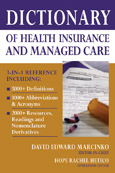
By Dr. David E. Marcinko; MBA, CMP™

By Hope R. Hetico; RN, MHA, CMP™  dave-and-hope4

With the recent popularity and growth of personal health insurance plans (PHIPs), health savings accounts (HSAs) and / or medical savings accounts (MSAs), compliance with the USA PATRIOT Act has become an important issue for these new health insurance products.  

These insurance plans place financial services organizations into relationships with shared information institutions like hospitals, healthcare organizations, medical clinics and patient clients.

The Online Connection 

This happens because many, perhaps even the majority of health insurance plans are opened online as patients and insurance company clients use Internet search engines to find the “best” policy type to meet their needs.  

Appropriately, banks, healthcare entities, and hospitals are working with insurance companies, trust companies, banks and broker-dealers to offer identity-compliant and integrated insurance plan products. 

Verifications that these clients are who they say they are, is as paramount as monitoring their activity. 

Example:  

Section 314(b) of the US Patriot Act permits financial institutions and health insurance companies – upon providing notice to the United States Department of the Treasury – to share patient and related information with one another in order to identify and report to the federal government activities that may involve money laundering or terrorist activity.  

The US Patriot Act 

The US Patriot Act aims to partially accomplish this through three critical goals:  

  1. First, it gives investigators familiar tools to use against a new threat.
  2. Second, it breaks down a wall that has prevented information sharing between agencies.
  3. Third, it updates U.S. laws to respond to the current Internet environment.  

Bank Secrecy Act, PHIPs, MSAs and HSAs 

For additional compliance security, The USA Patriot Act also amended the Bank Secrecy Act [BSA] to give the federal government enhanced authority to identify, deter and punish money laundering and related terrorist financing activities.  

Assessment 

Whatever the financial outlays required for insurance/financial organizational compliance, it may result in very large savings later if affected hospital assets and patient health insurance information is safeguarded against attacks of virtual or real assets. 

Conclusion 

And so, what is your opinion on the above health law and policy? 

Institutional information: www.HealthcareFinancials.com 

Terminology: www.HealthDictionarySeries.com 

Related reference: Marc B. Royo and David B. Nash.Sarbanes-Oxley and Not-for-Profit Hospitals: Current Issues and Future Prospects.” American Journal of Medical Quality: Vol. 23, No. 1, 70-72, February 2008.

Product DetailsProduct DetailsProduct Details