UPDATE: The Markets!

By Staff Reporters

***

***

CELEBRATE JUNETEENTH

  • The Markets: Can an extra day of rest change the market’s fortune?
  • As the Fed has escalated its fight against inflation, the S&P has fallen for 10 weeks out of the last 11. And not even American blue-chip firms have been spared from the carnage.
  • The Dow Jones Industrial Average closed below 30,000 for the first time since January 2021.

COMMENTS APPRECIATED

Thank You

***

***

PODCAST: Health Tech Faves & Investment Trends from Entrepreneurs

START-UPS AND INNOVATIONS

Health tech investment raced ahead in 2020. Join innovation insiders for a discussion on new health technologies, health-care’s digital transformation timeline, and what to expect for mid- to long-term health tech investment.

Health Care Technology Today | Canadian Physiotherapy ...

PODCAST: https://www.healthsharetv.com/content/golive-webinar-health-tech-faves-investment-trends-innovation-insiders

Your thoughts are appreciated.

THANK YOU

***

Employee Engagement for Startups and Entrepreneurs

3 Business Start-up Blunders

Jonathan Mase | Jonathan A. Mase's WordPress Blog

Operating as a startup company will present many challenges, but you should take heart in knowing that many of today’s biggest companies were once in your position. If you wish for your startup company to succeed, then employee engagement will be a crucial factor. Keep reading to learn more about the importance of employee engagement for startups. It should allow you to figure out the right path forward to find the success you desire.

It Makes Employees Loyal

When employees are engaged in the work they are doing, they will be more likely to be loyal to your company. Having loyal employees will benefit you in several different ways, but one of the most important ones is that they will work harder. When employees are engaged in the work that they’re doing, then that means that they truly care about it. They’re going to take things seriously, and you will…

View original post 228 more words

The Real Economic Business Cycle?

REALLY?

By Dr. David Edward Marcinko MBA

***

The business cycle is also known as the economic cycle and reflects the expansion or contraction in economic activity. Understanding the business cycle and the indicators used to determine its phases may influence investment or economic business decisions and financial or medical planning expectations. 

Although often depicted as the regular rising and falling of an episodic curve, the business cycle is very irregular in terms of amplitude and duration. Moreover, many elements move together during the cycle and individual elements seldom carry enough momentum to cause the cycle to move.  

However, elements may have a domino effect on one another, and this is ultimately drives the cycle, too.  We can also have a large positive cycle, coincident with a smaller but still negative cycle, as may be seen in the current healthcare climate of today. 

  1. First Phase: Trough to Recovery (service and production driven)

Scenario: A depressed GNP leads to declining industrial production and capacity utilization. Decreased workloads result in improved labor productivity and reduced labor (unit) costs until actual producer (wholesale) prices decline. 

  1. Second Phase: Recovery to Expansion (patient and consumer driven)

Scenario: CPI declines (due to reduced wholesale prices) and consumer real income rises, improving consumer sentiment and actual demand for consumer goods. 

  1. Third Phase: Expansion to Peak (service and production driven)

Scenario: GNP raises leading to increased industrial production and capacity utilization. But, labor productivity declines and unit labor costs and producer (wholesale) prices rise. 

  1. Fourth Phase: Peak to Contraction (patient and consumer driven)

Scenario: CPI rises making consumer real income and sentiment erode until consumer demand, and ultimately purchases, shrink dramatically.  Recessions may occur and economists have an alphabet used to describe them.  

For example, with a “V” graph shape, the drop and recovery is quick. For a “U” shaped graph, the economy moves up more sluggishly from the bottom. A “W” is what you would expect: repeated recoveries and declines. An “L” shaped recession describes a prolonged dry economic spell or even depression.

And now, the REAL Cycle?

MORE: https://etonomics.com/2021/11/09/real-business-cycle-theory/

***

COMMENTS APPRECIATED

Thank You

***

***

JUNK-BOND Demand

By Staff Reporters

***

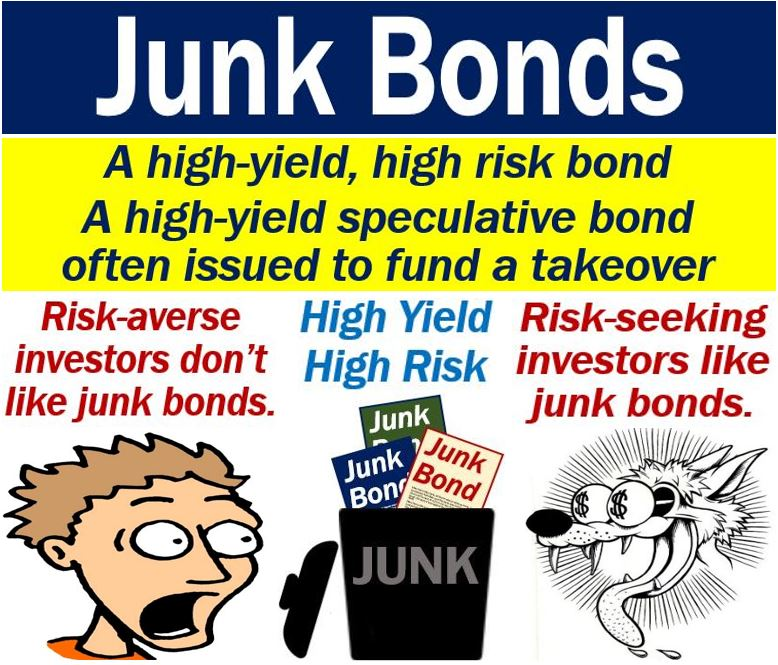
Junk bonds carry a higher risk of default compared to other bonds. Bond yields – or the return you get on investing in a bond – dip when prices go up. If investors crave junk bonds, the yields drop. Likewise, yields rise when people are selling.

So a smaller difference (or spread) between yields for junk bonds and safer government bonds is a sign investors are taking on more risk. A wider spread shows more caution. The Fear & Greed Index uses junk bond demand as a signal for Greed.

CITE: https://www.r2library.com/Resource/Title/082610254

***

***

COMMENTS APPRECIATED

Thank You

***

***

ENCORE: The Danger of Groupthink with Endowment Fund Portfolio Managers

Join Our Mailing List

A Historical Look-Back to the Future?

wayne-firebaugh

By Wayne Firebaugh CPA CFP® CMP™

www.CertifiedMedicalPlanner.org

It is not unusual for endowment fund managers to compare their endowment allocations to those of peer institutions and that as a result, endowment allocations are often similar to the “average” as reported by one or more survey/consulting firms.

One endowment fund manager expanded this thought by presciently noting that expecting materially different performance with substantially the same allocation is unreasonable [personal communication]. It is anecdotally interesting to wonder whether the seminal study “proving” the importance of asset allocation could have even had a substantially different conclusion. It seems likely that the pensions surveyed in the study had very similar allocations given the human tendency to measure one’s self against peers and to use peers for guidance.

Peer Comparison

Although peer comparisons can be useful in evaluating your institution’s own processes, groupthink can be highly contagious and dangerous.

For example, in the first quarter of 2000, net flows into equity mutual funds were $140.4 billion as compared to net inflows of $187.7 billion for all of 1999. February’s equity fund inflows were a staggering $55.6 billion, the record for single month investments. For all of 1999, total net mutual fund investments were $169.8 billion[1] meaning that investors “rebalanced” out of asset classes such as bonds just in time for the market’s March 24, 2000 peak (as measured by the S&P 500).

Of course, investors are not immune to poor decision making in upward trending markets. In 2001, investors withdrew a then-record amount of $30 billion[2] in September, presumably in response to the September 11th terrorist attacks. These investors managed to skillfully “rebalance” their ways out of markets that declined approximately 11.5% during the first several trading sessions after the market reopened, only to reach September 10th levels again after only 19 trading days. In 2002, investors revealed their relentless pursuit of self-destruction when they withdrew a net $27.7 billion from equity funds[3] just before the S&P 500’s 29.9% 2003 growth.

The Travails

Although it is easy to dismiss the travails of mutual fund investors as representing only the performance of amateurs, it is important to remember that institutions are not automatically immune by virtue of being managed by investment professionals.

For example, in the 1960s and early 1970s, common wisdom stipulated that portfolios include the Nifty Fifty stocks that were viewed to be complete companies.  These stocks were considered “one-decision” stocks for which the only decision was how much to buy. Even institutions got caught up in purchasing such current corporate stalwarts as Joe Schlitz Brewing, Simplicity Patterns, and Louisiana Home & Exploration.

Collective market groupthink pushed these stocks to such prices that Price Earnings ratios routinely exceeded 50. Subsequent disappointing performance of this strategy only revealed that common wisdom is often neither common nor wisdom.

Senate house conference committee meets wall street reform

[Wall Street Reform?]

More Current Examples

More recently, the New York Times reported on June 21, 2007, that Bear Stearns had managed to forestall the demise of the Bear Stearns High Grade Structured Credit Strategies and the related Enhanced Leveraged Fund.

The two funds held mortgage-backed debt securities of almost $2 billion many of which were in the sub-prime market.  To compound the problem, the funds borrowed much of the money used to purchase these securities.

The firms who had provided the loans to make these purchases represent some of the smartest names on Wall Street, including  JP Morgan, Goldman Sachs, Bank of America, Merrill Lynch, and Deutsche Bank.[4]

Assessment

Despite its efforts Bear Stearns had to inform investors less than a week later on June 27th that these two funds had collapsed.

Conclusion

Is this same Groupthink mentality happening on Wall Street, today? Your thoughts and comments on this ME-P are appreciated. Feel free to review our top-left column, and top-right sidebar materials, links, URLs and related websites, too. Then, subscribe to the ME-P. It is fast, free and secure.

Link: http://feeds.feedburner.com/HealthcareFinancialsthePostForcxos

Speaker: If you need a moderator or speaker for an upcoming event, Dr. David E. Marcinko; MBA – Publisher-in-Chief of the Medical Executive-Post – is available for seminar or speaking engagements. Contact: MarcinkoAdvisors@msn.com

OUR OTHER PRINT BOOKS AND RELATED INFORMATION SOURCES:

DICTIONARIES: http://www.springerpub.com/Search/marcinko
PHYSICIANS: www.MedicalBusinessAdvisors.com
PRACTICES: www.BusinessofMedicalPractice.com
HOSPITALS: http://www.crcpress.com/product/isbn/9781466558731
CLINICS: http://www.crcpress.com/product/isbn/9781439879900
BLOG: www.MedicalExecutivePost.com
FINANCE: Financial Planning for Physicians and Advisors
INSURANCE: Risk Management and Insurance Strategies for Physicians and Advisors


[1]   2001 Fact Book, Investment Company Institute.

[2]   Id.

[3]   2003 Fact Book, Investment Company Institute.

[4]    Bajaj, Vikas and Creswell, Julie. “Bear Stearns Staves off Collapse of 2 Hedge Funds.”
New York Times, June 21, 2007.

Product DetailsProduct Details

Product Details

ENCORE: How to Interview an Investment Portfolio Manager?

Selection Criteria Critical for Physicians

By Dr. David Edward Marcinko; MBA, CMP™

[Publisher-in-Chief and former certified financial plannerdem2]

Recently in the Atlanta area, two high-profile financial advisors and portfolio investment managers have been charged with client embezzlement, malfeasance, and more!

The first was Kirk Wright, a Harvard-educated fund manager who was convicted last week in a fraud scheme that bilked investors out of tens of millions of dollars.  He later hanged himself, according to the Fulton County Georgia medical examiner’s office.  A federal jury convicted Wright last week on all 47 counts of mail fraud, securities fraud and money laundering stemming from a scam run through his firm, International Management Associates. High-profile clients included sports-stars, celebrities and several well-known local physicians.

The second, Frederick J. Barton, received a Securities and Exchange Commission (SEC) civil action letter on June 3rd, 2008. Barton, formerly a registered representative of a national, registered broker-dealer and two entities he controlled: TwinSpan Capital Management, LLC (TwinSpan), an investment adviser formerly registered with the Commission, and Barton Asset Management, LLC (Barton Asset Management). The Commission alleges that, between 1999 and 2007, Barton, acting individually or through TwinSpan or Barton Asset Management, engaged in three separate securities frauds-including one involving a patient suffering from Alzheimer’s disease-and through his misconduct obtained over $3 million in ill-gotten gains. The Commission further alleges that he then spent his ill-gotten gains, among other things, to send his children to an exclusive private school, fund his own investment portfolio, and service his credit card debts. 

Manager Selection

So, how can the medical professional reduce the potential for similar behavior from his/her portfolio manager?

The first way is to skip the middle-man and “do-it-yourself.” But, doctors are sometimes hard-pressed to following this directive because of time constraints, knowledge paucity, fear/greed and/or disinterest; among other reasons.

The second way, of course, is to outsource the task by hiring a financial advisor. But, how do you find a financial advisor (easy), and more importantly, how do you discern a good fit (personally and professionally)? Still, there is no guarantee of honesty or capability.

But, your odds can be improved with insider knowledge of the financial services industry; a common-theme of the ME-P. And so, the following checklist may be a good place to start the selection, or triage process.  

SAMPLE: Engagement Letter

Mr. Joseph H. Sample

Vice President

Medical Capital Management of Nevada, LLC

RE: Letter to Request Pre-Interview Information from Portfolio Manager

Dear [Mr. Name]:

Thank you for agreeing to meet with us on [date, time] in our office. We are in the process of interviewing several portfolio investment managers.

So that we may obtain consistent information in our evaluation, we would appreciate the coverage of specific areas during your presentation. We are particularly interested in information regarding your approach to investment management in the following areas:

Investment philosophy and approach

• Describe your management style and any changes you have made over the past decade.

• Describe your investment decision-making process.

• Do you make the decisions or do you rely on others, and if so, who?

• Describe your sources of research.

• What contact, if any, do you have with the management of companies in which you invest?

• Briefly describe the sell disciplines employed by you and your firm.

• Describe whether/how you use top-down or bottom-up approaches to investment selection.

• Are you value or growth orientated; hedged or not; domestic or international?

Track record

• Please supply performance data by 5, 10 and 15-year intervals.

• Please supply performance records compared to benchmarks you feel appropriate.

• If balanced management, please provide performance data by asset class.

• Provide MPT or APT statistics such as beta, alpha, standard deviations, etc.

• What are your cash holdings; fully invested or selectively invested at various times?

• Turnover history and number of securities, industries and sectors; are guidelines in place?

• Typical portfolio percentage of largest ten positions.

Firm/advisor background

Please provide us with information regarding your background, including general information about the organization. In particular, please cover:

• The stability of ownership, managers, analysts or others directly involved in management.

• Who makes the investment decisions and how the firm dictates policy to managers?

• A description of expenses, including management fees, commissions, and other expenses.

• A detailed description of the growth of money under management over the past ten years.

• Please discuss the flexibility in design and management of a client’s portfolio by managers.

• If your firm is multidisciplined, what are your areas of expertise?

• Who is the custodian of securities? Does the firm have insurance?

Manager background

Please provide the resume(s) of the manager(s) as well as information about the manager’s style and consistency. Additional items of interest include:

• The manager’s record with other firms, if employed less than ten years.

• How the manager does research, including use of analysts and outside research?

• Regarding the decision process, what steps does the manager actually take?

• Manager’s ownership status in the firm?

• History of asset growth under the specific manager.

• Examples of past successes and failures on investment decisions.

Statistics

Please provide the following statistical information:

• Price/earnings ratios compared to market

• Price/book ratios compared to market

• Average earnings growth data

• Average market cap of companies in portfolio

• Average dividend yield information

• Average maturity and/or duration of fixed-income portfolios (and how this is managed)

• Average credit rating of fixed-income portfolios

• Where short-term funds are invested

Communication

• How often do you provide portfolio and performance reports?

• How do you compare performance to the market? What benchmarks do you use?

• Who will meet with us (and how often)?

• Who is the primary and secondary contact?

• Does the firm provide investment newsletters or promotional literature, with sample?

• Is the portfolio manager(s) available to meet or discuss issues with the client or advisor?

Compliance

• Are you a fiduciary? Will you sign-off as same?

• Are you a stoke-broker or registered representative?

• What securities licenses do you hold?

• Are you independent?

• Who is your broker-dealer?

• Who is your custodian and clearinghouse?

• Are you a RIA or RIA representative?

• May we please see you ADV Parts I, II, III

• May we review a sample investment policy statement?

• May we see your CRD report?

• Must we sign an arbitration clause?

• What educational degrees have earned?

• What financial/securities designation do you hold?

• What peer-reviewed or non-peered reviewed material have you published, and where? 

• What medical specificity do you possess?

• Do you hold the AIF® and/or AIFA® designations, and adhere to its code-of-ethics?

• Are you a [CMP] Certified Medical Planner™?

• Are you a [CFP] Certified Financial Planner™ with health economics knowledge?

• How do/can you demonstrate you specific knowledge on the heath care space?

Thank you.

Dr. Michael B. Sample; MD/DO

Managing Partner – Medical Associates of Nevada, PC  

Assessment

Some financial advisors, insurance agents, portfolio and wealth managers speak of “prospecting”, “hunting” or “screening” clients. In fact, potential doctor-clients are often, not-so-charmingly called, “prospects”.

Don’t you think it’s about time that the “tables-are-turned” by informed medical professionals, as the “hunted-becomes-the-hunter”, by the informed physician? Triage well, and always remember; caveat emptor and vendor emptor!

What other criteria should be included in this engagement letter, or personal interview itself? What has been your experience with portfolio manager selection? How do you select same, and what has been your success rate? Why don’t you do-it-yourself? Please comment and opine.

Conclusion

Your thoughts and comments on this ME-P are appreciated. Feel free to review our top-left column, and top-right sidebar materials, links, URLs and related websites, too. Then, subscribe to the ME-P. It is fast, free and secure.

Speaker: If you need a moderator or speaker for an upcoming event, Dr. David E. Marcinko; MBA – Publisher-in-Chief of the Medical Executive-Post – is available for seminar or speaking engagements. Contact: MarcinkoAdvisors@msn.com

OUR OTHER PRINT BOOKS AND RELATED INFORMATION SOURCES:

Product DetailsProduct DetailsProduct Details

Product Details  Product Details

Thinking Beyond Portfolio Asset Allocation

Join Our Mailing List

Don’t Forget Your Spending Policy – Doctors

By Dr. David Edward Marcinko MBA CMP™

www.CertifiedMedicalPlanner.com

[Publisher-in-Chief]

If you are economically literate – or read the ME-P regularly – you may be tired of hearing the familiar saw, “the single most important determinant of investment results over time is asset allocation.”

But, as most of us realize, this glosses over critical obstacles to building personal wealth—taxes, inflation, and spending policy. A doctor’s spending policy itself is as critical as asset allocation in preserving wealth, as well as for all investors who understand the trade-offs: there are both allocation and spending strategies that stand to preserve wealth and insulate against excessive equity risk at the same time.

Income versus Security

In proving his point a decade ago, the author—Roger Hertog in “Income Versus Security”— traced the growth of a $1 million portfolio during the period of 1960–1994. He showed that while an all-stock portfolio would have experienced a compound growth rate of 10.1%, an all-bond portfolio of 7.4%, and an all T-bill portfolio of 6.1%, these growth rates dropped to 8%, 5%, and 3.7%, respectively, after taxes and conservative transaction costs. When further reduced by inflation, they dropped to 3.1%, 0.2%, and -1%, respectively. Stocks still nearly tripled in real value after taxes.

Next, Hertog factored in spending. He showed that the greater the equity exposure, the more likely investors will preserve or increase their levels of real spending and wealth. Also, he demonstrated how a spending policy of a fixed percentage of the portfolio; or of spending all the income is ill-suited to estate building. He arrived at an optimum allocation of 60% stocks and 40% bonds with a policy of spending all stock dividends but only spending interest to the extent it exceeds inflation. This latter spending policy adjusts for the fact that in – unlike today but perhaps again in the near future – an inflationary environment a portion of bond interest is a return of principal. This type of asset allocation and spending policy resulted in the greatest amount of growth over the years and gained on inflation. Hertog contends that the 60/40 allocation provides an appealing combination of growth and protection.

IOW: It gives investors a milder ride.

Assessment

Over the 35-year period studied, a 60/40 mix returned almost as much as the all-stock portfolio both before taxes and after taxes and achieved some 75% of its real after-tax growth. Also, the portfolio’s worst year was only half as bad as the all-stock portfolio. Hertog believed that balancing with bonds softened the downside. But – what about the “flash-crash” of 2008-09?

Note: “Income Versus Security: Do You Have To Choose?” Roger Hertog, Trust & Estates, March 1997, pp. 44–62, Intertec Publishing Corporation.

Conclusion

And so, your thoughts and comments on this ME-P are appreciated. Is the bull market in bonds over? Do you believe Hertog? Feel free to review our top-left column, and top-right sidebar materials, links, URLs and related websites, too. Then, subscribe to the ME-P. It is fast, free and secure.

Speaker: If you need a moderator or speaker for an upcoming event, Dr. David E. Marcinko; MBA – Publisher-in-Chief of the Medical Executive-Post – is available for seminar or speaking engagements. Contact: MarcinkoAdvisors@msn.com and http://www.springerpub.com/Search/marcinko

Our Other Print Books and Related Information Sources:

Health Dictionary Series: http://www.springerpub.com/Search/marcinko

Practice Management: http://www.springerpub.com/product/9780826105752

Physician Financial Planning: http://www.jbpub.com/catalog/0763745790

Medical Risk Management: http://www.jbpub.com/catalog/9780763733421

Healthcare Organizations: www.HealthcareFinancials.com

Physician Advisors: www.CertifiedMedicalPlanner.com

Subscribe Now: Did you like this Medical Executive-Post, or find it helpful, interesting and informative? Want to get the latest ME-Ps delivered to your email box each morning? Just subscribe using the link below. You can unsubscribe at any time. Security is assured.

Link: http://feeds.feedburner.com/HealthcareFinancialsthePostForcxos

Sponsors Welcomed: And, credible sponsors and like-minded advertisers are always welcomed.

Link: https://healthcarefinancials.wordpress.com/2007/11/11/advertise

Product DetailsProduct DetailsProduct Details

Product Details  Product Details

UPDATE: The Markets, Gasoline, Recession and the Bear

By Staff Reporters

***

***

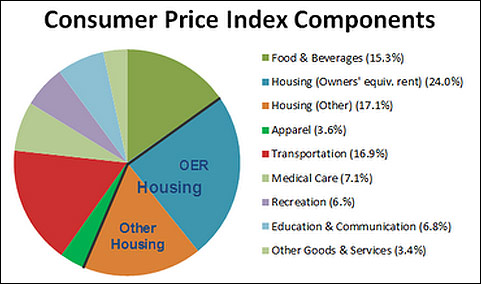
For the domestic markets, the S&P 500 closed down 151 points, or 3.88%. It’s down nearly 22% since January. The Dow was down 876 points (2.79%) and the NASDAQ dropped 530 points (4.68%). And, investors were disappointed to learn that inflation is moving in the wrong direction. U.S. consumer prices surged 8.6% year-over-year in May, to a fresh 40-year high, led by higher prices for energy, food and housing.

For the first time in history, a gallon of regular gasoline now costs $5 on average nationwide, according to AAA, and experts predict gas prices could average $6 a gallon by August.

Moreover, nearly 70% of leading economists expect the US to tumble into a recession as the country grapples with inflation. In a Financial Times poll, the bulk of economists said they expect a recession to be declared in the first half of 2023. The poll comes after US inflation soared to 8.6% in May, outstripping economists’ expectations and piling the pressure on the Fed.

Finally, S&P Global says a 20% decline in the S&P 500 on a closing basis from its previous peak is all it takes to define a bear market. Which means that this bear market is already more than five months old, since the S&P 500 all-time high came on January 3rd, 2022.

***

***

COMMENTS APPRECIATED

Thank You

***

***

UPDATE: Sentient GOOGLE, Corporate Earnings, the Markets and Cryptocurrency

By Staff Reporters

***

***

Blake Lemoine, an engineer for Google’s responsible AI organization, described an AI system that he has been working on since last fall as sentient, with a perception of, and ability to express thoughts and feelings that was equivalent to a human child. He was promptly suspended.

Earnings Are Under Threat. Companies from Target to Microsoft have warned their results will be lower than expected, while analysts have trimmed earnings forecasts across industries. Investors will get further clarity next month when companies begin reporting results for the second quarter.

The S&P is in a historic slump having fallen in nine out of the past 10 weeks for just the third time since 1980. And cryptocurrencies, which trade 24/7, tumbled following another red-hot inflation report.


***

COMMENTS APPRECIATED

Thank You

***

***

How [DOCTORS] Construct Investment Portfolios That Protect Them

***

ASK AN ADVISOR

***

Vitaliy N. Katsenelson, CFA - YouTube

By Vitaliy N. Katsenelson, CFA

***

Question: How do you construct investment portfolios and determine position sizes (weights) of individual stocks?

I wanted to discuss this topic for a long time, so here is a very in-depth answer.
CITE: https://www.r2library.com/Resource/Title/082610254

Answer
For a while in the value investing community the number of positions you held was akin to bragging on your manhood– the fewer positions you owned the more macho an investor you were. I remember meeting two investors at a value conference. At the time they had both had “walk on water” streaks of returns. One had a seven-stock portfolio, the other held three stocks. Sadly, the financial crisis humbled both – the three-stock guy suffered irreparable losses and went out of business (losing most of his clients’ money). The other, after living through a few incredibly difficult years and an investor exodus, is running a more diversified portfolio today.

Under-diversification: Is dangerous, because a few mistakes or a visit from Bad Luck may prove to be fatal to the portfolio.

On the other extreme, you have a mutual fund industry where it is common to see portfolios with hundreds of stocks (I am generalizing). There are many reasons for that. Mutual funds have an army of analysts who need to be kept busy; their voices need to be heard; and thus their stock picks need to find their way into the portfolio (there are a lot of internal politics in this portfolio). These portfolios are run against benchmarks; thus their construction starts to resemble Noah’s Ark, bringing on board a few animals (stocks) from each industry. Also, the size of the fund may limit its ability to buy large positions in small companies.

There are several problems with this approach. First, and this is the important one, it breeds indifference: If a 0.5% position doubles or gets halved, it will have little impact on the portfolio. The second problem is that it is difficult to maintain research on all these positions. Yes, a mutual fund will have an army of analysts following each industry, but the portfolio manager is the one making the final buy and sell decisions. Third, the 75th idea is probably not as good as the 30th, especially in an overvalued market where good ideas are scarce.

Then you have index funds. On the surface they are over-diversified, but they don’t suffer from the over-diversification headaches of managed funds. In fact, index funds are both over-diversified and under-diversified. Let’s take the S&P 500 – the most popular of the bunch. It owns the 500 largest companies in the US. You’d think it was a diversified portfolio, right? Well, kind of. The top eight companies account for more than 25% of the index. Also, the construction of the index favors stocks that are usually more expensive or that have recently appreciated (it is market-cap-weighted); thus you are “diversified” across a lot of overvalued stocks.

If you own hundreds of securities that are exposed to the same idiosyncratic risk, then are you really diversified?

Our portfolio construction process is built from a first-principles perspective. If a Martian visited Earth and decided to try his hand at value investing, knowing nothing about common (usually academic) conventions, how would he construct a portfolio?

We want to have a portfolio where we own not too many stocks, so that every decision we make matters – we have both skin and soul in the game in each decision. But we don’t want to own so few that a small number of stocks slipping on a banana will send us into financial ruin.

In our portfolio construction, we are trying to maximize both our IQ and our EQ (emotional quotient). Too few stocks will decapitate our EQ – we won’t be able to sleep well at night, as the relatively large impact of a low-probability risk could have a devastating impact on the portfolio. I wrote about the importance of good sleep before (link here). It’s something we take seriously at IMA.

Holding too many stocks will result in both a low EQ and low IQ. It is very difficult to follow and understand the drivers of the business of hundreds of stocks, therefore a low IQ about individual positions will eventually lead to lower portfolio EQ. When things turn bad, a constant in investing, you won’t intimately know your portfolio – you’ll be surrounded by a lot of (tiny-position) strangers.

Portfolio construction is a very intimate process. It is unique to one’s EQ and IQ. Our typical portfolios have 20–30 stocks. Our “focused” portfolios have 12–15 stocks (they are designed for clients where we represent only a small part of their total wealth). There is nothing magical about these numbers – they are just the Goldilocks levels for us, for our team and our clients. They allow room for bad luck, but at the same time every decision we make matters.

Now let’s discuss position sizing. We determine position sizing through a well-defined quantitative process. The goals of this process are to achieve the following: Shift the portfolio towards higher-quality companies with higher returns. Take emotion out of the portfolio construction process. And finally, insure healthy diversification.

Our research process is very qualitative: We read annual reports, talk to competitors and ex-employees, build financial models, and debate stocks among ourselves and our research network. In our valuation analysis we try to kill the business – come up with worst-case fair value (where a company slips on multiple bananas) and reasonable fair value. We also assign a quality rating to each company in the portfolio. Quality is absolute for us – we don’t allow low-quality companies in, no matter how attractive the valuation is (though that doesn’t mean we don’t occasionally misjudge a company’s quality).

The same company, at different stock prices, will merit a higher or lower position size. In other words, if company A is worth (fair value) $100, at $60 it will be a 3% position and at $40 it will be a 5% position. Company B, of a lower quality than A but also worth $100, will be a 2% position at $60 and a 4% position at $40 (I just made up these numbers for illustration purposes). In other words, if there are two companies that have similar expected returns, but one is of higher quality than the other, our system will automatically allocate a larger percentage of the portfolio to the higher-quality company. If you repeat this exercise on a large number of stocks, you cannot but help to shift your portfolio to higher-quality, higher-return stocks. It’s a system of meritocracy where we marry quality and return.

Let’s talk about diversification. We don’t go out of our way to diversify the portfolio. At least, not in a traditional sense. We are not going to allocate 7% to mining stocks because that is the allocation in the index or they are negatively correlated to soft drink companies. (We don’t own either and are not sure if the above statement is even true, but you get the point.) We try to assemble a portfolio of high-quality companies that are attractively priced, whose businesses march to different drummers and are not impacted by the same risks.  Just as bank robbers rob banks because that is where the money is, value investors gravitate towards sectors where the value is. To keep our excitement (our emotions) in check, and to make sure we are not overexposed to a single industry, we set hard limits of industry exposure. These limits range from 10%–20%. We also set limits of country exposure, ranging from 7%–30% (ex-US).

CONCLUSION

In portfolio construction, our goal is not to limit the volatility of the portfolio but to reduce true risk – the permanent loss of capital. We are constantly thinking about the types of risks we are taking. Do we have too much exposure to a weaker or stronger dollar? To higher or lower interest rates? Do we have too much exposure to federal government spending? I know, risk is a four-letter word that has lost its meaning. But not to us. Low interest rates may have time-shifted risk into the future, but they haven’t cured it.

***

COMMENTS APPRECIATED

Thank You

Subscribe to the Medical Executive-Post

***

***

The DOT.com Bubble HAS Burst!

What is NEXT?

U.S. equities closed lower as losses in the Technology, Consumer Services and Financials sectors propelled shares lower. At the close, the Dow Jones Industrial Average fell 2.73%, while the S&P 500 index lost 2.91%, and the NASDAQ Composite index fell 3.52%.

***

By Vitaliy N. Katsenelson CFA

***

What a Day – TODAY!

READ: https://tinyurl.com/2r8zaftk

COMMENTS APPRECIATED

Thank You

***

***

Passive Investing, Like Buying Used Cars, Is a Wise Strategy

More on Passive Investing

By Rick Kahler MS CFP®

***

Need a car? Buy used. It’s what I always do. My sweet spot is a low-mileage vehicle two or three years old, which I routinely can find for 25% to 35% less than the original cost. I recommend this strategy to my clients, staff, and friends.

If everyone followed this advice, you’d think the approach would eventually fail dismally. After all, someone has to buy new cars. No worries, though; there are millions of people who will continue to buy new cars. Financial planners have recommended this strategy for decades, and nothing has changed in the supply of great deals on low-mileage cars.

The same applies to investors who invest “passively” in index mutual funds. Passive investors embrace a philosophy that extremely few investors can beat the average return of the stock market. Research by Dalbar, Inc. shows that over a 20-year-period, 97% of fund managers who tried to beat the market actually ended up doing worse than the market average. They suggest that, instead of paying a manager to try and beat the market, you pocket that money yourself and beat them by investing in low cost index mutual funds that simply earn average market returns.

As you might guess, those pushing the high-fee mutual funds that are actively trying to beat the market returns are the big Wall Street firms that need your money to keep their companies thriving. Not surprisingly, these firms regularly attempt to dissuade investors from passive investing.

***

active mamt

***

An article at ETF.com by Larry Swedroe, the director of research for The BAM Alliance, lists a few of these attempts. Representatives for two large brokerage firms call passive investing “worse than Marxism” and those that do it “parasites.” Another, however, gives a more reasoned warning that is worth exploring. Tim O’Neill, global co-head of Goldman Sach’s investment management division, says “if passive investing gets too big, the market won’t function.”

Up to a point, this idea has some validity. Swedroe says, “Active managers play an important societal role. Specifically, their actions determine security prices, which in turn determine how capital is allocated. And it is the competition for information that keeps markets highly efficient, both in terms of information and capital allocation.”

Passive investors get a free ride at the expense of active investors. As Swedroe notes, they receive all the benefits from the role that active managers play without having to pay their costs. Passive investors need active investors to continue to believe they can beat the markets, just as used car buyers need new car buyers to supply them with used cars.

Just how likely is it that all the people who invest with active investors will figure out that paying active managers is not in their best interests and will shift to passive investing? About the same chance everyone will stop buying new cars.

Consider this. A study by Vanguard, one of the largest passive fund managers, found that $10 trillion, or 20% of the global market equity, is invested in index funds. More importantly, this 20% accounted for only 5% of all the trading. It’s the trading that drives market prices and makes markets efficient and liquid. Swedroe says “we are nowhere near” the chance that passive investing will become so dominant that the efficiency of the markets would be threatened.

Just as there is no immediate threat of the used car supply drying up because no one is buying new cars, there is also little chance that the majority of investors will give up the delusional dream of beating the market. That means wise used-car buyers and wise passive investors can keep on following their wise wealth-building strategies.

***

Conclusion

Your thoughts and comments on this ME-P are appreciated. Feel free to review our top-left column, and top-right sidebar materials, links, URLs and related websites, too. Then, subscribe to the ME-P. It is fast, free and secure.

Speaker: If you need a moderator or speaker for an upcoming event, Dr. David E. Marcinko; MBA – Publisher-in-Chief of the Medical Executive-Post – is available for seminar or speaking engagements.

Book Marcinko: https://medicalexecutivepost.com/dr-david-marcinkos-bookings/

Subscribe: MEDICAL EXECUTIVE POST for curated news, essays, opinions and analysis from the public health, economics, finance, marketing, IT, business and policy management ecosystem.

DOCTORS:

“Insurance & Risk Management Strategies for Doctors” https://tinyurl.com/ydx9kd93

“Fiduciary Financial Planning for Physicians” https://tinyurl.com/y7f5pnox

“Business of Medical Practice 2.0” https://tinyurl.com/yb3x6wr8

HOSPITALS:

“Financial Management Strategies for Hospitals” https://tinyurl.com/yagu567d

“Operational Strategies for Clinics and Hospitals” https://tinyurl.com/y9avbrq5

***

Risk Management, Liability Insurance, and Asset Protection Strategies for Doctors and Advisors: Best Practices from Leading Consultants and Certified Medical Planners™8Comprehensive Financial Planning Strategies for Doctors and Advisors: Best Practices from Leading Consultants and Certified Medical Planners™


COVID, Inflation and Value Investing

Millennial Investing

***

By Vitaliy Katsenelson, CFA

***

***

COVID, Inflation, and Value Investing: Millennial Investing
I was recently interviewed by Millennial Investors podcast. They sent me questions ahead of time that they wanted to ask me “on the air”. I found some of the questions very interesting and wanted to explore deeper. Thus, I ended up writing answers to them (I think through writing). You can listen to the podcast here

By the way, I often get asked how I find time to write. Do I even do investment research? Considering how much content I’ve been spewing out lately, I can understand these questions. In short – I write two hours a day, early in the morning (usually from 5–7am), every single day. I don’t have time-draining hobbies like golf. I rarely watch sports. I have a great team at IMA, and I delegate a lot. I spend the bulk of my day on research because I love doing it. 

This is not the first time I was asked these questions. If you’d like to adapt some of my daily hacks in your life, read this essay.

How has Covid-19 changed the game of value investing?

Value investing has not changed. Its fundamental principles, which I describe in “The Six Commandments of Value Investing,” (one-click sign up here to receive it in your inbox) have not changed one iota. The principles are alive and well. What has changed is the environment – the economy. 

I learned this from my father and Stoic philosophers: You want to break up complex problems into smaller parts and study each part individually. That way you can engage in more-nuanced thinking. 

Let’s start with what has not changed. Our desire for in-person human interaction has not changed. At the beginning of the pandemic, we (including yours truly) were concerned about that. We were questioning whether we were going to ever be able to shake hands and hug again. However, the pandemic has not changed millions of years of human evolution – we still crave human warmth and personal interaction. We need to keep this in mind as we think about the post-pandemic world. 

What we learned in 2021 is that coronavirus mutations make predicting the end of the pandemic an impossible exercise. From today’s perch it is safe to assume that Covid-19 will become endemic, and we’ll learn how to live with it. I am optimistic on science. 

Let’s take travel, for example. Our leisure travel is not going to change much – we are explorers at heart, and as we discovered during the pandemic, we crave a change in scenery. However, I can see business travel resetting to a lower base post-pandemic, as some business trips get resolved by simple Zoom calls. Business travel is about 12% of total airline tickets, but those revenues come with much higher profit margins for airlines. 

Work from home. I am still struggling with this one. The norms of the 20th-century workplace have been shaken up by the pandemic. Add the availability of new digital tools and I don’t need to be a Nostradamus to see that the office environment will be different. 

By how much? 

The work from home genie is out of the bottle. It will be difficult to squeeze it back in. My theory right now is that customer support, on-the-phone types of jobs may disproportionately get decentralized. The whole idea of a call center is idiotic – you push a lot of people into a large warehouse-like office space, where they sit six feet apart from each other and spend eight hours a day on the phone talking to customers without really interacting with each other. Current technology allows all this work to be done remotely.

On another hand, I can see that if you have a company where creative ideas are sparked by people bumping into each other in hallways, then work from home is less ideal. But again, I don’t think about it in binary terms, but more like it’s a spectrum. Even for my company. Before the pandemic, half of our folks worked outside of the IMA main office in Denver. Most of our future hires will be local, as I believe it is important for our culture. However, we provide a certain number of days a year of remote work as a benefit to our in-office employees. 

From an investment perspective, we are making nuanced bets on global travel normalizing. We don’t own airlines – never liked those businesses, never will. Most of their profitability comes from travel miles – they became mostly flying banks. 

Office buildings I also put into a too-difficult-to-call pile. There was already plenty overcapacity in office real estate before the pandemic, and office buildings were priced for perfection. The pandemic did not make them more valuable. Maybe some of that overcapacity will get resolved through conversion of office buildings into apartments. By the way, this is the beauty of having a portfolio of 20–30 stocks: I don’t need to own anything I am not absolutely head over heels in love with.

What is the importance of developing a process to challenge your own beliefs?

My favorite quote from Seneca is “Time discovers truth.” My goal is to discover the truth before time does. I try to divorce our stock ownership from our feelings. 

Let me give you this example. If you watch chess grandmasters study their past games, they look for mistakes they have made, moves they should have made, so in the future they won’t make the same mistake twice. I have also noticed they say “white” and “black,” not “I” and “the opponent.” This little trick removes them from the game so that they can look for the best move for each side. They say “This is the best move for white”; “This is the best move for black.”

You hear over and over again from people like Warren Buffett and other value investors that we should buy great companies at reasonable prices, and I’d like to dig deeper on that idea and its two key parts, great companies and reasonable prices. Could you tell us what it takes for a company to qualify as a “great” company?

This question touches on Buffett’s transformation away from Ben Graham’s “statistical” approach, i.e., buying crappy companies that look numerically cheap at a significant discount to their fair value, to buying companies that have a significant competitive advantage, a high return on capital, and a growth runway for their earnings. 

The first type of companies often will not be high-quality businesses and will most likely not be growing earnings much. Let’s say the company is earning $1. Its earnings power will not change much in the future – it is a $5 stock trading at 5 times earnings. If its fair value is $10, trading at 10 times earnings, And if this reversion to fair value happens in one year, you’ll make 100%. If it takes 5 years then your return will be 20% a year (I am ignoring compounding here). So time is not on your side. If it takes 10 years to close the fair value gap, your return halves. Therefore you need a bigger discount to compensate for that. Maybe, instead of buying that stock at a 50% discount, you need to buy a company that is not growing at a 70% discount, at $3 instead of $5. This was pre-Charlie Munger, “Ben Graham Buffett.” 

Then Charlie showed him there was value in growth. If you find a company that has a moat around its business, has a high return on capital, and can grow earnings for a long time, its statistical value may not stare you in the face. But time is on your side, and there is a lot of value in this growth. If a company earns $1 today and you are highly confident it will earn $2 in five years, then over five years, if it trades at 10 times earnings, a no-growth company may be a superior investment if the valuation gap closes in less than 5 years, while one with growing earnings is a superior investment past year 5. 

Both stocks fall into the value investing framework of buying businesses at a discount to their fair value, looking for a margin of safety. With the second one, though, you have to look into the future and discount it back. With the first one, because the lack of growth in the future is not much different from the present, you don’t have to look far.

There is a place for both types of stocks in the portfolio – there are quality companies that can still grow and there are companies whose growth days are behind them. In our process we equalize them by always looking four to five years out. 

What qualifies as a “reasonable price”? 

We are looking for a discount to fair value where fair value always lies four to five years out. In our discounted cash flow models, we look a decade out. Our required rate of return and discount to fair value will vary by a company’s quality. There are more things that can go wrong with lower-quality companies than with the better ones. High-quality companies are more future-proof and thus require lower discount rates. We are incredibly process-driven. We have a matrix by which we rate all companies on their quality and guestimate their fair value five years out, and this is how we arrive at the price we want to pay today. 

Why do you believe that buying great companies sometimes isn’t a great investing strategy?

Because that is first-level thinking, which only looks at what stares you in the face – things that are obvious even to untrained eyes and thus to everyone. First-level thinking ignores second-order effects. If everyone knows a company is great, then its stock price gets bid up and the great company stops being a great investment. With second-level thinking you need to ask an additional question, which in this case is, what is the expected return? Being a great company is not enough; it has to be undervalued to be a good stock. 

We are looking for great companies that are temporarily (key word) misunderstood and thus the market has fallen out of love with them. Over the last decade, when interest rates only declined, first-level thinking was rewarded. It almost did not matter how much you paid for a stock. If it was a great company, its valuations got more and more inflated. 

You’re a big advocate of having a balanced investment approach that is able to weather all storms. What investments have you found that you expect will be able to hold their buying power if inflation persists through 2022 and 2023?


There are many different ways to answer this question. In fact, every time I give an answer to this question I arrive at a new answer. You want to own companies that have fixed costs. You want assets that have a very long life. I am thinking about pipeline companies, for instance. They require little upkeep expense, and their contracts allow for CPI increases (no decreases); thus higher inflation will add to their revenue while their costs will mostly remain the same. 

We own tobacco companies, too. I lived in Russia in the early ’90s when inflation was raging. I smoked. I was young and had little money. I remember one day I discovered that cigarette prices had doubled. I had sticker shock for about a day. I gave up going to movies but somehow scraped up the money for cigarettes. 

Whatever answer I give you here will be incomplete. It’s a complex problem, and so each stock requires individual analysis. In all honesty, you have to approach it on a case-by-case basis. 

With higher inflation, you’d expect bond yields to rise, since bond investors will demand a higher return to keep pace with inflation. However, CPI inflation is currently over 6%, and the 10-year Treasury is sitting at 1.5%. Why haven’t we seen Treasury yields rise more, and what does it mean for investors if a spread this wide persists?

I am guessing here. My best guess is that so far investors have bought into the Fed’s rhetoric that inflation is transitory due to the economy’s rough reopening and supply chain problems. I wrote a long article on this topic. To sum up, part of the inflation is transitory but not all of it. 

I am somewhat puzzled by the labor market today. I’ve read a few dozen very logical explanations for the labor shortage, from early retirement of baby boomers to the pandemic triggering a search for the meaning of life and thus people quitting dead jobs and all becoming Uber drivers or starting their own businesses. Labor is the largest expense on the corporate income statement, and if it continues to be scarce then inflation will persist. 

I read that employees are now demanding to work from home because they don’t want to commute. The labor shortages are shifting the balance of power to employees for the first time in decades. This will backfire in the long run, as employers will be looking at how to replace employees with capital, in other words, with automation. If you run a fast-food restaurant and your labor costs are up 20–30% or you simply cannot hire anyone, you’ll be looking for a burger flipping machine. 

If we continue to run enormous fiscal deficits, then the US dollar will crack. The pandemic has accelerated a lot of trends that were in place. We were on our way to losing our reserve currency status. Let me clarify: That is going to be a very slow, very incremental process. It will be slow because currency pricing is not an absolute but a relative endeavor, and the alternatives out there are not great. But two decades ago the US dollar was a no-brainer decision and today it is not. So we’ll see countries slowly diversifying away from it. A weaker US dollar means higher, non transitory inflation. 

You wrote The Little Book of Sideways Markets, in which you point out that history shows that a sideways market typically occurs after a secular bull market. With the role that the Federal Reserve plays in the financial markets, do you still anticipate that valuations will normalize in the coming years?

I say yes, in part because declining interest rates have pushed all assets into stratospheric valuations. Rising bond yields and valuations pushed heavenward are incompatible. Yes, I expect valuations to do what they’ve done every time in history: to mean revert. In big part this will depend on interest rates, but if rates stay low because the economy stutters, then valuations will decline – this is what happened in Japan following their early-1990s bubble. Interest rates went to zero or negative, but valuations declined. 

The stock market today is very much driven by the Federal Reserve’s monetary policy. Is there a point at which they are able to take the gas off the pedal and allow markets to normalize?

I am really puzzled by this. We simply cannot afford higher interest rates. Going into the pandemic our debt-to-GDP was increasing steadily despite the growing economy. In fact, you could argue that most of our growth has come from the accumulation of debt (the wonders of being the world’s reserve currency). Our debt has roughly equaled our GDP, and all of our economic growth in some years equaled the growth in government debt.

During the pandemic we added 40% to our debt in less than two years. We have higher debt-to-GDP than we had during WWII. After the war we reduced our debt. Also, we were a different economy then – we were rebuilding both the US and Europe. As a society we had a high tolerance for pain. 

Just like debt increases stimulate growth, deleveraging reduces growth. Also, I don’t think politicians or the public care about high debt levels. So far debt has only brought prosperity. However, higher interest rates would blow a huge hole in government budgets. If the 10-year Treasury rises a few percentage points, interest rates will increase by the amount we spend on national defense. One thing I am certain about is that our defense spending will not decline, so higher interest rates will lead to money printing and thus inflation. 

I am also puzzled by the impact of higher interest rates on the housing market. Housing will simply become unaffordable if interest rates go up a few percentage points. Loan-to-income requirements will price a huge number of people out of the market, and housing prices will have to decline. This Higher rates will also reduce the number of transactions in the real estate market, because people will be locked into their 2.5% mortgages, and if they sell they’d have to get 4-5-6% mortgages. There are a lot of second-order effects that we are not seeing today that will be obvious in hindsight. Housing prices drive demand in adjacent sectors such as home improvement. And think of the impact of higher rates on any large purchase, for example a car. 

We’re seeing the continuing rise of China has a big player in the global economy, and I know you like to invest internationally. As a value investor, how do you think about China’s rise as a global powerhouse and how it might affect the financial markets?

During the Cold War there were two gravitational centers, and as a country you had to choose one – you were either with the Soviets or with the West. Something similar will likely transpire here, too. I have to be careful using the Cold War analogy, because the Cold War was driven by ideology – it was communism vs. capitalism. Now the tension is driven by economic competition and our unwillingness to pass the mantle of global leader to another country. 

We are drawing red lines in technology. Data is becoming the new oil. China is using data to control people, and we want to make sure they don’t have control over our data. Therefore, the West wants to make sure that our technology is China-free. The US, Europe, and India will likely be pursuing a path where Chinese technology and Chinese intellectual property are largely disallowed. We have already seen this happening with Huawei being banned from the US and Western Europe. Other countries, including Russia, will have to make a choice. Russia will go with China.

Also, we are concerned that most chip production is centered in Taiwan, which at some point may be grabbed by China. The technological ecosystem would then have to undergo a significant transformation. This has already started to happen as we begin to bring chip production back to the US and Europe. 

The pandemic made us realize that globalization had made us reliant on the kindness of strangers, and we found we could not even get facemasks or ventilators. 

Globalization was deflationary; deglobalization will be inflationary.

This increased tension between countries has led to your investing in the defense industry. Could you tell us how you think about this industry? 

Despite the rise of international tensions, the global defense industry has been one of sectors that still had reasonable (sometimes unreasonably good) valuations. We have invested in half a dozen US and European defense companies. The US defense budget is unlikely to decline in the near future. There is a common misperception that Republicans love defense and Democrats hate it. Those may be party taglines, but history shows that defense spending has been driven by macro factors – it did not matter who was the occupant of the White House. 

There are a lot of things to like about defense businesses. They are an extension of the US or European governments. Most of them are friendly monopolies or duopolies. They have strong balance sheets, good returns on capital, and predictable and growing (maybe even accelerating) demand. They are noncyclical. They have inflation escalators built into their contracts. I don’t have to worry about technological disruptions. They are also a good macro hedge.

We added to our European defense stocks recently for several reasons. Europe has underinvested in defense, relying on the US Yet we have shown time and again that we may not be as dependable as we once were. 

***

COMMENTS APPRECIATED

Thank You

Subscribe to the Medical Executive-Post

***

***

UPDATE: ARK Innovation, Dr. Burry, the Yield/Equity Push-Pull and Monkeypox

By Staff Reporters

***

***

Cathie Wood’s ARK Innovation fund composed of high-growth tech stocks is up 17% since hitting rock bottom on May 11th compared to the S&P’s 4.4% gain over the same period.

Americans are burning through their savings and might virtually exhaust them within months. Colleague Michael Burry MD warned the US economy could suffer once consumers empty out their savings accounts. “The Big Short” investor expects rising debt and reduced savings to hit growth and company profits.

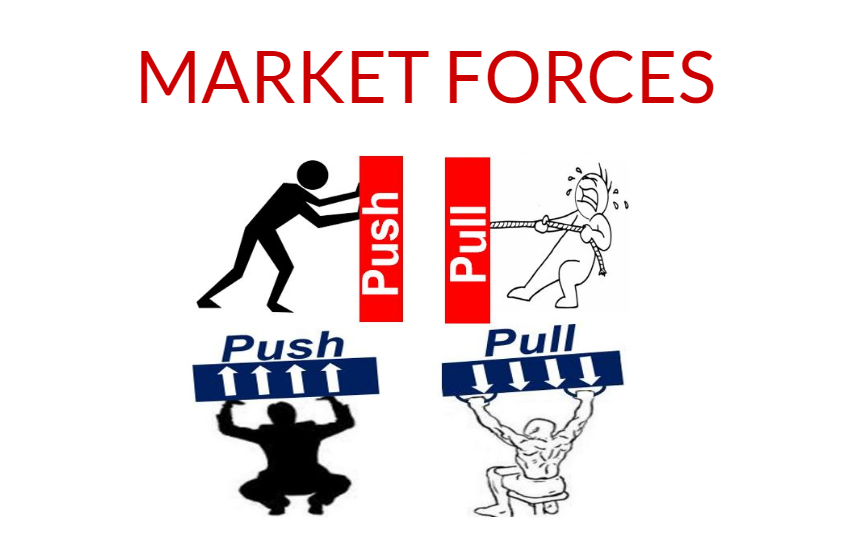
The push and pull between bond yields and equities continue with stock gains kept in check by a drop in Treasuries that pushed a swath of rates above 3%.

The CDC raised its alert level for Monkeypox to level 2 recommending that travelers wear masks, among other health measures.

***

COMMENTS APPRECIATED

Thank You

***

***

Risk Aversion and Investment Alternatives

Join Our Mailing List

Understanding Financial Tolerance in the New Era

[By Dr. David E. Marcinko MBA and Staff Reporters]

Some physicians and financial planners prefer to use a specific approach in determining these difficult-to-determine areas, in lieu of one of several psychological tests that are currently available.

Examples of this specific approach follow.

Investment Temperament

Which statement best describes your investment temperament? Please indicate by ranking the items below from 1 to 4, with 1 being the most descriptive and 4 being the least descriptive. Also, please indicate the extent of your risk aversion by indicating what percentage of your assets you would feel comfortable investing in each category (for example, 50% in the first category, 25% in the second, etc.).

***

Numerical   Percentage  
ranking   allocation  
* I prefer only the safest of investments.
* I am interested only in “blue-chip” investments.
* An occasional risk is worth the effort for above-average potential reward.
* I’m willing to put everything on the line if the potential reward is large enough.

Listed below are various forms of investments. Please indicate your familiarity with each.

  Familiarity
Description High   Low
Certificates of deposit 5 4 3 2 1
Treasury bills 5 4 3 2 1
Other short-term fixed income 5 4 3 2 1
Stocks 5 4 3 2 1
U.S. government bonds 5 4 3 2 1
Corporate bonds 5 4 3 2 1
Municipal bonds 5 4 3 2 1
Mutual funds 5 4 3 2 1
Real estate—direct ownership 5 4 3 2 1
Real estate—limited partnerships 5 4 3 2 1
Oil and gas 5 4 3 2 1
Collectibles 5 4 3 2 1
Precious metals 5 4 3 2 1
Insurance products 5 4 3 2 1

Assessment

Any other thoughts on behavioral finance topics, like this?

Conclusion

Your thoughts and comments on this ME-P are appreciated. Feel free to review our top-left column, and top-right sidebar materials, links, URLs and related websites, too. Then, subscribe to the ME-P. It is fast, free and secure.

Link: http://feeds.feedburner.com/HealthcareFinancialsthePostForcxos

Speaker: If you need a moderator or speaker for an upcoming event, Dr. David E. Marcinko; MBA – Publisher-in-Chief of the Medical Executive-Post – is available for seminar or speaking engagements. Contact: MarcinkoAdvisors@msn.com

OUR OTHER PRINT BOOKS AND RELATED INFORMATION SOURCES:

DICTIONARIES: http://www.springerpub.com/Search/marcinko
PHYSICIANS: www.MedicalBusinessAdvisors.com
PRACTICES: www.BusinessofMedicalPractice.com
HOSPITALS: http://www.crcpress.com/product/isbn/9781466558731
CLINICS: http://www.crcpress.com/product/isbn/9781439879900
BLOG: www.MedicalExecutivePost.com
FINANCE: Financial Planning for Physicians and Advisors
INSURANCE: Risk Management and Insurance Strategies for Physicians and Advisors

Product Details  Product Details

Risk Management, Liability Insurance, and Asset Protection Strategies for Doctors and Advisors: Best Practices from Leading Consultants and Certified Medical Planners™8Comprehensive Financial Planning Strategies for Doctors and Advisors: Best Practices from Leading Consultants and Certified Medical Planners™

The SAFE-HAVEN Demand

By Staff Reporters

***

***

Stocks are riskier than bonds. But the reward for investing in stocks over the long haul is greater. Still, bonds can outperform stocks over short periods. Safe Haven Demand shows the difference between Treasury bond and stock returns over the past 20 trading days.

Bonds do better when investors are scared. The Fear & Greed Index uses increasing safe haven demand as a signal for Fear.

CITE: https://www.r2library.com/Resource/Title/082610254

***

COMMENTS APPRECIATED

Thank You

***

***

Whatever Happened to the Invisible Hand of Capitalism?

Join Our Mailing List

The Invisible Hand of Capitalism?

vitaly

By Vitaliy Katsenelson CFA

Just as the well-meaning economist of the Soviet Union didn’t know the correct price of sugar, nor do the good-intentioned economists of our global central banks know where interest rates should be.

***

246_1

***

Assessment

Even more important, they can’t predict the consequences of their actions.

Here’s why?

http://contrarianedge.com/2016/03/16/whatever-happened-to-the-invisible-hand-of-capitalism/

Conclusion

Your thoughts and comments on this ME-P are appreciated. Feel free to review our top-left column, and top-right sidebar materials, links, URLs and related websites, too. Then, subscribe to the ME-P. It is fast, free and secure.

Speaker: If you need a moderator or speaker for an upcoming event, Dr. David E. Marcinko; MBA – Publisher-in-Chief of the Medical Executive-Post – is available for seminar or speaking engagements. Contact: MarcinkoAdvisors@msn.com

OUR OTHER PRINT BOOKS AND RELATED INFORMATION SOURCES:

Comprehensive Financial Planning Strategies for Doctors and Advisors: Best Practices from Leading Consultants and Certified Medical Planners™

***

PODCAST: Ten Largest Medical Device Companies

By Eric Bricker MD

***

***

COMMENTS APPRECIATED

Thank You

***

***

***

PODCAST: The “Economy” – How it Affects Everyone

By Rich Helppie

THE COMMON BRIDGE

The Second of a Two-Part Episode with Beata Kirr

***

***

PODCAST LINK: https://tinyurl.com/zrxdxzya

***

COMMENTS APPRECIATED

Thank You

***

How to Buy Securities On Margin

Join Our Mailing List

How It Works and What Physicians’ Must Watch Out For

 Dr. David Edward Marcinko MBA CMP

“Buying on margin” is borrowing money from your stock-broker to buy a stock and using your investment as collateral. Physician-investors generally use margin to increase their purchasing power so that they can own more stock without fully paying for it. But, margin exposes all investors to the potential for higher losses.

This ME-P discusses the basics of buying on margin, some of the pitfalls inherent in margin buying, whether this financial tool is for you and how you can best use it.

How Does Margin Work?

Let’s say you buy a stock for $50 and the price of the stock rises to $75. If you bought the stock in a cash account and paid for it in full, you’ll earn a 50 percent return on your investment. But, if you bought the stock on margin – paying $25 in cash and borrowing $25 from your broker – you’ll earn a 100 percent return on the money you invested. Of course, you’ll still owe your brokerage $25 plus interest.

The downside to using margin is that if the stock price decreases, substantial losses can mount quickly. For example, let’s say the stock you bought for $50 falls to $25. If you fully paid for the stock, you’ll lose 50% of your money. But if you bought on margin, you’ll lose 100%, and you still must come up with the interest you owe on the loan.

Caution: In volatile markets, investors who put up an initial margin payment for a stock may, from time to time, be required to provide additional cash if the price of the stock falls. Investors have been shocked to learn that a broker has the right to sell the securities that were bought on margin – without any notification, and at a potentially substantial loss to the investor.

Caution: If your broker sells your stock after the price has plummeted, then you’ve lost out on the chance to recoup your losses if the market bounces back.

The Risks

Margin accounts can be very risky and they are not for everyone. Before opening a margin account, be aware that:

  • You can lose more money than you have invested;
  • You may have to deposit additional cash or securities in your account on short notice to cover market losses;
  • You may be forced to sell some or all of your securities when falling stock prices reduce the value of your securities; and
  • Your brokerage firm may sell some or all of your securities without consulting you to pay off the loan it made to you.

You can protect yourself by knowing how a margin account works and what happens if the price of the stock purchased on margin declines.

Tip: Your broker charges you interest for borrowing money; take into account how that will affect the total return on your investments.

Tip: Ask your broker whether it makes sense for you to trade on margin in light of your financial resources, investment objectives, and tolerance for risk.

Read Your Margin Agreement

To open a margin account, you must sign a margin agreement. The agreement may either be part of your account agreement or separate. The margin agreement states that you must abide by the rules of the Federal Reserve Board, the New York Stock Exchange, the National Association of Securities Dealers, Inc., and the firm where you have set up your margin account.

Caution: Carefully review the agreement before signing.

As with most loans, the margin agreement explains the terms and conditions of the margin account. The agreement describes how the interest on the loan is calculated, how you are responsible for repaying the loan, and how the securities you purchase serve as collateral for the loan. Carefully review the agreement to determine what notice, if any, your firm must give you before selling your securities to collect the money you have borrowed.

***

margin risk

***

Know the Margin Rules

The Federal Reserve Board and many self-regulatory organizations (SROs), such as the NYSE and NASD, have rules that govern margin trading. Brokerage firms can establish their own requirements as long as they are at least as restrictive as the Federal Reserve Board and SRO rules.

Here are some of the key rules you should know:

Before You Trade – Minimum Margin. Before trading on margin, the NYSE and NASD, for example, require you to deposit with your brokerage firm a minimum of $2,000 or 100 percent of the purchase price, whichever is less. This is known as the “minimum margin.” Some firms may require you to deposit more than $2,000.

Amount You Can Borrow – Initial Margin. According to Regulation T of the Federal Reserve Board, you may borrow up to 50 percent of the purchase price of securities that can be purchased on margin. This is known as the “initial margin.” Some firms require you to deposit more than 50 percent of the purchase price.

Tip: Not all securities can be purchased on margin.

Amount You Need After You Trade – Maintenance Margin. After you buy stock on margin, the NYSE and NASD require you to keep a minimum amount of equity in your margin account. The equity in your account is the value of your securities less how much you owe to your brokerage firm. The rules require you to have at least 25 percent of the total market value of the securities in your margin account at all times. The 25 percent is called the “maintenance requirement.” In fact, many brokerage firms have higher maintenance requirements, typically between 30 to 40 percent and sometimes higher, depending on the type of stock purchased.

Example: You purchase $16,000 worth of securities by borrowing $8,000 from your firm and paying $8,000 in cash or securities. If the market value of the securities drops to $12,000, the equity in your account will fall to $4,000 ($12,000 – $8,000 = $4,000). If your firm has a 25 percent maintenance requirement, you must have $3,000 in equity in your account (25 percent of $12,000 = $3,000). In this case, you do have enough equity because the $4,000 in equity in your account is greater than the $3,000 maintenance requirement.

But, if your firm has a maintenance requirement of 40%, you would not have enough equity. The firm would require you to have $4,800 in equity (40% of $12,000 = $4,800). Your $4,000 in equity is less than the firm’s $4,800 maintenance requirement. As a result, the firm may issue you a “margin call,” since the equity in your account has fallen $800 below the firm’s maintenance requirement.

Margin Calls

If your account falls below the firm’s maintenance requirement, your broker generally will make a margin call to ask you to deposit more cash or securities into your account. If you are unable to meet the margin call, your firm will sell your securities to increase the equity in your account up to or above the firm’s maintenance requirement.

Tip: Your broker may not be required to make a margin call or otherwise tell you that your account has fallen below the firm’s maintenance requirement. Your broker may be able to sell your securities at any time without consulting you first. Under most margin agreements, even if your firm offers to give you time to increase the equity in your account, it can sell your securities without waiting for you to meet the margin call.

  • Margin accounts involve a great deal more risk than cash accounts, where you fully pay for the securities you purchase. You may lose more than your initial investment when buying on margin. If you cannot afford to do so, then margin buying is not for you.
  • Read the margin agreement, and ask your broker questions about how a margin account works and whether it’s appropriate for you to trade on margin. Your broker should explain the terms and conditions of the margin agreement.
  • Know how much you will be charged on money you borrow from your broker, and know how these costs affect your overall return.
  • Remember that your brokerage firm can sell your securities without notice to you when you don’t have sufficient equity in your margin account.

More:

Channel Surfing the ME-P

Have you visited our other topic channels? Established to facilitate idea exchange and link our community together, the value of these topics is dependent upon your input. Please take a minute to visit. And, to prevent that annoying spam, we ask that you register. It is fast, free and secure.

???????????????????????????????????????

Conclusion

Your thoughts and comments on this ME-P are appreciated. Feel free to review our top-left column, and top-right sidebar materials, links, URLs and related websites, too. Then, subscribe to the ME-P. It is fast, free and secure.

Speaker: If you need a moderator or speaker for an upcoming event, Dr. David E. Marcinko; MBA – Publisher-in-Chief of the Medical Executive-Post – is available for seminar or speaking engagements. Contact: MarcinkoAdvisors@msn.com

OUR OTHER PRINT BOOKS AND RELATED INFORMATION SOURCES:

Comprehensive Financial Planning Strategies for Doctors and Advisors: Best Practices from Leading Consultants and Certified Medical Planners(TM)

***Invite Dr. Marcinko

(((* 8

The Non-Medical “POISON PILL” Strategy is in the Investing News!

MUSK versus TWITTER

By Staff Reporters

***

DEFINITION: A shareholder rights plan, colloquially known as a “poison pill“, is a type of defensive tactic used by a corporation‘s board of directors against a takeover. In the field of mergers and acquisitions, shareholder rights plans were devised in the early 1980s as a way to prevent takeover bids by taking away a shareholder’s right to negotiate a price for the sale of shares directly.

Typically, according to Wikipedia, such a plan gives shareholders the right to buy more shares at a discount if one shareholder buys a certain percentage or more of the company’s shares. The plan could be triggered, for instance, if any one shareholder buys 20% of the company’s shares, at which point every shareholder (except the one who possesses 20%) will have the right to buy a new issue of shares at a discount. If all other shareholders are able to buy more shares at a discount, such purchases would dilute the bidder’s interest, and the cost of the bid would rise substantially. Knowing that such a plan could be activated, the bidder could be disinclined to take over the corporation without the board’s approval, and would first negotiate with the board in order to revoke the plan.

CITE: https://www.r2library.com/Resource/Title/082610254

The plan can be issued by the board of directors as an “option” or a “warrant” attached to existing shares, and only be revoked at the discretion of the board.

***

***

READ: https://www.msn.com/en-us/money/companies/twitter-adopts-poison-pill-plan-to-block-elon-musks-bid/ar-AAWfUaZ?li=BBnb7Kz

MUSK: https://www.cbsnews.com/news/twitter-poison-pill-elon-musk/

TWITTER: https://www.msn.com/en-us/money/companies/twitter-activates-poison-pill-to-thwart-musk-hostile-takeover-attempt/ar-AAWgmwW?li=BBnb7Kz

***

FINANCE: https://www.amazon.com/Comprehensive-Financial-Planning-Strategies-Advisors/dp/1482240289/ref=sr_1_1?ie=UTF8&qid=1418580820&sr=8-1&keywords=david+marcinko

***

TODAY’S INVESTMENT WORLD STRATEGIES

RICH HELPPIE: The COMMON BRIDGE

Featuring Beata Kirr

This is the first of a two part series with Rich’s special guest, Beata Kirr, the co-head of investment strategies and national managing director in the Chicago office of Bernstein. We think you’ll find this conversation very fascinating.

Exploring Today’s Investment World

Editor’s Note: We hope you enjoy the video above. If you’d rather just listen to the podcast, click this link to Apple Podcasts: The Common Bridge.

COMMENTS APPRECIATED

Thank You

***

***

UPDATE: Vitalik Buterin, Recession Risk the Euro and BOA

By Staff Reporters

***

***

  • Vitalik Buterin tweeted Friday that he’s no longer a billionaire. Crypto has crashed in recent weeks amid a broad sell-off in traditional markets. Ethereum cofounder Vitalik Buterin tweeted Friday that he’s no longer a billionaire. Buterin, who cofounded the blockchain network in 2014, has seen its Ether token crash by 59% since hitting a high of around $4,800 in November 2021, when his holding was valued at around $1.5 billion.
  • Historically, the S&P 500 has fallen an average of 29% around recession (median of 24%). With the S&P 500 currently showing a peak-to-trough decline of almost 19%, the market is effectively already pricing in a 60%-75% chance of recession based on the average and median.
  • Thanks to a surging US dollar and a faltering Euro, many analysts expect that the two currencies could reach parity this year—meaning one dollar would fetch you one euro. The two currencies haven’t reached a 1:1 exchange rate since 2002, three years after the euro was introduced in an effort to bring stability to Europe. The euro closed at $1.057 against the dollar, just 5% above equal value with the US currency.
  • Finally, the current market plunge hasn’t yet scared investors like downturns in years past. Bank of America’s private clients are still dedicating 63% of their portfolios to stocks, compared to 39% after the 2008 financial crisis.

***

COMMENTS APPRECIATED

Thank You

***

***

COLLEAGUE: Dr. Mike Burry Opines on the Markets

***

By Dr. David Edward Marcinko MBA

***

Big Short’ investor Michael Burry MD warns stocks will crash and rallies won’t last.

  • “The Big Short” investor Michael Burry expects a far steeper decline in the stock market.
  • The Scion Asset Management chief’s view is based on how past crashes have played out.
  • Burry warned brief rallies were likely, and joked about his penchant for premature predictions.

Michael Burry, the hedge fund manager of “The Big Short” fame, rang the alarm on the “greatest speculative bubble of all time in all things” last summer. He warned the retail investors piling into meme stocks and cryptocurrencies that they were careening towards the “mother of all crashes.”

***

Mike also wrote a popular chapter in our financial planning textbook for physician investors. With our appreciation and gratitude.

***

COMMENTS APPRECIATED

Thank You

***

***

UPDATE: The EEOC, Yen, Wells Fargo & Tesla

By Staff Reporters

***

***

The Equal Employment Opportunity Commission (EEOC) and the Department of Justice (DOJ) Civil Rights Division each put employers on notice: When using AI in employment processes, employers are responsible for inspecting tools for disability bias, and they better have a plan to provide reasonable accommodations, because federal agencies say they have their eyes on how using artificial intelligence could lead to discrimination under the Americans with Disabilities Act (ADA).

The Yen has the potential to drop to levels last seen in 1990 on Japan’s deepening monetary policy divergence with the US. And, selling the yen has become a favorite macro trade this year as rising Treasury yields spur investors to ditch Japan’s currency for the higher-yielding greenback. The Bank Of Japan has vowed to maintain its easing bias even in the face of the currency’s losses, making it unlikely that the declines will reverse anytime soon.

Berkshire Hathaway Inc (NYSE: BRK-B) bought $3 billion worth of shares in Citigroup Inc (NYSE: C) in Q1, giving the group a stake of about 2.8%, according to filings with regulators. The investment came as Berkshire sold the remainder of its position in Wells Fargo & Co (NYSE: WFC), a rival bank that had been a staple in Buffett’s portfolio for more than three decades, Financial Times reported.

Finally, Tesla shares continued their fall, dropping ~35% since the announcement that Elon Musk was buying Twitter. That may imperil Musk’s ability to complete the deal, given that he’s taken out meaty loans tied to the value of Tesla’s stock.
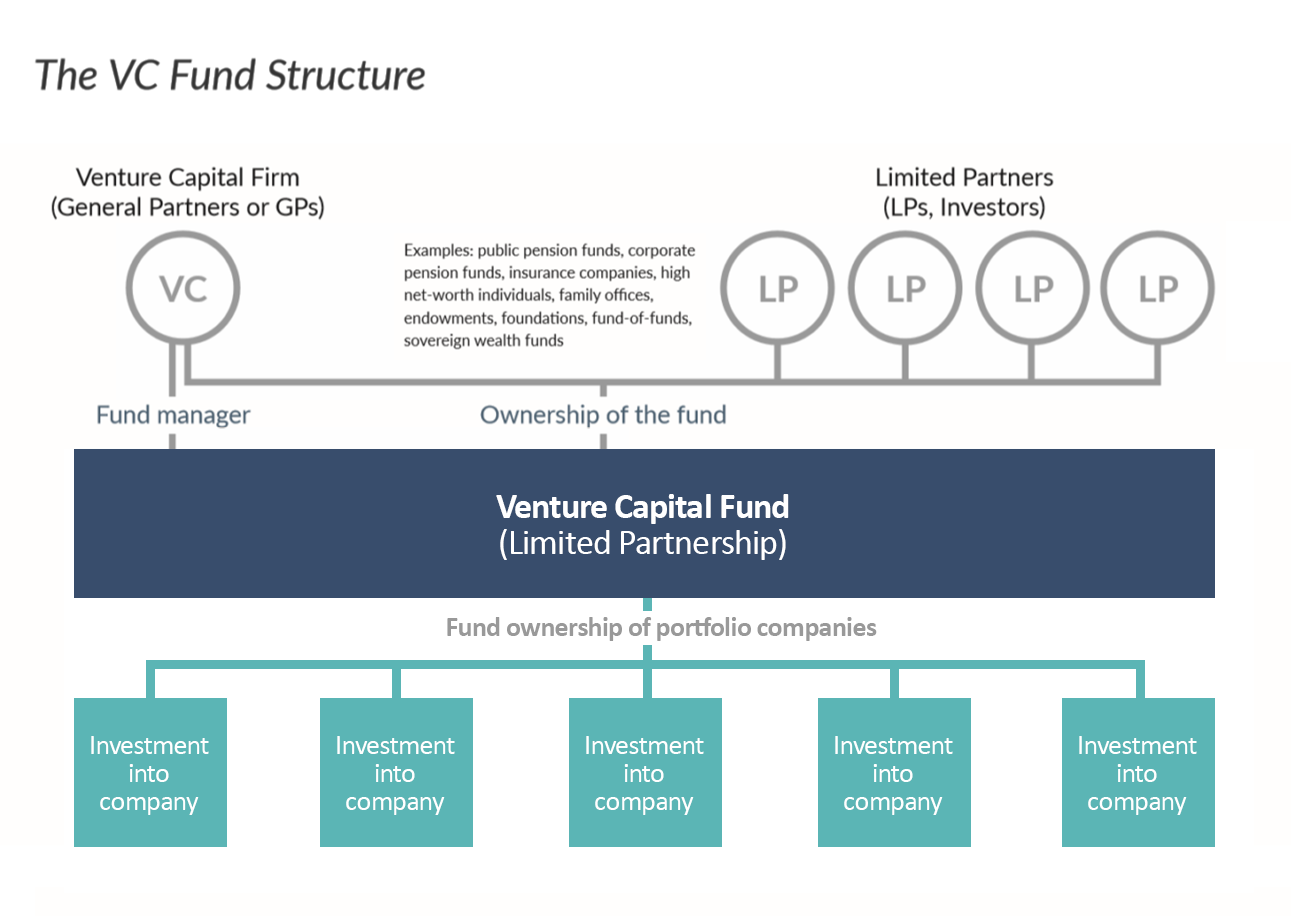
***

COMMENTS APPRECIATED

Thank You

***

FINANCE: https://www.amazon.com/Comprehensive-Financial-Planning-Strategies-Advisors/dp/1482240289/ref=sr_1_1?ie=UTF8&qid=1418580820&sr=8-1&keywords=david+marcinko

***