Doctors Uniquely Giving Locally in 2013

Join Our Mailing List

On Innovative Charitable Giving

By Rick Kahler MS CFP® ChFC CCIM www.KahlerFinancial.com

Rick Kahler CFP“Shop locally.” “Eat locally.” Do a quick Internet search for either of these terms and you get a host of results. Plenty of people are interested in saving energy and supporting locally-owned businesses by doing their buying close to home.

So, many doctors – like other folks – are committed to eating locally grown food that there’s even a name for them: locavores. Being a locavore in South Dakota in the wintertime, by the way, can be a challenge.

If buying locally matters to you, here’s another aspect of it to think about: giving locally as we begin the new year 2013.

The Holiday Season

This time of year especially, we are flooded with requests from worthwhile causes. Many of these are well-known national or international organizations with sophisticated fund-raising efforts. Amid their appeals, requests from local charities may be easy to overlook. Yet many small organizations do a great deal of good in their home towns.

Issues to Consider

Before you decide whether giving locally or nationally is a better option for your gift budget, here are a few things to consider:

1. No matter whether an organization is local or international, always check to see how much of the money it raises goes to administrative costs and how much actually reaches the people the charity serves. Most charities have websites where this information is readily available.

2. What kind of giving matters most to you? If you want to support the arts, chances are that a local organization like your community theatre or concert association will make good use of your funds. If you’d rather support agencies that help with natural disasters, an international organization is probably the most effective place for your money.

3. Do you want to give actual items rather than money? If so, local charities would usually be better choices. Many places, for example, use “Angel Trees” to ask for gifts for children or the elderly. If you’d prefer to help the hungry with canned goods rather than cash, you’ll want to give to your local food bank or homeless shelter.

4. Find out whether you can specify that your gift is used locally. Many national organizations like the Red Cross, Salvation Army, or food banks are happy to receive gifts that are designated for your local chapter.

5. Just as local government is closer to the people it serves, local charities may be more in touch with specific community needs. If you give locally, you can talk to people in charge and find out exactly where your money goes.

6. Giving locally allows you to combine financial giving with hands-on service that may be more satisfying than just giving money. You could help serve meals at a shelter, pack gift boxes, volunteer at a food bank, or distribute gifts.

7. Just because a charity is local, however, don’t automatically assume it uses its money wisely or efficiently. Always check. Sometimes a small organization may be trying to duplicate what an older or larger organization can do more efficiently. Sometimes local organizations are run by people who are well-meaning but don’t necessarily have the skills or contacts to make the best use of the donations they receive.

8. Remember that giving is an individual decision. Choose the level and type of giving that fits best for you, instead of trying to match what others do or give what someone else thinks you should.

charity

Assessment

Finally, keep a balanced perspective. There are many worthwhile organizations, and you can’t possibly give to them all. Don’t waste energy feeling guilty about the ones you skip. Instead, appreciate the giving you do in your own way and let it add joy and satisfaction to your holiday season.

Conclusion

Your thoughts and comments on this ME-P are appreciated. Feel free to review our top-left column, and top-right sidebar materials, links, URLs and related websites, too. Then, subscribe to the ME-P. It is fast, free and secure.

Link: http://feeds.feedburner.com/HealthcareFinancialsthePostForcxos

Speaker: If you need a moderator or speaker for an upcoming event, Dr. David E. Marcinko; MBA – Publisher-in-Chief of the Medical Executive-Post – is available for seminar or speaking engagements. Contact: MarcinkoAdvisors@msn.com

Our Other Print Books and Related Information Sources:

Health Dictionary Series: http://www.springerpub.com/Search/marcinko

Practice Management: http://www.springerpub.com/product/9780826105752

Physician Financial Planning: http://www.jbpub.com/catalog/0763745790

Medical Risk Management: http://www.jbpub.com/catalog/9780763733421

Hospitals: http://www.crcpress.com/product/isbn/9781439879900

Physician Advisors: www.CertifiedMedicalPlanner.org

Product Details  Product Details


How Bad Is Our National Debt Problem, Anyway?

Join Our Mailing List

And … Will a Deal Fix It?

By Theodoric Meyer
ProPublica, Dec. 28, 2012, 12:34 p.m.

President Obama will meet with congressional leaders today [1] in another attempt to avert the fiscal cliff — the automatic tax increases and spending cuts set to take effect Jan. 1st unless Congress can strike a deal. The cuts and tax hikes, which total more than $500 billion, are so large and so sudden that many economists fear they would plunge the country back into recession.

As Washington tries to hash out a deal, we’ve taken a step back to break down the numbers behind our deficit — how it grew so big, why it is actually shrinking and whether a deal can bring it under control.

How much are we in debt?

The federal debt is just shy of $16.4 trillion [2] at the moment, which also happens to be the debt limit that Congress set in 2011. Treasury Secretary Timothy F. Geithner announced on Wednesday [3] that the nation would hit the limit on Dec. 31. The Treasury can take some “extraordinary measures” to keep paying its bills for a few weeks, but it’ll run out of cash by February or March unless Congress raises the limit again.

And that’s different from the deficit, right?

Yes. The debt is the total amount of the government’s outstanding obligations. The deficit is how much the government is in the red in a given year. In the 2012 fiscal year, which ended Sept. 30, the deficit amounted to $1.1 trillion [4].

That seems like a huge number. How did the deficit get so big?

The 2012 deficit was actually the smallest one since 2008. But it’s still a giant shortfall.

As Binyamin Appelbaum noted in The New York Times [5], the federal government has run a deficit in 45 of the last 50 years. (The exceptions were 1969 and 1998 through 2001.) The financial crisis in 2008, however, caused the deficit to skyrocket, as tax revenues fell because of the slump in incomes and production, and government spending on the stimulus and safety net measures such as unemployment insurance shot up. The deficit for the 2008 fiscal year was $455 billion. In 2009, it surged to more than $1.4 trillion.

Since then, the deficit has been falling, albeit very slowly. The government took in 6.4 percent more in taxes in 2012 than in 2011, as the economy improved a bit and several tax breaks expired. And it spent less on Medicaid, unemployment insurance and the continuing operations in Iraq and Afghanistan.

What about the total debt? How much of that is President Obama’s fault?

The debt has grown by nearly $6 trillion since Obama took office, from $10.5 trillion to $16.4 trillion.

Figuring out how much of that is due to Obama is tougher. The Washington Post’s Ezra Klein, working with the Center on Budget and Policy Priorities, calculated in January [6] that the legislation Obama had actually signed — as opposed to factors like the economy — had added about $983 billion to the debt.

Klein has also rounded up several charts [7] that break down exactly what’s caused our debt to grow so large. The biggest single factor has been the weak economy; President George W. Bush’s tax cuts and the wars in Iraq and Afghanistan also fueled the debt buildup, as did President Obama’s stimulus.

Have debt levels ever been this high before?

Yes, proportionally. Economists like talk about a country’s debt in relation to its gross domestic product (a measure of the economy’s total annual output). And instead of using a country’s total outstanding debt to calculate this debt-to-GDP ratio, economists typically use the amount of debt held by the public. (Somewhat confusingly, the federal government holds about $5 trillion in obligations to itself, most of which is money owed to the funds that support Social Security and other programs.)

Using this measurement, our debt was about 67.7 percent of GDP last year. As this chart compiled by Quartz’s Ritchie King shows [8], that’s the highest our debt-to-GDP ratio has been since the 1940s, when the need to finance World War II caused the debt to surge to 112.7 percent of GDP. But the economy grew fast enough after the war that the debt soon became a much smaller percentage of the country’s GDP.

It’s worth noting that a number of other developed countries have higher debt-to-GDP ratios [9] than the U.S. Germany’s public debt is 80.6 percent of GDP, and Canada’s is 87.4 percent. The euro zone’s most troubled countries fare even worse: Italy’s debt is 120.1 percent of GDP; Greece’s is 165.3 percent.

US Capitol

At least we’re not Greece. How much longer can we keep borrowing?

That’s a tough one. Some commentators — including Paul Krugman, the Nobel-winning economist and columnist for The New York Times — have argued that our current deficits are mostly a product of the sluggish economy. The deficit, Krugman wrote last week [10], “is a side-effect of an economic depression, and the first order of business should be to end that depression — which means, among other things, leaving the deficit alone for now.”

Other economists — including Carmen Reinhart and Kenneth Rogoff, who studied eight centuries’ worth of financial crises for their book “This Time Is Different” — argue that countries with debt-to-GDP ratios above a certain level tend to experience slower economic growth. Reinhart and Rogoff suggest the level is around 90 percent of GDP [11] — which the U.S. is rapidly approaching. A recent Congressional Research Service report [12] concluded that while the debt-to-GDP ratio can’t keep rising forever, “it can rise for a time.” The report continued:

It is hard to predict at what point bond holders would deem it to be unsustainable. A few other advanced economies have debt-to-GDP ratios higher than that of the United States. Some of those countries in Europe have recently seen their financing costs rise to the point that they are unable to finance their deficits solely through private markets. But Japan has the highest debt-to-GDP ratio of any advanced economy, and it has continued to be able to finance its debt at extremely low costs.

How does all this fit into the fiscal cliff?  Would a deal to avert it fix our debt problem?

Actually, going over the fiscal cliff would almost singlehandedly erase the deficit. Tax rates would shoot up, and the fiscal cliff’s indiscriminate budget cuts would slash military and safety-net spending alike.

The problem is that all those tax increases and spending cuts would likely throw the economy back into a recession, causing the deficit to balloon again. “The economy will, I think, go off a cliff,” said Ben Bernanke [13], the Federal Reserve chairman.

(For more detail, see The Washington Post’s exhaustive fiscal cliff explainer [14].)

What the two sides are trying to do is identify cuts that are ultimately deep enough to bring down the deficit — and thus, eventually, the debt — without stalling the economy. But negotiations collapsed last week [15] after John Boehner, the Republican House speaker, tried and failed to pass a “Plan B” alternative to the president’s proposal in the House. Obama is set to meet with congressional leaders today to try to strike a deal to block at least some of the cliff’s impact by Monday night. But its prospects seem dim.

“I have to be very honest,” Sen. Harry Reid, the majority leader, said on Thursday. “I don’t know timewise how it can happen now.”

Assessment

Of course, some analysts have pointed out that people on both the Republican and the Democratic sides may actually want to move the cliff just slightly down the road into the next Congress, which convenes Thursday, Jan. 3. The advantages: Boehner can be safely re-elected as Speaker before he has to do serious twisting of arms of fellow GOP House members to get their votes for any compromise plan. And there will be a few more Democrats in the House and the Senate for the White House to rely on in enlisting the votes it needs to ratify any such deal. The disadvantage: Delay makes the risk of miscalculation greater for either or both sides — and for the public.

Link: http://www.propublica.org/article/how-bad-is-our-debt-problem-anyway-and-will-a-deal-fix-it

Conclusion

Your thoughts and comments on this ME-P are appreciated. Feel free to review our top-left column, and top-right sidebar materials, links, URLs and related websites, too. Then, subscribe to the ME-P. It is fast, free and secure.

Link: http://feeds.feedburner.com/HealthcareFinancialsthePostForcxos

Speaker: If you need a moderator or speaker for an upcoming event, Dr. David E. Marcinko; MBA – Publisher-in-Chief of the Medical Executive-Post – is available for seminar or speaking engagements. Contact: MarcinkoAdvisors@msn.com

OUR OTHER PRINT BOOKS AND RELATED INFORMATION SOURCES:

DICTIONARIES: http://www.springerpub.com/Search/marcinko
PHYSICIANS: www.MedicalBusinessAdvisors.com
PRACTICES: www.BusinessofMedicalPractice.com
HOSPITALS: http://www.crcpress.com/product/isbn/9781466558731
CLINICS: http://www.crcpress.com/product/isbn/9781439879900
BLOG: www.MedicalExecutivePost.com
FINANCE: Financial Planning for Physicians and Advisors
INSURANCE: Risk Management and Insurance Strategies for Physicians and Advisors


Product Details  Product Details

Product Details


How To Stay Within Your Holiday Budget

   Yes – it Can be Done with these Secrets!
 By Dr. David Edward Marcinko MBA CMP
 www.CertifiedMedicalPlanner.org

Join Our Mailing List

For some doctors and many Americans, the holiday season is all about excess, and all the gifts, travel, drinks, decadent food, and party dresses can leave a gaping hole in your personal finances. And so, as a Certified Medical Planner, I know that a holiday budget is a helpful tool for managing your spending during the holiday season, so that you don’t start out the New Year in the red. Of course, a holiday budget is only effective if you stick with it, and these shopping tips can help you do just that.

Hallelujah!

Shorten your gift list

Sure, the holiday season is about generosity, but that doesn’t mean you need  to buy an extravagant gift for everyone on the neighborhood block or office floor. Gifts are easily one of the largest expense categories during the holiday season, so the fewer gifts you have to buy; the easier it is to stay within your holiday budget. When times are tight, it’s okay to scrutinize your gift list and cut out anyone whom you don’t really need or even want to buy for. This important step should be done before you even make your holiday budget.

Set a spending limit for each person

Once you’ve whittled down your gift list, set a spending limit for each person on that list. You may want to spend the most on family and friends, but these are also the relationships that leave the most room for creativity.

For example, it might be fun to have your family make gifts for one another this year or create a challenge among friends to see who can find the best gift for the least amount of money. Your boss, CMO or CXO on the other hand, may not appreciate inexpensive gifts like your homemade fudge or a handcrafted ornament.

Shop ahead for deals

When the holiday season is fast approaching, you’re pretty much forced to pay whatever prices the stores are offering, although you can sometimes save money by shopping online at websites like Amazon and eBay. However, if you’re smart, you’ll start your holiday shopping early, leaving yourself time to hunt down only the very best deals.

Shop with cash

Putting the credit cards away and shopping with cash is another smart way to stay within your holiday budget. In fact, shopping with cash is a good general rule for living within your means year-round, but it’s especially effective during the holiday season, when impulse purchases really go through the roof. If you only bring a designated amount of cash with you on each shopping trip, you’ll be forced to stick within your budget. Setting a time limit on your holiday shopping can also have the same budget-bolstering effect.

ME-P Classified Blast!

Simplify holiday parties

For many medical professionals, lavish parties are another major expense of the holiday season. If you’re invited to tons of holiday parties every year, you can stay within your holiday budget by choosing to RSVP to only a few; this saves on party attire, gas, cab fare, parking, host/hostess gifts, drinks, and more.

If you plan to host your own party, forget about all the unnecessary decadence that your guests will have forgotten by mid-January; instead, keep things simple, but classy, and keep your guest list small to help stay within your holiday budget.

Assessment

These are just a few of the many ways that you can stay within your holiday budget this season. Nearly any money-saving tips that you employ year-round can be tailored to help you save on your holiday shopping. As long as you take the time to create a holiday budget, and then stick to that plan, you should save major green and subsequently stay out of the red.

How very festive of you!

Conclusion

Your thoughts and comments on this ME-P are appreciated. Feel free to review our top-left column, and top-right sidebar materials, links, URLs and related websites, too. Then, subscribe to the ME-P. It is fast, free and secure.

Speaker: If you need a moderator or speaker for an upcoming event, Dr. David E. Marcinko; MBA – Publisher-in-Chief of the Medical Executive-Post – is available for seminar or speaking engagements. Contact: MarcinkoAdvisors@msn.com

OUR OTHER PRINT BOOKS AND RELATED INFORMATION SOURCES:


Product Details  Product Details

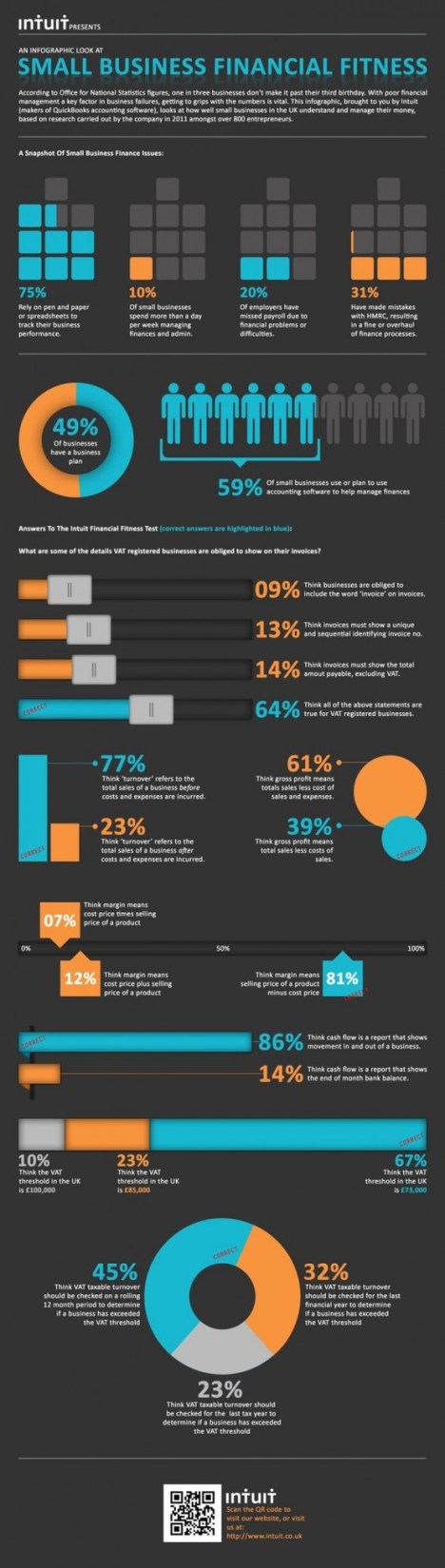
Benchmarking Small Business Financial Fitness

Join Our Mailing List

A Small Business Snapshot

Small Biz Finances

Source: Intuit

Assessment

Conclusion

Your thoughts and comments on this ME-P are appreciated. Feel free to review our top-left column, and top-right sidebar materials, links, URLs and related websites, too. Then, subscribe to the ME-P. It is fast, free and secure.

Link: http://feeds.feedburner.com/HealthcareFinancialsthePostForcxos

Speaker: If you need a moderator or speaker for an upcoming event, Dr. David E. Marcinko; MBA – Publisher-in-Chief of the Medical Executive-Post – is available for seminar or speaking engagements. Contact: MarcinkoAdvisors@msn.com

Our Other Print Books and Related Information Sources:

Health Dictionary Series: http://www.springerpub.com/Search/marcinko

Practice Management: http://www.springerpub.com/product/9780826105752

Physician Financial Planning: http://www.jbpub.com/catalog/0763745790

Medical Risk Management: http://www.jbpub.com/catalog/9780763733421

Hospitals: http://www.crcpress.com/product/isbn/9781439879900

Physician Advisors: www.CertifiedMedicalPlanner.org

Product Details  Product Details

Product Details

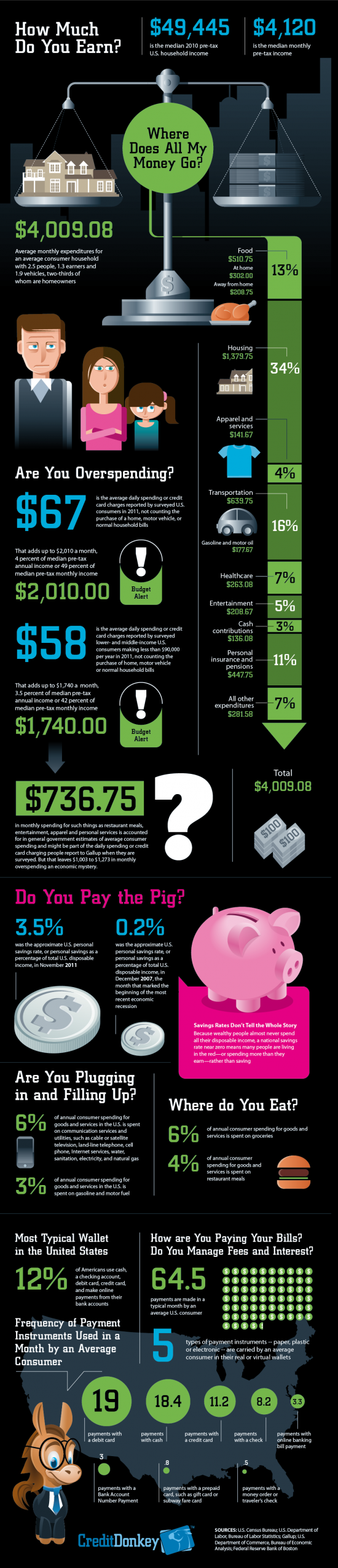
Understanding Variations in the Cost of Living

Join Our Mailing List

Understanding the C-O-L

Conclusion

Your thoughts and comments on this ME-P are appreciated. Feel free to review our top-left column, and top-right sidebar materials, links, URLs and related websites, too. Then, subscribe to the ME-P. It is fast, free and secure.

Link: http://feeds.feedburner.com/HealthcareFinancialsthePostForcxos

Speaker: If you need a moderator or speaker for an upcoming event, Dr. David E. Marcinko; MBA – Publisher-in-Chief of the Medical Executive-Post – is available for seminar or speaking engagements. Contact: MarcinkoAdvisors@msn.com

Our Other Print Books and Related Information Sources:

Health Dictionary Series: http://www.springerpub.com/Search/marcinko

Practice Management: http://www.springerpub.com/product/9780826105752

Physician Financial Planning: http://www.jbpub.com/catalog/0763745790

Medical Risk Management: http://www.jbpub.com/catalog/9780763733421

Hospitals: http://www.crcpress.com/product/isbn/9781439879900

Physician Advisors: www.CertifiedMedicalPlanner.org

Product Details  Product Details

On the Decline of US Economic Freedom

Join Our Mailing List

A Remarkable Plunge in Economic Freedom

By Rick Kahler MS CFP® ChFC CCIM www.KahlerFinancial.com

The United States has experienced a “remarkable plunge in economic freedom” over the past ten years. This is the conclusion of the 2012 Economic Freedom of the World Annual Report, by Gwartney, Lawson, and Hall.

The GLH Report

The report measures the degree to which a country supports the cornerstones of economic freedom, defined as personal choice, voluntary exchange, freedom to compete, and the security of privately owned property. It surveys forty-two variables used to construct an index that measures 144 countries in five areas of economic freedom: the size of government, property rights, sound money, freedom to trade, and regulation.

Historical Review

For 20 years, from 1980 to 2000, the U.S. usually ranked as the third freest economy in the world behind Hong Kong and Singapore. By 2005 the U.S. fell to eighth, and by 2010 it was ranked 18th. In addition to Hong Kong and Singapore, the US is now less economically free than New Zealand, Switzerland, Australia, Canada, Bahrain, Mauritius, Finland, Chile, UAE, Ireland, United Kingdom, Estonia, Taiwan, Denmark, and Qatar. Right on our heels within .08 of a point are Kuwait, Cyprus, Japan, Oman, Jordan, and Peru.

Size of Government 

The size of government measures the degree to which a country relies on personal choice and free markets rather than government control of markets and politics. Countries with low levels of government spending, a smaller government sector, and lower tax rates did best in this measure. The U.S. ranks 78th in this category and has seen the size of its government and control over markets significantly expand in the past 10 years.

The security of property rights and a legal system that protects them is the foundation of economic freedom and free markets. If businesses and individuals don’t have confidence that contracts will be enforced and their investments protected, it sabotages their incentive to produce. And production is at the heart of any strong economy. The U.S. ranks 28th among nations in property rights and a strong legal system. This decline is one of the more surprising to me.

Reasons for Low US Ratings

The report suggests several reasons for the low rating. One is the U.S. expansion of eminent domain powers that now allows cities to condemn private property for resale to private developers, something that was once unthinkable. Another example is the violation of the property rights of bondholders in the government bailout of GM. Finally, the ramifications of the wars on drugs and terrorism, with laws allowing the government to invade and seize property, have contributed to the sharp decline of property rights.

Sound money is the oil that keeps an economy running. While sovereign governments cannot involuntarily go bankrupt because they can create money, they are constrained by inflation. To earn a high rating in this category a country must have a low and stable rate of inflation. This is where the US scored highest, ranking seventh.

Most Free Countries

The countries with the most freedom to trade internationally have low tariffs, easy clearance and efficient administration of customs, and few controls on the movement of capital. The US ranks 57th in free trade!

Finally, a free economy avoids regulations that restrict entry into markets and restrict exchange. It allows markets to determine prices and avoids regulations that increase costs and restrict people’s ability to get into business. Here, the U.S. ranks 31st.

Report Executive Summary

Link: http://www.cato.org/pubs/efw/efw2012/efw-2012-executive-summary.pdf

Assessment

Clearly, there can be no doubt that the U.S. is in economic decline. The economic freedoms we once took for granted are slowly slipping away. Only time will tell if we will rally and turn back toward the economic principles that once made American the envy of the world, or whether we will continue our slow fall to mediocrity.

Conclusion

Your thoughts and comments on this ME-P are appreciated. Feel free to review our top-left column, and top-right sidebar materials, links, URLs and related websites, too. Then, subscribe to the ME-P. It is fast, free and secure.

Speaker: If you need a moderator or speaker for an upcoming event, Dr. David E. Marcinko; MBA – Publisher-in-Chief of the Medical Executive-Post – is available for seminar or speaking engagements. Contact: MarcinkoAdvisors@msn.com

OUR OTHER PRINT BOOKS AND RELATED INFORMATION SOURCES:

Product Details

Understanding the Domestic Unemployment Numbers

Join Our Mailing List

How Can Unemployment Be Going Down?

By Rick Kahler MS CFP® ChFC CCIM www.KahlerFinancial.com

In an economy that isn’t exactly robust, how can unemployment be going down? The recent drop in the unemployment rate from 8.1% to 7.8% caught almost everyone, including me, by surprise. The GDP grew by only 1.5% in the first quarter, and its growth was under 2% for the last 12 years. To get the economy moving again we will need growth of 3% a year.

It isn’t surprising that many pundits were questioning the timing within minutes after the latest unemployment numbers were announced. After all, unemployment is one of the major issues in the Presidential election. Former General Electric CEO Jack Welch and several Fox News commentators even suggested the administration was cooking the books.

The BLS

I don’t believe the Bureau of Labor Statistics is manipulating unemployment data. The process of computing the data is straightforward and transparent. Two surveys go into projecting the unemployment rate, one covering 400,000 businesses and the other questioning 60,000 households. The surveys ask about the number of full-time and part-time employees, whether the part-time employees really want full-time employment, and whether those without a job have looked for a job within the last month.

Cooked Books?

But that doesn’t mean the books aren’t cooked. They are.

“The way the government derives the unemployment numbers has changed significantly over the last 30 years,” writes John Mauldin, editor of the economic newsletter Thoughts from the Frontline, in the October 8, 2012, issue. “Whatever administration is involved, the new equations for determining unemployment result in a lower unemployment rate than they would have if the 1980’s methodology were still in place.”

The Changes

One of the more bizarre changes in the unemployment rate calculation is that people are not considered unemployed unless they have looked for a job in the last 30 days, even if they currently receive unemployment benefits. Mauldin says there are probably many people who haven’t looked for a job in the last 30 days and that most, if not all, of them would consider themselves unemployed. “If you’re not disabled and you’re receiving unemployment or welfare benefits I think you should be counted as unemployed,” he says. He estimates our actual unemployment rate is well over 12%, which doesn’t take into account the 50% of college graduates who are underemployed.

Don’t Blame Obama

Before you blame the Obama administration for the dumbing down of the unemployment rate, this is the same way the Bush administration calculated unemployment.

It’s the same story with the Consumer Price Index, which the government has continually tweaked to give the illusion of a lower CPI than if the 1980’s formula was used.

ShadowStats.com, run by John Williams, calculates the current unemployment and inflation rates using the formulas from the 1980’s. According to that methodology, Williams calculates the unemployment rate (U-6) is 15% and the CPI is 9%.

Regaining Jobs?

The economy has currently regained about half of the jobs lost in the Great Recession of 2008-2009. According to the Liscio Report, it will take another 40 months to reach the level of employment we had prior to the recession. That is if we don’t have another recession, which is doubtful. If all the tax increases slated for January 1 go into effect, the Congressional Budget Office says GDP will shrink 2.9%, which guarantees a recession.

Assessment

So, what was behind the fall in the unemployment rate this month? According to Mauldin, the entire drop came from an increase in part-time workers. He says, “That such significant numbers of people can only find part-time work is not a sign of a strong and growing economy.”

When we look a little deeper, maybe the latest unemployment numbers aren’t such a surprise after all.

Conclusion

Your thoughts and comments on this ME-P are appreciated. Feel free to review our top-left column, and top-right sidebar materials, links, URLs and related websites, too. Then, subscribe to the ME-P. It is fast, free and secure.

Speaker: If you need a moderator or speaker for an upcoming event, Dr. David E. Marcinko; MBA – Publisher-in-Chief of the Medical Executive-Post – is available for seminar or speaking engagements. Contact: MarcinkoAdvisors@msn.com

OUR OTHER PRINT BOOKS AND RELATED INFORMATION SOURCES:

Product Details  Product Details

About Small Business Micro-Loans

Join Our Mailing List

Change the World with Twenty Bucks

Microloans have been helping out around the world for years: see Kiva.

In one instance, the recipient was selected for a loan under $100. Although only about 70% of the loan was repaid, it was accompanied by a thank-you letter from the SB recipient, who was so grateful, that the money was paid back just after the designated time period. And, the fact is that most microloans are paid back in-full.

Assessment

Small business is how most citizens of third-world countries make a living.

Supporting business and growth by supplying microloans is an import thing. But, to personally help keep a sustainable source of food on the table for these families is the real satisfaction that all medical professionals should experience – at least once – on some level of participation.

Conclusion

Your thoughts and comments on this ME-P are appreciated. Feel free to review our top-left column, and top-right sidebar materials, links, URLs and related websites, too. Then, subscribe to the ME-P. It is fast, free and secure.

Link: http://feeds.feedburner.com/HealthcareFinancialsthePostForcxos

Speaker: If you need a moderator or speaker for an upcoming event, Dr. David E. Marcinko; MBA – Publisher-in-Chief of the Medical Executive-Post – is available for seminar or speaking engagements. Contact: MarcinkoAdvisors@msn.com

Our Other Print Books and Related Information Sources:

Health Dictionary Series: http://www.springerpub.com/Search/marcinko

Practice Management: http://www.springerpub.com/product/9780826105752

Physician Financial Planning: http://www.jbpub.com/catalog/0763745790

Medical Risk Management: http://www.jbpub.com/catalog/9780763733421

Hospitals: http://www.crcpress.com/product/isbn/9781439879900

Physician Advisors: www.CertifiedMedicalPlanner.org

Product Details  Product Details

Doctors to Get a Smaller Piece of American Pie?

Join Our Mailing List

And Contracting Lifestyles for Us All

By Rick Kahler MS CFP® ChFC CCIM www.KahlerFinancial.com

“Any way you slice the pie, Americans better come to grips with the fact their lifestyles are going to contract.” That’s the bottom line I’ve gleaned from attending several conferences and listening to some of the nation’s top economists recently.

But, what about Doctors and Medical Professioanals?

New Medical Practice Entrepreneurial Business Rules for Young Physicians [circa 2012]

The Fundamentals

Basically, the US is spending far more than it takes in via tax revenues, creating an annual deficit. The shortfall is covered by borrowing the money, which adds to the national debt. The Treasury Department borrows the money from two sources: private investors (individuals, banks, companies, and other governments) and the Federal Reserve Bank.

The Federal Reserve Bank

Where does the Federal Reserve get money? I’ve written about this before and our Editor has commented on it. They create it with a keystroke, which is the digital-age equivalent of printing money.

The Modern US Monetary System

It’s important to understand that the US government has no intention of ever paying down the US debt. Neither politicians nor economists can agree on whether to stop borrowing (or creating) money to fund the annual deficit. To actually reduce the national debt, we must run surpluses, something we haven’t done in over 15 years and then it was only for one year. We actually have never paid off our debt from WWII.

Deficit Spending

Reducing our deficit spending requires us either to raise taxes, cut spending, or borrow (which includes creating) more money. If we raise taxes to cover the deficit, we will most likely force a recession or depression. We simply can’t take $1.3 trillion out of the private sector without imploding the economy. If we cut spending, we will most likely create a recession or depression, as we simply can’t cut $1.3 trillion of government spending overnight without imploding the economy. If we do both, we will most likely still have a recession or depression.

Print or Borrow

At the moment, Congress can’t agree what to do, so we continue to borrow and print money. An increasing national debt means higher borrowing costs (interest). This means we need more revenues (from taxes or creating more money) to continue to fund Social Security, Medicare, welfare programs, infrastructure, and national defense. Creating (printing) money can lead to rising inflation, though it doesn’t automatically do so, as Japan has demonstrated for 20 years. This results in the devaluation of our global purchasing power, meaning the cost of everything we buy from other countries increases. It’s clear that the most appealing option to politicians and most economists is to continue to borrow and inflate.

Why the Government is Not-Like Medical Professionals

The Message

No matter how you cut and paste these options, one result is the same. Americans’ lifestyles will contract. This will come either from less government support and services, less spendable income via higher taxes, or an erosion of purchasing power from a declining dollar. This is the last message most Americans want to hear. The attitude is like that of the overspender who recently asked me, “How can I cut my expenses but maintain my current lifestyle?” The most honest answer is, “Sorry, but it can’t be done.” True, it’s possible to find creative ways to keep the parts of your lifestyle that matter the most. However, reducing expenses almost always means a lifestyle reduction. This is one reason so many people resist budgeting.

Assessment

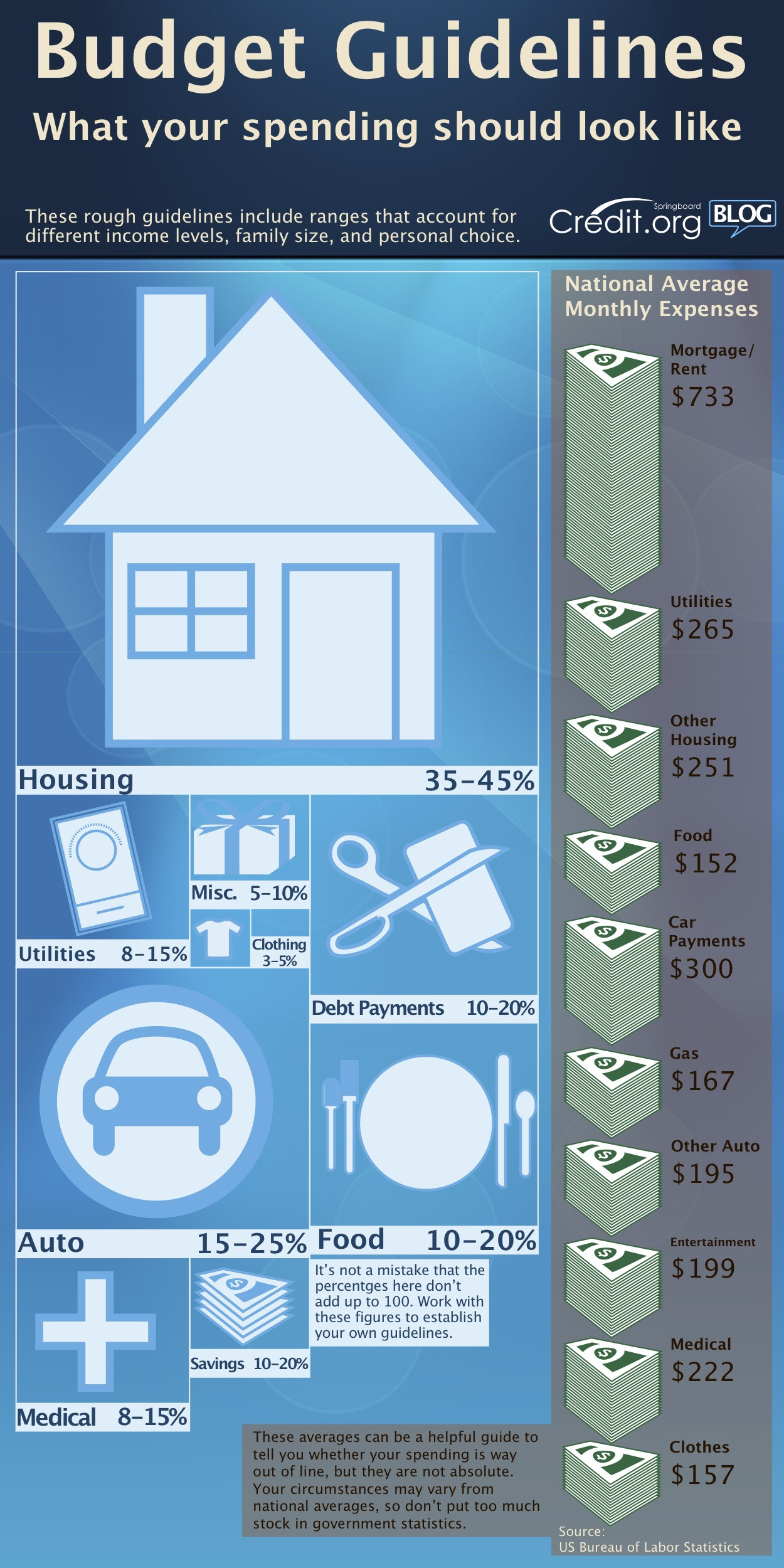
For most doctors, lawyers, CPAs, FAs, laborers and all Americans, budgeting means reducing spending, even though that isn’t inherently what budgeting is. In its purest form, it is becoming aware of our current spending patterns and redirecting income to the areas of spending that will best support our desired lifestyle. The more our income shrinks, the more crucial it becomes to redirect it carefully and consciously.

Personal Budgeting Guidelines for Doctors

Conclusion

In other words, if we have to settle for a smaller piece of pie, we’d better make sure we’re buying the kind of pie we really want.

Your thoughts and comments on this ME-P are appreciated. Feel free to review our top-left column, and top-right sidebar materials, links, URLs and related websites, too. Then, subscribe to the ME-P. It is fast, free and secure.

Link: http://feeds.feedburner.com/HealthcareFinancialsthePostForcxos

Speaker: If you need a moderator or speaker for an upcoming event, Dr. David E. Marcinko; MBA – Publisher-in-Chief of the Medical Executive-Post – is available for seminar or speaking engagements. Contact: MarcinkoAdvisors@msn.com

Our Other Print Books and Related Information Sources:

Health Dictionary Series: http://www.springerpub.com/Search/marcinko

Practice Management: http://www.springerpub.com/product/9780826105752

Physician Financial Planning: http://www.jbpub.com/catalog/0763745790

Medical Risk Management: http://www.jbpub.com/catalog/9780763733421

Hospitals: http://www.crcpress.com/product/isbn/9781439879900

Physician Advisors: www.CertifiedMedicalPlanner.org

Product Details  Product Details

Product Details

Understanding The Federal Reserve Act

Join Our Mailing List

[By Staff Reporters]

Uncovering The FED

In the early 20th century, a financial crisis led panicked citizens to withdraw all their money at once, damaging banks. By 1913, Congress responded with the Federal Reserve Act, creating 12 regional banks acting as a federal bank to deal in local and global affairs with both private banks and the federal government.

Balancing v. Manipulation

Some say the Fed was meant to create a balanced economy, while others argue its purpose was to inorganically manipulate free enterprise, rescuing banks that we’d be better off without.

Assessment

Is the Fed still doing its job today? What secrets are being kept from us and how are the Fed’s actions impacting our economy?

Channel Surfing the ME-P

Have you visited our other topic channels? Established to facilitate idea exchange and link our community together, the value of these topics is dependent upon your input. Please take a minute to visit. And, to prevent that annoying spam, we ask that you register. It is fast, free and secure.

Conclusion

Your thoughts and comments on this ME-P are appreciated. Feel free to review our top-left column, and top-right sidebar materials, links, URLs and related websites, too. Then, subscribe to the ME-P. It is fast, free and secure.

Speaker: If you need a moderator or speaker for an upcoming event, Dr. David E. Marcinko; MBA – Publisher-in-Chief of the Medical Executive-Post – is available for seminar or speaking engagements. Contact: MarcinkoAdvisors@msn.com

OUR OTHER PRINT BOOKS AND RELATED INFORMATION SOURCES:

Product Details  Product Details

Why the Government is Not-Like Medical Professionals

Join Our Mailing List

An Endless Supply of US Dollars

By Rick Kahler MS CFP® ChFC CCIM www.KahlerFinancial.com

Is the United States in danger of bankruptcy? Contrary to what you may read in the media or hear from many politicians, no, it isn’t. The US Treasury will never run out of dollars. Unlike doctors and medical professionals, it’s impossible.

Reasons Why?

The reason is relatively simple. The US government owns a printing press. As long as goods, services, or obligations are priced in US dollars, the supply of dollars to our government to buy those goods and services is unlimited. This is not true of individual physicians, corporations, cities, states, and countries that don’t issue their own currency.

For most people, this is a hard concept to grasp, with good reason. The capacity of our government to create an unconstrained supply of dollars is a relatively new phenomenon.

The Gold Standard

Until 1971, all US currency was theoretically redeemable in gold. This was known as the gold standard. In the early decades of the 20th century, you could actually go to a bank and change your dollars for gold. That ability was terminated in 1933, but the dollar’s value was still tied to gold. This basically meant the only way the US government could create new dollars was by obtaining more gold, the supply of which only increases by the new amount of gold mined.

Nixon

In 1971 we had a paradigm change in monetary policy that many still don’t understand. President Nixon decoupled the dollar from the gold standard [Nixon also wanted to flood the country with MDs, and drive down physician income, by opening up medical school admissions]. It became a fiat currency, which is used as a medium of exchange but has no intrinsic value. Suddenly, the US government was no longer constrained by solvency issues and could never run out of money. It could create as many dollars as it wished ie; inflation].

Constraints

This didn’t mean it had no constraints. The major constraint to an issuer of fiat currency is inflation. However, creating money does not guarantee inflation if the newly created money is not spent. Japan, for example, is still fighting deflation even though they’ve been pumping money into reserves like crazy for 20 years.

What should have caused a massive rethinking and reeducating of the financial sector went relatively unnoticed. Text books, professors, economists, and politicians largely continued to follow many pre-1971 monetary principles that became irrelevant overnight.

Unlike the federal government, US states, cities, and other government entities cannot print money. They have to get it the old-fashioned way—from taxes, fees, or borrowing. It’s entirely possible for these entities to go bankrupt, just like individuals and corporations, if their outflow exceeds their inflow.

Europe

Interestingly, the same is true for member countries of the European Union. When in 1999 they adopted the Euro and gave up their sovereign right to print their own money, they took on the same status as states. Therefore, a country like Greece, which is a user of currency as a member of the European Union, can involuntarily default on its obligations.

This is a significant difference between the United States and Greece. While Greece can (and most likely will) go bankrupt because it doesn’t have an unlimited supply of Euros, the US can’t go bankrupt because it does have an unlimited supply of dollars.

The major threat that sovereign countries face is not running out of money, but devaluing their currency through inflation. A devalued currency is one that loses its purchasing power and often results in a lower standard of living.

Assessment

Just because the US can’t involuntarily default on its obligations doesn’t mean we can keep on over spending and pretend we don’t have any money worries. As a nation, we still need to acknowledge and deal with our serious financial problems. So should our doctors, financial planners and financial advisors.

Conclusion

Your thoughts and comments on this ME-P are appreciated. Feel free to review our top-left column, and top-right sidebar materials, links, URLs and related websites, too. Then, subscribe to the ME-P. It is fast, free and secure.

Link: http://feeds.feedburner.com/HealthcareFinancialsthePostForcxos

Speaker: If you need a moderator or speaker for an upcoming event, Dr. David E. Marcinko; MBA – Publisher-in-Chief of the Medical Executive-Post – is available for seminar or speaking engagements. Contact: MarcinkoAdvisors@msn.com

Our Other Print Books and Related Information Sources:

Health Dictionary Series: http://www.springerpub.com/Search/marcinko

Practice Management: http://www.springerpub.com/product/9780826105752

Physician Financial Planning: http://www.jbpub.com/catalog/0763745790

Medical Risk Management: http://www.jbpub.com/catalog/9780763733421

Hospitals: http://www.crcpress.com/product/isbn/9781439879900

Physician Advisors: www.CertifiedMedicalPlanner.org

Product Details  Product Details

Life Planning 101 for Young Adults and New Doctors

Join Our Mailing List

My Annual Graduation and Wedding Advice

By Rick Kahler MS CFP® ChFC CCIM

www.KahlerFinancial.com

June is traditionally filled with college and medical school graduations and weddings; rituals that mark two of our most important life transitions. Whether you are a new physician walking across the stage or a new spouse walking down the aisle, you’re focusing on your future. It’s a perfect opportunity to think about what you need to do financially to provide for that future.

My Best Financial Advice

Here, adapted from a column I originally wrote a few years ago, is what I might call “Life Planning 101 for Beginning Adults.” It’s a summary of my best financial advice for graduates, newlyweds, and anyone else just starting out in their adult lives and careers; including doctors. Here’s how anyone can manage money wisely to create a life with more security, flexibility, and opportunity.

  1. On every gross dollar you earn, pay your taxes first. Estimate your total tax liability and be sure your employer withholds enough to cover it. If you are self-employed, set up a savings account, deposit a percentage of every check, and use that money to pay your quarterly estimated taxes. Never “raid” these funds.
  2. Save for the future by putting away 20% or more of every gross dollar you earn until you have six months to one year of living expenses in an emergency account [physicians may actually need more]. Then begin investing in your employer’s 401(k) or a retirement plan. If you are self-employed, set up a retirement plan that will allow you to invest as much as you possibly can. My co-authored book Conscious Finance (www.consciousfinance.com) includes a chapter on how to begin investing.
  3. Set up a short-term savings account for future lump sum expenses like car and home repairs, vacations, holiday giving, college tuition,and medical emergencies Figure out how much you’ll need to save from each paycheck to fund all of them annually; then, if possible, have your employer automatically send that amount to a savings account.
  4. After you’ve taken out for your taxes, long-term savings, and short-term savings, you get to blow the rest any way you want. For most people, this means living on 30 to 60 cents out of every gross dollar you earn.
  5. To maintain a comfortable lifestyle, spend frugally. Shop sales, clip coupons, read labels, compare and bargain. People who build wealth usually don’t wear designer clothes, drive luxury cars, live in extravagant houses, or shop at Neiman Marcus [doctors beware]. They typically wear jeans bought on sale, drive Fords, live in middle class neighborhoods, and shop at Walmart.
  6. Pay cash for everything but your home. For convenience, you can use a debit card. Never use a credit card unless you pay it off every month. If you ever find yourself unable to pay off your card, cut it up. Pay off the balance as quickly as you can, and then don’t use a credit card for at least one year.
  7. When you get a raise, a new job, or a promotion, don’t change your lifestyle. Save at least half of the increased income.
  8. Your career is your number one financial asset. As much as possible, find a job you love. Invest in educating yourself and keeping abreast of changes in your career field.

Assessment

Use money as a tool, not a goal. Money itself will never give you meaning or make you happy, but it is a valuable tool to support your quest for meaning and happiness.  This self-disciplined approach isn’t going to help you get rich in a hurry. What it will do is establish a lifetime pattern of sound money management. It can help you create a satisfying, responsible relationship with money now as well as a secure, prosperous future.

Conclusion

Your thoughts and comments on this ME-P are appreciated. Feel free to review our top-left column, and top-right sidebar materials, links, URLs and related websites, too. Then, subscribe to the ME-P. It is fast, free and secure.

Link: http://feeds.feedburner.com/HealthcareFinancialsthePostForcxos

Speaker: If you need a moderator or speaker for an upcoming event, Dr. David E. Marcinko; MBA – Publisher-in-Chief of the Medical Executive-Post – is available for seminar or speaking engagements. Contact: MarcinkoAdvisors@msn.com

Our Other Print Books and Related Information Sources:

Health Dictionary Series: http://www.springerpub.com/Search/marcinko

Practice Management: http://www.springerpub.com/product/9780826105752

Physician Financial Planning: http://www.jbpub.com/catalog/0763745790

Medical Risk Management: http://www.jbpub.com/catalog/9780763733421

Hospitals: http://www.crcpress.com/product/isbn/9781439879900

Physician Advisors: www.CertifiedMedicalPlanner.org

Product Details  Product Details

US Senate Seeks [Medical] Student Loan Solution

Join Our Mailing List

Will Medical and Health Sciences Students Benefit?

By Children’s Home Society of Florida Foundation

The Senate was still unable to craft a compromise last week on efforts to maintain the current student loan interest rate. If there is no action before July 1st, the student loan interest rate on most loans will increase from 3.4% to 6.8%. Both major parties have proposed a one year freeze on the interest rate at 3.4%. However, the leaders from the two parties have different opinions on how to offset or pay for the $6 billion cost of that interest rate freeze.

Democrats

The Democratic proposal by Senate Majority Leader Harry Reid (D-NV) carries the title Stop the Student Loan Interest Rate Hike Act of 2012 (S. 2343). It failed on a vote of 51-43 last week, nine votes below the required 60-vote threshold for passage.

Republicans

The Republican alternative is the Interest Rate Reduction Act (S. 2366). It also failed on a vote of 34-62.

Both Sides

Senate Democrats proposed requiring Subchapter S corporations with three or fewer members and income levels of $200,000 per year ($250,000 for joint filers) to make payroll tax contributions on all income. The Republican solution is to repeal the Prevention and Public Health Fund.

Response

In response to the vote, White House Press Secretary Jay Carney stated, “For the second time this month, they voted to ask millions of students to pay an average of $1,000 each rather than close a loophole that allows the very wealthy to avoid paying their fair share.”

Assessment

Senate Republican Leader Mitch McConnell (R-KY) stated, “In order to cover the cost of a temporary rate freeze that both parties want, they proposed to divert $6 billion from Medicare and to raise taxes on small businesses – hurting the very companies we are counting on to hire today’s college graduates.”

Editor’s Note: There is very broad support for a one year extension and it is an election year. While the parties have been unable to agree on offsets during the past year, eventually they may choose to pass the bill without offsets. It is quite possible that will happen with the student loan interest freeze.

Conclusion

Your thoughts and comments on this ME-P are appreciated. Feel free to review our top-left column, and top-right sidebar materials, links, URLs and related websites, too. Then, subscribe to the ME-P. It is fast, free and secure.

Link: http://feeds.feedburner.com/HealthcareFinancialsthePostForcxos

Speaker: If you need a moderator or speaker for an upcoming event, Dr. David E. Marcinko; MBA – Publisher-in-Chief of the Medical Executive-Post – is available for seminar or speaking engagements. Contact: MarcinkoAdvisors@msn.com

OUR OTHER PRINT BOOKS AND RELATED INFORMATION SOURCES:

LEXICONS: http://www.springerpub.com/Search/marcinko
PHYSICIANS: www.MedicalBusinessAdvisors.com
PRACTICES: www.BusinessofMedicalPractice.com
HOSPITALS: http://www.crcpress.com/product/isbn/9781466558731
CLINICS: http://www.crcpress.com/product/isbn/9781439879900
ADVISORS: www.CertifiedMedicalPlanner.org
BLOG: www.MedicalExecutivePost.com

Product Details

Is 2012 a Good Year to Buy a House?

Join Our Mailing List

Doctors Appreciating the Reasons of Home Ownership

[By staff reporters]

There may be several reasons for a medical professional to buy a home. For example, you’re ready to practice and commit to a certain area and call it home. You’re ready to make a financial investment, or housing prices have dropped to an affordable level and the market is highly favorable for home buyers.

Rule of Thumb

But, how do you tell if it’s a buyer’s market? In a buyer’s market, the price of a home will be under 20 times a year’s worth of rent for an equivalent home. If the price of a home is more than 20 times the annual rent, it’s generally better to rent.

Current Climate

Today’s housing climate is better for home buyers. The average price of homes for sale in the US is currently around 19 times the average annual rent. The general housing climate is much friendlier than a few years ago, but still fluctuates greatly depending on your specific location. Some of the buyer’s markets in 2011 were Charlotte, Inland Empire, Phoenix, Raleigh, Sacramento, San Diego and San Jose.

Source: www.SeaHomes.com

Assessment

The decision to buy or rent also depends on your lifestyle and long-term goals. 2011 saw a resurgence in buyer’s markets across the country and that trend is likely to continue for the foreseeable future. It’s true that housing markets will fluctuate from year-to-year, but owning property usually remains a wise investment over time.

Conclusion

Your thoughts and comments on this ME-P are appreciated. Feel free to review our top-left column, and top-right sidebar materials, links, URLs and related websites, too. Then, subscribe to the ME-P. It is fast, free and secure.

Link: http://feeds.feedburner.com/HealthcareFinancialsthePostForcxos

Speaker: If you need a moderator or speaker for an upcoming event, Dr. David E. Marcinko; MBA – Publisher-in-Chief of the Medical Executive-Post – is available for seminar or speaking engagements. Contact: MarcinkoAdvisors@msn.com

Our Other Print Books and Related Information Sources:

Health Dictionary Series: http://www.springerpub.com/Search/marcinko

Practice Management: http://www.springerpub.com/product/9780826105752

Physician Financial Planning: http://www.jbpub.com/catalog/0763745790

Medical Risk Management: http://www.jbpub.com/catalog/9780763733421

Hospitals: http://www.crcpress.com/product/isbn/9781439879900

Physician Advisors: www.CertifiedMedicalPlanner.org

Product Details  Product Details

Some Ways to Lower the Cost of Higher Education

Join Our Mailing List

Exploring Solutions to the College Tuition Bubble

By Rick Kahler MS CFP® ChFC CCIM www.KahlerFinancial.com

My daughter is a high-school sophomore, so any essay on the cost of college is uncomfortably personal for me.

Nevertheless, let’s take a look at some possible solutions to the problem of high college costs.

Some Possible Solutions to the High Cost of College

1. Don’t just hope for scholarships, pursue them.

The most important college-saving strategy a student can have may be focusing on getting top grades in high school in order to qualify for scholarships. Even straight-A students, however, shouldn’t sit passively and wait for scholarship offers to roll in.

Instead, actively go after them. Research online and through your high school to find out what is available. Many organizations, individuals, and institutions offer small, specialized scholarships. Most of these are only a few hundred dollars, but they are well worth trying for. Surprisingly often, there are few applicants for these awards because people don’t take the time to research them and apply. One warning: don’t pay a service to find scholarships. Even if a so-called agency isn’t a scam, the service is unnecessary since the information is readily available.

2. Explore career options early.

Volunteering, summer jobs, internships, and shadowing programs are all valuable ways to find out more about careers a student might be interested in. I know my first job, cleaning cages at a veterinarian’s office, was enough to prove to me that animal medicine wasn’t my career niche. If schools don’t offer career shadowing opportunities, many professionals would be glad to let a student follow them around for a day or two. It’s important to make sure students are interested in the career a given degree prepares them for, not just the subject area of the degree itself.

3. Summer jobs.

If your children have summer jobs, require them to save half their earnings for college. Be wary of letting kids overdo it with part-time jobs during the school year. If their grades and scholarship opportunities suffer as a result, the job may cost more than it’s worth in the long term.

4. Shop for value.

Find out whether neighboring states offer reciprocal in-state tuition rates. Compare tuition costs, fees, housing and travel costs, class sizes, and career placement numbers. Don’t just assume a big-name school offers more opportunities. Depending on the career field, a degree from a state institution may be a far better value than one from an Ivy League school.

5. Two or Four years.

Remember that “higher education” doesn’t have to mean “four-year college”.  Don’t overlook other options such as vocational schools or apprenticeship programs. Careers such as massage therapy, welding, and medical technology can pay very well without requiring a four-year degree. Compare values here, as well. Some for-profit technical schools can be more expensive than state universities. Also investigate jobs in high-demand fields that may offer on-the-job training or tuition reimbursement.

6. Postpone college.

Consider encouraging your kids to work for a year or two and postpone college until they know what their career goals are. The risk with this approach, of course, is that they may end up not going to college at all.

7. Plan.

Have a five-year plan, or even six or seven. There’s no rule that says a student has to graduate in four years. One option is to “pay as you go” as much as possible by taking fewer classes and working part-time or even full-time. Even if it takes longer, graduating with much less debt can still mean starting out ahead.

Assessment

Although some of the ideas above may be anathema to some highly educated and well-heeled doctors, lawyers and accountants, we all realize that education certainly is an important way to invest in higher earnings and career success. Planning ahead and doing plenty of homework before classes start is a good way to make sure that investment is a wise one.

Conclusion

Your thoughts and comments on this ME-P are appreciated. Feel free to review our top-left column, and top-right sidebar materials, links, URLs and related websites, too. Then, subscribe to the ME-P. It is fast, free and secure.

Link: http://feeds.feedburner.com/HealthcareFinancialsthePostForcxos

Speaker: If you need a moderator or speaker for an upcoming event, Dr. David E. Marcinko; MBA – Publisher-in-Chief of the Medical Executive-Post – is available for seminar or speaking engagements. Contact: MarcinkoAdvisors@msn.com

Our Other Print Books and Related Information Sources:

Health Dictionary Series: http://www.springerpub.com/Search/marcinko

Practice Management: http://www.springerpub.com/product/9780826105752

Physician Financial Planning: http://www.jbpub.com/catalog/0763745790

Medical Risk Management: http://www.jbpub.com/catalog/9780763733421

Hospitals: http://www.crcpress.com/product/isbn/9781439879900

Physician Advisors: www.CertifiedMedicalPlanner.org

Product Details  Product Details

The High Cost of College Loans

Join Our Mailing List

Slowing Down the Speeding Train of Educational Debt

By Rick Kahler MS CFP® ChFC CCIM

www.KahlerFinancial.com

Trying to improve on the free market system almost always ends badly. Take medical school or college tuition as an example. It’s an important segment of our economy, since for most a college education is a door to higher wages and a better lifestyle.

Tuition Due in Cash

In the days before college loans were as ubiquitous as mountain pine beetles in the Black Hills of SD, college costs were like any other service. They were due in cash. Students and their parents had to save money or pay tuition out of their earnings. Many students worked their way through college. Those whose parents didn’t save, who couldn’t or didn’t want to work, or who didn’t have high enough grades to get scholarships didn’t go to college.

Supply and Demand Basics

Since colleges competed for students, of course, schools had to keep a close watch on their tuition rates. Raising tuition too much resulted in fewer students. Fewer students meant falling revenues. The two forces of supply (college capacity) and demand (the ability to pay the tuition) kept college costs in check.

Political Fiat

Understandably, getting a loan to pay for college tuition was difficult. What sane bank or investor would make a loan to an unemployed teenager with no collateral to speak of? If you could find someone willing to make such a risky loan, the interest rate was more like the high rates charged by credit card companies.

Well-intended politicians decided it wasn’t fair that those who didn’t have the means to pay the tuition were denied college educations. They decided the solution would be to require the taxpayers to loan unemployed teenagers the money they needed to pay their tuition, sometimes at interest rates lower than what the most creditworthy could obtain.

Easy Money

With tuition money easy to obtain through loans, demand for a college education increased. With the increased demand came higher tuition costs. This easy money is the primary reason that college tuition costs have far outpaced inflation and gone up twice as fast as medical costs since 1985.

Unfortunately, one consequence of loaning money to someone the private sector deems a poor risk is that many of those borrowers will be unable to repay the debt. That’s why the private sector took a pass on making the loans in the first place. It should come as no surprise that 60% of all student loans are currently in default. According to The Kiplinger Letter, December 2, 2011, that default rate will only get worse, as the unemployment rate of those aged 20 to 24 is around 14%. Today, taxpayers are on the hook for over 70% of the $1 trillion in outstanding student loans.

Rising Appetites

And the appetite for loans continues to rise. This year we will add another $100 billion in college debt to the books. Today, the average student graduates with over $27,000 of debt owed to institutions or the government and another $7,000 owed to parents. It isn’t uncommon for a medical student to amass over $200,000 of student loan debt.

College Loan Debt

The more college loan debt that graduates take into the workplace, the less they have to spend for vehicles, rent, and consumer goods. The 60% who are in default on their debt will also mar their credit ratings, so their purchasing power will suffer for years to come.

Assessment

If taxpayers ever decide to quit footing the bill, many colleges’ tuition rates will fall. They may crash as hard as housing prices did in Florida, Arizona, and California. It will be a buyer’s market. But, that day could be years away. In the meantime, savvy students will do whatever they can to minimize their college tuition and graduate debt-free. 

Conclusion

Your thoughts and comments on this ME-P are appreciated. Feel free to review our top-left column, and top-right sidebar materials, links, URLs and related websites, too. Then, subscribe to the ME-P. It is fast, free and secure.

Link: http://feeds.feedburner.com/HealthcareFinancialsthePostForcxos

Speaker: If you need a moderator or speaker for an upcoming event, Dr. David E. Marcinko; MBA – Publisher-in-Chief of the Medical Executive-Post – is available for seminar or speaking engagements. Contact: MarcinkoAdvisors@msn.com

Our Other Print Books and Related Information Sources:

Health Dictionary Series: http://www.springerpub.com/Search/marcinko

Practice Management: http://www.springerpub.com/product/9780826105752

Physician Financial Planning: http://www.jbpub.com/catalog/0763745790

Medical Risk Management: http://www.jbpub.com/catalog/9780763733421

Hospitals: http://www.crcpress.com/product/isbn/9781439879900

Physician Advisors: www.CertifiedMedicalPlanner.org

Product Details  Product Details

Reasons Why Doctors Should Get New Automobile Tires

Join Our Mailing List

My Diatribe on Saving Lives

By Dr. David Edward Marcinko MBA

[Editor-in-Chief]

Even though the price of crude oil, and hence gasoline is down of late, we’ve had an excellent response from doctor readers regarding our recent ME-Ps on automobiles, car insurance, driving costs, and fuel efficiency, etc. So, while not a forum for auto enthusiasts –  it is Memorial Day weekend after all – I’ll try to give our readers what they want with this personal essay.

Tires

Regardless of how well you care for your tires, the time will come when you must replace them. Safety as well as convenience is at stake. You don’t want a flat tire, but driving with worn tires also makes your car more difficult to control, especially in bad weather. Although many doctors get so busy they forget to check their tires, others do not know how to tell when they need to replace their tires. The following pointers will help you learn how:

Tread Depth

As tires roll over highways, the friction between them and the road wear down their treads. When tires have inadequate tread depth, they will not grip the road well and can lead to unsafe driving conditions, especially in the rain. The National Highway Transportation Safety Administration says the minimum safe depth of a tread is 1/32 of an inch. You may not have a ruler handy to measure your tread, but a simple technique makes checking your treads easy.

Take a penny and insert it into the tread groove with Lincoln’s head pointed downward toward the center of the wheel, facing outward. If you can see Lincoln’s forehead, the tire still has useful life. If you can see Lincoln’s hair on top of his head, you will soon need a replacement. Finally, if you can see the top of Lincoln’s head or the empty space above it, you should replace the tire as soon as possible.

Tire Inflation

tires

Wear Indicators

In the United States, tires have wear bars that provide a visual signal when they need replacement. Wear bars are shorter than healthy treads, so they are not noticeable to most drivers. When treads wear, the wear bars become visible and look like bridges across the tread grooves. When this happens, you need to buy new tires. Some doctors have trouble identifying wear bars at first, so if you can’t see them on your tires, ask a service technician or your local mechanic to show you.

***

tires

***

Age

Tires lose their integrity with age. Heat, sunlight, chemicals from the road, and gases from the air cause tires to corrode and oxidize, making them unsafe for use. This problem can especially affect spare tires which often sit in trunks unnoticed and unused for prolonged periods. Develop a replacement plan for any cars you own that get little use and for your spare tires. Tires wear at different rates depending on how often the car is driven and how many miles are put on it each year, so there is no exact time frame for tire replacement.

Other Signs of Wear

Not all tires wear evenly, so all medical professionals should periodically inspect every part of their tires. Look for uneven wear and flat spots on the edge of the tread. Replace tires that bulge on the sides. Visible wires signal that a tire has gone too far. The wires you see come from the metal belts that strengthen tires; manufacturers do not intend for this part of a tire to contact the road.

To avoid problems with your tires, inspect them regularly or have your mechanic or dealership inspect them anytime you go in for service or an appointment. Try adding a reminder to your task list, calendar, or schedule to make sure your tires never leave you stranded or put you or your car in danger.

My Tires

My own luxury weekend “fun” vehicle is a vintage European, pearl white, touring Jaguar XJ -V8- LWB. I love the control, precision and feel of my high-performance Pirelli P6 tires. It’s how I roll.

GOMER [Get Out of My Emergency Room]

I covered the emergency room for more than a decade; auto accidents due to poor tire tread are endemic especially at night and in the rain. So, please check your tires, and replace them if needed; today. We want our ME-P readership to grow. The life you save may be your own.

Assessment

This ME-P is a follow-up, by reader request, of a prior popular essay of mine. How Smart Doctors Can Save Big at the Pump I appreciate your interest.

More photos: https://medicalexecutivepost.com/wp-content/uploads/2012/04/dems-jaguar.pdf

Conclusion

Your thoughts and comments on this ME-P are appreciated. Feel free to review our top-left column, and top-right sidebar materials, links, URLs and related websites, too. Then, subscribe to the ME-P. It is fast, free and secure.

Link: http://feeds.feedburner.com/HealthcareFinancialsthePostForcxos

Speaker: If you need a moderator or speaker for an upcoming event, Dr. David E. Marcinko; MBA – Publisher-in-Chief of the Medical Executive-Post – is available for seminar or speaking engagements. Contact: MarcinkoAdvisors@msn.com

OUR OTHER PRINT BOOKS AND RELATED INFORMATION SOURCES:

DICTIONARIES: http://www.springerpub.com/Search/marcinko
PHYSICIANS: www.MedicalBusinessAdvisors.com
PRACTICES: www.BusinessofMedicalPractice.com
HOSPITALS: http://www.crcpress.com/product/isbn/9781466558731
CLINICS: http://www.crcpress.com/product/isbn/9781439879900
BLOG: www.MedicalExecutivePost.com
FINANCE: Financial Planning for Physicians and Advisors
INSURANCE: Risk Management and Insurance Strategies for Physicians and Advisors

Product Details  Product Details

How Much Money Do Americans [Doctors] Really Save?

Join Our Mailing List

Not Nealry Enough – Much More Needed

This infographic from BillShrink.com displays the average savings accounts of typical Americans.

The Averages

It begins by showng the median household income, minus taxes, plus tax returns, which equals about $40,500 per year. The average American spends 94% of their disposable income, leading only $2,400 to be saved each year by this “average American,” but only 41% actually put that money into savings. That said, 43% of Americans spend more than they earn, leaving them in debt. When compared to the rest of the world, Americans save far less, with China saving 30% of their income on average.

Reasons for Not Saving

After displaying this staggering data, the infographic goes into a list of reasons by Americans can’t save money. These reasons include the following:

  • Lifestyle maintenace
  • Instant gratification
  • Credit cards don’t feel like real money
  • Avoiding the truth about their bank account
  • Egotism
  • Keeping up with the Jones’, other doctors’, etc.

Assessment

For anyone who has a problem saving, this infographic could be eye opening. If we as Americans could come to terms with the 5 reasons it’s hard to save, we could likely overcome these and start saving more. But, what about medical professionals?

Conclusion

Your thoughts and comments on this ME-P are appreciated. Feel free to review our top-left column, and top-right sidebar materials, links, URLs and related websites, too. Then, subscribe to the ME-P. It is fast, free and secure.

Link: http://feeds.feedburner.com/HealthcareFinancialsthePostForcxos

Speaker: If you need a moderator or speaker for an upcoming event, Dr. David E. Marcinko; MBA – Publisher-in-Chief of the Medical Executive-Post – is available for seminar or speaking engagements. Contact: MarcinkoAdvisors@msn.com

Our Other Print Books and Related Information Sources:

Health Dictionary Series: http://www.springerpub.com/Search/marcinko

Practice Management: http://www.springerpub.com/product/9780826105752

Physician Financial Planning: http://www.jbpub.com/catalog/0763745790

Medical Risk Management: http://www.jbpub.com/catalog/9780763733421

Hospitals: http://www.crcpress.com/product/isbn/9781439879900

Physician Advisors: www.CertifiedMedicalPlanner.org

Product Details  Product Details

On the Emotional and Financial Returns of Paying Off the Mortgage

Join Our Mailing List

The ROI of Sudden Money

By Rick Kahler MS CFP® ChFC CCIM www.KahlerFinancial.com

Suppose you’ve come into some extra cash, doctor. You decide to use it prudently in one of three ways: keeping it in cash, putting it into your retirement plan, or paying off your home mortgage. Which is the better option?

A Personal Decision

I usually find the answer, for most medical professioanls, isn’t just about the money. Paul Thorstenson, an accountant with Ketel Thorstenson, agrees. He calls paying off a home loan “as much a personal decision as an investment one.”

Factors for Doctors to Consider

The first factor to consider is investment return. Thorstenson suggests you think of paying off debt as a risk-free investment. “Because the interest is fully deductible if you itemize, your paydown of the debt is exactly equivalent to making a risk-free investment (like a CD) that pays you a taxable yield equivalent to your interest rate.”

If your interest rate is 4.5%, that’s the return you will earn on the money you invest in paying off your mortgage. If this is difficult to visualize, think of it this way. When you pay off your debt, you are actually buying your loan from your bank much like banks sell loans to one another. You continue to make payments, only now the payments go to you instead of the bank. The money you invested in “buying” (paying off) the mortgage is now earning 4.5% for you instead of your bank.

Paying down (investing) your own debt – for most medical professionals – is usually much better than keeping your funds in a money market, savings account, or certificate of deposit where they earn .5% to 2%.

Invest or Pay Off Debt?

A trickier decision is whether to invest the funds rather than pay debt. While investing always carries some risk, a diversified portfolio with 60% stocks and alternative investments (real estate, commodities, managed futures) and 40% bonds will typically return 6% to 8% over ten or more years.

If you can use your extra cash to maximize a contribution to a retirement account like an IRA or 401(k) or 403(b), you will earn 6% to 8% tax deferred (or tax free with a Roth IRA) which is better than paying off a debt yielding 4.5%. The younger you are, the more sense it makes to contribute the funds to a retirement account.

Non-Retirement Accounts

If the investments are not in a retirement account, then you must compare the after-tax return to get an equivalent comparison. For example, if you are in a 25% tax bracket and will earn 6% on your investment, your after-tax return is 4.5%, exactly equal to what you would earn in our example of paying down the debt. In this case, I would usually take the “guaranteed” investment of paying down the debt.

Mortgage Reduction Tax Benefits

In deciding whether to pay off a home mortgage, there are some additional tax and emotional considerations. Thorstenson notes that there are currently no limitations on the deductibility of loan interest, even by high income taxpayers. The “phaseouts” which expired two years ago will come back again in 2013 when (and if) the Bush tax cuts expire. “With the phaseout you will lose 3% of every dollar of deduction for every dollar of income that exceeds about $150,000.” For most taxpayers, this won’t be a major factor.

Emotional Benefits

Probably more important than the investment and tax considerations are the emotional benefits of paying off home mortgage debt. Thorstenson says, “It gives one a sense of freedom in that you are not handcuffed to a mortgage. I’ve never once seen a client  -or doctor- who had a paid off house leverage it back up and buy a mutual fund.”

Assessment

Like finishing medical school, paying off a home is a great emotional accomplishment. And, that sense of accomplishment may be the most important investment return you can have.

Conclusion

Your thoughts and comments on this ME-P are appreciated. Feel free to review our top-left column, and top-right sidebar materials, links, URLs and related websites, too. Then, subscribe to the ME-P. It is fast, free and secure.

Link: http://feeds.feedburner.com/HealthcareFinancialsthePostForcxos

Speaker: If you need a moderator or speaker for an upcoming event, Dr. David E. Marcinko; MBA – Publisher-in-Chief of the Medical Executive-Post – is available for seminar or speaking engagements. Contact: MarcinkoAdvisors@msn.com

Our Other Print Books and Related Information Sources:

Health Dictionary Series: http://www.springerpub.com/Search/marcinko

Practice Management: http://www.springerpub.com/product/9780826105752

Physician Financial Planning: http://www.jbpub.com/catalog/0763745790

Medical Risk Management: http://www.jbpub.com/catalog/9780763733421

Hospitals: http://www.crcpress.com/product/isbn/9781439879900

Physician Advisors: www.CertifiedMedicalPlanner.org

Product Details  Product Details

What Type of Automobile Should Future Physician Millionaires Drive?

Join Our Mailing List

Re-Thinking Previously Owned [Used] Vehicles

By Rick Kahler CFP® MS ChFC CCIM

www.KahlerFinancial.com

Have you ever seen a Super Bowl ad touting how much money you could save if you bought something second-hand? Of course not! There’s not a lot of encouragement in our culture to buy used stuff. Even the one exception, a used home, is described as “existing.”

Badge of Honor

Buying used just isn’t cool—that is, unless you’re a wealth builder. Many of them look upon buying used as more of a badge of honor than an embarrassment. Certainly, there are many items that are best purchased new. Toothbrushes, toilet paper, and underwear come to mind. Yet there’s one thing that’s almost always better to buy used—a vehicle.

The Myths

Let’s look at a few common myths around buying a new [previously owned] car.

  • “Buying a used car is just buying someone else’s problem.” That can certainly be true if you don’t do your homework. When shopping for a used car, be sure you research the model’s repair record. The best place for this is Consumer Reports. An inexpensive online subscription will give you loads of detailed information about every year, make, and model. Narrowing your search to the top used car values will significantly increase your odds of buying a great used car. Before writing a check for even a top-rated used car, take it to a trusted mechanic for an evaluation. The money you spend will be well worth the future headaches you save.
  • “Never own a car that is out of warranty.” This is a good idea only if your heart is set on owning one of the many cars ranked as the least reliable. The warranty will come in handy because the car will spend a significant amount of time in the shop. Also, the value of a new car drops rapidly in the first few years. If instead you buy a used vehicle with a high reliability rating the warranty become less important, especially when you consider you’ll be getting a third to half off the sticker price. If you buy a low-mileage, late model car, your savings will be enough to more than pay for the few times you may need to take it into the shop.
  • “When a car hits 80,000 miles it’s time to get a new one because it will start costing an arm and a leg to maintain.” Once again, a top-rated used car will often run reliably for well over 120,000 miles if it’s maintained. Yes, the maintenance will increase, but the rapid depreciation of a new car will cost much more than maintaining an older car. Wealth builders routinely buy late model cars with low mileage and own them for 10 years or more.
  • “I can get a lower interest rate and longer term loan on a new car.” Here’s my rule of thumb: If you need a loan to buy a new car you are probably buying too much car. Those who manage money well create a savings account for replacing their vehicles. That way they can pay cash for a car and drive the best deal. If you must get a loan, borrow as little as possible and pay off the loan quickly. A higher interest rate on a shorter term loan on a used car is still a much better deal than what you would lose in depreciation on a new vehicle.

Assessment

Americans, especially doctors, have a love affair with their cars. Still, for most of us a new car is a luxury, a big splurge best purchased after we’ve attained financial independence. The best way to travel the road to that financial independence is in a used car.

Conclusion

Your thoughts and comments on this ME-P are appreciated. Feel free to review our top-left column, and top-right sidebar materials, links, URLs and related websites, too. Then, subscribe to the ME-P. It is fast, free and secure.

Link: http://feeds.feedburner.com/HealthcareFinancialsthePostForcxos

Speaker: If you need a moderator or speaker for an upcoming event, Dr. David E. Marcinko; MBA – Publisher-in-Chief of the Medical Executive-Post – is available for seminar or speaking engagements. Contact: MarcinkoAdvisors@msn.com

OUR OTHER PRINT BOOKS AND RELATED INFORMATION SOURCES:

DICTIONARIES: http://www.springerpub.com/Search/marcinko
PHYSICIANS: www.MedicalBusinessAdvisors.com
PRACTICES: www.BusinessofMedicalPractice.com
HOSPITALS: http://www.crcpress.com/product/isbn/9781466558731
CLINICS: http://www.crcpress.com/product/isbn/9781439879900
BLOG: www.MedicalExecutivePost.com
FINANCE: Financial Planning for Physicians and Advisors
INSURANCE: Risk Management and Insurance Strategies for Physicians and Advisors

 Product Details  Product Details


Where Does An MDs Salary Go?

Are Doctors Typical or A-typical?

Join Our Mailing List

Here is what typical Americans earn in salary, spend in a month, and how they pay their bills. Now, compare this to physicians and other medical professionals.

This analysis suggests that many people [even some doctors] are most likely spending more than they earn each month. It also shows steady movement away from cash and checks toward plastic and electronic payment instruments, which can result in unfamiliar or unchecked fees and interest charges that can increase overspending and indebtedness.

Source: creditdonkey.com

Assessment

Managing your spending and payments will help track monthly expenditures.

Conclusion

Your thoughts and comments on this ME-P are appreciated. Feel free to review our top-left column, and top-right sidebar materials, links, URLs and related websites, too. Then, subscribe to the ME-P. It is fast, free and secure.

Link: http://feeds.feedburner.com/HealthcareFinancialsthePostForcxos

Speaker: If you need a moderator or speaker for an upcoming event, Dr. David E. Marcinko; MBA – Publisher-in-Chief of the Medical Executive-Post – is available for seminar or speaking engagements. Contact: MarcinkoAdvisors@msn.com

Our Other Print Books and Related Information Sources:

Health Dictionary Series: http://www.springerpub.com/Search/marcinko

Practice Management: http://www.springerpub.com/product/9780826105752

Physician Financial Planning: http://www.jbpub.com/catalog/0763745790

Medical Risk Management: http://www.jbpub.com/catalog/9780763733421

Healthcare Organizations: www.HealthcareFinancials.com

Physician Advisors: www.CertifiedMedicalPlanner.com

Subscribe Now: Did you like this Medical Executive-Post, or find it helpful, interesting and informative? Want to get the latest ME-Ps delivered to your email box each morning? Just subscribe using the link below. You can unsubscribe at any time. Security is assured.

Link: http://feeds.feedburner.com/HealthcareFinancialsthePostForcxos

Sponsors Welcomed: And, credible sponsors and like-minded advertisers are always welcomed.

Link: https://healthcarefinancials.wordpress.com/2007/11/11/advertise

Product Details  Product Details

Product Details

Consumer Confidence and Savings Rates

Join Our Mailing List

Are Doctors Just Like the Rest of Us?

By Rick Kahler CFP® MS ChFC CCIM

www.kahlerfinancial.com

After a short period of saving more of their disposable income at the depths of the recent recession, Americans are returning to recent historical patterns of spending more and saving less.

Usually this trend indicates “happy days are here again” as the decline in savings means consumers’ confidence is rising. That is not the case today. Consumer confidence is just half of what it was at the peak of the “good old days” of 2007. That year our national savings rate was 2.1%, just above its post-WWII low in 2005 of 1.5%.

A Jobless Recovery?

As millions of jobs disappeared and consumers hunkered down during the 2008-09 recession, our savings rate almost tripled. In 2008 it was 6.2%. This thriftiness didn’t last long; by the fall of 2011 our savings rate was back to a paltry 3.6%.

American Not Always Big Spenders

We were not always such spenders. During the four years of WWII we saved over 20% of disposable income annually. Between 1974 and 1992 the savings rate often bounced between 7% and 11%. Since 1992, the beginning of the unprecedented 18-year bull market in stocks, our personal savings rate reflected the good times in the economy and averaged just 4%.

Savings Rate Decline

One possible reason for the decline in the savings rate in the past three years may be that we’re paying off all the consumer debt that got us into trouble in the first place. In 2000 our individual debt load (including student loans and mortgages) was $19,750 per person. In the fall of 2011 it was $36,420, 8.6% less than the 2008 high but 85% higher than the 2000 amount.

Running out of Money?

While Americans are not substantially reducing their debt, their equity in home ownership plunged from $12.9 trillion in 2006 to $6.2 trillion in 2011. No wonder consumer confidence is so low.

It appears our return to low savings rates isn’t the result of renewed optimism, paying down personal debt, or a surging economy, but rather that Americans are running out of money in the face of staggering personal debt and declining net worth. This leaves them incredibly vulnerable to another downturn in the economy.

Ironically, Americans’ personal finances are a reflection of our government’s fiscal woes. Washington also finds itself compromised to respond to a national emergency because of a debt that exceeds our national income.

Personal Three-Pronged Approach

There isn’t much you and I can do about our government’s over-indebtedness and overspending except to vote for politicians that promise to end the insanity and hold them accountable. But, we can take better care of our own affairs with a three-pronged approach.

1. Get out of debt. We may not be able to earn more or work harder, but I’ll guarantee you that we can spend less.

2. Start saving for emergencies. You need one savings account for periodic expenses like medical deductibles and car repairs. A second is for bona fide emergencies like losing your job or the death of a spouse. It should represent six to 12 times your monthly expenses.

3. Start investing for financial independence. Ideally, you need to put aside 15% to 35% of your income for the time you no longer can or want to work.

Assessment

The hardest part of this approach is becoming willing to downsize your lifestyle. Too many of us say we are willing to cut spending and economize until it actually comes time to do it. In the two decades before the recession, Americans got out of the habit of making hard decisions in our own best interests. However, as our historical patterns show, we’ve treated ourselves with “tough love” in the past. When we have to, we can do it again.

Conclusion    

And so, your thoughts and comments on this ME-P are appreciated. When it comes to consumer confidence and savings rates, are doctors and medical professionals just like the rest of us?

Please review our top-left column, and top-right sidebar materials, links, URLs and related websites, too. Then, subscribe to the ME-P. It is fast, free and secure.

Link: http://feeds.feedburner.com/HealthcareFinancialsthePostForcxos

Speaker: If you need a moderator or speaker for an upcoming event, Dr. David E. Marcinko; MBA – Publisher-in-Chief of the Medical Executive-Post – is available for seminar or speaking engagements. Contact: MarcinkoAdvisors@msn.com

Our Other Print Books and Related Information Sources:

Health Dictionary Series: http://www.springerpub.com/Search/marcinko

Practice Management: http://www.springerpub.com/product/9780826105752

Physician Financial Planning: http://www.jbpub.com/catalog/0763745790

Medical Risk Management: http://www.jbpub.com/catalog/9780763733421

Healthcare Organizations: www.HealthcareFinancials.com

Physician Advisors: www.CertifiedMedicalPlanner.com

Subscribe Now: Did you like this Medical Executive-Post, or find it helpful, interesting and informative? Want to get the latest ME-Ps delivered to your email box each morning? Just subscribe using the link below. You can unsubscribe at any time. Security is assured.

Link: http://feeds.feedburner.com/HealthcareFinancialsthePostForcxos

Sponsors Welcomed: And, credible sponsors and like-minded advertisers are always welcomed.

Link: https://healthcarefinancials.wordpress.com/2007/11/11/advertise


Product Details  Product Details

Video on Why The Federal Government Is Suing The Banks

Join Our Mailing List 

The Case against Banks – Trying to Understand the Financial Crisis?

Did you know that Federal regulators recently filed a lawsuit against banks for their role in the financial crisis. This motion graphic done, with What’s Trending, breaks down the story so you can understand the facts behind the case.

Video Link: http://columnfivemedia.com/work-items/whats-trending-motion-graphic-why-the-federal-government-is-suing-the-banks/

Source: www.ColumnFiveMedia.com

Conclusion

Your thoughts and comments on this ME-P are appreciated. Feel free to review our top-left column, and top-right sidebar materials, links, URLs and related websites, too. Then, subscribe to the ME-P. It is fast, free and secure.

Link: http://feeds.feedburner.com/HealthcareFinancialsthePostForcxos

Speaker: If you need a moderator or speaker for an upcoming event, Dr. David E. Marcinko; MBA – Publisher-in-Chief of the Medical Executive-Post – is available for seminar or speaking engagements. Contact: MarcinkoAdvisors@msn.com

OUR OTHER PRINT BOOKS AND RELATED INFORMATION SOURCES:

Product Details  Product Details

A New Plan for [Medical] Student Loans?

The Debt Crisis

Join Our Mailing List

Recently, President Barack H. Obama announced a new plan for student loans and the severe debt it has placed on students. Obviously, more needs to be done, but it’s a start.

As you can tell, this infographic illustrates the strategies that President Obama has implemented or improved along with thoughts that go beyond the new deal, especially about students.

Conclusion                

And so, your thoughts and comments on this ME-P are appreciated. Feel free to review our top-left column, and top-right sidebar materials, links, URLs and related websites, too. Then, subscribe to the ME-P. It is fast, free and secure.

Link: http://feeds.feedburner.com/HealthcareFinancialsthePostForcxos

Speaker: If you need a moderator or speaker for an upcoming event, Dr. David E. Marcinko; MBA – Publisher-in-Chief of the Medical Executive-Post – is available for seminar or speaking engagements. Contact: MarcinkoAdvisors@msn.com

Our Other Print Books and Related Information Sources:

Health Dictionary Series: http://www.springerpub.com/Search/marcinko

Practice Management: http://www.springerpub.com/product/9780826105752

Physician Financial Planning: http://www.jbpub.com/catalog/0763745790

Medical Risk Management: http://www.jbpub.com/catalog/9780763733421

Healthcare Organizations: www.HealthcareFinancials.com

Physician Advisors: www.CertifiedMedicalPlanner.com

Subscribe Now: Did you like this Medical Executive-Post, or find it helpful, interesting and informative? Want to get the latest ME-Ps delivered to your email box each morning? Just subscribe using the link below. You can unsubscribe at any time. Security is assured.

Link: http://feeds.feedburner.com/HealthcareFinancialsthePostForcxos

Sponsors Welcomed: And, credible sponsors and like-minded advertisers are always welcomed.

Link: https://healthcarefinancials.wordpress.com/2007/11/11/advertise

Product DetailsProduct DetailsProduct Details

Product Details  Product Details

   Product Details

Understanding the Debt Settlement Process for Doctors

Not just for Laymen

Join Our Mailing List

The Debt Consolidation Care Community [DCCC] has developed a financial infographic on the debt settlement process.

For the DIYers

This interactive infographic helps understand what happens in a DIY debt settlement when the debtor successfully negotiates a reduced payoff amount with a creditor.

Reviewing the graphical representation will also help know how a debt settlement company can help a debtor when he/she cannot settle debts on his/her own. The settlement company can negotiate with creditors to reduce the payoff amount and decide upon a single monthly payment that has to be paid to the settlement company every month. When enough accumulates, the settlement company pays the creditor the payoff amount as per agreement, and the debt thus gets settled.

Assessment

Debtors often ask questions in DCCC forums regarding what actually happens in debt settlement.

So, the primary reason behind this finance infographic is to clear misconceptions regarding the debt settlement process. This graphical representation can make it easily understandable for the many debtors who are looking for suitable solutions to solve their debt problems; not just medical professionals.

Source: www.debtconsolidationcare.com

Conclusion                

And so, your thoughts and comments on this ME-P are appreciated. Is this simplified essay applicable to medical professionals who may have complex business holdings? Feel free to review our top-left column, and top-right sidebar materials, links, URLs and related websites, too. Then, subscribe to the ME-P. It is fast, free and secure.

Link: http://feeds.feedburner.com/HealthcareFinancialsthePostForcxos

Speaker: If you need a moderator or speaker for an upcoming event, Dr. David E. Marcinko; MBA – Publisher-in-Chief of the Medical Executive-Post – is available for seminar or speaking engagements. Contact: MarcinkoAdvisors@msn.com

Our Other Print Books and Related Information Sources:

Health Dictionary Series: http://www.springerpub.com/Search/marcinko

Practice Management: http://www.springerpub.com/product/9780826105752

Physician Financial Planning: http://www.jbpub.com/catalog/0763745790

Medical Risk Management: http://www.jbpub.com/catalog/9780763733421

Healthcare Organizations: www.HealthcareFinancials.com

Physician Advisors: www.CertifiedMedicalPlanner.com

Subscribe Now: Did you like this Medical Executive-Post, or find it helpful, interesting and informative? Want to get the latest ME-Ps delivered to your email box each morning? Just subscribe using the link below. You can unsubscribe at any time. Security is assured.

Link: http://feeds.feedburner.com/HealthcareFinancialsthePostForcxos

Sponsors Welcomed: And, credible sponsors and like-minded advertisers are always welcomed.

Link: https://healthcarefinancials.wordpress.com/2007/11/11/advertise

Product Details  Product Details

Eight [8] Myths about College Financial Aid

Despite the Credit Bubble

By Staff Reporter Ashley

Join Our Mailing List

As most all MDs and Financial Advisors are aware, financial aid is one of the determining factors in where students attend college. It could either make or break their dreams. And, we are aware of some students who’ve been blessed with a sufficient amount of financial aid to attend a college they never imagined themselves going to, rich or poor, affluent parents or not.

The College Credit Bubble

And, believe it or not, those who are financially capable to pay for college – like the offspring of some medical professional and FA parents – are often still eligible for financial help. But beware – if this sounds too good to be true?

We’ve written about this topic before at the ME-P, and in our handbooks and print texts, as a cautionary tale.

Link: https://medicalexecutivepost.com/2011/10/18/examining-the-college-credit-bubble

The Myths

Nevertheless, here are the 8 other myths about college financial aid:

Source: onlinegraduateprograms.com

Conclusion

In any case, early planning is the key to supporting both your kids’ futures and your retirement. Making logical college funding decisions, rather than emotional ones, creates a win/win for everyone.

Your thoughts and comments on this ME-P are appreciated. Feel free to review our top-left column, and top-right sidebar materials, links, URLs and related websites, too. Then, subscribe to the ME-P. It is fast, free and secure.

Link: http://feeds.feedburner.com/HealthcareFinancialsthePostForcxos

Speaker: If you need a moderator or speaker for an upcoming event, Dr. David E. Marcinko; MBA – Publisher-in-Chief of the Medical Executive-Post – is available for seminar or speaking engagements. Contact: MarcinkoAdvisors@msn.com

OUR OTHER PRINT BOOKS AND RELATED INFORMATION SOURCES:

DICTIONARIES: http://www.springerpub.com/Search/marcinko
PHYSICIANS: www.MedicalBusinessAdvisors.com
PRACTICES: www.BusinessofMedicalPractice.com
HOSPITALS: http://www.crcpress.com/product/isbn/9781466558731
CLINICS: http://www.crcpress.com/product/isbn/9781439879900
BLOG: www.MedicalExecutivePost.com
FINANCE: Financial Planning for Physicians and Advisors
INSURANCE: Risk Management and Insurance Strategies for Physicians and Advisors

Product Details  Product Details

Examining the College Credit Bubble

Join Our Mailing List

Expensive – Even for Medical Professionals!

By Rick Kahler CFP®, MS, ChFC, CCIM

The latest bubble forming on the horizon isn’t in real estate or stocks. It’s the cost of a college education, up four times the rate of inflation since 1985—twice as much as health care costs.

What’s Driving this Stratospheric Rise?

Just like the housing crisis, easy credit and poor government policy.

The Federal Government as Champion

For decades governments have championed making a college education affordable for all, just as they did home ownership. Since some segments of society couldn’t afford an education or a house, the answer was to encourage lenders to make loans they wouldn’t normally have made. This was done by guaranteeing lenders that if the loans went bad; the government would take them over.

Dual Results

There were two results of this seemingly noble policy. First, with easy credit available, almost any jobless teenager could borrow up to $250,000 for a college degree without a worry in the world of paying it back until graduation.

Easy credit drives up prices, as the increased demand exceeds supply. Colleges increased tuition at a dizzying rate, simply because they could easily fill classes with students who could easily pay the tuition by painless borrowing. Normal market forces were thwarted, and prices rose exponentially and consistently. Four years of tuition that cost $50,000 in 1985 costs $200,000 today.

The second result is a replay of the housing crisis. According to an article by Malcolm Harris in the September/October 2011 issue of Utne Reader, students now owe more than $800 billion in outstanding student debt, of which only 40% is in active repayment. The majority of student loans are in default or deferment. Since these debts are guaranteed to the lenders,U.S. taxpayers are on the hook for them.

Unintended Consequences

The government’s artificially gaming markets to give credit to those the market would normally deny, while well intended, causes unintended consequences. The distortions create a new set of problems, sometimes as bad as or worse than those that inspired the attempted fix in the first place. More often than not, most of the parties to the transaction ultimately lose.

The Students

Among the losers are the students themselves. Few take the time to calculate the overt cost of obtaining their education with the corresponding salary it prepares them to earn. But, Laurence Kotikoff, professor of economics at Boston University, describes the hidden costs in the September 2, 2011, InvestmentNews. These include the time spent learning rather than earning, plus the progressive income tax which taxes annual earnings rather than lifetime earnings. According to a recent study by economists Stacy Dale and Alan Krueger, going to more selective colleges and universities makes little difference to future income.

Of Doctors and Plumbers

Kotikoff compares two students, neither of whom borrows for their education. One becomes a doctor and the other a plumber. The doctor spends 11 years of her life in school in order to earn $185,895 annually. The plumber spends two years and earns $71,685. The bottom line is that the plumber’s sustainable spending is equal to the doctor’s.

Re-Gaining Affordability

If the government stopped guaranteeing college loans, the initial result would be significantly less demand for a college education. Tuition rates would plummet, eventually becoming affordable once again as the source of easy credit dries up.

Assessment

Without easy borrowing as an option, parents and students would be encouraged to begin college saving early. Students would have new incentive to earn money for college and also do well in high school to qualify for scholarships. The result would be more students graduating without debt and feeling less pressure to take the first job available. Then, the money that today’s grads apply to student loans could instead be invested in retirement plans.

The Author

Rick Kahler, Certified Financial Planner®, MS, ChFC, CCIM, is the founder and president of Kahler Financial Group in Rapid City, South Dakota. In 2009 his firm was named by Wealth Manager as the largest financial planning firm in a seven-state area. A pioneer in the evolution of integrating financial psychology with traditional financial planning profession, Rick is a co-founder of the five-day intensive Healing Money Issues Workshop offered by Onsite Workshops of Nashville, Tennessee. He is one of only a handful of planners nationwide who partner with professional coaches and financial therapists to deliver financial coaching and therapy to his clients. Learn more at KahlerFinancial.com

Conclusion

Your thoughts and comments on this ME-P are appreciated. Feel free to review our top-left column, and top-right sidebar materials, links, URLs and related websites, too. Then, subscribe to the ME-P. It is fast, free and secure.

Link: http://feeds.feedburner.com/HealthcareFinancialsthePostForcxos

Speaker: If you need a moderator or speaker for an upcoming event, Dr. David E. Marcinko; MBA – Publisher-in-Chief of the Medical Executive-Post – is available for seminar or speaking engagements. Contact: MarcinkoAdvisors@msn.com

OUR OTHER PRINT BOOKS AND RELATED INFORMATION SOURCES:

DICTIONARIES: http://www.springerpub.com/Search/marcinko
PHYSICIANS: www.MedicalBusinessAdvisors.com
PRACTICES: www.BusinessofMedicalPractice.com
HOSPITALS: http://www.crcpress.com/product/isbn/9781466558731
CLINICS: http://www.crcpress.com/product/isbn/9781439879900
BLOG: www.MedicalExecutivePost.com
FINANCE: Financial Planning for Physicians and Advisors
INSURANCE: Risk Management and Insurance Strategies for Physicians and Advisors

Product Details  Product Details

What It Costs to Hire and Train New Employees

H. R. Financial Information for Doctors, Clinics and Hospitals, etc.

Join Our Mailing List 

Sometimes, during slack periods in the economy, you have to reduce expenses by laying-off workers. Replacing them later, though, can be costly for your hospital HR department, clinic, medical practice or other business. Especially, for the knowledge based healthcare sector.

The Complete Financial Picture

So, whether it’s recruiting, on-boarding, extra salary, or something else, hiring new staff isn’t cheap. Make sure you understand the entire financial picture before you move forward with staffing changes.


Assessment

Brought to you by: tribehr.com

Conclusion

And so, your thoughts and comments on this ME-P are appreciated. Feel free to review our top-left column, and top-right sidebar materials, links, URLs and related websites, too. Then, subscribe to the ME-P. It is fast, free and secure.

Link: http://feeds.feedburner.com/HealthcareFinancialsthePostForcxos

Speaker: If you need a moderator or speaker for an upcoming event, Dr. David E. Marcinko; MBA – Publisher-in-Chief of the Medical Executive-Post – is available for seminar or speaking engagements. Contact: MarcinkoAdvisors@msn.com

Our Other Print Books and Related Information Sources:

Health Dictionary Series: http://www.springerpub.com/Search/marcinko

Practice Management: http://www.springerpub.com/product/9780826105752

Physician Financial Planning: http://www.jbpub.com/catalog/0763745790

Medical Risk Management: http://www.jbpub.com/catalog/9780763733421

Healthcare Organizations: www.HealthcareFinancials.com

Physician Advisors: www.CertifiedMedicalPlanner.com

Subscribe Now: Did you like this Medical Executive-Post, or find it helpful, interesting and informative? Want to get the latest ME-Ps delivered to your email box each morning? Just subscribe using the link below. You can unsubscribe at any time. Security is assured.

Link: http://feeds.feedburner.com/HealthcareFinancialsthePostForcxos

Sponsors Welcomed: And, credible sponsors and like-minded advertisers are always welcomed.

Link: https://healthcarefinancials.wordpress.com/2007/11/11/advertise

Product Details 

How to Burglar-Proof Your Cash Stash?

Avoid Burglar-Friendly Spots

Join Our Mailing List 

Brought to you by mint.com

If the wobbly financial markets have you hoarding cash at home, beware. Yes, as a doctor, you may be safe from bear markets, but you’re still vulnerable to losses, especially if you leave your money and valuables in burglar-friendly spots.

View the image below to expand the infographic and see where you’re best off hiding your cash, according to tips gathered from a real burglar, and places where you shouldn’t put any money.  

Conclusion

And so, your thoughts and comments on this ME-P are appreciated. Feel free to review our top-left column, and top-right sidebar materials, links, URLs and related websites, too. Then, subscribe to the ME-P. It is fast, free and secure.

Link: http://feeds.feedburner.com/HealthcareFinancialsthePostForcxos

Our Other Print Books and Related Information Sources:

Health Dictionary Series: http://www.springerpub.com/Search/marcinko

Practice Management: http://www.springerpub.com/product/9780826105752

Physician Financial Planning: http://www.jbpub.com/catalog/0763745790

Medical Risk Management: http://www.jbpub.com/catalog/9780763733421

Healthcare Organizations: www.HealthcareFinancials.com

Physician Advisors: www.CertifiedMedicalPlanner.com

Subscribe Now: Did you like this Medical Executive-Post, or find it helpful, interesting and informative? Want to get the latest ME-Ps delivered to your email box each morning? Just subscribe using the link below. You can unsubscribe at any time. Security is assured.

Link: http://feeds.feedburner.com/HealthcareFinancialsthePostForcxos

Sponsors Welcomed: And, credible sponsors and like-minded advertisers are always welcomed.

Link: https://healthcarefinancials.wordpress.com/2007/11/11/advertise

Product Details  Product Details

A New Take on Accounts Receivable [AR] Factoring for Doctors

 Understanding How Medical Practice Business Factoring Works

Join Our Mailing List 

AR factoring is a financial transaction whereby a business, like a medical practice, sells its accounts receivable (i.e., invoices) to a third party (called a factor) at a discount in exchange for immediate money with which to finance continued business.

Factoring differs from a bank loan in three main ways.

First, the emphasis is on the value of the receivables (essentially a financial asset), [1][2] not the firm’s credit worthiness.

Second, factoring is not a loan – it is the purchase of a financial asset (the receivable).

Finally, a bank loan involves two parties whereas factoring involves three.

Factoring: ARs 1

Conclusion

Your thoughts and comments on this ME-P are appreciated. Feel free to review our top-left column, and top-right sidebar materials, links, URLs and related websites, too. Then, subscribe to the ME-P. It is fast, free and secure.

Link: http://feeds.feedburner.com/HealthcareFinancialsthePostForcxos

Speaker: If you need a moderator or speaker for an upcoming event, Dr. David E. Marcinko; MBA – Publisher-in-Chief of the Medical Executive-Post – is available for seminar or speaking engagements. Contact: MarcinkoAdvisors@msn.com

OUR OTHER PRINT BOOKS AND RELATED INFORMATION SOURCES:

Product DetailsProduct DetailsProduct Details

Product Details  Product Details

   Product Details 

At a Time of Needed Financial Overhaul

A Leadership Vacuum

By Jesse Eisinger
ProPublica, May 18, 2011, 3:10 p.m.

Join Our Mailing List 

After the worst crisis since the Great Depression, President Obama has unleashed an unusual force to regulate the financial system: a bunch of empty seats [1].

With Sheila C. Bair soon to leave her post at the Federal Deposit Insurance Corporation, the Obama administration will have five major bank regulatory positions either unfilled or staffed with acting directors.

About The Trade

In this column, co-published with New York Times’ DealBook, I monitor the financial markets to hold companies, executives and government officials accountable for their actions. Tips? Praise? Contact me at jesse@propublica.org

The administration has inexplicably left open the vice chairman for banking supervision, a new position at the Federal Reserve created by the Dodd-Frank Act, despite having a candidate that many people think is an obvious choice: Daniel K. Tarullo [2]. The new Consumer Financial Products Board chairman is unnamed. There are some lower-level positions that don’t have candidates, including the head of the Treasury’s Office of Financial Research and the Financial Stability Oversight Council insurance post.

Perhaps most important, the Office of the Comptroller of the Currency, is being headed by an acting comptroller, John Walsh, who took over the agency last August. Nine months have passed without a leader who might better reflect the Obama administration’s views on banking regulation, a time lag made worse by the office’s coddling of the banks [3] even as they have acknowledged rampant abuse and negligence in the foreclosure process.

The vacancies come at a time that calls for stiffer regulatory examination. The financial regulatory system was remade under Dodd-Frank and requires strong leaders to put the changes into effect. Though the acting heads insist they feel empowered to make serious decisions, they have roughly the same authority as substitute high school teachers.

The Obama Administration

Supposedly, the Obama administration is getting close to naming people to head the comptroller’s office and the F.D.I.C. But we’ve been hearing that for a while. In April, Barbara A. Rehm of American Banker wrote that the administration was working on a big package of nominations to send to the Hill all at once. A month later, we’re still twiddling our thumbs in anticipation.

So what’s going on?

In a vacuum of leadership, conspiracy theories arise. One is that Treasury Secretary Timothy F. Geithner is making a power grab and doesn’t mind that these roles aren’t filled. The idea is that he is asserting his influence over the Dodd-Frank rule-making process. A former adviser to Mr. Geithner dismissed that notion as ridiculous, and that’s persuasive to me. It seems too Machiavellian by half.

If it’s not Mr. Geithner, then who or what is responsible for the vacancies? Not surprisingly, people close to the administration blame Republicans. The nomination process has become hopelessly broken in Washington. Even low-level appointments are now deeply partisan affairs, the playthings of score-settling senators with memories like elephants and the social responsibility of hyenas (which probably insults hyenas).

The Obama administration put up Peter A. Diamond for a position on the Federal Reserve board. Winning a little something called the Nobel Prize [4] hasn’t helped him with confirmation, however Sen. Richard Shelby, the powerful Alabama Republican and ranking member of the banking committee, is standing in his way. The senator also quashed the nomination [5] of Joseph A. Smith Jr. to head the Federal Housing Finance Agency.

Blame Game

But much of the blame for this situation lies with the Obama administration. It’s almost as if the president and his staff have thrown up their hands. The administration has had trouble finding good candidates who are willing to go through the vetting process and has shied away from fights. It also hasn’t seeded the ground or supported the nominations it has made, people complain.

A Democratic Senate staff member confided worry to me about the fate of Mark Wetjen, whom the administration nominated last week as a candidate for a seat on the Commodity Futures Trading Commission. “They didn’t shop it and they didn’t get buy-in,” the staff member said. “The administration doesn’t seem to be putting any sort of effort into it.”

Making these appointments will help answer a question: Where does Mr. Obama stand on financial regulation?

With the Geithner appointment, the president chose early on the path of continuity over muscular regulation. Immediately, the Treasury secretary became the personification of every Obama financial policy. Mr. Geithner remains the most politically costly appointment Mr. Obama has made, saddling him with all the Bush presidency’s financial crisis decisions. After all, Mr. Geithner, as head of the Federal Reserve Bank of New York, was intimately involved in the emergency actions of September 2008. Republicans made great hay tying Democrats to the Wall Street bailouts in the 2010 midterm elections. Now, of course, Republicans are leading Democrats in Wall Street campaign donations [6].

With these positions unfilled, Mr. Obama is losing out on a political opportunity to draw a line between himself and his opposition.

Assessment

But it’s more important than that. Allowing these vacancies to linger drains leadership from the financial overhaul at the exact moment when it is needed most.

Link: http://www.propublica.org/thetrade/item/at-a-time-of-/0763745790

Channel Surfing the ME-P

Have you visited our other topic channels? Established to facilitate idea exchange and link our community together, the value of these topics is dependent upon your input. Please take a minute to visit. And, to prevent that annoying spam, we ask that you register. It is fast, free and secure.

Conclusion

Your thoughts and comments on this ME-P are appreciated. Feel free to review our top-left column, and top-right sidebar materials, links, URLs and related websites, too. Then, subscribe to the ME-P. It is fast, free and secure.

Speaker: If you need a moderator or speaker for an upcoming event, Dr. David E. Marcinko; MBA – Publisher-in-Chief of the Medical Executive-Post – is available for seminar or speaking engagements. Contact: MarcinkoAdvisors@msn.com

OUR OTHER PRINT BOOKS AND RELATED INFORMATION SOURCES:

Product DetailsProduct DetailsProduct Details

Product Details  Product Details

   Product Details 

Budget Committee Proposes 25% Tax Rate

The Ryan Plan for FY 2012

By Children’s Home Society of Florida Foundation

Join Our Mailing List

On April 5th House Budget Committee Chair Paul Ryan (R-WI) presented his budget proposal for Fiscal Year 2012. The comprehensive proposal included over $4 trillion in reduced spending during the next decade and a plan to reduce both the personal and corporate top tax rates to 25%.

House Ways and Means Committee

The tax reform provisions will be handled by the House Ways and Means Committee. Chairman Dave Camp (R-MI) noted that, “with nearly 4,500 changes in the last decade alone, the code is too complex. And with Americans spending over 6 billion hours and over $160 billion annually to comply with the code, it is too costly and too burdensome. Clearly, the time for comprehensive reform has come.”

Many Loopholes

Both parties have raised the possibility of tax reform this year. At a meeting in Pennsylvania, President Obama was asked about the potential for reforming corporate taxes. He noted that the U.S. has “one of the highest tax codes for corporations in the world.”

However, due to “many loopholes” a number of U.S. corporations pay little or no taxes. Moreover, President Obama suggests that it would be good “to reform our tax code, simplify it, lower the rate for corporations, but eliminate a bunch of the loopholes.”

Assessment

Treasury Secretary Timothy Geithner also indicated to the Senate Committee on Appropriations that he is developing a “comprehensive corporate tax reform plan” and it will be released quite soon. Sec. Geithner indicated his plan would include, “a very strong pro-investment, pro-growth, pro-competitiveness proposal.”

Conclusion

And so, your thoughts and comments on this ME-P are appreciated. Feel free to review our top-left column, and top-right sidebar materials, links, URLs and related websites, too. Then, subscribe to the ME-P. It is fast, free and secure.

Link: http://feeds.feedburner.com/HealthcareFinancialsthePostForcxos

Speaker: If you need a moderator or speaker for an upcoming event, Dr. David E. Marcinko; MBA – Publisher-in-Chief of the Medical Executive-Post – is available for seminar or speaking engagements. Contact: MarcinkoAdvisors@msn.com

Our Other Print Books and Related Information Sources:

Health Dictionary Series: http://www.springerpub.com/Search/marcinko

Practice Management: http://www.springerpub.com/product/9780826105752

Physician Financial Planning: http://www.jbpub.com/catalog/0763745790

Medical Risk Management: http://www.jbpub.com/catalog/9780763733421

Healthcare Organizations: www.HealthcareFinancials.com

Physician Advisors: www.CertifiedMedicalPlanner.com

Subscribe Now: Did you like this Medical Executive-Post, or find it helpful, interesting and informative? Want to get the latest ME-Ps delivered to your email box each morning? Just subscribe using the link below. You can unsubscribe at any time. Security is assured.

Link: http://feeds.feedburner.com/HealthcareFinancialsthePostForcxos

Sponsors Welcomed: And, credible sponsors and like-minded advertisers are always welcomed.

Link: https://healthcarefinancials.wordpress.com/2007/11/11/advertise

Product DetailsProduct DetailsProduct Details       

Product Details  Product Details

“A Guide to Sound Money”

The ME-P Recommends

By Staff Reporters

Join Our Mailing List 

“A Guide to Sound Money”, by economist Judy Shelton PhD from the University of Utah, is a 19 page report on global finance, the value of money as a standard unit of worth, inflation, the USD and related monetary issues.

Link: http://www.soundmoneyproject.org/wp-content/uploads/2010/11/Booklet-SMP-Guide-Spread-PDF1.pdf

We highly recommend it for all doctors, financial advisors and ME-P readers and subscribers   

Get our Widget: Get this widget!

Our Other Print Books and Related Information Sources:

Health Dictionary Series: http://www.springerpub.com/Search/marcinko

Practice Management: http://www.springerpub.com/product/9780826105752

Physician Financial Planning: http://www.jbpub.com/catalog/0763745790

Medical Risk Management: http://www.jbpub.com/catalog/9780763733421

Healthcare Organizations: www.HealthcareFinancials.com

Physician Advisors: www.CertifiedMedicalPlanner.com

Subscribe Now: Did you like this Medical Executive-Post, or find it helpful, interesting and informative? Want to get the latest ME-Ps delivered to your email box each morning? Just subscribe using the link below. You can unsubscribe at any time. Security is assured.

Link: http://feeds.feedburner.com/HealthcareFinancialsthePostForcxos

Sponsors Welcomed: And, credible sponsors and like-minded advertisers are always welcomed.

Link: https://healthcarefinancials.wordpress.com/2007/11/11/advertise

Product Details  Product Details

The Fiscal Commission Publishes A Draft Report

National Commission on Fiscal Responsibility and Reform

By the Children’s Home Society of Florida Foundation

Join Our Mailing List 

In a surprise press conference on November 10, 2010, Co-Chairs Erskine Bowles and Alan Simpson of the National Commission on Fiscal Responsibility and Reform decided to release a preliminary report. Bowles is a Democrat who served as the Chief of Staff for President Bill Clinton. Simpson is a Republican who previously was a Senator from the state of Wyoming. They indicated that in their view a joint presentation that explained the current positions of the Fiscal Commission would be preferable to leaks by staff members of various provisions. In order to discuss the full range of tax and budget provisions, they released the initial report.

There are 10 guiding principles for the first phase of the report:

1. Patriotic Duty – The “American people are counting on us to put politics aside, pull together not pull apart, and agree on a plan to live within our means and make America strong for the long haul.”

2. Washington Leads the Way – The national government must lead the nation in shared sacrifice and “tighten its belt.”

3. Truth in Promises – The federal government must be truthful and explain the tough budget choices. Washington must be sure to avoid promises that cannot be kept.

4. Gradual Implementation – The economy is still recovering. Budget cuts would not start until 2012 to allow the economic recovery to continue.

5. Protecting Those In Need – There must be an “affordable and sustainable safety net.”

6. Promoting Growth – Government spending will need to continue to support education, infrastructure and research and development.

7. Spending Reductions – All areas of government including defense, domestic spending, entitlements and tax expenditures are up for consideration. Total government spending will be changed initially to 22% of Gross Domestic Product (GDP) and later to 21% of GDP.

8. Government Productivity – The government must also become more efficient and set a target goal of 3% annual increase in productivity for all employees.

9. Simplify the Tax Code – The tax code should be reformed to broaden the base and bring down the deficit. There will be a cap of 21% of GDP for tax receipts.

10. Sound US Finances – Protect Social Security finances, support healthcare and stabilize the federal debt.

Now, based on those ten guiding principles, the Fiscal Commission then established four specific goals:

1. Deficit Reduction – A total of $4 trillion of deficit reduction by the year 2020. Two-thirds or more of that reduction is accomplished through reduced spending, while the balance is through increased taxes.

2. Deficit Level – Reduce the deficit to 2.2% of GDP by the year 2015.

3. Federal Debt – Stabilize the federal debt by 2014. Reduce debt to 60% of GDP by 2024 and 40% of GDP by 2037.

4. Social Security Solvency – Make changes to avoid a potential 22% cut in benefits in 2037.

Co-Chair Erskine Bowles acknowledged that the plan is very comprehensive and will produce strong debate. He noted, “What we have done is laid out a strong predicate for how the nation faces up to a very critical problem.” And, Senator Cranston noted that there will be opposition to most parts of the plan. In his view, the bipartisan Co-Chairs had “harpooned every whale in the ocean.”

Assessment

The final draft of the Fiscal Commission report is due December 1st. Fiscal Commission members will debate the many provisions of the draft report. The hope of the Co-Chairs is that 14 of the 18 members will be willing to vote in favor of the final report. If that happens, the report will then be considered for further action by the House and Senate.

Editors Note: Your editor and this organization take no specific position on these proposals. This information is offered as a service to readers because it has potential impact on all Americans. Because the support transferred to philanthropy depends upon a solid economy in the nation, it is in the interest of all charitable organizations that a bipartisan agreement be achieved. Hopefully, a bipartisan agreement will stabilize the federal fiscal position and restore economic growth that will lead to greater support of philanthropy.

Conclusion

And so, your thoughts and comments on this ME-P are appreciated. Feel free to review our top-left column, and top-right sidebar materials, links, URLs and related websites, too. Then, subscribe to the ME-P. It is fast, free and secure.

Speaker: If you need a moderator or speaker for an upcoming event, Dr. David E. Marcinko; MBA – Publisher-in-Chief of the Medical Executive-Post – is available for seminar or speaking engagements. Contact: MarcinkoAdvisors@msn.com and http://www.springerpub.com/Search/marcinko

Get our Widget: Get this widget!

Our Other Print Books and Related Information Sources:

Health Dictionary Series: http://www.springerpub.com/Search/marcinko

Practice Management: http://www.springerpub.com/product/9780826105752

Physician Financial Planning: http://www.jbpub.com/catalog/0763745790

Medical Risk Management: http://www.jbpub.com/catalog/9780763733421

Healthcare Organizations: www.HealthcareFinancials.com

Physician Advisors: www.CertifiedMedicalPlanner.com

Subscribe Now: Did you like this Medical Executive-Post, or find it helpful, interesting and informative? Want to get the latest ME-Ps delivered to your email box each morning? Just subscribe using the link below. You can unsubscribe at any time. Security is assured.

Link: http://feeds.feedburner.com/HealthcareFinancialsthePostForcxos

Sponsors Welcomed: And, credible sponsors and like-minded advertisers are always welcomed.

Link: https://healthcarefinancials.wordpress.com/2007/11/11/advertise

Product DetailsProduct DetailsProduct Details       

Product Details  Product Details

   Product Details 

US Budget Deficits Require Both Spending Cuts and Tax Increases

The CRFB Speaks

By Children’s Home Society of Florida Foundation

Join Our Mailing List 

The nonpartisan Committee for a Responsible Federal Budget (CRFB) has published a release on October 20 that discusses some of the options to tackle the federal deficit. According to a Bloomberg News poll, there are two major issues that are foremost in the minds of voters as they go to the polls on November 2nd. The first is jobs and the US economy. The second issue focuses on federal finances and the budget deficit.

CFRB Suggestions

The CFRB suggests that there are four potential options for reducing expenditures and one for increasing revenue.

1. Fraud, Waste and Abuse – A favorite comment of all political candidates is that he or she will reduce fraud, waste and abuse. While there may be some savings, this historically has been a fairly modest part of actual deficit reduction.

2. Strengthen Social Security – Congress will need to address methods for strengthening Social Security. The Social Security program used to run a substantial surplus each year. However, in 2010 the federal deficit will total approximately $40 billion. That is, the amounts received by Social Security will be $40 billion lower than the amounts distributed for benefits.

Social Security

By 2020, Social Security could be running a $100 billion deficit. Social Security Trustees have stated, “The projected trust fund shortfalls should be addressed in a timely way so that necessary changes can be phased in gradually and workers can be given time to plan for them.”

3. Healthcare – The Congressional Budget Office notes that the current healthcare programs could require nearly one-half of the federal budget by 2030 or 2040. Therefore, there will need to be further changes in healthcare in order to make the program fiscally sustainable.

4. Defense – Defense expenditures in 2010 were 4.7% of Gross Domestic Product (GDP). This amounted to $692 billion. Defense Secretary Gates has acknowledged that there may be opportunities to eliminate some weapons systems and reduce expenditures.

5. Increased Taxes – The CFRB release states, “It is very difficult to lay out a credible deficit plan that would not increase taxes. It is also very difficult to develop a comprehensive plan that would not raise taxes on families making less than $250,000 per year.” The potential for increased taxes has focused on income taxes, capital gains taxes, estate taxes and a consumption tax such as a gas tax or a value added tax.

Assessment

The Fiscal Commission appointed by President Obama is expected to issue a report in December that discusses these issues.

Editor’s Note: Your editor and this organization take no position with respect to the many financial and tax options that are available to Congress. This information is offered as a public service to our readers.

Conclusion

And so, your thoughts and comments on this ME-P are appreciated. How does this state of affairs affect the healthcare industrial complex? Feel free to review our top-left column, and top-right sidebar materials, links, URLs and related websites, too. Then, subscribe to the ME-P. It is fast, free and secure.

Get our Widget: Get this widget!

Our Other Print Books and Related Information Sources:

Health Dictionary Series: http://www.springerpub.com/Search/marcinko

Practice Management: http://www.springerpub.com/product/9780826105752

Physician Financial Planning: http://www.jbpub.com/catalog/0763745790

Medical Risk Management: http://www.jbpub.com/catalog/9780763733421

Healthcare Organizations: www.HealthcareFinancials.com

Physician Advisors: www.CertifiedMedicalPlanner.com

Subscribe Now: Did you like this Medical Executive-Post, or find it helpful, interesting and informative? Want to get the latest ME-Ps delivered to your email box each morning? Just subscribe using the link below. You can unsubscribe at any time. Security is assured.

Link: http://feeds.feedburner.com/HealthcareFinancialsthePostForcxos

Sponsors Welcomed: And, credible sponsors and like-minded advertisers are always welcomed: https://healthcarefinancials.wordpress.com/2007/11/11/advertise

Product Details  Product Details

On the US Budget Deficit in 2010

Now North of $1.3 Trillion Dollars

By Children’s Home Society of Florida Foundation

Join Our Mailing List 

The federal fiscal year for 2010 concluded on September 30th. The Office of Management and Budget and Department of Treasury have released the official figures for fiscal year 2010. The deficit was $1.294 trillion.

Geithner Speaks

Treasury Secretary Tim Geithner noted that the cost of the financial rescue of banks and automotive companies was lower than expected. He stated, “By carefully managing the emergency initiatives to stop the financial panic and by accelerating our exit from those investments, we have significantly lowered the cost to taxpayers, bringing the costs of the financial rescue down by more than $240 billion this year.”

TARP

The Troubled Asset Recovery Program (TARP) cost to Treasury was $9 billion in 2010. During this year, the Federal Government also spent $52.6 billion to support the housing industry through troubled lenders Freddie Mac and Fannie Mae.

Deficit Concerns

The deficit declined slightly from 10% in 2009 to 8.9% of the 2010 gross domestic product (GDP). Tax receipts for 2010 were $2.16 trillion or 14.9% of the economy. Government expenditures were $3.45 trillion or 23.8% of the economy. Senate Budget Committee Ranking Minority Member Judd Gregg (R-NH) expressed concern about this deficit and noted, “These abrupt and shocking changes in our fiscal situation cannot be dismissed as “inherited” problems when the tally of the majority’s spending spree has climbed into the trillions.”

Assessment

The Fiscal Commission appointed by President Barack Obama is developing a plan to reduce the deficit. The target for the Fiscal Commission is to reduce the current 8.9% GDP deficit down to 3% of GDP within five years.

Editor’s Note: Your editor and this organization take no position with respect to the many financial and tax options that are available to Congress. This information is offered as a public service to our readers.
Conclusion

And so, your thoughts and comments on this ME-P are appreciated. How does this state of affairs affect the healthcare industrial complex? Feel free to review our top-left column, and top-right sidebar materials, links, URLs and related websites, too. Then, subscribe to the ME-P. It is fast, free and secure.

Get our Widget: Get this widget!

Our Other Print Books and Related Information Sources:

Health Dictionary Series: http://www.springerpub.com/Search/marcinko 

Practice Management: http://www.springerpub.com/product/9780826105752

Physician Financial Planning: http://www.jbpub.com/catalog/0763745790

Medical Risk Management: http://www.jbpub.com/catalog/9780763733421

Healthcare Organizations: www.HealthcareFinancials.com

Physician Advisors: www.CertifiedMedicalPlanner.com

Subscribe Now: Did you like this Medical Executive-Post, or find it helpful, interesting and informative? Want to get the latest ME-Ps delivered to your email box each morning? Just subscribe using the link below. You can unsubscribe at any time. Security is assured.

Link: http://feeds.feedburner.com/HealthcareFinancialsthePostForcxos

Sponsors Welcomed: And, credible sponsors and like-minded advertisers are always welcomed: https://healthcarefinancials.wordpress.com/2007/11/11/advertise

Product Details  Product Details

Doctor-Why Is It So Difficult to Save?

A Poetic Tale: Gurus of Marketing

By Somnath Basu PhD MBA

What is in spending today that cannot wait?

Surprisingly, the answer in not so much a financial one but much more one that is sociological and psychological in nature. Much of the answers lie in how we, as a society, react to the titillations carried through media that cajole us to spend even in the face of distressing financial conditions while exhorting us mercilessly to do so during economic bubbles.

Our spending on basic living needs is not the issue here. It is the add-ons, the options bundles, much like when we buy a car. The basic need of going from A to B as simply as possible fade when we consider issues of images (yellow Ferraris, superfast Vettes, 57 Mustangs, etc.), or comfort (plush leather, auto all) and all the other complex factors that go behind the “bundling options” decisions. Behind all these images are some very clever folks who subtly or not so subtly, intrude in our mind and link connections between our desired images and a product that seems to exclusively cater to it.

Consumer [Physician] Behavior

This realm of the study of the purchase decision process lies in the academic arena of consumer behavior and market research. Some very smart folks study how we make these spending decisions, in every possible combination. They study how kids get excited about various toys when they watch Sponge Bob or Barney on Nickelodeon and suggest their appeasement possibilities. They copiously study every buying habit of yours when you save oh-so-many dollars because you used your grocery’s preferred card(s).

Of course your credit card company knows these already down to the details of what you charged $3.25 for on your card. The popular magazines and journals know exactly what type of people read their rag, down to the last details of the number of kids you have and whether you eat out more than five times a week. In turn, for most consumers, it is extremely difficult to resist such consumption spurring. Understanding our own personal financial health condition is somewhat akin to most people not wanting to conduct their own surgery and self-medication of their own appendicitis, no matter that drugstores may any day introduce do-it-yourself kits! In a nutshell, we are quite helpless.

Just Imagine

Imagine you are parents of two or three kids and you both work. You come back home at the end of a long hard work day after picking up the kids from various activities and figure out the day’s dinner protocol. After that, tuck them in bed and sit in front of a TV to relax and enjoy your personal quality time a bit. This is your prime relaxation time. Your guards are finally down.

Obviously, it also happens to be prime time TV for which corporations pay top $ to be in front of you. Wafting through the TV (or from the newspaper / magazines or radio for the snobbier) come through subtle and not so subtle images of a happier you skiing down some fine Colorado powder or on a Caribbean beach sipping umbrella-clad drinks. Pictures of yourself – a happy retired millionaire at 40 or so. And, you know what happy people do. Next morning the natural query is to enquire about credit possibilities on your home equity or credit card. What chance do we have to resist being like such beautiful people? Our present is all we know of our future and how can we step into this future without a happier now!

My Proposal

A friend once proposed this financial study to me. Call up a financial advisor, one you do not know, pls. Maybe someone from the yellow pages or from the local classifieds with lots of credentials after their name, preferably starting with a “C”, though any alphabet soup will do.  Ask them what you should do with the $200,000 you just inherited. Now watch for the effects of the underlying corporate marketing gurus to come through to you – fangs and all.

Assessment

Who can protect us from this onslaught? Not corporations, politicians, bureaucrats or government. Can things get worse? We’ll have to wait and see what kind of a mess we get into, or not, when the Consumer Protection Act of the financial reform bill gets implemented and understood over time.

Conclusion

And so, your thoughts and comments on this ME-P are appreciated. Feel free to review our top-left column, and top-right sidebar materials, links, URLs and related websites, too. Then, subscribe to the ME-P. It is fast, free and secure.

NOTE: Somnath Basu is a Professor of Finance at California Lutheran University and the creator of the innovative AgeBander (www.agebander.com) retirement planning software.

Subscribe Now: Did you like this Medical Executive-Post, or find it helpful, interesting and informative? Want to get the latest ME-Ps delivered to your email box each morning? Just subscribe using the link below. You can unsubscribe at any time. Security is assured.

Link: http://feeds.feedburner.com/HealthcareFinancialsthePostForcxos

Sponsors Welcomed: And, credible sponsors and like-minded advertisers are always welcomed.

Link: https://healthcarefinancials.wordpress.com/2007/11/11/advertise

Preparing Physicians for Financial Emergencies

Join Our Mailing List

Domestic Personal Savings Rate Increasing?

By Somnath Basu PhD, MBA [www.clunet.edu/cif]

[Director California Institute of Finance]

There is a heartening change that we are observing today, an event that is truly national in character. At the bottom of the financial abyss we single-handedly turned around our personal savings for the first time in 12 years.  The chart (Department of Commerce publications data) below expresses this turnaround emphatically.

Graph: Personal Savings Rate

It is the timing of this turnaround that is so heartening. The realization that this crisis may truly be worse than any other enabled us as a nation to halt this decline. We have our emergency “nest eggs’ rebuilt again. Amazing still is that this feat was achieved with a determined effort to curtail our consumption levels to ensure that our emergency funds were rebuilt. Again, a similar chart expresses this aspect much better.

Graph: Change in Consumption

What next then?  With our emergency nest eggs rebuilt, we must now ponder the question as to continue to increase our savings or not. For lay and senior physicians, the object would be to ensure they did not outlive their funds. For those medical professionals, and the rest of us, between the ages of 45-65 in general, retirement must loom somewhere, and retirement is sweet. Similarly, for those between ages 25 to 45, thoughts would turn towards families, home purchase and children’s education; all worthwhile savings objectives.

Assessment

Thus, the central question is whether we should increase our current consumption or postpone consumption to attain our future objectives. Only time will tell whether we continue the trend of increasing savings and moderating consumption or whether we go back to drawing down on our savings to increase current consumption.

Conclusion

And so, your thoughts and comments on this ME-P are appreciated. What is your propensity to save or consume? Is it more or less for medical professionals? Feel free to review our top-left column, and top-right sidebar materials, links, URLs and related websites, too. Then, be sure to subscribe. It is fast, free and secure.


Editor’s Note: Somnath Basu PhD is program director of the California Institute of Finance in the School of Business at California Lutheran University where he’s also a professor of finance. He can be reached at (805) 493 3980 or basu@callutheran.edu. See the agebander at work at www.agebander.com

Speaker: If you need a moderator or speaker for an upcoming event, Dr. David E. Marcinko; MBA – Publisher-in-Chief of the Medical Executive-Post – is available for seminar or speaking engagements. Contact: MarcinkoAdvisors@msn.com

OUR OTHER PRINT BOOKS AND RELATED INFORMATION SOURCES:

Product Details  Product Details

Questioning [Physician’s] Upward Social Mobility and the State of the Union Address

Broad Consensus Seems Impossible for Medical Professionals – and Everyman

By Dr. David Edward Marcinko; MBA, CMP™

[Publisher-in-Chief]

While an undergraduate student at Loyola University in Maryland, I learned from my Jesuit teachers and philosophers that a couple of centuries ago, the decider of all matters of importance in Jerusalem was the Great Sanhedrin, or a council of 71 judges. The council met most every day except on festivals and the Sabbath. It functioned as sort of a combination of the Supreme Court, Congress and a political debate boiler room.

Incorrect Unanimity

As one might imagine, the Sanhedrin’s members normally disagreed as they hammered out their daily opinions; much like today’s political debates over healthcare reform. But occasionally they came to a unanimous decision, and they had an amazing and very wise rule when that occurred: The decision was immediately overturned because the sages believed that a unanimous conclusion among so many individuals just had to be wrong.

THINK: The US Senate and Congress

Rules for Upward Mobility

Anyway, I was thinking about the Sanhedrin’s rule after last night’s 2010 State of the Union address by President Barrack H. Obama while I was considering the current state of the economic union for doctors – specifically. The translation is easy for non-physicians [everyman] as well; so bear with me.

Anyway, I was struck by the fact that if there was one grand unified theory which gets at least 90-100% agreement from current generations of America’s medical and lay punditocracy – it is the rules for upward [medical professional] mobility.

These rules, especially for second generation Americans like me, were:

  • A medical degree [college education] leads to a lucrative profession [job] and a satisfying lifestyle.
  • [Working hard], or practicing long hours, means your income will grow.
  • Devotion to medicine, or your job, will produce a comfortable retirement.
  • Your children will follow your career path [job] and create a lasting legacy

The Paradigm Shift

Today, with a national unemployment rate hovering around 10%, doctors and everyman may need to reconsider the above unwritten rules that have governed our upward mobility since the end of World War II. As the son of a GM auto worker – I did decades ago – and still do.

For example, from 1945 to 2000, various private and public health insurance mechanisms were developed, along with the idea that health insurance was a fringe benefit in lieu of the wage and price controls instituted after the war. Today it is even considered a “right” by some.

Nevertheless, the doctor-class was a surrogate for the affluent American upper middle class lifestyle, and a type of perpetual prosperity machine that created wealth.

There were periodic general economic dislocations of course, like the recessions of the mid-1970s and early 1980s, and the rise of managed care in the early 1990s. But, wealth seemed to compound for physicians, and progress always resumed its upward trajectory. This was especially true for all medical professional during the “golden age of medicine” [circa 1965-1990, approx].

After all, wasn’t [isn’t] healthcare considered a recession proof business? Perhaps no more!

The Physician Net-Worth Numbers

Then: I was involved in study a few years ago [September 16, 2008] which determined that the average 47 year-old physician, earning $180,000 annually, needed to amass a net-worth of about $5.5-M in order to maintain the same lifestyle throughout retirement at age 65.

Link: http://www.hcplive.com/finance/publications/pmd/2005/92/3951

Link: www.CertifiedMedicalPlanner.com

Now: Today, with the DJIA down about 30% from its’ October 2008 high, is this retirement / employment scenario still possible? Are our opinions Sanhedrin-like?

And remember, the estate tax laws sunset back to their original rates in 2011. Moreover, many financial advisors, like me, believe income tax rates and brackets will increase going forward; along with increasingly onerous regulations for small businessmen and women like physicians and private medical practitioners. New business innovations of all stripes will also be adversely affected.

Full Disclosure: I am founder of the Certified Medical Planner™ online education program for financial advisors and medical management consultants.

 Join Our Mailing List

Assessment

And so, I ask, do the rules of upward mobility for physicians or everyman still apply; or have they changed?  Why or why not? If so, is the change permanent or temporary, and is it for the positive or negative. Please consider financial, societal and/or generational implications.

IOW: Is President Barack H. Obama correct?

Conclusion

Your thoughts and comments on this ME-P are appreciated. Feel free to review our top-left column, and top-right sidebar materials, links, URLs and related websites, too. Then, subscribe to the ME-P. It is fast, free and secure.

Link: http://feeds.feedburner.com/HealthcareFinancialsthePostForcxos

Speaker: If you need a moderator or speaker for an upcoming event, Dr. David E. Marcinko; MBA – Publisher-in-Chief of the Medical Executive-Post – is available for seminar or speaking engagements. Contact: MarcinkoAdvisors@msn.com

OUR OTHER PRINT BOOKS AND RELATED INFORMATION SOURCES:

Product Details  Product Details

Capital Formation for Hospitals

Join Our Mailing List

Understanding Strategic Expenditures

[By Calvin W. Wiese; MBA, CMA, CPA]

[By Dr. David E. Marcinko MBA CMP]

Some of the most important strategic decisions hospital executives make are related to capital expenditures. Almost every hospital has capital investment opportunities that are far in excess of their capital capacity. Capital investments are bets on the future. How these capital bets are placed has long-lasting implications. It is of utmost importance that hospitals bet right.

Strategic Importance of Capital Investing

Hospitals are capital intensive businesses. Hospital buildings are unique structures that require large amounts of capital to construct and maintain. Inside these buildings are pieces of expensive equipment that have fairly short lives. Technological innovations continually drive demand for new and more expensive equipment and facilities. The ability to continually generate capital is the lifeblood of hospitals. In order to compete and succeed, it’s imperative for hospitals to continually invest in large amounts of capital equipment and expensive facilities.

Profit Driven

Capital investment is fueled by profit. In order to continually make the necessary capital investments, hospitals must be profitable. Hospitals unable to generate sufficient profit will fail to make important capital investments, weakening their ability to compete and survive.

Capital Opportunity Selection

Hospital managers bear important responsibility in choosing which capital investments to make. There are always more capital opportunities than capital capacity. In many cases, capital opportunities not taken by hospitals create openings for others with capital capacity to fill the vacuum. By not taking such opportunities, hospitals are weakened, and their operating risk increases.

Stewardship

Stewardship is a term that aptly describes the responsibility borne by hospital managers in making capital investments. The New Testament parable of the talents describes this kind of stewardship. In this story, a merchant entrusted three managers with money to invest. One manager was given five units, another two, and a third one. At the end of the investment period, the two managers given five units and two units reported a 100% return. The manager given one unit reported zero return — he was fired and his unit was given to the first manager.

This is stewardship — and hospital managers are stewards of their organizations’ assets. Too often, not-for-profit hospital managers hold an erroneous view of the returns expected of them. Like the third manager in the parable, they think zero return on equity is acceptable. They understand capital investment funded by debt needs to cover the interest on the debt, but they view capital investments funded by equity as having no cost associated with the equity. From an accounting perspective, they are right. From a stewardship perspective they are dead wrong — just like the third manager in the parable.

Here’s why: as stewards, they are responsible for managing the entrusted assets. They can either put these assets at risk themselves, or they can put those assets in the market and let other managers put them at risk. If they choose to put them at risk themselves, and then they have the mandate of creating as much value from putting them at risk as they would realize if they put them in the market for other managers to put at risk. They have the duty to realize returns that are equivalent to the returns they could realize in the market; otherwise, they should just put them in the market. They can either invest in hospital assets or work the assets themselves, or they can invest in financial market assets so others can work the assets. When they choose to invest in hospital assets, the required return is not zero. That’s the return they get fired for. The required return is equivalent to market returns.

Product DetailsProduct Details

MORE: Capital Formation Hospitals SAMPLE DEM

Assessment

Thus, when evaluating performance of hospital management teams, the minimum acceptable performance level is return on equity that is equivalent to the return that could be realized by investing the hospital assets in the market. And when evaluating a capital investment opportunity, it is important to apply a capital charge equivalent to the hospital’s weighted cost of capital — a measure that imputes an appropriate cost to the equity portion of the capital along with the stated interest rate for the debt portion of the capital structure.

CASE MODEL: CASE MODEL

Join Our Mailing List

Conclusion

Your thoughts and comments on this ME-P are appreciated. Feel free to review our top-left column, and top-right sidebar materials, links, URLs and related websites, too. Then, subscribe to the ME-P. It is fast, free and secure.

Speaker: If you need a moderator or speaker for an upcoming event, Dr. David E. Marcinko; MBA – Publisher-in-Chief of the Medical Executive-Post – is available for seminar or speaking engagements. Contact: MarcinkoAdvisors@msn.com

OUR OTHER PRINT BOOKS AND RELATED INFORMATION SOURCES:

Product Details  Product Details

Product Details

Ten Questions on Section 127 Plans for College Funding

Join Our Mailing List

Physician-Parents and the Cost of Education

[By Staff Reporters]

IRS Section 127 plans are used to pay and deduct college costs. These plans allow your practice to pay up to $5,250 of college expenses per year, but do not require your child to recognize the tuition payment as income. The following questions and answers relate to the IRS Section 127 Educational Assistance Plan which became effective on July 1, 2002

1. What benefits are provided under the Section 127 Plan?

The Section 127 Plan is intended to provide favorable tax benefits only. The Plan will exclude from taxation graduate-level courses provided to eligibles up to a maximum of $5,250 per calendar year. Section 127 plans provide relief from taxation for those eligibles whose graduate-level educational benefits are not covered under other Code provisions.

2. Who will benefit under the Plan?

Employees enrolled in graduate-level courses under the Reduced Fee Enrollment Policy that are not job-related will benefit from the Plan.  The value of such courses will not be taxed, up to the $5,250 annual limit.  Employees enrolled in non-job-related graduate courses taken for professional development at another educational institution are also covered by the Plan and will not be taxed on the value of those courses, subject to the annual limit.

3. What kinds of graduate courses are covered under the Plan?

The Plan covers graduate-level courses of a kind normally taken by an individual leading to a law, business, medical, or other advanced academic or professional degree. Covered courses do not include courses or other education involving sports, games, or hobbies. Courses covered by the Plan may be taken at another educational institution.

4. Are any undergraduate courses covered under the Plan?

No.  Undergraduate courses are excluded from taxation under IRC section 117.

5. Why are job-related courses not covered under the Plan?

Job-related courses are already exempt from taxation under IRC section 162. Thus, only courses taken for professional development that are not directly related to an employee’s current position are covered by the Plan.

6. What is the definition of a job-related course?

A job-related course is a course taken by an employee either to maintain or improve skills required in the employee’s current job; or to meet the express requirements of the employer; or the requirements of law or regulations, imposed as a condition to retaining the employee’s salary, status, or employment.

7. Are Section 127 educational benefits reportable on the Form W-2?

No. The instructions for Form W-2 provide that payments qualifying under a Section 127 educational assistance program are not reportable in box 1 as wages.  Only waivers or reimbursements (for non-job-related graduate courses) in excess of the $5,250 annual exclusion limit would be reported on the Form W-2 as taxable compensation, subject to withholding. Accordingly, such excess amounts should be paid through a payroll system.

8. What are the requirements for a Section 127 Plan?

Section 127 requires that an employer prepare a separate written plan for the exclusive benefit of its employees to provide such employees with educational assistance. In addition, eligible employees must be provided reasonable notification of the availability and terms of the plan; and the plan must not discriminate in favor of highly compensated employees.  Section 127 does not require the educational assistance program to be funded.

9. May benefits be provided on a retroactive basis?

No. Section 127 requires that employees be provided with reasonable notice about the benefits available under the plan.  If benefits are provided before the plan is in effect, employees have not been provided with the requisite notice.

10. Are there any IRS information reporting requirements related to 127 Plans?

No. The IRS has indefinitely suspended the reporting of data related to the administration of a Section 127 Plan (IRS Notice 2002-24).

Assessment

Join Our Mailing List

To properly use a Section 127 plan, physicians must adhere to several rules: the student must be 21 years old; the student cannot be a tax dependent of the physician; the student must be an employee of the medical practice; and the plan cannot discriminate against employees not related to the physician.

Conclusion

Your thoughts and comments on this ME-P are appreciated. Feel free to review our top-left column, and top-right sidebar materials, links, URLs and related websites, too. Then, subscribe to the ME-P. It is fast, free and secure.

Link: http://feeds.feedburner.com/HealthcareFinancialsthePostForcxos

Speaker: If you need a moderator or speaker for an upcoming event, Dr. David E. Marcinko; MBA – Publisher-in-Chief of the Medical Executive-Post – is available for seminar or speaking engagements. Contact: MarcinkoAdvisors@msn.com

OUR OTHER PRINT BOOKS AND RELATED INFORMATION SOURCES:

DICTIONARIES: http://www.springerpub.com/Search/marcinko
PHYSICIANS: www.MedicalBusinessAdvisors.com
PRACTICES: www.BusinessofMedicalPractice.com
HOSPITALS: http://www.crcpress.com/product/isbn/9781466558731
CLINICS: http://www.crcpress.com/product/isbn/9781439879900
BLOG: www.MedicalExecutivePost.com
FINANCE: Financial Planning for Physicians and Advisors
INSURANCE: Risk Management and Insurance Strategies for Physicians and Advisors

Product Details  Product Details

Kathleen Sebelius Please Pay Attention to Dr. Darrell Pruitt

Deferred Investment [An Incentive to Access]

By D. Kellus Pruitt; DDS

On Friday, the editor of the Chicago Dental Society’s [CDS] blog “Open Wide” posted a progressive, brief article titled, “State of Illinois offers incentive for dentists to treat Medicaid patients” (no byline).

http://chicagodentalsociety.blogspot.com/2009/12/state-of-illinois-offers-incentive-for.html

CDS says that last week, Governor Pat Quinn signed a law which allows Illinois dentists who treat Medicaid patients to accept payment deposited into a tax deferred investment portfolio instead of the traditional delayed, unpredictable payments that offer no tax advantages – only headaches.

Illinois Governor Quinn is a vast improvement over his predecessor. What was his name? He’s gone on to become a TV personality …. Oh yeah. Blagojevich!

I don’t know about you, but for me, Quinn’s incentive to access could offer not only more relief for those who cannot afford dental care in Texas, but it could also be a more or less painless way for dentists to fund IRAs – rather than having to do it at the last minute like I’ll do in a few months – just like every year. Instead of having an IRA hanging over my head, all I would have to do is donate my skills to help a few more people every now and then. That’s noble, charitable duty, friends – even with the Quinn incentive.

I especially respect current Medicaid dentists who work for nothing at all on the more profitable days.

To HHS Secretary Kathleen Sebelius

Pay attention. You only think you run the show.

The nations’ dentists you need aren’t being paid what they deserve, yet they put up with expensive and threatening CMS bureaucracy and struggle on – simply because they wish to ease suffering everyone else chooses to ignore.

Medicare dentists are American heroes to be sure. But let me warn you, Ms. Sebelius, they will turn on you hard and cold if you try to push them around. It’s time that you welcome real dentists to the bargaining table instead of ambitious ADA-approved stakeholders. You need us more than we need you, Ms. Sebelius. Forget the ADA. That is a foundation on which we can build … or not.

And this is for my stunned dentist colleagues in Texas who cross the street to ignore grandiose special bastards like me. Most of you detest the messy stuff I drag around, but nevertheless can’t stop watching from a safe distance. Rather than get your own hands messy, most of you simply pay the TDA to quietly and ineffectively hide or delay huge approaching problems. So what’s the trade-off? To remain “In the Loop,” you must obediently take up your differences with leadership in the approved, professional manner through designated ADA representatives. And. that’s so cute.

Now that you read about Quinn’s incentive, don’t you also hope that a TDA committee has already approved a draft of a deferred investment proposal to be offered to state lawmakers as soon as possible? After all, similar plans are already being tried in not only Illinois, but in four other states as well: Louisiana, Florida, Mississippi and Arkansas.

Hope as we may, nimrods, I fear those in Austin who should be paying attention to legislative opportunities such as this only heard about Quinn’s incentive to access law a minute or so ago at best.

Of Face Book Accounts

Both the TDA and the ADA desperately need functional Facebook accounts like Chicago Dental Society’s. By the way, it is the CDS which will be hosting their annual mid-winter dental conference in Chicago – reliably a tremendous meeting. This year it is Thursday-Saturday, Feb. 25-27, 2010 in the McCormick Place West Building.

http://www.cds.org/mwm_2010/

The TDA’s Facebook Wall is pristine white and graffiti-ready, and the spray paint is free to any artist who walks by. Not unexpectedly, it’s a mess. Nobody is joining, and whoever is in charge of managing the site is busy deleting unacceptable comments from a jerk who has no respect for anyone. (It’s not me). The TDA Facebook is in trouble, and it has been suggested that it should be shut down. It is indeed an embarrassment.

Assessment

Join Our Mailing List

Here’s something we’ll all laugh about later: The one dentist in Texas who could have sent the rogue artist on down the road (me), was kicked off for badmouthing BCBSTX and the NPI number as well as 13 other listed allegations, including posting pornography. I’ll let the TDA Director of Membership explain that and the other allegations if you are curious. I was not provided access to the evidence on which the sudden and uncontestable revocation of my TDA benefit was based. But there’s still hope because a friend of mine resented the way I was treated and complained to the TDA using the approved channels. That was 2 months ago. I wonder how well that one is progressing from the Austin City dump.

The ADA Facebook is no better. Over 1600 fans have piled up at the door waiting for the ADA’s grand opening, yet nothing is happening. What do you think is going on there?

If you’ve missed hearing from me for the last 2 weeks and have an inquisitive mind, I’ve been pursuing answers for such questions about ADA and TDA transparency on Twitter. They call me Proots.

Conclusion

Your thoughts and comments on this ME-P are appreciated. Feel free to review our top-left column, and top-right sidebar materials, links, URLs and related websites, too. Then, subscribe to the ME-P. It is fast, free and secure.

Link: http://feeds.feedburner.com/HealthcareFinancialsthePostForcxos

Speaker: If you need a moderator or speaker for an upcoming event, Dr. David E. Marcinko; MBA – Publisher-in-Chief of the Medical Executive-Post – is available for seminar or speaking engagements. Contact: MarcinkoAdvisors@msn.com

OUR OTHER PRINT BOOKS AND RELATED INFORMATION SOURCES:

DICTIONARIES: http://www.springerpub.com/Search/marcinko
PHYSICIANS: www.MedicalBusinessAdvisors.com
PRACTICES: www.BusinessofMedicalPractice.com
HOSPITALS: http://www.crcpress.com/product/isbn/9781466558731
CLINICS: http://www.crcpress.com/product/isbn/9781439879900
BLOG: www.MedicalExecutivePost.com
FINANCE: Financial Planning for Physicians and Advisors
INSURANCE: Risk Management and Insurance Strategies for Physicians and Advisors

Product Details

More on Doctors and Personal Net Worth

Join Our Mailing List

Determinations Using Rules-of-Thumb

[By Staff Reporters]fp-book1

Once the value of all personal assets and liabilities is known, physician net worth can be determined with the following formula: Net worth – assets minus liabilities. Obviously, higher is better.

And, although eschewed in the past, rule-of-thumb determinations are making a comeback because of the recent financial implosion and stock market meltdown.

Benchmarks

In The Millionaire Next Door, Thomas H. Stanley, Ph.D., and William H. Danko gave the following benchmark for net worth accumulation. Although conservative for physicians of a past generation, it may again be more applicable in the future because of the current managed care environment and political turmoil.

Here is the guide: Multiple your age by your annual pre-tax income from all sources, except inheritances; and then divide by ten.

Example

As an HMO pediatrician, Dr. Curtis earned $60,000 last year. So, if she is 35, her net worth should be at least $210,000. How do you get to that point? In a word, consume less and save more. Stanley and Danko found that the typical millionaire set aside 15 percent of earned income annually and has enough invested to survive 10 years, at current income levels if he stopped working. If Dr. Curtis lost her job tomorrow, how long could she pay herself the same salary?

More:

Assessment 

In one non-medical but stark example of inattentiveness to net-worth, John McAfee, the entrepreneur who founded the antivirus software company that bears his name, is now worth about $4 million, down from a peak of more than $100 million, according to the New York Times.

Conclusion

Your thoughts and comments on this ME-P are appreciated. Feel free to review our top-left column, and top-right sidebar materials, links, URLs and related websites, too. Then, subscribe to the ME-P. It is fast, free and secure.

Link: http://feeds.feedburner.com/HealthcareFinancialsthePostForcxos

Speaker: If you need a moderator or speaker for an upcoming event, Dr. David E. Marcinko; MBA – Publisher-in-Chief of the Medical Executive-Post – is available for seminar or speaking engagements. Contact: MarcinkoAdvisors@msn.com

OUR OTHER PRINT BOOKS AND RELATED INFORMATION SOURCES:

DICTIONARIES: http://www.springerpub.com/Search/marcinko
PHYSICIANS: www.MedicalBusinessAdvisors.com
PRACTICES: www.BusinessofMedicalPractice.com
HOSPITALS: http://www.crcpress.com/product/isbn/9781466558731
CLINICS: http://www.crcpress.com/product/isbn/9781439879900
BLOG: www.MedicalExecutivePost.com
FINANCE: Financial Planning for Physicians and Advisors
INSURANCE: Risk Management and Insurance Strategies for Physicians and Advisors

Product Details  Product Details

Comprehensive Financial Planning Strategies for Doctors and Advisors: Best Practices from Leading Consultants and Certified Medical Planners(TM)

What is a Zero-Based Budget?

A Most Cruel – but Needed – Endeavor

[By Staff Reporters]fp-book2

A zero-based budget means you start with the absolute essential expenses and then add-back expenses from there until you run out of money. This is an extremely effective, yet rigorous, exercise for most doctors and medical professionals; and can be used personally or at the office.

Triage and Prioritize

Your first personal financial item should be retirement plan contributions, then your mortgage and other debt payments, and then other required fixed expenses. From the office perspective, the first budget item should be salary expenses for both you and your staff. Operating assets and other big ticket items come next, followed by the more significant items on your net income statement. Some doctors even review their P&L statements quarterly, line by line, in an effort to reduce expenses. Then, you add discretionary personal or business expenses that you have some control over.

More Month than Money

Now, do you run out of money before you reach the end of the month, quarter, or year? Then you better cut back on entertainment at home or that fancy new, but unproven piece of office or medical equipment. This sounds Draconian until you remind yourself that your choice is either (1) entertainment now but no money later or; (2) living a simpler lifestyle now as you invest so you’re able to enjoy yourself at retirement.

Assessment

When you were a young doctor, budgeting may have seemed a task needed far into the future; but at midlife, you are staring retirement right in the face.

Conclusion

Your thoughts and comments on this ME-P are appreciated. Feel free to review our top-left column, and top-right sidebar materials, links, URLs and related websites, too. Then, subscribe to the ME-P. It is fast, free and secure.

Link: http://feeds.feedburner.com/HealthcareFinancialsthePostForcxos

Speaker: If you need a moderator or speaker for an upcoming event, Dr. David E. Marcinko; MBA – Publisher-in-Chief of the Medical Executive-Post – is available for seminar or speaking engagements. Contact: MarcinkoAdvisors@msn.com

OUR OTHER PRINT BOOKS AND RELATED INFORMATION SOURCES:

DICTIONARIES: http://www.springerpub.com/Search/marcinko
PHYSICIANS: www.MedicalBusinessAdvisors.com
PRACTICES: www.BusinessofMedicalPractice.com
HOSPITALS: http://www.crcpress.com/product/isbn/9781466558731
CLINICS: http://www.crcpress.com/product/isbn/9781439879900
BLOG: www.MedicalExecutivePost.com
FINANCE: Financial Planning for Physicians and Advisors
INSURANCE: Risk Management and Insurance Strategies for Physicians and Advisors


Product DetailsProduct DetailsProduct Details

IRS Warning on Hospital Charity Care

On Hospital Community Benefit Laws 

By Staff ReportersOslo Port

According to an Internal Revenue Service survey of nearly 500 not-for-profit hospitals in May 2006, only nine percent of total revenues were dedicated to community charity care. The report warned charity [Samaritan] and not-for-profit healthcare entities that attempts to set a percentage threshold for determining tax-exempt compliance may have a:

disproportionate impact on hospitals, depending upon their size, where they are located their community benefit mix, and other hospital and community demographics.”

In a follow-up, February 12, 2009, the IRS reported on executive compensation of the same tax-exempt hospitals”.

Link: http://greisguide.com/wp-content/uploads/2009/02/eo_interim_hospital_report_072007.pdf

Existence Justification

HO-JFMS-CD-ROMWhile the question whether  tax-exempt hospitals are providing enough charity care to justify their tax exemption remains, the report failed to reach specific conclusions on whether existing community benefit standards are appropriate and if tax-exempt hospital executives are being compensated too richly. The findings also serve as a caution to long term acute care hospital [LTACH] governance and compensation committees.  The CEOs and CFOs of these entities should note that a similar survey may be performed on for-profit hospitals in the near future.

Defining “Community Benefits”

According to Jason Greis, of the Gries Guide on LTACHs, on February 12, 2009:

“The current ‘community benefit’ standard was established by the IRS in 1969 in Revenue Ruling 69-545.  The standard sets out factors to be considered in measuring community benefit, including: (i) a board made up of a broad base of community members; (ii) an open medical staff; (iii) participation in Medicare and Medicaid; (iv) application of surplus funds toward improving facilities, equipment, patient care, medical training, research, and education; and (v) a full-time emergency room open to all regardless of ability to pay (the emergency room standard applies differently to tax-exempt Long Term and Acute Care Hospitals [LTACH] that do not maintain a full array of emergency department services).  Under the current community benefit standard, individual hospitals are given flexibility to determine what services will-best serve their communities.”

Today, some pundits suggest that if Congress doesn’t establish new charity care requirements imminently, the IRS should revert to its community benefit standard above, and revise down or eliminate the tax exemption.

Link: http://greisguide.com/wp-content/uploads/2009/02/eo_interim_hospital_report_072007.pdf

Conclusion

And so, your thoughts and comments on this Medical Executive-Post are appreciated. Should non-profit hospitals be evaluated more carefully by the IRS for their community benefit? Feel free to review our top-left column, and top-right sidebar materials, links, URLs and related websites, too. Then, be sure to subscribe to the ME-P. It is fast, free and secure.

Link: http://feeds.feedburner.com/HealthcareFinancialsthePostForcxos

Speaker: If you need a moderator or speaker for an upcoming event, Dr. David E. Marcinko; MBA – Publisher-in-Chief of the Executive-Post – is available for seminar or speaking engagements. Contact: MarcinkoAdvisors@msn.com

Our Other Print Books and Related Information Sources:

Practice Management: http://www.springerpub.com/prod.aspx?prod_id=23759

Physician Financial Planning: http://www.jbpub.com/catalog/0763745790

Medical Risk Management: http://www.jbpub.com/catalog/9780763733421

Physician Advisors: www.CertifiedMedicalPlanner.org

Subscribe Now: Did you like this Medical Executive-Post, or find it helpful, interesting and informative? Want to get the latest ME-Ps delivered to your email box each morning? Just subscribe using the link below. You can unsubscribe at any time. Security is assured.

Link: http://feeds.feedburner.com/HealthcareFinancialsthePostForcxos

Sponsors Welcomed

And, credible sponsors and like-minded advertisers are always welcomed.

Link: https://healthcarefinancials.wordpress.com/2007/11/11/advertise

Product Details

Physician’s Acquiring Real-Estate

Join Our Mailing List

Innovative Funding in Difficult Times

[Staff Reporters]mortgaged-house

Real estate can be acquired by physician-investors, even in these difficult times, in many different ways. For example, through direct purchase, participation in a real estate partnership vehicle with other investors [such as general partnerships, limited partnerships, various corporate entities, and, in most states, limited liability companies (LLCs), and investments in real estate securities such as Real Estate Investment Trusts (REITs).

Section 1031

Real estate also can be acquired through tax-deferred exchanges under Section 1031 of the IRS Code, in which a client “trades” one investment property for another, deferring the taxes due on the sale of the exchanged property. This allows the doctor to reinvest “pre-tax” dollars in another real estate investment, potentially benefiting from appreciation on the larger investment. The physician may also exchange one larger property into two or several smaller properties and pay tax consequences on each one as those properties are sold as cash is needed.

Tax and Risk Management

The way a physician takes ownership of real estate will affect the tax treatment of income and profit. For example, having an LLC-owned investment property will provide him/her with the same protection from individual liability as a corporation, while allowing him/her to have much more favorable tax treatment. Real estate can be bought directly by purchasing it in the following manners:

1. Paying cash,

2. Paying a cash down payment and acquiring a loan,

3. Paying cash to the seller who is financing, or

4. Financing the purchase by using either new real estate financing, seller financing, or credit borrowing when a lender is willing to loan solely on the strength of, and the financial statement of, the borrower, or a combination of these.

Trading and Secured Loans

Real estate also can be acquired by trading other valuable assets, sometimes in combination with financing. A client can obtain interests in real estate by making loans on real estate assets that are secured by a deed of trust or a mortgage. Another method is to invest as a participating lender. In such an instance the borrower needs to agree to provide equity kickers or participation in cash flow whereby the lender (doctor) can benefit directly from the real estate performance.fp-book21

Equity Participation Plans

With an equity participation, the physician-investor can profit or gain from the sale of the property, sometimes in a preferential manner (i.e., the money the doctor loaned is returned, with interest, and a predetermined percentage or portion of the gain is given to the owner/borrower before distribution of the sales proceeds). Similarly, the doctor can participate in annual cash flow, giving a fixed or a fluctuating amount depending on the performance of the investment. As a lender, many of the benefits of ownership of real estate are not available to the MD, but the doctor should have a security interest in the property and no direct responsibility for operation of the real estate investment. Also, if possible, the borrower should provide additional guarantees of performance. The borrower could do this by providing additional security, such as the deeds of trust on the borrower’s house, other real-estate, and the acquired property; bank letters of credit; or guarantees of performance from people other than the party to whom the money is originally loaned.archway

Assessment

If a physician-investor is considering acquiring or lending on real estate, s/he should check with his professional advisors, including accountants and attorneys, before proceeding. The doctor’s attorney should review any contracts or agreements before the client signs anything. The physician also will need a due diligence review to ascertain both the relative values of the real estate on which money is being loaned and the borrower’s track record and background.

Conclusion

Your thoughts and comments on this ME-P are appreciated. Feel free to review our top-left column, and top-right sidebar materials, links, URLs and related websites, too. Then, subscribe to the ME-P. It is fast, free and secure.

Link: http://feeds.feedburner.com/HealthcareFinancialsthePostForcxos

Speaker: If you need a moderator or speaker for an upcoming event, Dr. David E. Marcinko; MBA – Publisher-in-Chief of the Medical Executive-Post – is available for seminar or speaking engagements. Contact: MarcinkoAdvisors@msn.com

OUR OTHER PRINT BOOKS AND RELATED INFORMATION SOURCES:

DICTIONARIES: http://www.springerpub.com/Search/marcinko

Product DetailsProduct DetailsProduct Details