What is a REIT, Really?

REITs – The Margarine of Real Estate Investing

See the source image

By Dr. Dennis Bethel MD

By Dr. David E. Marcinko MBA CMP®

CMP logo

SPONSOR: http://www.CertifiedMedicalPlanner.org

Just like real estate, butter has been around for thousands of years.  Sometime in the 1800’s someone decided that there was a need for something that looked like butter, tasted similar to butter, but wasn’t butter.  Along came margarine.  Real estate investment trusts (REITs) are the margarine of the real estate investing world.

NAREIT, the National Association of Real Estate Investment Trusts, answers the question

What is a REIT?” in the following way:

“A REIT, or Real Estate Investment Trust, is a type of real estate company modeled after mutual funds.  REITs were created by Congress in 1960 to give all Americans – not just the affluent – the opportunity to invest in income producing real estate in a manner similar to how many Americans invest in stocks and bonds through mutual funds.  Income-producing real estate refers to land and the improvements on it – such as apartments, offices or hotels.  REITs may invest in the properties themselves, generating income through the collection of rent or they may invest in mortgages or mortgage securities tied to the properties, helping to finance the properties and generating interest income.”

While REITs typically own real estate, investors in REITs do not.  REITs are paper assets that represent interest in a company that owns and operates income producing properties.  In essence they are real estate flavored stock.  As such, REITs are generally highly correlated with the stock market.

***

https://www.sgobserver.com/wp-content/uploads/2018/08/Screen-Shot-2018-08-26-at-8.41.54-pm.png

***

TERMINOLOGY

When discussing REITs, you encounter the following terminology – public, private, traded, and non-traded.  Public REITs can be designated as non-traded or traded depending on whether or not they are traded on a stock exchange.

Since traded REITs are traded on the stock exchange, they enjoy a high degree of liquidity just like any other stock.  Unfortunately, traded REITs tend to follow the economic cycles and can closely correlate with the stock market.  This can lead to a higher degree of volatility than what is usually seen with physical real estate.  Additionally, they do not afford the investor the tax-advantages that come with investments in physical real estate.

MORE: https://medicalexecutivepost.com/2017/11/15/on-non-traded-real-estate-investment-trusts-reits/

Private REITs and non-traded public REITs are not traded on an exchange.  These are usually offered to accredited investors through broker-dealer networks.  These REITs are illiquid and generally have high fees.  They have been plagued with transparency issues as well as conflicts of interest.  Valuation of this stock is difficult and can be misleading to the investor.  Due diligence is very important as the quality of non-traded REITs can vary widely.

MORE: https://medicalexecutivepost.com/2014/06/13/why-i-hate-non-publicly-traded-reits/

ASSESSMENT: Your thoughts and comments are appreciated.

Risk Management, Liability Insurance, and Asset Protection Strategies for Doctors and Advisors : Best Practices from Leading Consultants and Certified Medical Planners™ book cover

ORDER TEXTBOOK: https://www.routledge.com/Risk-Management-Liability-Insurance-and-Asset-Protection-Strategies-for/Marcinko-Hetico/p/book/9781498725989

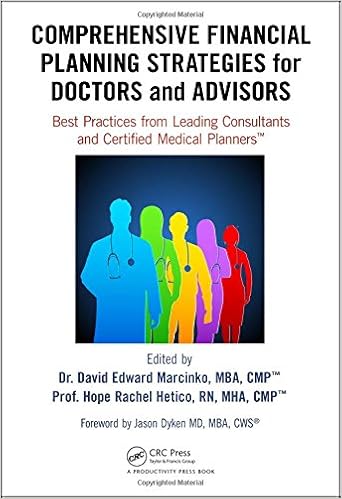
Comprehensive Financial Planning Strategies for Doctors and Advisors: Best Practices from Leading Consultants and Certified Medical Planners™

ORDER TEXTBOOK: https://www.routledge.com/Comprehensive-Financial-Planning-Strategies-for-Doctors-and-Advisors-Best/Marcinko-Hetico/p/book/9781482240283

INVITE DR. MARCINKO: https://medicalexecutivepost.com/dr-david-marcinkos-

THANK YOU

***

Get Smart [Advertise on the ME-P]

Reach Industry Pros, Executives and Decision-Makers with Ease

By Ann Miller RN MHA

[Executive-Director]

MarcinkoAdvisors@msn.com

Thank you for your interest in sponsoring the Medical Executive-Post, the web’s only site integrating medical practice management with personal financial planning for all health care and financial services professionals.

Why should your company sponsor an ad, text message or banner on the ME-P?

  • Reader loyalty. Not only does the ME-P receive a mind-boggling number of page views and visits each month, its readers are loyal.
  • Reader stature. ME-P readers are experienced industry pros, executives and decision-makers.
  • Selective advertising. The ME-P is a free read that’s off the radar of the big-ad companies. Your ad here stands out as personal and different.
  • Supporting the ME-P makes a big difference and costs only a fraction of other online publications with far fewer readers.
  • Cost. CPM is ridiculously low compared to other sites.
  • E-mail us for a full packet, but give a look to these results from the ME-P’s annual reader survey:
  • 89% of readers said the ME-P influences their perception of products and companies
  • 34% said that ME-P sponsorship alone give them a higher interest or appreciation for those companies
  • 75% said the ME-P has some, a good bit, or a lot of industry influence.

Contact me and I’ll e-mail you a rate card. Your support makes a difference!

Text Ads

We have great sponsor packages, but maybe you want to run a short-term ad — a position listing, an announcement, or your booth number at an upcoming conference. Or, perhaps your company is between budget cycles and can’t commit to sponsorship yet. We’ve got an answer – ME-P text ads.

Text ads are up to five lines long and are highly cost-effective. You’ll get about 25-35,000 impressions per week, reaching the ME-P’s highly targeted and loyal audience of healthcare professionals and financial services decision-makers. Think small text ads don’t work? They’ve made two Google kids billionaires!

PayPal Certified

All ME-P text ad costs are for one month, payable in advance via PayPal. We’ll post it quickly and you’ll see results almost immediately.

Assessment

Why waste money on magazines that never get read and with months of lead time required? The best way to quickly reach the critical mass of the healthcare management and financial services industry is right here on the ME-P.

Speaker: David E. Marcinko; MBA – Publisher-in-Chief of the Medical Executive-Post – is available for seminar or speaking engagements. Contact: MarcinkoAdvisors@msn.com

Our Other Print Books and Related Information Sources:

Health Dictionary Series: http://www.springerpub.com/Search/marcinko

Practice Management: http://www.springerpub.com/product/9780826105752

Physician Financial Planning: http://www.jbpub.com/catalog/0763745790

Medical Risk Management: http://www.jbpub.com/catalog/9780763733421

Healthcare Organizations: www.HealthcareFinancials.com

Physician Advisors: www.CertifiedMedicalPlanner.com

Subscribe Now: Did you like this Medical Executive-Post, or find it helpful, interesting and informative? Want to get the latest ME-Ps delivered to your email box each morning? Just subscribe using the link below. You can unsubscribe at any time. Security is assured.

Link: http://feeds.feedburner.com/HealthcareFinancialsthePostForcxos

Sponsors Welcomed: And, credible sponsors and like-minded advertisers are always welcomed.

Link: https://healthcarefinancials.wordpress.com/2007/11/11/advertise

Product DetailsProduct DetailsProduct Details

Product Details  Product Details

   Product Details

Personal Financial Planning for Physicians and Medical Colleagues

ME Inc = Going it Alone but with a Team

BY DR. DAVID EDWARD MARCINKO MBA CMP®

CMP logo

SPONSOR: http://www.CertifiedMedicalPlanner.org

The physician, nurse, or other medical professional should easily recognize that there are a vast array of opportunities, obstacles, and pitfalls when it comes to managing one’s finances.  Still, with some modicum of effort, the basic aspects of insurance, investments, taxes, accounting, portfolio management, retirement and estate planning, debt reduction, asset protection and practice management can be largely self-taught. Yet, it is realized that nuances and subtleties can make a well-intentioned financial plan fall short.  The devil truly is in the details.  Moreover, none of these areas can be addressed in isolation. It is common for a solution in one area to cause a new set of problems in another. 
Accordingly, most health care practitioners would be well served to hire [independent, hourly compensated and prn] financial help. Unlike some medical problems, financial issues may not cause any “pain” or other obvious symptoms.  Medical professionals tend to have far more complex financial situations than most lay people. Despite the complexities of the new world of health reform, far too many either do nothing; or give up all control totally, to an external advisor. This either/or mistake can be costly in many ways, and should be avoided. 

In reality, and at various time in their careers, the medical professional needs a team comprised of at least a financial analyst, lawyer, management consultant, risk manager [actuary, mathematician or insurance counselor] and accountant. At various points in time, each member of the team, or significant others, will properly assume a role of more or less importance, but the doctor must usually remain the “quarterback” or leader; in the absence of a truly informed other, or Certified Medical Planner™.

This is necessary because only the doctor has the personal self-mandate with skin in the game, to take a big picture view.  And, rightly or wrongly, investments dominate the information available regarding personal finance and the attention of most physicians.  One is much more likely to need or want to discuss the financial markets with their financial advisor than private letter rulings by the IRS, or with their estate planning attorney or tax accountant. While hiring for expertise is a good idea, there is sinister way advisors goad doctors into using all their retail services; all of the time. That artifice is – the value of time. 

True integrated physician focused and financial planning is at its core a service business, not a product or sales endeavor. And, increasingly money is more likely to be at the top of the list for providers as the healthcare environment is contracting.

So, eschewing the quarterback model of advice, and choosing to self-educate thru this book and elsewhere, may be one of the best efforts a smart physician can make.

ASSESSMENT: Your thoughts are appreciated.

Comprehensive Financial Planning Strategies for Doctors and Advisors: Best Practices from Leading Consultants and Certified Medical Planners™

ORDER TEXTBOOK: https://www.routledge.com/Comprehensive-Financial-Planning-Strategies-for-Doctors-and-Advisors-Best/Marcinko-Hetico/p/book/9781482240283

RELATED TEXTS: https://medicalexecutivepost.com/2021/04/29/why-are-certified-medical-planner-textbooks-so-darn-popular/

INVITE DR. MARCINKO: https://medicalexecutivepost.com/dr-david-marcinkos-

THANK YOU!

*****

How We INVEST IN INFLATION?

STRATEGIES AND MITIGATION

Finding investments to weather the storm. Strategies and ways to mitigate inflation risk, including investing in businesses with pricing power, capital intensity, and investing abroad.

By Vitaliy Katsenelson CFA

COMMENTS ARE APPRECIATED.

Thank You

***

***

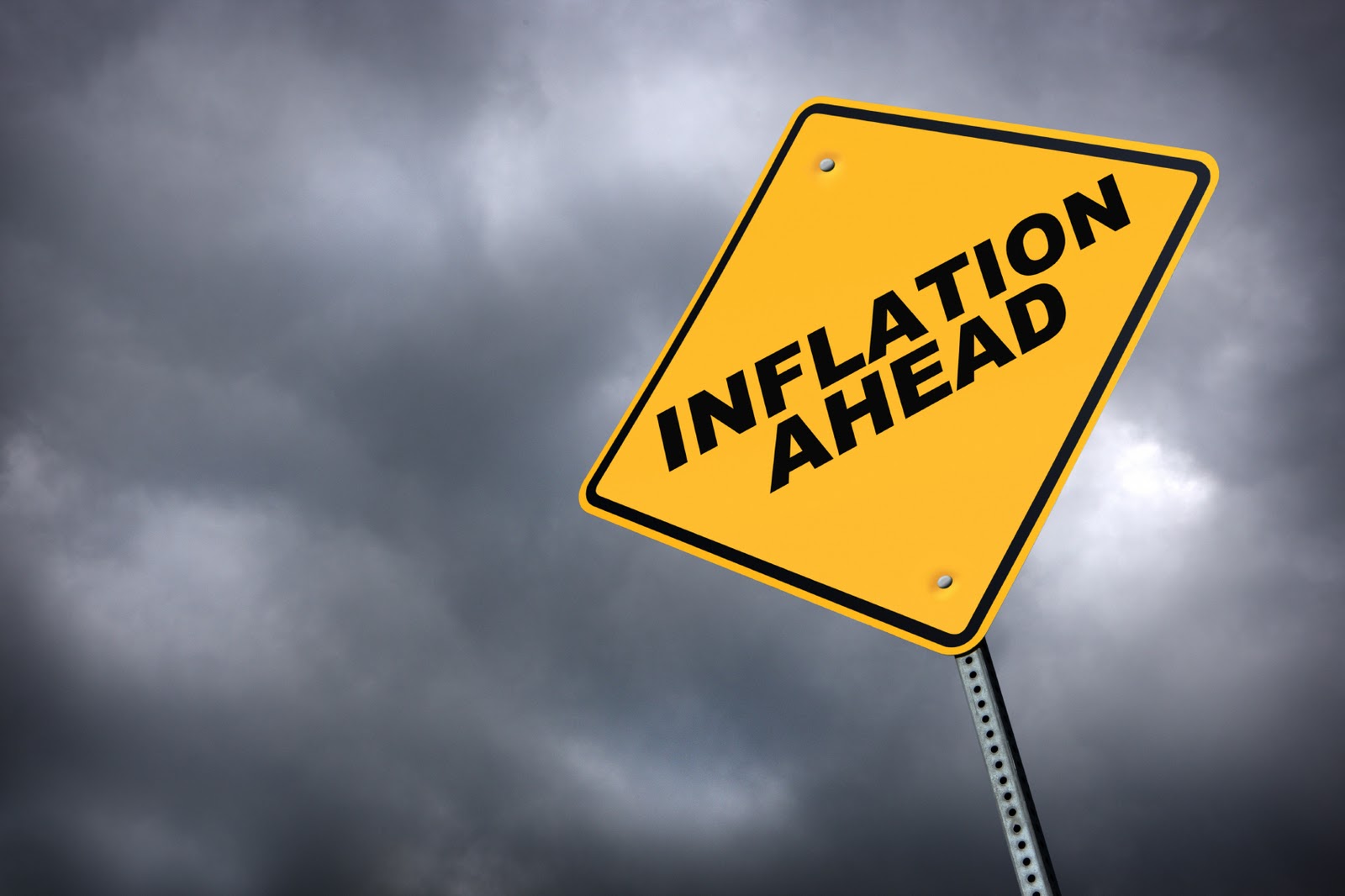
INFLATION Is Here – UPDATE?

But for How Long?

See the source image

Vitaliy N. Katsenelson, CFA

[CEO & Chief Investment Officer]

READERS

DEFINITION: In economics, inflation (or less frequently, price inflation) is a general rise in the price level of an economy over a period of time. When the general price level rises, each unit of currency buys fewer goods and services; consequently, inflation reflects a reduction in the purchasing power per unit of money – a loss of real value in the medium of exchange and unit of account within the economy. The opposite of inflation is deflation, a sustained decrease in the general price level of goods and services. The common measure of inflation is the inflation rate, the annualized percentage change in a general price index, usually the consumer price index, over time.

CITATION: https://www.r2library.com/Resource/Title/0826102549

***

See the source image

***

DEAR READERS

This essay is going to be long.
I blame inflation, be it transitory or not, for inflating its length. 

The number one question I am asked by clients, friends, readers, and random strangers is, are we going to have inflation? 

I think about inflation on three timelines: short, medium, and long-term

The pandemic disrupted a well-tuned but perhaps overly optimized global economy and time-shifted the production and consumption of various goods. For instance, in the early days of the pandemic automakers cut their orders for semiconductors. As orders for new cars have come rolling back, it is taking time for semiconductor manufacturers, who, like the rest of the economy, run with little slack and inventory, to produce enough chips to keep up with demand. A $20 device the size of a quarter that goes into a $40,000 car may have caused a significant decline in the production of cars and thus higher prices for new and used cars. (Or, as I explained to my mother-in-law, all the microchips that used to go into cars went into a new COVID vaccine, so now Bill Gates can track our whereabouts.)

Here is another example. The increase in new home construction and spike in remodeling drove demand for lumber while social distancing at sawmills reduced lumber production – lumber prices spiked 300%. Costlier lumber added $36,000 to the construction cost of a house, and the median price of a new house in the US is now about $350,000.

The semiconductor shortage will get resolved by 2022, car production will come back to normal, and supply and demand in the car market will return to the pre-pandemic equilibrium. High prices in commodities are cured by high prices. High lumber prices will incentivize lumber mills to run triple shifts. Increased supply will meet demand, and lumber prices will settle at the pre-pandemic level in a relatively short period of time. That is the beauty of capitalism! 

Most high prices caused by the time-shift in demand and supply fall into the short-term basket, but not all. It takes a considerable amount of time to increase production of industrial commodities that are deep in the ground – oil, for instance. Low oil prices preceding the pandemic were already coiling the spring under oil prices, and COVID coiled it further. It will take a few years and increased production for high oil prices to cure high oil prices. Oil prices may also stay high because of the weaker dollar, but we’ll come back to that.

Federal Reserve officials have told us repeatedly they are not worried about inflation; they believe it is transitory, for the reasons I described above. We are a bit less dismissive of inflation, and the two factors that worry us the most in the longer term are labor costs and interest rates. 

Let’s start with labor costs 

During a garden-variety recession, companies discover that their productive capacity exceeds demand. To reduce current and future output they lay off workers and cut capital spending on equipment and inventory. The social safety net (unemployment benefits) kicks in, but not enough to fully offset the loss of consumer income; thus demand for goods is further reduced, worsening the economic slowdown. Through millions of selfish transactions (microeconomics), the supply of goods and services readjusts to a new (lower) demand level. At some point this readjustment goes too far, demand outstrips supply, and the economy starts growing again.

This pandemic was not a garden-variety recession 

The government manually turned the switch of the economy to the “off” position. Economic output collapsed. The government sent checks to anyone with a checking account, even to those who still had jobs, putting trillions of dollars into consumer pockets. Though output of the economy was reduced, demand was not. It mostly shifted between different sectors within the economy (home improvement was substituted for travel spending). Unlike in a garden-variety recession, despite the decline in economic activity (we produced fewer widgets), our consumption has remained virtually unchanged. Today we have too much money chasing too few goods– that is what inflation is. This will get resolved, too, as our economic activity comes back to normal.

But …

Today, though the CDC says it is safe to be inside or outside without masks, the government is still paying people not to work. Companies have plenty of jobs open, but they cannot fill them. Many people have to make a tough choice between watching TV while receiving a paycheck from big-hearted Uncle Sam and working. Zero judgement here on my part – if I was not in love with what I do and had to choose between stacking boxes in Amazon’s warehouse or watching Amazon Prime while collecting a paycheck from a kind uncle, I’d be watching Sopranos for the third time. 

To entice people to put down the TV remote and get off the couch, employers are raising wages. For instance, Amazon has already increased minimum pay from $15 to $17 per hour. Bank of America announced that they’ll be raising the minimum wage in their branches from $20 to $25 over the next few years. The Biden administration may not need to waste political capital passing a Federal minimum wage increase; the distorted labor market did it for them. 

These higher wages don’t just impact new employees, they help existing employees get a pay boost, too. Labor is by far the biggest expense item in the economy. This expense matters exponentially more from the perspective of the total economy than lumber prices do. We are going to start seeing higher labor costs gradually make their way into higher prices for the goods and services around us, from the cost of tomatoes in the grocery store to the cost of haircuts.

Only investors and economists look at higher wages as a bad thing. These increases will boost the (nominal) earnings of workers; however, higher prices of everything around us will negate (at least) some of the purchasing power. 

Wages, unlike timber prices, rarely decline. It is hard to tell someone “I now value you less.” Employers usually just tell you they need less of your valuable time (they cut your hours) or they don’t need you at all (they lay you off and replace you with a machine or cheap overseas labor). It seems that we are likely going to see a one-time reset to higher wages across lower-paying jobs. However, once the government stops paying people not to work, the labor market should normalize; and inflation caused by labor disbalance should come back to normal, though increased higher wages will stick around.

There is another trend that may prove to be inflationary in the long-term: de-globalization.  Even before the pandemic the US set plans to bring manufacturing of semiconductors, an industry deemed strategic to its national interests, to its shores. Taiwan Semiconductor and Samsung are going to be spending tens of billions of dollars on factories in Arizona.  

The pandemic exposed the weaknesses inherent in just-in-time manufacturing but also in over reliance on the kindness of other countries to manufacture basic necessities such as masks or chemicals that are used to make pharmaceuticals.  Companies will likely carry more inventory going forward, at least for a while.  But more importantly more manufacturing will likely come back to the US. This will bring jobs and a lot of automation, but also higher wages and thus higher costs.  

If globalization was deflationary, de-globalization is inflationary  

We are not drawing straight-line conclusions, just yet. A lot of manufacturing may just move away from China to other low-cost countries that we consider friendlier to the US; India and Mexico come to mind.  

And then we have the elephant in the economy – interest rates, the price of money. It’s the most important variable in determining asset prices in the short term and especially in the long term. The government intervention in the economy came at a significant cost, which we have not felt yet: a much bigger government debt pile. This pile will be there long after we have forgotten how to spell social distancing
 
The US government’s debt increased by $5 trillion to $28 trillion in 2020 – more than a 20% increase in one year! At the same time the laws of economics went into hibernation: The more we borrow the less we pay for our debt, because ultra-low interest rates dropped our interest payments from $570 billion in 2019 to $520 billion in 2020. 

That is what we’ve learned over the last decade and especially in 2020: The more we borrow the lower interest we pay. I should ask for my money back for all the economics classes I took in undergraduate and graduate school.

This broken link between higher borrowing and near-zero interest rates is very dangerous. It tells our government that how much you borrow doesn’t matter; you can spend (after you borrow) as much as your Republican or Democratic heart desires. 

However, by looking superficially at the numbers I cited above we may learn the wrong lesson. If we dig a bit deeper, we learn a very different lesson: Foreigners don’t want our (not so) fine debt. It seems that foreign investors have wised up: They were not the incremental buyer of our new debt – most of the debt the US issued in 2020 was bought by Uncle Fed. Try explaining to your kids that our government issued debt and then bought it itself. Good luck.

Let me make this point clear: Neither the Federal Reserve, nor I, nor a well-spoken guest on your business TV knows where interest rates are going to be (the total global bond market is bigger even than the mighty Fed, and it may not be able to control over interest rates in the long run). But the impact of what higher interest rates will do the economy increases with every trillion we borrow. There is no end in sight for this borrowing and spending spree (by the time you read this, the administration will have announced another trillion in spending). 

Let me provide you some context about our financial situation 


The US gross domestic product (GDP) – the revenue of the economy – is about $22 trillion, and in 2019 our tax receipts were about $3.5 trillion. Historically, the-10 year Treasury has yielded about 2% more than inflation. Consumer prices (inflation) went up 4.2% in April. Today the 10-year Treasury pays 1.6%; thus the World Reserve Currency debt has a negative 2.6% real interest rate (1.6% – 4.2%). 

These negative real (after inflation) interest rates are unlikely to persist while we are issuing trillions of dollars of debt. But let’s assume that half of the increase is temporary and that 2% inflation is here to stay. Let’s imagine the unimaginable. Our interest rate goes up to the historical norm to cover the loss of purchasing power caused by inflation. Thus it goes to 4% (2 percentage points above 2% “normal” inflation). In this scenario our federal interest payments will be over $1.2 trillion (I am using vaguely right math here). A third of our tax revenue will have to go to pay for interest expense. Something has to give. It is not going to be education or defense, which are about $230 billion and $730 billion, respectively. You don’t want to be known as a politician who cut education; this doesn’t play well in the opponent’s TV ads. The world is less safe today than at any time since the end of the Cold War, so our defense spending is not going down (this is why we own a lot of defense stocks). 

The government that borrows in its own currency and owns a printing press will not default on its debt, at least not in the traditional sense. It defaults a little bit every year through inflation by printing more and more money. Unfortunately, the average maturity of our debt is about five years, so it would not take long for higher interest expense to show up in budget deficits. 

Money printing will bring higher inflation and thus even higher interest rates

If things were not confusing enough, higher interest rates are also deflationary 

We’ve observed significant inflation in asset prices over the last decade; however, until this pandemic we had seen nothing yet. Median home prices are up 17% in one year. The wild, speculative animal spirits reached a new high during the pandemic. Flush with cash (thanks to kind Uncle Sam), bored due to social distancing, and borrowing on the margin (margin debt is hitting a 20-year high), consumers rushed into the stock market, turning this respectable institution (okay, wishful thinking on my part) into a giant casino. 

It is becoming more difficult to find undervalued assets. I am a value investor, and believe me, I’ve looked (we are finding some, but the pickings are spare). The stock market is very expensive. Its expensiveness is setting 100-year records. Except, bonds are even more expensive than stocks – they have negative real (after inflation) yields.

But stocks, bonds, and homes were not enough – too slow, too little octane for restless investors and speculators. Enter cryptocurrencies (note: plural). Cryptocurrencies make Pets.com of the 1999 era look like a conservative investment (at least it had a cute sock commercial). There are hundreds if not thousands of crypto “currencies,” with dozens created every week. (I use the word currency loosely here. Just because someone gives bits and bytes a name, and you can buy these bits and bytes, doesn’t automatically make what you’re buying a currency.)

“The definition of a bubble is when people are making money all out of proportion to their intelligence or work ethic.”

By Mike Burry MD
[The Big Short]

I keep reading articles about millennials borrowing money from their relatives and pouring their life savings into cryptocurrencies with weird names, and then suddenly turning into millionaires after a celebrity CEO tweets about the thing he bought. Much ink is spilled to celebrate these gamblers, praising them for their ingenious insight, thus creating ever more FOMO (fear of missing out) and spreading the bad behavior.

Unfortunately, at some point they will be writing about destitute millennials who lost all of their and their friends’ life savings, but this is down the road. Part of me wants to call this a crypto craziness a bubble, but then I think, Why that’s disrespectful to the word bubble, because something has to be worth something to be overpriced. At least tulips were worth something and had a social utility. (I’ll come back to this topic later in the letter).

But ….

When interest rates are zero or negative, stocks of sci-fi-novel companies that are going to colonize and build five-star hotels on Mars are priced as if El Al (the Israeli airline) has regular flights to the Red Planet every day of the week except on Friday (it doesn’t fly on Shabbos). Rising interest rates are good defusers of mass delusions and rich imaginations. 

In the real economy, higher interest rates will reduce the affordability of financed assets. They will increase the cost of capital for businesses, which will be making fewer capital investments. No more 2% car loans or 3% business loans. Most importantly, higher rates will impact the housing market. 

Up to this point, declining interest rates increased the affordability of housing, though in a perverse way: The same house with white picket fences (and a dog) is selling for 17% more in 2021 than a year before, but due to lower interest rates the mortgage payments have remained the same. Consumers are paying more for the same asset, but interest rates have made it affordable.

At higher interest rates housing prices will not be making new highs but revisiting past lows. Declining housing prices reduce consumers’ willingness to improve their depreciating dwellings (fewer trips to Home Depot). Many homeowners will be upside down in their homes, mortgage defaults will go up… well, we’ve seen this movie before in the not-so-distant past. Higher interest rates will expose a lot of weaknesses that have been built up in the economy. We’ll be finding fault lines in unexpected places – low interest has covered up a lot of financial sins.

And then there is the US dollar, the world’s reserve currency. Power corrupts, but the unchallenged and unconstrained the power of being the world’s reserve currency corrupts absolutely. It seems that our multitrillion-dollar budget deficits will not suddenly stop in 2021. With every trillion dollars we borrow, we chip away at our reserve currency status (I’ve written about this topic in great detail, and things have only gotten worse since). And as I mentioned above, we’ve already seen signs that foreigners are not willing to support our debt addiction. 

A question comes to mind.
Am I yelling fire where there is not even any smoke? 

Higher interest rates is anything but a consensus view today. Anyone who called for higher rates during the last 20 years is either in hiding or has lost his voice, or both. However, before you dismiss the possibility of higher rates as an unlikely plot for a sci-fi novel, think about this. 

In the fifty years preceding 2008, housing prices never declined nationwide. This became an unquestioned assumption by the Federal Reserve and all financial players. Trillions of dollars of mortgage securities were priced as if “Housing shall never decline nationwide” was the Eleventh Commandment, delivered at Temple Sinai to Goldman Sachs. Or, if you were not a religious type, it was a mathematical axiom or an immutable law of physics. The Great Financial Crisis showed us that confusing the lack of recent observations of a phenomenon for an axiom may have grave consequences. 

Today everyone (consumers, corporations, and especially governments) behaves as if interest rates can only decline, but what if… I know it’s unimaginable, but what if ballooning government debt leads to higher interest rates? And higher interest rates lead to even more runaway money printing and inflation? 

This will bring a weaker dollar 

A weaker US dollar will only increase inflation, as import prices for goods will go up in dollar terms. This will create an additional tailwind for commodity prices. 

If your head isn’t spinning from reading this, I promise mine is from having written it. 

To sum up: A lot of the inflation caused by supply chain disruption that we see today is temporary. But some of it, particularly in industrial commodities, will linger longer, for at least a few years. Wages will be inflationary in the short-term and will reset prices higher, but once the government stops paying people not to work, wage growth should slow down. Finally, in the long term a true inflationary risk comes from growing government borrowing and budget deficits, which will bring higher interest rates and a weaker dollar with them, which will only make inflation worse and will also deflate away a lot of assets.

THE END
UPDATE: https://www.msn.com/en-us/news/us/how-us-inflation-rate-is-impacting-americans-wallets-before-the-holiday-season/vi-AAROG5J

CURRENT: https://www.msn.com/en-us/money/markets/us-treasury-yields-tick-lower-on-fears-omicron-will-dent-recovery/ar-AARYSKy?li=BBnbfcL

Your thoughts are appreciated.

THANK YOU

***
See the source image

COMPREHENSIVE FINANCIAL PLANNING STRATEGIES

For Doctors and Advisors

BOOK REVIEWS WITH FOREWORD

Reviews

Written by doctors and healthcare professionals, this textbook should be mandatory reading for all medical school students―highly recommended for both young and veteran physicians―and an eliminating factor for any financial advisor who has not read it. The book uses jargon like ‘innovative,’ ‘transformational,’ and ‘disruptive’―all rightly so! It is the type of definitive financial lifestyle planning book we often seek, but seldom find.
LeRoy Howard MA CMPTM,Candidate and Financial Advisor, Fayetteville, North Carolina

I taught diagnostic radiology for over a decade. The physician-focused niche information, balanced perspectives, and insider industry transparency in this book may help save your financial life.
Dr. William P. Scherer MS, Barry University, Ft. Lauderdale, Florida

This book was crafted in response to the frustration felt by doctors who dealt with top financial, brokerage, and accounting firms. These non-fiduciary behemoths often prescribed costly wholesale solutions that were applicable to all, but customized for few, despite ever-changing needs. It is a must-read to learn why brokerage sales pitches or Internet resources will never replace the knowledge and deep advice of a physician-focused financial advisor, medical consultant, or collegial Certified Medical Planner™ financial professional.
―Parin Khotari MBA,Whitman School of Management, Syracuse University, New York

In today’s healthcare environment, in order for providers to survive, they need to understand their current and future market trends, finances, operations, and impact of federal and state regulations. As a healthcare consulting professional for over 30 years supporting both the private and public sector, I recommend that providers understand and utilize the wealth of knowledge that is being conveyed in these chapters. Without this guidance providers will have a hard time navigating the supporting system which may impact their future revenue stream. I strongly endorse the contents of this book.

―Carol S. Miller BSN MBA PMP,President, Miller Consulting Group, ACT IAC Executive Committee Vice-Chair at-Large, HIMSS NCA Board Member

This is an excellent book on financial planning for physicians and health professionals. It is all inclusive yet very easy to read with much valuable information. And, I have been expanding my business knowledge with all of Dr. Marcinko’s prior books. I highly recommend this one, too. It is a fine educational tool for all doctors.

―Dr. David B. Lumsden MD MS MA,Orthopedic Surgeon, Baltimore, Maryland

There is no other comprehensive book like it to help doctors, nurses, and other medical providers accumulate and preserve the wealth that their years of education and hard work have earned them.
―Dr. Jason Dyken MD MBA, Dyken Wealth Strategies, Gulf Shores, Alabama

I plan to give a copy of this book written
by doctors and for doctors’ to all my prospects, physician, and nurse clients. It may be the definitive text on this important topic.
―Alexander Naruska CPA, Orlando, Florida

Health professionals are small business owners who need to apply their self-discipline tactics in establishing and operating successful practices. Talented trainees are leaving the medical profession because they fail to balance the cost of attendance against a realistic business and financial plan. Principles like budgeting, saving, and living below one’s means, in order to make future investments for future growth, asset protection, and retirement possible are often lacking. This textbook guides the medical professional in his/her financial planning life journey from start to finish. It ranks a place in all medical school libraries and on each of our bookshelves.
―Dr. Thomas M. DeLauro DPM, Professor and Chairman – Division of Medical Sciences, New York College of Podiatric Medicine

Physicians are notoriously excellent at diagnosing and treating medical conditions. However, they are also notoriously deficient in managing the business aspects of their medical practices. Most will earn $20-30 million in their medical lifetime, but few know how to create wealth for themselves and their families. This book will help fill the void in physicians’ financial education. I have two recommendations: 1) every physician, young and old, should read this book; and 2) read it a second time!
―Dr. Neil Baum MD, Clinical Associate Professor of Urology, Tulane Medical School, New Orleans, Louisiana

I worked with a Certified Medical Planner™ on several occasions in the past, and will do so again in the future. This book codified the vast body of knowledge that helped in all facets of my financial life and professional medical practice.
Dr. James E. Williams DABPS, Foot and Ankle Surgeon, Conyers, Georgia

***

Comprehensive Financial Planning Strategies for Doctors and Advisors: Best Practices from Leading Consultants and Certified Medical Planners™

***

YOUR THOUGHTS ARE APPRECIATED.

SECOND OPINIONS: https://medicalexecutivepost.com/schedule-a-consultation/

INVITE DR. MARCINKO: https://medicalexecutivepost.com/dr-david-marcinkos-bookings/

Thank You

“Churning”, “Front Running” and “Pumping & Dumping”

BE ALERT AND BE AWARE

By Dr. David E. Marcinko MBA CMP®

https://certifiedmedicalplannerdotorg1.files.wordpress.com/2012/03/cmp-logo17.jpg

SPONSOR: http://www.CertifiedMedicalPlanner.org

Front Running (Definition, Examples) | How Traders Use it?

Churning: The practice of a provider seeing a patient more often than is medically necessary, primarily to increase revenue through an increased number of visits. A practice, in violation of SEC rules, where a salesperson affects a series of transactions in a customer’s account which are excessive in size and/or frequency in relation to the size and investment objectives of the account. An insurance agent who is churning an account is normally seeking to maximize the income (in commissions, sales credits or mark-ups) derived from the account.  

FRONT-RUNNING: Form of market manipulation where a broker/dealer delays processing of a large customer trade in an underlying security until the firm can execute an options trade in that security in anticipation of the client’ s trade impact on the underlying security.

Pump and dump: A a form of securities fraud that involves artificially inflating the price of an owned stock through false and misleading positive statements, in order to sell the cheaply purchased stock at a higher price. Once the operators of the scheme “dump” their overvalued shares, the price falls and investors lose their money.

Citation: https://www.r2library.com/Resource/Title/0826102549

Your comments are appreciated.

INVITE DR. MARCINKO: https://medicalexecutivepost.com/dr-david-marcinkos-bookings/

THANK YOU

***

The “BADLANDS” Off-Shore Tax Havens in South Dakota

By Morning Brew, NF and Staff Reporters

One of the world’s most prolific offshore tax havens is located more than 1,000 miles from any shore.

The US state of South Dakota now rivals notorious tax shelters like Panama, the Cayman Islands, and Switzerland as a destination for the top 0.01% to shield their  wealth from the grubby hands of tax authorities, the newly released Pandora Papers show.

Product Details

CITE: https://www.r2library.com/Resource/Title/0826102549

Quick recap: The Pandora Papers, published one week ago, represent one of the biggest leaks of financial docs in history. They show how celebrities, world leaders, and business magnates take advantage of opaque financial laws to hold onto as much of their wealth as they can…and, in some cases, get away with crimes.

And while none of that is particularly surprising, what is surprising is the changing geography of tax havens. The ultrarich are taking their money out of traditional tax shelters like the island of Jersey (one of the Channel Islands) and stashing it in rural US states like Nevada, Wyoming, and, most of all…South Dakota.

  • Of the more than 200 US trusts appearing in the Pandora Papers, 81 were located in South Dakota.

South Dakota’s trust industry held $367 billion in anonymous, untraceable assets in 2020, a nearly 4x increase from $75.5 billion in 2011. And these trusts aren’t catering to cattle ranchers who made it big—they’re linked to individuals in 40 different countries outside the US.

The bigger issue? 28 US-based trusts are linked to individuals or companies accused of misconduct overseas, such as money laundering, bribery, and human rights abuses, per the Washington Post.

***

Badlands National Park Has Stunning Landscapes and Diverse Wildlife -  Here's How to Experience It (Video) | Travel + Leisure

And now the question you’ve all been waiting for…

Why South Dakota?

It’s not why most people arrive in South Dakota—by accident. For decades, the state has intentionally loosened regulations on its financial services sector to grow its economy and create finance jobs, particularly in the city of Sioux Falls.

This deregulation push, spurred by trust industry insiders, turned a South Dakotan trust into “the most potent force-field money can buy,” wrote the Guardian’s Oliver Bullough.

By setting up a trust in South Dakota…

  • Your assets are protected from claims by creditors, angry clients, or even your ex-spouse (a level of security not afforded by other tax havens).
  • You are not subject to income tax, inheritance tax, or capital gains tax in the state…because South Dakota has none of those.
  • You never actually have to go to South Dakota.

In sum, if you’re a shady billionaire or a corrupt president of a Latin American country with something to hide, South Dakota looks like a mighty attractive place to shield your fortune from governments.

Or, rather, the US more broadly is an attractive place to hide your wealth. After years of bashing “offshore” havens for sheltering tax avoiders, the US has moved up to second in the world rankings for financial secrecy.

YOUR COMMENTS ARE APPRECIATED.

MORE: https://www.msn.com/en-us/money/markets/the-worlds-rich-and-powerful-are-stashing-dollar500-billion-in-this-tax-haven/ar-AAPw6Ny?li=BBnb7Kz

MORE: https://www.msn.com/en-us/news/politics/opinion-the-reason-its-so-easy-for-wealthy-americans-to-hide-their-money-%e2%80%94-and-how-to-stop-it/ar-AAPzf9W?li=BBnb7Kz

Thank You

Comprehensive Financial Planning Strategies for Doctors and Advisors: Best Practices from Leading Consultants and Certified Medical Planners™

ORDER: https://www.routledge.com/Comprehensive-Financial-Planning-Strategies-for-Doctors-and-Advisors-Best/Marcinko-Hetico/p/book/9781482240283

***

Risk Management, Liability Insurance, and Asset Protection Strategies for Doctors and Advisors : Best Practices from Leading Consultants and Certified Medical Planners™ book cover

***

RISK MANAGEMENT: https://www.routledge.com/Risk-Management-Liability-Insurance-and-Asset-Protection-Strategies-for/Marcinko-Hetico/p/book/9781498725989

***

PROSPECT THEORY: Client Empowerment for Financial Decision Making

OVERHEARD IN THE DOCTOR’S LOUNGE

Image result for doctors lounge

By Jaan E. Sidorov MD

***
DEFINITION:
Prospect theory is a theory of behavioral economics and behavioral finance that was developed by Daniel Kahneman and Amos Tversky in 1979. The theory was cited in the decision to award Kahneman the 2002 Nobel Memorial Prize in Economics.

CITE: https://www.r2library.com/Resource/Title/0826102549

CASE MODEL:

Amanda, an RN client, was just informed by her financial advisor that she
needed to re-launch her 403-b retirement plan. Since she was leery about
investing, she quietly wondered why she couldn’t DIY. Little does her FA know
that she doesn’t intend to follow his advice, anyway! So, what went wrong?


The answer may be that her advisor didn’t deploy a behavioral economics
framework to support her decision-making. One such framework is the
“prospect theory” model that boils client decision-making into a “three step
heuristic.”

Prospect theory makes the unspoken biases that we all have more explicit. By
identifying all the background assumptions and preferences that clients
[patients] bring to the office, decision-making can be crafted so that everyone
[family, doctor and patient] or [FA, client and spouse] is on the same page.

****

Prospect theory - Sketchplanations

***
Briefly, the three steps are:

  • Simplify choices by focusing on the key differences between investment
    [treatment] options such as stock, bonds, cash, and index funds.
  • Understanding that clients [patients] prefer greater certainty when it comes to
    pursuing financial [health] gains and are willing to accept uncertainty when
    trying to avoid a loss [illness].
  • Cognitive processes lead clients and patients to overestimate the value of their choices thanks to survivor bias, cognitive dissonance, appeals to authority
    and hindsight biases.

ASSESSMENT

Much like in healthcare today, the current mass-customized approaches to the financial services industry fall short of recognizing more personalized advisory approaches like prospect theory and assisted client-centered investment decision-making.

YOUR COMMENTS ARE APPRECIATED.

Thank You

***

Risk Management, Liability Insurance, and Asset Protection Strategies for Doctors and Advisors: Best Practices from Leading Consultants and Certified Medical Planners™

RISK MANAGEMENT: https://www.routledge.com/Risk-Management-Liability-Insurance-and-Asset-Protection-Strategies-for/Marcinko-Hetico/p/book/9781498725989

***


Become a Board CERTIFIED MEDICAL PLANNER®

***

CMP logo

Help Physicians and Medical Professionals Thrive

[FINANCIAL PLANNING AND MEDICAL PRACTICE MANAGEMENT]

***

XPAS

***

LEARN MORE HERE: https://medicalexecutivepost.com/2021/10/02/the-certified-medical-planner-curriculum/

CONTACT: ANN MILLER RN MHA CMP®

Phone: 770-448-0769

EMAIL: MarcinkoAdvisors@msn.com

***

***

INVITE: Dr. Marcinko to Your Next “Big Event”

By Ann Miller RN, MHA, CMP®

CMP logo

SPONSOR: http://www.CertifiedMedicalPlanner.org

***

What is the “SAVER’S CREDIT”?

By Dr. David E. Marcinko MBA CMP®

CMP logo

Sponsor: http://www.CertifiedMedicalPlanner.org

The saver’s credit is a tax credit that’s intended to promote retirement savings among low- and moderate-income workers. It can reduce an eligible taxpayer’s federal income taxes when they save in a qualified retirement plan. It may be especially useful to medical students, nurses, interns, residents and fellows.

****

IRS Releases Plan Limits for 2020 - Montgomery Retirement Plan Advisors

***

In 2021, the maximum credit is worth $1,000 for individuals and $2,000 for married couples filing jointly, although it phases out for higher earners. To qualify for the credit, individuals must have an adjusted gross income of $32,500 or less. The income threshold for married couples is $65,000.

Because the credit is non-refundable, eligible taxpayers are able to use it to effectively reduce their tax bill to zero – but it cannot provide them with a tax refund.

IRS: https://www.irs.gov/retirement-plans/plan-participant-employee/retirement-savings-contributions-savers-credit

CITE: https://www.r2library.com/Resource/Title/0826102549

YOUR THOUGHTS AND COMMENTS ARE APPRECIATED.

***

ORDER: https://www.amazon.com/Comprehensive-Financial-Planning-Strategies-Advisors/dp/1482240289/ref=sr_1_1?ie=UTF8&qid=1418580820&sr=8-1&keywords=david+marcinko

Thank You

***

Three [3] Must Know Technical ROTH IRA RULES

ALERT FOR PHYSICIANS AND ALL INVESTORS

***

1. You can trade actively in a Roth IRA

Some physician investors may be concerned that they can’t actively trade in a Roth IRA. But there’s no rule from the IRS that says you can’t do so. So you won’t get in legal trouble if you do.

But there may be some extra fees if you trade certain kinds of investments. For example, while brokers won’t charge you if you trade in and out of stocks and most ETFs on a short-term basis, many mutual fund companies will charge you an early redemption fee if you sell the fund. This fee is usually assessed only if you’ve owned the fund for fewer than 30 days.

2. Any gains are tax-free – forever

The ability to avoid taxes on your investments is an incredible benefit. You’ll be able to escape – perfectly legally – taxes on dividends and capital gains. Not surprisingly, this superpower makes the Roth IRA very popular, but to enjoy its benefits, you must abide by a few rules.

The Roth IRA limits you to a $6,000 maximum annual contribution (for 2021), and you won’t be able to withdraw earnings from the account until retirement age (59 1/2) or later and after owning the account for at least five years. However, you can withdraw your contributions to the account without being taxed at any time, but you won’t be able to replace those contributions later.

The Roth IRA offers a number of other benefits and retirement savers should look into it.

3. You can’t use margin in an IRA

Many traders use margin in their accounts. With a margin loan, the broker extends you capital to invest beyond what you actually own. It’s a useful tool, especially if you’re trading frequently. Unfortunately, margin loans are not available in IRA accounts.

For frequent traders the ability to trade on margin is not just about magnifying your returns. It’s also about having the ability to sell a position and immediately buy another. In a cash account (like a Roth IRA), you have to wait for a transaction to settle, and that takes a couple days. In the meantime you’re unable to trade with that money even though it’s credited to your account.

PLUS A FOURTH RULE

4. You don’t get to deduct losses

If you’re trading in a taxable brokerage account, you’ll get a tax write-off if you make a losing investment. Some investors even make sure they’re getting the largest write-off they can using a process called tax-loss harvesting. They scoop up that benefit and then even repurchase the stock or fund later (after 30 days) if they think it’s poised to rise in the future.

But if you’re trading in a Roth IRA, you won’t get the ability to write off losses. Changes to the tax code in 2017 eliminated the ability to claim any benefit from losses in an IRA account.

CITATION: https://www.r2library.com/Resource/Title/0826102549

***

What is a Roth IRA? | Meridian Financial Partners

****

Book Marcinko: https://medicalexecutivepost.com/dr-david-marcinkos-bookings/

YOUR COMMENTS ARE APPRECIATED.

Thank You

***

The “Mutual” VERSUS “Stock”Company?

QUICK DEFINITIONINVESTING BASICS

MUTUAL COMPANY:  A company that has no capital stock or stockholders.  Rather, it is owned by its policy-owners and managed by a board of directors chosen by the policy-owners. 

Any earnings, in addition to those necessary for the operation of the company and contingency reserves, are returned to the policy-owners in the form of policy dividends.

See the source image

STOCK COMPANY: A joint-stock company is a business entity in which shares of the company’s stock can be bought and sold by shareholders.

Each shareholder owns company stock in proportion, evidenced by their shares (certificates of ownership). Shareholders are able to transfer their shares to others without any effects to the continued existence of the company.

CITE: https://www.r2library.com/Resource/Title/0826102549

****

RELATED TEXTS: https://medicalexecutivepost.com/2021/04/29/why-are-certified-medical-planner-textbooks-so-darn-popular/

INVITE DR. MARCINKO: https://medicalexecutivepost.com/dr-david-marcinkos-

THANK YOU!

****

On Excess IRA and Roth IRA Contributions

BY DAN MOISAND CFP®

***

See the source image

***

READ HERE: https://www.msn.com/en-us/news/other/i-contributed-too-much-to-my-ira-and-roth-ira-%e2%80%94-what-now/ar-AANP1IP?li=BBnb7Kz

MORE: https://www.irs.gov/retirement-plans/plan-participant-employee/retirement-topics-ira-contribution-limits

EDITOR’S NOTE: Colleague Dan Moisand contributed to our textbook on “Comprehensive Financial Planning Strategies for Doctors and Advisors.”

***

YOUR THOUGHTS AND COMMENTS ARE APPRECIATED.

Thank You

***

PODCAST: Why Bitcoin is a “Once-in-a-Species” Asset Class

In this episode, DWealthMuse host, Dara Albright, and guest Jeff Ross, CIO of Vailshire Capital Management, discuss why bitcoin may just be that once-in-a-species asset class that saves the planet from economic and, yes, even environmental ruin.

This episode is loaded with so many great insights including:

See the source image
  • Why Jeff believes bitcoin’s investment risk has evaporated;
  • How bitcoin fits into Warren Buffet’s investment thesis;
  • Two characteristics bitcoin skeptics share: a lack of understanding and deep ties to the traditional banking system;
  • Why bitcoin is a dishonest politician’s worst nightmare;
  • Why every modern retirement portfolio should have bitcoin exposure;
  • Why regulatory scrutiny may be turning away from bitcoin and heading straight towards ethereum and altcoins;
  • How bitcoin could solve the world’s energy problems;
  • Why we may be nearing the end of the Keynesian economic experiment;
  • How bitcoin forces an honest unit of accounting by governments;
  • Why fiat is destined to self-destruct while bitcoin is designed to appreciate in time;
  • Whether bitcoin can reach a new all-time high by Jeff’s August 29th birthday and cross 100,000 by Dara’s December 24th birthday?

PODCAST: https://dwealthmuse.podbean.com/e/episode25bitcoinbulls/

Your comments are appreciated.

THANK YOU

****

FINANCIAL PLANNING: Strategies for Doctors and Advisors

SPONSOR: http://www.CertifiedMedicalPlanner.org

***

***
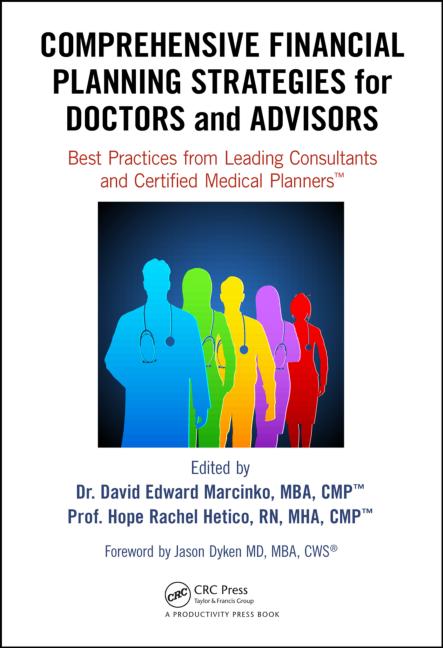
RELATED TEXTS: https://medicalexecutivepost.com/2021/04/29/why-are-certified-medical-planner-textbooks-so-darn-popular/

INVITE DR. MARCINKO: https://medicalexecutivepost.com/dr-david-marcinkos-

THANK YOU!

***

National “Financial Awareness Day” 2021

MAKE IT EVERYDAY FOR PHYSICIANS AND MEDICAL COLLEAGUES

By Dr. David Edward Marcinko MBA CMP®

CMP logo

SPONSOR: http://www.CertifiedMedicalPlanner.org

***

Use National Financial Awareness Day to your Advantage

Aug. 14th is National Financial Awareness Day. Financial awareness is about more than just understanding the basics on how money works. It’s also about evaluating your own budget, savings and investments to make sure your finances are working for your needs.

HERE: https://nationaltoday.com/national-financial-awareness-day/

So if it’s been a while since your last financial “check up,” National Financial Awareness Day can be the extra push you’ve needed to finally take a look under the hood.

***

***

RELATED TEXTS: https://medicalexecutivepost.com/2021/04/29/why-are-certified-medical-planner-textbooks-so-darn-popular/

INVITE DR. MARCINKO: https://medicalexecutivepost.com/dr-david-marcinkos-

Second Opinions: https://medicalexecutivepost.com/schedule-a-consultation/

THANK YOU!

***

CERTIFIED MEDICAL PLANNER™ Designation: A.I. Allows Adult Learners Take Control

“Robo-Examiners” Let CMP™ Candidates Take Control

Dr. David Marcinko MBA CMP™
[Founding CEO and President]

Enter the CMPs

cmp

The concept of a self-taught and student motivated, but automated outcomes driven classroom may seem like a nightmare scenario for those who are not comfortable with computers. Now everyone can breathe a sigh of relief, because the Institute of Medical Business Advisors just launched an “automated” final examination review protocol that requires no programming skill whatsoever.

In fact, everything is designed to be very simple and easy to use. Once a student’s examination “blue-book” is received, computerized “robotic reviewers” correct student assignments and quarterly test answers. This automated examination model lets the robots correct tests and exams, while the students concentrate on guided self-learning.

READ: https://medicalexecutivepost.com/2020/07/09/robo-examiners-let-cmp-candidates-take-control/

MORE: https://medicalexecutivepost.com/2020/06/16/discover-the-best-medical-risk-management-and-insurance-planning-practices-of-leading-cmps/

Your thoughts and comments are appreciated.

THANK YOU

***

FINANCIAL PLANNING AND INVESTING FOR PHYSICIANS: Purchase Textbook Today & Relax Tomorrow

“MANIC MONDAY” 2021

INVITE DR. MARCINKO: https://medicalexecutivepost.com/dr-david-marcinkos-bookings/

YOUR THOUGHTS ARE APPRECIATED

SPONSOR: http://www.CertifiedMedicalPlanner.org

CMP logo

THANK YOU

***

FINANCIAL PLANNING: Strategies for Physicians and their Advisors

A Textbook Review

SECOND OPINIONS: https://medicalexecutivepost.com/schedule-a-consultation/

INVITE DR. MARCINKO: https://medicalexecutivepost.com/dr-david-marcinkos-bookings/

SPONSOR: http://www.CertifiedMedicalPlanner.org

CMP logo

THANK YOU

***

STOCKS: A Very Skewed Market “Boom”

PRICES CHANGES FOR THE LAST SEVEN YEARS

***

***

Your thoughts are appreciated.

SECOND OPINIONS: https://medicalexecutivepost.com/schedule-a-consultation/

INVITE DR. MARCINKO: https://medicalexecutivepost.com/dr-david-marcinkos-bookings/

SPONSOR: http://www.CertifiedMedicalPlanner.org

***

Are Today’s Doctors Desperate?

Emotions Rise with Healthcare Reform

By Dr. David Edward Marcinko; MBA, CMP™

[Publisher-in-Chief]

NOTE:  I penned this essay more than a decade ago.dem2

Managed care is a prospective payment method where medical care is delivered regardless of the quantity or frequency of service, for a fixed payment, in the aggregate. It is not traditional fee-for-service medicine or the individual personal care of the past, but is essentially utilitarian in nature and collective in intent. Will new-age healthcare reform be even more draconian?

Unhappy Physicians

There are many reasons why doctors are professionally and financially unhappy, some might even say desperate, because of managed care; not to mention the specter of healthcare reform from the Obama administration. For example:

  • A staggering medical student loan debt burden of $100,000-250,000 is not unusual for new practitioners. The federal Health Education Assistance Loan (HEAL) program reported that for the Year 2000, it squeezed significant repayment settlements from its Top 5 list of deadbeat doctor debtors. This included a $303,000 settlement from a New York dentist, $186,000 from a Florida osteopath, $158,000 from a New Jersey podiatrist, $128,000 from a Virginia podiatrist, and $120,000 from a Virginia dentist. The agency also excluded 303 practitioners from Medicare, Medicaid, and other federal healthcare programs and had their cases referred for nonpayment of debt.
  • Because of the flagging economy, medical school applications nationwide have risen. “Previously, there were a lot of different opportunities out there for young bright people”; according to Rachel Pentin-Maki; RN, MHA”; not so today. In fact, Physicians Practice Digest recently stated, “Medicine is fast becoming a job in which you work like a slave, eke out a middle class existence, and have patients, malpractice insurers, and payers questioning your motives.” Remarkably, the Cornell University School of Continuing Education has designed a program to give prospective medical school students a real-world peek, both good and bad.

The Ripple Effects of Managed Care and Reform

“Many people who are currently making a great effort and investment to become doctors may be heading for a role and a way of life that are fundamentally different from what they expect and desire,” according to Stephen Scheidt, MD, director of the $1,000 Cornell fee program; why?

  • Fewer fee-for-service patients and more discounted patients.
  • More paperwork and scrutiny of decisions with lost independence and morale.
  • Reputation equivalency (i.e., all doctors in the plan must be good), or commoditization (i.e., a doctor is a doctor is a doctor).
  • The provider is at risk for (a) utilization and acuity, (b) actuarial accuracy, (c) cost of delivering medical care, and (d) adverse patient selection.
  • Practice costs are increasing beyond the core rate of inflation.
  • Medicare reimbursements are continually cut.

Mad Obama

Early Opinions

Richard Corlin MD, opined back in 2002 that “these are circumstances that cannot continue because we are going to see medical groups disappearing.” Furthermore, he stated, “This is an emergency that lawmakers have to address.” Such cuts also stand to hurt physicians with private payers since commercial insurers often tie their reimbursement schedules to Medicare’s resources. “That’s the ripple effect here,” says Anders Gilberg, the Washington lobbyist for the Medical Group Management Associations (MGMA).

Assessment

And so, some desperate doctors are pursing these sources of relief, among many others:

  • A growing number of doctors are abandoning traditional medicine to start “boutique” practices that are restricted to patients who pay an annual retainer of $1,500 and up for preferred services and special attention. Franchises for the model are also available.
  • Regardless of location, the profession of medicine is no longer ego-enhancing or satisfying; some MDs retire early or leave the profession all together. Few recommend it, as a career anymore.

Assessment

To compound the situation, it is well known that doctors are notoriously poor investors and do not attend to their own personal financial well being, as they expertly minister to their patients’ physical illnesses.

Conclusion

And so, your thoughts and comments on this Medical Executive-Post are appreciated. Tell us what you think? Are you a desperate doctor? Feel free to review our top-left column, and top-right sidebar materials, links, URLs and related websites, too. Then, be sure to subscribe to the ME-P. It is fast, free and secure.

Link: http://feeds.feedburner.com/HealthcareFinancialsthePostForcxos 

References:

  1. www.managedcaremagazine.com/archives/9809/9809/.qna_dickey.shtml
  2. www.hrsa.dhhs.gov/news-pa/heal.htm
  3. www.bhpr.hrsa.gov/dsa/sfag/health-professions/bk1prt4.htm
  4. Pamela L. Moore, “Can We All Just Get Along: Bridging the Generation Gap, Physicians Practice Digest (May/June 2001).

Risk Management, Liability Insurance, and Asset Protection Strategies for Doctors and Advisors: Best Practices from Leading Consultants and Certified Medical Planners™8Comprehensive Financial Planning Strategies for Doctors and Advisors: Best Practices from Leading Consultants and Certified Medical Planners™

ON THE ROAD AGAIN: Public Speaking, Opining and Assigning

Dr. David Edward Marcinko is Speaking Up

Dr. David Edward Marcinko MBA CMP® enjoys personal coaching and public speaking and gives as many talks each year as possible, at a variety of medical society and financial services conferences around the country and world.

These have included lectures and visiting professorships at major academic centers, keynote lectures for hospitals, economic seminars and health systems, keynote lectures at city and statewide financial coalitions, and annual keynote lectures for a variety of internal yearly meetings.

His talks tend to be engaging, iconoclastic, and humorous. His most popular presentations include a diverse variety of topics and typically include those in all iMBA, Inc’s textbooks, handbooks, white-papers and most topics covered on this blog.

***

Recognizing the Differences between Healthcare and Other ...

INVITATIONS: https://medicalexecutivepost.com/dr-david-marcinkos-bookings/

CONTACT: Ann Miller RN MHA

MarcinkoAdvisors@msn.com

Ph: 770-448-0769

Second Opinions: https://medicalexecutivepost.com/schedule-a-consultation/

DIY Textbooks: https://medicalexecutivepost.com/2021/04/29/why-are-certified-medical-planner-textbooks-so-darn-popular/

THANK YOU

***

On Finding PHYSICIAN FOCUSED Financial Advice?

OVER HEARD IN THE DOCTOR’S LOUNGE

Michigan Association of Osteopathic Family Physicians ...

The financial planner is a like juggler, trying to keep a variety of balls simultaneously in the air.  Each aspect of practice becomes critical, just as action is needed. 

Some of the activities of operating a successful financial planning practice generally attract more attention than others, such as marketing and advertising, closing engagements, and office administration.  Because product review, selection and implementation are often related to advisor compensation, they attract a great deal of the financial juggler’s concentration. 

But, the heart of financial planning, niche advice, often receives little attention.  Not because it is unimportant, it just doesn’t seem immediately and predictably urgent.  Here, that ball does not seem to be dropping so rapidly. 

However, retaining clients and receiving referrals from other professionals is very dependent on the quality of the advice delivered.  And, the first line of protection from practitioner liability exposure is to not deliver incorrect or incomplete advice. 

But, where does the financial advisor turn for ideas and organized research in the healthcare sector? 

Edwin P. Morrow; CFPTM, CLU, ChFC, RFC

edwin

[Middletown, Ohio, USA]

ORDER Textbook: https://www.amazon.com/Comprehensive-Financial-Planning-Strategies-Advisors/dp/1482240289/ref=sr_1_1?ie=UTF8&qid=1418580820&sr=8-1&keywords=david+marcinko

THANK YOU

***

TAX DEDUCTIONS: Home Ownership Simplified

Take Full Advantage Of These Tax Deductions

DR. DAVID EWARD MARCINKO MBA CMP®

CMP logo

SPONSOR: http://www.CertifiedMedicalPlanner.org

The housing market is HOT right now. Lumbar and wood is expensive. Inflation is emerging. So, owning a home can be very lucrative. Seriously, owning a home can not only give you a cheaper monthly payment than renting but in many cases, the tax benefits make the decision a no-brainer.

Citation: https://www.r2library.com/Resource/Title/0826102549

Home ownership falls for first time in a century - Telegraph

Here are a few of the larger deductions that you need to be sure to take:

Interest you pay on your mortgage: If you own a home and don’t have a mortgage greater than $750,000, you can deduct the interest you pay on the loan. This is one of the biggest benefits to owning a home versus renting–as you could get massive deductions at tax time. The limit used to be $1 million, but the Tax Cuts and Jobs Act of 2017 (TCJA) reduced the limit and made some clarifications on deducting interest from a home equity line of credit.

Property taxes: Another awesome benefit to owning a home is the ability to deduct your property taxes. Before TCJA, the rules were a little more flexible and you were able to deduct the entirety of your property taxes. Now things have a changed a bit. Under the new law, you can deduct up to $10,000. The deduction for state and local income taxes was combined with the deduction for state and local property taxes, too.

Tax incentives for energy-efficient upgrades: While most of the tax incentives for making energy-efficient upgrades to your home have gone away, there are still a couple worth noting. You can still claim tax deductions on solar energy–both for electric and water heating equipment, through 2021. The longer you wait, though, the less money you’ll get back. Here’s the percentage of equipment you can deduct, based on time of installation:

Between January 1, 2017, and December 31, 2019 – 30% of the expenditures are eligible for the credit
Between January 1, 2020, and December 31, 2020 – 26%
Between January 1, 2021, and December 31, 2021 – 22%

ASSESSMENT: But, is now the best time to buy a home? Your thoughts are appreciated.

Rent V. Buy: https://medicalexecutivepost.com/2017/03/14/the-apartment-rent-vs-home-buy-decision/

MDs: https://medicalexecutivepost.com/2012/02/15/is-home-renting-for-chumps/

DIY Textbooks: https://medicalexecutivepost.com/2021/04/29/why-are-certified-medical-planner-textbooks-so-darn-popular/

INVITE DR. MARCINKO: https://medicalexecutivepost.com/dr-david-marcinkos-

THANK YOU

***

ME-P Speaking Invitations

Dr. David E. Marcinko is at your Service

thumbnail_IMG_1663.edit1

Dr. David Edward Marcinko MBA CMP® enjoys personal coaching and public speaking and gives as many talks each year as possible, at a variety of medical society and financial services conferences around the country and world.

These have included lectures and visiting professorships at major academic centers, keynote lectures for hospitals, economic seminars and health systems, keynote lectures at city and statewide financial coalitions, and annual keynote lectures for a variety of internal yearly meetings.

His talks tend to be engaging, iconoclastic, and humorous. His most popular presentations include a diverse variety of topics and typically include those in all iMBA, Inc’s textbooks, handbooks, white-papers and most topics covered on this blog.

CONTACT: Ann Miller RN MHA

MarcinkoAdvisors@msn.com

Ph: 770-448-0769

Abbreviated Topic List: https://medicalexecutivepost.com/wp-content/uploads/2009/02/imba-inc-firm-services.pdf

Second Opinions: https://medicalexecutivepost.com/schedule-a-consultation/

DIY Textbooks: https://medicalexecutivepost.com/2021/04/29/why-are-certified-medical-planner-textbooks-so-darn-popular/

THANK YOU

***

PODCAST: Physician WEDDING Costs

 The Economics of Weddings for Medical Professionals

The average wedding costs about $ 25,525 and medical professionals often spend much more.

Destination Weddings - Dynamic Roadshow

QUERY: Do you want a big wedding party for your family and friends, or an earlier retirement for yourself?

PODCAST: https://www.youtube.com/watch?v=XQBRHJ7aGbM

Your thoughts are appreciated.

THANK YOU

***

Comprehensive Financial Planning Strategies for Doctors and Advisors: Best Practices from Leading Consultants and Certified Medical Planners™

ORDER TEXTBOOK: https://www.routledge.com/Comprehensive-Financial-Planning-Strategies-for-Doctors-and-Advisors-Best/Marcinko-Hetico/p/book/9781482240283

INVITE DR. MARCINKO: https://medicalexecutivepost.com/dr-david-marcinkos-

***

ASK A FINANCIAL ADVISOR? About Company “Vesting”

A YOUNG PHYSICIAN INQUIRES ABOUT NON-PUBLIC COMPANY SHARES AND VESTING?

***

***

QUESTION: I am a physician and work for a startup healthcare IT company with shares in a non-public company that vests over time. What does that mean, and will the shares only be worth something if we go public or are acquired?

Shelly from Boston, MA

****

ANSWER: In most cases, startups dangle equity compensation over employees like a just-out-of-reach cupcake in front of a treadmill. Vesting means some condition needs to be met before you fully own your shares, whether it’s staying at the company for a period of time, reaching a target valuation, or both.

Once your shares have fully vested, you’d think you can finally cash in. But that’s not always the case. It’s a hassle to sell private company shares because there are far fewer buyers compared to selling shares in a publicly traded company. 

If you want to sell your stake before the company goes public, you can ask the execs at your company to buy back your shares. If they say no—and they might, because once they let one employee sell, it’s hard to turn down others—you need another buyer, like an outside investor.

There are eBay-like marketplaces for selling private company shares, but it’s not like posting a picture of your old iPod and offering free shipping. You can only sell to accredited investors (aka hedge funds and other rich folks), and your company needs to authorize the sale. 

It’s way easier to sell your shares if and when your company goes public or is acquired by another company.

Thanks for the query.

Citation: https://www.r2library.com/Resource/Title/0826102549

***

ASSESSMENT: Your thoughts are appreciated.

Comprehensive Financial Planning Strategies for Doctors and Advisors: Best Practices from Leading Consultants and Certified Medical Planners™

ORDER TEXTBOOK: https://www.routledge.com/Comprehensive-Financial-Planning-Strategies-for-Doctors-and-Advisors-Best/Marcinko-Hetico/p/book/9781482240283

INVITE DR. MARCINKO: https://medicalexecutivepost.com/dr-david-marcinkos-

THANK YOU

***

Financing LONG-TERM CARE Needs?

AGING AND RETIREMENT

Long-term care (LTC) may not be the first thing individuals or couples think about as they approach retirement, but the costs for those who needs it can disrupt and derail retirement security. A good plan for long-term care requires many decisions over an extended period of time, and well before retirement.

In this article, Milliman consultant Robert Eaton discusses the major considerations and options for financing LTC needs in retirement.

***

ASSESSMENT: Your thoughts are appreciated.

THANK YOU

Risk Management, Liability Insurance, and Asset Protection Strategies for Doctors and Advisors: Best Practices from Leading Consultants and Certified Medical Planners™

ORDER: https://www.routledge.com/Risk-Management-Liability-Insurance-and-Asset-Protection-Strategies-for/Marcinko-Hetico/p/book/9781498725989

***

What is Corporate “BOOK VALUE” & “PAR VALUE”?

TWO INVESTING DIFFERENCES = TWO QUICK THOUGHTS

BY DR. DAVID EDWARD MARCINKO MBA MEd CMP®

CMP logo

SPONSOR: http://www.CertifiedMedicalPlanner.org

BOOK-VALUE: Cost of capital assets minus accumulated depreciation for a healthcare [corporation], or other organization.

The net asset value of a [healthcare] companies common stock. This is calculated by dividing the net tangible assets of the company (minus the par value of any preferred stock the company has) by the number of common shares outstanding.

****

PAR VALUE: For common stock, the value on the books of the corporation. It has little to do with market value or even the original price of shares at first issuance.

The difference between par and the price at first issuance is carried on the books of a corporation as “paid-in capital” or “capital surplus.”

***

See the source image

ASSESSMENT: Your thoughts are appreciated.

Comprehensive Financial Planning Strategies for Doctors and Advisors: Best Practices from Leading Consultants and Certified Medical Planners™

ORDER TEXTBOOK: https://www.routledge.com/Comprehensive-Financial-Planning-Strategies-for-Doctors-and-Advisors-Best/Marcinko-Hetico/p/book/9781482240283

INVITE DR. MARCINKO: https://medicalexecutivepost.com/dr-david-marcinkos-

THANK YOU

***

OVER HEARD IN THE FINANCIAL ADVISOR’S LOUNGE

center

“TAKE THE FIDUCIARY PLEDGE”

FINANCIAL ADVISORS LOUNGE AT iMBA, Inc.

CMP logo

SPONSORED: http://www.CertifiedMedicalPlanner.org

DEFINITION: A fiduciary is a person who holds a legal or ethical relationship of trust with one or more other parties (person or group of persons).

Typically, a fiduciary prudently takes care of money or other assets for another person. One party, for example, a corporate trust company or the trust department of a bank, acts in a fiduciary capacity to another party, who, for example, has entrusted funds to the fiduciary for safekeeping or investment. Likewise, financial advisers, financial planners, and asset managers, including managers of pension plans, endowments, and other tax-exempt assets, are considered fiduciaries under applicable statutes and laws.

In a fiduciary relationship, one person, in a position of vulnerability, justifiably vests confidence, good faith, reliance, and trust in another whose aid, advice, or protection is sought in some matter. In such a relation good conscience requires the fiduciary to act at all times for the sole benefit and interest of the one who trusts.

CITATION: https://www.r2library.com/Resource/Title/0826102549

See the source image

[Fiduciary Pledge]*

I, the undersigned, ___________________________ (“financial advisor”), pledge to always put the best interests of _______________________________ (“client”) first, no matter what.

As such, I will disclose in writing the following material facts and any conflicts of interest (actual and/or perceived) that may arise in our business relationship:

  • All commission, fees, loads, and expenses, in advance, client will pay as a result of my advice and recommendations;
  • All commission and commissions I receive as a result of my advice and recommendations;
  • The maximum fee discount allowed by my firm and the largest fee discount I give to other customers;
  • The fee discount client is receiving;
  • Any recruitment bonuses and other recruitment compensation I have or will receive from my firm;
  • Fees I paid to others for the referral of client to me;
  • Fees I have or will receive for referring client to any third-parties; and
  • Any other financial conflicts of interest that could reasonably compromise the impartiality of my advice and recommendations.

Jeff Kuest MBA CFA CFP®

[CounterPoint Capital Advisors]

*© 2011-2015. All rights reserved. Courtesy permission with personal communication from Jeff Kuest, MBA, CFA, CFP®

ASSESSMENT: Your thoughts are appreciated.

INVITE DR. MARCINKO: https://medicalexecutivepost.com/dr-david-marcinkos-bookings/

THANK YOU

***

On Bill Gates, Doctors and Divorce – Oh My!

OF COMMON CAUSE WITH TOO MANY PHYSICIANS?

DEM avatar

Dr. David Edward Marcinko MBA CMP®

SPONSORED: http://www.CertifiedMedicalPlanner.org

CMP logo

Bill Gates has been a business hero for me for the past 35 years. I even met him, once briefly back in the day. So, the marital union of the Microsoft Founder and Melinda French seemed perfect, and their marriage stood the test of time as it neared the three-decade mark, a rare feat in the world of A-list couples.

Sadly, when they announced their split on Twitter this week, many were shocked, even heartbroken. People reflected on their own marriages and wondered how they could make it work if the Gates’ could not.

And collectively, we found we cared about the split — a lot. 

But, what about physician colleagues and divorce?

Do we doctors have some common cause with Bill and Melinda?

Divorce for Physicians What You Should Know - bidti.org

MEDIATION: https://medicalexecutivepost.com/2016/02/11/a-step-wise-approach-to-the-divorce-mediation-process-for-mds/

QDRO: https://medicalexecutivepost.com/2008/05/19/what-is-a-qdro/

SETTLEMENTS: https://medicalexecutivepost.com/2008/05/28/doctors-and-divorce-settlements/

PRACTICE VALUE: https://medicalexecutivepost.com/wp-content/uploads/2011/12/medical-practice-valuation-blunders1.pdf

BUY-SELL: https://medicalexecutivepost.com/2008/07/03/marital-dissolution-buy-sell-agreements-and-practice-value/

GREY DIVORCE: https://medicalexecutivepost.com/2019/10/21/older-divorcing-medical-professionals/

ASSESSMENT: Your thoughts are appreciated

***

ORDER Textbook: https://www.amazon.com/Comprehensive-Financial-Planning-Strategies-Advisors/dp/1482240289/ref=sr_1_1?ie=UTF8&qid=1418580820&sr=8-1&keywords=david+marcinko

INVITE DR. MARCINKO: https://medicalexecutivepost.com/dr-david-marcinkos-bookings/

Comprehensive Financial Planning Strategies for Doctors and Advisors: Best Practices from Leading Consultants and Certified Medical Planners™

THANK YOU

***

PODCAST: HYPER-INFLATION 2021?

Inflated Fears of “Rigged” Markets and Hyperinflation

[By Rick Kahler CFP®]

BIO: Rick Kahler resides in Rapid City, South Dakota and is a fee-only financial planner.

MORE: https://www.msn.com/en-us/money/personalfinance/is-inflation-about-to-trash-your-investments/ar-BB1fZg72

Your thoughts are appreciated.

EDITOR’S NOTE: It has been a few years since I spoke with my colleague Rick. But, I read his newsletters and blog regularly and suggest all ME-P readers do the same.

Dr. David E. Marcinko; MBA

[Editor-in-Chief]

TEXTBOOK:

Comprehensive Financial Planning Strategies for Doctors and Advisors: Best Practices from Leading Consultants and Certified Medical Planners™

ORDER: https://www.amazon.com/Comprehensive-Financial-Planning-Strategies-Advisors/dp/1482240289/ref=sr_1_1?ie=UTF8&qid=1418580820&sr=8-1&keywords=david+marcinko

THANK YOU

***

The CERTIFIED MEDICAL PLANNER® Charter Designation Program

Join Our Mailing List 

CERTIFIED MEDICAL PLANNER® CHARTER DESIGNATION PROGAM

[A Continuing Education Portal for Financial Advisors]

By Ann Miller RN MHA

An Information Technology Educational Futurist

Today, colleges and universities are finally beginning to identify students who are adept at learning online and reward the top achievers and professors. Employers, graduate and medical schools are beginning to troll MOOCs [massive open online courses] seeking viable job, and academic, candidates.

In fact, when I last checked, the nation’s public health administration and related B-student were enrolled in more than 118 online programs. MOOCs offer greater access for a larger number of students, at significantly lower costs than on-site programs.

By the same token, technology like Blackboard®, Cernage, and eXplorance, Kalture and related must be used to full potential. Smart phones, PCs and tablets, videos, interactive games, AI simulators and related apps with Skype®-like virtual classrooms and cloud storage are obvious embellishments to online initiatives. 

An Executive Education Pioneer 

Moreover, it is increasingly imperative that technology be used to expand the universe of targeted adult-learners. This is for aspiring professionals and business executives, or those already in the workforce.

Estimates by Business Week suggest that adult executive education in the US is a $900 million annual business with approximately 80 percent provided by university schools. Beside the educational benefits, monetary dividends are reaped as open enrollment eases matriculation access. Similar programs at the Wharton School, Darden, Harvard and the Goizueta Business School at Emory University charge premium rates for the implied institutional moniker.

ENTER the CERTIFIED MEDICAL PLANNER® charter designation

According to industry pundit: Mike Kitces MSFS CFP CLU ChFC EA

The CERTIFIED MEDICAL PLANNER™ charter designation program was created by Dr. David Marcinko (who edited the Financial Planning Handbook for Physicians and Advisors” [1st and 2nd editions”] AND “The Business of Medical Practice [1st, 2nd and 3rd editions]. It is intended for those financial advisors, medical management consultants or healthcare CXOs who aim specifically serve physicians and the allied healthcare and medical community.

http://www.BusinessofMedicalPractice.com

Out content focuses not only on the risk management, insurance, investment and financial planning issues relevant to all independent or employed physicians, but also provides an understanding of the business, economic and financial aspects of medical practice management so that CMP™ charter holders can help their physician clients achieve the next level of businesses in the modern era.

“The informed voice of a new generation of fiduciary advisors for healthcare”

 Like medical professionals, all licensed Certified Medical Planner™ charter-holders are required to act in accordance with governing regulations. They are required to sign a Code-of-Ethics attestation confirming the intent to run their advisory and/or management consulting business according to a strict set of fiduciary standards. 

PROGRESS: After several years of proof-of-concept preparation, we secured the website URL: http://www.CertifiedMedicalPlanner.org complete with copyrighted logo and launched. We now have about 60 graduates under a quarter-semester business model with 3 mandated proprietary textbooks, case models, test questions and checklists, and 3 recommended proprietary dictionary handbooks which we produced and copyrighted.

Our strategic competitive advantage [SCA] is four-fold: fiduciary status, asynchronous education with “live” instructors, deep curriculum granularity and requisite undergraduate degree.

PRODUCT LINE EXTENSION: Our course materials are kept updated thru our website platform: http://www.MedicalExecutivePost.com with half million readers / subscribers

Full Disclosure: We are currently under non-disclosure agreements [NDA] with a VC firm located in Durham, NC that acquires, invests and operates a portfolio of educational and healthcare media, market intelligence, online certification programs and associated businesses.

NOTE: We would consider a revenue sharing relationship with a major University SBE in order to quickly achieve scale, automate the program and establish a scholarship fund.

Conclusion

Your thoughts and comments on this ME-P are appreciated. Feel free to review our top-left column, and top-right sidebar materials, links, URLs and related websites, too. Then, subscribe to the ME-P. It is fast, free and secure.

Speaker: If you need a moderator or speaker for an upcoming event, Dr. David E. Marcinko; MBA – Publisher-in-Chief of the Medical Executive-Post – is available for seminar or speaking engagements. Contact: MarcinkoAdvisors@msn.com

OUR OTHER PRINT BOOKS AND RELATED INFORMATION SOURCES:

Risk Management, Liability Insurance, and Asset Protection Strategies for Doctors and Advisors: Best Practices from Leading Consultants and Certified Medical Planners™8Comprehensive Financial Planning Strategies for Doctors and Advisors: Best Practices from Leading Consultants and Certified Medical Planners™

Product DetailsProduct DetailsProduct Details

***

How to become a board CERTIFIED MEDICAL PLANNER®

HOW TO BECOME A BOARD

CERTIFIED MEDICAL PLANNER®

[Two Program Matriculation Options Available]

http://www.CertifiedMedicalPlanner.org

CURRICULUM: Enter CPMs

[PHYSICIAN FOCUSED FINANCIAL PLANNING AND RISK MANAGEMENT COMPANION TEXTBOOK SET]

  Risk Management, Liability Insurance, and Asset Protection Strategies for Doctors and Advisors: Best Practices from Leading Consultants and Certified Medical Planners™     Comprehensive Financial Planning Strategies for Doctors and Advisors: Best Practices from Leading Consultants and Certified Medical Planners™

***

“Reasons” to Sell Stock

[By staff reporters]

***

Book Dr. Marcinko for your Next Seminar!

Book Marcinko

Join Our Mailing List

Book Speaker Dr. David E. Marcinko CMP® MBA for your Next Medical, Pharma, Hospital, University or Financial Services Seminar or Personal and Corporate Coaching Sessions 

dr-david-marcinko11

Dr. David Edward Marcinko, editor-in-chief, is a next-generation apostle of Nobel Laureate Kenneth Joseph Arrow PhD, as a health-care economist, insurance advisor, financial advisor, risk manager, and board-certified surgeon from Temple University in Philadelphia.

In the past, he edited eight practice-management books, three medical textbooks and manuals in four languages, five financial planning yearbooks, dozens of interactive CD-ROMs, and three comprehensive health-care administration dictionaries.

Internationally recognized for his clinical work, he is a past endowed chair; professor of health economics, finance and public health policy management; and distinguished visiting professor of surgery as a Bachelor of Medicine–Bachelor of Surgery (MBBS) degree recipient from Marien Hospital in Aachen, Germany.

He provides litigation support and expert witness testimony in state and federal court, with medical publications archived in the Library of Congress and the Library of Medicine at the National Institutes of Health.

***

iMBA, Inc Seminar Topics

***

DEM avatar

***

[PHYSICIAN FOCUSED FINANCIAL PLANNING AND RISK MANAGEMENT COMPANION TEXTBOOK SET]

  Risk Management, Liability Insurance, and Asset Protection Strategies for Doctors and Advisors: Best Practices from Leading Consultants and Certified Medical Planners™Comprehensive Financial Planning Strategies for Doctors and Advisors: Best Practices from Leading Consultants and Certified Medical Planners™

***

[HOSPITAL OPERATIONS, ORGANIZATIONAL BEHAVIOR AND FINANCIAL MANAGEMENT COMPANION TEXTBOOK SET]

Product DetailsProduct Details

[Foreword Dr. Phillips MD JD MBA LLM] *** [Foreword Dr. Nash MD MBA FACP]

***

[PRIVATE MEDICAL PRACTICE BUSINESS MANAGEMENT TEXTBOOK – 3rd.  Edition]

Product Details

  [Foreword Dr. Hashem MD PhD] *** [Foreword Dr. Silva MD MBA]

***

https://davidedwardmarcinko.com/speaking/

***

Health Economics and Finance

THE BUSINESS OF MEDICAL PRACTICE AND HOSPITAL MANAGEMENT

BUSINESS, FINANCE, INVESTING AND INSURANCE TEXTS FOR DOCTORS:
1 – https://lnkd.in/ebWtzGg
2 – https://lnkd.in/ezkQMfR
3 – https://lnkd.in/ewJPTJs

HOSPITAL MANAGEMENT & BUSINESS TEXTS FOR PHYSICIANS AND CXOs:

1 – https://lnkd.in/eEf-xEH 2 – https://lnkd.in/e2ZmewQ

“DICTIONARY OF TERMS FOR THE BUSINESS OF MEDICINE”
DHEF: https://lnkd.in/dqdbWM9
DHIMC: https://lnkd.in/e9AmEhd
DHITS: https://lnkd.in/eWx3WjZ
MORE: https://lnkd.in/eVGcji5

THANK YOU
******

What Up – the PPI?

EXACTLY WHAT IS THE PRODUCER PRICE INDEX [PPI]?
Courtesy: https://lnkd.in/eBf-4vY
ECONOMICS INFORMATION FOR PHYSICIAN COLLEAGUES
Web: https://lnkd.in/eVGcji5

DEFINITION: The PPI is a group of indexes that measure the change, over time, in the prices received by domestic producers of goods and services. It measures price changes from the perspective of the seller rather than the consumer, as with the CPI. The CPI would include imported goods, while the PPI is relevant to U.S. producers, and therefore would not include imports.

The PPI measures over 10,000 products and services. It reports the price changes prior to the retail level. This information is useful to the government in formulating fiscal and monetary policies. The data gathered from the PPI is often used in escalating purchase and sales contracts. That is the dollar amount to be paid at some time in the future.

NOTE: Long-term managed medical care contracts of the future will seek escalation clauses for increases in prices.
DHEF: https://lnkd.in/dqdbWM9

BUSINESS, FINANCE, INVESTING AND INSURANCE TEXTS FOR DOCTORS:
1 – https://lnkd.in/ebWtzGg
2 – https://lnkd.in/ezkQMfR
3 – https://lnkd.in/ewJPTJs
Thank You
***

COMPREHENSIVE FINANCIAL PLANNING FOR PHYSICIANS & ADVISORS 2.0

COMPREHENSIVE FINANCIAL PLANNING FOR PHYSICIANS & ADVISORS 2.0
Courtesy: https://lnkd.in/eBf-4vY

BEST PRACTICES OF LEADING CERTIFIED MEDICAL PLANNERs®
Website: https://lnkd.in/eVGcji5

BUSINESS, FINANCE, INVESTING AND INSURANCE TEXTS FOR DOCTORS:
1 – https://lnkd.in/ebWtzGg
2 – https://lnkd.in/ezkQMfR
3 – https://lnkd.in/ewJPTJs

“DICTIONARY OF TERMS FOR THE BUSINESS OF MEDICINE”
DHEF: https://lnkd.in/dqdbWM9
DHIMC: https://lnkd.in/e9AmEhd
DHITS: https://lnkd.in/eWx3WjZ

Thank You
***

ABOUT THE Institute of Medical Business Advisors, Inc

About iMBA, Inc

By Staff Reporters

iMBA Inc., is a healthcare consulting and financial planning analytics firm specializing in medical practice management and physician alignment.

Our mission is to empower physician colleagues and healthcare organizations to drive clarity, improve performance, and create accountability.

Our team combines a cross-section of skill-sets including public and population health, financial operations, business intelligence, and data science.

And, our diverse background of experience includes advanced academic training, economic and financial research, global marketing, management consulting, and entrepreneurial spirit.

INSTITUTE WEB: www.MedicalBusinessAdvisors.com

***

SCHEDULE A MEDICAL PRACTICE & FINANCIAL PLANNING CONSULTATION TODAY!
Courtesy: https://lnkd.in/eBf-4vY
For Doctors – By Doctors – Confidential – Video Conference
WEB: https://lnkd.in/eVGcji5

BUSINESS, FINANCE, INVESTING AND INSURANCE TEXTS FOR DOCTORS:
1 – https://lnkd.in/ebWtzGg
2 – https://lnkd.in/ezkQMfR
3 – https://lnkd.in/ewJPTJs

HOSPITAL MANAGEMENT TEXTS FOR PHYSICIAN CXOs:
1 – https://lnkd.in/eEf-xEH
2 – https://lnkd.in/e2ZmewQ

DICTIONARY OF TERMS FOR THE BUSINESS OF MEDICINE:
DHEF: https://lnkd.in/dqdbWM9
DHIMC: https://lnkd.in/e9AmEhd
DHITS: https://lnkd.in/eWx3WjZ

INVITATION: https://lnkd.in/d2SefCY
SPEAKING TOPIC LIST: https://lnkd.in/e7WrDj9
MY “AVATAR“: https://lnkd.in/d6BU-TQ

***

DR. DAVID EDWARD MARCINKO MBA CMP®

[Chief Executive Officer]

***

CONTACT: MarcinkoAdvisors@msn.com
Thank You
***

WHAT IS THE VELOCITY OF MONEY?

It’s the Rate of [Physician] Circulation and Consumption

Courtesy: https://lnkd.in/eBf-4vY

The VM is a measure of the number of times that the average unit of currency is used to purchase goods and services within a given time period. The concept relates the size of economic activity to a given money supply. This speed of money exchange is one of the variables that determine inflation.

VM is the ratio of gross national product (GNP) to a country’s money supply. The more often money changes hands, the greater the level of commerce. The VM is determined by money supply, interest rates, inflation, commerce and the Federal Reserve.

LINK: https://lnkd.in/eZxrhtp

Physicians, like most consumers, tend to hold less money as interest rates and inflation increase, and therefore the velocity of money increases.

ESSAY: https://lnkd.in/e6TvuVM

VM is reduced when people increase money holdings in periods of low interest rates and low inflation; the opposite when rates and inflation are high.

CMP® CURRICULUM: https://lnkd.in/eDTRHex

Assessment: Comments appreciated.

***

BUSINESS, FINANCE, INVESTING AND INSURANCE TEXTS FOR DOCTORS:
1 – https://lnkd.in/ebWtzGg
2 – https://lnkd.in/ewJPTJs
THANK YOU
***

FREE BUSINESS CONSULTATIONS & FINANCIAL ADVISORY OPINIONS

iMBA Inc, NOW OFFERING FREE BUSINESS CONSULTATIONS & FINANCIAL ADVISORY OPINIONS FOR MEDICAL COLLEAGUES & ENTREPRENEURS

Courtesy: https://lnkd.in/eVGcji5

By Ann Miller RN MHA CMP®

[Executive Director]

After an overwhelming initial response, the Institute of Medical Business Advisors [iMBA, Inc] is again offering free 60 minute phone or video consultations and second opinions to doctors, nurses and medical colleagues on a limited scheduling and time basis, during the current Corona Virus outbreak 24/7.

REGULAR SERVICE: https://lnkd.in/dw7FHyP Professional fees are waved during this time of crisis. According to Professor and CEO Dr. David Edward Marcinko MBA CMP, “this is our small way to help give back to colleagues who are vital to the US public health system and wellness of the country.” Topics include a plethora of personal financial planning and / or medical practice management and entrepreneurial business issues.

TOPIC LIST: https://lnkd.in/e7WrDj9

TO SCHEDULE: MarcinkoAdvisors@msn.com B

***

***

BUSINESS, FINANCE, INVESTING & INSURANCE TEXTS FOR DOCTORS

1 – https://lnkd.in/ebWtzGg

2 – https://lnkd.in/ezkQMfR

3 – https://lnkd.in/ewJPTJs

PHYSICIAN-EXECUTIVES AND MEDICAL CXOs:

1 – https://lnkd.in/eEf-xEH

2 – https://lnkd.in/e2ZmewQ

THANK YOU

***

FREE FINANCIAL & BUSINESS ADVISORY CONSULTATIONS

iMBA IS NOW OFFERING FREE FINANCIAL & BUSINESS ADVISORY CONSULTATIONS

***

By Ann Miller RN MHA CMP®
[Executive Director]
***
The Institute of Medical Business Advisors [iMBA, Inc] is now offering free 30 minute phone or Skype® video consultations and second opinions to physicians, nurses and medical colleagues, on a limited scheduling and time basis, during the current Corona Virus outbreak 24/7.
***
***
According to Professor and CEO Dr. David Edward Marcinko MBA, “this is our small way to help give back to colleagues who are so clinically vital to the US public health system and wellness of the country.” Topics include a plethora of personal financial planning and / or medical practice management business issues.
***
SCHEDULE A CONSULT:
***
BUSINESS, FINANCE, INVESTING AND INSURANCE TEXTS FOR DOCTORS
***
FOR PHYSICIAN-EXECUTIVES AND MEDICAL CXOs
THANK YOU
***


Another CERTIFIED MEDICAL PLANNER® “In The News”

YAHOO Finance!

Courtesy: http://www.MedicalExecutivePost.com

“The extensive experience of our professional team allows us to implement a rigorous process to identify ‘Best in Class’ opportunities in our focus areas,” said Amaury Cifuentes CFP®, CMP® one of the firm’s founders. “We assist in providing capital, innovative solutions and strategic expertise to our portfolio throughout the investment cycle.”

LINK: www.CertifiedMedicalPlanner.org

The partners in the firm include:

Amaury Cifuentes, CFP®, CMP® has 30 years of experience in banking and finance; financial planning and investments with an emphasis on business lending, real estate and private investments. He is a Certified Medical Planner®, giving him an enhanced knowledge of the medical industry’s specific needs.

LINK: https://finance.yahoo.com/news/bluekey-wealth-advisors-announces-formation-150000988.html

Assessment: Your congratulations are appreciated.

TEXTS FOR PHYSICIAN EXECUTIVES AND HOSPITAL CXOs:

1 – https://lnkd.in/eEf-xEH

2 – https://lnkd.in/e2ZmewQ

***

TEXTS FOR PHYSICIANS AND ADVISORS

Risk Management, Liability Insurance, and Asset Protection Strategies for Doctors and Advisors: Best Practices from Leading Consultants and Certified Medical Planners™8Comprehensive Financial Planning Strategies for Doctors and Advisors: Best Practices from Leading Consultants and Certified Medical Planners™

THANK YOU

****

Physician “Life-Style Creep”

We Must Avoid It!

By Dr. David E. Marcinko MBA

***

***

MORE: https://medicalexecutivepost.com/dr-david-marcinkos-bookings/

Conclusion: Your thoughts are appreciated.

***

 Risk Management, Liability Insurance, and Asset Protection Strategies for Doctors and Advisors: Best Practices from Leading Consultants and Certified Medical Planners™ Comprehensive Financial Planning Strategies for Doctors and Advisors: Best Practices from Leading Consultants and Certified Medical Planners™

***


Understanding Leases

 An Important Money Skill

By Rick Kahler CFP

“Some days adulting is a pain.” What parent of college-age children hasn’t heard something similar from their kids? The transition from kid to adult is a necessary process toward living a fulfilled and meaningful life, but it isn’t easy or smooth.

This is especially true when it comes to money. Mastering money skills can be a challenge even for older adults.

One of the earliest opportunities to learn adult financial skills comes with renting an apartment. Before you sign that first lease—or any lease—it’s important to understand it. A lease is a legal document that sets out obligations and rights for both landlord and tenant.

One of the most important features of a lease is the length of the agreement. Your lease could be “month-to-month” or for a specific period like a few months or even several years. The most common residential lease terms are six months to one year.

There are pluses and minuses to both types. A month-to-month lease gives the renter the minimum commitment and maximum flexibility. Usually, if you want to move out for whatever reason, you just need to give the landlord a 30-day notice. Unlike a longer-term lease, there is no penalty for “breaking” the lease unless you fail to give even a 30-day notice.

So why wouldn’t a tenant always want a month-to-month lease? Many tenants don’t understand that the flexibility goes both ways. If a landlord chooses to stop leasing the property, finds a tenant willing to pay higher rent, or decides to sell the property, all the lease requires is a 30-day notice for the current tenant to move out. A tenant must accept that risk.

A recent local example concerned 11 house renters who lived on the campus of the Star Academy, a former state-owned property near Custer, SD.  Some of the tenants had rented for 14 years with month-to-month leases. When the state foreclosed on the property it gave the tenants 30-day notices to move. This was not received well by the renters, who faced the prospect of immediately having to find new places to live in a town with a limited supply of housing. Fortunately, the governor reversed the decision and gave the renters six months to find new housing.

As shocking and heartless as this move might have seemed to the renters, it was completely within the rights of the landlord, just as it would have been completely within the rights of any of the tenants to do the same.

It’s easy to get lulled to sleep by a month-to-month lease, especially when a tenant has lived in the property for year after year. However, if the prospect of having to vacate your home in 30 days is not appealing, it would be a really good idea to ask the landlord for a longer lease.

Assessment:

Before signing a lease, consider how long you are willing to commit to living in the property. What will best serve your situation? For some, it may be a lease that expires at the end of a school year, or in a year, or even in three to five years if you see no reason that you will need to move anytime soon. Be aware that by signing the lease, you agree to stay and to pay rent until the time is up.

Also understand that, unless the lease specifically states otherwise, neither you nor the landlord are bound to renew when the lease expires. So it’s important to renegotiate a new lease well before the current lease expires.

Before signing any lease, read it carefully. Ask clarifying questions. Be sure you understand the legal commitment you are making.

Conclusion

Your thoughts and comments on this ME-P are appreciated. Feel free to review our top-left column, and top-right sidebar materials, links, URLs and related websites, too. Then, subscribe to the ME-P. It is fast, free and secure.

Link: http://feeds.feedburner.com/HealthcareFinancialsthePostForcxos

Speaker: If you need a moderator or speaker for an upcoming event, Dr. David E. Marcinko; MBA – Publisher-in-Chief of the Medical Executive-Post – is available for seminar or speaking engagements. Contact: MarcinkoAdvisors@msn.com

Risk Management, Liability Insurance, and Asset Protection Strategies for Doctors and Advisors: Best Practices from Leading Consultants and Certified Medical Planners™8Comprehensive Financial Planning Strategies for Doctors and Advisors: Best Practices from Leading Consultants and Certified Medical Planners™

***