PODCAST: How to Read Healthcare Insurance Reports

BY ERIC BRICKER MD

****

***

CITE: https://www.r2library.com/Resource/Title/082610254

COMMENTS APPRECIATED

Thank You

Subscribe to the Medical Executive-Post

***

https://www.amazon.com/Financial-Management-Strategies-Healthcare-Organizations/dp/1466558733/ref=sr_1_3?ie=UTF8&qid=1380743521&sr=8-3&keywords=david+marcinko

***

https://www.amazon.com/Business-Medical-Practice-Transformational-Doctors/dp/0826105750/ref=sr_1_9?ie=UTF8&qid=1448163039&sr=8-9&keywords=david+marcinko

***

Supreme Court Hears Oral Arguments on 340B Drug Pricing Cuts

BY HEALTH CAPITAL CONSULTANTS, LLC

***

Supreme Court Hears Oral Arguments on 340B Cuts

On November 30, 2021, the U.S. Supreme Court heard oral arguments regarding the challenges arising from the cuts made by the Centers of Medicare & Medicaid Services (CMS) to the 340B Drug Pricing Program.

The 340B Drug Pricing Program allows hospitals and clinics that treat low-income, medically underserved patients to purchase certain “specified covered outpatient drugs” at discounted prices (applying a ceiling to what drug manufacturers may charge certain healthcare facilities) – 25% to 50% of what providers would typically pay – and then receive reimbursement pursuant to the rates set forth in the Outpatient Prospective Payment System (OPPS) at the same rate as all other providers. (Read more…)

***

HEALTH ECONOMICS CITE: https://www.r2library.com/Resource/Title/0826102549

PODCAST: https://medicalexecutivepost.com/2021/08/27/podcast-hospital-340-b-drug-programs/

***

***

***

***

PODCAST: Hospital Innovation Will Happen

By Eric Bricker MD

****

1. 18% of Healthcare Workers have left their job since 2020.

2. 66% of ICU and Acute Care Nurses have considered leaving.

3. ICUs are so short staffed that they have had to run at 4:1 patient to nurse ratios… the normal is 2:1.

4. A Florida hospital spent $24 Million in 2021 on temporary workers to cover for labor shortages… normally they spend $1 Million per year.

5. Nurses average age is 52 and 19% of nurses are over 65 … the nursing workforce is older because younger people do not want the job.

Why?

COMMENTS APPRECIATED

Thank You

Subscribe to the Medical Executive-Post

***

***

***

***

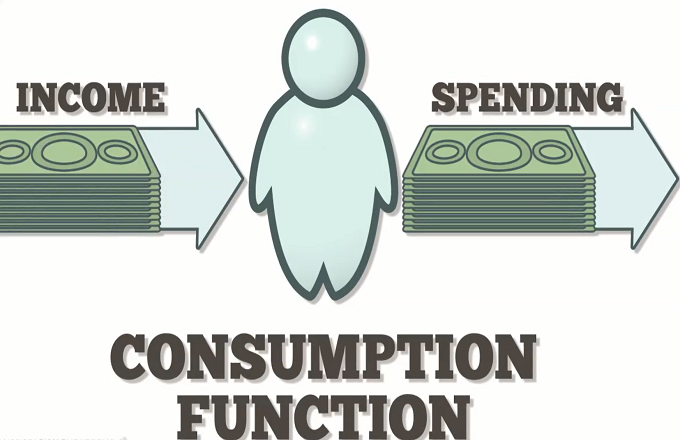
What is the Economic CONSUMPTION FUNCTION Theory?

WE ARE NOT CONSUMING AND THE MARKETS ARE DOWN

By Staff Reporters

***

A Theory of the Consumption Function

One of Milton Friedman’s most popular works, A Theory of the Consumption Function, challenged traditional Keynesian viewpoints about the household. This work was originally published in 1957 by Princeton University Press, and it reanalyzed the relationship displayed “between aggregate consumption or aggregate savings and aggregate income.”

CITE: https://www.r2library.com/Resource/Title/082610254

Keynes: https://medicalexecutivepost.com/2016/05/25/keynesian-versus-austrian-economics/

***

Consumption Function Definition

***

Now, according to Wikipedia, Friedman’s counterpart Keynes believed people would modify their household consumption expenditures to relate to their existing income levels. Friedman’s research introduced the term “permanent income” to the world, which was the average of a household’s expected income over several years, and he also developed the permanent income hypothesis. Friedman thought income consisted of several components, namely transitory and permanent. He established the formula y = y p + y t {\displaystyle y=y_{p}+y_{t}} {\displaystyle y=y_{p}+y_{t}} in order to calculate income, with p representing the permanent component, and t representing the transitory component.


A model of the Permanent Income Hypothesis

Milton Friedman’s research changed how economists interpreted the consumption function, and his work pushed the idea that current income was not the only factor affecting people’s adjustment household consumption expenditures. Instead, expected income levels also affected how households would change their consumption expenditures. Friedman’s contributions strongly influenced research on consumer behavior, and he further defined how to predict consumption smoothing, which contradicts Keynes’ marginal propensity to consume. Although this work presented many controversial points of view which differed from existing viewpoints established by Keynes, A Theory of the Consumption Function helped Friedman gain respect in the field of economics. His work on the Permanent Income Hypothesis is among the many contributions which were listed as reasons for his Sveriges-Riskbank Prize in Economic Sciences. His work was later expanded on by Christopher D. Carroll, especially in regards to the absence of liquidity constraints.

READ MORE HERE:

Of course, the Permanent Income Hypothesis faced some criticism, mainly from Keynesian economists. The primary criticism of the hypothesis is based on a lack of liquidity constraints.

HAYEK: https://medicalexecutivepost.com/2011/05/06/john-maynard-keynes-v-s-fa-hayek/

***

Your comments are appreciated.

QUERY: What is the CF for Healthcare?

MORE: https://medicalexecutivepost.com/2018/09/18/are-doctors-practitioners-of-conspicuous-consumption/

THANK YOU

Subscribe to the Medical Executive-Post

***

***

TELE-MEDICINE Fraud, Abuse and New Barriers!

Telemedicine: Fraud and Abuse During the COVID Pandemic

By Susan Walberg

The COVID-19 pandemic has brought with it huge challenges for people all over the world; not only the obvious health-related concerns but also shutdowns, unemployment, financial difficulties, and a variety of lifestyle changes as a result.

When the COVID pandemic struck, CMS quickly recognized that access to care would be an issue, with healthcare resources strained and many providers or suppliers shutting down their offices or drastically limiting availability. Patients who needed routine care or follow-up visits were at risk for not receiving services during a time when healthcare providers were scrambling to enhance infection control measures and implement other new safety standards to protect patients and healthcare workers.

The Centers for Medicare and Medicaid Services (CMS) has responded by easing restrictions and regulatory burdens in order to allow patients to receive the healthcare services they need without undue access challenges. One key area that has changed is the restrictions related to telehealth services, which were previously only paid by Medicare under certain circumstances, such as patients living in remote areas.

Among the changes and waivers CMS has offered, telemedicine reimbursement is among the more significant. Telemedicine services, which includes office visits and ‘check ins’ are now allowed and reimbursed by Medicare. In addition to reimbursement changes, CMS has also relaxed the HIPAA privacy and information security enforcement standards, paving the way for providers to adopt a new model of providing services electronically.

TELE-HEALTH BARRIERS: https://www.statnews.com/2021/07/13/telehealth-provisions-emergency-patients/

See the source image

MORE:  https://medicalexecutivepost.com/2021/05/18/fraud-schemes-of-few-medical-providers/

Your thoughts are appreciated.

THANK YOU

***

Healthcare NOT a Part of the US Inflation Surge!

WHO KNEW?

By Staff Reporters

****

According to Wikipedia, in economics, inflation refers to a general progressive increase in prices of goods and services in an economy.[1] When the general price level rises, each unit of currency buys fewer goods and services; consequently, inflation corresponds to a reduction in the purchasing power of money.[2][3] The opposite of inflation is deflation, a sustained decrease in the general price level of goods and services. The common measure of inflation is the inflation rate, the annualised percentage change in a general price index.[4]

READ MORE: https://en.wikipedia.org/wiki/Inflation

CITE: https://www.r2library.com/Resource/Title/082610254

***

***

Health Care Price Changes and Per Capita Growth in Medicare | Mercatus  Center

***

Healthcare Not a Part of the US Inflation Surge: Who Knew?

However, according to Jeff Goldsmith, overall health spending has only risen by 4.4% since January of 2020, and the percentage of GDP devoted to health has fallen by more than half a percent, from 18.1% pre-pandemic to 17.5% in October.   This is despite four surges of COVID hospitalizations, overflowing ICUs and ERs, labor shortages, and other COVID-related stresses.  Health system staffing levels are still nearly a half-million lower than they were pre-pandemic.  Had the federal government not stepped in through the CARES Act, FEMA funding, and temporary suspensions of Medicare rate cuts, the nations’ hospitals would have been seriously damaged by COVID-related financial stresses, which are far from being over.  

ESSAY: https://thehealthcareblog.com/blog/2021/11/19/healthcare-not-a-part-of-the-us-inflation-surge-who-knew/

***

COMMENTS APPRECIATED

Thank You

Subscribe to the Medical Executive-Post

***

***

PODCAST: Pharma Rebates to PBMs

Pharma ‘Rebate’ Payments to PBMs No Longer Protected by Federal ‘Safe Harbor’

BY DR. ERIC BRICKER MD

***

***

YOUR COMMENTS ARE APPRECIATED.

HEALTH ECONOMICS CITE: https://www.r2library.com/Resource/Title/0826102549

Thank You

***

***

***

What is a REIT, Really?

REITs – The Margarine of Real Estate Investing

See the source image

By Dr. Dennis Bethel MD

By Dr. David E. Marcinko MBA CMP®

CMP logo

SPONSOR: http://www.CertifiedMedicalPlanner.org

Just like real estate, butter has been around for thousands of years.  Sometime in the 1800’s someone decided that there was a need for something that looked like butter, tasted similar to butter, but wasn’t butter.  Along came margarine.  Real estate investment trusts (REITs) are the margarine of the real estate investing world.

NAREIT, the National Association of Real Estate Investment Trusts, answers the question

What is a REIT?” in the following way:

“A REIT, or Real Estate Investment Trust, is a type of real estate company modeled after mutual funds.  REITs were created by Congress in 1960 to give all Americans – not just the affluent – the opportunity to invest in income producing real estate in a manner similar to how many Americans invest in stocks and bonds through mutual funds.  Income-producing real estate refers to land and the improvements on it – such as apartments, offices or hotels.  REITs may invest in the properties themselves, generating income through the collection of rent or they may invest in mortgages or mortgage securities tied to the properties, helping to finance the properties and generating interest income.”

While REITs typically own real estate, investors in REITs do not.  REITs are paper assets that represent interest in a company that owns and operates income producing properties.  In essence they are real estate flavored stock.  As such, REITs are generally highly correlated with the stock market.

***

https://www.sgobserver.com/wp-content/uploads/2018/08/Screen-Shot-2018-08-26-at-8.41.54-pm.png

***

TERMINOLOGY

When discussing REITs, you encounter the following terminology – public, private, traded, and non-traded.  Public REITs can be designated as non-traded or traded depending on whether or not they are traded on a stock exchange.

Since traded REITs are traded on the stock exchange, they enjoy a high degree of liquidity just like any other stock.  Unfortunately, traded REITs tend to follow the economic cycles and can closely correlate with the stock market.  This can lead to a higher degree of volatility than what is usually seen with physical real estate.  Additionally, they do not afford the investor the tax-advantages that come with investments in physical real estate.

MORE: https://medicalexecutivepost.com/2017/11/15/on-non-traded-real-estate-investment-trusts-reits/

Private REITs and non-traded public REITs are not traded on an exchange.  These are usually offered to accredited investors through broker-dealer networks.  These REITs are illiquid and generally have high fees.  They have been plagued with transparency issues as well as conflicts of interest.  Valuation of this stock is difficult and can be misleading to the investor.  Due diligence is very important as the quality of non-traded REITs can vary widely.

MORE: https://medicalexecutivepost.com/2014/06/13/why-i-hate-non-publicly-traded-reits/

ASSESSMENT: Your thoughts and comments are appreciated.

Risk Management, Liability Insurance, and Asset Protection Strategies for Doctors and Advisors : Best Practices from Leading Consultants and Certified Medical Planners™ book cover

ORDER TEXTBOOK: https://www.routledge.com/Risk-Management-Liability-Insurance-and-Asset-Protection-Strategies-for/Marcinko-Hetico/p/book/9781498725989

Comprehensive Financial Planning Strategies for Doctors and Advisors: Best Practices from Leading Consultants and Certified Medical Planners™

ORDER TEXTBOOK: https://www.routledge.com/Comprehensive-Financial-Planning-Strategies-for-Doctors-and-Advisors-Best/Marcinko-Hetico/p/book/9781482240283

INVITE DR. MARCINKO: https://medicalexecutivepost.com/dr-david-marcinkos-

THANK YOU

***

PODCAST: What is a Medication Formulary?

***

About First Stop Health | Telemedicine

By Eric Bricker MD

***

Why Are Certain Medications Non-Formulary?

What Are Formulary Tiers and Its Rules?

Formularies Have Many Rules Associated With Them:

1) Prior Authorization – Approval Must Be Given by the Health Insurance Company/PBM Before They Agree to Pay for a Medication.

2) Step Therapy – Certain Less Expensive Generic Medications Have to Be ‘Tried’ First and Fail Before a Doctor Can Prescribe a More Expensive Brand-Name Medication.

3) Mandatory Generics – If a Brand Name Medication Has A Direct Generic Equivalent, Then the Insurance May Only Agree to Pay for the Generic and Not the Brand.

4) Mandatory Mail Order – Certain Chronic Medications That Are Filled for 90 Day Supplies Must Be Filled via Mail Order and Not at the Retail Pharmacy.

***

PODCAST: https://www.youtube.com/watch?v=kEjDBp9HdBk

***

COMMENTS APPRECIATED.

Subscribe to the Medical Executive-Post

Thank You

HEALTH ECONOMICS CITE: https://www.r2library.com/Resource/Title/0826102549

***

***

***

PODCAST: Prescription Patient Assistance Programs

BY ERIC BRICKER MD

With 43 Million Americans Having Lost Their Job at Some Point During the Pandemic and About 1/2 Those Jobs Providing Health Insurance… the 1st Group–People Who Do Not Have Health Insurance–Needs to Be Aware of How These Programs Work.

In this Video You Will Learn the Patient Assistance Program Process for:

1) 2 of the Most Common Types of Insulin

2) The Highest-Revenue Medication in America: Humira

**Note: At the Time of the Video’s Recording, the Unemployment Rate in the US was 15%. As of November 2021, the Unemployment Rate is 4.2%.

***

***

COMMENTS APPRECIATED

Subscribe to the Medical Executive-Post

***

***

CITE: https://www.r2library.com/Resource/Title/082610254

***

Medical FINANCIAL PLANNING “Holistic” STRATEGIES

BY AND FOR PHYSICIANS AND THEIR ADVISORS

INVITE DR. MARCINKO: https://medicalexecutivepost.com/dr-david-marcinkos-

***

SPONSOR: http://www.CertifiedMedicalPlanner.org

CMP logo

***

PODCAST: Hospital Charity Care Explained

BY ERIC BRICKER MD

***

YOUR COMMENTS ARE APPRECIATED.

CITE: https://www.r2library.com/Resource/Title/082610254

Subscribe to the Medical Executive-Post

***

***

***

***

PODCAST: Healthcare Re-Imagined

COMMON BRIDGE” WITH RICH HELPPIE

Richard Helppie's Common Bridge

Colleague Richard Helppie interviews Dean Clancy

Dean Clancy is a senior health care policy fellow at Americans for Prosperity and a nationally known health care freedom advocate and domestic policy expert with more than twenty years’ high-level policy experience in Congress, the White House, and the U.S. health care industry.

EDITOR’S NOTE: I first met Rich in B-school, when I was a student, back in the day. He was the Founder and CEO of Superior Consultant Holdings Corp. Rich graciously wrote the Foreword to one of my first textbooks on financial planning for physicians and healthcare professionals. Today, Rich is a successful entrepreneur in the technology, health and finance space.

-Dr. David E. Marcinko MBA CMP®

***

PODCAST: https://richardhelppie.com/dean-clancy/

ASSESSMENT: Your thoughts are appreciated.

***

THANK YOU

***

Asset Protection Issues For [Physician] Crypto Investors

***

Ike Z. Devji J.D. - Tempe, Arizona - Lawyer | Lawyer Directory

By Ike Devji, J.D.

Crypto currency is all the rage and continues to make some coin investors small fortunes even as prices swing widely and scams emerge. These are some basic defensive measures to keep your digital wallet safe.

READ MORE: https://www.proassetprotection.com/asset-protection-for-crypto-investors/

EDITOR’S NOTE: Ike Devji contributed to our textbook on Risk Management for Doctors and Advisors. We appreciated his important chapter contribution.

Risk Management, Liability Insurance, and Asset Protection Strategies for Doctors and Advisors: Best Practices from Leading Consultants and Certified Medical Planners™

ORDER TEXTBOOK: https://www.routledge.com/Risk-Management-Liability-Insurance-and-Asset-Protection-Strategies-for/Marcinko-Hetico/p/book/9781498725989

Your comments are appreciated.

THANK YOU

***

PODCAST: Curmudgeon On “Crypto-Currency”

Curmudgeon on Crypto-currency


Vitaliy Katsenelson, CFA

Your thoughts and comments are appreciated.

THANK YOU

***

***

DENTISTS: Don’t Write Many Prescriptions / Ransomware and Cyber News

A Personal Op-Ed Perspective

***

pruitt

By Darrell Pruitt DDS

***

Dentists simply don’t write that many prescriptions.

Henry Schein employees are not defending Stanley Bergman’s venture into e-prescription software. That is because they know it stinks. Digital prescriptions not only endanger patients and dental practices, but they offer no tangible benefits over paper. None!

Digital only increases the profits for Stanley Bergman and pharmaceutical interests – who eliminate data entry personnel from their payroll.

“First do no harm”

Ancient Greek physician Hippocrates.

EDITOR’S NOTE: We welcome back the op-eds of colleague Dr. Pruitt and trust he remains well in 2022.

***

Ransomware and Dentistry – Recent News

“Why Healthcare Will Remain a Top Cyberattack Target in 2022 – one of the main reasons criminals are interested in healthcare data is that it contains a lot of details, such as date of birth, Social Security numbers – the active ingredients for identity theft. You can get those data points from any number of places, but healthcare organizations are the richest sources.” Healthcare Info Security, December 28, 2021.https://www.govinfosecurity.com/interviews/healthcare-will-remain-top-cyberattack-target-in-2022-i-4999

“Ransomware in 2022: You May Be Screwed, but Without Insurance It Could Always Be Worse – A commentator recently summed up the risk of ransomware attack in 2022: ‘we’re all screwed.’ True enough. But that’s all the more reason to prepare right now. After all, the only thing worse than a ransomware attack is not having adequate insurance coverage when it occurs. The time to prepare is now.” National Law Review, Wednesday, January 5, 2022.
https://www.natlawreview.com/article/ransomware-2022-you-may-be-screwed-without-insurance-it-could-always-be-worse

“Insurers run from ransomware cover as losses mount” Summary:
– Lloyd’s of London discourages cyber expansion-sources
– Ransomware as profitable as Colombian cocaine cartels
– Some insurers asking policyholders to pay half of ransoms
– Attackers change strategy from scattergun to focused.Reuters, November 19, 2021.
https://www.reuters.com/markets/europe/insurers-run-ransomware-cover-losses-mount-2021-11-19/

Yep.  We’re all screwed. Well, not all of us.

 Paper remains the best deterrent to ransomware. 

COMMENTS APPRECIATED.

Subscribe to the Medical Executive-Post

Thank You

***

***

***

PODCAST: Explaining Relative Value Units As a Physician

By Business Savvy Physician

****

***

HEALTH ECONOMICS CITE: https://www.r2library.com/Resource/Title/0826102549

***

COMMENTS APPRECIATED

Thank You

***

***

***

***

PODCAST: Hospital Financial Cross Subsidization Explained

BY ERIC BRICKER MD

***

***

COMMENTS APPRECIATED.

Subscribe to the ME-P

Thank You

***

***

***

***

Physician Retirement Portfolio Real Estate?

Join Our Mailing List 

Inefficient and Illiquid … But?

By Rick Kahler MS CFP® http://www.KahlerFinancial.com

Rick Kahler MS CFPWhat’s the best way to hold real estate in a retirement portfolio? For many investors, the answer seems to be “not at all.” That’s not the right answer. This asset class, appropriately owned, can help support you well in retirement.

Not like Stocks

Unlike stocks, which trade on a highly efficient and liquid exchange, trading real estate is inefficient and illiquid. The ease of buying and selling stocks is one of the major reasons the asset class is over-represented in most portfolios.

Based on the fascination of the financial press with the stock market, it’s easy to get the impression that stocks comprise the largest financial asset class. According to Matthew Yglesias, author of The Rent Is Too Damn High, the total value of commercial real estate in the US as of December 2013 was $20 trillion. This equals the value of publicly traded stock. (The largest asset class is bonds with $37 trillion.)

While one could make a strong argument for owning equal amounts of real estate and stocks in most retirement portfolios, very few hold any real estate at all.

Direct Ownership

Probably the worst way to hold real estate is to own it directly. The only popular retirement plan that allows direct ownership of real estate is the self-directed IRA. Unfortunately, the government discourages holding real estate this way by taxing it unfavorably. As I’ve described in a previous column, it’s not a good idea.

RLPs

Registered Limited Partnerships [RLPs] were a popular way to own real estate in the 1980’s. While someone must have made money on these investments, I don’t think it was the investors. I don’t know an investor who made a dime, but I do know some distributors and promoters who got very rich with them. The problem wasn’t the real estate but the lack of transparency inherent in a limited partnership. This allowed promoters and distributors to hide high fees and commissions that didn’t give the investors a chance of profiting.

REITs

Gradually, the real estate investment trust gained popularity as another investment vehicle for owning real estate. A publicly traded REIT is similar to an ETF (a form of a mutual fund) that trades on the major exchanges and invests directly in real estate. REITs receive beneficial tax breaks, must pass through 90% of their cash flow to investors, have a high degree of transparency, and are highly liquid. They also tend to specialize in certain types of real estate, so rather than hold REITs individually; I prefer to own a mutual fund that owns a diversified assortment.

The fees and commissions associated with REITs are very low, which helps make them a good choice for investment portfolios. It is also another reason they don’t often show up there, since most financial vehicles are sold, not bought. Mutual funds, annuities, and cash value insurance pay much higher commissions than exchange traded REITs.
Wall Street solved that problem by creating the non-traded REIT, which does not trade on a securities exchange and therefore is highly illiquid. The benefits touted by salespeople are the potential for higher dividends, plus lower volatility than publicly traded REITs. Here’s the downside: Their lower volatility is an illusion created by their high illiquidity. They also lack transparency, which gives cover to charging high fees and commissions. The non-traded REIT is scarily like its older cousin of the 1980’s, the registered limited partnership.

USA

Assessment

Including real estate in a retirement portfolio can be a good idea as long as the ownership is properly structured. A mutual fund that holds a broad diversification of publicly traded REITS is one way to help you build a strong foundation for retirement.

Channel Surfing the ME-P

Have you visited our other topic channels? Established to facilitate idea exchange and link our community together, the value of these topics is dependent upon your input. Please take a minute to visit. And, to prevent that annoying spam, we ask that you register. It is fast, free and secure.

Conclusion

Your thoughts and comments on this ME-P are appreciated. Feel free to review our top-left column, and top-right sidebar materials, links, URLs and related websites, too. Then, subscribe to the ME-P. It is fast, free and secure.

Speaker: If you need a moderator or speaker for an upcoming event, Dr. David E. Marcinko; MBA – Publisher-in-Chief of the Medical Executive-Post – is available for seminar or speaking engagements. Contact: MarcinkoAdvisors@msn.com

OUR OTHER PRINT BOOKS AND RELATED INFORMATION SOURCES:

Comprehensive Financial Planning Strategies for Doctors and Advisors: Best Practices from Leading Consultants and Certified Medical Planners(TM)

PODCAST: Ray Dalio on How the Healthcare Economy Works

Economy Works’ Applied to Healthcare … Credit Cycles and Healthcare Policy

By Eric Bricker MD

***

***

COMMENTS APPRECIATED

Subscribe to the ME-P

Thank You

HEALTH ECONOMICS CITE: https://www.r2library.com/Resource/Title/0826102549

RICARDIAN DEMAND HEALTH ECONOMICS: https://medicalexecutivepost.com/2021/12/14/ricardian-derived-demand-economics-in-medicine/

RISING HEALTH CARE COSTS: https://medicalexecutivepost.com/2018/03/11/medical-treatment-costs-becoming-expensive-25-factors/

***

***

PODCAST: Technology Enabled Behavioral Healthcare in 2022?

A Critical Strategy for Population Health Management

By Michael Vergare MD

***

Value Based Care Definitions: https://www.r2library.com/Resource/Title/0826102549

High Value Care & Value-Based Care

PODCAST: https://www.healthsharetv.com/content/technology-enabled-behavioral-health-care-critical-strategy-population-health-management

YOUR COMMENTS ARE APPRECIATED.

***

Thank You

***

***

PODCAST: Future Hospital “Profit Pool” in 2022?

McKinsey Healthcare Industry Analysis – Future Sources of Hospital Profit

BY ERIC BRICKER MD

***

Many thanks

***

***

***
COMMENTS APPRECIATED.

Please subscribe to the ME-P

Thank You

***

How We INVEST IN INFLATION?

STRATEGIES AND MITIGATION

Finding investments to weather the storm. Strategies and ways to mitigate inflation risk, including investing in businesses with pricing power, capital intensity, and investing abroad.

By Vitaliy Katsenelson CFA

COMMENTS ARE APPRECIATED.

Thank You

***

***

PODCAST: Inflation Update

NOT TRANSITORY … YET!

imausa-vitaliy-katsenelson

By Vitaliy Katsenelson CFA

Here is my advice to you

Instead of straining your eyes, you can strain your ears and listen to the following articles. I’m providing links to my pieces on the inflation landscape (read, listen) and how we invest in inflation (read, listen).

***

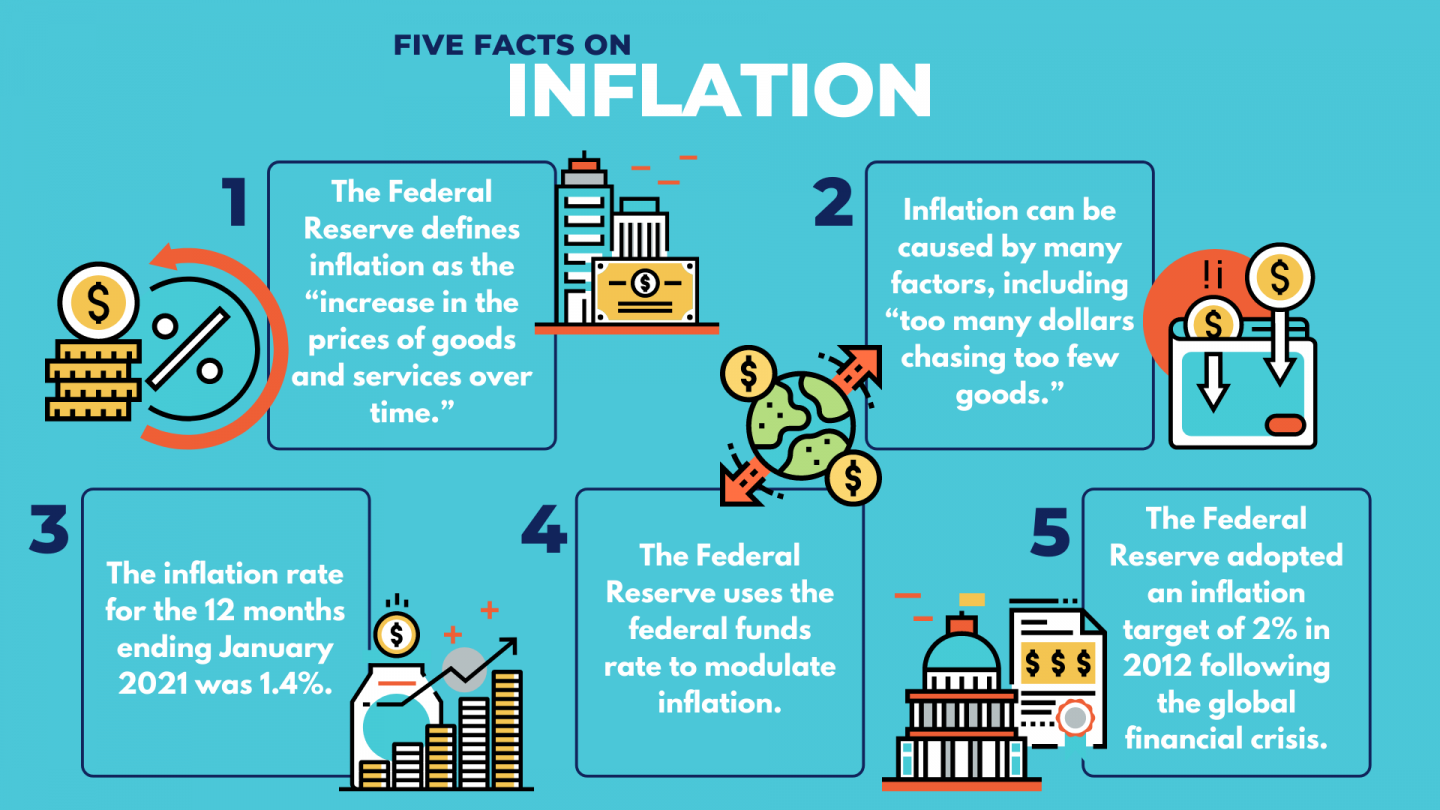
Five Facts On Inflation | RealClearPolicy

***
YOUR COMMENTS ARE APPRECIATED.

Thank You

CITE: https://www.r2library.com/Resource/Title/0826102549

***

***

PODCAST Year End 2021: Rich Helppie Interviews Dr. James R. Baker, Jr., M.D.

The Common Bridge

****

Entering the Last Chapter of Covid, From Omicron and Beyond – With Dr. James R. Baker, Jr., M.D.
Richard Helppie welcomes back University of Michigan Professor Emeritus of Internal Medicine, and Virologist, Dr. James R. Baker, Jr., M.D., who brings words of both encouragement and warning as the world comes to what he feels is the beginning of the final throws of the Covid-19 pandemic. 

Dr. Baker has been a valued guest on the Common Bridge since the beginnings of the coronavirus over a year ago, and brings thoughtful, scientific, data-driven analysis to the most significant health issue of our lifetime.

***

PODCAST: https://richardhelppie.com/james-baker/

***

***

***
COMMENTS APPRECIATED.

Thank You

***

PODCAST: Direct Healthcare Contracting

How it Works for Employers and Hospitals?

BY DR. ERIC BRICKER MD

***

***
COMMENTS APPRECIATED.

***

****

CITE: https://www.r2library.com/Resource/Title/082610254

***

RISK MANAGEMENT TEXT: https://www.routledge.com/Risk-Management-Liability-Insurance-and-Asset-Protection-Strategies-for/Marcinko-Hetico/p/book/9781498725989

Thank You

***

PODCASTS: Employer Sponsored Health Plans Explained [Part I and II]

Self and Fully Insured Fundamentals and Basics

[A Two Part Presentation]

DR. ERIC BRICKER MD

***

***
COMMENTS ARE APPRECIATED.

Thank You

***

***

***

****

CITE: https://www.r2library.com/Resource/Title/0826102549

***

UPDATE: Stock Markets and the Economy

By staff reporters

***

***

COMMENTS APPRECIATED.

Thank You

***

Happy PALINDROMIC Wednesday

The “Numbers” Day

***

DEFINITION: A palindrome is a word, number, phrase, or other sequence of characters which reads the same backward as forward, such as madam or racecar. There are also numeric palindromes, including date/time stamps using short digits 11/11/11 11:11 and long digits 02/02/2020.

CITE: https://www.r2library.com/Resource/Title/082610254

***

List of Interesting Palindrome Words & Phrases You're Sure to Love! • 7ESL

***

CRUNCH: According to mathematician Neal Freyman, today is the sound of mathematicians scrambling to find another topic to tweet about besides dates that form palindromes.

WHY: Today, 12/22/21, is the 22nd and final palindromic date of the year. There won’t be another year with 22 palindromic dates until 2111.

FACT: 1/20/21 was the first Inauguration Day with a palindromic date in American history. The next one will come in 1,000 years, on 1/20/3021.

***

COMMENTS APPRECIATED.

***

Thank You

***

PODCAST: Patient Trust in Health Care?

PERSUASION = Ethos, Pathos and Logos

BY ERIC BRICKER MD

***

***

***

***

COMMENTS APPRECIATED.

Thank You

***

INFLATION Is Here – UPDATE?

But for How Long?

See the source image

Vitaliy N. Katsenelson, CFA

[CEO & Chief Investment Officer]

READERS

DEFINITION: In economics, inflation (or less frequently, price inflation) is a general rise in the price level of an economy over a period of time. When the general price level rises, each unit of currency buys fewer goods and services; consequently, inflation reflects a reduction in the purchasing power per unit of money – a loss of real value in the medium of exchange and unit of account within the economy. The opposite of inflation is deflation, a sustained decrease in the general price level of goods and services. The common measure of inflation is the inflation rate, the annualized percentage change in a general price index, usually the consumer price index, over time.

CITATION: https://www.r2library.com/Resource/Title/0826102549

***

See the source image

***

DEAR READERS

This essay is going to be long.
I blame inflation, be it transitory or not, for inflating its length. 

The number one question I am asked by clients, friends, readers, and random strangers is, are we going to have inflation? 

I think about inflation on three timelines: short, medium, and long-term

The pandemic disrupted a well-tuned but perhaps overly optimized global economy and time-shifted the production and consumption of various goods. For instance, in the early days of the pandemic automakers cut their orders for semiconductors. As orders for new cars have come rolling back, it is taking time for semiconductor manufacturers, who, like the rest of the economy, run with little slack and inventory, to produce enough chips to keep up with demand. A $20 device the size of a quarter that goes into a $40,000 car may have caused a significant decline in the production of cars and thus higher prices for new and used cars. (Or, as I explained to my mother-in-law, all the microchips that used to go into cars went into a new COVID vaccine, so now Bill Gates can track our whereabouts.)

Here is another example. The increase in new home construction and spike in remodeling drove demand for lumber while social distancing at sawmills reduced lumber production – lumber prices spiked 300%. Costlier lumber added $36,000 to the construction cost of a house, and the median price of a new house in the US is now about $350,000.

The semiconductor shortage will get resolved by 2022, car production will come back to normal, and supply and demand in the car market will return to the pre-pandemic equilibrium. High prices in commodities are cured by high prices. High lumber prices will incentivize lumber mills to run triple shifts. Increased supply will meet demand, and lumber prices will settle at the pre-pandemic level in a relatively short period of time. That is the beauty of capitalism! 

Most high prices caused by the time-shift in demand and supply fall into the short-term basket, but not all. It takes a considerable amount of time to increase production of industrial commodities that are deep in the ground – oil, for instance. Low oil prices preceding the pandemic were already coiling the spring under oil prices, and COVID coiled it further. It will take a few years and increased production for high oil prices to cure high oil prices. Oil prices may also stay high because of the weaker dollar, but we’ll come back to that.

Federal Reserve officials have told us repeatedly they are not worried about inflation; they believe it is transitory, for the reasons I described above. We are a bit less dismissive of inflation, and the two factors that worry us the most in the longer term are labor costs and interest rates. 

Let’s start with labor costs 

During a garden-variety recession, companies discover that their productive capacity exceeds demand. To reduce current and future output they lay off workers and cut capital spending on equipment and inventory. The social safety net (unemployment benefits) kicks in, but not enough to fully offset the loss of consumer income; thus demand for goods is further reduced, worsening the economic slowdown. Through millions of selfish transactions (microeconomics), the supply of goods and services readjusts to a new (lower) demand level. At some point this readjustment goes too far, demand outstrips supply, and the economy starts growing again.

This pandemic was not a garden-variety recession 

The government manually turned the switch of the economy to the “off” position. Economic output collapsed. The government sent checks to anyone with a checking account, even to those who still had jobs, putting trillions of dollars into consumer pockets. Though output of the economy was reduced, demand was not. It mostly shifted between different sectors within the economy (home improvement was substituted for travel spending). Unlike in a garden-variety recession, despite the decline in economic activity (we produced fewer widgets), our consumption has remained virtually unchanged. Today we have too much money chasing too few goods– that is what inflation is. This will get resolved, too, as our economic activity comes back to normal.

But …

Today, though the CDC says it is safe to be inside or outside without masks, the government is still paying people not to work. Companies have plenty of jobs open, but they cannot fill them. Many people have to make a tough choice between watching TV while receiving a paycheck from big-hearted Uncle Sam and working. Zero judgement here on my part – if I was not in love with what I do and had to choose between stacking boxes in Amazon’s warehouse or watching Amazon Prime while collecting a paycheck from a kind uncle, I’d be watching Sopranos for the third time. 

To entice people to put down the TV remote and get off the couch, employers are raising wages. For instance, Amazon has already increased minimum pay from $15 to $17 per hour. Bank of America announced that they’ll be raising the minimum wage in their branches from $20 to $25 over the next few years. The Biden administration may not need to waste political capital passing a Federal minimum wage increase; the distorted labor market did it for them. 

These higher wages don’t just impact new employees, they help existing employees get a pay boost, too. Labor is by far the biggest expense item in the economy. This expense matters exponentially more from the perspective of the total economy than lumber prices do. We are going to start seeing higher labor costs gradually make their way into higher prices for the goods and services around us, from the cost of tomatoes in the grocery store to the cost of haircuts.

Only investors and economists look at higher wages as a bad thing. These increases will boost the (nominal) earnings of workers; however, higher prices of everything around us will negate (at least) some of the purchasing power. 

Wages, unlike timber prices, rarely decline. It is hard to tell someone “I now value you less.” Employers usually just tell you they need less of your valuable time (they cut your hours) or they don’t need you at all (they lay you off and replace you with a machine or cheap overseas labor). It seems that we are likely going to see a one-time reset to higher wages across lower-paying jobs. However, once the government stops paying people not to work, the labor market should normalize; and inflation caused by labor disbalance should come back to normal, though increased higher wages will stick around.

There is another trend that may prove to be inflationary in the long-term: de-globalization.  Even before the pandemic the US set plans to bring manufacturing of semiconductors, an industry deemed strategic to its national interests, to its shores. Taiwan Semiconductor and Samsung are going to be spending tens of billions of dollars on factories in Arizona.  

The pandemic exposed the weaknesses inherent in just-in-time manufacturing but also in over reliance on the kindness of other countries to manufacture basic necessities such as masks or chemicals that are used to make pharmaceuticals.  Companies will likely carry more inventory going forward, at least for a while.  But more importantly more manufacturing will likely come back to the US. This will bring jobs and a lot of automation, but also higher wages and thus higher costs.  

If globalization was deflationary, de-globalization is inflationary  

We are not drawing straight-line conclusions, just yet. A lot of manufacturing may just move away from China to other low-cost countries that we consider friendlier to the US; India and Mexico come to mind.  

And then we have the elephant in the economy – interest rates, the price of money. It’s the most important variable in determining asset prices in the short term and especially in the long term. The government intervention in the economy came at a significant cost, which we have not felt yet: a much bigger government debt pile. This pile will be there long after we have forgotten how to spell social distancing
 
The US government’s debt increased by $5 trillion to $28 trillion in 2020 – more than a 20% increase in one year! At the same time the laws of economics went into hibernation: The more we borrow the less we pay for our debt, because ultra-low interest rates dropped our interest payments from $570 billion in 2019 to $520 billion in 2020. 

That is what we’ve learned over the last decade and especially in 2020: The more we borrow the lower interest we pay. I should ask for my money back for all the economics classes I took in undergraduate and graduate school.

This broken link between higher borrowing and near-zero interest rates is very dangerous. It tells our government that how much you borrow doesn’t matter; you can spend (after you borrow) as much as your Republican or Democratic heart desires. 

However, by looking superficially at the numbers I cited above we may learn the wrong lesson. If we dig a bit deeper, we learn a very different lesson: Foreigners don’t want our (not so) fine debt. It seems that foreign investors have wised up: They were not the incremental buyer of our new debt – most of the debt the US issued in 2020 was bought by Uncle Fed. Try explaining to your kids that our government issued debt and then bought it itself. Good luck.

Let me make this point clear: Neither the Federal Reserve, nor I, nor a well-spoken guest on your business TV knows where interest rates are going to be (the total global bond market is bigger even than the mighty Fed, and it may not be able to control over interest rates in the long run). But the impact of what higher interest rates will do the economy increases with every trillion we borrow. There is no end in sight for this borrowing and spending spree (by the time you read this, the administration will have announced another trillion in spending). 

Let me provide you some context about our financial situation 


The US gross domestic product (GDP) – the revenue of the economy – is about $22 trillion, and in 2019 our tax receipts were about $3.5 trillion. Historically, the-10 year Treasury has yielded about 2% more than inflation. Consumer prices (inflation) went up 4.2% in April. Today the 10-year Treasury pays 1.6%; thus the World Reserve Currency debt has a negative 2.6% real interest rate (1.6% – 4.2%). 

These negative real (after inflation) interest rates are unlikely to persist while we are issuing trillions of dollars of debt. But let’s assume that half of the increase is temporary and that 2% inflation is here to stay. Let’s imagine the unimaginable. Our interest rate goes up to the historical norm to cover the loss of purchasing power caused by inflation. Thus it goes to 4% (2 percentage points above 2% “normal” inflation). In this scenario our federal interest payments will be over $1.2 trillion (I am using vaguely right math here). A third of our tax revenue will have to go to pay for interest expense. Something has to give. It is not going to be education or defense, which are about $230 billion and $730 billion, respectively. You don’t want to be known as a politician who cut education; this doesn’t play well in the opponent’s TV ads. The world is less safe today than at any time since the end of the Cold War, so our defense spending is not going down (this is why we own a lot of defense stocks). 

The government that borrows in its own currency and owns a printing press will not default on its debt, at least not in the traditional sense. It defaults a little bit every year through inflation by printing more and more money. Unfortunately, the average maturity of our debt is about five years, so it would not take long for higher interest expense to show up in budget deficits. 

Money printing will bring higher inflation and thus even higher interest rates

If things were not confusing enough, higher interest rates are also deflationary 

We’ve observed significant inflation in asset prices over the last decade; however, until this pandemic we had seen nothing yet. Median home prices are up 17% in one year. The wild, speculative animal spirits reached a new high during the pandemic. Flush with cash (thanks to kind Uncle Sam), bored due to social distancing, and borrowing on the margin (margin debt is hitting a 20-year high), consumers rushed into the stock market, turning this respectable institution (okay, wishful thinking on my part) into a giant casino. 

It is becoming more difficult to find undervalued assets. I am a value investor, and believe me, I’ve looked (we are finding some, but the pickings are spare). The stock market is very expensive. Its expensiveness is setting 100-year records. Except, bonds are even more expensive than stocks – they have negative real (after inflation) yields.

But stocks, bonds, and homes were not enough – too slow, too little octane for restless investors and speculators. Enter cryptocurrencies (note: plural). Cryptocurrencies make Pets.com of the 1999 era look like a conservative investment (at least it had a cute sock commercial). There are hundreds if not thousands of crypto “currencies,” with dozens created every week. (I use the word currency loosely here. Just because someone gives bits and bytes a name, and you can buy these bits and bytes, doesn’t automatically make what you’re buying a currency.)

“The definition of a bubble is when people are making money all out of proportion to their intelligence or work ethic.”

By Mike Burry MD
[The Big Short]

I keep reading articles about millennials borrowing money from their relatives and pouring their life savings into cryptocurrencies with weird names, and then suddenly turning into millionaires after a celebrity CEO tweets about the thing he bought. Much ink is spilled to celebrate these gamblers, praising them for their ingenious insight, thus creating ever more FOMO (fear of missing out) and spreading the bad behavior.

Unfortunately, at some point they will be writing about destitute millennials who lost all of their and their friends’ life savings, but this is down the road. Part of me wants to call this a crypto craziness a bubble, but then I think, Why that’s disrespectful to the word bubble, because something has to be worth something to be overpriced. At least tulips were worth something and had a social utility. (I’ll come back to this topic later in the letter).

But ….

When interest rates are zero or negative, stocks of sci-fi-novel companies that are going to colonize and build five-star hotels on Mars are priced as if El Al (the Israeli airline) has regular flights to the Red Planet every day of the week except on Friday (it doesn’t fly on Shabbos). Rising interest rates are good defusers of mass delusions and rich imaginations. 

In the real economy, higher interest rates will reduce the affordability of financed assets. They will increase the cost of capital for businesses, which will be making fewer capital investments. No more 2% car loans or 3% business loans. Most importantly, higher rates will impact the housing market. 

Up to this point, declining interest rates increased the affordability of housing, though in a perverse way: The same house with white picket fences (and a dog) is selling for 17% more in 2021 than a year before, but due to lower interest rates the mortgage payments have remained the same. Consumers are paying more for the same asset, but interest rates have made it affordable.

At higher interest rates housing prices will not be making new highs but revisiting past lows. Declining housing prices reduce consumers’ willingness to improve their depreciating dwellings (fewer trips to Home Depot). Many homeowners will be upside down in their homes, mortgage defaults will go up… well, we’ve seen this movie before in the not-so-distant past. Higher interest rates will expose a lot of weaknesses that have been built up in the economy. We’ll be finding fault lines in unexpected places – low interest has covered up a lot of financial sins.

And then there is the US dollar, the world’s reserve currency. Power corrupts, but the unchallenged and unconstrained the power of being the world’s reserve currency corrupts absolutely. It seems that our multitrillion-dollar budget deficits will not suddenly stop in 2021. With every trillion dollars we borrow, we chip away at our reserve currency status (I’ve written about this topic in great detail, and things have only gotten worse since). And as I mentioned above, we’ve already seen signs that foreigners are not willing to support our debt addiction. 

A question comes to mind.
Am I yelling fire where there is not even any smoke? 

Higher interest rates is anything but a consensus view today. Anyone who called for higher rates during the last 20 years is either in hiding or has lost his voice, or both. However, before you dismiss the possibility of higher rates as an unlikely plot for a sci-fi novel, think about this. 

In the fifty years preceding 2008, housing prices never declined nationwide. This became an unquestioned assumption by the Federal Reserve and all financial players. Trillions of dollars of mortgage securities were priced as if “Housing shall never decline nationwide” was the Eleventh Commandment, delivered at Temple Sinai to Goldman Sachs. Or, if you were not a religious type, it was a mathematical axiom or an immutable law of physics. The Great Financial Crisis showed us that confusing the lack of recent observations of a phenomenon for an axiom may have grave consequences. 

Today everyone (consumers, corporations, and especially governments) behaves as if interest rates can only decline, but what if… I know it’s unimaginable, but what if ballooning government debt leads to higher interest rates? And higher interest rates lead to even more runaway money printing and inflation? 

This will bring a weaker dollar 

A weaker US dollar will only increase inflation, as import prices for goods will go up in dollar terms. This will create an additional tailwind for commodity prices. 

If your head isn’t spinning from reading this, I promise mine is from having written it. 

To sum up: A lot of the inflation caused by supply chain disruption that we see today is temporary. But some of it, particularly in industrial commodities, will linger longer, for at least a few years. Wages will be inflationary in the short-term and will reset prices higher, but once the government stops paying people not to work, wage growth should slow down. Finally, in the long term a true inflationary risk comes from growing government borrowing and budget deficits, which will bring higher interest rates and a weaker dollar with them, which will only make inflation worse and will also deflate away a lot of assets.

THE END
UPDATE: https://www.msn.com/en-us/news/us/how-us-inflation-rate-is-impacting-americans-wallets-before-the-holiday-season/vi-AAROG5J

CURRENT: https://www.msn.com/en-us/money/markets/us-treasury-yields-tick-lower-on-fears-omicron-will-dent-recovery/ar-AARYSKy?li=BBnbfcL

Your thoughts are appreciated.

THANK YOU

***
See the source image

PODCASTS: How Prescription [Rx] Coverage Works

Formulary Tiers, PBM, Rebates, Spread-Pricing Explained

By Dr. Eric Bricker MD

***

***

CITE: https://www.r2library.com/Resource/Title/082610254

***

***

***
YOUR COMMENTS ARE APPRECIATED.

Thank You

***

PODCAST: Why Tech Companies Fail at Health Care

HEALTH PLAN “AGE” AS RISK FACTOR

BY ERIC BRICKER MD

***

***

CITE: https://www.r2library.com/Resource/Title/082610254

COMMENTS APPRECIATED

***

RISK MANAGEMENT: https://www.routledge.com/Risk-Management-Liability-Insurance-and-Asset-Protection-Strategies-for/Marcinko-Hetico/p/book/9781498725989

THANK YOU

***

PODCAST: Is Value Investing Dead?

Vitaliy Katsenelson CFA

***

Recent : DOW , NASDAQ , NVIDIA CORPORATION , GENERAL ELECTRIC COMPANY , PAYPAL HOLDINGS, INC. Market DOW 35,365.44 ▼ -532.20 NASDAQ 15,169.68 ▼ -10.75 S&P 500 4,620.64 ▼ -48.03 WTI Futures 70.86 ▼ -1.52

***

DEFINITION: Value investing is an investmentparadigm that involves buying securities that appear underpriced by some form of fundamental analysis. The various forms of value investing derive from the investment philosophy first taught by Benjamin Graham and David Dodd at Columbia Business School in 1928, and subsequently developed in their 1934 text Security Analysis.

Citation: https://www.r2library.com/Resource/Title/0826102549

***

See the source image

***

PODCAST: Is Value Investing Dead?

ASSESSMENT: Your comments are appreciated.

THANK YOU

***

The Science of Happiness?

HAPPINESS?

By NIHCM Foundation

***

***

REPORT: https://nihcm.org/publications/the-science-of-happiness-health-well-being?utm_source=NIHCM+Foundation&utm_campaign=a03fb2164b-EMAIL_CAMPAIGN_2020_12_03_03_17&utm_medium=email&utm_term=0_6f88de9846-a03fb2164b-167744768

***

DR. DAVID E. MARCINKO MBA INVITATION:

LINK: https://medicalexecutivepost.com/dr-david-marcinkos-bookings/

THANK YOU

***

PODCAST: Milliman Medical Care Guidelines

Pervasive MCG Health Insurance Denials

BY ERIC BRICKER MD

***

***

YOUR THOUGHTS ARE APPRECIATED.

***

***

***

YOUR COMMENTS ARE APPRECIATED.

Thank You

***

New Study Compares Medicare-Commercial Payment Gaps by Specialty

New Study Compares Medicare-Commercial Payment Gaps by Specialty

BY HEALTH CAPITAL CONSULTANTS


Utilizing data from FAIR Health, the Urban Institute conducted an October 2021 study which reviewed commercial insurance claims across the U.S. (for approximately 60 insurers and third-party administrators covering over 150 million Americans under age 65) from March 2019 through February 2020.

CITE: https://www.r2library.com/Resource/Title/0826102549

This study assessed the gap between commercial insurance payments and Medicare payments for professional physician services to determine whether the payment gap between Medicare and commercial insurance differs by specialty. (Read more…)

YOUR COMMENTS ARE APPRECIATED.

***

Thank You

***

PODCASTS: The Case Against Value Based Care [VBC]

***

And Now – The Other Perspective

***

***

BY ERIC BRICKER MD

Your comments are appreciated.

THANK YOU

CITE: https://www.r2library.com/Resource/Title/0826102549

***

https://www.amazon.com/Hospitals-Healthcare-Organizations-Management-Operational/dp/1439879907/ref=sr_1_4?s=books&ie=UTF8&qid=1334193619&sr=1-4

***

https://www.amazon.com/Financial-Management-Strategies-Healthcare-Organizations/dp/1466558733/ref=sr_1_3?ie=UTF8&qid=1380743521&sr=8-3&keywords=david+marcinko

**

PODCAST: VBC Financial Risks: https://medicalexecutivepost.com/2021/07/13/podcast-value-based-care-financial-risks/

ENJOY

***

PODCAST: What a Hospital CEO Should Do?

Operational and Financial Changes

BY ERIC BRICKER MD

***

***

YOUR COMMENTS ARE APPRECIATED.

***

***

THANK YOU

***

CMS Innovation Center Launches “Bold New” Strategy

BY HEALTH CAPITAL CONSULTANTS, LLC

CMS Innovation Center Launches “Bold New” Strategy


When President Joe Biden was elected in 2020, there was much anticipation and speculation regarding what his election would mean for the U.S. healthcare industry in the coming years.

CITE: https://www.r2library.com/Resource/Title/0826102549

Thriving in a value-based health care model - Biotricity

As an ardent supporter of the Patient Protection and Affordable Care Act (ACA) who campaigned on offering a public insurance option similar to Medicare, many in the healthcare industry assumed that the Biden Administration would be a strong proponent of continuing the shift to value-based care, which shift was largely spurred by his predecessor and former boss, Barack Obama, with the passage of the ACA. (Read more…)

YOUR COMMENTS ARE APPRECIATED.

***

Thank You

***

How to READ and UNDERSTAND a Scientific Paper!

A Guide for non-scientists


By Jennifer Raff

Via Bert Mesko MD PhD  

***

***

How to read and understand a scientific paper: a guide for non-scientists

****

RELATED: https://getpocket.com/explore/item/3-questions-to-ask-yourself-next-time-you-see-a-graph-chart-or-map?utm_source=pocket-newtab

Conclusion

Your thoughts and comments on this ME-P are appreciated. Feel free to review our top-left column, and top-right sidebar materials, links, URLs and related websites, too. Then, subscribe to the ME-P. It is fast, free and secure.

Speaker: If you need a moderator or speaker for an upcoming event, Dr. David E. Marcinko; MBA – Publisher-in-Chief of the Medical Executive-Post – is available for seminar or speaking engagements. Contact: MarcinkoAdvisors@msn.com

OUR OTHER PRINT BOOKS AND RELATED INFORMATION SOURCES:

 Product DetailsProduct DetailsProduct Details

***

Bitcoin “Hodling” and Gresham’s Law

MISES INSTITUTE

BY Connor Mortell

In 2013, a bitcoiner posted “I AM HODLING” on a bitcoin forum, intending to write that he was holding during a large price drop. He was explaining that most people are not successful traders and as a result they will inevitably just lose out in the process of trying to time the bear market, so instead he encouraged that bitcoiners should hold and trust bitcoin.

Citation: https://www.r2library.com/Resource/Title/0826102549

Since that day, this typo, “hodl,” has worked its way into the everyday vernacular of bitcoiners. It now represents the stance that not only should one not attempt to trade bitcoin through bull and bear runs, but also should not sell bitcoin under any circumstances because whatever asset it is one may purchase with it will one day be outperformed by bitcoin. For some purposes, this may be helpful, but for the adoption of a private money, this is exceedingly dangerous.

REF: https://medicalexecutivepost.com/2018/11/09/what-is-greshams-law-of-money-economics/

See the source image

READ HERE: https://mises.org/power-market/bitcoin-hodling-and-greshams-law

Your thoughts and comments are appreciated.

THANK YOU

****

Marriage Penalty Fading – Single Penalty Rising

A Curated Report

By Staff Reporters

***

The marriage penalty has faded in recent years, particularly after the 2017 Republican tax cuts that targeted high incomes. But the singles penalty remains — the tax code is still written to benefit people in 1950s middle-class marriages who own their homes. That’s not great for the millions of households who are shouldering other cost burdens around single life.

CITE: https://www.r2library.com/Resource/Title/0826102549

Progressive tax codes are intended, at least theoretically, to ensure equitable distribution of the costs of maintaining civilization. They should (again, theoretically) be readjusted when a certain group begins to shoulder a disproportionate amount of that burden — like, for instance, single or divorced people. That’s not what’s happened, not for couples with two earners and not for the growing number of single or solo households. The reality of how people live and who works has changed. The policy has not kept pace.

The same principle holds true for Social Security, which was created first and foremost as a means of protecting the elderly from living out their final years in the literal poorhouse. The idea was simple: You and your employers pay in part of your salary now, and when you retire, you have enough to survive.

READ FULL REPORT HERE: https://www.vox.com/the-goods/22788620/single-living-alone-cost

YOUR COMMENTS ARE APPRECIATED.

***

Thank You

***

PODCAST: Fee-for-Service Primary Care

DUMB?

For Employers, On-Site Clinic or Direct Primary Care is Best!

By Eric Bricker MD

***

***

YOUR COMMENTS ARE APPRECIATED.

***

BUSINESS: https://www.amazon.com/Business-Medical-Practice-Transformational-Doctors/dp/0826105750/ref=sr_1_9?s=books&ie=UTF8&qid=1287563112&sr=1-9

***

HOSPITALS: https://www.amazon.com/Hospitals-Healthcare-Organizations-Management-Operational/dp/1439879907/ref=sr_1_4?s=books&ie=UTF8&qid=1334193619&sr=1-4

***

Thank You

***

PODCAST: Physician Specialties

40 DOCTOR SPECIALTIES

BY ERIC BRICKER MD

***

***

YOUR COMMENTS ARE APPRECIATED.

Thank you

***

***

***

PODCAST: Healthcare Costs Rising

Doctors, Hospitals, Pharma and DMEs

BY ERIC BRICKER MD

****

***

Your comments are appreciated.

THANK YOU

***

***

***

VALUATION of Internal Medicine Services

Valuation of Internal Medicine Services: Reimbursement

BY HEALTH CAPITAL CONSULTANTS, LLC


As noted in the first installment of this five-part series, internal medicine is the largest specialty among physicians and an understanding of the various environments in which these physicians operate is crucial in determining their numerous value drivers.

In particular, healthcare reimbursement, the process by which private health insurers and government agencies pay for the services of healthcare providers (including internists), is perhaps one of the most important environments to understand, as it comprises a provider’s expectation of future return on investment.

CITE: https://www.r2library.com/Resource/Title/0826102549

This installment will discuss the reimbursement of internal medicine services. (Read more…)

YOUR COMMENTS ARE APPRECIATED.

BUSINESS: https://www.amazon.com/Business-Medical-Practice-Transformational-Doctors/dp/0826105750/ref=sr_1_9?ie=UTF8&qid=1448163039&sr=8-9&keywords=david+marcinko

***h

HOSPITALS: ttps://www.amazon.com/Financial-Management-Strategies-Healthcare-Organizations/dp/1466558733/ref=sr_1_3?ie=UTF8&qid=1380743521&sr=8-3&keywords=david+marcinko

THANK YOU

***

PODCAST: NaviHealth Digital Health Start-Up

SOLD TO OPTUM

BY ERIC BRICKER MD

***

***

YOUR COMMENTS ARE APPRECIATED.

Thank You

***

***

***