FAs and Video Calls for Client Meetings?

Join Our Mailing List

By: http://www.GuideVine.com

***

5Reasons-01-2_13_24-PM-344x1024

***

Conclusion

Your thoughts and comments on this ME-P are appreciated. Feel free to review our top-left column, and top-right sidebar materials, links, URLs and related websites, too. Then, subscribe to the ME-P. It is fast, free and secure.

Speaker: If you need a moderator or speaker for an upcoming event, Dr. David E. Marcinko; MBA – Publisher-in-Chief of the Medical Executive-Post – is available for seminar or speaking engagements. Contact: MarcinkoAdvisors@msn.com

OUR OTHER PRINT BOOKS AND RELATED INFORMATION SOURCES:

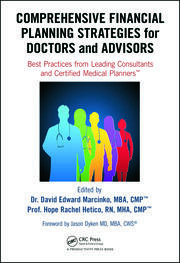
Comprehensive Financial Planning Strategies for Doctors and Advisors: Best Practices from Leading Consultants and Certified Medical Planners™

Stay Alert for Investment Scams Involving Cryptocurrency

By Charles Schwab

***

***

Stay alert for investment scams involving cryptocurrency
 
At Schwab, we’re committed to helping you protect your assets. One way we do that is by raising awareness of the increase in fraudulent investment schemes (“scams”) involving cryptocurrencies and digital assets. While investing involves taking some risks, being scammed shouldn’t be one of them.
What do scams look like? Investment scams target investors by promising quick, guaranteed returns. Although “investment pitches” vary, using fraudulent cryptocurrency investment opportunities to entice targets is a common approach.

Once targeted investors indicate interest, they are often instructed to wire funds abroad or to a third party’s personal account, or to transfer cryptocurrency. Fake websites and/or applications often create the illusion of a legitimate trading or investment platform and gain trust. However, once funds have been transferred, they are difficult to trace and retrieve.
5 Investment Scam Red Flags 
Guaranteed” high investment returns, supposedly with little or no risk, and sounding too good to be true.
Unlicensed or unregistered sellers. Use Investor.gov to check out the background of anyone offering you an investment in securities.
Skyrocketing account values. Investments that appear to rapidly increase in value are often fake.
Fake testimonials. Scammers often pay people to provide fake reviews, so never rely solely on testimonials in making an investment decision.
Fake contacts. Take caution if someone approaches you through social media with an investment opportunity. Pretending to be a friend or to have a mutual acquaintance is a common tactic used to gain trust.

***

COMMENTS APPRECIATED

Thank You

***

MORE: https://medicalexecutivepost.com/2022/02/22/cryptocurrency-trades-and-income-taxes-2021/

IT: https://www.amazon.com/Dictionary-Health-Information-Technology-Security/dp/0826149952/ref=sr_1_5?ie=UTF8&s=books&qid=1254413315&sr=1-5

***

Hospital Consolidation: Trends, Impacts & Outlook

By NIHCM

***

***

READ HERE: https://nihcm.org/publications/hospital-consolidation-trends-impacts-outlook

CITE: https://www.r2library.com/Resource/Title/082610254

MORE: https://www.amazon.com/Financial-Management-Strategies-Healthcare-Organizations/dp/1466558733/ref=sr_1_3?ie=UTF8&qid=1380743521&sr=8-3&keywords=david+marcinko

***

COMMENTS APPRECIATED

Thank You

***

MEGA-MILLIONS Mathematics!

By Neal Freyman

[Morning Brew]

***

***

THE JACKPOT: https://www.msn.com/en-us/money/markets/the-mega-millions-jackpot-is-now-810-million-here-s-how-much-would-go-to-taxes-if-there-s-a-winner/ar-AAZWHdU?cvid=a4e3994481cf435a8c98f9fcb51ebc67

***

The Mega Millions will hold a drawing tonight for a jackpot of $810 million. If won at that amount, it’d be the fourth-largest lottery prize in history.

Let’s get this out of the way first: You won’t win the jackpot. You just…won’t. The odds of winning are about 1-in-302 million, which means you’re far more likely to die from a meteorite strike or go to the ER because of a pogo stick injury than win the Mega Millions.

But let’s say you do win (because someone has to). Once you regain consciousness after fainting, you’ll be faced with a decision: Take the lump sum all at once, or spread the payout over decades in what’s called an “annuity.”

Here’s how each would work.

  • Lump sum: You’ll receive a payment of $470.1 million, after the 24% federal tax withholding takes a ~$113 million bite out of your total winnings. Plus, the 37% top marginal tax rate means you’ll fork over more of your prize to Uncle Sam come tax season.
  • Annuity: You’ll receive an immediate payment followed by 29 annual installments over the next 30 years, with each cash infusion increasing by 5% to account for inflation.

So which should you take?

Most people who win the lottery choose the lump sum, and it’s not hard to see why: You can make more money. Thanks to the magic of compound interest, you can invest your lottery winnings right away, and even with a conservative rate of return, make far more over 30 years than you can with the smaller droplets of cash provided by the annuity.

That said, the lump sum may not be for everyone. Are you the type of person who invested in dogecoin right before Elon Musk hosted SNL? If so, the annuity could offer some self-imposed fiscal discipline to prevent you from blowing all your winnings—which definitely happens. The internet is littered with stories of lottery winners who squandered their fortune, or otherwise watched their lives fall apart after thinking they had made it. One small study in Florida found that lottery winners were more likely to declare bankruptcy in three to five years than the average American.

Bottom line: You’re not going to win the Mega Millions (because we are), so consider this a lighthearted economics thought experiment and nothing more.

MORE: https://medicalexecutivepost.com/2008/01/22/selecting-advisors-for-the-emerging-or-suddenly-wealthy-doctor/

RELATED: https://medicalexecutivepost.com/2008/01/20/celebrating-a-physician%e2%80%99s-financial-windfall/

MORE: https://www.msn.com/en-us/entertainment/news/financial-planners-to-the-next-mega-millions-winner-keep-quiet-about-it/ar-AAZXL57?cvid=3f214c6667e74a3c8d36d15800d594e6

***

COMMENTS APPRECIATED

Thank You

***

PODCAST: Why AMAZON CARE Will Fail?

BY Eric Bricker MD

Employee AGE AND Demographics

****

***

Healthcare Costs (Per Person Per Year) by Age:
Less than 18: $3,628
19 – 44: $4,422
45-64: $8,370
65+: $18,424

***

YOUR COMMENTS ARE APPRECIATED.

Thank You

***

Risk Management, Liability Insurance, and Asset Protection Strategies for Doctors and Advisors : Best Practices from Leading Consultants and Certified Medical Planners™ book cover

ORDER: https://www.routledge.com/Risk-Management-Liability-Insurance-and-Asset-Protection-Strategies-for/Marcinko-Hetico/p/book/9781498725989

***

ORDER: https://www.amazon.com/Financial-Management-Strategies-Healthcare-Organizations/dp/1466558733/ref=sr_1_3?ie=UTF8&qid=1380743521&sr=8-3&keywords=david+marcinko

***

A.I. Examiners and the CERTIFIED MEDICAL PLANNER® Professional Designation Program

Artificial Intelligence and “Robo-Examiners” Let Adult-Learners and Students Take Control of their Career Education and On-Line Matriculation

Dr. David Edward Marcinko MBA CMP®
[Academic Dean and CEO: Institute of Medical Business Advisors, Inc]

Enter the CMPs

[Course Curriculum]

The concept of a self-taught and student motivated, but automated outcomes driven classroom may seem like a nightmare scenario for those who are not comfortable with computers. Now everyone can breathe a sigh of relief, because the Institute of Medical Business Advisors just launched an “automated” final examination review protocol that requires no programming skill whatsoever.

cmp

In fact, everything is designed to be very simple and easy to use. Once a student’s examination “blue-book” is received, computerized “robotic reviewers” correct student assignments and quarterly test answers. This automated examination model lets the robots correct tests and exams, while the students concentrate on guided self-learning.

Get a robo advisor on board to help with your investment ...

http://www.CertifiedMedicalPlanner.org

Assessment

According to Eugene Schmuckler PhD MBA MEd, Academic Provost of the CERTIFIED MEDICAL PLANNER® professional designation and certification program,

“This option allows the modern adult-learner save both time and money as s/he progresses toward the ultimate goal of board certification as a CMP® mark holder.”

The trend is growing and iMBA, Inc., is leading the way.

COURSE TEXTBOOKS: https://medicalexecutivepost.com/2021/04/29/why-are-certified-medical-planner-textbooks-so-darn-popular/

Product Details
Product Details
Comprehensive Financial Planning Strategies for Doctors and Advisors: Best Practices from Leading Consultants and Certified Medical Planners™

ADMISSIONS CONTACT:

Ann Miller RN MHA CMP®

[Executive-Director]

PH: 770-448-0769

EM: MarcinkoAdvisors@msn.com

THANK YOU

***

Great Depression versus Great Recession [A Voting Opinion Poll]

Join Our Mailing List

Yesterday versus Today?

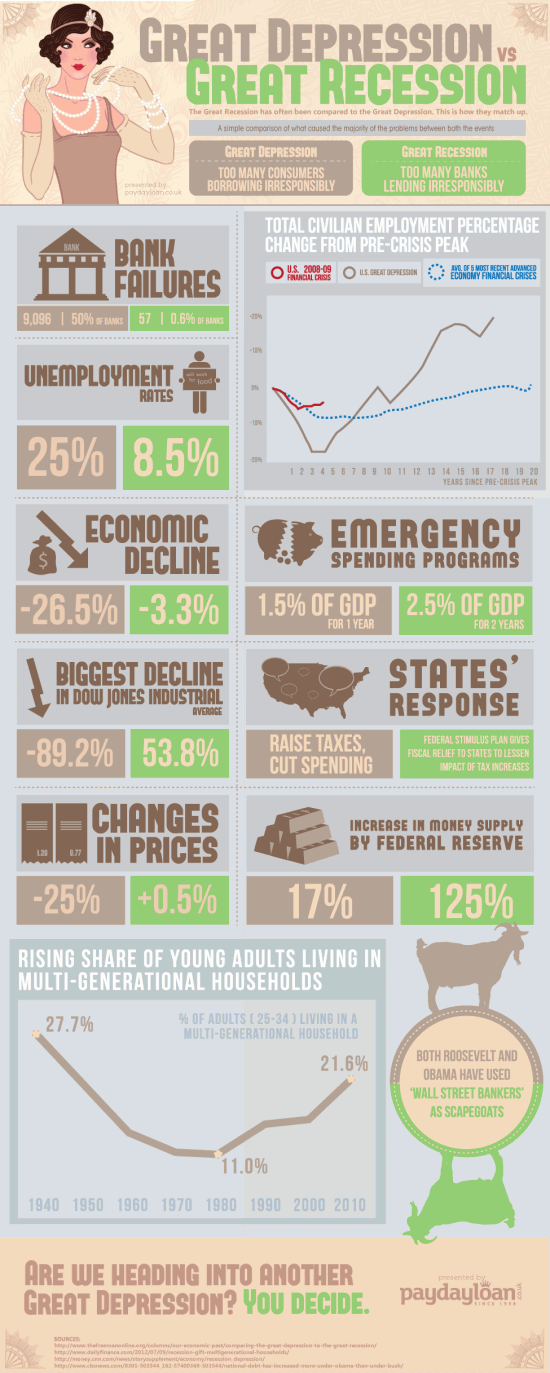
The Great Depression is often compared to the 2001-08  Great Recession. There are some interesting facts when comparing the Great Depression to the Great Recession. It may even be considered scary when laid out directly in front of you.

The cause of the Great Depression was because people were borrowing too much money, unlike the Great Recession where the banks were lending too much money irresponsibly. Don’t forget that what was once a recession turned into the Great Depression because of unemployment rates reaching 25%, bank failures covering half of all banks, and more.

Both Roosevelt and Obama have used “wall street bankers” as a scapegoat.

***

***

View more interesting facts about the Great Depression and Recession by viewing this infographic presented by Payday Loan.

Assessment

Do you think we are going into another Great Depression in 2022?

Conclusion

Your thoughts and comments on this ME-P are appreciated. Feel free to review our top-left column, and top-right sidebar materials, links, URLs and related websites, too. Then, subscribe to the ME-P. It is fast, free and secure.

Link: http://feeds.feedburner.com/HealthcareFinancialsthePostForcxos

Speaker: If you need a moderator or speaker for an upcoming event, Dr. David E. Marcinko; MBA – Publisher-in-Chief of the Medical Executive-Post – is available for seminar or speaking engagements. Contact: MarcinkoAdvisors@msn.com

OUR OTHER PRINT BOOKS AND RELATED INFORMATION SOURCES:

***

Risk Management, Liability Insurance, and Asset Protection Strategies for Doctors and Advisors: Best Practices from Leading Consultants and Certified Medical Planners™8Comprehensive Financial Planning Strategies for Doctors and Advisors: Best Practices from Leading Consultants and Certified Medical Planners™

***

Product DetailsProduct DetailsProduct Details

Are MDs and FAs being Replaced by Robotic Technology?

Join Our Mailing List

On Disruptive Innovation or Deus ex Machina

By Dr. David Edward Marcinko MBA CMP

[Editor-in-Chief]

Dr David E Marcinko MBAAccording to Wikipedia, a disruptive technology is an innovation that helps create a new market and value network, and eventually goes on to disrupt an existing market and value network (over a few years or decades), displacing an earlier technology.

The term is often used today used in business, healthcare and technology literature to describe innovations that improve a product or service in ways that the market does not expect, typically first by designing for a different set of consumers in a new market and later by lowering prices in the existing market.

For Doctors

You can feel it happening in the marketplace around us. Retail clinics, medical tourism, technology-enabled self care — disruptive innovations in the U.S. health care system challenge the status quo. These and other new phenomena zero in on unmet needs, leverage new technologies and business models, and deliver enhanced value throughout the health care supply chain.

So, along with consumerism, healthcare reform and technology, disruptive innovation is one of the three major themes we follow at the ME-P: www.CertifiedMedicalPlanner.org  and www.MedicalBusinessAdvisors.com

For Financial Advisors

According to Mike Kitces CFP, MTax, MSFS many of the things that financial advisors do can be implemented far more efficiently with technology, and overall it’s important to acknowledge that there are some things that humans do better but some things that really are done better by computers.

Which means in the end, the real winner may not be the robo-advisors, nor the human advisors, but the technology-augmented humans – the cyborg advisors – who blend human and technology together into an optimal financial advice solution for consumers.

###

cyborg

###

Assessment

And so, do these big changes create big value opportunities; or not? Of course they may … but only if you know where to look!

Conclusion

Your thoughts and comments on this ME-P are appreciated. Feel free to review our top-left column, and top-right sidebar materials, links, URLs and related websites, too. Then, subscribe to the ME-P. It is fast, free and secure.

Link: http://feeds.feedburner.com/HealthcareFinancialsthePostForcxos

Speaker: If you need a moderator or speaker for an upcoming event, Dr. David E. Marcinko; MBA – Publisher-in-Chief of the Medical Executive-Post – is available for seminar or speaking engagements. Contact: MarcinkoAdvisors@msn.com

OUR OTHER PRINT BOOKS AND RELATED INFORMATION SOURCES:

DICTIONARIES: http://www.springerpub.com/Search/marcinko
PHYSICIANS: www.MedicalBusinessAdvisors.com
PRACTICES: www.BusinessofMedicalPractice.com
HOSPITALS: http://www.crcpress.com/product/isbn/9781466558731
CLINICS: http://www.crcpress.com/product/isbn/9781439879900
BLOG: www.MedicalExecutivePost.com
FINANCE: Financial Planning for Physicians and Advisors
INSURANCE: Risk Management and Insurance Strategies for Physicians and Advisors

Product DetailsProduct DetailsProduct Details

Product Details  Product Details

Product DetailsProduct Details

Risk Management, Liability Insurance, and Asset Protection Strategies for Doctors and Advisors: Best Practices from Leading Consultants and Certified Medical Planners™8Comprehensive Financial Planning Strategies for Doctors and Advisors: Best Practices from Leading Consultants and Certified Medical Planners™

***

RECAST: An Interview with Fiduciary Bennett Aikin AIF®

On Financial Fiduciary Accountability

[By Dr. David E. Marcinko MBA CMP™]

[By Ann Miller; RN, MHA]

Currently, there is a growing dilemma in the financial sales and services industry. It goes something like this:

  • What is a financial fiduciary?
  • Who is a financial fiduciary?
  • How can I tell if my financial advisor is a fiduciary?

Now, in as much as this controversy affects laymen and physician-investors alike, we went right to the source for up-to-date information regarding this often contentious topic, for an email interview and Q-A session, with Ben Aikin.ben-aikin

About Bennett Aikin AIF® and fi360.com

Bennett [Ben] Aikin is the Communications Coordinator for fi360.com. He oversees all communications for fi360. His responsibilities include messaging, brand management, copyrights and trademarks, and publications. Mr. Aikin received his BA in English from Virginia Tech in 2003 and is currently an MS candidate in Journalism from Ohio University.

Q. Medical Executive Post 

You have been very helpful and gracious to us. So, let’s get right to it, Ben. In the view of many; attorneys, doctors, CPAs and the clergy are fiduciaries; most all others who retain this title seem poseurs; sans documentation otherwise.

A. Mr. Aikin

You are correct. Attorneys, doctors and clergy are the prototype fiduciaries. They have a clear duty to put the best interests of their clients, patients, congregation, etc., above their own. [The duty of a CPA isn’t as clear to me, although I believe you are correct]. Furthermore, this is one of the first topics we address in our AIF training programs, and what we call the difference between a profession and an industry.  The three professions you name have three common characteristics that elevate them from an industry to a profession:

  1. Recognized body of knowledge
  2. Society depends upon practitioners to provide trustworthy advice
  3. Code of conduct that places the clients’ best interests first

Q. Medical Executive Post 

It seems that Certified Financial Planner®, Chartered Financial Analysts, Registered Investment Advisors and their representatives, Registered Representative [stock-brokers] and AIF® holders, etc, are not really financial fiduciaries, either by legal statute or organizational charter. Are we correct, or not? Of course, we are not talking ethics or morality here. That’s for the theologians to discuss.

A. Mr. Aikin

One of the reasons for the “alphabet soup”, as you put it in one of your white papers [books, dictionaries and posts] on financial designations, is that while there is a large body of knowledge, there is no one recognized body of knowledge that one must acquire to enter the financial services industry.  The different designations serve to provide a distinguisher for how much and what parts of that body of knowledge you do possess.  However, being a fiduciary is exclusively a matter of function. 

In other words, regardless of what designations are held, there are five things that will make one a fiduciary in a given relationship:

  1. You are “named” in plan or trust documents; the appointment can be by “name” or by “title,” such as CFO or Head of Human Resources
  2. You are serving as a trustee; often times this applies to directed trustees as well
  3. Your function or role equates to a professional providing comprehensive and continuous investment advice
  4. You have discretion to buy or sell investable assets
  5. You are a corporate officer or director who has authority to appoint other fiduciaries

So, if you are a fiduciary according to one of these definitions, you can be held accountable for a breach in fiduciary duty, regardless of any expertise you do, or do not have. This underscores the critical nature of understanding the fiduciary standard and delegating certain duties to qualified “professionals” who can fulfill the parts of the process that a non-qualified fiduciary cannot.

Q. Medical Executive Post 

How about some of the specific designations mentioned on our site, and elsewhere. I believe that you may be familiar with the well-known financial planner, Ed Morrow, who often opines that there are more than 98 of these “designations”? In fact, he is the founder of the Registered Financial Consultants [RFC] designation. And, he wrote a Foreword for one of our e-books; back-in-the-day. His son, an attorney, also wrote as a tax expert for us, as well. So, what gives?

A. Mr. Aikin

As for the specific designations you list above, and elsewhere, they each signify something different that may, or may not, lend itself to being a fiduciary: For example:

• CFP®: The act of financial planning does very much imply fiduciary responsibility.  And, the recently updated CFP® rules of conduct does now include a fiduciary mandate:

• 1.4 A certificant shall at all times place the interest of the client ahead of his or her own. When the certificant provides financial planning or material elements of the financial planning process, the certificant owes to the client the duty of care of a fiduciary as defined by CFP Board. [from http://www.cfp.net/Downloads/2008Standards.pdf]

•  CFA: Very dependent on what work the individual is doing.  Their code of ethics does have a provision to place the interests of clients above their own and their Standards of Practice handbook makes clear that when they are working in a fiduciary capacity that they understand and abide by the legally mandated fiduciary standard.

• FA [Financial Advisor]: This is a generic term that you may find being used by a non-fiduciary, such as a broker, or a fiduciary, such as an RIA.

• RIA: Are fiduciaries.  Registered Investment Advisors are registered with the SEC and have obligations under the Investment Advisers Act of 1940 to provide services that meet a fiduciary standard of care.

• RR: Registered Reps, or stock-brokers, are not fiduciaries if they are doing what they are supposed to be doing.  If they give investment advice that crosses the line into “comprehensive and continuous investment advice” (see above), their function would make them a fiduciary and they would be subject to meeting a fiduciary standard in that advice (even though they may not be properly registered to give advice as an RIA).

• AIF designees: Have received training on a process that meets, and in some places exceeds, the fiduciary standard of care.  We do not require an AIF® to always function as a fiduciary. For example, we allow registered reps to gain and use the AIF® designation. In many cases, AIF designees are acting as fiduciaries, and the designation is an indicator that they have the full understanding of what that really means in terms of the level of service they provide.  We do expect our designees to clearly disclose whether they accept fiduciary responsibility for their services or not and advocate such disclosure for all financial service representatives.

Q. Medical Executive Post 

Your website, http://www.fi360.com, seems to suggest, for example, that banks/bankers are fiduciaries. We have found this not to be the case, of course, as they work for the best interests of the bank and stockholders. What definitional understanding are we missing?

A. Mr. Aikin

Banks cannot generally be considered fiduciaries.  Again, it is a matter of function. A bank may be a named trustee, in which case a fiduciary standard would generally apply.  Banks that sell products are doing so according to their governing regulations and are “prudent experts” under ERISA, but not necessarily held to a fiduciary standard in any broader sense.

Q. Medical Executive Post 

And so, how do we rectify the [seemingly intentional] industry obfuscation on this topic. We mean, our readers, subscribers, book and dictionary purchasers, clients and colleagues are all confused on this topic. The recent financial meltdown only stresses the importance of understanding same.

For example, everyone in the industry seems to say they are the “f” word. But, our outreach efforts to contact traditional “financial services” industry pundits, CFP® practitioners and other certification organizations are continually met with resounding silence; or worse yet; they offer an abundance of parsed words and obfuscation but no confirming paperwork, or deep subject-matter knowledge as you have kindly done. We get the impression that some FAs honesty do-not have a clue; while others are intentionally vague.

A. Mr. Aikin

All of the evidence you cite is correct.  But that does not mean it is impossible to find an investment advisor who will manage to a fiduciary standard of care and acknowledge the same. The best way to rectify confusion as it pertains to choosing appropriate investment professionals is to get fiduciary status acknowledged in writing and go over with them all of the necessary steps in a fiduciary process to ensure they are being fulfilled. There also are great resources out there for understanding the fiduciary process and for choosing professionals, such as the Department of Labor, the SEC, FINRA, the AICPA’s Personal Financial Planning division, the Financial Planning Association, and, of course, Fiduciary360.

We realize the confusion this must cause to those coming from the health care arena, where MD/DO clearly defines the individual in question; as do other degrees [optometrist, clinical psychologist, podiatrist, etc] and medical designations [fellow, board certification, etc.]. But, unfortunately, it is the state of the financial services industry as it stands now.

Q. Medical Executive Post 

It is as confusing for the medical community, as it is for the lay community. And, after some research, we believe retail financial services industry participants are also confused. So, what is the bottom line?

A. Mr. Aikin

The bottom line is that lay, physician and all clients have a right to expect and demand a fiduciary standard of care in the managing of investments. And, there are qualified professionals out there who are providing those services.  Again, the best way to ensure you are getting it is to have fiduciary status acknowledged in writing, and go over the necessary steps in a fiduciary process with them to ensure it is being fulfilled.

Q. Medical Executive Post 

The “parole-evidence” rule, of contract law, applies, right? In dealing with medical liability situations, the medics and malpractice attorneys have a rule: “if it wasn’t written down, it didn’t happen.”  

A. Mr. Aikin

An engagement contract accepting fiduciary status should trump a subsequent attempt to claim the fiduciary standard didn’t apply. But, to reiterate an earlier point, if someone acts in one of the five functional fiduciary roles, they are a fiduciary whether they choose to acknowledge it or not.  I have attached a sample acknowledgement of fiduciary status letter with copies of our handbook, which details the fiduciary process we instruct in our programs, and our SAFE, which is basically a checklist that a fiduciary should be able to answer “Yes” to every question to ensure the entire fiduciary process is being covered.

Q. Medical Executive Post 

It is curious that you mention checklists. We have a post arguing that very theme for doctors and hospitals as they pursue their medial error reduction, and quality improvement, endeavors. And, we applaud your integrity, and wish only for clarification on this simple fiduciary query?

A. Mr. Aikin

Simple definition: A fiduciary is someone who is managing the assets of another person and stands in a special relationship of trust, confidence, and/or legal responsibility.

Q. Medical Executive Post 

Who is a financial fiduciary and what, if any, financial designation indicates same?

A. Mr. Aikin

Functional definition: See above for the five items that make you a fiduciary.

Financial designations that unequivocally indicate fiduciary duty: Short answer is none, only function can determine who is a fiduciary. 

Q. Medical Executive Post 

Please repeat that?

A. Mr. Aikin

Financial designations that indicate fiduciary duty: none. It is the function that determines who is a fiduciary.  Now, having said that, the CFP® certification comes close by demanding their certificants who are engaged in financial planning do so to a fiduciary standard. Similarly, other designations may certify the holder’s ability to perform a role that would be held to a fiduciary standard of care.  The point is that you are owed a fiduciary standard of care when you engage a professional to fill that role or they functionally become one.  And, if you engage a professional to fill a non-fiduciary role, they will not be held to a fiduciary standard simply because they have a particular designation.  One of the purposes the designations serve is to inform you what roles the designation holder is capable of fulfilling.

It is also worth keeping in mind that just being a fiduciary doesn’t equate to a full knowledge of the fiduciary standard. The AIF® designation indicates having been fully trained on the standard.

Q. Medical Executive Post 

Yes, your website mentions something about fiduciaries that are not aware of same! How can this be? Since our business model mimics a medical model, isn’t that like saying “the doctor doesn’t know he is doctor?” Very specious, with all due respect!

A. Mr. Aikin

I think it is first important to note that this statement is referring not just to investment professionals.  Part of the audience fi360 serves is investment stewards, the non-professionals who, due to facts and circumstances, still owe a fiduciary duty to another.  Examples of this include investment committee members, trustees to a foundation, small business owners who start 401k plans, etc.  This is a group of non-sophisticated investors who may not be aware of the full array of responsibilities they have. 

However, even on the professional side I believe the statement isn’t as absurd as it sounds.  This is basically a protection from both ignorant and unscrupulous professionals.  Imagine a registered representative who, either through ignorance or design, begins offering comprehensive and continuous investment advice.  Though they may deny or be unaware of the fact, they have opened themselves up to fiduciary liability. 

Q. Medical Executive Post 

Please clarify the use of arbitration clauses in brokerage account contracts for us. Do these disclaim fiduciary responsibility? If so, does the client even know same?

A. Mr. Aikin

By definition, an engagement with a broker is a non-fiduciary relationship.  So, unless other services beyond the scope of a typical brokerage account contract are specified, fiduciary responsibility is inherently not applicable.  Unfortunately, I do imagine there are clients who don’t understand this. Furthermore, AIF® designees are not prohibited from signing such an agreement and there are some important points to understand the reasoning.

First, by definition, if you are entering into such an agreement, you are entering into a non-fiduciary relationship. So, any fiduciary requirement wouldn’t apply in this scenario.

Second, if this same question were applied into a scenario of a fiduciary relationship, such as with an RIA, this would be a method of dispute resolution, not a practice method. So, in the event of dispute, the advisor and investor would be free to agree to the method of resolution of their choosing. In this scenario, however, typically the method would not be discussed until the dispute itself arose.

Finally, it is important to know that AIF/AIFA designees are not required to be a fiduciary. It is symbolic of the individuals training, knowledge and ongoing development in fiduciary processes, but does not mean they will always be acting as a fiduciary.

Q. Medical Executive Post 

Don’t the vast majority of arbitration hearings find in favor of the FA; as the arbitrators are insiders, often paid by the very same industry itself?

A. Mr. Aikin

Actual percentages are reported here: http://www.finra.org/ArbitrationMediation/AboutFINRADR/Statistics/index.htm However, brokerage arbitration agreements are a dispute resolution method for disputes that arise within the context of the securities brokerage industry and are not the only means of resolving differences for all types of financial advisors.  Investment advisers, for example, are subject to respond to disputes in a variety of forums including state and federal courts.  Clients should look at their brokerage or advisory agreement to see what they have agreed to. If you wanted to go into further depth on this question, we would recommend contacting Brian Hamburger, who is a lawyer with experience in this area and an AIFA designee. Bio page: http://www.hamburgerlaw.com/attorneys/BSH.htm.

Q. Medical Executive Post 

What about our related Certified Medical Planner® designation, and online educational program for financial advisors and medical management consultants? Is it a good idea – reasonable – for the sponsor to demand fiduciary accountability of these charter-holders? Cleary, this would not only be a strategic competitive advantage, but advance the CMP™ mission to put medical colleagues first and champion their cause www.CertifiedMedicalPlanner.org above all else. 

A. Mr. Aikin

I think it is a good idea for any plan sponsor to demand fiduciary status be acknowledged from anyone engaged to provide comprehensive and continuous investment advice.  I also think it is a good idea to be proactive in verifying that the fiduciary process is being followed.

Q. Medical Executive Post 

Is there anything else that we should know about this topic?

A. Mr. Aikin

Yes, a further note about fi360’s standards. I wrote generically about the fiduciary standard, because there is one that is defined by multiple sources of regulation, legislation and case law.  The process defined in our handbooks, we call a Fiduciary Standard of Excellence, because it covers that minimum standard and also best practice standards that go above and beyond.  All of our Practices, which comprise that standard, are legally substantiated in our Legal Memoranda handbook, which was written by Fred Reish’s law firm, who is considered a leading ERISA attorney.

Additional resources:

Q. Medical Executive Post 

Thank you so much for your knowledge and willingness to frankly share it with the Medical-Executive-Post.

Assessment

All are invited to continue the conversation with Mr. Aikin, asynchronously online, or thru this contact information:

fi360.com
438 Division Street
Sewickley, PA 15143
412-741-8140 Phone
866-390-5080 Toll-free phone
412-741-8142 Fax

Conclusion

Your thoughts and comments on this ME-P are appreciated. Feel free to review our top-left column, and top-right sidebar materials, links, URLs and related websites, too. Then, subscribe to the ME-P. It is fast, free and secure.

Link: http://feeds.feedburner.com/HealthcareFinancialsthePostForcxos

Speaker: If you need a moderator or speaker for an upcoming event, Dr. David E. Marcinko; MBA – Publisher-in-Chief of the Medical Executive-Post – is available for seminar or speaking engagements. Contact: MarcinkoAdvisors@msn.com

OUR OTHER PRINT BOOKS AND RELATED INFORMATION SOURCES:

LEXICONS: http://www.springerpub.com/Search/marcinko
PRACTICES: www.BusinessofMedicalPractice.com
HOSPITALS: http://www.crcpress.com/product/isbn/9781466558731
CLINICS: http://www.crcpress.com/product/isbn/9781439879900
ADVISORS: www.CertifiedMedicalPlanner.org
BLOG: www.MedicalExecutivePost.com

Product DetailsProduct DetailsProduct Details

Product Details  Product Details

Product DetailsProduct Details

Product Details

Risk Management, Liability Insurance, and Asset Protection Strategies for Doctors and Advisors: Best Practices from Leading Consultants and Certified Medical Planners™8Comprehensive Financial Planning Strategies for Doctors and Advisors: Best Practices from Leading Consultants and Certified Medical Planners™

Our ME-P Second Opinion Service

By Staff Reporters

***

Finally, telephonic, video or electronic advice for medical professionals that is:

  • Objective, affordable, medically focused and personalized
  • Rendered by a pre-screened financial consultant or medical management advisor
  • Offered on a pay-as-you-go basis, by phone or secure e-mail transmission.

***

***

***

Second Opinions: https://medicalexecutivepost.com/schedule-a-consultation/

Coaching: https://medicalexecutivepost.com/coach/

***

THANK YOU

***

PODCAST: Health Insurance and Benefit Consultant Traits

THREE SUCCESSFUL TRAITS FOR BROKERS

By Eric Bricker MD

***

***

COMMENTS APPRECIATED

Thank You

Subscribe to the Medical Executive-Post

***

CITE: https://www.r2library.com/Resource/Title/082610254

***

***

The CERTIFIED MEDICAL PLANNER® Program Curriculum

BY DR. DAVID E. MARCINKO MBA CMP®

CMP

THE NEXT GENERATION OF FIDUCIARY FOCUSED FINANCIAL PLANNING AND MEDICAL MANAGEMENT ADVICE FOR DOCTORS

****

VISIT: http://www.CERTIFIEDMEDICALPLANNER.org

CURRICULUM: Enter the CMPs

BE AWARE ALL ADVISORS … NEXT GEN FINANCIAL ADVICE IS HERE?

CMP logo

Are you a financial planner, insurance agent or investment advisor seeking to assist your physician clients with medical practice enhancement solutions, along with healthcare targeted financial planning services, but don’t know where to turn for help?

OR, maybe you’ve already had a bad experience with a young physician or astute healthcare professional client that was actually more informed than you in these areas?

CITE: https://www.r2library.com/Resource/Title/0826102549

OR, a doctor/nurse client who demanded a true fiduciary advisor [not fee-based advice, with no dual licenses and no arbitration clauses] documented in writing].

Read this decade old Federal Government report to learn what can happen when your advisor is not an informed Certified Medical Planner© designated medical management practitioner.

Then, become a Certified Medical Planner© and thrive by helping others …. first!

GOV: https://oig.hhs.gov/fraud/docs/alertsandbulletins/consultants.pdf

True yesterday … more true today.

****

Risk Management, Liability Insurance, and Asset Protection Strategies for Doctors and Advisors: Best Practices from Leading Consultants and Certified Medical Planners™
Comprehensive Financial Planning Strategies for Doctors and Advisors: Best Practices from Leading Consultants and Certified Medical Planners™
Product Details

***

CONTACT: Ann Miller RN MHA CMP®

Phone: 770-448-0769

EMAIL: MarcinkoAdvisors@msn.com

***

The Medical Practice Business Plan EXECUTIVE SUMMARY?

WHAT IT IS – HOW IT WORKS

By Dr. David E. Marcinko MBA CMP®

****

CMP logo

SPONSOR: http://www.CertifiedMedicalPlanner.org

THE BUSINESS PLAN STANDARD FORMAT

Physician Executive Summary

The Physician Executive Summary is always included at the beginning of a formal business plan and represents a brief synopsis of the medical prarctice entire plan.  Its appearance, grammar and style should be sharp and crisp as it represents an enticement for the reader to maintain interest and contribute intelligent or economic input into the new venture.

It should contain information about the practice, advertising and marketing opportunities, physician management, proposed financing with four Pro Forma financial statements, business operations and exit strategy.  This last point, while unpleasant is often overlooked by naive practitioners.  Business experts however, look favorably upon an escape plan and view it as the mark of mature professional that realizes the possibility of success as well as failure. 

****

See the source image

***

Ultimately, the plan must explain to potential investors how you will make the practice   profitable and produce the required Return on Investment (ROI) for them.  It must describe medical services, patient acceptance and benefits, provider qualifications and accomplishments, the amount of capital required, market size, potential practice growth rate, and market niche. 

Additional information may include office location, proximity to labor, transportation, license requirements, business entity status, proprietary technology and potential working agreements with various insurance, managed care, ACA and HMO plans.  If all of the above seems bewildering to the uninitiated, you are correct. 

Remember however, that if you do not have, or can’t borrow the funds to begin a private practice, you will just have to become an employed practitioner until you can.  It is therefore imperative to start off on the right foot, with a sound business plan, as you begin your medical career.

YOUR COMMENTS ARE APPRECIATED.

Thank You

***

***

Comprehensive Financial Planning and Risk Management Strategies for Doctors and their Advisors

***

Best Practices from Leading Consultants and Certified Medical Planners

SPONSOR: http://www.CertifiedMedicalPlanner.org

CMP logo

***

***

Risk Management, Liability Insurance, and Asset Protection Strategies for Doctors and Advisors: Best Practices from Leading Consultants and Certified Medical Planners™

ORDER: https://www.routledge.com/Risk-Management-Liability-Insurance-and-Asset-Protection-Strategies-for/Marcinko-Hetico/p/book/9781498725989

***

Healthcare NOT a Part of the US Inflation Surge!

WHO KNEW?

By Staff Reporters

****

According to Wikipedia, in economics, inflation refers to a general progressive increase in prices of goods and services in an economy.[1] When the general price level rises, each unit of currency buys fewer goods and services; consequently, inflation corresponds to a reduction in the purchasing power of money.[2][3] The opposite of inflation is deflation, a sustained decrease in the general price level of goods and services. The common measure of inflation is the inflation rate, the annualised percentage change in a general price index.[4]

READ MORE: https://en.wikipedia.org/wiki/Inflation

CITE: https://www.r2library.com/Resource/Title/082610254

***

***

Health Care Price Changes and Per Capita Growth in Medicare | Mercatus  Center

***

Healthcare Not a Part of the US Inflation Surge: Who Knew?

However, according to Jeff Goldsmith, overall health spending has only risen by 4.4% since January of 2020, and the percentage of GDP devoted to health has fallen by more than half a percent, from 18.1% pre-pandemic to 17.5% in October.   This is despite four surges of COVID hospitalizations, overflowing ICUs and ERs, labor shortages, and other COVID-related stresses.  Health system staffing levels are still nearly a half-million lower than they were pre-pandemic.  Had the federal government not stepped in through the CARES Act, FEMA funding, and temporary suspensions of Medicare rate cuts, the nations’ hospitals would have been seriously damaged by COVID-related financial stresses, which are far from being over.  

ESSAY: https://thehealthcareblog.com/blog/2021/11/19/healthcare-not-a-part-of-the-us-inflation-surge-who-knew/

***

COMMENTS APPRECIATED

Thank You

Subscribe to the Medical Executive-Post

***

***

ABOUT RHETORICAL DEVICES AND PERSUASIVE APPEALS: Ethos, Pathos and Logos; etc

KAIROS; TOO!

DR. DAVID EDWARD MARCINKO FACFAS MBA CFP MBBS [Hon] [Executive Summary] -  PDF Free Download

By Dr. David E. Marcinko MBA CMP®

CMP logo

SPONSOR: http://www.CertifiedMedicalPlanner.org

****

The modes of persuasion, modes of appeal or rhetorical appeals (Greek: pisteis) are strategies of rhetoric that classify a speaker’s or writer’s appeal to their audience. These include ethos, pathos, and logos.

CITE: https://www.r2library.com/Resource/Title/0826102549

***

See the source image

***

Rhetorical appeal with persuasion elements are often key attributes for doctors, medical professionals, lawyers, CPAs, and all sorts of financial advisors and medical management consultants, etc.

Learning: https://medicalexecutivepost.com/2020/08/18/top-15-evolutions-of-learning/

So, here is a brief review for your consideration.

Examples: https://pathosethoslogos.com/

KAIROS: https://louisville.edu/writingcenter/for-students-1/handouts-and-resources/handouts-1/logos-ethos-pathos-kairos

YOUR COMMENTS ARE APPRECIATED.

Thank You

***

PODCAST: Pharma Rebates to PBMs

Pharma ‘Rebate’ Payments to PBMs No Longer Protected by Federal ‘Safe Harbor’

BY DR. ERIC BRICKER MD

***

***

YOUR COMMENTS ARE APPRECIATED.

HEALTH ECONOMICS CITE: https://www.r2library.com/Resource/Title/0826102549

Thank You

***

***

***

PODCAST: What is a Medication Formulary?

***

About First Stop Health | Telemedicine

By Eric Bricker MD

***

Why Are Certain Medications Non-Formulary?

What Are Formulary Tiers and Its Rules?

Formularies Have Many Rules Associated With Them:

1) Prior Authorization – Approval Must Be Given by the Health Insurance Company/PBM Before They Agree to Pay for a Medication.

2) Step Therapy – Certain Less Expensive Generic Medications Have to Be ‘Tried’ First and Fail Before a Doctor Can Prescribe a More Expensive Brand-Name Medication.

3) Mandatory Generics – If a Brand Name Medication Has A Direct Generic Equivalent, Then the Insurance May Only Agree to Pay for the Generic and Not the Brand.

4) Mandatory Mail Order – Certain Chronic Medications That Are Filled for 90 Day Supplies Must Be Filled via Mail Order and Not at the Retail Pharmacy.

***

PODCAST: https://www.youtube.com/watch?v=kEjDBp9HdBk

***

COMMENTS APPRECIATED.

Subscribe to the Medical Executive-Post

Thank You

HEALTH ECONOMICS CITE: https://www.r2library.com/Resource/Title/0826102549

***

***

***

Medical FINANCIAL PLANNING “Holistic” STRATEGIES

BY AND FOR PHYSICIANS AND THEIR ADVISORS

INVITE DR. MARCINKO: https://medicalexecutivepost.com/dr-david-marcinkos-

***

SPONSOR: http://www.CertifiedMedicalPlanner.org

CMP logo

***

PODCAST: CIGNA Executive Public Relations “Whistle Blower”

Wendell Potter is a Famous Ex-Executive from Cigna Who Left His High Paying PR Job in 2007 to Reveal the True Story Behind Health Insurance Carrier Public Relations.

BY ERIC BRICKER MD

***

YOUR COMMENTS ARE APPRECIATED

***

***

COMMENTS APPRECIATED

***

PODCAST: How to Sell in Healthcare During the Pandemic

BY ERIC BRICKER MD

***

***

COMMENTS APPRECIATED.

Thank You

Marketing V. Advertising V. Sales: https://medicalexecutivepost.com/2020/03/09/on-marketing-adverting-and-sales/

***

***

CMS Innovation Center Launches “Bold New” Strategy

BY HEALTH CAPITAL CONSULTANTS, LLC

CMS Innovation Center Launches “Bold New” Strategy


When President Joe Biden was elected in 2020, there was much anticipation and speculation regarding what his election would mean for the U.S. healthcare industry in the coming years.

CITE: https://www.r2library.com/Resource/Title/0826102549

Thriving in a value-based health care model - Biotricity

As an ardent supporter of the Patient Protection and Affordable Care Act (ACA) who campaigned on offering a public insurance option similar to Medicare, many in the healthcare industry assumed that the Biden Administration would be a strong proponent of continuing the shift to value-based care, which shift was largely spurred by his predecessor and former boss, Barack Obama, with the passage of the ACA. (Read more…)

YOUR COMMENTS ARE APPRECIATED.

***

Thank You

***

PODCAST: Centene the Giant Medicaid HMO

MEDICAID AND A.C.A. the GIANT

By Eric Bricker MD

****

***

YOUR COMMENTS ARE APPRECIATED.

HOSPITALS: https://www.amazon.com/Financial-Management-Strategies-Healthcare-Organizations/dp/1466558733/ref=sr_1_3?ie=UTF8&qid=1380743521&sr=8-3&keywords=david+marcinko

***

HEALTHCARE: https://www.amazon.com/Hospitals-Healthcare-Organizations-Management-Operational/dp/1439879907/ref=sr_1_4?s=books&ie=UTF8&qid=1334193619&sr=1-4

Thank You

***

CAUTION: Avoid 401-K Retirement Plan RMD Forgetfulness?

***

DON’T FORGET to make mandatory withdrawals in retirement!

By Dr. David E. Marcinko MBA CMP®

CMP logo

SPONSOR: http://www.CertifiedMedicalPlanner.org

Once you do retire, and put your physician or medical career behind you, it’s important to realize that, at some point, the IRS expects you to draw down your 401(k) balance. Starting at age 72, you need to take required minimum distributions (RMDs).

Your annual RMD amount depends on the balance of your 401(k) and a formula that determines your life expectancy.

***

RMD Age Jumps to 72 in 2020 After SECURE Act - 401K Specialist

***

QUERY: But – What happens if you don’t take your RMD for the year?

ANSWER: Well, you could end up paying a penalty. In fact, it’s a pretty hefty penalty of up to 50% of the amount you were supposed to withdraw. Paying that penalty can be pretty costly for someone living in retirement. As long as you’re vigilant and stay on top of the situation, though, you can avoid the penalty as well as these other costly 401(k) mistakes.

***
YOUR COMMENTS ARE
APPRECIATED.

Thank You

Risk Management, Liability Insurance, and Asset Protection Strategies for Doctors and Advisors : Best Practices from Leading Consultants and Certified Medical Planners™ book cover

***

ORDER: https://www.routledge.com/Risk-Management-Liability-Insurance-and-Asset-Protection-Strategies-for/Marcinko-Hetico/p/book/9781498725989

***

COMPREHENSIVE FINANCIAL PLANNING STRATEGIES

For Doctors and Advisors

BOOK REVIEWS WITH FOREWORD

Reviews

Written by doctors and healthcare professionals, this textbook should be mandatory reading for all medical school students―highly recommended for both young and veteran physicians―and an eliminating factor for any financial advisor who has not read it. The book uses jargon like ‘innovative,’ ‘transformational,’ and ‘disruptive’―all rightly so! It is the type of definitive financial lifestyle planning book we often seek, but seldom find.
LeRoy Howard MA CMPTM,Candidate and Financial Advisor, Fayetteville, North Carolina

I taught diagnostic radiology for over a decade. The physician-focused niche information, balanced perspectives, and insider industry transparency in this book may help save your financial life.
Dr. William P. Scherer MS, Barry University, Ft. Lauderdale, Florida

This book was crafted in response to the frustration felt by doctors who dealt with top financial, brokerage, and accounting firms. These non-fiduciary behemoths often prescribed costly wholesale solutions that were applicable to all, but customized for few, despite ever-changing needs. It is a must-read to learn why brokerage sales pitches or Internet resources will never replace the knowledge and deep advice of a physician-focused financial advisor, medical consultant, or collegial Certified Medical Planner™ financial professional.
―Parin Khotari MBA,Whitman School of Management, Syracuse University, New York

In today’s healthcare environment, in order for providers to survive, they need to understand their current and future market trends, finances, operations, and impact of federal and state regulations. As a healthcare consulting professional for over 30 years supporting both the private and public sector, I recommend that providers understand and utilize the wealth of knowledge that is being conveyed in these chapters. Without this guidance providers will have a hard time navigating the supporting system which may impact their future revenue stream. I strongly endorse the contents of this book.

―Carol S. Miller BSN MBA PMP,President, Miller Consulting Group, ACT IAC Executive Committee Vice-Chair at-Large, HIMSS NCA Board Member

This is an excellent book on financial planning for physicians and health professionals. It is all inclusive yet very easy to read with much valuable information. And, I have been expanding my business knowledge with all of Dr. Marcinko’s prior books. I highly recommend this one, too. It is a fine educational tool for all doctors.

―Dr. David B. Lumsden MD MS MA,Orthopedic Surgeon, Baltimore, Maryland

There is no other comprehensive book like it to help doctors, nurses, and other medical providers accumulate and preserve the wealth that their years of education and hard work have earned them.
―Dr. Jason Dyken MD MBA, Dyken Wealth Strategies, Gulf Shores, Alabama

I plan to give a copy of this book written
by doctors and for doctors’ to all my prospects, physician, and nurse clients. It may be the definitive text on this important topic.
―Alexander Naruska CPA, Orlando, Florida

Health professionals are small business owners who need to apply their self-discipline tactics in establishing and operating successful practices. Talented trainees are leaving the medical profession because they fail to balance the cost of attendance against a realistic business and financial plan. Principles like budgeting, saving, and living below one’s means, in order to make future investments for future growth, asset protection, and retirement possible are often lacking. This textbook guides the medical professional in his/her financial planning life journey from start to finish. It ranks a place in all medical school libraries and on each of our bookshelves.
―Dr. Thomas M. DeLauro DPM, Professor and Chairman – Division of Medical Sciences, New York College of Podiatric Medicine

Physicians are notoriously excellent at diagnosing and treating medical conditions. However, they are also notoriously deficient in managing the business aspects of their medical practices. Most will earn $20-30 million in their medical lifetime, but few know how to create wealth for themselves and their families. This book will help fill the void in physicians’ financial education. I have two recommendations: 1) every physician, young and old, should read this book; and 2) read it a second time!
―Dr. Neil Baum MD, Clinical Associate Professor of Urology, Tulane Medical School, New Orleans, Louisiana

I worked with a Certified Medical Planner™ on several occasions in the past, and will do so again in the future. This book codified the vast body of knowledge that helped in all facets of my financial life and professional medical practice.
Dr. James E. Williams DABPS, Foot and Ankle Surgeon, Conyers, Georgia

***

Comprehensive Financial Planning Strategies for Doctors and Advisors: Best Practices from Leading Consultants and Certified Medical Planners™

***

YOUR THOUGHTS ARE APPRECIATED.

SECOND OPINIONS: https://medicalexecutivepost.com/schedule-a-consultation/

INVITE DR. MARCINKO: https://medicalexecutivepost.com/dr-david-marcinkos-bookings/

Thank You

PODCAST: 25 Years of Healthcare and Economic Macro Trends

***

BY ERIC BRICKER MD

***

***

YOUR COMMENTS ARE APPRECIATED.

Thank You

***

CITE: https://www.r2library.com/Resource/Title/0826102549

***

RELATED 25 Healthcare Cost ITEMS: https://medicalexecutivepost.com/2018/03/11/medical-treatment-costs-becoming-expensive-25-factors/

***

The “BADLANDS” Off-Shore Tax Havens in South Dakota

By Morning Brew, NF and Staff Reporters

One of the world’s most prolific offshore tax havens is located more than 1,000 miles from any shore.

The US state of South Dakota now rivals notorious tax shelters like Panama, the Cayman Islands, and Switzerland as a destination for the top 0.01% to shield their  wealth from the grubby hands of tax authorities, the newly released Pandora Papers show.

Product Details

CITE: https://www.r2library.com/Resource/Title/0826102549

Quick recap: The Pandora Papers, published one week ago, represent one of the biggest leaks of financial docs in history. They show how celebrities, world leaders, and business magnates take advantage of opaque financial laws to hold onto as much of their wealth as they can…and, in some cases, get away with crimes.

And while none of that is particularly surprising, what is surprising is the changing geography of tax havens. The ultrarich are taking their money out of traditional tax shelters like the island of Jersey (one of the Channel Islands) and stashing it in rural US states like Nevada, Wyoming, and, most of all…South Dakota.

  • Of the more than 200 US trusts appearing in the Pandora Papers, 81 were located in South Dakota.

South Dakota’s trust industry held $367 billion in anonymous, untraceable assets in 2020, a nearly 4x increase from $75.5 billion in 2011. And these trusts aren’t catering to cattle ranchers who made it big—they’re linked to individuals in 40 different countries outside the US.

The bigger issue? 28 US-based trusts are linked to individuals or companies accused of misconduct overseas, such as money laundering, bribery, and human rights abuses, per the Washington Post.

***

Badlands National Park Has Stunning Landscapes and Diverse Wildlife -  Here's How to Experience It (Video) | Travel + Leisure

And now the question you’ve all been waiting for…

Why South Dakota?

It’s not why most people arrive in South Dakota—by accident. For decades, the state has intentionally loosened regulations on its financial services sector to grow its economy and create finance jobs, particularly in the city of Sioux Falls.

This deregulation push, spurred by trust industry insiders, turned a South Dakotan trust into “the most potent force-field money can buy,” wrote the Guardian’s Oliver Bullough.

By setting up a trust in South Dakota…

  • Your assets are protected from claims by creditors, angry clients, or even your ex-spouse (a level of security not afforded by other tax havens).
  • You are not subject to income tax, inheritance tax, or capital gains tax in the state…because South Dakota has none of those.
  • You never actually have to go to South Dakota.

In sum, if you’re a shady billionaire or a corrupt president of a Latin American country with something to hide, South Dakota looks like a mighty attractive place to shield your fortune from governments.

Or, rather, the US more broadly is an attractive place to hide your wealth. After years of bashing “offshore” havens for sheltering tax avoiders, the US has moved up to second in the world rankings for financial secrecy.

YOUR COMMENTS ARE APPRECIATED.

MORE: https://www.msn.com/en-us/money/markets/the-worlds-rich-and-powerful-are-stashing-dollar500-billion-in-this-tax-haven/ar-AAPw6Ny?li=BBnb7Kz

MORE: https://www.msn.com/en-us/news/politics/opinion-the-reason-its-so-easy-for-wealthy-americans-to-hide-their-money-%e2%80%94-and-how-to-stop-it/ar-AAPzf9W?li=BBnb7Kz

Thank You

Comprehensive Financial Planning Strategies for Doctors and Advisors: Best Practices from Leading Consultants and Certified Medical Planners™

ORDER: https://www.routledge.com/Comprehensive-Financial-Planning-Strategies-for-Doctors-and-Advisors-Best/Marcinko-Hetico/p/book/9781482240283

***

Risk Management, Liability Insurance, and Asset Protection Strategies for Doctors and Advisors : Best Practices from Leading Consultants and Certified Medical Planners™ book cover

***

RISK MANAGEMENT: https://www.routledge.com/Risk-Management-Liability-Insurance-and-Asset-Protection-Strategies-for/Marcinko-Hetico/p/book/9781498725989

***

PODCAST: Hospital Price Transparency Regulations

EXPLAINED IN TWO MINUTES

By Eric Bricker MD

***

PODCAST: https://www.fshealth.com/hospital-price-transparency-regulations?utm_campaign=Weekly%20Pulse&utm_medium=email&_hsmi=2&_hsenc=p2ANqtz-_ZmuwSwhqaUng6ccvspXNYBrjn8VoHnicgZRLgUpvdYNdXo-YeeDF2nYCu67N5F8dGsrg3Fr5guW-c-rdwZqmR2_XGkg&utm_content=2&utm_source=hs_email&mc_cid=c535b3053b&mc_eid=0192794229

***

MORE: https://medicalexecutivepost.com/2021/06/02/hospital-financial-price-transparency/

RELATED: https://medicalexecutivepost.com/2019/09/09/physician-perspectives-on-price-transparency/

MORE: https://medicalexecutivepost.com/2016/08/22/us-state-healthcare-price-transparency-laws/

YOUR COMMENTS ARE APPRECIATED.

Thank You

***

***

PODCAST: How to Sell in Healthcare

How to Read 4 Personality Types

BY ERIC BRICKER MD

***

***

YOUR COMMENTS ARE APPRECIATED.

Thank You

***

Product Details

***

***

PROSPECT THEORY: Client Empowerment for Financial Decision Making

OVERHEARD IN THE DOCTOR’S LOUNGE

Image result for doctors lounge

By Jaan E. Sidorov MD

***
DEFINITION:
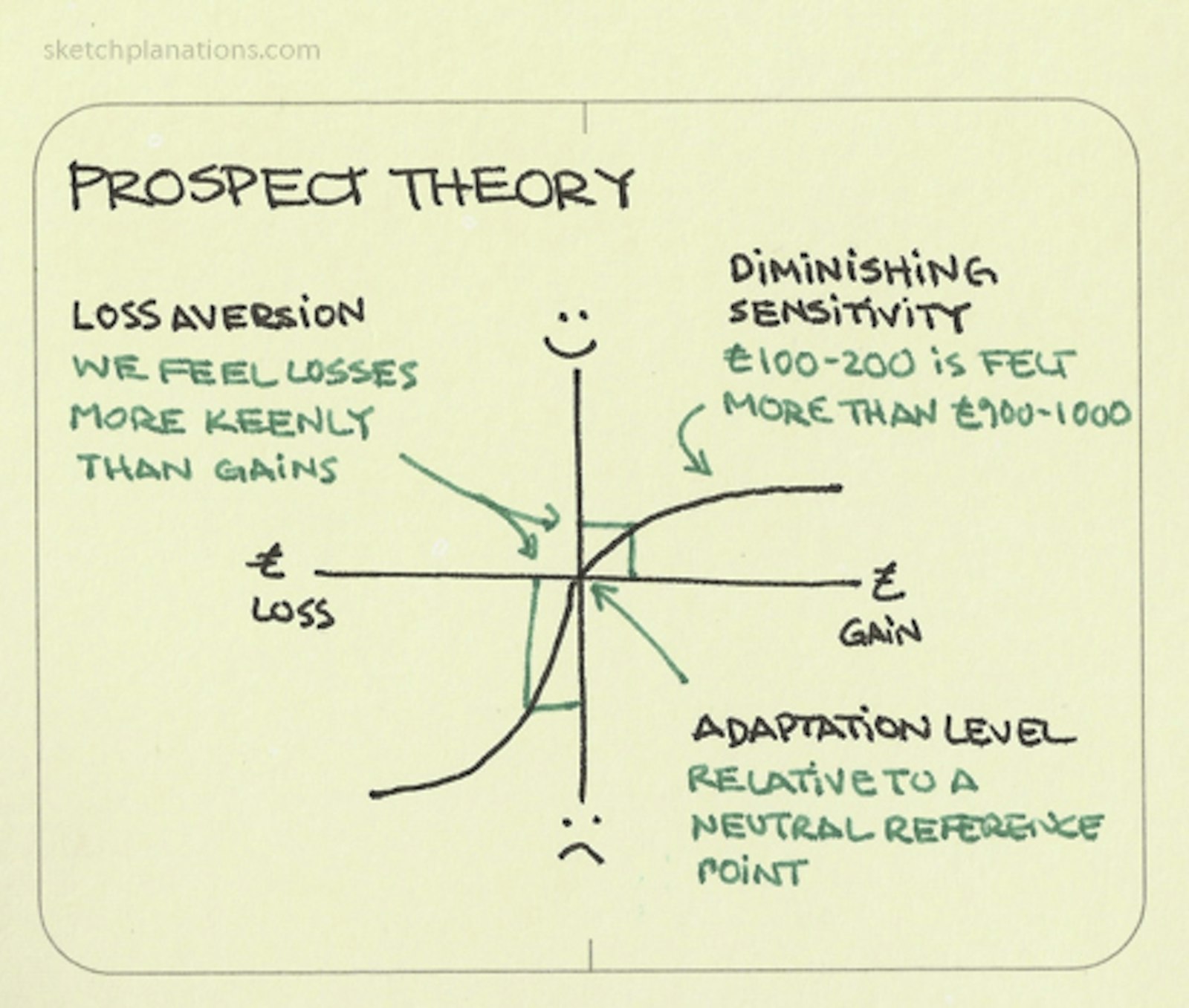
Prospect theory is a theory of behavioral economics and behavioral finance that was developed by Daniel Kahneman and Amos Tversky in 1979. The theory was cited in the decision to award Kahneman the 2002 Nobel Memorial Prize in Economics.

CITE: https://www.r2library.com/Resource/Title/0826102549

CASE MODEL:

Amanda, an RN client, was just informed by her financial advisor that she
needed to re-launch her 403-b retirement plan. Since she was leery about
investing, she quietly wondered why she couldn’t DIY. Little does her FA know
that she doesn’t intend to follow his advice, anyway! So, what went wrong?


The answer may be that her advisor didn’t deploy a behavioral economics
framework to support her decision-making. One such framework is the
“prospect theory” model that boils client decision-making into a “three step
heuristic.”

Prospect theory makes the unspoken biases that we all have more explicit. By
identifying all the background assumptions and preferences that clients
[patients] bring to the office, decision-making can be crafted so that everyone
[family, doctor and patient] or [FA, client and spouse] is on the same page.

****

Prospect theory - Sketchplanations

***
Briefly, the three steps are:

  • Simplify choices by focusing on the key differences between investment
    [treatment] options such as stock, bonds, cash, and index funds.
  • Understanding that clients [patients] prefer greater certainty when it comes to
    pursuing financial [health] gains and are willing to accept uncertainty when
    trying to avoid a loss [illness].
  • Cognitive processes lead clients and patients to overestimate the value of their choices thanks to survivor bias, cognitive dissonance, appeals to authority
    and hindsight biases.

ASSESSMENT

Much like in healthcare today, the current mass-customized approaches to the financial services industry fall short of recognizing more personalized advisory approaches like prospect theory and assisted client-centered investment decision-making.

YOUR COMMENTS ARE APPRECIATED.

Thank You

***

Risk Management, Liability Insurance, and Asset Protection Strategies for Doctors and Advisors: Best Practices from Leading Consultants and Certified Medical Planners™

RISK MANAGEMENT: https://www.routledge.com/Risk-Management-Liability-Insurance-and-Asset-Protection-Strategies-for/Marcinko-Hetico/p/book/9781498725989

***


Become a Board CERTIFIED MEDICAL PLANNER®

***

CMP logo

Help Physicians and Medical Professionals Thrive

[FINANCIAL PLANNING AND MEDICAL PRACTICE MANAGEMENT]

***

XPAS

***

LEARN MORE HERE: https://medicalexecutivepost.com/2021/10/02/the-certified-medical-planner-curriculum/

CONTACT: ANN MILLER RN MHA CMP®

Phone: 770-448-0769

EMAIL: MarcinkoAdvisors@msn.com

***

***

PODCAST: MEDICARE: Traveling Abroad Healthcare Care

BY CMS

***

***

YOUR COMMENTS ARE APPRECIATED.

Thank You

International: https://medicalexecutivepost.com/2016/01/30/us-and-international-healthcare-comparison/

***

***

PODCAST: Warren Buffett’s Thoughts on Healthcare

BY ERIC BRICKER MD

CITE: https://www.r2library.com/Resource/Title/0826102549

****

***

In Response to a Question Regarding the Ending of Haven Healthcare–the Joint Venture Among Berkshire Hathaway, JP Morgan Chase and Amazon to Improve Healthcare for their Employee Health Plan Members–Warren Buffett Made the Following Statement:

“Healthcare is the Tapeworm of the US Economy and the TAPEWORM WON.”

Additionally, Warren Buffett Goes on to Say that ‘Prestigious‘ People in the Community Run Hospital Boards and These People Are ‘Fairly Happy‘ with the Healthcare System the Way It Currently Is.

It is Likely that Warren Buffett Formed Some of This Opinion in Speaking About Healthcare with the Vice Chairman of Berkshire Hathaway, Charlie Munger, and Berkshire Board Member and Famous CEO, Tom Murphy.

Charlie Munger Has Served on the Board of a Los Angeles Hospital for 31 Years and Tom Murphy Currently Serves on the NYU Langone Hospital System Board of Directors.

The Support of the Status Quo by ‘Prestigious,’ ‘Fairly Happy’ Hospital Board Members Cannot Be Understated… It Blocks Change and Warren Buffett Appears to Think Similarly.

***

YOUR COMMENTS ARE APPRECIATED.

Thank You

***

***

PODCAST: The Economics of Healthcare Will Never be the Same After Covid-19

POST PANDEMIC HEALTH ECONOMICS

BY LAURA GLENN

***

As a leader in a community health system, Laura talks about how the COVID 19 pandemic has affected the economics of healthcare. Laura Glenn joined Munson Healthcare as the Vice President of the Physician Network in December, 2017.

In July, 2019 her role expanded and she was appointed the President of Ambulatory Services and Value Based Care. In this role, she remains responsible for integration of the employed and aligned physician practices across the system. In addition, she is responsible for advancing population health strategies including the Munson Clinical Integration Network and other value based payment models as well as providing leadership to the home health division, MHC’s clinical service lines and clinical business intelligence.

CITE: https://www.r2library.com/Resource/Title/0826102549

****

***
YOUR COMMENTS ARE APPRECIATED.

THANK YOU

***

***

INVITE: Dr. Marcinko to Your Next “Big Event”

By Ann Miller RN, MHA, CMP®

CMP logo

SPONSOR: http://www.CertifiedMedicalPlanner.org

***

PODCAST: On Older Doctors Selling Out to PRIVATE EQUITY

BY ERIC BRICKER MD

***

YOUR COMMENTS ARE APPRECIATED.

Thank You.

CITE: https://www.r2library.com/Resource/Title/0826102549

***

***

PODCAST: APPEALS Traditional [Original] Medicare

BY CMS

***

***
YOUR COMMENTS ARE APPRECIATED.

Thank You

***

***

PODCAST: Understanding Your Medicare Choices

ORIGINAL MEDICARE, PART C, MEDIGAP AND YOU

CITE: https://www.r2library.com/Resource/Title/0826102549

BY MEDICARE – CMS

***

***

YOUR COMMENTS ARE APPRECIATED.

Thank You

***

***

PODCAST: INELASTIC Healthcare Demand Explained

BY ERIC BRICKER MD

****

***

CITE: https://www.r2library.com/Resource/Title/0826102549

MORE: https://medicalexecutivepost.com/2019/11/10/ricardian-derived-demand-economics-in-medicine/

Your comments are appreciated.

THANK YOU

***

***

***

PODCAST: On State Health Insurance Commissioners

Not so Hot!

BY ERIC BRICKER MD

YOUR COMMENTS ARE APPRECIATED

Thank You

RELATED: https://ocgnews.com/former-georgia-insurance-commissioner-jim-beck-convicted-of-fraud/

MORE: https://www.routledge.com/Risk-Management-Liability-Insurance-and-Asset-Protection-Strategies-for/Marcinko-Hetico/p/book/9781498725989

***

***

The Board CERTIFIED MEDICAL PLANNER® Professional Chartered Designation Program

VISIT: http://www.CERTIFIEDMEDICALPLANNER.org

CURRICULUM: Enter the CMPs

Physicians Beware … the Medical Management Consultants?

CMP logo

Are you a doctor desperate for practice enhancement solutions, but don’t know where to turn for help? Or, maybe you’ve already had a bad experience with a non-fiduciary business consultant, or management guru, more interested in his bottom line than your success?

Read this decade old Federal Government report to learn what can happen when your advisor is not an informed Certified Medical Planner© designated medical management practitioner.

GOV: https://oig.hhs.gov/fraud/docs/alertsandbulletins/consultants.pdf

True yesterday … more true today.

***

PODCAST: General Electric Healthcare!

WHY NO GROWTH?

BY ERIC BRICKER MD

YOUR COMMENTS ARE APPRECIATED

MORE: https://medicalexecutivepost.com/2021/05/11/a-general-electric-physician-investor-update/

Thank You https://www.amazon.com/Hospitals-Healthcare-Organizations-Management-Operational/dp/1439879907/ref=sr_1_4?s=books&ie=UTF8&qid=1334193619&sr=1-4

***

The “BUSINESS” of Transformational Medical Practice Skills

[3rd] THIRD EDITION

INVITE DR. MARCINKO: https://medicalexecutivepost.com/dr-david-marcinkos-bookings/

THANK YOU

***

On Excess IRA and Roth IRA Contributions

BY DAN MOISAND CFP®

***

See the source image

***

READ HERE: https://www.msn.com/en-us/news/other/i-contributed-too-much-to-my-ira-and-roth-ira-%e2%80%94-what-now/ar-AANP1IP?li=BBnb7Kz

MORE: https://www.irs.gov/retirement-plans/plan-participant-employee/retirement-topics-ira-contribution-limits

EDITOR’S NOTE: Colleague Dan Moisand contributed to our textbook on “Comprehensive Financial Planning Strategies for Doctors and Advisors.”

***

YOUR THOUGHTS AND COMMENTS ARE APPRECIATED.

Thank You

***

PODCAST: Stark and AKS Final Rules

ANTI-KICKBACK STATUTE Overview and Impact

Do you want to learn more about the Stark Law and Anti-Kickback Statute Final Rules and how they impact your practice? Join us for a one-hour webinar, presented with Hancock Daniel.

Health Capital Topics Newsletter

By Health Capital Consultants, LLC

PODCAST: https://www.healthcapital.com/resources/stark-and-aks-final-rules-overview-and-impact

YOUR COMMENTS ARE APPRECIATED.

Thank You

***

The BUSINESS of Medical Practice

BY DR. David Edward Marcinko MBA

***

RELATED TEXTS: https://medicalexecutivepost.com/2021/04/29/why-are-certified-medical-planner-textbooks-so-darn-popular/

INVITE DR. MARCINKO: https://medicalexecutivepost.com/dr-david-marcinkos-

Second Opinions: https://medicalexecutivepost.com/schedule-a-consultation/

THANK YOU!

***

The Business of Medical Practice [3rd. edition]

SPONSOR: http://www.CertifiedMedicalPlanner.org

CMP logo

ORDER TEXTBOOK: https://www.amazon.com/Business-Medical-Practice-Transformational-Doctors/dp/0826105750/ref=sr_1_9?ie=UTF8&qid=1448163039&sr=8-9&keywords=david+marcinko

SECOND OPINIONS: https://medicalexecutivepost.com/schedule-a-consultation/

INVITE DR. MARCINKO: https://medicalexecutivepost.com/dr-david-marcinkos-bookings/

THANK YOU

***