PHYSICIANS: Mentoring & Second Opinions

By Ann Miller RN MHA

***

***

Career and Financial Planning

Career, Business and Personal Financial Planning is a great opportunity to get your practice, finances and budgets in order before life gets too busy.

CALL US TODAY TO GET STARTED: https://medicalexecutivepost.com/coach/

CALL FOR A SECOND OPINION: https://medicalexecutivepost.com/schedule-a-consultation/

DR. MARCINKO: https://davidedwardmarcinko.com/coach/

“From Chaos to Calm”

THANK YOU

***

ENVISION HEALTHCARE : KKR Backed and Bankrupt!

A”Surprise Billing” Maven

By Staff Reporters

***

Envision, a $10 billion physician and ambulatory surgery firm owned by private equity giant Kohlberg Kravis Roberts, filed for Chapter 11 bankruptcy on May 15th 2023.  It was the largest healthcare bankruptcy in US history. 

CITE: https://www.r2library.com/Resource

Envision claimed to employ 25 thousand clinicians- emergency physicians, anesthesiologists, hospitalists, intensivists, and advanced practice nurses and contracted with 780 hospitals.  Envision’s ER physicians delivered 12 million visits in 2021, not quite 10% of the US total hospital ED visits.

READ: https://www.advisory.com/daily-briefing/2023/05/19/envision-bankruptcy#:~:text=On%20Monday%2C%20Envision%20Healthcare%20filed%20for%20Chapter%2011,%E2%80%94%20will%20be%20cancelled%2C%20totaling%20around%20%245.6%20billion.

MORE: https://www.brookings.edu/wp-content/uploads/2021/10/Private-Equity-Investment-As-A-Divining-Rod-For-Market-Failure-14.pdf

***

COMMENTS APPRECIATED

Thank You

***

***

***

DAILY UPDATE: Elizabeth Holmes to Jail 2 Day & A.I.

By Staff Reporters

***

***

  • Theranos’ founder, Elizabeth Holmes, is finally set to report to prison today. After several delays, she’s expected to report to a federal prison in Texas by 2 p.m. Once worth $4.5 billion, Holmes can expect a drastic change in lifestyle. The Theranos founder turned convicted fraudster is set to bid adieu to her freedom and her estate home costing $13,000 a month as she commences an 11-year prison sentence.
  • MORE: https://www.bbc.com/news/world-us-canada-65678967

***

The AI hype train that left the station last November with ChatGPT’s release made its grand arrival on Wall Street last week. According to Bloomberg, the top seven tech stocks (Microsoft, Alphabet, etc.) gained a combined $454 billion in market cap over five days, fueled by Nvidia’s earnings report that many considered a watershed moment for the technology. AI’s disruptive potential is why the tech-heavy Nasdaq is leaving the other indexes in the dust this year.

***

ORDER: https://www.routledge.com/Risk-Management-Liability-Insurance-and-Asset-Protection-Strategies-for/Marcinko-Hetico/p/book/9781498725989

ORDER: https://www.routledge.com/Comprehensive-Financial-Planning-Strategies-for-Doctors-and-Advisors-Best/Marcinko-Hetico/p/book/9781482240283

***

COMMENTS APPRECIATED

Thank You

***

CHARTER COMMUNICATIONS: Why We’re Confident in Our Investment

By Vitaliy N. Katsenelson CFA

***

***

You can also listen to a professional narration of this article on iTunes, Google & online.
CHARTER COMMUNICATIONS: Why we’re confident in our investment

December 12, 2022

When my wife Rachel and I were getting married, the preparations for the wedding were stressful. It was the usual stuff – finding caterers, picking a wedding dress and invitations, shrinking the enormous guest list, and making a lot of other (in hindsight), unimportant decisions. (My advice to my kids: Have a destination wedding in Hawaii on the beach; this will shrink your guest list by 90%, leaving only those who really care about you. This way, you’ll be planning a small party, not orchestrating a giant brawl.)

I remember the preparations for the wedding being unnecessarily frustrating. My bride and I thought once we got married and the wedding was behind us, life would get easier. My father made an important observation: “Do you think all your problems will go away once you get married? This is when a different, often more difficult, chapter of your life begins – you’ll be facing different, more important, problems.”

He was so right.

This applies to investing as well. Researching companies is preparation for the wedding. But after we buy a stock – “get married” – is when the real research begins, because life happens to companies. I have to admit, this wedding analogy is imperfect on many levels: Selling stocks is not as traumatic as getting divorced (our stocks don’t know we own them). We are not really married to our stocks; we would love to own them for a long time but will sell them with ease if new information starts hinting that our initial thesis was wrong.

I did not enjoy the preparations for my wedding, but I actually love doing research. Most of our research doesn’t turn into weddings – we buy only a few companies a year but research hundreds.

If this analogy is so bad, why keep it? It highlights what investing is and, as importantly, what it is not. Plus, I sank an hour into it, which I’ll never get back.

We had done a tremendous amount of research before we bought Charter Communications (CHTR). It seems like we have done twice as much research since we bought CHTR (“got married to it“) and have been kicked in the face by the declining stock price. However, we are convinced that our initial decision, although in hindsight it was imperfectly timed (an understatement), was the correct one.

The market’s concerns about the competitive threat to cable operators from fiber and fixed wireless drove all cable stocks down, creating an opportunity (more on that later). The more work we have done, the more we are convinced that this threat, though it may shave off a few percent from revenue growth in the short run, will have little impact on cable operators’ cash flows in the long term.

This is what I wrote about wireless competition:  Let’s start with 5G. It is exponentially better than 4G. It is faster, has less latency, and drains batteries less. But it is still constrained by the scarcity of wireless spectrum – the “air pipe.” This is why wireless providers usually limit how much you can download on your device. Typical wireless providers put a cap of 50GB a month of downloads per household. The average cable customer consumes 400GB of data if they have TV service and 700GB if they don’t. (Remember, if you don’t have TV, you stream it over the internet, and thus consume more data.) Our internet data consumption is only moving in one direction, at a very fast pace, indefinitely: up! This will put further stress on the finite 5G spectrum, whereas broadband’s upward bound is virtually unlimited.
 
5G wireless customers will pay as much as Charter cable customers but will get 10-15x less data and slower speeds. If each 5G customer used as much internet as broadband customers, wireless providers would either go broke (they’d have to be spending hundreds of billions of dollars on new spectrum) or download speeds would slow to a crawl.The observation above is partially correct. T-Mobile, after merging with Sprint, has more spectrum than AT&T and Verizon and has been offering unlimited broadband, at very fast download speeds, for only $30 a month.

Brendan Snow (IMA analyst) and I went to the T-Mobile store to check it out. T-Mobile offered broadband in Brendan’s neighborhood but not in mine. I live in a very average suburban neighborhood, but despite owning more spectrum than its rivals, T-Mobile doesn’t have enough spectrum capacity to offer its service to me. Remember, broadband users consume 50–70 times more broadband than traditional wireless consumers.

Also, this offer is only available to customers who have wireless service with T-Mobile. I have read reviews of T-Mobile’s broadband service, and they all mention one thing in common: Service is intermittent and speed fluctuates a lot depending on the time of day. Bottom line: This service will take some market share from cable providers in areas with low population density, where cable companies have limited presence anyway.

Fiber is another threat that drove cable stocks down. “Fiber to the home providers” offer 1 gigabit speed on both downloads and uploads. Both Charter and Comcast have announced they will be upgrading their networks to DOCSIS 4.0, a new technology which, at a relatively small cost (less than $200 per customer), will put cable data speeds at parity with fiber. Comcast announced that they will roll out the technology everywhere by 2025, while Charter said they will focus on markets where they face the most competition from fiber. DOCSIS 4.0 will turn cable networks from smart to “brilliant” (this is how one cable executive described this technology), promising to increase uptime and reduce maintenance capital expenditures.

Our thinking on the wireless offerings by Charter and Comcast has changed. Initially, we thought it was a defensive move to compete with wireless providers, with the ultimate goal of bundling it with internet service and reducing churn. We assumed it would produce a limited stream of cash flows.

We changed our thinking here.

Cable companies have a structural cost advantage in offering wireless service, as consumers have been trained to connect their phones to Wi-Fi. This means that when we are on our mobile phones, we offload 90–95% of our data to wired networks, where cable companies have virtually unlimited capacity.

Wireless companies have to spend a tremendous amount of money on building and maintaining wireless networks, and pay tens of billions of dollars for spectrum. Cable companies, however, are able to shortcut this expense by buying buckets of data from wireless companies (AT&T and Verizon). As a result, both Charter and Comcast are offering wireless service at a significant discount to their wireless competitors.

The wireless business is growing at a rate of 30–40% a year, requiring minimal investment from cable companies. In a few years, once it reaches scale, it will become a significant contributor to earnings.

December 18th, 2022

Just as we were ready to send out this letter, right after I wrote the above, Charter held an investor day on December 13th. Management said they would roll out DOCSIS 4.0 across their full footprint in three years. The cost per customer is going to be $100, not the $200 that we, and everyone else, had expected. This was great news! $100 is less than two months of internet subscription.

Charter has 55 million customers, so additional investment (capital expenditure) over the next three years will total $5.5 billion. Charter will pay for it from its abundant cash flows. This new technology will allow customers to download and upload at 1 gigabit per second (with potential to take it up to 10 gigabits per second), putting cable technology completely on par with fiber.

In addition to increasing the company’s competitive advantage and pricing power (its product is priced lower than the fiber competition), management said that this investment in DOCSIS 4.0 will reduce its maintenance capital expenditures by $600 million to $1 billion a year.

The stock declined by 20% in response to the news. We laughed!

The market did not appreciate this investment, as it meant that Charter would have to reduce the amount of money it spends on buying back its own stock by the increase in capital expenditures. This is one of the best examples of time arbitrage we have ever seen. The market is not looking past its nose. Charter’s management’s time horizon is years into the future, as it should be.

The value of any asset, be it a company, cow, or bond, is the present value of its future cash flows. We put the new assumptions into our Charter discounted cash flow model: We reduced its cash flows by $5.5 billion over the next three years, and then increased them by $800 million after that (a midpoint number in the company’s guidance). Cost savings alone, ignoring the improved ability to raise prices and grow market share, increase Charter’s value (the present value of cash flows) by about 10%.

Paraphrasing Ben Graham, in the short term the market is a speculative casino but in the long term it is an Excel spreadsheet running discounted cash flows.

All cable stocks have declined, so we did some minor reshuffling of the portfolio. In taxable accounts we sold all of Charter, took a short-term loss, and bought Comcast. In nontaxable accounts we reduced our position in Charter and bought Comcast. We also bought Liberty Broadband in almost all accounts. Liberty Broadband is a company controlled by John Malone that owns about 30% of Charter. The Liberty discount for Charter has widened to about 25%, giving us the opportunity to buy Charter at a significant discount. Though this number may vary by portfolio, our exposure to the cable industry is now about 5%.

Charter and Comcast are like two first cousins who share the same grandparent – John Malone. A large part of Comcast is TCI, a company started by Malone. Today, Malone personally owns roughly 2% of Charter through his Liberty Broadband holding.

Cable is a much better business than wireless, for one reason: It has much less competition. Charter and Comcast compete with wireless carriers and phone companies, but they don’t compete against each other. Their footprints don’t overlap and will never overlap. In fact, they have joint ventures together. Charter’s and Comcast’s cable businesses are of a similar size. Charter has a laser focus on the cable business, whereas Comcast also has a media business (it owns NBC, Sky, and other media properties). Charter is more leveraged than Comcast, but its stock is cheaper. We like the management of both companies.
***

COMMENTS APPRECIATED

Thank You

***

***

STUDY: ChatGPT Out Performs Doctors?

Answering Patient Messages

***

The study on ChatGPT “outperforming” doctors in answering patient questions quickly became the talk of the town. However, as is often the case, it was presented as a prime example of media sensationalism. 

As we encounter more of these partially misinterpreted hypes – and rest assured, there will be many – we’ll need to navigate a sea of questions. Firstly, we must determine what AI can genuinely do better than healthcare professionals. Secondly, we need to consider how to identify unique areas where healthcare workers can assist patients, while AI automates repetitive and data-driven tasks.

READ: https://medcitynews.com/2023/04/chatgpt-ai-healthcare-patient-messaging/?utm_source=The+Medical+Futurist+Newsletter&utm_campaign=98c09c20fb-EMAIL_CAMPAIGN_2022_02_01_COPY_01&utm_medium=email&utm_term=0_efd6a3cd08-98c09c20fb-399696053&mc_cid=98c09c20fb&mc_eid=40fee31c25

I hope you will find our newsletter useful!

Best regards,
Bertalan Meskó, MD, PhD
The Medical Futurist

COMMENTS APPRECIATED

Thank You

***

***

DEATH: Eco-Friendly Transitions and Interment

By Staff Reporters

***

***

Though it’s not likely to be discussed at a funeral, the popular methods of body disposal—traditional burial or cremation—both pose major environmental hazards. In recent years, natural interment has made a comeback, with promises to protect the planet. But a Dutch inventor created eco-conscious coffins made from mushroom-like structures and hemp that will decompose within 45days of burial.

So, here are eight eco-friendly ways to make your last act on Earth a kind one.

READ: https://www.mentalfloss.com/article/513564/7-eco-friendly-options-your-body-after-death#:~:text=Though%20it%E2%80%99s%20not%20likely%20to%20be%20discussed%20at,your%20last%20act%20on%20Earth%20a%20kind%20one.

RELATED: https://medicalexecutivepost.com/2022/02/24/how-technology-is-streamlining-death/

***

COMMENTS APPRECIATED

Thank You

***

***

HAPPY: 529 Day

COLLEGE 529 SAVINGS PLAN DAY

By Staff Reporters

***

***

May 29th is observed across the U.S. as 529 Day or 529 College Savings day. It was introduced to increase awareness of these plans and encourage families to start saving toward future education expenses.

A 529 plan is a type of education savings plan.

MORE: https://www.businessinsider.com/personal-finance/529-day-plans-by-state

***

COMMENTS APPRECIATED

Thank You

***

***

WALL $TREET: Memorial Day 2023

WALL STREET

By Dr. David Edward Marcinko MBA

***

Memorial Day 2023: U.S. exchanges are closed today, May 29th, for Memorial Day

***

***

***

COMMENTS APPRECIATED

Thank You

***

***

RE-PODCAST: Financial Implications of Ozempic, Wegovy and Mounjaro

By Eric Bricker MD

***

***

COMMENTS APPRECIATED

Thank You

***

CITE: https://www.r2library.com/Resource

***

***

PODCAST: Venture Capital in Healthcare VS. Boot Strapping

By Eric Bricker MD

***

***

***

***

COMMENTS APPRECIATED

Thank You

***

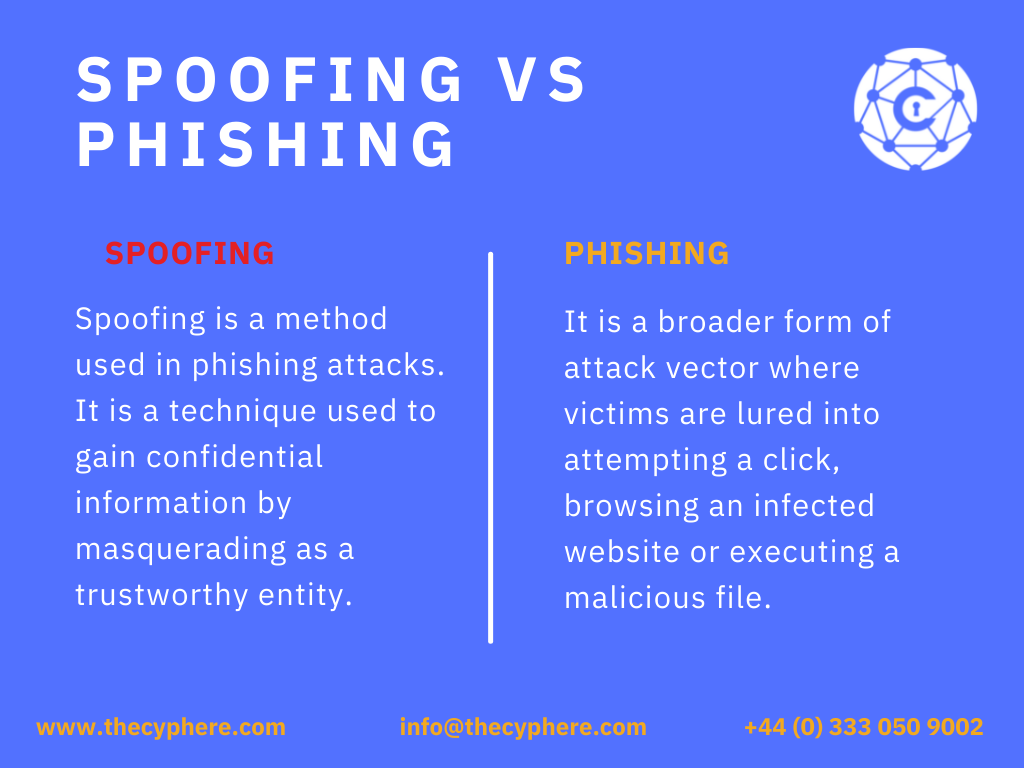
What is Cyber-Security SPOOFING and PHISHING?

By Staff Reporters

***

***

Spoofing 

Spoofing is when someone disguises an email address, sender name, phone number, or website URL—often just by changing one letter, symbol, or number—to convince you that you are interacting with a trusted source.

For example, you might receive an email that looks like it’s from your boss, a company you’ve done business with, or even from someone in your family—but it actually isn’t.

Criminals count on being able to manipulate you into believing that these spoofed communications are real, which can lead you to download malicious software, send money, or disclose personal, financial, or other sensitive information.

Phishing 

Phishing schemes often use spoofing techniques to lure you in and get you to take the bait. These scams are designed to trick you into giving information to criminals that they shouldn’t have access to.

In a phishing scam, you might receive an email that appears to be from a legitimate business and is asking you to update or verify your personal information by replying to the email or visiting a website. The web address might look similar to one you’ve used before. The email may be convincing enough to get you to take the action requested.

But once you click on that link, you’re sent to a spoofed website that might look nearly identical to the real thing—like your bank or credit card site—and asked to enter sensitive information like passwords, credit card numbers, banking PINs, etc. These fake websites are used solely to steal your information.

Phishing has evolved and now has several variations that use similar techniques:

  • Vishing scams happen over the phone, voice email, or VoIP (voice over Internet Protocol) calls.
  • Smishing scams happen through SMS (text) messages.
  • Pharming scams happen when malicious code is installed on your computer to redirect you to fake websites.

Spoofing and phishing are key parts of business email compromise scams.

MORE: https://www.fbi.gov/scams-and-safety/common-scams-and-crimes/spoofing-and-phishing

***

COMMENTS APPRECIATED

Thank You

***

***

RELATED: https://www.amazon.com/Comprehensive-Financial-Planning-Strategies-Advisors/dp/1482240289/ref=sr_1_1?ie=UTF8&qid=1418580820&sr=8-1&keywords=david+marcinko

***

Pediatric Mental Health Month is Also in May

***

***

Even though timely follow-up care for self-harm or mental illness has been shown to prevent hospitalizations, reduce the chances of a repeat visit, and improve overall outcomes, less than a third of children receive follow-up care within seven days of their ED visit, and just over half (56%) receive care within a month, according to a recent study from Ann & Robert H. Lurie Children’s Hospital of Chicago.

More than a quarter of the children in the study returned to the ED within six months.

RELATED: The second-largest psychiatric facility in Washington State is looking to hire more employees after threats that it could lose its accreditation.

***
COMMENTS APPRECIATED

Thank You

***

***

What is a Social Impact Bond?

New Financial Product – or Societal Economic Hammer

By Dr. David Edward Marcinko MBA CMP™

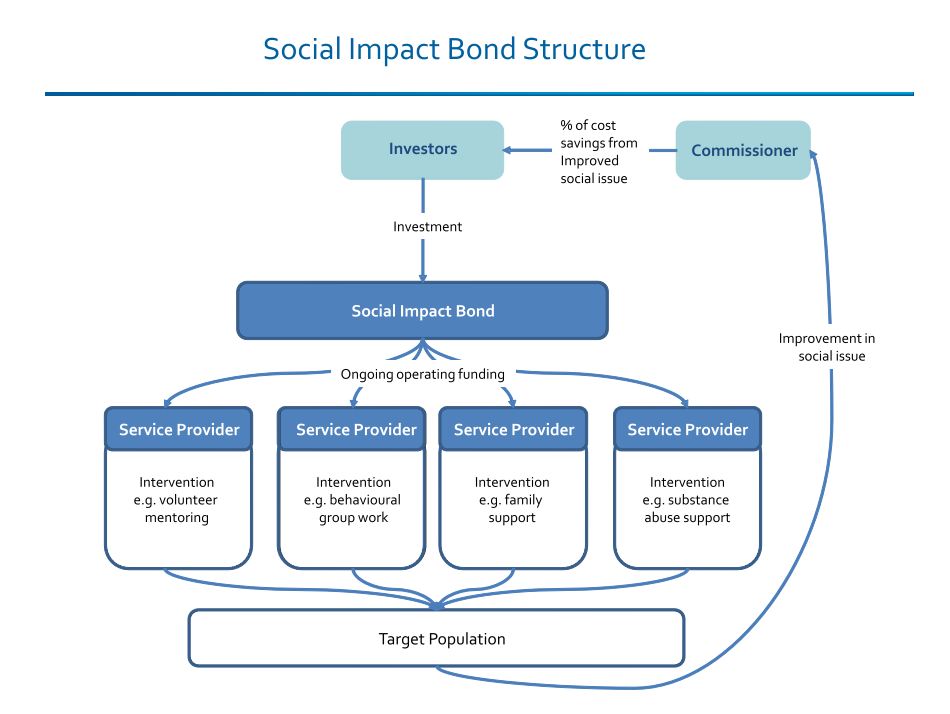
At a time when government finances are stretched there is growing interest in finding new ways to fund public services [healthcare, for example] which improve social outcomes [public health]. And, one new funding model currently being tested, for the past decade in the United Kingdom, is Social Impact Bonds (SIBs).

Definition

A SIB is a form of payment by results (PBR) in which funding is obtained from private investors to pay for interventions to improve social outcomes. If these interventions succeed in improving outcomes, they should result in savings to the Government and provide wider benefits to society. Of course, as part of a SIB, the Government agrees to pay a proportion of these savings back to the investors. If outcomes do not improve, investors do not receive a return on their investment.

Link: http://en.wikipedia.org/wiki/Social_impact_bond

Wall Street’s Securitization

Wall Street can securitize almost any asset for a commission, or to hold it for profit or loss. Remember David Bowie bonds?

“Securitization” is the process through which an issuer creates a financial instrument by combining other financial assets and then marketing different tiers of the repackaged instruments to investors. The process can encompass any type of financial asset and promotes liquidity in the marketplace.

Link: http://thehealthcareblog.com/blog/2012/03/05/could-social-impact-bonds-help-restore-public-budgets/

SIBs

SIBs may be an example of securitization. By combining small debt into one large pool, the issuer can divide the large pool into smaller pieces based on each individual bond’s inherent risk of default, and then sell those smaller pieces to investors. The process creates liquidity by enabling smaller investors to purchase shares in a larger asset pool. Individual retail buyers, like physician-investors and others, are able to purchase portions the bond. Without the securitization, retail investors might not be able to afford to buy into a large pool of bonds.

Read more: http://www.investopedia.com/terms/s/securitization.asp#ixzz1oGtOPTvZ

Assessment

This is the first time we’ve discussed SIBs on this ME-P. But, they should get much more attention from our CPA, investment advisor [IA] and financial advisory [FA] readers now that President Obama has announced his support for this British idea like getting private investors to pay for public services such as housing for the homeless, health care for vulnerable populations; or even education. It could work for anything that can save the Government money in the long run, but costs money up front, as long as we can measure it.

Link: http://www.fastcompany.com/1728321/the-most-exciting-00003-of-obama-s-budget-social-impact-bonds

Conclusion

Your thoughts and comments on this ME-P are appreciated. Feel free to review our top-left column, and top-right sidebar materials, links, URLs and related websites, too. Then, subscribe to the ME-P. It is fast, free and secure.

Link: http://feeds.feedburner.com/HealthcareFinancialsthePostForcxos

Speaker: If you need a moderator or speaker for an upcoming event, Dr. David E. Marcinko; MBA – Publisher-in-Chief of the Medical Executive-Post – is available for seminar or speaking engagements. Contact: MarcinkoAdvisors@msn.com

***

***

DAILY UPDATE: MAXIM Data Breach, Gold and the Markets

By Staff Reporters

***

***

Thousands of clients of Maxim Healthcare Services are about to receive a payment of up to $5,000 in compensation for a data breach. According to information obtained by The Sun, the private medical personnel company based in Columbia, Maryland; agreed to pay 2020 data breach claims filed in a class action lawsuit by residents of the state of California.

***

***

Gold futures tallied a third consecutive session decline settling at their lowest in nearly a week as further strength in the U.S. dollar pressured prices for the precious metal. Gold gave up early gains that had been driven by uncertainty surrounding a U.S. debt-ceiling deal in Congress.

***

And, here is where the major benchmarks ended yesterday:

  • The S&P 500 Index was down 30.34 points (0.7%) at 4115.24; the Dow Jones industrial average was down 255.59 (0.8%) at 32,799.92; the NASDAQ Composite was down 76.08 (0.6%) at 12,484.16.
  • The 10-year Treasury yield was up about 4 basis points at 3.742%.
  • CBOEs Volatility Index was up 1.52 at 20.04.

Technology and regional bank stocks were among the weakest sectors, with the Philadelphia Semiconductor Index down more than 2%. Energy was one of the few gainers among S&P 500 sectors as crude oil futures climbed to a three-week high of near $74 a barrel. The U.S. dollar index rose a third straight day to a two-month high.

***

ORDER: https://www.routledge.com/Risk-Management-Liability-Insurance-and-Asset-Protection-Strategies-for/Marcinko-Hetico/p/book/9781498725989

ORDER: https://www.routledge.com/Comprehensive-Financial-Planning-Strategies-for-Doctors-and-Advisors-Best/Marcinko-Hetico/p/book/9781482240283

***

COMMENTS APPRECIATED

Thank You

***

PODCAST: Physician’s Mental Health

Doctor Burnout According to Specialty

By Eric Bricker MD

***

***

COMMENTS APPRECIATED

Thank You

***

***

SOCIAL MEDIA: Dr. Vivek Murthy Warns on Children’s Mental Health

U.S. SURGEON GENERAL ADVISORY REPORT

By Staff Reporters

***

***

May is mental health month in the USA. US Surgeon General Dr. Vivek H. Murthy issued a powerful public advisory yesterday warning of the considerable risks that social media poses to young people’s mental health. “Nearly every teenager in America uses social media, and yet we do not have enough evidence to conclude that it is sufficiently safe for them,” Murthy wrote. He argued that kids have “become unknowing participants in a decades-long experiment.”

The surgeon general’s report focuses on the impacts of social media on teens and kids—both positive and negative—and the attendant health risks. The report outlines two types of dangers associated with social networks: content-related problems, such as negative self-image or bullying, and use-related problems, such as poor sleep and addiction.

What we know about social media and kids’ mental health

By all accounts, America’s youth are currently experiencing a mental health crisis.

  • The number of teens and young adults with clinical depression doubled between 2011 and 2021, according to San Diego State University psychology professor Dr. Jean Twenge.
  • In 2021, the CDC found that nearly 25% of teenage girls had made a suicide plan.

Many experts have pointed to social media as a potential cause since the deterioration of kids’ mental health has coincided with the rise of social media platforms over the last decade.

Still, the effect of likes, retweets, and TikTok comments on kids’ brains remains more or less a mystery. We know that social media use affects adolescents and that teens show alarming rates of anxiety and depression. But studies that have attempted to determine whether social media is a direct cause of worsening mental health have been inconclusive. Plus, not all kids are impacted by social media similarly: Some—adolescent girls, for instance—appear to be more at risk than others.

Finally, and according to Morning Brew, while researchers search for answers, some lawmakers are pushing ahead with restrictions on teens’ use of social media. In March, for example, Utah became the first state to establish a curfew for teens on social media apps and mandate that parents have access to their children’s accounts.

COMMENTS APPRECIATED

Thank You

***

***

BREAKING: News on Yelp!

By Staff Reporters

Markets: Stocks sagged as investors wondered whether those “productive” debt-ceiling meetings would actually lead to the production of a deal to raise the borrowing cap. The “X-date” by which the US would default on its debts could arrive in eight days [June 6-8].

  • Stock spotlight: Yelp shares popped after an activist investment firm called on the review app to explore strategic alternatives, including a sale, the WSJ reported. The activist investor believes that Yelp could fetch a price that’s more than double its current value.

COMMENTS APPRECIATED

Thank You

***

***

MEDICARE: Part “C” Plans = Double Standard

By Anonymous

***

***

The HHS OIG Fall 2022 report was recently released to Congress. On page 20, there are many referrals to seven inappropriate payments to a variety of Medicare “Advantage” Plans. Topping the list is Humana. The OIG claims that Humana in the time period studied falsified records to receive $34.4M worth of payments they received from CMS for risk diagnosis code risk assessments. If even half this amount is true, it is unconscionable that Humana is not severely fined, their executives terminated and subjected to criminal proceedings, and they should be banned from the Medicare program for ten years. This is no different from how other healthcare providers are criminalized, so the question is, why is the insurance industry treated different and preferentially when they commit fraud?

CITE: https://www.r2library.com/Resource/Title/082610254

These OIG studies are great reads, but up until now, they have done nothing to stop the insurance industry’s abusive practices of denying “clean claims”, denying claims after prior authorization, ignoring CCI edits, “losing” charts sent for review and then claiming higher error rates to Congress, paying providers often less than 50% of Medicare, and this the last draw… falsifying data so they can be paid more from CMS. When will this madness stop? When will providers have the gumption to actually act out the famous quote, “I’m mad as hell and I’m not going take it anymore!” (from the movie Network), and Peter Finch it!

***

ORDER: https://www.amazon.com/Dictionary-Health-Insurance-Managed-Care/dp/0826149944/ref=sr_1_4?ie=UTF8&s=books&qid=1275315485&sr=1-4

***

COMMENTS APPRECIATED

Thank You

***

U.S. DEBT CEILING DISCUSSIONS: No So Fast!

By Staff Reporters

***

***

Talks were “productive,” but no debt ceiling deal yet

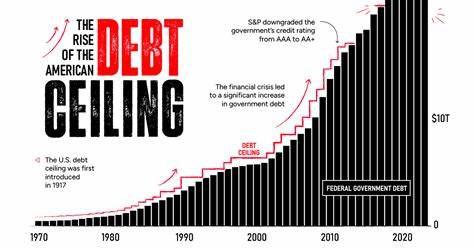
As the US careens toward a June 1st deadline to avoid default, President Joe Biden and House Speaker Kevin McCarthy met last night and failed to reach an agreement to prevent economic chaos. Still, McCarthy called their discussion “productive” and “professional,” saying the tone was “better than any other time we’ve had discussions.”

MORE: https://abcnews.go.com/Politics/biden-negotiate-directly-mccarthy-debt-ceiling-republicans-move/story?id=99490207

Before the meeting, McCarthy acknowledged that a deal must be struck this week in order to get it through Congress prior to the deadline, but the two sides remain far apart on the Republican’s demands for spending cuts.

MORE: https://www.theguardian.com/us-news/2023/may/23/first-thing-biden-and-mccarthy-hold-productive-debt-talks-but-no-deal-reached

***

***

COMMENTS APPRECIATED

Thank You

***

RIGHTS: Mental Health in America [Georgia]

MENTAL HEATH AMERICA

By Staff Reporters

***

***

MENTAL HEALTH PARITY ACT

Atlanta, GA – Governor Brian P. Kemp, joined by First Lady Marty Kemp and their three daughters, Lt. Governor Geoff Duncan, Speaker David Ralston, members of the House and Senate, and mental health advocates, to sign the Mental Health Parity Act (HB1013) into law.

You may view his remarks from the bill signing ceremony below, and you can watch the full ceremony here.

***

Mental Health Rights

People living with mental health conditions are people. They have people they love, activities they enjoy, and dreams for their lives. As people, they deserve to be treated with dignity, and under the law they have rights and protections. 

GA MENTAL HEALTH PARITY LAW: https://gov.georgia.gov/press-releases/2022-04-04/gov-kemp-provides-remarks-and-signs-mental-health-parity-act

Unfortunately, it has long been the case that individuals with mental health conditions are among the most abused and discriminated against in our country. From leaving people to languish in overcrowded state hospitals to lobotomies and forced sterilization, the treatment of those with mental health conditions is a dark stain on our history as a nation.

While we have come a long way, abuse and discrimination continue to be serious problems today. The shackling or restraining of children, keeping people out of work, and denying access to services are just a few examples of the way we continue to fail the 1 in 5 Americans that has a diagnosable mental health disorder.

CITE: https://www.r2library.com/Resource/Title/082610254

This is not just a small issue for a small group of people: half of all Americans will experience a diagnosable mental health condition in their lifetime. If it is not us being directly impacted, it is likely that it will be our family members, friends, or loved ones– whether we know it or not. Beyond struggles in education or employment, we see the loss of human dignity and even human life for the people we love and care about when we do not work to address abuses in the system.

For Mental Health America, the fight against abuse and discrimination is essential to our history and continues to guide our work. MHA’s symbol, which sits in our national office, is the Bell of Hope cast from the chains and shackles that were used to restrain individuals in old state hospitals. As an organization, MHA is committed to the principles of human and civil rights inherent to the concept of equal justice under the law.

PROVIDERS: https://medicalexecutivepost.com/2022/10/05/a-review-of-mental-healthcare-provider-types/

***

COMMENTS APPRECIATED

Thank You

***

ORDER: https://www.amazon.com/Dictionary-Health-Insurance-Managed-Care/dp/0826149944/ref=sr_1_4?ie=UTF8&s=books&qid=1275315485&sr=1-4

***

STOCK MARKETS: Tech Giants Awakening?

By Staff Reporters

***

***

  • Last week, investors shrugged off debt ceiling worries to send the S&P and the NASDAQ to their best weekly performance since March. Tech stocks have posted impressive gains this year thanks to the hype around artificial intelligence:
  • Four giants that have made a big deal about investing in AI—Meta, Alphabet, Microsoft, and Nvidia—have surged in 2023 and now account for ~15% of the S&P 500’s market capitalization, according to Barron’s.

***

COMMENTS APPRECIATED

Thank You

***

***

META: Busted and Fined!

By Staff Reporters

***

***

LONDON (AP) — The European Union just slapped Meta with a record $1.3 billion privacy fine today and ordered it to stop transferring user data across the Atlantic by October, the latest salvo in a decadelong case sparked by U.S. cybersnooping fears.

The penalty fine of 1.2 billion euros from Ireland’s Data Protection Commission is the biggest since the EU’s strict data privacy regime took effect five years ago, surpassing Amazon’s 746 million euro penalty in 2021 for data protection violations.

***

COMMENTS APPRECIATED

Thank You

***

***

Become a Board CERTIFIED MEDICAL PLANNER™ and Thrive

Think Different – Be Different  – Thrive

[By Ann Miller RN MHA]

Letterhead CMP

http://www.CertifiedMedicalPlanner.org

Dear Physician Focused Financial Advisors;

Did you know that desperate doctors of all ages are turning to knowledgeable financial advisors and medical management consultants for help? Symbiotically too, generalist advisors are finding that the mutual need for knowledge and extreme niche synergy is obvious.

***

planning

***

But, there was no established curriculum or educational program; no corpus of knowledge or codifying terms-of-art; no academic gravitas or fiduciary accountability; and certainly no identifying professional designation that demonstrated integrated subject matter expertise for the increasingly unique healthcare focused financial advisory niche … Until Now! 

***

CMP logo

http://www.CertifiedMedicalPlanner.org

Enter the CMPs

“The informed voice of a new generation of fiduciary advisors for healthcare”

Think Different

 [Think Different – Be Different – Thrive]

InfoGraphic

http://e.infogr.am/enter_the_certified_medical_planner?src=embed

CMP logo

http://www.CertifiedMedicalPlanner.org

***

So, if you are looking to supplement your knowledge, income and designations; and find other qualified professionals you may want to consider the CMP® program.

Enter the Certified Medical Planner™ charter professional designation. And, CMPs™ are FIDUCIARIES, 24/7.

Channel Surfing the ME-P

Have you visited our other topic channels? Established to facilitate idea exchange and link our community together, the value of these topics is dependent upon your input. Please take a minute to visit. And, to prevent that annoying spam, we ask that you register. It is fast, free and secure.

Conclusion

Your thoughts and comments on this ME-P are appreciated. Feel free to review our top-left column, and top-right sidebar materials, links, URLs and related websites, too. Then, subscribe to the ME-P. It is fast, free and secure.

***

Become a CMP

***

Speaker: If you need a moderator or speaker for an upcoming event, Dr. David E. Marcinko; MBA – Publisher-in-Chief of the Medical Executive-Post – is available for seminar or speaking engagements. Contact: MarcinkoAdvisors@msn.com

OUR OTHER PRINT BOOKS AND RELATED INFORMATION SOURCES:

 Comprehensive Financial Planning Strategies for Doctors and Advisors: Best Practices from Leading Consultants and Certified Medical Planners(TM)* 8

Modern Portfolio Theory and Asset Allocation [Not Correlation]

THE CORRELATION HOT TOPIC

ACADEMIC C.V. | DAVID EDWARD MARCINKO

By Dr. David Edward Marcinko MBA CMP©

SPONSOR: http://www.CertifiedMedicalPlanner.org

CMP logo

Modern Portfolio Theory approaches investing by examining the complete market and the full economy. MPT places a great emphasis on the correlation between investments. 

DEFINITION:

Correlation is a measure of how frequently one event tends to happen when another event happens. High positive correlation means two events usually happen together – high SAT scores and getting through college for instance. High negative correlation means two events tend not to happen together – high SATs and a poor grade record.

No correlation means the two events are independent of one another. In statistical terms two events that are perfectly correlated have a “correlation coefficient” of 1; two events that are perfectly negatively correlated have a correlation coefficient of -1; and two events that have zero correlation have a coefficient of 0.

Correlation has been used over the past twenty years by institutions and financial advisors to assemble portfolios of moderate risk.  In calculating correlation, a statistician would examine the possibility of two events happening together, namely:

  • If the probability of A happening is 1/X;
  • And the probability of B happening is 1/Y; then
  • The probability of A and B happening together is (1/X) times (1/Y), or 1/(X times Y).

There are several laws of correlation including;

  1. Combining assets with a perfect positive correlation offers no reduction in portfolio risk.  These two assets will simply move in tandem with each other.
  2. Combining assets with zero correlation (statistically independent) reduces the risk of the portfolio.  If more assets with uncorrelated returns are added to the portfolio, significant risk reduction can be achieved.
  3. Combing assets with a perfect negative correlation could eliminate risk entirely.   This is the principle with “hedging strategies”.  These strategies are discussed later in the book.

Citation: https://www.r2library.com/Resource/Title/0826102549

BUT – CORRELATION IS NOT CAUSATION

https://medicalexecutivepost.com/2021/02/05/correlation-is-not-causation/

In the real world, negative correlations are very rare 

Most assets maintain a positive correlation with each other.  The goal of a prudent investor is to assemble a portfolio that contains uncorrelated assets.  When a portfolio contains assets that possess low correlations, the upward movement of one asset class will help offset the downward movement of another.  This is especially important when economic and market conditions change.

As a result, including assets in your portfolio that are not highly correlated will reduce the overall volatility (as measured by standard deviation) and may also increase long-term investment returns. This is the primary argument for including dissimilar asset classes in your portfolio. Keep in mind that this type of diversification does not guarantee you will avoid a loss.  It simply minimizes the chance of loss. 

In the table provided by Ibbotson, the average correlation between the five major asset classes is displayed. The lowest correlation is between the U.S. Treasury Bonds and the EAFE (international stocks).  The highest correlation is between the S&P 500 and the EAFE; 0.77 or 77 percent. This signifies a prominent level of correlation that has grown even larger during this decade.   Low correlations within the table appear most with U.S. Treasury Bills.

Historical Correlation of Asset Classes

Benchmark                             1          2          3         4         5         6            

1 U.S. Treasury Bill                  1.00    

2 U.S. Bonds                          0.73     1.00    

3 S&P 500                               0.03     0.34     1.00    

4 Commodities                         0.15     0.04     0.08      1.00      

5 International Stocks              -0.13    -0.31    0.77      0.14    1.00       

6 Real Estate                           0.11      0.43    0.81     -0.02    0.66     1.00

Table Source: Ibbotson 1980-2012

Comprehensive Financial Planning Strategies for Doctors and Advisors: Best Practices from Leading Consultants and Certified Medical Planners™

ORDER Textbook: https://www.amazon.com/Comprehensive-Financial-Planning-Strategies-Advisors/dp/1482240289/ref=sr_1_1?ie=UTF8&qid=1418580820&sr=8-1&keywords=david+marcinko

SECOND OPINIONS: https://medicalexecutivepost.com/schedule-a-consultation/

INVITE DR. MARCINKO: https://medicalexecutivepost.com/dr-david-marcinkos-bookings/

THANK YOU

***

What Is the OTC-QB Venture Market?

***

***

By Staff Reporters

The OTCQB, also called “The Venture Market,” is the middle tier of the over-the-counter (OTC) market for U.S. stocks. It was created in 2010 and consists mainly of early-stage and developing U.S. and international companies that are not yet able to qualify for the OTCQX but are not as speculative as the lowest-tier Pink Sheets.

The OTCQB replaced the Financial Industry Regulatory Authority (FINRA)-operated OTC Bulletin Board (OTCBB) as the main market for trading OTC securities that report to a U.S. regulator. As it has no minimum financial standards, the OTCQB often includes shell companies, penny stocks, and small foreign issuers.

LINK: https://www.otcmarkets.com/files/OTCQB%20Fact%20Sheet%20for%20U.S.%20Companies.pdf

Key Takeaways

  • The OTCQB is the mid-tier OTC equity market, which lists primarily early-stage and developing companies in the U.S. and international markets.
  • OTCQB companies must meet certain minimum reporting standards, pass a bid test, and undergo annual verification.
  • The other OTC tiers are the highest quality OTCQX, and the most speculative Pink Sheets.

CITE: https://www.r2library.com/Resource/Title/082610254

READ MORE: https://www.investopedia.com/terms/o/otcqb.asp

***

COMMENTS APPRECIATED

Thank You

***

***

Debt Limit and Foot Locker?

By Staff Reporters

***

***

Debt Limit: Stocks took a dive yesterday even though Jerome Powell said that interest rates may not have to rise as much as expected to quash inflation. What could loom even larger than Jerome Powell? A hiccup in negotiations over the debt ceiling raised fears about the possibility of the US defaulting. In fact, negotiations aimed at raising the nation’s debt limit resumed briefly last night after being halted for six hours during the day when Republicans broke off talks saying the White House was being unreasonable. A major sticking point was said to be the overall amount of government spending for next year as the deadline to get a deal in place to prevent an economically crippling default on June 1st draws near. Although no breakthrough came from the evening’s talks, further discussions are reportedly scheduled for later today.

Stock spotlight: Investors were about as interested in Foot Locker as an old stinky sneaker after a slowdown in sales prompted the retailer to slash its outlook for the year.

***

COMMENTS APPRECIATED

Thank You

***

***

CELEBRATE: World Family Doctor Day 2023

By Staff Reporters

***

***

Today is World Family Doctor Day—and the US needs more family doctors. By 2026, 21% of family medicine and other primary care physicians will have reached retirement age, while demand for primary care is expected to grow 4%.

World Family Doctor Day is on May 19th every year. Founded by the World Organization of Family Doctors (W.O.N.C.A.) in 2010, World Family Doctor Day has now grown into a global celebration of the importance of family doctors in health care. Taking part in this event is a great way to show appreciation for the important role family medicine plays in providing patients with individualized, comprehensive, and long-term health care. Family doctors around the world have made significant contributions to medicine — now is the time to recognize that. It’s also a moment to recognize the advancements in family medicine and the unique efforts of primary care teams worldwide.

So we, at the ME-P, hope all the family doctors take time to relax from their busy schedules and enjoy the springtime blooms as we trust those April showers brought lots of May flowers.

***

***
COMMENTS APPRECIATED

Thank You

***

DAILY UPDATE: Stocks Up, Again!

By Staff Reporters

***

***

  • Markets: Stocks climbed for the second straight day as a last-minute deal to raise the debt ceiling begins to take shape. GOP House Speaker Kevin McCarthy and Democratic Senate Majority Leader Chuck Schumer signaled their chambers could vote next week on an agreement that would avert the US’ first-ever default.
  • Stock spotlight: Netflix shares popped after the streamer said its cheaper ad-supported plan is off to a hot start. Earlier this week, Netflix said that 25% of its new subscribers opted for the ad tier in regions where it’s available.

***

Here is where the major benchmarks ended yesterday:

  • The S&P 500 Index was up 39.28 points (0.9%) at 4198.05; the Dow Jones industrial average was up 115.14 (0.3%) at 33,535.91; the NASDAQ Composite was up 188.27 (1.5%) at 12,688.84.
  • The 10-year Treasury yield was up about 7 basis point at 3.65%.
  • CBOE’s Volatility Index was down 0.78 at 16.09.

The tech sector continued to be one of the market’s strongest performers, with the Philadelphia Semiconductor Index jumping nearly 3% and the Nasdaq-100 closing at a 13-month high. Real estate led decliners among S&P 500 sectors.

Also, the U.S. dollar index surged near a two-month high amid growing confidence the Fed won’t be lowering rates any time soon.

***

ORDER: https://www.routledge.com/Risk-Management-Liability-Insurance-and-Asset-Protection-Strategies-for/Marcinko-Hetico/p/book/9781498725989

ORDER: https://www.routledge.com/Comprehensive-Financial-Planning-Strategies-for-Doctors-and-Advisors-Best/Marcinko-Hetico/p/book/9781482240283

***

COMMENTS APPRECIATED

Thank You

***

What is a Financial CDO and CMO?

Collateralized Debt Obligations

versus

COLLATERALIZED MORTGAGE OBLIGATIONS

https://medicalexecutivepost.com/wp-content/uploads/2018/06/david-edward-marcinko.png

BY DR. DAVID E. MARCINKO MBA CMP®

CMP logo

SPONSOR: http://www.CertifiedMedicalPlanner.org

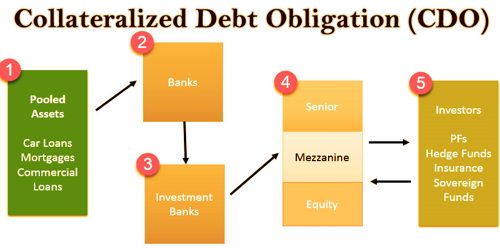
A collateralized debt obligation (CDO) is a type of structured asset-backed security (ABS). Originally developed as instruments for the corporate debt markets, after 2002 CDOs became vehicles for refinancing mortgage-backed securities (MBS).

Like other private label securities backed by assets, a CDO can be thought of as a promise to pay investors in a prescribed sequence, based on the cash flow the CDO collects from the pool of bonds or other assets it owns. Distinctively, CDO credit risk is typically assessed based on a probability of default (PD) derived from ratings on those bonds or assets.

CITE: https://www.r2library.com/Resource/Title/0826102549

***

Collateralized Debt Obligation (CDO) - Assignment Point

***

Collateralized Mortgage Obligation

A CMO is a debt security backed by mortgages. These mortgage pools are usually separated into different maturity classes called tranches (from the French word for “slice”). The securities were issued by private issuers, as well as the Federal Home Loan Mortgage Corporation (Freddie Mac). As the mortgages were usually government-guaranteed, CMOs usually carried AAA ratings until their current financial meltdown. The early versions of CMOs were known as “plain vanilla,” but recent developments gave us PACs (planned amortization certificates) and TACs (targeted amortization certificates); among too many others. They were all variations on how principal repayments in advance of maturity date were treated.

CITE: https://www.r2library.com/Resource/Title/0826102549

***

CMO vs CDO | What is the difference between them? - Fintelligents

RELATED: https://medicalexecutivepost.com/2011/07/06/merrill-lynch-investigated-for-cdo-deal-involving-magnetar/

YOUR THOUGHTS ARE APPRECIATED.

Thank You

Comprehensive Financial Planning Strategies for Doctors and Advisors: Best Practices from Leading Consultants and Certified Medical Planners™

ORDER: https://www.amazon.com/Comprehensive-Financial-Planning-Strategies-Advisors/dp/1482240289/ref=sr_1_1?ie=UTF8&qid=1418580820&sr=8-1&keywords=david+marcinko

***

ASPEN DENTAL: Cyber Attack with Data Breach

By Darrell Pruitt DDS

***

***

Aspen Dental has been hit by a cyber attack.  Aspen has over a thousand dental offices across the nation, and even though their official website says there are no signs of patient information being compromised, the American Dental Association is calling it a “breach,” since the attack involved ransomware.

If Aspen Practices each maintain dental records on 10,000 patients, and there are over a thousand Aspen locations, that would mean more than 10 million patients’ records were potentially breached. Texas has 58 Aspen locations – second only to Florida which has 124. (There are three Aspen locations near me in the Dallas-Fort Worth metroplex).

Last of all, history has shown that businesses which suffer one ransomware attack are likely to be targeted a second or even third time. It never ends. And then there are the HIPAA violations and remediation … This is bad for Aspen Dental.

Related: https://www.pact-one.com/2023/05/aspen-dental-cyber-attack-1000-dental-practices-affected-nationwide/

***

COMMENTS APPRECIATED

Thank You

***

***

NIH: Meet the New Director Dr. Monica Bertagnolli MD

By Staff Reporters

President Joe Biden said Monday he intends to nominate a new director for the National Institutes of Health. Dr. Monica Bertagnolli, a surgical oncologist and cancer researcher, was picked by Biden as the successor to Francis Collins.

CITE: https://www.r2library.com/Resource

“Dr. Bertagnolli has spent her career pioneering scientific discovery and pushing the boundaries of what is possible to improve cancer prevention and treatment for patients, and ensuring that patients in every community have access to quality care,” Biden said in a statement. “As Director of the National Cancer Institute, Dr. Bertagnolli has advanced my Cancer Moonshot to end cancer as we know it.”

COMMENTS APPRECIATED

Thank You

***

***

What is a “Structured” Settlement?

What it Is – How it Works?

[By Staff Reporters]

A structured settlement (sometimes called a “periodic payment settlement”) is a claim settlement under which some of the proceeds will be payable in deferred installments in lieu of immediate cash.

Meaning

What does that mean to you? Settlements paid in the form of a single lump sum, especially in catastrophic injury cases, place claimants, and their families, in the position of having to manage money which may be intended to provide for a lifetime of medical and income needs.

Most people are not experienced in handling large sums of money and as a result, the money is often either spent too quickly or invested leaving little or nothing to cover the future needs of the seriously injured person.

History

Structured settlements were developed in order to create a more stable financial footing for claimants.  In 1982, the use of structured settlements was encouraged by Congress and special tax code was written. Instead of receiving a single lump sum, guaranteed payments can be made to you over time, through the purchase of an annuity, to better meet your financial needs.

IRS

The Internal Revenue Service determined that since the money you receive through a structured settlement is compensation for an injury, you will never pay taxes on any of the payments (principal or interest). There are two primary articles of legislation governing the tax treatment of structured settlements.

For more information regarding tax treatment of structured settlements, please visit the following pages: IRC 104 (a)(2) and IRC 130.  For other legislative actions and tax codes related to structured settlements, please click on one of the following links:  The Periodic Payment Settlement Act of 1982, 468B, 72(u) or 5891.

Schedules

Payments from a structured settlement can be scheduled for any length of time, even for your lifetime. Payment designs can include bi-weekly, monthly, quarterly or annual payments as well as future lump sums. Ongoing payments can be in level amounts or can keep up with inflation by using a Cost of Living Adjustment (“COLA”). Since you work with the Structured Settlement Consultant to determine the payment design, you can remain confident that your future financial needs are addressed.

If a single lump sum payment is taken as compensation for an injury, it is tax-free but any additional income (called “Interest Income”) you receive from investing the lump sum will be taxable. The bottom line is that structured settlements provide you with a unique opportunity to take advantage of an investment without risk OR tax consequences.

***

policies

***

Assessment

At the core of the federal tax code’s explicit recognition of structured settlements is the concept of” constructive receipt”.

For a concise explanation about Congress’ intent and how the Internal Revenue Service has traditionally interpreted the application of constructive receipt, click here for the National Structured Settlement Trade Association (NSSTA) brochure, Structured Settlements: Explaining Constructive Receipt.

To download the NSSTA brochure, Structured Settlements and Qualified Assignments: How Federal Tax Rules Benefit all Parties in a Claim, click here.

Conclusion

Your thoughts and comments on this ME-P are appreciated. Feel free to review our top-left column, and top-right sidebar materials, links, URLs and related websites, too. Then, subscribe to the ME-P. It is fast, free and secure.

Link: http://feeds.feedburner.com/HealthcareFinancialsthePostForcxos

Speaker: If you need a moderator or speaker for an upcoming event, Dr. David E. Marcinko; MBA – Publisher-in-Chief of the Medical Executive-Post – is available for seminar or speaking engagements. Contact: MarcinkoAdvisors@msn.com

OUR OTHER PRINT BOOKS AND RELATED INFORMATION SOURCES:

Risk Management, Liability Insurance, and Asset Protection Strategies for Doctors and Advisors : Best Practices from Leading Consultants and Certified Medical Planners™ book cover

ORDER: https://www.crcpress.com/Risk-Management-Liability-Insurance-and-Asset-Protection-Strategies-for/Marcinko-Hetico/p/book/9781498725989

VICE MEDIA: Over and Out

By Staff Reporters

***

***

Vice Media filed for bankruptcy

The company, which was valued at $5.7 billion in 2017, filed for Chapter 11 bankruptcy protection yesterday and plans to sell itself to a group of creditors for $225 million. It’s the latest in a string of digital media companies to stumble recently after advertising revenue became harder to come by.

Vice’s filing also made it one of seven large companies to head to bankruptcy court in a 48-hour period—the largest number of filings during a two-day period since 2008, according to Bloomberg.

***

COMMENTS APPRECIATED

Thank You

***

***

CORPORATE EARNINGS: Review

By Staff Reporters

***

***

Earnings roundup

The following companies are in the earnings pipeline this week:

  • Home Depot is due to release its results for its last fiscal quarter before the market opens Tuesday. Analysts expect the home-improvement chain to report earnings of $3.81 per share, down from $4.09 during the same quarter a year earlier, according to Zacks Investment Research. Home improvement businesses benefited from increased spending on renovations during the pandemic but have struggled as inflation picked up. Home Depot’s shares were down about 0.9% Monday.
  • Target will follow Wednesday, with analysts predicting the big box retailer will report earnings of $1.75 per share, down from $2.19 the year before. Again, investors will be looking to see how Target has dealt with inflation and recession-wary shoppers. Its shares were up more than 1.3%.
  • Walmart wraps up big-retailer week Thursday. Analysts expect the retailer to report earnings of $1.31 per share, a slight improvement from $1.3 a year earlier. Its shares were down about 0.8%.
  • Cisco Systems (CSCO) will report results for the fiscal quarter ended in April on Wednesday. Analysts expect the software company to report earnings of $0.87 per share, up from $0.78 a year before.
  • Two major Chinese tech companies will also report results this week, with Baidu (BIDU) going first before market open Tuesday and Alibaba (BABA) following Thursday.

***

COMMENTS APPRECIATED

Thank You

***

***

What is the “Good-Rx” Business Model?

By Anonymous

GoodRx Holdings, Inc. is an American healthcare company that operates a telemedicine platform and a free-to-use website and mobile app that track prescription drug prices in the United States and provide free drug coupons for discounts on medications. GoodRx checks more than 75,000 pharmacies in the United States

***

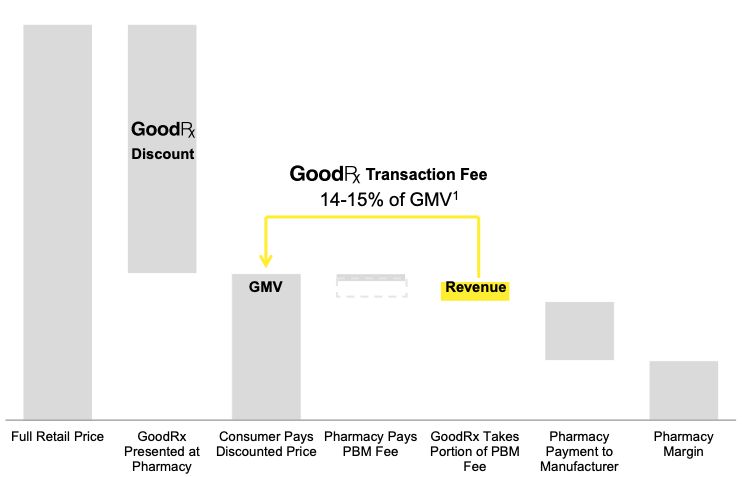
Good Rx makes money by perpetuating the, artificially set, high sticker prices of medications and receiving a portion of Pharmacy Benefits Manager [PBM] fees.

How it Works

GoodRx taps into PBM network for their “discounts” off of sticker price (e.g. Express Scripts, Optum Rx, Navitus … etc)

Consumer pays the newly “discounted” drug price.

Pharmacy pays PBM fee.

PBM pays GoodRx portion of the fee.

Good Rx adjusted EBITDA in 2019: $160 Million

Good Rx 2020 revenue is up 48% first half of 2020 – $257M

IPO: https://mobile-reuters-com.cdn.ampproject.org/c/s/mobile.reuters.com/article/amp/idUSKBN24Y0N6

Opinion:

This is not market value.

This is another hand in the cookie jar keeping healthcare prices artificially high.

The consumer is the one ultimately harmed.

COMMENTS APPRECIATED

Thank You

***

What is a SKINNY Health Insurance Network?

NARROW NETWORKS

By Staff Reporters

An increasing number of insurers now promote “narrow network” plans that can be less expensive than more traditional offerings. However, that added affordability comes with a tradeoff that could leave you with fewer options for covered medical services.  

CITE: https://www.r2library.com/Resource/Title/0826102549

Understanding Narrow Networks: Narrow network plans are similar to the health maintenance organizations (HMOs). Like standard HMOs, these plans limit coverage to a select group of physicians, specialists and hospitals. However, narrow network plans can be even more restrictive in the number of providers they include. Those providers generally have been proven to have higher measured quality and better outcomes for patients. They also typically agree to lower reimbursements from insurers, which can mean lower premiums and out-of-pocket expenses for consumers.   You’re more likely to see narrow networks — which include narrow pharmacy networks — if you shop for your own health insurance on HealthCare.gov or your state’s insurance exchange. They’re less common in the plan options provided by private employers.  

Advantages Beyond the Savings The fact that narrow network plans include fewer providers doesn’t mean you’ll be getting lower quality care. In fact, many insurers require providers to have a proven track record that’s focused on their patients’ health outcomes. And they can offer a number of additional advantages, beyond just lower costs:

  • Coordinated care. Working within a single health system can mean better communication between your doctors. You might also have easier access to all your medical records through a dedicated online portal.
  • No referrals. Traditional HMO plans generally require a referral from your primary care physician for any consultations with a specialist. Many narrow network plans eliminate this requirement.
  • Added benefits. Many narrow network plans offer benefits designed to keep high-risk patients healthier. These can include options like free health coaching and live video services that enable remote, online medical consultations.  
Narrow Provider Networks in New Health Plans - RWJF

CONS: The biggest disadvantage to narrow network plans is less choice. Insurers keep these plans more affordable by negotiating lower reimbursements with health care providers. In return, those providers could see patient rosters grow, because smaller networks also mean less competition for those within the network. Smaller networks also can mean:

  • A need to change physicians. Your current primary care physician and specialists might not be included in the plan. This can mean starting over with new doctors who aren’t familiar with your particular health concerns.
  • Longer drives. With fewer choices, you may be forced into a longer commute to see an in-network physician. This could become a hardship for those in rural locations.
  • Lack of specialty options. A smaller network might not include the broad range of specialists large networks typically include.

WHITE PAPER: https://ldi.upenn.edu/wp-content/uploads/archive/pdf/the-skinny-on-narrow-networks.pdf

YOUR COMMENTS ARE APPRECIATED.

https://www.amazon.com/Dictionary-Health-Insurance-Managed-Care/dp/0826149944/ref=sr_1_4?ie=UTF8&s=books&qid=1275315485&sr=1-4

***

https://www.amazon.com/Business-Medical-Practice-Transformational-Doctors/dp/0826105750/ref=sr_1_9?ie=UTF8&qid=1448163039&sr=8-9&keywords=david+marcinko

Thank You

***

CALM: US Equity NASDAQ Traders

By Staff Reporters

***

***

  • Markets: Despite the risk of the US defaulting on its debts next month, equity traders have kept calm and carried on, sending the NASDAQ to a weekly gain last week. But over in the bond market, investors are sweating. The cost of credit-default swaps, which act as insurance against a default, is higher in the US than in emerging markets like Mexico and Brazil.
  • Stock spotlight: This stat about the stock market’s concentration is wild…Apple’s market cap is now greater than the value of every company in the Russell 2000 small-cap index combined.

COMMENTS APPRECIATED

Thank You

***

***