BOARD CERTIFICATION EXAM STUDY GUIDES Lower Extremity Trauma
[Click on Image to Enlarge]
ME-P Free Advertising Consultation
The “Medical Executive-Post” is about connecting doctors, health care executives and modern consulting advisors. It’s about free-enterprise, business, practice, policy, personal financial planning and wealth building capitalism. We have an attitude that’s independent, outspoken, intelligent and so Next-Gen; often edgy, usually controversial. And, our consultants “got fly”, just like U. Read it! Write it! Post it! “Medical Executive-Post”. Call or email us for your FREE advertising and sales consultation TODAY [678.779.8597] Email: MarcinkoAdvisors@outlook.com
Medical & Surgical e-Consent Forms
ePodiatryConsentForms.com
iMBA Inc., OFFICES
Suite #5901 Wilbanks Drive, Norcross, Georgia, 30092 USA [1.678.779.8597]. Our location is real and we are now virtually enabled to assist new long distance clients and out-of-town colleagues.
ME-P Publishing
SEEKING INDUSTRY INFO PARTNERS?
If you want the opportunity to work with leading health care industry insiders, innovators and watchers, the “ME-P” may be right for you? We are unbiased and operate at the nexus of theoretical and applied R&D. Collaborate with us and you’ll put your brand in front of a smart & tightly focused demographic; one at the forefront of our emerging healthcare free marketplace of informed and professional “movers and shakers.” Our Ad Rate Card is available upon request [678-779-8597].
Stocks: The Russell 2000 went 967 days without hitting a new record high until Thursday. But, it looks like it will have to keep waiting for the next one—the small-cap-focused index fell, even as the DJIA, NASDAQ and S&P 500 rose to new closing highs on Friday.* Bonds: 2-year yields and 10-year yields both hit two-week intra-day highs even after the FOMC cut interest rates, indicating that traders still aren’t sure how the economy will perform in the months ahead. Commodities: Arabica futures fell on reports that lawmakers will introduce a bipartisan bill to exempt coffee from tariffs.
US government mulls 10% stake in Intel as Softbank invests $2b.
According to Morning Brew, Bloomberg and the Wall Street Journal reported recently that the government is considering becoming one of the beleaguered chipmaker’s biggest shareholders by converting grants the company was given under the Biden-era Chips Act into an equity stake.
At Intel’s current valuation, a 10% stake would be worth ~$10.5 billion—though the exact size of the stake and whether the government will move forward with the plan remains to be determined.
Meanwhile, over in the private sector, Softbank agreed to buy $2 billion worth of Intel stock, giving it a ~2% stake. Intel has been trying to turn itself around after losing ground to other semiconductor companies
Trump says pharma tariffs could be as high as 250%
The president revealed that he plans to formally announce tariffs on the pharmaceutical industry “within the next week or so” in an attempt to force drug manufacturing to the US, he told CNBC several days ago.
Posted on August 6, 2025 by Dr. David Edward Marcinko MBA MEd CMP™
By A.I and Staff Reporters
***
***
Illinois just became the first US state to regulate AI mental health services this week when Gov. JB Pritzker signed a law banning AI therapy.
The law forbids chatbots from acting as therapists and limits how human mental health professionals can use AI to aid their work. Companies face up to $10,000 in fines if they violate the law, according to Morning Brew.
The move comes as ChatGPT users—particularly younger ones—increasingly turn to the app for what amounts to free therapy. OpenAI recently made updates to its model to encourage users to use ChatGPT in a healthier way.
Posted on July 22, 2025 by Dr. David Edward Marcinko MBA MEd CMP™
By A.I.
***
***
Stocks: Markets lost steam late in the trading session yesterday as investors awaited more earnings announcements, with the DJIA tumbling into the red. But the S&P 500 managed to end the day above 6,300 for the first time ever, while the NASDAQ enjoyed its sixth consecutive record close
FOMC: Over the weekend,President Trump disputed reports that Treasury Secretary Scott Bessent talked him out of firing Jerome Powell. Meanwhile, Bessent said that the entire Federal Reserve should be put under review.
Trade: Commerce Secretary Howard Lutnick reiterated that August 1st will be the “hard deadline” for countries to make a deal with the US. Both negotiations and tensions with the EU are ramping up as Trump threatens to slap the bloc with 30% levies.
Posted on July 20, 2025 by Dr. David Edward Marcinko MBA MEd CMP™
By A.I.
***
***
The GENIUS Act is the law of the Land
President Trump signed the bill into law Friday, setting up a framework for regulating stablecoins—digital currency pegged to traditional assets—that are linked to the US dollar. It’s a big win for the crypto industry, and Trump said it was a “giant step to cement American dominance of global finance and crypto technology.”
The law could help push stablecoins into the mainstream, and major companies like Walmart and Amazon have been said to be considering launching their own, according to Morning Brew.
The S&P 500 closed within a hair of a new record yesterday marking an enormous comeback that followed the April announcement of “Liberation Day” tariffs.
Despite a persistent vibe of uncertainty related to US economic policy and geopolitics:
The S&P 500 closed less than 0.1% away from a record high which it notched in February before cratering nearly 20% in April. The index has regained ground in fits and starts since then and briefly surpassed its record in intra-day trading yesterday.
On Monday, the tech-heavy NASDAQ 100 one-upped the broader market and logged its highest-ever close. It came after President Trump said Israel and Iran agreed to a ceasefire, which eased investors’ concerns about a potential oil crisis.
According to Morning Brew, between unresolved geopolitical conflicts and President Trump’s still-unfolding tariff policies, a portfolio manager with Capital Wealth Planning, Kevin Simpson, told CNBC that he was “surprised by the magnitude of the rebound.”
Posted on November 27, 2024 by Dr. David Edward Marcinko MBA MEd CMP™
By Staff Reporters
***
***
According to HVL from Morning Brew, a new survey from financial services company Empower ignited a conversation about what monetary success means. Turns out, it depends on who you ask. Boomers believe that success means having an annual salary of about $100,000. Gen Z thinks your mom can’t brag about you to her dentist until you earn $600k/year. On average, respondents said success is making $270,000 annually.
Additionally, less than 40% of respondents said they considered themselves financially successful. Almost 50% don’t believe they will achieve the level of success they desire.
But there was some good news: Forty-three percent said their idea of success didn’t depend on a specific sum of money. And almost 60% said happiness is most important, as long as happiness is defined as “being able to spend money on the things and experiences that bring the most joy.”
Posted on September 4, 2024 by Dr. David Edward Marcinko MBA MEd CMP™
The BOTOX Predictor Index?
By Staff Reporters
***
***
It’s looking more than likely that we’ll see a recession in the next year, and Americans are preparing themselves by taking steps like delaying major purchases, allocating more of their income to savings, and staying in jobs they don’t love. Another thing they’re not doing? Getting Botox. And that’s bad news for AbbVie; according to Neal Freyman of Morning Brew.
AbbVie, one of the biggest drug manufacturers in the US, brought Botox into its medical aesthetics portfolio—which also includes the popular dermal filler Juvederm—in 2020, when it bought rival drug maker Allergan for $63 billion. AbbVie CEO Richard Gonzalez said during the company’s Oct. 28th earnings call that the company expects the aesthetics business to take a hard hit in 2024 as recession fears cause consumers to be more cautious with their spending.
“Based on all the data we’ve been observing, especially in the US, with both the consumer-confidence index and real personal consumption expenditures trending down and continued high inflation, these factors are putting pressure on consumer’s discretionary spending,” Gonzalez said.
AbbVie lowered its 2022-23 full-year forecast for its aesthetics business by $600 million, down to $5.3 billion. After the earnings call, AbbVie’s stock fell 4.3%. Through the third quarter of 2022, Botox has brought in $1.97 billion for the aesthetics business. The third quarter saw $637 million in cosmetic Botox sales, down from an expected $640 million. Gonzalez said he doesn’t think the hit on sales will last long, though.
***
***
“As consumer confidence improves, we would once again expect the market growth to accelerate. Our aesthetics portfolio experienced a rapid and sustained recovery following the 2008, 2009 recession,” Gonzalez said.
But Botox also faces a new competitor, called Daxxify, which just got FDA approval in September. Made by Revance Therapeutics, the drug may last longer: In clinical trials, Daxxify injections lasted six to nine months, while Botox injections typically last three months.
Posted on April 25, 2024 by Dr. David Edward Marcinko MBA MEd CMP™
MEDICAL EXECUTIVE-POST–TODAY’SNEWSLETTERBRIEFING
***
Essays, Opinions and Curated News in Health Economics, Investing, Business, Management and Financial Planning for Physician Entrepreneurs and their Savvy Advisors and Consultants
“Serving Almost One Million Doctors, Financial Advisors and Medical Management Consultants Daily“
A Partner of the Institute of Medical Business Advisors , Inc.
Otherwise known as “National Prescription Drug Take Back Day,” National Drug Take Back Day on April 25th is sponsored by the Drug Enforcement Agency. Its goal is to keep the public aware of the dangers of prescription drug use and misuse. Many Americans don’t know how to safely dispose of the prescription drugs that have been sitting in the medicine cabinet past their prime. Using these expired drugs, or using someone else’s, is dangerous and puts both the public and the environment at risk.
Spotify made money in Q1. According to Morning Brew, the streaming music giant grew its revenue last quarter by 20% to $3.8 billion on a record $180 million in profit, it announced yesterday. The smash report comes after Spotify cut costs last year, which included laying off more than a quarter of its workforce. The company also raised prices in 2023 for the first time in a decade as it further expanded beyond music into audio books and other categories. Spotify shares soared ~11% following the news.
***
Here’s where the major benchmarks ended:
The S&P 500 index® (SPX) rose 1.08 points (0.02%) to 5,071.63; the Dow Jones Industrial Average® ($DJI) fell 42.77 points (0.1%) to 38,460.92; the NASDAQ Composite® ($COMP) added 16.11 points (0.1%) to 15,712.75.
The 10-year Treasury note yield rose more than 4 basis points to 4.644%.
The CBOE Volatility Index® (VIX) rose 0.28 to 15.97.
Transportation shares were among the market’s weakest performers Wednesday behind a drop of more than 10% in Old Dominion Freight Line (ODFL), which reported lighter-than-expected quarterly revenue. The shipper’s nosedive helped send the Dow Jones Transportation Average ($DJT) down 2.3%. Consumer staples, semiconductors, and utilities posted moderate advances. The Dow Jones Utility Index ($DJU) gained for the sixth straight day and ended at a three-and-a-half-month high.
***
The National Association of Realtors’ $418 million settlement over an alleged conspiracy to inflate commissions received preliminary approval yesterday. It’s a new world order: Sellers won’t have to pay buyers’ agents anymore. There’s been talk of a metaphorical death of real estate agents, or a mass extinction; the jury is still out, but RE/MAX cofounder and chairman Dave Liniger doesn’t seem too concerned.
The Labor Department announced it has finalized its Retirement Security Rule, which aims to protect American workers who are saving for retirement and relying on advice from fiduciaries for it. The new rule will update the definition of an investment advice fiduciary under the Employee Retirement Income Security Act and the Internal Revenue Code.
Clinicians don’t always get it right, and their mistakes can be costly: Studies show misdiagnoses lead to roughly 800,000 patient deaths or permanent disabilities each year in the US and cost the healthcare system an estimated $20 billion annually. Cleveland Clinic is using telehealth to try to combat misdiagnoses via its virtual second opinions program, which has saved an average of $8,705 per patient by avoiding unnecessary treatments, according to an analysis released in March.
Markets: One week into 2024, stocks and bonds are off to their worst start in 21 years as investors maybe got a bit ahead of their skis in anticipating Fed rate cuts.
This week, Wall Street will be focused on fresh inflation data and the beginning of Q4 earnings season.
Bitcoin ETF cleared for launch? The first spot bitcoin ETF—could be approved by regulators this week in what would be a watershed moment for Wall Street’s embrace of digital tokens. The hype around these proposed funds, which would allow regular investors to gain exposure to bitcoin without buying it directly, drove bitcoin’s price up 162% over the past year.
Here is where the major benchmarks ended:
The S&P 500 Index was up 84.15 points (1.9%) at 4,495.70; the Dow Jones Industrial Average (DJI) was up 489.83 points (1.4%) at 34,827.70; the NASDAQ Composite (COMP) was up 326.64 points (2.4%) at 14,094.38.
The 10-year Treasury note yield (TNX) was down about 18 basis points at 4.453%.
CBOE’s Volatility Index (VIX) was down 0.60 at 14.16.
The small-cap focused Russell 2000 Index (RUT), which has lagged large-cap benchmarks for most of the year, jumped more than 5% Tuesday. Small-caps are often seen as being more exposed to the economic cycle and had suffered because of concerns that high interest rates could push the economy into recession.
Other interest rate-sensitive sectors, such as real estate, materials, and utilities, also saw outsize gains.
Posted on September 10, 2023 by Dr. David Edward Marcinko MBA MEd CMP™
NARCAN
By Staff Reporters
***
***
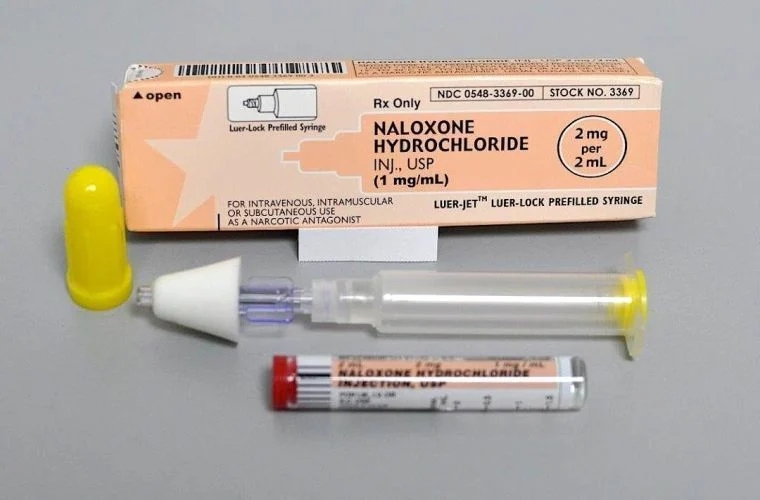
According to Morning Brew, for the first time, people across the US will be able to purchase an overdose-reversal drug that’s as easy to administer as Flonase, without a prescription. Next week, nationwide chains like Walgreens, CVS, Walmart, and Rite Aid will begin selling two-dose boxes of Narcan, a naloxone nasal spray that saves people from opioid overdose, in stores and online.
Making naloxone widely accessible has long been a goal for public health experts because Fentanyl-laced drugs can kill people before paramedics arrive, but some now worry that over-the-counter Narcan’s $45 retail price could be too high for those who need it most.
That’s where insurance comes in:
Medicaid and Medicare already cover prescription naloxone, and so far, Missouri, California, Massachusetts, Washington, Rhode Island, and Oregon Medicaid programs said they’ll cover OTC Narcan, too.
While private health plans often restrict OTC drug coverage, Blue Cross Blue Shield of Massachusetts said it’ll fully cover nonprescription Narcan.
But this won’t help the one-fifth of people with opioid use disorder who are uninsured. Some government and harm reduction programs give out Narcan for free—and those groups can now order two-dose boxes in bulk at a discounted $41 per box, according to manufacturer Emergent BioSolutions.
Posted on July 21, 2023 by Dr. David Edward Marcinko MBA MEd CMP™
By Staff Reporters
***
***
According to Morning Brew, the US banking system is about to speed up, potentially eliminating those frustrating waiting days it can take for money to hit your account. The Fed is launching its FedNow instant payment service later this month. The new system will enable banks to send each other cash instantly, 24/7, as an alternative to the existing system that runs only during regular business hours and often takes days to move money.
FedNow could put America’s banking system on track to catch up to countries like India and Nigeria, where high-speed payments are as common. The US does already have an instant payments system, but it’s private rather than government-backed, and it hasn’t been widely adopted. It’s mostly only used by big banks, and only 1.4% of US transactions happen in real time, according to payment systems company ACI Worldwide.
FedNow enabled services will soon likely appear at the 41 banks that have been certified to participate so far.
People moving money between banks or paying bills could complete their transactions in seconds without the need to plan payments days in advance.
Businesses will be able to access customer payments immediately and to send workers payments more frequently with instant direct deposit rather than the usual payroll cycle.
BUT … Faster payments could mean faster bank runs, too!
Some experts worry that allowing people to drain their bank accounts instantaneously could make SVB-style bank runs more likely. Smaller banks struggling with liquidity would have even less time to react to customer panic and get collateral for emergency government loans to cover fleeing cash.
But there are safeguards built in. FedNow has a transaction limit of $500,000, and banks can set their own ceilings to ensure that customers don’t pull their deposits.
Posted on June 11, 2023 by Dr. David Edward Marcinko MBA MEd CMP™
By Staff Reporters
***
***
CRANIA: A delivery driver for the Anatomical Gift Association (AGA) of Illinois claims that after he complained about corpse storage protocol, he arrived at work to find three [3] severed heads in plastic containers in his office. The AGA denied it was retaliation, saying a desk full of skulls is just part of the job.
***
Doctors on TikTok? Hospital re-brandings? Healthcare marketers are trying new strategies to reach patients—but they’re not always a slam dunk success.
Posted on May 15, 2023 by Dr. David Edward Marcinko MBA MEd CMP™
By Staff Reporters
***
***
The US is experiencing the biggest decline in worker productivity since 1948, according to research from EY-Parthenon, and many executives have been quick to single out remote work as the main culprit.
This is what they cite to prove their point.:
A study published in Nature Human Behaviour found that working remotely made Microsoft’s remote workers miss important learning opportunities by not rubbing elbows with coworkers who aren’t part of their immediate team.
More recent research showed that interacting through a screen can make workers less likely to generate ideas. That’s a problem for tech companies needing to out-innovate the competition.
For many industry leaders, accessing a wider talent pool outside of traditional tech hubs isn’t enough to make up for those drawbacks. And as widespread labor shortages subside and layoffs sweep through Silicon Valley, companies are no longer in a perk war to recruit and retain the brightest minds.
Finally, the Big Tech office pushed mirrors broader thru white-collar labor market dynamics; according to Morning Brew. In December, 13% of LinkedIn postings were for remote jobs, compared to 20% nine months prior.
Posted on May 8, 2023 by Dr. David Edward Marcinko MBA MEd CMP™
By Staff Reporters
***
***
The S&P 500 and the Dow are coming off their worst weeks since March. And even with the Fed signaling the end of interest rate hikes, analysts don’t expect the market to perk up all of a sudden. Goldman Sachs, Bank of America, and Morgan Stanley predict the S&P will end the year lower than its current level. US oil prices, meanwhile, have fallen for three consecutive weeks over economic concerns.
***
We mentioned the annual “Woodstock for Capitalists” meeting last week on this ME-P. Here are the highlights.
On the regional banking crisis: W. Buffett bashed leaders at the banks that failed this spring (First Republic, SVB, etc.), saying they “should suffer” and face “punishment.” But he also blamed the “totally crazy” bank regulations that incentivize bad behavior and “very poor” messaging around the debacle from politicians and the media. Buffett thinks the government was right to intervene to protect SVB depositors, claiming, “It would have been catastrophic” otherwise.
On the status of the dollar: “We are the reserve currency. I see no option for any other currency to be the reserve currency,” Buffett said. He called the notion of bitcoin or other tokens dethroning the dollar a “joke.”
On Berkshire’s investment in Apple: The value of Berkshire’s stake in Apple has ballooned to $151 billion, amounting to nearly half the value of its entire stock portfolio. “It just happens to be a better business than any we own,” Buffett said.
***
US ends Covid-19 public health emergency: Like Title 42, the US public health emergency for Covid-19 will end on this Thursday. That may limit access to testing for millions of Americans, but it won’t affect the availability of treatments and vaccines.
Posted on March 18, 2023 by Dr. David Edward Marcinko MBA MEd CMP™
By Staff Reporters
Blue Cross Blue Shield has deployed several trackers on its website, according to the web extension Ghostery, a tool that can tell you what kind of technology web pages are using.
Ghostery returned a list of trackers from Twitter, Google, and LinkedIn.
Though we don’t know specifically what kind of data is being transferred, these pixels are usually installed to help marketing departments. Tracking pixels, for the uninitiated, are hidden or embedded graphics that can give a more complete picture of a customer’s journey: what they’ve clicked on, if they’ve searched for something specific, if they’ve put something in a shopping cart, or whether an advertisement drove them to, say, Blue Cross Blue Shield’s homepage. For example, if an insurer wants to show that its ads are working, it can use a pixel to determine that it was their ad that got someone to finally sign up for health insurance, not Susan in HR.
Trackers are ubiquitous, but experts and consumers have raised serious questions about the data that’s shared between companies. For example, investigative reporting outlet The Markup found that hospitals shared sensitive information with Facebook through the Meta pixel. And just this month, Indianapolis-based Community Health Network reported that pixels may have affected 1.5 million of its patients.
For more, read Marketing Brew’s interview with sociologist Mary F.E. Ebeling, who wrote a book about the collection of sensitive health data.
Posted on February 5, 2023 by Dr. David Edward Marcinko MBA MEd CMP™
A Reprint by Staff Reporters
***
***
In the week since the Indian mogul was targeted by a short seller, his businesses have lost a combined $108 billion in value and his own net worth has plummeted by $52 billion. Adani was once the second-richest person in the world. But, as Bloomberg notes, his downfall “defies just about every historical comparison.”
Given Adani’s sprawling business empire and his cozy relationship with India’s leadership class, this crisis has echoed across both markets and politics. Here’s a rundown of what you need to know about the most important story in global business this week.
According to Morning Brew, Adani grew up middle-class, dropped out of college to trade diamonds and eventually formed his own business hawking other physical products. During the ’90s his ambitions expanded along with the Indian economy, and he now runs a conglomerate that encompasses energy, transportation infrastructure such as ports and airports, defense manufacturing, and media.
On January 24th, a US short seller named Hindenburg Research claimed Adani’s empire pulled “the largest con in corporate history,” accusing it of stock manipulation and accounting fraud in a 100-page report. Adani has denied the allegations, but his push-back hasn’t comforted spooked investors…especially after he scrapped a $2.5 billion share sale a few days ago.
Adani responded that Hindenburg’s report wasn’t just an attack on him, it amounted to a “calculated attack on India…and the growth story and ambition of India.” Adani’s business ventures have aligned closely with the priorities of Indian Prime Minister Narendra Modi, and Modi’s political opponents are seizing on the fiasco to highlight the relationship between India’s leader and Adani.
Adani emphasized that his company’s fundamentals remain “very strong” and its balance sheet “healthy.” Still, some experts say the accusations could leave a lasting reputational stain on India’s largest corporations and hamstring their ability to grow
Posted on January 17, 2023 by Dr. David Edward Marcinko MBA MEd CMP™
By Staff Reporters
***
***
Microsoft is reportedly preparing for its largest startup investment in history: a $10 billion stake in OpenAI that could value the research lab at $29 billion. OpenAI is the creator of potentially groundbreaking AI tools like ChatGPT, the multitalented chatbot that can code in Python and help high schoolers cheat on English essays.
MSFT has already invested $1 billion in OpenAI, but thinks an even tighter relationship would help it better compete with Big Tech rivals like Google (which reportedly declared a “code red” over ChatGPT’s threat to its search dominance).
But Microsoft’s AI ambitions go beyond just integrating ChatGPT know-how into its own search engine, Bing. The company wants to use OpenAI’s tools in its Office suite—and it’s already experimenting with algorithms to help users craft emails in Outlook.
OpenAI was founded in 2015 as a mission-based AI research organization by a roster from Silicon Valley’s A-list, including Elon Musk. Its stated goal is to develop safe AI for the benefit of humanity. But OpenAI has plenty of critics who have called it out for ethical concerns, a lack of transparency, and abandoning its mission for profits.
According to MorningBrew, a slew of buzzy AI product releases in 2022 has startup investors forgetting they ever heard the word “metaverse.” Languishing in the prolonged crypto winter and facing an uncertain economic environment, many venture capitalists see the field as the next big thing to shovel money into their coffers.
UPDATE: Bill Gates just hinted that he may be working on Open AI’s large language chatbot ChatGPT in collaboration with Microsoft if the reported $10 billion investment in the start-up goes through. Gates also admitted that he’s still involved with the company’s research and product plans, and said he’s watching the developments in ChatGPT “very closely.”
Posted on July 24, 2022 by Dr. David Edward Marcinko MBA MEd CMP™
***
By Neal Freyman [Morning Brew]
***
Amazon turned and coughed up $3.9 billion to buy One Medical, a primary care provider, in its biggest push yet into health care. It may not be long until your Prime membership comes with a complimentary physical.
What’s One Medical? A company that operates more than 180 medical offices across 25 US markets, offering both in-person and virtual medical services. When it went public as a unicorn in January 2020, it followed a similar trajectory of other high-flying startups: A huge spike when telehealth was in feverish demand, then an equally huge crash to fall well below its IPO price.
The deal for One Medical represents Andy Jassy’s first major acquisition as CEO of Amazon, showing that he’s willing to make bets on growth in certain areas even as he reins in costs in others.
So why is health care a priority?
As you know all too well from every time you pay a medical bill, health care is a massive industry. With a market size of $4 trillion, it accounts for about 20% of the entire US economy. And as Amazon looks to grow outside of its core areas, it sees potential in sending a digital shock wave through a medical industry that’s entangled in a complex web of insurance companies and government regulations.
Not that it’s even clear what a “core” area of Amazon is anymore. Besides its e-commerce marketplace, Amazon has tentacles in cloud services, grocery stores, entertainment, and many other sectors. Basically, we’re about to live in a world where one company owns the James Bond franchise…and also medical clinics.
But Amazon’s infatuation with health care isn’t new. It acquired the online pharmacy PillPack in 2018, and launched its own on-demand health care services one year later. Some projects, like its buzzy joint venture with Berkshire Hathaway and JPMorgan, collapsed, illustrating the challenges for anyone—even Bezos and Buffett—to break into the medical realm.
Those stumbles won’t stop Amazon, or Big Tech in general, from trying. Just this week, Apple released a 60-page report outlining why health care will be a major focus for the company going forward.—NF
Posted on April 25, 2022 by Dr. David Edward Marcinko MBA MEd CMP™
By Morning Brew
***
An event like the Russia-Ukraine war creates ripple effects throughout the financial markets, in sometimes surprising ways. In this episode of Brew Breakdown, they explain how geopolitics affect the global market and point out what you can look out for when it comes to your stock portfolio during times of uncertainty.
Posted on October 1, 2021 by Dr. David Edward Marcinko MBA MEd CMP™
***
BY MORNING BREW
The Legend of the $1 Trillion Platinum Coin
****
***
You may have heard that a deadline to suspend the debt ceiling is rapidly approaching, and if lawmakers don’t do anything it could lead to “economic catastrophe,” in the words of Treasury Secretary Janet Yellen.
But what if we told you there was a solution to the debt ceiling fiasco so crazy…it just might work?
The solution: Yellen could have the Treasury mint a $1 trillion platinum coin, deposit it at the Fed to “retire” loads of US federal debt, and then enable the government to carry on with business as usual without having to worry about defaulting on its existing debt.
“The Secretary may mint and issue platinum bullion coins and proof platinum coins in accordance with such specifications, designs, varieties, quantities, denominations, and inscriptions as the Secretary, in the Secretary’s discretion, may prescribe from time to time.”
The law is crystal clear, and has been deemed kosher by numerous academics. “The statute clearly does authorize the issuance of trillion-dollar coins,” Laurence Tribe, a Harvard Law professor, told Washington Monthly back in 2013.
In fact, nothing says we have to stop at $1 trillion. Yellen could go big with a $10 trillion coin, hypothetically. As Bloomberg’s Joe Weisenthal explains, none of this would lead to inflation because it’s merely an “accounting trick”—not an influx of money into the economy.
Have we tried this before? The $1 trillion platinum coin idea seems to pop up every time the US faces a debt ceiling crunch. It was first introduced by a Georgia lawyer in 2010 and gained traction during the debt-ceiling crisis of 2011.
Things really turned up in 2013, when the government was…you guessed it, facing another debt ceiling deadline. The hashtag #MintTheCoin became popular on Twitter, and economists like Paul Krugman advocated for unleashing the coin. “If we have a crisis over the debt ceiling, it will be only because the Treasury Department would rather see economic devastation than look silly for a couple of minutes,” he wrote.
But each time the $1 trillion coin is mentioned as a way of resolving debt ceiling problems, the people in charge dismiss it as a distraction from Congress doing its job. “Neither the Treasury nor the Federal Reserve believes that the law can or should be used to produce platinum coins for the purpose of avoiding an increase in the debt limit,” The Treasury wrote during…well, yes, another debt ceiling emergency in 2015.
As for our current predicament, the Biden administration rejected the minting of the $1 trillion coin yet again last week.
Bottom line: Perhaps some enterprising future Treasury Secretary will manifest the platinum coin into existence, but for now it remains as mythical as Camelot.







 Support our online development, and advance our onground research initiatives in free market economics, as we seek to showcase the brightest Next-Gen minds.
THE ME-P DISCLAIMER: Posts, comments and opinions do not necessarily represent iMBA, Inc., but become our property after submission. Copyright © 2006 to-date. iMBA, Inc allows colleges, universities, medical and financial professionals and related clinics, hospitals and non-profit healthcare organizations to distribute our proprietary essays, photos, videos, audios and other documents; etc. However, please review copyright and usage information for each individual asset before submission to us, and/or placement on your publication or web site. Attestation references, citations and/or back-links are required. All other assets are property of the individual copyright holder.
Support our online development, and advance our onground research initiatives in free market economics, as we seek to showcase the brightest Next-Gen minds.
THE ME-P DISCLAIMER: Posts, comments and opinions do not necessarily represent iMBA, Inc., but become our property after submission. Copyright © 2006 to-date. iMBA, Inc allows colleges, universities, medical and financial professionals and related clinics, hospitals and non-profit healthcare organizations to distribute our proprietary essays, photos, videos, audios and other documents; etc. However, please review copyright and usage information for each individual asset before submission to us, and/or placement on your publication or web site. Attestation references, citations and/or back-links are required. All other assets are property of the individual copyright holder.






 Trump says pharma tariffs could be as high as 250%





































 The Leading Business Education Network for Doctors, Financial Advisors and Health Industry Consultants