MICRO-CERTIFICATIONS: For Financial Advisors Seeking Physician-Client Niche Success?

Micro-Credentials on the Rise

KNOWLEDGE RICHES IN NICHES

DR. DAVID EDWARD MARCINKO MBA CMP

SPONSOR: http://www.CertifiedMedicalPlanner.org

***

***

Do you ever wish you could acquire specific information for your career activities without having to complete a university Master’s Degree or finish our entire Certified Medical Planner™ professional designation program? Well, Micro-Certifications from the Institute of Medical Business Advisors, Inc., might be the answer. Read on to learn how our three Micro-Certifications offer new opportunities for professional growth in the medical practice, business management, health economics and financial planning, investing and advisory space for physicians, nurses and healthcare professionals.

Micro-Certification Basics

Stock-Brokers, Financial Advisors, Investment Advisors, Accountants, Consultants, Financial Analyists and Financial Planners need to enhance their knowledge skills to better serve the changing and challenging healthcare professional ecosystem. But, it can be difficult to learn and demonstrate mastery of these new skills to employers, clients, physicians or medical prospects. This makes professional advancement difficult. That’s where Micro-Certification and Micro-Credentialing enters the online educational space. It is the process of earning a Micro-Certification, which is like a mini-degree or mini-credential, in a very specific topical area.

Micro-Certification Requirements

Once you’ve completed all of the requirements for our Micro-Certification, you will be awarded proof that you’ve earned it. This might take the form of a paper or digital certificate, which may be a hard document or electronic image, transcript, file, or other official evidence that you’ve completed the necessary work.

Uses of Micro-Certifications

Micro-Certifications may be used to demonstrate to physicians prospective medical clients that you’ve mastered a certain knowledge set. Because of this, Micro-Certifications are useful for those financial service professionals seeking medical clients, employment or career advancement opportunities.

Examples of iMBA, Inc., Micro-Certifications

Here are the three most popular Micro-Certification course from the Institute of Medical Business Advisors, Inc:

  • 1. Health Insurance and Managed Care: To keep up with the ever-changing field of health care physician advice, you must learn new medical practice business models in order to attract and assist physicians and nurse clients. By bringing together the most up-to-date business and medical prctice models [Medicare, Medicaid, PP-ACA, POSs, EPOs, HMOs, PPOs, IPA’s, PPMCs, Accountable Care Organizations, Concierge Medicine, Value Based Care, Physician Pay-for-Performance Initiatives, Hospitalists, Retail and Whole-Sale Medicine, Health Savings Accounts and Medical Unions, etc], this iMBA Inc., Mini-Certification offers a wealth of essential information that will help you understand the ever-changing practices in the next generation of health insurance and managed medical care.
  • 2. Health Economics and Finance: Medical economics, finance, managerial and cost accounting is an integral component of the health care industrial complex. It is broad-based and covers many other industries: insurance, mathematics and statistics, public and population health, provider recruitment and retention, health policy, forecasting, aging and long-term care, and Venture Capital are all commingled arenas. It is essential knowledge that all financial services professionals seeking to serve in the healthcare advisory niche space should possess.
  • 3. Health Information Technology and Security: There is a myth that all physician focused financial advisors understand Health Information Technology [HIT]. In truth, it is often economically misused or financially misunderstood. Moreover, an emerging national HIT architecture often puts the financial advisor or financial planner in a position of maximum uncertainty and minimum productivity regarding issues like: Electronic Medical Records [EMRs] or Electronic Health Records [EHRs], mobile health, tele-health or tele-medicine, Artificial Intelligence [AI], benefits managers and human resource professionals.

Other Topics include: economics, finance, investing, marketing, advertising, sales, start-ups, business plan creation, financial planning and entrepreneurship, etc.

How to Start Learning and Earning Recognition for Your Knowledge

Now that you’re familiar with Micro-Credentialing, you might consider earning a Micro-Certification with us. We offer 3 official Micro-Certificates by completing a one month online course, with a live instructor consisting of twelve asynchronous lessons/online classes [3/wk X 4/weeks = 12 classes]. The earned official completion certificate can be used to demonstrate mastery of a specific skill set and shared with current or future employers, current clients or medical niche financial advisory prospects.

Mini-Certification Tuition, Books and Related Fees

The tuition for each Mini-Certification live online course is $1,250 with the purchase of one required dictionary handbook. Other additional guides, white-papers, videos, files and e-content are all supplied without charge. Alternative courses may be developed in the future subject to demand and may change without notice.

***

Contact: For more information, or to speak with an academic representative, please contact Ann Miller RN MHA CMP™ at Email: MarcinkoAdvisors@msn.com [24/7] -OR- 770-448-0769[9:00 – 5:00 EST].

***

MICRO-CERTIFICATIONS: For Financial Advisors Seeking Physician-Client Niche Success?

Micro-Credentials on the Rise

KNOWLEDGE RICHES IN NICHES

DR. DAVID EDWARD MARCINKO MBA CMP

SPONSOR: http://www.CertifiedMedicalPlanner.org

***

***

Do you ever wish you could acquire specific information for your career activities without having to complete a university Master’s Degree or finish our entire Certified Medical Planner™ professional designation program? Well, Micro-Certifications from the Institute of Medical Business Advisors, Inc., might be the answer. Read on to learn how our three Micro-Certifications offer new opportunities for professional growth in the medical practice, business management, health economics and financial planning, investing and advisory space for physicians, nurses and healthcare professionals.

Micro-Certification Basics

Stock-Brokers, Financial Advisors, Investment Advisors, Accountants, Consultants, Financial Analyists and Financial Planners need to enhance their knowledge skills to better serve the changing and challenging healthcare professional ecosystem. But, it can be difficult to learn and demonstrate mastery of these new skills to employers, clients, physicians or medical prospects. This makes professional advancement difficult. That’s where Micro-Certification and Micro-Credentialing enters the online educational space. It is the process of earning a Micro-Certification, which is like a mini-degree or mini-credential, in a very specific topical area.

Micro-Certification Requirements

Once you’ve completed all of the requirements for our Micro-Certification, you will be awarded proof that you’ve earned it. This might take the form of a paper or digital certificate, which may be a hard document or electronic image, transcript, file, or other official evidence that you’ve completed the necessary work.

Uses of Micro-Certifications

Micro-Certifications may be used to demonstrate to physicians prospective medical clients that you’ve mastered a certain knowledge set. Because of this, Micro-Certifications are useful for those financial service professionals seeking medical clients, employment or career advancement opportunities.

Examples of iMBA, Inc., Micro-Certifications

Here are the three most popular Micro-Certification course from the Institute of Medical Business Advisors, Inc:

  • 1. Health Insurance and Managed Care: To keep up with the ever-changing field of health care physician advice, you must learn new medical practice business models in order to attract and assist physicians and nurse clients. By bringing together the most up-to-date business and medical prctice models [Medicare, Medicaid, PP-ACA, POSs, EPOs, HMOs, PPOs, IPA’s, PPMCs, Accountable Care Organizations, Concierge Medicine, Value Based Care, Physician Pay-for-Performance Initiatives, Hospitalists, Retail and Whole-Sale Medicine, Health Savings Accounts and Medical Unions, etc], this iMBA Inc., Mini-Certification offers a wealth of essential information that will help you understand the ever-changing practices in the next generation of health insurance and managed medical care.
  • 2. Health Economics and Finance: Medical economics, finance, managerial and cost accounting is an integral component of the health care industrial complex. It is broad-based and covers many other industries: insurance, mathematics and statistics, public and population health, provider recruitment and retention, health policy, forecasting, aging and long-term care, and Venture Capital are all commingled arenas. It is essential knowledge that all financial services professionals seeking to serve in the healthcare advisory niche space should possess.
  • 3. Health Information Technology and Security: There is a myth that all physician focused financial advisors understand Health Information Technology [HIT]. In truth, it is often economically misused or financially misunderstood. Moreover, an emerging national HIT architecture often puts the financial advisor or financial planner in a position of maximum uncertainty and minimum productivity regarding issues like: Electronic Medical Records [EMRs] or Electronic Health Records [EHRs], mobile health, tele-health or tele-medicine, Artificial Intelligence [AI], benefits managers and human resource professionals.

Other Topics include: economics, finance, investing, marketing, advertising, sales, start-ups, business plan creation, financial planning and entrepreneurship, etc.

How to Start Learning and Earning Recognition for Your Knowledge

Now that you’re familiar with Micro-Credentialing, you might consider earning a Micro-Certification with us. We offer 3 official Micro-Certificates by completing a one month online course, with a live instructor consisting of twelve asynchronous lessons/online classes [3/wk X 4/weeks = 12 classes]. The earned official completion certificate can be used to demonstrate mastery of a specific skill set and shared with current or future employers, current clients or medical niche financial advisory prospects.

Mini-Certification Tuition, Books and Related Fees

The tuition for each Mini-Certification live online course is $1,250 with the purchase of one required dictionary handbook. Other additional guides, white-papers, videos, files and e-content are all supplied without charge. Alternative courses may be developed in the future subject to demand and may change without notice.

***

Contact: For more information, or to speak with an academic representative, please contact Ann Miller RN MHA CMP™ at: MarcinkoAdvisors@msn.com [24/7] -OR- 770-448-0769 [9:00 – 5:00 EST].

***

OnLine MICRO-CERTIFICATIONS: For Financial Advisors Seeking Physician-Client Niche Success?

Micro-Credentials on the Rise

KNOWLEDGE RICHES IN NICHES

DR. DAVID EDWARD MARCINKO MBA CMP

SPONSOR: http://www.CertifiedMedicalPlanner.org

***

***

Do you ever wish you could acquire specific information for your career activities without having to complete a university Master’s Degree or finish our entire Certified Medical Planner™ professional designation program? Well, Micro-Certifications from the Institute of Medical Business Advisors, Inc., might be the answer. Read on to learn how our three Micro-Certifications offer new opportunities for professional growth in the medical practice, business management, health economics and financial planning, investing and advisory space for physicians, nurses and healthcare professionals.

Micro-Certification Basics

Stock-Brokers, Financial Advisors, Investment Advisors, Accountants, Consultants, Financial Analyists and Financial Planners need to enhance their knowledge skills to better serve the changing and challenging healthcare professional ecosystem. But, it can be difficult to learn and demonstrate mastery of these new skills to employers, clients, physicians or medical prospects. This makes professional advancement difficult. That’s where Micro-Certification and Micro-Credentialing enters the online educational space. It is the process of earning a Micro-Certification, which is like a mini-degree or mini-credential, in a very specific topical area.

Micro-Certification Requirements

Once you’ve completed all of the requirements for our Micro-Certification, you will be awarded proof that you’ve earned it. This might take the form of a paper or digital certificate, which may be a hard document or electronic image, transcript, file, or other official evidence that you’ve completed the necessary work.

Uses of Micro-Certifications

Micro-Certifications may be used to demonstrate to physicians prospective medical clients that you’ve mastered a certain knowledge set. Because of this, Micro-Certifications are useful for those financial service professionals seeking medical clients, employment or career advancement opportunities.

Examples of iMBA, Inc., Micro-Certifications

Here are the three most popular Micro-Certification course from the Institute of Medical Business Advisors, Inc:

  • 1. Health Insurance and Managed Care: To keep up with the ever-changing field of health care physician advice, you must learn new medical practice business models in order to attract and assist physicians and nurse clients. By bringing together the most up-to-date business and medical prctice models [Medicare, Medicaid, PP-ACA, POSs, EPOs, HMOs, PPOs, IPA’s, PPMCs, Accountable Care Organizations, Concierge Medicine, Value Based Care, Physician Pay-for-Performance Initiatives, Hospitalists, Retail and Whole-Sale Medicine, Health Savings Accounts and Medical Unions, etc], this iMBA Inc., Mini-Certification offers a wealth of essential information that will help you understand the ever-changing practices in the next generation of health insurance and managed medical care.
  • 2. Health Economics and Finance: Medical economics, finance, managerial and cost accounting is an integral component of the health care industrial complex. It is broad-based and covers many other industries: insurance, mathematics and statistics, public and population health, provider recruitment and retention, health policy, forecasting, aging and long-term care, and Venture Capital are all commingled arenas. It is essential knowledge that all financial services professionals seeking to serve in the healthcare advisory niche space should possess.
  • 3. Health Information Technology and Security: There is a myth that all physician focused financial advisors understand Health Information Technology [HIT]. In truth, it is often economically misused or financially misunderstood. Moreover, an emerging national HIT architecture often puts the financial advisor or financial planner in a position of maximum uncertainty and minimum productivity regarding issues like: Electronic Medical Records [EMRs] or Electronic Health Records [EHRs], mobile health, tele-health or tele-medicine, Artificial Intelligence [AI], benefits managers and human resource professionals.

Other Topics include: economics, finance, investing, marketing, advertising, sales, start-ups, business plan creation, financial planning and entrepreneurship, etc.

How to Start Learning and Earning Recognition for Your Knowledge

Now that you’re familiar with Micro-Credentialing, you might consider earning a Micro-Certification with us. We offer 3 official Micro-Certificates by completing a one month online course, with a live instructor consisting of twelve asynchronous lessons/online classes [3/wk X 4/weeks = 12 classes]. The earned official completion certificate can be used to demonstrate mastery of a specific skill set and shared with current or future employers, current clients or medical niche financial advisory prospects.

Mini-Certification Tuition, Books and Related Fees

The tuition for each Mini-Certification live online course is $1,250 with the purchase of one required dictionary handbook. Other additional guides, white-papers, videos, files and e-content are all supplied without charge. Alternative courses may be developed in the future subject to demand and may change without notice.

***

Contact: For more information, or to speak with an academic representative, please contact Ann Miller RN MHA CMP™ at: MarcinkoAdvisors@msn.com [24/7] -OR- 770-448-0769[9:00 – 5:00 EST].

***

MICRO-CERTIFICATIONS: For Financial Advisors Seeking Physician-Client Niche Success?

Micro-Credentials on the Rise

KNOWLEDGE RICHES IN NICHES

DR. DAVID EDWARD MARCINKO MBA CMP

SPONSOR: http://www.CertifiedMedicalPlanner.org

***

***

Do you ever wish you could acquire specific information for your career activities without having to complete a university Master’s Degree or finish our entire Certified Medical Planner™ professional designation program? Well, Micro-Certifications from the Institute of Medical Business Advisors, Inc., might be the answer. Read on to learn how our three Micro-Certifications offer new opportunities for professional growth in the medical practice, business management, health economics and financial planning, investing and advisory space for physicians, nurses and healthcare professionals.

Micro-Certification Basics

Stock-Brokers, Financial Advisors, Investment Advisors, Accountants, Consultants, Financial Analyists and Financial Planners need to enhance their knowledge skills to better serve the changing and challenging healthcare professional ecosystem. But, it can be difficult to learn and demonstrate mastery of these new skills to employers, clients, physicians or medical prospects. This makes professional advancement difficult. That’s where Micro-Certification and Micro-Credentialing enters the online educational space. It is the process of earning a Micro-Certification, which is like a mini-degree or mini-credential, in a very specific topical area.

Micro-Certification Requirements

Once you’ve completed all of the requirements for our Micro-Certification, you will be awarded proof that you’ve earned it. This might take the form of a paper or digital certificate, which may be a hard document or electronic image, transcript, file, or other official evidence that you’ve completed the necessary work.

Uses of Micro-Certifications

Micro-Certifications may be used to demonstrate to physicians prospective medical clients that you’ve mastered a certain knowledge set. Because of this, Micro-Certifications are useful for those financial service professionals seeking medical clients, employment or career advancement opportunities.

Examples of iMBA, Inc., Micro-Certifications

Here are the three most popular Micro-Certification course from the Institute of Medical Business Advisors, Inc:

  • 1. Health Insurance and Managed Care: To keep up with the ever-changing field of health care physician advice, you must learn new medical practice business models in order to attract and assist physicians and nurse clients. By bringing together the most up-to-date business and medical prctice models [Medicare, Medicaid, PP-ACA, POSs, EPOs, HMOs, PPOs, IPA’s, PPMCs, Accountable Care Organizations, Concierge Medicine, Value Based Care, Physician Pay-for-Performance Initiatives, Hospitalists, Retail and Whole-Sale Medicine, Health Savings Accounts and Medical Unions, etc], this iMBA Inc., Mini-Certification offers a wealth of essential information that will help you understand the ever-changing practices in the next generation of health insurance and managed medical care.
  • 2. Health Economics and Finance: Medical economics, finance, managerial and cost accounting is an integral component of the health care industrial complex. It is broad-based and covers many other industries: insurance, mathematics and statistics, public and population health, provider recruitment and retention, health policy, forecasting, aging and long-term care, and Venture Capital are all commingled arenas. It is essential knowledge that all financial services professionals seeking to serve in the healthcare advisory niche space should possess.
  • 3. Health Information Technology and Security: There is a myth that all physician focused financial advisors understand Health Information Technology [HIT]. In truth, it is often economically misused or financially misunderstood. Moreover, an emerging national HIT architecture often puts the financial advisor or financial planner in a position of maximum uncertainty and minimum productivity regarding issues like: Electronic Medical Records [EMRs] or Electronic Health Records [EHRs], mobile health, tele-health or tele-medicine, Artificial Intelligence [AI], benefits managers and human resource professionals.

Other Topics include: economics, finance, investing, marketing, advertising, sales, start-ups, business plan creation, financial planning and entrepreneurship, etc.

How to Start Learning and Earning Recognition for Your Knowledge

Now that you’re familiar with Micro-Credentialing, you might consider earning a Micro-Certification with us. We offer 3 official Micro-Certificates by completing a one month online course, with a live instructor consisting of twelve asynchronous lessons/online classes [3/wk X 4/weeks = 12 classes]. The earned official completion certificate can be used to demonstrate mastery of a specific skill set and shared with current or future employers, current clients or medical niche financial advisory prospects.

Mini-Certification Tuition, Books and Related Fees

The tuition for each Mini-Certification live online course is $1,250 with the purchase of one required dictionary handbook. Other additional guides, white-papers, videos, files and e-content are all supplied without charge. Alternative courses may be developed in the future subject to demand and may change without notice.

***

Contact: For more information, or to speak with an academic representative, please contact Ann Miller RN MHA CMP™ at: MarcinkoAdvisors@msn.com [24/7] -OR- 770-448-0769[9:00 – 5:00 EST].

***

MICRO-CERTIFICATIONS: For Financial Advisors Seeking Physician-Client Niche Success?

Micro-Credentials on the Rise

KNOWLEDGE RICHES IN NICHES

DR. DAVID EDWARD MARCINKO MBA CMP

SPONSOR: http://www.CertifiedMedicalPlanner.org

***

***

Do you ever wish you could acquire specific information for your career activities without having to complete a university Master’s Degree or finish our entire Certified Medical Planner™ professional designation program? Well, Micro-Certifications from the Institute of Medical Business Advisors, Inc., might be the answer. Read on to learn how our three Micro-Certifications offer new opportunities for professional growth in the medical practice, business management, health economics and financial planning, investing and advisory space for physicians, nurses and healthcare professionals.

Micro-Certification Basics

Stock-Brokers, Financial Advisors, Investment Advisors, Accountants, Consultants, Financial Analyists and Financial Planners need to enhance their knowledge skills to better serve the changing and challenging healthcare professional ecosystem. But, it can be difficult to learn and demonstrate mastery of these new skills to employers, clients, physicians or medical prospects. This makes professional advancement difficult. That’s where Micro-Certification and Micro-Credentialing enters the online educational space. It is the process of earning a Micro-Certification, which is like a mini-degree or mini-credential, in a very specific topical area.

Micro-Certification Requirements

Once you’ve completed all of the requirements for our Micro-Certification, you will be awarded proof that you’ve earned it. This might take the form of a paper or digital certificate, which may be a hard document or electronic image, transcript, file, or other official evidence that you’ve completed the necessary work.

Uses of Micro-Certifications

Micro-Certifications may be used to demonstrate to physicians prospective medical clients that you’ve mastered a certain knowledge set. Because of this, Micro-Certifications are useful for those financial service professionals seeking medical clients, employment or career advancement opportunities.

Examples of iMBA, Inc., Micro-Certifications

Here are the three most popular Micro-Certification course from the Institute of Medical Business Advisors, Inc:

  • 1. Health Insurance and Managed Care: To keep up with the ever-changing field of health care physician advice, you must learn new medical practice business models in order to attract and assist physicians and nurse clients. By bringing together the most up-to-date business and medical prctice models [Medicare, Medicaid, PP-ACA, POSs, EPOs, HMOs, PPOs, IPA’s, PPMCs, Accountable Care Organizations, Concierge Medicine, Value Based Care, Physician Pay-for-Performance Initiatives, Hospitalists, Retail and Whole-Sale Medicine, Health Savings Accounts and Medical Unions, etc], this iMBA Inc., Mini-Certification offers a wealth of essential information that will help you understand the ever-changing practices in the next generation of health insurance and managed medical care.
  • 2. Health Economics and Finance: Medical economics, finance, managerial and cost accounting is an integral component of the health care industrial complex. It is broad-based and covers many other industries: insurance, mathematics and statistics, public and population health, provider recruitment and retention, health policy, forecasting, aging and long-term care, and Venture Capital are all commingled arenas. It is essential knowledge that all financial services professionals seeking to serve in the healthcare advisory niche space should possess.
  • 3. Health Information Technology and Security: There is a myth that all physician focused financial advisors understand Health Information Technology [HIT]. In truth, it is often economically misused or financially misunderstood. Moreover, an emerging national HIT architecture often puts the financial advisor or financial planner in a position of maximum uncertainty and minimum productivity regarding issues like: Electronic Medical Records [EMRs] or Electronic Health Records [EHRs], mobile health, tele-health or tele-medicine, Artificial Intelligence [AI], benefits managers and human resource professionals.

Other Topics include: economics, finance, investing, marketing, advertising, sales, start-ups, business plan creation, financial planning and entrepreneurship, etc.

How to Start Learning and Earning Recognition for Your Knowledge

Now that you’re familiar with Micro-Credentialing, you might consider earning a Micro-Certification with us. We offer 3 official Micro-Certificates by completing a one month online course, with a live instructor consisting of twelve asynchronous lessons/online classes [3/wk X 4/weeks = 12 classes]. The earned official completion certificate can be used to demonstrate mastery of a specific skill set and shared with current or future employers, current clients or medical niche financial advisory prospects.

Mini-Certification Tuition, Books and Related Fees

The tuition for each Mini-Certification live online course is $1,250 with the purchase of one required dictionary handbook. Other additional guides, white-papers, videos, files and e-content are all supplied without charge. Alternative courses may be developed in the future subject to demand and may change without notice.

***

Contact: For more information, or to speak with an academic representative, please contact Ann Miller RN MHA CMP™ at: MarcinkoAdvisors@msn.com [24/7] -OR- 770-448-0769[9:00 – 5:00 EST].

***

The FIDUCIARY OATH for “Financial Advisors”

“Will you sign a fiduciary oath?”

PHYSICIAN COLLEAGUES AND MEDICAL PROFESSIONALS ASK

By Dr. David Edward Marcinko MBA CMP®

CMP

SPONSOR: http://www.CertifiedMedicalPlanner.org

https://certifiedmedicalplannerdotorg1.files.wordpress.com/2012/03/cmp-logo17.jpg

“SIGN IT -OR- FORGET IT”

Asking a “Financial Advisor” if they’re a fiduciary isn’t always enough to hire them. People can “ice skate” around that terminology and give fuzzy or unclear answers to that question. Instead, you may consider asking them to sign a fiduciary oath.

“If someone is fee-only, not “fee-based”, they shouldn’t have a problem signing a document stating how they get compensated.” “If someone is, for example, a broker dealer, insurance agent or investment advisor who works on commissions, they probably wouldn’t be allowed to sign it.” Just say NO to contract arbitration clauses, too! As well as “Dual Registration.” Remember Bernie Lawrence Madoff.

THE FIDUCIARY OATH

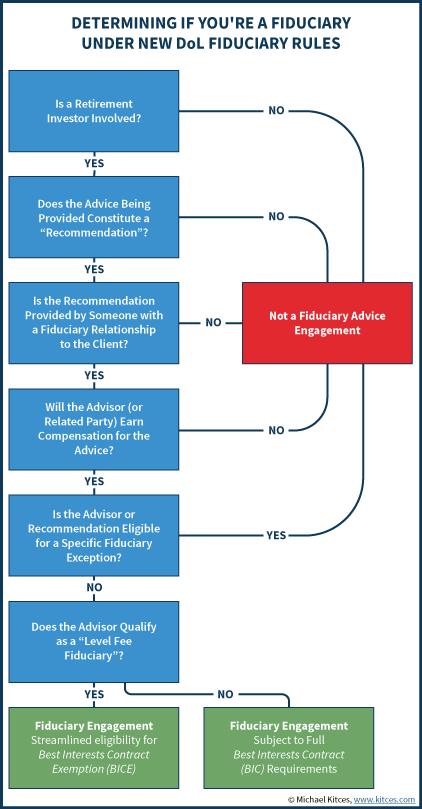
This one-page document outlines five fiduciary principles a financial adviser must follow to put the client’s interests ahead of their own. They include acting with prudence, not misleading the client, avoiding conflicts of interest, and disclosing and managing unavoidable conflicts.

The oath, meant to be printed out and signed by an adviser, has been around for several years. But recent events, such as the 5th Circuit Court of Appeals striking down the DOL rule, have increased the urgency to get it into circulation.

“With the 5th Circuit ruling, it is just so important to have this oath out there because it states fiduciary principles,” said Ms. P. Houlihan, president of Houlihan Financial Resource Group. “The oath is the answer, given that the DOL rule is gone.”

***

;,nbv

 fiduciaryoath_individual

Conclusion

Your thoughts and comments on this ME-P are appreciated. Feel free to review our top-left column, and top-right sidebar materials, links, URLs and related websites, too. Then, subscribe to the ME-P. It is fast, free and secure.

Speaker: If you need a moderator or speaker for an upcoming event, Dr. David E. Marcinko; MBA – Publisher-in-Chief of the Medical Executive-Post – is available for seminar or speaking engagements.

Book Marcinko: https://medicalexecutivepost.com/dr-david-marcinkos-bookings/

Subscribe: MEDICAL EXECUTIVE POST for curated news, essays, opinions and analysis from the public health, economics, finance, marketing, IT, business and policy management ecosystem.

DOCTORS:

“Insurance & Risk Management Strategies for Doctors” https://tinyurl.com/ydx9kd93

“Fiduciary Financial Planning for Physicians” https://tinyurl.com/y7f5pnox

“Business of Medical Practice 2.0” https://tinyurl.com/yb3x6wr8

HOSPITALS:

“Financial Management Strategies for Hospitals” https://tinyurl.com/yagu567d

“Operational Strategies for Clinics and Hospitals” https://tinyurl.com/y9avbrq5

Risk Management, Liability Insurance, and Asset Protection Strategies for Doctors and Advisors: Best Practices from Leading Consultants and Certified Medical Planners™8Comprehensive Financial Planning Strategies for Doctors and Advisors: Best Practices from Leading Consultants and Certified Medical Planners™

 ***

COMMENTS ARE APPRECIATED.

Thank You

***

FAs & CPAs Wanted -BUT- Certified Medical Planners® Needed?

***

***

Career Development, Products and Services for Medical Specificity

“The informed voice of a new generation of fiduciary advisors for healthcare”

SPONSOR: http://www.CertifiedMedicalPlanner.org 

CMP

FINANCIAL ADVISER WANTED: New York’s Belfer family, which gained riches from oil, is racking up quite an investing losing streak. They lost billions in Enron’s collapse and were clients of Bernie Madoff, and now it’s come to light that they were shareholders in FTX.

***

CPAs WANTED: Just as tax season kicks off, US firms are facing a national shortage of accountants, forcing them to look overseas for workers to look over your W-2. More than 300k accountants and auditors have quit in the last two years, per the WSJ.

***

CMPs NEEDED: The Certified Medical Planner® program was created in response to the frustration felt by doctors in small and mid-sized practices that dealt with top financial, brokerage and accounting firms. These non-fiduciary behemoths often prescribed costly wholesale solutions that were applicable to all, but customized to few, despite ever changing needs.

Enter the CMPs

Learn why brokerage sales-pitches and/or internet resources will never replace the knowledge and deep advice of a collegial Certified Medical Planner® professional.

Letterhead CMP

***

COMMENTS APPRECIATED

Thank You

***

ORDER: https://www.routledge.com/Comprehensive-Financial-Planning-Strategies-for-Doctors-and-Advisors-Best/Marcinko-Hetico/p/book/9781482240283

***

Form ADV Part II [The Essential Document]

Join Our Mailing List

Lifting the “Veil of Secrecy” on Selecting Financial Advisors

[By Dr. David Edward Marcinko MBA CMP™]

DEM white  shirtBy law, financial advisors must provide you with a form ADV Part II or a brochure that covers the same information. Even if a brochure is provided, ask for the ADV. Today, it may even be online.

While it is acceptable, even desirable, for the brochure to be easier to read than the ADV, the ADV is what is filed with the appropriate state or SEC. If the brochure reads more like a slick sales brochure or the information in the brochure glosses over the items on the ADV to a high degree, one should consider eliminating the advisor from consideration.

Types of Advisors

Registering with a state or SEC gives an advisor a fiduciary duty to the client. This is a high standard under the law. There are several types of advisors who are exempt from registering and filing an ADV.

First, there are registered representatives (brokers).  Brokers have a fiduciary responsibility to their firms regardless of whether they are statutory employees or independent contractors.

Second are attorneys and accountants whose advice is “incidental” to their legal or accounting practices. But, why would one hire someone whose advice is “incidental” to his primary profession?

A top-notch advisor is a full-time professional and should be registered.  One should insist that their advisor be registered.

****

Lifting veil of secrecy

[The Author in Chicago Seeking Fiduciary Transparency]

***

The ADV will describe the advisor’s background and employment history, including any prior disciplinary issues. It will describe the ownership of the firm and outline how the firm and advisor are compensated. Any referral arrangements will be described. If an advisor has an interest in any of the investments to be recommended, it must be listed as well as the fee schedule. There is also a description of the types of investments recommended and the types of research information that is used.

Assessment

A review of the ADV should result in an alignment of what the advisor said during the interview and what is filed with the regulators. If there is a clear discrepancy, choose another advisor. If it is unclear, discuss the issue with the advisor.

  • SEC Headquarters
  • 100 F Street, NE Washington, DC 20549
  • (202) 942-8088

Channel Surfing the ME-P

Have you visited our other topic channels? Established to facilitate idea exchange and link our community together, the value of these topics is dependent upon your input. Please take a minute to visit. And, to prevent that annoying spam, we ask that you register. It is fast, free and secure.

Conclusion

Your thoughts and comments on this ME-P are appreciated. Feel free to review our top-left column, and top-right sidebar materials, links, URLs and related websites, too. Then, subscribe to the ME-P. It is fast, free and secure.

Speaker: If you need a moderator or speaker for an upcoming event, Dr. David E. Marcinko; MBA – Publisher-in-Chief of the Medical Executive-Post – is available for seminar or speaking engagements. Contact: MarcinkoAdvisors@msn.com

OUR OTHER PRINT BOOKS AND RELATED INFORMATION SOURCES:

Comprehensive Financial Planning Strategies for Doctors and Advisors: Best Practices from Leading Consultants and Certified Medical Planners(TM)

The CERTIFIED MEDICAL PLANNER® Program Curriculum

BY DR. DAVID E. MARCINKO MBA CMP®

CMP

THE NEXT GENERATION OF FIDUCIARY FOCUSED FINANCIAL PLANNING AND MEDICAL MANAGEMENT ADVICE FOR DOCTORS

****

VISIT: http://www.CERTIFIEDMEDICALPLANNER.org

CURRICULUM: Enter the CMPs

BE AWARE ALL ADVISORS … NEXT GEN FINANCIAL ADVICE IS HERE?

CMP logo

Are you a financial planner, insurance agent or investment advisor seeking to assist your physician clients with medical practice enhancement solutions, along with healthcare targeted financial planning services, but don’t know where to turn for help?

OR, maybe you’ve already had a bad experience with a young physician or astute healthcare professional client that was actually more informed than you in these areas?

CITE: https://www.r2library.com/Resource/Title/0826102549

OR, a doctor/nurse client who demanded a true fiduciary advisor [not fee-based advice, with no dual licenses and no arbitration clauses] documented in writing].

Read this decade old Federal Government report to learn what can happen when your advisor is not an informed Certified Medical Planner© designated medical management practitioner.

Then, become a Certified Medical Planner© and thrive by helping others …. first!

GOV: https://oig.hhs.gov/fraud/docs/alertsandbulletins/consultants.pdf

True yesterday … more true today.

****

Risk Management, Liability Insurance, and Asset Protection Strategies for Doctors and Advisors: Best Practices from Leading Consultants and Certified Medical Planners™
Comprehensive Financial Planning Strategies for Doctors and Advisors: Best Practices from Leading Consultants and Certified Medical Planners™
Product Details

***

CONTACT: Ann Miller RN MHA CMP®

Phone: 770-448-0769

EMAIL: MarcinkoAdvisors@msn.com

***

On Finding PHYSICIAN FOCUSED Financial Advice?

OVER HEARD IN THE DOCTOR’S LOUNGE

Michigan Association of Osteopathic Family Physicians ...

The financial planner is a like juggler, trying to keep a variety of balls simultaneously in the air.  Each aspect of practice becomes critical, just as action is needed. 

Some of the activities of operating a successful financial planning practice generally attract more attention than others, such as marketing and advertising, closing engagements, and office administration.  Because product review, selection and implementation are often related to advisor compensation, they attract a great deal of the financial juggler’s concentration. 

But, the heart of financial planning, niche advice, often receives little attention.  Not because it is unimportant, it just doesn’t seem immediately and predictably urgent.  Here, that ball does not seem to be dropping so rapidly. 

However, retaining clients and receiving referrals from other professionals is very dependent on the quality of the advice delivered.  And, the first line of protection from practitioner liability exposure is to not deliver incorrect or incomplete advice. 

But, where does the financial advisor turn for ideas and organized research in the healthcare sector? 

Edwin P. Morrow; CFPTM, CLU, ChFC, RFC

edwin

[Middletown, Ohio, USA]

ORDER Textbook: https://www.amazon.com/Comprehensive-Financial-Planning-Strategies-Advisors/dp/1482240289/ref=sr_1_1?ie=UTF8&qid=1418580820&sr=8-1&keywords=david+marcinko

THANK YOU

***

On “Financial Advisor” Salesmen and Saleswomen

UGH! Financial Services still not a real Profession


By Dr. David Edward Marcinko MBA MEd Certified Medical Planner™

http://www.CertifiedMedicalPlanner.org

Introduction

A few weeks ago I received the following unsolicited email job exhortation:

Dear David,

Our xxx/ooo office is currently hiring “Financial Advisors” with Series 7 and 63 Certifications. The minimum requirements include: high school diploma or GED equivalent, 6+ months of experience in customer service and experience in a sales environment. We offer paid training and access to full benefits.

Learn more about this position and apply today: xxx/ooo

***    *** 

Assessment

GED; a very high credentials bar, indeed!

NOTE: My friend and colleague, the late great Dick Wagner JD CFP™ who wrote extensively about financial planning as a “profession”, would be mortified.  

Conclusion

Your thoughts and comments on this ME-P are appreciated. Feel free to review our top-left column, and top-right sidebar materials, links, urls and related websites, too. Then, subscribe to the ME-P. It is fast, free and secure.

Speaker: If you need a moderator or speaker for an upcoming event, Dr. David E. Marcinko; MBA – Publisher-in-Chief of the Medical Executive-Post – is available for seminar or speaking engagements. Contact: MarcinkoAdvisors@msn.com

OUR OTHER PRINT BOOKS AND RELATED INFORMATION SOURCES:

Risk Management, Liability Insurance, and Asset Protection Strategies for Doctors and Advisors: Best Practices from Leading Consultants and Certified Medical Planners™8Comprehensive Financial Planning Strategies for Doctors and Advisors: Best Practices from Leading Consultants and Certified Medical Planners™

***

Join the Medical Executive-Post

Publishing and Peer-Review Opportunities Always Available

By Ann Miller; RN, MHAME-P Logo.2

If you have academic credentials and experience like those of our contributing authors, subject matter experts and “thought-leaders – and would like to contribute to our blog or become a peer reviewer – please contact us today!

CV Required

We’d be happy to review your CV, submission and/or a copy of you previously published works. OR, just point us to your own blog, wiki, or website; etc. You may also use the contact form, below.

Phone: 770-448-0769

Email: MarcinkoAdvisors@msn.com

Channel Surfing

Have you visited our other topic channels? Established to facilitate idea exchange and link our community together, the value of these 50 topics is dependent upon your input. Please take a minute to visit. And, to prevent that annoying spam, we ask that you register.  

Link: http://feeds.feedburner.com/HealthcareFinancialsthePostForcxos

Speaker: If you need a moderator or speaker for an upcoming event, Dr. David E. Marcinko; MBA – Publisher-in-Chief of the Executive-Post – is available for seminar or speaking engagements. Contact: MarcinkoAdvisors@msn.com

Sponsors Welcomed

And, credible sponsors and like-minded advertisers are always welcomed.

Link: https://healthcarefinancials.wordpress.com/2007/11/11/advertise

CONTACT US!

Go back

Your message has been sent

Warning
Warning
Warning
Warning

Warning.

How Much is a Financial Advisor Really Worth?

Join Our Mailing List

And … Can it be Quantified?

Doctors and FAs

[By Staff Reporters]

How much of a boost in net returns can financial advisors add to client portfolios? According to Vanguard Brokerage Services®; maybe as much as 3%?

The Study

In a recent paper from the Valley Forge, PA based mutual fund and ETF giant, Vanguard said financial advisors can generate returns through a framework focused on five wealth management principles:

Being an effective behavioral coach: Helping clients maintain a long-term perspective and a disciplined approach is arguably one of the most important elements of financial advice. (Potential value added: up to 1.50%).

Applying an asset location strategy: The allocation of assets between taxable and tax-advantaged accounts is one tool an advisor can employ that can add value each year. (Potential value added: from 0% to 0.75%).

Employing cost-effective investments: This component of every advisor’s tool kit is based on simple math: Gross return less costs equals net return. (Potential value added: up to 0.45%).

Maintaining the proper allocation through rebalancing: Over time, as investments produce various returns, a portfolio will likely drift from its target allocation. An advisor can add value by ensuring the portfolio’s risk/return characteristics stay consistent with a client’s preferences. (Potential value added: up to 0.35%).

Implementing a spending strategy: As the retiree population grows, an advisor can help clients make important decisions about how to spend from their portfolios. (Potential value added: up to 0.70%).

Source: Financial Advisor Magazine, page 20, April 2014.

networking advisors

The Fine-Print

But, Vanguard notes that while it’s possible all of these principles could add up to 3% in net returns for clients, it’s more likely to be an intermittent number than an annual one because some of the best opportunities to add value happen during extreme market lows and highs when angst or giddiness [fear and greed] can cause investors to bail on their well-thought-out investment plans.

More: http://www.CertifiedMedicalPlanner.org

Assessment

Most retail financial services products are designed to enhance the well-being of the Financial Advisor and/or vendor at the expense of clients. The clients get only the leftovers. Of course, no one tells them that secret. They have to figure it out for themselves. As the old line goes, “Where are the customers’ boats?”

Source: Rowland, M: Planning Periscope [Where Advisors are the Clients]. Financial Advisors Magazine; page 36, April 2014

Conclusion

Are doctors different than the average investors noted in this essay?

Your thoughts and comments on this ME-P are appreciated. Feel free to review our top-left column, and top-right sidebar materials, links, URLs and related websites, too. Then, subscribe to the ME-P. It is fast, free and secure.

Link: http://feeds.feedburner.com/HealthcareFinancialsthePostForcxos

Speaker: If you need a moderator or speaker for an upcoming event, Dr. David E. Marcinko; MBA – Publisher-in-Chief of the Medical Executive-Post – is available for seminar or speaking engagements. Contact: MarcinkoAdvisors@msn.com

OUR OTHER PRINT BOOKS AND RELATED INFORMATION SOURCES:

Product Details  Product Details

Risk Management, Liability Insurance, and Asset Protection Strategies for Doctors and Advisors: Best Practices from Leading Consultants and Certified Medical Planners™8Comprehensive Financial Planning Strategies for Doctors and Advisors: Best Practices from Leading Consultants and Certified Medical Planners™

***

Fiduciary Financial Advisor versus Non-Fiduciary FAs

Join Our Mailing List 

Understanding the Difference

Dr. DEMBy Dr. David Edward Marcinko MBA CMP™

GOAL: To understand the difference between fiduciaries and non-fiduciaries, examine the SEC conduct rules.

Stock-Brokers (non-fiduciaries) are subject to FINRA Conduct Rule 2310(a) which reads:

In recommending to a customer the purchase, sale or exchange of any security, a member shall have reasonable grounds for believing that the recommendation is suitable for such customer upon the basis of the facts, if any, disclosed by such customer as to his security holdings and as to his financial situation and needs.

A fiduciary follows a higher standard of conduct: 

A fiduciary duty is an obligation to act in the best interest of another party. A fiduciary obligation exists whenever the relationship with the client involves a special trust, confidence and reliance on the fiduciary to exercise his discretion or expertise in acting for a client. A person acting in a fiduciary capacity is held to a high standard of honesty and full disclosure in regard to the client and must not obtain a personal benefit at the expense of the client.

Five primary responsibilities as a fiduciary to clients are:

  • To always put clients’ interest first
  • To act with utmost good faith
  • To provide full and fair disclosure of all material facts
  • Not to mislead clients, and
  • To expose all conflicts of interest and all compensation to clients.

More:

Assessment

Conclusion

Your thoughts and comments on this ME-P are appreciated. Feel free to review our top-left column, and top-right sidebar materials, links, URLs and related websites, too. Then, subscribe to the ME-P. It is fast, free and secure.

Link: http://feeds.feedburner.com/HealthcareFinancialsthePostForcxos

Speaker: If you need a moderator or speaker for an upcoming event, Dr. David E. Marcinko; MBA – Publisher-in-Chief of the Medical Executive-Post – is available for seminar or speaking engagements. Contact: MarcinkoAdvisors@msn.com

OUR OTHER PRINT BOOKS AND RELATED INFORMATION SOURCES:

DICTIONARIES: http://www.springerpub.com/Search/marcinko
PHYSICIANS: www.MedicalBusinessAdvisors.com
PRACTICES: www.BusinessofMedicalPractice.com
HOSPITALS: http://www.crcpress.com/product/isbn/9781466558731
CLINICS: http://www.crcpress.com/product/isbn/9781439879900
BLOG: www.MedicalExecutivePost.com
FINANCE: Financial Planning for Physicians and Advisors
INSURANCE: Risk Management and Insurance Strategies for Physicians and Advisors

Product Details  Product Details

Twelve Steps of Financial Independence for Doctors

Join Our Mailing List

A Basic Guide

By Lon Jefferies  MBA CFP® CMP®

Lon JeffriesWant to get your finances in order? Consider this comprehensive 12-step guide to address each element of your personal financial situation. In most cases, you should not address a step until all previous steps are satisfied.

1. 401(k) 403(b) Match: Without exception, if your employer matches 401(k) contributions, you should maximize whatever they’re offering. If it’s a dollar-for-dollar match, that’s an instant 100 percent return! Even the 50 percent return of a two-for-one match is irresistible.

2. Consumer Debt: Pay off your credit cards and all other unsecured loans, prioritizing the debts with the highest interest rates. Credit cards frequently charge rates as high as 30 percent. Paying off a card with 30 percent APR is comparable to getting a 30 percent investment return. Not completing this step will hamper your entire financial plan.

3. Cash Flow: You can’t develop wealth if you spend more than you make. Construct and follow a written budget to ensure you are living within your means. Your budget should include saving at least 10 percent of your gross income for retirement. Constantly compare actual spending with your budget and hold yourself accountable! Mint.com is an excellent free tool for this step.

4. Emergency Reserve: Develop a liquid savings account consisting of enough money to cover three to six months of expenses. These funds should only be utilized in crisis such as a job loss or medical emergency.

5. Life Insurance: If you have dependent children, you likely need life insurance. Cost-efficient coverage can frequently be obtained via your employer. To calculate the amount of coverage to purchase, first determine how much money your survivors would need to maintain a comfortable lifestyle, and then subtract any income they will generate as well as any savings you’ve accumulated. Alternatively, if you don’t have children in your household and your spouse is self-sufficient, you may not need life insurance coverage.

6. Disability Insurance: Getting hurt can completely derail your financial planning. A loss of income halts your savings and likely leads to increased debt. Obtain enough disability coverage to bridge the gap between earnings and expenses in the event of an injury. Coverage can frequently be purchased through your employer.

7. Estate Planning: Obtain a power of attorney, medical directive and living will. These documents allow you to designate the person you would like to make decisions for you if you become incapacitated. They also specify your preferences regarding life-prolonging medical treatments. Ensure both primary and contingent beneficiaries are assigned to your retirement accounts. Finally, develop a will or trust to ensure all other assets are distributed as you desire when you die.

8. Retirement Contributions: With risk exposures covered, it’s time to return to retirement planning efforts. Again, a 401(k) is an attractive retirement vehicle because it frequently offers an employer match and allows large annual contributions ($18,500 or $25,000 for individuals over age 50). If your employer doesn’t offer a 401(k), you can still contribute up to $6,500 (or $7,000 if over age 50) to an IRA. IRA contributions can be made on behalf of both spouses, even if only one is employed.

9. Traditional or Roth: The type of account that is best for you depends on when you want to pay taxes. A traditional retirement account allows an immediate tax deduction, the investments grow tax deferred, and the money isn’t taxed until the funds are withdrawn from the account. Alternatively, taxes are paid on Roth contributions immediately, but both contributions and growth are completely tax free when withdrawn during retirement. Put simply: will you be in a higher tax bracket now or when you withdraw the funds?

10. Asset Allocation: The most important investment decision you can make is how much of your portfolio will be invested in stocks versus bonds. A higher proportion of stocks leads to increased risk, but the potential for greater returns. The more time you have until the funds are needed, the more risk you can usually afford to take. Consequently, you should reduce the proportion of stocks in your portfolio as you approach retirement in order to minimize your risk factor. Identify an asset allocation that is aggressive enough to accomplish your investment goals while exposing you to an acceptable level of risk.

11. Get Caught Up: According to a recent Fidelity study, your nest egg should be one times your salary by age 35, three times your salary by 45, five times your salary by 55 and seven times your salary by 67.

12. Education Planning: Only after your retirement savings is where it should be can you focus on your children’s college education. At this point, explore a Utah Educational Savings Plan 529 (uesp.org) or a Coverdell Education Savings Account, both of which offer tax advantages if used for schooling.

Assessment

Does this mean you don’t need a financial advisor? Of course not! A qualified, comprehensive financial planner can add value, address shortcomings, and answer questions in each of these areas. Once you have completed each of these steps, you can be confident you have your financial ducks in a row.

###

healthcare-business

Conclusion

Your thoughts and comments on this ME-P are appreciated. Feel free to review our top-left column, and top-right sidebar materials, links, URLs and related websites, too. Then, subscribe to the ME-P. It is fast, free and secure.

Link: http://feeds.feedburner.com/HealthcareFinancialsthePostForcxos

Speaker: If you need a moderator or speaker for an upcoming event, Dr. David E. Marcinko; MBA – Publisher-in-Chief of the Medical Executive-Post – is available for seminar or speaking engagements. Contact: MarcinkoAdvisors@msn.com

Product DetailsProduct DetailsProduct Details

Product Details  Product Details

Risk Management, Liability Insurance, and Asset Protection Strategies for Doctors and Advisors: Best Practices from Leading Consultants and Certified Medical Planners™8Comprehensive Financial Planning Strategies for Doctors and Advisors: Best Practices from Leading Consultants and Certified Medical Planners™

Some Vital Survival Tools for Physicians and their Consulting Advisors

OUR BOOKS, TEXTS AND DICTIONARIES ARE VITAL SURVIVAL TOOLS FOR ALL PHYSICIANS … AND THEIR CONSULTING ADVISORS 

###

Product DetailsProduct DetailsProduct Details

Product Details  Product Details

Product DetailsProduct Details

Speaker: If you need a moderator or speaker for an upcoming event, Dr. David E. Marcinko; MBA – Publisher-in-Chief of the Medical Executive-Post – is available for seminar or speaking engagements. Contact: MarcinkoAdvisors@msn.com

      Join Our Mailing List

Is your Financial Advisor a Psychopath?

Join Our Mailing List

On Going Rogue?

Research shows the financial industry attracts more than its share of charming, manipulative egotists. Or, does it?

Avatar of Dr. Marcinko Speaking as MSL

Assessment

Here is what to watch for:

Conclusion

Your thoughts and comments on this ME-P are appreciated. Feel free to review our top-left column, and top-right sidebar materials, links, URLs and related websites, too. Then, subscribe to the ME-P. It is fast, free and secure.

Link: http://feeds.feedburner.com/HealthcareFinancialsthePostForcxos

Speaker: If you need a moderator or speaker for an upcoming event, Dr. David E. Marcinko; MBA – Publisher-in-Chief of the Medical Executive-Post – is available for seminar or speaking engagements. Contact: MarcinkoAdvisors@msn.com

Our Other Print Books and Related Information Sources:

Health Dictionary Series: http://www.springerpub.com/Search/marcinko

Practice Management: http://www.springerpub.com/product/9780826105752

Physician Financial Planning: http://www.jbpub.com/catalog/0763745790

Medical Risk Management: http://www.jbpub.com/catalog/9780763733421

Hospitals: http://www.crcpress.com/product/isbn/9781439879900

Physician Advisors: www.CertifiedMedicalPlanner.org

Product Details  Product Details

About the Institute of Medical Business Advisors, Inc

Join Our Mailing List

iMBA, Inc

[www.MedicalBusinessAdvisors.com]

Championing the Financial Success of

Doctors and their Consulting Advisors

[Career Development Products and Services]

Comprehensive Financial Planning Strategies for Doctors and Advisors: Best Practices from Leading Consultants and Certified Medical Planners(TM)

Your Personal DR. Invitation: Letterhead.iMBA_Inc.

Rating Financial Advisors and Doctors Like Toasters

 Join Our Mailing List 

On Finding a Good Physician and Financial Planner in 2012

[By staff reporters]

What happens when patients and clients are able to compare the performance of primary care physicians and financial advisors? Well, for the first time ever, we’re about to find out.

RATING DOCTORS:

Consumer Reports for Doctors

Consumer Reports, best known for rating the nuts and bolts of cars, household appliances and other electronics, is getting into the business of rating primary care doctors.

The magazine is getting ready to mail out ratings for nearly 500 adult, family and pediatric physician practices in Massachusetts, the first step in a multistate project to evaluate doctors the way it has rated consumer products for decades.

RATING FINANCIAL ADVISORS:

AdviceIQ

www.AdviceIQ.com is an online service that educates all consumers about the need to hire a trusted, local financial advisor, while giving all pre-vetted advisors exposure to local investors. Also, their FAs write insightful articles that inform the public about investing and wealth management, and they syndicate them to top-branded media sites around the country.

BrightScope® for Wealth Managers and Plan Sponsors

BrightScope, Inc. is a financial information company that brings transparency to opaque markets. Delivered through web-based software, BrightScope data drives better decision-making for individual investors, corporate plan sponsors, asset managers, broker-dealers, and financial advisors.

BrightScope primarily operates in two major segments: Retirement Plans and Wealth Management: http://www.brightscope.com/

Assessment

Ultimately, we hope and believe that the reliability of the data, the credibility of the organizations responsible for the research and reporting, and a process based on collaboration and the desire for continuous improvement, will combine to gain the confidence of clients and patients alike and help advance the cause of patient-centered health care and fiduciary focused financial planning.

www.CertifiedMedicalPlanner.org

Conclusion

Your thoughts and comments on this ME-P are appreciated. Feel free to review our top-left column, and top-right sidebar materials, links, URLs and related websites, too. Then, subscribe to the ME-P. It is fast, free and secure.

Link: http://feeds.feedburner.com/HealthcareFinancialsthePostForcxos

Speaker: If you need a moderator or speaker for an upcoming event, Dr. David E. Marcinko; MBA – Publisher-in-Chief of the Medical Executive-Post – is available for seminar or speaking engagements. Contact: MarcinkoAdvisors@msn.com

site

OUR OTHER PRINT BOOKS AND RELATED INFORMATION SOURCES:

DICTIONARIES: http://www.springerpub.com/Search/marcinko
PHYSICIANS: www.MedicalBusinessAdvisors.com
PRACTICES: www.BusinessofMedicalPractice.com
HOSPITALS: http://www.crcpress.com/product/isbn/9781466558731
CLINICS: http://www.crcpress.com/product/isbn/9781439879900
BLOG: www.MedicalExecutivePost.com
FINANCE: Financial Planning for Physicians and Advisors
INSURANCE: Risk Management and Insurance Strategies for Physicians and Advisors

Product Details  Product Details

It’s all About Personal Financial Management [PFM]

Join Our Mailing List 

Building Deeper Relationships with Medical Professionals and other Clients

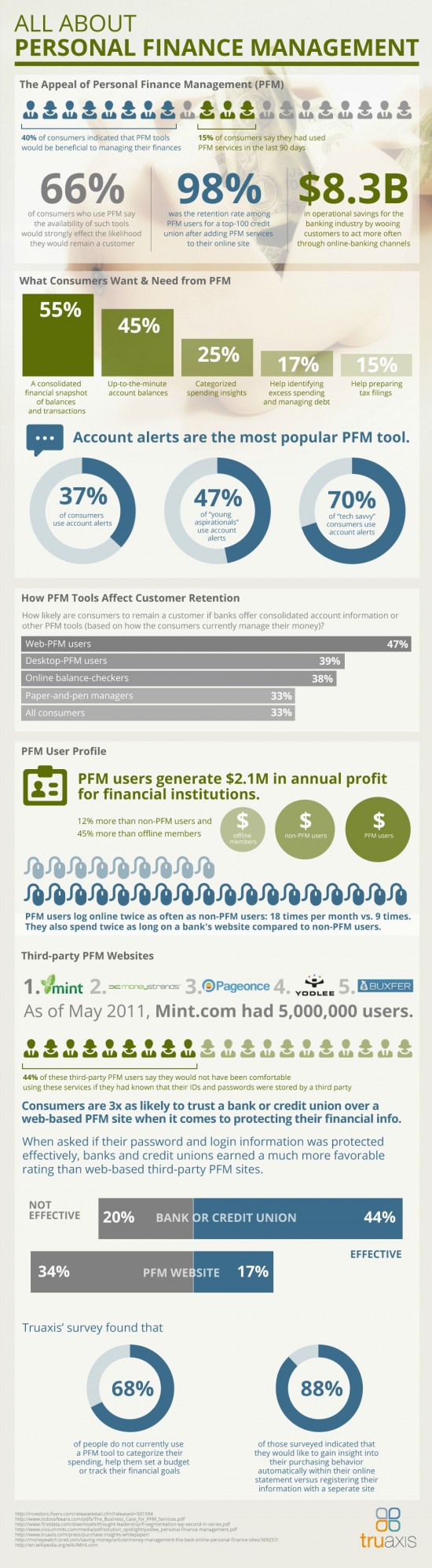
To build deeper relationships with their clients and customers, financial advisors, wealth managers, brokerages and banks need to move away from just being an account to store money – and more towards helping their customers take control of their finances. Adding personal financial management (PFM) tools are a great way to start.

Right now, medical professional clients and many customers, are turning to third party sites to help them with their finances. But, a recent Javelin reports shows that customers are 3-x as likely to trust a bank with these services.

Below are some reasons why FAs, WMs and SBs should consider providing PFM capabilities (such as StatementRewards’ Purchase Insights) to physicians and lay customers.

Source: truaxis.com

Conclusion

And so, your thoughts and comments on this ME-P are appreciated. FAs – please advise? Please review our top-left column, and top-right sidebar materials, links, URLs and related websites, too. Then, subscribe to the ME-P. It is fast, free and secure.

Link: http://feeds.feedburner.com/HealthcareFinancialsthePostForcxos

Speaker: If you need a moderator or speaker for an upcoming event, Dr. David E. Marcinko; MBA – Publisher-in-Chief of the Medical Executive-Post – is available for seminar or speaking engagements. Contact: MarcinkoAdvisors@msn.com

Our Other Print Books and Related Information Sources:

Health Dictionary Series: http://www.springerpub.com/Search/marcinko

Practice Management: http://www.springerpub.com/product/9780826105752

Physician Financial Planning: http://www.jbpub.com/catalog/0763745790

Medical Risk Management: http://www.jbpub.com/catalog/9780763733421

Healthcare Organizations: www.HealthcareFinancials.com

Physician Advisors: www.CertifiedMedicalPlanner.com

Subscribe Now: Did you like this Medical Executive-Post, or find it helpful, interesting and informative? Want to get the latest ME-Ps delivered to your email box each morning? Just subscribe using the link below. You can unsubscribe at any time. Security is assured.

Link: http://feeds.feedburner.com/HealthcareFinancialsthePostForcxos

Sponsors Welcomed: And, credible sponsors and like-minded advertisers are always welcomed.

Link: https://healthcarefinancials.wordpress.com/2007/11/11/advertise

Product DetailsProduct DetailsProduct Details

Product Details Product Details

Product Details

Are “Financial Advisors” True Professionals or Employed Sales Representatives for Retail Products?

Join Our Mailing List 

White House Sides With Sales Reps On Overtime

Dr. David Edward Marcinko MBA CMP™

[ME-P Editor-in-Chief]

www.CertifiedMedicalPlanner.org

As the US Supreme Court is preparing to review the contentious debate about overtime pay for sales reps, the US Solicitor General has filed an amicus curaie, or friend of the court brief, and sided with pharma reps. The move is not surprising, given that the US Department of Labor has, several times, taken a similar step in federal courts around the country where cases were heard.

Far Reaching Implications?

The review is expected to have far-reaching implications for the pharmaceutical industry, and I believe the financial services industry, as well. Why?

Both sectors have been fighting a growing number of cases nationwide over the past several years, but has had mixed results as the issue has continually divided the courts. At the same time, drug makers, Wall Street and broker-dealers have been laying off thousands of sales reps – “financial advisors”, “wealth managers” and stock brokers – as they try to cut costs and alter their business models to prepare for some level of fiduciary accountability.

The Issue

At issue is whether drug reps, and FAs by extension, are exempt from overtime provisions of the Fair Labor Standards Act. The FLSA overtime compensation requirement does not apply to employees who work as outside salespeople, but the law does require employers to pay overtime for hours worked beyond 40 hours a week, unless a FLSA exemption applies.

Link: http://www.pharmalot.com/2012/02/white-house-sides-with-sales-reps-on-overtime/?utm_source=feedburner&utm_medium=feed&utm_campaign=Feed%3A+Pharmalot+%28Pharmalot%29

My Issue

And so, does this mean that most “financial advisors” are really stock-brokers and product pushers after all? At least in medicine, we doctors know what a pharmaceutical rep is – and we understand his/ her roll is to push pharma products, DME and drug sales.

Shouldn’t a salesman – be a salesman – and an “advisor” – be an RIA or RIA rep? I don’t often agree with the White House, but I do on this one.

FAs can’t be independent client advocates – and employees – at the same time

Now, isn’t it time for the public to know that the vast majority of FAs are just salesmen [still SBs], too? Just selling retail financial products to doctors and others; not drugs. After all, FAs can’t be independent client advocates – and employees – at the same time.  And, it appears with this potential filing and ruling; that they truly wish to be the later. Now FAs, admit it!

Assessment

Why do you think FAs are licensed as “registered representatives”? Rarely; a fiduciary among them!

Conclusion

Your thoughts and comments on this ME-P are appreciated. Feel free to review our top-left column, and top-right sidebar materials, links, URLs and related websites, too. Then, subscribe to the ME-P. It is fast, free and secure.

Speaker: If you need a moderator or speaker for an upcoming event, Dr. David E. Marcinko; MBA – Publisher-in-Chief of the Medical Executive-Post – is available for seminar or speaking engagements. Contact: MarcinkoAdvisors@msn.com

OUR OTHER PRINT BOOKS AND RELATED INFORMATION SOURCES:

Product Details  Product Details

Comprehensive Financial Planning Strategies for Doctors and Advisors: Best Practices from Leading Consultants and Certified Medical Planners™

The One-Woman Physician Investors Should Not Trust

Join Our Mailing List

Why We Should “Run” from the SEC’s Mary Schapiro

By Dr. David Edward Marcinko MBA CMP™

[Publisher-in-Chief]

OK, I’ve opined about fiduciary accountability for stock brokers, FAs and FPs – as well as Mary Schapiro [Chairman of the SEC] before – on this ME-P. And usually, in not so glowing terms!

But now, Mary really chaps my ethical and linguistic sensibilities.

Why I’m So P…… Off!

According to Bloomberg, and Advisor One [a financial services industry trade magazine], the chairwoman is considering something called the “business model neutral” rule that retains proprietary financial products, and brokerage sales commissions.

This concept of ‘business neutral’ is the one sought by many in the brokerage and insurance industry in order to redefine the term ‘fiduciary’ as an enhanced form of ‘suitability’ with opt-out provisions.

But, it is not sought by me, and should not be accepted by physicians.

Definitions

Suitability Rule – According to the Free Dictionary:

A stated or implied requirement by a regulatory body that a broker or investment adviser must reasonably believe that a certain investment decision will benefit a client before making a recommendation to him/her. That is, the broker or investment adviser must act in good faith, and may not knowingly recommend bad investments. Different regulators and self-regulating organizations incorporate suitable rules in different places in their bylaws. Two commonly referenced suitability rules are Rule 2310 for the Financial Industry Regulatory Authority and Rule 405 for the NYSE. See also: Due diligence, Prudent-person rule, Twisting.

Fiduciary Rule – According to the Free Dictionary:

A uniform standard for financial advisors that requires them to put retail customer interests ahead of their own financial interests.

This is clearly a higher duty [level of care] than suitability. Insurance agents, stock brokers, BDs and most “financial advisors” hate it.

Link: http://www.advisorone.com/2011/12/09/reaction-to-schapiro-comments-on-fiduciary-rule-ar?ref=hp

“Suitability on Steroids”

Some pundits suggest we think of this new “business model neutral” rule as “suitability on steroids.”

However, as most of us in medicine know, steroids are not a panacea and are typically used as a quick fix for short term gain, only.

Otherwise, the excessive use of anabolic steroids is bad for our physical health. Just like Mary Schapiro is bad for our fiscal health. But, a Certified Medical Planner™ is a fiduciary at all times http://www.CertifiedMedicalPlanner.org

More: Enter the CMPs

Assessment       

And so, your thoughts and comments on this ME-P are appreciated. I was an insurance agent and certified financial planner for almost 15 years [Series 7, 63 and 65] before I resigned all – in disgust over the fiduciary flap.

Doctors are fiduciaries. I am a fiduciary, a doctor, and a financial advisor. Shouldn’t all physician-investors demand same from their own financial advisors [NASD-FINRA, RIAs, RIA-Reps]?

But hey – I’m just a medical provider.

Conclusion

Your thoughts and comments on this ME-P are appreciated. Feel free to review our top-left column, and top-right sidebar materials, links, URLs and related websites, too. Then, subscribe to the ME-P. It is fast, free and secure.

Speaker: If you need a moderator or speaker for an upcoming event, Dr. David E. Marcinko; MBA – Publisher-in-Chief of the Medical Executive-Post – is available for seminar or speaking engagements. Contact: MarcinkoAdvisors@msn.com

OUR OTHER PRINT BOOKS AND RELATED INFORMATION SOURCES:

Product DetailsProduct DetailsProduct Details

Financial Planning MDs 2015

Comprehensive Financial Planning Strategies for Doctors and Advisors: Best Practices from Leading Consultants

Front Matter with Foreword by Jason Dyken MD MBA

[BY DOCTORS – FOR DOCTORS – PEER REVIEWED – NICHE FOCUSED]

***

Of Interest to MD and FA Philanthropists

About The New Center on Philanthropy

By Staff Reporters

Join Our Mailing List 

Major philanthropists and those successful doctors [and their patients], and affluent financial advisors [and their clients], about to join their ranks increasingly want information about which organizations with causes matching their interests are receiving large gifts, where their peers are giving and where gaps in funding may exist.

Now, they have a new tool that can help them decide where, when and why to make gifts of $1 million or more.

Last week, Indiana University’s Center on Philanthropy rolled out a searchable database of more than 60,000 large, publicly reported gifts it has compiled since 2000. The Million Dollar List covers gifts from individuals, foundations and corporations.

What it is – How it works

The Center on Philanthropy at the Indiana University is a leading academic center dedicated to increasing the understanding of philanthropy and improving its practice through research, teaching, public service and public affairs. Founded in 1987, the Center is a part of the Indiana University School of Liberal Arts at Indiana University-Purdue University Indianapolis.

The Center was founded as the result of the convergence of two ideas.

First, some people recognized the need to professionalize fundraising and to create a permanent, university-based home for The Fund Raising School. Second, others were interested in building knowledge about the philanthropy field through an inter-disciplinary approach grounded in the liberal arts. These ideas, and the goal of bringing scholars and practitioners together to learn from each other, are the founding principles that remain the bedrock of their mission.

Today, the Center says it boasts a thriving research program that informs the work of nonprofit professionals throughout the world. Academic programs related to philanthropy and nonprofit management are attracting from a diverse group of highly talented students. And, The Fund Raising School continues to be the premier international university-based education and training program for fundraisers.

Assessment

So, give em’ a click, and tell us what you think?

http://www.philanthropy.iupui.edu/About/center_overview.aspx

Conclusion

And so, your thoughts and comments on this ME-P are appreciated. Feel free to review our top-left column, and top-right sidebar materials, links, URLs and related websites, too. Then, subscribe to the ME-P. It is fast, free and secure.

Link: http://feeds.feedburner.com/HealthcareFinancialsthePostForcxos

Speaker: If you need a moderator or speaker for an upcoming event, Dr. David E. Marcinko; MBA – Publisher-in-Chief of the Medical Executive-Post – is available for seminar or speaking engagements. Contact: MarcinkoAdvisors@msn.com

Our Other Print Books and Related Information Sources:

Health Dictionary Series: http://www.springerpub.com/Search/marcinko

Practice Management: http://www.springerpub.com/product/9780826105752

Physician Financial Planning: http://www.jbpub.com/catalog/0763745790

Medical Risk Management: http://www.jbpub.com/catalog/9780763733421

Healthcare Organizations: www.HealthcareFinancials.com

Physician Advisors: www.CertifiedMedicalPlanner.com

Subscribe Now: Did you like this Medical Executive-Post, or find it helpful, interesting and informative? Want to get the latest ME-Ps delivered to your email box each morning? Just subscribe using the link below. You can unsubscribe at any time. Security is assured.

Link: http://feeds.feedburner.com/HealthcareFinancialsthePostForcxos

Sponsors Welcomed: And, credible sponsors and like-minded advertisers are always welcomed.

Link: https://healthcarefinancials.wordpress.com/2007/11/11/advertise

Product DetailsProduct DetailsProduct Details       

Product Details  Product Details

   Product Details

“Purpose over Pay” for Financial Advisors? [A Voting and Opinion Poll]

Salary versus a “Seat at the Table”
 Join Our Mailing List   

Currently, there is much buzz in healthcare about physicians looking to take on greater leadership roles and move beyond traditional patient care responsibilities. And, there are many doctors with the inclination and ability to rise to the occasion; despite diminished salaries, fringe benefits and other financial incentives going forward in the era of health care reform.

The Financial Services Industry

But, is this the case in the [reforming] financial services sector in the era of Dodd-Frank, etc? Of course, physicians are a special class of “learned” professionals, and Registered Representatives [RRs], stock-brokers and/or related financial advisors [FAs]; not so much!

And so, do you think FAs are willing to delay immediate compensation gratification for a “seat at the leadership” table in their respective industry sub-sectors?

IOW: Are FAs willing to accept “purpose-over-pay” like some doctors and physician executives, today?

Speaker: If you need a moderator or speaker for an upcoming event, Dr. David E. Marcinko; MBA – Publisher-in-Chief of the Medical Executive-Post – is available for seminar or speaking engagements. Contact: MarcinkoAdvisors@msn.com

Product DetailsProduct DetailsProduct Details       

Product Details  Product Details

   Product Details

Call for Authors, Contributors, Opinions and Essays

The Network and Forum for Doctors, and their Financial Advisors and Management Consultants

By Ann Miller RN MHA

[Executive-Director

MarcinkoAdvisors@msn.com

Join Our Mailing List 

The Medical Executive-Post publishes material that is practical, versatile, and user-friendly for our target audience in the integrated healthcare industrial and financial services complex. So, if you have an essay, article, op-ed piece or post proposal on a topic that would benefit our readers and subscribers, we would like to hear from you.

Topic Specificity

Or, become part of our ME-P search team and get published for fun and profit! We’ll give you an occasional topic, and you tell us how your life and medical or financial advisory practice has been affected by it. Just send in your best stories and musings in essay form.

Examples:

Doctors: tell us your most interesting Health 2.0 story from the patient clinical examination room.

Financial Advisors: tell us your most interesting Web 2.0 story from a physician-client engagement.

Conclusion

Your thoughts and comments on this ME-P are appreciated. Feel free to review our top-left column, and top-right sidebar materials, links, URLs and related websites, too. Then, subscribe to the ME-P. It is fast, free and secure.

Link: http://feeds.feedburner.com/HealthcareFinancialsthePostForcxos

Speaker: If you need a moderator or speaker for an upcoming event, Dr. David E. Marcinko; MBA – Publisher-in-Chief of the Medical Executive-Post – is available for seminar or speaking engagements. Contact: MarcinkoAdvisors@msn.com

OUR OTHER PRINT BOOKS AND RELATED INFORMATION SOURCES:

DICTIONARIES: http://www.springerpub.com/Search/marcinko
PHYSICIANS: www.MedicalBusinessAdvisors.com
PRACTICES: www.BusinessofMedicalPractice.com
HOSPITALS: http://www.crcpress.com/product/isbn/9781466558731
CLINICS: http://www.crcpress.com/product/isbn/9781439879900
BLOG: www.MedicalExecutivePost.com
FINANCE: Financial Planning for Physicians and Advisors
INSURANCE: Risk Management and Insurance Strategies for Physicians and Advisors

Product DetailsProduct DetailsProduct Details

Product Details  Product Details

   Product Details 

Do Physician Investors and/or their Financial Advisors Use and Abuse Modern Portfolio Theory?

Join Our Mailing List

The Cultural Clash of Passivity versus Activity

By Dr. David Edward Marcinko MBA CMP™

www.CertifiedMedicalPlanner.org

[Publisher-in-Chief]

Ninety-three year old Professor Harry Markowitz PhD, coined the phrase “modern portfolio theory” [MPT] and concluded that investors are rewarded for taking certain risks but may not get rewarded for taking others. He developed the notion of an “efficient frontier” for different groups of asset classes and the idea that the higher the expected return, the higher the risk.

The Brinson, Hood, Beebower Study

In their 1986 study, Brinson, Hood, and Beebower attempted to measure three investment activities: (1) asset class selection, (2) market timing, and (3) security selection. They concluded that asset class selection had, by far, the greatest effect on the risk/return characteristics of a portfolio (some 93.6% of performance). But the most startling conclusion was that, if left alone, investment policy would have produced a higher average return than when market timing and security selection were taken into account. These latter factors actually reduced the average return over a 10-year period.

The Fama & French Study

In 1982, Fama and French found that three factors—market exposure, company size, and “value”—were systematic risks that explained the vast majority of equity market returns. “U.S. small-cap value stocks” is therefore a discreet asset class possessing all three of these systematic risks.

Most physicians and financial advisors are aware of modern portfolio theory but some fail to apply the principles to actual investor situations. Three examples: (1) using erroneous asset-class definitions, (2) using actively managed funds, and (3) relying on market timing. The abuse of modern portfolio theory can create portfolios loaded with latent risks that, on the surface, appear benign.

Not all Agree

Not everyone is in agreement with modern portfolio theory. Some detractors agree in principle, recognizing, for example, that “value” stocks have had higher returns than “growth” issues but they cite the cause as “mispricing” rather than risk.

Assessment

Institutional investors have gradually increased their commitment to passive strategies from virtually zero 20 years ago to 30% or more in the last decade [Think: Vanguard].

Individual and physician investors, on the other hand, have less than a 5% commitment.

Note: “Modern Portfolio Theory: Fact or Fiction?,” Gerard F. Stellwagen and Robin P. LaCouture, NAPFA Advisor, July 1997, pp. 1–7, National Association of Personal Financial Advisors for Fee-Only Financial Advisors.

Conclusion

Your thoughts and comments on this ME-P are appreciated. Feel free to review our top-left column, and top-right sidebar materials, links, URLs and related websites, too. Then, subscribe to the ME-P. It is fast, free and secure.

Link: http://feeds.feedburner.com/HealthcareFinancialsthePostForcxos

Speaker: If you need a moderator or speaker for an upcoming event, Dr. David E. Marcinko; MBA – Publisher-in-Chief of the Medical Executive-Post – is available for seminar or speaking engagements. Contact: MarcinkoAdvisors@msn.com

OUR OTHER PRINT BOOKS AND RELATED INFORMATION SOURCES:

DICTIONARIES: http://www.springerpub.com/Search/marcinko
PHYSICIANS: www.MedicalBusinessAdvisors.com
PRACTICES: www.BusinessofMedicalPractice.com
HOSPITALS: http://www.crcpress.com/product/isbn/9781466558731
CLINICS: http://www.crcpress.com/product/isbn/9781439879900
ADVISORS: www.CertifiedMedicalPlanner.org
PODIATRISTS: www.PodiatryPrep.com
BLOG: www.MedicalExecutivePost.com
FINANCE: Financial Planning for Physicians and Advisors
INSURANCE: Risk Management and Insurance Strategies for Physicians and Advisors

Product DetailsProduct DetailsProduct Details

Product Details  Product Details

   Product Details 

How Investors View Financial Advisors?

ADVERTISEMENT

A Public Opinion Survey

Dr. David Edward Marcinko MBA CMP™

www.CertifiedMedicalPlanner.org

Boston-based Dalbar company is a surveyor of financial information for the mutual fund industry. About a decade ago Dalbar released a nine-part survey on personal financial advice to measure the level of demand for advice that existed back then and to ascertain consumer preferences, expectations, beliefs, and sources for personal financial advice.

Now, please allow me to suggest that all FA colleagues use the results to evaluate your current practices and planed initiatives to determine how current thinking must change to meet today’s and tomorrow’s needs. And so, we now share some of the results of this survey.

Customer Expectations of Personal Financial Advisors

• Investors and prospective investors expect their personal financial advisors to educate them about investments and to minimize the taxes they pay.

• Unrealistic expectations present a major problem to personal financial advisors. The expectations for advisors to produce the highest returns, prevent investing mistakes, and avoid losses set the stage for disappointment in the future, thus undermining the public trust of advisors.

• Advertising, training, compensation, and industry practice is out of step with customer expectations. This survey indicates that emphasis in all these areas should be directed to vastly simplify education, increase use of tax saving strategies, and help investors to define financial goals.

Demand for Personal Financial Advisors

• Of the consumers surveyed, 89% report the need for a personal financial advisor for assets of $100,000 or more. This contradicts the notion that a growing number of people prefer to do-it-themselves. This finding presents the advisor with an opportunity: The demand for advice is higher than the market would suggest.

• The demand for advice, as measured by the Advice Demand Index (ADI) is highest among those who prefer to pay for advice through commissions. The ADI is highest for commission-payers at 93%, followed by those who prefer to pay a percentage of their assets (92.5%). Flat-fee payers have the lowest demand for advice, at just 88.7%.

Importance of Personal Financial Advice Functions

• Consumers unanimously agree that the ability of their advisor to provide clear explanations of investment alternatives, to be available when needed, and to keep them informed of their investment status are the most important financial advice functions.

• Consumers revealed that the delivery of a comprehensive written financial plan is the least important function that their advisor performs.

Assessment

This report was not physician specific so one wonders how applicable it is to medical providers; especially the “no-desire” for a financial plan part?

Conclusion

And so, your thoughts and comments on this ME-P are appreciated. Are the results still valid today; or after the 2008-09 “flash crash”? Feel free to review our top-left column, and top-right sidebar materials, links, URLs and related websites, too. Then, subscribe to the ME-P. It is fast, free and secure.

Speaker: If you need a moderator or speaker for an upcoming event, Dr. David E. Marcinko; MBA – Publisher-in-Chief of the Medical Executive-Post – is available for seminar or speaking engagements. Contact: MarcinkoAdvisors@msn.com and http://www.springerpub.com/Search/marcinko

Get our Widget: Get this widget!

Our Other Print Books and Related Information Sources:

Health Dictionary Series: http://www.springerpub.com/Search/marcinko

Practice Management: http://www.springerpub.com/product/9780826105752

Physician Financial Planning: http://www.jbpub.com/catalog/0763745790

Medical Risk Management: http://www.jbpub.com/catalog/9780763733421

Healthcare Organizations: www.HealthcareFinancials.com

Physician Advisors: www.CertifiedMedicalPlanner.com

Subscribe Now: Did you like this Medical Executive-Post, or find it helpful, interesting and informative? Want to get the latest ME-Ps delivered to your email box each morning? Just subscribe using the link below. You can unsubscribe at any time. Security is assured.

Link: http://feeds.feedburner.com/HealthcareFinancialsthePostForcxos

Sponsors Welcomed: And, credible sponsors and like-minded advertisers are always welcomed.

Link: https://healthcarefinancials.wordpress.com/2007/11/11/advertise

Product Details  Product Details

Are Financial Services “Professional” Certifications Important? [A Poll]

Join Our Mailing List

Often of Murky Respect – Usually Confusing to Clients

By Dr. David Edward Marcinko MBA, CMP™

http://www.CertifiedMedicalPlanner.org

[Editor-in-Chief]

There are more than 100 “certifications” which represent the often nebulous field of “financial advisory, or planning credentials” that presently exist in the market place today.

Some of these “professional” designations are awarded to individuals in the financial planning or financial “advisory” space after [some] diligent study, and [often not so] arduous testing; others not so.

And so, are such “credentials” more important to you, or your clients; pleas opine.

More:

Disclaimer: I am a reformed Certified Financial Planner®, Series 7 [stock-broker], 63 and 65 license holder, and RIA representative who also held all applicable insurance and security licenses.

Product DetailsProduct DetailsProduct Details

Product Details  Product Details

Comprehensive Financial Planning Strategies for Doctors and Advisors: Best Practices from Leading Consultants and Certified Medical Planners(TM)

A Brief History of the ME-P

Enhancing Health 2.0 Connectivity for Physicians and their Financial Advisors

By Staff Reporters

Join Our Mailing List 

The Medical Executive-Post [ME-P] was launched in 2006, and was a resounding success. We first went online in October 2006 with an overwhelmingly positive response. Readers and subscribers alike reported finding it a credible source of information with more than half saying the information was far new to them. Our parent company remains: www.MedicalBusinessAdvisors.com

Our Research

In additional, our internal research revealed:

  • 85% of those surveyed considered practice-related, non-clinical information very important to them.
  • 82% heavily favored solutions and essays to specific needs versus general editorial content.
  • 77% found practice management information integrated with financial planning content very unique.
  • 68% felt a journal or newspaper presentation as increasingly irrelevant.

Physician and Financial Advisory Books Launched Since Inception

Product DetailsProduct DetailsProduct Details       

Product Details  Product Details

   Product Details 

Healthcare Organizations Financial Journal: www.HealthcareFinancials.com

Medical Practice Management CD-ROMs

Personal Financial and Medical Management Consulting Services

Link: https://medicalexecutivepost.com/schedule-a-consultation/

Certification Education for Financial Advisors and Management Consultants

Link: www.CertifiedMedicalPlanner.com

More about Us

Link: https://medicalexecutivepost.com/2007/10/08/hello-world/

Advertise with Us

Link: https://medicalexecutivepost.com/2007/11/11/advertise/

Sponsor Us                                             

Link: https://healthcarefinancials.wordpress.com/2007/11/11/advertise

Speaker: If you need a moderator or speaker for an upcoming event, Dr. David E. Marcinko; MBA – Publisher-in-Chief of the Medical Executive-Post – is available for seminar or speaking engagements. Contact: MarcinkoAdvisors@msn.com and http://www.springerpub.com/Search/marcinko

Get our Widget: Get this widget!

Our Other Print Books and Related Information Sources:

Health Dictionary Series: http://www.springerpub.com/Search/marcinko

Practice Management: http://www.springerpub.com/product/9780826105752

Physician Financial Planning: http://www.jbpub.com/catalog/0763745790

Medical Risk Management: http://www.jbpub.com/catalog/9780763733421

Healthcare Organizations: www.HealthcareFinancials.com

Physician Advisors: www.CertifiedMedicalPlanner.com

Subscribe Now: Did you like this Medical Executive-Post, or find it helpful, interesting and informative? Want to get the latest ME-Ps delivered to your email box each morning? Just subscribe using the link below. You can unsubscribe at any time. Security is assured.

Link: http://feeds.feedburner.com/HealthcareFinancialsthePostForcxos

Events Planner: November 2010

ADVERTISEMENT

Events-Planner: NOVEMBER 2010

By Staff Writers

“Keeping track of important health economics and financial industry meetings, conferences and summits”

Welcome to this issue of the Medical Executive-Post and our Events-Planner. It contains the latest information on conferences, news, and relevant resources in healthcare finance, economics, research and development, business management, pharmaceutical pricing, and physician/entity reimbursement!  Watch for a new Events-Planner each month.

First, a little about us! The Medical Executive-Post is still a relative newcomer. But today, we have almost 175,000 visitors and readers each month from all over the country, in addition to our growing subscriber base. We have been a successful collaborative effort, thanks to your contributions.  As a result, we are adding new resources daily. And, we hope the website continues to provide the best place to go for journals, books, conferences, educational resources, tools, and other things you need to establish the value your healthcare consulting and financial advisory intervention.

So, enjoy the Medical Executive-Post and this monthly Events-Planner with our compliments. 

A Look Ahead this Month: Now, the important dates:

November 07: World Congress Health Innovation Meeting. Alexandra, VA

November 08: Patient Centered Medical Homes and ACOs, Hartford, CT

November 08: Medical Compliance Meeting in a Post Reform World, Baltimore, MD

November 11: Conducting Effective internal Medical Investigations, HCCA, Orlando, FL

Please send in your meetings and dates for listing in the next issue of our Events-Planner.

MarcinkoAdvisors@msn.com

Speaker: If you need a moderator or speaker for an upcoming event, Dr. David E. Marcinko; MBA – Publisher-in-Chief of the Executive-Post – is available for seminar or speaking engagements. Contact: MarcinkoAdvisors@msn.com 

Subscribe Now: Did you like this Medical Executive-Post, or find it helpful, interesting and informative? Want to get the latest E-Ps delivered to your email box each morning? Just subscribe using the link below. It’s free. You can unsubscribe at any time. Security is assured.

Link: http://feeds.feedburner.com/HealthcareFinancialsthePostForcxos

Product DetailsProduct DetailsProduct Details       

Product Details  Product Details

   Product Details 

Calling All Financial Advisors, Brokers, EAs, CFPs, CPAs, CFAs and RIAs to Contribute

Contribute Your Insights to the ME-P

By Ann Miller RN MHA

[Executive-Director]

Join Our Mailing List 

You are cordially invited to contribute to the ME-P; one of the nation’s fastest growing professional networks for financial advisors, accountants, stock brokers, RIAs and their physician and medical professional clients.

Send in a Post or Comment

Original posts or comments are encouraged.

Read why: https://medicalexecutivepost.com/why-post-with-us/

Sample post: https://medicalexecutivepost.com/2010/06/10/current-retirement-investment-options-for-physicians/

Assessment

So, send in your original posts or comments, today!

Become a thought-leader for the ME-P.

[picapp align=”none” wrap=”false” link=”term=wall+street&iid=292970″ src=”http://view1.picapp.com/pictures.photo/image/292970/new-york-city-street-signs/new-york-city-street-signs.jpg?size=500&imageId=292970″ width=”320″ height=”480″ /]

Address: MarcinkoAdvisors@msn.com

Get our Widget: Get this widget!

Our Other Print Books and Related Information Sources:

Health Dictionary Series: http://www.springerpub.com/Search/marcinko

Practice Management: http://www.springerpub.com/product/9780826105752

Physician Financial Planning: http://www.jbpub.com/catalog/0763745790

Medical Risk Management: http://www.jbpub.com/catalog/9780763733421

Healthcare Organizations: www.HealthcareFinancials.com

Physician Advisors: www.CertifiedMedicalPlanner.com

Subscribe Now: Did you like this Medical Executive-Post, or find it helpful, interesting and informative? Want to get the latest ME-Ps delivered to your email box each morning? Just subscribe using the link below. You can unsubscribe at any time. Security is assured.

Link: http://feeds.feedburner.com/HealthcareFinancialsthePostForcxos

Sponsors Welcomed: And, credible sponsors and like-minded advertisers are always welcomed.

Link: https://healthcarefinancials.wordpress.com/2007/11/11/advertise

Product DetailsProduct DetailsProduct Details       

Product Details  Product Details

Take Our ME-P Reader Survey

Tell Us What You Think?

By Ann Miller RN MHA

[Executive-Director]

MarcinkoAdvisors@msn.com

We believe we have the most intelligent readers and subscribers online today!

And so, please take a few minutes and kindly let us know how and why you like or dislike this blog. Your opinions and feedback are very important to us. Please use the comment space far below.

Masthead: https://medicalexecutivepost.com/2007/11/28/publication-mast-head/

ME-P Advertising

Advertisements are vetted and accepted on this blog; but not approved. Interested advertisers – please contact us. But remember, advertisements on this blog are just advertisements. They are not recommendations or endorsements.

Ads: https://medicalexecutivepost.com/2007/11/11/advertise/

ME-P Note to Publicists

Publicists; please don’t add us to your e-mail distribution lists without asking first. Unsolicited commercial e-mails violate the federal CAN-SPAM Act. Each violation can subject your to a personal fine up to $11,000. We will send one gentle reminder on first violation. A second offense will be reported to the FTC without exception.

However, you may contact us at 770.448.0769 for PR and related promotional activities.

Our Medical Business Textbooks:

Link: http://www.springerpub.com/Search/marcinko

Our Office Business Management CD ROMs:

Link: https://medicalexecutivepost.com/office-checklists-on-cd-rom/

Link: www.HealthcareFinancials.com

Link: www.CertifiedMedicalPlanner.com

Our Financial Planning Handbooks for Doctors

Link: http://www.jblearning.com/catalog/searchresults.aspx [Search: “Marcinko”]

ME-P Disclaimer

We are not all doctors, financial advisors or medical management consultants. But, we do have informed, experienced and personal opinions; sometimes strong, ignorant, or biased. Everything you read here on this blog is the author’s personal opinion, not specific managerial or financial advice. And, we are by no means an expert on anything. We don’t intend to mislead, but our facts, figures, and calculations can be incomplete, inaccurate or plain wrong. The word “you” in a post doesn’t mean literally you, the reader. In most cases it means the author. Please be sure to double check everything if you decide to act on anything we wrote about. The bottom line is this: please don’t blame the ME-P for anything you do.

About: https://medicalexecutivepost.com/2007/10/08/hello-world/

Speaker: If you need a moderator or speaker for an upcoming event, Dr. David E. Marcinko; MBA – Publisher-in-Chief of the Medical Executive-Post – is available for seminar or speaking engagements. Contact: MarcinkoAdvisors@msn.com and http://www.springerpub.com/Search/marcinko

Get our Widget: Get this widget!

Our Other Print Books and Related Information Sources:

Health Dictionary Series: http://www.springerpub.com/Search/marcinko

Practice Management: http://www.springerpub.com/product/9780826105752

Physician Financial Planning: http://www.jbpub.com/catalog/0763745790

Medical Risk Management: http://www.jbpub.com/catalog/9780763733421

Healthcare Organizations: www.HealthcareFinancials.com

Physician Advisors: www.CertifiedMedicalPlanner.com

Subscribe Now: Did you like this Medical Executive-Post, or find it helpful, interesting and informative? Want to get the latest ME-Ps delivered to your email box each morning? Just subscribe using the link below. You can unsubscribe at any time. Security is assured.

Link: http://feeds.feedburner.com/HealthcareFinancialsthePostForcxos

Sponsors Welcomed:  And, credible sponsors and like-minded advertisers are always welcomed.

Link: https://healthcarefinancials.wordpress.com/2007/11/11/advertise

NOW: TELL US WHAT YOU THINK – IN THE COMMENT BOX BELOW

On the Credibility of Financial Experts

ADVERTISEMENT

Keys to Protecting your Financial Expert’s Credibility in Court

By Trugman Valuation Associates

Join Our Mailing List

Dear Valued Friends and ME-P Colleagues

We hope this e-mail finds you happy and healthy! We have attached our most recent newsletter for your perusal and hope that you will find something of interest in it.

Link: Trugman Summer 2010

Assessment

All of us at Trugman Valuation Associates wish you and yours a happy and safe 4th of July and remainder of the summer.

www.trugmanvaluation.com  

Product DetailsProduct DetailsProduct Details    

Conclusion

Feel free to comment and review our top-left column, and top-right sidebar materials, links, URLs and related websites, too. Then, be sure to subscribe to the ME-P. It is fast, free and secure.

Get our Widget: Get this widget!

Our Other Print Books and Related Information Sources:

Practice Management: http://www.springerpub.com/prod.aspx?prod_id=23759

Physician Financial Planning: http://www.jbpub.com/catalog/0763745790

Medical Risk Management: http://www.jbpub.com/catalog/9780763733421

Healthcare Organizations: www.HealthcareFinancials.com

Health Administration Terms: www.HealthDictionarySeries.com

Physician Advisors: www.CertifiedMedicalPlanner.com

Subscribe Now: Did you like this Medical Executive-Post, or find it helpful, interesting and informative? Want to get the latest ME-Ps delivered to your email box each morning? Just subscribe using the link below. You can unsubscribe at any time. Security is assured.

Link: http://feeds.feedburner.com/HealthcareFinancialsthePostForcxos

Sponsors Welcomed: And, credible sponsors and like-minded advertisers are always welcomed.

Link: https://healthcarefinancials.wordpress.com/2007/11/11/advertise

Survey for Financial Advisors and Industry Leaders

Tell Us What You Think!

By Staff Reporters

Join Our Mailing List 

Your Subjective Impressions

The Medical Executive-Post would like to hear your insight on the most pressing issues facing financial advisors, accountants, stock-brokers, insurance agents and financial services industry leaders. Your insights and comments will aid us in our continued commitment to develop content and features that best fit your needs, and the needs of the organizations you lead.

www.CertifiedMedicalPlanner.com

Assessment

And so, as a member of the financial services sector, what keeps you up at night? Is it controlling costs? Obtaining and retaining quality advisor, brokers and agents? Implementing fiduciary accountability and/or quality initiatives and the flight to RIAs, etc? How about the recession or housing bust? Or, our favorite … difficult physician clients?

Plan

Just opine and tell us what you think!

Speaker: If you need a moderator or speaker for an upcoming event, Dr. David E. Marcinko; MBA – Publisher-in-Chief of the Medical Executive-Post – is available for seminar or speaking engagements. Contact: MarcinkoAdvisors@msn.com

Get our Widget: Get this widget!

Our Other Print Books and Related Information Sources:

Practice Management: http://www.springerpub.com/prod.aspx?prod_id=23759

Physician Financial Planning: http://www.jbpub.com/catalog/0763745790

Medical Risk Management: http://www.jbpub.com/catalog/9780763733421

Healthcare Organizations: www.HealthcareFinancials.com

Health Administration Terms: www.HealthDictionarySeries.com

Physician Advisors: www.CertifiedMedicalPlanner.com

Subscribe Now: Did you like this Medical Executive-Post, or find it helpful, interesting and informative? Want to get the latest ME-Ps delivered to your email box each morning? Just subscribe using the link below. You can unsubscribe at any time. Security is assured.

Link: http://feeds.feedburner.com/HealthcareFinancialsthePostForcxos

Sponsors Welcomed

And, credible sponsors and like-minded advertisers are always welcomed.

Link: https://healthcarefinancials.wordpress.com/2007/11/11/advertise

Product Details  Product Details

Are Primary Care Doctors Becoming More Like Financial Advisors?

Hospitals [BDs] “versus” Family Practitioners [FAs]

By Dr. David Edward Marcinko; MBA, CMP™

[Editor-in-Chief]

The Big Mistake

Those who believe that hospitals need medical specialists like radiologists, pathologists and oncologists, more than primary care doctors, are mistaken. And, those doctors who believe that the majority of “financial advisors” work for their clients are also mistaken. Here’s why in analogy format.

Why Hospitals Need PCPs

Hospitals generally need primary care physicians, more than specialists, because insurance contracts can be negotiated from a position of strength. A solid [large] primary care panel is a must-have for most insurance contracts. Just recall more than a decade ago – when PCPs were told of an emerging new renaissance where they would reign in place of the medical specialists? It never happened then, but it may happen now following healthcare reform.

Also, recall that the growth of fiduciary Registered Investment Advisors [RIAs] was slow until the stock market collapse of 2008. The pace is accelerating today with the political dawn of financial reform.

Patient’s Love their PCPs – Not their Hospitals

Moreover, please realize that few patients shop around for specialists, or hospitals, as they do for PCPs. OK, the OB-GYNs are unique in that they can play a dual role – as specialist and primary care doctor – just ask my wife who would rather eat nails than change her [female] female doctor.

Hospitals also need PCPs as referring physicians to generate business through their ERs, admissions department, outpatient centers, and/or by ordering invasive and non-invasive radiology tests, images, scans or laboratory tests, and/or sending patients to specialists who will do expensive procedures or surgery in their ORs, hospital and/or related facilities.

Doesn’t this sound like a stock broker working for his wire-house or broker-dealer?  

www.HealthcareFinancials.com

The PCP Loss Leader

Primary care is a loss-leader to hospitals as they make little money directly off medical practices, but can generate a great deal from the referrals and procedures the grass-roots docs generate; especially if they “play the game” like commissioned stockbrokers. And, consider brilliant medical diagnosticians, like TV’s Gregory House MD, and all those tests and procedures they can do – just to be sure!

No wonder that physician-executives and hospital administrators like Dr. Lisa Cuddy of the Princeton-Plainsboro Teaching Hospital, in New Jersey, love them.

Ditto for wire-house office managers and stock-brokerage OSJs [Office of Supervisory Jurisdiction] who love their “top producers”, brokers and FAs.

[picapp align=”none” wrap=”false” link=”term=operating+room&iid=288202″ src=”0284/9dbd59b4-ffc4-49c4-8b2e-3b568f74dc9d.jpg?adImageId=12660700&imageId=288202″ width=”380″ height=”253″ /]

Conflicted Missions

Unfortunately, this shifts the mission of PCPs from keeping patients out of the hospital – as physical and fiscal advocate – to sending them to the hospital as a “heavy admitter-referrer” with resulting perks and swagger.

Thus, “success” of the PCP from a hospital perspective is not to avoid referrals or costly procedures, but to gather them.  However, success is a matter of perspective that may be very unfortunate for the patient, state or federal payer, private employer and/or insurance company.

Financial Advisor Analog

Does this PCP conundrum sound like the conflicted situation found with many “independent” financial advisors today? Are PCPs becoming mere patient gatherers, or profit generating shills, for their hospitals, employers or healthcare systems? Where does one’s duty rest? Are we doctor’s or medical product/procedure merchants?

www.CertifiedMedicalPlanner.com

Conclusion

And so, your thoughts and comments on this ME-P are appreciated. Is this analogy correct, or not. Is it too harsh or too gentle – and for whom?

Feel free to review our top-left column, and top-right sidebar materials, links, URLs and related websites, too. Then, be sure to subscribe. It is fast, free and secure.

Link: http://feeds.feedburner.com/HealthcareFinancialsthePostForcxos

Speaker: If you need a moderator or speaker for an upcoming event, Dr. David E. Marcinko; MBA – Publisher-in-Chief of the Medical Executive-Post – is available for seminar or speaking engagements. Contact: MarcinkoAdvisors@msn.com

Get our Widget: Get this widget!

Our Other Print Books and Related Information Sources:

Practice Management: http://www.springerpub.com/prod.aspx?prod_id=23759

Physician Financial Planning: http://www.jbpub.com/catalog/0763745790

Medical Risk Management: http://www.jbpub.com/catalog/9780763733421

Healthcare Organizations: www.HealthcareFinancials.com

Health Administration Terms: www.HealthDictionarySeries.com

Physician Advisors: www.CertifiedMedicalPlanner.com

Subscribe Now: Did you like this Medical Executive-Post, or find it helpful, interesting and informative? Want to get the latest ME-Ps delivered to your email box each morning? Just subscribe using the link below. You can unsubscribe at any time. Security is assured.

Link: http://feeds.feedburner.com/HealthcareFinancialsthePostForcxos

Sponsors Welcomed

And, credible sponsors and like-minded advertisers are always welcomed.

Link: https://healthcarefinancials.wordpress.com/2007/11/11/advertise

Modern Retirement Planning and “Banding” for Physicians

Join Our Mailing List

The “AgeBander” Approach Presents a More Accurate Portrayal

[By Somnath Basu, PhD, MBA]

A convergence of mega-trends will forever change the face of retirement planning and raise its importance in the pantheon of physician retirement planning and most all employee benefits. Chief among them: longer life expectancy, advances in medicine, healthier lifestyles and mounting concern about years of abysmally low savings rates.

What it all Means in Practical Terms

What this means in practical terms for future retired physicians and most all retirees is the need for employers, service providers and financial advisers [FAs] to plot a more accurate and thoughtful course to planning for retirement that acknowledges the necessity of pursuing an “age-banded” approach. The idea behind this new approach is that individuals undergo various changes in lifestyles during retirement that last for finite or “age-banded”, periods.

Example:

For example, doctors like most people spend more time and money on leisurely activities early on in retirement, while health care needs dominate the latter years. Further, the costs associated with these lifestyles also change at differential inflation rates than from the basic inflation rate. While the basic inflation rate is about 3%, the U.S. Census Bureau noted that annual recreation costs increased at 7.14% though most of the 1990s. Health care costs also increased by much higher rates than the basic rate. Since the traditional model bundles all costs (including leisure, health care, basic living, etc) and extrapolates at the basic rate, it tends to underestimate retirement expenses. The traditional model’s “static” approach to retirement can have dangerous implications since it may lead to under-funded retirement plans, especially those earmarked for the critical years.

A Flawed Model?

In a research paper published by the Association for Financial Counseling and Planning Education, I detailed the reasons why an age-banded approach is superior to the traditional view of retirement planning. This new model provides for a more accurate portrayal of retirement expenses and an algorithm to calculate the income-replacement ratio, as well as smaller resource requirements and greater flexibility in managing risk. It also allows easier incorporation of long-term care insurance (LTCI) and significantly reduces funding needs. Indeed, the funding needs of a husband and wife who are both age 60 and presumably five years away from retirement are reduced by more than 16% and contributions for a 35-year-old single woman are reduced by 42% compared with previous approaches.

Traditional Retirement Planning Weaknesses

There are five inherent weaknesses to the traditional approach to retirement planning. They include the assumption that all living expenses will increase at the overall rate of inflation as measured by the Consumer Price Index (CPI), bundling all expenses together and not allowing them to change based on the life-cycle, estimating those expenses as a fixed percentage (replacement ratio) of pre-retirement costs, investing in low-return assets and failing to consider contingencies such as LTCI benefits, which can have a significant impact on the amount of funding required for retirement.

Financial Advisory Estimates

When financial planners estimate how much income a client needs in retirement, the calculation hinges on their income just prior to retirement. The pre-retirement income is adjusted downward by 10% to 35%. This adjustment reflects the income necessary to maintain one’s standard of living and incorporates reductions in taxes and other work-related expenses that cease upon retirement. Unfortunately, there’s no objective way to estimate the replacement ratio. Aggressive financial planners typically use large ratios and conservative planners use smaller ones.

30-year Retirement Window

Under the age-banded model, an individual typically lives about 30 years in retirement (e.g., age 65 to 95) and experiences a lifestyle change every 10 years at 65, 75 and 85. Of course, both the retirement period and the width of the age bands are arbitrary but can be subjectively changed to fit each retiree as closely as possible. In addition, a number of steps are taken to produce a clearer picture of retirement costs by categorizing them based on taxes, living expenses, health care and leisure, as well as calculating anticipated expenses using the appropriate rate of inflation for each category, which is adjusted to reflect post-retirement lifestyle changes.

Those expenses are extrapolated through 30 years of retirement and the present value of post-retirement expenses are calculated at an amount deemed sufficient to finance the three following decade (each age band). Instead of discounting these values to the year of retirement (the traditional model), the age banding considers them to be three retirement portfolios that require funding.

Since the portfolio required to fund the expenses during the years 86 to 95 is 20 years behind the first band (66 to 75), investors can seek marginally higher rates of return to reflect the longer terms. Contributions toward these amounts can now be calculated.

Example:

For example, the couple mentioned earlier is able to seek higher rates of return for longer-term investment portfolios which more than mitigate the effects of escalating health care costs. In the case  of the 35-year-old single woman, since the funds required for these three portfolios are 30, 40 and 50 years away she should be willing to take on more risk since she has ample time to manage the portfolio risk.

The expenses for the age-banded method become considerably higher at the latter stages of retirement as compared to the traditional model. This is desirable since the over-funding is associated with an age at which one cannot afford to be out of funds. The higher estimate of the age band comes from higher inflation rates for health care and the incorporation of lifestyle changes that imply accelerated costs such as increased leisure spending upon retirement and higher health care costs in the latter years.

Thus, these higher costs are not only more realistic but they incorporate the dynamics of a retired life, unlike the traditional model. Incredible as it might seem, the ability to assume a marginally higher risk leads to an actual decrease in the funding requirements versus the traditional plan.

Join Our Mailing List 

Assessment

One caveat that doctors need to know, and that financial planners will need to keep in mind, is that their clients may be reticent to buy equities when markets are underperforming. Clear explanations are required regarding why it may still be beneficial for the long run and that the risk will be managed on an ongoing basis. But, the results will be well worth the effort for the multiple stakeholders involved in assuring that tomorrow’s retirees are able to live more comfortable after their working years. It’s a small price to pay for the peace of mind associated with knowing retirement expenses will be portrayed more accurately and plan participants will be afforded greater flexibility in managing their risk.

Table [Comparison of growth in retirement expenses]

Link: Age-Banded Retirement Planning FINAL[1]

Editor’s Note: Somnath Basu PhD is program director of the California Institute of Finance in the School of Business at California Lutheran University where he’s also a professor of finance. He can be reached at (805) 493 3980 or basu@callutheran.edu. See the agebander at work at www.agebander.com

Conclusion

And so, your thoughts and comments on this ME-P are appreciated. Financial advisors please chime in on the debate? Is Basu correct; why or why not? Review our top-left column, and top-right sidebar materials, links, URLs and related websites, too. Then, be sure to subscribe to the ME-P. It is fast, free and secure.

Speaker: If you need a moderator or speaker for an upcoming event, Dr. David E. Marcinko; MBA – Publisher-in-Chief of the Medical Executive-Post – is available for seminar or speaking engagements. Contact: MarcinkoAdvisors@msn.com

OUR OTHER PRINT BOOKS AND RELATED INFORMATION SOURCES:

Product Details  Product Details

Risk Management, Liability Insurance, and Asset Protection Strategies for Doctors and Advisors: Best Practices from Leading Consultants and Certified Medical Planners™8Comprehensive Financial Planning Strategies for Doctors and Advisors: Best Practices from Leading Consultants and Certified Medical Planners™

***

Physicians and FAs Dealing with Debt Collaboratively

A Holistic Approach to Financial Health Planning

[By Somnath Basu; PhD, MBA]

Financial Advisers [FAs] often feel helpless in the face of fierce resistance from clients, especially doctors, to rein in their spending, stop living beyond their means and salt away more of their paychecks. Even worse, the financial services industry’s less discerning practitioners are enabling reckless behavior for fear of losing business.

Psychological MoJo

A huge part of the problem is psychological. Look no further than the emerging field of behavioral finance to explain why average Americans of all ages and walks of life feel pressure to keep up with their neighbor. The unfortunate result, of course, is that consumers max out their credit cards, tap equity lines of credit or consolidate loans in pursuit of the American Dream. But, in the process, they often fall victim to over-consumption and under-saving.

Bad Faith Lenders

Unscrupulous lenders are exploiting doctors and consumers with interest-only loans and variable-rate home buying without a down payment – the latter labeled in one recent headline as a car-dealer tactic on the new-home lot. Another gimmick ties a home equity loan to life insurance with the promise of zero premiums, albeit no escape from a lien on equity no matter how it’s sold to an unsuspecting public.

Debt Consolidation Issues

There’s also the issue of determining whether it’s prudent for physicians to consolidate their debt. Many online calculators use the current monthly payment figure as the basis for comparison against monthly payments after debt consolidation, which is erroneous since payments in subsequent periods aren’t compared. This flawed approach is enough to convince unwary people they should consolidate their loans, and in many cases, it justifies a resumption of conspicuous consumption – leading to a vicious cycle.

Need for Discipline

Before a Financial Advisor even gets through a doctor-client’s front door, chances are that the person they’re meeting with might require the services of a psychotherapist and/or credit counselor (or require such a recommendation) to examine the root causes of their propensity for reckless spending and suggest a need for financial discipline.

Wants versus Needs

There must be a clear understanding of the difference between needs (i.e., retiring with peace of mind) and desires (i.e., living the high life), and a willingness to change. It means not eating out five times a week or financing a $75,000 kitchen remodeling makeover, cutting back on entertainment, or making more than the minimum payment on credit card balances. It means not rushing out to buy a house or perhaps finding a local college for children to attend and spare the added expense of housing them in a dormitory. Only then can physician’s and all of us, earmark increasing amounts from each paycheck to build a comfortable savings cushion.

A New Collaborative Approach

What’s needed is a collaborative approach [much like emerging Health 2.0 participatory medicine], since Financial Advisers cannot be the sole catalyst for change. The media too, needs to do much more reporting on the dangers of debt. Politicians need to make difficult choices [a balanced budget, for example] and business leaders need to be more vigilant about adopting ethical practices when it comes to lending, advertising or marketing products and services that feed the vicious cycle of indebtedness.

Join Our Mailing List 

The Courage to Deliver Tough Love

Astute Financial Advisers can take on a real collaborative leadership role with regard to helping doctors and other clients avoid or dig out of debt; but the FAs who have the intestinal fortitude tend to have the most affluent clients. So the question becomes, do they have the courage to deliver tough love to their working or upper-middle class, or affluent middle-class clients and prospects?

The Faithful

For doctors to have faith in their FAs, they need to trust their expertise as a financial health practitioner and believe in the power of a diversified investment portfolio. But, they also need to be repeatedly told to stick with their long-term financial plan whenever there’s a downturn in financial markets and not be swayed by fear or the lure of short-term gain.

Financial Advisers who are willing to recognize and treat the symptoms of irrational decision-making, and educate their physician-clients on the follies of making emotion-based decisions, will be able to distinguish themselves in a competitive market. They need to understand investor psychology, as well as identify behavioral biases and offer counsel about the perils and consequences of irrational decisions. They need to know their target physician market-audience, too. This will enhance the results of their long-term planning.

Rethinking Mission

At the end of the day, it’s not just a matter of offering financial planning. It’s as much about life planning as helping get a client’s financial house in order. Just ask Richard Wagner or George Kinder, who describe the movement they created as “the human side of financial planning” and holds workshops that teach advisers client-relationship skills.

But, an even better objective would be to offer financial health planning as part of a more holistic, and arguably, effective approach.

Avoiding Unscrupulous Lending Practices

The best Financial Advisers know how to steer their clients away from unscrupulous lending practices, resist the urge to over-consume and learn financial discipline; but unfortunately they’re a rare breed. Unless the status quo changes, financial planning runs the risk of irrelevance.

How can people possibly expect to amass adequate savings for a home, child’s education and/or retirement if they can’t first dig out of debt? The only possible result will be legions of unhappy clients.

NPOs?

One way to help combat the nation’s difficulty in dealing with debt would be through the creation of a quasi-governmental, nonprofit organization whose educational mission is to better understand the basic issues surrounding the need to borrow money.

But, perhaps the time has come for the some 200 educational institutions that teach financial planning to pool their resources in hopes of becoming a credible watchdog of the nation’s financial health.

Lawmakers increasingly have come to the realization that financial literacy needs to become a higher priority. Advisers should never forget that sound financial health is a necessary condition for good physical and mental health, especially since most married couples argue about money more than anything else and financial distress is a leading cause of depression.

Link: http://www.fa-mag.com/issues.php?id_content=2&idArticle=1640#

Assessment

In the future, Financial Advisers could serve as financial health practitioners in partnership with counselors, behavioralists and psychologists. The very health of financial planning just might depend upon it.

Somnath Basu, Ph.D., is program director of the California Institute of Finance in the School of Business at California Lutheran University where he’s also a professor of finance. He can be reached at (805) 493 3980 or basu@callutheran.edu.

Conclusion

Your thoughts and comments on this ME-P are appreciated. Feel free to review our top-left column, and top-right sidebar materials, links, URLs and related websites, too. Then, subscribe to the ME-P. It is fast, free and secure.

Link: http://feeds.feedburner.com/HealthcareFinancialsthePostForcxos

Speaker: If you need a moderator or speaker for an upcoming event, Dr. David E. Marcinko; MBA – Publisher-in-Chief of the Medical Executive-Post – is available for seminar or speaking engagements. Contact: MarcinkoAdvisors@msn.com

OUR OTHER PRINT BOOKS AND RELATED INFORMATION SOURCES:

Product Details  Product Details

BEWARE: Top Ten Mistakes Financial Advisors Make

Understanding the “Cobbler’s Children are Barefoot” – Syndrome

Staff Reporters

Here is an article by Philip Palaveev recently published in a financial services trade industry magazine.

“Before helping others, put your own oxygen mask first.”

That’s what they say on airplanes when instructing passengers on what to do in an emergency. It makes a lot of sense: If you can’t breathe, you can’t help others.

Personal Issues

Unfortunately, an alarming number of financial advisors suffer from personal financial “issues” that can interfere with their ability to help their clients. Personal financial problems can indeed cloud advisors’ judgment and can prevent FAs from making much needed investments in the practice.

http://registeredrep.com/advisorland/marketing_selling/top_ten_financial_mistakes_financial_advisors_1124/index.html

Assessment

According to ME-P Publisher-in-Chief Dr. David E. Marcinko, MBA, a former certified financial planner and financial advisor himself;

“Far too many so-called “Financial Advisors” have no formal business management education and precious little real financial training from sources other than their Broker-Dealers or wire-houses; so this report comes as no surprise. The vast majority of stock-brokers are product sales men and women, period.  So – always beware – dear medical colleagues and all readers.”

Conclusion

Join Our Mailing List

And so, your thoughts and comments on this ME-P are appreciated. Feel free to review our top-left column, and top-right sidebar materials, links, URLs and related websites, too. Then, be sure to subscribe to the ME-P. It is fast, free and secure.

Link: http://feeds.feedburner.com/HealthcareFinancialsthePostForcxos

Speaker: If you need a moderator or speaker for an upcoming event, Dr. David E. Marcinko; MBA – Publisher-in-Chief of the Executive-Post – is available for seminar or speaking engagements. Contact: MarcinkoAdvisors@msn.com 

Get our Widget: Get this widget!

Our Other Print Books and Related Information Sources:

Practice Management: http://www.springerpub.com/prod.aspx?prod_id=23759

Physician Financial Planning: http://www.jbpub.com/catalog/0763745790

Medical Risk Management: http://www.jbpub.com/catalog/9780763733421

Healthcare Organizations: www.HealthcareFinancials.com

Health Administration Terms: www.HealthDictionarySeries.com

Physician Advisors: www.CertifiedMedicalPlanner.com

Subscribe Now: Did you like this Medical Executive-Post, or find it helpful, interesting and informative? Want to get the latest ME-Ps delivered to your email box each morning? Just subscribe using the link below. You can unsubscribe at any time. Security is assured.

Link: http://feeds.feedburner.com/HealthcareFinancialsthePostForcxos

Sponsors Welcomed

And, credible sponsors and like-minded advertisers are always welcomed.

Link: https://healthcarefinancials.wordpress.com/2007/11/11/advertise

Strategic Modern Portfolio Theory Considerations in Hospital Capital Formation

Understanding Risk for Doctors and Financial Advisors

By Calvin W. Wiese; MBA, CPA

www.HealthcareFinancials.com

Hospital capital investments financial create risk. Risk is the uncertainty of future events. When hospitals make capital investments, they commit to costs that affect future periods. Those costs are known and relatively fixed. What are unknown are the benefits to be realized by those capital investments. For capital investments, risk is the certainty of future costs coupled with the uncertainty of future benefits. In some cases, while the future benefits are uncertain, there is a high degree of certainty that the benefits will exceed the costs. In these cases, risk can be very low.

Risk Re-Defined

Risk may be better defined as the degree to which the uncertainty of unknown benefits will exceed the known and committed costs. For example, when capital assets are purchased, both the burdens and the benefits of ownership are transferred to the owner. The burdens are primarily the costs associated with acquisition and installation. The benefits are primarily the revenues generated by operating the capital assets. Risk of ownership is created to the degree that the benefits are uncertain.

Managing Risk

Hospital managers and physician executives need to be skilled at putting hospital assets at risk. Without clear knowledge and understanding of the benefits and the burdens, hospitals can quickly find themselves at unacceptably high levels of risk. Risk must be continually assessed and evaluated in order to successfully put hospital assets at risk. Hospitals require many varied capital investments; their capital investments represent a risk portfolio. An effective combination of risky assets can often create risk that is less than the sum of the risk of each asset.

About MPT

Of course, financial managers have know this for years as a basic principle of Modern Portfolio Theory (MPT), first introduced by Harry Markowitz, PhD, with the paper “Portfolio Selection,” which appeared in the 1952 Journal of Finance. Thirty-eight years later, he shared a Nobel Prize with Merton Miller, PhD, and William Sharpe, PhD, for what has become a broad theory for securities asset selection; and hospital assets may be viewed as little different. Prior to Markowitz’s work, investors focused on assessing the rewards and risks of individual securities in constructing a portfolio. Standard advice was to identify those that offered the best opportunities for gain with the least risk and then construct a portfolio from them.

Following this advice, a hospital administrator might conclude that a positron emission tomography (PET) scanning machine offered good risk-reward characteristics, and pursue a strategy to compile a network of them in a given geographic area. Intuitively, this would be foolish. Markowitz formalized this intuition. Detailing the mathematics of diversity, he proposed that investors focus on selecting portfolios based on their overall risk-reward characteristics instead of merely compiling portfolios of securities, or capital assets that each individually has attractive risk-reward characteristics. In a nutshell, just as investors should select portfolios not individual securities, so hospital administrators should select a wide spectrum of radiology services, not merely machines.

Assessment

Savvy hospital managers will mitigate ownership risk by constructing their portfolio of risky assets in a manner that lowers overall risk.

Conclusion

Join Our Mailing List

And so, your thoughts and comments on this ME-P post are appreciated. How do you define financial risk in your healthcare organization? How do you manage and mitigate it? Feel free to review our top-left column, and top-right sidebar materials, links, URLs and related websites, too. Then, be sure to subscribe to the ME-P. It is fast, free and secure.

Link: http://feeds.feedburner.com/HealthcareFinancialsthePostForcxos

Speaker: If you need a moderator or speaker for an upcoming event, Dr. David E. Marcinko; MBA – Publisher-in-Chief of the Executive-Post – is available for seminar or speaking engagements. Contact: MarcinkoAdvisors@msn.com 

Get our Widget: Get this widget!

Our Other Print Books and Related Information Sources:

Practice Management: http://www.springerpub.com/prod.aspx?prod_id=23759

Physician Financial Planning: http://www.jbpub.com/catalog/0763745790

Medical Risk Management: http://www.jbpub.com/catalog/9780763733421

Healthcare Organizations: www.HealthcareFinancials.com

Health Administration Terms: www.HealthDictionarySeries.com

Physician Advisors: www.CertifiedMedicalPlanner.com

Subscribe Now: Did you like this Medical Executive-Post, or find it helpful, interesting and informative? Want to get the latest ME-Ps delivered to your email box each morning? Just subscribe using the link below. You can unsubscribe at any time. Security is assured.

Link: http://feeds.feedburner.com/HealthcareFinancialsthePostForcxos

Sponsors Welcomed

And, credible sponsors and like-minded advertisers are always welcomed.

Link: https://healthcarefinancials.wordpress.com/2007/11/11/advertise

ME-P Advertising and Sales Opportunities

Sponsor the Medical Executive-PostME-P Sponsorship Networks

Now, you can reach out and impress more than 100,000 physicians and nurse-executives, financial advisors, CEOs and medical management consultants in the Health 2.0 space. Sponsor the ME-P. Increase your sales.

Our premium institutional e-journal: www.HealthcareFinancials.com and complimentary companion newsletter blog: www.HealthcareFinancials.wordpress.com has limited sponsorship and advertising opportunities available. So, be sure to act now!

Advertise with Us!

Reserve your space today. https://healthcarefinancials.wordpress.com/2007/11/11/advertise/

For more information please contact us: MarcinkoAdvisors@msn.com

Speaker: If you need a moderator or speaker for an upcoming event, Dr. David E. Marcinko; MBA – Publisher-in-Chief of the Medical Executive-Post – is available for seminar or speaking engagements.

Sponsors Welcomed

Credible sponsors and like-minded advertisers are always welcomed.

Link: https://healthcarefinancials.wordpress.com/2007/11/11/advertise

Get our Widget: Get this widget!

Our Other Print Books and Related Information Sources:

Practice Management: http://www.springerpub.com/prod.aspx?prod_id=23759

Physician Financial Planning: http://www.jbpub.com/catalog/0763745790

Medical Risk Management: http://www.jbpub.com/catalog/9780763733421

Healthcare Organizations: www.HealthcareFinancials.com

Health Administration Terms: www.HealthDictionarySeries.com

Physician Advisors: www.CertifiedMedicalPlanner.com

Subscribe Now: Link: http://feeds.feedburner.com/HealthcareFinancialsthePostForcxos

Why Most Financial Advisors Won’t be Fiduciaries

Industry Groups Differ On Fiduciary Standard

By Staff ReportersBenjamin Bills

The House Financial Services Committee recently heard two takes on the fiduciary standard – investment advisors who want it applied to broker dealers – and broker-dealers who want to apply a universal standard of care to all advisors, including investment advisors.

Assessment

And so, we encourage all ME-P subscribers to read industry trade magazines [aka ”trade rags”] to learn how some financial advisors fleece physicians and other investors by not being fiduciaries; with sincere apologies to all honest and hard working fiduciary advisors.Become a CMP IOW: Follow the money.

Link: http://www.financialadvisormagazine.com/fa-news/4532-industry-groups-differ-on-fiduciary-standard-.html

www.CertifiedMedicalPlanner.com

Channel Surfing

Have you visited our other topic channels? Established to facilitate idea exchange and link our community together, the value of these topics is dependent upon your input. Please take a minute to visit. And, to prevent that annoying spam, we ask that you register. 

Link: http://feeds.feedburner.com/HealthcareFinancialsthePostForcxos

Get our Widget: Get this widget!

Our Other Print Books and Related Information Sources:

Practice Management: http://www.springerpub.com/prod.aspx?prod_id=23759

Physician Financial Planning: http://www.jbpub.com/catalog/0763745790

Medical Risk Management: http://www.jbpub.com/catalog/9780763733421

Healthcare Organizations: www.HealthcareFinancials.com

Health Administration Terms: www.HealthDictionarySeries.com

Physician Advisors: www.CertifiedMedicalPlanner.com

Subscribe Now: Did you like this Medical Executive-Post, or find it helpful, interesting and informative? Want to get the latest ME-Ps delivered to your email box each morning? Just subscribe using the link below. You can unsubscribe at any time. Security is assured.

Link: http://feeds.feedburner.com/HealthcareFinancialsthePostForcxos

Sponsors Welcomed

And, credible sponsors and like-minded advertisers are always welcomed.

Link: https://healthcarefinancials.wordpress.com/2007/11/11/advertise

Product Details  Product Details


Take the Hospital Endowment Fund Management Challenge!

Calling all Financial Advisors – Are You CMP™ Worthy?

By Staff ReportersBecome a CMP

After conducting a comprehensive fundraising program, the Hoowa Medical Center received initial gifts of $50 million to establish an endowment. Its status as the community’s only trauma center and neonatal intensive care unit causes it to provide substantial amounts of unreimbursed care every year. This phenomenon, together with the declining reimbursements and an estimated 6% increase in operating costs, leaves the Center with a budgeted cash shortfall of $4 million next fiscal year. Although the new endowment’s funds are available to cover such operating shortfalls, the donors also expect their gifts to provide perpetual support for a leading-edge medical institution.

The Treasurer

Bill, the Center’s treasurer, has been appointed to supervise the day-to-day operations of the endowment. One of his initial successes was convincing his investment committee to retain a consultant who specializes in managing endowment investments. The consultant has recommended a portfolio that is expected to generate long-term investment returns of approximately 10%. The allocation reflects the consultant’s belief that endowments should generally have long-term investment horizons. This belief results in an allocation that has a significant equity bias. Achieving the anticipated long-term rate of returns would allow the endowment to transfer sufficient funds to the operating accounts to cover the next year’s anticipated deficit. However, this portfolio allocation carries risk of principal loss as well as risk that the returns will be positive but somewhat less than anticipated. In fact, Bill’s analysis suggests that the allocation could easily generate a return ranging from a 5% loss to a 25% gain over the following year.

The Committee

Although the committee authorized Bill to hire the consultant, he knows that he will have some difficulty selling the allocation recommendation to his committee members. In particular, he has two polarizing committee members around whom other committee members tend to organize into factions. John, a wealthy benefactor whose substantial inheritances allow him to support pet causes such as the Center, believes that a more conservative allocation that allows the endowment to preserve principal is the wisest course. Although such a portfolio would likely generate a lower long-term return, John believes that this approach more closely represents the donors’ goal that the endowment provide a reliable and lasting source of support to the Center. For this committee faction, Bill hopes to use MVO to illustrate the ability of diversification to minimize overall portfolio risk while simultaneously increasing returns. He also plans to share the results of the MCS stress testing he performed suggesting that the alternative allocation desired by these “conservative” members of his committee would likely cause the endowment to run out of money within 20 to 25 years.

The Polarizer

Another polarizing figure on Bill’s committee is Marcie, an entrepreneur who took enormous risks but succeeded in taking her software company public in a transaction that netted her millions. She and other like-minded committee members enthusiastically subscribe to the “long-term” mantra and believe that the endowment can afford the 8% payout ratio necessary to fund next year’s projected deficit. Marcie believes that the excess of the anticipated long-term rate of return over the next year’s operating deficit still provides some cushion against temporary market declines. Bill is certain that Marcie will focus on the upside performance potential. Marcie will also argue that, in any event, additional alternative investments could be used as necessary to increase the portfolio’s long-term rate of return. Bill has prepared a comparative analysis of payout policies illustrating the potential impact of portfolio fluctuations on the sustainability of future payout levels. Bill is also concerned that Marcie and her supporters may not fully understand some of the trade-offs inherent in certain of the alternative investment vehicles to which they desire to increase the allocated funds.

Key Issues:

1. Given the factors described in the case study (anticipated long-term investment return, anticipated inflation rate, and operating deficit) how should Bill recommend compromise with respect to maximum sustainable payout rates?

2. How should Bill incorporate the following items into his risk management strategy?

a. educating the committee regarding types of risk affecting individual investments, classes, and the entire portfolio;

b. measuring risk and volatility;

c. provisions for periodic portfolio rebalancing;

d. using tactical asset allocation; and,

e. developing and implementing a contingency plan.

3) What additional steps should Bill take to form a group consensus regarding the appropriate level of endowment investment risk?

4) What additional elements should Bill add to his presentation to target the concerns of the “conservative” and “aggressive” committee members, respectively?

Assessment

And so, financial advisors, planners and wealth managers; are you up to answering this challenge? We dare you to respond! Visit: www.CertifiedMedicalPlanner.com

Conclusion

And so, your thoughts and comments on this Medical Executive-Post are appreciated. Feel free to review our top-left column, and top-right sidebar materials, links, URLs and related websites, too. Then, be sure to subscribe to the ME-P. It is fast, free and secure.

Link: http://feeds.feedburner.com/HealthcareFinancialsthePostForcxos

Speaker: If you need a moderator or speaker for an upcoming event, Dr. David E. Marcinko; MBA – Publisher-in-Chief of the Executive-Post – is available for seminar or speaking engagements. Contact: MarcinkoAdvisors@msn.com 

Get our Widget: Get this widget!

Our Other Print Books and Related Information Sources:

Practice Management: http://www.springerpub.com/prod.aspx?prod_id=23759

Physician Financial Planning: http://www.jbpub.com/catalog/0763745790

Medical Risk Management: http://www.jbpub.com/catalog/9780763733421

Healthcare Organizations: www.HealthcareFinancials.com

Health Administration Terms: www.HealthDictionarySeries.com

Physician Advisors: www.CertifiedMedicalPlanner.com

Ask an Advisor about Financial Seminars

Questions of Secrecy

By a Registered NurseLight Bulb

I attended a retirement planning seminar about a year ago; after the big stock market drop. It focused on annuities along with the “free” dinner. The strange thing was that the host asked that no recording devices be used during the presentation for copyright purposes. I know a bit about annuities and don’t think he said anything wrong, other than using a few common scare tactics. He had virtually no academic credentials and so I enjoyed the dinner and went on with my life.

Personal Invitation

A few days ago I was “personally” invited by mail to a financial planning seminar hosted by a group of attorneys, accountants and estate planners to an extremely prestigious, and no doubt expensive, restaurant. This time, the following warning appeared in writing on the invitation.

“Due to the copyright nature of this material, attorneys, accountants, insurance agents or financial planning practitioners are not admitted without express permission. And, no audio or video recording devices will be allowed.”

Assessment

As a nurse I am not in the dis-invited group, and realize that the “personal” nature of the invitation was bogus. But, I was wondering if this copyright warning was “kosher”, or am I just being paranoid?

Conclusion

And so, your thoughts and comments on this Medical Executive-Post are appreciated. Is this secrecy standard industry practice? Feel free to review our top-left column, and top-right sidebar materials, links, URLs and related websites, too. Then, be sure to subscribe to the ME-P. It is fast, free and secure.

Link: http://feeds.feedburner.com/HealthcareFinancialsthePostForcxos

Speaker: If you need a moderator or speaker for an upcoming event, Dr. David E. Marcinko; MBA – Publisher-in-Chief of the Executive-Post – is available for seminar or speaking engagements. Contact: MarcinkoAdvisors@msn.com 

Get our Widget: Get this widget!

Our Other Print Books and Related Information Sources:

Practice Management: http://www.springerpub.com/prod.aspx?prod_id=23759

Physician Financial Planning: http://www.jbpub.com/catalog/0763745790

Medical Risk Management: http://www.jbpub.com/catalog/9780763733421

Healthcare Organizations: www.HealthcareFinancials.com

Health Administration Terms: www.HealthDictionarySeries.com

Physician Advisors: www.CertifiedMedicalPlanner.com

Do Financial Advisors Add Value to Retail Portfolios?

Some Consultants Emphatically Say … No!

By Staff Reportersfp-book1

Nope! So says Andre’ Cappon, Guy Manual, Stephan Mignot and Seth Varnhagen of the CBM Group, Inc; a consulting firm in Manhattan, New York. In fact, while writing in Registered Rep – a trade magazine for FAs in September 2009 – they estimate that long-term real (adjusted for inflation), actual (after taxes, fees and market timing) returns for the average retail investor, to be around 0 percent. That’s right; not the 8-12 percent usually attributed to long term investing trends.

Or; do you simply have the wrong type of Financial Advisor [FA]?

Visit: www.CertifiedMedicalPlanner.com Do you need a fiduciary advisor? Who really knows for sure?

About the CBM Group

Founded in 1992, the CBM Group is a general management consulting firm specialized in the financial services industry. Their goal is to help leading financial institutions, and their financial advisors, create and sustain the competitive advantages necessary to thrive in the global marketplace.

Link: www.theCBMGroup.com

Assessment

Despite the math, and numerics like Ibbotson charts showing impressive long-term gains, on average retail investors — like doctors, medical professionals and ME-P readers — have made very little actual return on their savings; according to CMB.

Link: http://registeredrep.com/advisorland/marketing_selling/0901-small-investment-return/index.html

Conclusion

And so, your thoughts and comments on this Medical Executive-Post are appreciated. Does your FA add value to his/her fees of 1-3%; or are they a drag on your portfolio’s performance. Ever consider “doing it yourself”  like some medical institutions www.HealthcareFinancials.com 

Feel free to review our top-left column, and top-right sidebar materials, links, URLs and related websites, too. Then, be sure to subscribe to the ME-P. It is fast, free and secure.

Link: http://feeds.feedburner.com/HealthcareFinancialsthePostForcxos

Speaker: If you need a moderator or speaker for an upcoming event, Dr. David E. Marcinko; MBA – Publisher-in-Chief of the Executive-Post – is available for seminar or speaking engagements. Contact: MarcinkoAdvisors@msn.com 

Get our Widget: Get this widget!

Our Other Print Books and Related Information Sources:

Practice Management: http://www.springerpub.com/prod.aspx?prod_id=23759

Physician Financial Planning: http://www.jbpub.com/catalog/0763745790

Medical Risk Management: http://www.jbpub.com/catalog/9780763733421

Healthcare Organizations: www.HealthcareFinancials.com

Health Administration Terms: www.HealthDictionarySeries.com

Physician Advisors: www.CertifiedMedicalPlanner.com

Product Details  Product Details

VOTE: Poll on Rule 206(4) of the IAA of 1940?

 Please Vote


Get our Widget: Get this widget!

Our Other Print Books and Related Information Sources:

Practice Management: http://www.springerpub.com/prod.aspx?prod_id=23759

Physician Financial Planning: http://www.jbpub.com/catalog/0763745790

Medical Risk Management: http://www.jbpub.com/catalog/9780763733421

Healthcare Organizations: www.HealthcareFinancials.com

Health Administration Terms: www.HealthDictionarySeries.com

Physician Advisors: www.CertifiedMedicalPlanner.com

Subscribe Now: Did you like this Medical Executive-Post, or find it helpful, interesting and informative? Want to get the latest ME-Ps delivered to your email box each morning? Just subscribe using the link below. You can unsubscribe at any time. Security is assured.

Link: http://feeds.feedburner.com/HealthcareFinancialsthePostForcxos

Sponsors Welcomed

And, credible sponsors and like-minded advertisers are always welcomed.

Link: https://healthcarefinancials.wordpress.com/2007/11/11/advertise