INDUSTRIAL ORGANIZATION: For Hospitals, Clinics and Healthcare CXOs, CEOs, CMOs and CTOs, etc.

MANAGEMENT STRATEGIES, TOOLS TEMPLATES AND CASE STUDIES

***

Reviews:

Hospitals and Health Care Organizations is a must-read for any physician and other health care provider to understand the multiple, and increasingly complex, interlocking components of the U.S. health care delivery system, whether they are employed by a hospital system, or manage their own private practices.

The operational principles, methods, and examples in this book provide a framework applicable on both the large organizational and smaller private practice levels and will result in better patient care. Physicians today know they need to better understand business principles and this book by Dr. David E. Marcinko and Professor Hope Rachel Hetico provides an excellent framework and foundation to learn important principles all doctors need to know.
―Richard Berning, MD, Pediatric Cardiology

… Dr. David Edward Marcinko and Professor Hope Rachel Hetico bring their vast health care experience along with additional national experts to provide a health care model-based framework to allow health care professionals to utilize the checklists and templates to evaluate their own systems, recognize where the weak links in the system are, and, by applying the well-illustrated principles, improve the efficiency of the system without sacrificing quality patient care. … The health care delivery system is not an assembly line, but with persistence and time following the guidelines offered in this book, quality patient care can be delivered efficiently and affordably while maintaining the financial viability of institutions and practices.
―James Winston Phillips, MD, MBA, JD, LLM

***

***

***

PURCHASE: https://www.amazon.com/dp/B00BC9IIUM?ref_=k4w_oembed_faGUzLlJ9ojLIx&tag=kpembed-20&linkCode=kpd

***

Primary Care in High-Income Countries [How the United States Compares?]

By Staff Reporters

***

***

Commonwealth Fund: % of Adults Who Have Regular Doctors

 •  Norway: 100%
 •  Netherlands: 99%
 •  U.K.: 97%
 •  New Zealand: 96%
 •  Germany: 96%
 •  France: 95%
 •  Australia: 93%
 •  Switzerland: 93%
 •  Canada: 90%
 •  U.S.: 89%
 •  Sweden: 87%

Source: The Commonwealth Fund, “Primary Care in High-Income Countries: How the United States Compares,” March 15, 2022

Citation: https://www.r2library.com/Resource/Title/0826102549

***

COMMENTS APPRECIATED

Thank You

Subscribe to the Medical Executive-Post

***

***

***

***

About Twenty Successful Entrepreneurs

Share Their Best Advice

By staff reporters

Conclusion

Your thoughts and comments on this ME-P are appreciated. Feel free to review our top-left column, and top-right sidebar materials, links, urls and related websites, too. Then, subscribe to the ME-P. It is fast, free and secure.

Speaker: If you need a moderator or speaker for an upcoming event, Dr. David E. Marcinko; MBA – Publisher-in-Chief of the Medical Executive-Post – is available for seminar or speaking engagements. Contact: MarcinkoAdvisors@msn.com

OUR OTHER PRINT BOOKS AND RELATED INFORMATION SOURCES:

Product DetailsProduct Details

***

PODCAST: Health Care EMR and I.T. Inter-Operability Explained

By Eric Brikcer MD

***

Electronic Medical Record Interoperability is the Ability of Different Hospital Systems and Doctor Practices to Share Patient Data.

***

***

MEDICINE: https://www.amazon.com/Business-Medical-Practice-Transformational-Doctors/dp/0826105750/ref=sr_1_9?ie=UTF8&qid=1448163039&sr=8-9&keywords=david+marcinko

***

DHIT: https://www.amazon.com/Dictionary-Health-Information-Technology-Security/dp/0826149952/ref=sr_1_5?ie=UTF8&s=books&qid=1254413315&sr=1-5

***

UPDATE: The Markets, Treasury Yields, Ukraine & the Week Ahead

By Staff Reporters

***

***

  • Markets: US stocks rose for two straight weeks. Investors appear to be putting more emphasis on strong corporate earnings than all the uncertainty around the war in Ukraine and inflation.
  • Treasury: Yields climbed (in anticipation of higher interest rates), giving a lift to financial stocks.
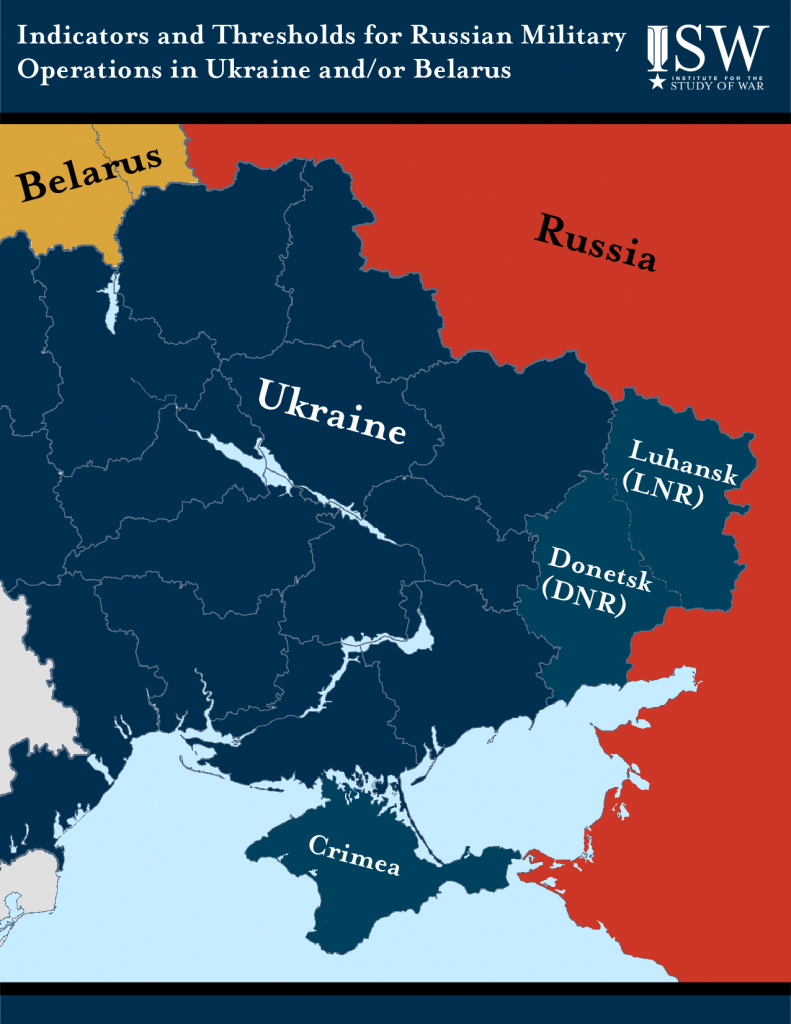
  • Ukraine: Top Russian military officials signaled a change in approach to the war. They spoke about the “complete liberation” of the Donbas region in eastern Ukraine, which means Russia could potentially be pivoting from its initial goal of taking Ukraine’s biggest cities and toppling its government.
  • EARNING REPORTS THIS WEEK:
  • Monday: Earnings from Dave & Buster’s.
  • Tuesday: US consumer confidence; US Job Openings and Labor Turnover (JOLTS); earnings from Micron, Chewy, Lululemon and RH.
  • Wednesday: US ADP jobs report; US GDP for Q4 (third estimate); weekly crude oil inventories; earnings from BioNTech and Paychex.
  • Thursday: End of first quarter; US personal income and spending; US weekly jobless claims: earnings from Walgreens and Blackberry.
  • Friday: US jobs report; US ISM manufacturing.

***

COMMENTS APPRECIATED

Thank You

Subscribe to the Medical Executive-Post

***

***

Ethics in Modern Healthcare

Join Our Mailing List

The Access to Medical Care Dilemma

By David E. Marcinko MBA

By Render S. Davis; MHA, CHE

[Certified Healthcare Executive]

Crawford Long Hospital at Emory University

Atlanta, Georgia, USA
biz-book

In his book, “Back to Reform”, author Charles Dougherty writes that “cost containment is the goal for the healthy.  Access is the goal for the sick.” 

A Meaningless Distinction

So, for an increasing number of Americans, the concerns experienced in-vitro, in-vivo, or described on this Medical Executive-Post blog, are almost meaningless because they are, for the most part, outside the structure of the current health care system. Why?

  • Employers are downsizing staff or cutting out health insurance benefits in an effort to be financially successful in a global economy.
  • Demands for greater government accountability in the expenditure of tax dollars have brought about increasingly more stringent eligibility requirements for safety-net programs like Medicaid. 
  • As insurance becomes more expensive or government programs undergo budget cuts, people are being excised from the system.
  • New competitive demands have fostered unprecedented consolidations, mergers, and closures of healthcare facilities.

This shake-out may have served to greatly reduce the overcapacity that plagued the system, but it has been done with greater emphasis on cutting costs than on fostering efficiency and effectiveness in creating a true system of care delivery. 

The Healthcare Commodity Issue

Those who view health care as little different from any other commodity available through the free market see the present access concerns as simply a byproduct of the inevitable restructuring of the system. While they argue that we must adhere to market solutions to solve our health care access problems, others demand a different approach calling for governmental national health insurance or some form of subsidized care providing at least a basic level of treatment for all citizens. 

Moreover, while Americans continue to proudly tout that we do not explicitly ration care as do some other countries (notably Great Britain and Canada); we tacitly accept a health care system that implicitly excludes citizens who are unable to overcome financial barriers to access.

Care Access Issues

Access to care represents the most visible issue at the very foundation of the ethical principle of justice. 

In their text, “Principles of Biomedical Ethics”, authors Thomas Beauchamp, Ph.D. and James F. Childress, Ph.D. point out that “justice” is subject to interpretation and may even be evoked to support the positions of parties in direct opposition.

A Philosophical Mixed Bag

For example, those who support the predominant principle of distributive justice – the fair allocation of resources based on laws or cultural rules – still must decide on what basis these resources will be used. 

On the other hand, this mix-ed bad of philosophical thoughts include among others:

  • Utilitarians, who argue for resource distribution based on achieving the “greatest good for the greatest number.”
  • Libertarians, who believe that recipients of resources should be those who have made the greatest contributions to the production of those resources – a free market approach to distribution.
  • Egalitarians, that support the distribution of resources based on the greatest need, irrespective of contribution or other considerations. 

Consequently, developing a system of access based on “justice” will be fraught with enormous difficulty.

The Current System

In the current health care environment, access to medical care is approaching crisis levels as increasing malpractice insurance premiums are driving physicians from high-risk specialties such as obstetrics, emergency medicine, and surgery in record numbers. 

The impact is most dramatic in rural and under-served areas of the country where sole-practitioners and small group practices are discontinuing services, leaving local citizens with no choice but to forego care or travel greater distances to regional medical centers to find necessary treatment. 

At the same time, significant budget cuts at both the federal and state levels have seriously eroded funding for Medicaid, leaving this especially-vulnerable segment of the population with even fewer options than before.

Issues Moving to the Forefront

Two areas of the medical care access dilemma are moving to the forefront.

1. The first is in emergency medicine.

An initial study by the Federal Centers for Disease Control and Prevention, cited statistics showing that in the decade ending in 2001, emergency room visits increased 20 percent, while the number of emergency departments shrank 15 percent. Increasingly, hospitals have closed emergency departments due to increasing costs, staffing shortages, and declining payments for services. This crisis comes at a time when post 9/11 fears of terrorism and global disease outbreaks like Severe Acute Respiratory Syndrome (SARS) have placed an even greater burden on the delivery of emergency services.  It continues and is exacerbated, even today.

For example, Arthur Kellerman, MD, former director of emergency services at Atlanta’s Grady Memorial Hospital, the city’s only level one trauma center, writes that “the situation is alarming and has been for some time… It’s unconscionable that we are not coming to terms with the Achilles’ heel of our health care system.”

2. The second area that will grow in significance is in the area of genetic testing.

As technological capabilities improve, medicine’s ability to examine an individual’s genetic makeup will open up remarkable opportunities to predict a person’s susceptibility to certain diseases or handicapping conditions. From a scientific standpoint, we are on the threshold of an extraordinary new era in medicine, where identifications of and treatments for potential illnesses may begin before the person is even born.

“Medicine’s Iceberg”

However, there is a more troubling access side to the potential of genetic testing as noted by Johns Hopkins University president, Dr. William R. Brody. He described genetic testing as “medicine’s iceberg,” where serious dangers for access to care are lurking beneath the surface. 

According to Brody, heated debate has already begun regarding the value of genetic information to insurance companies who could use the information to determine premium levels, even the overall insurability, for individuals and/or families with a member identified through testing as predisposed to a catastrophic and/or potentially expensive medical condition.

In this scenario, infants manifesting a genetic predisposition to certain illnesses or potential behavior disorders may find themselves faced with lifelong un-insurability based on the results of prenatal genetic testing.

Assessment

Furthermore, Brody persuasively argues that the potential of this technology, regardless of the incredible scientific potential it offers, could lead to dramatically diminished access to health insurance for tens of thousands of individuals and families and bring about an “end to private health insurance as we know it.”  He suggests that some form of community-rated, universal health insurance may be the only reasonable alternative to assure that Americans at all levels, from indigent and working poor, to the most affluent, may receive needed, basic medical care. 

CONCLUSION

Your thoughts and comments on this ME-P are appreciated. Feel free to review our top-left column, and top-right sidebar materials, links, URLs and related websites, too. Then, subscribe to the ME-P. It is fast, free and secure.

Link: http://feeds.feedburner.com/HealthcareFinancialsthePostForcxos

Speaker: If you need a moderator or speaker for an upcoming event, Dr. David E. Marcinko; MBA – Publisher-in-Chief of the Medical Executive-Post – is available for seminar or speaking engagements. Contact: MarcinkoAdvisors@msn.com

OUR OTHER PRINT BOOKS AND RELATED INFORMATION SOURCES:

DICTIONARIES: http://www.springerpub.com/Search/marcinko
PHYSICIANS: www.MedicalBusinessAdvisors.com
PRACTICES: www.BusinessofMedicalPractice.com
HOSPITALS: http://www.crcpress.com/product/isbn/9781466558731
CLINICS: http://www.crcpress.com/product/isbn/9781439879900
BLOG: www.MedicalExecutivePost.com
FINANCE: Financial Planning for Physicians and Advisors
INSURANCE: Risk Management and Insurance Strategies for Physicians and Advisors

Product DetailsProduct Details

Product Details

Invite Dr. Marcinko

An Update on Maslow’s Hierarchy of e-Needs for Modernity

Join Our Mailing List

Understanding the New-Wave Social Media that Fuels Them

[By Staff Writers]

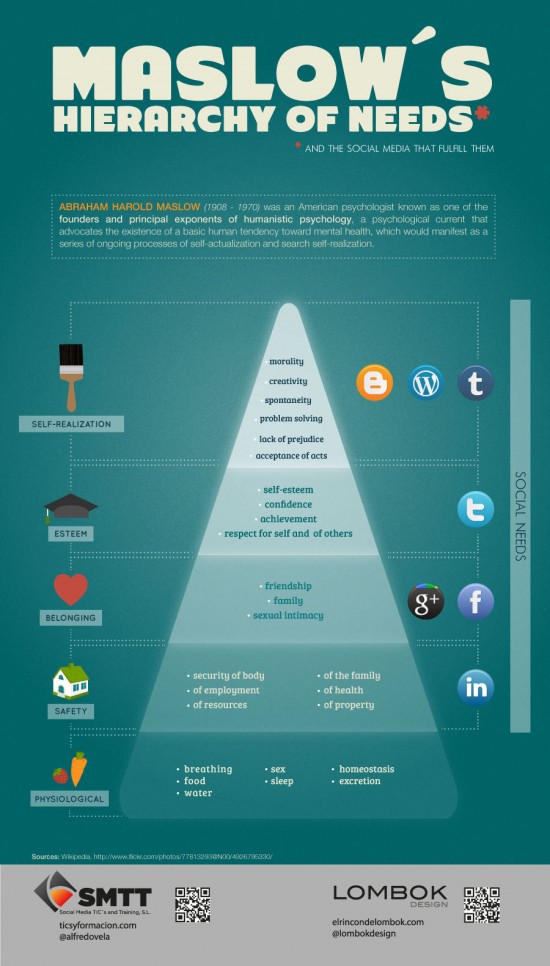
All medical professionals, and some FAs and behavioral economists, realize that Maslow’s hierarchy of needs is often portrayed in the shape of a pyramid, with the largest and most fundamental levels of needs at the bottom, and the need for self-actualization at the top.

So, this infographic takes Maslow’s theory and looks at the electronic social media tools that fulfill these needs.

Source: ticsyformacion.com

Assessment

Yet, another new-paradigm assessment of social media for doctors, financial advisors … and us all.


Product DetailsProduct DetailsProduct Details

Product Details  Product Details

Product Details

Conclusion

Your thoughts and comments on this ME-P are appreciated. Feel free to review our top-left column, and top-right sidebar materials, links, URLs and related websites, too. Then, subscribe to the ME-P. It is fast, free and secure.

Speaker: If you need a moderator or speaker for an upcoming event, Dr. David E. Marcinko; MBA – Publisher-in-Chief of the Medical Executive-Post – is available for seminar or speaking engagements. Contact: MarcinkoAdvisors@msn.com

OUR OTHER PRINT BOOKS AND RELATED INFORMATION SOURCES:

Risk Management, Liability Insurance, and Asset Protection Strategies for Doctors and Advisors: Best Practices from Leading Consultants and Certified Medical Planners™

***

45% of Hospitals Have a Shortage of Primary Care Physicians

***

By Staff Reporters

***

***

A recent American College of Healthcare Executives’ survey of 310 hospital CEOs shows:

 •  94% have personnel shortages in registered nursing field
 •  85% have personnel shortages in technicians field
 •  67% have personnel shortages in therapists field
 •  45% have personnel shortages in primary care physicians field
 •  43% have personnel shortages in physician specialists field
 •  31% have personnel shortages in physician extenders and specially certified nurses field

Source: American College of Healthcare Executives, “Top Issues Confronting Hospitals in 2021, February 4, 2022

***

COMMENTS APPRECIATED

Thank You

Subscribe to the Medical Executive-Post

***

***

***

PODCAST: 15 Metrics for Successful Healthcare Companies

Phil Fisher Was One of the Greatest Entrepreneurial Investors of the 20th Century and a Source of Wisdom for Warren Buffett

By Eric Bricker MD

****

***

Related: https://thehealthcareblog.com/blog/2022/02/03/after-the-crash/?utm_campaign=THCB%20Reader&utm_medium=email&utm_source=Revue%20newsletter

***

COMMENTS APPRECIATED

Thank You

Subscribe to the Medical Executive-Post

***

***

***

Product Details

CITE: https://www.r2library.com/Resource/Title/0826102549

***

PODCAST: Data Science and Statistics in Healthcare

HYPOTHESIS TESTING

BY ERIC BRICKER MD

***

***

YOUR COMMENTS ARE APPRECIATED.

***

RELATED PODCAST: https://www.youtube.com/watch?v=MSnJ-q1pTQk

***

CORRELATION / CAUSATION: https://medicalexecutivepost.com/2021/02/05/correlation-is-not-causation/

Thank You

***

TELE-MEDICINE Fraud, Abuse and New Barriers!

Telemedicine: Fraud and Abuse During the COVID Pandemic

By Susan Walberg

The COVID-19 pandemic has brought with it huge challenges for people all over the world; not only the obvious health-related concerns but also shutdowns, unemployment, financial difficulties, and a variety of lifestyle changes as a result.

When the COVID pandemic struck, CMS quickly recognized that access to care would be an issue, with healthcare resources strained and many providers or suppliers shutting down their offices or drastically limiting availability. Patients who needed routine care or follow-up visits were at risk for not receiving services during a time when healthcare providers were scrambling to enhance infection control measures and implement other new safety standards to protect patients and healthcare workers.

The Centers for Medicare and Medicaid Services (CMS) has responded by easing restrictions and regulatory burdens in order to allow patients to receive the healthcare services they need without undue access challenges. One key area that has changed is the restrictions related to telehealth services, which were previously only paid by Medicare under certain circumstances, such as patients living in remote areas.

Among the changes and waivers CMS has offered, telemedicine reimbursement is among the more significant. Telemedicine services, which includes office visits and ‘check ins’ are now allowed and reimbursed by Medicare. In addition to reimbursement changes, CMS has also relaxed the HIPAA privacy and information security enforcement standards, paving the way for providers to adopt a new model of providing services electronically.

TELE-HEALTH BARRIERS: https://www.statnews.com/2021/07/13/telehealth-provisions-emergency-patients/

See the source image

MORE:  https://medicalexecutivepost.com/2021/05/18/fraud-schemes-of-few-medical-providers/

Your thoughts are appreciated.

THANK YOU

***

CMS Innovation Center Launches “Bold New” Strategy

BY HEALTH CAPITAL CONSULTANTS, LLC

CMS Innovation Center Launches “Bold New” Strategy


When President Joe Biden was elected in 2020, there was much anticipation and speculation regarding what his election would mean for the U.S. healthcare industry in the coming years.

CITE: https://www.r2library.com/Resource/Title/0826102549

Thriving in a value-based health care model - Biotricity

As an ardent supporter of the Patient Protection and Affordable Care Act (ACA) who campaigned on offering a public insurance option similar to Medicare, many in the healthcare industry assumed that the Biden Administration would be a strong proponent of continuing the shift to value-based care, which shift was largely spurred by his predecessor and former boss, Barack Obama, with the passage of the ACA. (Read more…)

YOUR COMMENTS ARE APPRECIATED.

***

Thank You

***

Bitcoin “Hodling” and Gresham’s Law

MISES INSTITUTE

BY Connor Mortell

In 2013, a bitcoiner posted “I AM HODLING” on a bitcoin forum, intending to write that he was holding during a large price drop. He was explaining that most people are not successful traders and as a result they will inevitably just lose out in the process of trying to time the bear market, so instead he encouraged that bitcoiners should hold and trust bitcoin.

Citation: https://www.r2library.com/Resource/Title/0826102549

Since that day, this typo, “hodl,” has worked its way into the everyday vernacular of bitcoiners. It now represents the stance that not only should one not attempt to trade bitcoin through bull and bear runs, but also should not sell bitcoin under any circumstances because whatever asset it is one may purchase with it will one day be outperformed by bitcoin. For some purposes, this may be helpful, but for the adoption of a private money, this is exceedingly dangerous.

REF: https://medicalexecutivepost.com/2018/11/09/what-is-greshams-law-of-money-economics/

See the source image

READ HERE: https://mises.org/power-market/bitcoin-hodling-and-greshams-law

Your thoughts and comments are appreciated.

THANK YOU

****

PODCAST: Low-Value Healthcare Remains Even Without Fee-for-Service Incentives

BY ERIC BRICKER MD

YOUR COMMENTS ARE APPRECIATED.

MORE: https://medicalexecutivepost.com/2021/05/27/activity-based-medical-cost-accounting-and-management/

***

PODCAST: Ascension Non-Profit Hospital System

THE LARGEST IN THE USA

BY DR. ERIC BRICKER MD

***

***
YOUR COMMENTS ARE APPRECIATED.

***

***

Thank You

***

PODCAST: The Future of Pharma

THE MEDICAL FUTURIST

By Bertalan Mesko MD PhD

***

***
YOUR COMMENTS ARE APPRECIATED.

Thank You

***

PODCAST: How Health Care Can Win by Adapting to Changes in Consumer Behavior

LESSONS FROM THE RETAIL SECTOR

See the source image

***

Discover how ProMedica uses customer feedback and a digital-first approach to consumers to achieve stellar results across more than 400 facilities in 28 states.

PODCAST: https://www.youtube.com/watch?v=861em_pJfVM&t=3070s

YOUR THOUGHTS AND COMMENTS ARE APPRECIATED.

***

Thank You

***

PODCAST: On Covid Pandemic Hospital Costs

FOR EMPLOYERSEMPLOYER SPONSORED HEALTH PLANS

BY ERIC BRICKER MD

***

***

YOUR COMMENTS ARE APPRECIATED.

Thank You

***

***

PODCASTS: More Dialysis Center Investigative Reporting

DaVITA and FRESENIUS

By Eric Bricker MD

****

***

Your comments are appreciated.

CITE: https://www.r2library.com/Resource/Title/0826102549

MORE

***

PODCAST: United States Health Spending by Race & Ethnicity (2021)

CULTURE IN HEALTHCARE

Culture is a factor to consider with healthcare. Depending on the culture they may seek alternative treatment such as homeopathic and treatment they have been raised with in their country Some cultures will get medications from their country because they believe in their medical system more then what is offered.

BY IHME

Creating a culture of health - Sedgwick

***

Dr. Joseph L. Dieleman, Associate Professor in the Department of Health Metric Sciences at the University of Washington, is the lead author of the study “US Health Care Spending by Race and Ethnicity, 2002-2016,” published August 17, 2021 in the Journal of the American Medical Association

***

PODCAST: https://www.youtube.com/watch?v=xbkSZmB-3f8&t=171s

YOUR THOUGHTS ARE APPRECIATED.

Thank You

****

The TRI-PHASIC Road from Medical Practice to Retirement Planning for Doctors

BY DR. DAVID E. MARCINKO MBA CMP®

CMP logo

SPONSOR: http://www.CertifiedMedicalPlanner.org

Determining Your Retirement Vision

There’s an aspect to retirement that many physicians do not plan for … the transition from work and practice to retirement.  Your work has been an important part of your life.  That’s why the emotional adjustments of retirement may be some of the most difficult ones.

For example, what would you like to do in retirement? Your retirement vision will be unique to you. You are retiring to something not from something that you envisioned. When you have more time, you would like to do more traveling, play golf or visit more often, family and friends. Would you relocate closer to your kids?  Learn a new art or take a new class? Fund your grandchildren’s education? Do you have philanthropic goals? Perhaps you would like to help your church, school or favorite charity? If your net worth is above certain limits, it would be wise to take a serious look at these goals. With proper planning, there might be some tax benefits too. Then you have to figure how much each goal is going to cost you.

If have a list of retirement goals, you need to prioritize which goal is most important. You can rate them on a scale of 1 to 10; 10 being the most important. Then, you can differentiate between wants and needs. Needs are things that are absolutely necessary for you to retire; while wants are things that still allow retirement but would just be nice to have.

CITE: https://www.r2library.com/Resource/Title/0826102549

Recent studies indicate there are three phases in retirement, each with a different spending pattern [Richard Greenberg CFP®, Gardena CA, personal communication]. The three phases are:

  1. The Early Retirement Years. There is a pent-up demand to take advantage of all the free time retirement affords. You can travel to exotic places, buy an RV and explore forty-nine states, go on month-long sailing vacations. It’s possible during these years that after-tax expenses increase during these initial years, especially if the mortgage hasn’t been paid off yet. Usually the early years last about ten years until most retirees are in their 70’s.
  • Middle Years. People decide to slow down on the exploration.  This is when people start simplifying their life.  They may sell their house and downsize to a condo or townhouse.  They may relocate to an area they discovered during their travels, or to an area close to family and friends, to an area with a warm climate or to an area with low or no state taxes.  People also do their most important estate planning during these years.  They are concerned about leaving a legacy, taking care of their children and grandchildren and fulfilling charitable intent. This a time when people spend more time in the local area.  They may start taking extension or college classes.  They spend more time volunteering at various non-profits and helping out older and less healthy retirees. People often spend less during these years. This period starts when a retiree is in his or her mid to late 70’s and can last up to 20 years, usually to mid to late-80’s.
  • Late Years. This is when you may need assistance in our daily activities.  You may receive care at home, in a nursing home or an assisted care facility.  Most of the care options are very expensive.  It’s possible that these years might be more expensive than your pre-retirement expenses.  This is especially true if both spouses need some sort of assisted care. This period usually starts when the retiree is their 80’s; however they can sometimes start in the mid to late 70’s.

INVITE DR. MARCINKO: https://medicalexecutivepost.com/dr-david-marcinkos-

Planning Issues – Early Career

If early retirement is a major objective, start thinking about activities that will fill up your time during retirement.  Maintaining your health is more critical, since your health habits at this time will often dictate how healthy you will be in retirement.

Planning Issues – Mid Career

If early retirement is a major objective, start thinking about activities that will fill up your time during retirement.  Maintaining your health is more critical, since your health habits at this time will often dictate how healthy you will be in retirement

Planning Issues – Late Career 

Three to five years before you retire, start making the transition from work to retirement. 

  • Try out different hobbies;
  • Find activities that will give you a purpose in retirement;
  • Establish friendships outside of the office or hospital;
  • Discuss retirement plans with your spouse.
  • If you plan to relocate to a new place, it is important to rent a place in that area and stay for few months and see if you like it. Making a drastic change like relocating and then finding you don’t like the new town or state might be very costly mistake. The key is to gradually make the transition.

YOUR COMMENTS ARE APPRECIATED.

Thank You

PURCHASE: https://www.amazon.com/dp/B00QFFYEGU?ref_=k4w_oembed_nQHSU5lkwqdvYB&tag=kpembed-20&linkCode=kpd

***

A Novel HYBRID Physician Reimbursement Model 2.0?

MODERN CONSIDERATIONS

***

By Dr. David E. Marcinko MBA CMP®

CMP logo

SPONSOR: http://www.CertifiedMedicalPlanner.org

EMERGING HYBRID PAYMENT MODELS

Current reimbursement structures involve the submission and payment of medical CPT® coded claims. But, some doctors feel they need to “up-code” to maximize revenue or “down-code” for fear of having a claim denied. Contradictory business goals bastardize the system into a payer versus provider tug-of-war, with patient care as a potential bargaining chip. Instituting quality metrics should be included in this equation and, a hybrid reimbursement model may be a viable option while integrating quality care metrics and reducing costs for all stakeholders.

CITE: https://www.r2library.com/Resource/Title/0826102549

This hybrid reimbursement system might use a two-payment structure.

For the first payment, claims would be paid at hypothetical rate of 60% within one week of submission.

The second payment, consisting of the remaining zero to 40% of some total maximum allowable fee, be paid quarterly. It would be based on scores like patient satisfaction and stewardship of healthcare resources by analyzing a statistically valid sample of patient encounters taken from the electronic health record.

Such a hybrid system would remove unnecessary steps, like re-submitting claims, and would lower the operational and administrative costs of claims processing. These changes would decrease operational cost and drive quality stewardship of the healthcare dollar.

YOUR COMMENTS ARE APPRECIATED.

Thank You

INVITATIONS: https://wordpress.com/post/medicalexecutivepost.com/246863

***

COMMUNITY MASKING: The Impact on COVID-19

A Cluster-Randomized Trial in Bangladesh

***

Freudenberg's surgical masks get FDA clearance

LINK: https://www.poverty-action.org/sites/default/files/publications/Mask_RCT____Symptomatic_Seropositivity_083121.pdf

YOUR COMMENTS ARE APPRECIATED.

MORE: https://www.msn.com/en-us/news/world/us-records-40-million-known-virus-cases/ar-AAOaN08?li=BBnb7Kz

Thank You

***

PODCAST: What Exactly is a Human Sneeze?

All About “STERNUTATION”

Courtesy: www.CertifiedMedicalPlanner.org

A Silly Question Until Covid-19!

A “Sternutation” is a sudden involuntary expulsion of air from the lungs through the nose and mouth due to irritation of the nasal passage.

LINK: https://www.amazon.com/Dictionary-Health-Insurance-Managed-Care/dp/0826149944/ref=sr_1_4?ie=UTF8&s=books&qid=1275315485&sr=1-4

A sneeze is not always related to an underlying medical condition. It may be caused by:

  • Nasal irritants (dust, pepper, pollen etc)
  • Sudden exposure to bright light
  • Breathing cold air
  • Object struck in nose.

Self-treatment helpful in some less- serious cases include:

  • Change the furnace or air conditioner filters
  • Do not have pets in the house if allergic to animal dander
  • Wash linens in very hot water (at least 130 degrees Fahrenheit) to kill dust mites
  • Vacuum and dust frequently
  • Use a good humidifier especially at night, if the air is too dry
  • Drink plenty of water if suffering from flu/common cold.

See a doctor if you notice the following :

  • Fever greater than 101.3 F (38.5 C)
  • Fever lasting five days or more or returning after a fever- free period
  • Shortness of breath
  • Wheezing
  • Severe sore throat, headache or sinus pain
  • Allergy does not resolves in a few days.

See a doctor immediately if you notice:

  • Sneezing is continuous
  • Causes severe ear pain, drowsiness.

***

***

PODCAST: https://www.bing.com/videos/search?q=sneeze&&view=detail&mid=C4DA4CD281B4AD36C2A5C4DA4CD281B4AD36C2A5&&FORM=VRDGAR&ru=%2Fvideos%2Fsearch%3Fq%3Dsneeze%26FORM%3DHDRSC3

VIDEO: https://www.msn.com/en-us/video/science/see-how-a-mask-affects-how-a-cough-travels/vi-BB13AQBH?ocid=SK2LDHP

Assessment: Your thoughts and comments are appreciated.

***

BUSINESS, FINANCE AND INSURANCE TEXTS FOR DOCTORS

THANK YOU

Product DetailsProduct DetailsProduct Details

***

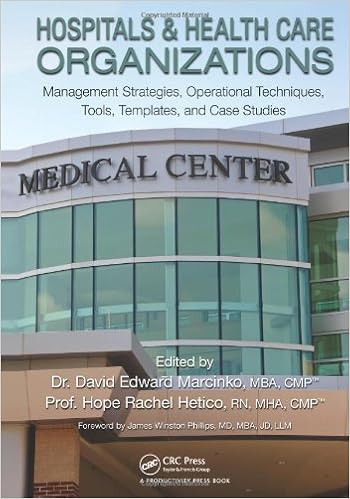
HOSPITALS: Management Strategies, Operational Techniques, Tools, Templates and Case Studies

***

TEXTBOOK REVIEW

Drawing on the expertise of decision-making professionals, leaders, and managers in health care organizations, Hospitals & Health Care Organizations: Management Strategies, Operational Techniques, Tools, Templates, and Case Studies addresses decreasing revenues, increasing costs, and growing consumer expectations in today’s increasingly competitive health care market.

Offering practical experience and applied operating vision, the authors integrate Lean managerial applications, and regulatory perspectives with real-world case studies, models, reports, charts, tables, diagrams, and sample contracts. The result is an integration of post PP-ACA market competition insight with Lean management and operational strategies vital to all health care administrators, comptrollers, and physician executives. The text is divided into three sections:

  1. Managerial Fundamentals
  2. Policy and Procedures
  3. Strategies and Execution

Using an engaging style, the book is filled with authoritative guidance, practical health care–centered discussions, templates, checklists, and clinical examples to provide you with the tools to build a clinically efficient system. Its wide-ranging coverage includes hard-to-find topics such as hospital inventory management, capital formation, and revenue cycle enhancement. Health care leadership, governance, and compliance practices like OSHA, HIPAA, Sarbanes–Oxley, and emerging ACO model policies are included. Health 2.0 information technologies, EMRs, CPOEs, and social media collaboration are also covered, as are 5S, Six Sigma, and other logistical enhancing flow-through principles. The result is a must-have, “how-to” book for all industry participants.

***

NVITE DR. MARCINKO: https://medicalexecutivepost.com/dr-david-marcinkos-bookings/

Thank You

***

YOUR THOUGHTS are appreciated.

FINANCIAL PLANNING: Strategies for Physicians and their Advisors

A Textbook Review

SECOND OPINIONS: https://medicalexecutivepost.com/schedule-a-consultation/

INVITE DR. MARCINKO: https://medicalexecutivepost.com/dr-david-marcinkos-bookings/

SPONSOR: http://www.CertifiedMedicalPlanner.org

CMP logo

THANK YOU

***

PODCAST: Private Equity Firms Are Making Partial Purchases of Physician Practices.

Older Doctors Sell Out to Private Equity

Private Equity Firms Are Making Partial Purchases of Physician Practices

BY ERIC BRICKER MD

***

The Deals Are Frequently Structured as Follows:

–The Private Equity Firm Offers an Up Front Lump Sum of Money and Administrative Services Such as Billing and Collections for the Practice.

–In Return, the Doctors in the Practice Agree to Have 30-40% of All Future Revenue Go to the Private Equity Firm.

The Up Front Lump Sum Can Be Equal to as Much as 10 – 20 Years of Income for a Physician.

The Older Doctors in the Practice Who Are Usually the Partners Frequently Take This Deal, Resulting in the Younger Partners Making Less Take-Home Pay.

Implication for Employers:

Private Equity Firms Create Larger Group Practices to Have Better Negotiating Leverage with Commercial Insurance Carriers and Obtain Higher Fee-for-Service Reimbursement.

Overall Healthcare Costs for Physician Services Go Up, While the Take-Home Pay for Doctors Goes Down… and the Private Equity Firm Keeps the Difference.

NOTE: The Older Doctors Who Are Paid the Lump Sum Are Still Required to Stay at the Practice for a Certain Number of Years After the Transaction.

YOUR THOUGHTS AND COMMENTS ARE APPRECIATED

***

DIY Textbooks: https://medicalexecutivepost.com/2021/04/29/why-are-certified-medical-planner-textbooks-so-darn-popular/

THANK YOU

***

PODCAST: The “4 Ps” of [Medical] Marketing

THEIR Specific Meaning in Healthcare

Dallas 100: No. 6 Compass Professional Health Services ...

BY. DR. ERIC BRICKER MD

***

The 4 Ps of Marketing Have Specific Meaning in Healthcare:

Product: Must Have a 10X Better Value Proposition to Break Into a Market of Incumbents.

If the Product is for Providers, It Needs to Improve Top-Line Revenue–E.g. Robotic Surgery.

If the Product is for Payors, It Needs to Decrease Healthcare Costs–E.g. CDHPs

Price: Must Motivate the Channel to Sell the Product.

Placement: Where Customers Go to Buy Products–E.g. GPO or Broker/Benefit Consultant

Promotion: Outbound Marketing via Interruption with VALUABLE CONTENT and Inbound Marketing with VALUABLE Video, Audio, Written Content.

All 4 of These Ps Then Need to Be Applied to a Specific Market Segment… Not the Entire Market.

If Your Market is Everyone, It Is Essentially No One.

***

ASSESSMENT: Your thoughts and comments are appreciated.

CITE: https://www.amazon.com/Dictionary-Health-Insurance-Managed-Care/dp/0826149944/ref=sr_1_4?ie=UTF8&s=books&qid=1275315485&sr=1-4

MARCINKO ON MEDICAL MARKETING: https://medicalexecutivepost.com/2019/03/28/crafting-a-medical-practice-marketing-plan/

THANK YOU

***

On CRISPR Gene Editing

DEFINITION: CRISPR is a family of DNA sequences found in the genomes of prokaryotic organisms such as bacteria and archaea. These sequences are derived from DNA fragments of bacteriophages that had previously infected the prokaryote. They are used to detect and destroy DNA from similar bacteriophages during subsequent infections

CITE: https://www.amazon.com/Dictionary-Health-Information-Technology-Security/dp/0826149952/ref=sr_1_5?ie=UTF8&s=books&qid=1254413315&sr=1-5

***

A Gene Editing Breakthrough
For the first time, CRISPR technology has been used to successfully treat disease in vivo, or inside the human body.

That big medical news was announced Saturday by the biotech startup Intellia Therapeutics and its partner Regeneron, which said their gene-editing techniques reduced the amount of harmful liver protein associated with a genetic nerve disorder. 

What is CRISPR? It stands for “clustered regularly interspaced short palindromic repeats,” and it’s one of those things humans found in nature and then copied.  Bacteria use CRISPR to repel viruses, but humans have harnessed it to ctrl+c, ctrl+v DNA sequences, potentially leading to a revolution in treating disease.  The two scientists who made that breakthrough in 2012, Jennifer Doudna and Emmanuelle Charpentier, won the Nobel Prize in Chemistry last year (Doudna is also a cofounder of Intellia).

Quote du jour: “There’s a feeling like we’re walking through a door here into all kinds of new possibilities. And there’s not many moments in medicine where you get to experience that,” Intellia CEO John Leonard said.  Looking ahead…expect Intellia shares, which have gained 233% since its 2016 IPO, to pop.

CRISPR/Cas9 Genome Editing Technique - Musicians4Freedom

****

ASSESSMENT: Your thoughts are appreciated.

INVITE DR. MARCINKO: https://medicalexecutivepost.com/dr-david-marcinkos-

CONTACT: Ann Miller RN MH

[Executive Director]

THANK YOU

***

PODCAST: ‘Hacking of the American Mind’

BOOK REVIEW

See the source image

BY ERIC BRICKER MD

Our Brains Have a Reward Chemical Called Dopamine That Causes a Brief Pleasurable Feeling Followed by a Worsening of our Mood.

However, Our Brains Also Have a Contentment Chemical Called Serotonin That Causes Peace and a Calming of our Mood.

Substances and Behaviors That Stimulate Dopamine Include: Sugar, Caffeine, Alcohol, Nicotine, Illicit Drugs, Prescription Narcotics, Social Media Apps, Gambling and Sex.

Substances and Behaviors That Stimulate Serotonin Include: The Amino Acid Tryptophane, Positive Relationships with Others, Service to Others, Prayer and Meditation.

Corporations Tailor Their Products with Dopamine Stimulating Strategies to Increase Sales.

Facebook’s Chamath Palihapitiya Even Admitted on CNBC that Facebook Intentionally Designed its Social Media Platform to Stimulate Dopamine in the User’s Brain To Make Them Use the App More.

Unfortunately, the Constant Stimulation of Dopamine in Our Brains Has Increased Obesity, Metabolic Syndrome, Cancer, Cardiovascular Disease, Diabetes and Depression.

Lustig Estimates That 75% of the $4 Trillion Spent on US Healthcare is for These Diseases That Can Be Traced to Our ‘Hacked Minds.’

Dr. Robert Lustig is a Pediatric Neuroendocrinologist at the University of California at San Francisco. His Book ‘Hacking of the American Mind’ Posits that Corporate Predators Exploit Our Brain Chemistry to Increase Their Profits at the Expense of our Health.

ASSESSMENT: Your thoughts and comments are appreciated.

THANK YOU

***

“Financial Management Strategies for Hospitals and Healthcare Organizations”

TOOLS, TECHNIQUES, CHECKLISTS AND CASE STUDIES

INVITE DR. MARCINKO: https://medicalexecutivepost.com/dr-david-marcinkos-

CONTACT: Ann Miller RN MH

[Executive Director]

What is a MEME Stock?

MEME ME!

BY PROFESSOR DR. DAVID EDWARD MARCINKO MBA Certified Medical Planner®
CMP logo

SPONSOR: http://www.CertifiedMedicalPlanner.org

A “MEME” stock isn’t as easily defined as a growth or value stock, so to give it a definitive categorization would be inappropriate. Nor would actually categorizing it alongside growth and value stocks. They won’t be found in textbooks anytime soon, but to overlook their impact could potentially be an expensive oversight.

CITE: https://www.r2library.com/Resource/Title/0826102549

Stonks Meme, Explained: What Can It Teach You About Actual ...

READ: https://blog.mywallst.com/what-is-a-meme-stock/#:~:text=A%20meme%20stock%20isn%E2%80%99t%20as%20easily%20defined%20as,their%20impact%20could%20potentially%20be%20an%20expensive%20oversight.

DIY Textbooks: https://medicalexecutivepost.com/2021/04/29/why-are-certified-medical-planner-textbooks-so-darn-popular/

INVITE DR. MARCINKO: https://medicalexecutivepost.com/dr-david-marcinkos-

CONTACT: Ann Miller RN MH

[Executive Director]

MarcinkoAdvisors@msn.com

***

The Economic Value and Pricing of “Personalized and Precision” Medicine

PRECISION MEDICINE

By Tomas J. Philipson

DEFINITION: Personalized medicine, also referred to as precision medicine, is a medical model that separates people into different groups—with medical decisions, practices, interventions and/or products being tailored to the individual patient based on their predicted response or risk of disease

CITE: https://www.amazon.com/Dictionary-Health-Insurance-Managed-Care/dp/0826149944/ref=sr_1_4?ie=UTF8&s=books&qid=1275315485&sr=1-4

We discuss the economic value of personalized medicine and the optimal pricing of the combination products involved. We build on previous work of Egan and Philipson (2015) who stress a link between rational adherence in health care and the value of personalized medicine. Personalized medicine converts experience goods to search goods by speeding up the learning process relative to trial and error. This explains the emergence of personalized medicine in cancer care as well as the timing of this emergence. It also predicts greater innovation-and merger incentives from Disneyland style two-part pricing of the combination products.

Personalized Medicine - Personal Medicine - Medicine ...

READ: https://www.nber.org/system/files/chapters/c13997/c13997.pdf

Your thoughts are appreciated.

THANK YOU

***

HOSPITALS and Health Care Organizations

Management Strategies, Operational Techniques, Tools, Templates and Case Studies

Tex Book Review

Drawing on the expertise of decision-making professionals, leaders, and managers in health care organizations, Hospitals & Health Care Organizations: Management Strategies, Operational Techniques, Tools, Templates, and Case Studies addresses decreasing revenues, increasing costs, and growing consumer expectations in today’s increasingly competitive health care market.

Offering practical experience and applied operating vision, the authors integrate Lean managerial applications, and regulatory perspectives with real-world case studies, models, reports, charts, tables, diagrams, and sample contracts. The result is an integration of post PP-ACA market competition insight with Lean management and operational strategies vital to all health care administrators, comptrollers, and physician executives. The text is divided into three sections:

  1. Managerial Fundamentals
  2. Policy and Procedures
  3. Strategies and Execution

Using an engaging style, the book is filled with authoritative guidance, practical health care–centered discussions, templates, checklists, and clinical examples to provide you with the tools to build a clinically efficient system. Its wide-ranging coverage includes hard-to-find topics such as hospital inventory management, capital formation, and revenue cycle enhancement. Health care leadership, governance, and compliance practices like OSHA, HIPAA, Sarbanes–Oxley, and emerging ACO model policies are included. Health 2.0 information technologies, EMRs, CPOEs, and social media collaboration are also covered, as are 5S, Six Sigma, and other logistical enhancing flow-through principles. The result is a must-have, “how-to” book for all industry participants.

SECOND OPINIONS: https://medicalexecutivepost.com/schedule-a-consultation/

INVITE DR. MARCINKO: https://medicalexecutivepost.com/dr-david-marcinkos-

THANK YOU

***

PODCAST: Physician WEDDING Costs

 The Economics of Weddings for Medical Professionals

The average wedding costs about $ 25,525 and medical professionals often spend much more.

Destination Weddings - Dynamic Roadshow

QUERY: Do you want a big wedding party for your family and friends, or an earlier retirement for yourself?

PODCAST: https://www.youtube.com/watch?v=XQBRHJ7aGbM

Your thoughts are appreciated.

THANK YOU

***

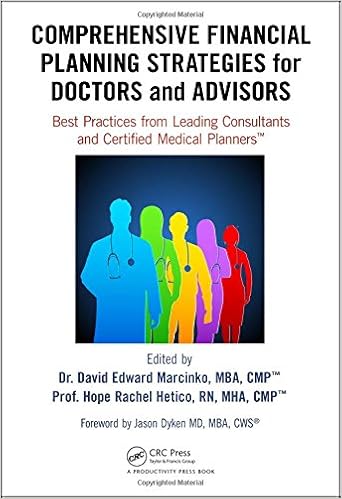
Comprehensive Financial Planning Strategies for Doctors and Advisors: Best Practices from Leading Consultants and Certified Medical Planners™

ORDER TEXTBOOK: https://www.routledge.com/Comprehensive-Financial-Planning-Strategies-for-Doctors-and-Advisors-Best/Marcinko-Hetico/p/book/9781482240283

INVITE DR. MARCINKO: https://medicalexecutivepost.com/dr-david-marcinkos-

***

PODCAST: Social Determinants of Health

Turning Potential into Actual Value

By Erin Benson and Rich Morino

Social determinants of health can directly be used to improve risk stratification and care management initiatives. But first, it’s important to identify how to effectively use this data to get the most value for your members and organizations.

And so, we present a brief recap of the webinar: “Social Determinants of Health: Turning Potential into Actual Value,” sponsored by LexisNexis Health Care, with Erin Benson, Director Market Planning and Rich Morino, Director, Strategic Solutions.

This recap includes discussion of 5 categories of SDOH. Then, the full webinar discusses elements of success for social determinants of health and opportunities for health plans to leverage social determinants of health data to attain quality goals while managing cost and enhancing member experience.

Your thoughts are appreciated.

THANK YOU

***

NHICs = Prepaid Preventative and Maintenance Health Care Networks

Emerging New MEDICAL BUSINESS Models 2.0

By Dr. David Edward Marcinko MBA CMP®

CMP logo

SPONSOR: http://www.CertifiedMedicalPlanner.org

Many folks feels that private preventative medical contracts may be one possible solution for those Americans going without healthcare; especially the young and healthy. Generally, and generically, they have a moniker like the “No Health Insurance Club”; or similar

Why?

Some pundits are leaning toward universal healthcare, or Medicare-4-All, which seems too socialized for others. Yet, private insurers continue to increase premiums, which prices healthcare out of reach for the average American. Employers can no longer float the cost of insurance so they pass it on to their employees. Patients aren’t the only ones being affected by the current state of healthcare. More and more doctors are going out of business and hospitals are cutting back due to escalating costs and payment defaults.

So, current remedies to this dilemma include major medical insurance policies for catastrophic events with high-deductibles to keep monthly premiums down, Medicaid, mini retail-clinics at grocery stores/pharmacies, and emergency room visits for common illnesses; as well as the PP-ACA.

Medical Maintenance

But, preventative healthcare and medical maintenance is not typically addressed. More than 90 percent of health related issues can be taken care of with preventative care and maintenance but only a small percentage of Americans currently enjoy the benefit of preventative healthcare. Healthcare economists are rethinking healthcare by offering an affordable alternative to traditional insurance options. NHICs, connect patients with participating board certified physicians that will treat and care for preventative healthcare needs for a one-time prepaid annual membership fee.

In this NHIC model:

  • Patients make a one-time annual payment that is typically less than a one-month premium with traditional insurance.
  • Patients receive up to 12 office visits per year that also include immunizations, $10 or less in-office prescriptions, and additional services including blood tests.
  • No deductible, no co-pays, no premiums.
  • No surprise bills to patients.
  • Viable alternative to COBRA for employees disengaged from work.
  • Low cost option for the self-employed.
Yakima DentiFlex Membership Club | Your Dentist in Yakima, WA

The Doctors

What’s in it for the doctors? How about no insurance clerks, no need to snail mail medical insurance claims or use expensive electronic claims submission clearinghouse services, no bad debts or bad expense write-offs, no ARs; and fast cash.

ASSESSMENT: Your thoughts are comments are appreciated.

Product Details

ORDER TEXTBOOK: https://www.amazon.com/Business-Medical-Practice-Transformational-Doctors/dp/0826105750/ref=sr_1_9?ie=UTF8&qid=1448163039&sr=8-9&keywords=david+marcinko

SECOND OPINIONS: https://medicalexecutivepost.com/schedule-a-consultation/

INVITE DR. MARCINKO: https://medicalexecutivepost.com/dr-david-marcinkos-bookings/

THANK YOU

***

The Business of Medical Practice [3rd. edition]

SPONSOR: http://www.CertifiedMedicalPlanner.org

CMP logo

ORDER TEXTBOOK: https://www.amazon.com/Business-Medical-Practice-Transformational-Doctors/dp/0826105750/ref=sr_1_9?ie=UTF8&qid=1448163039&sr=8-9&keywords=david+marcinko

SECOND OPINIONS: https://medicalexecutivepost.com/schedule-a-consultation/

INVITE DR. MARCINKO: https://medicalexecutivepost.com/dr-david-marcinkos-bookings/

THANK YOU

***

Hospitals and Healthcare Organizations

SPONSOR: http://www.CertifiedMedicalPlanner.org

CMP logo

ORDER TEXTBOOK: https://www.amazon.com/Hospitals-Healthcare-Organizations-Management-Operational/dp/1439879907/ref=sr_1_4?s=books&ie=UTF8&qid=1334193619&sr=1-4

SECOND OPINIONS: https://medicalexecutivepost.com/schedule-a-consultation/

INVITE DR. MARCINKO: https://medicalexecutivepost.com/dr-david-marcinkos-bookings/

THANK YOU

***

The CERTIFIED MEDICAL PLANNER® Online Designation Program is Now Automated

[By Staff Reporters]

The concept of a self-taught and student motivated, but automated outcomes driven classroom may seem like a nightmare scenario for those who are not comfortable with computers.

Now everyone can breathe a sigh of relief, because the Institute of Medical Business Advisors just launched an “automated” final examination review protocol that requires no programming skill whatsoever.

Enter the CMPs

cmp

In fact, everything is designed to be very simple and easy to use. Once a student’s examination “blue-book” is received, computerized “robotic reviewers” correct student assignments and quarterly test answers. This automated examination model lets the robots correct tests and exams, while the students concentrate on guided self-learning.

SplitShire-

http://www.CertifiedMedicalPlanner.org

Assessment

According to Eugene Schmuckler PhD MBA MEd, Dean of the CERTIFIED MEDICAL PLANNER® professional designation and certification program,

“This option allows the modern adult-learner save both time and money as s/he progresses toward the ultimate goal of board certification as a CMP® mark holder.”

The trend is growing and iMBA, Inc., is leading the way.

imba inc

THANK YOU

TEXTBOOK LINK: https://www.amazon.com/Comprehensive-Financial-Planning-Strategies-Advisors/dp/1482240289/ref=sr_1_1?ie=UTF8&qid=1418580820&sr=8-1&keywords=david+marcinko

***

Homeless Youth in the USA


A Vulnerable PopulationInfographic

By NIHCM Foundation

Each year, an estimated 4.2 million youth and young adults experience homelessness in the United States. Every night, thousands of young people experience homelessness without a parent or guardian – going to sleep without the support and stability of a family or a home.

Among homeless youth, 40% identify as LGBTQ and they have more than twice the risk of being homeless than their heterosexual peers. This infographic explores youth homelessness, risk factors for becoming homeless, the health toll associated with being homeless, and what can be done to address this crisis.

Image result for Homeless Youth Cartoon

LINK: https://nihcm.org/publications/homeless-youth-a-vulnerable-population?utm_source=NIHCM+Foundation&utm_campaign=a2653f1422-050421_Homeless_Youth_Infographic&utm_medium=email&utm_term=0_6f88de9846-a2653f1422-167744768

dumpster

DUMPSTER DIVING

Your thoughts are appreciated.

THANK YOU

***

“Buy Now – Pay Later” Changed Retail Consumerism

Health care and rent are next?

[By Terry Nguyen staff reporters]

Emerging fintech apps are looking to apply this lending model to sectors, from health care to travel to rent. Sure, people are growing acclimated to dividing their purchases into four easy payments, even applauding the option to do so.

But no matter how you frame it, the pitfalls of these plans seem to be, unfortunately, just more debt.

18-24's Owe £225 to Buy Now Pay Later Schemes - AI Global ...

Buy now, pay later providers Klarna, Afterpay, and Quadpay spent years slowly infiltrating the retail market. The pandemic has accelerated their popularity among all sorts of online brands

READ LINK: https://www.vox.com/the-goods/2021/5/11/22429014/buy-now-pay-later-pandemic-expansion?utm_source=pocket-newtab

ASSESSMENT: Your thoughts are appreciated.

THANK YOU

***

A Treatise on Disabled Physicians

The disabled doctors not believed by their colleagues

[By Miranda Schreiber]

FACT: People often feel nervous when they visit a doctor with some fearing their symptoms may not be believed.

QUERY: But what if you are the doctor, and your colleagues dismiss your disabilities and mental health difficulties?

Three Ways to Improve Care for Patients With Disabilities ...

LINK: https://www.bbc.com/news/disability-56244376?utm_source=pocket-newtab

EDITOR’S NOTE: I had a classmate in both high school and medical school with Charctot-MarieTooth disease so I am aware of this phenomenon: https://www.ninds.nih.gov/Disorders/Patient-Caregiver-Education/Fact-Sheets/Charcot-Marie-Tooth-Disease-Fact-Sheet

Dr. David Edward Marcinko MBA

[Editor-in-Chief]

ASSESSMENT: Your thoughts are appreciated

THANK YOU

***

The Rise of Unregulated Convenience Care Clinics

CCCs AND UCCs Popularity on the Rise!

EDITOR’S NOTE: Convenience Care Clinics [CCCs], including Urgent Care Centers (UCCs) and retail health clinics, have seen increasing popularity and attention in recent years. Colleague Todd Zigrang of HCC, LLC opines.

Dr. David E. Marcinko MBA CMP®

***

President Health Capital Consultants, LLC

"Todd

By Todd A. Zigrang, MBA, MHA, FACHE, CVA, ASA

As the number of UCCs and retail health clinics in the U.S., as well as the number of patients they serve, grow, some experts have called for stronger state regulation and oversight in order to ensure that these convenience care centers are providing access to all, including vulnerable communities, without discrimination. (Read more…) 

ASSESSMENT: Your thoughts are appreciated.

0 Ebook Website Banner 1600 375

THANK YOU

***

The Integrated Patient-Centered Medical Home Model

Join Our Mailing List

Tools for Transforming Our Healthcare

By Matias A. Klein

[VP, General Manager, Clinical Quality and Collaboration, Portico Systems]

The patient-centered medical home (PCMH) continues to attract increasing attention from many industry stakeholders. The PCMH model has the potential to enhance the US healthcare system by rejuvenating primary care in a way that improves clinical outcomes, lowers costs, promotes wellness, and increases patient and physician satisfaction.

PCMH Pilot Programs

PCMH pilots are currently being tested in almost all states, including a 3-year Medicare medical home demonstration project overseen by the Centers for Medicare & Medicaid Services. However, few organizations have scaled the PCMH across their entire healthcare network, and the existing implementations appear to remain focused on care management at the expense of patient wellness. The value of focusing equally on promoting wellness (although an underappreciated nuance in the implementation of a PCMH) is a critical factor in effectively leveraging the PCMH model to improve clinical outcomes and the US healthcare system.

Centered on the Patient

The PCMH model, as its name suggests, is centered on the patient. The underlying thought is that if a comprehensive, longitudinal view of a patient is taken throughout a patient’s lifespan, the patient’s health could be better “managed” and better aligned with best medical practices. It is well documented that physicians do not consistently or frequently apply evidence based, recommended care to patients. Therefore, a major goal of the PCMH model is to improve the consistent application of evidence-based guidelines and best practices, by making longitudinal information about the patient available to providers and to patients – including any risks and recommended “intervention opportunities.” And although adherence to best practices in disease management is crucial, the PCMH model also focuses on preventing costly episodes by promoting and incentivizing wellness.

PCPs = Medical Homes

To effectively manage a patient’s health and promote wellness, primary care physicians – designated as medical homes – need to act as health “quarterbacks” or “coaches.” In such a role, these physicians will assist in aggregating a patient’s health information, making best practices transparent, offering health education and counseling, as well as coordinating the provisioning of any healthcare services the patient may need. With physicians spending significant time coaching and making critical clinical decisions, these services will be delivered with the support of care management nurses, who will handle the majority of the information processing and operational activity.

An Innovation in Care

The PCMH model is an important innovation in care delivery and has the potential to reduce medical and administrative costs, while improving the quality of care. However, how to implement the PCMH model within a care-delivery system remains unclear. Providers need the requisite infrastructure and capabilities at their locations to meaningfully participate in a PCMH. Patients must be engaged over long periods of time in proactively managing and improving their health. Outcomes and quality must be objectively measured to optimize the delivery of best possible patient care.

Potential Value

To realize the potential value of the PCMH, three distinct stakeholders – patients, providers, and health plans – must work in a collaborative way. Getting these stakeholders synchronized (i.e., aligned in their goals, using interoperable tools, and collaborating on an operational level) is no small feat but can be accomplished with the smart application of technology. Bringing these three stakeholder groups together on a common, collaborative technology platform results in what some are beginning to call the integrated PCMH. The integrated approach to the PCMH can best ensure that implementing a PCMH model does not create additional administrative burdens to health plans or provider organizations.

An integrated PCMH provides a framework for stakeholders to collaborate in a transparent fashion, and where quality, best practices, and outcomes are incentivized. The integrated PCMH also provides a pathway being awarded a medical home designation.

Vertical Integration Deployment

The key to deploying an integrated PCMH is an end-to-end vertical integration of the care-delivery process – that is, a process in which the provider network management, automation, information exchange, and analytics solutions are tightly integrated with patient and provider information. With so much complexity and so many “moving parts” in the delivery of the PCMH model, this end-to-end vertical integration is a practical solution that enables effective coordination of care and accurate measurement of quality: with such system integration, the provider network (e.g., the health plan) can bring economies of scale to even the smallest provider offices to optimize the quality of care delivery.

The 5 Keys

The five key components for such an integrated PCMH are:

  1. A source-of-truth for mapping medical home – designated providers, patients, as well as  the associated relationships with health plans and other medical professionals; a central medical home fact checking is critical for effectively identifying, managing, and communicating with medical home and their networks.
  2. A set of collaborative workflows that align stakeholders with best practices, incentives, and quality measures reporting; these collaborative workflows help each stakeholder understand where a given patient is in the care-delivery process, potential intervention opportunities, why certain interventions are being emphasized, and what incentives are available for executing specific interventions.
  3. An infrastructure for clinical integration and distribution of intervention opportunities, clinical reference content, education, alerts, and reminders. This infrastructure allows all stakeholders to have access to up-to-date, accurate patient information; it aligns stakeholders and helps reduce or eliminate duplication of procedures and tests.
  4. Interoperable clinical applications and collaboration tools to enable patients and physicians to engage in medical home processes; these tools – which include electronic medical records, e-prescribing, e-labs, secure e-mail, personal health records, and document management and exchange technology – can help manage health information, assist with decision-making, and improve communication between patients, providers, and health plans.
  5. Incentive management and analytics tools for modeling, setting, measuring, and rewarding incentives based on quality measures and outcomes; these tools must span the entire PCMH delivery process and are required for objectively evaluating and optimizing the performance of a medical home.

When considering the multiplicity of stakeholders, information, software systems, and knowledge that has to be coordinated in the context of a PCMH model, implementing a medical home pilot and scaling it to a full-blown network may seem a daunting task. The integrated PCMH offers a real-world solution for deploying a scalable and flexible infrastructure for the management of this emerging care-delivery model.

Assessment

Early evaluations of the PCMH model show promising, albeit inconclusive, outcomes. The integrated PCMH model offers a practical road map for deploying a management system that will enable objective measurement of PCMH performance and outcomes.

Conclusion

Although the jury is still out on the ultimate value of the PCMH, deploying an integrated PCMH system can help position PCMH pilots in a way that enhances their flexibility and scalability to support full-scale network transformation.

Your thoughts and comments on this ME-P are appreciated. Feel free to review our top-left column, and top-right sidebar materials, links, URLs and related websites, too. Then, subscribe to the ME-P. It is fast, free and secure.

Speaker: If you need a moderator or speaker for an upcoming event, Dr. David E. Marcinko; MBA – Publisher-in-Chief of the Medical Executive-Post – is available for seminar or speaking engagements. Contact: MarcinkoAdvisors@msn.com

OUR OTHER PRINT BOOKS AND RELATED INFORMATION SOURCES:

Product Details

Product Details 

MY R&D GOALS FOR 2021

Research Statement

Health Economics, Finance, Policy, Management and Administration

CORONA VIRUS DEATHS [update]

Related Eco-Systems

By staff reporters

***

***

Do Three Men Still Make a Tiger?

Moral Suasion, Investing and the Corona Pandemic

Courtesy: http://www.CertifiedMedicalPlanner.org

By Dr. David E. Marcinko MBA

People will believe anything if enough people tell them it’s true.

This thought comes from a Chinese proverb that if one person tells you there’s a tiger roaming around your neighborhood, you can assume they’re lying.

LINK: https://www.springerpub.com/dictionary-of-health-economics-and-finance-9780826102546.html

If two people tell you, you begin to wonder. If three say it’s true, you’re convinced there’s a tiger in your neighborhood and you panic.

MORE: https://www.omsj.org/science/three-men-make-a-tiger

INVESTING: https://www.caseyresearch.com/daily-dispatch/three-men-make-a-tiger/

MONEY PSYCHOLOGY: https://medicalexecutivepost.com/2018/09/19/money-beliefs-and-luxury-lifestyle-tv/

INVESTING: https://medicalexecutivepost.com/2013/04/24/more-on-money-psychology/

Assessment: Your thoughts and comments related to the Corona Virus Pandemic, Money and Investing psychology are appreciated.

***

***

BUSINESS, FINANCE, INVESTING AND INSURANCE TEXTS FOR DOCTORS

1 – https://lnkd.in/ebWtzGg

2 – https://lnkd.in/ezkQMfR

3 – https://lnkd.in/ewJPTJs

***

Product DetailsProduct DetailsProduct Details

THANK YOU

***

The Yerkes-Dodson Law, Management, Investing and the Corona Pandemic?

Performance Increases with Anxiety and Excitement to a Point

By Dr. David E. Marcinko MBA

Courtesy: www.CertifiedMedicalPlanner.org

The Yerkes–Dodson law is an empirical relationship between arousal and performance, originally developed by psychologists Robert M. Yerkes and John Dillingham Dodson in 1908.

LINK: https://www.springerpub.com/dictionary-of-health-economics-and-finance-9780826102546.html

The law dictates that performance increases with physiological or mental arousal, but only up to a point. When levels of arousal become too high, performance decreases. The process is often illustrated graphically as a bell-shaped curve which increases and then decreases with higher levels of arousal.

LINK: https://juniperpublishers.com/gjidd/pdf/GJIDD.MS.ID.555606.pdf

MONEY: https://medicalexecutivepost.com/2018/09/19/money-beliefs-and-luxury-lifestyle-tv/

INVESTING: https://medicalexecutivepost.com/2013/04/24/more-on-money-psychology/

***

***

PODCAST: https://www.bing.com/videos/search?q=YERKES-DODSON+LAW&&view=detail&mid=6ACB86065FA362A3AC1D6ACB86065FA362A3AC1D&&FORM=VRDGAR&ru=%2Fvideos%2Fsearch%3Fq%3DYERKES-DODSON%2BLAW%26FORM%3DHDRSC3

***

***

Assessment: Your thoughts and comments related to the Corona Virus Pandemic, Investing and Money Psychology are appreciated.

***

BUSINESS, FINANCE, INVESTING AND INSURANCE TEXTS FOR DOCTORS:

1 – https://lnkd.in/ebWtzGg

2 – https://lnkd.in/ezkQMfR

3 – https://lnkd.in/ewJPTJs

THANK YOU

Product DetailsProduct DetailsProduct Details

***