On the Collapse of Medical Labor Unions?

Join Our Mailing List

Lessons Learned from the State of Wisconsin

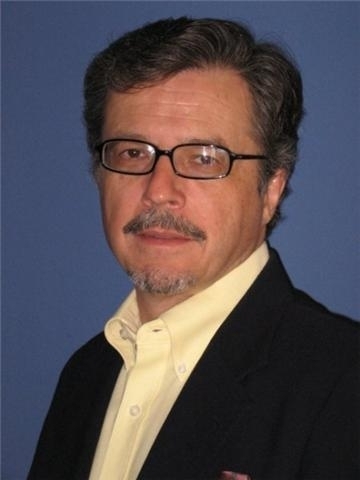
[By Dr. David Edward Marcinko MBA, CMP™]

Did you know that healthcare journalist William F. Shea opined a decade ago that there were numerous psychological barriers against the formation of physicians unions [personal communication].

The Reasons

These included (1) public perception of doctor’s as a “cut above” ordinary workers; (2) doctor’s attempts to wrap collective bargaining in a mantle of patient’s rights that lacked credibility; and (3) the highly educated physician’s ability to re-engineer and seek alternate employment opportunities rather than accept the salary scale or lack of autonomy present in restrictive managed care entities.

Assessment

Time has proven him correct as MD resignation through individual re-deployment and/or innovation has been more effective than any “strike” if called for by one practitioner, or union group, at a time.

MORE: Unions

MORE: https://www.beckershospitalreview.com/hospital-physician-relationships/princeton-economists-physicians-are-taking-money-away-from-the-rest-of-us.html?origin=bhre&utm_source=bhre&oly_enc_id=

Conclusion

Your thoughts and comments on this ME-P are appreciated. Feel free to review our top-left column, and top-right sidebar materials, links, URLs and related websites, too. Then, subscribe to the ME-P. It is fast, free and secure.

Link: http://feeds.feedburner.com/HealthcareFinancialsthePostForcxos

Speaker: If you need a moderator or speaker for an upcoming event, Dr. David E. Marcinko; MBA – Publisher-in-Chief of the Medical Executive-Post – is available for seminar or speaking engagements. Contact: MarcinkoAdvisors@msn.com

OUR OTHER PRINT BOOKS AND RELATED INFORMATION SOURCES:

LEXICONS: http://www.springerpub.com/Search/marcinko
PHYSICIANS: www.MedicalBusinessAdvisors.com
PRACTICES: www.BusinessofMedicalPractice.com
HOSPITALS: http://www.crcpress.com/product/isbn/9781466558731
CLINICS: http://www.crcpress.com/product/isbn/9781439879900
ADVISORS: www.CertifiedMedicalPlanner.org
BLOG: www.MedicalExecutivePost.com

Product DetailsProduct DetailsProduct Details

Product Details

Understanding the Collaborative Shift in Bedside Manner

Join Our Mailing List

Doctor-Patient Relations in the Modern Era

[By Mario Moussa PhD]

[By Jennifer Tomasik MS]

[By Dr. David E. Marcinko MBA]

www.BusinessofMedicalPractice.com

When it comes to the doctor-patient relationship, Health 2.0 needs guidelines. Several leading health providers have begun to call for them. We think guidelines would, among other things, help define the right mix of virtual and live communication.

Our relationship strategies take a step in this direction. Such a framework can be used to start a productive dialogue among health providers about social media. A hospital committee or some other governing body could easily use Web 2.0 tools—a blog or a wiki—to start the discussion. Before long, there would be ample case material to flesh out general principles.

Health 2.0 Needs Guidelines

Guidelines would also address a big barrier to using Health 2.0: getting paid. Currently reimbursement policies do not cover electronic communication, so physicians have little financial incentive to use it. In a 2003 study, only 9% of physicians were willing to use e-mail to communicate with patients. This has something to do with old habits. But it has a lot to do with payment schedules, too. Guidelines should feature the research that shows the positive health outcomes of strong physician-patient relationships and how social media tools help build relationships. In today’s “pay for performance” market, these outcomes help build credibility for wired communication.

Training Support

We also think Health 2.0 guidelines need to be supported by training. Studies show that training in interviewing and interpersonal skills produces substantial differences in the quality of care. Training in Health 2.0 communication would likely have a similar impact.

Assessment

Paradoxically, as patients can access and control more data, they have a greater need for trusted physicians who communicate well using various mediums. As Ted Epperly, President of the American Academy of Family Physicians, has said, patients need “wise counsel” in sifting through the prodigious amounts of information available via Health 2.0. And physicians as well as patients need to learn how to navigate this environment. No longer the sole authoritative source of medical information, physicians need to adapt, becoming an experienced partner and guide for inquiring patients. Training can help doctors get comfortable in this new role.

Conclusion

And so, your thoughts and comments on this ME-P are appreciated. Feel free to review our top-left column, and top-right sidebar materials, links, URLs and related websites, too. Then, subscribe to the ME-P. It is fast, free and secure.

Speaker: If you need a moderator or speaker for an upcoming event, Dr. David E. Marcinko; MBA – Publisher-in-Chief of the Medical Executive-Post – is available for seminar or speaking engagements. Contact: MarcinkoAdvisors@msn.com and http://www.springerpub.com/Search/marcinko

Subscribe Now: Did you like this Medical Executive-Post, or find it helpful, interesting and informative? Want to get the latest ME-Ps delivered to your email box each morning? Just subscribe using the link below. You can unsubscribe at any time. Security is assured.

Link: http://feeds.feedburner.com/HealthcareFinancialsthePostForcxos

Sponsors Welcomed: And, credible sponsors and like-minded advertisers are always welcomed.

Link: https://healthcarefinancials.wordpress.com/2007/11/11/advertise


Anderson, James G., Eysenbach, Gunther, and Rainey, Michelle R. “The Impact of CyberHealthcare on the Physician–Patient Relationship.” Journal of Medical Systems. 27 (2003): 67 – 84.

Kaplan, Sherrie H., Greenfield, Sheldon, Gandek, Barbara, et al. “Characteristics of physicians with participatory decision-making styles.” Annals of Internal Medicine. 124.5 (1996): 497–504

Product DetailsProduct DetailsProduct Details

Product Details

About the ME-P Rolling Fundraising Campaign

A Message from the Founder and CEO

By Dr. David Edward Marcinko; MBA, CMP™

www.MedicalBusinessAdvisors.com

www.CertifiedMedicalPlanner.com

www.HealthcareFinancials.com

I began medical practice in the early 1980’s as an associate, junior partner and finally senior partner. While I wasn’t a smashing academic or business success, I wasn’t unsuccessful either. Although my patients loved my – never been sued – my journey began to create and aggregate the best medical practice management information available to help private doctors of all degrees and designations. I’ve been writing, editing, publishing and speaking on healthcare administration and related financial and economics topics ever since; both in print and online.

The result is that our handbooks, textbooks, CDs and journals are the sum total of all those printed moments of “practice-business-art” discovered by traditional contributing authors and others like me. Additionally, knowledgeable colleagues across the country add their time and energy to the vast, ever-growing store of electronic knowledge that the ME-P has become since 2006. This crowd-sourced model keeps all information current and timely for the modern and ever-changing healthcare industrial complex. In fact, here is what one reader-reviewer said of our efforts:

This comprehensive multi-authored text contains over 450 pages of highly specific and well-documented information that will be interest to physicians in private practice, academics, and in medical management. [Chapters are] readable, concise yet complete, and well developed. I could have used a book like this in the past and I will certainly refer to it frequently now.”

www.BusinessofMedicalPractice.com

But, what’s really remarkable about this ME-P is that it continues to be the product of cognitive volunteers working one entry at a time. And, because we are advertiser-light, those of us who create and use the ME-P have to protect and sustain it. That’s what the annual ME-P fundraising campaign is all about. And, it’s why I’ve made my personal donation. I hope you’ll choose to join me today in making a donation of $20, $35, $50 or whatever you can to keep the ME-P free.

Link:  www.e-junkie.com/ecom/gb.php?c=cart&i=641232&cl=109140&ejc=2

Thank you in advance for your support.

Speaker: If you need a moderator or speaker for an upcoming event, Dr. David E. Marcinko; MBA – Publisher-in-Chief of the Medical Executive-Post – is available for seminar or speaking engagements. Contact: MarcinkoAdvisors@msn.com and http://www.springerpub.com/Search/marcinko

Get our Widget: Get this widget!

Our Other Print Books and Related Information Sources:

Health Dictionary Series: http://www.springerpub.com/Search/marcinko

Practice Management: http://www.springerpub.com/product/9780826105752

Physician Financial Planning: http://www.jbpub.com/catalog/0763745790

Medical Risk Management: http://www.jbpub.com/catalog/9780763733421

Healthcare Organizations: www.HealthcareFinancials.com

Physician Advisors: www.CertifiedMedicalPlanner.com

Subscribe Now: Did you like this Medical Executive-Post, or find it helpful, interesting and informative? Want to get the latest ME-Ps delivered to your email box each morning? Just subscribe using the link below. You can unsubscribe at any time. Security is assured.

Link: http://feeds.feedburner.com/HealthcareFinancialsthePostForcxos

Sponsors Welcomed: And, credible sponsors and like-minded advertisers are always welcomed.

Link: https://healthcarefinancials.wordpress.com/2007/11/11/advertise

Product DetailsProduct DetailsProduct Details       

Product Details  Product Details

   Product Details 

How to Choose eMR and HIT Consultants

Seeking Unbiased – Not Vendor Driven – Advice

By Shahid N. Shah, MS

www.BusinessofMedicalPractice.com

When you choose to implement your medical records technology, you’ll want to be sure that you get sound and unbiased advice. If you think the selections and decisions are too complicated to do by yourself so getting help is prudent. After you’ve learned more about RECs, which can give you free advice and help, look at some paid consultants as well because most RECs will simply choose a few local consultants that marketed themselves well to the RECs and not because the consultants are necessarily good at their jobs.

Consulting Types

The kinds of consultants you will need include:

  • Meaningful Use (MU) Consultant. An MU consultant should only be needed if you’re going after government stimulus funds. This is a person that knows how a medical practice works, inside and out, and all the legal and regulatory details about Meaningful Use. This is not a typical IT contractor or technical consultant; it must be someone who is focused on MU. Because you will not get increased government reimbursements unless you meet MU, the MU Consultant is probably more important than your IT consultant. The MU consultant should help you figure out whether or not you qualify for incentives, how to take advantage of incentive program, how to use RECs, how to ensure that you can qualify for MU without disrupting your practice and losing money, and finally whether you should even care about MU.
  • A good MU Consultant will tell you when to walk away from MU and not implement certain technologies just as readily as when to implement it.
  • Another major thing to focus on when choosing an MU consultant is to be sure that they know your local area’s rules, regulations, and technology providers (not national).
  • Try to make sure that your MU Consultants are paid very little upfront and will share the risk with you as you try to achieve success. They should get paid when you get paid and should not be paid full price unless you get incentive payments from the government. 
  • EMR Consultant. If you’re ready to buy an EMR the MU Consultant can help you pick products but getting advice from an EMR Consultant who knows all the hundreds of packages (and doesn’t just know 1 or 2 that he’s seen before) and which one will be best for you may be worth investing in. Be careful if your EMR Consultant is coming from a REC or a vendor side – ask them to disclose any ties to the products they are helping you select. Some EMR consultants are business focused and others are technically focused; you should pick the one based on what your needs are: for example, if you’re great at technology, choose a business-focused consultant (and vice-versa). 
  • IT Consultant. This is something that’s obvious but you need excellent advice on hardware, software, inter-office networking, Internet connectivity, bandwidth analysis, and a whole host of other technology needs. 
  • Integration Consultant. Most people forget this consultant because it’s not obvious but in order to make sure that all the medical records data you’re collecting can be shared in between your systems, your hospital, and with the government you need an integration consultant. Their job is to know all the relevant standards like HL7, DICOM, CCR, CCD, XML, etc. along with things like HL7 routers and tools that can share medical data records between your EMR, practice management system, and health information exchanges (HIEs).

Assessment 

Front Matter BoMP – 3

Conclusion

And so, your thoughts and comments on this ME-P are appreciated. How do you select an eMR consultant? Feel free to review our top-left column, and top-right sidebar materials, links, URLs and related websites, too. Then, subscribe to the ME-P. It is fast, free and secure.

Speaker: If you need a moderator or speaker for an upcoming event, Dr. David E. Marcinko; MBA – Publisher-in-Chief of the Medical Executive-Post – is available for seminar or speaking engagements. Contact: MarcinkoAdvisors@msn.com and http://www.springerpub.com/Search/marcinko

Our Other Print Books and Related Information Sources:

Health Dictionary Series: http://www.springerpub.com/Search/marcinko 

Practice Management: http://www.springerpub.com/product/9780826105752

Physician Financial Planning: http://www.jbpub.com/catalog/0763745790

Medical Risk Management: http://www.jbpub.com/catalog/9780763733421

Healthcare Organizations: www.HealthcareFinancials.com

Physician Advisors: www.CertifiedMedicalPlanner.com

Subscribe Now: Did you like this Medical Executive-Post, or find it helpful, interesting and informative? Want to get the latest ME-Ps delivered to your email box each morning? Just subscribe using the link below. You can unsubscribe at any time. Security is assured.

Link: http://feeds.feedburner.com/HealthcareFinancialsthePostForcxos

Sponsors Welcomed: And, credible sponsors and like-minded advertisers are always welcomed.

Link: https://healthcarefinancials.wordpress.com/2007/11/11/advertise

Product DetailsProduct DetailsProduct Details      

Update on How Physicians Get Paid in 2010-11 [A slide show]

Part 2: [A Visual .ppt Presentation]

By Dr. David Edward Marcinko; MBA

[Editor-in-Chief]

From prior posts and comments on this ME-P, we know that most patients don’t have a clue about how doctors get paid in the real world of health insurance reimbursement.

A Popular Topic

We know this because prior posts on the topic have consistently been among the most popular on this platform. For example:

Part 1: https://healthcarefinancials.wordpress.com/2008/09/12/how-doctors-get-paid

Assessment

And so, we have taken the liberty of drilling down the topic, to a more granular level, in this attached .ppt presentation.

Link: How Doctors Get Paid in 2010 

Conclusion

And so, your thoughts and comments on this ME-P special presentation are appreciated. Tell us what you think?

Feel free to review our top-left column, and top-right sidebar materials, links, URLs and related websites, too. Then, be sure to subscribe to the ME-P. It is fast, free and secure.

Link: http://feeds.feedburner.com/HealthcareFinancialsthePostForcxos

Speaker: If you need a moderator or speaker for an upcoming event, Dr. David E. Marcinko; MBA – Publisher-in-Chief of the Medical Executive-Post – is available for seminar or speaking engagements. Contact: MarcinkoAdvisors@msn.com 

Our Other Print Books and Related Information Sources:

Practice Management: http://www.springerpub.com/prod.aspx?prod_id=23759

Physician Financial Planning: http://www.jbpub.com/catalog/0763745790

Medical Risk Management: http://www.jbpub.com/catalog/9780763733421

Healthcare Organizations: www.HealthcareFinancials.com

Physician Advisors: www.CertifiedMedicalPlanner.com

Subscribe Now: Did you like this Medical Executive-Post, or find it helpful, interesting and informative? Want to get the latest ME-Ps delivered to your email box each morning? Just subscribe using the link below. You can unsubscribe at any time. Security is assured.

Link: http://feeds.feedburner.com/HealthcareFinancialsthePostForcxos

Sponsors Welcomed: And, credible sponsors and like-minded advertisers are always welcomed.

Link: https://healthcarefinancials.wordpress.com/2007/11/11/advertise

Product DetailsProduct DetailsProduct Details      

Going ‘Bare’ Might be an Expensive Mistake

An Opinion on E & O Insurance for FAs

Dr. David Edward Marcinko MBA CMP™

www.CertifiedMedicalPlanner.org

[Publisher-in-Chief]

This post is not about medical malpractice liability insurance. As a doctor, financial advisor and insurance agent I have written and opined on this subject before; informally on this blog and more formally through our handbooks:

http://www.amazon.com/Insurance-Management-Strategies-Physicians-Advisors/dp/0763733423/ref=sr_1_3?ie=UTF8&s=books&qid=1275315795&sr=1-3

and, of course, pragmatically with clients: www.MedicalBusinessAdvisors.com

No, this post is about Errors and Omissions insurance for financial advisors.

About E & O Insurance for FAs

Like many physicians, most financial planners and advisors are confident that the way they practice minimizes the chance of being sued by a disgruntled [patient] client. And, perhaps that has been their experience so far. But just one arbitration case for a substantial claim can cost $10,000 or more, and a conventional lawsuit that goes to court with a jury trial will run about $50,000, even if it’s a totally bogus claim. With the cost of errors and omissions coverage for financial advisors now down to between $650 and $2,000 per year, it doesn’t make much sense to “go bare;” especially after the highly emotional 2008-09 debacle.

Historical Past

In years past, most financial planners opted to go without insurance because premiums on E&O policies ran about $7,500 -10,000 per year. Most of them should think again and take the same advice they give their clients—insure for catastrophic loss. We all know that when the stock market bubble finally bursts, there will be a lot of unhappy clients looking to recoup losses. What better time than now while things are good to put E&O coverage in place.

E & O Coverage

E&O policies cover errors, misstatements, negligence, breach of duty, and other wrongful acts, but fraudulent acts are usually not covered. Many major broker/dealers carry group coverage for the affiliated planners. Deductibles are typically $5,000 per planner and $20,000 for the firm. Policies are not standard—coverage can vary widely. Some cover insurance, some cover only securities, investment advisory and financial planning, and some cover other investment advice (e.g., real estate, franchises, etc.). Make sure the policy you buy covers what you actually do.

Claims-Made Policies

Be aware that these policies, like malpractice coverage, are on a “claims-made basis” rather than an “occurrence basis.” Therefore, prior acts are not usually covered unless the planner had continuous coverage with an insurer since the act was committed. As a result, it is essential to never permit a gap in coverage inasmuch as this could break the chain necessary for coverage of prior acts. So, this is where “tail coverage” comes into play; and it might be expensive!

Assessment

Experts point out that the biggest reason planners get sued is failure to diversify the client’s portfolio adequately. A fair [majority?] number of “financial advisors” are “one-product” sales people who always sell the product they know. This can be an expensive modus operandi. You only buy professional liability insurance because you cannot afford the consequences.

Note: “Minding Your Es & Os,” by Eric L.Reiner, Dow Jones Investment Advisor, February 1997, pp. 56–61, Dow Jones Financial Corp. [908] 389-8700)

Conclusion

And so, your thoughts and comments on this ME-P are appreciated. Feel free to review our top-left column, and top-right sidebar materials, links, URLs and related websites, too. Then, subscribe to the ME-P. It is fast, free and secure.

Speaker: If you need a moderator or speaker for an upcoming event, Dr. David E. Marcinko; MBA – Publisher-in-Chief of the Medical Executive-Post – is available for seminar or speaking engagements. Contact: MarcinkoAdvisors@msn.com and http://www.springerpub.com/Search/marcinko

Our Other Print Books and Related Information Sources:

Health Dictionary Series: http://www.springerpub.com/Search/marcinko

Practice Management: http://www.springerpub.com/product/9780826105752

Physician Financial Planning: http://www.jbpub.com/catalog/0763745790

Medical Risk Management: http://www.jbpub.com/catalog/9780763733421

Physician Advisors: www.CertifiedMedicalPlanner.org

Subscribe Now: Did you like this Medical Executive-Post, or find it helpful, interesting and informative? Want to get the latest ME-Ps delivered to your email box each morning? Just subscribe using the link below. You can unsubscribe at any time. Security is assured.

Link: http://feeds.feedburner.com/HealthcareFinancialsthePostForcxos

Product DetailsProduct DetailsProduct Details

Product Details  Product Details

   Product Details 

More on Disability Insurance for Physicians

Join Our Mailing List

Some Advice from a Doctor, Insurance Agent and Financial Advisor

Dr. David Edward Marcinko MBA CMP™

www.CertifiedMedicalPlanner.org

[Publisher-in-Chief]

Policies Are Harder to Get, More Expensive, and Offer Less Protection Than Before

Due principally to large claims from anesthesiologists, surgeons, emergency room physicians, and trial attorneys, disability insurance underwriting is becoming stricter. Among the effects on policyholders: revised definitions of disability; restriction of benefits to two years on so-called “soft tissue” disabilities and mental and nervous disorders; and downgrading of professionals to the general white-collar category. The result is higher premiums.

Buy a Good Individual Policy

Based upon the fact that disability is the only insurance product on the market that is non-cancelable (premiums and policy features are locked in until age 65), my advice is to buy a good quality individual policy as early as possible and hang on to it. Group benefits should be added later. Also, many group plans only include straight salary in compensation. Incentive compensation, which makes up a large portion of an executive’s compensation, is not considered. Under the Revenue Reconciliation Act of 1993, employee disability benefits can only cover up to $150,000 in compensation. Finally, don’t forget that if the employer pays the premiums, benefits are taxable. This can substantially reduce an executive’s disability income.

Pay More for Non-Cancelable Coverage

I also may recommend paying a 15–20% higher premium to obtain non-cancelable coverage, if available, as compared to guaranteed renewable coverage. In both cases, coverage cannot be canceled. However, in the latter case, premiums can be increased on a class basis. Also, investigate the partial-disability benefits as well as the residual benefits after returning to work.

Note: “Your Disability Is Your Opportunity,” by Jaberta C. Evans, Dow Jones Investment Advisor, December 1996, pp. 76–80, Dow Jones Financial Publishing Corp., [908] 389-8700.)

Conclusion

Your thoughts and comments on this ME-P are appreciated. Feel free to review our top-left column, and top-right sidebar materials, links, URLs and related websites, too. Then, subscribe to the ME-P. It is fast, free and secure.

Link: http://feeds.feedburner.com/HealthcareFinancialsthePostForcxos

Speaker: If you need a moderator or speaker for an upcoming event, Dr. David E. Marcinko; MBA – Publisher-in-Chief of the Medical Executive-Post – is available for seminar or speaking engagements. Contact: MarcinkoAdvisors@msn.com

OUR OTHER PRINT BOOKS AND RELATED INFORMATION SOURCES:

DICTIONARIES: http://www.springerpub.com/Search/marcinko
PHYSICIANS: www.MedicalBusinessAdvisors.com
PRACTICES: www.BusinessofMedicalPractice.com
HOSPITALS: http://www.crcpress.com/product/isbn/9781466558731
CLINICS: http://www.crcpress.com/product/isbn/9781439879900
BLOG: www.MedicalExecutivePost.com
FINANCE: Financial Planning for Physicians and Advisors
INSURANCE: Risk Management and Insurance Strategies for Physicians and Advisors

Product DetailsProduct DetailsProduct Details

Product Details  Product Details

   Product Details 

Looking to Convert to a Paperless Dental [Medical] Practice?

Why Does the ADA Promote eDRs?

By Darrell K. Pruitt DDS

Not so Fast!

Before a dentist trustingly accepts the recommendation of the American Dental Association and unwittingly converts his or her practice to paperless, one should read the story I copied below which was posted on VillageSoup.com yesterday.

Unlucky dentist loses everything …

http://waldo.villagesoup.com/business/brief/business-services/unlucky-dentist-loses-everything/373672

Worst Way to Start Off the Year

I have been on my own for last 7 yrs. We have a small business server (windows 2003) 6 work stations, completely paperless using Dentrix 11 and Vixwin platinum. One morning, when we returned to work, we could not access the server. Went into panic mode! Not able to get anything! Not knowing the schedule. Who is coming what they are coming for, etc. It was decided that my server crashed. It was set up w/2 hard drives to mirror each other and also had an external drive back up (Seagate). We ended up rushing the drives to a data recovery company in (data doctors). They sounded very promising claim 90% success). I agreed to pay additional $4100 to rush case! We were led to believe all is well once they diagnosed case. A few hrs later every thing changed. We got the bad news that both drives are not recoverable since they found a minute scratch on one of the plates. Also we are not able to recover anything from the external drive.

At this point I have lost all patient records including x rays going back 7 yrs. I have no access to schedule, ledgers, notes, insurance, X-rays, anything. This is leading both me and my wife into depression. We are very stressed, at a loss. This is a catastrophic loss. Not sure how to move forward?

I am worried about the liability on top of everything else. How do I tell my patients? How do I know who paid for what balances on work that needs to be done, etc. I keep waking up at night thinking of all the possible problems.

This is the lowest point in my career. I don’t even want to go into the office from stress. If any one can offer any advice I would really appreciate it. I know in the past you guys lifted me up. I love forum name.

Thank you.

Assessment

On top of the anguish this person already suffers, the HIPAA violation must be reported to the Department of Health and Human Services. Thanks to HITECH, an expensive inspection is likely to follow. The dentist’s letter reminds me of a desperate private note from a dentist a few months ago describing his HIPAA violation. He lost a laptop computer he was using as a daily backup device. Since there were thousands of his patients’ unencrypted PHI on the computer, he was similarly paralyzed by the same cold and lonely panic a professional feels when optimistic career plans suddenly crumble into a dark void that includes abject business failure. People sometimes hurt themselves and others when even choosing to do the right thing leads to ruin. A person with any compassion can tell from reading the dentist’s plea for help that the newer harsher penalties from HHS and state Attorneys General for data breaches will only further destroy the lives of innocent dentists and their families. HITECH is cruel nonsense in dentistry and ADA leaders are stone-cold heartless.

Although encryption is strongly advised in the “ADA Practical Guide to HIPAA Compliance,” If ADA officials dared to keep track of their failure in promoting safe digital dental records, I bet their own data would show that less than 3% of US dental patients’ PHI is encrypted. Yet proud leaders in my profession remain stoically unresponsive to members’ and patients’ concerns about risks of data breaches. They call their aloofness “professionalism.” It infuriates me that shy ADA officials hide from personal accountability for the careless harm they cause dentists and dental patients.

“Image is everything” ADA/IDM slogan

The nation’s ambulatory healthcare providers – including dentists, podiatrists, chiropractic doctors and physicians – cannot continue to blindly trust our professional organizations to protect our practices from the dangers of the electronic health records they promote for their personal benefit. We’ve been sold out.

Assessment

As far as I can tell, selfish ADA leaders with careers invested in dental informatics just can’t tolerate truth. When I consider the pain they cause at no risk to themselves, I say the parasites should be encouraged to move on down the road and look for their power in a field where they won’t endanger others.

Conclusion

Your thoughts and comments on this ME-P are appreciated. Feel free to review our top-left column, and top-right sidebar materials, links, URLs and related websites, too. Then, subscribe to the ME-P. It is fast, free and secure.

Speaker: If you need a moderator or speaker for an upcoming event, Dr. David E. Marcinko; MBA – Publisher-in-Chief of the Medical Executive-Post – is available for seminar or speaking engagements. Contact: MarcinkoAdvisors@msn.com

OUR OTHER PRINT BOOKS AND RELATED INFORMATION SOURCES:


Product DetailsProduct DetailsProduct Details

***

PhysAssist Scribes for eMRs [Necessity or Frivolity?]

Join Our Mailing List

On Human eHR Input Devices [aka Personal Secretaries]

By Dr. David Edward Marcinko MBA CMP™

[Publisher-in-Chief] www.CertifiedMedicalPlanner.org

What it Is – How it Works?

According to their website, PhysAssist Scribes provide turn-key solutions, recruits, interviews, trains and certifies staff, schedules and maintains highly-trained human eHR input scribes for their clients [$8-10/hour wages]. Emergency room departments and physicians were an initial target market.

Data Input Services

Scribes provide real-time charting for physicians by shadowing them throughout their shifts and performing a variety of tasks including recording patients’ history and chief complaints, transcribing the physical exam, ordering x-rays, recording diagnostic test results, and preparing plans for follow-up care, etc.

Typical Clients

Clients are mostly hospital based physicians, but one can imagine progressing down the food chain to large medical practices and even to solo practitioners as technology advances and HR costs are reduced. So, give em’ a click, and tell us what you think.

http://iamscribe.com

Reported Benefits

  • Increase physician performance
  • Increase physician job satisfaction
  • Increase overall patient satisfaction
  • Improve chart accuracy
  • Decrease patient length of stay
  • Increase communication among ED staff
  • Improve physician recruiting and [retension] retention.

Related story: http://www.hhnmag.com/hhnmag_app/jsp/articledisplay.jsp?dcrpath=HHNMAG/Article/data/12DEC2010/1210HHN_FEA_staffingissues&domain=HHNMAG

Assessment

  • It seems implausible to me that in order to facilitate the widespread use of eMRs, one has to hire another layer of bureaucracy in order to input the patient encounter. Is this an indictment of the various speech recognition systems or physician keyboarding ability? I am not a technophobe but eHRs are not yet up to pragmatic-use snuff. This is reminiscent of jeweled encrusted “buggy-whips” of the 1850’s. They were expensive, cumbersome and added no utility; but were “nice-to-have” devices for the affluent until the internal combustion engine came along [i.e. non-solo or small group medical practitioner].
  • Of course, injecting another human resource [i.e. personal secretary] into the data input equation increases privacy breach possibilities for this protected health information [PHI]. And, it is not exactly the model of a contemporary and lean micro-medical office.
  • Does a secretary-scribe really have to be “certified”? Won’t a good typist do just as well? Is this an example of vertical integration in the PhysAssist business model?  How long till the scribes join the labor-union movement and seek employment benefits?
  • What happens to the doctor, patient and data input chain when a scribe quits, or is a no-show for work?
  • What ever happened to Occam’s razor (or Ockham’s razor), often expressed in Latin as the lex parsimoniae (translating to the law of parsimony, law of economy or law of succinctness), which is a principle that generally recommends selecting a hypothesis that makes the fewest new assumptions. IOW: KISS
  • Of additional interest to note is the misspelling of the word retention, as “retension” on the www.IAmScribe.com website. Not a very good impression for a transcribing firm; or am I just an aging editorial curmudgeon?
  • Are e-MR scribes a necessity or mere frivolity?

Conclusion

And so, your thoughts and comments on this ME-P are appreciated. Are such secretary scribes a “covered entity” or “business associate” under the HIPAA laws with the needed paperwork, etc? Or, is this an Obama administration job creation initiative?

And, feel free to review our top-left column, and top-right sidebar materials, links, URLs and related websites, too. Then, subscribe to the ME-P. It is fast, free and secure.

Link: http://feeds.feedburner.com/HealthcareFinancialsthePostForcxos

Speaker: If you need a moderator or speaker for an upcoming event, Dr. David E. Marcinko; MBA – Publisher-in-Chief of the Medical Executive-Post – is available for seminar or speaking engagements. Contact: MarcinkoAdvisors@msn.com

OUR OTHER PRINT BOOKS AND RELATED INFORMATION SOURCES:

DICTIONARIES: http://www.springerpub.com/Search/marcinko
PHYSICIANS: www.MedicalBusinessAdvisors.com
PRACTICES: www.BusinessofMedicalPractice.com
HOSPITALS: http://www.crcpress.com/product/isbn/9781466558731
CLINICS: http://www.crcpress.com/product/isbn/9781439879900
BLOG: www.MedicalExecutivePost.com
FINANCE: Financial Planning for Physicians and Advisors
INSURANCE: Risk Management and Insurance Strategies for Physicians and Advisors

Product DetailsProduct DetailsProduct Details

Product Details  Product Details

   Product Details 

Social-Norms versus Market-Norms in Healthcare Reimbursement

Rogue Thoughts on Toppling the Current Payment System

By Dr. David Edward Marcinko MBA, CMP™

[ME-P Editor-in-Chief]

Recently, I reviewed a copy of “Predictably Irrational” by fellow blogger Dan Ariely, PhD. Dan is the James B. Duke Professor of Behavioral Economics at Duke University and a founding member of the Center for Advanced Hindsight.

In the book, he examines some of the positive effects that irrationality has in our lives and offers a new look on how irrational decisions might influence our personal lives and our workplace experiences. I found the chapter on social-norms v. market-norms particularly interesting and wondered about its’ applicability to healthcare economics and reimbursement.

Example:

Dan sites the example of various fund raising charitable goods that had been set at market prices [the norm in this country – little retail negotiating takes place in the USA], but that he recently chose to experiment and make them donation-based instead. 

The Difference

What a difference it made! He cites the case of one woman who bought a cupcake and reached for a dollar bill when asked about the price.  When told there was no set price, but donations-only were accepted, she put the one bill back in her wallet and pulled out a ten-spot. 

References and Research

Assessment

So, please allow me to use this trivial example and suggest a limited switch experiment to social-norms – instead of market-norms in some cases of healthcare reimbursement – perhaps starting with non-surgical, non-specialty, primary care providers [GPs, internists, FPs, DNPs, podiatrists, etc], or any “willing provider” for that matter. What do you think would happen?

Conclusion

And so, your thoughts and comments on this ME-P are appreciated. Is this idea too far out – or thought provoking enough for further consideration? Feel free to review our top-left column, and top-right sidebar materials, links, URLs and related websites, too. Then, subscribe to the ME-P. It is fast, free and secure.

Speaker: If you need a moderator or speaker for an upcoming event, Dr. David E. Marcinko; MBA – Publisher-in-Chief of the Medical Executive-Post – is available for seminar or speaking engagements. Contact: MarcinkoAdvisors@msn.com and http://www.springerpub.com/Search/marcinko

Get our Widget: Get this widget!

Our Other Print Books and Related Information Sources:

Health Dictionary Series: http://www.springerpub.com/Search/marcinko

Practice Management: http://www.springerpub.com/product/9780826105752

Physician Financial Planning: http://www.jbpub.com/catalog/0763745790

Medical Risk Management: http://www.jbpub.com/catalog/9780763733421

Healthcare Organizations: www.HealthcareFinancials.com

Physician Advisors: www.CertifiedMedicalPlanner.com

Subscribe Now: Did you like this Medical Executive-Post, or find it helpful, interesting and informative? Want to get the latest ME-Ps delivered to your email box each morning? Just subscribe using the link below. You can unsubscribe at any time. Security is assured.

Link: http://feeds.feedburner.com/HealthcareFinancialsthePostForcxos

Sponsors Welcomed: And, credible sponsors and like-minded advertisers are always welcomed.

Link: https://healthcarefinancials.wordpress.com/2007/11/11/advertise

Product DetailsProduct DetailsProduct Details       

Product Details  Product Details

   Product Details 

The Emerging Discipline of “Slow Medicine” and Professional Liability

Join Our Mailing List

Examining the Heuristic Relationship between Face-Time and Medical Negligence Lawsuits 

By Dr. David Edward Marcinko MBA CMP™

www.BusinessofMedicalPractice.com

[Editor-in-Chief]

Our colleague and blogger Kent Bottles MD has been thinking and posting about the emerging philosophy of “slow medicine”. Of course, health economists realize how complex and difficult it is to transform American health care so that we will enjoy lower per-capita costs along with increased medical care quality in our lives. Unfortunately, grass root practitioners have done just the opposite these last two decades or so. In other words, practicing “faster medicine” with assembly line efficiency relegating office visits to 15, 10 or even 7 minute increments etc, in order to compensate for diminishing MCO/HMO reimbursement. And, this may have been a financially acute perspective for modernity until now!

Defining the Obvious

Slow medicine is practiced by a small, but growing subculture whose pioneer and spokesperson is Dr. Dennis McCullough, author of the book My Mother, Your Mother [Embracing “Slow Medicine,” The Compassionate Approach to Caring for Your Aging Loved Ones].

In other words, slow medicine is a philosophy and set of practices that believes in a conservative medical approach to both acute and chronic care. However, I believe there may be more to it than first perceived.

Link: http://www.thehealthcareblog.com/the_health_care_blog/2010/12/slow-medicine.html#comments

My Experiences

After serving as a medical expert witness in hundreds of malpractice cases [consulting, chart review, discovery depositions, trial appearances and sworn testimony] – both directly and indirectly and for both plaintiff and defendant doctors [predominately] – thru almost twenty year of private practice, my gut tells me the following:

“Patients do not sue doctors they personally like – they do sue doctors they do not like.”

In my opinion and experience, great clinical doctors are often sued while their lesser adept souls are not. Moreover, I believe this pleasing reduced liability relationships is enhanced by more patient face-time; not less. This is not a function of competency, but one of human relationships and “connectedness” with one’s caregiver. It will not be changed by eMRs, or more diagnostic tests [malpractice phobia] or procedures. It will be improved by intense physical examination, touching, eye contact, sympathy, empathy and time [aka: a TRUSTING relationship and pleasing bedside manner forged by TIME]. Period!

And so, for our business managers, CEOs and medical executive readers, let us compromise on terminology and call it “slower medicine.”

Assessment

Link: http://www.amazon.com/Insurance-Management-Strategies-Physicians-Advisors/dp/0763733423/ref=sr_1_3?ie=UTF8&s=books&qid=1275315795&sr=1-3

Conclusion

Your thoughts and comments on this ME-P are appreciated. Feel free to review our top-left column, and top-right sidebar materials, links, URLs and related websites, too. Then, subscribe to the ME-P. It is fast, free and secure.

Speaker: If you need a moderator or speaker for an upcoming event, Dr. David E. Marcinko; MBA – Publisher-in-Chief of the Medical Executive-Post – is available for seminar or speaking engagements. Contact: MarcinkoAdvisors@msn.com

OUR OTHER PRINT BOOKS AND RELATED INFORMATION SOURCES:

Product DetailsProduct DetailsProduct Details

Product Details  Product Details

   Product Details 

How I KISS My IRA [A Prudent Checklist]

Simplified Retirement Thoughts for Physicians in 2011

By Dr. David Edward Marcinko MBA CMP™

www.CertifiedMedicalPlanner.com

[Publisher-in-Chief]

As a reformed certified financial planner and stockbroker, and current CMP™ professional charter holder for more than a decade, I am always amazed at how complex and convoluted some medical colleages and other folks make IRAs and their retirement planning.

So, please allow me to offer this brief checklist of advice on how to KISS your IRA in 2011!

What to have in an IRA?

Assets that are expected to generate the greatest relative pretax returns, such as:

  • fixed-income investments expected to yield high returns
  • stocks with high dividend yields
  • stocks expected to be held short term
  • mutual funds that emphasize stocks paying high dividends
  • mutual funds that expect to hold stocks short term.

What not to have:

  • collectibles (e.g., art objects, antiques, and stamps)
  • tax-free, tax-deferred, or tax-sheltered vehicles (e.g., municipal bonds, Series EE U.S. savings bonds, or variable annuities)
  • investments in individual foreign securities or mutual funds that hold primarily foreign securities.

Activities to avoid:

  • borrowing from the account
  • creating unrelated business taxable income, which may result from ownership of an interest in a partnership or S corporation or from purchasing securities on margin or borrowing to acquire real estate.

Assessment

So, what’s in your IRA, doctor? Do you have a Keep It Simple and Sane [KISS] checklist? 

Conclusion

And so, your thoughts and comments on this ME-P are appreciated. Do you KISS your IRA like me? Feel free to review our top-left column, and top-right sidebar materials, links, URLs and related websites, too. Then, subscribe to the ME-P. It is fast, free and secure.

Speaker: If you need a moderator or speaker for an upcoming event, Dr. David E. Marcinko; MBA – Publisher-in-Chief of the Medical Executive-Post – is available for seminar or speaking engagements. Contact: MarcinkoAdvisors@msn.com and http://www.springerpub.com/Search/marcinko

Get our Widget: Get this widget!

Our Other Print Books and Related Information Sources:

Health Dictionary Series: http://www.springerpub.com/Search/marcinko

Practice Management: http://www.springerpub.com/product/9780826105752

Physician Financial Planning: http://www.jbpub.com/catalog/0763745790

Medical Risk Management: http://www.jbpub.com/catalog/9780763733421

Healthcare Organizations: www.HealthcareFinancials.com

Physician Advisors: www.CertifiedMedicalPlanner.com

Subscribe Now: Did you like this Medical Executive-Post, or find it helpful, interesting and informative? Want to get the latest ME-Ps delivered to your email box each morning? Just subscribe using the link below. You can unsubscribe at any time. Security is assured.

Link: http://feeds.feedburner.com/HealthcareFinancialsthePostForcxos

Sponsors Welcomed: And, credible sponsors and like-minded advertisers are always welcomed.

Link: https://healthcarefinancials.wordpress.com/2007/11/11/advertise

Product DetailsProduct DetailsProduct Details       

Product Details  Product Details

   Product Details 

Is Primary Care Medicine Toxic?

Join Our Mailing List

Requesting Real-Life Examples of Professional Despair

By Dr. David Edward Marcinko MBA CMP™

www.BusinessofMedicalPractice.com

[Editor-in-Chief]

As you’ve probably heard – and experienced or know from our books, journal and this ME-P – there’s a primary care medical shortage out-there!  Maybe you’ve even read or heard about the Physician’s Foundation study describing the overwhelming number of PCPs who want out of this toxic environment. On one hand, we have patients desperately searching for a PCP, while on the other hand we have good caring doctors being forced out of the profession. Of course, NPs, ANPs, DNPs and other ancillaries are part of the solution; but not entirely.

Link: http://www.physiciansfoundation.org/

Human Anguish

And humanely, as stated by our medical colleague L. Gordon Moore MD, these statistics miss the very real pain and anguish of people who entered primary care to help patients when they find the environment for primary care toxic to the ethical practice of medicine. Even to the point of suicide!

Assessment

These voices need to be heard. And so, we are asking doctors and providers of all stripes to post in the comments section below personal examples of medical practitioners leaving primary, solo or small group practice because they just can’t stand the toxic environment any longer.

Conclusion

Your thoughts and comments on this ME-P are appreciated. Feel free to review our top-left column, and top-right sidebar materials, links, URLs and related websites, too. Then, subscribe to the ME-P. It is fast, free and secure.

Speaker: If you need a moderator or speaker for an upcoming event, Dr. David E. Marcinko; MBA – Publisher-in-Chief of the Medical Executive-Post – is available for seminar or speaking engagements. Contact: MarcinkoAdvisors@msn.com

OUR OTHER PRINT BOOKS AND RELATED INFORMATION SOURCES:


Product Details 

Grading Texas Lawmakers on Patient Privacy

Join Our Mailing List

Grade Spread Runs Gamut from F to A+

[By D. Kellus Pruitt DDS]

Are the interests of my dental patients in Fort Worth, Texas being adequately represented by their elected officials in Austin and Washington DC? Starting a few months ago, I’ve sent multiple emails concerning patient privacy and identity theft to my elected government officials on state and national levels; as a test of responsiveness.

The Elected Officials

These include:

  • Texas US Senators John Cornyn and Kay Bailey Hutchison
  • US Representatives Joe Barton and Michael Burgess
  • Texas State Senators Wendy Davis and Chris Harris
  • Texas State Representatives Diane Patrick and Marc Veasey.

Of the 8 lawmakers I contacted through their Websites, I received no response from state officials Davis, Harris, Patrick and Veasey. However, from my national representation, only Joe Barton failed to reply. I simply have to give those 5 a grade of F. I assumed my state representatives would be more patient-friendly than members of the US Congress. But, I was wrong.

Texas US Senators 

US Senator Cornyn has responded twice: Once in September and again on December 6. In both emails he says,

“Dear Darrell Pruitt,

Thank you for contacting my offices. Your correspondence has been received, and we will respond to you as quickly as possible.”

I suppose there’s still hope for a response, but he also failed. Cornyn also earned an F.

On the other hand, I’m more disappointed with Kay Bailey Hutchison’s staff than John Cornyn’s. In all 3 of her identical responses to my emails, she addresses me as “Dear Friend,” before wasting my time with a vanilla lecture about the origin and intention of the HITECH Act that I can get from HHS:

“The HITECH Act includes privacy and security provisions to expand current requirements under the Health Insurance Portability and Accountability Act (HIPAA) and strengthens the HIPAA privacy rule, blah, blah, blah.”

If Hutchison’s staff member had read the first paragraph of any of the three emails I sent before he or she assigned me the same canned response all three times, the bonehead would have recognized that an explanation of HIPAA was not what I needed from his or her boss. I’m pretty sure I know more about HIPAA than the Senator, and that is the reason I wrote her in the first place.

Senator Hutchison closed all three emails with,

“I appreciate hearing from you, and I hope that you will not hesitate to contact me on any issue that is important to you. Sincerely, United States Senator Kay Bailey Hutchison”

Then she added,

“PLEASE DO NOT REPLY to this message as this mailbox is only for the delivery of outbound messages, and is not monitored for replies.”

Although I should have known better, following her dead-end reply, I returned to her Website and complimented the Senator for being my patients’ first elected official to respond to my emails. I told Kay Bailey how special her personal attention made me feel as an American… which attracted the same response, which quickly stopped that special feeling. Compared to Hutchison’s predictable responses, Senator Cornyn’s thin promises of a meaningful response some day don’t look so bad. Hutchison gets an F, but I’ll upgrade Cornyn to a D for incomplete.

Enter Dr. Michael Burgess 

And then there is Michael C. Burgess. Compared to this man, everyone else is just a failing politician, in my opinion. Dr. Burgess gets an A+.

In response to both emails I sent to US Representative Michael Burgess MD in the last few weeks, I received sincere, personalized responses. This week, I sent Dr. Burgess a copy of the timely comment I posted Tuesday on this Medical Executive-Post, “Is ‘encryption of PHI’ discussed in dentistry?”

https://medicalexecutivepost.com/2010/12/07/%e2%80%9cthe-ada-practical-guide-to-hipaa-compliance%e2%80%9d/#comment-9242

While Senator Hutchison is unaware that her staff is asleep, and while I’ve been waiting for John Cornyn to get back in touch with me for months, Congressman Burgess’ meaningful and personalized response arrived within 48 hours on Thursday:

Dear Dr. Pruitt:

Thank you for your continued correspondence regarding your concerns for privacy as it relates to health information technologies (HIT). I appreciate hearing from you on this matter.

I assure you that I understand the concerns you have that the implementation of HIT will have harmful effects on patients’ privacy, specifically as it relates to dentistry. As problems arise, I will work closely with the Department of Health and Human Service as well as organized dentistry to make sure that these problems are dealt with quickly and efficiently so that patients continue to receive the rights guaranteed to them in HIPAA.

As one of the few Members of Congress who have run a medical practice and been required to meet HIPAA, I take your concerns to heart and will be vigilant in my oversight.

Again, thank you for taking the time to contact me. I appreciate having the opportunity to represent you in the U.S. House of Representatives. Please feel free to visit my website (www.house.gov/burgess) or contact me with any future concerns.

Sincerely,

Michael C. Burgess, MD

[Member of Congress]

—————————–

So of those 8 elected officials from the Dallas /Ft. Worth area, who you think, I should trust with my patients’ interests next time I vote?  As for my state representatives whom I could run into almost anywhere in my community, they never bothered responding at all.

For months, I’ve emailed Diane Patrick more times than any other lawmaker. Long ago, I assumed that since she is married to a dentist, she might have natural interest in the welfare of dental patients. I was wrong. Even though the Fort Worth District Dental Society supports her campaigns, I have to wonder why?

Assessment 

And as for Marc Veasey, I met the man once, but I don’t think he remembers me. His campaign office is four doors down the hall from me as I type Tip O’Neal’s quote. “All politics is local.”

Conclusion

Your thoughts and comments on this ME-P are appreciated. Feel free to review our top-left column, and top-right sidebar materials, links, URLs and related websites, too. Then, subscribe to the ME-P. It is fast, free and secure.

Speaker: If you need a moderator or speaker for an upcoming event, Dr. David E. Marcinko; MBA – Publisher-in-Chief of the Medical Executive-Post – is available for seminar or speaking engagements. Contact: MarcinkoAdvisors@msn.com

OUR OTHER PRINT BOOKS AND RELATED INFORMATION SOURCES:

Product DetailsProduct DetailsProduct Details

Product Details  Product Details

   Product Details 

Dental Therapists [Emerging New Providers?]

Coming to a State Near You

By D. Kellus Pruitt DDS

The topic of the day in the dental industry concerns the recent WK Kellogg Foundation announcement of their $16 million initiative to help dentalcare stakeholders in five U.S. states, including Kansas and New Mexico, develop dental therapist programs similar to Alaska’s experiment in low cost – high risk dentalcare. The project is moving forward because of reportedly excellent results in a 2 year study following 5 therapists who are a couple of years out of high school with 400 hours of training and 300 Alaskan patients in hard to reach places. That’s risky even in the best of conditions in better climates. It doesn’t take many tragedies to eat up the savings from cheap.

A Balanced Article

DrBicuspid.com contributing writer Mary Otto posted a balanced article on the topic titled “More states moving forward with midlevel providers.”

http://www.drbicuspid.com/index.aspx?d=1&sec=sup&sub=pmt&pag=dis&ItemID=306190

In My Opinion

I am very pleased to see ADA President Dr. Raymond Gist making his presence known concerning the dental therapist controversy. At last count, his name has come out on the Internet four times since yesterday – even though the ADA had to pay a lot of money for the press releases. If dentists fail to represent the interests of dental patients, nobody else will.

Assessment

Paid advertisement is not as effective and not as cheap as an ADA Facebook would be, but press releases are certainly better than silence from ADA President Dr. Raymond Gist.

Conclusion

And so, your thoughts and comments on this ME-P are appreciated. Feel free to review our top-left column, and top-right sidebar materials, links, URLs and related websites, too! Then, subscribe to the ME-P. It is fast, free and secure.

Speaker: If you need a moderator or speaker for an upcoming event, Dr. David E. Marcinko; MBA – Publisher-in-Chief of the Medical Executive-Post – is available for seminar or speaking engagements. Contact: MarcinkoAdvisors@msn.com and http://www.springerpub.com/Search/marcinko

Get our Widget: Get this widget!

Our Other Print Books and Related Information Sources:

Health Dictionary Series: http://www.springerpub.com/Search/marcinko

Practice Management: http://www.springerpub.com/product/9780826105752

Physician Financial Planning: http://www.jbpub.com/catalog/0763745790

Medical Risk Management: http://www.jbpub.com/catalog/9780763733421

Healthcare Organizations: www.HealthcareFinancials.com

Physician Advisors: www.CertifiedMedicalPlanner.com

Subscribe Now: Did you like this Medical Executive-Post, or find it helpful, interesting and informative? Want to get the latest ME-Ps delivered to your email box each morning? Just subscribe using the link below. You can unsubscribe at any time. Security is assured.

Link: http://feeds.feedburner.com/HealthcareFinancialsthePostForcxos

Sponsors Welcomed: And, credible sponsors and like-minded advertisers are always welcomed.

Link: https://healthcarefinancials.wordpress.com/2007/11/11/advertise

Product DetailsProduct DetailsProduct Details       

     Product Details 

Of WikiLeaks, Politics and eMRs [A Voting Opinion Poll]

Is Reporting for “Accidental” Political Downloads a HIT Security Game-Changer?

By Dr. David Edward Marcinko MBA CMP™

[Publisher-in-Chief]

Recently, I read in The New York Times that Federal workers are being told to avoid the website WikiLeaks and stay away from those classified cables leaked from the US State Department! Classified information, whether or not already posted on public websites or disclosed to the media, remains classified, and must be treated as such by federal employees and contractors”,  the Office of Management and Budget [OMB] said in a notice sent out last Friday.

Link: http://www.msnbc.msn.com/id/40512200/ns/us_news-wikileaks_in_security

Of Advice … Not Threats?

According the release, The New York Times was told by a White House official that it does not advise agencies to block WikiLeaks or other websites on government computer systems. Nor does it bar federal employees from reading news stories about the leaks! But – and this is a big one – if they “accidentally download” any leaked cables, they are being told to notify their “information security offices.”

Too Many Conflicting Questions 

  • Is document leaker PFC Bradley Manning a hero and a real patriot – not the mislabeling of an ACT as THE PATRIOT ACT – or traitor goat? What about Julian Assange – is he a full-disclosure hero or guilty of treason – should he be treated as an enemy combatant of the US Government?
  • How could a mere PFC download a quarter million classified documents without raising a red flag? Is the government incompetent? Has it just issued a not so thinly veiled threat to its own citizens with this admonishment? Are we becoming more like China in our use and restrictions of the Internet? Was the big brother prescience of George Orwell’s 1984, correct?
  • Is the admonishment of security officer notification following “accidental download” akin to the “don’t ask – don’t tell” policy on gays in the armed forces? So much for the transparency we were told our current administration wanted.
  • Should we forget about, or modify, the eMR privacy debate and/or should HIPAA be modernized?
  • Should Hillary Clinton resign?

Health Care Security Questions

  • Who exactly is a government employee anyway? And, does this include workers in the VA system, prison health system, Indian Health Service, postal workers, Medicare and Medicaid recipients, school kids with government meal subsidies and/or independent contractors and recipients of budgetary pork projects, US tax credits or federal unemployment benefits, etc?
  • Have these employed folks signed a HIPAA-like “business associate agreement” with Uncle Sam? Should government workers close their eyes and ears, too! And, with the expansion of federal government, does this mean that even more folks will have access to classified information [and more accidental downloads] than ever before? Who is left and allowed to read WikiLeaks and who is actually immune, or not?
  • If government can not protect its own data, records, confidential information or websites with certainty, how does it expect a solo medical professional [DPM, DO, DDS, DC, etc] to do the same with eMRs, and at what cost! HIPAA rules and regulations spell ou very specific health policy mandates and onerous legal punishments and fines for protected health information [PHI] data breach don’t they; not just the notification of a Chief Medical Information Security Officer [CMISO]. Is this a federal double standard?

Historical Re-Do

Federal employees were told to not read the Pentagon Papers. The leaker, economist Daniel Ellsberg PhD, precipitated a national controversy in 1971 when he released them. The right of the press to publish the papers was upheld in New York Times Co. v. United States. As a response, the Nixon administration began a campaign against further leaks – and  a smear campaign against Ellsberg personally – by creating the White House “plumbers”, which in turn led to the Watergate burglary of the LA office of Dr. Lewis Fielding MD [Ellsberg’s psychiatrist] in an effort to discredit him. According to Ellsberg;

“The public is lied to every day by the President, by his spokespeople, by his officers. If you can’t handle the thought that the President lies to the public for all kinds of reasons, you couldn’t stay in the government at that level, or you’re made aware of it, a week … The fact is Presidents rarely say the whole truth—essentially, never say the whole truth—of what they expect and what they’re doing and what they believe and why they’re doing it and rarely refrain from lying, actually, about these matters.”

Note: “Presidential Decisions and Public Dissent”, Conversations with History, July 29, 1998].

Now … Four Decades Later

Has anything changed since the above scandal? Almost forty years later, those with security clearance across the board were given this same directive about WikiLeaks. Will they comply; nope! Did little Johnny refrain when his mother told him not to read Playboy magazine; of course not! The surest way to perusal, or unwanted behavior, is prohibition. Just tell someone NOT to do something, and watch that activity increase.  Human nature is human nature. Recall, the 18th. amendment [1919-1933] was repealed by the 21st. amendment whose 77th. anniversary is celebrated just this week.  

Assessment

Look, like most traditional news organizations and journalists, we at the ME-P fiercely advocate for our First Amendment Rights. Anyone looking at classified information without clearance, while not necessarily illegal when posted by a media organization, is considered to be making an “ethics” violation of the rules of secrecy as established by the intelligence community. And, we always strive to be ethical as part of our Judeo-Christian heritage.

But, citizens and members of the fourth estate are not in the intelligence community. What does this mean for average citizens and private doctors … nothing at all. What a HIPAA breach means to a medical professional however, is another serious matter! Fear the government’s admonition: Do as I say – Not as I do. Use paper medical records; eschew eMRs?

Voting Poll and Survey

Conclusion

Is reporting for “accidental” downloads, or security breaches, an HIT security game-changer? Your thoughts and comments on this ME-P are appreciated. Is WikiLeaks like eMR security; more potentially legal and economically damaging to the leaker than the outed? What about Julian Assange and the need to revise the HIPAA statutes? Is there an analogy here; or not?Feel free to review our top-left column, and top-right sidebar materials, links, URLs and related websites, too. Then, subscribe to the ME-P. It is fast, free and secure.

Speaker: If you need a moderator or speaker for an upcoming event, Dr. David E. Marcinko; MBA – Publisher-in-Chief of the Medical Executive-Post – is available for seminar or speaking engagements. Contact: MarcinkoAdvisors@msn.com and http://www.springerpub.com/Search/marcinko

Get our Widget: Get this widget!

Our Other Print Books and Related Information Sources:

Health Dictionary Series: http://www.springerpub.com/Search/marcinko

Practice Management: http://www.springerpub.com/product/9780826105752

Physician Financial Planning: http://www.jbpub.com/catalog/0763745790

Medical Risk Management: http://www.jbpub.com/catalog/9780763733421

Healthcare Organizations: www.HealthcareFinancials.com

Physician Advisors: www.CertifiedMedicalPlanner.com

Subscribe Now: Did you like this Medical Executive-Post, or find it helpful, interesting and informative? Want to get the latest ME-Ps delivered to your email box each morning? Just subscribe using the link below. You can unsubscribe at any time. Security is assured.

Link: http://feeds.feedburner.com/HealthcareFinancialsthePostForcxos

Sponsors Welcomed: And, credible sponsors and like-minded advertisers are always welcomed.

Link: https://healthcarefinancials.wordpress.com/2007/11/11/advertise

Product DetailsProduct DetailsProduct Details       

Product Details  Product Details

   Product Details 


On Physicians’ Responses to Payment Changes‏

Expect the Unexpected?

By Nancy Chockley, PhD
President & CEO
National Institute for Health Care Management

Join Our Mailing List 

Across the Blogosphere – Expert Voices

Reducing unit prices is one possible weapon in the battle to stem rising health care spending, but this approach can have unintended consequences if utilization increases by more than prices have fallen.

Current Essay on Medicare Drug Payment Reductions

In his essay, Dr. Jacobson and Dr. Newhouse present findings from their recent research on how physicians have responded to reductions in Medicare payments for chemotherapy drugs. Their work documents an increase in chemotherapy use rates and a switch from the drugs whose reimbursement declined to a drug that offered a higher profit for physicians. These findings serve as a reminder to policymakers that unanticipated behavioral responses can undermine their ability to achieve savings simply through fee reductions.

Assessment

I hope you enjoy reading the essay and others on the NIHCM website.

http://www.nihcm.org/pdf/EV-JacobsonNewhouseFINAL.pdf

Contact Information:

phone:202-296-4426
email: nihcm@nihcm.org
website: www.nihcm.org

Conclusion

And so, your thoughts and comments on this ME-P are appreciated. Feel free to review our top-left column, and top-right sidebar materials, links, URLs and related websites, too. Then, subscribe to the ME-P. It is fast, free and secure.

Speaker: If you need a moderator or speaker for an upcoming event, Dr. David E. Marcinko; MBA – Publisher-in-Chief of the Medical Executive-Post – is available for seminar or speaking engagements. Contact: MarcinkoAdvisors@msn.com and http://www.springerpub.com/Search/marcinko

Get our Widget: Get this widget!

Our Other Print Books and Related Information Sources:

Health Dictionary Series: http://www.springerpub.com/Search/marcinko

Practice Management: http://www.springerpub.com/product/9780826105752

Physician Financial Planning: http://www.jbpub.com/catalog/0763745790

Medical Risk Management: http://www.jbpub.com/catalog/9780763733421

Healthcare Organizations: www.HealthcareFinancials.com

Physician Advisors: www.CertifiedMedicalPlanner.com

Subscribe Now: Did you like this Medical Executive-Post, or find it helpful, interesting and informative? Want to get the latest ME-Ps delivered to your email box each morning? Just subscribe using the link below. You can unsubscribe at any time. Security is assured.

Link: http://feeds.feedburner.com/HealthcareFinancialsthePostForcxos

Sponsors Welcomed:  And, credible sponsors and like-minded advertisers are always welcomed.

Link: https://healthcarefinancials.wordpress.com/2007/11/11/advertise

Product DetailsProduct DetailsProduct Details       

Product Details  Product Details

   Product Details 

About the Mortgage Electronic Registry System

Loan Help or Hindrance?

By Dr. David Edward Marcinko MBA, CMP™

[Editor-in-Chief]

According to their website, Mortgage Electronic Registry System [MERS] is an innovative process that simplifies the way mortgage ownership and servicing rights are originated, sold and tracked. Created by the real estate finance industry, MERS eliminates the need to prepare and record assignments when trading residential and commercial mortgage loans www.MERSInc.org Sounds good, right?

State Laws

Unfortunately, property law is handled on a state-by-state basis and digital MERS may not be a legal replacement for paper. In fact, MERS use may devalue the physical paper trail and lead to lost or misplaced loan documents [aka: admissible evidence].

Assessment

As a financial advisor for more than 15 years, and a former certified financial planner for more than a decade, who resigned due to the industry’s lack of fiduciary accountability, I appreciated this issue deeply

www.MedicalBusinessAdvisors.com

Full Disclosure:

I am also the Founder and CEO of www.CertifiedMedicalPlanner.com; an online certification, licensure and educational program for financial advisors and medical management consultants working in the healthcare space; who are always fiduciary advisors.

Conclusion

And so, your thoughts and comments on this ME-P are appreciated. Feel free to review our top-left column, and top-right sidebar materials, links, URLs and related websites, too. Then, subscribe to the ME-P. It is fast, free and secure.

Speaker: If you need a moderator or speaker for an upcoming event, Dr. David E. Marcinko; MBA – Publisher-in-Chief of the Medical Executive-Post – is available for seminar or speaking engagements. Contact: MarcinkoAdvisors@msn.com and http://www.springerpub.com/Search/marcinko

Get our Widget: Get this widget!

Our Other Print Books and Related Information Sources:

Health Dictionary Series: http://www.springerpub.com/Search/marcinko

Practice Management: http://www.springerpub.com/product/9780826105752

Physician Financial Planning: http://www.jbpub.com/catalog/0763745790

Medical Risk Management: http://www.jbpub.com/catalog/9780763733421

Healthcare Organizations: www.HealthcareFinancials.com

Physician Advisors: www.CertifiedMedicalPlanner.com

Subscribe Now: Did you like this Medical Executive-Post, or find it helpful, interesting and informative? Want to get the latest ME-Ps delivered to your email box each morning? Just subscribe using the link below. You can unsubscribe at any time. Security is assured.

Link: http://feeds.feedburner.com/HealthcareFinancialsthePostForcxos

Sponsors Welcomed: And, credible sponsors and like-minded advertisers are always welcomed.

Link: https://healthcarefinancials.wordpress.com/2007/11/11/advertise

Product DetailsProduct DetailsProduct Details       

Product Details  Product Details

   Product Details 

Do Passwords Protect the Identity of Patients?

Essay on eDR and eHR Data Integrity

By D. Kellus Pruitt DDS

“ADA Tip: Password protection is the responsibility of each workforce member. Strong alphanumeric passwords provide a strong defense against unauthorized electronic system intrusion. Passwords that cannot be guessed, that are not publicly posted, and that are changed on a regular basis will help your practice avoid the occurrence of security incidents.”

– 2010 ADA Practical Guide to HIPAA Compliance, Chapter 4, page 26.

Not So Fast, ADA 

I read a recent article on lifehacker.com titled “How to Break into a Windows PC (And Prevent It from Happening to You).” The unnamed author tells a different story.

http://lifehacker.com/5674972/how-to-break-into-a-windows-pc-and-prevent-it-from-happening-to-you

Running on Windows®  

Apparently, if a healthcare provider’s office computer runs on Windows and it is not encrypted, password protection is worse than ineffective security. Passwords are false security. If lifehacker.com is correct, all a dishonest employee needs to download thousands of patient identities to sell for a few hundred bucks is a Linux CD and 10 minutes of snuggle-time with an office terminal.

What’s more, it is unlikely that if the thief will ever be caught if he or she sports common sense. Months or years following the silent heist, the doctor could learn of a rash of neighborhood identity thefts from a federal investigator with a badge – waiting in the reception room for the doc’s next break between patients. Please remember this gaping hole in security the next time a HIT stakeholder like the ADA assures Americans that HIPAA is swell protection from identity theft. HIPAA empowers identity theft. The amendments to the 1996 Rule in 2002 gave too much away to campaign contributors, in my opinion.

About De-identification 

Now then; since you’ve made it this far, is anyone ready to consider a different path to the benefits of electronic dental records? It’s called de-identification. My goal has always been to stimulate open discussion of de-identifying dental records because it is so common sense to remove fuses from bombs. In 5 years, I’ve had very little success attracting sincere discussion about de-identification other than privately. Nevertheless, over the years I entertained an adequate amount of ridicule that stopped a few months ago. Like Charlie Brown and his persevering faith in the Great Pumpkin, I’m resolute.

HIPPA Data-Breach Liability 

Physicians might not be able to get away with sidestepping HIPAA and data-breach liability using de-identification because it is so easy to re-identify owners of medical records. And insurance company CEOs who don’t know the difference between cost control and quality control will fight de-identification of dental records before giving up the exclusive right to bend proprietary algorithms toward bonuses.

Here Comes the Pitch!  

Is America interested in better dental care through a transparent 2.0 platform that incentivizes value-based competition for dental patients instead of paid ads? I have a better solution than HIPAA: Drop the PHI identifiers from dental records and store volatile health histories on one or two well-guarded flash drives. It’s that simple. Want to see miracle discoveries in dentistry? Offer the boring but safe raw, de-identified dental data to anyone who cares to perform Evidence-Based Dental research. Interoperability will still be incredibly tedious and expensive, but at least the effort won’t be doomed by dangerous and expensive HIPAA regulations.

Assessment

So how about it? Imagine the incentives for self-improvement if dentists could privately compare their treatment results with competitors’ – without risk of harming their patients or practices – on an “opt-in” basis rather than a mandated fantasy of a “pay-for-performance” [P4P] model run by stakeholders with investors to answer to. If our grandchildren are to benefit from unbiased Evidence-Based Dental research mined from facts rather than manicured dental claims, passwords won’t allow them a return on ARRA investment and encryption is just one more layer of expensive and futile complication.

Conclusion

Your thoughts and comments on this ME-P are appreciated. Feel free to review our top-left column, and top-right sidebar materials, links, URLs and related websites, too. Then, subscribe to the ME-P. It is fast, free and secure.

Speaker: If you need a moderator or speaker for an upcoming event, Dr. David E. Marcinko; MBA – Publisher-in-Chief of the Medical Executive-Post – is available for seminar or speaking engagements. Contact: MarcinkoAdvisors@msn.com

OUR OTHER PRINT BOOKS AND RELATED INFORMATION SOURCES:


Product DetailsProduct DetailsProduct Details

   Product Details 

Celebrating National “Opt-Out” Day with Video

Wednesday – November 24, 2010

From the Electronic Privacy Information Center

National Opt Out of the Airport Scanners Day

Today is the day that ordinary citizens stand up for their rights, stand up for liberty, and protest the federal government’s desire to virtually strip us naked or submit to an “enhanced pat down” that touches people’s breasts and genitals. You should never have to explain to your children, “Remember that no stranger can touch or see your private area, unless it’s a government employee, then it’s OK.”  

Goals and Objectives

The goal of National Opt-Out Day is to send a message to our lawmakers that we demand change.  No naked body scanners, no government-approved groping. We have a right to privacy and buying a plane ticket should not mean that we’re guilty until proven innocent. This day is needed because many people do not understand what they consent to when choosing to fly.

The Details

Here are the details:

Who?

You, your family and friends traveling by air on Wednesday, November 24th 2010 

What?

National Opt-Out Day.  While the government doesn’t always like to advertise this, you have the ability to opt-out of the naked body scanner machines (AIT, or Advanced Imaging Technology, as the government calls it). All you have to do is say “I opt out” when they tell you to go through one of the machines.  You will then be given a pat down.

Where?

At an air-port near you.  

When?

Wednesday, November 24, 2010.  That’s right: November 24 – one of the busiest travel days of the year! We want families to sit around the dinner table, eating turkey, talking about how a government employee molested them at the airport.  We hope the outrageous experience then propels people to write their Member of Congress and the airlines to demand change.  

Why?

We are sick of “security-theater.”  These naked body scanners do not make us a more secure nation. In fact, the scanners, which use radiation, may not even be safe for our long-term health. The government should not have the ability to virtually strip search anyone it wants. Why should a government employee get to see a naked scan of a passenger, and do who knows what in the back room while viewing that image?   We have already heard stories of TSA officials laughing at small genitals and making certain women go through the machines or taking off extra clothes, reducing them to tears. This is absolutely sick behavior. If you don’t like it and don’t want to be virtually strip searched, then too bad says the government. To try and make everyone comply with the naked body scanners, the government has made the alternative worse! With their enhanced pat downs, TSA now touches the genitals and private areas of men, women and children with the front of the hand! We do not believe the government has a right to see you naked or feel you up just because you bought an airline ticket. There are better, less invasive security measures that can be taken.

How?

By saying “I opt out” when told to go through the bodying imaging machines and submitting to a pat down. Also, be sure to have your pat down by TSA in full public – do not go to the back room when asked.  Every citizen must see for themselves how the government treats law-abiding citizens.

More info:

For more information on these machines and to read stories of what happens when you use the naked body scanners or opt out, please visit:

Assessment

To file an incident report, use the Electronic Privacy Information Center’s site: http://www.optoutday.com/

Editor’s Note: The ME-P staff, and our team of medical and nursing professionals, believe that there is no safe threshold for ionizing radiation; including flat plate medical and dental X-rays, CT scans and AIT, etc. The epidemic of diagnostic radiation pollution must stop!

Conclusion

And so, your thoughts and comments on this ME-P are appreciated. Feel free to review our top-left column, and top-right sidebar materials, links, URLs and related websites, too. Then, subscribe to the ME-P. It is fast, free and secure.

Speaker: If you need a moderator or speaker for an upcoming event, Dr. David E. Marcinko; MBA – Publisher-in-Chief of the Medical Executive-Post – is available for seminar or speaking engagements. Contact: MarcinkoAdvisors@msn.com and http://www.springerpub.com/Search/marcinko

Get our Widget: Get this widget!

Our Other Print Books and Related Information Sources:

Health Dictionary Series: http://www.springerpub.com/Search/marcinko 

Practice Management: http://www.springerpub.com/product/9780826105752

Physician Financial Planning: http://www.jbpub.com/catalog/0763745790

Medical Risk Management: http://www.jbpub.com/catalog/9780763733421

Healthcare Organizations: www.HealthcareFinancials.com

Physician Advisors: www.CertifiedMedicalPlanner.com

Subscribe Now: Did you like this Medical Executive-Post, or find it helpful, interesting and informative? Want to get the latest ME-Ps delivered to your email box each morning? Just subscribe using the link below. You can unsubscribe at any time. Security is assured.

Link: http://feeds.feedburner.com/HealthcareFinancialsthePostForcxos

Sponsors Welcomed: And, credible sponsors and like-minded advertisers are always welcomed.

Link: https://healthcarefinancials.wordpress.com/2007/11/11/advertise

Product DetailsProduct DetailsProduct Details       

Product Details  Product Details

   Product Details 

What is the Role of a Physician-Focused Financial Advisor?

Changing Times – Demand Changing Roles

By Dr. David Edward Marcinko MBA, CMP™

Editor-in-Chief

www.HealthcareFinancials.com

As a financial advisor for more than 15 years, it has been my experience that many doctors who require assistance in developing a comprehensive personal financial plan also need help with implementing any investment planning recommendations. While perhaps not so true before the “flash-crash” of 2008-09, the issue seems especially true today as retirement portfolios have been decimated, and the specter of healthcare reform is no longer just a threat but a political reality. The mindset of hubris has been replaced by a tone of fear in many medical colleagues.

The Financial Advisors

Physician investors who develop an investment plan may use a competent financial advisor [FA] or other specialist in the investment area. A financial advisor can help clients understand their current financial situations and develop strategies for achieving their goals. Other FAs are specialists that help clients design and implement plans for investing. Still others use a more comprehensive approach to the entire financial planning process with extreme degrees of healthcare specificity

www.CertifiedMedicalPlanner.com

These Certified Medical Planners™ are fiduciaries at all times and put client needs first as registered investment advisors [RIAs], not commissioned sales agents or mere stock-brokers despite often confusing monikers.

Implementation

Implementation may be accomplished using professionally managed portfolios and mutual funds. The following shows how a plan may be implemented with an advisor assisting the physician-investor. The process may include:

• Developing investment policy and strategies

• Selecting and implementing managed portfolios and mutual funds

• Evaluating performance on a periodic basis

• Periodically reviewing and adjusting the investment plan as required

Note: The advisor may provide all of the investment services, or the physician investor may use other advisors in the process.

Example: 

A financial planner has developed a number of financial planning recommendations for a client. One recommendation is to develop a written investment plan, review current investments, and implement changes. The planner has recommended an investment advisor experienced in selecting and monitoring managed portfolios and mutual funds. The financial planner will meet with the client and advisor initially and once each year to monitor the plan.

Example: 

A financial planner has developed a financial plan for a client. The financial planner specializes in developing investment policy but not in implementing investments. The financial planner will use asset allocation software and develop a written long-term plan for the client. The doctor-client will work with a major brokerage firm to implement the plan using managed portfolios and mutual funds. The financial planner will monitor the brokerage firm and help the client evaluate performance.

Example:

A financial planner has developed a financial plan for a physician-client and will assist the client in developing asset allocation strategies. The planner has extensive knowledge in implementing the asset allocation strategies using managed portfolios and mutual funds. The planner will select and monitor the choices. The planner will provide the client with a quarterly performance report and meet with the client every six months to review the plan and strategies.

Assessment

Understanding the above is more critical than ever as physician-income continues to shrink going forward in the era of healthcare reform.

Conclusion

And so, your thoughts and comments on this ME-P are appreciated. Feel free to review our top-left column, and top-right sidebar materials, links, URLs and related websites, too. Do you seek professional assistance with your investing needs, or do you go-it-alone; why or why not? Then, subscribe to the ME-P. It is fast, free and secure.

Speaker: If you need a moderator or speaker for an upcoming event, Dr. David E. Marcinko; MBA – Publisher-in-Chief of the Medical Executive-Post – is available for seminar or speaking engagements. Contact: MarcinkoAdvisors@msn.com and http://www.springerpub.com/Search/marcinko

Get our Widget: Get this widget!

Our Other Print Books and Related Information Sources:

Health Dictionary Series: http://www.springerpub.com/Search/marcinko

Practice Management: http://www.springerpub.com/product/9780826105752

Physician Financial Planning: http://www.jbpub.com/catalog/0763745790

Medical Risk Management: http://www.jbpub.com/catalog/9780763733421

Healthcare Organizations: www.HealthcareFinancials.com

Physician Advisors: www.CertifiedMedicalPlanner.com

Subscribe Now: Did you like this Medical Executive-Post, or find it helpful, interesting and informative? Want to get the latest ME-Ps delivered to your email box each morning? Just subscribe using the link below. You can unsubscribe at any time. Security is assured.

Link: http://feeds.feedburner.com/HealthcareFinancialsthePostForcxos

Sponsors Welcomed: And, credible sponsors and like-minded advertisers are always welcomed.

Link: https://healthcarefinancials.wordpress.com/2007/11/11/advertise


Product DetailsProduct DetailsProduct Details       

Product Details  Product Details

   Product Details 

On Dental Economics and Truth in Advertising

About Dentistry iQ

D. Kellus Pruitt DDS

I just read a misleading press release on Dental Economics subsidiary Dentistry iQ that is presented as a credible article titled “Guardian Recognized as One of the Nation’s Leading Dental Carriers by Benefits Selling Magazine Readers” (no byline).

http://www.dentistryiq.com/index/display/news-display/1307102704.html

“NEW YORK, Nov. 19, 2010 (GLOBE NEWSWIRE) — The Guardian Life Insurance Company of America (Guardian), one of the largest mutual life insurers and a leading provider of employee benefits, today announced that it has been recognized by the readers of Benefits Selling magazine as one of the nation’s leading dental insurance carriers for the second consecutive year…”

My Research 

I did some quick research on Guardian’s discount dentistry plans and I have some questions for Dental Economics Vice President Lyle Hoyt – the official who approved the advertisement deal (as far as anyone can tell). First of all, how come at least 19 out of the 25 Austin, Texas dentists listed in their DentalGuard Preferred Provider list work for “clinics”? 12 of them work for Castle Dental.

http://www.geoaccess.com/guardian/po56/DisplayResults.asp

It took me 3 minutes to come up with this information. I ask you, Lyle, did you do any fact checking before you took Guardian’s money? I also glanced at Guardian’s PPO lists from other cities with the same result – If one purchases DentalGuard, one should be prepared for McDentist.

My Bias 

But maybe I judge Castle Dental too harshly. After all, I am admittedly biased. To me, a name on the door of a business connotes accountability backed up by transparency and a suggestion of permanence. Guardian officials should know that their clients don’t like to change dentists, so why are so many of them sent to Castle – 12 months per contract period? And how good of a job is Castle doing? So, I checked the Austin Better Business Bureau to see if Castle Dental has a history with them. Indeed they do! Of the 5 encounters Castle Dental has had with the Austin BBB, they were awarded grades of 3 Bs and 2 Fs.

http://austin.bbb.org/Find-Business-Reviews/

If Castle Dental’s dentists had college grades like that, they would have never made it to dental school. Although, if they lived in New Mexico, I hear one can do discount dentistry as a dental therapists with little more than a high school education … sorry. I digress.

The Advertisement 

The ad for Guardian’s discount dentistry continues: “Benefit Selling’s readership of 55,000 benefits brokers voted Guardian as one of the top dental carriers in the 2010 Readers’ Choice Awards, which were announced in the magazine’s November issue. With more than 70,000 dentists, Guardian boasts one of the largest dental networks in the country and was cited by one participant as ‘the most innovative carrier for dental and a great partner for all ancillary products from life to DI and vision.’”

So Guardian is both “Innovative” and “a great partner” in dentistry? Really-Lyle? Those who stand to profit from dental therapists in New Mexico say the same things – based on an experiment in Alaska that involved 5 therapists and 300 patients … Sorry. There I go again.

My Business Policy Interpretation  

Please allow me to share my interpretation of Dental Economics business policy: If it’s a paid ad with no byline and no opportunity for troublemakers to comment – thus protecting Dental Economics VP Lyle Hoyt – nobody spends any effort checking for misleading and harmful information their bosses promote. After all, even if someone were to demand personal accountability from an online publisher like Dental Economics, what harm could they possibly do to such a well-established news outlet’s credibility? Let’s just see.

Assessment 

I know Dental Economics has to make money somehow, but you should show more respect to dentists and more compassion for dental patients, Lyle Hoyt.

Conclusion

Your thoughts and comments on this ME-P are appreciated. Feel free to review our top-left column, and top-right sidebar materials, links, URLs and related websites, too. Then, subscribe to the ME-P. It is fast, free and secure.

Link: http://feeds.feedburner.com/HealthcareFinancialsthePostForcxos

Speaker: If you need a moderator or speaker for an upcoming event, Dr. David E. Marcinko; MBA – Publisher-in-Chief of the Medical Executive-Post – is available for seminar or speaking engagements. Contact: MarcinkoAdvisors@msn.com

OUR OTHER PRINT BOOKS AND RELATED INFORMATION SOURCES:

Product DetailsProduct DetailsProduct Details

Product Details  Product Details

   Product Details 

Inviting Debate with eDR Stakeholders

An ME-P Exclusive – Almost

By D. Kellus Pruitt DDS

I really, really love being provocative in my neighborhood that I know so well. It just doesn’t seem fair. In fact, for five years, I’ve watched the electronic dental record [eDR] market very closely, and I tell you, something big is moving under the radar. If you recall, in the last couple of weeks I brought your attention to unexplained interest blips appearing on the Medical Executive-Post www.MedicalExecutivePost.com concerning eDRs. I suggested that Internet interest in the topic following years of silence from even the ADA, could be a sign that important news about electronic health records in dentistry may be breaking soon.

CCHIT Seeking Comments 

Just a couple of hours ago, Andis Robeznieks posted “CCHIT seeks comments on specialized EHRs” on ModernHealthcare.com.

http://www.modernhealthcare.com/article/20101119/NEWS/311199996/#

Robeznieks writes: “The Certification Commission for Health Information Technology has opened a public comment period for its proposed oncology and women’s-health electronic health-record certification criteria and test scripts. The comment period will end December 10th at 5 pm CT.”

Meaningful Dental Use 

Is it possible that following the establishment of “meaningful use” guidelines for these specialists, dentistry could be next in line? The nature of the approaching bolus of news concerning eDRs is pure speculation, but rest assured I’ll be right in the middle of it – which brings me to the next sign that eDR stakeholders are getting restless: An almost unheard of conversation about eDRs appeared today on the Internet. Since the only news about eDRs on the Internet are press releases from Dentrix – the largest vendor in the nation – conversations about value of electronic dental records only rarely break out. But, when they appear, I always try my best to be provocative – just to tease out new rationalizations I might have otherwise missed.

I think I found promising opportunity this morning following an article by “John” titled, “EMR Stimulus Q and A: EMR Stimulus Money and Dentists.” It was posted yesterday on the EMR and HIPAA blog.

http://www.emrandhipaa.com/emr-and-hipaa/2010/11/18/emr-stimulus-q-and-a-emr-stimulus-money-and-dentists/comment-page-1/#comment-126257

My Comments

I’ve looked into whether stimulus money will be available to dentists. Many in your audience won’t like it, but here’s your answer: 

Dentists will not receive any ARRA stimulus to help pay for electronic dental records – even if a practice is 30% Medicaid as required. For one thing, it’s already too late to collect on the biggest portion of our grandchildren’s money unless the practice can prove utilization of an ONC-certified eDR in a “meaningful” way by this time next year. And, that’s simply impossible because there are no ONC-certified eDRs, and meaningful use has still not been defined by HHS – with help from the ADA. Eventually, someone from the ADA will either have to promote computer busywork as meaningful use, or concede that meaningful use of eHRs in dentistry simply does not exist.

Example

For example, do you want to log on to a password-protected, HIPAA-compliant computer just to notify the lab that you have a pick-up? For dental practices, speed-dial on the telephone – or fax machine – is much more meaningful, and neither requires the dentist to be a HIPAA-covered entity. In addition, none of the conventional ways of communicating put patients’ identities at risk like digital records on a stolen or hacked computer. That’s Hippocratic meaningful.

Digital Drawbacks 

Here’s another drawback to digitalization: Even though electronic dental records are cutting-edge cool, they have yet to show a return on investment for dental practices, and data breaches will continue to make them more and more expensive. Without ROI, paperless is a hobby paid for by clueless patients in higher fees. Bet you haven’t heard that chunk of honesty very often. Honesty about hi-tech non-solutions is repressed even in the ADA because it is so politically incorrect to admit that our dental leaders who misled members were misled themselves by HIT stakeholders and Newt Gingrich. It’s really difficult for high officials inside and outside dentistry to stand up and say, “Oops! We were wrong.”

See: “Is ARRA Stimulus Money for Dentists?”

https://medicalexecutivepost.com/2010/11/16/is-arra-stimulus-money-for-dentists/

Assessment

I happened to post the article on the Medical Executive-Post two days before John’s article was posted here on the EMR and HIPAA forum. I invite you to read it, and tell me what you think. Other than here, nobody talks about these issues. That can’t be good for dental patients.

Conclusion

And so, your thoughts and comments on this ME-P are appreciated. Feel free to review our top-left column, and top-right sidebar materials, links, URLs and related websites, too. Then, subscribe to the ME-P. It is fast, free and secure.

Speaker: If you need a moderator or speaker for an upcoming event, Dr. David E. Marcinko; MBA – Publisher-in-Chief of the Medical Executive-Post – is available for seminar or speaking engagements. Contact: MarcinkoAdvisors@msn.com and http://www.springerpub.com/Search/marcinko

Get our Widget: Get this widget!

Our Other Print Books and Related Information Sources:

Health Dictionary Series: http://www.springerpub.com/Search/marcinko

Practice Management: http://www.springerpub.com/product/9780826105752

Physician Financial Planning: http://www.jbpub.com/catalog/0763745790

Medical Risk Management: http://www.jbpub.com/catalog/9780763733421

Healthcare Organizations: www.HealthcareFinancials.com

Physician Advisors: www.CertifiedMedicalPlanner.com

Subscribe Now: Did you like this Medical Executive-Post, or find it helpful, interesting and informative? Want to get the latest ME-Ps delivered to your email box each morning? Just subscribe using the link below. You can unsubscribe at any time. Security is assured.

Link: http://feeds.feedburner.com/HealthcareFinancialsthePostForcxos

Sponsors Welcomed: And, credible sponsors and like-minded advertisers are always welcomed.

Link: https://healthcarefinancials.wordpress.com/2007/11/11/advertise

Product DetailsProduct DetailsProduct Details       

Product Details  Product Details

   Product Details 

The Fiscal Commission Publishes A Draft Report

National Commission on Fiscal Responsibility and Reform

By the Children’s Home Society of Florida Foundation

Join Our Mailing List 

In a surprise press conference on November 10, 2010, Co-Chairs Erskine Bowles and Alan Simpson of the National Commission on Fiscal Responsibility and Reform decided to release a preliminary report. Bowles is a Democrat who served as the Chief of Staff for President Bill Clinton. Simpson is a Republican who previously was a Senator from the state of Wyoming. They indicated that in their view a joint presentation that explained the current positions of the Fiscal Commission would be preferable to leaks by staff members of various provisions. In order to discuss the full range of tax and budget provisions, they released the initial report.

There are 10 guiding principles for the first phase of the report:

1. Patriotic Duty – The “American people are counting on us to put politics aside, pull together not pull apart, and agree on a plan to live within our means and make America strong for the long haul.”

2. Washington Leads the Way – The national government must lead the nation in shared sacrifice and “tighten its belt.”

3. Truth in Promises – The federal government must be truthful and explain the tough budget choices. Washington must be sure to avoid promises that cannot be kept.

4. Gradual Implementation – The economy is still recovering. Budget cuts would not start until 2012 to allow the economic recovery to continue.

5. Protecting Those In Need – There must be an “affordable and sustainable safety net.”

6. Promoting Growth – Government spending will need to continue to support education, infrastructure and research and development.

7. Spending Reductions – All areas of government including defense, domestic spending, entitlements and tax expenditures are up for consideration. Total government spending will be changed initially to 22% of Gross Domestic Product (GDP) and later to 21% of GDP.

8. Government Productivity – The government must also become more efficient and set a target goal of 3% annual increase in productivity for all employees.

9. Simplify the Tax Code – The tax code should be reformed to broaden the base and bring down the deficit. There will be a cap of 21% of GDP for tax receipts.

10. Sound US Finances – Protect Social Security finances, support healthcare and stabilize the federal debt.

Now, based on those ten guiding principles, the Fiscal Commission then established four specific goals:

1. Deficit Reduction – A total of $4 trillion of deficit reduction by the year 2020. Two-thirds or more of that reduction is accomplished through reduced spending, while the balance is through increased taxes.

2. Deficit Level – Reduce the deficit to 2.2% of GDP by the year 2015.

3. Federal Debt – Stabilize the federal debt by 2014. Reduce debt to 60% of GDP by 2024 and 40% of GDP by 2037.

4. Social Security Solvency – Make changes to avoid a potential 22% cut in benefits in 2037.

Co-Chair Erskine Bowles acknowledged that the plan is very comprehensive and will produce strong debate. He noted, “What we have done is laid out a strong predicate for how the nation faces up to a very critical problem.” And, Senator Cranston noted that there will be opposition to most parts of the plan. In his view, the bipartisan Co-Chairs had “harpooned every whale in the ocean.”

Assessment

The final draft of the Fiscal Commission report is due December 1st. Fiscal Commission members will debate the many provisions of the draft report. The hope of the Co-Chairs is that 14 of the 18 members will be willing to vote in favor of the final report. If that happens, the report will then be considered for further action by the House and Senate.

Editors Note: Your editor and this organization take no specific position on these proposals. This information is offered as a service to readers because it has potential impact on all Americans. Because the support transferred to philanthropy depends upon a solid economy in the nation, it is in the interest of all charitable organizations that a bipartisan agreement be achieved. Hopefully, a bipartisan agreement will stabilize the federal fiscal position and restore economic growth that will lead to greater support of philanthropy.

Conclusion

And so, your thoughts and comments on this ME-P are appreciated. Feel free to review our top-left column, and top-right sidebar materials, links, URLs and related websites, too. Then, subscribe to the ME-P. It is fast, free and secure.

Speaker: If you need a moderator or speaker for an upcoming event, Dr. David E. Marcinko; MBA – Publisher-in-Chief of the Medical Executive-Post – is available for seminar or speaking engagements. Contact: MarcinkoAdvisors@msn.com and http://www.springerpub.com/Search/marcinko

Get our Widget: Get this widget!

Our Other Print Books and Related Information Sources:

Health Dictionary Series: http://www.springerpub.com/Search/marcinko

Practice Management: http://www.springerpub.com/product/9780826105752

Physician Financial Planning: http://www.jbpub.com/catalog/0763745790

Medical Risk Management: http://www.jbpub.com/catalog/9780763733421

Healthcare Organizations: www.HealthcareFinancials.com

Physician Advisors: www.CertifiedMedicalPlanner.com

Subscribe Now: Did you like this Medical Executive-Post, or find it helpful, interesting and informative? Want to get the latest ME-Ps delivered to your email box each morning? Just subscribe using the link below. You can unsubscribe at any time. Security is assured.

Link: http://feeds.feedburner.com/HealthcareFinancialsthePostForcxos

Sponsors Welcomed: And, credible sponsors and like-minded advertisers are always welcomed.

Link: https://healthcarefinancials.wordpress.com/2007/11/11/advertise

Product DetailsProduct DetailsProduct Details       

Product Details  Product Details

   Product Details 

eHRs by 2014?

How’s the $19-B eHR Mandate Going?

By D. Kellus Pruitt DDS

In 2004, President Bush declared that all Americans’ health records will be digital by 2014. Upon taking the office 2 years ago, President Obama also adopted the popular, HIT industry-supported bi-partisan goal. Will the mandate make a difference – even if we kick in our grandchildren’s money?

Not without the cooperation of doctors and patients. What were you thinking, Mr. Presidents?

Looking Pretty Doubtful

Yesterday, even FierceHealthIT editor Neil Versel declared,

“It’s looking pretty doubtful that the Bush/Obama goal of 2014 will happen, whether you’re shooting for ‘most’ or ‘all’ Americans.”

http://www.fiercehealthit.com/story/amia-2010-five-10-years-away-always-seems-five-10-years-away/2010-11-15#ixzz15TianByl

My Two Cents

In my opinion, the eHR mandate was doomed on delivery when the consumer-friendly 1996 HIPAA Rule was amended in 2003 – taking control of healthcare from patients and doctors and granting it to reckless healthcare stakeholders who cannot be held accountable for harming Americans.

Assessment

In 2003, our privacy was sold for bi-partisan contributions. If Americans don’t trust digital health records, they’ll be worse than worthless. They’ll be dangerous.

Conclusion

Your thoughts and comments on this ME-P are appreciated. Feel free to review our top-left column, and top-right sidebar materials, links, URLs and related websites, too. Then, subscribe to the ME-P. It is fast, free and secure.

Speaker: If you need a moderator or speaker for an upcoming event, Dr. David E. Marcinko; MBA – Publisher-in-Chief of the Medical Executive-Post – is available for seminar or speaking engagements. Contact: MarcinkoAdvisors@msn.com

OUR OTHER PRINT BOOKS AND RELATED INFORMATION SOURCES:

Product DetailsProduct DetailsProduct Details

Product Details  Product Details

   Product Details 

Essay on Medicare Pricing Distortions

In Physician Fee Schedules

By Nancy Chockley PhD
President & CEO
NIHCM Foundation

Join Our Mailing List 

Leaving Medicare F-F-S Reimbursement

While there is near universal agreement that we need to move away from Medicare’s fee-for-service [F-F-S] physician payment system, Dr. Robert Berenson argues that in the short term we still need to focus on improving the current physician fee schedule.

Reasons Why?

Not only are the value-based payment systems that most reformers envision still many years from widespread reality, the existing fee schedule prices will serve as the building blocks for some of the newer aggregate payment approaches.

Assessment

In his Expert Voices essay, Dr. Berenson offers thoughts on how to improve the system in ways that both address current payment system woes and serve as a step toward future value-based payment systems.

Link: http://nihcm.org/pdf/NIHCM-EV-Berenson_FINAL.pdf

Contact

phone: 202-296-4426
email: nihcm@nihcm.org
website: www.nihcm.org

Conclusion

And so, your thoughts and comments on this ME-P are appreciated. Feel free to review our top-left column, and top-right sidebar materials, links, URLs and related websites, too. Then, subscribe to the ME-P. It is fast, free and secure.

Speaker: If you need a moderator or speaker for an upcoming event, Dr. David E. Marcinko; MBA – Publisher-in-Chief of the Medical Executive-Post – is available for seminar or speaking engagements. Contact: MarcinkoAdvisors@msn.com

Get our Widget: Get this widget!

Our Other Print Books and Related Information Sources:

Practice Management: http://www.springerpub.com/prod.aspx?prod_id=23759

Physician Financial Planning: http://www.jbpub.com/catalog/0763745790

Medical Risk Management: http://www.jbpub.com/catalog/9780763733421

Healthcare Organizations: www.HealthcareFinancials.com

Physician Advisors: www.CertifiedMedicalPlanner.com

Subscribe Now: Did you like this Medical Executive-Post, or find it helpful, interesting and informative? Want to get the latest ME-Ps delivered to your email box each morning? Just subscribe using the link below. You can unsubscribe at any time. Security is assured.

Link: http://feeds.feedburner.com/HealthcareFinancialsthePostForcxos

Sponsors Welcomed: And, credible sponsors and like-minded advertisers are always welcomed.

Link: https://healthcarefinancials.wordpress.com/2007/11/11/advertise

   Product Details

Become a Columnist for the ME-P

Seeking ME-P “Thought-Leaders”

By Ann Miller RN, MHA

[Executive-Director]

Join Our Mailing List 

As our band of loyal ME-P followers grows rapidly each day, so too does our search for quality healthcare business, economics and financial planning practitioners and journalists who target the medical arena and financial advisory space with their cognitive knowledge and new-wave contemporary articles [posts].

Protean Skills

If you think you have the timeless wit of Shakespeare, combined with the medical business know-how of Dr. Gregory House or the financial advisory acumen of Louis Richard “Lou” Rukeyser; you could be the writer for us.

Contact: MarcinkoAdvisors@msn.com

Speaker: If you need a moderator or speaker for an upcoming event, Dr. David E. Marcinko; MBA – Publisher-in-Chief of the Medical Executive-Post – is available for seminar or speaking engagements. Contact: MarcinkoAdvisors@msn.com

Get our Widget: Get this widget!

Our Other Print Books and Related Information Sources:

Practice Management: http://www.springerpub.com/prod.aspx?prod_id=23759

Physician Financial Planning: http://www.jbpub.com/catalog/0763745790

Medical Risk Management: http://www.jbpub.com/catalog/9780763733421

Healthcare Organizations: www.HealthcareFinancials.com

Health Administration Terms: www.HealthDictionarySeries.com

Physician Advisors: www.CertifiedMedicalPlanner.com

Subscribe Now: Did you like this Medical Executive-Post, or find it helpful, interesting and informative? Want to get the latest ME-Ps delivered to your email box each morning? Just subscribe using the link below. You can unsubscribe at any time. Security is assured.

Link: http://feeds.feedburner.com/HealthcareFinancialsthePostForcxos

Sponsors Welcomed: And, credible sponsors and like-minded advertisers are always welcomed.

Link: https://healthcarefinancials.wordpress.com/2007/11/11/advertise

Dr. David Blumenthal Spins “Professionalism”

My Take on “Meaningful Use”

D. Kellus Pruitt DDS

Recently, lawmakers complained that the federal criteria for “meaningful use” of eHRs – usage required before providers who risk purchasing electronic health record systems can be reimbursed – aren’t strict enough to justify the billions of dollars in incentive payments that the government promised physicians and hospitals. Matthew DoBias, writing for ModernHealthcare, quoted Rep. Wally Herger (Calif.) – the senior Republican on the Ways and Means Committee’s health subcommittee – who said:

“The new HIT regulations are a step in the right direction and should put Medicare on a path to improved quality and efficiency. However; by watering down the final regulations, we have missed an opportunity to advance healthcare delivery and ensure wise use of taxpayer money.”

http://www.modernhealthcare.com/article/20100721/NEWS/100729995/1153

Rep. Wally Herger

“Improved quality” you say, Rep. Herger? That proves that politicians like Herger will say whatever it takes to get elected, even if it’s transparently misleading. Herger’s confident claim of improved quality of care from using eHRs is typical of Washington even though quality claims are widely disputed in most medical circles. And if eHRs were as efficient as Herger and his campaign donor’s claim, then the billions of dollars in incentive payments that have already been billed to our grandchildren wouldn’t be wasted to bribe physicians to purchase eHR systems that are too lousy to move off the shelves. If HIT stakeholders’ products offered value for Americans in the land of the free, they would sell for natural reasons of consumer demand and wouldn’t require a government mandate and Herger’s deception. Besides, what does any politician know about “wise use of taxpayer money” even outside of the medical field, Mr. Herger?

[picapp align=”none” wrap=”false” link=”term=doctor+computer&iid=107036″ src=”http://view3.picapp.com/pictures.photo/image/107036/medical-professional-using/medical-professional-using.jpg?size=500&imageId=107036″ width=”337″ height=”506″ /]

The Criteria

The criteria for meaningful use have been cut down to 15 issues allegedly because demanding all 25 risked improving care and saving money far too ambitiously. Tony Trenkle, director of the Office of E-Health Standards and Services at CMS, puts his special spin to the “watering down” of requirements. He is quoted in an article by Emily Long in NextGov:

“We set the bar where we felt it was appropriate and also signaled for future stages that we would be setting the bar much higher, We’re going along with ways we can modify to reflect real-life experiences we hit once the program begins.”

Why didn’t Trenkle just say, “We at CMS are making this sucker up as we go”?

http://www.nextgov.com/nextgov/ng_20100720_9874.php?oref=topnews

Dr. David Blumenthal

Dr. David Blumenthal, the national coordinator for health IT, has given up apologizing for bankrupt ideas like the CMS’s criteria for “meaningful use” of electronic health records – as if they made sense. They don’t, and Blumenthal must know that the clicking-for-cash busywork plan he inherited is a waste of time and money. Otherwise, the AMA wouldn’t be complaining.

(See “AMA Weighs in on ‘Meaningful Use’ Requirements For E-Records” – Wall Street Journal Blog)

http://blogs.wsj.com/health/2010/07/21/ama-weighs-in-on-meaningful-use-requirements-for-e-records/  

Surely Dr. Blumenthal recognizes that naive lawmakers like Rep. Wally Herger are foolishly demanding unwanted and dangerous micromanagement of healthcare, not in the interest of patients’ welfare, but for political power. (Do Americans really want Wally Herger from California regulating healthcare?) Rather than attempting to sell systems to doctors based on disingenuous claims of unproven value, Blumenthal chose to punt. All he could offer was a lame appeal to pride: “Much more important than incentives will be a professional sense of obligation,” (Emily Long, NextGov, ibid).

The Oath

Doesn’t the Hippocratic Oath, as well as business survival trump the dangerous nonsense Dr. Blumenthal calls “professional obligations”? As if to emphasize that point, just hours ago, some relevant news was posted concerning the danger of eHRs: “A Massachusetts hospital is under scrutiny after hundreds of thousands of patient and employee records went missing earlier this year. The missing files underscore the problems health care providers face when balancing patient privacy and the need to store massive amounts of data, especially as new federal rules for electronic health records come into play.” (See “Massachusetts Hospital Reports 800,000 Personal Records Missing” by Brian T. Horowitz for eWeek, 7/21/10).

http://www.eweek.com/c/a/Health-Care-IT/Massachusetts-Hospital-Reports-800000-Personal-Records-Missing-638660/ 

Assessment

How does risking such harm to patients rise to the level of a “professional obligation”? I think Dr. Blumenthal might be confusing professionalism with patriotism. They are both traditional, flexible buzzwords that start with the letter “P” and are often used for just about any bureaucratic chore – even so far as to prove diametrically opposing views.

Conclusion

Please comment on this post and feel free to review our top-left column, and top-right sidebar materials, links, URLs and related websites, too. Then, be sure to subscribe to the ME-P. It is fast, free and secure.

Speaker: Our publisher, Dr. David E. Marcinko, is a sought after speaker in the areas of health economics, financial planning, medical practice management and related entrepreneurial e-insights for many intersecting sectors in the healthcare industrial complex. Contact the ME-P for availability and scheduling. 

Get our Widget: Get this widget!

Our Other Print Books and Related Information Sources:

Practice Management: http://www.springerpub.com/prod.aspx?prod_id=23759

Physician Financial Planning: http://www.jbpub.com/catalog/0763745790

Medical Risk Management: http://www.jbpub.com/catalog/9780763733421

Healthcare Organizations: www.HealthcareFinancials.com

Physician Advisors: www.CertifiedMedicalPlanner.com

Subscribe Now: Did you like this Medical Executive-Post, or find it helpful, interesting and informative? Want to get the latest ME-Ps delivered to your email box each morning? Just subscribe using the link below. You can unsubscribe at any time. Security is assured.

Link: http://feeds.feedburner.com/HealthcareFinancialsthePostForcxos

Sponsors Welcomed: And, credible sponsors and like-minded advertisers are always welcomed.

Link: https://healthcarefinancials.wordpress.com/2007/11/11/advertise

Drowning Out the Noise [A Career and Life Allegory]

A Man Lived by the Side of the Road
By Dr. David Edward Marcinko MBA, CMP™

The “Quiet” 

An old man lived by the side of the road and sold hot dogs. He was hard of hearing, so he had no radio. He had trouble with his eyes, so he had no newspaper.

But, he sold really – really good hot dogs. He put up a sign on the highway telling how good they were. He stood by the side of the road and cried, “Buy a hot dog, mister.” And people bought. He increased his meat and bun orders and he bought a bigger stove to take care of his trade.

The “Noise”

Soon, his son came home from college to help him. But, then something happened. His son said, “Father, haven’t you been listening to the radio? There’s a big depression on. The international situation is terrible and the domestic situation is even worse.”

Whereupon the father thought, “Well, my son has been to college. He listens to the radio and reads the papers, so he ought to know.” So, the father cut down his bun order, took down his advertising signs, and no longer bothered to stand on the highway to sell hot dogs. His hot dog sales fell almost overnight. “You were right, son,” the father said to the boy. “We are certainly in the middle of a great depression.”

-Author Unknown

Assessment

As a physician, professor or entrepreneur, how do you feel about this story? Does the managed care situation, PP-ACA and new healthcare reform focus, depress you? Do you feel alienated from your patients, profession or self?

What about you, financial advisors? Do layoffs in the industry affect your earning capacity? Or, does the market situation just hurt your self esteem? Which is worse; a real or psychologically negative impact?  What about failed mortgage derivative products, collapsed banks, and related ethical scandals? Demoralizing!

And so, are you an optimist or pessimist about life and career? Is it really “different this time?”

Conclusion

Your thoughts and comments on this ME-P are appreciated. Feel free to review our top-left column, and top-right sidebar materials, links, URLs and related websites, too. Then, subscribe to the ME-P. It is fast, free and secure.

Link: http://feeds.feedburner.com/HealthcareFinancialsthePostForcxos

Speaker: If you need a moderator or speaker for an upcoming event, Dr. David E. Marcinko; MBA – Publisher-in-Chief of the Medical Executive-Post – is available for seminar or speaking engagements. Contact: MarcinkoAdvisors@msn.com

OUR OTHER PRINT BOOKS AND RELATED INFORMATION SOURCES:

***

Product Details

Risk Management, Liability Insurance, and Asset Protection Strategies for Doctors and Advisors: Best Practices from Leading Consultants and Certified Medical Planners™

Comprehensive Financial Planning Strategies for Doctors and Advisors: Best Practices from Leading Consultants and Certified Medical Planners™

***

Invite Dr. Marcinko

***


Thomas Jefferson and ADA Sentiment

A Book Review …  and More!

By Darrell K. Pruitt; DDS

I’m currently reading “American Sphinx – The Character of Thomas Jefferson” by Joseph J. Ellis (1998). According to Ellis, Jefferson was often accused of plagiarism – sometimes even for lifting quotes from his own work. I think if the gifted writer were technically guilty of such a crime, he arguably had forgotten the origin of the “stolen” ideas – much like a composer who unwittingly copies a catchy riff from an obscure song that emerges years after being devoured.

Answering Critics 

Ellis offers this as Jefferson’s standard answer to his critics:

“’Neither aiming at originality of principle or sentiment, nor yet copied from any particular and previous writing,’ he explained, he drew his ideas from ‘the harmonizing sentiments of the day, whether expressed in letters, printed essays or in the elementary books of pubic right, as Aristotle, Cicero, Locke, Sidney, etc.’”

We are what we eat.

Not Anonymous

On my good days, I like to compare myself with great people who successfully represented others’ interests in the same spirit as Hippocrates. Like Jefferson, I concentrate sentiment, but in looser wrapped packages. Even though I also cannot always claim authorship of my ideas, like Jefferson, I’m not anonymous.

———————

Wake up, @ADANews. Did you think I was going to somehow disappear? It is probably discouraging to know that I can keep this up for years.

But I don’t think that is necessary. You will surrender soon, ADA, because you are defenseless. You’re policy of silence has you trapped.

Your bureaucracy is caving in on you. The only way out is to renew the ADA’s pledge to be transparent with members. This just has to be.

You can blame one unprofessional ADA member for your PR crisis, and I enthusiastically invite and cherish all blame as a badge of honor.

Yesterday I pointed out that my letter to the editor of the JADA that was never acknowledged suddenly became ME-P’s 8th most popular piece.

ME-P has 221,223 readers … and the JADA? My article had been dormant for months. Know what happened? I posted its link, like this:

Link: https://medicalexecutivepost.com/2009/07/28/journal-of-the-american-dental-association-letter-to-the-editor/ 

I just looked at the article’s rank it popularity. It has climbed to #3. It’s not just me. You are being voted out right now, ADA leaders.

Proots   

Join Our Mailing List

Did you know that Thomas Jefferson, the author of the Declaration of Independence, ostensibly risks being discounted in today’s history books because scientists discovered he marked out “subjects” and replaced it with “citizens” in the Declaration? That’s petty. You should see some of the nouns, adjectives and verbs I reject in early drafts – sometimes all three derivatives of the same word.

Assessment

It’s my opinion that it is Thomas Jefferson’s religious beliefs that’s keeping vocal conservative activists employed in a bad economy – not his alleged desire to be king. A few, loud, slow-thinkers also shop the lame argument that Obama isn’t a US citizen. Let’s move on, already. Regardless how one feels about the man, citizenship is simply a disingenuous dead-end argument. That’s what I think. But that’s an entirely different rant that will one day get a whole new class of disagreeable people pissed at me. Can’t wait.

Conclusion

Feel free to comment and review our top-left column, and top-right sidebar materials, links, URLs and related websites, too. Then, be sure to subscribe to the ME-P. It is fast, free and secure.

Get our Widget: Get this widget!

Our Other Print Books and Related Information Sources:

Practice Management: http://www.springerpub.com/prod.aspx?prod_id=23759

Physician Financial Planning: http://www.jbpub.com/catalog/0763745790

Medical Risk Management: http://www.jbpub.com/catalog/9780763733421

Healthcare Organizations: www.HealthcareFinancials.com

Physician Advisors: www.CertifiedMedicalPlanner.com

Subscribe Now: Did you like this Medical Executive-Post, or find it helpful, interesting and informative? Want to get the latest ME-Ps delivered to your email box each morning? Just subscribe using the link below. You can unsubscribe at any time. Security is assured.

Link: http://feeds.feedburner.com/HealthcareFinancialsthePostForcxos

Sponsors Welcomed: And, credible sponsors and like-minded advertisers are always welcomed.

Link: https://healthcarefinancials.wordpress.com/2007/11/11/advertise 

Gulf Cleanup Training Ignores Advice from Health Agency

Join Our Mailing List

Concerned Workplace Safety Experts 

By Sasha Chavkin, ProPublica – June 17, 2010 2:05 pm EDT

As we’ve reported, workplace safety experts have expressed concern that Gulf oil spill responders aren’t getting enough safety training [1]. On Wednesday, we spoke with a federal official who said the four-hour safety course that BP is providing to Gulf cleanup workers lacks basic information on health risks and is too short to cover the necessary material.

Joseph Hughes, director of the worker training program at the National Institute for Environmental Health Sciences, said the course fails to incorporate important information. Among the subjects not included are chemical inhalation, the health effects of dispersants, and the risks of direct contact with weathered crude oil.

Hughes’ agency, part of the Department of Health and Human Services, helped develop the training. “We tried to recommend what we thought the right training topics were, but all of those were not included,” he said.

ProPublica Reports

As we reported on Wednesday, cleanup workers are continuing to suffer health problems [2] [2] that they believe to be related to chemical exposure, including vomiting, dizziness, and nose and throat irritation.

Hughes also said the course’s four-hour duration — a fraction of the 24-hour training usually required for cleanup workers [3] [3] who may be exposed to hazardous materials — is insufficient and rests upon a faulty interpretation of safety regulations. In 1990, the Occupational Safety and Health Administration issued a directive following the Exxon-Valdez disaster that allowed the minimum training to be cut to four hours [4] [4] for workers performing low-risk tasks such as beach cleanup.

“The idea of the Exxon-Valdez exemption is that they would not have direct contact with crude oil or weathered oil,” Hughes said. However, he said that some spill responders receiving the four-hour training, such as booming and skimming workers on vessels, are “definitely having direct oil contact.”

The BP Spokesman

BP spokesman Toby Odone stated that the safety trainings are appropriate for the work people are doing. “Training for Vessels of Opportunity and shoreline workers is 4+ hours and includes properties of oil, insect bites, heat, marine operations such as laying and collecting boom,” Odone wrote in an e-mail. The Vessels of Opportunity program employs local boat operators and crews in cleanup activities.

Odone also wrote that workers going into oiled areas are accompanied by a technician with 40 hours of training, and that the training was approved by the government. “It was developed with OSHA and approved by OSHA and the US Coast Guard,” he wrote.

OSHA is in charge of monitoring workplace safety for the cleanup. We at ProPublica have been trying to get in touch with officials there since Monday to discuss the safety trainings, but haven’t yet gotten a response.

Hughes said that his office is pressing Unified Command — the interagency spill response team that consists of BP, Transocean, the Coast Guard and numerous federal agencies — to implement an eight-hour training course for those at greater risk of contact with hazardous materials. The course would include the chemical exposure curriculum that is not provided in the current trainings.

“The group that I’m still concerned about is the booming and skimming workers,” Hughes said. “There’s an effort under way to increase the training of those workers that’s being discussed at the highest level.”

On Wednesday, Aubrey Miller, senior medical adviser in Hughes’ agency, testified to a House subcommittee that OSHA is “working with BP to develop a new eight-hour curriculum [5] [5] for worker safety and health training,” according to a transcript of his remarks provided by the agency.

Hughes said he had not heard any dates for when this eight-hour training program would start.

wind

Assessment

As it stands, Hughes said the training goes against the precautionary principle — the concept that the possibility of harm is enough to warrant action to reduce the risks to public health.

We thought it was backwards,” he said of the current curriculum,“that it had a reduced amount of protection for workers.”

Link: http://www.propublica.org/feature/gulf-cleanup-training-ignores-advice-from-health-agency-official-says

Conclusion

Your thoughts and comments on this ME-P are appreciated. Feel free to review our top-left column, and top-right sidebar materials, links, URLs and related websites, too. Then, subscribe to the ME-P. It is fast, free and secure.

Speaker: If you need a moderator or speaker for an upcoming event, Dr. David E. Marcinko; MBA – Publisher-in-Chief of the Medical Executive-Post – is available for seminar or speaking engagements. Contact: MarcinkoAdvisors@msn.com

OUR OTHER PRINT BOOKS AND RELATED INFORMATION SOURCES:

Product DetailsProduct DetailsProduct Details


A New Model for Planing Physician Retirement Needs

Understanding Age Banding

By Ann Miller RN, MHA

[Executive Director]

Join Our Mailing List 

From time to time, our readers send in e-books, files or e-chapters, pamphlets or other material they have created for client, educational or marketing use. Some of it may be worthwhile; some not so. Nevertheless, these publications are often a good place to start the conversation, or thought-process on related topics.

They will be occasionally offered as a complimentary membership feature of the Medical Executive-Post.

  • Age Banding [author]
  • Somnath Basu PhD, MBA  [www.clunet.edu/cif]
  • [Director California Institute of Finance]

Link: AgeBander


Disclaimer

No advice offered. We make no copyright claim to these works. Veracity and information should be considered time sensitive. Always consult a professional for your situation.

Assessment

Feel free to send in your own material for the benefit of all Medical Executive-Post readers and subscribers.

Conclusion

Your thoughts and comments on this ME-P are appreciated. Feel free to review our top-left column, and top-right sidebar materials, links, URLs and related websites, too. Then, subscribe to the ME-P. It is fast, free and secure.

Link: http://feeds.feedburner.com/HealthcareFinancialsthePostForcxos

Speaker: If you need a moderator or speaker for an upcoming event, Dr. David E. Marcinko; MBA – Publisher-in-Chief of the Medical Executive-Post – is available for seminar or speaking engagements. Contact: MarcinkoAdvisors@msn.com

OUR OTHER PRINT BOOKS AND RELATED INFORMATION SOURCES:


Product Details  Product Details

Personalizing the Doctor or Client’s Living Will

Helping Financial Advisors Plan Future Medical Decisions

By Ann Miller RN, MHA

[Executive Director]

From time to time, our readers send in e-books, files or e-chapters, pamphlets or other material they have created for client, educational or marketing use. Some of it may be worthwhile; some not so.

Nevertheless, these publications are often a good place to start the conversation, or thought-process on related topics. They will be occasionally offered as a complimentary membership feature of the Medical Executive-Post. We trust they are beneficial to you.

Your Life – Your Choices [authors]

  • Robert Perlman MD
  • Helen Starks MPH
  • Kevin Cain PhD
  • William Cole PhD
  • David Rosengren PhD
  • Donald Patrick PhD

Link: Your life – your choices

Disclaimer

No advice is offered. We make no authorship nor copyright claim to these works. Veracity and information should be considered time sensitive. Consult a professional for your situation.

Assessment

Feel free to send in your own material for the benefit of all Medical Executive-Post readers and subscribers. All works will be considered; but not necessarily published.

Conclusion

And so, your thoughts and comments on this ME-P feature appreciated. Feel free to review our top-left column, and top-right sidebar materials, links, URLs and related websites, too. Then, be sure to subscribe. It is fast, free and secure.

Get our Widget: Get this widget!

Our Other Print Books and Related Information Sources:

Practice Management: http://www.springerpub.com/prod.aspx?prod_id=23759

Physician Financial Planning: http://www.jbpub.com/catalog/0763745790

Medical Risk Management: http://www.jbpub.com/catalog/9780763733421

Healthcare Organizations: www.HealthcareFinancials.com

Health Administration Terms: www.HealthDictionarySeries.com

Physician Advisors: www.CertifiedMedicalPlanner.com

Subscribe Now: Did you like this Medical Executive-Post, or find it helpful, interesting and informative? Want to get the latest ME-Ps delivered to your email box each morning? Just subscribe using the link below. You can unsubscribe at any time. Security is assured.

Link: http://feeds.feedburner.com/HealthcareFinancialsthePostForcxos

Sponsors Welcomed

And, credible sponsors and like-minded advertisers are always welcomed.

Link: https://healthcarefinancials.wordpress.com/2007/11/11/advertise

Product DetailsProduct DetailsProduct Details

Product Details  Product Details

Product Details

Some Dental Consultants Say the Most Incredible Things

Are Dentists like … Rodney Dangerfield? 

By Darrell Kellus Pruitt; DDS

“Let’s face it — in our world dentists do not get the respect they deserve. They are not perceived to be ‘real’ doctors … Perhaps the lack of sex appeal in dentistry is part of why dental coverage for everyone is an afterthought in the national health care conversation.”

Gary Kadi DDS, DentistryiQ

http://www.dentaleconomics.com/index/display/article-display/4196579430/articles/dental-economics/volume-100/issue-5/features/the-cavity_in_the.html

Even if Dr. Kadi is correct, and the barrier between a 12 year old and his toothbrush is a world-wide lack of respect of dentistry, that hardly means that electronic dental records (eDR) are going to make the kid brush any better. Experience tells me that if mom’s nagging won’t motivate the stinker, the computer won’t either.

eDR Rationalization?

For those who read the article, did you notice how Dr. Kadi, a dental practice consultant, attempts to subtly insert a fat rationalization for adopting eDRs into the middle of a comment lamenting dentistry’s lack of respect? Tricks like Kadi’s make stakeholders look silly at times, and it bothers me that hardly anyone notices and appreciates the humor that these pros bring to marketplace conversation. That’s why I like to point out mistakes like Kadi’s when I come across them. It’s getting harder to find these kinds of articles about eDRs. My pleasure!

Working Both Sides of the Consulting Fence

As far as I can tell, all but a few dental consultants work both sides of the fence in order to please vendors who give them good deals, as well as dentists who pay for unbiased help. Sponsorship by vendors is the bottom level of a consultant career if one chooses to make a living at selling advice. In this way, the dental consultant business is a lot like the financial advice business. Some advisors push their favorite investments that serve them well no matter what happens to their clients’ money. If a client wants advice, but prefers not to pay full price, interested vendors can be counted on to quietly chip in on an advisor’s bill. And that is why the customer must always be cynical. What’s more, it is arguably one’s community obligation to publicly challenge such artists by luring them out into the open to explain further what they meant to say to naïve people. Dr. Kadi begins:

“The national health-care debate cannot be complete unless we include dental care as part of the discourse.”

He then presents oft-repeated, convincing findings which support the widely held conclusion that one’s overall health is dependent on one’s oral health. Even though this chunk of common sense has recently been supported with well-respected research, the news isn’t a revelation. Other stakeholders have proclaimed the findings as an example of ultra-modern “Evidence-Based Dentistry,” and proof of the need for thousands of their dental products. However, let’s not kid ourselves. A healthy mouth has less to do with computerization than the proper application of a low-tech toothbrush. 10,000 years ago, even buzzards recognized that bad breath from advanced gum disease smells like imminent death from a long way off if the wind is right. The results Dr. Kadi leans his reasons against only confirm traditional Evidence-Based Superstition.

eDR Lobbying 

By half-way through the article Dr. Kadi turned “The cavity in the health-care debate” into a PR piece for eDRs. He’s in so deep that he cannot recognize that his misplaced concerns about image have nothing to do with dental patients’ oral health. Image is only cosmetic.

“A validation [of bringing “sex appeal” to the profession] is the inclusion of dentistry in the recently mandated National Healthcare Information Infrastructure (NHII). The purpose of the NHII is to create an information network to facilitate the creation of an electric health record [eHR] for all aspects of health care. The primary impetus is to achieve interoperability of health information technologies used in the mainstream delivery of health care.”

Note: Dr. Kadi admits that the goal is HIT, and sharing health information is the tool – not the other way around. As anyone can see, that kind of nonsense will never work out well in the US. Why that would be as foolish as stuffing a certifying commission for eHRs with industry, government and academic leaders rather than providers – and then tossing billions of dollars that could otherwise be used for treating disease out in the street for the biggest and fastest stakeholders who grab the most. That would be simply ridiculous.

Dr. Kadi bravely continues: “This will enable an individual’s health care information to be shared by all the necessary health care parties in a secure manner, including dentistry. It will improve patient care and reduce the number of patients, currently 100,000 plus, who die each year due to a lack of accurate, complete, or timely information. The federal government estimates a cost savings of $85 billion to $100 billion per year with electronic health records [eHR].”

Is HIT – Or any IT – Really Secure? 

In a secure manner – really? There are so many other misleading statements in this paragraph as well. First of all, how can an eDR improve a dentist’s chance of successfully extracting a molar in one piece? It can’t. Secondly, how many of the alleged 100,000 victims died because of lack of electronic DENTAL records? Third, how many patients will die because of faulty information in interoperable records that would not have occurred if the records were paper? Fourth, to insinuate that patient information can only be shared over the Internet is plain silly. Telephone, fax and the US mail have been sufficient for dentistry for decades, and none involve HIPAA. Finally, the $85 to $100 billion in savings Dr. Kadi casually throws out is based on a five year old Rand study that’s been widely trashed for being biased in favor of the stakeholders who funded the research. That happens. It just amazes me that anyone in the healthcare industry who knows anything about HIT is foolish enough to still shop discarded garbage. And once again, regardless of the success of electronic medical records, how will eDRs save even $10 in dentistry? It’s impossible without re-defining “savings.”

Cost Savings

“Dentists and hygienists will play a vital role in this cost savings because people who go for regular cleanings will have their medical history updated in the shared system during each visit. In some cases, dental cleanings may be the only medical attention a person receives yearly.”

“Cost savings”? Where have I heard that term? And why didn’t Dr. Kadi simply say “savings”?

Now I remember. It was Dr. Robert Ahlstrom, the ADA’s eDR expert, who coined the handy buzzword in his testimony describing the benefits of paperless dental practices for the US Department of Health and Human Services in July of 2007. “Cost savings to providers and plans will translate in less costly health care for consumers. Premiums and charges will be lowered.” That would be the seventh of his 11 reasons that are each one so lame that other than Dr. Kadi, stakeholders never borrow them. Although it is undeniable that electronic records benefit insurers and the government more than the patient, if Ahlstrom hadn’t been coy, and had clearly stated that eDRs will save money in dentistry, his testimony would have been false. By calling it a “cost savings,” Ahlstrom technically concedes that using eDRs will indeed require an increase in cost of overhead – which dental patients will ultimately have to pay to obtain dental care. The saving part comes from “what could have been.” Whatever that could possibly mean, HHS Secretary Michael Leavitt bought it.

The PennWell Article

Because of a situation beyond my control, I am unable to provide a link, but to find more of my opinion of Ahlstrom’s testimony that is still used by lawmakers to establish national policy, simply google “Dr. Robert Ahlstrom.” My PennWell article from a year ago or so, “Dr. Robert H. Ahlstrom’s controversial HIPAA testimony,” is probably still his first hit. It could be on his first page the rest of his life.

Join Our Mailing List

Assessment

If necessary, I’ll make a few more examples of insensitive HIT stakeholders who know better than to offer such crap to the nation’s lawmakers as well as providers who are too busy to pay attention to the welfare of their profession. The ADA should reassure the nation that there are cheap, effective low-tech ways dental patients can stay healthy that don’t risk their identities and won’t bankrupt a dental practice because of a stolen computer. But; they won’t do it.

Conclusion

Your thoughts and comments on this ME-P are appreciated. Feel free to review our top-left column, and top-right sidebar materials, links, URLs and related websites, too. Then, subscribe to the ME-P. It is fast, free and secure.

Link: http://feeds.feedburner.com/HealthcareFinancialsthePostForcxos

Speaker: If you need a moderator or speaker for an upcoming event, Dr. David E. Marcinko; MBA – Publisher-in-Chief of the Medical Executive-Post – is available for seminar or speaking engagements. Contact: MarcinkoAdvisors@msn.com

OUR OTHER PRINT BOOKS AND RELATED INFORMATION SOURCES:

DICTIONARIES: http://www.springerpub.com/Search/marcinko
PHYSICIANS: www.MedicalBusinessAdvisors.com
PRACTICES: www.BusinessofMedicalPractice.com
HOSPITALS: http://www.crcpress.com/product/isbn/9781466558731
CLINICS: http://www.crcpress.com/product/isbn/9781439879900
ADVISORS: www.CertifiedMedicalPlanner.org
PODIATRISTS: www.PodiatryPrep.com
BLOG: www.MedicalExecutivePost.com
FINANCE: Financial Planning for Physicians and Advisors
INSURANCE: Risk Management and Insurance Strategies for Physicians and Advisors

Product DetailsProduct DetailsProduct Details

[Doctor’s] Guide to Roth IRAs

Get Rich Slowly

By Ann Miller RN, MHA

[Executive Director]

Join Our Mailing List

From time to time, our readers send in e-books, files or e-chapters, pamphlets or other material they have created for client, educational or marketing use. Some of it may be worthwhile; some not so.

Nevertheless, these publications are often a good place to start the conversation, or thought-process on related topics. They will be occasionally offered as a complimentary membership feature of the Medical Executive-Post. We trust they are beneficial to you.

Guide to Roth IRAs [author]

  • JD Roth

Link: The GRS Guide to Roth IRAs

Disclaimer

No advice is offered. We make no copyright claim to these works. Veracity and information should be considered time sensitive. Consult a professional for your situation.

Assessment

Feel free to send in your own material for the benefit of all Medical Executive-Post readers and subscribers. All works will be considered; but not necessarily published.

More

Conclusion

Your thoughts and comments on this ME-P are appreciated. Feel free to review our top-left column, and top-right sidebar materials, links, URLs and related websites, too. Then, subscribe to the ME-P. It is fast, free and secure.

Link: http://feeds.feedburner.com/HealthcareFinancialsthePostForcxos

Speaker: If you need a moderator or speaker for an upcoming event, Dr. David E. Marcinko; MBA – Publisher-in-Chief of the Medical Executive-Post – is available for seminar or speaking engagements. Contact: MarcinkoAdvisors@msn.com

OUR OTHER PRINT BOOKS AND RELATED INFORMATION SOURCES:

DICTIONARIES: http://www.springerpub.com/Search/marcinko
PHYSICIANS: www.MedicalBusinessAdvisors.com
PRACTICES: www.BusinessofMedicalPractice.com
HOSPITALS: http://www.crcpress.com/product/isbn/9781466558731
CLINICS: http://www.crcpress.com/product/isbn/9781439879900
BLOG: www.MedicalExecutivePost.com
FINANCE: Financial Planning for Physicians and Advisors
INSURANCE: Risk Management and Insurance Strategies for Physicians and Advisors

Product Details  Product Details

Become an ME-P Personal Story Teller

Seeking Positive or Negative Lay Experiences

By Staff Reporters

Recently, we sent out a call for healthcare, and financial service, whistle-blowers from those working as insiders in these sectors. Now, we seek input – not from doctors, nurses, accountants or financials advisors – but the patients and customers they treat and serve.

Tell us Your Story

And so, do you have a true story about the healthcare system, or financial services industry, that you’d like to share with us; good or bad?  Or, some gossip, hearsay, innuendo or a question you’d like to put to our readers?

Product Details  Product Details

Conclusion

If so, email us at MarcinkoAdvisors@msn.com Please include the term “lay whistleblower” in the subject line; and a proposed title for your comment. You may remain anonymous, or be cited as an information source as you see fit.

Speaker: If you need a moderator or speaker for an upcoming event, Dr. David E. Marcinko; MBA – Publisher-in-Chief of the Medical Executive-Post – is available for seminar or speaking engagements. Contact: MarcinkoAdvisors@msn.com

Get our Widget: Get this widget!

Our Other Print Books and Related Information Sources:

Practice Management: http://www.springerpub.com/prod.aspx?prod_id=23759

Physician Financial Planning: http://www.jbpub.com/catalog/0763745790

Medical Risk Management: http://www.jbpub.com/catalog/9780763733421

Healthcare Organizations: www.HealthcareFinancials.com

Health Administration Terms: www.HealthDictionarySeries.com

Physician Advisors: www.CertifiedMedicalPlanner.com

Subscribe Now: Did you like this Medical Executive-Post, or find it helpful, interesting and informative? Want to get the latest ME-Ps delivered to your email box each morning? Just subscribe using the link below. You can unsubscribe at any time. Security is assured.

Link: http://feeds.feedburner.com/HealthcareFinancialsthePostForcxos

Sponsors Welcomed

And, credible sponsors and like-minded advertisers are always welcomed.

Link: https://healthcarefinancials.wordpress.com/2007/11/11/advertise

Product Details

Preparing Physicians for Financial Emergencies

Join Our Mailing List

Domestic Personal Savings Rate Increasing?

By Somnath Basu PhD, MBA [www.clunet.edu/cif]

[Director California Institute of Finance]

There is a heartening change that we are observing today, an event that is truly national in character. At the bottom of the financial abyss we single-handedly turned around our personal savings for the first time in 12 years.  The chart (Department of Commerce publications data) below expresses this turnaround emphatically.

Graph: Personal Savings Rate

It is the timing of this turnaround that is so heartening. The realization that this crisis may truly be worse than any other enabled us as a nation to halt this decline. We have our emergency “nest eggs’ rebuilt again. Amazing still is that this feat was achieved with a determined effort to curtail our consumption levels to ensure that our emergency funds were rebuilt. Again, a similar chart expresses this aspect much better.

Graph: Change in Consumption

What next then?  With our emergency nest eggs rebuilt, we must now ponder the question as to continue to increase our savings or not. For lay and senior physicians, the object would be to ensure they did not outlive their funds. For those medical professionals, and the rest of us, between the ages of 45-65 in general, retirement must loom somewhere, and retirement is sweet. Similarly, for those between ages 25 to 45, thoughts would turn towards families, home purchase and children’s education; all worthwhile savings objectives.

Assessment

Thus, the central question is whether we should increase our current consumption or postpone consumption to attain our future objectives. Only time will tell whether we continue the trend of increasing savings and moderating consumption or whether we go back to drawing down on our savings to increase current consumption.

Conclusion

And so, your thoughts and comments on this ME-P are appreciated. What is your propensity to save or consume? Is it more or less for medical professionals? Feel free to review our top-left column, and top-right sidebar materials, links, URLs and related websites, too. Then, be sure to subscribe. It is fast, free and secure.


Editor’s Note: Somnath Basu PhD is program director of the California Institute of Finance in the School of Business at California Lutheran University where he’s also a professor of finance. He can be reached at (805) 493 3980 or basu@callutheran.edu. See the agebander at work at www.agebander.com

Speaker: If you need a moderator or speaker for an upcoming event, Dr. David E. Marcinko; MBA – Publisher-in-Chief of the Medical Executive-Post – is available for seminar or speaking engagements. Contact: MarcinkoAdvisors@msn.com

OUR OTHER PRINT BOOKS AND RELATED INFORMATION SOURCES:

Product Details  Product Details

On American Health Care and Financial Services Competitiveness

A MEMORIAL DAY OPINION – EDITORIAL

[Innovation – Not Nationalization – Can Again Lead]

By Dr. David Edward Marcinko; FACFAS, MBA, CPHQ, CMP™

[Publisher-in-Chief]

By Hope Rachel Hetico; RN, MHA, CPHQ, CMP™

[Managing Editor]

Ann Miller; RN, MHA

[Executive-Director]

American Flag

On this 2010 Memorial Day weekend, please allow us to directly reflect for a moment on the decline of the healthcare, banking and financial services industry in America. And; then somewhat indirectly comment on the hopeful emergence of the web 2.0 phenomena of which we all are a part. The competitive applicability to these sectors should be appreciated by the insightful ME-P reader.

Collapse of Command and Control Monopolies and Oligarchies   

Old monopolies everywhere are crumbling because of tougher new competitors and the transparency wrought by electronic connectedness. For example, our old newspaper has to compete with the internet, your electric utility company battles low-cost local start-ups, telephone companies must begin installing fiber optic lines to fend off cable companies; and RIAs and fiduciary focused financial advisors [FAs] will supplant BDs and stock brokers in the financial services sector.

www.CertifiedMedicalPlanner.com

cmp-logo

The airline industry collapsed a few years ago, the banking industry has just collapsed, and the auto industry is recovering as we pen this post. [We have a particular affinity for the auto sector however, as the son of a UAW member and step-daughter of Michiganders]. Regardless, the rush to more intense competition cannot be stopped. As a doctor, FA or other business competitor; you either keep pace or get crushed by quasi-oligarchic organizations like the American Medical Association [AMA], American Podiatric Medical Association [FPMA], American Dental Association [ADA], American Osteopathic Medical Association AOMA], Financial Planning Association [FPA], Certified Financial Planner Board of Standards [CFP BoS], College for Financial Planning [CFP] or the National Association of Personal Financial Advisors [NAPFA], etc. What have they, and Wall Street, done for you … lately? Scandal, taint, doubt, lost-credibility, a business-as-usual ennui, lethargy and ruin! Enter www.Sermo.com

Link: https://healthcarefinancials.wordpress.com/2009/04/19/calling-for-cfp%c2%ae-fiduciary-status-real-education-and-higher-duty/#comment-4136

Health Insurance Companies

In the last-generation of health insurance companies and related fraternal medical organizations, patients exercised great control over physician selection, had quicker access to specialists and encountered fewer restrictions on care. The reverse was true with financial services. But, because of advancing technology, aging demographics, intense R&D, global manufacturing, and escalating domestic HR costs – competitive market forces against traditional and structured staff model managed care companies – many industry analysts [like us] predicted growth would decline [Yes, greed was also involved as healthcare was presumed a recession-proof sector; and didn’t we all own behemoth big-pharma and HMO stocks in our 401-K, and 403-B plans]? But now, many former stock-brokers and FAs are going rogue; er – independent!

“Although inefficiencies in any business often open up in the short term, and can be greatly exploited by creative and visionary entrepreneurs – as in most business structures – market forces will prevail in the long run”.

Leo F. Mullin, MBA

[Former CEO – Delta Airlines]Shadows

Next-Gen with “Fly”

Fortunately, a new generation of enlightened physician and FA entrepreneurs is coming “out-of-the-shadows” as new-wave web 2.0 corporations and RIAs are becoming more flexible, competitive and market responsive. Simultaneously, monolithic and collectivist political ideas keep trying to regulate the medical and financial services workplace with rules, regulations and contracts to control entire populations. Yet, in the new healthcare economy, this new generation of doctors and FAs with “fly,” is headed toward more competition; not less – with more collaboration with patients and clients – regaining self autonomy.

Physician and FA Advocates

Meanwhile, as medical professionals, FAs and patient advocates, we must all choose between staying flexible to ride out tough times – or – adopting a hard, brittle line that will crack under the pressure of competition. We know where we stand at the ME-P, do you?

Flexibility and Virtual Reality

In recent years, many large corporations and top-down business models were not market responsive and change was not inherent in their DNA. These traditional organizations represented a rigid or “used-to-be” mentality, not a flexible or “wanna-be” mindset; according to business columnist Alan Webber. Some financial advisory corporations, and today’s emerging health 2.0 initiatives, may possess the market nimbleness that cannot be recreated in a controlled or collectivist [nationalistic] environment. And so, going forward, it is not difficult to imagine the following new rules for the new financial and virtual medical ecosystem.

[A] Rule No. 1

Forget about “SEC suitability and FINRA rules”, large office suites, surgery centers, fancy equipment, larger hospitals and the bricks and mortar that comprised traditional medical practices or financial product delivery systems. One doctor or niche focused FA with a great idea, good bedside manners or competitive advantage, can outfox a slew of public servants, the AMA, SEC, ADA or FINRA “faux copy-cat examiners”, while still serving the public – and patients – and making money. It’s now a unit-of-one economy where “Me Inc.”, is the standard. Physicians and FAs must maneuver for advantages that boost their standing and credibility among patients, peers, payers, customers and clients. Examples include patient satisfaction surveys; outcomes research analysis, evidence-based-medicine, physician economics credentialing and true integrated fiduciary-focused financial planning.

However, we should also realize the power of networking, vertical integration and the establishment of virtual RIAs or medical practices, which come together to treat a patient, or help a client, and then disband when a successful outcome is achieved. Job security is earned with more successful outcomes; not necessarily a degree, automatic AUMs, certifications or onsite presence. In fact, some competition experts, like Shirley Svorny PhD, a professor of economics and chair of the Department of Economics at California State University, wonder if a medical degree is a barrier – rather than enabler – of affordable healthcare.

Link: https://healthcarefinancials.wordpress.com/2009/01/08/medical-licensing-obstacle-to-affordable-quality-care

Others even presume the establishment of virtual medical schools and hospitals, where students and doctors learn and practice their art on cyber-entities that look and feel like real patients, but are generated electronically through the wonders of virtual reality units. The same can be said for the financial services industry, although much farther down-line given its current slow rate of real education and quasi-professional acceptance.

[B] Rule No. 2

Challenge conventional wisdom, think outside the traditional box, recapture your dreams and ambitions, disregard conventional gurus and work harder than you have ever worked before. Remember the old saying, “if everyone is thinking alike, then nobody is thinking”. Do collective-nistas and nationalized healthcare advocates react rationally; or irrationally? [THINK: Wall Street, medical unions]

[C] Rule No 3

Differentiate yourself among your healthcare and financial advisory peers. Do or learn something new and unknown by your competitors. Market your accomplishments and let the world know. Be a non-conformist. Conformity is an operational standard and a straitjacket on creativity. Doctors and FAs should create and innovate, not blindly follow organization or political “union” leaders [shop stewards, BDs, etc] into oblivion.

[D] Rule No 4

Realize that the present situation is not necessarily the future. Attempt to see the future and discern your place in it. Master the art of the quick change with fast but informed decision making. Do what you love, disregard what you don’t, and let the fates have their way with you. Then, decide for yourself if you are of this ilk – and adhere to any of the above rules? Or, just become an employed [government, BD] doctor or FA shill. Just remember that the political party, or monopoly that can give you a job, can also take it away [THINK: LB, ML, Wachovia, national healthcare, etc].

CP 1

Memorial Day Considerations

Finally, on this Memorial Day weekend, consider that life and career is a journey, and that in this country we have the choice to ponder or pursue any, and all of the above options, and more. We have the ability to think, cogitate and ruminate, as we have done here today. So – please – thank those who have helped turn this idealistic philosophy, into pragmatic daily reality.

For us personally, we thank Bonze Star Medal Winner Captain Cecelia T. Perez, RN. Now – ponder and consider – who do you thank? If no one has impacted you up-close on this Memorial Day weekend and national holiday, please visit our military channel to reflect, comment and opine.

Link: https://healthcarefinancials.wordpress.com/category/military-medicine

Conclusion

And so, your thoughts and comments on this Medical Executive-Post are appreciated. Feel free to review our top-left column, and top-right sidebar materials, links, URLs and related websites, too. Then, be sure to subscribe to the ME-P. It is fast, free and secure.

Link: http://feeds.feedburner.com/HealthcareFinancialsthePostForcxos

Speaker: If you need a moderator or speaker for an upcoming event, Dr. David E. Marcinko; MBA – Publisher-in-Chief of the Executive-Post – is available for seminar or speaking engagements. Contact: MarcinkoAdvisors@msn.com  or Bio: www.stpub.com/pubs/authors/MARCINKO.htm

Get our Widget: Get this widget!

Our Other Print Books and Related Information Sources:

Practice Management: http://www.springerpub.com/prod.aspx?prod_id=23759

Physician Financial Planning: http://www.jbpub.com/catalog/0763745790

Medical Risk Management: http://www.jbpub.com/catalog/9780763733421

Healthcare Organizations: www.HealthcareFinancials.com

Health Administration Terms: www.HealthDictionarySeries.com

Physician Advisors: www.CertifiedMedicalPlanner.com

Subscribe Now: Did you like this Medical Executive-Post, or find it helpful, interesting and informative? Want to get the latest ME-Ps delivered to your email box each morning? Just subscribe using the link below. You can unsubscribe at any time. Security is assured.

Link: http://feeds.feedburner.com/HealthcareFinancialsthePostForcxos

Of Wants, Needs, Economic Sustainability and Even Healthcare Reform

A Social Domestic Healthcare Initiative?

By Somnath Basu PhD, MBA [www.clunet.edu/cif]

[Director California Institute of Finance]

Necessities, conveniences and luxuries are an articulation of the hierarchy within wants and needs. The scale and scope of this hierarchy seems quite seamless at the surface. Food, micro waved dinners to gourmet meals. Transportation needs become personal transportation needs and then into Ferraris. Family picnics are replaced by TVs and then by exotic vacations. Home rentals needs change to the wanting of mansions.

As we move up each of the needs totem poles, our monetary requirements stretch endlessly; otherwise if we were all able to bask in everlasting luxury, the end of capitalism and free markets would be in sight. The ideal of everlasting luxury forever too is therefore necessarily unachievable but something that is pursuable, forever. In this vein of reasoning, all of society’s resources and endeavors must go towards attaining this ideal. What then are the limitations of such pursuits?

The above concept of needs and wants also defines layers of society by their consumption abilities. It also defines the pressures imposed upon the growth of GDP from large sections of society to increase their consumption. It is a single-minded pursuit by the upper middle-class of society to strive towards the entering the class of the wealthy, followed by the middle class seeking upper-middle class status, etc. The wealthy comprise a group who are small in number (10% or less) but who account for more than 67% of the ownership and consumption of resources and production, respectively. As large numbers of people start striving to break into the next higher classes of citizenry, pressures increase for GDP to grow. Over time, the wealthy get wealthier, some new entrants appear in each socio-economic group while the general population at large become poorer and more frustrated from this sum-zero game. At some point, the sustainability of the economic system is tested and then broken; societies develop, peak and then wither through strife.

GDP Pressures

For the event of the entire upper-middle class citizenry of joining the class of the wealthy to happen, the GDP would probably need to grow at about a rate of 10 – 12% per year, for each of the next 10 to 20 years! We can easily deduce that for the remaining 80% of the population, the ideal is mostly unachievable. Thus, it may be useful to ask ourselves what is a desirable benchmark for our way of life? “How much money do we need to be happy?” may be another variable approach. Clearly, there are social costs arising from our relentless pursuits of wealth.

To properly assess the cost-benefits of our economic system we need to explore two issues at the heart of the situation. One is the production of wealth. The second is its distribution. Clearly, distributing some wealth inequally is preferred to distributing nothing equally. The question then becomes one of society’s tolerances of inequality. Thought another way, how is enough provided at each level of society such that there is strive and not strife, such that the entire society is better off.

The Elderly

One victim to the current economic system is the elderly. In relentlessly pursuing growth and consumption of luxuries over anything else, we often forget to save for the years where we are no more productive, in a GDP sense.  The retirement woes of the generation of unprepared baby boomers can be seen in articles and papers in many depressing data forms. The main reason we fall victim to being unprepared for retirement is the need to spend every penny we earn on consumption so as not to forget that we are striving to attain the ranks of the upper echelons of society and which demands that our consumption and lifestyles mimic those we aspire to emulate. Using this example, we can take a closer look at some of our spending patterns and understand the pressures we impose upon our savings, GDP growth and the limitations inherent in such growth.


What is Enough?

We spend about 17% on transportation, another 15% on food, and about 35% on housing. This is the national average. If collectively we wished to move into the class of the wealthy, we would impose immense pressure on GDP, one that would clearly not be sustainable. That begs the question as to what’s enough. There is somewhere along these lines of reasoning a place of social well being, where the pressures of producing wealth do not dominate our lifestyles.

Global Considerations

On another plane an argument can be made for the prolongation of our imperial life cycle. As with any cycle, micro or macro, our rein at the top of the global economic cycle is waning; the question then becomes as to what course of action can slow down our descent. It is the respite we need where we can also plan for our grandchildren and beyond, rather than be engrossed in current mindless consumption and the bequest of their repercussions for generations to come. Slowing down consumption is one way of prolonging our place near the top; our “apparent” successor, China, depends mostly on us to buy the goods that they produce on our behalf. Developing fully China’s own middle markets for consumption and reducing its dependency on our consumption will take more than one lifetime for the Chinese. On the same note, let us not give away our technological supremacy to India either. In pursuit of the bottom line and exporting many technical and business jobs to India in the name of bottom line economics will also eventually impoverish our own citizens.

American Economics Nobel laureates

A recent study conducted by two American Economics Nobel laureates (Joseph Stiglitz and Amartya Kumar Sen) examined the very issue of GDP focus on behalf of the Government of France. Their findings were of a similar vein where they questioned the government’s fixation with GDP and society’s need for a balanced, sustainable and comfortable lifestyle. They found that using only GDP as the benchmark lead to myopia of sorts amongst government officials that people are happy and satisfied or that their relentless pursuit of GDP growth does not matter to them. The scientists also found that a need exists among people to also have an achievable benchmark of happiness and satisfaction with life without the mires of just GDP alone.

In a sense, if people can be liberated from the necessary requirements of basic living (food, shelter, basic healthcare and retirement), the self-induced pressures to outperform economically, along with the accompanying social malaises, would not be necessary; our lifestyles would also possibly change in very meaningful and simplifying ways as we seek more sustainable allocations of our land, labor and capital.

While the idea above may sound utopian at first, it may be useful to note that there are some societies in the world (primarily Scandinavia) where a much smaller version of such a system exists. First, a visit to any of those countries will persuade any American that their style of life is no less than ours. This is in spite of lesser wages and a staggering (income and sales) tax burden. However, ironically, it is the latter reason (high tax rate) that allows the citizens in Scandinavia to enjoy free education (up to any academic level and including boarding, lodging and international studies!), adequate and free healthcare, subsidized and efficient transportation and a basic pension for all upon retirement. However, this magic is mainly because of a small and highly efficient government giving back probably 90 cents for every dollar worth of taxes collected. Now, that is public good.

Join Our Mailing List

The First Issue

What are the issues for us to scale to such a system? Obviously, the first is not having such a big and unwieldy government. Unfortunately, a lean, mean and highly efficient government is not foreseeable for us either in the near future and neither are higher tax rates. Higher tax rates just drives high income individuals and businesses underground and is not a market solution. Can our society at large demanding such a welfare state, be willing participants in such a system and demand such a government? If it did, we certainly could sail smoother through our busy impersonal lives. Having the GDP monkey off our backs will certainly calm us; consider the intense polarization in political thought around the globe arising from inequities of both consumption and thought. A sustainable solution that creates a safety net for all citizens would indeed be desirable for any society.

The Second Issue

This brings back the second issue, the issue of wealth distribution among society. Even when a non-market system (such as taxes) does not work in making society more egalitarian, a reallocation of wealth is somewhat desirable but no tools exist to make this happen. Possibly, the only market solution is philanthropy where suppliers provide capital for fulfilling social needs.

In the true sense of a long run, the ethical decision of philanthropy is also utilitarian; the value of the family name pays back handsomely to the family over the years. It is well known that where moderately large inheritances are left purely to the children and family inheritors, the family descends into decadence and the wealth is squandered in about three generations.

Of Relentless Pursuits

In a society where economic demarcation lines cannot be drawn but exist, the population at large will go towards a state of constant strife for higher status and eventually self-destruct. In other words, a mass population fed on this idea of relentless pursuit of income or wealth will eventually not be able to sustain itself and disintegrate and decay in its social fabric. In the long run, keeping people distracted by wars, economic woes or other narrow global or domestic events will not keep people placated forever; people have a way of collectively being heard.

Our Global Role

While the above may seem like a commentary on our own social system, it is not. The recent financial disasters have taught us that going into the future, no solution can remain purely domestic in nature. This world, through the unifying effect of the financial disaster, has learnt like never before, that any sustainable solution has to be global in nature. Now, more than at any time before, we must shed any feeling of ethnocentrism and nationalism and prepare to enter and lead the world through global solutions. After all, in relation to the about 5.5 other billion people, our way of life is still grand and we remain the Mecca of all aspiring global citizens.

Politics

As a political nation, we have shown that we are more enlightened than any other nation when we elected the Mr. Barack H. Obama as the President of the country. Ask this simple question: which Caucasian majority country will next vote a non-Caucasian to its highest seat? Nowhere, not in our lifetimes, I think.

Yet by electing President Obama, we sent a clear signal to the rest of the world about our system of meritocracy which very few societies can show and also not brag about.  Through this action we have also shown that we have the political will and dedication to bring around changes in shape to global economic systems as well.

A social domestic healthcare initiative, even if it be a non-market solution, is one in the right vein, though only time will tell if we executed the policy correctly or not.


Editor’s Note: Somnath Basu PhD is program director of the California Institute of Finance in the School of Business at California Lutheran University where he’s also a professor of finance. He can be reached at (805) 493 3980 or basu@callutheran.edu. See the agebander at work at www.agebander.com

Assessment

As for myself, I would be willing to pay the costs for a social safety net. If I was assured of some basic amenities by way of food, lodging, healthcare and retirement, I would be quite willing to do the requisite work to pay the appropriate cost and spend the rest of my time in a warm sunny beach and eventually experience the liberating feeling of retirement and enjoy each day as the holiday it is.

Conclusion

Your thoughts and comments on this ME-P are appreciated. Feel free to review our top-left column, and top-right sidebar materials, links, URLs and related websites, too. Then, subscribe to the ME-P. It is fast, free and secure.

Speaker: If you need a moderator or speaker for an upcoming event, Dr. David E. Marcinko; MBA – Publisher-in-Chief of the Medical Executive-Post – is available for seminar or speaking engagements. Contact: MarcinkoAdvisors@msn.com

OUR OTHER PRINT BOOKS AND RELATED INFORMATION SOURCES:

Comprehensive Financial Planning Strategies for Doctors and Advisors: Best Practices from Leading Consultants and Certified Medical Planners™

***

The DDS / Doctor [Salesman] will See [Up-Sell] you Now

Blurring the Line between Medical Professionalism … and Mercantilism

By Dr. David Edward Marcinko; MBA, CMP™

[Publisher-in-Chief]

Concerns and complaints about pushy dentists are apparently becoming more numerous among consumers, as elective cosmetic treatments and marginally effective tests and modalities are increasingly available from the same providers that patients formerly turned to for unbiased dental advice and oral healthcare. All for a price!

http://www.msnbc.msn.com/id/37198272/ns/health-oral_health

So, enter the cosmetic [rank-and-file] dentists and the elective renaissance of the profession – at least economically. An entire industry has even sprung up teaching dentists how to sell various products, and up-sell related services and procedures.

[picapp align=”none” wrap=”false” link=”term=dentists&iid=166771″ src=”0163/1731b859-b744-4a0e-b055-a9e985ad8673.jpg?adImageId=12959860&imageId=166771″ width=”372″ height=”459″ /]

Root-Cause [pun intended]  

Why is this happening? Economics of course! Dental profession success in eradicating cavities, caries and other common mouth disorders – which used to comprise 80% of dental procedures and income – is now a two-edge sword working against their financial self interests … damn!

In fact, I recall about three decades ago when the situation first became acute, as more than a few of our nation’s dental schools closed for lack of interest in matriculation. Right here in Atlanta, the prestigious Emory University School of Dentistry closed its doors while I myself was a patient there; and employed as a surgical resident at a nearby acute care hospital. Contemporaneous cocktail party talk and medical gossip centered on the “death of dentistry” as I exhaled a sigh of relief at my career choice.

Going forward, years later, far too many managed care contracts reimbursed so poorly that they became a loss-leader [access portal to a patient population] for dental practitioners. In other worlds, lose money or break-even on the covered services contract, but profit handsomely by offering [pushing] non-covered services to cohort contract members … and their sphere of influence.

One Word from Mrs. Robinson – Plastics

Plastic surgeons, of course, are still the doctors most commonly associated with non-covered and purely cosmetic and elective treatments such as Botox injections, facelifts and tummy tucks. But, similar elective procedures — which generally aren’t covered by insurance — are being offered by a wide variety of medical specialists.

For example, many dermatologists, who treat patients for skin cancer and other diseases, also promote treatments to smooth wrinkles, lighten age spots and remove hair. Otolarnygologists, who care for patients with conditions of the ear, nose and throat, commonly perform nose jobs, brow lifts and eyelid surgery. And, podiatrists, who are often experts at foot reconstructive, diabetic and ankle surgery, sell shoes, shoe-inserts, laser beam treatments for fungus toenails and various cosmetic and prosthetic devices for deformed toenails and crooked digits.

Medicare Limits – Privates Don’t

At least Medicare requires an ABN [advanced beneficiary notice] for non-covered medical services, and limits non-participating doctors to 115% of the Medicare fee schedule for all providers. Increasingly, some private health plans are doing and proposing, same.  

Practice Management Guru

Now, I have no issue with efficient medical practice management operations, for any specialty. In this era of managed care and health 2.0, governmental intervention is onerous, competition is fierce and patient empowerment is reversing the aging command-control medical establishment. Nor, do I have a problem with offering the entire range of therapeutic and/or elective options to any patient. This is a “good – better – best” elective marketing concept.

In fact, the third edition of our best-selling book, the Business of Medical Practice [Transformational Health 2.0 Skills for Doctors] will soon be released this autumn www.BusinessofMedicalPractice.com. In it, we seek to educate doctors about modern business, management and economics practices; as well as the emerging participatory health 2.0 philosophy and information technology skills. Our goal is enhancing the survival potential of the independent practicing medical professional.

But, the ever expanding menu of treatment options – promoted by a trusted medical professional – should include procedural risks and complications, period of recovery and alternatives, including benign neglect [watchful waiting], marginal benefit and marginal utility, as well as price transparency.

Call this new-wave litany, a type of “informed patient business consent”.

[picapp align=”none” wrap=”false” link=”term=doctor+money&iid=182012″ src=”0178/66353b45-9776-48b9-9bdd-2993a48f32bf.jpg?adImageId=12959922&imageId=182012″ width=”372″ height=”459″ /]

Aphorisms of the Past

Over the years, we have heard phrases like the following from all sorts of independent specialists. I know I have, and so have you. Many are the butt of “insider” jokes:

MD: I’m sure that appendix is hot – I have a car payment to make

DPM: Even the normal foot can be surgically improved

DO: Now, I can bill like a real MD

DDS: We can straighten out – the straightest teeth

DC: I’ll crack your back in only forty sessions … and I finance

But, these are aphorisms of the last-generation. Today we are responsible adults. Let’s grow up and become medical professionals and “DOCTORS” again … not healthcare merchants, sales sharks or equipment shills that offer strategic competitive advantages; but not real patient benefits.  

Join Our Mailing List

Assessment

The old practice management business adage of yesteryear – to work longer hours, see more patients quicker, up-sell marginally effective procedures, or do more treatments in order to realize more income – will not necessarily hold true in the modern era.

http://www.washingtonpost.com/wp-dyn/content/article/2010/05/17/AR2010051703034.html

According to colleague, financial advisor and ME-P thought leader Brian J. Knabe MD – a primary care physician and current www.CertifiedMedicalPlanner.com matriculant – and textbook chapter 27 co-author on physician compensation and salary:

In the environment of Healthcare 2.0, those doctors who embrace efficiency, innovation and appropriate business models will be better positioned to optimize their incomes. 

http://businessofmedicalpractice.com/chapter-27-salary-compensation-2/

Conclusion

Comments from our dental – and other – physician readers are requested. And, so are your general or specific thoughts on this ME-P. Feel free to review our top-left column, and top-right sidebar materials, links, URLs and related websites, too. Then, be sure to subscribe. It is fast, free and secure.

Speaker: If you need a moderator or speaker for an upcoming event, Dr. David E. Marcinko; MBA – Publisher-in-Chief of the Medical Executive-Post – is available for seminar or speaking engagements. Contact: MarcinkoAdvisors@msn.com

Get our Widget: Get this widget!

Our Other Print Books and Related Information Sources:

Practice Management: http://www.springerpub.com/prod.aspx?prod_id=23759

Physician Financial Planning: http://www.jbpub.com/catalog/0763745790

Medical Risk Management: http://www.jbpub.com/catalog/9780763733421

Healthcare Organizations: www.HealthcareFinancials.com

Health Administration Terms: www.HealthDictionarySeries.com

Physician Advisors: www.CertifiedMedicalPlanner.com

Subscribe Now: Did you like this Medical Executive-Post, or find it helpful, interesting and informative? Want to get the latest ME-Ps delivered to your email box each morning? Just subscribe using the link below. You can unsubscribe at any time. Security is assured.

Link: http://feeds.feedburner.com/HealthcareFinancialsthePostForcxos

Sponsors Welcomed

And, credible sponsors and like-minded advertisers are always welcomed.

Link: https://healthcarefinancials.wordpress.com/2007/11/11/advertise

Be a Financial Services Whistle-Blower!

Have You Ever Worked in the Financial Services Industry?

By Ann Miller; RN, MHA

[Executive-Director]

Join Our Mailing List

Do you have experience in the financial services sector? Have you ever worked for a broker-dealer, or on Wall Street, or for a wire-house, financial advisory or planning firm, or even an insurance company, retail, commercial or investment bank?

If so – the Medical Executive Post is interested in your gossip, insider information, knowledge, personal opinion, insight or related hearsay – both positive and negative. Remain anonymous or be named outright.

Please contact us today: MarcinkoAdvisors@msn.com

Our Other Print Books and Related Information Sources:

Practice Management: http://www.springerpub.com/prod.aspx?prod_id=23759

Physician Financial Planning: http://www.jbpub.com/catalog/0763745790

Medical Risk Management: http://www.jbpub.com/catalog/9780763733421

Physician Advisors: www.CertifiedMedicalPlanner.org

Subscribe Now: Did you like this Medical Executive-Post, or find it helpful, interesting and informative? Want to get the latest ME-Ps delivered to your email box each morning? Just subscribe using the link below. You can unsubscribe at any time. Security is assured.

Link: http://feeds.feedburner.com/HealthcareFinancialsthePostForcxos

Sponsors Welcomed

And, credible sponsors and like-minded advertisers are always welcomed.

Link: https://healthcarefinancials.wordpress.com/2007/11/11/advertise

Product Details  Product Details

Seeking ME-P Readership Opinions on eMRs

ADVERTISEMENT

An Exercise in Crowd-Sourcing

By Chris Thorman

Senior Marketing Manager
www.SoftwareAdvice.com

I just finished an essay about market share in the EMR industry and I wanted to give ME-P readers a heads up about it.

Here is the link: http://www.softwareadvice.com/articles/medical/ehr-software-market-share-analysis-1051410/

Essay Content

In the article, I break down:

  • The size of the outpatient EMR market;
  • What EMR vendors have the most physicians using their system; and,
  • What EMR vendors have the most practices using their systems?

Assessment

As I’m sure you can imagine; it was a tough project to get accurate numbers on. And, I’d like to get more eyes on it so we can clear up any discrepancies.  Sort of a ME-P reader “crowd sourcing” project if you will. So, all thoughts on our findings are appreciated. I can be contacted directly here by email, or below: chris@softwareadvice.com

(512) 364-0118 
(800) 918-2764 (toll free)
(360) 838-7866 (fax)
Contact: MarcinkoAdvisors@msn.com

Get our Widget: Get this widget!

Our Other Print Books and Related Information Sources:

Practice Management: http://www.springerpub.com/prod.aspx?prod_id=23759

Physician Financial Planning: http://www.jbpub.com/catalog/0763745790

Medical Risk Management: http://www.jbpub.com/catalog/9780763733421

Healthcare Organizations: www.HealthcareFinancials.com

Health Administration Terms: www.HealthDictionarySeries.com

Physician Advisors: www.CertifiedMedicalPlanner.com

Subscribe Now: Did you like this Medical Executive-Post, or find it helpful, interesting and informative? Want to get the latest ME-Ps delivered to your email box each morning? Just subscribe using the link below. You can unsubscribe at any time. Security is assured.

Link: http://feeds.feedburner.com/HealthcareFinancialsthePostForcxos

Sponsors Welcomed

And, credible sponsors and like-minded advertisers are always welcomed.

Link: https://healthcarefinancials.wordpress.com/2007/11/11/advertise

25 or so – Unintended Consequences of Healthcare Reform

Protean, Pervasive, Prolonged and Painful

By Dr. David Edward Marcinko; MBA, CMP™

[Publisher-in-Chief]

Definition of the Term

Much like the physical laws of nature, action begets consequences, which are usually known, unknown or disregarded by human foibles.

According to Robert Norton, the law of unintended consequences, often cited but rarely defined, is that actions of people—and especially of government—always have effects that are unanticipated or unintended. Economists and other social scientists have heeded its power for centuries; for just as long, politicians and popular opinion have largely ignored it.

My List

And so, regardless of your political affiliation or opinion on healthcare reform in America, passed on March 21 2010 [Patient Protection and Affordable Care Act], there is a plethora of unintended consequences with the [any] new law. So, please indulge me in a bit of healthcare administration prescience:

  1. Healthcare costs will be shifted to doctors in the form of lower reimbursement with higher practice overhead costs for private physicians, and with fewer office employees and more ancillary business and service line extensions.
  2. Hospital based physicians like pathologists, radiologists, anesthesiologists, emergency department doctors and hospitalists will demand, and receive, higher salaries.
  3. Fewer [under populated] primary care physicians with more [over populated] PAs, nurse practitioners and DNPs; with a blunted medical establishment oligopoly.
  4. Higher health insurance costs for employers and most patients, especially young adults without a commensurate increase in aggregate risk.
  5. Medical care access impediments for most Americans, but improvements for those previously uninsured.
  6. Health 2.0 electronic connectivity for the masses with medical data “internet-neutrality”.
  7. Continued rise of evidence based medicine and crowd-sourced healthcare information.
  8. Higher costs for DME, instruments and drugs; particularly in the filed of human genomics and personalized pharmaceuticals.
  9. Increased acceptance of MSAs, HSAs, concierge medicine, private-pay and other direct cash payment methods for medical care.
  10. Realization that eMRs do not improve patient care or reduce costs as “meaningful use” is diluted.
  11. An enterprise wide health data breach of epic proportions, with in-numerable smaller security breaches despite the HIPAA laws.
  12. Long term macro-economically induced national inflation with weakness in the US dollar
  13. Poor quality digital manipulation of medical information with eMR specific inflation due to ARRA and HI-TECH.
  14. Increased national unemployment with widespread underemployment for some Americans.
  15. Modified value added taxation in addition to increased federal tax brackets, rates and related others.
  16. Promotion of outcomes reimbursement models, values based healthcare [episodes of care] and various micro-capitation derivatives.
  17. Many more community hospitals, which lost 12 cents/dollar spent on Medicare and 35 cents/dollar on Medicaid patients last year, will close.
  18. Medicare will become the defacto health insurance, much like public housing, food stamps, the USPS and public transportation. 
  19. There will be fewer viable alternatives to commercial health insurance, other than Medicare and Medicaid, since the antitrust exemption for health insurers was not repealed.
  20. The impact of changing to ICD-10 for medical records coding and billing, will be as significant across the industry, as was Y2K and will push many other HIT projects to lower priority.
  21. New HIPAA 5010 requirements will present substantial changes in the content of the data submitted with claims as well as the data available in response to electronic inquiries.
  22. The Obama health insurance “police” program will be a policy failure, but a  job creator.
  23. Medical practices, often a doctor’s largest financial asset, will go down in value jeopardizing personal retirement plans.
  24. Medicine’s lost professional status will become complete as healthcare becomes commoditized and future grass-roots caregivers are neutered.
  25. Your 2 cents here.

[picapp align=”none” wrap=”false” link=”term=healthcare+professionals&iid=99522″ src=”0095/4e612b02-300a-4dfc-b17c-f2d0d0947cfc.jpg?adImageId=12656185&imageId=99522″ width=”380″ height=”429″ /]

Assessment

In order to be politically correct – not a known trait for me – I will adopt a scientist’s perspective and omit any value judgment regarding the above [positive or negative] unintended consequences.

www.BusinessofMedicalPractice.com

Conclusion

And so, your thoughts and comments on this ME-P are appreciated. 25 consequences not listed? Add your 2 cents. What else can you think of? Am I correct, or not, and how do you feel about the above?

Feel free to review our top-left column, and top-right sidebar materials, links, URLs and related websites, too. Then, be sure to subscribe. It is fast, free and secure.

Speaker: If you need a moderator or speaker for an upcoming event, Dr. David E. Marcinko; MBA – Publisher-in-Chief of the Medical Executive-Post – is available for seminar or speaking engagements. Contact: MarcinkoAdvisors@msn.com

Get our Widget: Get this widget!

Our Other Print Books and Related Information Sources:

Practice Management: http://www.springerpub.com/prod.aspx?prod_id=23759

Physician Financial Planning: http://www.jbpub.com/catalog/0763745790

Medical Risk Management: http://www.jbpub.com/catalog/9780763733421

Healthcare Organizations: www.HealthcareFinancials.com

Health Administration Terms: www.HealthDictionarySeries.com

Physician Advisors: www.CertifiedMedicalPlanner.com

Subscribe Now: Did you like this Medical Executive-Post, or find it helpful, interesting and informative? Want to get the latest ME-Ps delivered to your email box each morning? Just subscribe using the link below. You can unsubscribe at any time. Security is assured.

Join Our Mailing List

Sponsors Welcomed

And, credible sponsors and like-minded advertisers are always welcomed.

Link: https://healthcarefinancials.wordpress.com/2007/11/11/advertise

Should the Government Mandate 401(k) Annuities?

About the Guaranteed Retirement Accounts Proposal
By Robert Giese
bob.giese@chsfl.org

Recent hearings in the House and Senate have focused on the need for 401(k) and IRA accounts to provide better retirement income. Vice President Joe Biden referred to these discussions in the White House Task Force on the Middle Class. He suggested creating “Guaranteed Retirement Accounts [GRAs].”

The guaranteed retirement accounts may replace conventional 401(k)s and could eventually provide annuity income to individuals.

Response to GAO Report

In response to a White House request, the General Accounting Office (GAO) released a report on April 28, 2010 that discussed some of these retirement issues. The GAO noted that a couple age 62 has at least a 47% probability that one of the two spouses will live to age 90. While life expectancy is in the mid-to-late 70s when one is born, the age at maturity increases as we grow older. Therefore, the average retirement age couple in America has a reasonable prospect that the survivor will live to be age 90.

GAO reports that Social Security is the primary support for lower income retired Americans. For the median retired person, Social Security is expected to provide approximately 47% of retirement income. The balance will come from savings or investments, a qualified plan such as a 401(k) or IRA and retirement earnings from employment.

Better than Conservative Investments?

The GAO report notes that an annuity may provide more income than a conservative investment, such as a bond or CD.

Assessment

Republican lawmakers this week wrote a letter to Treasury Secretary Timothy Geithner and expressed concern about the guaranteed retirement accounts. They noted that a number of the witnesses before the various committees would “dismantle the present private-sector 401(k) system” and replace it with the GRA.
Their letter expressed concern and opposition to any effort to “nationalize” the 401(k) system. The Republican lawmakers continued by noting that over 90% of households have a favorable opinion of 401(k) or IRA accounts.

Conclusion

And so, your thoughts and comments on this ME-P are appreciated. Is this new vehicle really better than a bond or CD? Is it the correct vehicle for a long-term retirement strategy? Is it even appropriate for physicians and medical professionals?

Feel free to review our top-left column, and top-right sidebar materials, links, URLs and related websites, too. Then, be sure to subscribe. It is fast, free and secure.

Link: http://feeds.feedburner.com/HealthcareFinancialsthePostForcxos

Get our Widget: Get this widget!

Our Other Print Books and Related Information Sources:

Practice Management: http://www.springerpub.com/prod.aspx?prod_id=23759

Physician Financial Planning: http://www.jbpub.com/catalog/0763745790

Medical Risk Management: http://www.jbpub.com/catalog/9780763733421

Healthcare Organizations: www.HealthcareFinancials.com

Health Administration Terms: www.HealthDictionarySeries.com

Physician Advisors: www.CertifiedMedicalPlanner.com

Subscribe Now: Did you like this Medical Executive-Post, or find it helpful, interesting and informative? Want to get the latest ME-Ps delivered to your email box each morning? Just subscribe using the link below. You can unsubscribe at any time. Security is assured.

Link: http://feeds.feedburner.com/HealthcareFinancialsthePostForcxos

Sponsors Welcomed

And, credible sponsors and like-minded advertisers are always welcomed.

Link: https://healthcarefinancials.wordpress.com/2007/11/11/advertise

Product Details  Product Details

Are Primary Care Doctors Becoming More Like Financial Advisors?

Hospitals [BDs] “versus” Family Practitioners [FAs]

By Dr. David Edward Marcinko; MBA, CMP™

[Editor-in-Chief]

The Big Mistake

Those who believe that hospitals need medical specialists like radiologists, pathologists and oncologists, more than primary care doctors, are mistaken. And, those doctors who believe that the majority of “financial advisors” work for their clients are also mistaken. Here’s why in analogy format.

Why Hospitals Need PCPs

Hospitals generally need primary care physicians, more than specialists, because insurance contracts can be negotiated from a position of strength. A solid [large] primary care panel is a must-have for most insurance contracts. Just recall more than a decade ago – when PCPs were told of an emerging new renaissance where they would reign in place of the medical specialists? It never happened then, but it may happen now following healthcare reform.

Also, recall that the growth of fiduciary Registered Investment Advisors [RIAs] was slow until the stock market collapse of 2008. The pace is accelerating today with the political dawn of financial reform.

Patient’s Love their PCPs – Not their Hospitals

Moreover, please realize that few patients shop around for specialists, or hospitals, as they do for PCPs. OK, the OB-GYNs are unique in that they can play a dual role – as specialist and primary care doctor – just ask my wife who would rather eat nails than change her [female] female doctor.

Hospitals also need PCPs as referring physicians to generate business through their ERs, admissions department, outpatient centers, and/or by ordering invasive and non-invasive radiology tests, images, scans or laboratory tests, and/or sending patients to specialists who will do expensive procedures or surgery in their ORs, hospital and/or related facilities.

Doesn’t this sound like a stock broker working for his wire-house or broker-dealer?  

www.HealthcareFinancials.com

The PCP Loss Leader

Primary care is a loss-leader to hospitals as they make little money directly off medical practices, but can generate a great deal from the referrals and procedures the grass-roots docs generate; especially if they “play the game” like commissioned stockbrokers. And, consider brilliant medical diagnosticians, like TV’s Gregory House MD, and all those tests and procedures they can do – just to be sure!

No wonder that physician-executives and hospital administrators like Dr. Lisa Cuddy of the Princeton-Plainsboro Teaching Hospital, in New Jersey, love them.

Ditto for wire-house office managers and stock-brokerage OSJs [Office of Supervisory Jurisdiction] who love their “top producers”, brokers and FAs.

[picapp align=”none” wrap=”false” link=”term=operating+room&iid=288202″ src=”0284/9dbd59b4-ffc4-49c4-8b2e-3b568f74dc9d.jpg?adImageId=12660700&imageId=288202″ width=”380″ height=”253″ /]

Conflicted Missions

Unfortunately, this shifts the mission of PCPs from keeping patients out of the hospital – as physical and fiscal advocate – to sending them to the hospital as a “heavy admitter-referrer” with resulting perks and swagger.

Thus, “success” of the PCP from a hospital perspective is not to avoid referrals or costly procedures, but to gather them.  However, success is a matter of perspective that may be very unfortunate for the patient, state or federal payer, private employer and/or insurance company.

Financial Advisor Analog

Does this PCP conundrum sound like the conflicted situation found with many “independent” financial advisors today? Are PCPs becoming mere patient gatherers, or profit generating shills, for their hospitals, employers or healthcare systems? Where does one’s duty rest? Are we doctor’s or medical product/procedure merchants?

www.CertifiedMedicalPlanner.com

Conclusion

And so, your thoughts and comments on this ME-P are appreciated. Is this analogy correct, or not. Is it too harsh or too gentle – and for whom?

Feel free to review our top-left column, and top-right sidebar materials, links, URLs and related websites, too. Then, be sure to subscribe. It is fast, free and secure.

Link: http://feeds.feedburner.com/HealthcareFinancialsthePostForcxos

Speaker: If you need a moderator or speaker for an upcoming event, Dr. David E. Marcinko; MBA – Publisher-in-Chief of the Medical Executive-Post – is available for seminar or speaking engagements. Contact: MarcinkoAdvisors@msn.com

Get our Widget: Get this widget!

Our Other Print Books and Related Information Sources:

Practice Management: http://www.springerpub.com/prod.aspx?prod_id=23759

Physician Financial Planning: http://www.jbpub.com/catalog/0763745790

Medical Risk Management: http://www.jbpub.com/catalog/9780763733421

Healthcare Organizations: www.HealthcareFinancials.com

Health Administration Terms: www.HealthDictionarySeries.com

Physician Advisors: www.CertifiedMedicalPlanner.com

Subscribe Now: Did you like this Medical Executive-Post, or find it helpful, interesting and informative? Want to get the latest ME-Ps delivered to your email box each morning? Just subscribe using the link below. You can unsubscribe at any time. Security is assured.

Link: http://feeds.feedburner.com/HealthcareFinancialsthePostForcxos

Sponsors Welcomed

And, credible sponsors and like-minded advertisers are always welcomed.

Link: https://healthcarefinancials.wordpress.com/2007/11/11/advertise

Why Practicing Medicine is More than just a Paycheck

Your Healthcare Career Evaluation

By Eugene Schmuckler PhD, MBA

By Dr. David E. Marcinko MBA

www.MedicalBusinessAdvisors.com

Studs Turkel, in his outstanding book Working, makes the comment that work is the mechanism by which many of us get our daily bread and our daily purpose. If this is to be the case then the workplace needs to offer us something more than a paycheck. The Wilson Learning Corporation surveyed 1500 people asking “If you had enough money to live comfortably for the rest of your life, would you continue to work? Seventy percent said that they would continue to work, but 60 percent of those said they would change jobs and seek “more satisfying” work.

Auto Career Advisor

Each of us has in fact been put in charge of our own careers. Our personal career management is a lifelong process. Our task is to be able to discover our place in the world where we will be able to enjoy a high level of wellness. This requires us to now assess our career, not from the eyes of the sixteen year old who initially chose the career. The career you are now pursuing needs to be compatible with your own unique skills, knowledge, personality and interests. It is important to keep in mind that no one is married to his or her job. When it comes to the workplace most of us are in dating relationships.

A Medical Career Worth Examined

As part of your examining your current medical career, answer the following questions: Why do you work? What does work mean to you? What do you want from work?

Research shows that most people work for three major reasons. The first of these is money. Not only is this necessary for our most basic needs it also serves as a means of determining our self-image. A second reason is to be with other people. Being at work enables us to belong, to be part of something beyond ourselves. We become part of a team. Some offices consider co-workers to be part of an extended family. The work setting affords us the opportunity for receiving feedback, recognition and support. The third most often given reason is that work validates us as people if we consider what we do as having meaning. “I chose the medical profession so as to make a difference.” Individuals with career success have a sense of purpose, a feeling that their work has meaning and contributes to a worthwhile cause. This is not a trick question. How well does what you do in your office every day meet your needs for money, affiliation and meaning?

sf

Job Purpose

Without a sense of purpose on the job the chances are that your performance while adequate will not place you in the excellent category. Therefore, it is necessary for each and every one of us to be able to succinctly answer the question, “What is the purpose of your job?” That is a tough question to answer.

As a medical professional you may have seen what you considered to be the purpose of your job radically changed due to changes in the way services are now delivered. While we cannot bring back the past we can work around the present. Think about this for a moment, “If you want something to happen make a space for it.”4 What this means that whether you remain in your current profession or move elsewhere there is a need for you to establish long-range, medium-range, short-range, mini, and micro goals.

Long Term

Long-range goals are those concerned with the overall style of life that you wish to live. Regardless of your current age these goals are necessary. Long-range goals don’t need to be too detailed, because like the federal budget surplus, changes will come along. Just as the government is making projections into the future you too need to be making projections including but not limited to retirement.

Medium Term

Medium-range goals are goals covering the next five years or so. These are the goals that include the next step in your career. These are goals over which we have control and we are able to monitor them and see whether we are on track to accomplishing them and modify our efforts accordingly.

Short Term

Short-range goals generally cover a period of time about one month to one year from now. These are goals that can be set quite realistically and we are able to see fairly quickly whether or not we are on track to reaching them. We don’t want to set these goals at impossible levels but we do want to stretch ourselves. After all, that is the reason you are probably reading this chapter.

Mini-Goals

Mini-goals are those goals covering from about one day to one month. Obviously we have much greater control over these goals than you do over those of a longer-term. By thinking in small blocks of time there is much more control over each individual unit.

Micro-Goals

Micro-goals are goals covering the next 15 minutes to an hour. These are the only goals over which you have direct control. Because of this direct control, micro-goals, even though modest in impact, are extraordinarily important, for it is only through these micro-goals that you can attain your larger goals. If you don’t take steps toward your long-range goals in the next 15 minutes, when will you? The following 15 minutes? The 15 minutes after that? Sooner or later, you have to pick 15 minutes and get going. At some point procrastination has to be put aside.5

Personal Assets Evaluation

In thinking of your goals it now becomes necessary to evaluate your personal assets. Conducting this personal inventory requires you to identify your assets as well as your shortcomings. First, look at a time in your life when you were performing at your best. What were your thoughts and feelings? How did you behave? What were you doing? Now look at the reverse when you were doing poorly. What were your thoughts and feelings at that time? How did you behave? What were you doing?

If you are like others when you were at your best you described yourself as being confident, enthusiastic, organized, relaxed, focused, in control, friendly and decisive. The flip side, when at your worst you were fearful, apathetic, messy, anxious, lacking direction, out of control, argumentative and frustrated.

As you can see the emotions when we are at our best are all positive. This leads to the conclusion that it is to our advantage to be at our best as much as possible. Being at our best derives from working in those areas where we contribute our talents to something we believe in.  As we continue our own personal inventory we need to look at our special abilities. That is, what are you good at and find easy to do. Think of the following questions. It’s not necessary to write down you answers just think about them.

  1. How would you like to be remembered?
  2. What have you always dreamed of contributing to the world?
  3. Looking back on your life, what are some of your major contributions?
  4. When people think of you, what might they say are your most outstanding characteristics?
  5. What do you really want from your life and your work?
  6. In what way may you still feel limited by the past? If so, by what?
  7. What will it take to let go of what has happened, no matter how good or bad? Are you willing to let go?
  8. How might the rut of conformity or comfort be limiting you? Why?
  9. How different do you really want life to be? Why.
  10. Have you ever stated what it is you truly desire? If no, why not?
  11. How good could stand life to be?

doctors

Career Changers

Thinking about remaining in your present career or moving into another one is not easy. You are at the edge of a cliff and need to decide if you are going to turn back or to trust in yourself to successfully make it down to the bottom. People who are afraid of the dark lose their fear with just the slightest of a light in the room. As you have been going through this chapter you have been shining a light, however dim it may appear to you. You can see all of the items around you. The obstacles are there but with your advance knowledge you can anticipate ways to avoid them.

Personal Analysis

Having looked at and possibly re-evaluated your plans you can now do a thorough analysis of your assets. The assets requiring the most scrutiny are the following:

  1. Your talents and skills
  2. Your intelligence
  3. Your motivation
  4. Your friends
  5. Your education
  6. Your family

Your talents and skills are more than likely what has gotten you to the point you are at in your present career. For purposes of definition talents are innate, skills are acquired. Some have talent in interpersonal relations and some in artistic pursuits. Skills may be selected to complement the already present talents. It is skills that are necessary for expanding your options. As you seek out new skill areas ask yourself these questions. Do the skills provide occupational relevance? Might you be able to get others to pay you to teach them the skill? Will the skill be useful throughout life? Will the skill help you conquer new environments and gain new experiences? And, of course, Is it something you like to do?

Intelligence

Intelligence is considered to be the ability of the individual to cope with the world. Originally, intelligence focused primarily in the area of cognitive skills. Recently attention has been directed to what is called emotional intelligence, a concept that directs attention to social skills. Whether you were able to breeze through your courses in college or you truly had to work hard, earning your degrees demonstrates a better than average amount of cognitive intellectual ability. In order to maximize your brainpower, challenge yourself regularly.

Motivation

Motivation looks at how hard you are willing to work, your level of persistence, and the degree to which you want to do well. Different things motivate each of us and our personal motivators can vary from day to day. How many times have you had people say that they could not do your job? What are the activities that are attractive to you? More than likely an important motivator for you is to do something worthwhile. It has also been found that we tend to perform at about the same level as those people who are close to us. What this means is that those people with whom you work are going to have s substantial impact on your motivation.

Friends

Friends of course are invaluable assets. We use our friends as models for our own behavior. Those persons we consider friends share many of our attitudes, actions and opinions. With time we will change to be like our friends and they will change to become like us. Associating with those like us tends to temper our behavior. We try not to associate with the “wrong crowd” lest we become like them.

Education

Education needs to be ongoing. Recently, it was reported “all careers and businesses will be transformed by new technologies in often unpredictable ways. The era of the entrepreneur will make ‘boutique’ businesses more competitive with the behemoths, as mid-sized institutions get squeezed out. And medical break-throughs and the ongoing health movement will enhance-and extend-people’s lives.”[1] The implication of these changes is that new technologies often require a higher level of education and training to use them effectively and new biotechnology jobs will open up. The authors state that all the technological knowledge we work with today will represent only 1 percent of the knowledge that will be available in 2050. The half-life of an engineer’s knowledge today is only five years; in ten years, 90 percent of what an engineer knows will be available on the computer. In electronics, fully half of what a student learns as a freshman is obsolete by his or her senior year. The implication here is that all of us must get used to the idea of lifelong learning.

Join Our Mailing List

Assessment

Finally, family influences who and what we are and do. They can be a support group or they can be a deterrent to your goals. It is incumbent on every individual reading this chapter to consult with immediate family members at all stages of your career planning process.

Conclusion

And so, your thoughts and comments on this ME-P are appreciated. What career stage are you in currently; and are you satisfied-why or why not? Is practicing medicine more than a paycheck?

Feel free to review our top-left column, and top-right sidebar materials, links, URLs and related websites, too. Then, be sure to subscribe. It is fast, free and secure.

Link: http://feeds.feedburner.com/HealthcareFinancialsthePostForcxos

Note Dr. Gene Schmuckler is director of behavior economics for www.CertifiedMedicalPlanner.com, as well as www.MedicalBusinessAdvisors.com. He is an expert on physician career re-engineering, and a retired Professor of Organizational Behavior who taught Dr. Marcinko [our Publisher-in-Chief] in business school, almost two decades ago. He contributed the chapter on physician leadership and personal branding in the third edition of the upcoming book: www.BusinessofMedicalPractice.com to be released in the autumn of 2010.

Speaker: If you need a moderator or speaker for an upcoming event, Dr. David E. Marcinko and Dr. Schmuckler, are available for seminar or speaking engagements.

Contact: MarcinkoAdvisors@msn.com

Subscribe Now: Did you like this Medical Executive-Post, or find it helpful, interesting and informative? Want to get the latest ME-Ps delivered to your email box each morning? Just subscribe using the link below. You can unsubscribe at any time. Security is assured.

Link: http://feeds.feedburner.com/HealthcareFinancialsthePostForcxos

Sponsors Welcomed

And, credible sponsors and like-minded advertisers are always welcomed.

Link: https://healthcarefinancials.wordpress.com/2007/11/11/advertise


4 Campbell, D. If You Don’t Know Where You are Going You’ll Probably End Up Somewhere Else, Niles, IL: Argus Communications, 1974.

5 Campbell, D. op. cit.

[1] The Futurist, March–April 2001.

Product DetailsProduct Details

Understanding the Medical Career Choice!

Regrets and Recriminations – or Joy and Bliss?

By Eugene Schmuckler PhD, MBA

http://www.CertifiedMedicalPlanner.org

By Dr. David E. Marcinko MBA

www.MedicalBusinessAdvisors.com

Join Our Mailing List 

Jimmy’s mother called out to him at seven in the morning, “Jimmy, get up. It’s time for school.” There was no answer. She called again, this time more loudly, “Jimmy, get up! It’s time for school!” Once more there was no more answer. Exasperated, she went to his room and shook him saying, “Jimmy, it’s time to get ready for school.”

He answered, “Mother, I’m not going to school. There are fifteen hundred kids at that school and every one of them hates me. I’m not going to school.”

“Get to school!” she replied sharply.

“But, Mother, all the teachers hate me, too. I saw three of them talking the other day and one of them was pointing his finger at me. I know they all hate me so I’m not going to school,” Jimmy answered.

“Get to school!” his mother demanded again.

“But mother, I don’t understand it. Why would you want to put me through all of that torture and suffering?” he protested.

“Jimmy, for two good reasons,” she fired back. “First, you’re forty-two years old. Secondly, you’re the principal.”

Similar Physician Sentiments

Many of us have had conversations with medical colleagues at which time sentiments of those expressed by Jimmy have been voiced. The career choice that was made many years ago is now, for some reason, no longer as exciting, interesting and enjoyable, as it was when we first began in the field. The career that was undertaken with great anticipation is now something to dread.

The reason for this is occurrence is not that difficult to understand. Two of the most important decisions individuals are asked to make are ones for which the least amount of training is offered: choice of spouse and choice of career. How many college students receive a degree in the field they identified when they first enrolled at the college or university? In fact, how many entering freshmen list their choice of major as undecided? It is only during the sophomore year when a major must be declared is the choice actually made. So, career choices made at the age of 19 might be due to having taken a course that was interesting or easy, appeared to have many entry level jobs, did not require additional educational or professional training requirements, or was a form of the “family business.” Now as an adult, the individual is functioning in a career field that was selected for him or her by an eighteen-year-old.

Judging Career Success

How do we judge career success? A career represents more than just the job or sequence of jobs we hold in a lifetime. The typical standard for a successful career is by judging how high the individual goes in the organization, how much money is earned, or one’s standing attained in the medical profession.

Yet, career success actually needs to be judged on several dimensions. Career adaptability refers to the willingness and capacity to change occupations and/or the work setting to maintain a standard of career progress.  Many of you did not anticipate the managed care, Health 2.0, or political changes in your chosen medical profession, or specialty, when you began your training.

A second factor is career attitudes. These are your own attitudes about the work itself, our place of work, your level of achievement, and the relationship between work and other parts of your life.

Medical Career Identity

Career identity is that part of your life related to occupational and organizational activities. This is the unique way in which we believe that we fit into the world. Our career is only one part of our being. We play many roles in life each of which combine to make up or totality. At any point in time one role may be more important than another [life saving physicians versus retail sales clerk]. The importance of the roles will generally change over time. Thus at some point you may choose to identify more with your career, and at other times, with your family.

inheritance

Career Performance

A final factor is career performance, a function of both the level of objective career success and the level of psychological success.  How much you earn and your reputation factor into, and reflect, objective career success. To be recognized as a “leader” in a medical field and asked to submit chapters for inclusion in text-books, medical journals or new-wave blogs such as this may be a more important indicator of career success than money.

Psychological success is the second measure of career performance. It is achieved when your self-esteem, the value you place on yourself, increases. As you can see, there is a direct relationship between psychological success and objective success. It may increase as you advance in pay and status at work or decrease with job disappointment and failure. Self-esteem may also increase as one begins to sense personal worth in other ways such as family involvement or developing confidence and competence in a particular field, such as consistently shooting par on the golf course. At that point, objective career success may be secondary in your life. This is why many people choose to become active in their church or in politics. Even though one may have slowed down on the job, or in their professional career they can be extremely content with their life.

Case Model Scenario

Consider the following situation.

You are traveling on business. Although you are on a direct flight, you have a one-hour layover before the second leg of the flight and your final destination. Leaving the plane, after having placed the “occupied” card on your seat you walk down the concourse. On the way, you encounter a friend that you knew in high school. The two of you sit to have a cup of coffee and then you realize that your departure time is rapidly approaching. In fact, you will be cutting it quite close. Running down the concourse you return to the gate only to find that the door has been closed, the jetway is being retracted and the plane is being backed away from the gate. You stare out the window watching the plane go to the end of the runway and then begin its takeoff. Something goes horrible wrong and the plane crashes on takeoff, bursting into flames. It is apparent that there will be no survivors.

Join Our Mailing List

Assessment

To the world you are on that plane (remember the occupied card). Traveling on business your generous insurance policy will be activated. In anticipation of being in a location where they may not have ATM machines you have a good deal of cash, sufficient for at least a month.

Conclusion

Your thoughts and comments on this ME-P are appreciated. Feel free to review our top-left column, and top-right sidebar materials, links, URLs and related websites, too. Then, subscribe to the ME-P. It is fast, free and secure.

Link: http://feeds.feedburner.com/HealthcareFinancialsthePostForcxos

Speaker: If you need a moderator or speaker for an upcoming event, Dr. David E. Marcinko; MBA – Publisher-in-Chief of the Medical Executive-Post – is available for seminar or speaking engagements. Contact: MarcinkoAdvisors@msn.com

OUR OTHER PRINT BOOKS AND RELATED INFORMATION SOURCES:

DICTIONARIES: http://www.springerpub.com/Search/marcinko
PHYSICIANS: www.MedicalBusinessAdvisors.com
PRACTICES: www.BusinessofMedicalPractice.com
HOSPITALS: http://www.crcpress.com/product/isbn/9781466558731
CLINICS: http://www.crcpress.com/product/isbn/9781439879900
BLOG: www.MedicalExecutivePost.com
FINANCE: Financial Planning for Physicians and Advisors
INSURANCE: Risk Management and Insurance Strategies for Physicians and Advisors


McNally, D. Even Eagles Need A Push, New York, NY: Delacorte Press, 1991.

Product DetailsProduct DetailsProduct Details

Product Details  Product Details

   Product Details

Invite Dr. Marcinko

***

How to Post on the ME-P

A Post is not a Comment

By Ann Miller; RN, MHA

[Executive Director]

The number of comments to our ME-P posts has increased of late, and we are grateful.

Now, an increasing number of subscribers, readers and visitors are asking how they might contribute an original or modified post [not comment to a post] for our target MEP audience. And so, we offer the following guidelines.

Essay Format

Essays should be original and may not be submitted to other publications, blogs or listservs without permission. Essays must target our audience and be in the following format:

  • Topic Name
  • Subtopic Name
  • Author Name and Affiliation
  • Introduction
  • Body of Essay
  • Assessment:

Please be concise and limit your essay to 300-500 words or less. Use spell and grammar checker. A digital photo in JPEG format is optional.

Assessment

You must be a subscriber to post an essay or article. Subscribers are reminded that they have an ethical obligation to disclose any potential conflicts of interest when commenting on any product, company or service. So, be sure to subscribe to the ME-P. It is fast, free and secure.

Link: http://feeds.feedburner.com/HealthcareFinancialsthePostForcxos

Speaker: If you need a moderator or speaker for an upcoming event, Dr. David E. Marcinko; MBA – Publisher-in-Chief of the Medical Executive-Post – is available for seminar or speaking engagements. Contact: MarcinkoAdvisors@msn.com

Get our Widget: Get this widget!

Our Other Print Books and Related Information Sources:

Practice Management: http://www.springerpub.com/prod.aspx?prod_id=23759

Physician Financial Planning: http://www.jbpub.com/catalog/0763745790

Medical Risk Management: http://www.jbpub.com/catalog/9780763733421

Healthcare Organizations: www.HealthcareFinancials.com

Health Administration Terms: www.HealthDictionarySeries.com

Physician Advisors: www.CertifiedMedicalPlanner.com

Sponsors Welcomed

And, credible sponsors and like-minded advertisers are always welcomed.

Link: https://healthcarefinancials.wordpress.com/2007/11/11/advertise