Do Commisson-Based Fiduciary Financial Advisors EVEN Exist?

Join Our Mailing List

Sometimes the Case?

By Rick Kahler MS CFP http://www.KahlerFinancial.com

Rick Kahler MS CFPCan a financial advisor represent your best interests and still earn a commission? Surprisingly, this can sometimes be the case.

But … It’s up to you to find out.

Fiduciary

Being required to put the consumer’s interest first, which means representing a client rather than selling products and services to a customer is called having a fiduciary duty. While fee-only planners are inherently fiduciaries, they don’t exclusively own the fiduciary domain. The definition of a fiduciary duty does not inherently ban receiving commissions. Numerous statutes and applications of common law can require someone receiving a commission from selling a financial product to act in a fiduciary capacity.

One such circumstance was discussed in a blog post at http://www.kitces.com by Duane Thompson, president of Potomac Strategies, LLC, a legislative and public relations consulting firm.

Registered Investment Advisor

Those registered with the SEC as Registered Investment Advisors (RIA) under the Investment Advisers Act of 1940 are required to uphold a fiduciary standard of care. Advisors must register as RIAs if they, “for compensation, engage in the business of advising others” about investing in securities and as a central part of the business.

The 1940 Act has almost nothing to say about linking compensation to fiduciary responsibility. While large firms selling financial products can argue whether they must register as RIAs, it is clear that anyone registered as an RIA is held to a fiduciary standard, regardless of their compensation structure.

That said, the chances are an advisor who is compensated 100% by commissions is not an RIA and not held to a fiduciary standard. Of the 11,475 adviser firms registered with the SEC, only four are commission only, according to Thompson. Of the remainder, those that receive  a commission also charge some type of fee.

The Odds

The overwhelming odds are that, if you don’t pay a fee to a company giving investment advice or selling a financial product, they are not legally required to look after your best interests.

Even though an RIA who is totally or in part compensated by commissions has a legal obligation to put your interests first, they may still have a conflict of interest, which the SEC requires them to disclose. The size of that conflict of interest depends on the percentage of an adviser’s revenue derived from selling financial products.

Example:

For example, a RIA receiving 90% of their revenue from the sale of financial products has a large conflict of interest. The sustainability of the company and advisers’ careers depends upon sales. Arguably it’s going to be very difficult for an adviser to remain unbiased, especially if what may be in the client’s best interest is a no-load, low cost index mutual fund or variable annuity; which pay no commission.

Conversely, an advisor receiving 99% of their revenue from fees and 1% from commissions on the sale of low-cost term life insurance has almost no conflict. The sale of the insurance is most likely a convenience for clients and has an insignificant financial impact to the adviser.

face-off

[Fiduciary Advisor versus Sales Man/Woman] 

In order to find out the likelihood of advisers upholding a fiduciary standard, first ask whether they are a RIA with the SEC. If not, they owe you no fiduciary responsibility. You are a customer.

Assessment

If an adviser is an RIA, however, don’t assume there is no conflict of interest that may taint the fiduciary relationship. Ask how much of the firm’s gross revenue comes from commissions on the sale of financial products and how much comes from fees paid directly by clients. The higher the percentage of revenue that comes from fees, the lower the conflict of interest and the greater the chance you will receive unbiased, client-centered advice.

Conclusion

Your thoughts and comments on this ME-P are appreciated. Feel free to review our top-left column, and top-right sidebar materials, links, URLs and related websites, too. Then, subscribe to the ME-P. It is fast, free and secure.

Speaker: If you need a moderator or speaker for an upcoming event, Dr. David E. Marcinko; MBA – Publisher-in-Chief of the Medical Executive-Post – is available for seminar or speaking engagements. Contact: MarcinkoAdvisors@msn.com

OUR OTHER PRINT BOOKS AND RELATED INFORMATION SOURCES:

Comprehensive Financial Planning Strategies for Doctors and Advisors: Best Practices from Leading Consultants and Certified Medical Planners(TM)

An Investor’s Guide to Better Writing

Join Our Mailing List

Seriously?

[By Vitaliy N. Katsenelson, CFA]

ImageProxyI never thought I’d be giving writing advice. I was always the worst student in my literature class in Russia. I never received a grade higher than a C on any Russian essay I ever wrote. I have a theory that my teachers got sick of reading and grading my horrible essays, so they stopped and automatically gave me a passing grade out of pity. I don’t blame them.

When I came to the U.S., my grades in English class in college were not spectacular either; in fact, English was the only class I failed in college and actually had to retake my senior year.

My writing has improved slightly since then – and you, my loyal readers, get to be the judge of my scribbles. However, if the prequalification for giving writing advice was based solely on quantity – on how many words have blackened a perfectly fine white screen or besmirched innocent paper – then I am more than qualified. I have been at it for exactly a decade.

My writing “career” started in 2004 when I was hired as a writer by TheStreet.com. I was not hired because I was good – I wasn’t. But I had an investing background, and TheStreet.com was not very picky; it needed warm bodies (ideally with CFA next to their names) to comment on the markets and stocks. TheStreet.com paid almost nothing, and it was overpaying me.

I had zero experience, but I was ambitious. I took writing very seriously, and therefore my articles were serious. They were filled with big words, and, quite frankly, they were enormously boring. In addition, I was extremely self-conscious about grammar. Sentence structure and punctuation drove me nuts, and I was afraid of confusing words that were spelled similarly but had unrelated meanings (like comma and coma).

***

Typewriter

***

LESSONS LEARNED

This brings me to the first lesson that I want to impart about writing, and it’s one that will drive English teachers insane: Don’t worry about grammar.

Once I stopped worrying about grammar, I felt a huge weight lifted from my shoulders (as all those little punctuation marks emptied themselves from my brain). I completely gave up on a, an and the (my 12-year-old son, who was born here, does a great job fixing those for me), I stopped obsessing about commas (and comas), and I stopped trying to ferret out all the other marvelous secrets of English grammar. I let copy editors – who are very talented and oh so skilled at this – catch me out in all my little peccadilloes. Instead I channel my energy into making writing interesting and funny (if appropriate); this is Lesson No. 2.There are a lot of smart investors, and a lot of them write (just visit the web site Seeking Alpha), but only a small fraction manage to make their writing interesting (again, just visit Seeking Alpha) – and those are the ones who are read more than once.

As I mentioned, when I started writing, my articles were technical and boring. I still feel sorry for the people who read them and especially for my dear friends who felt an obligation to read them.

Then an accident happened. Six months into writing for TheStreet.com, I wrote about the digital video recorder company TiVo. In that article I dared to use a little bit of humor to describe a painful experience I had when I called TiVo’s automated telephone customer service, which did not seem to understand my “slight” Russian accent. To my embarrassment, I had to ask my three-year-old son, who by that time had already acquired a perfect “Disney” accent, to talk to the machine instead, and of course it understood him just fine.

That article was not brilliant – it contained as many or as few insights as my previous articles did – but it was not “proper,” and it was not boring. Suddenly, the feedback from readers was much different – I received a ton of e-mail. Then I understood the power of humor. But it was not just humor: I was able to deliver my otherwise boring message in an interesting way.

I realized that knowing what you want to say is not enough; you need to figure out how to say it.

To this day, I spend hours staring at the computer, trying to come up with an interesting analogy or a compelling angle on how to say something I already know. I often use analogies to tell a story, especially if the topic is complex. They help me relate complex ideas through simple examples.

Let me illustrate. I have a very smart investor friend of German ancestry. True to his roots, he is very efficient in everything he does. (I am stereotyping here, but why not?) He has written a very smart investment book. If you read the whole thing, you’d learn a lot. But that is a big if. His book is as efficient and properly structured as you would expect from a well-engineered German car or an instruction manual for that car. It doesn’t have an extra word or a superfluous sentence. But unfortunately, in the process of making it efficient, he sterilized his book. I was excited to read it but could not get past Chapter 3. I got terminally bored, and I do investments for a living.

Oh, and while we’re on the subject of boredom: Follow novelist Elmore Leonard’s advice when he said, “I try to leave out the parts that people skip.” Don’t try to be descriptive for the sake of being descriptive.

Andrew Blum in 2012 wrote a terrific book called Tubes: A Journey to the Center of the Internet . However, in his other life Andrew is a reporter who covers architecture. His job is to describe inanimate objects. In Tubes he often goes into “descriptive mode,” telling us all about things that do not need to be described. For example, at one point he falls into an exhaustive description of the hotel he stayed in near the Los Angeles International Airport. The hotel room had nothing to do with the story, but he went on and on, describing bars of soap, their colors, the plate they were on and how the sunlight bounced off each one of them.

After making it through the third chapter, I gave up and downloaded the audiobook of Tubes. So maybe Andrew succeeded after all, since I ended up buying two versions of his book. (And I do highly recommend listening to his book if you want to learn about the Internet.)

It took a while for my writing style to develop. A big part of its development came through reading great writers. The two people who had the most impact on me were John Mauldin and Cliff Asness.

John needs no introduction, as his economics newsletter (Mauldin Economics) is read by millions. He has a gift for explaining complex investment topics simply, but he also invites you into his life. He shares stories about the trips he takes and the people he meets; he talks about his kids and their travails, his lack of time for the gym and his penchant for cooking mushrooms. When you read him, you feel as if he’s writing for you – just you. This is different from fiction writing, in which the author’s fingerprints are hidden.

Cliff Asness has had a tremendous impact on me as well. Cliff is a hedge fund manager; he runs the large quant firm AQR Capital Management in Greenwich, Connecticut. Cliff has an incredible gift for being witty. Back in 2005 I read a paper by Cliff discussing the most boring topic on earth: the expensing of employee stock options. At the time, companies did not consider them an expense. Cliff argued that the companies were wrong and needed to show the options on their income statements, just like any other expense.

I had written on the same topic just a few months before, making a similar point. But after I read his paper, I sent Cliff an e-mail with the subject line “I am not worthy.” Cliff’s paper was published in the most boring finance magazine in the whole universe: Financial Analysts Journal (every article in it is full of geeky Greek symbols). To my astoundment, Cliff was able to inject humor where I thought it was not possible. I wrote a very boring, unmemorable article on stock options; Cliff wrote a great, funny article on the same topic that I still remember today.

John Mauldin showed me through his writing that it’s okay to be personal, and Cliff proved it is okay to be funny. No, Cliff proved that you must be funny when you discuss boring topics – this is how you make the reader stick with it. Lesson No. 3: Identify your favorite writers, the ones whose voices you can really relate to, and learn from them.

I could relate to John’s and Cliff’s writings because they fit my personality and my natural writing style. They liberated me from being sanitized, impersonal and boring.

A sublesson here is, Read to write. When you read, always have your writer’s hat on, and pay attention not just to content but to the quality of the writing as well. That is not something that comes automatically to most of us; we have to manually hit the “on” switch.

Lesson No. 4: Be respectful of your environment. This is not an ecological statement; I am talking about your writing environment. If you write long enough, you start to appreciate the importance of your external and internal environment. Stephen King, in his terrific book On Writing: A Memoir on the Craft , said that he listens to heavy metal band AC/DC when he writes; he feels it walls him off from the external world and helps him build his own worlds. I listen to classical music, and if I am really stuck, I start listening to opera.

And if that weren’t weird enough, I write only in italics. This little trick makes my letters look a bit friendlier to me. If you find that you like your font to be pink, go for it. We writers need any edge we can get, and you can always change back to a color and format that is acceptable to society when you are done.

The final lesson: Be prepared for pain – or maybe not. Writing is a very personal process. Some of us are great thinkers, able to puzzle through very complex ideas in our heads and lay them out logically on paper. I have tremendous respect for those lucky ones. For most of us, present company included, writing is usually a painful endeavor that involves staring at a blank screen for hours on end and writing and rewriting multiple times.

In fact, let me take it a step farther: I think through writing. A quote from George Bernard Shaw comes to mind: “Few people think more than two or three times a year; I have made an international reputation for myself by thinking once or twice a week.”

If you ask me a question about something I have not thought about before, even if you give me a minute to think about it, my answer will usually, well … suck. I have not written about that topic yet, and so I may not have thought it through, and the logical links may not have been made. That’s just how my mind operates.

Quite frankly, I am embarrassed for my brain. It’s like the dirty apartment of a confirmed bachelor, with unwashed clothes, empty pizza boxes and beer bottles all over the floor. For an idea to be developed to the point at which it can leave the room, I have to clean it up, organize it, put things in their rightful place. That is why I write – sorry, dear reader, it’s not about you; it’s about me, me and me again.

***

money

***

More:

ASSESSMENT

Writing is not a linear process, and when you sit down to write, your thoughts may not be quite ready to come out – it’s okay if they just haven’t come to a boil yet. Don’t blame it on writer’s block. Author Tom Clancy once said, “Writer’s block is just an official term for being lazy, and the way to get through it is work.” Just take some time off, do something fun and then get back on the writing horse.

ABOUT

Vitaliy N. Katsenelson, CFA, is Chief Investment Officer at Investment Management Associates in Denver, Colo. He is the author of The Little Book of Sideways Markets (Wiley, December 2010). To receive Vitaliy’s future articles by email or read his articles click here.

Investment Management Associates Inc. is a value investing firm based in Denver, Colorado. Its main focus is on growing and preserving wealth for private investors and institutions while adhering to a disciplined value investment process, as detailed in Vitaliy’s book Active Value Investing (Wiley, 2007).

Conclusion

Your thoughts and comments on this ME-P are appreciated. Feel free to review our top-left column, and top-right sidebar materials, links, URLs and related websites, too. Then, subscribe to the ME-P. It is fast, free and secure.

Speaker: If you need a moderator or speaker for an upcoming event, Dr. David E. Marcinko; MBA – Publisher-in-Chief of the Medical Executive-Post – is available for seminar or speaking engagements. Contact: MarcinkoAdvisors@msn.com

OUR OTHER PRINT BOOKS AND RELATED INFORMATION SOURCES:

Comprehensive Financial Planning Strategies for Doctors and Advisors: Best Practices from Leading Consultants and Certified Medical Planners(TM)

On Getting Health Insurance [A Personal Journey]

 Join Our Mailing List 

A Former Teacher Engages Reality

[By Jeffrey M. Hartman]                   

jhIn late 2014, I did something many teachers never have to consider doing. I sought my own health insurance. After leaving my teaching career, I opted to work for myself. My plan was to live off my savings while getting started. This meant I was going to have to buy insurance rather than rely on a school to provide it. The misadventure that unfolded provided unsurprising but unsettling insights.

Bubble-Boy

I lived in a bubble during my teaching career. The comforts my job afforded me affected my perspective. How did people in other fields work so late each day? Why did anyone agree to work during the summer? I had a salary that kept me more than comfortable and health insurance that most people would have envied. Although I frequently reminded myself how fortunate I was, I still took too much of my situation for granted. When I decided to up and leave, reality poured into my bubble.

Great Coverage

Health insurance had never concerned me. Working in schools my entire adult life, I didn’t fret over having coverage. It was a given; an amount taken out of each check. If anything, I felt guilty for having such great coverage. I rarely used it. I happened to be a healthy person and I infrequently visited my doctor. Being so cavalier about my coverage while other people suffered without it made me feel like some kind of heel. My wife used it occasionally, so it wasn’t completely wasted.

A Career Abandoned

By abandoning my career, I forced myself to face a sudden and real need for coverage. I’ll admit resenting the need to have something I wasn’t likely to use, but I accepted the situation and proceeded. I had left other teaching jobs. After each departure, I replaced the job quickly, moving to a better job each time. This was another example of my chosen field distorting reality. Not many people enjoy that kind of mobility. Benefits had come along with each new job. With no intention of taking a new job last fall and no immediate income from working for myself, I was on deck to try HealthCare.gov.

****

Healthcare Gov Search

****

Enter HealthCare.gov

Prior to any of this, most of my experience in dealing with health insurance involved my mother. I helped her get Supplemental Security Income and Medical Assistance. The process was arduous, but after an appeal, she got what she needed. More recently, I assisted my grandmother in connecting with a home health care aide through her insurance. This was tricky as well, but perseverance paid off. Having to deal with these systems gave me a notion of what to expect when navigating a massive health insurance bureaucracy.

Experienced as I was, working through HealthCare.gov tested my patience. The site achieved infamy in early 2014 following its beleaguered launch. I expected the site administrators to have fixed most of the bugs for the second year. Perhaps they had. What I found was convoluted, nonetheless. I managed, but not without incident.

Registration

The first hiccup came during registration. I followed the directions on the screen and provided the requested information, but the site couldn’t verify my identification. I’d never had a problem like this registering for anything else. It prompted me to upload registration documents, but I found no way to do this. I called customer service and a helpful but disaffected person verified my identification simply by asking for my address and Social Security number.

I completed the application and was eager to see my results. Before I registered, I had investigated what coverage might be available. I expected to be eligible for one of several seemingly suitable plans. Upon seeing my results, I was shocked to find my wife and I only qualified for Medicaid. Nothing else was available. I knew Medicaid had a resource limit in my state. I also knew my savings were approximately thirty times that limit. The site never asked about resources. It only asked for income, which was zero at the time. My wife’s income didn’t put us over the Medicaid income limit, but this was irrelevant.

I realized my situation was an anomaly. Most people don’t go from my former income to nothing by choice while not having any solid replacement. At the time, I was paying a high premium for continuing coverage from my former employer. I was determined to get something less costly through the Marketplace for the start of 2015. My state was going to deny me Medicaid. I had to appeal.

Non-Appeals

I couldn’t find a way to appeal online, at least not in my state. I had to mail the completed appeal form. After several weeks, I got no response. The deadline approached for having coverage by the first of the year. I called customer service. The representative told me I’d have to apply for Medicaid and get rejected before appealing. This was going to take too long. I called my state Department of Health and Welfare. A representative confirmed I’d be denied. He urged me to call HealthCare.gov again and simply state I’d been denied instead of going through the process. I did. I handled the appeal over the phone. An hour later, I had new insurance. I had even paid my first premium, which definitely stung.

Over the next month, HealthCare.gov sent me three letters and called me twice to remind me my identification had yet to be verified and my appeal had been denied. I politely informed them I had handled each issue. No one I spoke with could tell that I had, nor could they tell I’d selected and paid for coverage, even though I had.

****

doctors

****

New Coverage

Dealing with the new coverage was almost comical. I’d selected the same provider I had while teaching, but a different plan. My wife and I selected the same physicians we had seen for years. Despite our history with each, making appointments or filling prescriptions required us to provide detailed proof of our existence and needs through phone calls, faxes, and emails. This was necessary for the first several interactions. Inquiries and referrals were much more tedious than what we had known. Over four months, the provider sent us a total of ten new insurance cards. All the inefficiency with both systems prompted some reflection.

One could expect such confusion within large systems. However, I’ve thought of what difficulty others users might face. I’d like to think I’m relatively literate, tech-savvy, and patient. I have family members who would have been stumped after the first few screens of the on-line HealthCare.gov site. The parents of some of the students I taught would have had similar difficulty. People in such situations might have the greatest need for coverage. The complicated and buggy nature of Healthcare.gov requires a small army of customer service operators to help befuddled applicants through problems. I shiver thinking about the resources spent maintaining this backup system in lieu of having a more functional interface, but I guess this creates jobs. Similarly, my actual provider requires a maddening degree of redundancy that might strain the coping skills of needy clients. I wonder how many people just give up when pursing complicated but necessary claims.

Assessment

Perhaps by 2016 HealthCare.gov will be streamlined and smart enough to not confound its users. My provider might be as streamlined and smart as it’s going to get. I’ve rarely seen such bloated systems. Maybe I’ve been ignorant to what other people endure. Having outstanding coverage handed to me while teaching and being healthy my whole life kept me out of touch. My new experiences were mild inconveniences, but I fear how similar complications could stifle those really needing help. I suppose I’ve emerged from my bubble.

More:

ABOUT

Jeffrey M. Hartman is a former teacher who blogs at http://jeffreymhartman.com/

Conclusion

Your thoughts and comments on this ME-P are appreciated. Tell us YOUR story. Feel free to review our top-left column, and top-right sidebar materials, links, URLs and related websites, too. Then, subscribe to the ME-P. It is fast, free and secure.

Speaker: If you need a moderator or speaker for an upcoming event, Dr. David E. Marcinko; MBA – Publisher-in-Chief of the Medical Executive-Post – is available for seminar or speaking engagements. Contact: MarcinkoAdvisors@msn.com

OUR OTHER PRINT BOOKS AND RELATED INFORMATION SOURCES:

Comprehensive Financial Planning Strategies for Doctors and Advisors: Best Practices from Leading Consultants and Certified Medical Planners(TM)

The Economic “American Dream”

On Income Earners

Join Our Mailing List

Understanding the Top 50 Percent

[By Anonymous Reader]

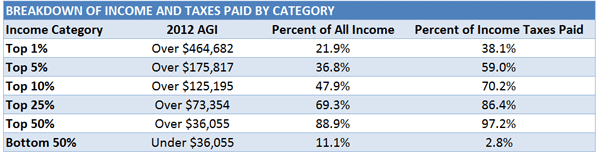
QUESTION: How much do you need to make to be in the top 50 percent of earners?

ANSWER: Just $36,055. Fall below that level and you are in the bottom half, along with about 68 million of your fellow taxpayers. All told, that group earned just 11.1 percent of the AGI reported on 2012 Federal returns.

Half of all taxpayers earn less than $35,055

If the top one percent where the decision makers live were to quit squeezing so hard, the rest of the population might be subject to paying more taxes.

The problem with the American Dream sold to the masses is that it is not achievable for them. Yet, they keep on voting for it. The biggest problem with voters is they do not have a solid grounding in economics.

Thus, they cannot judge economic policy in any rational way. If the voting public voted for what was truly in their interest, the top one percent would see their influence wane rapidly. It is the height of insanity that the public keeps on voting for politicians who espouse policies that are designed to benefit the economic elite.

***

Tax

***

Note: A recent finding by Oxfam that the top one percent will control fifty percent of the worlds’ wealth by 2016.

Channel Surfing the ME-P

Have you visited our other topic channels? Established to facilitate idea exchange and link our community together, the value of these topics is dependent upon your input. Please take a minute to visit. And, to prevent that annoying spam, we ask that you register. It is fast, free and secure.

More:

Conclusion

Your thoughts and comments on this ME-P are appreciated. Feel free to review our top-left column, and top-right sidebar materials, links, URLs and related websites, too. Then, subscribe to the ME-P. It is fast, free and secure.

Speaker: If you need a moderator or speaker for an upcoming event, Dr. David E. Marcinko; MBA – Publisher-in-Chief of the Medical Executive-Post – is available for seminar or speaking engagements. Contact: MarcinkoAdvisors@msn.com

OUR OTHER PRINT BOOKS AND RELATED INFORMATION SOURCES:

Product DetailsProduct DetailsProduct Details

Integrity and Accountability [The Declining State of Physician Health and the Urgent Need for Ethical and Evidence-Based Leadership]

Join Our Mailing List

SPECIAL ME-P REPORT

[By Michael Lawrence Langan MD]

Integrity and Accountability—The Declining State of Physician Health and the Urgent Need for Ethical and Evidence-Based Leadership.

***

gag

***

Channel Surfing the ME-P

Have you visited our other topic channels? Established to facilitate idea exchange and link our community together, the value of these topics is dependent upon your input. Please take a minute to visit. And, to prevent that annoying spam, we ask that you register. It is fast, free and secure.

Conclusion

Your thoughts and comments on this ME-P are appreciated. Feel free to review our top-left column, and top-right sidebar materials, links, URLs and related websites, too. Then, subscribe to the ME-P. It is fast, free and secure.

Speaker: If you need a moderator or speaker for an upcoming event, Dr. David E. Marcinko; MBA – Publisher-in-Chief of the Medical Executive-Post – is available for seminar or speaking engagements. Contact: MarcinkoAdvisors@msn.com

OUR OTHER PRINT BOOKS AND RELATED INFORMATION SOURCES:

Product DetailsProduct Details

The “Selling-Out” of a Profession [Dentistry]?

Join Our Mailing List 

Dentistry …?

[By D. Kellus Pruitt DDS]

1-darrellpruittSeveral years ago, a president-elect of the American Dental Association proclaimed, “The electronic health record may not be the result of changes of our choice. They are going to be mandated. No one is going to ask, ‘Do you want to do this?’ No, it’s going to be, ‘You have to do this.’” (ADA News, October 2008).

Looking back, it is easy to recognize the ADA’s renegade capitulation to HHS as a warning sign of things to come.

The ADA is the same national healthcare institution whose leaders joined Delta Dental in persuading dentists to volunteer for HIPAA’s NPI numbers – never revealing what they are to be used for. It’s the same not-for-profit Chicago corporation which continues to protect non-dues revenue by misleading the nation about the “savings and convenience” of EHRs in dentistry. Among all healthcare organizations, the ADA is alone in their enthusiasm for EHRs and Meaningful Use requirements.

And to top it off, the ADA leadership has progressively become less accessible by the community it serves – NEVER entering into open discussions of urgent dental issues on the internet, even to the extent of ending its commitment to answering dental questions for visitors to Dr. Oz’s Sharecare.com. It’s only dentistry for crying out loud!

As a matter of fact, Dr. Maxine Feinberg, the new ADA President, recently suggested in an interview with the ADA’s Judy Jakush that telephone conversations are “The best kept secret of the ADA which members don’t understand.” What?

Dr. Feinberg: “The best-kept secret is that if you have a problem or complaint, you will likely walk away with a positive experience. And, on the rare occasion that the staff can’t help you, there is a good chance that you will speak to Dr. Kathy O’Loughlin, the executive director. That’s amazing customer service.”

***

Insightful or clueless dentist?

***

What’s not to understand? I understand that ADA membership numbers have taken a hit over the last few years, but nevertheless, the dues of a little over 150,000 dentists still help pay the salaries of ADA employees. That’s a lot of phone calls that will have to be transferred to the right person (the first time), scheduled to call back later or be completely ignored. Isn’t email, or even the US Mail a better idea? Or is lousy communication (unaccountability) with dentists and patients the goal?

About that NPI number

How do you feel about the ADA leading the effort to assess and report your value to your community without ever stepping into your office or talking with a satisfied patient? When you volunteered for your National Provider Identifier at the insistence of the ADA and Delta Dental, you agreed to CMS terms. What? Nobody mentioned that?:

“Spread the mission of the DQA – The DQA, formed in 2008 through a request from the Centers for Medicare & Medicaid Services, is comprised of multiple stakeholders from across the oral health community who are committed to development of consensus-based quality measures.” By Kelly Soderlund for the ADA News, November 3, 2014.

Does “multiple stakeholders” sound as costly to you as it does to me, Doc? I say we already have too many stakeholders. What about the principals (dentists and their patients) who pay the stakeholders’ bills?

***

eHRs

***

Does anyone disagree that DQA looks like the ADA’s desperate mission creep for cash? With the chronic drop in membership, the Chicago corporation has turned to vigorous pursuit of non-dues revenue – probably in the form of federal grants and stimulus money from HHS. The ADA (which prefers clumsy communication via telephone), is asking state and local dental leaders to put their own personal credibility at risk by persuading uninformed dentists to unquestioningly accept multiple stakeholders’ assessment of their value to society – just like clueless dentists cooperated in the NPI effort.

Dr. David Schirmer, chair of the DQA’s education committee, tells ADA News: “Eventually, all of dentistry will need to understand quality measures. But before we reach our grass roots membership, we need our leaders in dentistry to understand.” He adds, “I’m challenging those leaders to pave the way for their younger colleagues and help them understand the long-term impact this will have on dentistry.”

ADA Editor Soderlund: “The DQA has taken the lead on developing quality measures within oral health care. These measures touch every practicing dentist in the United States, and with dentistry, how it’s modeled and how it’s financed changes in the future — specifically as a result of the Affordable Care Act — they’ll become even more prevalent. The mission of the DQA is to advance performance measurement as a means to improve oral health, patient care and safety through a consensus-building process.”

“— specifically as a result of the Affordable Care Act —“ Since you never respond, ADA, how do we know you haven’t sold us out once again for taxpayers’ money?

Assessment

If it’s difficult for the ADA to hold onto membership now, just wait until the nation’s dentists figure out that Obamacare cannot give everyone A’s on their internet report cards. This means the majority of dentists are going to be pissed at the ADA for their bad grades, no matter what.

Conclusion

Your thoughts and comments on this ME-P are appreciated. Feel free to review our top-left column, and top-right sidebar materials, links, URLs and related websites, too. Then, subscribe to the ME-P. It is fast, free and secure.

Speaker: If you need a moderator or speaker for an upcoming event, Dr. David E. Marcinko; MBA – Publisher-in-Chief of the Medical Executive-Post – is available for seminar or speaking engagements. Contact: MarcinkoAdvisors@msn.com

OUR OTHER PRINT BOOKS AND RELATED INFORMATION SOURCES:

Product DetailsProduct Details

JOIN THE “THIS IS PUBLIC HEALTH” CAMPAIGN

Join Our Mailing List

What it Is – How it Works?

By Dr. David Edward Marcinko MBA

Dr. DEMMost people don’t understand what public health is or how it impacts their daily lives. So, with the Ebola crisis of a few years ago finally reduced, it may be just the right time to review this important specialty.

Referencing Ebola

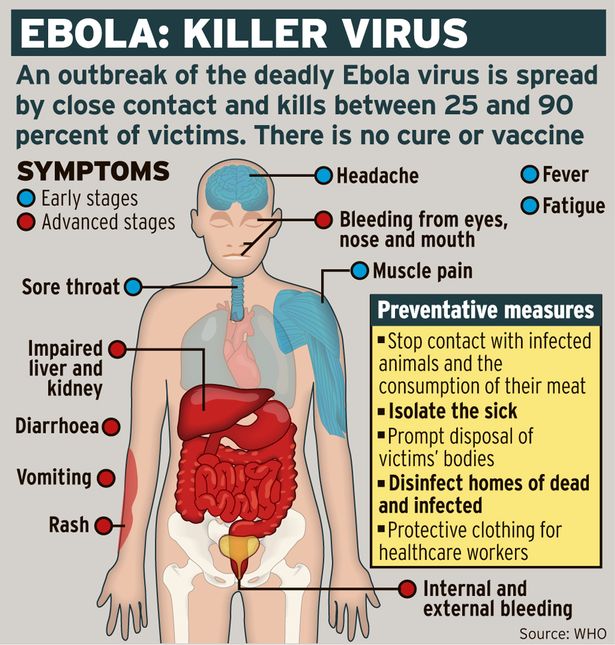
According to Wikipedia, Ebola virus disease (EVD), Ebola hemorrhagic fever (EHF) or simply Ebola is a disease of humans and other mammals caused by ebolavirus. Signs and symptoms typically start between two days and three weeks after contracting the virus, with a fever, sore throat, muscle pain and headaches. Then, vomiting, diarrhea and rash usually follows, along with decreased function of the liver and kidneys. Around this time, infected people may begin to bleed both within the body and externally. Death, if it occurs, is typically six to sixteen days after symptoms appear and is often due to low blood pressure from fluid loss.

The virus is acquired by contact with blood or other body fluids of an infected human or other animal. This may also occur by direct contact with a recently contaminated item. Spread through the air has not been documented in the natural environment. Fruit bats are believed to be the normal carrier in nature, able to spread the virus without being affected. Humans become infected by contact with the bats or a living or dead animal that has been infected by bats. Once human infection occurs, the disease may spread between people as well. Male survivors may be able to transmit the disease via semen for nearly two months. To diagnose EVD, other diseases with similar symptoms such as malaria, cholera and other viral hemorrhagic fevers are first excluded. Blood samples are tested for viral antibodies, viral RNA, or the virus itself to confirm the diagnosis.

Outbreak control requires a coordinated series of medical services, along with a certain level of community engagement. The necessary medical services include rapid detection and contact tracing, quick access to appropriate laboratory services, proper management of those who are infected, and proper disposal of the dead through cremation or burial. Prevention includes decreasing the spread of disease from infected animals to humans. This may be done by only handling potentially infected bush meat while wearing proper protective clothing and by thoroughly cooking it before consumption. It also includes wearing proper protective clothing and washing hands when around a person with the disease. Samples of body fluids and tissues from people with the disease should be handled with special caution.

No specific treatment for the disease is yet available. Efforts to help those who are infected are supportive and include giving either oral rehydration therapy (slightly sweetened and salty water to drink) or intravenous fluids. This supportive care improves outcomes. The disease has a high risk of death, killing between 25% and 90% of those infected with the virus (average is 50%). EVD was first identified in an area of Sudan (now part of South Sudan), as well as in Zaire (now the Democratic Republic of the Congo). The disease typically occurs in outbreaks in tropical regions of sub-Saharan Africa. From 1976 (when it was first identified) through 2013, the World Health Organization reported a total of 1,716 cases. The largest outbreak to date is the ongoing 2014 West African Ebola outbreak, which is currently affecting Guinea, Sierra Leone, and Liberia.

As of 14th October 2014, 9,216 suspected cases resulting in the deaths of 4,555 have been reported. Efforts are under way to develop a vaccine; however, none yet exists.

***

2

***

This Is Public Health

The “This Is Public Health” campaign was designed by ASPPH to let people know that public health affects them on a daily basis and that we are only as healthy as the world we live in. Over 750,000 stickers have been sent around the world to public health students and professionals eager to spread the word about the importance of public health.

Get Started

To start your own campaign,  follow the easy steps below.  Click for campaign ideas. Easy steps to join our campaign: https://thisispublichealth.org/

  1. Request “This Is Public Health” stickers. Please specify how many stickers and a mailing address. You will also be sent an invitation to join our Flickr group.
  2. Place these stickers in strategic locations that highlight examples of public health in action and snap a picture.
  3. Upload your pictures to our Flickr website and geomap them so that others can see where the pictures were taken. Click on the following links for information about the uploading process:


 ****

Body-Home1

Assessment

That’s it! We encourage educational institutions and public health organizations to spread the message about this opportunity.

Conclusion

Your thoughts and comments on this ME-P are appreciated. Feel free to review our top-left column, and top-right sidebar materials, links, URLs and related websites, too. Then, subscribe to the ME-P. It is fast, free and secure.

Speaker: If you need a moderator or speaker for an upcoming event, Dr. David E. Marcinko; MBA – Publisher-in-Chief of the Medical Executive-Post – is available for seminar or speaking engagements. Contact: MarcinkoAdvisors@msn.com

OUR OTHER PRINT BOOKS AND RELATED INFORMATION SOURCES:

Product DetailsProduct DetailsProduct Details

Product DetailsProduct Details

Product DetailsProduct Details

Invite Dr. Marcinko

EHRs – AMA versus ADA

Join Our Mailing List 

Will Electronic Health Records Ever Be Usable?

[By Darrell K. Pruitt DDS]

1-darrellpruittThe American Medical Association

The AMA attempts to address the frustration EHRs create, especially for doctors and other healthcare workers. ‘It’s easy to use, once you know where everything is,’ the instructor said during an EHR training session I recently attended.

Most EHR companies seem to believe this is an acceptable way to design software. EHR usability has been greatly ignored by vendors, and last week the American Medical Association issued eight usability priorities in an attempt to address the issue.

This directive comes as a result of a joint study by the RAND Corporation and the AMA highlighting EHRs as a significant detractor from physicians’ professional satisfaction.” Commentary by Stephanie Kreml for InformationWeek, September 26, 2014.

http://www.informationweek.com/healthcare/electronic-health-records/will-electronic-health-records-ever-be-usable/a/d-id/1316071

The American Dental Association

On the other hand, “EHRs provide long-term savings and convenience,” no byline, ADA News, December 6, 2013.

http://www.ada.org/en/publications/ada-news/2013-archive/december/ehrs-provide-long-term-savings-convenience

boxing-gloves-1053702

[POW – SPLAT – BIFF – UGH]

More:

  1. The Percentage of Office-Based Doctors with EHRs
  2. Do Nurses like EHRs?
  3. EHRs – Still Not Ready For Prime Time
  4. The “Price” of eHRs
  5. Borges versus Kvedar Video eHR Debate

EHRs versus the Federal Government

Government mandated EHRs – what a waste!

“Doctors, Hospitals Went Digital, But Still Can’t Share Records – After spending billions to switch from paper to digital records — much of it taxpayer subsidized through the economic stimulus package — providers say the systems often do not share information with competitors.”

[Kaiser Health News, October 1, 2014]

http://www.kaiserhealthnews.org/Daily-Reports/2014/October/01/marketplace.aspx

Conclusion

Your thoughts and comments on this ME-P are appreciated. Feel free to review our top-left column, and top-right sidebar materials, links, URLs and related websites, too. Then, subscribe to the ME-P. It is fast, free and secure.

Speaker: If you need a moderator or speaker for an upcoming event, Dr. David E. Marcinko; MBA – Publisher-in-Chief of the Medical Executive-Post – is available for seminar or speaking engagements. Contact: MarcinkoAdvisors@msn.com

OUR OTHER PRINT BOOKS AND RELATED INFORMATION SOURCES:

Product DetailsProduct Details

October is “Cut Out Dissection” Month

Join Our Mailing List 

Appreciating the Pros and Cons of Animal Dissection

[Brought to you by PETA]

Every year, millions of frogs, rats, cats, mice, and other animals suffer and are killed for dissection. Luckily, there are far better ways to learn biology than by torturing animals, damaging the environment, and teaching insensitivity. With more and more states enacting dissection-choice policies, it’s never been easier to avoid dissection.

And so, October is “Cut Out Dissection Month” and PETA wanted to arm you with the “facts” on animal dissection in the easiest, most eyeball-friendly, sharable way—with our handy-dandy infographic!

Assessment by Dr. David Edward Marcinko MBA

As a Board-Certified surgeon, and Fellow of the American College, I disagree with this sentiment. Of course, I am not in favor of the wanton torture or harm of any animal. But, I still remember the first time I operated on a living, but anesthetized, German Shepard at Temple University in Philadelphia, almost 40 years ago. And, I still can feel the animal’s heart beating in my hands – powerful!

Of course, the anti-vivisectionist crowd scrawled graffiti on the anatomy building walls – the entire semester – to no avail. I also dissected frogs, fetal pigs, sharks, rabbits and several cats before reaching medical school.  

Conclusion

Your thoughts and comments on this ME-P are appreciated. Feel free to review our top-left column, and top-right sidebar materials, links, URLs and related websites, too. Then, subscribe to the ME-P. It is fast, free and secure.

Speaker: If you need a moderator or speaker for an upcoming event, Dr. David E. Marcinko; MBA – Publisher-in-Chief of the Medical Executive-Post – is available for seminar or speaking engagements. Contact: MarcinkoAdvisors@msn.com

OUR OTHER PRINT BOOKS AND RELATED INFORMATION SOURCES:

Product DetailsProduct DetailsProduct Details

Product Details  Product Details

   Product Details

Stock Market at New Highs!

Join Our Mailing List 

Is this a Bubble?

[A SPECIAL R&D REPORT FOR THE ME-P]

By David K. Luke MIM, MS-PFP, CMP™ [Certified Medical Planner™] http://www.networthadvice.com

David K. LukeThe market news has been replete with the phrase “new market high“ in the business news every couple of weeks as of late. The corresponding message is often that the stock market is likewise in a bubble. The S&P 500 index and the Dow Jones Industrial Average index are at all-time highs. The indexes have surpassed the 2007 peak.

The reality is however that the S&P 500 is up less than 6% from the beginning of the year, and the Dow is up about 2%. Most investors, of course, do not invest just in these two indexes, as these two indexes represent very large capitalized companies.

I am reminded of the customer in 1995 when I worked at a national brokerage firm that called me to liquidate his entire stock portfolio. “The stock market was too high,” he said. He was 5 years too early.

Risk Mitigation

Most investors will have a diversified portfolio that includes mid-cap stocks, small-cap stocks, and international stocks as well as large cap stocks such as found in the S&P 500.

Of course, these equity investments are also typically subdivided into the broader categories of “Growth” and “Value.” Which means most investors that believe in diversification will own four different “types” of stock, each divided into two different categories for eight different baskets of stock if you will. The typical daily news will focus only perhaps on the S&P 500, which is a portfolio of large capitalized growth stocks. This is only one of the eight different types of stock that an investor would typically own.

  Product Details

In strong bull markets, typically all eight categories of stock go up together with some degree of correlation. This is also true in strong bear markets with all eight categories of stock going down in some degree of correlation. Portfolio managers typically try to offset high correlation of investments by owning investments in asset classes that typically do not all correlate together. This is a major technique used to reduce the volatility in an account.

However as you can see so far this year, most all of the eight stock indexes with the exception of small-cap growth are up slightly in line with the S&P index.

***

[As of June 13, 2014] 

Name Ticker % Total Return YTD % Total Return 12 Month
Large Cap iShares S&P 500 Growth IVW 5.59 22.55
iShares S&P 500 Value IVE 5.76 18.39
Mid Cap iShares S&P MidCap 400 Growth IJK 2.69 18.24
iShares S&P Mid-Cap 400 Value IJJ 7.66 23.19
Small Cap iShares S&P Small-Cap 600 Growth IJT -0.52 20.8
iShares S&P Small-Cap 600 Value IJS 2.3 21.37
Foreign Large Blend iShares Core MSCI EAFE IEFA 3.75 19.25
Barclays Aggregate Bond Index iShares Core US Aggregate Bond AGG 3.26 2.39

Source: Morningstar

***

Inflation

The buying power of the US Dollar has changed over the years. The Consumer Price Index (CPI), a common measure of inflation, has averaged around a 3% annual increase from 1913 – 2014 according to the U.S. Department of Labor Bureau of Labor Statistics.

In fact, an item purchased for $5.00 in 1913 would have a cost of $119.73 today, or a cumulative rate of inflation for the past 100 years of 2,294.7%. The cost of living rising each year is a safe bet. Inflation has increased every year in the past 50 years with one exception: 2009 when inflation fell -0.4%.

Product Details

Update: 06/17/2014 04:10 ET

[Market Update]
Symbol Last Change
DOW 16,808.49 +27.48
NASDAQ 4,337.23 +16.13
S&P 1,941.99 +4.21

Conclusions:

  1. The Market Indexes at new highs does not indicate a bubble. In fact, the market should, relatively speaking, regularly be hitting new highs because of the consistency of positive inflation. Prices of goods and services today are at all-time highs. Does that mean we are in an “inflation” bubble? No. This is normal.
  2. The S&P 500 is not an accurate measure of the US economy. While the S&P 500 is the common “market” indicator in the US, only about 55% of the earnings of the index come from the US. (Source: RBC Capital Markets Research, Capital IQ 2012). This is because mainly large multinational companies such as Google, IBM, and Apple that have a significant amount of overseas revenues weight the index.
  3. The S&P 500 or the Dow Jones Industrial Average (DJIA – 30 stocks) is most likely not an exact reflection of your personal stock portfolio, which would expectantly be more diversified. A typical well-diversified long-term investment portfolio would include not just large cap stocks (such as found in the S&P 500 or DJIA), but mid, small, and international stocks from the growth and value camp, as well as a diversified bond holding.
  4. Overpriced stocks, just like overpriced real estate, are more prudently ascertained by value measures, not simply by raw index numbers. A stock hitting new highs could still be quite undervalued. Meaningful variables such as earnings growth, price to earnings ratio, dividend yield, price-to-book, price-to-sales, and other metrics should be considered.

Conclusion

Your thoughts and comments on this ME-P are appreciated. Feel free to review our top-left column, and top-right sidebar materials, links, URLs and related websites, too. Then, subscribe to the ME-P. It is fast, free and secure.

Speaker: If you need a moderator or speaker for an upcoming event, Dr. David E. Marcinko; MBA – Publisher-in-Chief of the Medical Executive-Post – is available for seminar or speaking engagements. Contact: MarcinkoAdvisors@msn.com

OUR OTHER PRINT BOOKS AND RELATED INFORMATION SOURCES:

Product DetailsProduct Details

Developing the Millionaire’s Mindset [Part 1]

Join Our Mailing List 

To Build a Solid Financial Foundation to Support your Goals

By Rick Kahler MS CFP® http://www.KahlerFinancial.com

Rick Kahler CFPIf you’re a new graduate, nursing or medical student, taking your first steps into the adult world, here is the most important financial advice I can offer: Develop a millionaire mindset.

This absolutely does not mean making wealth your life goal. But, thinking like a millionaire will help you build a solid financial foundation to support you in reaching your life goals.

Definitions

First of all, let me define “millionaire.” A millionaire is someone with a net worth of one million dollars. That amount would generate an income of around $30,000 a year. In today’s world, that’s not even close to lavish-lifestyle wealth.

You probably know several millionaires. If you don’t think of them as rich, it’s most likely because they practice the millionaire mindset.

Here’s how:

1. Spend like a millionaire

The number-one common denominator of wealth accumulators is frugality. Millionaires shop sales, clip coupons, read labels, compare prices, and bargain. People who build wealth usually don’t wear designer clothes, drive luxury cars, live in extravagant houses, or shop at Neiman Marcus. They typically wear jeans bought on sale, drive used Toyotas, live in middle class neighborhoods, and shop at Walmart.

There’s no place in a millionaire mindset for credit card debt. Pay cash for everything but your home. Use a credit card only for convenience and pay it off every month. If you ever find yourself unable to pay the full amount, cut up your card. Pay off the balance as quickly as you can, and then don’t use a credit card for at least one year.

2. Work like a millionaire

Most millionaires work long hours, and most of them love what they do. They often have some “skin in the game” by owning part or all of their own businesses. As much as possible, find a job and career you love. When you do, your work becomes play. Invest time and money to keep your career skills and knowledge current. The millionaire mindset knows that your career is your most valuable financial asset.

3. Budget like a millionaire

Most college students live on budgets that allow only a Ramen noodle lifestyle. When you start getting career paychecks, keep that lifestyle for a time. Don’t increase your budget when you get a new job, a raise, or a promotion. Always have your lifestyle at least one step below your income.

***

Millionaire's Jaguar

***

To budget like a millionaire, follow these steps on every gross dollar you earn:

  • First, pay your taxes. Estimate your total tax liability and be sure your employer withholds enough to cover it. If you are self-employed, deposit a percentage of every check into a savings account that you use solely to pay your quarterly estimated taxes. Never “raid” these funds.
  • Second, put away at least 20% or more of every gross dollar you earn until you have six months to one year of living expenses in an emergency account. Then continue to invest that 20% of your gross pay in qualified retirement plans like 401ks, 403bs, or IRAs.
  • Third, pay your fixed expenses like housing and utilities.
  • Fourth, set up short-term savings accounts for foreseeable future “unexpected” lump-sum expenses like car and home repairs, vacations, holiday giving, college tuition, and medical emergencies.
  • Fifth, go ahead and blow the rest any way you wish. For most people, this means living on 30 to 60 cents out of every gross dollar you earn.

Assessment

The ways you spend, budget, and work are only part of the millionaire mindset. In a future ME-P, we’ll look at other ways you can build a fulfilling life by thinking like a millionaire.

PART TWO: Developing the Millionaire’s Mindset [Part 2]

Conclusion

Your thoughts and comments on this ME-P are appreciated. Feel free to review our top-left column, and top-right sidebar materials, links, URLs and related websites, too. Then, subscribe to the ME-P. It is fast, free and secure.

Link: http://feeds.feedburner.com/HealthcareFinancialsthePostForcxos

Speaker: If you need a moderator or speaker for an upcoming event, Dr. David E. Marcinko; MBA – Publisher-in-Chief of the Medical Executive-Post – is available for seminar or speaking engagements. Contact: MarcinkoAdvisors@msn.com

OUR OTHER PRINT BOOKS AND RELATED INFORMATION SOURCES:

Product Details  Product Details

Ten Irish Inventions that Changed the World

Celebrating St. Patrick’s Day – Seriously

Join Our Mailing List

With St. Patrick’s Day here, we thought we’d share this infographic that explores ten of the greatest Irish inventions ever.

Source: GoIreland.com

Conclusion

Your thoughts and comments on this ME-P are appreciated. Feel free to review our top-left column, and top-right sidebar materials, links, URLs and related websites, too. Then, subscribe to the ME-P. It is fast, free and secure.

Link: http://feeds.feedburner.com/HealthcareFinancialsthePostForcxos

Speaker: If you need a moderator or speaker for an upcoming event, Dr. David E. Marcinko; MBA – Publisher-in-Chief of the Medical Executive-Post – is available for seminar or speaking engagements. Contact: MarcinkoAdvisors@msn.com

OUR OTHER PRINT BOOKS AND RELATED INFORMATION SOURCES:

DICTIONARIES: http://www.springerpub.com/Search/marcinko
PHYSICIANS: www.MedicalBusinessAdvisors.com
PRACTICES: www.BusinessofMedicalPractice.com
HOSPITALS: http://www.crcpress.com/product/isbn/9781466558731
CLINICS: http://www.crcpress.com/product/isbn/9781439879900
BLOG: www.MedicalExecutivePost.com
FINANCE: Financial Planning for Physicians and Advisors
INSURANCE: Risk Management and Insurance Strategies for Physicians and Advisors

Product DetailsProduct DetailsProduct Details

Product Details  Product Details

Product Details

How the Medical Executive-Post Survived to our 8th Anniversary?

Join Our Mailing List

And … Why the American Medical News was Shuttered after 50 Years!

[Some Musing on our Eighth Anniversary]

Ann Miller RN MHA

[Executive-Director]

Happy BirthdayAccording to well known healthcare industry journalist Kevin B. O’Reilly, a dramatic drop in medical-publishing revenues caused the recent closure of the American Medical News, effective with a final edition of the newspaper published just last month.

Published for more than five decades, AMNews was hit hard by industrywide trends. The newspaper’s revenue fell by two-thirds during the last decade, as reported by Thomas J. Easley, senior vice-president and publisher of periodic publications for the American Medical Association [AMA].

Unsustainable financial losses forced the move despite the newspaper’s editorial quality, the AMA’s senior management reportedly said. But, the Association’s other news operations will be enhanced.

###

amn

###

What the Death of American Medical News Says About the Future of American Medicine

###

How we survive!

We’ve been online for eight years now. We have a skeleton staff, a scalable business model, an almost free distribution model, no print analog, and a tiny electronic advertising revenue stream.

Oh, let’s not forget some brilliant essayists, contrarian contributors, insightful commentators and controversial opinions that are often the elephant in the virtual room. 

Our gratitude to you all is without limits.

So, how else do we do it?

Interestingly – Our print books are good, better and best sellers. We’ve been releasing one major, semi-peer reviewed text each year …. and sales are brisk. And, we are now negotiating to begin our next and ninth volume for 2014-15. We maintain our own copy-rights, perform in-house editing, seek out the best contributing authors, and reduce the cost of numerous channels of distribution. How do we do it, year after year? In a word, professional crowdsourcing.

Our consulting business is increasingly robust, too. Cudos to healthcare reform, managed care, and the PP-ACA!

And … another thing

I ask again. How do we do it? How do we stay in business?

Here are some more ways to help-us, do just that:

  1. Subscribe to the ME-P site
  2. Tell a friend or colleague about us
  3. Visit our Blogroll list
  4. Use our classified ads or advertise with us
  5. Purchase a printed handbook, dictionary, software product or textbook
  6. Use our career and educational resources
  7. “Ask a Consultant” for free advice
  8. Request a strategic competitive consultation
  9. Hire us for a medical practice valuation or revenue enhancement review
  10. Request a medical business planning RFP
  11. Purchase a practice management checklist
  12. Seek out our financial planning advice
  13. Ask for second opinion; hire our thought-leaders
  14. Request a healthcare econometrics review
  15. Seek out our practice management or business advice
  16. Become a Certified Medical Planner™ www.CertifiedMedicalPlanner.org
  17. Request a speaker for a pharmaceutical seminar or health convention
  18. Attend a seminar, sponsor or take a learning-teaching cruise with us
  19. Donate to us …  and repeat
  20. Buy a link … and repeat again
  21. Send a thank you note to our Publisher-in-Chief and Managing Editor
  22. Visit us often to review, read, rant and rave.

Bottom Line Eight Years Out

The ME-P is an austere … Labor of Love.

Please support us: Support the “Medical Executive-Post”

Printable Donation Form: Printable Donation Form

Electronic Donations: www.e-junkie.com/ecom/gb.php?c=cart&i=641232&cl=109140&ejc=2

Multi-Year Pledge Form: Multi-Year Pledge

###

QuestionEverythingWallpaper

###

Assessment

So, does the demise of the American Medical News really say anything at all about the ME-P; in addition to the future of domestic medicine? How do we avoid the same fate? Please tell us. Question Everything … Trust No One … Paddle your Own Canoe … Keep the Faith!

Conclusion

Your thoughts and comments on this ME-P are appreciated. Did the AMNews forget the aphorism; No margin – No Mission?

Feel free to review our top-left column, and top-right sidebar materials, links, URLs and related websites, too. Then, subscribe to the ME-P. It is fast, free and secure.

Link: http://feeds.feedburner.com/HealthcareFinancialsthePostForcxos

Speaker: If you need a moderator or speaker for an upcoming event, Dr. David E. Marcinko; MBA – Publisher-in-Chief of the Medical Executive-Post – is available for seminar or speaking engagements. Contact: MarcinkoAdvisors@msn.com

OUR OTHER PRINT BOOKS AND RELATED INFORMATION SOURCES:

LEXICONS: http://www.springerpub.com/Search/marcinko
PHYSICIANS: www.MedicalBusinessAdvisors.com
PRACTICES: www.BusinessofMedicalPractice.com
HOSPITALS: http://www.crcpress.com/product/isbn/9781466558731
CLINICS: http://www.crcpress.com/product/isbn/9781439879900
ADVISORS: www.CertifiedMedicalPlanner.org
BLOG: www.MedicalExecutivePost.com

Product DetailsProduct DetailsProduct Details

Product Details  Product Details

Product DetailsProduct Details

Product Details

Do creepy anti-Obamacare ads defile an icon?

Join Our Mailing List

Is Uncle Sam Under Attack?

via: The Joker

Featuring a bizarre Uncle Sam figure, these commercials are coming under fire from liberals as debasing a national figurehead.

###

creepy-uncle-sam

[CLICK HERE FOR VIDEO]

http://www.youtube.com/watch?v=R7cRsfW0Jv8

More:

Creepy ads target Obamacare

Assessment

What do you think?

Conclusion

Your thoughts and comments on this ME-P are appreciated. Feel free to review our top-left column, and top-right sidebar materials, links, URLs and related websites, too. Then, subscribe to the ME-P. It is fast, free and secure.

Link: http://feeds.feedburner.com/HealthcareFinancialsthePostForcxos

Speaker: If you need a moderator or speaker for an upcoming event, Dr. David E. Marcinko; MBA – Publisher-in-Chief of the Medical Executive-Post – is available for seminar or speaking engagements. Contact: MarcinkoAdvisors@msn.com

OUR OTHER PRINT BOOKS AND RELATED INFORMATION SOURCES:

DICTIONARIES: http://www.springerpub.com/Search/marcinko
PHYSICIANS: www.MedicalBusinessAdvisors.com
PRACTICES: www.BusinessofMedicalPractice.com
HOSPITALS: http://www.crcpress.com/product/isbn/9781466558731
CLINICS: http://www.crcpress.com/product/isbn/9781439879900
BLOG: www.MedicalExecutivePost.com
FINANCE: Financial Planning for Physicians and Advisors
INSURANCE: Risk Management and Insurance Strategies for Physicians and Advisors

Product DetailsProduct Details

On the Notice of Privacy Practices

Join Our Mailing List 

Encryption and HHS are Taking Hits

[By D. Kellus Pruitt DDS]

1-darrellpruittIt is bad politics for the President’s Department of Health and Human Services to get caught deceiving voters.

Word gets around much faster than it did before transparency sucked the power from the entrenched.

The NoPP

You know those Notice of Privacy Practices (NoPP) forms we are asked to sign in doctors’ offices? Since it makes no difference to anyone whether patients sign them or not, why needlessly waste everyone’s time? The NoPP is not an agreement, and just because virtually everyone is tricked into signing it, does not mean anyone reads it. HIPAA has become a source of danger to patients, with no redeeming value.

HHS Estimates 

According to the US Department of Health and Human Services own recent estimate:

“… many centuries of time—nearly 35 centuries, in fact, or just short of 30.7 million hours—will be devoted each year by healthcare providers and patients for the dissemination to patients and their acknowledgement of HIPAA notices of privacy practices [NoPP] for protected healthcare information, HHS estimates. Even at just 3 minutes apiece, with 613 million of these routine privacy notices to be delivered, signed and stored, the time adds up…”

-Joseph Conn

… “HHS estimates 32.8 million hours of interaction required to comply with privacy, security rules” …

-ModernHealtcare.com [September 5, 2013]

http://www.modernhealthcare.com/article/20130904/BLOG/309049995?AllowView=VW8xUmo5Q21TcWJOb1gzb0tNN3RLZ0h0MWg5SVgra3NZRzROR3l0WWRMWGJYZjBGRWxyd01qUzMyWmVpNTNnWUpiV2s=&utm_source=link-20130904-BLOG-309049995&utm_medium=email&utm_campaign=hits

Censorship Concerns? 

I tried to bring attention to this absurdity over a year ago – back when HHS was still keeping unfavorable news about EHRs hidden from voters using censorship:

… “Put another way, the ONLY reason for a doctor to ask patients if they feel like signing the NoPP is to protect already busy doctors from a HIPAA fine. How is that not senseless, yet admittedly humorous bureaucratic waste?” …

On July 3, 2012, my opinion of the waste that HHS recently confirmed was censored by an HHS employee from the taxpayer-supported Linkedin site, Health IT and Electronic Health Records. If that is not against federal law, it damn sure should be.

http://www.linkedin.com/groups/IT-in-Healthcare-Why-Building-3993178.S.216432610?qid=bafac2e5-fb9c-4a39-8348-5a3074abff67&trk=groups_items_see_more-0-b-ttl

Among the items that HHS requires providers include in Notices of Privacy Practice is a one-sentence statement addressing data breaches:

…“We will let you know promptly if a breach occurs that may have compromised the privacy or security of your information [unless it is encrypted]”…

http://www.hhs.gov/ocr/privacy/hipaa/npp_booklet_hc_provider.pdf

Now that it is widely known that encryption is no longer acceptably secure, protection from accountability is encryption vendors’ only remaining selling point. HIPAA stipulates that if breached patient information is encrypted according to standards set forth by the National Institute of Standards and Technology (NIST), doctors are freed from the tremendous cost of notifying (former) patients – even though patients’ privacy and security have been nevertheless compromised.

For example, two weeks ago, the NIST abandoned the very encryption standards that HIPAA demands. Oops! (See: “Government Standards Agency ‘Strongly’ Suggests Dropping its Own Encryption Standard,” by Jeff Larson and Justin Elliott, ProPublica, September 13, 2013).

http://www.propublica.org/article/standards-agency-strongly-suggests-dropping-its-own-encryption-standard

###

eMR Privacy

###

NSA Secrets 

US spy agency NSA’s secret success at decrypting previously impenetrable codes – which was revealed by former NSA contractor Edward Snowden – proves that today’s best encryption is tomorrow’s crossword puzzle. What’s more, once an individual’s medical identity is lost in the cloud, it can never be reeled back in.

And, when DNA records are included, a breach today could put the welfare of generations of Americans at risk.

A Gut-Check 

The ultimate gut-check: If your encrypted identity were fumbled, wouldn’t you want to be notified? Of course you would.

Assessment 

In my opinion, the HIPAA Rule should be immediately amended to demand notification of all individuals involved in all data breaches unless they allow opt out. Who knows? Some might prefer not to be bothered.

What is your opinion; doctor, patient and/or consultant?

Conclusion

Your thoughts and comments on this ME-P are appreciated. Feel free to review our top-left column, and top-right sidebar materials, links, URLs and related websites, too. Then, subscribe to the ME-P. It is fast, free and secure.

Speaker: If you need a moderator or speaker for an upcoming event, Dr. David E. Marcinko; MBA – Publisher-in-Chief of the Medical Executive-Post – is available for seminar or speaking engagements. Contact: MarcinkoAdvisors@msn.com

OUR OTHER PRINT BOOKS AND RELATED INFORMATION SOURCES:

Product DetailsProduct Details

Financial Freedom through Commercial Real Estate Education and Investing

Join Our Mailing List

A Viable Alternate Investment Class for Physicians?

By Dennis Bethel MD  www.nesteggrx.com

dennis-bethelI’ve worked as an Emergency Medicine Physician for over a decade now.

Most of that time, I’ve also been investing in real estate.

Real estate has been good to me and I’ve been asked to share my story with this ME-P

RESIDENTIAL REAL ESTATE

Not long after graduating from residency in 2002, I began investing in real estate.  I watched my father-in-law make some money in residential real estate (1 – 4 units), read some books, and jumped in feet first.  I purchased and rented out single family homes, a triplex, and multiple four-plexes (quads).  What I didn’t realize at the time was that I made two critical errors.

My First Mistake

The first mistake was that I purchased residential real estate when I should have gone bigger and purchased commercial multifamily.  I had limited resources and I thought bigger properties were out of my reach.  At that time, I had not heard of fractional investing.

My Second Mistake

The second error, that is inherent to residential real estate, is that I became a landlord.  At times I managed properties and at other times I employed a property manager and limited myself to managing the manager.  Regardless, I was putting in a significant amount of time at my unintended second career as a landlord without the desired compensation.

Not Scaleable

Since there are no economies of scale with residential real estate the cash flow is small and unpredictable.  I was on the long, hard path to financial freedom.  The rents from my properties would someday replace my income as a physician, however, that wasn’t going to happen until I paid off the mortgages completely.  Until then it was going to be too inconsistent and I would have to ride several market cycles including the very painful down-turns.

THE MOVE TO COMMERCIAL REAL ESTATE

Unfortunately, chronic understaffing in the ER coupled with increased regulation and the rigors of shift-work had begun to catch up to me.  I was beginning to feel the effects of burnout.  I began to question whether I could make it 30 years.  I began to see earned-income as a trap in which you trade your valuable time for heavily-taxed income.

Then some devastating news, my wife tested positive for the BRCA (breast cancer) gene mutation.  That was a game changer.  I could no longer rest on my laurels, slowly burning out waiting for a comfortable retirement.  The future was uncertain, and I needed to ensure our wealth.  Come what may, I was determined that she would get the best health care money could buy.

I knew real estate was an incredible wealth building investment vehicle and my path to financial freedom.  In fact, 90% of the Forbes 400 (wealthiest people in the US) either made or retain their wealth in real estate.  While I was doing far better than my colleagues who invested in the stock market, I knew that I could do better.

My New Mission

I made it my mission to become an expert in real estate.  I read even more books as well as attended numerous conferences and seminars.  I invested heavily in my education, took advanced real estate investing classes, retained mentors, and developed networks.  I also grew my experience, buying and selling more properties.

I learned that although real estate won’t make you rich overnight, it needn’t take 30 years either.  I needed to transition out of residential real estate and go bigger into commercial multifamily.  I ultimately landed on multifamily, because shelter is a basic need.  People will give up their luxuries long before they give up the roof over their head.  The difference is that I now look for properties that are between 80 – 250 units.  These types of properties afford the investor true economies of scale that provide for predictable multisource income.  I invest in these properties fractionally, pooling my money with other like-minded investors.

MULTISOURCE INCOME

Real estate is the only investment I know of in which the investor makes his or her money in four different ways.

  • Cash Flow (monthly, quarterly, or yearly distributions of net profits)
  • Appreciation (increasing value of the property as net operating income increases)
  • Tax Benefits (can result in little to no taxes on income and gains)
  • Principal Pay Down (Increased equity as the loan gets paid down by the residents)

Multisource income is an incredible benefit of multifamily commercial real estate investing.  In fact, in all of my commercial properties, I have been able to obtain double-digit returns year after year.  Making money and compounding those gains is what investing is all about.

###

real estate

###

SAFETY PROFILE

While all investments have risk, the safety profile of multifamily commercial real estate is impressive.  Let’s compare it to business.  We’ve all heard that 9 out of every 10 businesses fail.  These failures are not just limited to small business.  Every year, many big businesses fail as well.  Names like Circuit City, Hostess, Borders, and Mervyns just to name a few.  Many other, well known, national brands teeter on the brink of insolvency.

In contrast, the commercial multifamily properties I invest in meet current Fannie Mae underwriting standards.  Nationally these properties have a paltry 1% – 2% foreclosure rate.  That rate is even lower in the best markets.  In the hands of a quality syndicator, in thriving markets, utilizing proven property management these properties are FAR safer than stocks for capital preservation, equity growth, and current income.

Additional safety measures include the use of non-recourse lending, the ability to insure against loss, and the use of sole purpose entity structures to eliminate any liability risk.

The “Conversation”

Switching from residential real estate to commercial has enabled me to provide for my family and has allowed me to work only part-time in the emergency department.  A few years ago, I walked into the physician lounge and overheard a conversation between two colleagues.  Both around 20 years my senior, were lamenting their inability to retire.  They had each invested heavily in the stock market without any diversification into real estate.  They bemoaned the fact that they had each worked 25 – 30 years in medicine and were nowhere close to retirement.  They wondered how I could afford to work so many fewer shifts than them with two young boys to raise.

An Eye-Opener

This interaction was eye-opening.  I was grateful for the decisions I had made but saddened by the fate of my 60 year old colleagues.  I’ve watched far too many of them push back retirement as the stock market and economic cycles ruined their plans.

Assessment

I knew I could help.  I have recently started an educational website intended to demystify the subject of real estate investing.  My mission is to help physicians and other health care workers find financial freedom through real estate investing and education.

We also provide quality real estate investments for busy professionals looking to diversify a portion of their portfolio out of the stock market and into commercial multifamily real estate without having to become a landlord.  We do this by helping like-minded professionals pool their resources together to buy quality multimillion dollar assets as fractional investors.

I invite you to visit my website at www.nesteggrx.com and explore the content to learn more about real estate and see if it might be right for you.

NOTE: This ME-P is NOT a personal or professional endorsement.

More:

Physician’s Acquiring Real-Estate

Conclusion

Your thoughts and comments on this ME-P are appreciated. Feel free to review our top-left column, and top-right sidebar materials, links, URLs and related websites, too. Then, subscribe to the ME-P. It is fast, free and secure.

Link: http://feeds.feedburner.com/HealthcareFinancialsthePostForcxos

Speaker: If you need a moderator or speaker for an upcoming event, Dr. David E. Marcinko; MBA – Publisher-in-Chief of the Medical Executive-Post – is available for seminar or speaking engagements. Contact: MarcinkoAdvisors@msn.com

OUR OTHER PRINT BOOKS AND RELATED INFORMATION SOURCES:

DICTIONARIES: http://www.springerpub.com/Search/marcinko
PHYSICIANS: www.MedicalBusinessAdvisors.com
PRACTICES: www.BusinessofMedicalPractice.com
HOSPITALS: http://www.crcpress.com/product/isbn/9781466558731
CLINICS: http://www.crcpress.com/product/isbn/9781439879900
BLOG: www.MedicalExecutivePost.com
FINANCE: Financial Planning for Physicians and Advisors
INSURANCE: Risk Management and Insurance Strategies for Physicians and Advisors

Product DetailsProduct DetailsProduct Details

Product Details  Product Details

Product DetailsProduct Details

Remembering the Boston Tragedy

Join Our Mailing List

My Thoughts on the Unthinkable

By Dr. David Edward Marcinko MBA

[Publisher-in-Chief]

A POEM

In memory of those who died

[Copyright by Nicholas Gordon]

In memory of those who died.

We weep and walk away.

Tears run into swollen streams.

No trace of us remains.

Even those who grieve are gone, and those that grieve who grieve, and those whose lives are ravaged by afrantic urge to be.

And those who wander silently among the empty rooms – immortality is theirs, though they must vanish, too.

We bear astonished witness to the passage of the soul.

No bridge exists that can connect our passion to the whole.

###

###

Fenway Park Dr. Marcinko

###

###

Assessment

Tragedy is defined as a form of drama based on human suffering that invokes in its audience an accompanying catharsis or pleasure in the viewing.

But, we shall not succumb to it; we shall not give up; we will revisit Boston and run a marathon again. And, as free Americans, we will live, love and … thrive!

Conclusion

Your thoughts and comments on this ME-P are appreciated. Feel free to review our top-left column, and top-right sidebar materials, links, URLs and related websites, too. Then, subscribe to the ME-P. It is fast, free and secure.

Link: http://feeds.feedburner.com/HealthcareFinancialsthePostForcxos

The Flaws of Electronic Records

Join Our Mailing List

Reporting on an Op-Ed by Drexel University’s Scot Silverstein

By Darrell K. Pruitt DDS

pruittRecently, on Philly.com, I read the following interesting essay and counter-opinion.

“The flaws of electronic records – Drexel University’s Scot Silverstein is a leading critic of the rapid switch to computerized medical charts, saying the notion that they prevent more mistakes than they cause is not proven.”

by Jay Hancock, writing in:

KAISER HEALTH NEWS.

http://www.philly.com/philly/entertainment/20130218_The_flaws_of_electronic_records.html

Do you recall that I advised dentists to wait a year or so before purchasing electronic dental records?

Dr. Silverstein warns Hancock that we’re in the midst of “a mania” as traditional patient charts are switched to computers. “We know it causes harm, and we don’t even know the level of magnitude. That statement alone should be the basis for the greatest of caution and slowing down.”

Silverstein Speaks

Silverstein tells Hancock that he doesn’t discount the potential of digital records to eliminate duplicate scans and alert doctors to drug interactions and unsuspected dangers.

“But, the rush to implementation has produced badly designed products that may be more likely to confound doctors than enlighten them, he says. Electronic health records, Silverstein believes, should be rigorously tested under government supervision before being used in life-and-death situations, much like medical hardware or airplanes.”

Physician George Lundberg, editor at large for MedPage Today, says Silverstein “is an essential critic of the field,” and that “It’s too easy for those of us in medicine to get excessively enthusiastic about things that look like they’re going to work out really well. Sometimes we go too far and don’t see the downside of things.”

Hancock Writes

Hancock writes. “Many say he comes on too strong.” Remind you of anyone? It’s easy to fall into a habit of “coming on too strong” once politeness proves ineffective and not nearly as much fun.

Silverstein points out that since the government doesn’t require caregivers to report problems, “many computer-induced mistakes may never surface.”

In dentistry, EHR stakeholders bury computer-induced mistakes even deeper by ignoring and even censoring dentists’ concerns about cost and safety.

Shah Opines

Furthermore, ME-P thought-leader Shahid N. Shah MS opines in Chapter 4 of the book: www.BusinessofMedicalPractice.com

Chapter 13: IT, eMRs & GroupWare

And … Pruitt Wonders?

I sincerely wonder how many dentists have been kicked off of DrBicuspid, DentalTown, Dental Economics and LinkedIn for pointing out dangerous flaws in advertisers’ dental products. I offered to start a listing of the censored, but got no response. Nevertheless, I bet I’m not the only one.

Assessment

More opinions from ME-P contributors and essayists:

Conclusion

Your thoughts and comments on this ME-P are appreciated. Feel free to review our top-left column, and top-right sidebar materials, links, URLs and related websites, too. Then, subscribe to the ME-P. It is fast, free and secure.

Link: http://feeds.feedburner.com/HealthcareFinancialsthePostForcxos

Speaker: If you need a moderator or speaker for an upcoming event, Dr. David E. Marcinko; MBA – Publisher-in-Chief of the Medical Executive-Post – is available for seminar or speaking engagements. Contact: MarcinkoAdvisors@msn.com

OUR OTHER PRINT BOOKS AND RELATED INFORMATION SOURCES:

DICTIONARIES: http://www.springerpub.com/Search/marcinko
PHYSICIANS: www.MedicalBusinessAdvisors.com
PRACTICES: www.BusinessofMedicalPractice.com
HOSPITALS: http://www.crcpress.com/product/isbn/9781466558731
CLINICS: http://www.crcpress.com/product/isbn/9781439879900
BLOG: www.MedicalExecutivePost.com
FINANCE: Financial Planning for Physicians and Advisors
INSURANCE: Risk Management and Insurance Strategies for Physicians and Advisors

Product DetailsProduct Details

Dr. Benjamin Solomon Carson, Sr for President?

Join Our Mailing List

Forget …. Being like Mike – Instead … Be like Ben 

By Dr. David Edward Marcinko MBA CMP™

Hopkins Medical SchoolA unique speech was delivered by neuro-surgeon Benjamin Carson MD on February 7, 2013 at the National Prayer Breakfast in President Barack Obama’s presence.

Who is Ben Carson MD?

Benjamin Solomon “Ben” Carson, Sr. (born September 18, 1951) is an American neurosurgeon and the Director of Pediatric Neurosurgery at Johns Hopkins Hospital. He was awarded the Presidential Medal of Freedom, the highest civilian award in the United States, by President George W. Bush, in 2008.

The Breakfast

During the breakfast, Carson suggested that political correctness is a “dangerous” threat to free speech and encouraged Americans to share their views without hesitation. Carson also included his ideas on the national debt, deficits, taxation and health care; he explains his personal position on each matter.

Here is a teaser quote:

I don’t like to bring up problems without coming up with solutions… What about our taxation system? It is so complex, there is no one who can possibly comply with every jot and tittle. That doesn’t make any sense.

What we need to do is come up with something that’s simple. The inherently fair principle is proportionality: you make 10 billion dollars, you put in a billion. You make 10 dollars, you put in one. Of course, you have to get rid of the loopholes.

Some people say, ‘That’s not fair! It’s doesn’t hurt the guy who made 10 billion dollars.’ Where does it say you have to hurt that guy? He just put a billion dollars into the pot!

My Connectinon to Ben Carson

Ok, I really don’t have any connection to Dr. Carson despite the seven degrees of separation philosophy. But, I did grow up in Baltimore Maryland and played stickball in the parking lot of the famed Johns Hopkins University  Hospital. I was even seen in the ER for a minor injury as a kid.

But, I was not accepted into medical school there, and could not attend Johns Hopkins University up on North Charles Street for my undergraduate career, because of the expense.

The Video

Nevertheless, this video is worth watching. It is 26 minutes in length and it is interesting to watch the president grimace as he gives a complete opposite solution to every problem the country faces.

Link: http://www.youtube.com/watch?v=vyyHegP255g

Ben’s Proposals

I especially liked Ben’s thoughts on the following topics:

  • Replacing the IRS with tithing for all income levels. No need to hurt the successful among us with a graduated tax system.
  • Giving all Americans a Health Savings Account [HSA] at birth. This will not only give them some financial skin-in-the game, but makes them educated stewards of their healthcare needs, treatments and expenses. And, the savings portion would be transferrable to a next generation beneficiary for estate-like continuity.
  • Giving everyone a personal electronic health record [pEHR] at birth.
  • Reforming the welfare state so it does not become a way of life
  • Morality and the PC mania.

Assessment

Ben is one smart pediatric brain surgeon. I would consider voting for him in a heart-beat. But, as a surgeon, I am like him, a doer who wants to solve a problem.

Unfortunately, Washington politicians are often talkers who place self-interest above all. Problem solving often takes a back-seat to pleasing constituents. 

Conclusion

Your thoughts and comments on this ME-P are appreciated. Feel free to review our top-left column, and top-right sidebar materials, links, URLs and related websites, too. Then, subscribe to the ME-P. It is fast, free and secure.

Link: http://feeds.feedburner.com/HealthcareFinancialsthePostForcxos

Speaker: If you need a moderator or speaker for an upcoming event, Dr. David E. Marcinko; MBA – Publisher-in-Chief of the Medical Executive-Post – is available for seminar or speaking engagements. Contact: MarcinkoAdvisors@msn.com

Our Other Print Books and Related Information Sources:

Health Dictionary Series: http://www.springerpub.com/Search/marcinko

Practice Management: http://www.springerpub.com/product/9780826105752

Physician Financial Planning: http://www.jbpub.com/catalog/0763745790

Medical Risk Management: http://www.jbpub.com/catalog/9780763733421

Hospitals: http://www.crcpress.com/product/isbn/9781439879900

Physician Advisors: www.CertifiedMedicalPlanner.org

Product DetailsProduct DetailsProduct Details

Product Details  Product Details

Product DetailsProduct Details

Fixing the Mental Health Infrastructure of the US

Join Our Mailing List

The Political Topic Du Jour

By David K. Luke MIM CMP™ www.NetWorthAdvice.com

David K. LukeThe sad events of the recent tragedy which occurred in at Sandy Hook Elementary School in Connecticut where 20 children and 6 adults were killed painfully reminds us of two problems that are not going away in the United States: continued gun violence and untreated mental illness.

As a Father I could not bear to watch the news coverage. Resolving the problem of high gun violence in this country typically leads to an emotional debate over gun control and gun rights, a debate that in the past has ended with both sides drawing the line and little being accomplished. Politicians that would like to be reelected avoid this emotionally charged hot potato like a leper colony with the hope that the Topic Du Jour will change quickly back to how they can reduce taxes, increase entitlements, or frankly any other issue that will ensure their livelihood for the current elected term. In the meantime, this stalemate is unnecessarily costing the lives of our innocent children and productive citizens that happen to be in the wrong place at the wrong time.

Commonalities

The common thread to almost all of the tragic public gun violence episodes in the past few decades is that the shooter is suffering a serious mental illness. An estimated 26.2 percent of Americans suffer from a diagnosable mental disorder in a given year according to the National Institute of Mental Health (http://www.nimh.nih.gov/health/publications/the-numbers-count-mental-disorders-in-america/index.shtml).

Unique among the developed countries is the position of the United States that those with mental illness, like those with any other disease, can receive treatment as long as they pay for it. Those that can’t or choose not to pay for it often end up in dire straits in one of our emergency rooms (the de facto health care solution in the United States for the uninsured) forcing our overworked and understaffed emergency room health professionals to deal with the problem and our hospital systems with spiraling unpaid ER bills. As a country that was founded on the principles of self-reliance and freedom of choice, we recognize the fact that some individuals may prefer not to pay for their health care by electing to not have private health insurance. Lest we become too judgmental of our fellow citizens that do not have health insurance, we should be reminded that our for-profit health insurance industry in the United States that provides the largest portion of payment for healthcare services also precludes individuals that are unhealthy from purchasing coverage. This is done by hiking premiums to unaffordable levels or simply by flat issuing a denial of coverage. So individuals with mental illness, even those diagnosed with mild depression, are often branded by the system that considers mental health issues as preexisting conditions.

Which brings about the question:  How does an individual with a mental health illness in the US normally get medical treatment?

Link: Chapter 07: Workplace Violence

Standard Protocol

Normally, the individual sees their primary care physician, talks about the problem, is diagnosed by the physician and receives treatment, which often includes prescription medications. The individual’s private health insurance plan (or Medicare or Medicaid, depending on the age or financial qualification of the individual), covers all this with typically a small or no copay at the doctor’s office. If a medication is prescribed, the drug (often a generic) is covered typically by a small copay at the pharmacy. Further checkups and treatment are all typically covered by insurance with little money out-of-pocket.

Here are the complications to the “normal” answer regarding an individual with a mental illness in the United States seeking help:

Reasons Mental Illness Goes Untreated That Involve Lack of Access to Medical Care

  1. The individual does not have insurance.  The cost to treat the problem may be considered unaffordable.
  2. The individual has insurance but the mental illness has been ruled a preexisting condition and is not covered under the policy. The cost to treat the problem may be considered unaffordable.
  3. The individual does not see a health service provider on a regular basis and may not realize that they are sick with a mental illness or consider that it is just stress or a temporary mood change.

Reasons Mental Illness Goes Untreated In Spite of Access to Medical Care

  1. The individual considers seeing a physician for such an issue to be a hassle or too time consuming. Some primary care practices in some parts of the country require a long wait to be scheduled and then a long wait in the waiting room to be seen.
  2. The individual would like to receive treatment for their mental illness, but knows that such treatment will be recorded on their medical records and likewise have repercussions that could include such events as losing their job, tarnishing their reputation in their community, family, church, or other organization, or denying them access to a gun license, pilot’s license, medical licenses, etc. Military service people and police officers, for example can be rightfully disqualified from their positions if certain mental illnesses were revealed on a medical record. Also having a mental illness on their medical record could increase their cost to get life insurance or their ability to get new health insurance should they leave their current employer. Likewise many of these individuals may seek help “off the record” or may avoid seeking help all together and simply “man up” as expected.
  3. The individual, for reasons mentioned above and regardless of medical care access, avoids professional medical care and self-diagnoses their mental illness. Likewise, an individual suffering from severe depression may decide that they have only mild depression and based on “Dr. Google” may start a regimen of Vitamin B, a chromium supplement, and some St. John’s Wort. Self-treatment of mental illness issues with easy access to information and prescription drugs through the internet lulls some individuals into a false sense that they are on the road to recovery when their condition can actually worsen.
  4. The individual may know they need help, may have access to qualified medical help, but may be discouraged from seeking help due to a trusted family member or friend that assures them professional medical help is not necessary. I have even witnessed a loving father tell his diagnosed schizophrenic son who had just experienced a manic episode to “shake it off and be happy”. Can you imagine telling your child who suffers from a serious chronic disease such as heart disease, cancer, or diabetes to just “shake it off and be happy”?
  5. The individual perceives that continued medical treatment of their mental illness could threaten their personal freedoms, by resulting in a court ordered commitment to a psychiatric facility for example. Fearing such restrictions, the individual cuts off all medical treatment. In fact recent news is now coming forth that Adam Lanza, the 20-year-old Sandy Hook shooter, had been taken to a psychiatrist by his mother and was in fear of being committed to a facility, which may have been part of the motive for the mass shooting spree, which included the killing of his mother.

[Re-Thinking our Gun Control Dialog]

Gun control dialog

Will the PP-ACA Fix Our Maligned Mental Health Care System?

Mental health services are a part of the services provided under the Affordable Care Act. The Mental Health Parity and Addiction Equity Act, which was signed into law in 2008, also helped increase coverage that includes mental health services by requiring employers with more than 50 workers to cover them at the same level as other medical conditions offered by the insurance plan.

In other words, the plan could not provide fewer inpatient hospital days or require higher out-of-pocket costs for mental health conditions. It is still possible however for larger employers to not offer mental health coverage in their insurance plans even after 2014. The ACA will require small group and individual plans however to offer the coverage in 2014 through health exchanges created under the law. An individual that earns less than 138 percent of the federal poverty level may be eligible for Medicaid coverage in 2014, which offers mental health benefits.

It is estimated that as many as 30 million people will gain insurance coverage and likewise mental health care beginning in 2014. Some estimates are lower, with the expectation that many will forgo the mandated insurance coverage and pay the “tax” instead. Even with more Americans having access to mental health care, many will opt to forgo such care as outlined above in “Reasons Mental Illness Goes Untreated In Spite Of Access To Medical Care”.

For those folks we can fault the independent American spirit, good old fashioned stubbornness, the desire to avoid any stigma attached to mental illness, or simply the desire to be unencumbered by a system that threatens to “lock you up and put you away” for your disease. As with the case of Adam Lanza, access to mental health care does not mean the disease is cured or that the patient is an obedient, willing participant.

Assessment

Sadly, preventing another Sandy Hook from occurring is impossible. Whether or not the gun debate this time around will produce any results remains to be seen. Where is the limit of personal freedoms? However, with increased mental health access beginning in 2014 and with increased mental health awareness and acceptance we can hope that such events in the future will be less common.

About the Author:

David K. K. Luke focuses on helping physicians and successful retirees with financial planning, investment and risk management. In the past 24 years of industry experience, David has held licenses including general securities registered representative, registered investment advisor, Branch management supervision, and Life, Accident, and Health Producers.  David, a fee-only advisor, is able to help his clients to achieve peace of mind and greater assurance with their financial goals by giving advice and providing investment management that is in their best interest, untainted by commissions or sales objectives. Likewise, in a true fiduciary capacity, he is able to help investors determine the reliability and suitability of products and services that they have been sold by other advisors. David began his career managing money in 1986 in the General Motors of Canada Banking and Investments department where he was engaged in cash management, foreign currency hedging, and the debt issuance of a $100 million Eurobond and a $300 million Note Issuance facility. In 1988 as Supervisor of Borrowings for GMAC Canada David was responsible for the daily average issuance of $125 million in short-term Commercial Paper. David worked as a stock broker and portfolio manager for 2 major national brokerage firms (A.G. Edwards and Wachovia Securities) from 1989 to 2008. Additionally, at Wachovia Securities David was among an elite group of financial advisors approved as a PIM (Private Investment Management) Portfolio Manager. Prior to joining Net Worth Advisory Group in 2010, David managed his own independent firm, Luke Wealth Strategies, working as a registered representative and investment advisor.

He is also a Certified Medical Planner™ charterholder: www.CertifiedMedicalPlanner.org

Conclusion

Your thoughts and comments on this ME-P are appreciated. Feel free to review our top-left column, and top-right sidebar materials, links, URLs and related websites, too. Then, subscribe to the ME-P. It is fast, free and secure.

Link: http://feeds.feedburner.com/HealthcareFinancialsthePostForcxos

Speaker: If you need a moderator or speaker for an upcoming event, Dr. David E. Marcinko; MBA – Publisher-in-Chief of the Medical Executive-Post – is available for seminar or speaking engagements. Contact: MarcinkoAdvisors@msn.com

OUR OTHER PRINT BOOKS AND RELATED INFORMATION SOURCES:

LEXICONS: http://www.springerpub.com/Search/marcinko
PHYSICIANS: www.MedicalBusinessAdvisors.com
PRACTICES: www.BusinessofMedicalPractice.com
HOSPITALS: http://www.crcpress.com/product/isbn/9781466558731
CLINICS: http://www.crcpress.com/product/isbn/9781439879900
ADVISORS: www.CertifiedMedicalPlanner.org
BLOG: www.MedicalExecutivePost.com

Buy from Amazon

Learn How to Profit and Thrive in the PP-ACA Era

BOOK FOREWORD / TESTIMONIAL

How Bad Is Our National Debt Problem, Anyway?

Join Our Mailing List

And … Will a Deal Fix It?

By Theodoric Meyer
ProPublica, Dec. 28, 2012, 12:34 p.m.

President Obama will meet with congressional leaders today [1] in another attempt to avert the fiscal cliff — the automatic tax increases and spending cuts set to take effect Jan. 1st unless Congress can strike a deal. The cuts and tax hikes, which total more than $500 billion, are so large and so sudden that many economists fear they would plunge the country back into recession.

As Washington tries to hash out a deal, we’ve taken a step back to break down the numbers behind our deficit — how it grew so big, why it is actually shrinking and whether a deal can bring it under control.

How much are we in debt?

The federal debt is just shy of $16.4 trillion [2] at the moment, which also happens to be the debt limit that Congress set in 2011. Treasury Secretary Timothy F. Geithner announced on Wednesday [3] that the nation would hit the limit on Dec. 31. The Treasury can take some “extraordinary measures” to keep paying its bills for a few weeks, but it’ll run out of cash by February or March unless Congress raises the limit again.

And that’s different from the deficit, right?

Yes. The debt is the total amount of the government’s outstanding obligations. The deficit is how much the government is in the red in a given year. In the 2012 fiscal year, which ended Sept. 30, the deficit amounted to $1.1 trillion [4].

That seems like a huge number. How did the deficit get so big?

The 2012 deficit was actually the smallest one since 2008. But it’s still a giant shortfall.

As Binyamin Appelbaum noted in The New York Times [5], the federal government has run a deficit in 45 of the last 50 years. (The exceptions were 1969 and 1998 through 2001.) The financial crisis in 2008, however, caused the deficit to skyrocket, as tax revenues fell because of the slump in incomes and production, and government spending on the stimulus and safety net measures such as unemployment insurance shot up. The deficit for the 2008 fiscal year was $455 billion. In 2009, it surged to more than $1.4 trillion.

Since then, the deficit has been falling, albeit very slowly. The government took in 6.4 percent more in taxes in 2012 than in 2011, as the economy improved a bit and several tax breaks expired. And it spent less on Medicaid, unemployment insurance and the continuing operations in Iraq and Afghanistan.

What about the total debt? How much of that is President Obama’s fault?

The debt has grown by nearly $6 trillion since Obama took office, from $10.5 trillion to $16.4 trillion.

Figuring out how much of that is due to Obama is tougher. The Washington Post’s Ezra Klein, working with the Center on Budget and Policy Priorities, calculated in January [6] that the legislation Obama had actually signed — as opposed to factors like the economy — had added about $983 billion to the debt.

Klein has also rounded up several charts [7] that break down exactly what’s caused our debt to grow so large. The biggest single factor has been the weak economy; President George W. Bush’s tax cuts and the wars in Iraq and Afghanistan also fueled the debt buildup, as did President Obama’s stimulus.

Have debt levels ever been this high before?

Yes, proportionally. Economists like talk about a country’s debt in relation to its gross domestic product (a measure of the economy’s total annual output). And instead of using a country’s total outstanding debt to calculate this debt-to-GDP ratio, economists typically use the amount of debt held by the public. (Somewhat confusingly, the federal government holds about $5 trillion in obligations to itself, most of which is money owed to the funds that support Social Security and other programs.)

Using this measurement, our debt was about 67.7 percent of GDP last year. As this chart compiled by Quartz’s Ritchie King shows [8], that’s the highest our debt-to-GDP ratio has been since the 1940s, when the need to finance World War II caused the debt to surge to 112.7 percent of GDP. But the economy grew fast enough after the war that the debt soon became a much smaller percentage of the country’s GDP.

It’s worth noting that a number of other developed countries have higher debt-to-GDP ratios [9] than the U.S. Germany’s public debt is 80.6 percent of GDP, and Canada’s is 87.4 percent. The euro zone’s most troubled countries fare even worse: Italy’s debt is 120.1 percent of GDP; Greece’s is 165.3 percent.

US Capitol

At least we’re not Greece. How much longer can we keep borrowing?

That’s a tough one. Some commentators — including Paul Krugman, the Nobel-winning economist and columnist for The New York Times — have argued that our current deficits are mostly a product of the sluggish economy. The deficit, Krugman wrote last week [10], “is a side-effect of an economic depression, and the first order of business should be to end that depression — which means, among other things, leaving the deficit alone for now.”

Other economists — including Carmen Reinhart and Kenneth Rogoff, who studied eight centuries’ worth of financial crises for their book “This Time Is Different” — argue that countries with debt-to-GDP ratios above a certain level tend to experience slower economic growth. Reinhart and Rogoff suggest the level is around 90 percent of GDP [11] — which the U.S. is rapidly approaching. A recent Congressional Research Service report [12] concluded that while the debt-to-GDP ratio can’t keep rising forever, “it can rise for a time.” The report continued:

It is hard to predict at what point bond holders would deem it to be unsustainable. A few other advanced economies have debt-to-GDP ratios higher than that of the United States. Some of those countries in Europe have recently seen their financing costs rise to the point that they are unable to finance their deficits solely through private markets. But Japan has the highest debt-to-GDP ratio of any advanced economy, and it has continued to be able to finance its debt at extremely low costs.

How does all this fit into the fiscal cliff?  Would a deal to avert it fix our debt problem?

Actually, going over the fiscal cliff would almost singlehandedly erase the deficit. Tax rates would shoot up, and the fiscal cliff’s indiscriminate budget cuts would slash military and safety-net spending alike.

The problem is that all those tax increases and spending cuts would likely throw the economy back into a recession, causing the deficit to balloon again. “The economy will, I think, go off a cliff,” said Ben Bernanke [13], the Federal Reserve chairman.

(For more detail, see The Washington Post’s exhaustive fiscal cliff explainer [14].)

What the two sides are trying to do is identify cuts that are ultimately deep enough to bring down the deficit — and thus, eventually, the debt — without stalling the economy. But negotiations collapsed last week [15] after John Boehner, the Republican House speaker, tried and failed to pass a “Plan B” alternative to the president’s proposal in the House. Obama is set to meet with congressional leaders today to try to strike a deal to block at least some of the cliff’s impact by Monday night. But its prospects seem dim.

“I have to be very honest,” Sen. Harry Reid, the majority leader, said on Thursday. “I don’t know timewise how it can happen now.”

Assessment

Of course, some analysts have pointed out that people on both the Republican and the Democratic sides may actually want to move the cliff just slightly down the road into the next Congress, which convenes Thursday, Jan. 3. The advantages: Boehner can be safely re-elected as Speaker before he has to do serious twisting of arms of fellow GOP House members to get their votes for any compromise plan. And there will be a few more Democrats in the House and the Senate for the White House to rely on in enlisting the votes it needs to ratify any such deal. The disadvantage: Delay makes the risk of miscalculation greater for either or both sides — and for the public.

Link: http://www.propublica.org/article/how-bad-is-our-debt-problem-anyway-and-will-a-deal-fix-it

Conclusion

Your thoughts and comments on this ME-P are appreciated. Feel free to review our top-left column, and top-right sidebar materials, links, URLs and related websites, too. Then, subscribe to the ME-P. It is fast, free and secure.

Link: http://feeds.feedburner.com/HealthcareFinancialsthePostForcxos

Speaker: If you need a moderator or speaker for an upcoming event, Dr. David E. Marcinko; MBA – Publisher-in-Chief of the Medical Executive-Post – is available for seminar or speaking engagements. Contact: MarcinkoAdvisors@msn.com

OUR OTHER PRINT BOOKS AND RELATED INFORMATION SOURCES:

DICTIONARIES: http://www.springerpub.com/Search/marcinko
PHYSICIANS: www.MedicalBusinessAdvisors.com
PRACTICES: www.BusinessofMedicalPractice.com
HOSPITALS: http://www.crcpress.com/product/isbn/9781466558731
CLINICS: http://www.crcpress.com/product/isbn/9781439879900
BLOG: www.MedicalExecutivePost.com
FINANCE: Financial Planning for Physicians and Advisors
INSURANCE: Risk Management and Insurance Strategies for Physicians and Advisors


Product Details  Product Details

Product Details


Letter from the Editor on Sandy Hook Elementary School

Join Our Mailing List

A Painful Op-Ed Piece

By Dr. David Edward Marcinko FACFAS, MBA, CMP™

[Publisher and Editor-in-Chief]

Dr David E Marcinko MBAThe tragedy which struck the Sandy Hook Elementary School in Newtown, Connecticut last Friday left this Medical Executive-Post, and the entire nation, stunned. So many deaths of far too young victims! It is difficult to comprehend, explain or manage. It is not so difficult to feel some of the enormous loss of the parents, families and friends of the victims.

And, I’m sure it is unnecessary for me to encourage you to keep them in your thoughts and prayers. You, like me, have probably thought of little else since Friday.

At the ME-P, we will remember the people and families in Newtown, CT. Like the rest of the nation, our home-page flag will be at half-staff through this week.

If you have children of elementary school age, you may need some opportunities to process their reactions to this tragedy. Perhaps all they need is someone to listen, or to reassure them that these tragedies are rare events. We trust your local clergy, pediatricians and counselors are available to assist you or your child if that would be helpful.

More: www.CertifiedMedicalPlanner.org

In closing, I would like to share with you a Judeo-Christian reading which might bring some comfort during these difficult days:

A Prayer

The Spirit of the Lord God is upon me, because the Lord has anointed me to bring good news to the poor …  to comfort all who mourn; to grant to those who mourn in Zion— to give them a beautiful headdress instead of ashes, the oil of gladness instead of mourning, the garment of praise instead of a faint spirit; that they may be called oaks of righteousness, the planting of the Lord, that he may be glorified.

Assessment

ME-P Textbook: Chapter 07: Workplace Violence

We trust the deep knowledge and expertise on this topic by ME-P thought-leader Gene Schmuckler is available to you, as needed.

Fraternally,

David Edward Marcinko

Conclusion

Your thoughts and comments on this ME-P are appreciated. Feel free to review our top-left column, and top-right sidebar materials, links, URLs and related websites, too. Then, subscribe to the ME-P. It is fast, free and secure.

Product Details

Product Details

What’s the Difference between a Millionaire and a Billionaire?

Join Our Mailing List

Three Zeroes … and a Comma

By Rick Kahler MS CFP® ChFC CCIM www.KahlerFinancial.com

Rick Kahler CFPNo, this isn’t a bad joke. It takes one thousand millions to make one billion. That’s a huge difference. And, how many doctors have arrived there?

A Political “Hot-Button”

Over the past couple of years, especially during the presidential election, one of the hot-button issues has been whether the wealthy are paying “their fair share” in taxes. A great deal of the media coverage and political rhetoric, from President Obama on down, has lumped “millionaires and billionaires” together.

That makes as much sense as putting a housecat and a tiger into the same cage and saying they’re just the same.

Who Wants to be a Billionaire?

The first issue to clarify is the definition of “millionaire” and “billionaire.” Is it someone with a net worth of $1 million or $1billion, or is it someone earning a million or a billion in a year?

According to wild.answers.com, only 80,000 Americans make $1 million or more a year. I couldn’t find a source listing how many people make over $1 billion a year, but I can guess. If you earned 6% on your investments, you would need a net worth of about $16 billion to provide an annual income of $1 billion. According to Forbes (March 2012), only 40 people in the entire world have a net worth of over $16 billion. Obviously, all those references we keep hearing to billionaires must refer to net worth, not income.

This is in line with the Merriam Webster dictionary, which defines millionaire (or billionaire) as “a person whose wealth is estimated at a million (or billion) or more.”

The Life-Style

What kind of lifestyle can you have with a net worth of a million as opposed to a billion dollars? Experts tell us the most reasonable sustainable withdrawal rate is 3%. That means your $1 million will provide $30,000 a year. Adding in Social Security of $18,000 a year means a millionaire can retire on an income of $48,000 a year. If you need assisted living, in-home care, or nursing home care in your later years, which at today’s rates cost a minimum of around $84,000 a year, you’ll be spending down your principal.

Three percent of $1 billion, on the other hand, will give you a retirement income of $30 million a year. At that rate, you could probably get by without bothering to file for Social Security.

MDs

Aiming High

Accumulating $1 million over a lifetime is certainly possible for middle-class earners who are willing to live on less than they make. If you started saving about $1,750 a month at age 25, you’d have your million by age 65. That’s about the same as a married couple each maximizing their 401(k) contributions.

To accumulate $1 billion by age 65, on the other hand, if you started at age 25 you’d need to save a mere $21 million a year.

Equating a millionaire with a billionaire is the same as equating the population of Rapid City, South Dakota (70,000) to the combined populations of California, Texas, and Virginia (70,000,000). There is simply no comparison.

Rich?

The point here is that in today’s world, a millionaire, especially one who is retired, isn’t “rich.” Accumulating a net worth of $1 million dollars by age 65 is a completely reasonable and achievable goal for anyone wanting a comfortable and secure retirement.

Assessment

Lumping “millionaires and billionaires” together might roll off the tongue with a rhythm that makes a nice sound bite. That doesn’t mean it makes sense. For anyone willing to do the math, the comparison is ludicrous. There’s a world of difference in earnings, wealth, and potential lifestyle in those extra three zeroes.

Conclusion

Your thoughts and comments on this ME-P are appreciated. Feel free to review our top-left column, and top-right sidebar materials, links, URLs and related websites, too. Then, subscribe to the ME-P. It is fast, free and secure.

Link: http://feeds.feedburner.com/HealthcareFinancialsthePostForcxos

Speaker: If you need a moderator or speaker for an upcoming event, Dr. David E. Marcinko; MBA – Publisher-in-Chief of the Medical Executive-Post – is available for seminar or speaking engagements. Contact: MarcinkoAdvisors@msn.com

Our Other Print Books and Related Information Sources:

Health Dictionary Series: http://www.springerpub.com/Search/marcinko

Practice Management: http://www.springerpub.com/product/9780826105752

Physician Financial Planning: http://www.jbpub.com/catalog/0763745790

Medical Risk Management: http://www.jbpub.com/catalog/9780763733421

Hospitals: http://www.crcpress.com/product/isbn/9781439879900

Physician Advisors: www.CertifiedMedicalPlanner.org

Product Details  Product Details

Product Details

Why the Government is Not-Like Medical Professionals

Join Our Mailing List

An Endless Supply of US Dollars

By Rick Kahler MS CFP® ChFC CCIM www.KahlerFinancial.com

Is the United States in danger of bankruptcy? Contrary to what you may read in the media or hear from many politicians, no, it isn’t. The US Treasury will never run out of dollars. Unlike doctors and medical professionals, it’s impossible.

Reasons Why?

The reason is relatively simple. The US government owns a printing press. As long as goods, services, or obligations are priced in US dollars, the supply of dollars to our government to buy those goods and services is unlimited. This is not true of individual physicians, corporations, cities, states, and countries that don’t issue their own currency.

For most people, this is a hard concept to grasp, with good reason. The capacity of our government to create an unconstrained supply of dollars is a relatively new phenomenon.

The Gold Standard

Until 1971, all US currency was theoretically redeemable in gold. This was known as the gold standard. In the early decades of the 20th century, you could actually go to a bank and change your dollars for gold. That ability was terminated in 1933, but the dollar’s value was still tied to gold. This basically meant the only way the US government could create new dollars was by obtaining more gold, the supply of which only increases by the new amount of gold mined.

Nixon

In 1971 we had a paradigm change in monetary policy that many still don’t understand. President Nixon decoupled the dollar from the gold standard [Nixon also wanted to flood the country with MDs, and drive down physician income, by opening up medical school admissions]. It became a fiat currency, which is used as a medium of exchange but has no intrinsic value. Suddenly, the US government was no longer constrained by solvency issues and could never run out of money. It could create as many dollars as it wished ie; inflation].

Constraints

This didn’t mean it had no constraints. The major constraint to an issuer of fiat currency is inflation. However, creating money does not guarantee inflation if the newly created money is not spent. Japan, for example, is still fighting deflation even though they’ve been pumping money into reserves like crazy for 20 years.

What should have caused a massive rethinking and reeducating of the financial sector went relatively unnoticed. Text books, professors, economists, and politicians largely continued to follow many pre-1971 monetary principles that became irrelevant overnight.

Unlike the federal government, US states, cities, and other government entities cannot print money. They have to get it the old-fashioned way—from taxes, fees, or borrowing. It’s entirely possible for these entities to go bankrupt, just like individuals and corporations, if their outflow exceeds their inflow.

Europe

Interestingly, the same is true for member countries of the European Union. When in 1999 they adopted the Euro and gave up their sovereign right to print their own money, they took on the same status as states. Therefore, a country like Greece, which is a user of currency as a member of the European Union, can involuntarily default on its obligations.

This is a significant difference between the United States and Greece. While Greece can (and most likely will) go bankrupt because it doesn’t have an unlimited supply of Euros, the US can’t go bankrupt because it does have an unlimited supply of dollars.

The major threat that sovereign countries face is not running out of money, but devaluing their currency through inflation. A devalued currency is one that loses its purchasing power and often results in a lower standard of living.

Assessment

Just because the US can’t involuntarily default on its obligations doesn’t mean we can keep on over spending and pretend we don’t have any money worries. As a nation, we still need to acknowledge and deal with our serious financial problems. So should our doctors, financial planners and financial advisors.

Conclusion

Your thoughts and comments on this ME-P are appreciated. Feel free to review our top-left column, and top-right sidebar materials, links, URLs and related websites, too. Then, subscribe to the ME-P. It is fast, free and secure.

Link: http://feeds.feedburner.com/HealthcareFinancialsthePostForcxos

Speaker: If you need a moderator or speaker for an upcoming event, Dr. David E. Marcinko; MBA – Publisher-in-Chief of the Medical Executive-Post – is available for seminar or speaking engagements. Contact: MarcinkoAdvisors@msn.com

Our Other Print Books and Related Information Sources:

Health Dictionary Series: http://www.springerpub.com/Search/marcinko

Practice Management: http://www.springerpub.com/product/9780826105752

Physician Financial Planning: http://www.jbpub.com/catalog/0763745790

Medical Risk Management: http://www.jbpub.com/catalog/9780763733421

Hospitals: http://www.crcpress.com/product/isbn/9781439879900

Physician Advisors: www.CertifiedMedicalPlanner.org

Product Details  Product Details

Physicians as “Dr. Money Waster”

Join Our Mailing List

Paging … Doctor Money Waster?

By Rick Kahler MS CFP® ChFC CCIM

www.KahlerFinancial.com

Be frugal. Live on less than you make. Save for the future. It’s my message, and I’m sticking to it.

Just in case you’re getting tired of that message, though, let’s take a look at thrift from a slightly different perspective.

And so, for any medical professional who wants to throw cash around, here are some effective ways to waste your money:

How to Waste Money on Travel:

  • Buy package vacation deals.
  • Buy a vacation home.
  • Get an RV and only use it one or two weeks a year.
  • Buy a timeshare unit.
  • Pay for hotel Internet packages.
  • Eat at hotel restaurants.
  • Use room service.
  • Over-pack and pay checked airline baggage fees.
  • Don’t bother to use a travel credit card that gives you frequent flyer credits.
  • Stay at full-service hotels with amenities you don’t use.

How to Waste Money on Big-Ticket Items:

  • Buy a new car every three years.
  • Buy hybrid cars.
  • Pay for extended warranties.
  • Fail to compare prices and check product reviews.
  • Pay full price for furniture.

How to Waste Money on Insurance:

  • Get a cancer or accidental death policy.
  • Buy credit life insurance.
  • Buy variable universal life insurance.
  • Have life insurance if you don’t need it.
  • Keep your deductibles low.
  • Purchase the cruise line’s trip insurance.
  • Purchase car rental insurance.

How to Waste Money on Investing:

  • Don’t take advantage of a retirement plan with employer matching that doubles your money.
  • Invest outside of a retirement plan instead of fully funding the plan first.
  • Buy variable and fixed annuities that charge you big commissions and high fees.
  • Buy load mutual funds and trade them often.
  • Cash in your 401(k) or 403(b) plan when you leave your job instead of rolling it to an IRA.
  • Cash in your IRA when money gets tight.

How to Waste Money on Health and Fitness:

  • Buy home fitness equipment and use it to hang clothes on.
  • Pay for a fitness center membership but rarely or never use it.
  • Be a sucker for the latest “cure-all de jour” supplement or multi-level marketing product.
  • Pay more for specialized brand-name vitamins even though store brands are just as good.
  • Buy junk food instead of stuff that’s good for you.
  • Skip those regular visits to the doctor and the dentist.

How to Waste Money with Your Everyday Habits:

  • Drive across town to save two or three cents on gas.
  • Buy grocery name brands instead of cheaper store brands.
  • Pay full retail price for clothes, furnishings, or other items instead of waiting for sales.
  • Buy bottled water.
  • Disregard ATM fees.
  • Pay hefty overdraft fees because you don’t bother to keep track of your bank balance.
  • Forget to change your furnace filter.
  • Don’t bother to maintain your car or house.
  • Be disorganized about taking care of bills on time, so you pay late fees.
  • Pay for premium cable TV packages with channels you rarely watch.
  • If you can’t afford something now, pull out the plastic. When you don’t pay a credit card bill in full at the end of the month, high interest rates can quickly double or triple the price of anything you buy.
  • Gamble. Online gambling, slot machines, gaming  tables, and lottery tickets are all good ways to get rid of extra cash.
  • Speed. This is a three-for-one deal. You’ll use extra gas, pay $100 or more for a speeding ticket, and end up with higher car  insurance premiums.

Blog Forums

Don’t subscribe or read the Medical Executive-Post.

Assessment

Even practicing a few of these overspending habits will give you more financial stress and less financial security. Just observing half of them will give you an interesting life full of financial chaos.

Follow more than half and you, too, can qualify as a first-class Dr. Money Waster.

Conclusion

Your thoughts and comments on this ME-P are appreciated. Feel free to review our top-left column, and top-right sidebar materials, links, URLs and related websites, too. Then, subscribe to the ME-P. It is fast, free and secure.

Link: http://feeds.feedburner.com/HealthcareFinancialsthePostForcxos

Speaker: If you need a moderator or speaker for an upcoming event, Dr. David E. Marcinko; MBA – Publisher-in-Chief of the Medical Executive-Post – is available for seminar or speaking engagements. Contact: MarcinkoAdvisors@msn.com

Our Other Print Books and Related Information Sources:

Health Dictionary Series: http://www.springerpub.com/Search/marcinko

Practice Management: http://www.springerpub.com/product/9780826105752

Physician Financial Planning: http://www.jbpub.com/catalog/0763745790

Medical Risk Management: http://www.jbpub.com/catalog/9780763733421

Hospitals: http://www.crcpress.com/product/isbn/9781439879900

Physician Advisors: www.CertifiedMedicalPlanner.org

Product DetailsProduct DetailsProduct Details

Product Details  Product Details

Product Details

Transparency Emerges in Dentistry

Join Our Mailing List

Cavities Blamed on Patients

[By D. Kellus Pruitt DDS]

If your car repeatedly requires costly repairs because you never change the oil, would you blame your mechanic?

PBS Frontline

Dentists are justifiably upset because the recent PBS Frontline documentary “Dollars and Dentists” blames them for our nation’s deteriorating oral health.

http://www.pbs.org/wgbh/pages/frontline/dollars-and-dentists/

When in reality, good oral hygiene habits are the very basics of personal accountability – reinforced by painful and embarrassing lessons as needed.

Tradition Dentists Usually Silent

Traditionally, dentists seldom speak up. But at a time when they are finding it difficult to keep their chairs filled, even by discounting their fees, “Dollars and Dentists” struck an inflamed nerve – causing dentists to publicly react in defense of the profession like never before.

As an example, here is Dr. Alan Mead’s blunt response which he posted for his patients to read on his Mead Family Dental website:

“If you have dental problems, it’s mostly your fault. And if you want to have less dental problems, it’s your responsibility. It’s not the fault of the dental insurance company. It’s not the government’s responsibility. It’s on you.”

http://meadfamilydental.com/2012/07/preventable/

Responses

According to other responses, apparently far fewer blameless people are born with “soft teeth” than one might be led to believe by people with lots of cavities. Dentists have politely, but futilely reminded people for decades that it’s refined sugar, bacteria and poor brushing habits that rots teeth.

Assessment

I think the demand for truth in healthcare is going to continue. Over the next few months watch for one or more recognized leaders in the dental profession to actually mention the word “transparency” for the first time since 2008 when an ADA President-elect candidate from California used the word in his campaign platform. He lost. But now that dentists are finally becoming sufficiently annoyed by reporters’ broad accusations of greed and malfeasance, it could be interesting to watch the predictable emergence from obscurity of this perky little healthcare niche – one agitated dentist at a time.

Conclusion

If openness were popular, someone would have long ago told Grandpa his breath smells like death.

Your thoughts and comments on this ME-P are appreciated. Feel free to review our top-left column, and top-right sidebar materials, links, URLs and related websites, too. Then, subscribe to the ME-P. It is fast, free and secure.

Speaker: If you need a moderator or speaker for an upcoming event, Dr. David E. Marcinko; MBA – Publisher-in-Chief of the Medical Executive-Post – is available for seminar or speaking engagements. Contact: MarcinkoAdvisors@msn.com

OUR OTHER PRINT BOOKS AND RELATED INFORMATION SOURCES:


Product Details

Do Clients Trust Financial Advisors More than Doctors or CPAs?

Join Our Mailing List

I Think … Not in My Universe

By Dr. David Edward Marcinko MBA CMP™

[Editor-in-Chief]

www.CertifiedMedicalPlanner.org

Survey after survey has shown that the public does not trust the financial services industry; it was – in fact, the least trusted industry in a recent Rick Edelman survey.

John Hancock?

But, perhaps they were looking at the wrong industries, or maybe investors just don’t trust your firm. A new survey by John Hancock shows that investors with assets of $200,000 or more, trust their financial advisor [FA] more than their primary doctor, accountant, contractor/handyman, boss and real estate agent. It was penned by one young staff writer named Diana Britton.

Link: http://wealthmanagement.com/blog/clients-trust-you-more-doctors-cpas?NL=WM-04&Issue=WM-04_20120611_WM-04_597&YM_RID=marcinkoadvisors%40msn.com&YM_MID=1318408

My View Point is Pretty Unique

Now, I am a doctor and board certified surgeon who held Series #7, #63 and #65 securities licenses, and was a Certified Financial Planner® for more than a decade. I was registered with a BD, SEC and NASD/FINRA, and held life, health and PC insurance licenses. This is the so-called “dual registration” to earn commissions and fees.

And, I’ve got a current partner who is a doctor-CPA who has a Master’s Degree in Accounting.  So, I know from whence I speak.

An Insurance Company!

Now, I resigned all of the above financial services monikers because of their lack of education and fiduciary accountability. These are sales licenses, certifications to hold a certification, and related gimmicks, all. Insurance agents have a duty to the company, not the client. Always ask them to put your best interests ahead of their own – in writing before hire – and watch them run.

Assessment

I suspect this study from an insurance company is less than accurate. How do I know? My gut heuristics tell me. Agency law tells me. No surveys needed or damn statistics for me. How about you? OR, are the marketing and PR gurus winning the public opinion battle with their insurance company advertising chicanery? ie., Hancock’s the future is yours!

If really so, here is my razzy for them.

 
Note: It is for the above reasons, and more, that we started the www.CertifiedMedicalPlanner.org online education program for financial advisors and management consultants that truly want to be trusted.

Conclusion

Your thoughts and comments on this ME-P are appreciated. Diana – call me.  Feel free to review our top-left column, and top-right sidebar materials, links, URLs and related websites, too. Then, subscribe to the ME-P. It is fast, free and secure.

Link: http://feeds.feedburner.com/HealthcareFinancialsthePostForcxos

Speaker: If you need a moderator or speaker for an upcoming event, Dr. David E. Marcinko; MBA – Publisher-in-Chief of the Medical Executive-Post – is available for seminar or speaking engagements. Contact: MarcinkoAdvisors@msn.com

OUR OTHER PRINT BOOKS AND RELATED INFORMATION SOURCES:

DICTIONARIES: http://www.springerpub.com/Search/marcinko
PHYSICIANS: www.MedicalBusinessAdvisors.com
PRACTICES: www.BusinessofMedicalPractice.com
HOSPITALS: http://www.crcpress.com/product/isbn/9781466558731
CLINICS: http://www.crcpress.com/product/isbn/9781439879900
BLOG: www.MedicalExecutivePost.com
FINANCE: Financial Planning for Physicians and Advisors
INSURANCE: Risk Management and Insurance Strategies for Physicians and Advisors

Product DetailsProduct DetailsProduct Details

Product Details  Product Details

Product Details

Cash May Soon be King in Hospital Care

Join Our Mailing List

Forget About Health Insurance, Darling!

Only the little people pay with insurance.

By Dr. David Edward Marcinko MBA CMP™

[Editor-in-Chief]

www.CertifiedMedicalPlanner.org

Like many other doctors, I remember my dismay when I saw uninsured patients paying full price for their medical care. Insurance companies used their market clout and patient volumes to negotiate discounts for their insureds that have always been unavailable to the uninsured, MSA, HSA participants or individual healthcare consumers.

The Insider Gossip

There is even industry hearsay that some charity-care and non-profit hospitals charge their indigent patients up to four times more than their insured patients in order to have huge write-offs [bad-debt expenses] so as to secure private and public monetary grants. After all; many non-profit CEOs are well paid, indeed.

But, the tide may be turning on the healthcare institutional level as cash becomes king in the new economy and world of healthcare 2.0

Cash Patients Rule – Insured Patients Drool

Of course, we’ve written about direct care, concierge care and cash care medical practice business models before on this ME-P. And, I’ve been ranting and raving, opining and testifying, as well.  It is being written about in the blog-o-sphere, on the hospital level, increasingly.

Link:  http://www.kevinmd.com/blog/2012/06/hide-health-insurance-status-pay-cash.html

We even have an entire Chapter 29 devoted to the codified topic in our newest book The Business of Medical Practice.

Link: http://businessofmedicalpractice.com/chapter-29/

Source: Austin Frakt PhD’s TIE cartoon via Brad Flansbaum.

The Coming Payment Apocalypse

The days of paying more when paying cash may be coming to an end. Doctors and hospitals are starting to do what every other business has done since the beginning of time – give a discount for cash. States are beginning to require pricing transparency and hospitals and physicians are starting to publish their “cash prices” for all to see.

And, why not when it can take up to two years to be reimbursed a fraction of the billed amount from Medicaid and Medicare payers, and CMS, etc? Now, don’t get me started on some highly discounted private payers and managed care plans.

Assessment

What do you think of this trend as a healthcare provider; Financial Advisor, medical management consultant or patient? Are you in favor of this private business arrangement; or do you favor the proposed public Obama Care business model?  Is it even legal? How about keeping the status-quo?

Conclusion

Your thoughts and comments on this ME-P are appreciated. Feel free to review our top-left column, and top-right sidebar materials, links, URLs and related websites, too. Then, subscribe to the ME-P. It is fast, free and secure.

Link: http://feeds.feedburner.com/HealthcareFinancialsthePostForcxos

Speaker: If you need a moderator or speaker for an upcoming event, Dr. David E. Marcinko; MBA – Publisher-in-Chief of the Medical Executive-Post – is available for seminar or speaking engagements. Contact: MarcinkoAdvisors@msn.com

Our Other Print Books and Related Information Sources:

Health Dictionary Series: http://www.springerpub.com/Search/marcinko

Practice Management: http://www.springerpub.com/product/9780826105752

Physician Financial Planning: http://www.jbpub.com/catalog/0763745790

Medical Risk Management: http://www.jbpub.com/catalog/9780763733421

Hospitals: http://www.crcpress.com/product/isbn/9781439879900

Physician Advisors: www.CertifiedMedicalPlanner.org

Product Details

Product Details

Tips from a Doctor for Optimizing Automobile Fuel Efficiency to Save Money

Join Our Mailing List

Here’s How I Can Afford Gasoline for My Vintage Jaguar XJ-8-LWB

Dr. Dr. David Edward Marcinko MBA CMP

[Editor-in-Chief]

Dammit Spock! I’m a doctor – not an auto mechanic!

But, as the cost of fuel increases, more and more physician drivers are thinking about ways to maximize their gas mileage. As well as reducing the cost of fuel in the doctor’s pocket, optimizing fuel efficiency helps reduce the environmental impact of driving and conserves a resource that is only getting scarcer. This is especially true when you drive a luxury European touring sedan that has been said to be one of the finest in the world – like me!

There are a number of different ways drivers can increase their gas mileage. Advice and tips on fuel efficiency fall into a number of key categories.

My Tips and Pearls 

1. The car that you drive can make a big difference when it comes to fuel efficiency. Clearly, the larger and more powerful the vehicle is, the lower its gas mileage is likely to be. Car manufacturers are increasingly looking to new technology to help improve fuel efficiency, and if your car is quite old then it might be time to consider switching to a new model. Fuel efficiency statistics are now commonly published and compared on driving websites, and you should consider this before buying a new, or used, car.

2. Ensuring that your car is well-maintained is also a significant factor in the fuel efficiency that you will experience. Something as small and innocuous as spark plugs, for example, can reduce your gas mileage by as much as 12%. Over the course a year, the cost of the gas you waste is likely to be far more than the cost of replacing the part. If you are in doubt, talk to a trusted mechanic about maintenance, and alway have your car serviced at the recommended intervals.

3. Tire pressure can also have a significant impact on fuel efficiency. Low tire pressure can affect the vehicle’s performance, reducing gas mileage markedly. At the same time, it is also worth remembering that having the pressure too high can also have a negative effect. Ensure that you check your tire pressure on a regular basis. Talk to your mechanic if you are unsure about the optimum pressure value for your tires.

4. The way you drive your car also impacts your overall gas mileage. The official U.S. government website for fuel economy recommends that you always observe the speed limit, noting that for each 5 mph that you drive over a 60-mph speed limit, you are likely to paying an additional $0.29 per gallon of gas. Aggressive driving can reduce your gas mileage by as much as 33% on the highway. Carrying unnecessary weight in your car also uses more fuel, and you should always turn off your engine when the car is idle.

5. By changing the way in which you use your car, you can also save money. By combining multiple short trips into single, multi-purpose outings, you can prevent wasted mileage. Commuters can consider car sharing schemes, whereby drivers take it in turns to provide transport for fellow workers, reducing the number of cars on the road. You may even choose to switch to public transport on certain days of the week, to reduce the burden on your car.

6. You can even improve gas mileage by being careful about where and when you purchase fuel. Gas is at its densest during the coolest times of day. That means that by purchasing fuel early in the morning, or after dark, the volume of gas that the pump dispenses per unit will be moderately higher than at other, warmer times of day. Be savvy about prices in your local area too, keeping an eye out for the cheapest gas stations, but don’t go out of your way to purchase fuel. The money that you save at the pump is likely to be wasted on the additional mileage spent driving to the station.

7. As the cost of gas fluctuates on such a frequent basis, learning to optimize your fuel efficiency is a great way to ensure that you get the most out of the money you spend on fuel. Ensure that your vehicle is as efficient as possible, moderate your driving behavior, and moderate the amount of driving that you do to see the biggest improvements in your gas mileage.

Assessment

This ME-P is a follow-up, by reader request, of a prior popular essay of mine. How Smart Doctors Can Save Big at the Pump I appreciate your interest.

More photos: https://medicalexecutivepost.com/wp-content/uploads/2012/04/dems-jaguar.pdf

Conclusion

Your thoughts and comments on this ME-P are appreciated. Feel free to review our top-left column, and top-right sidebar materials, links, URLs and related websites, too. Then, subscribe to the ME-P. It is fast, free and secure.

Speaker: If you need a moderator or speaker for an upcoming event, Dr. David E. Marcinko; MBA – Publisher-in-Chief of the Medical Executive-Post – is available for seminar or speaking engagements. Contact: MarcinkoAdvisors@msn.com

OUR OTHER PRINT BOOKS AND RELATED INFORMATION SOURCES:

Product Details  Product Details

Enter the HIPAA Fear Mongers

Join Our Mailing List

Fear of HIPAA Sells

[By Darrelkl K. Pruitt DDS]

“The HHS Office for Civil Rights (OCR) can show up at your door and ask to perform an audit on short notice, and your organization will need to be ready, or face fines of up to $50,000 per day for each regulatory provision violated.”

– Gene Kraemer [Customer Relationship Director at The Coding Institute]

http://www.audioeducator.com/hipaa-audits-and-enforcement-042412.html?utm_medium=email&utm_source=E99NAGAJ&utm_campaign=E99NAGAJ

The most successful of opportunistic HIPAA consultants are the scariest

As a dentist for almost 30 years, I’ve noticed that along with even rumors of mandate enforcement, ambitious compliance consultants’ fear-inspiring ads start interrupting happier thoughts. It happened with OSHA’s push into dentistry 20 years ago and we clearly see the aggressive sales pitches with HIPAA as well.

The scariest part of Gene Kraemer’s description of HIPAA’s tedious requirements and bankruptcy-level liabilities is that he is simply telling the truth. So if you are a HIPAA covered dentist, be scared.

On the other hand, if you don’t store or send your patients’ digital PHI – choosing instead to use the US Mail – you are increasingly fortunate in the dentistry market. For one thing, our patients are fed up with identity thefts, and paper dental records are the gold standard in security. In addition, nothing is holding down your competitors’ costs for HIPAA compliance and it is increasing much faster than the cost of postage.

De-identify now or lose computerization, Doc. If your patients’ PHI is not present it simply cannot be hacked by an identity thief. Guaranteed more secure than Cloud. Arguably more secure than even paper dental records.

Or … You can hire The Coding Institute.

You can bet Gene Kraemer isn’t someone who would hold down the cost of compliance.


From: Gene_Kraemer@mail.vresp.com

Subject: HIPAA Audits & Enforcement: New Penalties & Push for Compliance – Final Notice!

Good Morning,

The US Department of Health and Human Services (HHS) is currently implementing audits to meet requirements in the HITECH Act in the American Recovery and Reinvestment Act of 2009 (ARRA) for performing periodic audits of compliance with the HIPAA Privacy and Security Rules, and up to 150 random HIPAA compliance audits will be performed by the end of 2012.  While in the past, audits had been performed only at entities that had had a complaint filed against them, the new rule calls for audits whether or not there is a complaint.  This means, the HHS Office for Civil Rights (OCR) can show up at your door and ask to perform an audit on short notice, and your organization will need to be ready, or face fines of up to $50,000 per day for each regulatory provision violated.

Join us for this live audio conference on Tuesday, April 24, 2012 at 1 pm ET | 12 pm CT | 11 am MT | 10 am PT. This conference is being presented by Jim Sheldon-Dean, the founder and director of compliance services at Lewis Creek Systems, LLC, a Vermont-based consulting firm founded in 1982, providing information privacy and security regulatory compliance services to health care firms and businesses throughout the Northeast and nationally. He serves on the HIMSS Information Systems Security Workgroup, the Workgroup for Electronic Data Interchange Privacy and Security Workgroup, and co-chairs the WEDI HIPAA Updates sub-workgroup.  Sheldon-Dean is a participating member of the advisory board of Vermont Information Technology Leaders (VITL), and has participated in VITL’s Vermont Health Information Technology Plan working group, VITL’s Physician EMR adoption project, and the Security Workgroup of the New Hampshire/Vermont Strategic HIPAA Implementation Plan (NHVSHIP).

Highlights of the session :

• Fines and penalties for violations of the HIPAA regulations have been significantly increased and now include mandatory fines for willful negligence that begin at $10,000 minimum.

• HIPAA Audits have been few and far between in the past, but that’s now changing – the HHS will be auditing HIPAA covered entities and business associates even if there have been no complaints or problems reported.

• What HHS OCR is likely to ask you if you are selected for an audit, and what you’ll have to have prepared already when they do.

• The rules are that you need to comply with will be explained. Learn about the policies you can adopt that can help you come into compliance and be prepared for an audit.

• How the HIPAA rules have changed and how you may need to change. How you work to keep up with them.

• How having a good compliance process can help you stay compliant and respond to audits more easily.

• The documentation needed to survive an audit and avoid fines will be described.

• A discussion on what you’ll need to think about to deal with current and future threats to the security of patient information.

If interested, please click the following link to register and get your early bird discount : –

http://www.audioeducator.com/hipaa-audits-and-enforcement-042412.html?utm_medium=email&utm_source=E99NAGAJ&utm_campaign=E99NAGAJ

Please apply discount code “GENE20” at checkout to get your $20 discount on early registration.

Looking forward to having you onboard here.

Thanks,

Gene Kraemer

Customer Relationship Director

The Coding Institute LLC

2222 Sedwick Drive,

Durham, NC 27713

************************************************************************************8*************************

Conclusion

Your thoughts and comments on this ME-P are appreciated. Feel free to review our top-left column, and top-right sidebar materials, links, URLs and related websites, too. Then, subscribe to the ME-P. It is fast, free and secure.

Speaker: If you need a moderator or speaker for an upcoming event, Dr. David E. Marcinko; MBA – Publisher-in-Chief of the Medical Executive-Post – is available for seminar or speaking engagements. Contact: MarcinkoAdvisors@msn.com

OUR OTHER PRINT BOOKS AND RELATED INFORMATION SOURCES:

Product Details

Product Details

Use Us – Don’t Abuse Us

The ME-P is Not Peer Reviewed but should be Cited

Join Our Mailing List

By Dr. David Edward Marcinko MBA

[Publisher-in-Chief]

There is an amusing historical story in academia about an unsuccessful candidate for a faculty position. It might serve as an object lesson for us all at the Medical Executive-Post.

The History

After faculty appointment interviews, the exhausted chairman of a prestigious university’s search committee quipped, “What his résumé lacked was five bad papers.”

The Rationale

By that, he meant that while the candidate had published several peer-reviewed papers containing enough genuinely important ideas to satisfy any rational hiring committee — more than could be said of most faculty members — he had too few to satisfy the bean counters, who fretted about how uninformed outsiders might react to the appointment.

Assessment

Researchers have responded as expected to these incentives. But, the additional papers they’ve written often have added little value. In other words, quality trumps quantity, even in the blog-o-sphere. So, please reference and cite us, comment about us, recommend us and use us – but don’t abuse us! Oh! We are copyrighted, too. We are – what we are – and proud of it.

Conclusion

In fact, the economist Philip Cook and Austin Frakt PhD, over at the Incidental Economist, found that in the first five years after publication, many fewer than half of all papers in the two most selective economics journals had ever been cited by other scholars.

So remember, at the ME-P, we are not peer reviewed. However, we are important, helpful, focused, crowdsourced, valuable and growing!

Conclusion

Your thoughts and comments on this ME-P are appreciated. Feel free to review our top-left column, and top-right sidebar materials, links, URLs and related websites, too. Then, subscribe to the ME-P. It is fast, free and secure.

Link: http://feeds.feedburner.com/HealthcareFinancialsthePostForcxos

Our Other Print Books and Related Information Sources:

Health Dictionary Series: http://www.springerpub.com/Search/marcinko

Practice Management: http://www.springerpub.com/product/9780826105752

Physician Financial Planning: http://www.jbpub.com/catalog/0763745790

Medical Risk Management: http://www.jbpub.com/catalog/9780763733421

Healthcare Organizations: www.HealthcareFinancials.com

Physician Advisors: www.CertifiedMedicalPlanner.com

Subscribe Now: Did you like this Medical Executive-Post, or find it helpful, interesting and informative? Want to get the latest ME-Ps delivered to your email box each morning? Just subscribe using the link below. You can unsubscribe at any time. Security is assured.

Link: http://feeds.feedburner.com/HealthcareFinancialsthePostForcxos

Sponsors Welcomed: And, credible sponsors and like-minded advertisers are always welcomed.

Link: https://healthcarefinancials.wordpress.com/2007/11/11/advertise

Product DetailsProduct DetailsProduct Details

Product Details  Product Details

Product Details

Anatomy of a “Best Doctors and Dentists Award” [Marketing] Scam

Join Our Mailing List

What is the value of an honor if it costs $6,000?

By D. Kellus Pruitt DDS

I apologize for misleading those I recklessly told that my name will appear in the December edition of TIME magazine as one of the winners of the Texas Best Doctors and Dentists Award. It’s been an embarrassing learning experience, and my pride is a little wounded from not recognizing signs that an ambitious salesperson in California was lying to me. But I’ll get over it, and will be wiser for the experience.

Wishful Thinking

Looking back on my wishful thinking, I should have known the honor of appearing in TIME magazine simply sounded too good to be true. On the bright side, in preparation for photos that weren’t taken, I did get my hair cut and vacuumed my office for this morning’s interview-turned-sales pitch.

About a month ago, a Texas Best Doctors and Dentists representative calling from a few feet south of the San Francisco Ethics Commission made it past my office manager and got me on the phone. Anthony, whose last name is unintelligible in the recording of our conversation, told me that I had been chosen by the Tarrant County Community to receive the 2012 Award, and would be featured along with other winners in TIME.

“Alright, how much does this cost?”

“There’s no cost to receive the award Doctor, or to appear in TIME magazine. You’ve been chosen based on your reputation in the Tarrant County community.

“OK, what are you selling?”

“We’re not selling anything, Doctor. You know this is the first time TIME magazine is featuring this award and what they are trying to do is they are trying to conduct their readers to the best doctors and dentists from local communities in America.”

Surveys Determine Award Winners?

When I asked him how I was chosen, he explained that the Texas Best Doctors and Dentists Awards firm was hired by TIME to conduct surveys of local specialists and research the popular dentist ratings websites to determine the award winners. Up until he said, “You may be familiar with droogle … “ in two syllables instead of four (DR.Oogle – doctoroogle.com), his pitch was credible. Even though I recognized the faux pas instantly, rather than probing a little deeper and asking him just one more common sense question – perhaps about how the “advertorial” insert in the Texas edition of TIME will be paid for – I apologized to Anthony for rudely assuming he was trying to sell me something. It was then that he knew I wanted to believe him more than experience. That’s the anatomy of a scam, even though no money was exchanged in the lesson.

A Legitimate [Free] Award

The award is indeed legitimate. I won it because of the kindness of my wonderful staff, patients and local colleagues. But I’m by far not the only dentist interviewed in Tarrant County like Anthony said. That was just one more lie targeting my pride – enticing me to consent to today’s interview. Only hours ago, I learned that 100 dentists in the state won the award, so there are probably a couple of dozen award winning dentists like me in Tarrant County.

Declining the Paid Upgrade

Even though I declined to purchase advertisement from Texas Best Doctors and Dentist today, my name will still be listed on the Texas Best Doctors and Dentists Website free of charge, and I’ll also receive a “nice plaque” in the mail in a week or so that will have the TIME magazine logo on it. All I had to do was listen to a 30 minute sales pitch for upgrading my free, ordinary listing on Texas Best Doctors and Dentists Website to something that might attract patients.

Who Needs It?

As far as my name appearing in the advertorial insert in the December edition of TIME magazine, statewide recognition of dentists’ efforts to please patients naturally can’t be given away. Oh hell no. In spite of what Anthony said, a write-up in TIME costs award winners $6,000. I’m certain those who say nice things about my staff and me don’t want us to raise fees to cover the expense of statewide advertising. Who needs it?

Assessment

I don’t think I have room on my wall for a Texas Best Doctors and Dentists Award plaque with a TIME magazine logo. I’m trying to find a place to hang my 1972, B – Team high school basketball plaque I came across while cleaning my office for a surprise sales pitch with no photos.

Conclusion

Your thoughts and comments on this ME-P are appreciated. Feel free to review our top-left column, and top-right sidebar materials, links, URLs and related websites, too. Then, subscribe to the ME-P. It is fast, free and secure.

Link: http://feeds.feedburner.com/HealthcareFinancialsthePostForcxos

Speaker: If you need a moderator or speaker for an upcoming event, Dr. David E. Marcinko; MBA – Publisher-in-Chief of the Medical Executive-Post – is available for seminar or speaking engagements. Contact: MarcinkoAdvisors@msn.com

OUR OTHER PRINT BOOKS AND RELATED INFORMATION SOURCES:

DICTIONARIES: http://www.springerpub.com/Search/marcinko
PHYSICIANS: www.MedicalBusinessAdvisors.com
PRACTICES: www.BusinessofMedicalPractice.com
HOSPITALS: http://www.crcpress.com/product/isbn/9781466558731
CLINICS: http://www.crcpress.com/product/isbn/9781439879900
BLOG: www.MedicalExecutivePost.com
FINANCE: Financial Planning for Physicians and Advisors
INSURANCE: Risk Management and Insurance Strategies for Physicians and Advisors

Product Details

An Essay on Tax Fairness for Doctors to Consider?

Some Thoughts While Touring Southeast Asia

Join Our Mailing List 

[By Rick Kahler CFP® MS ChFC CCIM]

On my recent tour of Southeast Asia, I was taken by the vibrancy of the economies in Hong Kong and Singapore. I knew the 2011 Index of Economic Freedom rated those two countries the first and second most free economies in the world, but experiencing it made a big impact on me.

The Index of Economic Freedom

The index ranks each country on 10 different components including government spending, corruption, labor, and business. While the U.S. is behind Hong Kong and Singapore in most of the categories, our ninth place ranking in the world is largely due to our being far behind in two categories: fiscal freedom (the tax burden) and government spending.

On Tax Brackets

The top tax bracket is 15% in Hong Kong and 20% in Singapore. Since these are city-states, that is equivalent to our local, state, and federal taxes. Local people I talked with—none of whom were in the top 1%—seemed rather proud of that. The top brackets in the U.S. are two to three times higher. Our rates will be significantly above 50% (state and local) on top wage earners a year from now when the tax code reverts to 2001 levels and the Obamacare surtaxes kick in.

That raised the eyebrows of most Asians I spoke with. Their jaws dropped when I explained that growing numbers of Americans view upper income earners with disdain and demand we raise their taxes because they are not paying their “fair share.” One person wondered if America has lost her way.

A Fair-Share!

What is “one’s fair share?” I’ve asked a number of people advocating “the rich need to pay their fair share” exactly how much the top income bracket should be. I usually can’t get them to name a specific number. When they do, the median is usually 50%. When I point out that in most states the top income earners are already paying 50%, they usually harrumph in disbelief.

The bottom line is that if I suggest others need to pay “their fair share” I am simply saying they need to pay more in taxes. Fairness is really not part of the equation. If it was, we would raise taxes on the bottom 50% who contribute just 3% of their income to the national revenue. Would asking them to pay more, too, say 6% or 9%, be asking too much? The answer is obvious. Raising my taxes is bad public and economic policy, but raising your taxes is “fair.”

Speaking of fairness, I will note that the top income earners are paying a lower percentage of their income in taxes than they used to. The wealthiest 0.01% saw their overall federal income taxes fall from 42.9% in 1979 to 31.5% in 2005. (The New York Times, September 21, 2011). That doesn’t change the fact that top income earners pay an exponentially higher amount of their income than those in the lower brackets. Even at today’s lower brackets, they pay two to three times more than their peers in the most economically free countries.

If we wanted to follow the model of Singapore and Hong Kong to more economic prosperity, we would do well to have an informed discussion about fairness; much like informed patient consent for surgery.

The Purpose of Taxation 

Maybe it should start with defining the purpose of taxation. If we believe taxes are meant to provide public services like roads and defense that are used by all, we might view “fairness” differently than if we believe taxes are intended to provide services like medical care or even basic income to those who don’t or can’t take care of themselves.

Assessment

In fairness to those at all income levels, this is a discussion all Americans ought to have – even her doctors.

The Author

Rick Kahler, Certified Financial Planner®, MS, ChFC, CCIM, is the founder and president of Kahler Financial Group in Rapid City, South Dakota. In 2009 his firm was named by Wealth Manager as the largest financial planning firm in a seven-state area. A pioneer in the evolution of integrating financial psychology with traditional financial planning profession, Rick is a co-founder of the five-day intensive Healing Money Issues Workshop offered by Onsite Workshops of Nashville, Tennessee. He is one of only a handful of planners nationwide who partner with professional coaches and financial therapists to deliver financial coaching and therapy to his clients. Learn more at KahlerFinancial.com

Conclusion      

As always, your thoughts and comments on this ME-P are appreciated. Feel free to review our top-left column, and top-right sidebar materials, links, URLs and related websites, too. Then, subscribe to the ME-P. It is fast, free and secure.

Link: http://feeds.feedburner.com/HealthcareFinancialsthePostForcxos

Speaker: If you need a moderator or speaker for an upcoming event, Dr. David E. Marcinko; MBA – Publisher-in-Chief of the Medical Executive-Post – is available for seminar or speaking engagements. Contact: MarcinkoAdvisors@msn.com

Our Other Print Books and Related Information Sources:

Health Dictionary Series: http://www.springerpub.com/Search/marcinko

Practice Management: http://www.springerpub.com/product/9780826105752

Physician Financial Planning: http://www.jbpub.com/catalog/0763745790

Medical Risk Management: http://www.jbpub.com/catalog/9780763733421

Healthcare Organizations: www.HealthcareFinancials.com

Physician Advisors: www.CertifiedMedicalPlanner.com

Subscribe Now: Did you like this Medical Executive-Post, or find it helpful, interesting and informative? Want to get the latest ME-Ps delivered to your email box each morning? Just subscribe using the link below. You can unsubscribe at any time. Security is assured.

Link: http://feeds.feedburner.com/HealthcareFinancialsthePostForcxos

Sponsors Welcomed: And, credible sponsors and like-minded advertisers are always welcomed.

Link: https://healthcarefinancials.wordpress.com/2007/11/11/advertise

Product DetailsProduct DetailsProduct Details

Product Details  Product Details

   Product Details

Update on Tablet Usage in the Health Care Industry

A Growing Trend?

By Cyndi Laurenti

Join Our Mailing List 

The rapidly evolving technological era has ushered a host of industries into the digital world, including the medical field. Health care professionals in private and public institutions and even masters and PhD programs are quickly learning the immense benefits of utilizing technology in their practices and this has specifically included the use of the tablet computer.

Convenience and Mobility

In addition to the convenience tablets offer in size and mobility, more and more production companies are creating interfaces and programs specifically geared towards the healthcare industry and the tablet computer makes them more accessible and dynamic than the traditional clipboard. This is crucial in an industry where time is of the essence and life-changing decisions are made from moment to moment. Having a tablet computer puts the latest resources and tools in doctors and other health care professionals’ hands so they can make decisions efficiently.

Brand Neutral?

Although Tablet computers tend to be associated with the most popular brands like the iPad by Apple, a recent survey of 178 doctors indicated that even though the healthcare industry wants a tablet, it may not necessarily want the iPad in particular which does not have all the applications they require.

A whole industry of tablets has been specifically designed to meet the medical field’s particular needs, one example being the motion computing tablet PC. The West Clinic in Memphis which was founded by Supportive Oncology Services (SOS) and which caters for over 10,000 patients found that the motion computing tablet computer enabled them not only to streamline information between patients and physicians, but that it also lead to an improved quality of care and life for their patients and increased efficiency for their caregivers.

Other Healthcare Early Adopters

Another facility that adapted the use of tablet computers is the Lancaster General Hospital in Lancaster, PA, which has been rated as one of the top 100 hospitals for its efficiency and quality of care. The doctors and nurses are currently using 170 tablet computers in 21 units for a variety of tasks. Jon White, M.D. called it a ‘productivity tool’ and it is utilized around the hospital for patient safety through an application that assigns drugs through a unique bar code which ensures the right patient is getting the right medication and dose. It is also used to access patient records from anywhere in the hospital, review patient orders or test results, and access a library of medical reference information.

A third facility that utilizes the tablet computer is St. Mary’s Medical Center, an acute care facility in Evanville, Indiana, that provides inpatient and outpatient care. The tablet computer has currently replaced their paper-based patient charts, and cut down nurses’ charting times significantly.

Assessment

There is little doubt that the tablet computer has and will continue to revolutionize the healthcare industry. Tremendous positive changes have been made like the streamlining of once time-consuming and arduous processes. This increased efficiency ultimately translates into quality care for patients and the continued advancement of the medical field.

Conclusion      

And so, your thoughts and comments on this ME-P are appreciated.  Feel free to review our top-left column, and top-right sidebar materials, links, URLs and related websites, too. Then, subscribe to the ME-P. It is fast, free and secure.

Link: http://feeds.feedburner.com/HealthcareFinancialsthePostForcxos

Speaker: If you need a moderator or speaker for an upcoming event, Dr. David E. Marcinko; MBA – Publisher-in-Chief of the Medical Executive-Post – is available for seminar or speaking engagements. Contact: MarcinkoAdvisors@msn.com

Our Other Print Books and Related Information Sources:

Health Dictionary Series: http://www.springerpub.com/Search/marcinko

Practice Management: http://www.springerpub.com/product/9780826105752

Physician Financial Planning: http://www.jbpub.com/catalog/0763745790

Medical Risk Management: http://www.jbpub.com/catalog/9780763733421

Healthcare Organizations: www.HealthcareFinancials.com

Physician Advisors: www.CertifiedMedicalPlanner.com

Subscribe Now: Did you like this Medical Executive-Post, or find it helpful, interesting and informative? Want to get the latest ME-Ps delivered to your email box each morning? Just subscribe using the link below. You can unsubscribe at any time. Security is assured.

Link: http://feeds.feedburner.com/HealthcareFinancialsthePostForcxos

Sponsors Welcomed: And, credible sponsors and like-minded advertisers are always welcomed.

Link: https://healthcarefinancials.wordpress.com/2007/11/11/advertise

   Product Details

The One-Woman Physician Investors Should Not Trust

Join Our Mailing List

Why We Should “Run” from the SEC’s Mary Schapiro

By Dr. David Edward Marcinko MBA CMP™

[Publisher-in-Chief]

OK, I’ve opined about fiduciary accountability for stock brokers, FAs and FPs – as well as Mary Schapiro [Chairman of the SEC] before – on this ME-P. And usually, in not so glowing terms!

But now, Mary really chaps my ethical and linguistic sensibilities.

Why I’m So P…… Off!

According to Bloomberg, and Advisor One [a financial services industry trade magazine], the chairwoman is considering something called the “business model neutral” rule that retains proprietary financial products, and brokerage sales commissions.

This concept of ‘business neutral’ is the one sought by many in the brokerage and insurance industry in order to redefine the term ‘fiduciary’ as an enhanced form of ‘suitability’ with opt-out provisions.

But, it is not sought by me, and should not be accepted by physicians.

Definitions

Suitability Rule – According to the Free Dictionary:

A stated or implied requirement by a regulatory body that a broker or investment adviser must reasonably believe that a certain investment decision will benefit a client before making a recommendation to him/her. That is, the broker or investment adviser must act in good faith, and may not knowingly recommend bad investments. Different regulators and self-regulating organizations incorporate suitable rules in different places in their bylaws. Two commonly referenced suitability rules are Rule 2310 for the Financial Industry Regulatory Authority and Rule 405 for the NYSE. See also: Due diligence, Prudent-person rule, Twisting.

Fiduciary Rule – According to the Free Dictionary:

A uniform standard for financial advisors that requires them to put retail customer interests ahead of their own financial interests.

This is clearly a higher duty [level of care] than suitability. Insurance agents, stock brokers, BDs and most “financial advisors” hate it.

Link: http://www.advisorone.com/2011/12/09/reaction-to-schapiro-comments-on-fiduciary-rule-ar?ref=hp

“Suitability on Steroids”

Some pundits suggest we think of this new “business model neutral” rule as “suitability on steroids.”

However, as most of us in medicine know, steroids are not a panacea and are typically used as a quick fix for short term gain, only.

Otherwise, the excessive use of anabolic steroids is bad for our physical health. Just like Mary Schapiro is bad for our fiscal health. But, a Certified Medical Planner™ is a fiduciary at all times http://www.CertifiedMedicalPlanner.org

More: Enter the CMPs

Assessment       

And so, your thoughts and comments on this ME-P are appreciated. I was an insurance agent and certified financial planner for almost 15 years [Series 7, 63 and 65] before I resigned all – in disgust over the fiduciary flap.

Doctors are fiduciaries. I am a fiduciary, a doctor, and a financial advisor. Shouldn’t all physician-investors demand same from their own financial advisors [NASD-FINRA, RIAs, RIA-Reps]?

But hey – I’m just a medical provider.

Conclusion

Your thoughts and comments on this ME-P are appreciated. Feel free to review our top-left column, and top-right sidebar materials, links, URLs and related websites, too. Then, subscribe to the ME-P. It is fast, free and secure.

Speaker: If you need a moderator or speaker for an upcoming event, Dr. David E. Marcinko; MBA – Publisher-in-Chief of the Medical Executive-Post – is available for seminar or speaking engagements. Contact: MarcinkoAdvisors@msn.com

OUR OTHER PRINT BOOKS AND RELATED INFORMATION SOURCES:

Product DetailsProduct DetailsProduct Details

Financial Planning MDs 2015

Comprehensive Financial Planning Strategies for Doctors and Advisors: Best Practices from Leading Consultants

Front Matter with Foreword by Jason Dyken MD MBA

[BY DOCTORS – FOR DOCTORS – PEER REVIEWED – NICHE FOCUSED]

***

Why I’m Joining the Physician Nexus Medical Advisory Board

Join Our Mailing List

On My Non-Linear … and Sometimes Concurrent Career Path

By Dr. David Edward Marcinko MBA CMP™

[Publisher-in-Chief]

As Medical Executive-Post readers know, I am a big believer in career and change management; evolution if you will. As an entrepreneurial doctor, writer, publisher, speaker, financial advisor, economist, management consultant and business owner, with a non-linear career spanning more than 30 years, I’m acutely aware that to thrive, I must evolve.

Evolution not Revolution

Most of our readers know my career story, but you probably don’t know that even now, my career continues to evolve. For example, I recently accepted a position on the Physician Nexus Medical Advisory Board http://physiciannexus.com/page/nexus-board-of-advisors

THINK: Evolution; not revolution.

Am I Un-Happy?

Why did I embark on this project? Am I giving up my day job at this ME-P? Am I moving on from my business? These are questions I’ve been asked, and I’ve given them all some thought. The nature of these questions signifies a fundamental assumption that, to be considered stable and sane, we must remained attached to “one occupation”, and that if anything changes in that equation, we are surely about to make a move because we are unhappy www.BusinessofMedicalPractice.com

Not so!

Last Gen Parents – Next Gen Son

Don’t believe m? Just ask me about the time I told my last-generation dad and mom I was going to business school, after medical school www.CertifiedMedicalPlanner.org then promptly started an online educational and testing firm for doctors, financial advisors, CPAs and stock brokers. Or; when I sold my ambulatory surgery center – and later still – my private practice, etc! Can you say ballistic?

I added this new patch work to my career quilt because I accepted an opportunity – a chance to do things that I truly love; have engaging clients, speak and write about it. But, don’t worry about me! I’ve got the support of my next-generation wife.

iMBA Inc

And, as we at the www.MedicalBusinessAdvisors.com continue to consult with medical practices to improve their operational results … or with doctors for their financial planning needs, I’m always keeping my eyes open for the next opportunity that catches my fancy.

A Kindred Spirit

Like my colleague Philippa Kennearly MD MPH, over at the Entrepreneurial MD http://www.entrepreneurialmd.com I’m here to argue that the contemporary career of an entrepreneurial physician can and perhaps should be a non-linear projection; it can contain clinical practice AND an Internet business AND writing books AND taking on clients AND seminar speaking and consulting projects AND being part of a family and community.

Just recall, Bill Gates of Microsoft said that most contemporary knowledge workers will follow a career path that changes every seven [7] years. But, I don’t know if he meant doctors, as well?

Assessment

Doesn’t that sound more exhilarating to you than feeling stuck in one gear? Isn’t it time to shift that gear from either … or  to and … and, as Philippa is prone to say?

Conclusion

Your thoughts and comments on this ME-P are appreciated. Feel free to review our top-left column, and top-right sidebar materials, links, URLs and related websites, too. Then, subscribe to the ME-P. It is fast, free and secure.

Link: http://feeds.feedburner.com/HealthcareFinancialsthePostForcxos

Speaker: If you need a moderator or speaker for an upcoming event, Dr. David E. Marcinko; MBA – Publisher-in-Chief of the Medical Executive-Post – is available for seminar or speaking engagements. Contact: MarcinkoAdvisors@msn.com

OUR OTHER PRINT BOOKS AND RELATED INFORMATION SOURCES:

DICTIONARIES: http://www.springerpub.com/Search/marcinko
PHYSICIANS: www.MedicalBusinessAdvisors.com
PRACTICES: www.BusinessofMedicalPractice.com
HOSPITALS: http://www.crcpress.com/product/isbn/9781466558731
CLINICS: http://www.crcpress.com/product/isbn/9781439879900
BLOG: www.MedicalExecutivePost.com
FINANCE: Financial Planning for Physicians and Advisors
INSURANCE: Risk Management and Insurance Strategies for Physicians and Advisors

Product DetailsProduct DetailsProduct Details

Product Details  Product Details

   Product Details

Health Plans Under Pressure to Deliver Affordable and High Quality Care

Join Our Mailing List

US Healthcare Expenditures Reaching Unsustainable Levels

[By Sam Muppalla]

Vice President: McKesson Health Solutions, Network Performance Management (NPM)

Expenditures on healthcare in the United States continue to increase and are rapidly reaching unsustainable levels. Pressures by businesses, households and the government to address these escalating costs and ensure high-quality healthcare are multiplying.

This is the first in a series of six essays that examine the challenges facing health plans and the ways that network design can unlock affordable care by aligning products, care models, and reimbursement.

Health insurance companies are faced with addressing a rapidly changing healthcare environment on multiple fronts. These changes are being driven by the goal of achieving a more affordable, higher quality healthcare system. Shifting market needs, increased regulatory initiatives, and a demand for administrative efficiency are requiring innovative approaches to unlocking affordable care. These pressures are originating from key healthcare stakeholders—employers, members and the government (Figure 1).

Employer Pressure

As the competition for the group insurance market increases, health plans need to respond to employer demands for products that deliver greater value. Delivering high value requires products which are tailored to the health of the employer’s specific population and emphasize wellness and prevention. An employer that can offer benefits and programs tailored to meet their employee needs can both improve their workforce productivity and optimize their healthcare spend. The employer’s insistence for reduction in premiums and decrease in the rate of premium growth is challenging health plans to develop more innovative strategies.

Consumer/Member Pressure

With the passage of the Patient Protection and Affordable Care Act of 2010 (PPACA), the Congressional Budget Office (CBO) estimates (Figure 2) that approximately 32 million more individuals will require access to healthcare services. This represents a significant increase in the number of new healthcare consumers at a time when health insurance companies are required to guarantee issue and re-newability of coverage. Steering this influx of new members to the right care teams will be a very critical core competency for health plans to develop. It is one of the few risk management tools left in the plan’s arsenal in a guaranteed access world. The growth of the individual market is also being accompanied by an increase in member financial responsibility. Members are increasingly demanding greater transparency into their provider quality, performance and cost information.

Government/Regulatory Pressure

Evolving healthcare regulation puts still more pressure on health plans. New regulations within the PPACA Section 9016, stipulate an 80% MLR cap for small groups (fewer than 100 lives) and an 85% Medical Loss Ratio (MLR) cap for large groups (more than 100 lives). These regulations also cap the percentage of revenues that can be earmarked for operational and administrative expenses at 15-20%. This poses a unique challenge for health plans; it requires plans to innovate in the areas of products, care models, and reimbursement designs without increasing the administrative and operational overhead.

There are roughly eighteen additional PPACA provisions that put further pressure on health plans by promoting increased collaboration (sections: 6301, 4201, 3027, 3011, 3021, 10333, 3022, 3024) and accountability (sections: 2705, 3006 & 10301, 3001, 3025, 2706, 2704, 3023, 3004, 3008 and 3002). The Bureau of National Affairs best summarized these provisions by stating,

“The comprehensive provisions in the act regarding payment and delivery reform reflect both the payment system continuum—from fee-for-service to bonus incentives for quality to bundled payments to partial and full global payments as well as the delivery system continuum—from independent clinicians and hospitals to small group practices to multi-provider networks to partially or virtually integrated organizations to fully integrated systems with common ownership and employment.”

These demands mean that health plans need to offer new high-value products that incorporate outcome-based reimbursement to drive quality outcomes and not pay for potentially avoidable costs.

According to studies by the Robert Wood Johnson Foundation and Prometheus Payment (2009), “Up to 40 cents of every dollar spent on chronic conditions and 15 to 20 cents of every dollar spent on acute hospitalization and procedures are attributable to potentially avoidable complications (PACs).”

With evidence like this health plans are taking a new, hard look at when and how care is delivered.

Assessment

Next time, we’ll be looking at how health plans are responding to these challenges with innovations in products, care models, and reimbursement structures. Visit the blog next week for “The Three Levers of Innovation for Care Affordability.”

If you can’t wait, you can read the entire Unlocking Affordable Care by Aligning Products white paper now; it’s available on our website.

A Webinar 

On December 8th, we’ll be hosting a webinar on Lean Provider Lessons for Post Reform Success. Plan to attend this free webinar for more insights into designing for affordable high-quality care.

Channel Surfing the ME-P

Have you visited our other topic channels? Established to facilitate idea exchange and link our community together, the value of these topics is dependent upon your input. Please take a minute to visit. And, to prevent that annoying spam, we ask that you register. It is fast, free and secure.

Conclusion

Your thoughts and comments on this ME-P are appreciated. Feel free to review our top-left column, and top-right sidebar materials, links, URLs and related websites, too. Then, subscribe to the ME-P. It is fast, free and secure.

Speaker: If you need a moderator or speaker for an upcoming event, Dr. David E. Marcinko; MBA – Publisher-in-Chief of the Medical Executive-Post – is available for seminar or speaking engagements. Contact: MarcinkoAdvisors@msn.com

OUR OTHER PRINT BOOKS AND RELATED INFORMATION SOURCES:

Product DetailsProduct DetailsProduct Details

Product Details  Product Details

   Product Details

About ME-P Seminars

Book Dr. David E. Marcinko for your Next Seminar

By Ann Miller RN MHA

[Executive-Director]

Why Book Dr. DEM?

Dr. Marcinko believes nothing is purely management -or- medical -or- business -or- financial anymore – and nothing is purely personal.

Background and Credentials

David Edward Marcinko is CEO of the Medical Executive-Post [www.MedicalExecutivePost.com] and Founder of iMBA Inc [www.MedicalBusinessAdvisors.com] the parent holding company of several related communications firms [www.CertifiedMedicalPlanner.com].

He is a frequent education and motivational speaker on the business integration between medical practice management and financial planning for all healthcare professionals, in the US and Europe.

Understanding New Medical Practice Business Models

As a doctor, physician-executive and successful entrepreneur who transitioned out of clinical medicine, Marcinko understands how the practice and financial aspects of physician lives are tied together and how recognizing this makes it easier to make sound decisions in two areas; traditionally and for the new-wave narrative known as collaborative medicine and Health 2.0.

After all, he has been writing, speaking and publishing on all of it – and more – for the past three decades www.HealthcareFinancials.com

Interactive Philosophy

In his interactive seminars, participants can share as much or as little of their stories as they wish, but David describes them as being aimed at demonstrating where practice and money is concerned, nothing is purely “health economics”, nothing is purely “business management”, and nothing is purely “personal.”

Dr. Marcinko believes that only when this philosophy is understood, can doctors really take control of their present economic lives, current medical practices and future dreams.

Targeted Delivery

Dr. Marcinko’s presentations are generally aimed at a specific life-cycle: new practitioners, mid-life providers, and/or mature medical professionals.

Assessment

Dr. DEM is also available to speak to medical and financial services societies, at insurance or business development centers, pharmaceutical meetings and other like-minded organizations to deliver either contemporaneous seminars – or tailoring presentations to specific audience needs.

Conclusion

Your thoughts and comments on this ME-P are appreciated. Feel free to review our top-left column, and top-right sidebar materials, links, URLs and related websites, too. Then, subscribe to the ME-P. It is fast, free and secure.

Speaker: If you need a moderator or speaker for an upcoming event, Dr. David E. Marcinko; MBA – Publisher-in-Chief of the Medical Executive-Post – is available for seminar or speaking engagements. Contact: MarcinkoAdvisors@msn.com

OUR OTHER PRINT BOOKS AND RELATED INFORMATION SOURCES:


Product DetailsProduct DetailsProduct Details

Product Details  Product Details

   Product Details

Why Doctors Need to be Entrepreneurs

New Practice Business Paradigms Emerging

By Dr. David Edward Marcinko MBA CMP™

[Editor-in-Chief]

It is more important than ever for private practice physicians to sharpen their entrepreneurial edge, and I mean that in a good way. And, with the various healthcare reform options being discussed today, I hear a recurrent theme that in order to bring healthcare costs down, and the quality of patient care up, physicians are going to have to be smarter, more efficient and results driven.

Think like an Entrepreneur

In other words, think like an entrepreneur running your practice. I use “entrepreneur” in its positive sense: innovative, creative, nimble, frugal, and so on. For some, the word entrepreneurial is negative, as in greedy or always distracted by the financial aspects of work, but I disagree with that negative interpretation.

The Past Paradigm

In the past perhaps, starting and managing a medical practice was pretty standard stuff. Get your medical degree, hang out your shingle, and you stayed in business as long as you took good care of your patients.

THINK: Marcus Welby MD

The Future Paradigm

But, there’s no doubt the classic private practice paradigm of the last 50 years will disappear and new practice models will evolve. It’s fair to say, I think, that no two practices will be completely alike and instead there will be many versions.

THINK: Micro-medical practices, retail clinics, Just-in-Time and lean medical management, tele-health and e-health, house-call doctors and social networks, group office visits, ambulists and intensivists, etc.

Another Opinion

Some of the “reformers” might argue that all medical and healthcare practices should operate like McDonald’s and in some practice settings maybe that wouldn’t be such a bad approach.

But, to counter that opinion and state the obvious, patients are individuals, and require tailored specific care, unlike a hamburger that gets cooked exactly 90 seconds on each size. The tailored-care approach makes much more sense to me.

Personalized care will be the new paradigm, in biotechnology, pharmaceuticals, stem-cell solutions to diseases and in every direction healthcare is improving and evolving today. Private practices can deliver personalized tailored care better than any other practice model. Practices should partner with the government, private entities, or big institutions, to benefit from their resources of scale, as the private practice will be the best vehicle to deliver the personalized care of the (near) future to our large and diverse population.

THINK: A different vision.

Modern Times

Physicians as entrepreneurs can, and will, make the future of health care happen. These are heady and exciting times.

For an example of what I mean, just ask Herb Rogove DO.  As an “early adopter” of the intensivist, the hospitalist and the telemedicine models – and as someone who saw the potential to leverage his knowledge of these different areas – Dr Rogove has been able to create a mashup of his passions in his entrepreneurial physician start-up business, c3o Medical Group.

THINK: Protean

Assessment

See the “Power of Me-Inc” for Physicians

Link: https://medicalexecutivepost.com/2009/06/03/the-power-of-me-inc-for-physicians/

Conclusion

And so, your thoughts and comments on this ME-P are appreciated. Feel free to review our top-left column, and top-right sidebar materials, links, URLs and related websites, too. Then, subscribe to the ME-P. It is fast, free and secure.

Link: http://feeds.feedburner.com/HealthcareFinancialsthePostForcxos

Speaker: If you need a moderator or speaker for an upcoming event, Dr. David E. Marcinko; MBA – Publisher-in-Chief of the Medical Executive-Post – is available for seminar or speaking engagements. Contact: MarcinkoAdvisors@msn.com

Subscribe Now: Did you like this Medical Executive-Post, or find it helpful, interesting and informative? Want to get the latest ME-Ps delivered to your email box each morning? Just subscribe using the link below. You can unsubscribe at any time. Security is assured.

Link: http://feeds.feedburner.com/HealthcareFinancialsthePostForcxos

Sponsors Welcomed: And, credible sponsors and like-minded advertisers are always welcomed.

Link: https://healthcarefinancials.wordpress.com/2007/11/11/advertise

Product DetailsProduct DetailsProduct Details

     Product Details

Invite Dr. Marcinko

***

Why I Rue the Hospital “Team-Based Medicine” Approach to In-Patient Care

Join Our Mailing List

Or, Whose Patient is it – Anyway?

By Dr. David Edward Marcinko MBA, CMP™

www.CertifiedMedicalPlanner.org

[ME-P Publisher-in-Chief]

Ok, I admit it; I may be an aging curmudgeon [just ask my wife and daughter] who has not regularly seen patients in the office for the last decade. A consult here, Independent Medical Examination [IME] there, or a surgical assist when needed has been the extent of my patient experience since my transition out of direct care medicine in 2000-01.

Moreover, I admit to not being an ardent fan of hospital-based medicine [with all due respect to colleague and uber-hospitalist Robert Wachter MD, who I admire and have frequently mentioned in my books, white papers, speaking engagements and here on this Medical-Executive Post].

I am also not completely in favor of the many new-fangled “specialties” and medical business models.  And, as recent models and linguistic evolution occurred, the nomenclature designation of hospitalist was followed by that of hospital-intensivist, hospital-proceduralist and hospital-nocturnalist, etc [http://medinnovationblog.blogspot.com and personal communication Richard L. Reece MD].

Enter the Team-Based Hospital Doctors

And now – for the last five years or so on my radar – there is a new term to add to the lexicon: team-based hospital medicine [practice], or similar. But, I ask, whose patient is it? Who is accountable? Where does the buck of responsibility stop?

The Quintessential Example

On Friday, May 9, 2003, a 5-year-old boy was undergoing diagnostic testing for his epilepsy at Children’s Hospital in Boston when he suffered a massive seizure. Two days later, on Mother’s Day, he died. Despite the fact that he was in intensive care at one of the world’s leading pediatric hospitals, none of the physicians caring for him ordered the treatment that could have saved his life.

The death was tragic, but even more troubling from an organizational perspective was the series of events that led up to it. The Massachusetts Department of Public Health investigated the death, and The Boston Globe reported on the results that, “the investigation portrays a situation where lines of authority were deeply tangled, and where no one person had accountability for the patient. Each of the doctors who initially worked on the case–two at the bedside and one consulting by phone–told investigators that they thought one of the others was in charge.” In the end, no one was in charge.

This is a striking example of how even the most talented clinicians in one of the world’s best hospitals can fail not only to provide adequate care, but to save a savable life—all because the lines of authority were unclear. The lack of clarity resulted in this team’s inability to collaborate effectively at a time when the stakes couldn’t have been higher.

Here are two other benign, but more personal, examples circa 2011.

My Personal Experiences

My Sister

This past summer, my sister was in a VA hospital [extremity injuries, nothing serious] for about a week. She was seen by 13 different physicians who were on her “team”; not to mention the plethora of other allied healthcare “team-members”. Me, my wife [RN], and/or her boyfriend [Army Medic and a PA] were at her bedside at least 12-15 hours each day. She was rarely left alone, by design, as we all recalled the admonition of former AMA President Tom R. Reardon MD, to always have a bedside advocate while in the hospital.

Yet, she was offered the wrong medications on one occasion, personally mis-identified twice, and it was obvious that her team-members rarely communicated or discussed her case [by their own admission], or even reviewed her electronic medical records [vistA system] before rounds. Here, the “system is down” was cited as causative: https://medicalexecutivepost.com/2009/09/21/what-is-a-client-server-system

My Dad

Now, later this same year and under the same patient advocate approach, my dad was in two different hospitals sequentially, both using the “team-based” care model. In each, members did not know, or were loathe acknowledging, who was in charge of his case! Malpractice phobia was apparent despite the coterie of, no doubt brilliant, MD/PhD interns, residents and fellows making daily rounds by starring at their shoes. One physician even cited her hectic return from vacation as the reason she examined my dad – for the first time – without reading his paper chart. “Doctors need vacations, too”, was her flippant response when challenged.

Outcomes

Fortunately, our insider knowledge and – shall we say – “charming swagger” was helpful in avoiding major complications with the continuity-of-care in the above two examples. But, most patients are not so blessed!

Our Newest Book

These stories reflect just one of many difficult collaboration challenges in healthcare, today.

In her textbook chapter, Collaborating to Improve Operating Performance in a Changing Healthcare Landscape [Opportunities for Improvement Widespread], contributing author Jennifer Tomasik MS, Principal at CFAR [Center For Applied Research Inc, in Cambridge, MA], focuses on the increasing need for collaboration among physicians, clinicians, hospital executives, and administrative leaders in the dynamic, complex healthcare environment. She looks specifically at collaboration along three different dimensions, including

  • inter-professional teams,
  • institution to institution, and
  • physicians and administrators.

In each instance, she describes useful tools that can be applied to improve collaboration and overall institutional performance—all in the service of providing better patient care.

Assessment

To me, it seems pretty obvious that “hospital team-based” medical care is an oxy-moron. On one hand, it appears to reduce risk, but on the other hand, it appears to reduce quality care as well. Moreover, it also seems to be an invoice generating machine, and revenue enhancing mechanism

And so, beyond this individual ME-P, and its’ tragic and trivial examples, it is important for hospitals and healthcare organizations to improve collaboration. Our patients depend on us to get the philosophy of “hospital team-based” care right, if it is to continue. Otherwise, it will become another good intention, gone awry, in the changing hospital ecosystem that is domestic health care.

Pre-Order Here:

“Healthcare Organizations” [Management Strategies, Tools, Techniques and Case Studies]

In-Process, 425 pages, est., from (c) Productivity Press 2012
http://www.crcpress.com/product/isbn/9781439879900

Product DetailsProduct Details

Conclusion

Your thoughts and comments on this ME-P are appreciated. Feel free to review our top-left column, and top-right sidebar materials, links, URLs and related websites, too. Then, subscribe to the ME-P. It is fast, free and secure.

Link: http://feeds.feedburner.com/HealthcareFinancialsthePostForcxos

Speaker: If you need a moderator or speaker for an upcoming event, Dr. David E. Marcinko; MBA – Publisher-in-Chief of the Medical Executive-Post – is available for seminar or speaking engagements. Contact: MarcinkoAdvisors@msn.com

OUR OTHER PRINT BOOKS AND RELATED INFORMATION SOURCES:

LEXICONS: http://www.springerpub.com/Search/marcinko
PHYSICIANS: www.MedicalBusinessAdvisors.com
PRACTICES: www.BusinessofMedicalPractice.com
HOSPITALS: http://www.crcpress.com/product/isbn/9781466558731
CLINICS: http://www.crcpress.com/product/isbn/9781439879900
ADVISORS: www.CertifiedMedicalPlanner.org
BLOG: www.MedicalExecutivePost.com

Product DetailsProduct DetailsProduct Details

Product Details  Product Details

   Product Details 

My Future Vision of eHRs and Medical Professionalism

Join Our Mailing List

From Good Products … to Diminished  Physician Autonomy

Dr. David Edward Marcinko MBA

[Certified Medical Planner™]

Over time, I’m convinced that successful eHR products, and the doctors and medical professionals that use them, will eventually become commodities or commodity-like, much like the PC [hardware] is today.

Of course, getting the product “right” will cause the cost of eHRs to plunge, but it will also mean a slash in physician prestige, professionalism, esteem, social stature, employment prospects and salary. Here’s a few hints why and how this might someday [soon] occur? IMHO.

1. eHR Use Can Cause Docs’ Skills to Diminish

While electronic health records may lessen physician workloads, save time and improve patient care, adapting to the technology can lead physicians to perform in a more standardized, compartmentalized and routine way, eventually causing them to lose some of their clinical decision making and other skills. 

http://www.fierceemr.com/story/ehr-use-can-cause-docs-skills-diminish/2011-09-29?utm_medium=nl&utm_source=internal

2. Will HIT take MDs Jobs and Salaries?

Faster than you might think, robots are coming after doctors’ jobs, according to a recent article from “Slate.” And those who are most vulnerable to the rise of technology may be surprising, according to author Farhad Manjoo, whose wife is a pathologist. It’s highly trained specialists–those by definition who focus on narrow slices of medicine–who may first find themselves at least partially replaced by machines

http://www.fiercepracticemanagement.com/story/will-technology-take-docs-jobs-salaries/2011-09-28?utm_medium=nl&utm_source=internal

Stopping the Madness … Changing the Paradigm

So, how does one stop this madness? By turning the massive amounts of personal data contained within the eHRs into a [increasingly] valuable item. And, by data mining and analyzing it, and then reselling the aggregated or drilled-down information back to other customers [insurance companies, health plans, or Uncle Sam, etc] in an enhanced form. The worth of the eHR user will be maintained, and the value of eHRs will be geometrically augmented.

From Dead to Alive

In other words, the otherwise depreciating “dead or static” eHR thus becomes an appreciating “living or dynamic” asset. But, of course, not for medical provider end-users if they won’t, don’t or can’t “own” the original raw patient data.

I even see third-party firms springing up to outsource the transfer of huge quantities of raw data, into geo-data, meta-data and more granular data forms, as well as doctors leasing eHRs on a revolving basis from the “cloud” – while never owning the actual product.

Assessment

Again, this is similar to what’s happening in the tech sector with SaaS computing. I am not sure exactly when this all will happen, but current players will either join this revolution or lose out.

Disruption again!

Paradigms will change!

End game for the docs!

Conclusion

Your thoughts and comments on this ME-P are appreciated. Feel free to review our top-left column, and top-right sidebar materials, links, URLs and related websites, too. Then, subscribe to the ME-P. It is fast, free and secure.

Speaker: If you need a moderator or speaker for an upcoming event, Dr. David E. Marcinko; MBA – Publisher-in-Chief of the Medical Executive-Post – is available for seminar or speaking engagements. Contact: MarcinkoAdvisors@msn.com

OUR OTHER PRINT BOOKS AND RELATED INFORMATION SOURCES:

Product DetailsProduct DetailsProduct Details

Product Details  Product Details

   Product Details 

The Legal eHR [Extreme Caution Ahead]

Is there such a thing?

By Dr. David Edward Marcinko MBA CMP

[Editor-in-Chief]

Electronic medical and healthcare records [eMRs and eHRs] are a hot topic and the subject of many positive and negative posts and comments on this ME-P; and around the healthcare space. Personally, I am agnostic on the subject – trending against – for most physicians at this point in time.

In other words, the technology is just not there yet regarding “ease of use”, inter-operability, common transmission and security standards, and common platform, etc. This is reminiscent of the early days of the word processing industry, when I first used Edix-Wordex, Leading Edge, Word Perfect, Word Star, ASCII, PFR-Write, PC-Write, etc.  It was both exciting and confusing, being a writer and editor, at that time. Sorta like working in an electronic Tower of Babel; or using the many disparate eHR systems existing today?

I am not a Luditte, however. I’m a former American Health Information Management Association (AHIMA), and Healthcare Information and Management Systems Society (HIMSS), member. And, I’m certain that eHRs will be pervasive one day, but I’ll reserve my opinions, my money and information security, and my patient’s data until then. After all, I am a MSFT-Word® guy today as I thank Bill Gates for consolidating the formerly competitive, and chaotic, word processing software space. Yes, sometimes monopolies are a good thing! 

Malpractice Issues

Moreover, it seems I have been a Cassandra [the daughter of King Priam and Queen Hecuba of Troy] of sorts, crying aloud about the professional liability and medical malpractice issues of eMRS; here on this ME-P, during my speeches and lectures, as wells as in our books and CDs. All to no avail; until now!

Links: https://medicalexecutivepost.com/2009/12/23/will-electronic-records-raise-the-legal-standard-of-care-and-increase-malpractice-risk/

I suppose this is a product of my prior work as a licensed insurance agent for the State of Georgia, a malpractice reviewer, a court approved medical-legal expert witness, and author of the book: “Risk Management and Insurance Planning for Physicians and their Advisors”.

Link: http://www.jbpub.com/catalog/9780763733421

Assessment

Q: And so, is there a legal eHR and is it different from traditional eHRs?

A: You bet there is!

Read Link: http://www.himss.org/content/files/LegalEMR_Flyer3.pdf

Conclusion

And so, your thoughts and comments on this ME-P are appreciated. Think I am still mis-guided, or worse, paranoid? Feel free to review our top-left column, and top-right sidebar materials, links, URLs and related websites, too. Then, subscribe to the ME-P. It is fast, free and secure.

Link: http://feeds.feedburner.com/HealthcareFinancialsthePostForcxos

Speaker: If you need a moderator or speaker for an upcoming event, Dr. David E. Marcinko; MBA – Publisher-in-Chief of the Medical Executive-Post – is available for seminar or speaking engagements. Contact: MarcinkoAdvisors@msn.com

Our Other Print Books and Related Information Sources:

Health Dictionary Series: http://www.springerpub.com/Search/marcinko

Practice Management: http://www.springerpub.com/product/9780826105752

Physician Financial Planning: http://www.jbpub.com/catalog/0763745790

Medical Risk Management: http://www.jbpub.com/catalog/9780763733421

Physician Advisors: www.CertifiedMedicalPlanner.org

   Product Details

Is the Mutual Fund Company “Invesco” Dissing Podiatrists?

Attacking One of Us = Attacking all of Us

By Ann Miller RN MHA

[Executive-Director]

Join Our Mailing List 

Dear ME-P Readers, Subscribers and Visitors,

As you know, here at the Medical Executive-Post, we champion all hard working, honest and ethical medical professionals, regardless of specialty or degree designation. From the ME-P corporate executive suite, to the mailroom, we appreciate their laborious ministrations under increasingly difficult cultural, political and financial conditions on behalf of the US citizenry.

And so, it was with much dismay when this new advertisement from the behemoth mutual fund company Invesco, headquartered right here in Atlanta GA, was brought to our attention. Rest assured. We are not amused and request your input!

You Input Requested

Do you agree with the Ad? Is it an attack on one medical specialty – or on all of us? Would your opinion differ if the ad mentioned a proctologist – or a dentist? How about a brain surgeon or a nurse? Is the dated impression of doctors being on the golf-course still accurate?

More importantly, does the ad affect your impression of Invesco as a contemporaneous company aware of the modern Health 2.0 culture, or a backward thinking dinosaur resting on its [glorious or in-glorious] past?

Is it Time to Close the Door on Invesco?

Are they Aware?

Do you think that the huge and costly marketing department at Invesco is is even aware that our iMBA Inc sponsored, and ME-P promoted textbooks and handbooks, dictionaries, white papers and CD-ROMs on investing, financial planning, insurance, and risk and wealth management for physicians, was largely written by medical professionals of all stripes? Many holding dual degrees and designations like MBA, CFP®, CMP™, JD, MHA, CFA, etc.

Link: http://www.CertifiedMedicalPlanner.org

Or, that they have been used in [non-clinical] continuing education programs for medical professionals, for more than a decade?

Of course, this includes allopaths, osteopaths, podiatrists, nurses, physical therapists and other related members of the healthcare ecosystem? After all, it often takes a team to treat a poly-systemically ill patient.

Link: www.BusinessofMedicalPractice.com

Assessment

Feel free to contact Invesco directly and tell em’ what you think about their new ad campaign [positive or negative]:

Inveso Client Services:

  • Calls within the United States 800.959.4246
  • Calls outside of the United States 713.626.1919 (Call Collect)

Hours of Service – Monday-Friday, 7:00am-6:00pm CST; subject to change due to NYSE holidays or early market closings.

Contact Link: https://www.invesco.com/portal/site/us/menuitem.33e9ce03dea2c250a83af864f14bfba0/

Industry Indignation Index: 65/100 [probably smelly]

Conclusion

Over the next few weeks we will aggregate your thoughts and may report back to you, and Invesco, about the results. Till then, be sure to also tell us what you think. right here? Feel free to review our top-left column, and top-right sidebar materials, links, URLs and related websites, too. Then, subscribe to the ME-P. It is fast, free and secure.

Link: http://feeds.feedburner.com/HealthcareFinancialsthePostForcxos

Speaker: If you need a moderator or speaker for an upcoming event, Dr. David E. Marcinko; MBA – Publisher-in-Chief of the Medical Executive-Post – is available for seminar or speaking engagements. Contact: MarcinkoAdvisors@msn.com

OUR OTHER PRINT BOOKS AND RELATED INFORMATION SOURCES:


Product DetailsProduct DetailsProduct Details

Product Details  Product Details

   Product Details 

Bitching about Dental Insurance

Join Our Mailing List

Both Hippocratic and Patriotic

By D. Kellus Pruitt DDS

For the benefit of our trusting patients, let’s start openly discussing the unethical practices of dental insurance companies’ right here. Marketplace conversation about deceit in healthcare is not only the Hippocratic thing to do, but once the awkwardness wears off, it’s really, really fun sport. We simply must lower the cost of dental care in the nation, and I say we start with dental insurance executives’ salaries and bonuses. Are you with me; Doctor? And let’s not forget all the non-productive busywork insurance companies never reimburse us for.

Are you Fed Up?

Are you fed up with successfully doing intricate handwork to exacting tolerances in mouths of anxious patients and then having to fight to get the patients’ insurance company to pay what they rightfully owe THEIR CLIENT? Are you tired of the way anonymous and unaccountable insurance employees treat you and your staff when their company’s contractual relationship is not with anyone in your office?

In my opinion, Delta Dental, United Concordia, UnitedHealth, BCBSTX and most other secretive dental insurance companies have been cheating Americans for decades under the cover of the McCarran-Ferguson Act of 1945 – which protects them from prosecution by the FTC and cries out to be repealed (tell your Congressperson).

The Age of Transparency

Even in the age of transparency, old habits die hard, especially when there is a profit and campaign funds involved. Dental “insurance” has always harbored fraudulent business activities and has never made sense as a wise purchase – even if one doesn’t brush their teeth. It’s a business built on complicated rules, client deceit and intrusion into their relationship with their dentist.

Dental insurance crime as policy has long avoided market correction because up until now, dentists had no control over the media (and dentistry is boring). Not unexpectedly, when business entities are shielded from accountability in an otherwise free market, it is always the clueless consumer who wastes money on lousy dental insurance policies.

IMHO

In my opinion, employers should be offering their employees the choice of cash or dental insurance. Then let Adam Smith’s invisible hand of competition spank the butts of the greedy and deceitful.

Dentists

Dentists, if you were given the opportunity to effectively voice your opinion directly to employers who carelessly purchase bad dental plans they know nothing about according to the appearance of an ad, what would you say? So why aren’t you saying it right here, right now? If not now, when, Doc?

Assessment

If you don’t make your complaints known, do you think MBA benevolence will eventually improve the dental insurance industry in the nation? I say we do what feels natural and bitch. Let’s live on the wild side and take our chances on someone calling us “unprofessional.” We owe it to our patients to promote honesty in our community. Otherwise, how can your silence possibly help your patients?

Conclusion

Your thoughts and comments on this ME-P are appreciated. Feel free to review our top-left column, and top-right sidebar materials, links, URLs and related websites, too. Then, subscribe to the ME-P. It is fast, free and secure.

Speaker: If you need a moderator or speaker for an upcoming event, Dr. David E. Marcinko; MBA – Publisher-in-Chief of the Medical Executive-Post – is available for seminar or speaking engagements. Contact: MarcinkoAdvisors@msn.com

OUR OTHER PRINT BOOKS AND RELATED INFORMATION SOURCES:

Product Details 

Should Health Insurance Pay for Patient Exercise Programs?

Or – Enough with the “Benefits” Already!

By Dr. David Edward Marcinko MBA, CMP™

[Former Licensed Insurance Agent]

[ME-P Editor-in-Chief]

An editorial just published in the Journal of the American Medical Association says research supports consideration of a wider policy of reimbursing for structured exercise programs, particularly in high-risk groups, such as diabetics.

Link: http://jama.ama-assn.org/content/305/17/1808.full

Present Status

Currently, health-insurance plans don’t treat exercise as medicine; only some plans offer a fitness benefit, usually a partial reimbursement for gym membership.

Link: http://blogs.wsj.com/health/2011/05/04/reader-consult-should-insurance-reimburse-for-exercise-programs/

Yet, the push for this benefit does seem to be growing.

My Opinion

And yes, as a doctor and surgeon who treated diabetic bone and soft tissue infections, ulcers and related necrotic gangrene for two decades, there’s something to this philosophy in-theory. But, this “theory” is not grounded in risk-management principles or economic sense; and it does seem counter-intuitive to most insurance models that I know.

Note: Most adult diabetics are Type II, maturity onset and controllable.

Examples

For example, auto insurance does not pay for routine car maintenance, nor does home owner’s insurance or most other standard insurance policy types.

Question: Why should health insurance be any different?

Answer: Because it is a public good.

Oh, come on now!  Obeying moral codes and legal boundaries is also a public good for civility; but we don’t mitigate the risk of breaking them with insurance policies; do we?

Why? They would be too expensive. Believe me, if insurance companies thought they could make a buck this way, they surely would!

Assessment

Aren’t these types of benefits already in place in some Flexible Spending Accounts, High Deductible Medical [Health] Savings Accounts , and employee cafeteria plans, etc.

Moreover, don’t we all know that we aren’t supposed to smoke, use street drugs, drink excessively, pig-out, or have promiscuous sex? Yet – we still do – like the diabetic who excessively indulges.

If you want to get-or-stay healthy[ier]; exercise more and eat less. A simple – understandable – and free healthcare Rx; but no best selling book, “breaking news” or JAMA report, here.

Conclusion

And so, your thoughts and comments on this ME-P are appreciated. Should health insurance pay for exercise programs? Feel free to review our top-left column, and top-right sidebar materials, links, URLs and related websites, too. Then, subscribe to the ME-P. It is fast, free and secure.

Link: http://feeds.feedburner.com/HealthcareFinancialsthePostForcxos

Speaker: If you need a moderator or speaker for an upcoming event, Dr. David E. Marcinko; MBA – Publisher-in-Chief of the Medical Executive-Post – is available for seminar or speaking engagements. Contact: MarcinkoAdvisors@msn.com

Our Other Print Books and Related Information Sources:

Health Dictionary Series: http://www.springerpub.com/Search/marcinko

Practice Management: http://www.springerpub.com/product/9780826105752

Physician Financial Planning: http://www.jbpub.com/catalog/0763745790

Medical Risk Management: http://www.jbpub.com/catalog/9780763733421

Healthcare Organizations: www.HealthcareFinancials.com

Physician Advisors: www.CertifiedMedicalPlanner.com

Subscribe Now: Did you like this Medical Executive-Post, or find it helpful, interesting and informative? Want to get the latest ME-Ps delivered to your email box each morning? Just subscribe using the link below. You can unsubscribe at any time. Security is assured.

Link: http://feeds.feedburner.com/HealthcareFinancialsthePostForcxos

Sponsors Welcomed: And, credible sponsors and like-minded advertisers are always welcomed.

Link: https://healthcarefinancials.wordpress.com/2007/11/11/advertise

Product DetailsProduct DetailsProduct Details       

Product Details  Product Details

   Product Details 

Thoughts On Financial Advisors and Planners [Videos]

Candid YouTube Videos

By Staff Reporters

Join Our Mailing List

A Conversation with My Financial Planner:

http://www.youtube.com/watch?v=dFf6ibuAl5w&feature=related

The Wrong Financial Advisor:

http://www.youtube.com/watch?v=Vv4HQG2Hz0I&feature=related

Become an Investment Advisor:

http://www.youtube.com/watch?v=N1xpd4Z2p-g&feature=related

Assessment

“Many a true word is spoken in jest” and “Some truths, too painful or too likely to provoke, can be spoken only when the listener has been disarmed by laughter.”

-Geoffrey Chaucer

Conclusion

And so, your thoughts and comments on this ME-P are appreciated. How true are these videos? Are they more tongue-in-cheek or thoughtful and sobering?

Feel free to review our top-left column, and top-right sidebar materials, links, URLs and related websites, too. Then, subscribe to the ME-P. It is fast, free and secure.

Link: http://feeds.feedburner.com/HealthcareFinancialsthePostForcxos

Speaker: If you need a moderator or speaker for an upcoming event, Dr. David E. Marcinko; MBA – Publisher-in-Chief of the Medical Executive-Post – is available for seminar or speaking engagements. Contact: MarcinkoAdvisors@msn.com

Our Other Print Books and Related Information Sources:

Health Dictionary Series: http://www.springerpub.com/Search/marcinko

Practice Management: http://www.springerpub.com/product/9780826105752

Physician Financial Planning: http://www.jbpub.com/catalog/0763745790

Medical Risk Management: http://www.jbpub.com/catalog/9780763733421

Healthcare Organizations: www.HealthcareFinancials.com

Physician Advisors: www.CertifiedMedicalPlanner.com

Subscribe Now: Did you like this Medical Executive-Post, or find it helpful, interesting and informative? Want to get the latest ME-Ps delivered to your email box each morning? Just subscribe using the link below. You can unsubscribe at any time. Security is assured.

Link: http://feeds.feedburner.com/HealthcareFinancialsthePostForcxos

Sponsors Welcomed: And, credible sponsors and like-minded advertisers are always welcomed.

Link: https://healthcarefinancials.wordpress.com/2007/11/11/advertise

Product DetailsProduct DetailsProduct Details       

Product Details  Product Details

   Product Details 

Call for Authors, Contributors, Opinions and Essays

The Network and Forum for Doctors, and their Financial Advisors and Management Consultants

By Ann Miller RN MHA

[Executive-Director

MarcinkoAdvisors@msn.com

Join Our Mailing List 

The Medical Executive-Post publishes material that is practical, versatile, and user-friendly for our target audience in the integrated healthcare industrial and financial services complex. So, if you have an essay, article, op-ed piece or post proposal on a topic that would benefit our readers and subscribers, we would like to hear from you.

Topic Specificity

Or, become part of our ME-P search team and get published for fun and profit! We’ll give you an occasional topic, and you tell us how your life and medical or financial advisory practice has been affected by it. Just send in your best stories and musings in essay form.

Examples:

Doctors: tell us your most interesting Health 2.0 story from the patient clinical examination room.

Financial Advisors: tell us your most interesting Web 2.0 story from a physician-client engagement.

Conclusion

Your thoughts and comments on this ME-P are appreciated. Feel free to review our top-left column, and top-right sidebar materials, links, URLs and related websites, too. Then, subscribe to the ME-P. It is fast, free and secure.

Link: http://feeds.feedburner.com/HealthcareFinancialsthePostForcxos

Speaker: If you need a moderator or speaker for an upcoming event, Dr. David E. Marcinko; MBA – Publisher-in-Chief of the Medical Executive-Post – is available for seminar or speaking engagements. Contact: MarcinkoAdvisors@msn.com

OUR OTHER PRINT BOOKS AND RELATED INFORMATION SOURCES:

DICTIONARIES: http://www.springerpub.com/Search/marcinko
PHYSICIANS: www.MedicalBusinessAdvisors.com
PRACTICES: www.BusinessofMedicalPractice.com
HOSPITALS: http://www.crcpress.com/product/isbn/9781466558731
CLINICS: http://www.crcpress.com/product/isbn/9781439879900
BLOG: www.MedicalExecutivePost.com
FINANCE: Financial Planning for Physicians and Advisors
INSURANCE: Risk Management and Insurance Strategies for Physicians and Advisors

Product DetailsProduct DetailsProduct Details

Product Details  Product Details

   Product Details 

About the Mobile Health Market

Sensor-Based Mobile Apps Show How M-Health Business Models Could Work

By Markus Pohl

Join Our Mailing List 

Making money with mobile healthcare applications takes much more effort than most developers expected. M-Health apps normally do not get into the app stores’ top ranking lists and thus do not receive high download numbers.

m-Health Applications Business Models

But, there are working business models for the mHealth applications. Within the mobile health app category revenue won’t be generated through app stores. More and more mHealth app publishers have understood that they have to adapt their business model accordingly. Turning away from the “normal” pay-per-download models to practices like charging for medical service (call a doc) or sensor based models.

Sensor Based Models

Sensor based business models seem to have particularly caught the attention of mHealth app publishers over the last 6 months. The idea behind this model is not to sell an app but to use the app to promote the sales of a sensor. Revenue will be generated outside the app store.

Trend Examples: 

Here are some examples to highlight this trend.

  • Health and Wellness Monitoring tools combine fitness-related equipment to track pulse, calories, running speed, heart rate, or use sensor-devices to monitor weight control, fetus observation and eye testing. Target groups for these products are fitness and health-conscious users aged mainly between 35 and 45 years.
  • Chronic Condition Monitoring tools monitor health conditions like heart disease, hypertension, diabetes, asthma and obesity. They generate revenue from selling a sensor-device with a free application. Target groups are healthcare providers, medical personnel and chronically ill people between 30 and 50 years.
  • Diagnosis Tools are mainly targeted at professionals, who increasingly demand more portable and easy-to-use devices for easier communication with patients and peers.
  • Educational and Motivational Tools monitor habit patterns (e.g. sleep monitoring via app/device) or serve as useful didactic instruments for science education (e.g. portable microscopes).

Traditional health care service providers and especially medical device manufacturers should be aware of these trends and start to connect to the smartphone world.

To find a detailed overview of mHealth business models – please see the Mobile Health Market Report 2010-2015. Or, take a look at more mobile healthcare research from research2guidance.

Assessment

Outside app store revenue will drive the market. Sensor-based business models prove how to actually make money with mobile applications.

Conclusion

And so, your thoughts and comments on this ME-P are appreciated. Feel free to review our top-left column, and top-right sidebar materials, links, URLs and related websites, too. Then, subscribe to the ME-P. It is fast, free and secure.

Link: http://feeds.feedburner.com/HealthcareFinancialsthePostForcxos

Speaker: If you need a moderator or speaker for an upcoming event, Dr. David E. Marcinko; MBA – Publisher-in-Chief of the Medical Executive-Post – is available for seminar or speaking engagements. Contact: MarcinkoAdvisors@msn.com

Our Other Print Books and Related Information Sources:

Health Dictionary Series: http://www.springerpub.com/Search/marcinko

Practice Management: http://www.springerpub.com/product/9780826105752

Physician Financial Planning: http://www.jbpub.com/catalog/0763745790

Medical Risk Management: http://www.jbpub.com/catalog/9780763733421

Healthcare Organizations: www.HealthcareFinancials.com

Physician Advisors: www.CertifiedMedicalPlanner.com

Subscribe Now: Did you like this Medical Executive-Post, or find it helpful, interesting and informative? Want to get the latest ME-Ps delivered to your email box each morning? Just subscribe using the link below. You can unsubscribe at any time. Security is assured.

Link: http://feeds.feedburner.com/HealthcareFinancialsthePostForcxos

Sponsors Welcomed: And, credible sponsors and like-minded advertisers are always welcomed.

Link: https://healthcarefinancials.wordpress.com/2007/11/11/advertise

Product DetailsProduct DetailsProduct Details       

Product Details  Product Details

   Product Details 

Treatment for Plantar Fasciitis is Expensive and Ineffective

Plantar Fasciitis Truth

By Angry Orthopod, MD

There are nearly 2 million cases of plantar fasciitis in the United States every year. As an orthopaedic surgeon, I’m quite familiar with this issue since nearly 20 percent of my patients come to me about plantar fasciitis.

Although there is a surefire way to fix the problem, the current treatments aren’t really addressing the issue, and they are costing millions for those who suffer from the heel pain. Many are quick to blame the chosen treatments on profit, but I’m here to set the record straight.

Two Factors

There are two main factors that are contributors to mistreatment, neither of which is profit. Many doctors dealing with plantar fasciitis think their treatment plans are the right course of action. That is, expensive surgeries, useless orthotics, and temporary relief through medicine. The other factor leading to the mistreatment is that patients are demanding these treatments; despite how medical studies have shown they are ineffective. Many believe that a surgery will fix their plantar fasciitis problems; it’s a misconception that surgery is what they need.

Expensive Treatments

Honestly, I don’t think the patients or the doctors know how expensive these treatments end up. In 2007 alone, there was an estimated $376 million in expenses for third parties. But what about the patient costs?

The authors of this study revealed that this estimate is low, and I have to agree; it’s definitely a conservative number since the patient’s expenses aren’t part of the study. The study doesn’t take into account lost time from work, OTC items, chiropractic visits, acupuncture, night splints, diagnostic studies, among other costs.

Study: 2010_American_Journal_of_Orthopedics

Assessment

So what should we learn from this? An exorbitant amount of money is spent on these treatments every year, but the real issue isn’t just the expense, it’s that most treatments are unnecessary and ineffective.

How much have you paid to relieve your plantar fasciitis problems? Were the treatments effective?

Link: http://www.plantarfasciitistruth.com/

Conclusion: The “Angry Orthopod” is an orthopedic surgeon who blogs at his self-titled site, The Angry Orthopod. And so, your thoughts and comments on this ME-P are appreciated. Feel free to review our top-left column, and top-right sidebar materials, links, URLs and related websites, too. Then, subscribe to the ME-P. It is fast, free and secure.

Link: http://feeds.feedburner.com/HealthcareFinancialsthePostForcxos

Speaker: If you need a moderator or speaker for an upcoming event, Dr. David E. Marcinko; MBA – Publisher-in-Chief of the Medical Executive-Post – is available for seminar or speaking engagements. Contact: MarcinkoAdvisors@msn.com

Our Other Print Books and Related Information Sources:

Health Dictionary Series: http://www.springerpub.com/Search/marcinko

Practice Management: http://www.springerpub.com/product/9780826105752

Physician Financial Planning: http://www.jbpub.com/catalog/0763745790

Medical Risk Management: http://www.jbpub.com/catalog/9780763733421

Healthcare Organizations: www.HealthcareFinancials.com

Physician Advisors: www.CertifiedMedicalPlanner.com

Subscribe Now: Did you like this Medical Executive-Post, or find it helpful, interesting and informative? Want to get the latest ME-Ps delivered to your email box each morning? Just subscribe using the link below. You can unsubscribe at any time. Security is assured.

Link: http://feeds.feedburner.com/HealthcareFinancialsthePostForcxos

Sponsors Welcomed: And, credible sponsors and like-minded advertisers are always welcomed.

Link: https://healthcarefinancials.wordpress.com/2007/11/11/advertise

Product DetailsProduct DetailsProduct Details       

   Product Details 

On Track for Meaningful Use?

Are we on track to be a huge disappointment to our children’s children – or What?

[By Darrell K. Pruitt DDS]

When our grandchildren get the bill for the Obama administration’s subsidies benefitting primarily the health information technology industry, I bet they’re going to be really, really pissed at us for allowing today’s lawmakers to blow their 28 billion dollars to please HIT advocates who mislead consumers as well as lawmakers about the benefits of EHRs.

The Doctors Speak 

According to physicians who actually do the hard lifting in healthcare, the “meaningful use” requirements that they must prove in order to qualify for stimulus money will arguably increase both the cost and danger of healthcare – all for the benefit of stakeholders rather than principals. For one thing, “meaningful use” is meaningless if it fails to help physicians treat their patients. I think HIT stakeholders’ grandchildren should somehow be held accountable to my grandchildren.

Opposing Opinions  

Just days apart this week, two HIT reporters, Rich Daly from ModernHealthcare.com and Joseph Goedert from HealthDataManagment.com described two opposing letters the Office of the National Coordinator for Health Information Technology (ONC) recently received: One from doctors and one from patients (et al).

On Monday, here is how Daly’s article “AMA to ONC: EHR program doesn’t work for docs” began:

http://www.modernhealthcare.com/article/20110302/NEWS/303029950/1153

“Many physicians—specialists in particular—will not participate in the federal electronic health-record adoption incentive program because it requires them to include patient data that they do not otherwise collect, according to a Feb. 25 letter from 39 medical organizations letter to the Office of the National Coordinator for Health Information Technology”

On Wednesday, Joseph Goedert, writing for HealthDataManagment.com began “Consumer Groups: Hold Strong on MU” with this:

http://www.healthdatamanagement.com/news/meaningful-use-criteria-comments-consumers-42080-1.html

“A coalition of 25 consumer groups and unions is asking federal officials to hold firm on more stringent criteria for Stage 2 of electronic health records meaningful use, and expressing support for going further. For instance, because patients still trust their providers more than other information sources, holding providers accountable for actual usage of a patient Web portal ‘is entirely appropriate and we strongly urge ONC to resist pressure from the provider community to absolve them from responsibility for making these services available and useful to their patients,’ according to a comment letter to the Office of the National Coordinator”

  • AARP
  • Advocacy for Patients with Chronic Illness, Inc.
  • AFL-CIO
  • American Association on Health and Disability
  • American Hospice Foundation
  • Caring from a Distance
  • Center for Democracy & Technology
  • Childbirth Connection
  • Consumers for Affordable Health Care
  • Consumers Union
  • Families USA
  • Family Caregiver Alliance
  • Healthwise
  • Mothers Against Medical Error
  • National Alliance for Caregiving
  • National Coalition for Cancer Survivorship
  • National Consumers League
  • National Family Caregivers Association
  • National Health Law Program
  • National Partnership for Women & Families
  • National Women’s Health Network
  • OWL – The Voice of Midlife and Older Women
  • SEIU
  • The Children’s Partnership

Like the “Record Demographics” MU mandate, this is all for the “common good” I suppose. Consumer Advocasy groups wouldn’t mislead patients, would they?

I doubt many Americans represented by these 25 organizations ever imagined a new federal requirement that doctors record each patient’s demographics. (Notice of Proposed Rulemaking: Medicare and Medicaid Programs; Electronic Health Record Incentive Program; Federal Register / Vol. 75, No. 8 / Wednesday, January 13, 2010 / page 1861; RIN 0938-AP78).

This means that the 25 stakeholder groups are doing their best to help American taxpayers hold physicians accountable to record and share their patients’ demographic information with the US government – private information about me and my family members that I personally don’t trust the government to be given – even if I’m in vulnerable need of health care.

Daly’s Article 

According to Daly’s article, the demands of MU are distractions for increasingly busy doctors and staff whose focus, I believe, should include eye-contact with patients with specific health problems rather than irrelevant data needs of third parties, including consumer advocacy groups.

On the other hand, if consumer advocacy groups have successfully defined for the federal government what clueless patients allegedly need, who will the mandate really benefit? 25 consumer advocacy groups don’t equal one consumer, so their letter isn’t grass roots at all. It’s deception wearing lipstick. Gullible and vulnerable patients are again being misrepresented by HIT stakeholders for a cut of our grandchildren’s 28 billion.

Assessment

Finally, if MU requirements are an arguably expensive and dangerous distraction for physicians, how can the law possibly be any less absurd for dentists? I’ll look at meaningful use as well at the ADA’s apparently flagging commitment to EHRs next. The ADA is abandoning state informatics departments – leaving them exposed to ADA members’ questions they are unable to answer. It looks to me that intra-ADA relationships are deteriorating quickly, but nevertheless, traditional stoicism still hasn’t been broken. “Image is everything” – ADA/IDM slogan.

Dentists

Here’s a teaser, dentists: Chances are, your state ADA organization hasn’t yet shared with you how the MU requirement of CPOE (Computerized physician order entry – page 1858) will change your practice communications. If you are a HIPAA-covered entity with an NPI number and you don’t email instructions to your denture lab rather than include a hand-written note with the relevant patient’s plaster models, you won’t qualify for stimulus money. What can possibly go wrong with that meaningful idea?

Conclusion

Your thoughts and comments on this ME-P are appreciated. Feel free to review our top-left column, and top-right sidebar materials, links, URLs and related websites, too. Then, subscribe to the ME-P. It is fast, free and secure.

Speaker: If you need a moderator or speaker for an upcoming event, Dr. David E. Marcinko; MBA – Publisher-in-Chief of the Medical Executive-Post – is available for seminar or speaking engagements. Contact: MarcinkoAdvisors@msn.com

OUR OTHER PRINT BOOKS AND RELATED INFORMATION SOURCES:

Product DetailsProduct DetailsProduct Details

Product Details  Product Details

   Product Details