





 Support our online development, and advance our onground research initiatives in free market economics, as we seek to showcase the brightest Next-Gen minds.
THE ME-P DISCLAIMER: Posts, comments and opinions do not necessarily represent iMBA, Inc., but become our property after submission. Copyright © 2006 to-date. iMBA, Inc allows colleges, universities, medical and financial professionals and related clinics, hospitals and non-profit healthcare organizations to distribute our proprietary essays, photos, videos, audios and other documents; etc. However, please review copyright and usage information for each individual asset before submission to us, and/or placement on your publication or web site. Attestation references, citations and/or back-links are required. All other assets are property of the individual copyright holder.
Support our online development, and advance our onground research initiatives in free market economics, as we seek to showcase the brightest Next-Gen minds.
THE ME-P DISCLAIMER: Posts, comments and opinions do not necessarily represent iMBA, Inc., but become our property after submission. Copyright © 2006 to-date. iMBA, Inc allows colleges, universities, medical and financial professionals and related clinics, hospitals and non-profit healthcare organizations to distribute our proprietary essays, photos, videos, audios and other documents; etc. However, please review copyright and usage information for each individual asset before submission to us, and/or placement on your publication or web site. Attestation references, citations and/or back-links are required. All other assets are property of the individual copyright holder.


Cavities Blamed on Patients
[By D. Kellus Pruitt DDS]
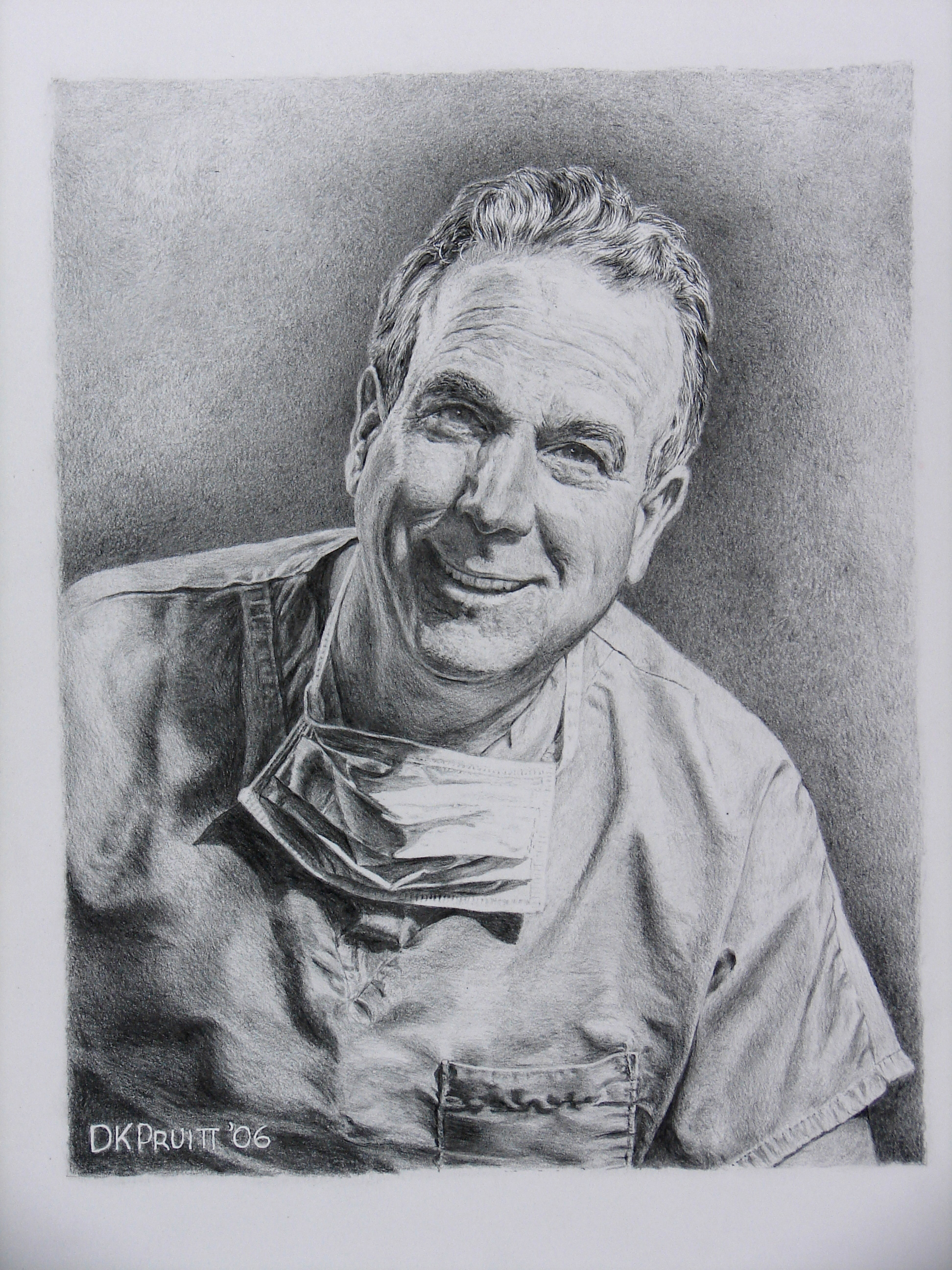 If your car repeatedly requires costly repairs because you never change the oil, would you blame your mechanic?
PBS Frontline
Dentists are justifiably upset because the recent PBS Frontline documentary “Dollars and Dentists” blames them for our nation’s deteriorating oral health.
http://www.pbs.org/wgbh/pages/frontline/dollars-and-dentists/
When in reality, good oral hygiene habits are the very basics of personal accountability – reinforced by painful and embarrassing lessons as needed.
Tradition Dentists Usually Silent
Traditionally, dentists seldom speak up. But at a time when they are finding it difficult to keep their chairs filled, even by discounting their fees, “Dollars and Dentists” struck an inflamed nerve – causing dentists to publicly react in defense of the profession like never before.
As an example, here is Dr. Alan Mead’s blunt response which he posted for his patients to read on his Mead Family Dental website:
“If you have dental problems, it’s mostly your fault. And if you want to have less dental problems, it’s your responsibility. It’s not the fault of the dental insurance company. It’s not the government’s responsibility. It’s on you.”
http://meadfamilydental.com/2012/07/preventable/

Responses
According to other responses, apparently far fewer blameless people are born with “soft teeth” than one might be led to believe by people with lots of cavities. Dentists have politely, but futilely reminded people for decades that it’s refined sugar, bacteria and poor brushing habits that rots teeth.
Assessment
I think the demand for truth in healthcare is going to continue. Over the next few months watch for one or more recognized leaders in the dental profession to actually mention the word “transparency” for the first time since 2008 when an ADA President-elect candidate from California used the word in his campaign platform. He lost. But now that dentists are finally becoming sufficiently annoyed by reporters’ broad accusations of greed and malfeasance, it could be interesting to watch the predictable emergence from obscurity of this perky little healthcare niche – one agitated dentist at a time.
Conclusion
If openness were popular, someone would have long ago told Grandpa his breath smells like death.
Your thoughts and comments on this ME-P are appreciated. Feel free to review our top-left column, and top-right sidebar materials, links, URLs and related websites, too. Then, subscribe to the ME-P. It is fast, free and secure.
Speaker: If you need a moderator or speaker for an upcoming event, Dr. David E. Marcinko; MBA – Publisher-in-Chief of the Medical Executive-Post – is available for seminar or speaking engagements. Contact: MarcinkoAdvisors@msn.com
OUR OTHER PRINT BOOKS AND RELATED INFORMATION SOURCES:
- DICTIONARIES: http://www.springerpub.com/Search/marcinko
- PHYSICIANS: www.MedicalBusinessAdvisors.com
- PRACTICES: www.BusinessofMedicalPractice.com
- HOSPITALS: http://www.crcpress.com/product/isbn/9781466558731
- CLINICS: http://www.crcpress.com/product/isbn/9781439879900
- ADVISORS: www.CertifiedMedicalPlanner.org
- BLOG: www.MedicalExecutivePost.com
- FINANCE: Financial Planning for Physicians and Advisors
- INSURANCE: Risk Management and Insurance Strategies for Physicians and Advisors

Share this:

Filed under: Ethics, Op-Editorials, Practice Management, Pruitt's Platform | Tagged: ADA, “Dollars and Dentists”, cavities, Cavities Blamed on Patients, D. Kellus Pruitt DDS, dentistry, Dr. Alan Mead, Mead Family Dental, oral health., PBS Frontline, Transparency Emerges in Dentistry |


Disobedience is fun
Disobedience: Who would have thought that the cure for tyranny in the dental industry would be so damn fun?
Doc, have insurers’ capricious demands of needless and costly documentation ever delayed your payment long after satisfied patients left your office? Have insurers’ insensitive waste of your staff’s time ever made you so angry that you wanted to publicly complain about their unfair business practices, but didn’t? What’s holding you back? An insurance-friendly idea of professionalism? Where do you suppose that chunk of unethical bias originated?
While dentists’ unappreciated favor of waiting on reimbursement greatly compliments dental insurance companies in the eyes of their clients, the increase in fees called for by the additional cost of filing dental claims, as well as delayed and contested payments, is obviously unfair to dental patients without insurance. If this dentist’s fees continue to be the same for everyone regardless of insurers’ expensive administrative demands, that means those without coverage subsidize the care of those with insurance. That’s just not fair. It never has been fair.
Dentists’ acceptance of assignment of patients’ dental benefits has long been offered as an uncompensated service to attract patients with insurance. Now that fewer employers in the DFW area are offering dental benefits, I feel adjustments are called for in my pricing to restore fairness in my neighborhood. For about a month now, I’ve been providing a 10% discount to patients who have no insurance. Even before I implemented the discount, I had put off raising my fees for as long as possible. Soon I intend to raise my fees 2% while at the same time, increase my non-insurance discount by 2% (creating no net change in the discounted fees). See how nicely that works, Doc?
Insurers naturally won’t like finally being held accountable for their additional costs, but in the end, what can they do about it? Members of the National Association of Dental Plans (NADP) are nothing more than unaccountable dentalcare stakeholders who have never respected their clients’ dentists. In the land of the free, the parasites have only themselves to blame for pricing themselves beyond the reach of my new, growing, target population.
D. Kellus Pruitt DDS
LikeLike
The ADA and disruption
[One way or another, transparency is inevitable. After all, it’s only dentistry]
While reading this year’s ADA candidate statements in the ADA News, I recognized signs that the ADA can no longer hide the financial squeeze caused by the loss of dues from a declining membership – including dues from members suspended for unprofessional conduct. On the good side, the candidate statements hint that the disruption is forcing a return to basics: The Hippocratic Oath and the ADA’s mission.
A second vice president candidate says, “Strong leadership across the tripartite that allows for open communication and transparency in our deliberations is a must in formulating answers to our challenges.” This is the first time “transparency” has been mentioned by any ADA official in at least 3 years. The last candidate who trotted out the modern idea lost.
One president-elect candidate states, “Members are the ADA’s lifeblood—the heart of our organization and inclusion of all dentists is mandatory. To enhance member value, it is essential that the ADA be proactive and shed the reactionary mode of the past. We must create an ADA where all dentists want to be members.”
At first, I was alarmed by his call for dentists’ “mandatory” inclusion in the ADA. But since the candidate concludes with a goal to create an ADA that nonmembers want to join, I think it’s clear that it was just a poor choice of words. That’s understandable. Since “mandatory” is used so liberally these days by ADA officials, it’s become a buzzword that can mean almost anything ADA leaders need it to.
Another president-elect candidate, perhaps the sharper of the two, also acknowledges problems with the ADA: “Today, the evolving economic, regulatory and communications environment leaves the American Dental Association at a crossroads. As an organization, we must adapt to the changing realities or face the prospect of becoming less relevant. To succeed, we need strong leadership and innovative thinking.”
Sound familiar yet, Texas Dental Association? It will. He continues: “People outside of our profession have questioned our credibility as the voice of dentistry and as the policymakers for our profession. The weak global economic and aggressive regulatory environment could strain the health of our organization and the reputation of dentists. In addition, we are losing membership market share vital to the ADA’s financial stability.”
If the ADA keeps moving toward transparency, I may see if they’ll have me back. It sounds like they need customers’ financial support bad enough to cause them to become more humble. And that’s the way the free market is supposed to work. The customer is always right.
D. Kellus Pruitt DDS
LikeLike
On Oral Health
Oral health is a sometimes overlooked, often fascinating facet of health care coverage. When you start to look, the stories are surprising in their variety.
While some concern the need for more care in rural places or nursing homes, others touch upon oral health disparities across racial or ethnic lines. There are accounts of local battles over water fluoridation programs, coverage of new dental care provider models, reports on research into connections between oral and systemic health and investigations into cases of Medicaid fraud.
Led by oral health topic leader Mary Otto, AHCJ’s new Web resources will highlight the work reporters are doing to explore this topic within their communities and beyond, as well as point to useful data, news about upcoming events, shared wisdom from fellow reporters, a growing glossary of terms, and information about key oral health concepts.
http://healthjournalism.org/core-topic.php?id=3&page=overview
Hope Rachel Hetico RN MHA
LikeLike
Cavity-detection devices in dentistry
Fox News reveals how dentists’ $30,000 cavity-detection devices pay for themselves.
Doc, if you routinely use a Kavo Diagnodent or an Air Technique Spectra laser fluorescence device to find cavities that are impossible to detect with a radiograph, good lighting and an explorer, you might want to keep your money-maker in the closet next week. Today, Fox News broke a story that effectively warns readers not to trust dentists like you.
“Michelle Smith of Las Vegas claimed the number of cavities diagnosed in her son jumped from zero to four between six-month check-ups, but only after his dentist acquired a Diagnodent. She got a second opinion, in which the dentist detected and treated only one verified cavity.” – “Ouch! New technology makes dental trips even worse” by Blake Snow.
http://www.foxnews.com/tech/2012/09/28/ouch-new-technology-makes-dental-trips-even-worse/#ixzz27mVLokQE
It looks like Fox News happened upon one of many controversial topics dentists discuss all the time, but only privately. Very few will be shocked to learn that there are unethical colleagues among us who are using high-tech devices to justify treating harmless incipient cavities – small lesions that might have remained harmless and incipient forever. Just like most dentists who use the devices, I have a few imperfections on my teeth that will probably never need filled as long as I keep Jolly Rancher candy and laser fluorescence out of my mouth.
ADA spokesman Dr. Matthew Messina told FoxNews.com: “They’re not necessary. We can do excellent dental work with traditional X-ray, visual, and hand exams alone.” I would add that when the sharpened tip of a dentist’s stainless steel explorer suddenly releases from soft, decayed tooth structure, the unmistakable tactile sensation plus the “ping” sound instantly confirms to both patient and dentist that the tooth indeed needs attention. The fact is, simple $8 explorers in dentists’ hands offer dental patients something that $30,000 high tech cavity-detection machines can’t: Credibility.
Dr. Messina points that that teeth with small lesions can sometimes repair themselves over time with proper home care such as flossing, brushing, and fluoride treatments. He adds that with regular dental exams, dentists can also keep a close eye on areas of concern. I agree with his sound advice. In my practice, we often highlight areas to watch on patients’ charts. More often than not, “watches” don’t require fillings unless patients fail to keep their teeth reasonably clean.
Blake Snow adds that according to a recent study described in the April 2012 Journal of the American Dental Association, the use of laser fluorescence devices leads to an unacceptably large number of false-positive results. Even though false-positives accelerate the return on investment of the expensive machines, the ADA reports that the dentist-friendly bias limits their use as a principal diagnostic tool.
Bottom line: Traditional, simple diagnostic methods for detecting cavities are still more than sufficient for dental needs – as well as tens of thousands of dollars cheaper.
D. Kellus Pruitt DDS
LikeLike
Tina Gomes is right
Do dental patients deserve to know if their dentists have been disciplined by the state board?
“Tina’s Bill Proposal requires all dentists that the state allows to continue practicing while on probation to give each patient at the place of treatment a sheet explaining he/she is on probation and the reasons for that probation, have the patient or parent or guardian sign for it, and have the signed statement put in the patient chart.”
http://www.thepetitionsite.com/1/Pass-Tinas-Bill/
Can’t get much more transparent than that, Tina Gomes.
As much as it pains me to admit it, Tina is right. Doc, if you don’t believe there is a need for more honesty in the profession, imagine what it must be like for patients to choose a dentist while knowing even less about your colleagues problems than you do. See what I mean?
Like Tina, I have devoted much time and effort to bringing transparency to the forgotten niche of dentalcare. As a practicing dentist, the healthcare parasites I choose to expose to cleansing sunshine are secretive, unaccountable dentalcare stakeholders who quietly derive power and/or profit from the sale of dangerous goods and lousy services to uninformed dentists – who then pass on the unnecessary expense and danger to even less informed dental patients.
Tina, on the other hand, targets unaccountable dentists whose questionable ethics have gotten them (secretly) into trouble with state boards. She justifiably argues that “informed consent” should include access to reports of dentists’ disciplinary actions. Even though the mandated notifications she proposes will expose dentists’ reputations to real and permanent harm which they may or may not deserve, I can think of no better way to make other dentists or stakeholders behave than demanding openness.
If like Tina and me, you would like to encourage more transparency in ALL aspects of dentalcare, please visit the newly-opened American Dental Association Facebook and put your opinion into words following Tina’s comment (which follows the ADA press release, “The ADA Supports Oral Cancer Awareness”).
https://www.facebook.com/notes/american-dental-association/the-ada-supports-oral-cancer-awareness/512210472154393
If you would rather not make such a bold commitment to openness at this time, at least show Tina your support by “liking” her comment, even though it is off-topic. Tell your friends. Let’s see if we can collect more likes for her comment than the 37 likes that the ADA’s press release attracted.
While you are at it, there is another ADA Facebook press release which has already attracted 15 off-topic comments expressing consumers’ concerns about mercury in silver fillings as well as the cost and danger of electronic dental records compared to paper. Feel free to let the ADA know your opinion on these taboo topics as well.
If we’re going to do this, transparency needs everyone’s help.
D. Kellus Pruitt DDS
cc: American Dental Association via Sharecare.com
http://www.sharecare.com/group/american-dental-association
LikeLike
Transparency reduces blindsides
“’Research corporations’ using patient data without consent – According to the original 2001 HIPAA privacy rule, patients were supposed to easily be able to get electronic copies of their records. It’s now 13 years later and most patients still can’t get access to their own health data—yet Optum and other [research] companies with no direct connection to or relationship with patients data-mine and use their data without their knowledge or consent.”
By Dr. Deborah Peel
[Modern Healthcare, September 13th 2014]
http://www.modernhealthcare.com/article/20140912/NEWS/309129927/research-corporations-using-patient-data-without-consent?utm_source=home&utm_medium=web&utm_campaign=most-popular-box
Dr. Peel concludes:
The problem is, when patients know that electronic systems cannot be trusted, they act in ways that endanger their health and lives:
– 37.5 million people a year hide information to try and protect their privacy
– 5 million to 6 million people a year (PDF) delay or avoid treatment for cancer, depression and STDs for the same reason: to try to keep sensitive health information private.
Click to access The-Case-for-Informed-Consent.pdf
Would we tolerate a paper medical records system that harmed 40 million to 50 million people a year or drove them away from treatment? Any records systems that keep people from seeking help or being honest are totally unacceptable!
Dr. Deborah C. Peel
Founder and Chair
Patient Privacy Rights
Austin, Texas
———–
It is growing increasingly important for Americans to also remind their dentists about their privacy concerns. It has been recently shown that dentists are unlikely to be warned about the downsides of EHRs from their professional organizations. Without your assistance, blindsided dentists could become the last to know.
D. Kellus Pruitt DDS
LikeLike
One way or another, transparency will win. Worse things could happen
“Having an abundance of trust is essential in a world of collaboration because the more people trust each other, or their leaders, the more likely they are going to work well together.” – Dov Seidman, founder of LRN, the company that provides ethics and governance advice for global corporations (from “The World is Flat,” by Thomas Friedman, 2006, p. 320).
In Monday’s spamphlet titled, “ADA media wins an award…” I described how Facebook’s public data can be used to determine the censorship rates of healthcare industry Facebook accounts. You might recall that a year ago, the number of missing comments suggested that the American Dental Association censors 28% of readers’ dental concerns. On the other hand, the American Medical Association only censors 6%. For further comparison, the Academy of General Dentistry hides less than half (11%) the percentage of comments as the ADA.
In a related matter, today this question was posted on the AMA Linkedin site for all to see: “Dr. [Leana] Wen talks about bringing more transparency to medicine. What are your thoughts?” (referring to Dr. Wen’s December 12 TED presentation titled “What Does It Take To Bring Transparency To Medicine?”).
http://www.npr.org/2014/12/12/368757849/what-does-it-take-to-bring-transparency-to-medicine
So is transparency also being openly discussed on the ADA Linkedin site?
Hardly. Unlike the AMA, the ADA Linkedin site is private. One must be a member to be privy to the information which is being exchanged … (And it’s only dentistry!)
Unless well-hidden leaders come out and lead, I think we all know what is going to happen. Americans are inevitably going to become furious about lack of transparency. Take data breaches for example. Let’s face it, Doc. The experts confirm that small practices are the easiest of targets to hack. And as Sony proved last week, even huge corporations can no longer keep hackers out – not even the benevolent ones.
Leaders needed
Many agree that a significant number of dental patients are more than likely not being notified of breaches from dental offices, and there is little to no leadership encouragement to do so. I shouldn’t have to explain why this will not end well. Before the ensuing crisis of trust occurs – causing informed and angry dental patients to seek dentists with paper records – will leadership step up and lead by example? Or will they just hunker down deeper?
Transparency will win. You know I am right.
D. Kellus Pruitt DDS
LikeLiked by 1 person
We can end censorship in the dental HIT market
Censorship, a 1960s command-and-control PR tool still used by the dental HIT industry, is obsolete. These days, censorship reveals the very secrets HIT stakeholders would hide from dentists and patients. Let me show you how:
You might recall this comment I posted on the EDA Facebook on December 24, following the organization’s anonymous promotion of EHRs in dentistry on the 19th:
“Dear The Eco-Dentistry Association (EDA), How do electronic dental records compare with paper dental records in cost and safety?”
The question was anonymously censored and I have been blocked from posting on the site. It should be noted that EDA officials would not have hidden the question from viewers if EHRs were indeed safer and cheaper than paper. Someone would have simply answered the question. Am I right?
In my opinion, there is no worse way for a professional organization to reveal weakness in ethics than through anonymous censorship of questions concerning the cost and safety of products they promote for profit. Thank goodness modern transparency makes it a bad idea to kick customers out of the store for asking such questions. Word gets around better these days. It’s sort of like a small town.
If you agree, please follow the link to Eco-Dentistry Association and ask anonymous Eco-Dentistry officials for yourself if EHRs are cheaper and safer than paper records, following the December 19 post.
https://www.facebook.com/EcoDentistry/?fref=ts
With your help, we can quickly stop the dishonesty – one old fart at a time.
D. Kellus Pruitt DDS
CC: The Eco-Dentistry Association
————–
It might seem that my recent description of anonymous censorship by The Eco-Dentistry Association went unnoticed. But I know differently.
Minutes after expressing my disappointment on social media, a long-forgotten opinion I wrote in 2012 titled, “Transparency Emerges in Dentistry,“ emerged from the archives of the Medical Executive-Post to become the 3rd most popular trending article.
The ME-P sports over 400,000 followers. You aren’t hiding from anyone, EDA.
CC: The Eco-Dentistry Association
D. Kellus Pruitt DDS
LikeLike