Let’s Think about Vitality GlowCaps for a Moment

Lights, Ring Tones and E-mails – Oh My!

By Dr. David Edward Marcinko; MBA, CMP™

[Editor-in-Chief]

DEM Thinking

Vitality Inc, is a new firm that reports to address the billion-dollar adherence problem for pharmaceutical brands, retail pharmacies, and healthcare providers with a simple device — an Internet-connected pill cap.

What it Is

Vitality GlowCaps illuminate, play a melody, and even ring a home phone so patients don’t forget to take their pills. They can send weekly emails to remote caregivers, create accountability with doctors through an adherence report, and automatically refill prescriptions. Vitality reports to improve medication adherence, health, and peace of mind.

Video: http://rxvitality.com/glowcaps.html

Name Droppers

According to its website, Vitality is currently working with researchers at Harvard Medical School and the Center for Connected Health on a study to measure the impact of the GlowCaps CONNECT system.

Vitality is the only company with a product designed to tackle the combination of factors that conspire to cause non-adherent behavior.

Overkill

Our society is now at the point of paying obese patients to diet and exercise [they don’t seem to recognize the benefit], paying public school children to study [they don’t seem to recognize the benefit], and now using internet enabled technology to help patients remember to take their own medication [they don’t seem to … yada, yada, yada].

A Reasonable Query?

But, may one reasonably ask; is this admittedly “very cool” technology overkill? THINK: RFID tags for wrong extremity surgery; when common sense and a magic marker might do just as well? Sure, there may be some modicum of benefit here for elderly patients and select other reasons. But, does the marginal cost outweigh the marginal benefit? Or, is this technology really a solution in search of an exaggerated “problem” that just may involve slack personal responsibility? And, most importantly, who will pay for it?  

Assessment

Vitality Inc, leverages deep expertise in customer research, wireless consumer electronics, web services and behavioral psychology. Vitality’s patent pending solution is said offer each patient the optimal mix of intervention, feedback, reminders, accountability, education and incentives to improve their ongoing medication adherence. But, does it really improve health, and at what cost? Can’t we solve the “problem” of pill non-compliance cheaper and easier?

Conclusion

And so, your thoughts and comments on this Medical Executive-Post are appreciated. Tell us what you think. Any early adopters out there, and ready to opine? Or, give em’ a click and tell us what you think! http://rxvitality.com Feel free to review our top-left column, and top-right sidebar materials, links, URLs and related websites, too. Then, be sure to subscribe to the ME-P. It is fast, free and secure.

Link: http://feeds.feedburner.com/HealthcareFinancialsthePostForcxos

Speaker: If you need a moderator or speaker for an upcoming event, Dr. David E. Marcinko; MBA – Publisher-in-Chief of the Executive-Post – is available for seminar or speaking engagements. Contact: MarcinkoAdvisors@msn.com 

Get our Widget: Get this widget!

Our Other Print Books and Related Information Sources:

Practice Management: http://www.springerpub.com/prod.aspx?prod_id=23759

Physician Financial Planning: http://www.jbpub.com/catalog/0763745790

Medical Risk Management: http://www.jbpub.com/catalog/9780763733421

Healthcare Organizations: www.HealthcareFinancials.com

Health Administration Terms: www.HealthDictionarySeries.com

Physician Advisors: www.CertifiedMedicalPlanner.com

Subscribe Now: Did you like this Medical Executive-Post, or find it helpful, interesting and informative? Want to get the latest ME-Ps delivered to your email box each morning? Just subscribe using the link below. You can unsubscribe at any time. Security is assured.

Link: http://feeds.feedburner.com/HealthcareFinancialsthePostForcxos

HALLOWEEN: Nathaniel Potter MD & Touring with Dr. Marcinko [Part VI]

About Nathaniel Potter, MD

By Dr. David Edward Marcinko; MBA, CMP™
[Publisher-in-Chief]
Dateline: Baltimore MarylandNathaniel Potter MD

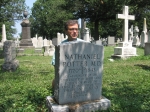
While in Washington DC on the second portion of our recent ME-P book “signing and opining” tour, I had the good fortune to visit the gravesite of the noted physician Nathaniel Potter, MD. Dr. Potter was born in Carolina county Maryland in 1770 and died in Baltimore on 2 January, 1843. He graduated from the University of Pennsylvania in 1796, and settled in Baltimore, where he practiced medicine until his death. In 1807, he associated with Dr. John B. Davidge in founding the University of Maryland, School of Medicine where he ultimately served as professor and dean. He died penniless.

THINK Potter’s field!

About Green Mount Cemetery

Green Mount Cemetery is located in Baltimore, MD. Established in 1839, it is noted for the large number of historical figures that have been interred in its grounds as well as a large number of prominent Baltimore-area families. It retained the name Green Mount when the land was purchased from the heirs of Baltimore merchant Robert Oliver. Green Mount is also a treasury of precious works of art, including striking works by major sculptors like William Rinehart and Hans Schuler. The cemetery was listed in the National Register of Historic Places in 1980.

Assessment

In as much as Dr. Potter was a well know figure to me, I was most pleased at the impromptu visit to his grave. You see, although I attended Temple University because of my future specialty, my first medical school choice would have been at University of Maryland if post-graduate education opportunities had been different at the time. And, I passed the medical school, and the imposing Greek themed Davidge Hall Dome, daily for four years as I rode the number 8 public transportation bus to my undergraduate studies at nearby Loyola University, in Townson Maryland. Of course, the fact that Potter was educated at the University of Pennsylvania School of Medicine, the first in the nation, did not elude me when I worked in its ER as a young medical student in Philadelphia, back in-the-day. University of Maryland was the fifth such medical school in the country.

About Off Road with Dr. Marcinko

These sporadic off-road segments will continue through-out my summer promotional tour. Attendance at several formal and informal engagements increased since the early summer. The previously noted sales spike for our texts, handbooks and dictionaries; as well as interest in our online www.CertifiedMedicalPlanner.org  program.

Part V: https://healthcarefinancials.wordpress.com/2009/08/21/off-road-touring-with-dr-marcinko-part-v/

Conclusion

Your thoughts and comments on this ME-P are appreciated. Feel free to review our top-left column, and top-right sidebar materials, links, URLs and related websites, too. Then, subscribe to the ME-P. It is fast, free and secure.

Speaker: If you need a moderator or speaker for an upcoming event, Dr. David E. Marcinko; MBA – Publisher-in-Chief of the Medical Executive-Post – is available for seminar or speaking engagements. Contact: MarcinkoAdvisors@msn.com

OUR OTHER PRINT BOOKS AND RELATED INFORMATION SOURCES:

Product DetailsProduct Details

Product Details

***

Henry Louis Gehrig, eMRs and Healthcare Reform

What’s the “Iron Horse” Got to Do with Health IT?

By Dr. David Edward Marcinko; MBA, CMP™

[Publisher-in-Chief]Jacobetti VA

According to UPI reports from Charlestown, WVa on August 24 2009, at least 1,200 veterans across the country were mistakenly told by the Veterans Administration [VA] that they suffered from a fatal neurological disorder.

Link: http://www.msnbc.msn.com/id/32541579/ns/health-health_care/

Panicked Veterans

One of the leaders of a Gulf War veterans group is reported to have said that panicked veterans from the states of Alabama, Florida, Kansas, North Carolina, West Virginia and Wyoming contacted the group about the error. Denise Nichols, the vice president of the National Gulf War Resource Center, reportedly blamed a “coding error” for the mistake. In medicine, we call this a “false positive.”

About Henry Louis “Lou” Gehrig

Henry Louis “Lou” Gehrig (June 19, 1903 – June 2, 1941), born Ludwig Heinrich Gehrig, was an American baseball player in the 1920s and 1930s; chiefly remembered for his prowess as a hitter, the longevity of his consecutive games played record and the pathos of his tearful farewell from baseball at age 36, when he was stricken with a fatal disease. Of course, Gehrig was known as the “The Iron Horse” for his durability. Yet, the irony is that Amyotrophic Lateral Sclerosis [ALS], or Lou Gehrig’s disease [sometimes also called Maladie de Charcot] is progressive and fatal. Lou died in 1941 after developing the illness. Will the same death-spiral happen to eHRs and Obama care?

Link: http://www.lougehrig.com

Assessment

Having rotated through the VA system as a young medical student back-in-the-day, I have never been a fan. It smacked of socialized medicine and government plutocracy, and was never a leading-edge example of domestic healthcare, in my informed opinion. Recent HIPAA administrative, security, IT and clinical medical errors are well known. So, to blame the mix-up on an insurance billing and “coding error” seems somewhat disingenuous. Especially now, at a time when eMRs and the Obama Administration’s healthcare reform itself is being vigorously debated by the citizenry. I mean, are there no human checks and balances? Would there be any human intervention if a public healthcare policy was adopted?

Of course, we have written about military medicine previously on this Medical Executive-Post, and devoted an entire channel to it. And, I do realize that more than fifty percent of us receive similar governmental care in some form, or another [Medicare, Medicaid, CHIPS, the Indian and Prison Healthcare Systems, etc].

Link: https://healthcarefinancials.wordpress.com/category/military-medicine/

Nevertheless, shall we give a new moniker to this mistake? How about “Lou Gehrig’s coding error”, and document it in our www.HealthDictionarySeries.com

Conclusion

And so, your thoughts and comments on this Medical Executive-Post are appreciated. Is it even fair to relate this “isolated incident” to the current healthcare reform debate, the eMR conundrum and/or similar discussions on health Information Technology [IT]? Tell us what you think. Feel free to review our top-left column, and top-right sidebar materials, links, URLs and related websites, too. Then, be sure to subscribe to the ME-P. It is fast, free and secure.

Link: http://feeds.feedburner.com/HealthcareFinancialsthePostForcxos

Speaker: If you need a moderator or speaker for an upcoming event, Dr. David E. Marcinko; MBA – Publisher-in-Chief of the Executive-Post – is available for seminar or speaking engagements. Contact: MarcinkoAdvisors@msn.com 

Get our Widget: Get this widget!

Our Other Print Books and Related Information Sources:

Practice Management: http://www.springerpub.com/prod.aspx?prod_id=23759

Physician Financial Planning: http://www.jbpub.com/catalog/0763745790

Medical Risk Management: http://www.jbpub.com/catalog/9780763733421

Healthcare Organizations: www.HealthcareFinancials.com

Health Administration Terms: www.HealthDictionarySeries.com

Physician Advisors: www.CertifiedMedicalPlanner.com

Subscribe Now: Did you like this Medical Executive-Post, or find it helpful, interesting and informative? Want to get the latest ME-Ps delivered to your email box each morning? Just subscribe using the link below. You can unsubscribe at any time. Security is assured.

Link: http://feeds.feedburner.com/HealthcareFinancialsthePostForcxos

Sponsors Welcomed

And, credible sponsors and like-minded advertisers are always welcomed.

Link: https://healthcarefinancials.wordpress.com/2007/11/11/advertise

Off-Road Touring with Dr. Marcinko [Part V]

About the Ship USNS COMFORT
By Dr. David Edward Marcinko; MBA, CMP™
[Publisher-in-Chief]
Dateline: August 4, 2009USNS Comfort Canton, Maryland

The official Navy ship USNS COMFORT [“Medical Treatment Facility”] has the primary mission to provide a mobile, flexible and rapidly responsive capability for acute medical and surgical care in support of amphibious task forces. These forces include the Marine Corps, Army and Air Force elements, forward deployed Navy elements of the fleet, and activities located in areas where hostilities may be imminent. Operations are governed by the principles of the “Geneva Convention for the Amelioration of the Wounded, Sick, and Shipwrecked Members of the Armed Forces at Sea”, as of August 12, 1949.

Mission

As a secondary mission of the ship COMFORT is providing a full hospital service asset for use by other government agencies involved in the support of relief and humanitarian operations worldwide. These mission statements are accountable to both the Reduced Operating Status (ROS) and Full Operating Status (FOS) military personnel staffed at National Naval Medical Center, Bethesda Maryland until the ship is activated. However, the ROS personnel’s immediate and number one priority is to fully activate the ship to a FOS Echelon III Medical Treatment Facility within a prescribed 5-day time frame.

Functions

In meeting these missions, the ROS personnel perform the following functions:

  • Serve as the nucleus of the critical core required to execute activations;
  • Develop, test, and maintain systems and procedures to support activation process;
  • Orient and train FOS augmenting staff;
  • Monitor/assess the medical treatment facility’s overall ability to fully activate/perform mission.

Leaders

The ship is commanded by CAPT James J. Ware DDS, with Executive Officer Captain Larnerd, and Master Chief Lohner. The home base is Baltimore, Maryland.  Upon arrival at the dock, the ME-P and I planned to meet onboard with Master David Lieberman. But, an interview was cancelled due to a last minute scheduling conflict. However, we were placed in the competent hands of our civilian tour guide, Shaun B. of Virginia. He noted 70 civilian and 700 military personnel.US Comfort

Assessment

Shaun B, informed me that despite advanced age, my application for a four month tour would be gladly reviewed. And, it is under serious future consideration as my nurse sister is a recent Bronze Star Award winner from a Combat Army Surgical Hospital [CASH] unit stationed in Iraq. I also did my trauma surgery training in Martin Army Hospital, at Fort Benning Georgia, back-in-the-day.

About Off Road with Dr. Marcinko

These sporadic off-road segments will continue through-out my 2009 summer promotional tour. Attendance at several formal and informal engagements increased since the early summer. The previously noted sales spike for our texts, handbooks and dictionaries www.HealthDictionarySeries.com continued and interest in our online www.CertifiedMedicalPlanner.com program and premier quarterly guide: Healthcare Organizations [Journal of Financial Management Strategies] www.HealthcareFinancials.com remained high.

Part IV: https://healthcarefinancials.wordpress.com/2009/08/13/off-road-touring-with-dr-marcinko-part-iv/

Conclusion

And so, your thoughts and comments on this Medical Executive-Post are appreciated. Feel free to review our top-left column, and top-right sidebar materials, links, URLs and related websites, too. Then, be sure to subscribe to the ME-P. It is fast, free and secure.

Link: http://feeds.feedburner.com/HealthcareFinancialsthePostForcxos

Speaker: If you need a moderator or speaker for an upcoming event, Dr. David E. Marcinko; MBA – Publisher-in-Chief of the Executive-Post – is available for seminar or speaking engagements. Contact: MarcinkoAdvisors@msn.com

Get our Widget: Get this widget!

Our Other Print Books and Related Information Sources:

Practice Management: http://www.springerpub.com/prod.aspx?prod_id=23759

Physician Financial Planning: http://www.jbpub.com/catalog/0763745790

Medical Risk Management: http://www.jbpub.com/catalog/9780763733421

Healthcare Organizations: www.HealthcareFinancials.com

Health Administration Terms: www.HealthDictionarySeries.com

Physician Advisors: www.CertifiedMedicalPlanner.com

Subscribe Now: Did you like this Medical Executive-Post, or find it helpful, interesting and informative? Want to get the latest ME-Ps delivered to your email box each morning? Just subscribe using the link below. You can unsubscribe at any time. Security is assured.

Link: http://feeds.feedburner.com/HealthcareFinancialsthePostForcxos

Sponsors Welcomed

And, credible sponsors and like-minded advertisers are always welcomed.

Link: https://healthcarefinancials.wordpress.com/2007/11/11/advertise

Healthcare Organizations

Kelly Mclendon RHIA censors D. Kellus Pruitt DDS

By Darrell K. Pruitt; DDS

Dateline: 8.15.09

pruitt

Dear Kelly Mclendon, Registered Health Information Administrator

You are beginning to make me feel insulted, and I will not have that. I just noticed that the last two comments I submitted to your Website, www.spacecoastmedicine.com, on August 9 and 10, are still “awaiting moderation.”

http://www.spacecoastmedicine.com/2009/08/electronic-records-for-all-patients-mandated-by-2014.html#comment-89 

(For clarity, the comments which scared Mr. Mclendon are copied below) 

Over five days have passed, and I want you, your readers and my readers to know that I spent a lot of time preparing those two pieces exclusively for you at your invitation for comments. You are as sincere as I am, aren’t you? 

When I’ve caught others in the squeeze you might be experiencing, several have pleaded that the censorship was an innocent oversight, and did the right thing immediately by posting everything I send them (include this comment, please). And then again, there are a few slow-learning, command-and-control types who think they cam still somehow control the content of their Websites. Like you, Kelly, an anonymous dentalblogs.com editor whom I call “Nancy” by default, also informed me that my comments were awaiting indefinite moderation. What a foolish, rookie mistake that proved to be. For example, if you google “dentalblogs.com,” my article “Dentalblogs.com hates D. Kellus Pruitt DDS” is their 4th hit. It seems to be very popular. 

How’s this for the title of a comment that should make it to your first page by Monday: “Kelly Mclendon RHIA censors D. Kellus Pruitt DDS”? Please, no phone calls. 

D. Kellus Pruitt; DDS 

Dateline 8.9.09 

I’m sure physicians’ businesses are no different than dentists’ when it comes to the liability of data breaches – especially considering the giddy, mindless momentum of HITECH-empowered HIPAA. If a computer is stolen in a burglary, compromised by a dishonest employee who sells IDs on the side, or otherwise hacked, and the dentist reports the tragedy according to the letter of the law, it inevitably means bankruptcy even before the feel-good fines are levied by HHS (HIPAA) and the FTC (Red Flags Rule) for not having required irrelevant documentation of administrative trivia in order. What were our lawmakers thinking? 

I guess the HIPAA blunder proves that when politicians, insurers and healthcare IT entrepreneurs get together in vendor clubs like CCHIT, the only government-approved eHR certification authority, they can mandate damn well any law that suits their needs. 

Allscripts CEO Glen Tullman, who is an influential friend of Barack Obama as well as a Trustee of CCHIT told Bloomberg.com reporter Alex Nussbaum in an interview almost a year ago that providers should make the financial commitment “to ensure that doctors have some skin in the game.” 

Glen Tullman is only one reason our nation’s healthcare IT industry stinks from the top down. 

D. Kellus Pruitt; DDS

Dateline: 8.10.09 

Thank you, Kelly Mclendon, for providing a rare venue to possibly clear up a few items of uncertainty about eHRs in dentistry. First of all, if a technological advancement such as eDRs does not pay for itself, even with government subsidies, who pays for it? That seems like a quick way to increase the costs of dental care – and for what? How do dental patients benefit from expensive HIT solutions when the telephone, fax machine and US Mail serve us fine? 

Digitalization of records offers no benefits to dental patients. Only stakeholders who would grab our patients’ money benefit from HIT. Everyone else loses. Trusting, naive dental patients lose the most. 

Electronic dental records are expensive hazards. If you can think of a lame reason for them, please let me hear it. You can bet I’ve crushed it before. I’ve been down this road with others many, many times. 

Within a week, the government will price computerization smooth out of dentistry. Over 90% of dentists have patient identities on their computers today. If HIPAA is enforced, with or without the Red Flags Rule, I predict that less than half of the nation’s dentists will be computerized a year from now. 

As for your argument that eHRs somehow provide up-to-date and otherwise superior medical histories for dental patients, think about this: If someone changes a paper medical history, it leaves a paper trail. If an insurance thief alters allergies on a digital record to suit his or her own needs, nobody in the emergency room can tell. Whoever said “Paper kills,” lied. It is a catchy PR pitch, though.

Conclusion

Your thoughts and comments on this ME-P are appreciated. Feel free to review our top-left column, and top-right sidebar materials, links, URLs and related websites, too. Then, subscribe to the ME-P. It is fast, free and secure.

Speaker: If you need a moderator or speaker for an upcoming event, Dr. David E. Marcinko; MBA – Publisher-in-Chief of the Medical Executive-Post – is available for seminar or speaking engagements. Contact: MarcinkoAdvisors@msn.com

OUR OTHER PRINT BOOKS AND RELATED INFORMATION SOURCES:

Product DetailsProduct DetailsProduct Details

Health Plan Management Navigator

August 2009 Edition

By Douglas B. Sherlock; CFA, MBALibrary

Linked below is the August 2009 edition of Plan Management Navigator. In this month’s edition, we update readers on the results for the Blue Cross Blue Shield universe, and provide product breakouts, summary functional area breakouts as well as expense trends. Cost increases are lower this year than last, though higher if product mix is considered. Twenty-two Blue Cross Blue Shield Plans serving 31.3 million members participated in this year’s benchmarking study.  Growth in Information Systems and Medical Management costs explained more than 40% of the total increase.

Link: Navigator August 09

Sherlock Expense Evaluation Report

This analysis is based on materials from our Sherlock Expense Evaluation Report (SEER) for Blue Cross Blue Shield Plans. Additional information about SEER is available at http://www.sherlockco.com/seer.shtml or by contacting us.

Assessment

In coming weeks, Plan Management Navigator will summarize other results of this year’s performance benchmarking studies. We expect to publish Medicare and Medicaid editions in late August or early September. Independent / Provider-Sponsored plan results were published two weeks ago in Plan Management Navigator and the associated presentation and transcript are found at  http://www.sherlockco.com/

Conclusion

And so, your thoughts and comments on this Medical Executive-Post are appreciated. Tell us what you think. Feel free to review our top-left column, and top-right sidebar materials, links, URLs and related websites, too. Then, be sure to subscribe to the ME-P. It is fast, free and secure.

Link: http://feeds.feedburner.com/HealthcareFinancialsthePostForcxos

Speaker: If you need a moderator or speaker for an upcoming event, Dr. David E. Marcinko; MBA – Publisher-in-Chief of the Executive-Post – is available for seminar or speaking engagements. Contact: MarcinkoAdvisors@msn.com 

Get our Widget: Get this widget!

Our Other Print Books and Related Information Sources:

Practice Management: http://www.springerpub.com/prod.aspx?prod_id=23759

Physician Financial Planning: http://www.jbpub.com/catalog/0763745790

Medical Risk Management: http://www.jbpub.com/catalog/9780763733421

Healthcare Organizations: www.HealthcareFinancials.com

Health Administration Terms: www.HealthDictionarySeries.com

Physician Advisors: www.CertifiedMedicalPlanner.com

Subscribe Now: Did you like this Medical Executive-Post, or find it helpful, interesting and informative? Want to get the latest ME-Ps delivered to your email box each morning? Just subscribe using the link below. You can unsubscribe at any time. Security is assured.

Link: http://feeds.feedburner.com/HealthcareFinancialsthePostForcxos

Sponsors Welcomed

And, credible sponsors and like-minded advertisers are always welcomed.

Link: https://healthcarefinancials.wordpress.com/2007/11/11/advertise

BCBS-TX Must Talk to D. Kellus Pruitt DDS

Join Our Mailing List

Do My Manners Bother Anyone?

[By Darrell K. Pruitt; DDS ]

I posted this on the Dallas Morning News Website in response to an article about BCBSTX downsizing due to the economy.

http://economywatchblog.dallasnews.com/archives/2009/08/health-care-losing-jobs.html

1-darrellpruittDear Jason Roberson – Reporter – The Dallas Morning News 

As a dentist on the east side of Fort Worth whose patients have been harmed by BCBSTX, I say the fewer clients BCBSTX has, the safer Texans are. Changing dentists causes fillings.

Of HIPAA and the NPI Number

It wouldn’t surprise me that until about now, you and most of your readers have never heard of the HIPAA-mandated National Provider Identifier (NPI) number. And it probably doesn’t make much sense to you when I say that it is BCBSTX policy not to process their clients’ dental claims if they come from a dentist who doesn’t have an NPI number, like me. BCBSTX’s horrible policy has not only decreased my number of new patients, but the arbitrary rule also caused a couple of dozen of my long-term patients – who were perfectly satisfied in the comfortable dental home I provided them – to leave me for dentists with NPI numbers. Please note that the 10 digit identification number does nothing improve the quality of care. It only benefits BCBSTX. And did I mention that changing dentists causes fillings?

Not Accepting Assignment 

Even in these tough economic times, I choose to no longer accept BCBSTX. My ethics-based decision hurts me financially, but that is how much I sincerely despise BCBSTX for its NPI policy. Unless Texas Health CEO Doug Hawthorne or a spokeswoman for BCBSTX like Margaret Jarvis or Ross Blackstone mans up to their deception really soon, I hope to help the wheels fall off of BCBSTX as an example to other insensitive CEOs who harm my patients by selling their clueless bosses discount dental plans with no quality control. Special bastards like me proudly volunteer to clean up the neighborhood, just for grins. As a matter of fact, a few sports fans and I are hoping one of the recently laid off BCBSTX employees is named Wilma, who on May 1, 2008 was known as an “overall supervisor” for BCBSTX in the dental claims department. I’m certain that CEO Hawthorne knows her. Then again, it wouldn’t surprise me to learn that he is unconcerned about dentistry.

A Pubic Invitation 

I am publicly inviting Wilma to come forward – even as whistleblower if she still has her job – and share with us the motivation behind the alleged lies she told me during our conversation. Even now, as I listen to our recording, I consider it an entertaining and educational conversation between two people who both know a BCBSTX overall supervisor who brought talking points to an argument. Nevertheless, even while trapped between honesty and her job, Wilma proved to be a devoted employee – willing to risk her own reputation for her boss. The way she sticks with defending a defenseless policy, at times it sounds like the NPI number actually makes sense to her. Then you think, “Surely she is smarter than that.”

Assessment 

I know that coming at the end of one of the strangest comments you have ever attracted, it is appropriately ballsy that I say that there’s a new sheriff in town, Jason. And disrespect around my niche is no longer tolerated if I have anything to do with it. I’ll shoot holes in BCBSTX to help it crash sooner if it will cause fewer Texans experience unnecessary dentistry. How important to one’s oral and systemic health is continuity of care when virtually all oral problems are caused by neglect? Is BCBSTX dental insurance worth the hidden price? Thank you for the opportunity to air out my opinion.

Conclusion

Your thoughts and comments on this ME-P are appreciated. Feel free to review our top-left column, and top-right sidebar materials, links, URLs and related websites, too. Then, subscribe to the ME-P. It is fast, free and secure.

Speaker: If you need a moderator or speaker for an upcoming event, Dr. David E. Marcinko; MBA – Publisher-in-Chief of the Medical Executive-Post – is available for seminar or speaking engagements. Contact: MarcinkoAdvisors@msn.com

OUR OTHER PRINT BOOKS AND RELATED INFORMATION SOURCES:

Product DetailsProduct Details

ADA President and Broken Promises

The Future President

By Darrell K. Puritt; DDS

pruitt8

The election for a future ADA president occurs the first week in October in Hawaii at the 2009 annual meeting. A couple of days ago, the ADA News Online posted the ADA President-elect candidates’ statements.

http://www.ada.org/prof/resources/pubs/adanews/adanewsarticle.asp?articleid=3133

All three sound like they support meaningful dialogue with membership: Candidate Dr. Raymond Gist says one of his goals is: “To protect and preserve ownership of the intellectual property of the ADA while demonstrating transparency and fostering an understanding of how our system works.” Candidate Dr. William Glecos says “My first goal will be to coordinate and improve our communication efforts within the ADA. To make sure we are engaging all our members and imparting a sense of connection and transparency.” Candidate Dr. Marie Schweinebraten says “… communication, internal and external, must be improved to respond in today’s world … barriers must be eliminated to allow member input and volunteer involvement when solving specific issues.” I’ve seen candidates use these same buzzwords before, but not mean them. Dentistry is being severely threatened right now, and I’m too young to retire. So I want to see a future leader confident enough to walk through fire with me on behalf of my patients.

Promises from ADA President-elect candidates have been very disappointing so far. Past President Dr. Mark Feldman, President Dr. John Findley and President-elect Dr. Ron Tankersley each promised “transparency.” Feldman and Findley broke their promises very early, and so far, Tankersley has done no better. Nine months ago I invited Dr. Tankersley to a conversation about the future of electronic dental records and he chose to insult me with silence rather than respond. I took it personally, Ron, and I’ll never forget it. Because all three of these presidents are simply rude people, it wouldn’t bother me to never ask any of them for friendship. 

So do you think our fresh leaders are any more sincere about transparency with membership? Or are they also hoping to be safely elected. This could be an opportunity for one or more of the three to break loose and be counted as a brave leader… or not. Let me show you what Feldman, Findley and Tankersley have gotten us into. Below is a list of duties expected of dentists with NPI numbers that came out today on ANCO Online. If any of you three candidates have the courage to respond to my challenging comments about what I consider to be a perfect example of a renegade department, jump right in. Concerned members need to be warned about the courage we can count on. If you cannot defend the Department of Dental Informatics, just say so. We’ll all be better off. And on truth, we can build. What an opportunity for you! I bet one could easily gain the delegates’ attention by doing the right thing, even if it is unpopular at first to those who may have helped you to power.

Responding to this article in a respectful, professional way could be just what it takes to get a person elected to the highest position in the American Dental Association. That’s what you intensely want, isn’t it? You just have to recognize what I am spelling out for you, Raymond, William and Marie. Just look at the growing discontent with the ADA on the Internet. Whoever is the first to show sincerity and courage, will become a hero to those of us who feel betrayed by those we once trusted. Victory will never be easier. I’ve had a look around. Believe me when I tell you that things are soo bad that even I could be a contender. Don’t make me run for the job.

Here is the first issue for discussion if you are interested: For dentists who were persuaded by the ADA Department of Dental Informatics to quickly volunteer for the 10 digit identifying number, let me ask you this: If you had been told what ADA employees are paid to tell you, which you can read below, would you have applied for an NPI number? And if you were forced to apply for a number by a managed care contract with BCBSTX, Delta Dental or other discount dentistry broker, would that be considered an unfair business practice?

Let’s look at fairness: Who does the NPI number help? Dental patients or BCBSTX? Or perhaps the ADA? We were told again and again in ADA News Online articles written by Arlene Furlong that the best reason for the NPI number was convenience. She said office managers would love it because it would replace numerous identification numbers. When one reads the list of NPI obligations a dentist volunteers their office manager for, all those other numbers don’t seem so bad after all. Why was HIPAA so important that the ADA Department of Dental Informatics forced employees under its supervision to intentionally mislead membership? Does the ADA work for dentists and their patients or for CMS? There you go, Dr. Raymond Gist, Dr. William Glecos and Dr. Marie Schweinebraten. It’s your turn now. If you have the guts to step up to a challenge, it could pay off big. Besides, even if you get elected without first responding to my concerns doesn’t mean you’ll get rid of me. Oh heaven’s no.

D. Kellus Pruitt; DDS

http://anco- .blogspot.com/2009/08/asco-coa-cms-palmettoj1mac-news.html

**** CMS NEWS ****

This message is for health care providers, particularly physicians and other practitioners, who have obtained National Provider Identifiers (NPIs) and have records in the National Plan and Provider Enumeration System (NPPES). The Centers for Medicare & Medicaid Services (CMS) recommends that each health care provider, including individual physicians and non-physician practitioners: · Secure and maintain their own NPPES account information (i.e., User ID, Password, and Secret Question/Answer) for safety and accessibility purposes. Health care providers should maintain the confidentiality of their User ID, password, and Secret Question/Answer in order to protect their NPPES information from unauthorized access. Reset their NPPES passwords at least once a year.

See the NPPES Application Help page at https://nppes.cms.hhs.gov/NPPES/Help.do and select the ‘Reset Password Page’ for applicable rules. Those rules indicate the length, format, content and requirements of NPPES passwords. Review their NPPES records in order to ensure that the information reflects current and correct information. Covered health care providers are required to update their NPPES information within 30 days of the effective date of the change.

Viewing NPPES Information Health care providers, including physicians and non-physician practitioners, can view their NPPES information in one of two ways: (1) By accessing the NPPES record at https://nppes.cms.hhs.gov/NPPES/Welcome.do and following the NPI hyperlink and selecting Login. The user will be prompted to enter the User ID and password that he/she previously created. If the health care provider has forgotten the password, enter the User ID and click the “Reset Forgotten Password” button to navigate to the Reset Password Page. If the health care provider enters an incorrect User ID and Password combination three times, the User ID will be disabled. Please contact the NPI Enumerator at 1-800-465-3203 if the account is disabled or if the health care provider has forgotten the User ID. OR (2) By accessing the NPI Registry at https://nppes.cms.hhs.gov/NPPES/NPIRegistryHome.do.

The NPI Registry gives the health care provider an online view of Freedom of Information Act (FOIA)-disclosable NPPES data. The health care provider can search for its information using the name or NPI as the criterion. Information regarding NPPES data that are FOIA-disclosable can be found at http://www.cms.hhs.gov/NationalProvIdentStand/ by selecting ‘Data Dissemination’. Please note: Business Mailing Address and Business Practice location information (full address and corresponding telephone numbers) are key data elements that are FOIA-disclosable.

Health care providers should not report their residential address unless it is their Business Mailing Address or Business Practice location. The NPPES data appearing on the NPI Registry cannot be deleted; however, it can be updated or changed. Updating NPPES Information Health care providers, including physicians and non-physician practitioners, can correct, add, or delete information in their NPPES records by accessing their NPPES records at https://nppes.cms.hhs.gov/NPPES/Welcome.do and following the NPI hyperlink and selecting Login. The user will be prompted to enter the User ID and password that he/she previously created.

Please note: Required information cannot be deleted from an NPPES record; however, required information can be changed/updated to ensure that NPPES captures the correct information. Certain information is inaccessible via the web, thus requiring the change/update to be made via paper application. The paper NPI Application/Update Form (CMS-10114) can be downloaded and printed at http://www.cms.hhs.gov/cmsforms/downloads/CMS10114.pdf.

Deactivating the NPI Health care providers, including physicians and non-physician practitioners, can deactivate their NPIs if the NPIs are no longer required or needed. Reasons for deactivation include retirement, business dissolved, or death of the health care provider. A request for deactivation must be submitted via paper application. The paper NPI Application/Update Form (CMS-10114) can be downloaded and printed at http://www.cms.hhs.gov/cmsforms/downloads/CMS10114.pdf.

Health care providers should review the instructions located on the application regarding deactivations in order to properly complete the deactivation request. The Power of Attorney or Executor of the Will may complete the application for deactivation due to death of the health care provider.

Need More Information?

Providers can apply for an NPI online at https://nppes.cms.hhs.gov or can call the NPI enumerator to request a paper application at 1-800-465-3203. Visit CMS’ dedicated NPI web page at www.cms.hhs.gov/NationalProvIdentStand for additional NPI information.

Channel Surfing

Have you visited our other topic channels? Established to facilitate idea exchange and link our community together, the value of these topics is dependent upon your input. Please take a minute to visit. And, to prevent that annoying spam, we ask that you register.  

Link: http://feeds.feedburner.com/HealthcareFinancialsthePostForcxos

Speaker: If you need a moderator or speaker for an upcoming event, Dr. David E. Marcinko; MBA – Publisher-in-Chief of the Executive-Post – is available for seminar or speaking engagements. Contact: MarcinkoAdvisors@msn.com 

Get our Widget: Get this widget!

On the Gates Incident

A Teaching Moment – I Think Not!

By Dr. David Edward Marcinko; MBA, CMP™

[Publisher in Chief]Obama-Hope

ME-P readers are no doubt aware of the Professor Gates incident in Cambridge Massachusetts? So, please indulge me in presenting one doctors’ opinion on the matter; short and sweet. 

The Participants

Professor Henry L. Gates Jr., is an elderly Harvard educated expert on African American studies.

Sergeant James Crowley attempted to resuscitate Boston Celtics star Reggie Lewis in 1993, and is a police department race relations intermediary.

President Obama is a Harvard Law School Professor who knowingly opined without the facts.

Who’s Right?

Now – if these august participants “got it wrong” – how can “they” expect ordinary citizens to “get it right”?

A Teachable Moment?

The only teachable moment here – is that there was no teachable moment. Or, perhaps the real teachable moment demonstrates that we citizens are getting it “right” – faster than the experts.

ME-P Synergy

So, what’s the synergy with the ME-P? Just this; perhaps a psychiatrist or psychologist should attend the next “beer summit.” Or, that Reggie Lewis was from East Baltimore like me; his fan. And, that he attended Dunbar our local public high school. My teachable moment was thus decades ago – taught not by “governmental experts” – but by my parents. Thanks mom and dad!

Conclusion

And so, your thoughts and comments on this Medical Executive-Post are appreciated. Tell us what you think about the Gates incident. Is this even a fertile topic of discussion for the ME-P?

Channel Surfing

Have you visited our other topic channels? Established to facilitate idea exchange and link our community together, the value of these topics is dependent upon your input. Please take a minute to visit. And, to prevent that annoying spam, we ask that you register. 

Link: http://feeds.feedburner.com/HealthcareFinancialsthePostForcxos

Speaker: If you need a moderator or speaker for an upcoming event, Dr. David E. Marcinko; MBA – Publisher-in-Chief of the Executive-Post – is available for seminar or speaking engagements. Contact: MarcinkoAdvisors@msn.com 

Get our Widget: Get this widget!

Meet Brian J. Knabe MD CFP™ CMP™

A New ME-P Thought-Leader

By Ann Miller; RN, MHA

[Executive Director]Brian J. Knabe MD

Brian J Knabe MD is a financial advisor with Savant Capital Management www.SavantCapital.com. He uses his experience from the medical field in his work with clients, portfolio managers, physicians and other financial advisors to develop comprehensive planning, investment, and tax strategies for professionals.

Medical and Financial Background

Brian is a magna cum laude graduate of Marquette University with an honors degree in biomedical engineering. He earned his medical degree from the University Illinois College of Medicine. Brian also attended the University of Illinois for his family practice residency, where he served as chief resident. Brian is currently pursuing his Certified Financial Planner (CFP®) designation, and he recently passed the exam.

Certified Medical Planner™

Dr. Knabe is also matriculating in the online www.CertifiedMedicalPlanner.org [CMP™] charter-designation program for financial advisors and medical management consultants, from the Institute of Medical Business Advisors, Inc.

Personal Background

As if the above were not enough to keep him busy, Brian is also a clinical assistant professor in the Department of Family Medicine with the University of Illinois. He is a member of several professional organizations, including the American Academy of Family Physicians, the American Medical Association [AMA], and the Catholic Medical Association. Brian has also served as the vice president of membership for the Blackhawk Area Council of the Boy Scouts of America.

Our Congratulations

And so, we trust all ME-P readers will give a congratulatory “shout-out” to Brian J. Knabe MD, our newest “thought-leader.” Read his position paper here:

Evidence Based Investing [A Scientific Framework for the Art of Investing]

Link: Evidence Based Investing[1][1]

We trust we will hear much more from him in the future.

Conclusion

And so, your thoughts and comments on this Medical Executive-Post are appreciated. Tell us what you think about the credentials of Dr. Knabe. Is this extreme education a new-wave of fiduciary focus for all financial advisors and planners in the healthcare space? Feel free to review our top-left column, and top-right sidebar materials, links, URLs and related websites, too. Then, be sure to subscribe to the ME-P. It is fast, free and secure.

Link: http://feeds.feedburner.com/HealthcareFinancialsthePostForcxos

Speaker: If you need a moderator or speaker for an upcoming event, Dr. David E. Marcinko; MBA – Publisher-in-Chief of the Executive-Post – is available for seminar or speaking engagements. Contact: MarcinkoAdvisors@msn.com

Our Other Print Books and Related Information Sources:

Practice Management: http://www.springerpub.com/prod.aspx?prod_id=23759

Physician Financial Planning: http://www.jbpub.com/catalog/0763745790

Medical Risk Management: http://www.jbpub.com/catalog/9780763733421

Subscribe Now: Did you like this Medical Executive-Post, or find it helpful, interesting and informative? Want to get the latest ME-Ps delivered to your email box each morning? Just subscribe using the link below. You can unsubscribe at any time. Security is assured.

Link: http://feeds.feedburner.com/HealthcareFinancialsthePostForcxos

Sponsors Welcomed

And, credible sponsors and like-minded advertisers are always welcomed.

Link: https://healthcarefinancials.wordpress.com/2007/11/11/advertise

Product Details  Product Details

Product DetailsProduct Details

Journal of the American Dental Association [Letter to the Editor]

ADA Image Tarnished?

[By Darrell K. Pruitt; DDSpruitt]

Dear Editor,  

This is a sincere letter which I am sure you will agree should be published in the October 2009 edition of the JADA. Today is July 19, 2009. I am allowing for the six weeks minimum time it requires for letters to appear in print following their selection for publication. It will be posted on the Internet immediately. In spite of this, I trust you will eventually agree to publish it in spite of your archaic rules. Otherwise, by November, history could show that the editor of the JADA arguably denied representation of dental patients’ interests at a most critical time in the history of the profession. That would be regrettable for your own professional reputation as well as for the JADA’s. As an ADA member, if my concerns are ignored, I will hold you publicly accountable for an explanation for a long time.

Public Laundry

From now on, we will agree to wash our laundry in public because otherwise it doesn’t always come clean. You can call the pressure I bring unprofessional if you want, but following the ADA News’ public exhibition of their shoddy ethics this week, it would be foolish to use my methods as an excuse to deny my access to membership. As I am certain you are aware, there were three revisions of “ADA/idm to phase out service” on ADA News Online (7/10, 7/13 and 7/16). I not only welcome a wide-open public discussion about ethics in journalism with representatives of the JADA, but I encourage it. We both know that the ADA needs clean laundry now more than ever before in its history.

ADA Business Enterprises, Inc.

For members who haven’t heard, the 2 ½ year old joint venture of our ADA Business Enterprises, Inc. (ADABEI) with Intelligent Dental Marketing – a Utah-based private business – fell apart in late spring of this year. Months later, our ADA leaders are still less than transparent with membership about what went wrong. I’ve been in business long enough to know that if mistakes by employees are not revealed and discussed, they are bound to happen again and again. And, it’s not like the leaders of the ADA were not warned. They just didn’t take heed. By late 2007, many knowledgeable people involved in the dental industry easily recognized the faults in the partnership between our non-profit professional organization and a for-profit Utah advertising company. In hindsight, anyone can see that ADA/IDM’s slogan, “Image is everything,” clearly betrays an attitude inconsistent with both the mission of the ADA and the Hippocratic Oath. Nevertheless, even the spirit of the slogan was regretfully adopted by the leaders of the ADA’s Business Enterprises, Inc. Now it is the image of the entire ADA that is suffering the damage.

ADABEI

I personally began questioning the accountability of the tricky ADA/IDM business model over two years ago when the profits from ADABEI had officials excited about avoiding the need to raise membership dues last year. Not unexpectedly, in the atmosphere of euphoria, nobody in Chicago wanted to acknowledge the concerns of a handful of alert members. We were cast aside as troublemakers. So how critical is the risk? With massive, unprecedented health care legislation imminent, this is the worst time imaginable for our stoic, image-conscious officers to lead us to nation-wide embarrassment.

Following the Money

The surrender to such temptations for leaders of non-profit organizations is not unprecedented. Do you know why the dues for the American Association of Retired People (AARP) have been kept so low? Not unlike the ADA, the non-profit AARP reaps profits from insurance policies and other products that its leaders sell to membership – even using misleading ads in AARP dues-supported publications. However, unlike dues money, vendor “kickbacks” don’t depend on accountability to members. A few years ago, the profits derived from agreements with vendors predictably became the lifeblood for AARP’s self-perpetuating bureaucracy – eventually influencing their lobbying efforts. Since non-profits like the AARP and the ADA are traditionally respected by lawmakers who like huge campaign donations, a non-profit entity’s lobbyists can be tempted to quietly represent vendors’ interests at members’ expense. Sometimes they get caught.

Lost Confidence

Almost a year ago, the AARP lost valuable member confidence when the organization was forced to suspend sales of “limited benefit” health plans backed by UnitedHealth Group (of Ingenix fame). Sen. Chuck Grassley said the plans which leave policyholders vulnerable to tens of thousands of dollars in costs were sold by the AARP to naïve and trusting members using misleading marketing tricks – not unlike those used in the ADA’s promotion of ADA/IDM. Sen. Grassley sent a detailed letter to CEO Bill Novelli demanding answers to questions about health insurance plans promoted to over a million dues-paying AARP members. Grassley told USA Today reporter Julie Appleby that “Insurance is supposed to limit your exposure to the potentially high cost of a serious illness and these plans do the opposite.” (Nov 7 2008).

http://www.usatoday.com/news/health/2008-11-07-aarp-insurance_N.htm

Is AARP-level accountability as good as it gets?

I say no. Attention ADA members – It is my opinion that our leaders are losing the control of our professional organization. The recent failure of ADA/IDM isn’t the first glaring sign of trouble in Headquarters. Over a year ago, the executive director, Dr. James Bramson, was suddenly fired with no explanation. In fact, then President Dr. Mark Feldman commanded that the reasons for the firing will not be disclosed. Obediently, ADA leaders have so far maintained firm control of the top secret information which if released could somehow endanger dental patients (?). Because Bramson’s severance pay came from my dues and not out of Dr. Feldman’s pocket, I think I deserve to know more details. Otherwise, this mistake could happen again and again.

The ADA/IDM disaster is also not the only ADABEI embarrassment I see on the horizon. It is my opinion that CareCredit is also showing signs of silent desperation. On July 9, the officials of the wholly-owned ADA subsidiary purchased an ad on dentalblogs.com titled “Press Release: CareCredit Adds 24-Month, No-Interest [sic] Payment Plan” (no byline).

http://www.dentalblogs.com/archives/administrator/press-release-carecredit-adds-24-month-no-interst-payment-plan/

Even though I approve of the benevolence in the idea of extending credit to those with worsening dental problems – especially during these hard financial times for patients – the anonymous CareCredit (ADA) representative who posted the ad failed to respond to my timely and important question: “If the Red Flags Rule is not delayed for the third time in three weeks, how will it affect those who offer Care Credit?”

Assessment

Nor did he or she respond to my follow up response on July 13. “On July 9 at 4:54 pm, I submitted a sincere question concerning how the Red Flags Rules will affect ADA members who sign up for CareCredit. Instead of posting it with the promise of an answer, you regretfully chose to censor an ADA member. Today, July 13, I have a second and third question: Why did you ignore my first one and who is your boss?”

Conclusion

So far, I’m still waiting for responses to all three questions. I trust you will treat my concerns with more respect, Editor.

Conclusion

And so, your thoughts and comments on this Medical Executive-Post are appreciated. Tell us what you think. Feel free to review our top-left column, and top-right sidebar materials, links, URLs and related websites, too. Then, be sure to subscribe to the ME-P. It is fast, free and secure.

Link: http://feeds.feedburner.com/HealthcareFinancialsthePostForcxos

Channel Surfing
Have you visited our other topic channels? Established to facilitate idea exchange and link our community together, the value of these topics is dependent upon your input. Please take a minute to visit. And, to prevent that annoying spam, we ask that you register. 

Link: http://feeds.feedburner.com/HealthcareFinancialsthePostForcxos

Speaker: If you need a moderator or speaker for an upcoming event, Dr. David E. Marcinko; MBA – Publisher-in-Chief of the Executive-Post – is available for seminar or speaking engagements. Contact: MarcinkoAdvisors@msn.com 

Get our Widget: Get this widget!

Our Other Print Books and Related Information Sources:

Practice Management: http://www.springerpub.com/prod.aspx?prod_id=23759

Physician Financial Planning: http://www.jbpub.com/catalog/0763745790

Medical Risk Management: http://www.jbpub.com/catalog/9780763733421

Healthcare Organizations: www.HealthcareFinancials.com

Health Administration Terms: www.HealthDictionarySeries.com

Physician Advisors: www.CertifiedMedicalPlanner.com

Subscribe Now: Did you like this Medical Executive-Post, or find it helpful, interesting and informative? Want to get the latest ME-Ps delivered to your email box each morning? Just subscribe using the link below. You can unsubscribe at any time. Security is assured.

Link: http://feeds.feedburner.com/HealthcareFinancialsthePostForcxos

Sponsors Welcomed

And, credible sponsors and like-minded advertisers are always welcomed.

Link: https://healthcarefinancials.wordpress.com/2007/11/11/advertise

Physicians and Money

A Commencement Address on “Positive Deviancy”

Staff Reporters

money1One June 12th, 2009, New Yorker staff writer Atul Gawande MD delivered this commencement address, titled “Money,” to the graduates of the University of Chicago; Pritzker School of Medicine. It expands on the themes he touched on in his recent article about health-care costs in McAllen, Texas, which figures in President Obama’s vision on health care reform. 


Link: http://www.newyorker.com/online/blogs/newsdesk/2009/06/atul-gawande-university-of-chicago-medical-school-commencement-address.html

Related posts at KevinMD.com

  1. “A board-certified, internal-medicine physician makes $7 more an hour than a hairstylist”
  2. Will universal health care lead to a physician shortage?
  3. Does preventive medicine really save money?

Conclusion

And so, your thoughts and comments on this Medical Executive-Post are appreciated. Tell us what you think. Feel free to review our top-left column, and top-right sidebar materials, links, URLs and related websites, too. Then, be sure to subscribe to the ME-P. It is fast, free and secure.

Link: http://feeds.feedburner.com/HealthcareFinancialsthePostForcxos

Speaker: If you need a moderator or speaker for an upcoming event, Dr. David E. Marcinko; MBA – Publisher-in-Chief of the Executive-Post – is available for seminar or speaking engagements. Contact: MarcinkoAdvisors@msn.com 

Get our Widget: Get this widget!

Our Other Print Books and Related Information Sources:

Practice Management: http://www.springerpub.com/prod.aspx?prod_id=23759

Physician Financial Planning: http://www.jbpub.com/catalog/0763745790

Medical Risk Management: http://www.jbpub.com/catalog/9780763733421

Healthcare Organizations: www.HealthcareFinancials.com

Health Administration Terms: www.HealthDictionarySeries.com

Physician Advisors: www.CertifiedMedicalPlanner.com

Subscribe Now: Did you like this Medical Executive-Post, or find it helpful, interesting and informative? Want to get the latest ME-Ps delivered to your email box each morning? Just subscribe using the link below. You can unsubscribe at any time. Security is assured.

Link: http://feeds.feedburner.com/HealthcareFinancialsthePostForcxos

Sponsors Welcomed

And, credible sponsors and like-minded advertisers are always welcomed.

Link: https://healthcarefinancials.wordpress.com/2007/11/11/advertise

Off-Road Touring with Dr. Marcinko [Part III]

Join Our Mailing List

I Dislocate a Finger

By Dr. David Edward Marcinko; MBA, CMP™

[Publisher-in-Chief]

Dateline: Sunday June 28, 2009DEM-MQT MTN

Fresh off my “runner’s” high from meeting Olympians Shani Davis and Apolo Ohno, the other day, I easily ran an extra couple of miles during my daily training run to stay in shape during my arduous speaking and book signing tour. Thus, invigorated in mind and body, and flushed with surging natural endomorphins, I decided to spend the afternoon at Marquette Mountain watching the downhill mountain bike races.

After introducing myself to Bruce Gustafson, the ambulance driver there on professional standby from the local Marquette General Hospital EMT service, I spent an hour or so marveling at how the racers survived the rocky and treacherous down-hill course. Unfortunately, I was not so lucky, and came very close to requiring Bruce’s expert services.

Taking a TumbleDismay

While climbing down the mounting, running actually, I tripped head-over-heels and commenced wildly flailing and rolling down the rocky terrain, stopping just short of smashing into a large birch tree after 50 feet or so. Bouncing straight back up in an instant, I doubt if nearby spectators even noticed what had happened.  Nevertheless, I was most pleased at my adroit body and still youthful ability to assume a dolphin like roll into the fall, dissipating kinetic energy and avoiding injury. Or, so I thought.

Dislocating a Finger

Unfortunately, my fourth right finger began to throb a few seconds later; and then scream at me. Not much medical acumen was needed to note that something was wrong, as the proximal-inter-phalangeal-joint [PIPJ] appeared laterally deviated forty-five degrees, just as the digital apex was turning blue and the joint began swelling before my eyes. Appreciating the impending neurovascular compromise potential, I grabbed the finger, distracted it, reversed the mechanism of injury, let go, and felt it snap back into place.  I promptly sat down as a diaphoretic wave of cold sweat broke out on my forehead, chest, shoulders and arms. Fortunately, the hypo-tensive episode lasted only a few minutes, and I did not go into shock. A visiting nurse came to the rescue, elevating my feet, monitoring vital signs and offering fluids as I recovered quickly. She was indeed my Florence Nightingale and, as I later learned, a Master’s prepared nurse-executive. I was gratefully taken back to my hotel after refusing further medical assistance or X-rays. The finger was grotesquely swollen the next few days but did not hurt much. Simple contrast baths, passive and active ROM exercises, along with the “tincture of time” which I estimate to be 6-8 weeks based on clinical experience, will hopefully be all that is required for complete recovery. Although, it may be some time before full typing flexibility is returned; assuming a “button-hole” extensor tendon rupture incarcerating, strangling or imbricating the phalangeal head, did not occur.Ambulance DEM

Assessment

In my former clinical medical career, I diagnosed, treated and operated on hundreds of injured fingers and toes; for various acute and chronic conditions, fractures, dislocations and related digital anomalies. I even published several peer reviewed papers on same. Still, my course of action may be considered reckless, by some, and should not be repeated. Always seek medical advice.

References:

1. Digital Fractures and Dislocations [Diagnosis and Treatment]. Author: DH Elleby, and DE Marcinko [Clinics in Podiatry. 05/1985; 2(2):233-45].

2. Marcinko DE, and Elleby DH. Digital Fractures and Dislocations; In: Scurran BL, ed. Foot and Ankle Trauma, 2nd ed; Church-Hill-Livingston, Boston, MA.

About Off Road with Dr. Marcinko

These sporadic off-road segments will continue through-out my 2009 summer promotional tour. On the one hand, formal attendance at several engagements was a bit sparse because of the death of several recent celebrities and entertainer types. On the other hand, local book stores and sponsors noted a spike in our CD and book sales, as well as interest in our online www.CertifiedMedicalPlanner.com program as well as our quarterly institutional premium guide; Healthcare Organizations [Journal of Financial Management Strategies] www.HealthcareFinancials.com

Part I: https://healthcarefinancials.wordpress.com/2009/07/20/off-road-touring-with-dr-marcinko-part-i/

Part II: https://healthcarefinancials.wordpress.com/2009/07/22/off-road-touring-with-dr-marcinko-part-ii/

Conclusion

Your thoughts and comments on this ME-P are appreciated. Feel free to review our top-left column, and top-right sidebar materials, links, URLs and related websites, too. Then, subscribe to the ME-P. It is fast, free and secure.

Speaker: If you need a moderator or speaker for an upcoming event, Dr. David E. Marcinko; MBA – Publisher-in-Chief of the Medical Executive-Post – is available for seminar or speaking engagements. Contact: MarcinkoAdvisors@msn.com

OUR OTHER PRINT BOOKS AND RELATED INFORMATION SOURCES:

Product DetailsProduct DetailsProduct Details

Off-Road Touring with Dr. Marcinko [Part II]

Meeting Olympic Champions

By Dr. David Edward Marcinko; MBA, CMP™

[Publisher-in-Chief]

Dateline: Saturday June 27, 2009MGH Bike Race

I attended the Superior BMX Bike Fest today, sponsored in-part by Marquette General Hospital [MGH] and held for amateur and professional cyclists, alike. These brave riders in downtown Marquette MI; segregated by gender and age groups, rode mostly carbon bicycles. Female winner of the Twilight Criterium was 22 year old Sarah Maguire, of Team Priority Health, and the defending state champion. Her time was 33:14.6 for the urban and very hilly short course. The first place male winner was Derek Graham at 28:15.5, and the second place winner was Graham Howard, a former pharmacy graduate student, also from powerhouse Team Priority Health. All were given a hearty ME-P congratulatory “shout-out”, as my services in the medical-tent went un-needed for the entire event.

Apolo, Shani and RyanOEC

Shani Davis, of Marquette High School, is a former US Olympic Education Center [USOEC] ice skater and 1,000 meter Olympic gold medalist at the 2006 Winter Games in Torino, Italy. He is also a close friend of Apolo Anton Ohno who was here to participate in the US Short Track National Speed Skating Trials. Fans of the sport may recall that Apolo is a five time Olympian speed ice-skating medalist and most recent “Dancing with the Star’s” winner. So, he took a celebratory bike ride through the city while in town practicing with the US Olympic team at the nearby Berry Events Center. Both Shani and Apolo cheered for former USOEC speed skater Ryan Bedford, while remaining very approachable to their considerable fan base. I was lucky enough to briefly chat-them-up at the races. All young men are fine examples of amateur athletics in the truest Olympic tradition. 

About Off Road with Dr. Marcinko

These sporadic off-road segments will continue through-out my 2009 summer promotional tour. On the one hand, formal attendance at several engagements was a bit sparse because of the death of several recent celebrities and entertainer types. On the other hand, local book stores and sponsors noted a spike in our CD and book sales, as well as interest in our online www.CertifiedMedicalPlanner.com program and premier quarterly guide: Healthcare Organizations [Journal of Financial Management Strategies] www.HealthcareFinancials.com

Part I: https://healthcarefinancials.wordpress.com/2009/07/20/off-road-touring-with-dr-marcinko-part-i/

Conclusion

And so, your thoughts and comments on this Medical Executive-Post are appreciated. Tell us what you think. Feel free to review our top-left column, and top-right sidebar materials, links, URLs and related websites, too. Then, be sure to subscribe to the ME-P. It is fast, free and secure.

Link: http://feeds.feedburner.com/HealthcareFinancialsthePostForcxos

Speaker: If you need a moderator or speaker for an upcoming event, Dr. David E. Marcinko; MBA – Publisher-in-Chief of the Executive-Post – is available for seminar or speaking engagements. Contact: MarcinkoAdvisors@msn.com 

Get our Widget: Get this widget!

Our Other Print Books and Related Information Sources:

Practice Management: http://www.springerpub.com/prod.aspx?prod_id=23759

Physician Financial Planning: http://www.jbpub.com/catalog/0763745790

Medical Risk Management: http://www.jbpub.com/catalog/9780763733421

Healthcare Organizations: www.HealthcareFinancials.com

Health Administration Terms: www.HealthDictionarySeries.com

Physician Advisors: www.CertifiedMedicalPlanner.com

Subscribe Now: Did you like this Medical Executive-Post, or find it helpful, interesting and informative? Want to get the latest ME-Ps delivered to your email box each morning? Just subscribe using the link below. You can unsubscribe at any time. Security is assured.

Link: http://feeds.feedburner.com/HealthcareFinancialsthePostForcxos

Sponsors Welcomed

And, credible sponsors and like-minded advertisers are always welcomed.

Link: https://healthcarefinancials.wordpress.com/2007/11/11/advertise

Off-Road Touring with Dr. Marcinko [Part I]

“Using-Up” Health Insurance

By Dr. David Edward Marcinko; MBA, CMP™

[Publisher-in-Chief]

Dateline: June 18-19th, 2009dem24          

I flew into Marquette Michigan last night on a puddle jumper from Chicago, Illinois. Marquette will be the home base on my current book promotion and public/private  speaking tour. This second leg of our trip, from Atlanta, was delayed for mechanical reasons. So, rather than follow directions from American Airlines regarding new arrangements, and rushing to wait in a long line of humanity for a new boarding pass on a much later flight, I simply called the travel assistance number on my cell phone. We were re-routed by computer from American, to a Delta Airlines flight, that caused no additional time lag as we later learned the other passengers boarded their American flight three hours late. Many of the elderly and slower moving folks even missed connecting flights which necessitated overnight hotel stays, in some cases.

THINK: outside the box independently, and don’t follow directions mindlessly.  

About Marquette, Michigan

The City of Marquette is located in the central region of Michigan’s Upper Peninsula. With a population of 20,714, it is the UP’s largest community. In addition to being a population center, it serves as the regional center for education, health care, recreation, and retail. This regional draw is particularly evident due to Northern Michigan University and Marquette General Hospital, both of which are located in the City of Marquette. Of course, I visited both.

Quality Healthcare for the Upper PeninsulaUPHC

So, the next morning I called some friends who suggested we head over to the Marquette Upper Peninsula  Healthcare Network System, on Washington Street, for an unplanned and unofficial stop on our current “signing and opining” tour. It seemed very busy for a Friday morning; so we gathered some colleagues and ambled over to Viering’s Restaurant where we discussed the local economy, current state of the healthcare industry and the Obama Administration’s ideas for healthcare reform. When I expressed my surprise at the number of patients in the clinic waiting room areas, I was informed that an unexpected corporate layoff resulted in patients “wanting to use their health insurance, before being RIFed [Reduced-in-Force].” Now, as a doctor, and insurance agent, I find this attitude both very strange; yet not uncommon.

“Using-Up” Health Insurance

I can honestly say that after more than three-decades in the business, I have never heard a single soon-to-be unemployed client say,” I need to use up my life insurance”, or “auto insurance”, or “homeowner’s insurance”, etc. So, what gives with health insurance?

Health Insurance IS Different

Insurance of all types is sold to economically protect against catastrophic events like pre-mature death, auto accidents, or home destruction. But life insurance doesn’t pay for non-lethal issues; auto insurance doesn’t pay for new tires, tune-ups or oil changes; and home owner’s insurance doesn’t pay for regular upkeep and maintenance, etc. So, why do some patients believe that health insurance necessarily needs to be used-up? Were they not healthy before the lay-off announcement; or did they suddenly become ill, thereafter? What do you think? Is this just a local phenomenon, or would it be [is it] pandemic in any community given the same or similar circumstances?

AssessmentUPHC-DEM

For me, this scenario clearly demonstrates two things. First, that Health Insurance is thought of as a personal right and/or corporate fringe-benefit; rather than true financial indemnification. Second, it demonstrates the ability of patients to think ahead; unlike the airline customers on my initial trip here. So, if patients can be forward thinking about their health insurance needs, why don’t they think ahead about their personal health care needs? Why don’t more of us exercise regularly, watch our blood pressure and weight, and/or avoid drugs, alcohol and promiscuous sex, etc.  If we can monitor and pay for routine auto and home maintenance ourselves; why not our routine health needs?  Isn’t good health our most important personal asset? Aren’t we worth it? Do we really want to abrogate our very lives to others? Do we want to concede our responsibilities to a third party, ie, a national [single-payer] governmental controlled healthcare? Those patients wanting to “use their health insurance”, before unemployment, certainly seem to think so.

About Off Road with Dr. Marcinko

These sporadic off-road segments will continue through-out my 2009 summer promotional tour. On the one hand, formal attendance at several engagements was initially a bit sparse because of the death of several recent celebrities and entertainer types. On the other hand, local book stores and sponsors noted a spike in our CD and book sales, as well as interest in our online www.CertifiedMedicalPlanner.com program and premier quarterly guide: Healthcare Organizations [Journal of Financial Management Strategies] www.HealthcareFinancials.com

Conclusion

And so, your thoughts and comments on this Medical Executive-Post are appreciated. Tell us what you think. Feel free to review our top-left column, and top-right sidebar materials, links, URLs and related websites, too. Then, be sure to subscribe to the ME-P. It is fast, free and secure.

Link: http://feeds.feedburner.com/HealthcareFinancialsthePostForcxos

Speaker: If you need a moderator or speaker for an upcoming event, Dr. David E. Marcinko; MBA – Publisher-in-Chief of the Executive-Post – is available for seminar or speaking engagements. Contact: MarcinkoAdvisors@msn.com 

Get our Widget: Get this widget!

Our Other Print Books and Related Information Sources:

Practice Management: http://www.springerpub.com/prod.aspx?prod_id=23759

Physician Financial Planning: http://www.jbpub.com/catalog/0763745790

Medical Risk Management: http://www.jbpub.com/catalog/9780763733421

Healthcare Organizations: www.HealthcareFinancials.com

Health Administration Terms: www.HealthDictionarySeries.com

Physician Advisors: www.CertifiedMedicalPlanner.com

Subscribe Now: Did you like this Medical Executive-Post, or find it helpful, interesting and informative? Want to get the latest ME-Ps delivered to your email box each morning? Just subscribe using the link below. You can unsubscribe at any time. Security is assured.

Link: http://feeds.feedburner.com/HealthcareFinancialsthePostForcxos

Sponsors Welcomed

And, credible sponsors and like-minded advertisers are always welcomed.

Link: https://healthcarefinancials.wordpress.com/2007/11/11/advertise

About the MS Office® eMR Project

Programming a Powerful eMR – or – Jumping the Shark?

By Ann Miller; RN, MHA

Recently we communicated with Al Borges MD, founder of the Office eMR Project. He is quite an innovative guy. His passion – eMRs for the physician masses – through an infra-structure already largely in place?DrBHP2

The Problem: You want to use a great eMR but you can’t afford to pay for it.

You have a growing medical office that is completely paper based, and wish to capture the efficiencies of an electronic medical record (eMR) system. But, many eMR systems on the market are complicated, expensive and have been known to actually slow down the typical office workflow. You have used the MS Office® suite of software products in the past and appreciate its power, but you don’t know how to use it to set up a great eMR that perfectly suits your needs.

An Alternative

Alternatively, you can purchase an inexpensive MS Office® based proprietary eMR, but you might wish to write an add-in to incorporate add certain features to this basic, but excellent eMR platform. So, what do [can] you do?

CCHIT Takes a Hit

http://www.emrupdate.com/blogs/emrinterviews/archive/2006/10/09/CCHIT-takes-a-hit-from-Washington_2C00_-D.C.-area-doctor-who-claims-new-certification-group-restrains-free-trade-in-EMR-_2800_Electronic-Medical-Record_2900_-software.aspx

https://healthcarefinancials.wordpress.com/2009/03/02/cchit-is-prejudiced-and-lacks-diversity-%e2%80%93-an-indictment/

A Solution: Open Source Programs

According to Dr. Borges, one may use his web site to get the answers to program your eMR. His site discusses these very issues. It is continuously growing, with a host of free programs, position papers and forum discussions that touch on a wide variety of topics. These include general information on the use of MS Office® in the medical office, programming the various components of MS Office®, and those political topics that affect how we use health information technology [HIT].

Two Program Versions

There are 2 major eMR programs available – the MS Word® eMR Project (MSWP) and the MS Access® eMR Project (MSAP). But, is the Office eMR Project of Alberto truly an interoperable solution – a digital solution – or something else?

Website: http://www.msofficeemrproject.comThe Shark

Jumping the Shark

Jumping the Shark is a phrase coined by Jon Hein and used by TV critics to denote the point in a show where the plot veers off into absurd story lines in a desperate attempt to attract viewers. Shows that have “jumped the shark” are typically deemed to have passed their peak. On the other hand, is Dr. Borges a Cassandra at his peak … who just happens to be correct? 

MSFT Discussion Groups for Al Borges, MD

http://www.microsoft.com/office/community/en-us/default.mspx?query=alborg&dg=&cat=en-us-office&lang=en&cr=US&pt=3a4e9862-cdce-4bdc-8664-91038e3eb1e9&catlist=&dglist=&ptlist=&exp=&sloc=en-us

Making eHRs Illegal?

For example, did you know that the democrats want to make use of non certified eHRs illegal in NJ? The bill allegedly provides specifically as follows:

“On or after January 1, 2011, no person or entity is permitted to sell, offer for sale, give, furnish, or otherwise distribute to any person or entity in this State a health information technology product that has not been certified by CCHIT.  A person or entity that violates this provision is liable to a civil penalty of not less than $1,000 for the first violation, not less than $2,500 for the second violation, and $5,000 for the third and each subsequent violation, to be collected pursuant to the “Penalty Enforcement Law of 1999,” P.L.1999, c.274 (C.2A:58-10 et seq.).”

Link: http://www.njleg.state.nj.us/2008/Bills/A4000/3934_I1.HTM

Conclusion

And so, your thoughts and comments on this Medical Executive-Post are appreciated. Is the Office eMR Project a panacea to the eMR conundrum, or a hybrid? What about CCHIT; is it certified – does it have to be? Users and early-adopters, we need your opinions! Has the “shark been jumped” here; or not? Tell us what you think. Feel free to review our top-left column, and top-right sidebar materials, links, URLs and related websites, too. Then, be sure to subscribe to the ME-P. It is fast, free and secure.

Link: http://feeds.feedburner.com/HealthcareFinancialsthePostForcxos

Speaker: If you need a moderator or speaker for an upcoming event, Dr. David E. Marcinko; MBA – Publisher-in-Chief of the Executive-Post – is available for seminar or speaking engagements. Contact: MarcinkoAdvisors@msn.com  or Bio: www.stpub.com/pubs/authors/MARCINKO.htm

Get our Widget: Get this widget!

Our Other Print Books and Related Information Sources:

Practice Management: http://www.springerpub.com/prod.aspx?prod_id=23759

Physician Financial Planning: http://www.jbpub.com/catalog/0763745790

Medical Risk Management: http://www.jbpub.com/catalog/9780763733421

Healthcare Organizations: www.HealthcareFinancials.com

Health Administration Terms: www.HealthDictionarySeries.com

Physician Advisors: www.CertifiedMedicalPlanner.com

Subscribe Now: Did you like this Medical Executive-Post, or find it helpful, interesting and informative? Want to get the latest ME-Ps delivered to your email box each morning? Just subscribe using the link below. You can unsubscribe at any time. Security is assured.

Link: http://feeds.feedburner.com/HealthcareFinancialsthePostForcxos

Sponsors Welcomed

And, credible sponsors and like-minded advertisers are always welcomed.

Link: https://healthcarefinancials.wordpress.com/2007/11/11/advertise

Why Coding Professionals?

More on the NPI, the AAPC, Censorship and Quality Health Care

By Darrell K. Pruitt; DDS

pruittFor those who have been following me recently on Twitter (Proots), you know that unlike me, John Hamm has not yet been kicked off of DrBicuspid, and is awaiting a response from Dr. David J. Pettigrew – a dental coding expert with 14 years of experience as Chief Dental Officer for BCBS of New Jersey. I can only shadow the conversation because, as I said, I was kicked off.

Through John Hamm, I sent word to Dr. Pettigrew that he should just shut up and not enter into a discussion about the NPI number. Pettigrew told Johnhamm that I should come onto the DrBicuspid forum and say that in front of everyone. Of course, I am unable to do that because as shameful as it is to my family, I am still banned from posting anything on DrBicuspid.

For real-time developments concerning Dr. Pettigrew’s public defense of the NPI number, it would be better to follow that chunk of drama on Twitter or DrBicuspid. I’ve got other things cooking here. Can you smell it yet?

As you can see, sports fans, I have had Internet contact with a new class of fat, slow-moving healthcare IT stakeholders, and I haven’t been building long-term relationships fortified by good will – if you know what I mean. 14 years of employment at BCBS of New Jersey fails to impress me much.

American Academy of Professional Coders

Those who have studied alphanumeric science have a national organization called the American Academy of Professional Coders [AAPC] which represents business consultants in a growing healthcare niche. Most are employed by providers who are too busy actually performing healthcare to play games with insurance companies for the money owed them. Like SEO professionals who know gimmicks to increase a client’s page rank in relation to competitors, or perhaps a bolus of bad news from a special bastard, professional coders maximize providers’ profits by keeping on top of the ever-changing hoops involved in paying doctors almost all that is owed them following a shorter than average delay.

ICD-10 is Coming 

Learning coding is job security these days because in a few years the mandated ICD-10 codes will force even dental offices to hire IT staff, which also cuts down on the nation’s unemployment. I’ve taken a peek at the ICD-10, and it makes the ICD-9 look like simple algebra. I’d stick with well-trained coding professionals. They’ll cost more but you do want to approach making a profit, don’t you?

Of Censorship

I submitted the following stinker to be posted on the AAPC Website. To their credit, it was posted almost immediately. That could be a good sign … OOPS! Several minutes later it went back under moderation. I think someone is having problems with it. You’ll have to read it to understand why. It’s tricky to let go of, yet if it remains posted, it looks like a concession. Some poor slob in the AAPC is in a bad position. I hope you are enjoying this as much as I am.

-Darrell

“A recent change to Medicare policy made by the Centers for Medicare & Medicaid Services (CMS) helps ensure claims processing isn’t delayed when the only missing information on the CMS-1490S form is the provider or supplier’s National Provider Identifier (NPI).

CMS Transmittal 1747, Change Request 6434, issued May 22, notifies A/B Medicare Administrative Contractors (MAC) and carriers of editorial changes to Medicare policy in Pub. 100-04, Medicare Claims Processing Manual, chapter 1 regarding the monitoring of claims submission violations and the handling of incomplete or invalid claims.

In either case, as stated in the transmittal, “If the beneficiary furnishes all other information but fails to supply the provider or supplier’s NPI, the contractor shall not return the claim but rather look up the provider or supplier’s NPI using the NPI registry.”

http://www.aapc.com/news/index.php/2009/06/missing-npi-no-reason-to-deny-says-cms/

“How does an NPI number improve patient care?”

By D. Kellus Pruitt DDS – posted on AAPC Website, 6.4.09

Boxing Gloves I see that nobody from the American Academy of Professional Coders has yet attempted to answer my question. Some visitors to the AAPC Website who have followed the comments to the article “Missing NPI Won’t Delay Processing – CMS” (no byline) may think the lack of an answer is odd – that is if they happen to notice. The novice professional coder who still does not know much about HIPAA could easily assume that since the article itself is almost a week old, the lack of a response to my question is nothing more than the natural fading of interest. At some point, people logically move on to newer posts and other parts of their lives.

But I know a secret.

Based on nothing more than glaring silence from anonymous officials of AAPC, I know that my question of whether the NPI number improves care did not go unnoticed by a few knowledgeable and sharp individuals. They know enough not to touch a transparently trick question. The answer of course is:

The NPI number does nothing to improve patient care (Gasp!)

There’s more. Five years ago informatics experts (coders), promised that the ten digit identification number for providers will speed payments lightning fast. When is the last time you heard that fib? I cannot fault abundant optimism, AAPC, but by now you are surely aware that physicians have had to wait for a year or more for payment because of foul-ups at NPPES. Some have had to take out loans to pay the salaries of coding professionals and other new IT members of their staffs.

Improving Healthcare?

And as far as “improving” patient care? That would be worse than a fib. That would be called a harmful lie that upsets me in a very personal way. I know where it is documented that dental patients have been forced to leave dentists they preferred simply because one-third of the dentists in Texas do not have NPI numbers. BCBSTX requires that their clients only see dentists who have the numbers. Otherwise, the client has to pay their dental bill in full and BCBSTX isn’t even obligated to refund the employer the insurance premium. Yet BCBSTX sales reps tell these employers that their employees can see any Texas dentist they choose.

I’m sorry. Sometimes I ramble.

To keep it fair, I will ask if there is anyone who would like to point out the benefits of the NPI number. Your AAPC members and many others, including enthusiastic newbie coders, are interested in hearing from leaders of the organization. Many careers are built upon the complexities caused by digitalization and informatics. I don’t blame you for the complications. After all, you don’t make the rules – you just get along with them really well. It’s like our unavoidably complicated tax code and accountants. Accountants call themselves professionals. So why the hell shouldn’t you?

The Medical Executive-Post

Let me say that I am grateful that you believe enough in transparency that this comment remains posted. It wouldn’t surprise me if someone briefly considered deleting it until they discovered that it will be on the PennWell forum and probably on the Medical Executive-Post anyway. And of course, we can all see that you chose the honorable thing to do.

NPI Fallacy

The NPI fallacy reminds me of a scene in the Mike Judge movie “Idiocracy,” when a character 500 years in the future named Frito is asked why fields are fruitlessly irrigated with a politically-correct brand of green colored sports drink instead of water. Frito, who got his law degree from Costco, doesn’t even have to suffer minimal thought before he quickly repeats what he’s heard so many times, “’Cause it’s got ‘lectrolytes.”

Grnerod finds it incredible that I don’t have an NPI number. “How on earth are you billing and getting paid without an NPI?”

I told him (?) that I don’t work if I don’t get paid. Call me an old school radical.

Conclusion

And so, your thoughts and comments on this Medical Executive-Post are appreciated. What are your feelings on the NPI situation? Does it really improve health care, or not? Feel free to review our top-left column, and top-right sidebar materials, links, URLs and related websites, too. Then, be sure to subscribe to the ME-P. It is fast, free and secure.

Link: http://feeds.feedburner.com/HealthcareFinancialsthePostForcxos

Speaker: If you need a moderator or speaker for an upcoming event, Dr. David E. Marcinko; MBA – Publisher-in-Chief of the Executive-Post – is available for seminar or speaking engagements. Contact: MarcinkoAdvisors@msn.com  or Bio: www.stpub.com/pubs/authors/MARCINKO.htm

Get our Widget: Get this widget!

Our Other Print Books and Related Information Sources:

Practice Management: http://www.springerpub.com/prod.aspx?prod_id=23759

Physician Financial Planning: http://www.jbpub.com/catalog/0763745790

Medical Risk Management: http://www.jbpub.com/catalog/9780763733421

Healthcare Organizations: www.HealthcareFinancials.com

Health Administration Terms: www.HealthDictionarySeries.com

Physician Advisors: www.CertifiedMedicalPlanner.com

Subscribe Now: Did you like this Medical Executive-Post, or find it helpful, interesting and informative? Want to get the latest ME-Ps delivered to your email box each morning? Just subscribe using the link below. You can unsubscribe at any time. Security is assured.

Link: http://feeds.feedburner.com/HealthcareFinancialsthePostForcxos

Sponsors Welcomed

And, credible sponsors and like-minded advertisers are always welcomed.

Link: https://healthcarefinancials.wordpress.com/2007/11/11/advertise

Blogging Evolution of ME-P

Now a Group Publishing Platform

By Ann Miller; RN, MHA

[Executive Director]

Solo Man No Morewww.HealthcareFinancials.com, the Medical Executive-Post, has acquired a reputation as one of the most respected independent and investigative voices in the healthcare industrial and financial complex, today. And, we have been called an unbiased educator and leader in the latest medical management and technology trends, as well.


In the Beginning

Started in July 2007 and going “live” in October 2007, for most of our first year of existence, the ME-P was the almost exclusive domain of David Edward Marcinko. He published it under the auspices of iMBA Inc. But, a fortunate mix of increased consulting work, speaking engagements, teaching assignments www.CertifiedMedicalPlanner.com and aggregating industry definitions www.HealthDictionarySeries.com limited Dave’s time to write. Not to mention editing the third edition of our seminal print textbook in 2010, the Business of Medical Practice http://www.springerpub.com/prod.aspx?prod_id=23759; and keeping our quarterly premium, institutional e- journal Healthcare Organizations [Journal of Financial Management Strategies] www.HealthcareFinancials.com evolving; he is a busy guy … indeed.

Visits and Membership

Moreover, the growth of ME-P readership from a few each day to over 25,000 visits in January 2009, with the interest of other people in writing for us, has all meant that there will be less of Dave going forward and more of the many new [free-labor] authors we are recruiting for our ME-P readers.

And so, in June 2009, the ME-P officially became a participatory bog in which most authors (including Dave) will use their own bylines.

Our Material

The ME-P publishes mainly original material from many contributors (regular, or not) with links and permitted reprints, and with updates for modernity from our repository of electronic archives. Our style is prose, formal or informal, news, journalistic and/or investigative repotage with a hint of insider gossip. If you are interested in writing for us, take a look at our writer’s guidelines on the left side bar page. Consider entering our writing contest, too.

Managing Editor

Hope Hetico is the managing editor and handles business development. Requests for information about advertising should go to Edward. Ann Miller; is our Executive Director for all other concerns. With a flat-organizational structure, our email address remains the same for all of us: MarcinkoAdvisors@msn.com

Assessment

And, although Dave is not sure whether he should be happy or chagrined, we hope that readership will again double by the end of 2009.

Conclusion

And so, your thoughts and comments on this Medical Executive-Post are appreciated. Feel free to review our top-left column, and top-right sidebar materials, links, URLs and related websites, too. Then, be sure to subscribe to the ME-P. It is fast, free and secure.

Link: http://feeds.feedburner.com/HealthcareFinancialsthePostForcxos

Speaker: If you need a moderator or speaker for an upcoming event, Dr. David E. Marcinko; MBA – Publisher-in-Chief of the Executive-Post – is available for seminar or speaking engagements. Contact: MarcinkoAdvisors@msn.com  or Bio: www.stpub.com/pubs/authors/MARCINKO.htm

Get our Widget: Get this widget!

Our Other Print Books and Related Information Sources:

Practice Management: http://www.springerpub.com/prod.aspx?prod_id=23759

Physician Financial Planning: http://www.jbpub.com/catalog/0763745790

Medical Risk Management: http://www.jbpub.com/catalog/9780763733421

Healthcare Organizations: www.HealthcareFinancials.com

Health Administration Terms: www.HealthDictionarySeries.com

Physician Advisors: www.CertifiedMedicalPlanner.com

Subscribe Now: Did you like this Medical Executive-Post, or find it helpful, interesting and informative? Want to get the latest ME-Ps delivered to your email box each morning? Just subscribe using the link below. You can unsubscribe at any time. Security is assured.

Link: http://feeds.feedburner.com/HealthcareFinancialsthePostForcxos

Sponsors Welcomed

And, credible sponsors and like-minded advertisers are always welcomed.

Link: https://healthcarefinancials.wordpress.com/2007/11/11/advertise

Beware the Faux Medical Journals

When is a “Journal” … not a Journal?

By Dr. David Edward Marcinko; MBA, CMP™

Publisher-in-Chiefdem23

Allow me to begin this post by making the unusual disclosure that I was the Editor-in-Chief of a print guide in healthcare finance and economics [aka periodical or journal].

Formally, the title was: Healthcare Organizations [Financial Management Strategies]. At 2 volumes, and more than 1,200 pages, it was quite a job to update it quarterly. And, with more than two dozen contributing authors, it was a labor of love indeed. Alas … no more!

ho-journal9

Varying Levels of Credibility

Now, we doctors know that medical journals are not all alike. There are different levels of “credibility.” Some are peer-reviewed, others not. Some are trade magazines. Frankly, some “real” journals are better, and more respected than others. Some entrenched journals are in decline, while other emerging journals are leading-edge in the health 2.0 space. Still others, like the formerly esteemed Journal of the American Medical Association [JAMA], have been accused of outright censorship.

Link: https://healthcarefinancials.wordpress.com/2009/04/02/is-jama-censoring-physician-dissent/

Adventures

Of course, doctors also know that pharmaceutical companies routinely offer us reprints of articles from medical journals that are favorable to their products. But, news of a Merck-sponsored publication for doctors in Australia has come to light in a personal injury lawsuit over Vioxx. It raised more than a few eyebrows in international medical publishing circles. It may have even crossed the line of journalistic, not to mention medical, ethics.

Read: Merck Paid for Medical ‘Journal’ Without Disclosure; by Natasha Singer, May 13, 2009.

Link: http://www.nytimes.com/2009/05/14/business/14vioxxside.html?_r=1&adxnnl=1&adxnnlx=1242313549-xaAEwW4MCd7pJh9OdgWdUQ

Mis-Adverntures

Tracy Staton wrote more about these mis-adventures in a story, dated May 14, 2009, in FiercePharma.

Analysis and Apology

Analysis in the Pipeline: http://seekingalpha.com/article/136942-merck-and-elsevier-cross-the-line-in-joint-medical-journal?source=yahoo

Libology Mea Culpa: http://www.libology.com/blog/tag/excerpta-medica

Assessment

Perhaps; Merck ought to read our Medical-Executive Post on health journalists?

Link: https://healthcarefinancials.wordpress.com/2009/03/17/battered-health-journalists

Or, our Medical-Executive Post on medical experts, reporters and journalists?

Link: https://healthcarefinancials.wordpress.com/2009/03/09/healthcare-experts-versus-health-journalists

Conclusion

Your thoughts and comments on this ME-P are appreciated. Feel free to review our top-left column, and top-right sidebar materials, links, URLs and related websites, too. Then, subscribe to the ME-P. It is fast, free and secure.

Link: http://feeds.feedburner.com/HealthcareFinancialsthePostForcxos

Speaker: If you need a moderator or speaker for an upcoming event, Dr. David E. Marcinko; MBA – Publisher-in-Chief of the Medical Executive-Post – is available for seminar or speaking engagements. Contact: MarcinkoAdvisors@msn.com

OUR OTHER PRINT BOOKS AND RELATED INFORMATION SOURCES:

Product DetailsProduct DetailsProduct Details

Product Details  Product Details

Product Details

American Recovery and Reinvestment Act Primer for Physicians

Free ARRA Webinar Series

By Staff Reporters

Resident LaptopAre you ready to maximize American Recovery and Reinvestment Act (ARRA) opportunities in your medical practice?

The Webinar Series

This webinar series is designed to support physician practices as they prepare for a new health care environment. As new information becomes available, experts and health care leaders representing diverse sectors will review key components of ARRA and offer insights on the impact to the physician community.

Topic: Stimulus 101: Basics of the Health Information Technology Provisions

When: Thursday, May 21, 12:00 PM CST

Presenters:

  • Glen Tullman, Chief Executive Officer – Allscripts
  • Margaret Garikes, Director of Federal Affairs – AMA

Assessment

Plus, hear from practices using eHR systems and how they made the transition.

Registration: https://cc.readytalk.com/cc/schedule/display.do?udc=1ip8sqjax7frw

Conclusion

And so, your thoughts and comments on this Medical Executive-Post, and webinar series, are appreciated; especially from seminar participants. Feel free to review our top-left column, and top-right sidebar materials, links, URLs and related websites, too. Then, be sure to subscribe to the ME-P. It is fast, free and secure.

Link: http://feeds.feedburner.com/HealthcareFinancialsthePostForcxos

Speaker: If you need a moderator or speaker for an upcoming event, Dr. David E. Marcinko; MBA – Publisher-in-Chief of the Executive-Post – is available for seminar or speaking engagements. Contact: MarcinkoAdvisors@msn.com  or Bio: www.stpub.com/pubs/authors/MARCINKO.htm

More On Attempted ME-Post Censorship

Return to Ethridge’s Hill

By Darrell K. Pruitt; DDSpruitt

For those who have stayed up late, here is a sneak preview of some upcoming action – hopefully attracting the best PR people BCBS of New Mexico can field – Becky Kenny and Ross Blackstone. 

ModernHealthcare.com – The Strong Arm? – NOT

You may or may not recall that about two months ago, Martin Ethridgehill, who once worked for BCBSNM, posted a comment on ModernHealthcare.com that was later removed as ordered by Becky Kenny – a PR specialist who represents the interests of BCBSNM. So what did Becky’s recently laid-off colleague say that justified field censorship? The title says it all:  “Don’t Rush eHRs Without Addressing Medical ID Theft.”  It attracted my attention before it attracted BCBSNM’s. They move slower than I do.

Blue Cross – Blue Shield 

Apparently, even though leaders of BCBS think caution might be prudent in paying Texas physicians for health care, the organization is not necessarily in favor of delaying the adoption of eHRs … or something like that. Maybe Jon Stewart will explain it some day for us on Comedy Central.

ME-P … Marcinko Does Not Fold 

And who is this Ross Blackstone? He’s a manly piece of PR. He tried to persuade Dr. David E. Marcinko, publisher of the ME-P, to remove my comment which is not a copy of Ethridgehill’s statement, but is a report on his statement. Blackstone learned that Marcinko doesn’t fold as easily as the publisher of ModernHealthcare.com folded to Becky Kenny’s demand. I bet she got nasty with them.

The Blackstone Video 

So who is Ross Blackstone? I’m trying to get away from posting links because they are so tedious. But you just have to watch “Ross Blackstone Reporter Resume” video on YouTube. 

http://www.youtube.com/watch?v=IuHBnNiYvcU

Assessment

“First they ignore you, then they attack you, and then you win”

-Mohandas Karamchand Gandhi

Conclusion

And so, your thoughts and comments on this Medical Executive-Post are appreciated.

Speaker: If you need a moderator or speaker for an upcoming event, Dr. David E. Marcinko; MBA – Publisher-in-Chief of the Executive-Post – is available for seminar or speaking engagements. Contact: MarcinkoAdvisors@msn.com  or Bio: www.stpub.com/pubs/authors/MARCINKO.htm

Get our Widget: Get this widget!

Our Other Print Books and Related Information Sources:

Practice Management: http://www.springerpub.com/prod.aspx?prod_id=23759

Physician Financial Planning: http://www.jbpub.com/catalog/0763745790

Medical Risk Management: http://www.jbpub.com/catalog/9780763733421

Healthcare Organizations: www.HealthcareFinancials.com

Health Administration Terms: www.HealthDictionarySeries.com

Physician Advisors: www.CertifiedMedicalPlanner.com

Subscribe Now: Did you like this Medical Executive-Post, or find it helpful, interesting and informative? Want to get the latest E-Ps delivered to your email box each morning? Just subscribe using the link below. You can unsubscribe at any time. Security is assured.

Link: http://feeds.feedburner.com/HealthcareFinancialsthePostForcxos

Predicting the Next Domestic Economic Implosion

Emerging Financial Doomsday Scenarios

By Dr. David Edward Marcinko; MBA, CMP™

Publisher-in-Chief

dem23

Recently, I was pondering the extreme instability that we are facing in this country today, in the two professional sectors in which I work, live and enjoy: [1] health economics and finance; and [2] medicine and medical practice management. In other words; from healthcare and Wall Street reform, to the housing mess and rising unemployment rates; these are challenging and at least, changing times. 

 The Question 

And so, any cogent thinker may reasonably ask: where will the next domestic financial blow-up be? And, what economic doomsday scenario do you predict; and how will it affect the healthcare industrial complex?

The Choices

  • Commercial mortgage debt foreclosures because they have lagged the home mortgage fiasco, but may be deeper, wider and larger than ever imagined.   
  • Life insurance and annuity companies since these entities have watched their investment portfolios sink and their variable annuity business models implode. Moreover, annuity benefits are being cut, premiums are rising and transparency is increasing.
  • Health insurance and healthcare reform since the country can not afford the Obama Administration’s current deficit spending and medical initiatives that will spark long term inflation.
  • Wall Street, the SEC, FINRA, Financial Planner’s Board of Standards, broker-dealers, etc., as the public demands increased competency, fiduciary accountability and transparency in their dealings within a client-focused culture. 

fp-book2

Assessment

Of course, our astute ME-P readers may have other ideas that are certainly welcomed; especially from our informed CPA, CFA, CMP™ and FA readers. Physicians, CEOs, CFOs, nurses, politicians, economists and all ME-P readers and subscribers may opine, as well. 


Conclusion

And so, your thoughts and comments on this Medical Executive-Post are appreciated. Feel free to review our top-left column, and top-right sidebar materials, links, URLs and related websites, too. Then, be sure to subscribe to the ME-P. It is fast, free and secure.

Link: http://feeds.feedburner.com/HealthcareFinancialsthePostForcxos

Speaker: If you need a moderator or speaker for an upcoming event, Dr. David E. Marcinko; MBA – Publisher-in-Chief of the Executive-Post – is available for seminar or speaking engagements. Contact: MarcinkoAdvisors@msn.com  or Bio: www.stpub.com/pubs/authors/MARCINKO.htm

Get our Widget: Get this widget!

Our Other Print Books and Related Information Sources:

Practice Management: http://www.springerpub.com/prod.aspx?prod_id=23759

Physician Financial Planning: http://www.jbpub.com/catalog/0763745790

Medical Risk Management: http://www.jbpub.com/catalog/9780763733421

Healthcare Organizations: www.HealthcareFinancials.com

Health Administration Terms: www.HealthDictionarySeries.com

Physician Advisors: www.CertifiedMedicalPlanner.com

Subscribe Now: Did you like this Medical Executive-Post, or find it helpful, interesting and informative? Want to get the latest ME-Ps delivered to your email box each morning? Just subscribe using the link below. You can unsubscribe at any time. Security is assured.

Link: http://feeds.feedburner.com/HealthcareFinancialsthePostForcxos

On Medical and Other Patient-Centric Specialty Homes

New Guidelines Released

By Dr. David Edward Marcinko; MBA, CMP™

[Publisher-in-Chief]

dem23According to Chris Silva, AMA News on May, 12 2009, new medical home guidelines have just been released.

Physician Input

Four physician organizations have developed new guidelines for medical home projects to ensure consistency and help define how a patient-centered home model should look. The 16 guidelines include recommendations on who should collaborate on the projects, how they should choose practices to participate, what type of support should be provided to practices, how practices should be reimbursed, and what each project should do to analyze and report results.

Link: http://www.ama-assn.org/amednews/2009/05/11/gvse0512.htm

Assessment

Physician groups hope clarity and consistency will lead to broader acceptance of the programs. But, what about mental health homes or dental homes; how about podiatry or optometric homes, etc? What about patient mobility?

Is this concept even viable given our increasingly mobile society? Or, is this philosophy fixed in the last century; especially in light of the Obama Administration’s HIT, and eHR initiatives? Was the fluid health 2.0 culture even considered? What are we missing?

Conclusion

Your thoughts and comments on this ME-P are appreciated. Feel free to review our top-left column, and top-right sidebar materials, links, URLs and related websites, too. Then, subscribe to the ME-P. It is fast, free and secure.

Speaker: If you need a moderator or speaker for an upcoming event, Dr. David E. Marcinko; MBA – Publisher-in-Chief of the Medical Executive-Post – is available for seminar or speaking engagements. Contact: MarcinkoAdvisors@msn.com

OUR OTHER PRINT BOOKS AND RELATED INFORMATION SOURCES:

Product Details

Non-Traditional Property and Liability Insurance Coverage for Doctors

Review of Other Insurance Forms for Medical Providers

By Dr. David Edward Marcinko; MBA, CMP™

Publisher-in-Chief

dem23Obviously, not all forms of P and L insurance coverage can be described in detail on this post. However, the healthcare professional or medical practitioner should consider these other forms of commercial property and liability coverage.

Directors and Officers Liability Insurance

The officers and directors of large practices, or healthcare facilities can be held personally accountable, and thus liable, for breaches of their duties by a number of parties.

Commercial Automobile / Vehicle Insurance

As the name suggests, this coverage provides protection for any commercial vehicles owned and operated by the healthcare corporation. If the practice or facility owns automobiles or other vehicles that are used in the “usual and customary” business activities, this coverage is required.  The policy-owner should be aware of the nine classifications of automobiles insured to ensure that coverage is appropriate.

Commercial Umbrella Liability Insurance

This coverage is very similar to the umbrella coverage that falls under the personal coverage area. Again, risks above the limits established by the underlying commercial liability coverage trigger the umbrella policy. The word of caution for this coverage is “Read the Provisions Carefully” as there is little standardization among insurance companies. Make sure the umbrella policy covers what you want it to cover, with the right limits of benefits and “trigger” points, with proper exclusions, and proper endorsements (if being used specifically for a medical practice.)

Employee Benefits Liability Insurance

Virtually each medical practice or healthcare facility has employee non-cash benefits in addition to their payroll. These benefits usually include group insurance and some form of retirement plan (a 401(k), for example). Nevertheless, each of these benefit packages expose the employer to liabilities under state and federal statutes. Employee Benefits Liability Insurance covers an employer, or if so stipulated by some policies, the employees who act on behalf of the employer, against liability claims involving alleged errors or omissions, or improper advice or administration of the employee fringe benefit plans.  For example, an employer may be liable for not enrolling an employee on a timely manner resulting in no medical coverage. Frequent litigation also arises out of violations of the Employee Retirement Income Security Act (ERISA) of 1974.  Since 1974, the provisions and reach of this Act has become massive and errors can occur.insurance-book3

Disclaimer: The author is a former licensed insurance agent and certified financial planner and advisor.

Conclusion

And so, your thoughts and comments on this Medical Executive-Post are appreciated. What have we missed, and who might wish to update this post?

Speaker: If you need a moderator or speaker for an upcoming event, Dr. David E. Marcinko; MBA – Publisher-in-Chief of the Executive-Post – is available for seminar or speaking engagements. Contact: MarcinkoAdvisors@msn.com  or Bio:

Our Other Print Books and Related Information Sources:

Practice Management: http://www.springerpub.com/prod.aspx?prod_id=23759

Physician Financial Planning: http://www.jbpub.com/catalog/0763745790

Medical Risk Management: http://www.jbpub.com/catalog/9780763733421

Physician Advisors: www.CertifiedMedicalPlanner.org

Subscribe Now: Did you like this Medical Executive-Post, or find it helpful, interesting and informative? Want to get the latest E-Ps delivered to your email box each morning? Just subscribe using the link below. You can unsubscribe at any time. Security is assured.

Link: http://feeds.feedburner.com/HealthcareFinancialsthePostForcxos

Product Details  Product Details

On Continuity of Medical Care and HIMSS

Join Our Mailing List

Considering Pay-for-Retention [P-4-R]

By Darrell K Pruitt; DDSpruitt5

Here is the question on lots of minds these days; how can we change the way medical providers are paid so they are both incentivized and adequately compensated to provide consistent, high-quality, patient-centered medical homes?

My Novel Idea

Here is a solid, common sense idea; increase providers’ pay gradually according to how long the doctors retain patients – who are free to choose any doctor they wish.  Consistency is the mortar of a medical home [i.e., pay-4-retention]. 

An Ounce of Prevention 

If prevention, which predates eHRs by thousands of years, is more than just a modern buzzword, the nation can still shave much more expense from health care by promoting continual, personalized care for consumers than from digital health records alone – void of prevention incentives. Who in the audience still cannot understand that concept? Think of it this way. How do business leaders in the land of the free retain the best employees? They pay bonuses. Even waiters get tips to encourage interest in providing service consumers will return for. What do US physicians get?  Guaranteed cuts in their Medicaid payments over the next decade. Physicians no longer encourage their children to become doctors. Surprised? Scared? 

Consumers Should Rule 

In place of consumers ruling their healthcare in the US, well-positioned, giant stakeholders have persuaded lawmakers to offer physicians bonus money (that will later be taken away), not for curing patients, but for using digital records “in a meaningful manner.” It’s called “Mark and Michael Leavitts’ Clicking for Cash.”  Since the rules are made up along the way, they change like the weather. That is why the larger and more progressive medical facilities pay bonuses to retain their best “Coders” and other informatics specialists who keep up with the current Ingenix-styled games in order to maximize profits. It is my opinion that health care IT’s complexity works well with the economic stimulus plan to improve employment in the nation. Entrepreneurial stakeholders will continue to be movie-star popular right up until the complete collapse of Medicare.  Then they’ll be impossible to find www.HealthDictionarySeries.com

HIMSS 

Have you ever heard of HIMSS?

“The Healthcare Information and Management Systems Society (HIMSS) is the healthcare industry’s membership organization exclusively focused on providing leadership for the optimal use of healthcare information technology (IT) and management systems for the betterment of healthcare.”

– From the HIMSS Web site.

HIMSS Annual Meeting 

A week ago, HIMSS convened its annual convention in Chicago. The keynote speakers for the four day event were actor Dennis Quaid; followed by the Chairman and CEO of Kaiser Foundation Health Plan, George C. Halvorson; then the economist and former Chairman, Board of Governors of the Federal Reserve, Alan Greenspan, and finally; Jerry M. Linenger, MD, MSSM, MPH, PhD, Captain, Medical Corps, USN (Ret.), NASA Astronaut, and Space Analyst, NBC News. As one can tell, healthcare IT has lots of momentum. In fact, Dave Roberts, the HIMSS vice president for government relations confidently told Bob Brewin on NextGov.com

“The e-records initiative is an entitlement program like Social Security.” 

http://www.nextgov.com/nextgov/ng_20090406_1509.phpdhimc-book9

Another Entitlement Program – Entitlement for Whom

In Regina Herzlinger’s 2007 book “Who Killed Health Care?” the Harvard School of Business professor argues that entitled stakeholders, including a few ambitious members of HIMSS, are destroying health care in the name of reform. In the first half of her 260 page book, she spells out entrepreneurial malfeasance in simple well-annotated terms. In the last half, she describes why Consumer-Driven Health Care [CDHC] makes sense to her. Professor Herzlinger does not specifically mention the words “medical home” in her book, yet she emphasizes the importance of continuity of care. To promote continuity, she suggests that managed care insurance policies be extended to three years duration and longer.  Although she also does not mention dentistry, it is obvious to me that since chronic illnesses like diabetes are exacerbated by poor oral health, continuity of care in dentistry is of special importance.  It occasionally takes years to improve some patients’ oral health care. And sometimes we fail.

Assessment 

If these assumptions about continuity of care are accurate, it follows that the physical and economic health of the nation depends on long-term medical insurance contracts with employers and freedom-of-choice in providers. So is prevention worth holding ourselves accountable to consumers for once? Maybe it is just me, but I think unprecedented truth in healthcare will soon emerge regardless of stakeholders’ needs for confusion and obscurity.  It is called consumerism.  And it goes hand-in-hand with the Hippocratic Oath, the free-market and common sense.

Conclusion

Your thoughts and comments on this ME-P are appreciated. Feel free to review our top-left column, and top-right sidebar materials, links, URLs and related websites, too. Then, subscribe to the ME-P. It is fast, free and secure.

Link: http://feeds.feedburner.com/HealthcareFinancialsthePostForcxos

Speaker: If you need a moderator or speaker for an upcoming event, Dr. David E. Marcinko; MBA – Publisher-in-Chief of the Medical Executive-Post – is available for seminar or speaking engagements. Contact: MarcinkoAdvisors@msn.com

OUR OTHER PRINT BOOKS AND RELATED INFORMATION SOURCES:

Health Dictionary Series: http://www.springerpub.com/Search/marcinko

Practice Management: http://www.springerpub.com/product/9780826105752

Physician Financial Planning: http://www.jbpub.com/catalog/0763745790

Medical Risk Management: http://www.jbpub.com/catalog/9780763733421

Hospitals: http://www.crcpress.com/product/isbn/9781439879900

Physician Advisors: www.CertifiedMedicalPlanner.org

Product DetailsProduct DetailsProduct Details

Product Details  Product Details

Product DetailsProduct Details

I Jealously “Shake my Fist” at Somnath Basu PhD

On CFP® Mis [Trust] – One Doctor’s Painful Personal Experience

[“So Sorry to Say it … but I Told You So”]

By: Dr David Edward Marcinko; FACFAS, MBA, CMP™

[Publisher-in-Chief]dem21

According to Somnath Basu, writing on April 6, 2009 in Financial Advisor a trade magazine, the painful truth is that many financial practitioners are merely sales people masquerading, as financial planners [FPs] and/or financial advisors [FAs] in an industry whose ethical practices have a shameful track record. Well, I agree, and completely. This includes some who hold the Certified Financial Planner® designation, as well as the more than 98 other lesser related organizations, logo marks and credentialing agencies [none of which demand ERISA-like fiduciary responsibility]. For more on this topic, the ME-P went right to the source last month, in an exclusive interview with Ben Aiken; AIF® of Fi360.com  

fp-book4

The CFP® Credential – What Credential?

Basu further writes that stockbrokers and insurance agents who earn commissions from buying and selling stocks, insurance and other financial products realize that a Certified Financial Planner® credential will help grow the volume of their business or branch them into other related and lucrative products and services. After all, there are more than 55,000 of these “credentialed” folks. And, this marketing designation seems to have won the cultural wars in the hearts and minds of an unsuspecting – i.e., duped public; probably because of sheer numbers. Didn’t a CFP Board CEO state that its’ primary goal was growth, a few years ago? Can you say “masses of asses”, as the oft quoted Bill Gates of Microsoft used to say when only 2,000 micro-softies defeated 400,000 IBMers during the PC operating system wars of the early 1980’s. Quantity, and marketing money, can trump quality in the public-relations business; ya’ know … if you repeat the lie often enough … yada … yada … yada! Yet, as the so-called leading industry designation, the CFP® entry-barrier standard is woefully low. Moreover, the SEC’s [FINRA] Series #7 general securities licensure sales examination is not worth much more than a weekend’s study attention, even to the uninitiated.

insurance-book2

Easy In – Worth Less Out

In our experience, we agree with Basu and others who suggest that scores of lightly educated, and sometimes wholly in-articulate and impatient individuals are zipping through the CFP® Board of Standards approved curriculum in three to six months of online, on-ground, or “self-study”. But, that some can do so without a bachelor’s degree when they join wire-houses and financial institutions, which cannot be trusted to adequately train them, is an abomination. And, even more sadly, some of these CFP™ mark-holders, and other folks, believe they have actually received an “education” from same. Of course, their writing skills are often non-existent and I have cringed when told that, in their opinion, advertiser-driven trade magazines constitute “peer-reviewed” and academic publications. Incidentally, have you noticed how thin these trade-rags are getting lately? Much like the print newspaper industry, are they becoming dinosaurs? One agent even told me, point-blank, that his CLU designation was the equivalent of an “academic PhD in insurance.” This was at an industry seminar, where he thought I was a lay insurance prospect.

THINK: No critical thinking skills.

biz-book4

Education

There is another sentiment that may be applied in many of these cases; “hubris.” I mean, these CFP® people … just don’t know – how much they don’t know.”  The very real difference between training versus education is unknown to many wire-houses and FAs, isn’t it? And, please don’t get me started on the differences in pedagogy, heutagogy and androgogy. Moreover, it’s sad when we see truly educated youngsters become goaded by wire-houses into thinking that these practices are de-rigor for the industry. One such applicant to our Certified Medical Planner™ program, for example, had both an undergraduate degree in finance and a graduate degree in economics from the prestigious Johns Hopkins University – in my home town of Baltimore, MD [name available upon request]. He was told, in his Smith Barney wire-house training program, to eschew CMP™ accountability and RIA fiduciary responsibility, when working with potential physician and lay clients; but to get his CFP® designation to gather more clients. To mimic my now 12 year-old daughter; it seems that: SEC Suitability Rules – and – Fiduciary Accountability Drools. And, to quote Hollywood’s “Mr. T”; I pity the fools, er-a, I mean clients. But, T was an actor, and this is serious business.

cmp-logo1

Of CEU Credits and Ethics

Beside trade-marks and logos, we are all aware that continuing education, and a code of ethics, is another important marketing and advertising component of state insurance agents and CFP licensees. It’s that old “be” – or “pretend to be” – a trusted advisor clap-trap. Well, I say horse-feathers for two reasons. First, both my insurance and CFP® Continuing Educational Unit [CEU] requirements were completed by my daughter [while age 7-10], by filling in the sequentially identical and bubble-coded, multiple-choice, answer-blanks each year. Second, this included the mandatory “ethics” portions of each test. When I complained to my CEU vendor, and state insurance department, I was told to “enjoy-the-break.”  My daughter even got fatigued after the third of fourth time she took the “home-based tests” for me.  After I opened my big mouth, the exact order of questions was changed to increase acuity, but remained essentially the same, nevertheless. My daughter got bored, and quit taking the tests for me, shortly thereafter. She always “passed.”dhimc-book3

Thus, like Basu, I also find that far too many financial advisors are unwilling to devote the time necessary to achieve a sound education that will help attain their goals, and would rather sell variable or whole life products than simple term life, even when the suitability argument overwhelmingly suggests so, for a higher payday. We not only have met sale folks without undergraduate degrees, but also too many of those with only a HS diploma, or GED. Perhaps this is why a popular business truism suggests that the quickest way for the uneducated/under educated class to make big bucks, is in sales. Just note the many classified ads for financial advisors placed in the newspaper job-section, under the heading “sales.” Or, in more youthful cultural terms, “fake it – until you make it.”

Of the iMBA, Inc Experience

According to Executive Director Ann Miller RN MHA, and my experience at the Institute of Medical Business Advisors, Inc:

“Far too many financial advisors who contact us about matriculation in our online Certified Medical Planner™ program – in health economics and management for medical professionals – don’t even know what a Curriculum Vitae [CV] is? Instead, they send in Million Dollar Roundtable awards, Million Dollar Producer awards, or similar sales accomplishments as resume’ boosters. It is also not unusual for them to list some sort of college participation on their resumes, and websites, but no school affiliation or dates of graduation, etc. And, they become furious to learn that we require a college degree for our fiduciary focused CMP™ program, and not from an online institution, either. The onslaught of follow-up nasty phone-calls; faxes and emails are laughable [frightening] too.”  

www.MedicalBusinessAdvisors.com

Assessment

More often than not, it is the financial institutions that FAs and CFP™ certificants’ work for that reward sales behavior with higher commissions, rather than salaries; which encourage such behavior and create the vicious cycles that are now the norm.

THINK: ML, AIG, Citi, WAMU, Wachovia, Hartford, Prudential, etc.

Note: Original author of Restoring Trust in the CFP Mark, Somnath Basu PhD, is program director of the California Institute of Finance in the School of Business at California Lutheran University where he’s also a professor of finance. He can be reached at (805) 493 3980 or basu@callutheran.edu. We have asked him to respond further.

My Story: I am a retired surgeon and former Certified Financial Planner® who resigned my “marketing trademark” over the long-standing fiduciary flap. I watched this chicanery for more than a decade after protesting to magazines like Investment Advisor, Financial Advisor, Registered Rep, Financial Planner, the FPA, etc; up to, and even including the CFP® Board of Standards; to no avail. Feel free to contact me for a copy of a 43 page fax, and other supportive documentation from the CFP® Board of Standards – and their outsourced intellectual property attorneys – over a Federal trademark infringement lawsuit they tried to institute against me for innocent website errors placed by a visually impaired intern. Obviously, they disliked the launch of our CMP™ program. As a health economist and devotee of Ken Arrow PhD, I polity resigned my license, as holding no utility for me, to the shocked CFP Board. They later offered to consider re-instatement for a mere $600 fee with letter of explanation, to which I politely declined. Of course, my first thought after living in the streets of South Philadelphia while in medical school, during the pre-Rocky era, was to say f*** off – but I didn’t. Nevertheless, I still seem to be on their mailing list, years later. No doubt, the list is sold, and re-sold, to various advertisers for much geld. And, why shouldn’t they; an extra bachelor, master and medical degree holder on their PR roster looks pretty good. I distrust the CFP® Board almost as much as I distrust the AMA, and its parsed and disastrous big-pharma funding policies. Right is right – wrong is wrong – and you can’t fool all of the people, all of the time, especially in this age of internet transparency.

Shaking my Fist at Somnath … in Envy

And so, why do I shake my fist at Somnath Basu? It’s admittedly with congratulations, and a bit of schadenfreude, because he wrote an article more eloquently than I ever could, and will likely receive much more publicity [good or slings-arrows] for doing so. You know, it’s very true that one is never a prophet in his own tribe. Oh well, Mazel Tov anyway for stating the obvious, Somnath. The financial services industry – and more specifically – the CFP® emperor have no clothes! Duh!

ho-journal5

Good Guys and White Hats

Now that Basu’s article has appeared in Financial Advisor News e-magazine, the other industry trade magazines are sure to follow the CFP® certification denigration reportage, in copy-cat fashion. And, the fiduciary flap is just getting started. This is indeed unfortunate, because I do know many fine CFP® certificants, and non-CFP® certified financial advisors, who are well-educated, honest and work very diligently on behalf of their clients. It’s just a shame the public has no way of knowing about them – there is no white hat imprimatur or designation for same – most of whom are Registered Investment Advisors [RIAs] or RIA reps. For example, we know great folks like Douglas B. Sherlock MBA, CFA; Robert James Cimasi MHA, AVA, CMP™; J. Wayne Firebaugh, Jr CPA, CFP®, CMP™; Lawrence E. Howes MBA, CFP®; Pati Trites PhD; Gary A. Cook MSFS, CFP®, CLU; Tom Muldowney MSFS, CLU, CFP®, CMP™;  Jeffrey S. Coons PhD, CFP®; Alex Kimura MBA, CFP®; Ken Shubin-Stein MD, CFA; and Hope Hetico RN, MHA, CMP™; etc. And, to use a medical term, there are TNTC [too many, to count] more … thankfully!

Conclusion

Your thoughts and comments on this ME-P are appreciated. Feel free to review our top-left column, and top-right sidebar materials, links, URLs and related websites, too. Then, subscribe to the ME-P. It is fast, free and secure.

Speaker: If you need a moderator or speaker for an upcoming event, Dr. David E. Marcinko; MBA – Publisher-in-Chief of the Medical Executive-Post – is available for seminar or speaking engagements. Contact: MarcinkoAdvisors@msn.com

OUR OTHER PRINT BOOKS AND RELATED INFORMATION SOURCES:

Product DetailsProduct DetailsProduct Details

  Product DetailsProduct Details

Product Details

Impact of Size on Mutual Fund Performance

Vital Information for Doctors to Consider

[By Dr. David Edward Marcinko; FACFAS, MBA, CMP™]

[By Professor Hope Rachel Hetico; RN, MHA, CMP™]dave-and-hope3

The actual size of a mutual or index fund, in terms of amount of assets, and the growth rate of a fund are the two aspects of size to consider. The impact of size on mutual fund performance varies—it can be negative, neutral, or positive. Size affects different types of funds differently; it also affects the manager’s ability to achieve objectives. Monitor size changes and make investment decisions accordingly.

Economies of Scale

A relatively large amount of assets available to a portfolio manager presents various economies. The costs at most funds (e.g., expense ratios) are reduced as a percentage of net asset value as the fund grows. Expense ratios can have a major impact on performance. In addition to being an effect of size, low fees can cause size changes. Funds do at times waive some fees to attract assets.

Asset Base

A larger asset base provides more liquidity to a fund. With more assets, the manager can buy more shares and more stocks. Transaction costs are reduced if higher trading volumes are achieved. A larger asset base also can reduce relative tax costs. Realized but undistributed capital gain can be spread over more shares at the time of year-end distribution. A larger asset base and manager success attracts higher-caliber managers to the management team.

fp-book20

Fund Growth

Growth of fund assets impairs certain funds more than others. Generally, bond funds are less affected by asset growth and size than equity funds. Growth may have a positive impact on bond funds because buying bonds of similar characteristics further diversifies credit, event, and other risks. Equity funds that invest in larger capitalization stocks can be less affected than funds buying less liquid small-cap stocks. (This is so because funds usually limit their investments in a single company, i.e., many funds will not buy more than 5% of a specific company. Five percent of a small company uses up less cash than 5% of a large company. Therefore, a small-cap fund is more likely to exhaust its choice of available companies sooner than a large-cap fund. A large-cap fund could increase its investment to a 5% level, whereas a small-cap fund may already be fully invested in the companies the manager likes to own.)

Growth Rate

The rate of growth can affect performance. Rapid growth may mean that a large portion of the portfolio remains un-invested. A rapidly growing growth-type equity fund with a high percentage of cash earns lower returns in a rising market than a fully invested fund. With rapid growth, the fund may not provide pure exposure to the desired asset class. At a certain point, however, fund asset growth impairs the manager’s ability to achieve objectives. For this reason, funds often close to new investors or to new investment once they have reached a certain size. Growth affects managers in many ways. Many fund managers or teams of managers direct a number of funds and possibly even private accounts. As the fund grows, managers are spread thin and may have difficulty in reacting quickly or efficiently to changing market conditions. Managers may need to hire assistant portfolio managers or delegate work to analysts or other employees. As a result, the manager manages people, administration, or internal quality control systems rather than studying companies or investment strategies. Also, a manager may become complacent in periods of rapid asset growth. Such growth can mean their own compensation is substantially greater, which may in turn change the manager’s motivation. Rapid growth often changes a fund because there are not enough opportunities to invest in the targeted securities. For example, a fund can change from aggressive to conservative, small cap to large cap. Managers may have to slow trading or increase liquidity in the portfolio to prevent this occurrence.

Meaningful Positions Difficult

Rapid growth or a large asset base can prevent managers from taking meaningful positions in market sectors they believe will outperform others. Smaller funds are more flexible and may take advantage of opportunities or liquidate unwanted positions faster than larger funds. A large fund that owns a significant position will negatively affect a security’s market price if it unloads shares all at one time. Rapid growth also impairs research of funds, affecting an investor’s choice of funds. A fund with outstanding performance over the past 5 years and a $150 million asset base may be much different when its base grows to $1 billion; at that point, it may no longer be the “right choice” for an investor.

insurance-book9Asset Declinations

Just as rapid asset growth affects performance, a rapid decline of fund assets also may impact performance. Significant quantities of redemptions over short periods force managers to liquidate security positions, often at the wrong time (i.e., they would rather be buying in a declining market than selling to accommodate redemptions). To prevent this scenario, some funds have redemption charges to discourage investors from such short-term decisions. Such environments can negatively impact bond funds as easily as equity funds. Large redemptions compound the effect of declining fund net asset values.

What a Doctor-Investor Can Do?

What can physician-investors do to avoid negative effects on investment? Avoid overloading a portfolio with hot, rapidly growing funds, if possible. Generally, size should be a neutral factor for most bond funds. Small and/or aggressive equity funds can be affected by growth, however. Emphasize funds that promise to close to new investors after assets reach a certain size. Once a fund becomes large, monitor it closely for problems caused by the growth. If there is a better, smaller fund, it may be wise to change. Also, closed-end funds are always a possibility. These funds have a major advantage in that their asset base is a factor of growth in security values, not new investment (unless the fund makes a secondary stock offering). Closed-end managers work with a finite portfolio, which reduces the problem of sudden asset growth.

Assessment

To the extent that a lack of SEC and FINRA over-sight, and the recent financial, insurance and banking meltdown has affected the above; such investing is left up to the doctor’s discretion and personal situation.  When it comes to the financial services product sales industry; always remember “caveat emptor” or “buyer-beware.”

Disclaimer: Both contributors are former licensed insurance agents and financial advisors.

Conclusion

Your thoughts and comments on this ME-P are appreciated. Feel free to review our top-left column, and top-right sidebar materials, links, URLs and related websites, too. Then, subscribe to the ME-P. It is fast, free and secure.

Link: http://feeds.feedburner.com/HealthcareFinancialsthePostForcxos

Speaker: If you need a moderator or speaker for an upcoming event, Dr. David E. Marcinko; MBA – Publisher-in-Chief of the Medical Executive-Post – is available for seminar or speaking engagements. Contact: MarcinkoAdvisors@msn.com

OUR OTHER PRINT BOOKS AND RELATED INFORMATION SOURCES:

DICTIONARIES: http://www.springerpub.com/Search/marcinko
PHYSICIANS: www.MedicalBusinessAdvisors.com
PRACTICES: www.BusinessofMedicalPractice.com
HOSPITALS: http://www.crcpress.com/product/isbn/9781466558731
CLINICS: http://www.crcpress.com/product/isbn/9781439879900
BLOG: www.MedicalExecutivePost.com
FINANCE: Financial Planning for Physicians and Advisors
INSURANCE: Risk Management and Insurance Strategies for Physicians and Advisors

Product Details  Product Details

More JAMA [Hypocritical] Censorship on Big-Pharma Funding

Join Our Mailing List

Janus-Like Opposing Views Becoming Contentious

[By Staff Reporters]

mac-runningAccording to Tracy Staton, the Journal of the American Medical Association may be fighting to keep long-running internal arguments over conflicts-of-interest with big pharma a secret. But, in public, it’s advocating strict limits on industry funding for medical associations.

JAMA Proposals

A set of proposals published recently in JAMA, calls for associations such as the American Society of Clinical Oncologists, to refuse general budget support from drug and device companies. Currently, many specialty physicians’ groups are partly funded by industry. Companies also sponsor conferences, physician fellowships and buy ads in the societies’ journals. The proposed guidelines would allow associations to continue to accept industry advertising and to allow industry-sponsored booths at conferences.

Distinction

The key distinction, the article’s lead author said, is that ads and booths are clearly presenting a company’s point of view. “You can read the ads, skip the ads, but there’s nothing hidden,” David J. Rothman, a professor at the College of Physicians and Surgeons at Columbia University, told the Wall Street Journal. “What I don’t like is when I can’t tell if what I’m hearing is science, or marketing in the guise of science.”

Opposing Viewpoints

But others disagree. For example, the American College of Cardiology’s chief allegedly told the paper that industry funding has “zero impact on the content of any program here.” And PhRMA said that the guidelines could limit the information doctors receive. “It’s important to realize that [doctors] have their own sense of integrity,” a PhRMA spokeswoman.

Assessment

ME-P publisher, Dr. David Edward Marcinko, on the other hand, believes that Columbia University’s torturous verbal parsing is

“merely a distinction with little substantive difference.”

Link:http://online.wsj.com/article/SB123854648226076095.html

Conclusion

And so, your thoughts and comments on this Medical Executive-Post are appreciated? Do you agree with the current – but aging medical establishment – or the emerging generation of young and idealistic medical students and physicians who increasingly abhor the big-pharma practices? Is this another example of tawdry JAMA censorship? Is the AMA running away from its moral ethos of professional integrity?

Link: http://feeds.feedburner.com/HealthcareFinancialsthePostForcxos

Speaker: If you need a moderator or speaker for an upcoming event, Dr. David E. Marcinko; MBA – Publisher-in-Chief of the Medical Executive-Post – is available for seminar or speaking engagements. Contact: MarcinkoAdvisors@msn.com  

Our Other Print Books and Related Information Sources:

Practice Management: http://www.springerpub.com/prod.aspx?prod_id=23759

Physician Financial Planning: http://www.jbpub.com/catalog/0763745790

Medical Risk Management: http://www.jbpub.com/catalog/9780763733421

Subscribe Now:Did you like this Medical Executive-Post, or find it helpful, interesting and informative? Want to get the latest ME-Ps delivered to your email box each morning? Just subscribe using the link below. You can unsubscribe at any time. Security is assured.

Link: http://feeds.feedburner.com/HealthcareFinancialsthePostForcxos

Product DetailsProduct DetailsProduct Details

Direct Reimbursement [DR] and RiskManagers.Us

Join Our Mailing List

Transparent Dental Benefits versus Confusion

[By Darrell K. Pruitt; DDS]

pruitt

“If you are not a part of the solution, there is good money to be made prolonging the problem.” 

Company slogan- www.riskmanagers.us

Meet Mr. William Rusteberg

Today, I met William Rusteberg on the PennWell forum when he replied to the thread, “Why the long NPI, BCBS-TX?” which I copied below, along with my response which includes a plug for Direct Reimbursement [DR].

http://community.pennwelldentalgroup.com/forum/topics/why-the-long-npi-bcbstx?page=1&commentId=2013420%3AComment%3A26976&x=1#2013420Comment26976

Mr. Rusteberg represents a company called RiskManagers.Us, whose specialty involves the benefits market, yet it is not exactly an insurance company – just like there is no such thing as true dental insurance.  RiskManagers.us is a firm that works directly with businesses to identify and develop cost-effective benefits packages – emphasizing transparency and fairness.  Now that is refreshing, friends! 

Defining RiskManagers.Us 

Here is how RiskManagers.us describes itself: 

“We do not work for an insurance company, we work for you. As an independent brokerage, and consulting firm we can represent any licensed insurance company in Texas, Colorado, Mississippi, Louisiana, Alabama, Illinois & Florida.”

If one visits the Web site’s “Reference Library,” here are some of the topics offered:

·         Self Funding – Need a second opinion?

·         Texas leads in transparency issues

·         Can’t get claim information? HB 2015 May Solve Your Problem

·         Medical Stop Loss Through a Captive

·         PPO Discounts – Games People Play

·         PPO Networks – Shell Game

·         Can Hospitals waive Deductibles in Texas?

“What is a NPI number?” 

Mr. Rusteberg’s initial question on the PennWell forum simply asked, “What is a NPI number?”  Following my explanation, he wrote: 

 “It seems that many of those in your profession would do well in accepting cash only, or directly working with employer groups who sponsor dental/medical plans on a direct pay basis. We have had good success in doing this for our clients – we have one employer in San Antonio who pays medical care providers directly and quickly – providers like it and the plan pays a fair and reasonable rate, not relying on a PPO network to “re-price” claims. We have done the same on dental plans, eliminating the insurance company, PPO network and paying dental care providers submitted charges directly and quickly. We see little or no trend increases on dental charges using this method. In my view, insurance companies interfere in patient – provider relationships in a financially detrimental way.”

Thanks for your reply.

My Response:

I like you, William; 

What you describe sounds like my all-time, personal favorite dental benefits plan. It is called Direct Reimbursement {DR}, and it not only gives the employer the unlimited capability to design a plan which reflects the level of commitment desired by the company, but most importantly, it naturally preserves quality of care by allowing employees unlimited freedom of choice in dentists.  And that’s as good as the market gets. 

http://www.directreimbursement.com/

In addition, since there are no NPI requirements for DR, employees are also permitted see dentists who decline NPI numbers for ethical reasons. That increases employees’ choice by 50% over BCBS-TX clients, according to recent information provided by the Healthcare IT Transition Group.

http://www.npidentify.com/stats.htm#states

Little Management Needed

Just like the benefits plans you mention, with DR, very little money is spent on management because such policies are so simple and transparent that there is no room for profit-enhancing (wasteful) confusion used by unethical companies like BCBSTX, Aetna, Cigna, UnitedHealth, Delta Dental, United Concordia, and so many other members of the National Association of Dental Plans (NADP).

Assessment

Without transparency and the invisible hand of freedom-of-choice, free-market competition for healthcare dollars disappears as fast as executive bonuses rise. We’ll see where it goes from here. It would sure be swell if a Direct Reimbursement representative takes interest in the conversation; anyone home? 

Conclusion

Your thoughts and comments on this ME-P are appreciated. Feel free to review our top-left column, and top-right sidebar materials, links, URLs and related websites, too. Then, subscribe to the ME-P. It is fast, free and secure.

Speaker: If you need a moderator or speaker for an upcoming event, Dr. David E. Marcinko; MBA – Publisher-in-Chief of the Medical Executive-Post – is available for seminar or speaking engagements. Contact: MarcinkoAdvisors@msn.com

OUR OTHER PRINT BOOKS AND RELATED INFORMATION SOURCES:

Product DetailsProduct Details

Inspect our 2-Volume Hospital Print Guide [for Free]

ADVETISEMENT

Evaluate “Healthcare Organizations” [Financial Management Strategies] AND Order Now!

By Dr. David Edward Marcinko; MBA

By Professor Hope Rachel Hetico; RN, MHA

[Editor and Managing Editor]ho-journal10

As healthcare continues to evolve, leaders and executives have the formidable and immediate challenge of creating both short-term and long-term financial strategies. Given that today’s knowledge-base is different from that of even six-months ago, and the need is for solutions to tomorrow’s economic problems, success seems always just beyond your grasp!

Why Subscribe?

But fortunately, you can be ready; Healthcare Organizations: [Financial Management Strategies] is your blueprint for success. To ensure your organization’s competitive edge and perhaps even its survival, you must quickly gain the financial management tools and techniques necessary to lead in the 21st century. What you learn and implement using this Guide enables you to respond proactively to the rapidly changing healthcare environment. Your subscription to Healthcare Organizations: [Financial Management Strategies] not only helps you lead, it brings together healthcare executives and visionary thought leaders to help you develop essential models and successful financial management strategies, going forward.

www.HealthcareFinancials.com

Subscription Support

Specialty Technical Publishers is pleased to provide customer information and support services for Healthcare Organizations: [Financial Management Strategies] by phone, fax, or e-mail. Customer information services hours are between 7 am and 5 pm Pacific Standard Time; or http://www.stpub.com/pubs/custinfo.htm
Testimonials

“This well-organized financial management guide is easy to use and perfect for the healthcare organization, hospital or clinic manager; CFO, CEO, administrator or comptroller; CNO, CMO or physician-executive  who is tasked with developing, implementing and extending a comprehensive (and integrated) financial, accounting, health economics and enterprise-wide business management program.”

Operating Room Supervisor

Hospital Administrator

Baltimore, Maryland

Assessment 

For today … for tomorrow … for all healthcare organizations … for you! Remember, the Guide is available on a 30-day, risk-free trial. You may contact http://www.STPub.com at (604) 983-3434, fax (604) 983-3445, or e-mail at custinfo@stpub.com to place an order, or ask questions regarding pricing and/or availability. All shipments arrive within 5 to 10 days. Prepayment is required for all international shipments and a courier charge will be added to the subscription price. After hours, we suggest you review the STP website FAQs section for answer to your inquiry: www.stpub.com/pubs/custinfo.htm

Specialty Technical Publishers

8 – 14th Street

Blaine, WA 98230

1-800-251-0381 

orders@stpub.com

http://www.stpub.com/pubs/ho.htm

TOC: http://www.stpub.com/pdfs/toc_ho.pdf

Speaker: If you need a moderator or speaker for an upcoming event, Dr. David E. Marcinko; MBA – Publisher-in-Chief of the Executive-Post – is available for seminar or speaking engagements. Contact: MarcinkoAdvisors@msn.com  or Bio: www.stpub.com/pubs/authors/MARCINKO.htm

Get our Widget: Get this widget!

Subscribe Now: Did you like this Medical Executive-Post, or find it helpful, interesting and informative? Want to get the latest E-Ps delivered to your email box each morning? Just subscribe using the link below. You can unsubscribe at any time. Security is assured.

Link: http://feeds.feedburner.com/HealthcareFinancialsthePostForcxos

Is JAMA Censoring Physician Dissent?

Allegedly Stoops to “Name-Calling”

By Dr. David Edward Marcinko; MBA, CMP™dem24

According to the Wall Street Journal Health Blog, Jonathan Leo, a professor of neuro-anatomy from a small university in Tennessee, critiqued a study published in the Journal of the America Medical Association [JAMA], and pointed out an association between the study’s author and a pharmaceutical company. He posted his thoughts on the website of the British Medical Journal [BMJ].

JAMA Responds

According to the report, a none-too-happy Leo then received calls from JAMA’s executive deputy editor, one Mr. Phil Fontanarosa. And surprisingly, Editor-in-Chief Dr. Catherine DeAngelis, MD got involved by asking Leo’s superiors to retract his post from the BMJ’s site. Sound familiar ME-P readers? According to Keven Pho MD, the WSJ called Dr. DeAngelis for comment, and this is how the interview allegedly went:

“This guy is a nobody and a nothing.”

She said of Leo.

“He is trying to make a name for himself. Please call me about something important.”

She added that Leo

“Should be spending time with his students instead of doing this.”

When asked if she called his superiors and what she said to them, DeAngelis supposedly said,

“It is none of your business.”

Environmental Scanning

One can only wonder if the AMA has adopted the strategy of former CDC Director Julie Gerberding, of Atlanta, GA. Local gossip suggests that one initiative under her noxious leadership was her so-called policy on “environment-scanning” or, monitoring the news-media, internet space, blogs, wikis and other venues to identify “emerging threats to the agencies” reputation.” WOWSA!

Link: https://healthcarefinancials.wordpress.com/2009/02/05/goodbye-julie-gerberding-md/

An Alternative Theory

My alternative opinion is the AMA might be taking censorship lessons from Blue Cross and Blue Shield of New Mexico [BCBSNM], and its’ public-relations representative and former reporter, Ross Blackstone of the Health Care Service Corporation [Blue Cross and Blue Shield of Illinois, New Mexico, Oklahoma and Texas].

Monitoring the ME-P?

Or, perhaps they are reading [Think: monitoring] this Medical Executive-Post itself? They may even be teaming up with Becky Kenny [media relations specialist with Blue Cross and Blue Shield of New Mexico] who goaded [threatened?] the trade magazine ModernHealthcare. As ME-P readers know, ModernHealthcare is an advertiser-driven media outlet that removed a perfectly acceptable post of diverging eHR opinion from its blogsite?

Industry Shame

Such acquiescence is both a sign of shameful health insurance industry [BCBSNM] heavy-handedness, and poor journalistic ethos from ModernHealthcare’s leadership. The BCBSNM public relations hacks, and media representatives, also appear as clueless shills who are no-doubt glad they are employed in these troubling economic times.

In other words, do they do what they are told? Jump Rover! Fetch Fido; etc! Or; are they more like the innocent child who spills grape juice on a white carpet? Let’s simply forgive them for their brainless duplicity. Yet, MH capitulated; how unfortunate!

Link: https://healthcarefinancials.wordpress.com/2009/03/04/don%e2%80%99t-rush-ehrs/

Doctors Censoring Patients [The Retro-Evolution]

By the way:

“What’s up with all this censoring?

The Internet has been publically available to the masses since 1995, and I was using electronic bulletin boards [eBBs] years before then. The next thing you know, doctors will start trying to censor the opinion of their patients, much like customers rate restaurants.

Ops! My bad! This has already occurred. Sorry!

The ironic thing here is that patients don’t know about quality care. But, they do know if they’ve been kept too long in the waiting room; or, if the doctor’s office staff was surly; or, if the doctor had a miserable bedside manner. So, the doctors are really being rated on their personality; not their medical acumen. I pity the fools. These medical guys, and healthcare guru gals, just don’t seem to realize that “perception is reality.”  But, they sure feign outrage at poor patient reviews.

Link: https://healthcarefinancials.wordpress.com/2009/03/02/doctors-censoring-patients/

Assessment

From my perspective, this is another public-relations disaster for JAMA, and especially Dr. DeAngelis, who must have known she was on the record with a national newspaper. After all, she is the editor of JAMA. Maybe not however, as we have previously opined that professional experts are not necessarily professional journalists.

Link: https://healthcarefinancials.wordpress.com/2009/03/09/healthcare-experts-versus-health-journalists

Of Cover-Ups and Crimes

“But, one must still wonder aloud; is this cover-up becoming worse than the proverbial crime?”

Resorting to personal attacks is somewhat unbecoming of the editor-in-chief of a prestigious medical journal, and reflects poorly on JAMA; don’t you think? Then again, JAMA and the AMA itself, is not as prestigious as it once was; is it?

In fact, when I asked ME-P managing-editor and Professor of Health Administration, Hope Rachel Hetico; RN, MHA, CMP™ to opine on admitted third-party limited information; she graciously replied with the utmost gentleness:

“With less than 25% of the nation’s MDs in the AMA; JAMA is probably still somewhat prestigious to those who don’t know any better; but many of us do know better. The older generation just needs some-time to catch up to modernity, and transparency – or resign. The top-down and command-control model of leadership is long gone – please be patient with them.”

Link: www.CertifiedMedicalPlanner.com

Link: www.MedicalBusinessAdvisors.com

Conclusion

And so, your thoughts and comments on this Medical Executive-Post are appreciated. Should Catherine DeAngelis MD resign over this incident? Please criticize or defend her actions. Is healthcare industry censorship on the rise – or is the industry just following-the-money? What do you think of ModernHealthcare or BCBSNM?

Is personal integrity – or scrutiny – the reason Joseph Biederman MD [Harvard’s controversial chief of pediatric psychopharmacology] ended his ties to the pharmaceutical industry recently for diagnosing bipolar disorder in children [as well as for the nature of big-pharma’s support behind his research]? Please opine.

Industry Indignation Index: 63

Disclaimer: I am not a member of the AMA. But, for a decade I was on the editorial staff of both a leading national medical, and surgical journal, back-in-the-day. I am currently the Editor-in-Chief of Healthcare Organizations [Financial Management Strategies] a 1,200 page, quarterly premium print-journal, available on a subscription basis.

Link: www.HealthcareFinancials.com

Speaker: If you need a moderator or speaker for an upcoming event, Dr. David E. Marcinko; MBA – Publisher-in-Chief of the Executive-Post – is available for seminar or speaking engagements. Contact: MarcinkoAdvisors@msn.com  or Bio: www.stpub.com/pubs/authors/MARCINKO.htm

Get our Widget: Get this widget!

Our Other Print Books and Related Information Sources:

Practice Management: http://www.springerpub.com/prod.aspx?prod_id=23759

Physician Financial Planning: http://www.jbpub.com/catalog/0763745790

Medical Risk Management: http://www.jbpub.com/catalog/9780763733421

Healthcare Organizations: www.HealthcareFinancials.com

Health Administration Terms: www.HealthDictionarySeries.com

Physician Advisors: www.CertifiedMedicalPlanner.com

Subscribe Now: Did you like this Medical Executive-Post, or find it helpful, interesting and informative? Want to get the latest E-Ps delivered to your email box each morning? Just subscribe using the link below. You can unsubscribe at any time. Security is assured.

Link: http://feeds.feedburner.com/HealthcareFinancialsthePostForcxos

Usual and Customary UnitedHealthcare?

Join Our Mailing List

More on “Sleazy” Healthcare Stakeholders

1-darrellpruitt

[By Darrell K. Pruitt; DDS]

If the leaders of the American Dental Association have the power and stoic determination to casually sweep aside trouble-making members who might tarnish their image, one would think that they could certainly avoid associating with sleazy healthcare stakeholders; such as UnitedHealthcare.

The Insurance Giants 

Have you ever suspected that insurance giants like UnitedHealthcare, WellPoint, Aetna and Cigna (and other members of the National Association of Dental Plans) lie to patients when the say a dentist’s fees are above “usual, customary and reasonable” levels?  You could be correct.  NY Attorney General Andrew Cuomo says UnitedHealthcare, WellPoint, Aetna and Cigna lie to physicians’ patients – understating New York state physician’s fees up to 28 percent.  Why would the crooks treat dentists’ patients any differently?

Employing Tapeworms to Control Fat

Cuomo caught UHC and others cheating their customers with smoke, mirrors and Ingenix – its wholly-owned data mining and consulting subsidiary.  Who would have guessed that UHC would tweak Ingenix to manipulate claims data to favor UHC and other insurance companies who subscribe to their services?  These are the same parasites who want to run the nation’s Pay-For-Performance (P4P) mandate – a cornerstone of President Bush’s healthcare reform ideas.  They want to tweak professional reputations for healthcare reform and the common good. 

And of Ingenix 

Ingenix is a full-service consulting business for insurers, backed with the credibility of 14 years of accumulated health claims it is privy to.  The “friend in the business” not only cooks the data to produce profit-enhancing Usual, Customary and Reasonable (UCR) fee schedules, Ingenix is also active in “pay-for-performance program assessment, strategy, planning, design, implementation, evaluation and improvement.” 

http://www.ingenixconsulting.com/about_history.html

So if you like the way UnitedHealthcare dental consultants treat you now, just wait until they are given authority to determine your worth to society using Ingenix leveraging tools.

P-4-P 

I first read about pay-for-performance [P4P] in dentistry in February 2006 in an email from Patrick Cannady who is an employee in the ADA Department of Dental Informatics.  He told me that nation-wide quality control in dentistry is an important benefit of having a HIPAA-compliant, paperless dental practice – and that the Department of Dental Informatics is very excited about the opportunity to help prepare US dentists for the future.  A month or so later, I learned that the NPI number the ADA still pushes on membership is the crucial legal link to government-approved P4P data-mills like Ingenix – a wholly-owned UnitedHealthcare profit center.  Do you think it is odd that the NPI is “voluntary,” yet irreversible?

AMA’s Award 

In January, the AMA was awarded $350 million in a lawsuit against UnitedHealthcare and Ingenix on behalf of physicians, and they plan to sue other major insurance companies as well.  So what has the ADA done to discourage UnitedHealthcare’s and other NADP members’ atrocious behavior that undeniably harms dental patients?  You won’t believe it when I tell you. Here’s more:  In a recent Associated Press interview, Sen. Jay Rockefeller, chairman of the Senate Commerce, Science and Transportation Committee, said UnitedHealthcare is nothing but a company of cheats.  He says, “They’re lowballing deliberately. They deliberately cut the numbers so the consumer has to pay more of the cost.”

http://www.google.com/hostednews/ap/article/ALeqM5gL4XFckx9sah3eFEMuHYD3V2WGhQD97763800

So if Cannady’s department is all for P4P and other benefits from interoperable digital records, the question on most ADA members’ minds should be:  What does the ADA think of UnitedHealthcare?

ADA News Online

Two weeks ago the ADA News Online posted an advertisement that looks like an article (with no byline) for the spring meeting of the American Association of Dental Consultants (AADC) on May 7-9 in Scottsdale, Arizona.

http://www.ada.org/prof/resources/pubs/adanews/adanewsarticle.asp?articleid=3493

Since it is so well known that UnitedHealthcare is the major funding sponsor of the AADC, the word in the neighborhood says AADC, like Ingenix, is another UnitedHealthcare profit center awaiting the wrecking-ball.

Link: http://www.google.com/hostednews/ap/article/ALeqM5gL4XFckx9sah3eFEMuHYD3V2WGhQD97763800

Assessment

Last year’s annual meeting of the dental consultants – who deny dental claims to protect the ethics in dentistry – featured ADA Senior Vice-President Dr. John Luther as a guest speaker.  Dr. Luther is Cannady’s boss.  He oversees the Department of Dental Informatics.  Yep.  The ADA is tight with UnitedHealthcare. One can tell a person’s character by the company he or she keeps. 

Conclusion

Your thoughts and comments on this ME-P are appreciated. Feel free to review our top-left column, and top-right sidebar materials, links, URLs and related websites, too. Then, subscribe to the ME-P. It is fast, free and secure.

Speaker: If you need a moderator or speaker for an upcoming event, Dr. David E. Marcinko; MBA – Publisher-in-Chief of the Medical Executive-Post – is available for seminar or speaking engagements. Contact: MarcinkoAdvisors@msn.com

OUR OTHER PRINT BOOKS AND RELATED INFORMATION SOURCES:

Product DetailsProduct DetailsProduct Details      

Reflections on a Tent Hospital

Thoughts on Pop-Up Healthcare Facilities

By Dr. David Edward Marcinko; FACFAS, MBA, CMP™

Publisher-in-Chiefdr-david-marcinko13

According to the Philadelphia Inquirer, February 10, 2009, it took Mark Ross about 22 minutes to inflate the hospital for the first time. Yesterday, he did it in 14 minutes. In the event of a large-scale emergency – a direct hit by a hurricane for example, or a plane in the Delaware River [Think Hudson River, NY]  – Ross and other volunteers can have the mobile hospital running anywhere in Southeastern Pennsylvania within two to four hours of the first alert.

The Valley Forge Experiment

The day before, on February 9, in Valley Forge PA, dozens of current and potential volunteers got to see three tan and white tents – and reams of equipment – for the first time. The $1 million cost was paid by state and federal governments. With a portable generator, 50 cots, 130 ventilators, 26 wireless cardiac monitors and 27 patient carts loaded with tongue depressors, eye shields and IV sets, the rapid-response team is intended to fill the 72- hour gap before federal emergency help arrives after a disaster.

Back-in-the-Day

Now, despite this Valley Forge innovation, mobile, semi-permanent and pop-up healthcare facilities are not a new machination in civilian life or non-warfare times. In fact, please allow me to tell you of my canvass tent-hospital experience, back in the late seventies.

My Tent Hospital

At the time, I was completing my training program as a senior attending resident [SAR], and surgical fellow. The “hospital” where I moonlighted was located in a sleepy town about 40 miles North of Atlanta, Ga. Driving there in my lime-green, oil-burning 1969 Chevrolet Impala with balding tires [retreads] was always novel experience.

As I recall history, the tent-hospital began as a private medical clinic in a three bedroom converted brick ranch-house that was the style in the late 1950s’-60s. It was the private practice of a solo practitioner-internist for his rural patients who lived on farms too far from the big city – or for patient’s who mistrusted the medical establishment. There were many. It grew quickly, from the days before Medicare/Medicaid reimbursements, to modernity.

Think Cirque du Soleil

Expanding to a larger facility, with sparse economic resources, necessitated innovative thinking at the time. The hospital itself was a very large circular tent [bulls-eye configuration], built on semi-permanent concrete foundation with trampoline-like floor. The tent was shaped like a disc or sphere. In the center was an operating room for the visiting general surgeon. The next concentric layer was comprised of four rooms. The admissions, records department and triage room; a dirty-room with toilet; a clean room with bed and shower; and a kitchen with doctor/nurse station and lounge. The next third outer concentric layer consisted of about twelve patient “rooms”. The patients entered each room from the inner second layer, while the doctors and nurses opened a door-slot on the outer third layer for the introduction of food, information, gowns and equipment, visitor chit-chat and medications, etc. Each room was muck like a dungeon, jail or cell [Recall the Seinfeld episode where Kramer housed visiting Asians in his cabinet drawer or shelf]. The docs and nurses continually circulated the third outer “floor” layer, ministering to their respective patients. By the way; no staff nurse ever complained of tired feet, leg soreness or calf cramps because of the springy trampoline-like floor.

Not a TV MASH Unit

tent-man

This “hospital” was not like a military MASH unit, at all. It was definitely civilian in nature, purpose and construct:

Think: Army CASH unit; not MASH unit.

CASH = Combat Army Surgical Hospital [semi-permanent].

MASH = Mobile Army Surgical Hospital [ambulatory]  

My Experiences

During my summer working there, I managed a small part-time, two-room medical clinic with a singular nurse. We treated all sort of minor injuries and ills, cuts, scrapes; boils and blisters; aches and sprains; dog bites, bee stings and allergies, and simple closed extremity fractures, infections, etc. I even operated on a half-dozen patients under local anesthesia with conscious sedation. For the holidays, I received presents from several nurses and patients who remembered me from the previous summer.

New Facility

My “tent hospital” was in operation for almost two decades before the founding physician retired. The site was replaced by a publically funded, much larger and permanent “modern” facility, as the surrounding suburbs grew. The new Woodstock Hospital is now a short-term facility, with 21 beds, but is not yet rated by any hospital service agency because of statistically low volume requirements. It is a District Authority owned hospital facility.

Source: Centers for Medicare and Medicaid Services for the years 2005-2007. 

Assessment

Now, here’s the thing. My tent-hospitals’ claim-to-fame was that it, at the time of closure, was the only hospital in the State of Georgia to have never had a hospital acquired [nosocomial] or post-operative infection? To my knowledge, the feat has not been duplicated in this state. Of course, the new facility was not so fortunate. Increased medical acuity, treatment services and a different-mobile patient population was cited as the likely culprit.

Conclusion

And so, your thoughts and comments on this Medical Executive-Post are appreciated. Quality initiatives are good. And, health 2.0 information technology is the future of medicine. But, sometimes, prologue is past.

Speaker: If you need a moderator or speaker for an upcoming event, Dr. David E. Marcinko; MBA – Publisher-in-Chief of the Executive-Post – is available for seminar or speaking engagements. Contact: MarcinkoAdvisors@msn.com  or Bio: www.stpub.com/pubs/authors/MARCINKO.htm

Our Other Print Books and Related Information Sources:

Practice Management: http://www.springerpub.com/prod.aspx?prod_id=23759

Physician Financial Planning: http://www.jbpub.com/catalog/0763745790

Medical Risk Management: http://www.jbpub.com/catalog/9780763733421

Healthcare Organizations: www.HealthcareFinancials.com

Health Administration Terms: www.HealthDictionarySeries.com

Physician Advisors: www.CertifiedMedicalPlanner.com

Subscribe Now: Did you like this Medical Executive-Post, or find it helpful, interesting and informative? Want to get the latest E-Ps delivered to your email box each morning? Just subscribe using the link below. You can unsubscribe at any time. Security is assured.

Link: http://feeds.feedburner.com/HealthcareFinancialsthePostForcxos

Independent Medical Practitioner as Solo Primary Care Surrogate

Join Our Mailing List

Doctors Facing a Bleak Future Business and Financial Planning Model

By Dr. David Edward Marcinko; MBA, CMP™

[Publisher-in-Chief]dem2

According to Physicians News, on March 19, 2009, the demand for family physicians is growing. Proposals for health system reform focus on increasing the number of primary care physicians in America. Yet, despite these trends, the number of future physicians who chose family medicine dipped this year, according to the 2009 National Resident Matching Program. What gives?

NRMP

The National Resident Matching Program [NRMP] recently announced that a total of 2,329 graduating medical students matched to family medicine training programs. This is a decrease in total student matches from 2008, when 2,404 family medicine residency positions were filled.

Primary Care Demand Explodes

Meanwhile, demand for primary care physicians continues to skyrocket. For example, in its most recent recruitment survey, Merritt Hawkins, a national physician recruiting company, reported primary care physician search assignments had more than doubled from 341 in 2003 to 848 last year. 

The Decline of Solo Medical Practitioners

Regular readers and subscribers to this Medical Executive- Post are aware of the declining number of solo medical practitioners; we have been sounding the alarm here, in our books, journal, speaking engagements and elsewhere for years now.dhimc-book4

In fact, the statistic that we often cite is that more than 40% of the nation’s physicians are employed doctors; not employers as in the past. This business model shift has occurred over the past decade or so, and has accelerated of late. The decline in solo and independent doctors has occurred elsewhere as well, but much more slowly [i.e., dentistry, podiatry and osteopathy] as these specialties have been somewhat isolated from the traditional allopathic mainstream.

Going forward, this solitary model seems to be a good thing, and a fortunate result of the un-intended consequence of previously keeping these folks out of the healthcare mainstream.

The Decline of Independent Medical Practitioners

Now, in the March 2009 issue of Healthcare Finance News, we learn that the number of hospital owned physician practices has been climbing over the last four years, according to the Medical Group Management Association [MGMA]. Think: PHOs back-in-the-day. ho-journal3

And, while this trend only marginally affects patients and patient care, it is quite disruptive to physicians, their families, personal wealth accumulation, retirement and estate planning endeavors.

For example, according to Professor Hope Rachel Hetico, RN, MHA, CMP™ of our firm www.MedicalBusinessAdvisors.com

“The professional good-will valuation component of a medical practice is being decimated. Today, some practices are being bought and sold for tangible asset value, only.

Assessment

Therefore, allow me to identify this emerging trend which suggests independent medical practice as reflective of solo primary medical care. In other words, as independence goes the way of the “dodo-bird”, so goes primary care practitioners precisely at a time when the later is needed more than the former.

Why? Employed doctors stay that way by making money for their employer and hospital-bosses. Specialists make more money than primary care doctors. So, if you want to stay an employed doctor; which specialty would you pursue?

Answer: The NRMP class this year spoke out loud and clear. Any specialty but primary care!

Channel Surfing the ME-P

Have you visited our other topic channels? Established to facilitate idea exchange and link our community together, the value of these topics is dependent upon your input. Please take a minute to visit. And, to prevent that annoying spam, we ask that you register. It is fast, free and secure.

Conclusion

Your thoughts and comments on this ME-P are appreciated. Feel free to review our top-left column, and top-right sidebar materials, links, URLs and related websites, too. Then, subscribe to the ME-P. It is fast, free and secure.

Speaker: If you need a moderator or speaker for an upcoming event, Dr. David E. Marcinko; MBA – Publisher-in-Chief of the Medical Executive-Post – is available for seminar or speaking engagements. Contact: MarcinkoAdvisors@msn.com

OUR OTHER PRINT BOOKS AND RELATED INFORMATION SOURCES:

Product DetailsProduct Details

Product Details 

Reflections on Evidence Based Dentistry

Join Our Mailing List

My Search for Truth – 2009

[By Darrell Kellus Pruitt; DDS]pruitt4

Do the leaders of the American Dental Association [ADA] encourage critical thinking by membership?  Or; do they fear my opinion of what appears to be destructive and self-serving institutional bias in my ADA that favors businesses peripheral to the care of dental patients, and at patients’ expense?  I think it is clear that there are a few good ol’ boys imbedded in the fat ADA who prefer to hide behind a comfortable, but obsolete command-and-control ADA business model.  The mighty ostrich stuck its head in the sand. Then along came a noisy, gasoline-powered weed-whacker. Never saw it coming.

Evidence-Based Dentistry Champion Conference

On May 29-30, the First Annual “Evidence-Based Dentistry (EBD) Champion Conference” will be convened in ADA Headquarters in Chicago.  Just like last year, the meeting with a brand-new name is sponsored by Procter & Gamble and The Journal of Evidence-Based Dental Practice with Dr. Michael G. Newman as its Editor and Chief.  Even though this effort is enthusiastically supported by large corporations with products to sell, like P&G, managed care insurance companies such as Delta Dental, and electronic health records vendors such as Allscripts, the power of the reclusive stakeholders is further amplified by bureaucrats inside and outside the ADA – siphoning off my professional organization’s credibility.  That is my opinion based on actual contact with a few characters in this group. 

Evidence-Based Dentistry: 3rd International Conference

I attended the meeting last year when it was called “Evidence-Based Dentistry: 3rd International Conference” – I assume that in the last year, it lost its “international” status, and now caters only to “EBD Champions” (cheerleaders).  Last year, they were also looking for Champions for their EBD ideas, but the bias was better concealed.  I reported on the meeting in an article called “Evidence-Based Dentistry – My search for truth.”

http://community.pennwelldentalgroup.com/forum/topics/evidencebased-dentistry-my

Shortly into the meeting on May 4, 2008, I could tell by a show of hands from attendees that as a dentist who actually puts his hands in patients’ mouths as a regular part of his job; I was virtually alone in the auditorium.  This was confirmed by the volume of “Boo” directed at me later that day.  The Champions who had been selected months before the conference had already met that week and they were pumped. One could smell the zeal for EBD – whatever it means. 

Journal of Evidence-Based Dental Practice

In his introduction to last year’s conference, Dr. Michael G. Newman, Editor in Chief of the Journal of Evidence-Based Dental Practice, told attendees that P&G is providing all the information about EBD to all the dental schools in the nation. I will be honest with you.  Being booed last year for addressing what I think is the inferior quality of managed care dentistry during the final discussion period may have affected my attitude about EBD. In addition, being subsequently blocked from responding to a hurt and angry managed care discount dentistry broker by an ADA employee named Dr. Ron Zentz also disappointed me in my ADA.  Dr. Zentz told me “This is not the place for this” as he stood between me and the microphone. Later I could not get Zentz to concede the indisputable fact that quality is proportional to reward. When I pressed him for an answer to the managed care question, he stoically repeated exactly what the insurance representative said: “Whether the dentistry is managed care or not, it makes no difference in the quality of care.”  Here is something cute:  The event was an “Evidence-Based” conference on the second floor of the Headquarters of the ADA, and Dr. Zentz is employed in the ADA’s “unbiased” science department.  Get it?  Now that’s funny!

Trouble-Makers Don’t Get Invited Back

My bad behavior last year may have something to do with why I was not invited to attend this year, even though I worked hard on the prerequisite essays which I will share with you later.  Nevertheless, I have to warn that ADA-approved propaganda from P&G doesn’t strengthen this dentist’s confidence that our leaders are protecting the future of dentistry, friends. Take a look at what healthcare parasites have quietly done over the last decade or so to physicians’ practices with the blessing of the AMA, and counter to the interests of patients.  Those same parasites were in ADA Headquarters on May 4, 2008.  Our house at 211 East Chicago Avenue reeked. 

EDB Vagueness

Like the HIPAA Rule on which Newman’s favorite interpretation of EBD leans hard, the beauty of EBD is in its vagueness. Both HIPAA and EBD can mean damn well anything one needs them to mean, and stakeholders with lots of influence have their fingerprints and drool all over the plans.  For example, Dr. Robert Ahlstrom, a stakeholder and one of the speakers at last year’s conference uses HIPAA to support EBD and vice-versa according to closed-circuit, cause-I-said-so science that he evidently makes up as he goes.  It is difficult for me to imagine that Ahlstrom’s eleven reasons that HIPAA benefit dentistry – which he presented as testimony for HHS Secretary Michael Leavitt over a year ago – were approved by a committee. I think Ahlstrom made up his reasons while waiting in the hall for the NCVHS meeting to begin. If the reasons were indeed approved by an ADA committee, I extend my sympathy. It must be difficult for challenged people like that to safely find their way home from work every day. 

(See “HIPAA and Dentistry – About Ahlstrom’s Controversial HIPAA Testimony”) 

https://healthcarefinancials.wordpress.com/2009/01/08/hipaa-and-dentistry/

Where is the Evidence?

A few hours before Dr. Ahlstrom, an ADA NHII (National Health Information Infrastructure) Task Force member, took the podium, Dr. Newman pleaded with dentists to always ask, “Where is the evidence?”  I know Dr. Ahlstrom heard Dr. Newman’s words because Ahlstrom was sitting on the first row, next to ADA Senior VP Dr. John Luther, who is in charge of the ADA Department of Dental Informatics – a major beneficiary of EBD and HIPAA.

***

dental

***

Buzzwords 

I have come to the conclusion that EBD is a buzzword for a scheme supported by avaricious stakeholders who seek to regulate dentistry using healthcare IT.  I assume it will be left to Dr. Robert Ahlstrom to present the plan to the next administration in his special, fanciful way.  It is clear to me that the ADA is using Ahlstrom to lead American dentists down a computerized, cook-book path initially promoted several years ago at ADA Headquarters by none other than Newt Gingrich.  The path ends with the NPI, NPPES and Ingenix-style Pay-for-Performance instead of free-market competition and consumers’ desires.  Like Ahlstrom, EBD is little more than a tool.

Living with Rejection

I learned a couple of days ago that my application for this year’s conference was rejected.  A PDF letter signed by Dr. Michael Newman, Editor and Chief of the Journal of Evidence-Based Dental Practice stated that the competition for seats was intense this year, and that I just didn’t have what the selection committee was looking for in a “champion” – even though one can see by their essay questions that the EBD stakeholders desire dentists who can draw audiences. 

My Responses 

Below are my responses to this year’s questions that I posted on September 23, even before I hooked up with PennWell, and the ME-P.  I’m even more widely read now. 

Q: Are you involved in the treatment of populations with limited access to care?

Counseling people who have big problems and little money is part of the job. Almost every day I help patients make hard decisions that affect their appearance as well as health. Compromises are always difficult, especially when it involves children. I do my best to provide my patients with the information they need concerning their specific problems in a personal manner. In that respect, I am no different than almost all other dentists I know.

Q: Given the opportunity, how do you plan to disseminate the information and knowledge of EBD?

For dentistry-related news, I am arguably the most popular commentator on the Internet. If I am convinced that EBD is in patients’ best interest, I can promote the concept to a wider audience than anyone else in dentistry and it will not cost a thing. I can use any number of websites in addition to a private network of colleagues that has been in place for almost three years.  

If I leave the conference suspecting that stakeholders ambushed EBD to manipulate dentist-patient relationships for selfish reasons, I will work even more effectively to undermine it. Fair is fair.

Q: Are there any specific examples that demonstrate your ability to be a good disseminator?

Apart from having an increasingly popular column about healthcare matters on this ME-P https://healthcarefinancials.wordpress.com/?s=darrell+pruitt+dds ), I am always seeking new and innovative ways to attract attention to dentistry. I am very good at what I do.

Here is a simple demonstration of my talent: Googlesearch “Darrell Pruitt DDS.” You will discover that I’ve got what they call “googlejuice.” I create interesting content. People you need to reach read me.

The question is; does the ADA have the confidence to subject EBD to my critique? On the other hand, does the ADA have the courage not to?

Since I will not be allowed to keep colleagues in my neighborhood as informed in real-time and in detail as they should be, I invite one or more “EBD Champions” to describe what they learned following the Conference in May right here on this ME-P and PennWell forums.  And as always, I invite Dr. Robert Ahlstrom to discuss what he plans to do with my dental practice. 

Assessment

Tomorrow, as part of “Transparency and the ADA – a dissecting experiment,” I intend to post another question on the EBD link following my weekly report.  I will ask if Dr. Robert H. Ahlstrom will be addressing the audience before having my name put on a short-call list to replace late-cancellations.  Depending on the answer, I may go camping instead.

Channel Surfing the ME-P

Have you visited our other topic channels? Established to facilitate idea exchange and link our community together, the value of these topics is dependent upon your input. Please take a minute to visit. And, to prevent that annoying spam, we ask that you register. It is fast, free and secure.

Conclusion

Your thoughts and comments on this ME-P are appreciated. Feel free to review our top-left column, and top-right sidebar materials, links, URLs and related websites, too. Then, subscribe to the ME-P. It is fast, free and secure.

Speaker: If you need a moderator or speaker for an upcoming event, Dr. David E. Marcinko; MBA – Publisher-in-Chief of the Medical Executive-Post – is available for seminar or speaking engagements. Contact: MarcinkoAdvisors@msn.com

OUR OTHER PRINT BOOKS AND RELATED INFORMATION SOURCES:

Product DetailsProduct DetailsProduct Details

Advetising in “Worth” and “Bloomberg” Magazines

Advertisers – Give Me a Break!

By Dr. David Edward Marcinko; MBA, CMP™dr-david-marcinko16

Did you know that financial advisor Judith Zabalaoui, age 71, considered a pioneer of the fee-only business-model of financial services sales, pleaded guilty to using a Ponzi scheme to embezzle more than $3 million from her New Orleans area clients between 1993 and 2007? Yep, it’s true, but this is not really noteworthy to many pundits considering the current financial meltdown on Wall Street. But, do you know … the rest of the story?

Resource Management Inc.

Most of Zabalaoui’s clients came from Resource Management Inc. in Metairie, La., which she founded in 1974, according to the Times Picayune. Apparently, she became a Certified Financial Planner® in 1979, but the certification expired in 1999.

Link: http://www.nola.com/business/t-p/index.ssf?/base/money-1/1233728420253000.xml&coll=1

Assessment

So, here’s the rub. According to reports, Resource Management Inc. was the only firm in the country where each of the principals were allegedly “selected” by Worth [1996 to present], Money [1987] and/or both magazines as one of the top financial consultants in the country. The company also made Bloomberg Wealth Manager’s list of top wealth managers in 2004.

Industry Indignation Index: 55

Now, with all due respect and humility, I have been asked several times by Worth and Bloomberg to “promote yourself” in their “advertiser-driven” publications as a top financial consultant; but never Money magazine. I have always refused their selection charges for same of $12-18,000.

Full disclosure: I am the Founder of www.CertifiedMedicalPlanner.com and a reformed insurance agent, registered investment advisor and Certified Financial Planner™.

Conclusion

And so, your thoughts and comments on this Medical Executive-Post are appreciated. Was Judith Zabalaoui a fiduciary and what about these magazine “best-of” awards? Are they worthwhile monikers or worthless sales advertisements? What about all the so-called financial certifications, designations and charters; meaningful or meaningless? What is your opinion?

Speaker: If you need a moderator or speaker for an upcoming event, Dr. David E. Marcinko; MBA – Publisher-in-Chief of the Executive-Post – is available for seminar or speaking engagements. Contact: MarcinkoAdvisors@msn.com  or Bio: www.stpub.com/pubs/authors/MARCINKO.htm

Our Other Print Books and Related Information Sources:

Practice Management: http://www.springerpub.com/prod.aspx?prod_id=23759

Physician Financial Planning: http://www.jbpub.com/catalog/0763745790

Medical Risk Management: http://www.jbpub.com/catalog/9780763733421

Healthcare Organizations: www.HealthcareFinancials.com

Health Administration Terms: www.HealthDictionarySeries.com

Physician Advisors: www.CertifiedMedicalPlanner.com

Subscribe Now: Did you like this Medical Executive-Post, or find it helpful, interesting and informative? Want to get the latest E-Ps delivered to your email box each morning? Just subscribe using the link below. You can unsubscribe at any time. Security is assured.

Link: http://feeds.feedburner.com/HealthcareFinancialsthePostForcxos

Frank Gehry, Health Reform and the Cleveland Clinic

Join Our Mailing List

Las Vegas Hospital Uses Celebrity Architecture to Fight Disease?

By Dr. David Edward Marcinko; MBA, CMP

[Publisher-in-Chief]

dr-david-marcinko6According to the Las Vegas Sun Newspaper on March 2, 2009, the Cleveland Clinic is the newest top-tier player in Sin-City with an emerging health care system that will shake up the status quo, supposedly creating a multitude of direct and residual benefits for patients throughout the region.

Lou Ruvo Center for Brain Health

In its role as partner with the Cleveland Clinic’s Lou Ruvo Center for Brain Health, the hospital — ranked fourth best nationally by U.S. News & World Report — is projected to influence medical care in Nevada on the strength of its immense organization. And, it is being designed by, none other than esteemed architect, Frank Gehry.

A Huge Project

And, if you believe numerous websites, the behemoth project will include office towers, a park, a 60-story tower for jewelry trading, a hotel conceived by celebrity chef Charlie Palmer, thousands of apartments and a $360 million performing arts center. Of course, in typically flamboyant Gehry fashion, the highly embellished main facility is said to model curvy metallic shapes and “folds of the brain.” Other nescient drawings of the Ruvo Center show it divided in two sections. Offices and examination rooms will be housed in stacked rectangular blocks set slightly off kilter, like a fortress wall built by children.

The Architect

Gehry used this method to design his world famous Guggenheim Museum in Bilbao, Spain (1997) and his Peter B. Lewis Building for the Weatherhead School of Management at Case Western Reserve University in 2002. His style is well known.

Misplaced Priorities

But, with an estimated 40 million uninsured citizens, one only can wonder if this facility could have been built more cost effectively and/or more utilitarian?

Assessment

Moreover, some Clevelanders are grumbling about the clinic’s involvement in such a glamorous project far away, and imagine that the project will drain local resources just as sun-parched Western states have fantasized about tapping the Great Lakes.

Industry Indignation Index: 70

Conclusion

Your thoughts and comments on this ME-P are appreciated. Feel free to review our top-left column, and top-right sidebar materials, links, URLs and related websites, too. Then, subscribe to the ME-P. It is fast, free and secure.

Link: http://feeds.feedburner.com/HealthcareFinancialsthePostForcxos

Speaker: If you need a moderator or speaker for an upcoming event, Dr. David E. Marcinko; MBA – Publisher-in-Chief of the Medical Executive-Post – is available for seminar or speaking engagements. Contact: MarcinkoAdvisors@msn.com

OUR OTHER PRINT BOOKS AND RELATED INFORMATION SOURCES:

Product DetailsProduct DetailsProduct Details

Product Details  Product Details

Product DetailsProduct Details

Problems with HIT in Minnesota

The Continuing eHR Saga

By Darrell K. Pruitt; DDSpruitt2

If you were one of fifty governors who decide to jump off a cliff because flying looks so cool, would you proudly race to be the first to grab the air? Blissfully, Minnesota Governor Tim Pawlenty is way ahead of the pack. He’s so confident in healthcare information technology [IT]  that he doesn’t even have to watch where he’s going – leaving him free to smile for the cameras. Now that’s cool.

Initial Ambitious Plans

Attention ME-P readers! Please gather around to watch a world-class belly-flop of a gutsy statewide eHR mandate. A few years ago, Governor Pawlenty had ambitious plans to lead the nation with an interoperable eHR system that was touted to include all providers – that means Minnesota dentists as well. Your landing could be vertical and abrupt, Pawlenty.

CCHIT Approved? 

In fairness to a brick, back in 2005 Pawlenty could not have predicted the economic collapse that began three years later, nor could he have known about the subsequent $19 billion eHR money that would be made available to providers – but only if they purchase healthcare IT software that is approved by the Certification Commission for Healthcare Information Technology (CCHIT).

CCHIT Laggards 

Even if the descending Pawlenty could have predicted the recent changes in the terrain, including the CCHIT qualification, he would have never guessed that to this day in March of 2009, the certifying commission would still be yet to certify even one single electronic dental record – thereby blocking Minnesota dentists from copious federal help in their efforts to become compliant in Pawlenty’s brave new state.

“The government is actually looking for places to spend the money where there is a strong likelihood of success stories”.

Mike Ubl

Executive Director Minnesota Health Information Exchange

[Owned by Blue Cross Blue Shield of Minnesota, HealthPartners, Medica, Fairview Health Services, UCare and the Minnesota Department of Health].

Link: http://www.twincities.com/ci_11830085

And that after this is accomplished, and the brave new world begins – When all men are paid for existing and no man must pay for his sins”.

-Rudyard Kipling

The CCHIT qualification was incredibly bad luck for Pawlenty’s nifty ideas of interoperability with all providers. When Minnesota dentists discover that they must pay $30 thousand for software they don’t want in order to practice in paradise, some may just swallow their pride, sell the portable ice-fishing house, and move to slow-moving Iowa.

Dentists, MDA and the ADA News

Why the surprisingly quick landing? If Pawlenty actually gave any consideration for dentistry at all, just like everyone else, he must have assumed that dentists’ concerns about digital records would be adequately attended to by the Minnesota Dental Association [MDA] and the American Dental Association. It was easy to make that mistake because of the enthusiasm for eDRs radiating from ADA Headquarters and expressed in confident terms in ADA News Online articles that have since stopped appearing.  Most eDR enthusiasts naturally assumed that by now the majority of dentists in the nation would be saving money, lives and trees with paperless practices. However, the ADA has been nowhere to be found for a long time. As it turns out, the professional organization has still not yet even contacted the certifying commission. We know this, because when I personally contacted CCHIT a few weeks ago, it caught them off guard. I was told that I was one of the first to ever mention dentistry.

Link: https://healthcarefinancials.wordpress.com/2009/03/02/cchit-is-prejudiced-and-lacks-diversity-%e2%80%93-an-indictmen

No Endorsements

To show how far the ADA has slipped, and as an example of its flagging influence on membership, I doubt that more than 5% of American dentists have made the ADA-endorsed leap from paper to digital. Why should they? It makes good business sense to wait, and most dentists are not techno-silly. Consider this; Even if a dentist is happy with a costly eDR system that demanded unanticipated time and effort to learn, in less than a year, CCHIT could determine that his or her favorite system is not worthy of certification because it does not integrate with physicians’ one-size-fits-all, CCHIT-certified eMRs. Tough luck, Minnesota dentists! Uncertified eDRs will be outlawed, while favored, large healthcare IT companies in Madison and Chicago will profit and pay more state taxes with Twin-Cities’ dollars. By then, all the stimulus money will be gone and lawmakers will no longer be giddy about eHRs due to the imminent explosion of data breaches everywhere caused by moving too fast. No return on investment [ROI] there. 

Assessment 

Still, Tim Pawlenty could have never known, yet away he sails with a stupid grin on his face.

Conclusion

And so, your thoughts and comments on this Medical Executive-Post are appreciated.

Speaker: If you need a moderator or speaker for an upcoming event, Dr. David E. Marcinko; MBA – Publisher-in-Chief of the Executive-Post – is available for seminar or speaking engagements. Contact: MarcinkoAdvisors@msn.com  or Bio: www.stpub.com/pubs/authors/MARCINKO.htm

Get our Widget: Get this widget!

Our Other Print Books and Related Information Sources:

Practice Management: http://www.springerpub.com/prod.aspx?prod_id=23759

Physician Financial Planning: http://www.jbpub.com/catalog/0763745790

Medical Risk Management: http://www.jbpub.com/catalog/9780763733421

Healthcare Organizations: www.HealthcareFinancials.com

Health Administration Terms: www.HealthDictionarySeries.com

Physician Advisors: www.CertifiedMedicalPlanner.com

Subscribe Now: Did you like this Medical Executive-Post, or find it helpful, interesting and informative? Want to get the latest E-Ps delivered to your email box each morning? Just subscribe using the link below. You can unsubscribe at any time. Security is assured.

Link: http://feeds.feedburner.com/HealthcareFinancialsthePostForcxos

Introducing Douglas B. Sherlock MBA CFA

About Our Newest Thought-Leader

By Ann Miller; RN, MHAcap-and-gown

Douglas B. Sherlock CFA is President of Sherlock Company which assists health plans, their business partners and their investors in the treasury and control functions of finance.

Resume

Prior to the founding of Sherlock Company, Mr. Sherlock was Vice President of Financial Analysis of U.S. Healthcare, Inc. where he directed the company’s merger and joint venture activity, its investor relations program and its HMO product for Medicare beneficiaries. Sherlock was formerly Vice President of Salomon Brothers, Inc where he specialized in the financial research of prepaid health plans and hospital systems, and assisted in the capital formation and merger activities of health care companies. He was the Greenwich Survey First Place HMO Analyst and a runner-up in the Institutional Investor polls. 

Professional Associations and Memberships

Mr. Sherlock is a Chartered Financial Analyst. He has been a member of the Financial Accounting Policy Committee of the CFA Institute. He has served on the Editorial Board of Inquiry, a journal of health care organization, provision and financing published by the Blue Cross Blue Shield Association, and is a reviewer for Chartered Financial Analyst. He has been a member of the Financial Accounting Policy Committee. Sherlock is a frequent speaker before health care groups including the American Association of Health Plans, the HealthCare Financial Management Association, and the Blue Cross Blue Shield Association. The research of Sherlock Company has recently been cited in such periodicals as The New York Times, Forbes, Investor’s Business Daily, Modern Healthcare, Hospitals, The Wall Street Journal, HMO Managers Letter, Business Week and The Medical Business Journal.

Educational Background

Mr. Sherlock holds an M.B.A. in finance from Loyola College in Maryland. He received his bachelor’s degree in economics from Franklin and Marshall College, Lancaster, Pennsylvania.

Conclusion

We look forward to his contributions and now professionally welcome him warmly, as our newest ME-P thought-leader. 

Subscribe Now:Did you like this Medical Executive-Post, or find it helpful, interesting and informative? Want to get the latest Medical E-Ps delivered to your email box each morning? Just subscribe using the link below. You can unsubscribe at any time. Security is assured.

Link: http://feeds.feedburner.com/HealthcareFinancialsthePostForcxos

Physician Cash Maximization Rules

One Doctor- Advisor’s [How-To] Diatribe

[By Dr. David Edward Marcinko; MBA]

[Publisher-in-Chief] www.CertifiedMedicalPlanner.orgdr-david-marcinko4

For some doctors – even more than laymen – cash management is the pivotal issue in the financial planning process. Accumulation of investment assets cannot occur if cash inflows do not exceed cash outflows. On the other hand, accumulated assets are eventually spent to fund expenses during planned time periods when cash outflow exceeds inflow.

Inflation

Traditionally, financial advisors have opined that inflation has a dramatic impact on both ends of the cash management spectrum because inflation has a compounding effect. That compounding effect means that a mere ¼% change in planning assumptions about anticipated inflation can have more significant influence over long-term projected outcomes than a 5% change in the amount of a particular item of budgeted income or expense. Well, true enough if projected linearly using some Monte-Carlo type software simulation. But, in the real word, economists appreciate cost and efficiency improvements [email over snail mail] and the potential for substitution of goods [diesel fuel for gasoline – chicken for steak, etc].

fp-book2

Be More Like … my Dad

On the other hand, far too few of my fellow medical colleagues – and financial advisors – are like my dad. Not well educated by academic standards, but with common sense that seems a precious commodity, today.

Dave, he used to tell me – and still does at age 84:

“Invest your money for growth carefully – and take some risks – but don’t be too afraid of inflation.”

 Why not, dad?

“Because; if you’re not a conspicuous consumer, you’ll have less to worry about.”

Cash Management

Well, most of us are not like my dad; me included. But, his depression-mentality has never completely worn off. A doctor’s household can maximize the cash available for investing by setting up the account in this manner.

1. The first step is to open a checking account, money market account, and a brokerage account. The money market account is often included in a brokerage account.

2. The second step is to initiate electronic direct deposit of the paycheck into the money market account.

3. The third step is to determine the amount of cash reserve needed. As mentioned elsewhere on this ME-P, we are suggesting 3-5 years of cash-reserves on-hand, as an emergency fund for most medical professionals.

Once, when, and if, the amount of the reserve is determined and achieved, any extra money should be transferred to the brokerage account and invested according to personal goals, objectives and risk-tolerance. A small balance of a few thousand dollars can be kept in the checking account to prevent overdrafts. Beyond the few thousand dollars, the checking account should serve as a pass-through account where money is transferred from the money market account to cover checks written for the budgeted expenses.

Example of Managing Cash Reserve Amountsbiz-book1

A physician client recently asked me to help him increase his savings. He explained that he had a very detailed realistic budget, but had a hard time staying within the budget when cash was available; as he lectured occasionally and was fortunate to have a few extra dollars every now and then.

Recommendations

As a financial planner, and the founder of an online educational-certification program for physician focused advisors, I recommend that he set up his checking, money market and investment accounts and have his medical practice directly deposit his paycheck in the money market account. He then was to transfer only enough money to his checking account each month, to cover his very carefully budgeted and spread-sheet driven expenses. Furthermore, his money market account was to be equal to our predetermined cash reserve needs, with any excess cash transferred to his investment account and according to his financial and investing plan.

Assessment

Of course, his carefully constructed budget included no cash reserves or emergency fund!  He forgot to budget cash! And so; the usual conundrum ensued.

Conclusion

Your thoughts and comments on this ME-P are appreciated. Feel free to review our top-left column, and top-right sidebar materials, links, URLs and related websites, too. Then, subscribe to the ME-P. It is fast, free and secure.

Link: http://feeds.feedburner.com/HealthcareFinancialsthePostForcxos

Speaker: If you need a moderator or speaker for an upcoming event, Dr. David E. Marcinko; MBA – Publisher-in-Chief of the Medical Executive-Post – is available for seminar or speaking engagements. Contact: MarcinkoAdvisors@msn.com

OUR OTHER PRINT BOOKS AND RELATED INFORMATION SOURCES:

LEXICONS: http://www.springerpub.com/Search/marcinko
PHYSICIANS: www.MedicalBusinessAdvisors.com
PRACTICES: www.BusinessofMedicalPractice.com
HOSPITALS: http://www.crcpress.com/product/isbn/9781466558731
CLINICS: http://www.crcpress.com/product/isbn/9781439879900
ADVISORS: www.CertifiedMedicalPlanner.org
BLOG: www.MedicalExecutivePost.com

Product Details  Product Details

Comprehensive Financial Planning Strategies for Doctors and Advisors: Best Practices from Leading Consultants and Certified Medical Planners™

On Emergency Funds for Physicians

dr-david-marcinko3Cash Reserves Now More Important Than Ever!

By Dr. David Edward Marcinko; MBA, CMP™

[Publisher-in-Chief]

CEO: www.MedicalBusinessAdvisors.com

This is a basic question in financial planning circles that has generated much activity in the medical community, of late. Previously considered so mundane – as to be dismissed by some haughty physicians – it has acquired increased urgency with the current financial meltdown.

What Security Level Desired?

Yet, the answer to this question is dependent upon the security level desired by the medical provider and his/her family. Traditionally, financial planners suggested most people with solid employment, and transferrable skills, have at least three months of living expenses (not including taxes) in a reserve fund that is easily accessible (i.e., liquid). The amount needed for a one-month reserve is equal to the amount of expenses for the month, rather than the amount of monthly income. This is because during no-income months – there is no income tax.

The Usual Checklist

We suggest the following questions as helpful in determining the amount of reserve needed by medical professionals:

1. How many incomes do you have in your household?

2. How secure is your current practice, or medical job?

3. Do you have other unrelated sources of income; medically or non-medically related?

4. How long would it take you to find another position in your specialty, if suddenly unemployed? [Hint: Assume one month per ten grand of income; at $150-k annually, this means searching for 15 months].

5. How much money do you spend, and save, each month?

6. Would you be willing [able] to lower your monthly [fixed or variable] expenses, if you were unemployed?

Many Factors to Considerinsurance-book1

But, many other factors come into play when determining how much money a particular physician and his/her family should have on hand. Does the family have one income or two? How stable is this income source? Does the doctor work for himself [managing partner], or is she employed [minority partner, associate, etc]? What kind of firm, company or hospital employs him; private, HMO, MCO, Federal or State entity? Does the family use all of the income each month? What about, life, health, disability or LTC insurance as fringe benefits? Does the family anticipate the possibility of large liability exposures and expenses occurring in the future (i.e., medical school or practice start-up debt, private tuition for the kids, medical expenses, liability suits etc.)? Are you willing to relocate for a new job?

Family Situation Appraisal

If the doctor is in a dual-income family – with stable incomes – and/or lives on a single income – the need for a liquid reserve is minimal; but still much more than for the average layman. On the other hand, if the doctor is a single individual, with an unstable income and she spends everything each month, the need for a liquid cash reserve is higher.

In the previous example, and in the stable past, the doctor may have opted for a six-to-nine month reserve if the need for security was high; and a three-to-six month reserve if the need for security was low. For the last five to seven years however, we have suggested to our medical clients that they expand this reserve cash corpus to 12-24 months; and as a blanket rule of thumb for all medical professionals. Of course, I was roundly criticized for it; until now.

Today, we are suggesting 3-5 years; with considerably less criticism. Cash is power, choice, swagger, potency, freedom and represents options. Acquire it!

Stashing the Cash

Once the amount of reserve is determined, the doctor should consider the appropriate investment vehicles for the reserve fund. At minimum, the reserve should be invested in a money market mutual fund with NAV @ 1.00 USD. Larger income earners may opt for tax-exempt money market mutual funds, as needed.  For larger reserves, an ultra-short term, no-low bond fund, might be appropriate for amounts over three months – in periods of deflation; not so during inflationary periods.

Assessment

Today, we recommend doctors keep 3-5 years of cash-on-hand. Yes, I am aware of the “paradox-of-thrift” conundrum. But, do you want to help the domestic GDP, or your family; you decide? Personally, my own concern is not the macro-economic milieu.

Full disclosure: I am a former insurance agent, registered investment advisor; board certified surgeon and Certified Financial Planner™

Conclusion

And so, your thoughts and comments on this Medical Executive-Post are appreciated. How stressed out are you, right now? You are sleepless if previously considered cash, as trash.

But, if sitting on a little pile; you should be sleeping like a baby.    

Link: http://feeds.feedburner.com/HealthcareFinancialsthePostForcxos

Speaker: If you need a moderator or speaker for an upcoming event, Dr. David E. Marcinko; MBA – Publisher-in-Chief of the Medical Executive-Post – is available for seminar or speaking engagements. Contact: MarcinkoAdvisors@msn.com
OUR OTHER PRINT BOOKS AND RELATED INFORMATION SOURCES:

LEXICONS: http://www.springerpub.com/Search/marcinko
PHYSICIANS: www.MedicalBusinessAdvisors.com
PRACTICES: www.BusinessofMedicalPractice.com
HOSPITALS: http://www.crcpress.com/product/isbn/9781466558731
CLINICS: http://www.crcpress.com/product/isbn/9781439879900
ADVISORS: www.CertifiedMedicalPlanner.org
BLOG: www.MedicalExecutivePost.com

***

Comprehensive Financial Planning Strategies for Doctors and Advisors: Best Practices from Leading Consultants and Certified Medical Planners(TM) 

Front Matter with Foreword by Jason Dyken MD MBA

logos

“BY DOCTORS – FOR DOCTORS – PEER REVIEWED – FIDUCIARY FOCUSED”

***

Upcoming Health Economics Interview with Dr. David Marcinko

Coming Soon from Medical Business News, Inc

By Ann Miller; RN, MHA

ME-P Executive-Directordr-david-marcinko22

Medical Business News, Inc., the publisher of Medical News of Arkansas, is a leading source for healthcare industry news that is truly useful. With a professional readership comprised of physicians and key industry decision makers, Medical News publications are devoted entirely to healthcare issues that impact both clinical and administrative best practices. Written and edited specifically for healthcare professionals, MBN writers work with experts at the local, regional and national level to keep stakeholders informed about the ever-evolving healthcare system.

Out Reach

It is no wonder then, why local market MNA editor Jennifer Boulden recently contacted us to arrange an interview with Dr. David Edward Marcinko, our Publisher-in-Chief, who is also a former insurance agent, registered investment advisor, health economist and Certified Financial Planner™

Link: www.MedicalBusinessAdvisors.com  

Interview Topics

The wide open topic in this environment of medically specific lethargy and macro economic insecurity – personal and business planning for physicians. Of course, since this is a broad field, we will use the rating and ranking system of this blog to help Jennifer and her staff, winnow down categories to top-of-mind concerns of our ME-P subscribers and her MNA readers.

Link: www.HealthcareFinancials.com

Assessment

But, we also ask you to send in any particular issues that you may have in order to make the interview helpful and exciting for all concerned.

Link: www.HealthDictionarySeries.com

Conclusion

And so, your thoughts and comments on this Medical Executive-Post are appreciated.

Link: www.CertifiedMedicalPlanner.com

Speaker: If you need a moderator or speaker for an upcoming event, Dr. David E. Marcinko; MBA – Publisher-in-Chief of the Executive-Post – is available for seminar or speaking engagements. Contact: MarcinkoAdvisors@msn.com  or Bio: www.stpub.com/pubs/authors/MARCINKO.htm

Get our Widget: Get this widget!

Subscribe Now: Did you like this Medical Executive-Post, or find it helpful, interesting and informative? Want to get the latest E-Ps delivered to your email box each morning? Just subscribe using the link below. You can unsubscribe at any time. Security is assured.

Link: http://feeds.feedburner.com/HealthcareFinancialsthePostForcxos