VALUATION: Approaches for Common Stocks

A BRIEF REVIEW FOR PHYSICIAN INVESTORS

By Dr. David Edward Marcinko MBA CMP™

CMP logo

SPONSOR: http://www.CertifiedMedicalPlanner.org

QUESTION: We are in near bear market correction territory – especially for tech stocks – so what are the 2 major types of valuation approaches for common stock?

UPDATE: https://www.msn.com/en-us/money/markets/stock-market-news-live-updates-sandp-500-dow-fall-amid-mixed-bank-earnings-retail-sales-miss/ar-AASL74g?li=BBnb7Kz

TECH: https://www.msn.com/en-us/money/markets/nasdaq-near-a-10percent-correction-isnt-the-sell-signal-you-probably-think-it-is/ar-AASL22m?li=BBnbfcL

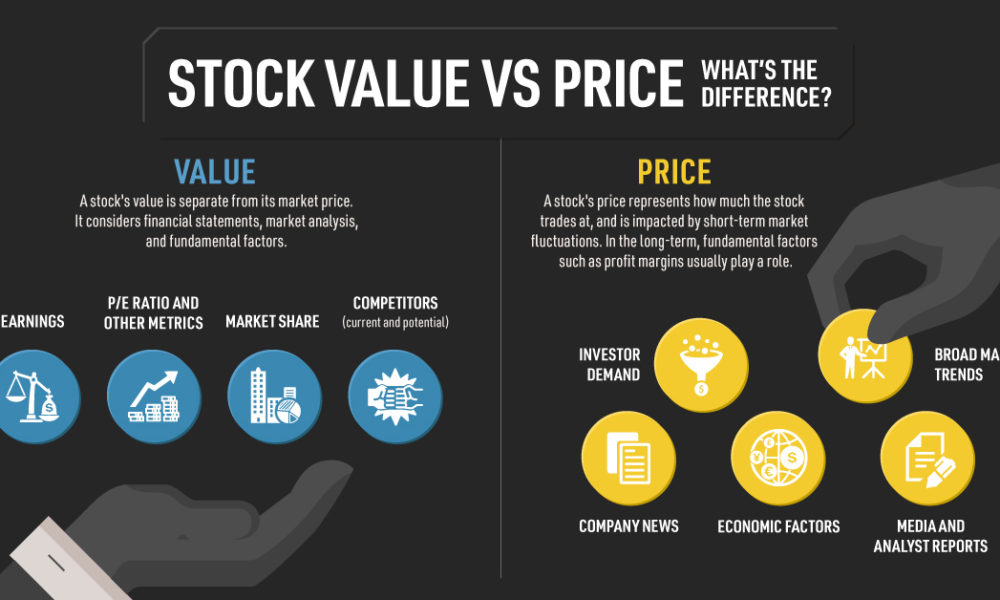
ANSWER: There are basically two different approaches for common stock valuation; top-down and bottom-up.  Under either of the two fundamental approaches, a physician investor will have to work with individual company data.  In reality, each of these approaches is used by investors and security analysts when doing fundamental analysis.  

CITE: https://www.r2library.com/Resource/Title/082610254

With the bottom-up approach, investors focus directly on a company’s prospects. Analysis of such information as the company’s products, its competitive position, and its financial status leads to an estimate of the company’s earnings potential, and, ultimately, its value in the market.  Considerable time and effort are required to produce the type of detailed financial analysis needed to understand a firm’s standing. The emphasis in this approach is on finding companies with good long-term growth prospects, and making accurate earnings estimates. 

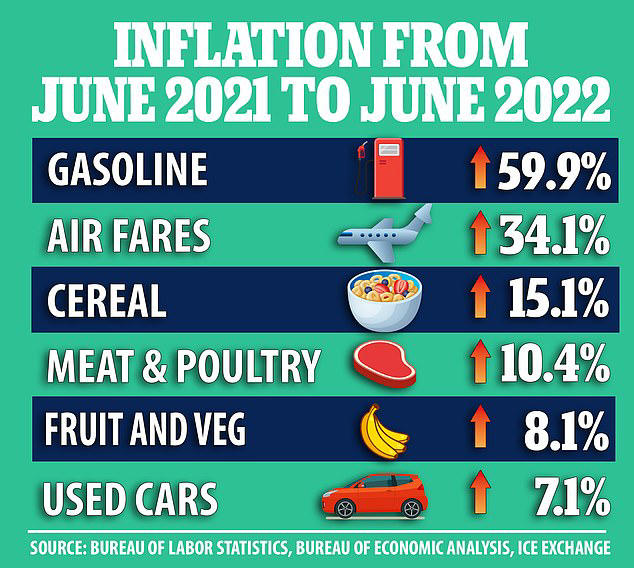
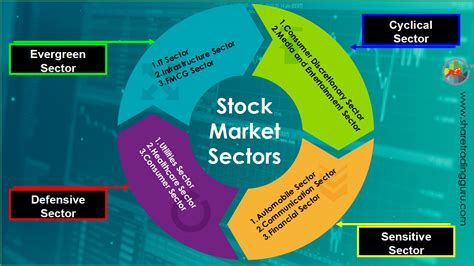
The top-down approach is the opposite of the bottom-up approach. Investors begin with the economy and the overall market, considering such important factors as interest rates and inflation. They next consider likely industry prospects, or sectors of the economy that are likely to do particularly well (or particularly poorly). Finally, having decided that factors are favorable for investing, and having determined which parts of the overall economy are likely to perform well, individual companies are analyzed.

***

COMMENTS APPRECIATED.

Thank You

Subscribe to the Medical Executive-Post

***

RISK MANAGEMENT: https://www.amazon.com/Comprehensive-Financial-Planning-Strategies-Advisors/dp/1482240289/ref=sr_1_1?ie=UTF8&qid=1418580820&sr=8-1&keywords=david+marcinko

***

Risk Management, Liability Insurance, and Asset Protection Strategies for Doctors and Advisors : Best Practices from Leading Consultants and Certified Medical Planners™ book cover

ORDER: https://www.routledge.com/Risk-Management-Liability-Insurance-and-Asset-Protection-Strategies-for/Marcinko-Hetico/p/book/9781498725989

***

PODCAST: Healthcare Stocks, Investing & IPOs?

By Eric Bricker MD

Healthcare Stock and IPO Investing Can Be Confusing. The Story of Privia Health is a Good Case Study in Understanding the Underlying Economics in Healthcare Investing:

CITE: https://www.r2library.com/Resource/Title/0826102549

***

***
YOUR COMMENTS ARE APPRECIATED.

Thank You

Comprehensive Financial Planning Strategies for Doctors and Advisors: Best Practices from Leading Consultants and Certified Medical Planners™

ORDER: https://www.routledge.com/Comprehensive-Financial-Planning-Strategies-for-Doctors-and-Advisors-Best/Marcinko-Hetico/p/book/9781482240283

***

MEGA-MILLIONS Mathematics!

By Neal Freyman

[Morning Brew]

***

***

THE JACKPOT: https://www.msn.com/en-us/money/markets/the-mega-millions-jackpot-is-now-810-million-here-s-how-much-would-go-to-taxes-if-there-s-a-winner/ar-AAZWHdU?cvid=a4e3994481cf435a8c98f9fcb51ebc67

***

The Mega Millions will hold a drawing tonight for a jackpot of $810 million. If won at that amount, it’d be the fourth-largest lottery prize in history.

Let’s get this out of the way first: You won’t win the jackpot. You just…won’t. The odds of winning are about 1-in-302 million, which means you’re far more likely to die from a meteorite strike or go to the ER because of a pogo stick injury than win the Mega Millions.

But let’s say you do win (because someone has to). Once you regain consciousness after fainting, you’ll be faced with a decision: Take the lump sum all at once, or spread the payout over decades in what’s called an “annuity.”

Here’s how each would work.

  • Lump sum: You’ll receive a payment of $470.1 million, after the 24% federal tax withholding takes a ~$113 million bite out of your total winnings. Plus, the 37% top marginal tax rate means you’ll fork over more of your prize to Uncle Sam come tax season.
  • Annuity: You’ll receive an immediate payment followed by 29 annual installments over the next 30 years, with each cash infusion increasing by 5% to account for inflation.

So which should you take?

Most people who win the lottery choose the lump sum, and it’s not hard to see why: You can make more money. Thanks to the magic of compound interest, you can invest your lottery winnings right away, and even with a conservative rate of return, make far more over 30 years than you can with the smaller droplets of cash provided by the annuity.

That said, the lump sum may not be for everyone. Are you the type of person who invested in dogecoin right before Elon Musk hosted SNL? If so, the annuity could offer some self-imposed fiscal discipline to prevent you from blowing all your winnings—which definitely happens. The internet is littered with stories of lottery winners who squandered their fortune, or otherwise watched their lives fall apart after thinking they had made it. One small study in Florida found that lottery winners were more likely to declare bankruptcy in three to five years than the average American.

Bottom line: You’re not going to win the Mega Millions (because we are), so consider this a lighthearted economics thought experiment and nothing more.

MORE: https://medicalexecutivepost.com/2008/01/22/selecting-advisors-for-the-emerging-or-suddenly-wealthy-doctor/

RELATED: https://medicalexecutivepost.com/2008/01/20/celebrating-a-physician%e2%80%99s-financial-windfall/

MORE: https://www.msn.com/en-us/entertainment/news/financial-planners-to-the-next-mega-millions-winner-keep-quiet-about-it/ar-AAZXL57?cvid=3f214c6667e74a3c8d36d15800d594e6

***

COMMENTS APPRECIATED

Thank You

***

UPDATE: The WHO and the US Dollar

By Staff Reporters

***

***

The World Health Organization declared the outbreak of monkeypox to be a public health emergency of international concern. “The global monkeypox outbreak represents a public health emergency of international concern,” WHO Director-General Dr. Tedros Adhanom Ghebreyesus said during a briefing in Geneva. At the virtual press conference, Ghebreyesus also said that the outbreak has spread around the world “rapidly” and that officials understand “too little” about the disease.

And, the U.S. Dollar had an incredible run throughout 2022, appreciating against most major currencies as the world’s central banks continue to combat rising inflation. This year alone, the dollar is up 15% against the Japanese yen, 10% against the British pound, and 5% compared to China’s Renminbi. The Wall Street Journal’s Dollar Index, which measures the dollar against 16 other major currencies, has also had its best first half performance since 2010 this year, rising more than 10% year-to-date.  And for the lucky Americans who could find cheap airfare to Europe (and made it through with all their luggage), the dollar even reached equal standing with the euro for the first time in two decades earlier this month. 

***

CITE: https://www.r2library.com/Resource/Title/082610254

COMMENTS APPRECIATED

Thank You

***

UPDATE: The Domestic Stock Markets and [Un]Social Media

By Staff Reporters

***

***

The stock markets fell after new data showing U.S. manufacturing activity stalled and the service sector’s pandemic recovery has gone into reverse as a result of high inflation and mounting interest rate hikes, feeding concerns that the Federal Reserve’s efforts to cool decades-high price increases may force the economy into a recession. The Dow Jones Industrial Average fell 138 points, or 0.4%, to close at 31,899, while the S&P 500 fell 0.9% and the tech-heavy NASDAQ 1.9%; for the week, the indexes ended up 2%, 2.5% and 3%, respectively.

CITE: https://www.r2library.com/Resource/Title/082610254

US social-media companies also saw more than $130 billion wiped off their stock-market values after disappointing revenue from Snap Inc. and a lackluster report from Twitter Inc. raised new concerns about the outlook for online advertising. The Snapchat parent plummeted 39%, sinking to its lowest level since March 2020. Meanwhile, Facebook parent Meta Platforms Inc. fell 7.6%, Pinterest Inc dropped more than 13%, and Google owner Alphabet Inc. declined 5.6% in its biggest one-day drop since March 2020. Twitter also reported quarterly results on Friday, though Wall Street remains focused on the company’s legal battle with Tesla CEO Elon Musk, who is attempting to withdraw from a deal to buy the company. The stock rose 0.8% on the day.

***

COMMENTS APPRECIATED

Thank You

***

UPDATE: President Biden, Domestic Markets, IRS Tax Filing Service, Polio and Paul Krugman’s “Sorry”

***

By Staff Reporters

President Biden tested positive for the coronavirus, raising health concerns for the 79-year-old president and underscoring how the virus remains a persistent, if muted, threat in a country trying to put the pandemic in the past.

U.S. IndicesChangeClose
Dow Jones+162.0632036.90
NASDAQ+161.9612059.61
S&P500+39.053998.95
SCHWAB1000+129.5013230.70

Senator Elizabeth Warren along with 22 more Democratic lawmakers are pushing the IRS to create its own free tax filing service. The bill also aims to allow eligible taxpayers to choose a “return-free option,” providing a pre-populated filing. “The average American spends 13 hours and $240 every year to file their taxes — that’s too much time and too much money,” Warren said in a press release. But some tax professionals say it’s not a realistic plan for the overburdened agency.

A case of polio has been identified in an un-vaccinated adult in Rockland County, according to a news release from the New York State Department of Health. The agency confirmed that the infection was transmitted from someone who received the oral polio vaccine, which has not been administered in the United States since 2000. Officials believe the virus may have originated outside the United States, where the oral vaccine is still administered.

he New York Times opinion columnist Paul Krugman published a mea culpa in column form flat out admitting he was wrong for thinking inflation wouldn’t be that bad. In his piece, titled, “I Was Wrong About Inflation,” the economics professor noted that he was on “Team Relaxed” when it came to fears of inflation and acknowledged that was a “very bad call.” Krugman began by recounting the “intense debate among economists about the likely consequences of the American Rescue Plan, the $1.9 trillion package enacted by a new Democratic president and a (barely) Democratic Congress.” He mentioned how he originally didn’t see the massive government spending bill as that dangerous for the economy. “Some warned that the package would be dangerously inflationary; others were fairly relaxed. I was Team Relaxed. As it turned out, of course, that was a very bad call,” he confessed.

CITE: https://www.r2library.com/Resource/Title/082610254

***

COMMENTS APPRECIATED

Thank You

***

UNICORNS: Successful Private Companies?

The Healthcare, IT AND FINANCIAL Sectors

DEFINITION: A private, non-public, company valued at more than a billion dollars.

CITE: https://www.r2library.com/Resource/Title/0826102549

Now, just five months into 2021, there were 199 new companies that reached unicorn status (a private company with a $1+ billion valuation), eclipsing the 163 companies that reached unicorn status in all of 2020, according to Crunchbase data shared with Emerging Tech Brew. And it’s not just a pandemic rebound: That figure is higher than any full-year total over the last nine years. 

***

***

Landscape lowdown 

After a 2020 full of stagnation and uncertainty, the VC scene is making up for lost time and then some. 

“Many of the concerns…that ground deal making to a halt have largely been alleviated in what many investors see as a new normal,” Joshua Chao, venture capital analyst at PitchBook told us. “We’re now seeing VCs invest in companies outside of their immediate networks and it’s just full steam ahead on deal making and fundraising.” 

Deena Shakir, partner at Lux Capital, said VCs are branching out of their traditional comfort zones to chase opportunities, leading to stiff competition and unprecedented valuations.

  • “Everyone [is] inching further upstream and downstream than their normal sweet spot,” Shakir said. “Hedge funds [are] now leading seed deals and seed funds [are] participating in growth deals.”

Why so exuberant? Blame the same Big Acceleration society underwent since Covid hit: the shift to digital. Tami Hutchinson, VP at Intel Capital, told us the pandemic-fueled digital transformation has now become “a critical must-have for all enterprises,” creating opportunities for startups to serve that need.

Health Care: Health care, financial services, and privacy and security are the most popular sectors for new $1+ billion companies, per Crunchbase. Shakir echoed that idea, saying Lux is most excited by deals at the intersections of “clinical data and AI, hardware and software, care delivery and clinical insights, [and] physical and digital security.”

More proof…

  • In Q1 2021, digital health startups amassed a record $6.7 billion in funding, on pace to eclipse the $14 billion raised in all of 2020.
  • On the fintech side, Webull, the Chinese-owned Robinhood rival, reached unicorn status in February after a $150 million funding round.
  • Israeli cybersecurity firm Wiz is an example of a fresh unicorn in the space—it was valued at $1.7 billion as of May 2021.

Looking ahead…VCs say it’s a safe bet to assume that more billion-dollar companies are on the horizon this year.

“For entrepreneurs, this is possibly one of the most founder-friendly periods we’ve seen in several years—all-time highs for valuations across the board coupled with all-time lows for deals,” Chao said.

ASSESSMENT: Your thoughts and comments are appreciated.

MORE: https://www.amazon.com/Business-Medical-Practice-Transformational-Doctors/dp/0826105750/ref=sr_1_9?ie=UTF8&qid=1448163039&sr=8-9&keywords=david+marcinko

RELATED: https://www.amazon.com/Comprehensive-Financial-Planning-Strategies-Advisors/dp/1482240289/ref=sr_1_1?ie=UTF8&qid=1418580820&sr=8-1&keywords=david+marcinko

THANK YOU

***

Biden Administration to Overhaul Vertical [Health Systems] Merger Guidelines

***

By Health Capital Consultants, LLC

***

***

Biden Administration to Overhaul Vertical Merger Guidelines

The U.S. healthcare industry has seen a rise in vertical integration transactions since the passage of the ACA, especially among physician groups integrating with health systems or insurers, as providers seek to fill gaps in their continuum of care. In response to these trends and resulting market imbalances, the Biden Administration is aggressively pursuing antitrust enforcement by updating and revising U.S. antitrust law guidance.

This Health Capital Topics article will discuss the vertical integration movement and the proposed changes to antitrust laws that may affect the future of healthcare. (Read more…) 

***

CITE: https://www.r2library.com/Resource/Title/0826102549

***

COMMENTS APPRECIATED

Thank You

RELATED: https://www.amazon.com/Financial-Management-Strategies-Healthcare-Organizations/dp/1466558733/ref=sr_1_3?ie=UTF8&qid=1380743521&sr=8-3&keywords=david+marcinko

HOSPITALS: https://www.amazon.com/Hospitals-Healthcare-Organizations-Management-Operational/dp/1439879907/ref=sr_1_4?s=books&ie=UTF8&qid=1334193619&sr=1-4

***

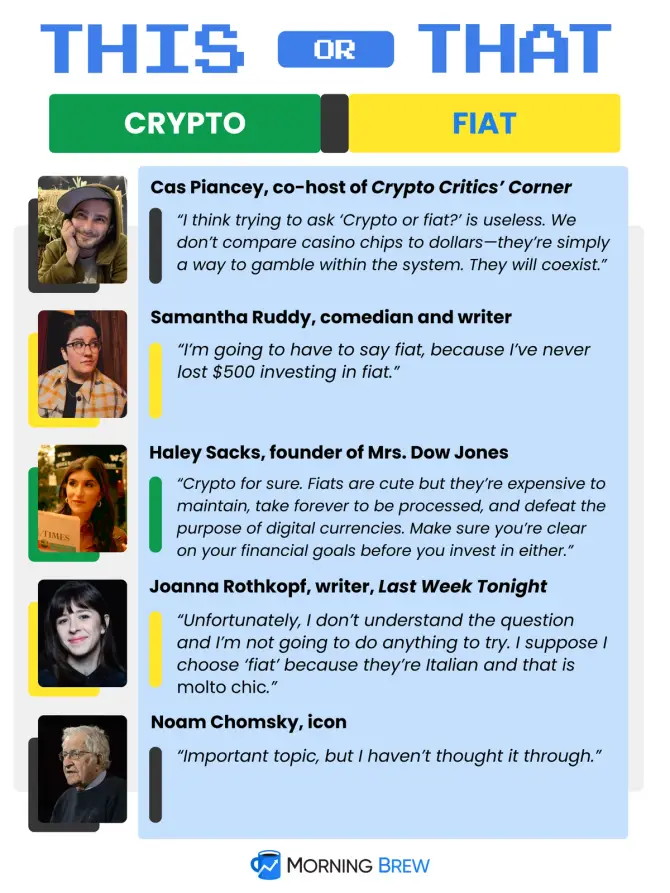
CURRENCY: Crypto -OR- Fiat?

From Morning Brew

***

***

COMMENTS APPRECIATED

Thank You

Information Technology: https://www.amazon.com/Dictionary-Health-Information-Technology-Security/dp/0826149952/ref=sr_1_5?ie=UTF8&s=books&qid=1254413315&sr=1-5

***

UPDATE: U.S. Budget Deficit, Emojis and the Marriage Penalty

By Staff Reporters

***

***

The U.S. budget deficit shrank 49% to $89 billion in June from $174 billion a year earlier, reflecting the end of Covid-relief spending and an increase in tax revenue. Specifically, government spending fell in June by 12% to $550 billion compared to $623 billion in the same month one year ago.

World Emoji Day on July 17th is a celebration of all emojis. Last year, the World Emoji Awards helped crown the Most Popular New Emoji, the Most Anticipated Emoji and the Most 2021 Emoji!

A report from the American Community Survey found, “A one-percentage point increase in the marriage penalty tax rate decreases the probability of marrying for females with children by 3.69 percentage points. For males, a one-point tax increase translates to a 0.21-point decline in the probability of marrying if they have kids and a 1.54-point decline if not.”

***

COMMENTS APPRECIATED

Thank You

MORE: https://www.amazon.com/Comprehensive-Financial-Planning-Strategies-Advisors/dp/1482240289/ref=sr_1_1?ie=UTF8&qid=1418580820&sr=8-1&keywords=david+marcinko

***

UPDATE: The Domestic Stock Markets

By Staff Reporters

***

***

The Dow Jones Industrial Average shed 0.46%, or 142.62 points, to 30,630.17, while the S&P 500 dipped 0.3% to 3,790.38. The NASDAQ Composite inched 0.03% higher to finish at 11,251.19.

During the Dow’s losing streak, the biggest price decliners were the stocks of Goldman (-$18.82), UnitedHealth Group Inc. (-$18.44), Microsoft Corp. (-$16.48) and Salesforce Inc. (-$15.98); those stocks shaved a combined 460 points off the Dow’s price during the streak.

***

COMMENTS APPRECIATED

Thank You

***

MORE: https://www.amazon.com/Comprehensive-Financial-Planning-Strategies-Advisors/dp/1482240289/ref=sr_1_1?ie=UTF8&qid=1418580820&sr=8-1&keywords=david+marcinko

****

UPDATE: Gold, Peer-2-Peer Payment, Pediatric Vax and the Lumber Markets

By Staff Reporters

***

***

The price of gold dropped below $1,800 an ounce and appears hyper-focused on the soaring U.S. Dollar Index, which rose to 107.15. Over the last five days, the index is up by more than two points, and has risen five points over the last 30 days.

The minimal reporting threshold for peer-to-peer payment platform transactions has decreased from $20,000 (or 200 transactions) to just $600 because of a provision in the American Rescue Plan Act of 2021. That means that businesses that use platforms like Venmo, Cash App, PayPal, and even storefronts like Etsy and eBay can expect to receive 1099-K forms for the 2022.

Children in the US are getting vaccinated at a lower rate than the rest of the nation, with only 300,000 kids under five receiving the vaccine since it became available two weeks ago. Health officials say this was expected since most parents want to get their kids vaccinated at a doctor’s office.

Finally, lumber markets were a harbinger of economic shifts during the pandemic and today’s slumping prices could be just as prescient. Lumber prices hit a record $1,607 per thousand board feet in May 2021, due to soaring demand for new homes, a boom in DIY home renovation activities, and production and supply chain issues stemming from the pandemic. Twelve months later, lumber prices collapsed to $648, a more than 50% decrease from $1,464 in March. 

***

COMMENTS APPRECIATED

Thank You

***

***

UPDATE: Cuban’s Crypto, Celsius Network, JPMorgan Chase, and Job Payrolls

By Staff Reporters

***

***

Mark Cuban, the billionaire entrepreneur, has been facing a torrent of criticism for several days linked to a partnership forged with a crypto firm. Indeed, Cuban, an evangelist of the crypto industry in which he has invested, signed an agreement linking his NBA team, the Dallas Mavericks, to the crypto lender Voyager Digital last October. The contract, signed on October 28, is for five years and has a mission to promote cryptocurrencies by making coins more accessible through educational and digital programs.

Beleaguered crypto lender Celsius Network operated as a classic “Ponzi scheme,” the former head of the company’s key investment strategy alleged in a lawsuit, claiming the company used customer deposits to cover huge liabilities caused by reckless mismanagement.

The closely watched criminal trial of three former JPMorgan Chase & Co employees just commenced, with a prosecutor saying they “ripped off” the precious metals futures market with fake orders and defense attorneys saying the orders were genuine. The bank’s former global precious metals desk head Michael Nowak, precious metals trader Gregg Smith and salesperson Jeffrey Ruffo are charged with racketeering and conspiracy in the U.S. Justice Department’s most aggressive case to date targeting the manipulative trading tactic known as spoofing.

Finally, job payrolls grew by 372,000 in June, according to the Labor Department, easing fears over a potential recession while clearing the way for another round of interest rate hikes by the Federal Reserve later this month and beyond.

***

COMMENTS APPRECIATED

Thank You

***

***

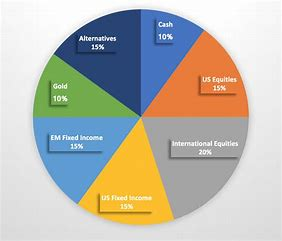
What is Financial Portfolio “DI-WORSIFICATION”

Versus Di-Versification

BUSINESS MANAGEMENT: The term “diworsification” was coined by legendary investor Peter Lynch in his book, One up on Wall Street, to describe the over-expansion of a company into new growth projects and businesses they do not fully understand and which do not align with the company’s core competencies.

See the source image

PORTFOLIO MANAGEMENT: The term diworsification has since grown to also refer to over-diversifying an investment portfolio in such a way that it reduces the overall risk-return characteristics.

ORDER CITATION: https://www.r2library.com/Resource/Title/0826102549

INVESTOPEDIA: https://www.investopedia.com/terms/d/diworsification.asp

RELATED: https://medicalexecutivepost.com/2021/05/29/modern-portfolio-theory-and-asset-correlation-not-allocation/

MORE: https://medicalexecutivepost.com/2014/11/12/the-negative-short-term-implications-of-diversification/

YOUR COMMENTS ARE APPRECIATED.

Thank You

***

UPDATE: Markets, Twitter, Theranos and the ‘Pass-Through’ Tax Loophole

By Staff Reporters

***

***

  • Markets: The S&P climbed for its fourth-straight trading day, tying its best winning streak in 2022 (h/t chip and energy companies). But, at 8:30am ET today, with the release of the June jobs report, any sign of a recession will show up.
  • Elon Musk could take drastic action to back out of his $44 billion agreement to buy Twitter, according to the Washington Post. Apparently Musk’s team cannot verify the data on bots that were provided to them and therefore are looking to exit the agreement.
  • Former Theranos executive Sunny Balwani was convicted of defrauding investors and patients in his role as president and COO of the company.

Finally, under proposed IRS changes, individuals who make more than $400,000 annually and couples who make more than $500,000 will have to pay a 3.8% tax on earnings from their pass-through business income. Those revenues would be used to shore up the government-run Medicare healthcare program for the elderly. A pass-through business is a sole proprietorship, partnership, or S corporation that is not subject to the corporate income tax; instead, this business reports its income on the individual income tax returns of the owners and is taxed at individual income tax rates.

***

COMMENTS APPRECIATED

Thank You

FINANCE: https://www.amazon.com/Comprehensive-Financial-Planning-Strategies-Advisors/dp/1482240289/ref=sr_1_1?ie=UTF8&qid=1418580820&sr=8-1&keywords=david+marcinko

***

UPDATE: e-Commerce & Defining the “Wealthy”

By Staff Reporters

***

***

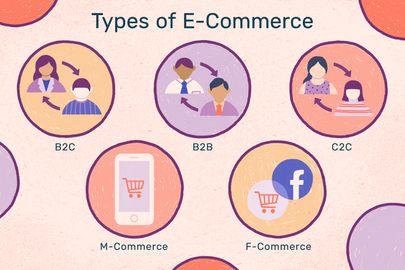
According to research from the International Monetary Fund, e-commerce went from taking up 10.3% of total global spending in 2019 to 14.9% at the height of the pandemic in 2020 before falling again to 12.2% in 2021.

***

Respondents to Schwab’s 2021 Modern Wealth Survey said a net worth of $1.9 million qualifies a person as wealthy. Indeed, the annual Schwab survey found that respondents are lowering the bar for what they consider wealthy. Compared to 2021 standards, respondents to the 2020 survey described the threshold for wealth as being a net worth of $2.6 million.

COMMENTS APPRECIATED

Thank You

***

***

UPDATE: Dollar-Euro Parity, Crude Oil and the Markets

By Staff Reporters

***

***

The Euro lost 10% versus the dollar this year and at $1.0238 EUR=EBS is close to the psychologically crucial parity point it last saw in mid-2002. It also hit new seven-year lows versus the Swiss franc and dropped against the sterling and the yen, but few observers are willing to call a bottom yet. Nomura’s analysts cut their euro/dollar target to $0.95 and said parity could be breached as soon as August. Citibank says a move to parity is “inevitable.” However, Nomura said that $0.95 was not that important historically, noting that the euro fell from $1.17 after its creation to $0.82 in October 2002. Extrapolating backwards using its legacy currencies, the euro traded as weak as $0.6444 in February 1985.

On the New York Mercantile Exchange, benchmark U.S. crude oil for August delivery fell $8.93 to $99.50 a barrel, its first dip below $100 since May 11th. Brent crude for September delivery fell $10.73 to $102.70 a barrel.

Finally, the Dow dropped 129.44 points, or 0.4%, to finish at 30,967.82; it had been down more than 700 points at its lows earlier in the session. The S&P 500 gained 6.06 points, or 0.2%, closing at 3,831.39. And, the NASDAQ Composite advanced 194.39 points, or 1.8%, to finish at 11,322.24.

***

COMMENTS APPRECIATED

Thank You

***

***

New Wave FIN-TECH Business Models?

FINANCIAL SERVICES:

New business models and big opportunities

By MIT Technology Review

CMP logo

Courtesy: http://www.CertifiedMedicalPlanner.org

The financial services industry is turning to bold initiatives to propel from pandemic response to business growth. And, among financial services institutions, 62% are looking to ramp up tech investments, and another 62% expect to move IT and business functions to the cloud, compared with 46% across industries.

For example, in a recent report, Nucleus Research found that cloud deployments deliver four times the return on investment as on-premises deployments do.

Link: https://www.technologyreview.com/2021/04/29/1023266/new-business-models-big-opportunity-financial-services/?mc_cid=3ae91e4c2b&mc_eid=72aee829ad

INDUSTRY RELATED: https://medicalexecutivepost.com/2014/09/24/is-the-financial-services-industry-all-fed-up/

TRANSFORMATION: https://medicalexecutivepost.com/2016/12/28/the-most-transformational-era-in-financial-services-since-the-1980s/

Your thoughts are appreciated.

THANK YOU

***

VALUATION: Home Health Agencies [Technological Environment]

By Health Capital Consultants, LLC

***

***

Valuation of Home Health Agencies: Technological Environment

With home healthcare providers increasingly being viewed as a critical link in the array of patient-centered healthcare services aimed to bring care back into the community, technology will likely play a more prominent role in managing patient populations in need of home healthcare services.

CITE: https://www.r2library.com/Resource/Title/082610254

The final installment of this five-part series on the valuation of home health agencies (HHAs) will discuss the growing role of technology in home healthcare and the challenges of utilizing this technology post-COVID-19. (Read more…) 

***

COMMENTS APPRECIATED

Thank You

***

***

What is Stock Price BREADTH?

By Staff Reporters

***

The market is made up of thousands of stocks. And on any given day, investors are actively buying and selling them. This measure looks at the amount, or volume, of shares on the NYSE that are rising compared to the number of shares that are falling.

Link: https://medicalexecutivepost.com/2022/05/01/what-up-vix/

A low (or even negative) number is a bearish sign. The Fear & Greed Index uses decreasing trading volume as a signal for Fear.

CITE: https://www.r2library.com/Resource/Title/0826102549

The formula: Breadth Line Value= (No. of Advance Stocks – No of Decline Stocks) + Breadth Line Value of the Previous day. When the number of advance stocks exceeds the number of the decline stocks then the breadth line will rise and vice versa.

***

COMMENTS APPRECIATED

Thank You

***

***

UPDATE: The Markets, Ruja Ignatova, and the Grayscale ETF Bitcoin SEC Challenge

***

By Staff Reporters

***

***

Markets: The S&P’s drop of more than 21% was its biggest H1 plunge since 1970. Its second quarter was the worst since Q1 of 2020. And while the S&P is floundering in the bear market, the NASDAQ, which is loaded with tech stocks, has taken an even bigger licking: It’s plunged more than 30% since its peak last November. For example:

Netflix: down 71% YTD (the worst performer in the S&P)

Coinbase: down 81%

Even megacaps like Meta (-52%), Amazon (-38%), and Apple (-25%) haven’t been spared.

Ruja Ignatova promised her cryptocurrency, OneCoin, would become the next Bitcoin. The only problem: It didn’t exist. The FBI today added the Bulgarian-born Ignatova—accused of defrauding investors out of approximately $4.1 billion in a fake cryptocurrency scheme—to its most-wanted list. The 41-year-old has been on outstanding since October 2017, just days after a warrant was issued for her arrest in the U.S. In a press release, the FBI called OneCoin a “massive fraud scheme” and offered up to $100,000 for information leading to Ignatova’s arrest.

The U.S. Securities and Exchange Commission rejected a proposal from Grayscale to list a spot Bitcoin ETF on the NYSE Arca exchange, setting up a potential legal battle with the country’s biggest digital asset manager. The SEC said Grayscale’s request for an ETF listing, which it proposed as a conversion of its popular Grayscale Bitcoin Trust GBTC, didn’t meet the regulator’s standard of being “designed to prevent fraudulent and manipulative acts and practices” and “to protect investors and the public interest.” Grayscale said it would challenge the SEC’s decision in court, arguing that its approval of ETF’s that hold Bitcoin futures should “logically (make it) comfortable with ETFs that hold that same asset.”

***

***

COMMENTS APPRECIATED

Thank You

***

PODCAST: Charter Communications Stock [Value Investing]

By Vitaliy Katsenelson CFA

***

Charter Communications (CHTR) is a significantly undervalued stock today. But are competition, 5G, and satellite internet significant threats to its business? How does its management compare to AT&T and Verizon? Read and/or listen to the analysis below.

***

***

COMMENTS APPRECIATED

Thank You

***

***

Value v. Growth Fund Managers

Understanding Investment Styles

By Dr. David Edward Marcinko; MBA, CMPbiz-book1

A mutual or hedge fund manager’s investment style is defined by the means or strategies used to accomplish the fund’s stated objective. Most managers have a strategy they believe to be the key to maximizing risk-adjusted investment returns. For example, two equity managers may seek growth of capital or capital appreciation over the long term. The strategies they use to achieve that goal can be vastly different, however, as evidenced by their choice of securities.

Style Characteristics

Astute physician-investors are aware that there are four, main manager style characteristics: value vs. growth, top-down vs. bottom-up—which can be refined further by additional approaches. Certain statistics and information reveal a manager’s style. An investor may prefer one style or one combination over another

Approaches Vary

Style approaches can be used in tactical asset allocation. Research has shown that one style tends to outperform the other during certain periods. If investors believe they can identify when one style will outperform the other, they could overweight the favored approach. More and more fund complexes are now offering funds in each style; especially for large healthcare entities and other institutions.

Value vs. Growth

Manager autonomy and style is an important consideration.

  1. Value managers focus on a company’s assets or net worth and attempt to place a value on such assets: if their valuation is greater than the market’s valuation, the security is a candidate for ownership. Benjamin Graham, the father of value investing, believed this approach to selecting securities would eventually be recognized by the market, rewarding patient, long-term investors. In today’s service economy, value managers also attempt to value the intangible assets of a company, such as franchise value or human capital. Value managers tend to be contrarians—they buy out-of-favor stocks or stocks not widely followed or recommended by analysts. Value managers also look at the breakup value of a company (what the individual parts could be sold for). They buy cheap stocks: stocks with low P/E ratios or low price-to-book value relative to the market, and stocks of established companies that pay dividends.
  2. Growth managers look at corporate earnings and focus on improving or accelerating earnings. They look at the trend of an industry or market sector (for example, environmental technology) to see if there is future sales-growth potential. They may lean toward companies that are dominant in the industry or have a product or service that will dramatically improve their market share. Growth managers typically own stocks with higher P/E ratios than the market average; these stocks may not be out of favor, but they may have been overlooked by market analysts. Growth stocks usually are not high-income-paying stocks.

Assessment

Prior to the recent financial meltdown, growth and momentum investing was the norm. Now it is value investing. What about the future for the physician-investor?

Conclusion

And so, your thoughts and comments on this Medical Executive-Post are appreciated.

Speaker: If you need a moderator or speaker for an upcoming event, Dr. David E. Marcinko; MBA – Publisher-in-Chief of the Medical Executive-Post – is available for seminar or speaking engagements. Contact: MarcinkoAdvisors@msn.com 

Product DetailsProduct DetailsProduct Details

UPDATE: The Markets, SS COLAS, EY, and Monkey-Pox?

***

***

Markets: Stocks sagged for the second straight day, with technology chip stocks taking some of the biggest blows. A new consumer report showed that Americans are not confident in the economy, but are confident that inflation will be remain for the next year.

A Social Security official earlier this month said he expects a COLA bump of about 8%, based on the current inflationary trends. But if inflation continues at its current pace — the cost of goods and services in May accelerated to 8.6% — seniors could receive a COLA hike of 10.8% in early 2023, according to a new analysis from the non-partisan Committee for a Responsible Federal Budget. If inflation grinds to a halt over the final months of 2022, seniors would receive a COLA increase of 7.3%, the group predicted. 

Ernst and Young (EY), one of the world’s largest auditing firms, has agreed to pay a $100 million SEC fine after admitting hundreds of its accountants have cheated on their ethics exams between 2017 and 2021.

US health officials ramped up their fight against the Monkeypox outbreak, expanding the group eligible to get vaccines and deploying more doses and testing capabilities.

***

COMMENTS APPRECIATED

Thank You

***

***

UPDATE: Market Predictions and the Global Economy?

By Staff Reporters

***

***

  • Predictions: The stock market could surge 7% this week as quarter-end re-balancing leads to a buying spree in equities, according to JPMorgan. The bank expects re-balancing trades to favor equities after a year-to-date decline of nearly 20%. “Next week’s re-balance is important since equity markets were down significantly over the past month, quarter and six-month time periods.”
  • Markets: With the S&P having plunged nearly 18% this year, expect W. Buffett to preach the value of value stocks (aka steady, non-flashy public companies). By one measure, they’re on track to beat growth stocks by the widest margin in more than two decades, according to the WSJ.
  • Global economy: Russia defaulted on its foreign-currency sovereign debt for the first time since the Bolshevik Revolution in 1918 after failing to pay bondholders $100 million worth of interest by the end of a 30-day grace period. The default marks the beginning of a complex legal journey for bondholders, but it’s not expected to have any major consequences for the Russian economy, which has already been battered by Western sanctions.

CITE: https://www.r2library.com/Resource/Title/0826102549

***

COMMENTS APPRECIATED

Thank You

***

***

The Next Big [Investment] Thing?

Or, NOT!

By Rick Kahler CFP®

How do you spot the investment opportunity that will become the next Apple, Facebook, or Microsoft? Certainly they are out there. Someone is going to discover them and be set for life, so why shouldn’t it be you?

Here’s why it shouldn’t

As with all Registered Investment Advisors, the amount of money I manage for clients is publicly disclosed information that anyone with an Internet connection can find.

Because of that, I am seen as the gatekeeper of a source of funding for every under funded business opportunity that is sure to become the next Apple. I get to see a lot of proposals. Many have promise at first glance. But the promise usually fades the more I dig into the proposal, ask questions, and do the math.

After hours and hours of investigation, every few years I see that one proposal that looks really good. One that calls to me to invest, that really has the promise of being a winner. When all the stars and the planets align, I know I now have a 90% chance of not making a dime on the venture.

That’s why I have learned to save my time and my money when I am approached with “the next big thing.” I just don’t have time to investigate every project and cull hundreds of opportunities down to the one that has a 10% chance of succeeding. I see it as looking for the proverbial needle in the haystack. Certainly, there’s a needle in there somewhere. But examining every piece of hay in order to find it has a significant monetary cost.

To succeed, I would need a lot of time, even more money, and exponentially more intuition and intellect. Not to mention a fair amount of luck. The probability that I will go bankrupt before I ever find the needle is staggering.

Most of the “next big things” are discovered by driven entrepreneurs who bank everything they have on an idea and find the financing to shoestring it together. It usually isn’t the armchair investor who cashes in.

My experience

Over my 40 years of real estate and investment experience, I have seen people lose millions investing in lumber mills, emu farms, highly leveraged real estate, futures contracts, day trading, restaurants, multi-level-marketing companies, rare earth minerals, Iraqi currency, and the newest ones—marijuana farms and crypto-currencies.

As a result, for my money and the money of my clients, I’ll play the odds for success by saying “no” to every opportunity that comes across my desk. I don’t take the time to investigate them. I don’t read the offering circulars. I don’t attend presentations. The answer is “no” to the great odds of losing my money and “yes” to the staggering odds of keeping money growing conservatively for me and for my clients.

What do I say “yes” to? I say yes to investing in mutual funds that own or loan money to 12,000 successful companies around the globe and thousands of real estate properties. I say yes to well-diversified portfolios. I say yes to proven investment strategies with 25-year track records. I say yes to having enough cash reserves to fund two to five years of retirement income.

Boring

I know, it’s not very sexy, is it? In fact, the way I invest my money and the money of those who have entrusted their investments to me is downright boring.

***

https://www.crcpress.com/Comprehensive-Financial-Planning-Strategies-for-Doctors-and-Advisors-Best/Marcinko-Hetico/p/book/9781482240283

***

Assessment

So here is my hot tip when it comes to finding investment opportunities to secure your future: forget about the “next big thing.” Instead, stay with the “next boring thing.” The odds are overwhelming that this will make you a long-term winner.

Conclusion

Your thoughts and comments on this ME-P are appreciated. Feel free to review our top-left column, and top-right sidebar materials, links, URLs and related websites, too. Then, subscribe to the ME-P. It is fast, free and secure.

Speaker: If you need a moderator or speaker for an upcoming event, Dr. David E. Marcinko; MBA – Publisher-in-Chief of the Medical Executive-Post – is available for seminar or speaking engagements.

Book Marcinko: https://medicalexecutivepost.com/dr-david-marcinkos-bookings/

Subscribe: MEDICAL EXECUTIVE POST for curated news, essays, opinions and analysis from the public health, economics, finance, marketing, IT, business and policy management ecosystem.

***

***

What is Stock Price STRENGTH

By Staff Reporters

A few big stocks can skew returns for the market. It’s important to also know how many stocks are doing well versus those that are struggling. This shows the number of stocks on the NYSE at 52-week highs compared to those at 52-week lows.

When there are many more highs than lows, that’s a bullish sign and signals Greed.

CITE: https://www.r2library.com/Resource/Title/0826102549

Now; Relative Price Strength (RPS) compares the price trend of a stock to the market.

An RPS > 1 indicates that the stock outperformed the market, an RPS < 1 indicates that the stock underperformed the market, and an RPS = 1 indicates that the stock performed on par with the market.

RPS can be misleading as it uses historical data and does not take into account risk.

***

COMMENTS APPRECIATED

Thank You

***

***

Mutual Fund Terms and Definitions for Physicians

A “Need-to-Know” Glossary for all Medical Professionals

http://www.HealthDictionarySeries.org

HDS

[ME-P Staff Writers] 

ADV: A two-part form filed by investment advisors who register with the Securities and Exchange Commission (SEC), as required under the Investment Advisers Act. ADV Part II information must be provided to potential investors and made available to current investors.

Alpha: A measure of the amount of a portfolio’s expected return that is not related to the portfolio’s sensitivity to market volatility. A benchmark that uses beta as a measure of risk, a benchmark and a risk free rate of return (usually T-bills) to compare actual performance with expected performance.

For example, a fund with a beta of .80 in a market that rises 10% is expected to rise 8%.

If the risk-free return is 3%, the alpha would be –.6%, calculated as follows: (Fund return – Risk-free return) – (Beta x Excess return) = Alpha   (8% – 3%) – [.8 × (10% – 3%)] = (–) .6%   

Note: A positive alpha indicates out-performance while a negative alpha means underperformance. 

Asset allocation: Strategic asset allocation refers to the long-term targets for allocation of a percentage of a portfolio among different asset classes. In contrast, tactical asset allocation refers to short-term targets.

Average maturity: The average weighted maturity of the bonds in a portfolio providing an indication of interest rate risk.

Benchmark: An index, managed portfolio, or fund used to compare performance characteristics with the targeted portfolio or fund.

Beta: A statistically computed measure of the portfolio’s relationship to changes in market value. If, compared to the S&P 500, a fund has a beta of .80; it is expected to underperform a rising market by 20% and outperform a falling market by 20%. 

Bond: Publicly traded debt instruments that are issued by governments and corporations. The issuer agrees to pay a fixed amount of interest over a specified time period and to repay the principal at maturity.

Closed-end mutual fund: An investment company that registers shares in accordance with SEC regulations and is traded in securities markets at prices determined by investments. 

Diversification: Buying a number of different investment vehicles to protect against default of a single vehicle, thereby reducing the risk of the portfolio.

Duration: A more technical calculation of interest rate risk exposure that uses the present value of expected cash flows to be returned to the bond holder over the term of the bond. 

Fundamental analysis: An analysis of a company’s stock that focuses on the economic environment, the industry the company is in, and the company’s financial situation and operating results.

Mutual fund: A regulated investment company that manages a portfolio of securities for its shareholders.

Net asset value (NAV): The value of fund assets fewer liabilities divided by outstanding shares. 

Open-end mutual fund: An investment company that invests money in accordance with specific objectives on behalf of investors. Fund assets expand or contract based on investment performance, new investments and redemptions.

Portfolio manager: The person(s) who is/are responsible for managing the portfolio in accordance with the objectives dictated by an investor or a fund’s prospectus.

Prospectus: A disclosure document filed with the SEC and made available to prospective and current investors. The prospectus covers sales charges, expenses, investment objectives and restrictions, management fees, financial highlights, and other information. 

R-squared (R2): Relationship of a fund or portfolio’s performance to a benchmark index.

For example, a fund R-squared of .5 means only 50% of its return is explained by the index. Other factors are responsible for the balance of performance. 

SEC yield: A standardized calculation of yield over a 30-day period, sometimes quoted as the “30-day yield.” It takes into account yield-to-maturity rather than current dividends. 

Standard deviation: A statistic that looks at a series of returns and expresses the average deviation from the mean return.

Statement of additional information: A disclosure document filed with the SEC that supplements the prospectus. It is made available to investors upon request. 

Technical analysis: An analysis that focuses on trends in financial markets generally.

For example, a technical analyst may view an entire industry’s group of stocks to be declining. Although the analyst may be correct about the group of stocks as a whole, there may be exceptions represented by specific, individual companies.

Total return: The combination of investment return from income, such as dividends and interest, and appreciation or depreciation in the value of the investment (Income returns plus capital return.) 

Turnover: Under SEC rules, a figure computed that indicates how often securities in the portfolio are bought and sold. For example, if turnover is 100% over a one-year period, the securities (on average) were replaced once. 

12b-1 fee: The maximum annual fee payable from fund assets for distribution and sales costs as allowed by the SEC. 

MORE: Glossary Terms Ap 3

Library

https://www.amazon.com/Comprehensive-Financial-Planning-Strategies-Advisors/dp/1482240289/ref=sr_1_1?ie=UTF8&qid=1418580820&sr=8-1&keywords=david+marcinko

The Market Technicians

Technical Analysis – Defined

[By Julia O’Neal; MA, CPA with Staff writers]

Image result for technical analysis

Join Our Mailing List

Technical market analysis focuses on the historical price and volume changes that occur as a stock trades, and it attempts to predict the stock’s future behavior based on prior patterns.

Technical analysis is not concerned with the financials of a company; it assumes that fundamental factors are already reflected in the market behavior of a stock and that the history of that behavior gives a strong clue to the future. The focus on price and volume in technical analysis could also be considered a study of supply and demand. 

Technical analysis applies technical market theories to stock market data on stock prices, indexes, and trading. Technicians identify market trends and try to predict future movements.  

Theoretically, technical and fundamental analysis exist in opposition to each other, but in reality, most fundamental analysts sneak a look at the charts from time to time and technical analysts pay attention to some fundamentals. 

Both schools of thought are based on the possibility of predicting the future using the past. Market psychology, which does not always follow rhyme or reason, can prove both types of analysis wrong.

Technical analysis involves discovering patterns that repeat themselves. Patterns can exist for an individual stock or for an index, and stocks can be compared to their respective indexes. 

Stocks (and indexes) are said to trade in a range. When prices go above this range, they often encounter selling pressure. This is called an area of resistance, and stocks are characterized as “overbought.” 

Conversely, a decline below a level of support will instigate buying, because the stock seems cheap or “oversold.” 

When a breakout occurs above a resistance level – or below a support level – technical analysts predict the stock will stay on the new course.  

Methods for taking advantage of anticipated upward trends include buying stop orders or call options at a level slightly above the resistance level.  To profit from downward trends, physician investors would enter a sell-stop order, sell short, or purchase put options at a price slightly below the support level.  

  • Accumulation areas occur when medical buyers are accumulating stock and the support level is moving up.  
  • Distribution areas occur when physician selling is occurring and the stock is considered weak.  
  • A sideways movement (the stock continues to be bought and sold at the same price for some time) is called an area of consolidation. 

Technical analysis

Other technical patterns:

A head and shoulders pattern may be either above (“head and shoulders top”) or below (“head and shoulders bottom”) a constant trend line. This theory assumes that after a top there will be a reverse; after a bottom, there will be a move back to a top.  

Rising bottoms and ascending tops/falling bottoms and descending tops.  A rising trend in the low prices of a security shows higher and higher support levels. Combined with ascending tops, this would be a bullish indicator. The reverse would be bearish. 

Double top and double bottom show resistance and support levels.  A double bottom shows the stock could break below support levels and reach new lows; a stock with a double top pattern might be expected to move on to a new high.

Assessment

What kind of physician investor are you; fundamental or technical?

Conclusion

Your thoughts and comments on this ME-P are appreciated. Feel free to review our top-left column, and top-right sidebar materials, links, URLs and related websites, too. Then, subscribe to the ME-P. It is fast, free and secure.

Link: http://feeds.feedburner.com/HealthcareFinancialsthePostForcxos

Speaker: If you need a moderator or speaker for an upcoming event, Dr. David E. Marcinko; MBA – Publisher-in-Chief of the Medical Executive-Post – is available for seminar or speaking engagements. Contact: MarcinkoAdvisors@msn.com

Our Other Print Books and Related Information Sources:

Health Dictionary Series: http://www.springerpub.com/Search/marcinko

Practice Management: http://www.springerpub.com/product/9780826105752

Physician Financial Planning: http://www.jbpub.com/catalog/0763745790

Medical Risk Management: http://www.jbpub.com/catalog/9780763733421

Hospitals: http://www.crcpress.com/product/isbn/9781439879900

Physician Advisors: www.CertifiedMedicalPlanner.org

Product DetailsProduct DetailsProduct Details

Product Details  Product Details

Comprehensive Financial Planning Strategies for Doctors and Advisors: Best Practices from Leading Consultants and Certified Medical Planners™

***

Invite Dr. Marcinko

***