Concierge Medicine and the “Zombie” Medical Practices

Continued Growth of Boutique Medical Practices Today

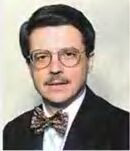
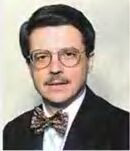
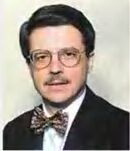
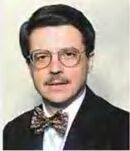
[By Dr. David Edward Marcinko; MBA CMP™]dem2

The boutique, or direct reimbursement, or cash based medicine, or concierge medical practice business model requires an annual fee for personalized treatment that includes amenities far beyond those offered in the typical practice, or suggested by physician medical unions. Patients pay annual out-of-pocket fees for top tier service, but also use traditional health insurance to cover allowable expenses, such as inpatient hospital stays, outpatient diagnostics and care, and basic tests and physician exams. Typical annual fees can range from $1,500 to $ 5,000 per patient, to family fees that top $25,000 a year, or more. The concept, initially developed for busy corporate executives, has now made its way to others desiring such service.

A Higher Level of Care

Medical providers get to provide a much higher level of care and get to know their patients as they enjoy the incentive to spend appropriate time with them, and over time, get to know them within their unique social/cultural context as well (hence the house calls become important). Patients enjoy the access, the attentiveness, and are willing to spend cash to have the type of unhurried, contemplative time with physicians that is required to develop a trusted relationship and deliver high quality care. The financial remuneration potential is compelling as well.

Now, let us compare and contrast various parameters of traditional medical practice [third party reimbursement] with the same parameters of  so-called “new-wave” concierge medicine. Then, let the next-generation of doctors decide.

Current Traditional Model

  • patients seen at 15-20 min increments
  • 2,000 – 3,000 patients
  • Paperwork, administrative burdens, frustrations, and lack coordinated care
  • Impersonal experience (long waits, un-intelligible interactions with health care system)
  • Average Salary = $150,000-250,000

Concierge Practice Model Potential

  • direct relationship with patients
  • 300-500 patients
  • $1,500 – $3,000 access/retainer fee
  • Reduced overhead, positive interactions, care coordination and increased quality
  • Personalized experience (reduced headaches and paperwork with transparent pricing)
  • 24/7 access, same day appointments with multiple other amenities
  • Average Salary = $100,000 – $500,000

Enter the Franchisors

Concierge medical practices can be developed organically, or use a franchise business model [personal communication, Suzanne R. Dewey, Forté Partners, LLC, Williamstown, MA]. Examples of franchisors include:

Opponents and Pessimists

There have been plenty of opponents, within medicine and outside, to the idea of concierge practices almost from the first day.  For example,

The state of Washington’s insurance commissioner attacked the concept of practices offering all the primary care patients needed for a prepaid fee or retainer, arguing that such practices amounted to the business of underwriting health insurance. He said that the practices would have to meet all the regulatory requirements for such an insurance business, including establishing capital reserves and maintaining loss reserves for the payment of claims. It didn’t work, and besides, few concierge practices offer free traditional medical care once retainers are paid–most concierge physician’s bill insurance plans for all the services covered under their patients’ coverage.  The Medicare folks chimed in and managed to drive one physician out of business, arguing that he had tried to charge Medicare patients an extra $600 a year for services already covered by Medicare, hence he was guilty of illegal “balance billing.” Rather than fight Medicare over the issue, the doctor gave up and closed his practice. [C. Davis, “Big Problems for Medicare and Concierge Medicine,” Sierra Sacramento Valley Medicine, 55:3, May/June, 2004 (www.ssvms.org)]” 

Attacking ME?

Objections to concierge medicine focus on both its causes and its effects, and some critics have even attack me, personally. For example, just look what “they” said in the online journal: “Health Care Strategic Management.”

Many critics argue that concierge medicine merely reflects physician greed and unconcern over the needs of the community. Indeed, a recent book by David Marcinko, Business of Medical Practice [Advanced Profit Maximization Techniques for Savvy Doctors], includes a chapter on “The Case for Concierge Medicine” (Ch. 24) as one of the ways ‘savvy’ physicians can maximize their profit, as if that is what medicine is all about. While the image of physicians may retain some Marcus Welby elements of their rushing to the hospital or a patient’s home in the middle of the night, most physicians would rather stay home and leave the job to someone else, it is argued”.

Nicht Schadenfreude

Just think! My mother always feared I’d be a no-body. Good publicity – bad publicity – just spell the name correctly. Schadenfreude may be defined as a “largely unanticipated delight in the suffering of another which is cognized as trivial “ and I take no delight in the slow collapse of traditional medical practice models; or the economic, professional or personal pain of colleagues. But, I also often tell my critics – and clients – that although it’s awfully nice to be altruistic; I am always mindful of the competitive business adage: “no margin-no mission.” And, in as much as this attack was written in July 2005, I can only wonder if I was prescient, or just lucky? With all due respect, I believe it was the former, rather than the later. Why so? Well, just consider how fast www.ChoiceMed.com is growing. This stuff is not rocket-science.

www.MedicalBusinessAdvisors.combiz-book1

About Concierge Choice Physicians

Concierge Choice Physicians: http://choice.md  is a national organization offering a hybrid business model. Physicians divide their practice between a traditional practice and a retainer practice. The retainer practice is limited to approximately 150 patients. A typical concierge practitioner may have 300-500 patients, while the norm for a traditionalist is about 2,000-3,000 patients.

Assessment – Whither the “Zombies”

I, also ruefully wonder how many “zombie” medical practices [practitioners] are out there? You know the kind – a medical practice with neither a good/bad balance sheet. One with only subsistence level operating performance; a practice that is not growing organically or thru merger activity. It is just barely existing as the doctor-in-charge slowly, agonizingly, milks it to death; or retires, whichever comes first.

Conclusion

Your thoughts and comments on this ME-P are appreciated. Feel free to review our top-left column, and top-right sidebar materials, links, URLs and related websites, too. Then, subscribe to the ME-P. It is fast, free and secure.

Link: http://feeds.feedburner.com/HealthcareFinancialsthePostForcxos

Speaker: If you need a moderator or speaker for an upcoming event, Dr. David E. Marcinko; MBA – Publisher-in-Chief of the Medical Executive-Post – is available for seminar or speaking engagements. Contact: MarcinkoAdvisors@msn.com

OUR OTHER PRINT BOOKS AND RELATED INFORMATION SOURCES:

DICTIONARIES: http://www.springerpub.com/Search/marcinko
PHYSICIANS: www.MedicalBusinessAdvisors.com
PRACTICES: www.BusinessofMedicalPractice.com
HOSPITALS: http://www.crcpress.com/product/isbn/9781466558731
CLINICS: http://www.crcpress.com/product/isbn/9781439879900
BLOG: www.MedicalExecutivePost.com
FINANCE: Financial Planning for Physicians and Advisors
INSURANCE: Risk Management and Insurance Strategies for Physicians and Advisors

Product DetailsProduct DetailsProduct Details

Product DetailsProduct Details

Invite Dr. Marcinko

***

Understanding the Need for Onsite Practice Management Visits

Interview Information also Important

By Dr. David E. Marcinko and Staff Reporters

SPONSOR: http://www.CertifiedMedicalPlanner.org

According to Robert James Cimasi MHA, ASA, AVA, CMP™ of Health Capital Consultants, LLC, in St. Louis, MO, the following types of information specific to medical practices should be gathered by the financial executive, financial advisor or healthcare consultant when performing a practice enhancement engagement, or especially, an economic valuation and appraisal. This information may be obtained through an interview, questionnaire, or preferably a site visit:

  • Background Information: Include such information as the number of years the entity has operated at its current location and in the community, as well as the office hours.
  • Building Description: Include the location (urban/suburban), proximity to hospitals and other medical facilities, and its size, construction, electrical and computer wiring, age, access to parking, and so on.
  • Office Description: Approximate acquisition details and price, as well as ownership or lease details should be included.  The square footage and number of rooms, and a description of different office areas should be outlined, including, where applicable: medical equipment, including all diagnostic imaging and major medical equipment; pharmacy, laboratory, examination rooms, waiting rooms, and other areas.
  • Management Information Systems: Document types of hardware and software and the cost, age, and suitability of all components, including their management functions, reporting capabilities, and integration between programs.
  • History of the Entity: Give the date founded and by whom, the number of full-time equivalent (FTE) physicians in practice by year, the physicians who have joined and left the entity, the dates they practiced at the entity, and their relationship and practice arrangement with the entity.
  • Staff Description: Include the number and types of non-physician positions as well as the tenure and salary of all current employees.
  • Competitive Analysis: Include details of hospital programs impacting practice, growth or decline in the volume of business and the reasons, association with other physicians, competitive strengths and threats, the number and volume of procedures performed, any change in the number and volume, and the corresponding fees.
  • Patient Base Information: Encompass income distribution and percentages from different payors, the number of new patients and total patients seen per week, the age mix of patients, the number of hours spent in patient care per week, and the number of surgeries performed.
  • Managed Care Environment: Details the terms and conditions of all managed care contracts including discounts and withholds, the impact on referral patterns and revenues, willingness to participate in risk sharing contracts and capitation, and the entity’s managed care reporting capabilities.
  • Hospital Privileges and Facilities: List all hospital privileges held by physician members of the medical practice and the requirements for acquiring privileges at the different local hospitals.
  • Credit Policy and Collections: Include practice policies for billing and payment, use of collection agencies, acceptance of assignments, other sources of revenues, and an aged breakdown of accounts receivable.
  • Financial Management: Include cash management procedures and protections, credit lines and interest, controls to improve payment of accounts payable, late payment frequency, formal or informal financial planning methods, and budgeting processes.
  • Operational Assessment: Include governance structure for the entity, detailing responsibilities and procedures for performance, conflicts, recruitment, outcomes measures, case management, reimbursement; income, continuing medical education (CME), credentialing, and utilization review.

Assessment

http://www.CertifiedMedicalPlanner.org

The financial advisor must also allow for discussion of overall relationships with physicians in the community, practice concerns, and needs.

Conclusion

And so, your thoughts and comments on this Medical Executive-Post are appreciated. Have you ever had such an onsite visit? Was it by a fiduciary financial advisor or medical management consultant; or other? What was the outcome? Feel free to review our top-left column, and top-right sidebar materials, links, URLs and related websites, too. Then, be sure to subscribe to the ME-P. It is fast, free and secure.

Speaker: If you need a moderator or speaker for an upcoming event, Dr. David E. Marcinko; MBA – Publisher-in-Chief of the Executive-Post – is available for seminar or speaking engagements. Contact: MarcinkoAdvisors@msn.com

Subscribe Now: Did you like this Medical Executive-Post, or find it helpful, interesting and informative? Want to get the latest ME-Ps delivered to your email box each morning? Just subscribe using the link below. You can unsubscribe at any time. Security is assured.

Link: http://feeds.feedburner.com/HealthcareFinancialsthePostForcxos

Sponsors Welcomed

And, credible sponsors and like-minded advertisers are always welcomed.

Link: https://healthcarefinancials.wordpress.com/2007/11/11/advertise

On Growing Tensions in Healthcare Services Markets

Join Our Mailing List

Stressors Affecting all Stakeholders

[By Robert James Cimsai; MHA, AVA, ASA, CMP™]

http://www.HealthCapital.com

The changes in reimbursement for Medicare services through the introduction of prospective payment systems and physician reimbursement cuts for professional services, as well as the increased focus on patient quality and transparency initiatives and health 2.0 collaboration have forced healthcare providers to look for more efficient ways to provide services, as well as additional sources of revenue and margin-producing business.

Additionally, with the rise of corporate healthcare provider networks and health systems, together with rising healthcare costs, competition among providers has become prevalent in the healthcare industry.

Assessment

Strict control of reimbursement costs from payers and consistent decreases in physician professional component fee reimbursement yields; reduction in traditional hospital inpatient use; and higher costs of capital have all contributed to the trend of physician investment in outpatient (and inpatient) specialty provider enterprises [ASCs, specialty hospitals and clinics, etc] , which often compete with general acute care community hospital providers.

Conclusion

Your thoughts and comments on this ME-P are appreciated. Feel free to review our top-left column, and top-right sidebar materials, links, URLs and related websites, too. Then, subscribe to the ME-P. It is fast, free and secure.

Link: http://feeds.feedburner.com/HealthcareFinancialsthePostForcxos

Speaker: If you need a moderator or speaker for an upcoming event, Dr. David E. Marcinko; MBA – Publisher-in-Chief of the Medical Executive-Post – is available for seminar or speaking engagements. Contact: MarcinkoAdvisors@msn.com

OUR OTHER PRINT BOOKS AND RELATED INFORMATION SOURCES:

Product Details 

Medical Accounts Receivable and Related Formulae

Join Our Mailing List

Understanding Rationale and Formulae

[By Dr. David Edward Marcinko; MBA, CMP™]

[By Dr. Gary L. Bode; CPA, MSA, CMP™]

HO-JFMS-CD-ROMMedical practices, clinics and hospitals generate a patient account or an account receivable (AR) at the same time as they send the patient a bill or the insurance company a claim. ARs are treated as current assets (cash equivalents) on the healthcare entity balance sheet, and usually with a percentage mark-down to reflect historic collection rates.

The Balance Sheet

The balance sheet is a snapshot of a medical practice or healthcare entity at a specific point in time. This contrasts with the income statement (profit and loss), which shows accounting data across a period of time. The balance sheet uses the accounting formula:

Assets (what the entity owns) = Liabilities (what the entity owes) + Entity Equity (left over).

AR Aging Schedules

HDSAccording to the Dictionary of Health Economics and Finance, an AR aging schedule is a periodic report (30, 60, 90, 180, or 360 days) showing all outstanding ARs identified by patient or payor, and month due. The average duration of an AR is equal to total claims, divided by accounts receivable. Faster is better, of course, but it is not unusual for a hospital to wait six, nine, twelve months, or more for payment. Each of these measures seeks to answer two questions:

1) How many days of revenue are tied up in ARs?

2) How long does it take to collect ARs?

More Formulae

An important measure in the analysis of accounts receivable is the AR Ratio, AR Turnover Rate, and Average Days Receivables, expressed by these formulae:

1. AR Ratio = Current AR Balance / Average Monthly Gross Production
(suggested between 1 and 3 for hospitals)

2. AR Turnover Rate = AR Balance / Average Monthly Receipts

3. Average Days Receivable = AR Balance / Daily Average Charges
(suggested < 90 days for medical practices)

And Even More Measures

Other significant measures include:

1. Collection Period = ARs / Net Patient Revenue / 365 days

2. Gross Collection Percentage = Clinic Collections / Clinic Production
(suggested > 40-80% for hospitals)

3. Net Collection Percentage = Clinic Collections / Clinic Production – (minus) Contractual Adjustments (suggested > 80-90% for medical practices)

4. Contractual Percentage = Contractual adjustments / Gross production
(suggested < 40-50% for hospitals).

Assessment

Often, older ARs are often written off, or charged back as bad debt expenses and never collected at all.

Conclusion

Your thoughts and comments on this ME-P are appreciated. Feel free to review our top-left column, and top-right sidebar materials, links, URLs and related websites, too. Then, subscribe to the ME-P. It is fast, free and secure.

Speaker: If you need a moderator or speaker for an upcoming event, Dr. David E. Marcinko; MBA – Publisher-in-Chief of the Medical Executive-Post – is available for seminar or speaking engagements. Contact: MarcinkoAdvisors@msn.com

OUR OTHER PRINT BOOKS AND RELATED INFORMATION SOURCES:

Product Details

[HEALTH INSURANCE, MANAGED CARE, ECONOMICS, FINANCE AND HEALTH INFORMATION TECHNOLOGY COMPANION DICTIONARY SET]

      Product DetailsProduct DetailsProduct Details

***

Capital Sources for Hospitals

Understanding the Liquidity Crunch -with- Publisher’s Interview

By Calvin W. Weise; MBA, CMA, CPA

www.HealthcareFinancials.com

HO-JFMS-CD-ROMHospital are struggling in the current financial crisis, and like most of us, liquidity is scarce. In general, hospitals have three sources of capital: equity from earnings, equity from donations, and long-term debt.


Equity from Earnings

Earnings generate cash, and a portion of that cash is available to fund capital investments. Besides funding capital investments, cash generated from earnings is used to fund working capital. As operations grow, more working capital is required to fund the difference between the operating receivables and operating payables since days of revenue in receivables tend to be a good deal higher than days of expense in payables. Additionally, cash on hand should increase as operations grow so that days of cash remain constant or increase. Once working capital has been adequately funded, any remaining cash generated from earnings is available to invest in capital.

Donations

Most not-for-profit hospitals engage in active fundraising to generate donations. Donations are a good source of capital in certain markets. Often, fundraising initiatives are less useful than they appear due to the costs expended in the fundraising activities. It is important to ensure that all the costs incurred in fundraising activities are properly attributed.

Long-Term Debt

Borrowing long-term debt has been an important source of capital for hospitals and will continue to be. Debt is particularly attractive due to the low cost associated with borrowing on a tax-exempt basis. Long-term debt, borrowed on a tax-exempt basis, is probably the lowest cost form of capital available to hospitals. Tax-exempt borrowing is fairly complex due to the tax regulations affecting it. Because of its complexity, the costs associated with these transactions are quite high, making it less practical for small borrowings.

Assessment

Tax-exempt borrowing transactions require many lawyers and high-priced investment bankers. Credit rating agencies and credit enhancers are also typically involved. Accessing the tax-exempt markets requires a good bit of sophistication and expertise. Despite these requirements, this capital is highly attractive to hospitals and should be used whenever possible.

Interview

Read: Dr. David Edward Marcinko’s recent interview on the current status of hospitals.

Link [unedited version]: https://healthcarefinancials.wordpress.com/2009/04/01/medical-news-of-arkansas-interviews-dr-marcinko/?preview=true&preview_id=9094&preview_nonce=d9039cf076

Link [edited version]: http://www.arkansasmedicalnews.com/news.php?viewStory=738dem2

Conclusion

And so, your thoughts and comments on this Medical Executive-Post are appreciated. What is the financial status of your hospital, today? How has the cash flow crisis affected it; and your practice? Feel free to review our top-left column, and top-right sidebar materials, links, URLs and related websites, too. Then, be sure to subscribe to the ME-P. It is fast, free and secure.


Link: http://feeds.feedburner.com/HealthcareFinancialsthePostForcxos

Speaker: If you need a moderator or speaker for an upcoming event, Dr. David E. Marcinko; MBA – Publisher-in-Chief of the Executive-Post – is available for seminar or speaking engagements. Contact: MarcinkoAdvisors@msn.com  or Bio: www.stpub.com/pubs/authors/MARCINKO.htm

Get our Widget: Get this widget!

Our Other Print Books and Related Information Sources:

Practice Management: http://www.springerpub.com/prod.aspx?prod_id=23759

Physician Financial Planning: http://www.jbpub.com/catalog/0763745790

Medical Risk Management: http://www.jbpub.com/catalog/9780763733421

Healthcare Organizations: www.HealthcareFinancials.com

Health Administration Terms: www.HealthDictionarySeries.com

Physician Advisors: www.CertifiedMedicalPlanner.com

Subscribe Now: Did you like this Medical Executive-Post, or find it helpful, interesting and informative? Want to get the latest ME-Ps delivered to your email box each morning? Just subscribe using the link below. You can unsubscribe at any time. Security is assured.

Link: http://feeds.feedburner.com/HealthcareFinancialsthePostForcxos

Sponsors Welcomed

And, credible sponsors and like-minded advertisers are always welcomed.

Link: https://healthcarefinancials.wordpress.com/2007/11/11/advertise

Dictionary of Health Economics and Finance

ADVERTISEMENT

Whither the Dictionary of Health Economics and Finance?

DHEF

A simple query that demands a cogent answer!

Medical professionals are struggling to maintain adequate income levels. While some specialties are flourishing, others like primary care barely moved forward, not even incrementally keeping up with inflation. In the words of Atul Gawande, MD, a former surgical resident at Brigham and Women’s Hospital in Boston, and one of the best young medical writers in America,

“Doctors quickly learn that how much they make has little to do with how good they are. It largely depends on how they handle the business side of their practice”.

Therefore, the ability to decipher the alphabet soup of medical economics (i.e., OPHCOO, ALOS, DRG, RBRVS, behavioral health, acuity, etc), and understand those financial terms coming from clinical medicine (i.e., call premium, cost benefit ratios, IGARCH, AACPD, IBNR ABCM, internal rate of return, accounts receivable days outstanding, etc.) is vital for survival. Until we have a common language however, medical professionals cannot possess a shared vision, nor can we communicate successfully to create healthcare entities that provide quality care to patients and reasonable profits to medical practitioners.

We appreciate the support of our sponsors. So, click-on on the links below to review all dictionary products.

 HDS


Subscribe Now: Did you like this Medical Executive-Post, or find it helpful, interesting and informative? Want to get the latest ME-Ps delivered to your email box each morning? Just subscribe using the link below. You can unsubscribe at any time. Security is assured.

Link: http://feeds.feedburner.com/HealthcareFinancialsthePostForcxos

Sponsors Welcomed

And, credible sponsors and like-minded advertisers are always welcomed.

Link: https://healthcarefinancials.wordpress.com/2007/11/11/advertise

Product DetailsProduct DetailsProduct Details

The Power of “ME Inc” for Physicians

Embracing a New Competitive Practice Culture

By Dr. David Edward Marcinko; MBA, CMP™

[Publisher-in-Chief]dem21

There are more than 900,000 physicians in the United States. Yet, the brutal supply/demand/demographic calculus of the matter is that there are just too many aging patients chasing too few doctors. Compensation and reimbursement is plummeting as Uncle Sam becomes the payer-of-choice for more than 52% of us. And, the government as payer will likely increase with the Obama Administration. So, going forward, it is not difficult to imagine the following four rules for a new-wave competitive medical care culture for all physicians.

[A] Rule No. 1

Forget about large office suites, surgery centers, fancy equipment and the bricks and mortar that comprised traditional medical practices. One doctor with a great idea, good bedside manner or competitive advantage, can outfox a slew of CPAs, while still serving the public and making money. It’s a unit-of-one healthcare economy where “ME Inc.”, is the standard and physicians must maneuver for advantages that boost their standing and credibility among patients and payers. Examples include patient satisfaction surveys, the rise of evidence-based medicine; outcomes research analysis, concierge medicine, direct reimbursement payment plans, and economic credentialing; etc.

 [B] Rule No. 2

Challenge conventional wisdom, think outside the traditional payer box, recapture your dreams and ambitions, disregard conventional gurus and work harder – and smarter – than you have ever worked before. Remember the old saying, “if everyone is thinking alike, then nobody is thinking”. Do insurance panel members think rationally or react irrationally?

However, you should realize the power of networking, vertical integration and the establishment of virtual medical practices, which come together to treat a patient, and then disband when a successful outcome achieved. Job security in this structure is achieved with successful outcomes, and perhaps not necessarily a degree in the near future. Medical futurists even presume the establishment of virtual medical schools and hospitals, where students and doctors learn and practice their art on cyber-entities that look and feel like real patients, but are generated electronically through the wonders of virtual reality units.

www.HealthcareFinancials.com

HOFMS

[C] Rule No 3

Differentiate yourself among your medical peers. Do or learn something new and unknown by your competitors. Market your accomplishments and let the world know. Be a non-conformist. The conformity of health insurance plans are an operational standard and a straitjacket on creativity. Doctors should create and innovate, not blindly follow entrenched medical society leaders into oblivion. Seek, and practice, health 2.0 collaboration with all stakeholders.

[D] Rule No 4

Realize that the present situation is not necessarily the future. Attempt to see the future and discern your place in it. Master the art of the quick change and fast but informed decision making. Do what you love, disregard what you don’t, and let the fates have their way with you. Then, decide for yourself if health plans adhere to any of the above rules?

AssessmentKung Fu

Regardless of the future de facto business model of the learned profession of medicine, current practice models are no longer the structure of choice. Rather, a more laissez-faire and highly competitive business model should be pursuedPhysicians have been slow to accept this philosophy.  Remember, as a physician, if you merely want a static job with promised security, pledged retirement benefits, limited goals and structured regulations; join a health plan panel and become their laborer.

However, if you desire more, such as the possibility of a dynamic career, the unlimited security of your brainpower, non-defined retirement contributions, infinite potential with rules you can create along the way; incorporate the power of ME, Inc., in everything you do. Remain a competitive professional and be a physician ... Get fly! 

Conclusion

And so, your thoughts and comments on this Medical Executive-Post are appreciated. Feel free to review our top-left column, and top-right sidebar materials, links, URLs and related websites, too. Then, be sure to subscribe to the ME-P. It is fast, free and secure.

Link: http://feeds.feedburner.com/HealthcareFinancialsthePostForcxos

Speaker: If you need a moderator or speaker for an upcoming event, Dr. David E. Marcinko; MBA – Publisher-in-Chief of the Executive-Post – is available for seminar or speaking engagements. Contact: MarcinkoAdvisors@msn.com  or Bio: www.stpub.com/pubs/authors/MARCINKO.htm

Get our Widget: Get this widget!

Our Other Print Books and Related Information Sources:

Practice Management: http://www.springerpub.com/prod.aspx?prod_id=23759

Physician Financial Planning: http://www.jbpub.com/catalog/0763745790

Medical Risk Management: http://www.jbpub.com/catalog/9780763733421

Healthcare Organizations: www.HealthcareFinancials.com

Health Administration Terms: www.HealthDictionarySeries.com

Physician Advisors: www.CertifiedMedicalPlanner.com

Subscribe Now: Did you like this Medical Executive-Post, or find it helpful, interesting and informative? Want to get the latest ME-Ps delivered to your email box each morning? Just subscribe using the link below. You can unsubscribe at any time. Security is assured.

Link: http://feeds.feedburner.com/HealthcareFinancialsthePostForcxos

Sponsors Welcomed

And, credible sponsors and like-minded advertisers are always welcomed.

Link: https://healthcarefinancials.wordpress.com/2007/11/11/advertise

Product DetailsProduct DetailsProduct Details       

Product Details  Product Details

   Product Details 

About Timely Medical Alternatives; Inc

Understanding Canadian Health System Alternatives

By Staff Reporters

ObamaIn 2003, Timely Medical Alternatives Inc. was formed to help Canadians, on long medical waiting lists, to take personal responsibility for their own medical care and “Leave the queue” [the national healthcare system waiting-list].

Urgent Need

According to their website, the need for private medical services is thriving in Canada. The mission of Timely Medical Alternatives [TMA] is to accommodate Canadian’s needs for private medical services by providing them with options, referrals to hospitals, clinics and diagnostic imaging facilities.

Link: http://www.timelymedical.ca

Assessment

Timely Medical Alternatives, a PPO, says it is able to expedite most types of private medical services from diagnostics to virtually all types of surgery, including procedures not available within the Canadian healthcare system. Wait times for clients are measured in days rather than in months or years.

Link: www.HealthDictionarySeries.com

Sicko Alternative

The movie documentary Sicko was directed by Michael Moore in 2007. It compared the highly profitable American health care industry to other nations, and HMO horror stories

Link: www.michaelmoore.com

Conclusion

And so, your thoughts and comments on this Medical Executive-Post are appreciated. Please compare and contrast TMA to “Sicko”, our current domestic health system, and the Obama administration’s vision of national healthcare for the US; and opine .Feel free to review our top-left column, and top-right sidebar materials, links, URLs and related websites, too. Then, be sure to subscribe to the ME-P. It is fast, free and secure.

Link: http://feeds.feedburner.com/HealthcareFinancialsthePostForcxos

Speaker: If you need a moderator or speaker for an upcoming event, Dr. David E. Marcinko; MBA – Publisher-in-Chief of the Executive-Post – is available for seminar or speaking engagements. Contact: MarcinkoAdvisors@msn.com  or Bio: www.stpub.com/pubs/authors/MARCINKO.htm

Get our Widget: Get this widget!

Our Other Print Books and Related Information Sources:

Practice Management: http://www.springerpub.com/prod.aspx?prod_id=23759

Physician Financial Planning: http://www.jbpub.com/catalog/0763745790

Medical Risk Management: http://www.jbpub.com/catalog/9780763733421

Healthcare Organizations: www.HealthcareFinancials.com

Health Administration Terms: www.HealthDictionarySeries.com

Physician Advisors: www.CertifiedMedicalPlanner.com

Subscribe Now: Did you like this Medical Executive-Post, or find it helpful, interesting and informative? Want to get the latest ME-Ps delivered to your email box each morning? Just subscribe using the link below. You can unsubscribe at any time. Security is assured.

Link: http://feeds.feedburner.com/HealthcareFinancialsthePostForcxos

Sponsors Welcomed

And, credible sponsors and like-minded advertisers are always welcomed.

Link: https://healthcarefinancials.wordpress.com/2007/11/11/advertise

Beware the Faux Medical Journals

When is a “Journal” … not a Journal?

By Dr. David Edward Marcinko; MBA, CMP™

Publisher-in-Chiefdem23

Allow me to begin this post by making the unusual disclosure that I was the Editor-in-Chief of a print guide in healthcare finance and economics [aka periodical or journal].

Formally, the title was: Healthcare Organizations [Financial Management Strategies]. At 2 volumes, and more than 1,200 pages, it was quite a job to update it quarterly. And, with more than two dozen contributing authors, it was a labor of love indeed. Alas … no more!

ho-journal9

Varying Levels of Credibility

Now, we doctors know that medical journals are not all alike. There are different levels of “credibility.” Some are peer-reviewed, others not. Some are trade magazines. Frankly, some “real” journals are better, and more respected than others. Some entrenched journals are in decline, while other emerging journals are leading-edge in the health 2.0 space. Still others, like the formerly esteemed Journal of the American Medical Association [JAMA], have been accused of outright censorship.

Link: https://healthcarefinancials.wordpress.com/2009/04/02/is-jama-censoring-physician-dissent/

Adventures

Of course, doctors also know that pharmaceutical companies routinely offer us reprints of articles from medical journals that are favorable to their products. But, news of a Merck-sponsored publication for doctors in Australia has come to light in a personal injury lawsuit over Vioxx. It raised more than a few eyebrows in international medical publishing circles. It may have even crossed the line of journalistic, not to mention medical, ethics.

Read: Merck Paid for Medical ‘Journal’ Without Disclosure; by Natasha Singer, May 13, 2009.

Link: http://www.nytimes.com/2009/05/14/business/14vioxxside.html?_r=1&adxnnl=1&adxnnlx=1242313549-xaAEwW4MCd7pJh9OdgWdUQ

Mis-Adverntures

Tracy Staton wrote more about these mis-adventures in a story, dated May 14, 2009, in FiercePharma.

Analysis and Apology

Analysis in the Pipeline: http://seekingalpha.com/article/136942-merck-and-elsevier-cross-the-line-in-joint-medical-journal?source=yahoo

Libology Mea Culpa: http://www.libology.com/blog/tag/excerpta-medica

Assessment

Perhaps; Merck ought to read our Medical-Executive Post on health journalists?

Link: https://healthcarefinancials.wordpress.com/2009/03/17/battered-health-journalists

Or, our Medical-Executive Post on medical experts, reporters and journalists?

Link: https://healthcarefinancials.wordpress.com/2009/03/09/healthcare-experts-versus-health-journalists

Conclusion

Your thoughts and comments on this ME-P are appreciated. Feel free to review our top-left column, and top-right sidebar materials, links, URLs and related websites, too. Then, subscribe to the ME-P. It is fast, free and secure.

Link: http://feeds.feedburner.com/HealthcareFinancialsthePostForcxos

Speaker: If you need a moderator or speaker for an upcoming event, Dr. David E. Marcinko; MBA – Publisher-in-Chief of the Medical Executive-Post – is available for seminar or speaking engagements. Contact: MarcinkoAdvisors@msn.com

OUR OTHER PRINT BOOKS AND RELATED INFORMATION SOURCES:

Product DetailsProduct DetailsProduct Details

Product Details  Product Details

Product Details

Health Care Costs and the Domestic Budget

The Real Budget Defecit

[By Staff Reporters]

money1The Obama Administration has made comprehensive health insurance, and health care, reform a priority.

The goal is to transform the domestic health-care system so that it improves efficiencies, increases value and provides care for all citizens.

Current Situation

Recently, two important facts that all ME-P readers know, were re-confirmed:

  • Health-care costs are the key to the nation’s economic future.
  • The medical community agrees that great efficiencies are possible in how it is practiced.

Variations

It is well known that health-care costs vary across significant regions of the country, as well as hospitals and doctors within a region – even for patients with a same/similar diagnosis. This must end, according to the Director of the White House Office of Management and Budget [OMB]. Director Peter R. Orszag explained in a WSJ interview below, that practice variation is unnecessary and wasteful, and that evidence-based-medical practices and comparative-effectiveness-research is a good idea for all healthcare stakeholders.

The Baucus-Grassley Policy Options for Expanding Healthcare Coverage report is also included for your review and commentary.

Two New Reports

Wall Street Journal on May 15, 2009.

1. Link http://online.wsj.com/article/SB124234365947221489.html

2. Link: http://finance.senate.gov/press/Bpress/2009press/prb051109.pdf

Assessment

Once accomplished, it is hope that the nation will be on a sustainable fiscal path that builds a new foundation for our economy for generations to come.

Conclusion

And so, your thoughts and comments on this Medical Executive-Post are appreciated. Feel free to review our top-left column, and top-right sidebar materials, links, URLs and related websites, too. Then, be sure to subscribe to the ME-P. It is fast, free and secure.

Link: http://feeds.feedburner.com/HealthcareFinancialsthePostForcxos

Speaker: If you need a moderator or speaker for an upcoming event, Dr. David E. Marcinko; MBA – Publisher-in-Chief of the Executive-Post – is available for seminar or speaking engagements. Contact: MarcinkoAdvisors@msn.com  or Bio: www.stpub.com/pubs/authors/MARCINKO.htm

Subscribe Now: Did you like this Medical Executive-Post, or find it helpful, interesting and informative? Want to get the latest ME-Ps delivered to your email box each morning? Just subscribe using the link below. You can unsubscribe at any time. Security is assured.

Link: http://feeds.feedburner.com/HealthcareFinancialsthePostForcxos

Product DetailsProduct Details

Healthcare Projections and the US Budget 2007-09

Issues and Challenges for Obama Administration Reform

By Staff ReportersUS Capitol

Read the complete testimony and statement of Peter R. Orzag, OMB Director, to the US Senate, dated June 21, 2007.

For more information:

Congressional Budget Office

Second and D Streets; SW

Washington, DC 20515

Link: 06-21-healthcarereform

Assessment

Now, almost two years later, and with the new Obama Administration, has your opinion changed on the potential of healthcare reform; why or why not?

Conclusion

And so, your thoughts and comments on this Medical Executive-Post are appreciated?

Speaker: If you need a moderator or speaker for an upcoming event, Dr. David E. Marcinko; MBA – Publisher-in-Chief of the Executive-Post – is available for seminar or speaking engagements. Contact: MarcinkoAdvisors@msn.com  or Bio: www.stpub.com/pubs/authors/MARCINKO.htm

Get our Widget: Get this widget!

Our Other Print Books and Related Information Sources:

Practice Management: http://www.springerpub.com/prod.aspx?prod_id=23759

Physician Financial Planning: http://www.jbpub.com/catalog/0763745790

Medical Risk Management: http://www.jbpub.com/catalog/9780763733421

Healthcare Organizations: www.HealthcareFinancials.com

Health Administration Terms: www.HealthDictionarySeries.com

Physician Advisors: www.CertifiedMedicalPlanner.com

Subscribe Now: Did you like this Medical Executive-Post, or find it helpful, interesting and informative? Want to get the latest ME-Ps delivered to your email box each morning? Just subscribe using the link below. You can unsubscribe at any time. Security is assured.

Link: http://feeds.feedburner.com/HealthcareFinancialsthePostForcxos

Alternative Design Options for a Public Health Plan

Join Our Mailing List

New Lewin Group Report Examines Potential Impact

[By Staff Reporters]

April 6, 2009US Capitol

FALLS CHURCH, VA – The Lewin Group released a report titled “The Cost and Coverage Impacts of a Public Plan: Alternative Design Options.” The report examines potential impacts that a “public health plan” might have in competing for enrollment with the private insurance industry.

Healthcare Reform

As ME-P readers are aware, a public plan is currently being considered in a number of health reform proposals being considered by President Obama and the US Congress. This analysis enhances prior work done by The Lewin Group of the major party presidential candidate’s health reform proposals, during the 2008 campaign, as well as more recent analyses of the Congressional plans now being considered. The report estimates the impact on cost and coverage based on different levels of eligibility and reimbursement rates.

Key Findings Review

According to The Health Care Blog writer Robert Laszewski, key study findings include:

  • If Medicare payment levels are used in the public plan, premiums would be up to 30 percent less than premiums for comparable private coverage. On average, the monthly premium in the public plan for a typical benefits package would be $761 per family compared with an average of $970 per family in the private market for the same coverage.
  • If as the President proposed, eligibility is limited to only small employers, individuals and the self-employed, public plan enrollment would reach 42.9 million people. The number of people with private coverage would fall by 32.0 million people. If private payer reimbursement levels are used by the public plan, enrollment would be lower, with only 10.4 million people switching to the public plan from private insurance.
  • If the public plan is opened to all employers as proposed by former Senators Clinton and Edwards, at Medicare payment levels we estimate that about 131.2 million people would enroll in the public plan. The number of people with private health insurance would decline by 119.1 million people. This would be a two-thirds reduction in the number of people with private coverage (currently 170 million people). Here again, if the higher private payer levels are used, enrollment in private insurance would decline by only 12.5 million people.
  • Assuming Medicare reimbursement rates and eligibility for all individuals and employers, provider net income would decline under this public plan proposal, even after accounting for reduced uncompensated care and increased utilization for the newly insured. Net hospital revenues would fall by $36 billion (4.6 percent), and physician net income would fall by $33 billion (6.8 percent). If eligibility is restricted to individuals and small firms, net hospital revenues would actually increase by $11.3 billion due to the increase in newly insured individuals. But net physician incomes would decline by $3.0 billion.

Assessment

Full report: lewin-report

Conclusion

Your thoughts and comments on this ME-P are appreciated. Feel free to review our top-left column, and top-right sidebar materials, links, URLs and related websites, too. Then, subscribe to the ME-P. It is fast, free and secure.

Speaker: If you need a moderator or speaker for an upcoming event, Dr. David E. Marcinko; MBA – Publisher-in-Chief of the Medical Executive-Post – is available for seminar or speaking engagements. Contact: MarcinkoAdvisors@msn.com

OUR OTHER PRINT BOOKS AND RELATED INFORMATION SOURCES:

Product DetailsProduct Details

About Medlytix.com

Join Our Mailing List

On Patient Payment Behavior Scoring

[By Staff Reporters]56371606

Medlytix is a healthcare consulting and technology firm specializing in the field of predictive payment analytics. Utilizing sophisticated data mining and scoring strategies, the company reports enhanced hospital revenue cycles and collections for healthcare providers across the country.

The Business of Healthcare

It is a fact that consumers treat medical bills differently than other financial obligations. So, Medlytix customizes revenue-enhancement strategies to target each provider’s individual market.

Suite of Services

All stakeholders benefit from a more efficient operation – from provider to patient. Medlytix offers expertise and technology to enhance the cash conversion and revenue cycle by eliminating inefficiencies while maximizing collections. A customized strategy that’s based on specific needs is crafted. Three offerings include: 1.Medilyzer, 2. Predyx, and 3. Consulting services to improve the bottom line.

Non-Profits Hospitals

Non-profit hospitals exist to serve their communities with quality healthcare accessible to all. By helping hospitals pinpoint charity-care patients who are truly in need, the focus is on the patient.

Assessment 

The mission of Medlytix is to build a healthier bottom line for hospitals. As fiscal strength improves, better hospitals provide better service to patients.

Medlytix

Conclusion

How does this relate to emails? Your thoughts and comments on this ME-P are appreciated. Feel free to review our top-left column, and top-right sidebar materials, links, URLs and related websites, too. Then, subscribe to the ME-P. It is fast, free and secure.

Speaker: If you need a moderator or speaker for an upcoming event, Dr. David E. Marcinko; MBA – Publisher-in-Chief of the Medical Executive-Post – is available for seminar or speaking engagements. Contact: MarcinkoAdvisors@msn.com

OUR OTHER PRINT BOOKS AND RELATED INFORMATION SOURCES:

Product DetailsProduct DetailsProduct Details

Become a Published Print Author with Us

The Business of Medical Practice [3rd Edition]

By Hope Rachel Hetico RN, MHA, CMP™

[Managing Editor]biz-book7

Dear Colleagues,

As you may know, we are commencing work on the third edition of our best selling book: The Business of Medical Practice

TOC 1st: http://www.amazon.com/Business-Medical-Practice-Maximizing-Doctors/dp/0826113117/ref=sr_1_8?ie=UTF8&s=books&qid=1231111232&sr=1-8

TOC 2nd: http://www.springerpub.com/prod.aspx?prod_id=23759

Invitation to Contribute

Accordingly, we would be honored for you to consider contributing a new or revised chapter, in your area of expertise, for a low-effort but high-yield contribution. Our goal is to help physician colleagues and management executives benefit from nationally known experts, as an essential platform for their success in the healthcare 2.0 business industry. Many topics are still available: [health accounting and costing; law, policy and administration; Medicare fraud and abuse; coding and insurance; HIT, grid and cloud computing; finance and economics, competitive models, collaboration and leadership, etc].

Support Always Available

Editorial support is available, and you would enjoy increasing subject-matter notoriety, exposure and public relations in an erudite and credible fashion. As a reader, or preferably a subscriber to the ME-P, your synergy in this space may be ideal. Time line for submission of a 5,000-7,500 word chapter is ample, and in a prose writing style that is “wide, not deep.” 

A Health 2.0 Initiative

And, be sure to address health 2.0 modernity. Update chapters from the second edition are also available. 

Definition: https://healthcarefinancials.wordpress.com/2008/09/12/emerging-healthcare-20-initiatives

Assessment

Please contact me for more details, if interested. A best selling-book is rare; while a third-edition volume even more so. Join us in this project. Regardless, we trust you will remain apostles of our core ME-P vision, “uniting medical mission and financial profit margin”, promoting it whenever possible.

Front Matter Link: frontmatter1advancedbusinessmedicine4 

Contact Info:

MarcinkoAdvisors@msn.com

770.448.0769

Conclusion

Your thoughts and comments on this ME-P are appreciated. Feel free to review our top-left column, and top-right sidebar materials, links, URLs and related websites, too. Then, subscribe to the ME-P. It is fast, free and secure.

Link: http://feeds.feedburner.com/HealthcareFinancialsthePostForcxos

Speaker: If you need a moderator or speaker for an upcoming event, Dr. David E. Marcinko; MBA – Publisher-in-Chief of the Medical Executive-Post – is available for seminar or speaking engagements. Contact: MarcinkoAdvisors@msn.com

OUR OTHER PRINT BOOKS AND RELATED INFORMATION SOURCES:

More about Healthcare Organizations [Financial Management Strategies]

Our Print-Journal Preface

By Hope Rachel Hetico; RN, MHA, CMP™hetico1

As Managing Editor of a two volume – 1,200 pages – premium quarterly print journal, I am often asked about our Preface.

A Two-Volume Guide

As so, our hope is that Healthcare Organizations: [Financial Management Strategies] will shape the hospital management landscape by following three important principles.

What it is – How it works

1. First, we have assembled a world-class editorial advisory board and independent team of contributors and asked them to draw on their experience in economic thought leadership and managerial decision making in the healthcare industrial complex. Like many readers, each struggles mightily with the decreasing revenues, increasing costs, and high consumer expectations in today’s competitive healthcare marketplace. Yet, their practical experience and applied operating vision is a source of objective information, informed opinion, and crucial information for this manual and its quarterly updates.

2. Second, our writing style allows us to condense a great deal of information into each quarterly issue.  We integrate prose, applications and regulatory perspectives with real-world case models, as well as charts, tables, diagrams, sample contracts, and checklists.  The result is a comprehensive oeuvre of financial management and operation strategies, vital to all healthcare facility administrators, comptrollers, physician-executives, and consulting business advisors.

3. Third, as editors, we prefer engaged readers who demand compelling content. According to conventional wisdom, printed manuals like this one should be a relic of the past, from an era before instant messaging and high-speed connectivity. Our experience shows just the opposite.  Applied healthcare economics and management literature has grown exponentially in the past decade and the plethora of Internet information makes updates that sort through the clutter and provide strategic analysis all the more valuable. Oh, it should provide some personality and wit, too! Don’t forget, beneath the spreadsheets, profit and loss statements, and financial models are patients, colleagues and investors who depend on you.ho-journal9

www.HealthcareFinancials.com

Assessment

Rest assured, Healthcare Organizations: [Financial Management Strategies] will become an important peer-reviewed vehicle for the advancement of working knowledge and the dissemination of research information and best practices in our field. In the years ahead, we trust these principles will enhance utility and add value to your subscription. Most importantly, we hope to increase your return on investment [ROI] in some small increment.

Visit and Order Now

Specialty Technical Publishers

8 – 14th Street

Blaine, WA 98230

1-800-251-0381

orders@stpub.com

http://www.stpub.com/pubs/ho.htm

TOC: http://www.stpub.com/pdfs/toc_ho.pdf

Conclusion

And so, your thoughts and comments on this Medical Executive-Post, complimentary e-companion are appreciated. If you would like to contribute material or suggest topics for a future update, please contact me. Subscribers, have we attained our goals and objectives, as a work-in-progress in this preface statement?

Link: http://feeds.feedburner.com/HealthcareFinancialsthePostForcxos

Speaker: If you need a moderator or speaker for an upcoming event, Dr. David E. Marcinko; MBA – Publisher-in-Chief of the Executive-Post – is available for seminar or speaking engagements. Contact: MarcinkoAdvisors@msn.com  or Bio: www.stpub.com/pubs/authors/MARCINKO.htm

Get our Widget: Get this widget!

Our Other Print Books and Related Information Sources:

Practice Management: http://www.springerpub.com/prod.aspx?prod_id=23759

Physician Financial Planning: http://www.jbpub.com/catalog/0763745790

Medical Risk Management: http://www.jbpub.com/catalog/9780763733421

Healthcare Organizations: www.HealthcareFinancials.com

Health Administration Terms: www.HealthDictionarySeries.com

Physician Advisors: www.CertifiedMedicalPlanner.com

Subscribe Now: Did you like this Medical Executive-Post, or find it helpful, interesting and informative? Want to get the latest E-Ps delivered to your email box each morning? Just subscribe using the link below. You can unsubscribe at any time. Security is assured.

Link: http://feeds.feedburner.com/HealthcareFinancialsthePostForcxos

About: Healthcare Organizations [Financial Management Strategies]

Our Print Mission Statement

[By Dr. David Edward Marcinko; MBA, CMP™]

Publisher-in-Chief

dem25As Editor-in-Chief of a two volume – 1,200 pages – premium quarterly print journal, I am often asked about our mission statement; or the journal’s raison d’etra.

A Two-Volume Guide

As so, Healthcare Organizations: [Financial Management Strategies], with its quarterly updates, will promote and integrate academic and applied research, and serve as a multi-disciplined communications forum for the dissemination of financial, managerial, business and related economic information to decision makers in hospitals, outpatient centers, clinics, medical practices and all mature and emerging healthcare organizations. 

Target Market and Ideal Reader

Healthcare Organizations [Financial Management Strategies] and its quarterly updates should be in the hands of all:

* CFOs, CEOs, COOs, CTOs, VPs and CIOs from every type of hospital and healthcare organization including: public, federal, state, Veteran’s Administration and Indian Health Services hospitals; district, rural, long-term care and community hospitals; specialty, children’s and rehabilitation hospitals; diagnostic imaging centers and laboratories; private, religious-sponsored, and psychiatric institutions.

*  Physician Hospital Organizations, Management Services Organizations (MSOs), Independent Practice Associations (IPAs), Group Practices Without Walls (GPWWs), Integrated Delivery Systems (IDSs) and their administrators, comptrollers, cost accountants, budget directors, cash managers, auditors, healthcare attorneys and consultants,  and actuaries, and all endowment fund directors, executives, consultants and strategic financial managers.

*  Ambulatory care centers, hospices, and outpatient clinics; skilled nursing facilities, integrated networks and group practices; academic medical centers, nurses and physician executives; business school and health administration students, and all economic decision-makers and directors of allopathic, dental, podiatric and osteopathic healthcare organizations.

Assessment

After publication, my suggestion is to read, study and act upon the guide in this way:

1. First, browse through the entire text.

2. Next, slowly read those chapters and sections that are of specific interest to your professional efforts.

3. Then, extrapolate portions that can be implemented in specific strategies helpful to your healthcare setting.

4. Finally, use its’ ME-P updates as a reference manual to return to time and time again; and enjoy!

Conclusion

Your thoughts and comments on this ME-P are appreciated. Feel free to review our top-left column, and top-right sidebar materials, links, URLs and related websites, too. Then, subscribe to the ME-P. It is fast, free and secure.

Speaker: If you need a moderator or speaker for an upcoming event, Dr. David E. Marcinko; MBA – Publisher-in-Chief of the Medical Executive-Post – is available for seminar or speaking engagements. Contact: MarcinkoAdvisors@msn.com

OUR OTHER PRINT BOOKS AND RELATED INFORMATION SOURCES:

Product DetailsProduct Details

Doctors Preventing Medical Identity Theft

Join Our Mailing List

More on the “Red Flag” Rules

[Staff Reporters]

According to MedicalNews, Inc and Lynne Jeter, the Medicare “Red-Flag” rules are set to take affect on May 1, 2009.

Three Categories

And, according to David Williams, CPA, FHFMA, a healthcare partner for HORNE in Jackson, Mississippi, the Red Flag guidelines for hospitals, clinics and medical practices can be broken down into three categories.


1. Red Flags that definitely apply to healthcare:

  • Documents provided for identification appear altered or forged.
  • Photographs or a physical description on file are not consistent with the appearance of the patient.
  • Other inconsistent information identifies the patient.
  • Inconsistent signatures are on file.
  • Patient forms or applications appear forged, altered, or destroyed and re-assembled.

2. Red Flags that may apply to healthcare:

  • Statements sent to the patient – or guarantor – that is returned as un-deliverable despite ongoing transactions on active records.

3. Red Flags that most likely do not apply to healthcare:

  • A fraud alert is included with a consumer report.
  • A consumer reporting agency provides notice of a credit freeze in response to a request for a consumer report, a notice of address discrepancy, and/or unusual credit activity.
  • Financial institutions and creditors use challenge questions that the person opening the covered account cannot answer with readily available information.
  • A request is made for new, additional or replacement cards or the addition of authorized users on the account shortly after a change of address request.
  • A new revolving credit account is used in a manner commonly associated with known patterns of fraud patterns.
  • The use of a covered account is inconsistent with established patterns of activity on the account.
  • There is unexplained usage of a covered account that has been inactive for a reasonably lengthy period of time.

Assessment

Link: http://www.medicalnewsinc.com/news.php?viewStory=222

Conclusion

Your thoughts and comments on this ME-P are appreciated. Feel free to review our top-left column, and top-right sidebar materials, links, URLs and related websites, too. Then, subscribe to the ME-P. It is fast, free and secure.

Link: http://feeds.feedburner.com/HealthcareFinancialsthePostForcxos

Speaker: If you need a moderator or speaker for an upcoming event, Dr. David E. Marcinko; MBA – Publisher-in-Chief of the Medical Executive-Post – is available for seminar or speaking engagements. Contact: MarcinkoAdvisors@msn.com

OUR OTHER PRINT BOOKS AND RELATED INFORMATION SOURCES:

DICTIONARIES: http://www.springerpub.com/Search/marcinko
PHYSICIANS: www.MedicalBusinessAdvisors.com
PRACTICES: www.BusinessofMedicalPractice.com
HOSPITALS: http://www.crcpress.com/product/isbn/9781466558731
CLINICS: http://www.crcpress.com/product/isbn/9781439879900
BLOG: www.MedicalExecutivePost.com
FINANCE: Financial Planning for Physicians and Advisors
INSURANCE: Risk Management and Insurance Strategies for Physicians and Advisors

Product DetailsProduct DetailsProduct Details

Hospital Non-Profit Care and Community Benefits

The IRS Sounds-Off 

Staff Reportersstk212064rke

According to the Internal Revenue Service [IRS], a survey of nearly 500 not-for-profit hospitals in 2006 revealed that 9 percent total revenues were dedicated to community benefit. The just finalized 2006 report warned that attempts to set a percentage threshold for determining compliance may have a

“disproportionate impact on hospitals, depending upon their size, where they are located their community benefit mix, and other hospital and community demographics.”

Link: http://greisguide.com/?p=1059

Definition

The current “community benefit” standard was established by the IRS in 1969 in Revenue Ruling 69-545.  The standard sets out factors to be considered in measuring community benefit, including: (i) a board made up of a broad base of community members; (ii) an open medical staff; (iii) participation in Medicare and Medicaid; (iv) application of surplus funds toward improving facilities, equipment, patient care, medical training, research, and education; and (v) a full-time emergency room open to all regardless of ability to pay (the emergency room standard applies differently to tax-exempt Long Term and Acute Care Hospitals [LTACH] that do not maintain a full array of emergency department services).  Under the current community benefit standard, individual hospitals are given flexibility to determine what services will-best serve their communities.

www.HealthDictionarySeries.com 

dhimc-book2

Assessment

Some pundits suggest that if Congress doesn’t establish new charity care requirements, the IRS should revert to its community benefit standard last in force in 1969.

Interim Report: http://greisguide.com/wp-content/uploads/2009/02/eo_interim_hospital_report_072007.pdf

Conclusion

And so, your thoughts and comments on this Medical Executive-Post are appreciated? Then, subscribe to the ME-P. It is fast, free and secure.

Link: http://feeds.feedburner.com/HealthcareFinancialsthePostForcxos

Speaker: If you need a moderator or speaker for an upcoming event, Dr. David E. Marcinko; MBA – Publisher-in-Chief of the Executive-Post – is available for seminar or speaking engagements. Contact: MarcinkoAdvisors@msn.com  or Bio: www.stpub.com/pubs/authors/MARCINKO.htm

Get our Widget: Get this widget!

Our Other Print Books and Related Information Sources:

Practice Management: http://www.springerpub.com/prod.aspx?prod_id=23759

Physician Financial Planning: http://www.jbpub.com/catalog/0763745790

Medical Risk Management: http://www.jbpub.com/catalog/9780763733421

Healthcare Organizations: www.HealthcareFinancials.com

Health Administration Terms: www.HealthDictionarySeries.com

Physician Advisors: www.CertifiedMedicalPlanner.com

Subscribe Now: Did you like this Medical Executive-Post, or find it helpful, interesting and informative? Want to get the latest ME-Ps delivered to your email box each morning? Just subscribe using the link below. You can unsubscribe at any time. Security is assured.

Link: http://feeds.feedburner.com/HealthcareFinancialsthePostForcxos

Inspect our 2-Volume Hospital Print Guide [for Free]

ADVETISEMENT

Evaluate “Healthcare Organizations” [Financial Management Strategies] AND Order Now!

By Dr. David Edward Marcinko; MBA

By Professor Hope Rachel Hetico; RN, MHA

[Editor and Managing Editor]ho-journal10

As healthcare continues to evolve, leaders and executives have the formidable and immediate challenge of creating both short-term and long-term financial strategies. Given that today’s knowledge-base is different from that of even six-months ago, and the need is for solutions to tomorrow’s economic problems, success seems always just beyond your grasp!

Why Subscribe?

But fortunately, you can be ready; Healthcare Organizations: [Financial Management Strategies] is your blueprint for success. To ensure your organization’s competitive edge and perhaps even its survival, you must quickly gain the financial management tools and techniques necessary to lead in the 21st century. What you learn and implement using this Guide enables you to respond proactively to the rapidly changing healthcare environment. Your subscription to Healthcare Organizations: [Financial Management Strategies] not only helps you lead, it brings together healthcare executives and visionary thought leaders to help you develop essential models and successful financial management strategies, going forward.

www.HealthcareFinancials.com

Subscription Support

Specialty Technical Publishers is pleased to provide customer information and support services for Healthcare Organizations: [Financial Management Strategies] by phone, fax, or e-mail. Customer information services hours are between 7 am and 5 pm Pacific Standard Time; or http://www.stpub.com/pubs/custinfo.htm
Testimonials

“This well-organized financial management guide is easy to use and perfect for the healthcare organization, hospital or clinic manager; CFO, CEO, administrator or comptroller; CNO, CMO or physician-executive  who is tasked with developing, implementing and extending a comprehensive (and integrated) financial, accounting, health economics and enterprise-wide business management program.”

Operating Room Supervisor

Hospital Administrator

Baltimore, Maryland

Assessment 

For today … for tomorrow … for all healthcare organizations … for you! Remember, the Guide is available on a 30-day, risk-free trial. You may contact http://www.STPub.com at (604) 983-3434, fax (604) 983-3445, or e-mail at custinfo@stpub.com to place an order, or ask questions regarding pricing and/or availability. All shipments arrive within 5 to 10 days. Prepayment is required for all international shipments and a courier charge will be added to the subscription price. After hours, we suggest you review the STP website FAQs section for answer to your inquiry: www.stpub.com/pubs/custinfo.htm

Specialty Technical Publishers

8 – 14th Street

Blaine, WA 98230

1-800-251-0381 

orders@stpub.com

http://www.stpub.com/pubs/ho.htm

TOC: http://www.stpub.com/pdfs/toc_ho.pdf

Speaker: If you need a moderator or speaker for an upcoming event, Dr. David E. Marcinko; MBA – Publisher-in-Chief of the Executive-Post – is available for seminar or speaking engagements. Contact: MarcinkoAdvisors@msn.com  or Bio: www.stpub.com/pubs/authors/MARCINKO.htm

Get our Widget: Get this widget!

Subscribe Now: Did you like this Medical Executive-Post, or find it helpful, interesting and informative? Want to get the latest E-Ps delivered to your email box each morning? Just subscribe using the link below. You can unsubscribe at any time. Security is assured.

Link: http://feeds.feedburner.com/HealthcareFinancialsthePostForcxos

Evaluate our 2-Volume Institutional Print Guide

Healthcare Organizations [Financial Management Strategies]

ADVERTISEMENTho-journal2

www.HealthcareFinancials.com

Our 1,200 pages, 2-volume, quarterly institutional print guide Healthcare Organizations [Financial Management Strategies] is available on a 30-day, risk-free trial.

You may contact http://www.STPub.com at (604) 983-3434, fax (604) 983-3445, or e-mail at custinfo@stpub.com to place an order, or ask questions regarding pricing and/or availability.

All shipments arrive within 5 to 10 days. Prepayment is required for all international shipments and a small courier charge will be added to the subscription price.

After hours, we suggest you review the STP website FAQs section for answer to your inquiry: www.stpub.com/pubs/custinfo.htm

Assessment

Rest assured, Healthcare Organizations: [Financial Management Strategies] will become an important peer-reviewed vehicle for the advancement of working knowledge and the dissemination of research information and best practices in our field. In the years ahead, we trust these principles will enhance utility and add value to your subscription. Most importantly, we hope to increase your return on investment [ROI] by some small increment.

Review and Ordering Information:

Specialty Technical Publishers

8 – 14th Street

Blaine, WA 98230

1-800-251-0381

orders@stpub.com

http://www.stpub.com/pubs/ho.htm

TOC: http://www.stpub.com/pdfs/toc_ho.pdfcmp-logo

Note: The guide is sponsored by www.MedicalBusinessAdvisors.com with contributions from www.CertifiedMedicalPlanner.com and is edited by ME-P’s Dr. David E. Marcinko and Professor Hope R. Hetico; RN, MHA. Definitions and terms supplied by www.HealthDictionarySeries.com

Conclusion

And so, your thoughts and comments on this Medical Executive-Post are appreciated? Reviews from current journal-guide subscribers are encouraged and appreciated.

Speaker: If you need a moderator or speaker for an upcoming event, Dr. David E. Marcinko; MBA – Publisher-in-Chief of the Executive-Post – is available for seminar or speaking engagements. Contact: MarcinkoAdvisors@msn.com  or Bio: www.stpub.com/pubs/authors/MARCINKO.htm

Get our Widget: Get this widget!

Subscribe Now: Did you like this Medical Executive-Post, or find it helpful, interesting and informative? Want to get the latest E-Ps delivered to your email box each morning? Just subscribe using the link below. You can unsubscribe at any time. Security is assured.

Link: http://feeds.feedburner.com/HealthcareFinancialsthePostForcxos

Future of Health Publishing and Business Journalism

Good Content and “Fly” Beats the Competition

By Dr. David Edward Marcinko; MBA, CMP™

[Publisher-in-Chief]dr-david-marcinko7

Last month, Steve Brawner [Steve Brawner Communications, a free-lance journalist for the Medical Business News, Inc., and the publisher of Medical News of Arkansas] contacted me to talk about hospitals, healthcare economics and the current financial dilemma in medical care. The interview will appear, as a special report, in April

But, after discussing answers to his top ten questions, we at the Institute of Medical Business Advisors, Inc www.MedicalBusinessAdvisors.com posited another interesting query. It was not on any particular subject area of our expertise, but aimed at us as electronic-publishers, reporters and health journalists.biz-book3 

The Future of Journalism

In other words, the question was:

“What do we think is the future business model for health journalism?”

Now, we’ve been mulling this thought over some time now, and our opinion goes something like this:

“We don’t – the old media is collapsing.”

And, while I don’t pity the likes of Chicago billionaire Sam Zell [the so-called “grave-dancer” for his penchant to buy distressed companies on the cheap and revitalize them for profit] – poor Sam – he was a very successful real-estate entrepreneur and the Chairman of Equity Group Investments. He thought this knowledge or luck was transferrable to the publishing industry, it wasn’t.

But, I do feel for distressed print newspapers like the Seattle Post Intelligencer, Chicago Tribune and especially the Baltimore Sun; as a native Balti-moron. I have both a favorite uncle, and older cousin, whose entire careers were spent in the print and ink business, there.

Link: https://healthcarefinancials.wordpress.com/2009/03/09/healthcare-experts-versus-health-journalists/

New Media “Fly”

How has this happened? Well, Google destroyed the advertising model for most media, and blogs and social networks have democratized the commentary / opinion playing field to some greater / lesser extent. Think: Mark Zuckerberg [Facebook] of Harvard, whose parents are both physicians – incidentally Mark’s got “fly” – Zell does not. We got the electrons at the ME-P, but little cash.

The Problem

The problem is that not many “new” media outlets, like the Medical Executive-Post, can afford to take on the interesting part of publishing; which is paying real investigative journalists. Think: The Huffington Post. Something I would love to be able to do; as there’s lots of muck to be raked in health economics, finance, administration, health IT; as well as medically focused financial planning, Wall Street and related personal investing activities for doctors – an integrated oeuvre of topics to say the least.

www.HealthDictionarySeries.comdhimc-book1

Our Own Investigative Reporter

About the closest we have to a true investigative reporter is Darrel K. Pruitt; DDS. And, although he is no Bob Woodward or Carl Bernstein; he does occasionally do a good job. Think: William Mark Felt as FBI agent “deep-throat”.

Of course, as regular readers of the ME-P are aware, Darrell broke the dental profession’s [allegedly dufus] conspiracy with CCHIT [allegedly faux], and regularly reports on the folly of eHRs, eDRs, NPIs and eMRs. Think: citizen doctor journalist.  

Link: https://healthcarefinancials.wordpress.com/2009/03/02/cchit-is-prejudiced-and-lacks-diversity-%e2%80%93-an-indictment/

Link: https://healthcarefinancials.wordpress.com/2009/03/02/avi-baumstein-and-hipaa-compliancy/

Link: https://healthcarefinancials.wordpress.com/2009/03/04/don%e2%80%99t-rush-ehrs/

Assessment

But, when the ME-P gets financially solid enough to hire others, and put them into the mix of expertise, commentary and free-labor entrepreneur punditry we now have on the site; then there’ll be no need for the current newspapers [at least insofar as our covered topic channels are concerned]. Until then; we don’t know what the answer is, but it, like the economy, doesn’t look good for the print media space.

Link: http://www.shirky.com/weblog/2009/03/newspapers-and-thinking-the-unthinkable

Disclaimer about HealthcareFinancials.com ho-journal1

As Editor-in-Chief of the premium subscription, two volume, 1,200 pages, institutional print-guide Healthcare Organizations [Financial Management Strategies], we prefer engaged readers who demand compelling content; old or new media.

www.HealthcareFinancials.com

According to the conventional wisdom expressed above, this printed guide should be a relic of the past, from an era before instant messaging and high-speed connectivity. But, our experience shows just the opposite. Applied healthcare economics and financial management literature has grown exponentially in the past decade and the plethora of internet information makes updates that sort through the clutter and provide strategic analysis all the more valuable.

Info: http://www.stpub.com/pubs/ho.htm

TOC: http://www.stpub.com/pdfs/toc_ho.pdf

Purchase: Call 1-800-251-0381 or email orders@stpub.com

Conclusion

And so, your thoughts and comments on this Medical Executive-Post are appreciated. What is our best-of-breed business model for print and the internet? Should we charge for our electronic content – and if so – how much? OR, shall it remain an informal and complimentary companion to the $535 annual print guide? Please opine. 

And, please subscribe to the ME-P here; it’s fast, free and secure:

Link: http://feeds.feedburner.com/HealthcareFinancialsthePostForcxos

Speaker: If you need a moderator or speaker for an upcoming event, Dr. David E. Marcinko; MBA – Publisher-in-Chief of the Executive-Post – is available for seminar or speaking engagements. Contact: MarcinkoAdvisors@msn.com  or Bio: www.stpub.com/pubs/authors/MARCINKO.htm

Get our Widget: Get this widget!

Our Other Print Books and Related Information Sources:

Practice Management: http://www.springerpub.com/prod.aspx?prod_id=23759

Physician Financial Planning: http://www.jbpub.com/catalog/0763745790

Medical Risk Management: http://www.jbpub.com/catalog/9780763733421

Healthcare Organizations: www.HealthcareFinancials.com

Health Administration Terms: www.HealthDictionarySeries.com

Physician Advisors: www.CertifiedMedicalPlanner.com

Subscribe Now: Did you like this Medical Executive-Post, or find it helpful, interesting and informative? Want to get the latest E-Ps delivered to your email box each morning? Just subscribe using the link below. You can unsubscribe at any time. Security is assured.

Link: http://feeds.feedburner.com/HealthcareFinancialsthePostForcxos

Obama on the SGR Physician Payment Formula

Solo Doctors and and Small Group Practices May Benefit

By Staff Reporterscoins3

According to Diana Manos of Healthcare Finance News, on March 23, 2009, small medical group practices and solo and/or independent physicians may benefit most from the recently proposed Obama healthcare budget. In it, President Obama asked Congress for $76.8 billion for the Department of Health and Human Services [DHHS] for fiscal year 2010. Some funding would come from changes to the way healthcare is provided, with a new emphasis on pay-for-performance [P4P] for Medicare providers.

The AMA’s Response   

It was reported that, Joseph M. Heyman, MD, chairman of the American Medical Association’s Board of Trustees, said the AMA is pleased with the administration’s proposed new baseline – or projected spending over a period of time – or Medicare physician payment updates.

“Unlike previous budget forecasts, the administration’s new budget baseline recognizes that Congress needs to and will act to avert the serious access crisis that looms as physicians face drastic payment cuts in the coming decade due to the failed Medicare physician payment formula,” he is reported to have said. Furthermore,  

“The AMA strongly supports the use of a realistic baseline as a foundation for Congress to move forward with a permanent solution to the flawed SGR physician payment formula, and urges the committee and Congress to ensure that a new Medicare physician payment baseline is adopted in the 2010 Fiscal Year (FY) Budget Resolution.”

Assessment

Under the president’s budget request, Medicare Advantage would be revamped; physicians and hospitals could expect to be paid for performance [P4P] under Medicare; pharmaceutical companies would face steeper competition from generic drug companies and the government would clamp down on inadvertent and fraudulent overpayments under Medicare. The budget also calls for “comprehensive, but fiscally responsible reforms” to the physician payment formula [Sustainable Growth Rate], moving toward rewarding doctors for efficient quality care.

Link: http://www.healthcarefinancenews.com/news/small-physician-practices-can-expect-real-changes-healthcare-under-obama-budget

Conclusion

Your thoughts and comments on this ME-P are appreciated. Feel free to review our top-left column, and top-right sidebar materials, links, URLs and related websites, too. Then, subscribe to the ME-P. It is fast, free and secure.

Link: http://feeds.feedburner.com/HealthcareFinancialsthePostForcxos

Speaker: If you need a moderator or speaker for an upcoming event, Dr. David E. Marcinko; MBA – Publisher-in-Chief of the Medical Executive-Post – is available for seminar or speaking engagements. Contact: MarcinkoAdvisors@msn.com

Our Other Print Books and Related Information Sources:

Health Dictionary Series: http://www.springerpub.com/Search/marcinko

Practice Management: http://www.springerpub.com/product/9780826105752

Physician Financial Planning: http://www.jbpub.com/catalog/0763745790

Medical Risk Management: http://www.jbpub.com/catalog/9780763733421

Hospitals: http://www.crcpress.com/product/isbn/9781439879900

Physician Advisors: www.CertifiedMedicalPlanner.org

Product DetailsProduct DetailsProduct Details

This Time the Hospital Financial Crisis is Different

Oh Really … No so Fast!

Submitted by J. Wayne Firebaugh, Jr; CPA, CFP®, CMP™ho-journal2

Dr. Malcolm T. MacEachern, Director of Hospital Activities for the American College of Surgeons, presciently observed that:

… Our hospitals are now involved in the worst financial crisis they have ever experienced. It is absolutely necessary to all of us to put our heads together and try to find some solution. If we are to have effective results we must have concerted and coordinated immediate action. … Repeated adjustments of expenses to income have been made. Never before has there been such a careful analysis of hospital accounting and study of financial policies. It is entirely possible for us to inaugurate improvements in business methods which will lead to greater ways and means of financing hospitals in the future … It is true that all hospitals have already trimmed their sales to better meet the financial conditions of their respective communities. This has been chiefly through economies of administration. There has been more or less universal reduction in personnel and salaries; many economies have been affected. Everything possible has been done to reduce expenditures but this has not been sufficient to bring about immediate relief in the majority of instances. The continuance of the present economic conditions will force hospitals generally to further action. The time has come when this problem must be given even greater thought, both from its community and from its national aspect…

Source:  Steinberg, C. Overview of the US Healthcare System; American Hospital Association 2003.

Many hospital CXOs, healthcare administrators and physician executives would agree that Dr. MacEachern accurately describes today’s healthcare funding environment. However, they might be startled to learn that Dr. MacEachern made these observations in 1932! There is the old truism that there is nothing new under the sun.

American Hospital Association Statistics

Healthcare statistics suggested that the financial crisis is much the same today as it was for hospitals during the Great Depression. The American Hospital Association’s (AHA) reported gloomy statistics for hospitals include:

  • In 2001, 29% of hospitals had negative total margins.
  • Approximately $101.3 billion of uncompensated care was provided between 1997 and 2001 with an average annual increase of 16% during that time period.
  • Emergency departments in 62% of all hospitals report operating at, or over, capacity.
  • Technology costs are soaring as traditional technologies such as X-Ray machines, for $175,000, are being replaced by contemporary technologies such as CAT Scanners at $1 million that are in turn being replaced by CT Functional Imaging with PET Scans costing $2.3 million. Even such a “simple” instrument as a scalpel that costs $20, is being replaced by equipment for electrocautery costing $12,000, that is then being replaced by harmonic scalpels costing $30,000.
  • Between 2000 and 2002, 33% of hospitals reported increases in liability premiums of more than 100%.
  • The average age of hospital plants has increased 21% from 7.9 years to 9.6 years in just one decade.
  • In the four years ending 2002, hospital bond downgrades have outpaced hospital bond upgrades by almost 5 to 1.

Editor’s Assessment

As editor’s of the premium subscription, two volume, 1,200 pages, institutional print-guide Healthcare Organizations [Financial Management Strategies], we prefer engaged readers and contributors like Mr. Firebaugh, who demand and create compelling content like the above. Please review these links for same.

www.HealthcareFinancials.com

Info: http://www.stpub.com/pubs/ho.htm

TOC: http://www.stpub.com/pdfs/toc_ho.pdf

Purchase: Call 1-800-251-0381 or email orders@stpub.com

Conclusion

Always beware the words: “this time it’s different;” as it rarely is. And so, your thoughts and comments on this Medical Executive-Post are appreciated. Please opine and subscribe to the ME-P here; it’s fast, free and secure.

Link: http://feeds.feedburner.com/HealthcareFinancialsthePostForcxos

Speaker: If you need a moderator or speaker for an upcoming event, Dr. David E. Marcinko; MBA – Publisher-in-Chief of the Executive-Post – is available for seminar or speaking engagements. Contact: MarcinkoAdvisors@msn.com  or Bio: www.stpub.com/pubs/authors/MARCINKO.htm

Get our Widget: Get this widget!

Our Other Print Books and Related Information Sources:

Practice Management: http://www.springerpub.com/prod.aspx?prod_id=23759

Physician Financial Planning: http://www.jbpub.com/catalog/0763745790

Medical Risk Management: http://www.jbpub.com/catalog/9780763733421

Healthcare Organizations: www.HealthcareFinancials.com

Health Administration Terms: www.HealthDictionarySeries.com

Physician Advisors: www.CertifiedMedicalPlanner.com

Subscribe Now: Did you like this Medical Executive-Post, or find it helpful, interesting and informative? Want to get the latest E-Ps delivered to your email box each morning? Just subscribe using the link below. You can unsubscribe at any time. Security is assured.

Link: http://feeds.feedburner.com/HealthcareFinancialsthePostForcxos

Product Details  Product Details

AHRQ Report on Uninsured Hospitalizations

Differs from Insured Hospitalizations

By Staff Reportershorizontal-nurses

According to Tracey Walker, Senior Editor of Healthcare Executive News on March 13, 2009, the number of uninsured hospitalizations increased by 34%, over the last 10-year period, and the number of Medicaid hospitalizations increased by 36%. However, a newt report from the Agency for Healthcare Research and Quality (AHRQ) suggests the number of privately insured hospitalizations remained about the same.

AHRQ Report

According to the report, hospital charges increased for the uninsured faster than for overall hospital charges (76% for compared with 69% for all hospital stays). The average hospital charge for an uninsured stay in 2006 was $19,400 compared to $11,000 in 1997 (after adjusting for inflation). The average length of stay for the uninsured remained the same at about 4 days per hospital visit. Other findings included: 

  • Compared to all hospital stays, uninsured hospitalizations begin in the emergency department much more frequently (60% for the uninsured compared to 44% for all hospital stays).
  • The number of uninsured hospitalizations for skin infections rose sharply over the 10-year period, increasing from about 28,000 stays in 1997 to about 75,000 stays in 2006. Early appropriate outpatient treatment for skin infections can usually prevent the need for hospitalization.
  • There was a 36% increase in hospitalizations billed to Medicaid during the 10-year period.

Assessment

According to AHRQ, on average the costs (not charges) to provide hospital care to the uninsured are about $1,500 less expensive ($6,800 vs. $8,400 per hospital stay) than costs for all other hospital stays.

Assessment

Lack of health insurance has serious consequences on individuals and societies. For example, the uninsured may be more likely to delay or forgo necessary medical care until eventual hospitalization makes care much more expensive. And philosophically,

“As spending on Medicaid increases; the number of uninsured hospitalizations ought to decrease proportionally—adjusted for population increases”

So says, Hope Hetico; RN, MHA, CMP™ of www.HealthcareFinancials.com.

“But, this was not the case, and determining exactly why will require more studies.”

Conclusion

And so, your thoughts and comments on this Medical Executive-Post are appreciated. Does a similar inverse relationship hold for public versus private education, housing and transportation?

Why or why not? Some pundits wonder if it is due to private entities having more “skin-in-the game?” Please opine?

Speaker: If you need a moderator or speaker for an upcoming event, Dr. David E. Marcinko; MBA – Publisher-in-Chief of the Executive-Post – is available for seminar or speaking engagements. Contact: MarcinkoAdvisors@msn.com  or Bio: www.stpub.com/pubs/authors/MARCINKO.htm

Get our Widget: Get this widget!

Our Other Print Books and Related Information Sources:

Practice Management: http://www.springerpub.com/prod.aspx?prod_id=23759

Physician Financial Planning: http://www.jbpub.com/catalog/0763745790

Medical Risk Management: http://www.jbpub.com/catalog/9780763733421

Healthcare Organizations: www.HealthcareFinancials.com

Health Administration Terms: www.HealthDictionarySeries.com

Physician Advisors: www.CertifiedMedicalPlanner.com

Subscribe Now: Did you like this Medical Executive-Post, or find it helpful, interesting and informative? Want to get the latest E-Ps delivered to your email box each morning? Just subscribe using the link below. You can unsubscribe at any time. Security is assured.

Link: http://feeds.feedburner.com/HealthcareFinancialsthePostForcxos

Sherlock Health Plan Management Navigator

Information System Implications on Health Plans

By Douglas B. Sherlock; MBA, CFAcomputer-hardware

Messrs. and Mesdames

Attached, please find the February 2009 edition of our Health Plan Management Navigator.
Link: sherlock-company

The Sherlock Expense Evaluation Report

In this month’s edition, we endeavor to better understand the functional area of information systems [IS] and its implications on health plans. Information systems, based on the results from out 2008 Sherlock Expense Evaluation Report (SEER) displayed overall anti-scalability in costs. In order to better comprehend IS and its influence on health plans overall, we performed numerous analyses that looked at relationships between IS and other aspects, such as scalability, variety of product offerings, commitment to ASO products and other functional areas.

Assessment

The results suggest that scale does not appear to play a role in IS costs and that more of a concentration in ASO products seemed to lower IS costs. It also appears that management of information systems, in the context of its support to other functional areas, is an inexact science.

Conclusion

Additional information about SEER is available at www.sherlockco.com/seer.shtml or; by contacting me at: sherlock@sherlockco.com

Subscribe Now: Did you like this Medical Executive-Post, or find it helpful, interesting and informative? Want to get the latest E-Ps delivered to your email box each morning? Just subscribe using the link below. You can unsubscribe at any time. Security is assured.

Link: http://feeds.feedburner.com/HealthcareFinancialsthePostForcxos

Get our Widget: Get this widget!

Introducing Douglas B. Sherlock MBA CFA

About Our Newest Thought-Leader

By Ann Miller; RN, MHAcap-and-gown

Douglas B. Sherlock CFA is President of Sherlock Company which assists health plans, their business partners and their investors in the treasury and control functions of finance.

Resume

Prior to the founding of Sherlock Company, Mr. Sherlock was Vice President of Financial Analysis of U.S. Healthcare, Inc. where he directed the company’s merger and joint venture activity, its investor relations program and its HMO product for Medicare beneficiaries. Sherlock was formerly Vice President of Salomon Brothers, Inc where he specialized in the financial research of prepaid health plans and hospital systems, and assisted in the capital formation and merger activities of health care companies. He was the Greenwich Survey First Place HMO Analyst and a runner-up in the Institutional Investor polls. 

Professional Associations and Memberships

Mr. Sherlock is a Chartered Financial Analyst. He has been a member of the Financial Accounting Policy Committee of the CFA Institute. He has served on the Editorial Board of Inquiry, a journal of health care organization, provision and financing published by the Blue Cross Blue Shield Association, and is a reviewer for Chartered Financial Analyst. He has been a member of the Financial Accounting Policy Committee. Sherlock is a frequent speaker before health care groups including the American Association of Health Plans, the HealthCare Financial Management Association, and the Blue Cross Blue Shield Association. The research of Sherlock Company has recently been cited in such periodicals as The New York Times, Forbes, Investor’s Business Daily, Modern Healthcare, Hospitals, The Wall Street Journal, HMO Managers Letter, Business Week and The Medical Business Journal.

Educational Background

Mr. Sherlock holds an M.B.A. in finance from Loyola College in Maryland. He received his bachelor’s degree in economics from Franklin and Marshall College, Lancaster, Pennsylvania.

Conclusion

We look forward to his contributions and now professionally welcome him warmly, as our newest ME-P thought-leader. 

Subscribe Now:Did you like this Medical Executive-Post, or find it helpful, interesting and informative? Want to get the latest Medical E-Ps delivered to your email box each morning? Just subscribe using the link below. You can unsubscribe at any time. Security is assured.

Link: http://feeds.feedburner.com/HealthcareFinancialsthePostForcxos

About the Hospital Debt Justice Project

Aggressive Debt Collectors Take to the Web

By Staff Reportersradar2

Thousands of patients face crippling debt to hospitals and healthcare systems across the country; even though they may have qualified for free care.

www.HealthcareFinancials.com

Yale-New Haven Health System

Now, the Yale-New Haven Health System, Yale-New Haven Hospital and Bridgeport Hospitals are pursuing aggressive debt-collection practices—including liens, wage garnishments and foreclosures—even though they have millions of dollars set aside for free care for patients who can’t pay. Others have colossal endowments as well, and often pay their CEOs handsomely.

Assessment

But, according to their website, the Hospital Debt Justice Project is only fighting for fair treatment and accountability from our community hospitals.

Link: http://www.hospitaldebtjustice.org

Industry Indignation Index: 85

Conclusion

Your thoughts and comments on this Medical Executive-Post are appreciated. Isn’t it a charity hospital standard that not-for-profits typically charge the poor and indigent up to four times the UCR of insured patients? Your experiences are welcomed. 

Speaker: If you need a moderator or speaker for an upcoming event, Dr. David E. Marcinko; MBA – Publisher-in-Chief of the Executive-Post – is available for seminar or speaking engagements. Contact: MarcinkoAdvisors@msn.com  or Bio: www.stpub.com/pubs/authors/MARCINKO.htm

Get our Widget: Get this widget!

Our Other Print Books and Related Information Sources:

Practice Management: http://www.springerpub.com/prod.aspx?prod_id=23759

Physician Financial Planning: http://www.jbpub.com/catalog/0763745790

Medical Risk Management: http://www.jbpub.com/catalog/9780763733421

Healthcare Organizations: www.HealthcareFinancials.com

Physician Advisors: www.CertifiedMedicalPlanner.com

Subscribe Now: Did you like this Medical Executive-Post, or find it helpful, interesting and informative? Want to get the latest ME-Ps delivered to your email box each morning? Just subscribe using the link below. You can unsubscribe at any time. Security is assured.

Link: http://feeds.feedburner.com/HealthcareFinancialsthePostForcxos

Product DetailsProduct DetailsProduct Details       

The Future of Hospitals

Between a “Rock and Hard Place”

By Dr. David Edward Marcinko; MBA, CMP™

By Hope Rachel Hetico; RN, MHA, CMP™rock-and-hard-place

A recent white paper by the Joint Commission suggests that hospitals must respond in new ways to meet the increasing complexity of patient care and to address rising health care costs. Duh! What an insight. Why did it take so long for them to declare same?


The Hospital Accreditation Competition Heats-Up

Was it because of competition from DNV Healthcare Inc? Was it their new ability to determine if hospitals are in compliance with Medicare Conditions of Participation [COP]? DNV joins the Joint Commission on the Accreditation of Healthcare Organizations [JCAHO], and the American Osteopathic Association [AOA], as the only national hospital accrediting agency approved by the Centers for Medicare and Medicaid Services [CMS].

Link: https://healthcarefinancials.wordpress.com/2008/10/03/hospital-accreditation

Recommendations

Nevertheless, the JCAHO report recommends action in five areas:

  • Economic viability and ROI
  • Technology adoption and use
  • Patient-centered collaborative care
  • Medical and human resources staffing
  • Hospital architectural design

Patient Centered-Philosophy

Of course, it is no surprise that patient-centered care should be philosophically at the core of any partnership between a patient and his/her hospital and medical providers. Yet, just think of the last time you saw your HMO doctor and tried to engage in a collaborative health 2.0 discussion with him/her? Na-da!

Health Information Technology

The Joint Commission, despite the interoperable eHR controversy often presented on this blog, suggests that technology adoption can play a major role in improving patient care, safety and quality.

Link: https://healthcarefinancials.wordpress.com/2008/12/19/the-case-against-inter-operable-ehrs

This transformation from paper to electronic records, according to the report, will involve:

  • Making the business case for ROI and funding
  • Redesigning business processes with HIT implementation
  • Extending the digital footprint to the “medical-home”
  • Engaging IT leaders for guidance on prior mistakes 
  • Improve workflow – minimize labor intensive activities

Of Hospital “Insider” Administrators

One local hospital administrator insider, here in Atlanta, confidentially tells us that a single hospital bed is currently worth about a million bucks a year to the institution; private or public. And, the mantra of most hospital CEOs to staff doctors, is: “fill the beds”; “schedule the procedures”; and/or “book the operating rooms.”  So, the priorities outlined in the report really don’t seem appropriate; do they?

IOW: Put the hospital first; not the patient? And, this echoed our experience in hospital administration two decades ago. Has anything changed?

Assessment

Nevertheless, it may be refreshing to see an approach to healthcare technology implementation that seems to leverage the experience and knowledge of other industries. Privacy concerns however, are the biggest obstacle to HIT and true inter-operable eMRs, in our opinion. Yet, it doesn’t need to be. Who cares if grandma has a bunion, or dad had his cataracts repaired. They aren’t running for public office; are they?

The road to the Hospital of the Future will be bumpy, but we are hopeful enough to trust the benefits will be great once we arrive.

Full report: hosptals-future 

Conclusion

And so, your thoughts and comments on this Medical Executive-Post are appreciated. Are hospitals today “between a rock and hard place?” Is technology and business process reorganization being offered as a substitute for critical thinking and true collaborative medicine? Especially, in light of the healthcare capitalistic thrust to: “do more – in order to earn more.”

Speaker: If you need a moderator or speaker for an upcoming event, Dr. David E. Marcinko; MBA – Publisher-in-Chief of the Executive-Post – is available for seminar or speaking engagements. Contact: MarcinkoAdvisors@msn.com  or Bio: www.stpub.com/pubs/authors/MARCINKO.htm

Our Other Print Books and Related Information Sources:

Practice Management: http://www.springerpub.com/prod.aspx?prod_id=23759

Physician Financial Planning: http://www.jbpub.com/catalog/0763745790

Medical Risk Management: http://www.jbpub.com/catalog/9780763733421

Healthcare Organizations: www.HealthcareFinancials.com

Health Administration Terms: www.HealthDictionarySeries.com

Physician Advisors: www.CertifiedMedicalPlanner.com

Subscribe Now: Did you like this Medical Executive-Post, or find it helpful, interesting and informative? Want to get the latest E-Ps delivered to your email box each morning? Just subscribe using the link below. You can unsubscribe at any time. Security is assured.

Link: http://feeds.feedburner.com/HealthcareFinancialsthePostForcxos

Dismal World Video-View of American Healthcare

BBC Documentary Takes on Obama’s Plan

Staff ReportersUS Capitol 

Did you know that a new British Broadcasting Corporation [BBC] documentary takes on newly elected President Barack S. Obama’s plans for American health care system?

Emotional Pleas Tug at Citizenry Heart Strings

According to Nick Cargo – of the BBC on January 25 – a January 19th episode of BBC’s One’s Panorama, the world’s longest running television documentary show, tackles the dismal state of health care in the United States. Of course, it emotionally parses on the lengths to which our estimated [high-side] 45 million uninsured citizens [only 8 million remain uninsured for 2 years, or more] go in pursuit of care, the pharmaceutical industry’s rigged pricing against the American patient, and the insurance industry’s efforts to deny care whenever possible.

About Health Care for America Now

According to documentary comments regarding freedom-of-choice in our medical care; “It’s really a system of legalized bribery,” said Richard Kirsch of Healthcare for America Now. “As one congressman says, we’re the only people in the world who are expected to take money from strangers and provide nothing in return.”

Health Care for America Now is a national grassroots campaign organizing millions of Americans to win a guarantee of quality, affordable health care for all. Their goal is to create organizations that can mobilize people at work, at home, in their neighborhoods, and online www.healthcareforamericanow.org

Assessment

Due to licensing restrictions, the Panorama episode, “What Now, Mr. President?” is not for domestic consumption and is only officially available to view online from connections within the United Kingdom. However, it has also been uploaded to YouTube, where it appears in three parts below.

Video: http://rawstory.com/news/2008/BBC_documentary_takes_on_Obamas_plans_0125.html

Conclusion

And so, your thoughts and comments on this Medical Executive-Post are appreciated. Watch the video and decide for yourself; then opine here. Is the BBC view equal to the world view of US healthcare modernity?

Speaker: If you need a moderator or speaker for an upcoming event, Dr. David E. Marcinko; MBA – Publisher-in-Chief of the Executive-Post – is available for seminar or speaking engagements. Contact: MarcinkoAdvisors@msn.com  or Bio: www.stpub.com/pubs/authors/MARCINKO.htm

Our Other Print Books and Related Information Sources:

Practice Management: http://www.springerpub.com/prod.aspx?prod_id=23759

Physician Financial Planning: http://www.jbpub.com/catalog/0763745790

Medical Risk Management: http://www.jbpub.com/catalog/9780763733421

Healthcare Organizations: www.HealthcareFinancials.com

Health Administration Terms: www.HealthDictionarySeries.com

Physician Advisors: www.CertifiedMedicalPlanner.com

Subscribe Now: Did you like this Medical Executive-Post, or find it helpful, interesting and informative? Want to get the latest E-Ps delivered to your email box each morning? Just subscribe using the link below. You can unsubscribe at any time. Security is assured.

Link: http://feeds.feedburner.com/HealthcareFinancialsthePostForcxos

Hospital Financial Capital Capacity

An Economic Risk Measurement

By Calvin Weise; MBA, CPAho-journal5

Hospital capital capacity is all about risk.

A Risk Measurement

Since capital investments have risks associated with them, capital capacity is a measurement of how much risk a hospital can bear. Capital capacity is not simple to determine. Capital investments introduce varying levels of risk, depending on the relative uncertainty of the benefits to be derived.

For example, one million dollars invested in an MRI at a hospital that has a two-month backlog for scheduling MRIs has much lower risk than $1 million invested in a new service like a PET scanner.

Profit Margins

Profit margins affect capital capacity. Larger profit margins create larger capacity for uncertainty which implies more risk and that means more capital capacity. Higher liquidity means more capital capacity. Lower debt leverage means more capital capacity. Liquidity and leverage are balance sheet ratios. Both imply capacity to absorb uncertain outcomes; both affect capital capacity.

Capital Determinations

Determining capital capacity is more art than science because of the variability in risk presented by various capital investments and the subjectivity associated with trying to measure that uncertainty.

That having been said, it is important to build models that estimate capital capacity. Most capital capacity models ignore the variability in risk presented by capital investments. They are typically built from published rating agency financial ratio medians. These models are based on the view that financial ratios of similar rating categories represent equivalent risks.

Of course, this is a simplistic view as it suggests that credit analysts simply categorize risk on the basis of financial ratios. It is not the case as the recent financial meltdown has demonstrated. Even the major credit rating agencies have been implicated as suspect; of late

Assessment

Published medians are the result of credit analysis, not the basis for credit analysis. Importantly, what is not usually published is the range or distribution around these medians. Models that estimate risk need to differentiate among risks presented by capital investments. Capital investments with little risk should consume less capital capacity than capital investments with a lot of risk.

Link: www.HealthcareFinancials.com

Conclusion

And so, your thoughts and comments on this Medical Executive-Post are appreciated. How does your practice, medical clinic or hospital measure and report capital risk; does it?

Speaker: If you need a moderator or speaker for an upcoming event, Dr. David E. Marcinko; MBA – Publisher-in-Chief of the Executive-Post – is available for seminar or speaking engagements. Contact: MarcinkoAdvisors@msn.com  or Bio: www.stpub.com/pubs/authors/MARCINKO.htm

Our Other Print Books and Related Information Sources:

Practice Management: http://www.springerpub.com/prod.aspx?prod_id=23759

Physician Financial Planning: http://www.jbpub.com/catalog/0763745790

Medical Risk Management: http://www.jbpub.com/catalog/9780763733421

Healthcare Organizations: www.HealthcareFinancials.com

Health Administration Terms: www.HealthDictionarySeries.com

Physician Advisors: www.CertifiedMedicalPlanner.com

Subscribe Now: Did you like this Medical Executive-Post, or find it helpful, interesting and informative? Want to get the latest E-Ps delivered to your email box each morning? Just subscribe using the link below. You can unsubscribe at any time. Security is assured.

Link: http://feeds.feedburner.com/HealthcareFinancialsthePostForcxos

Product DetailsProduct DetailsProduct Details       

Health Insurance versus Mental Health Parity

Join Our Mailing List 

Understanding Physical Health and Mental Health Insurance

By Carol Miller; RN, MBA

Carol S. Miller

There is a difference between the benefits covered under medical insurance compared to those covered under mental health benefits.

Mental Health Parity Act

There has always been a disparity resulting in caps on the annual number of visits allowed, higher co-pays, higher deductibles, and reduction of covered benefits such as partial hospitalization and number-of-treatment limits for mental health. Congress touched on this issue in 1996 with the Mental Health Parity Act. This federal law prevented group health plans from placing annual or lifetime dollar limits on mental health benefits that are lower¾less favorable¾than annual or lifetime dollar limits for medical and surgical benefits.

Group Health Plan Exclusions

However, the law did not require group health plans and their health insurance issuers to include mental health coverage in their benefits package¾it only applied to group health plan insurances that already did include mental health benefits in their benefit package.

MHETA Attempts at Correction

In 2003, Senators Pete Domenici, Edward Kennedy, and Representatives Patrick Kennedy and Jim Ramstad introduced S. 486 and H.R. 953, called the Mental Health Equitable Treatment Act. In March 2005, the Mental Health Equitable Treatment Act [MHETA] was passed and with the passage of this bill a loophole – insurers may no longer arbitrarily limit the number of hospital days or outpatient treatment sessions for people in need of mental health care – was closed.

Assessment

Nevertheless, even though states are encouraged by the government with this new bill to enact stronger parity laws, the final decision of parity still rests with the states.  Many states have not enforced the law and therefore, insurers may still be inclined to limit

Conclusion

And so, your thoughts and comments on this Medical Executive-Post are appreciated. Why the mental versus medical health care insurance disparities?

Our Other Print Books and Related Information Sources:

Practice Management: http://www.springerpub.com/prod.aspx?prod_id=23759

Physician Financial Planning: http://www.jbpub.com/catalog/0763745790

Medical Risk Management: http://www.jbpub.com/catalog/9780763733421

Subscribe Now:Did you like this Medical Executive-Post, or find it helpful, interesting and informative? Want to get the latest ME-Ps delivered to your email box each morning? Just subscribe using the link below. You can unsubscribe at any time. Security is assured.

Link: http://feeds.feedburner.com/HealthcareFinancialsthePostForcxos

Product DetailsProduct Details

About Healthcare Financials.com

Healthcare Organizations [Financial Management Strategies]

By Hope Rachel Hetico; RN, MHA
Managing Editor
hetico3

This 2-volume, quarterly subscription print publication will reshape the hospital management landscape by following three important principles www.HealthcareFinancials.com

1. World Class Advisory Board

First, we have assembled a world-class editorial advisory board and independent team of contributors and asked them to draw on their experience in economic thought leadership and managerial decision making in the healthcare industrial complex. Like many readers, each struggles mightily with the decreasing revenues, increasing costs, and high consumer expectations in today’s competitive healthcare marketplace.  Yet, their practical experience and applied operating vision is a source of objective information, informed opinion, and crucial information for this manual and its quarterly updates.

2. Writing Style

Second, our writing style allows us to condense a great deal of information into each quarterly issue.  We integrate prose, applications and regulatory perspectives with real-world case models, as well as charts, tables, diagrams, sample contracts, and checklists.  The result is a comprehensive oeuvre of financial management and operation strategies, vital to all healthcare facility administrators, comptrollers, physician-executives, and consulting business advisors.

3. Compelling Content

Third, as editors, we prefer engaged readers who demand compelling content. According to conventional wisdom, printed manuals like this one should be a relic of the past, from an era before instant messaging and high-speed connectivity. Our experience shows just the opposite. Applied healthcare economics and management literature has grown exponentially in the past decade and the plethora of Internet information makes updates that sort through the clutter and provide strategic analysis all the more valuable. Oh, it should provide some personality and wit, too! Don’t forget, beneath the spreadsheets, profit and loss statements, and financial models are patients, colleagues and investors who depend on you.

Assessment

ho-journal1

Rest assured, Healthcare Organizations [Financial Management Strategies] will become an important peer-reviewed vehicle for the advancement of working knowledge and the dissemination of research information and best practices in our field. In the years ahead, we trust these principles will enhance utility and add value to both your print and this e-companion subscription.

Conclusion

Most importantly, we hope to increase your return on investment. If you have any comments or would like to contribute material or suggest topics for a future update, please contact us.

Speaker: If you need a moderator or speaker for an upcoming event, Dr. David E. Marcinko; MBA – Publisher-in-Chief of the Executive-Post – is available for seminar or speaking engagements. Contact: MarcinkoAdvisors@msn.com  or Bio: www.stpub.com/pubs/authors/MARCINKO.htm

Subscribe Now: Did you like this Medical Executive-Post, or find it helpful, interesting and informative? Want to get the latest E-Ps delivered to your email box each morning? Just subscribe using the link below. You can unsubscribe at any time. Security is assured.

Link: http://feeds.feedburner.com/HealthcareFinancialsthePostForcxos

Enhancing Revenue Cycles with Recondo

About SurePayHealthPayment Processing

Staff Reporters

stk305087rknConsumer-driven health care [CDHC], high-deductible health plans [HDHPs], medical and health savings accounts [MSAs/HSAs] are changing the rules of revenue cycle management for medical practices, clinics, retail facilities and hospitals. In fact, compared to other industry segments, health care payment processing remains extremely inefficient; for example, the retail segment settles payments for less than two percent of revenue, and financial services settles payments for less than one percent. Some health economists even estimate that if health care could settle payments even for 10 percent of revenue, savings would exceed $100 billion.

Graphs: http://www.recondotech.com/pdf/HSA-AHIP-January-2008.pdf

About Recondo Technolgy

According to the website, Recondo Technology was formed by a veteran team of experienced software developers with a singular goal: to build tools that help hospitals, offices and medical clinics accelerate patient payments and streamline claims to payers; especially in the emerging Consumer Directed Health Care model of US health care.

Product Offerings

Recondo is an early pioneer in verifying patient information, financially approving and clearing patients, predicting payment accurately, and automating the Medicaid/charity approval process. Recondo offers: 

· Real-time access to information that ensures payment sources for services are properly identified prior to, during, and after care delivery.

· Statement processing that handles approximately 300 million patient documents annually for healthcare providers throughout the country. 

Link: http://www.recondotech.com

Assessment

Accelerating the healthcare cash conversion cycle is a desirable business goal, especially if collection occurs at the point-of-contact. Nevertheless, all medical professionals should realize that their guiding principle should always be: Omnia pro Aegroto [all for the patient].   

Conclusion

And so, your thoughts and comments on this Medical Executive-Post are appreciated; especially from our retail and concierge medical practitioners and subscribers.

Speaker: If you need a moderator or speaker for an upcoming event, Dr. David E. Marcinko; MBA – Publisher-in-Chief of the Executive-Post – is available for seminar or speaking engagements. Contact: MarcinkoAdvisors@msn.com  or Bio: www.stpub.com/pubs/authors/MARCINKO.htm

Subscribe Now: Did you like this Medical Executive-Post, or find it helpful, interesting and informative? Want to get the latest E-Ps delivered to your email box each morning? Just subscribe using the link below. You can unsubscribe at any time. Security is assured.

Link: http://feeds.feedburner.com/HealthcareFinancialsthePostForcxos

At-Home or Nursing-Home for Long Term Care [Part III]

Cost and Duration of Long-Term Care at Home

By Dr. David Edward Marcinko; FACFAS, M.B.A., CPHQ™, CMP™

By Thomas A. Muldowney; M.S.F.S., CLU, ChFC, CFP® CMP™

By Hope Rachel Hetico; R.N., M.H.A., CPHQ™, CMPdr-david-marcinko1

This is the third post, in an exclusive four part series for the ME-P titled: At-Home or Nursing Home Care for Long-Term.”

Average Nursing Home Stays

It is generally agreed that if short, recuperative stays are excluded, the average stay in a nursing home is about 21/2 years. Nursing home studies show that residents experience four types of stay before death: 12 percent remain for less than 90 days; 21 percent stay between 91 and 365 days; 43 percent stay for up to five years; and 24 percent stay longer than five years. It is not possible to know in advance which type of stay you or your family may experience. But, put in another way, two-thirds stay more than one year and one-quarter stay more than five years. Most seniors also have home care services before entering a nursing home.

Custodial Services 

Custodial nursing home services are paid from the elder’s savings or by Medicaid. The current estimated annual cost for a nursing home resident is about $35-40,000. However, the annual cost for a nursing home in metropolitan areas may be at least twice as much.

Assessment

In the past decade, nursing home charges increased 8 percent a year. At a minimum, these costs may be expected to climb at a 5 percent annual rate in the future.

Conclusion

Your thoughts and comments on this ME-P are appreciated. Feel free to review our top-left column, and top-right sidebar materials, links, URLs and related websites, too. Then, subscribe to the ME-P. It is fast, free and secure.

Link: http://feeds.feedburner.com/HealthcareFinancialsthePostForcxos

Speaker: If you need a moderator or speaker for an upcoming event, Dr. David E. Marcinko; MBA – Publisher-in-Chief of the Medical Executive-Post – is available for seminar or speaking engagements. Contact: MarcinkoAdvisors@msn.com

OUR OTHER PRINT BOOKS AND RELATED INFORMATION SOURCES:

DICTIONARIES: http://www.springerpub.com/Search/marcinko
PHYSICIANS: www.MedicalBusinessAdvisors.com
PRACTICES: www.BusinessofMedicalPractice.com
HOSPITALS: http://www.crcpress.com/product/isbn/9781466558731
CLINICS: http://www.crcpress.com/product/isbn/9781439879900
BLOG: www.MedicalExecutivePost.com
FINANCE: Financial Planning for Physicians and Advisors
INSURANCE: Risk Management and Insurance Strategies for Physicians and Advisors

Product DetailsProduct DetailsProduct Details

Product Details  Product Details

WorldFocus Interviews Uwe Reinhardt PhD

How We Compare to Canada’s Healthcare System

Staff Reporters56359795

WorldFocus interviewed Uwe Reinhardt PhD on January 28, 2009.

In this extended interview, Dr. Reinhardt, a leading adviser on health care economics and professor of political economy at Princeton University, compares the Canadian and American health care systems.

Reinhardt criticizes the US health care culture and expresses his optimism about the new Obama administration.

Video: http://worldfocus.org/blog/2009/01/28/how-the-us-measures-up-to-canadas-health-care-system/3783/#comments

Conclusion

And so, your thoughts and comments on this Medical Executive-Post are appreciated. Decide for yourself; is Uwe correct; or not? Why, or why not? Despite Democratic control, is healthcare reform even likely?

Speaker: If you need a moderator or speaker for an upcoming event, Dr. David E. Marcinko; MBA – Publisher-in-Chief of the Executive-Post – is available for seminar or speaking engagements. Contact: MarcinkoAdvisors@msn.com  or Bio: www.stpub.com/pubs/authors/MARCINKO.htm

Our Other Print Books and Related Information Sources:

Practice Management: http://www.springerpub.com/prod.aspx?prod_id=23759

Physician Financial Planning: http://www.jbpub.com/catalog/0763745790

Medical Risk Management: http://www.jbpub.com/catalog/9780763733421

Healthcare Organizations: www.HealthcareFinancials.com

Health Administration Terms: www.HealthDictionarySeries.com

Physician Advisors: www.CertifiedMedicalPlanner.com

Subscribe Now: Did you like this Medical Executive-Post, or find it helpful, interesting and informative? Want to get the latest E-Ps delivered to your email box each morning? Just subscribe using the link below. You can unsubscribe at any time. Security is assured.

Link: http://feeds.feedburner.com/HealthcareFinancialsthePostForcxos

At-Home or Nursing-Home for Long Term Care [Part I]

Cost and Duration of Long-Term Care at Home

By Dr. David Edward Marcinko; FACFAS, M.B.A., CPHQ™, CMP™

By Thomas A. Muldowney; M.S.F.S., CLU, ChFC, CFP® CMP™

By Hope Rachel Hetico; R.N., M.H.A., CPHQ™, CMPdr-david-marcinko

This is the first post in an exclusive four part series for the ME-P titled: At-Home or Nursing Home Care for Long-Term Care.”

Remaining at Home

It is not surprisingly, eighty-five percent of married elders prefer to remain at home instead of moving to a nursing home or some other senior care facility. Staying at home is easier, more comfortable, and less traumatic. Home care statistics are limited, but three years is the estimated average number of years that elders will require custodial care services. This estimate also may combine home care followed by nursing home care. And, the anecdotal healthcare experience of two authors [DEM and HRH] confirms this period length.

Incremental LT Cost Approach

Quantifying the annual incremental costs of LTC home custodial services is difficult. Today, a high percentage of home care services are provided by unpaid family members, friends, or volunteer organizations. In the future, however, there will be fewer available unpaid caregivers, and more elders will have to pay for home custodial care.

Because of this potential shortage of caregivers, new business opportunities are springing up and, as usual, let the buyer beware. Many of these new businesses, for a fee, contract with a family that needs home LTC for a family member.  Upon contract, the new LTC business owner begins a search for a candidate caregiver who will live in your house and care for your parent or spouse. Often the in-home caregivers have difficulty speaking the language or may not be familiar with local customs.

Furthermore, many of them wish to be paid in cash rather than by check. As you might imagine, background checks, tax compliance and other legal considerations are of utmost importance.  Career education and career experience are also very important. Be sure that if you look for such a caregiver, you must exercise thorough due diligence so that your loved one will be cared for properly.

LTC Costs Vary Widely

LTC home care cost estimates vary widely by location and type of service. At present, the average annual cost for a live-in, full-time aide in the United States (especially if part-time help to relieve a full-time aide is added) is estimated at $40,000, the same as the estimated cost of staying at a nursing home for a year. If living expenses are added to costs for custodial aides, LTC home care costs can be more expensive than nursing home costs.

For three shifts of paid LTC custodial services, home care costs may exceed $100,000 annually; more than triple the current estimated cost for nursing home care. These numbers should not be surprising.  In a nursing home environment, one caregiver may be able to provide care for multiple patient/residents. This reduces the cost per patient. In your private home, your personal caregiver can give only care to a single patient.

Custodial Aide Costs

Costs for custodial aides in the fragmented, rapidly expanding, competitive home care industry may increase at a faster rate than the Consumer Price Index [CPI]. Employed aides will replace family caregivers. The Bureau of Labor Statistics [BLS] indicates that jobs for home health aides, human service workers, and personal and home care aides are expected to grow faster than any other industry in terms of total jobs.

In the next decade, there will be more than 2 million home care jobs, and they will become a larger component of total gross domestic product expenditures. Using an estimated three-year home care requirement and current estimated costs, and allowing for 15 years of inflation at 5 percent, $225,000 per person is a reasonable estimate to use for financial planning purposes.

Assessment

However, in some metropolitan or suburban areas, such as New York City, the cost should be increased by at least 100 percent. Of course, three years of required care is an estimate. About one-third of the people who require nursing home care will need it for more than three years. Presumably, nursing home care will be preceded by home care. Moreover, only one full-time aide was assumed. Some elders also will require additional part-time help.

And so, your thoughts and comments on this Medical Executive-Post, which represents the first in a series of four parts on: At Home or Nursing Home Care for Long Term Care, are appreciated. Comments from physicians and LTC insurance agents are especially valued.

Conclusion

Feel free to review our top-left column, and top-right sidebar materials, links, URLs and related websites, too. Then, subscribe to the ME-P. It is fast, free and secure.

Speaker: If you need a moderator or speaker for an upcoming event, Dr. David E. Marcinko; MBA – Publisher-in-Chief of the Medical Executive-Post – is available for seminar or speaking engagements. Contact: MarcinkoAdvisors@msn.com

OUR OTHER PRINT BOOKS AND RELATED INFORMATION SOURCES:

Join Our Mailing List

About Health CEOs for Healthcare Reform

A Coalition from the New America Foundation

Staff Reporters

stk312038rkn

Many pundits posit that real health reform will entail quality, affordable coverage for all Americans and a restructured health care delivery system. And, a growing number of health industry leaders understand they must reorganize their business models to realize these goals.

Health CEOs for Reform

Recognizing that business as usual is no longer a sustainable model in health care, a diverse coalition of six CEOs from across the health care sector have come together to form Health CEOs for Health Reform [HC4HR]. The coalition, facilitated by the New America Foundation, brings together health industry leaders with a unique willingness to transform their business models to create a more sustainable health system.

Guiding Principles

According the its website, the group’s members are committed to moving past broad policy concepts toward detailed blueprints that reconcile the legislative goals and principles of lawmakers with the operational realities of our health care system. The coalition is built on the following three principles:


  1. Health reform is an urgent priority for our nation and should not be postponed.
  2. Meaningful health reform entails quality, affordable health coverage for all and delivery system reform. This will require all stakeholders to move away from “business as usual.”
  3. A more sustainable health system will require all health care stakeholders to offer and accept changes to their business models as part of a catalytic package that will better serve everyone.

Assessment

The CEOs announced the formation of HC4HR in an event at the National Press Club. Senator Sheldon Whitehouse [D-RI] provided a Congressional keynote for the event, stressing the importance of health reform in our national agenda and applauding the leadership shown by HC4HR.

Link: http://www.newamerica.net/events/2008/ceos_health_reform

Conclusion

And so, your thoughts and comments on this Medical Executive-Post are appreciated. Do we really need another group to discuss healthcare reform? We all know the problems of divergent stakeholder interest. Is this the time for solutions, or another group reframing the problem?

Speaker:If you need a moderator or speaker for an upcoming event, Dr. David E. Marcinko; MBA – Publisher-in-Chief of the Medical Executive-Post – is available for seminar or speaking engagements. Contact: MarcinkoAdvisors@msn.com  or Bio: www.stpub.com/pubs/authors/MARCINKO.htm

Subscribe Now:Did you like this Medical Executive-Post, or find it helpful, interesting and informative? Want to get the latest ME-Ps delivered to your email box each morning? Just subscribe using the link below. You can unsubscribe at any time. Security is assured.

Link: http://feeds.feedburner.com/HealthcareFinancialsthePostForcxos

Product Details


Myths and Solutions for Healthcare Reform

Enter the Primary Care Docs, NPs, PAs and DNPs

Staff Reportersidea

Conclusion

And so, your thoughts and comments on this Medical Executive-Post are appreciated. Would more family practitioners, and professional medical care extenders, help or hinder true healthcare reform?  

Speaker: If you need a moderator or speaker for an upcoming event, Dr. David E. Marcinko; MBA – Publisher-in-Chief of the Executive-Post – is available for seminar or speaking engagements. Contact: MarcinkoAdvisors@msn.com  or Bio: www.stpub.com/pubs/authors/MARCINKO.htm

Our Other Print Books and Related Information Sources:

Practice Management: http://www.springerpub.com/prod.aspx?prod_id=23759

Physician Financial Planning: http://www.jbpub.com/catalog/0763745790

Medical Risk Management: http://www.jbpub.com/catalog/9780763733421

Healthcare Organizations: www.HealthcareFinancials.com

Health Administration Terms: www.HealthDictionarySeries.com

Physician Advisors: www.CertifiedMedicalPlanner.com

Subscribe Now: Did you like this Medical Executive-Post, or find it helpful, interesting and informative? Want to get the latest E-Ps delivered to your email box each morning? Just subscribe using the link below. You can unsubscribe at any time. Security is assured.

Link: http://feeds.feedburner.com/HealthcareFinancialsthePostForcxos

About the AHCJ

Advancing Public Understanding of Healthcare Issues

Staff Reportersmedfrd1210

According to its website, the Association of Health Care Journalists [AHCJ] is an independent, nonprofit organization dedicated to advancing public understanding of health care issues. 

Currently, there are more than 1,000 members in the AHCJ www.HealthJournalism.org

History

The idea for an Association of Health Care Journalists was born at a conference of health care reporters in Bloomington, Ind., in March of 1997. As it happened, several journalists, who had felt the need for such a group, crossed paths at that conference, which was sponsored by the Henry J. Kaiser Family Foundation. J. Duncan Moore, a reporter for Modern Healthcare magazine, and Melinda Voss, then a health reporter for the Des Moines Register, organized the initial meeting.

Mission

The mission of the Association of Health Care Journalists is to improve the quality, accuracy and visibility of health care reporting, writing and editing. AHCJ is classified as a 501(c) (6), a nonprofit professional trade association.

Goals

  1. To support the highest standards of reporting, writing, editing, and broadcasting in health care journalism for the general public and trade publications.
  2. To develop a strong and vibrant community of journalists concerned with all forms of health care journalism.
  3. To raise the stature of health care journalism in newsrooms, the industry, and the public, as a whole.
  4. To promote understanding between journalists and sources of news about how each can best serve the public.
  5. To advocate for the free flow of information to the public.
  6. To advocate for the improvement of professional development opportunities for journalists who cover any aspect of health and health care.

Assessment

For membership and contact information:

Association of Health Care Journalists
Missouri School of Journalism
10 Neff Hall –
Columbia, MO 65211 USA

Conclusion

And so, your thoughts and comments on this Medical Executive-Post are appreciated. Do we need more journalists reporting on the status of the healthcare industrial complex; or do we need real subject matter experts? Nevertheless, we are supporters of healthcare journalistic transparency.

Speaker: If you need a moderator or speaker for an upcoming event, Dr. David E. Marcinko; MBA – Publisher-in-Chief of the Executive-Post – is available for seminar or speaking engagements. Contact: MarcinkoAdvisors@msn.com  or Bio: www.stpub.com/pubs/authors/MARCINKO.htm

Subscribe Now: Did you like this Medical Executive-Post, or find it helpful, interesting and informative? Want to get the latest E-Ps delivered to your email box each morning? Just subscribe using the link below. You can unsubscribe at any time. Security is assured. 

Link: http://feeds.feedburner.com/HealthcareFinancialsthePostForcxos

Healthcare and the Recession

Join Our Mailing List

Physician and Hospital Pricing Pressure

[By Staff Reporters]life-preserver

As reported in Modern Physician Online, by Dan Bowman, new metadata coming from the federal government suggests that the current financial meltdown and domestic recession has impacted hospital and physician charges, as implicated by their revenues.

USBLS on Physician Charges

According to data from the US Bureau of Labor Statistics [USBLS], retail prices charged by doctors rose 2.9 percent in 2008, compared with 4.1 percent the year before. Wholesale prices for physicians were up 1.2 percent last year, compared with 4 percent in 2007.

USBLS on Hospital Charges

Hospitals meanwhile, were up 5.9 percent in 2008, compared with 8.3 percent the year before. Wholesale prices for hospital services, for their part, were up 1.5 percent last year, falling from a 3.8 percent increase in 2007.

Assessment

Link: www.ModernHealthcare.com

Conclusion

Your thoughts and comments on this ME-P are appreciated. Feel free to review our top-left column, and top-right sidebar materials, links, URLs and related websites, too. Then, subscribe to the ME-P. It is fast, free and secure.

Link: http://feeds.feedburner.com/HealthcareFinancialsthePostForcxos

Speaker: If you need a moderator or speaker for an upcoming event, Dr. David E. Marcinko; MBA – Publisher-in-Chief of the Medical Executive-Post – is available for seminar or speaking engagements. Contact: MarcinkoAdvisors@msn.com

OUR OTHER PRINT BOOKS AND RELATED INFORMATION SOURCES:

DICTIONARIES: http://www.springerpub.com/Search/marcinko
PHYSICIANS: www.MedicalBusinessAdvisors.com
PRACTICES: www.BusinessofMedicalPractice.com
HOSPITALS: http://www.crcpress.com/product/isbn/9781466558731
CLINICS: http://www.crcpress.com/product/isbn/9781439879900
BLOG: www.MedicalExecutivePost.com
FINANCE: Financial Planning for Physicians and Advisors
INSURANCE: Risk Management and Insurance Strategies for Physicians and Advisors

Product Details  Product Details

Medicare SGR Formula Fix

Join Our Mailing List

The Daschle Imperative

[By Staff Reporters]caduceus

According to American Medical News, January 19, 2009, Tom Daschle, appearing at his first confirmation hearing to be Health and Human Services [HHS] secretary, pledged to replace Medicare’s sustainable growth rate [SGR] formula with a system that bundles payments in an attempt to reward good patient outcomes.

Recommendations

Apparently, Daschle also promised to examine inefficiencies in private Medicare plans, discourage tobacco use, support the training of primary care physicians and work with lawmakers in a bipartisan manner. Reports suggested that Medicare’s SGR formula “just isn’t working right.”

Expiring Patches

The latest in a series of temporary SGR reform payment patches expires at the end of 2009. If Congress doesn’t act before Jan. 1, 2010, doctors will undergo an estimated 21% Medicare pay cut. Any new formula should focus on bundling payments based on episodes of care instead of paying per procedure. Daschle said in the News reported, “I’m not one who supports the so-called performance- based approach, but I do believe that there are episodic ways with which to look at reimbursement that give us a lot more latitude” to reward better outcomes.

Assessment

He did not elaborate further.

Conclusion

Your thoughts and comments on this ME-P are appreciated. Feel free to review our top-left column, and top-right sidebar materials, links, URLs and related websites, too. Then, subscribe to the ME-P. It is fast, free and secure.

Link: http://feeds.feedburner.com/HealthcareFinancialsthePostForcxos

Speaker: If you need a moderator or speaker for an upcoming event, Dr. David E. Marcinko; MBA – Publisher-in-Chief of the Medical Executive-Post – is available for seminar or speaking engagements. Contact: MarcinkoAdvisors@msn.com

OUR OTHER PRINT BOOKS AND RELATED INFORMATION SOURCES:

LEXICONS: http://www.springerpub.com/Search/marcinko
PHYSICIANS: www.MedicalBusinessAdvisors.com
PRACTICES: www.BusinessofMedicalPractice.com
HOSPITALS: http://www.crcpress.com/product/isbn/9781466558731
CLINICS: http://www.crcpress.com/product/isbn/9781439879900
ADVISORS: www.CertifiedMedicalPlanner.org
BLOG: www.MedicalExecutivePost.com

Product DetailsProduct DetailsProduct Details

HIT and Privacy Issues

Join Our Mailing List

Complications Retard Links to Medical Data

[By Staff Reporters]56371998

According to the New York Times, January 18, 2009, President-elect Barack Obama’s plan to link up doctors and hospitals with new information technology, as part of an ambitious job-creation program, is imperiled by a bitter and seemingly intractable dispute over how to protect the privacy of electronic medical records [eMRs and eHRs].

Health Law Policy and Administration

Lawmakers, caught in a cross-fire of lobbying by the health care industry and consumer groups, have thus far been unable to agree on privacy safeguards that would allow patients to control the use of their medical records.

Congress Steps-In

Congressional leaders plan to provide $20 billion for such technology in an economic stimulus bill whose cost could top $825 billion. The Times reported in a speech outlining his economic recovery plan, that Mr. Obama said, “We will make the immediate investments necessary to ensure that within five years all of America’s medical records are computerized.”

Assessment

Digital medical records could prevent medical errors, save lives and create hundreds of thousands of jobs, as Mr. Obama has said in the past. But, can they really? Many posts and comments on this blog suggest otherwise. 

Channel Surfing the ME-P

Have you visited our other topic channels? Established to facilitate idea exchange and link our community together, the value of these topics is dependent upon your input. Please take a minute to visit. And, to prevent that annoying spam, we ask that you register. It is fast, free and secure.

Conclusion

Your thoughts and comments on this ME-P are appreciated. Feel free to review our top-left column, and top-right sidebar materials, links, URLs and related websites, too. Then, subscribe to the ME-P. It is fast, free and secure.

Speaker: If you need a moderator or speaker for an upcoming event, Dr. David E. Marcinko; MBA – Publisher-in-Chief of the Medical Executive-Post – is available for seminar or speaking engagements. Contact: MarcinkoAdvisors@msn.com

OUR OTHER PRINT BOOKS AND RELATED INFORMATION SOURCES:

Product DetailsProduct DetailsProduct Details

The Health Dictionary Series

What it is – How it works

By Dr. David Edward Marcinko; MBA, CMP™

By Hope Rachel Hetico; RN, MHA, CMP™

dhimc-book11

Each useful and up-to-date printed reference dictionary in the 3 volume comprehensive “Health Dictionary Series” Wiki project lists and defines more than ten thousand plus words, abbreviations, acronyms, slang-terms, initialisms and specialized non-clinical health terms; alphabetically.

First conceived as an ambitious and much needed project by the Institute of Medical Business Advisors Inc, in 2007, www.MedicalBusinessAdvisors.com, the “Health Dictionary Series” will contain more than 50,000 items upon completion in 2010; to be updated periodically thereafter. Three dictionaries have been released, to date 

For All Medical Specialties

Physicians, dentists, medical practitioners and allied healthcare professionals; clinic, practice and hospital administrators, managers and executives; nurses, business, graduate and medical school students; benefits managers, TPAs, HMOs and payers; financial planners, accountants, insurance agents and IT consultants; government officials, policy and decision makers, and all savvy patient consumers will find a wealth of information in these 4 volumes.

An iMBA Wiki Project

Your contributions are invited as a modern health 2.0 initiative.

Assessment

The series has even been electronically coupled as an interactive Wiki-like Collaborative Lexicon Submission Service; or social network to maintain continuous subject-matter expertise and peer-reviewed user input. And so, you too are invited to submit terms and join us.

Speaker: If you need a moderator or speaker for an upcoming event, Dr. David E. Marcinko; MBA – Publisher-in-Chief of the Executive-Post – is available for seminar or speaking engagements. Contact: MarcinkoAdvisors@msn.com  or Bio: www.stpub.com/pubs/authors/MARCINKO.htm

Subscribe Now: Did you like this Medical Executive-Post, or find it helpful, interesting and informative? Want to get the latest E-Ps delivered to your email box each morning? Just subscribe using the link below. You can unsubscribe at any time. Security is assured.

Link: http://feeds.feedburner.com/HealthcareFinancialsthePostForcxos

Product DetailsProduct DetailsProduct Details       

Non-Profit Hospital Accountability

Raising the Ethical Bar

Staff Reportersred-cross3

According to the Wall Street Journal, December 18 2008, Senator Charles Grassley – ranking Republican on the Senate Finance Committee – is weighing proposing legislation in early 2009 that would hold nonprofit hospitals more accountable for the billions of dollars in annual tax exemptions they enjoy.

Minimal Levels of Care Sought

The legislation would require non-profit hospitals to spend a minimum amount on charity care, and set curbs on executive compensation and conflicts of interest. Disclosure requirements would also be increased.

Assessment

Under the new legislation, penalties would be imposed on nonprofit hospitals that fail to meet the new requirements, while penalties could escalate from taxes and fines to stripping a hospital of its federal-tax exemption if it continues to misbehave.

Conclusion

And so, your thoughts and comments on this Medical Executive-Post are appreciated.

Speaker: If you need a moderator or speaker for an upcoming event, Dr. David E. Marcinko; MBA – Publisher-in-Chief of the Executive-Post – is available for seminar or speaking engagements. Contact: MarcinkoAdvisors@msn.com  or Bio: www.stpub.com/pubs/authors/MARCINKO.htm

Our Other Print Books and Related Information Sources:

Practice Management: http://www.springerpub.com/prod.aspx?prod_id=23759

Physician Financial Planning: http://www.jbpub.com/catalog/0763745790

Medical Risk Management: http://www.jbpub.com/catalog/9780763733421

Healthcare Organizations: www.HealthcareFinancials.com

Health Administration Terms: www.HealthDictionarySeries.com

Physician Advisors: www.CertifiedMedicalPlanner.com

Subscribe Now: Did you like this Medical Executive-Post, or find it helpful, interesting and informative? Want to get the latest E-Ps delivered to your email box each morning? Just subscribe using the link below. It’s free. You can unsubscribe at any time. Security is assured.

Link: http://feeds.feedburner.com/HealthcareFinancialsthePostForcxos

Medical Tourism and Values Based Health Insurance

Join Our Mailing List

Two Emerging Medical Business Models

[By Dr. David Edward Marcinko; MBA, CMP™]dr-david-marcinko10

Last year, nurse-executive Hope Hetico; RN, MHA from www.MedicalBusinessAdvisors.com and I wrote a chapter on physician compensation for the book Practicing Medicine in the 21st Century. The book was edited by David B. Nash; MD, MBA of Jefferson Medical College, in Philadelphia. One of us [DEM] attended medical school at Temple University, so David clearly does not hold a grudge against us. Nevertheless, in the publication, we identified these two emerging trends that have grown even stronger with the passage of time:

Values Based Health Insurance Model

According to Mark Fendrick, MD and Michael E. Chernew, PhD, instead of the one size fits all approach of traditional health insurance, a “clinically-sensitive” cost-sharing system that supports co-payments related to evidence-based value for targeted patients seems plausible.

In this model, out-of-pocket costs are based on price and a cost/quality tradeoff in clinical circumstances: low co-payments for interventions of highest value, and higher co-payments for interventions with little proven health benefit. Smarter benefit packages are designed to combine disease management with cost sharing to address spending growth.

Medical Tourism and the Global Healthcare Model

American businesses are extending their cost-cutting initiatives to include offshore employee medical benefits, and facilities like the Bumrungrad Hospital in Bangkok Thailand (cosmetic surgery), and the Apollo Hospital in New Delhi India (cardiac and orthopedic surgery) which are premier examples for surgical care. Both are internationally recognized institutions that resemble five-star hotels equipped with the latest medical technology. Countries such as Finland, England and Canada are also catering to the English-speaking crowd, while dentistry is especially popular in Mexico and Costa Rica.

Although this is still considered “medical tourism,” Mercer Health and Benefits was recently retained by three Fortune 500 companies interested in contracting with offshore hospitals and JCAHO has accredited 88 foreign hospitals through a joint international commission. To be sure, when India can discount costs up to 80%, the effects on domestic hospital reimbursement and physician compensation may be assumed to increase downward compensation pressures.

Assessment

Another commentator on this topic is hospitalist Robert Wachter, MD; a blogger at Wachter’s World.

Channel Surfing the ME-P

Have you visited our other topic channels? Established to facilitate idea exchange and link our community together, the value of these topics is dependent upon your input. Please take a minute to visit. And, to prevent that annoying spam, we ask that you register. It is fast, free and secure.

Conclusion

Your thoughts and comments on this ME-P are appreciated. Feel free to review our top-left column, and top-right sidebar materials, links, URLs and related websites, too. Then, subscribe to the ME-P. It is fast, free and secure.

Speaker: If you need a moderator or speaker for an upcoming event, Dr. David E. Marcinko; MBA – Publisher-in-Chief of the Medical Executive-Post – is available for seminar or speaking engagements. Contact: MarcinkoAdvisors@msn.com

OUR OTHER PRINT BOOKS AND RELATED INFORMATION SOURCES:

Product DetailsProduct Details

Hospice Care Flourishing

Join Our Mailing List

Varying Program Types

[By Dr. David Edward Marcinko; MBA, CPHQ™, CMP™]

[By Thomas A. Muldowney; MSFS, CLU, ChFC, CFP®, CMP™]

[By Hope Rachel Hetico; RN, MHA, CPHQ™, CMP™]dhimc-book3

According to the “Dictionary of Health Insurance and Managed Care”, hospices offer custodial and health care for terminally ill people with six months or so, to live. 

In and Out-patient Programs Available

While most hospice care can be provided at the patient’s home, there are inpatient care programs at some nursing homes depending on the circumstances of the patient. Hospice services are palliative and supportive.

Payment

Hospices are usually paid by Medicare or Medicaid.

Assessment

35.5% of Patients Receiving Hospice Care in The U.S. Stayed Less Than 7 Days.‏

Conclusion

Your thoughts and comments on this ME-P are appreciated. Feel free to review our top-left column, and top-right sidebar materials, links, URLs and related websites, too. Then, subscribe to the ME-P. It is fast, free and secure.

Link: http://feeds.feedburner.com/HealthcareFinancialsthePostForcxos

Speaker: If you need a moderator or speaker for an upcoming event, Dr. David E. Marcinko; MBA – Publisher-in-Chief of the Medical Executive-Post – is available for seminar or speaking engagements. Contact: MarcinkoAdvisors@msn.com

OUR OTHER PRINT BOOKS AND RELATED INFORMATION SOURCES:

Product DetailsProduct DetailsProduct Details   

Weighted Role of Commercial Health Insurance

Understanding Disproportional Influence

By Dr. David Edward Marcinko; MBA,

ho-journal4Most domestic health care is paid for by some type of insurance, whether private or governmental. Most private health insurance is purchased through employers who, to a great degree, make most of the buying decisions. Employer coalitions have emerged but, in general, most command leverage on price rather than quality or value. This often leaves healthcare providers as the only advocates for the quality, choice and access concerns of consumers.

Business Impact

According to Robert James Cimasi, writing and opining in the print journal: Healthcare Organizations [Financial Management Strateges] www.HealthCareFinancials.com, despite the fact that businesses bear less of the total U.S. healthcare premium dollar (approximately 25%) than government or individuals; corporate buyers and their coalitions and associations have asserted substantial, if disproportionate, influence over healthcare companies.

Best Community Interest Debate

Whether or not this is necessarily always in the best interests of consumers or the community at large is a matter of heated debate. What is generally acknowledged is that the relative bargaining position of buyers and providers in a given market has a dramatic impact on healthcare provider financial performance.

Healthcare is Different

Much like F. Scott Fitzgerald’s different-rich; keep in mind that healthcare differs in several respects from other industry sectors, in that:

  • There is more than one class of buyers: there are patients, families (proxies), insurance companies, and employers, each with different objectives.
  • The single largest payer, the government, both dictates a large portion of the healthcare pricing structure and strongly influences the rest.
  • There is a crucial divide or (“disconnect”) between consumer and payer.
  • A lack of information regarding consumer needs and quality of providers impedes the purchasers of health insurance from selecting the optimal plan.

Assessment

Of course, the impact of the Obama administration on this topic has yet to be seen. 

Conclusion

And so, your thoughts and comments on this Medical Executive-Post are appreciated. Is this commercial influence on health insurance good or bad; please share your experiences with us.

Speaker: If you need a moderator or speaker for an upcoming event, Dr. David E. Marcinko; MBA – Publisher-in-Chief of the Executive-Post – is available for seminar or speaking engagements. Contact: MarcinkoAdvisors@msn.com  or Bio: www.stpub.com/pubs/authors/MARCINKO.htm

Our Other Print Books and Related Information Sources:

Practice Management: http://www.springerpub.com/prod.aspx?prod_id=23759

Physician Financial Planning: http://www.jbpub.com/catalog/0763745790

Medical Risk Management: http://www.jbpub.com/catalog/9780763733421

Healthcare Organizations: www.HealthcareFinancials.com

Health Administration Terms: www.HealthDictionarySeries.com

Physician Advisors: www.CertifiedMedicalPlanner.com

Subscribe Now: Did you like this Medical Executive-Post, or find it helpful, interesting and informative? Want to get the latest E-Ps delivered to your email box each morning? Just subscribe using the link below. You can unsubscribe at any time. Security is assured.

Link: http://feeds.feedburner.com/HealthcareFinancialsthePostForcxos