It’s all About Personal Financial Management [PFM]

Join Our Mailing List 

Building Deeper Relationships with Medical Professionals and other Clients

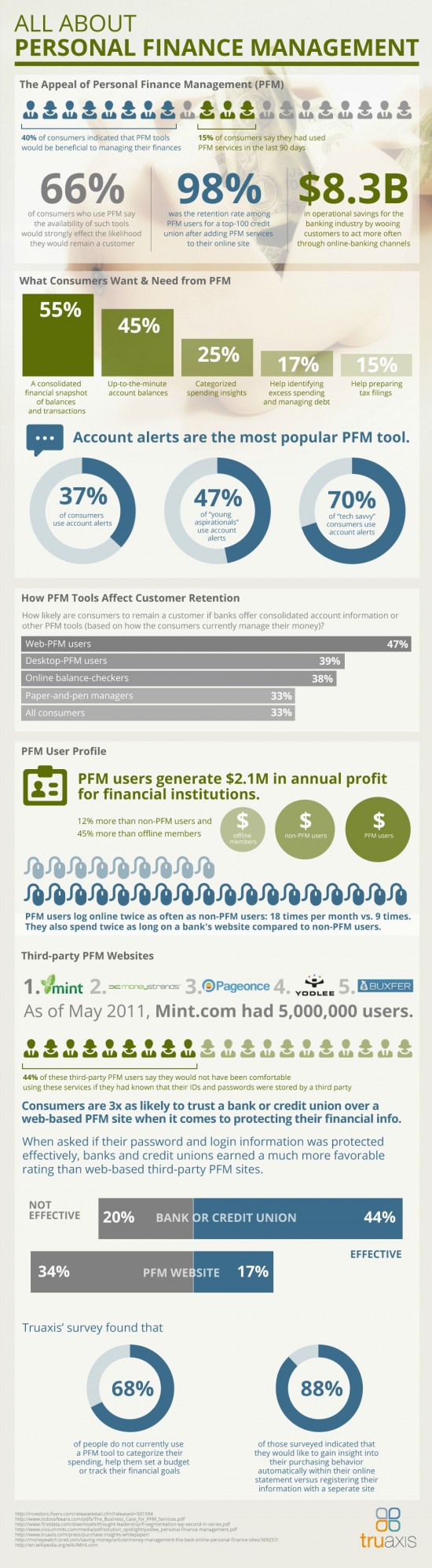
To build deeper relationships with their clients and customers, financial advisors, wealth managers, brokerages and banks need to move away from just being an account to store money – and more towards helping their customers take control of their finances. Adding personal financial management (PFM) tools are a great way to start.

Right now, medical professional clients and many customers, are turning to third party sites to help them with their finances. But, a recent Javelin reports shows that customers are 3-x as likely to trust a bank with these services.

Below are some reasons why FAs, WMs and SBs should consider providing PFM capabilities (such as StatementRewards’ Purchase Insights) to physicians and lay customers.

Source: truaxis.com

Conclusion

And so, your thoughts and comments on this ME-P are appreciated. FAs – please advise? Please review our top-left column, and top-right sidebar materials, links, URLs and related websites, too. Then, subscribe to the ME-P. It is fast, free and secure.

Link: http://feeds.feedburner.com/HealthcareFinancialsthePostForcxos

Speaker: If you need a moderator or speaker for an upcoming event, Dr. David E. Marcinko; MBA – Publisher-in-Chief of the Medical Executive-Post – is available for seminar or speaking engagements. Contact: MarcinkoAdvisors@msn.com

Our Other Print Books and Related Information Sources:

Health Dictionary Series: http://www.springerpub.com/Search/marcinko

Practice Management: http://www.springerpub.com/product/9780826105752

Physician Financial Planning: http://www.jbpub.com/catalog/0763745790

Medical Risk Management: http://www.jbpub.com/catalog/9780763733421

Healthcare Organizations: www.HealthcareFinancials.com

Physician Advisors: www.CertifiedMedicalPlanner.com

Subscribe Now: Did you like this Medical Executive-Post, or find it helpful, interesting and informative? Want to get the latest ME-Ps delivered to your email box each morning? Just subscribe using the link below. You can unsubscribe at any time. Security is assured.

Link: http://feeds.feedburner.com/HealthcareFinancialsthePostForcxos

Sponsors Welcomed: And, credible sponsors and like-minded advertisers are always welcomed.

Link: https://healthcarefinancials.wordpress.com/2007/11/11/advertise

Product DetailsProduct DetailsProduct Details

Product Details Product Details

Product Details

What Happens to Debt After You Die?

Join Our Mailing List 

It all Depends

Financial advisors know that many clients avoid thinking about what happens to their debt after they die. Understanding what type of debt you have is important because your debts may or may not pass on to other people after you die.

Talking to a financial planner or bankruptcy lawyer may help you prepare and avoid problems for what may happen to your debts after your death.

Assessment

Check out the above visual guide of What Happens to Your Debt after You Die.

Source: totalbankruptcy.com

Channel Surfing the ME-P

Have you visited our other topic channels? Established to facilitate idea exchange and link our community together, the value of these topics is dependent upon your input. Please take a minute to visit. And, to prevent that annoying spam, we ask that you register. It is fast, free and secure.

Conclusion

Your thoughts and comments on this ME-P are appreciated. Feel free to review our top-left column, and top-right sidebar materials, links, URLs and related websites, too. Then, subscribe to the ME-P. It is fast, free and secure.

Speaker: If you need a moderator or speaker for an upcoming event, Dr. David E. Marcinko; MBA – Publisher-in-Chief of the Medical Executive-Post – is available for seminar or speaking engagements. Contact: MarcinkoAdvisors@msn.com

OUR OTHER PRINT BOOKS AND RELATED INFORMATION SOURCES:

Product Details  Product Details

How to Become A Financial Advisor [Learned Profession or Professional Sales Force?]

Join Our Mailing List

A Recent E-mail that I Received

By Dr. David Edward Marcinko MBA, CMP™

www.CertifiedMedicalPlanner.com

[Editor-in-Chief]

As a former certified financial planner for almost 15 years, I was surprised to recently receive the following unedited e-mail correspondence.

Dear Marcinko,

If you are clever, have a way with people, or are a born salesperson, then becoming financial advisor could be your ticket to paradise.

Maybe not exactly paradise, but you could definitely have a ticket to a rewarding career. If you’re thinking about starting out as a new financial advisor – you may already be half the way there.

Why?

Because it’s an occupation where your life challenges will give you the understanding and empathy needed to work with your clients. Have you ever been in the position where you had to figure out a budget for your children’s education? Or manage an over extended credit card? These life situations will aid an individual on the path to become a financial consultant.

Requirements to Be a Financial Advisor

Even though a formal education is not a necessity to become financial adviser, it helps if you’ve taken certain courses.

What degree do you need to become a financial advisor? A bachelor’s degree in Finance, Economics, Accounting, Commerce, Business or Marketing would be a good start. A degree won’t assure you of a startling career but it may help get your foot in the door.

Rumor has it that a degree in psychology is also an asset as financial advising is as much about counseling as it is about advising. There are a plethora of people with all sorts of emotional entanglements around their financial lives.

Licenses

So, what licenses do you need to be a financial advisor? Some companies will assist a newbie in the financial advisory business and place them into a special program that will help them to obtain the required regulatory licenses such as a Series 66, this license permits them to vend annuities and mutual funds. It’s also possible to manage your own training. You can take part-time courses in order to qualify for the CFP (Certified Financial Planner) exam.

There are roughly over 286 universities and colleges that will assist you in preparing for the CFP exam. How long does it take to become a financial advisor? In order to qualify for the exam you will also need three years full-time working experience with a financial planning establishment.

Statistics state that over 40% regularly fail this all important exam. Its worth the time and effort as with this certification you are deemed as a certified financial planner and demand a higher salary.

Assessment

Hot tip: Stay away from insurance companies for financial employment. They’ll insist that you sign everyone including the dog and your grandmother. Then get rid of you if you don’t procure sufficient business. Banks are better they will bring in the clients for you.

Conclusion

And so, your thoughts and comments on this ME-P are appreciated. Are financial advisors true professionals; or a truely professional sales force?

Please review our top-left column, and top-right sidebar materials, links, URLs and related websites, too. Then, subscribe to the ME-P. It is fast, free and secure. Are financial advisors true professionals, or a professional sales force?

Link: http://feeds.feedburner.com/HealthcareFinancialsthePostForcxos

Speaker: If you need a moderator or speaker for an upcoming event, Dr. David E. Marcinko; MBA – Publisher-in-Chief of the Medical Executive-Post – is available for seminar or speaking engagements. Contact: MarcinkoAdvisors@msn.com

Our Other Print Books and Related Information Sources:

Health Dictionary Series: http://www.springerpub.com/Search/marcinko

Practice Management: http://www.springerpub.com/product/9780826105752

Physician Financial Planning: http://www.jbpub.com/catalog/0763745790

Medical Risk Management: http://www.jbpub.com/catalog/9780763733421

Healthcare Organizations: www.HealthcareFinancials.com

Physician Advisors: www.CertifiedMedicalPlanner.com

Subscribe Now: Did you like this Medical Executive-Post, or find it helpful, interesting and informative? Want to get the latest ME-Ps delivered to your email box each morning? Just subscribe using the link below. You can unsubscribe at any time. Security is assured.

Link: http://feeds.feedburner.com/HealthcareFinancialsthePostForcxos

Sponsors Welcomed: And, credible sponsors and like-minded advertisers are always welcomed.

Link: https://healthcarefinancials.wordpress.com/2007/11/11/advertise

Product Details  Product Details

On “Financial Planning for Physicians AND their Advisors”

VOTE-Would You Retain a Bankrupt CFP® for Financial Advice?

Join Our Mailing List

ME-P Readers Respond

Sponsored by: www.CertifiedMedicalPlanner.org

###

According to colleague and financial advisor, Mike Kitces CFP®:

As the difficult economic environment continues, bankruptcy filings in the United States continue to occur at an elevated rate.

And it appears that financial planners are having their share of bankruptcies as well … requiring the CFP Board via their disciplinary process to adjudicate whether a CFP® certificant should receive a public letter of admonition, or has his/her marks suspended or revoked. 

With a rising number of financial planner bankruptcies putting pressure on their disciplinary resources, the CFP Board has proposed a change to how it treats such bankruptcy situations. The upshot: a bankruptcy by a financial planner will no longer bar him/her from getting or keeping the CFP® marks. However, going forward, any bankruptcy by a financial planner will be publicly disclosed for the following 10 years on the CFP Board’s website.

Question: And so, as a doctor, nurse, management consultant or even another financial advisor, would you ever retain a Certified Financial Planner® who had declared bankruptcy?

VOTE AND OPINE

Assessment

Link: http://www.kitces.com/blog/archives/240-CFP-Board-Relaxes-Its-Position-On-Financial-Planner-Bankruptcies…-Sort-Of.html

Conclusion

Your thoughts and comments on this ME-P are appreciated. Feel free to review our top-left column, and top-right sidebar materials, links, URLs and related websites, too. Then, subscribe to the ME-P. It is fast, free and secure.

Link: http://feeds.feedburner.com/HealthcareFinancialsthePostForcxos

Speaker: If you need a moderator or speaker for an upcoming event, Dr. David E. Marcinko; MBA – Publisher-in-Chief of the Medical Executive-Post – is available for seminar or speaking engagements. Contact: MarcinkoAdvisors@msn.com

OUR OTHER PRINT BOOKS AND RELATED INFORMATION SOURCES:

DICTIONARIES: http://www.springerpub.com/Search/marcinko
PHYSICIANS: www.MedicalBusinessAdvisors.com
PRACTICES: www.BusinessofMedicalPractice.com
HOSPITALS: http://www.crcpress.com/product/isbn/9781466558731
CLINICS: http://www.crcpress.com/product/isbn/9781439879900
BLOG: www.MedicalExecutivePost.com
FINANCE: Financial Planning for Physicians and Advisors
INSURANCE: Risk Management and Insurance Strategies for Physicians and Advisors

Product DetailsProduct DetailsProduct Details

Product Details Product Details

Product Details

On Political Financial Plans

Join Our Mailing List 

From Republican Presidential Candidates

With less than a year away, the republican election machine is fired up and ready to go. Hot topics include the economy, housing, jobs, Medicare, Social Security, and all sorts of healthcare initiatives and regulations of interest to medical professionals.

Source: totalbankruptcy.com

Assessment

How has your opinion on the above changed now that there are only four contenders left?

Conclusion

And so, your thoughts and comments on this ME-P are appreciated. Please review our top-left column, and top-right sidebar materials, links, URLs and related websites, too. Then, subscribe to the ME-P. It is fast, free and secure.

Link: http://feeds.feedburner.com/HealthcareFinancialsthePostForcxos

Speaker: If you need a moderator or speaker for an upcoming event, Dr. David E. Marcinko; MBA – Publisher-in-Chief of the Medical Executive-Post – is available for seminar or speaking engagements. Contact: MarcinkoAdvisors@msn.com

Our Other Print Books and Related Information Sources:

Health Dictionary Series: http://www.springerpub.com/Search/marcinko

Practice Management: http://www.springerpub.com/product/9780826105752

Physician Financial Planning: http://www.jbpub.com/catalog/0763745790

Medical Risk Management: http://www.jbpub.com/catalog/9780763733421

Healthcare Organizations: www.HealthcareFinancials.com

Physician Advisors: www.CertifiedMedicalPlanner.com

Subscribe Now: Did you like this Medical Executive-Post, or find it helpful, interesting and informative? Want to get the latest ME-Ps delivered to your email box each morning? Just subscribe using the link below. You can unsubscribe at any time. Security is assured.

Link: http://feeds.feedburner.com/HealthcareFinancialsthePostForcxos

Sponsors Welcomed: And, credible sponsors and like-minded advertisers are always welcomed.

Link: https://healthcarefinancials.wordpress.com/2007/11/11/advertise

   Product Details

Some Money Saving Tips for Millennial Doctors

Join Our Mailing List

And All Young Medical Professionals

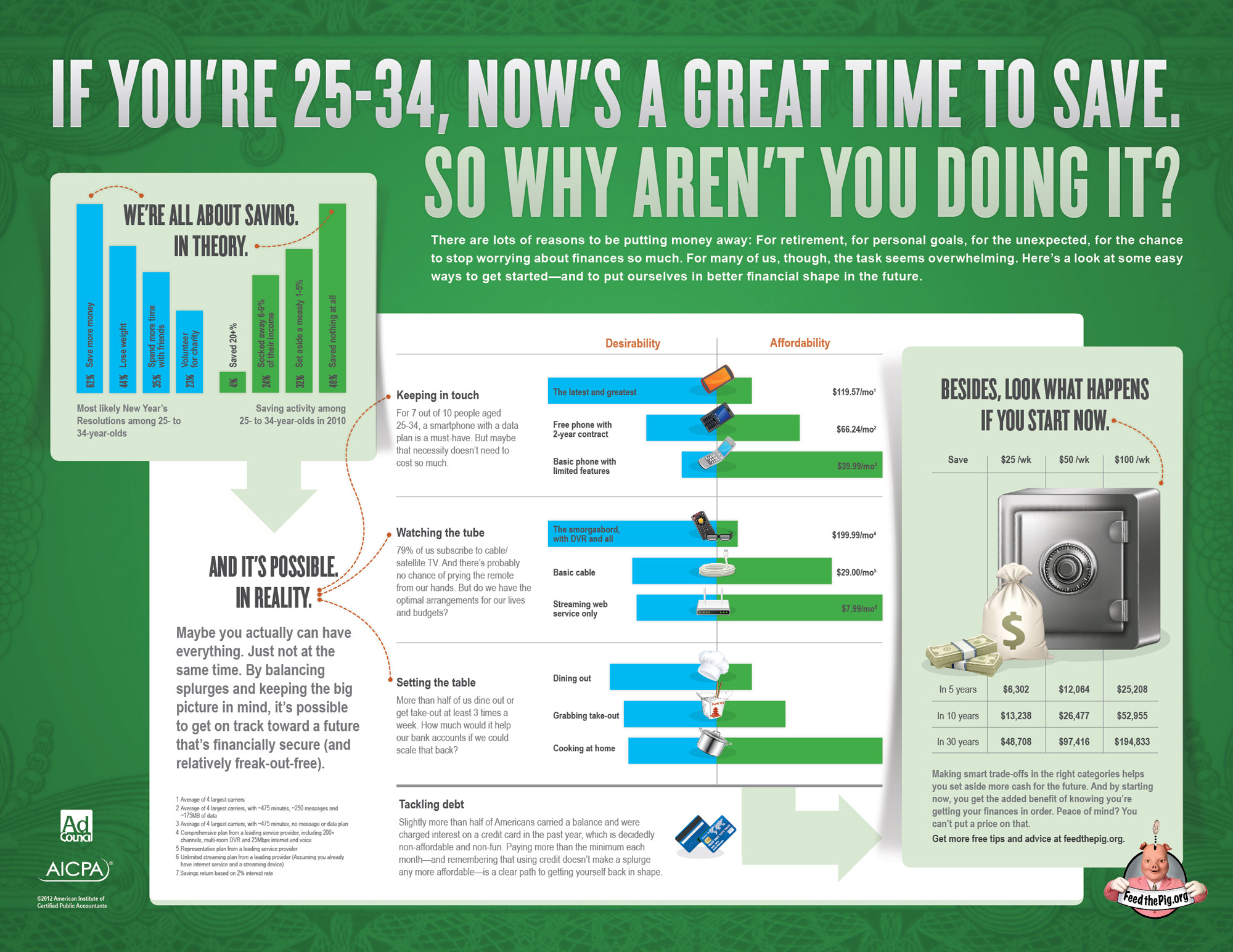
Young doctors, nurses and healthcare administrators always want to be hip with the latest tech gadgets. Unfortunately, they are also the age group with the least money and the most college, graduate or medical school debt. So, the goal of this infographic is to help find a happy medium that allows them to maintain a lifestyle while saving some money.

For starters, we’ve found that slashing cable and sticking with Netflix or some cheap web streaming service is a great way to save. Some also love cooking their own food. Outside of phones, TV, and food, there is a lot of other room to save.

For example, simply cutting out unnecessary items and being more frugal with your spending can produce results. Before we buy ‘wants’, we should think about how badly we want it and how long it will last. A lot of money can be saved just by buying the right brand of a product. Good quality and cheap maintenance can save tons in many products (cars, electronics, household appliances). Stay smart, save money.

FTP

Assessment

The American Institute of CPAs and the Ad Council created this Infographic as part of its national public service campaign, Feed the Pig to encourage young doctors and all millennials [aged 25-34] to take control of their finances and make saving money a part of their daily lifestyle.

Channel Surfing the ME-P Have you visited our other topic channels? Established to facilitate idea exchange and link our community together, the value of these topics is dependent upon your input. Please take a minute to visit. And, to prevent that annoying spam, we ask that you register. It is fast, free and secure.

Conclusion

Your thoughts and comments on this ME-P are appreciated. Feel free to review our top-left column, and top-right sidebar materials, links, URLs and related websites, too. Then, subscribe to the ME-P. It is fast, free and secure.

Speaker: If you need a moderator or speaker for an upcoming event, Dr. David E. Marcinko; MBA – Publisher-in-Chief of the Medical Executive-Post – is available for seminar or speaking engagements. Contact: MarcinkoAdvisors@msn.com

OUR OTHER PRINT BOOKS AND RELATED INFORMATION SOURCES:

Product Details  Product Details

Financial Planning for Physicians

A Handbook for Doctors and their Financial Advisors

ADVERTISEMENT

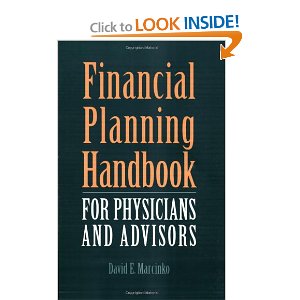
Financial Planning Handbook for Physicians and Advisors

Book Review and Summary

Financial Planning for Physicians and Advisors describes a personal financial planning program to help doctors avoid the perils of harsh economic sacrifice.

It outlines how to select a knowledgeable financial advisor and develop a comprehensive personal financial plan, and includes important sections on: insurance and risk management, asset diversification and modern portfolio construction, income tax and retirement planning, and medical practice succession and estate planning, etc.

When fully implemented with a professional’s assistance, this book will help physicians and their financial advisors develop an effective long-term financial plan.

Order now: http://www.jblearning.com/catalog/0763745790/

Speaker: If you need a moderator or speaker for an upcoming event, Dr. David E. Marcinko; MBA – Publisher-in-Chief of the Medical Executive-Post – is available for seminar or speaking engagements. Contact: MarcinkoAdvisors@msn.com

###

Are Physicians Really Going Broke?

Am I Prescient, Lucky or Just an Observant Trend Reporter?

By Dr. David Edward Marcinko MBA CMP™

[Publisher-in-Chief]

A few years ago I was involved in a Physician’s Money Digest report that showed the average physician reader (ie, 47 years old and $184,000 in annual income) would need about $5.5 million to retire. This was in 2007-08, right before the infamous financial “meltdown”.

Lifestyle Preservation

Now, that’s if they planned to have the same lifestyle after retirement as in the years just prior to retirement. In other words, to live on 80% of pre-retirement income, my doctor colleagues would need about $4.4 million. Although that isn’t exactly loose change, the average PMD reader at the time, had a head start, with a net worth of $1.1 million. By maxing out on retirement plans, we reckoned the average reader could be in shouting distance of the goal by age 65.

Although the figures were daunting, they were a wakeup call to the fact these doctors, now age 52-53, still needed to save more aggressively to be able to finance the retirement they were working toward. But since then, their home worth and practice value, savings, investment and retirement accounts are probably down in 2012; as is their net worth. Down –  and I mean way down!

Link: http://www.physiciansmoneydigest.com/issues/2005/92/3951

Fast Forward to 2012

Today, some pundits posit that doctors in America are harboring an embarrassing secret: Many of them are going broke. This quiet trend and seeming reality, which is spreading nationwide, is claiming a wide range of casualties including family physicians, cardiologists and oncologists. Sadly, it is a trend that I have professionally observed and personally seen.

Link: http://money.cnn.com/2012/01/05/smallbusiness/doctors_broke/

Doctors list shrinking insurance reimbursements, changing regulations, rising business and drug costs among the factors preventing them from keeping their practices afloat. And, no doubt, these are all true reasons – in part. But, some experts counter that doctors’ lack of business acumen is also to blame.

So, that’s why we started our physician focused financial planning firm www.MedicalBusinessAdvisors.com  –  and – our online educational program for their managerial consultants and financial advisors www.CertifiedMedicalPlanner.com These firms were conceived and launched more than a decade ago; to much derision and haughtiness at the time. Not some much today, however! Why?

Assessment

A decade ago, Forbes magazine ran an article about doctors making six figure salaries and still wanting a medical union to bargain collectively.  This was a bit difficult for the average man or woman in the street to imagine about such learned professionals, formerly considered affluent and a cut above the rest. So, where is medical union clout today? Where is MD salary clout? And, where is physician net worth now – and in the future?  Doctor – what’s in your wallet?

Conclusion           

And so, your thoughts and comments on this ME-P are appreciated. Are doctors really going broke? Are they OWS…ers? Was I prescient, lucky or just an observant reporter of this trend, early on? Please review our top-left column, and top-right sidebar materials, links, URLs and related websites, too. Then, subscribe to the ME-P. It is fast, free and secure.

Link: http://feeds.feedburner.com/HealthcareFinancialsthePostForcxos

Speaker: If you need a moderator or speaker for an upcoming event, Dr. David E. Marcinko; MBA – Publisher-in-Chief of the Medical Executive-Post – is available for seminar or speaking engagements. Contact: MarcinkoAdvisors@msn.com

Our Other Print Books and Related Information Sources:

Health Dictionary Series: http://www.springerpub.com/Search/marcinko

Practice Management: http://www.springerpub.com/product/9780826105752

Physician Financial Planning: http://www.jbpub.com/catalog/0763745790

Medical Risk Management: http://www.jbpub.com/catalog/9780763733421

Healthcare Organizations: www.HealthcareFinancials.com

Physician Advisors: www.CertifiedMedicalPlanner.com

Subscribe Now: Did you like this Medical Executive-Post, or find it helpful, interesting and informative? Want to get the latest ME-Ps delivered to your email box each morning? Just subscribe using the link below. You can unsubscribe at any time. Security is assured.

Link: http://feeds.feedburner.com/HealthcareFinancialsthePostForcxos

Sponsors Welcomed: And, credible sponsors and like-minded advertisers are always welcomed.

Link: https://healthcarefinancials.wordpress.com/2007/11/11/advertise

Product DetailsProduct DetailsProduct Details

Product Details  Product Details

Product Details

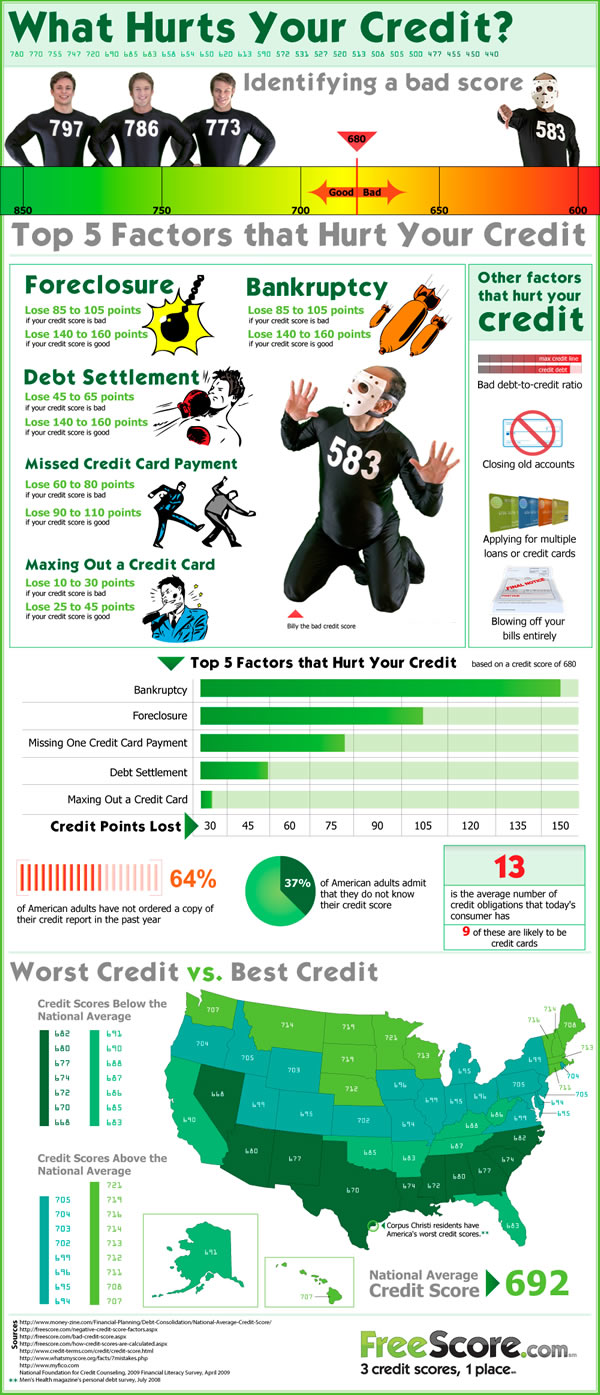
Is it Time for a Credit Check-Up [brief doctor visit or extendend consultation]?

Join Our Mailing List 

Reviewing your Credit Report for the New Year [A CPT® code analogy]

Source: creditdonkey.com

Conclusion     

And so, your thoughts and comments on this ME-P are appreciated. Please excuse our pun and review the top-left column, and top-right sidebar materials, links, URLs and related websites, too. Then, subscribe to the ME-P. It is fast, free and secure.

Link: http://feeds.feedburner.com/HealthcareFinancialsthePostForcxos

Speaker: If you need a moderator or speaker for an upcoming event, Dr. David E. Marcinko; MBA – Publisher-in-Chief of the Medical Executive-Post – is available for seminar or speaking engagements. Contact: MarcinkoAdvisors@msn.com

Our Other Print Books and Related Information Sources:

Health Dictionary Series: http://www.springerpub.com/Search/marcinko

Practice Management: http://www.springerpub.com/product/9780826105752

Physician Financial Planning: http://www.jbpub.com/catalog/0763745790

Medical Risk Management: http://www.jbpub.com/catalog/9780763733421

Healthcare Organizations: www.HealthcareFinancials.com

Physician Advisors: www.CertifiedMedicalPlanner.com

Subscribe Now: Did you like this Medical Executive-Post, or find it helpful, interesting and informative? Want to get the latest ME-Ps delivered to your email box each morning? Just subscribe using the link below. You can unsubscribe at any time. Security is assured.

Link: http://feeds.feedburner.com/HealthcareFinancialsthePostForcxos

Sponsors Welcomed: And, credible sponsors and like-minded advertisers are always welcomed.

Link: https://healthcarefinancials.wordpress.com/2007/11/11/advertise


Product Details  Product Details

How Much Money to Retire [The Number]?

Men and Women at Work

Join Our Mailing List

Conclusion           

And so, your thoughts and comments on this ME-P are appreciated. Please review our top-left column, and top-right sidebar materials, links, URLs and related websites, too. Then, subscribe to the ME-P. It is fast, free and secure.

Link: http://feeds.feedburner.com/HealthcareFinancialsthePostForcxos

Speaker: If you need a moderator or speaker for an upcoming event, Dr. David E. Marcinko; MBA – Publisher-in-Chief of the Medical Executive-Post – is available for seminar or speaking engagements. Contact: MarcinkoAdvisors@msn.com

Our Other Print Books and Related Information Sources:

Health Dictionary Series: http://www.springerpub.com/Search/marcinko

Practice Management: http://www.springerpub.com/product/9780826105752

Physician Financial Planning: http://www.jbpub.com/catalog/0763745790

Medical Risk Management: http://www.jbpub.com/catalog/9780763733421

Healthcare Organizations: www.HealthcareFinancials.com

Physician Advisors: www.CertifiedMedicalPlanner.com

Subscribe Now: Did you like this Medical Executive-Post, or find it helpful, interesting and informative? Want to get the latest ME-Ps delivered to your email box each morning? Just subscribe using the link below. You can unsubscribe at any time. Security is assured.

Link: http://feeds.feedburner.com/HealthcareFinancialsthePostForcxos

Product Details  Product Details

Meet Dr. James Winston Phillips JD LLM MBA

Certified Medical Planner

Out Newest M E-P “Thought-Leader”

[By Ann Milller RN MHA]

James Winston Phillips, MD, MBA, JD, LLM is President and founder of: The OTHER Medical Education, Inc.

Academic Credentials

Dr. Phillips academic credentials include a B.A. and M.D. from the University of Louisville, a M.B.A. from Jacksonville University, a J.D. from Florida Coastal School of Law and a LL.M. from Thomas Jefferson School of Law in International Taxation with concentrations in 1) International Financial Services and 2) Wealth Management and Private Banking.

Additional course work was completed at Stetson University College of Law LL.M. program in Elder Law and the University of Alabama School of Law LL.M. program in U.S. Taxation. Course work has been completed for a Ph.D. with the thesis pending. Dr. Phillips completed a general surgery residency at University of Florida / Jacksonville, a plastic surgery fellowship at University of Florida / Gainesville and a Hand Fellowship at the University of Miami. Dr. Phillips clinical career includes positions in academic medicine, private practice and as an independent contractor.

Personal Philosophy

Jim believes that modern healthcare professionals receive the best medical education in the world, but receive little or no education in the business of medicine in medical or professional school or during clinical training.

According to Dr. Phillips: Medicine may be a calling – but – the practice of medicine is a business.

Assessment:

Dr. Phillips’s quest for higher education led to the founding of: The OTHER Medical Education, Inc., a place where health care professionals can obtain the business education they need. Clients include a wide variety of health care professionals including physicians, dentists, pharmacists, veterinarians, podiatrists, nurse practitioners, physician assistants, and others. These health care professionals may have their own practices, work within someone’s practice or be employed by a health care facility or company. They may or may not be involved in the decision making process of the practice. However, they recognize sound business practices even if not directly involved in the decision making process, and are involved in their own personal finances.

The OTHER Medical Education, Inc

Post Office Box 600284

Saint Johns, FL 32260-0284

904-613-3062

Conclusion

Feel free to welcome Dr. Phillips to the Medical Executive-Post. We look forward to his insightful posts, comments and other contributions. Better yet! Give his site a click – or telephone call – and tell us what you think!

Foreword

Foreword Phillips

   Pre-Order Now:

http://www.crcpress.com/product/isbn/9781439879900

The Challenge of Un-Expected [Physician] Retirement

Just a Word -or- Much More?

Join Our Mailing List 

By Rick Kahler; MS ChFC CCIM CFP®

Retirement is a word I’ve tried to purge from my professional vocabulary. Few people – even physicians and medical professionals – really know what it means anymore.

Instead, I like to think of retirement as being a stage in life where you get to choose what you want to do, when you want to do it, and with whom. It can also be that time when you attain financial independence and no longer intend or need to earn an income to support your lifestyle.

Early Retirement

Sometimes, however, “early retirement” can throw us a curve ball before we’re prepared for it or ready to become financially independent.

This often comes in the form of a job layoff, termination, or health issues that require we no longer work for an income. So, here are some action steps for an unexpected early retirement [applicable to doctors and laymen, alike]:

Some Tips

1. Immediately become aware of your monthly expenses. If you don’t track expenses, now would be a good time to go back over the last 12 months of expenditures and set up a cash flow tracking program like mint.com or quickbooksonline.com.

2. Create a spending plan for the next 12 months. Don’t forget to include savings for large purchases (cars, repairs, travel, Christmas, etc.) as a part of your annual expenses. Make sure you reduce or eliminate past expenses related to your work life and add expenses that come as a part of retirement, like increased travel or health care.

3. Estimate your sources of income. Include Social Security, employer pensions or severance packages, and your personal investments. For personal investments, use an income estimate of 4% of the principal. One million in investments will give you $40,000 a year in income.

4. Match your estimated annual retirement income with your spending plan expenses. If the expenses exceed your income, begin deciding where you can cut your spending. It is often helpful to enroll another person to help with ideas on reducing expenses. This is an area where we all have “blinders” on, and others can suggest creative cost savings we would never have thought of ourselves.

5. Don’t give up on finding part time employment [public clinics, part-time private offices, locum tenens, substitutes, hospitals, or even pro-bono work, etc].  There are many opportunities to create some income in retirement, and even a little paycheck can go a long way to preserving your investment savings. Check your ego at the door—this is not the time to let false pride keep you from taking a part-time job that’s less “professional” than what you’ve been doing.

6. Consider reducing monthly expenses by using savings or investments to pay off debts like car loans or credit card bills. Often your best investment is paying off debt. This can be especially true when your savings is earning 0.5% and your credit card is charging you 15% on the outstanding balance.

7. Consider downsizing by selling your house. This can be an especially good move if you have enough equity to pay cash for something smaller or at least end up with no mortgage or a smaller mortgage payment.

8. For couples, talk seriously about what both of you want, separately and together, in the next few years. Brainstorm creative ways—volunteering at state parks, for example—to carry out retirement plans inexpensively.

9. Take time to deal with the emotional side—anger, fear, depression, etc. It’s especially important to surround your-self with supportive friends and family and to talk about what’s going on.

Assessment

Unexpected retirement can be a life-changing blow, both emotionally and financially. Coping with it will require resiliency, courage, persistence, creativity, and support. You’ll be most successful when you take advantage of not just your financial resources, but all the resources at your disposal.

The Author

Rick Kahler, Certified Financial Planner®, MS, ChFC, CCIM, is the founder and president of Kahler Financial Group in Rapid City, South Dakota. In 2009 his firm was named by Wealth Manager as the largest financial planning firm in a seven-state area. A pioneer in the evolution of integrating financial psychology with traditional financial planning profession, Rick is a co-founder of the five-day intensive Healing Money Issues Workshop offered by Onsite Workshops of Nashville, Tennessee. He is one of only a handful of planners nationwide who partner with professional coaches and financial therapists to deliver financial coaching and therapy to his clients. Learn more at KahlerFinancial.com

Conclusion

Your thoughts and comments on this ME-P are appreciated. Feel free to review our top-left column, and top-right sidebar materials, links, URLs and related websites, too. Then, subscribe to the ME-P. It is fast, free and secure.

Speaker: If you need a moderator or speaker for an upcoming event, Dr. David E. Marcinko; MBA – Publisher-in-Chief of the Medical Executive-Post – is available for seminar or speaking engagements. Contact: MarcinkoAdvisors@msn.com

OUR OTHER PRINT BOOKS AND RELATED INFORMATION SOURCES:

Product Details

Product Details

***

Is it Better to Buy or Rent?

The New Price of Homes in 2012

Join Our Mailing List 

Here is an infographic comparing prices of home sales and renting. This is an overview of housing prices from the start of the recession in 2008 until now.

Source: foreclosuredeals.com

Conclusion  

And so, your thoughts and comments on this ME-P are appreciated. Feel free to review our top-left column, and top-right sidebar materials, links, URLs and related websites, too. Then, subscribe to the ME-P. It is fast, free and secure.

Link: http://feeds.feedburner.com/HealthcareFinancialsthePostForcxos

Speaker: If you need a moderator or speaker for an upcoming event, Dr. David E. Marcinko; MBA – Publisher-in-Chief of the Medical Executive-Post – is available for seminar or speaking engagements. Contact: MarcinkoAdvisors@msn.com

Our Other Print Books and Related Information Sources:

Health Dictionary Series: http://www.springerpub.com/Search/marcinko

Practice Management: http://www.springerpub.com/product/9780826105752

Physician Financial Planning: http://www.jbpub.com/catalog/0763745790

Medical Risk Management: http://www.jbpub.com/catalog/9780763733421

Healthcare Organizations: www.HealthcareFinancials.com

Physician Advisors: www.CertifiedMedicalPlanner.com

Subscribe Now: Did you like this Medical Executive-Post, or find it helpful, interesting and informative? Want to get the latest ME-Ps delivered to your email box each morning? Just subscribe using the link below. You can unsubscribe at any time. Security is assured.

Link: http://feeds.feedburner.com/HealthcareFinancialsthePostForcxos

Sponsors Welcomed: And, credible sponsors and like-minded advertisers are always welcomed.

Link: https://healthcarefinancials.wordpress.com/2007/11/11/advertise

Product Details  Product Details

A New Plan for [Medical] Student Loans?

The Debt Crisis

Join Our Mailing List

Recently, President Barack H. Obama announced a new plan for student loans and the severe debt it has placed on students. Obviously, more needs to be done, but it’s a start.

As you can tell, this infographic illustrates the strategies that President Obama has implemented or improved along with thoughts that go beyond the new deal, especially about students.

Conclusion                

And so, your thoughts and comments on this ME-P are appreciated. Feel free to review our top-left column, and top-right sidebar materials, links, URLs and related websites, too. Then, subscribe to the ME-P. It is fast, free and secure.

Link: http://feeds.feedburner.com/HealthcareFinancialsthePostForcxos

Speaker: If you need a moderator or speaker for an upcoming event, Dr. David E. Marcinko; MBA – Publisher-in-Chief of the Medical Executive-Post – is available for seminar or speaking engagements. Contact: MarcinkoAdvisors@msn.com

Our Other Print Books and Related Information Sources:

Health Dictionary Series: http://www.springerpub.com/Search/marcinko

Practice Management: http://www.springerpub.com/product/9780826105752

Physician Financial Planning: http://www.jbpub.com/catalog/0763745790

Medical Risk Management: http://www.jbpub.com/catalog/9780763733421

Healthcare Organizations: www.HealthcareFinancials.com

Physician Advisors: www.CertifiedMedicalPlanner.com

Subscribe Now: Did you like this Medical Executive-Post, or find it helpful, interesting and informative? Want to get the latest ME-Ps delivered to your email box each morning? Just subscribe using the link below. You can unsubscribe at any time. Security is assured.

Link: http://feeds.feedburner.com/HealthcareFinancialsthePostForcxos

Sponsors Welcomed: And, credible sponsors and like-minded advertisers are always welcomed.

Link: https://healthcarefinancials.wordpress.com/2007/11/11/advertise

Product DetailsProduct DetailsProduct Details

Product Details  Product Details

   Product Details

Where Does our National Debt Originate?

Letting the White House … Tell Us!

Join Our Mailing List

By Staff Reporters

One of the fundamental things to understand about reducing our national debt is how we accumulated so much in the first place.

Assessment

To explain the impact various policies have had over the past decade, shifting us from projected surpluses to actual deficits and, as a result, running up the national debt, the White House has developed a graphic for us.

Source: Whitehouse.gov

Conclusion     

And so, your thoughts and comments on this ME-P are appreciated. Feel free to review our top-left column, and top-right sidebar materials, links, URLs and related websites, too. Then, subscribe to the ME-P. It is fast, free and secure.

Link: http://feeds.feedburner.com/HealthcareFinancialsthePostForcxos

Speaker: If you need a moderator or speaker for an upcoming event, Dr. David E. Marcinko; MBA – Publisher-in-Chief of the Medical Executive-Post – is available for seminar or speaking engagements. Contact: MarcinkoAdvisors@msn.com

Our Other Print Books and Related Information Sources:

Health Dictionary Series: http://www.springerpub.com/Search/marcinko

Practice Management: http://www.springerpub.com/product/9780826105752

Physician Financial Planning: http://www.jbpub.com/catalog/0763745790

Medical Risk Management: http://www.jbpub.com/catalog/9780763733421

Healthcare Organizations: www.HealthcareFinancials.com

Physician Advisors: www.CertifiedMedicalPlanner.com

Subscribe Now: Did you like this Medical Executive-Post, or find it helpful, interesting and informative? Want to get the latest ME-Ps delivered to your email box each morning? Just subscribe using the link below. You can unsubscribe at any time. Security is assured.

Link: http://feeds.feedburner.com/HealthcareFinancialsthePostForcxos

Sponsors Welcomed: And, credible sponsors and like-minded advertisers are always welcomed.

Link: https://healthcarefinancials.wordpress.com/2007/11/11/advertise

Product Details  Product Details

Financial Independence Guidelines for Medical Professionals

A Common Sense Approach

By Rick Kahler; MS ChFC CCIM CFP®

Someday, the time will come to retire from medical practice and actively earning a living.

But, for many newbie physicians, it’s way out there in the future, something to plan for – “someday.” You’re often too busy with your lives, families and professional careers to pay much attention to it.

Late Starters

In some cases, that in-attention lasts until the 50’s or even 60’s. All of a sudden it hits you that “someday” is getting closer faster, and you aren’t ready. You don’t have anywhere near enough in savings and investments to provide a sufficient income when no longer practicing medicine, dentistry, podiatry, osteopathy, or optometry etc. Or, working as a nurse, medical technician, hospital or clinic administrator; or office manager, etc.

General Guidelines

If you’re in this situation, it’s time to get serious about planning for financial independence. But, don’t panic. Before you start pricing cat food at the grocery store, and hinting to your kids about moving in with them, try these strategies first:

1. Cut back now so you can be more comfortable later. Make saving and investing to become financially independent your primary goal. This means no new cars, no new toys, no expensive vacations, and no funding college educations for kids or grandkids. Take an inventory of your spending, then go over it together with your spouse to find all the places you can cut expenses. Create a spending plan focused on freeing up funds to invest for your future.

2. Consider downsizing now instead of later, but only if you can live more cheaply by doing so. If you can sell your house for, say, $550,000, buying something smaller for maybe $250,000, and investing the difference might be a smart move. This works best if you have substantial equity in your house, meaning it is paid for or your mortgage is small.

3. Get rid of debt. Stop using credit cards unless you pay the bill in full every month. Pay off credit card balances and any other personal debt.

4. If you and your spouse are both working, pretend one of you loses your job and you have to live on one income; then put the second income toward saving and investing to become financially independent. A spouse who isn’t employed might consider getting a job solely for saving and investing.

5. Accept the reality that you’re probably going to need to postpone retiring from practice. If you enjoy your work, you might be happy to stay employed for a few more years. If you don’t, look into possibilities for changing careers now. This blog will help. Or, you might make plans for a second non-clinical career after you retire from your current one.

6. Take an inventory of your assets. Include your savings accounts, investments, and retirement plans. Don’t forget to include your Social Security income (yes, it will be there if you are over 55) and assets like a paid-for house or valuable personal property. Add in hobbies, skills, or interests that might bring in some part-time income. Also, include intangible assets like health, family, and friends. These may not affect your finances directly, but they have a great deal to do with your well-being.

7. Remember to enjoy the present. You may be cutting back on your spending, but don’t discourage yourself by cutting back so much that life – in the here and now – is bleak. Find creative and inexpensive ways to stay involved in activities that are important to you and enjoy time with friends and family.

Assessment

Don’t waste time and energy beating yourself up because you didn’t start saving earlier. Instead, give yourself credit for what you are doing now. Remember, you aren’t depriving or punishing yourself. You’re investing in yourself in order to build a more comfortable future.

The Author

Rick Kahler, Certified Financial Planner®, MS, ChFC, CCIM, is the founder and president of Kahler Financial Group in Rapid City, South Dakota. In 2009 his firm was named by Wealth Manager as the largest financial planning firm in a seven-state area. A pioneer in the evolution of integrating financial psychology with traditional financial planning profession, Rick is a co-founder of the five-day intensive Healing Money Issues Workshop offered by Onsite Workshops of Nashville, Tennessee. He is one of only a handful of planners nationwide who partner with professional coaches and financial therapists to deliver financial coaching and therapy to his clients. Learn more at KahlerFinancial.com

Conclusion                

And so, your thoughts and comments on this ME-P are appreciated. Feel free to review our top-left column, and top-right sidebar materials, links, URLs and related websites, too. Then, subscribe to the ME-P. It is fast, free and secure.

Link: http://feeds.feedburner.com/HealthcareFinancialsthePostForcxos

Speaker: If you need a moderator or speaker for an upcoming event, Dr. David E. Marcinko; MBA – Publisher-in-Chief of the Medical Executive-Post – is available for seminar or speaking engagements. Contact: MarcinkoAdvisors@msn.com

Our Other Print Books and Related Information Sources:

Health Dictionary Series: http://www.springerpub.com/Search/marcinko

Practice Management: http://www.springerpub.com/product/9780826105752

Physician Financial Planning: http://www.jbpub.com/catalog/0763745790

Medical Risk Management: http://www.jbpub.com/catalog/9780763733421

Healthcare Organizations: www.HealthcareFinancials.com

Physician Advisors: www.CertifiedMedicalPlanner.com

Subscribe Now: Did you like this Medical Executive-Post, or find it helpful, interesting and informative? Want to get the latest ME-Ps delivered to your email box each morning? Just subscribe using the link below. You can unsubscribe at any time. Security is assured.

Link: http://feeds.feedburner.com/HealthcareFinancialsthePostForcxos

Sponsors Welcomed: And, credible sponsors and like-minded advertisers are always welcomed.

Link: https://healthcarefinancials.wordpress.com/2007/11/11/advertise

Product Details  Product Details

Drs. Beware the Rise of Home Owner Associations?

Important Information for Medical Professionals

By Staff Reporters

Join Our Mailing List

With 62 million Americans governed by HOA’s and $35 billion dollars in operating revenues and growing, HOATown.com thought is was time to bring clarity to the homeowner association with this one-of-a-kind infographic.

Assessment

In Atlanta, for example, the affluent developments are Country Club of the South, and the St. Marlo gated communities. Both are governed by HOAs and house doctors and medical professionals of all types.

Source: hoatown.com

Conclusion     

And so, your thoughts and comments on this ME-P are appreciated. Feel free to review our top-left column, and top-right sidebar materials, links, URLs and related websites, too. Then, subscribe to the ME-P. It is fast, free and secure.

Link: http://feeds.feedburner.com/HealthcareFinancialsthePostForcxos

Speaker: If you need a moderator or speaker for an upcoming event, Dr. David E. Marcinko; MBA – Publisher-in-Chief of the Medical Executive-Post – is available for seminar or speaking engagements. Contact: MarcinkoAdvisors@msn.com

Our Other Print Books and Related Information Sources:

Health Dictionary Series: http://www.springerpub.com/Search/marcinko

Practice Management: http://www.springerpub.com/product/9780826105752

Physician Financial Planning: http://www.jbpub.com/catalog/0763745790

Medical Risk Management: http://www.jbpub.com/catalog/9780763733421

Healthcare Organizations: www.HealthcareFinancials.com

Physician Advisors: www.CertifiedMedicalPlanner.com

Subscribe Now: Did you like this Medical Executive-Post, or find it helpful, interesting and informative? Want to get the latest ME-Ps delivered to your email box each morning? Just subscribe using the link below. You can unsubscribe at any time. Security is assured.

Link: http://feeds.feedburner.com/HealthcareFinancialsthePostForcxos

Sponsors Welcomed: And, credible sponsors and like-minded advertisers are always welcomed.

Link: https://healthcarefinancials.wordpress.com/2007/11/11/advertise

Product Details  Product Details

Understanding the Debt Settlement Process for Doctors

Not just for Laymen

Join Our Mailing List

The Debt Consolidation Care Community [DCCC] has developed a financial infographic on the debt settlement process.

For the DIYers

This interactive infographic helps understand what happens in a DIY debt settlement when the debtor successfully negotiates a reduced payoff amount with a creditor.

Reviewing the graphical representation will also help know how a debt settlement company can help a debtor when he/she cannot settle debts on his/her own. The settlement company can negotiate with creditors to reduce the payoff amount and decide upon a single monthly payment that has to be paid to the settlement company every month. When enough accumulates, the settlement company pays the creditor the payoff amount as per agreement, and the debt thus gets settled.

Assessment

Debtors often ask questions in DCCC forums regarding what actually happens in debt settlement.

So, the primary reason behind this finance infographic is to clear misconceptions regarding the debt settlement process. This graphical representation can make it easily understandable for the many debtors who are looking for suitable solutions to solve their debt problems; not just medical professionals.

Source: www.debtconsolidationcare.com

Conclusion                

And so, your thoughts and comments on this ME-P are appreciated. Is this simplified essay applicable to medical professionals who may have complex business holdings? Feel free to review our top-left column, and top-right sidebar materials, links, URLs and related websites, too. Then, subscribe to the ME-P. It is fast, free and secure.

Link: http://feeds.feedburner.com/HealthcareFinancialsthePostForcxos

Speaker: If you need a moderator or speaker for an upcoming event, Dr. David E. Marcinko; MBA – Publisher-in-Chief of the Medical Executive-Post – is available for seminar or speaking engagements. Contact: MarcinkoAdvisors@msn.com

Our Other Print Books and Related Information Sources:

Health Dictionary Series: http://www.springerpub.com/Search/marcinko

Practice Management: http://www.springerpub.com/product/9780826105752

Physician Financial Planning: http://www.jbpub.com/catalog/0763745790

Medical Risk Management: http://www.jbpub.com/catalog/9780763733421

Healthcare Organizations: www.HealthcareFinancials.com

Physician Advisors: www.CertifiedMedicalPlanner.com

Subscribe Now: Did you like this Medical Executive-Post, or find it helpful, interesting and informative? Want to get the latest ME-Ps delivered to your email box each morning? Just subscribe using the link below. You can unsubscribe at any time. Security is assured.

Link: http://feeds.feedburner.com/HealthcareFinancialsthePostForcxos

Sponsors Welcomed: And, credible sponsors and like-minded advertisers are always welcomed.

Link: https://healthcarefinancials.wordpress.com/2007/11/11/advertise

Product Details  Product Details

How the Economy is Hurting Americans

Doctors and Medical Professionals, Included

Join Our Mailing List

The stock market was down 389 points yesterday! With the current state of the economy, depressed housing and jobs market, Americans are cutting back on basic necessities; clothing, healthy nutrition habits and food. Even doctor visits and medical practices are declining; and stress and anxiety are on the rise for all.

See how the economy is really affecting our quality of life with this somber look at our mental, physical and financial health in this infographic.


Assessment

Source: www.creditloan.com

Conclusion     

And so, your thoughts and comments on this ME-P are appreciated. Feel free to review our top-left column, and top-right sidebar materials, links, URLs and related websites, too. Then, subscribe to the ME-P. It is fast, free and secure.

Link: http://feeds.feedburner.com/HealthcareFinancialsthePostForcxos

Speaker: If you need a moderator or speaker for an upcoming event, Dr. David E. Marcinko; MBA – Publisher-in-Chief of the Medical Executive-Post – is available for seminar or speaking engagements. Contact: MarcinkoAdvisors@msn.com

Our Other Print Books and Related Information Sources:

Health Dictionary Series: http://www.springerpub.com/Search/marcinko

Practice Management: http://www.springerpub.com/product/9780826105752

Physician Financial Planning: http://www.jbpub.com/catalog/0763745790

Medical Risk Management: http://www.jbpub.com/catalog/9780763733421

Healthcare Organizations: www.HealthcareFinancials.com

Physician Advisors: www.CertifiedMedicalPlanner.com

Subscribe Now: Did you like this Medical Executive-Post, or find it helpful, interesting and informative? Want to get the latest ME-Ps delivered to your email box each morning? Just subscribe using the link below. You can unsubscribe at any time. Security is assured.

Link: http://feeds.feedburner.com/HealthcareFinancialsthePostForcxos

Sponsors Welcomed: And, credible sponsors and like-minded advertisers are always welcomed. 

Link: https://healthcarefinancials.wordpress.com/2007/11/11/advertise

Product DetailsProduct DetailsProduct Details       

Product Details  Product Details

   Product Details

The ME-P Consulting Proposition

[WHY CHOOSE US?]

The MEDICAL EXECUTIVE-POST provides a team of experienced senior level executive physicians, accountants, lawyers, economists, and management consultants led by CEO Dr. David Edward Marcinko MBA, CMP™ to provide ongoing contact with our clients throughout all phases of each project, with most of the communications between us and the key client participants flowing through this senior ME-P Team. The ME-P and its’ skilled staff of certified professionals have many years of significant experience, enjoy a national reputation in the healthcare consulting field, and are supported by an unsurpassed research to maintain a thorough and extensive knowledge of the healthcare environment. The ME-P team approach emphasizes providing superior service in a timely, cost-effective manner to our clients by working together to focus on identifying and presenting solutions for our clients’ unique, individual needs.

The ME-P project team’s exclusive focus on the healthcare industry provides a unique advantage for our clients. Over the years, our industry specialization has allowed us to maintain instantaneous access to a comprehensive collection of healthcare industry-focused data comprised of both historically-significant resources as well as the most recent information available. Our specific, in-depth knowledge and understanding of the “value drivers” in various healthcare markets, in addition to the transaction marketplace for healthcare entities, will provide you with a level of confidence unsurpassed in the consulting field.

The ME-P’s information resources and network of healthcare industry sources (related to the financial, legal, economic, demographic and administrative areas of healthcare) enhanced by our [in-house produced] professional library and research staff, ensure that the ME-P project team will maintain the highest level of knowledge regarding the current and future trends of the specific specialty market related to the project, as well as the healthcare industry overall, which serves as the “foundation” for each of our client engagements.

ADMINISTRATORS: http://www.springerpub.com/Search/marcinko
PHYSICIANS: www.MedicalBusinessAdvisors.com
PRACTICE: www.BusinessofMedicalPractice.com
HOSPITALS: www.HealthCareFinancials.com
 
ADVISORS: www.CertifiedMedicalPlanner.com
BLOG: www.MedicalExecutivePost.com

Thank you for your consideration.

Ann Miller RN, MHA
[Executive-Director]

Product DetailsProduct DetailsProduct Details       

Product Details  Product Details

   Product Details

www.HealthcareFinancials.com   

HO-JFMS-CD-ROM

Eight [8] Myths about College Financial Aid

Despite the Credit Bubble

By Staff Reporter Ashley

Join Our Mailing List

As most all MDs and Financial Advisors are aware, financial aid is one of the determining factors in where students attend college. It could either make or break their dreams. And, we are aware of some students who’ve been blessed with a sufficient amount of financial aid to attend a college they never imagined themselves going to, rich or poor, affluent parents or not.

The College Credit Bubble

And, believe it or not, those who are financially capable to pay for college – like the offspring of some medical professional and FA parents – are often still eligible for financial help. But beware – if this sounds too good to be true?

We’ve written about this topic before at the ME-P, and in our handbooks and print texts, as a cautionary tale.

Link: https://medicalexecutivepost.com/2011/10/18/examining-the-college-credit-bubble

The Myths

Nevertheless, here are the 8 other myths about college financial aid:

Source: onlinegraduateprograms.com

Conclusion

In any case, early planning is the key to supporting both your kids’ futures and your retirement. Making logical college funding decisions, rather than emotional ones, creates a win/win for everyone.

Your thoughts and comments on this ME-P are appreciated. Feel free to review our top-left column, and top-right sidebar materials, links, URLs and related websites, too. Then, subscribe to the ME-P. It is fast, free and secure.

Link: http://feeds.feedburner.com/HealthcareFinancialsthePostForcxos

Speaker: If you need a moderator or speaker for an upcoming event, Dr. David E. Marcinko; MBA – Publisher-in-Chief of the Medical Executive-Post – is available for seminar or speaking engagements. Contact: MarcinkoAdvisors@msn.com

OUR OTHER PRINT BOOKS AND RELATED INFORMATION SOURCES:

DICTIONARIES: http://www.springerpub.com/Search/marcinko
PHYSICIANS: www.MedicalBusinessAdvisors.com
PRACTICES: www.BusinessofMedicalPractice.com
HOSPITALS: http://www.crcpress.com/product/isbn/9781466558731
CLINICS: http://www.crcpress.com/product/isbn/9781439879900
BLOG: www.MedicalExecutivePost.com
FINANCE: Financial Planning for Physicians and Advisors
INSURANCE: Risk Management and Insurance Strategies for Physicians and Advisors

Product Details  Product Details

Things to Consider when Buying a Home

Not Just for Medical Professionals!

Join Our Mailing List

Today’s mortgage industry continues to evolve despite the constant market turmoil.

But, with President Barack H. Obama’s recent debt ceiling agreement, mortgage rates have significantly declined and the conditions for buying a home have become extremely favorable.

So, is now the right [best] time to buy a home?

Assessment

Source: www.askshah.com

Conclusion                

And so, your thoughts and comments on this ME-P are appreciated. Feel free to review our top-left column, and top-right sidebar materials, links, URLs and related websites, too. Then, subscribe to the ME-P. It is fast, free and secure.

Link: http://feeds.feedburner.com/HealthcareFinancialsthePostForcxos

Speaker: If you need a moderator or speaker for an upcoming event, Dr. David E. Marcinko; MBA – Publisher-in-Chief of the Medical Executive-Post – is available for seminar or speaking engagements. Contact: MarcinkoAdvisors@msn.com

Our Other Print Books and Related Information Sources:

Health Dictionary Series: http://www.springerpub.com/Search/marcinko

Practice Management: http://www.springerpub.com/product/9780826105752

Physician Financial Planning: http://www.jbpub.com/catalog/0763745790

Medical Risk Management: http://www.jbpub.com/catalog/9780763733421

Healthcare Organizations: www.HealthcareFinancials.com

Physician Advisors: www.CertifiedMedicalPlanner.com

Subscribe Now: Did you like this Medical Executive-Post, or find it helpful, interesting and informative? Want to get the latest ME-Ps delivered to your email box each morning? Just subscribe using the link below. You can unsubscribe at any time. Security is assured.

Link: http://feeds.feedburner.com/HealthcareFinancialsthePostForcxos

Sponsors Welcomed: And, credible sponsors and like-minded advertisers are always welcomed.

Link: https://healthcarefinancials.wordpress.com/2007/11/11/advertise

Product Details  Product Details

The Quest for “Alpha”

Join Our Mailing List

A New Book Review

By Peter Benedek PhD CFA

In “The Quest for Alpha” Larry Swedroe systematically dismantles the theory that active money management (defined by him as stock selection and market timing) can lead to alpha (returns above risk-adjusted benchmark) after fees. He argues that “if markets are highly efficient, efforts to outperform are unlikely to prove productive after the expense of the efforts.

If that’s true, the winning strategy is to focus on the following: asset allocation, fund construction, costs, tax efficiency, and the building of globally diversified portfolios that minimize, if not eliminate, the taking of idiosyncratic, and therefore uncompensated, risks.”

He also argues that “In order to show that markets are inefficient, we need to see evidence of persistent outperformance beyond the randomly expected. Otherwise, we cannot differentiate skill from luck.”

Swedroe then ploughs through the available evidence on: mutual funds, pension plans, hedge funds, private equity/venture capital, individual investors and behavioral finance, to conclude that the evidence does not support the pursuit of active management in the quest for persistent alpha after costs.

Some messages [for doctors] and us all

  • “all activity is counterproductive” or “please don’t do something, just stand there”
  • attempts to generate alpha by the various means mentioned above are thwarted by: (1) highly efficient markets, (2) “the costs of exploiting any inefficiencies are sufficiently great to make it difficult to generate persistent alpha sufficient to overcome the costs of the effort, and (3) “if there are inefficiencies, the competition to exploit them causes them to disappear rapidly”
  • “since the underlying basis of most stock market forecasts is an economic forecast, the evidence suggests that stock market strategists who predict bull and bear markets will have no greater success than do economists” (and he equates economists forecasting skill level equivalent to guessing)
  • described “the winning investment strategy” involves a globally diversified portfolio of passively managed funds (such as index funds and exchange traded funds) tailored to an individual’s unique ability, willingness and need to take risk….(as well as) integrating an investment plan into a well-developed estate, tax, and risk management (insurance  of all types) plan.”
  • referring to the futility of active management and getting its practitioners to recognize that, he quotes Sinclair “It is difficult to get a man to understand something when his salary depends on his not understanding it”
  • William Sharpe is quoted as explaining the active vs. passive debate as: “If “active” and “passive” management styles are defined in sensible ways, it must be the case that: (1) before costs, the return on the average actively managed dollar will equal the return on the average passively managed dollar, and (2) after costs, the return on the average actively managed dollar will be less than the return on the average passively managed dollar”…so “active management is a negative sum game, also known as the loser’s game…(and) the quest for the Holy Grail of alpha is the triumph of hope, hype, and marketing over wisdom and experience.
  • Swedroe explains how one might improve portfolio performance relative to S&P500 alone by increasing its diversification across asset classes

Assessment

To paraphrase the message of the book, you have to be lucky, not smart, to generate after costs, alpha on a risk-adjusted basis with active management. And there are very many smart [physician] investors competing, but very few will end up being lucky.

So doctors, you’ll want to read this book, and then re-read it every time you get the urge to be active.

Conclusion

Your thoughts and comments on this ME-P are appreciated. Feel free to review our top-left column, and top-right sidebar materials, links, URLs and related websites, too. Then, subscribe to the ME-P. It is fast, free and secure.

Link: http://feeds.feedburner.com/HealthcareFinancialsthePostForcxos

Speaker: If you need a moderator or speaker for an upcoming event, Dr. David E. Marcinko; MBA – Publisher-in-Chief of the Medical Executive-Post – is available for seminar or speaking engagements. Contact: MarcinkoAdvisors@msn.com

OUR OTHER PRINT BOOKS AND RELATED INFORMATION SOURCES:

DICTIONARIES: http://www.springerpub.com/Search/marcinko
PHYSICIANS: www.MedicalBusinessAdvisors.com
PRACTICES: www.BusinessofMedicalPractice.com
HOSPITALS: http://www.crcpress.com/product/isbn/9781466558731
CLINICS: http://www.crcpress.com/product/isbn/9781439879900
BLOG: www.MedicalExecutivePost.com
FINANCE: Financial Planning for Physicians and Advisors
INSURANCE: Risk Management and Insurance Strategies for Physicians and Advisors

Product DetailsProduct DetailsProduct Details

Product Details  Product Details

   Product Details 

My “One” Criterion for Hiring Physician Consultants and Doctor Advisors

More about the Frightening “F” Word

Dr. David Edward Marcinko MBA CMP™

[Publisher-in-Chief]

As you begin to search for a medical practice business advisor or healthcare consultant, be sure to contact the advisor and request a short initial meeting that should be free of charge.

Just as you would select your own physician, you should base your consulting decision on credentials, experience and especially education. Fee schedules are probably of least importance. And, by understanding the “F” word, you stand the best chance of finding an advisor that’s right for your budget, practice and personality.

The Traditional View

The traditional view of medical management consulting, or the financial advisory or financial planning business, is not of a fiduciary. Historically, in the view of many, attorneys, doctors, CPAs and the clergy are proto-typical fiduciaries, as are the small but emerging class of contemporary Certified Medical Planners [CMP™]. They have a clear duty to put the best interests of their clients, patients, congregation, etc., above their own and to disclose conflicts of interest, etc. Too many others who retain this title function as poseurs.

Link: www.CertifiedMedicalPlanner.com

The stock market collapse, SEC debacle, home mortgage and real estate fiascos of the past few years, all highlight the lack of general accounting, financial, business and advisory oversight of Wall Street, the NASD/FINRA and related private and government monitoring agencies. This includes financial and investment advisors, wealth managers and healthcare consultants.

Fiduciary Definition

According to Bennett Aikin, Accredited Investment Fiduciary [AIF®], a fiduciary consultant is someone who offers advice, or manages the assets of another person and stands in a special relationship of trust, confidence, and/or legal responsibility [personal communication].

Link: https://medicalexecutivepost.com/2009/03/01/an-interview-with-bennett-aikin-aif%c2%ae/

Financial designations that indicate fiduciary duty do not exist absent the proto-types mentioned above. Rather, it is function that determines who is a fiduciary; not designations, certifications or licenses to hold a particular trade-mark, service-mark or registration-mark.

So, a fiduciary advisory, according to these definitions can be held accountable for a breach in fiduciary duty, regardless of any expertise they do, or do not have. This underscores the critical nature of understanding the fiduciary standard and delegating certain duties to qualified “professionals” who can fulfill the parts of the process that a non-qualified fiduciary cannot.

Fiduciary? – Get it in Writing!

But, this does not mean it is impossible to find a healthcare consultant who accepts fiduciary responsibility and acknowledges the same. The best way to rectify confusion is to get fiduciary status acknowledged in writing and review all of the necessary steps in the fiduciary process to ensure fulfillment. An acknowledgement of fiduciary status letter can even be a simple checklist to ensure the entire fiduciary process is being covered.

Link: www.CertifiedMedicalPlanner.com

About http://www.fi360.com

Public resources for understanding the fiduciary process and for choosing appropriate consultants include the Department of Labor, the AICPA’s Personal Financial Planning division, and iMBA Inc. Private resources are available from the law firm of Reish Luftman Reicher & Cohen. The firm specializes in employee-benefits law and is considered leading ERISA experts. More resources from www.fi360.com include:

  • Fiduciary Standard of Excellence
  • Safe Steward Document
  • Stewardship Handbook
  • Legal Memorandum Handbook

Conclusion

And so, your thoughts and comments on this ME-P are appreciated. Feel free to review our top-left column, and top-right sidebar materials, links, URLs and related websites, too. Then, subscribe to the ME-P. It is fast, free and secure.

Link: http://feeds.feedburner.com/HealthcareFinancialsthePostForcxos

Speaker: If you need a moderator or speaker for an upcoming event, Dr. David E. Marcinko; MBA – Publisher-in-Chief of the Medical Executive-Post – is available for seminar or speaking engagements. Contact: MarcinkoAdvisors@msn.com

Our Other Print Books and Related Information Sources:

Health Dictionary Series: http://www.springerpub.com/Search/marcinko

Practice Management: http://www.springerpub.com/product/9780826105752

Physician Financial Planning: http://www.jbpub.com/catalog/0763745790

Medical Risk Management: http://www.jbpub.com/catalog/9780763733421

Healthcare Organizations: www.HealthcareFinancials.com

Physician Advisors: www.CertifiedMedicalPlanner.com

Subscribe Now: Did you like this Medical Executive-Post, or find it helpful, interesting and informative? Want to get the latest ME-Ps delivered to your email box each morning? Just subscribe using the link below. You can unsubscribe at any time. Security is assured.

Link: http://feeds.feedburner.com/HealthcareFinancialsthePostForcxos

Sponsors Welcomed: And, credible sponsors and like-minded advertisers are always welcomed.

Link: https://healthcarefinancials.wordpress.com/2007/11/11/advertise


Product DetailsProduct DetailsProduct Details       

Product Details  Product Details

   Product Details

Examining the College Credit Bubble

Join Our Mailing List

Expensive – Even for Medical Professionals!

By Rick Kahler CFP®, MS, ChFC, CCIM

The latest bubble forming on the horizon isn’t in real estate or stocks. It’s the cost of a college education, up four times the rate of inflation since 1985—twice as much as health care costs.

What’s Driving this Stratospheric Rise?

Just like the housing crisis, easy credit and poor government policy.

The Federal Government as Champion

For decades governments have championed making a college education affordable for all, just as they did home ownership. Since some segments of society couldn’t afford an education or a house, the answer was to encourage lenders to make loans they wouldn’t normally have made. This was done by guaranteeing lenders that if the loans went bad; the government would take them over.

Dual Results

There were two results of this seemingly noble policy. First, with easy credit available, almost any jobless teenager could borrow up to $250,000 for a college degree without a worry in the world of paying it back until graduation.

Easy credit drives up prices, as the increased demand exceeds supply. Colleges increased tuition at a dizzying rate, simply because they could easily fill classes with students who could easily pay the tuition by painless borrowing. Normal market forces were thwarted, and prices rose exponentially and consistently. Four years of tuition that cost $50,000 in 1985 costs $200,000 today.

The second result is a replay of the housing crisis. According to an article by Malcolm Harris in the September/October 2011 issue of Utne Reader, students now owe more than $800 billion in outstanding student debt, of which only 40% is in active repayment. The majority of student loans are in default or deferment. Since these debts are guaranteed to the lenders,U.S. taxpayers are on the hook for them.

Unintended Consequences

The government’s artificially gaming markets to give credit to those the market would normally deny, while well intended, causes unintended consequences. The distortions create a new set of problems, sometimes as bad as or worse than those that inspired the attempted fix in the first place. More often than not, most of the parties to the transaction ultimately lose.

The Students

Among the losers are the students themselves. Few take the time to calculate the overt cost of obtaining their education with the corresponding salary it prepares them to earn. But, Laurence Kotikoff, professor of economics at Boston University, describes the hidden costs in the September 2, 2011, InvestmentNews. These include the time spent learning rather than earning, plus the progressive income tax which taxes annual earnings rather than lifetime earnings. According to a recent study by economists Stacy Dale and Alan Krueger, going to more selective colleges and universities makes little difference to future income.

Of Doctors and Plumbers

Kotikoff compares two students, neither of whom borrows for their education. One becomes a doctor and the other a plumber. The doctor spends 11 years of her life in school in order to earn $185,895 annually. The plumber spends two years and earns $71,685. The bottom line is that the plumber’s sustainable spending is equal to the doctor’s.

Re-Gaining Affordability

If the government stopped guaranteeing college loans, the initial result would be significantly less demand for a college education. Tuition rates would plummet, eventually becoming affordable once again as the source of easy credit dries up.

Assessment

Without easy borrowing as an option, parents and students would be encouraged to begin college saving early. Students would have new incentive to earn money for college and also do well in high school to qualify for scholarships. The result would be more students graduating without debt and feeling less pressure to take the first job available. Then, the money that today’s grads apply to student loans could instead be invested in retirement plans.

The Author

Rick Kahler, Certified Financial Planner®, MS, ChFC, CCIM, is the founder and president of Kahler Financial Group in Rapid City, South Dakota. In 2009 his firm was named by Wealth Manager as the largest financial planning firm in a seven-state area. A pioneer in the evolution of integrating financial psychology with traditional financial planning profession, Rick is a co-founder of the five-day intensive Healing Money Issues Workshop offered by Onsite Workshops of Nashville, Tennessee. He is one of only a handful of planners nationwide who partner with professional coaches and financial therapists to deliver financial coaching and therapy to his clients. Learn more at KahlerFinancial.com

Conclusion

Your thoughts and comments on this ME-P are appreciated. Feel free to review our top-left column, and top-right sidebar materials, links, URLs and related websites, too. Then, subscribe to the ME-P. It is fast, free and secure.

Link: http://feeds.feedburner.com/HealthcareFinancialsthePostForcxos

Speaker: If you need a moderator or speaker for an upcoming event, Dr. David E. Marcinko; MBA – Publisher-in-Chief of the Medical Executive-Post – is available for seminar or speaking engagements. Contact: MarcinkoAdvisors@msn.com

OUR OTHER PRINT BOOKS AND RELATED INFORMATION SOURCES:

DICTIONARIES: http://www.springerpub.com/Search/marcinko
PHYSICIANS: www.MedicalBusinessAdvisors.com
PRACTICES: www.BusinessofMedicalPractice.com
HOSPITALS: http://www.crcpress.com/product/isbn/9781466558731
CLINICS: http://www.crcpress.com/product/isbn/9781439879900
BLOG: www.MedicalExecutivePost.com
FINANCE: Financial Planning for Physicians and Advisors
INSURANCE: Risk Management and Insurance Strategies for Physicians and Advisors

Product Details  Product Details

Are Health 2.0 and Financial Services 2.0 Organizationally Related?

Similar Business Models Emerging!

By David K. Luke, MIM

Investment Advisor

http://networthadvice.com

Defining Health 2.0

Health 2.0 is healthcare with the full involvement of the patient and the doctor. New web technologies, enabled by information, software, and social networking help increase participation and openness between the players. This will permit health care professionals to work in a more suitable “patient-centric” demand driven environment. Health 2.0 is evolving fast as the technology evolves.

Defining Financial Services 2.0

The same technology deployment changes and increased public involvement are prevalent with Financial Services 2.0, including a quickly morphing investor driven landscape creating a more “investor-centric” atmosphere.

Tribulations and Detractors on Both Sides

The move to 2.0 in healthcare and financial services is proving to be beneficial to all parties, but not without tribulations and some detractors.

In Healthcare

Within healthcare, from the patient’s perspective, the ability for patients to have ready access to their medical records, review doctor’s notes, and engage in the process is refreshing and liberating. Older doctors may be unwilling to adapt their practices, however. Many practices are not equipped as strategic business units, which is required now to deal with the patient and is becoming the new norm. Practices will need to evolve and healthcare providers will need to adapt.

For example, nearly 7 out of 10 physicians in a recent study by The MEDSTAT Group and JD Power and Associates considered themselves “anti-managed care” indicating unhappiness with the financial reimbursement system. Some physicians are packing their bags and moving out of practice, into more lucrative business ventures and other pursuits. One criticism of the new Health 2.0 is that it is one more paradigm, one more monkey on the backs of already exhausted physicians.

Another criticism is that some patients are not equipped with the knowledge or experience to interpret correctly all the newly available information, making it difficult for physicians to implement a proper course of action with the patient.

Nonetheless, early adopting physicians to Health 2.0 are having success and utilize e-mail office visits, video-conference appointments, and matching online patient visits with convenient neighborhood locations. The wise physician realizes that Health 2.0 is here to stay, and must be confronted and dealt with.

In Financial Services

Adoption of the new technologies within Financial Services 2.0 has been rapid. The number of Financial Advisors (FA) in the United States has started to shrink as the end investor is increasing access to information and making more decisions without intermediaries. Advisors that are surviving, indeed thriving in this environment are adapting and implementing new technologies. Interactive websites with video, account and investment option access, and reductions in transactions costs while increasing services all seem to benefit the new consumer in Financial Services 2.0. Advisors that are slow to adapt criticize the ease with which investors can now make investment decisions often at their own peril.

Assessment

Some players on both sides of the issue believe that the transaction cost savings touted by new “do it yourself” investing and medical information websites may not be worth the potential [many fold] losses that await the inexperienced investor or patient.

As with physicians and the new realities of Health 2.0, the wise FA is adapting their practice to Financial Services 2.0 not just to cope but also to thrive.

Editor’s Note: David K. Luke is currently enrolled in the online http://www.CertifiedMedicalPlanner.org chartered professional designation program.

Conclusion

Your thoughts and comments on this ME-P are appreciated. Feel free to review our top-left column, and top-right sidebar materials, links, URLs and related websites, too. Then, subscribe to the ME-P. It is fast, free and secure.

Link: http://feeds.feedburner.com/HealthcareFinancialsthePostForcxos

Speaker: If you need a moderator or speaker for an upcoming event, Dr. David E. Marcinko; MBA – Publisher-in-Chief of the Medical Executive-Post – is available for seminar or speaking engagements. Contact: MarcinkoAdvisors@msn.com

OUR OTHER PRINT BOOKS AND RELATED INFORMATION SOURCES:


Product DetailsProduct DetailsProduct Details

Product Details  Product Details

   Product Details

For Doctors Who Wish to Retire Wealthy [Despite the Economy?]

Financial Planning for Physicians and Advisors


Financial Planning Handbook for Physicians and Advisors


Speaker: If you need a moderator or speaker for an upcoming event, Dr. David E. Marcinko; MBA – Publisher-in-Chief of the Medical Executive-Post – is available for seminar or speaking engagements. Contact: MarcinkoAdvisors@msn.com


A Review of Current Personal Finance and Investment Literature

Current Synopsis [Around the Literary World of Economics]

By Dr. Peter Benedek CFA

http://retirementaction.com/

Investors will grapple with more turbulence surrounding Europe’s deepening debt problems this week and the prospect of another round of dismal data on the faltering U.S. economy. So, let us listen while Doctor Benedek speaks.

Dr. David E. Marcinko; FACFAS, MBA, CMP[Publisher-in-Chief]

In the Globe and Mail’s “In an emergency, is your info safe?” Dianne Nice suggests a teachable moment associated with the recent US andOntario tornadoes, north-eastern earthquake and hurricane threat. Specifically, she suggests that we consider taking steps to safeguard our important papers, should our home be destroyed. The ICBA recommends keeping important documents in a bank safe: marriage certificate, tax returns, property deeds, birth certificates insurance policies, credit card number, and list of household valuables for insurance claims, paper or electronic copies of important computer records. Additionally consider keeping copies in the home in sealed plastic bags (Probably not a bad idea.)

Scott Willenbrock in the Financial Analysts Journal’s “Diversification return, portfolio rebalancing, and the commodity return puzzle” argues that “the underlying source of the diversification return is the rebalancing, which forces the investor to sell assets that have appreciated in relative value and buy assets that have declined in relative value, as measured by their weights in the portfolio. Although a buy-and-hold portfolio generally has a lower variance than the weighted average variance of its assets, it does not earn a diversification return. Diversification is often described as the only “free lunch’’ in finance because it allows for the reduction of risk for a given expected return. Diversification return might be described as the only “free dessert” in finance because it is an incremental return earned while maintaining a constant risk profile. The contrarian activity of rebalancing, however, must be performed to earn the diversification return; diversification is a necessary but not sufficient condition. Although an un-rebalanced portfolio generally has reduced risk, it does not earn a diversification return and suffers from a varying risk profile. The control of risk, together with the diversification return, is a powerful argument for rebalanced portfolios.”

In the CFA Institute’s Financial Analysts Journal’s “The winners’ game” Charles Ellis looks at the investment profession’s challenges and opportunities. He writes that the investment profession has made three errors:  two of commission and one of omission. He writes that “In addition to the two errors of commission—accepting the increasingly improbable prospect of beat-the-market performance as the best measure of our profession and focusing more and more attention on business achievements rather than on professional success— we have somehow lost sight of our best professional opportunity to serve our clients well and shifted our focus away from effective investment counseling. Some of the help clients need is in understanding that selecting managers who will actually beat the market over the long term is no longer a realistic assumption or a “given” … most investors need help in developing a balanced, objective understanding of themselves and their situation: their investment knowledge and skills; their tolerance for risk in assets, incomes, and liquidity; their financial and psychological needs; their financial resources; their financial aspirations and obligations in the short and long run … Our profession’s clients and practitioners would all benefit if we devoted less energy to attempting to “win” the loser’s game of beating the market and more skill, knowledge, and time to helping clients recognize market realities, understand themselves as investors, and clarify their realistic objectives and then stay the course that is best for each of them.” (Charles Ellis is the author of the must read book entitled“Winning the Loser’s Game- Timeless Strategies for Successful Investing”.)

Glenn Ruffenach in the WSJ SmartMoney’s “5 best online retirement guides” provides a list from  “One of the most comprehensive and valuable sites online is also among the least known: the Employee Benefits Security Administration.”

In WSJ SmartMoney’s “Why Wall Street’s forecast can’t be trusted” Alex Tarquinio writes that “Over the years, some market forecasters have been about as accurate as, well, weather forecasters… But some financial planners ignore the Wall Street prognostications altogether. George Papadopoulos, the owner of the eponymous financial planning firm in Novi, Mich., says most stock strategists tend to be too bullish, save a few who are “perma-bears.” Ignore the headline number, he says, and “focus on what you can control,” like finding a good balance of stocks and bonds for your portfolio.” (Now there is some sensible advice; ignore talking-heads, ‘strategists’, ‘prognosticators’ and soothsayers. Remember there are very few things that you can actually control: your spend-rate, saving-rate, investment fees and costs, asset allocation and rebalancing.)

In the Globe and Mail’s “Hunting high and low for safe yields” John Heinzl enumerates some of the available options for ‘safe yields’ and concludes that none come even close to paying off your 4% mortgage which at 40% tax rate gives you 6.67% guaranteed.

In Bloomberg’s “Homeowners on East Coast may have to pay for earthquake damage” Leondis and Ody report that “Earthquake protection is generally excluded from standard homeowners’ insurance policies, and consumers have to purchase coverage either as a separate policy…“For most of us, having earthquake insurance doesn’t make sense,” said Sheryl Garrett, founder of Shawnee Mission, Kansas-based Garrett Planning Network Inc., a network of fee-only financial planners. That’s because residents of areas where earthquakes rarely occur generally don’t need the coverage, and policies in parts of the country with frequent earthquakes are more expensive to compensate for the increased risk, she said.”

In the Globe and Mail’s “Vanguard to launch six ETFs in Canada” Shirley Won reports that Vanguard is launching “six exchange-traded funds (ETFs) inCanada. The stock ETFs include Vanguard MSCI Canada and the Vanguard MSCI Emerging Markets, as well as the Vanguard MSCI U.S. Broad Market and Vanguard MSCI EAFE, which will both be hedged to Canadian dollars. The bond category includes Vanguard Canadian Aggregate Bond and Vanguard Canadian Short-Term Bond ETFs.”

Real Estate

On the Canadian front, in the Globe and Mail’s “Most housing ‘reasonably affordable’: RBC” Steve Ladurantaye reports that Vancouver house prices are in “uncharted territory” and “it would take 92 per cent of the median household’s pretax income to own a bungalow in the city at current prices – the highest reading yet in its quarterly national survey on affordability. However according to RBC most (other) Canadian cities offered reasonably affordable” housing options in the second quarter compared to the first. Nationally, a condo required 29.2 per cent of pretax household income (a 0.8 per cent increase), a bungalow 43.3 per cent (1.7 per cent) and a detached home 49.3 per cent (1.8 per cent)… The bank’s affordability index looks at the proportion of pre-tax household income needed to service the costs of owning different categories of homes at current market values. Its standard measure is a 1,200-square-foot bungalow, and the carrying costs include mortgage payments (principal and interest), property taxes and utilities.”

However in the WSJ’s “Toronto wary of condo correction” (note this is in WSJ, not the Globe and Mail or the National Post) Monica Gutschi reports that “A condominium-building boom is lifting Canada’s largest city into the same stratosphere as London, Sydney, Vancouver and Miami, but deepening the worries about a potential tumble…Toronto is a long way from Miami, but the condominium boom north of the border has begun to evoke ominous comparisons, even among real-estate agents. TheToronto area is home to 1,198 condo projects with 210,000 units, according to research firm Urbanation. About 40,000 additional condominium units are under construction, including 16,000 set to hit the market next year. “There’s more supply coming than the market really needs, unless we have a stronger economy than we have today,” says independent housing economist Will Dunning…As many as 60% of recent condominium buyers in Toronto are investors who bought their units from developers before construction began—and then sold their condos…But buyers whose condominiums are investments are getting squeezed. Stagnant rents make it harder to cover mortgage payments.”

On the US front, in Bloomberg’s “Home prices decline 5.9% in second quarter” Kathleen Howley reports that “Home prices in the U.S. fell 5.9 percent in the second quarter from a year earlier, the biggest decline since 2009, as foreclosures added to the inventory of properties for sale…Purchases decreased 3.5 percent to a 4.67 million annual rate, the weakest since November.” Furthermore Nick Timiraos in WSJ’s  “Home-loan delinquencies rise again” reports that “The Mortgage Bankers Association said 12.87% of mortgage loans on one-to-four-unit homes were 30 days or longer past due or in the foreclosure process at the end of the second quarter, representing more than 6.3 million households. The second-quarter figure was down from 14.4% one year earlier but up from 12.84% at the end of March…While mortgage delinquencies remain highest in states hard hit by the housing bubble—such as Nevada, California and Florida—the inventory of loans in foreclosure is highest in states that require banks to obtain court approval when they foreclose on homeowners. Nationally, about 4.4% of all loans were in foreclosure at the end of June. Of the nine states that exceeded the national average, all but one—Nevada—have a judicial foreclosure process. Foreclosure rates were highest inFlorida (14.4%),Nevada (8.2%),New Jersey (8%),Illinois (7%),Maine andNew York (5.5%).”

In Florida context, in Palm Beach Post’s “Palm Beach County home sales slump in July from previous month” Kimberly Miller reports that “A Florida Realtors report released Thursday found 972 single-family Palm Beach County homes traded hands in July, a 21 percent increase from the same time in 2010, but an 18 percent drop from the previous month. The median sales price in Palm Beach County fell 17 percent from last year to $187,900 – a price not seen consistently since 2002. Statewide, sales of existing homes fell 12 percent in July from the previous month, but were up 12 percent compared to July 2010. The median sales price of $136,500 remained mostly stable…The inventory of homes for sale in Palm Beach County was down to an eight month supply in June, a 46.5 percent decrease from 2010 and down 62 percent from 2009, according to the Realtors Association of the Palm Beaches. That may change soon. Forbes, as well as Realtor Dean Hooker, owner of Pompano Beach-based Southeast REO, said banks are preparing to release more foreclosures for re-sale. Also in the PBP is Jeff Ostrowski’s article “Foreclosure-related sales’ prices fall, and the discount widens” in which ne reports that “The average price of a foreclosure sold inPalm BeachCounty in the second quarter was $116,642, down from $142,997 a year ago. And the discount for foreclosure sales compared to non-foreclosure sales widened to 38 percent this year from 23 percent a year ago. There were 3,253 distressed sales – including foreclosure sales, pre-foreclosure sales and sales after a lender has taken ownership – inPalm BeachCounty in April, May and June, according to RealtyTrac. Those sales made up 37 percent of all transactions in the county. In St. Lucie County, 701 foreclosure deals in the quarter accounted for 44 percent of all sales. Statewide, there were 34,558 foreclosure sales in the second quarter, accounting for 35 percent of all sales in the state.”

In the Globe and Mail’s “Foreign buyers see value in U.S. real estate” Simon Avery writes that with Florida prices off typically 50% since the peak, low mortgage rates, the strong Canadian dollar: ” As an alternative investment, U.S. real estate may never look so attractive to Canadians again…At the moment, the best deals in the Miami area are in South Beach, an area where the properties on average are older. There are currently 172 properties listed under $150,000 and 50 per cent of them are within walking distance to the beach. Generally, these are small, art deco-style, low rises. Their monthly maintenance fees run $320 or less and the sizes range from 240 square feet to 440 square feet.” (That doesn’t sound that cheap for an average of 340 SF units comes to about $441/SF…bargain??? You be the judge.)

Things to Ponder

In the Globe and Mail’s “Amid slowdown, Fed has few tools left” Kevin Carmichael discusses the limited remaining options available for the Fed to provide stimulus to rekindleUS growth and employment. The real problem, however, might be related to that “these aren’t normal times. When businesses and consumers would rather save than spend, as currently is the case in theUnited States, the power of monetary policy is muted. Corporations are sitting on some $2-trillion (U.S.) in profits and the household savings rate has climbed to more than 5 per cent from zero before the financial crisis, even though the cost of borrowing already is at record-low levels… What theU.S. economy needs is a massive jolt to demand that would encourage companies to hire and invest. The best way to do that, many economists argue, is through fiscal policy.”

Jack Hough in WSJ SmartMoney’s “Treasurys versus stocks: spot the safe one” provides some support to Jeremy Siegel’s arguments that “bonds are in a bubble and stocks are good deal”. Arnott says that the 10-year Treasurys yield about zero, given nominal yields of 2.1% and past year’s inflation of 3.6%; whereas the S&P 500 dividend yield is 2.3%. “Bond yields are usually larger because stock dividends tend to grow over time and bond coupons don’t, so bond buyers typically want to be compensated for this…The choice is between stocks’ higher and rising yield and bonds’ lower and flat one…The third reason is that stocks have a better chance of keeping up with inflation…Dividends have rarely looked safer…Today’s payments are 29% of S&P 500 profits. That’s the lowest level since 1900, and perhaps in history…(but) Economists have slashed growth forecasts for most rich economies, and many put the chances of renewed U.S. recession at a coin flip.” So it depends on your horizon/risk tolerance, but “savers with a decade to wait” will find the arguments for stocks persuasive. But not everyone agrees that the metrics are valid. For example, in the Financial Times Lex column’s “Equities: metrics of the trade” discusses pundits indicating that based on P/E ratios and dividend yields compared to bond yields, it is time to buy stocks. Lex suggests that “the big flaw with this approach is that current or near-future earnings are very unlikely to represent an equilibrium return from stocks… It is a fact that company returns normalise, so a much longer earnings period against which to compare stock prices is needed. Inflation also needs be taken into account, as do accounting changes over time. Robert Shiller’s cyclically adjusted p/e ratio is a step in the right direction. Such an approach holds the S&P 500 to be anywhere up to 40 per cent overvalued… Likewise, history shows there to be no predictive power comparing equity and bond yields. Why should there be? Dividends are risky and rise with inflation; coupons are risk free and do not. It is like buying apples because pears are cheap. There are good reasons why stocks might rally – flaky valuation metrics are not among them.”

In the Guardian’s “Rating agencies suffer ‘conflict of interest’, says former Moody’s boss” Rupert Neate reports that “ratings agencies suffer from a conflict of interest because they are paid by the banks and companies they are supposed to rate objectively.”This salient conflict of interest permeates all levels of employment, from entry-level analyst to the chairman and chief executive officer of Moody’s corporation,” Harrington said in a filing to theUS financial regulator the Securities and Exchange Commission (SEC), which is considering new rules to reform the agencies. Harrington claims that Moody’s uses a long-standing culture of “intimidation and harassment” to persuade its analysts to ensure ratings match those wanted by the company’s clients.” (Recommended by the CFA Institute Financial Newsbrief)

In Bloomberg’s “Baby Boomers selling shares may depress stocks for decades, Fed paper says” Vivien Lou Chen writes that “Aging baby boomers may hold down U.S. stock values for the next two decades as they sell their investments to finance retirement, according to researchers from the Federal Reserve Bank of San Francisco … Jeremy Siegel, 65, a finance professor at the University of Pennsylvania’s Wharton School in Philadelphia, has also researched the link between demographics and U.S. stocks. He said that growth in developing countries should generate enough demand to absorb a baby-boomer selloff and “keep stock prices high.””

In the Financial Times’ “Inflation a danger for safe havens” Steve Johnson argues that the US/UK/German 10-year government bonds yielding in the 2-2.2% range is due to their perceived “safe haven” status from the wild swings of the markets. “But these miserly yields must also reflect investors’ confidence that inflation will be muted over the next decade. How logical is this assumption?…this insouciance about the prospects for inflation misses the international dimension, that stemming from rising import prices … (but) For the seven US recessions between 1957 and 1991, commodity prices on average fell 1.6 per cent during the period between the start of the recession and two years after its end. The equivalent figure for the two recessions so far this century is a rise of 27.3 per cent… Rather than enjoying a tailwind from falling commodity prices and low inflation rates, it may become the norm for recession-ravaged developed nations to face a commodity headwind and stubbornly high inflation.”

Assessment

And finally, in the NYT’s “In Korea, the game of trading has rules” Floyd Norris writes that “Finance ought to provide an economy with an efficient means of allocating capital. It should provide a means of price discovery of assets, whether real or financial. It should provide a safe and reliable payments system. Financial innovations are worthwhile if, and only if, they help in those areas.  All too often, players see financial innovations as providing ways to manipulate the system and make money off less savvy traders.” In South Korea things are changing. Four traders were indicted for intentionally manipulating stock prices for profit, specifically for causing a market drop. “Countries around the world felt called upon to bail out banks during the financial crisis. That made sense because a functioning financial system is necessary. But these kind of games are not necessary, whether or not they are criminal. These charges provide an endorsement of the Volcker Rule, named for Paul A. Volcker, the former Federal Reserve chairman, and included in the Dodd-Frank law in theUnited States, which sought to restrict proprietary trading by banks whose deposits are insured. If such games are to be played, let them be played by others.“ The article concludes with the need for prison terms for these traders to insure a deterrent effect  (Thanks to DB for recommending.)

Conclusion

And so, your thoughts and comments on this ME-P are appreciated. Feel free to review our top-left column, and top-right sidebar materials, links, URLs and related websites, too. Then, subscribe to the ME-P. It is fast, free and secure.

Link: http://feeds.feedburner.com/HealthcareFinancialsthePostForcxos

Speakers: If you need a moderator or speaker for an upcoming event, Dr. Peter Benedek and Dr. David E. Marcinko; MBA – Publisher-in-Chief of the Medical Executive-Post – are available for seminar or speaking engagements. Contact: MarcinkoAdvisors@msn.com

Other Print Books and Related Information Sources for Doctor and Advisors:

Health Dictionary Series: http://www.springerpub.com/Search/marcinko

Practice Management: http://www.springerpub.com/product/9780826105752

Physician Financial Planning: http://www.jbpub.com/catalog/0763745790

Medical Risk Management: http://www.jbpub.com/catalog/9780763733421

Healthcare Organizations: www.HealthcareFinancials.com

Physician Advisors: www.CertifiedMedicalPlanner.com

Subscribe Now: Did you like this Medical Executive-Post, or find it helpful, interesting and informative? Want to get the latest ME-Ps delivered to your email box each morning? Just subscribe using the link below. You can unsubscribe at any time. Security is assured.

Link: http://feeds.feedburner.com/HealthcareFinancialsthePostForcxos

Sponsors Welcomed: And, credible sponsors and like-minded advertisers are always welcomed.

Link: https://healthcarefinancials.wordpress.com/2007/11/11/advertise

Product DetailsProduct DetailsProduct Details       

Product Details  Product Details

   Product Details 

Events Planner: September 2011

ADVERTISEMENT

Events-Planner: SEPTEMBER 2011

By Staff Writers

“Keeping track of important health economics and financial industry meetings, conferences and summits”

Welcome to this issue of the Medical Executive-Post and our Events-Planner. It contains the latest information on conferences, news, and relevant resources in healthcare finance, economics, research and development, business management, pharmaceutical pricing, and physician/entity reimbursement!  Watch for a new Events-Planner each month.

First, a little about us! The Medical Executive-Post is still a relative newcomer. But today, we have almost 175,000 visitors and readers each month from all over the country, in addition to our growing subscriber base. We have been a successful collaborative effort, thanks to your contributions.  As a result, we are adding new resources daily. And, we hope the website continues to provide the best place to go for journals, books, conferences, educational resources, tools, and other things you need to establish the value your healthcare consulting and financial advisory intervention.

So, enjoy the Medical Executive-Post and this monthly Events-Planner with our compliments. 

A Look Ahead this Month – And now, the important dates:

  • September 15-18: FPA Experience 2011, San Diego, CA.
  • September 26-28: First Annual Fiduciary Management Summit, Boston, MA.

Please send in your meetings and dates for listing in the next issue of our Events-Planner.

MarcinkoAdvisors@msn.com

Speaker: If you need a moderator or speaker for an upcoming event, Dr. David E. Marcinko; MBA – Publisher-in-Chief of the Executive-Post – is available for seminar or speaking engagements. Contact: MarcinkoAdvisors@msn.com 

Subscribe Now: Did you like this Medical Executive-Post, or find it helpful, interesting and informative? Want to get the latest E-Ps delivered to your email box each morning? Just subscribe using the link below. It’s free. You can unsubscribe at any time. Security is assured.

Link: http://feeds.feedburner.com/HealthcareFinancialsthePostForcxos

Product Details  Product Details

Dr. Somnath Basu on Financial Planning Client Expectations [PodCast]

Join Our Mailing List

By Staff Reporters

On Client Attitudes in the New Economy

In this encore podcast, Somnath Basu PhD examines how the recent economic turmoil has changed financial planning clients’ attitudes and expectations.

Dr. Basu is a popular ME-P contributor and thought-leader.

Assessment: http://www.youtube.com/watch?v=jzAkB8h5v3Q

Conclusion

Your thoughts and comments on this ME-P are appreciated. Feel free to review our top-left column, and top-right sidebar materials, links, URLs and related websites, too. Then, subscribe to the ME-P. It is fast, free and secure.

Speaker: If you need a moderator or speaker for an upcoming event, Dr. David E. Marcinko; MBA – Publisher-in-Chief of the Medical Executive-Post – is available for seminar or speaking engagements. Contact: MarcinkoAdvisors@msn.com

OUR OTHER PRINT BOOKS AND RELATED INFORMATION SOURCES:

Product DetailsProduct DetailsProduct Details

Product Details  Product Details

   Product Details 

How to Burglar-Proof Your Cash Stash?

Avoid Burglar-Friendly Spots

Join Our Mailing List 

Brought to you by mint.com

If the wobbly financial markets have you hoarding cash at home, beware. Yes, as a doctor, you may be safe from bear markets, but you’re still vulnerable to losses, especially if you leave your money and valuables in burglar-friendly spots.

View the image below to expand the infographic and see where you’re best off hiding your cash, according to tips gathered from a real burglar, and places where you shouldn’t put any money.  

Conclusion

And so, your thoughts and comments on this ME-P are appreciated. Feel free to review our top-left column, and top-right sidebar materials, links, URLs and related websites, too. Then, subscribe to the ME-P. It is fast, free and secure.

Link: http://feeds.feedburner.com/HealthcareFinancialsthePostForcxos

Our Other Print Books and Related Information Sources:

Health Dictionary Series: http://www.springerpub.com/Search/marcinko

Practice Management: http://www.springerpub.com/product/9780826105752

Physician Financial Planning: http://www.jbpub.com/catalog/0763745790

Medical Risk Management: http://www.jbpub.com/catalog/9780763733421

Healthcare Organizations: www.HealthcareFinancials.com

Physician Advisors: www.CertifiedMedicalPlanner.com

Subscribe Now: Did you like this Medical Executive-Post, or find it helpful, interesting and informative? Want to get the latest ME-Ps delivered to your email box each morning? Just subscribe using the link below. You can unsubscribe at any time. Security is assured.

Link: http://feeds.feedburner.com/HealthcareFinancialsthePostForcxos

Sponsors Welcomed: And, credible sponsors and like-minded advertisers are always welcomed.

Link: https://healthcarefinancials.wordpress.com/2007/11/11/advertise

Product Details  Product Details

Docs and FAs Stressed Out Over Fee Disclosures?

Financial Services and Healthcare Industry Affected

By Dr. David Edward Marcinko MBA CMP™

[Publisher-in-Chief]

Starting April 1, 2012, financial advisors [FAs] are going to have to disclose fees for their services to retirement plan sponsors, according to changes to the ERISA rules.

But, as you may not know, advisor fees to retirement plan fiduciaries have gone unnoticed for decades because their compensation comes out of the service providers’ compensation.

Link: http://blog.registeredrep.com/yield_of_dreams/2011/08/12/stressed-over-fee-disclosure-look-to-service-providers-for-templates/

Are Medicine and the Financial Services Sector Similar?

Recently, while visiting the Wharton School at the University of Pennsylvania, and discussing same with several colleagues, I realized that this is not unlike medical provider fees which are typically paid for by a private or public third party insurance-like carrier. Historically, relatively covert to patients, but not so much today!

For example, in 2007, federal and state legislatures called for hospitals across the country to make their prices “transparent.” The term was defined as the full, accurate, and timely disclosure of hospital charges to consumers of healthcare, as well as the process employed to arrive at those fees.

Moreover, transparency does not merely involve publishing a list of prices and fees.  Essentially, hospital CXOs must be able to present their prices in a manner that is understandable to the general public and they must be prepared to explain the rationale behind their charges.

And, for the solo or small group medical practitioner, dentist, retail or direct care practice, is this a trend that is growing or declining?  

Assessment

So, where are fees for FAs, under the above scenario, headed. We know the answer for doctors, of course, buy why are the FAs so fretful? Is it because they fear a healthcare-like meltdown disaster?

And, why would any vendor [doc or FA] fear letting the customer / patient  know the price of his products or services? Aren’t there many companies who are a huge success, following just this business model; retail / wholesale anyone? Why fear telling folks what you charge?

Conclusion

Your thoughts and comments on this ME-P are appreciated. Feel free to review our top-left column, and top-right sidebar materials, links, URLs and related websites, too. Then, subscribe to the ME-P. It is fast, free and secure.

Link: http://feeds.feedburner.com/HealthcareFinancialsthePostForcxos

Our Other Print Books and Related Information Sources:

Health Dictionary Series: http://www.springerpub.com/Search/marcinko

Practice Management: http://www.springerpub.com/product/9780826105752

Physician Financial Planning: http://www.jbpub.com/catalog/0763745790

Medical Risk Management: http://www.jbpub.com/catalog/9780763733421

Healthcare Organizations: www.HealthcareFinancials.com

Physician Advisors: www.CertifiedMedicalPlanner.com

Subscribe Now: Did you like this Medical Executive-Post, or find it helpful, interesting and informative? Want to get the latest ME-Ps delivered to your email box each morning? Just subscribe using the link below. You can unsubscribe at any time. Security is assured.

Link: http://feeds.feedburner.com/HealthcareFinancialsthePostForcxos

Sponsors Welcomed: And, credible sponsors and like-minded advertisers are always welcomed.

Link: https://healthcarefinancials.wordpress.com/2007/11/11/advertise

Product DetailsProduct DetailsProduct Details       

Product Details  Product Details

   Product Details 

Dr. David E. Marcinko is “In-the-News”

Our ME-P Editor is an Industry “Mover and Shaker”

By Ann Miller RN MHA

[Executive-Director]

Link: http://www.physiciansmoneydigest.com/search?get1=search&get2=marcinko

Link: www.medicalbusinessadvisors.com_forum-books.asp

Our Other Print Books and Related Information Sources:

Health Dictionary Series: http://www.springerpub.com/Search/marcinko

Practice Management: http://www.springerpub.com/product/9780826105752

Physician Financial Planning: http://www.jbpub.com/catalog/0763745790

Medical Risk Management: http://www.jbpub.com/catalog/9780763733421

Healthcare Organizations: www.HealthcareFinancials.com

Physician Advisors: www.CertifiedMedicalPlanner.com

Subscribe Now: Did you like this Medical Executive-Post, or find it helpful, interesting and informative? Want to get the latest ME-Ps delivered to your email box each morning? Just subscribe using the link below. You can unsubscribe at any time. Security is assured.

Link: http://feeds.feedburner.com/HealthcareFinancialsthePostForcxos

Sponsors Welcomed: And, credible sponsors and like-minded advertisers are always welcomed.

Link: https://healthcarefinancials.wordpress.com/2007/11/11/advertise

Product DetailsProduct DetailsProduct Details       

Product Details  Product Details

   Product Details 

The Cost of Raising a Child

Very Expensive – Even for Physicians

By creditsesame.com and Column Five

Join Our Mailing List 

It’s no secret that raising a child is expensive. Now, there’s government data that tells us just how expensive — in striking detail.

From birth through seventeen years of age, parents can expect to spend an average $205,960 to $475,680, depending on their household income.

You may not be surprised that the largest expense for a parent is housing — and that has been the case for the last five decades. How much more can you expect to spend on your mortgage or rent once your first bundle of joy arrives?

Assessment

Take a look at our infographics below, where we break down the cost of moving to a house with one additional bedroom (even including the added cost of utilities for that bedroom) by region and income level, along with many other interesting details.

Conclusion

And so, your thoughts and comments on this ME-P are appreciated. Feel free to review our top-left column, and top-right sidebar materials, links, URLs and related websites, too. Then, subscribe to the ME-P. It is fast, free and secure.

Link: http://feeds.feedburner.com/HealthcareFinancialsthePostForcxos

Speaker: If you need a moderator or speaker for an upcoming event, Dr. David E. Marcinko; MBA – Publisher-in-Chief of the Medical Executive-Post – is available for seminar or speaking engagements. Contact: MarcinkoAdvisors@msn.com

Our Other Print Books and Related Information Sources:

Health Dictionary Series: http://www.springerpub.com/Search/marcinko

Practice Management: http://www.springerpub.com/product/9780826105752

Physician Financial Planning: http://www.jbpub.com/catalog/0763745790

Medical Risk Management: http://www.jbpub.com/catalog/9780763733421

Healthcare Organizations: www.HealthcareFinancials.com

Physician Advisors: www.CertifiedMedicalPlanner.com

Subscribe Now: Did you like this Medical Executive-Post, or find it helpful, interesting and informative? Want to get the latest ME-Ps delivered to your email box each morning? Just subscribe using the link below. You can unsubscribe at any time. Security is assured.

Link: http://feeds.feedburner.com/HealthcareFinancialsthePostForcxos

Sponsors Welcomed: And, credible sponsors and like-minded advertisers are always welcomed.

Link: https://healthcarefinancials.wordpress.com/2007/11/11/advertise

Product Details  Product Details

Home Ownership in the US

A Market Turned Asunder

By Protect Peace of Mind

Join Our Mailing List 

Since 2008, the real estate market has been turned upside down and millions of people, including some doctors, throughout the U.S. have been affected by it.

Assessment

Home values have fallen and millions of jobs have been lost which means fewer Americans are able to afford their homes. This infographic created on home ownership in the US can help you learn more about the best places to own a home.

Conclusion

And so, your thoughts and comments on this ME-P are appreciated. Feel free to review our top-left column, and top-right sidebar materials, links, URLs and related websites, too. Then, subscribe to the ME-P. It is fast, free and secure.

Link: http://feeds.feedburner.com/HealthcareFinancialsthePostForcxos

Speaker: If you need a moderator or speaker for an upcoming event, Dr. David E. Marcinko; MBA – Publisher-in-Chief of the Medical Executive-Post – is available for seminar or speaking engagements. Contact: MarcinkoAdvisors@msn.com

Our Other Print Books and Related Information Sources:

Health Dictionary Series: http://www.springerpub.com/Search/marcinko

Practice Management: http://www.springerpub.com/product/9780826105752

Physician Financial Planning: http://www.jbpub.com/catalog/0763745790

Medical Risk Management: http://www.jbpub.com/catalog/9780763733421

Healthcare Organizations: www.HealthcareFinancials.com

Physician Advisors: www.CertifiedMedicalPlanner.com

Subscribe Now: Did you like this Medical Executive-Post, or find it helpful, interesting and informative? Want to get the latest ME-Ps delivered to your email box each morning? Just subscribe using the link below. You can unsubscribe at any time. Security is assured.

Link: http://feeds.feedburner.com/HealthcareFinancialsthePostForcxos

Sponsors Welcomed: And, credible sponsors and like-minded advertisers are always welcomed.

Link: https://healthcarefinancials.wordpress.com/2007/11/11/advertise

Product Details  Product Details

What Hurts Your Credit Score?

Facts that Doctors – and All of Us – Should Know

Join Our Mailing List 

By freescore.com

Learn about the biggest factors that can hurt your credit score, from declaring bankruptcy and foreclosure to missing credit card payments and blowing off your bills entirely.

Conclusion

Your thoughts and comments on this ME-P are appreciated. Feel free to review our top-left column, and top-right sidebar materials, links, URLs and related websites, too. Then, subscribe to the ME-P. It is fast, free and secure.

Speaker: If you need a moderator or speaker for an upcoming event, Dr. David E. Marcinko; MBA – Publisher-in-Chief of the Medical Executive-Post – is available for seminar or speaking engagements. Contact: MarcinkoAdvisors@msn.com

OUR OTHER PRINT BOOKS AND RELATED INFORMATION SOURCES:

Product Details  Product Details

Misdirection in Goldman Sachs’s Housing Short

Goldman Sachs appears to be trying to clear its name

By Jesse Eisinger

ProPublica, June 15, 2011, 3:10 pm

Join Our Mailing List 

The compelling Permanent Subcommittee on Investigations report on the financial crisis [1] is wrong, the bank says. Goldman Sachs didn’t have a Big Short against the housing market.

About The Trade

In this column, co-published with New York Times’ DealBook, I monitor the financial markets to hold companies, executives and government officials accountable for their actions. Tips? Praise? Contact me at jesse@propublica.org

But the size of Goldman’s short is irrelevant.

No one disputes that, by 2007, the firm had pivoted to reduce its exposure from mortgages and mortgage securities and had begun shorting the market on some scale. There’s nothing wrong with that. Don’t we want banks to reduce their risk when they see trouble ahead, as Goldman did in the mortgage markets?

Nor should shorting itself be seen as a bad thing. Putting money behind a bet that a stock (or bond or commodity or derivative) is overpriced is necessary for the efficient functioning of capital markets. Short-sellers can keep prices from getting out of whack and help deflate bubbles.

The problem isn’t that Goldman went short and reduced risk — it’s how.

It is How … Short?

To establish many of its short positions, the Senate report says, Goldman created new securities, backed them with its good name, and then strung together misleading statements to its customers about what it was actually doing. By shorting the way it did, the bank perverted the market instead of correcting it.

Take Hudson Mezzanine, a $2 billion collateralized debt obligation created by Goldman in 2006 [2]. In marketing material, the firm wrote that “Goldman Sachs has aligned incentives with the Hudson program.”

I suppose that was technically true: Goldman had made a small investment in the C.D.O. and therefore had an aligned incentive with the other investors. But the material failed to mention the firm’s much larger bet against the C.D.O. — a huge adverse incentive to its customers’ interests.

Goldman told investors that the Hudson assets had been “sourced from the Street,” which most investors would understand to mean that Goldman had purchased the assets from other broker-dealers. In fact, all the assets had come from Goldman’s own balance sheet, the Senate report found.

In his April 2010 testimony to the Senate, Goldman’s chief executive, Lloyd C. Blankfein, argued that Goldman was merely making a market in these securities and derivatives, matching willing and sophisticated buyers and sellers. But, Goldman was acting like an underwriter, not a market maker.

As the underwriter, Goldman threw its marketing muscle behind Hudson Mezzanine and other C.D.O.’s. When the bank’s salespeople ran into trouble selling the securities, they begged for help from the executives who created them. One requested material to give to clients about “how great” the sector was. One needed the aid to get a client to invest, to be “THERE AND IN SIZE,” according to e-mails cited in the report.

Sometimes, Goldman took advantage of the opaque markets. According to the Senate report, Goldman executives had extensive concerns about the prices of its 2007 Timberwolf C.D.O. Goldman sold the C.D.O. securities anyway, often at higher prices than it had them recorded on its books. In summer 2007, Goldman marked some Timberwolf assets at 55 cents on the dollar, but sold similar securities to an Israeli bank at 78.25 cents at the same time, according to the report. Oh, well, tough luck!

Goldman’s Famous Mantra

For decades, Goldman’s famous mantra was to be “long-term greedy” and a central element of that was putting customers first. In these C.D.O.’s, the bank’s customers were “only first in the same way that on Thanksgiving, the turkey is first,” a former C.D.O. professional told me.

Goldman declined to address these specific disclosures from the report. A spokesman maintained the firm fulfilled its obligations to buyers of these kinds of C.D.O.’s, which were made up of derivatives. The customers were large and sophisticated investors who knew that one side had to be long while the other was short. And they knew, or should have known, that Goldman might be on the other side.

“It was fully disclosed and well known to investors that banks that arranged synthetic C.D.O.’s took the initial short position,” a spokesman wrote in an e-mail.

True, but few thought that the bank that had created and hawked the C.D.O.’s expected them to fail.

Goldman’s techniques harmed the capital markets. Goldman brought something into the world that didn’t exist before. Instead of selling something — thereby decreasing the price or supply of it — and giving the market a signal that it was less desirable, Goldman did the opposite. The firm created more mortgage investments and gave the world the signal that there was more demand, for C.D.O.’s and for the mortgages that backed them.

Assessment

By shorting C.D.O.’s, Goldman also distorted the pricing of the underlying assets. The bank could have taken the securities it owned and sold them en masse in a fairly negotiated sale, though it likely would have gotten less for them than it was able to make by shorting the C.D.O.’s it created.

Because of Goldman’s actions, the financial system took greater losses than there otherwise would have been. Goldman’s form of shorting prolonged the boom and made the crisis that followed much worse.

Goldman executives surely hope to change the subject from the firm’s specific actions to a more general discussion of how much and when it shorted. We shouldn’t let them.

Link: http://www.propublica.org/thetrade/item/misdirection-in-goldman-sachss-housing-short/

Conclusion

Your thoughts and comments on this ME-P are appreciated. Feel free to review our top-left column, and top-right sidebar materials, links, URLs and related websites, too. Then, subscribe to the ME-P. It is fast, free and secure.

Link: http://feeds.feedburner.com/HealthcareFinancialsthePostForcxos

Speaker: If you need a moderator or speaker for an upcoming event, Dr. David E. Marcinko; MBA – Publisher-in-Chief of the Medical Executive-Post – is available for seminar or speaking engagements. Contact: MarcinkoAdvisors@msn.com
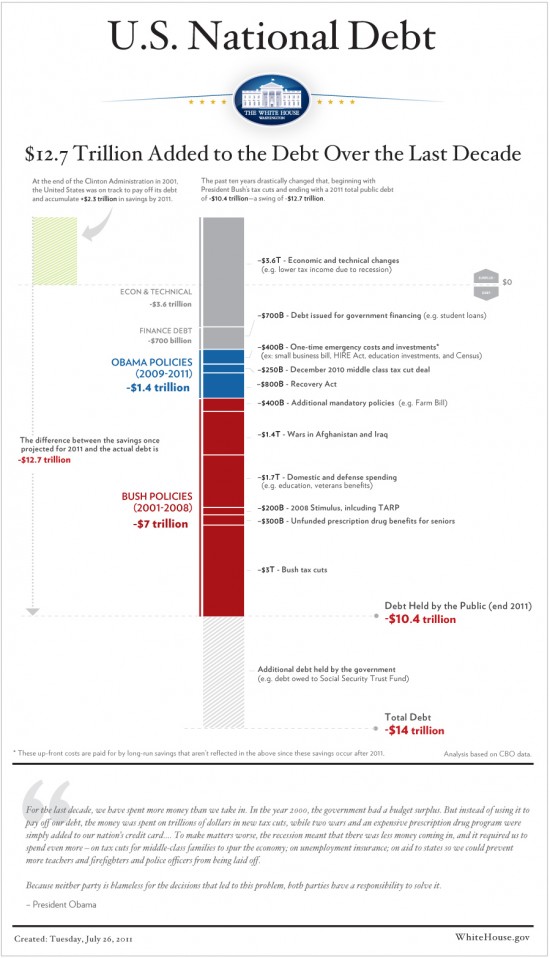
OUR OTHER PRINT BOOKS AND RELATED INFORMATION SOURCES:

DICTIONARIES: http://www.springerpub.com/Search/marcinko
PHYSICIANS: www.MedicalBusinessAdvisors.com
PRACTICES: www.BusinessofMedicalPractice.com
HOSPITALS: http://www.crcpress.com/product/isbn/9781466558731
CLINICS: http://www.crcpress.com/product/isbn/9781439879900
BLOG: www.MedicalExecutivePost.com
FINANCE: Financial Planning for Physicians and Advisors
INSURANCE: Risk Management and Insurance Strategies for Physicians and Advisors

Product DetailsProduct DetailsProduct Details

Product Details  Product Details

At a Time of Needed Financial Overhaul

A Leadership Vacuum

By Jesse Eisinger
ProPublica, May 18, 2011, 3:10 p.m.

Join Our Mailing List 

After the worst crisis since the Great Depression, President Obama has unleashed an unusual force to regulate the financial system: a bunch of empty seats [1].

With Sheila C. Bair soon to leave her post at the Federal Deposit Insurance Corporation, the Obama administration will have five major bank regulatory positions either unfilled or staffed with acting directors.

About The Trade

In this column, co-published with New York Times’ DealBook, I monitor the financial markets to hold companies, executives and government officials accountable for their actions. Tips? Praise? Contact me at jesse@propublica.org

The administration has inexplicably left open the vice chairman for banking supervision, a new position at the Federal Reserve created by the Dodd-Frank Act, despite having a candidate that many people think is an obvious choice: Daniel K. Tarullo [2]. The new Consumer Financial Products Board chairman is unnamed. There are some lower-level positions that don’t have candidates, including the head of the Treasury’s Office of Financial Research and the Financial Stability Oversight Council insurance post.

Perhaps most important, the Office of the Comptroller of the Currency, is being headed by an acting comptroller, John Walsh, who took over the agency last August. Nine months have passed without a leader who might better reflect the Obama administration’s views on banking regulation, a time lag made worse by the office’s coddling of the banks [3] even as they have acknowledged rampant abuse and negligence in the foreclosure process.

The vacancies come at a time that calls for stiffer regulatory examination. The financial regulatory system was remade under Dodd-Frank and requires strong leaders to put the changes into effect. Though the acting heads insist they feel empowered to make serious decisions, they have roughly the same authority as substitute high school teachers.

The Obama Administration

Supposedly, the Obama administration is getting close to naming people to head the comptroller’s office and the F.D.I.C. But we’ve been hearing that for a while. In April, Barbara A. Rehm of American Banker wrote that the administration was working on a big package of nominations to send to the Hill all at once. A month later, we’re still twiddling our thumbs in anticipation.

So what’s going on?

In a vacuum of leadership, conspiracy theories arise. One is that Treasury Secretary Timothy F. Geithner is making a power grab and doesn’t mind that these roles aren’t filled. The idea is that he is asserting his influence over the Dodd-Frank rule-making process. A former adviser to Mr. Geithner dismissed that notion as ridiculous, and that’s persuasive to me. It seems too Machiavellian by half.

If it’s not Mr. Geithner, then who or what is responsible for the vacancies? Not surprisingly, people close to the administration blame Republicans. The nomination process has become hopelessly broken in Washington. Even low-level appointments are now deeply partisan affairs, the playthings of score-settling senators with memories like elephants and the social responsibility of hyenas (which probably insults hyenas).

The Obama administration put up Peter A. Diamond for a position on the Federal Reserve board. Winning a little something called the Nobel Prize [4] hasn’t helped him with confirmation, however Sen. Richard Shelby, the powerful Alabama Republican and ranking member of the banking committee, is standing in his way. The senator also quashed the nomination [5] of Joseph A. Smith Jr. to head the Federal Housing Finance Agency.

Blame Game

But much of the blame for this situation lies with the Obama administration. It’s almost as if the president and his staff have thrown up their hands. The administration has had trouble finding good candidates who are willing to go through the vetting process and has shied away from fights. It also hasn’t seeded the ground or supported the nominations it has made, people complain.

A Democratic Senate staff member confided worry to me about the fate of Mark Wetjen, whom the administration nominated last week as a candidate for a seat on the Commodity Futures Trading Commission. “They didn’t shop it and they didn’t get buy-in,” the staff member said. “The administration doesn’t seem to be putting any sort of effort into it.”

Making these appointments will help answer a question: Where does Mr. Obama stand on financial regulation?

With the Geithner appointment, the president chose early on the path of continuity over muscular regulation. Immediately, the Treasury secretary became the personification of every Obama financial policy. Mr. Geithner remains the most politically costly appointment Mr. Obama has made, saddling him with all the Bush presidency’s financial crisis decisions. After all, Mr. Geithner, as head of the Federal Reserve Bank of New York, was intimately involved in the emergency actions of September 2008. Republicans made great hay tying Democrats to the Wall Street bailouts in the 2010 midterm elections. Now, of course, Republicans are leading Democrats in Wall Street campaign donations [6].

With these positions unfilled, Mr. Obama is losing out on a political opportunity to draw a line between himself and his opposition.

Assessment

But it’s more important than that. Allowing these vacancies to linger drains leadership from the financial overhaul at the exact moment when it is needed most.

Link: http://www.propublica.org/thetrade/item/at-a-time-of-/0763745790

Channel Surfing the ME-P

Have you visited our other topic channels? Established to facilitate idea exchange and link our community together, the value of these topics is dependent upon your input. Please take a minute to visit. And, to prevent that annoying spam, we ask that you register. It is fast, free and secure.

Conclusion

Your thoughts and comments on this ME-P are appreciated. Feel free to review our top-left column, and top-right sidebar materials, links, URLs and related websites, too. Then, subscribe to the ME-P. It is fast, free and secure.

Speaker: If you need a moderator or speaker for an upcoming event, Dr. David E. Marcinko; MBA – Publisher-in-Chief of the Medical Executive-Post – is available for seminar or speaking engagements. Contact: MarcinkoAdvisors@msn.com
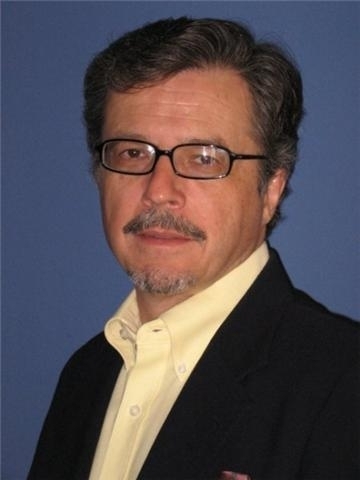
OUR OTHER PRINT BOOKS AND RELATED INFORMATION SOURCES:

Product DetailsProduct DetailsProduct Details

Product Details  Product Details

   Product Details 

Thoughts On Financial Advisors and Planners [Videos]

Candid YouTube Videos

By Staff Reporters

Join Our Mailing List

A Conversation with My Financial Planner:

http://www.youtube.com/watch?v=dFf6ibuAl5w&feature=related

The Wrong Financial Advisor:

http://www.youtube.com/watch?v=Vv4HQG2Hz0I&feature=related

Become an Investment Advisor:

http://www.youtube.com/watch?v=N1xpd4Z2p-g&feature=related

Assessment

“Many a true word is spoken in jest” and “Some truths, too painful or too likely to provoke, can be spoken only when the listener has been disarmed by laughter.”

-Geoffrey Chaucer

Conclusion

And so, your thoughts and comments on this ME-P are appreciated. How true are these videos? Are they more tongue-in-cheek or thoughtful and sobering?

Feel free to review our top-left column, and top-right sidebar materials, links, URLs and related websites, too. Then, subscribe to the ME-P. It is fast, free and secure.

Link: http://feeds.feedburner.com/HealthcareFinancialsthePostForcxos

Speaker: If you need a moderator or speaker for an upcoming event, Dr. David E. Marcinko; MBA – Publisher-in-Chief of the Medical Executive-Post – is available for seminar or speaking engagements. Contact: MarcinkoAdvisors@msn.com

Our Other Print Books and Related Information Sources:

Health Dictionary Series: http://www.springerpub.com/Search/marcinko

Practice Management: http://www.springerpub.com/product/9780826105752

Physician Financial Planning: http://www.jbpub.com/catalog/0763745790

Medical Risk Management: http://www.jbpub.com/catalog/9780763733421

Healthcare Organizations: www.HealthcareFinancials.com

Physician Advisors: www.CertifiedMedicalPlanner.com

Subscribe Now: Did you like this Medical Executive-Post, or find it helpful, interesting and informative? Want to get the latest ME-Ps delivered to your email box each morning? Just subscribe using the link below. You can unsubscribe at any time. Security is assured.

Link: http://feeds.feedburner.com/HealthcareFinancialsthePostForcxos

Sponsors Welcomed: And, credible sponsors and like-minded advertisers are always welcomed.

Link: https://healthcarefinancials.wordpress.com/2007/11/11/advertise

Product DetailsProduct DetailsProduct Details       

Product Details  Product Details

   Product Details 

What is the Point of Financial Planning [Pod Cast]?

A Video and Audio Survey

By Staff Reporters

Join Our Mailing List

Question

What’s the point of financial planning?

One Answer

Read WSJ’s post from Richard Reyes and comment below to share what you think the point is.

Assessment

PodCast link: http://www.vimeo.com/22892025?ab

Conclusion

And so, your thoughts and comments on this ME-P are appreciated.

Is financial planning different for doctors, as we contend here at the ME-P? Do we need a separate educational track and designation for healthcare, like: www.CertifiedMedicalPlanner.com ?

Feel free to review our top-left column, and top-right sidebar materials, links, URLs and related websites, too. Then, subscribe to the ME-P. It is fast, free and secure.

Link: http://feeds.feedburner.com/HealthcareFinancialsthePostForcxos

Speaker: If you need a moderator or speaker for an upcoming event, Dr. David E. Marcinko; MBA – Publisher-in-Chief of the Medical Executive-Post – is available for seminar or speaking engagements. Contact: MarcinkoAdvisors@msn.com

Our Other Print Books and Related Information Sources:

Health Dictionary Series: http://www.springerpub.com/Search/marcinko

Practice Management: http://www.springerpub.com/product/9780826105752

Physician Financial Planning: http://www.jbpub.com/catalog/0763745790

Medical Risk Management: http://www.jbpub.com/catalog/9780763733421

Healthcare Organizations: www.HealthcareFinancials.com

Physician Advisors: www.CertifiedMedicalPlanner.com

Subscribe Now: Did you like this Medical Executive-Post, or find it helpful, interesting and informative? Want to get the latest ME-Ps delivered to your email box each morning? Just subscribe using the link below. You can unsubscribe at any time. Security is assured.

Link: http://feeds.feedburner.com/HealthcareFinancialsthePostForcxos

Sponsors Welcomed: And, credible sponsors and like-minded advertisers are always welcomed.

Link: https://healthcarefinancials.wordpress.com/2007/11/11/advertise

Product DetailsProduct DetailsProduct Details       

Product Details  Product Details

   Product Details 

Vows of Change at Moody’s

But, the Flaws Remain the Same

By Jesse Eisinger ProPublica | @eisingerj 

Join Our Mailing List

In the aftermath of the financial crisis, nobody has gone to prison and there haven’t been any serious structural changes in the financial system. But at least everyone involved feels bad about it and has vowed to change, right? For Moody’s Investors Service, those pledges are empty, Bill Harrington says.

In this column, co-published with New York Times’ DealBook, I monitor the financial markets to hold companies, executives and government officials accountable for their actions.

A Window to the Debacle

Mr. Harrington was an analyst in the structured finance group at Moody’s for more than a decade, much of it spent rating collateralized debt obligations. He worked at Moody’s until the middle of last year, although he left the C.D.O. group in 2006. In his job, he had a window on the biggest debacle in the history of credit ratings. Companies like his allowed banks to pass off hundreds of billions worth of paper onto investors by waving their magic wands and deeming the securities investment-worthy.

Since then, the government has tried to change the ratings agencies. The Dodd-Frank financial reform law has some bold measures, like making the ratings firms liable for their judgments. Unfortunately, the rules are in danger of not being enforced because of budget constraints and resistance from the agencies.

But the biggest problems at Moody’s may have been cultural. The dominant ethos during the boom, instilled by Brian M. Clarkson, the former president and chief operating officer [1], was that customer service was Job 1. And the customers were the bankers.

Banker Customers

The ability for bankers to run the show has long been an obvious flaw in the ratings system for structured products. Investment banks create the securities and benefit when they receive generous ratings. Banks pay the agencies that supply the ratings. Yet the agencies are somehow supposed to hold the line with the people who are responsible for their paychecks.

To Moody’s credit, Mr. Clarkson is now gone. To Moody’s discredit, however, his philosophy is largely still in place, at least according to Mr. Harrington.

To the last day Mr. Harrington was there, he says, bankers remained hard-charging and aggressive advocates for their deals, sometimes to the point of abusing the analysts.

Wall Street ain’t beanbag, so that’s not surprising. The troubling aspect is that the Moody’s bosses acted like disinterested brokers between two sides in disputes with analysts, instead of standing up for the analysts and defending their independence. “That was the standard operating procedure that got worse and worse. We didn’t get the benefit of the doubt,” Mr. Harrington said.

When I asked Moody’s about Mr. Harrington’s experiences, a spokesman wrote in an e-mail: “We take strong exception to your characterization of Moody’s culture. We have always had an unwavering culture of integrity, analytical independence and objectivity and that culture has only grown stronger since the financial crisis.” He pointed to numerous efforts at Moody’s to improve the ratings process and to bolster Moody’s procedures.

In the spring of 2009, Mr. Harrington was working on a deal and a banker was persistently calling him. He returned the first call, but had other work that day and didn’t return the next two calls right away. “I thought caller ID served a purpose,” he said wryly.

Soon after, his boss alerted him to a call he’d received from Michael Kanef, the head of compliance. Mr. Kanef wanted to know why Mr. Harrington hadn’t returned the banker’s call. Mr. Harrington was shocked. Why was the head of compliance getting involved? But he got the apparent message: Analysts are to lean over backward for the bankers. That had been Mr. Clarkson’s philosophy, and now it was his successors’.

“The culture persists — and it’s being enforced by compliance department,” Mr. Harrington said.

So who is Mr. Kanef? Before he was the head of regulatory affairs and compliance, he was in charge of ratings on residential mortgage-backed securities [2]. Did such an executive deserve a promotion?

And then there is Raymond W. McDaniel, the chief executive throughout the housing boom, the bust and the entire financial crisis. He remains at the helm. And he had to swallow the bitter pill of more than $9 million in compensation last year. Indeed, most of Moody’s top management has been in place through the crisis.

Moody’s didn’t make Mr. Kanef or Mr. McDaniel available for comment.

The Blame Game

So if Moody’s doesn’t think the executives who ran the company were responsible for its collapse in reputation and contribution to the multitrillion-dollar financial crisis, who do they think is to blame? The analysts, Mr. Harrington says. The hard-working, low-level minions with little decision-making power.

Mr. McDaniel has conceded that sometimes “we drink the Kool-Aid.”

But that hardly makes the analysts to blame.

“If some analysts drank the Kool-Aid, it was only because management mixed and stirred it up and threatened that analysts wouldn’t get to heaven on the spaceship unless he or she drank it,” Mr. Harrington said.

Moody’s has recognized it has a disaster on its hands — a public relations disaster. Clients — the investors who use ratings — have been losing faith in the agencies. Mr. Harrington said that Moody’s executives marched analysts into meetings to explain how they were going to tell their clients about how much Moody’s had grown and learned from its mistakes. It was as if they were in “Communist re-education camp,” he said.

At one of these meetings, an analyst asked if they could be given training in how to deal with banker abuse, Mr. Harrington recalls. The suggestion was immediately shot down by the executive running the meeting.

Moody’s says that its retraining efforts are part of its continuing efforts to reach out to investors to improve its ratings.

Assessment

When Moody’s executives make public presentations, as when Mr. McDaniel testified [3] in front of the Financial Crisis Inquiry Commission, the overarching theme is that the agency’s problem was limited to the housing-related structured finance. Few people saw how fast and deep the housing market would crash. How could the ratings agencies?

A few weeks ago, Alan Greenspan penned an instantly notorious line: “With notably rare exceptions,” [4] he wrote, unfettered financial markets have worked well. Moody’s persists in believing that with notably rare exceptions, so too have credit ratings.

Full Article: http://www.propublica.org/thetrade/item/vows-of-change-at-moodys-but-the-flaws-remain-the-same/

Conclusion

And so, your thoughts and comments on this ME-P are appreciated. Feel free to review our top-left column, and top-right sidebar materials, links, URLs and related websites, too. Then, subscribe to the ME-P. It is fast, free and secure.

Link: http://feeds.feedburner.com/HealthcareFinancialsthePostForcxos

Speaker: If you need a moderator or speaker for an upcoming event, Dr. David E. Marcinko; MBA – Publisher-in-Chief of the Medical Executive-Post – is available for seminar or speaking engagements. Contact: MarcinkoAdvisors@msn.com

Our Other Print Books and Related Information Sources:

Health Dictionary Series: http://www.springerpub.com/Search/marcinko

Practice Management: http://www.springerpub.com/product/9780826105752

Physician Financial Planning: http://www.jbpub.com/catalog/0763745790

Medical Risk Management: http://www.jbpub.com/catalog/9780763733421

Healthcare Organizations: www.HealthcareFinancials.com

Physician Advisors: www.CertifiedMedicalPlanner.com

Subscribe Now: Did you like this Medical Executive-Post, or find it helpful, interesting and informative? Want to get the latest ME-Ps delivered to your email box each morning? Just subscribe using the link below. You can unsubscribe at any time. Security is assured.

Link: http://feeds.feedburner.com/HealthcareFinancialsthePostForcxos

Sponsors Welcomed: And, credible sponsors and like-minded advertisers are always welcomed.

Link: https://healthcarefinancials.wordpress.com/2007/11/11/advertise

Product DetailsProduct DetailsProduct Details       

Product Details  Product Details

About Physician Executive Bonus Plans

A Primer for Physicians

By Dr. David Edward Marcinko MBA

[Publisher-in-Chief]

An executive bonus plan (or § 162 plan) is an effective way for a medical practice, clinic or other healthcare company to provide valued, select physician or other employees an additional employment benefit.  One of the main advantages to an executive bonus plan, when compared to other benefits, is its simplicity. In a typical executive bonus plan, an agreement is made between the employer and employee, whereby the employer agrees to pay for the cost of a life insurance policy, in the form of a bonus, on the life of the employee.

Benefits

The major benefits of such a plan to the employee are that he or she is the immediate owner of the cash values and the death benefit provided.  The only cost to the employee is the payment of income tax on any bonus received.  The employer receives a tax deduction for providing the benefit, improves the moral of its selected employees, and can use the plan as a tool to attract additional talent.

Example Dr. Stern is a sole practitioner in rural West Virginia.  Among his employees is Nurse Jackson, who has been with him for over ten years.  She is the single parent for two boys.   Although he pays well, and provides additional benefits, he has been looking for a way to selectively reward Nurse Jackson for her years of service and hard work.  Recently Nurse Jackson has expressed a concern for her children if she were to die prematurely.

Dr. Stern chooses to provide an executive bonus plan by allowing Nurse Jackson to purchase a life insurance policy on her life.  Dr. Stern will provide the premium payments in the form of a bonus to her.  Nurse Jackson must simply pay the tax on this additional income.  Dr. Stern’s practice will get a tax deduction for the premium and improve the morale of an important employee.  Nurse Jackson will get needed protection for her family.

Assessment

More info: http://www.jblearning.com/catalog/9780763733421/

Conclusion

And so, your thoughts and comments on this ME-P are appreciated. Feel free to review our top-left column, and top-right sidebar materials, links, URLs and related websites, too. Then, subscribe to the ME-P. It is fast, free and secure.

Speaker: If you need a moderator or speaker for an upcoming event, Dr. David E. Marcinko; MBA – Publisher-in-Chief of the Medical Executive-Post – is available for seminar or speaking engagements. Contact: MarcinkoAdvisors@msn.com and http://www.springerpub.com/Search/marcinko

Our Other Print Books and Related Information Sources:

Health Dictionary Series: http://www.springerpub.com/Search/marcinko

Practice Management: http://www.springerpub.com/product/9780826105752

Physician Financial Planning: http://www.jbpub.com/catalog/0763745790

Medical Risk Management: http://www.jbpub.com/catalog/9780763733421

Healthcare Organizations: www.HealthcareFinancials.com

Physician Advisors: www.CertifiedMedicalPlanner.com

Subscribe Now: Did you like this Medical Executive-Post, or find it helpful, interesting and informative? Want to get the latest ME-Ps delivered to your email box each morning? Just subscribe using the link below. You can unsubscribe at any time. Security is assured.

Link: http://feeds.feedburner.com/HealthcareFinancialsthePostForcxos

Sponsors Welcomed: And, credible sponsors and like-minded advertisers are always welcomed.

Link: https://healthcarefinancials.wordpress.com/2007/11/11/advertise

Product DetailsProduct DetailsProduct Details       

Product Details  Product Details

   Product Details 

Mike Kitces asks: What Can Financial Planners Learn from Suze Orman and Dave Ramsey?

Join Our Mailing List

Follow Paretto’s Law – or Learn Something Unique and Compete?

By Dr. David Edward Marcinko; FACFAS, MBA, CMP™

[Publisher-in-Chief]

Michael Kitces is an industry pundit, and well known certified financial planner [CFP], who writes for a financial advisory and financial planner audience at thewebsite Nerd’s Eye View:

http://www.kitces.com

He is a bright guy, who holds the following professional degrees and designations:

  • MSFS – Master of Science in Financial Services
  • MTAX – Master’s in Taxation
  • CFP – Certified Financial Planner
  • CLU – Chartered Life Underwriter
  • ChFC – Chartered Financial Consultant
  • RHU – Registered Health Underwriter
  • REBC – Registered Employee Benefits Consultant
  • CASL – Chartered Advisor of Senior Living
  • CWPP – Chartered Wealth Preservation Planner

Yet, in a recent essay, he laments that all the CFPs® in the country added together don’t have as much reach, or impact, as three mass marketing gurus: Suze Orman, David Bach, and Dave Ramsey. And, he is correct.

Markets Vary

These gurus, and the CFPs®, serve different markets for sure. The gurus’ products are free or inexpensive. Their messages are simple and actionable. Once you go beyond the simple messages, however, you will find the gurus no longer satisfying. So, it’s no coincidence that the three gurus focus on controlling spending and getting out of debt. Why?

Eighty percent of us do need to get out of debt and control our spending, period!

Link: Do Financial Planners Have Something To Learn From Suze Orman and Dave Ramsey?

Pareto’s Law

Here is where the mass market is located, said economist V. Pareto PhD more than a century ago. The Pareto principle (also known as the 80-20 rule, the law of the vital few, or the principle of scarsity) states that, for many events, roughly 80% of the effects come from 20% of the causes. It is a common thumb-rule in business; e.g., “80% of your sales come from 20% of your clients”.

Look, most clients can’t control their income but they can be taught to control spending and debt habits [needs versus wants]. Most patients need a family doctor; not a brain surgeon.  And, most of us do not have Einstein’s intelligence, Gate’s wealth, or Hercules’s strength.

But, our lives can vastly be improved by 80%, with just 20% more effort and cost. This is what the gurus know – most of us are average – not so the CFPs® who believe we all need a comprehensive financial plan and have the ability to pay for it and the time to execute and monitor it.

Assessment

And so, CFPs® can’t charge an 80% premium – to 80% of the population – when clients don’t need or want a comprehensive financial plan. Or, when clients can be better off by 80%, and such success can be had for 20% of the cost and effort offered by the CFPs®.

Basic supply-demand economics 101! Ford autos are fine – we all don’t need or want a Mercedes.

More confusing is the fact that even the CFPs® themselves are suspect since prior to 2008 a college degree was not required for the certification mark. And, having same allows the practitioner no additional diagnostic or interventional tools.

IOW: Whatever a CFP® can do – a non-CFP® can do.  And, it is increasingly considered by the well-informed …. to be a marketing mark …. to hold a marketing mark. This is akin to being famous; for being famous.  That’s why I resigned my CFP® mark years ago.

Full Disclosure: I am the Founder of the: http://www.CertifiedMedicalPlanner.org online program. CMP™ certificants – like doctors – hold fiduciary accountability at all times and with unique healthcare industry specificity.

Conclusion

Your thoughts and comments on this ME-P are appreciated. Feel free to review our top-left column, and top-right sidebar materials, links, URLs and related websites, too. Then, subscribe to the ME-P. It is fast, free and secure.

Speaker: If you need a moderator or speaker for an upcoming event, Dr. David E. Marcinko; MBA – Publisher-in-Chief of the Medical Executive-Post – is available for seminar or speaking engagements. Contact: MarcinkoAdvisors@msn.com

OUR OTHER PRINT BOOKS AND RELATED INFORMATION SOURCES:


Product DetailsProduct Details

  Product Details

   Product Details 

Financial Life Planning Defined for Physicians and Advisors

Integrating Financial Planning, Practice Management and Life

By Dr. David Edward Marcinko MBA, CMP™

www.CertifiedMedicalPlanner.com

Life planning has many detractors and defenders. Formally, it has been defined by Mitch Anthony, Gene R. Lawrence and Roy T. Diliberto of the Financial Life Institute, in the following trinitarian way.

Financial Life Planning is an approach to financial planning that places the history, transitions, goals, and principles of the client at the center of the planning process.  For the financial advisor or planner, the life of the client becomes the axis around which financial planning develops and evolves.

Other definitions are: 

  • Financial Life Planning is about coming to the right answers by asking the right questions. This involves broadening the conversation beyond investment selection and asset management to exploring life issues as they relate to money.
  • Financial Life Planning is a process that helps advisors move their practice from financial transaction thinking, to life transition thinking. The first step aiming to help clients “see” the connection between their financial lives and the challenges and opportunities inherent in each life transition.

But, for informed physicians, life planning’s quasi-professional and informal approach to the largely isolate disciplines of financial planning and medical practice management is inadequate. Today’s practice environment is incredibly complex, as compressed economic stress from HMOs, financial insecurity from Wall Street, liability fears from attorneys, criminal scrutiny from government agencies, IT mischief from malicious hackers, economic benchmarking from hospitals and lost confidence from patients all converge to inspire a robust new financial planning approach for medical professionals. Now, add politics and the ACA of 2010.

Our Approach

The iMBA approach to financial planning, as championed by the Certified Medical Planner, integrates the traditional concepts of financial life planning, with the increasing complex business concepts of medical practice management. The former are presented in our textbook on financial planning for doctors. And, the later is in our companion book: “The Business of Medical Practice” www.BusinessofMedicalPractice.com

Others on risk management and insurance; accounting, tax and investing; retirement, practice succession and estate planning, are planned in our future iMBA Handbook series for physicians and their advisors www.MedicalBusinessAdvisors.com

Example

For example, views of medical practice, personal lifestyle, investing and retirement, both what they are and how they may look in the future, are rapidly changing as the retail mentality of medicine is replaced with a wholesale philosophy. Or, how views on maximizing current practice income might be more profitably sacrificed for the potential of greater wealth upon eventual practice sale and disposition. Or, how the ultimate fear represented by Yale University economist Robert J Shiller, in “The New Financial Order”: Risk in the 21st Century, warns that the risk for choosing the wrong profession or specialty, might render physicians obsolete by technological changes, managed care systems or fiscally unsound demographics.

Assessment

Yet, the opportunity to re-vise the future at any age through personal re-engineering, exists for all of us, and allows a joint exploration of the meaning and purpose in life. To allow this deeper and more realistic approach, the advisor and the doctor must build relationships based on trust, greater self-knowledge and true medical business and financial enhancement acumen.

Conclusion

And so, your thoughts and comments on this ME-P are appreciated. Feel free to review our top-left column, and top-right sidebar materials, links, URLs and related websites, too. Then, subscribe to the ME-P. It is fast, free and secure.

Speaker: If you need a moderator or speaker for an upcoming event, Dr. David E. Marcinko; MBA – Publisher-in-Chief of the Medical Executive-Post – is available for seminar or speaking engagements. Contact: MarcinkoAdvisors@msn.com and http://www.springerpub.com/Search/marcinko

Our Other Print Books and Related Information Sources:

Health Dictionary Series: http://www.springerpub.com/Search/marcinko

Practice Management: http://www.springerpub.com/product/9780826105752

Physician Financial Planning: http://www.jbpub.com/catalog/0763745790

Medical Risk Management: http://www.jbpub.com/catalog/9780763733421

Healthcare Organizations: www.HealthcareFinancials.com

Physician Advisors: www.CertifiedMedicalPlanner.com

Subscribe Now: Did you like this Medical Executive-Post, or find it helpful, interesting and informative? Want to get the latest ME-Ps delivered to your email box each morning? Just subscribe using the link below. You can unsubscribe at any time. Security is assured.

Link: http://feeds.feedburner.com/HealthcareFinancialsthePostForcxos

Sponsors Welcomed: And, credible sponsors and like-minded advertisers are always welcomed.

Link: https://healthcarefinancials.wordpress.com/2007/11/11/advertise

Product DetailsProduct DetailsProduct Details       

Product Details  Product Details

   Product Details

Financial Planning and Risk Management Strategies for Physicians

Financial Planning Handbook for Physicians and Advisors

Product Details

 • http://www.jblearning.com/catalog/9780763745790/

Insurance Planning and Risk Management Strategies for Physicians and Advisors

Product Details

http://www.jblearning.com/catalog/9780763733421/

ADVERTISEMENT

Speaker: If you need a moderator or speaker for an upcoming event, Dr. David E. Marcinko; MBA – Publisher-in-Chief of the Medical Executive-Post – is available for seminar or speaking engagements. Contact: MarcinkoAdvisors@msn.com and http://www.springerpub.com/Search/marcinko

CBO Director Elmendorf Discusses Budget Deficits

Considering the Fiscal Commission Recommendations

By Children’s Home Society of Florida Foundation

Join Our Mailing List 

Last week, on February 10th, the House Budget Committee held a hearing and Congressional Budget Office (CBO) Director Douglas Elmendorf discussed the federal budget deficit. Director Elmendorf emphasized the importance of addressing the deficit and also noted that the Fiscal Commission recommendations are a useful addition to the current discussion.

Of Paul Ryan

Chairman Paul Ryan noted that there still is a major problem with unemployment. According to Chairman Ryan, the recession ended in June of 2009 and between that time and December of 2010, “payroll employment rose by a mere 6/100 of 1% (0.06%).” Chairman Ryan noted that it is essential to restore growth in America. He advocated “low taxes, reasonable regulations sound money and spending restraint.”

Of Chris Van Hollen

Ranking Member Chris Van Hollen (D-MD) also responded to Director Elmendorf. He indicated a willingness to address the deficit. Rep. Van Hollen suggested that “Democrats and Republicans must work together now to put our nation on a fiscally sustainable path and we stand ready to do that.”

Assessment

However, Rep. Lloyd Doggett (D-TX) expressed concern that Chairman Ryan was focusing excessively on spending rather than on tax deductions. Rep. Doggett noted, “Dollar for dollar, cutting funding for cancer research or local law enforcement has the same effect on the deficit as closing a tax loophole that allows a Wall Street corporation to benefit by stashing their tax dollars offshore.” Rep. Doggett suggests that tax deductions will need to be reduced in order to address the deficit challenge.

Conclusion

And so, your thoughts and comments on this ME-P are appreciated. Feel free to review our top-left column, and top-right sidebar materials, links, URLs and related websites, too. Then, subscribe to the ME-P. It is fast, free and secure.

Speaker: If you need a moderator or speaker for an upcoming event, Dr. David E. Marcinko; MBA – Publisher-in-Chief of the Medical Executive-Post – is available for seminar or speaking engagements. Contact: MarcinkoAdvisors@msn.com and http://www.springerpub.com/Search/marcinko

Our Other Print Books and Related Information Sources:

Health Dictionary Series: http://www.springerpub.com/Search/marcinko

Practice Management: http://www.springerpub.com/product/9780826105752

Physician Financial Planning: http://www.jbpub.com/catalog/0763745790

Medical Risk Management: http://www.jbpub.com/catalog/9780763733421

Healthcare Organizations: www.HealthcareFinancials.com

Physician Advisors: www.CertifiedMedicalPlanner.com

Subscribe Now: Did you like this Medical Executive-Post, or find it helpful, interesting and informative? Want to get the latest ME-Ps delivered to your email box each morning? Just subscribe using the link below. You can unsubscribe at any time. Security is assured.

Link: http://feeds.feedburner.com/HealthcareFinancialsthePostForcxos

Sponsors Welcomed: And, credible sponsors and like-minded advertisers are always welcomed.

Link: https://healthcarefinancials.wordpress.com/2007/11/11/advertise

Product DetailsProduct DetailsProduct Details       

Product Details  Product Details

Meet Speaker Dr. David Edward Marcinko MBA

Management Expert, Social Media Pioneer, Journalist and Financial Advisor

www.BusinessofMedicalPractice.com

I am available for a limited number of speaking engagements each year. As social media’s leading integrated voice for medical and financial service professionals, the ME-P voice was noted by the WSJ.com in 2009, which said thatThis website is packed with great information.” And, medical information technology  and eMR guru Alberto Borges MD recently opined You do have an exceptional website”. 

The ME-P’s Reach

With over 250,000 visitors, the ME-P is among the web’s most influential and prominent platforms. I frequently discuss the precarious intersection among medical practice management, financial services, health economics and related social media in keynote speeches, panel discussions, and media interviews. 

Journalist

I also use my two decade long medical, surgical, business management and financial advisory practice and journalistic experiences to engage the private practice community, culminating in the third edition of our book: The Business of Medical Practice [Transformational Health 2.0 Skills for Doctors].

Locale

I am based near Atlanta, GA, so travel for speaking opportunities is not problematic and very inexpensive.

Curriculum Vitae

Here is my CV: DEM Formal CV

Please contact me if you’re interested in having me engage your divese audience: MarcinkoAdvisors@msn.com

Sincerely,

Dr. David Edward Marcinko; MBA

Certified Medical Planner™
www.CertifiedMedicalPlanner.com

My Other Print Books and Related Information Sources:

Health Dictionary Series: http://www.springerpub.com/Search/marcinko

Practice Management: http://www.springerpub.com/product/9780826105752

Physician Financial Planning: http://www.jbpub.com/catalog/0763745790

Medical Risk Management: http://www.jbpub.com/catalog/9780763733421

Healthcare Organizations: www.HealthcareFinancials.com

Physician Advisors: www.CertifiedMedicalPlanner.com

Subscribe Now: Did you like this Medical Executive-Post, or find it helpful, interesting and informative? Want to get the latest ME-Ps delivered to your email box each morning? Just subscribe using the link below. You can unsubscribe at any time. Security is assured.

Link: http://feeds.feedburner.com/HealthcareFinancialsthePostForcxos

Sponsors Welcomed: And, credible sponsors and like-minded advertisers are always welcomed.

Link: https://healthcarefinancials.wordpress.com/2007/11/11/advertise

Product DetailsProduct DetailsProduct Details       

Product Details  Product Details

   Product Details 

The Uniform Prudent Investor Act versus Fiduciary Accountability

Join Our Mailing List

A Primer and Review for Financial Advisors

By Dr. David Edward Marcinko MBA, CMP™

www.CertifiedMedicalPlanner.org

More than a decade ago Charles L. Stanley, CFP™ gave an overview of the legislation and highlights areas of change for financial advisors and planners and to the financial services industry. To date, the Uniform Prudent Investor Act (UPIA) has been enacted in most states. Essentially, the act changed the legal criteria for “prudent investing” for trusts. All assets owned by a trust are considered “investments” for purposes of the Uniform Prudent Investor Act. Consequently, if a trust owns a life insurance policy or an annuity, it is considered an “investment” for purposes of the UPIA. Trustees and their advisors are subject to the act.

Background Review

The UPIA (California Probate Code Article 2.5) was adopted by the Uniform Conference of Commissioners on Uniform State Laws in 1994. When determining whether or not certain investing is “prudent,” the standard is applied to the whole portfolio rather than to individual investments.

The UPIA radically changes the analysis of risk. The UPIA considers that risk is unavoidable. For example, fixed income instruments carry the risk of loss of purchasing power, even though the principal may not be reduced in terms of real numbers. Risk is often desirable so long as it is sufficiently compensated. The UPIA seeks to compel the trustees to analyze the trade-offs between risks and returns, taking into consideration the needs and objectives of the trust.

Restrictions Reduced

The restrictions on what type of investments can be held in trust have been eliminated. The trustee can invest in anything that plays an appropriate role in achieving the risk/return objectives of the trust and that meets the other requirements of prudent investment. The trustee’s duty to diversify trust assets is codified in the UPIA. It is now recognized that proper effective diversification may enhance returns and/or reduce risk at the same time.

The UPIA rejected the traditional trust rule that generally prohibited “delegation of duty” by trustees, especially the duty of investment of trust assets. Delegation is now permitted, subject to safeguards. Agents are now made liable if they do not follow the new law.

What Must a Trustee Do to Comply with the Act?

According to Stanley, to comply with the UPIA, trustees must review trust assets and make and implement decisions to either keep or discard assets in order to bring the trust portfolio into compliance with the purposes, terms, distribution requirements, and other circumstances of the trust:

  • The trustee must diversify the assets of the trust unless it is prudent not to do so (16048). For example, it would not be acceptable for the trust to hold all municipal bonds.
  • The trustee must either comply with the Act in full or have the trust amended to restrict the requirements to diversify trust assets.
  • The trustee must delegate if he or she believes that he or she doesn’t the expertise to perform certain functions, this is particularly anticipated in the area of investment management. The trustee is expected to document all of the above to be available for review either by beneficiaries and/or courts should they become involved. This includes a written Investment Policy Statement. The act doesn’t specifically require this, but how would one prove they had been acting as a prudent trustee without documentation?
  • The trustee must periodically review the circumstances, assets and any professional delegates whom he or she has retained to assist him or her. The portfolio must be periodically rebalanced to maintain the established risk/reward characteristics identified in the Investment Policy Statement. This is not specifically stated, but is implied in ¤16047(b) and is a part of proper portfolio management under Modern Portfolio Theory. The act requires the costs of management to be “reasonable.”
  • The trustee must deal impartially with beneficiaries when there are two or more beneficiaries and must invest impartially, taking into account the differing interests of the beneficiaries.

Note: In most states, trust language can draft the trustee out of any and all requirements of the Uniform Prudent Investor Act. Many attorneys are doing this. So check trust language carefully.

Assessment

This essay is not a “final answer” in regard to compliance with the Uniform Prudent Investor Act. Financial advisors should consult with a competent attorney if you have any questions about a specific application with a specific physician investor or other client.

http://www.amazon.com/Financial-Planning-Handbook-Physicians-Advisors/dp/0763745790/ref=sr_1_1?ie=UTF8&s=books&qid=1276795609&sr=1-1

Conclusion

And so, your thoughts and comments on this ME-P are appreciated. How has the fiduciary standard altered the above Act; or the current Dodd-Frank Act [Wall Street Reform and Consumer Protection Act]? Feel free to review our top-left column, and top-right sidebar materials, links, URLs and related websites, too. Then, subscribe to the ME-P. It is fast, free and secure.

Speaker: If you need a moderator or speaker for an upcoming event, Dr. David E. Marcinko; MBA – Publisher-in-Chief of the Medical Executive-Post – is available for seminar or speaking engagements. Contact: MarcinkoAdvisors@msn.com

OUR OTHER PRINT BOOKS AND RELATED INFORMATION SOURCES:

Product Details  Product Details

Fed Chair Bernanke Defends Bond Purchases

Before House Budget Committee

By Children’s Home Society of Florida Foundation

Join Our Mailing List 

Federal Reserve Chair Ben Bernanke appeared on February 9 before the House Budget Committee. He defended the plan by the Federal Reserve to purchase another $600 billion of government bonds. This would bring the total holdings of the Federal Reserve to approximately $2.6 trillion. Previously, the Federal Reserve lowered interest rates close to zero and purchased $1 trillion of bonds to support the financial markets.

Rationale

Chairman Bernanke pointed to four factors that in his view justified the additional bond purchases.

First, the unemployment level continues to be approximately 9%.

Second, he expects unemployment to remain high and inflation to remain low “for some time.”

Third, it is likely the federal funds rate will remain quite low as long as there is high unemployment and low inflation.

Fourth, the initial purchase of $1 trillion of bonds and the proposed additional $600 billion bond purchase are both appropriate and manageable. He suggests that there will be opportunity “to tighten monetary policy when needed.” The Federal Reserve has sufficient capability to sell the bonds and reduce its holdings as needed.

Fiscal Policy

Chairman Bernanke also addressed fiscal policy. He noted that it is important “to put the budget on a sustainable trajectory.” Chairman Bernanke spoke approvingly of the plans advocated by the National Commission on Fiscal Responsibility and Reform. He suggested that there is now a “much-needed conversation” on the deficit.

Paul Ryan

House Budget Chair Paul Ryan (R-WI) agreed that it is important to address the deficit. He observed that the projected $1.5 trillion deficit this year would increase the publicly-held debt. That public debt was 40% of the economy in 2008 and will rise to 69% of the economy by the end of the year.

Chairman Ryan stated, “Endless borrowing is not a strategy. We must restore the foundations of economic growth – low taxes, spending restraint, reasonable regulations and sound money – to help restart the engines of economic growth and job creation.”

Chris Van Hollen

The Ranking Member of the House Budget Committee is Rep. Chris Van Hollen (D-MD). He indicated to Chairman Bernanke, “I commend you and your colleagues at the Fed for using various forms of monetary policy to promote maximum employment and stable prices.” However, Rep. Van Hollen also agreed that it is important to create “a responsible plan to bring down and then eliminate the primary budget deficit.”

Conclusion

And so, your thoughts and comments on this ME-P are appreciated. Feel free to review our top-left column, and top-right sidebar materials, links, URLs and related websites, too. Then, subscribe to the ME-P. It is fast, free and secure.

Speaker: If you need a moderator or speaker for an upcoming event, Dr. David E. Marcinko; MBA – Publisher-in-Chief of the Medical Executive-Post – is available for seminar or speaking engagements. Contact: MarcinkoAdvisors@msn.com and http://www.springerpub.com/Search/marcinko

Our Other Print Books and Related Information Sources:

Health Dictionary Series: http://www.springerpub.com/Search/marcinko

Practice Management: http://www.springerpub.com/product/9780826105752

Physician Financial Planning: http://www.jbpub.com/catalog/0763745790

Medical Risk Management: http://www.jbpub.com/catalog/9780763733421

Healthcare Organizations: www.HealthcareFinancials.com

Physician Advisors: www.CertifiedMedicalPlanner.com

Subscribe Now: Did you like this Medical Executive-Post, or find it helpful, interesting and informative? Want to get the latest ME-Ps delivered to your email box each morning? Just subscribe using the link below. You can unsubscribe at any time. Security is assured.

Link: http://feeds.feedburner.com/HealthcareFinancialsthePostForcxos

Sponsors Welcomed: And, credible sponsors and like-minded advertisers are always welcomed.

Link: https://healthcarefinancials.wordpress.com/2007/11/11/advertise

Product DetailsProduct DetailsProduct Details       

Product Details  Product Details